break, continue and pass
in Python
Python break statement
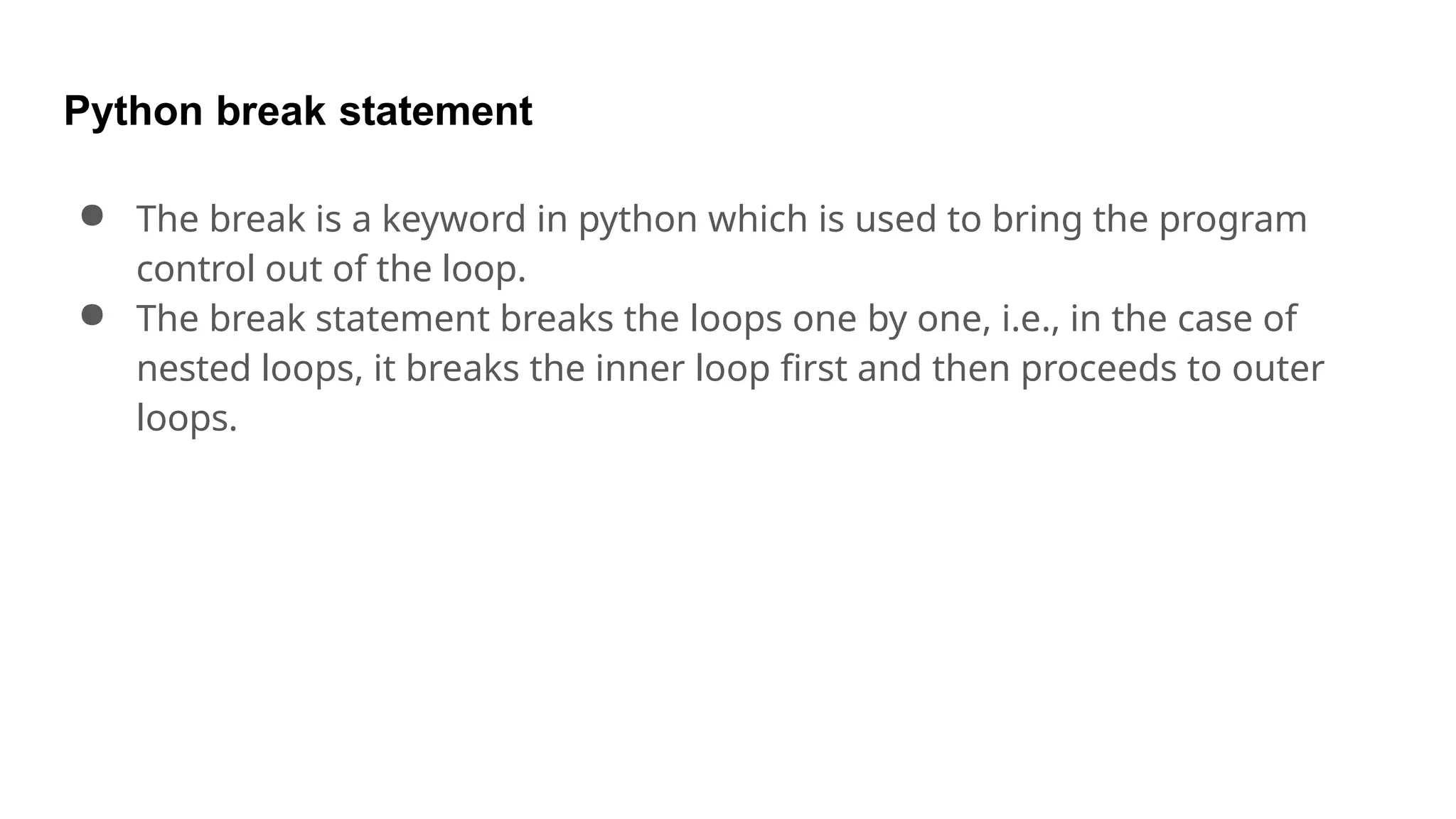
● The break is a keyword in python which is used to bring the program
control out of the loop.
● The break statement breaks the loops one by one, i.e., in the case of
nested loops, it breaks the inner loop first and then proceeds to outer
loops.
Python break statement
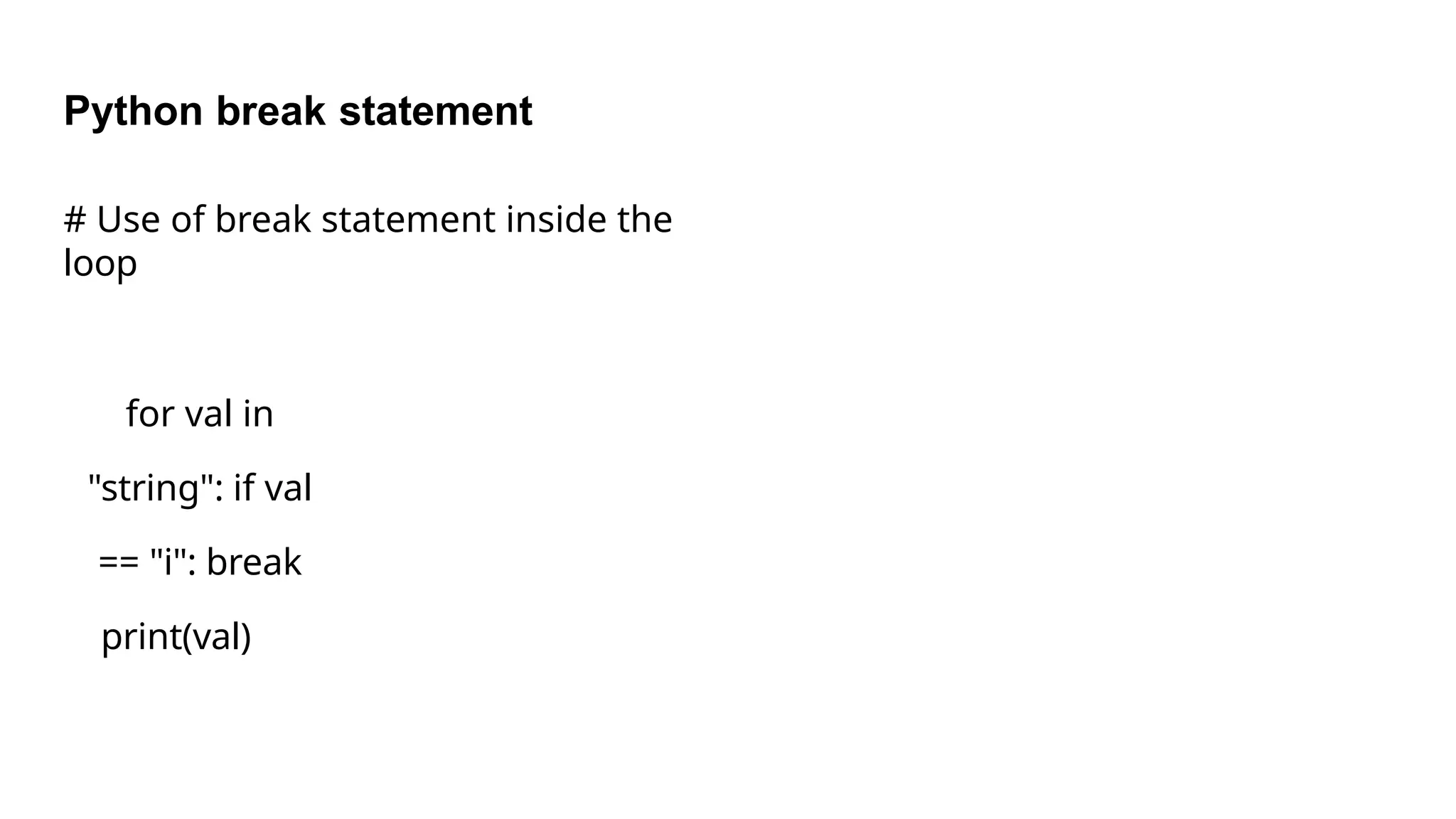
# Use of break statement inside the
loop
for val in
"string": if val
== "i": break
print(val)
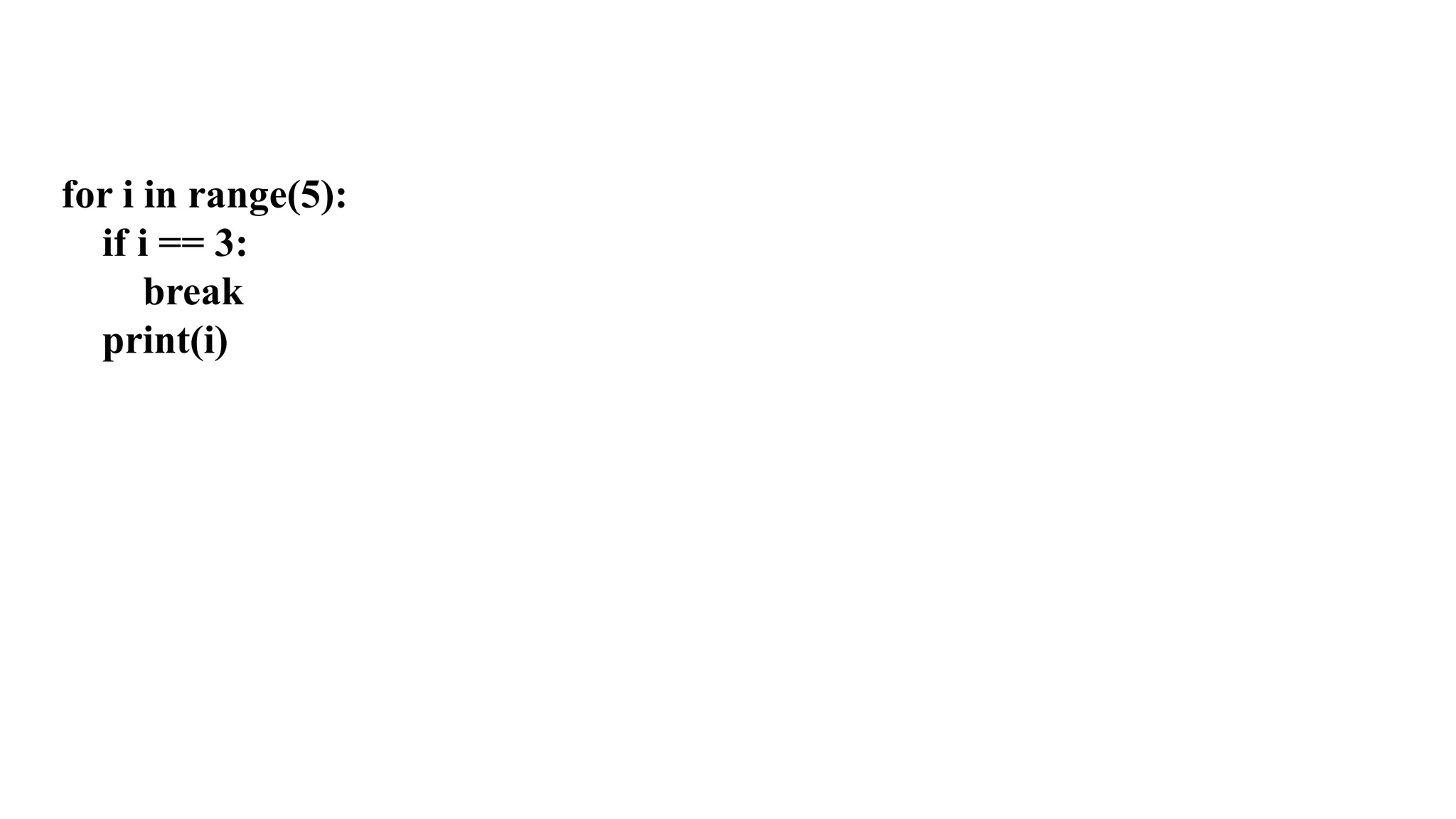
for i in range(5):
if i == 3:
break
print(i)
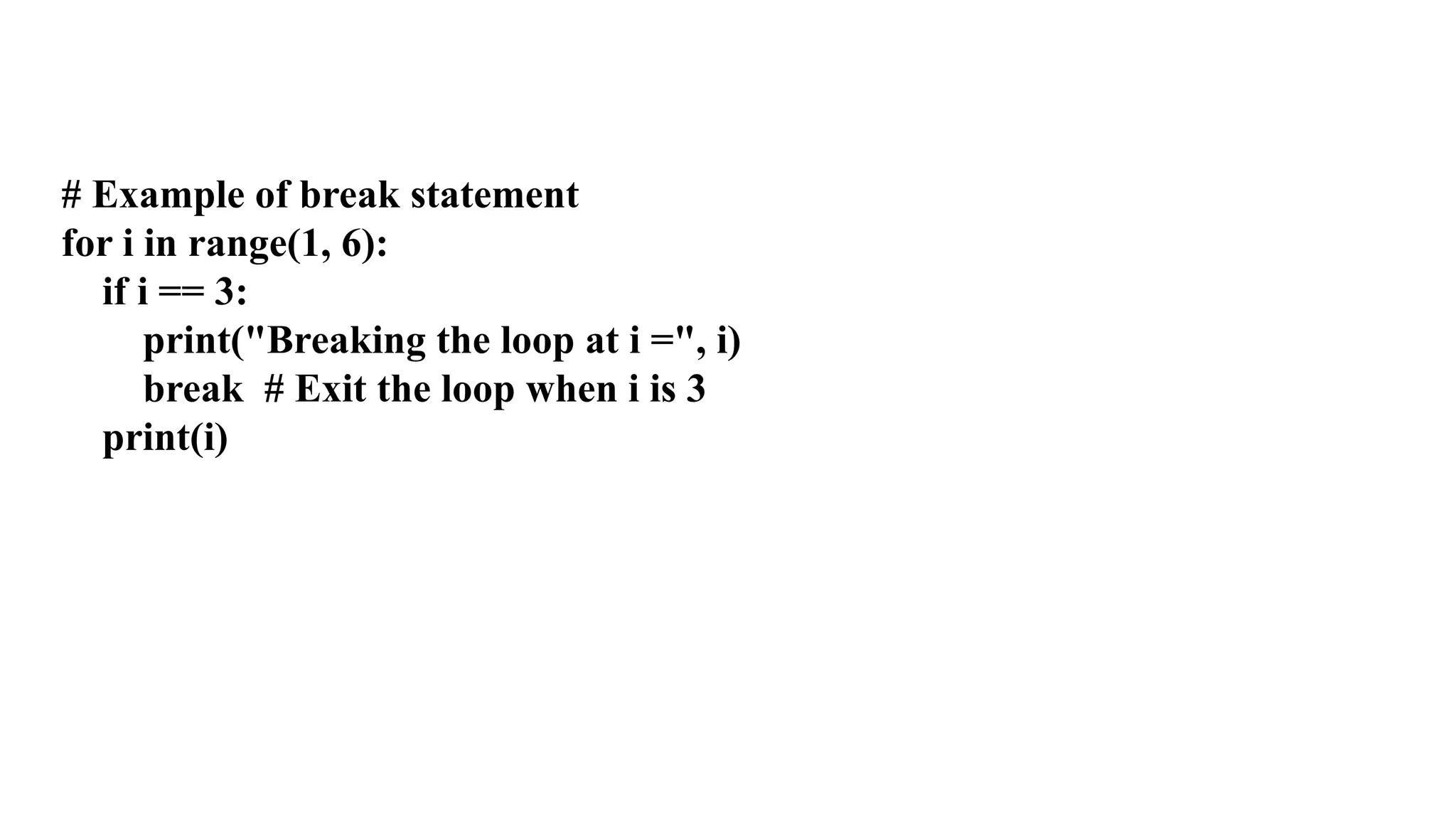
# Example of break statement
for i in range(1, 6):
if i == 3:
print("Breaking the loop at i =", i)
break # Exit the loop when i is 3
print(i)
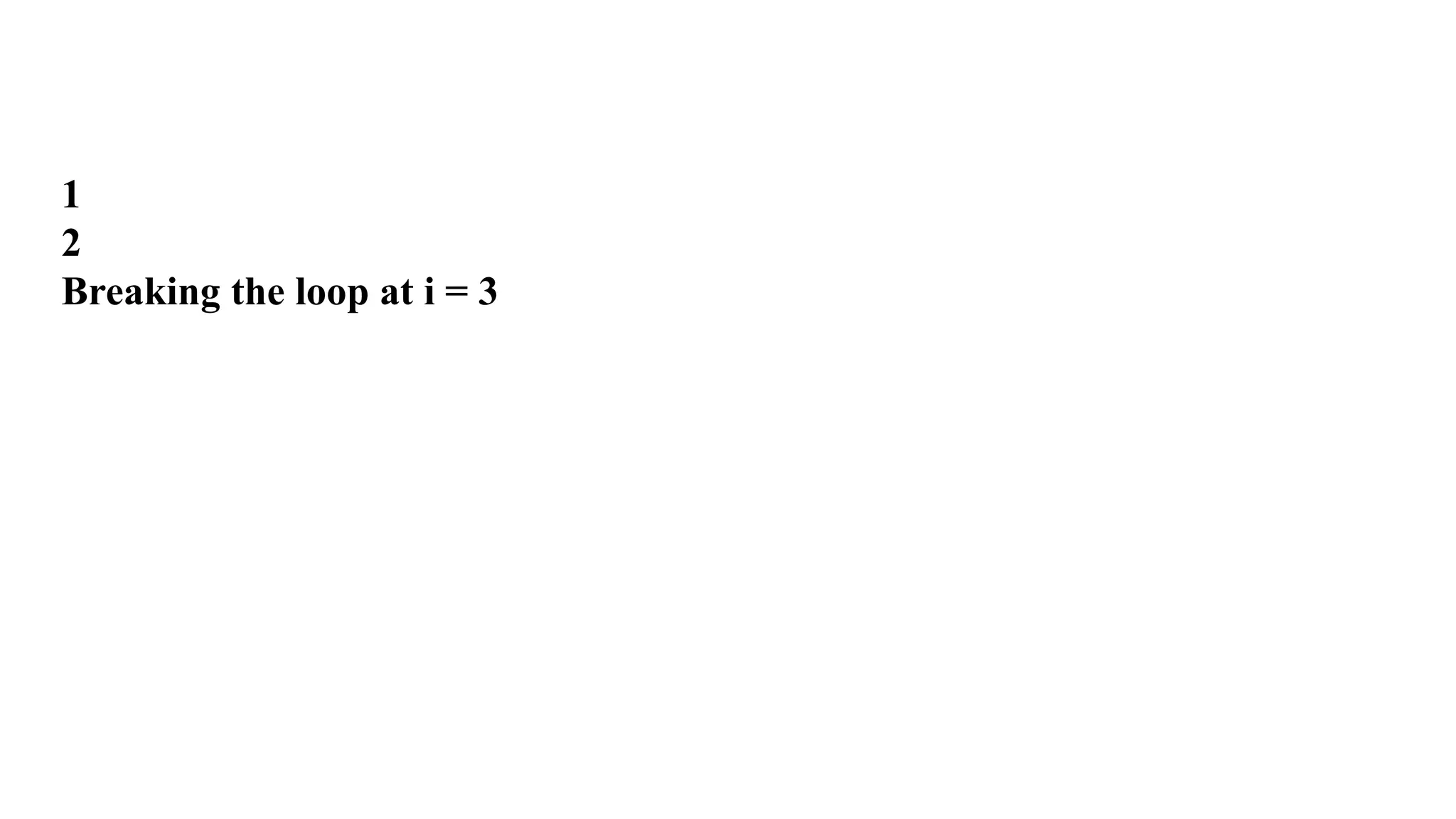
1
2
Breaking the loop at i = 3
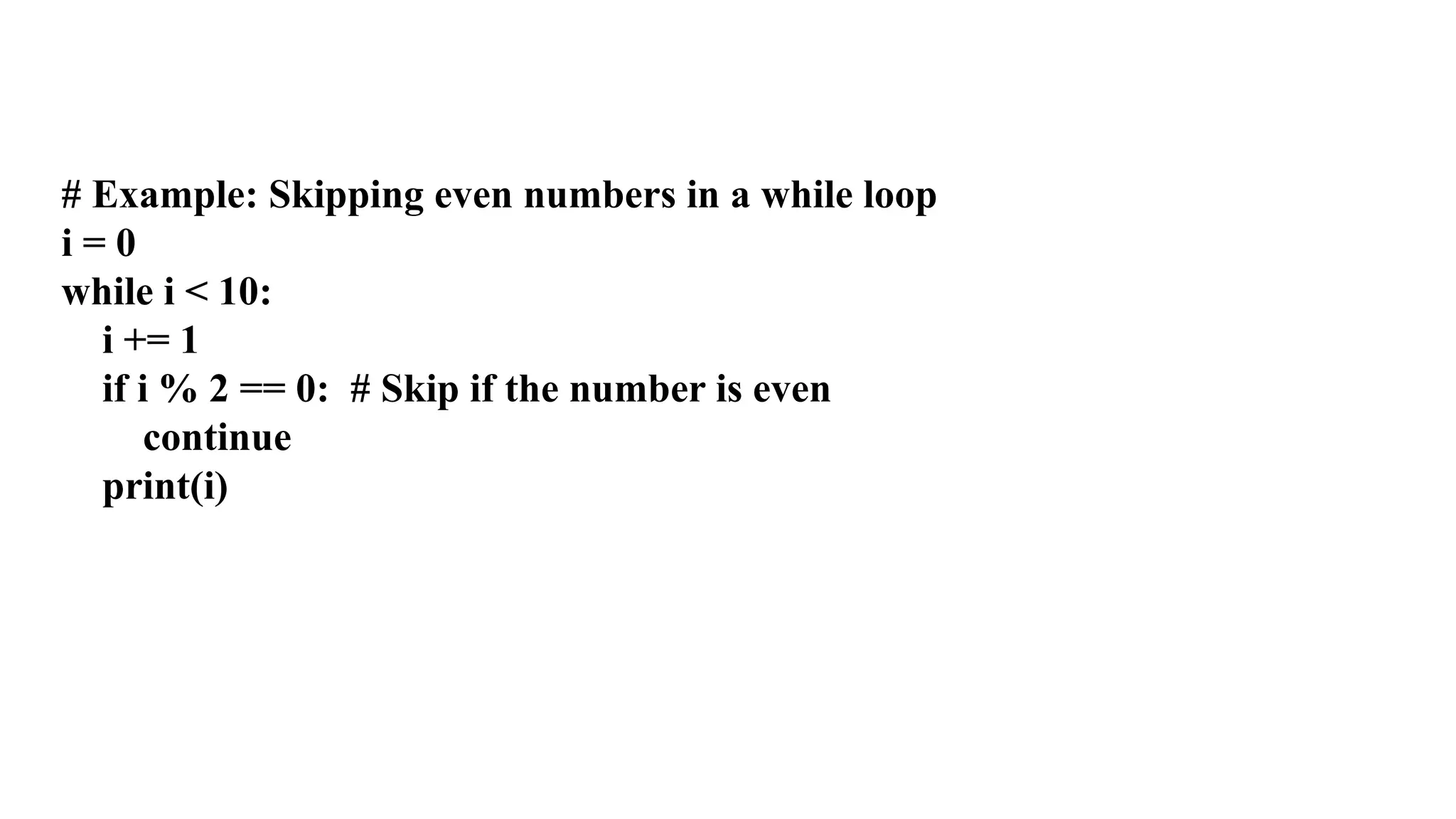
# Example: Skipping even numbers in a while loop
i = 0
while i < 10:
i += 1
if i % 2 == 0: # Skip if the number is even
continue
print(i)
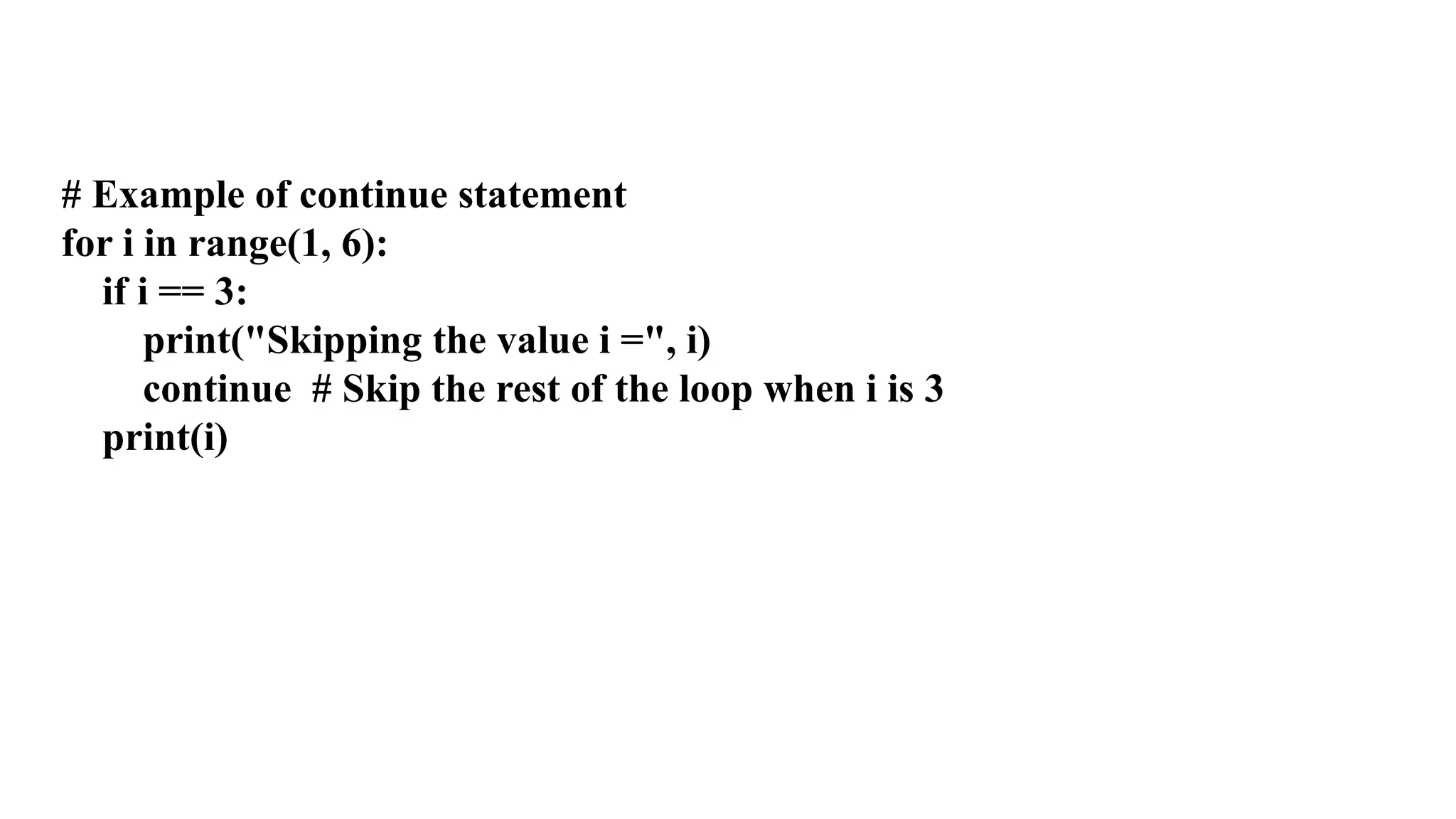
# Example of continue statement
for i in range(1, 6):
if i == 3:
print("Skipping the value i =", i)
continue # Skip the rest of the loop when i is 3
print(i)
Python continue statement
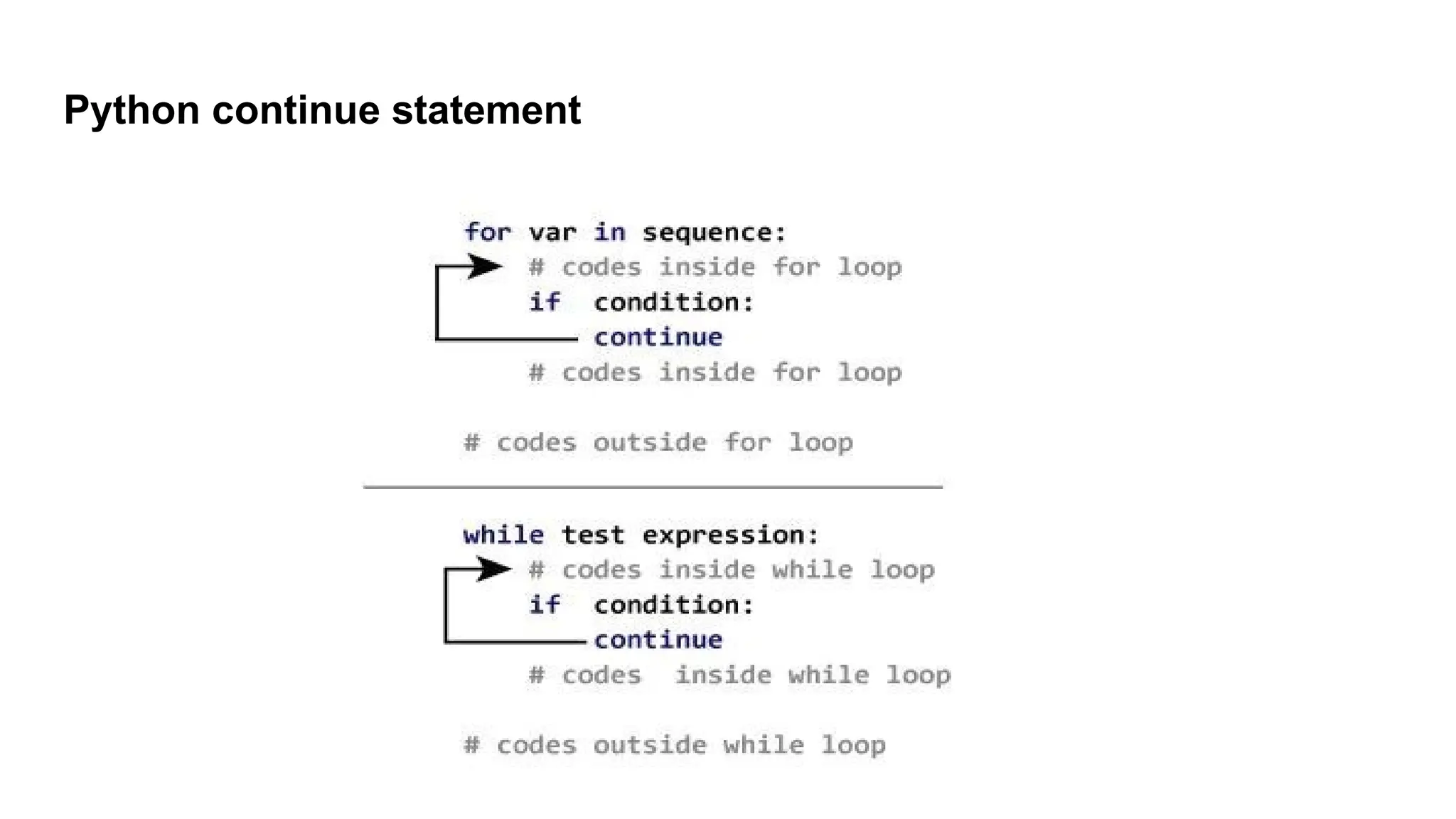
The continue statement is used to skip the rest of the code inside a loop
for the current iteration only.
Loop does not terminate but continues on with the next iteration.
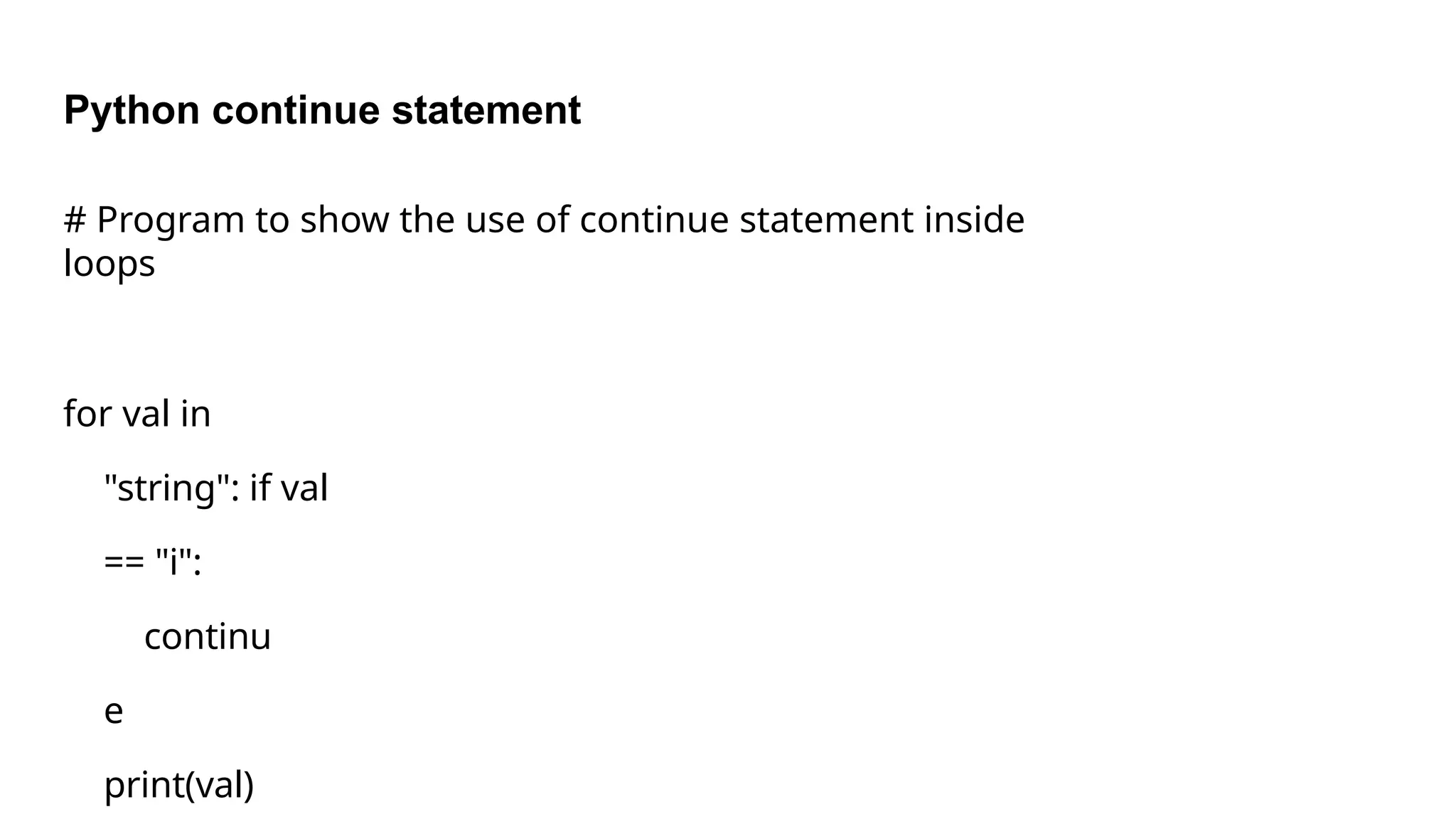
Python continue statement
# Program to show the use of continue statement inside
loops
for val in
"string": if val
== "i":
continu
e
print(val)
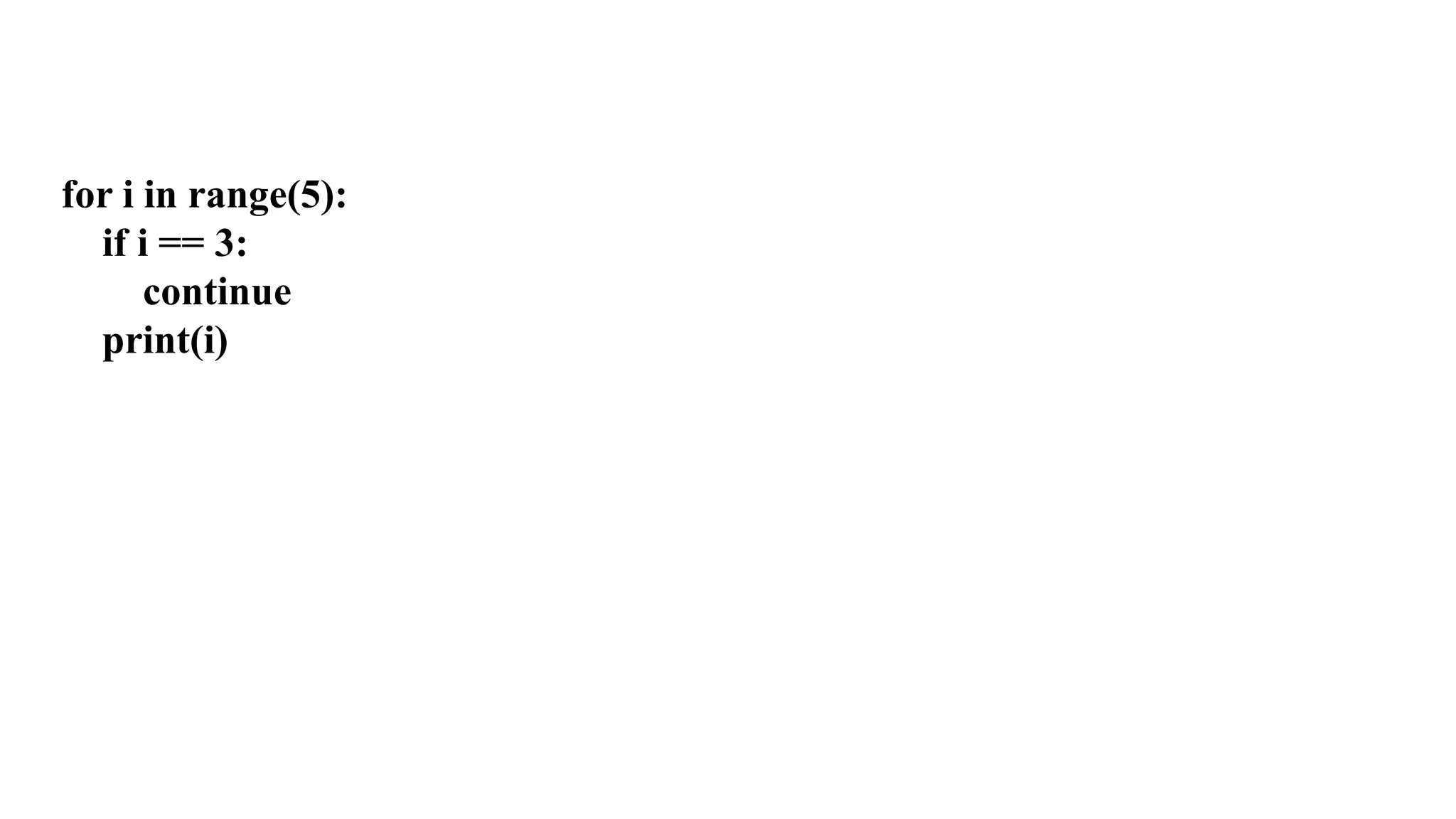
for i in range(5):
if i == 3:
continue
print(i)
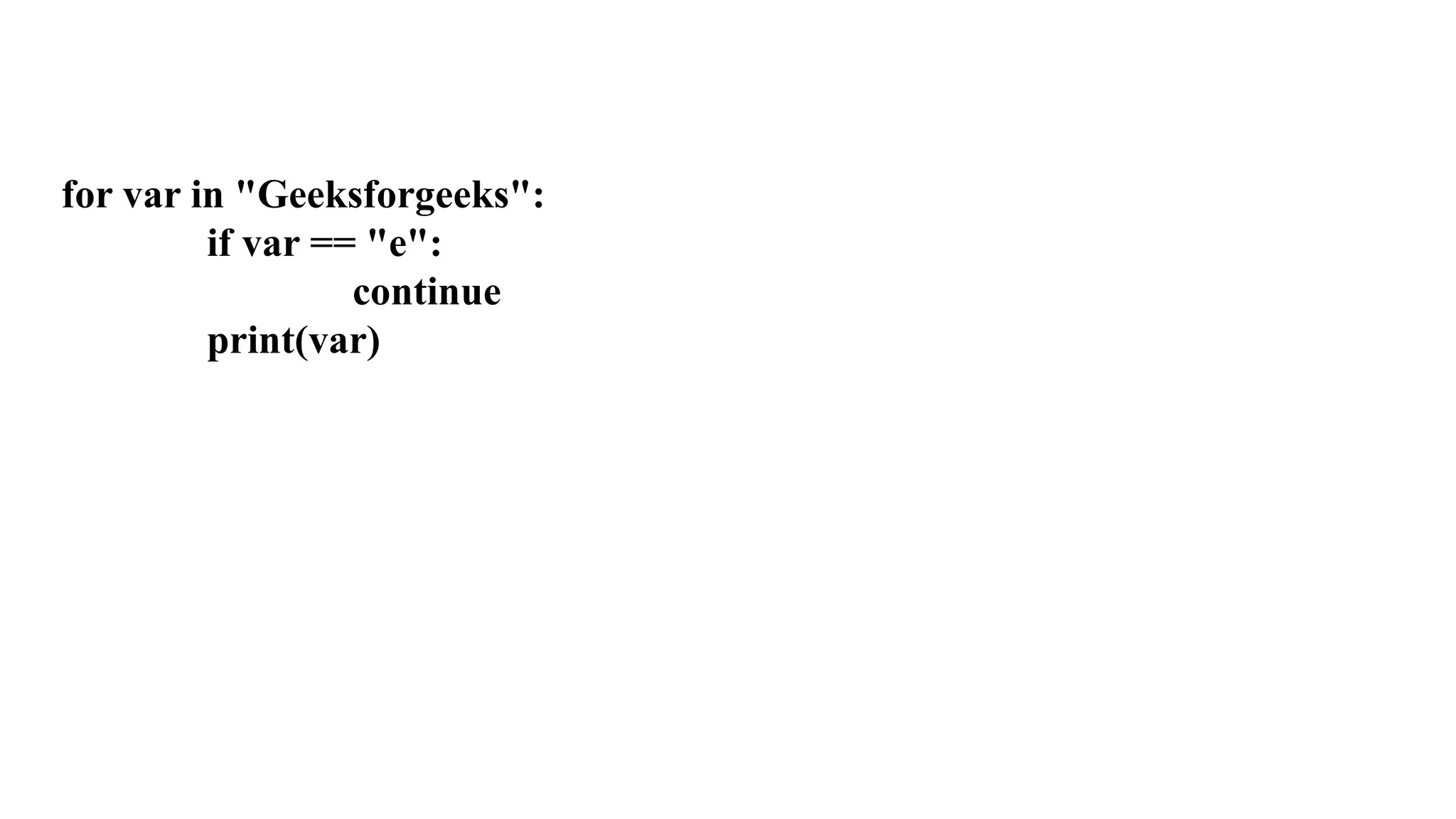
for var in "Geeksforgeeks":
if var == "e":
continue
print(var)
Python pass statement
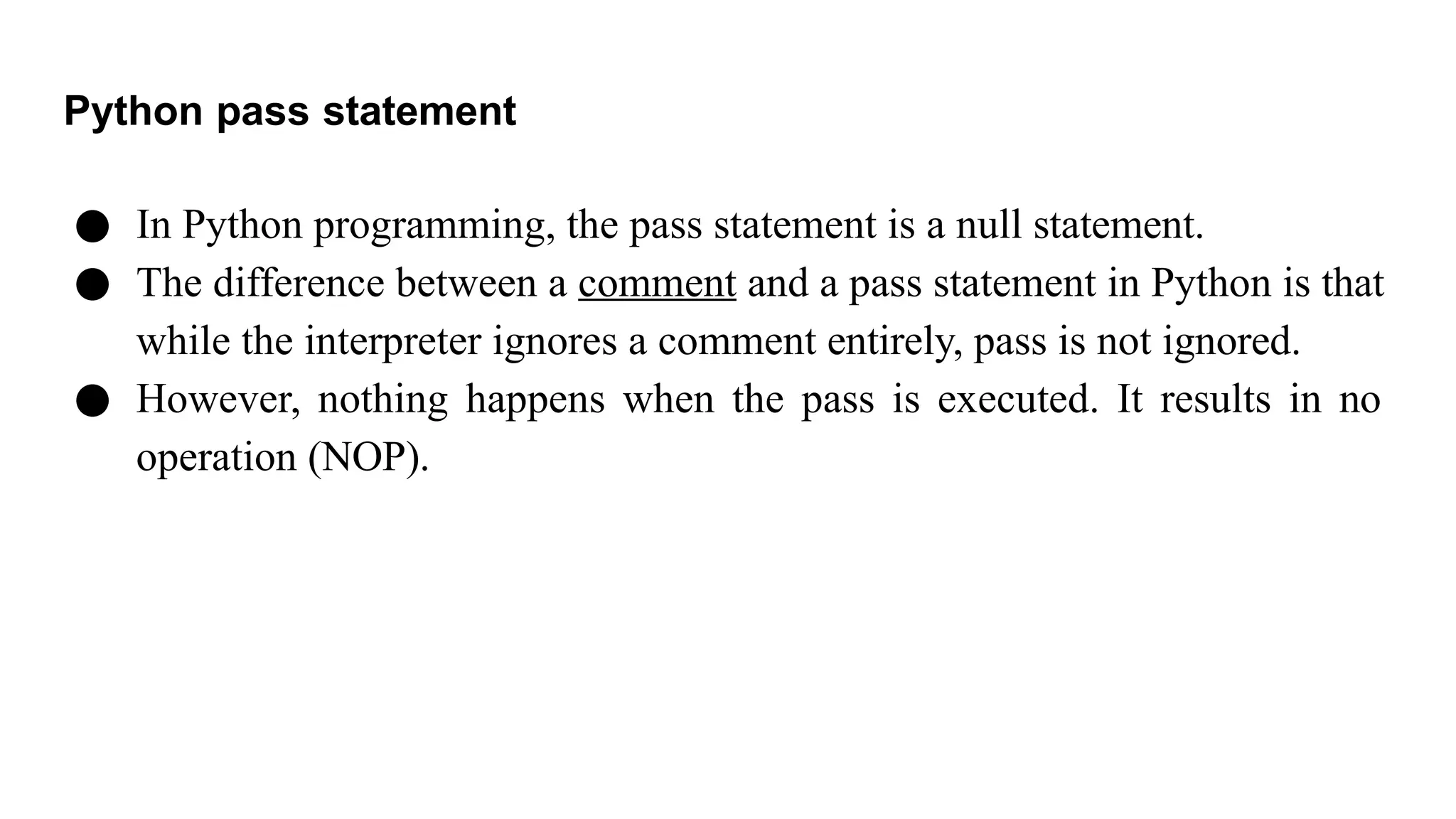
● In Python programming, the pass statement is a null statement.
● The difference between a comment and a pass statement in Python is that
while the interpreter ignores a comment entirely, pass is not ignored.
● However, nothing happens when the pass is executed. It results in no
operation (NOP).
Python pass statement
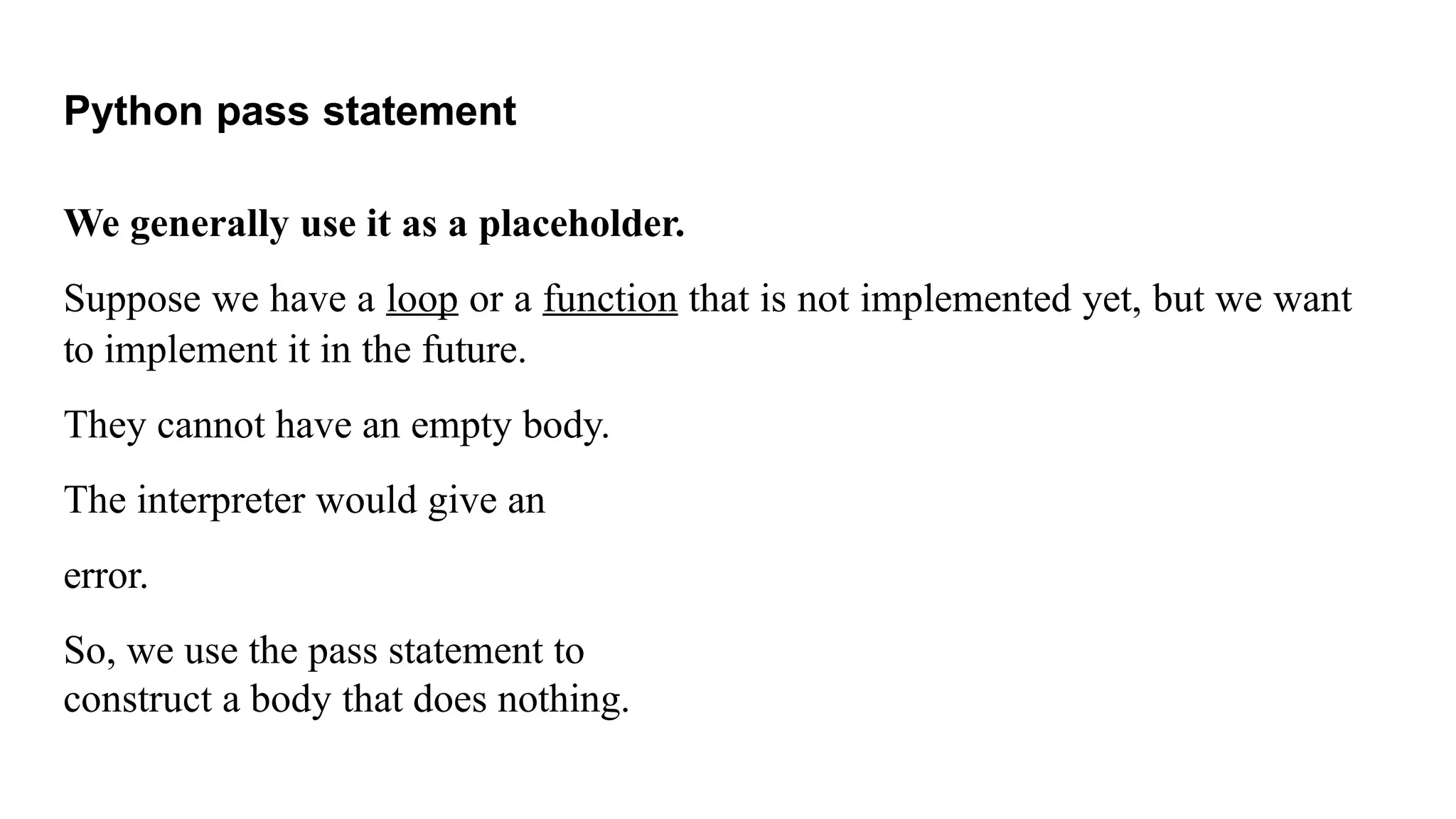
We generally use it as a placeholder.
Suppose we have a loop or a function that is not implemented yet, but we want
to implement it in the future.
They cannot have an empty body.
The interpreter would give an
error.
So, we use the pass statement to
construct a body that does nothing.
Python pass statement
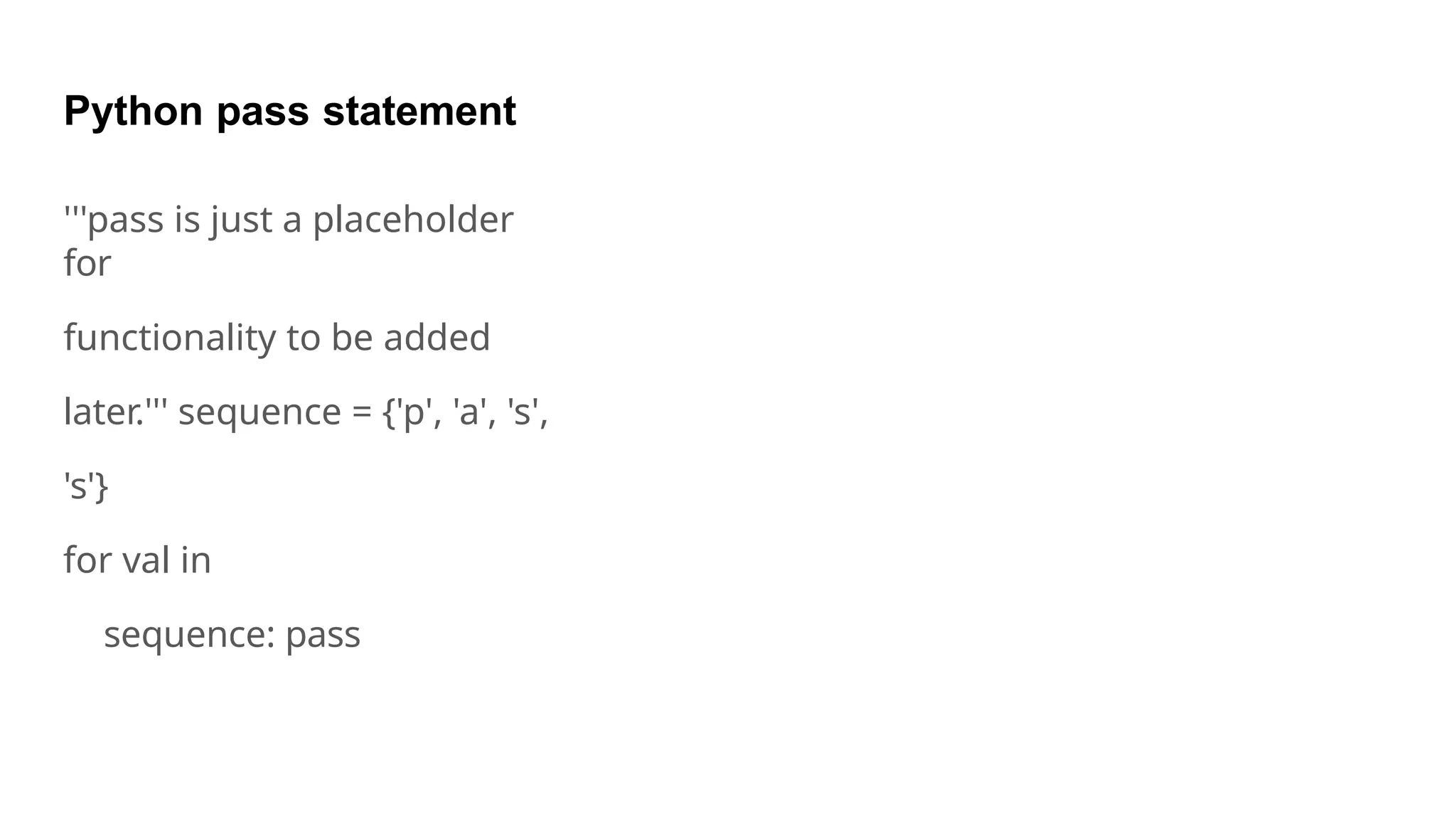
'''pass is just a placeholder
for
functionality to be added
later.''' sequence = {'p', 'a', 's',
's'}
for val in
sequence: pass
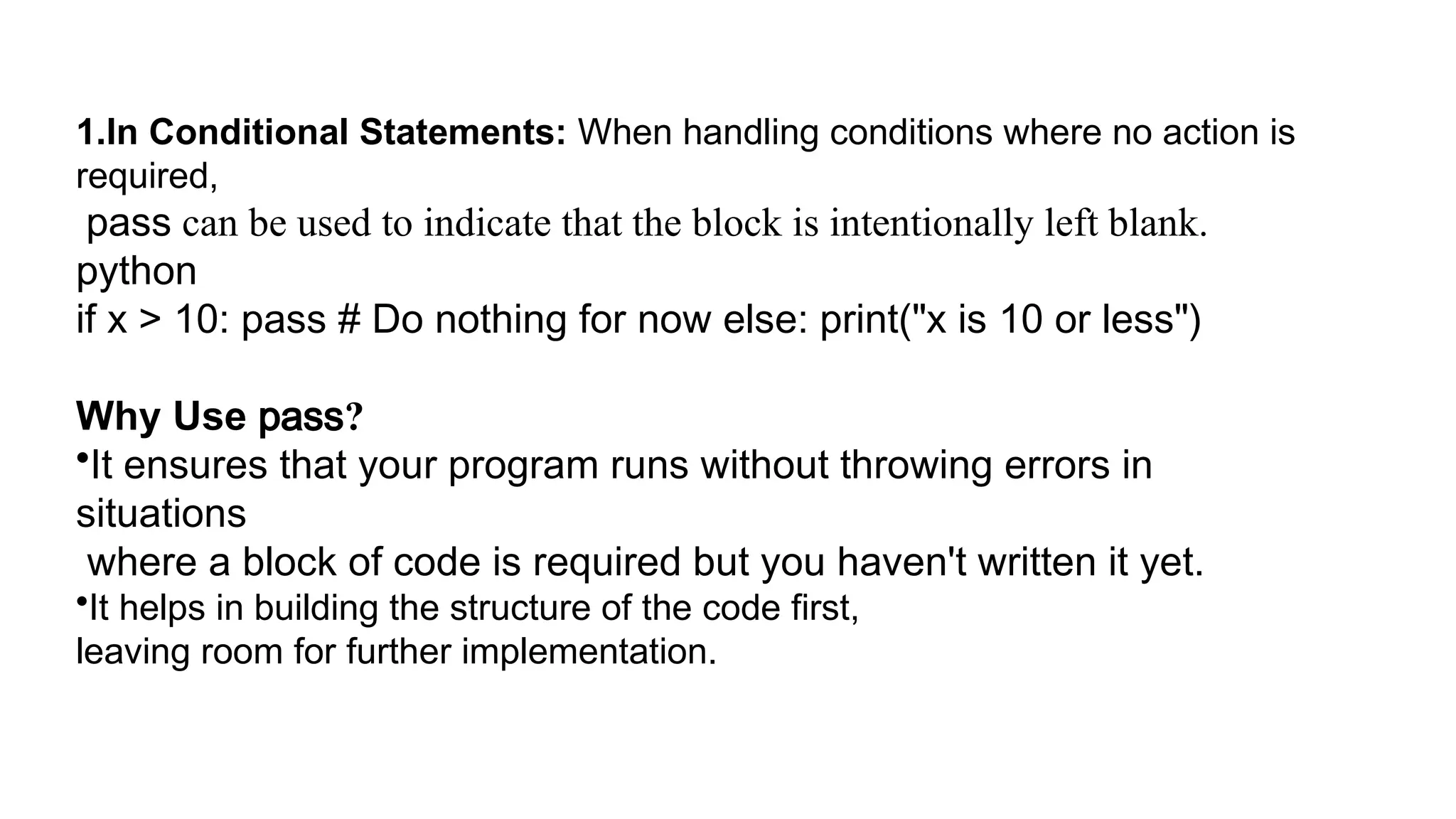
1.In Conditional Statements: When handling conditions where no action is
required,
pass can be used to indicate that the block is intentionally left blank.
python
if x > 10: pass # Do nothing for now else: print("x is 10 or less")
Why Use pass?
•It ensures that your program runs without throwing errors in
situations
where a block of code is required but you haven't written it yet.
•It helps in building the structure of the code first,
leaving room for further implementation.
Python pass statement
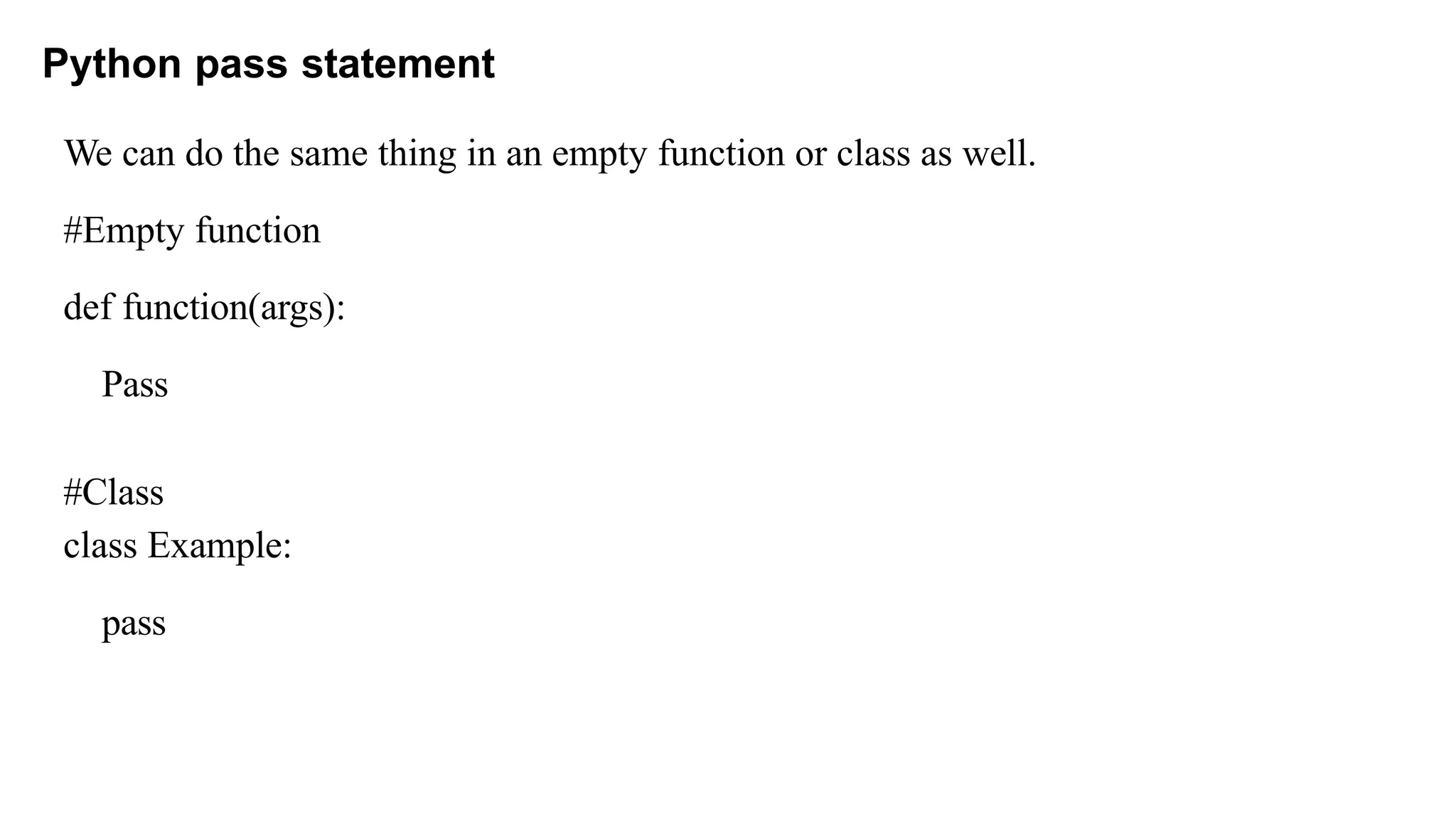
We can do the same thing in an empty function or class as well.
#Empty function
def function(args):
Pass
#Class
class Example:
pass

break continue and pass in python progran.pptx

  • 1.
    break, continue andpass in Python
  • 2.
    Python break statement ●The break is a keyword in python which is used to bring the program control out of the loop. ● The break statement breaks the loops one by one, i.e., in the case of nested loops, it breaks the inner loop first and then proceeds to outer loops.
  • 3.
    Python break statement #Use of break statement inside the loop for val in "string": if val == "i": break print(val)
  • 4.
    for i inrange(5): if i == 3: break print(i)
  • 5.
    # Example ofbreak statement for i in range(1, 6): if i == 3: print("Breaking the loop at i =", i) break # Exit the loop when i is 3 print(i)
  • 6.
  • 7.
    # Example: Skippingeven numbers in a while loop i = 0 while i < 10: i += 1 if i % 2 == 0: # Skip if the number is even continue print(i)
  • 8.
    # Example ofcontinue statement for i in range(1, 6): if i == 3: print("Skipping the value i =", i) continue # Skip the rest of the loop when i is 3 print(i)
  • 9.
    Python continue statement Thecontinue statement is used to skip the rest of the code inside a loop for the current iteration only. Loop does not terminate but continues on with the next iteration.
  • 10.
  • 11.
    Python continue statement #Program to show the use of continue statement inside loops for val in "string": if val == "i": continu e print(val)
  • 12.
    for i inrange(5): if i == 3: continue print(i)
  • 13.
    for var in"Geeksforgeeks": if var == "e": continue print(var)
  • 14.
    Python pass statement ●In Python programming, the pass statement is a null statement. ● The difference between a comment and a pass statement in Python is that while the interpreter ignores a comment entirely, pass is not ignored. ● However, nothing happens when the pass is executed. It results in no operation (NOP).
  • 15.
    Python pass statement Wegenerally use it as a placeholder. Suppose we have a loop or a function that is not implemented yet, but we want to implement it in the future. They cannot have an empty body. The interpreter would give an error. So, we use the pass statement to construct a body that does nothing.
  • 16.
    Python pass statement '''passis just a placeholder for functionality to be added later.''' sequence = {'p', 'a', 's', 's'} for val in sequence: pass
  • 17.
    1.In Conditional Statements:When handling conditions where no action is required, pass can be used to indicate that the block is intentionally left blank. python if x > 10: pass # Do nothing for now else: print("x is 10 or less") Why Use pass? •It ensures that your program runs without throwing errors in situations where a block of code is required but you haven't written it yet. •It helps in building the structure of the code first, leaving room for further implementation.
  • 18.
    Python pass statement Wecan do the same thing in an empty function or class as well. #Empty function def function(args): Pass #Class class Example: pass