Cell Phones in K-12Liz Kolb, Ph.D.University of Michiganelikeren@umich.eduhttp://cellphonesinlearning.comhttp://tiny.cc/kolbboston (presentation)Twitter:  lkolbLiz’s Mobile Business CardSend a new text:  50500In message: kolb http://contxts.com
Poll
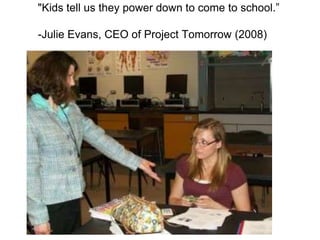
"Kids tell us they power down to come to school.”-Julie Evans, CEO of Project Tomorrow (2008)
Speak up 2010 Report 100,000+ studentsFor the first time since 2003, when asked to identify the major obstacle to prevent use of technology in school, students in grades 6–12 said “I cannot use my own cell phone, smart phone or Mp3 player in school.”
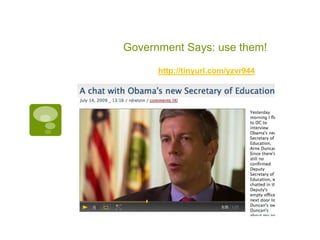
Government Says: use them!http://tinyurl.com/yzvr944
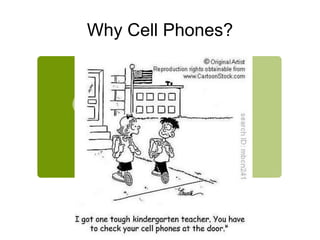
Why Cell Phones?
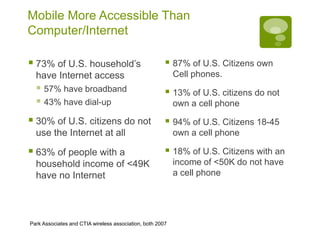
Mobile More Accessible Than Computer/Internet73% of U.S. household’s have Internet access57% have broadband43% have dial-up30% of U.S. citizens do not use the Internet at all63% of people with a household income of <49K have no Internet87% of U.S. Citizens own Cell phones. 13% of U.S. citizens do not own a cell phone94% of U.S. Citizens 18-45 own a cell phone18% of U.S. Citizens with an income of <50K do not have a cell phonePark Associates and CTIA wireless association, both 2007
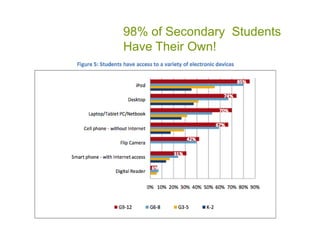
98% of Secondary  Students Have Their Own!
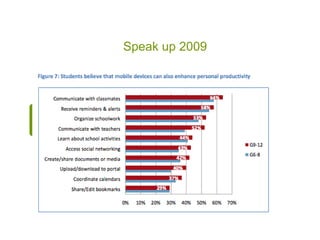
Speak up 2009
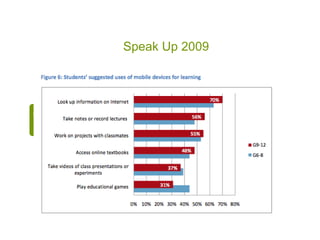
Speak Up 2009
By the end of 2010 it is estimated that…54% of 8 year olds will have their own cell phone!  Amoroso, (2006).  Tween Market has the potential to double by 2010.  Yankee Group Retrieved from www.yankeegroup.com/researchdocument.dorid=14058
Millennials Rising (Neil Howe and William Strauss)How 21st century students learn best…Collaboratively  Anytime, anyplace, anywhere, any paceStructured activitiesRelevancy with real world*They want to do this with the TECHNOLOGY of their generation
WELCOME To The Era of the…Free Agent LearnerTechnology enabled bottom up learnerANYTIMEANYWHEREANYPLACEANY PACE
Send text Query to 362661-800-2chacha
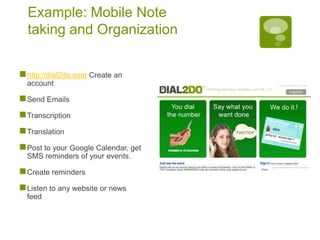
Example: Mobile Note taking and Organizationhttp://dial2do.com Create an account
Send Emails
Transcription
Translation
Post to your Google Calendar, get SMS reminders of your events.
Create reminders
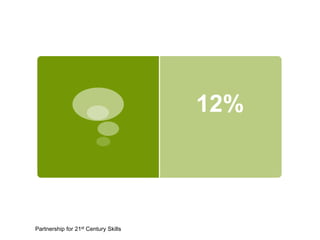
Listen to any website or news feedFundamental Shift in 21st Century WorkforceTechnological changes are displacing low-skilled workers and making room for more high-skilled creative and innovative workers. Employers are calling for schools to integrate new skills into education
Partnership for 21st Century Skills12%
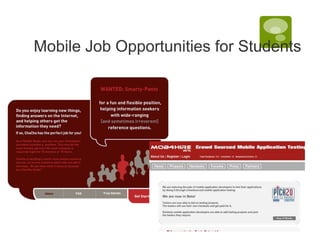
Mobile Job Opportunities for Students
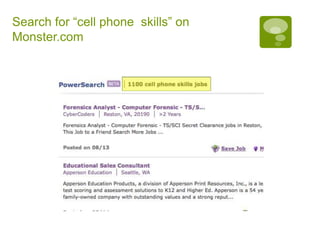
Search for “cell phone  skills” on Monster.com
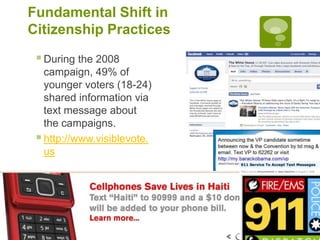
Fundamental Shift in Citizenship PracticesDuring the 2008 campaign, 49% of younger voters (18-24) shared information via text message about the campaigns.http://www.visiblevote.us
Research on cell phones in learning says…"The proportions of textisms that kids used in their sentence translations was positively linked to verbal reasoning; the more textspeak kids used, the higher their test scores”2) "The younger the age at which the kids had received mobile phones, the better their ability to read words and identify patterns of sound in speech.”http://www.britac.ac.uk/news/news.cfm/newsid/14
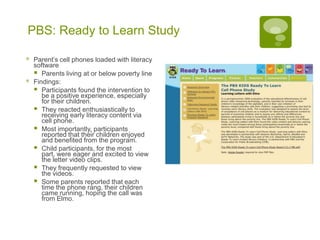
PBS: Ready to Learn StudyParent’s cell phones loaded with literacy softwareParents living at or below poverty lineFindings:Participants found the intervention to be a positive experience, especially for their children. They reacted enthusiastically to receiving early literacy content via cell phone. Most importantly, participants reported that their children enjoyed and benefited from the program. Child participants, for the most part, were eager and excited to view the letter video clips. They frequently requested to view the videos.  Some parents reported that each time the phone rang, their children came running, hoping the call was from Elmo.
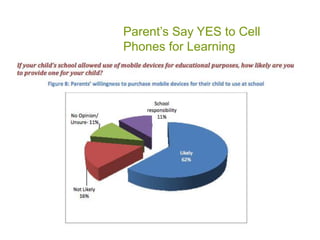
Parent’s Say YES to Cell Phones for Learning
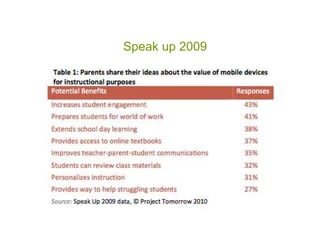
Speak up 2009
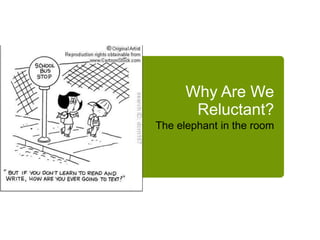
Why Are We Reluctant?The elephant in the room
 Cheating is a problem…26% of teenagers admitted to using their cell phone to store information to look at during a test or a quiz.
25% have text messaged their friends about answers during a test or quiz.
20% have searched the Internet via their mobile phone during a test or quiz.
17% have taken pictures of a test or quiz with the cell phone in order to send the pictures to their friends.Common Sense Media 09
Even MORE of a problemMost students do not envision these activities as cheating.  More than half of the students surveyed did not think these acts were serious offenses of cheating, rather they think of it as just “helping out a friend.” Common Sense Media 09
70% of U.S. schools completely ban cell phones from campus 63% of students admitted to sneaking in cell phones and using them during class anyway. In a seven class a day, five day school week, the average student sends at least three text messages per class. Common Sense Media 09
Life ConsequencesStudents are sometimes “sexting” to friends for their entertainment value, as a joke or for fun."Six teens face child porn (13 to 15) charges after being caught "sexting" each other.  Criminal Charge!IN PA, 3 girls (12, 12, 16) charged with child pornography for sexing.  Picture of  them in bras.15% of teenagers have risqué photos of themselves or their friends on their cell phones.1 in 5 sext recipients report that they have passed the images along to someone else
"If you take a picture, you can be accused of producing child pornography; if you send it to somebody, you can be accused of distributing child pornography; and if you keep a picture, you can be accused of possessing child pornography.  Anywhere along this chain of transmission of the images, you can be charged as a registered sex offender." -Parry Aftab, an Internet privacy and security lawyer.
One in three (34%) texting teens ages 16-17 say they have texted while driving.
Current Banning Structures are NOT workingStudents still “cheating”, “Off-task”, or “inappropriately” using cell phones in schoolsStudents still bring them to schools and use them when told not to.Students still do not understand consequences of their social media useStudents have no idea how to use mobile phones or social media in future job force!
Case Study:  Teacher Change
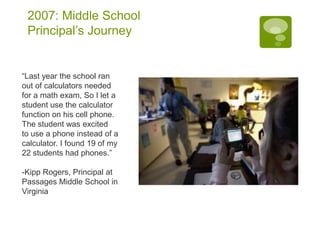
2007: Middle School Principal’s Journey“Last year the school ran out of calculators needed for a math exam, So I let a student use the calculator function on his cell phone. The student was excitedto use a phone instead of a calculator. I found 19 of my 22 students had phones.”-Kipp Rogers, Principal at Passages Middle School in Virginia
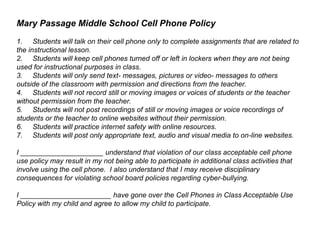
Mary Passage Middle School Cell Phone Policy 1.	Students will talk on their cell phone only to complete assignments that are related to the instructional lesson.2.	Students will keep cell phones turned off or left in lockers when they are not being used for instructional purposes in class.3.	Students will only send text- messages, pictures or video- messages to others outside of the classroom with permission and directions from the teacher.4.	Students will not record still or moving images or voices of students or the teacher without permission from the teacher.5.	Students will not post recordings of still or moving images or voice recordings of students or the teacher to online websites without their permission.6.	Students will practice internet safety with online resources.7.	Students will post only appropriate text, audio and visual media to on-line websites. I _____________________ understand that violation of our class acceptable cell phone use policy may result in my not being able to participate in additional class activities that involve using the cell phone.  I also understand that I may receive disciplinary consequences for violating school board policies regarding cyber-bullying. I _______________________ have gone over the Cell Phones in Class Acceptable Use Policy with my child and agree to allow my child to participate. 
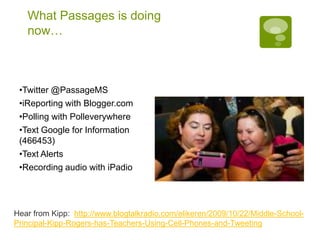
What Passages is doing now…Twitter @PassageMS
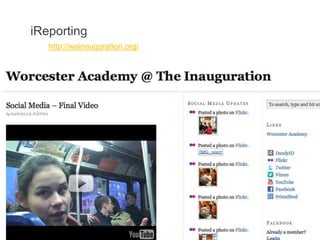
iReporting with Blogger.com
Polling with Polleverywhere
Text Google for Information (466453)
Text Alerts
Recording audio with iPadioHear from Kipp:  http://www.blogtalkradio.com/elikeren/2009/10/22/Middle-School-Principal-Kipp-Rogers-has-Teachers-Using-Cell-Phones-and-Tweeting
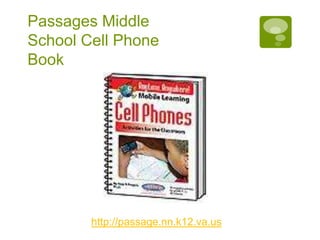
Passages Middle School Cell Phone Bookhttp://passage.nn.k12.va.us
Katie Titlerhttp://www.cellphonesinlearning.com/2010/04/spanish-teacher-in-wi-shares-how-she.html
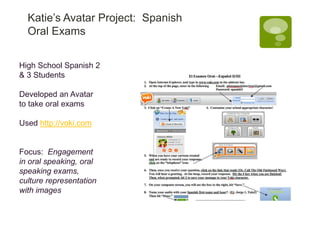
Katie’s Avatar Project:  Spanish Oral ExamsHigh School Spanish 2 & 3 StudentsDeveloped an Avatar to take oral examsUsed http://voki.comFocus:  Engagement in oral speaking, oral speaking exams, culture representation with images
Voki’s in elementaryWriting and Fluency1st and 2nd gradehttp://connect.pulaski.k12.wi.us/faculty/saellner/stuproj.cfm
Voki’s for epalshttp://anzaconnection.wikispaces.com/Introductions
Discuss Mobile Safety & Appropriate UsePart of digital footprintYour digital dossier that includes Internet activity such as social networking, email, chat rooms, YOU can’t erase this!!!  Permanent recordEVERYTHING you send via text message (pictures, videos, text, audio…etc) is PUBLIC!!!Example:  Detroit Mayor Kwame KilpatrickMobile “bullying” and “sexting” is publicMTV Special on Sextingand QuizStudents should know their plansBring in their cell phone plan and a billDiscuss what is charged and how muchGive Students a SurveyLearn more specific safety tips at Connectsafely
5 Rules for Cell Phones in SchoolsSet rules based on business regulations for cell phone use (look at business contracts)Social contract with studentsMust be on vibrate at all times
Keep them in the front of the room until you are going to use them.
All messages/media sent or published must be related to lesson.
If you are referencing someone else in class, you must have their approval before posting or publishing.
Create a permission form (in addition to the School’s AUP)Data Collection
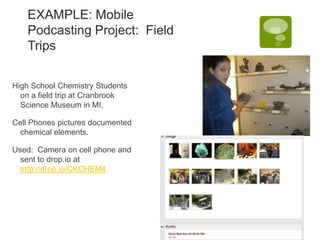
EXAMPLE: Mobile Podcasting Project:  Field TripsHigh School Chemistry Students on a field trip at Cranbrook Science Museum in MI. Cell Phones pictures documented chemical elements.Used:  Camera on cell phone and sent to drop.io at http://drop.io/CKCHEM4
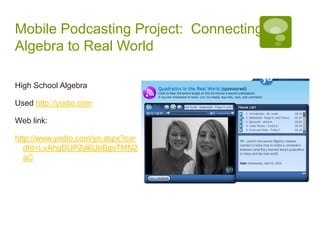
Mobile Podcasting Project:  Connecting Algebra to Real WorldHigh School AlgebraUsed http://yodio.comWeb link:http://www.yodio.com/yo.aspx?cardId=LvAhgDUPZd6UbBgsTMN2aC
Mobile Podcasting Project:  Author StudyMiddle School 6th-7th GradeUsed: http://gabcast.comWeb link:http://541sparkes.blogspot.com/2007/07/author-blog-6.html
Podcasting and Oral Interviews
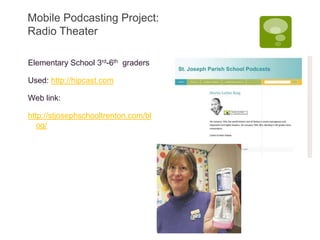
Mobile Podcasting Project:  Radio TheaterElementary School 3rd-6th  gradersUsed: http://hipcast.comWeb link:http://stjosephschooltrenton.com/blog/
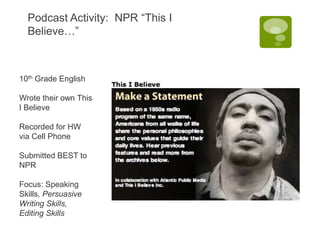
Podcast Activity:  NPR “This I Believe…”10th Grade EnglishWrote their own This I BelieveRecorded for HW via Cell PhoneSubmitted BEST to NPRFocus: Speaking Skills, Persuasive Writing Skills, Editing Skills
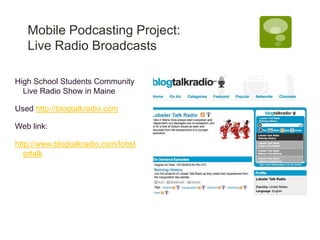
Mobile Podcasting Project:  Live Radio BroadcastsHigh School Students Community Live Radio Show in MaineUsed http://blogtalkradio.comWeb link:http://www.blogtalkradio.com/lobstertalk
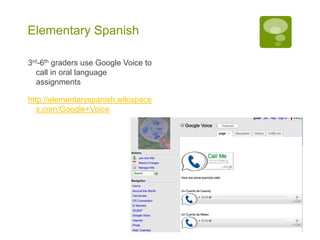
Elementary Spanish3rd-6th graders use Google Voice to call in oral language assignmentshttp://elementaryspanish.wikispaces.com/Google+Voice
Text Messaging
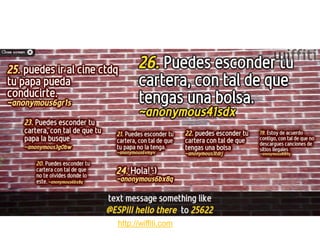
Brainstorminghttp://wiffiti.com
http://wiffiti.com
EXAMPLE: interactive brainstorming boardshttp://wiffiti.com
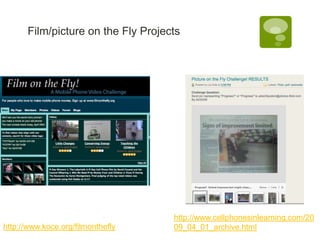
Film/picture on the Fly Projectshttp://www.cellphonesinlearning.com/2009_04_01_archive.htmlhttp://www.koce.org/filmonthefly
Text Message Alerts!Sending out mass text messages to large or small groups of people.  http://txtblaster.com
Summer Text ProgramNorwich Free Academy (Connecticut)Text of the week!Monday is vocabulary dayTuesday is science factsWednesday is mathematicsThursday is history Friday covers a variety of topics including general knowledge and cultural literacy Each day is a themeParents and Students Opt in
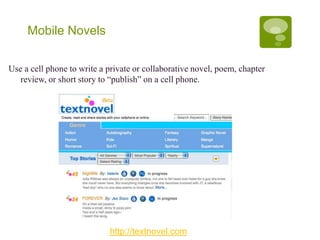
Use a cell phone to write a private or collaborative novel, poem, chapter review, or short story to “publish” on a cell phone.Mobile Novelshttp://textnovel.com
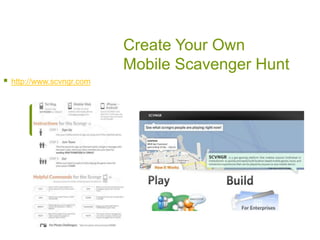
Create Your Own Mobile Scavenger Hunthttp://www.scvngr.com

Boston_Kolb

  • 1.
    Cell Phones inK-12Liz Kolb, Ph.D.University of Michiganelikeren@umich.eduhttp://cellphonesinlearning.comhttp://tiny.cc/kolbboston (presentation)Twitter: lkolbLiz’s Mobile Business CardSend a new text: 50500In message: kolb http://contxts.com
  • 2.
  • 5.
    "Kids tell usthey power down to come to school.”-Julie Evans, CEO of Project Tomorrow (2008)
  • 6.
    Speak up 2010Report 100,000+ studentsFor the first time since 2003, when asked to identify the major obstacle to prevent use of technology in school, students in grades 6–12 said “I cannot use my own cell phone, smart phone or Mp3 player in school.”
  • 7.
    Government Says: usethem!http://tinyurl.com/yzvr944
  • 8.
  • 9.
    Mobile More AccessibleThan Computer/Internet73% of U.S. household’s have Internet access57% have broadband43% have dial-up30% of U.S. citizens do not use the Internet at all63% of people with a household income of <49K have no Internet87% of U.S. Citizens own Cell phones. 13% of U.S. citizens do not own a cell phone94% of U.S. Citizens 18-45 own a cell phone18% of U.S. Citizens with an income of <50K do not have a cell phonePark Associates and CTIA wireless association, both 2007
  • 10.
    98% of Secondary Students Have Their Own!
  • 11.
  • 12.
  • 13.
    By the endof 2010 it is estimated that…54% of 8 year olds will have their own cell phone! Amoroso, (2006). Tween Market has the potential to double by 2010. Yankee Group Retrieved from www.yankeegroup.com/researchdocument.dorid=14058
  • 14.
    Millennials Rising (NeilHowe and William Strauss)How 21st century students learn best…Collaboratively Anytime, anyplace, anywhere, any paceStructured activitiesRelevancy with real world*They want to do this with the TECHNOLOGY of their generation
  • 15.
    WELCOME To TheEra of the…Free Agent LearnerTechnology enabled bottom up learnerANYTIMEANYWHEREANYPLACEANY PACE
  • 16.
    Send text Queryto 362661-800-2chacha
  • 17.
    Example: Mobile Notetaking and Organizationhttp://dial2do.com Create an account
  • 18.
  • 19.
  • 20.
  • 21.
    Post to yourGoogle Calendar, get SMS reminders of your events.
  • 22.
  • 23.
    Listen to anywebsite or news feedFundamental Shift in 21st Century WorkforceTechnological changes are displacing low-skilled workers and making room for more high-skilled creative and innovative workers. Employers are calling for schools to integrate new skills into education
  • 24.
    Partnership for 21stCentury Skills12%
  • 25.
  • 26.
    Search for “cellphone skills” on Monster.com
  • 27.
    Fundamental Shift inCitizenship PracticesDuring the 2008 campaign, 49% of younger voters (18-24) shared information via text message about the campaigns.http://www.visiblevote.us
  • 28.
    Research on cellphones in learning says…"The proportions of textisms that kids used in their sentence translations was positively linked to verbal reasoning; the more textspeak kids used, the higher their test scores”2) "The younger the age at which the kids had received mobile phones, the better their ability to read words and identify patterns of sound in speech.”http://www.britac.ac.uk/news/news.cfm/newsid/14
  • 29.
    PBS: Ready toLearn StudyParent’s cell phones loaded with literacy softwareParents living at or below poverty lineFindings:Participants found the intervention to be a positive experience, especially for their children. They reacted enthusiastically to receiving early literacy content via cell phone. Most importantly, participants reported that their children enjoyed and benefited from the program. Child participants, for the most part, were eager and excited to view the letter video clips. They frequently requested to view the videos. Some parents reported that each time the phone rang, their children came running, hoping the call was from Elmo.
  • 30.
    Parent’s Say YESto Cell Phones for Learning
  • 31.
  • 32.
    Why Are WeReluctant?The elephant in the room
  • 33.
     Cheating is aproblem…26% of teenagers admitted to using their cell phone to store information to look at during a test or a quiz.
  • 34.
    25% have textmessaged their friends about answers during a test or quiz.
  • 35.
    20% have searchedthe Internet via their mobile phone during a test or quiz.
  • 36.
    17% have takenpictures of a test or quiz with the cell phone in order to send the pictures to their friends.Common Sense Media 09
  • 37.
    Even MORE ofa problemMost students do not envision these activities as cheating. More than half of the students surveyed did not think these acts were serious offenses of cheating, rather they think of it as just “helping out a friend.” Common Sense Media 09
  • 38.
    70% of U.S.schools completely ban cell phones from campus 63% of students admitted to sneaking in cell phones and using them during class anyway. In a seven class a day, five day school week, the average student sends at least three text messages per class. Common Sense Media 09
  • 39.
    Life ConsequencesStudents aresometimes “sexting” to friends for their entertainment value, as a joke or for fun."Six teens face child porn (13 to 15) charges after being caught "sexting" each other. Criminal Charge!IN PA, 3 girls (12, 12, 16) charged with child pornography for sexing. Picture of them in bras.15% of teenagers have risqué photos of themselves or their friends on their cell phones.1 in 5 sext recipients report that they have passed the images along to someone else
  • 40.
    "If you takea picture, you can be accused of producing child pornography; if you send it to somebody, you can be accused of distributing child pornography; and if you keep a picture, you can be accused of possessing child pornography. Anywhere along this chain of transmission of the images, you can be charged as a registered sex offender." -Parry Aftab, an Internet privacy and security lawyer.
  • 41.
    One in three(34%) texting teens ages 16-17 say they have texted while driving.
  • 42.
    Current Banning Structuresare NOT workingStudents still “cheating”, “Off-task”, or “inappropriately” using cell phones in schoolsStudents still bring them to schools and use them when told not to.Students still do not understand consequences of their social media useStudents have no idea how to use mobile phones or social media in future job force!
  • 43.
    Case Study: Teacher Change
  • 44.
    2007: Middle SchoolPrincipal’s Journey“Last year the school ran out of calculators needed for a math exam, So I let a student use the calculator function on his cell phone. The student was excitedto use a phone instead of a calculator. I found 19 of my 22 students had phones.”-Kipp Rogers, Principal at Passages Middle School in Virginia
  • 45.
    Mary Passage MiddleSchool Cell Phone Policy 1. Students will talk on their cell phone only to complete assignments that are related to the instructional lesson.2. Students will keep cell phones turned off or left in lockers when they are not being used for instructional purposes in class.3. Students will only send text- messages, pictures or video- messages to others outside of the classroom with permission and directions from the teacher.4. Students will not record still or moving images or voices of students or the teacher without permission from the teacher.5. Students will not post recordings of still or moving images or voice recordings of students or the teacher to online websites without their permission.6. Students will practice internet safety with online resources.7. Students will post only appropriate text, audio and visual media to on-line websites. I _____________________ understand that violation of our class acceptable cell phone use policy may result in my not being able to participate in additional class activities that involve using the cell phone. I also understand that I may receive disciplinary consequences for violating school board policies regarding cyber-bullying. I _______________________ have gone over the Cell Phones in Class Acceptable Use Policy with my child and agree to allow my child to participate. 
  • 46.
    What Passages isdoing now…Twitter @PassageMS
  • 47.
  • 48.
  • 49.
    Text Google forInformation (466453)
  • 50.
  • 51.
    Recording audio withiPadioHear from Kipp: http://www.blogtalkradio.com/elikeren/2009/10/22/Middle-School-Principal-Kipp-Rogers-has-Teachers-Using-Cell-Phones-and-Tweeting
  • 52.
    Passages Middle SchoolCell Phone Bookhttp://passage.nn.k12.va.us
  • 53.
  • 54.
    Katie’s Avatar Project: Spanish Oral ExamsHigh School Spanish 2 & 3 StudentsDeveloped an Avatar to take oral examsUsed http://voki.comFocus: Engagement in oral speaking, oral speaking exams, culture representation with images
  • 56.
    Voki’s in elementaryWritingand Fluency1st and 2nd gradehttp://connect.pulaski.k12.wi.us/faculty/saellner/stuproj.cfm
  • 57.
  • 58.
    Discuss Mobile Safety& Appropriate UsePart of digital footprintYour digital dossier that includes Internet activity such as social networking, email, chat rooms, YOU can’t erase this!!! Permanent recordEVERYTHING you send via text message (pictures, videos, text, audio…etc) is PUBLIC!!!Example: Detroit Mayor Kwame KilpatrickMobile “bullying” and “sexting” is publicMTV Special on Sextingand QuizStudents should know their plansBring in their cell phone plan and a billDiscuss what is charged and how muchGive Students a SurveyLearn more specific safety tips at Connectsafely
  • 59.
    5 Rules forCell Phones in SchoolsSet rules based on business regulations for cell phone use (look at business contracts)Social contract with studentsMust be on vibrate at all times
  • 60.
    Keep them inthe front of the room until you are going to use them.
  • 61.
    All messages/media sentor published must be related to lesson.
  • 62.
    If you arereferencing someone else in class, you must have their approval before posting or publishing.
  • 63.
    Create a permissionform (in addition to the School’s AUP)Data Collection
  • 64.
    EXAMPLE: Mobile PodcastingProject: Field TripsHigh School Chemistry Students on a field trip at Cranbrook Science Museum in MI. Cell Phones pictures documented chemical elements.Used: Camera on cell phone and sent to drop.io at http://drop.io/CKCHEM4
  • 65.
    Mobile Podcasting Project: Connecting Algebra to Real WorldHigh School AlgebraUsed http://yodio.comWeb link:http://www.yodio.com/yo.aspx?cardId=LvAhgDUPZd6UbBgsTMN2aC
  • 66.
    Mobile Podcasting Project: Author StudyMiddle School 6th-7th GradeUsed: http://gabcast.comWeb link:http://541sparkes.blogspot.com/2007/07/author-blog-6.html
  • 67.
  • 68.
    Mobile Podcasting Project: Radio TheaterElementary School 3rd-6th gradersUsed: http://hipcast.comWeb link:http://stjosephschooltrenton.com/blog/
  • 69.
    Podcast Activity: NPR “This I Believe…”10th Grade EnglishWrote their own This I BelieveRecorded for HW via Cell PhoneSubmitted BEST to NPRFocus: Speaking Skills, Persuasive Writing Skills, Editing Skills
  • 70.
    Mobile Podcasting Project: Live Radio BroadcastsHigh School Students Community Live Radio Show in MaineUsed http://blogtalkradio.comWeb link:http://www.blogtalkradio.com/lobstertalk
  • 71.
    Elementary Spanish3rd-6th gradersuse Google Voice to call in oral language assignmentshttp://elementaryspanish.wikispaces.com/Google+Voice
  • 72.
  • 73.
  • 74.
  • 75.
    EXAMPLE: interactive brainstormingboardshttp://wiffiti.com
  • 76.
    Film/picture on theFly Projectshttp://www.cellphonesinlearning.com/2009_04_01_archive.htmlhttp://www.koce.org/filmonthefly
  • 77.
    Text Message Alerts!Sendingout mass text messages to large or small groups of people. http://txtblaster.com
  • 78.
    Summer Text ProgramNorwichFree Academy (Connecticut)Text of the week!Monday is vocabulary dayTuesday is science factsWednesday is mathematicsThursday is history Friday covers a variety of topics including general knowledge and cultural literacy Each day is a themeParents and Students Opt in
  • 79.
    Use a cellphone to write a private or collaborative novel, poem, chapter review, or short story to “publish” on a cell phone.Mobile Novelshttp://textnovel.com
  • 80.
    Create Your OwnMobile Scavenger Hunthttp://www.scvngr.com

Editor's Notes

  • #6 70% of schools have policy against cell phones
  • #8 http://www.pbs.org/wgbh/pages/frontline/digitalnation/blog/2009/07/a-chat-with-obamas-new-secretary-of-education.html
  • #10 http://www.marketingcharts.com/interactive/employment-age-top-factors-in-cell-phone-pda-use-9678/marist-poll-have-cell-phone-us-residents-demographics-march-2009jpg/http://www.marketingcharts.com/interactive/home-internet-access-in-us-still-room-for-growth-8280/nielsen-internet-access-household-income-february-2009jpg/
  • #11 2010 Speak Up Report
  • #19 (Are They Really Ready to Work, 2006).
  • #20 of U.S. adult population believe that students are being prepared for the 21st century workforce
  • #23 (Smith, 2008).
  • #24 2005 study follow up 2009 British Academy at Coventry Univ. phonological awareness
  • #25 http://pbskids.org/read/research/cellphone.html
  • #29 Study by Common Sense Media 2009
  • #30 Study by Common Sense Media 2009
  • #31 Common Sense Media 09
  • #32 http://www.cnn.com/video/#/video/bestoftv/2009/01/15/pn.sexting.teens.cnn http://www.philly.com/philly/business/technology/81726862.htmlhttp://www.mtv.com/news/articles/1631891/20100212/index.jhtml
  • #33 http://www.mtv.com/news/articles/1631891/20100212/index.jhtml
  • #34 Lenhart et al, 2010 PEW Studyhttp://news.yahoo.com/video/us-15749625/19858592
  • #37 Student Statistics (850 6th-9th grade students)
  • #40 http://www.teamvistech.com/index.php/mobile-learning-using-cell-phones.html
  • #49 Lynn Sullivan
  • #59 Middle School Science “What do you know about elements, compounds, and mixtures?”http://wiffiti.com/screen/?id=eb633c3a-5c10-4f91-805c-7eb986e68934
  • #66 http://web20edu.com/2010/03/31/scvngr-a-cool-tool-for-teaching-in-the-classroom/
  • #70 http://wainauguration.org/
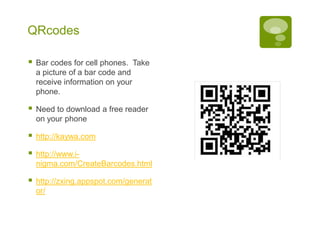
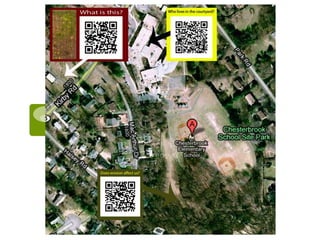
  • #77 4th gradehttp://www.fcps.edu/ChesterbrookES/qrcodes.htmChesterbrook&apos;s Living ClassroomsThe Living Classroom across Kirby Road deals with trees particular to Virginia, and is associated with the Fourth grade. Our second Living Classroom is down near a stream
  • #79 http://www.youtube.com/watch?v=1M6ZqTQWjeo&amp;feature=player_embedded