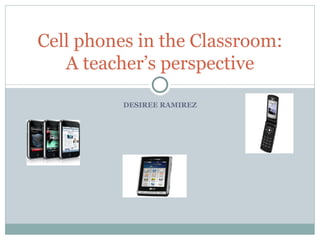
DESIREE RAMIREZ Cell phones in the Classroom: A teacher’s perspective
1.5 BILLION CELL PHONES  WORLD WIDE
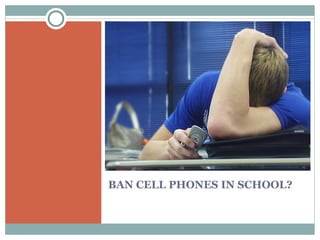
BAN CELL PHONES IN SCHOOL?
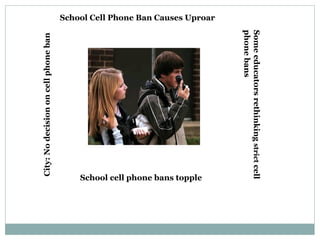
School Cell Phone Ban Causes Uproar City: No decision on cell phone ban School cell phone bans topple Some educators rethinking  strict  cell phone bans
Introduction Whether or not cell phones belong in schools.  Need to reach a consensus between parents, students, and educators regarding their use in schools.  Many educational advantages  Some uses are definitely unacceptable.
Why? Enhance teaching and learning Harness the educational power of technology Technology enhanced education Learning in entertainment Round the clock learning
10 Ideas for Using Cell Phones in Education Student response polling or pop quizzes (no need to invest in additional devices)  Use SMS to find definitions, currency conversion, math equations, translation and more  Use as an internet browser to access endless information  Research  Read news articles and current events  Read books  Download and use education programs such as Google Maps and use as GPS  Use as a digital or video camera to accompany school projects, publishing, etc.  Educate students on appropriate and acceptable social use  Use the voice technology to share engaging lectures or lessons
Why not? Cheating Privacy non-traditional learning SMS (texting) vs. Grammar Threat- what happens to the teacher? Distraction Security/Theft “ because someone can learn from a device doesn’t mean they will learn from the device”
Kids Bring Cell Phones to School  Some people think that, kids will use cell phone to cheat on tests and show cell phones off in school. While kids are in school, teachers do not want parents to call their kids in the middle of class. But teachers think kids will talk with other kids during classes. I think some kids will not do anything shocking on cell phone in school.   If kids could bring cell phone to school, the teachers should have rules for the classroom about cell phones. Kids that use their phone for non emergency uses only, students phone can be taken and the parents have to pick it up at school . Source :write.teachingmatters.org/node/227
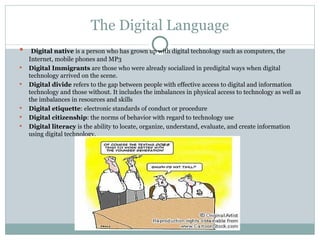
The Digital Language Digital native  is a person who has grown up with digital technology such as computers, the Internet, mobile phones and MP3 Digital Immigrants  are those who were already socialized in predigital ways when digital technology arrived on the scene. Digital divide  refers to the gap between people with effective access to digital and information technology and those without. It includes the imbalances in physical access to technology as well as the imbalances in resources and skills Digital etiquette : electronic standards of conduct or procedure Digital citizenship : the norms of behavior with regard to technology use Digital literacy  is the ability to locate, organize, understand, evaluate, and create information using digital technology.
Top 10 Cell Phone Etiquette Rules People Still Break Talking too loudly Holding inappropriate conversations in public. Rudely interrupting conversations Checking your phone  Texting while driving Texting while talking Texting small talk Loud and annoying ringtones Disturbing live performances Location location location

Outline Cellphones In The Classroom

  • 1.
    DESIREE RAMIREZ Cellphones in the Classroom: A teacher’s perspective
  • 2.
    1.5 BILLION CELLPHONES WORLD WIDE
  • 3.
    BAN CELL PHONESIN SCHOOL?
  • 4.
    School Cell PhoneBan Causes Uproar City: No decision on cell phone ban School cell phone bans topple Some educators rethinking strict cell phone bans
  • 5.
    Introduction Whether ornot cell phones belong in schools. Need to reach a consensus between parents, students, and educators regarding their use in schools. Many educational advantages Some uses are definitely unacceptable.
  • 6.
    Why? Enhance teachingand learning Harness the educational power of technology Technology enhanced education Learning in entertainment Round the clock learning
  • 7.
    10 Ideas forUsing Cell Phones in Education Student response polling or pop quizzes (no need to invest in additional devices) Use SMS to find definitions, currency conversion, math equations, translation and more Use as an internet browser to access endless information Research Read news articles and current events Read books Download and use education programs such as Google Maps and use as GPS Use as a digital or video camera to accompany school projects, publishing, etc. Educate students on appropriate and acceptable social use Use the voice technology to share engaging lectures or lessons
  • 8.
    Why not? CheatingPrivacy non-traditional learning SMS (texting) vs. Grammar Threat- what happens to the teacher? Distraction Security/Theft “ because someone can learn from a device doesn’t mean they will learn from the device”
  • 9.
    Kids Bring CellPhones to School Some people think that, kids will use cell phone to cheat on tests and show cell phones off in school. While kids are in school, teachers do not want parents to call their kids in the middle of class. But teachers think kids will talk with other kids during classes. I think some kids will not do anything shocking on cell phone in school.   If kids could bring cell phone to school, the teachers should have rules for the classroom about cell phones. Kids that use their phone for non emergency uses only, students phone can be taken and the parents have to pick it up at school . Source :write.teachingmatters.org/node/227
  • 10.
    The Digital LanguageDigital native is a person who has grown up with digital technology such as computers, the Internet, mobile phones and MP3 Digital Immigrants are those who were already socialized in predigital ways when digital technology arrived on the scene. Digital divide refers to the gap between people with effective access to digital and information technology and those without. It includes the imbalances in physical access to technology as well as the imbalances in resources and skills Digital etiquette : electronic standards of conduct or procedure Digital citizenship : the norms of behavior with regard to technology use Digital literacy is the ability to locate, organize, understand, evaluate, and create information using digital technology.
  • 11.
    Top 10 CellPhone Etiquette Rules People Still Break Talking too loudly Holding inappropriate conversations in public. Rudely interrupting conversations Checking your phone Texting while driving Texting while talking Texting small talk Loud and annoying ringtones Disturbing live performances Location location location