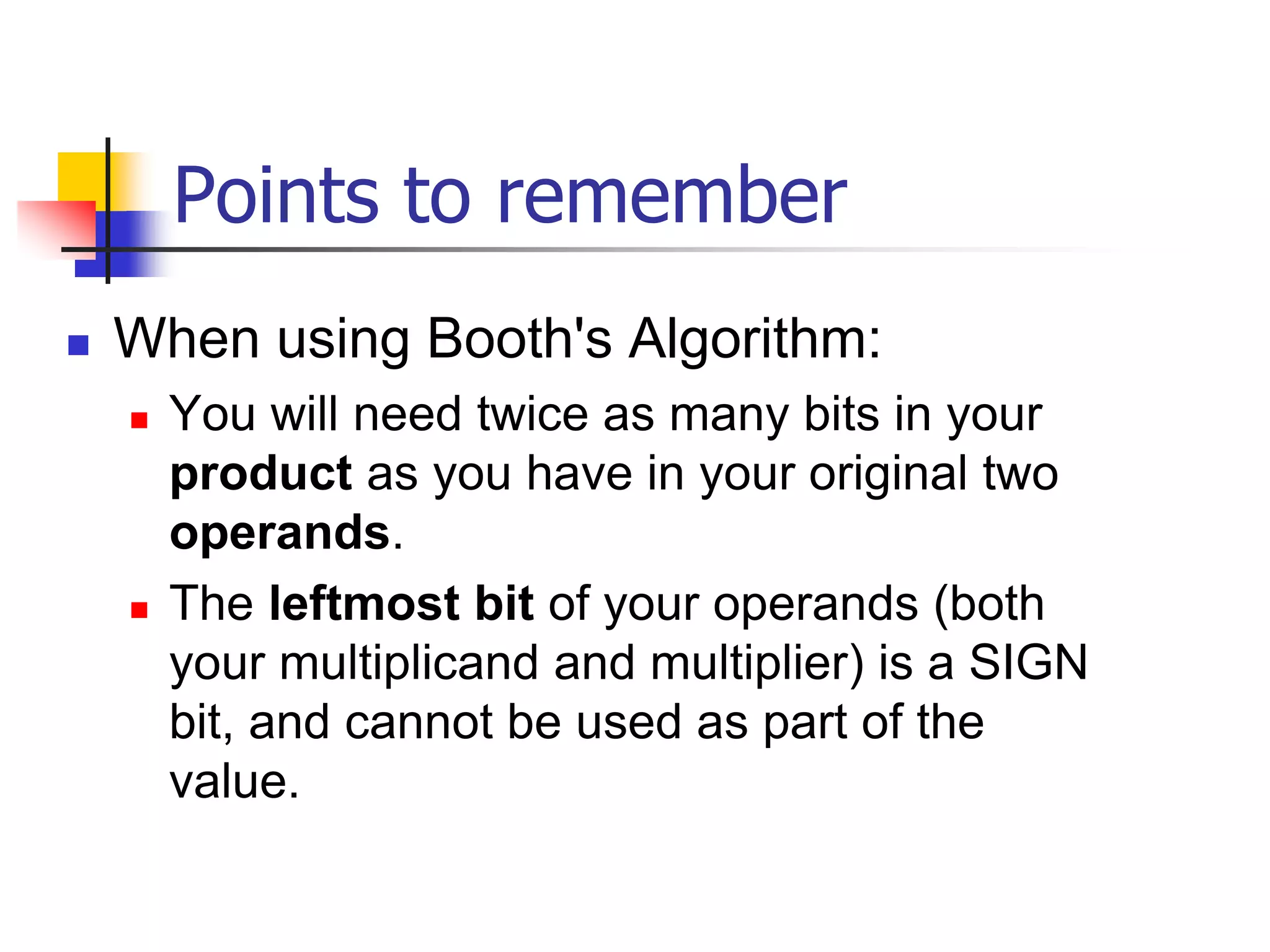
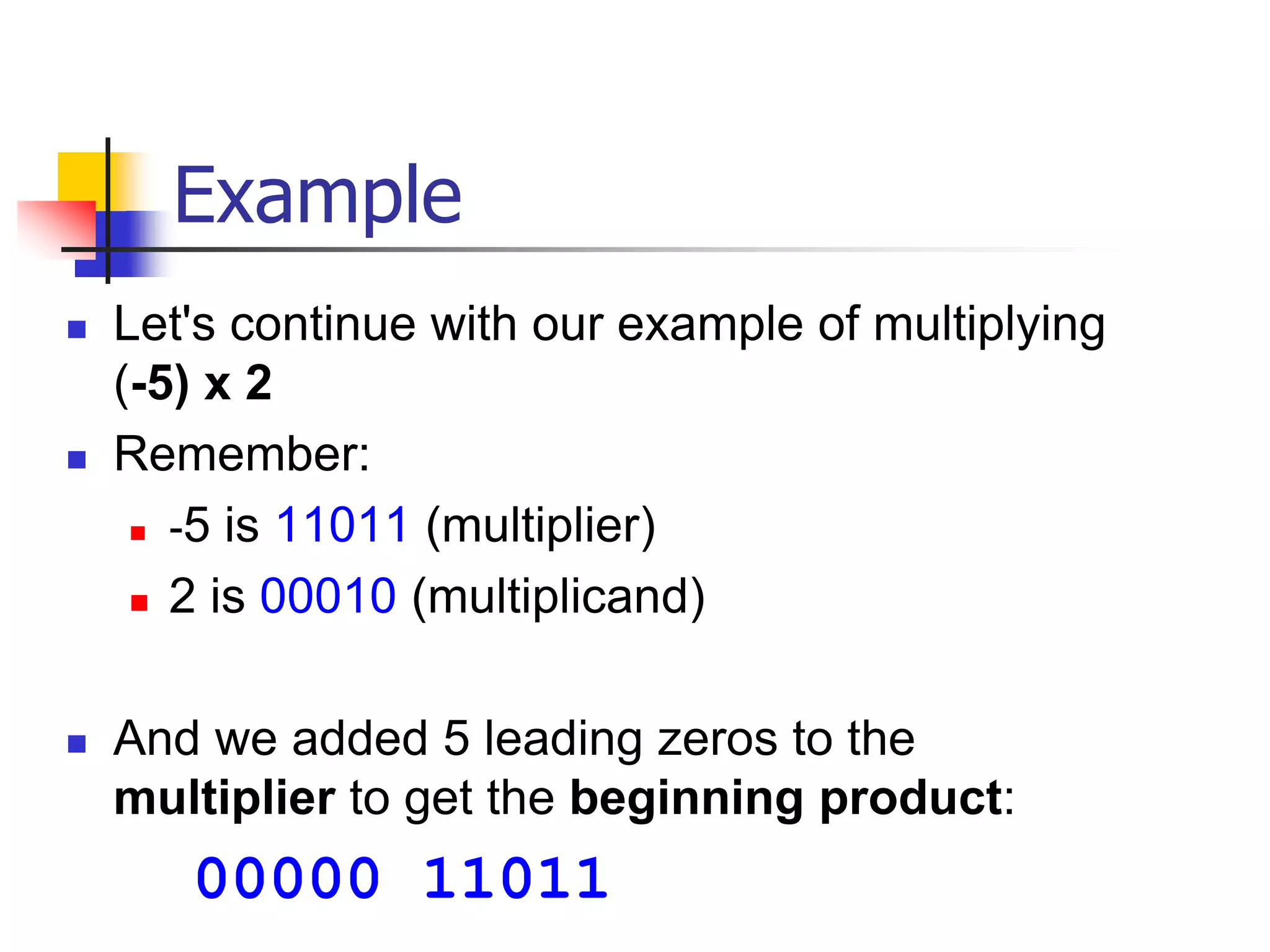
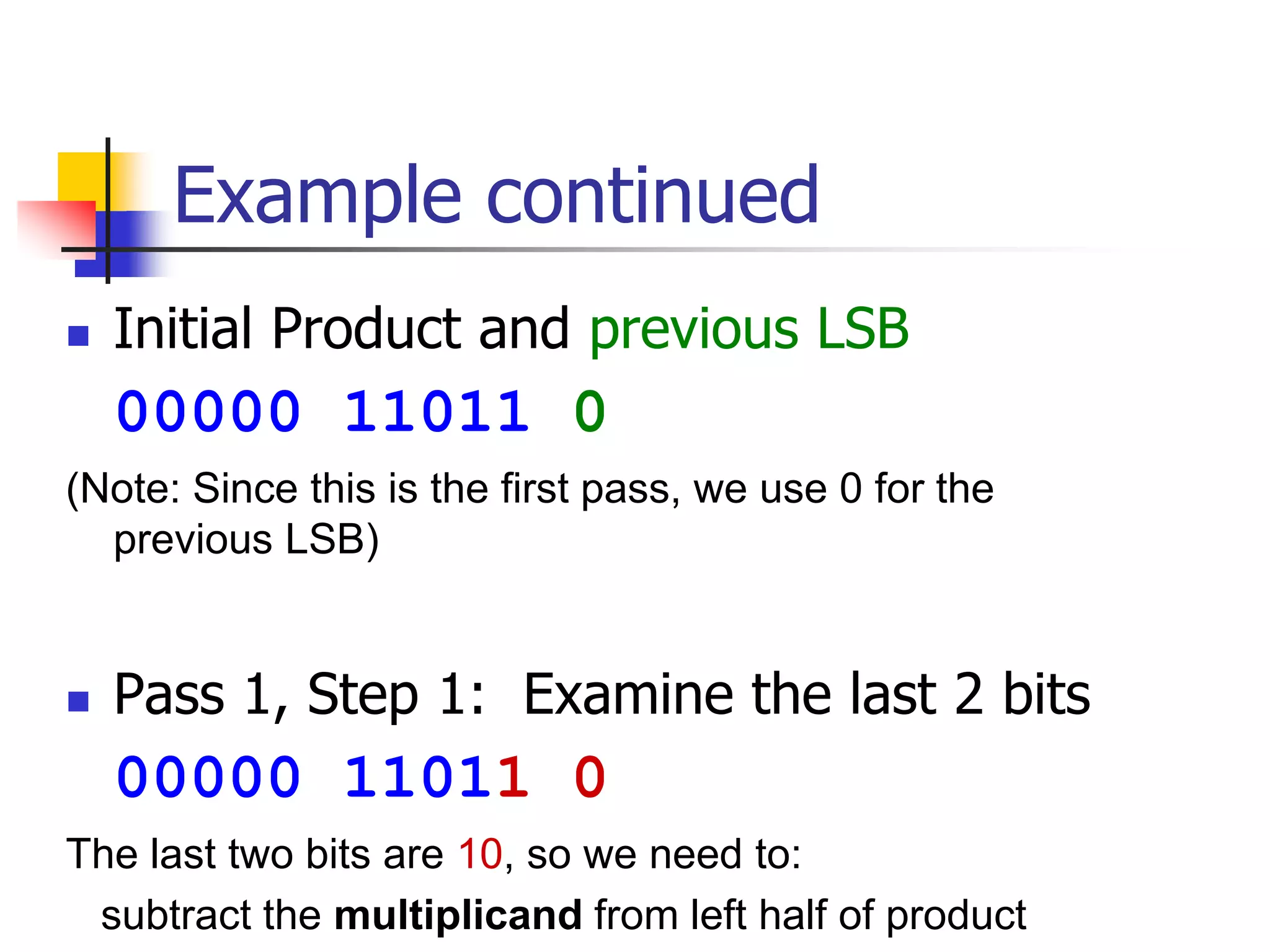
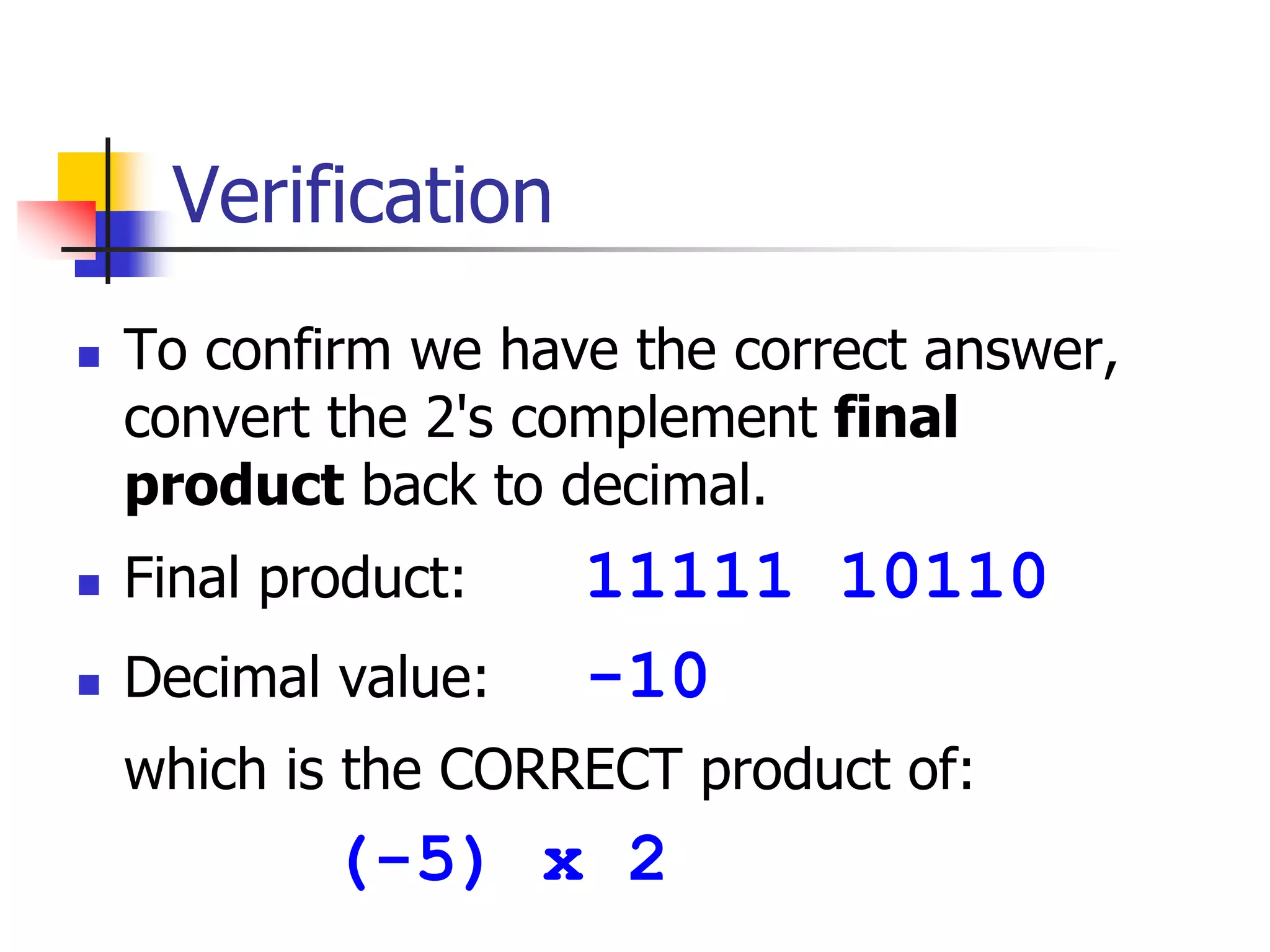
Booth's algorithm is used to multiply two's complement binary numbers. It requires twice as many bits in the product as the original operands. The steps are: 1) decide which number is the multiplier and multiplicand, 2) add leading zeros to the multiplier equal to the number of bits in the operands, 3) perform successive passes examining the last two bits of the product to determine whether to add, subtract, or do nothing to the left half, and 4) arithmetic right shift the product. An example multiplies -5 x 2 in 5 bits, requiring 5 passes to get the final product of 11111 10110 or -10 in decimal.