Managing Financial Transactions, 
Bookkeeping Basics 
and Small Business Tax Tips 
Wray Rives, CPA CGMA 
Certified Public Accountant 
Chartered Global Management Accountant
Topics 
• What it means to be in business for 
yourself 
• Getting paid and paying others 
• Dealing with independent contractors 
• Bookkeeping – the simplified version 
• Handling the more confusing deductions 
• Taxes 
• Tips
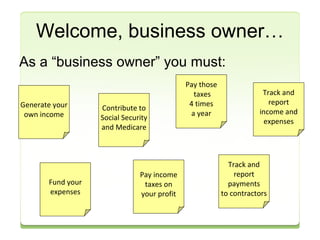
Welcome, business owner… 
As a “business owner” you must: 
Generate your 
own income 
Fund your 
expenses 
Track and 
report 
income and 
expenses 
Contribute to 
Social Security 
and Medicare 
Pay income 
taxes on 
your profit 
Pay those 
taxes 
4 times 
a year 
Track and 
report 
payments 
to contractors
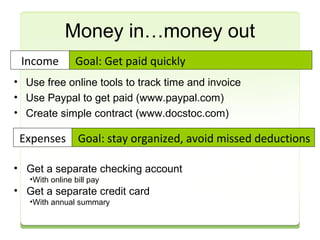
Money in…money out 
Goal: Get paid quickly 
Income 
• Use free online tools to track time and invoice 
• Use Paypal to get paid (www.paypal.com) 
• Create simple contract (www.docstoc.com) 
Goal: stay organized, Expenses avoid missed deductions 
• Get a separate checking account 
•With online bill pay 
• Get a separate credit card 
•With annual summary
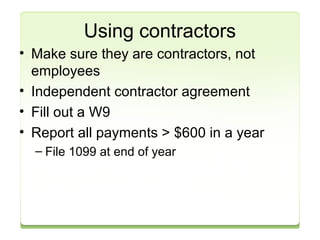
Using contractors 
• Make sure they are contractors, not 
employees 
• Independent contractor agreement 
• Fill out a W9 
• Report all payments > $600 in a year 
– File 1099 at end of year
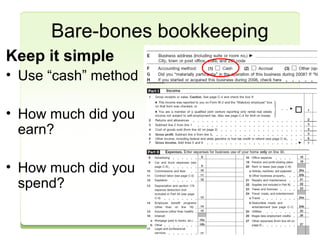
Bare-bones bookkeeping 
Keep it simple 
• Use “cash” method 
• How much did you 
earn? 
• How much did you 
spend?
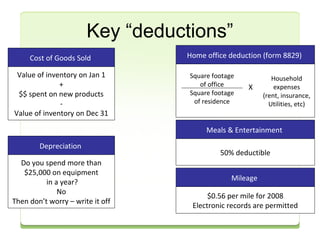
Key “deductions” 
Home office deduction (form 8829) 
Meals & Entertainment 
50% deductible 
Cost of Goods Sold 
Depreciation 
Do you spend more than 
$25,000 on equipment 
in a year? 
No 
Then don’t worry – write it off 
Mileage 
$0.56 per mile for 2008 
Electronic records are permitted 
Value of inventory on Jan 1 
+ 
$$ spent on new products 
- 
Value of inventory on Dec 31 
Square footage 
of office 
Square footage 
of residence 
X 
Household 
expenses 
(rent, insurance, 
Utilities, etc)
Taxes 
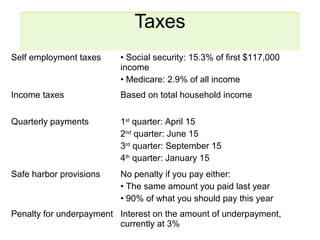
Self employment taxes • Social security: 15.3% of first $117,000 
income 
• Medicare: 2.9% of all income 
Income taxes Based on total household income 
Quarterly payments 1st quarter: April 15 
2nd quarter: June 15 
3rd quarter: September 15 
4th quarter: January 15 
Safe harbor provisions No penalty if you pay either: 
• The same amount you paid last year 
• 90% of what you should pay this year 
Penalty for underpayment Interest on the amount of underpayment, 
currently at 3%
Tips 
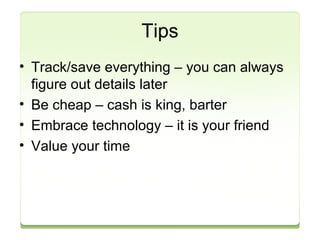
• Track/save everything – you can always 
figure out details later 
• Be cheap – cash is king, barter 
• Embrace technology – it is your friend 
• Value your time
Wray Rives, CPA CGMA 
www.NeedaCPA.com 
• wray@NeedaCPA.com 
• @rivescpa

Bookkeeping primer

  • 1.
    Managing Financial Transactions, Bookkeeping Basics and Small Business Tax Tips Wray Rives, CPA CGMA Certified Public Accountant Chartered Global Management Accountant
  • 2.
    Topics • Whatit means to be in business for yourself • Getting paid and paying others • Dealing with independent contractors • Bookkeeping – the simplified version • Handling the more confusing deductions • Taxes • Tips
  • 3.
    Welcome, business owner… As a “business owner” you must: Generate your own income Fund your expenses Track and report income and expenses Contribute to Social Security and Medicare Pay income taxes on your profit Pay those taxes 4 times a year Track and report payments to contractors
  • 4.
    Money in…money out Goal: Get paid quickly Income • Use free online tools to track time and invoice • Use Paypal to get paid (www.paypal.com) • Create simple contract (www.docstoc.com) Goal: stay organized, Expenses avoid missed deductions • Get a separate checking account •With online bill pay • Get a separate credit card •With annual summary
  • 5.
    Using contractors •Make sure they are contractors, not employees • Independent contractor agreement • Fill out a W9 • Report all payments > $600 in a year – File 1099 at end of year
  • 6.
    Bare-bones bookkeeping Keepit simple • Use “cash” method • How much did you earn? • How much did you spend?
  • 7.
    Key “deductions” Homeoffice deduction (form 8829) Meals & Entertainment 50% deductible Cost of Goods Sold Depreciation Do you spend more than $25,000 on equipment in a year? No Then don’t worry – write it off Mileage $0.56 per mile for 2008 Electronic records are permitted Value of inventory on Jan 1 + $$ spent on new products - Value of inventory on Dec 31 Square footage of office Square footage of residence X Household expenses (rent, insurance, Utilities, etc)
  • 8.
    Taxes Self employmenttaxes • Social security: 15.3% of first $117,000 income • Medicare: 2.9% of all income Income taxes Based on total household income Quarterly payments 1st quarter: April 15 2nd quarter: June 15 3rd quarter: September 15 4th quarter: January 15 Safe harbor provisions No penalty if you pay either: • The same amount you paid last year • 90% of what you should pay this year Penalty for underpayment Interest on the amount of underpayment, currently at 3%
  • 9.
    Tips • Track/saveeverything – you can always figure out details later • Be cheap – cash is king, barter • Embrace technology – it is your friend • Value your time
  • 10.
    Wray Rives, CPACGMA www.NeedaCPA.com • wray@NeedaCPA.com • @rivescpa

Editor's Notes

  • #7 - No assets, liabilities and owners equity - No debits and credits - No chart of accounts - No cash vs accrual