2nd ICRS Summit: The Ageing Cartilage
Zermatt, Switzerland

15 and 16 January 2015


What happens with injured and
ageing subchondral bone?
Thoughts on Osteochondral Unit, Subchondral Activity, OA and Ageing
Prof. Vladimir Bobic, MD, FRCSEd
Consultant Orthopaedic Knee Surgeon
Chester Knee Clinic @ Nuffield Health, The Grosvenor Hospital Chester, United Kingdom
… the short answer is: we don’t really know, but this is a great opportunity to talk about this issue …
… so this is a story about normal wear and tear, injuries, repair and ageing …
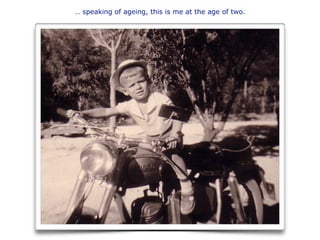
… speaking of ageing, this is me at the age of two.
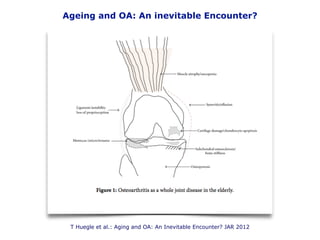
Ageing and OA: An inevitable Encounter?
T Huegle et al.: Aging and OA: An Inevitable Encounter? JAR 2012
Radin et al. focused on subchondral role as an effective shock absorber. They
found shear stress in the articular cartilage always occurring whenever there is a
discontinuity or substantial gradient in stiffness of the subchondral plate. In
former studies finite element analysis showed increasing stress in the cartilage subsequent
to subchondral plate stiffening. The fact that these changes occurred without any
evidence of metabolic or inflammatory changes implied that the latter follow the
mechanical changes, first in the bone and than in the cartilage! December 1986.
The Role of Subchondral Bone (1986)
CKC UK
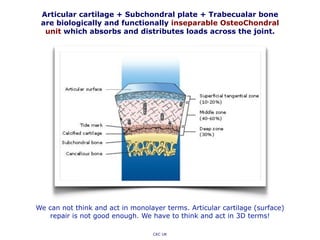
Articular cartilage + Subchondral plate + Trabecualar bone
are biologically and functionally inseparable OsteoChondral
unit which absorbs and distributes loads across the joint.
CKC UK
We can not think and act in monolayer terms. Articular cartilage (surface)
repair is not good enough. We have to think and act in 3D terms!
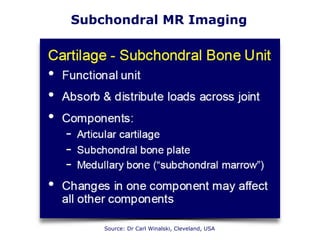
Subchondral MR Imaging
Source: Dr Carl Winalski, Cleveland, USA
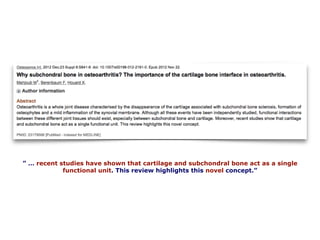
” … recent studies have shown that cartilage and subchondral bone act as a single
functional unit. This review highlights this novel concept.”
10
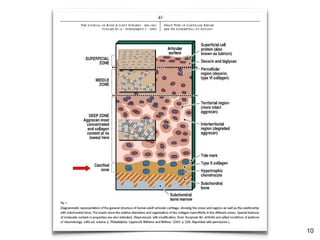
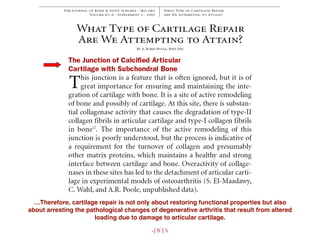
…Therefore, cartilage repair is not only about restoring functional properties but also
about arresting the pathological changes of degenerative arthritis that result from altered
loading due to damage to articular cartilage.
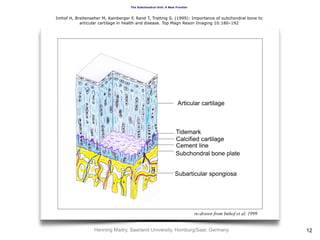
The Subchondral Unit: A New Frontier
re-drawn from Imhof et al. 1999
Henning Madry, Saarland University, Homburg/Saar, Germany
Imhof H, Breitenseher M, Kainberger F, Rand T, Trattnig S. (1999): Importance of subchondral bone to
articular cartilage in health and disease. Top Magn Reson Imaging 10:180–192
12
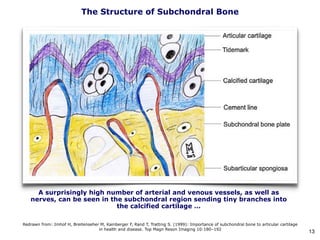
The Structure of Subchondral Bone
Redrawn from: Imhof H, Breitenseher M, Kainberger F, Rand T, Trattnig S. (1999): Importance of subchondral bone to articular cartilage
in health and disease. Top Magn Reson Imaging 10:180–192
A surprisingly high number of arterial and venous vessels, as well as
nerves, can be seen in the subchondral region sending tiny branches into
the calcified cartilage …
13
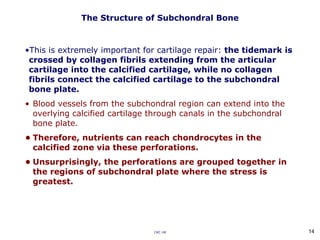
The Structure of Subchondral Bone
•This is extremely important for cartilage repair: the tidemark is
crossed by collagen fibrils extending from the articular
cartilage into the calcified cartilage, while no collagen
fibrils connect the calcified cartilage to the subchondral
bone plate.
• Blood vessels from the subchondral region can extend into the
overlying calcified cartilage through canals in the subchondral
bone plate.
• Therefore, nutrients can reach chondrocytes in the
calcified zone via these perforations.
• Unsurprisingly, the perforations are grouped together in
the regions of subchondral plate where the stress is
greatest.
CKC UK 14
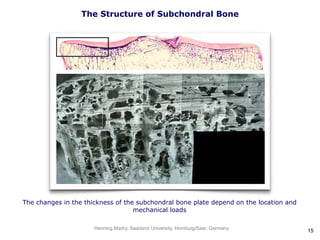
The Structure of Subchondral Bone
The changes in the thickness of the subchondral bone plate depend on the location and
mechanical loads
Henning Madry, Saarland University, Homburg/Saar, Germany
15
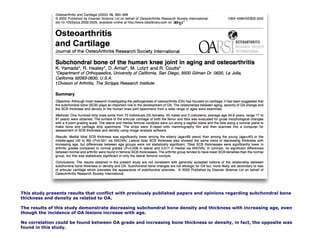
This study presents results that conflict with previously published papers and opinions regarding subchondral bone
thickness and density as related to OA.
The results of this study demonstrate decreasing subchondral bone density and thickness with increasing age, even
though the incidence of OA lesions increase with age.
No correlation could be found between OA grade and increasing bone thickness or density, in fact, the opposite was
found in this study.
• VB to DR email, 2006:
• Subject: SONK and all that jazz (re confusing MRI
appearance of different subchondral events):
• VB: “ There is something there and it seems it’s all
connected. We are probably looking at different stages of
the same thing:
• … it seems that subchondral repair and remodelling are a
common denominator, some of which is successful
(traumatic bone bruising, transient osteoporosis, SONK),
partially successful (persisting bone marrow oedema) or
not at all (progressive chronic bone marrow oedema,
subchondral cysts, AVN, osteonecrosis, and in the end
secondary osteoarthrosis). I don’t know, for some people
most of this is probably at various places on the same
timeline, but I am not sure if that makes sense.”
• DR: “The terminology is a bit confusing … “
• I would like to thank Dr David Ritchie and Dr Carl
Winalski for their unreserved help and patience over
many years (“Vladimir, stop staring at MR images and
stick to your day job.”)
Subchondral Events in a Nutshell:
The Terminology is a Bit Confusing …
• Disclaimer: Arthrex (OATS inventor), principal investigator for UK BioPoly clinical trial, former clinical advisor for
TiGenix CCI.
• This is a non-EBM (orthopaedic surgeon’s) clinical overview of “subchondral events”, based on our clinical and
MR imaging experience since 1996.
• We have a problem at the outset: what are we actually talking about? How
do we treat a wide range of osteochondral problems which are still poorly
defined and understood?
• Bone Bruise (BB): a transient traumatic event = a series of trabecular
microfractures. No surgical treatment required.
• Bone Marrow Oedema (BME): MRI evidence of increased subchondral
metabolic activity. Remodelling or reparative process, or a failure of
subchondral remodelling or repair = a degenerative process? Initially a
reparative process, but if persistent it is probably a degenerative process (often
associated with initial formation of subchondral cysts, which are a consequence
of failed local repair). No surgical treatment required, but …
• Transient Osteoporosis (TOP): no history of trauma, the knee pain is
spontaneous and disabling, exacerbated on weight-bearing. Usually gets better
over many months, back to normal MRI and clinically. When multiple joints are
involved (in approx. 40% of patients) the condition is referred to as Transient
Regional Migratory Osteoporosis (TRMO). No surgical treatment required.
CKC UK
No Edema in Bone Marrow Edema!
• The correlation of bone marrow lesions with pain in knee OA has been
convincingly established. Here, another compelling association is established
between bone marrow (edema) lesions and risk for progression of knee OA.
What remains to be established is the cause-and-effect relationship between
the various variables.
• It is interesting that, histologically, the lesions that appear as bone
marrow edema on MRI contain very little edema at all. Rather, they
demonstrate fibrosis, osteonecrosis, and extensive bony
REMODELLING and are likely the result of contusions and focal
microfractures.
• Also, it is not clear, whether an initial injury to articular cartilage
leads to mechanical malalignment and subsequent subchondral bone
destruction or rather subchondral bone damage leads to mechanical
malalignment and subsequent articular cartilage destruction.
Does bone marrow edema predict progression of knee arthritis?
A summary of Felson’s 2001 and 2003 AIM articles written by Jon Gilles, M.D., The John Hopkins Arthritis Center, 2003.
http://www.hopkins-arthritis.org/arthritis-news/2003/bone_edema_oa.html
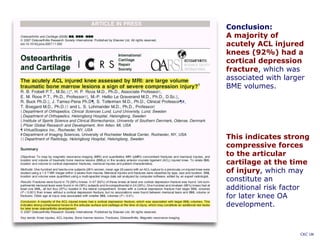
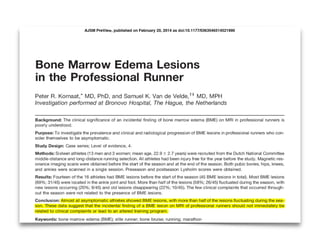
Conclusion:
A majority of
acutely ACL injured
knees (92%) had a
cortical depression
fracture, which was
associated with larger
BME volumes.
This indicates strong
compressive forces
to the articular
cartilage at the time
of injury, which may
constitute an
additional risk factor
for later knee OA
development.
CKC UK
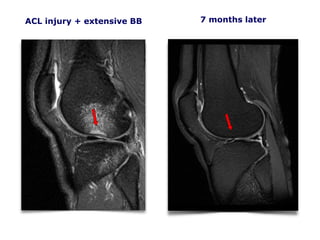
ACL injury + extensive BB
CKC MRI 110206
7 months later
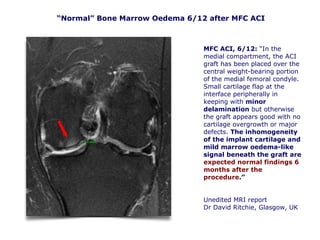
MFC ACI, 6/12: “In the
medial compartment, the ACI
graft has been placed over the
central weight-bearing portion
of the medial femoral condyle.
Small cartilage flap at the
interface peripherally in
keeping with minor
delamination but otherwise
the graft appears good with no
cartilage overgrowth or major
defects. The inhomogeneity
of the implant cartilage and
mild marrow oedema-like
signal beneath the graft are
expected normal findings 6
months after the
procedure.”
Unedited MRI report
Dr David Ritchie, Glasgow, UKCKC MRI 260906
“Normal” Bone Marrow Oedema 6/12 after MFC ACI
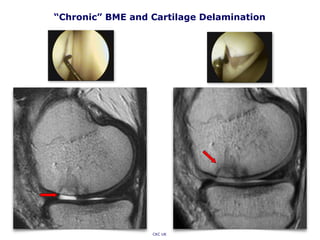
“Chronic” BME and Cartilage Delamination
CKC UK
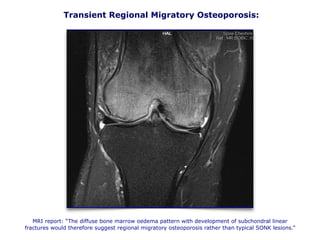
Transient Regional Migratory Osteoporosis:
MRI report: “The diffuse bone marrow oedema pattern with development of subchondral linear
fractures would therefore suggest regional migratory osteoporosis rather than typical SONK lesions.”
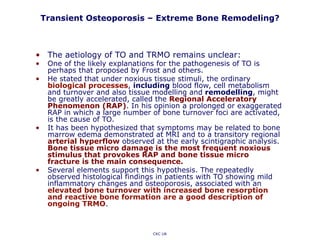
Transient Osteoporosis – Extreme Bone Remodeling?
CKC UK
• The aetiology of TO and TRMO remains unclear:
• One of the likely explanations for the pathogenesis of TO is
perhaps that proposed by Frost and others.
• He stated that under noxious tissue stimuli, the ordinary
biological processes, including blood flow, cell metabolism
and turnover and also tissue modelling and remodelling, might
be greatly accelerated, called the Regional Acceleratory
Phenomenon (RAP). In his opinion a prolonged or exaggerated
RAP in which a large number of bone turnover foci are activated,
is the cause of TO.
• It has been hypothesized that symptoms may be related to bone
marrow edema demonstrated at MRI and to a transitory regional
arterial hyperflow observed at the early scintigraphic analysis.
Bone tissue micro damage is the most frequent noxious
stimulus that provokes RAP and bone tissue micro
fracture is the main consequence.
• Several elements support this hypothesis. The repeatedly
observed histological findings in patients with TO showing mild
inflammatory changes and osteoporosis, associated with an
elevated bone turnover with increased bone resorption
and reactive bone formation are a good description of
ongoing TRMO.
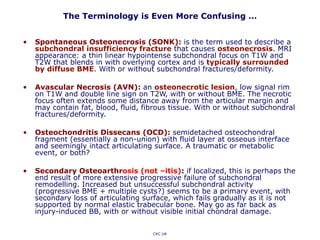
The Terminology is Even More Confusing …
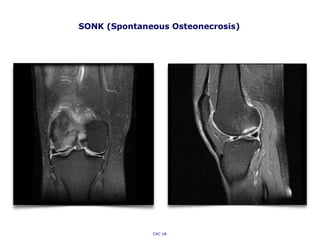
• Spontaneous Osteonecrosis (SONK): is the term used to describe a
subchondral insufficiency fracture that causes osteonecrosis. MRI
appearance: a thin linear hypointense subchondral focus on T1W and
T2W that blends in with overlying cortex and is typically surrounded
by diffuse BME. With or without subchondral fractures/deformity.
• Avascular Necrosis (AVN): an osteonecrotic lesion, low signal rim
on T1W and double line sign on T2W, with or without BME. The necrotic
focus often extends some distance away from the articular margin and
may contain fat, blood, fluid, fibrous tissue. With or without subchondral
fractures/deformity.
• Osteochondritis Dissecans (OCD): semidetached osteochondral
fragment (essentially a non-union) with fluid layer at osseous interface
and seemingly intact articulating surface. A traumatic or metabolic
event, or both?
• Secondary Osteoarthrosis (not –itis): if localized, this is perhaps the
end result of more extensive progressive failure of subchondral
remodelling. Increased but unsuccessful subchondral activity
(progressive BME + multiple cysts?) seems to be a primary event, with
secondary loss of articulating surface, which fails gradually as it is not
supported by normal elastic trabecular bone. May go as far back as
injury-induced BB, with or without visible initial chondral damage.
CKC UK
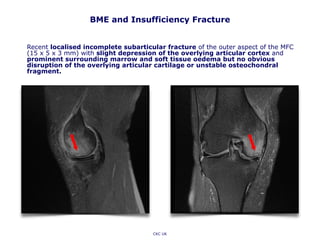
BME and Insufficiency Fracture
Recent localised incomplete subarticular fracture of the outer aspect of the MFC
(15 x 5 x 3 mm) with slight depression of the overlying articular cortex and
prominent surrounding marrow and soft tissue oedema but no obvious
disruption of the overlying articular cartilage or unstable osteochondral
fragment.
CKC UK
SONK (Spontaneous Osteonecrosis)
CKC UK
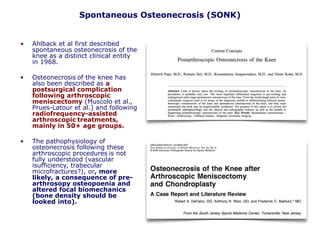
Spontaneous Osteonecrosis (SONK)
• Ahlback et al first described
spontaneous osteonecrosis of the
knee as a distinct clinical entity
in 1968.
• Osteonecrosis of the knee has
also been described as a
postsurgical complication
following arthroscopic
meniscectomy (Muscolo et al.,
Prues-Latour et al.) and following
radiofrequency-assisted
arthroscopic treatments,
mainly in 50+ age groups.
• The pathophysiology of
osteonecrosis following these
arthroscopic procedures is not
fully understood (vascular
isufficiency, trabecular
microfractures?), or, more
likely, a consequence of pre-
arthrosopy osteopoenia and
altered focal biomechanics
(bone density should be
looked into).
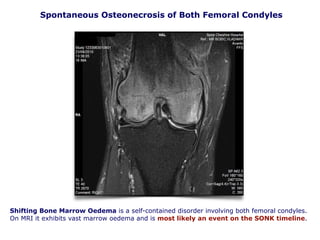
Spontaneous Osteonecrosis of Both Femoral Condyles
Shifting Bone Marrow Oedema is a self-contained disorder involving both femoral condyles.
On MRI it exhibits vast marrow oedema and is most likely an event on the SONK timeline.
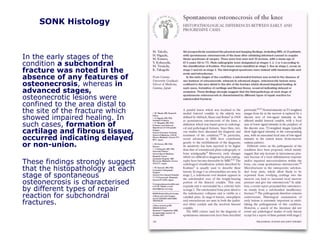
SONK Histology
In the early stages of the
condition a subchondral
fracture was noted in the
absence of any features of
osteonecrosis, whereas in
advanced stages,
osteonecrotic lesions were
confined to the area distal to
the site of the fracture which
showed impaired healing. In
such cases, formation of
cartilage and fibrous tissue,
occurred indicating delayed
or non-union.
These findings strongly suggest
that the histopathology at each
stage of spontaneous
osteonecrosis is characterised
by different types of repair
reaction for subchondral
fractures.
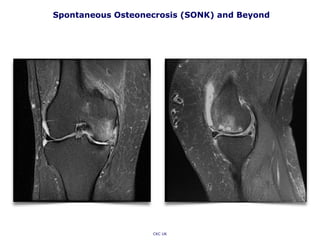
Spontaneous Osteonecrosis (SONK) and Beyond
CKC UK
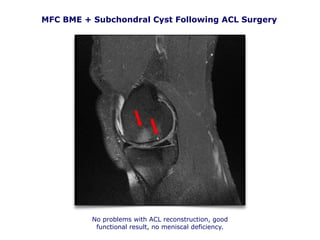
MFC BME + Subchondral Cyst Following ACL Surgery
No problems with ACL reconstruction, good
functional result, no meniscal deficiency.
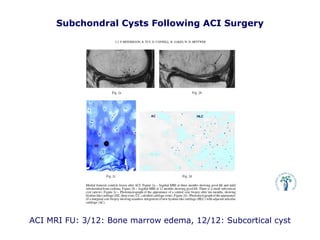
ACI MRI FU: 3/12: Bone marrow edema, 12/12: Subcortical cyst
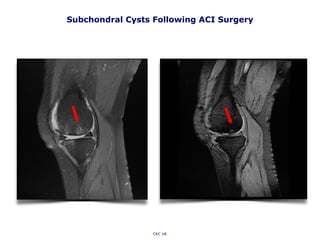
Subchondral Cysts Following ACI Surgery
CKC UK
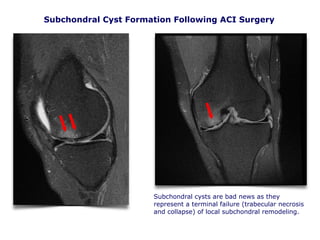
Subchondral Cyst Formation Following ACI Surgery
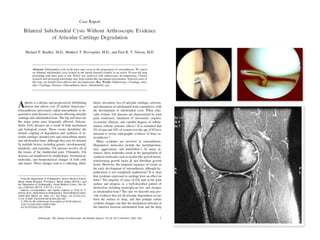
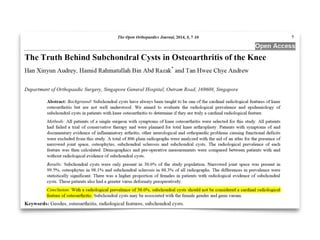
Subchondral cysts are bad news as they
represent a terminal failure (trabecular necrosis
and collapse) of local subchondral remodeling.
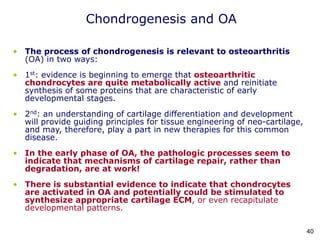
Chondrogenesis and OA
• The process of chondrogenesis is relevant to osteoarthritis
(OA) in two ways:
• 1st: evidence is beginning to emerge that osteoarthritic
chondrocytes are quite metabolically active and reinitiate
synthesis of some proteins that are characteristic of early
developmental stages.
• 2nd: an understanding of cartilage differentiation and development
will provide guiding principles for tissue engineering of neo-cartilage,
and may, therefore, play a part in new therapies for this common
disease.
• In the early phase of OA, the pathologic processes seem to
indicate that mechanisms of cartilage repair, rather than
degradation, are at work!
• There is substantial evidence to indicate that chondrocytes
are activated in OA and potentially could be stimulated to
synthesize appropriate cartilage ECM, or even recapitulate
developmental patterns.
40
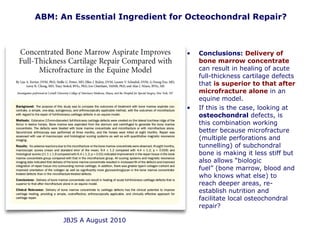
• Conclusions: Delivery of
bone marrow concentrate
can result in healing of acute
full-thickness cartilage defects
that is superior to that after
microfracture alone in an
equine model.
• If this is the case, looking at
osteochondral defects, is
this combination working
better because microfracture
(multiple perforations and
tunnelling) of subchondral
bone is making it less stiff but
also allows “biologic
fuel” (bone marrow, blood and
who knows what else) to
reach deeper areas, re-
establish nutrition and
facilitate local osteochondral
repair?
ABM: An Essential Ingredient for Octeochondral Repair?
JBJS A August 2010
SONK, ON and SOA
An alternative approach to the treatment of
femoral and tibial Osteonecrosis, Chronic SONK
and Secondary OA:
• The knee is often not too bad or it is too early for a partial or a full
knee replacement.
• Classic Microfracture and Core Decompression are probably not
deep enough.
• Looking at most MRIs it seems that we need to reach at least 15 to
20 mm deep into subchondral bone, which is where any cylindrical
osteochondral harvesters are very handy.
• Effectively, this is a combination of OAT and deep core
(subchondral) decompression, with a hand driven K-wire, through
the bottom of the recipient socket, with
• a mixture of autologous blood + bone marrow injected into the
recipient socket,
• and capped with 10 mm OATS plug, which was soaked in the same
mixture of bone marrow and blood.
• This “integrated” subchondral repair concept makes sense, it gives
most people quick and durable pain relief and better knee function,
but it is based on huge assumptions.
CKC UK
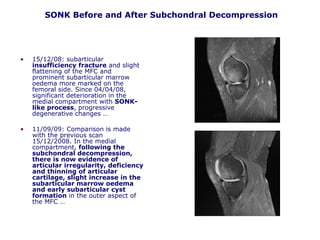
SONK Before and After Subchondral Decompression
• 15/12/08: subarticular
insufficiency fracture and slight
flattening of the MFC and
prominent subarticular marrow
oedema more marked on the
femoral side. Since 04/04/08,
significant deterioration in the
medial compartment with SONK-
like process, progressive
degenerative changes …
• 11/09/09: Comparison is made
with the previous scan
15/12/2008. In the medial
compartment, following the
subchondral decompression,
there is now evidence of
articular irregularity, deficiency
and thinning of articular
cartilage, slight increase in the
subarticular marrow oedema
and early subarticular cyst
formation in the outer aspect of
the MFC …
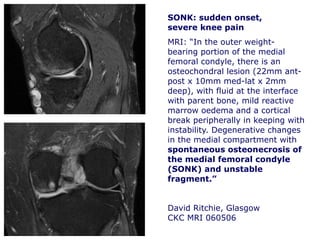
SONK: sudden onset,
severe knee pain
MRI: “In the outer weight-
bearing portion of the medial
femoral condyle, there is an
osteochondral lesion (22mm ant-
post x 10mm med-lat x 2mm
deep), with fluid at the interface
with parent bone, mild reactive
marrow oedema and a cortical
break peripherally in keeping with
instability. Degenerative changes
in the medial compartment with
spontaneous osteonecrosis of
the medial femoral condyle
(SONK) and unstable
fragment.”
David Ritchie, Glasgow
CKC MRI 060506
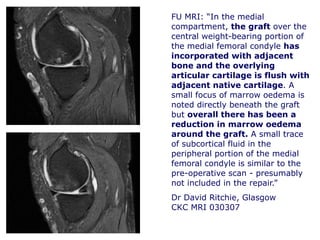
FU MRI: “In the medial
compartment, the graft over the
central weight-bearing portion of
the medial femoral condyle has
incorporated with adjacent
bone and the overlying
articular cartilage is flush with
adjacent native cartilage. A
small focus of marrow oedema is
noted directly beneath the graft
but overall there has been a
reduction in marrow oedema
around the graft. A small trace
of subcortical fluid in the
peripheral portion of the medial
femoral condyle is similar to the
pre-operative scan - presumably
not included in the repair.”
Dr David Ritchie, Glasgow
CKC MRI 030307
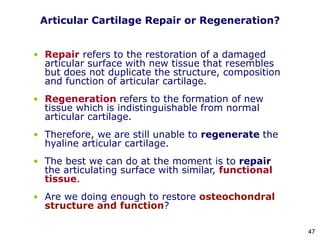
Articular Cartilage Repair or Regeneration?
• Repair refers to the restoration of a damaged
articular surface with new tissue that resembles
but does not duplicate the structure, composition
and function of articular cartilage.
• Regeneration refers to the formation of new
tissue which is indistinguishable from normal
articular cartilage.
• Therefore, we are still unable to regenerate the
hyaline articular cartilage.
• The best we can do at the moment is to repair
the articulating surface with similar, functional
tissue.
• Are we doing enough to restore osteochondral
structure and function?
47
48
49
• Mainly because we still do not seem to understand
complex biological and mechanical interaction of
articulating surface and subchondral bone.
• This is probably the reason why all mainstream
cartilage repair technologies suffer from two major
problems:
• insufficient peripheral chondral integration
(biomechanical problem?)
• insufficient longitudinal subchondral integration
(nutritional and biomechanical problem?).
• We may have to accept that this is as good as it
gets, at this point in time.
• However, finding a biological solution for cartilage
regeneration is one of the fastest growing areas of
research and development in orthopaedics and
regenerative medicine in general.
So, Why is Cartilage Repair Still a Problem?
50
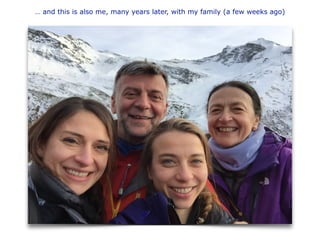
… and this is also me, many years later, with my family (a few weeks ago)
Thank You,
Happy and Healthy Ageing

Bobic - SubChondral Activity - Zermatt 150115

  • 1.
    2nd ICRS Summit:The Ageing Cartilage Zermatt, Switzerland
 15 and 16 January 2015 
 What happens with injured and ageing subchondral bone? Thoughts on Osteochondral Unit, Subchondral Activity, OA and Ageing Prof. Vladimir Bobic, MD, FRCSEd Consultant Orthopaedic Knee Surgeon Chester Knee Clinic @ Nuffield Health, The Grosvenor Hospital Chester, United Kingdom
  • 2.
    … the shortanswer is: we don’t really know, but this is a great opportunity to talk about this issue … … so this is a story about normal wear and tear, injuries, repair and ageing …
  • 3.
    … speaking ofageing, this is me at the age of two.
  • 4.
    Ageing and OA:An inevitable Encounter? T Huegle et al.: Aging and OA: An Inevitable Encounter? JAR 2012
  • 5.
    Radin et al.focused on subchondral role as an effective shock absorber. They found shear stress in the articular cartilage always occurring whenever there is a discontinuity or substantial gradient in stiffness of the subchondral plate. In former studies finite element analysis showed increasing stress in the cartilage subsequent to subchondral plate stiffening. The fact that these changes occurred without any evidence of metabolic or inflammatory changes implied that the latter follow the mechanical changes, first in the bone and than in the cartilage! December 1986. The Role of Subchondral Bone (1986) CKC UK
  • 7.
    Articular cartilage +Subchondral plate + Trabecualar bone are biologically and functionally inseparable OsteoChondral unit which absorbs and distributes loads across the joint. CKC UK We can not think and act in monolayer terms. Articular cartilage (surface) repair is not good enough. We have to think and act in 3D terms!
  • 8.
    Subchondral MR Imaging Source:Dr Carl Winalski, Cleveland, USA
  • 9.
    ” … recentstudies have shown that cartilage and subchondral bone act as a single functional unit. This review highlights this novel concept.”
  • 10.
  • 11.
    …Therefore, cartilage repairis not only about restoring functional properties but also about arresting the pathological changes of degenerative arthritis that result from altered loading due to damage to articular cartilage.
  • 12.
    The Subchondral Unit:A New Frontier re-drawn from Imhof et al. 1999 Henning Madry, Saarland University, Homburg/Saar, Germany Imhof H, Breitenseher M, Kainberger F, Rand T, Trattnig S. (1999): Importance of subchondral bone to articular cartilage in health and disease. Top Magn Reson Imaging 10:180–192 12
  • 13.
    The Structure ofSubchondral Bone Redrawn from: Imhof H, Breitenseher M, Kainberger F, Rand T, Trattnig S. (1999): Importance of subchondral bone to articular cartilage in health and disease. Top Magn Reson Imaging 10:180–192 A surprisingly high number of arterial and venous vessels, as well as nerves, can be seen in the subchondral region sending tiny branches into the calcified cartilage … 13
  • 14.
    The Structure ofSubchondral Bone •This is extremely important for cartilage repair: the tidemark is crossed by collagen fibrils extending from the articular cartilage into the calcified cartilage, while no collagen fibrils connect the calcified cartilage to the subchondral bone plate. • Blood vessels from the subchondral region can extend into the overlying calcified cartilage through canals in the subchondral bone plate. • Therefore, nutrients can reach chondrocytes in the calcified zone via these perforations. • Unsurprisingly, the perforations are grouped together in the regions of subchondral plate where the stress is greatest. CKC UK 14
  • 15.
    The Structure ofSubchondral Bone The changes in the thickness of the subchondral bone plate depend on the location and mechanical loads Henning Madry, Saarland University, Homburg/Saar, Germany 15
  • 16.
    This study presentsresults that conflict with previously published papers and opinions regarding subchondral bone thickness and density as related to OA. The results of this study demonstrate decreasing subchondral bone density and thickness with increasing age, even though the incidence of OA lesions increase with age. No correlation could be found between OA grade and increasing bone thickness or density, in fact, the opposite was found in this study.
  • 17.
    • VB toDR email, 2006: • Subject: SONK and all that jazz (re confusing MRI appearance of different subchondral events): • VB: “ There is something there and it seems it’s all connected. We are probably looking at different stages of the same thing: • … it seems that subchondral repair and remodelling are a common denominator, some of which is successful (traumatic bone bruising, transient osteoporosis, SONK), partially successful (persisting bone marrow oedema) or not at all (progressive chronic bone marrow oedema, subchondral cysts, AVN, osteonecrosis, and in the end secondary osteoarthrosis). I don’t know, for some people most of this is probably at various places on the same timeline, but I am not sure if that makes sense.” • DR: “The terminology is a bit confusing … “ • I would like to thank Dr David Ritchie and Dr Carl Winalski for their unreserved help and patience over many years (“Vladimir, stop staring at MR images and stick to your day job.”) Subchondral Events in a Nutshell:
  • 18.
    The Terminology isa Bit Confusing … • Disclaimer: Arthrex (OATS inventor), principal investigator for UK BioPoly clinical trial, former clinical advisor for TiGenix CCI. • This is a non-EBM (orthopaedic surgeon’s) clinical overview of “subchondral events”, based on our clinical and MR imaging experience since 1996. • We have a problem at the outset: what are we actually talking about? How do we treat a wide range of osteochondral problems which are still poorly defined and understood? • Bone Bruise (BB): a transient traumatic event = a series of trabecular microfractures. No surgical treatment required. • Bone Marrow Oedema (BME): MRI evidence of increased subchondral metabolic activity. Remodelling or reparative process, or a failure of subchondral remodelling or repair = a degenerative process? Initially a reparative process, but if persistent it is probably a degenerative process (often associated with initial formation of subchondral cysts, which are a consequence of failed local repair). No surgical treatment required, but … • Transient Osteoporosis (TOP): no history of trauma, the knee pain is spontaneous and disabling, exacerbated on weight-bearing. Usually gets better over many months, back to normal MRI and clinically. When multiple joints are involved (in approx. 40% of patients) the condition is referred to as Transient Regional Migratory Osteoporosis (TRMO). No surgical treatment required. CKC UK
  • 19.
    No Edema inBone Marrow Edema! • The correlation of bone marrow lesions with pain in knee OA has been convincingly established. Here, another compelling association is established between bone marrow (edema) lesions and risk for progression of knee OA. What remains to be established is the cause-and-effect relationship between the various variables. • It is interesting that, histologically, the lesions that appear as bone marrow edema on MRI contain very little edema at all. Rather, they demonstrate fibrosis, osteonecrosis, and extensive bony REMODELLING and are likely the result of contusions and focal microfractures. • Also, it is not clear, whether an initial injury to articular cartilage leads to mechanical malalignment and subsequent subchondral bone destruction or rather subchondral bone damage leads to mechanical malalignment and subsequent articular cartilage destruction. Does bone marrow edema predict progression of knee arthritis? A summary of Felson’s 2001 and 2003 AIM articles written by Jon Gilles, M.D., The John Hopkins Arthritis Center, 2003. http://www.hopkins-arthritis.org/arthritis-news/2003/bone_edema_oa.html
  • 20.
    Conclusion: A majority of acutelyACL injured knees (92%) had a cortical depression fracture, which was associated with larger BME volumes. This indicates strong compressive forces to the articular cartilage at the time of injury, which may constitute an additional risk factor for later knee OA development. CKC UK
  • 21.
    ACL injury +extensive BB CKC MRI 110206 7 months later
  • 22.
    MFC ACI, 6/12:“In the medial compartment, the ACI graft has been placed over the central weight-bearing portion of the medial femoral condyle. Small cartilage flap at the interface peripherally in keeping with minor delamination but otherwise the graft appears good with no cartilage overgrowth or major defects. The inhomogeneity of the implant cartilage and mild marrow oedema-like signal beneath the graft are expected normal findings 6 months after the procedure.” Unedited MRI report Dr David Ritchie, Glasgow, UKCKC MRI 260906 “Normal” Bone Marrow Oedema 6/12 after MFC ACI
  • 23.
    “Chronic” BME andCartilage Delamination CKC UK
  • 25.
    Transient Regional MigratoryOsteoporosis: MRI report: “The diffuse bone marrow oedema pattern with development of subchondral linear fractures would therefore suggest regional migratory osteoporosis rather than typical SONK lesions.”
  • 26.
    Transient Osteoporosis –Extreme Bone Remodeling? CKC UK • The aetiology of TO and TRMO remains unclear: • One of the likely explanations for the pathogenesis of TO is perhaps that proposed by Frost and others. • He stated that under noxious tissue stimuli, the ordinary biological processes, including blood flow, cell metabolism and turnover and also tissue modelling and remodelling, might be greatly accelerated, called the Regional Acceleratory Phenomenon (RAP). In his opinion a prolonged or exaggerated RAP in which a large number of bone turnover foci are activated, is the cause of TO. • It has been hypothesized that symptoms may be related to bone marrow edema demonstrated at MRI and to a transitory regional arterial hyperflow observed at the early scintigraphic analysis. Bone tissue micro damage is the most frequent noxious stimulus that provokes RAP and bone tissue micro fracture is the main consequence. • Several elements support this hypothesis. The repeatedly observed histological findings in patients with TO showing mild inflammatory changes and osteoporosis, associated with an elevated bone turnover with increased bone resorption and reactive bone formation are a good description of ongoing TRMO.
  • 27.
    The Terminology isEven More Confusing … • Spontaneous Osteonecrosis (SONK): is the term used to describe a subchondral insufficiency fracture that causes osteonecrosis. MRI appearance: a thin linear hypointense subchondral focus on T1W and T2W that blends in with overlying cortex and is typically surrounded by diffuse BME. With or without subchondral fractures/deformity. • Avascular Necrosis (AVN): an osteonecrotic lesion, low signal rim on T1W and double line sign on T2W, with or without BME. The necrotic focus often extends some distance away from the articular margin and may contain fat, blood, fluid, fibrous tissue. With or without subchondral fractures/deformity. • Osteochondritis Dissecans (OCD): semidetached osteochondral fragment (essentially a non-union) with fluid layer at osseous interface and seemingly intact articulating surface. A traumatic or metabolic event, or both? • Secondary Osteoarthrosis (not –itis): if localized, this is perhaps the end result of more extensive progressive failure of subchondral remodelling. Increased but unsuccessful subchondral activity (progressive BME + multiple cysts?) seems to be a primary event, with secondary loss of articulating surface, which fails gradually as it is not supported by normal elastic trabecular bone. May go as far back as injury-induced BB, with or without visible initial chondral damage. CKC UK
  • 28.
    BME and InsufficiencyFracture Recent localised incomplete subarticular fracture of the outer aspect of the MFC (15 x 5 x 3 mm) with slight depression of the overlying articular cortex and prominent surrounding marrow and soft tissue oedema but no obvious disruption of the overlying articular cartilage or unstable osteochondral fragment. CKC UK
  • 29.
  • 30.
    Spontaneous Osteonecrosis (SONK) •Ahlback et al first described spontaneous osteonecrosis of the knee as a distinct clinical entity in 1968. • Osteonecrosis of the knee has also been described as a postsurgical complication following arthroscopic meniscectomy (Muscolo et al., Prues-Latour et al.) and following radiofrequency-assisted arthroscopic treatments, mainly in 50+ age groups. • The pathophysiology of osteonecrosis following these arthroscopic procedures is not fully understood (vascular isufficiency, trabecular microfractures?), or, more likely, a consequence of pre- arthrosopy osteopoenia and altered focal biomechanics (bone density should be looked into).
  • 31.
    Spontaneous Osteonecrosis ofBoth Femoral Condyles Shifting Bone Marrow Oedema is a self-contained disorder involving both femoral condyles. On MRI it exhibits vast marrow oedema and is most likely an event on the SONK timeline.
  • 32.
    SONK Histology In theearly stages of the condition a subchondral fracture was noted in the absence of any features of osteonecrosis, whereas in advanced stages, osteonecrotic lesions were confined to the area distal to the site of the fracture which showed impaired healing. In such cases, formation of cartilage and fibrous tissue, occurred indicating delayed or non-union. These findings strongly suggest that the histopathology at each stage of spontaneous osteonecrosis is characterised by different types of repair reaction for subchondral fractures.
  • 33.
  • 34.
    MFC BME +Subchondral Cyst Following ACL Surgery No problems with ACL reconstruction, good functional result, no meniscal deficiency.
  • 35.
    ACI MRI FU:3/12: Bone marrow edema, 12/12: Subcortical cyst Subchondral Cysts Following ACI Surgery
  • 36.
    Subchondral Cysts FollowingACI Surgery CKC UK
  • 37.
    Subchondral Cyst FormationFollowing ACI Surgery Subchondral cysts are bad news as they represent a terminal failure (trabecular necrosis and collapse) of local subchondral remodeling.
  • 40.
    Chondrogenesis and OA •The process of chondrogenesis is relevant to osteoarthritis (OA) in two ways: • 1st: evidence is beginning to emerge that osteoarthritic chondrocytes are quite metabolically active and reinitiate synthesis of some proteins that are characteristic of early developmental stages. • 2nd: an understanding of cartilage differentiation and development will provide guiding principles for tissue engineering of neo-cartilage, and may, therefore, play a part in new therapies for this common disease. • In the early phase of OA, the pathologic processes seem to indicate that mechanisms of cartilage repair, rather than degradation, are at work! • There is substantial evidence to indicate that chondrocytes are activated in OA and potentially could be stimulated to synthesize appropriate cartilage ECM, or even recapitulate developmental patterns. 40
  • 41.
    • Conclusions: Deliveryof bone marrow concentrate can result in healing of acute full-thickness cartilage defects that is superior to that after microfracture alone in an equine model. • If this is the case, looking at osteochondral defects, is this combination working better because microfracture (multiple perforations and tunnelling) of subchondral bone is making it less stiff but also allows “biologic fuel” (bone marrow, blood and who knows what else) to reach deeper areas, re- establish nutrition and facilitate local osteochondral repair? ABM: An Essential Ingredient for Octeochondral Repair? JBJS A August 2010
  • 43.
    SONK, ON andSOA An alternative approach to the treatment of femoral and tibial Osteonecrosis, Chronic SONK and Secondary OA: • The knee is often not too bad or it is too early for a partial or a full knee replacement. • Classic Microfracture and Core Decompression are probably not deep enough. • Looking at most MRIs it seems that we need to reach at least 15 to 20 mm deep into subchondral bone, which is where any cylindrical osteochondral harvesters are very handy. • Effectively, this is a combination of OAT and deep core (subchondral) decompression, with a hand driven K-wire, through the bottom of the recipient socket, with • a mixture of autologous blood + bone marrow injected into the recipient socket, • and capped with 10 mm OATS plug, which was soaked in the same mixture of bone marrow and blood. • This “integrated” subchondral repair concept makes sense, it gives most people quick and durable pain relief and better knee function, but it is based on huge assumptions. CKC UK
  • 44.
    SONK Before andAfter Subchondral Decompression • 15/12/08: subarticular insufficiency fracture and slight flattening of the MFC and prominent subarticular marrow oedema more marked on the femoral side. Since 04/04/08, significant deterioration in the medial compartment with SONK- like process, progressive degenerative changes … • 11/09/09: Comparison is made with the previous scan 15/12/2008. In the medial compartment, following the subchondral decompression, there is now evidence of articular irregularity, deficiency and thinning of articular cartilage, slight increase in the subarticular marrow oedema and early subarticular cyst formation in the outer aspect of the MFC …
  • 45.
    SONK: sudden onset, severeknee pain MRI: “In the outer weight- bearing portion of the medial femoral condyle, there is an osteochondral lesion (22mm ant- post x 10mm med-lat x 2mm deep), with fluid at the interface with parent bone, mild reactive marrow oedema and a cortical break peripherally in keeping with instability. Degenerative changes in the medial compartment with spontaneous osteonecrosis of the medial femoral condyle (SONK) and unstable fragment.” David Ritchie, Glasgow CKC MRI 060506
  • 46.
    FU MRI: “Inthe medial compartment, the graft over the central weight-bearing portion of the medial femoral condyle has incorporated with adjacent bone and the overlying articular cartilage is flush with adjacent native cartilage. A small focus of marrow oedema is noted directly beneath the graft but overall there has been a reduction in marrow oedema around the graft. A small trace of subcortical fluid in the peripheral portion of the medial femoral condyle is similar to the pre-operative scan - presumably not included in the repair.” Dr David Ritchie, Glasgow CKC MRI 030307
  • 47.
    Articular Cartilage Repairor Regeneration? • Repair refers to the restoration of a damaged articular surface with new tissue that resembles but does not duplicate the structure, composition and function of articular cartilage. • Regeneration refers to the formation of new tissue which is indistinguishable from normal articular cartilage. • Therefore, we are still unable to regenerate the hyaline articular cartilage. • The best we can do at the moment is to repair the articulating surface with similar, functional tissue. • Are we doing enough to restore osteochondral structure and function? 47
  • 48.
  • 49.
  • 50.
    • Mainly becausewe still do not seem to understand complex biological and mechanical interaction of articulating surface and subchondral bone. • This is probably the reason why all mainstream cartilage repair technologies suffer from two major problems: • insufficient peripheral chondral integration (biomechanical problem?) • insufficient longitudinal subchondral integration (nutritional and biomechanical problem?). • We may have to accept that this is as good as it gets, at this point in time. • However, finding a biological solution for cartilage regeneration is one of the fastest growing areas of research and development in orthopaedics and regenerative medicine in general. So, Why is Cartilage Repair Still a Problem? 50
  • 51.
    … and thisis also me, many years later, with my family (a few weeks ago)
  • 52.
    Thank You, Happy andHealthy Ageing