
 Introduction
 Blue Brain
 Virtual Brain
 Function of Natural Brain
 Brain Simulation
 Current Research Work
 Advantages
 Disadvantages
•

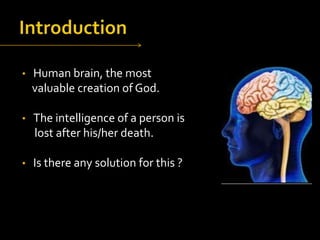
Human brain, the most
valuable creation of God.

•

The intelligence of a person is
lost after his/her death.

•

Is there any solution for this ?
•

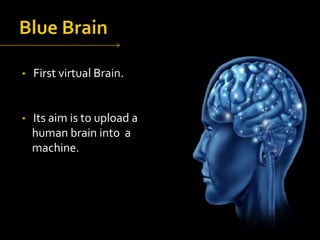
First virtual Brain.

•

Its aim is to upload a
human brain into a
machine.
•

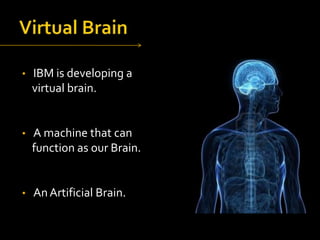
IBM is developing a
virtual brain.

•

A machine that can
function as our Brain.

•

An Artificial Brain.


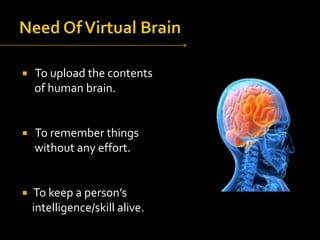
To upload the contents
of human brain.



To remember things
without any effort.



To keep a person’s
intelligence/skill alive.
NATURAL BRAIN

ARTIFICIAL BRAIN

INPUT

INPUT



Through the natural
neurons .



INTERPRETATION

INTERPRETATION



By different states of the
neurons in the brain.



Through the silicon chip or
artificial neurons.

By a set of bits in the set of
register.
NATURAL BRAIN

OUTPUT


Through the natural
neurons.

PROCESSING


Through arithmetic and
logical calculations

ARTIFICIAL BRAIN

OUTPUT


Through the silicon chip.

PROCESSING


Through arithmetic and
logical calculation and
artificial intelligence.
NATURAL BRAIN

MEMORY


Through permanent states
of neurons.

ARTIFICIAL BRAIN

MEMORY


Through Secondary
memory.


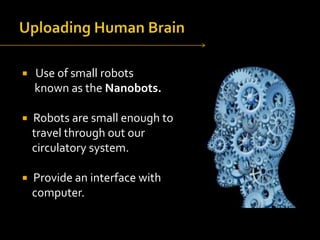
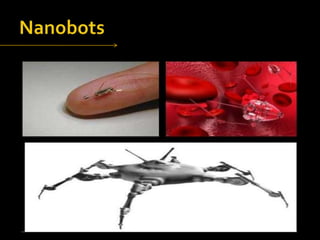
Use of small robots
known as the Nanobots.



Robots are small enough to
travel through out our
circulatory system.



Provide an interface with
computer.


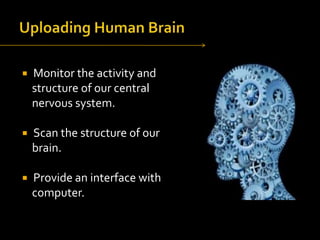
Monitor the activity and
structure of our central
nervous system.



Scan the structure of our
brain.



Provide an interface with
computer.


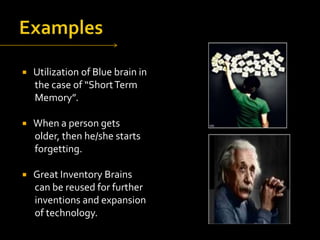
Utilization of Blue brain in
the case of “Short Term
Memory”.



When a person gets
older, then he/she starts
forgetting.



Great Inventory Brains
can be reused for further
inventions and expansion
of technology.


IBM developing the
“Blue brain” .



Partnership with EPFL
Brain & Mind Institute.


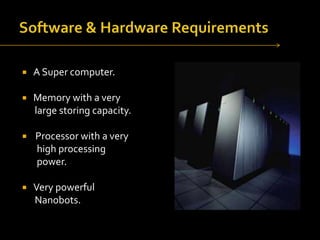
A Super computer.



Memory with a very
large storing capacity.



Processor with a very
high processing
power.



Very powerful
Nanobots.


Remembering things
without any effort.



Using the intelligence of
the person after the
death.



Understanding the
activities of
animals.


We become dependent
upon the computer.



Others may use technical
knowledge against us.


It requires further time
for technology to increase.



We will be able to transfer
ourselves into computers
at some point.
Thank
You

Blue Brain Technology

  • 2.
     Introduction  BlueBrain  Virtual Brain  Function of Natural Brain  Brain Simulation  Current Research Work  Advantages  Disadvantages
  • 3.
    • Human brain, themost valuable creation of God. • The intelligence of a person is lost after his/her death. • Is there any solution for this ?
  • 4.
    • First virtual Brain. • Itsaim is to upload a human brain into a machine.
  • 5.
    • IBM is developinga virtual brain. • A machine that can function as our Brain. • An Artificial Brain.
  • 6.
     To upload thecontents of human brain.  To remember things without any effort.  To keep a person’s intelligence/skill alive.
  • 7.
    NATURAL BRAIN ARTIFICIAL BRAIN INPUT INPUT  Throughthe natural neurons .  INTERPRETATION INTERPRETATION  By different states of the neurons in the brain.  Through the silicon chip or artificial neurons. By a set of bits in the set of register.
  • 8.
    NATURAL BRAIN OUTPUT  Through thenatural neurons. PROCESSING  Through arithmetic and logical calculations ARTIFICIAL BRAIN OUTPUT  Through the silicon chip. PROCESSING  Through arithmetic and logical calculation and artificial intelligence.
  • 9.
    NATURAL BRAIN MEMORY  Through permanentstates of neurons. ARTIFICIAL BRAIN MEMORY  Through Secondary memory.
  • 10.
     Use of smallrobots known as the Nanobots.  Robots are small enough to travel through out our circulatory system.  Provide an interface with computer.
  • 11.
     Monitor the activityand structure of our central nervous system.  Scan the structure of our brain.  Provide an interface with computer.
  • 13.
     Utilization of Bluebrain in the case of “Short Term Memory”.  When a person gets older, then he/she starts forgetting.  Great Inventory Brains can be reused for further inventions and expansion of technology.
  • 14.
     IBM developing the “Bluebrain” .  Partnership with EPFL Brain & Mind Institute.
  • 15.
     A Super computer.  Memorywith a very large storing capacity.  Processor with a very high processing power.  Very powerful Nanobots.
  • 16.
     Remembering things without anyeffort.  Using the intelligence of the person after the death.  Understanding the activities of animals.
  • 17.
     We become dependent uponthe computer.  Others may use technical knowledge against us.
  • 18.
     It requires furthertime for technology to increase.  We will be able to transfer ourselves into computers at some point.
  • 19.