OBJECTIVES
‱Self awareness
‱Analyzation of Survey and Inheritance
of Different Blood Groups
‱Genotypes of different Blood Groups
‱Exploring Different Blood Groups
‱Introduction to Blood Groups
‱Diseases and Preventive Measures
‱Conclusion
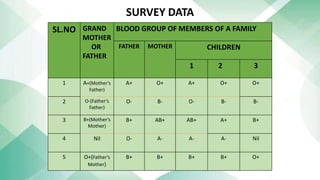
SL.NO GRAND
MOTHER
OR
FATHER
BLOOD GROUP OF MEMBERS OF A FAMILY
FATHER MOTHER CHILDREN
1 2 3
1 A+(Mother’s
Father)
A+ O+ A+ O+ O+
2 O-(Father’s
Father)
O- B- O- B- B-
3 B+(Mother’s
Mother)
B+ AB+ AB+ A+ B+
4 Nil O- A- A- A- Nil
5 O+(Father’s
Mother)
B+ B+ B+ B+ O+
SURVEY DATA
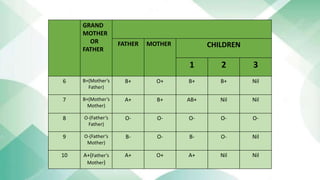
GRAND
MOTHER
OR
FATHER
FATHER MOTHER CHILDREN
1 2 3
6 B+(Mother’s
Father)
B+ O+ B+ B+ Nil
7 B+(Mother’s
Mother)
A+ B+ AB+ Nil Nil
8 O-(Father’s
Father)
O- O- O- O- O-
9 O-(Father’s
Mother)
B- O- B- O- Nil
10 A+(Father’s
Mother)
A+ O+ A+ Nil Nil
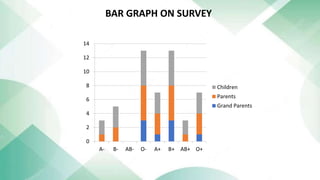
BAR GRAPH ON SURVEY
0
2
4
6
8
10
12
14
A- B- AB- O- A+ B+ AB+ O+
Children
Parents
Grand Parents
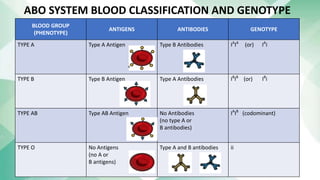
ABO SYSTEM BLOOD CLASSIFICATION AND GENOTYPE
BLOOD GROUP
(PHENOTYPE)
ANTIGENS ANTIBODIES GENOTYPE
TYPE A Type A Antigen Type B Antibodies IA
IA
(or) IA
i
TYPE B Type B Antigen Type A Antibodies IB
IB
(or) IB
i
TYPE AB Type AB Antigen No Antibodies
(no type A or
B antibodies)
IA
IB
(codominant)
TYPE O No Antigens
(no A or
B antigens)
Type A and B antibodies ii
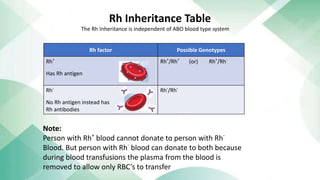
Rh Inheritance Table
The Rh Inheritance is independent of ABO blood type system
Rh factor Possible Genotypes
Rh+
Has Rh antigen
Rh+
/Rh+
(or) Rh+
/Rh-
Rh-
No Rh antigen instead has
Rh antibodies
Rh-
/Rh-
Note:
Person with Rh+
blood cannot donate to person with Rh-
Blood. But person with Rh-
blood can donate to both because
during blood transfusions the plasma from the blood is
removed to allow only RBC’s to transfer
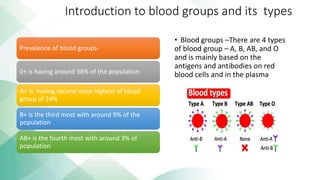
Introduction to blood groups and its types
‱ Blood groups –There are 4 types
of blood group – A, B, AB, and O
and is mainly based on the
antigens and antibodies on red
blood cells and in the plasma
Prevalence of blood groups-
0+ is having around 38% of the population
A+ is having second most highest of blood
group of 34%
B+ is the third most with around 9% of the
population
AB+ is the fourth most with around 3% of
population
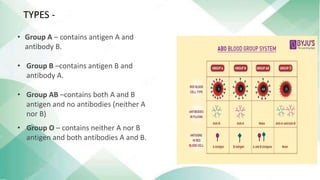
Types -
TYPES -
‱ Group A – contains antigen A and
antibody B.
‱ Group B –contains antigen B and
antibody A.
‱ Group AB –contains both A and B
antigen and no antibodies (neither A
nor B).
‱ Group O – contains neither A nor B
antigen and both antibodies A and B.
Diseases related to Blood Groups
o Blood Group Disorders are a group of conditions that
affect the blood’s ability to function properly. These
disorders are caused by genetic mutations that affect the
proteins on the surface of red blood cells. Understanding
the link between these is crucial for effective treatment.
o Here's an overview of how different blood groups may be
related to various diseases or conditions
‱ Blood Group A:
Studies suggest that individuals with blood group A are more at
higher risk for Cardiovascular Diseases, Cancer, and Malaria.
‱ Blood Group B:
Research has indicated that individuals with blood group B have a
higher risk of developing Pancreatic Cancer and more susceptible to
E.coli infections.
‱ Blood Group AB:
People with AB blood group have an increased risk of heart diseases
and memory problems.
‱ Blood Group O:
People with blood group O are at higher risk for Peptic Ulcers, but
they have lower risk of Pancreatic Cancer, and Blood clots
compared to other blood groups.
‱ Rh+:
Rh+ incompatibility between the mother and fetus can cause
Hemolytic Disease.
‱ Rh-:
Hemolytic disease is less common in Rh- mothers.
FACTORS INVOLVING RESISTANTCE TOWARDS DISEASES: Genetics, Overall health, Vaccination status,
Immune system and Nutrition etc

MALARIA RESISTANCE: People with type blood type O are less susceptible to severe forms of malaria
caused by plasmodium falciparum.
NOROVIRUS RESISTANCE: Research has suggested that individuals with blood type B may be less
susceptible to norovirus infections.
HIV RESISTANCE: A mutation called CCR5-DELTA32 can make individuals highly resistant to HIV
Infections.
BLOOD GROUPS WHICH ARE HIGHLY RESISTANT TOWARDS DISEASES
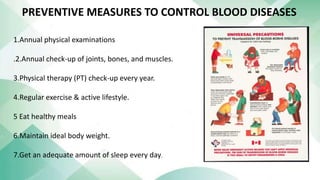
PREVENTIVE MEASURES TO CONTROL BLOOD DISEASES
1.Annual physical examinations
.2.Annual check-up of joints, bones, and muscles.
3.Physical therapy (PT) check-up every year.
4.Regular exercise & active lifestyle.
5 Eat healthy meals
6.Maintain ideal body weight.
7.Get an adequate amount of sleep every day.
It is important to understand that resistance towards diseases is a complex and
multifactorial trait.
While blood types may have some influence in specific cases , it is just one of many
factors that collectively determine an individuals overall resistance or susceptibility to
various diseases.
Public health measures, vaccination and a healthy lifestyle remain essential for
diseases prevention and control
CONCLUSION:

blood types and its information for school

  • 1.
    OBJECTIVES ‱Self awareness ‱Analyzation ofSurvey and Inheritance of Different Blood Groups ‱Genotypes of different Blood Groups ‱Exploring Different Blood Groups ‱Introduction to Blood Groups ‱Diseases and Preventive Measures ‱Conclusion
  • 2.
    SL.NO GRAND MOTHER OR FATHER BLOOD GROUPOF MEMBERS OF A FAMILY FATHER MOTHER CHILDREN 1 2 3 1 A+(Mother’s Father) A+ O+ A+ O+ O+ 2 O-(Father’s Father) O- B- O- B- B- 3 B+(Mother’s Mother) B+ AB+ AB+ A+ B+ 4 Nil O- A- A- A- Nil 5 O+(Father’s Mother) B+ B+ B+ B+ O+ SURVEY DATA
  • 3.
    GRAND MOTHER OR FATHER FATHER MOTHER CHILDREN 12 3 6 B+(Mother’s Father) B+ O+ B+ B+ Nil 7 B+(Mother’s Mother) A+ B+ AB+ Nil Nil 8 O-(Father’s Father) O- O- O- O- O- 9 O-(Father’s Mother) B- O- B- O- Nil 10 A+(Father’s Mother) A+ O+ A+ Nil Nil
  • 4.
    BAR GRAPH ONSURVEY 0 2 4 6 8 10 12 14 A- B- AB- O- A+ B+ AB+ O+ Children Parents Grand Parents
  • 5.
    ABO SYSTEM BLOODCLASSIFICATION AND GENOTYPE BLOOD GROUP (PHENOTYPE) ANTIGENS ANTIBODIES GENOTYPE TYPE A Type A Antigen Type B Antibodies IA IA (or) IA i TYPE B Type B Antigen Type A Antibodies IB IB (or) IB i TYPE AB Type AB Antigen No Antibodies (no type A or B antibodies) IA IB (codominant) TYPE O No Antigens (no A or B antigens) Type A and B antibodies ii
  • 6.
    Rh Inheritance Table TheRh Inheritance is independent of ABO blood type system Rh factor Possible Genotypes Rh+ Has Rh antigen Rh+ /Rh+ (or) Rh+ /Rh- Rh- No Rh antigen instead has Rh antibodies Rh- /Rh- Note: Person with Rh+ blood cannot donate to person with Rh- Blood. But person with Rh- blood can donate to both because during blood transfusions the plasma from the blood is removed to allow only RBC’s to transfer
  • 7.
    Introduction to bloodgroups and its types ‱ Blood groups –There are 4 types of blood group – A, B, AB, and O and is mainly based on the antigens and antibodies on red blood cells and in the plasma Prevalence of blood groups- 0+ is having around 38% of the population A+ is having second most highest of blood group of 34% B+ is the third most with around 9% of the population AB+ is the fourth most with around 3% of population
  • 8.
    Types - TYPES - ‱Group A – contains antigen A and antibody B. ‱ Group B –contains antigen B and antibody A. ‱ Group AB –contains both A and B antigen and no antibodies (neither A nor B). ‱ Group O – contains neither A nor B antigen and both antibodies A and B.
  • 9.
    Diseases related toBlood Groups o Blood Group Disorders are a group of conditions that affect the blood’s ability to function properly. These disorders are caused by genetic mutations that affect the proteins on the surface of red blood cells. Understanding the link between these is crucial for effective treatment. o Here's an overview of how different blood groups may be related to various diseases or conditions
  • 10.
    ‱ Blood GroupA: Studies suggest that individuals with blood group A are more at higher risk for Cardiovascular Diseases, Cancer, and Malaria. ‱ Blood Group B: Research has indicated that individuals with blood group B have a higher risk of developing Pancreatic Cancer and more susceptible to E.coli infections. ‱ Blood Group AB: People with AB blood group have an increased risk of heart diseases and memory problems. ‱ Blood Group O: People with blood group O are at higher risk for Peptic Ulcers, but they have lower risk of Pancreatic Cancer, and Blood clots compared to other blood groups. ‱ Rh+: Rh+ incompatibility between the mother and fetus can cause Hemolytic Disease. ‱ Rh-: Hemolytic disease is less common in Rh- mothers.
  • 11.
    FACTORS INVOLVING RESISTANTCETOWARDS DISEASES: Genetics, Overall health, Vaccination status, Immune system and Nutrition etc
 MALARIA RESISTANCE: People with type blood type O are less susceptible to severe forms of malaria caused by plasmodium falciparum. NOROVIRUS RESISTANCE: Research has suggested that individuals with blood type B may be less susceptible to norovirus infections. HIV RESISTANCE: A mutation called CCR5-DELTA32 can make individuals highly resistant to HIV Infections. BLOOD GROUPS WHICH ARE HIGHLY RESISTANT TOWARDS DISEASES
  • 12.
    PREVENTIVE MEASURES TOCONTROL BLOOD DISEASES 1.Annual physical examinations .2.Annual check-up of joints, bones, and muscles. 3.Physical therapy (PT) check-up every year. 4.Regular exercise & active lifestyle. 5 Eat healthy meals 6.Maintain ideal body weight. 7.Get an adequate amount of sleep every day.
  • 13.
    It is importantto understand that resistance towards diseases is a complex and multifactorial trait. While blood types may have some influence in specific cases , it is just one of many factors that collectively determine an individuals overall resistance or susceptibility to various diseases. Public health measures, vaccination and a healthy lifestyle remain essential for diseases prevention and control CONCLUSION: