Blood pressure target in ICU
Evidence and Practice
Natthida Owattanapanich, MD
Division of Trauma Surgery, Surgery department
Faculty of Medicine, Siriraj hospital
Outline
Physiology of blood pressure
How important to keep target MAP
Blood pressure target
 Hypertension
 Hypotension
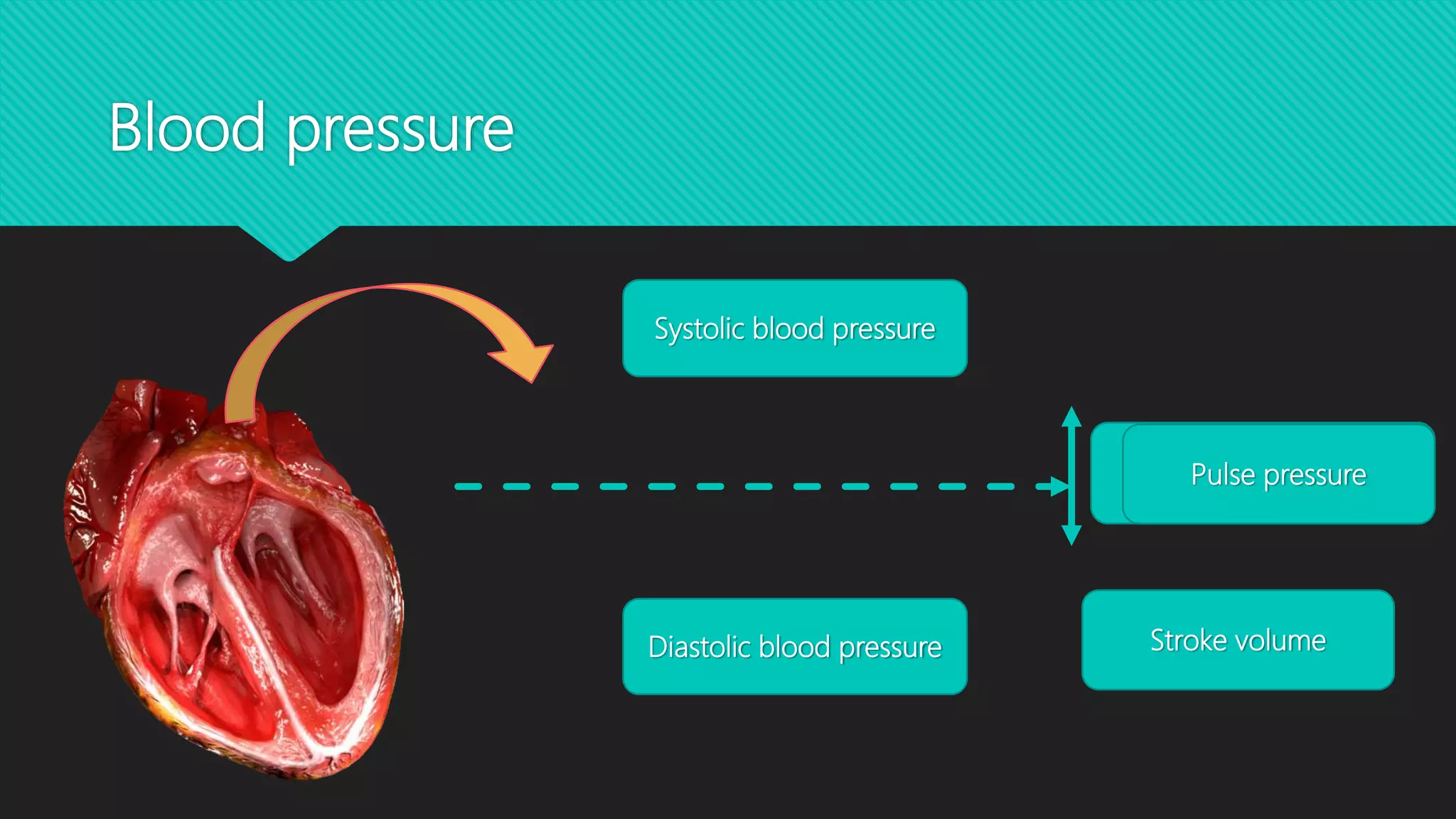
Blood pressure
Systolic blood pressure
Diastolic blood pressure
Mean arterial pressurePulse pressure
Stroke volume
Mean arterial pressure: how important?
 MAP related to cardiac output and oxygen delivery
 MAP related regional circulation
MAP and Oxygen delivery
RA LA
RV LV
CVP
MAP
Cardiac
output
Venous
return
Pulmonary circulation
Systemic capillary
bed
DO2 = cardiac output x [(1.39 x Hb x SaO2) + (PaO2x 0.003)]
MAP and regional perfusion
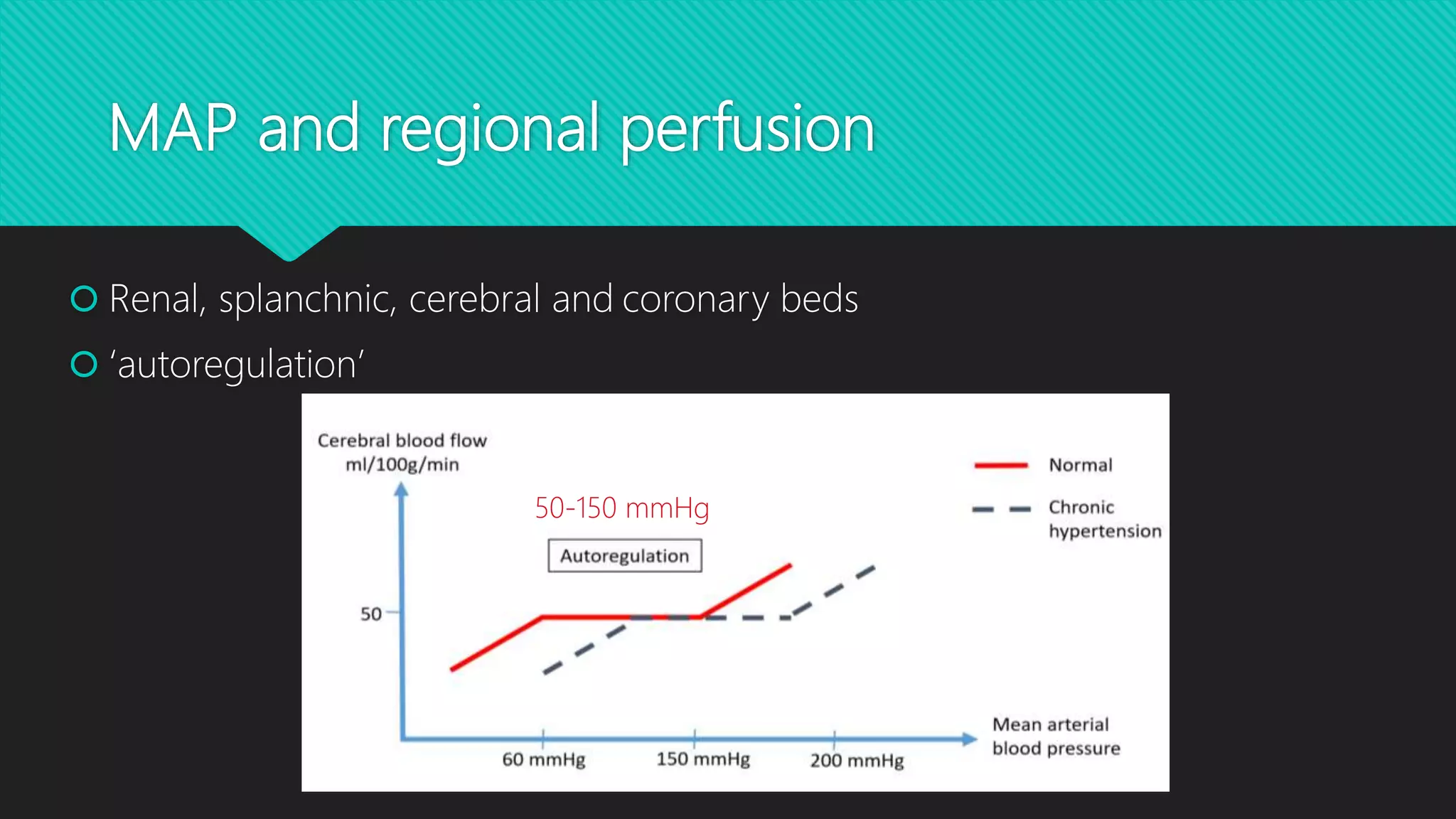
 Renal, splanchnic, cerebral and coronary beds
 ‘autoregulation’
50-150 mmHg
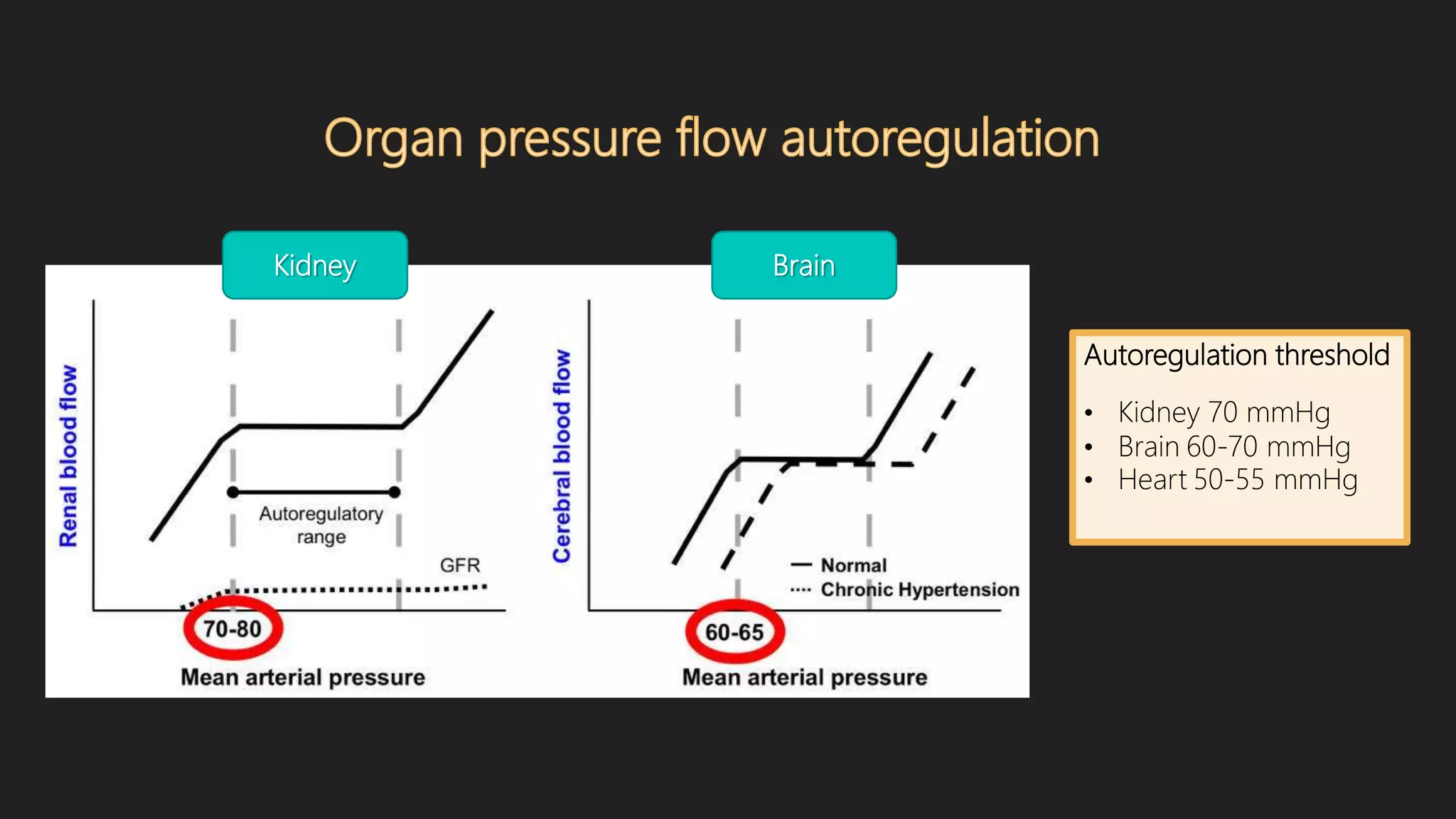
Autoregulation threshold
• Kidney 70 mmHg
• Brain 60-70 mmHg
• Heart 50-55 mmHg
Kidney Brain
Normal blood pressure
In general patients: BP 125/75 mmHg (MAP 92 mmHg)
ACS/AHa 2017: normal blood pressure was defined as SBP
<120 mmHg and DBP <80 mmHg
ICU patients: normal MAP was around 75-100 mmHg
Blood pressure in ICU
HypertensionHypotension
75-100 mmHg
Hypertension in ICU
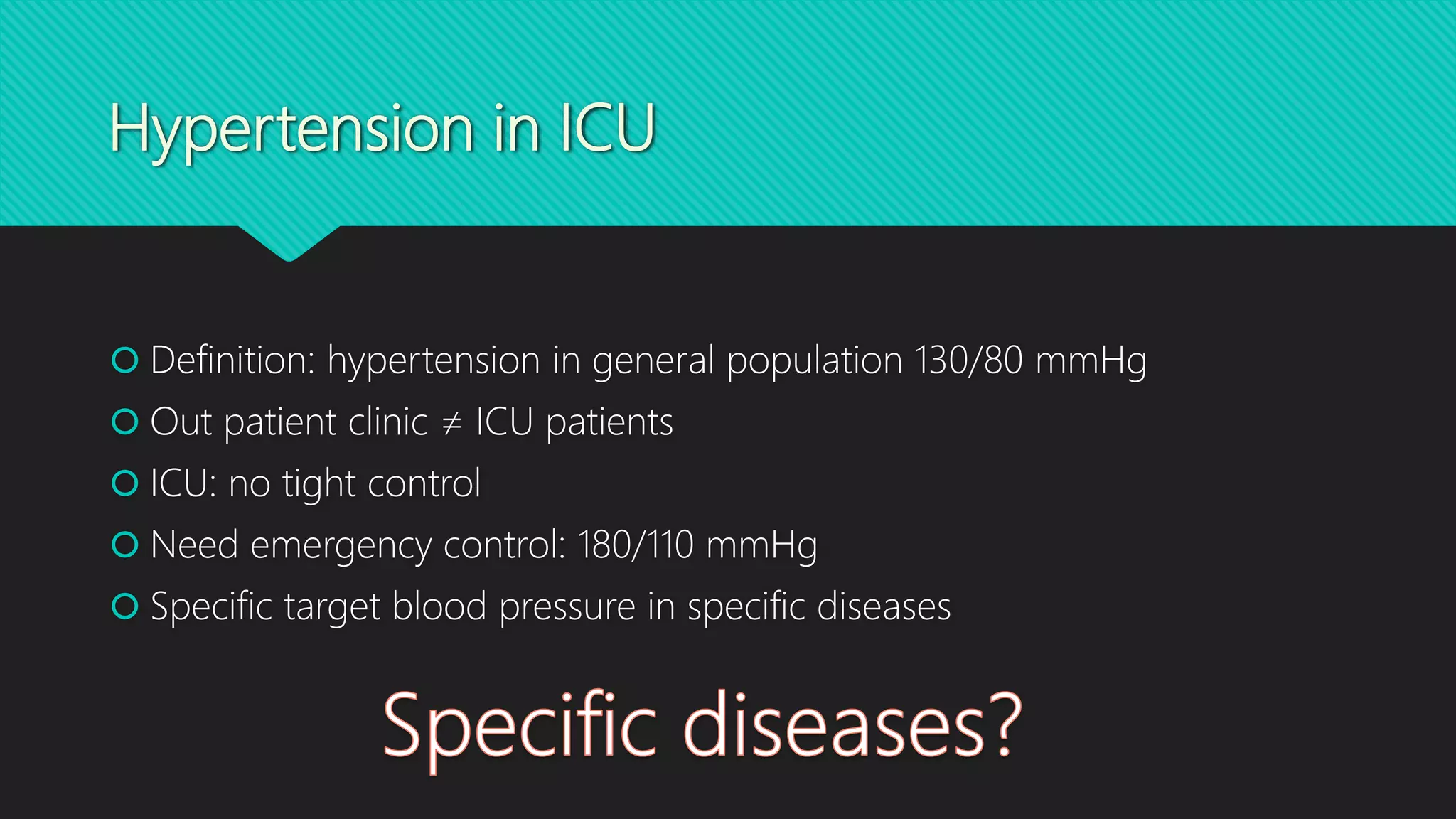
 Definition: hypertension in general population 130/80 mmHg
 Out patient clinic ≠ ICU patients
 ICU: no tight control
 Need emergency control: 180/110 mmHg
 Specific target blood pressure in specific diseases
Specific diseases Target blood pressure
 Aortic dissection
 Congestive heart failure
 Acute coronary syndrome
 Ischemic stroke
 Preeclampsia/
pheochromocytoma
SBP < 120 mmHg, Pulse < 60/min within 30 min
Decrease 25% within 1 hr and BP 160/110 mmHg
within 2-6 hr
BP 160/110 mmHg within 2-6 hr
BP 220/120 mmHg, before rtPA infusion: 185/110
mmHg and 180/105 mmHg after rtPA
BP 160/110 mmHg within 2-6 hr
Hypotension in ICU
River 2001
2016
‘In sepsis’
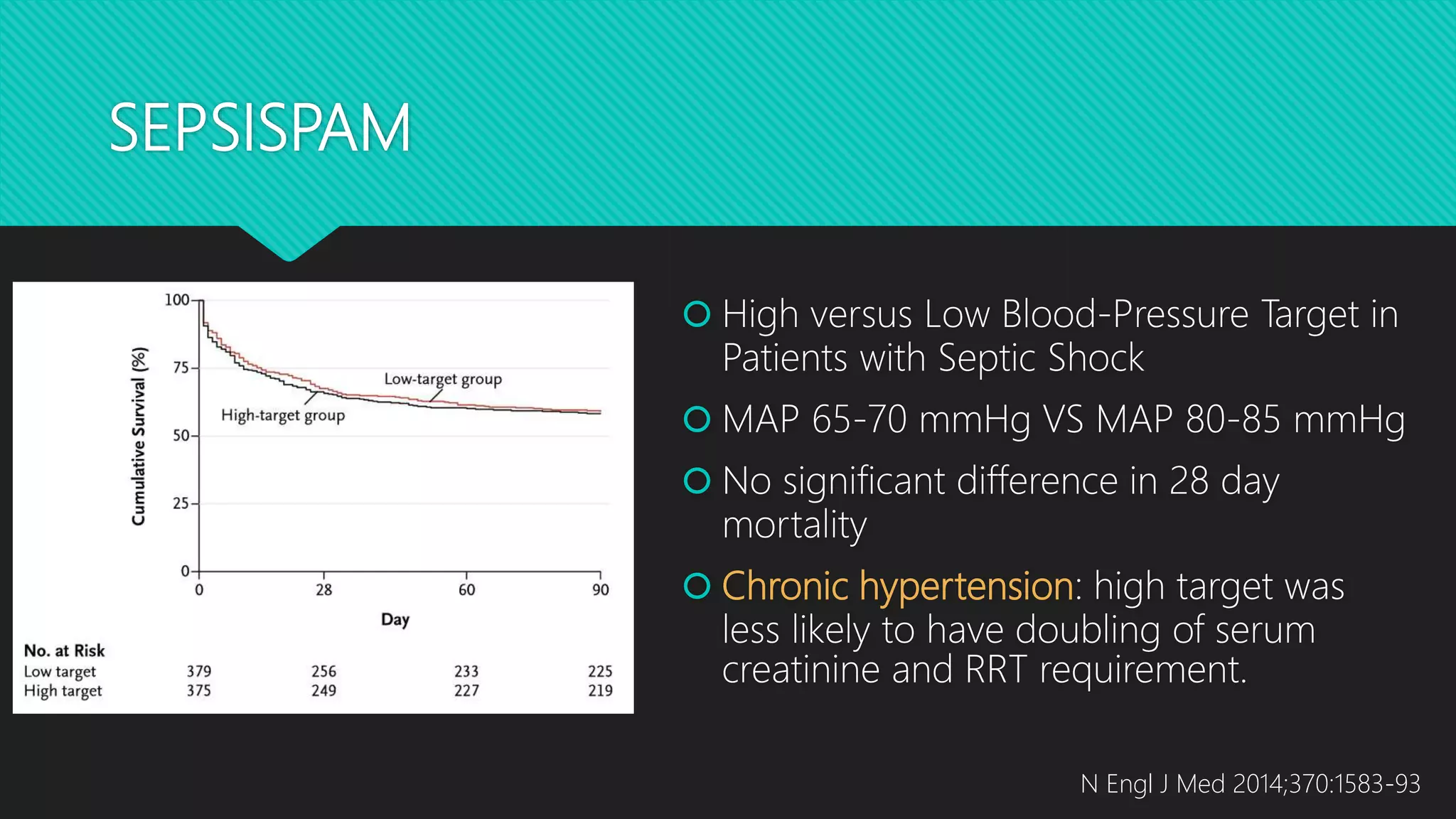
SEPSISPAM
 High versus Low Blood-Pressure Target in
Patients with Septic Shock
 MAP 65-70 mmHg VS MAP 80-85 mmHg
 No significant difference in 28 day
mortality
 Chronic hypertension: high target was
less likely to have doubling of serum
creatinine and RRT requirement.
N Engl J Med 2014;370:1583-93
one size
does not fit all
‘Personalized Medicine’
Target BP >>> Check microcirculation/perfusion
Blood pressure target Specific conditions
Perioperative period
Walsh et al, Anesthesiology 2013
MAP < 55 mmHg
Walsh et al, Anesthesiology 2013
Increase AKI,
cardiac
complication
and MI
In less than
5 min
• Baseline BP (+/- 10%) vs
standard treatment
• Significant decrease in
postoperative organ dysfunction
D30
• No significant in mortality and
adverse event
‘Personalized Medicine’
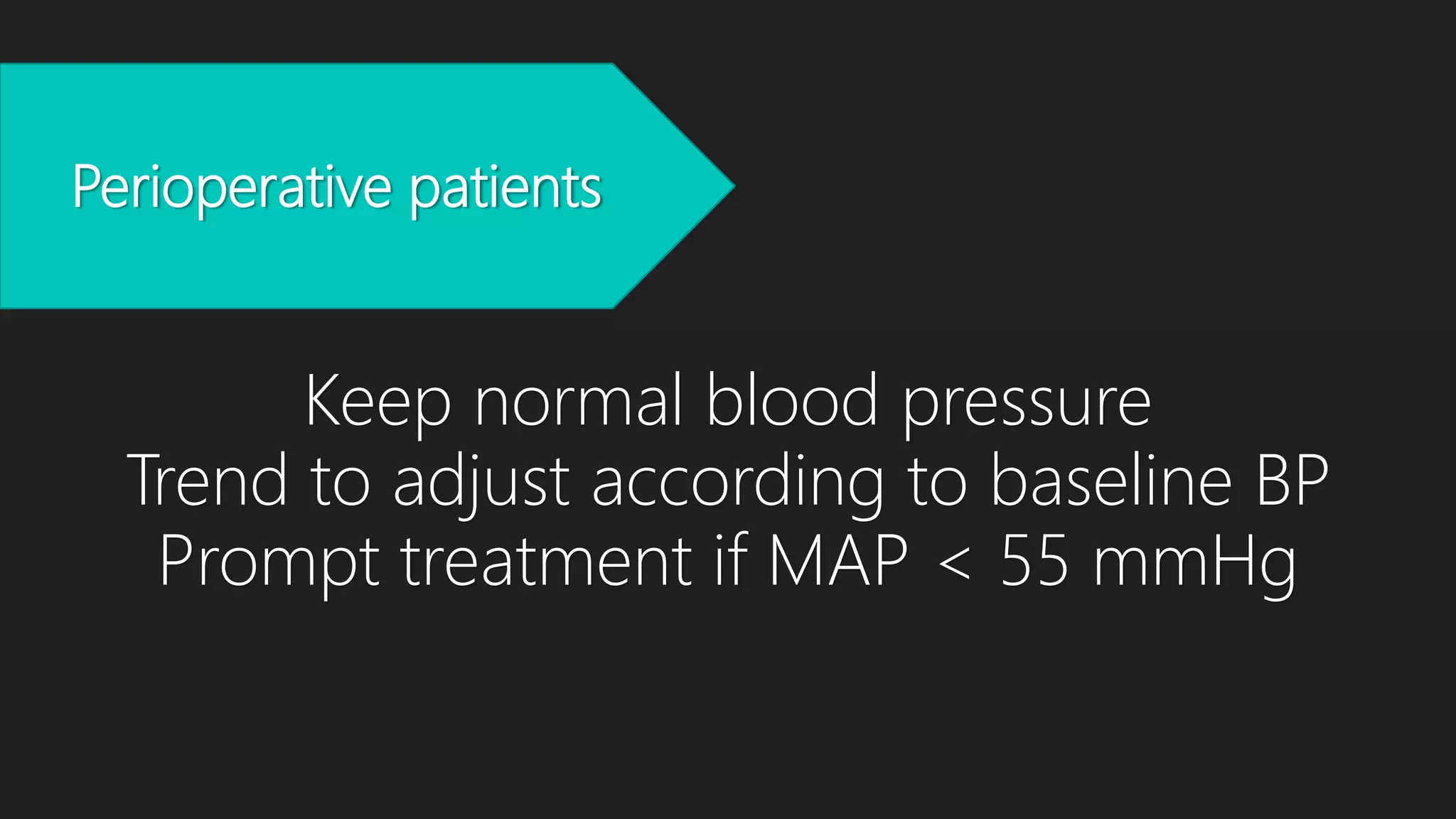
Perioperative patients
Keep normal blood pressure
Trend to adjust according to baseline BP
Prompt treatment if MAP < 55 mmHg
Traumatic hemorrhagic shock
In general:
MAP 50 mmHg
SBP 80 mmHg
To date: Meta-analysis showed the mortality benefit of hypotensive
resuscitation in traumatic hemorrhagic shock patients
Prolonged
Shock
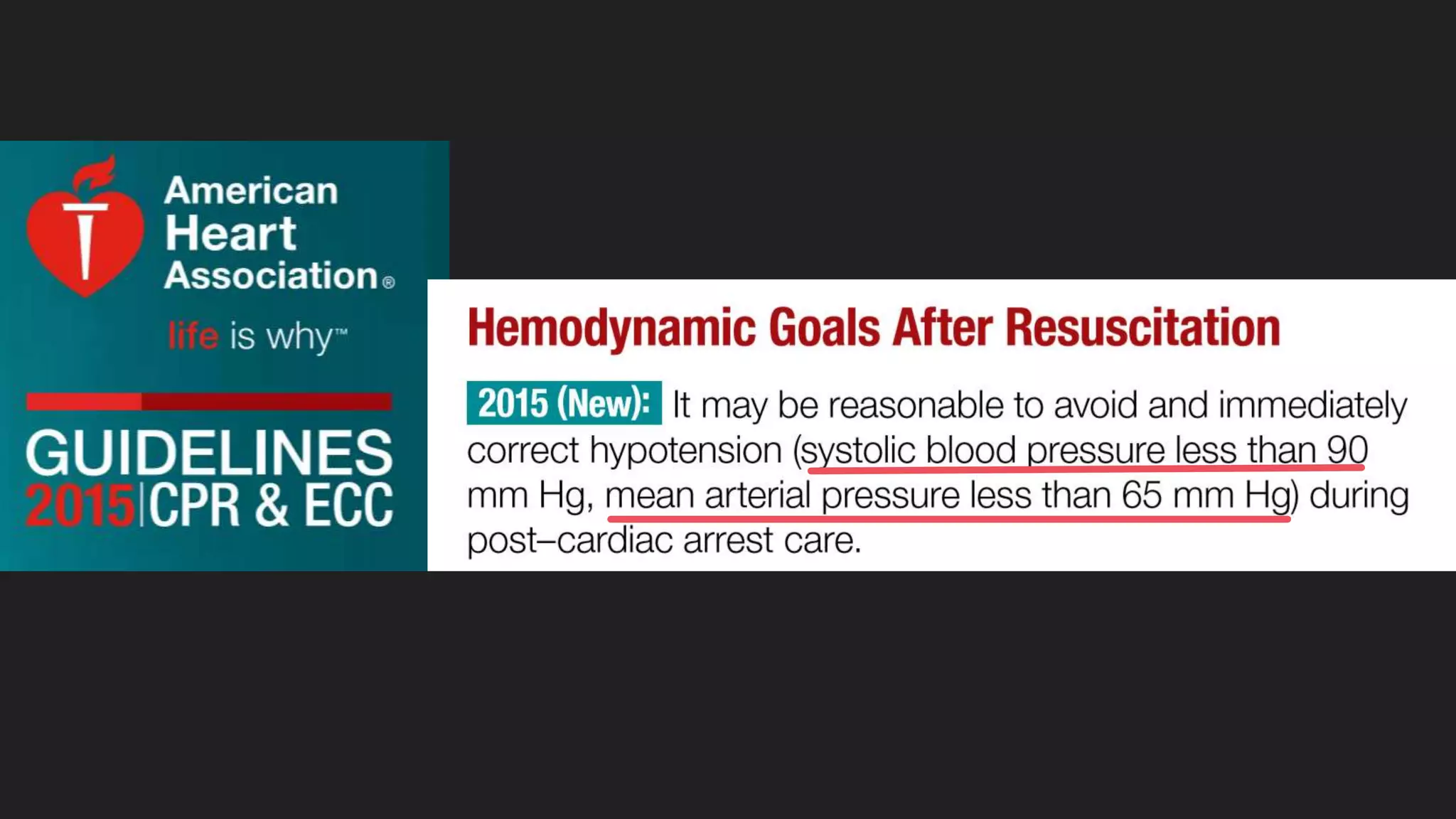
Postcardiac arrest
Laurikkala et al. Resuscitation 2016
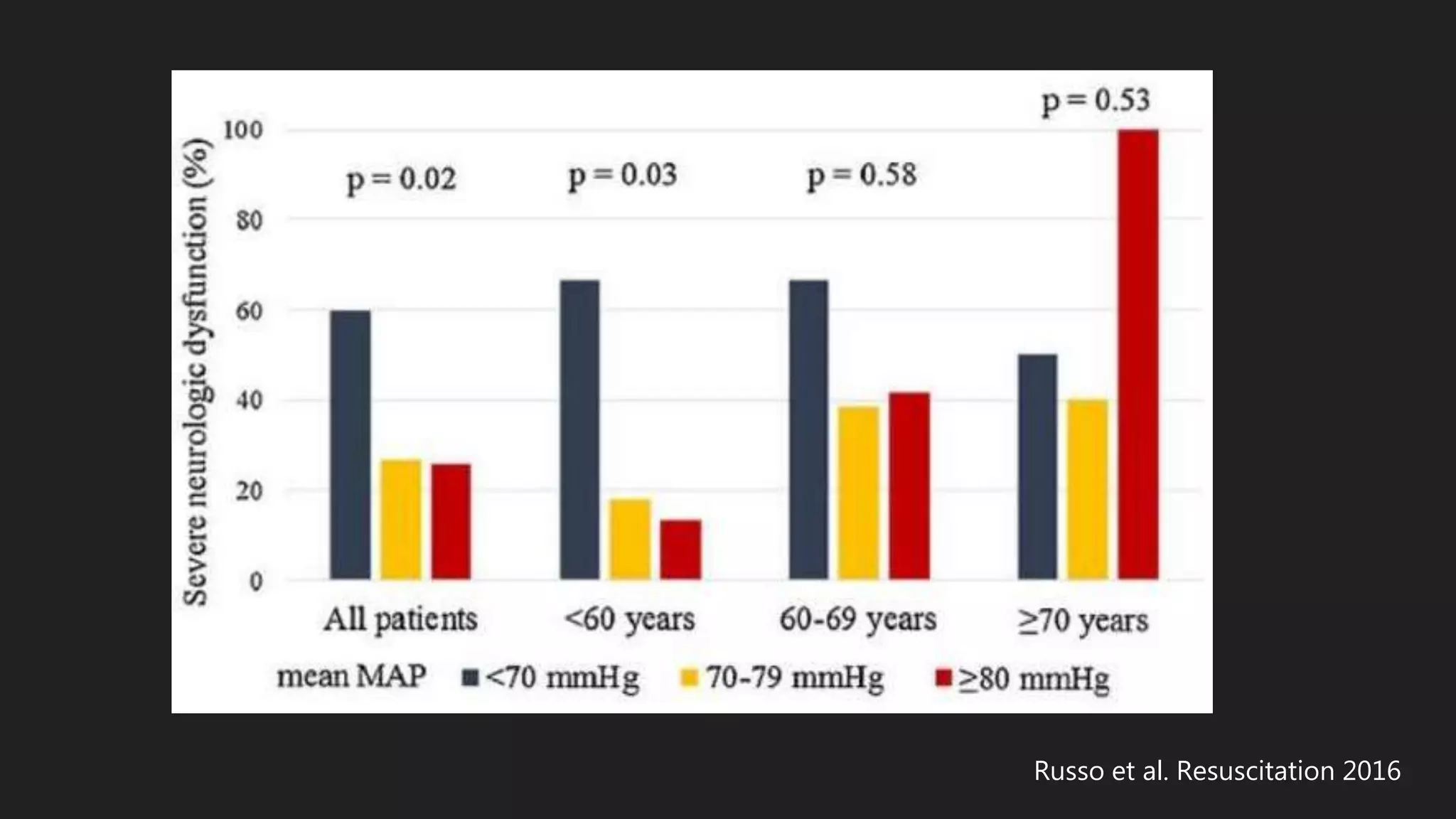
Russo et al. Resuscitation 2016
Postcardiac arrest patients
• Keep MAP > 65 mmHg
• Trend to keep higher target, however there’s
still no strong recommendation
• Need specific monitoring: cerebral perfusion?
Neurological patients
CPP MAP ICP
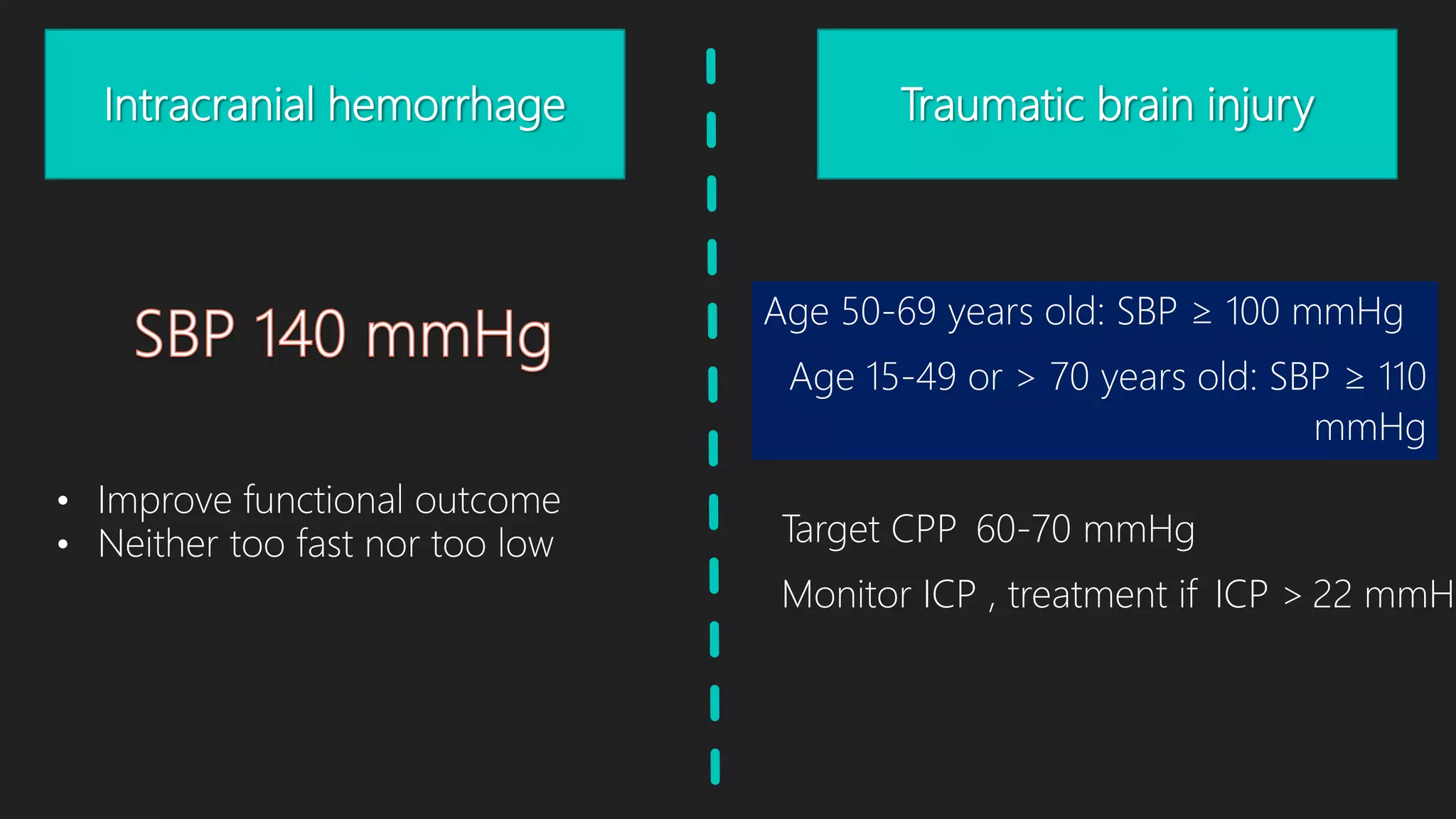
Intracranial hemorrhage Traumatic brain injury
• Improve functional outcome
• Neither too fast nor too low
Age 50-69 years old: SBP ≥ 100 mmHg
Age 15-49 or > 70 years old: SBP ≥ 110
mmHg
Target CPP 60-70 mmHg
Monitor ICP , treatment if ICP > 22 mmHg
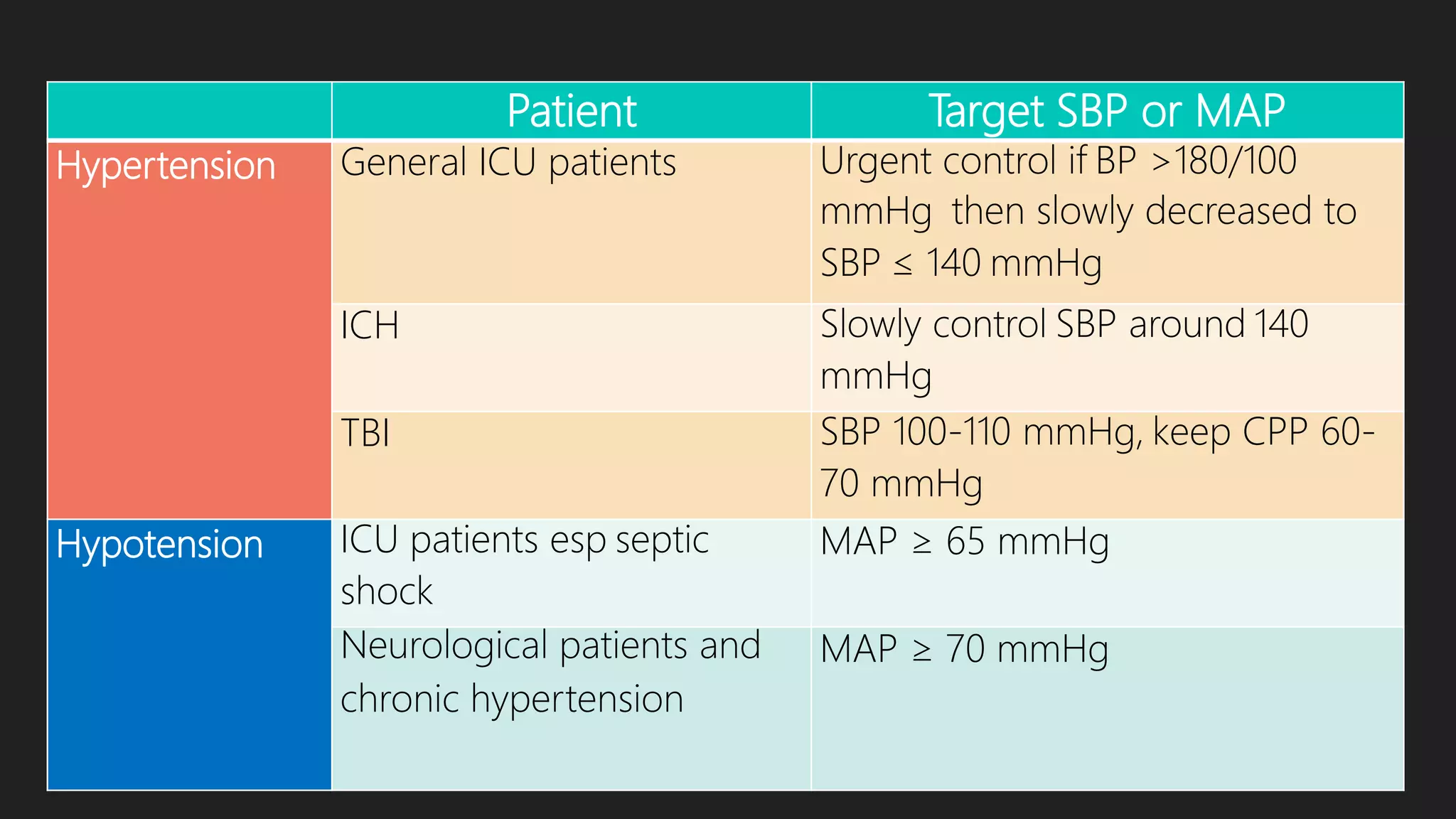
Patient Target SBP or MAP
Hypertension General ICU patients Urgent control if BP >180/100
mmHg then slowly decreased to
SBP ≤ 140 mmHg
ICH Slowly control SBP around 140
mmHg
TBI SBP 100-110 mmHg, keep CPP 60-
70 mmHg
Hypotension ICU patients esp septic
shock
MAP ≥ 65 mmHg
Neurological patients and
chronic hypertension
MAP ≥ 70 mmHg
Blood pressure target in icu

Blood pressure target in icu

  • 1.
    Blood pressure targetin ICU Evidence and Practice Natthida Owattanapanich, MD Division of Trauma Surgery, Surgery department Faculty of Medicine, Siriraj hospital
  • 2.
    Outline Physiology of bloodpressure How important to keep target MAP Blood pressure target  Hypertension  Hypotension
  • 3.
    Blood pressure Systolic bloodpressure Diastolic blood pressure Mean arterial pressurePulse pressure Stroke volume
  • 4.
    Mean arterial pressure:how important?  MAP related to cardiac output and oxygen delivery  MAP related regional circulation
  • 5.
    MAP and Oxygendelivery RA LA RV LV CVP MAP Cardiac output Venous return Pulmonary circulation Systemic capillary bed DO2 = cardiac output x [(1.39 x Hb x SaO2) + (PaO2x 0.003)]
  • 6.
    MAP and regionalperfusion  Renal, splanchnic, cerebral and coronary beds  ‘autoregulation’ 50-150 mmHg
  • 7.
    Autoregulation threshold • Kidney70 mmHg • Brain 60-70 mmHg • Heart 50-55 mmHg Kidney Brain
  • 8.
    Normal blood pressure Ingeneral patients: BP 125/75 mmHg (MAP 92 mmHg) ACS/AHa 2017: normal blood pressure was defined as SBP <120 mmHg and DBP <80 mmHg ICU patients: normal MAP was around 75-100 mmHg
  • 9.
    Blood pressure inICU HypertensionHypotension 75-100 mmHg
  • 10.
    Hypertension in ICU Definition: hypertension in general population 130/80 mmHg  Out patient clinic ≠ ICU patients  ICU: no tight control  Need emergency control: 180/110 mmHg  Specific target blood pressure in specific diseases
  • 11.
    Specific diseases Targetblood pressure  Aortic dissection  Congestive heart failure  Acute coronary syndrome  Ischemic stroke  Preeclampsia/ pheochromocytoma SBP < 120 mmHg, Pulse < 60/min within 30 min Decrease 25% within 1 hr and BP 160/110 mmHg within 2-6 hr BP 160/110 mmHg within 2-6 hr BP 220/120 mmHg, before rtPA infusion: 185/110 mmHg and 180/105 mmHg after rtPA BP 160/110 mmHg within 2-6 hr
  • 12.
  • 13.
  • 14.
    SEPSISPAM  High versusLow Blood-Pressure Target in Patients with Septic Shock  MAP 65-70 mmHg VS MAP 80-85 mmHg  No significant difference in 28 day mortality  Chronic hypertension: high target was less likely to have doubling of serum creatinine and RRT requirement. N Engl J Med 2014;370:1583-93
  • 15.
    one size does notfit all ‘Personalized Medicine’ Target BP >>> Check microcirculation/perfusion
  • 16.
    Blood pressure targetSpecific conditions
  • 17.
    Perioperative period Walsh etal, Anesthesiology 2013
  • 18.
    MAP < 55mmHg Walsh et al, Anesthesiology 2013 Increase AKI, cardiac complication and MI In less than 5 min
  • 19.
    • Baseline BP(+/- 10%) vs standard treatment • Significant decrease in postoperative organ dysfunction D30 • No significant in mortality and adverse event ‘Personalized Medicine’
  • 20.
    Perioperative patients Keep normalblood pressure Trend to adjust according to baseline BP Prompt treatment if MAP < 55 mmHg
  • 21.
  • 22.
    In general: MAP 50mmHg SBP 80 mmHg To date: Meta-analysis showed the mortality benefit of hypotensive resuscitation in traumatic hemorrhagic shock patients
  • 23.
  • 24.
  • 26.
    Laurikkala et al.Resuscitation 2016
  • 27.
    Russo et al.Resuscitation 2016
  • 28.
    Postcardiac arrest patients •Keep MAP > 65 mmHg • Trend to keep higher target, however there’s still no strong recommendation • Need specific monitoring: cerebral perfusion?
  • 29.
  • 30.
    Intracranial hemorrhage Traumaticbrain injury • Improve functional outcome • Neither too fast nor too low Age 50-69 years old: SBP ≥ 100 mmHg Age 15-49 or > 70 years old: SBP ≥ 110 mmHg Target CPP 60-70 mmHg Monitor ICP , treatment if ICP > 22 mmHg
  • 32.
    Patient Target SBPor MAP Hypertension General ICU patients Urgent control if BP >180/100 mmHg then slowly decreased to SBP ≤ 140 mmHg ICH Slowly control SBP around 140 mmHg TBI SBP 100-110 mmHg, keep CPP 60- 70 mmHg Hypotension ICU patients esp septic shock MAP ≥ 65 mmHg Neurological patients and chronic hypertension MAP ≥ 70 mmHg