BLOOD GROUPING
METHODS
Dr. Abrar Kabir Shishir
MBBS, MD (Transfusion Medicine)
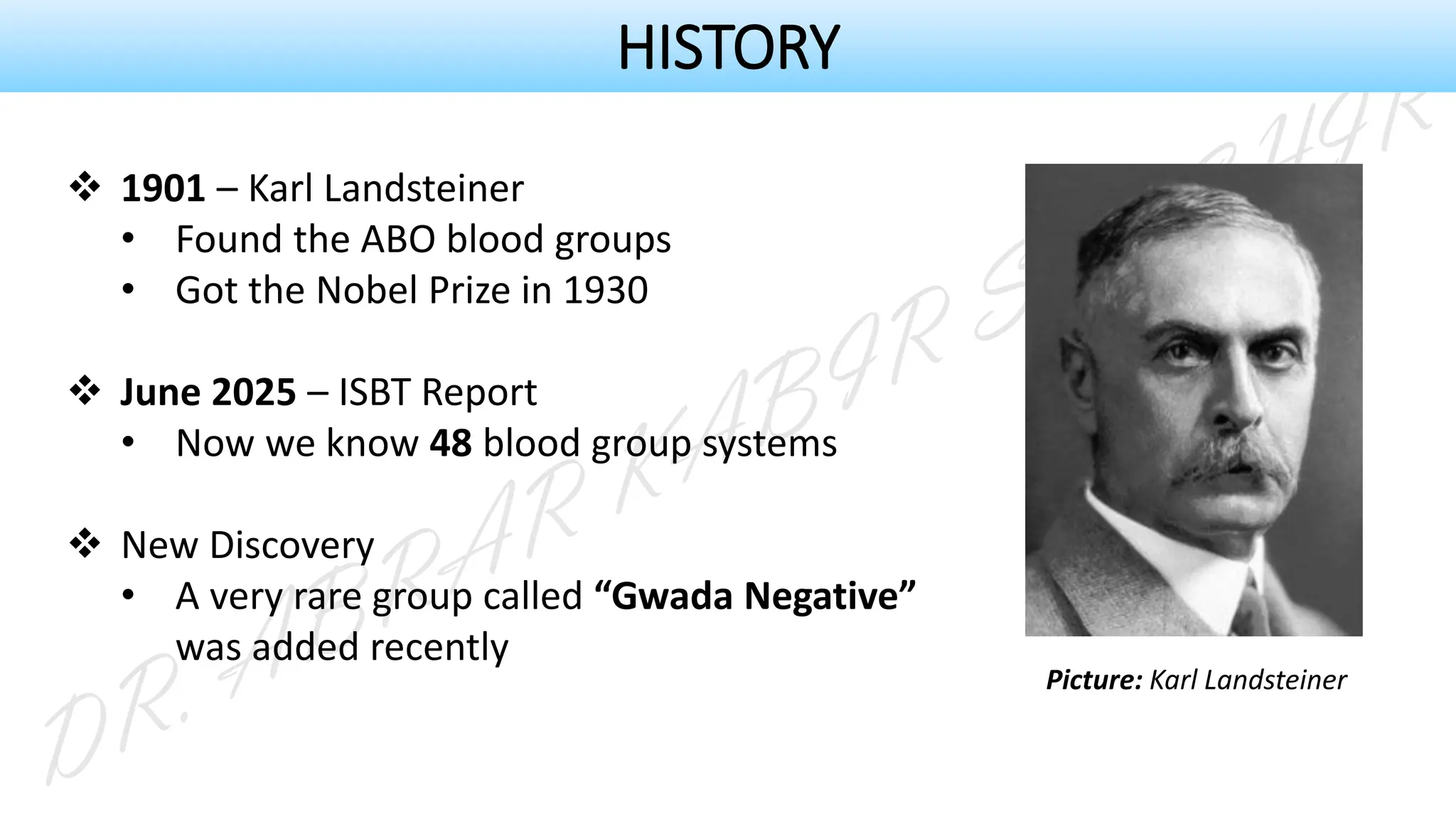
❖ 1901 – Karl Landsteiner
• Found the ABO blood groups
• Got the Nobel Prize in 1930
❖ June 2025 – ISBT Report
• Now we know 48 blood group systems
❖ New Discovery
• A very rare group called “Gwada Negative”
was added recently
Picture: Karl Landsteiner
HISTORY
ISBT system
symbol/ Name
(Number)
Gene Name:
ISBT (HGNC)
Chromosome
Location
Associated Blood Group
Antigens [Null phenotype]
ABO (001) ABO(ABO) 9q34.2 A; B; A,B; A1 [Group O]
RH/ Rh (004) RH (RHD,
RHCE)
1q36.11 D, G, C, E, c, e, V, VS and more
[Rh null]
H(018) H (FUT1) 19q13.33 H [Bombay (Oh)]
BASIC GENETICS OF BLOOD GROUPS
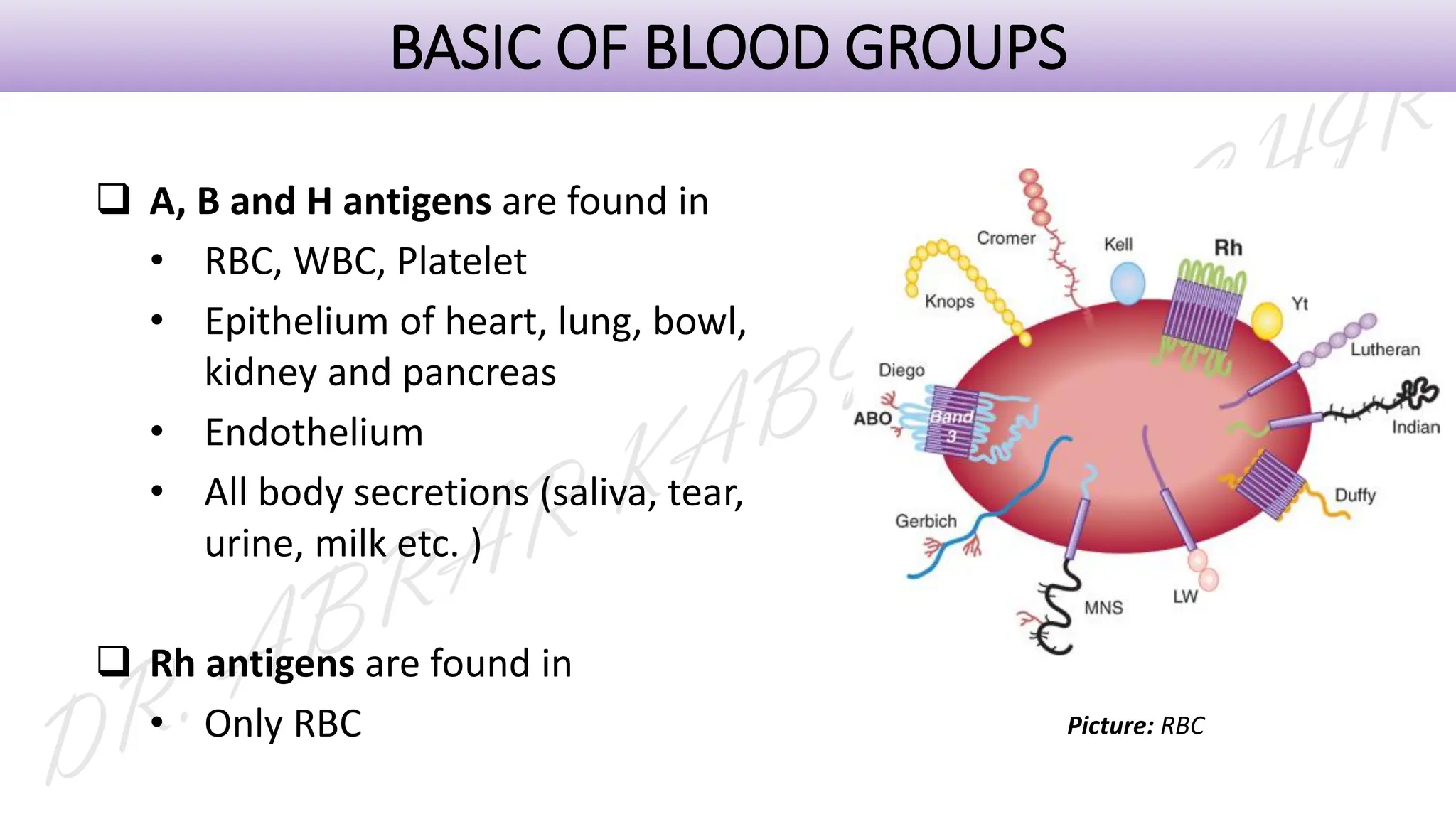
❑ A, B and H antigens are found in
• RBC, WBC, Platelet
• Epithelium of heart, lung, bowl,
kidney and pancreas
• Endothelium
• All body secretions (saliva, tear,
urine, milk etc. )
❑ Rh antigens are found in
• Only RBC
BASIC OF BLOOD GROUPS
Picture: RBC
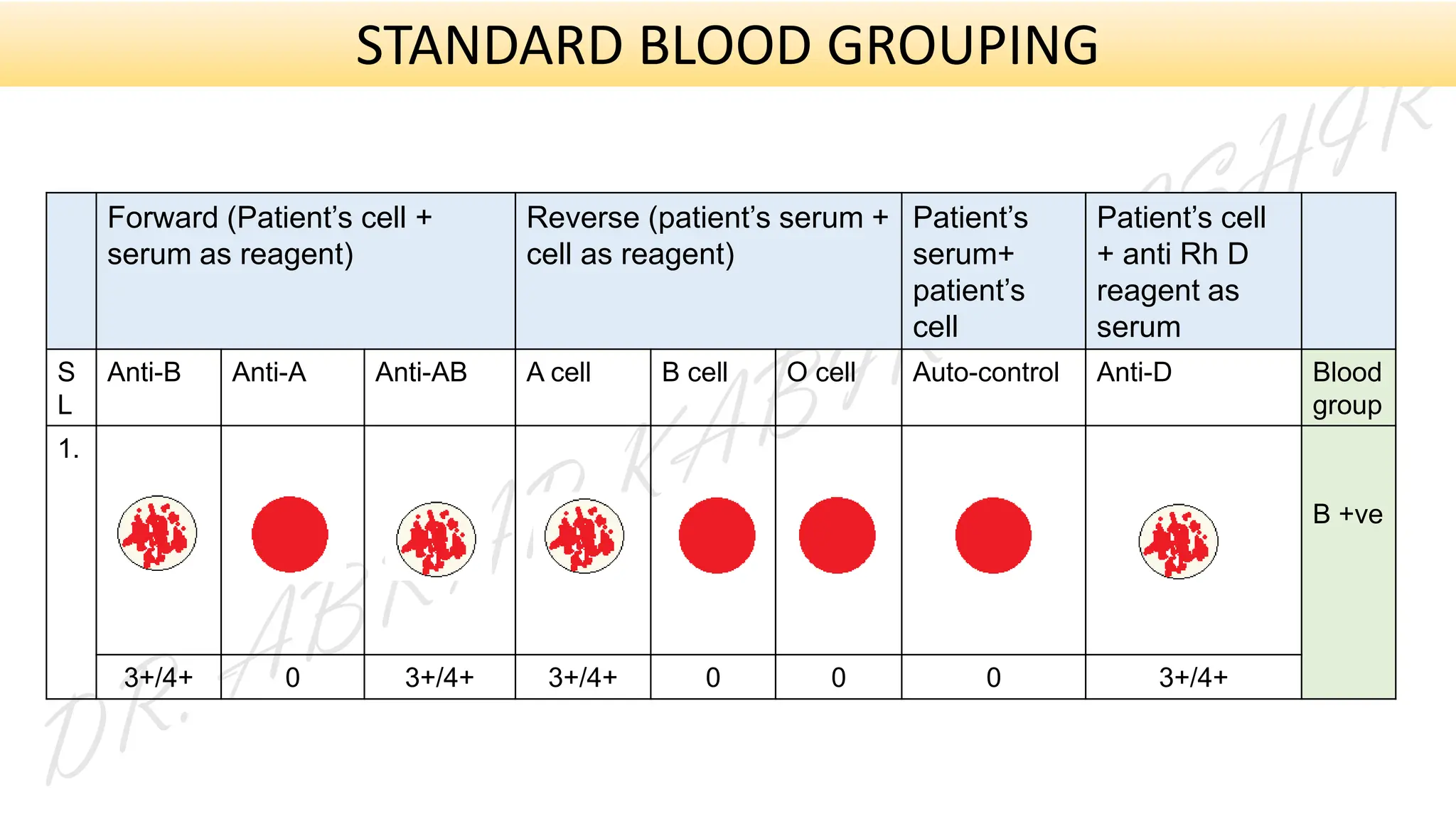
Forward (Patient’s cell +
serum as reagent)
Reverse (patient’s serum +
cell as reagent)
Patient’s
serum+
patient’s
cell
Patient’s cell
+ anti Rh D
reagent as
serum
S
L
Anti-B Anti-A Anti-AB A cell B cell O cell Auto-control Anti-D Blood
group
1.
B +ve
3+/4+ 0 3+/4+ 3+/4+ 0 0 0 3+/4+
STANDARD BLOOD GROUPING
METHODS OF BLOOD GROUPING
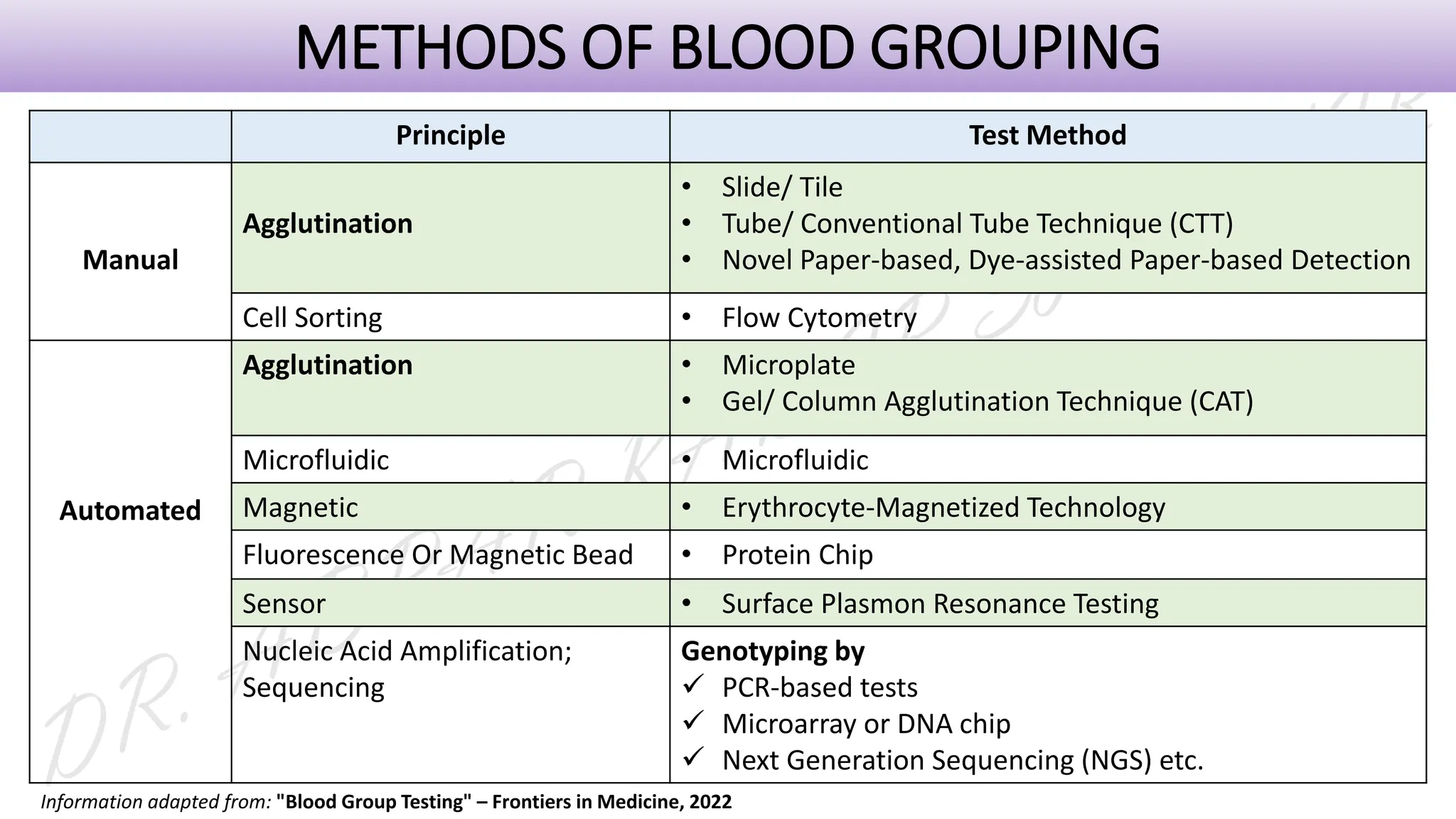
Principle Test Method
Manual
Agglutination
• Slide/ Tile
• Tube/ Conventional Tube Technique (CTT)
• Novel Paper-based, Dye-assisted Paper-based Detection
Cell Sorting • Flow Cytometry
Automated
Agglutination • Microplate
• Gel/ Column Agglutination Technique (CAT)
Microfluidic • Microfluidic
Magnetic • Erythrocyte-Magnetized Technology
Fluorescence Or Magnetic Bead • Protein Chip
Sensor • Surface Plasmon Resonance Testing
Nucleic Acid Amplification;
Sequencing
Genotyping by
✓ PCR-based tests
✓ Microarray or DNA chip
✓ Next Generation Sequencing (NGS) etc.
Information adapted from: "Blood Group Testing" – Frontiers in Medicine, 2022
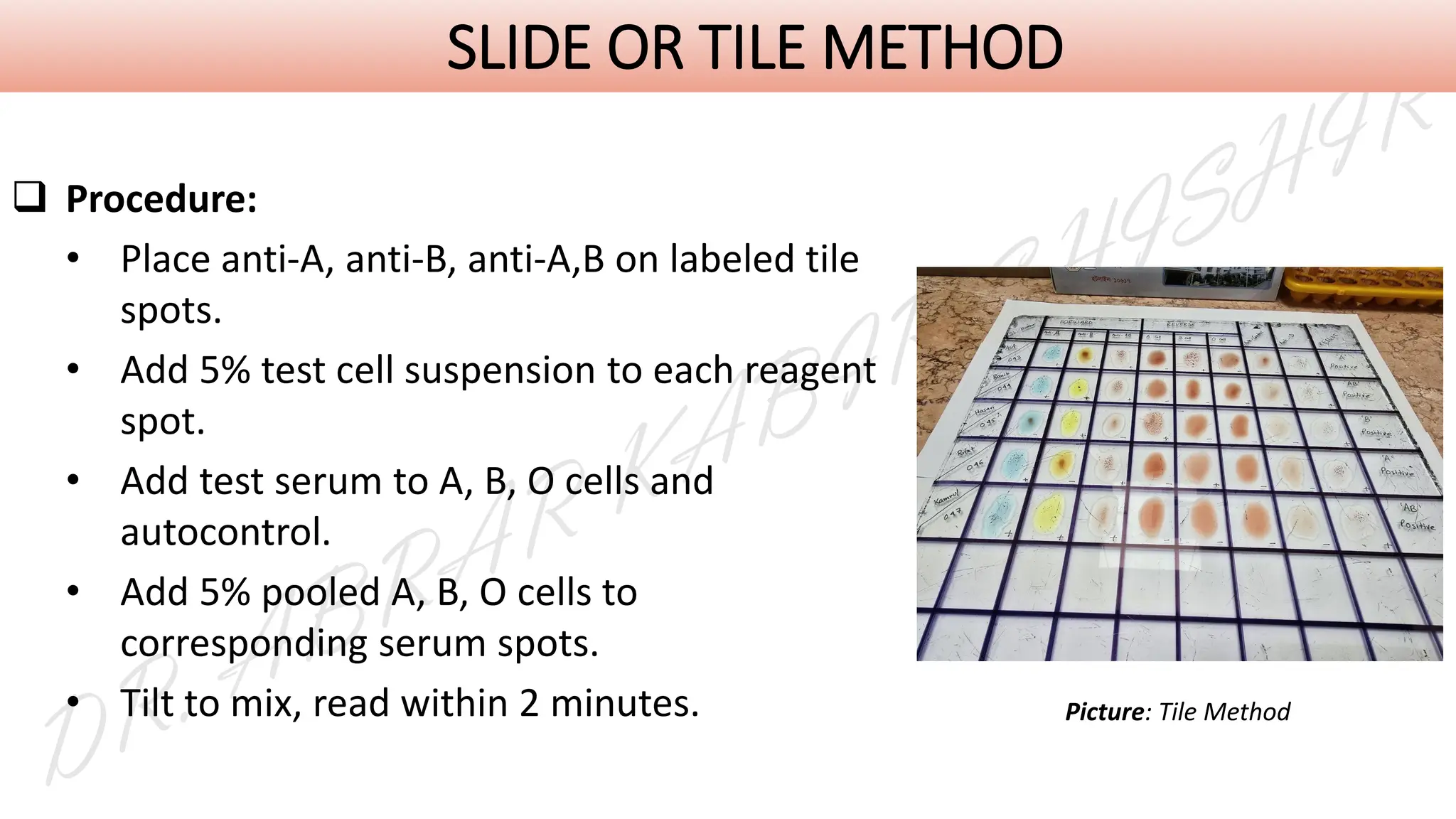
❑ Procedure:
• Place anti-A, anti-B, anti-A,B on labeled tile
spots.
• Add 5% test cell suspension to each reagent
spot.
• Add test serum to A, B, O cells and
autocontrol.
• Add 5% pooled A, B, O cells to
corresponding serum spots.
• Tilt to mix, read within 2 minutes.
SLIDE OR TILE METHOD
Picture: Tile Method
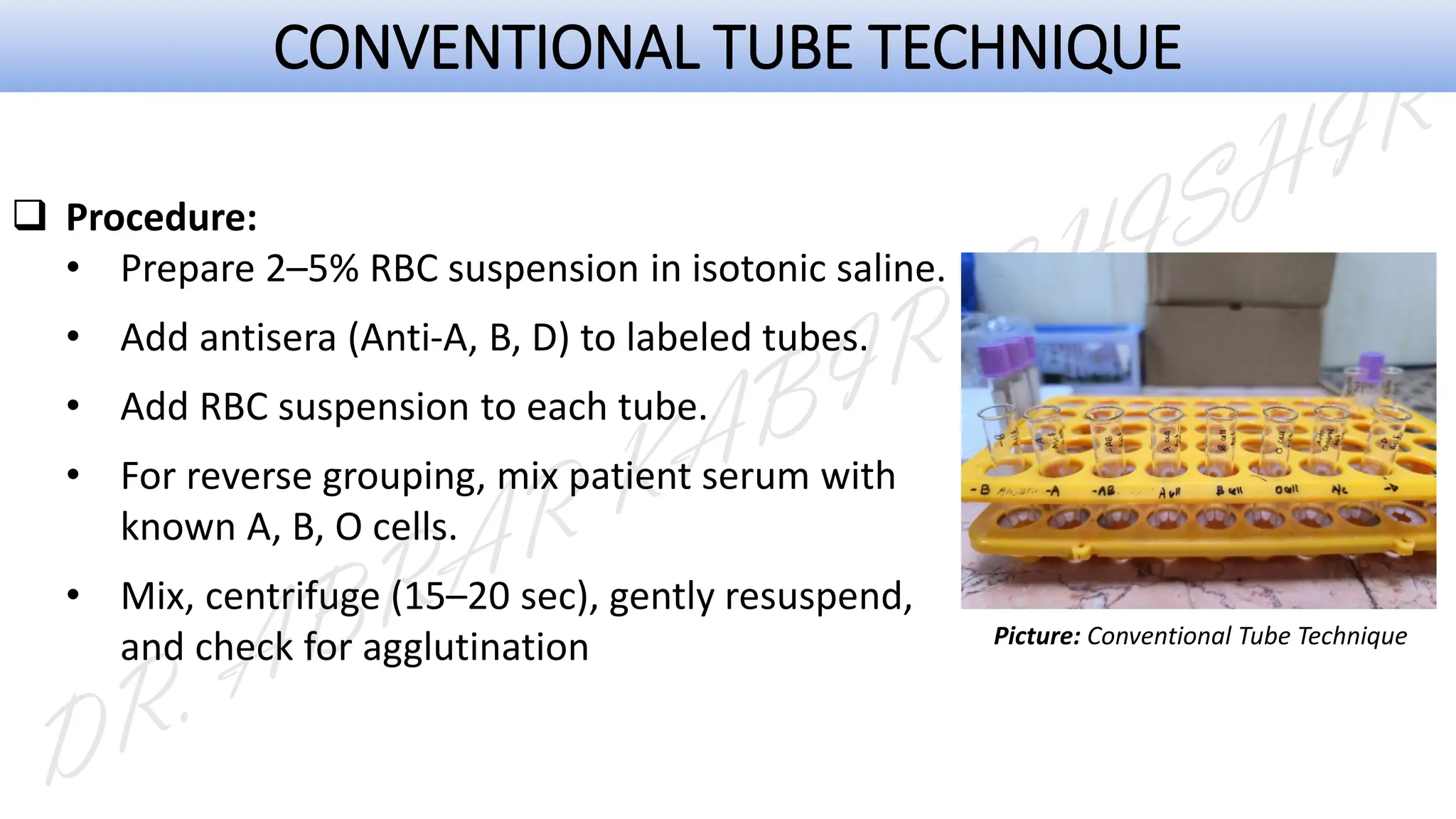
CONVENTIONAL TUBE TECHNIQUE
❑ Procedure:
• Prepare 2–5% RBC suspension in isotonic saline.
• Add antisera (Anti-A, B, D) to labeled tubes.
• Add RBC suspension to each tube.
• For reverse grouping, mix patient serum with
known A, B, O cells.
• Mix, centrifuge (15–20 sec), gently resuspend,
and check for agglutination Picture: Conventional Tube Technique
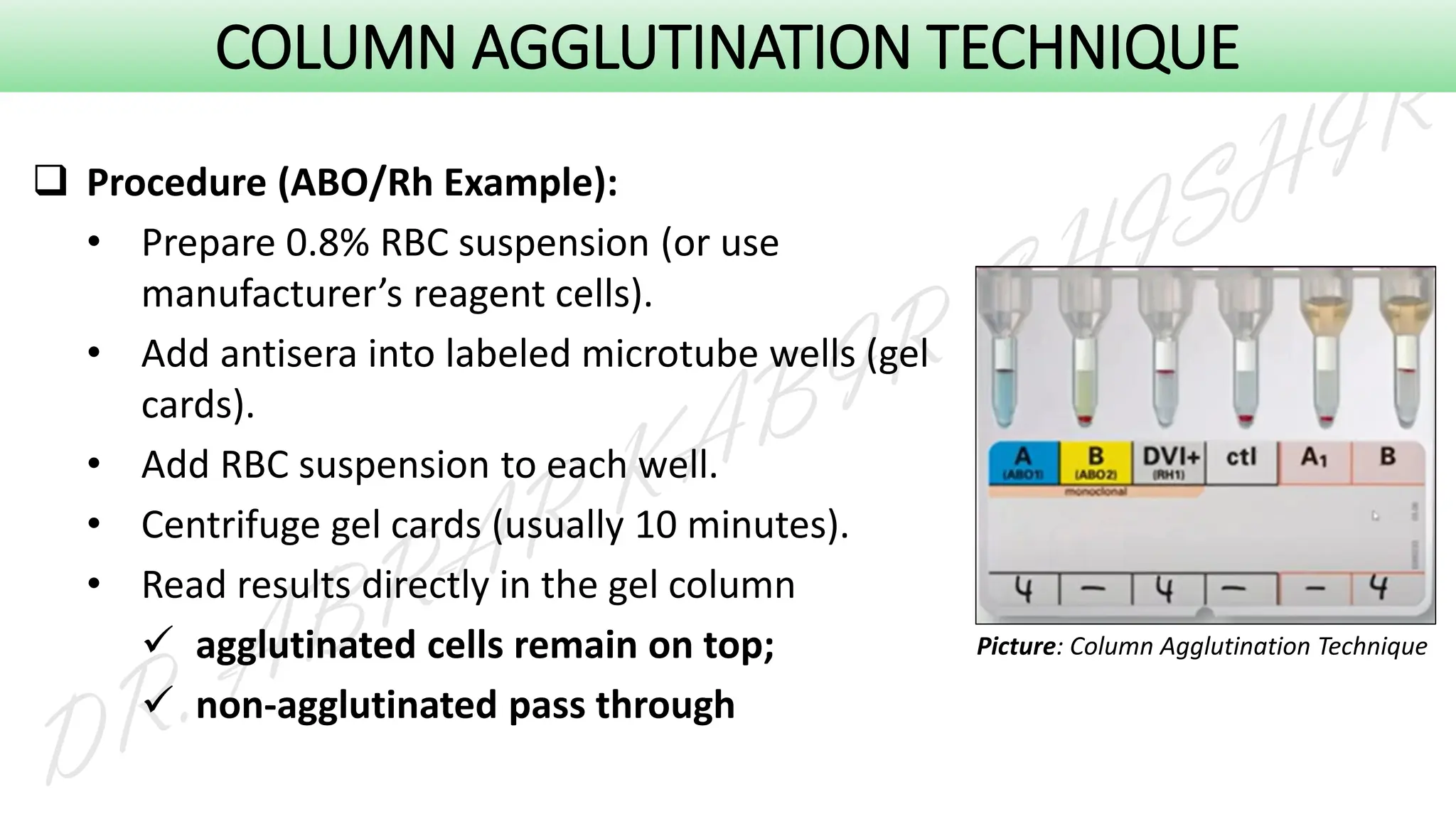
COLUMN AGGLUTINATION TECHNIQUE
❑ Procedure (ABO/Rh Example):
• Prepare 0.8% RBC suspension (or use
manufacturer’s reagent cells).
• Add antisera into labeled microtube wells (gel
cards).
• Add RBC suspension to each well.
• Centrifuge gel cards (usually 10 minutes).
• Read results directly in the gel column
✓ agglutinated cells remain on top;
✓ non-agglutinated pass through
Picture: Column Agglutination Technique
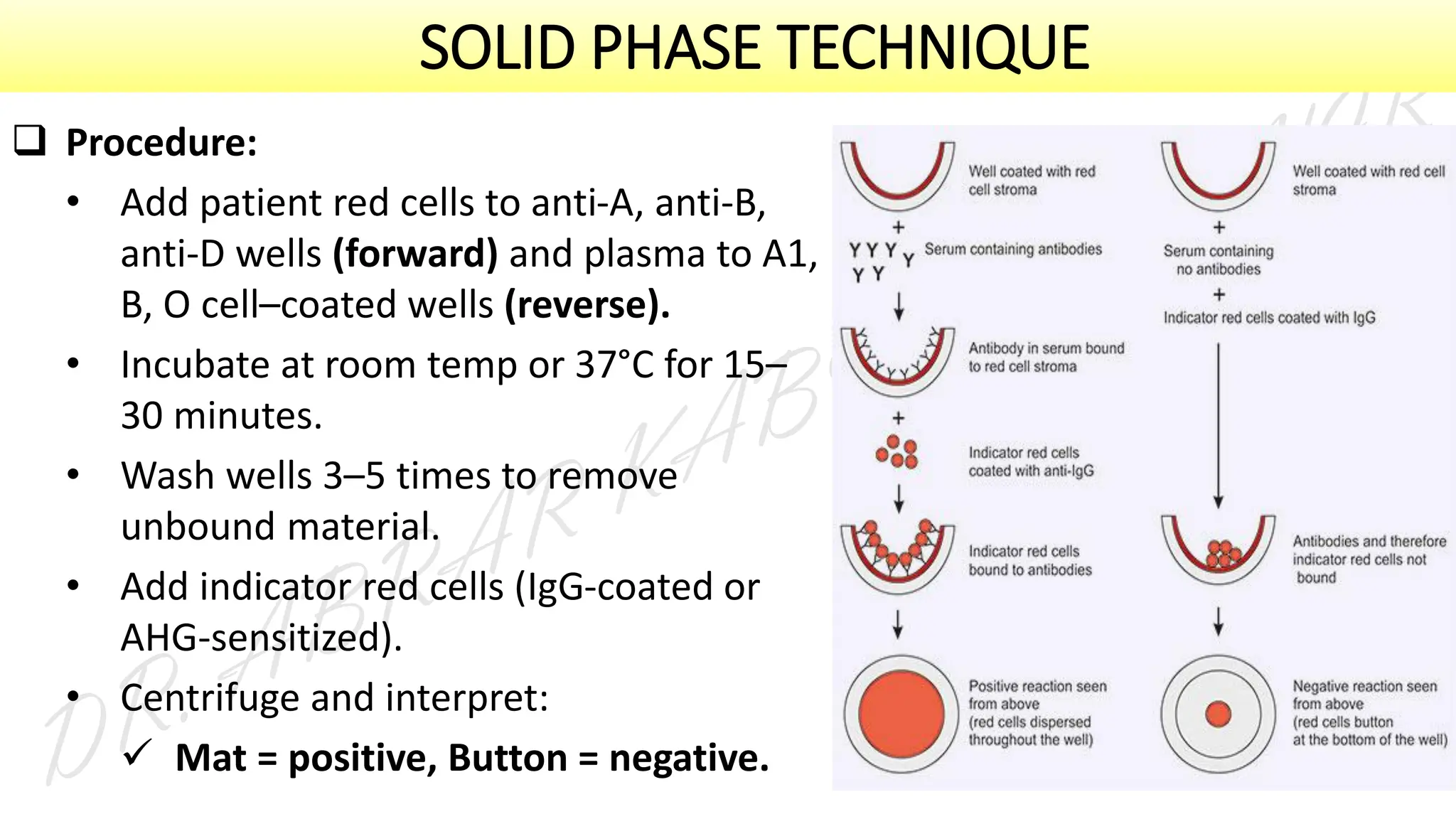
SOLID PHASE TECHNIQUE
❑ Procedure:
• Add patient red cells to anti-A, anti-B,
anti-D wells (forward) and plasma to A1,
B, O cell–coated wells (reverse).
• Incubate at room temp or 37°C for 15–
30 minutes.
• Wash wells 3–5 times to remove
unbound material.
• Add indicator red cells (IgG-coated or
AHG-sensitized).
• Centrifuge and interpret:
✓ Mat = positive, Button = negative.
MANUAL OR AUTOMATED
• Compared manual (CTT) vs. automated (Techno TwinStation) for blood
grouping (microplate) and crossmatching (CAT)
• Both had 95%+ match; machine missed weak D and struggled with rare cases.
• Machine found extra antibodies (Anti-K, Anti-M), showing better sensitivity.
• Automated are suitable for busy blood banks, but manual backup needed for
rare or problematic samples.
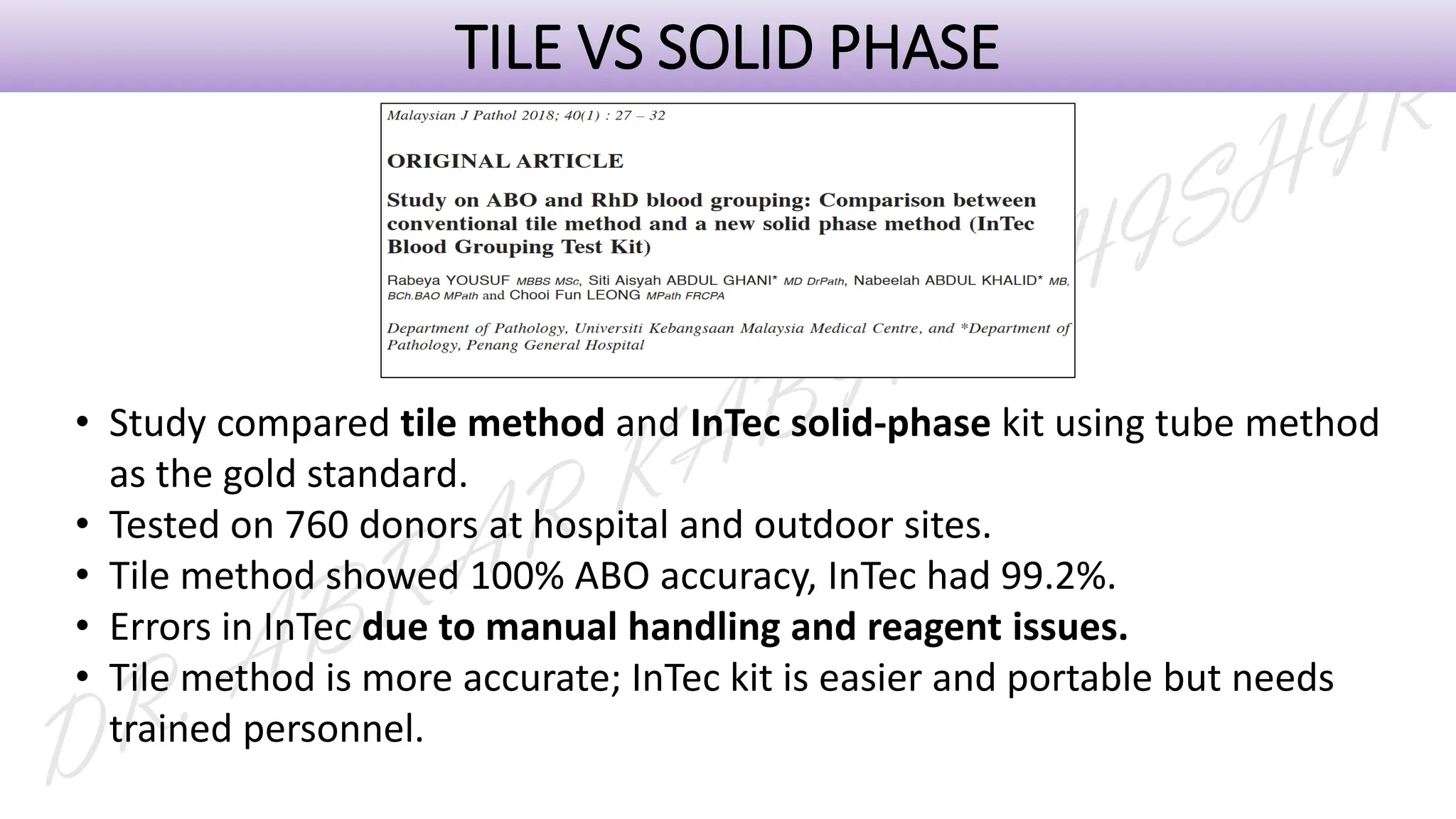
• Study compared tile method and InTec solid-phase kit using tube method
as the gold standard.
• Tested on 760 donors at hospital and outdoor sites.
• Tile method showed 100% ABO accuracy, InTec had 99.2%.
• Errors in InTec due to manual handling and reagent issues.
• Tile method is more accurate; InTec kit is easier and portable but needs
trained personnel.
TILE VS SOLID PHASE
CTT OR CAT IN PRETRANSFUSION
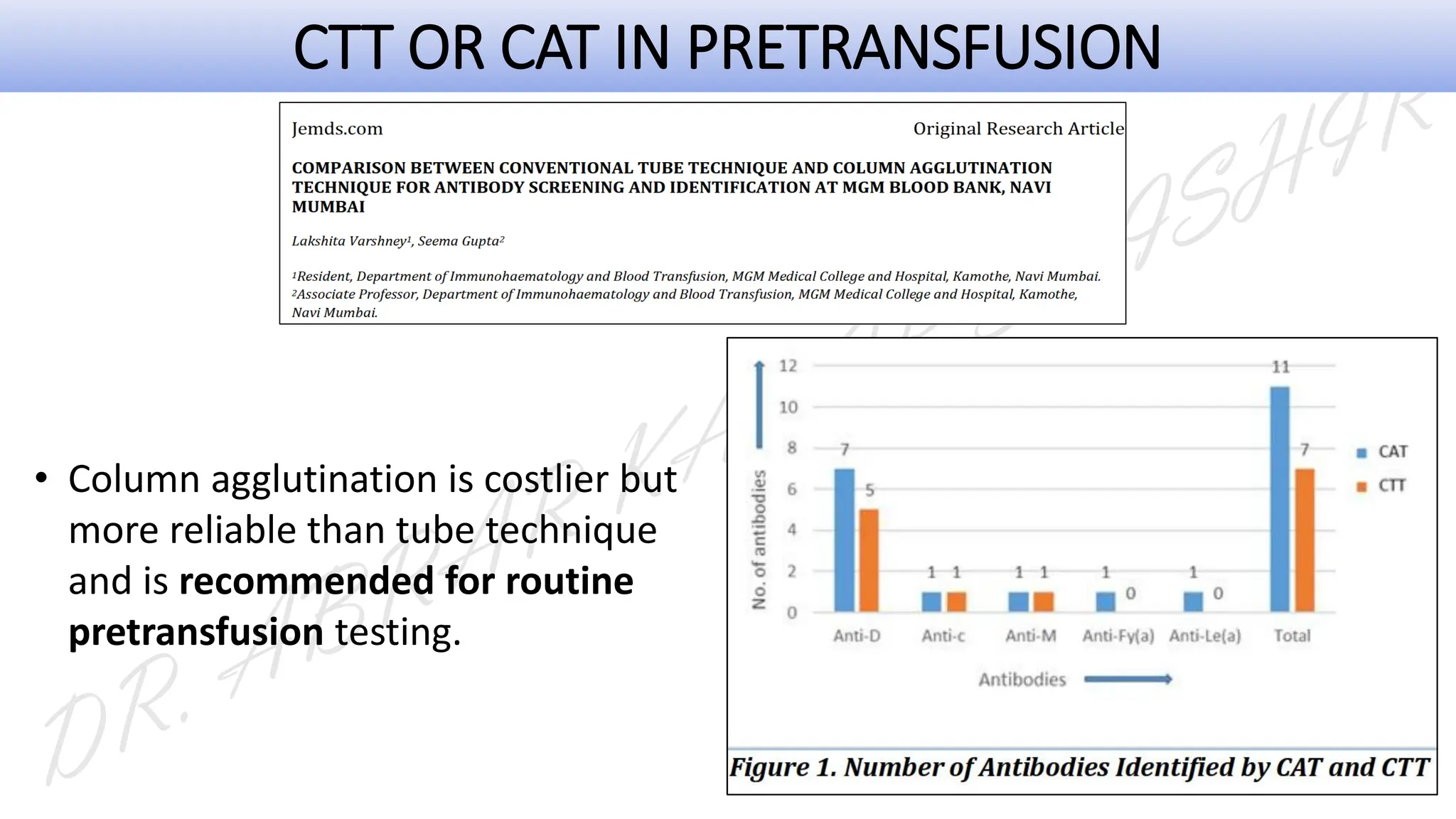
• Column agglutination is costlier but
more reliable than tube technique
and is recommended for routine
pretransfusion testing.
PAPER BASED METHODS
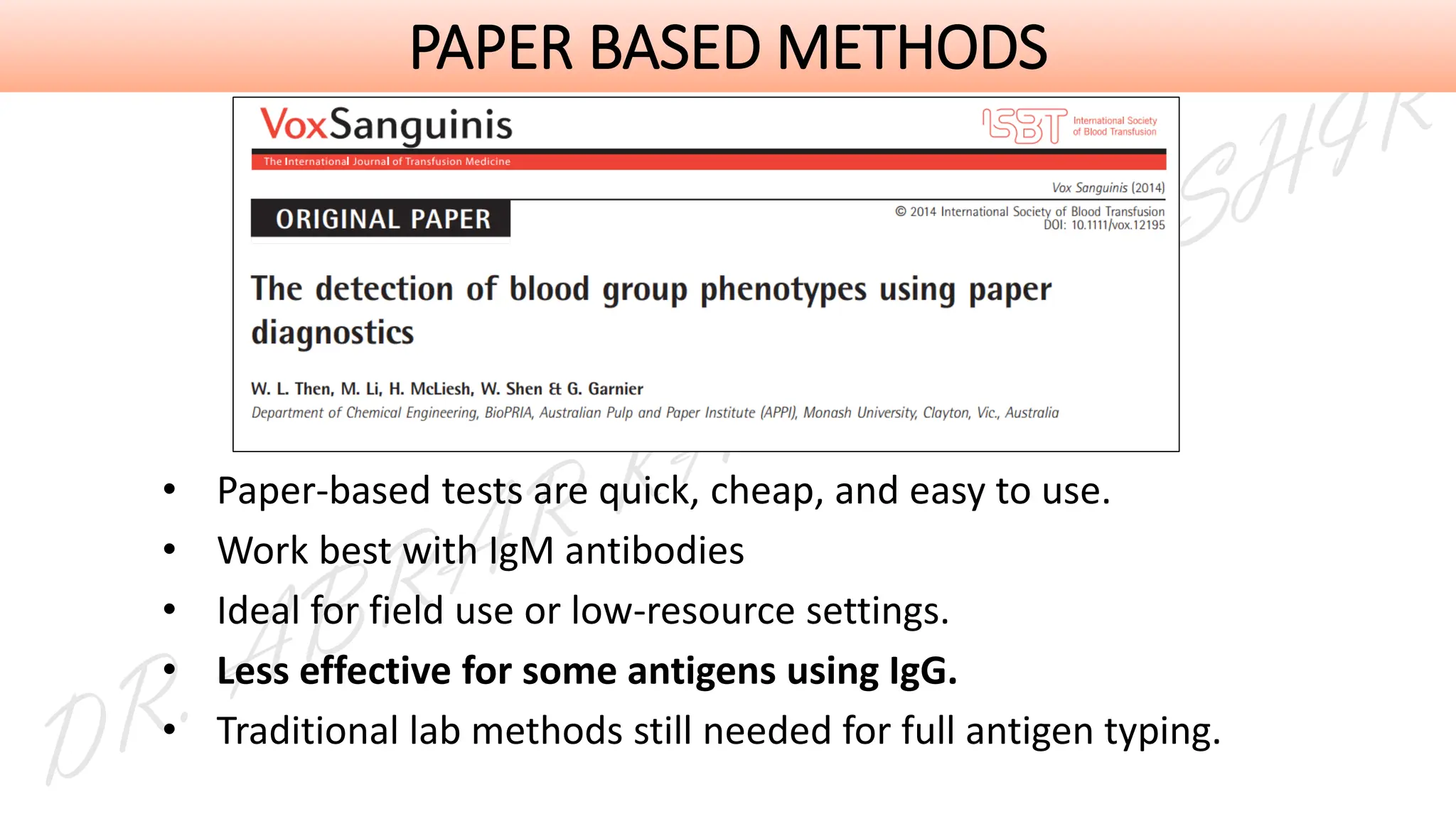
• Paper-based tests are quick, cheap, and easy to use.
• Work best with IgM antibodies
• Ideal for field use or low-resource settings.
• Less effective for some antigens using IgG.
• Traditional lab methods still needed for full antigen typing.
• It’s a DNA-based method to identify blood group antigens. Unlike
traditional methods (which detect proteins on red cells), genotyping
looks directly at the genes that code for these antigens.
• Genotyping is best for rare blood groups, weak variants, or when
antibodies are unavailable.
• But not good for emergencies due to time, cost, and equipment needs
GENOTYPING
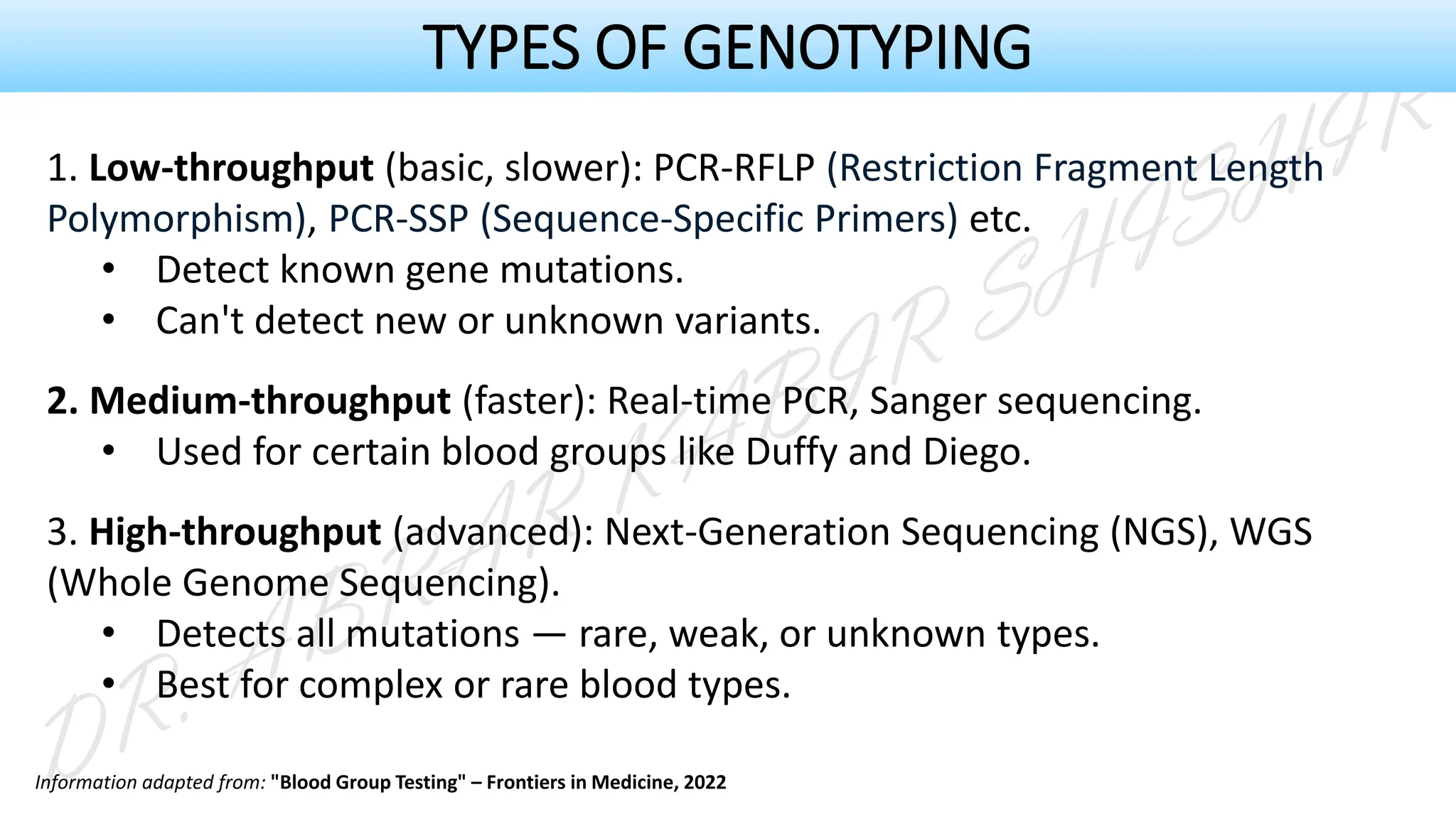
1. Low-throughput (basic, slower): PCR-RFLP (Restriction Fragment Length
Polymorphism), PCR-SSP (Sequence-Specific Primers) etc.
• Detect known gene mutations.
• Can't detect new or unknown variants.
2. Medium-throughput (faster): Real-time PCR, Sanger sequencing.
• Used for certain blood groups like Duffy and Diego.
3. High-throughput (advanced): Next-Generation Sequencing (NGS), WGS
(Whole Genome Sequencing).
• Detects all mutations — rare, weak, or unknown types.
• Best for complex or rare blood types.
TYPES OF GENOTYPING
Information adapted from: "Blood Group Testing" – Frontiers in Medicine, 2022
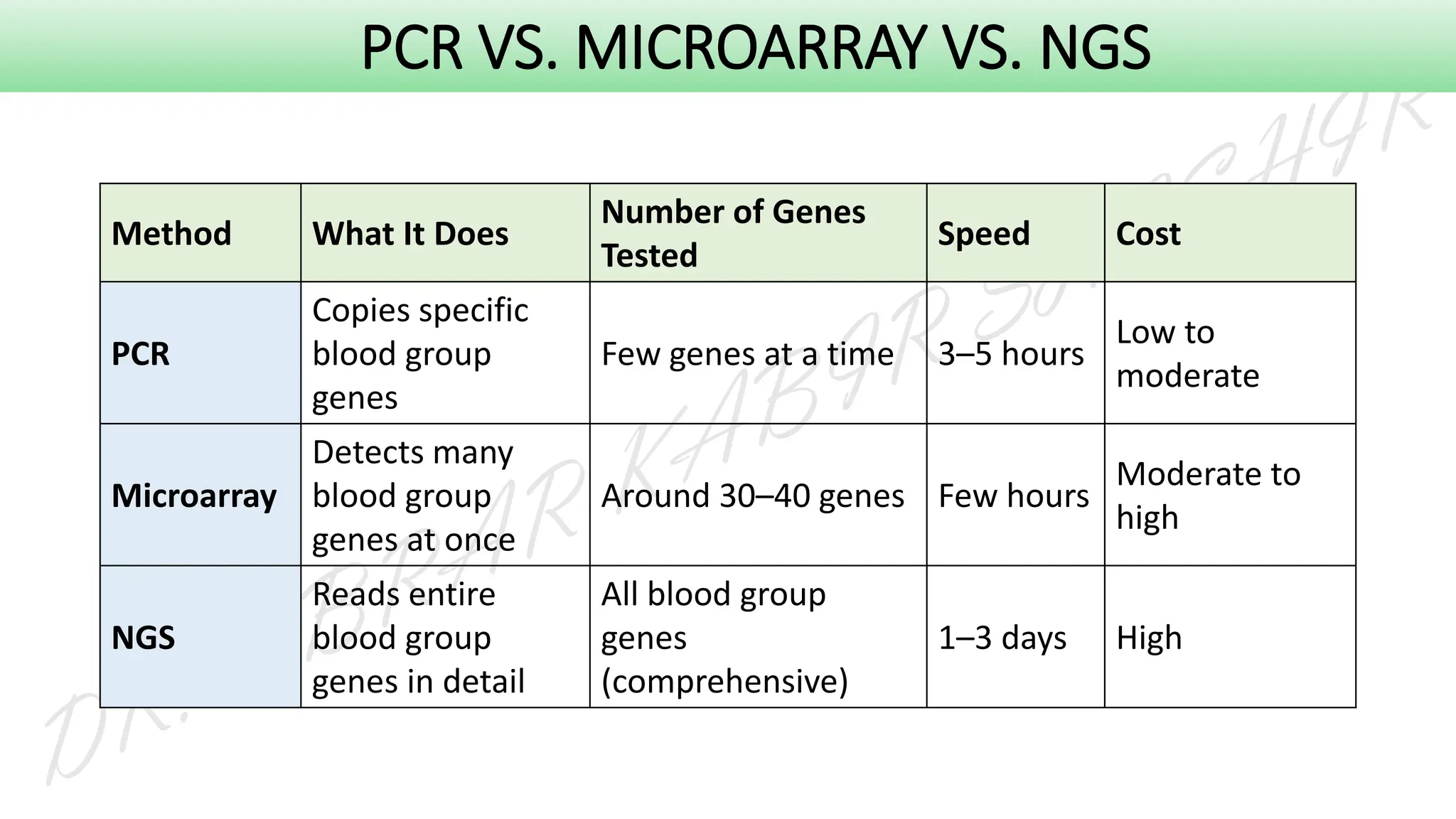
Method What It Does
Number of Genes
Tested
Speed Cost
PCR
Copies specific
blood group
genes
Few genes at a time 3–5 hours
Low to
moderate
Microarray
Detects many
blood group
genes at once
Around 30–40 genes Few hours
Moderate to
high
NGS
Reads entire
blood group
genes in detail
All blood group
genes
(comprehensive)
1–3 days High
PCR VS. MICROARRAY VS. NGS
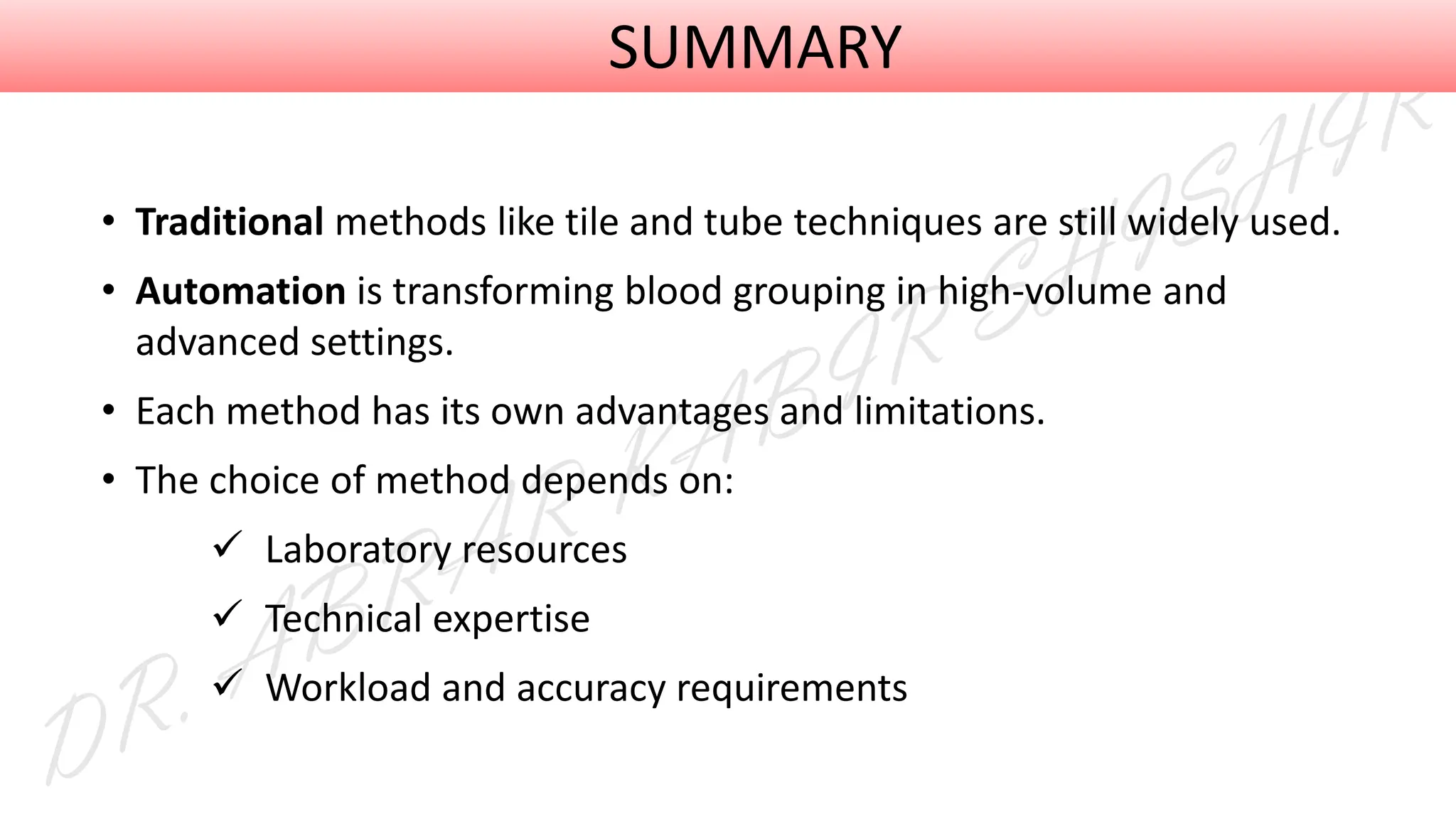
• Traditional methods like tile and tube techniques are still widely used.
• Automation is transforming blood grouping in high-volume and
advanced settings.
• Each method has its own advantages and limitations.
• The choice of method depends on:
✓ Laboratory resources
✓ Technical expertise
✓ Workload and accuracy requirements
SUMMARY
BLOOD GROUPING METHODS by Dr. Abrar Kabir Shishir.pdf

BLOOD GROUPING METHODS by Dr. Abrar Kabir Shishir.pdf

  • 2.
    BLOOD GROUPING METHODS Dr. AbrarKabir Shishir MBBS, MD (Transfusion Medicine)
  • 3.
    ❖ 1901 –Karl Landsteiner • Found the ABO blood groups • Got the Nobel Prize in 1930 ❖ June 2025 – ISBT Report • Now we know 48 blood group systems ❖ New Discovery • A very rare group called “Gwada Negative” was added recently Picture: Karl Landsteiner HISTORY
  • 4.
    ISBT system symbol/ Name (Number) GeneName: ISBT (HGNC) Chromosome Location Associated Blood Group Antigens [Null phenotype] ABO (001) ABO(ABO) 9q34.2 A; B; A,B; A1 [Group O] RH/ Rh (004) RH (RHD, RHCE) 1q36.11 D, G, C, E, c, e, V, VS and more [Rh null] H(018) H (FUT1) 19q13.33 H [Bombay (Oh)] BASIC GENETICS OF BLOOD GROUPS
  • 5.
    ❑ A, Band H antigens are found in • RBC, WBC, Platelet • Epithelium of heart, lung, bowl, kidney and pancreas • Endothelium • All body secretions (saliva, tear, urine, milk etc. ) ❑ Rh antigens are found in • Only RBC BASIC OF BLOOD GROUPS Picture: RBC
  • 6.
    Forward (Patient’s cell+ serum as reagent) Reverse (patient’s serum + cell as reagent) Patient’s serum+ patient’s cell Patient’s cell + anti Rh D reagent as serum S L Anti-B Anti-A Anti-AB A cell B cell O cell Auto-control Anti-D Blood group 1. B +ve 3+/4+ 0 3+/4+ 3+/4+ 0 0 0 3+/4+ STANDARD BLOOD GROUPING
  • 7.
    METHODS OF BLOODGROUPING Principle Test Method Manual Agglutination • Slide/ Tile • Tube/ Conventional Tube Technique (CTT) • Novel Paper-based, Dye-assisted Paper-based Detection Cell Sorting • Flow Cytometry Automated Agglutination • Microplate • Gel/ Column Agglutination Technique (CAT) Microfluidic • Microfluidic Magnetic • Erythrocyte-Magnetized Technology Fluorescence Or Magnetic Bead • Protein Chip Sensor • Surface Plasmon Resonance Testing Nucleic Acid Amplification; Sequencing Genotyping by ✓ PCR-based tests ✓ Microarray or DNA chip ✓ Next Generation Sequencing (NGS) etc. Information adapted from: "Blood Group Testing" – Frontiers in Medicine, 2022
  • 8.
    ❑ Procedure: • Placeanti-A, anti-B, anti-A,B on labeled tile spots. • Add 5% test cell suspension to each reagent spot. • Add test serum to A, B, O cells and autocontrol. • Add 5% pooled A, B, O cells to corresponding serum spots. • Tilt to mix, read within 2 minutes. SLIDE OR TILE METHOD Picture: Tile Method
  • 9.
    CONVENTIONAL TUBE TECHNIQUE ❑Procedure: • Prepare 2–5% RBC suspension in isotonic saline. • Add antisera (Anti-A, B, D) to labeled tubes. • Add RBC suspension to each tube. • For reverse grouping, mix patient serum with known A, B, O cells. • Mix, centrifuge (15–20 sec), gently resuspend, and check for agglutination Picture: Conventional Tube Technique
  • 10.
    COLUMN AGGLUTINATION TECHNIQUE ❑Procedure (ABO/Rh Example): • Prepare 0.8% RBC suspension (or use manufacturer’s reagent cells). • Add antisera into labeled microtube wells (gel cards). • Add RBC suspension to each well. • Centrifuge gel cards (usually 10 minutes). • Read results directly in the gel column ✓ agglutinated cells remain on top; ✓ non-agglutinated pass through Picture: Column Agglutination Technique
  • 11.
    SOLID PHASE TECHNIQUE ❑Procedure: • Add patient red cells to anti-A, anti-B, anti-D wells (forward) and plasma to A1, B, O cell–coated wells (reverse). • Incubate at room temp or 37°C for 15– 30 minutes. • Wash wells 3–5 times to remove unbound material. • Add indicator red cells (IgG-coated or AHG-sensitized). • Centrifuge and interpret: ✓ Mat = positive, Button = negative.
  • 12.
    MANUAL OR AUTOMATED •Compared manual (CTT) vs. automated (Techno TwinStation) for blood grouping (microplate) and crossmatching (CAT) • Both had 95%+ match; machine missed weak D and struggled with rare cases. • Machine found extra antibodies (Anti-K, Anti-M), showing better sensitivity. • Automated are suitable for busy blood banks, but manual backup needed for rare or problematic samples.
  • 13.
    • Study comparedtile method and InTec solid-phase kit using tube method as the gold standard. • Tested on 760 donors at hospital and outdoor sites. • Tile method showed 100% ABO accuracy, InTec had 99.2%. • Errors in InTec due to manual handling and reagent issues. • Tile method is more accurate; InTec kit is easier and portable but needs trained personnel. TILE VS SOLID PHASE
  • 14.
    CTT OR CATIN PRETRANSFUSION • Column agglutination is costlier but more reliable than tube technique and is recommended for routine pretransfusion testing.
  • 15.
    PAPER BASED METHODS •Paper-based tests are quick, cheap, and easy to use. • Work best with IgM antibodies • Ideal for field use or low-resource settings. • Less effective for some antigens using IgG. • Traditional lab methods still needed for full antigen typing.
  • 16.
    • It’s aDNA-based method to identify blood group antigens. Unlike traditional methods (which detect proteins on red cells), genotyping looks directly at the genes that code for these antigens. • Genotyping is best for rare blood groups, weak variants, or when antibodies are unavailable. • But not good for emergencies due to time, cost, and equipment needs GENOTYPING
  • 17.
    1. Low-throughput (basic,slower): PCR-RFLP (Restriction Fragment Length Polymorphism), PCR-SSP (Sequence-Specific Primers) etc. • Detect known gene mutations. • Can't detect new or unknown variants. 2. Medium-throughput (faster): Real-time PCR, Sanger sequencing. • Used for certain blood groups like Duffy and Diego. 3. High-throughput (advanced): Next-Generation Sequencing (NGS), WGS (Whole Genome Sequencing). • Detects all mutations — rare, weak, or unknown types. • Best for complex or rare blood types. TYPES OF GENOTYPING Information adapted from: "Blood Group Testing" – Frontiers in Medicine, 2022
  • 18.
    Method What ItDoes Number of Genes Tested Speed Cost PCR Copies specific blood group genes Few genes at a time 3–5 hours Low to moderate Microarray Detects many blood group genes at once Around 30–40 genes Few hours Moderate to high NGS Reads entire blood group genes in detail All blood group genes (comprehensive) 1–3 days High PCR VS. MICROARRAY VS. NGS
  • 19.
    • Traditional methodslike tile and tube techniques are still widely used. • Automation is transforming blood grouping in high-volume and advanced settings. • Each method has its own advantages and limitations. • The choice of method depends on: ✓ Laboratory resources ✓ Technical expertise ✓ Workload and accuracy requirements SUMMARY