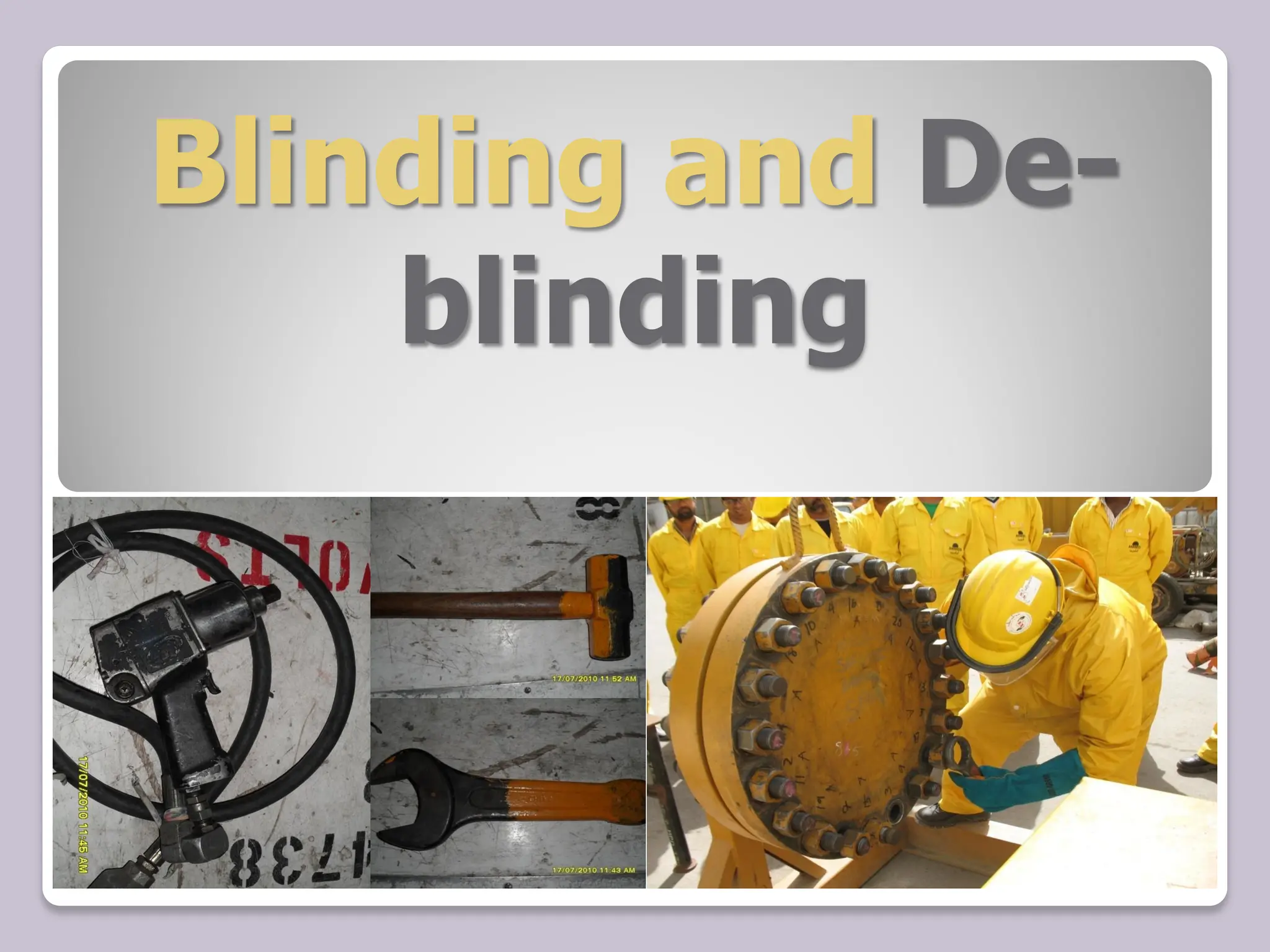
Blinding and De-
blinding
Contents
2
 What is Blinding / De-blinding
 Risk
 Tools used
 Critical equipment
 Valve configuration
 Basic steps
 Minimum blind thickness
 Final precaution
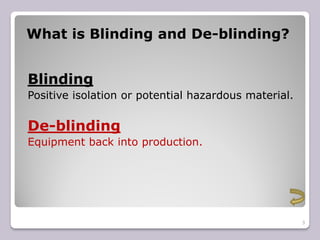
What is Blinding and De-blinding?
Blinding
Positive isolation or potential hazardous material.
De-blinding
Equipment back into production.
3
Risks:
4
Hazard Identification
Risk Assessment
Job Safety Analysis
Key stages of process isolation
Key stages of process isolation:
5
1. Hazard identification
2. Risk Assessment and selection of
isolation scheme
3. Planning and preparing of
equipment
4. Isolation
6
Key stages of process isolation:
5. Draining, venting, purging and
flushing
6. Testing and monitoring
7. Carrying out the intrusive activity
8. Reinstatement
Hazard identification:
7
Isolation failure -> Loss of
containment
 Escalation to major accident
 Harm to people
 Equipment or property damage
8
Hazard identification:
Substance’s flammable / toxic
harmful properties
 Present at high pressures
 High or low temperatures
 Reactivity
 Can create hazardous environment –
asphyxiation or drowning
 Explosive atmosphere (including dust)
 Forms sludge or hard deposit in equipment
Risk Assessment
9
Assessment of the failures that can occur
during the isolation activity, the likelihood
of these failures, and their consequences,
then the selection of the appropriate type
and level of controls.
10
Risk Assessments (ANABEEB):
Breakdown of all our activities into
categories such as as:
 Natural & Environmental Hazards
 Effect of activities on surroundings
 Infrastructure
 Environmental damage
 Facility hazards
 Process hazards
 Utility hazards
 Maintenance hazards
Develop a Risk Assessment
Worksheet:
 Guide words
 Hazardous events
 Potential consequences
Job Safety Analysis (JSA):
11
To do the Job Safety Analysis:
 Select the jobs associated with HIGH Risk activities
 Do a breakdown of the job into tasks
 Do Job Safety Analysis for the tasks involved to
perform the job
Tools
12
There are some common tools to do
this job namely:
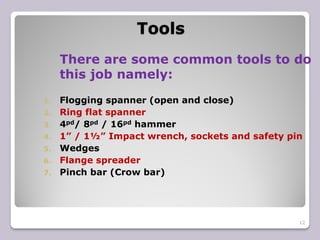
1. Flogging spanner (open and close)
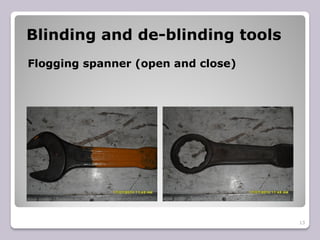
2. Ring flat spanner
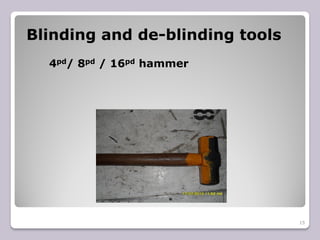
3. 4pd/ 8pd / 16pd hammer
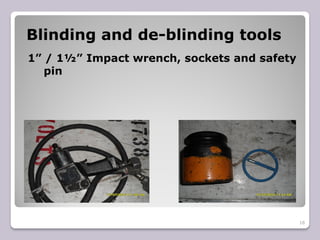
4. 1” / 1½” Impact wrench, sockets and safety pin
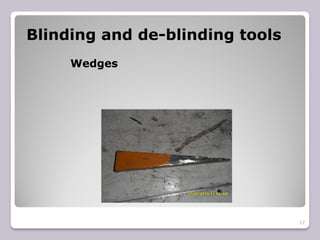
5. Wedges
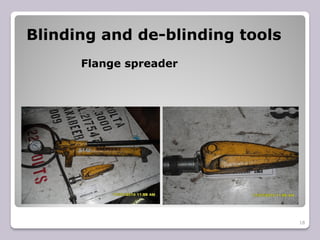
6. Flange spreader
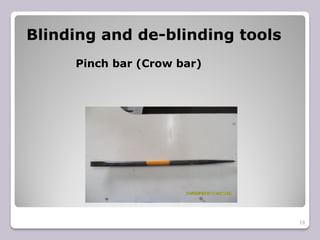
7. Pinch bar (Crow bar)
Blinding and de-blinding tools
Flogging spanner (open and close)
13
Blinding and de-blinding tools
Ring Flat Spanner
14
Blinding and de-blinding tools
4pd/ 8pd / 16pd hammer
15
Blinding and de-blinding tools
1” / 1½” Impact wrench, sockets and safety
pin
16
Blinding and de-blinding tools
Wedges
17
Blinding and de-blinding tools
Flange spreader
18
Blinding and de-blinding tools
Pinch bar (Crow bar)
19
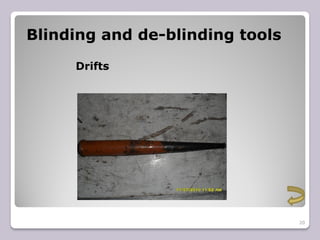
Blinding and de-blinding tools
Drifts
20
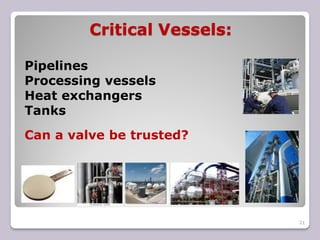
Critical Vessels:
21
Pipelines
Processing vessels
Heat exchangers
Tanks
Can a valve be trusted?
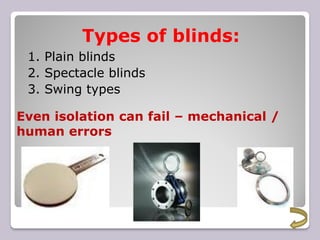
Types of blinds:
1. Plain blinds
2. Spectacle blinds
3. Swing types
22
Even isolation can fail – mechanical /
human errors
Basic Steps
23
Dangers:
Unsafe process equipment (valves, drains, gauges)
Wrong tools
Unqualified / in-experienced workers
Basic steps for blinding:
24
Before we do the blinding:
1. Technical Scope of Work
2. Risk Assessment & Job Safety Analysis
3. Blinding list
4. Torque values from the client if required.
5. Decommissioning of equipment and vessels.
Basic steps for blinding:
25
Before we do the blinding:
6. Preparations before your blinding work starts
7. Permit to Work
8. Toolbox talk at the jobsite.
26
Permit to Work:
How important is a Permit to
Work?
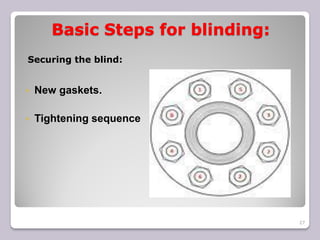
Basic Steps for blinding:
 New gaskets.
 Tightening sequence
Securing the blind:
27
De-blinding
Procedure:
1. Permit to Work
2. Precautions to bear in mind (Fluid on process
side)
3. Clean sealing surface.
4. Use new gaskets.
5. Make sure that all bolts and nuts are serviced or
replaced.
28
 Insert the bottom half of the bolts.
 Insert gasket.
 Insert the rest of bolts leave 2 open- east to west
 Line up flange with pinch bar
 Tighten bolts and remove the drifts or pinch bar.
 Tightening the flange - Chris cross method.
 The bolt must have an even thread on both sides
of a minimum of 3 threads, when it’s fully
tightened.
29
De-blinding
Finally:
Inspections and Housekeeping:
Permit Close-out
What about a de-blinding procedure?
30
Valve configuration:
31
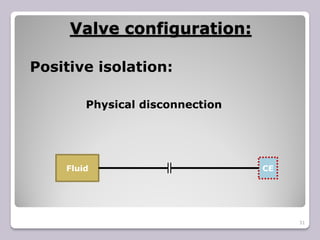
Positive isolation:
Fluid CE
Physical disconnection
32
Valve configuration:
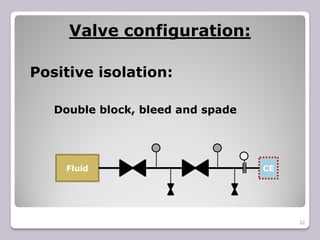
Positive isolation:
Fluid CE
Double block, bleed and spade
33
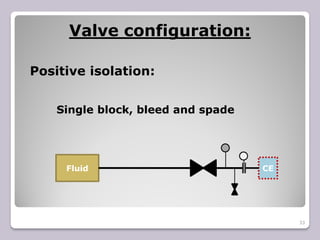
Positive isolation:
Fluid CE
Single block, bleed and spade
Valve configuration:
34
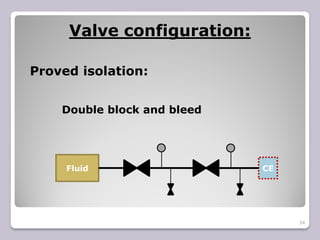
Proved isolation:
Fluid CE
Double block and bleed
Valve configuration:
35
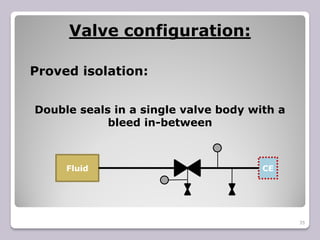
Proved isolation:
Fluid CE
Double seals in a single valve body with a
bleed in-between
Valve configuration:
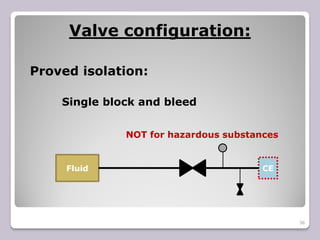
36
Proved isolation:
Fluid CE
Single block and bleed
NOT for hazardous substances
Valve configuration:
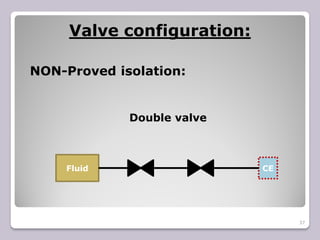
37
NON-Proved isolation:
Fluid CE
Double valve
Valve configuration:
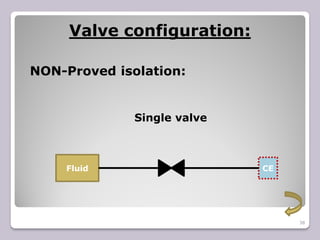
38
NON-Proved isolation:
Fluid CE
Single valve
Valve configuration:
Minimum Blind Thickness
39
American Society of Mechanical Engineers
Code:
B16.48 – 2005 Line Blank
ISBN #: 0791829979
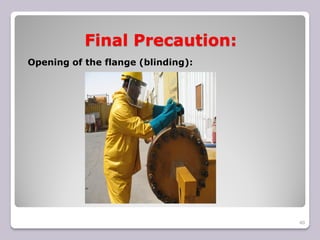
Final Precaution:
Opening of the flange (blinding):
40
I thank you kindly!
Take care, next time you prepare
for blinding/de-blinding

Blinding and deblinding presentation usful