Anthony G. Picciano Hunter College and  CUNY Graduate Center Blending with Purpose   –  The Multimodal Model   presentation at the 14 th  Annual Sloan-C Annual Conference  Blended Learning Workshop November 2008
Presentation Outline . Introduction .Generations .Learning Styles/Teaching Styles .Blended Learning .Blending with Purpose .Conclusion
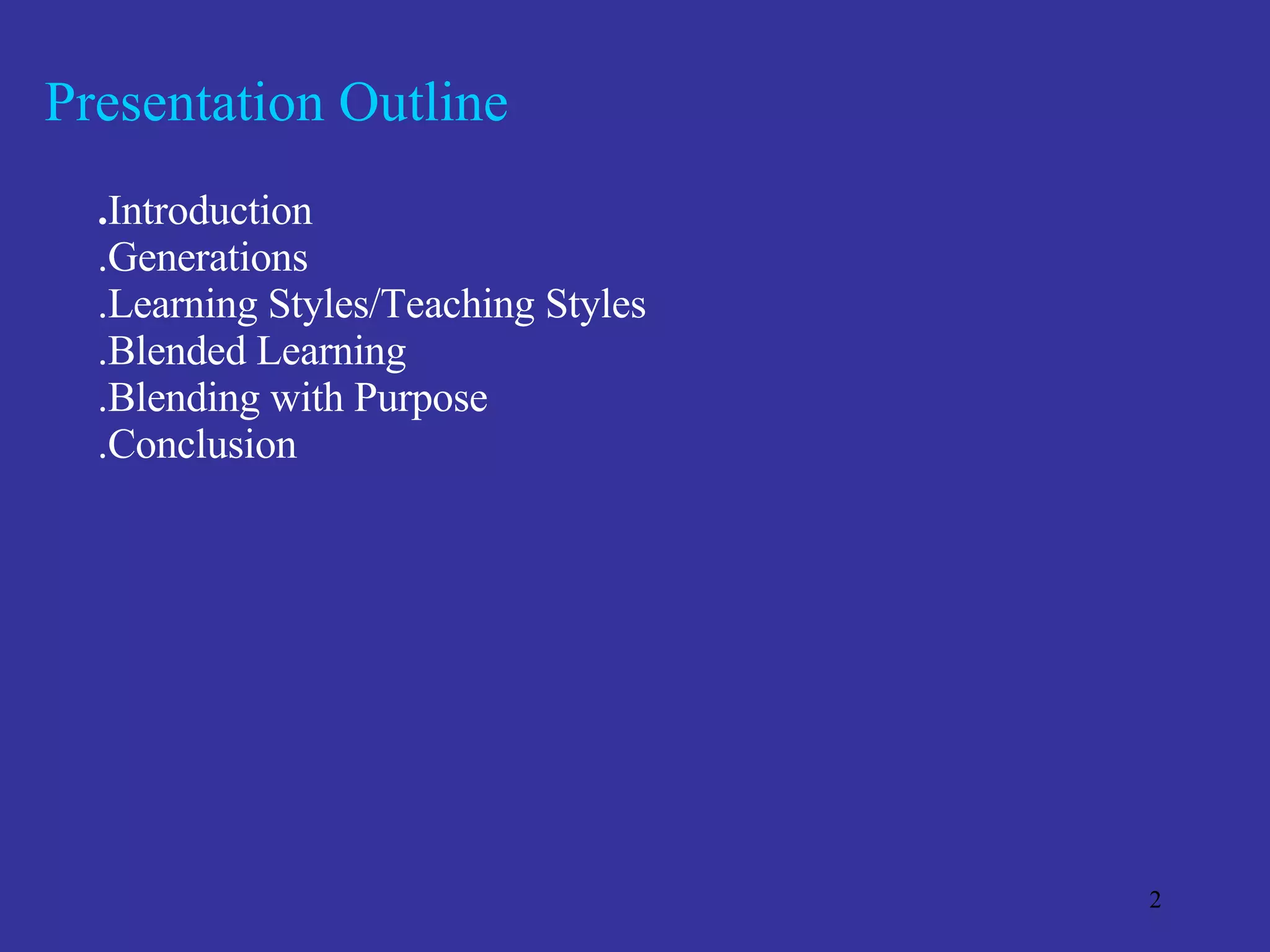
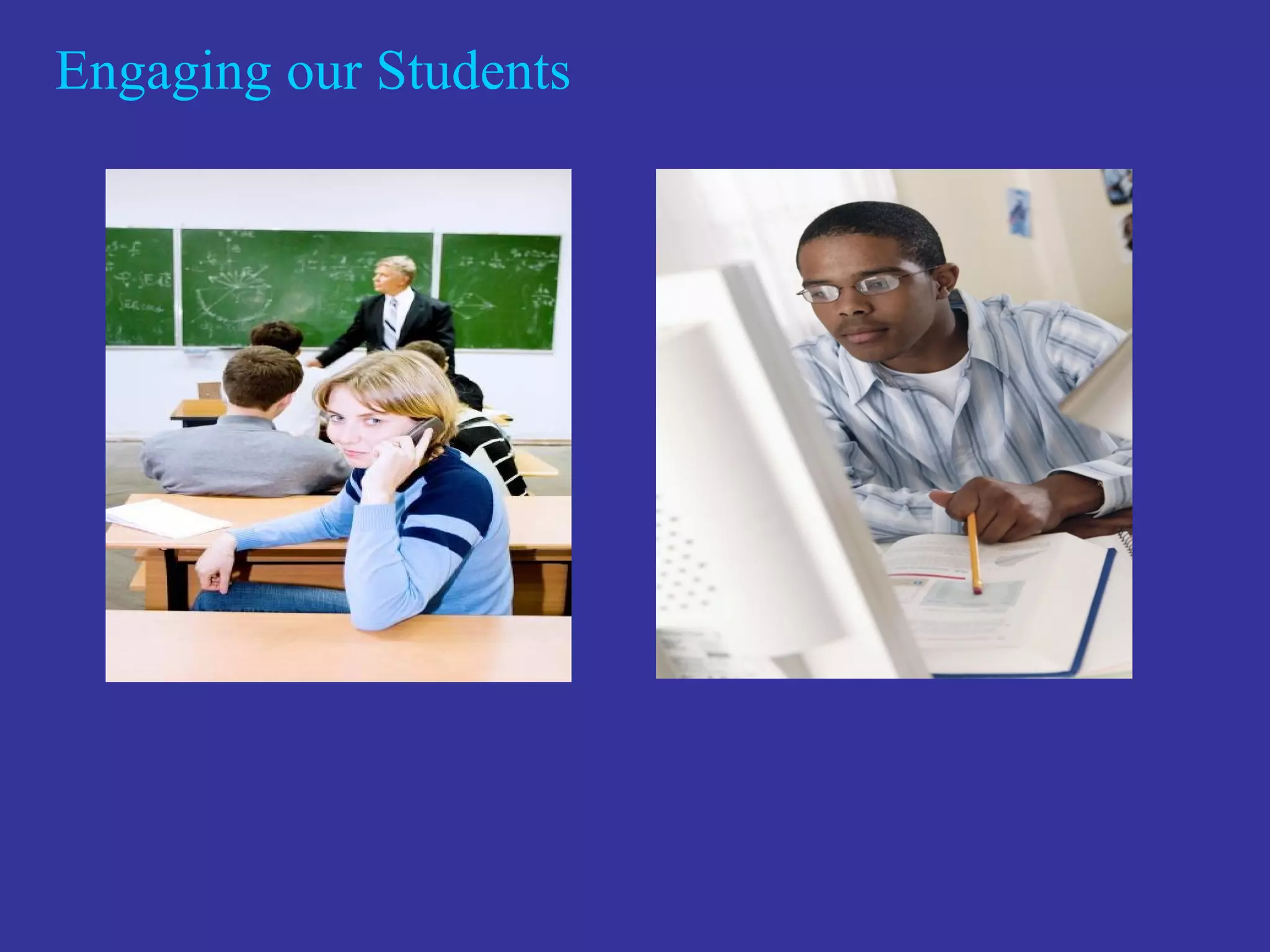
Engaging our Students
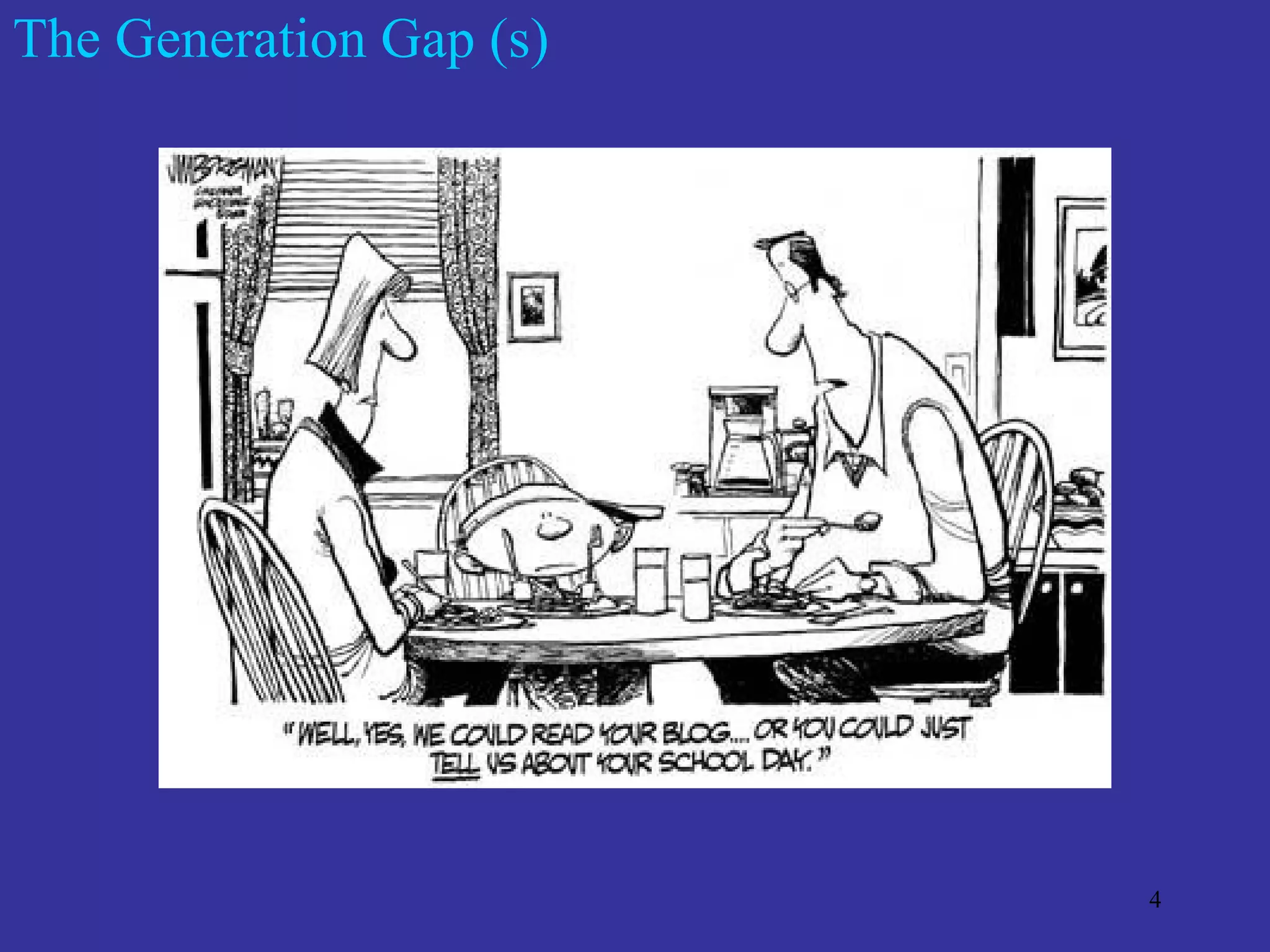
The Generation Gap (s)
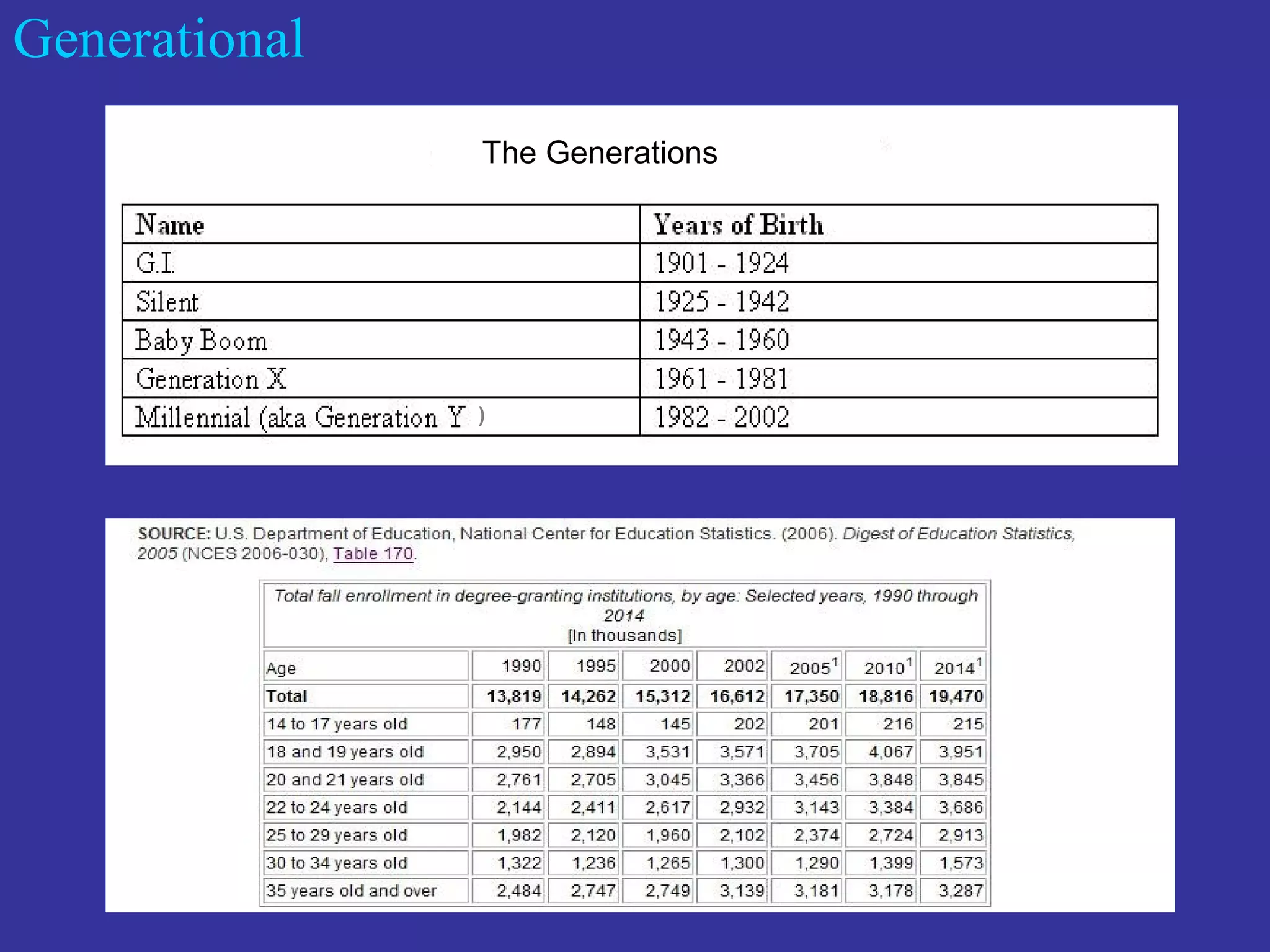
Generational The Generations  )
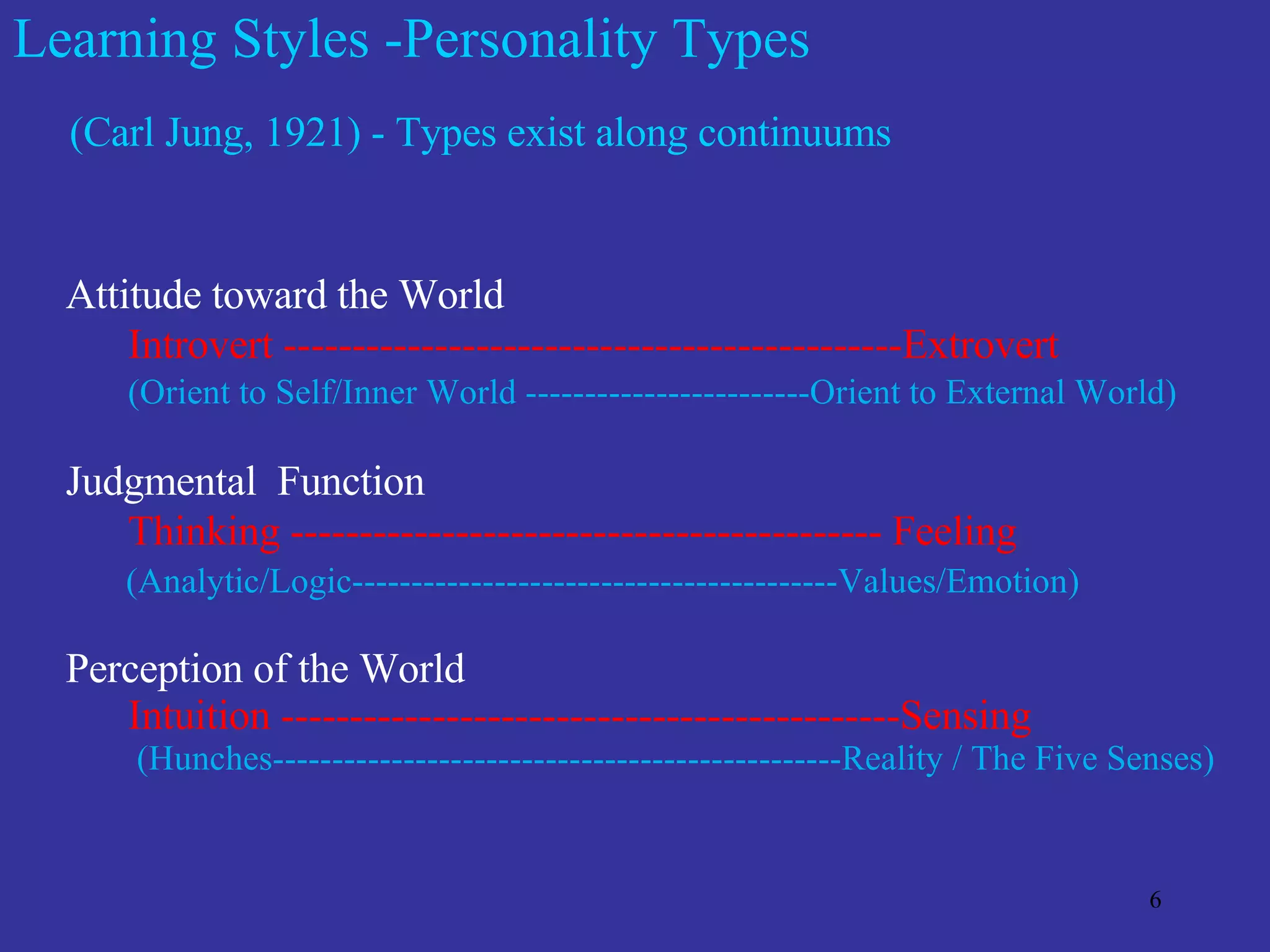
Learning Styles -Personality Types (Carl Jung, 1921) - Types exist along continuums  Attitude toward the World Introvert ---------------------------------------------Extrovert (Orient to Self/Inner World ------------------------Orient to External World) Judgmental  Function Thinking ------------------------------------------- Feeling (Analytic/Logic-----------------------------------------Values/Emotion) Perception of the World Intuition ---------------------------------------------Sensing (Hunches------------------------------------------------Reality / The Five Senses)
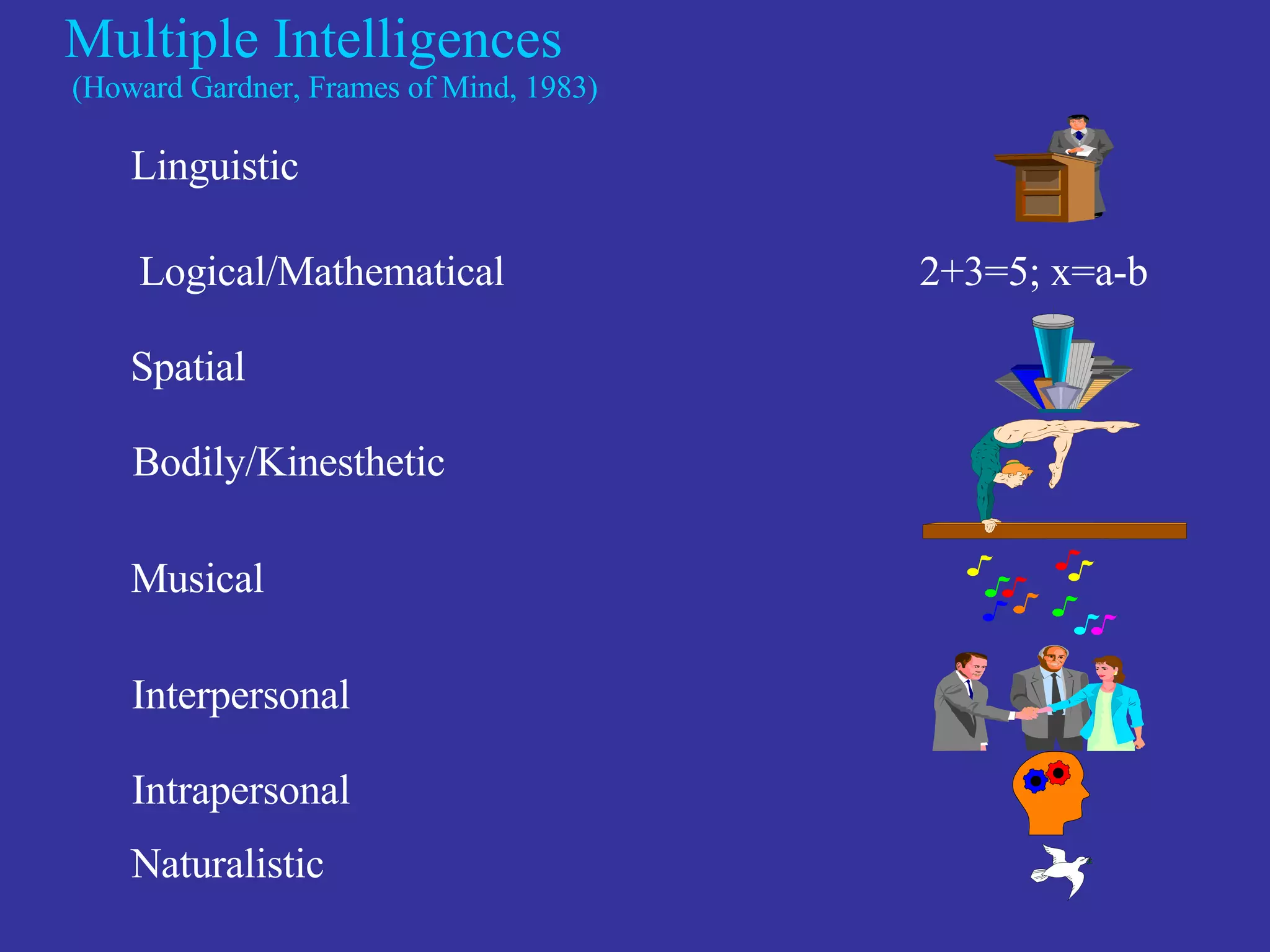
Multiple Intelligences (Howard Gardner, Frames of Mind, 1983) Logical/Mathematical  2+3=5; x=a-b Naturalistic Linguistic Spatial Bodily/Kinesthetic Musical Interpersonal Intrapersonal
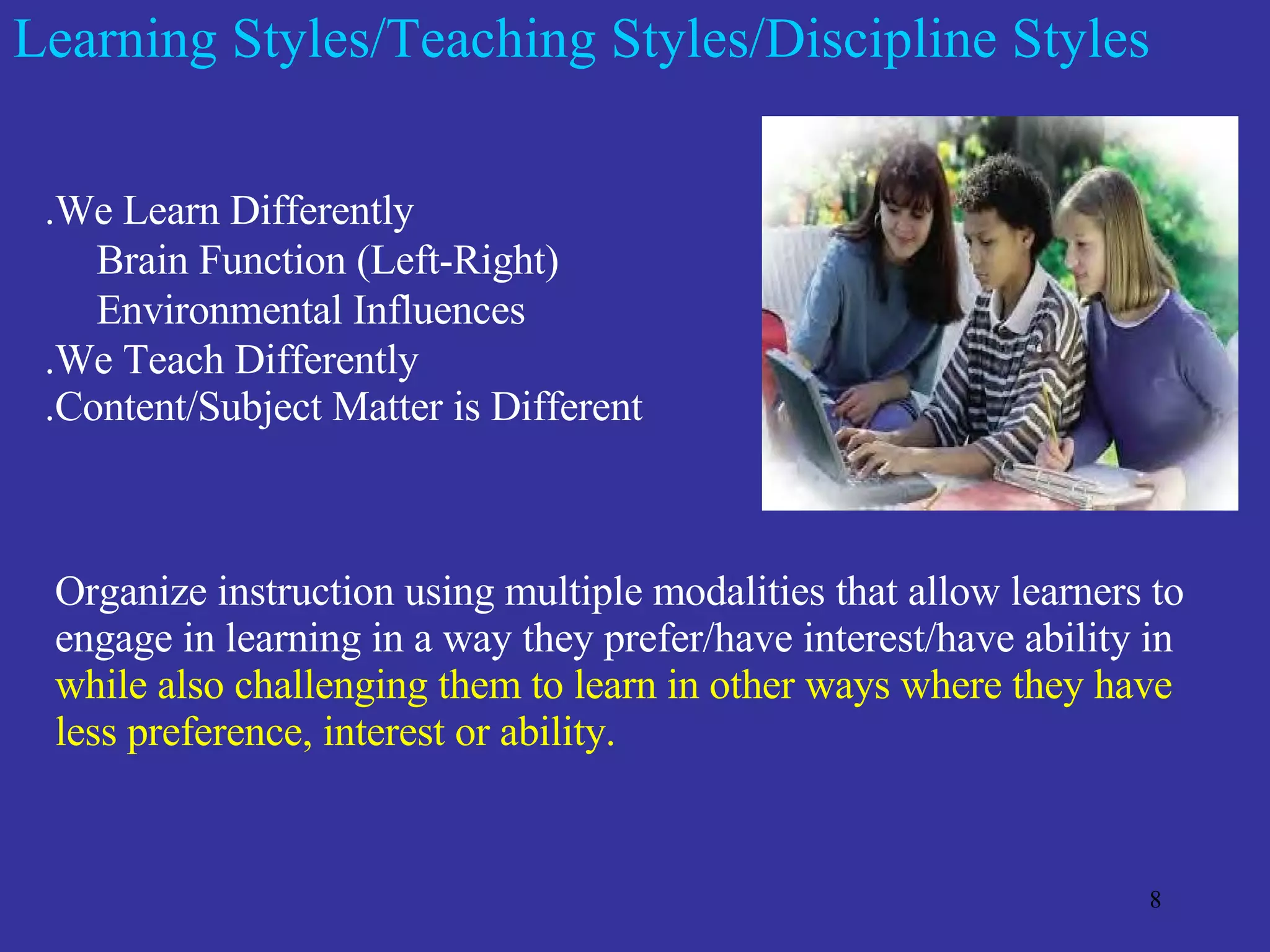
Learning Styles/Teaching Styles/Discipline Styles .We Learn Differently Brain Function (Left-Right) Environmental Influences .We Teach Differently .Content/Subject Matter is Different Organize instruction using multiple modalities that allow learners to engage in learning in a way they prefer/have interest/have ability in  while also challenging them to learn in other ways where they have less preference, interest or ability.
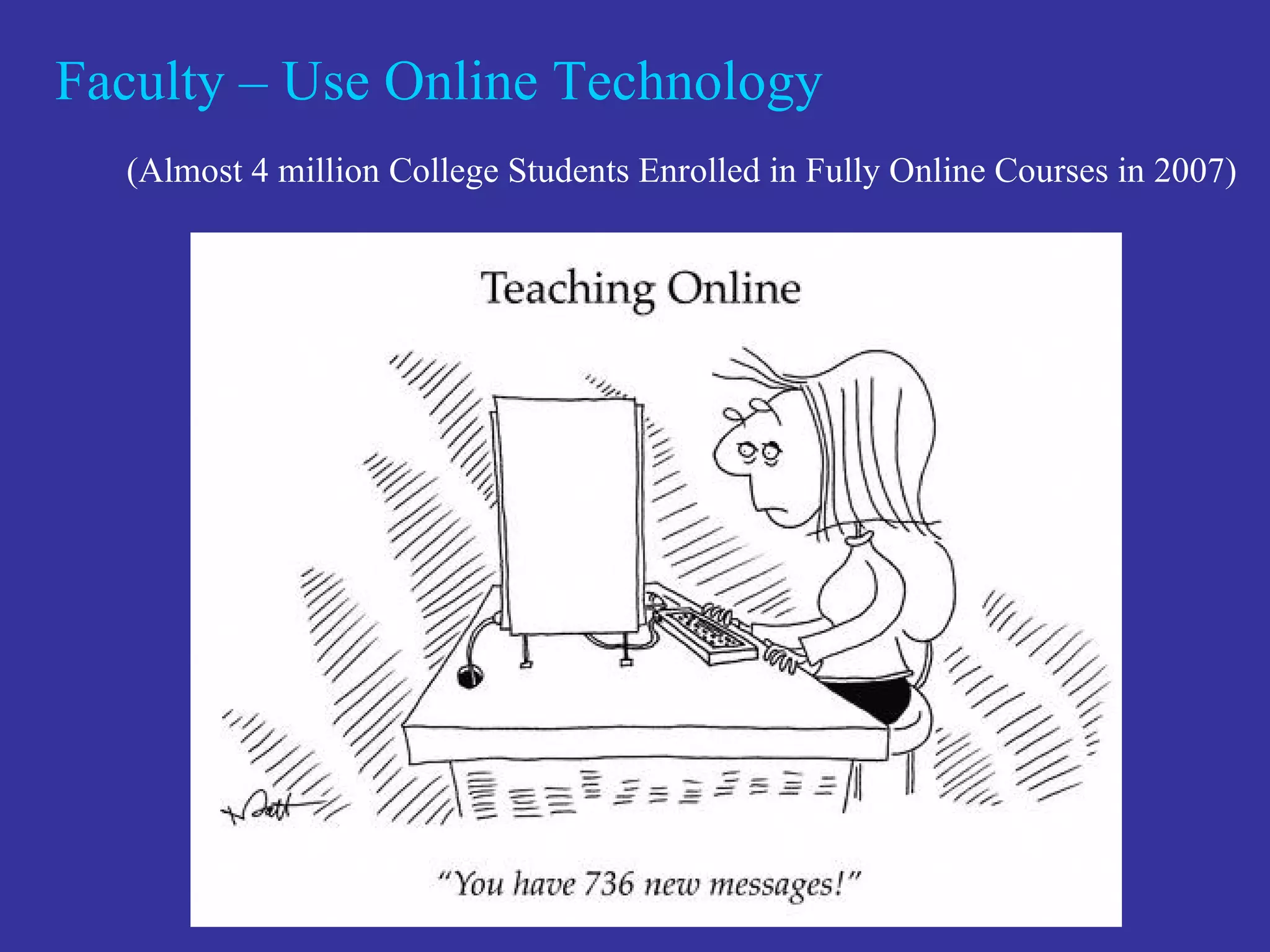
Faculty – Use Online Technology  (Almost 4 million College Students Enrolled in Fully Online Courses in 2007)
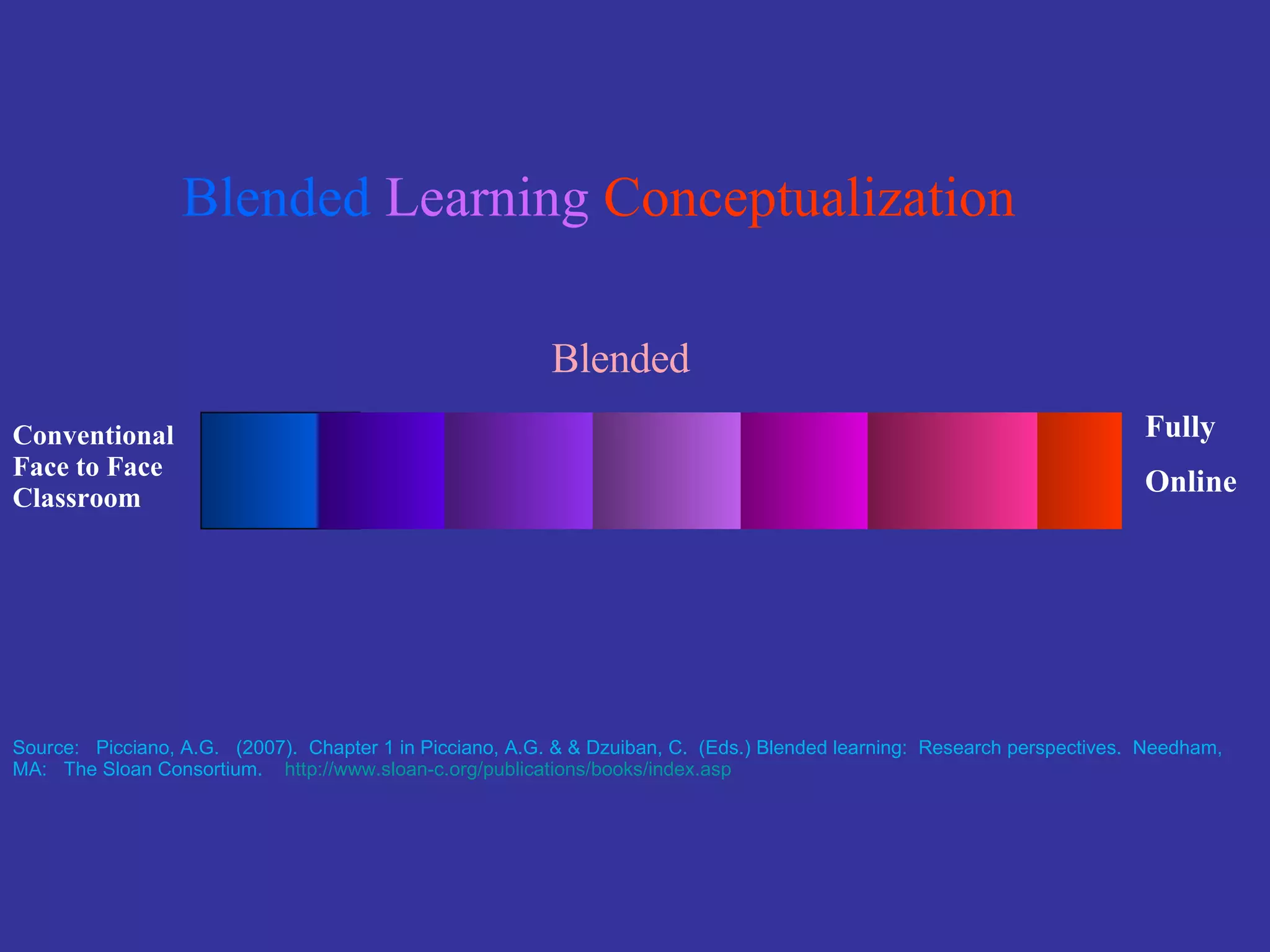
Blended   Learning  Conceptualization Conventional Face to Face Classroom Fully  Online Blended Source:  Picciano, A.G.  (2007).  Chapter 1 in Picciano, A.G. & & Dzuiban, C.  (Eds.) Blended learning:  Research perspectives.  Needham, MA:  The Sloan Consortium.  http://www.sloan-c.org/publications/books/index.asp
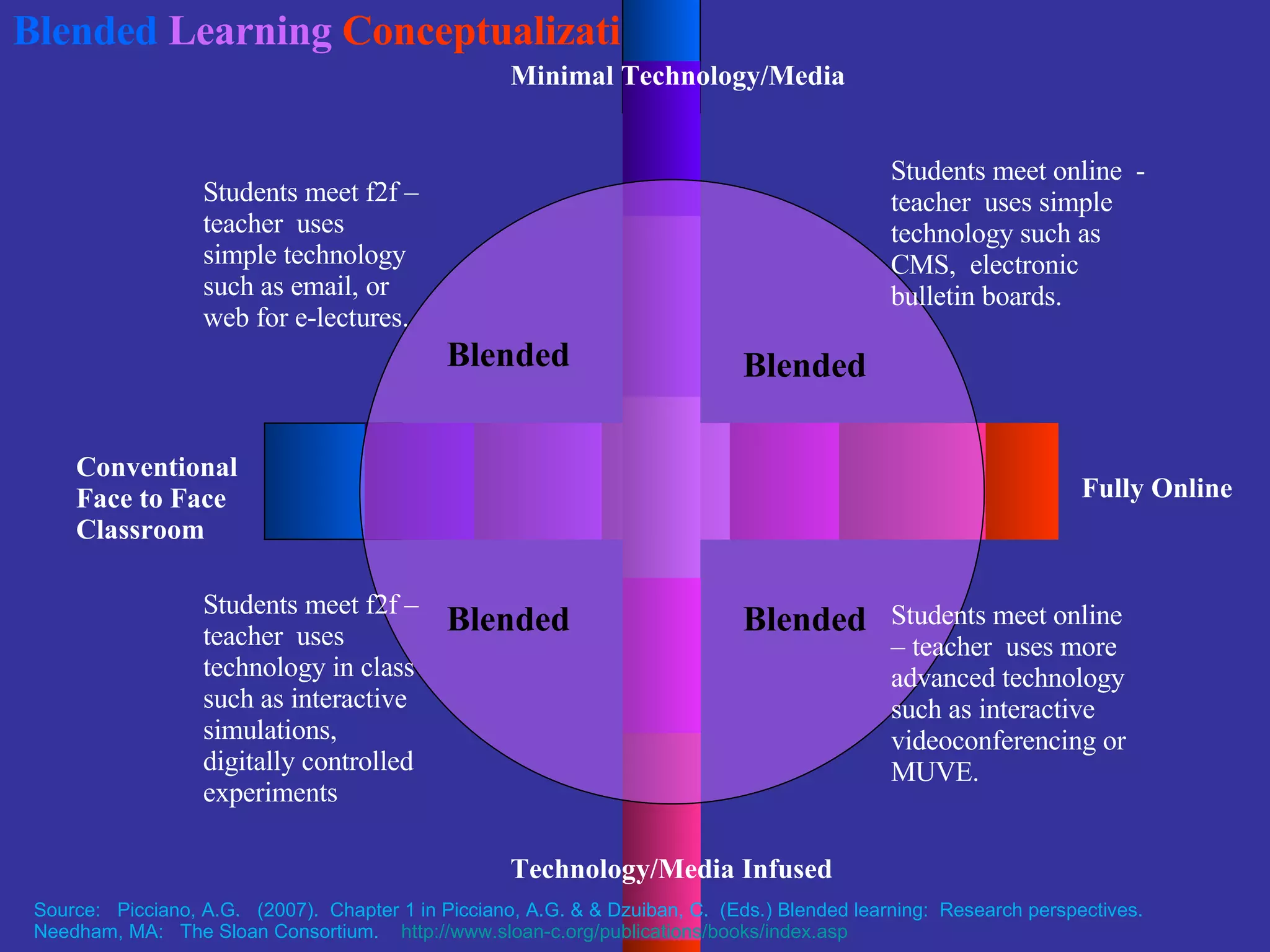
Blended   Learning  Conceptualization Conventional Face to Face Classroom Fully Online Minimal Technology/Media Technology/Media Infused Blended Blended Blended Blended Students meet f2f – teacher  uses simple technology such as email, or web for e-lectures. Students meet f2f – teacher  uses  technology in class such as interactive simulations,  digitally controlled experiments Students meet online  - teacher  uses simple technology such as CMS,  electronic  bulletin boards. Students meet online – teacher  uses more advanced technology such as interactive videoconferencing or MUVE.  Source:  Picciano, A.G.  (2007).  Chapter 1 in Picciano, A.G. & & Dzuiban, C.  (Eds.) Blended learning:  Research perspectives.  Needham, MA:  The Sloan Consortium.  http://www.sloan-c.org/publications/books/index.asp
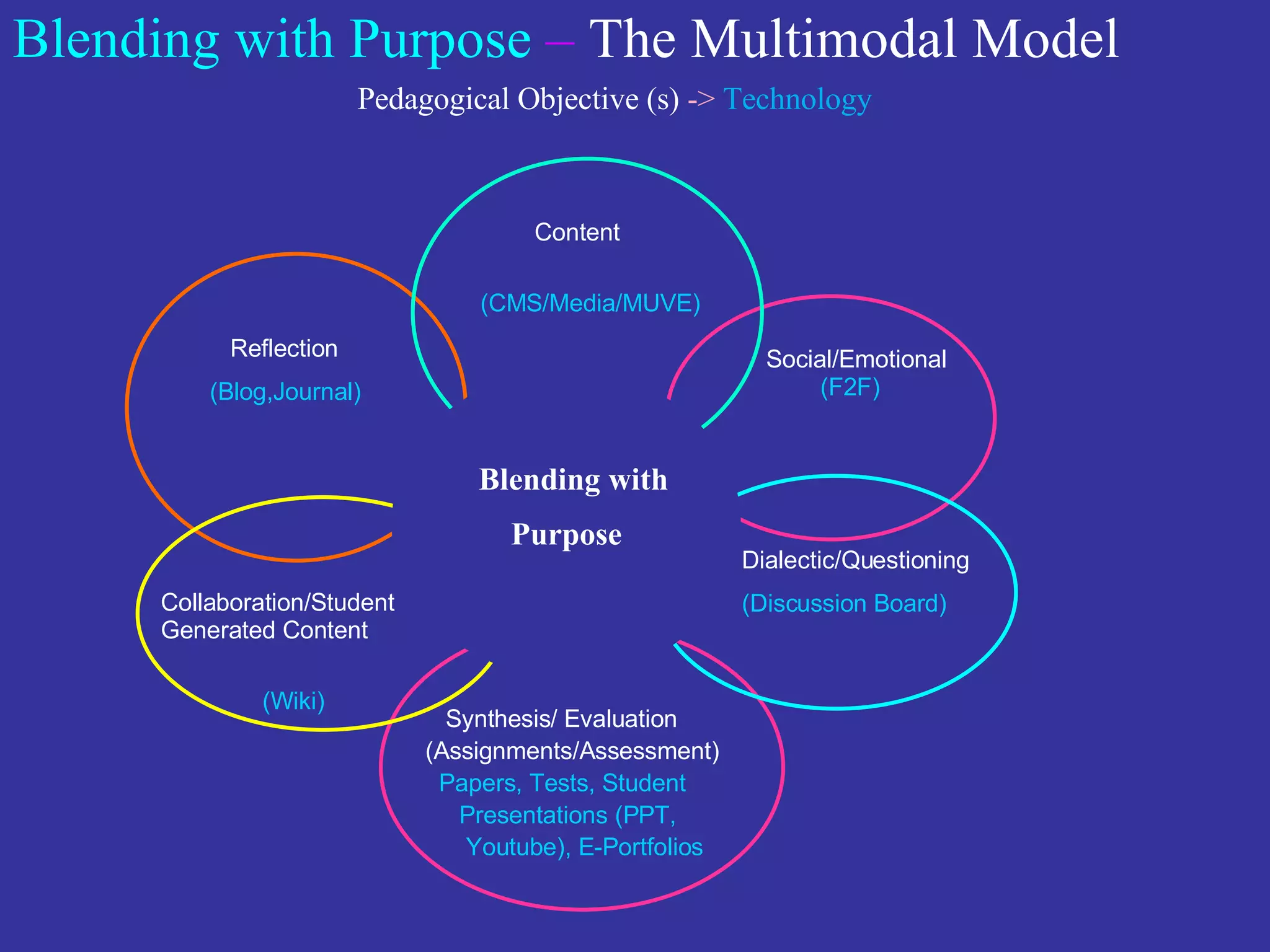
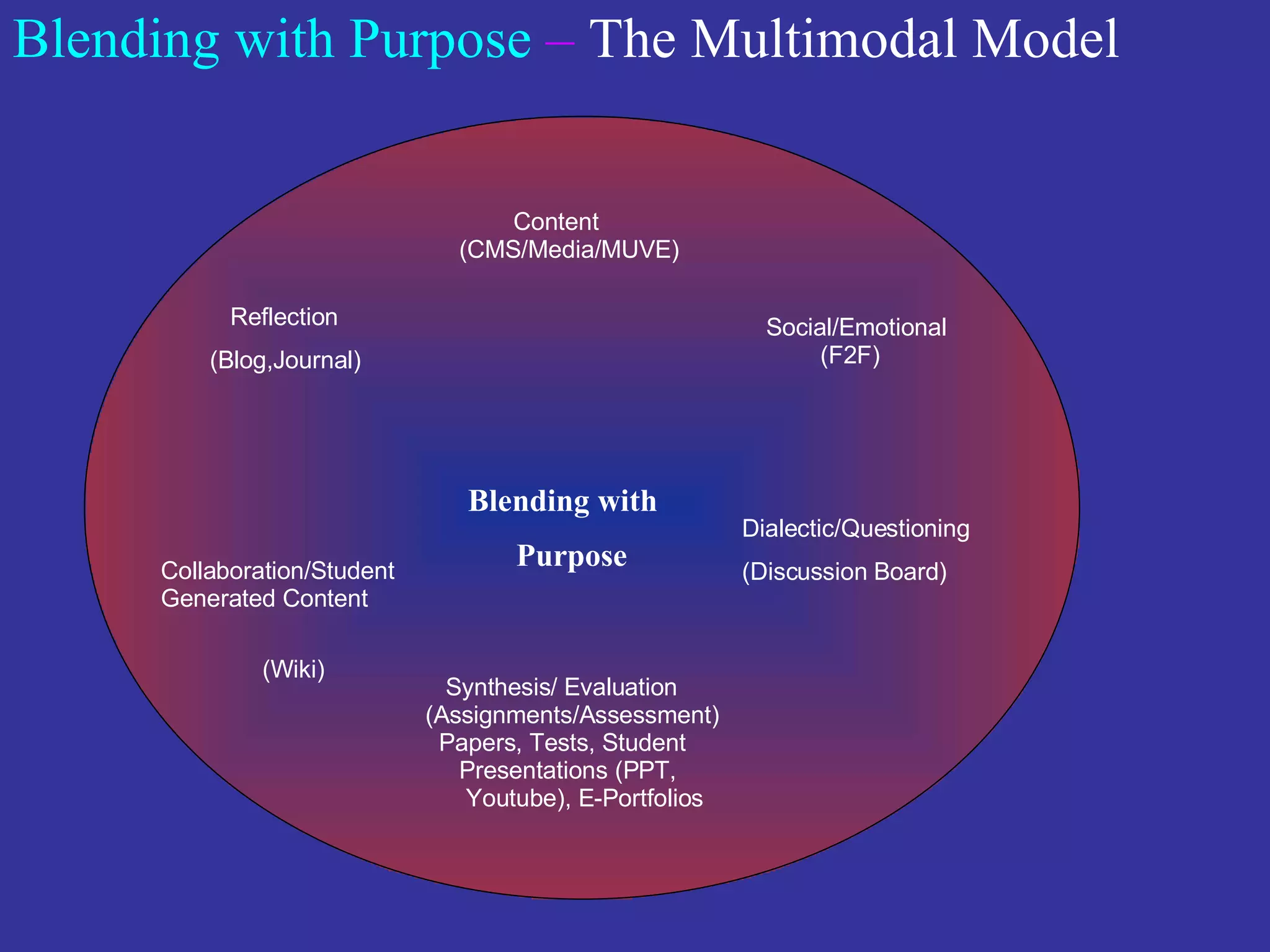
Blending with Purpose   –  The Multimodal Model Pedagogical Objective (s)  ->  Technology  Synthesis/ Evaluation  (Assignments/Assessment) Papers, Tests, Student  Presentations (PPT,  Youtube), E-Portfolios Reflection (Blog,Journal) Collaboration/Student  Generated Content   (Wiki) Social/Emotional (F2F) Dialectic/Questioning (Discussion Board) Content  (CMS/Media/MUVE)   Blending with Purpose
Blending with Purpose   –  The Multimodal Model   Synthesis/ Evaluation  (Assignments/Assessment) Papers, Tests, Student  Presentations (PPT,  Youtube), E-Portfolios Reflection (Blog,Journal) Collaboration/Student  Generated Content   (Wiki) Social/Emotional (F2F) Dialectic/Questioning (Discussion Board) Blending with Purpose Content  (CMS/Media/MUVE)
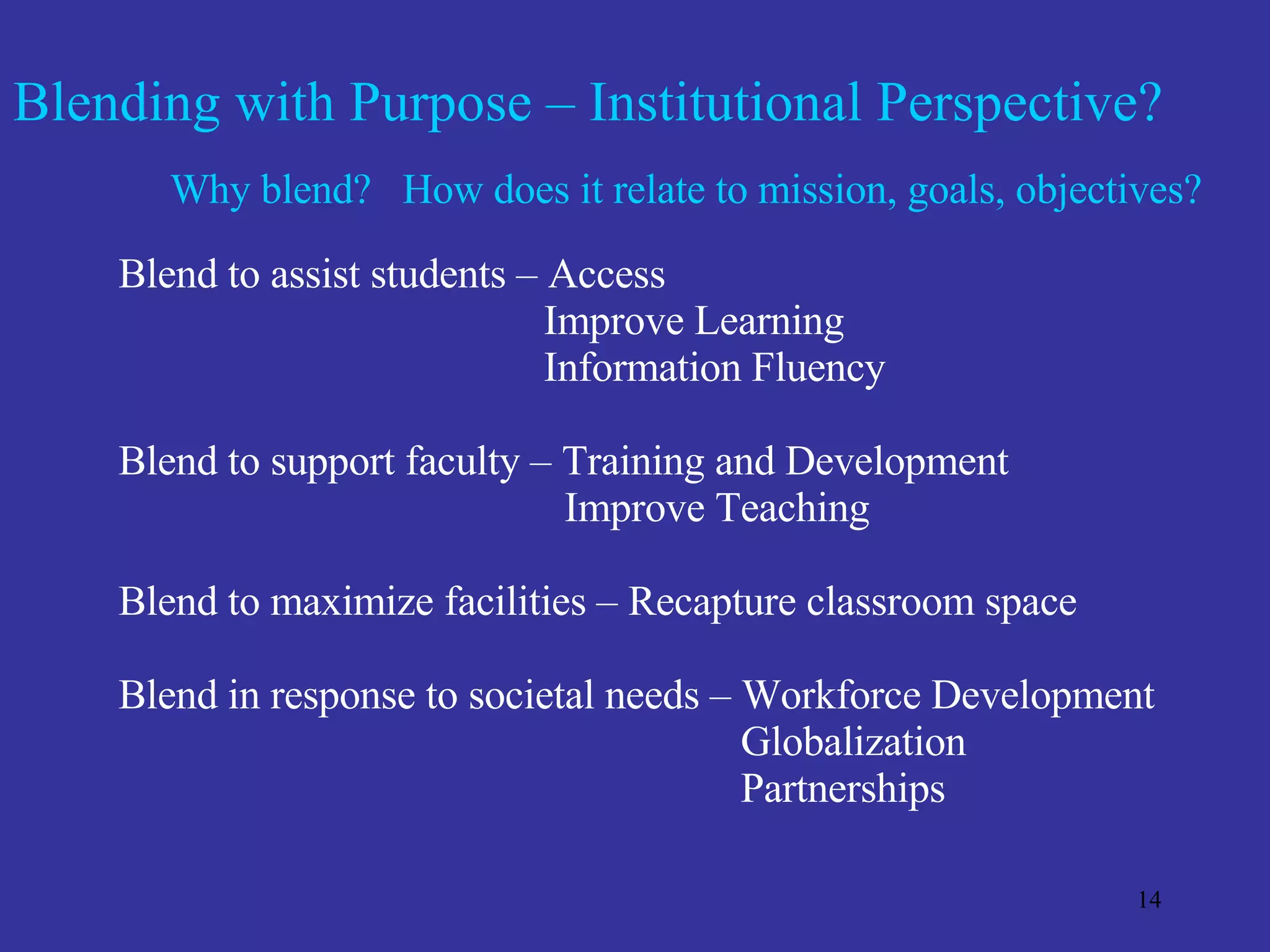
Blending with Purpose – Institutional Perspective? Why blend?  How does it relate to mission, goals, objectives? Blend to assist students – Access Improve Learning Information Fluency Blend to support faculty – Training and Development Improve Teaching Blend to maximize facilities – Recapture classroom space Blend in response to societal needs – Workforce Development Globalization Partnerships
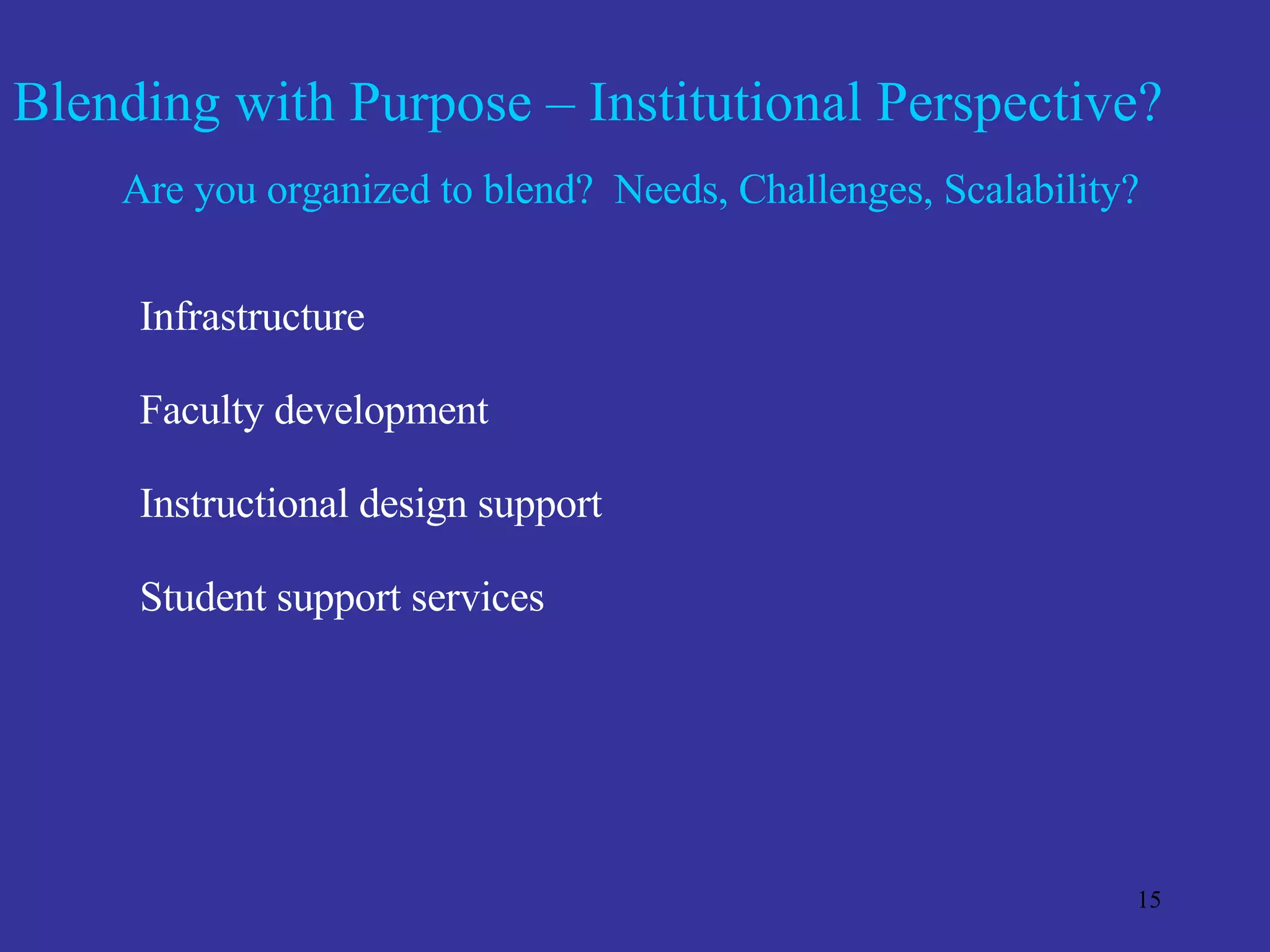
Blending with Purpose – Institutional Perspective? Are you organized to blend?   Needs, Challenges, Scalability? Infrastructure Faculty development Instructional design support Student support services
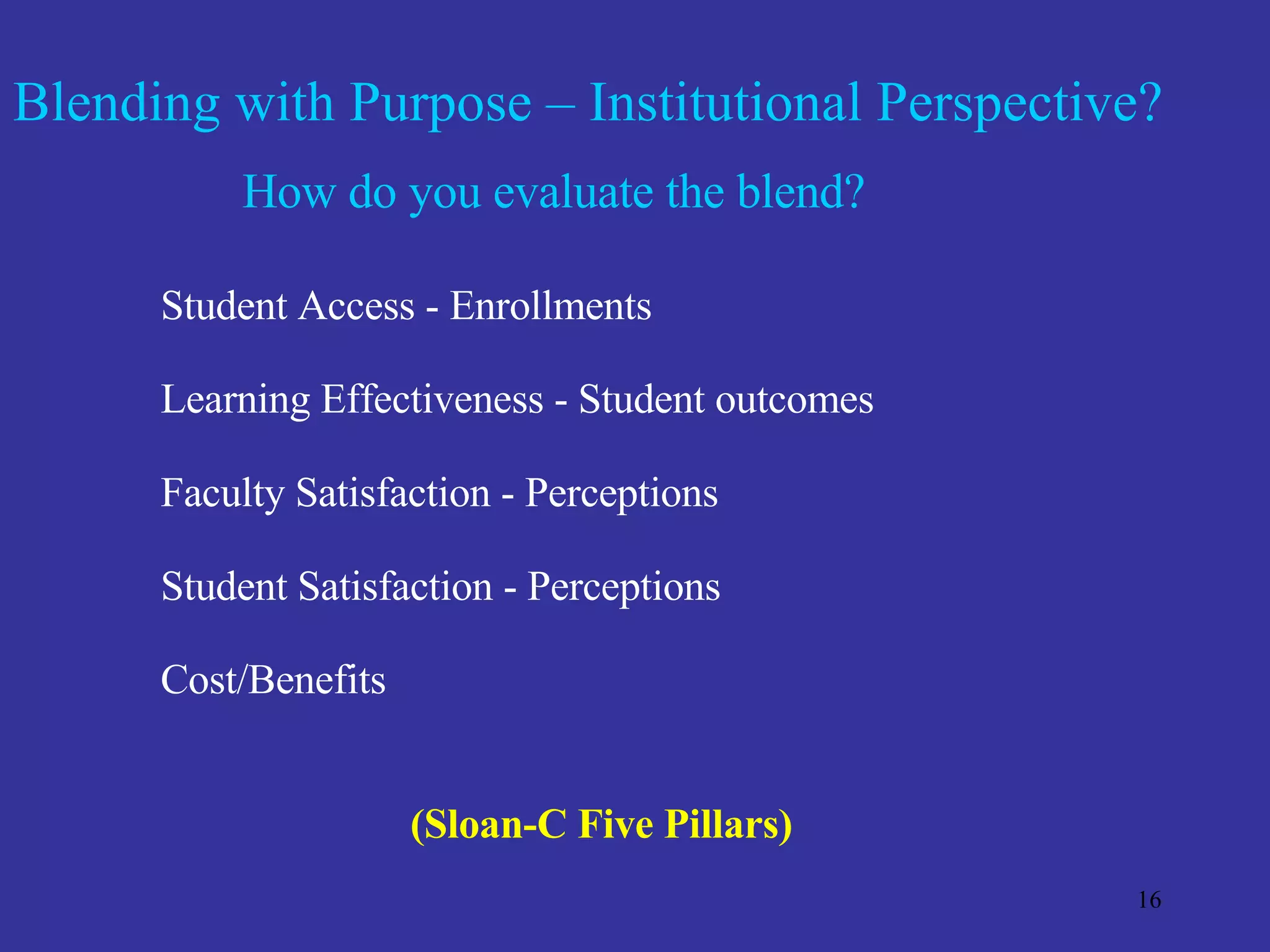
Blending with Purpose – Institutional Perspective? How do you evaluate the blend? Student Access - Enrollments  Learning Effectiveness - Student outcomes Faculty Satisfaction - Perceptions Student Satisfaction - Perceptions Cost/Benefits (Sloan-C Five Pillars)
Closing Comment - The Cognitive Age We live in an age when we can transmit gigabytes of information tens of thousands of miles at nanosecond speeds……but the most important part of information’s journey is the last few inches —  the space between a person’s eyes or ears and the various  regions of the brain…  ----David Brooks, NY Times, May 2, 2008
Questions?
References Adler, H., Fordham, M., McGuire, W., & Read, H., Eds. (1971).  Psychological types.  Princeton, NJ: Princeton University Press.  Brooks. D.  (May 2, 2008).  The cognitive age.  New York Times.     Felder, R. M. and Soloman, B.A. (n.d.).  The Index of styles  questionnaire . Retrieved November 11, 2007, from  http://www.ncsu.edu/felder-public/ILSpage.html Felder, R. M. and Soloman, B.A. (n.d.).  Learning styles and strategies . Retrieved November 11, 2007, from  http://www.ncsu.edu/felder-public/ILSdir/styles.htm  Felder, R. M., Silverman, L. K. (1988). Learning and teaching styles in engineering education.  Engr. Education  ,  78  (7), 674-681.  Gardner, H.  (1983).  Frames of mind: The theory of multiple intelligences .  New York:  Basic Books. Gregorc, A. F. (1982).  An adult's guide to style . Columbia, CT: Gregorc Associates, Inc.  Jonassen, D. H., & Grabowski, B. L. (1993).  Handbook of individual differences:  Learning & instruction . Hillsdale, NJ: Lawrence Erlbaum Associates.  Knowles, M., Holton, E.F., & Swanson, R.  (1998).  The adult learner .  Woburn, MA:  Butterworth-Heinemann. Kolb, D. (1984).  Experiential learning . Englewood Cliffs, NJ: Prentice-Hall, Inc.  Myers-Briggs, Isabel.  Gifts differing .  Palo Alto, California: Consulting Psychologists Press, 1980. Lin, L., Cranton, P., &  Bridglall, B.  (2005). Psychological Type and Asynchronous Written Dialogue in Adult Learning. Teachers College Record  Volume 107 Number 8, 2005, p. 1788-1813 http://www.tcrecord.org  ID Number: 12096, Date Accessed: 1/25/2008 3:15:54 PM Picciano, A.G. & Dzuiban, C.  (2007).  Blended learning:  Research perspectives .  Needham, MA:  The Sloan Consortium.

Blending with Purpose: The Multimodal Model

  • 1.
    Anthony G. PiccianoHunter College and CUNY Graduate Center Blending with Purpose – The Multimodal Model presentation at the 14 th Annual Sloan-C Annual Conference Blended Learning Workshop November 2008
  • 2.
    Presentation Outline .Introduction .Generations .Learning Styles/Teaching Styles .Blended Learning .Blending with Purpose .Conclusion
  • 3.
  • 4.
  • 5.
  • 6.
    Learning Styles -PersonalityTypes (Carl Jung, 1921) - Types exist along continuums Attitude toward the World Introvert ---------------------------------------------Extrovert (Orient to Self/Inner World ------------------------Orient to External World) Judgmental Function Thinking ------------------------------------------- Feeling (Analytic/Logic-----------------------------------------Values/Emotion) Perception of the World Intuition ---------------------------------------------Sensing (Hunches------------------------------------------------Reality / The Five Senses)
  • 7.
    Multiple Intelligences (HowardGardner, Frames of Mind, 1983) Logical/Mathematical 2+3=5; x=a-b Naturalistic Linguistic Spatial Bodily/Kinesthetic Musical Interpersonal Intrapersonal
  • 8.
    Learning Styles/Teaching Styles/DisciplineStyles .We Learn Differently Brain Function (Left-Right) Environmental Influences .We Teach Differently .Content/Subject Matter is Different Organize instruction using multiple modalities that allow learners to engage in learning in a way they prefer/have interest/have ability in while also challenging them to learn in other ways where they have less preference, interest or ability.
  • 9.
    Faculty – UseOnline Technology (Almost 4 million College Students Enrolled in Fully Online Courses in 2007)
  • 10.
    Blended Learning Conceptualization Conventional Face to Face Classroom Fully Online Blended Source: Picciano, A.G. (2007). Chapter 1 in Picciano, A.G. & & Dzuiban, C. (Eds.) Blended learning: Research perspectives. Needham, MA: The Sloan Consortium. http://www.sloan-c.org/publications/books/index.asp
  • 11.
    Blended Learning Conceptualization Conventional Face to Face Classroom Fully Online Minimal Technology/Media Technology/Media Infused Blended Blended Blended Blended Students meet f2f – teacher uses simple technology such as email, or web for e-lectures. Students meet f2f – teacher uses technology in class such as interactive simulations, digitally controlled experiments Students meet online - teacher uses simple technology such as CMS, electronic bulletin boards. Students meet online – teacher uses more advanced technology such as interactive videoconferencing or MUVE. Source: Picciano, A.G. (2007). Chapter 1 in Picciano, A.G. & & Dzuiban, C. (Eds.) Blended learning: Research perspectives. Needham, MA: The Sloan Consortium. http://www.sloan-c.org/publications/books/index.asp
  • 12.
    Blending with Purpose – The Multimodal Model Pedagogical Objective (s) -> Technology Synthesis/ Evaluation (Assignments/Assessment) Papers, Tests, Student Presentations (PPT, Youtube), E-Portfolios Reflection (Blog,Journal) Collaboration/Student Generated Content (Wiki) Social/Emotional (F2F) Dialectic/Questioning (Discussion Board) Content (CMS/Media/MUVE) Blending with Purpose
  • 13.
    Blending with Purpose – The Multimodal Model Synthesis/ Evaluation (Assignments/Assessment) Papers, Tests, Student Presentations (PPT, Youtube), E-Portfolios Reflection (Blog,Journal) Collaboration/Student Generated Content (Wiki) Social/Emotional (F2F) Dialectic/Questioning (Discussion Board) Blending with Purpose Content (CMS/Media/MUVE)
  • 14.
    Blending with Purpose– Institutional Perspective? Why blend? How does it relate to mission, goals, objectives? Blend to assist students – Access Improve Learning Information Fluency Blend to support faculty – Training and Development Improve Teaching Blend to maximize facilities – Recapture classroom space Blend in response to societal needs – Workforce Development Globalization Partnerships
  • 15.
    Blending with Purpose– Institutional Perspective? Are you organized to blend? Needs, Challenges, Scalability? Infrastructure Faculty development Instructional design support Student support services
  • 16.
    Blending with Purpose– Institutional Perspective? How do you evaluate the blend? Student Access - Enrollments Learning Effectiveness - Student outcomes Faculty Satisfaction - Perceptions Student Satisfaction - Perceptions Cost/Benefits (Sloan-C Five Pillars)
  • 17.
    Closing Comment -The Cognitive Age We live in an age when we can transmit gigabytes of information tens of thousands of miles at nanosecond speeds……but the most important part of information’s journey is the last few inches — the space between a person’s eyes or ears and the various regions of the brain… ----David Brooks, NY Times, May 2, 2008
  • 18.
  • 19.
    References Adler, H.,Fordham, M., McGuire, W., & Read, H., Eds. (1971). Psychological types. Princeton, NJ: Princeton University Press. Brooks. D. (May 2, 2008). The cognitive age. New York Times.   Felder, R. M. and Soloman, B.A. (n.d.). The Index of styles questionnaire . Retrieved November 11, 2007, from http://www.ncsu.edu/felder-public/ILSpage.html Felder, R. M. and Soloman, B.A. (n.d.). Learning styles and strategies . Retrieved November 11, 2007, from http://www.ncsu.edu/felder-public/ILSdir/styles.htm Felder, R. M., Silverman, L. K. (1988). Learning and teaching styles in engineering education. Engr. Education , 78 (7), 674-681. Gardner, H. (1983). Frames of mind: The theory of multiple intelligences . New York: Basic Books. Gregorc, A. F. (1982). An adult's guide to style . Columbia, CT: Gregorc Associates, Inc. Jonassen, D. H., & Grabowski, B. L. (1993). Handbook of individual differences: Learning & instruction . Hillsdale, NJ: Lawrence Erlbaum Associates. Knowles, M., Holton, E.F., & Swanson, R. (1998). The adult learner . Woburn, MA: Butterworth-Heinemann. Kolb, D. (1984). Experiential learning . Englewood Cliffs, NJ: Prentice-Hall, Inc. Myers-Briggs, Isabel. Gifts differing .  Palo Alto, California: Consulting Psychologists Press, 1980. Lin, L., Cranton, P., & Bridglall, B. (2005). Psychological Type and Asynchronous Written Dialogue in Adult Learning. Teachers College Record Volume 107 Number 8, 2005, p. 1788-1813 http://www.tcrecord.org ID Number: 12096, Date Accessed: 1/25/2008 3:15:54 PM Picciano, A.G. & Dzuiban, C. (2007). Blended learning: Research perspectives . Needham, MA: The Sloan Consortium.

Editor's Notes

  • #2 There is a sea of instructional technology available to us. What do we decide to use. What do we want to commit precious time to developing new materials. Some of the answers to these questions depend upon who are students are? What do they bring to the table as they pursue their educations. Story about the EDEN Conference two weeks ago. The president of one of our fine American distance learning colleges was part of a plenary panel. Her talk was a well-done but standard stump speech we hear these days about globalization, world economic development, digital natives, technology infusion and finished with a call for transforming education at all levels by making greater use of online learning technologies. The speaker who followed her was a Frenchman, Pietro Sicuro , Head of the Organisation Internationale de la Francophonie, France La culture numérique… chemin de traverse ou voie royale vers l'éducation pour tous tout au long de la vie? and leader of a major education consortium in France . We had to put on our headsets so we could hear his talk translated into English. As part of his introduction, he asked but “ What about the books?” “ What about Values?” “ What about an Education”? Education is not simply about knowledge/information exchanges?