 Milk:- An opaque white fluid rich in fat and protein
secreted by female mammals for the nourishment of their
young.
 Milk contain anti-bodies and other anti-
infectious agents.
 Milk provide the newborn baby with needed
nutrients
 Several different types of white blood cells
are secreted; including both neutrophills
and macrophages.
PROTEIN
 It is important to fight diseases, renew cells, build muscles and
maintain healthy hair and nails.
 Each glass contain almost 8gm of protein.
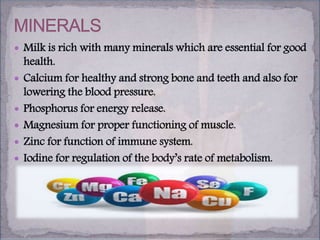
 Milk is rich with many minerals which are essential for good
health.
 Calcium for healthy and strong bone and teeth and also for
lowering the blood pressure.
 Phosphorus for energy release.
 Magnesium for proper functioning of muscle.
 Zinc for function of immune system.
 Iodine for regulation of the body’s rate of metabolism.
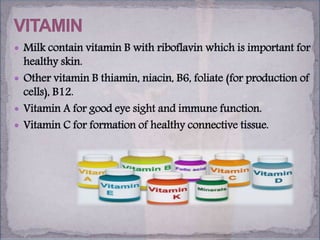
 Milk contain vitamin B with riboflavin which is important for
healthy skin.
 Other vitamin B thiamin, niacin, B6, foliate (for production of
cells), B12.
 Vitamin A for good eye sight and immune function.
 Vitamin C for formation of healthy connective tissue.
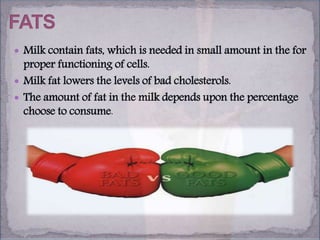
 Milk contain fats, which is needed in small amount in the for
proper functioning of cells.
 Milk fat lowers the levels of bad cholesterols.
 The amount of fat in the milk depends upon the percentage
choose to consume.
 The source of carbohydrate in milk is LACTOSE which is
gives energy to body.
Biological function of milk and their nutrient values.

Biological function of milk and their nutrient values.

  • 2.
     Milk:- Anopaque white fluid rich in fat and protein secreted by female mammals for the nourishment of their young.  Milk contain anti-bodies and other anti- infectious agents.  Milk provide the newborn baby with needed nutrients  Several different types of white blood cells are secreted; including both neutrophills and macrophages.
  • 3.
    PROTEIN  It isimportant to fight diseases, renew cells, build muscles and maintain healthy hair and nails.  Each glass contain almost 8gm of protein.
  • 4.
     Milk isrich with many minerals which are essential for good health.  Calcium for healthy and strong bone and teeth and also for lowering the blood pressure.  Phosphorus for energy release.  Magnesium for proper functioning of muscle.  Zinc for function of immune system.  Iodine for regulation of the body’s rate of metabolism.
  • 5.
     Milk containvitamin B with riboflavin which is important for healthy skin.  Other vitamin B thiamin, niacin, B6, foliate (for production of cells), B12.  Vitamin A for good eye sight and immune function.  Vitamin C for formation of healthy connective tissue.
  • 6.
     Milk containfats, which is needed in small amount in the for proper functioning of cells.  Milk fat lowers the levels of bad cholesterols.  The amount of fat in the milk depends upon the percentage choose to consume.
  • 7.
     The sourceof carbohydrate in milk is LACTOSE which is gives energy to body.