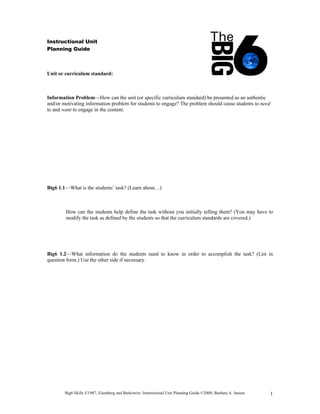
Instructional Unit
Planning Guide


Unit or curriculum standard:


Information Problem—How can the unit (or specific curriculum standard) be presented as an authentic
and/or motivating information problem for students to engage? The problem should cause students to need
to and want to engage in the content.


Big6 1.1—What is the students’ task? (Learn about…)


        How can the students help define the task without you initially telling them? (You may have to
        modify the task as defined by the students so that the curriculum standards are covered.)


Big6 1.2—What information do the students need to know in order to accomplish the task? (List in
question form.) Use the other side if necessary.


        Big6 Skills ©1987, Eisenberg and Berkowitz. Instructional Unit Planning Guide ©2009, Barbara A. Jansen.   1
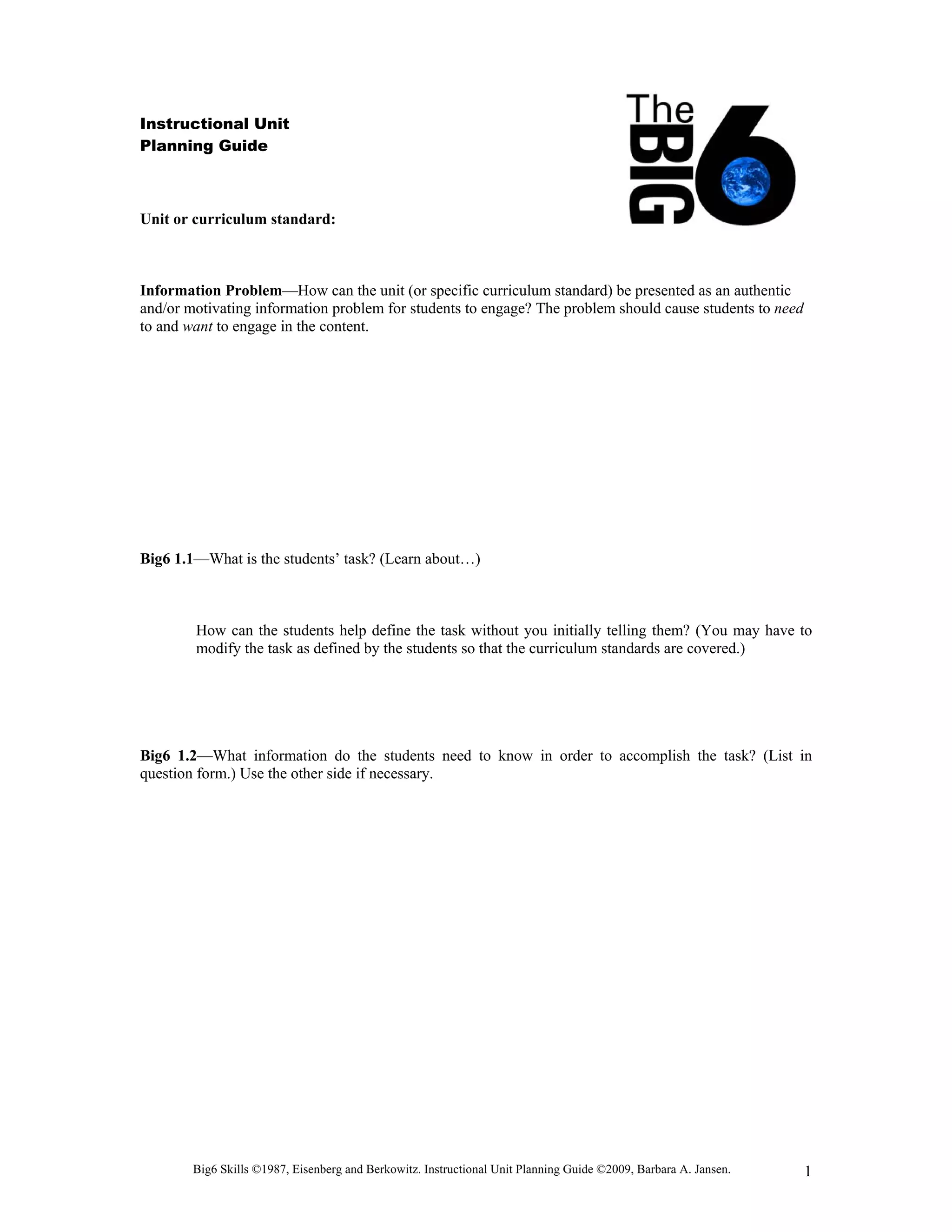
Big6 2.1 and 2.2—Which sources are students most likely to use for this unit? Consider having students
use library books and the online databases to which the library subscribes before using sources off the free
Web. (Consider human resources such as interviews, survey, and observation whenever appropriate.)


         How will students obtain a list of sources?
                Brainstorm (with or without assistance) to create comprehensive list
                other


         Which additional sources will you introduce to the students?


Big6 3.1—Where will students locate these sources?


         What instruction do students need in specific location skills? (Consider library catalog, various
         options on subscription databases search engines, keyword searching, shelf arrangement, Boolean
         operators (and, or, not), Internet search engines, advanced search features, etc.)


Big6 3.2—What instruction do students need in accessing information within the source? (Consider index
        and table of contents, Ctrl-Find, etc.)


Big6 4.1—How will students engage in the source? (Read, listen, view, touch, etc.)


Other considerations about the contents of the sources (reliability, bias, currency, etc. especially when
        using web sites)


         Who will evaluate web sites for authority and accuracy and judge for relevancy?
                teacher or librarian
                students (consider having student complete a formal Web evaluation for each free site
                used)


Big6 4.2—How will students take from the source, the information they need (note taking)?
        ____ trash-n-treasure method of note taking for factual information
        ____ Summarizing, paraphrasing, or quoting for older students, as developmentally appropriate
        ____ other note taking method:


        Big6 Skills ©1987, Eisenberg and Berkowitz. Instructional Unit Planning Guide ©2009, Barbara A. Jansen.   2
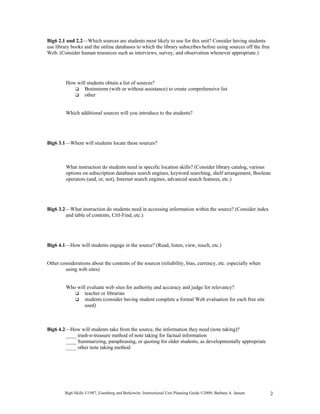
On which type of organizer will students use to record notes?
         ____ data chart
         ____ note cards
         ____ Electronic organizer (MS Word, Google Docs, Inspiration, NoodleBib, wiki, etc.)
         ____ other (such as Venn diagram, comparison chart, cluster diagram, etc.)

         What instruction will students need prior to taking notes?


Big6 5.1—How will students organize the information from all of their sources?
        ____ written rough draft
        ____ sketch
        ____ roughly drawn plan
        ____ graphic organizer
        ____ other

         Consider: How, by going beyond the given information, will students add value to the
         knowledge-level information found in sources?


Big6 5.2—How will students display their results?
        ____ product   ____ presentation
        ____ paper      ____ other


         What higher-level thinking and transferable skills are included in the final product?


         How can students show results in a written format, such as an essay or other composition?


         What materials and instruction will students need?


         What authentic audience will students have for their results?


         Will students choose their own product (with or without guidance)?


         How will students give credit to their sources? What instruction do students need?
         ____ bibliography (what instruction do students need?)
         ____ spoken credit during a presentation


Big6 6.1 and 6.2—How will students evaluate their own efforts?
         ____ predetermined set of criteria, i.e., rubric or scoring guide, that the teachers will use to assess
         ____ informal written evaluation
         ____ both
         ____ other

         Who will create the rubric or scoring guide?
         ____ teacher and/or librarian
         ____ student input in descriptors
         ____ other


        Big6 Skills ©1987, Eisenberg and Berkowitz. Instructional Unit Planning Guide ©2009, Barbara A. Jansen.    3
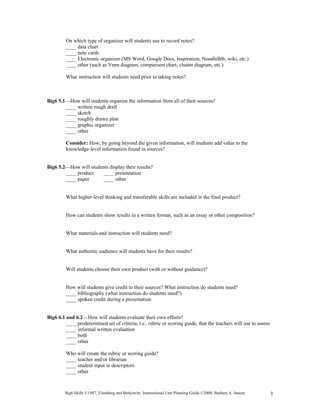
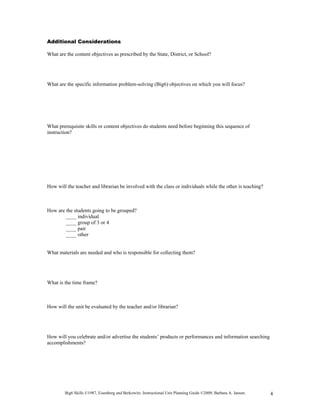
Additional Considerations

What are the content objectives as prescribed by the State, District, or School?


What are the specific information problem-solving (Big6) objectives on which you will focus?


What prerequisite skills or content objectives do students need before beginning this sequence of
instruction?


How will the teacher and librarian be involved with the class or individuals while the other is teaching?


How are the students going to be grouped?
        ____ individual
        ____ group of 3 or 4
        ____ pair
        ____ other


What materials are needed and who is responsible for collecting them?


What is the time frame?


How will the unit be evaluated by the teacher and/or librarian?


How will you celebrate and/or advertise the students’ products or performances and information searching
accomplishments?


        Big6 Skills ©1987, Eisenberg and Berkowitz. Instructional Unit Planning Guide ©2009, Barbara A. Jansen.   4

Big6 Instructional Unit Planning Guide

  • 1.
    Instructional Unit Planning Guide Unitor curriculum standard: Information Problem—How can the unit (or specific curriculum standard) be presented as an authentic and/or motivating information problem for students to engage? The problem should cause students to need to and want to engage in the content. Big6 1.1—What is the students’ task? (Learn about…) How can the students help define the task without you initially telling them? (You may have to modify the task as defined by the students so that the curriculum standards are covered.) Big6 1.2—What information do the students need to know in order to accomplish the task? (List in question form.) Use the other side if necessary. Big6 Skills ©1987, Eisenberg and Berkowitz. Instructional Unit Planning Guide ©2009, Barbara A. Jansen. 1
  • 2.
    Big6 2.1 and2.2—Which sources are students most likely to use for this unit? Consider having students use library books and the online databases to which the library subscribes before using sources off the free Web. (Consider human resources such as interviews, survey, and observation whenever appropriate.) How will students obtain a list of sources? Brainstorm (with or without assistance) to create comprehensive list other Which additional sources will you introduce to the students? Big6 3.1—Where will students locate these sources? What instruction do students need in specific location skills? (Consider library catalog, various options on subscription databases search engines, keyword searching, shelf arrangement, Boolean operators (and, or, not), Internet search engines, advanced search features, etc.) Big6 3.2—What instruction do students need in accessing information within the source? (Consider index and table of contents, Ctrl-Find, etc.) Big6 4.1—How will students engage in the source? (Read, listen, view, touch, etc.) Other considerations about the contents of the sources (reliability, bias, currency, etc. especially when using web sites) Who will evaluate web sites for authority and accuracy and judge for relevancy? teacher or librarian students (consider having student complete a formal Web evaluation for each free site used) Big6 4.2—How will students take from the source, the information they need (note taking)? ____ trash-n-treasure method of note taking for factual information ____ Summarizing, paraphrasing, or quoting for older students, as developmentally appropriate ____ other note taking method: Big6 Skills ©1987, Eisenberg and Berkowitz. Instructional Unit Planning Guide ©2009, Barbara A. Jansen. 2
  • 3.
    On which typeof organizer will students use to record notes? ____ data chart ____ note cards ____ Electronic organizer (MS Word, Google Docs, Inspiration, NoodleBib, wiki, etc.) ____ other (such as Venn diagram, comparison chart, cluster diagram, etc.) What instruction will students need prior to taking notes? Big6 5.1—How will students organize the information from all of their sources? ____ written rough draft ____ sketch ____ roughly drawn plan ____ graphic organizer ____ other Consider: How, by going beyond the given information, will students add value to the knowledge-level information found in sources? Big6 5.2—How will students display their results? ____ product ____ presentation ____ paper ____ other What higher-level thinking and transferable skills are included in the final product? How can students show results in a written format, such as an essay or other composition? What materials and instruction will students need? What authentic audience will students have for their results? Will students choose their own product (with or without guidance)? How will students give credit to their sources? What instruction do students need? ____ bibliography (what instruction do students need?) ____ spoken credit during a presentation Big6 6.1 and 6.2—How will students evaluate their own efforts? ____ predetermined set of criteria, i.e., rubric or scoring guide, that the teachers will use to assess ____ informal written evaluation ____ both ____ other Who will create the rubric or scoring guide? ____ teacher and/or librarian ____ student input in descriptors ____ other Big6 Skills ©1987, Eisenberg and Berkowitz. Instructional Unit Planning Guide ©2009, Barbara A. Jansen. 3
  • 4.
    Additional Considerations What arethe content objectives as prescribed by the State, District, or School? What are the specific information problem-solving (Big6) objectives on which you will focus? What prerequisite skills or content objectives do students need before beginning this sequence of instruction? How will the teacher and librarian be involved with the class or individuals while the other is teaching? How are the students going to be grouped? ____ individual ____ group of 3 or 4 ____ pair ____ other What materials are needed and who is responsible for collecting them? What is the time frame? How will the unit be evaluated by the teacher and/or librarian? How will you celebrate and/or advertise the students’ products or performances and information searching accomplishments? Big6 Skills ©1987, Eisenberg and Berkowitz. Instructional Unit Planning Guide ©2009, Barbara A. Jansen. 4