Use of Mobile phones in school
Introduction
 The question of whether cell phones should be

allowed in schools has been hotly debated over
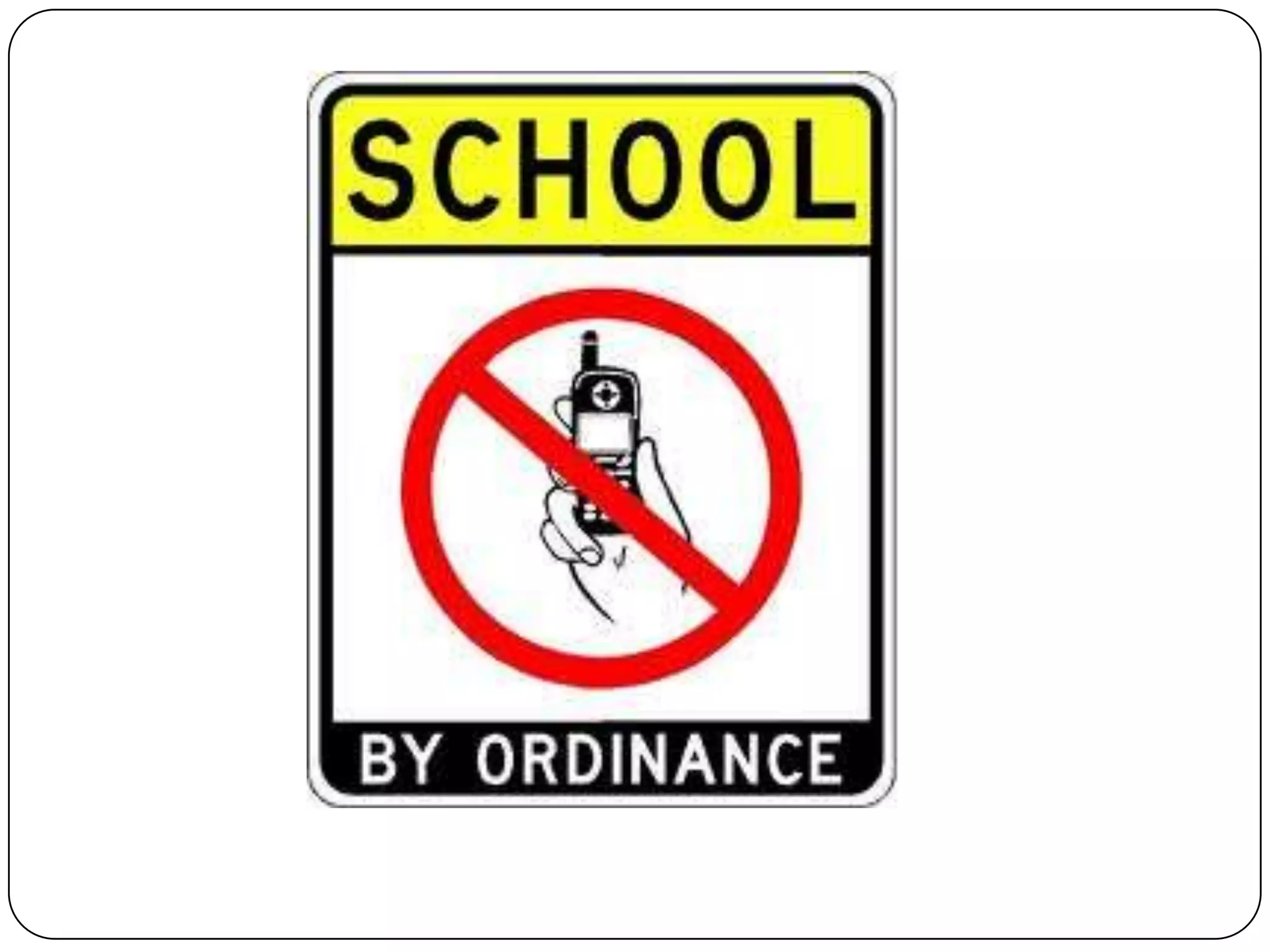
the years. The reality is, bans on cell phones are
hard for schools to enforce. Researchers found
that 65 percent of cell-owning teens at schools
that completely ban phones bring their phones to
school every day anyway.
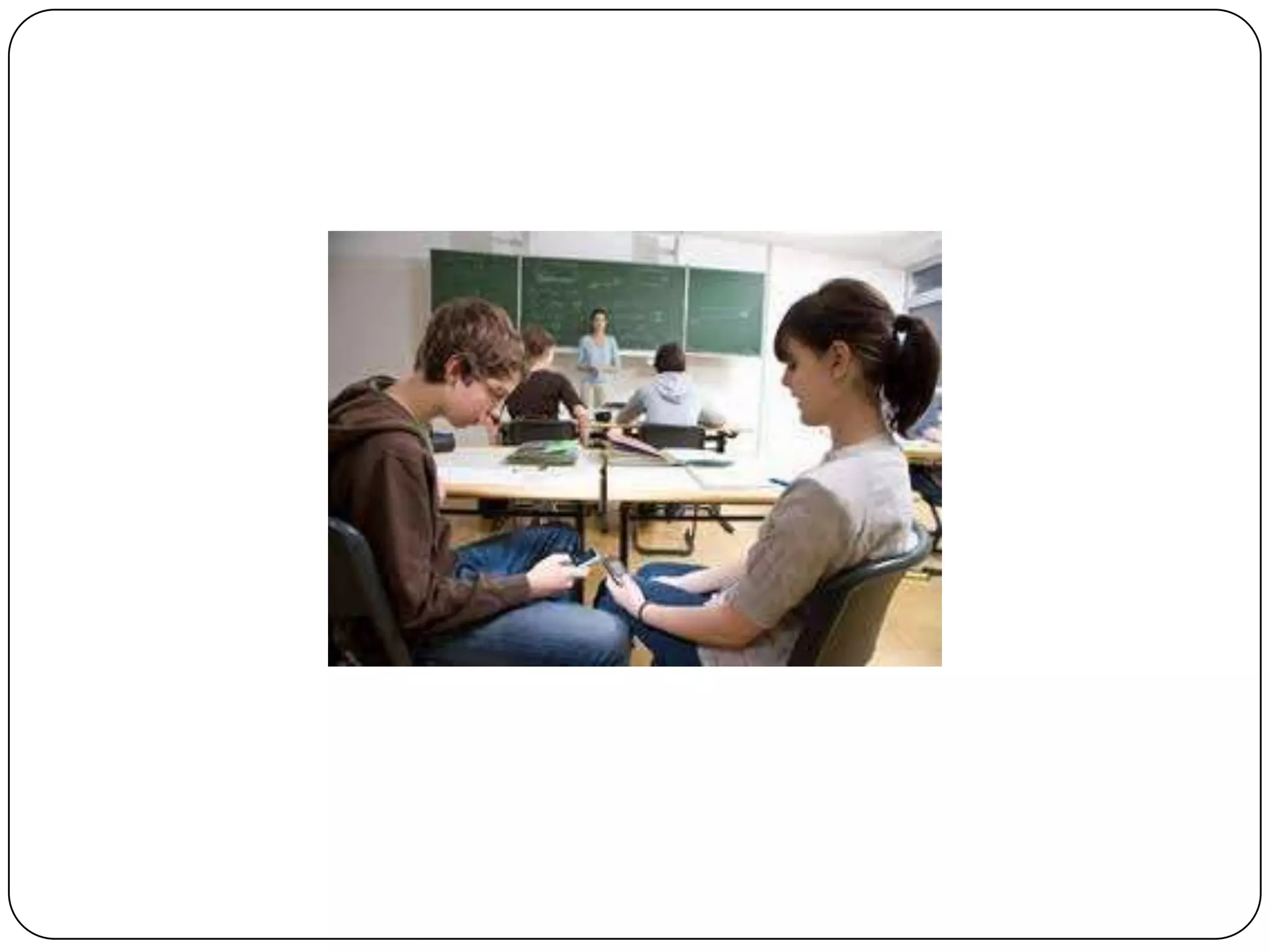
 Most schools now allow students to have cell

phones but try to require them to be turned off
during class because they can be disruptive and
distracting (the researchers found that 43 percent
of all teens who take their phones to school say
they text in class at least once a day). There are
the pros and cons of allowing cell phones in
school.
Cell phones are good for
education.
Cell Phones are good for education for many
reasons. First you can use cell phones for research
purposes. Although most schools have at least 1
computer in the classroom and a computer lab,
sometimes this still isn’t enough. It can also be
expensive to provide a computer to each student at
school, so a good option is to use cell phones for
research instead. Next, I want to talk about why apps
are good for education. Some people think that some
apps are bad and kids will get distracted and use
them in class. And the truth is that cell phones have
many educational apps as well. Which do you think
would be more fun and exciting for a student? Either
studying with a boring book that is hard to
understand, or playing an educational app that is still
Here are some good features of phones that are
good for school:
1. Calculator. It doesn’t matter if your phone is
expensive or not, almost every single phone has a
calculator. Lots of students are required to have a
calculator as one of their school supplies, but if they
have one on their phone, then they don’t have to get
one.
2. Stop Watch. Lots of phones have a stopwatch,
which can be used in science class. I know that
when I was in public school we used stopwatches
all the time for experiments, and the teacher only
had 3 stopwatches so we had to take turns.
3. Dictionary. Cell phones can be used as a dictionary,
which can be VERY useful in a classroom setting.
The cons
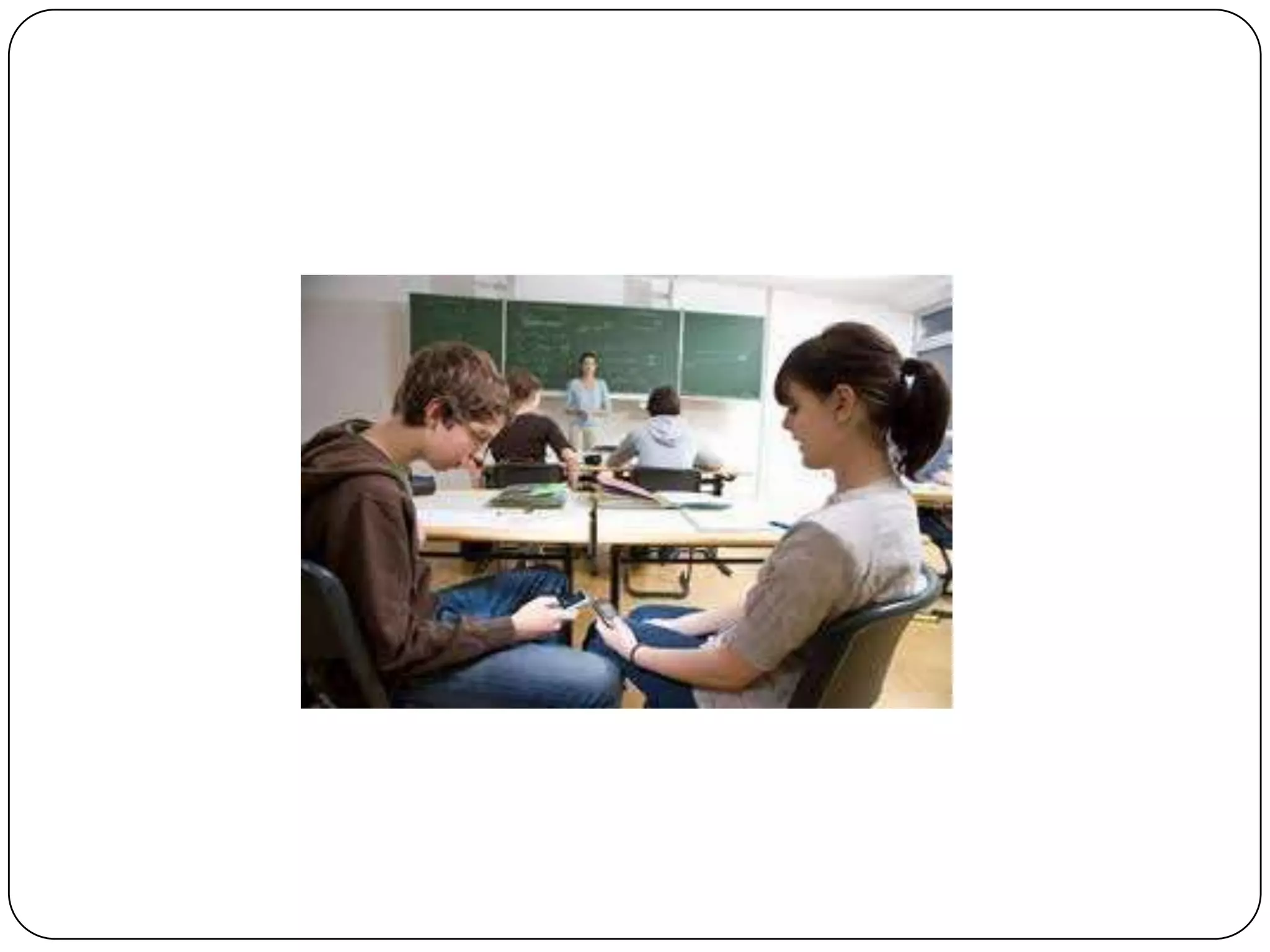
 Students often forget to turn off their phones in class,










and ringing noises or text-message alerts disrupt
learning.
Even if set to silent, cell phones can still cause
distraction, since text messaging has become a hightech method of passing notes in school.
Student cell phone networks add to the spread of
rumors and misinformation, which can be harmful
during a widespread crisis.
Mobile phones with a connection to the Internet
(therefore, Facebook and Twitter) can be even more
of a distraction and can be used for cyberbullying.
Phones can be used as cheating devices during
exams.
The long-term physical effects of cell phone use are
Conclusion
Texting and picture messaging arel so prevalent in
high schools and colleges, the administrators are
desperately looking into ways to deal with the
problem, such as electronic phone detectors or
mobile phone signal blocking. Many teachers in
schools support the use of electronic detectors, which
would send signals to a pager-like device carried by a
teacher when a student send a phone message.
Technologies provide great value to our society, to
our kids. However, the use of these wonderful devices
does require close supervision and effective
management by both the educators and the parents.
It is the adult’s job to teach and address the kids,
among other things, about what is right and wrong in
the use of mobile phones.
mobile bie daalt shutis

mobile bie daalt shutis

  • 1.
    Use of Mobilephones in school
  • 2.
    Introduction  The questionof whether cell phones should be allowed in schools has been hotly debated over the years. The reality is, bans on cell phones are hard for schools to enforce. Researchers found that 65 percent of cell-owning teens at schools that completely ban phones bring their phones to school every day anyway.
  • 4.
     Most schoolsnow allow students to have cell phones but try to require them to be turned off during class because they can be disruptive and distracting (the researchers found that 43 percent of all teens who take their phones to school say they text in class at least once a day). There are the pros and cons of allowing cell phones in school.
  • 6.
    Cell phones aregood for education. Cell Phones are good for education for many reasons. First you can use cell phones for research purposes. Although most schools have at least 1 computer in the classroom and a computer lab, sometimes this still isn’t enough. It can also be expensive to provide a computer to each student at school, so a good option is to use cell phones for research instead. Next, I want to talk about why apps are good for education. Some people think that some apps are bad and kids will get distracted and use them in class. And the truth is that cell phones have many educational apps as well. Which do you think would be more fun and exciting for a student? Either studying with a boring book that is hard to understand, or playing an educational app that is still
  • 8.
    Here are somegood features of phones that are good for school: 1. Calculator. It doesn’t matter if your phone is expensive or not, almost every single phone has a calculator. Lots of students are required to have a calculator as one of their school supplies, but if they have one on their phone, then they don’t have to get one. 2. Stop Watch. Lots of phones have a stopwatch, which can be used in science class. I know that when I was in public school we used stopwatches all the time for experiments, and the teacher only had 3 stopwatches so we had to take turns. 3. Dictionary. Cell phones can be used as a dictionary, which can be VERY useful in a classroom setting.
  • 10.
    The cons  Studentsoften forget to turn off their phones in class,      and ringing noises or text-message alerts disrupt learning. Even if set to silent, cell phones can still cause distraction, since text messaging has become a hightech method of passing notes in school. Student cell phone networks add to the spread of rumors and misinformation, which can be harmful during a widespread crisis. Mobile phones with a connection to the Internet (therefore, Facebook and Twitter) can be even more of a distraction and can be used for cyberbullying. Phones can be used as cheating devices during exams. The long-term physical effects of cell phone use are
  • 12.
    Conclusion Texting and picturemessaging arel so prevalent in high schools and colleges, the administrators are desperately looking into ways to deal with the problem, such as electronic phone detectors or mobile phone signal blocking. Many teachers in schools support the use of electronic detectors, which would send signals to a pager-like device carried by a teacher when a student send a phone message. Technologies provide great value to our society, to our kids. However, the use of these wonderful devices does require close supervision and effective management by both the educators and the parents. It is the adult’s job to teach and address the kids, among other things, about what is right and wrong in the use of mobile phones.