Group 10
Name Roll Number
Shivam Kumar Pandey 1810100
Mahima Chauhan 1810082
Mayur Bhosle 1810086
Anup Serrao 1810056
Karthik Subramaniam 1810078
Naga Sai Sudheer 1810085
Before You Make That Big Decision
Overview
Biases and the challenge of avoiding them
Recognizing and Neutralising biases
Process review using 12 point checklist
Conclusion
Biases and the challenge of avoiding them
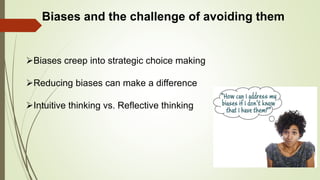
Biases creep into strategic choice making
Reducing biases can make a difference
Intuitive thinking vs. Reflective thinking
Recognizing and Neutralising biases
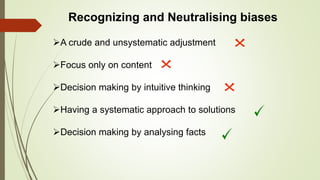
A crude and unsystematic adjustment
Focus only on content
Decision making by intuitive thinking
Having a systematic approach to solutions
Decision making by analysing facts
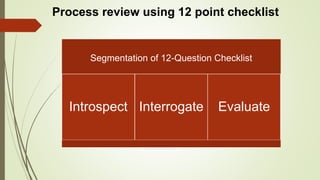
Process review using 12 point checklist
Interpersonal Informational
Decisional
Segmentation of 12-Question Checklist
Introspect Interrogate Evaluate
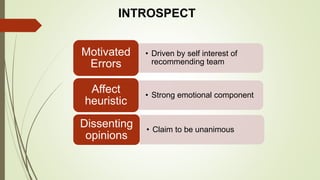
• Driven by self interest of
recommending team
Motivated
Errors
• Strong emotional component
Affect
heuristic
• Claim to be unanimous
Dissenting
opinions
INTROSPECT
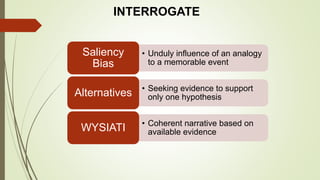
• Unduly influence of an analogy
to a memorable event
Saliency
Bias
• Seeking evidence to support
only one hypothesisAlternatives
• Coherent narrative based on
available evidenceWYSIATI
INTERROGATE
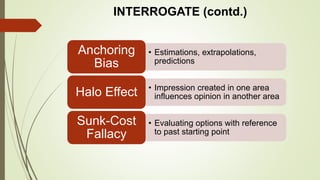
• Estimations, extrapolations,
predictions
Anchoring
Bias
• Impression created in one area
influences opinion in another areaHalo Effect
• Evaluating options with reference
to past starting point
Sunk-Cost
Fallacy
INTERROGATE (contd.)
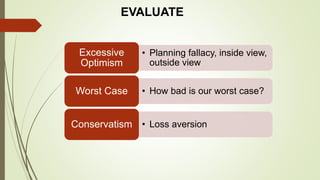
EVALUATE
• Planning fallacy, inside view,
outside view
Excessive
Optimism
• How bad is our worst case?Worst Case
• Loss aversionConservatism
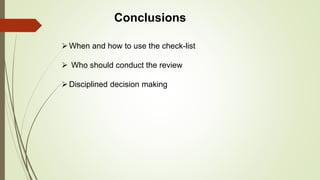
Conclusions
When and how to use the check-list
 Who should conduct the review
Disciplined decision making

Biases in an organisation

  • 1.
    Group 10 Name RollNumber Shivam Kumar Pandey 1810100 Mahima Chauhan 1810082 Mayur Bhosle 1810086 Anup Serrao 1810056 Karthik Subramaniam 1810078 Naga Sai Sudheer 1810085 Before You Make That Big Decision
  • 2.
    Overview Biases and thechallenge of avoiding them Recognizing and Neutralising biases Process review using 12 point checklist Conclusion
  • 3.
    Biases and thechallenge of avoiding them Biases creep into strategic choice making Reducing biases can make a difference Intuitive thinking vs. Reflective thinking
  • 4.
    Recognizing and Neutralisingbiases A crude and unsystematic adjustment Focus only on content Decision making by intuitive thinking Having a systematic approach to solutions Decision making by analysing facts
  • 5.
    Process review using12 point checklist Interpersonal Informational Decisional Segmentation of 12-Question Checklist Introspect Interrogate Evaluate
  • 6.
    • Driven byself interest of recommending team Motivated Errors • Strong emotional component Affect heuristic • Claim to be unanimous Dissenting opinions INTROSPECT
  • 7.
    • Unduly influenceof an analogy to a memorable event Saliency Bias • Seeking evidence to support only one hypothesisAlternatives • Coherent narrative based on available evidenceWYSIATI INTERROGATE
  • 8.
    • Estimations, extrapolations, predictions Anchoring Bias •Impression created in one area influences opinion in another areaHalo Effect • Evaluating options with reference to past starting point Sunk-Cost Fallacy INTERROGATE (contd.)
  • 9.
    EVALUATE • Planning fallacy,inside view, outside view Excessive Optimism • How bad is our worst case?Worst Case • Loss aversionConservatism
  • 10.
    Conclusions When and howto use the check-list  Who should conduct the review Disciplined decision making