
Upscaling of Learnings 
from ICRISAT-GOK Initiatives 
Suhas P Wani and Team 
6 February 2014
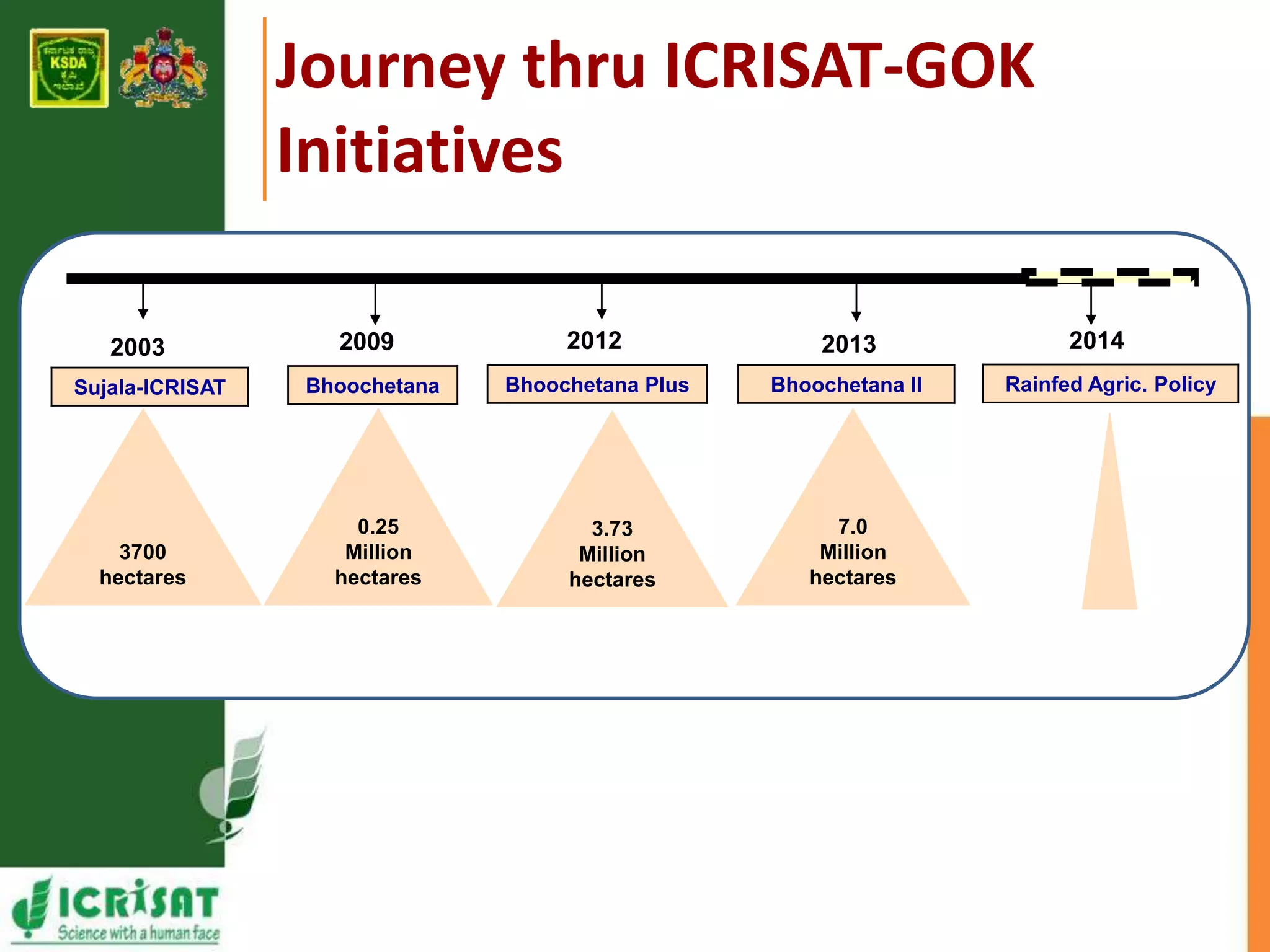
Journey thru ICRISAT-GOK 
Initiatives 
2003 2009 2012 
Sujala-ICRISAT Bhoochetana Bhoochetana Plus 
2013 
Bhoochetana II 
2014 
Rainfed Agric. Policy 
0.25 
Million 
hectares 
3.73 
Million 
hectares 
7.0 
Million 
hectares 
3700 
hectares
Sujala-ICRISAT Initiative 
Main Message 
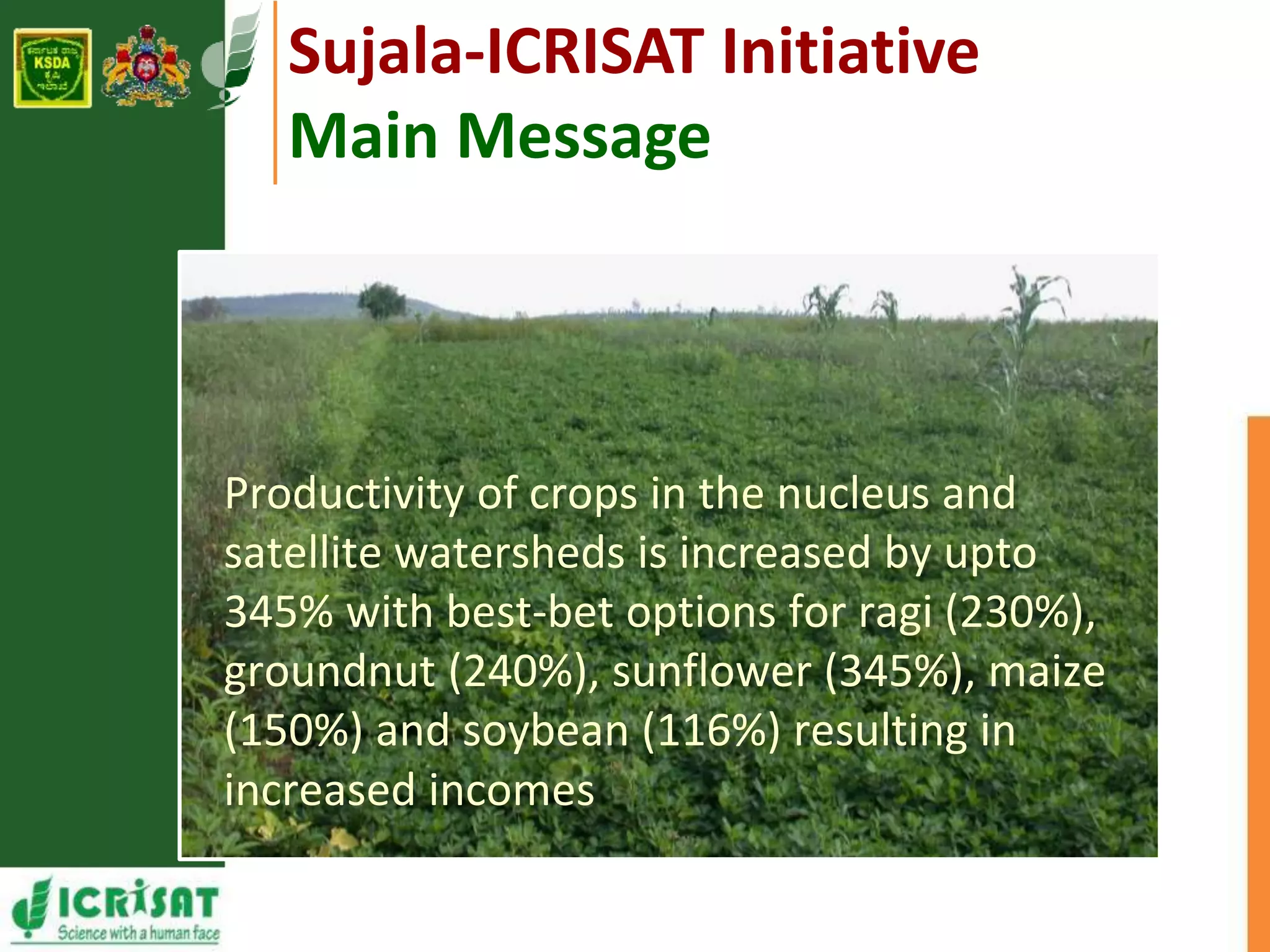
Productivity of crops in the nucleus and 
satellite watersheds is increased by upto 
345% with best-bet options for ragi (230%), 
groundnut (240%), sunflower (345%), maize 
(150%) and soybean (116%) resulting in 
increased incomes
Bhoochetana-ICRISAT Initiative 
Main Message 
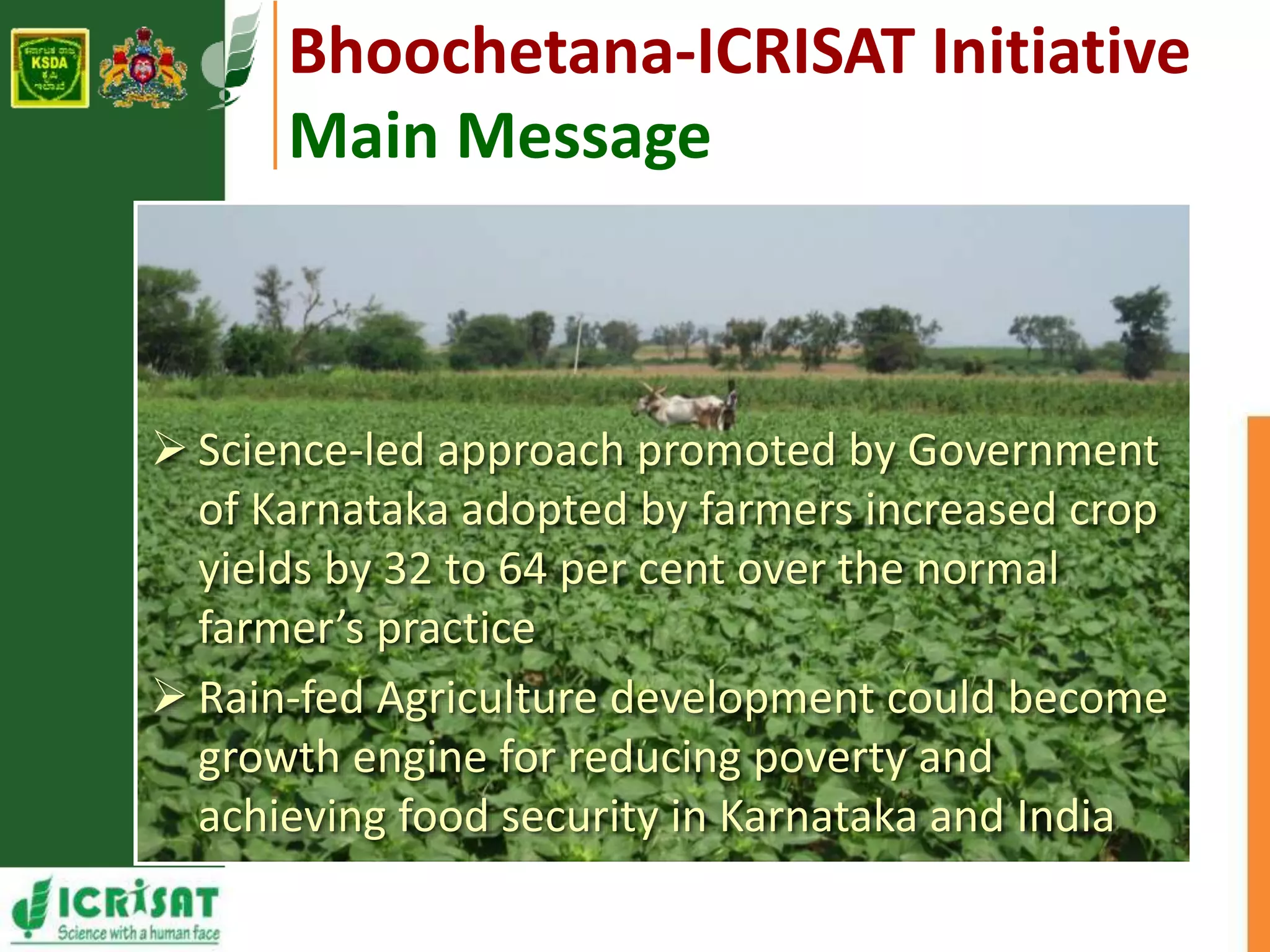
 Science-led approach promoted by Government 
of Karnataka adopted by farmers increased crop 
yields by 32 to 64 per cent over the normal 
farmer’s practice 
 Rain-fed Agriculture development could become 
growth engine for reducing poverty and 
achieving food security in Karnataka and India
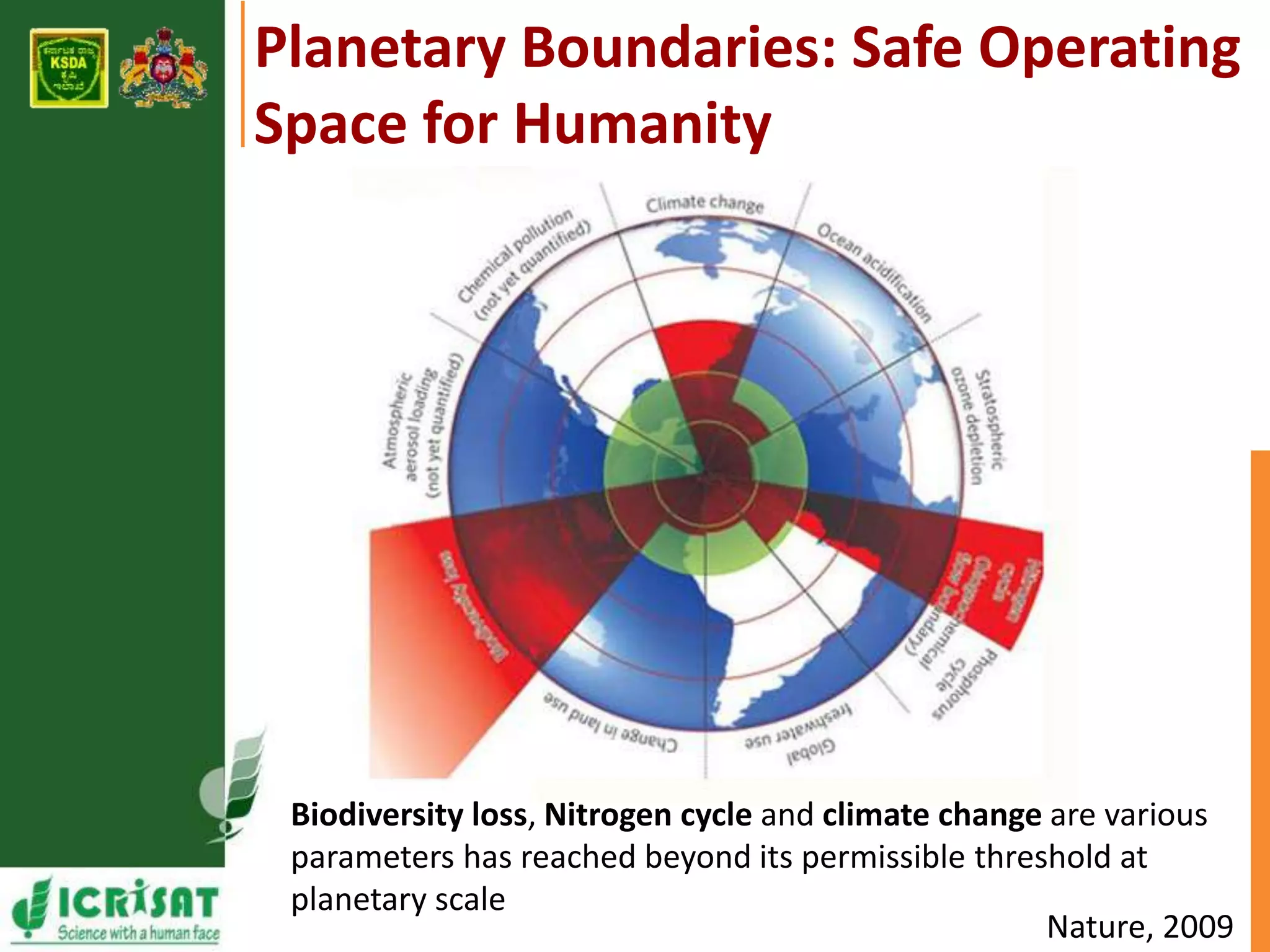
Planetary Boundaries: Safe Operating 
Space for Humanity 
Biodiversity loss, Nitrogen cycle and climate change are various 
parameters has reached beyond its permissible threshold at 
planetary scale 
Nature, 2009
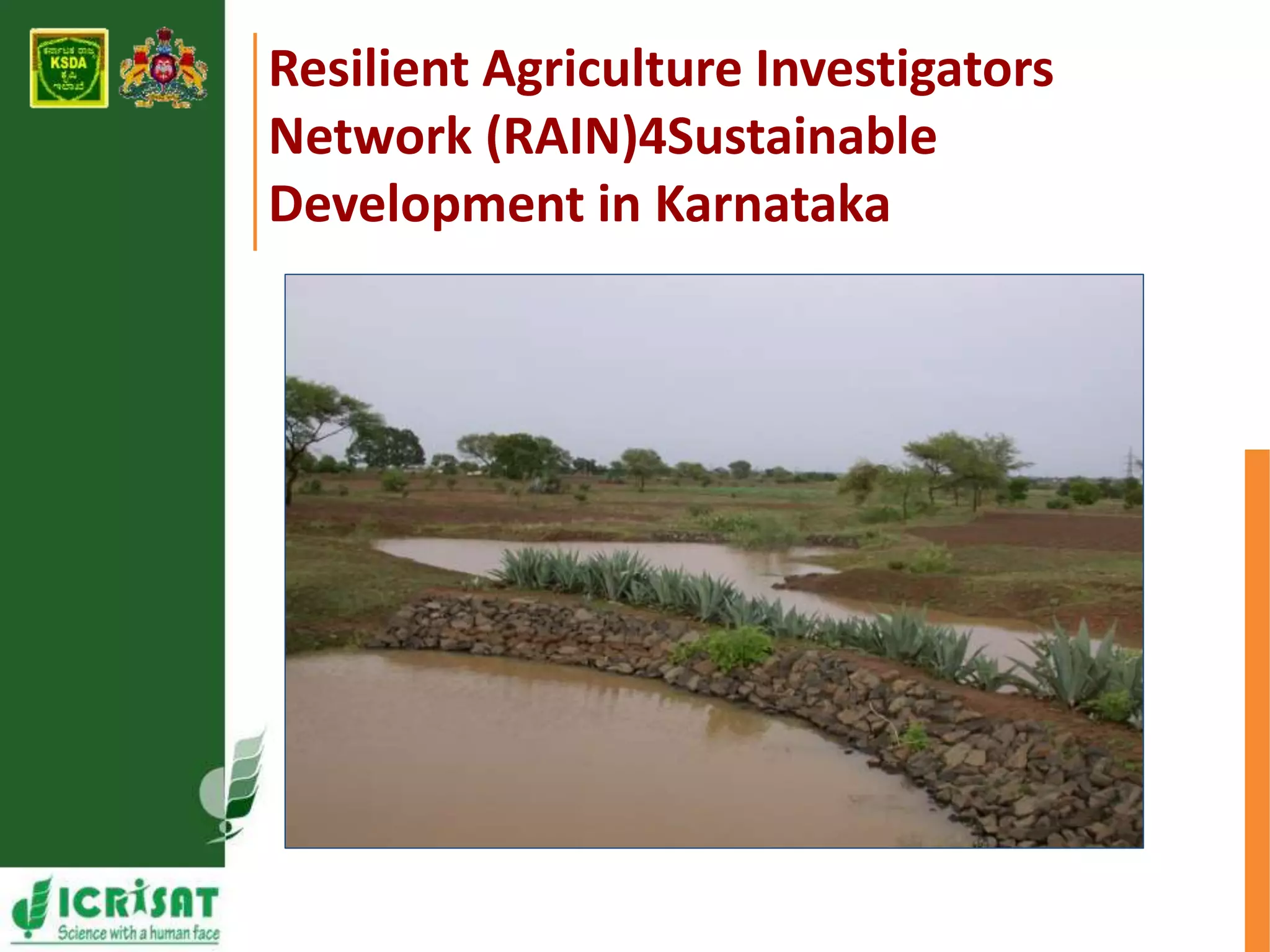
Resilient Agriculture Investigators 
Network (RAIN)4Sustainable 
Development in Karnataka
Torch Bearers for Resilient 
Agriculture 
 Establishment of Resilient Agriculture Investigator 
Network (RAIN) 
 Developing a common understanding about resilient 
agriculture 
 Developing a common approach, instruments, 
methodology, data set and terminology for resilient 
agriculture 
 Establish the sites of Resilience Learning 
 Sensitize all the stakeholders to use the resilience 
and vulnerability lense
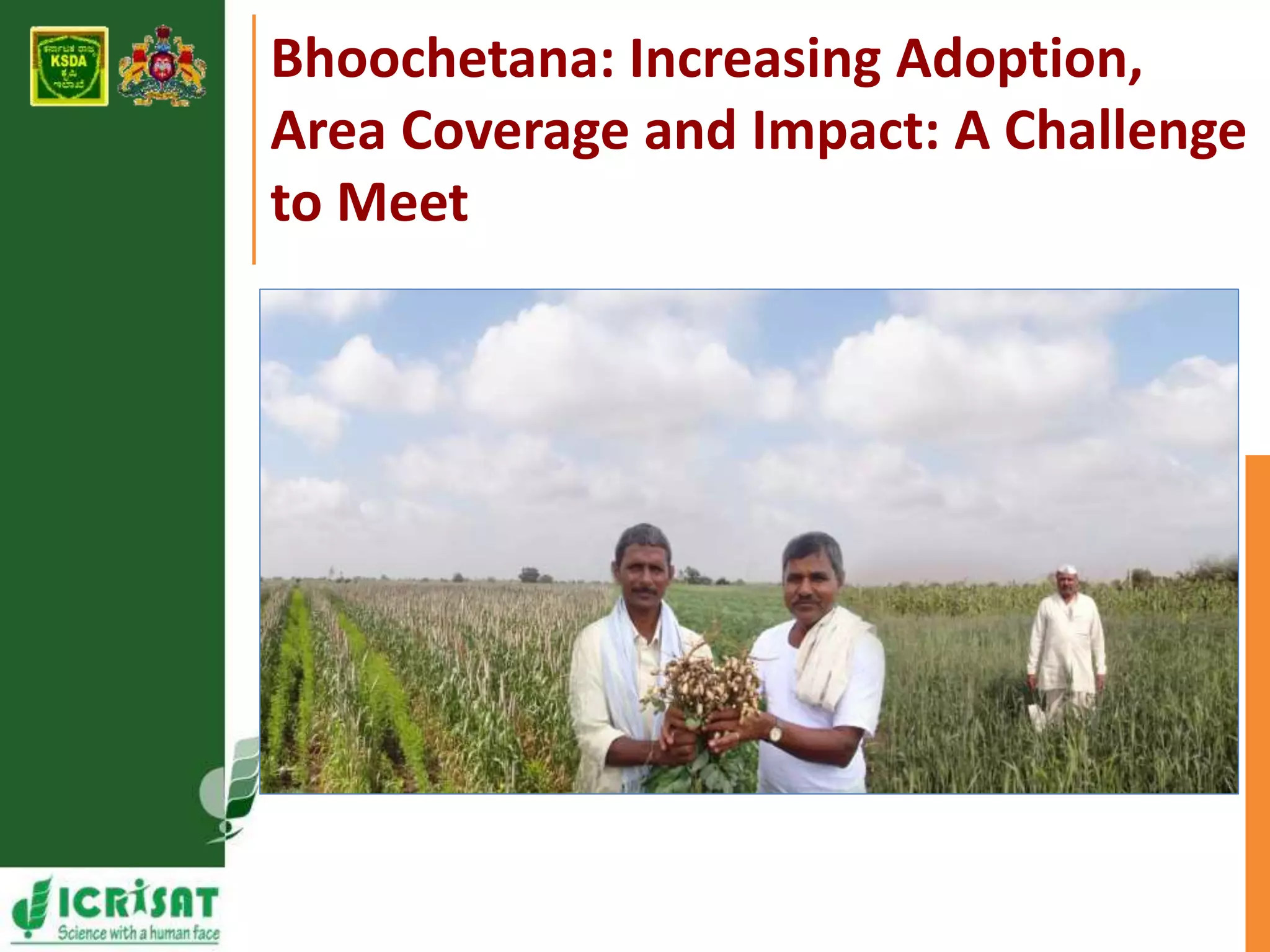
Bhoochetana: Increasing Adoption, 
Area Coverage and Impact: A Challenge 
to Meet
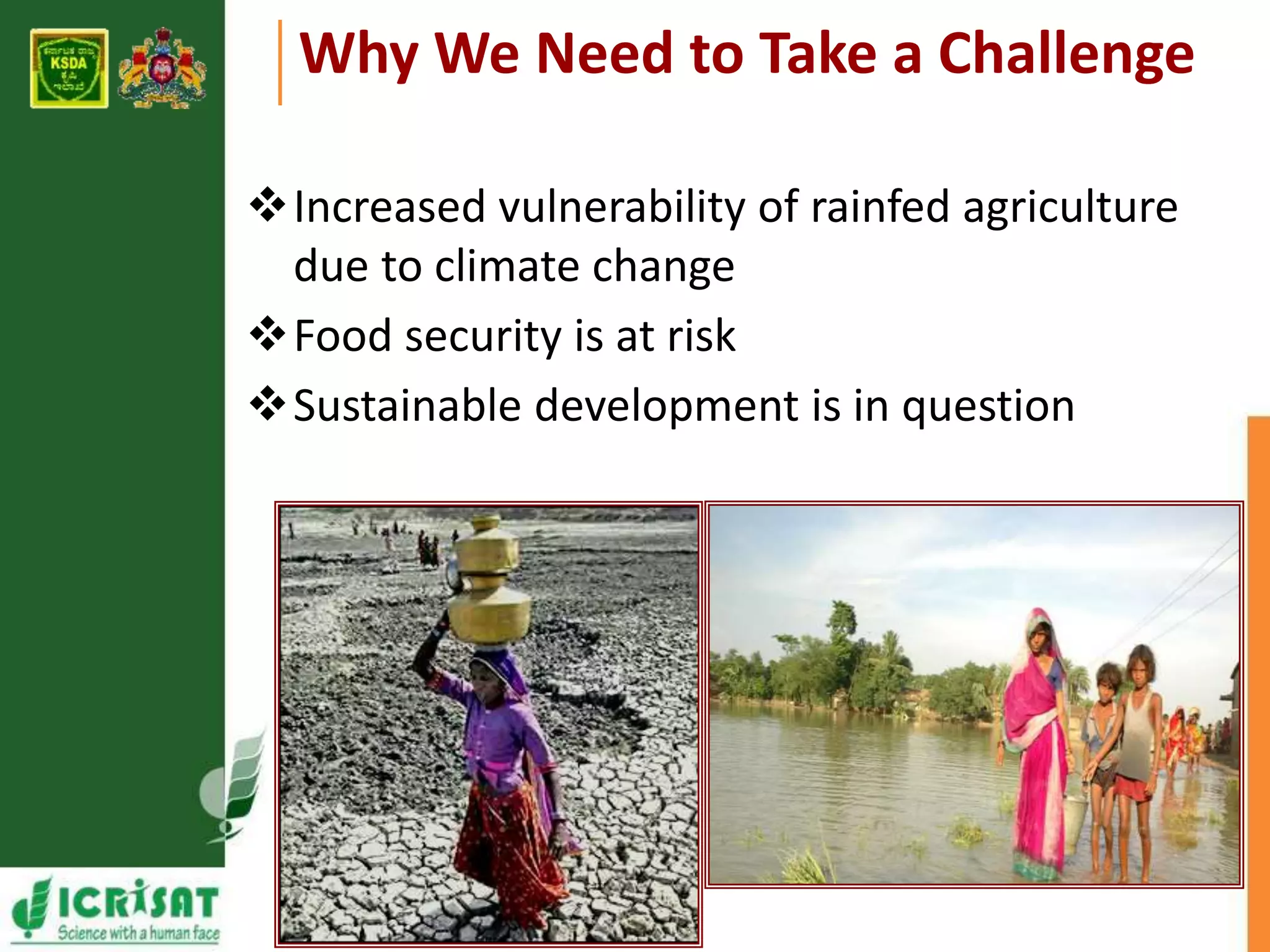
Why We Need to Take a Challenge 
Increased vulnerability of rainfed agriculture 
due to climate change 
Food security is at risk 
Sustainable development is in question
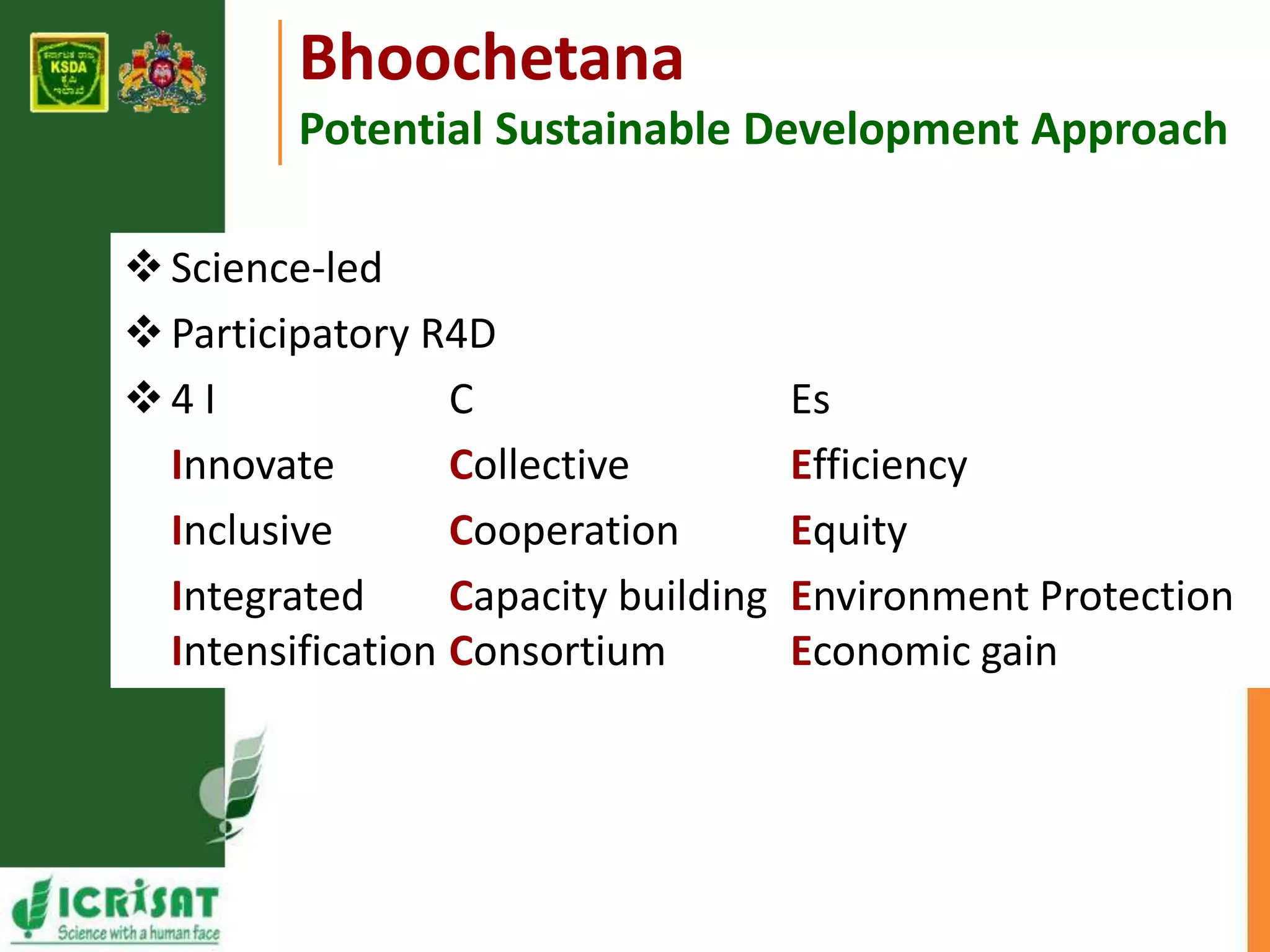
Bhoochetana 
Potential Sustainable Development Approach 
 Science-led 
 Participatory R4D 
 4 I C Es 
Innovate Collective Efficiency 
Inclusive Cooperation Equity 
Integrated Capacity building Environment Protection 
Intensification Consortium Economic gain
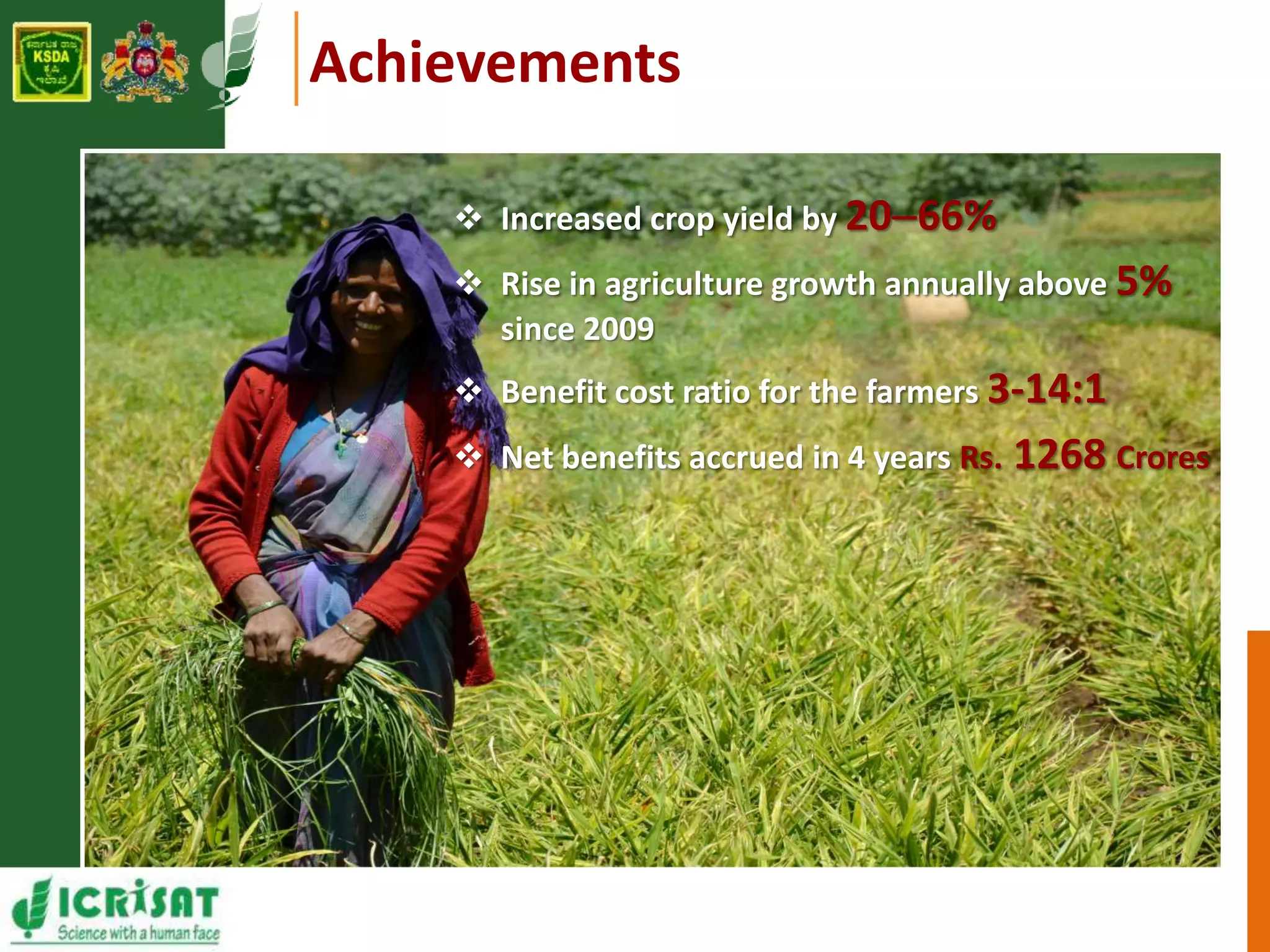
Achievements 
 Increased crop yield by 2066% 
 Rise in agriculture growth annually above 5% 
since 2009 
 Benefit cost ratio for the farmers 3-14:1 
 Net benefits accrued in 4 years Rs. 1268 Crores
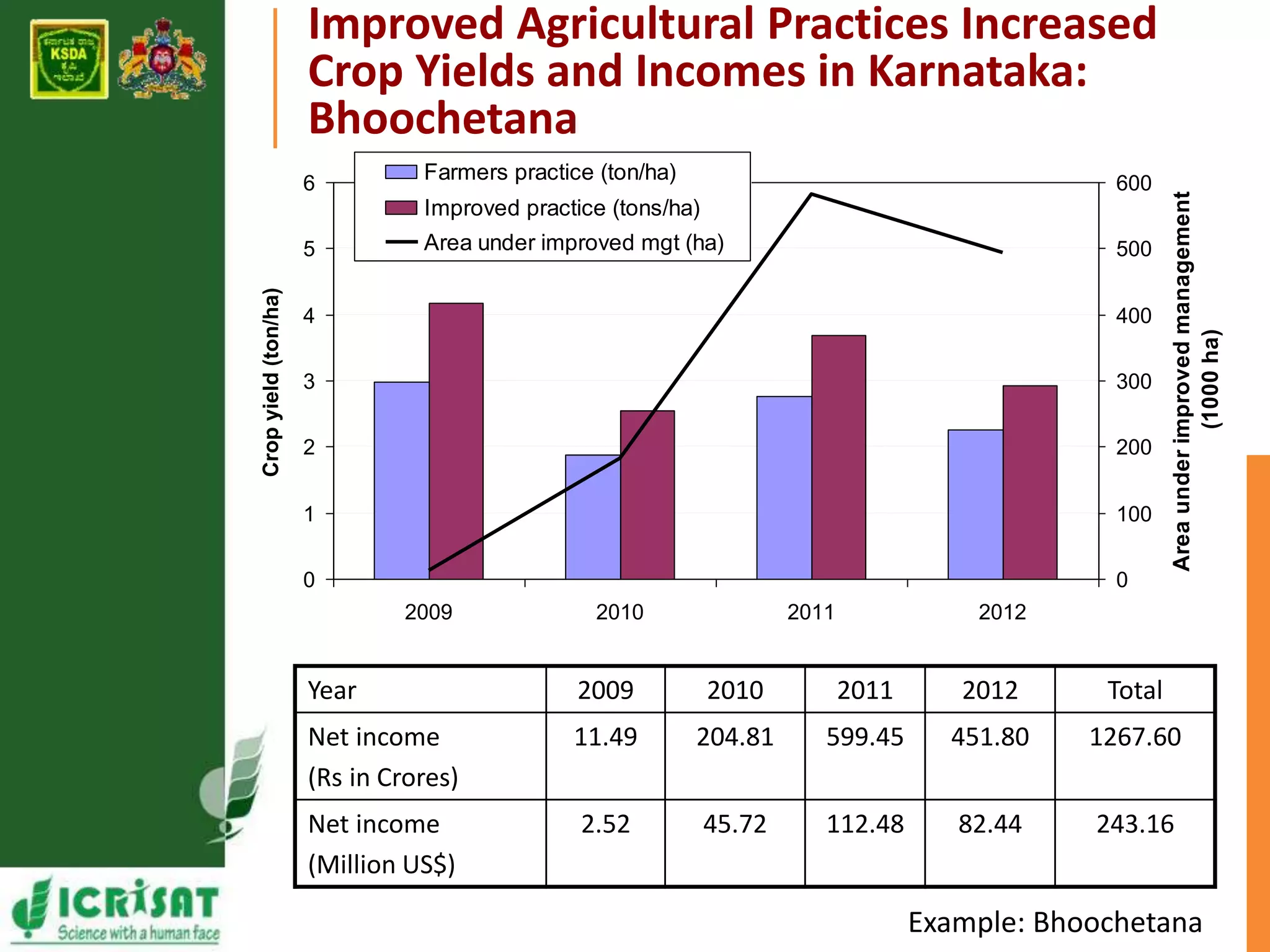
Improved Agricultural Practices Increased 
Crop Yields and Incomes in Karnataka: 
Bhoochetana 
6 
5 
4 
3 
2 
1 
0 
2009 2010 2011 2012 
Crop yield (ton/ha) 
600 
500 
400 
300 
200 
100 
0 
Area under improved management 
(1000 ha) 
Farmers practice (ton/ha) 
Improved practice (tons/ha) 
Area under improved mgt (ha) 
Year 2009 2010 2011 2012 Total 
Net income 
(Rs in Crores) 
11.49 204.81 599.45 451.80 1267.60 
Net income 
(Million US$) 
2.52 45.72 112.48 82.44 243.16 
Example: Bhoochetana
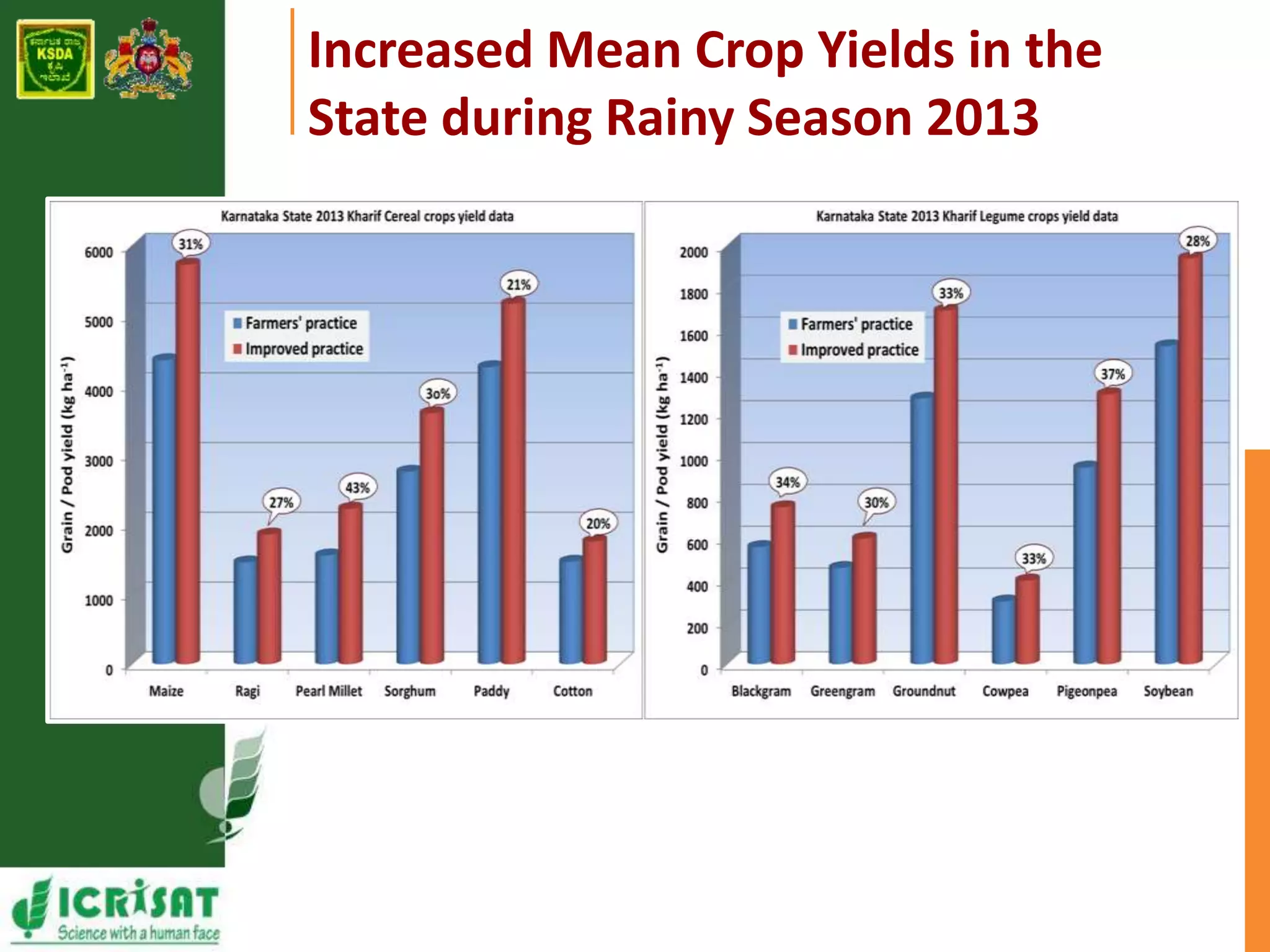
Increased Mean Crop Yields in the 
State during Rainy Season 2013
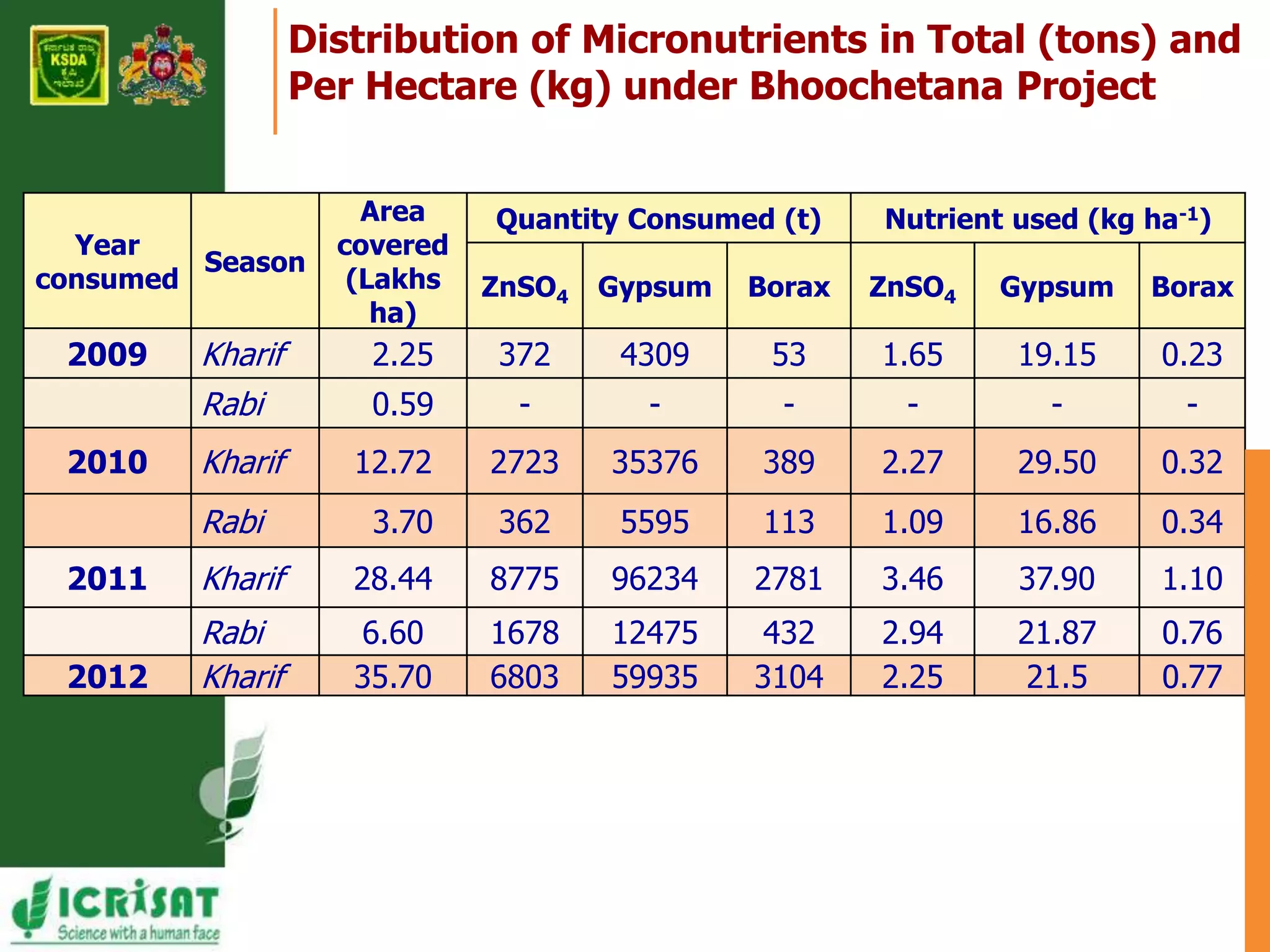
Distribution of Micronutrients in Total (tons) and 
Per Hectare (kg) under Bhoochetana Project 
Year 
consumed 
Season 
Area 
covered 
(Lakhs 
ha) 
Quantity Consumed (t) Nutrient used (kg ha-1) 
ZnSO4 Gypsum Borax ZnSO4 Gypsum Borax 
2009 Kharif 2.25 372 4309 53 1.65 19.15 0.23 
Rabi 0.59 - - - - - - 
2010 Kharif 12.72 2723 35376 389 2.27 29.50 0.32 
Rabi 3.70 362 5595 113 1.09 16.86 0.34 
2011 Kharif 28.44 8775 96234 2781 3.46 37.90 1.10 
Rabi 6.60 1678 12475 432 2.94 21.87 0.76 
2012 Kharif 35.70 6803 59935 3104 2.25 21.5 0.77
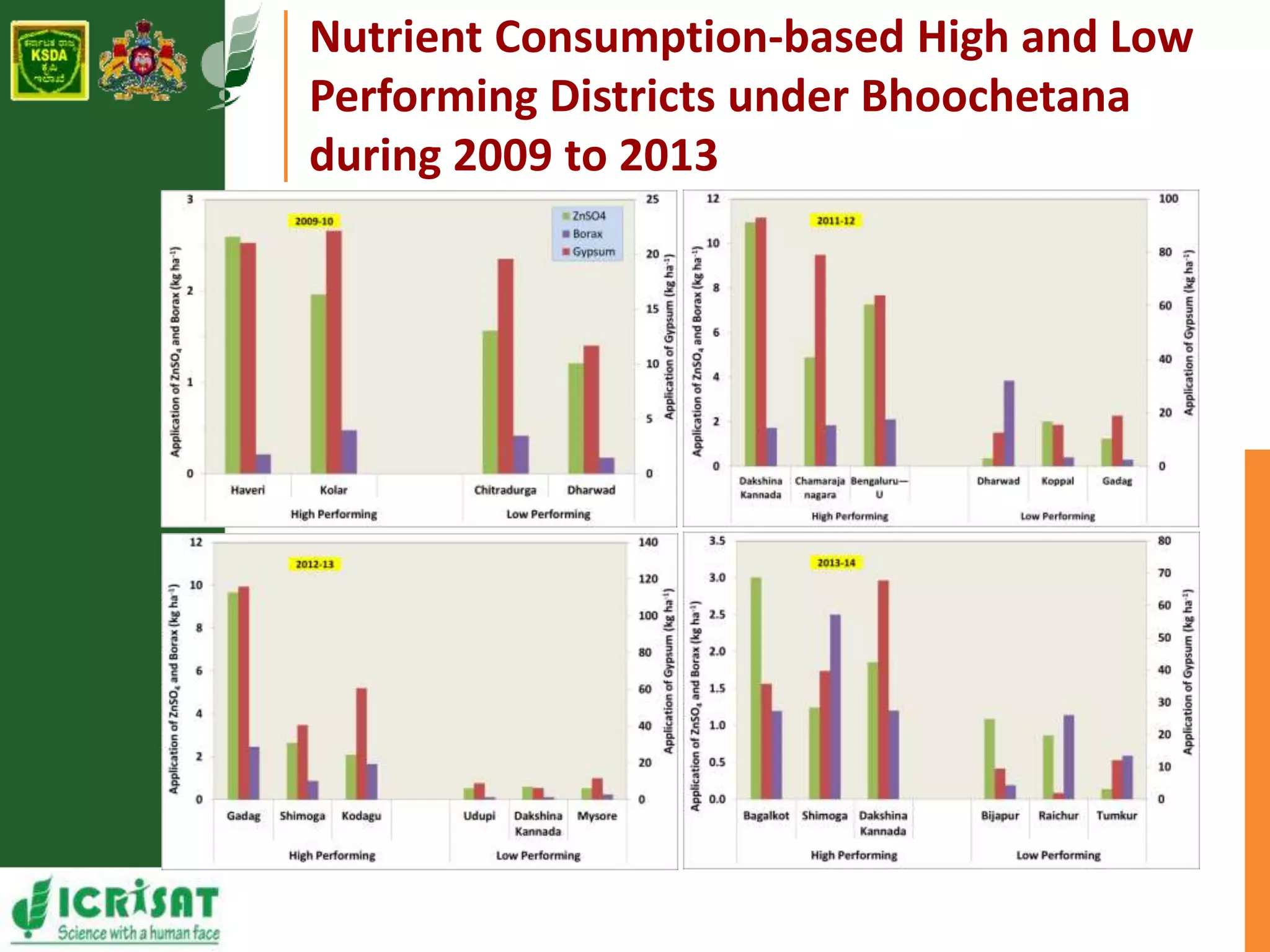
Nutrient Consumption-based High and Low 
Performing Districts under Bhoochetana 
during 2009 to 2013
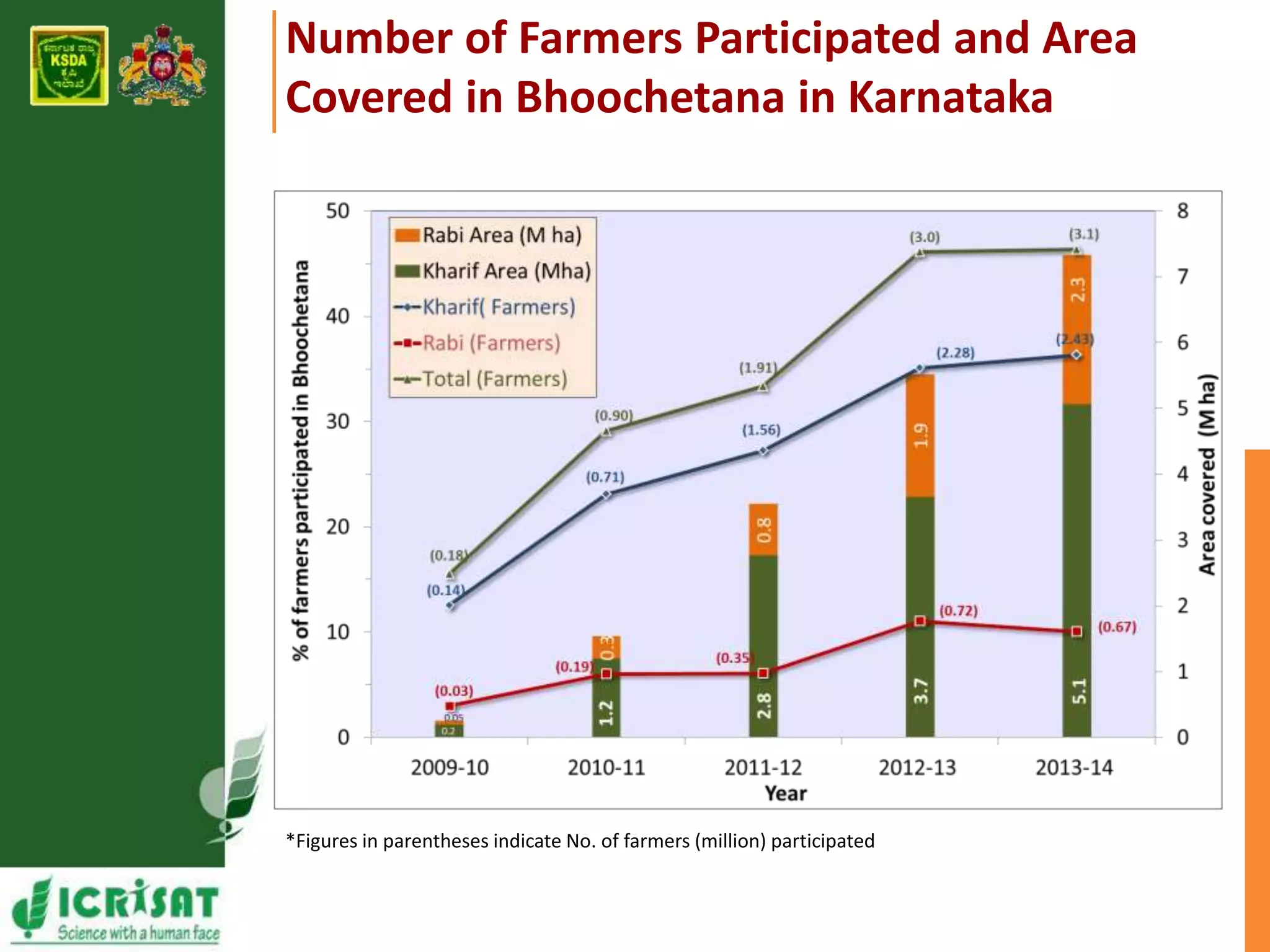
Number of Farmers Participated and Area 
Covered in Bhoochetana in Karnataka 
*Figures in parentheses indicate No. of farmers (million) participated
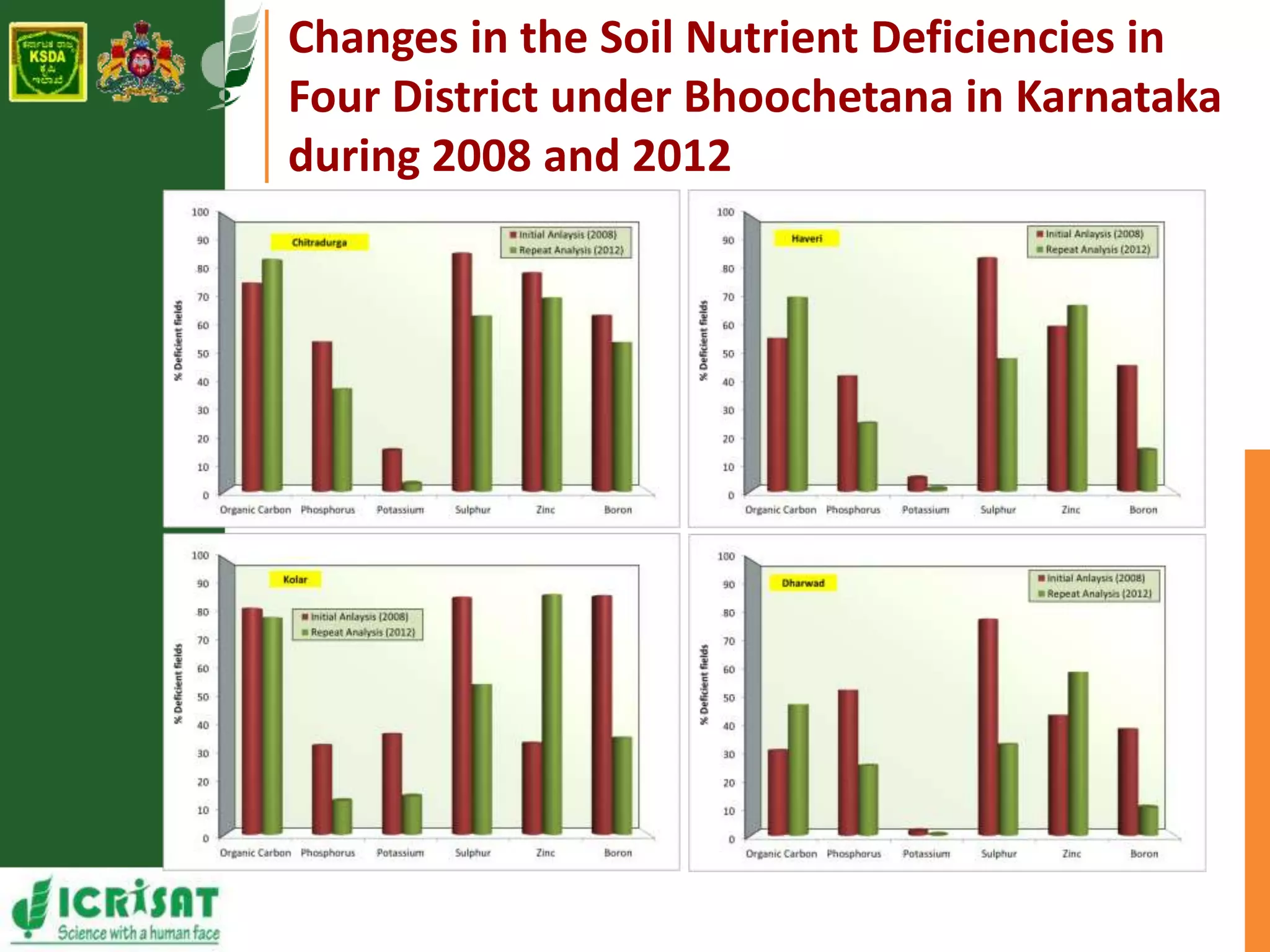
Changes in the Soil Nutrient Deficiencies in 
Four District under Bhoochetana in Karnataka 
during 2008 and 2012
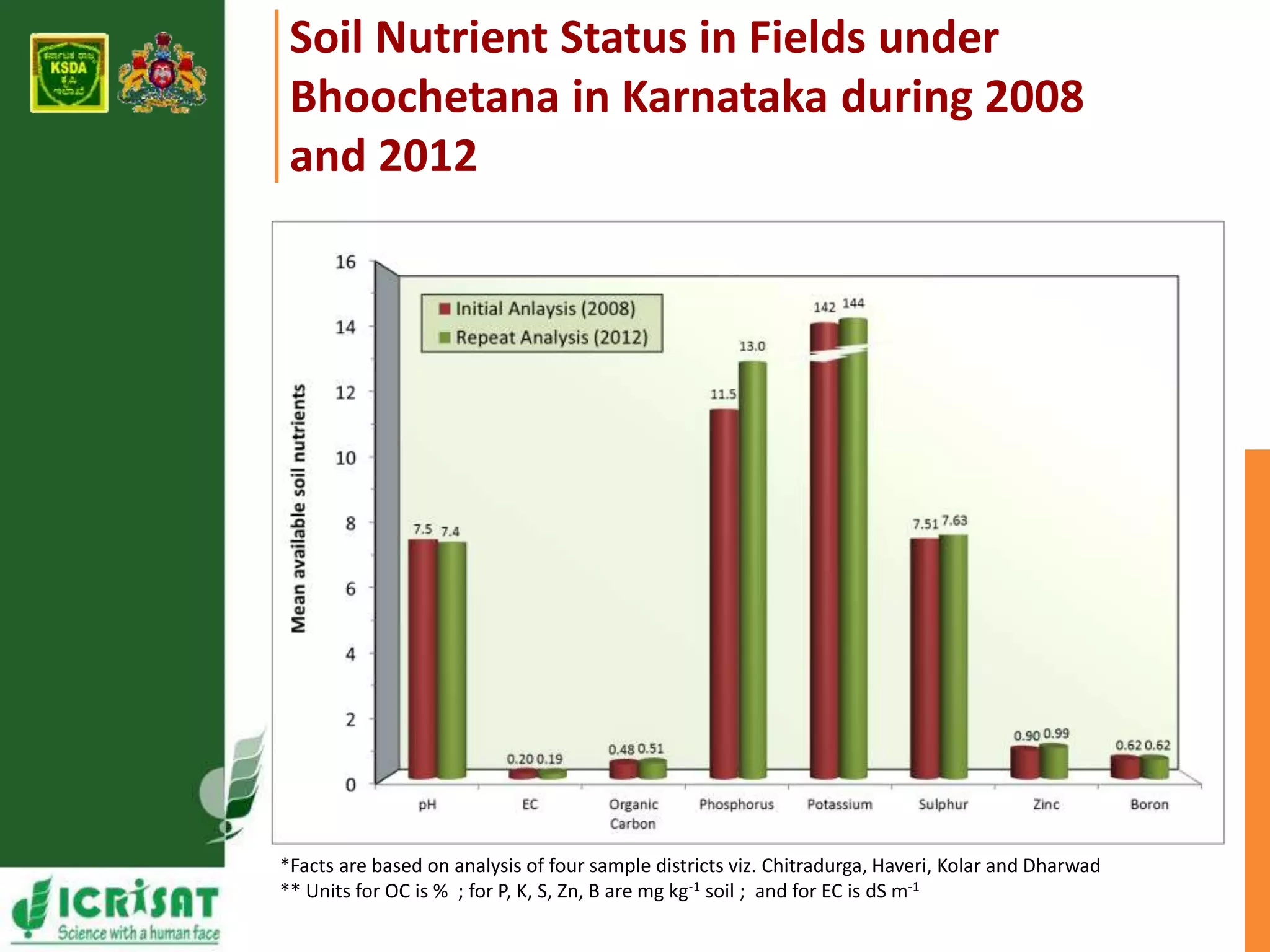
Soil Nutrient Status in Fields under 
Bhoochetana in Karnataka during 2008 
and 2012 
*Facts are based on analysis of four sample districts viz. Chitradurga, Haveri, Kolar and Dharwad 
** Units for OC is % ; for P, K, S, Zn, B are mg kg-1 soil ; and for EC is dS m-1
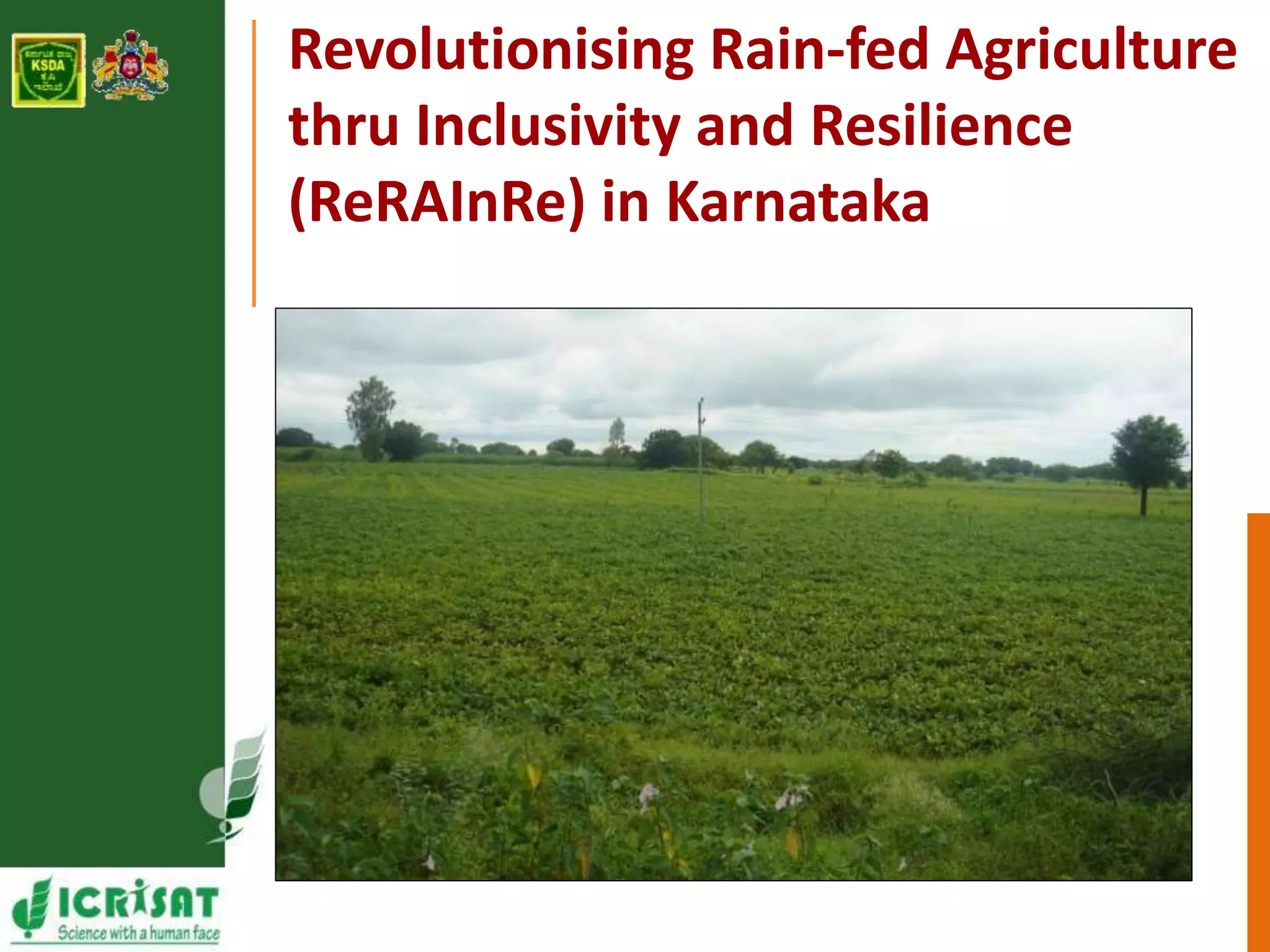
Revolutionising Rain-fed Agriculture 
thru Inclusivity and Resilience 
(ReRAInRe) in Karnataka
Specific Objectives 
The specific objectives are: 
 To revolutionise the rain-fed agriculture in the state through science-led 
inclusive development through integrated management of farms 
for increasing productivity and profits by 50 per cent in five years by 
enabling farmers to adopt holistic “Seed to Plate” approach; 
 To enhance resilience of the rain-fed farmers as well as farming systems 
through suitable adaptation and mitigation interventions for the 
anticipated impacts of climate variability and change; 
 To develop effective and sustainable integrated knowledge and inputs 
delivery systems for the farmers through public private partnerships; 
 To undertake sustainable intensification and diversification of farming 
systems through mechanisation for sustainable development and 
harnessing the market potential for the small farmers for enhancing 
their incomes; 
 To build the capacity of different stakeholders such as DoA officials, 
private entrepreneurs, development workers including non-government 
organisations (NGOs), farmers and policy makers in the 
state.
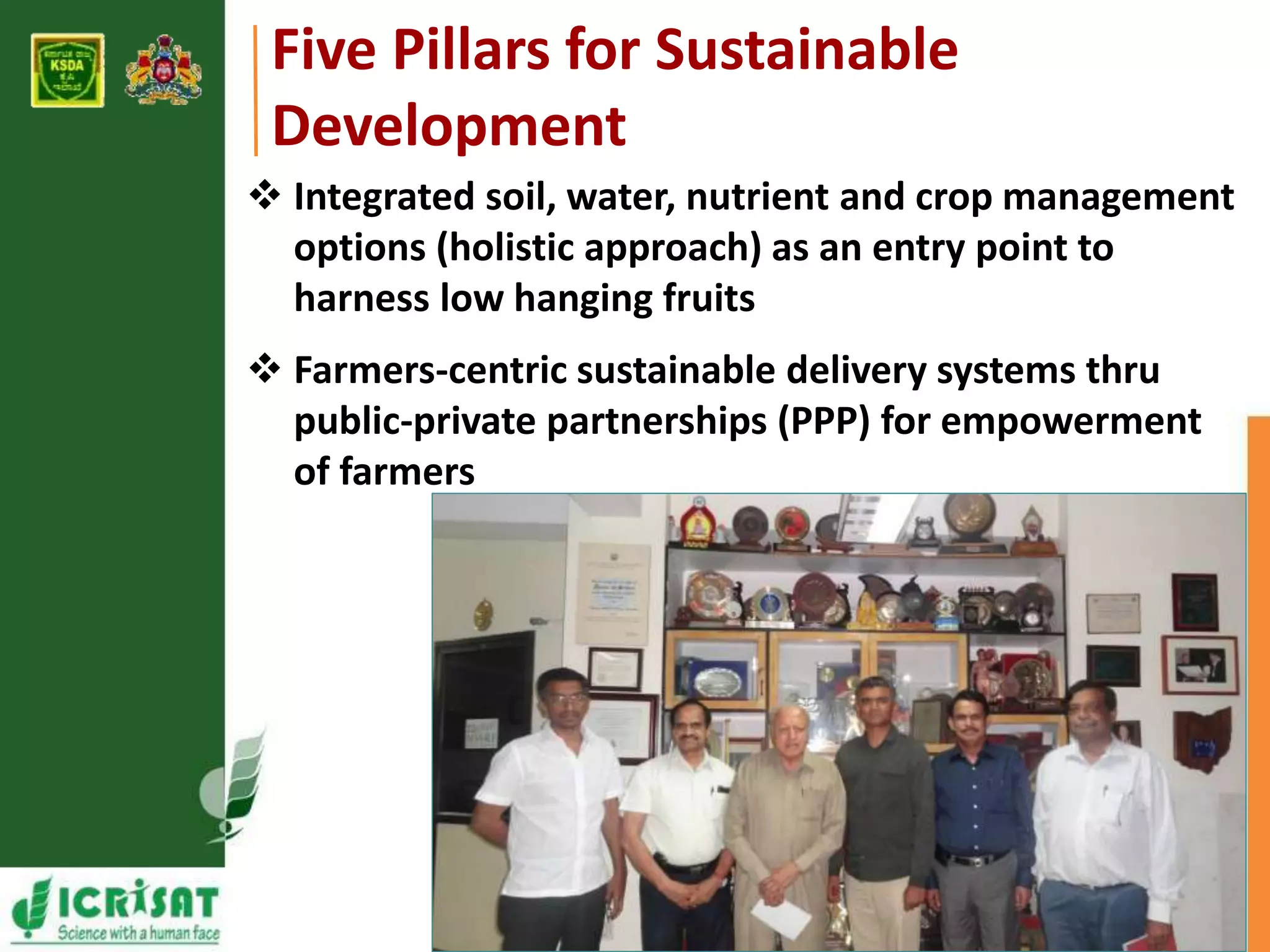
Five Pillars for Sustainable 
Development 
 Integrated soil, water, nutrient and crop management 
options (holistic approach) as an entry point to 
harness low hanging fruits 
 Farmers-centric sustainable delivery systems thru 
public-private partnerships (PPP) for empowerment 
of farmers
Five Pillars for Sustainable 
Development (Contd..) 
 Effective and sustainable seed delivery systems for 
Improved crops and cultivars for transforming 
subsistence agriculture into business model to 
diversify and intensify agriculture 
 Social mobilisation for mechanisation thru 
collective action and minimum tillage 
 Inclusive Market Oriented Development (IMOD) 
thru ensuring credit and institutional support to 
build resilience and enhance profits
Thank you!

Upscaling of Learnings from ICRISAT-GoK Initiatives

  • 1.
    Upscaling of Learnings from ICRISAT-GOK Initiatives Suhas P Wani and Team 6 February 2014
  • 2.
    Journey thru ICRISAT-GOK Initiatives 2003 2009 2012 Sujala-ICRISAT Bhoochetana Bhoochetana Plus 2013 Bhoochetana II 2014 Rainfed Agric. Policy 0.25 Million hectares 3.73 Million hectares 7.0 Million hectares 3700 hectares
  • 3.
    Sujala-ICRISAT Initiative MainMessage Productivity of crops in the nucleus and satellite watersheds is increased by upto 345% with best-bet options for ragi (230%), groundnut (240%), sunflower (345%), maize (150%) and soybean (116%) resulting in increased incomes
  • 4.
    Bhoochetana-ICRISAT Initiative MainMessage  Science-led approach promoted by Government of Karnataka adopted by farmers increased crop yields by 32 to 64 per cent over the normal farmer’s practice  Rain-fed Agriculture development could become growth engine for reducing poverty and achieving food security in Karnataka and India
  • 5.
    Planetary Boundaries: SafeOperating Space for Humanity Biodiversity loss, Nitrogen cycle and climate change are various parameters has reached beyond its permissible threshold at planetary scale Nature, 2009
  • 6.
    Resilient Agriculture Investigators Network (RAIN)4Sustainable Development in Karnataka
  • 7.
    Torch Bearers forResilient Agriculture  Establishment of Resilient Agriculture Investigator Network (RAIN)  Developing a common understanding about resilient agriculture  Developing a common approach, instruments, methodology, data set and terminology for resilient agriculture  Establish the sites of Resilience Learning  Sensitize all the stakeholders to use the resilience and vulnerability lense
  • 8.
    Bhoochetana: Increasing Adoption, Area Coverage and Impact: A Challenge to Meet
  • 9.
    Why We Needto Take a Challenge Increased vulnerability of rainfed agriculture due to climate change Food security is at risk Sustainable development is in question
  • 10.
    Bhoochetana Potential SustainableDevelopment Approach  Science-led  Participatory R4D  4 I C Es Innovate Collective Efficiency Inclusive Cooperation Equity Integrated Capacity building Environment Protection Intensification Consortium Economic gain
  • 11.
    Achievements  Increasedcrop yield by 2066%  Rise in agriculture growth annually above 5% since 2009  Benefit cost ratio for the farmers 3-14:1  Net benefits accrued in 4 years Rs. 1268 Crores
  • 12.
    Improved Agricultural PracticesIncreased Crop Yields and Incomes in Karnataka: Bhoochetana 6 5 4 3 2 1 0 2009 2010 2011 2012 Crop yield (ton/ha) 600 500 400 300 200 100 0 Area under improved management (1000 ha) Farmers practice (ton/ha) Improved practice (tons/ha) Area under improved mgt (ha) Year 2009 2010 2011 2012 Total Net income (Rs in Crores) 11.49 204.81 599.45 451.80 1267.60 Net income (Million US$) 2.52 45.72 112.48 82.44 243.16 Example: Bhoochetana
  • 13.
    Increased Mean CropYields in the State during Rainy Season 2013
  • 14.
    Distribution of Micronutrientsin Total (tons) and Per Hectare (kg) under Bhoochetana Project Year consumed Season Area covered (Lakhs ha) Quantity Consumed (t) Nutrient used (kg ha-1) ZnSO4 Gypsum Borax ZnSO4 Gypsum Borax 2009 Kharif 2.25 372 4309 53 1.65 19.15 0.23 Rabi 0.59 - - - - - - 2010 Kharif 12.72 2723 35376 389 2.27 29.50 0.32 Rabi 3.70 362 5595 113 1.09 16.86 0.34 2011 Kharif 28.44 8775 96234 2781 3.46 37.90 1.10 Rabi 6.60 1678 12475 432 2.94 21.87 0.76 2012 Kharif 35.70 6803 59935 3104 2.25 21.5 0.77
  • 15.
    Nutrient Consumption-based Highand Low Performing Districts under Bhoochetana during 2009 to 2013
  • 16.
    Number of FarmersParticipated and Area Covered in Bhoochetana in Karnataka *Figures in parentheses indicate No. of farmers (million) participated
  • 17.
    Changes in theSoil Nutrient Deficiencies in Four District under Bhoochetana in Karnataka during 2008 and 2012
  • 18.
    Soil Nutrient Statusin Fields under Bhoochetana in Karnataka during 2008 and 2012 *Facts are based on analysis of four sample districts viz. Chitradurga, Haveri, Kolar and Dharwad ** Units for OC is % ; for P, K, S, Zn, B are mg kg-1 soil ; and for EC is dS m-1
  • 19.
    Revolutionising Rain-fed Agriculture thru Inclusivity and Resilience (ReRAInRe) in Karnataka
  • 20.
    Specific Objectives Thespecific objectives are:  To revolutionise the rain-fed agriculture in the state through science-led inclusive development through integrated management of farms for increasing productivity and profits by 50 per cent in five years by enabling farmers to adopt holistic “Seed to Plate” approach;  To enhance resilience of the rain-fed farmers as well as farming systems through suitable adaptation and mitigation interventions for the anticipated impacts of climate variability and change;  To develop effective and sustainable integrated knowledge and inputs delivery systems for the farmers through public private partnerships;  To undertake sustainable intensification and diversification of farming systems through mechanisation for sustainable development and harnessing the market potential for the small farmers for enhancing their incomes;  To build the capacity of different stakeholders such as DoA officials, private entrepreneurs, development workers including non-government organisations (NGOs), farmers and policy makers in the state.
  • 21.
    Five Pillars forSustainable Development  Integrated soil, water, nutrient and crop management options (holistic approach) as an entry point to harness low hanging fruits  Farmers-centric sustainable delivery systems thru public-private partnerships (PPP) for empowerment of farmers
  • 22.
    Five Pillars forSustainable Development (Contd..)  Effective and sustainable seed delivery systems for Improved crops and cultivars for transforming subsistence agriculture into business model to diversify and intensify agriculture  Social mobilisation for mechanisation thru collective action and minimum tillage  Inclusive Market Oriented Development (IMOD) thru ensuring credit and institutional support to build resilience and enhance profits
  • 23.