







Beyond Buzzwords:

An Introduction to The Lean Startup
Paul Parent
@paulp
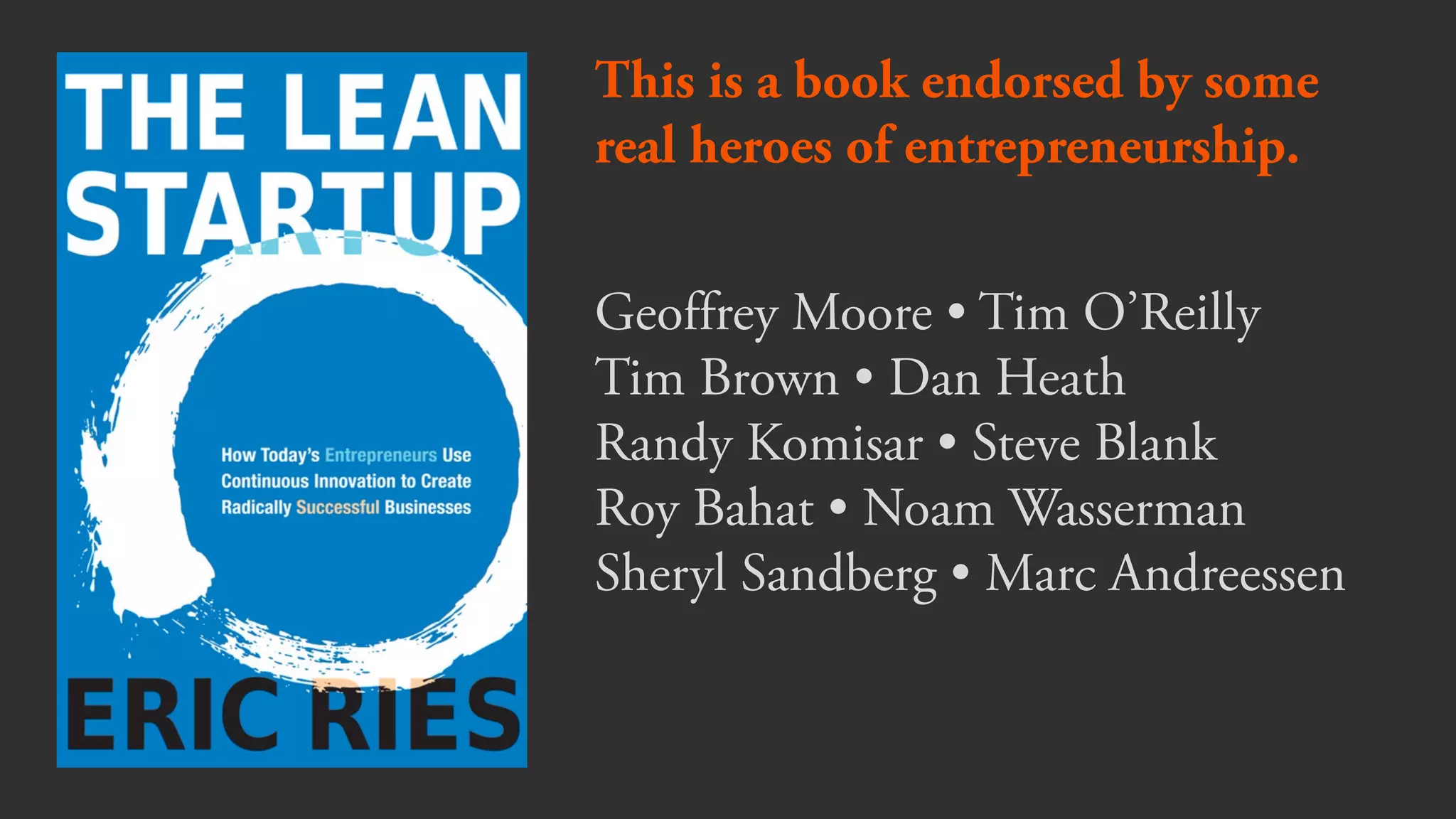
This is a book endorsed by some
real heroes of entrepreneurship.
Geoffrey Moore • Tim O’Reilly

Tim Brown • Dan Heath

Randy Komisar • Steve Blank

Roy Bahat • Noam Wasserman

Sheryl Sandberg • Marc Andreessen
“Popularity has a price: people
sometimes distort ideas, and
therefore fail to reap their benefits.
– Carol Dweck
Today’s Talk
• Context for The Lean Startup
• What is a “startup”?
• Customer Focus
• Minimum Viable Product
• Measure Progress
• Pivot or Persevere
What to expect:
Map a framework…
Internalize 

a few big ideas…
Move forward,

empowered
Context
(just a little)
Where did 

The Lean Startup

come from?
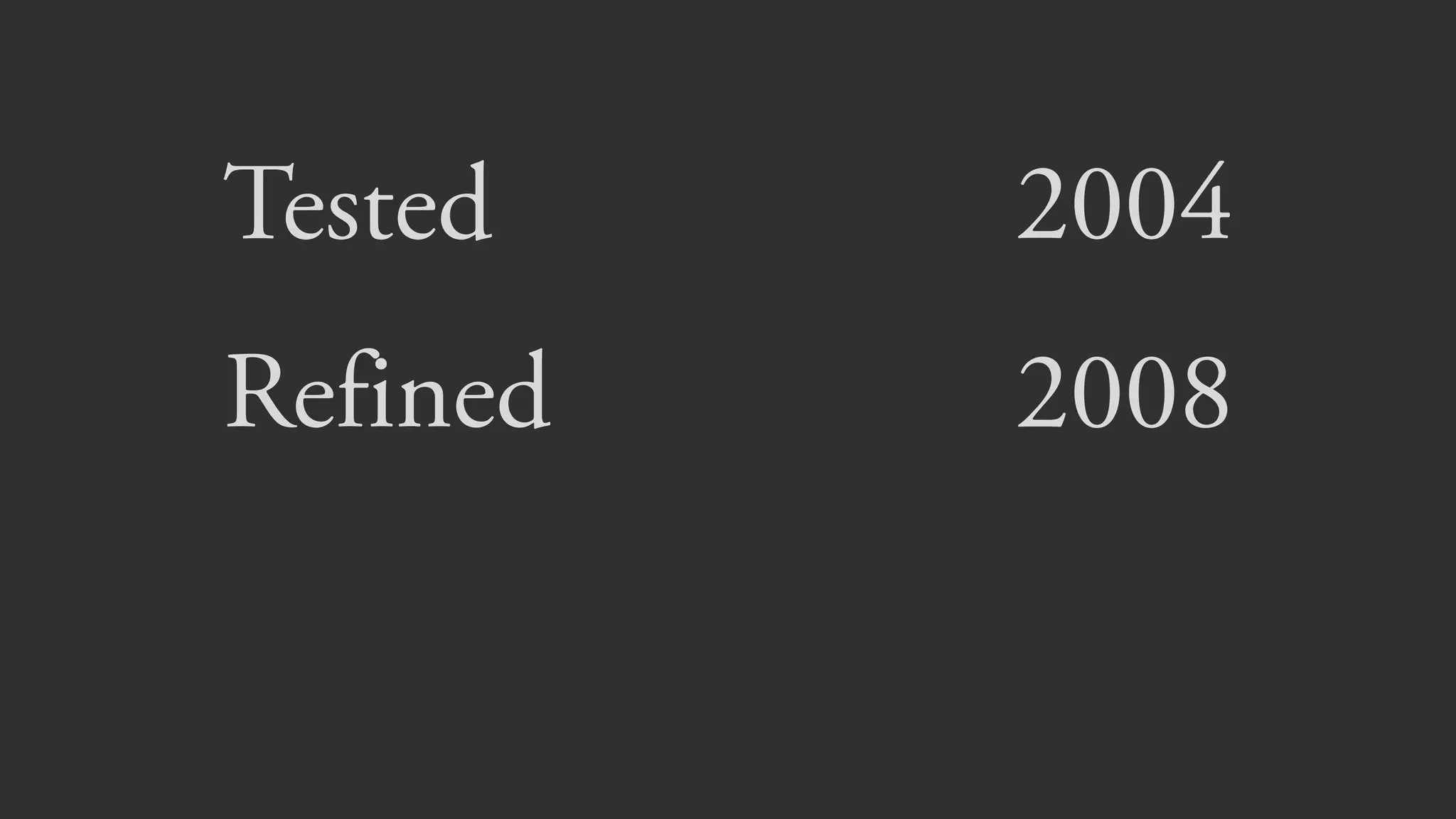
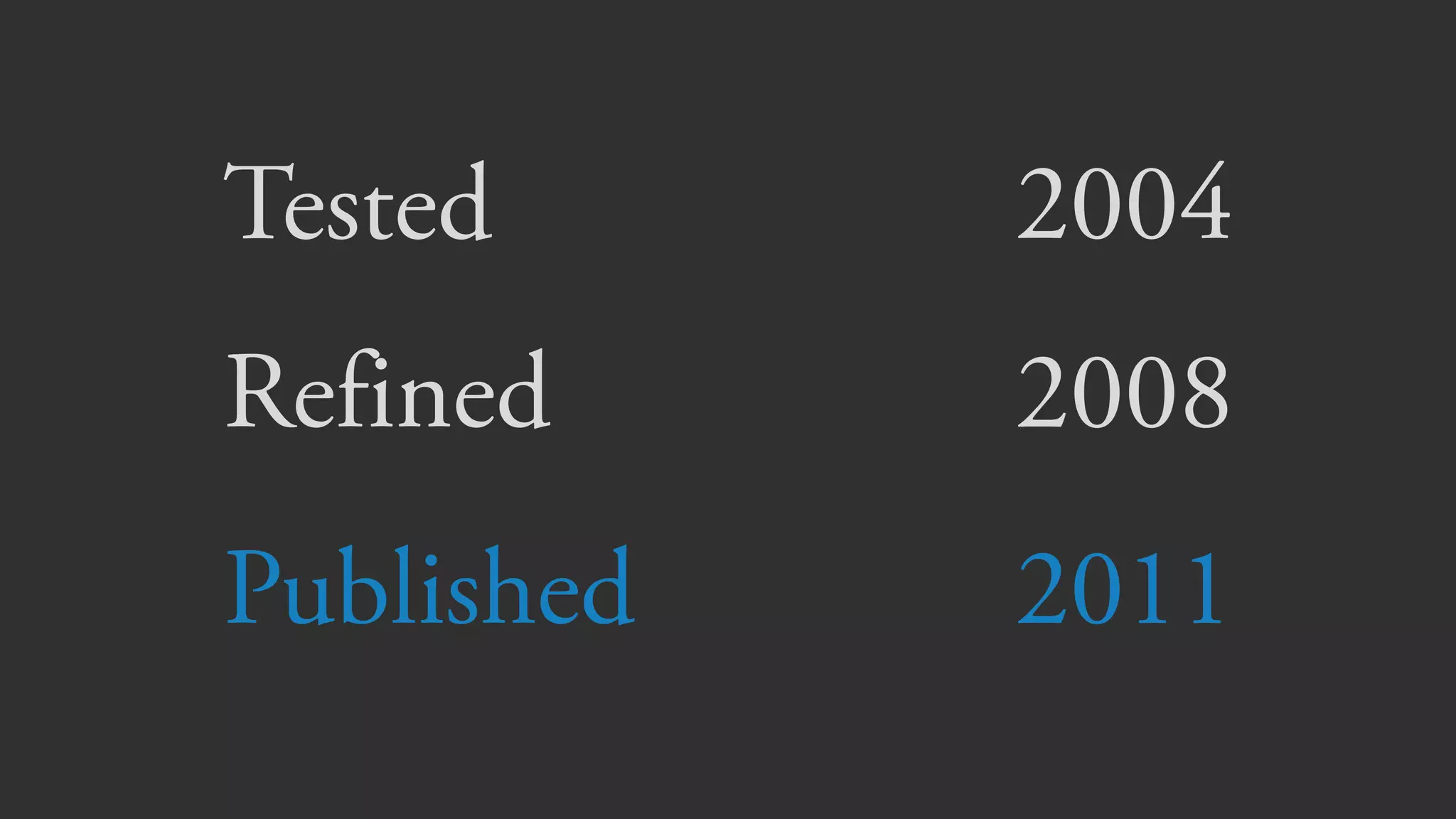
Tested 2004
Refined 2008
Published 2011
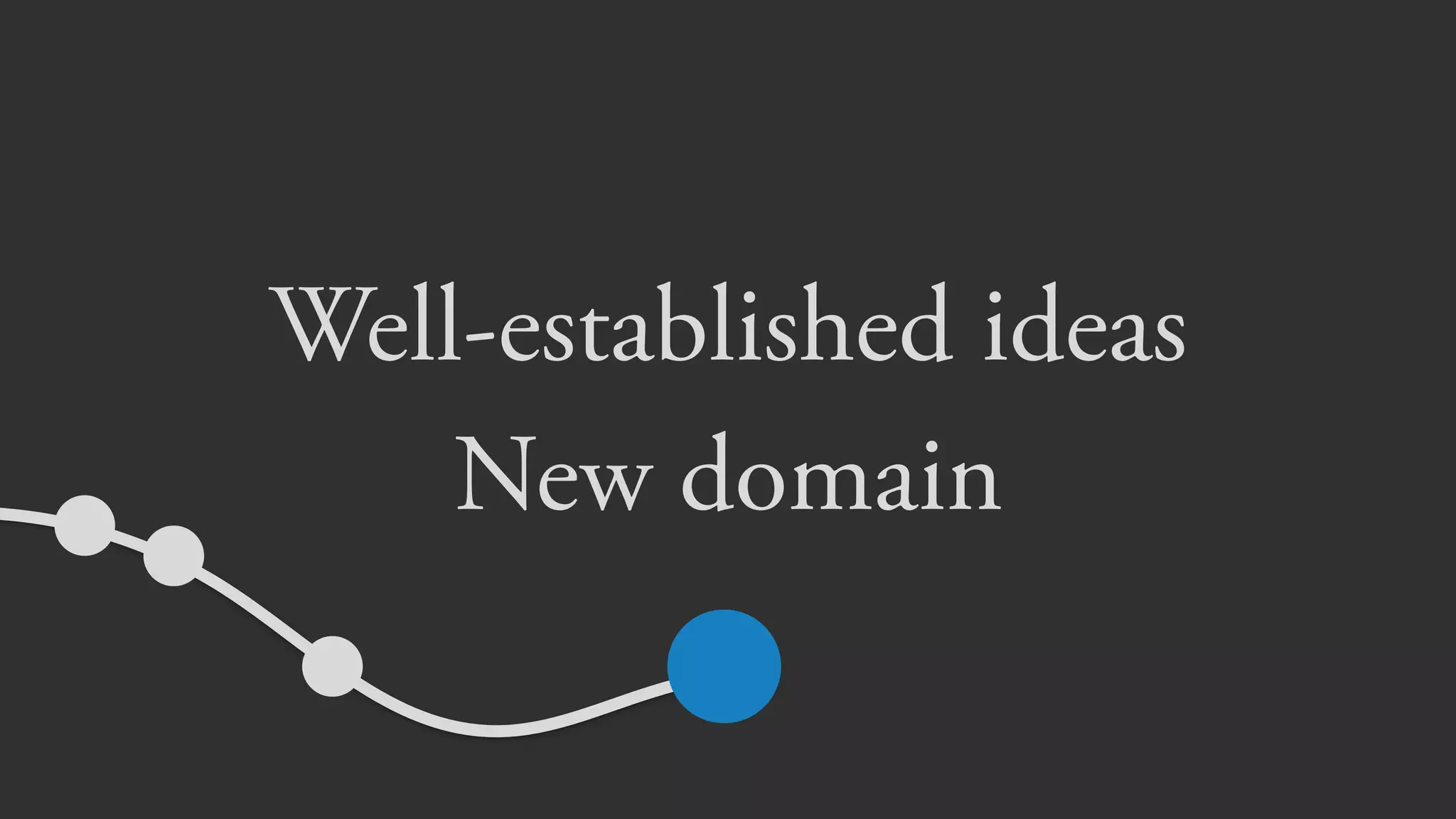
Well-established ideas
New domain
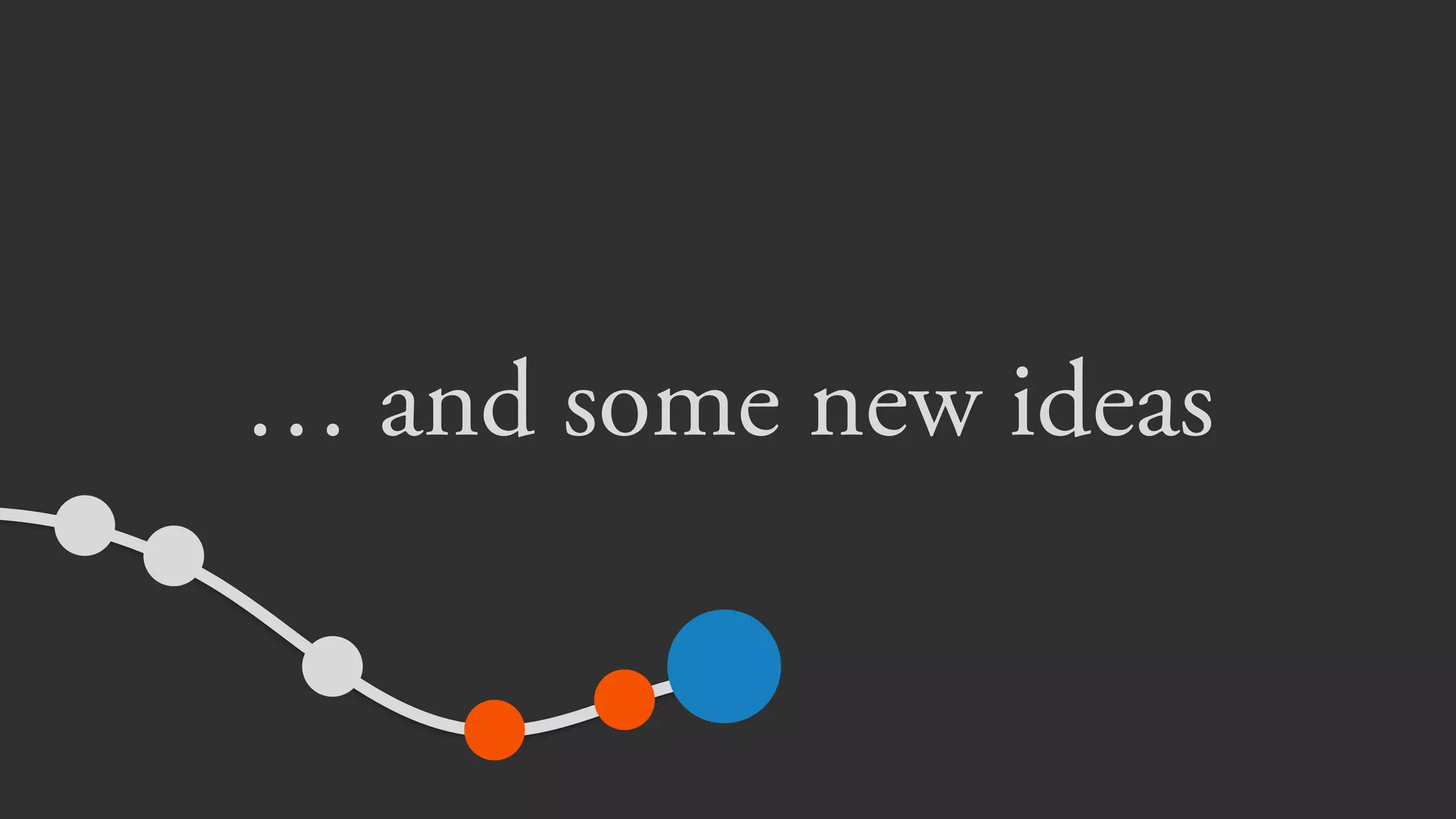
… and some new ideas
What is a startup?
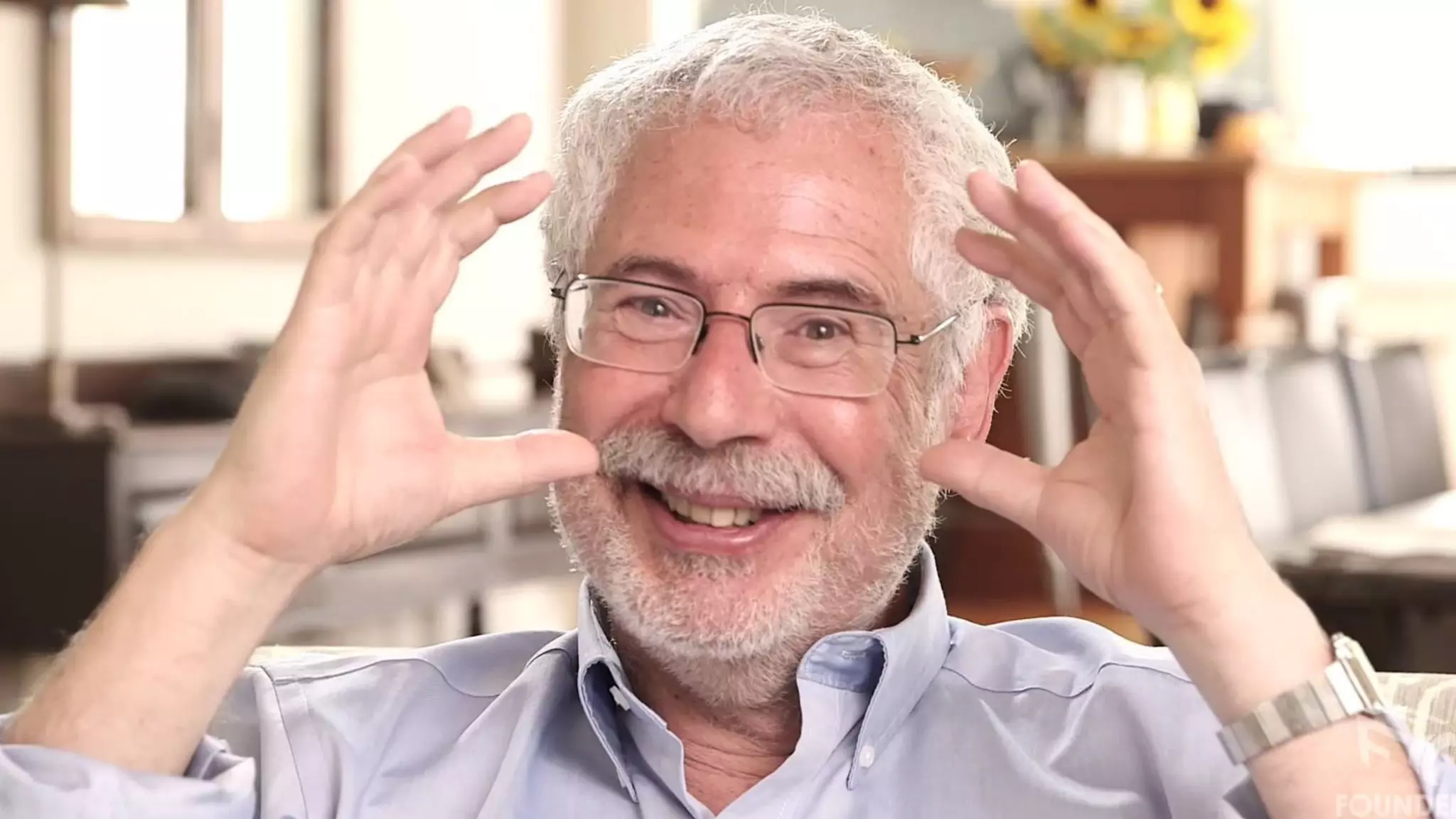
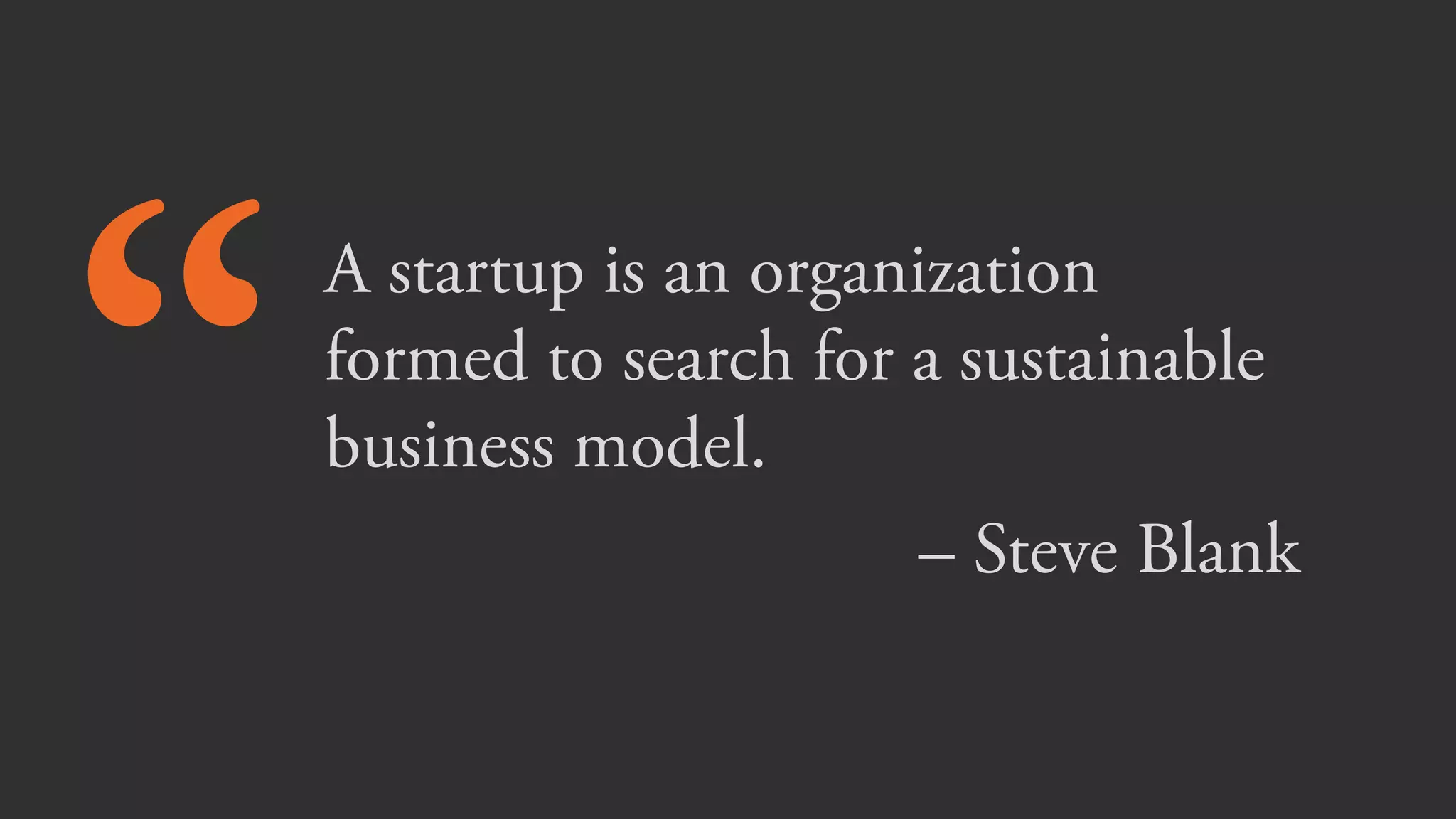
“A startup is an organization
formed to search for a sustainable
business model.
– Steve Blank
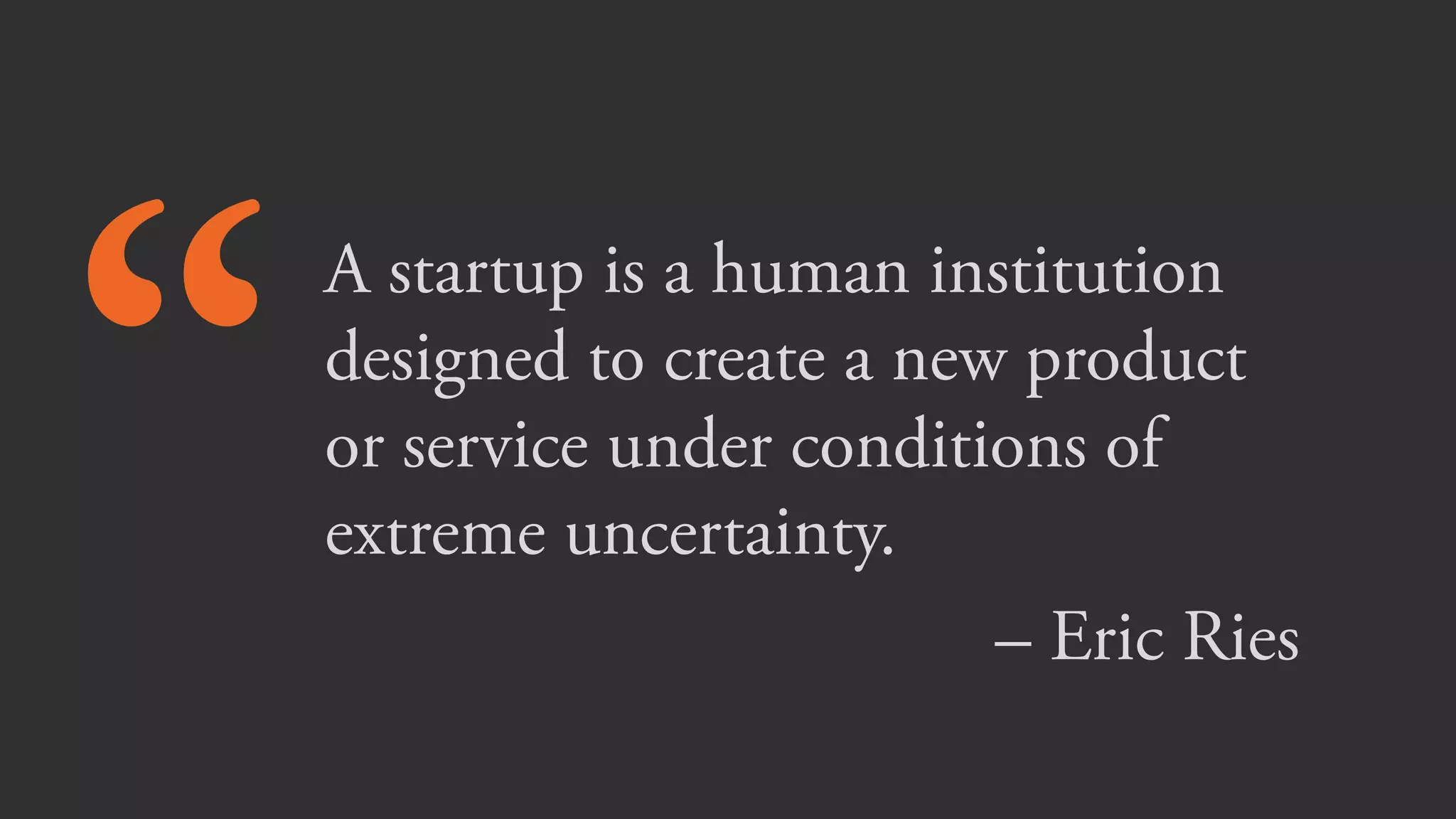
“A startup is a human institution
designed to create a new product
or service under conditions of 

extreme uncertainty.
– Eric Ries
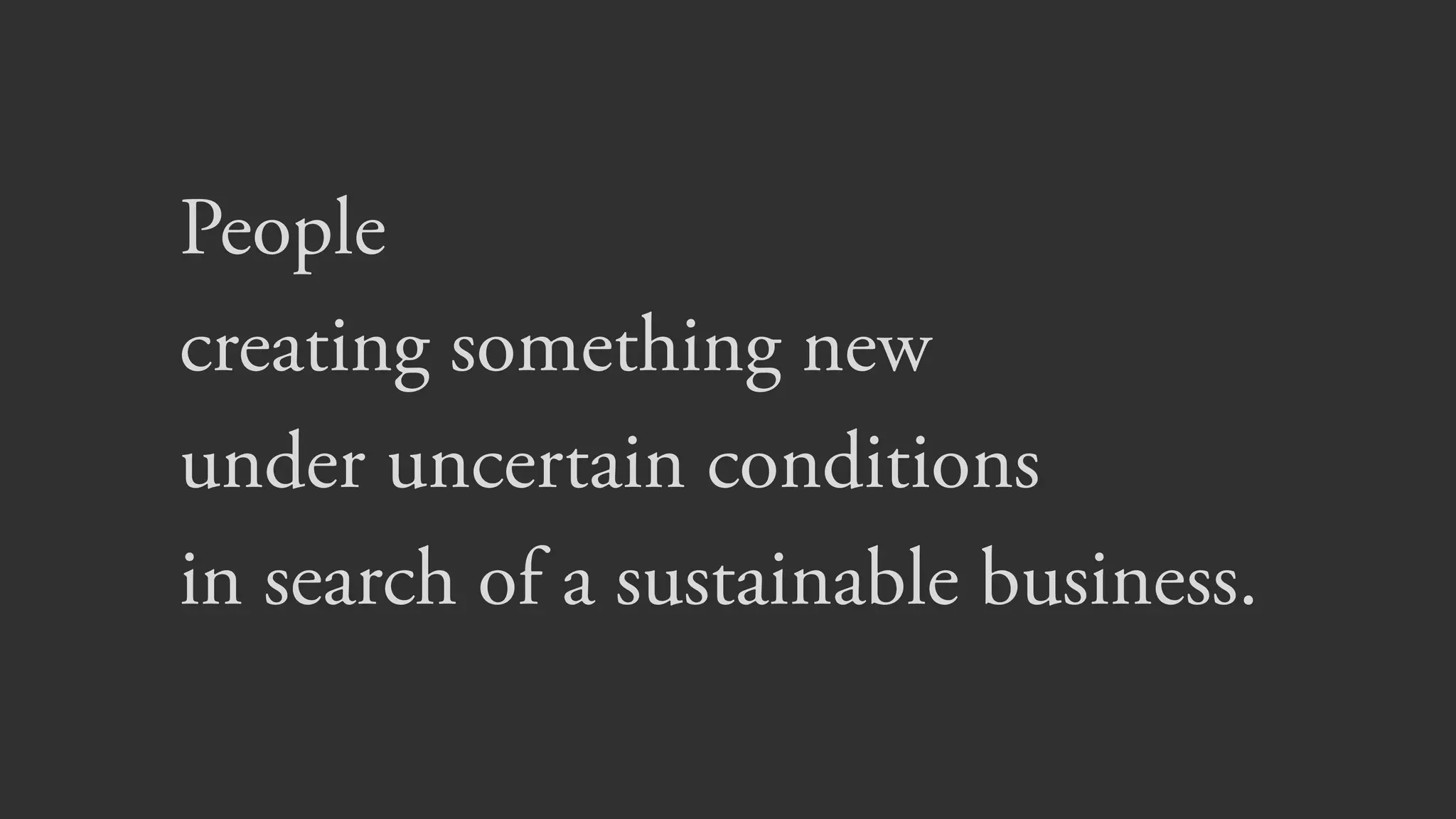
People
creating something new
under uncertain conditions
in search of a sustainable business.
Nobody knows.
So, we search.
This is big!
It changes 

what we work on,

who we hire, and

how much capital we raise.
We optimize for 

more searching.
What are we 

looking for?
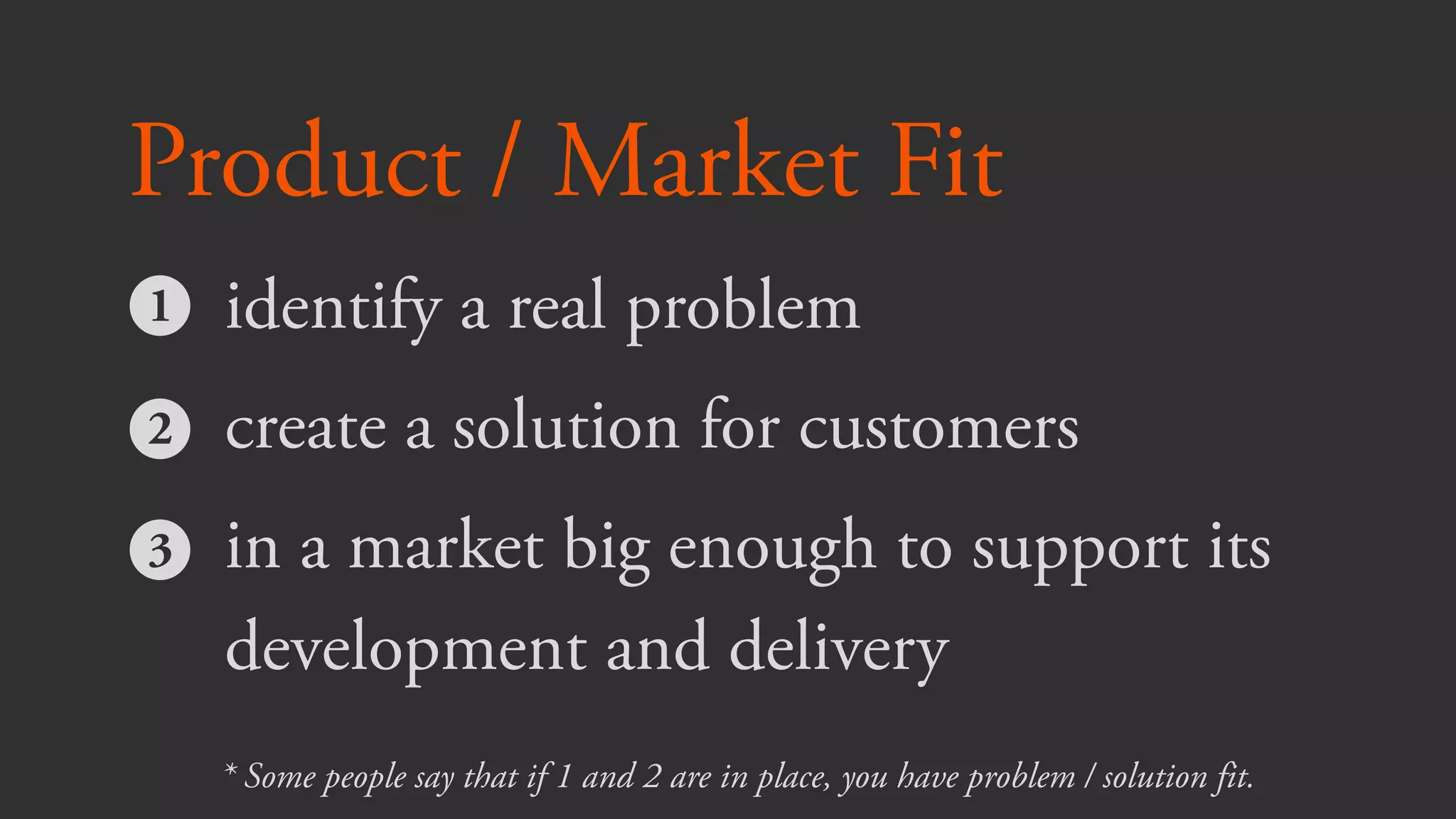
Product / Market Fit
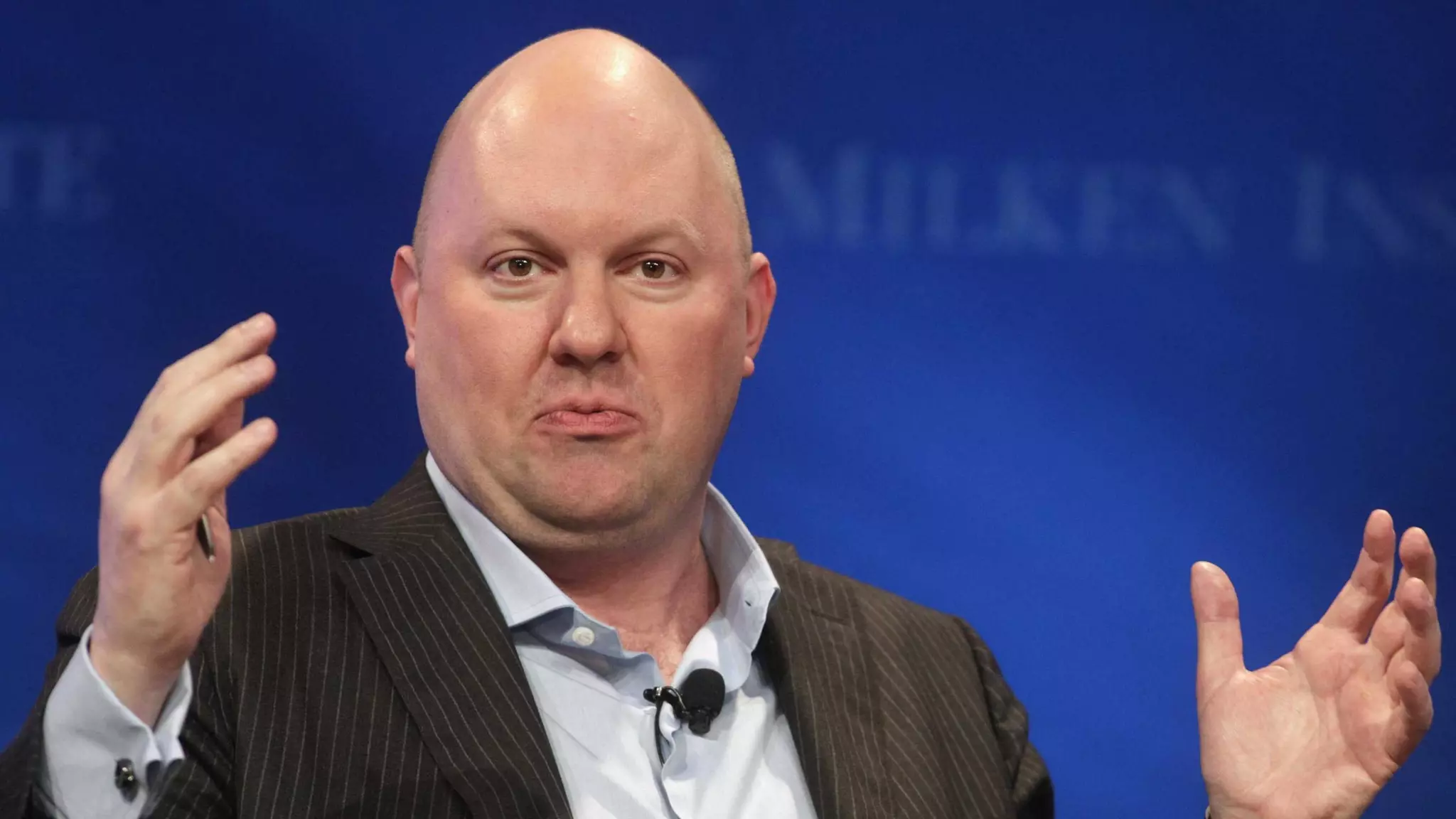
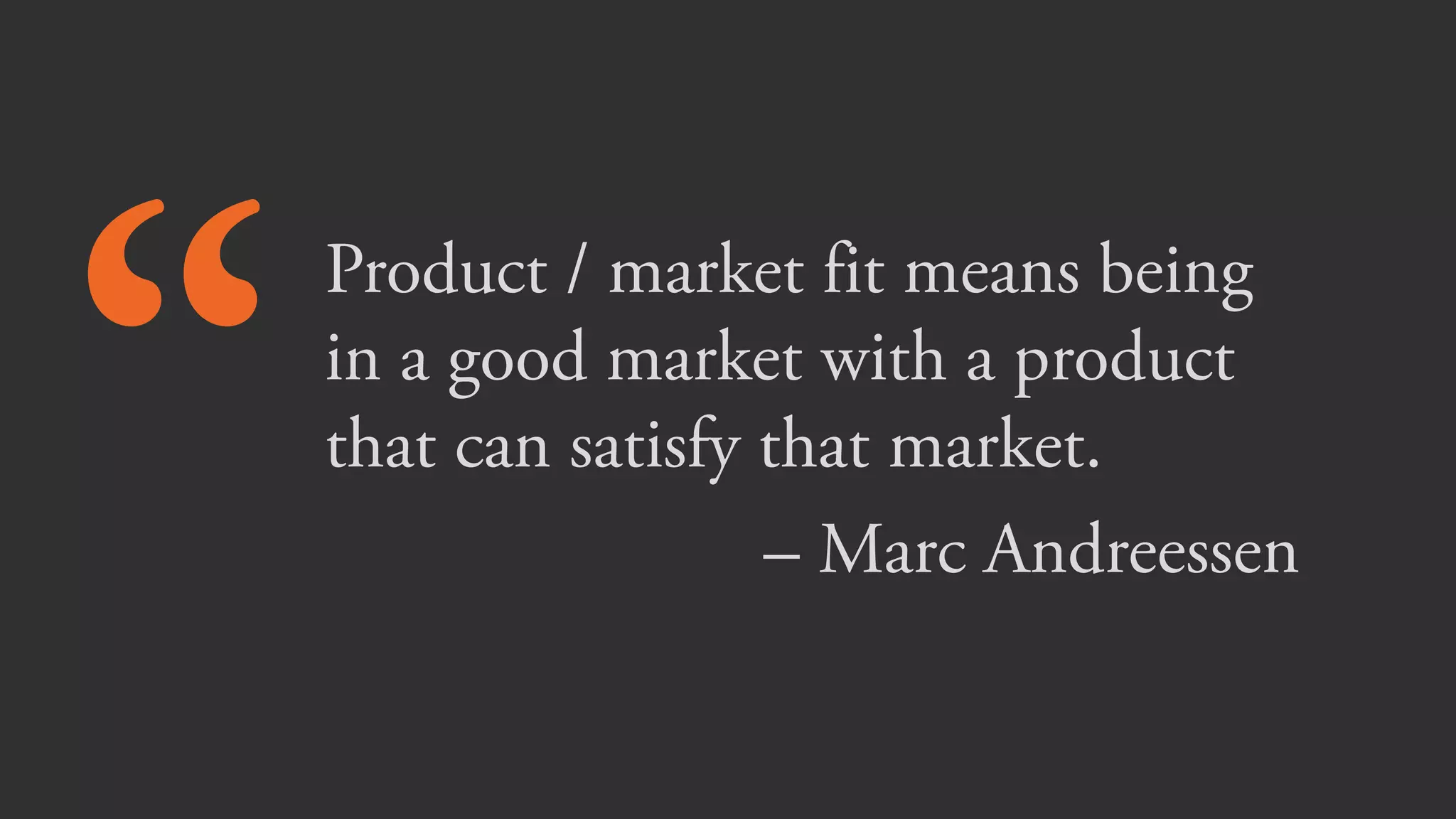
“Product / market fit means being
in a good market with a product
that can satisfy that market.
– Marc Andreessen
identify a real problem
create a solution for customers
in a market big enough to support its
development and delivery
1
Product / Market Fit
2
3
* Some people say that if 1 and 2 are in place, you have problem / solution fit.
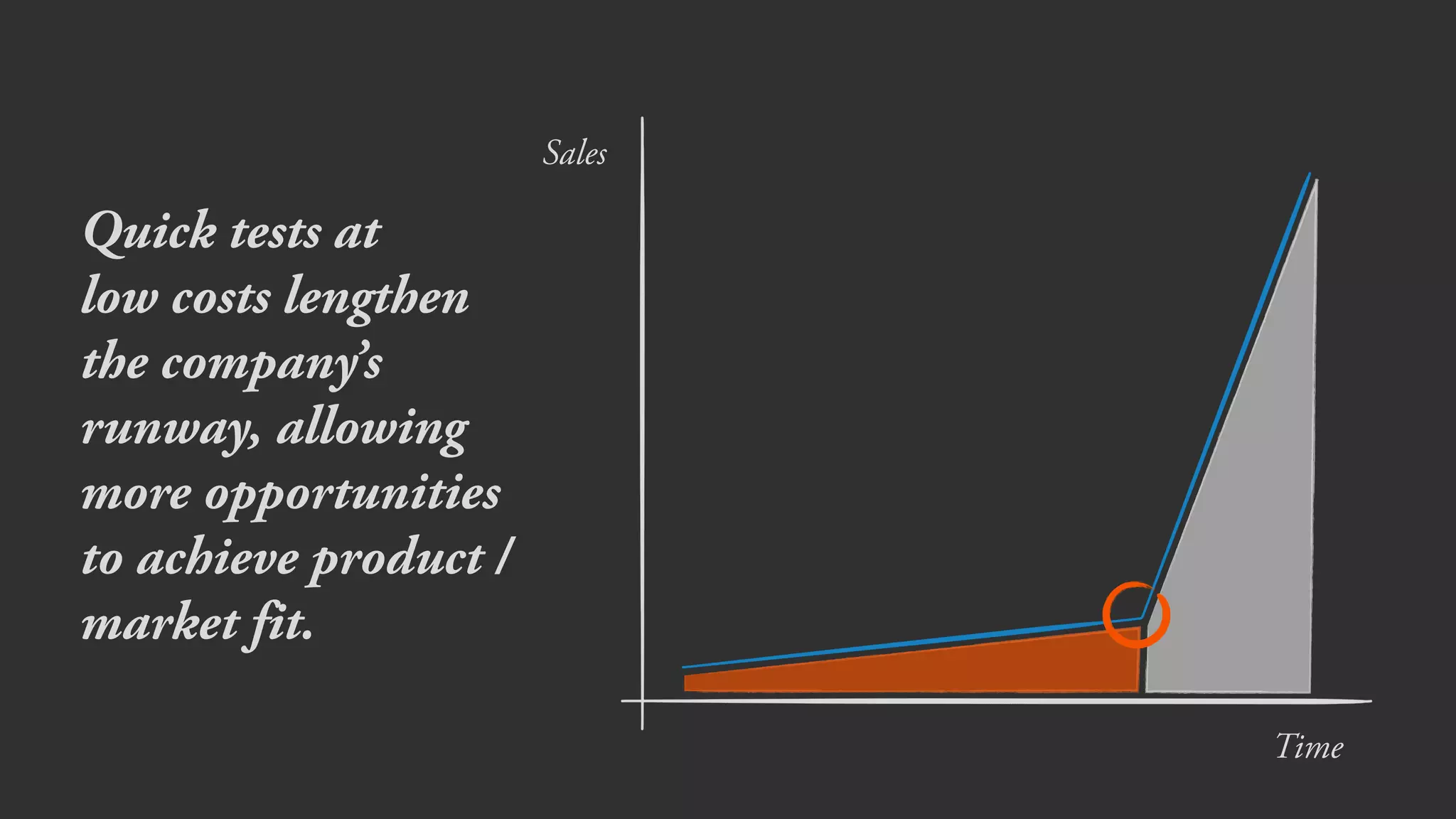
Quick tests at 

low costs lengthen
the company’s
runway, allowing
more opportunities
to achieve product /
market fit.
Sales
Time
We’ve learned two big ideas…
• a “startup” is a search
• seek product / market fit
Focus on

Customers
Why do startups fail?
“Life’s too short to build something
nobody wants.
– Ash Maurya
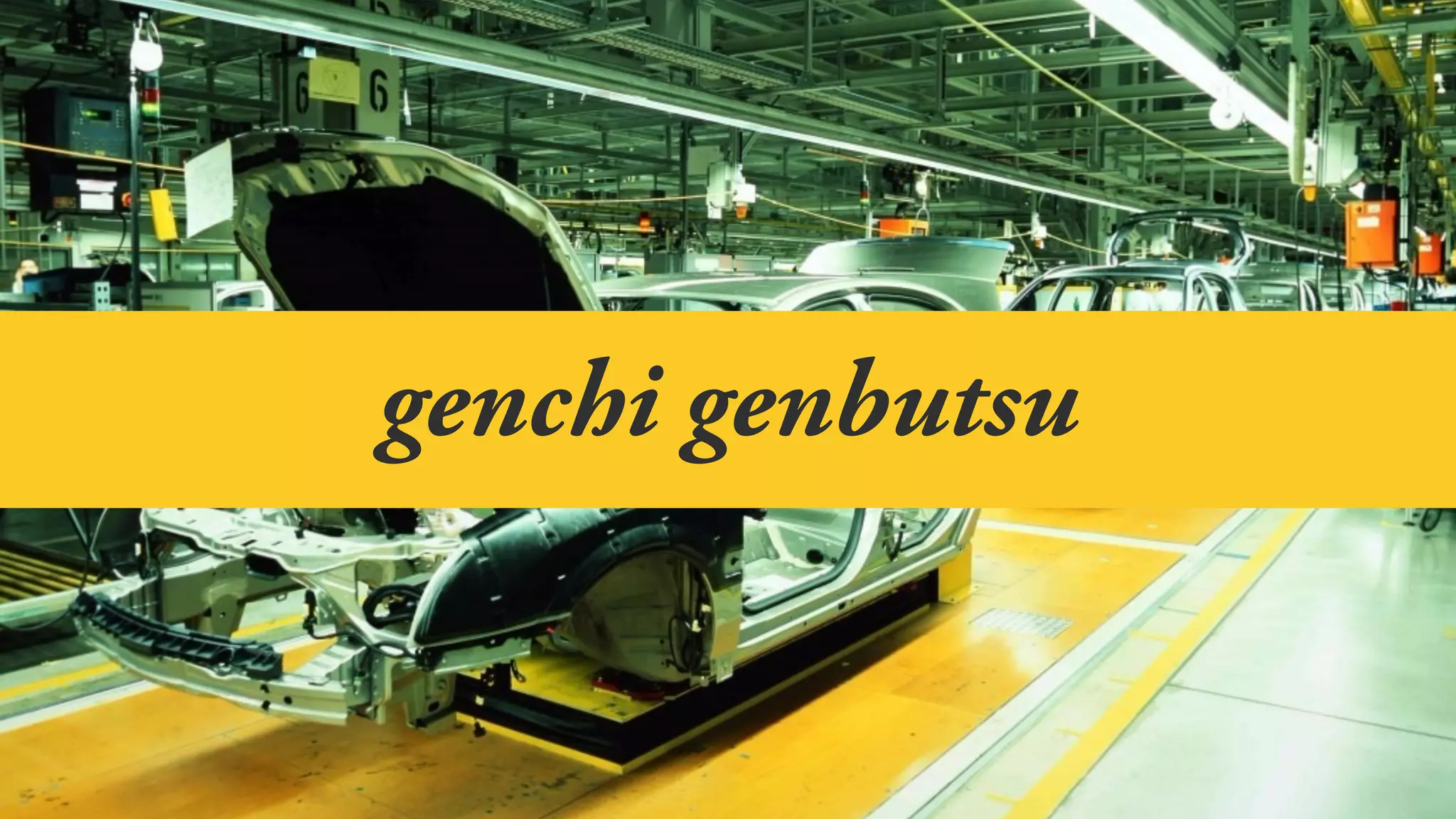
genchi genbutsu
Nobody knows,

but we can find out.
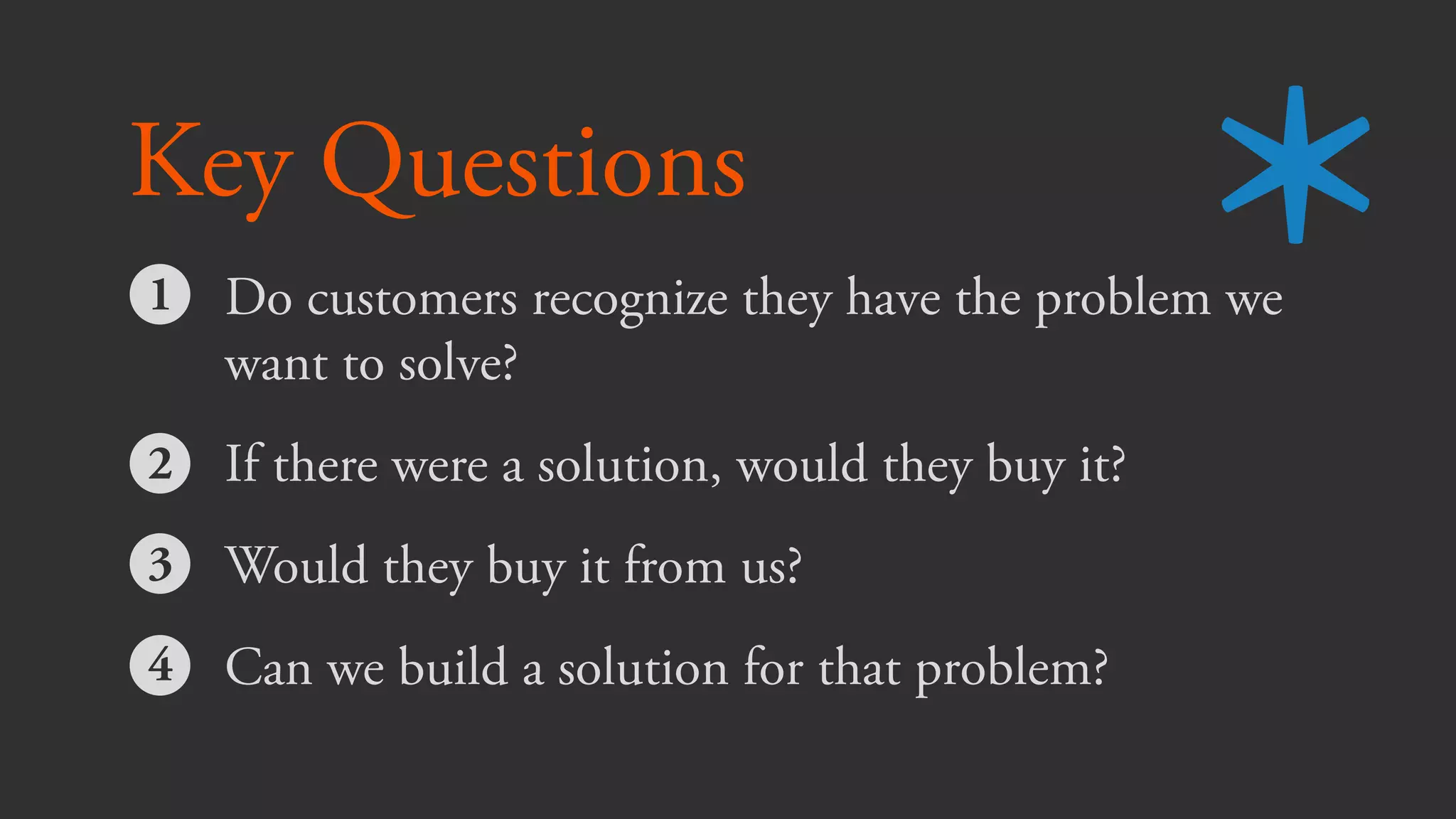
Do customers recognize they have the problem we
want to solve?
If there were a solution, would they buy it?
Would they buy it from us?
Can we build a solution for that problem?
1
Key Questions
2
3
4
*
We’ve learned three big ideas!
• a “startup” is a search
• seek product / market fit
• focus on the customer
What do we build?
What if you knew 

you wouldn’t get it right
on the first try?
move faster
spend less
learn more
*Minimum
Viable
Product
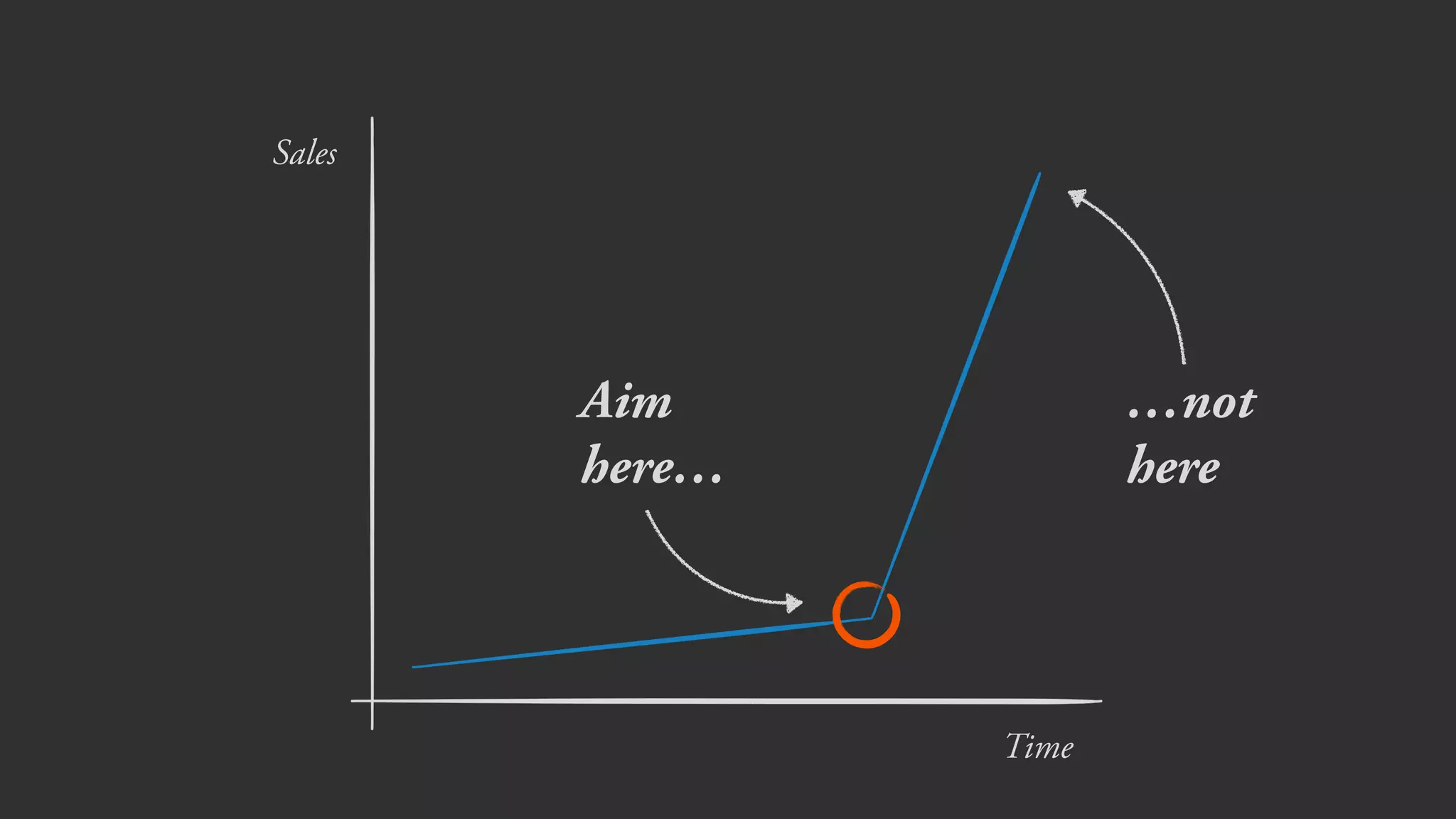
Sales
Time
Aim

here…
…not

here
We don’t really know
what our customers want.
So, we make an
assumption and test it.
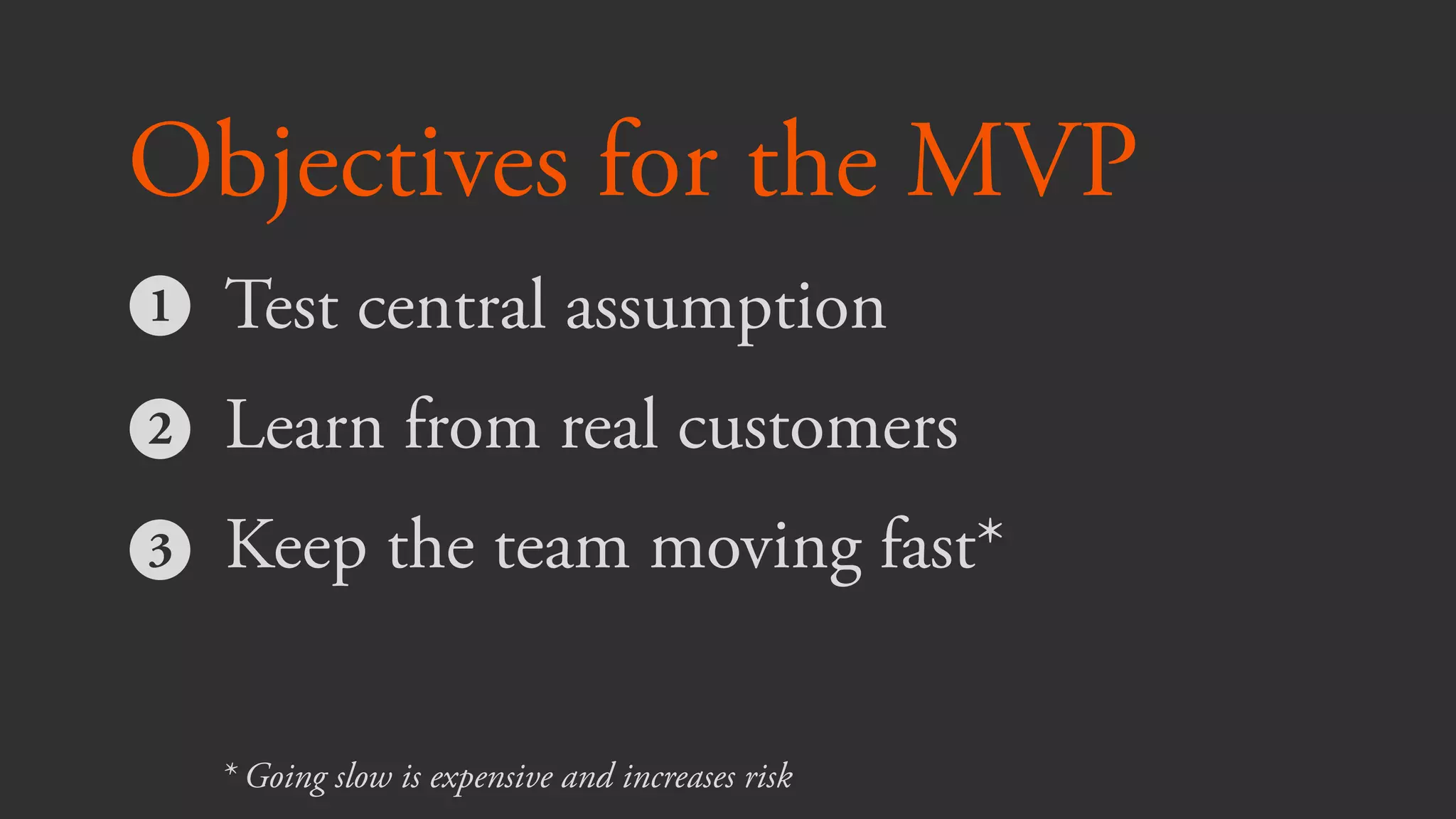
Test central assumption
Learn from real customers
Keep the team moving fast*
1
Objectives for the MVP
2
3
* Going slow is expensive and increases risk
“Not building to build, 

building to learn.
– David Bland
* Paraphrased
Be brave, be explicit.
“We assume…”
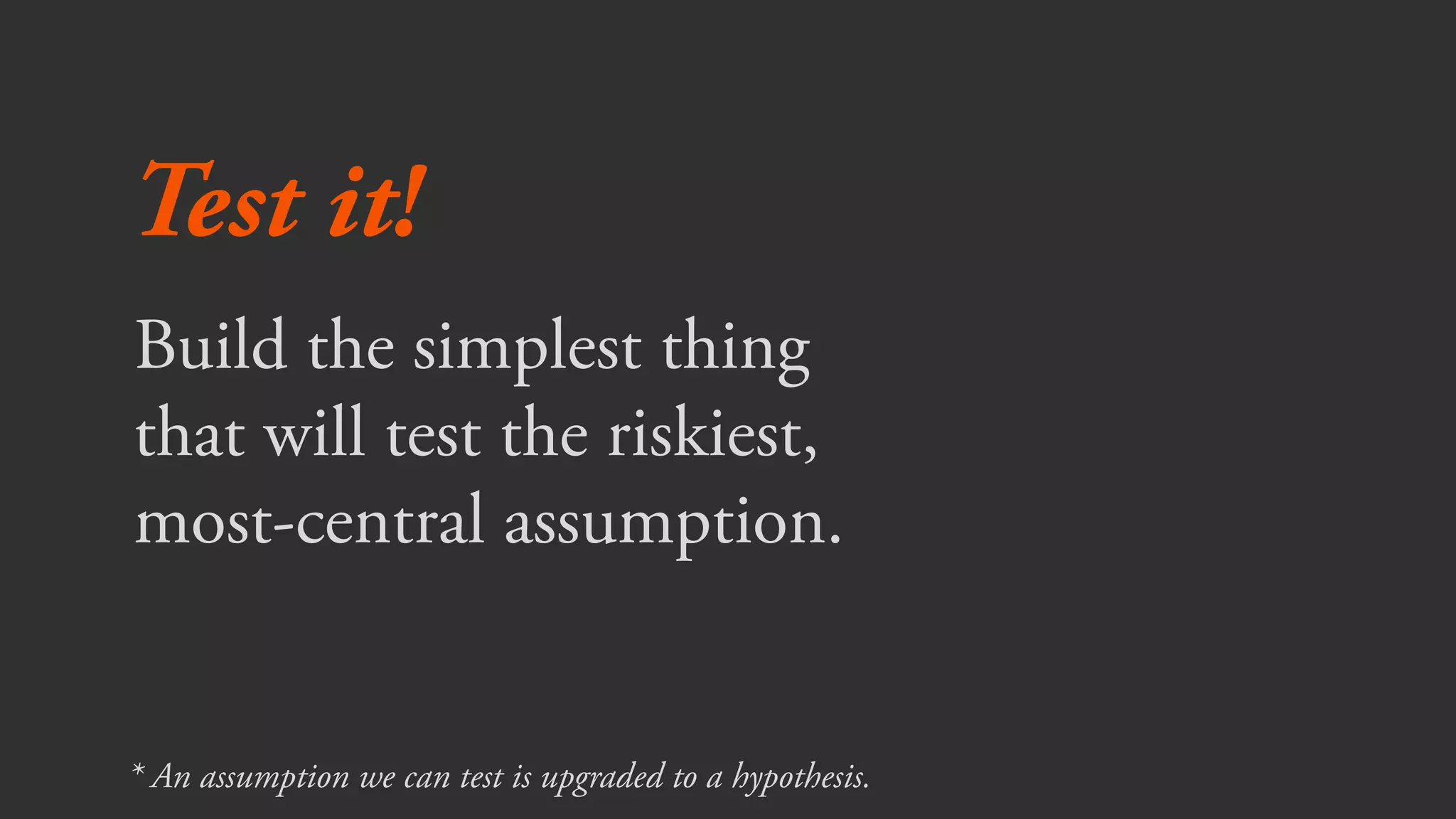
Test it!
Build the simplest thing 

that will test the riskiest, 

most-central assumption.
* An assumption we can test is upgraded to a hypothesis.
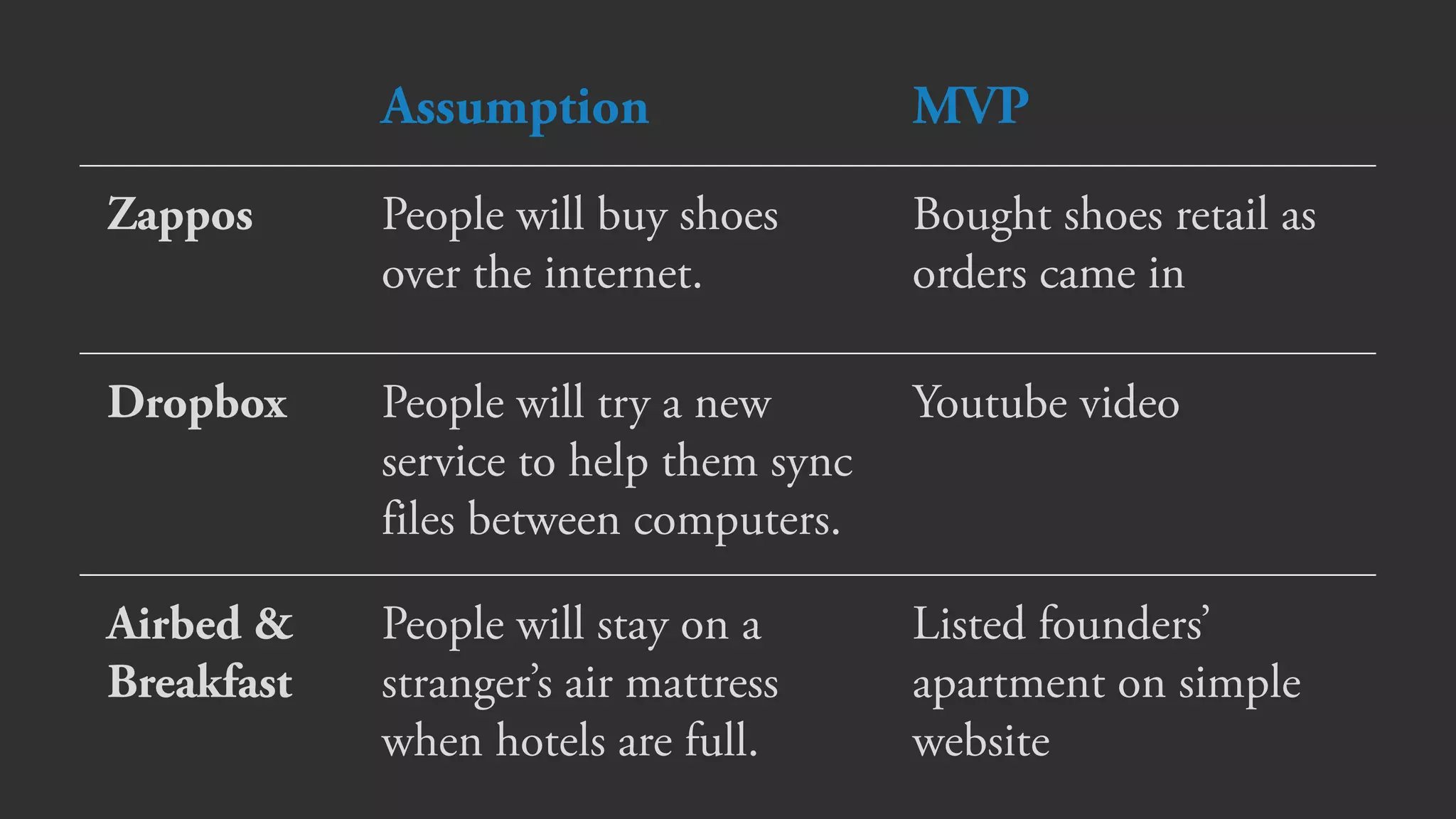
Assumption MVP
Zappos People will buy shoes
over the internet.
Bought shoes retail as
orders came in
Dropbox People will try a new
service to help them sync
files between computers.
Youtube video
Airbed &
Breakfast
People will stay on a
stranger’s air mattress
when hotels are full.
Listed founders’
apartment on simple
website
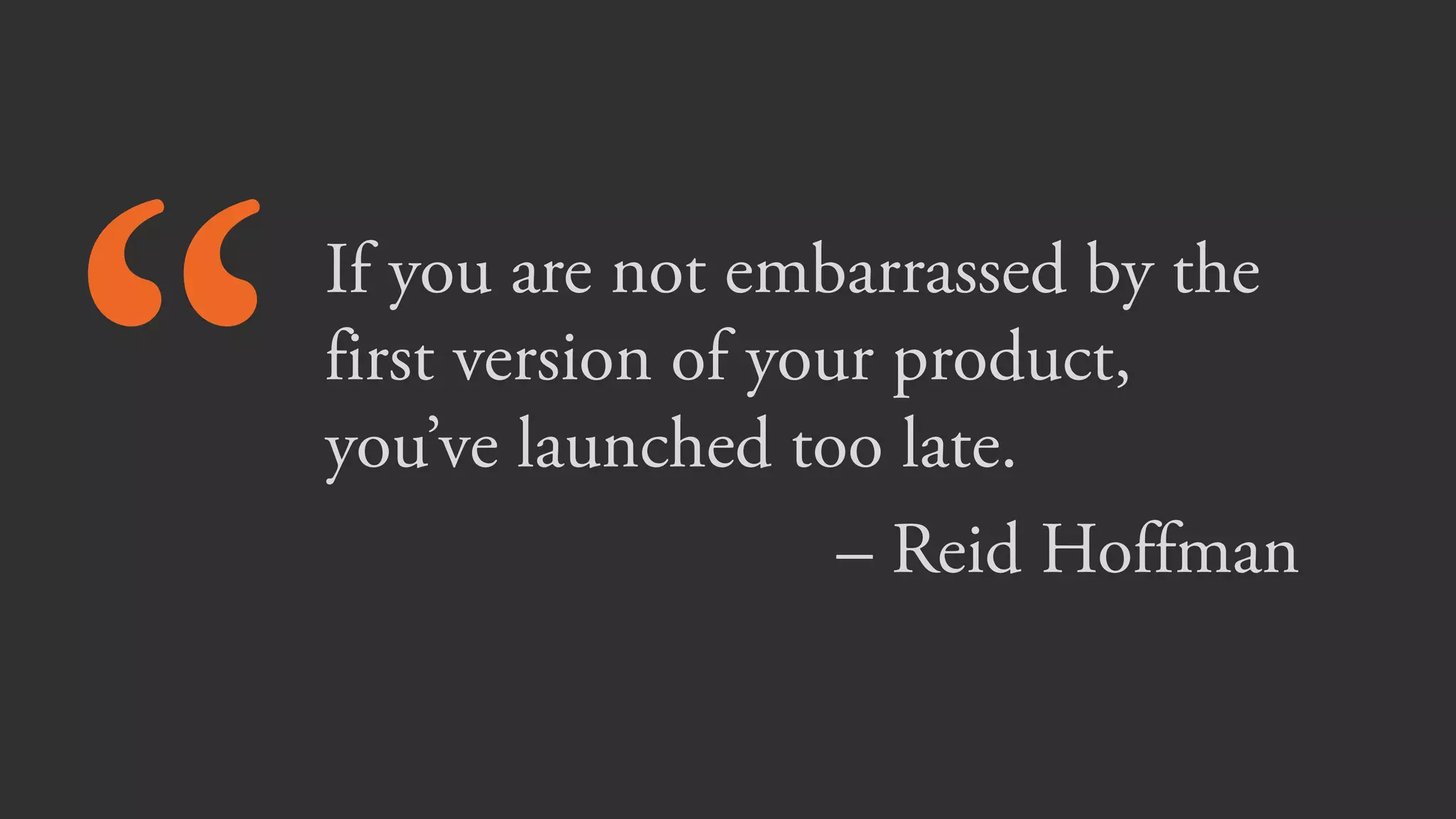
“If you are not embarrassed by the
first version of your product,
you’ve launched too late.
– Reid Hoffman
We’ve learned four big ideas!
• a “startup” is a search
• seek product / market fit
• focus on the customer
• build a minimum viable product
Measure Progress
Why we measure:
Seek evidence that a sustainable
business can be built around a
startup’s products or services.
What do we measure?
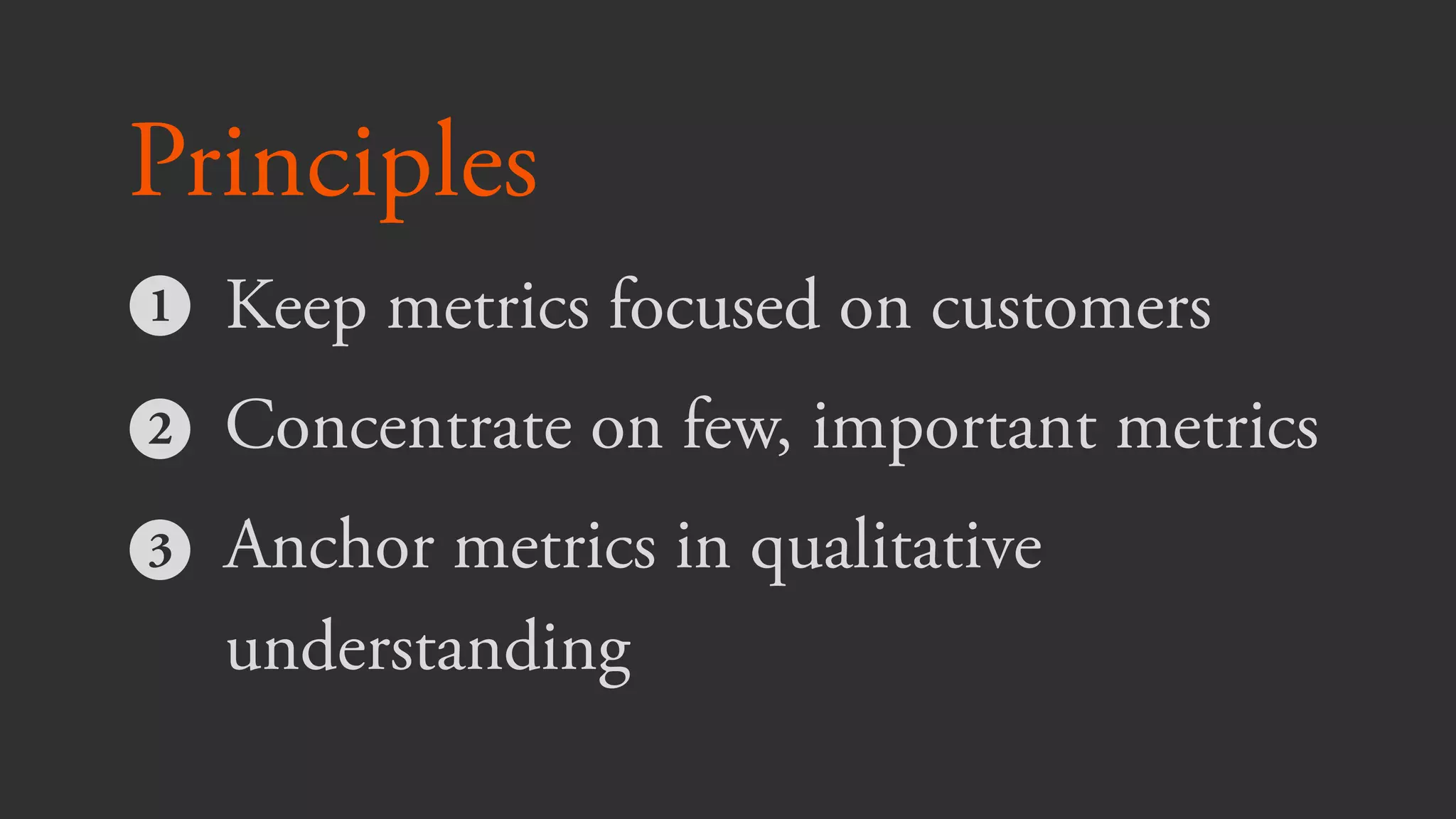
Keep metrics focused on customers
Concentrate on few, important metrics
Anchor metrics in qualitative
understanding
1
Principles
2
3
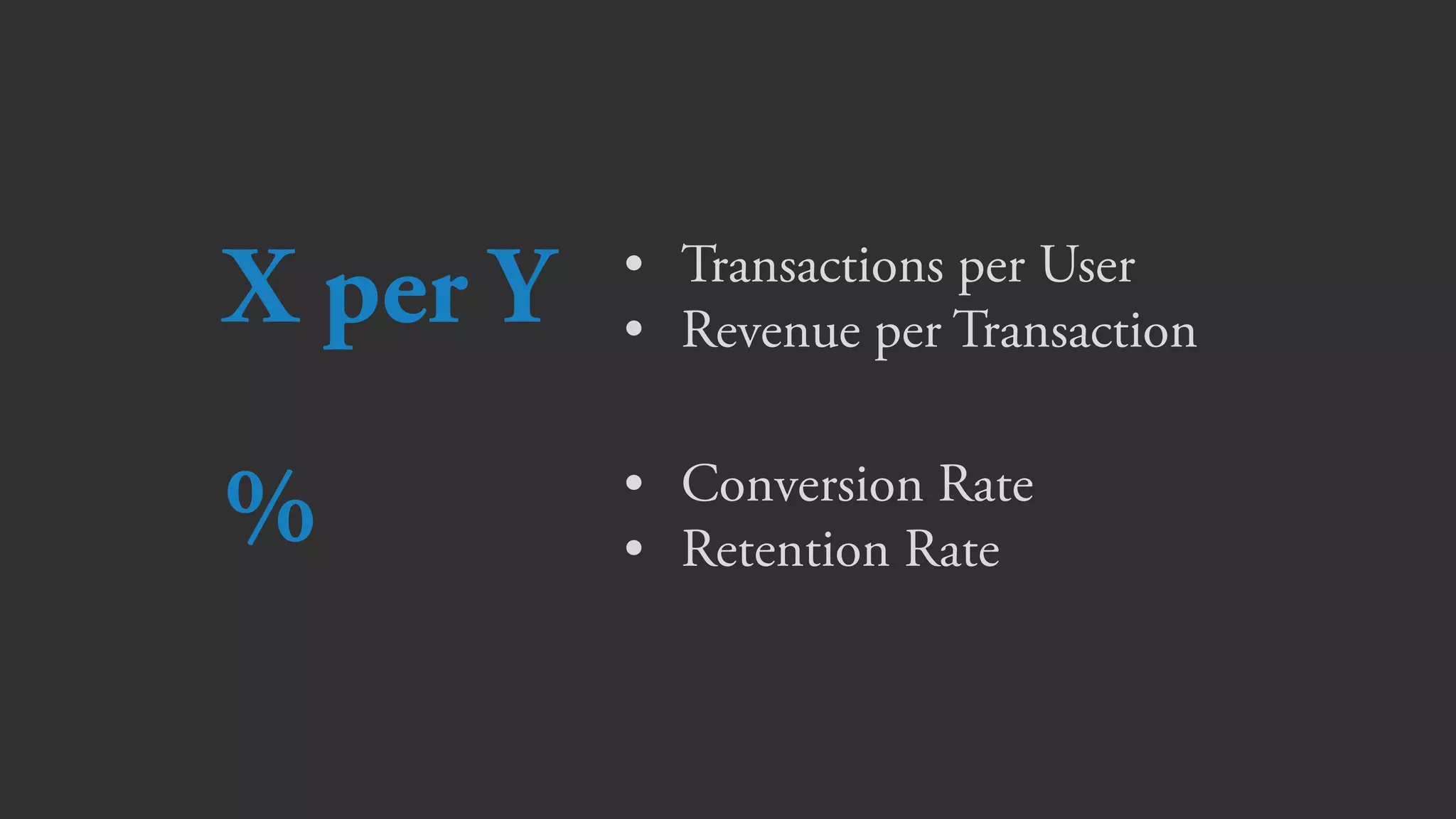
X per Y • Transactions per User
• Revenue per Transaction
% • Conversion Rate
• Retention Rate
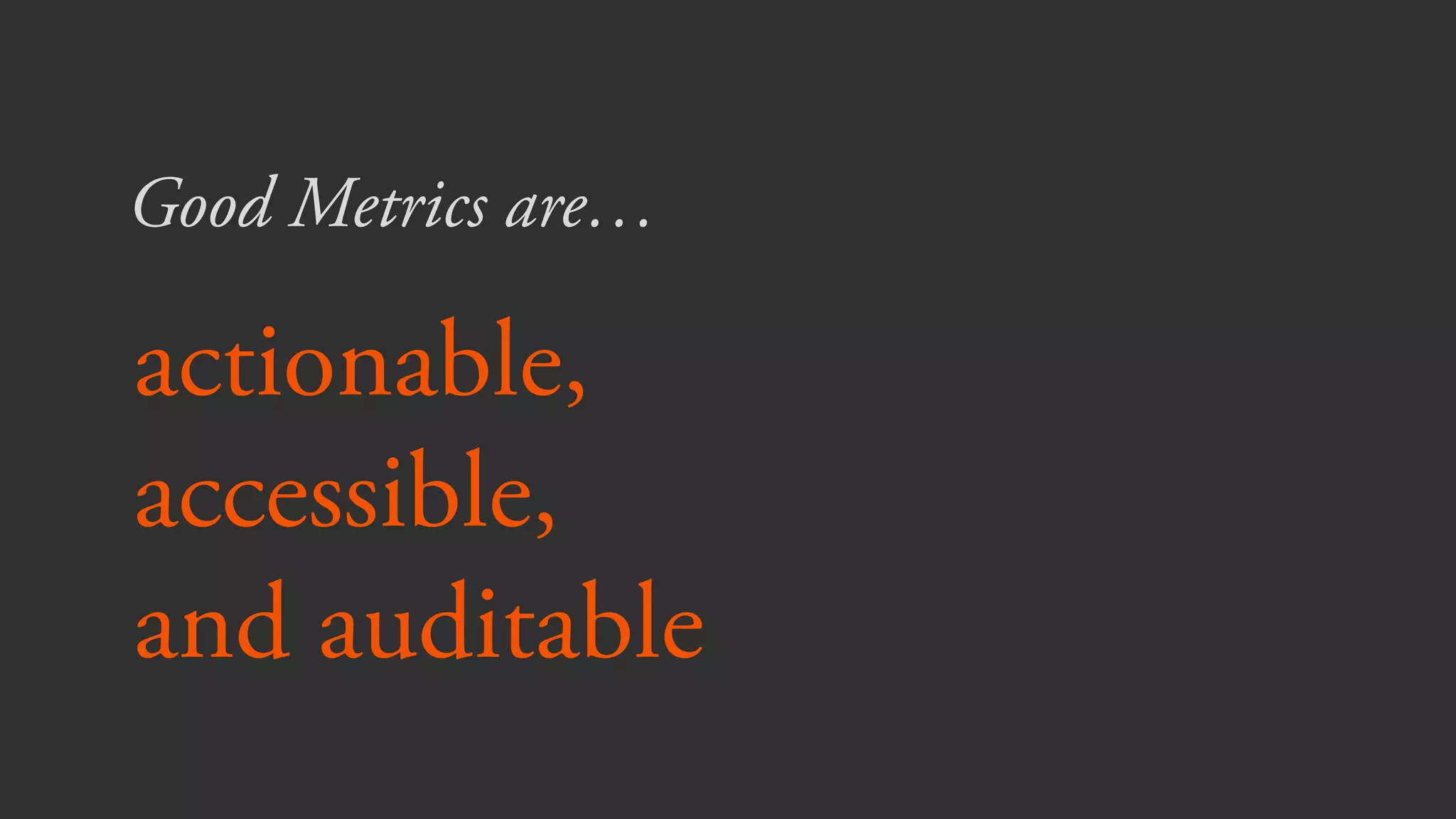
Good Metrics are…
actionable,
accessible,
and auditable
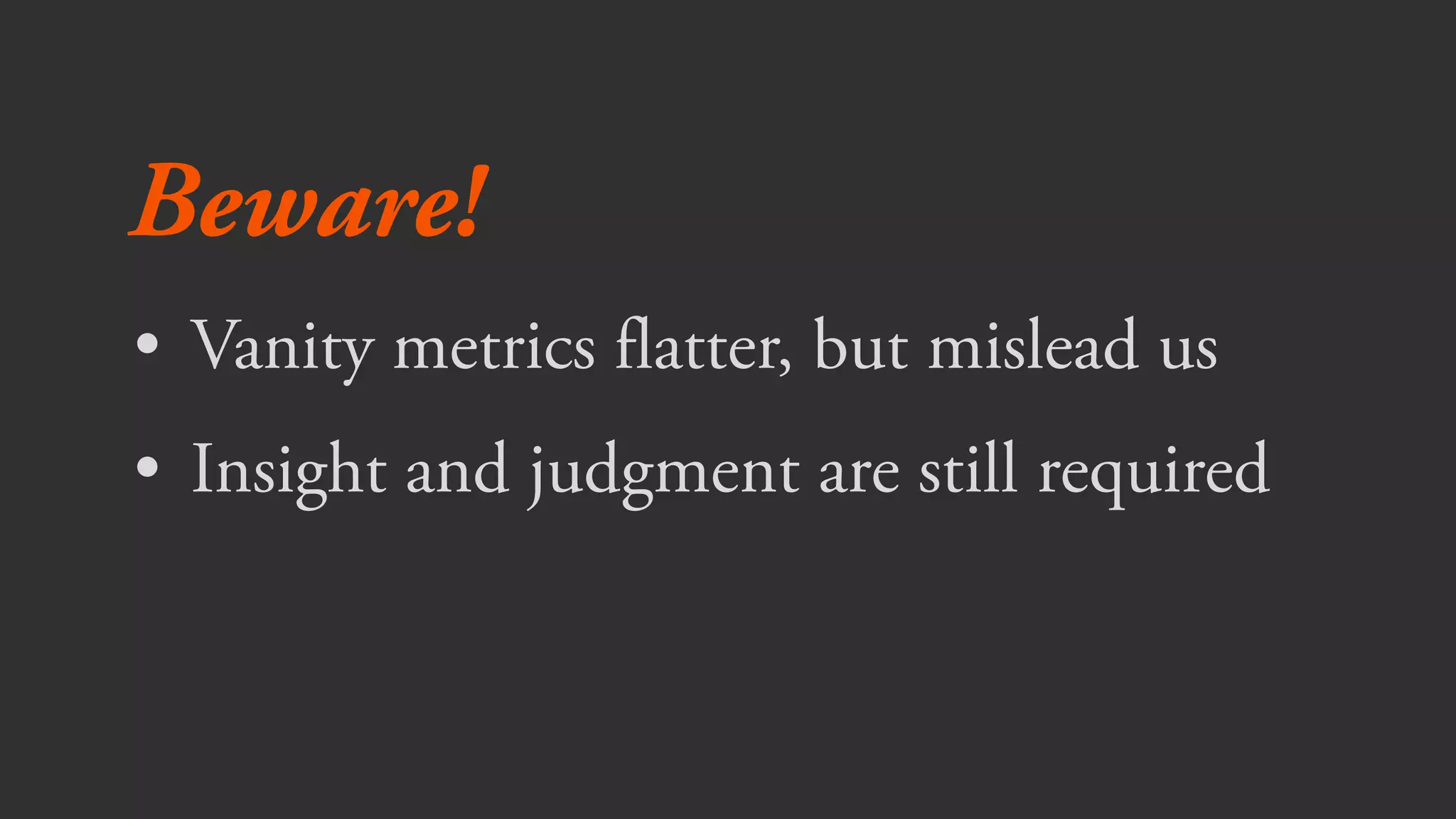
Beware!
• Vanity metrics flatter, but mislead us
• Insight and judgment are still required
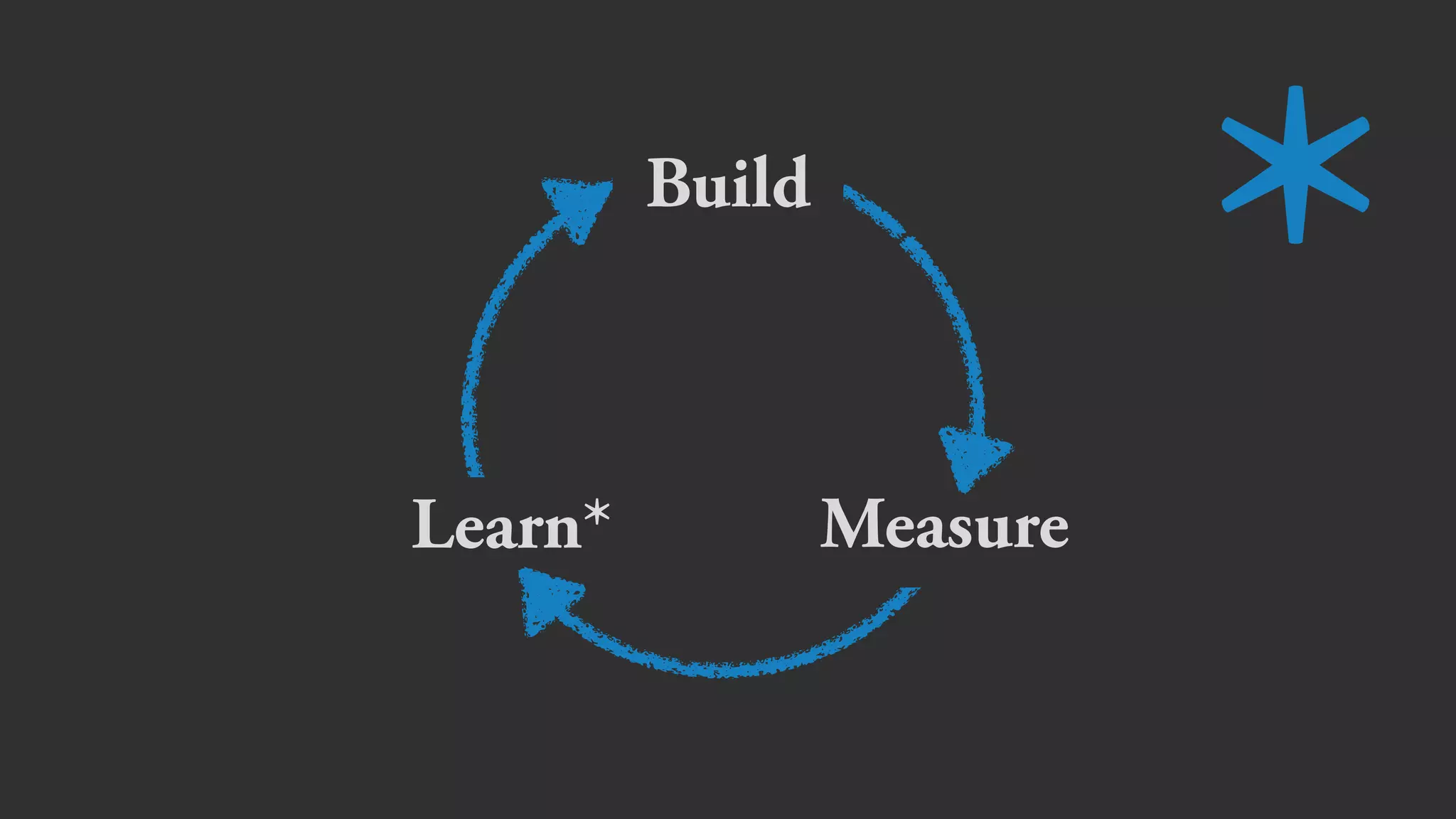
*MeasureLearn*
Build
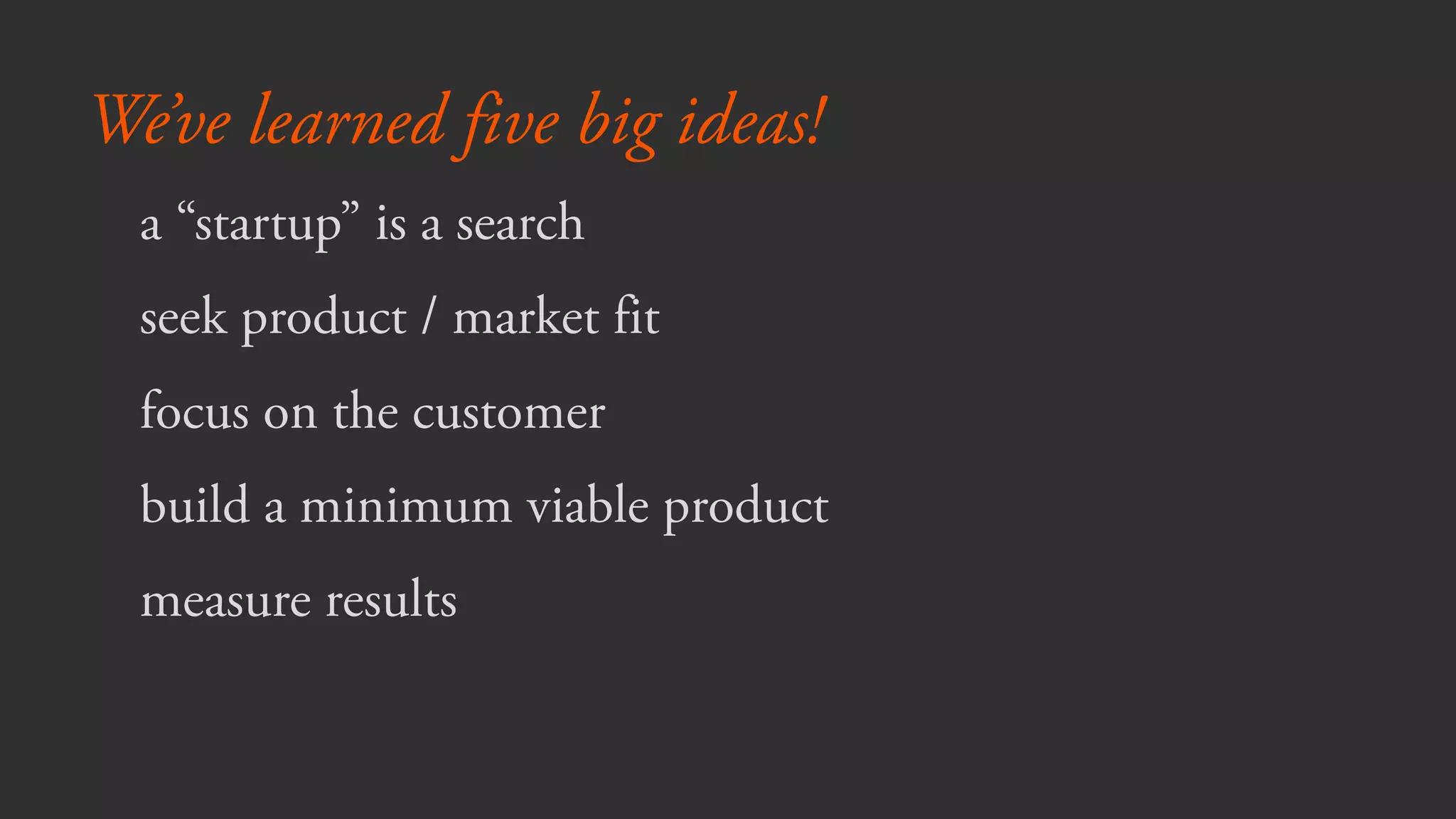
We’ve learned five big ideas!
• a “startup” is a search
• seek product / market fit
• focus on the customer
• build a minimum viable product
• measure results
Pivot or Persevere
*A pivot is a major change in strategy
after learning that the team was wrong
about one of its central assumptions.
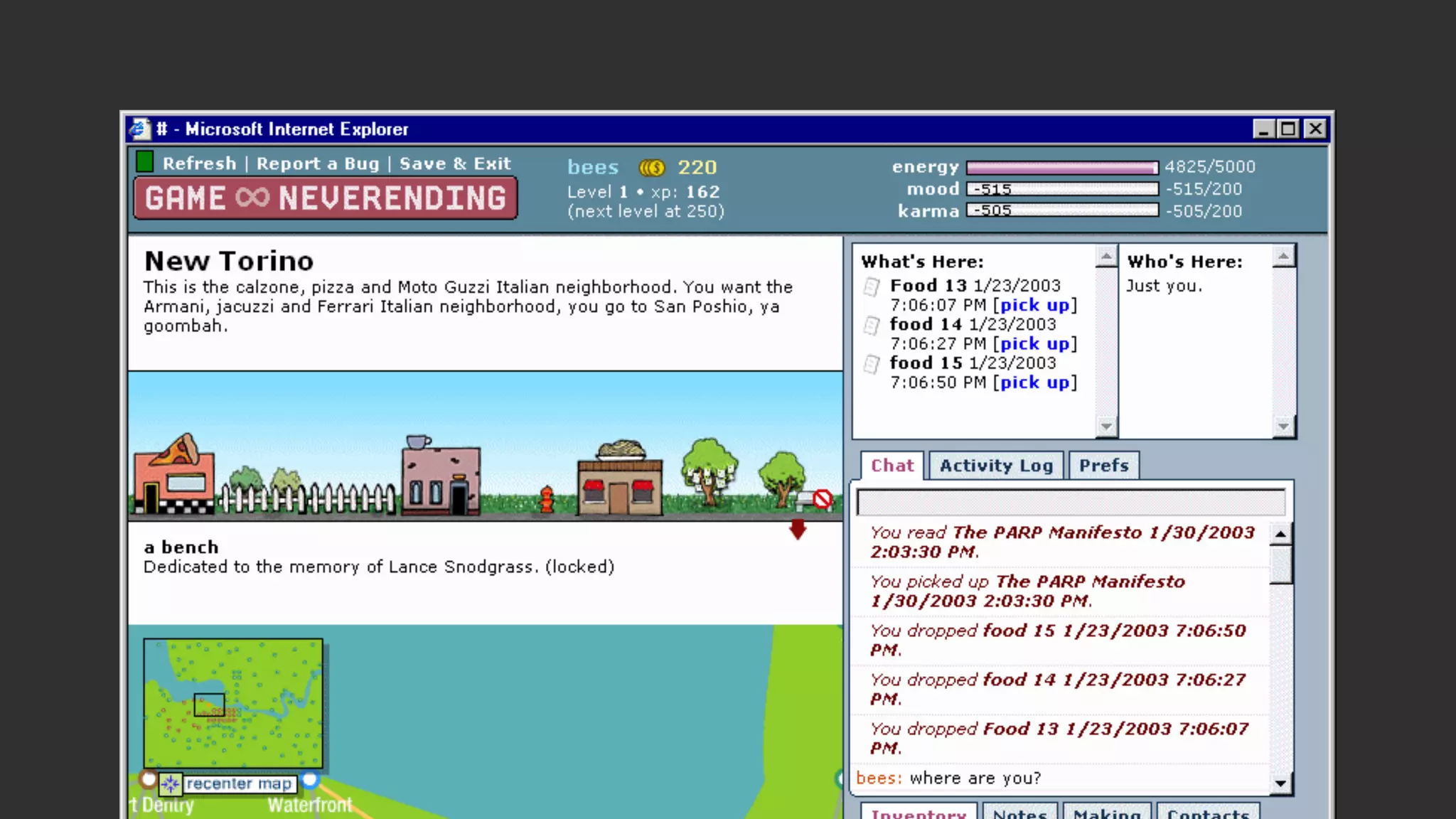
Not just any big change
[show basketball player]
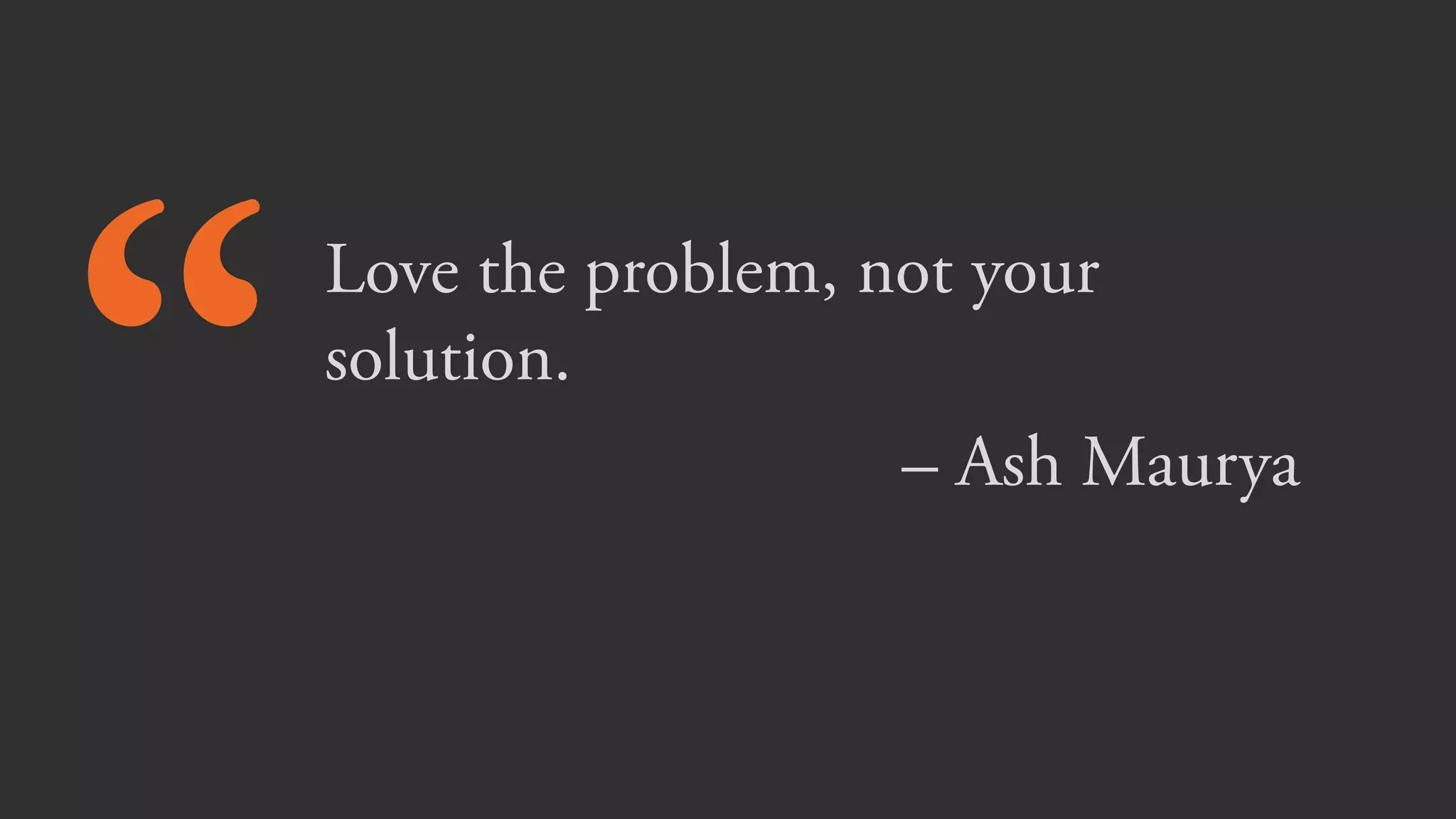
“Love the problem, not your
solution.
– Ash Maurya
We’ve learned six big ideas!
• a “startup” is a search
• seek product / market fit
• focus on the customer
• build a minimum viable product
• measure results
• pivot or persevere
Thank You!
Acknowledgments

PHX Startup Week team • Sean Tierney • Cameron Donnell • Jennifer Boonlorn

Erin McInerney • Jonas Zygas • Gabriel Ramirez • Tim Hoiland • David Tischler

Colby Gergen • Caleb Barclay • Jonathan Cottrell • Vikram Ramakrishnan

Kelly Parent
Download slides

bit.ly/lean-talk
Contact me

paul@paulp.io • @paulp

Beyond Buzzwords:
 An Introduction to The Lean Startup