Effectiveness of Asynchronous Online Discussions in a Secondary Schools Mr Leon Oxenham Director of ICT The Latymer School
What are Asynchronous Online Discussions? Examples of Online Discussions in the Curriculum What the students say The Model for School Delivery
Introductory Comments Launch of the Learning Platform ICT used to enhance teaching and learning Web 1.0 vs Web 2.0 Interaction and empowerment Facilitation and active learning Educational not just engaging School “experts” MSc in Blended and Online Education
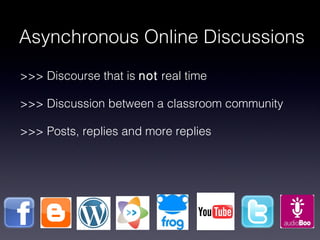
Asynchronous Online Discussions >>> Discourse that is  not  real time >>> Discussion between a classroom community >>> Posts, replies and more replies
 
 
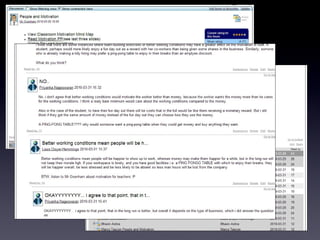
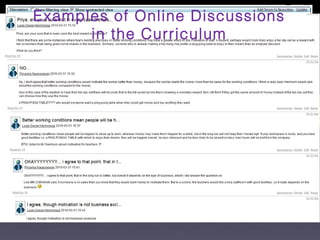
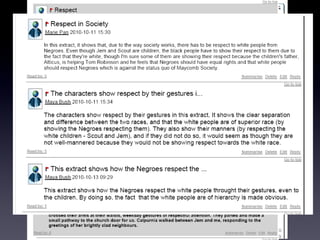
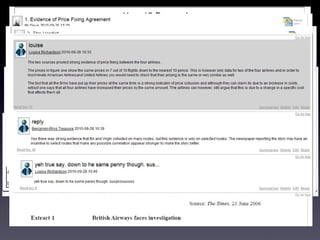
Year 10 Business Studies Examples of Online Discussions in the Curriculum
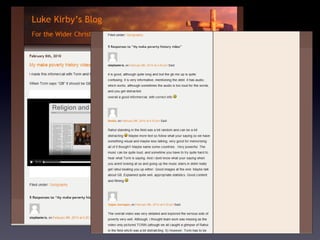
Year 10 Latin
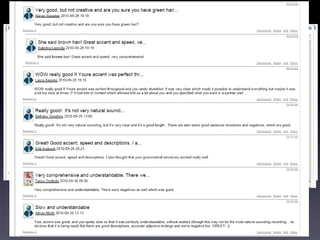
Year 10 English
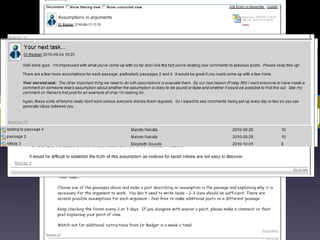
Year 12 Critical Thinking
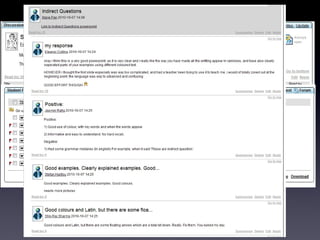
Year 10 German
Year 12 Economics
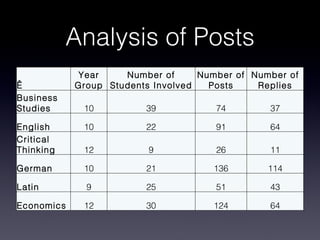
Analysis of Posts   Year Group Number of Students Involved Number of Posts Number of Replies Business Studies 10 39 74 37 English 10 22 91 64 Critical Thinking 12 9 26 11 German 10 21 136 114 Latin 9 25 51 43 Economics 12 30 124 64
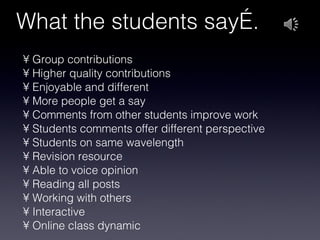
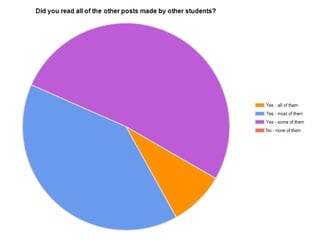
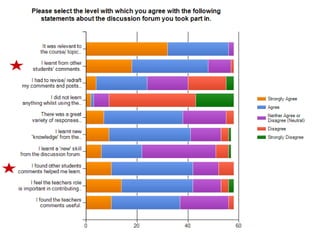
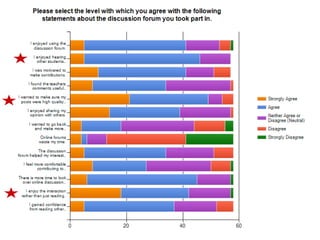
What the students say…. Group contributions Higher quality contributions Enjoyable and different More people get a say Comments from other students improve work Students comments offer different perspective Students on same wavelength Revision resource Able to voice opinion Reading all posts Working with others Interactive Online class dynamic


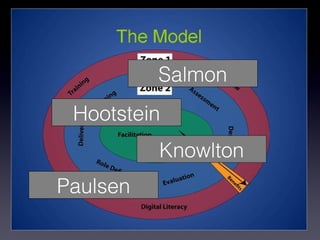
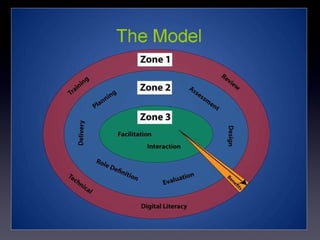
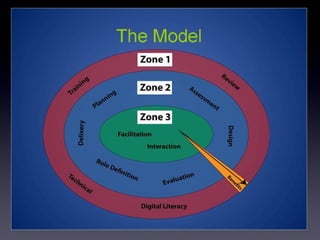
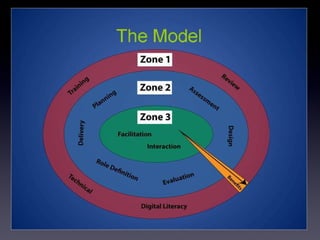
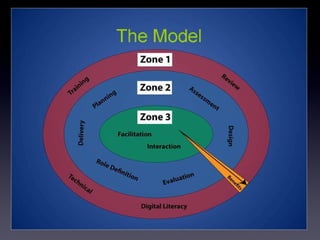
The Model Salmon Paulsen Hootstein Knowlton
The Model
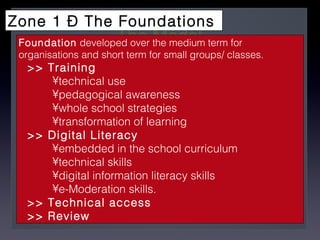
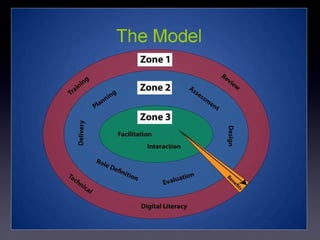
The Model Zone 1 – The Foundations  Foundation  developed over the medium term for organisations and short term for small groups/ classes. >> Training  technical use  pedagogical awareness whole school strategies transformation of learning  >> Digital Literacy   embedded in the school curriculum technical skills digital information literacy skills  e-Moderation skills. >> Technical access >> Review
The Model
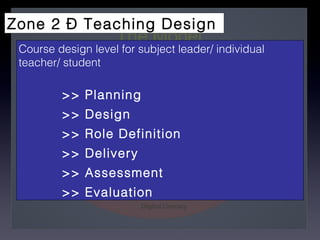
The Model Zone 2 – Teaching Design  Course design level for subject leader/ individual teacher/ student >> Planning >> Design >> Role Definition >> Delivery >> Assessment >> Evaluation
The Model
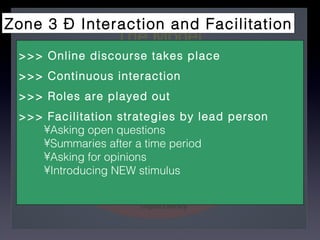
The Model Zone 3 – Interaction and Facilitation >>> Online discourse takes place >>> Continuous interaction >>> Roles are played out >>> Facilitation strategies by lead person Asking open questions Summaries after a time period Asking for opinions Introducing NEW stimulus
The Model
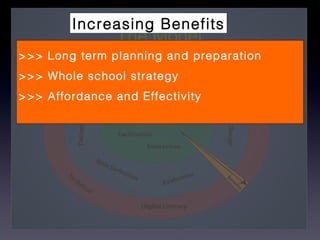
The Model Increasing Benefits >>> Long term planning and preparation >>> Whole school strategy >>> Affordance and Effectivity
The Model
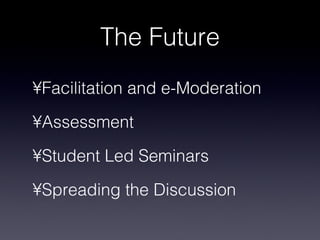
The Future Facilitation and e-Moderation Assessment Student Led Seminars Spreading the Discussion

Bett aod's

  • 1.
    Effectiveness of AsynchronousOnline Discussions in a Secondary Schools Mr Leon Oxenham Director of ICT The Latymer School
  • 2.
    What are AsynchronousOnline Discussions? Examples of Online Discussions in the Curriculum What the students say The Model for School Delivery
  • 3.
    Introductory Comments Launchof the Learning Platform ICT used to enhance teaching and learning Web 1.0 vs Web 2.0 Interaction and empowerment Facilitation and active learning Educational not just engaging School “experts” MSc in Blended and Online Education
  • 4.
    Asynchronous Online Discussions>>> Discourse that is not real time >>> Discussion between a classroom community >>> Posts, replies and more replies
  • 5.
  • 6.
  • 7.
    Year 10 BusinessStudies Examples of Online Discussions in the Curriculum
  • 8.
  • 9.
  • 10.
  • 11.
  • 12.
  • 13.
    Analysis of Posts  Year Group Number of Students Involved Number of Posts Number of Replies Business Studies 10 39 74 37 English 10 22 91 64 Critical Thinking 12 9 26 11 German 10 21 136 114 Latin 9 25 51 43 Economics 12 30 124 64
  • 14.
    What the studentssay…. Group contributions Higher quality contributions Enjoyable and different More people get a say Comments from other students improve work Students comments offer different perspective Students on same wavelength Revision resource Able to voice opinion Reading all posts Working with others Interactive Online class dynamic
  • 15.
  • 16.
  • 17.
  • 18.
  • 19.
  • 20.
    The Model SalmonPaulsen Hootstein Knowlton
  • 21.
  • 22.
    The Model Zone1 – The Foundations Foundation developed over the medium term for organisations and short term for small groups/ classes. >> Training technical use pedagogical awareness whole school strategies transformation of learning >> Digital Literacy embedded in the school curriculum technical skills digital information literacy skills e-Moderation skills. >> Technical access >> Review
  • 23.
  • 24.
    The Model Zone2 – Teaching Design Course design level for subject leader/ individual teacher/ student >> Planning >> Design >> Role Definition >> Delivery >> Assessment >> Evaluation
  • 25.
  • 26.
    The Model Zone3 – Interaction and Facilitation >>> Online discourse takes place >>> Continuous interaction >>> Roles are played out >>> Facilitation strategies by lead person Asking open questions Summaries after a time period Asking for opinions Introducing NEW stimulus
  • 27.
  • 28.
    The Model IncreasingBenefits >>> Long term planning and preparation >>> Whole school strategy >>> Affordance and Effectivity
  • 29.
  • 30.
    The Future Facilitationand e-Moderation Assessment Student Led Seminars Spreading the Discussion