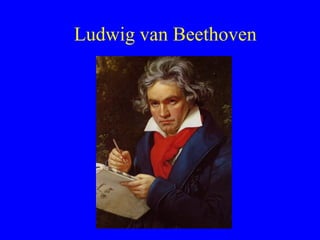
Ludwig van Beethoven
Ludwig Van Beethoven was born in
1770 in the city of Bonn, Germany.
Beethoven's father was aware of the success Mozart
 had as a young child. The father wanted his son to be
successful, too. Beethoven's father cruelly made young
Ludwig practice for hours at a time. His dream was to
                     have his son make the family rich.
                         After long nights of drinking,
                   Beethoven's father would sometimes
                     drag his son out of bed to practice
                           the piano or play for guests.
                          Young Ludwig gave his first
                      public performance when he was
                                   just seven years old.
Beethoven began piano, violin,
          and organ lessons.
   At a young age, Beethoven's first
mentor and man who recognized his
  great talents, Gottlob Neefe, sent
 Beethoven to Vienna where he was
  introduced to and briefly studied
under other great composers such as
         Mozart and Haydn.
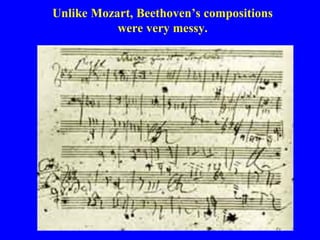
Unlike Mozart, Beethoven’s compositions
           were very messy.
Like most artists, composers,
      writers, and poets,
Beethoven’s works mirrored
       his emotions and
experiences, sometimes even
  reflecting his views about
         other people.
The Third Symphony

Originally he planned to
dedicate The Third Symphony
to Napoleon, whom he had
long admired because he
inspired Beethoven with ideas
of freedom and equality.
However, Beethoven became
disillusioned when Napoleon
crowned himself Emperor in 1804.
Ferdinand Ries, a student and early biographer related
   the scene: "I was the first to bring him the news that
Bonaparte had proclaimed himself emperor, whereupon
he flew into a rage and cried out: 'Is he too, then, nothing
 more than an ordinary human being? Now he, too, will
     trample on the rights of man, and indulge only his
 ambition!' Beethoven went to the table, took hold of the
  title page by the top, tore it in two, and threw it on the
floor. The first page was rewritten and only then did the
        Symphony receive the title Sinfonia Eroica."
The "Eroica" Symphony represents a
    turning point not only in Beethoven's
   career, but also in the history of music.
     Its unprecedented length, technical
 challenges, relationship to political events
  of the day, and uncompromising stance
    seemed to aim beyond entertainment,
   forcing Beethoven's contemporaries to
rethink what a symphony should be and do.
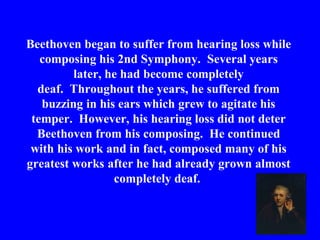
Beethoven began to suffer from hearing loss while
   composing his 2nd Symphony. Several years
         later, he had become completely
  deaf. Throughout the years, he suffered from
   buzzing in his ears which grew to agitate his
 temper. However, his hearing loss did not deter
  Beethoven from his composing. He continued
 with his work and in fact, composed many of his
greatest works after he had already grown almost
                 completely deaf.
To hear sounds, Beethoven cut
off the legs of his piano and
placed the instrument on the
floor. He did this to feel the
vibrations in
the floor when
he played.
Beethoven could not bear the indignity of
asking people to "speak louder, shout, for I
   am deaf," and felt he must retreat from
society. He even contemplated suicide: "A
little more and I would have ended my life.
Only my art held me back. It seemed to me
  impossible to leave the world until I had
   produced all that I felt was within me."
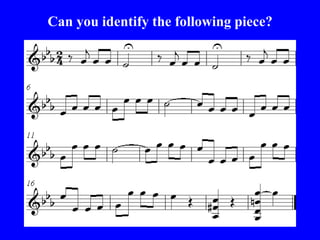
Can you identify the following piece?
The initial motif of the symphony
 has sometimes been credited with
     symbolic significance as a
 representation of Fate knocking at
              the door.


                                  Go to NPR to hear it:
http://www.npr.org/templates/dmg/dmg.php?mediaURL=/pt/20060605_pt_beethoven5&mediaType=RM
Für Elise
                     Für Elise is another famous and widely
                        recognized masterpiece. Unknown to
                            most people, this title was not the
        original title of the piece. When the work was first
published in 1867, it was done under the title Klavierstück
      in A mull, which translates as "Keyboard piece in A
minor." However, Beethoven had autographed the piece
  in German with the title and dedication: "For Elise on
                  April 27, 1810, as a remembrance of L. v.
        Beethoven." After its publication, people began to
       recognize the work as Für Elise in accordance to its

                                                  autograph.
To hear it, go to

       en.wikipedia.org/wiki/F%C3%BCr_Elise   .

Under “The Music,” click on Für Elise next
            to the speaker.
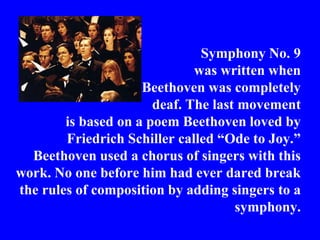
Symphony No. 9
                              was written when
                     Beethoven was completely
                       deaf. The last movement
        is based on a poem Beethoven loved by
        Friedrich Schiller called “Ode to Joy.”
  Beethoven used a chorus of singers with this
work. No one before him had ever dared break
the rules of composition by adding singers to a
                                     symphony.
He conducted the first performance of his Ninth
Symphony. He was so excited while conducting
  that he rushed the pace, but the musicians
were familiar enough with the piece that they
     could luckily keep up. When finished
 conducting, Beethoven, with his back to the
  audience and deaf, felt that his work was a
  failure. What he didn’t know was that the
     audience was loudly cheering for his
masterpiece. A musician near him turned him
around to see the audience’s jubilant reaction.
When asked about his hearing loss, he
 responded: "I will hear in heaven."
'Sinfonia Eroica’-- Symphony No. 3
         Composed in 1803

        Symphony No. 5
      Composed in 1807-08

            Für Elise
             1810

   "Choral” -- Symphony No. 9
     Composed in 1822-24

Beethoven power point - pdf

  • 1.
  • 2.
    Ludwig Van Beethovenwas born in 1770 in the city of Bonn, Germany.
  • 3.
    Beethoven's father wasaware of the success Mozart had as a young child. The father wanted his son to be successful, too. Beethoven's father cruelly made young Ludwig practice for hours at a time. His dream was to have his son make the family rich. After long nights of drinking, Beethoven's father would sometimes drag his son out of bed to practice the piano or play for guests. Young Ludwig gave his first public performance when he was just seven years old.
  • 4.
    Beethoven began piano,violin, and organ lessons. At a young age, Beethoven's first mentor and man who recognized his great talents, Gottlob Neefe, sent Beethoven to Vienna where he was introduced to and briefly studied under other great composers such as Mozart and Haydn.
  • 5.
    Unlike Mozart, Beethoven’scompositions were very messy.
  • 6.
    Like most artists,composers, writers, and poets, Beethoven’s works mirrored his emotions and experiences, sometimes even reflecting his views about other people.
  • 7.
    The Third Symphony Originallyhe planned to dedicate The Third Symphony to Napoleon, whom he had long admired because he inspired Beethoven with ideas of freedom and equality. However, Beethoven became disillusioned when Napoleon crowned himself Emperor in 1804.
  • 8.
    Ferdinand Ries, astudent and early biographer related the scene: "I was the first to bring him the news that Bonaparte had proclaimed himself emperor, whereupon he flew into a rage and cried out: 'Is he too, then, nothing more than an ordinary human being? Now he, too, will trample on the rights of man, and indulge only his ambition!' Beethoven went to the table, took hold of the title page by the top, tore it in two, and threw it on the floor. The first page was rewritten and only then did the Symphony receive the title Sinfonia Eroica."
  • 9.
    The "Eroica" Symphonyrepresents a turning point not only in Beethoven's career, but also in the history of music. Its unprecedented length, technical challenges, relationship to political events of the day, and uncompromising stance seemed to aim beyond entertainment, forcing Beethoven's contemporaries to rethink what a symphony should be and do.
  • 10.
    Beethoven began tosuffer from hearing loss while composing his 2nd Symphony. Several years later, he had become completely deaf. Throughout the years, he suffered from buzzing in his ears which grew to agitate his temper. However, his hearing loss did not deter Beethoven from his composing. He continued with his work and in fact, composed many of his greatest works after he had already grown almost completely deaf.
  • 11.
    To hear sounds,Beethoven cut off the legs of his piano and placed the instrument on the floor. He did this to feel the vibrations in the floor when he played.
  • 12.
    Beethoven could notbear the indignity of asking people to "speak louder, shout, for I am deaf," and felt he must retreat from society. He even contemplated suicide: "A little more and I would have ended my life. Only my art held me back. It seemed to me impossible to leave the world until I had produced all that I felt was within me."
  • 13.
    Can you identifythe following piece?
  • 14.
    The initial motifof the symphony has sometimes been credited with symbolic significance as a representation of Fate knocking at the door. Go to NPR to hear it: http://www.npr.org/templates/dmg/dmg.php?mediaURL=/pt/20060605_pt_beethoven5&mediaType=RM
  • 15.
    Für Elise Für Elise is another famous and widely recognized masterpiece. Unknown to most people, this title was not the original title of the piece. When the work was first published in 1867, it was done under the title Klavierstück in A mull, which translates as "Keyboard piece in A minor." However, Beethoven had autographed the piece in German with the title and dedication: "For Elise on April 27, 1810, as a remembrance of L. v. Beethoven." After its publication, people began to recognize the work as Für Elise in accordance to its autograph.
  • 16.
    To hear it,go to en.wikipedia.org/wiki/F%C3%BCr_Elise . Under “The Music,” click on Für Elise next to the speaker.
  • 17.
    Symphony No. 9 was written when Beethoven was completely deaf. The last movement is based on a poem Beethoven loved by Friedrich Schiller called “Ode to Joy.” Beethoven used a chorus of singers with this work. No one before him had ever dared break the rules of composition by adding singers to a symphony.
  • 18.
    He conducted thefirst performance of his Ninth Symphony. He was so excited while conducting that he rushed the pace, but the musicians were familiar enough with the piece that they could luckily keep up. When finished conducting, Beethoven, with his back to the audience and deaf, felt that his work was a failure. What he didn’t know was that the audience was loudly cheering for his masterpiece. A musician near him turned him around to see the audience’s jubilant reaction.
  • 19.
    When asked abouthis hearing loss, he responded: "I will hear in heaven."
  • 20.
    'Sinfonia Eroica’-- SymphonyNo. 3 Composed in 1803 Symphony No. 5 Composed in 1807-08 Für Elise 1810 "Choral” -- Symphony No. 9 Composed in 1822-24