2010 Great Lakes Water Rate SurveyJanice A. Beecher and Jason A. KalmbachInstitute of Public UtilitiesMichigan State Universitybeecher@msu.edu  ipu.msu.eduPlease do not distribute by electronic or other meansor cite without permission. MICHIGAN STATE UNIVERSITY
2010 Great Lakes Water Rate SurveyTop ten water systems by service population from eight Midwestern states, by service population size as reported in EPA Consumer Confidence ReportsIllinois, Indiana, Michigan*, Minnesota*, New York, Ohio, Pennsylvania, and Wisconsin (*no economic regulatory authority)Detailed data  were mined from tariffs and websites and supplemented with personal communications.Nine water providers had no rate information available directly on the websiteCautionary notes about interpretationSurvey provides a snapshot in a very dynamic areaRates vary for a variety of reasons, including not limited to cost differencesRates alone cannot be used to draw conclusions about operational performance, including efficiency
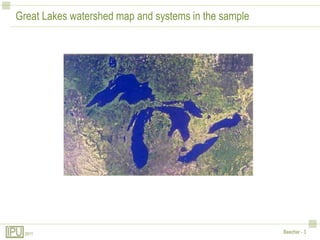
Great Lakes watershed map and systems in the sample
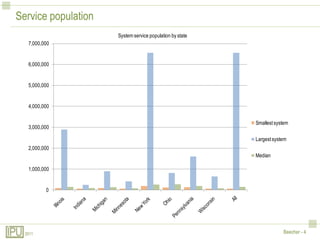
Service population
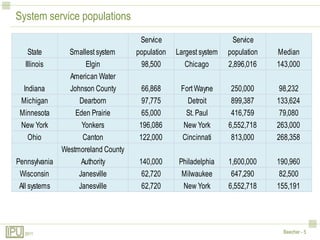
System service populations
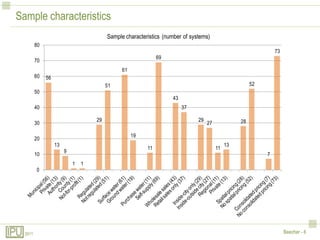
Sample characteristics
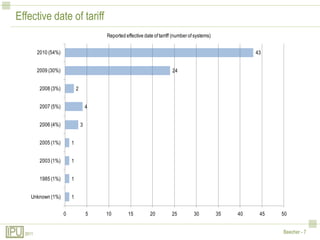
Effective date of tariff
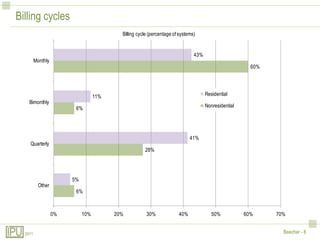
Billing cycles
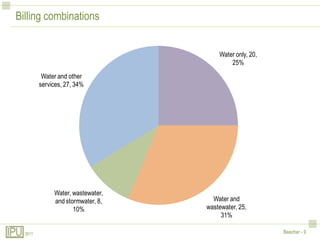
Billing combinations
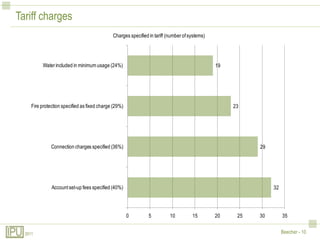
Tariff charges
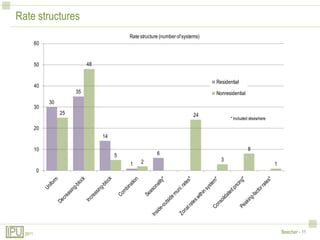
Rate structures
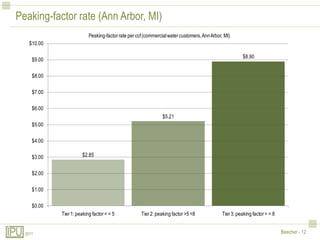
Peaking-factor rate (Ann Arbor, MI)
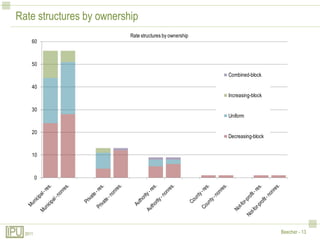
Rate structures by ownership
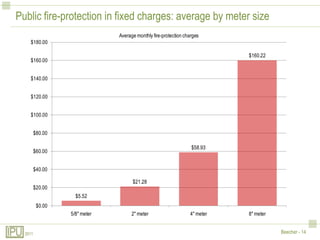
Public fire-protection in fixed charges: average by meter size
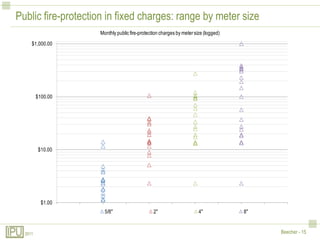
Public fire-protection in fixed charges: range by meter size
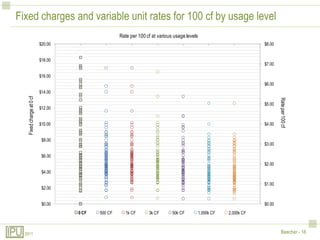
Fixed charges and variable unit rates for 100 cf by usage level
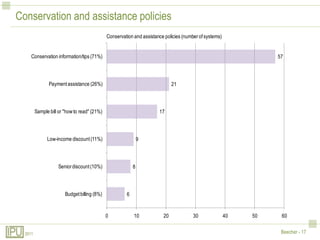
Conservation and assistance policies
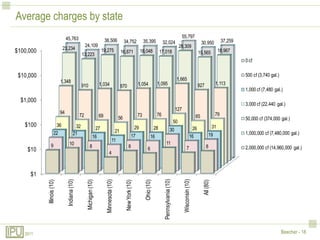
Average charges by state
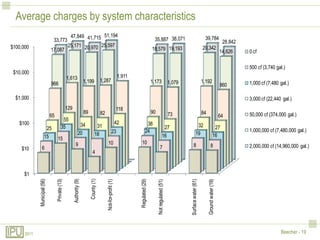
Average charges by system characteristics
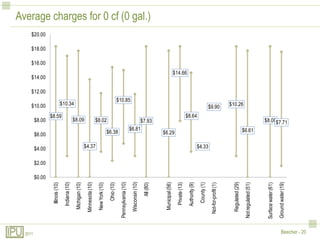
Average charges for 0 cf (0 gal.)
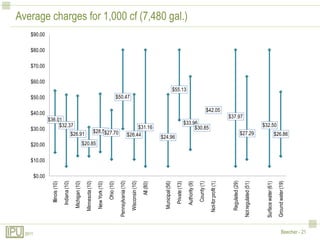
Average charges for 1,000 cf (7,480 gal.)
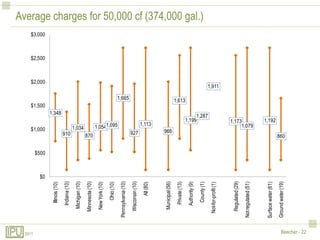
Average charges for 50,000 cf (374,000 gal.)
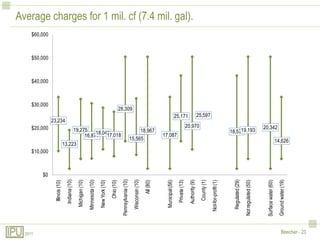
Average charges for 1 mil. cf (7.4 mil. gal).
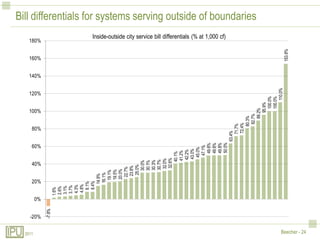
Bill differentials for systems serving outside of boundaries
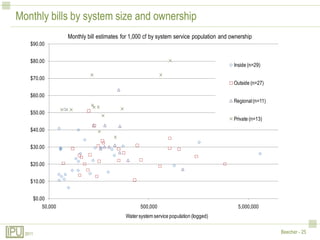
Monthly bills by system size and ownership
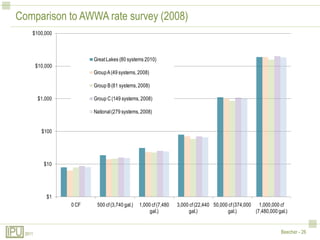
Comparison to AWWA rate survey (2008)
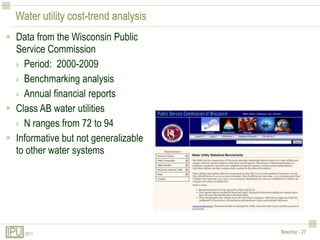
Water utility cost-trend analysisData from the Wisconsin Public Service CommissionPeriod:  2000-2009Benchmarking analysisAnnual financial reportsClass AB water utilitiesN ranges from 72 to 94Informative but not generalizable to other water systems
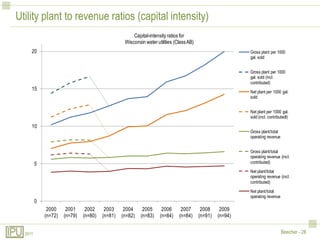
Utility plant to revenue ratios (capital intensity)
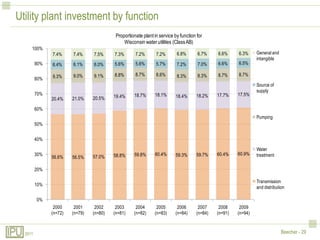
Utility plant investment by function
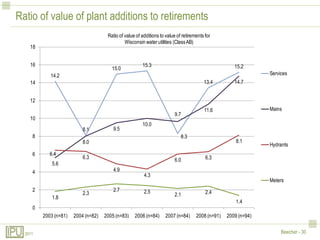
Ratio of value of plant additions to retirements
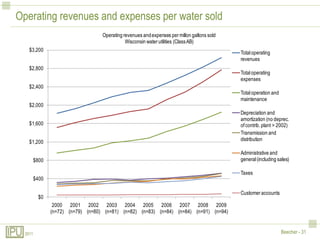
Operating revenues and expenses per water sold
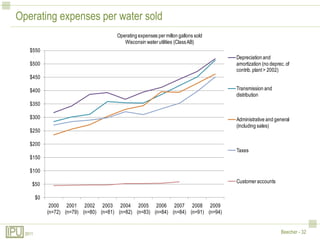
Operating expenses per water sold
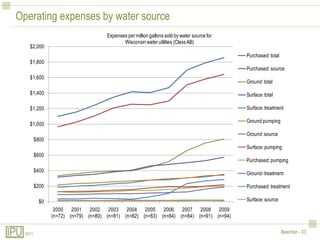
Operating expenses by water source
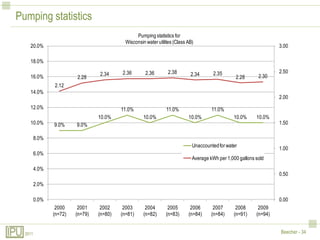
Pumping statistics
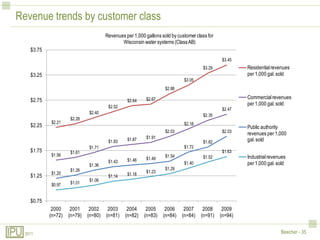
Revenue trends by customer class
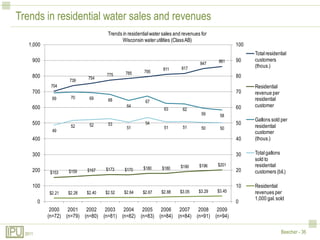
Trends in residential water sales and revenues

2010 Great Lakes Water Rate Survey

Editor's Notes

  • #12 Other = County, Non-Profit