Multi-model databases and
node.js
Max Neunhöffer
BayNode, 19 March 2015
www.arangodb.com
triAGENS
(mother company of ArangoDB GmbH)
15 years of experience in building specialized databases
We care about database technology!
In 2012, we wanted to make a generic database
such that YOU can build such services.
Document store
A document store stores a set of documents, which usually
means JSON data, these sets are called collections. The
database has access to the contents of the documents.
Key/value store
Opaque values, only key lookup without secondary indexes:
=⇒ high performance and perfect scalability
Graph database
A graph database stores a labelled graph. Vertices and
edges can be documents. Graphs are good to model
relations.
Polyglot Persistence
Idea
Use the right data model for each part of a system.
Take scalability needs into account!
A typical Use Case — an Online Shop
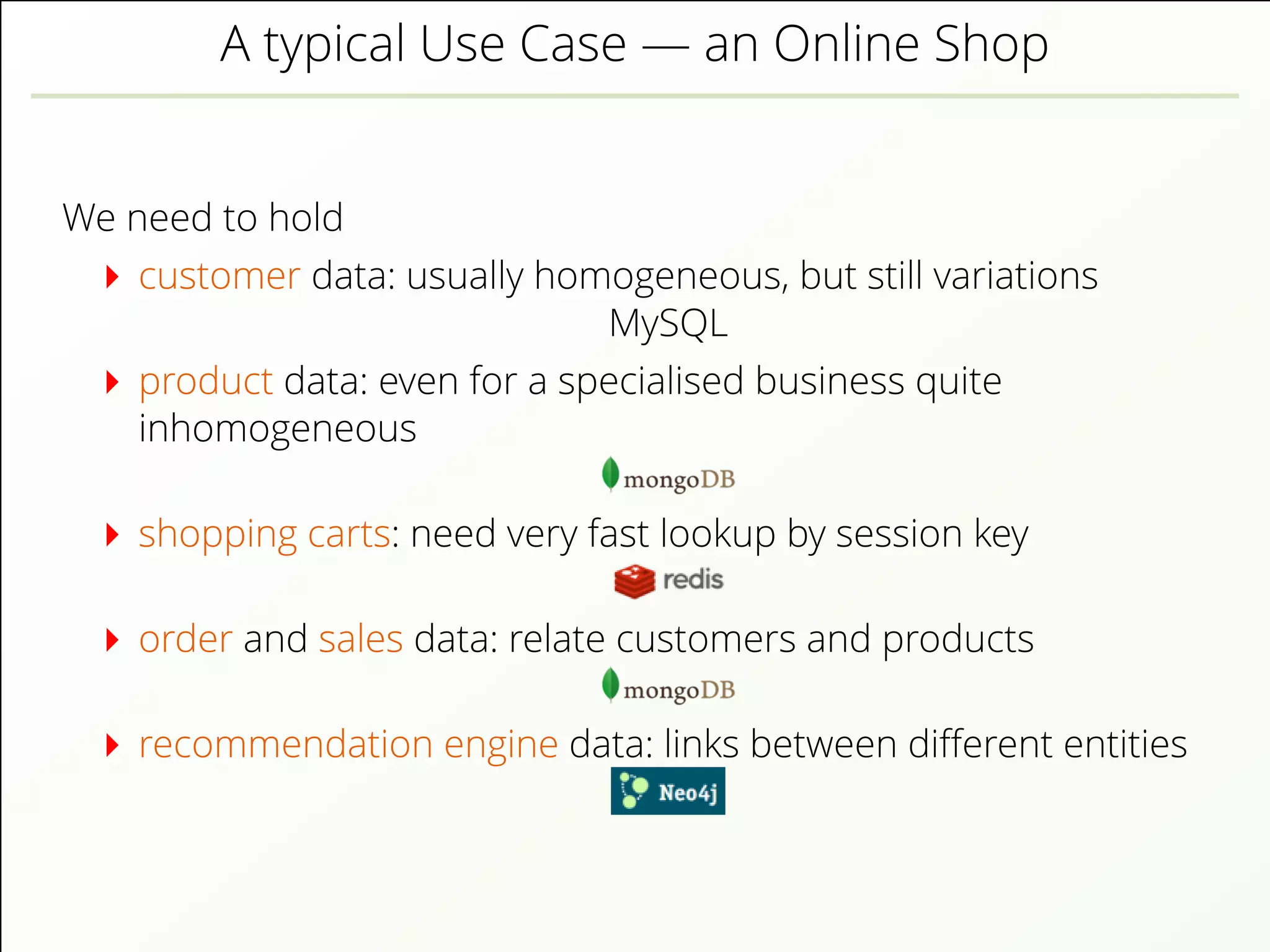
We need to hold
customer data: usually homogeneous, but still variations
MySQL
product data: even for a specialised business quite
inhomogeneous
shopping carts: need very fast lookup by session key
order and sales data: relate customers and products
recommendation engine data: links between different entities
Polyglot Persistence is nice, but . . .
Disadvantages
Consequence:
One needs multiple database systems in the persis-
tence layer of a single project!
Wouldn’t it be nice, . . .
. . . to enjoy the benefits without the disadvantages?
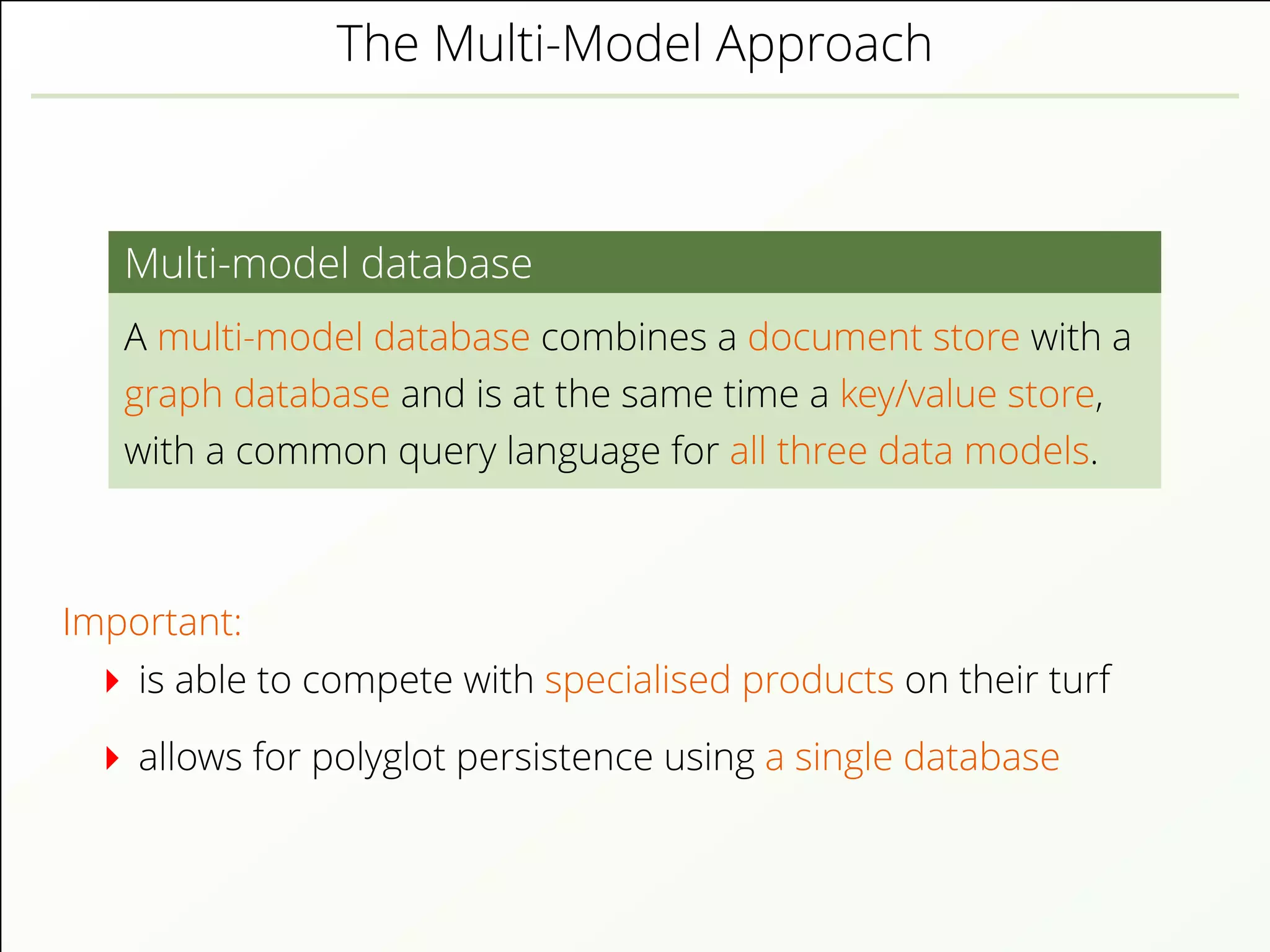
The Multi-Model Approach
Multi-model database
A multi-model database combines a document store with a
graph database and is at the same time a key/value store,
with a common query language for all three data models.
Important:
is able to compete with specialised products on their turf
allows for polyglot persistence using a single database
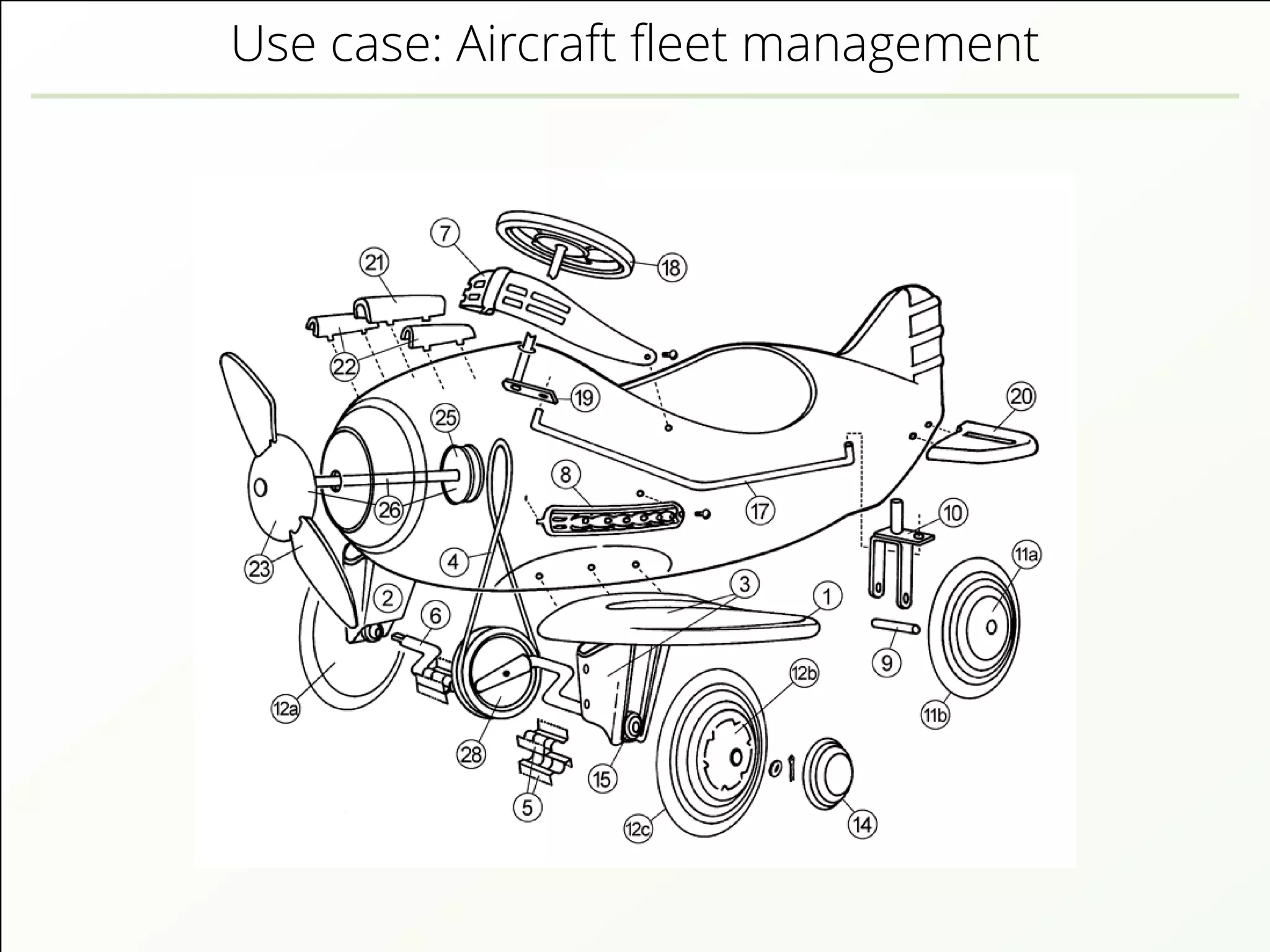
Use case: Aircraft fleet management
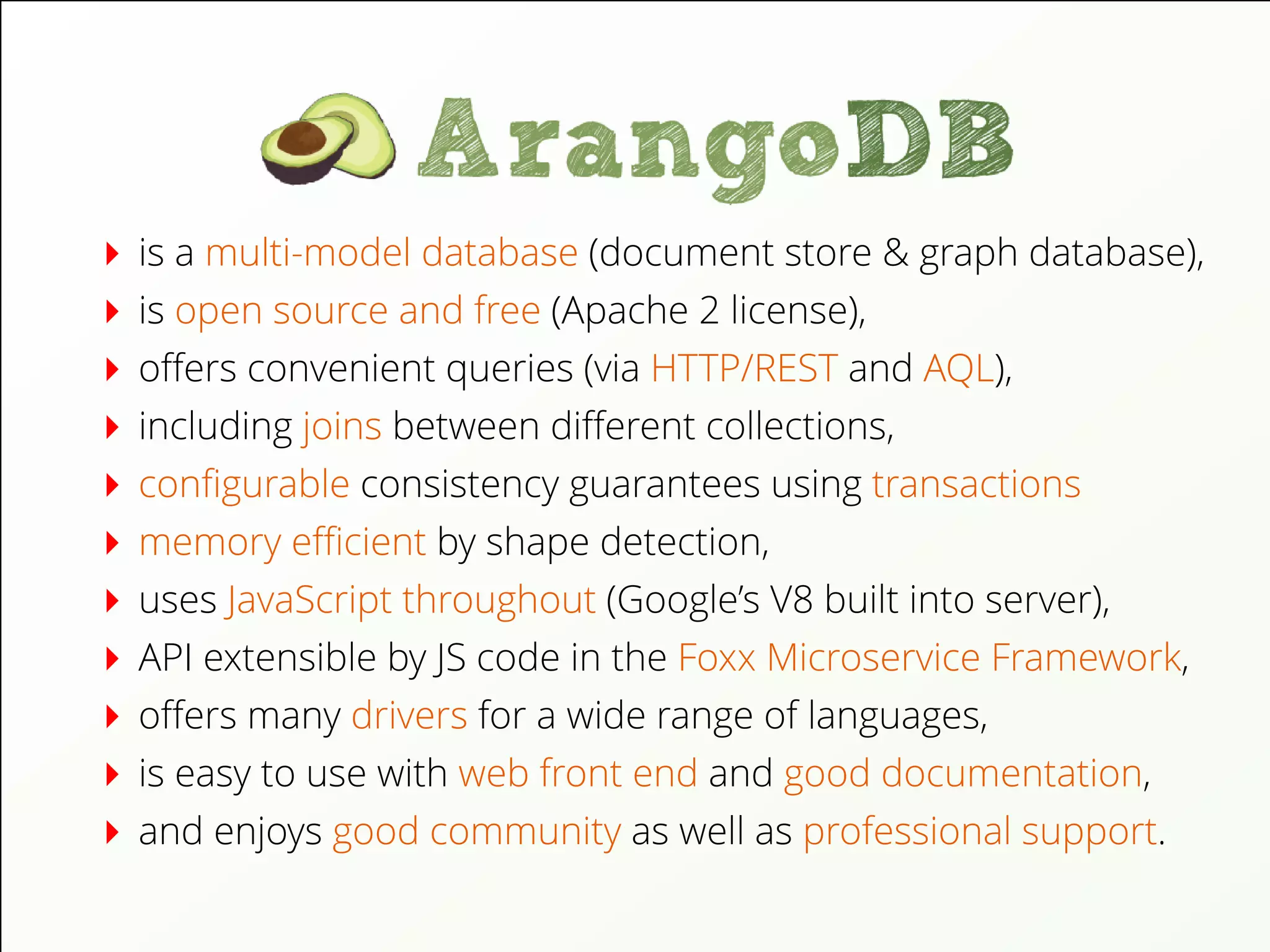
is a multi-model database (document store & graph database),
is open source and free (Apache 2 license),
offers convenient queries (via HTTP/REST and AQL),
including joins between different collections,
configurable consistency guarantees using transactions
memory efficient by shape detection,
uses JavaScript throughout (Google’s V8 built into server),
API extensible by JS code in the Foxx Microservice Framework,
offers many drivers for a wide range of languages,
is easy to use with web front end and good documentation,
and enjoys good community as well as professional support.
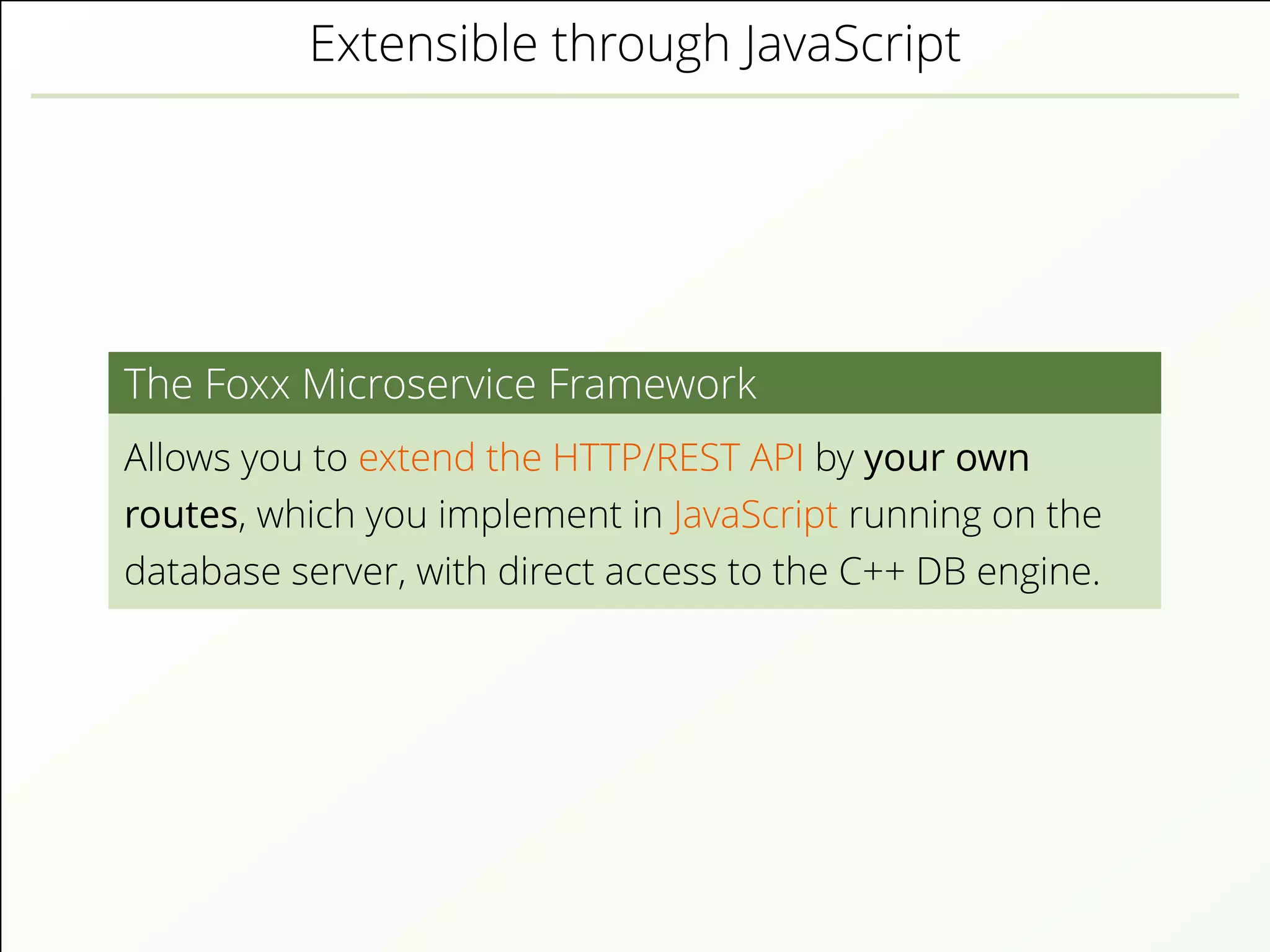
Extensible through JavaScript
The Foxx Microservice Framework
Allows you to extend the HTTP/REST API by your own
routes, which you implement in JavaScript running on the
database server, with direct access to the C++ DB engine.
Links
https://www.arangodb.com
https://github.com/ArangoDB/guesser

Multi-model databases and node.js

  • 1.
    Multi-model databases and node.js MaxNeunhöffer BayNode, 19 March 2015 www.arangodb.com
  • 2.
    triAGENS (mother company ofArangoDB GmbH) 15 years of experience in building specialized databases We care about database technology! In 2012, we wanted to make a generic database such that YOU can build such services.
  • 3.
    Document store A documentstore stores a set of documents, which usually means JSON data, these sets are called collections. The database has access to the contents of the documents.
  • 4.
    Key/value store Opaque values,only key lookup without secondary indexes: =⇒ high performance and perfect scalability
  • 5.
    Graph database A graphdatabase stores a labelled graph. Vertices and edges can be documents. Graphs are good to model relations.
  • 6.
    Polyglot Persistence Idea Use theright data model for each part of a system. Take scalability needs into account!
  • 7.
    A typical UseCase — an Online Shop We need to hold customer data: usually homogeneous, but still variations MySQL product data: even for a specialised business quite inhomogeneous shopping carts: need very fast lookup by session key order and sales data: relate customers and products recommendation engine data: links between different entities
  • 8.
    Polyglot Persistence isnice, but . . . Disadvantages Consequence: One needs multiple database systems in the persis- tence layer of a single project! Wouldn’t it be nice, . . . . . . to enjoy the benefits without the disadvantages?
  • 9.
    The Multi-Model Approach Multi-modeldatabase A multi-model database combines a document store with a graph database and is at the same time a key/value store, with a common query language for all three data models. Important: is able to compete with specialised products on their turf allows for polyglot persistence using a single database
  • 10.
    Use case: Aircraftfleet management
  • 11.
    is a multi-modeldatabase (document store & graph database), is open source and free (Apache 2 license), offers convenient queries (via HTTP/REST and AQL), including joins between different collections, configurable consistency guarantees using transactions memory efficient by shape detection, uses JavaScript throughout (Google’s V8 built into server), API extensible by JS code in the Foxx Microservice Framework, offers many drivers for a wide range of languages, is easy to use with web front end and good documentation, and enjoys good community as well as professional support.
  • 12.
    Extensible through JavaScript TheFoxx Microservice Framework Allows you to extend the HTTP/REST API by your own routes, which you implement in JavaScript running on the database server, with direct access to the C++ DB engine.
  • 13.