Sample and
Sampling
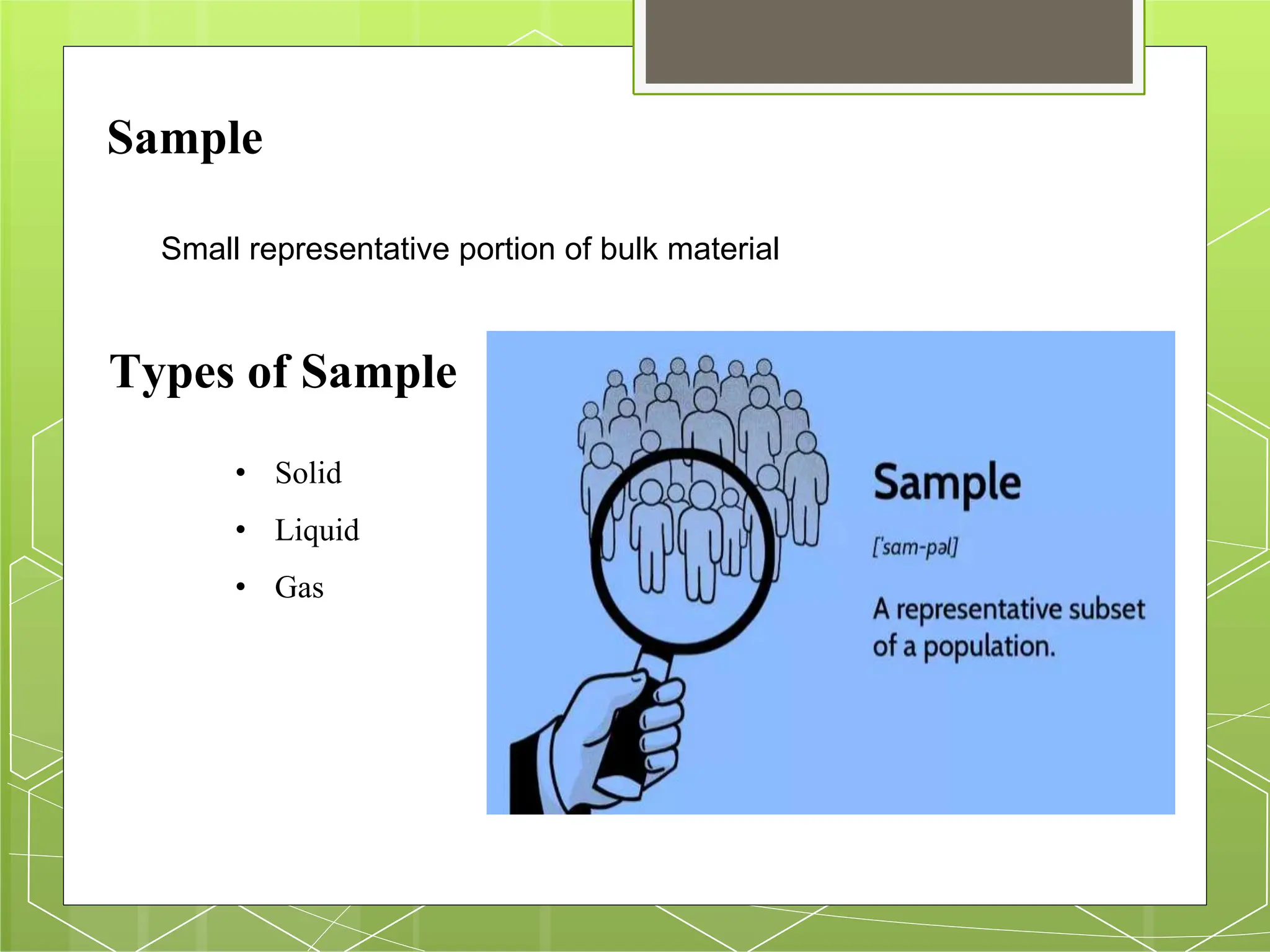
Sample
Small representative portion of bulk material
Types of Sample
• Solid
• Liquid
• Gas
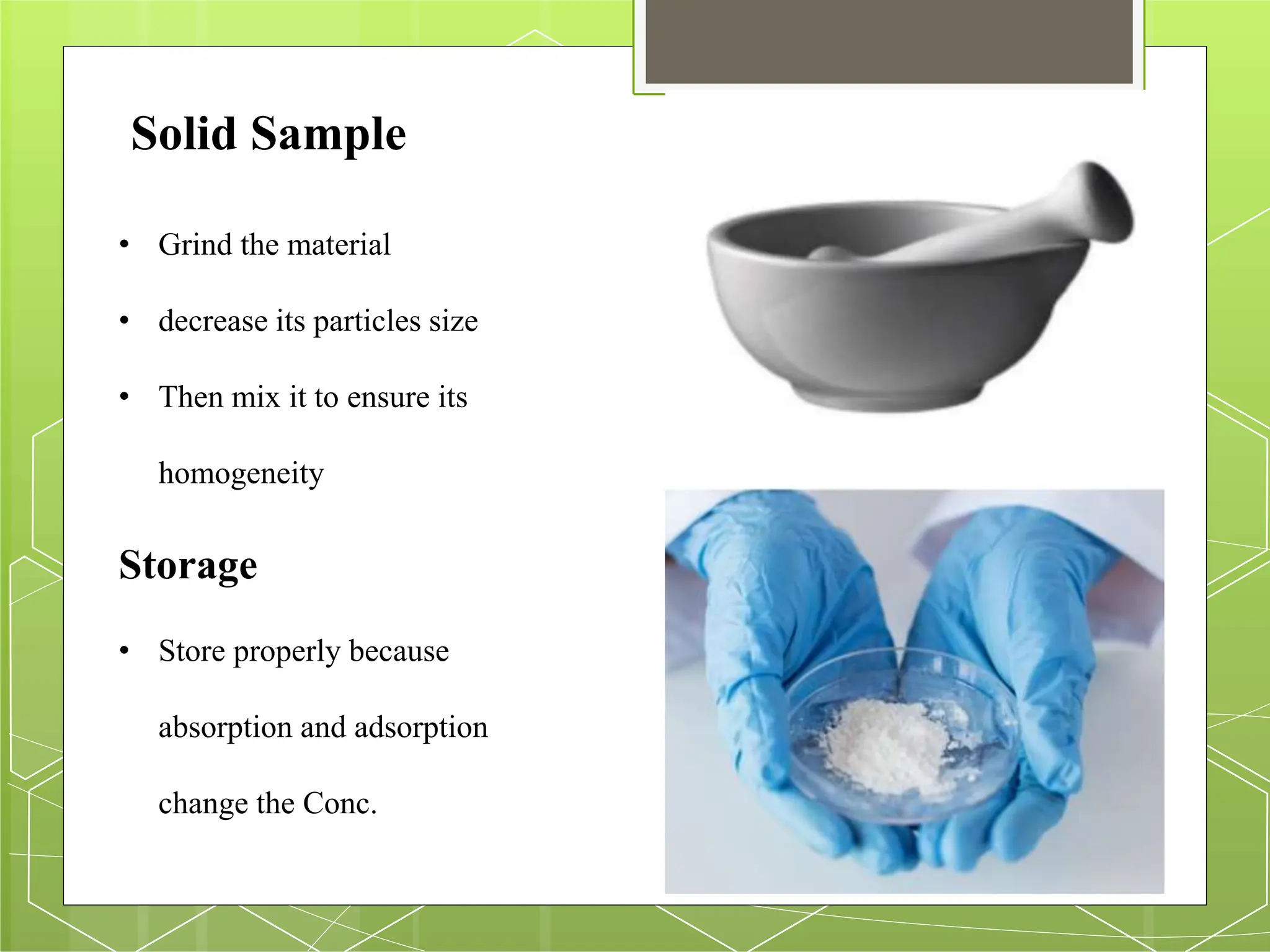
Solid Sample
• Grind the material
• decrease its particles size
• Then mix it to ensure its
homogeneity
Storage
• Store properly because
absorption and adsorption
change the Conc.
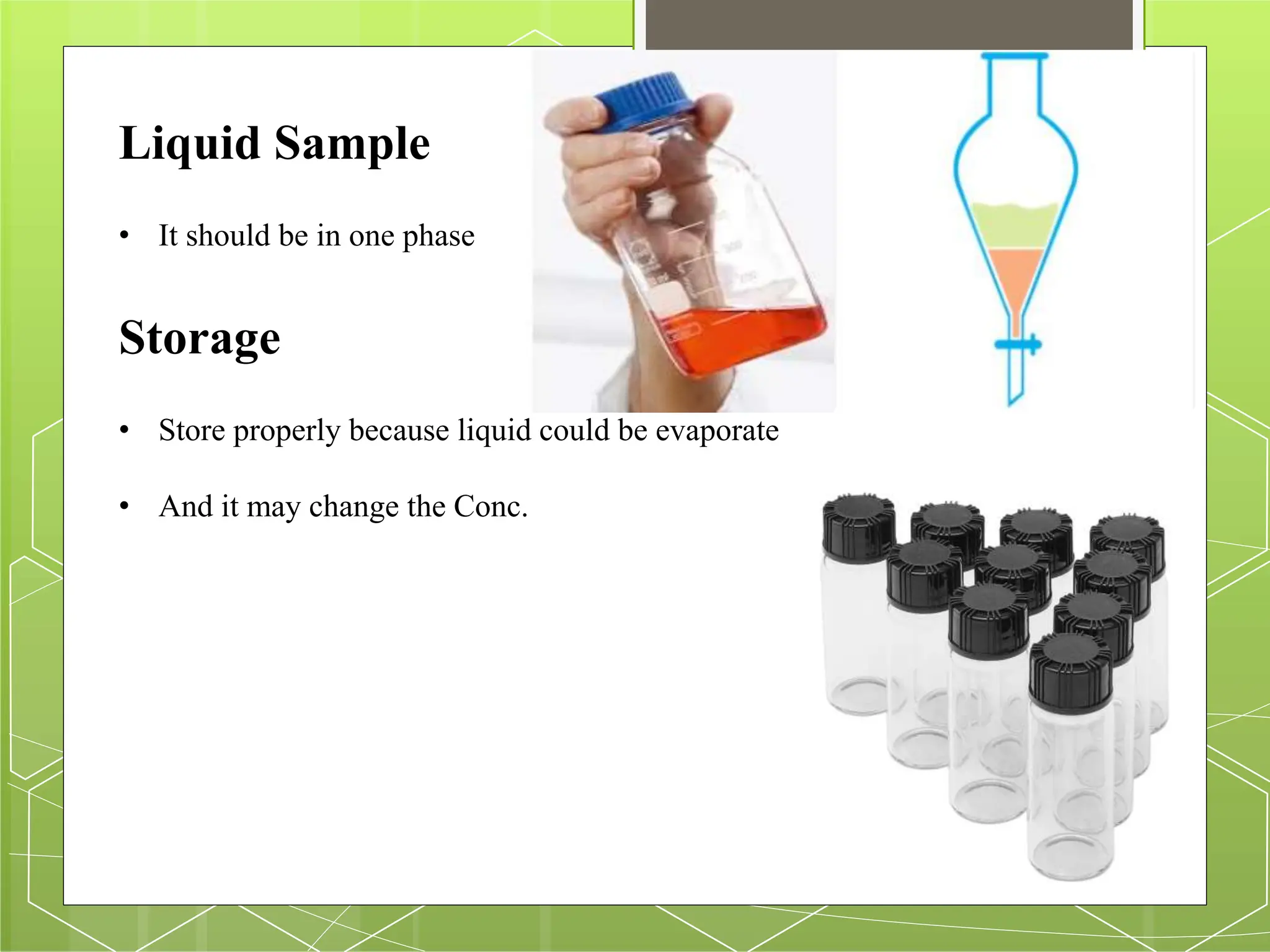
Liquid Sample
• It should be in one phase
Storage
• Store properly because liquid could be evaporate
• And it may change the Conc.
Gaseous Sample
• Gases are generally more
homogenous than liquid and solid
Storage
• Sample container, may be kept in
second sealed container, to ensure
the conc. Of gas should be intact
• Gross Sample consistsof severalportionof
the material to be tested
• Laboratory Sample consistsof a small
portion of grosssample made homogenous
• Analysis Sample isthatwhich is
actually analyzed
Types of Samples
Gross Sample
Laboratory Sample
Analysis Sample
(Few g to Kg)
Bulk of Material
(Few g)
(a drop, few mg, few mL)
Classification of Analysis on the Basis of Size of
Sample
• Macro Analysis
Large quantities of the sample are used
Measurement: 0.1g or more
• Semi-micro Analysis
Lower quantity than macro analysis
Measurement: 0.01-0.1g
• Micro Analysis
Small in quantity
Measurement: 0.001-0.01g
• Ultra-micro Analysis
More smaller in quantity
Measurement: less than 0.001g
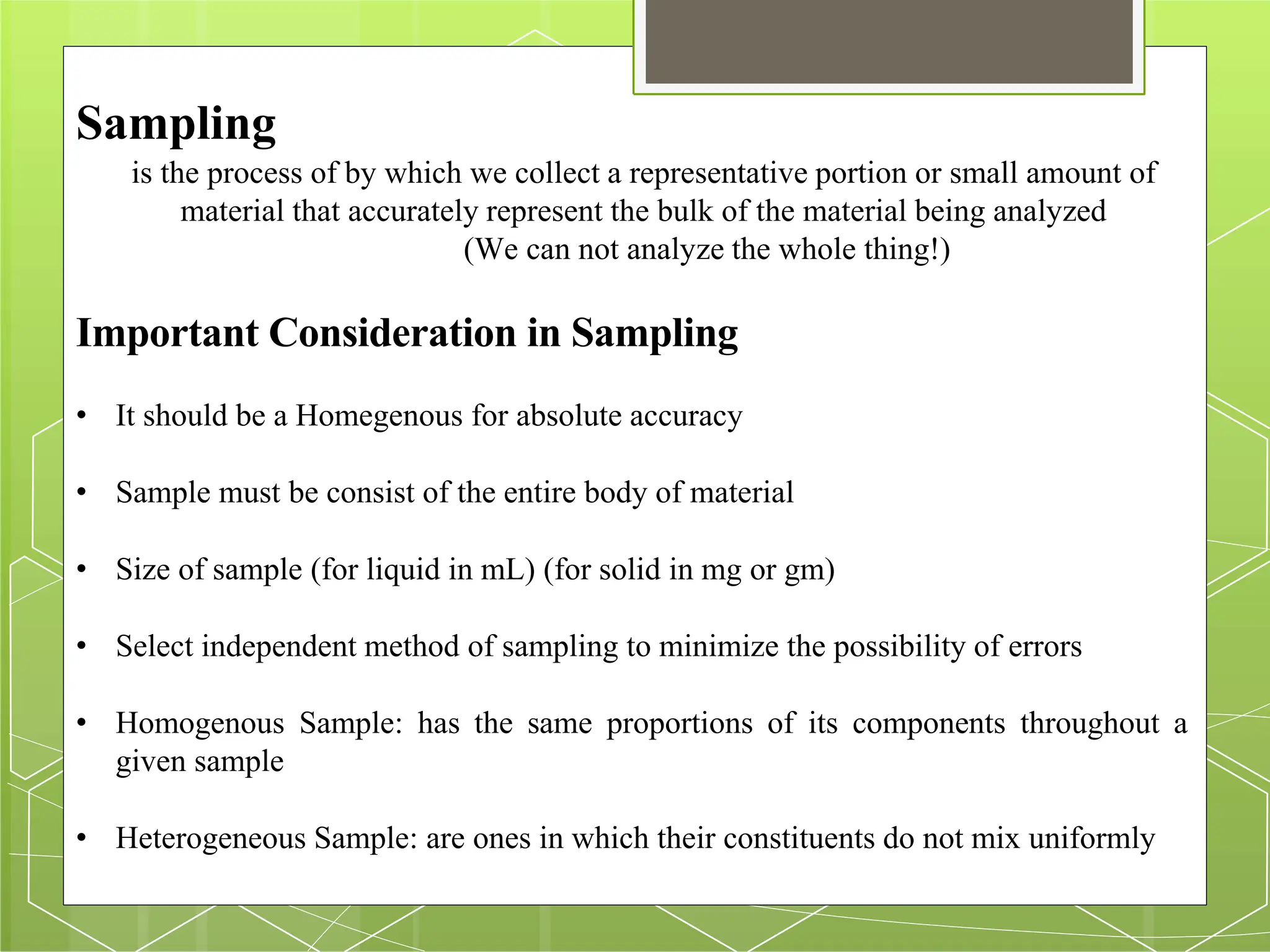
Sampling
is the process of by which we collect a representative portion or small amount of
material that accurately represent the bulk of the material being analyzed
(We can not analyze the whole thing!)
Important Consideration in Sampling
• It should be a Homegenous for absolute accuracy
• Sample must be consist of the entire body of material
• Size of sample (for liquid in mL) (for solid in mg or gm)
• Select independent method of sampling to minimize the possibility of errors
• Homogenous Sample: has the same proportions of its components throughout a
given sample
• Heterogeneous Sample: are ones in which their constituents do not mix uniformly
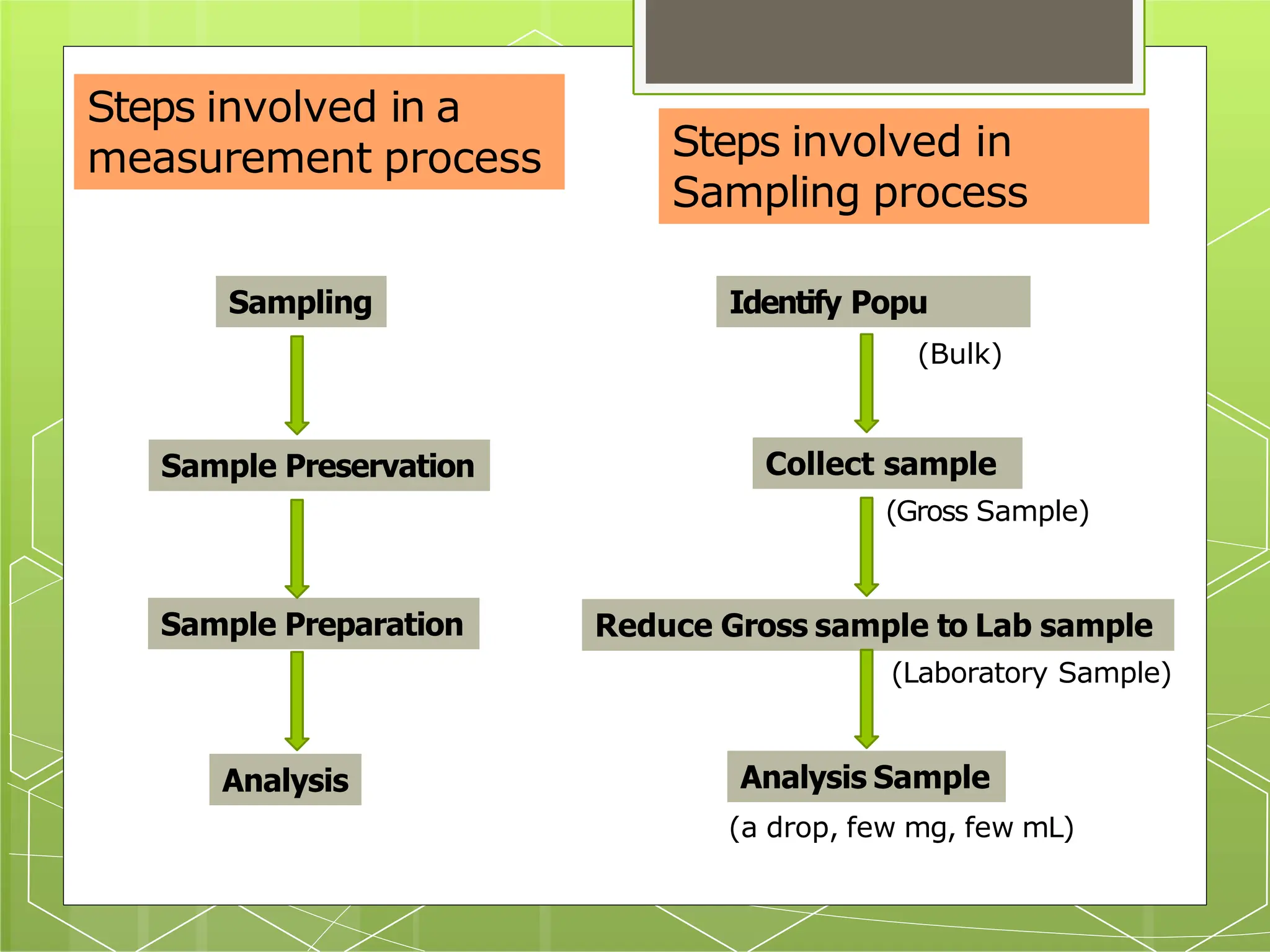
Sample Preservation
Sample Preparation
Analysis
Sampling
Collect sample
Reduce Gross sample to Lab sample
Analysis Sample
(Gross Sample)
(Laboratory Sample)
(a drop, few mg, few mL)
Steps involved in a
measurement process
Identify Popu
Steps involved in
Sampling process
(Bulk)
Basics of sample and sampling chemistry .pptx

Basics of sample and sampling chemistry .pptx

  • 1.
  • 2.
    Sample Small representative portionof bulk material Types of Sample • Solid • Liquid • Gas
  • 3.
    Solid Sample • Grindthe material • decrease its particles size • Then mix it to ensure its homogeneity Storage • Store properly because absorption and adsorption change the Conc.
  • 4.
    Liquid Sample • Itshould be in one phase Storage • Store properly because liquid could be evaporate • And it may change the Conc.
  • 5.
    Gaseous Sample • Gasesare generally more homogenous than liquid and solid Storage • Sample container, may be kept in second sealed container, to ensure the conc. Of gas should be intact
  • 6.
    • Gross Sampleconsistsof severalportionof the material to be tested • Laboratory Sample consistsof a small portion of grosssample made homogenous • Analysis Sample isthatwhich is actually analyzed Types of Samples Gross Sample Laboratory Sample Analysis Sample (Few g to Kg) Bulk of Material (Few g) (a drop, few mg, few mL)
  • 8.
    Classification of Analysison the Basis of Size of Sample • Macro Analysis Large quantities of the sample are used Measurement: 0.1g or more • Semi-micro Analysis Lower quantity than macro analysis Measurement: 0.01-0.1g • Micro Analysis Small in quantity Measurement: 0.001-0.01g • Ultra-micro Analysis More smaller in quantity Measurement: less than 0.001g
  • 9.
    Sampling is the processof by which we collect a representative portion or small amount of material that accurately represent the bulk of the material being analyzed (We can not analyze the whole thing!) Important Consideration in Sampling • It should be a Homegenous for absolute accuracy • Sample must be consist of the entire body of material • Size of sample (for liquid in mL) (for solid in mg or gm) • Select independent method of sampling to minimize the possibility of errors • Homogenous Sample: has the same proportions of its components throughout a given sample • Heterogeneous Sample: are ones in which their constituents do not mix uniformly
  • 10.
    Sample Preservation Sample Preparation Analysis Sampling Collectsample Reduce Gross sample to Lab sample Analysis Sample (Gross Sample) (Laboratory Sample) (a drop, few mg, few mL) Steps involved in a measurement process Identify Popu Steps involved in Sampling process (Bulk)

Editor's Notes

  • #5 It should not be two phase like if you mix water with oil so it will be two phase