Introduction to BasicNutrition
Definition:
Nutrition is the process of consuming food and using it for growth, repair, and
maintenance of life processes. It includes ingestion, digestion, absorption, metabolism,
and elimination.
Caregiver’s Role:
1.Support clients in eating healthy, well-balanced meals.
2.Monitor nutritional intake and report issues.
3.Ensure safety and comfort during feeding.
Rationale:
Proper nutrition is vital to recovery, immune function, and preventing complications such
as infections or delayed wound healing—especially in elderly or ill clients.
3.
Functions of Food(Go, Grow, Glow)
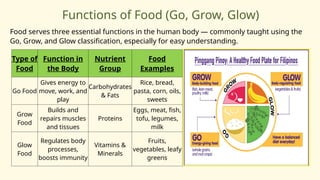
Food serves three essential functions in the human body — commonly taught using the
Go, Grow, and Glow classification, especially for easy understanding.
Type of
Food
Function in
the Body
Nutrient
Group
Food
Examples
Go Food
Gives energy to
move, work, and
play
Carbohydrates
& Fats
Rice, bread,
pasta, corn, oils,
sweets
Grow
Food
Builds and
repairs muscles
and tissues
Proteins
Eggs, meat, fish,
tofu, legumes,
milk
Glow
Food
Regulates body
processes,
boosts immunity
Vitamins &
Minerals
Fruits,
vegetables, leafy
greens
4.
Functions of Food(Go, Grow, Glow)
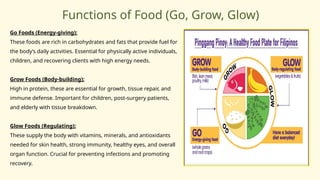
Go Foods (Energy-giving):
These foods are rich in carbohydrates and fats that provide fuel for
the body’s daily activities. Essential for physically active individuals,
children, and recovering clients with high energy needs.
Grow Foods (Body-building):
High in protein, these are essential for growth, tissue repair, and
immune defense. Important for children, post-surgery patients,
and elderly with tissue breakdown.
Glow Foods (Regulating):
These supply the body with vitamins, minerals, and antioxidants
needed for skin health, strong immunity, healthy eyes, and overall
organ function. Crucial for preventing infections and promoting
recovery.
5.
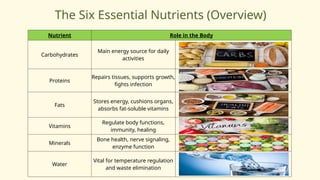
The Six EssentialNutrients (Overview)
Nutrient Role in the Body
Carbohydrates
Main energy source for daily
activities
Proteins
Repairs tissues, supports growth,
fights infection
Fats
Stores energy, cushions organs,
absorbs fat-soluble vitamins
Vitamins
Regulate body functions,
immunity, healing
Minerals
Bone health, nerve signaling,
enzyme function
Water
Vital for temperature regulation
and waste elimination
6.
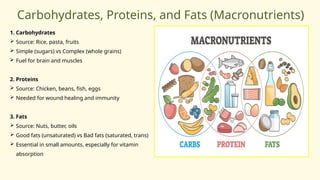
Carbohydrates, Proteins, andFats (Macronutrients)
1. Carbohydrates
Source: Rice, pasta, fruits
Simple (sugars) vs Complex (whole grains)
Fuel for brain and muscles
2. Proteins
Source: Chicken, beans, fish, eggs
Needed for wound healing and immunity
3. Fats
Source: Nuts, butter, oils
Good fats (unsaturated) vs Bad fats (saturated, trans)
Essential in small amounts, especially for vitamin
absorption
7.
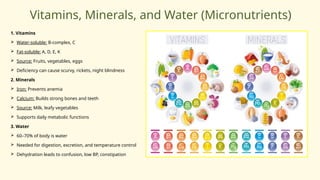
Vitamins, Minerals, andWater (Micronutrients)
1. Vitamins
Water-soluble: B-complex, C
Fat-soluble: A, D, E, K
Source: Fruits, vegetables, eggs
Deficiency can cause scurvy, rickets, night blindness
2. Minerals
Iron: Prevents anemia
Calcium: Builds strong bones and teeth
Source: Milk, leafy vegetables
Supports daily metabolic functions
3. Water
60–70% of body is water
Needed for digestion, excretion, and temperature control
Dehydration leads to confusion, low BP, constipation
8.
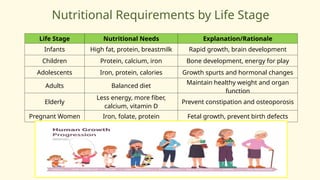
Nutritional Requirements byLife Stage
Life Stage Nutritional Needs Explanation/Rationale
Infants High fat, protein, breastmilk Rapid growth, brain development
Children Protein, calcium, iron Bone development, energy for play
Adolescents Iron, protein, calories Growth spurts and hormonal changes
Adults Balanced diet
Maintain healthy weight and organ
function
Elderly
Less energy, more fiber,
calcium, vitamin D
Prevent constipation and osteoporosis
Pregnant Women Iron, folate, protein Fetal growth, prevent birth defects
9.
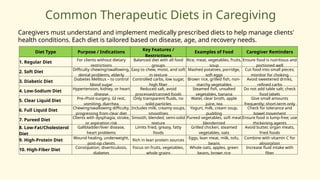
Common Therapeutic Dietsin Caregiving
Caregivers must understand and implement medically prescribed diets to help manage clients'
health conditions. Each diet is tailored based on disease, age, and recovery needs.
Diet Type Purpose / Indications
Key Features /
Restrictions
Examples of Food Caregiver Reminders
1. Regular Diet
For clients without dietary
restrictions
Balanced diet with all food
groups
Rice, meat, vegetables, fruits,
soup
Ensure food is nutritious and
portioned well
2. Soft Diet
Difficulty chewing/swallowing,
dental problems, elderly
Easy to chew, moist, and soft
in texture
Mashed potatoes, porridge,
soft eggs
Cut food into small pieces;
monitor for choking
3. Diabetic Diet
Diabetes Mellitus – to control
blood sugar
Controlled carbs, low sugar,
high fiber
Brown rice, grilled fish, non-
starchy vegetables
Avoid sweetened drinks,
refined carbs
4. Low-Sodium Diet
Hypertension, kidney, or heart
disease
Reduced salt, avoid
processed/canned foods
Steamed fish, unsalted
vegetables, banana
Do not add table salt; check
food labels
5. Clear Liquid Diet
Pre-/Post-surgery, GI rest,
vomiting, diarrhea
Only transparent fluids, no
solid particles
Water, clear broth, apple
juice, tea
Give small amounts
frequently; short-term only
6. Full Liquid Diet
Chewing/swallowing difficulty,
progressing from clear diet
Includes milk, creamy soups,
smoothies
Yogurt, milk, cream soup,
pudding
Check for tolerance and
bowel movement
7. Pureed Diet
Clients with dysphagia, stroke,
or aspiration risk
Smooth, blended, semi-solid
texture
Pureed vegetables, soft meat
blenderized
Ensure food is lump-free; use
thickening agents
8. Low-Fat/Cholesterol
Diet
Gallbladder/liver disease,
heart problems
Limits fried, greasy, fatty
foods
Grilled chicken, steamed
vegetables, oats
Avoid butter, organ meats,
fried foods
9. High-Protein Diet
Wound healing, underweight,
post-op clients
Rich in lean protein sources
Eggs, lean meat, milk, tofu,
beans
Combine with vitamin C for
absorption
10. High-Fiber Diet
Constipation, diverticulosis,
diabetes
Focus on fruits, vegetables,
whole grains
Whole oats, apples, green
beans, brown rice
Increase fluid intake with
fiber
10.
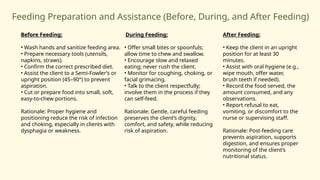
Feeding Preparation andAssistance (Before, During, and After Feeding)
Before Feeding:
• Wash hands and sanitize feeding area.
• Prepare necessary tools (utensils,
napkins, straws).
• Confirm the correct prescribed diet.
• Assist the client to a Semi-Fowler’s or
upright position (45–90°) to prevent
aspiration.
• Cut or prepare food into small, soft,
easy-to-chew portions.
Rationale: Proper hygiene and
positioning reduce the risk of infection
and choking, especially in clients with
dysphagia or weakness.
During Feeding:
• Offer small bites or spoonfuls;
allow time to chew and swallow.
• Encourage slow and relaxed
eating; never rush the client.
• Monitor for coughing, choking, or
facial grimacing.
• Talk to the client respectfully;
involve them in the process if they
can self-feed.
Rationale: Gentle, careful feeding
preserves the client’s dignity,
comfort, and safety, while reducing
risk of aspiration.
After Feeding:
• Keep the client in an upright
position for at least 30
minutes.
• Assist with oral hygiene (e.g.,
wipe mouth, offer water,
brush teeth if needed).
• Record the food served, the
amount consumed, and any
observations.
• Report refusal to eat,
vomiting, or discomfort to the
nurse or supervising staff.
Rationale: Post-feeding care
prevents aspiration, supports
digestion, and ensures proper
monitoring of the client’s
nutritional status.
11.
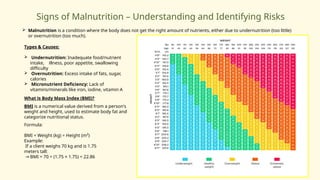
Signs of Malnutrition– Understanding and Identifying Risks
Malnutrition is a condition where the body does not get the right amount of nutrients, either due to undernutrition (too little)
or overnutrition (too much).
Types & Causes:
Undernutrition: Inadequate food/nutrient
intake, illness, poor appetite, swallowing
difficulty
Overnutrition: Excess intake of fats, sugar,
calories
Micronutrient Deficiency: Lack of
vitamins/minerals like iron, iodine, vitamin A
What is Body Mass Index (BMI)?
BMI is a numerical value derived from a person's
weight and height, used to estimate body fat and
categorize nutritional status.
Formula:
BMI = Weight (kg) ÷ Height (m²)
Example:
If a client weighs 70 kg and is 1.75
meters tall:
→ BMI = 70 ÷ (1.75 × 1.75) = 22.86
12.
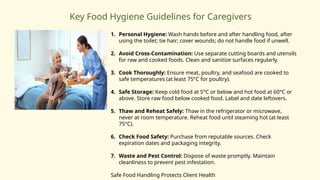
Key Food HygieneGuidelines for Caregivers
1. Personal Hygiene: Wash hands before and after handling food, after
using the toilet; tie hair; cover wounds; do not handle food if unwell.
2. Avoid Cross-Contamination: Use separate cutting boards and utensils
for raw and cooked foods. Clean and sanitize surfaces regularly.
3. Cook Thoroughly: Ensure meat, poultry, and seafood are cooked to
safe temperatures (at least 75°C for poultry).
4. Safe Storage: Keep cold food at 5°C or below and hot food at 60°C or
above. Store raw food below cooked food. Label and date leftovers.
5. Thaw and Reheat Safely: Thaw in the refrigerator or microwave,
never at room temperature. Reheat food until steaming hot (at least
75°C).
6. Check Food Safety: Purchase from reputable sources. Check
expiration dates and packaging integrity.
7. Waste and Pest Control: Dispose of waste promptly. Maintain
cleanliness to prevent pest infestation.
Safe Food Handling Protects Client Health




![HEALTH_EDUCATION_ON_NUTRITION_AND_DIETETICS37[1].docx](https://cdn.slidesharecdn.com/ss_thumbnails/healtheducationonnutritionanddietetics371-250724085009-75d3ac20-thumbnail.jpg?width=640&height=640&fit=bounds)


