Spring Break 2017
Enroll in ID 250: Global Scholar Experience and
travel to Spain to experience the art, architecture, &
culture of Barcelona.
"WE TRAVEL TO LEARN
& TO BECOME MORE CULTURALLY AWARE.“
Better understanding of global issues
More comfortable navigating unfamiliar places
Meet people
New experiences
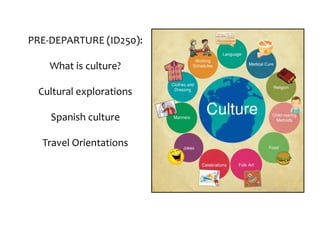
PRE-DEPARTURE (ID250):
What is culture?
Cultural explorations
Spanish culture
Travel Orientations
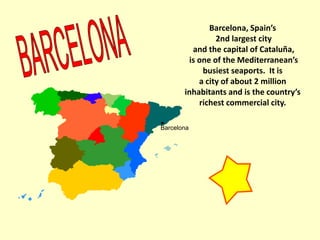
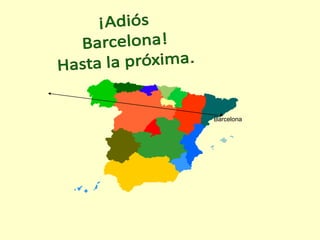
Barcelona, Spain’s
2nd largest city
and the capital of Cataluña,
is one of the Mediterranean’s
busiest seaports. It is
a city of about 2 million
inhabitants and is the country’s
richest commercial city.
Barcelona
•
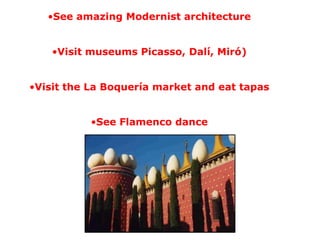
•See amazing Modernist architecture
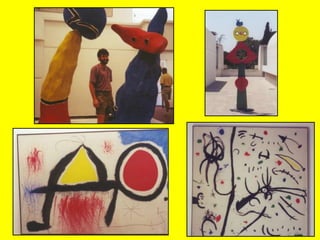
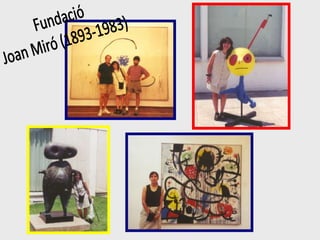
•Visit museums Picasso, Dalí, Miró)
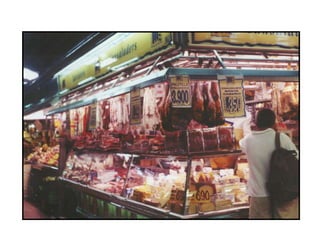
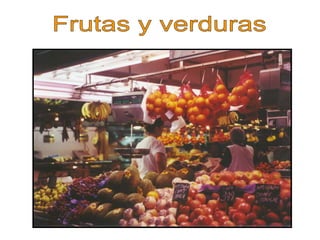
•Visit the La Boquería market and eat tapas
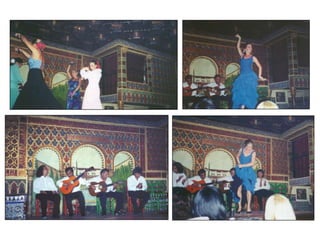
•See Flamenco dance
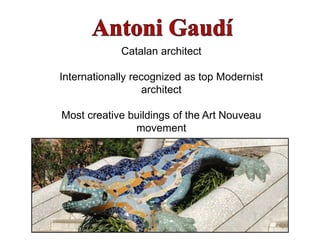
Catalan architect
Internationally recognized as top Modernist
architect
Most creative buildings of the Art Nouveau
movement
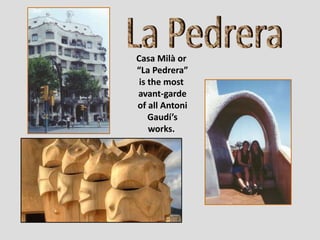
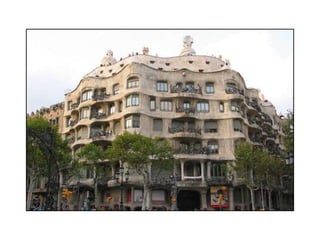
Casa Milà or
“La Pedrera”
is the most
avant-garde
of all Antoni
Gaudí’s
works.
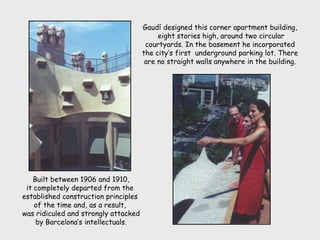
Built between 1906 and 1910,
it completely departed from the
established construction principles
of the time and, as a result,
was ridiculed and strongly attacked
by Barcelona’s intellectuals.
Gaudí designed this corner apartment building,
eight stories high, around two circular
courtyards. In the basement he incorporated
the city’s first underground parking lot. There
are no straight walls anywhere in the building.
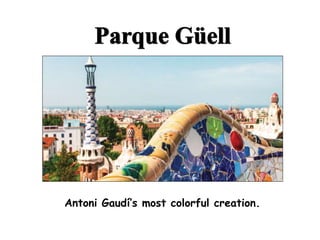
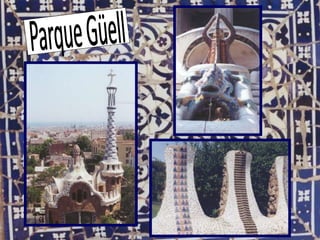
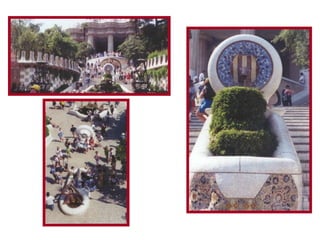
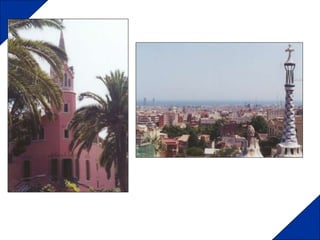
Antoni Gaudí’s most colorful creation.
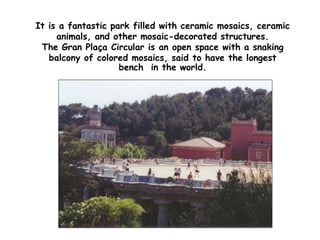
It is a fantastic park filled with ceramic mosaics, ceramic
animals, and other mosaic-decorated structures.
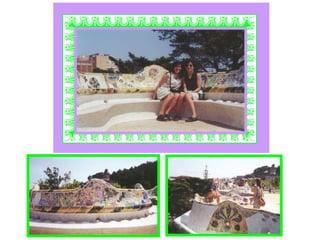
The Gran Plaça Circular is an open space with a snaking
balcony of colored mosaics, said to have the longest
bench in the world.
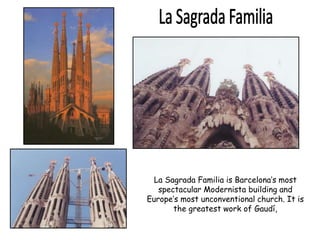
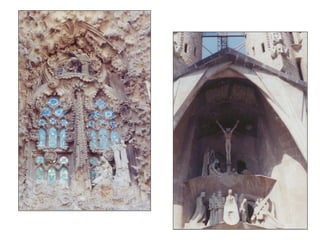
La Sagrada Familia is Barcelona’s most
spectacular Modernista building and
Europe’s most unconventional church. It is
the greatest work of Gaudí,
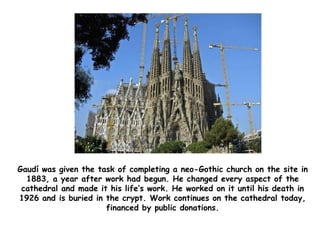
Gaudí was given the task of completing a neo-Gothic church on the site in
1883, a year after work had begun. He changed every aspect of the
cathedral and made it his life’s work. He worked on it until his death in
1926 and is buried in the crypt. Work continues on the cathedral today,
financed by public donations.
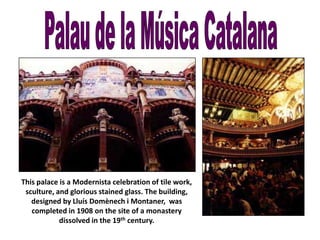
This palace is a Modernista celebration of tile work,
sculture, and glorious stained glass. The building,
designed by Lluís Domènech i Montaner, was
completed in 1908 on the site of a monastery
dissolved in the 19th century.
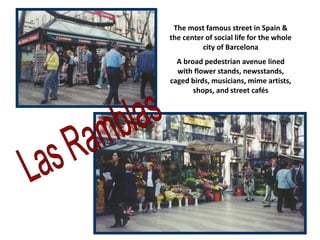
The most famous street in Spain &
the center of social life for the whole
city of Barcelona
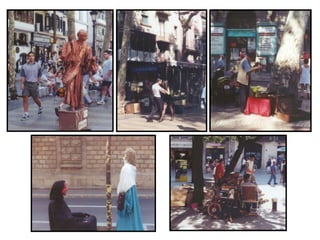
A broad pedestrian avenue lined
with flower stands, newsstands,
caged birds, musicians, mime artists,
shops, and street cafés
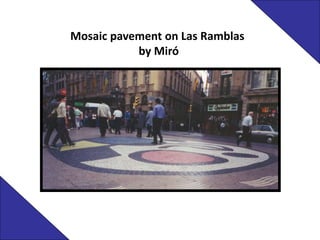
Mosaic pavement on Las Ramblas
by Miró
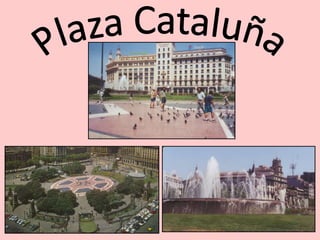
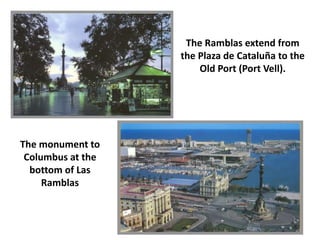
The Ramblas extend from
the Plaza de Cataluña to the
Old Port (Port Vell).
The monument to
Columbus at the
bottom of Las
Ramblas
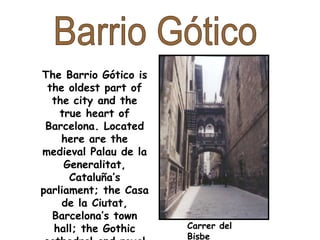
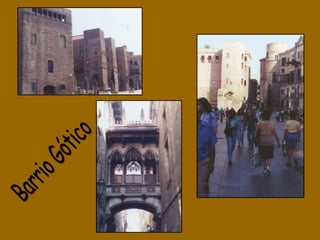
Carrer del
Bisbe
The Barrio Gótico is
the oldest part of
the city and the
true heart of
Barcelona. Located
here are the
medieval Palau de la
Generalitat,
Cataluña’s
parliament; the Casa
de la Ciutat,
Barcelona’s town
hall; the Gothic
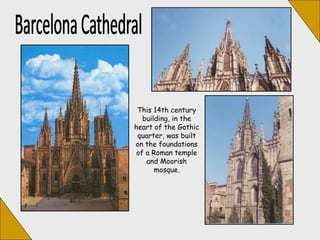
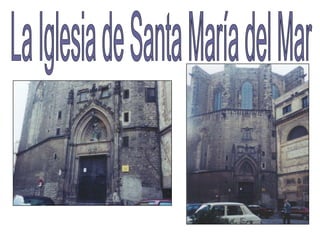
This 14th century
building, in the
heart of the Gothic
quarter, was built
on the foundations
of a Roman temple
and Moorish
mosque.
Construction began in 1298
and was not completed until
the late 19th century, when
the main facade was
completed. The two octagonal
bell towers are the most
monumental features of the
cathedral.
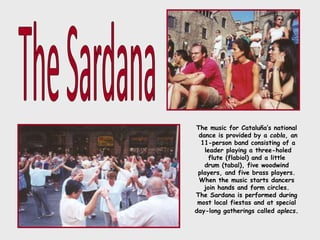
The music for Cataluña’s national
dance is provided by a cobla, an
11-person band consisting of a
leader playing a three-holed
flute (flabiol) and a little
drum (tabal), five woodwind
players, and five brass players.
When the music starts dancers
join hands and form circles.
The Sardana is performed during
most local fiestas and at special
day-long gatherings called aplecs.
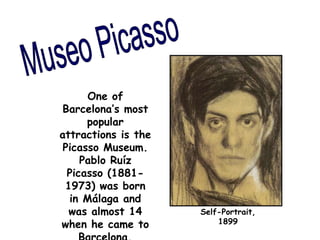
One of
Barcelona’s most
popular
attractions is the
Picasso Museum.
Pablo Ruíz
Picasso (1881-
1973) was born
in Málaga and
was almost 14
when he came to
Self-Portrait,
1899
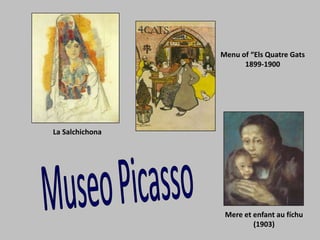
Menu of “Els Quatre Gats
1899-1900
La Salchichona
Mere et enfant au fíchu
(1903)
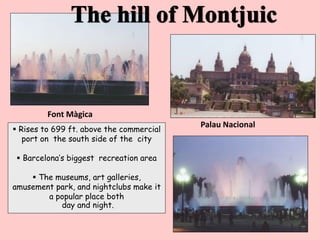
 Rises to 699 ft. above the commercial
port on the south side of the city
 Barcelona’s biggest recreation area
 The museums, art galleries,
amusement park, and nightclubs make it
a popular place both
day and night.
Palau Nacional
Font Màgica
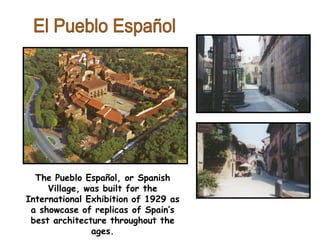
The Pueblo Español, or Spanish
Village, was built for the
International Exhibition of 1929 as
a showcase of replicas of Spain’s
best architecture throughout the
ages.
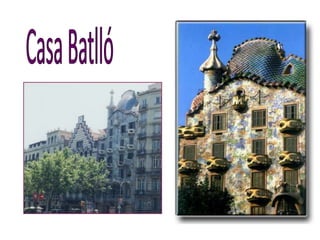
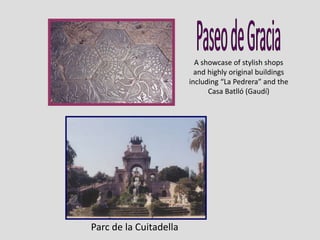
A showcase of stylish shops
and highly original buildings
including “La Pedrera” and the
Casa Batlló (Gaudí)
Parc de la Cuitadella
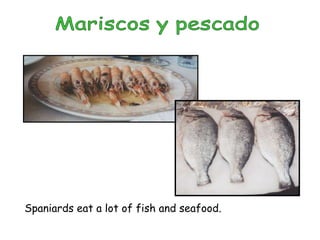
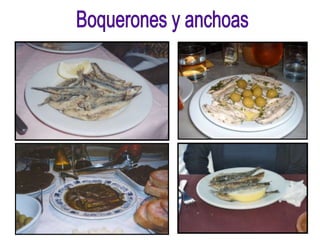
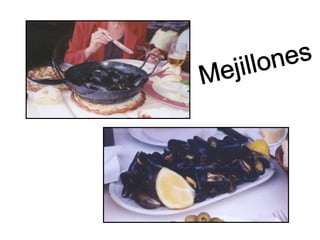
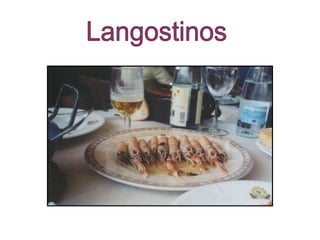
Spaniards eat a lot of fish and seafood.
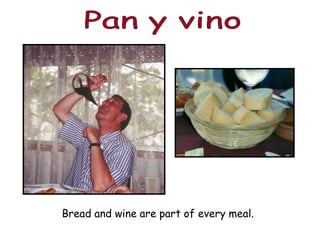
Bread and wine are part of every meal.
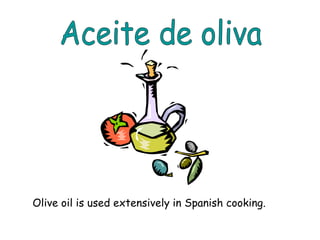
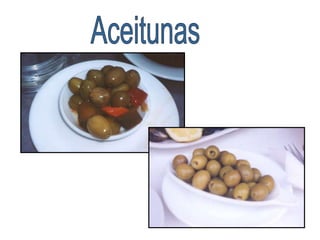
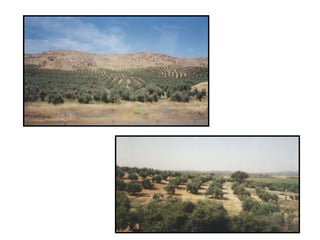
Olive oil is used extensively in Spanish cooking.
Meals & mealtimes in Spain are
a bit different than are own.
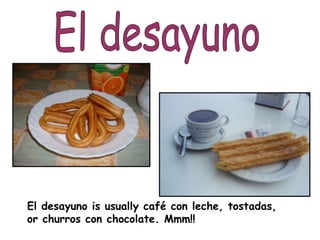
El desayuno is usually café con leche, tostadas,
or churros con chocolate. Mmm!!
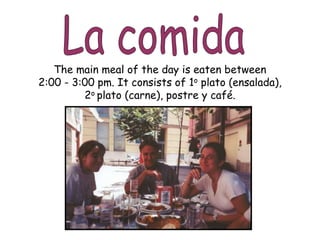
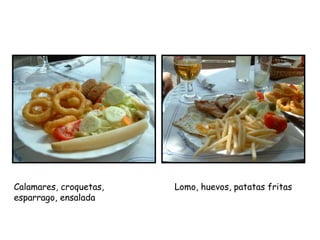
The main meal of the day is eaten between
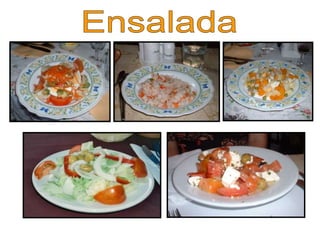
2:00 - 3:00 pm. It consists of 1o plato (ensalada),
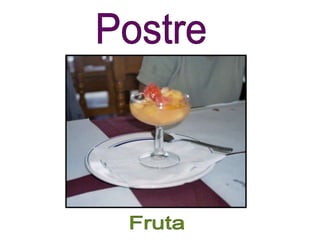
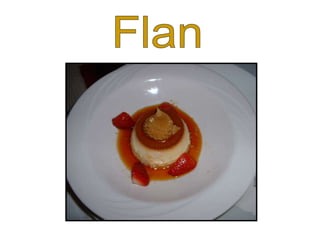
2o plato (carne), postre y café.
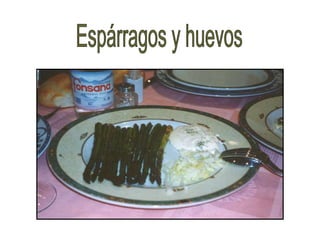
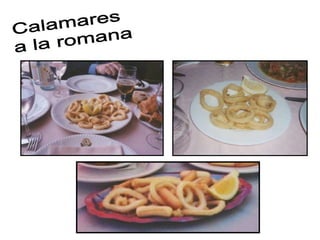
Lomo, huevos, patatas fritasCalamares, croquetas,
esparrago, ensalada
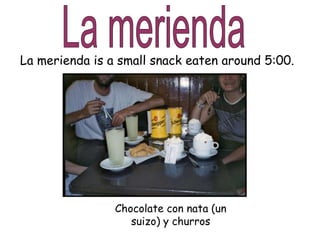
Chocolate con nata (un
suizo) y churros
La merienda is a small snack eaten around 5:00.
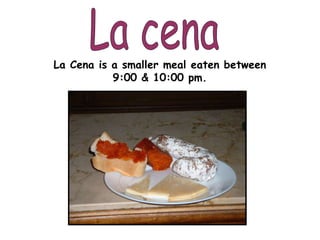
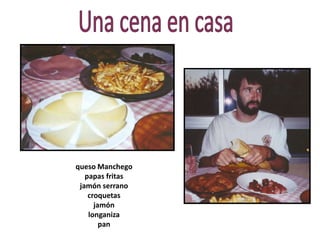
La Cena is a smaller meal eaten between
9:00 & 10:00 pm.
queso Manchego
papas fritas
jamón serrano
croquetas
jamón
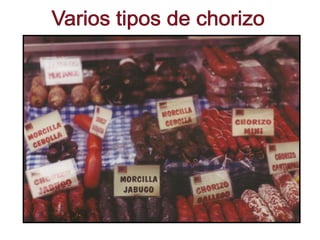
longaniza
pan
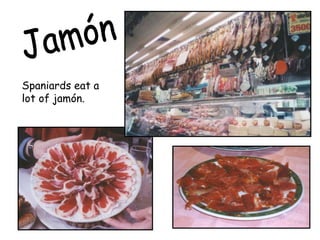
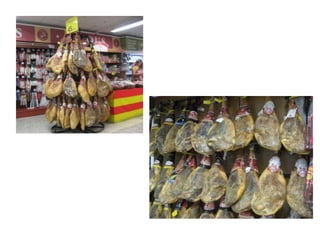
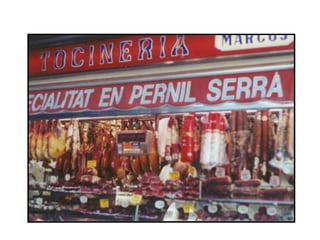
Spaniards eat a
lot of jamón.
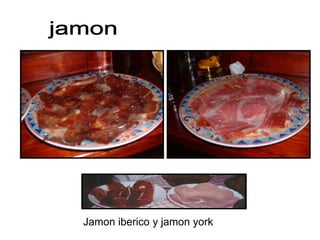
Jamon iberico y jamon york
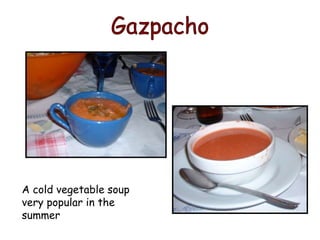
A cold vegetable soup
very popular in the
summer
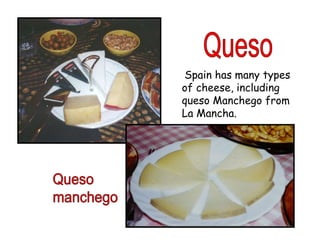
Spain has many types
of cheese, including
queso Manchego from
La Mancha.
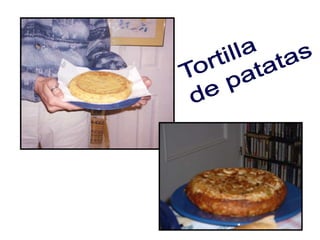
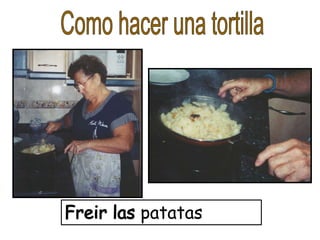
patatas
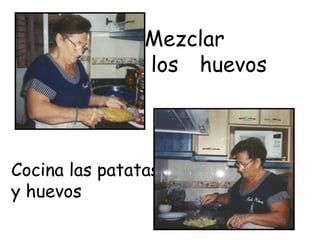
Cocina las patatas
y huevos
Mezclar
los huevos
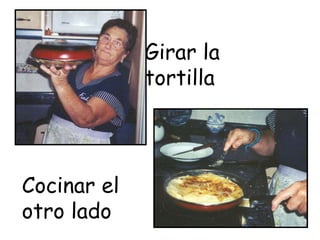
Girar la
tortilla
Cocinar el
otro lado
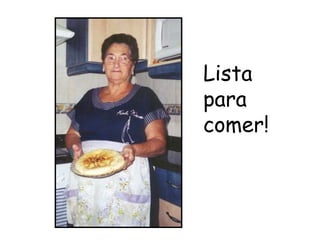
Lista
para
comer!
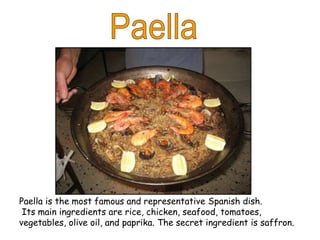
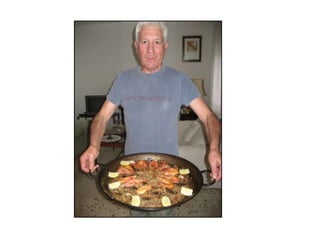
Paella is the most famous and representative Spanish dish.
Its main ingredients are rice, chicken, seafood, tomatoes,
vegetables, olive oil, and paprika. The secret ingredient is saffron.
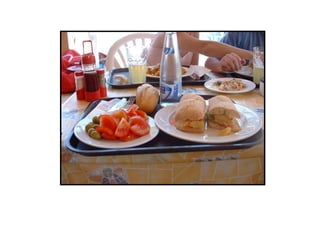
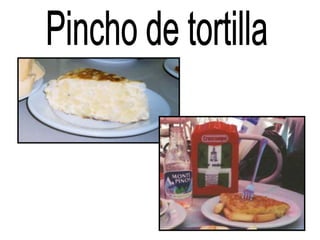
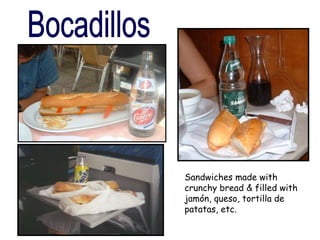
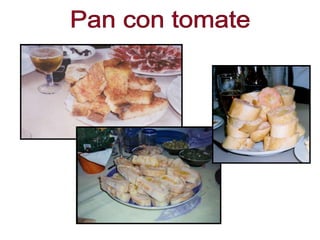
Sandwiches made with
crunchy bread & filled with
jamón, queso, tortilla de
patatas, etc.
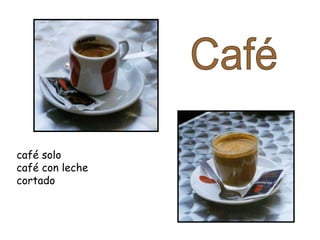
café solo
café con leche
cortado
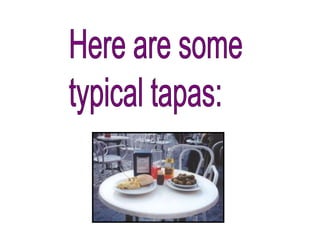
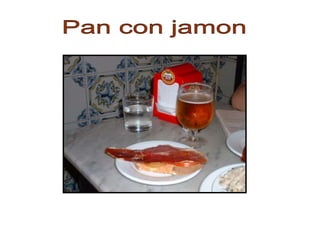
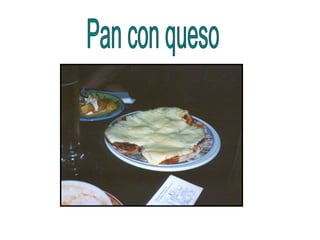
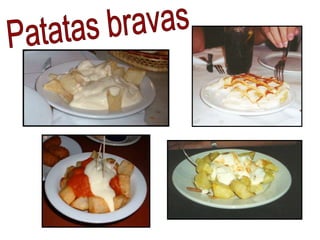
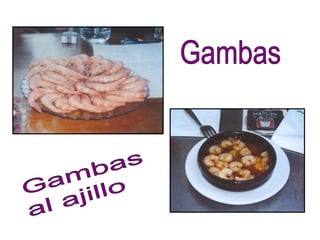
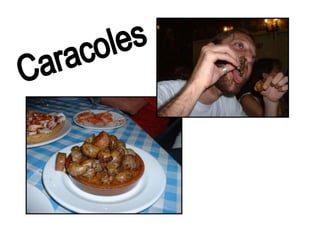
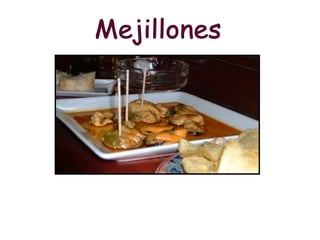
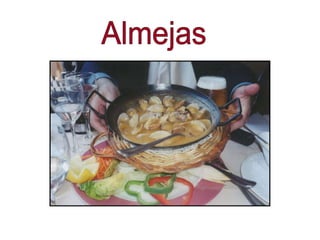
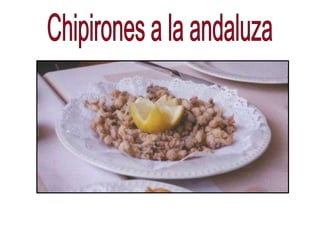
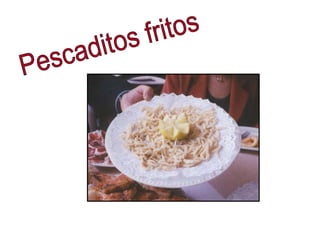
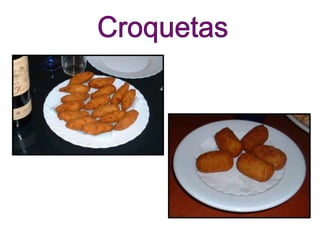
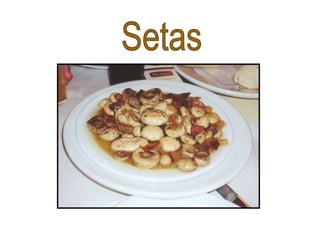
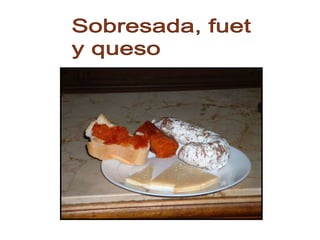
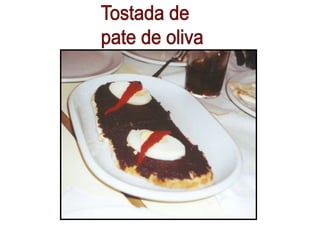
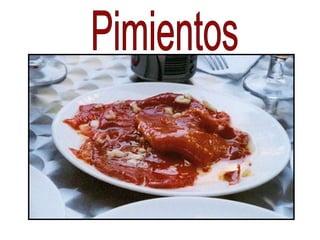
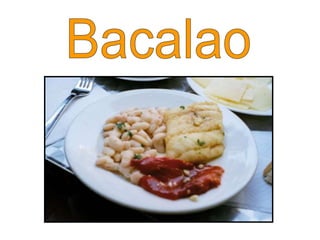
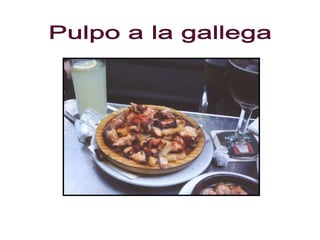
Tapas are tiny portions of food or appetizers.
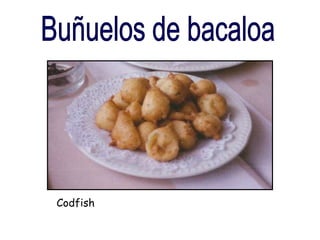
Codfish
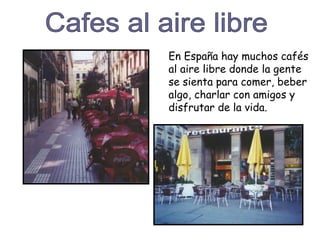
En España hay muchos cafés
al aire libre donde la gente
se sienta para comer, beber
algo, charlar con amigos y
disfrutar de la vida.
Barcelona•

Barcelona -for recruitment2

  • 1.
  • 2.
    Enroll in ID250: Global Scholar Experience and travel to Spain to experience the art, architecture, & culture of Barcelona. "WE TRAVEL TO LEARN & TO BECOME MORE CULTURALLY AWARE.“ Better understanding of global issues More comfortable navigating unfamiliar places Meet people New experiences
  • 3.
    PRE-DEPARTURE (ID250): What isculture? Cultural explorations Spanish culture Travel Orientations
  • 5.
    Barcelona, Spain’s 2nd largestcity and the capital of Cataluña, is one of the Mediterranean’s busiest seaports. It is a city of about 2 million inhabitants and is the country’s richest commercial city. Barcelona •
  • 6.
    •See amazing Modernistarchitecture •Visit museums Picasso, Dalí, Miró) •Visit the La Boquería market and eat tapas •See Flamenco dance
  • 8.
    Catalan architect Internationally recognizedas top Modernist architect Most creative buildings of the Art Nouveau movement
  • 9.
    Casa Milà or “LaPedrera” is the most avant-garde of all Antoni Gaudí’s works.
  • 10.
    Built between 1906and 1910, it completely departed from the established construction principles of the time and, as a result, was ridiculed and strongly attacked by Barcelona’s intellectuals. Gaudí designed this corner apartment building, eight stories high, around two circular courtyards. In the basement he incorporated the city’s first underground parking lot. There are no straight walls anywhere in the building.
  • 13.
    Antoni Gaudí’s mostcolorful creation.
  • 14.
    It is afantastic park filled with ceramic mosaics, ceramic animals, and other mosaic-decorated structures. The Gran Plaça Circular is an open space with a snaking balcony of colored mosaics, said to have the longest bench in the world.
  • 19.
    La Sagrada Familiais Barcelona’s most spectacular Modernista building and Europe’s most unconventional church. It is the greatest work of Gaudí,
  • 20.
    Gaudí was giventhe task of completing a neo-Gothic church on the site in 1883, a year after work had begun. He changed every aspect of the cathedral and made it his life’s work. He worked on it until his death in 1926 and is buried in the crypt. Work continues on the cathedral today, financed by public donations.
  • 22.
    This palace isa Modernista celebration of tile work, sculture, and glorious stained glass. The building, designed by Lluís Domènech i Montaner, was completed in 1908 on the site of a monastery dissolved in the 19th century.
  • 24.
    The most famousstreet in Spain & the center of social life for the whole city of Barcelona A broad pedestrian avenue lined with flower stands, newsstands, caged birds, musicians, mime artists, shops, and street cafés
  • 25.
    Mosaic pavement onLas Ramblas by Miró
  • 27.
    The Ramblas extendfrom the Plaza de Cataluña to the Old Port (Port Vell). The monument to Columbus at the bottom of Las Ramblas
  • 28.
    Carrer del Bisbe The BarrioGótico is the oldest part of the city and the true heart of Barcelona. Located here are the medieval Palau de la Generalitat, Cataluña’s parliament; the Casa de la Ciutat, Barcelona’s town hall; the Gothic
  • 30.
    This 14th century building,in the heart of the Gothic quarter, was built on the foundations of a Roman temple and Moorish mosque.
  • 31.
    Construction began in1298 and was not completed until the late 19th century, when the main facade was completed. The two octagonal bell towers are the most monumental features of the cathedral.
  • 32.
    The music forCataluña’s national dance is provided by a cobla, an 11-person band consisting of a leader playing a three-holed flute (flabiol) and a little drum (tabal), five woodwind players, and five brass players. When the music starts dancers join hands and form circles. The Sardana is performed during most local fiestas and at special day-long gatherings called aplecs.
  • 33.
    One of Barcelona’s most popular attractionsis the Picasso Museum. Pablo Ruíz Picasso (1881- 1973) was born in Málaga and was almost 14 when he came to Self-Portrait, 1899
  • 34.
    Menu of “ElsQuatre Gats 1899-1900 La Salchichona Mere et enfant au fíchu (1903)
  • 35.
     Rises to699 ft. above the commercial port on the south side of the city  Barcelona’s biggest recreation area  The museums, art galleries, amusement park, and nightclubs make it a popular place both day and night. Palau Nacional Font Màgica
  • 36.
    The Pueblo Español,or Spanish Village, was built for the International Exhibition of 1929 as a showcase of replicas of Spain’s best architecture throughout the ages.
  • 42.
    A showcase ofstylish shops and highly original buildings including “La Pedrera” and the Casa Batlló (Gaudí) Parc de la Cuitadella
  • 47.
    Spaniards eat alot of fish and seafood.
  • 48.
    Bread and wineare part of every meal.
  • 49.
    Olive oil isused extensively in Spanish cooking.
  • 50.
    Meals & mealtimesin Spain are a bit different than are own.
  • 51.
    El desayuno isusually café con leche, tostadas, or churros con chocolate. Mmm!!
  • 52.
    The main mealof the day is eaten between 2:00 - 3:00 pm. It consists of 1o plato (ensalada), 2o plato (carne), postre y café.
  • 53.
    Lomo, huevos, patatasfritasCalamares, croquetas, esparrago, ensalada
  • 55.
    Chocolate con nata(un suizo) y churros La merienda is a small snack eaten around 5:00.
  • 56.
    La Cena isa smaller meal eaten between 9:00 & 10:00 pm.
  • 57.
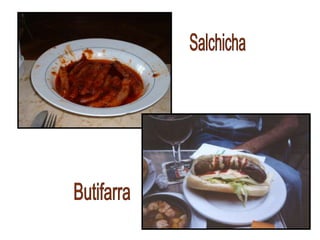
    queso Manchego papas fritas jamónserrano croquetas jamón longaniza pan
  • 59.
  • 60.
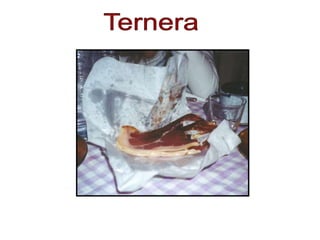
    Jamon iberico yjamon york
  • 67.
    A cold vegetablesoup very popular in the summer
  • 68.
    Spain has manytypes of cheese, including queso Manchego from La Mancha.
  • 71.
  • 72.
    Cocina las patatas yhuevos Mezclar los huevos
  • 73.
  • 74.
  • 79.
    Paella is themost famous and representative Spanish dish. Its main ingredients are rice, chicken, seafood, tomatoes, vegetables, olive oil, and paprika. The secret ingredient is saffron.
  • 83.
    Sandwiches made with crunchybread & filled with jamón, queso, tortilla de patatas, etc.
  • 88.
    café solo café conleche cortado
  • 89.
    Tapas are tinyportions of food or appetizers.
  • 100.
  • 113.
    En España haymuchos cafés al aire libre donde la gente se sienta para comer, beber algo, charlar con amigos y disfrutar de la vida.
  • 116.