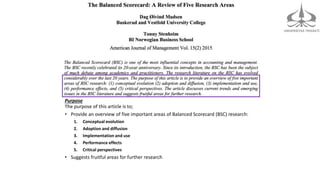
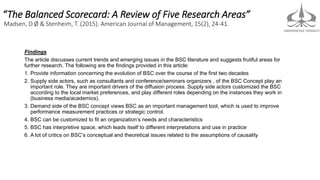
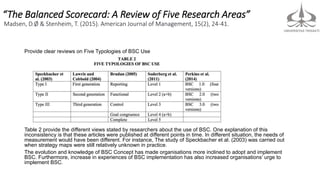
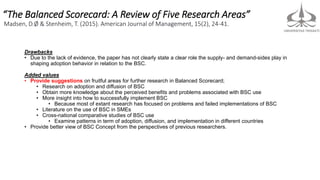
The article examines five key areas of research concerning the Balanced Scorecard (BSC), including its conceptual evolution, adoption, and performance effects, while highlighting current trends in BSC literature. It emphasizes the roles of both supply and demand side actors in the adoption process and suggests areas for further investigation, such as implementation challenges and cross-national studies. The findings point to customization possibilities of the BSC for different organizational needs, alongside the need for more empirical evidence to clarify the roles involved in BSC adoption.



![Testing your homework 2 solutions...in [1] import numpy as](https://cdn.slidesharecdn.com/ss_thumbnails/testingyourhomework2solutions-211011110539-thumbnail.jpg?width=640&height=640&fit=bounds)


