In his sermon preached in
the Georgian church of St.
Nino in Paris, on 31 May
1931, St Grigol outlined the
main idea of Ortodox
teaching: ,,Orthodoxy is
and will remain of
inestimable value to us.
Our forefathers selflessly
sacrificed themselves to
this greatest treasure of the
nation, often plummeting
to depths of humiliation or
choosing an agonizing
death over a life of luxury
or political benefit.
Orthodoxy is a value itself
worth living and dying
for.”
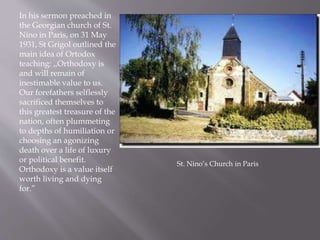
St. Nino’s Church in Paris
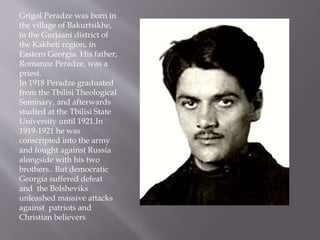
Grigol Peradze was born in
the village of Bakurtsikhe,
in the Gurjaani district of
the Kakheti region, in
Eastern Georgia. His father,
Romanoz Peradze, was a
priest.
In 1918 Peradze graduated
from the Tbilisi Theological
Seminary, and afterwards
studied at the Tbilisi State
University until 1921.In
1919-1921 he was
conscripted into the army
and fought against Russia
alongside with his two
brothers.. But democratic
Georgia suffered defeat
and the Bolsheviks
unleashed massive attacks
against patriots and
Christian believers
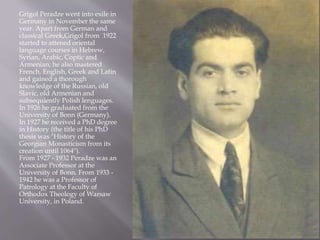
Grigol Peradze went into exile in
Germany in November the same
year. Apart from German and
classical Greek,Grigol from 1922
started to attened oriental
language courses in Hebrew,
Syrian, Arabic, Coptic and
Armenian; he also mastered
French, English, Greek and Latin
and gained a thorough
knowledge of the Russian, old
Slavic, old Armenian and
subsequiently Polish lenguages.
In 1926 he graduated from the
University of Bonn (Germany).
In 1927 he received a PhD degree
in History (the title of his PhD
thesis was "History of the
Georgian Monasticism from its
creation until 1064").
From 1927 - 1932 Peradze was an
Associate Professor at the
University of Bonn. From 1933 -
1942 he was a Professor of
Patrology at the Faculty of
Orthodox Theology of Warsaw
University, in Poland.
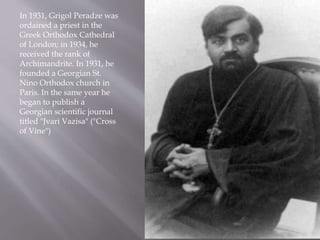
In 1931, Grigol Peradze was
ordained a priest in the
Greek Orthodox Cathedral
of London; in 1934, he
received the rank of
Archimandrite. In 1931, he
founded a Georgian St.
Nino Orthodox church in
Paris. In the same year he
began to publish a
Georgian scientific journal
titled "Jvari Vazisa" ("Cross
of Vine")
In the 1930s, Peradze
discovered numerous
important written
manuscripts of Georgian
Christian culture in
Romania, Bulgaria, Greece,
Italy, Germany, and
Austria (Georgian
manuscripts of the Typicon
of the Georgian Petritsoni
Monastery (Bachkovo,
Bulgaria), the so-called
Tischendorf manuscripts of
the Apagae of the
Monastery of the Holy
Cross at the University
Library in the University of
Leipzig, Germany, etc.).
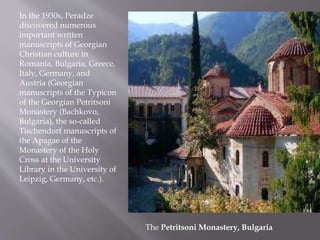
The Petritsoni Monastery, Bulgaria
The invasion of Poland by
German troops in 1939
made Peradze's position
precarious. For him being
in solidarity with Jews in
peril went without saying;
and he helped wherever he
could. Nor did he hesitate
to visit the imprisoned
Polish Metropolitan
Dionysios. These activities
were viewed with growing
suspicion by the Nazi
occupiers and Peradze's
fruitful ecclesiastic and
scientific activities were
brought to an end in 1942
when, on May 4, he was
arrested by the German
Gestapo.
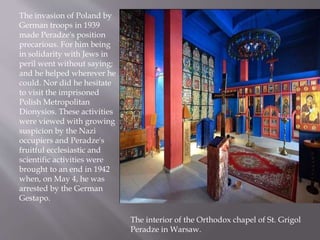
The interior of the Orthodox chapel of St. Grigol
Peradze in Warsaw.
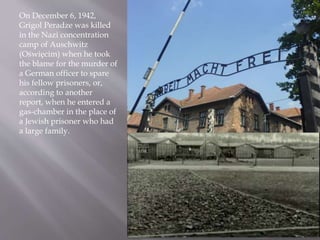
On December 6, 1942,
Grigol Peradze was killed
in the Nazi concentration
camp of Auschwitz
(Oświęcim) when he took
the blame for the murder of
a German officer to spare
his fellow prisoners, or,
according to another
report, when he entered a
gas-chamber in the place of
a Jewish prisoner who had
a large family.
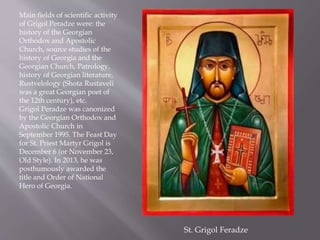
Main fields of scientific activity
of Grigol Peradze were: the
history of the Georgian
Orthodox and Apostolic
Church, source studies of the
history of Georgia and the
Georgian Church, Patrology,
history of Georgian literature,
Rustvelology (Shota Rustaveli
was a great Georgian poet of
the 12th century), etc.
Grigol Peradze was canonized
by the Georgian Orthodox and
Apostolic Church in
September 1995. The Feast Day
for St. Priest Martyr Grigol is
December 6 (or November 23,
Old Style). In 2013, he was
posthumously awarded the
title and Order of National
Hero of Georgia.
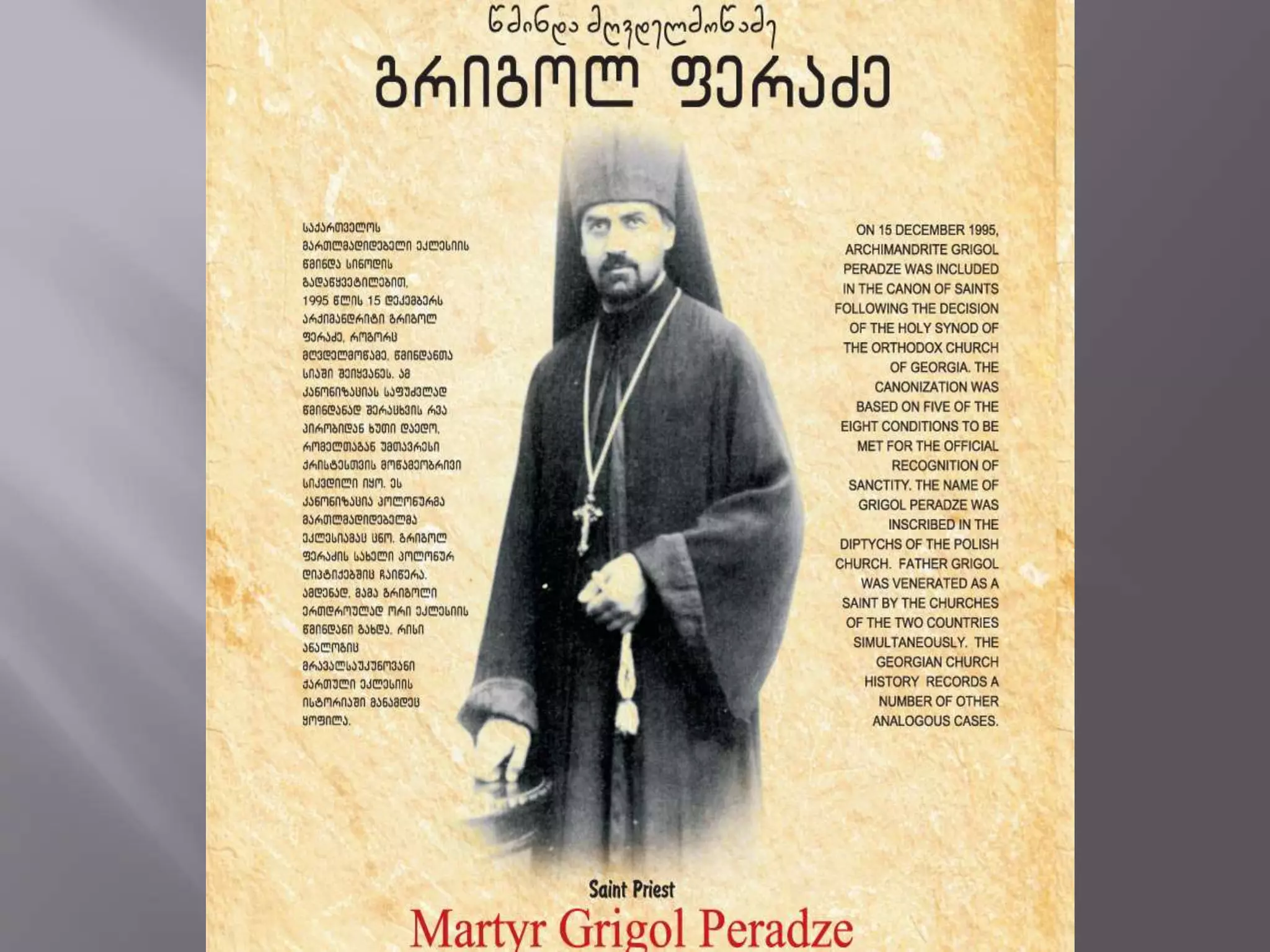
St. Grigol Feradze
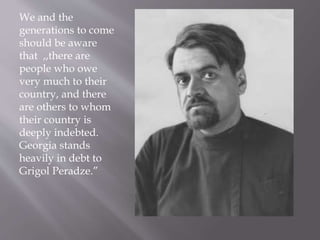
We and the
generations to come
should be aware
that ,,there are
people who owe
very much to their
country, and there
are others to whom
their country is
deeply indebted.
Georgia stands
heavily in debt to
Grigol Peradze.”
Author: Mikheil Ubiria
Teacher: Natela Kratsashvili

B014cad4

  • 2.
    In his sermonpreached in the Georgian church of St. Nino in Paris, on 31 May 1931, St Grigol outlined the main idea of Ortodox teaching: ,,Orthodoxy is and will remain of inestimable value to us. Our forefathers selflessly sacrificed themselves to this greatest treasure of the nation, often plummeting to depths of humiliation or choosing an agonizing death over a life of luxury or political benefit. Orthodoxy is a value itself worth living and dying for.” St. Nino’s Church in Paris
  • 3.
    Grigol Peradze wasborn in the village of Bakurtsikhe, in the Gurjaani district of the Kakheti region, in Eastern Georgia. His father, Romanoz Peradze, was a priest. In 1918 Peradze graduated from the Tbilisi Theological Seminary, and afterwards studied at the Tbilisi State University until 1921.In 1919-1921 he was conscripted into the army and fought against Russia alongside with his two brothers.. But democratic Georgia suffered defeat and the Bolsheviks unleashed massive attacks against patriots and Christian believers
  • 4.
    Grigol Peradze wentinto exile in Germany in November the same year. Apart from German and classical Greek,Grigol from 1922 started to attened oriental language courses in Hebrew, Syrian, Arabic, Coptic and Armenian; he also mastered French, English, Greek and Latin and gained a thorough knowledge of the Russian, old Slavic, old Armenian and subsequiently Polish lenguages. In 1926 he graduated from the University of Bonn (Germany). In 1927 he received a PhD degree in History (the title of his PhD thesis was "History of the Georgian Monasticism from its creation until 1064"). From 1927 - 1932 Peradze was an Associate Professor at the University of Bonn. From 1933 - 1942 he was a Professor of Patrology at the Faculty of Orthodox Theology of Warsaw University, in Poland.
  • 5.
    In 1931, GrigolPeradze was ordained a priest in the Greek Orthodox Cathedral of London; in 1934, he received the rank of Archimandrite. In 1931, he founded a Georgian St. Nino Orthodox church in Paris. In the same year he began to publish a Georgian scientific journal titled "Jvari Vazisa" ("Cross of Vine")
  • 6.
    In the 1930s,Peradze discovered numerous important written manuscripts of Georgian Christian culture in Romania, Bulgaria, Greece, Italy, Germany, and Austria (Georgian manuscripts of the Typicon of the Georgian Petritsoni Monastery (Bachkovo, Bulgaria), the so-called Tischendorf manuscripts of the Apagae of the Monastery of the Holy Cross at the University Library in the University of Leipzig, Germany, etc.). The Petritsoni Monastery, Bulgaria
  • 7.
    The invasion ofPoland by German troops in 1939 made Peradze's position precarious. For him being in solidarity with Jews in peril went without saying; and he helped wherever he could. Nor did he hesitate to visit the imprisoned Polish Metropolitan Dionysios. These activities were viewed with growing suspicion by the Nazi occupiers and Peradze's fruitful ecclesiastic and scientific activities were brought to an end in 1942 when, on May 4, he was arrested by the German Gestapo. The interior of the Orthodox chapel of St. Grigol Peradze in Warsaw.
  • 8.
    On December 6,1942, Grigol Peradze was killed in the Nazi concentration camp of Auschwitz (Oświęcim) when he took the blame for the murder of a German officer to spare his fellow prisoners, or, according to another report, when he entered a gas-chamber in the place of a Jewish prisoner who had a large family.
  • 9.
    Main fields ofscientific activity of Grigol Peradze were: the history of the Georgian Orthodox and Apostolic Church, source studies of the history of Georgia and the Georgian Church, Patrology, history of Georgian literature, Rustvelology (Shota Rustaveli was a great Georgian poet of the 12th century), etc. Grigol Peradze was canonized by the Georgian Orthodox and Apostolic Church in September 1995. The Feast Day for St. Priest Martyr Grigol is December 6 (or November 23, Old Style). In 2013, he was posthumously awarded the title and Order of National Hero of Georgia. St. Grigol Feradze
  • 10.
    We and the generationsto come should be aware that ,,there are people who owe very much to their country, and there are others to whom their country is deeply indebted. Georgia stands heavily in debt to Grigol Peradze.”
  • 11.