Title
Presented By:- Gaurav Sharma
Roll no. – 19EMCCS037
Batch - A , Year -4th
Branch - CSE
Agenda
•Introduction to AWS
•What Services are provided by AWS ?
•Components of AWS
•AWS Infrastructure
•Innovation with AWS
Introduction to AWS
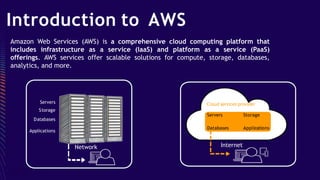
Amazon Web Services (AWS) is a comprehensive cloud computing platform that
includes infrastructure as a service (IaaS) and platform as a service (PaaS)
offerings. AWS services offer scalable solutions for compute, storage, databases,
analytics, and more.
Cloud services provider
Servers Storage
Databases Applications
Internet
Servers
Storage
Databases
Applications
Network
Advantages of AWS cloud computing
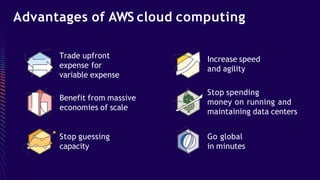
Trade upfront
expense for
variable expense
Benefit from massive
economies of scale
Stop guessing
capacity
Increase speed
and agility
Stop spending
money on running and
maintaining data centers
Go global
in minutes
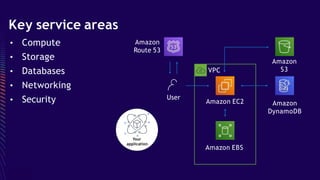
Key service areas
• Compute
• Storage
• Databases
• Networking
• Security Amazon EC2
Amazon
Route 53
User
Your
application
Amazon
DynamoDB
Amazon EBS
Amazon
S3
VPC
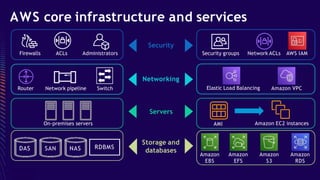
AWS core infrastructure and services
Security
Security groups Network ACLs AWS IAM
Firewalls ACLs Administrators
Storage and
databases
Amazon
EBS
Amazon
EFS
Amazon
S3
Amazon
RDS
Networking
Amazon VPC
Elastic Load Balancing
Router Network pipeline Switch
Servers
AMI Amazon EC2 instances
On-premises servers
DAS SAN NAS RDBMS
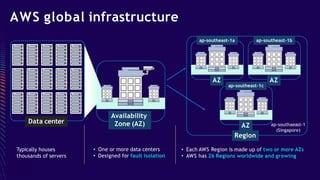
AWS global infrastructure
• One or more data centers
• Designed for fault isolation
Typically houses
thousands of servers
• Each AWS Region is made up of two or more AZs
• AWS has 26 Regions worldwide and growing
Availability
Zone (AZ) AZ
ap-southeast-1c
Region
Data center
AZ
ap-southeast-1a
AZ
ap-southeast-1b
ap-southaeast-1
(Singapore)
Innovation with AWS
Internet of
Things
(IoT)
Machine
learning
(ML)
Blockchain AWS Ground
Station
AWS
Wavelength
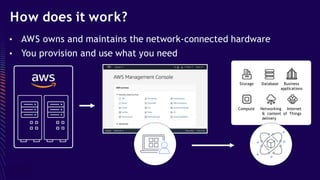
How does it work?
• AWS owns and maintains the network-connected hardware
• You provision and use what you need
Storage
Compute
Database Business
applications
Networking Internet
& content of Things
delivery
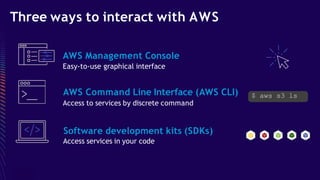
Three ways to interact with AWS
AWS Command Line Interface (AWS CLI)
Access to services by discrete command
AWS Management Console
Easy-to-use graphical interface
Software development kits (SDKs)
Access services in your code
$ aws s3 ls
Conclusion
The AWS Well-Architected Framework provides architectural best practices across
the five pillars for designing and operating reliable, secure, efficient, and cost-
effective systems in the cloud. The Framework provides a set of questions that
allows you to review an existing or proposed architecture. It also provides a set of
AWS best practices for each pillar. Using the Framework in your architecture will
help you produce stable and efficient systems, which allow you to focus on your
functional requirements.
Conclusion
References
• https://aws.amazon.com/
• Aws: The Ultimate Guide From Beginners To Advanced For The Amazon Web Services (2020 Edition)
(Theo H King)
• Learning AWS
( Aurobindo Sarkar , Amit Shah )
Thank you!

AWS PPT.pptx

  • 1.
    Title Presented By:- GauravSharma Roll no. – 19EMCCS037 Batch - A , Year -4th Branch - CSE
  • 2.
    Agenda •Introduction to AWS •WhatServices are provided by AWS ? •Components of AWS •AWS Infrastructure •Innovation with AWS
  • 3.
    Introduction to AWS AmazonWeb Services (AWS) is a comprehensive cloud computing platform that includes infrastructure as a service (IaaS) and platform as a service (PaaS) offerings. AWS services offer scalable solutions for compute, storage, databases, analytics, and more. Cloud services provider Servers Storage Databases Applications Internet Servers Storage Databases Applications Network
  • 4.
    Advantages of AWScloud computing Trade upfront expense for variable expense Benefit from massive economies of scale Stop guessing capacity Increase speed and agility Stop spending money on running and maintaining data centers Go global in minutes
  • 5.
    Key service areas •Compute • Storage • Databases • Networking • Security Amazon EC2 Amazon Route 53 User Your application Amazon DynamoDB Amazon EBS Amazon S3 VPC
  • 6.
    AWS core infrastructureand services Security Security groups Network ACLs AWS IAM Firewalls ACLs Administrators Storage and databases Amazon EBS Amazon EFS Amazon S3 Amazon RDS Networking Amazon VPC Elastic Load Balancing Router Network pipeline Switch Servers AMI Amazon EC2 instances On-premises servers DAS SAN NAS RDBMS
  • 7.
    AWS global infrastructure •One or more data centers • Designed for fault isolation Typically houses thousands of servers • Each AWS Region is made up of two or more AZs • AWS has 26 Regions worldwide and growing Availability Zone (AZ) AZ ap-southeast-1c Region Data center AZ ap-southeast-1a AZ ap-southeast-1b ap-southaeast-1 (Singapore)
  • 8.
    Innovation with AWS Internetof Things (IoT) Machine learning (ML) Blockchain AWS Ground Station AWS Wavelength
  • 9.
    How does itwork? • AWS owns and maintains the network-connected hardware • You provision and use what you need Storage Compute Database Business applications Networking Internet & content of Things delivery
  • 10.
    Three ways tointeract with AWS AWS Command Line Interface (AWS CLI) Access to services by discrete command AWS Management Console Easy-to-use graphical interface Software development kits (SDKs) Access services in your code $ aws s3 ls
  • 11.
    Conclusion The AWS Well-ArchitectedFramework provides architectural best practices across the five pillars for designing and operating reliable, secure, efficient, and cost- effective systems in the cloud. The Framework provides a set of questions that allows you to review an existing or proposed architecture. It also provides a set of AWS best practices for each pillar. Using the Framework in your architecture will help you produce stable and efficient systems, which allow you to focus on your functional requirements.
  • 12.
    Conclusion References • https://aws.amazon.com/ • Aws:The Ultimate Guide From Beginners To Advanced For The Amazon Web Services (2020 Edition) (Theo H King) • Learning AWS ( Aurobindo Sarkar , Amit Shah )
  • 13.