Abstract
Abstract –Automatic Railway Gate Control System
The Automatic Railway Gate Control System is designed to enhance safety at
unmanned railway crossings by reducing human intervention and minimizing
the risk of accidents. The system utilizes sensors (such as infrared or
ultrasonic) to detect the arrival and departure of trains. Upon detection,
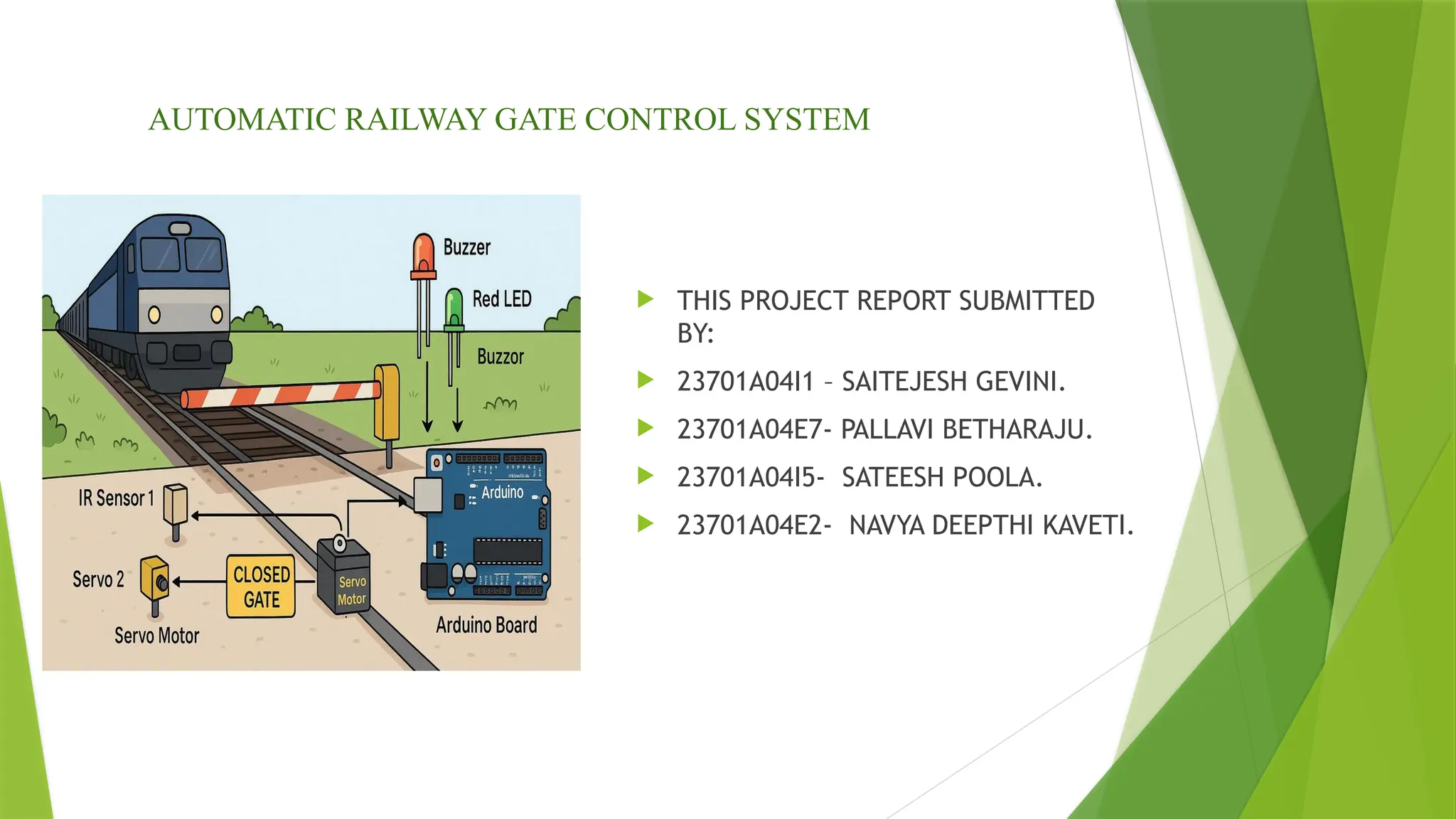
signals are sent to a microcontroller (e.g., Arduino), which processes the data
and actuates a motorized gate mechanism.
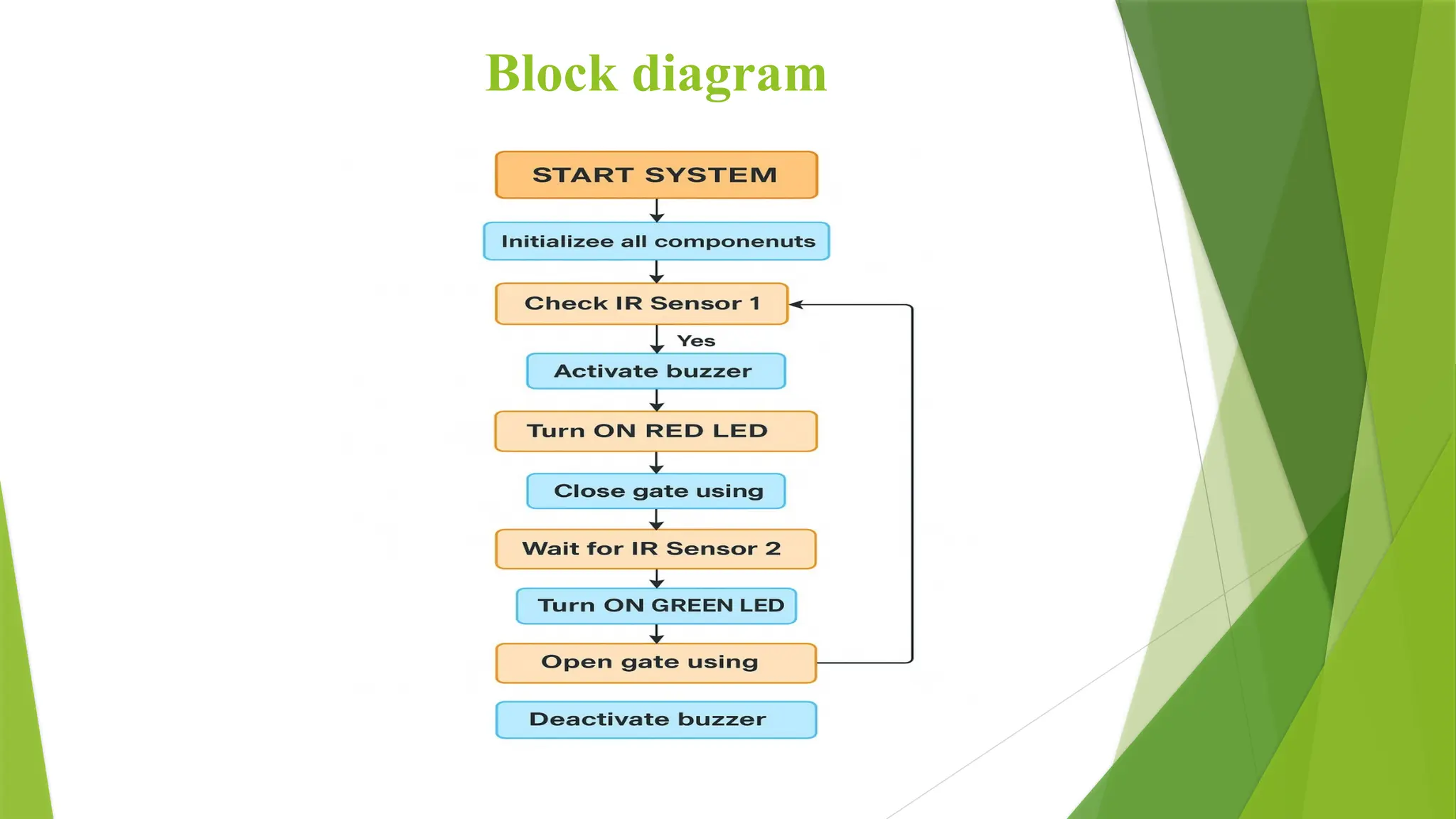
The gate operates automatically, ensuring that it closes as a train approaches
and reopens once the train has safely passed. The system is equipped with
alert mechanisms such as warning lights and buzzers to notify pedestrians and
vehicles of gate activity. This project not only improves safety but also
demonstrates how automation and embedded systems can be applied in real-
world traffic management scenarios.
3.
INTRODUCTION
In today’sscenario Railway safety becomes the most important aspect of railways all over the
world. As we know the Railways is the cheapest mode of transportation, and due to manual
operation, accidents are likely to happen. There are 30348 level crossings on Indian Railways
across the country.18785 are man handled and 11563 are non-man handled level crossings out of
303048 level crossings. To avoid accidents over previous five years 4792 level crossings have been
removed by the respective Zonal railways of Indian Railways. The Indian ministry of Railways
made a decision focusing on eliminating all level crossings on availability of railway funds, which
could be controlled automatically
The suggest system helps in achieving the safety and to prevent accidents at the level crossings
that are non-man handled. The Automatic railway gate control system can be employed under
non man handled level crossing where the chances of accidents are higher and requirement of
reliable operation are there. Since, the proposed model suggests an automatic system, it helps in
reducing the error which is in manual operation and it will be used as highly reliable source. The
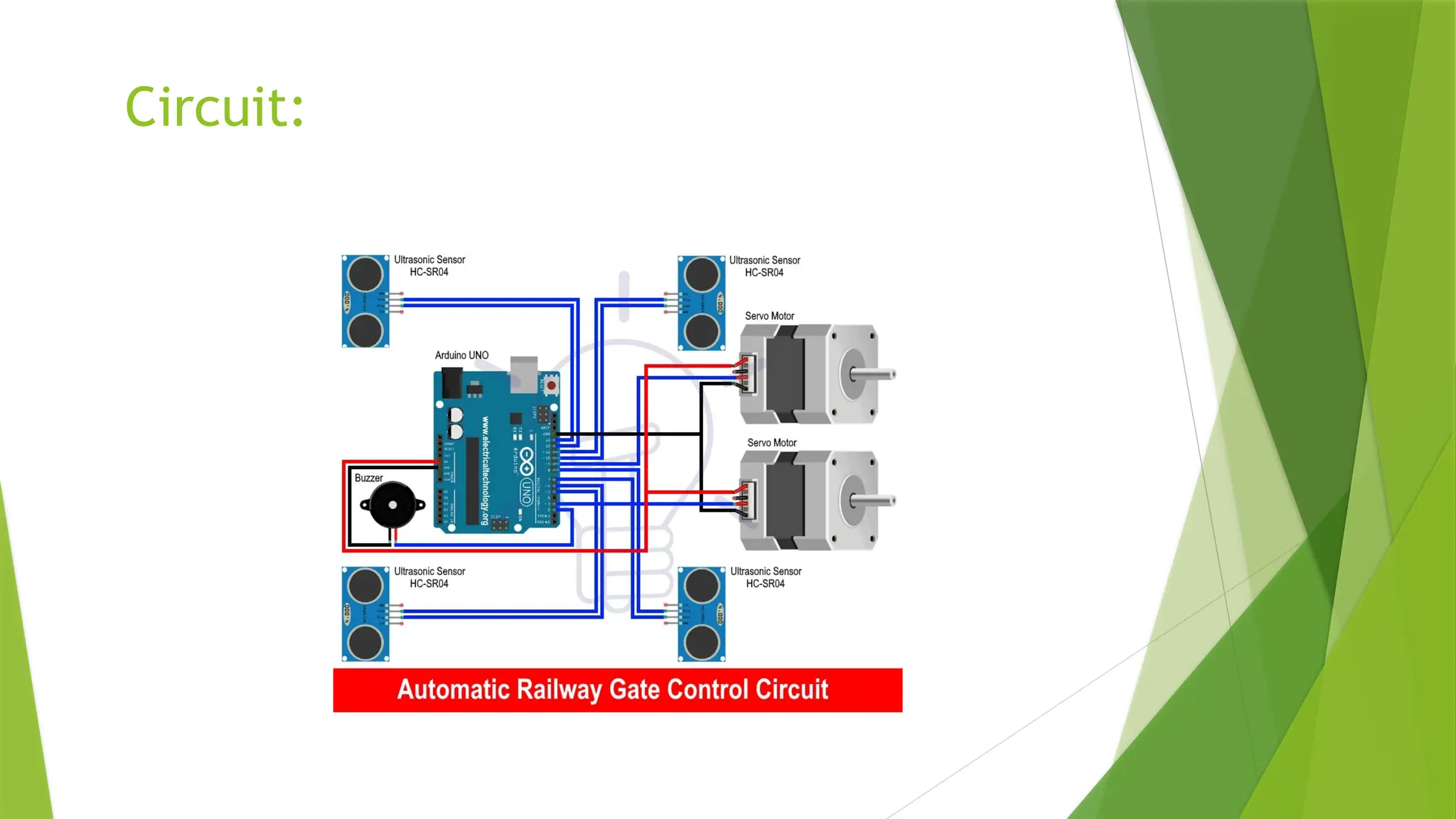
proposed model suggests a design to control a railway level-crossing by servo motor/ DC motors
using Arduino controller. The connection of motor is done from Arduino with the help of a motor
driver for controlling the railway gate. Two IR sensors are used to detect arrival and departure of
the train. IR sensors are checking the complete closing of gate.
4.
KEY OBJECTIVES:
1.To develop a fully automated railway gate control system that minimizes human
effort and error.
2. To detect the approach and departure of trains using sensors placed along the track.
3. To automate the gate opening and closing process based on real-me sensor inputs.
4. To provide a cost-effective and reliable solution for railway crossing safety.
5. To alert pedestrians and vehicle users using visual (LEDs) and auditory (buzzers)
signals during gate operation.
6. To reduce accidents and collisions at railway level crossings.
7. To demonstrate the use of microcontrollers in transportation on automation.
8. To minimize gate operation time and reduce waiting times for road users.
9. To explore the integration of future technologies like GSM modules or IoT for real
time monitoring.
10. To understand and implement embedded system principles in real-world
applications.
5.
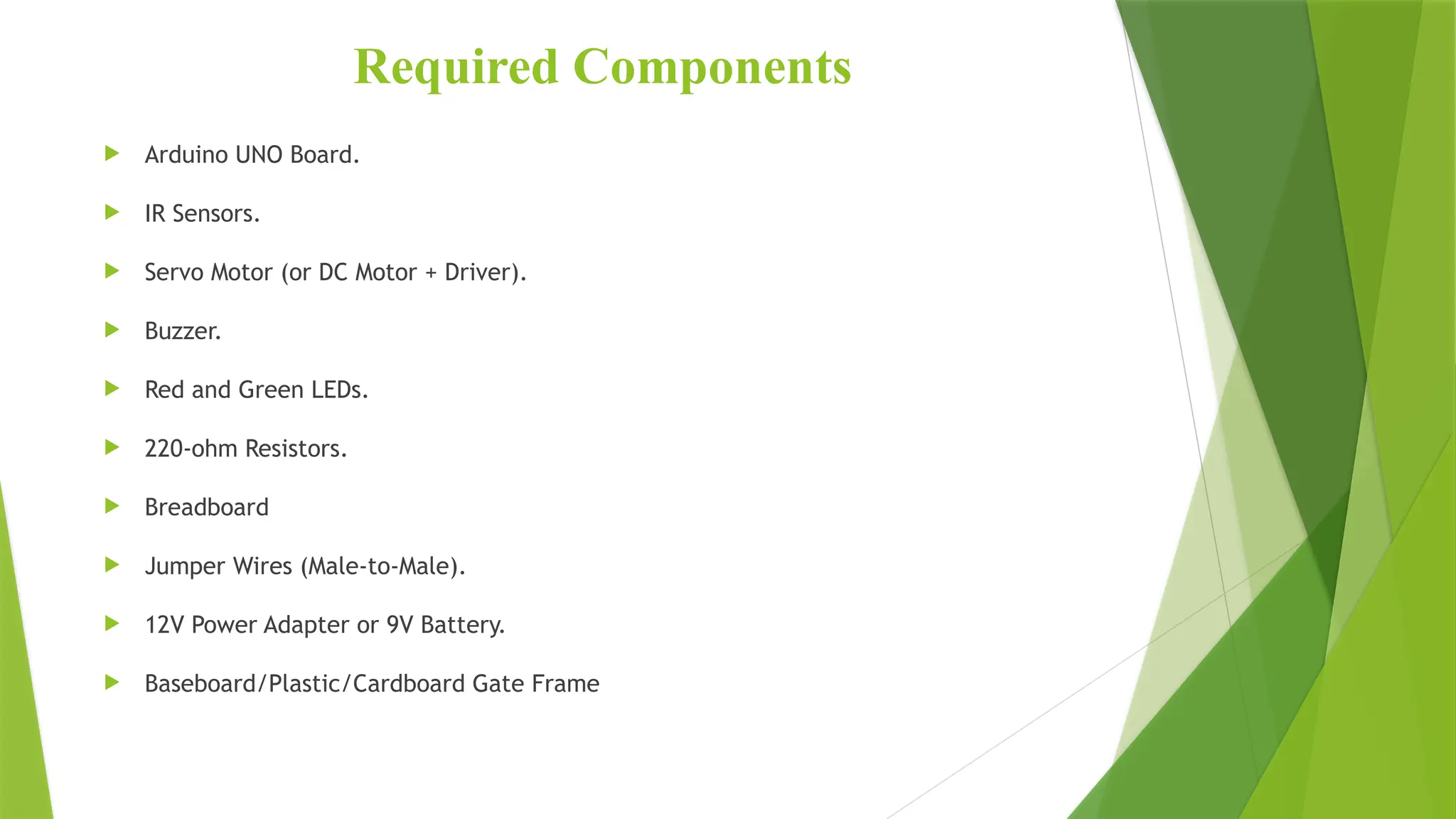
Required Components
ArduinoUNO Board.
IR Sensors.
Servo Motor (or DC Motor + Driver).
Buzzer.
Red and Green LEDs.
220-ohm Resistors.
Breadboard
Jumper Wires (Male-to-Male).
12V Power Adapter or 9V Battery.
Baseboard/Plastic/Cardboard Gate Frame