International Research Journal of Engineering and Technology (IRJET) e-ISSN: 2395 -0056
Volume: 04 Issue: 03 | Mar -2017 www.irjet.net p-ISSN: 2395-0072
© 2017, IRJET | Impact Factor value: 5.181 | ISO 9001:2008 Certified Journal | Page 1175
AUTHORIZED DUPLICATE CHECK SCHEME
Mr. K.Ravindran1, K.Gayathri 2, J.Geethupriya 3, M.Manoranjitham 4, V.Pavithra5
1Assistant Professor, Department of Information Technology, Valliammai Engineering College,
Anna University, Chennai.
2,3,4,5 Student Scholars, Department of Information Technology, Valliammai Engineering College , Anna University,
Chennai, Tamil Nadu, India
---------------------------------------------------------------------***---------------------------------------------------------------------
Abstract - Data Deduplication is the process of
eliminating repeated data copies. It provides security and
privacy concerns arise as user’s sensitive data are susceptible
to both inside and outside attacks. Traditional encryption,
providing data confidentiality is incompatible in
deduplication. It also requires different users to encrypt their
data with their own keys. Thus, identical data copies of
different users will lead to different ciphertext makes
deduplication impossible. Convergent Encryption has been
proposed to enforce the data confidentiality and makes the
data deduplication possible. It encrypts/decrypts the data
copy by using the convergent key. The convergent key can be
obtained by computing the cryptographic hash value of the
data content. After data encryption users retain the keys and
the encryption operation is derived from the data content,
identical data copies will generate the same convergent key
and ciphertext. To protect data security, this project makes an
attempt to address the problem of authorized data
deduplication.
KeyWords: confidentiality, convergent key,
deduplication, encryption, hash value.
1. INTRODUCTION
Authorized duplicate check schemeisa deduplication
concept. Data deduplication is one of the important
techniques for eliminating duplicate copies and has been
widely used in cloud storage to reduce storage space. The
deduplication has been widely used to reduce the amount of
storage space and save bandwidth. To protect the
confidentiality of data, authorized duplicate check is used.
Apart from the traditional duplication system, different
advantages of user are used. To reduce the computing time
and response time between token request and response,file
upload or download request and results. The authorized
duplicate check is used in the hybrid cloud mechanism. The
hybrid cloud architecture consists of both the public cloud
and the private cloud. Private cloud plays an important role
in the system, moreover security of the system is less, as the
private cloud of the mechanism is not secured, and
unauthorized access of the data results security fails. To
provide more security, the private cloud is provided by
multilevel authentication. This shows the system is secure
and confidential. Example, the identical file may be saved in
several different places by differentusers.Deduplication has
abolished these duplicate copies by saving just one copy of
the data and replacing the other copies with pointers that
lead back to the original copy. The convergent encryption
technique used to encrypt the user’s data before uploading,
to protect the confidentiality of the data. The authorized
duplicate check is implemented with the encryption
technique to provide the confidential data in hybrid cloud
storage.
The objectives of this paper are to protect the data
security in the duplicate check and to reduce the storage
space. Advanced deduplication system – Supports
authorized duplicate check and compare the storage system
with the file content.
It has three sub phases: file upload, hash value
generation, File download. The first phase is the authorized
user upload the file. The second phase of hash value
generation phase, we have used the MD5, a SHA-1 algorithm
which generates the hash value for the uploaded file and
then the hash value of the file is compared withthedatabase.
If the hash value is different then its uploaded otherwise its
discarded. If the file is same then the root file is provided to
the user. For the third phase, the user downloads the file.
The rest of this paper proceeds as follows. In section 2,
exhibits the system analysis related work such as existing
system problem, proposed system solution. In section 4, we
propose the system design and functional design section 5.
In section 6 deals with the conclusion and in the section 7 is
the future enhancement.
International Research Journal of Engineering and Technology (IRJET) e-ISSN: 2395 -0056
Volume: 04 Issue: 03 | Mar -2017 www.irjet.net p-ISSN: 2395-0072
© 2017, IRJET | Impact Factor value: 5.181 | ISO 9001:2008 Certified Journal | Page 1176
2.SYSTEM ANALYSIS
The purpose of the System Analysis makes the brief
analysis task and also to establish complete information
about the concepts, behavior and other constraints such as
performance measurement and system optimization. The
goal of the System Analysis is to completely specify the
technical details for the main concept in a concise and
unambiguous manner.
2.1 Existing System
The convergent encryption techniqueusedtoencrypt
the data before contracting.Tobetterprotectdata security,it
makes the attempt to the problem of authorized data
Deduplication.Apartfromtraditional Deduplicationsystems,
the differential privileges of users are further considered in
duplicate check besides the data itself. It presents several
new Deduplication techniques supporting authorized
duplicate check in hybrid cloud architecture. Security
analysis demonstrates that the scheme is secure in terms of
the security model. As a proof of concept, it implements a
prototype authorized duplicate check scheme. It shows
authorized duplicate check schemeincursminimal overhead
compared to normal operations.
The drawbacks of the existing system are that this
traditional convergent encryption will be insecure for
predictable file. Convergent encryption,tosupportduplicate
check, the key is derived from the file F by using the same
cryptographic hash function.
2.2 Proposed System
The advanced duplication system supports the
authorized duplicate check and compares the storage
system. The file uploaded once it makes the hash value. In
this way, the users cannot upload the same hash value data
because it compares the whole database storage system,
which means that it can prevent the privilege key sharing
among users in the above straightforward construction.The
user needs to send a request to the private cloud server to
get a file token. Duplicate check is performed by comparing
the storage system for any file. The user needs to get the file
token from the private cloud server. Theprivatecloudserver
checks the user’s identity before issuing the corresponding
file token to the user. Before uploading this file, the
authorized duplicate check can be performed by the user
with the public cloud. Based on the results of duplicate
check, the user either uploads this file or runs Paw.
The benefits of our proposed work is the design and
implementation of the new system which could protect the
security of predictable message. The technique is the novel
encryption key generation algorithm. For simplicity, it uses
the hash functions to define the tag generationfunctionsand
convergent keys. The system also protects the data security
by including differential privileges of users in the duplicate
check.
3.SYSTEM DESIGN
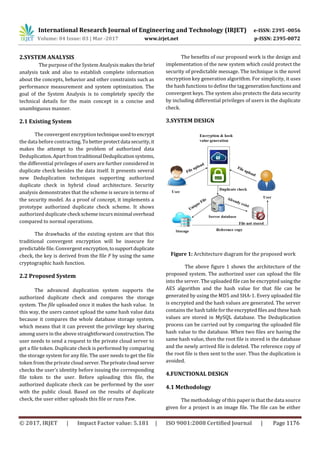
Figure 1: Architecture diagram for the proposed work
The above figure 1 shows the architecture of the
proposed system. The authorized user can upload the file
into the server. The uploaded file can be encrypted using the
AES algorithm and the hash value for that file can be
generated by using the MD5 and SHA-1. Every uploaded file
is encrypted and the hash values are generated. The server
contains the hash table for theencryptedfilesandthesehash
values are stored in MySQL database. The Deduplication
process can be carried out by comparing the uploaded file
hash value to the database. When two files are having the
same hash value, then the root file is stored in the database
and the newly arrived file is deleted. The reference copy of
the root file is then sent to the user. Thus the duplication is
avoided.
4.FUNCTIONAL DESIGN
4.1 Methodology
The methodology of this paper is that the data source
given for a project is an image file. The file can be either
International Research Journal of Engineering and Technology (IRJET) e-ISSN: 2395 -0056
Volume: 04 Issue: 03 | Mar -2017 www.irjet.net p-ISSN: 2395-0072
© 2017, IRJET | Impact Factor value: 5.181 | ISO 9001:2008 Certified Journal | Page 1177
upload, download or delete by the user. Whenever the user
wants to upload a new file, it can be encrypted using AES
algorithm. The hash value for the uploaded image file can be
generated by using the MD5 and SHA-1 algorithm. The RGB
value for each pixel is computed. And the computed hash
values are stored in the database. Only the unique files can
be stored in the database. Then the user is considered as a
root user and the file can be denoted as root file. If other
users want to upload the same file, the reference copy of the
root file can be provided to the user. Authentication can be
provided by using the OTP generation process. The OTP can
be generated for the user who wants to upload the file. The
user can also download the image file. The encrypted image
file can be decrypted by using the AES algorithm. The file
deletes process can also be carried out by the user.
Whenever a root file is deleted by the rootuser,thenextuser
who has the reference copy.
4.2 Modules
The modules of the proposed system are
registration, file upload, duplicate check, file download, file
delete.
4.2.1 Registration
The user sends the mail id to the admin. The admin is
responsible for generating the OTP to the user. The OTP is
generated in the user mail. After generating the admin
permission, the registration process can be carried out. In
the registration process, the user has to specify the mail-id
and the OTP. The authentication takes place, whether the
mail-id and OTP are correct. If it corrects, then the userneed
to provide the following details such as username, mail id,
gender, mobile number and product key value. After the
registration, the details are stored in the database. Only the
authorized user can upload/download the file.
4.2.2 File Upload
In this file upload module, the user needtochoosethe
file that the user wants to upload. Then the AES algorithm is
used for file encryption process. It encrypts the file and then
generate hash values.
4.2.3 File Duplicate check
After the encryption of the file, hash value for the
uploaded file can be generated by using MD5 and SHA
algorithm. The user, who upload the first file referred as the
root user and the file is denoted as root file. If the same file is
uploaded by other user, reference copy of the rootfilecanbe
provided.
4.2.4 File Download
In this file download module, the user needs to send
the file download request to the admin. After receiving the
response, the file download processcanbecarriedout.Then,
AES decryption algorithm is used for decrypting the file.
4.2.5 File Delete
In this file delete module, the users are allowed for
deleting the files. If the root file is deleted by the user then
the next user who get the reference copy, referred as root
user. In such a way the process can be carried out.
5.CONCLUSION
The duplicates are being reduced to store more data
and to reduce the storage space. To increase the security, we
propose the multilevel authentication technique using OTP
generation. As a result, to provide more security to the
private cloud it uses multilevel authentication. It checks for
duplication and generate the token by the private cloud
before uploading the file. Likewise, the file download and
delete is also performed through which storage space is
effectively used.
6.FUTURE ENHANCEMENT
To further enhance, need to check deduplication for
films uploading, books with large pages, videos and audios
with efficient time. Although data deduplication has been
studied for more than ten years, many open problems and
challenges remain to be addressed, particularlyasthesizeof
digital data continues to grow exponentiallyandtheneedfor
long-term storage management becomes increasingly
urgent. There will be more applications for deduplication,
such as storage systems for tapes or shingled disks, since it
will help to reduce the growingredundantdata inlarge-scale
storage systems.
REFERENCES
[1] Jin Li, Yan Kit Li, Xiaofeng Chen, Patrick P.C. Lee, and
Wenjing Lou, “A Hybrid Cloud Approach for Secure
Authorized Deduplication”, IEEE transactions, 2015.
[2] Jiawei Yuan and Shushing Yu, “Secure and Constant Cost
Public Cloud Auditing with Deduplication”, Conference
Paper, 2015.
International Research Journal of Engineering and Technology (IRJET) e-ISSN: 2395 -0056
Volume: 04 Issue: 03 | Mar -2017 www.irjet.net p-ISSN: 2395-0072
© 2017, IRJET | Impact Factor value: 5.181 | ISO 9001:2008 Certified Journal | Page 1178
[3] Mahir Buller Chana hip Namprempe and Gregory Neven,
“Security Proofs for Identity-Based Identification and
Signature Schemes”, Conference Paper 2014.
[4] Wee Kong Ng and Yonggang Wen, “Private Data
Deduplication Protocols in Cloud Storage,Conference Paper,
2014.
[5] Jorge Balasko, Augustin Orillia, Carlos III, Robert DI
Pietro, Alessandro Sorniotti “A Tunable Proof of Ownership
Scheme for Deduplication using Bloom Filters”, IBM
Research, 2013.
[6] John R. Douceur, Atul Adyta, William J. Bolo sky, Dan
Simon, Marvin, “Reclaiming Space from Duplicate Files in a
Server less Distributed File System” Theimer Microsoft
Research,2013.
[7] Jingwei Li, Jin Li, Dongqing Xie and Zhang Cai, “Secure
Auditing and Deduplicating Data in Cloud” IEEE
Transactions, 2015.
[8] K. Saritha, S.Subasree“AnalysisofHybridCloudapproach
for Private Cloud in the De-Duplication Mechanism”, IEEE
Transactions, 2015.
[9] Gaurav Kakariya, Sonali Rangdale, “A Hybrid Cloud
Approach for Secure Authorized Deduplication”
International Journal Computer Engineering and
Applications, Volume VIII, Issue I,2014.
[10] J. R. Douceur, A. Adya, W. J. Bolosky, D. Simon, and M.
Theimer, “Reclaiming space from duplicate files in a
serverless distributed file system,” in Proc. International
Conference. Distrib. Comput. System,2002.

Authorized Duplicate Check Scheme

  • 1.
    International Research Journalof Engineering and Technology (IRJET) e-ISSN: 2395 -0056 Volume: 04 Issue: 03 | Mar -2017 www.irjet.net p-ISSN: 2395-0072 © 2017, IRJET | Impact Factor value: 5.181 | ISO 9001:2008 Certified Journal | Page 1175 AUTHORIZED DUPLICATE CHECK SCHEME Mr. K.Ravindran1, K.Gayathri 2, J.Geethupriya 3, M.Manoranjitham 4, V.Pavithra5 1Assistant Professor, Department of Information Technology, Valliammai Engineering College, Anna University, Chennai. 2,3,4,5 Student Scholars, Department of Information Technology, Valliammai Engineering College , Anna University, Chennai, Tamil Nadu, India ---------------------------------------------------------------------***--------------------------------------------------------------------- Abstract - Data Deduplication is the process of eliminating repeated data copies. It provides security and privacy concerns arise as user’s sensitive data are susceptible to both inside and outside attacks. Traditional encryption, providing data confidentiality is incompatible in deduplication. It also requires different users to encrypt their data with their own keys. Thus, identical data copies of different users will lead to different ciphertext makes deduplication impossible. Convergent Encryption has been proposed to enforce the data confidentiality and makes the data deduplication possible. It encrypts/decrypts the data copy by using the convergent key. The convergent key can be obtained by computing the cryptographic hash value of the data content. After data encryption users retain the keys and the encryption operation is derived from the data content, identical data copies will generate the same convergent key and ciphertext. To protect data security, this project makes an attempt to address the problem of authorized data deduplication. KeyWords: confidentiality, convergent key, deduplication, encryption, hash value. 1. INTRODUCTION Authorized duplicate check schemeisa deduplication concept. Data deduplication is one of the important techniques for eliminating duplicate copies and has been widely used in cloud storage to reduce storage space. The deduplication has been widely used to reduce the amount of storage space and save bandwidth. To protect the confidentiality of data, authorized duplicate check is used. Apart from the traditional duplication system, different advantages of user are used. To reduce the computing time and response time between token request and response,file upload or download request and results. The authorized duplicate check is used in the hybrid cloud mechanism. The hybrid cloud architecture consists of both the public cloud and the private cloud. Private cloud plays an important role in the system, moreover security of the system is less, as the private cloud of the mechanism is not secured, and unauthorized access of the data results security fails. To provide more security, the private cloud is provided by multilevel authentication. This shows the system is secure and confidential. Example, the identical file may be saved in several different places by differentusers.Deduplication has abolished these duplicate copies by saving just one copy of the data and replacing the other copies with pointers that lead back to the original copy. The convergent encryption technique used to encrypt the user’s data before uploading, to protect the confidentiality of the data. The authorized duplicate check is implemented with the encryption technique to provide the confidential data in hybrid cloud storage. The objectives of this paper are to protect the data security in the duplicate check and to reduce the storage space. Advanced deduplication system – Supports authorized duplicate check and compare the storage system with the file content. It has three sub phases: file upload, hash value generation, File download. The first phase is the authorized user upload the file. The second phase of hash value generation phase, we have used the MD5, a SHA-1 algorithm which generates the hash value for the uploaded file and then the hash value of the file is compared withthedatabase. If the hash value is different then its uploaded otherwise its discarded. If the file is same then the root file is provided to the user. For the third phase, the user downloads the file. The rest of this paper proceeds as follows. In section 2, exhibits the system analysis related work such as existing system problem, proposed system solution. In section 4, we propose the system design and functional design section 5. In section 6 deals with the conclusion and in the section 7 is the future enhancement.
  • 2.
    International Research Journalof Engineering and Technology (IRJET) e-ISSN: 2395 -0056 Volume: 04 Issue: 03 | Mar -2017 www.irjet.net p-ISSN: 2395-0072 © 2017, IRJET | Impact Factor value: 5.181 | ISO 9001:2008 Certified Journal | Page 1176 2.SYSTEM ANALYSIS The purpose of the System Analysis makes the brief analysis task and also to establish complete information about the concepts, behavior and other constraints such as performance measurement and system optimization. The goal of the System Analysis is to completely specify the technical details for the main concept in a concise and unambiguous manner. 2.1 Existing System The convergent encryption techniqueusedtoencrypt the data before contracting.Tobetterprotectdata security,it makes the attempt to the problem of authorized data Deduplication.Apartfromtraditional Deduplicationsystems, the differential privileges of users are further considered in duplicate check besides the data itself. It presents several new Deduplication techniques supporting authorized duplicate check in hybrid cloud architecture. Security analysis demonstrates that the scheme is secure in terms of the security model. As a proof of concept, it implements a prototype authorized duplicate check scheme. It shows authorized duplicate check schemeincursminimal overhead compared to normal operations. The drawbacks of the existing system are that this traditional convergent encryption will be insecure for predictable file. Convergent encryption,tosupportduplicate check, the key is derived from the file F by using the same cryptographic hash function. 2.2 Proposed System The advanced duplication system supports the authorized duplicate check and compares the storage system. The file uploaded once it makes the hash value. In this way, the users cannot upload the same hash value data because it compares the whole database storage system, which means that it can prevent the privilege key sharing among users in the above straightforward construction.The user needs to send a request to the private cloud server to get a file token. Duplicate check is performed by comparing the storage system for any file. The user needs to get the file token from the private cloud server. Theprivatecloudserver checks the user’s identity before issuing the corresponding file token to the user. Before uploading this file, the authorized duplicate check can be performed by the user with the public cloud. Based on the results of duplicate check, the user either uploads this file or runs Paw. The benefits of our proposed work is the design and implementation of the new system which could protect the security of predictable message. The technique is the novel encryption key generation algorithm. For simplicity, it uses the hash functions to define the tag generationfunctionsand convergent keys. The system also protects the data security by including differential privileges of users in the duplicate check. 3.SYSTEM DESIGN Figure 1: Architecture diagram for the proposed work The above figure 1 shows the architecture of the proposed system. The authorized user can upload the file into the server. The uploaded file can be encrypted using the AES algorithm and the hash value for that file can be generated by using the MD5 and SHA-1. Every uploaded file is encrypted and the hash values are generated. The server contains the hash table for theencryptedfilesandthesehash values are stored in MySQL database. The Deduplication process can be carried out by comparing the uploaded file hash value to the database. When two files are having the same hash value, then the root file is stored in the database and the newly arrived file is deleted. The reference copy of the root file is then sent to the user. Thus the duplication is avoided. 4.FUNCTIONAL DESIGN 4.1 Methodology The methodology of this paper is that the data source given for a project is an image file. The file can be either
  • 3.
    International Research Journalof Engineering and Technology (IRJET) e-ISSN: 2395 -0056 Volume: 04 Issue: 03 | Mar -2017 www.irjet.net p-ISSN: 2395-0072 © 2017, IRJET | Impact Factor value: 5.181 | ISO 9001:2008 Certified Journal | Page 1177 upload, download or delete by the user. Whenever the user wants to upload a new file, it can be encrypted using AES algorithm. The hash value for the uploaded image file can be generated by using the MD5 and SHA-1 algorithm. The RGB value for each pixel is computed. And the computed hash values are stored in the database. Only the unique files can be stored in the database. Then the user is considered as a root user and the file can be denoted as root file. If other users want to upload the same file, the reference copy of the root file can be provided to the user. Authentication can be provided by using the OTP generation process. The OTP can be generated for the user who wants to upload the file. The user can also download the image file. The encrypted image file can be decrypted by using the AES algorithm. The file deletes process can also be carried out by the user. Whenever a root file is deleted by the rootuser,thenextuser who has the reference copy. 4.2 Modules The modules of the proposed system are registration, file upload, duplicate check, file download, file delete. 4.2.1 Registration The user sends the mail id to the admin. The admin is responsible for generating the OTP to the user. The OTP is generated in the user mail. After generating the admin permission, the registration process can be carried out. In the registration process, the user has to specify the mail-id and the OTP. The authentication takes place, whether the mail-id and OTP are correct. If it corrects, then the userneed to provide the following details such as username, mail id, gender, mobile number and product key value. After the registration, the details are stored in the database. Only the authorized user can upload/download the file. 4.2.2 File Upload In this file upload module, the user needtochoosethe file that the user wants to upload. Then the AES algorithm is used for file encryption process. It encrypts the file and then generate hash values. 4.2.3 File Duplicate check After the encryption of the file, hash value for the uploaded file can be generated by using MD5 and SHA algorithm. The user, who upload the first file referred as the root user and the file is denoted as root file. If the same file is uploaded by other user, reference copy of the rootfilecanbe provided. 4.2.4 File Download In this file download module, the user needs to send the file download request to the admin. After receiving the response, the file download processcanbecarriedout.Then, AES decryption algorithm is used for decrypting the file. 4.2.5 File Delete In this file delete module, the users are allowed for deleting the files. If the root file is deleted by the user then the next user who get the reference copy, referred as root user. In such a way the process can be carried out. 5.CONCLUSION The duplicates are being reduced to store more data and to reduce the storage space. To increase the security, we propose the multilevel authentication technique using OTP generation. As a result, to provide more security to the private cloud it uses multilevel authentication. It checks for duplication and generate the token by the private cloud before uploading the file. Likewise, the file download and delete is also performed through which storage space is effectively used. 6.FUTURE ENHANCEMENT To further enhance, need to check deduplication for films uploading, books with large pages, videos and audios with efficient time. Although data deduplication has been studied for more than ten years, many open problems and challenges remain to be addressed, particularlyasthesizeof digital data continues to grow exponentiallyandtheneedfor long-term storage management becomes increasingly urgent. There will be more applications for deduplication, such as storage systems for tapes or shingled disks, since it will help to reduce the growingredundantdata inlarge-scale storage systems. REFERENCES [1] Jin Li, Yan Kit Li, Xiaofeng Chen, Patrick P.C. Lee, and Wenjing Lou, “A Hybrid Cloud Approach for Secure Authorized Deduplication”, IEEE transactions, 2015. [2] Jiawei Yuan and Shushing Yu, “Secure and Constant Cost Public Cloud Auditing with Deduplication”, Conference Paper, 2015.
  • 4.
    International Research Journalof Engineering and Technology (IRJET) e-ISSN: 2395 -0056 Volume: 04 Issue: 03 | Mar -2017 www.irjet.net p-ISSN: 2395-0072 © 2017, IRJET | Impact Factor value: 5.181 | ISO 9001:2008 Certified Journal | Page 1178 [3] Mahir Buller Chana hip Namprempe and Gregory Neven, “Security Proofs for Identity-Based Identification and Signature Schemes”, Conference Paper 2014. [4] Wee Kong Ng and Yonggang Wen, “Private Data Deduplication Protocols in Cloud Storage,Conference Paper, 2014. [5] Jorge Balasko, Augustin Orillia, Carlos III, Robert DI Pietro, Alessandro Sorniotti “A Tunable Proof of Ownership Scheme for Deduplication using Bloom Filters”, IBM Research, 2013. [6] John R. Douceur, Atul Adyta, William J. Bolo sky, Dan Simon, Marvin, “Reclaiming Space from Duplicate Files in a Server less Distributed File System” Theimer Microsoft Research,2013. [7] Jingwei Li, Jin Li, Dongqing Xie and Zhang Cai, “Secure Auditing and Deduplicating Data in Cloud” IEEE Transactions, 2015. [8] K. Saritha, S.Subasree“AnalysisofHybridCloudapproach for Private Cloud in the De-Duplication Mechanism”, IEEE Transactions, 2015. [9] Gaurav Kakariya, Sonali Rangdale, “A Hybrid Cloud Approach for Secure Authorized Deduplication” International Journal Computer Engineering and Applications, Volume VIII, Issue I,2014. [10] J. R. Douceur, A. Adya, W. J. Bolosky, D. Simon, and M. Theimer, “Reclaiming space from duplicate files in a serverless distributed file system,” in Proc. International Conference. Distrib. Comput. System,2002.