Download to read offline


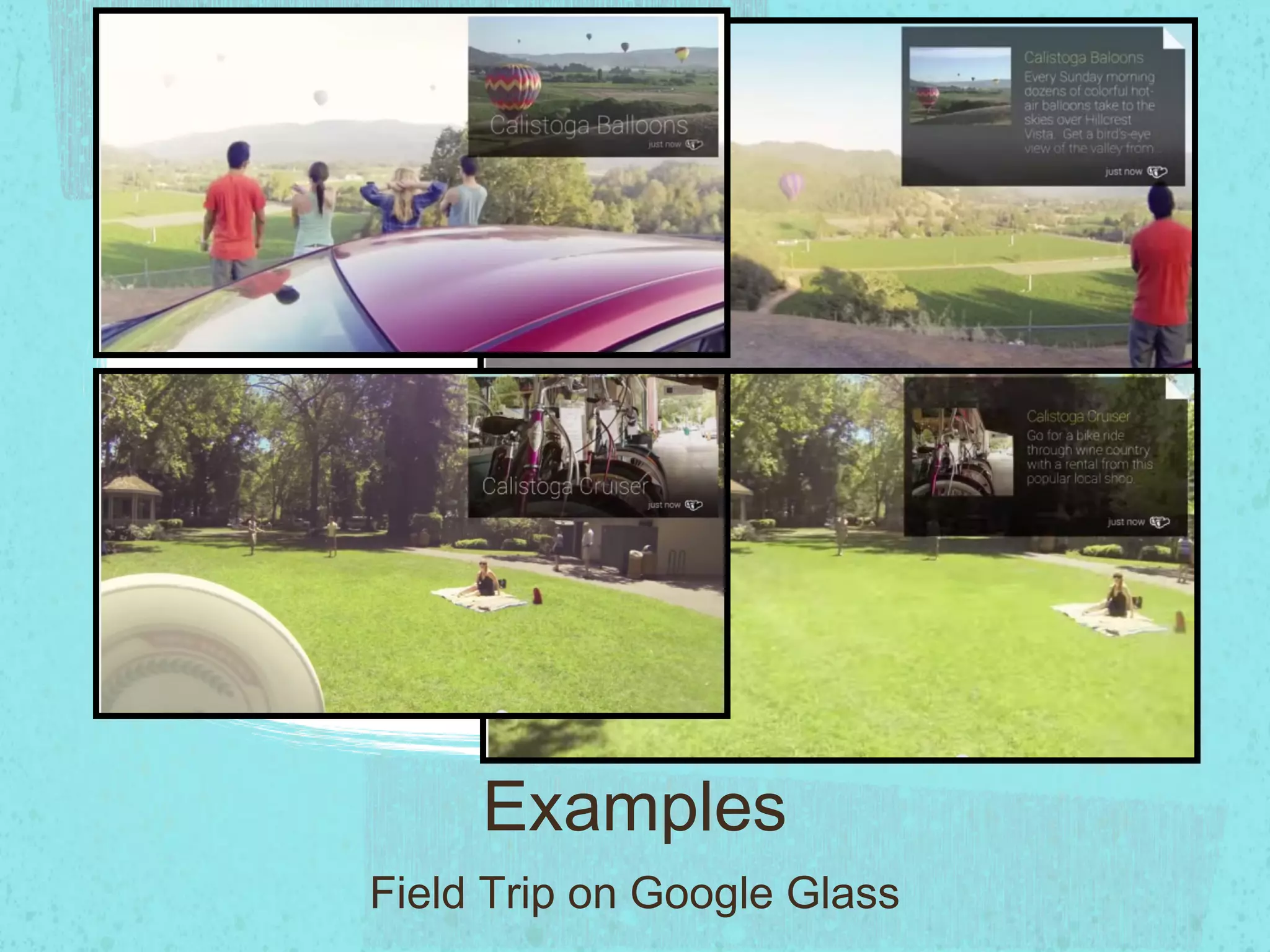


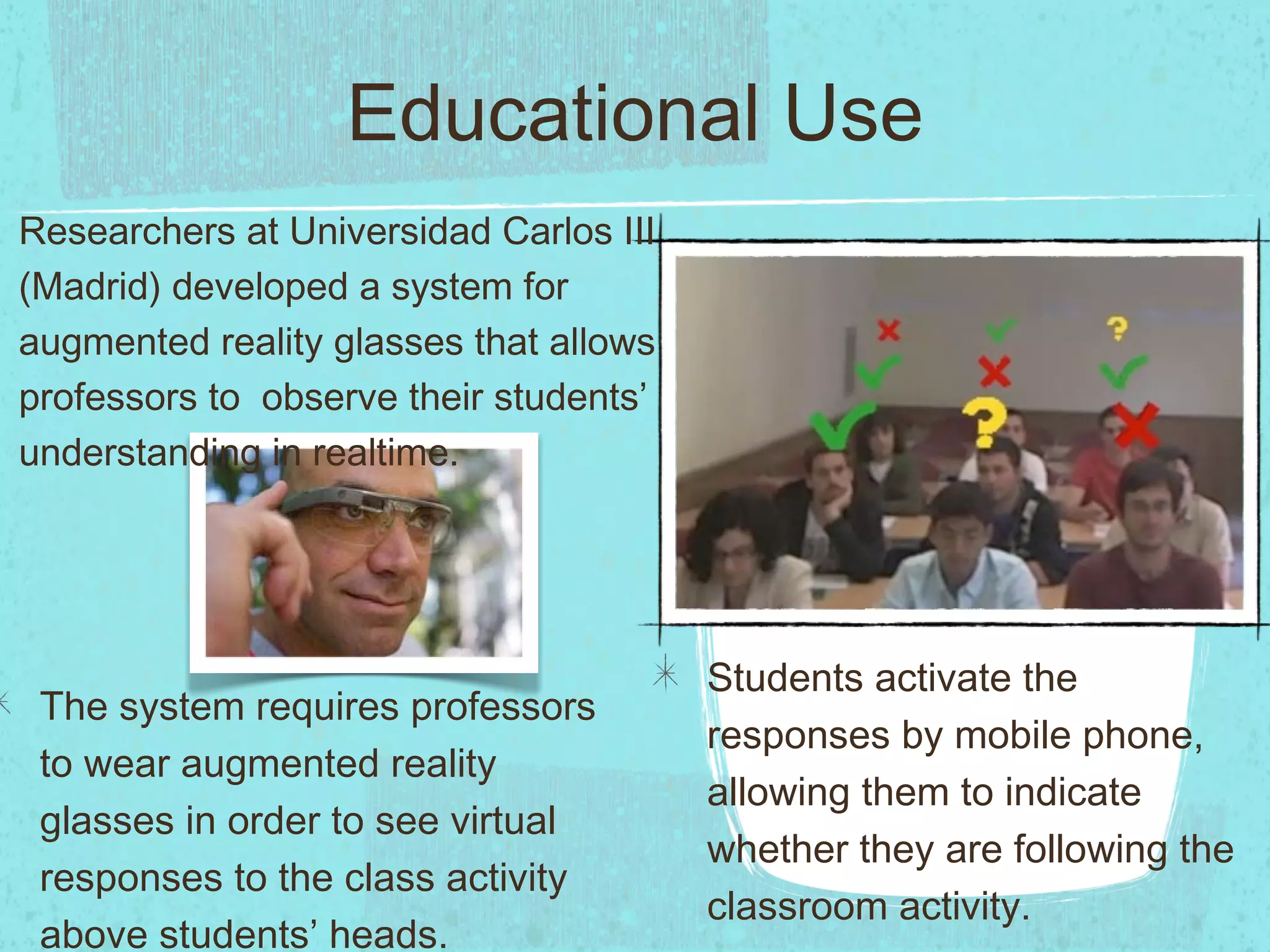


Augmented reality (AR) enhances a user's perception of reality by adding computer-generated sensory input such as sound, video, graphics to the real world. AR combines technologies like geolocation, video, and internet access to provide real-time data experiences. While few studies have been done, psychologists believe AR shows promise for therapeutic use by allowing exposure to virtual objects and control over their appearance, which could help treat phobias. AR may also benefit education by allowing professors to observe student understanding in real-time through virtual responses above their heads activated by mobile phones. However, more research is still needed to fully understand AR's social and psychological aspects.


