ATM THEFTS
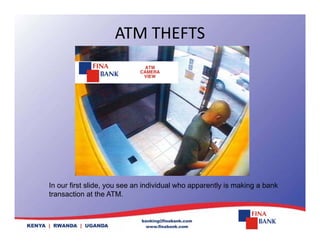
In our first slide, you see an individual who apparently is making a bank
transaction at the ATM.
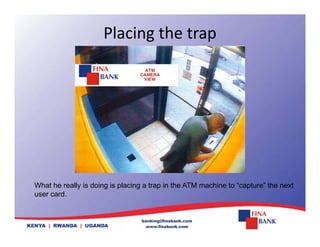
Placing the trap
What he really is doing is placing a trap in the ATM machine to “capture” the next
user card.
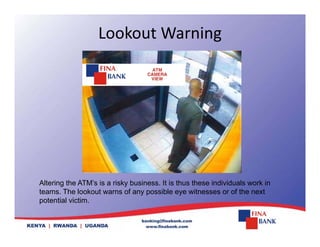
Lookout Warning
Altering the ATM’s is a risky business. It is thus these individuals work in
teams. The lookout warns of any possible eye witnesses or of the next
potential victim
potential victim.
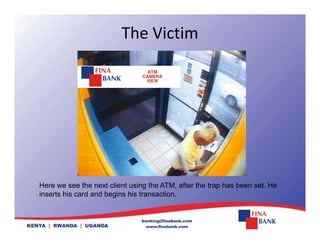
The Victim
Here we see the next client using the ATM, after the trap has been set. He
inserts his card and begins his transaction.
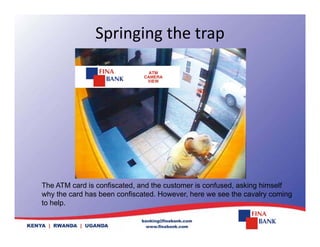
Springing the trap
The ATM card is confiscated, and the customer is confused, asking himself
why the card has been confiscated. However, here we see the cavalry coming
t h l
to help.
‘Honest’ Samaritan Offering Help
Here we see the thief pretending to help. What he is really doing is trying to
gain the customers’ PIN, now that he has captured his card.
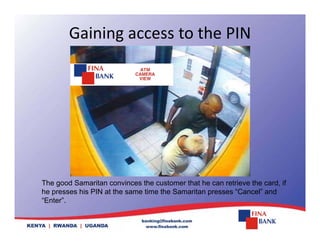
Gaining access to the PIN
The good Samaritan convinces the customer that he can retrieve the card, if
he presses his PIN at the same time the Samaritan presses “Cancel” and
“Enter”
Enter .
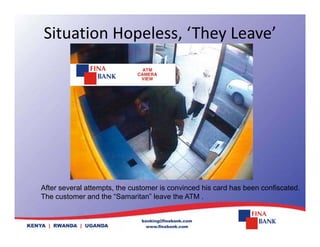
Situation Hopeless, ‘They Leave’
After several attempts, the customer is convinced his card has been confiscated.
The customer and the “Samaritan” leave the ATM .
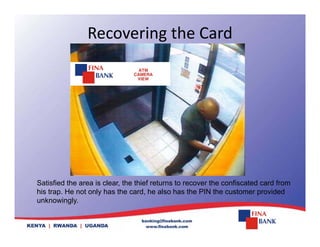
Recovering the Card
Satisfied the area is clear, the thief returns to recover the confiscated card from
his trap. He not only has the card, he also has the PIN the customer provided
unknowingly
unknowingly.
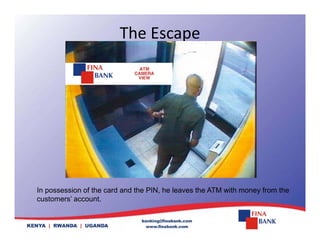
The Escape
In possession of the card and the PIN, he leaves the ATM with money from the
customers’ account.
customers account.
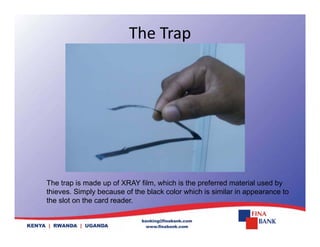
The Trap
The trap is made up of XRAY film, which is the preferred material used by
thieves. Simply because of the black color which is similar in appearance to
the slot on the card reader
the slot on the card reader.
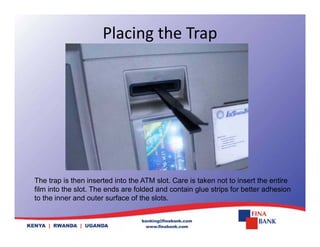
Placing the Trap
The trap is then inserted into the ATM slot. Care is taken not to insert the entire
film into the slot. The ends are folded and contain glue strips for better adhesion
to the inner and outer surface of the slots.
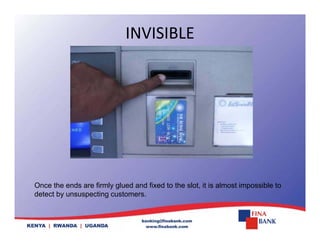
INVISIBLE
Once the ends are firmly glued and fixed to the slot, it is almost impossible to
detect by unsuspecting customers.
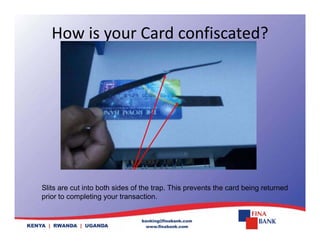
How is your Card confiscated?
Slits are cut into both sides of the trap. This prevents the card being returned
prior to completing your transaction.
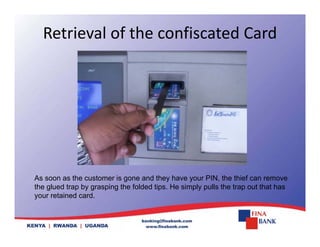
Retrieval of the confiscated Card
As soon as the customer is gone and they have your PIN, the thief can remove
the glued trap by grasping the folded tips. He simply pulls the trap out that has
your retained card.
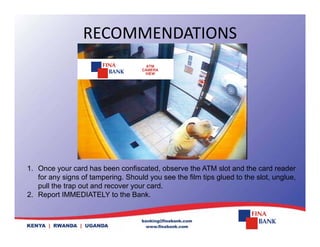
RECOMMENDATIONS
1. Once your card has been confiscated, observe the ATM slot and the card reader
for any signs of tampering. Should you see the film tips glued to the slot, unglue,
pull the trap out and recover your card.
2. Report IMMEDIATELY to the Bank.
Send this message to 
Friends and
Friends and
Family immediately.
y y

Atm thefts presentation

  • 1.
    ATM THEFTS In our firstslide, you see an individual who apparently is making a bank transaction at the ATM.
  • 2.
    Placing the trap What hereally is doing is placing a trap in the ATM machine to “capture” the next user card.
  • 3.
    Lookout Warning Altering the ATM’sis a risky business. It is thus these individuals work in teams. The lookout warns of any possible eye witnesses or of the next potential victim potential victim.
  • 4.
    The Victim Here we seethe next client using the ATM, after the trap has been set. He inserts his card and begins his transaction.
  • 5.
    Springing the trap The ATM cardis confiscated, and the customer is confused, asking himself why the card has been confiscated. However, here we see the cavalry coming t h l to help.
  • 6.
    ‘Honest’ Samaritan Offering Help Here wesee the thief pretending to help. What he is really doing is trying to gain the customers’ PIN, now that he has captured his card.
  • 7.
    Gaining access to the PIN The goodSamaritan convinces the customer that he can retrieve the card, if he presses his PIN at the same time the Samaritan presses “Cancel” and “Enter” Enter .
  • 8.
    Situation Hopeless, ‘They Leave’ After severalattempts, the customer is convinced his card has been confiscated. The customer and the “Samaritan” leave the ATM .
  • 9.
    Recovering the Card Satisfied thearea is clear, the thief returns to recover the confiscated card from his trap. He not only has the card, he also has the PIN the customer provided unknowingly unknowingly.
  • 10.
    The Escape In possession ofthe card and the PIN, he leaves the ATM with money from the customers’ account. customers account.
  • 11.
    The Trap The trap ismade up of XRAY film, which is the preferred material used by thieves. Simply because of the black color which is similar in appearance to the slot on the card reader the slot on the card reader.
  • 12.
    Placing the Trap The trap isthen inserted into the ATM slot. Care is taken not to insert the entire film into the slot. The ends are folded and contain glue strips for better adhesion to the inner and outer surface of the slots.
  • 13.
    INVISIBLE Once the endsare firmly glued and fixed to the slot, it is almost impossible to detect by unsuspecting customers.
  • 14.
    How is your Card confiscated? Slits arecut into both sides of the trap. This prevents the card being returned prior to completing your transaction.
  • 15.
    Retrieval of the confiscated Card As soonas the customer is gone and they have your PIN, the thief can remove the glued trap by grasping the folded tips. He simply pulls the trap out that has your retained card.
  • 16.
    RECOMMENDATIONS 1. Once yourcard has been confiscated, observe the ATM slot and the card reader 1. Once your card has been confiscated, observe the ATM slot and the card reader for any signs of tampering. Should you see the film tips glued to the slot, unglue, pull the trap out and recover your card. 2. Report IMMEDIATELY to the Bank.
  • 17.