Research Methods Find what you want, when you want it.
The PLUS Model Purpose Location Use Self-evaluation See notice board for more details The PLUS Model James Herring
Tips and Techniques for: Writing Assignments Basic Essay Structure Extending Vocabulary Referencing
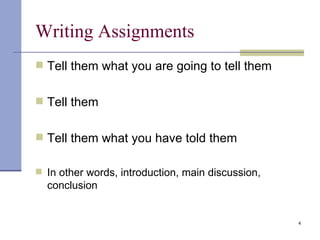
Writing Assignments Tell them what you are going to tell them Tell them Tell them what you have told them In other words, introduction, main discussion, conclusion
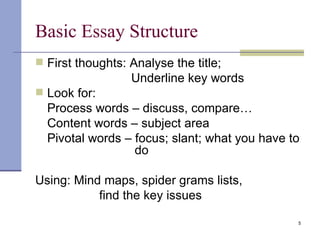
Basic Essay Structure First thoughts: Analyse the title;  Underline key words Look for: Process words – discuss, compare… Content words – subject area Pivotal words – focus; slant; what you have to   do Using: Mind maps, spider grams lists,  find the key issues
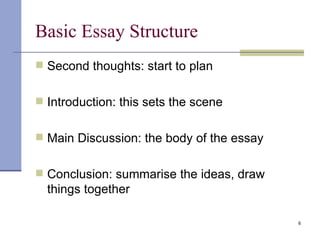
Basic Essay Structure Second thoughts: start to plan Introduction: this sets the scene Main Discussion: the body of the essay Conclusion: summarise the ideas, draw things together
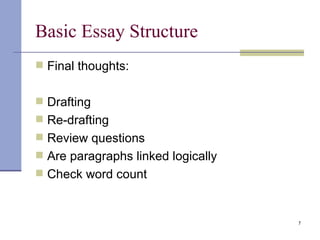
Basic Essay Structure Final thoughts: Drafting Re-drafting Review questions Are paragraphs linked logically Check word count
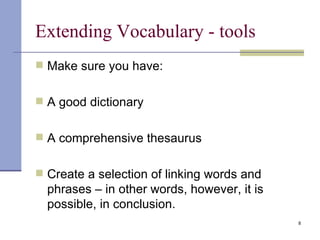
Extending Vocabulary - tools Make sure you have: A good dictionary A comprehensive thesaurus Create a selection of linking words and phrases – in other words, however, it is possible, in conclusion.
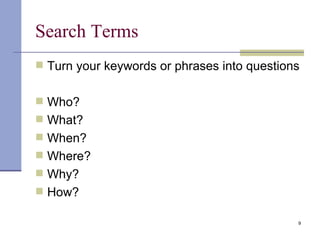
Search Terms Turn your keywords or phrases into questions Who? What? When? Where? Why? How?
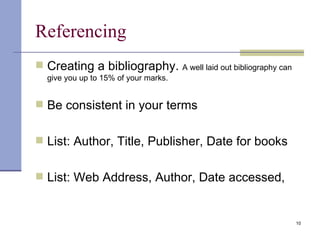
Referencing  Creating a bibliography.  A well laid out bibliography can give you up to 15% of your marks. Be consistent in your terms List: Author, Title, Publisher, Date for books List: Web Address, Author, Date accessed,
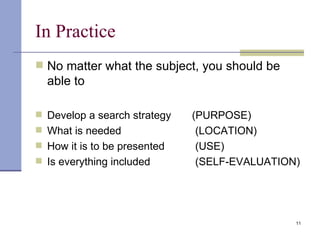
In Practice No matter what the subject, you should be able to Develop a search strategy  (PURPOSE) What is needed (LOCATION) How it is to be presented (USE) Is everything included (SELF-EVALUATION)

Assignments preparation and writing

  • 1.
    Research Methods Findwhat you want, when you want it.
  • 2.
    The PLUS ModelPurpose Location Use Self-evaluation See notice board for more details The PLUS Model James Herring
  • 3.
    Tips and Techniquesfor: Writing Assignments Basic Essay Structure Extending Vocabulary Referencing
  • 4.
    Writing Assignments Tellthem what you are going to tell them Tell them Tell them what you have told them In other words, introduction, main discussion, conclusion
  • 5.
    Basic Essay StructureFirst thoughts: Analyse the title; Underline key words Look for: Process words – discuss, compare… Content words – subject area Pivotal words – focus; slant; what you have to do Using: Mind maps, spider grams lists, find the key issues
  • 6.
    Basic Essay StructureSecond thoughts: start to plan Introduction: this sets the scene Main Discussion: the body of the essay Conclusion: summarise the ideas, draw things together
  • 7.
    Basic Essay StructureFinal thoughts: Drafting Re-drafting Review questions Are paragraphs linked logically Check word count
  • 8.
    Extending Vocabulary -tools Make sure you have: A good dictionary A comprehensive thesaurus Create a selection of linking words and phrases – in other words, however, it is possible, in conclusion.
  • 9.
    Search Terms Turnyour keywords or phrases into questions Who? What? When? Where? Why? How?
  • 10.
    Referencing Creatinga bibliography. A well laid out bibliography can give you up to 15% of your marks. Be consistent in your terms List: Author, Title, Publisher, Date for books List: Web Address, Author, Date accessed,
  • 11.
    In Practice Nomatter what the subject, you should be able to Develop a search strategy (PURPOSE) What is needed (LOCATION) How it is to be presented (USE) Is everything included (SELF-EVALUATION)