Advancements in
Assisted Reproductive
Techniques for
Infertility
Management
Introduction
In recent years, there have been
remarkable advancements in
(ART) for
managing infertility. These innovations
offer hope to millions of couples struggling
to conceive. This presentation will explore
the latest developments in ART and their
impact on infertility management.
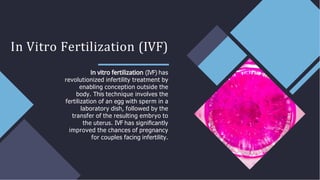
In Vitro Fertilization (IVF)
(IVF) has
revolutionized infertility treatment by
enabling conception outside the
body. This technique involves the
fertilization of an egg with sperm in a
laboratory dish, followed by the
transfer of the resulting embryo to
the uterus. IVF has significantly
improved the chances of pregnancy
for couples facing infertility.
Intracytoplasmic Sperm Injection
(ICSI)
(ICSI) is a specialized form of IVF that
involves the direct injection of a
single sperm into an egg. This
technique is particularly beneficial for
couples dealing with male infertility
issues, as it enhances the chances of
successful fertilization and embryo
development.
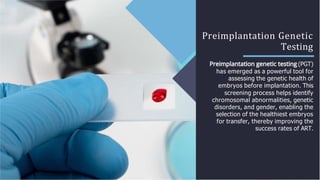
Preimplantation Genetic
Testing
(PGT)
has emerged as a powerful tool for
assessing the genetic health of
embryos before implantation. This
screening process helps identify
chromosomal abnormalities, genetic
disorders, and gender, enabling the
selection of the healthiest embryos
for transfer, thereby improving the
success rates of ART.
Ovarian Stimulation
Techniques
Advancements in
techniques have optimized the process of
inducing multiple egg production in women
undergoing ART. These innovations have
led to improved egg quality and quantity,
enhancing the chances of successful
fertilization and embryo development.
Gamete and Embryo
Cryopreservation
The ability to gametes (eggs
and sperm) and embryos has
revolutionized ART by allowing for their
storage and later use. This has extended
the fertility window for individuals
undergoing medical treatments that may
affect their reproductive health, as well as
for those choosing to delay childbearing.
Surrogacy and Gestational
Carriers
and have
provided alternative pathways to
parenthood for individuals unable to carry
a pregnancy to term. These arrangements
involve the transfer of an embryo created
through ART to a surrogate or gestational
carrier, offering hope to individuals with
medical conditions that prevent pregnancy.
Ethical Considerations in ART
The rapid advancements in ART have
raised important
surrounding issues
such as embryo selection, genetic
testing, and the use of surrogates. It
is crucial to navigate these ethical
complexities to ensure the
responsible and equitable application
of ART in infertility management.
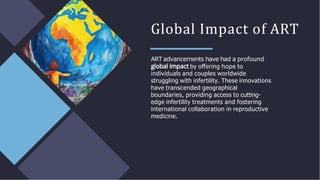
Global Impact of ART
ART advancements have had a profound
by offering hope to
individuals and couples worldwide
struggling with infertility. These innovations
have transcended geographical
boundaries, providing access to cutting-
edge infertility treatments and fostering
international collaboration in reproductive
medicine.
Future Directions in ART
The future of ART holds promising
prospects, including advancements in
,
personalized treatments, and the
integration of artificial intelligence in
embryo selection. These
developments are poised to further
enhance the efficacy and accessibility
of infertility management.
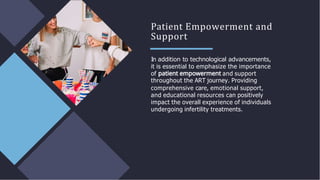
Patient Empowerment and
Support
In addition to technological advancements,
it is essential to emphasize the importance
of and support
throughout the ART journey. Providing
comprehensive care, emotional support,
and educational resources can positively
impact the overall experience of individuals
undergoing infertility treatments.
The advancements in assisted reproductive
techniques have transformed the landscape of
infertility management, offering new hope and
possibilities to individuals and couples facing
reproductive challenges. As we continue to embrace
innovation and ethical considerations, the future of
ART holds great promise for improving the lives of
countless individuals worldwide.
Conclusion
Thanks!

assignment on Infertility and various Assisted Reproductive Technigues

  • 1.
  • 2.
    Introduction In recent years,there have been remarkable advancements in (ART) for managing infertility. These innovations offer hope to millions of couples struggling to conceive. This presentation will explore the latest developments in ART and their impact on infertility management.
  • 3.
    In Vitro Fertilization(IVF) (IVF) has revolutionized infertility treatment by enabling conception outside the body. This technique involves the fertilization of an egg with sperm in a laboratory dish, followed by the transfer of the resulting embryo to the uterus. IVF has significantly improved the chances of pregnancy for couples facing infertility.
  • 4.
    Intracytoplasmic Sperm Injection (ICSI) (ICSI)is a specialized form of IVF that involves the direct injection of a single sperm into an egg. This technique is particularly beneficial for couples dealing with male infertility issues, as it enhances the chances of successful fertilization and embryo development.
  • 5.
    Preimplantation Genetic Testing (PGT) has emergedas a powerful tool for assessing the genetic health of embryos before implantation. This screening process helps identify chromosomal abnormalities, genetic disorders, and gender, enabling the selection of the healthiest embryos for transfer, thereby improving the success rates of ART.
  • 6.
    Ovarian Stimulation Techniques Advancements in techniqueshave optimized the process of inducing multiple egg production in women undergoing ART. These innovations have led to improved egg quality and quantity, enhancing the chances of successful fertilization and embryo development.
  • 7.
    Gamete and Embryo Cryopreservation Theability to gametes (eggs and sperm) and embryos has revolutionized ART by allowing for their storage and later use. This has extended the fertility window for individuals undergoing medical treatments that may affect their reproductive health, as well as for those choosing to delay childbearing.
  • 8.
    Surrogacy and Gestational Carriers andhave provided alternative pathways to parenthood for individuals unable to carry a pregnancy to term. These arrangements involve the transfer of an embryo created through ART to a surrogate or gestational carrier, offering hope to individuals with medical conditions that prevent pregnancy.
  • 9.
    Ethical Considerations inART The rapid advancements in ART have raised important surrounding issues such as embryo selection, genetic testing, and the use of surrogates. It is crucial to navigate these ethical complexities to ensure the responsible and equitable application of ART in infertility management.
  • 10.
    Global Impact ofART ART advancements have had a profound by offering hope to individuals and couples worldwide struggling with infertility. These innovations have transcended geographical boundaries, providing access to cutting- edge infertility treatments and fostering international collaboration in reproductive medicine.
  • 11.
    Future Directions inART The future of ART holds promising prospects, including advancements in , personalized treatments, and the integration of artificial intelligence in embryo selection. These developments are poised to further enhance the efficacy and accessibility of infertility management.
  • 12.
    Patient Empowerment and Support Inaddition to technological advancements, it is essential to emphasize the importance of and support throughout the ART journey. Providing comprehensive care, emotional support, and educational resources can positively impact the overall experience of individuals undergoing infertility treatments.
  • 13.
    The advancements inassisted reproductive techniques have transformed the landscape of infertility management, offering new hope and possibilities to individuals and couples facing reproductive challenges. As we continue to embrace innovation and ethical considerations, the future of ART holds great promise for improving the lives of countless individuals worldwide. Conclusion
  • 14.