Name: _____________________________________________                    Date:_________________


                Research Guide: Assessing Sources
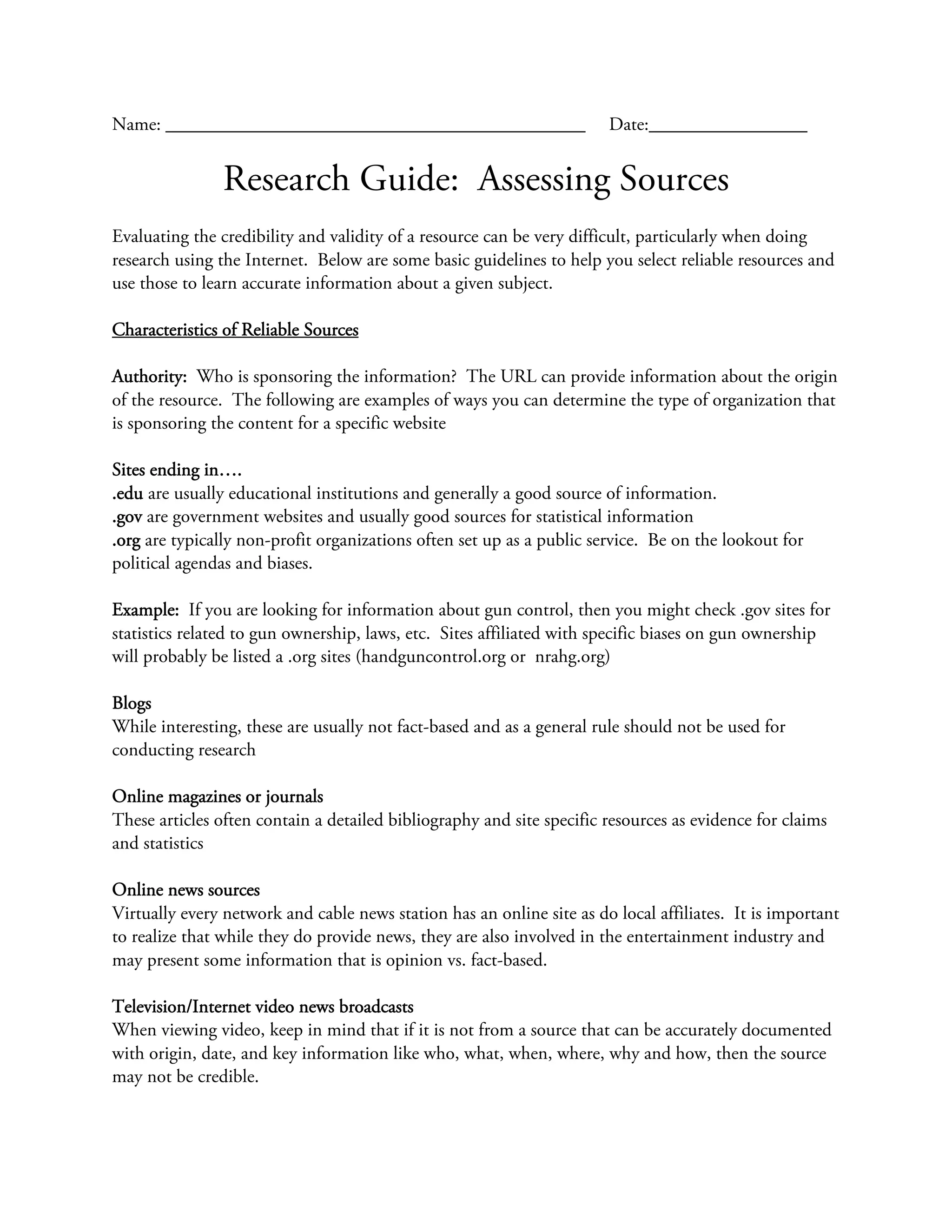
Evaluating the credibility and validity of a resource can be very difficult, particularly when doing
research using the Internet. Below are some basic guidelines to help you select reliable resources and
use those to learn accurate information about a given subject.

Characteristics of Reliable Sources

Authority: Who is sponsoring the information? The URL can provide information about the origin
of the resource. The following are examples of ways you can determine the type of organization that
is sponsoring the content for a specific website

Sites ending in….
.edu are usually educational institutions and generally a good source of information.
.gov are government websites and usually good sources for statistical information
.org are typically non-profit organizations often set up as a public service. Be on the lookout for
political agendas and biases.

Example: If you are looking for information about gun control, then you might check .gov sites for
statistics related to gun ownership, laws, etc. Sites affiliated with specific biases on gun ownership
will probably be listed a .org sites (handguncontrol.org or nrahg.org)

Blogs
While interesting, these are usually not fact-based and as a general rule should not be used for
conducting research

Online magazines or journals
These articles often contain a detailed bibliography and site specific resources as evidence for claims
and statistics

Online news sources
Virtually every network and cable news station has an online site as do local affiliates. It is important
to realize that while they do provide news, they are also involved in the entertainment industry and
may present some information that is opinion vs. fact-based.

Television/Internet video news broadcasts
When viewing video, keep in mind that if it is not from a source that can be accurately documented
with origin, date, and key information like who, what, when, where, why and how, then the source
may not be credible.
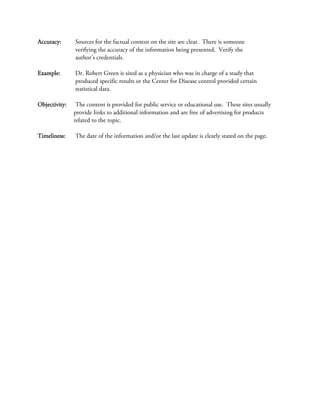
Accuracy:      Sources for the factual content on the site are clear. There is someone
               verifying the accuracy of the information being presented. Verify the
               author’s credentials.

Example:       Dr. Robert Green is sited as a physician who was in charge of a study that
               produced specific results or the Center for Disease control provided certain
               statistical data.

Objectivity:    The content is provided for public service or educational use. These sites usually
               provide links to additional information and are free of advertising for products
               related to the topic.

Timeliness:    The date of the information and/or the last update is clearly stated on the page.
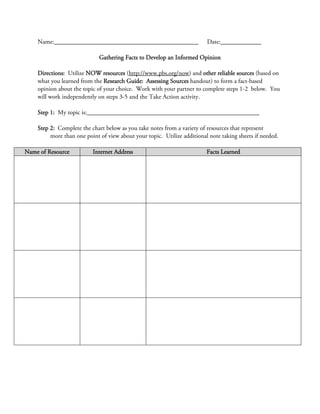
Name:______________________________________________                  Date:_____________

                             Gathering Facts to Develop an Informed Opinion

    Directions: Utilize NOW resources (http://www.pbs.org/now) and other reliable sources (based on
    what you learned from the Research Guide: Assessing Sources handout) to form a fact-based
    opinion about the topic of your choice. Work with your partner to complete steps 1-2 below. You
    will work independently on steps 3-5 and the Take Action activity.

    Step 1: My topic is:_______________________________________________________

    Step 2: Complete the chart below as you take notes from a variety of resources that represent
         more than one point of view about your topic. Utilize additional note taking sheets if needed.

Name of Resource          Internet Address                               Facts Learned
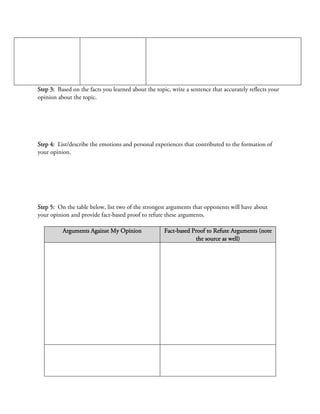
Step 3: Based on the facts you learned about the topic, write a sentence that accurately reflects your
opinion about the topic.


Step 4: List/describe the emotions and personal experiences that contributed to the formation of
your opinion.


Step 5: On the table below, list two of the strongest arguments that opponents will have about
your opinion and provide fact-based proof to refute these arguments.

          Arguments Against My Opinion               Fact-based Proof to Refute Arguments (note
                                                                 the source as well)
Take Action Project:

Select a project from the list below to draw attention to your issue and illustrate your opinion about
it. Include sourced facts (see your earlier research from NOW and other sources) in your project.
Be prepared to share your project with classmates.

•   Create a flyer or brochure designed to increase awareness of your opinion and encourage people
    to take what you believe is appropriate action related to this issue

•   Write a letter to the editor expressing your point of view and refuting possible arguments against
    your opinion using the facts you’ve learned from your research

•   Create a public awareness campaign that supports your opinion by designing a billboard or
    bumper sticker that uses facts to support your opinion. Remember, less is more in this medium,
    so don’t be too wordy. Be clever and fact-based.

•   Other: Develop your own project idea and get teacher approval before beginning.
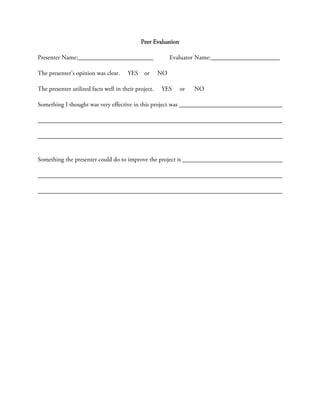
Peer Evaluation

Presenter Name:________________________                    Evaluator Name:______________________

The presenter’s opinion was clear.     YES    or      NO

The presenter utilized facts well in their project.   YES      or   NO

Something I thought was very effective in this project was


Something the presenter could do to improve the project is
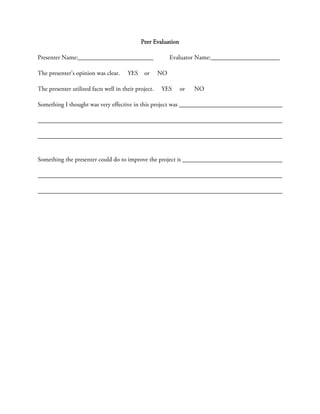
Peer Evaluation

Presenter Name:________________________                    Evaluator Name:______________________

The presenter’s opinion was clear.     YES    or      NO

The presenter utilized facts well in their project.   YES      or   NO

Something I thought was very effective in this project was


Something the presenter could do to improve the project is

Assessing sources

  • 1.
    Name: _____________________________________________ Date:_________________ Research Guide: Assessing Sources Evaluating the credibility and validity of a resource can be very difficult, particularly when doing research using the Internet. Below are some basic guidelines to help you select reliable resources and use those to learn accurate information about a given subject. Characteristics of Reliable Sources Authority: Who is sponsoring the information? The URL can provide information about the origin of the resource. The following are examples of ways you can determine the type of organization that is sponsoring the content for a specific website Sites ending in…. .edu are usually educational institutions and generally a good source of information. .gov are government websites and usually good sources for statistical information .org are typically non-profit organizations often set up as a public service. Be on the lookout for political agendas and biases. Example: If you are looking for information about gun control, then you might check .gov sites for statistics related to gun ownership, laws, etc. Sites affiliated with specific biases on gun ownership will probably be listed a .org sites (handguncontrol.org or nrahg.org) Blogs While interesting, these are usually not fact-based and as a general rule should not be used for conducting research Online magazines or journals These articles often contain a detailed bibliography and site specific resources as evidence for claims and statistics Online news sources Virtually every network and cable news station has an online site as do local affiliates. It is important to realize that while they do provide news, they are also involved in the entertainment industry and may present some information that is opinion vs. fact-based. Television/Internet video news broadcasts When viewing video, keep in mind that if it is not from a source that can be accurately documented with origin, date, and key information like who, what, when, where, why and how, then the source may not be credible.
  • 2.
    Accuracy: Sources for the factual content on the site are clear. There is someone verifying the accuracy of the information being presented. Verify the author’s credentials. Example: Dr. Robert Green is sited as a physician who was in charge of a study that produced specific results or the Center for Disease control provided certain statistical data. Objectivity: The content is provided for public service or educational use. These sites usually provide links to additional information and are free of advertising for products related to the topic. Timeliness: The date of the information and/or the last update is clearly stated on the page.
  • 3.
    Name:______________________________________________ Date:_____________ Gathering Facts to Develop an Informed Opinion Directions: Utilize NOW resources (http://www.pbs.org/now) and other reliable sources (based on what you learned from the Research Guide: Assessing Sources handout) to form a fact-based opinion about the topic of your choice. Work with your partner to complete steps 1-2 below. You will work independently on steps 3-5 and the Take Action activity. Step 1: My topic is:_______________________________________________________ Step 2: Complete the chart below as you take notes from a variety of resources that represent more than one point of view about your topic. Utilize additional note taking sheets if needed. Name of Resource Internet Address Facts Learned
  • 4.
    Step 3: Basedon the facts you learned about the topic, write a sentence that accurately reflects your opinion about the topic. Step 4: List/describe the emotions and personal experiences that contributed to the formation of your opinion. Step 5: On the table below, list two of the strongest arguments that opponents will have about your opinion and provide fact-based proof to refute these arguments. Arguments Against My Opinion Fact-based Proof to Refute Arguments (note the source as well)
  • 5.
    Take Action Project: Selecta project from the list below to draw attention to your issue and illustrate your opinion about it. Include sourced facts (see your earlier research from NOW and other sources) in your project. Be prepared to share your project with classmates. • Create a flyer or brochure designed to increase awareness of your opinion and encourage people to take what you believe is appropriate action related to this issue • Write a letter to the editor expressing your point of view and refuting possible arguments against your opinion using the facts you’ve learned from your research • Create a public awareness campaign that supports your opinion by designing a billboard or bumper sticker that uses facts to support your opinion. Remember, less is more in this medium, so don’t be too wordy. Be clever and fact-based. • Other: Develop your own project idea and get teacher approval before beginning.
  • 6.
    Peer Evaluation Presenter Name:________________________ Evaluator Name:______________________ The presenter’s opinion was clear. YES or NO The presenter utilized facts well in their project. YES or NO Something I thought was very effective in this project was Something the presenter could do to improve the project is
  • 7.
    Peer Evaluation Presenter Name:________________________ Evaluator Name:______________________ The presenter’s opinion was clear. YES or NO The presenter utilized facts well in their project. YES or NO Something I thought was very effective in this project was Something the presenter could do to improve the project is