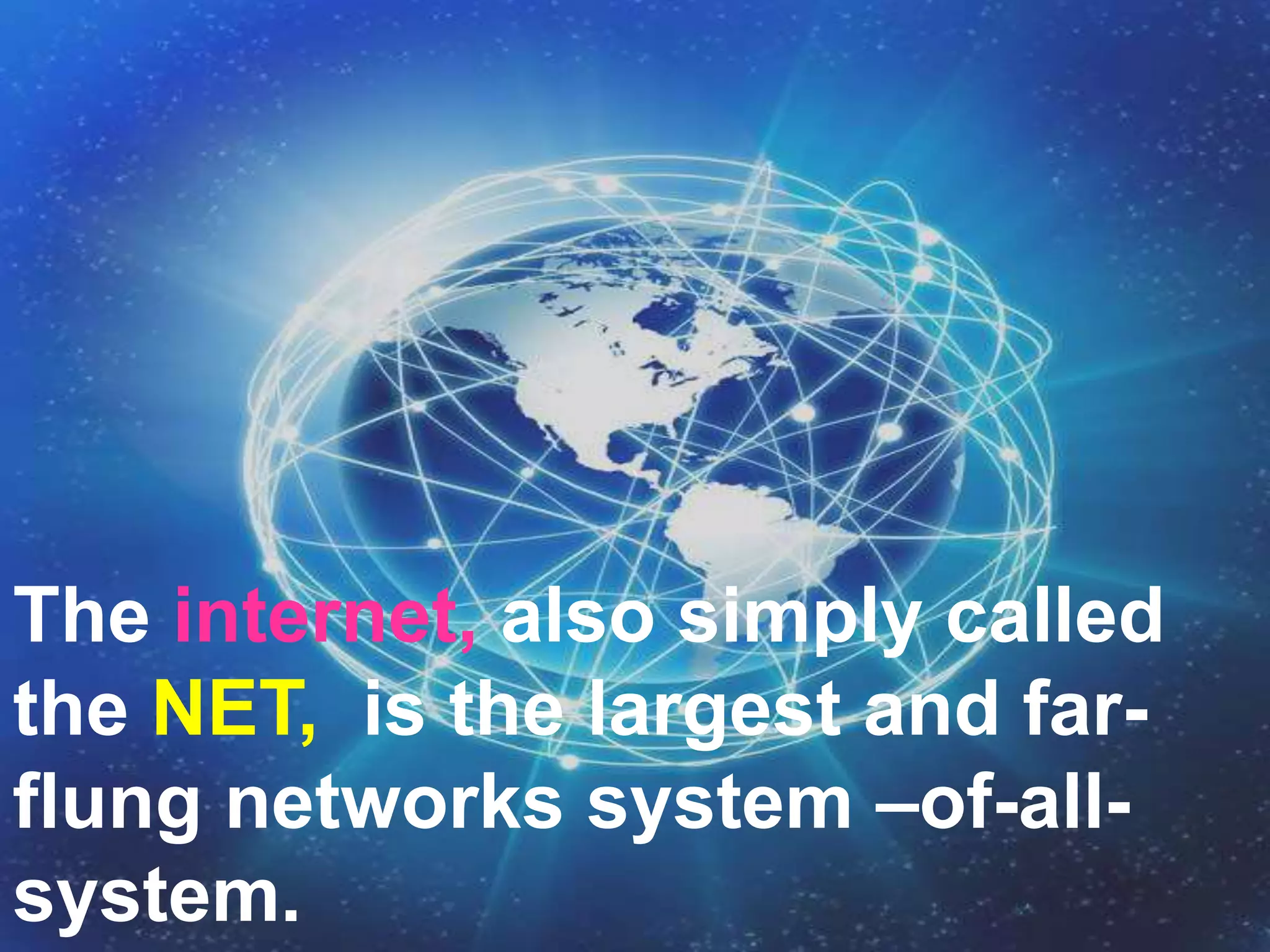
The internet, also simply called
the NET, is the largest and far-
flung networks system –of-all-
system.
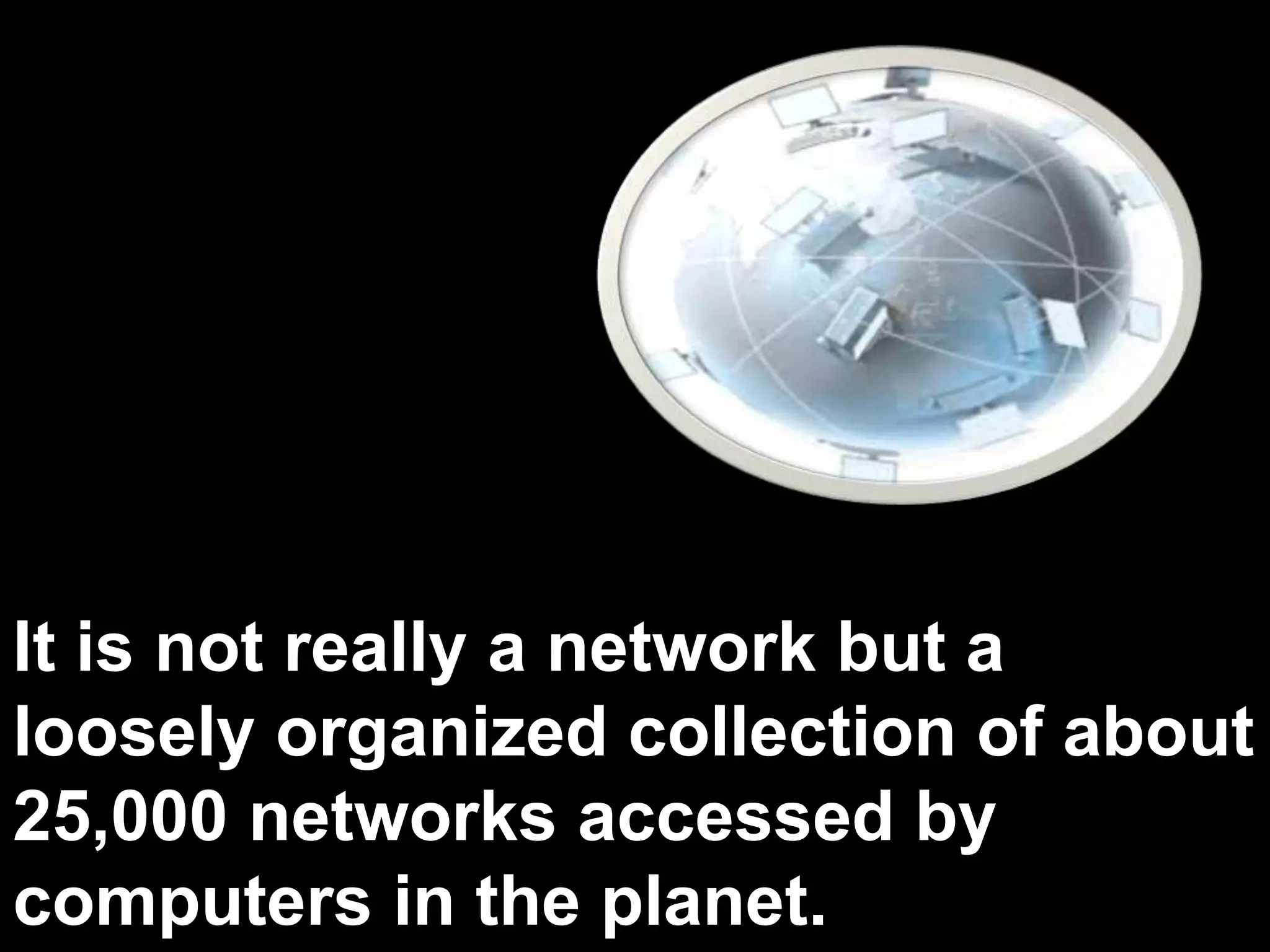
It is not really a network but a
loosely organized collection of about
25,000 networks accessed by
computers in the planet.
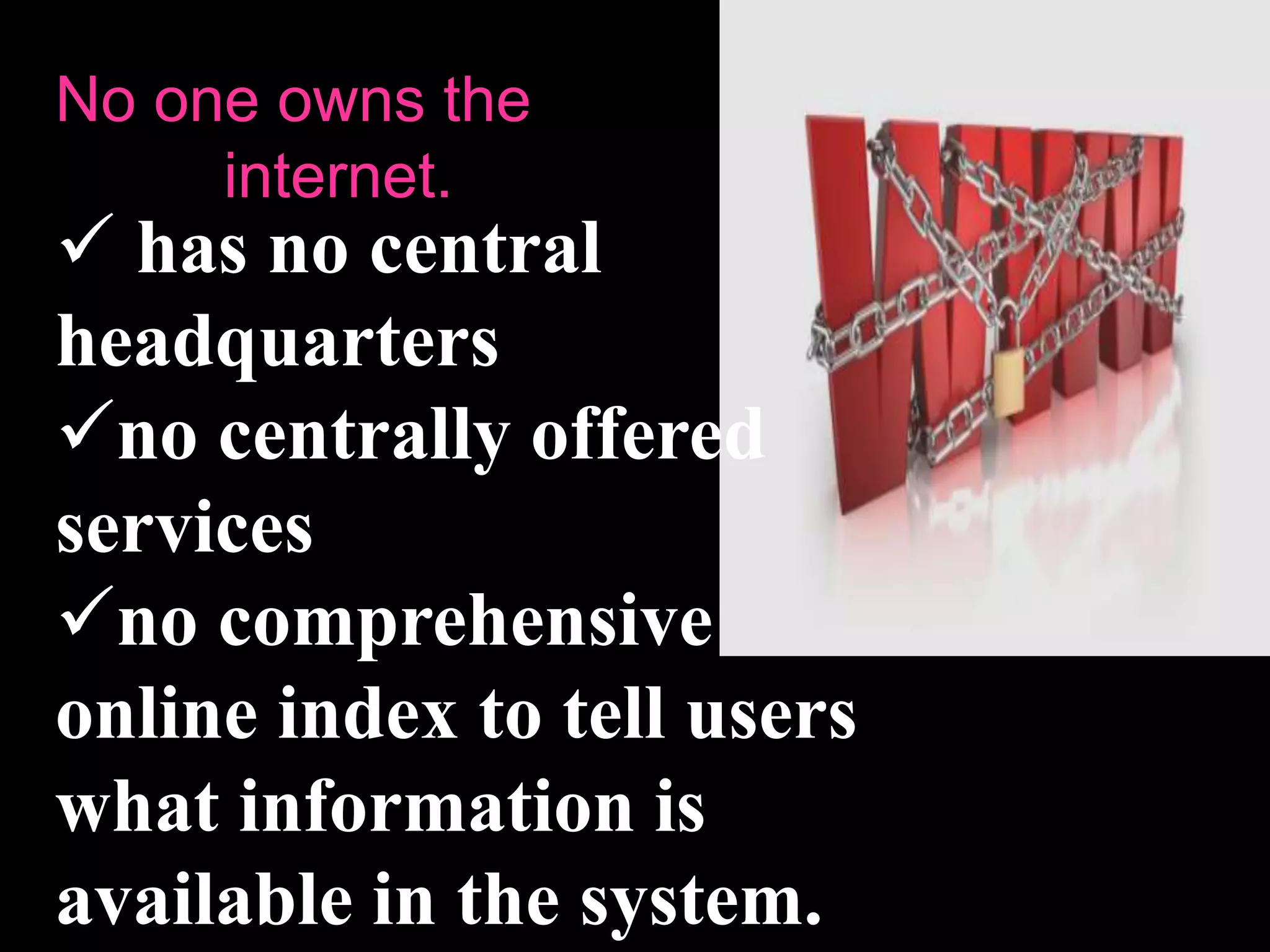
 has no central
headquarters
no centrally offered
services
no comprehensive
online index to tell users
what information is
available in the system.
No one owns the
internet.
How is
everything
coordinated
through the
Internet?
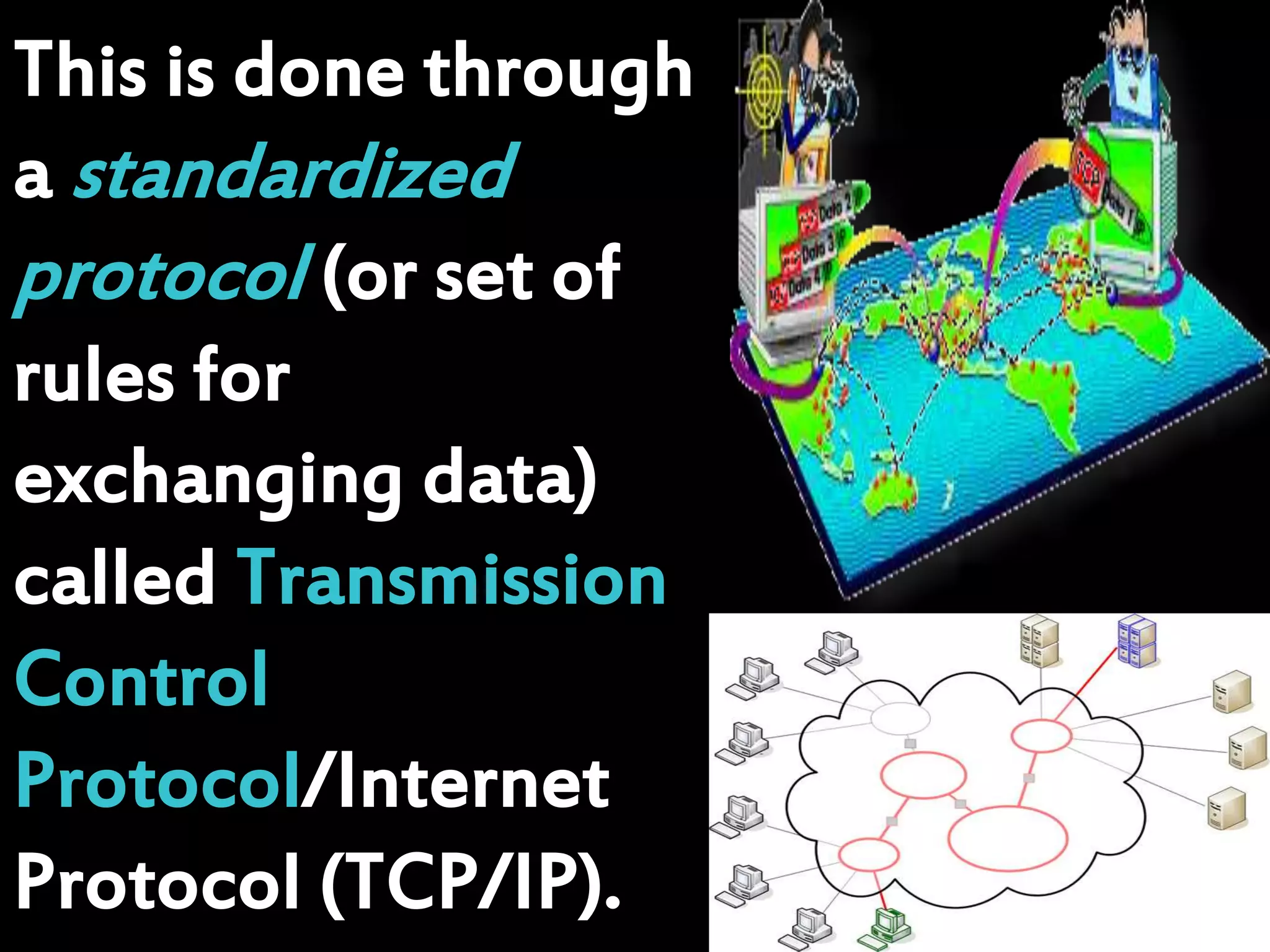
This is done through
a standardized
protocol (or set of
rules for
exchanging data)
called Transmission
Control
Protocol/Internet
Protocol (TCP/IP).
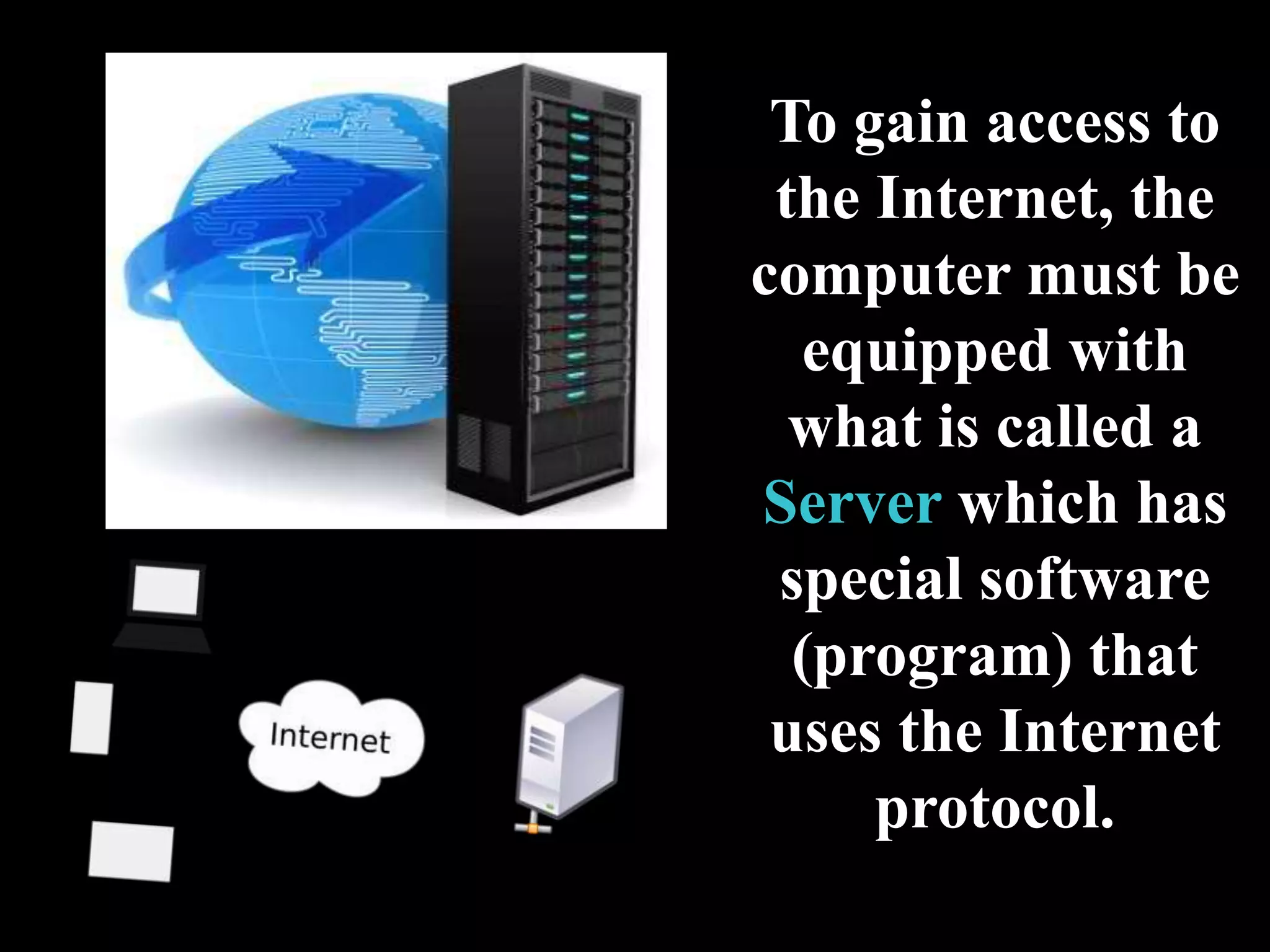
To gain access to
the Internet, the
computer must be
equipped with
what is called a
Server which has
special software
(program) that
uses the Internet
protocol.
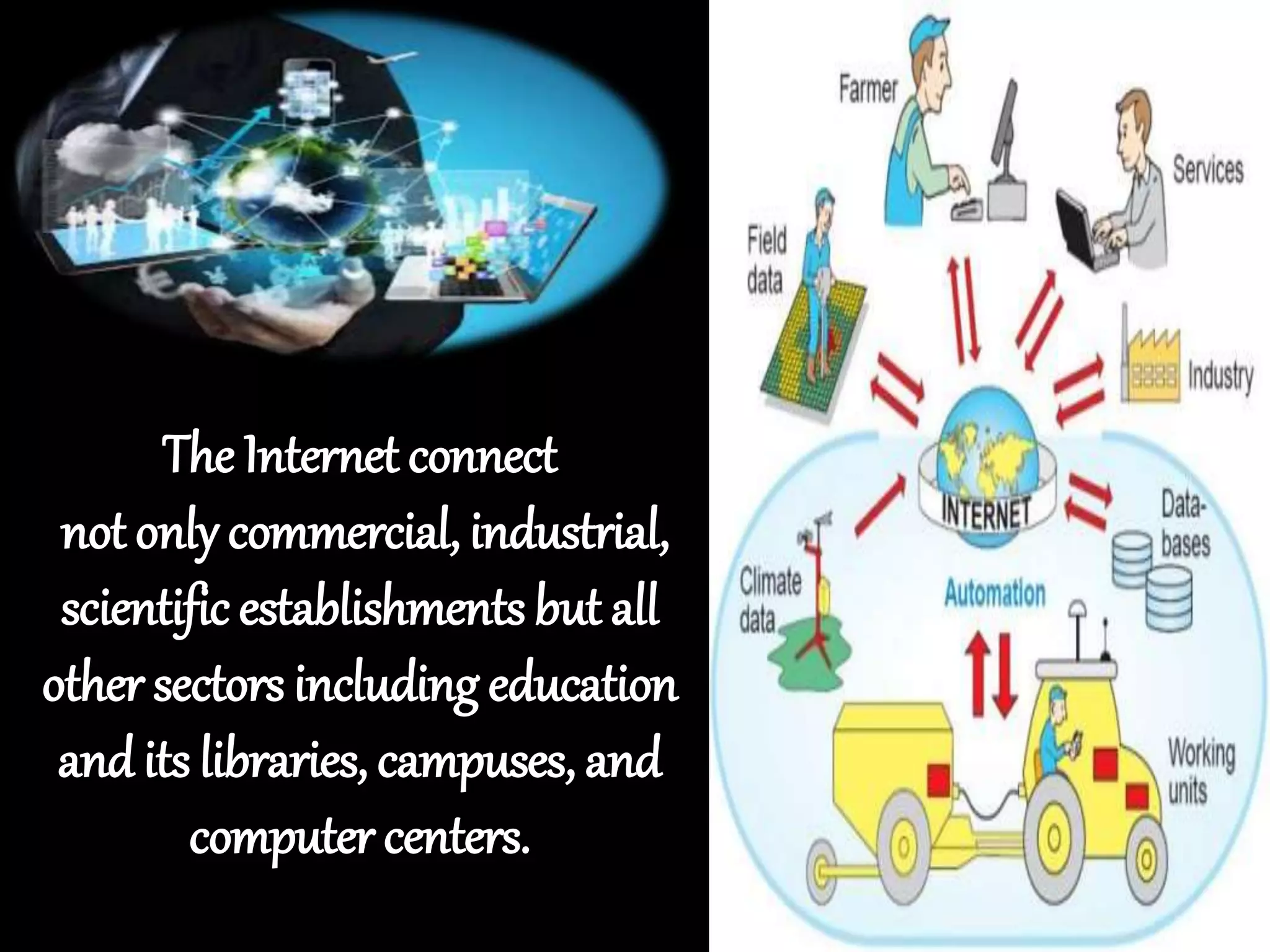
The Internet connect
not only commercial, industrial,
scientific establishments but all
other sectors including education
andits libraries, campuses, and
computer centers.
Getting around the Net
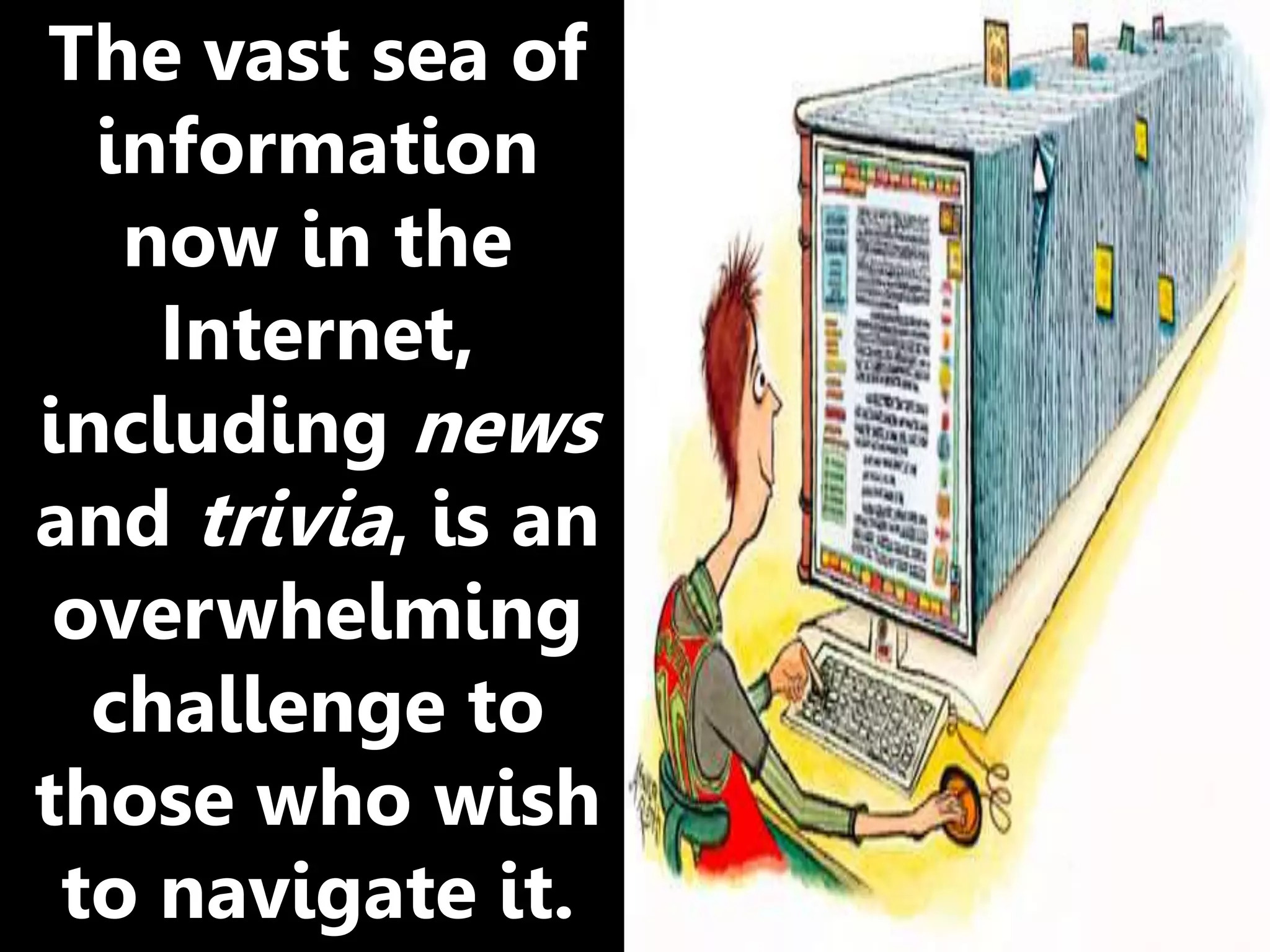
The vast sea of
information
now in the
Internet,
including news
and trivia, is an
overwhelming
challenge to
those who wish
to navigate it.
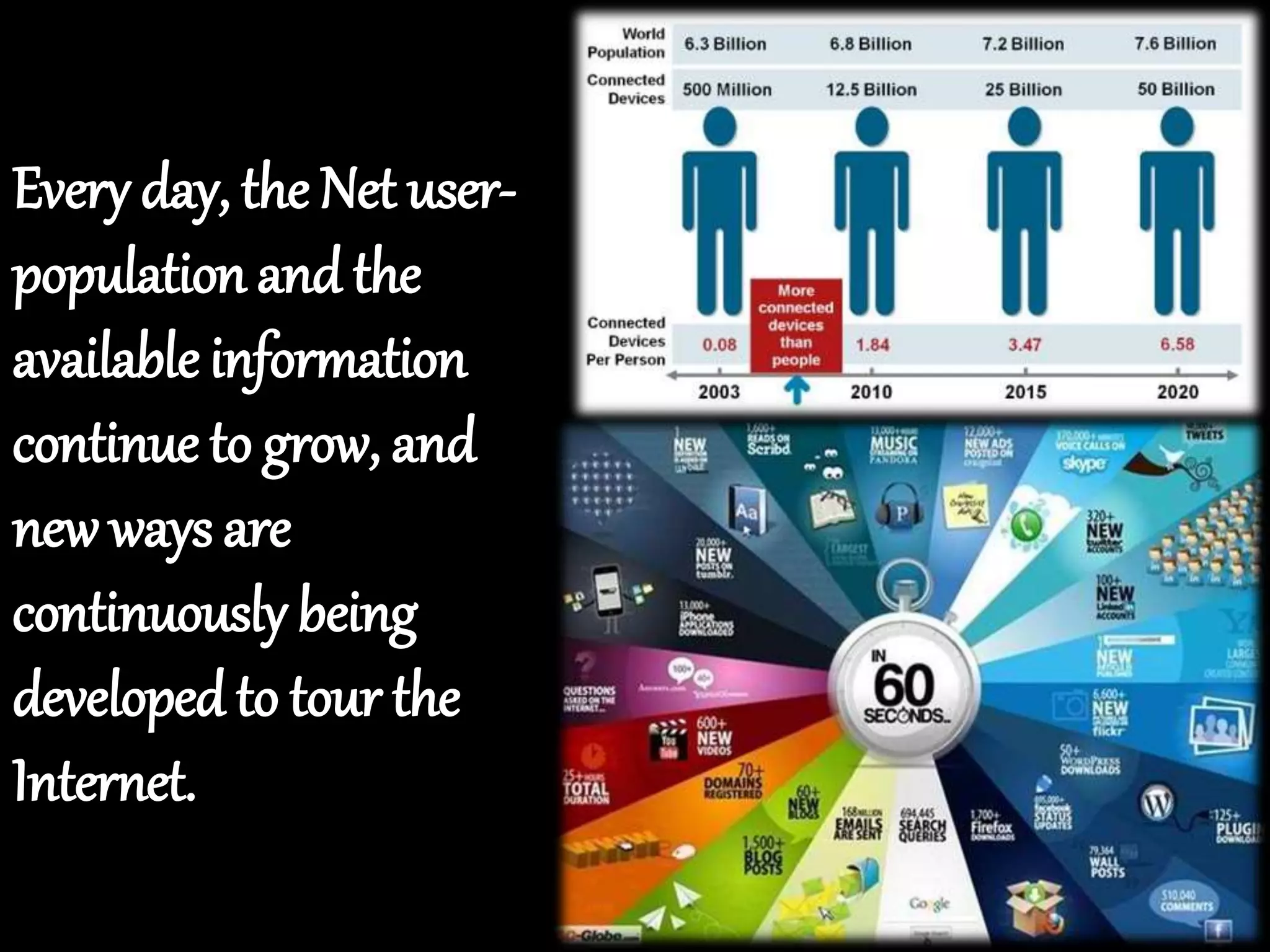
Every day, the Net user-
population and the
available information
continue to grow, and
new ways are
continuously being
developed to tour the
Internet.
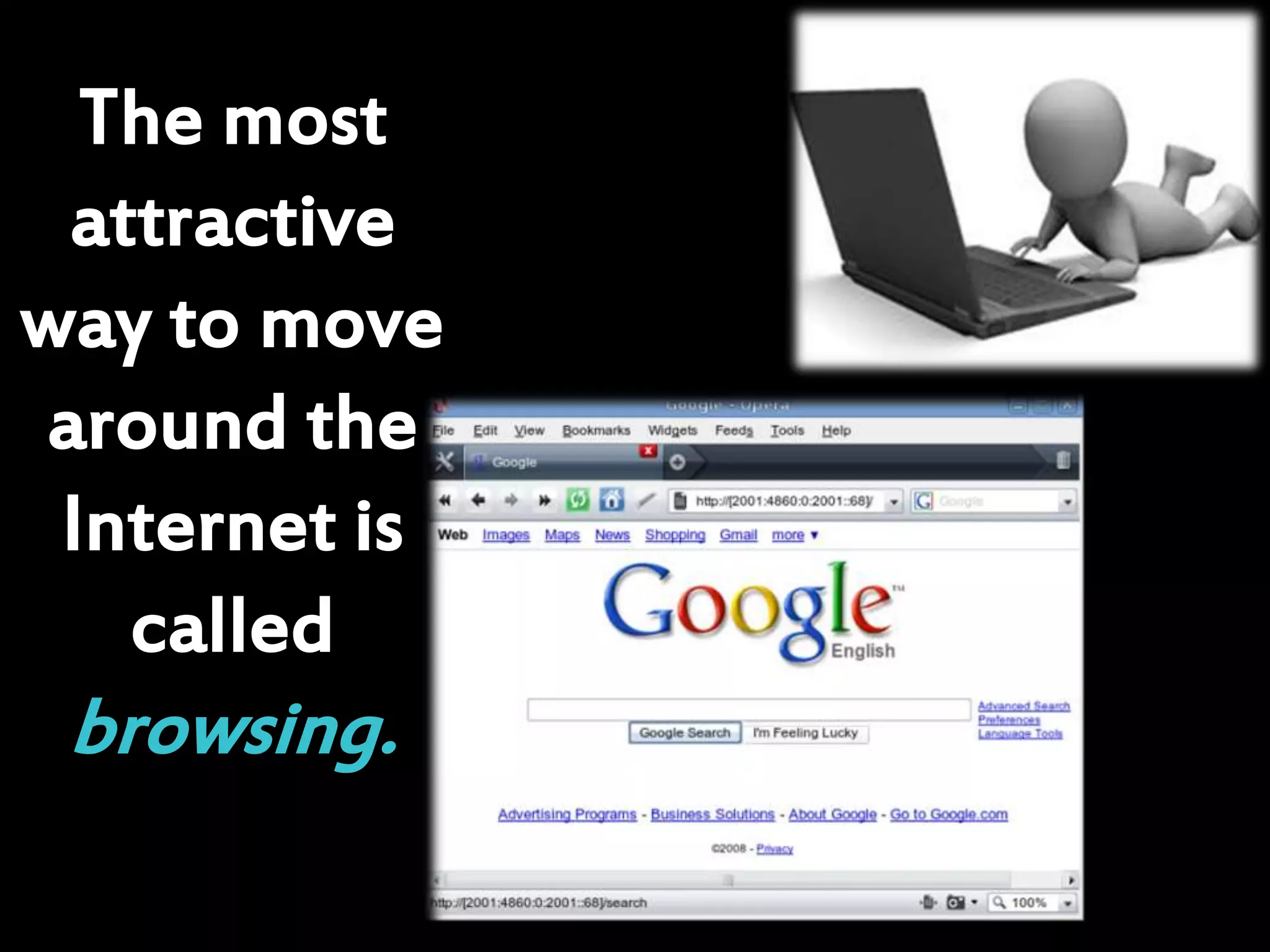
The most
attractive
way to move
around the
Internet is
called
browsing.
Using a program called a browser, the user can
use a mouse to point and click on screen icons
to surf the Internet, particularly the World
Wide Web (the Web), an Internet’s subset of
text, images, and sounds are linked together to
allow users to access data or information
needed.
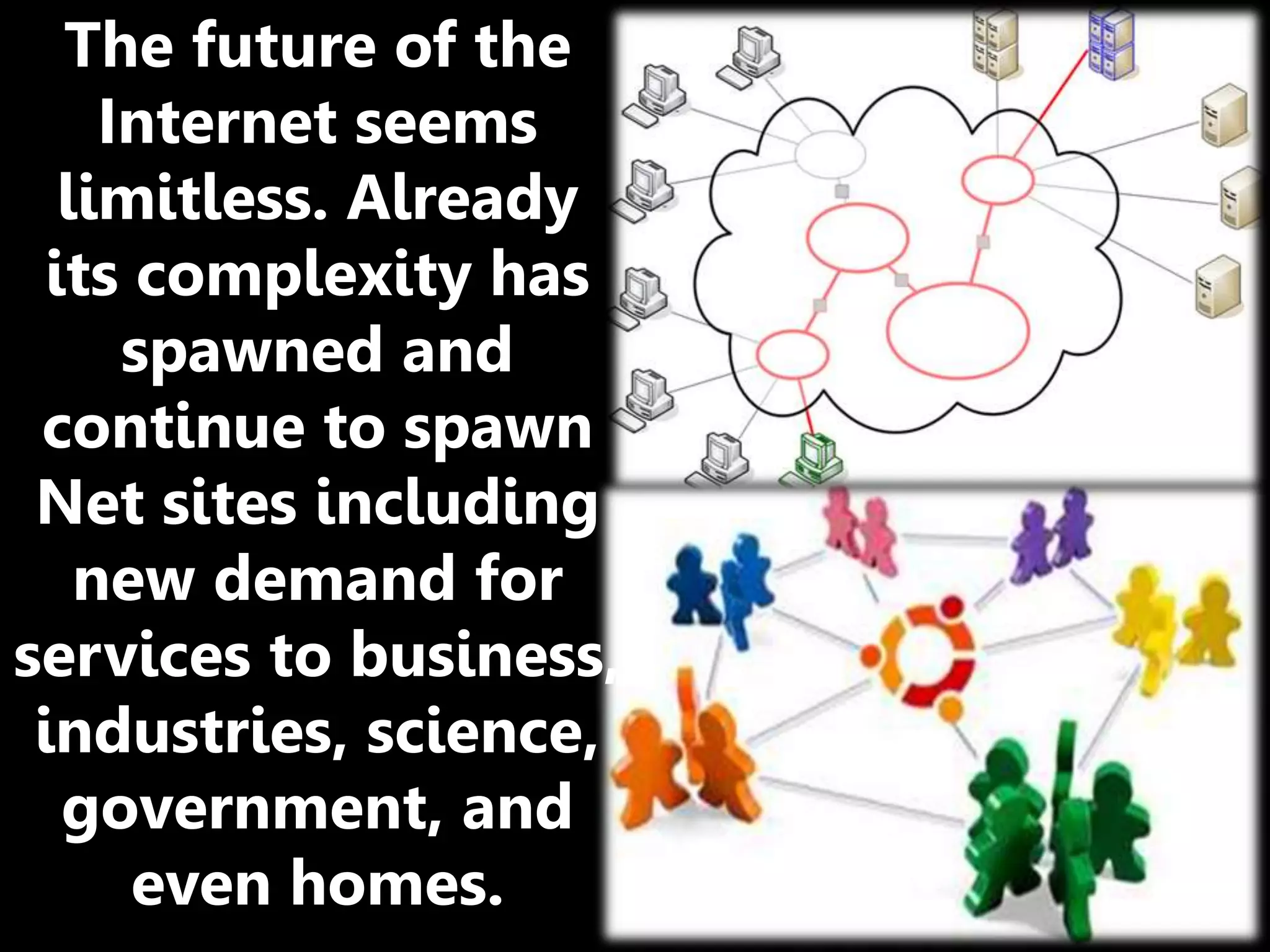
The future of the
Internet seems
limitless. Already
its complexity has
spawned and
continue to spawn
Net sites including
new demand for
services to business,
industries, science,
government, and
even homes.
Many experts predict that he Internet is
destined to become the centerpiece of all
online communications on the planet and in
some future time in the solar system using
interplanetary satellite communication
stations.
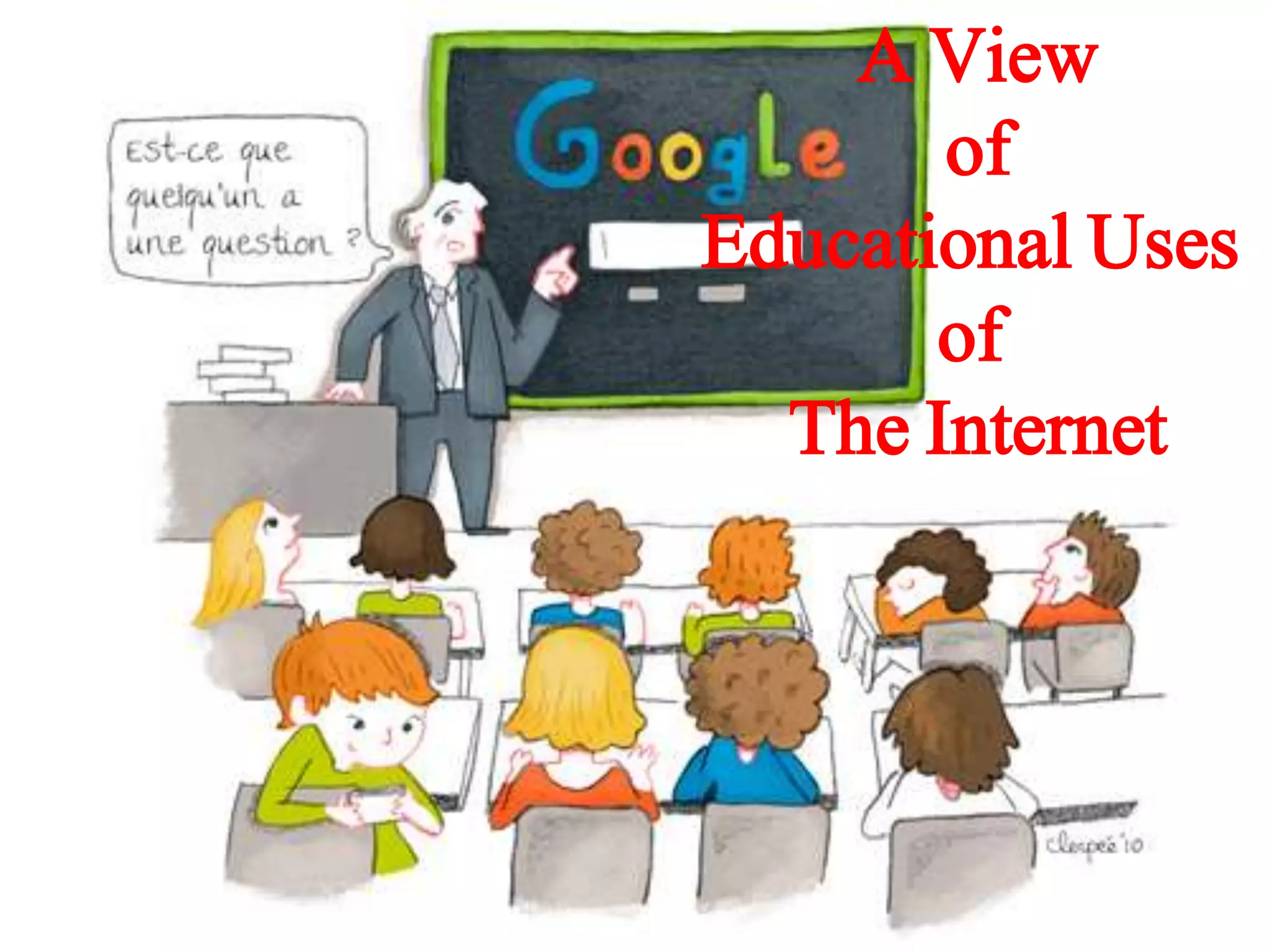
A View
of
Educational Uses
of
The Internet
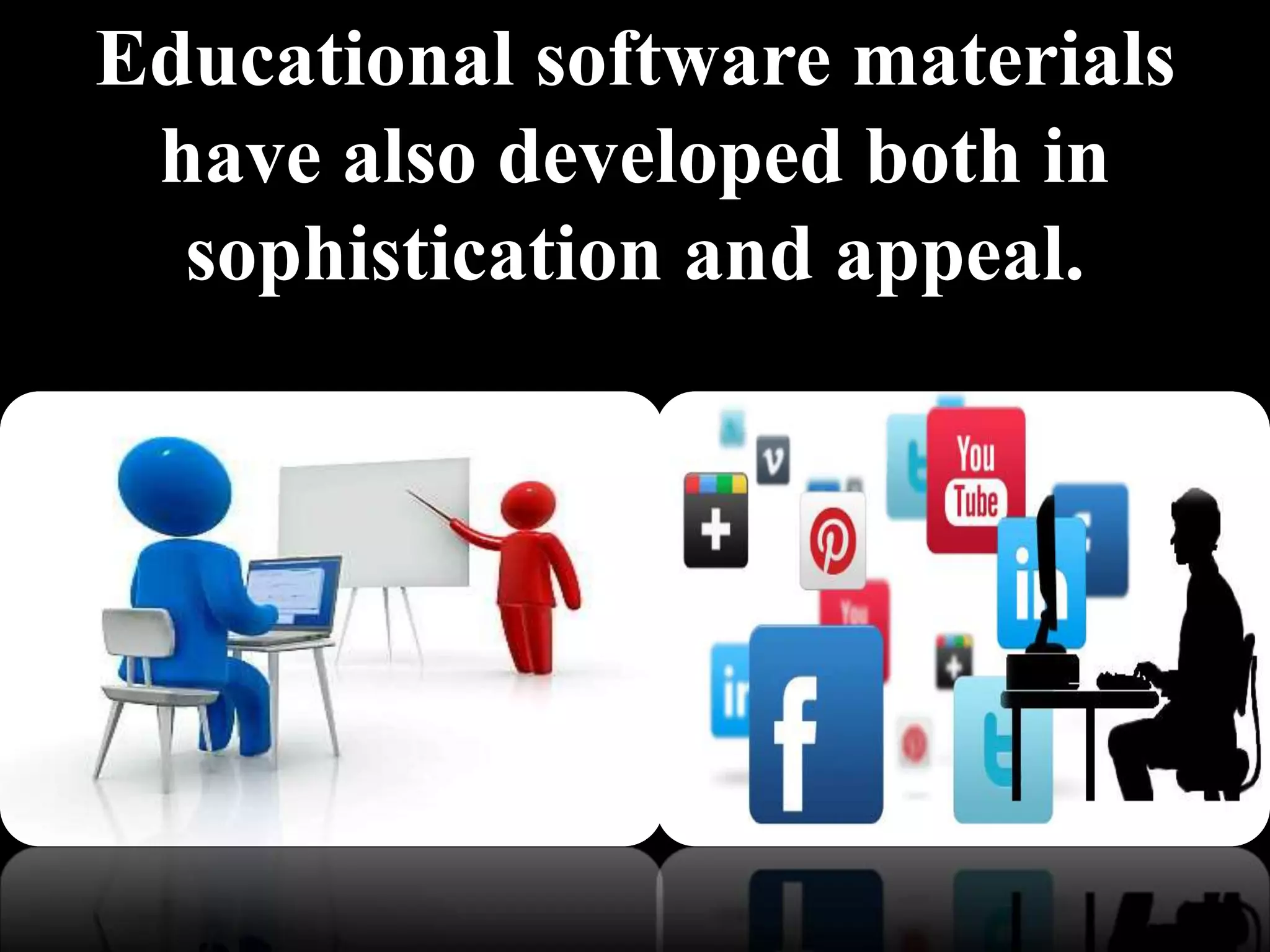
Educational software materials
have also developed both in
sophistication and appeal.
There is now a wider choice from rote
arithmetic or grammar lessons to
discovery and innovation projects.
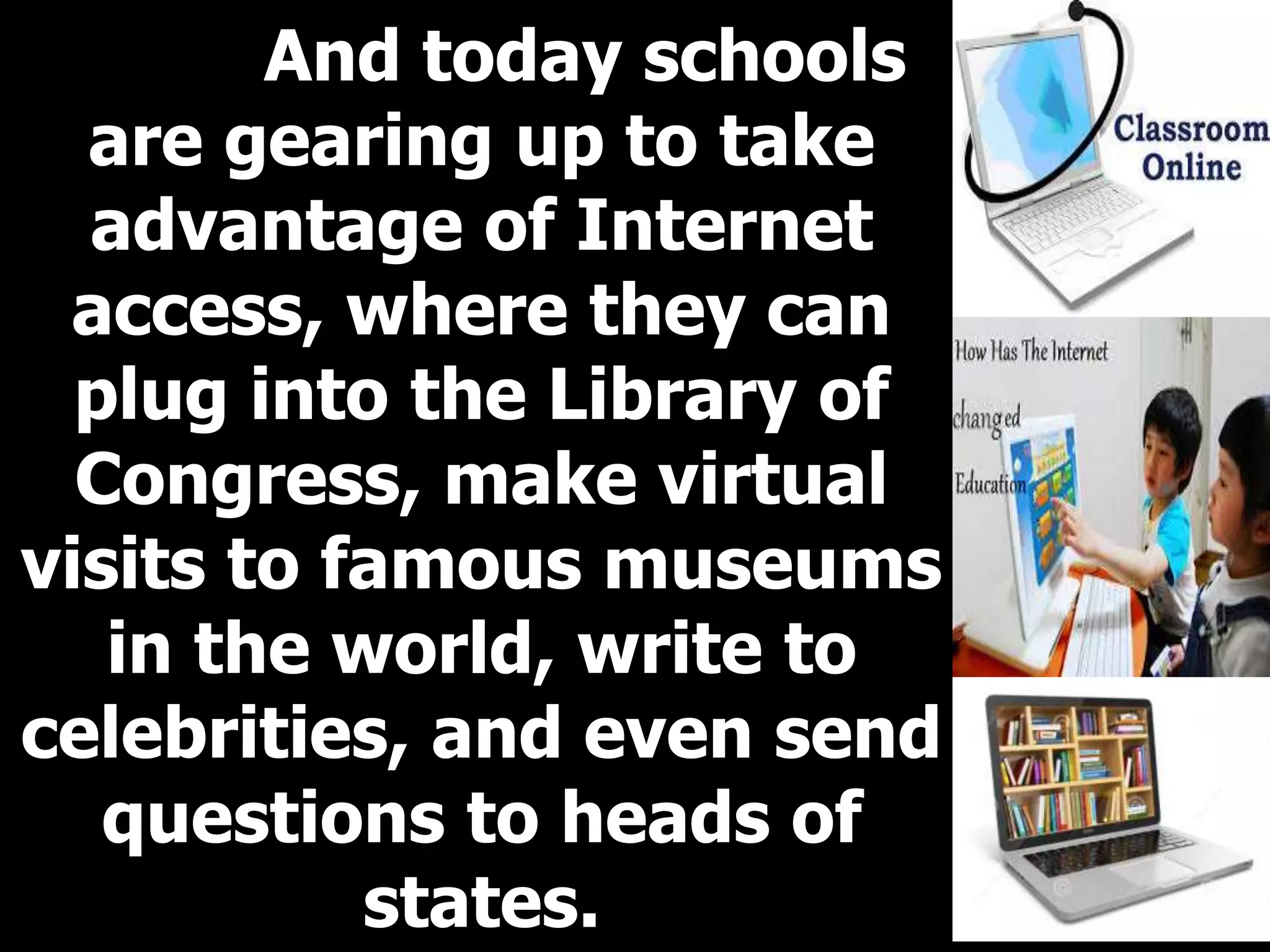
And today schools
are gearing up to take
advantage of Internet
access, where they can
plug into the Library of
Congress, make virtual
visits to famous museums
in the world, write to
celebrities, and even send
questions to heads of
states.
Ma. Leanie S. Surilla
Nikka T. Manzo
Donnacel Alonzo
Candelaria Tindog
BEED - III
Special thanks to:
For sharing with us a very
fascinating work.

asis and dal report

  • 2.
    The internet, alsosimply called the NET, is the largest and far- flung networks system –of-all- system.
  • 3.
    It is notreally a network but a loosely organized collection of about 25,000 networks accessed by computers in the planet.
  • 4.
     has nocentral headquarters no centrally offered services no comprehensive online index to tell users what information is available in the system. No one owns the internet.
  • 5.
  • 6.
    This is donethrough a standardized protocol (or set of rules for exchanging data) called Transmission Control Protocol/Internet Protocol (TCP/IP).
  • 7.
    To gain accessto the Internet, the computer must be equipped with what is called a Server which has special software (program) that uses the Internet protocol.
  • 8.
    The Internet connect notonly commercial, industrial, scientific establishments but all other sectors including education andits libraries, campuses, and computer centers.
  • 9.
  • 10.
    The vast seaof information now in the Internet, including news and trivia, is an overwhelming challenge to those who wish to navigate it.
  • 11.
    Every day, theNet user- population and the available information continue to grow, and new ways are continuously being developed to tour the Internet.
  • 12.
    The most attractive way tomove around the Internet is called browsing.
  • 13.
    Using a programcalled a browser, the user can use a mouse to point and click on screen icons to surf the Internet, particularly the World Wide Web (the Web), an Internet’s subset of text, images, and sounds are linked together to allow users to access data or information needed.
  • 14.
    The future ofthe Internet seems limitless. Already its complexity has spawned and continue to spawn Net sites including new demand for services to business, industries, science, government, and even homes.
  • 15.
    Many experts predictthat he Internet is destined to become the centerpiece of all online communications on the planet and in some future time in the solar system using interplanetary satellite communication stations.
  • 16.
  • 17.
    Educational software materials havealso developed both in sophistication and appeal.
  • 18.
    There is nowa wider choice from rote arithmetic or grammar lessons to discovery and innovation projects.
  • 19.
    And today schools aregearing up to take advantage of Internet access, where they can plug into the Library of Congress, make virtual visits to famous museums in the world, write to celebrities, and even send questions to heads of states.
  • 23.
    Ma. Leanie S.Surilla Nikka T. Manzo Donnacel Alonzo Candelaria Tindog BEED - III Special thanks to: For sharing with us a very fascinating work.