ANTISEPTIC VS ASEPTIC
The difference between “antiseptic” and “aseptic” is not always properly understood.
Basically, antiseptic is a related term of aseptic. They are so alike and both obviously
aim at inhibiting the growth of microorganisms, but there are some common differences
between these two terms which we ought to know;
• Antiseptic is an antimicrobial substance or agent that reduces or eliminates the
growth of microorganisms (bacteria, fungi, etc) on living tissues/skin, while, Aseptic is
generally the absence of these disease-causing microorganisms or the process or
procedure performed under conditions in which contamination by microorganisms is
minimized.
• Antiseptics are used on living bodies to reduce the possibility of infections, sepsis and
putrefaction. The process of Aseptic involves the destruction of microorganisms on
surfaces or inanimate objects that could contaminate living organisms.
• Antiseptics prevents wound infections from microorganisms in the body or the
environment. Aseptic eliminates contamination by pathogenic microorganisms.
• Some examples of Antiseptics includes; alcohols, hydrogen peroxides, peroxide and
permanganate, antibacterial dye etc. Agents used for Aseptics are disinfectants,
sterilizers , cleaning agents etc
• Use of Chlorhexidine to wash the mouth when is dental procedure is performed is an
example of the use of Antiseptics. The use of a sterilized material during a dental
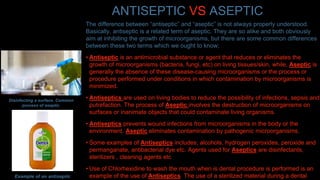
Disinfecting a surface. Common
process of aseptic.
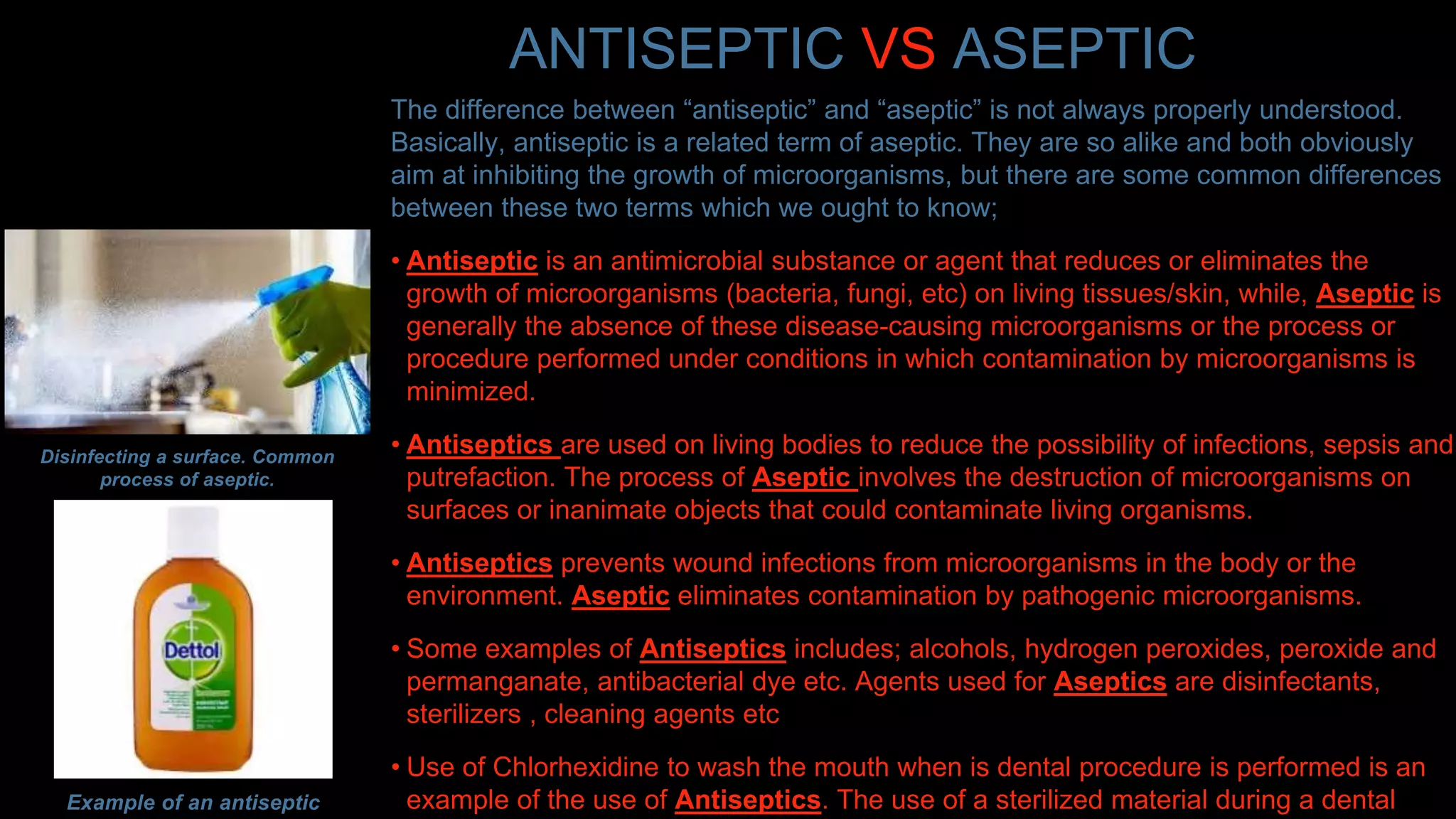
Example of an antiseptic
While we’re home there may be times when us or our loved ones might need
aseptic technique to help prevent the spread of pathogens that cause
infection. Some of these techniques includes;
•Sterile dressing - Some people prefer to use this technique too at home for
emergency treatments. For example, you may need to change a dressing on
a wound, and that requires a sterile dressing. For this, a person needs sterile
gloves and a special dressing change kit or supplies at hand. And note that,
protective clothing should be worn during this protect yourself from microbial
contamination and skin scales. The procedure for this includes;
Wash your hands.
Create a sterile field and arrange sterile supplies.
Never use opened items or items that have questionable sterility.
Open sterile items and use inside of wrapping to create a sterile field.
Drop sterile items onto field, use sterile tongs or forceps to remove items
from package without contamination.
ASEPTIC TECHNIQUES AT HOME
Put on sterile gown, gloves and mask.
Use sterile drapes to decrease exposure to non-sterile areas.
Have someone pour liquids into sterile basin or containers.
As procedure is performed, remove soiled equipment from area and drop trash in bag.
When procedure is completed, remove protective equipment.
Wash hands.
•Disinfecting and sterilizing surfaces and the whole environment to reduce the risk of disease and infection
contamination.
•Clean technique - is a non-touch technique and is much easier to achieve at home. Clean technique involves
thoroughly washing the hands, wearing gloves, and maintaining a clean environment.
Note: The proper execution of aseptic technique requires training. If a person needs to use aseptic technique in
their home, a trained healthcare professional can demonstrate the proper practices to them.

aseptics.pptx

  • 1.
    ANTISEPTIC VS ASEPTIC Thedifference between “antiseptic” and “aseptic” is not always properly understood. Basically, antiseptic is a related term of aseptic. They are so alike and both obviously aim at inhibiting the growth of microorganisms, but there are some common differences between these two terms which we ought to know; • Antiseptic is an antimicrobial substance or agent that reduces or eliminates the growth of microorganisms (bacteria, fungi, etc) on living tissues/skin, while, Aseptic is generally the absence of these disease-causing microorganisms or the process or procedure performed under conditions in which contamination by microorganisms is minimized. • Antiseptics are used on living bodies to reduce the possibility of infections, sepsis and putrefaction. The process of Aseptic involves the destruction of microorganisms on surfaces or inanimate objects that could contaminate living organisms. • Antiseptics prevents wound infections from microorganisms in the body or the environment. Aseptic eliminates contamination by pathogenic microorganisms. • Some examples of Antiseptics includes; alcohols, hydrogen peroxides, peroxide and permanganate, antibacterial dye etc. Agents used for Aseptics are disinfectants, sterilizers , cleaning agents etc • Use of Chlorhexidine to wash the mouth when is dental procedure is performed is an example of the use of Antiseptics. The use of a sterilized material during a dental Disinfecting a surface. Common process of aseptic. Example of an antiseptic
  • 2.
    While we’re homethere may be times when us or our loved ones might need aseptic technique to help prevent the spread of pathogens that cause infection. Some of these techniques includes; •Sterile dressing - Some people prefer to use this technique too at home for emergency treatments. For example, you may need to change a dressing on a wound, and that requires a sterile dressing. For this, a person needs sterile gloves and a special dressing change kit or supplies at hand. And note that, protective clothing should be worn during this protect yourself from microbial contamination and skin scales. The procedure for this includes; Wash your hands. Create a sterile field and arrange sterile supplies. Never use opened items or items that have questionable sterility. Open sterile items and use inside of wrapping to create a sterile field. Drop sterile items onto field, use sterile tongs or forceps to remove items from package without contamination. ASEPTIC TECHNIQUES AT HOME
  • 3.
    Put on sterilegown, gloves and mask. Use sterile drapes to decrease exposure to non-sterile areas. Have someone pour liquids into sterile basin or containers. As procedure is performed, remove soiled equipment from area and drop trash in bag. When procedure is completed, remove protective equipment. Wash hands. •Disinfecting and sterilizing surfaces and the whole environment to reduce the risk of disease and infection contamination. •Clean technique - is a non-touch technique and is much easier to achieve at home. Clean technique involves thoroughly washing the hands, wearing gloves, and maintaining a clean environment. Note: The proper execution of aseptic technique requires training. If a person needs to use aseptic technique in their home, a trained healthcare professional can demonstrate the proper practices to them.