How Students With
Autism Think and Learn
Understanding Inclusion
Organize and Provide
           Structure

Students with ASD are visual vs. auditory learners.
Provide pictures and other visual cues across
environments.
     Enhance understanding
     Help organize and sequence
     Help initiate activities
     Help motivate
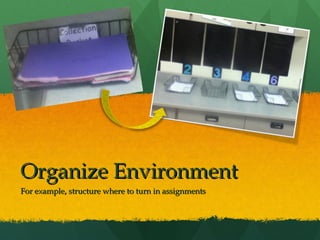
Organize Environment
For example, structure where to turn in assignments
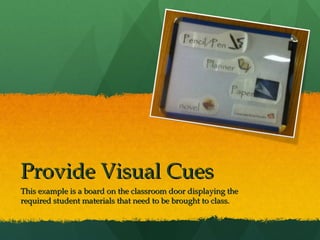
Provide Visual Cues
This example is a board on the classroom door displaying the
required student materials that need to be brought to class.
Provide Predictable Routines
Concrete Thinking

Students with ASD tend to think concretely.
Often confused by social situations or conversations.

Lack understanding of ambiguous rules or rules that
don’t make sense.
Prefer familiarity (repetition, routine, consistency.
Interventions

 Visual cues for rules and instructions.

 Social Stories ™.

 Learn by “doing” or role-play.

 Error Correction – “Try again” with demonstration.

 Highlighting appropriate behaviors and giving
  social praise.
Visual Road Map
Use First/Then
“first do this, then get that” for directions and schedules.
Details and Narrow
            Interests
 Students with ASD see the world in a more narrow
  way and are more intensely focused on details and
  narrow interests.
 Hard to see the “big picture” which is necessary for
  awareness of concepts, making connections,
  generalizing and seeing things in context.
Interventions

 Role play with analyzing what is “right and
  wrong”.
 Road Map.

 Cause-and-Effect planned ignoring: “first get calm,
  then I will talk with you”.
 Use narrow interests to increase engagement.
Distractibility and Self
           Regulation
 Sensory stimulation can be disruptive to the
  student.
 Modify environments to decrease sensory
  distractions or increase engagement.
 Teach awareness and expression state of arousal.
Executive Functioning

Students with ASD have difficulty with cognitive
flexibility.
Cannot apply social rules flexibly.

Difficulty controlling impulses.

Difficulty with initiating activities, organizing and
sequencing tasks.
Provide structured routines and scaffold with
checklists.

ASD and School Environments

  • 1.
    How Students With AutismThink and Learn Understanding Inclusion
  • 2.
    Organize and Provide Structure Students with ASD are visual vs. auditory learners. Provide pictures and other visual cues across environments.  Enhance understanding  Help organize and sequence  Help initiate activities  Help motivate
  • 3.
    Organize Environment For example,structure where to turn in assignments
  • 4.
    Provide Visual Cues Thisexample is a board on the classroom door displaying the required student materials that need to be brought to class.
  • 5.
  • 6.
    Concrete Thinking Students withASD tend to think concretely. Often confused by social situations or conversations. Lack understanding of ambiguous rules or rules that don’t make sense. Prefer familiarity (repetition, routine, consistency.
  • 7.
    Interventions  Visual cuesfor rules and instructions.  Social Stories ™.  Learn by “doing” or role-play.  Error Correction – “Try again” with demonstration.  Highlighting appropriate behaviors and giving social praise.
  • 8.
  • 9.
    Use First/Then “first dothis, then get that” for directions and schedules.
  • 10.
    Details and Narrow Interests  Students with ASD see the world in a more narrow way and are more intensely focused on details and narrow interests.  Hard to see the “big picture” which is necessary for awareness of concepts, making connections, generalizing and seeing things in context.
  • 11.
    Interventions  Role playwith analyzing what is “right and wrong”.  Road Map.  Cause-and-Effect planned ignoring: “first get calm, then I will talk with you”.  Use narrow interests to increase engagement.
  • 12.
    Distractibility and Self Regulation  Sensory stimulation can be disruptive to the student.  Modify environments to decrease sensory distractions or increase engagement.  Teach awareness and expression state of arousal.
  • 13.
    Executive Functioning Students withASD have difficulty with cognitive flexibility. Cannot apply social rules flexibly. Difficulty controlling impulses. Difficulty with initiating activities, organizing and sequencing tasks. Provide structured routines and scaffold with checklists.