Physiotherapy 100 (2014) 116–122
Assessment and management of risk factors for the prevention of
lifestyle-related disease: a cross-sectional survey of current activities,
barriers and perceived training needs of primary care physiotherapists in
the Republic of Ireland
G. O’Donoghuea,b,∗, C. Cunninghamc, F. Murphyc, C. Woodsb, J. Aagaard-Hansena
a Health Promotion Centre, Steno Diabetes Centre, Gentofte, Denmark
b Centre for Preventive Medicine, School of Health and Human Performance, Dublin City University, Ireland
c School of Public Health, Physiotherapy and Population Science, University College Dublin, Ireland
Abstract
Objective To provide a snapshot of current activities, barriers and perceived training needs for the assessment and management of behavioural
risk factors in physiotherapy practice in primary care settings in the Republic of Ireland.
Design Cross-sectional survey of primary care physiotherapists.
Method Two hundred and twenty primary care physiotherapists were invited to participate. Each received a questionnaire, consisting of 23
questions, within five key sections. Its main focus was the risk factor management practices of physiotherapists. Descriptive statistics and
frequencies were used to analyse the data.
Results A response rate of 74% (163/220) was achieved. Level of physical activity was the most common risk factor assessed at initial and
follow-up visits (78%, 127/163), followed by dietary status (55%, 90/163). Few respondents included smoking status and alcohol consumption
in their assessment; however, the majority considered them as risk factors that should be addressed. The main reasons why smoking status and
alcohol consumption were not assessed were lack of time, limited knowledge and expertise, not traditionally viewed as the physiotherapist’s
role, and patient’s lack of interest in changing their unhealthy behaviour.
Conclusion The findings highlight an untapped potential in relation to physiotherapists addressing lifestyle-related risk factors. A number
of strategies are required to improve the systematic assessment and management of these risk factors.
© 2014 Chartered Society of Physiotherapy. Published by Elsevier Ltd. All rights reserved.
Keywords: Primary care physiotherapy; Assessment and management of lifestyle risk factors; Smoking; Nutrition; Alcohol consumption; Physical activity;
Prevention of type 2 diabetes and cardiovascular disease
Introduction
Chronic lifestyle-related diseases are a major public health
problem worldwide. In 2008, the World Health Organiza-
tion estimated that 61% of all deaths (35 million) and 49%
of the global burden of disease were attributed to chronic
diseases. By 2030, the proportion of total global deaths
due to chronic diseases is expected to increase to 70% and
the global burden of disease to 56% [1]. Lifestyle-related
∗ Corresponding author at: Centre for Preventive Medicine, School of
Health and Human Performance, Dublin City University, Ireland.
Tel.: +353 17008880; fax: +353 17008888.
E-mail address: grainne.odonoghue@dcu.ie (G. O’Donoghue).
diseases can be defined as those caused or substantially influ-
enced by lifestyle behaviours and choices [2]. Examples
include ischaemic heart disease, chronic obstructive lung
disease, hypertension and stroke, cancers, type 2 diabetes
and obesity. Currently, in the Republic of Ireland, almost
40% of adults report at least one lifestyle-related disease,
the most common of which is hypertension and high choles-
terol, and 61% are overweight or obese [3]. Furthermore,
it is estimated that the prevalence of diabetes will be 5.6%
(194 000) in 2015, representing an increase of 37% over 10
years [3]. The twin epidemic of obesity and diabetes and
their associated lifestyle-related diseases are global prob-
lems, creating crises for already saturated healthcare systems
worldwide.
0031-9406/$ – see front matter © 2014 Chartered Society of Physiotherapy. Published by Elsevier Ltd. All rights reserved.
http://dx.doi.org/10.1016/j.physio.2013.10.004
G. O’Donoghue et al. / Physiotherapy 100 (2014) 116–122 117
Lifestylebehavioursthatcontributeunequivocallytothese
lifestyle diseases are smoking, poor nutrition, excess alcohol
consumptionandlackofphysicalactivity[1–3].Researchhas
shown that small changes in health behaviours have major
effect sizes. In a study of over 23 000 people between 35
and 65 years of age, Ford et al. [4] showed that people
who did not smoke, had a body mass index <30 kg/m2, were
physically active for 3.5 hours/week and followed healthy
nutritional principles had a 78% lower risk of developing
a chronic condition over an 8-year study period. The risk
of type 2 diabetes was reduced by 93%, myocardial infarc-
tion by 81%, stroke by 50% and cancer by 36%. Based on
actual rates of disease and death of physically inactive and
active people in Denmark aged 30 to 80 years, a change in
physical activity level alone would translate into a gain in
life expectancy of between 2.8 and 7.8 years for men and
between 4.6 and 7.3 years for women, depending on the
degree of increase in activity [5]. However, despite such com-
pelling evidence, lifestyle conditions and ways and means of
preventing, reversing and managing these conditions do not
dominate general medical practice or contemporary physio-
therapy practice [6].
In order to address these contemporary health trends and
priorities, the concepts of health and health care are changing
dramatically. In global terms, the healthcare focus is shif-
ting from an illness model to a wellness model. As a result,
healthcare providers need to re-adjust their goals, strategies
and patterns of interaction with healthcare recipients [7]. For
the past 10 years, primary care has been the focal point for
healthcare development, not only in the Republic of Ireland
but globally [8]. All but the most complex and acute health-
care needs of individuals, families and groups may be met
effectively within the primary care setting, and this approach
to health care places people, concerns, holistic care and pre-
ventive health at the centre of the agenda [9]. Furthermore, it
provides a complete or relevant strategy to address emerging
healthcare needs, including health promotion and wellness,
and illness prevention [7].
Physiotherapists, along with other health professionals,
are not immune from the effects of the changing healthcare
context or from the responsibility and need to participate in
this reshaping of our healthcare system. In order to diver-
sify and fulfil the role of the contemporary physiotherapist,
the profession needs to continue to expand its expertise
from the treatment of disability and illness to include health-
focused practice, specifically primary and secondary disease
prevention.Onaccountoftheprofession’sremarkableassoci-
ation with lifestyle practices and its established non-invasive
specialities of education and exercise prescription, physio-
therapists are pre-eminently well positioned to fill this critical
healthcare niche [10].
Most research on health promotion and risk factor reduc-
tion to date has focused on general practitioners, practice
nurses and a combination of both [11–14]. Dieticians have
also been identified as having a role to play in the prevention
and management of lifestyle risk factors [15]. Little focus has
been placed on the physiotherapist’s role or their perception
of their role in this area, apart from a recent benchmark study
in Canada that investigated physiotherapists’ self-efficacy
levels in relation to the provision of smoking cessation coun-
selling [16]. The aim of this study was to provide preliminary
data on current activities, barriers and perceived training
needs for the assessment and management of all four lifestyle
risk factors in primary care physiotherapy practice in the
Republic of Ireland.
Methods
Sample
A purposeful sample of physiotherapists working in pri-
mary care in the Republic of Ireland (n = 220) was invited
to participate. As no database of primary care physiother-
apy managers is available on the Health Service Executive
website, the physiotherapy community care managers of the
local health offices were cross-referenced with a list obtained
from the Irish Society of Chartered Physiotherapists’ Special
Interest Group in Community Care in the Republic of Ireland
(n = 33).
Each manager received a letter explaining the purpose of
the study and inviting them to participate. If they were inter-
ested, they were asked to distribute questionnaires to their
staff for completion. The inclusion criterion for this study
was physiotherapists currently working in primary care. No
stipulation was made in terms of clinical area of practice
or length of time working in primary care. It was anticipated
that the respondents would predominantly be seniors as, prior
to 2008, only senior physiotherapists were employed in pri-
mary and community care in the Republic of Ireland. Ethical
approval for the study was obtained from the Dublin City
University Research Ethics Committee.
Procedure
Each physiotherapist was given a pack containing an
information leaflet detailing the study background, the study
questionnaire and a stamped addressed envelope for ques-
tionnaire return. Respondents were assured that any data
collected would be confidential and that no study participants
would be identified. A reminder to complete and return the
questionnaire was sent 2 weeks later.
Questionnaire
The questionnaire was based on a previous survey used
to assess risk factor management practices of general prac-
titioners [14]. Its main focus was on practices relating to
smoking, nutrition, alcohol and physical activity [14]. Prior
to distribution, the questionnaire was piloted and amended.
Five experienced primary care physiotherapists completed
the questionnaire. Amendments included removal of a
118 G. O’Donoghue et al. / Physiotherapy 100 (2014) 116–122
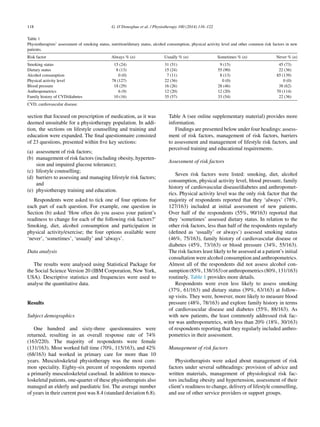
Table 1
Physiotherapists’ assessment of smoking status, nutrition/dietary status, alcohol consumption, physical activity level and other common risk factors in new
patients.
Risk factor Always % (n) Usually % (n) Sometimes % (n) Never % (n)
Smoking status 15 (24) 31 (51) 9 (15) 45 (73)
Dietary status 8 (13) 15 (24) 55 (90) 22 (36)
Alcohol consumption 0 (0) 7 (11) 8 (13) 85 (139)
Physical activity level 78 (127) 22 (36) 0 (0) 0 (0)
Blood pressure 18 (29) 16 (26) 28 (46) 38 (62)
Anthropometrics 6 (9) 12 (20) 12 (20) 70 (114)
Family history of CVD/diabetes 10 (16) 35 (57) 33 (54) 22 (36)
CVD, cardiovascular disease.
section that focused on prescription of medication, as it was
deemed unsuitable for a physiotherapy population. In addi-
tion, the sections on lifestyle counselling and training and
education were expanded. The final questionnaire consisted
of 23 questions, presented within five key sections:
(a) assessment of risk factors;
(b) management of risk factors (including obesity, hyperten-
sion and impaired glucose tolerance);
(c) lifestyle counselling;
(d) barriers to assessing and managing lifestyle risk factors;
and
(e) physiotherapy training and education.
Respondents were asked to tick one of four options for
each part of each question. For example, one question in
Section (b) asked ‘How often do you assess your patient’s
readiness to change for each of the following risk factors?’
Smoking, diet, alcohol consumption and participation in
physical activity/exercise; the four options available were
‘never’, ‘sometimes’, ‘usually’ and ‘always’.
Data analysis
The results were analysed using Statistical Package for
the Social Science Version 20 (IBM Corporation, New York,
USA). Descriptive statistics and frequencies were used to
analyse the quantitative data.
Results
Subject demographics
One hundred and sixty-three questionnaires were
returned, resulting in an overall response rate of 74%
(163/220). The majority of respondents were female
(131/163). Most worked full time (70%, 115/163), and 42%
(68/163) had worked in primary care for more than 10
years. Musculoskeletal physiotherapy was the most com-
mon speciality. Eighty-six percent of respondents reported
a primarily musculoskeletal caseload. In addition to muscu-
loskeletal patients, one-quarter of these physiotherapists also
managed an elderly and paediatric list. The average number
of years in their current post was 8.4 (standard deviation 6.8).
Table A (see online supplementary material) provides more
information.
Findings are presented below under four headings: assess-
ment of risk factors, management of risk factors, barriers
to assessment and management of lifestyle risk factors, and
perceived training and educational requirements.
Assessment of risk factors
Seven risk factors were listed: smoking, diet, alcohol
consumption, physical activity level, blood pressure, family
history of cardiovascular disease/diabetes and anthropomet-
rics. Physical activity level was the only risk factor that the
majority of respondents reported that they ‘always’ (78%,
127/163) included at initial assessment of new patients.
Over half of the respondents (55%, 90/163) reported that
they ‘sometimes’ assessed dietary status. In relation to the
other risk factors, less than half of the respondents regularly
(defined as ‘usually’ or always’) assessed smoking status
(46%, 75/163), family history of cardiovascular disease or
diabetes (45%, 73/163) or blood pressure (34%, 55/163).
The risk factors least likely to be assessed at a patient’s initial
consultation were alcohol consumption and anthropometrics.
Almost all of the respondents did not assess alcohol con-
sumption(85%,138/163)oranthropometrics(80%,131/163)
routinely. Table 1 provides more details.
Respondents were even less likely to assess smoking
(37%, 61/163) and dietary status (39%, 63/163) at follow-
up visits. They were, however, more likely to measure blood
pressure (48%, 78/163) and explore family history in terms
of cardiovascular disease and diabetes (55%, 88/163). As
with new patients, the least commonly addressed risk fac-
tor was anthropometrics, with less than 20% (18%, 30/163)
of respondents reporting that they regularly included anthro-
pometrics in their assessment.
Management of risk factors
Physiotherapists were asked about management of risk
factors under several subheadings: provision of advice and
written materials, management of physiological risk fac-
tors including obesity and hypertension, assessment of their
client’s readiness to change, delivery of lifestyle counselling,
and use of other service providers or support groups.
G. O’Donoghue et al. / Physiotherapy 100 (2014) 116–122 119
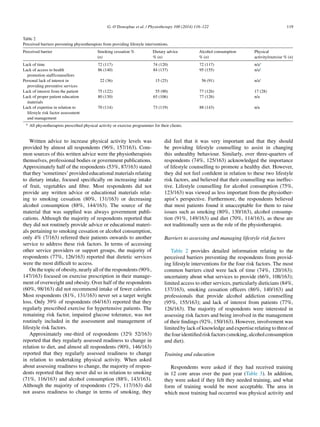
Table 2
Perceived barriers preventing physiotherapists from providing lifestyle interventions.
Perceived barrier Smoking cessation %
(n)
Dietary advice
% (n)
Alcohol consumption
% (n)
Physical
activity/exercise % (n)
Lack of time 72 (117) 74 (120) 72 (117) n/aa
Lack of access to health
promotion staff/counsellors
86 (140) 84 (137) 95 (155) n/aa
Personal lack of interest in
providing preventive services
22 (36) 15 (25) 56 (91) n/aa
Lack of interest from the patient 75 (122) 55 (90) 77 (126) 17 (28)
Lack of proper patient education
materials
80 (130) 65 (106) 77 (126) n/a
Lack of expertise in relation to
lifestyle risk factor assessment
and management
70 (114) 73 (119) 88 (143) n/a
a All physiotherapists prescribed physical activity or exercise programmes for their clients.
Written advice to increase physical activity levels was
provided by almost all respondents (96%, 157/163). Com-
mon sources of this written advice were the physiotherapists
themselves, professional bodies or government publications.
Approximately half of the respondents (53%, 87/163) stated
that they ‘sometimes’ provided educational materials relating
to dietary intake, focused specifically on increasing intake
of fruit, vegetables and fibre. Most respondents did not
provide any written advice or educational materials relat-
ing to smoking cessation (80%, 131/163) or decreasing
alcohol consumption (88%, 144/163). The source of the
material that was supplied was always government publi-
cations. Although the majority of respondents reported that
they did not routinely provide advice or educational materi-
als pertaining to smoking cessation or alcohol consumption,
only 4% (7/163) referred their patients onwards to another
service to address these risk factors. In terms of accessing
other service providers or support groups, the majority of
respondents (77%, 126/163) reported that dietetic services
were the most difficult to access.
On the topic of obesity, nearly all of the respondents (90%,
147/163) focused on exercise prescription in their manage-
ment of overweight and obesity. Over half of the respondents
(60%, 98/163) did not recommend intake of fewer calories.
Most respondents (81%, 131/163) never set a target weight
loss. Only 39% of respondents (64/163) reported that they
regularly prescribed exercise for hypertensive patients. The
remaining risk factor, impaired glucose tolerance, was not
routinely included in the assessment and management of
lifestyle risk factors.
Approximately one-third of respondents (32% 52/163)
reported that they regularly assessed readiness to change in
relation to diet, and almost all respondents (90%, 146/163)
reported that they regularly assessed readiness to change
in relation to undertaking physical activity. When asked
about assessing readiness to change, the majority of respon-
dents reported that they never did so in relation to smoking
(71%, 116/163) and alcohol consumption (88%, 143/163).
Although the majority of respondents (72%, 117/163) did
not assess readiness to change in terms of smoking, they
did feel that it was very important and that they should
be providing lifestyle counselling to assist in changing
this unhealthy behaviour. Similarly, over three-quarters of
respondents (74%, 125/163) acknowledged the importance
of lifestyle counselling to promote a healthy diet. However,
they did not feel confident in relation to these two lifestyle
risk factors, and believed that their counselling was ineffec-
tive. Lifestyle counselling for alcohol consumption (75%,
123/163) was viewed as less important from the physiother-
apist’s perspective. Furthermore, the respondents believed
that most patients found it unacceptable for them to raise
issues such as smoking (80%, 130/163), alcohol consump-
tion (91%, 149/163) and diet (70%, 114/163), as these are
not traditionally seen as the role of the physiotherapist.
Barriers to assessing and managing lifestyle risk factors
Table 2 provides detailed information relating to the
perceived barriers preventing the respondents from provid-
ing lifestyle interventions for the four risk factors. The most
common barriers cited were lack of time (74%, 120/163);
uncertainty about what services to provide (66%, 108/163);
limited access to other services, particularly dieticians (84%,
137/163), smoking cessation officers (86%, 140/163) and
professionals that provide alcohol addiction counselling
(95%, 155/163); and lack of interest from patients (77%,
126/163). The majority of respondents were interested in
assessing risk factors and being involved in the management
of their findings (92%, 150/163). However, involvement was
limited by lack of knowledge and expertise relating to three of
thefouridentifiedriskfactors(smoking,alcoholconsumption
and diet).
Training and education
Respondents were asked if they had received training
in 12 core areas over the past year (Table 3). In addition,
they were asked if they felt they needed training, and what
form of training would be most acceptable. The area in
which most training had occurred was physical activity and
120 G. O’Donoghue et al. / Physiotherapy 100 (2014) 116–122
Table 3
Percentageofphysiotherapiststhatreceivedtrainingintheassessmentand/or
management of risk factors or strategies to facilitate behavioural change over
the past year.
Risk factor/management strategies % n
Physical activity/exercise prescription 61 98
Patient education strategies 24 37
Nutrition 21 32
Motivational interviewing 18 27
Assessment of readiness to change 15 23
Prevention of type 2 diabetes 11 16
Reduction of cardiovascular risk 11 16
Prevention of cardiovascular disease 8 12
Smoking cessation 7 12
Alcohol consumption 3 5
Management of blood pressure 2 3
Anthropometric measurement 2 3
exercise prescription (60%, 98/163). Some respondents had
received no training over the past year in smoking cessa-
tion (7%, 12/163), alcohol consumption (4%, 5/163), blood
pressure management (2%, 3/163) and anthropometrics (8%,
13/163). Most respondents (88%, 143/163) reported that they
would like additional training in all areas; workshops (62%,
101/163), lectures (48%, 78/163) and self-study materials
(39%, 63/163) were the most popular training formats sug-
gested.
Discussion
The purpose of this study was to provide a snapshot of
current activities, barriers and perceived training needs for
the assessment and management of behavioural risk factors
in primary care physiotherapy practice in the Republic of
Ireland. To the authors’ knowledge, this is the first study to
focus on the role of the physiotherapist and their perceived
role in this area. Findings indicate that physiotherapists are
proficient and confident in assessing and addressing physi-
cal inactivity, but inexpert and inexperienced in addressing
smoking, dietary status and alcohol consumption; three key
risk factors for lifestyle-related conditions such as type 2
diabetes and cardiovascular disease.
It is evident from this study that primary care physiother-
apists regard physical activity and exercise prescription as
core in their assessment and management of patients. This is
apositivefindinggivenepidemiologicalresearchprovingthat
15% to 20% of the overall risk for coronary heart disease and
type 2 diabetes can be attributed to physical inactivity [1,2,4],
and overwhelming evidence supporting physical activity and
exercise as an effective treatment or adjunct to treatment in
the prevention and management of chronic lifestyle-related
disease [5].
However, less positive, but unsurprising, findings pertain
to the remaining three identified risk factors. Regarding nutri-
tion, only half of the respondents reported that they assess
nutritional status, with even fewer providing any intervention.
According to the respondents, the main reason for this is their
perceived lack of knowledge and expertise relating to nutri-
tional issues. Rea et al. reported similar findings in 2004
[17]. They found that although physiotherapists believe that
providing advice on nutrition and weight management would
likely improve patient outcome, they did not believe they had
the ability to provide such advice. Comparable findings have
also been reported in the literature relating to other healthcare
professionals such as doctors and nurses [18]. Interestingly,
however, a survey conducted to assess the promotion of phys-
ical activity among NHS-registered dieticians found that,
although it is not their specialist area, 93% reported that they
regularly promote physical activity [19], indicating that it is
possible for healthcare professionals to make their clients
mindful of lifestyle matters outside of their immediate area
of expertise.
Smoking was another risk factor regularly omitted at ini-
tial and follow-up assessments. Given that smoking is the
leading cause of preventable death [20], and it is estimated
that smoking will cause more deaths than any single dis-
ease worldwide by 2020, its assessment requires immediate
prioritisation by all healthcare professionals [1,2,10]. Statis-
tics from the US Centers for Disease Control and Prevention
show that many smokers seek information on how to quit,
and approximately 70% of these smokers want to quit [21].
Recent findings support the cumulative benefit of multiple
smoking cessation interventions when administered by more
than two health professionals [22]. In fact, smokers who
received smoking cessation advice from two or more health
professionals were nearly three times more likely to make
a quit attempt. As such, it appears that the more types of
health professionals who help their patients stop smoking,
the greater the odds that they will do so.
Smoking cessation, however, has scarcely been addressed
in the literature in the context of physiotherapy practice
[23]. Despite the American Physical Therapy Association,
the Canadian Physiotherapy Association and the Chartered
Society of Physiotherapists endorsing smoking cessation as
a professional responsibility [24–26], the only study identi-
fied found that smoking cessation counselling was inadequate
among physiotherapists [16]. Similarly to the provision of
nutritional advice, physiotherapists’ lack of confidence in
their ability to provide smoking cessation interventions was
identified as the greatest barrier to providing this service
[16,18,23].Ensuringthatphysiotherapistsareknowledgeable
and competent in terms of providing brief smoking cessation
interventions is essential for contemporary practice. With
relatively little additional time expenditure, a brief smok-
ing cessation intervention would constitute ‘value added’ to
patient care [23]. The individual would benefit from the vast
health benefits of quitting and may improve overall outcomes
in relation to the referred problem.
The last of the modifiable risk factors considered was alco-
hol consumption. Globally, alcohol use is the third leading
risk factor for poor health, and its harmful use causes an esti-
mated 2.5 million deaths annually [27]. Numerous studies
G. O’Donoghue et al. / Physiotherapy 100 (2014) 116–122 121
on alcohol consumption have been conducted in the pri-
mary care setting. Most have examined the effectiveness of
screening combined with a brief intervention, particularly for
those with low levels of alcohol dependency [28–30]. Cli-
nicians involved in these studies were general practitioners
and practice nurses; no physiotherapists were included. The
results were generally positive, with one large-scale cluster
randomised controlled trial concluding that simple feedback
based on the patient’s screening outcome and provision of
an information leaflet is as effective as more intense inter-
ventions such as lifestyle counselling [30]. The finding that
the provision of an information leaflet is somewhat effec-
tive in changing one’s drinking habits is encouraging for
primary care healthcare professionals, such as physiother-
apists, who are unaccustomed to broaching the subject of
alcohol consumption.
Limitations
A number of limitations must be taken into account when
interpreting the findings of this study. Firstly, this study only
used Ireland as its sampling frame and the sample size was
relatively small. However, it may provide preliminary data
relating to contemporary physiotherapy practice in an impor-
tant area of the current global health agenda. Furthermore,
selection bias may have had an impact on the results. The
majority of respondents may have had a specific interest in
lifestyle modification, potentially biasing the results. Finally,
questionnaires as a sole method of data collection rely on
self-reported data, and self-reported data may be inaccurate
due to recall bias.
Conclusion
This study was designed to provide a snapshot of phys-
iotherapy practice in terms of assessment and management
of key risk factors relating to type 2 diabetes and cardiovas-
cular disease. The findings reveal that diet, smoking status
and alcohol consumption are assessed opportunistically in
contemporary primary care physiotherapy practice, unlike
physical activity levels. Several barriers to making risk factor
managementakeycomponentofphysiotherapypracticewere
identified, the most common of which were lack of time and
expertise in this area. Addressing these limitations is critical
for future physiotherapy practice. In concordance with this,
physiotherapy professional bodies worldwide concur that it is
crucialthat‘theprofessionenhanceitsperception,knowledge
and skills in contemporary and emerging health trends and the
delivery of care in several areas including health promotion
and wellness, healthy ageing, physiotherapists as exercise
experts and practitioners of choice for primary contact’ [31].
Physiotherapists working in clinical practice, research
and education are strongly urged to unite and develop an
action plan to promote health and wellness by targeting
legislative decisions, developing practice standards, clinical
competencies and a professional education curriculum to
integrate content related to chronic disease prevention and
management.
Lifestyle modification is one of the most powerful strate-
gies that a health professional can use in contemporary
practice to maximise the health of an individual [2,10], and
primary care physiotherapists are optimally positioned to
play a front-line role in the assessment and education of
patientsaboutthepreventionoflifestyle-relateddiseasessuch
as cardiovascular disease and type 2 diabetes.
Ethical approval: Dublin City University Ethics Commit-
tee (REC/2012/104 Dexlife).
Funding: This project is a sub-study of DEXLIFE
(Mechanisms of prevention of type 2 diabetes by lifestyle
intervention in subjects with pre-diabetes or at high-risk for
progression). DEXLIFE is funded by the EU FP7 Framework
Programme (Project Grant Agreement No: 279228).
Conflicts of interest: None declared.
Appendix A. Supplementary data
Supplementary data associated with this article can be
found, in the online version, at http://dx.doi.org/10.1016/
j.physio.2013.10.004.
References
[1] Alwan A, Armstrong T, Bettcher D, Branca G, Chisholm D, Ezzati M,
et al. Global status report on noncommunicable diseases 2010. Geneva:
World Health Organization; 2010.
[2] Dean E. Physical therapy in the 21st century (Part I): toward practice
informed by epidemiology and the crisis of lifestyle conditions. Phys-
iother Theory Prac 2009;25:330–53.
[3] Department of Health and Children. SLAN 2007: survey of
lifestyle, attitudes and nutrition in Ireland. Dublin: Department
of Health and Children; 2008. Available at: http://www.slan06.ie/
SLAN2007MainReport.pdf (last accessed March 2009).
[4] Ford ES, Bergmann MM, Kroger J, Schienbkiewitz A, Weikert C,
Boeing H. Healthy living is the best revenge. Arch Intern Med
2009;169:1355–62.
[5] Sorensen JB, Skovgaard T, Puggaard L. Exercise on prescription in
general practice: a systematic review. Primary Health Care 2006;24:
69–74.
[6] Britt H, Miller GC, Charles J, Pan Y, Valenti L, Bayram C. General
practice activity in Australia 2005–06. General Practice Series No. 19.
AIHW Cat. No. GEP 19. Canberra: Australian Institute of Health and
Welfare; 2007.
[7] O’Donoghue G, Dean E. The physiotherapists’ role in contemporary
health care in Ireland: responding to 21st century indicators and prior-
ities. Physiother Ireland 2010;674:7–12.
[8] Department of Health and Children. Primary care. A new direction.
Quality and fairness; a health system for you. Dublin: Depart-
ment of Health and Children; 2001. Available at: http://www.dohc.ie/
publications/fulltext/primary care new direction/ (last accessed June
2009).
[9] Department of Health and Children. Statement of Strategy 2012–2015.
Dublin, Ireland: Department of Health and Children; 2012. Available
at: http://www.dohc.ie/publications/pdf/Statement of Strategy 2012-
2015.pdf?direct=1 (last accessed January 2013).
122 G. O’Donoghue et al. / Physiotherapy 100 (2014) 116–122
[10] Dean E. Physical therapy in the 21st century (Part II): toward practice
informed by epidemiology and the crisis of lifestyle conditions. Phys-
iother Theory Prac 2009;25:354–68.
[11] Laws RA, Kirby SE, Powell Davies GP, Williams AM, Jayasinghe UW,
Amoroso CL, et al. ‘Should I and can I?’: a mixed methods study of
clinician beliefs and attitudes in the management of lifestyle risk factors
in primary health care. BMC Health Serv Res 2008;8:44.
[12] Jallinoja P, Absetz P, Kuronen R, Nissinen A, Talja M, Uutela A, et al.
The dilemma of patient responsibility for lifestyle change: percep-
tions among primary care physicians and nurses. Scand J Prim Health
2007;25:244–9.
[13] Geensel WW, van de Glind IM, Visscher LS, van Achterberg T.
Barriers, facilitators and attitudes influencing health promotion activ-
ities in general practice: an explorative pilot study. BMC Fam Pract
2013;14:20–30.
[14] Amoroso C, Hobbs C, Harris MF. General practice capacity for
behavioural risk factor management: a SNAP-shot of a needs assess-
ment in Australia. Aust J Prim Care 2005;2:120–7.
[15] McKenna J, Henderson L, Baic S. A survey to assess physical activity
promotion by registered dieticians. J Hum Nutr Diet 2004;17:63–9.
[16] Fair SE. Wellness and physical therapy. London: Jones and Bartlett
Publishers; 2010.
[17] Rea BL, Hopp Marshak H, Neish C, Davis N. The role of health pro-
motion in physical therapy in California, New York and Tennessee. Phy
Ther 2004;84:510–23.
[18] MoweM,BosaeusI,RasmussenHH.Insufficientnutritionalknowledge
among health care workers? Clin Nutr 2008;27:196–202.
[19] Johnson ST, Bates H, Fitzpatrick J, Marshall JD, Bell RC, McCargar
L. Promotion of physical activity by Canadian registered dieticians in
daily practice. J Hum Nut Diet 2007;20:37–40.
[20] Mokdad AH, Marks JS, Stroup DF, Gerberding JL. Actual causes
of death in the United States, 2000. J Am Med Assoc 2004;291:
1238–45.
[21] Centers for Disease Control and Prevention. Smoking cessation advice
from health-care providers – Canada, 2005. Morb Mort Wkly Rep
2007;56:708–12.
[22] An LC, Foldes SS, Alesci NL, Bluhm JH, Bland PC, Dav-
ern ME, et al. The impact of smoking-cessation intervention
by multiple health professionals. Am J Prev Med 2008;34:
54–60.
[23] Bodner ME, Dean E. Advice as a smoking cessation strategy: a system-
atic review and implications for physical therapists. Physiother Theory
Prac 2009;25:369–407.
[24] American Physical Therapy Association. Treating tobacco use and
dependence: 2008 update. Agency for Healthcare Research and Qual-
ity. Rockville, MD: US Department of Health and Human Services;
2008.
[25] Canadian Physiotherapy Association. Tobacco: the role of health
professionals in smoking cessation. Joint statement; 2008. Available at:
www.physiotherapy.ca/public.asp?WCE=C=47|K=222537|RefreshT=
222559|RefreshS=LeftNav|RefreshD=2225592 (last accessed January
2013).
[26] Chartered Society of Physiotherapy. Brief interventions: evidence
briefing (part of the public health and physiotherapy resource pack
– physical activity, smoking cessation, obesity, alcohol and falls
prevention); 2012. Available at: http://www.csp.org.uk/publications/
public-health-physiotherapy-resource-pack-part-4-brief-interventions-
evidence-briefing (last accessed January 2013).
[27] World Health Organization. Global strategy to reduce the harmful use
of alcohol. UK: CSP 2012; 2010. Available at: http://www.who.int/
substance abuse/activities/gsrhua/en/ (last accessed February 2013).
[28] Rose HL, Miller PM, Nemeth LS, Jenkins RG, Nietert PJ, Wessell
AM, et al. Alcohol screening and brief counseling in a primary care
hypertensive population: a quality improvement intervention. Addic-
tion 2008;103:1271–80.
[29] Saitz R. Alcohol screening and brief intervention in primary
care: absence of evidence for efficacy in people with depend-
ence or very heavy drinking. Drug Alcohol Rev 2010;29:
631–40.
[30] Kaner E, Bland M, Cassidy P, Coulton S, Dale V, Deluca P, et al.
Effectiveness of screening and brief alcohol intervention in primary
care (SIPS trial): pragmatic cluster randomised controlled trial. BMJ
2013;9:346–59.
[31] World Confederation of Physical Therapy. Position statement on
exercise; 2009. Available at: http://www.wcpt.org/node/29462 (last
accessed March 2013).
Available online at www.sciencedirect.com
ScienceDirect

art-STENO-Grainne-1

  • 1.
    Physiotherapy 100 (2014)116–122 Assessment and management of risk factors for the prevention of lifestyle-related disease: a cross-sectional survey of current activities, barriers and perceived training needs of primary care physiotherapists in the Republic of Ireland G. O’Donoghuea,b,∗, C. Cunninghamc, F. Murphyc, C. Woodsb, J. Aagaard-Hansena a Health Promotion Centre, Steno Diabetes Centre, Gentofte, Denmark b Centre for Preventive Medicine, School of Health and Human Performance, Dublin City University, Ireland c School of Public Health, Physiotherapy and Population Science, University College Dublin, Ireland Abstract Objective To provide a snapshot of current activities, barriers and perceived training needs for the assessment and management of behavioural risk factors in physiotherapy practice in primary care settings in the Republic of Ireland. Design Cross-sectional survey of primary care physiotherapists. Method Two hundred and twenty primary care physiotherapists were invited to participate. Each received a questionnaire, consisting of 23 questions, within five key sections. Its main focus was the risk factor management practices of physiotherapists. Descriptive statistics and frequencies were used to analyse the data. Results A response rate of 74% (163/220) was achieved. Level of physical activity was the most common risk factor assessed at initial and follow-up visits (78%, 127/163), followed by dietary status (55%, 90/163). Few respondents included smoking status and alcohol consumption in their assessment; however, the majority considered them as risk factors that should be addressed. The main reasons why smoking status and alcohol consumption were not assessed were lack of time, limited knowledge and expertise, not traditionally viewed as the physiotherapist’s role, and patient’s lack of interest in changing their unhealthy behaviour. Conclusion The findings highlight an untapped potential in relation to physiotherapists addressing lifestyle-related risk factors. A number of strategies are required to improve the systematic assessment and management of these risk factors. © 2014 Chartered Society of Physiotherapy. Published by Elsevier Ltd. All rights reserved. Keywords: Primary care physiotherapy; Assessment and management of lifestyle risk factors; Smoking; Nutrition; Alcohol consumption; Physical activity; Prevention of type 2 diabetes and cardiovascular disease Introduction Chronic lifestyle-related diseases are a major public health problem worldwide. In 2008, the World Health Organiza- tion estimated that 61% of all deaths (35 million) and 49% of the global burden of disease were attributed to chronic diseases. By 2030, the proportion of total global deaths due to chronic diseases is expected to increase to 70% and the global burden of disease to 56% [1]. Lifestyle-related ∗ Corresponding author at: Centre for Preventive Medicine, School of Health and Human Performance, Dublin City University, Ireland. Tel.: +353 17008880; fax: +353 17008888. E-mail address: grainne.odonoghue@dcu.ie (G. O’Donoghue). diseases can be defined as those caused or substantially influ- enced by lifestyle behaviours and choices [2]. Examples include ischaemic heart disease, chronic obstructive lung disease, hypertension and stroke, cancers, type 2 diabetes and obesity. Currently, in the Republic of Ireland, almost 40% of adults report at least one lifestyle-related disease, the most common of which is hypertension and high choles- terol, and 61% are overweight or obese [3]. Furthermore, it is estimated that the prevalence of diabetes will be 5.6% (194 000) in 2015, representing an increase of 37% over 10 years [3]. The twin epidemic of obesity and diabetes and their associated lifestyle-related diseases are global prob- lems, creating crises for already saturated healthcare systems worldwide. 0031-9406/$ – see front matter © 2014 Chartered Society of Physiotherapy. Published by Elsevier Ltd. All rights reserved. http://dx.doi.org/10.1016/j.physio.2013.10.004
  • 2.
    G. O’Donoghue etal. / Physiotherapy 100 (2014) 116–122 117 Lifestylebehavioursthatcontributeunequivocallytothese lifestyle diseases are smoking, poor nutrition, excess alcohol consumptionandlackofphysicalactivity[1–3].Researchhas shown that small changes in health behaviours have major effect sizes. In a study of over 23 000 people between 35 and 65 years of age, Ford et al. [4] showed that people who did not smoke, had a body mass index <30 kg/m2, were physically active for 3.5 hours/week and followed healthy nutritional principles had a 78% lower risk of developing a chronic condition over an 8-year study period. The risk of type 2 diabetes was reduced by 93%, myocardial infarc- tion by 81%, stroke by 50% and cancer by 36%. Based on actual rates of disease and death of physically inactive and active people in Denmark aged 30 to 80 years, a change in physical activity level alone would translate into a gain in life expectancy of between 2.8 and 7.8 years for men and between 4.6 and 7.3 years for women, depending on the degree of increase in activity [5]. However, despite such com- pelling evidence, lifestyle conditions and ways and means of preventing, reversing and managing these conditions do not dominate general medical practice or contemporary physio- therapy practice [6]. In order to address these contemporary health trends and priorities, the concepts of health and health care are changing dramatically. In global terms, the healthcare focus is shif- ting from an illness model to a wellness model. As a result, healthcare providers need to re-adjust their goals, strategies and patterns of interaction with healthcare recipients [7]. For the past 10 years, primary care has been the focal point for healthcare development, not only in the Republic of Ireland but globally [8]. All but the most complex and acute health- care needs of individuals, families and groups may be met effectively within the primary care setting, and this approach to health care places people, concerns, holistic care and pre- ventive health at the centre of the agenda [9]. Furthermore, it provides a complete or relevant strategy to address emerging healthcare needs, including health promotion and wellness, and illness prevention [7]. Physiotherapists, along with other health professionals, are not immune from the effects of the changing healthcare context or from the responsibility and need to participate in this reshaping of our healthcare system. In order to diver- sify and fulfil the role of the contemporary physiotherapist, the profession needs to continue to expand its expertise from the treatment of disability and illness to include health- focused practice, specifically primary and secondary disease prevention.Onaccountoftheprofession’sremarkableassoci- ation with lifestyle practices and its established non-invasive specialities of education and exercise prescription, physio- therapists are pre-eminently well positioned to fill this critical healthcare niche [10]. Most research on health promotion and risk factor reduc- tion to date has focused on general practitioners, practice nurses and a combination of both [11–14]. Dieticians have also been identified as having a role to play in the prevention and management of lifestyle risk factors [15]. Little focus has been placed on the physiotherapist’s role or their perception of their role in this area, apart from a recent benchmark study in Canada that investigated physiotherapists’ self-efficacy levels in relation to the provision of smoking cessation coun- selling [16]. The aim of this study was to provide preliminary data on current activities, barriers and perceived training needs for the assessment and management of all four lifestyle risk factors in primary care physiotherapy practice in the Republic of Ireland. Methods Sample A purposeful sample of physiotherapists working in pri- mary care in the Republic of Ireland (n = 220) was invited to participate. As no database of primary care physiother- apy managers is available on the Health Service Executive website, the physiotherapy community care managers of the local health offices were cross-referenced with a list obtained from the Irish Society of Chartered Physiotherapists’ Special Interest Group in Community Care in the Republic of Ireland (n = 33). Each manager received a letter explaining the purpose of the study and inviting them to participate. If they were inter- ested, they were asked to distribute questionnaires to their staff for completion. The inclusion criterion for this study was physiotherapists currently working in primary care. No stipulation was made in terms of clinical area of practice or length of time working in primary care. It was anticipated that the respondents would predominantly be seniors as, prior to 2008, only senior physiotherapists were employed in pri- mary and community care in the Republic of Ireland. Ethical approval for the study was obtained from the Dublin City University Research Ethics Committee. Procedure Each physiotherapist was given a pack containing an information leaflet detailing the study background, the study questionnaire and a stamped addressed envelope for ques- tionnaire return. Respondents were assured that any data collected would be confidential and that no study participants would be identified. A reminder to complete and return the questionnaire was sent 2 weeks later. Questionnaire The questionnaire was based on a previous survey used to assess risk factor management practices of general prac- titioners [14]. Its main focus was on practices relating to smoking, nutrition, alcohol and physical activity [14]. Prior to distribution, the questionnaire was piloted and amended. Five experienced primary care physiotherapists completed the questionnaire. Amendments included removal of a
  • 3.
    118 G. O’Donoghueet al. / Physiotherapy 100 (2014) 116–122 Table 1 Physiotherapists’ assessment of smoking status, nutrition/dietary status, alcohol consumption, physical activity level and other common risk factors in new patients. Risk factor Always % (n) Usually % (n) Sometimes % (n) Never % (n) Smoking status 15 (24) 31 (51) 9 (15) 45 (73) Dietary status 8 (13) 15 (24) 55 (90) 22 (36) Alcohol consumption 0 (0) 7 (11) 8 (13) 85 (139) Physical activity level 78 (127) 22 (36) 0 (0) 0 (0) Blood pressure 18 (29) 16 (26) 28 (46) 38 (62) Anthropometrics 6 (9) 12 (20) 12 (20) 70 (114) Family history of CVD/diabetes 10 (16) 35 (57) 33 (54) 22 (36) CVD, cardiovascular disease. section that focused on prescription of medication, as it was deemed unsuitable for a physiotherapy population. In addi- tion, the sections on lifestyle counselling and training and education were expanded. The final questionnaire consisted of 23 questions, presented within five key sections: (a) assessment of risk factors; (b) management of risk factors (including obesity, hyperten- sion and impaired glucose tolerance); (c) lifestyle counselling; (d) barriers to assessing and managing lifestyle risk factors; and (e) physiotherapy training and education. Respondents were asked to tick one of four options for each part of each question. For example, one question in Section (b) asked ‘How often do you assess your patient’s readiness to change for each of the following risk factors?’ Smoking, diet, alcohol consumption and participation in physical activity/exercise; the four options available were ‘never’, ‘sometimes’, ‘usually’ and ‘always’. Data analysis The results were analysed using Statistical Package for the Social Science Version 20 (IBM Corporation, New York, USA). Descriptive statistics and frequencies were used to analyse the quantitative data. Results Subject demographics One hundred and sixty-three questionnaires were returned, resulting in an overall response rate of 74% (163/220). The majority of respondents were female (131/163). Most worked full time (70%, 115/163), and 42% (68/163) had worked in primary care for more than 10 years. Musculoskeletal physiotherapy was the most com- mon speciality. Eighty-six percent of respondents reported a primarily musculoskeletal caseload. In addition to muscu- loskeletal patients, one-quarter of these physiotherapists also managed an elderly and paediatric list. The average number of years in their current post was 8.4 (standard deviation 6.8). Table A (see online supplementary material) provides more information. Findings are presented below under four headings: assess- ment of risk factors, management of risk factors, barriers to assessment and management of lifestyle risk factors, and perceived training and educational requirements. Assessment of risk factors Seven risk factors were listed: smoking, diet, alcohol consumption, physical activity level, blood pressure, family history of cardiovascular disease/diabetes and anthropomet- rics. Physical activity level was the only risk factor that the majority of respondents reported that they ‘always’ (78%, 127/163) included at initial assessment of new patients. Over half of the respondents (55%, 90/163) reported that they ‘sometimes’ assessed dietary status. In relation to the other risk factors, less than half of the respondents regularly (defined as ‘usually’ or always’) assessed smoking status (46%, 75/163), family history of cardiovascular disease or diabetes (45%, 73/163) or blood pressure (34%, 55/163). The risk factors least likely to be assessed at a patient’s initial consultation were alcohol consumption and anthropometrics. Almost all of the respondents did not assess alcohol con- sumption(85%,138/163)oranthropometrics(80%,131/163) routinely. Table 1 provides more details. Respondents were even less likely to assess smoking (37%, 61/163) and dietary status (39%, 63/163) at follow- up visits. They were, however, more likely to measure blood pressure (48%, 78/163) and explore family history in terms of cardiovascular disease and diabetes (55%, 88/163). As with new patients, the least commonly addressed risk fac- tor was anthropometrics, with less than 20% (18%, 30/163) of respondents reporting that they regularly included anthro- pometrics in their assessment. Management of risk factors Physiotherapists were asked about management of risk factors under several subheadings: provision of advice and written materials, management of physiological risk fac- tors including obesity and hypertension, assessment of their client’s readiness to change, delivery of lifestyle counselling, and use of other service providers or support groups.
  • 4.
    G. O’Donoghue etal. / Physiotherapy 100 (2014) 116–122 119 Table 2 Perceived barriers preventing physiotherapists from providing lifestyle interventions. Perceived barrier Smoking cessation % (n) Dietary advice % (n) Alcohol consumption % (n) Physical activity/exercise % (n) Lack of time 72 (117) 74 (120) 72 (117) n/aa Lack of access to health promotion staff/counsellors 86 (140) 84 (137) 95 (155) n/aa Personal lack of interest in providing preventive services 22 (36) 15 (25) 56 (91) n/aa Lack of interest from the patient 75 (122) 55 (90) 77 (126) 17 (28) Lack of proper patient education materials 80 (130) 65 (106) 77 (126) n/a Lack of expertise in relation to lifestyle risk factor assessment and management 70 (114) 73 (119) 88 (143) n/a a All physiotherapists prescribed physical activity or exercise programmes for their clients. Written advice to increase physical activity levels was provided by almost all respondents (96%, 157/163). Com- mon sources of this written advice were the physiotherapists themselves, professional bodies or government publications. Approximately half of the respondents (53%, 87/163) stated that they ‘sometimes’ provided educational materials relating to dietary intake, focused specifically on increasing intake of fruit, vegetables and fibre. Most respondents did not provide any written advice or educational materials relat- ing to smoking cessation (80%, 131/163) or decreasing alcohol consumption (88%, 144/163). The source of the material that was supplied was always government publi- cations. Although the majority of respondents reported that they did not routinely provide advice or educational materi- als pertaining to smoking cessation or alcohol consumption, only 4% (7/163) referred their patients onwards to another service to address these risk factors. In terms of accessing other service providers or support groups, the majority of respondents (77%, 126/163) reported that dietetic services were the most difficult to access. On the topic of obesity, nearly all of the respondents (90%, 147/163) focused on exercise prescription in their manage- ment of overweight and obesity. Over half of the respondents (60%, 98/163) did not recommend intake of fewer calories. Most respondents (81%, 131/163) never set a target weight loss. Only 39% of respondents (64/163) reported that they regularly prescribed exercise for hypertensive patients. The remaining risk factor, impaired glucose tolerance, was not routinely included in the assessment and management of lifestyle risk factors. Approximately one-third of respondents (32% 52/163) reported that they regularly assessed readiness to change in relation to diet, and almost all respondents (90%, 146/163) reported that they regularly assessed readiness to change in relation to undertaking physical activity. When asked about assessing readiness to change, the majority of respon- dents reported that they never did so in relation to smoking (71%, 116/163) and alcohol consumption (88%, 143/163). Although the majority of respondents (72%, 117/163) did not assess readiness to change in terms of smoking, they did feel that it was very important and that they should be providing lifestyle counselling to assist in changing this unhealthy behaviour. Similarly, over three-quarters of respondents (74%, 125/163) acknowledged the importance of lifestyle counselling to promote a healthy diet. However, they did not feel confident in relation to these two lifestyle risk factors, and believed that their counselling was ineffec- tive. Lifestyle counselling for alcohol consumption (75%, 123/163) was viewed as less important from the physiother- apist’s perspective. Furthermore, the respondents believed that most patients found it unacceptable for them to raise issues such as smoking (80%, 130/163), alcohol consump- tion (91%, 149/163) and diet (70%, 114/163), as these are not traditionally seen as the role of the physiotherapist. Barriers to assessing and managing lifestyle risk factors Table 2 provides detailed information relating to the perceived barriers preventing the respondents from provid- ing lifestyle interventions for the four risk factors. The most common barriers cited were lack of time (74%, 120/163); uncertainty about what services to provide (66%, 108/163); limited access to other services, particularly dieticians (84%, 137/163), smoking cessation officers (86%, 140/163) and professionals that provide alcohol addiction counselling (95%, 155/163); and lack of interest from patients (77%, 126/163). The majority of respondents were interested in assessing risk factors and being involved in the management of their findings (92%, 150/163). However, involvement was limited by lack of knowledge and expertise relating to three of thefouridentifiedriskfactors(smoking,alcoholconsumption and diet). Training and education Respondents were asked if they had received training in 12 core areas over the past year (Table 3). In addition, they were asked if they felt they needed training, and what form of training would be most acceptable. The area in which most training had occurred was physical activity and
  • 5.
    120 G. O’Donoghueet al. / Physiotherapy 100 (2014) 116–122 Table 3 Percentageofphysiotherapiststhatreceivedtrainingintheassessmentand/or management of risk factors or strategies to facilitate behavioural change over the past year. Risk factor/management strategies % n Physical activity/exercise prescription 61 98 Patient education strategies 24 37 Nutrition 21 32 Motivational interviewing 18 27 Assessment of readiness to change 15 23 Prevention of type 2 diabetes 11 16 Reduction of cardiovascular risk 11 16 Prevention of cardiovascular disease 8 12 Smoking cessation 7 12 Alcohol consumption 3 5 Management of blood pressure 2 3 Anthropometric measurement 2 3 exercise prescription (60%, 98/163). Some respondents had received no training over the past year in smoking cessa- tion (7%, 12/163), alcohol consumption (4%, 5/163), blood pressure management (2%, 3/163) and anthropometrics (8%, 13/163). Most respondents (88%, 143/163) reported that they would like additional training in all areas; workshops (62%, 101/163), lectures (48%, 78/163) and self-study materials (39%, 63/163) were the most popular training formats sug- gested. Discussion The purpose of this study was to provide a snapshot of current activities, barriers and perceived training needs for the assessment and management of behavioural risk factors in primary care physiotherapy practice in the Republic of Ireland. To the authors’ knowledge, this is the first study to focus on the role of the physiotherapist and their perceived role in this area. Findings indicate that physiotherapists are proficient and confident in assessing and addressing physi- cal inactivity, but inexpert and inexperienced in addressing smoking, dietary status and alcohol consumption; three key risk factors for lifestyle-related conditions such as type 2 diabetes and cardiovascular disease. It is evident from this study that primary care physiother- apists regard physical activity and exercise prescription as core in their assessment and management of patients. This is apositivefindinggivenepidemiologicalresearchprovingthat 15% to 20% of the overall risk for coronary heart disease and type 2 diabetes can be attributed to physical inactivity [1,2,4], and overwhelming evidence supporting physical activity and exercise as an effective treatment or adjunct to treatment in the prevention and management of chronic lifestyle-related disease [5]. However, less positive, but unsurprising, findings pertain to the remaining three identified risk factors. Regarding nutri- tion, only half of the respondents reported that they assess nutritional status, with even fewer providing any intervention. According to the respondents, the main reason for this is their perceived lack of knowledge and expertise relating to nutri- tional issues. Rea et al. reported similar findings in 2004 [17]. They found that although physiotherapists believe that providing advice on nutrition and weight management would likely improve patient outcome, they did not believe they had the ability to provide such advice. Comparable findings have also been reported in the literature relating to other healthcare professionals such as doctors and nurses [18]. Interestingly, however, a survey conducted to assess the promotion of phys- ical activity among NHS-registered dieticians found that, although it is not their specialist area, 93% reported that they regularly promote physical activity [19], indicating that it is possible for healthcare professionals to make their clients mindful of lifestyle matters outside of their immediate area of expertise. Smoking was another risk factor regularly omitted at ini- tial and follow-up assessments. Given that smoking is the leading cause of preventable death [20], and it is estimated that smoking will cause more deaths than any single dis- ease worldwide by 2020, its assessment requires immediate prioritisation by all healthcare professionals [1,2,10]. Statis- tics from the US Centers for Disease Control and Prevention show that many smokers seek information on how to quit, and approximately 70% of these smokers want to quit [21]. Recent findings support the cumulative benefit of multiple smoking cessation interventions when administered by more than two health professionals [22]. In fact, smokers who received smoking cessation advice from two or more health professionals were nearly three times more likely to make a quit attempt. As such, it appears that the more types of health professionals who help their patients stop smoking, the greater the odds that they will do so. Smoking cessation, however, has scarcely been addressed in the literature in the context of physiotherapy practice [23]. Despite the American Physical Therapy Association, the Canadian Physiotherapy Association and the Chartered Society of Physiotherapists endorsing smoking cessation as a professional responsibility [24–26], the only study identi- fied found that smoking cessation counselling was inadequate among physiotherapists [16]. Similarly to the provision of nutritional advice, physiotherapists’ lack of confidence in their ability to provide smoking cessation interventions was identified as the greatest barrier to providing this service [16,18,23].Ensuringthatphysiotherapistsareknowledgeable and competent in terms of providing brief smoking cessation interventions is essential for contemporary practice. With relatively little additional time expenditure, a brief smok- ing cessation intervention would constitute ‘value added’ to patient care [23]. The individual would benefit from the vast health benefits of quitting and may improve overall outcomes in relation to the referred problem. The last of the modifiable risk factors considered was alco- hol consumption. Globally, alcohol use is the third leading risk factor for poor health, and its harmful use causes an esti- mated 2.5 million deaths annually [27]. Numerous studies
  • 6.
    G. O’Donoghue etal. / Physiotherapy 100 (2014) 116–122 121 on alcohol consumption have been conducted in the pri- mary care setting. Most have examined the effectiveness of screening combined with a brief intervention, particularly for those with low levels of alcohol dependency [28–30]. Cli- nicians involved in these studies were general practitioners and practice nurses; no physiotherapists were included. The results were generally positive, with one large-scale cluster randomised controlled trial concluding that simple feedback based on the patient’s screening outcome and provision of an information leaflet is as effective as more intense inter- ventions such as lifestyle counselling [30]. The finding that the provision of an information leaflet is somewhat effec- tive in changing one’s drinking habits is encouraging for primary care healthcare professionals, such as physiother- apists, who are unaccustomed to broaching the subject of alcohol consumption. Limitations A number of limitations must be taken into account when interpreting the findings of this study. Firstly, this study only used Ireland as its sampling frame and the sample size was relatively small. However, it may provide preliminary data relating to contemporary physiotherapy practice in an impor- tant area of the current global health agenda. Furthermore, selection bias may have had an impact on the results. The majority of respondents may have had a specific interest in lifestyle modification, potentially biasing the results. Finally, questionnaires as a sole method of data collection rely on self-reported data, and self-reported data may be inaccurate due to recall bias. Conclusion This study was designed to provide a snapshot of phys- iotherapy practice in terms of assessment and management of key risk factors relating to type 2 diabetes and cardiovas- cular disease. The findings reveal that diet, smoking status and alcohol consumption are assessed opportunistically in contemporary primary care physiotherapy practice, unlike physical activity levels. Several barriers to making risk factor managementakeycomponentofphysiotherapypracticewere identified, the most common of which were lack of time and expertise in this area. Addressing these limitations is critical for future physiotherapy practice. In concordance with this, physiotherapy professional bodies worldwide concur that it is crucialthat‘theprofessionenhanceitsperception,knowledge and skills in contemporary and emerging health trends and the delivery of care in several areas including health promotion and wellness, healthy ageing, physiotherapists as exercise experts and practitioners of choice for primary contact’ [31]. Physiotherapists working in clinical practice, research and education are strongly urged to unite and develop an action plan to promote health and wellness by targeting legislative decisions, developing practice standards, clinical competencies and a professional education curriculum to integrate content related to chronic disease prevention and management. Lifestyle modification is one of the most powerful strate- gies that a health professional can use in contemporary practice to maximise the health of an individual [2,10], and primary care physiotherapists are optimally positioned to play a front-line role in the assessment and education of patientsaboutthepreventionoflifestyle-relateddiseasessuch as cardiovascular disease and type 2 diabetes. Ethical approval: Dublin City University Ethics Commit- tee (REC/2012/104 Dexlife). Funding: This project is a sub-study of DEXLIFE (Mechanisms of prevention of type 2 diabetes by lifestyle intervention in subjects with pre-diabetes or at high-risk for progression). DEXLIFE is funded by the EU FP7 Framework Programme (Project Grant Agreement No: 279228). Conflicts of interest: None declared. Appendix A. Supplementary data Supplementary data associated with this article can be found, in the online version, at http://dx.doi.org/10.1016/ j.physio.2013.10.004. References [1] Alwan A, Armstrong T, Bettcher D, Branca G, Chisholm D, Ezzati M, et al. Global status report on noncommunicable diseases 2010. Geneva: World Health Organization; 2010. [2] Dean E. Physical therapy in the 21st century (Part I): toward practice informed by epidemiology and the crisis of lifestyle conditions. Phys- iother Theory Prac 2009;25:330–53. [3] Department of Health and Children. SLAN 2007: survey of lifestyle, attitudes and nutrition in Ireland. Dublin: Department of Health and Children; 2008. Available at: http://www.slan06.ie/ SLAN2007MainReport.pdf (last accessed March 2009). [4] Ford ES, Bergmann MM, Kroger J, Schienbkiewitz A, Weikert C, Boeing H. Healthy living is the best revenge. Arch Intern Med 2009;169:1355–62. [5] Sorensen JB, Skovgaard T, Puggaard L. Exercise on prescription in general practice: a systematic review. Primary Health Care 2006;24: 69–74. [6] Britt H, Miller GC, Charles J, Pan Y, Valenti L, Bayram C. General practice activity in Australia 2005–06. General Practice Series No. 19. AIHW Cat. No. GEP 19. Canberra: Australian Institute of Health and Welfare; 2007. [7] O’Donoghue G, Dean E. The physiotherapists’ role in contemporary health care in Ireland: responding to 21st century indicators and prior- ities. Physiother Ireland 2010;674:7–12. [8] Department of Health and Children. Primary care. A new direction. Quality and fairness; a health system for you. Dublin: Depart- ment of Health and Children; 2001. Available at: http://www.dohc.ie/ publications/fulltext/primary care new direction/ (last accessed June 2009). [9] Department of Health and Children. Statement of Strategy 2012–2015. Dublin, Ireland: Department of Health and Children; 2012. Available at: http://www.dohc.ie/publications/pdf/Statement of Strategy 2012- 2015.pdf?direct=1 (last accessed January 2013).
  • 7.
    122 G. O’Donoghueet al. / Physiotherapy 100 (2014) 116–122 [10] Dean E. Physical therapy in the 21st century (Part II): toward practice informed by epidemiology and the crisis of lifestyle conditions. Phys- iother Theory Prac 2009;25:354–68. [11] Laws RA, Kirby SE, Powell Davies GP, Williams AM, Jayasinghe UW, Amoroso CL, et al. ‘Should I and can I?’: a mixed methods study of clinician beliefs and attitudes in the management of lifestyle risk factors in primary health care. BMC Health Serv Res 2008;8:44. [12] Jallinoja P, Absetz P, Kuronen R, Nissinen A, Talja M, Uutela A, et al. The dilemma of patient responsibility for lifestyle change: percep- tions among primary care physicians and nurses. Scand J Prim Health 2007;25:244–9. [13] Geensel WW, van de Glind IM, Visscher LS, van Achterberg T. Barriers, facilitators and attitudes influencing health promotion activ- ities in general practice: an explorative pilot study. BMC Fam Pract 2013;14:20–30. [14] Amoroso C, Hobbs C, Harris MF. General practice capacity for behavioural risk factor management: a SNAP-shot of a needs assess- ment in Australia. Aust J Prim Care 2005;2:120–7. [15] McKenna J, Henderson L, Baic S. A survey to assess physical activity promotion by registered dieticians. J Hum Nutr Diet 2004;17:63–9. [16] Fair SE. Wellness and physical therapy. London: Jones and Bartlett Publishers; 2010. [17] Rea BL, Hopp Marshak H, Neish C, Davis N. The role of health pro- motion in physical therapy in California, New York and Tennessee. Phy Ther 2004;84:510–23. [18] MoweM,BosaeusI,RasmussenHH.Insufficientnutritionalknowledge among health care workers? Clin Nutr 2008;27:196–202. [19] Johnson ST, Bates H, Fitzpatrick J, Marshall JD, Bell RC, McCargar L. Promotion of physical activity by Canadian registered dieticians in daily practice. J Hum Nut Diet 2007;20:37–40. [20] Mokdad AH, Marks JS, Stroup DF, Gerberding JL. Actual causes of death in the United States, 2000. J Am Med Assoc 2004;291: 1238–45. [21] Centers for Disease Control and Prevention. Smoking cessation advice from health-care providers – Canada, 2005. Morb Mort Wkly Rep 2007;56:708–12. [22] An LC, Foldes SS, Alesci NL, Bluhm JH, Bland PC, Dav- ern ME, et al. The impact of smoking-cessation intervention by multiple health professionals. Am J Prev Med 2008;34: 54–60. [23] Bodner ME, Dean E. Advice as a smoking cessation strategy: a system- atic review and implications for physical therapists. Physiother Theory Prac 2009;25:369–407. [24] American Physical Therapy Association. Treating tobacco use and dependence: 2008 update. Agency for Healthcare Research and Qual- ity. Rockville, MD: US Department of Health and Human Services; 2008. [25] Canadian Physiotherapy Association. Tobacco: the role of health professionals in smoking cessation. Joint statement; 2008. Available at: www.physiotherapy.ca/public.asp?WCE=C=47|K=222537|RefreshT= 222559|RefreshS=LeftNav|RefreshD=2225592 (last accessed January 2013). [26] Chartered Society of Physiotherapy. Brief interventions: evidence briefing (part of the public health and physiotherapy resource pack – physical activity, smoking cessation, obesity, alcohol and falls prevention); 2012. Available at: http://www.csp.org.uk/publications/ public-health-physiotherapy-resource-pack-part-4-brief-interventions- evidence-briefing (last accessed January 2013). [27] World Health Organization. Global strategy to reduce the harmful use of alcohol. UK: CSP 2012; 2010. Available at: http://www.who.int/ substance abuse/activities/gsrhua/en/ (last accessed February 2013). [28] Rose HL, Miller PM, Nemeth LS, Jenkins RG, Nietert PJ, Wessell AM, et al. Alcohol screening and brief counseling in a primary care hypertensive population: a quality improvement intervention. Addic- tion 2008;103:1271–80. [29] Saitz R. Alcohol screening and brief intervention in primary care: absence of evidence for efficacy in people with depend- ence or very heavy drinking. Drug Alcohol Rev 2010;29: 631–40. [30] Kaner E, Bland M, Cassidy P, Coulton S, Dale V, Deluca P, et al. Effectiveness of screening and brief alcohol intervention in primary care (SIPS trial): pragmatic cluster randomised controlled trial. BMJ 2013;9:346–59. [31] World Confederation of Physical Therapy. Position statement on exercise; 2009. Available at: http://www.wcpt.org/node/29462 (last accessed March 2013). Available online at www.sciencedirect.com ScienceDirect