ARTIFICIAL
INTELLIGENCE IN
CCTV SURVEILLANCE
HARIPRASAD MENSE 2MM20CS011
JAY SHAPURKAR 2MM20CS014
RAMA GAWDE 2MM20CS031
SHREEDHAR JAGTAP 2MM20CS036
UNDER THE GUIDANCE OF
PROF. MAHESH M
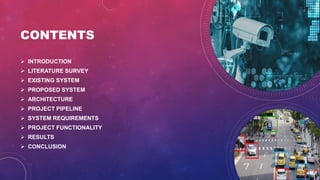
CONTENTS
 INTRODUCTION
 LITERATURE SURVEY
 EXISTING SYSTEM
 PROPOSED SYSTEM
 ARCHITECTURE
 PROJECT PIPELINE
 SYSTEM REQUIREMENTS
 PROJECT FUNCTIONALITY
 RESULTS
 CONCLUSION
INTRODUCTION
AI integration with CCTV security involves the use of machine learning algorithms to enhance the
capabilities of traditional CCTV systems. AI algorithms can detect and track objects, recognize faces,
and analyze human behavior in real-time, allowing for the identification of potential security threats.
The intersection of artificial intelligence (AI) with Closed-Circuit Television (CCTV) marks a
transformative leap in the realm of surveillance and security. As technology progresses, the integration
of AI algorithms into traditional CCTV systems elevates their capabilities to unprecedented levels.
LITERATURE SURVEY
Much research has been done in the development of this AI-based intelligent surveillance system
and some of this literature is reviewed in this section. Examples of surveillance systems previously
studied or developed to have intelligent or automation capabilities: VSAM (Abbreviated as video
surveillance and monitoring), PRISMATICA (Abbreviated as proactive integrated systems for security
management through institutional technological support and communication). AI based smart and
intelligent surveillance system solves all the problems inherent in video surveillance. It uses computer
vision and sensors to detect what is happening and what should be done about it. All this happens in
real time and saves money. Detect, prevent and report intruders when they are imminent.
EXISTING SYSTEM
The existing system for Closed-Circuit Television (CCTV) typically involves traditional surveillance
methods where cameras capture video footage, which is then stored or monitored in real-time by human
operators. These systems may have limited capabilities for automated analysis, and the focus is primarily
on recording and manual review of footage. Here are key characteristics of the existing CCTV systems:
Human Monitoring:
Human operators are responsible for monitoring live feeds or reviewing recorded footage to identify
security incidents or events.
Limited Intelligence:
The existing systems may lack advanced intelligence features such as real-time object detection,
facial recognition, or behaviour analysis.
Manual Investigation:
Investigations of security incidents often involve manual review of recorded footage, which can
be time-consuming and less efficient.
Privacy and Ethics:
Privacy concerns related to continuous monitoring and recording, as well as potential misuse
of footage, are significant considerations in the existing systems.
Scalability Challenges:
Expanding or upgrading the existing system to accommodate a growing number of cameras or
evolving security needs may present challenges.
Data Storage Concerns:
Storing and managing large volumes of video data can be resource-intensive, and retrieval for
specific events may not be as efficient.
PROPOSED SYSTEM
AI integration with Closed-Circuit Television (CCTV) aims to overcome the limitations of traditional
surveillance methods by leveraging advanced artificial intelligence technologies. Here are key features
and improvements in a proposed AI-enhanced CCTV system:
Real-Time Object Detection:
Implement AI algorithms for real-time object detection to identify and track specific entities, such as
people, vehicles, or objects of interest.
Predictive Analytics:
Implement predictive analytics using AI algorithms to identify patterns and trends, enabling proactive
security measures and threat prevention.
Automated Alerts and Notifications:
Enable the system to generate real-time alerts and notifications for security personnel based on AI
analysis, facilitating quick responses to potential incidents.
Detect Patterns
Perceive
Environment
Update,
Understand and
Decide
HOW AI CCTV WORKS
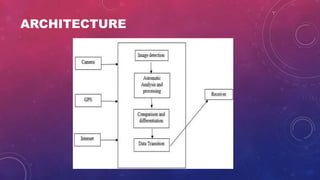
ARCHITECTURE
1. Data acquisition
2. Data processing
3. Training the model
4. Measure performance matrix
5. Testing the model
6. Deployment
PROJECT PIPELINE
FLOWCHART
SYSTEM REQUIREMENTS
 Software Requirements :
1. Arduino IDE
2. DL/ML algorithms with Jupyter Notebook IDE
 Hardware Requirements :
1. Arduino / RasberryPi
2. High end camera
3. GSM module
4. Storage system
 Modle Used :
1. CNN+LSTM (Covlstm)
1. Accident detection and performing action
2. Robbery detection
3. Real world anamolies detection like fire(burning houses,shops..etc)
PROJECT GOAL/FUNCTIONALITY
RESULTS
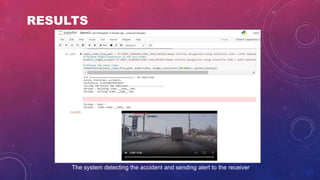
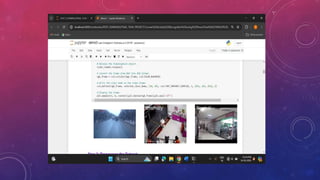
The system detecting the accident and sending alert to the receiver
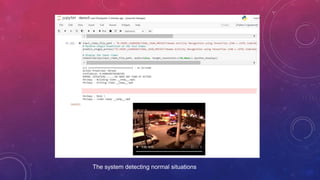
The system detecting normal situations
CONCLUSION
The proposed system not only augments security measures but also acknowledges the importance
of ethical considerations, privacy protection, and regulatory compliance. As technology continues to
evolve, the integration of AI with CCTV systems promises to redefine the landscape of security,
providing a sophisticated and intelligent approach to safeguarding environments in an increasingly
interconnected world.
THANK YOU

Artificial_intelligence_in_cctv_survelliance FINAL-1.pptx

  • 1.
    ARTIFICIAL INTELLIGENCE IN CCTV SURVEILLANCE HARIPRASADMENSE 2MM20CS011 JAY SHAPURKAR 2MM20CS014 RAMA GAWDE 2MM20CS031 SHREEDHAR JAGTAP 2MM20CS036 UNDER THE GUIDANCE OF PROF. MAHESH M
  • 2.
    CONTENTS  INTRODUCTION  LITERATURESURVEY  EXISTING SYSTEM  PROPOSED SYSTEM  ARCHITECTURE  PROJECT PIPELINE  SYSTEM REQUIREMENTS  PROJECT FUNCTIONALITY  RESULTS  CONCLUSION
  • 3.
    INTRODUCTION AI integration withCCTV security involves the use of machine learning algorithms to enhance the capabilities of traditional CCTV systems. AI algorithms can detect and track objects, recognize faces, and analyze human behavior in real-time, allowing for the identification of potential security threats. The intersection of artificial intelligence (AI) with Closed-Circuit Television (CCTV) marks a transformative leap in the realm of surveillance and security. As technology progresses, the integration of AI algorithms into traditional CCTV systems elevates their capabilities to unprecedented levels.
  • 4.
    LITERATURE SURVEY Much researchhas been done in the development of this AI-based intelligent surveillance system and some of this literature is reviewed in this section. Examples of surveillance systems previously studied or developed to have intelligent or automation capabilities: VSAM (Abbreviated as video surveillance and monitoring), PRISMATICA (Abbreviated as proactive integrated systems for security management through institutional technological support and communication). AI based smart and intelligent surveillance system solves all the problems inherent in video surveillance. It uses computer vision and sensors to detect what is happening and what should be done about it. All this happens in real time and saves money. Detect, prevent and report intruders when they are imminent.
  • 5.
    EXISTING SYSTEM The existingsystem for Closed-Circuit Television (CCTV) typically involves traditional surveillance methods where cameras capture video footage, which is then stored or monitored in real-time by human operators. These systems may have limited capabilities for automated analysis, and the focus is primarily on recording and manual review of footage. Here are key characteristics of the existing CCTV systems: Human Monitoring: Human operators are responsible for monitoring live feeds or reviewing recorded footage to identify security incidents or events. Limited Intelligence: The existing systems may lack advanced intelligence features such as real-time object detection, facial recognition, or behaviour analysis.
  • 6.
    Manual Investigation: Investigations ofsecurity incidents often involve manual review of recorded footage, which can be time-consuming and less efficient. Privacy and Ethics: Privacy concerns related to continuous monitoring and recording, as well as potential misuse of footage, are significant considerations in the existing systems. Scalability Challenges: Expanding or upgrading the existing system to accommodate a growing number of cameras or evolving security needs may present challenges. Data Storage Concerns: Storing and managing large volumes of video data can be resource-intensive, and retrieval for specific events may not be as efficient.
  • 7.
    PROPOSED SYSTEM AI integrationwith Closed-Circuit Television (CCTV) aims to overcome the limitations of traditional surveillance methods by leveraging advanced artificial intelligence technologies. Here are key features and improvements in a proposed AI-enhanced CCTV system: Real-Time Object Detection: Implement AI algorithms for real-time object detection to identify and track specific entities, such as people, vehicles, or objects of interest. Predictive Analytics: Implement predictive analytics using AI algorithms to identify patterns and trends, enabling proactive security measures and threat prevention. Automated Alerts and Notifications: Enable the system to generate real-time alerts and notifications for security personnel based on AI analysis, facilitating quick responses to potential incidents.
  • 8.
  • 9.
  • 10.
    1. Data acquisition 2.Data processing 3. Training the model 4. Measure performance matrix 5. Testing the model 6. Deployment PROJECT PIPELINE
  • 11.
  • 12.
    SYSTEM REQUIREMENTS  SoftwareRequirements : 1. Arduino IDE 2. DL/ML algorithms with Jupyter Notebook IDE  Hardware Requirements : 1. Arduino / RasberryPi 2. High end camera 3. GSM module 4. Storage system  Modle Used : 1. CNN+LSTM (Covlstm)
  • 13.
    1. Accident detectionand performing action 2. Robbery detection 3. Real world anamolies detection like fire(burning houses,shops..etc) PROJECT GOAL/FUNCTIONALITY
  • 14.
    RESULTS The system detectingthe accident and sending alert to the receiver
  • 15.
    The system detectingnormal situations
  • 17.
    CONCLUSION The proposed systemnot only augments security measures but also acknowledges the importance of ethical considerations, privacy protection, and regulatory compliance. As technology continues to evolve, the integration of AI with CCTV systems promises to redefine the landscape of security, providing a sophisticated and intelligent approach to safeguarding environments in an increasingly interconnected world.
  • 18.