Fossils are information about
human biology, which include
bones and other remains of
human beings. Environmental
conditions, however, affect the
preservation of fossils.
Artifacts refer to anything
modified by man or made by
man, including tools, weapons
and other material creation.
Objects that are excavated may
or may not be related to those
found near them.
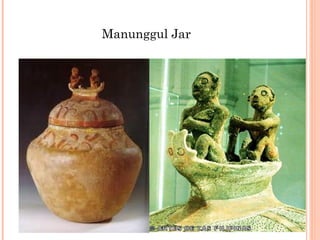
Manunggul Jar
 a secondary burial jar excavated from a Neolithic
 burial site in Manunggul cave of Lipuun (present
day Quezon, Palawan) dating from 890-710 B.C.[1]
 The
two prominent figures at the top handle of its cover
represent the journey of the soul to the after life.
 The Manunggul Jar is widely acknowledged to be one
of the finest Philippine pre-colonial artwork ever
produced and is a considered as a masterpiece. It is
considered as a national treasure and it is designated
as item 64-MO-74[2]
 by the 
National Museum of the Philippines. It is now housed
at theMuseum of the Filipino People and is one of the
most popular exhibits there.
 In secondary burial, only bones were placed in the jar,
and the jar itself is not buried.
TABON MAN
 refers to fossilized anatomically modern
human remains discovered on the island
of Palawan in the Philippines on May 28, 1962 by
Dr. Robert B. Fox, an American anthropologist of
the National Museum of the Philippines. These
remains, the fossilized fragments of a skull and
jawbone of three individuals, were believed to be
the earliest human remains known in the
Philippines
 The Tabon fragments are collectively called
"Tabon Man" after Tabon Cave
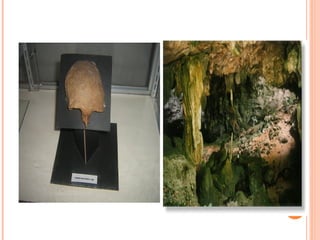
CALLAO MAN
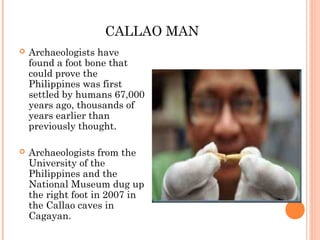
 Archaeologists have
found a foot bone that
could prove the
Philippines was first
settled by humans 67,000
years ago, thousands of
years earlier than
previously thought.
 Archaeologists from the
University of the
Philippines and the
National Museum dug up
the right foot in 2007 in
the Callao caves in
Cagayan.
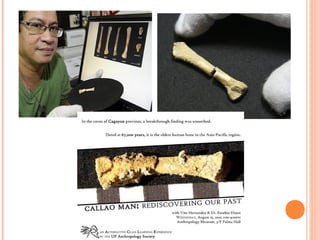
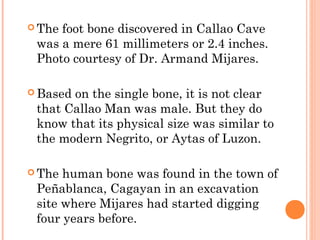
 The foot bone discovered in Callao Cave
was a mere 61 millimeters or 2.4 inches.
Photo courtesy of Dr. Armand Mijares.
 Based on the single bone, it is not clear
that Callao Man was male. But they do
know that its physical size was similar to
the modern Negrito, or Aytas of Luzon. 
 The human bone was found in the town of
Peñablanca, Cagayan in an excavation
site where Mijares had started digging
four years before.
HULUGA FOSSILS
AND ARTIFACTS
 Although many archaeological sites in the
Philippines are heavily looted and destroyed,
some fossils and artifacts have been
retrieved for scientific study.
 This collection in Huluga, Cagayan de Oro
indicates that the area was settled around
350 AD, and possibly earlier.
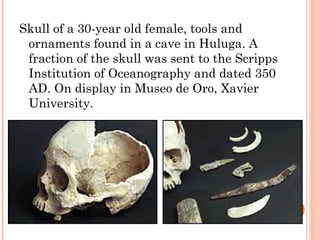
Skull of a 30-year old female, tools and
ornaments found in a cave in Huluga. A
fraction of the skull was sent to the Scripps
Institution of Oceanography and dated 350
AD. On display in Museo de Oro, Xavier
University.
 The settlers were using stone and later
metal tools. They had artistic inclinations,
hunted large terrestrial and aquatic
mammals, and had direct or indirect
trading with the Chinese.
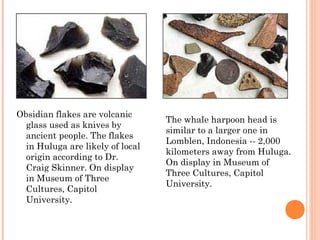
Obsidian flakes are volcanic
glass used as knives by
ancient people. The flakes
in Huluga are likely of local
origin according to Dr.
Craig Skinner. On display
in Museum of Three
Cultures, Capitol
University.
The whale harpoon head is
similar to a larger one in
Lomblen, Indonesia -- 2,000
kilometers away from Huluga.
On display in Museum of
Three Cultures, Capitol
University.
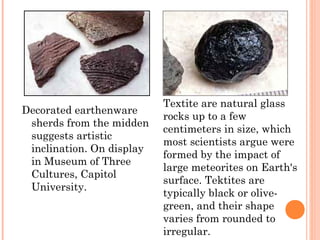
Decorated earthenware
sherds from the midden
suggests artistic
inclination. On display
in Museum of Three
Cultures, Capitol
University.
Textite are natural glass
rocks up to a few
centimeters in size, which
most scientists argue were
formed by the impact of
large meteorites on Earth's
surface. Tektites are
typically black or olive-
green, and their shape
varies from rounded to
irregular.
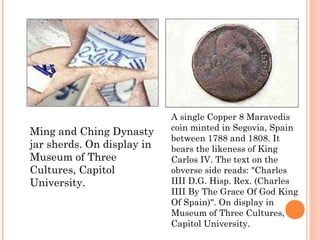
Ming and Ching Dynasty
jar sherds. On display in
Museum of Three
Cultures, Capitol
University.
A single Copper 8 Maravedis
coin minted in Segovia, Spain
between 1788 and 1808. It
bears the likeness of King
Carlos IV. The text on the
obverse side reads: "Charles
IIII D.G. Hisp. Rex. (Charles
IIII By The Grace Of God King
Of Spain)". On display in
Museum of Three Cultures,
Capitol University.
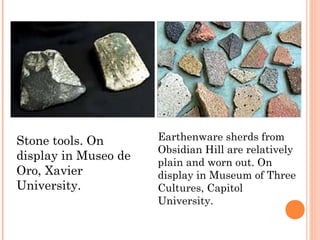
Stone tools. On
display in Museo de
Oro, Xavier
University.
Earthenware sherds from
Obsidian Hill are relatively
plain and worn out. On
display in Museum of Three
Cultures, Capitol
University.
 Unfortunately, the government of Cagayan de
Oro remains apathetic towards Huluga.
 A former director of the Department of
Environment and Natural Resources occupies the
caves area, and a City Hall tourism employee has
dug a huge pit in the midden despite requests by
an archaeologist.
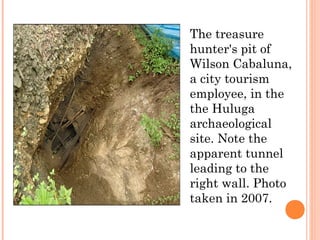
The treasure
hunter's pit of
Wilson Cabaluna,
a city tourism
employee, in the
the Huluga
archaeological
site. Note the
apparent tunnel
leading to the
right wall. Photo
taken in 2007.
WHAT HAPPENS IF FOSSILS AND
ARTIFACTS ARE TAKEN FROM
THEIR ORIGINAL LOCATION?
 If you find what you suspect is a fossil or
an artifact, refrain from touching the item
and its surrounding. Even the positioning
of these materials will affect scientific
analysis and interpretation.
 Even if the date of a skull is determined in
a laboratory, the date could be
meaningless if scientists do not know
exactly where the object was found.
Removal and possession of artifacts and
fossils are also illegal and punishable by
law.
 Some people collect, buy, and sell these
objects as "antiques", but these items are
transformed to simply old objects if details
about them are unknown.
WHAT CAN YOU DO TO PRESERVE
OUR HERITAGE?
Make a difference in the life of our
nation by helping preserve our
heritage. Encourage your local
officials to protect heritage sites and
objects, to put up a museum, or help
an existing museum.

Artifacts and fossils

  • 1.
    Fossils are informationabout human biology, which include bones and other remains of human beings. Environmental conditions, however, affect the preservation of fossils. Artifacts refer to anything modified by man or made by man, including tools, weapons and other material creation. Objects that are excavated may or may not be related to those found near them.
  • 2.
  • 3.
     a secondaryburial jar excavated from a Neolithic  burial site in Manunggul cave of Lipuun (present day Quezon, Palawan) dating from 890-710 B.C.[1]  The two prominent figures at the top handle of its cover represent the journey of the soul to the after life.  The Manunggul Jar is widely acknowledged to be one of the finest Philippine pre-colonial artwork ever produced and is a considered as a masterpiece. It is considered as a national treasure and it is designated as item 64-MO-74[2]  by the  National Museum of the Philippines. It is now housed at theMuseum of the Filipino People and is one of the most popular exhibits there.  In secondary burial, only bones were placed in the jar, and the jar itself is not buried.
  • 4.
    TABON MAN  refersto fossilized anatomically modern human remains discovered on the island of Palawan in the Philippines on May 28, 1962 by Dr. Robert B. Fox, an American anthropologist of the National Museum of the Philippines. These remains, the fossilized fragments of a skull and jawbone of three individuals, were believed to be the earliest human remains known in the Philippines  The Tabon fragments are collectively called "Tabon Man" after Tabon Cave
  • 6.
    CALLAO MAN  Archaeologistshave found a foot bone that could prove the Philippines was first settled by humans 67,000 years ago, thousands of years earlier than previously thought.  Archaeologists from the University of the Philippines and the National Museum dug up the right foot in 2007 in the Callao caves in Cagayan.
  • 8.
     The footbone discovered in Callao Cave was a mere 61 millimeters or 2.4 inches. Photo courtesy of Dr. Armand Mijares.  Based on the single bone, it is not clear that Callao Man was male. But they do know that its physical size was similar to the modern Negrito, or Aytas of Luzon.   The human bone was found in the town of Peñablanca, Cagayan in an excavation site where Mijares had started digging four years before.
  • 9.
  • 10.
     Although manyarchaeological sites in the Philippines are heavily looted and destroyed, some fossils and artifacts have been retrieved for scientific study.  This collection in Huluga, Cagayan de Oro indicates that the area was settled around 350 AD, and possibly earlier.
  • 11.
    Skull of a30-year old female, tools and ornaments found in a cave in Huluga. A fraction of the skull was sent to the Scripps Institution of Oceanography and dated 350 AD. On display in Museo de Oro, Xavier University.
  • 12.
     The settlerswere using stone and later metal tools. They had artistic inclinations, hunted large terrestrial and aquatic mammals, and had direct or indirect trading with the Chinese.
  • 13.
    Obsidian flakes arevolcanic glass used as knives by ancient people. The flakes in Huluga are likely of local origin according to Dr. Craig Skinner. On display in Museum of Three Cultures, Capitol University. The whale harpoon head is similar to a larger one in Lomblen, Indonesia -- 2,000 kilometers away from Huluga. On display in Museum of Three Cultures, Capitol University.
  • 14.
    Decorated earthenware sherds fromthe midden suggests artistic inclination. On display in Museum of Three Cultures, Capitol University. Textite are natural glass rocks up to a few centimeters in size, which most scientists argue were formed by the impact of large meteorites on Earth's surface. Tektites are typically black or olive- green, and their shape varies from rounded to irregular.
  • 15.
    Ming and ChingDynasty jar sherds. On display in Museum of Three Cultures, Capitol University. A single Copper 8 Maravedis coin minted in Segovia, Spain between 1788 and 1808. It bears the likeness of King Carlos IV. The text on the obverse side reads: "Charles IIII D.G. Hisp. Rex. (Charles IIII By The Grace Of God King Of Spain)". On display in Museum of Three Cultures, Capitol University.
  • 16.
    Stone tools. On displayin Museo de Oro, Xavier University. Earthenware sherds from Obsidian Hill are relatively plain and worn out. On display in Museum of Three Cultures, Capitol University.
  • 17.
     Unfortunately, thegovernment of Cagayan de Oro remains apathetic towards Huluga.  A former director of the Department of Environment and Natural Resources occupies the caves area, and a City Hall tourism employee has dug a huge pit in the midden despite requests by an archaeologist.
  • 18.
    The treasure hunter's pitof Wilson Cabaluna, a city tourism employee, in the the Huluga archaeological site. Note the apparent tunnel leading to the right wall. Photo taken in 2007.
  • 19.
    WHAT HAPPENS IFFOSSILS AND ARTIFACTS ARE TAKEN FROM THEIR ORIGINAL LOCATION?  If you find what you suspect is a fossil or an artifact, refrain from touching the item and its surrounding. Even the positioning of these materials will affect scientific analysis and interpretation.
  • 20.
     Even ifthe date of a skull is determined in a laboratory, the date could be meaningless if scientists do not know exactly where the object was found. Removal and possession of artifacts and fossils are also illegal and punishable by law.  Some people collect, buy, and sell these objects as "antiques", but these items are transformed to simply old objects if details about them are unknown.
  • 21.
    WHAT CAN YOUDO TO PRESERVE OUR HERITAGE? Make a difference in the life of our nation by helping preserve our heritage. Encourage your local officials to protect heritage sites and objects, to put up a museum, or help an existing museum.