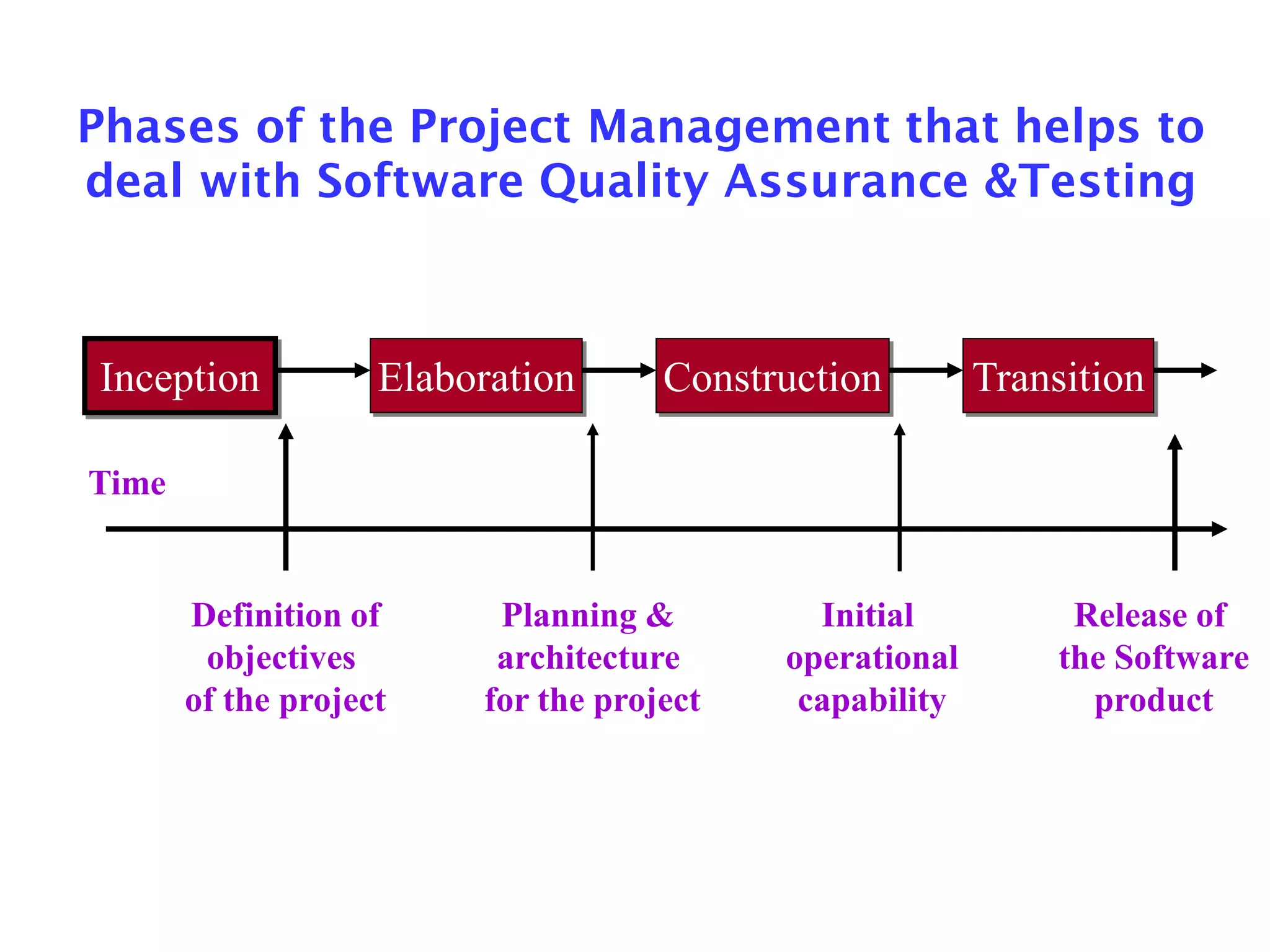
Phases of the Project Management that helps to
deal with Software Quality Assurance &Testing
Definition of
objectives
of the project
Planning &
architecture
for the project
Initial
operational
capability
Inception Elaboration Construction Transition
Release of
the Software
product
Time
• Inception: defines scope of the project.
• Elaboration
- How do we plan & design the project?
- What resources are required?
- What type of architecture may be suitable?
• Construction: the objectives are translated in design &
architecture documents.
• Transition : involves many activities like delivering, training,
supporting, and maintaining the product.
Phases of the Unified Process
Inception Phase
 Gathering and analyzing the requirements.
 Planning and preparing a business case and evaluating
alternatives for risk management, scheduling resources etc.
 Estimating the overall cost and schedule for the project.
 Studying the feasibility and calculating profitability of the
project.
The inception phase has the following objectives:
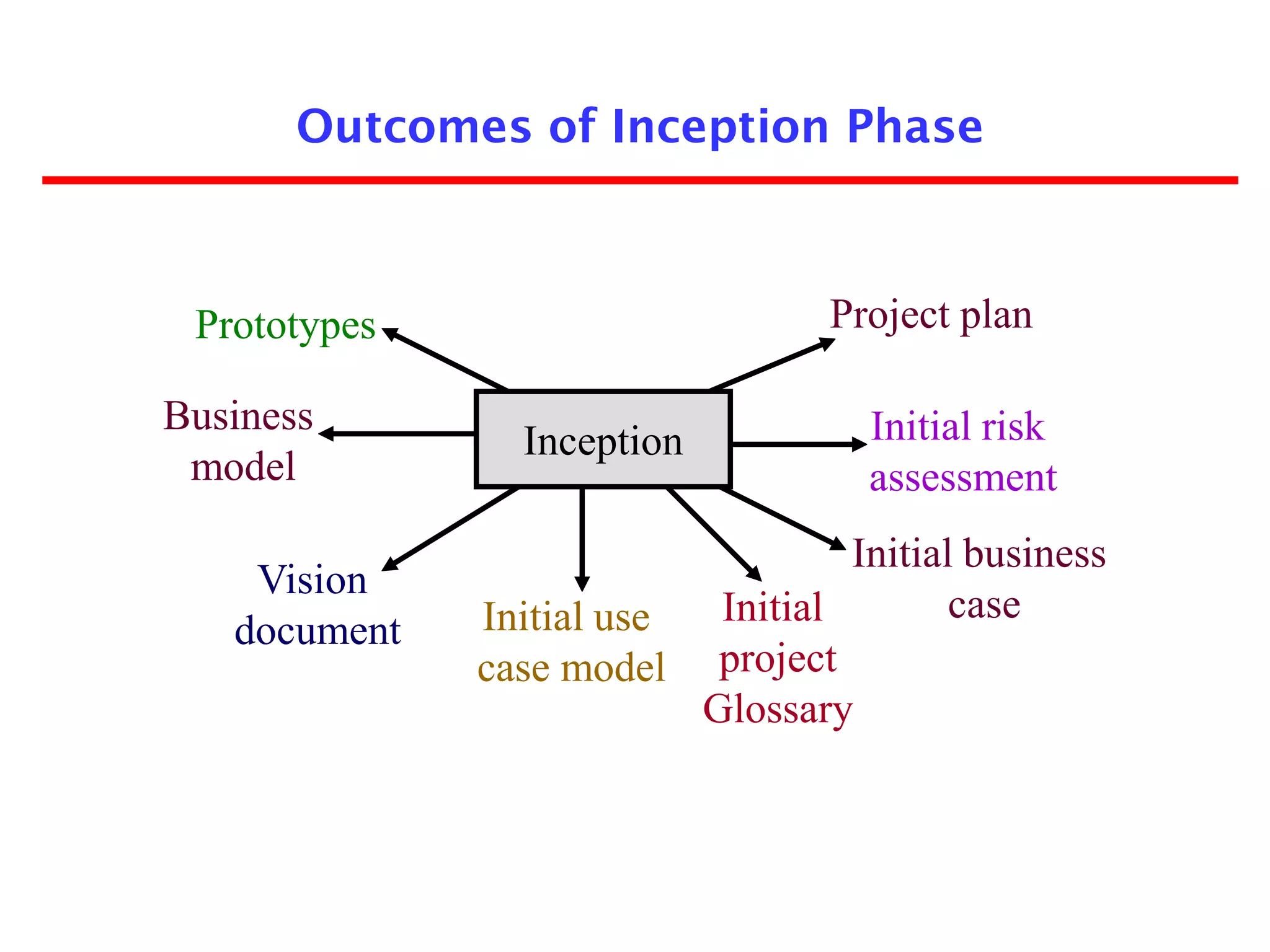
Outcomes of Inception Phase
Inception
Project plan
Initial risk
assessment
Initial business
case
Vision
document Initial use
case model
Initial
project
Glossary
Business
model
Prototypes
Elaboration Phase
 Establishing architectural foundations.
 Design of use case model.
 Elaborating the process, infrastructure & development
environment.
 Selecting component.
 Demonstrating that architecture support the vision at
reasonable cost & within specified time.
The elaboration phase has the following objectives:
Outcomes of Elaboration Phase
Elaboration
Revised risk
document
An executable
architectural
prototype
Use case
model Supplementary
Requirements
with non functional
requirement
Architecture
Description
document
Preliminary
User manual
Development plan
Construction Phase
 Implementing the project.
 Minimizing development cost.
 Management and optimizing resources.
 Testing the product
 Assessing the product releases against acceptance criteria
The construction phase has the following objectives:
Outcomes of Construction Phase
Construction
Operational
manuals
Test Suite
A description
of the
current release
Software
product User manuals
Documentation
manuals
Test
Outline
Transition Phase
 Starting of beta testing
 Analysis of user’s views.
 Training of users.
 Tuning activities including bug fixing and enhancements for
performance & usability
 Assessing the customer satisfaction.
The transition phase has the following objectives:
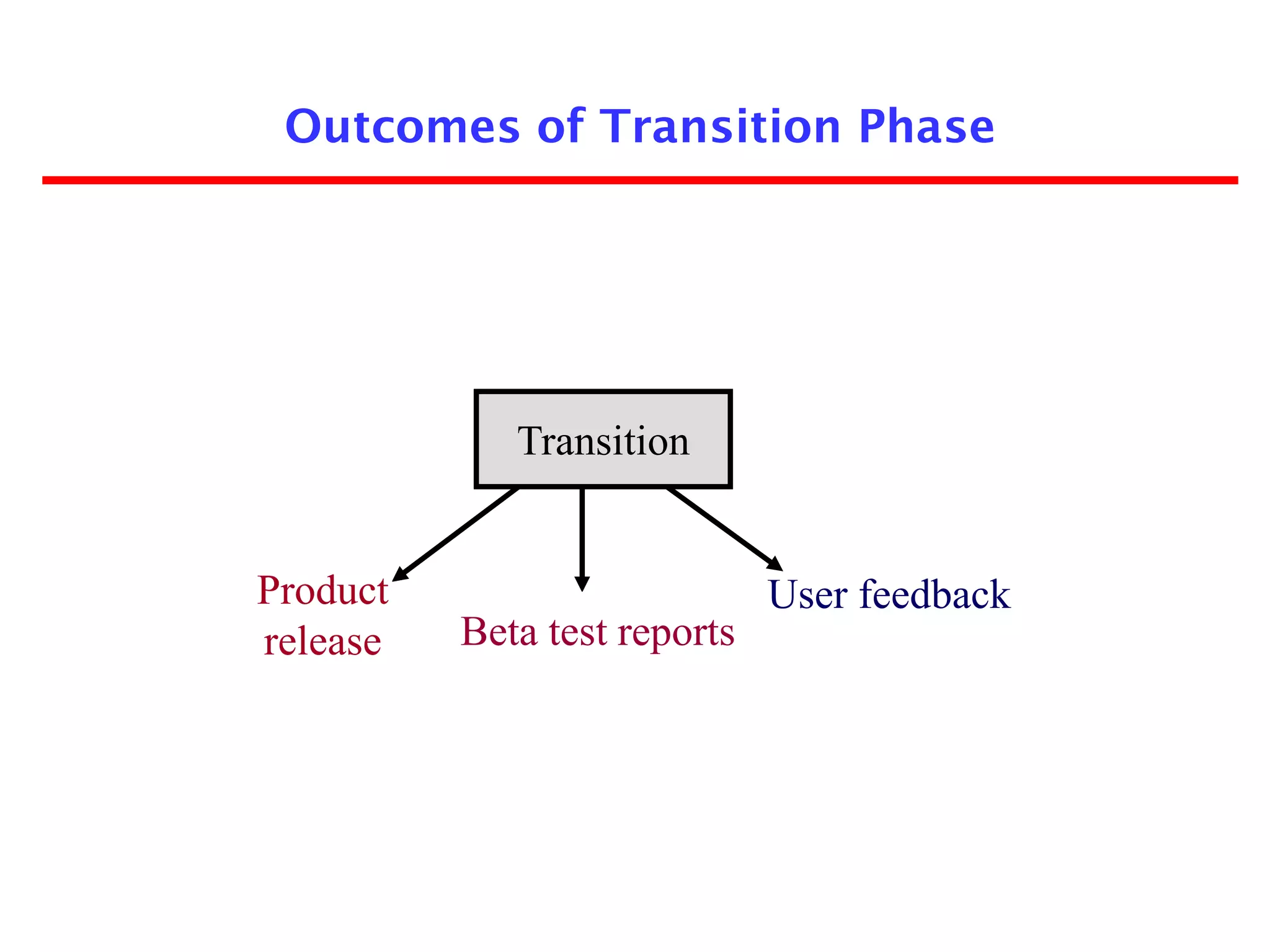
Outcomes of Transition Phase
Transition
Product
release Beta test reports
User feedback
Selection of a Life Cycle Model
Selection of a model is based on:
a) Requirements
b) Development team
c) Users
d) Project type and associated risk

Spm life cycle phase

  • 1.
    Phases of theProject Management that helps to deal with Software Quality Assurance &Testing Definition of objectives of the project Planning & architecture for the project Initial operational capability Inception Elaboration Construction Transition Release of the Software product Time
  • 2.
    • Inception: definesscope of the project. • Elaboration - How do we plan & design the project? - What resources are required? - What type of architecture may be suitable? • Construction: the objectives are translated in design & architecture documents. • Transition : involves many activities like delivering, training, supporting, and maintaining the product. Phases of the Unified Process
  • 3.
    Inception Phase  Gatheringand analyzing the requirements.  Planning and preparing a business case and evaluating alternatives for risk management, scheduling resources etc.  Estimating the overall cost and schedule for the project.  Studying the feasibility and calculating profitability of the project. The inception phase has the following objectives:
  • 4.
    Outcomes of InceptionPhase Inception Project plan Initial risk assessment Initial business case Vision document Initial use case model Initial project Glossary Business model Prototypes
  • 5.
    Elaboration Phase  Establishingarchitectural foundations.  Design of use case model.  Elaborating the process, infrastructure & development environment.  Selecting component.  Demonstrating that architecture support the vision at reasonable cost & within specified time. The elaboration phase has the following objectives:
  • 6.
    Outcomes of ElaborationPhase Elaboration Revised risk document An executable architectural prototype Use case model Supplementary Requirements with non functional requirement Architecture Description document Preliminary User manual Development plan
  • 7.
    Construction Phase  Implementingthe project.  Minimizing development cost.  Management and optimizing resources.  Testing the product  Assessing the product releases against acceptance criteria The construction phase has the following objectives:
  • 8.
    Outcomes of ConstructionPhase Construction Operational manuals Test Suite A description of the current release Software product User manuals Documentation manuals Test Outline
  • 9.
    Transition Phase  Startingof beta testing  Analysis of user’s views.  Training of users.  Tuning activities including bug fixing and enhancements for performance & usability  Assessing the customer satisfaction. The transition phase has the following objectives:
  • 10.
    Outcomes of TransitionPhase Transition Product release Beta test reports User feedback
  • 11.
    Selection of aLife Cycle Model Selection of a model is based on: a) Requirements b) Development team c) Users d) Project type and associated risk