

Trade Creation and
Diversion- Free
Trade Agreements
Brought to you by:
1. Rohit Patidar-31
2. Siddharth Dixit-56
3. Sudipto Das-63
4. Tarun Acharya-68
5. Varun Sharma-75
6. Vasudev Kaushik-76
Trade Creation and Diversion-
Introduction
Important in the context of FTA
FTA- considered discriminatory
May lead to trade diversion- loss for importing
country
Trade creation- Main objective when
implementing FTA
Trade diversion- significant effect on GDP of a
country, consequently on other parameters as
well.
Analysis of the Model
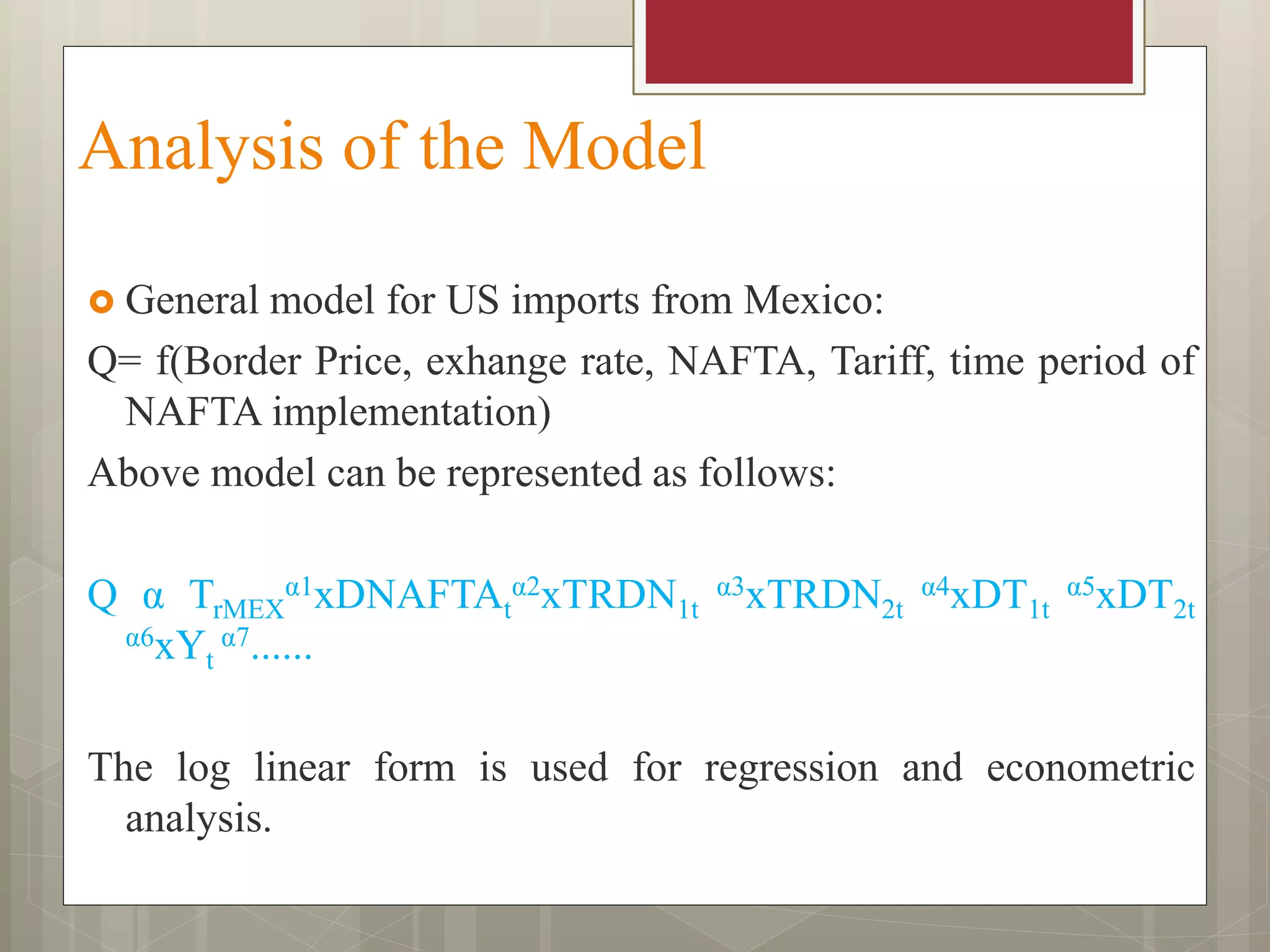
 General model for US imports from Mexico:
Q= f(Border Price, exhange rate, NAFTA, Tariff, time period of
NAFTA implementation)
Above model can be represented as follows:
Q α TrMEX
α1xDNAFTAt
α2xTRDN1t
α3xTRDN2t
α4xDT1t
α5xDT2t
α6xYt
α7......
The log linear form is used for regression and econometric
analysis.
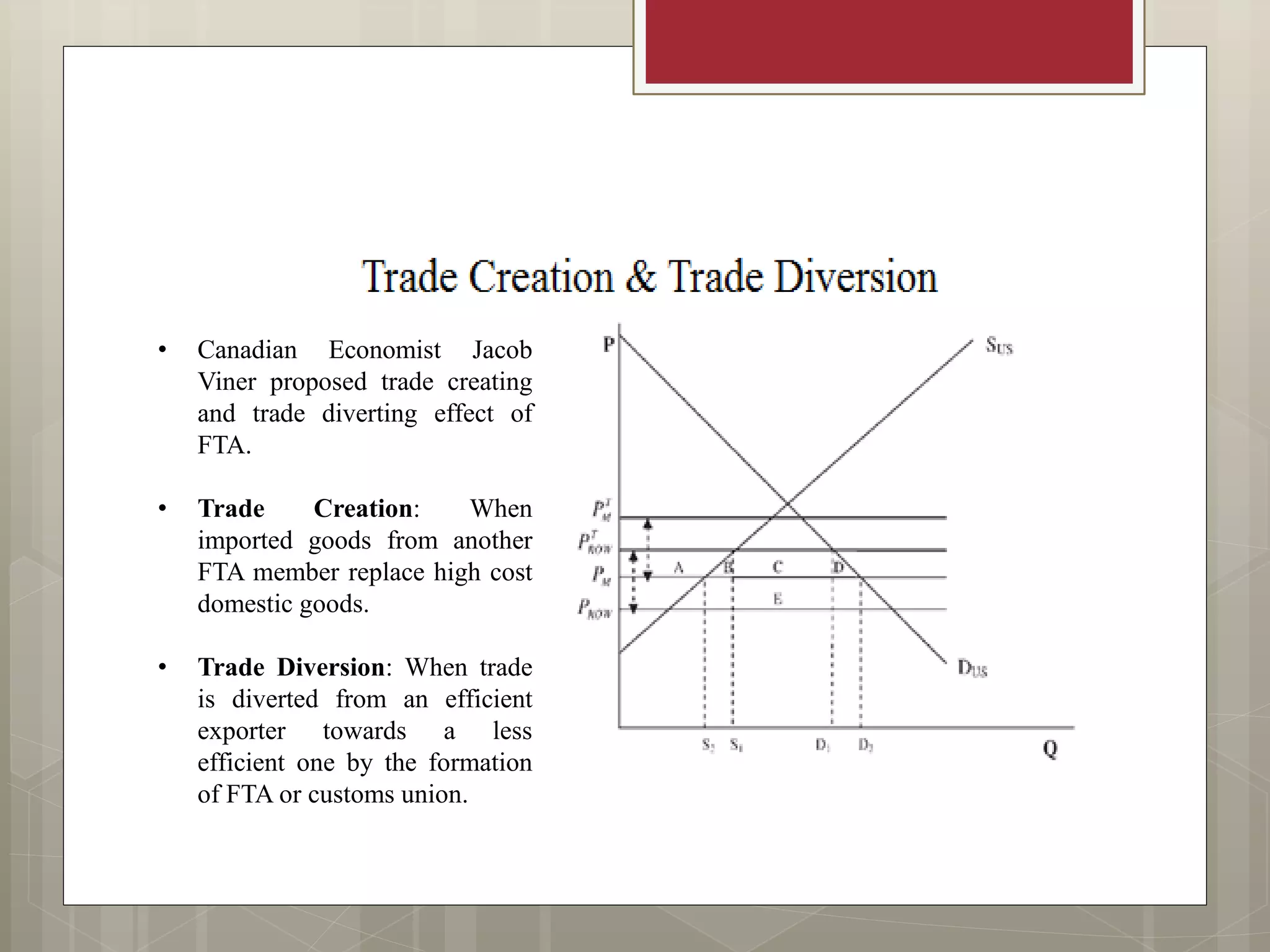
• Canadian Economist Jacob
Viner proposed trade creating
and trade diverting effect of
FTA.
• Trade Creation: When
imported goods from another
FTA member replace high cost
domestic goods.
• Trade Diversion: When trade
is diverted from an efficient
exporter towards a less
efficient one by the formation
of FTA or customs union.
Constraints and Assumptions
 12 years (1994 to 2005) considered for analysis.
 Commodities with HSN/HTS codes classification as
agricultural products considered
 Tariff- available only for items traded
 For other items- average tariff of surrounding items taken
 Cap of 10% taken for pre-NAFTA tariff rates for Mexico
 Tariff rate= Calculated Duty/Customs value
 GDP adjusted for CPI inflation considered
 NAFTA tariff- adjusted gradually over a period of time
 Items with zero tariff pre-NAFTA- excluded from analysis
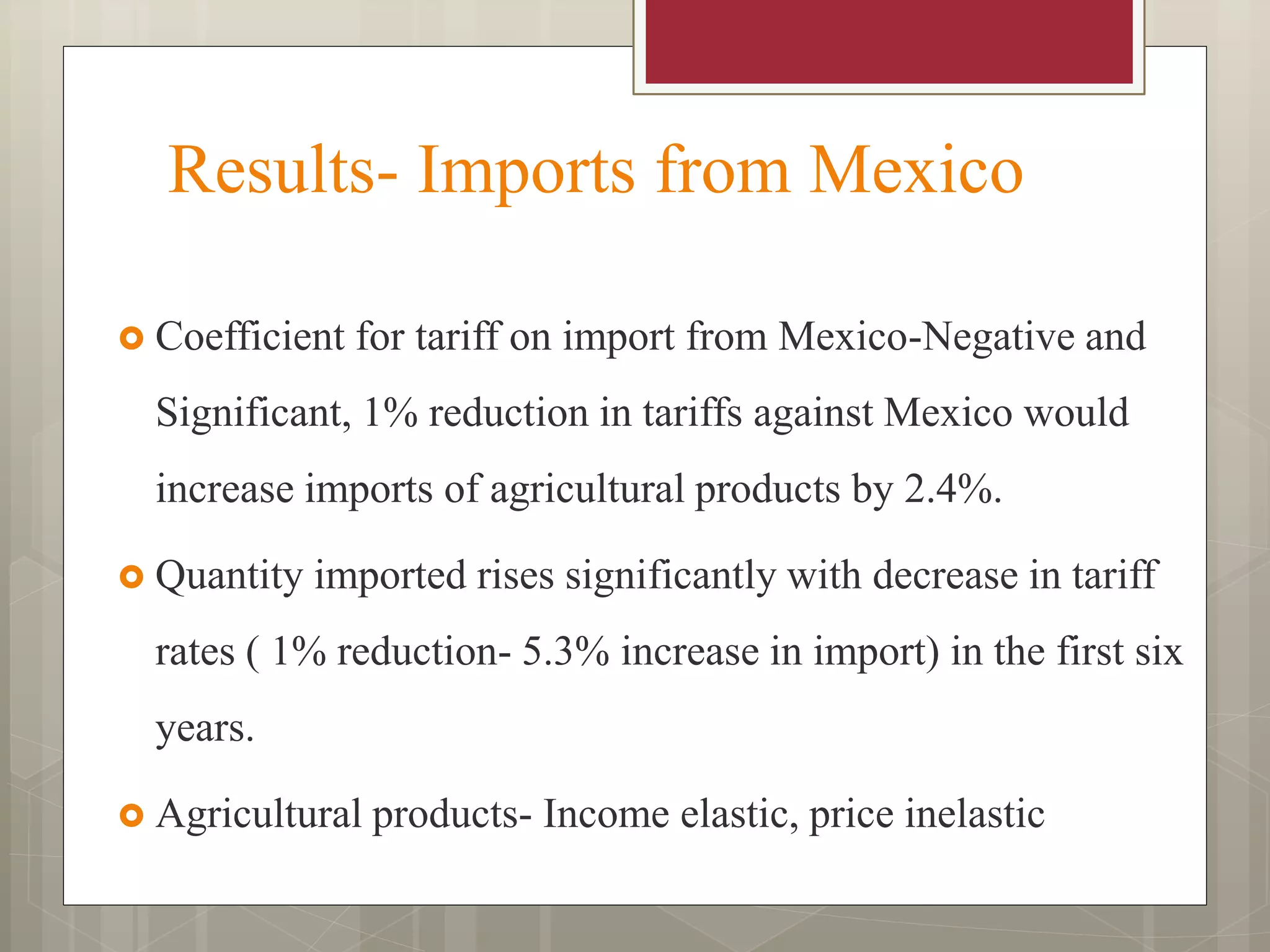
Results- Imports from Mexico
 Coefficient for tariff on import from Mexico-Negative and
Significant, 1% reduction in tariffs against Mexico would
increase imports of agricultural products by 2.4%.
 Quantity imported rises significantly with decrease in tariff
rates ( 1% reduction- 5.3% increase in import) in the first six
years.
 Agricultural products- Income elastic, price inelastic
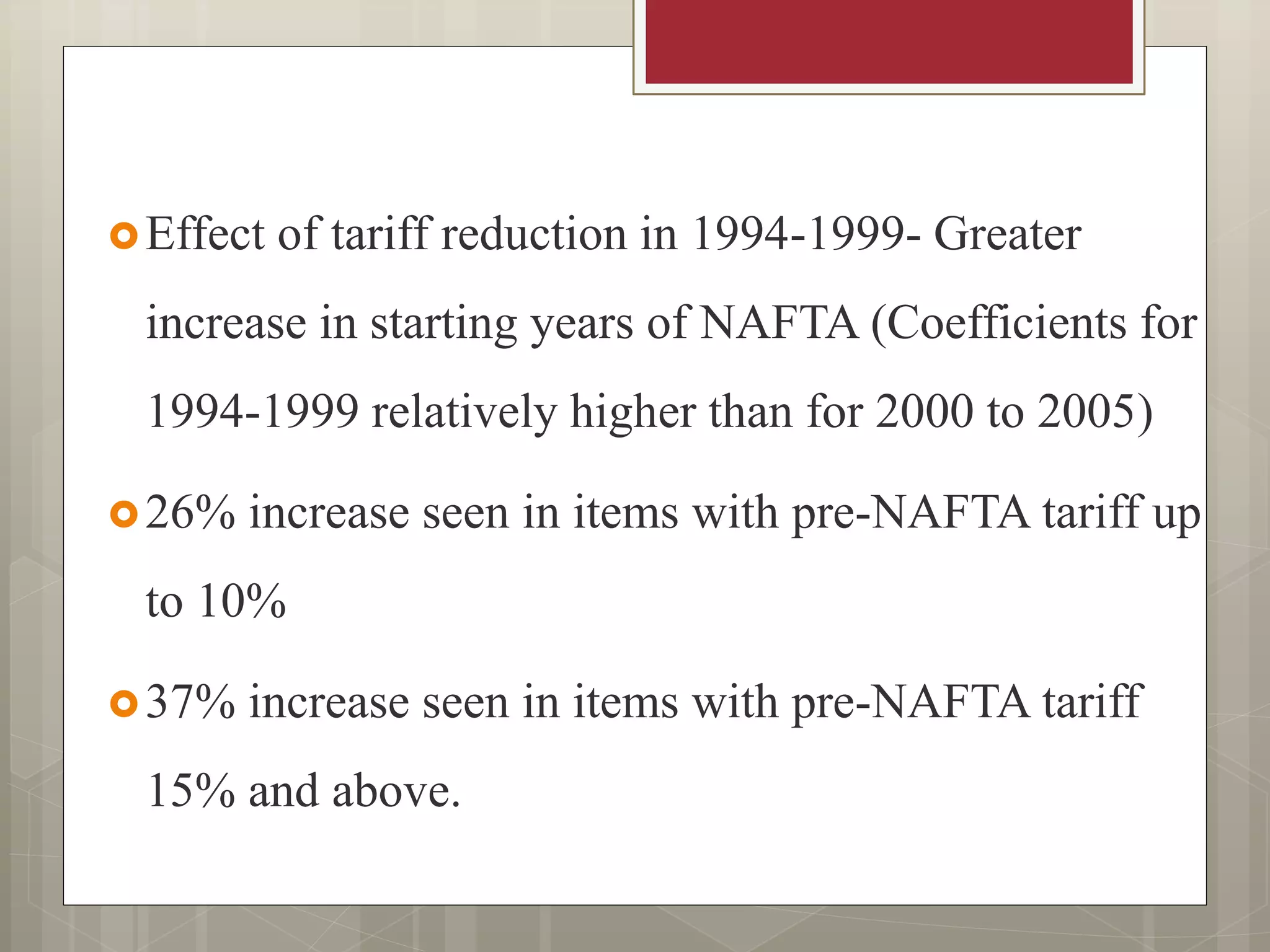
Effect of tariff reduction in 1994-1999- Greater
increase in starting years of NAFTA (Coefficients for
1994-1999 relatively higher than for 2000 to 2005)
26% increase seen in items with pre-NAFTA tariff up
to 10%
37% increase seen in items with pre-NAFTA tariff
15% and above.
Import Demand from Rest of the
World(ROW)
 To measure the diversion that might occur, due to the
implementation of NAFTA
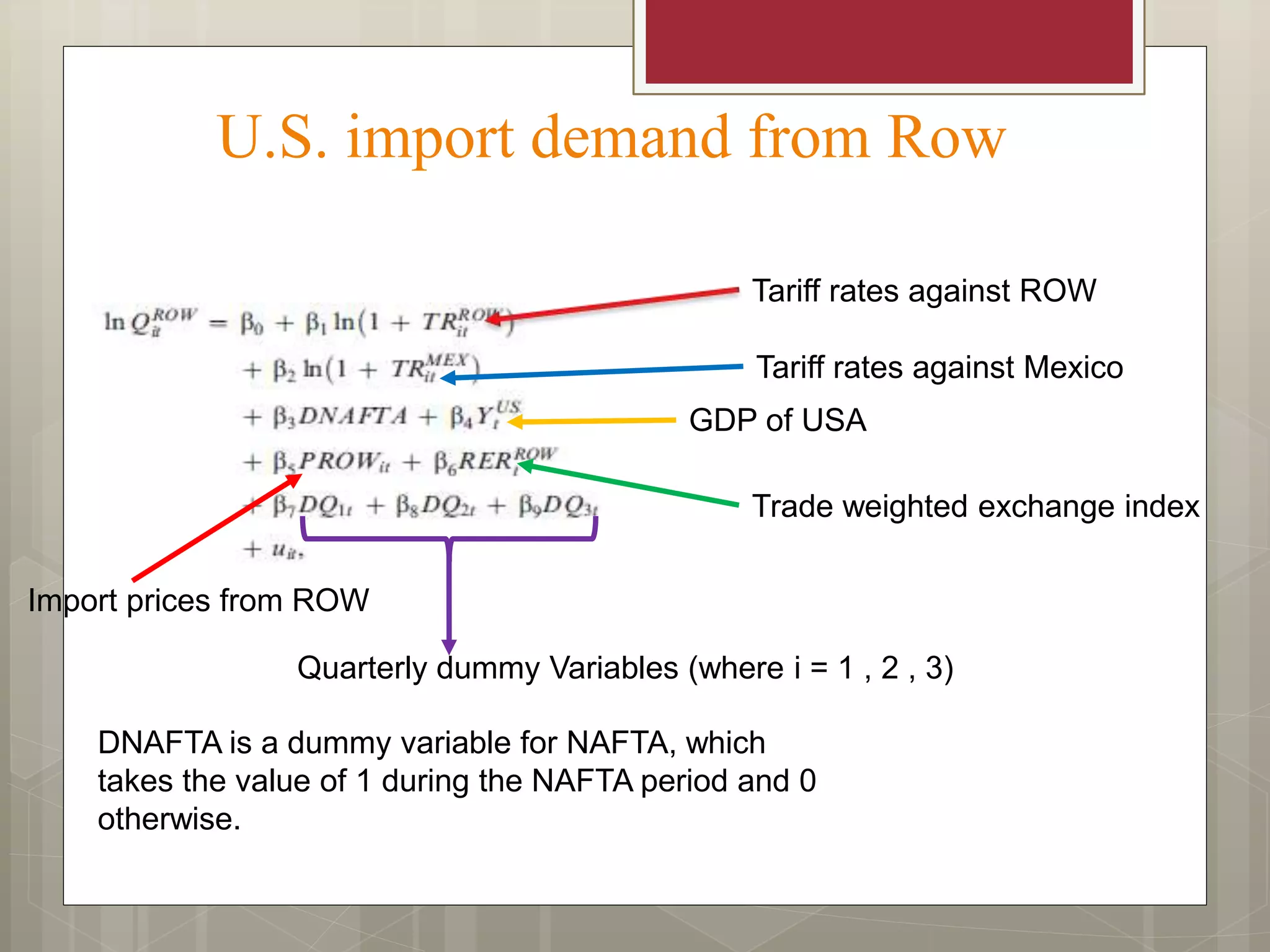
U.S. import demand from Row
Tariff rates against ROW
Tariff rates against Mexico
Import prices from ROW
Trade weighted exchange index
Quarterly dummy Variables (where i = 1 , 2 , 3)
GDP of USA
DNAFTA is a dummy variable for NAFTA, which
takes the value of 1 during the NAFTA period and 0
otherwise.
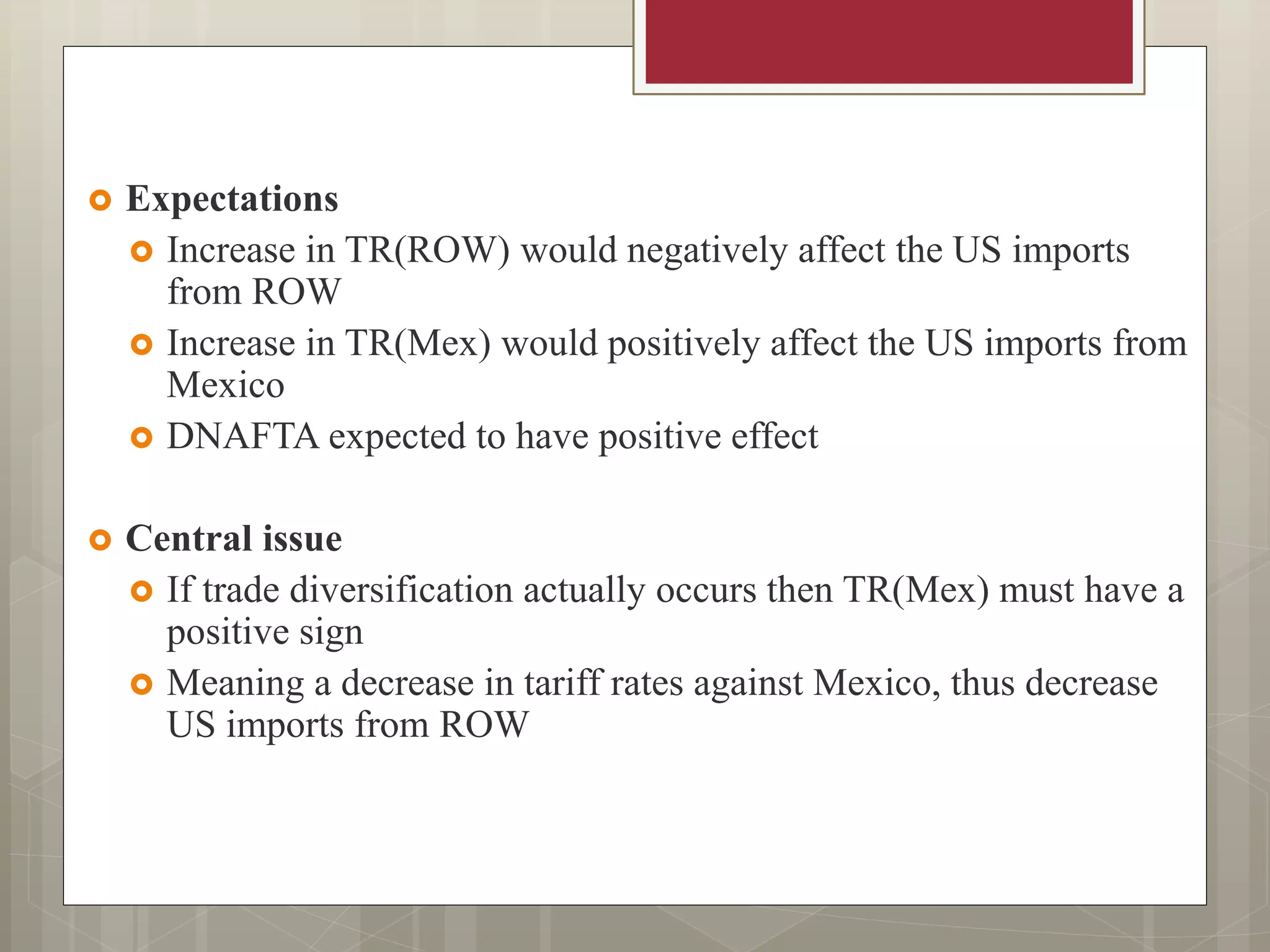
 Expectations
 Increase in TR(ROW) would negatively affect the US imports
from ROW
 Increase in TR(Mex) would positively affect the US imports from
Mexico
 DNAFTA expected to have positive effect
 Central issue
 If trade diversification actually occurs then TR(Mex) must have a
positive sign
 Meaning a decrease in tariff rates against Mexico, thus decrease
US imports from ROW
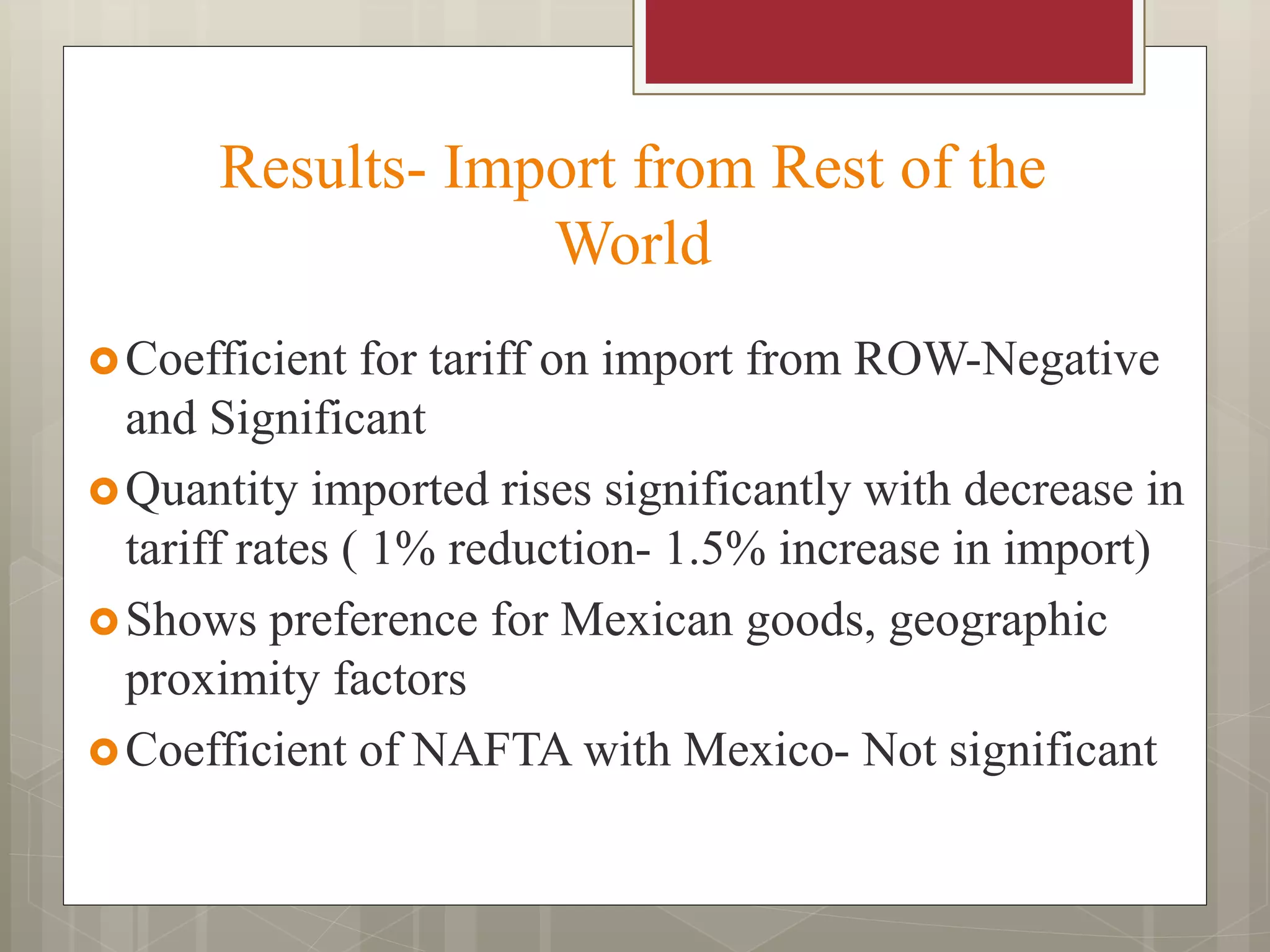
Results- Import from Rest of the
World
Coefficient for tariff on import from ROW-Negative
and Significant
Quantity imported rises significantly with decrease in
tariff rates ( 1% reduction- 1.5% increase in import)
Shows preference for Mexican goods, geographic
proximity factors
Coefficient of NAFTA with Mexico- Not significant
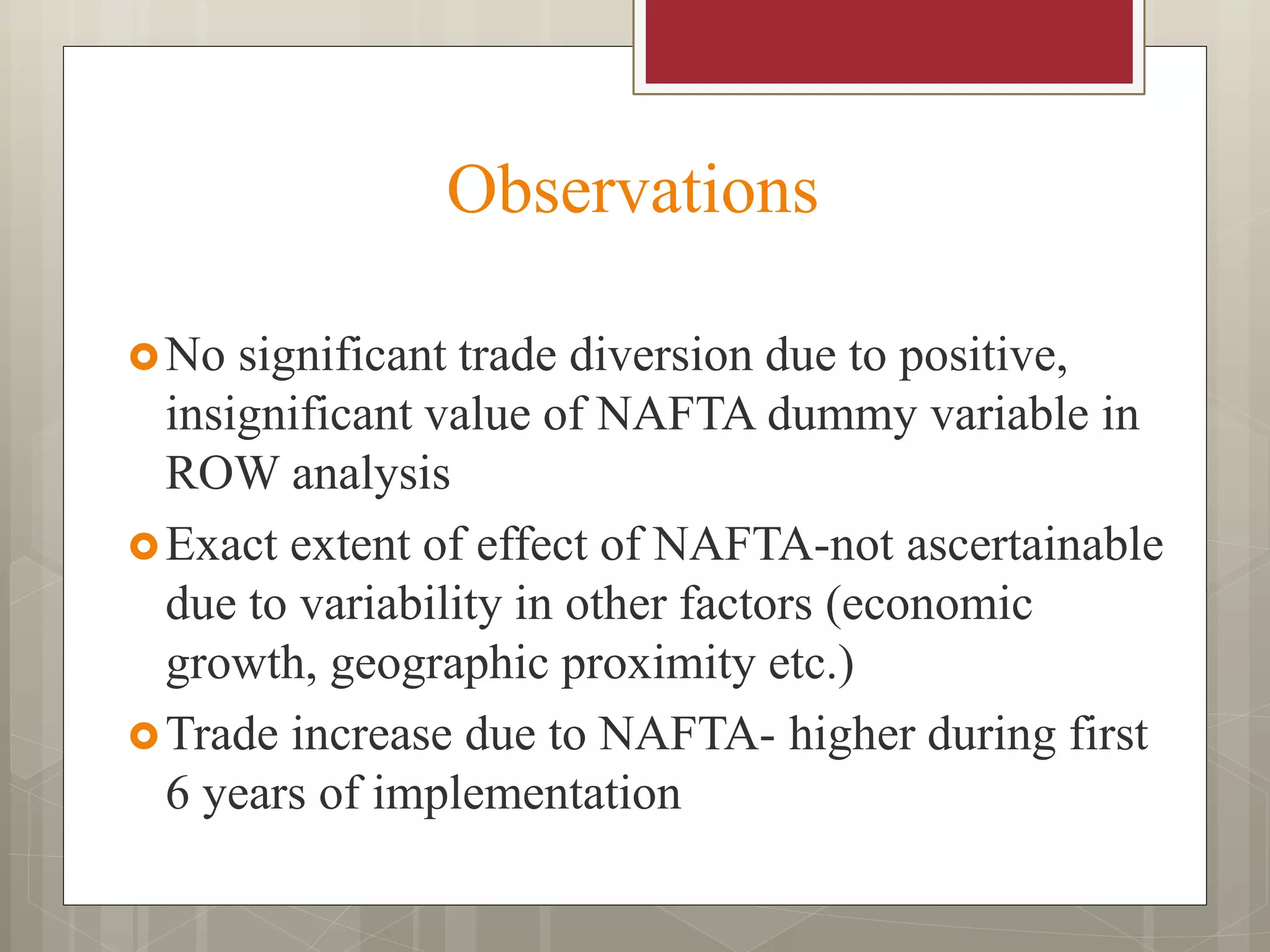
Observations
No significant trade diversion due to positive,
insignificant value of NAFTA dummy variable in
ROW analysis
Exact extent of effect of NAFTA-not ascertainable
due to variability in other factors (economic
growth, geographic proximity etc.)
Trade increase due to NAFTA- higher during first
6 years of implementation
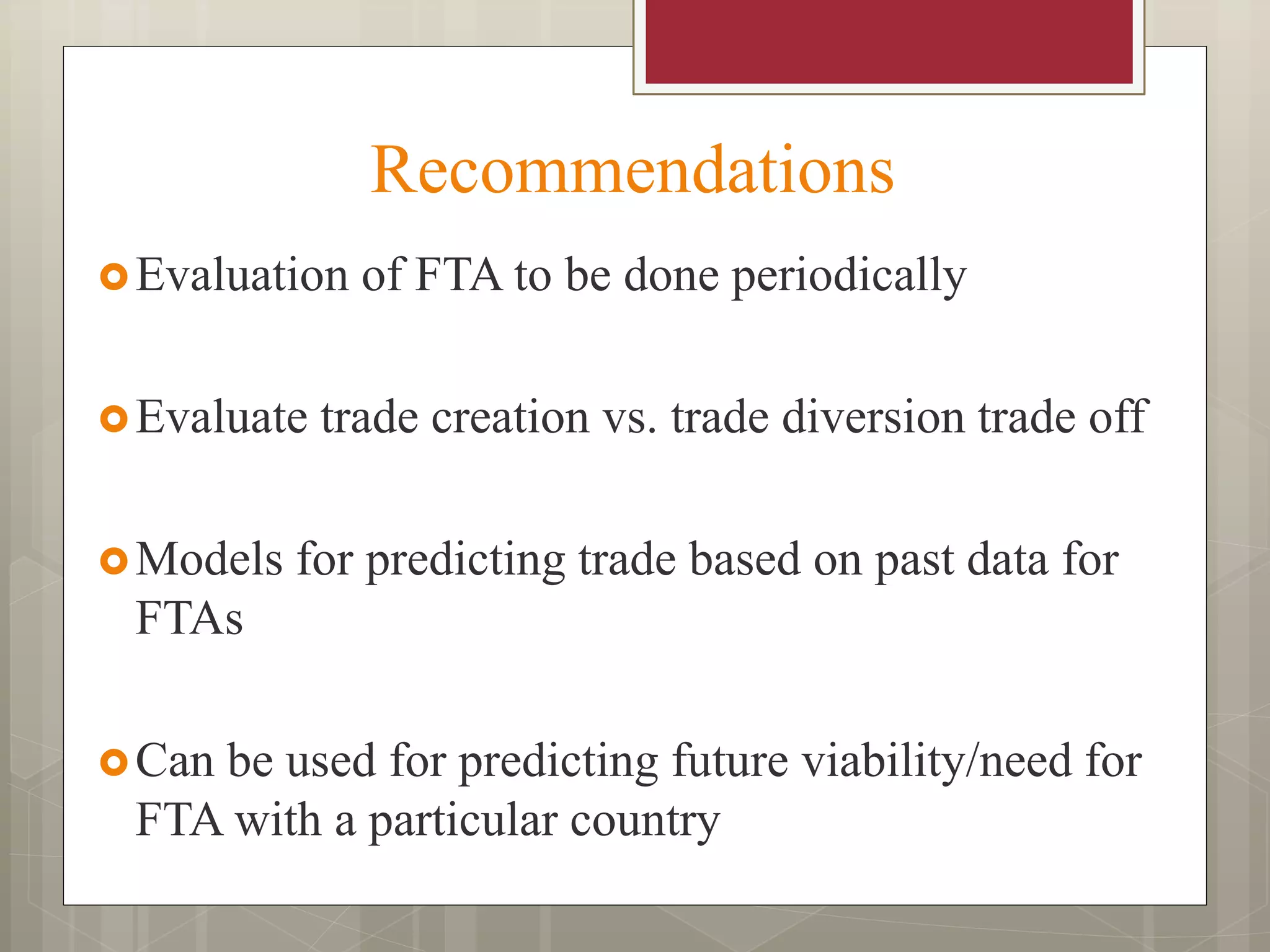
Recommendations
Evaluation of FTA to be done periodically
Evaluate trade creation vs. trade diversion trade off
Models for predicting trade based on past data for
FTAs
Can be used for predicting future viability/need for
FTA with a particular country
THANK YOU!!
Bring it on……

Trade Creation & Diversion

  • 1.
    Trade Creation and Diversion-Free Trade Agreements Brought to you by: 1. Rohit Patidar-31 2. Siddharth Dixit-56 3. Sudipto Das-63 4. Tarun Acharya-68 5. Varun Sharma-75 6. Vasudev Kaushik-76
  • 2.
    Trade Creation andDiversion- Introduction Important in the context of FTA FTA- considered discriminatory May lead to trade diversion- loss for importing country Trade creation- Main objective when implementing FTA Trade diversion- significant effect on GDP of a country, consequently on other parameters as well.
  • 3.
    Analysis of theModel  General model for US imports from Mexico: Q= f(Border Price, exhange rate, NAFTA, Tariff, time period of NAFTA implementation) Above model can be represented as follows: Q α TrMEX α1xDNAFTAt α2xTRDN1t α3xTRDN2t α4xDT1t α5xDT2t α6xYt α7...... The log linear form is used for regression and econometric analysis.
  • 4.
    • Canadian EconomistJacob Viner proposed trade creating and trade diverting effect of FTA. • Trade Creation: When imported goods from another FTA member replace high cost domestic goods. • Trade Diversion: When trade is diverted from an efficient exporter towards a less efficient one by the formation of FTA or customs union.
  • 5.
    Constraints and Assumptions 12 years (1994 to 2005) considered for analysis.  Commodities with HSN/HTS codes classification as agricultural products considered  Tariff- available only for items traded  For other items- average tariff of surrounding items taken  Cap of 10% taken for pre-NAFTA tariff rates for Mexico  Tariff rate= Calculated Duty/Customs value  GDP adjusted for CPI inflation considered  NAFTA tariff- adjusted gradually over a period of time  Items with zero tariff pre-NAFTA- excluded from analysis
  • 6.
    Results- Imports fromMexico  Coefficient for tariff on import from Mexico-Negative and Significant, 1% reduction in tariffs against Mexico would increase imports of agricultural products by 2.4%.  Quantity imported rises significantly with decrease in tariff rates ( 1% reduction- 5.3% increase in import) in the first six years.  Agricultural products- Income elastic, price inelastic
  • 7.
    Effect of tariffreduction in 1994-1999- Greater increase in starting years of NAFTA (Coefficients for 1994-1999 relatively higher than for 2000 to 2005) 26% increase seen in items with pre-NAFTA tariff up to 10% 37% increase seen in items with pre-NAFTA tariff 15% and above.
  • 8.
    Import Demand fromRest of the World(ROW)  To measure the diversion that might occur, due to the implementation of NAFTA
  • 9.
    U.S. import demandfrom Row Tariff rates against ROW Tariff rates against Mexico Import prices from ROW Trade weighted exchange index Quarterly dummy Variables (where i = 1 , 2 , 3) GDP of USA DNAFTA is a dummy variable for NAFTA, which takes the value of 1 during the NAFTA period and 0 otherwise.
  • 10.
     Expectations  Increasein TR(ROW) would negatively affect the US imports from ROW  Increase in TR(Mex) would positively affect the US imports from Mexico  DNAFTA expected to have positive effect  Central issue  If trade diversification actually occurs then TR(Mex) must have a positive sign  Meaning a decrease in tariff rates against Mexico, thus decrease US imports from ROW
  • 11.
    Results- Import fromRest of the World Coefficient for tariff on import from ROW-Negative and Significant Quantity imported rises significantly with decrease in tariff rates ( 1% reduction- 1.5% increase in import) Shows preference for Mexican goods, geographic proximity factors Coefficient of NAFTA with Mexico- Not significant
  • 12.
    Observations No significant tradediversion due to positive, insignificant value of NAFTA dummy variable in ROW analysis Exact extent of effect of NAFTA-not ascertainable due to variability in other factors (economic growth, geographic proximity etc.) Trade increase due to NAFTA- higher during first 6 years of implementation
  • 13.
    Recommendations Evaluation of FTAto be done periodically Evaluate trade creation vs. trade diversion trade off Models for predicting trade based on past data for FTAs Can be used for predicting future viability/need for FTA with a particular country
  • 14.