C Programming: Arrays
from Basics to Advanced
by Dr. Y. Kiran Kumar
Introduction to Arrays
An array is a collection of elements of
the same data type. It stores multiple
values in a single variable.
Arrays offer a more efficient way
to handle data compared to
declaring separate variables for
each value. They simplify data
manipulation and allow for looping
and other operations.
Definition and Purpose of
Arrays
Definition
An array is a collection
of elements of the
same data type stored
in contiguous memory
locations.
Purpose
Arrays are used to store
multiple values in a single
variable, simplifying data
manipulation and allowing for
efficient operations.
Declaring and Initializing Arrays
Syntax
data_type array_name[size];
Examples
int numbers[5]; /* Declaration */
int numbers[5] = {10, 20, 30, 40, 50}; /* Initialization */
Declaring and Initializing Arrays
Syntax:
data_type array_name[size];
Examples:
Declaration:
int numbers[5];
Initialization:
int numbers[5] = {10, 20, 30, 40, 50};
Partial Initialization:
int numbers[5] = {10, 20}; // Remaining elements are initialized to 0
Accessing and Modifying Array Elements
Accessing
Elements are accessed using an index, starting from 0.
Modifying
Elements can be modified by assigning a new value to the
desired index.
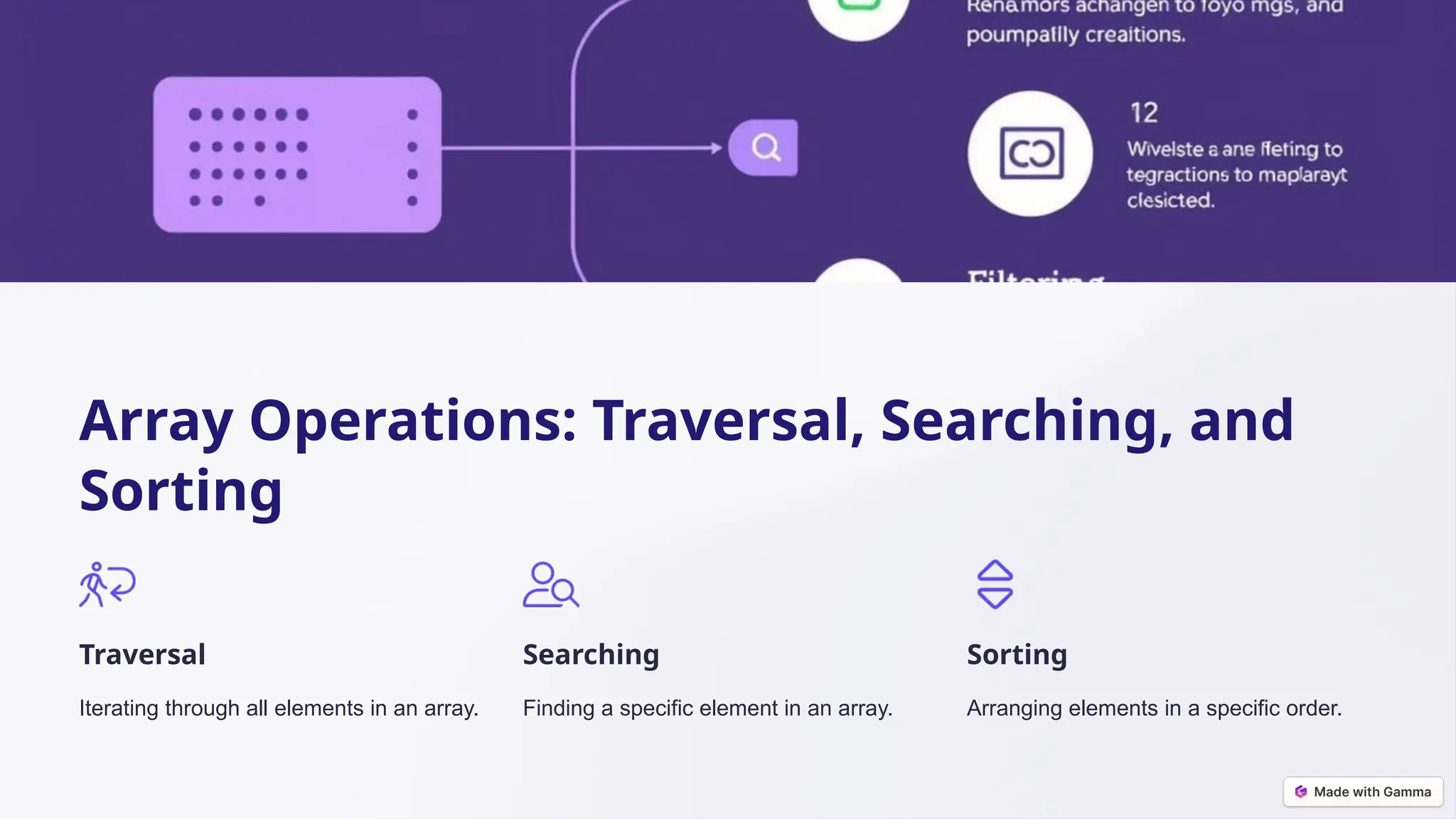
Array Operations: Traversal, Searching, and
Sorting
Traversal
Iterating through all elements in an array.
Searching
Finding a specific element in an array.
Sorting
Arranging elements in a specific order.
Accessing Array Elements
int numbers[5] = {10, 20, 30, 40, 50};
Using Index: Array indexing starts from 0.
printf("%d", numbers[2]); // Outputs 30
Example Program:
#include <stdio.h>
int main()
{
int numbers[5] = {10, 20, 30, 40, 50};
for (int i = 0; i < 5; i++)
{
printf("Element at index %d: %dn", i,
numbers[i]);
}
return 0;
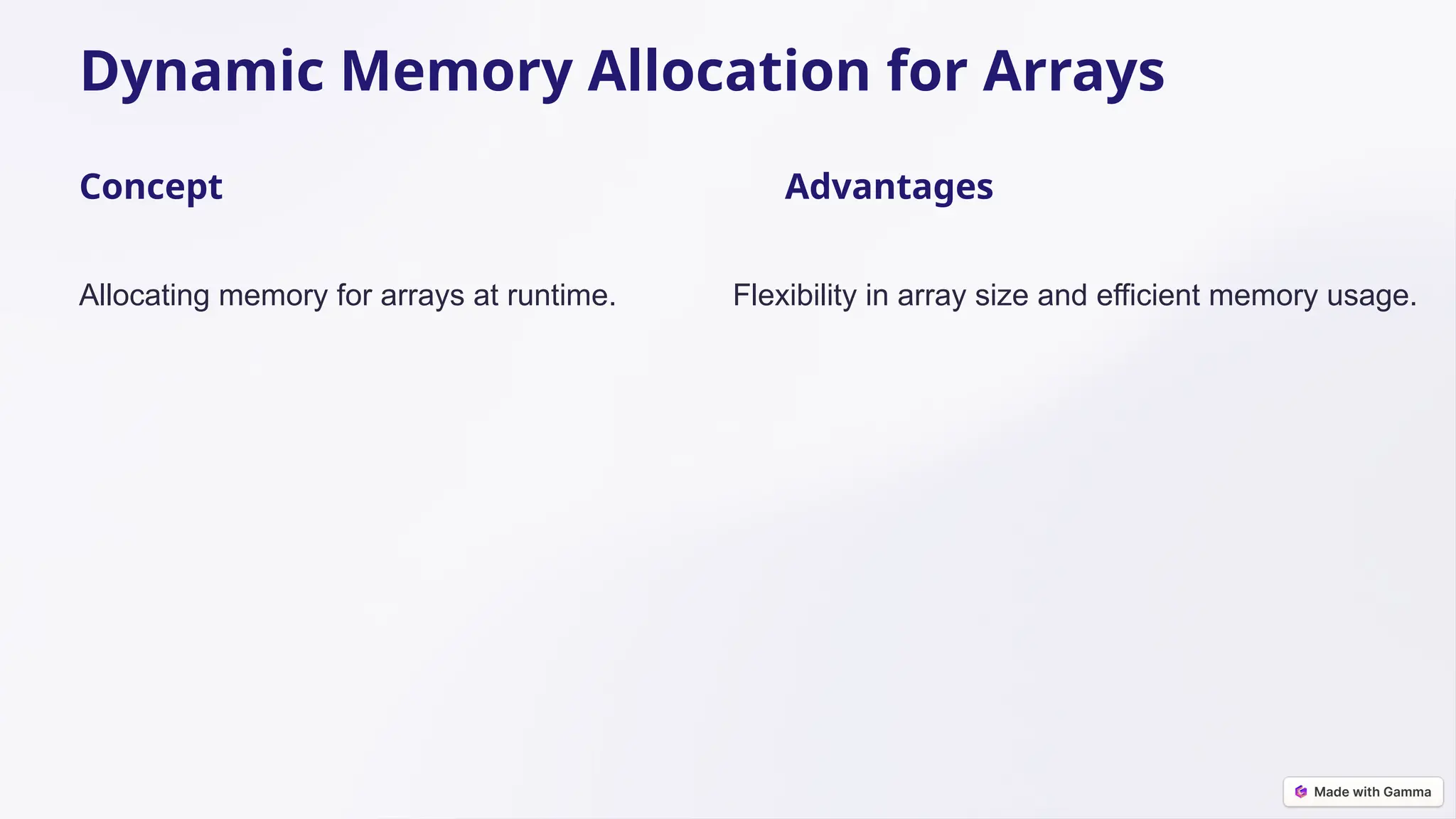
Dynamic Memory Allocation for Arrays
Concept
Allocating memory for arrays at runtime.
Advantages
Flexibility in array size and efficient memory usage.
Array Applications in C
Programming
Sorting Algorithms
Implementing sorting algorithms
like bubble sort, insertion sort,
and quick sort.
Data Structures
Building data structures such as
stacks, queues, and linked lists.
Game Development
Storing game data, such as player positions, scores, and inventory
items.
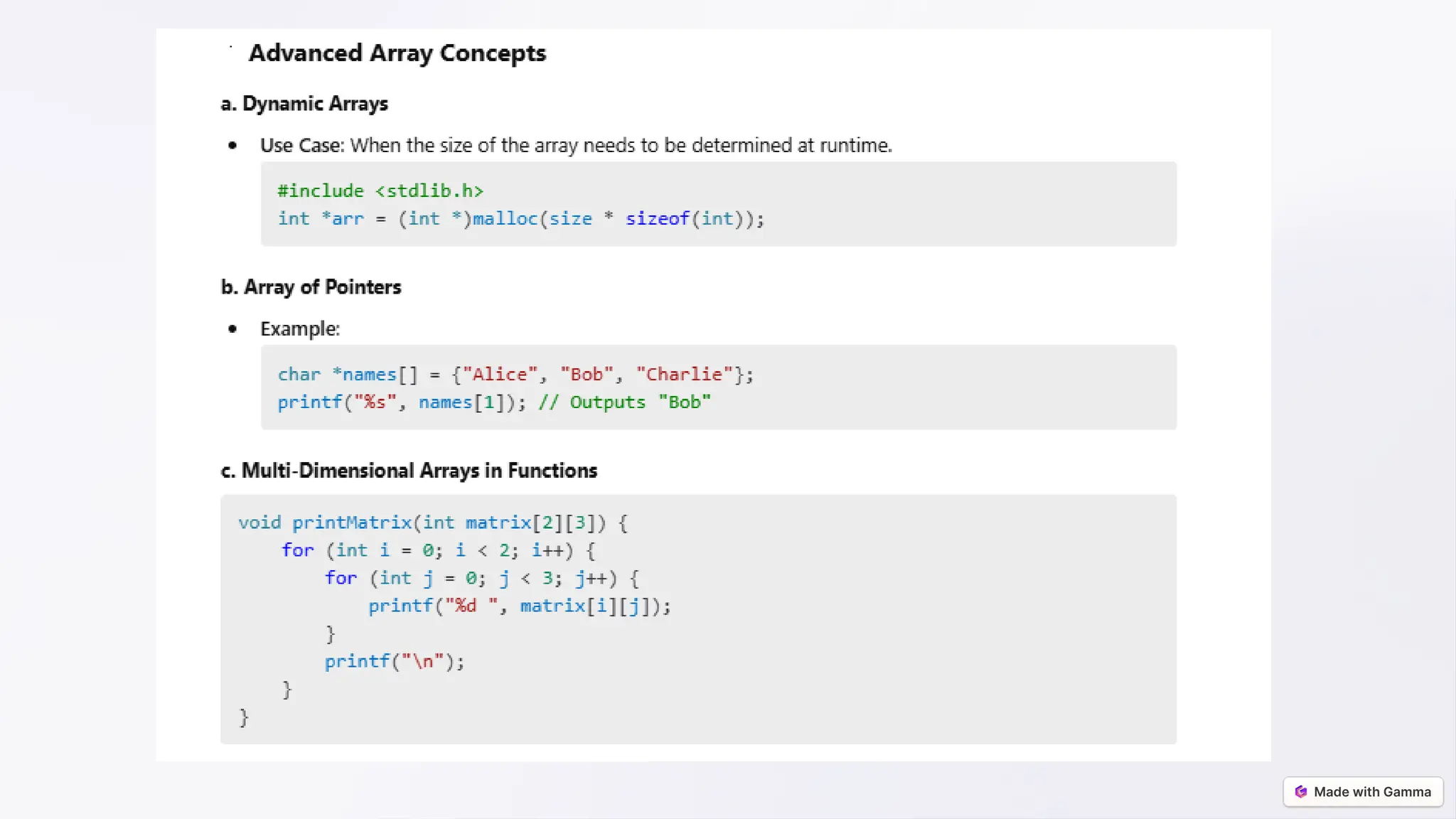
Advanced Array Concepts
Dynamic Arrays
Used when the size of the array
needs to be determined at runtime.
Array of Pointers
Used to store addresses of other
variables, allowing for flexible data
management.
Multi-Dimensional Arrays
in Functions
Functions can be used to
manipulate and process multi-
dimensional arrays effectively.
Arrays and Pointers
1
Pointer Arithmetic
Pointers can be used to access and manipulate array elements.
2
Array Decay
When an array name is used without an index, it decays to a pointer to
the first element.
3
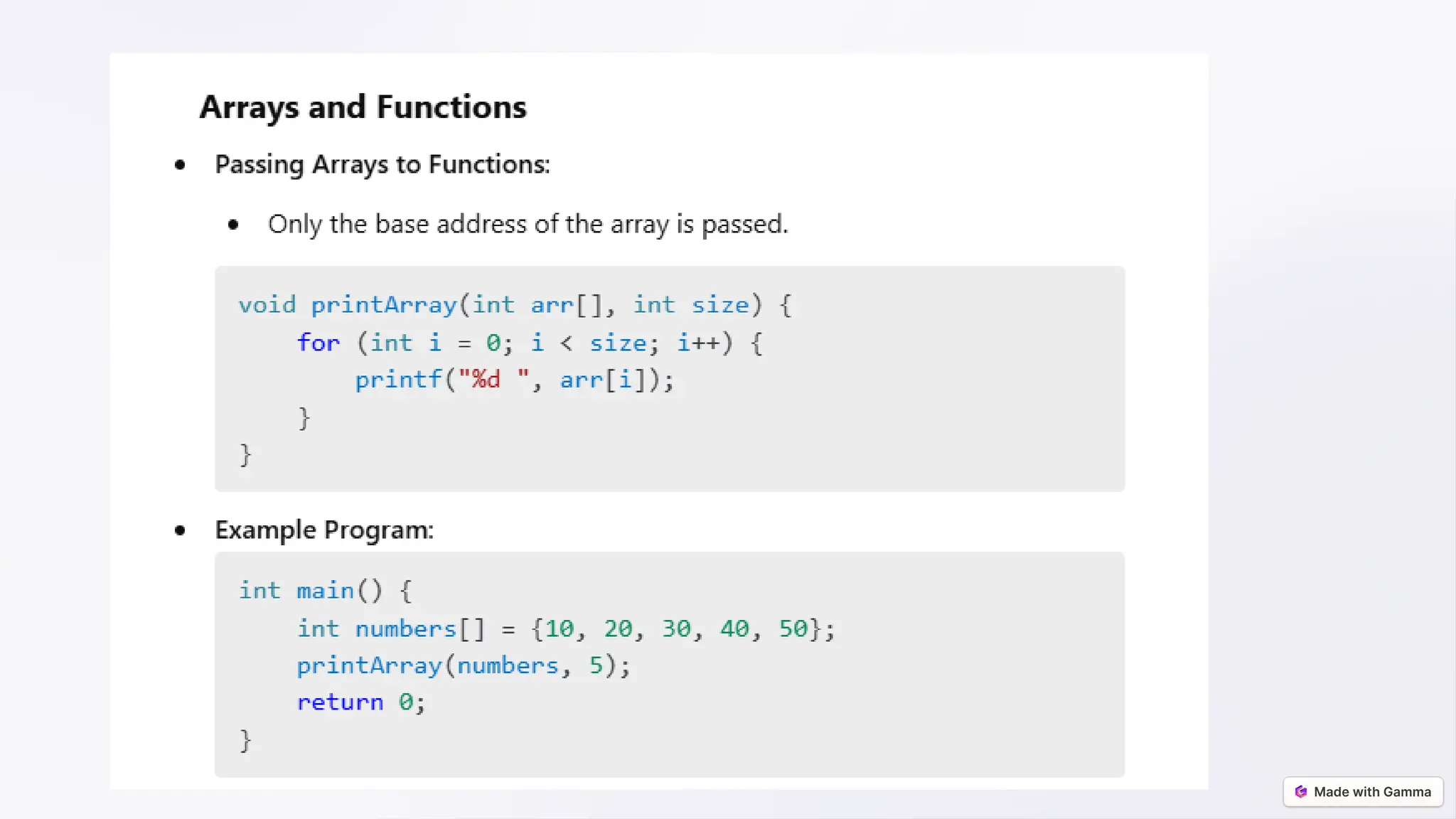
Passing Arrays to Functions
Arrays are passed to functions as pointers, allowing for efficient memory
management.
Summary
Arrays are fundamental to C programming and are versatile tools for
managing data. Advanced concepts like dynamic arrays and array of pointers
extend their usefulness.
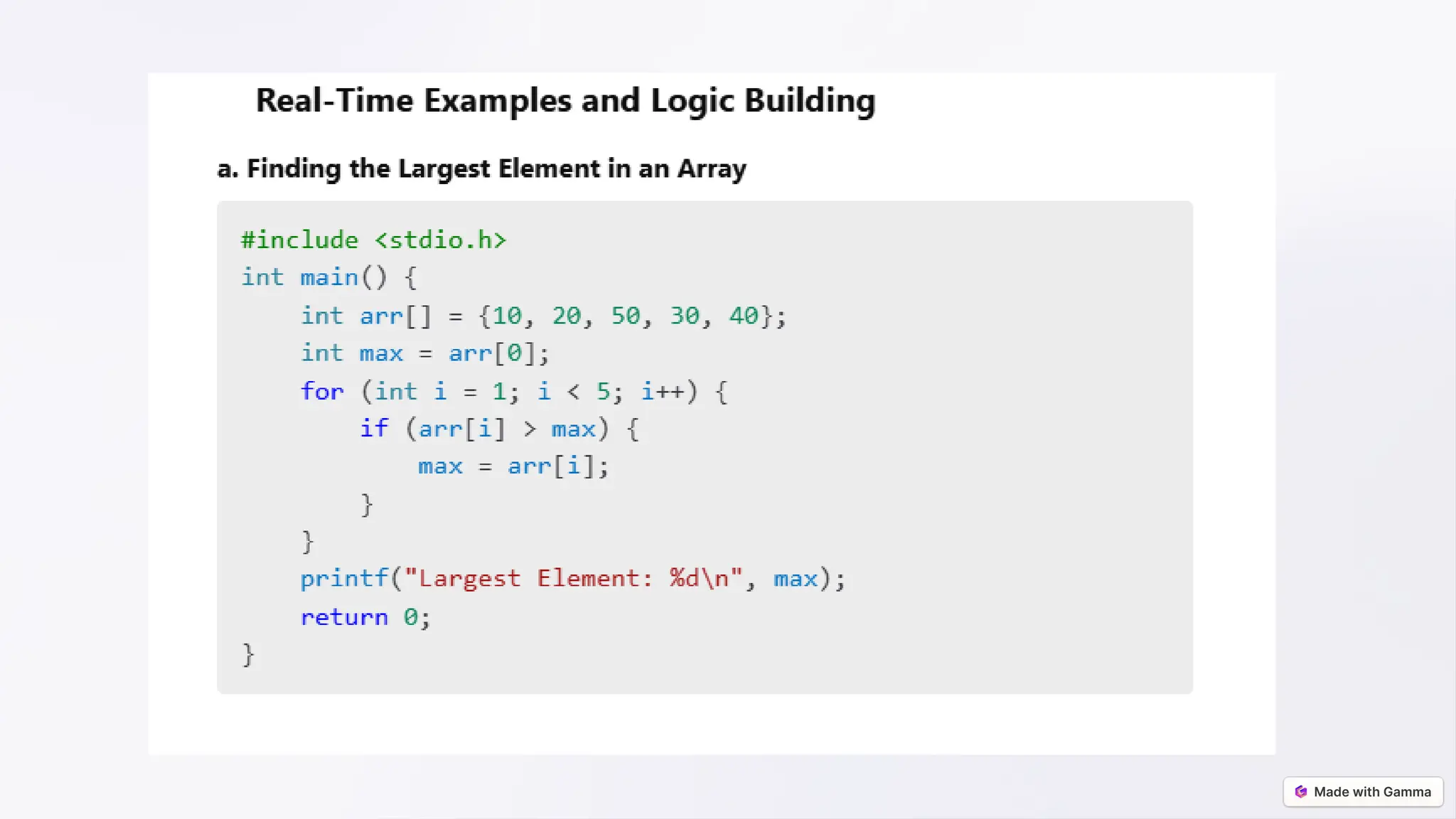
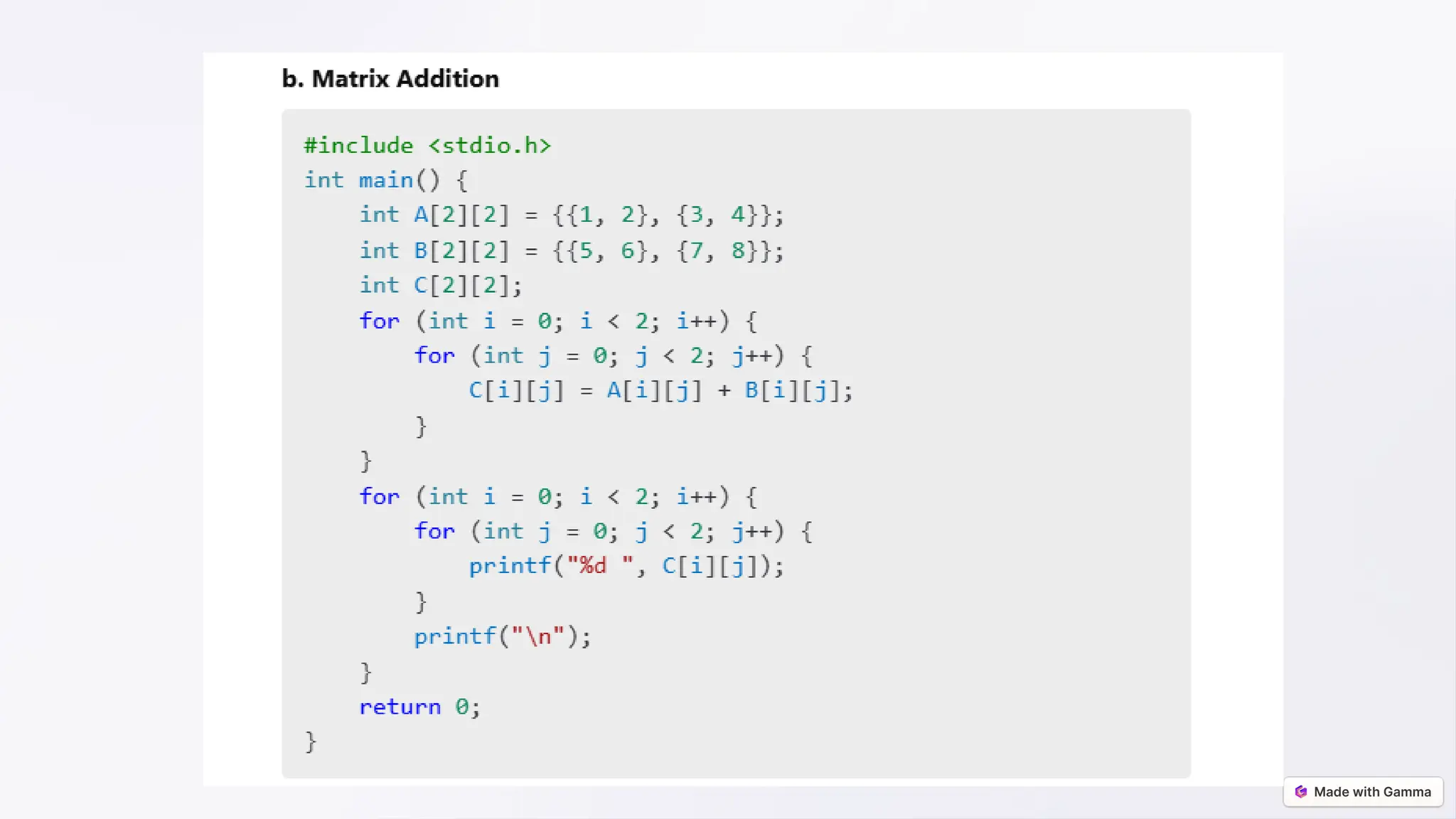
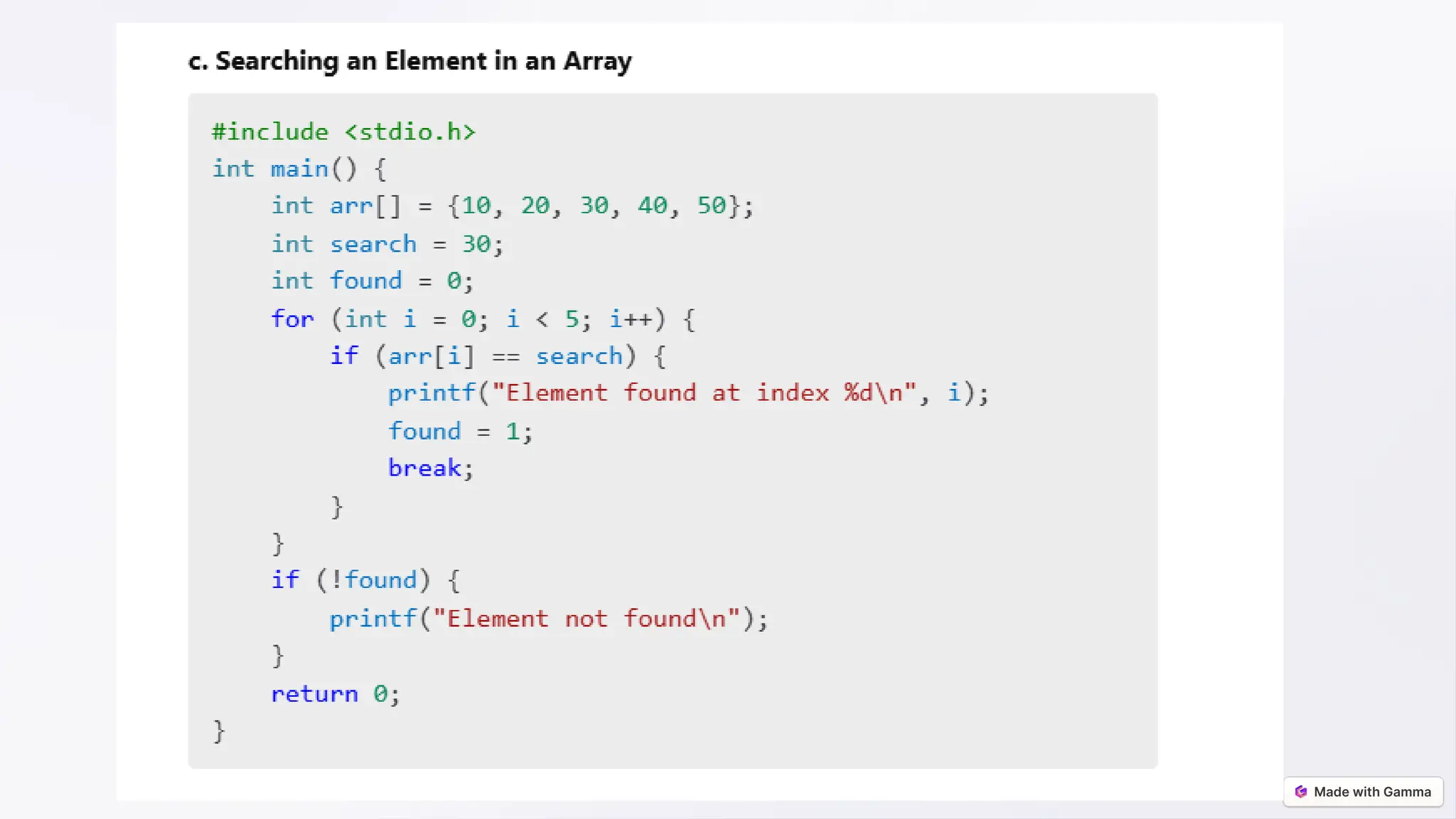
Real-time examples demonstrate their practical applications and aid in logic
building.

Arrays-from-Basics-to-Advanced final.pptx

  • 1.
    C Programming: Arrays fromBasics to Advanced by Dr. Y. Kiran Kumar
  • 2.
    Introduction to Arrays Anarray is a collection of elements of the same data type. It stores multiple values in a single variable. Arrays offer a more efficient way to handle data compared to declaring separate variables for each value. They simplify data manipulation and allow for looping and other operations.
  • 3.
    Definition and Purposeof Arrays Definition An array is a collection of elements of the same data type stored in contiguous memory locations. Purpose Arrays are used to store multiple values in a single variable, simplifying data manipulation and allowing for efficient operations.
  • 4.
    Declaring and InitializingArrays Syntax data_type array_name[size]; Examples int numbers[5]; /* Declaration */ int numbers[5] = {10, 20, 30, 40, 50}; /* Initialization */
  • 5.
    Declaring and InitializingArrays Syntax: data_type array_name[size]; Examples: Declaration: int numbers[5]; Initialization: int numbers[5] = {10, 20, 30, 40, 50}; Partial Initialization: int numbers[5] = {10, 20}; // Remaining elements are initialized to 0
  • 6.
    Accessing and ModifyingArray Elements Accessing Elements are accessed using an index, starting from 0. Modifying Elements can be modified by assigning a new value to the desired index.
  • 7.
    Array Operations: Traversal,Searching, and Sorting Traversal Iterating through all elements in an array. Searching Finding a specific element in an array. Sorting Arranging elements in a specific order.
  • 8.
    Accessing Array Elements intnumbers[5] = {10, 20, 30, 40, 50}; Using Index: Array indexing starts from 0. printf("%d", numbers[2]); // Outputs 30 Example Program: #include <stdio.h> int main() { int numbers[5] = {10, 20, 30, 40, 50}; for (int i = 0; i < 5; i++) { printf("Element at index %d: %dn", i, numbers[i]); } return 0;
  • 15.
    Dynamic Memory Allocationfor Arrays Concept Allocating memory for arrays at runtime. Advantages Flexibility in array size and efficient memory usage.
  • 16.
    Array Applications inC Programming Sorting Algorithms Implementing sorting algorithms like bubble sort, insertion sort, and quick sort. Data Structures Building data structures such as stacks, queues, and linked lists. Game Development Storing game data, such as player positions, scores, and inventory items.
  • 17.
    Advanced Array Concepts DynamicArrays Used when the size of the array needs to be determined at runtime. Array of Pointers Used to store addresses of other variables, allowing for flexible data management. Multi-Dimensional Arrays in Functions Functions can be used to manipulate and process multi- dimensional arrays effectively.
  • 18.
    Arrays and Pointers 1 PointerArithmetic Pointers can be used to access and manipulate array elements. 2 Array Decay When an array name is used without an index, it decays to a pointer to the first element. 3 Passing Arrays to Functions Arrays are passed to functions as pointers, allowing for efficient memory management.
  • 19.
    Summary Arrays are fundamentalto C programming and are versatile tools for managing data. Advanced concepts like dynamic arrays and array of pointers extend their usefulness. Real-time examples demonstrate their practical applications and aid in logic building.