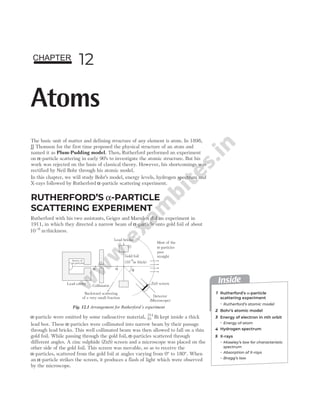
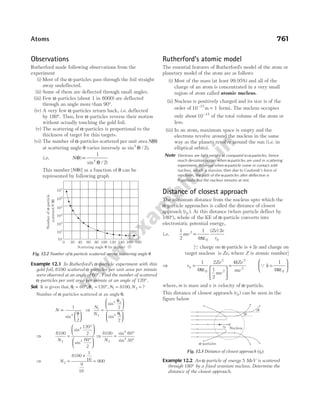
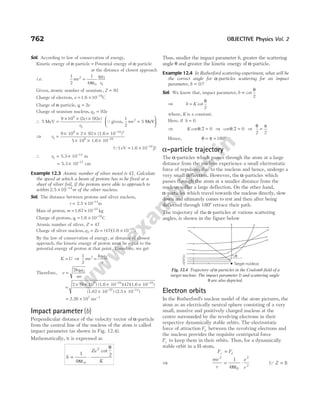
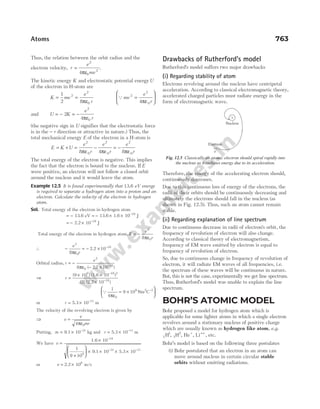
NEET
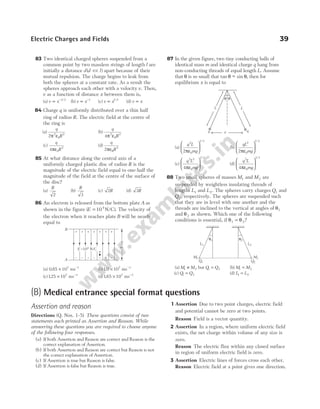
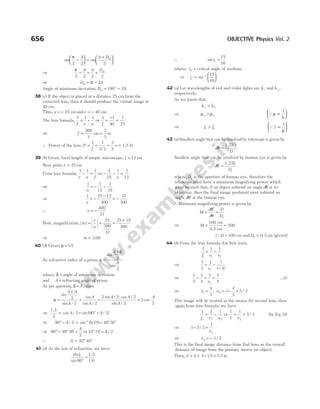
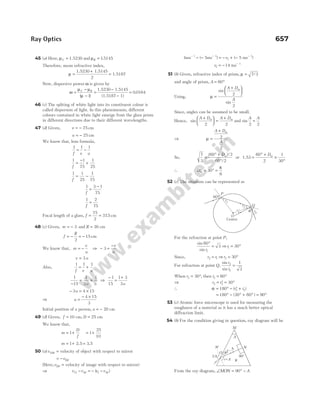
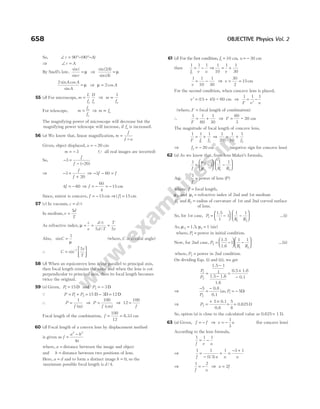
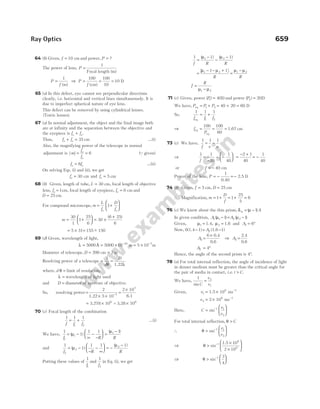
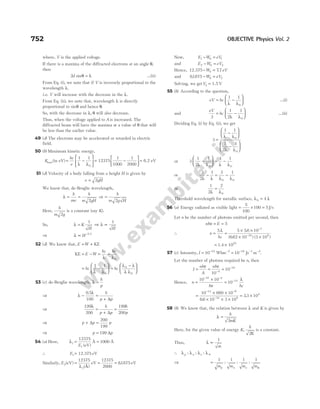
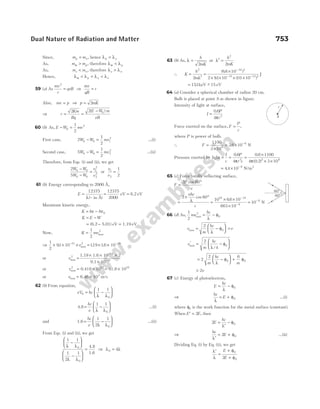
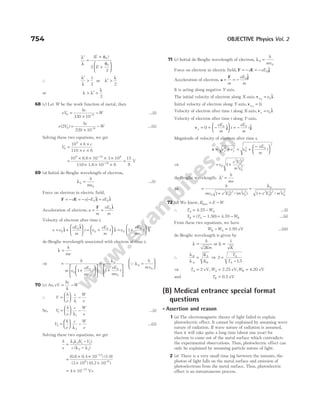
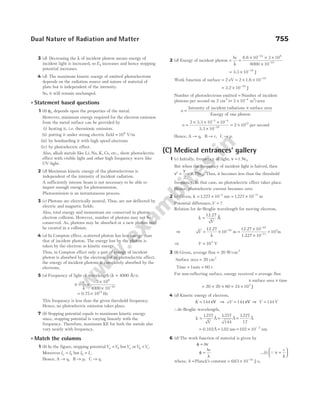
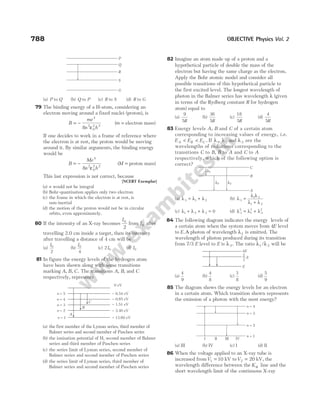
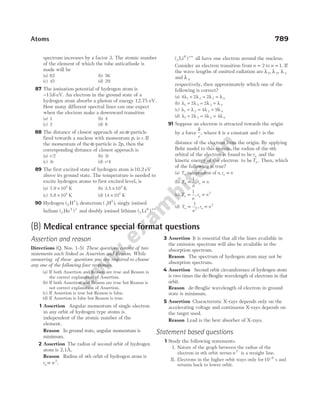
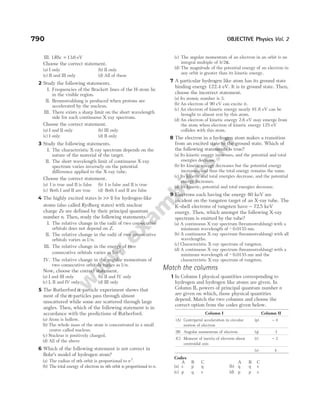
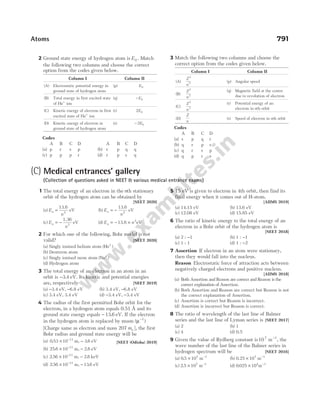
PHYSICS
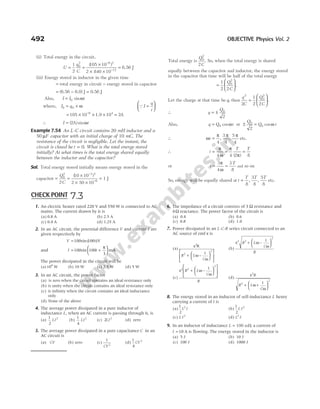
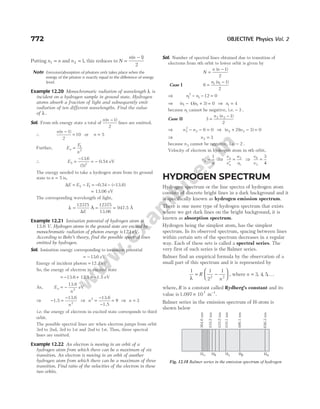
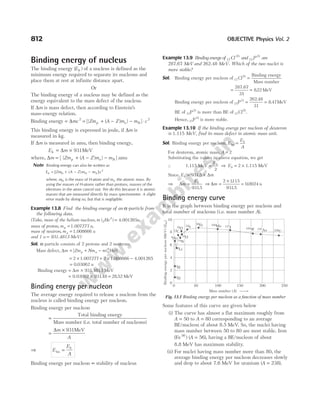
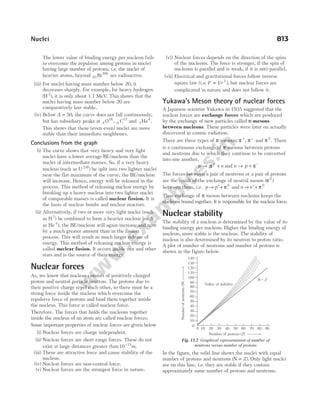
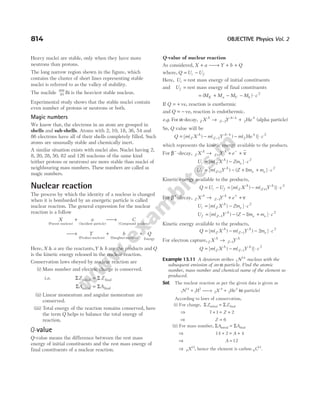
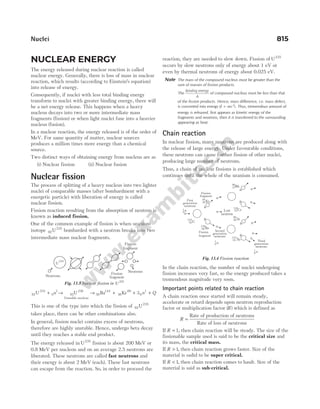
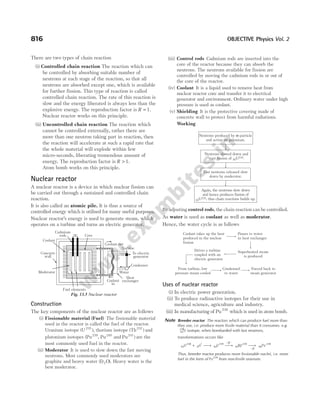
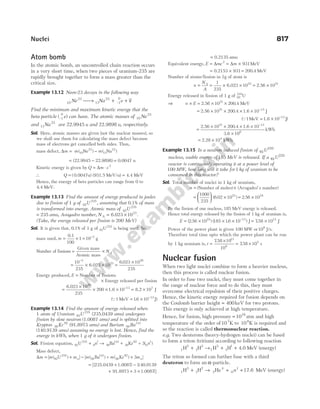
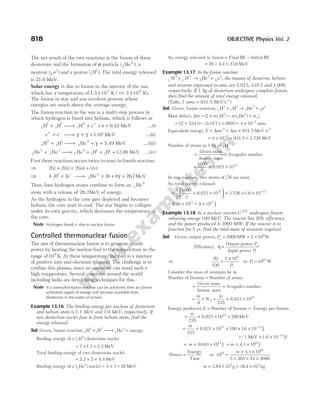
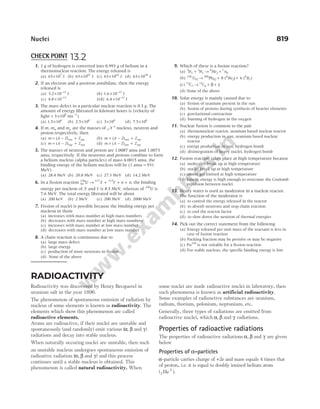
OBJECTIVE
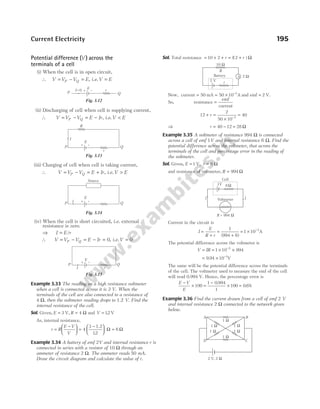
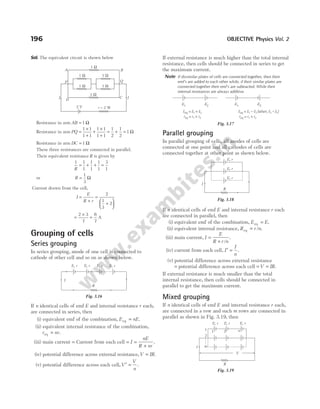
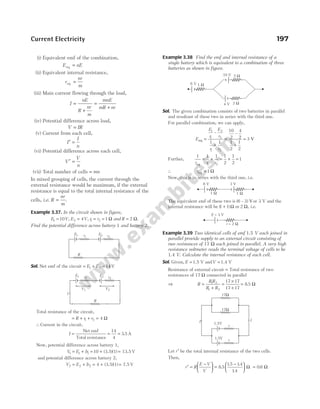
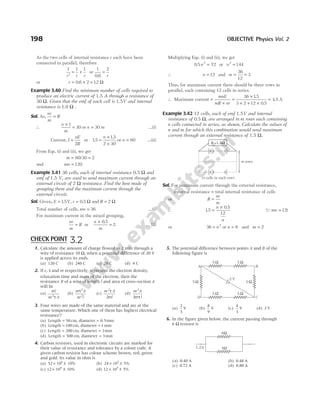
Volume02
ARIHANT PRAKASHAN (Series), MEERUT
[B.Tech, M.Tech, Pantnagar, ID 15722]
DC Pandey
NEET
PHYSICS
OBJECTIVE
Volume02
Publishing Managers Mahendra Singh Rawat, Keshav Mohan Inner Designer Ankit Saini
:
Page Layouting Rajbhaskar Rana
Proof Readers Princi Mittal, Shruti
:
:
:
Project Head :
Project Editors Dharmendra Singh & Suresh Sharma
:
Yojna Sharma
Cover Designer Shanu Mansoori
:
All Rights Reserved
ARIHANT PRAKASHAN (Series), MEERUT
For further information about the books published by Arihant, log on to
www.arihantbooks.com or e-mail at info@arihantbooks.com
Follow us on
© Author
No part of this publication may be re-produced, stored in a retrieval system or by any means, electronic,
mechanical, photocopying, recording, scanning, web or otherwise without the written permission of the
publisher. Arihant has obtained all the information in this book from the sources believed to be reliable
and true. However, Arihant or its editors or authors or illustrators don’t take any responsibility for the
absolute accuracy of any information published and the damage or loss suffered thereupon.
All disputes subject to Meerut (UP) jurisdiction only.
Administrative & Production Offices
Regd.Office
‘Ramchhaya’ 4577/15, Agarwal Road, Darya Ganj, New Delhi -110002
Tele: 011- 47630600, 43518550
HeadOffice
Kalindi, TP Nagar, Meerut (UP) - 250002, Tel: 0121-7156203, 7156204
Sales & Support Offices
Agra, Ahmedabad, Bengaluru, Bareilly, Chennai, Delhi, Guwahati,
Hyderabad, Jaipur, Jhansi, Kolkata, Lucknow, Nagpur & Pune.
ISBN 978-93-26191-71-5
PO No : TXT-XX-XXXXXXX-X-XX
Published by Arihant Publications (India) Ltd.
PRODUCTION TEAM
Preface
Medical offers the most exciting and fulfilling of careers. As a doctor you can find satisfaction from
curing other persons. Although the number of medical colleges imparting quality education and training has
significantly increased after independence in the country but due to the simultaneous increase in the number of
serious aspirants, the competition is no longer easy for a seat in a prestigious medical college today.
For success, you require an objective approach to your study in the test subjects. This does not mean you
'prepare' yourself for just 'objective questions'. Objective Approach means more than that. It could be defined
as that approach through which a student is able to master the concepts of the subject and also the skills
required to tackle the questions asked in different formats in entrances such as NEET (National Eligibility
cum Entrance Test). These two-volume books, Objective Physics (Vol.1 & 2) are borne out of my experience of
teaching physics to medical aspirants, fill the needs of such books in the market.
The plan of the presentation of the subject matter in the books is as follows
— The whole chapter has been divided under logical topic heads to cover the whole syllabi of NEET developing the
concepts in an easy going manner, taking the help of suitable examples.
— Important points of the topics have been highlighted in the text under notes, some extra points regarding the
topics have been given in Notes to enrich the students.
— The Solved Examples given with different concepts of the chapter make the students learn the basic problem
solving skills in Physics. It has been ensured that given examples cover all aspects of a concepts comprehensively.
— Check Point Exercises given in between the text of all chapter help the readers to remain linked with the text
given as they provide them an opportunity to assess themselves while studying the text.
— Exercises at the end of the chapters have been divided into three parts:
Part A- ‘Taking it together’ has Objective Questions of the concerned chapter. The special point of this exercise
is, all the questions have been arranged according to level of difficulty, providing students a systematics practice.
Part B- ‘Medical Entrance Special Format Question’ this section covers all special type of questions, other than
simple MCQs, generally asked in NEET & other Medical Entrances. Here Assertion-Reason, Statement Based
and Matching Type Questions have been given.
Part C- ‘Medical Entrances Gallery’ covering all questions asked in last 11 years’ (2021-2011) in NEET & other
Medical Entrances.
— The answers / solutions to all the questions given in different exercises have been provided.
At the end I would like to say that suggestions from the respected Teachers & Students for the further
improvement of the book will be welcomed open heartedly.
DC Pandey
This book is dedicated to my honourable grandfather
(Late) Sh. Pitamber Pandey
a Kumaoni poet, and a resident of village Dhaura (Almora), Uttarakhand
DEDICATION
Syllabus
UNIT I Electrostatics
Electric charges and their conservation. Coulomb's law-force between two point charges, forces between
multiple charges, superposition principle and continuous charge distribution. Electric field, electric field due
to a point charge, electric field lines, electric dipole, electric field due to a dipole, torque on a dipole in a
uniform electric field. Electric flux, statement of Gauss's theorem and its applications to find field due to
infinitely long straight wire, uniformly charged infinite plane sheet and uniformly charged thin spherical
shell (field inside and outside).
Electric potential, potential difference, electric potential due to a point charge, a dipole and system of
charges, equipotential surfaces, electrical potential energy of a system of two point charges and of electric
diploes in an electrostatic field. Conductors and insulators, free charges and bound charges inside a
conductor, Dielectrics and electric polarization, capacitors and capacitance, combination of capacitors in
series and in parallel, capacitance of a parallel plate capacitor with and without dielectric medium between
the plates, energy stored in a capacitor, Van de Graaff generator.
UNIT II Current Electricity
Electric current, flow of electric charges in a metallic conductor, drift velocity and mobility and their relation
with electric current, Ohm's law, electrical resistance, V-I characteristics (linear and non-linear), electrical
energy and power, electrical resistivity and conductivity. Carbon resistors, colour code for carbon resistors,
series and parallel combinations of resistors, temperature dependence of resistance. Internal resistance of a
cell, potential difference and emf of a cell, combination of cells in series and in parallel. Kirchhoff's laws and
simple applications. Wheatstone bridge, metre bridge. Potentiometer-principle and applications to measure
potential difference, and for comparing emf of two cells, measurement of internal resistance of a cell.
UNIT III Magnetic Effects of Current and Magnetism
Concept of magnetic field, Oersted's experiment. Biot-Savart’s law and its application to current carrying
circular loop. Ampere's law and its applications to infinitely long straight wire, straight and toroidal
solenoids. Force on a moving charge in uniform magnetic and electric fields. Cyclotron. Force on a current-
carrying conductor in a uniform magnetic field. Force between two parallel current-carrying conductors-
definition of ampere. Torque experienced by a current loop in a magnetic field, moving coil galvanometer-
its current sensitivity and conversion to ammeter and voltmeter. Current loop as a magnetic dipole and its
magnetic dipole moment. Magnetic dipole moment of a revolving electron. Magnetic field intensity due to a
magnetic dipole (bar magnet) along its axis and perpendicular to its axis. Torque on a magnetic dipole (bar
magnet) in a uniform magnetic field, bar magnet as an equivalent solenoid, magnetic field lines, Earth's
magnetic field and magnetic elements. Para-, dia-and ferro-magnetic substances with examples.
Electromagnetic and factors affecting their strengths. Permanent magnets.
UNIT IV Electromagnetic Induction and Alternating Currents
Electromagnetic induction Faraday's law, induced emf and current, Lenz's Law, Eddy currents. Self and
mutual inductance.
Alternating currents, peak and rms value of alternating current/ voltage, reactance and impedance, LC
oscillations (qualitative treatment only), LCR series circuit, resonance, power in AC circuits, wattles current.
AC generator and transformer.
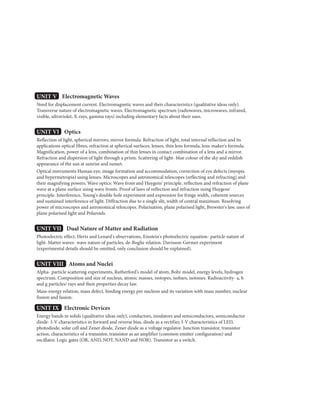
UNIT V Electromagnetic Waves
Need for displacement current. Electromagnetic waves and their characteristics (qualitative ideas only).
Transverse nature of electromagnetic waves. Electromagnetic spectrum (radiowaves, microwaves, infrared,
visible, ultraviolet, X-rays, gamma rays) including elementary facts about their uses.
UNIT VI Optics
Reflection of light, spherical mirrors, mirror formula. Refraction of light, total internal reflection and its
applications optical fibres, refraction at spherical surfaces, lenses, thin lens formula, lens-maker's formula.
Magnification, power of a lens, combination of thin lenses in contact combination of a lens and a mirror.
Refraction and dispersion of light through a prism. Scattering of light- blue colour of the sky and reddish
appearance of the sun at sunrise and sunset.
Optical instruments Human eye, image formation and accommodation, correction of eye defects (myopia
and hypermetropia) using lenses. Microscopes and astronomical telescopes (reflecting and refracting) and
their magnifying powers. Wave optics: Wave front and Huygens' principle, reflection and refraction of plane
wave at a plane surface using wave fronts. Proof of laws of reflection and refraction using Huygens'
principle. Interference, Young's double hole experiment and expression for fringe width, coherent sources
and sustained interference of light. Diffraction due to a single slit, width of central maximum. Resolving
power of microscopes and astronomical telescopes. Polarisation, plane polarised light, Brewster's law, uses of
plane polarised light and Polaroids.
UNIT VII Dual Nature of Matter and Radiation
Photoelectric effect, Hertz and Lenard's observations, Einstein's photoelectric equation- particle nature of
light. Matter waves- wave nature of particles, de-Boglie relation. Davisson-Germer experiment
(experimental details should be omitted, only conclusion should be explained).
UNIT VIII Atoms and Nuclei
Alpha- particle scattering experiments, Rutherford's model of atom, Bohr model, energy levels, hydrogen
spectrum. Composition and size of nucleus, atomic masses, isotopes, isobars, isotones. Radioactivity- a, b
and g particles/ rays and their properties decay law.
Mass-energy relation, mass defect, binding energy per nucleon and its variation with mass number, nuclear
fission and fusion.
UNIT IX Electronic Devices
Energy bands in solids (qualitative ideas only), conductors, insulators and semiconductors, semiconductor
diode- I-V characteristics in forward and reverse bias, diode as a rectifier, I-V characteristics of LED,
photodiode, solar cell and Zener diode, Zener diode as a voltage regulator. Junction transistor, transistor
action, characteristics of a transistor, transistor as an amplifier (common emitter configuration) and
oscillator. Logic gates (OR, AND, NOT, NAND and NOR). Transistor as a switch.
1. ELECTRIC CHARGES AND FIELDS 1-66
1.1 Electric charges
Conductors and insulators
Ÿ
Methods of charging
Ÿ
1.2 Coulomb’s law
Force between multiple charges
Ÿ
(Superposition Principle)
Applications of electric force (Coulomb’s law)
Ÿ
1.3 Electric field
Electric field lines
Ÿ
Continuous charge distribution
Ÿ
Electric field of a charged ring
Ÿ
1.4 Electric dipole
Ÿ The field of an electric dipole or dipole field
Force on dipole
Ÿ
Torque on an electric dipole
Ÿ
Work done in rotating a dipole in a
Ÿ
uniform electric field
1.5 Electric Flux
Gauss’s law
Ÿ
Applications of Gauss’s law
Ÿ
2. ELECTROSTATIC POTENTIAL
AND CAPACITANCE 67-179
2.1 Electric potential
Electrostatic potential due to a point charge
Ÿ
Electrostatic potential due to a system of charges
Ÿ
Electric potential due to a continuous
Ÿ
charge distribution
Electric potential due to electric dipole
Ÿ
2.2 Equipotential surfaces
Variation of electric potential on the axis
Ÿ
of a charged ring
Potential due to charged sphere
Ÿ
Motion of charged particle in electric field
Ÿ
2.3 Electric potential energy
Potential energy of a system of charges
Ÿ
2.4 Electrostatic of conductors
Dielectrics and polarisation
Ÿ
Capacitors and capacitance
Ÿ
Parallel plate capacitor
Ÿ
2.5 Combination of capacitors
Special method to solve combination of capacitors
Ÿ
Kirchhoff’s law for capacitor circuits
Ÿ
Energy stored in charged capacitor
Ÿ
Common potential
Ÿ
van de graaff generator
Ÿ
3. CURRENT ELECTRICITY 180-269
3.1 Electric current
Current density
Ÿ
Electric current in conductors
Ÿ
3.2 Ohm's law
Resistance and resistivity
Ÿ
Colour code for carbon resistor
Ÿ
Combination of resistances
Ÿ
Cells, emf and internal resistance
Ÿ
Grouping of cells
Ÿ
3.3 Kirchhoff’s laws
Electrical energy and power
Ÿ
Heating effects of current
Ÿ
Power consumption in a combination of bulbs
Ÿ
3.4 Measuring instruments for current and voltage
Wheatstone’s bridge
Ÿ
Meter bridge
Ÿ
Potentiometer
Ÿ
4. MAGNETIC EFFECT OF CURRENT
AND MOVING CHARGES 270-341
4.1 Magnetic field
Biot-Savart’s law (magnetic field due to a
Ÿ
current carrying conductor)
Applications of Biot-Savart’s law
Ÿ
4.2 Ampere’s circuital law
Applications of ampere’s circuital law
Ÿ
4.3 Force on a moving charge in a uniform
magnetic field
Ÿ Motion of a charged particle in combined
electric and magnetic fields
Cyclotron
Ÿ
4.4 Force on a current carrying conductor in
a magnetic field
Force between two parallel current
Ÿ
carrying conductors
Magnetic force between two moving charges
Ÿ
Magnetic dipole moment
Ÿ
The moving coil galvanometer (MCG)
Ÿ
Contents
5. MAGNETISM AND MATTER 342-396
5.1 Magnet
Magnetic field lines
Ÿ
Magnetic dipole
Ÿ
Coulomb’s law for magnetism
Ÿ
Magnetic field strength at a point due to
Ÿ
magnetic dipole or bar magnet
Current carrying loop as a magnetic dipole
Ÿ
Bar magnet in a uniform magnetic field
Ÿ
5.2 Earth’s magnetism
Elements of earth’s magnetism
Ÿ
Neutral points
Ÿ
Vibration magnetometer
Ÿ
5.3 Magnetic induction and Magnetic materials
Classification of substances on the basis of
Ÿ
magnetic behaviour
Curie’s law
Ÿ
Atomic model of magnetism
Ÿ
Hysteresis
Ÿ
6. ELECTROMAGNETIC
INDUCTION 397-462
6.1 Magnetic flux
Faraday’s laws of electromagnetic induction
Ÿ
Lenz’s law and conservation of energy
Ÿ
6.2 Motional electromotive force
Induction of field
Ÿ
6.3 Self-induction
Kirchhoff’s second law with an inductor
Ÿ
Self inductance of a coil
Ÿ
Self inductance of solenoid
Ÿ
Energy stored in an inductor
Ÿ
Combination of self-inductances
Ÿ
6.4 Mutual induction
Mutual inductances of some important
Ÿ
coil configurations
Coefficient of coupling
Ÿ
Growth and decay of current in L-R circuit
Ÿ
Application of EMI : eddy current
Ÿ
7. ALTERNATING CURRENT 463-535
7.1 Types of current
Mean or average value of an alternating current
Ÿ
Root mean square value of an alternating current
Ÿ
Form factor
Ÿ
Peak factor
Ÿ
7.2 Representation of I or V as rotating vectors
Different types of alternating current circuits
Ÿ
Inductor as low pass filter
Ÿ
AC voltage applied to a series L-C-R cicruit
Ÿ
Parallel circuit (Rejector circuit)
Ÿ
7.3 Power in an AC circuit
Half power points in series L-C-R circuit
Ÿ
Wattless current
Ÿ
L-C oscillations
Ÿ
7.4 Choke coil
Transformer
Ÿ
Electric generator or dynamo
Ÿ
8. ELECTROMAGNETIC WAVES 536-556
8.1 Displacement current
Maxwell’s equations
Ÿ
8.2 Electromagnetic waves
Physical quantities associated with EM waves
Ÿ
8.3 Electromagnetic spectrum
9. RAY OPTICS 557-661
9.1 Reflection of light
Reflection by a plane mirror
Ÿ
9.2 Spherical mirrors
Image formation by spherical mirrors
Ÿ
Mirror formula
Ÿ
Magnification
Ÿ
Uses of spherical mirrors
Ÿ
9.3 Refraction of light
Refractive index
Ÿ
Image due to refraction at a plane surface
Ÿ
Refraction through a glass slab
Ÿ
Critical angle and total internal reflection (TIR)
Ÿ
9.4 Refraction at spherical surfaces
Lenses
Ÿ
Image formation by lens
Ÿ
9.5 Prism
Dispersion of light by a prism
Ÿ
Combination of prisms
Ÿ
9.6 Optical instruments
9.7 Defects of vision
Ÿ Defects of images
10. WAVE OPTICS 662-715
10.1 Nature of light
Wavefront
Ÿ
Huygens’ principle of secondary wavelets
Ÿ
Principle of superposition of waves
Ÿ
Interference of light wave
Ÿ
Necessary conditions for interference of light
Ÿ
10.2 Young’s double slit experiment
Intensity of the fringes
Ÿ
Lloyd’s mirror
Ÿ
10.3 Diffraction of light
Fraunhofer diffraction of light due to a single
Ÿ
narrow slit
Width of central maxima
Ÿ
Fresnel's distance
Ÿ
10.4 Polarisation of light
Malus's law
Ÿ
Polarisation of transverse mechanical waves
Ÿ
11. DUAL NATURE OF RADIATION
AND MATTER 716-759
11.1 Photoelectric effect
Experimental study of photoelectric effect
Ÿ
Ÿ Laws of photoelectric emission
11.2 Einstein’s photoelectric equation
11.3 Planck’s quantum theory
(Particle nature of light : the photon)
11.4 Photocell
11.5 Compton effect
11.6 Dual nature of radiation
Matter waves : de-Broglie waves
Ÿ
11.7 Davisson and Germer experiment
11.8 Electron microscope
12. ATOMS 760-807
12.1 Rutherford's a-particle scattering experiment
Ÿ Rutherford's atomic model
12.2 Bohr’s atomic model
12.3 Energy of electron in nth orbit
Energy of atom
Ÿ
12.4 Hydrogen spectrum
12.5 X-rays
Moseley's law for characteristic spectrum
Ÿ
Absorption of X-rays
Ÿ
Bragg’s law
Ÿ
13. NUCLEI 808-852
13.1 Nucleus
Isotopes, isobars and isotones
Ÿ
13.2 Mass-energy relation
Binding energy of nucleus
Ÿ
Binding energy curve
Ÿ
Nuclear forces
Ÿ
Nuclear stability
Ÿ
Nuclear reaction
Ÿ
13.3 Nuclear energy
Ÿ Nuclear fission
Nuclear fusion
Ÿ
13.4 Radioactivity
Ÿ Radioactive decay
Pair production and pair annihilation
Ÿ
Rutherford and Soddy's law
Ÿ
Applications of radioactivity
Ÿ
14. SOLIDS AND SEMICONDUCTOR
DEVICES 853-932
14.1 Energy bands in solids
Energy band formation in solids
Ÿ
Classification of solids on the basis of
Ÿ
energy bands
1 .2 Types of semiconductors
4
Electrical conduction through semiconductors
Ÿ
Effect of temperature on conductivity of
Ÿ
semiconductor
14.3 p-n junction
p-n
Ÿ Semiconductor diode or junction diode
p-n junction diode as a rectifier
Ÿ
Special types of p-n junction diode
Ÿ
14.4 Junction transistors
Ÿ Transistor circuit configurations
Transistor as an amplifier
Ÿ
Transistor as an oscillator
Ÿ
Transistor as a switch
Ÿ
14.5 Analog and digital circuits
Binary system
Ÿ
Decimal and binary number system
Ÿ
14.6 Logic gates
Logic system
Ÿ
Combination of logic gates
Ÿ
NAND and NOR gates as digital building blocks
Ÿ
NEET
Solved Paper 2021
Scan the QR Code
Visitwww.exambites.infor
MorePremiumStuffs,Latest
Books,TestPapers,Lecturesetc.
EXAMBITES
ThisPdfIs
DownloadedFrom
www.exambites.in
VISIT NOW !!
jeeneetadda
jeeneetadda_official
jeeneetadda
ELECTRIC CHARGES
Electric charge can be defined as an intrinsic property of elementary particles of
matter which give rise to electric force between various objects. It is represented
by q. The SI unit of electric charge is coulomb (C). A proton has positive charge
( )
+e and an electron has negative charge (−e), where e = × −
1.6 10 C
19
.
Important points regarding electric charge
The following points regarding electric charge are worthnoting
(i) Like charges repel each other and unlike charges attract each other.
(ii) The property which differentiates two kinds of charge is called the polarity
of charge. If an object possesses an electric charge, then it is said to be
electrified or charged. When its net charge is zero, then it is said to be
neutral (just like neutron).
(iii) Charge is a scalar quantity as it has magnitude but no direction. It can be of
two types as positive and negative. When some electrons are removed from
the atom, it acquires a positive charge and when some electrons are added
to the atom, it acquires a negative charge.
(iv) Charge can be transferred from one body to another.
(v) Charge is invariant, i.e. it does not depend on the velocity of charged
particle.
(vi) A charged particle at rest produces electric field. A charged particle with
unaccelerated motion produces both electric and magnetic fields but does not
radiate energy. But an accelerated charged particle not only produces an
electric and magnetic fields but also radiates energy in the form of
electromagnetic waves.
(vii) 1 coulomb = ×
3 109
esu =
1
10
emu of charge, where esu is electrostatic unit
of charge. Its CGS unit is stat coulomb.
(viii) The dimensional formula of charge is [ ] AT
q = [ ].
01
Electric Charges
and Fields
CHAPTER
Inside
1
2
3
Electric charges
Coulomb’s law
Electric field
Conductors and insulators
Force between multiple charges
(Superposition principle)
Applications of electric force
(Coulomb’s law)
Applications of Gauss’s law
Electric dipole
Methods of charging
Electric field lines
Continuous charge distribution
Electric field of a charged ring
Electric flux
Gauss’s law
The field of an electric dipole
or dipole field
Torque on an electric dipole
Force on dipole
Work done in rotating a dipole
in a uniform electric field
4
5
Properties of an electric charge
If the size of charged bodies is very small as compared to
the distance between them, we treat them as point
charges. In addition to being positive or negative, the
charges have the following properties
Additivity of charges
Additivity of charges is the property by virtue of which
total charge of a system is obtained simply by adding
algebraically all the charges present on the system.
If a system contains two point charges q1 and q 2, then the
total charge of the system is obtained simply by adding
algebraically q1 and q 2, i.e. charges add up like real
numbers. Proper signs have to be used while adding the
charges in a system.
q q q
net = +
1 2
Charge is conserved
The total charge of an isolated system is always conserved.
It is not possible to create or destroy net charge carried by
any isolated system. It can only be transferred from one
body to another body. Pair production and pair
annihilation are two examples of conservation of charge.
Quantisation of charge
The charge on any body can be expressed as the integral
multiple of basic unit of charge, i.e. charge on one electron
(e). This phenomenon is called quantisation of electric
charge. It can be written as q ne
= ± , where n = ⋅⋅⋅
1 2 3
, , , is
any integer (positive or negative) and e is the basic unit of
charge.
Charge is said to be quantised because it can only have
discrete values rather than any arbitrary value, i.e. free
particle can have no charge of any values, i.e. a charged
particle can have a charge of +10 e or − 6 e but not a
charge of, say 3.57 e.
Note The protons and neutrons are combination of other entities
called quarks, which have charges of ±
1
3
e and ±
2
3
e. However,
isolated quarks have not been observed, but quantum of charge
is still e.
Example 1.1 What is the total charge of a system containing
five charges + + − +
1 2 3 4
, , , and −5 in some arbitrary unit?
Sol. As charges are additive in nature, i.e. the total charge of a
system is the algebraic sum of all the individual charges
located at different points inside the system, i.e.
q q q q q q
net = + + + +
1 2 3 4 5
∴Total charge = + + − + − = −
1 2 3 4 5 1 in the same unit.
Example 1.2 How many electrons are there in one coulomb of
negative charge?
Sol. The negative charge is due to the presence of excess
electrons. An electron has a charge whose magnitude is
e = × −
16 10 19
. C, the number of electrons is equal to the charge
q divided by the charge e on each electron.
Therefore, the number n of electrons is
n
q
e
= =
× −
10
16 10 19
.
.
= ×
6 25 1018
. electrons
Example 1.3 A sphere of lead of mass 10 g has net
charge − × −
2 5 10 9
. .
C
(i) Find the number of excess electrons on the sphere.
(ii) How many excess electrons are per lead atom? Atomic
number of lead is 82 and its atomic mass is 207 g/mol.
Sol. (i) The charge on an electron = − × −
1.6 10 19
C
Net charge on sphere = − × −
2.5 10 9
C
So, the number of excess electrons
=
− ×
− ×
= ×
−
−
2.5 10 C
1.6 10 C
1.56 10
9
19
10
electrons
(ii) Atomic number of lead is 82.
Atomic mass of lead is 207 g/mol.
∴10 g of lead will have
10 g
207 g/mol
6.02 1023
× × atoms/mol
= ×
2.91 1022
atoms
∴The number of excess electrons per lead atom
=
×
×
1.56
2.91
10
10
10
22
= × −
5.36 10 13
electrons
Conductors and insulators
The quantisation of electric charge is the property by
virtue of which all free charges are integral multiple of a
basic unit of charge represented by e.
Conductors The substances through which electric
charges can flow easily are called conductors.
Metals, human body and animal bodies, graphite, acids,
etc. are examples of conductors.
Insulators The substances through which electric charges
cannot flow easily are called insulators.
Most of the non-metals like glass, diamond, porcelain,
plastic, nylon, wood, mica, etc. are examples of insulators.
Methods of charging
There are mainly three methods of charging a body, which
are given below
1. Charging by rubbing
When two bodies are rubbed together, some electrons
from one body gets transferred to the another body. The
positive and negative charges appear on the bodies in
equal amount simultaneously due to the transfer of
electrons.
2 OBJECTIVE Physics Vol. 2
The body that donates the electrons becomes positively
charged while that which receives electrons becomes
negatively charged, e.g. when a glass rod is rubbed with a
silk cloth, the glass rod acquires some positive charge by
losing electrons and the silk cloth acquires negative charge
of the same amount of gaining electrons as shown in
figure.
Ebonite rod on rubbing with wool becomes negatively
charged making the wool positively charged.
2. Charging by contact or conduction
Take two conductors, one is charged and other is
uncharged. Bring the conductors in contact with each
other. The charge (whether negative or positive) under its
own repulsion will spread over both the conductors. Thus,
the conductors will be charged with the same sign. This is
called as charging by conduction (through contact).
3. Charging by induction
If a charged body is brought near an uncharged body, then
one side of neutral body (closer to charged body) becomes
oppositely charged while the other side becomes similarly
charged as shown in figure.
In this process, charging is done without actual contact of
bodies.
Electric Charges and Fields 3
+ + +
Silk cloth
Glass rod
Positive charge
Electrons
Fig. 1.1 A glass rod rubbed with a silk cloth
1. One metallic sphere A is given positive charge whereas
another identical metallic sphere B of exactly same mass as
of A is given equal amount of negative charge. Then,
(a) mass of A and mass of B still remain equal
(b) mass of A increases
(c) mass of B decreases
(d) mass of B increases
2. When1014
electrons are removed from a neutral metal
sphere, then the charge on the sphere becomes
(a) 16 µC (b) −16 µC (c) 32µC (d) −32µC
3. A conductor has14.4 10 19
× −
C positive charge. The conductor
has (charge on electron = × −
1.6 10 19
C)
(a) 9 electrons in excess (b) 27 electrons in short
(c) 27 electrons in excess (d) 9 electrons in short
4. Charge on α-particle is
(a) 4.8 10 19
× −
C (b) 1.6 10 19
× −
C
(c) 3.2 10 19
× −
C (d) 6.4 10 19
× −
C
5. A body has −80µC of charge. Number of additional
electrons in it will be
(a) 8 10 5
× −
(b) 80 10 17
× −
(c) 5 1014
× (d) 1.28 10 17
× −
6. Which of the following is correct regarding electric charge?
(i) If a body is having positive charge, then there is
shortage of electrons.
(ii) If a body is having negative charge, then there is excess
of electrons.
(iii) Minimum possible charge = ± × −
1.6 10 C
19
.
(iv) Charge is quantised, i.e. Q ne
= ± , where n = 1, 2, 3, 4,K
(a) Both (i) and (ii) (b) Both (ii) and (iii)
(c) (i), (ii), (iii) (d) All of these
7. When a glass rod is rubbed with silk, it
(a) gains electrons from silk (b) gives electrons to silk
(c) gains protons from silk (d) gives protons to silk
8. A comb runs through one’s dry hair attracts small bits of
paper. This is due to
(a) comb is a good conductor
(b) paper is a good conductor
(c) the atoms in the paper get polarised by the charged comb
(d) the comb possesses magnetic properties
9. When a positively charged body is earthed electrons from
the earth flow into the body. This means the body is
(a) uncharged (b) charged positively
(c) charged negatively (d) an insulator
10. Consider a neutral conducting sphere. A positive point
charge is placed outside the sphere. The net charge on the
sphere is
(a) negative and distributed uniformly over the surface of the
sphere
(b) negative and appears only at the point on the sphere closest
to the point charge
(c) negative and distributed non-uniformly over the entire
surface of the sphere
(d) zero
+Q Q¢ +Q
+Q
Charged rod is brought
near the neutral ball
Ball is connected
to earth
Remaining charge on
ball is uniformly distributed
Positive charge goes
into ground
Fig. 1.2 Charging by induction
CHECK POINT 1.1
COULOMB’S LAW
Coulomb’s law is a quantitative statement about the force
between two point charges. It states that ‘‘the force of
interaction between any two point charges is directly
proportional to the product of the charges and inversely
proportional to the square of the distance between them”.
The force is repulsive, if the charges have the same signs
and attractive, if the charges have opposite signs.
Suppose two point charges q1 and q 2 are separated in
vacuum by a distance r, then force between two charges is
given by
F
k q q
r
e =
| |
1 2
2
The constant k is usually put as k =
1
4πε0
, where ε0 is
called the permittivity of free space and has the value
ε0
12 2 2
8854 10
= × −
. /
C N m
- . For all practical purposes, we
will take
1
4
9 10
0
9 2 2
πε
~ /
− × N-m C .
Coulomb’s law in vector form
Consider two point charges q1 and q 2 placed in vacuum at a
distance r from each other, repel each other.
In vector form, Coulomb’s law may be expressed as
F12 = Force on charge q1 due to q 2 = ⋅
1
4 0
1 2
2 12
πε
q q
r
$
r
where, $
r
r
12
12
=
r
is a unit vector in the direction from q1 to q 2.
Similarly, F21 = force on charge q 2 due to q1
= ⋅
1
4 0
1 2
2 21
πε
q q
r
$
r
where, $
r
r
21
21
=
r
is a unit vector in the direction from q 2 to q1.
Similar case arises for attraction between two charges.
Important points related to
Coulomb’s law
Important points related to Coulomb’s law are given below
(i) The electric force is an action reaction pair, i e
. . the
two charges exert equal and opposite forces on
each other. Thus, Coulomb’s law obeys Newton’s
third law. F F
12 21
= −
(ii) The electric force is conservative in nature.
(iii) Coulomb’s law as we have stated above can be used
for point charges in vacuum. When a dielectric
medium is completely filled in between charges,
rearrangement of the charges inside the dielectric
medium takes place and the force between the
same two charges decreases by a factor of K
(dielectric constant).
′ = = ⋅ = ⋅
F
F
K K
q q
r
q q
r
e
e 1
4
1
4
0
1 2
2
1 2
2
πε πε
(in medium)
Here, ε = ε0K is called permittivity of the medium.
(iv) The electric force is much stronger than
gravitational force, F F
e g
>> . As value of
1
4
9 10
0
9
πε
= × N-m2 2
/C , which is much more
than the value of gravitational constant,
G = × − −
667 10 11 2 2
. N m kg
- .
Example 1.4 A proton and an electron are placed 1.6 cm
apart in free space. Find the magnitude and nature of
electrostatic force between them.
Sol. Charge on electron = − × −
16 10 19
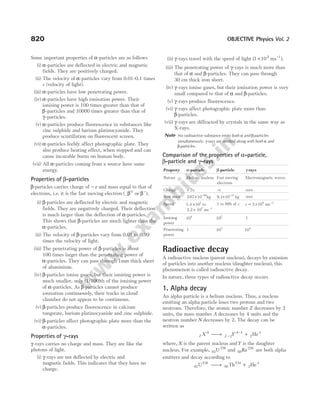
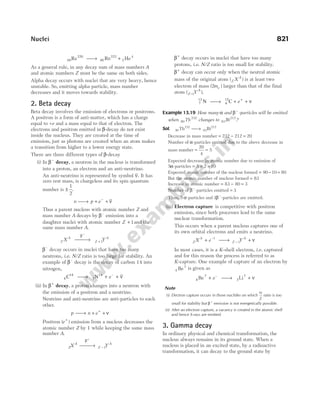
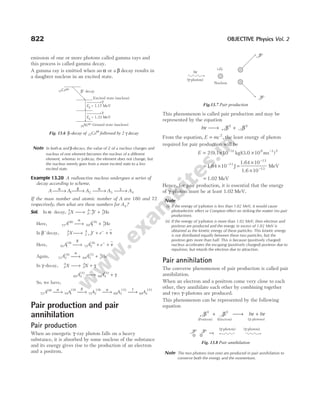
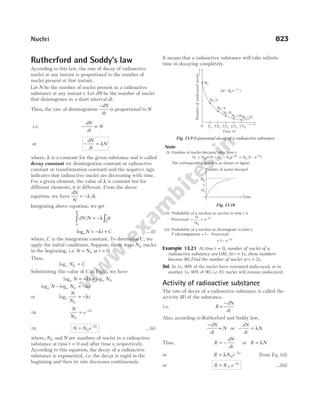
. C
Charge on proton = × −
16 10 19
. C
Using Coulomb’s law,
F
q q
r
= 1 2
0
2
4πε
, where r is the distance between proton and
electron.
=
× × × − ×
×
= − ×
− −
−
−
9 10 16 10 16 10
16 10
9 10
9 19 19
2 2
25
( . ) ( . )
( . )
N
Negative sign indicates that the force is attractive in nature.
4 OBJECTIVE Physics Vol. 2
r
F12 F21
+q1
+q2
r12 r21
Fig. 1.4 Repulsive Coulombian forces for q q
1 2 0
>
r
+q1
-q2
F12 F21
r12 r21
^ ^
Fig. 1.5 Attractive Coulombian forces for q q
1 2 0
<
r
q1
q2
(Vacuum)
Fig. 1.3 Two charges separated by distance r
Example 1.5 The electrostatic force on a small sphere of
charge 0.4 µC due to another small sphere of charge
−0 8
. µC in air is 0.2 N. (i) What is the distance between the
two spheres? (ii) What is the force on the second sphere due
to the first?
Sol. (i) Using the relation, F
q q
r
= ⋅
1
4 0
1 2
2
πε
, we get
r
q q
F
2
0
1 2
1
4
= ⋅
πε
Here, q1
6
0 4 0 4 10
= = × −
. . ,
µC C
q2
6
10
= = × −
0.8 C 0.8 C
µ
and F = 0.2 N
⇒ r2 9
6 6
9 10
0 4 10 0 8 10
02
= × ×
× × ×
− −
. .
.
= × −
144 10 4 2
m
Therefore, distance between the two spheres,
r = × =
−
12 10 012
2
m m
.
(ii) Electrostatic forces always, appear in pairs and follows
Newton’s third law of motion.
∴| |
F21 = Force on q2 due to q1 0 2
= . N and is attractive in
nature.
Note In the Coulomb’s expression for finding force between two
charges, do not use sign of charge because this is magnitude of
force.
Example 1.6 Nucleus of 92
238
U emits α-particle ( )
2
4
He .
α-particle has atomic number 2 and mass number 4. At any
instant, α-particle is at distance of 9 10 15
× −
m from the
centre of nucleus of uranium. What is the force on α-particle
at this instant?
92
238
2
4
90
234
U He Th
→ +
Sol. Force, F
q q
r
=
1
4 0
1 2
2
πε
92
238
U has charge 92e. When α-particle is emitted, charge on
residual nucleus is 92 2 90
e e e
− = .
∴ q e q e
1 2
90 2
= =
, , and r = × −
9 10 15
m
∴ F
e e
= × ×
× −
9 10
90 2
9 10
9
15 2
( )( )
( )
Force on α-particle,
F =
× × × × ×
×
=
−
−
9 10 90 16 10 2
9 10
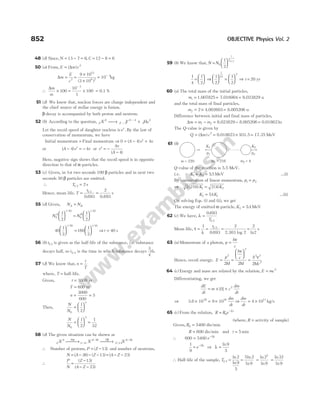
512
9 19 2
15 2
( . )
( )
N
Example 1.7 Two identical spheres having positive charges
are placed 3m apart repel each other with a force
8 10 3
× −
N. Now, charges are connected by a metallic wire
and they begin to repel each other with a force of 9 10 3
× −
N. Find initial charges on the spheres.
Sol. Let charges are q1 and q2 placed 3 m apart from each other.
∴ F
q q
r
=
1
4
1 2
2
πε0
(Coulomb’s law)
⇒ 8 10
9 10
3
3
9
1 2
2
× =
×
− q q
( )
⇒ q q
1 2
12
8 10
= × −
When the spheres are touched or connected by a metallic
wire, charge on each sphere will be
q q
1 2
2
+





.
q q
1 2
2
+






q q
1 2
2
+






According to given condition in the question,
⇒ 9 10
9 10
2
3
3
9 1 2
2
2
× =
×
+






−
q q
( )
⇒
q q
1 2
2
12
2
9 10
+





 = × −
⇒ q q
1 2
6
6 10
+ = × −
…(i)
Now, ( ) ( )
q q q q q q
1 2
2
1 2
2
1 2
4
− = + −
= × − × ×
− −
( )
6 10 4 8 10
6 2 12
= × −
4 10 12
⇒ q q
1 2
6
2 10
− = × −
…(ii)
Solving Eqs. (i) and (ii), we get
q1
6
4 10
= × −
C = 4µC, q2
6
2 10
= × −
C = 2µC
Therefore, initial charges on the sphere are 4 µC and 2 µC.
Example 1.8 Two protons are placed at some separation in
vacuum. Find the ratio of electric and gravitational force
acting between them.
Sol. Let the distance between two protons having charge +e and
mass m is placed at a distance r from each other as shown
in figure.
From Coulomb’s law, F
q q
r
e =
1
4 0
1 2
2
πε
=
×
1
4 0
2
π ε
e e
r
From gravitation law, F G
m m
r
g = 1 2
2
=
×
G
m m
r2
where, Fe and Fg are electric and gravitational force
respectively. On putting the values, we get
F
F
e
r
Gm
r
e
m G
e
g
= = ⋅
1
4 1
4
1
0
2
2
2
2
0
2
2
πε
πε
=
× ×
×
×
×
−
− −
( )( )
( ) ( )
9 10 10
10
1
10
9 19 2
27 2 11
1.6
1.67 6.67
= × −
1.2 10 10
36 36
~
Thus, F F
e g
>>
Electric Charges and Fields 5
q1
q2
3 m
3 m
Fe Fg
( )
e, m ( )
e, m
r
Force between multiple charges
(Superposition principle)
According to the principle of superposition, ‘‘total force on
a given charge due to number of charges is the vector sum
of individual forces acting on that charge due to all the
charges’’. The individual forces are unaffected due to the
presence of other charges.
Suppose a system contains n point charges q1, q 2,K, qn .
Then, by the principle of superposition, the force on q1
due to all the other charges is given by
F F F F
1 12 13 1
= + + …… + n
F
r r r
1
1
0
2 12
12
2
3 13
13
2
1
1
2
4
= + + ……






q q
r
q
r
q
r
n n
n
πε
$ $ $
=
=
q q
r
i
n
i i
i
1
0 2
1
1
2
4πε
Σ
$
r
Example 1.9 Equal charges each of 20 µC are placed at
x = 0, 2, 4, 8, 16 cm on X-axis. Find the force experienced
by the charge at x = 2 cm.
Sol. Force on charge at x = 2 cm due to charge at x = 0 cm and
x = 4 cm are equal and opposite, so they cancel each other.
Net force on charge at x = 2 cm is resultant of repulsive forces
due to two charges at x = 8 cm and x = 16 cm.
∴ F
q q
=
×
−
+
−






1 2
0
2 2
4
1
0 08 0 02
1
016 0 02
πε ( . . ) ( . . )
= × × +






−
9 10 20 10
1 1
014
9 6 2
2
[ ]
( . )
(0.06)2
= 1.2 ×10³
N
Example 1.10 Five point charges each of value +q are
placed on five vertices of a regular hexagon of side a metre.
What is the magnitude of the force on a point charge of
value −q coulomb placed at the centre of the hexagon?
Sol. Let the centre of the hexagon be O. When the centre is
joined with the vertices of a hexagon, then six triangles are
formed. Consider ∆ODE
a
r
/
cos
2
60
1
2
= ° =
∴ a r
=
Given, q q q q q q
1 2 3 4 5
= = = = =
Net force on −q is due to q3 because forces due to q1 and q4
are equal and opposite, so cancel each other. Similarly, forces
due to q2 and q5 also cancel each other. Hence, the net force
on −q is
F
q q
r
= ⋅
1
4 0
2
π ε
( ) ( )
(towards q3)
or F
q
a
= ⋅
1
4 0
2
2
π ε
Example 1.11 Two fixed charges +4q and +q are at a
distance 3 m apart. At what point between the charges, a
third charge +q must be placed to keep it in equilibrium?
Sol. Remember, if Q1 and Q2 are of same nature (means both
positive or both negative), then the third charge should be
placed between (not necessarily at mid-point) Q1 and Q2 on
the straight line joining them. But, if Q1 and Q2 are of opposite
nature, then the third charge will be put outside and close to
that charge which is lesser in magnitude.
Here, Q1 and Q2 are of same nature that of third charge q, so it
will be kept in between at a distance x from Q1 (as shown in
figure). Hence, q will be at a distance ( )
3 − x from Q2. Since, q
is in equilibrium, so net force on it must be zero. The forces
applied by Q1 and Q2 on q are in opposite direction, so as to
just balance their magnitudes.
Force on q by Q
kQq
x
1
1
2
= and that by Q
kQ q
x
2
2
2
3
=
−
( )
Now,
kQq
x
kQ q
x
1
2
2
2
3
=
−
( )
or
Q
x
Q
x
1
2
2
2
3
=
−
( )
or
4 1
3
2 2
x x
=
−
( )
Take the square root,
2 1
3
x x
=
−
( )
or 6 2
− =
x x (after cross multiplication) or x = 2 m. So, q will
be placed at a distance 2 m from Q1 and at 1m from Q2.
Note If q q
1 2 0
> , then
x
r
q
q
1
0
2
1
1
=
+
(x1 is distance from q1 between q1 and q2)
If q q
1 2 0
< , then
x
r
q
q
1
0
2
1
1
=
−
(x1 in this case is not between the charges)
Example 1.12 Three charges q C
1 1
= µ , q C
2 2
= – µ and
q C
3 3
= µ are placed on the vertices of an equilateral
triangle of side 1.0 m. Find the net electric force acting on
charge q1.
6 OBJECTIVE Physics Vol. 2
F1n
F13
F12
q1
q2
q3
qn
Fig. 1.6 Force between the charges q q q qn
1 2 3
, , , ,
K
Aq1 B q2
E q5 Dq4
F C q3
–q
r
a
E D
O
60°
a/2
r
O
x (3 )
- x
q
Q q
1 = +4 Q q
2 = +
Sol. Charge q2 will attract charge q1 (along the line joining them)
and charge q3 will repel charge q1. Therefore, two forces will
act on q1, one due to q2 and another due to q3. Since, the force
is a vector quantity both of these forces (say F
1 and F2) will be
added by vector method. Following are two methods of their
addition.
Method I. In the figure,
Magnitude of force between and
q q
1 2,
| |
F
1 1
0
1 2
2
1
4
= = ⋅
F
q q
r
πε
where, q1
6
1 1 10
= = × −
µC C
and q2 2
= = × −
µ C 2 10 C
6
.
⇒ F1 =
× × ×
− −
(9.0 10 ) (1.0 10 ) (2.0 10 )
(1.0)
9 6 6
2
= × −
1.8 10 N
2
Similarly, magnitude of force between and
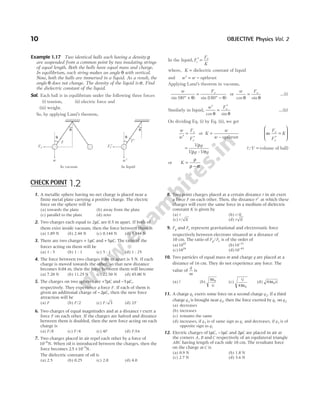
1 3
q q ,
| |
F2 2
0
1 3
2
1
4
= = ⋅
F
q q
r
πε
where, q3
6
3 3 10
= = × −
µC C.
⇒ F2 =
× × ×
− −
(9.0 10 ) (1.0 10 ) (3.0 10 )
(1.0)
9 6 6
2
= × −
2.7 10 N
2
Now, net force, | | cos
F
net = + + °
F F F F
1
2
2
2
1 2
2 120
= + + −













(1.8) (2.7) 2 (1.8) (2.7)
1
2
2 2
 × −
10 N
2
= × −
2.38 10 N
2
and tan
sin
cos
α =
°
+ °
F
F F
2
1 2
120
120
=
×
× + × −
−
− −
(2.7 10 ) (0.87)
(1.8 10 ) (2.7 10 )
2
2 2 1
2






or α = °
79.2
Thus, the net electric force on charge q1 is 2.38 10 N
2
× −
at an
angle α = °
79.2 with a line joining q1 and q2 as shown in the
figure.
Method II. In this method, let us assume coordinate axes
with q1 at origin as shown in figure. The coordinates of q q
1 2
,
and q3 in this coordinate system are (0, 0, 0), (1 m, 0, 0) and
(0.5 m, 0.87 m, 0), respectively. Now,
F
1 1 2
= Force on due to charge
q q
= ⋅
1
4 0
1 2
1 2
3 1 2
πε
q q
| – |
( – )
r r
r r
=
× × ×
(9.0 10 ) (1.0 10 ) (–2.0 10 )
(1.0)
9 –6 –6
3
× + +
[( – ) $ ( – ) $ ( – ) $ ]
0 1 0 0 0 0
i j k
= × −
(1.8 10 ) N
2 $
i
and F2 1 3
Force on due to charge
= q q
= ⋅
1
4 0
1 3
1 3
3 1 3
πε
q q
| – |
( – )
r r
r r
=
× × ×
(9.0 10 ) (1.0 10 ) (3.0 10 )
(1.0)
9 –6 –6
3
× − + − + −
[( $ ( ) $ ( ) $]
0 0.5 0 0.87 0 0
) i j k
= − − × −
( $ $)
1.35 2.349
i j 10 2
N
Therefore, net force on q1 is
F F F
= +
1 2
= × −
(0.45 2.349
– ) 10
$ $
i j 2
N
| | ( . ) .
F = + × = ×
− −
(0.45) N N
2 2 2 2
2 349 10 2 39 10
If the net force makes an angle α from the direction of X-axis,
then
α =
−





 = − °
−
tan
.
.
.
1 2 349
0 45
79 2
Negative sign of α indicate that the net force is directed
below the X-axis.
Example 1.13 Four charges Q q Q
, , and q are kept at the
four corners of a square as shown below. What is the
relation between Q and q, so that the net force on a charge q
is zero?
Sol. Here, both the charges q will have same sign either positive
or negative. Similarly, both the charges Q will have same sign.
Let us make the force on upper right corner q equal to zero.
Electric Charges and Fields 7
q1 1 C
= µ q2 2 C
= − µ
q3 = 3 C
µ
q1 q2
q3
α
120°
F1
F2 Fnet
Q q
q Q
Lower q will apply a repelling force F
1 on upper q because
both the charges have same sign. To balance this force both
Q must apply attractive forces F2 and F3 of equal magnitude,
hence Q and q will have opposite signs. Now, the resultant of
F2 and F3 will be F 2 (Parallelogram law of vector addition),
if | | | |
F F
2 3
= = F. Also note that F 2 will be exactly opposite
to F1.
So, F F
1 2
=
From Coulomb’s law,
F
kq
d
1
2
2
2
=
( )
and F
kQq
d
= 2
Q F F
1 2
=
∴
q
d
Qq
d
2
2 2
2
2
( )
=
∴ Q
q
=
2 2
But as we said Q and q have opposite sign, so q Q
= − 2 2 .
Applications of electric force
(Coulomb’s law)
1. For solving problems related to string
Let us consider two identical balls, having mass m and
charge q. These are suspended from a common point by
two insulating strings each of length L as shown in figure.
The balls repel and come into equilibrium at separation r.
The ball is in equilibrium under the following forces
(i) Weight of the ball, w mg
= and, (ii) Electric force,
F
q q
r
q
r
e =
⋅
=
1
4 4
0
2
2
0
2
πε πε
…(i)
(iii) Tension in the string For this, let us draw FBD of a
ball under consideration.
It is clear from FBD that,
T Fe
sin θ = …(ii)
T mg
cos θ = …(iii)
On dividing Eq. (ii) by Eq. (iii), we get
⇒ tan θ =
F
mg
e
…(iv)
or T T T
= +
( sin ) ( cos )
θ θ
2 2
= +
F mg
e
2 2
( ) …(v)
From geometry of the figure,
tan θ =
/2
r
L
r
2
2
4
−
If θ is small, tan ~ sin
/
θ θ =
−
r
L
2
.
Now, let us solve some problems related to this to make
our concepts more clear.
Example 1.14 Two identical pith balls, each of mass m and
charge q are suspended from a common point by two strings
of equal length l. Find charge q in terms of given quantities,
if angle between the strings is 2θ in equilibrium.
Sol. Let x be the separation between balls in equilibrium.
According to the question, following figure can be drawn
Each ball is in equilibrium under the action of the following
forces
8 OBJECTIVE Physics Vol. 2
F2
F3
F1
d√2
d
F1
√2 F
( )
q, m
r/2
r/2
r
( )
q, m
L
θ θ
Fig. 1.7 Two identical charged balls are suspended from same point
T
T sin q
T cos q
q
mg
Fe
Fig. 1.8 FBD of one of the balls
θ
L
r
2
r2
4
√L –
2
Fig. 1.9 Formation of a
triangle through r/2 and L
θ θ
x
x/2
Tsinθ B
F
F
Tcosθ
A
T T
mg mg
θ
(a) Weight of the ball, mg
(b) Repulsive electric force, F
q
x
=
1
4 0
2
2
π ε
(c) Tension in the string, T
Resolving T in the horizontal and vertical direction,
since ball is in equilibrium,
T F
sin θ = …(i)
T mg
cos θ = …(ii)
By Eqs. (i) and (ii), we get
tan θ =
π ε
F
mg
q
x
mg
=
1
4 0
2
2
…(iii)
Form figure,
x
l
2
= sin θ ⇒ x l
= 2 sin θ
Put value of x in Eq. (iii), we get
q mgx
2
0
2
4
= πε θ
tan
= 4 2
0
2
πε θ θ
mg l
( sin ) tan
q mgl
= [ sin tan ]/
16 0
2 2 1 2
πε θ θ
Example 1.15 Two identical balls, each having a charge q
and mass m, are suspended from a common point by two
insulating strings each of length L. The balls are held at a
separation x and then released. Find
(i) the electric force on each ball.
(ii) the component of the resultant force on a ball along and
perpendicular to string.
(iii) the tension in the string.
(iv) the acceleration of one of the balls. Consider the situation
only for the instant just after the release.
Sol. When the separation between the balls is x in equilibrium
condition, then according to question, the following figure can
be drawn
(i) Electric force between balls, F
q
x
e =
1
4 0
2
2
πε
.
(ii) Resolving forces along and perpendicular to string.
Resultant force on ball along the string,
T mg Fe
− + =
( cos sin )
θ θ 0 [the string is unstretchable]
Similarly, force perpendicular to the string
= −
| cos sin |
F mg
e θ θ
θ can be obtained from geometry.
(iii) Since, the net force on the ball along string is zero,
hence
T mg Fe
= cos sin
θ + θ
(iv) Acceleration of ball, a
F mg
m
e
=
−
| cos sin |
θ θ
Example 1.16 A particle A having charge q and mass m is
placed at the bottom of a smooth inclined plane of
inclination θ. Where should a block B, having same charge
and mass, be placed on the incline plane, so that it may
remain in equilibrium?
Sol. The following figure can be drawn in accordance with the
question
Let block B be placed at distance d. The block B is in
equilibrium. So, mg cos θ is balanced by normal reaction and
mg sin θ by repulsive electric force, i.e.
F mg
e = sin θ
⇒
1
4 0
2
2
π ε
θ
q
d
mg
= sin
⇒ d q
mg
=
1
4 0
πε θ
sin
2. Lami’s theorem
In few problems of electrostatics, Lami’s theorem is very
useful. According to this theorem, if three concurrent
forces F F
1 2
, and F3 as shown in figure are in equilibrium
or if F F F
1 2 3 0
+ + = , then
F F F
1 2 3
sin sin sin
α β γ
= =
Electric Charges and Fields 9
q
x
T
L
Fe
mg
q
Fe cos θ
mg sin θ Fe sin θ
mg cos θ
T
L2–
x2
—
4
x
—
2
L
θ
q
mg sin
q
N
mg
mg cos q
d
A q m
( , )
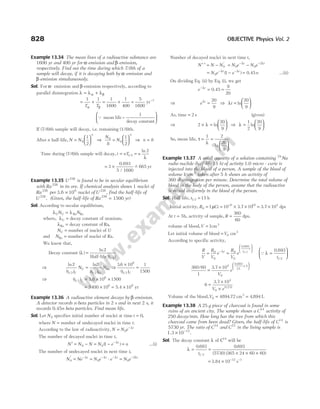
Fe
B
q
Fig. 1.10 Three forces passing through a point
Example 1.17 Two identical balls each having a density ρ
are suspended from a common point by two insulating strings
of equal length. Both the balls have equal mass and charge.
In equilibrium, each string makes an angle θ with vertical.
Now, both the balls are immersed in a liquid. As a result, the
angle θ does not change. The density of the liquid is σ. Find
the dielectric constant of the liquid.
Sol. Each ball is in equilibrium under the following three forces
(i) tension, (ii) electric force and
(iii) weight.
So, by applying Lami’s theorem,
In the liquid, F
F
K
e
e
′ =
where, K = dielectric constant of liquid
and w w
′ = − upthrust
Applying Lami’s theorem in vacuum,
w Fe
sin ( ) sin ( )
90 180
° +
=
° −
θ θ
or
w Fe
cos sin
θ θ
= …(i)
Similarly in liquid,
w Fe
′
=
′
cos sin
θ θ
…(ii)
On dividing Eq. (i) by Eq. (ii), we get
w
w
F
F
e
e
′
=
′
or K
w
w
=
– upthrust
as
F
F
K
e
e
′
=








=
V g
V g V g
ρ
ρ σ
–
(QV = volume of ball)
or K =
−
ρ
ρ σ
10 OBJECTIVE Physics Vol. 2
In vacuum
Fe
θ
θ
w
T
In liquid
Fe′
θ
θ
w ′
T ′
1. A metallic sphere having no net charge is placed near a
finite metal plate carrying a positive charge. The electric
force on the sphere will be
(a) towards the plate (b) away from the plate
(c) parallel to the plate (d) zero
2. Two charges each equal to 2µC are 0.5 m apart. If both of
them exist inside vacuum, then the force between them is
(a) 1.89 N (b) 2.44 N (c) 0.144 N (d) 3.144 N
3. There are two charges + 1µC and +5µC. The ratio of the
forces acting on them will be
(a) 1 : 5 (b) 1 : 1 (c) 5 : 1 (d) 1 : 25
4. The force between two charges 0.06 m apart is 5 N. If each
charge is moved towards the other, so that new distance
becomes 0.04 m, then the force between them will become
(a) 7.20 N (b) 11.25 N (c) 22.50 N (d) 45.00 N
5. The charges on two spheres are +7µC and −5µC,
respectively. They experience a force F. If each of them is
given an additional charge of −2µC, then the new force
attraction will be
(a) F (b) F/2 (c) F / 3 (d) 2F
6. Two charges of equal magnitudes and at a distance r exert a
force F on each other. If the charges are halved and distance
between them is doubled, then the new force acting on each
charge is
(a) F/8 (c) F /4 (c) 4F (d) F/16
7. Two charges placed in air repel each other by a force of
10 4
−
N. When oil is introduced between the charges, then the
force becomes 25 10 5
. × −
N.
The dielectric constant of oil is
(a) 2.5 (b) 0.25 (c) 2.0 (d) 4.0
8. Two point charges placed at a certain distance r in air exert
a force F on each other. Then, the distance ′
r at which these
charges will exert the same force in a medium of dielectric
constant K is given by
(a) r (b) r K
/
(c) r K
/ (d) r K
9. Fg and Fe represent gravitational and electrostatic force
respectively between electrons situated at a distance of
10 cm. The ratio of F F
g e
/ is of the order of
(a)1042
(b)10 21
−
(c)1024
(d)10 43
−
10. Two particles of equal mass m and charge q are placed at a
distance of 16 cm. They do not experience any force. The
value of
q
m
is
(a) l (b)
πε0
G
(c)
G
4 0
πε
(d) 4 0
πε G
11. A charge q1 exerts some force on a second charge q2. If a third
charge q3 is brought near q2, then the force exerted by q1 on q2
(a) decreases
(b) increases
(c) remains the same
(d) increases, if q3 is of same sign as q1 and decreases, if q3 is of
opposite sign as q1
12. Electric charges of1 1
µ µ
C C
, − and 2µC are placed in air at
the corners A B
, and C respectively of an equilateral triangle
ABC having length of each side 10 cm. The resultant force
on the charge at C is
(a) 0.9 N (b) 1.8 N
(c) 2.7 N (d) 3.6 N
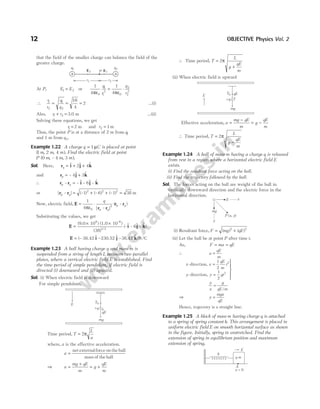
CHECK POINT 1.2
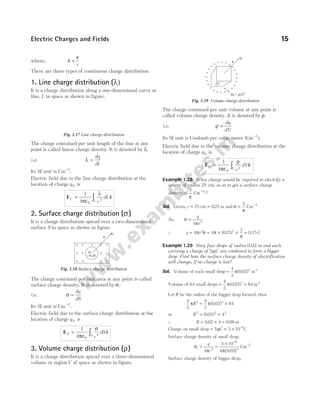
ELECTRIC FIELD
The region surrounding a charge or distribution of charge
in which its electrical effects can be observed or
experienced is called the electric field of the charge or
distribution of charge.
Electric field at a point can be defined in terms of either a
vector function E called electric field strength or a scalar
function V called electric potential.
Electric field strength
The electric field strength (often called electric field) at a
point is defined as the electrostatic force Fe per unit
positive test charge. Thus, if the electrostatic force
experienced by a small test charge q 0 is Fe , then field
strength at that point is defined as
E
F
=
→
lim
q
e
q
0 0 0
The electric field is a vector quantity and its direction is
the same as the direction of the electrostatic force Fe on a
positive test charge.
The SI unit of electric field is N/C. The dimensions for E
is [ ]
MLT A
− −
3 1
. For a positive charge, the electric field
will be directed radially outwards from the charge. On the
other hand, if the source charge is negative, the electric
field vector at each point is directed radially inwards.
Note Suppose there is an electric field strength E at some point, then the
electrostatic force acting on a charge +q is qE in the direction of E,
while on the charge –q it is qE in the opposite direction of E.
Example 1.18 An electric field of 105
N/C points due west
at a certain spot. What are the magnitude and direction of the
force that acts on a charge of + 2 µC and − 5 µC at this spot?
Sol. Electrostatic force, F qE
=
where, q = charge
and E = electric field.
Here, q1
6
2 2 10
= + = × −
µC C
and q2
6
5 5 10
= − = − × −
µC C
∴Force on charge q F
1 1
, = ×
( ) ( )
–
2 10 10
6 5
= 0.2 N (due west)
and force on charge q F
2 2
,
(5 10 ) (10 )
–6 5
= × = 0.5 N (due east)
Example 1.19 Calculate the magnitude of an electric field
which can just suspend a deuteron of mass 32 10 27
. × −
kg
freely in air.
Sol. Upward force (qE) on the deuteron due to electric field E is
equal to weight mg of deuteron, qE mg
=
∴ E
mg
q
= =
× ×
×
−
−
3.2
1.6
10 9 8
10
27
19
.
= × −
19.6 10 8
NC−1
Electric field due to a point charge
The electric field produced by a point charge q can be
obtained in general terms from Coulomb’s law. The
magnitude of the force exerted by the charge q on a test
charge q 0 is
F
qq
r
e = ⋅
1
4 0
0
2
πε
Therefore, the intensity of the electric field at this point is
given by E
F
q
e
=
0
E
q
r
= ⋅
1
4 0
2
πε
Note Suppose a charge q is placed at a point whose position vector is
rq and to obtain the electric field at a point P whose position
vector is rp, then in vector form the electric field is given by
E = ⋅
1
4 0
3
πε
q
p q
p q
| – |
( – )
r r
r r
Here, r i j k
p p p p
x y z
= + +
$ $ $
and r i j k
q q q q
x y z
= + +
$ $ $
Example 1.20 Find the electric field strength due to a point
charge of 5µC at a distance of 80 cm from the charge.
Sol. Given, q = 5µC = × −
5 10 C
6
r = 80 cm = × −
80 10 2
m
Electric field strength,
E =
1
4 0
πε
⋅
q
r2
⇒ E = × ×
×
×
−
−
9 10
5 10
(80 10 )
9
6
2 2
⇒ E = ×
7.0 104
N/C
Example 1.21 Two point charges q C
1 16
= µ and q C
2 4
= µ ,
are separated in vacuum by a distance of 3.0 m. Find the
point on the line between the charges, where the net electric
field is zero.
Sol. Between the charges, the two field contributions have
opposite directions and the net electric field is zero at a point
(say P), where the magnitudes of E1 and E2 are equal.
However, since, q q
2 1
< , point P must be closer to q2, in order
Electric Charges and Fields 11
r q0
Fe
q
E
q
q
E
+
+
–
q0
q0
Fig. 1.11 Direction of electric field due to
positive and negative charges
that the field of the smaller charge can balance the field of the
greater charge.
At P, E E
1 2
= or
1
4
1
4
0
1
1
2
0
2
2
2
πε πε
q
r
q
r
= ⋅
∴
r
r
q
q
1
2
1
2
= = =
16
4
2 …(i)
Also, r r
1 2
+ = 3.0 m …(ii)
Solving these equations, we get
r1 = 2 m and r2 1
= m
Thus, the point P is at a distance of 2 m from q1
and 1 m from q2.
Example 1.22 A charge q C
= 1µ is placed at point
( , , )
1 2 4
m m m . Find the electric field at point
P m m m
( , – , )
0 4 3 .
Sol. Here, rq = + +
$ $ $
i j k
2 4
and rp = +
– $ $
4 3
j k
∴ r r
p q
– – $ – $ – $
= i j k
6
or | – | (– ) (– ) (– )
r r
p q = + +
1 6 1
2 2 2
= 38 m
Now, electric field, E = ⋅
1
4 0
3
πε
q
p q
p q
| – |
( – )
r r
r r
Substituting the values, we get
E i j k
=
× ×
(9.0 10 ) (1.0 10 )
(38)
9 –6
3/2
(–$ – $ – $ )
6
E i j k
= ( $ $ $ )
– – –
38.42 230.52 38.42 N/C
Example 1.23 A ball having charge q and mass m is
suspended from a string of length L between two parallel
plates, where a vertical electric field E is established. Find
the time period of simple pendulum, if electric field is
directed (i) downward and (ii) upward.
Sol. (i) When electric field is downward
For simple pendulum,
Time period, T
L
a
= 2π
where, a is the effective acceleration.
a =
net externalforce on the ball
mass of the ball
⇒ a
mg qE
m
g
qE
m
=
+
= +
∴ Time period, T
L
g
qE
m
=
+
2π
(ii) When electric field is upward
Effective acceleration, a
mg qE
m
g
qE
m
=
−
= −
∴ Time period, T
L
g
qE
m
=
−
2π
Example 1.24 A ball of mass m having a charge q is released
from rest in a region where a horizontal electric field E
exists.
(i) Find the resultant force acting on the ball.
(ii) Find the trajectory followed by the ball.
Sol. The forces acting on the ball are weight of the ball in
vertically downward direction and the electric force in the
horizontal direction.
(i) Resultant force, F mg qE
= +
( ) ( )
2 2
(ii) Let the ball be at point P after time t.
As, F ma qE
= =
∴ a
qE
m
=
x x
qE
m
t
y y gt
-direction,
-direction,
=
=





1
2
1
2
2
2
y
x
g
qE m
=
/
⇒ y
mgx
qE
=
Hence, trajectory is a straight line.
Example 1.25 A block of mass m having charge q is attached
to a spring of spring constant k. This arrangement is placed in
uniform electric field E on smooth horizontal surface as shown
in the figure. Initially, spring in unstretched. Find the
extension of spring in equilibrium position and maximum
extension of spring.
12 OBJECTIVE Physics Vol. 2
P
E2
q1
E1
q2
+ +
r1 r2
E
T0
+q
qE
mg
E
T0
+q
qE
mg
E
mg
y
P x y
( , )
x
q m
E
x = 0
A
k
Sol. Method I. Force due to electric field E acting on the
charged block results in extension of spring. Let at some
instant, extension in spring be x.
Net force on block, F qE kx
net = −
In equilibrium, F qE kx
net = − = 0 ⇒ x x
qE
k
= =
0
where, k is the spring constant.
In equilibrium, extension of spring, x
qE
k
0 =
Maximum extension = =
2
2
0
x
qE
k
Method II.
Let the body is displaced from position A to position B. Let
the maximum extension produced be x ′, then from
conservation of energy,
1
2
2
kx qEx
′ = ′ ⇒ x
qE
k
′ =
2
In fact, the block is executing SHM of time period,
T
m
k
= 2π and amplitude of oscillation =
qE
k
.
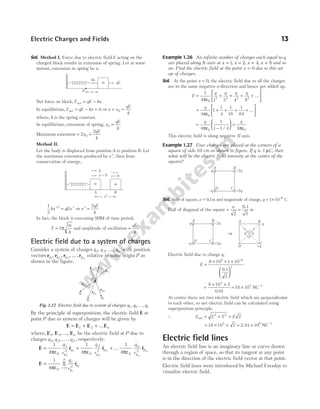
Electric field due to a system of charges
Consider a system of charges q q qn
1 2
, , ,
K with position
vectors r r r r
p p p pn
1 2 3
, , , ... , relative to some origin P as
shown in the figure.
By the principle of superposition, the electric field E at
point P due to system of charges will be given by
E E E E
= + +
1 2 ... n
where, E E E
1 2
, , ..., n be the electric field at P due to
charges q q qn
1 2
, , ,
K , respectively.
E r r r
= + +
1
4
1
4
1
4
0
1
2
0
2
2
0
2
1
1
2
2
πε πε πε
q
r
q
r
q
r
p
p
p
p
n
p
p
n
n
$ $ $
K
E r
=
=
1
4 0 1 2
πε
Σ
i
n
i
p
p
q
r i
i
$
Example 1.26 An infinite number of charges each equal to q
are placed along X-axis at x = 1, x = 2, x = 4, x = 8 and so
on. Find the electric field at the point x = 0 due to this set
up of charges.
Sol. At the point x = 0, the electric field due to all the charges
are in the same negative x-direction and hence get added up.
E =
1
4 0
πε
q q q q
1 2 4 8
2 2 2 2
+ + + +






K
= + + + +






q
4
1
1
4
1
16
1
64
0
πε
K
=
−





 =
q q
4
1
1 1 4 3
0 0
πε πε
/
This electric field is along negative X-axis.
Example 1.27 Four charges are placed at the corners of a
square of side 10 cm as shown in figure. If q is 1µC, then
what will be the electric field intensity at the centre of the
square?
Sol. Side of square, a = 01
. m and magnitude of charge, q = × −
1 10 6
C
Half of diagonal of the square = =
a
2 2
0.1
m
Electric field due to charge q,
E =
× × ×






−
9 10 1 10
9 6
2
0.1
2
=
× ×
9 10 2
3
0.01
= ×
18 105
NC−1
At centre there are two electric field which are perpendicular
to each other, so net electric field can be calculated using
superposition principle.
∴ E E E E
net = + =
2 2
2
= × ×
18 10 2
5
= ×
2.54 106
NC−1
Electric field lines
An electric field line is an imaginary line or curve drawn
through a region of space, so that its tangent at any point
is in the direction of the electric field vector at that point.
Electric field lines were introduced by Michael Faraday to
visualise electric field.
Electric Charges and Fields 13
m
kx
x
A
qE
m m
E
u = 0 v = 0
A B
x′
En E1
qn
q2
q1
rp1
rp2
rpn
E2
P
Fig. 1.12 Electric field due to system of charges q q qn
1 2
, , ...,
q –2q
–q +2q
A B
C
D
q –2q
–q +2q
A B
C
D
A B
+q
D
–q
E E
O
C
⇒
The electric field lines have the following properties
(i) The tangent to a field line at any point gives the
direction of E at that point.
In the given figure, electric points P and Q are along
the tangents (EP and EQ ). This is also the path on which
a positive test charge will tend to move, if free to do so.
(ii) Electric field lines always begin from a positive
charge and end on a negative charge and do not start
or stop in mid-space.
(iii) The number of lines leaving a positive charge or
entering a negative charge is proportional to the
magnitude of the charge. e.g. if 100 lines are drawn
leaving a + 4 µC charge, then 75 lines would have to
end on a –3 µC charge.
(iv) Two lines can never intersect. If it happens, then two
tangents can be drawn at their point of intersection,
i.e. intensity at that point will have two directions
which is not possible.
(v) In a uniform field, the field lines are straight,
parallel and uniformly spaced.
(vi) The electric field lines can never form closed loops as a
field line can never start and end on the same charge.
(vii) In a region, where there is no electric field, electric field
lines are absent. This is why inside a conductor (where,
electric field is zero), no electric field lines exist.
(viii) Electric field lines of force ends or starts normally
from the surface of a conductor.
(ix) The relative closeness of the electric field lines of
force in different regions of space indicates the
relative strength of the electric field in different
regions. In regions, where electric field lines of force
are closer, the electric field is stronger, whereas in
regions, where line of force are further apart, the
field is weaker.
Therefore, in the given figure | | | |.
E E
A B
>
Continuous charge distribution
In most of the cases, we deal with charges having
magnitude greater than the charge of an electron. For this,
we can imagine that the charge is spread in a region in a
continuous manner. Such a charge distribution is known as
continuous charge distribution.
Consider a point charge q 0 lying near a region of
continuous charge distribution which is made up of large
number of small charges dq as shown in figure.
According to Coulomb’s law, the force on a point charge
q 0 due to small charge dq is
F r
= ∫
q dq
r
0
0
2
4πε
$ …(i)
14 OBJECTIVE Physics Vol. 2
EQ
EP
P
Q
Fig. 1.13 Electric field at points P and Q
(a) (b)
q –q
(c)
q q
(d)
q
q +
+
+ –
(e)
–q q q
2q
(f)
–
+
–
–
Fig. 1.14 Electric field lines associated with a single as well
as combination of charges
A
| | | |
E E
A B
>
B
Fig. 1.15 Electric field strength at points A and B
dq
r
q0
Fig. 1.16 Force on a point charge q0 due to
a continuous charge distribution
where, $
r
r
=
r
There are three types of continuous charge distribution
1. Line charge distribution (λ)
It is a charge distribution along a one-dimensional curve or
line, L in space as shown in figure.
The charge contained per unit length of the line at any
point is called linear charge density. It is denoted by λ.
i.e. λ =
dq
dL
Its SI unit is Cm−1
.
Electric field due to the line charge distribution at the
location of charge q 0 is
E r
L L r
dL
= ∫
1
4 0
2
πε
λ
$
2. Surface charge distribution ( )
σ
It is a charge distribution spread over a two-dimensional
surface S in space as shown in figure.
The charge contained per unit area at any point is called
surface charge density. It is denoted by σ.
i.e. σ =
dq
dS
Its SI unit is Cm−2
.
Electric field due to the surface charge distribution at the
location of charge q 0 is
E r
S S r
dS
= ∫
1
4 0
2
πε
σ
$
3. Volume charge distribution ( )
ρ
It is a charge distribution spread over a three-dimensional
volume or regionV of space as shown in figure.
The charge contained per unit volume at any point is
called volume charge density. It is denoted by ρ.
i.e. ρ =
dq
dV
Its SI unit is Coulomb per cubic metre ( )
Cm−3
.
Electric field due to the volume charge distribution at the
location of charge q 0 is
E r
V V r
dV
= ∫
1
4 0
2
πε
ρ
$
Example 1.28 What charge would be required to electrify a
sphere of radius 25 cm, so as to get a surface charge
density of
3
π
Cm−2
?
Sol. Given, r = 25 cm = 025
. m and σ
π
=
3
Cm−2
As, σ
π
=
q
r
4 2
∴ q r
= = × × =
4 4 025
3
0 75
2 2
π σ π
π
( . ) . C
Example 1.29 Sixty four drops of radius 0.02 m and each
carrying a charge of 5µC are combined to form a bigger
drop. Find how the surface charge density of electrification
will change, if no charge is lost?
Sol. Volume of each small drop =
4
3
0 02 3
π( . ) m3
Volume of 64 small drops = ×
4
3
0 02 64
3
π( . ) m3
Let R be the radius of the bigger drop formed, then
4
3
4
3
0 02 64
3 3
π π
R = ×
( . )
or R3 3 3
0 02 4
= ×
( . )
∴ R = × =
0 02 4 0 08
. . m
Charge on small drop = = × −
5 5 10 6
µC C
Surface charge density of small drop,
σ
π π( )
1 2
6
2
4
5 10
4 0 02
= =
× −
q
r .
Cm−2
Surface charge density of bigger drop,
Electric Charges and Fields 15
Fig. 1.17 Line charge distribution
r
q0
dq
= σ
+ +
+ +
+ + + +
+ +
+ +
+
dS
Fig. 1.18 Surface charge distribution
r
q0
dq dV
= r
dV
Fig. 1.19 Volume charge distribution
σ
π( )2
2
6
5 10 64
4 0 08
=
× ×
−
.
Cm−2
∴
σ
σ π( . )
π
1
2
6 2
6
5 10
4
4 0 08
5 10 64
=
×
×
× ×
−
−
0 02 2
( . )
= =
1
4
1 4
:
Electric field of a charged ring
Electric field at distance x from the centre of uniformly
charged ring of total charge q on its axis is given by
E
qx
x R
x =






+
1
4 0
2 2 3 2
πε ( ) /
Direction of this electric field is along the axis and away
from the ring in case of positively charged ring and
towards the ring in case of negatively charged ring.
Special cases
From the above expression, we can see that
(i) Ex = 0 at x = 0, i.e. field is zero at the centre of the
ring. This would occur because charges on opposite
sides of the ring would push a test charge at the
centre, in the opposite directions with equal effort
and so the forces would add to zero.
(ii) E
q
x
x = ⋅
1
4 0
2
πε
for x R
>> , i.e. when the point P is
much farther from the ring, its field is the same as
that of a point charge. To an observer far from the
ring, the ring would appear like a point and the
electric field reflects this.
(iii) Ex will be maximum, where
dE
dx
x
= 0. Differentiating
Ex w.r.t. x and putting it equal to zero, we get
x
R
= ±
2
and Emax comes out to be,
2
3 3
1
4 0
2
πε
⋅






q
R
.
Example 1.30 A charge of 4 10 9
× −
C is distributed uniformly
over the circumference of a conducting ring of radius 0.3 m.
Calculate the field intensity at a point on the axis of the ring
at 0.4 m from its centre and also at the centre.
Sol. Given, q = × −
4 10 9
C , x = 0 4
. m and R = 03
. m
Electric field intensity at 0.4 m from its centre,
E
qx
R x
=
+
4 0
2 2 3 2
πε ( ) /
=
× × × ×
+
−
9 10 4 10 0 4
03 0 4
9 9
2 2 3 2
.
( . . ) /
E = =
14 4
0 5
1152
3
.
( . )
. N/C
At the centre of the ring, x = 0
∴ Electric field intensity, E = 0
16 OBJECTIVE Physics Vol. 2
+
+
+
+
+
+
+ +
+
+
+
+
Ex P
Ex
x x
R R
Fig. 1.20 Electric field of positively and negatively charged rings
R
2
Ex
Emax
x
–
2
R
Fig. 1.21 Variation of electric field on the axis of a ring
1. A charged particle of mass 5 10 5
× −
kg is held stationary in
space by placing it in an electric field of strength10 NC
7 1
−
directed vertically downwards. The charge on the particle is
(a) − × −
20 10 5
µC (b) − × −
5 10 5
µC
(c) 5 10 5
× −
µC (d) 20 10 5
× −
µC
2. Electric field strength due to a point charge of 5µC at a
distance 80 cm from the charge is
(a) 8 104
× NC−1
(b) 7 104
× NC−1
(c) 5 104
× NC−1
(d) 4 104
× NC−1
3. The electric field due to a charge at a distance of 3 m from it,
is 500 NC−1
. The magnitude of the charge is
Take, 9 10 -m /C
9 2 2
1
4 0
πε
= ×






N
(a) 2.5 µC (b) 2.0 µC (c) 1.0 µC (d) 0.5 µC
4. Two charges +5µC and +10µC are placed 20 cm apart.
The net electric field at the mid-point between the two
charges is
(a) 4.5 106
× NC−1
directed towards +5µC
(b) 4 5 106
. × NC−1
directed towards +10 µC
(c) 135 106
. × NC−1
directed towards +5µC
(d) 13.5 ×10⁶
NC−1
directed towards +10 µC
5. Two point charges +8q and −2q are located at x = 0 and
x L
= , respectively. The location of a point on the X-axis at
which the net electric field due to these two point charges is
zero, is
(a) 8L (b) 4L
(c) 2L (d) L / 4
CHECK POINT 1.3
6. A cube of side b has a charge q at each of its vertices. The
electric field due to this charge distribution at the centre of
this cube will be
1
4 0
πε
times
(a) q/b2
(b) q/ 2 2
b (c) 32 2
q b
/ (d) zero
7. The figure shows some of the electric field lines
corresponding to an electric field. The figure suggests
(a) E E E
A B C
> > (b) E E E
A B C
= =
(c) E E E
A C B
= > (d) E E E
A C B
= <
8. An uncharged sphere of metal is placed in between two
charged plates as shown. The lines of force look like
(a) A (b) B
(c) C (d) D
Electric Charges and Fields 17
ELECTRIC DIPOLE
A pair of equal and opposite point charges, that are
separated by a short distance is known as electric dipole.
Electric dipole occurs in nature in a variety of situations,
e.g. in HF H O
, 2 , HCl etc, the centre of positive charge
does not fall exactly over the centre of negative charge.
Such molecules are electric dipoles.
Dipole moment
The product of magnitude of one charge and the distance
between the charges is called the magnitude of the electric
dipole moment p. Suppose the charges of dipole are −q
and +q and the small distance between them is 2a.
Then, the magnitude of the electric dipole moment is
given by
p a q
= ( )
2
The electric dipole moment is a vector p whose direction is
along the line joining the two charges pointing from the
negative charge to the positive charge.
Its SI unit is Coulomb-metre.
Example 1.31 Charges ± 20 nC are separated by 5 mm.
Calculate the magnitude and direction of dipole moment.
Sol. Given, q1 = q2 = ± 20 nC = ± × −
20 10 9
C
Distance = =
2 5
a mm = × −
5 10 3
m
Dipole moment, p = q a
( )
2
= × × ×
− −
20 10 5 10
9 3
= −
10 10
cm
The direction of p is from negative charge to positive charge.
Example 1.32 A system has two charges, qA = × −
2 5 10 7
. C
and qB = − × −
2 5 10 7
. C located at points A( , , )
0 0 15
− cm
and B( , , )
0 0 15
+ cm respectively. What is the electric dipole
moment of the system?
Sol. Electric dipole moment,
p = magnitude of either charge × dipole length
= × = × ×
−
q AB
A 2 5 10 0 30
7
. . = × −
7 5 10 8
. C-m
The electric dipole moment is directed from B to A, i.e. from
negative charge to positive charge.
Example 1.33 Three charges are placed as shown. Find
dipole moment of the arrangements.
Sol. (i) Here, two dipoles are formed. These are shown in
diagram below
Resultant dipole moment, p p qd
r = =
2 2
and θ = °
45
A B C
+ + + + + + +
–
–
–
–
–
–
–
+ + + + + + +
–
–
–
–
–
–
–
– – – – – – –
+++++++ + + + + + + +
–
–
–
–
–
–
–
(A) (B)
(C) (D)
2a
p
-q +q
+
-
Fig. 1.22 Electric dipole
B qB = –2.5 10 C
´ -7
A qA = 2.5 10 C
´ -7
O
X
Y
Z¢
Z
(0,0,15)
(0,0,–15)
d
d
2q -q
-q
d
d
2q -q
-q
d
(i) (ii)
-q
+q
p
+q -q
p
p
pr
p
q
⇒
(ii) The two dipoles formed are as shown below
∴The resultant dipole moment,
p p p qd
r = ° = =
2 30 3 3
cos and θ = °
30
The field of an electric dipole
or dipole field
The electric field produced by an electric dipole is called a
dipole field. The total charge of the electric dipole is zero
but dipole field is not zero. It can be found using
Coulomb’s law and the superposition principle. We will
find electric field of an electric dipole at two points as
discussed below.
1. Electric field at an axial point of an
electric dipole
Let us calculate electric field at the point P at a distance r
from the centre of the dipole on the axial line of the dipole
on the side of the charge q as shown in figure.
E− =
−
+
q
q
r a
4 0
2
π ε ( )
E+ =
−
q
q
r a
4 0
2
π ε ( )
The total field at P is E E E
= +
+ −
q q
=
−
−
+






q
r a r a
4
1 1
0
2 2
π ε ( ) ( )
=
−
q ar
r a
4
4
0
2 2 2
π ε ( )
( )
Q 2aq p
=
∴ E =
−
2 2
4 0
2 2 2
( )
( )
aq r
r a
πε
=
−
2
4 0
2 2 2
r
r a
p
π ε ( )
For short dipole, i.e. for r a
r
> > =
, E
p
2
4 0
3
πε
Direction of E is same as p.
2. Electric field at an equatorial point of
an electric dipole
The magnitude of the electric fields due to the two charges
+q and −q are given by
E
q
r a
q
+ =
+
4 0
2 2
πε ( )
and E
q
r a
q
− =
+
4 0
2 2
π ε ( )
and they
are equal in magnitude. The directions of E q
+ and E q
− are
as shown in the figure.
The components of electric field normal to the dipole axis
cancel away. The components of electric field along the
dipole axis add up. The total electric field E at P is
opposite to dipole moment vector p. So, we have
E = − +
+ −
[( ) cos ]
E E
q q θ
=
−
+
⋅
+
2
4 0
2 2 2 2 1 2
q
r a
a
r a
π ε ( ) ( ) /
Q cos
( )
θ
a
r a
2 2
1
2
+










⇒ E
p
=
−
+
=
−
+
2
4 4
0
2 2 3 2
0
2 2 3 2
aq
r a r a
π ε πε
( ) ( )
/ /
[Q 2aq p
= ]
For short dipole, r a
>>
∴ E
p
=
−
4 0
3
π ε r
Note The electric field due to short dipole at large distance ( )
r a
> > is
proportional to
1
3
r
. If we take the limit, when the dipole size 2a
approaches zero, the charge q approaches infinity in such a way
that the product, p q a
= × 2 is finite. Such a dipole is referred to
as a point dipole (ideal dipole).
Example 1.34 Two opposite charges each of magnitude 2µC
are 1cm apart. Find electric field at a distance of 5 cm from
the mid-point on axial line of the dipole. Also, find the field
on equatorial line at the same distance from mid-point.
Sol. Electric field ( )
E on axial line is given by
2
4 0
2 2 2
pr
r a
π ε ( )
−
where, p is dipole moment = either charge × dipole length
Thus, p q a
= ⋅2 = × ×
−
( ) ( . )
2 10 0 01
6
Also, r = × −
5 10 2
m
∴ Ea =
× × × × × ×
× − ×
− − −
− −
9 10 2 2 10 10 5 10
5 10 0 5 10
9 6 2 2
2 2 2
( )
[( ) ( . ) ]
2 2
18 OBJECTIVE Physics Vol. 2
-q
+q
p
+q -q
p
60°
30°
pr p
p
⇒
E+q E-q 2a
p
P q -q
r
Fig. 1.23 Electric field at an axial point of the dipole
q -q
q p
r
E-q
E at P
E+q
P
2a
Fig. 1.24 Electric field at an equatorial point of the dipole
= × −
2 93 106 1
. NC
Similarly, electric field ( )
E on equatorial line is given by
E
p
r a
e =
+
4 0
2 2 3 2
πε ( ) /
The symbols have the same meaning as above,
Ee =
× × × ×
× + ×
− −
− −
9 10 2 10 10
5 10 0 5 10
9 6 2
2 2 2 2 3 2
( )
[( ) ( . ) ] /
∴ Ee = × −
146 106 1
. NC
3. Electric field at the position (r, θ)
Due to the positive charge of the dipole, electric field at
point P will be in radially outward direction and due to
the negative charge it will be radially inward. Now, we
have considered the radial component ( )
Er and transverse
component ( )
Eθ of the net electric field ( )
E as shown in
figure.
∴ E
p
r
r = ⋅
1
4
2
0
3
πε
θ
cos
and E
p
r
θ
πε
θ
= ⋅
1
4 0
3
sin
∴ Net electric field at point P is E E E
r
= +
2 2
θ
⇒ E
p
r
= +
1
4
1 3
0
3
2
πε
θ
cos
Direction of the electric field, tan α θ
= =
E
Er
1
2
tan θ
Example 1.35 What is the magnitude of electric field
intensity due to a dipole of moment 2 10 8
× −
C-m at a point
distance 1 m from the centre of dipole, when line joining the
point to the centre of dipole makes an angle of 60° with
dipole axis?
Sol. Given, p = × −
2 10 8
C-m, r = 1 m and θ = 60°
∴ Electric field intensity, E
p
r
=
4 0
3
πε
3 1
2
cos θ +
=
× × ×
×
−
2 10 9 10
1
8 9
3
( )
3 60 1
2
(cos )
° +
= 2381
. N/C
Force on dipole
Suppose an electric dipole of dipole moment | |
p = 2aq is
placed in a uniform electric field E at an angle θ, where
θ is the angle between p and E. A force F E
1 = q will act
on positive charge and F E
2 = – q on negative charge.
Since, F1 and F2 are equal in magnitude but opposite in
direction.
Hence, F F
1 2 0
+ =
or Fnet = 0
Thus, net force on a dipole in uniform electric field
is zero. While in a non-uniform electric field, it may
or may not be zero.
Torque on an electric dipole
The two equal and opposite forces shown in the above
diagram act at different points of the dipole. They form a
couple which exerts a torque. This torque has a
magnitude equal to the magnitude of either force
multiplied by the arm of the couple, i.e. perpendicular
distance between the two anti-parallel forces.
Magnitude of torque = ×
q E a
2 sin θ = 2qaE sin θ
τ θ
= pE sin [Qp a q
= ( )
2 ]
or τ = ×
p E
Thus, the magnitude of torque is τ θ
= pE sin . The
direction of torque is perpendicular to the plane of paper
inwards. Further this torque is zero at θ = 0° or θ = 180°,
i.e. when the dipole is parallel or anti-parallel to E and
maximum at θ = 90°.
Thus, variation of τ with θ is as shown in graph below
Electric Charges and Fields 19
–q +q
O p
q
r
P
E
Eq
Er
a
Fig. 1.25 Radial and transverse component of the
electric field E of the dipole at point P r
( , )
θ
a
a
+q
F E
1=q
F E
2 =–q
B
C
E
E
A
q
E
p
q
–q
Fig. 1.26 Electric dipole in a uniform electric field
pE
π/2
pE
π 3 /2
π 2π
τ
θ
Fig. 1.27 Variation of τ with θ
Example 1.36 An electric dipole with dipole moment
4 10 9
× −
C-m is aligned at 30° with the direction of a
uniform electric field of magnitude 5 104 1
× −
NC . Calculate
the magnitude of the torque acting on the dipole.
Sol. Using the formula, τ = θ
pE sin …(i)
Here, dipole moment, p = × −
4 10 9
C m and E = × −
5 104 1
NC
Angle between E and p, θ = 30°.
Substituting these values in Eq (i), we get
τ = × × × × °
−
4 10 5 10 30
9 4
sin
= × ×
−
20 10
1
2
5
= −
10 4
N-m
Work done in rotating a dipole in a
uniform electric field
When an electric dipole is placed in a uniform electric
field E, [Fig. (a)] a torque, τ = p E
× acts on it. If we rotate
the dipole through a small angle dθ as shown in Fig. (b),
the work done by the torque is
dW d
= τ θ ⇒ dW pE d
= − sin θ θ
The work is negative as the rotation dθ is opposite to the
torque.
Total work done by external forces in rotating a dipole
from θ θ
= 1 to θ θ
= 2 [Figs. (c) and (d)] will be given by
W pE d
= ∫
θ
θ
θ θ
1
2
sin
W pE
external force = −
(cos cos )
θ θ
1 2
and work done by electric forces,
W W
electric force external force
= −
= −
pE (cos cos )
θ θ
2 1
Taking θ θ
1 = and θ2 90
= °, we have
W p E pE
electric dipole = ⋅ ° − = −
(cos cos ) cos
90 θ θ
= − ⋅
p E
Note If dipole is placed in non-uniform electric field, then magnitude
and direction of electric field is different at every point and it will
experience both net force and net torque.
Example 1.37 An electric dipole of dipole moment
p C m
= × −
5 10 18
- lying along uniform electric field
E NC
= × −
4 104 1
. Calculate the work done is rotating the
dipole by 60°.
Sol. It is given that, electric dipole moment,
p = × −
5 10 18
C-m
Electric field strength, E = × −
4 104 1
NC
When the electric dipole is placed in an electric field E, a
torque τ = ×
p E acts on it. This torque tries to rotate the
dipole through an angle θ.
If the dipole is rotated from an angle θ1 to θ2, then work done
by external force is given by
W pE
= −
(cos cos )
θ θ
1 2 …(i)
Putting θ1 0
= °, θ2 60
= ° in the Eq. (i), we get
W pE
= ° − °
(cos cos )
0 60
= − =
pE
pE
( / )
1 1 2
2
=
× × ×
=
−
−
5 10 4 10
2
10
18 4
13
J
⇒ W = × −
0.1 J
10 12
= 0.1 pJ
20 OBJECTIVE Physics Vol. 2
p
E
θ
θ
dθ
(a) (b)
p
E
p
θ1 θ2
(c) (d)
p
E E
p
Fig. 1.28 Dipole at different angles with electric field
1. The electric dipole moment of an electron and a proton
4.3 nm apart, is
(a) 6.8 × −
10 28
C-m (b) 2.56 × −
10 29
C2
/m
(c) 3.72 × −
10 14
C/m (d) 11 × −
10 46
C2
/m
2. If Ea be the electric field strength of a short dipole at a point
on its axial line and Ee that on the equatorial line at the
same distance, then
(a) E E
e a
= 2 (b) E E
a e
= 2
(c) E E
a e
= (d) None of these
3. Electric field at a far away distance r on the axis of a dipole
is E0. What is the electric field at a distance 2r on
perpendicular bisector?
(a)
E0
16
(b) −
E0
16
(c)
E0
8
(d) −
E0
8
4. The electric field due to an electric dipole at a distance r
from its centre in axial position is E. If the dipole is rotated
through an angle of 90° about its perpendicular axis, then
the magnitude of electric field at the same point will be
(a) E (b) E/4 (c) E/2 (d) 2E
CHECK POINT 1.4
5. When an electric dipole p is placed in a uniform electric
field E, then at what angle between p and E the value of
torque will be maximum?
(a) 90° (b) 0°
(c) 180° (d) 45°
6. An electric dipole of moment p is placed normal to the lines
of force of electric intensity E, then the work done in
deflecting it through an angle of180° is
(a) pE (b) +2pE
(c) −2pE (d) zero
7. A molecule with a dipole moment p is placed in an electric
field of strength E. Initially, the dipole is aligned parallel to
the field. If the dipole is to be rotated to anti-parallel to the
field, then the work required to be done by an external
agency is
(a) −2pE (b) −pE
(c) pE (d) 2pE
8. Two opposite and equal charges of 4 10 8
× −
C are placed
2 10 2
× −
cm away from each other. If this dipole is placed in an
external electric field of 4 108
× NC−1
, then the value of
maximum torque and the work done in rotating it through
180° will be
(a) 64 10 4
× −
N-m and 64 10 4
× −
J
(b) 32 10 4
× −
N-m and 32 10 4
× −
J
(c) 64 10 4
× −
N-m and 32 10 4
× −
J
(d) 32 10 4
× −
N-m and 64 10 4
× −
J
Electric Charges and Fields 21
ELECTRIC FLUX
Electric flux over an area in an electric field is a measure
of the number of field lines crossing a surface. It is
denoted by φE . Let E be electric field at the location of the
surface element d S. The electric flux through the entire
surface is given by
φE
S
d
= ⋅
∫ E S ⇒ φ θ θ
E
S S
E dS E dS
= =
∫ ∫
cos cos
Here, θ is smaller angle between E and d S.
For a closed surface, θ is the angle between E and outward
normal to the area element.
Electric flux is a scalar quantity having SI unit V-m or
N-m2
C−1
.
Note An electric flux can also be defined as the flow of the electric
field lines through a surface. When field lines leave or flow out
of a closed surface, φE is positive and when they enter or flow
into the surface, φE is negative.
Area vector
Area is a vector quantity. The direction of a planar area
vector is specified by normal to the plane, e.g. in case of
closed surface like cube, sphere, etc., direction of area
vector S in outward direction is considered to be positive.
In case of open surface, any normal direction can be
considered positive.
The flux of electric field passing through an area is the dot
product of electric field vector and area vector.
i.e. φ θ
= ⋅ =
E S ES cos
Example 1.38 The electric field in a region is given by
E i j
= +
a b
$ $ , here, a and b are constants. Find the net flux
passing through a square area of side l parallel to yz-plane.
Sol. A square area of side l parallel to yz-plane in vector form
can be written as S i
= l2 $
Given, E i j
= +
a b
$ $
∴ Electric flux passing through the given area will be
φE = ⋅
E S
= + ⋅
( $ $) ( $)
a b l
i j i
2
= al2
Example 1.39 A rectangular surface of sides 10 cm and
15 cm is placed inside a uniform electric field of 25 NC−1
,
such that normal to the surface makes an angle of 60° with
the direction of electric field. Find the flux of electric field
through the rectangular surface.
Sol. Here, E = electric field = 25 NC−1
S = surface area of rectangle
= × = ×
l b 010 015
. . m2
Flux, φ θ
= ES cos = × °
(25)(0.15 0.10) (cos 60 )
= 01875
. N-m2
C−1
dS
dS
E
q
Fig. 1.29 Electric flux over an area dS
S
S
(b) Open surface
(a) Closed surface
S S
S
Fig. 1.30 Direction of area vector
Example 1.40 The electric field in a region is given by
E i
=
E
a
x
0 $. Find the electric flux passing through a cubical
volume bounded by the surfaces x x a y y a
= = = =
0 0
, , , ,
z = 0 and z a
= .
Sol. The given situation is shown below
On four faces, electric field and area vector are perpendicular,
hence there will be no flux. One face is at origin, i.e. x = 0
⇒ E = 0, hence there will be no flux. On the sixth face, x a
=
∴Net electric flux, φ = ⋅ = ⋅ =
E S i i
E a E a
0
2
0
2
$ $
Example 1.41 A cylinder is placed in a uniform electric field
E with axis parallel to the field. Find the total electric flux
through the cylinder.
Sol. The dircetion of E and d S on different sections of cylinder
are shown below
Flux through the entire cylinder,
φE d d d
= ⋅ + ⋅ + ⋅
∫ ∫
E S E S E S
Right plane face Left plane face
∫
curved surface
⇒ φE d d d
= ⋅ °+ ⋅ ° + ⋅ °
∫ ∫ ∫
E S E S E S
cos cos cos
180 0 90
= − ∫ ∫
E S + E S + 0
d d
= − × ×
E + E
π π
r r
2 2
= 0
Gauss’s law
According to Gauss’s law, ‘‘the net electric flux through
any closed surface is equal to the net charge enclosed by it
divided by ε0 ’’. Mathematically, it can be written as
φ
ε
E
S
d
q
= ⋅ =
∫ E S
0
Gauss’s theorem in simplified form can be written as under
ES
q
= in
ε0
…(i)
But this form of Gauss’s law is applicable only under the
following two conditions
(i) the electric field at every point on the surface is
either perpendicular or tangential.
(ii) magnitude of electric field at every point where it is
perpendicular to the surface has a constant value (sayE).
Here, S is the area, where electric field is perpendicular to
the surface. Unit of electric flux is Nm C
2 1
−
.
Important points regarding Gauss’s law in
electrostatics
Important points regarding Gauss’s law in electrostatics are
given below
(i) Gauss’s law is true for any closed surface, no matter
what its shape or size.
(ii) The term q on the right side of Gauss’s law includes
the sum of all charges enclosed by surface. The
charges may be located anywhere inside the surface.
(iii) In the situation, when the surface is so taken that
there are some charges inside and some outside, the
electric field (whose flux appears on the left side of
Gauss’s law) is due to all the charges, both inside and
outside S. However, the term q on the right side of
Gauss’s law represents only the total charge inside S.
(iv) The surface that we choose for the application of
Gauss’s law is called the Gaussian surface. You may
choose any Gaussian surface and apply Gauss’s law.
However, do not let the Gaussian surface pass
through any discrete charge, because electric field is
not well defined at the location of discrete charge.
However, the Gaussian surface can pass through a
continuous charge distribution.
(v) Gauss’s law is often useful towards a much easier
calculation of the electrostatic field, when the
system has some symmetry. This is achieved by the
choice of a suitable Gaussian surface.
(vi) Finally, Gauss’s law is based on the inverse square
dependence on distance as taken in the Coulomb’s
law. Any violation of Gauss’s law will indicate
departure from the inverse square law.
22 OBJECTIVE Physics Vol. 2
Z
X
Y
O
a
a
a
E i
x
=
E
a
0
—— ^
E =
E
—
a
0 a E
i i
= 0
^
^
S i
a
= 2 ^
dS
dS
dS E
E
E
Special cases
Some points related to calculation of electric flux in
different cases
(i) If surface contains number of charges, as shown in
figure, then qin can be calculated as
q q q q
in = − +
1 2 3
∴ φ
ε ε
= =
− +
q q q q
in
0
1 2 3
0
(ii) If a charge q is placed at the centre of a cube, then
the flux passing through cube,
φ
ε ε
= =
q q
in
0 0
The flux passing through each face of cube,
φ
φ
ε
′ = =
6 6 0
q
(by symmetry)
(iii) To calculate flux passing through open surface, first
make surface close in such a manner that point
charge comes at the centre and then apply symmetry
concept, e.g.
(a) A charge q is placed at the centre of an imaginary
hemispherical surface.
First, make the surface close by placing another
hemisphere.
Flux through sphere, φ
ε ε
= =
q q
in
0 0
By symmetry, flux through hemisphere,
φ
φ
ε
′ = =
2 2 0
q
(b) A charge Q is placed at a distance a/2 above the
centre of a horizontal square of edge a.
First, make the surface close by placing five square
faces ( )
a a
× , so that a cube is formed and charge Q
is at centre of a cube.
Flux through the cube, φ
ε ε
= =
q Q
in
0 0
By symmetry, flux through each square face,
φ
φ
ε
′ = =
6 6 0
Q
Note In case of closed symmetrical body with charge q at its centre,
the electric flux linked with each half will be
φ
ε
E q
2 2 0
= . If the
symmetrical closed body has n identical faces with point charge
at its centre, flux linked with each face will be
φ
ε
E
n
q
n
=
0
.
Example 1.42 An uniformly charged conducting sphere of
2.4 m diameter has a surface charge density of 80.0 µC/m2
.
(i) Find the charge on the sphere. (ii) What is the total
electric flux leaving the surface of the sphere?
Sol. (i) Using the relation σ
π
=
q
R
4 2
, we get
q R
= ×
4 2
π σ = × × × × −
4
22
7
80 10
2 6
(1.2)
= × −
1.45 C
10 3
(ii)Using Gauss’s theorem, we get
φ
ε
= =
×
×
−
−
q
0
3
12
10
10
1.45
8.854
= ×
1.64 108
N-m2
C−1
Example 1.43 A point charge causes an electric flux of
− ×
10 103
. N-m2
C−1
to pass through a spherical Gaussian
surface of 10.0 cm radius centred on the charge. (i) If the
radius of the Gaussian surface is doubled, how much flux
will pass through the surface? (ii) What is the value of the
point charge?
Electric Charges and Fields 23
q
Fig. 1.32 Charge at the centre of a hemisphere
q
Fig. 1.33 Assume another symmetrical hemisphere to form a sphere
q1
−q2
q3
Fig. 1.31 Charges enclosed by a surface
a/2
a
a
Q
Fig. 1.34 Charge at a distance a/2 from square
Q
Fig. 1.35 A cube
Sol. (i) According to Gauss’s law, the electric flux through a
Gaussian surface depends upon the charge enclosed
inside the surface and not upon its size. Thus, the
electric flux will remain unchanged,
i.e. − ×
10 103
. N-m2
C−1
.
(ii) Using the formula φ
ε
=
q
0
(Gauss’s theorem), we get
⇒ q = = × × − ×
−
ε φ
0
12 3
10 10
8.854 1.0
( )
= − × −
8.854 C
10 9
= − 8.8 C
n
Example 1.44 A point charge q is placed at the centre of a
cube. What is the flux linked
(i) with all the faces of the cube?
(ii) with each face of the cube?
(iii) if charge is not at the centre, then what will be the answers
of parts (i) and (ii)?
Sol. (i) According to Gauss’s law, φ = =
total
in
q q
ε ε
0 0
(ii) The cube is a symmetrical body with 6 faces and the
point charge is at its centre, so electric flux linked with
each face will be
φ =
φ
=
each face
total
6 6 0
q
ε
(iii) If charge is not at the centre, the answer of part (i) will
remain same while that of part (ii) will change.
Example 1.45 A point charge Q is placed at one corner of a
cube. Find flux passing through a cube.
Sol. First, make the surface close by placing three identical
cubes at three sides of given cube and four cubes above. Now,
charge comes at the centre of 8 cubes.
The flux passing through each cube will be (1/8)th of the flux
Q/ε0. Hence, flux passing through given cube is Q/8 0
ε .
Example 1.46 A hemispherical body of radius R is placed in
a uniform electric field E. What is the flux linked with the
curved surface, if the field is
(i) parallel to the base (ii) and perpendicular to the base?
Sol. We know, flux passing through closed surface,
φ
ε
= ⋅ =
∫ E S
d
qin
0
(i)
Charge inside hemisphere, qin = 0,
i.e. E S
⋅ =
∫ d 0
⇒ φ φ
curved plane
+ = 0
⇒ φcurved + ° =
E S cos 90 0
⇒ φcurved = 0
(ii)
Also, φ φ
curved plane
+ = 0
⇒ φcurved + ° =
E S cos 0 0
⇒ φ π
curved + =
E R2
0
⇒ φ π
curved = − E R2
Applications of Gauss’s law
To calculate electric field by Gauss’s theorem, we will draw
a Gaussian surface (either sphere or cylinder, according to
the situation) in such a way that electric field is
perpendicular at each point of surface and its magnitude is
same at every point and then apply Gauss’s law. Let us start
with some simple cases.
1. Electric field due to an infinitely long
straight uniformly charged wire
Consider a long line charge with a linear charge density
(charge per unit length), λ. To calculate the electric field
at a point, located at a distance r from the line charge, we
construct a Gaussian surface, a cylinder of any arbitrary
length l of radius r and its axis coinciding with the axis of
the line charge. This cylinder have three surfaces. One is
curved surface and the two plane parallel surfaces.
Field lines at plane parallel surfaces are tangential, so flux
passing through these surfaces is zero. The magnitude of
electric field is having the same magnitude (say E ) at
24 OBJECTIVE Physics Vol. 2
A
E
F
Q
H
G
D
C
B
d S
E
d S
E
E E
l
+
+
+
+
+
+
+
r
Gaussian surface
Fig. 1.36 Cylindrical Gaussian surface around a line charge
curved surface and simultaneously the electric field is
perpendicular at every point of this surface.
Hence, we can apply the Gauss’s law as
E S
q
= in
ε0
Here, S = area of curved surface = ( )
2πrl
and q in = net charge enclosing this cylinder = λl.
∴ E rl
l
( )
2
0
π
λ
ε
=
∴ E
r
=
λ
πε
2 0
i.e. E
r
∝
1
So, E-r graph is a rectangular hyperbola as shown in figure.
Note Electric field due to a finite length of straight charged wire,
E
r
=
ε
+
1
4 0
1 2
π
λ
θ θ
(sin sin )
Example 1.47 An infinite line charge produces a field of
9 104
× NC−1
at a distance of 2 cm. Calculate the linear
charge density.
Sol. As we know that, electric field due to an infinite line
charge is given by the relation, E
r
= ⋅
1
2 0
πε
λ
where, λ is linear charge density and r is the distance of a
point where an electric field is produced from the line charge.
or λ πε
= 2 0 r E
Here, E = ×
9 104
NC−1
and r = 2 cm = 0 02
. m
∴ Linear charge density,
λ =
×
×
× ×
= −
1
9 10
0 02 9 10
2
10
9
4
7
.
Cm−1
Example 1.48 A long cylindrical wire carries a positive
charge of linear density λ. An electron ( , )
−e m revolves
around it in a circular path under the influence of the
attractive electrostatic force. Find the speed of the electron.
Sol. Electric field at perpendicular distance r,
E
r
=
λ
π ε
2 0
The electric force on electron, F e E
=
To move in circular path, necessary centripetal force is
provided by electric force.
F
mv
r
c =
2
⇒
mv
r
eE
e
r
2
0
2
= =
λ
πε
⇒ v
e
m
=
λ
πε
2 0
∴ Speed of the electron, v
e
m
=
λ
π ε
2 0
2. Electric field due to a plane sheet of
charge
Consider a flat thin sheet, infinite in size with constant
surface charge density σ (charge per unit area).
Let us draw a Gaussian surface (a cylinder) with one end
on one side and other end on the other side and of cross-
sectional area S 0 . Field lines will be tangential to the
curved surface, so flux passing through this surface is zero.
At plane surfaces, electric field has same magnitude and
perpendicular to surface. Hence, using
Electric Charges and Fields 25
E
r
Fig. 1.38 E-r graph for a long charged wire
+
P
q2 q1
+
+
+
+
+
+
+
+
r
l
+
+
+
+
+
+
(– , )
e m
E
v
λ
r
E
Curved surface Plane surface
E
Fig. 1.37 Electric flux through different surfaces
+
+
+
+
+
+
+
+
+
+
+
+
+
+
+
+
+
+
+
+
+
+
+
+
+
+
+
+
+
+
+
+
+
+
+
+
+
+
+
+
+
+
+
+
+
+
+
+
+
+
+
+
+
+
+
+
+
+
+
+
+
+
+
+
+
+
+
+
+
+
+
+
+
+
+
+
+
+
+
+
E E
S0
Gaussian surface
Fig. 1.39 Cylindrical Gaussian surface for a plane charged sheet
ES
q
= in
ε0
∴ E S
S
( )
( ) ( )
2 0
0
0
=
σ
ε
∴ E =
σ
ε
2 0
Thus, we see that the magnitude of the field due to plane
sheet of charge is independent of the distance from the
sheet.
Important point
Suppose two plane sheets having charge densities + σ and
− σ are placed at some separation.
Electric field at A, EA = + =
σ
ε
σ
ε
σ
ε
2 2
0 0 0
Electric field at B, EB = −
σ
ε
σ
ε
2 2
0 0
⇒ EB = 0
Similarly, EC = 0
If two plane sheets having opposite charges are kept close
to each other, then electric field exists only between them.
Example 1.49 A large plane sheet of charge having surface
charge density 5 10 6
× −
Cm− 2
lies in XY-plane. Find the
electric flux through a circular area of radius 0.1 m, if the
normal to the circular area makes an angle of 60° with the
Z-axis.
Sol. Given, σ = × −
5 10 6
Cm−2
, r = 01
. m and θ = °
60
Flux, φ = E S cos θ =






σ
ε
π θ
2 0
2
r cos
=
×
× ×
−
−
5 10
2 8 85 10
6
12
.
× × °
22
7
01 60
2
( . ) cos
∴ φ = 4 44 103
. × N-m2
/C
Example 1.50 Two large, thin metal plates are placed
parallel and close to each other. On their inner faces, the
plates have surface charge densities of opposite signs and of
magnitude177 10 11
. × −
coulomb per square metre. What is
electric field
(i) to the left of the plates, (ii) to the right of the plates
(iii) and in between the plates?
Sol. (i) Electric fields due to both the plates outside them, will
be equal in magnitude and opposite in direction, so net
field will be zero.
(ii) Electric field outside the plates will be equal in
magnitude and opposite in direction so net electric field
will be zero.
(iii) In between the plates, the electric fields due to both the
plates will be adding up, so net field will be
σ
ε
σ
ε
σ
ε
2 2
0 0 0
+ = from positive to negative plate.
∴ E = =
×
×
=
−
−
σ
ε0
2
1.77 10
8.85 10
11
12
N/C
3. Electric field near a charged
conducting surface
When a charge is given to a conducting plate, it
distributes, itself over the entire outer surface of the
plate. The surface charge density σ is uniform and is the
same on both surfaces, if plate is of uniform thickness
and of infinite size. This is similar to the previous one,
the only difference is that, this time charges are on both
sides. Hence, applying, E S
q
= in
ε0
Here, S S
= 2 0 and q S
in = ( ) ( )
σ 2 0
∴ E S
S
( )
( ) ( )
2
2
0
0
0
=
σ
ε
∴ E =
σ
ε0
The electric field near a charged conducting surface of any
shape is σ / ε0 and perpendicular to the surface.
4. Electric field due to a uniformly
charged thin spherical shell
Let O be the centre and R be the radius of a thin, isolated
spherical shell or solid conducting sphere carrying a charge
+q which is uniformly distributed on the surface. We have
to determine electric field intensity due to this shell at
points outside the shell, on the surface of the shell and
inside the shell.
26 OBJECTIVE Physics Vol. 2
+σ –σ
σ
2ε0
σ
2ε0
A
σ
2ε0
σ
2ε0
σ
2ε0
σ
2ε0
B C
Fig. 1.40 Plane charged sheets placed close to each other
+
+
+
+
+
+
+
+
+
+
+
+
+
+
+
+
+
+
+
+
+
+
+
+
+
+
+
+
+
+
+
+
+
+
+
+
+
+
+
+
+
+
+
+
+
+
+
+
+
+
+
+
+
+
+
+
+
+
+
+
+
+
+
+
+
+
+
+
+
+
+
+
+
+
+
+
+
+
+
+
E E
S0
Gaussian surface
Fig. 1.41 Cylindrical Gaussian surface for a conducting surface
At external point
We can construct a Gaussian surface (a sphere) of radius
r R
> . At all points of this sphere, the magnitude of
electric field is same and its direction is perpendicular to
the surface. Thus, we can apply Gauss’s theorem,
E S
q
= in
ε0
or E r
q
( )
4 2
0
π
ε
=
∴ E
q
r
= ⋅
1
4 0
2
πε
Hence, the electric field at any external point is the same
as, if the total charge is concentrated at centre.
At the surface of sphere, r R
=
∴ E
q
R
= ⋅
1
4 0
2
πε
At an internal point
In this case, the Gaussian surface encloses no charge,
i.e. φ π
= =
E r
( )
4 0
2
, Einside = 0
The electric field intensity is zero everywhere inside the
charged shell.
The variation of electric field (E) with the distance from
the centre ( )
r is as shown in figure.
Note
(i) At the surface, graph is discontinuous.
(ii) E
q
R
q R
surface = ⋅ = =
1
4
4
0
2
2
0 0
πε
π
ε
σ
ε
/
Example 1.51 A thin spherical shell of metal has a radius of
0.25 m and carries charge of 0.2 µC. Calculate the electric
intensity at 3.0 m from the centre of the shell.
Sol. The intensity at an external point at a distance r from the
centre of the shell is given by E
q
r
= ⋅
1
4 0
2
πε
Here, r = 3 0
. m
∴ E = × ×
× −
( . )
( . )
9 0 10
2 10
3 0
9
7
2
= 200 N/C
Example 1.52 An electric dipole is placed at the centre of a
spherical shell. Find the electric field at an external point of
the shell.
Sol. Net charge inside the sphere, qin = 0. Therefore, according
to Gauss’s law, net flux passing through the sphere is zero.
Therefore, electric field at an external point will be zero.
Example 1.53 A small conducting spherical shell with inner
radius a and outer radius b is concentric with a larger
conducting spherical shell with inner radius c and outer
radius d. The inner shell has total charge +2q and the outer
shell has charge + 4q.
(i) What is the total charge on the (a) inner surface of the small
shell, (b) outer surface of the small shell, (c) inner surface of
the large shell (d) and outer surface of the large shell?
(ii) Calculate the electric field in terms of q and the distance r
from the common centre of two shells for (a) r a
< ,
(b) a r b
< < , (c) b r c
< < , (d) c r d
< < (e) and r d
> .
Sol. Charge distribution,
(i) Total charge on inner shell = 2q
Total charge on outer shell = 4q
Charge distribution
(a) Charge on inner surface of small shell = 0
(b) Charge on outer surface of small shell = 2q
(c) Charge on inner surface of large shell = −2q
(facing surface have equal and opposite charges)
(d) Charge on outer surface of large shell = 6q
(total charge on outer shell is 4q)
(ii) To calculate electric field, draw a sphere with centre O
through that point, where electric field is required.
Electric Charges and Fields 27
+
+
+
+
+
+
+ + +
+
+
+
+
+
+
+
+
+
q
E
Gaussian
surface
R
r
O
Fig. 1.42 Spherical Gaussian surface around a spherical shell
E µ
1
r2
E
O R r
1
4pe0
q
R 2
s
e0
=
E = 0
.
Fig. 1.43 E-r graph for a spherical shell
– +
–q +q
a
b
c
d
a
b
d
c
r
–2q
2q
O
Assume charge to be concentrated at centre and apply
formula of point charge.
(a) r a
< , enclosed charge = 0, E = 0
(b) a r b
< < , enclosed charge = 0, E = 0 or electric field
inside conductor = 0
(c) b r c
< < , enclosed charge = 2q, E
q
r
= ⋅
1
4
2
0
2
πε
(d) c r d
< < , enclosed charge = 0, E = 0, or electric field
inside conductor = 0
(e) r d
> , enclosed charge = = ⋅
6
1
4
6
0
2
q E
q
r
,
πε
5. Electric field due to a non-conducting
solid sphere of charge
Suppose positive charge q is uniformly distributed throughout
the volume of a non-conducting solid sphere of radius R.
At an internal point
For finding the electric field at a distance r ( )
< R from the
centre, let us choose our Gaussian surface a sphere of
radius r, concentric with the charge distribution. From
symmetry, the magnitude of electric field E has the same
value at every point on the Gaussian surface and the
direction of E is radial at every point on the surface. So,
applying Gauss’s law, we have
ES
q
= in
ε0
…(i)
Here, S r
= 4 2
π and q r
in =






( )
ρ π
4
3
3
Here, ρ = charge per unit volume =
q
R
( / )
4 3 3
π
Substituting these values in Eq. (i), we get
E
q
R
r
= ⋅ ⋅
1
4 0
3
πε
or E r
∝
At the centre of sphere, r = 0, so E = 0
At the surface of sphere, r R
= , so E
q
R
= ⋅
1
4 0
2
πε
At an external point
To find the electric field outside the charged sphere, we
use a spherical Gaussian surface of radius r R
( )
> . This
surface encloses the entire charged sphere, so q q
in = and
Gauss’s law gives,
E r
q
( )
4 2
0
π
ε
=
or E
q
r
= ⋅
1
4 0
2
πε
or E
r
∝
1
2
Thus, for a uniformly charged solid sphere, we have the
following formulae for magnitude of electric field.
E
q
R
r
inside = ⋅ ⋅
1
4 0
3
πε
E
q
R
surface = ⋅
1
4 0
2
πε
and E
q
r
outside = ⋅
1
4 0
2
πε
Thus, the electric field at any external point is the same
as, if the total charge is concentrated at centre.
The variation of electric field (E) with the distance from
the centre of the sphere (r) is shown in figure.
Note If we set r R
= in either of the two expressions for E (outside and
inside the sphere), we get the same result, E
q
R
= ⋅
1
4 0
2
πε
this is because E is continuous function of r in this case. By
contrast, for the charged conducting sphere, the magnitude of
electric field is discontinuous at r R
= (it jumps from E = 0 to
E = σ /ε0).
Example 1.54 At a point 20 cm from the centre of a uniformly
charged dielectric sphere of radius 10 cm, the electric field is
100 V/m. Find the electric field at 3 cm from the centre of
the sphere.
Sol. Electric field outside the dielectric sphere, E
q
r
out = ⋅
1
4 0
2
πε
Electric field inside the dielectric sphere, E
q
R
x
in = ⋅
1
4 0
3
πε
∴ E E
r x
R
in out
= ×
2
3
⇒ E = ×
×
100
3 20
10
2
3
( )
= 120 V/m
28 OBJECTIVE Physics Vol. 2
R
r
r
Gaussian
surface
+
+
+ +
+
+
+
+
+
+
+
+
+
+
+
+
+
+
+
+
+
+
+
+
+
+
+
+
+
+
+ +
+
+
+
+
+
+
+
+
+
+
+
+
+
+
+
+
+
Fig. 1.44 Spherical Gaussian surface inside a solid sphere
E ∝
1
r 2
E
O R r
1
4πε0
q
R2
E
r
∝
.
Fig. 1.45 E-r graph for a solid non-conducting sphere
Example 1.55 Two non-conducting spheres of radius R have
charge Q uniformly distributed on them. The centres of
spheres are at x = 0 and x R
= 3 . Find the magnitude and
direction of the net electric field on the X-axis at
(i) x = 0, (ii) x
R
=
2
, (iii) x
R
=
3
2
(iv) and x R
= 4 .
Sol. Electric field inside sphere at distance r from centre
= ⋅
1
4 0
3
π ε
Q r
R
On the surface or outside, whole charge is assumed to be
concentrated at centre.
(i) At x = 0, E E
Q
R
1 2
0
2
0
1
4 3
= =
,
( )
π ε
, towards left
E E
Q
R
net = =
2
0
2
36π ε
, along − X-axis
(ii) At x R
= /2,
E
QR
R
Q
R
1
0
3
0
2
1
4
2
8
= ⋅ =
π ε π ε
/
, along + X-axis
E
Q
R
Q
R
2
0
2
0
2
1
4 5 2 25
= ⋅ =
π ε π ε
( / )
, along −X-axis
E E E
Q
R
net = − =
1 2
0
2
17
200π ε
, along +X-axis
(iii) At x R
= 3 2
/ , Enet = 0 (QE E
1 2
= )
(iv) At x R E
Q
R
= =
4
1
4 4
1
0
2
,
( )
,
πε
E
Q
R
2
0
2
1
4
=
π ε
E E E
Q
R
net = + =
1 2
0
2
17
64πε
, along +X-axis
Example 1.56 A non-conducting sphere of radius R has a
spherical cavity of radius R/2 as shown in figure. The solid
part of the sphere has a uniform volume charge density ρ.
Find the magnitude and direction of electric field at point
(a) O and (b) A.
Sol. For a non-conducting sphere of radius R having volume
charge density ρ.
(i) At P, r R
< (inside), E
r
=
ρ
ε
3 0
(ii) At S, r R
> (outside), E
R
r
=
ρ
ε
3
0
2
3
(iii) At Q, r R
= (surface), E
R
=
ρ
ε
3 0
The given sphere can be shown as,
(a) At O, E E
R R
1 2
0 0
0
2
3 6
= = =
,
/
ρ
ε
ρ
ε
, towards left
⇒ E
R
0
0
6
=
ρ
ε
, towards left
(b) At A, E
R
1
0
3
=
ρ
ε
, towards right
E
R
R
R
2
3
0
2
0
2
3 3 2 54
= =
ρ
ε
ρ
ε
( / )
( / )
, towards left
∴ E E E
R
A = − = −






1 2
0
1
3
1
54
ρ
ε
=
17
54 0
ρ
ε
R
, towards right
Electric Charges and Fields 29
O O
Q Q
1 2
+
+
+
+
+
+
+
+
+
+
+
+
3R
C O
ρ
A
Q
O
r
P
r
R
S
C
O O
r
A + A
R
+
1
–r
3
2
R
2
1. A surface S =10$
j is kept in an electric field
E i j k
= + +
2 4 7
$ $ $ . How much electric flux will come out
through this surface?
(a) 40 unit (b) 50 unit
(c) 30 unit (d) 20 unit
2. A cube of side a is placed in a uniform electric field
E i j k
= + +
E E E
0 0 0
$ $ $ . Total electric flux passing through the
cube would be
(a) E a
0
2
(b) 2 0
2
E a
(c) 6 0
2
E a (d) None of these
3. If the electric flux entering and leaving an enclosed surface
respectively is φ1 and φ2, then the electric charge inside the
surface will be
(a) ( )
φ φ ε
1 2 0
+ (b) ( )
φ φ ε
2 1 0
−
(c) ( ) /
φ φ ε
1 2 0
+ (d) ( ) /
φ φ ε
2 1 0
−
CHECK POINT 1.5
4. Charge of 2 C is placed at the centre of a cube. What is the
electric flux passing through one face?
(a)
1
3 0
ε
(b)
1
4
0





 ε
(c)
2
0
ε
(d)
3
0
ε
5. The inward and outward electric flux for a closed surface in
units of N-m2
C−1
are 8 103
× and 4 103
× , respectively. Then,
the total charge inside the surface is [where, ε0 =
permittivity constant]
(a) 4 103
× C (b) − ×
4 103
C
(c)
( )
− ×
4 103
ε
C (d) − ×
4 103
0
ε C
6. If the flux of the electric field through a closed surface is
zero, then
(i) the electric field must be zero everywhere on the surface
(ii) the electric field may be zero everywhere on the surface
(iii) the charge inside the surface must be zero
(iv) the charge in the vicinity of the surfaces must be zero
(a) (i), (ii) (b) (ii), (iii)
(c) (ii), (iv) (d) (i), (iii)
7. Consider the charge configuration and spherical Gaussian
surface as shown in the figure. When calculating the flux of
the electric field over the spherical surface, the electric field
will be due to
(a) q2 (b) only the positive charges
(c) all the charges (d) +q1 and − q1
8. q q q
1 2 3
, , and q4 are point charges located at points as shown
in the figure and S is a spherical Gaussian surface of radius
R. Which of the following is true according to the Gauss’s
law?
(a) ( )
E E E A
1 2 3
1 2 3
0
2
+ + ⋅ =
+ +
∫ d
q q q
S
ε
(b) ( )
( )
E E E A
1 2 3
1 2 3
0
+ + ⋅ =
+ +
∫ d
q q q
S
ε
(c) ( )
( )
E E E A
1 2 3
1 2 3 4
0
+ + ⋅ =
+ + +
∫ d
q q q q
S
ε
(d) None of the above
9. An infinite line charge produces a field of18 104
× N/C at
0.02 m. The linear charge density is
(a) 2 ×10 7
−
C/m (b) 10 8
−
C/ m
(c) 107
C/m (d) 10 4
−
C/m
10. A charge of 17.7 × −
10 4
C is distributed uniformly over a
large sheet of area 200 m2
. The electric field intensity at a
distance 20 cm from it in air will be
(a) 5 105
× N/C (b) 6 105
× N/C
(c) 7 105
× N/C (d) 8 105
× N/C
11. From what distance should a 100 eV electron be fired
towards a large metal plate having a surface charge density
of− × −
20 10 6
. Cm− 2
, so that it just fails to strike the plate?
(a) 0 50
. mm (b) 0.44 mm (c) 0.60 mm (d) 0.77 mm
12. A thin spherical shell of metal has a radius of 0.25 m and
carries a charge of 0.2 µC. The electric field intensity at a
point on the surface of the shell will be
(a) 2.88 ×10⁴
N/C (b) 3 4 104
. × N/C
(c) 3 25 104
. × N/C (d) 3 88 104
. × N/C
13. If the electric field near the earth’s surface be 300 V/m
directed downwards, then the surface density of charge on
earth’s surface is
(a) 30 10 9
. × −
C/m2
(b) 50 10 9
. × −
C/m2
(c) 2 6 10 9
. × −
C/m2
(d) 7 0 10 9
. × −
C/m2
30 OBJECTIVE Physics Vol. 2
R
q1
q2
q4
q3
S
+q1
–q1
+q2
(A) Taking it together
Assorted questions of the chapter for advanced level practice
1 Figure shows the electric lines of force emerging
from a charged body. If the electric field at A and B
are EA and EB respectively and if the distance
between A and B is r, then
(a) E E
A B
> (b) E E
A B
< (c) E
E
r
A
B
= (d) E
E
r
A
B
= 2
2 The insulation property of air breaks down at
E = ×
3 106
V/m. The maximum charge that can be
given to a sphere of diameter 5 m is approximately
(in coulombs)
(a) 2 10 2
× −
(b) 2 10 3
× −
(c) 2 10 4
× −
(d) 2 10 5
× −
3 The electric field near a conducting surface having a
uniform surface charge density σ is given by
(a)
σ
ε0
and is parallel to the surface
(b)
2
0
σ
ε
and is parallel to the surface
(c)
σ
ε0
and is normal to the surface
(d)
2
0
σ
ε
and is normal to the surface
4 A metallic solid sphere is placed in a uniform
electric field.The lines of force follow the path(s)
shown in figure as
(a) 1 (b) 2
(c) 3 (d) 4
5 Two point charges of 20 µC and 80µC are 10 cm
apart. Where will the electric field strength be zero
on the line joining the charges from 20 µC charge?
(a) 0.1 m (b) 0.04 m
(c) 0.033 m (d) 0.33 m
6 For a dipole q = × −
2 10 6
C and d = 0 01
. m. Calculate
the maximum torque for this dipole, if
E = × −
5 105
NC 1
.
(a)1 10 3 1
× − −
N m
- (b)10 10 3 1
× − −
N m
-
(c)10 10 3
× −
N m
- (d)1 102 2
× N m
-
7 What is the magnitude of a point charge due to
which the electric field 30 cm away has the
magnitude of 2 N/C? [1 4 9 10
0
9 2 2
/ /
πε = × N m C
- ]
(a) 2 10 11
× −
C (b) 3 10 11
× −
C(c) 5 10 11
× −
C (d) 9 10 11
× −
C
8 A charge q is lying at mid-point of the line joining
the two similar charges Q. The system will be in
equilibrium, if the value of q is
(a) Q/2 (b) − Q/2 (c) Q/4 (d) − Q/4
9 Two point charges q and 2q are placed some distance
apart. If the electric field at the location of q be E,
then that at the location of 2q will be
(a) 3E (b) E/2
(c) E (d) None of these
10 The electric field at a distance
3
2
R
from the centre of
a charged conducting spherical shell of radius R is E.
The electric field at a distance
R
2
from the centre of
the sphere is
(a) zero (b) E (c) E/2 (d) E/3
11 Electric field intensity at a point in between two
parallel sheets with like charges of same surface
charge densities ( )
σ is
(a)
σ
ε
2 0
(b)
σ
ε0
(c) zero (d)
2
0
σ
ε
12 Two point charges +2 C and + 6 C repel each other
with a force of 12 N. If a charge of − 4 C is given to
each of these charges, the force now is
(a) 4 N (repulsive) (b) 4 N (attractive)
(c) 12 N (attractive) (d) 8 N (repulsive)
A
r
B
1 1
2 2
3 3
4 4
Exercises
Chapter
13 Three equal charges are placed on the three corners
of a square. If the force between q1 and q 2 is F12 and
that between q1 and q 3 is F13, then the ratio of
magnitudes ( / )
F F
12 13 is
(a) 1/2 (b) 2 (c) 1 2
/ (d) 2
14 A conductor has been given a charge − × −
3 10 7
C by
transferring electron. Increase in mass (in kg) of the
conductor and the number of electrons added to the
conductor are respectively
(a) 2 10 16
× −
and 2 1031
× (b) 5 10 31
× −
and 5 1019
×
(c) 3 10 19
× −
and 9 1016
× (d) 2 10 18
× −
and 2 10 2
× 1
15 The ratio of electrostatic and gravitational forces
acting between electron and proton separated by a
distance 5 10 11
× −
m, will be (charge on electron
= × −
16 10 19
. C, mass of electron = × −
91 10 31
. kg,
mass of proton = × −
16 10 27
. kg,
G = × −
67 10 11 2 2
. /
N m kg
- )
(a) 2.36 1039
× (b) 2.36 1040
×
(c) 2.34 1041
× (d) 2.34 1042
×
16 Two similar small spheres having +q and −q charge
are kept at a certain distance. F force acts between
the two. If in the middle of two spheres, another
similar small sphere having +q charge is kept, then it
will experience a force in magnitude and direction as
(a) zero, having no direction (b) 8F, towards +q charge
(c) 8F, towards −q charge (d) 4F, towards +q charge
17. Two small conducting spheres of equal radius have
charges +10 µCand −20 µCrespectively and placed at
a distance R from each other. They experience force
F1. If they are brought in contact and separated to the
same distance, they experience force F2. The ratio of
F1 to F2 is
(a) 1 8
: (b) − 8 1
: (c) 1 2
: (d) − 2 1
:
18 A positive point charge is brought near an isolated
conducting sphere as shown in figure. The electric
field is best given by [NCERT Exemplar]
19 The centres of two identical small conducting
spheres are1m apart. They carry charges of opposite
kind and attract each other with a force F. When
they are connected by a conducting thin wire they
repel each other with a force F/3. What is the ratio
of magnitude of charges carried by the spheres
initially?
(a) 1 : 1 (b) 2 : 1
(c) 3 : 1 (d) 4 : 1
20 q, 2q, 3q and 4q charges are placed at the four
corners A, B, C and D of a square. The field at the
centre P of the square has the direction along
(a) AB (b) CB
(c) AC (d) BD
21 A ball with charge − 50e is placed at the centre of a
hollow spherical shell having a charge of − 50e.
What is the charge on the shell’s outer surface?
(a) − 50e (b) Zero
(c) − 100e (d) + 100e
22 Two parallel metal plates having charges + Q and
−Q face each other at a certain distance between
them. If the plate are now dipped in kerosene oil
tank, the electric field between the plates will
(a) became zero (b) increase
(c) decrease (d) remain same
23 A charged block is projected on a rough horizontal
surface with speed v 0 . The value of coefficient of
friction if the kinetic energy of the block remains
constant is
(a)
qE
mg
(b)
qE
m
(c) qE (d) None of these
24 A solid conducting sphere of radius a has a net positive
charge 2Q. A conducting spherical shell of inner radius
b and outer radius c is concentric with the solid sphere
and has a net charge −Q.
32 OBJECTIVE Physics Vol. 2
+q
+q
+q
+q
(a) (b) (c) (d)
q 2q
B
A
D C
4q 3q
P
v0 i
m
q E
The surface charge density on the inner and outer
surfaces of the spherical shell will be
(a) −
2
4 4
2 2
Q
b
Q
c
π π
, (b) −
Q
b
Q
c
4 4
2 2
π π
,
(c) 0
4 2
,
Q
c
π
(d) None of these
25 The electric flux through the surface
(a) in Fig. (iv) is the largest
(b) in Fig. (iii) is the least
(c) in Fig. (ii) is same as Fig. (iii) but is smaller than Fig. (iv)
(d) is the same for all the figures
26 A mass m = 20 g has a charge q = 3 0
. mC. It moves
with a velocity of 20 ms−1
and enters a region of
electric field of 80 NC−1
in the same direction as the
velocity of the mass. The velocity of the mass after
3s in this region is
(a) 80 ms−1
(b) 56 ms−1
(c) 44 ms−1
(d) 40 ms−1
27 Three concentric metallic spherical shells of radii
R R R
, ,
2 3 are given charges Q Q Q
1 2 3, respectively. It
is found that the surface charge densities on the
outer surfaces of the shells are equal. Then, the ratio
of the charges given to the shells Q Q Q
1 2 3
: : is
(a) 1 : 2 : 3 (b) 1 : 3 : 5
(c) 1 : 4 : 9 (d) 1 : 8 : 18
28 Electric charges q q q
, , − 2 are placed at the corners
of an equilateral triangle ABC of side l. The
magnitude of electric dipole moment of the system is
(a) ql (b) 2ql
(c) 3ql (d) 4ql
29 A point charge +q is placed at a distance d from an
isolated conducting plane. The field at a point P on
the other side of the plane is [NCERT Exemplar]
(a) directed perpendicular to the plane and away from the
plane
(b) directed perpendicular to the plane but towards the
plane
(c) directed radially away from the point charge
(d) directed radially towards the point charge
30 If linear charge density of a wire as shown in the
figure is λ, then
(a) electric field at the centre is
λ
ε
2 0
(b) electric field at the centre of the loop is
λ
πε
2 0R
(c) electric field at the centre of the loop is
λ
πε
λ
ε
2 2
0 0
R R
+
(d) None of the above
31 Figure shown below is a distribution of charges. The
flux of electric field due to these charges through the
surface S is
(a) 3 0
q/ε (b) 2 0
q/ε
(c) q/ε0 (d) zero
32 A cylinder of radius R and length L is placed in a
uniform electric field E parallel to the cylinder axis.
The total flux for the surface of the cylinder is given
by
(a) 2 2
πR E (b) πR E
2
/ (c) ( / )/
π π
R R E
2
(d) zero
33 A square surface of side L metres is in the plane of
the paper. A uniform electric field E (volt/m), also in
the plane of the paper, is limited only to the lower
half of the square surface, (see figure). The electric
flux in SI units associated with the surface is
(a) zero (b) EL2
(c) EL2
0
2
/( )
ε (d) EL2
2
/
34 Two identical conducting spheres carrying different
charges attract each other with a force F when
placed in air medium at a distance d apart. The
spheres are brought into contact and then taken to
their original positions. Now, the two spheres repel
each other with a force whose magnitude is equal to
that of the initial attractive force.
Electric Charges and Fields 33
R
(i) (ii) (iii) (iv)
+q
+q
+q
+q
S
S
S
S
+q
S
+q
+q
a
c
b
E
The ratio between initial charges on the spheres is
(a) ( )
3 8
+ only (b) − +
3 8 only
(c) ( )
3 8
+ or ( )
3 8
− (d) + 3
35 Under the action of a given coulombic force, the
acceleration of an electron is 25 1022 2
. × −
ms . Then,
the magnitude of the acceleration of a proton under
the action of same force is nearly
(a)16 10 19 2
. × − −
ms (b) 9 1 1031 2
. × −
ms
(c)15 1019 2
. × −
ms (d)16 1027 2
. × −
ms
36 A drop of10 6
−
kg water carries10 6
−
C charge. What
electric field should be applied to balance its weight?
(assume, g = −
10 2
ms )
(a)10 V/m, upward (b)10 V/m, downward
(c) 01
. V/m, downward (d) 0.1 V/m, upward
37 Figures below show regular hexagons, with charges
at the vertices. In which of the following cases the
electric field at the centre is not zero?
(a) 1 (b) 2 (c) 3 (d) 4
38 The electric charges are distributed in a small volume.
The flux of the electric field through a spherical surface
of radius 10 cm surrounding the total charge is 20 V-m.
The flux over a concentric sphere of radius 20 cm will
be
(a) 20 Vm (b) 10 Vm (c) 40 Vm (d) 5 Vm
39 Two charges of −4 µC and + 4 µC are placed at the
points A( )
1, 0, 4 and B( )
2, 1,
− 5 located in an electric
field E i
= 20 V/C-m
$ . Then, torque acting on the
dipole will be
(a) 2.31 N-m
× −
10 4
(b)1.13 N-m
× −
10 4
(c) 8.0 N-m
× −
10 4
(d) 3.04 N-m
× −
10 4
40 An infinite line charge produces a field of
7.18 N/C
×108
at a distance of 2 cm. The linear
charge density is
(a) 7.27 10 C
4
× −
/m (b) 7.98 C
× −
10 4
/m
(c) 7.11 10 C
4
× −
/m (d) 7.04 10 C
4
× −
/m
41 The figure shows the path of a positively charged
particle 1 through a rectangular region of uniform
electric field as shown in the figure. What is the
direction of electric field and the direction of
particles 2 3
, and 4?
(a) Top, down, top, down (b) Top, down, down, top
(c) Down, top, top, down (d) Down, top, down, down
42 The electric field intensity due to a dipole of length
10 cm and having a charge of 500µC, at a point on
the axis at a distance 20 cm from one of the charges
in air, is
(a) 6.25 107
× N/C (b) 9.28 10
× 7
N/C
(c)13.1 11
10
× N/C (c) 20 5 107
. × N/C
43 Two electric dipoles of moment p and 64p are placed
in opposite direction on a line at a distance of 25 cm.
The electric field will be zero at point between the
dipoles whose distance from the dipole of moment p
is
(a) 5 cm (b)
25
9
cm (c) 10 cm (d)
4
13
cm
44 Two spherical conductors B and C having equal radii
and carrying equal charges on them repel each other
with a force F, when kept apart at some distance. A
third spherical conductor having same radius as that
of B but uncharged is brought in contact with B,
then brought in contact with C and finally removed
away from both. The new force of repulsion between
B and C is
(a) F/4 (b) 3F/4
(c) F/8 (d) 3F/8
45 A sample of HCl gas is placed in an electric field of
3 104 1
× −
NC . The dipole moment of each HCl
molecule is 6 10 30
× −
C-m. The maximum torque
that can act on a molecule is
(a) 2 10 34 2
× − −
C N m
1
(b) 2 10 34
× −
N-m
(c)18 10 26
× −
N-m (d) 0 5 1034
. × − − −
C N m
2 1 1
46 Two positive ions, each carrying a charge q, are
separated by a distance d. If F is the force of
repulsion between the ions, then the number of
electrons missing from each ion will be (e being the
charge on an electron)
(a)
4 0
2
πε Fd
e
(b)
4 0
2
2
πε Fe
d
(c)
4 0
2
2
πε Fd
e
(d)
4 0
2
2
πε Fd
e
34 OBJECTIVE Physics Vol. 2
Top
r3
s4
2s
1r
Down
q
2q
2q
2q
2q
q
2q
q q
2q
q _q
q
_q
q
q
(1)
(3)
(2)
(4)
q
q
q
2q
q
q
q
q
47 Among two discs A and B, first has radius 10 cm and
charge10 6
−
C and second has radius 30 cm and
charge10 5
−
C. When they are touched, charges on
both are, q A and qB respectively, will be
(a) q q .
A B
= =
2.75µ µ
C C
, 315
(b) q q
A B
= =
1.09 1.53
µ µ
C C
,
(c) q q
A B
= = 5.5µC
(d) None of the above
48 Two point charges −q and +
q
2
are situated at the
origin and at the point ( , , )
a 0 0 respectively. The
point along the X-axis where the electric field
vanishes is
(a) x
a
=
2
(b) x a
= 2 (c) x
a
=
−
2
2 1
(d) x
a
=
+
2
2 1
49 In figure two positive charges q 2 and q 3 fixed along
theY-axis, exert a net electric force in the
+ x-direction on a charge q1 fixed along the X-axis.
If a positive charge Q is added at ( , )
x 0 , then the
force on q1 [NCERT Exemplar]
(a) shall increase along the positive X-axis.
(b) shall decrease along the positive X-axis.
(c) shall point along the negative X-axis.
(d) shall increase but the direction changes because of the
intersection of Q with q2 and q3
50 A hemisphere is uniformly charged positively. The
electric field at a point on a diameter away from the
centre is directed [NCERT Exemplar]
(a) perpendicular to the diameter
(b) parallel to the diameter
(c) at an angle tilted towards the diameter
(d) at an angle tilted away from the diameter
51 A ring of radius R is uniformly charged. Linear
charge density is λ. An imaginary sphere of radius R
is drawn with its centre on circumference of ring.
Total electric flux passing through the sphere would
be
(a)
2
0
π λ
ε
R
(b)
π λ
ε
R
0
(c) zero (d) None of these
52 Three point charges as shown are placed at the
vertices of an isosceles right angled triangle. Which
of the numbered vectors coincides in direction with
the electric field at the mid-point M of the
hypotenuse?
(a) 1 (b) 2 (c) 3 (d) 4
53 ABC is an equilateral triangle. Charges +q are placed
at each corner. The electric intensity at O (say the
centroid of the triangle) will be
(a)
1
4 0
2
πε
⋅
q
r
(b)
3
4 0
πε
⋅
q
r
(c) zero (d)
1
4
3
0
2
πε
⋅
q
r
54 Equal charges q are placed at the four corners A B C
, ,
and D of a square of length a. The magnitude of the
force on the charge at B will be
(a)
3
4
2
0
2
q
a
πε
(b)
q
a
2
0
2
4πε
(c)
1 2 2
2 4
2
0
2
+






q
a
πε
(d) 2
1
2 4
2
0
2
+






q
a
πε
55 A small element l is cut from a circular ring of radius
a and charge per unit length λ. The net electric field
at the centre of ring is
(a) zero (b)
−λ
πε
l
a
4 0
2
(c) infinity (d)
λ
πε
4 0l
56 Two point charges q1 2
= µC and q 2 1
= µC are placed
at distances b = 1cm and a = 2 cm from the origin of
theY and X-axis as shown in figure. The electric
field vector at point P a b
( , ) will subtend an angle θ
with the X-axis given by
(a) tan θ = 1 (b) tan θ = 2
(c) tan θ = 3 (d) tan θ = 4
Electric Charges and Fields 35
(i) (ii)
Y
q2
q1
q3
Y
q2
q1
q3
Q
x
( , 0)
O
X X
Q q
2 = +
Q q
1 = + Q q
3 = +
M
4
2
3
1
O
r r
+q +q
C
B
A
+q
r
Y
X
q1
q2
O
P a,b
( )
a
b
57 Two small spherical balls each carrying a charge
Q = 10µC (10 micro-coulomb) are suspended by two
insulating threads of equal lengths1m each, from a
point fixed in the ceiling. It is found that in
equilibrium threads are separated by an angle 60°
between them, as shown in the figure. What is the
tension in the threads ?
(Given,
1
4
9 10
0
9 2
( )
/
πε
= × Nm C )
(a)18 N (b)18
. N
(c) 018
. N (d) None of these
58 An infinite number of charges, each of charge1µC,
are placed on the X-axis with coordinates
x = … ∞
1 2 4 8
, , , , , . If a charge of 1 C is kept at the
origin, then what is the net force acting on 1C
charge
(a) 9000 N (b)12000 N
(c) 24000 N (d) 36000 N
59 An electron moving with the speed 5 106
× ms−1
is
shooted parallel to the electric field of intensity
1 103
× N C
/ . Field is responsible for the retardation
of motion of electron. Now, evaluate the distance
travelled by the electron before coming to rest for an
instant. (Mass of electron = × −
9 10 31
kg and charge
= × −
16 10 19
. C)
(a) 7m (b) 0 7
. mm
(c) 7 cm (d) 0.7 cm
60 An electric dipole coincides on Z-axis and its
mid-point is on origin of the coordinates system. The
electric field at an axial point at a distance z from
origin is E( )
z and electric field at an equatorial point
at a distance y from origin is E( )
y . Here, z y a
= >> ,
so
E
E
( )
( )
z
y
= …
(a) 1 (b) 4
(c) 3 (d) 2
61 Three point charges +q, −2q and +q are placed at
points ( , , ), ( , )
x y a z x y z
= = = = = =
0 0 0 0 0 and
( , , )
x a y z
= = =
0 0 , respectively. The magnitude
and direction of the electric dipole moment vector of
this charge assembly are
(a) 2qa along + y-direction
(b) 2qa along the line joining points ( , , )
x y z
= = =
0 0 0
and ( , , )
x a y a z
= = = 0
(c) qa along the line joining points ( , , )
x y z
= = =
0 0 0 and
( , , )
x a y a z
= = = 0
(d) 2qa along +x-direction
62 A charge10µC is placed at the centre of a
hemisphere of radius R = 10 cm as shown. The
electric flux through the hemisphere (in MKS units)
is
(a) 20 105
× (b)10 105
×
(c) 6 105
× (d) 2 105
×
63 Electric charge is uniformly distributed along a long
straight wire of radius1mm. The charge per
centimetre length of the wire is Q coulomb. Another
cylindrical surface of radius 50 cm and length 1m
symmetrically encloses the wire as shown in the
figure. The total electric flux passing through the
cylindrical surface is
(a)
Q
ε0
(b)
100
0
Q
ε
(c)
10
0
Q
( )
πε
(d)
100
0
Q
( )
πε
64 Which of the following graphs shows the variation of
electric field E due to a hollow spherical conductor
of radius R as a function of distance from the centre
of the sphere?
36 OBJECTIVE Physics Vol. 2
60°
+
+
+
+
+
+
1 m
50 cm
+10 C
µ
R
E
r
R
E
r
R
(a) (b)
(c) (d)
E
r
R
E
r
R
65 In a uniformly charged non-conducting sphere of
total charge Q and radius R, the electric field E is
plotted as function of distance from the centre. The
graph which would correspond to the above will be
66 An electric dipole is situated in an electric field of
uniform intensity E whose dipole moment is p and
moment of inertia is I. If the dipole is displaced
slightly from the equilibrium position, then the
angular frequency of its oscillations is
(a)
pE
I






1 2
/
(b)
pE
I






3 2
/
(c)
I
pE






1 2
/
(d)
p
IE






1 2
/
67 Two point charges ( )
+Q and ( )
− 2Q are fixed on the
X-axis at positions a and 2a from origin, respectively.
At what positions on the axis, the resultant electric
field is zero
(a) Only x a
= 2 (b) Only x a
= − 2
(c) Both x a
= ± 2 (d) Only x
a
=
3
2
68 Charge q 2 of mass m revolves around a stationary
charge q1 in a circular orbit of radius r. The orbital
periodic time of q 2 would be
(a)
4 2 3
1 2
1 2
π mr
kq q






/
(b)
kq q
mr
1 2
2 3
1 2
4π






/
(c)
4 2 4
1 2
1 2
π mr
kq q






/
(d)
4 2 2
1 2
1 2
π mr
kq q






/
69 Four charges equal to −Q are placed at the four
corners of a square and a charge q is at its centre. If
the system is in equilibrium, the value of q is
(a)
−
+
Q
4
1 2 2
( ) (b)
Q
4
1 2 2
( )
+
(c)
−
+
Q
2
1 2 2
( ) (d)
Q
2
1 2 2
( )
+
70 The distance between the two charges 25 µC and
36 µC is 11cm. At what point on the line joining the
two, the intensity will be zero?
(a) At a distance of 5 cm from 25 µC
(b) At a distance of 5 cm from 36 µC
(c) At a distance of 4 cm from 25 µC
(d) At a distance of 4 cm from 36 µC
71 If1010
electrons are acquired by a body every
second, the time required for the body to get a total
charge of 1C will be
(a) 2h (b) 2 days (c) 2 yr (d) 20 yr
72 ABC is an equilateral triangle. Charges −2q are
placed at each corner. The electric intensity at O
will be
(a)
1
4 0
2
πε
q
r
(b)
1
4 0
πε
q
r
(c) zero (d)
1
4
3
0
2
πε
q
r
73 Two equally charged, identical metal spheres A and
B repel each other with a force F. The spheres are
kept fixed with a distance r between them. A third
identical, but uncharged sphere C is brought in
contact with A and then placed at the mid-point of
the line joining A and B. The magnitude of the net
electric force on C is
(a) F (b) F/4 (c) F/2 (d) 4F
74 Two point charges + −
10 7
C and − −
10 7
C are placed
at A and B, 20 cm apart as shown in the figure.
Calculate the electric field at C, 20 cm apart from
both A and B.
(a)1.5 10 N C
5 1
× − −
(b) 2.2 10 NC
4 1
× −
(c) 3.5 10 NC
6 1
× −
(d) 3.0 10 NC
5 1
× −
75 Two copper balls, each weighing 10 g, are kept in
air 10 cm apart. If one electron from every106
atoms is transferred from one ball to the other, then
Electric Charges and Fields 37
A
B C
O
a a
a
–2q –2q
–2q
A B
C
+10 C
–7 –10 C
–7
20 cm
E
r
R
E
(a) (b)
(c) (d)
E E
r
R
r
R r
R
the coulomb force between them is (atomic weight of
copper is 63.5)
(a) 2.0 10 N
10
× (b) 2.0 10 N
4
×
(c) 2.0 10 N
8
× (d) 2.0 10 N
6
×
76 A wooden block performs SHM on a frictionless
surface with frequency ν0 . The block carries a
charge +Q on its surface. If now a uniform electric
field E is switched on as shown, then SHM of the
block will be
(a) of the same frequency and with shifted mean position
(b) of the same frequency and with the same mean position
(c) of changed frequency and with shifted mean position
(d) of changed frequency and with the same mean position
77 A thin conducting ring of radius R is given a charge
+ Q. The electric field at the centre O of the ring
due to the charge on the part AKB of the ring is E.
The electric field at the centre due to the charge on
the part ACDB of the ring is
(a) E along KO (b) 3E along OK
(c) 3E along KO (d) E along OK
78 Four point positive charges of same magnitude ( )
Q
are placed at four corners of a rigid square frame as
shown in figure. The plane of the frame is
perpendicular to Z-axis. If a negative point charge is
placed at a distance z away from the frame ( )
z L
<< ,
then
(a) negative charge oscillates along the Z-axis
(b) it moves away from the frame
(c) it moves slowly towards the frame and stays in the
plane of the frame
(d) it passes through the frame only once
79 A hollow cylinder has a charge q coulomb within it.
If φ is the electric flux in units of volt-metre
associated with the curved surface B, then the flux
linked with the plane surface A in units of
volt-metre will be
(a)
1
2 0
q
ε
φ
−





 (b)
q
2 0
ε
(c)
φ
3
(d)
q
ε
φ
0
−
80 The adjacent diagram shows a charge +Q held on an
insulating support S and enclosed by a hollow
spherical conductor. O represents the centre of the
spherical conductor and P is a point such that
OP x
= and SP r
= . The electric field at point P will
be
(a)
Q
x
4 0
2
πε
(b)
Q
r
4 0
2
πε
(c) 0 (d) None of these
81 An infinitely long thin straight wire has uniform
linear charge density of
1
3
1
Cm−
. Then, the
magnitude of the electric intensity at a point 18 cm
away is (given, ε0 = × − −
8.8 10 C Nm
12 2 2
)
(a) 0.33 10 NC
11 1
× −
(b) 3 10 NC
11 1
× −
(c) 0.66 10 NC
11 1
× −
(d)1.32 10 NC
11 1
× −
82 Two concentric conducting thin spherical shells A
and B having radii rA and rB ( )
r r
B A
> are charged to
QA and − >
Q Q Q
B B A
(| | | |). The electrical field along
a line, (passing through the centre) is
38 OBJECTIVE Physics Vol. 2
B
D
O
K
A
C
Z-axis
Q Q
Q
Q
L
+Q
E
S
O P
r
x
Charge + on
insulating support
Q
A
B
C
E E
x
(a) (b)
(c) (d)
E E
x
x
x
rA
rB
rB
rA
rB
rA
rB
rA
0
0
0
0
83 Two identical charged spheres suspended from a
common point by two massless strings of length l are
initially a distance d d l
( )
<< apart because of their
mutual repulsion. The charge begins to leak from
both the spheres at a constant rate. As a result the
spheres approach each other with a velocity v. Then,
v as a function of distance x between them is,
(a) v x
∝ −1 2
/
(b) v x
∝ −1
(c) v x
∝ 1 2
/
(d) v x
∝
84 Charge q is uniformly distributed over a thin half
ring of radius R. The electric field at the centre of
the ring is
(a)
q
R
2 2
0
2
π ε
(b)
q
R
4 2
0
2
π ε
(c)
q
R
4 0
2
πε
(d)
q
R
2 2
πε0
85 At what distance along the central axis of a
uniformly charged plastic disc of radius R is the
magnitude of the electric field equal to one-half the
magnitude of the field at the centre of the surface of
the disc?
(a)
R
2
(b)
R
3
(c) 2R (d) 3R
86 An electron is released from the bottom plate A as
shown in the figure ( )
E = 10 N/C
4
. The velocity of
the electron when it reaches plate B will be nearly
equal to
(a) 0 85 107
. × ms−1
(b)10 107
. × ms−1
(c)125 107
. × ms−1
(d)165 107
. × ms−1
87 In the given figure, two tiny conducting balls of
identical mass m and identical charge q hang from
non-conducting threads of equal length L. Assume
that θ is so small that tan ~ sin
θ θ
− , then for
equilibrium x is equal to
(a)
q L
mg
2
0
1 3
2πε






/
(b)
qL
mg
2
0
1 3
2πε






/
(c)
q L
mg
2 2
0
1 3
4πε






/
(d)
q L
mg
2
0
1 3
4πε






/
88 Two small spheres of masses M1 and M2 are
suspended by weightless insulating threads of
lengths L1 and L2. The spheres carry charges Q1 and
Q2, respectively. The spheres are suspended such
that they are in level with one another and the
threads are inclined to the vertical at angles of θ1
and θ2 as shown. Which one of the following
conditions is essential, if θ θ
1 2
= ?
(a) M M
1 2
≠ but Q Q
1 2
= (b) M M
1 2
=
(c) Q Q
1 2
= (d) L L
1 2
=
Electric Charges and Fields 39
E =10 N/C
4
+
–
+
–
+
–
+
–
+
–
+
–
+
–
2
cm
B
A
L1
M1
θ1
L2
M2
θ2
Q2
Q1
L
L
x q
q
θ
θ
(B) Medical entrance special format questions
Assertion and reason
Directions (Q. Nos. 1-5) These questions consist of two
statements each printed as Assertion and Reason. While
answering these questions you are required to choose anyone
of the following four responses.
(a) If both Assertion and Reason are correct and Reason is the
correct explanation of Assertion.
(b) If both Assertion and Reason are correct but Reason is not
the correct explanation of Assertion.
(c) If Assertion is true but Reason is false.
(d) If Assertion is false but Reason is true.
1 Assertion Due to two point charges, electric field
and potential cannot be zero at two points.
Reason Field is a vector quantity.
2 Assertion In a region, where uniform electric field
exists, the net charge within volume of any size is
zero.
Reason The electric flux within any closed surface
in region of uniform electric field is zero.
3 Assertion Electric lines of forces cross each other.
Reason Electric field at a point gives one direction.
4 Assertion The surface charge densities of two
spherical conductors of different radii are equal.
Then, the electric field intensities near their surface
are also equal.
Reason Surface charge density is equal to charge
per unit area.
5 Assertion If a dipole is enclosed by a surface, then
according to Gauss’s law, electric flux linked with it
will be zero.
Reason The net charge enclosed by the surface is
zero.
Statement based questions
1. Figure shows electric field lines in which an electric
dipole p is placed as shown. Which of the following
statements is correct? [NCERT Exemplar]
(a) The dipole will not experience any force
(b) The dipole will experience a force towards right
(c) The dipole will experience a force towards left
(d) The dipole will experience a force upwards
2 Under the influence of the Coulomb field of charge
+Q, a charge −q is moving around it in an elliptical
orbit. Find out the correct statement(s).
(a) The angular momentum of the charge − q is constant
(b) The linear momentum of the charge − q is constant
(c) The angular velocity of the charge − q is constant
(d) The linear speed of the charge − q is constant
3 ‘All charge on a conductor must reside on its outer
surface’. This statement is true
(a) in all cases
(b) for spherical conductors only (Both solid and hollow)
(c) for hollow spherical conductors only
(d) for conductors which do not have any sharp points or
corners
4 Five charges q q q q
1 2 3 4
, , , , and q 5 are fixed at their
positions as shown in figure. S is a Gaussian surface.
The Gauss’s law is given by E dS
q
S
⋅ =
∫ ε0
. Which of
the following statements is correct?
[NCERT Exemplar]
(a) E on the LHS of the above equation will have a
contribution from q q
1 5
, and q q
1 5
, and q3 while q on the
RHS will have a contribution from q2 and q4 only
(b) E on the LHS of the above equation will have a
contribution from all charges while q on the RHS will
have a contribution from q2 and q4 only
(c) E on the LHS of the above equation will have a
contribution from all charges while q on the RHS will
have a contribution from q q
1 3
, and q5 only
(d) Both E on the LHS and q on the RHS will
have contribution from q2 and q4 only
5 Which of the following statement(s) is/are correct?
I. Two identical balls are charged by q. They are
suspended from a common point by two insulating
threads of length l each. In equilibrium, the
maximum angle between the tension in the threads
is 180°. (Ignore gravity).
II. In equilibrium tension in the springs is
T
q q
l
=
⋅
1
4 0
2
πε
(a) Only I (b) Only II
(c) Both I and II (d) None of these
Match the columns
1. Match the following two columns and choose the
option from codes given below.
Column I Column II
A. Electric charge p. [M L T A ]
4
− −
1 3 2
B. Electric field strength q. [MLT A ]
3 1
− −
C. Absolute permittivity r. [MT A ]
3 1
− −
D. Electric dipole s. None
Codes
A B C D
(a) s q p s
(b) s q r p
(c) q p s r
(d) q q p s
2. Match the field lines given in Column I with the
charge configuration due to which field lines exist in
Column II.
Column I Column II
A. p. A pair of equal and
opposite charges
40 OBJECTIVE Physics Vol. 2
–q +q
p
q1
q5
q4
q3
q2
S
O
Column I Column II
B. q. A pair of positive
charges
C. r. A single positive charge
D. s. A single negative
charge
Codes
A B C D A B C D
(a) s q r q (b) p q r s
(c) s r q p (d) p s r q
3. Four metallic plates are charged as shown in figure.
Now, match the following two columns. Then,
choose the option from codes given below.
Column I Column II
A. Electric field in region-I p. σ
ε0
B. Electric field in region-II q. − σ
ε0
C. Electric field in region-III r. σ
ε
2 0
D. Electric field in region-IV s. zero
Codes
A B C D A B C D
(a) p s q r (b) s p q s
(c) r q q p (d) s s p q
Electric Charges and Fields 41
O
O
O O
I II III IV
σ σ
–2σ
(C) Medical entrances’ gallery
Collection of questions asked in NEET & various medical entrance exams
1 A spherical conductor of radius 10 cm has a charge
of 3.2 10 7
× −
C distributed uniformly. What is the
magnitude of electric field at a point 15 cm from the
centre of the sphere?
1
4 0
πε
= ×






9 10 N-m /C
9 2 2
[NEET 2020]
(a)1.28 105
× N/C (b)1.28 106
× N/C
(c)1.28 107
× N/C (d)1.28 104
× N/C
2 The electric field at a point on the equatorial plane
at a distance r from the centre of a dipole having
dipole moment p is given by (r >> separation of two
charges forming the dipole, ε0 = permittivity of free
space) [NEET 2020]
(a) E
p
=
4 0
3
π ε r
(b) E
p
=
2
4 0
3
π ε r
(c) E
p
= −
4 0
2
π ε r
(d) E
p
= −
4 0
3
π ε r
3 The acceleration of an electron due to the mutual
attraction between the electron and a proton when
they are 1.6 Å apart is,
take, 9 10 Nm C
1.6 10
9 2 2
1
1
4
9 10
0
31
πε
= × − ×
= ×
− −
−
, ~ ,
m
e
e kg
9










[NEET 2020]
(a)1024
m/s2
(b)1023
m/s2
(c)1022
m/s2
(d)1025
m/s2
4 Two point charges A and B, having charges +Q and
−Q respectively, are placed at certain distance apart
and force acting between them is F. If 25% charge of
A is transferred to B, then force between the charges
becomes [NEET 2019]
(a)
9
16
F
(b)
16
9
F
(c)
4
3
F
(d) F
5 Two parallel infinite line charges with linear charge
densities +λ C/m and −λ C/m are placed at a
distance of 2R in free space. What is the electric
field mid-way between the two line charges?
[NEET 2019]
(a)
2
0
λ
πε R
N/C (b)
λ
πε0R
N/C
(c)
λ
πε
2 0R
N/C (d) Zero
O
6 A hollow metal sphere of radius R is uniformly
charged.
The electric field due to the sphere at a distance r
from the centre [NEET 2019]
(a) zero as r increases for r R
< , decreases as r increases for
r R
>
(b) zero as r increases for r R
< , increases as r increases for
r R
>
(c) decreases as r increases for r R
< and for r R
>
(d) increases as r increases for r R
< and for r R
>
7 Two metal spheres, one of radius R and the other of
radius 2R respectively have the same surface charge
density σ. They are brought in contact and
separated. What will be the new surface charge
densities on them? [NEET Odisha 2019]
(a) σ σ σ σ
P Q
= =
5
6
5
2
, (b) σ σ σ σ
P Q
= =
5
2
5
6
,
(c) σ σ σ σ
P Q
= =
5
2
5
3
, (d) σ σ σ σ
P Q
= =
5
3
5
6
,
8 A sphere encloses an electric dipole with charge
± × −
3 10 6
C. What is the total electric flux across
the sphere? [NEET Odisha 2019]
(a) − × −
3 10 6
N-m2
/C (b) Zero
(c) 3 106
× N-m2
/C (d) 6 10 6
× −
N-m2
/C
9 An electron falls from rest through a vertical distance
h in a uniform and vertically upward directed electric
field E. The direction of electric field is now reversed,
keeping its magnitude the same. A proton is allowed
to fall from rest in it through the same vertical
distance h. The time of fall of the electron, in
comparison to the time of fall of the proton is
[NEET 2018]
(a) 10 times greater (b) 5 times greater
(c) smaller (d) equal
10 Positive charge Q is distributed uniformly over a
circular ring of radius R. A point particle having a
mass ( )
m and a negative charge −q is placed on its
axis at a distance x from the centre. Assuming x R
< ,
find the time period of oscillation of the particle, if it
is released from there [neglect gravity]. [AIIMS 2018]
(a)
16 3
0
3
1 2
π ε






R m
Qq
/
(b)
8 2
0
3
1 2
π ε






R
q
/
(c)
2
3
3
0
3
1 2
π ε






R
q
/
(d) None of these
11 An electric dipole consists of two opposite charges
each 0.05 C
µ separated by 30 mm. The dipole is
placed in an uniform external electric field of
10 NC
6 1
−
. The maximum torque exerted by the field
on the dipole is [AIIMS 2018]
(a) 6 10 3
× −
Nm (b) 3 10 3
× −
Nm
(c) 15 10 3
× −
Nm (d) 1.5 10 3
× −
Nm
12 If point charges Q1
7
2 10
= × −
C and Q2
7
3 10
= × −
C
are at 30 cm separation, then find electrostatic force
between them. [JIPMER 2018]
(a) 2 10 3
× −
N (b) 6 10 3
× −
N (c) 5 10 3
× −
N (d)1 10 3
× −
N
13 Suppose the charge of a proton and an electron differ
slightly. One of them is −e and the other is ( )
e e
+ ∆ .
If the net of electrostatic force and gravitational
force between two hydrogen atoms placed at a
distance d (much greater than atomic size) apart is
zero, then ∆e is of the order (Take, mass of
hydrogen, mh = × −
1.67 10 kg)
27
[NEET 2017]
(a)10 20
−
C (b)10 23
−
C
(c)10 37
−
C (d)10 47
−
C
14 A certain charge Q is divided into two parts q and
Q q
− . How the charge Q and q must be related, so
that when q and ( )
Q q
− is placed at a certain
distance apart experience maximum electrostatic
repulsion? [JIPMER 2017]
(a) Q q
= 2 (b) Q q
= 3 (c) Q q
= 4 (d) Q q c
= +
4
15 Two identical conducting balls A and B have
positive charges q1 and q 2 respectively but q q
1 2
≠ .
The balls are brought together so that they touch
each other and then kept in their original positions.
The force between them is [JIPMER 2017]
(a) less than that before the balls touched
(b) greater than that before the balls touched
(c) same as that before the balls touched
(d) zero
16 A positively charged ball hangs from a silk thread.
We put a positive test charge q 0 at a point and
measure F q
/ 0 , then it can be predicted that the
electric field strength E [JIPMER 2017]
(a) > F q
/ 0 (b) =
F
q
(c) < F q
/ 0 (d) Cannot be estimated
17 An electric dipole is placed at an angle of 30° with
an electric field intensity 2 105
× N/C. It experiences
a torque equal to 4 N-m. The charge on the dipole, if
the dipole length is 2 cm is [NEET 2016]
(a) 8 mC (b) 2 mC
(c) 5 mC (d) 7 µC
18 The electric field in a certain region is acting
radially outward and is given by E Ar
= . A charge
contained in a sphere of radius a centred at the
origin of the field will be given by [CBSE AIPMT 2015]
(a) 4 0
2
πε Aa (b) A a
ε0
2
(c) 4 0
3
πε Aa (d) ε0
3
Aa
42 OBJECTIVE Physics Vol. 2
19 An electron of mass Me , initially at rest, moves
through a certain distance in a uniform electric field
in time t1 . A proton of mass Mp also initially at rest,
takes time t2 to move through an equal distance in
this uniform electric field. Neglecting the effect of
gravity, the ratio t t
2 1
/ is nearly equal to [AIIMS 2015]
(a) 1 (b)
M
M
p
e
(c)
M
M
e
p
(d)1836
20 A total charge of 5 µC is distributed uniformly on the
surface of the thin walled hemispherical cup. If the
electric field strength at the centre of the
hemisphere is 9 108 1
× −
NC , then the radius of the
cup is
Take, N-m C
2
1
4
9 10
0
9 2
πε
= ×






−
[EAMCET 2015]
(a) 5 mm (b) 10 mm (c) 5 cm (d) 10 cm
21 Two small spherical shells A and B are given positive
charges of 9 C and 4 C respectively and placed such
that their centres are separated by 10 m. If P is a
point in between them, where the electric field
intensity is zero, then the distance of the point P
from the centre of A is [Kerala CEE 2015]
(a) 5 m (b) 6 m (c) 7 m (d) 8 m
(e) 4 m
22 A point charge q is situated at a distance r on axis
from one end of a thin conducting rod of length L
having a charge Q [uniformly distributed along its
length]. The magnitude of electric force between the
two is [Guj. CET 2015]
(a)
kQq
r2
(b)
2kQ
r r L
( )
+
(c)
kQq
r r L
( )
−
(d)
kQq
r r L
( )
+
23 When1019
electrons are removed from a neutral
metal plate through some process, then the charge on
it becomes [Guj. CET 2015]
(a) + 1.6 C (b) − 1.6 C (c)10 C
19
(d)10 C
19
−
24 A charge Q is uniformly distributed over a large
plastic plate. The electric field at point P close to
centre of plate is 10 Vm−1
. If the plastic plate is
replaced by copper plate of the same geometrical
dimension and carrying the same charge Q, then the
electric field at that point will be [CG PMT 2015]
(a) zero (b) 5 Vm−1
(c) 10 Vm−1
(d) 20 Vm−1
25 A uniform electric field is created between two
parallel charged plates as shown below. An electron
enters the field symmetrically between the plates
with a speed of v 0 . The length of each plate is l.
Find the angle of deviation of path of the electron as
it comes out of the field. [CG PMT 2015]
(a) θ = −
tan 1
0
2
El
mv
(b) θ =






−
tan 1
0
2
eEl
mv
(c) θ =






−
tan 1
0
eEl
mv
(d) θ =






−
tan 1
0
2
eE
mv
26 The line AA′ is on charged infinite
conducting plane which is perpendicular
to the plane of the paper. The plane has a
surface density of charge σ and B is ball
of mass m with a like charge of
magnitude q. B is connected by string
from a point on the line AA′. The tangent of angle
( )
θ formed between the line AA′ and the string is
[WB JEE 2015]
(a)
q
mg
σ
ε
2 0
(b)
q
mg
σ
πε0
4
(c)
q
mg
σ
πε
2 0
(d)
q
mg
σ
ε0
27 The angle between the dipole moment and electric
field at any point on the equatorial plane is
[KCET 2015]
(a) 180° (b) 0° (c) 45° (d) 90°
28 Pick out the statement which is incorrect? [KCET 2015]
(a) A negative test charge experiences a force opposite to
the direction of the field.
(b) The tangent drawn to a line of force represents the
direction of electric field.
(c) Field lines never intersect.
(d) The electric field lines form closed loop.
29 A Gaussian surface in the cylinder of cross-section
πa2
and length L is immersed in a uniform electric
field E with the cylinder axis parallel to the field.
The flux φ of the electric field through the closed
surface is [EAMCET 2015]
(a) 2 2
πa E (b) πa L
2
E (c) πa L
2
2
( )
+ E (d) zero
30 Two charges of 10 µC and −10 µC are placed at
points A and B separated by a distance of 10 cm.
Find the electric field at a point P on the
perpendicular bisector of AB at a distance of 12 cm
from its middle point. [UK PMT 2015]
(a)16.4 106
× NC−1
(b) 28.4 106
× NC−1
(c) 8. 2 106
× NC−1
(d) 4.1 106
× NC−1
Electric Charges and Fields 43
+ + + + + + + +
– – – – – – – – – –
l
E
θ
θ
A
B
A′
P
12 cm
–10 C
µ
10 cm
10 C
µ
A B
31 If the electric field lines is flowing along axis of a
cylinder, then the flux of this field through the
cylindrical surface with the axis parallel to the field
is [where, r = radius of cylinder] [UP CPMT 2015]
(a)
σ
π ε
2 0
r
(b)
σ
ε0
(c) zero (d)
σ
ε
2 0
32 An inclined plane of length 5.60 m making an angle
of 45° with the horizontal is placed in a uniform
electric field E = −
100Vm 1
. A particle of mass 1 kg
and charge10 2
−
C is allowed to slide down from rest
position from maximum height of slope. If the
coefficient of friction is 0.1, then the time taken by
the particle to reach the bottom is [Guj. CET 2015]
(a) 1 s (b) 1.41 s
(c) 2 s (d) None of these
33 Two charged spheres separated at a distance d exert
a force F on each other. If they are immersed in a
liquid of dielectric constant K = 2, then the force (if
all conditions are same) is [UK PMT 2014]
(a) F / 2 (b) F
(c) 2F (d) 4F
34 If a charge on the body is 1 nC, then how many
electrons are present on the body? [KCET 2014]
(a)1.6 1019
× (b) 6.25 109
×
(c) 6.25 1027
× (d) 6.25 1028
×
35 Electric field at a point of distance r from a
uniformly charged wire of infinite length having
linear charge density λ is directly proportional to
[Kerala CEE 2014]
(a) r−1
(b) r
(c) r2
(d) r−2
36 Two equal and opposite charges of masses m1 and m2
are accelerated in a uniform electric field through
the same distance. What is the ratio of their
accelerations, if their ratio of masses is
m
m
1
2
= 0.5?
[KCET 2014]
(a)
a
a
1
2
= 0.5 (b)
a
a
1
2
1
=
(c)
a
a
1
2
2
= (d)
a
a
1
2
3
=
37 An electric dipole of dipole moment p is placed in a
uniform external electric field E. Then, the
[Kerala CEE 2014]
(a) torque experienced by the dipole is E p
×
(b) torque is zero, if p is perpendicular to E
(c) torque is maximum, if p is perpendicular to E
(d) potential energy is maximum, if p is parallel to E
(e) potential energy is maximum, if p is perpendicular to E
38 An electric dipole placed in a non-uniform electric
field experiences [UK PMT 2014]
(a) Both a torque and a net force
(b) Only a force but no torque
(c) Only a torque but no net force
(d) No torque and no net force
39 What is the nature of Gaussian surface involved in
Gauss’s law of electrostatics? [KCET 2014]
(a) Scalar (b) Electrical
(c) Magnetic (d) Vector
40 Two pith balls carrying equal charges are suspended
from a common point by strings of equal length, the
equilibrium separation between them is r. Now, the
strings are rigidly clamped at half the height. The
equilibrium separation between the balls now
becomes [NEET 2013]
(a)
1
2
2





 (b)
r
2
3





 (c)
2
3
r





 (d)
2
3
r






41 An electric charge does not have which of the
following properties? [J&K CET 2013]
(a) Total charge conservation
(b) Quantisation of charge
(c) Two types of charge
(d) Circular line of force
42 The force of repulsion between two electrons at a
certain distance is F. The force between two protons
separated by the same distance is ( )
m m
p e
= 1836
[Kerala CET 2013]
(a) 2F (b) F (c) 1836F (d)
F
1836
43 Equal charge q each are placed at the vertices A and
B of an equilateral triangle ABC of side a. The
magnitude of electric intensity at the point C is
[UP CPMT 2012]
(a)
q
a
4πε0
2
(b)
2
4
q
a
πε0
2
(c)
3
4
q
a
πε0
2
(d)
2
4
q
a
πε0
2
44 If two charges + 4e and +e are at a distance x apart,
then at what distance charge q must be placed from
+e, so that it is in equilibrium? [BCECE (Mains) 2012]
(a)
x
2
(b)
x
3
(c)
x
6
(d)
2
3
x
44 OBJECTIVE Physics Vol. 2
r
y
r´
y/2
45 If a mass of 20 g having charge 3.0 mC moving with
velocity 20 ms−1
enters a region of electric field of
80 NC−1
in the same direction as the velocity of
mass, then the velocity of mass after 3 s in the
region will be [BCECE 2012]
(a) 40 ms−1
(b) 44 ms−1
(c) 56 ms−1
(d) 80 ms−1
46 The given figure shows a spherical Gaussian surface
and a charge distribution. When calculating the flux
of electric field through the Gaussian surface, then
the electric field will be due to [AMU 2012]
(a) + q3 alone (b) + q1 and + q3
(c) + +
q q
1 3
, and − q2 (d) + q1 and − q2
47 If the electric field is given by ( $ $ $ )
5 4 9
i j k
+ + , then
the electric flux through a surface of area 20 unit
lying in the yz- plane will be [AFMC 2012]
(a) 100 unit (b) 80 unit
(c) 180 unit (d) 20 unit
48 A charge Q is enclosed by a Gaussian spherical
surface of radius R. If the radius is doubled, then the
outward electric flux will [CBSE AIPMT 2011]
(a) be reduced to half (b) remain the same
(c) be doubled (d) increase four times
49 A square surface of side L metre in the plane of the
paper is placed in a uniform electric field E
(volt/metre) acting along the same plane at an angle
θ with the horizontal side of the square as shown in
figure. The electric flux linked to the surface in unit
of N C
m 2 1
−
is [CBSE AIPMT 2011]
(a) EL2
(b) EL2
cosθ
(c) EL2
sinθ (d) zero
50 The electric field at a point due to an electric
dipole, on an axis inclined at an angle θ( )
< °
90 to
the dipole axis, is perpendicular to the dipole axis,
if the angle θ is [KCET 2011]
(a) tan ( )
−1
2 (b) tan ( / )
−1
1 2
(c) tan ( )
−1
2 (d) tan ( / )
−1
1 2
51 A soap bubble is given negative charge, then its
radius will be [DCE 2011]
(a) increase (b) decrease
(c) remain changed (d) fluctuate
52 An electric dipole is placed in an uniform electric
field with the dipole axis making an angle θ with the
direction of the electric field. The orientation of the
dipole for stable equilibrium is [J&K CET 2011]
(a) π/6 (b) π/3
(c) 0 (d) π/2
53 There exists an electric field of 1 N/C along
y-direction. The flux passing through the square of
1 m placed in xy-plane inside the electric field is
[J&K CET 2011]
(a) 1.0 Nm C
2 1
−
(b) 10.0 Nm C
2 1
−
(c) 2.0 Nm C
2 1
−
(d) zero
54 The total electric flux emanating from a closed surface
enclosing an α-particle is (e = electronic charge)
[Kerala CEE 2011]
(a) 2 0
e/ε (b) e/ε0
(c) eε0 (d) ε0 4
e/
(e) 4 0
e/ε
Electric Charges and Fields 45
E
θ
L
L
+ q3
– q2
+ q1
CHECK POINT 1.1
CHECK POINT 1.2
CHECK POINT 1.3
CHECK POINT 1.4
CHECK POINT 1.5
(A) Taking it together
(B) Medical entrance special format questions
l Assertion and reason
l Statement based questions
l Match the columns
(C) Medical entrances’ gallery
ANSWERS
1. (d) 2. (a) 3. (d) 4. (c) 5. (c) 6. (d) 7. (b) 8. (c) 9. (a) 10. (d)
1. (a) 2. (c) 3. (b) 4. (b) 5. (a) 6. (d) 7. (d) 8. (c) 9. (d) 10. (d)
11. (c) 12. (b)
1. (b) 2. (b) 3. (d) 4. (a) 5. (c) 6. (d) 7. (c) 8. (c)
1. (a) 2. (b) 3. (a) 4. (c) 5. (a) 6. (d) 7. (d) 8. (d)
1. (a) 2. (d) 3. (b) 4. (a) 5. (d) 6. (b) 7. (c) 8. (d) 9. (a) 10. (a)
11. (b) 12. (a) 13. (c)
1. (a) 2. (b) 3. (c) 4. (d) 5. (c) 6. (c) 7. (a) 8. (d) 9. (b) 10. (a)
11. (c) 12. (b) 13. (b) 14. (d) 15. (a) 16. (c) 17. (b) 18. (a) 19. (c) 20. (b)
21. (c) 22. (c) 23. (a) 24. (a) 25. (d) 26. (b) 27. (b) 28. (c) 29. (a) 30. (d)
31. (b) 32. (d) 33. (a) 34. (c) 35. (c) 36. (a) 37. (b) 38. (a) 39. (b) 40. (b)
41. (a) 42. (a) 43. (a) 44. (d) 45. (c) 46. (c) 47. (c) 48. (c) 49. (a) 50. (a)
51. (d) 52. (b) 53. (c) 54. (c) 55. (b) 56. (b) 57. (b) 58. (b) 59. (c) 60. (d)
61. (b) 62. (c) 63. (b) 64. (a) 65. (c) 66. (a) 67. (b) 68. (a) 69. (b) 70. (a)
71. (d) 72. (c) 73. (a) 74. (b) 75. (c) 76. (a) 77. (d) 78. (a) 79. (a) 80. (a)
81. (a) 82. (a) 83. (a) 84. (a) 85. (b) 86. (a) 87. (a) 88. (b)
1. (b) 2. (a) 3. (d) 4. (b) 5. (a)
1. (c) 2. (a) 3. (a) 4. (b) 5. (a)
1. (a) 2. (c) 3. (b)
1. (a) 2. (a) 3. (c) 4. (a) 5. (b) 6. (a) 7. (d) 8. (b) 9. (c) 10. (a)
11. (d) 12. (b) 13. (c) 14. (a) 15. (b) 16. (a) 17. (b) 18. (c) 19. (b) 20. (a)
21. (b) 22. (d) 23. (a) 24. (c) 25. (b) 26. (a) 27. (a) 28. (d) 29. (d) 30. (d)
31. (c) 32. (b) 33. (a) 34. (b) 35. (a) 36. (c) 37. (c) 38. (a) 39. (d) 40. (b)
41. (d) 42. (b) 43. (c) 44. (b) 45. (c) 46. (c) 47. (a) 48. (b) 49. (d) 50. (c)
51. (a) 52. (c) 53. (d) 54. (a)
l CHECK POINT 1.1
1 (d) Negative charge means excess of electron which increases
the mass of sphere B.
2 (a) Charge on the sphere due to removed electrons
q ne
= + = × × −
10 10
14 19
1.6
∴ q = × =
−
1.6 C C
10 16
5
µ
3 (d) A conductor has positive charge. So, there is a deficiency
of electrons.
∴ Number of electrons =
×
×
=
−
−
14.4
1.6
10
10
9
19
19
4 (c) Charge on α-particle, q ne
=
∴ q e
= + = × × −
2 2 10 19
1.6
= × −
3.2 C
10 19
5 (c) As, q ne
= or n
q
e
=
∴Number of extra electrons, n =
×
×
= ×
−
−
80 10
10
5 10
6
19
14
1.6
7 (b) When we rub glass rod with silk, excess electrons are
transferred from glass to silk. So, glass rod becomes positively
charged and silk becomes negatively charged.
9 (a) When positively charged body connected to earth, then
electrons flow from earth to body and body becomes neutral
or uncharged.
l CHECK POINT 1.2
2 (c) Force, F
q
r
= × ⋅
9 109
2
2
⇒ F = × ⋅
×
=
−
9 10
2 10
0 5
9
6 2
2
( )
( . )
0.144 N
3 (b) Force, F
r
1
0
6 6
2
1
4
1 10 5 10
= ⋅
× ×
− −
πε
( )( )
[if distance between them is r]
Also, force, F
r
2
0
6 6
2
1
4
5 10 1 10
= ⋅
× ×
− −
πε
( )( )
∴
F
F
1
2
1
1
=
But direction of F1 and F2 are different.
4 (b) According to Coulomb’s law,
F
r
∝
1
2
⇒
F
F
r
r
1
2
2
1
2
=






∴
5 0 04
0 06
2
2
F
=






.
.
∴ Force between two charges, F2 = 11.25 N
5 (a) F
r
=
+ × − ×
− −
1
4
7 10 5 10
0
6 6
2
πε
( )( )
= −
×
1
4
35 10
0
12
2
πε r
N
F
r r
′ =
+ × − ×
= −
×
− −
1
4
5 10 7 10 1
4
35 10
0
6 6
2
0
12
2
πε πε
( )( )
N
∴ F F
′ =
6 (d) F K
q
r
= ⋅
2
2
If q is halved, r is doubled, then
⇒ F K
q
r
′ =
( / )
( )
2
2
2
2
⇒ F K
q
r
′ =
2
2
16
⇒ F
F
′ =
16
The new force acting on each charge is
F
16
.
7 (d) By using, K
F
F
a
m
=
⇒ K =
×
=
−
−
10
10
4
4
5
2.5
8 (c) We have, F F
= ′ or
QQ
r
QQ
r K
1 2
0
2
1 2
0
2
4 4
πε πε
=
′
⇒ ′ =
r
r
K
9 (d) Gravitational force, F
G m m
r
g
e e
=
( )( )
2
Also, electrostatic force, F
e e
r
e =
1
4 0
2
πε
( )( )
∴
F
F
G m
e
g
e
e
=






( )2
0
2
1
4πε
=
× × ×
× × ×
− −
−
6.67 10 (9.1 10 )
9 10 (1.6 10
11 31 2
9 19 2
)
= × −
2.39 10 43
So, ratio of F F
g e
/ is of order 10 43
−
.
10. (d) They will not experience any force, if | | | |
F F
G e
=
⇒
Gm
r
q
r
2
2
0
2
2
1
4
= ⋅
πε
⇒
q
m
G
2
2 0
4
= πε
⇒ q m G
/ = 4 0
πε
5 × 10⁻⁶
1 × 10⁻⁶
F2 F1
Hints & Explanations
12. (b) Let FA = Force on charge at C due to charge at A
∴ FA = × ×
× ×
×
=
− −
−
9 10
10 2 10
10 10
9
6 6
2 2
( )
1.8 N
Similarly, FB = Force on charge at point C due to charge at B
= × ×
× ×
×
− −
−
9 109 10 2 10
(10 10 )
6 6
2 2
= 1.8 N
∴ Net force on C,
F F F F F
A B A B
net = + + °
( ) ( ) cos
2 2
2 120
= + + − =
( . ) ( . ) ( . )( . )( / ) .
18 18 218 18 1 2 18
2 2
N
l CHECK POINT 1.3
1. (b) QE mg
= ⇒Q
mg
E
= =
× ×
= ×
−
−
5 10 10
10
5 10
5
7
5
µC
Since, electric field is acting downward, so for balancing
charge must be negative.
2. (b) Electric field, E
Q
r
= × ⋅
9 109
2
= × ×
×
≈ ×
−
9 10
5 10
7 10
9
6
2
4
( )
0.8
N/C
3 (d) Electric field,
E
Q
r
= × ×
9 109
2
⇒ 500 9 10
3
9
2
= × ×
Q
( )
⇒ Q = 0.5µC
4 (a) EA = Electric field at mid-point M due to +5µC charge
= × ×
×
= ×
−
9 10
5 10
45 10
9
6
2
5
(0.1)
N/C
EB = Electric field at M due to +10µC charge
= × ×
× −
9 10
10 10
9
6
2
(0.1)
= ×
90 105
N/C
Net electric field at M B A
= − = ×
| | | |
E E 45 105
N/C
= ×
4.5 106
N/C, in the direction of EB , i.e. towards +5µC
charge.
5 (c) The net field will be zero at a point outside the charges
and near the charge which is smaller in magnitude.
Suppose electric field is zero at P as shown in the figure.
Hence, at P,
k q
L l
k q
l
8 2
2 2
( )
( )
+
=
⋅
⇒l L
=
So, distance of P from origin is, L L L
+ = 2
6 (d) Due to symmetry of charges, electric field intensity is
equal and opposite due to charges. So, they cancel out. Hence,
net electric field due to charge distribution at centre of cube
is zero.
7 (c) At point A and C, electric field lines are dense and equally
spaced, so E E
A C
= .
While at B, they are far apart.
∴ E E E
A C B
= >
8 (c) Electric lines of force never intersect the conductor. They
are perpendicular and slightly curved near the surface of
conductor.
l CHECK POINT 1.4
1. (a) Dipole moment, p q a
= × 2 = × × ×
− −
1.6 4.3
10 10
19 9
= × −
6.8 10 28
C-m
2. (b) On equatorial line electric field is given by
E
p
r
equatorial = ⋅
1
4 0
3
πε
On axial line, E
p
r
axial = ⋅
1
4
2
0
3
πε
∴ E E
axial = 2 equatorial
or E E
a e
= 2
3 (a) Axial electric field, E
kp
r
axis =
2
3
[along P]
Equatorial electric field, E
kp
r
⊥ =
( )
2 3
[opposite to P]
⇒ E
E E
⊥ = =
axis
16 16
0
4 (c) If dipole is rotated through an angle of 90° about its
perpendicular axis, then given point comes on equatorial line.
So, field becomes half of previous value, i.e. E /2.
6 (d) Here, θ1 90
= °
θ2 90 180 270
= ° + ° = °
48 OBJECTIVE Physics Vol. 2
P
l
L
x L
=
x=0
+8q –2q
20 cm
EB EA
+10 C
µ
+5 C
µ M
A B
q
q q
q
q
q
10 cm
FB
+ 1 C
m – 1 C
m
A B
C
+ 2 C
m
FA
120°
60°
∴ Work done =
= °
= °
∫ pE d
θ
θ
θ θ
1
2
90
270
sin
= − °
°
[ cos ]
pE θ 90
270
= 0
7 (d) Work done in rotating the dipole,
W pE
= −
(cos cos )
θ θ
1 2
= ° − °
pE (cos cos )
0 180
= − − =
pE pE
[ ( )]
1 1 2
8 (d) Maximum torque is given by
τmax = pE [Q sin 90° = 1]
= ×
( )
q a E
2 = × × × × ×
− −
( )
4 10 2 10 4 10
8 4 8
= × −
32 10 4
N-m
If θ =180°, then
work done, W pE
= − °
( cos )
1 180
= − −
pE [ ( )]
1 1
W pE
= 2 = × × −
2 32 10 4
= × −
64 10 4
J
l CHECK POINT 1.5
1 (a) Electric flux through the surface,
φ = ⋅ = + + ⋅ =
E S i j k j
( $ $ $) ( $)
2 4 7 10 40 unit
2 (d) Net electric flux passing from a closed surface in uniform
electric field is always zero.
3 (b) From Gauss’s law,
Net flux =
Total charge enclosed
ε0
= ×
1
0
ε
Q
∴ Q = −
ε φ φ
0 2 1
( )
4 (a) Flux from one face =
1
6
(total flux)
=






1
6 0
q
ε
=
1
3 0
ε
[Qq = 2C]
5 (d) By Gauss’s law, φ
ε
=
1
0
[ ]
Qenclosed
⇒ Qenclosed = = − × + ×
φε ε
0
3 3
0
8 10 4 10
[ ]
= − ×
4 103
0
ε C
8 (d) By using Gauss’s law, E A E E E E A
⋅ = + + + ⋅
∫ ∫
d d
( )
1 2 3 4
= =
+ + +
1
0
1 2 3 4
0
ε ε
[ ]
( )
Q
q q q q
enclosed
9 (a) Electric field, E
r r
=
λ
ε
=
λ
ε
2
2
4
0 0
π π
or λ =
× ε
E r
4
2
0
π
= × ×
×
×
18 10
1
9 10
0 02
2
4
9
.
= × −
2 10 7
C/m
10. (a) Surface charge density, σ =
q
A
=
× −
177 10
200
4
. C/ m2
The electric field outside the sheet is given by
E =
σ
ε
=
×
× × ×
= ×
−
−
2
177 10
2 885 10 200
5 10
0
4
12
5
.
.
N/C
11. (b) Electric field, E = σ ε
/ 0
F Ee
e
= =
σ
ε
=
× ×
×
− −
−
0
(2.0 10 )(1.6 10 )
8.85 10
6 19
12
The work done by the electron against this force in travelling
a distance x metre,W Fx
=
Also, W K
= = = × ×
−
100 10 100
19
eV 1.6 J
∴
( . )( )
.
( )
2 0 10 10
885 10
100 10
6 19
12
19
× ×
×
= × ×
− −
−
−
1.6
1.6
x
x = 0 44
. mm
12. (a) Electric field, E
q
R
=
ε
⋅
1
4 0
2
π
= × ×
× −
( )
.
( . )
9 10
0 2 10
0 25
9
6
2
= ×
2.88 N/C
104
13. (c) We have, E = σ ε
/ 0
⇒ σ = ε = × × −
E 0
12
300 885 10
( . ) = × −
2.6 10 C/m
9 2
(A) Taking it together
1. (a) Electric lines are closer at A. So, the strength of electric
field at A is more than B, i.e. E E
A B
> .
2. (b) Electric field on the surface of a conducting sphere is
E
q
r
= ⋅
1
4 0
2
πε
∴ Charge, q Er
= ⋅
2
0
4πε =
× ×
×
3 10
9 10
6
9
(2.5)2
~
− × −
2 10 3
C
4 (d) Electric line of force are perpendicular to the surface of a
conductor. Inside the sphere, no lines are present.
Hence, option (d) is correct.
5 ( )
c Let neutral point be obtained at a distance x from 20 µC
charge. Hence, at neutral point
1
4
20 10 1
4
80 10
0 10
0
6
2
0
6
2
πε πε
×
=
×
−
− −
x x
( . )
20 80
0
2 2
x x
=
−
( )
0.1
x = + 0 033
. m
Electric Charges and Fields 49
f1 f2
Q
+q
–q
E
90°
E
p
p
6 (c) Torque, τmax ( ) .
= = = × × × ×
−
pE q d E 2 10 0 01 5 10
6 5
= × −
10 10 3
N-m
7 (a) Electric field due to a point charge, E
q
r
=
4 0
2
πε
∴ q E r
= × = ×
×
×





 = × −
4 2
1
9 10
30
100
2 10
0
2
9
2
11
πε C
8 ( )
d For the system to be in equilibrium, net force on charge Q
should be zero. So, Q and q should be unlike in nature.
∴
k Qq
r
kQ Q
r
⋅
+
⋅
=
2 2
2
0
( )
or charge, q
Q
=
−
4
9 (b) As, electric field at q is E, so force on charge q
F qE
= …(i)
Let the electric field at 2q is E′, so force on 2q will be
F qE
′ = ′
2 …(ii)
But, according to Coulomb’s law,
F F
′ = ⇒ 2qE qE
′ = [from Eqs. (i) and (ii)]
⇒ E E
′ = /2
10 (a) Electric field inside shell is zero.
11 ( )
c Situation is shown in the figure
Electric field between two parallel sheets = −
2
2 0
ε
σ σ
( ) = 0
12 ( )
b Force, F k
q q
r
=
1 2
2
⇒ 12
2 6
2
=
×
k
r
…(i)
When a charge of − 4C is given to each of these charges, then
q1 2
= − C , q2 2
= C
and F k
r
′ =
−
( )( )
2 2
2
…(ii)
On dividing Eq. (ii) by Eq. (i), we get
F′
=
−
12
4
12
F′ = − 4 N
Here, negative sign indicates that force is attractive.
13 (b) Force, F
k q
a
12
2
2
=
( )
Force, F
k q
a
13
2
2
2
=
( )
( )
∴ Ratio,
F
F
12
13
2
1
=
14 (d) Here, q = − × −
3 10 7
C
Number of electrons transferred to the conductor is
n
q
e
= =
− ×
− ×
≈ ×
−
−
3 10
10
2 10
7
19
12
C
C
1.6
Mass of one electron, me = × −
91 10 31
. kg
Increase mass of the conductor = ×
m n
e
= × × ×
−
9.1 10 2 10
31 12
= × −
18.2 10 19
kg ≈ × −
2 10 18
kg
15 (a) Gravitational force,
F
Gm m
r
G
e p
= 2
FG =
× × × × ×
×
− − −
−
6.7 10 9.1 10 1.6 10
(5 10
11 31 27
11 2
)
= × −
3.9 10 N
47
Electrostatic force, F
e
r
e =
1
4 0
2
2
πε
Fe =
× × × × ×
×
− −
−
9 10 1.6 10 1.6 10
(5 10 )
9 19 19
11 2
= × −
9.22 10 N
8
So,
F
F
e
G
=
×
×
−
−
9.22 10
3.9 10
8
47
2.36 1039
= ×
16 (c) Situation is shown in figure below
Force between A and C,
F
q
r
= ⋅
1
4 0
2
2
πε
When sphere B is kept at the mid-point of line joining A and
C, then net force on B is
F F F
A C
net = + = ⋅ + ⋅
1
4 2
1
4 2
0
2
2
0
2
2
πε πε
q
r
q
r
( / ) ( / )
= ⋅ ⋅
8
1
4 0
2
2
πε
q
r
= 8F
17 ( )
b We have, q q
q q
1 2
1 2
2
10 20
2
′ ′
= =
+





 =
−





 = − 5µC
∴
F
F
q q
q q
1
2
1 2
1 2
10 20
5 5
= =
−
− × −
′ ′
( )( )
( ) ( )
= −
8
1
(QF q q
∝ 1 2)
18 (a) When a positive point charge is brought near an isolated
conducting sphere without touching the sphere, then the free
electrons in the sphere are attracted towards the positive
charge making left side negatively charged. This leaves an
excess of positive charge on the rear (right) surface of sphere
as shown below
50 OBJECTIVE Physics Vol. 2
+q +q _q
FA FC
A C
B
r/2 r/2
r
q q
q
a
a
√2a
+
+
+
+
+
+
+
+
+
+
+
+
+
+
E = 0
E ≠ 0 E ≠ 0
σ σ
Attracted negative
charge
+q
Electric field lines start from positive charge and end at
negative charge (in this case from positive point charge to
negative charge created inside the sphere).
Also, electric field line emerges from a positive charge, in
case of single charge and ends at infinity.
Here, all these conditions are fulfilled in figure (a).
19 (c) From Coulomb’s law,
q q F
1 2 ∝ [Qr = 1m] …(i)
q q q q F
1 2 1 2
2 2 3
– –











 ∝ …(ii)
Dividing Eq. (i) by Eq (ii), we get
q
q
1
2
3
1
=
20 ( )
b E E
q q
+ 3 is along PA
E E
2 4
q q
+ is along PB
∴ Enet is along CB.
21 (c) Let the induced charge on inner surface and outer surface
is q1 and q2 respectively, then q q e
1 2 50
+ = − .
Here, charge q1 induced due to ball is + 50e.
So, + + = −
50 50
2
e q e
⇒ q e
2 100
= −
22 (c) Electric field in vacuum, E0
0
=
σ
ε
In medium, E
K
2
0
=
σ
ε
If K > 1, then E E
2 0
< .
i.e. if the plates are dipped in kerosene oil tank, the electric
field between the plates will decrease.
23 (a) Force on a charged particle, qE mg
= µ
where, µ is coefficient of friction
∴ µ =
qE
mg
24 (a) Surface charge density ( )
σ =
Charge
Surface area
So, surface charge density on the inner surface
σ
π
inner =
− 2
4 2
Q
b
and surface charge density on the outer surface, σ
π
outer =
Q
c
4 2
25 (d) Gauss’s law of electrostatic states that, the total electric
flux through a closed surface is equal to the charge enclosed
divided by the permittivity, i.e. φ
ε
=
Q
0
. Thus, electric flux
through a surface does not depend on the shape, size or area
of a surface but it depends on the total charge enclosed by the
surface.
So, here in this question, all the figures have same electric
flux as all of them has single positive charge.
26 ( )
b When charged particle enters in a uniform electric field,
then force on charged particle, F qE
=
Also, F ma
=
∴ ma qE
=
or acceleration, a
qE
m
= =
× ×
×
−
−
3 10 80
20 10
3
3
= −
12 ms 2
So, from equations of motion
v u at
= + = + ×
20 12 3 = −
56 ms 1
27 (b) On the outer surfaces of the shell surface charge densities
are equal
Q Q Q
R
Q Q
R
Q
R
3 2 1
2
2 1
2
1
2
4 3 4 2 4
+ +
=
+
=
π π π
( ) ( )
Q Q Q Q Q
3 2 1 2 1
9 4
+ +
=
+
and
Q Q Q
2 1 1
4 1
+
=
⇒ Q Q
2 1
3
=
∴
Q Q Q Q
3 2 1 1
9 1
+ +
= ⇒Q Q
3 1
5
=
Hence, Q Q Q
1 2 3 1 3 5
: : : :
=
28 (c) The situation is shown below.
The direction of dipole moment is shown in figure.
Net electric dipole moment,
p p p pp
net = + + °
2 2
2 60
cos = 3p
= 3 ql [Q p ql
= ]
Electric Charges and Fields 51
–2Q
+2Q
a b
c
– + 2 =
Q Q Q
2R 3R
R
Q1
–Q1
Q Q
1 2
+
Q Q Q
3 2 1
+ +
B C
A
+q
+q – q
2
l l
l
60°
60° 60°
pnet
60°
p
p
29 (a) When a positive point charge brought near an isolated
conducting plane, then some negative charge developes on
the surface of the plane towards the charge and an equal
positive charge developes on opposite side to the plane. So,
the field at point p on other side in directed perpendicular to
plane and away from it.
30 (d) Electric field at centre due to circular portion is zero
because electric field due to each charged element at centre
will be cancel out by the electric field due the charged
element of its just opposite side.
31 (b) Flux of electric field, φ =
1
ε ε
0
× =
Q q
in
1
2
0
( )
32 (d) Flux through surface A E R
A
, φ π
= × 2
and B,
φ π
B E R
= − × 2
Flux through curved surface C,
φ = ⋅ = ° =
∫ ∫
C d EdS
E S cos 90 0
∴ Total flux through cylinder = + + =
φ φ φ
A B C 0
33 (a) Electric flux, φE d
= ⋅
∫ E S
= ° =
∫ ∫
E dS E dS
cos cos
θ = 90 0
34 (c) F
kQQ
d
1
1 2
2
= and F
k
Q Q
d
2
1 2
2
2
2
=
−






According to question, F F
1 2
=
QQ
Q Q
1 2
1 2
2
4
=
−
( )
⇒ 4 2
1 2 1
2
2
2
1 2
QQ Q Q QQ
= + −
0 6
1
2
2
2
1 2
= + −
Q Q QQ
⇒
Q
Q
1
2
3 8
= ±
35 (c) The acceleration of the electron due to given coulombic
force, F is a
F
m
e
e
= …(i)
where, me is the mass of the electron.
The acceleration of the proton due to same force F is
a
F
m
p
p
= …(ii)
where, mp is the mass of the proton.
On dividing Eq. (ii) by Eq. (i), we get
a
a
m
m
p
e
e
p
=
a
a m
m
p
e e
p
= =
× ×
×
− −
(2.5 10 ms )(9.1 10 kg)
(1.67
22 2 31
10 kg)
27
−
= × ≈ ×
− −
13.6 10 ms 1.5 10 ms
18 2 19 2
36 (a) By using, QE mg
=
⇒ E
mg
Q
= =
×
=
−
−
10 10
10
10
6
6
V m
/ , upward because
charge is positive.
37 ( )
b In Figs. (1), (3) and (4), net electric field is zero because
electric field at a point due to positive charge acts away from
the charge and due to negative charge, it acts towards the
charge. So for Fig. (2),
Here, net electric field in Fig. (2) is
= + + ⋅ °
( ) ( ) ( )( ) cos
2 2 2 2 2 120
2 2
E E E E = 2E
which is not zero.
38 (a) According to Gauss’s law, total flux coming out of a closed
surface enclosing charge q is given by φ =
ε
E S
∫ ⋅ =
d
q
0
.
From this expression, it is clear that total flux linked with a
closed surface only depends on the enclosed charge and
independent of the shape and size of the surface.
φ = ⋅ =
ε
=
∫ E S
d
q
0
20 Vm [given]
This
q
ε0
is constant as long as the enclosed charge is constant.
The flux over a concentric sphere of radius 20 20
cm = V-m.
39 (b) Given, A( , , )
1 0 4 and B( , , )
2 1 5
−
∴ AB i j k
= − + − − + −
[( )$ ( )$ ( ) $]
2 1 1 0 5 4
AB i j k
= − +
[$ $ $]
Torque, τ = ×
p E = ×
qAB E
τ = × − + ×
−
4 10 20
6
($ $ $) $
i j k i
τ = × +
−
8 10 5
($ $
k j)
Magnitude of torque,
τ = × +
−
8 10 1 1
5 2 2
τ = × −
1.13 10 4
N-m
40. (b) Given, E = ×
718 108
. N/C
and r = = × −
2 2 10 2
cm
Electric field is given by
E
r
=
λ
ε
2 0
π
λ = ε
2 0
π rE
λ =
ε
4
2
0
π rE
=
× × ×
× ×
−
2 10 718 10
2 9 10
2 8
9
.
= × −
798 10 4
. C/m
52 OBJECTIVE Physics Vol. 2
E
E
E
E
E
120°
net
C
dS
A B
E
41 (a) The figure shows, the path of a positive charged particle ( )
1
through a rectangular region of uniform electric field.
Since, positive charged particle moves in a parabolic path in
electric field, it means the direction of electric field is upward.
The direction of particle (2) which is negative is downward.
The direction of deflection of particle (3) which is positive is
upward and direction of deflection of particle (4) is downward.
42 (a) Here, p = × × × = ×
− − −
( ) ( )
500 10 10 10 5 10
6 2 5
C-m
r = =
25cm 0.25m, a = =
5cm 0.05m
Electric field intensity, E
pr
r l
=
ε
⋅
−
1
4
2
0
2 2 2
π ( )
E =
× × × × ×
−
−
9 10 2 5 10 0 25
0 25 0 05
9 5
2 2 2
.
{( . ) ( . ) }
= ×
6.25 107
N C
/
43 (a) Suppose neutral point N lies at a distance x from dipole of
moment p or at a distance ( )
25− x from dipole of moment
64 p.
At point N electric field due to dipole j
= Electric field due to dipole k
⇒
1
4
2 1
4
2 64
25
0
3
0
3
πε πε
⋅ = ⋅
−
p
x
p
x
( )
( )
⇒
1 64
25
3 3
x x
=
−
( )
⇒ x = 5 cm
44 (d) Initially force, F k
Q
r
=
2
2
Finally, when a third spherical conductor cames in contact
alternately with B and C then removed, the charges on B and
C become Q /2 and 3 4
Q / , respectively.
Now, force, F k
Q Q
r
′ =
( / ) ( / )
2 3 4
2
=
3
8
F
45 (c) The torque on a dipole moment is τ = ×
p E. The torque
has maximum value when p E
and are perpendicular to each
other, so that sinθ is maximum, i.e. sinθ = 1.
τ = × × −
( ) ( )
3 10 6 10
4 30
= × −
18 10 26
N m
-
46 (c) Two positive ions, each carrying a charge q are kept at a
distance d, then it is found that force of repulsion between
them is F
kqq
d
= 2
=
1
4 2
πε0
qq
d
where, q ne
=
∴ F
n e
d
=
1 2 2
2
4πε0
Number of electrons, n
Fd
e
=
4 2
2
πε0
47 (c) When both discs A and B are touched, charge flows from
higher value (higher potential) to lower value (lower potential)
till it equalises on the two discs.
Given, q q
1
6
2
5
10 10
= =
− −
C C
,
∴ q
q q
=
+
1 2
2
=
+
=
− −
10 10
2
6 5
5.5 µC
48 (c) Suppose the field vanishes at a distance x, we have
kq
x
kq
x a
2 2
2
=
−
/
( )
or 2 2 2
( )
x a x
− = or 2( )
x a x
− =
or ( )
2 1 2
− =
x a or x
a
=
−
2
2 1
49 (a) The net force on q1 by q2 and q3 is along the +x-direction,
so nature of force between q q
1 2
, and q q
1 3
, is attractive. This
can be represent by the figure given alongside.
The attractive force between these charges states that q1 is a
negative charge (since, q2 and q3 are positive).
Electric Charges and Fields 53
x
p 64p
1 2
25 cm
N
25-x
Q Q
r
Q/2 3 4
Q/
r
10 cm 20 cm
25 cm
–q +q
Y
(0, 0, 0)
( , 0, 0)
a
x
X
q/2
–q
EEE
1r
2s r3
s4
+ + + + + + + + + +
Top
Down
Y
–q1
+q2
+q3
X
Thus, nature of force between q1 and newly introduced charge
Q (positive) is attractive and net force on q1 by q2, q3 and Q
are along the same direction as given in the diagram below.
The figure given above clearly shows that the force on q1 shall
increase along the positiveX-axis due to the positive chargeQ.
50 (a) When the point is situated, on a diameter away from the
centre of a uniformly positive charged hemisphere, then the
electric field is perpendicular to the diameter. The component
of electric intensity parallel to the diameter cancel out.
51 (d) As imaginary sphere of radius R is drawn with its centre
on circumference of ring.
So, q R
in < π λ .
where, λ is linear charge density
∴ φ <
π λ
ε
R
0
52 ( )
b Electric field due to Q2 and Q3 cancel each other.
So, the vector numbered 2 coincides in direction with electric
field due to Q1 at mid-point M of the hypotenuse.
53 ( )
c Three vectors of equal magnitude are inclined at 120° with
the adjacent vector. So, net electric intensity will be zero.
54 (c) The given situation is shown below.
Here, F
q
a
A = ⋅
1
4 0
2
2
πε
and F
q
a
C = ⋅
1
4 0
2
2
πε
Net force on B, F F F
AC D
net = +
= + +
F F F
A C D
2 2
=





 +
















+
1
4
1
4
1
4
0
2
2
2
0
2
2
2
0
πε πε πε
q
a
q
a
⋅
q
a
2
2
2
( )
= ⋅ +






1
4
2
1
2
0
2
2
πε
q
a
= ⋅
+






1
4
1 2 2
2
0
2
2
πε
q
a
55 (b) If ring is complete, then net field at centre is zero. As
small portion is cut, then field opposite to this portion is not
cancelled out.
Charge of small portion = ⋅
λ l
∴ Electric field due to this portion =
ε
λ
π
l
a
4 0
2
Let ER is electric field of remaining portion.
∴ E
l
a
R +
ε
=
λ
π
4
0
0
2
⇒ E
l
a
R =
−
ε
λ
π
4 0
2
56 (b) E ∝
q
r2
⇒ tan
/
θ = =
E
E
0
0 2
2
57 (b) In the following figure, in equilibrium,
F T
e = °
sin 30 and r = 1m
⇒ 9 10
1
2
9
2
2
× ⋅ = ×
Q
r
T ⇒ 9 10
10 10
1
1
2
9
6 2
2
× ⋅
×
= ×
−
( )
T
∴ Tension in the threads, T = 1.8 N
58 (b) The schematic diagram of distribution of charges on X-axis
is shown in figure below.
54 OBJECTIVE Physics Vol. 2
Ring Sphere
O
a a
a
a
+q +q
+q +q
A
B
D C
FC
FD
FA
FAC
FC
FA
FAC
q
E0
E /
0 2
Enet
y
x
P
2 C
µ
1 C
µ
1cm
2cm
O
r
30°
30°
1m 1m
T sin 30°
30°
+10 C
m
+10 C
m
Tcos30°
Fe
mg
T
–q1
+q2
+q3
X
+Q
( , 0)
x
Y
1C 1 C
µ 1 C
µ 1 C
µ 1 C
µ
x=1 x=2 x=4
O x=8
1 C
µ
Total force acting on 1 C charge is given by
F =
× ×
+
× ×



− −
1
4
1 1 10
1
1 1 10
2
0
6
2
6
2
πε ( ) ( )
+
× ×
+
× ×
+ … ∞



− −
1 1 10
4
1 1 10
8
6
2
6
2
( ) ( )
= + + + + … ∞





 = × ×
−
−
−
10
4
1
1
1
4
1
16
1
64
9 10 10
1
1 1 4
6
0
9 6
πε ( / )






= × × × = × × =
−
9 10 10
4
3
9
4
3
10 12000
9 6 3
N
59 (c) Electric force, qE ma
= ⇒ a
qE
m
=
∴ a =
× × ×
×
= ×
−
−
1.6 10 1 10
9 10
1.6
9
10
19 3
31
15
Q u = ×
5 106
ms−1
andv = 0
∴ Fromv u as
2 2
2
= − ⇒ s
u
a
=
2
2
∴ Distance, s =
× ×
× ×
=
(5 10 ) 9
2 1.6 10
6 2
15
7 cm (approx.)
60 (d) The magnitude of electric field at an axial point P at a
distance z from the origin is given by
| |
( ) ( )
( )
E z
qaz
z a
pz
z a
=
−
=
−
4
4
2
4
0
2 2 2
0
2 2 2
πε πε
where, p qa
= 2 is the electric dipole moment
For z a
p
z
z
>> =
, | |
( )
E
2
4 0
3
πε
The magnitude of electric field at an equatorial point Q at a
distance y from the origin is given by
| |
( ) ( )
( ) / /
E y
qa
y a
p
y a
=
+
=
+
1
4
2
4
0
2 2 3 2
0
2 2 3 2
πε πε
For y a
p
y
y
>> =
, | |
( )
E
4 0
3
πε
For z y a
= >> ,
∴
| |
| |
( )
( )
E
E
z
y
= 2
61 (b)
62 (c) According to Gauss’s theorem, electric flux through the
sphere =
q
ε0
.
∴ Electric flux through the hemisphere =
1
2 0
q
ε
=
×
× ×
= ×
−
−
−
10 10
2 10
0 56 10
6
12
6 2 1
8.854
-
. N m C
≈ × = ×
− −
0 6 10 6 10
6 2 1 5 2 1
. N m C N m C
- -
63 (b) Charge enclosed by cylindrical surface (length 100 cm) is
Q Q
encl = 100 . By applying Gauss’s law,
φ =
1
ε ε
0
( ) ( )
Q Q
encl =
1
100
0
Q The lines are parallel to the surface.
64 (a) Electric field due to a hollow spherical conductor is given
by following equations E = 0, for r R
< …(i)
and E
Q
r
=
4 0
2
πε
, for r R
≥ …(ii)
i.e. inside the conductor field will be zero and outside the
conductor will vary according to E
r
∝
1
2
.
65 (c) The field increases linearly from
centre inside the sphere (from r = 0 to
r R
= ) become maximum at the surface of
the sphere and decrease rapidly with
distance ∝






1
2
r
outside the sphere. So,
the graph will be as shown.
66 (a) When dipole is given a small angular displacement θ about
it’s equilibrium position, then the restoring torque will be
τ = θ = − θ
− pE pE
sin (as sinθ θ
= )
or I
d
dt
pE
2
2
θ
θ
= − as τ α
θ
= =






I I
d
dt
2
2
As,
d
dt
2
2
2
θ
ω θ
= − ⇒ω2
=
pE
I
⇒ ω =
pE
I
67 (b) Suppose electric field is zero at a point P lies at a distance
d from the charge + Q.
At P,
KQ
d
K Q
a d
2 2
2
=
+
( )
( )
⇒
1 2
2 2
d a d
=
+
( )
⇒ d
a
=
−
( )
2 1
Since, d a
> , i.e. point P must lies on negative X-axis as
shown at a distance x from origin,
hence, x d a
= − =
−
− =
a
a a
( )
2 1
2 .
Actually, P lies on negative X-axis, so x a
= − 2
Electric Charges and Fields 55
+ (0, ,0)
q a
(0,0,0)
–2q
+q
X
Y
Z
45°
⇒
p
p
p p qa
net = 2 = 2
√ √
( ,0,0)
a
E
R r
(0, 0)
–q +q
2a z
Z
Q
Y
y
P
P
E2 E1
x
d
a
2a
+Q –2Q
X
68 (a)
1
4
4
0
1 2
2
2
2
2
π
ω
π
ε
= =
q q
r
mr
mr
T
Qω
π
=






2
T
⇒ T
r mr
q q
2 0
2 2
1 2
4 4
=
ε
( ) ( )
π π
∴ Time period, T
mr
kq q
=






4 2 3
1 2
1 2
π
/
69 (b) The system is in equilibrium means the force experienced
by each charge is zero. It is clear that charge placed at centre
would be in equilibrium for any value of q, so we are
considering the equilibrium of charge placed at any corner.
F F F
CD CA CO
+ ° + ° =
cos cos
45 45 0
⇒
1
4
1
4 2
1
2
0
2
0
2
π π
ε
⋅
− −
+
ε
− −
×
( )( ) ( )( )
( )
Q Q
a
Q Q
a
+
ε
−
× =
1
4 2 2
1
2
0
0
2
π
( )
( / )
Q q
a
⇒
1
4
1
4 2
1
2
0
2
2
0
2
2
π π
ε
⋅ +
ε
⋅ ⋅
Q
a
Q
a
−
ε
⋅ ⋅ =
1
4
2 1
2
0
0
2
π
Qq
a
⇒ Q
Q
q
+ − =
2 2
2 0 ⇒ 2 2 4 0
Q Q q
+ − =
⇒ 4 2 2 1
q Q
= +
( )
Therefore, q
Q
= +
4
2 2 1
( )
70 (a) Let electric field is zero at point O in the figure.
∴ E E
1 2
=
∴ E
q
a
1
0
1
2
1
4
= ⋅
πε
E
q
b
2
0
2
2
1
4
= ⋅
πε
Also, x a b
= + or 11= +
a b
∴ b a
= −
11
Now,
1
4
1
4 11
0
1
2
0
2
2
πε πε
q
a
q
a
= ⋅
−
( )
∴
q
q
a
a
1
2
2
2
11
=
−
( )
or
q
q
a
a
1
2 11
=
−
or
25
36 11
=
−
a
a
or
5
6 11
=
−
a
a
or 6 55 5
a a
= −
∴ a = 5cm
So, intensity will be zero at a distance of 5 cm from 25 µC.
71 (d) 1 electron has a charge of 1.6 10 C.
19
× −
1010
electrons would have a charge of
q ne
= = × ×
−
1.6 10 10
19 10
= × −
1.6 10 C
9
Thus, in 1s charge accumulated = × −
1.6 10 C
9
So, time taken to accumulate 1 C
=
×
= ×
−
1
1.6 10
0.625 10
9
9
= ×
6.25 108
s = 173611 h
= 7233 days ≈ 20 yr
72 (c) The resultant of E E
B C
and is
= + + ⋅ °
E E E E
2 2
2 120
cos
= + ⋅ −





 =
2 2
1
2
2 2
E E E
Now, situation is shown in figure.
Here, E E
A BC
and are equal and opposite, so, they
cancel out. So, resultant electric field at O due to
E E E
A B C
, and is zero.
73 (a) Case I
F
Q
r
= ⋅
1
4 0
2
2
πε
. . . (i)
Case II
When sphere C is touched to A, then equal charge Q/2
distributes on A and C.
∴ F
Q
r
Q
r
A = = ⋅
1
4
2
2
1
4
0
2
2
0
2
2
πε πε
( / )
( / )
56 OBJECTIVE Physics Vol. 2
q1 = 25 C
m
A B
O
a b
E2
q2 = 36 C
m
E1
x
FCA
FCO
FCB
B
C
A
D
–Q
–Q
–Q
–Q
a
q
O
FCD
45°
45°
EA
EC
a
a
O
a
– q
2
A
B C
120°
120°
120°
EB EC
EA
– q
2
– q
2
EB
E = E
BC
E = E
A
A B
Q Q
r
Q/2 Q/2 Q
FA
A B
C
r/2 r/2
FB
F
Q Q
r
B = ⋅
1
4
2
2
0
2
πε
( )( / )
( / )
= ⋅ ⋅
2
1
4 0
2
2
πε
Q
r
∴ Net force on C, F F F
B A
net = − = ⋅ =
1
4 0
2
2
πε
Q
r
F
74 (b) The electric field at C due to charge + 107
C at A is
E1
0
7
2
1
4
10
0 2
=
−
πε ( . )
along AC
The electric field at C due to charge − −
10 7
C at B is
E2
0
7
2
1
4
10
0 2
=
−
πε ( . )
along CB
As, | | | |
E E
1 2
=
By symmetry, the vertical components will cancel out and
horizontal components will add.
∴The resultant electric field at C is
E E
= ° = × ×
−
2 60 2
1
4
10
0 2
1
2
1
0
7
2
cos
( . )
πε
=
× ×
= ×
−
9 10 10
0 2
10
9 7
2
4
( . )
/
2.2 N C
75 (c) Number of electrons,
n =
×
× ×
6 10
63.5
10
1
10
23
6
=
×
6 10
63.5
18
As q ne
=
q =
× × × −
6 10 1.6 10
63.5
18 19
or q = × −
1.5 10 C
2
∴ F =
× × × × ×






− −
9 10 1.5 10 1.5 10
10
100
9 2 2
2
= ×
2.0 10 N
8
76 (a) The frequency will be same, f
k
m
=
1
2π
but due to the
constant force i.e. qE, the equilibrium position gets shifted by
qE
k
in forward direction. So, option (a) is correct.
77 (d) Electric field at the centre of charged circular ring is zero.
Hence, electric field at O due to the part ACDB is equal in
magnitude and opposite in direction that due to the part AKB,
i.e. E along OK.
78 (a) On negative charge, the resultant force acts as a restoring
force and proportional to displacement. When it reaches in
the plane xy, then the resultant force is zero and the mass
moves down along Z-axis due to inertia. Thus, oscillation is
set along Z-axis.
79 (a) Total flux, φ φ φ φ
ε
total = + + =
A B C
q
0
Q φ φ
B = and φ φ φ
A C
= = ′ [assumed]
∴ 2
0
′
φ + φ =
ε
q
The flux through the plane surface A, ′ −






φ =
1
2 ε
φ
q
0
80 (a) According to Gauss’s theorem,
E S
∫ ⋅ =
d Q
1
0
ε
enclosed
E x
Q
⋅ =
4 2
0
π
ε
Electric field at the point P, E
Q
x
=
4 0
2
πε
81 (a) Charge density of long wire, λ =
1
3
C-m−1
From Gauss’s theorem, E S
∫ ⋅ =
d
q
ε0
⇒ E dS
q
∫ =
ε0
or E rl
q
2
0
π
ε
=
⇒ E
q
rl
q l
r
= =
2 2
0 0
πε πε
/
⇒
λ
πε
λ
πε
×
×
=
×
2
2 2
2
4
0 0
r r
The magnitude of the electric intensity,
E = × × × ×
× −
9 10
1
3
2
1
18 10
9
2
= × −
0 33 1011 1
. NC
82 (a) Inside the shell A, electric field Ein = 0
Electric Charges and Fields 57
60°
60°
E2
E
E1
C
20 cm
20 cm
A B
+10–7C –10–7C
20 cm
Charge + on
insulating support
Q
S
O x
r
P
r
l
EA
EB
B
rB
x
rA
A
x′
x
At the surface of shell A,
E
kQ
r
A
A
A
= 2
[a fixed positive value]
Between the shell A and B, at a distance x from the common
centre,
E
k Q
x
A
=
⋅
2
[as x increases, E decreases]
At the surface of shell B,
E
k Q Q
r
B
A B
B
=
−
( )
2
[a fixed negative value because | | | |
Q Q
A B
< ]
Outside the both shell, at a distance x′ from the common
centre,
E
k Q Q
x
A B
out =
−
′
( )
2
[as ′
x increase negative value of Eout
decrease and it becomes zero at x = ∞]
83 (a)QT F
sinθ =
Dividing the two equations, we get
=
ε
q
x
4 0
2
π
and T mg
cos θ =
∴ tanθ
πε
=
1
4 0
2
2
q
x mg
or
x
l
q
x mg
2 4
2
0
2
=
πε
Q tan sin
θ θ
≈ =






x
l
2
or
x
l
q
x
2
2
2
∝ or q x
2 3
∝
⇒ q x
∝
3
2 ⇒
dq
dt
x
dx
dt
∝
3
2
1
2
dq
dt
=






constant
∴ v x
∝
−
1
2 Q v
dx
dt
=






84 (a) From figure, dl R d
= θ,
Charge on dl dq R d
, = λ θ
Electric field at centre due to dl is
dE k
Rd
R
=
λ θ
2
Q λ
π
=






q
R
We need to consider only the component dE cos θ, as the
component dE sinθ will cancel out because of the field at C
due to the symmetrical element dl′.
Total field at centre, | | cos
/
E dE
= ∫
2
0
2
π
θ
= ∫
2
0
2
k
R
d
λ
θ θ
π
cos
/
= =
2
2 2
0
2
k
R
q
R
λ
π ε
85 (b) At a point on the axis of uniformly charged disc at a
distance x from the centre of the disc, the magnitude of the
electric field is,
E
x
x R
= −
+








σ
ε
2
1
0
2 2
At centre, Ec =
σ
ε
2 0
Given that,
E
Ec
=
1
2
Then, 1
1
2
2 2
−
+
=
x
x R
or
x
x R
2 2
1
2
+
=
On squaring both sides, we get
x
x R
2
2 2
4 4
= +
Thus, x
R
2
2
3
= ⇒ x
R
=
3
86 (a) The force acting on the electron = eE.
Acceleration of the electron =
eE
m
+ + + + + + +
Here, s = × −
2 10 2
m, u v
= =
0, ?
∴ v u as
2 2
2
− =
⇒ v
e
m
E
2 2
2 2 10
=





 × × −
m
Also,
e
m
= ×
1.76 1011
C/kg
∴ v2
2
= × × × × × −
1.76 10 10 2 10
11 4 2
= ×
704 1013
.
= ×
70 4 1012
.
The velocity of the electron when it reaches plate B,
v ≈ ×
0 85 107
. /
m s
58 OBJECTIVE Physics Vol. 2
q
x
B
Tcosq
F
l
O
l
C
mg mg
Tsinq
x/2
A
T
+
+
+
+
+
+ +
+
+
+
+
dl
dθ
θ
dl
θ
dE
dE cos θ
R
– – – – – –
e E = 10 N/C
4
87 (a) In equilibrium,
F T
e = sinθ …(i)
and mg T
= cos θ …(ii)
tanθ =
πε
F
mg
q
x mg
e
=
×
2
0
2
4
Also, tan sin
θ θ =
/2
≈
x
L
Hence,
x
L
q
x mg
2 4
2
0
2
=
×
πε
⇒ x
q L
mg
3
2
0
2
4
=
πε
⇒ x
q L
mg
=






2
0
1 3
2πε

88 (b) The three forces acting on each sphere are
(i) tension (ii) weight
(iii) electrostatic force of repulsion
For sphere 1, in equilibrium, from figure,
T M g
1 1 1
cos θ = and T F
1 1 1
sinθ =
∴ tanθ1
1
1
=
F
M g
For sphere 2, in equilibrium, from figure,
T M g
2 2 2
cosθ = and T F
2 2 2
sinθ =
∴ tanθ2
2
2
=
F
M g
Force of repulsion between two charges are same.
∴ F F
1 2
=
Here, θ θ
1 2
= only, if
F
M g
F
M g
1
1
2
2
= ⇒ M M
1 2
=
(B) Medical entrance special format
questions
l Assertion and reason
2. (a) Flux, φ =
net
in
q
ε0
If a closed body is placed in an electric field
(either uniform on non-uniform) total flux linked with it will
be zero,
i.e. φ =
net 0 ⇒ qin = 0
3 (d) If electric lines of force cross each other, then the electric
field at the point of intersection will have two directions
simultaneously which is not possible physically.
4 (b) As σ σ
1 2
= (given)
∴
q
r
q
r
1
1
2
2
2
2
4 4
π π
= , or
q
q
r
r
1
2
1
2
2
2
= [let r1 and r2 be two different radii]
Then, the ratio of electric field intensities near the surface of
spherical conductor,
E
E
q
r
r
q
1
2
1
0 1
2
0 2
2
2
4
4
= ×
πε
πε
= × =
q
q
r
r
1
2
2
2
1
2
1, i.e. E E
1 2
=
5 (a) If a dipole is enclosed by a surface as shown in figure,
then Q Q Q
enclosed = − = 0
∴ φ = 0 (from Gauss’s law)
l Statement based questions
1. (c) The space between the electric field lines is increasing
here from left to right and its characteristics states that,
strength of electric field decreases with increase in the space
between electric field lines. As a result, force on charges also
decreases from left to right.
Thus, the force on charge −q is greater than the force on
charge + q and in turn dipole will experience a force towards
left.
2. (a) Torque about Q of charge −q is zero. So, angular
momentum of the charge −q is constant but distance between
charges is changing. So, force is changing and, hence speed
and velocity are changing.
4 (b) According to Gauss’s law, the term q on the right side of
the equation E S
⋅ =
∫ d
q
S ε0
includes the sum of all charges
enclosed by the surface.
The charges may be located anywhere inside the surface,
if the surface is so chosen that there are some charges inside
and some outside, then the electric field on the left side of
equation is due to all the charges, both inside and outside
of S.
So, E on LHS of the above equation will have a contribution
from all charges while q on the RHS will have a contribution
from q2 and q4 only.
5 (a) In equilibrium, figure can be drawn as
T
q q
l
=
⋅
1
4 2
0
2
πε ( )
Electric Charges and Fields 59
L2
T2 2
sin q
F2
+Q2
M g
2
T2 2
cosq
q2
q1
T2
q2
L1
T1 1
cosq
q1 T1
+Q1
F1
T1 1
sin q
M g
1
M1 M2
–Q +Q
q
q
T sin q
Fe
mg
x
T cos q
T
L L
F F
q q
T
l O
T
l
60 OBJECTIVE Physics Vol. 2
l Match the columns
1 (a) Electric charge = [AT]
Electric field strength = − −
[ ]
MLT A
3 1
Absolute permittivity = − −
[ ]
M L T A
1 3 4 2
Electric dipole = [ ]
M LTA
0 1 1 1
2 (c) Figures show the field lines around some simple charge
configurations. The field lines of a single positive charge are
radially outward while those of a single negative charge are
radially inward. The field lines around a system of two
positive charges ( , )
q q give a pictorial description of their
mutual repulsion. While that of a pair of equal and opposite
charges shows attraction.
3 (b) E I =
σ + − σ + σ
ε
=
( ) ( )
2
2
0
0
; E II =
σ − − σ + σ
ε
=
σ
ε
( )
2
2 0 0
E III =
σ − σ − σ
ε
= −
σ
ε
( )
2
2 0 0
; E IV =
σ − σ + σ
ε
=
( )
2
2
0
0
(C) Medical entrances’ gallery
1. (a) Given, radius, r = 10 cm = × −
10 10 2
m
Charge, q = × −
3.2 10 7
C
Electric field, E = ?
Electric field at a point (x = 15 cm) from the centre of the
sphere is
E
q
x
=
ε
⋅
1
4 0
2
π
= × ×
×
×
−
−
9 10
32 10
15 10
9
7
2 2
.
( )
= ×
1.28 105
N/C
2 (a) Electric field due to electric dipole on equatorial plane at a
distance r from the centre of dipole is given as
E
p
= ⋅
1
4 3
πε0 r
3 (c) Force due to mutual attraction between the electron and
proton. (when, r = = × −
1.6 1.6
Å 10 10
m) is given as
F
e
r
= × ×
9 109
2
2
= × ×
×
×
−
−
9 109 (1.6 10 )
(1.6 10 )
19 2
10 2
= × −
9 10 N
9
∴Acceleration of electron
=
F
me
=
×
×
−
−
9 10
9 10
9
31
= 1022
m/s2
4 (a) The force between two point charges A and B, having
charges + Q and − Q respectively is given by
F
k Q Q
r
kQ Q
r
kQ
r
A B
= =
−
= −
2 2
2
2
( )
…(i)
where, k = constant =
1
4 0
πε
and r = distance between two charges A and B.
When 25% charge of A is transferred to B, then new amount
of charge on A and B respectively becomes,
Q Q Q
A A
′ = =
75
100
3
4
( )
Q Q Q
B A B
′ = +






25
100
= −





 =
−
1
4
3
4
Q Q Q
So, the new force between the two charges now becomes
F
k Q Q
r
k
Q
Q
r
A B
′ =
′ ′
=





 −






2 2
3
4
3
4
=
−
=
9
16
9
16
2
2
kQ
r
F [from Eq. (i)]
Thus, the new force between the charges is 9/16 times the
initial force between the charges.
5 (b) Consider two infinite line charges with linear charge
densities + λ C/m and − λ C/m respectively, which are lying
in y-direction as shown in the figure below
Then, the electric field due to line A at the mid-way between
the two line charges, i.e. at R is
| |
EA
R
=
λ
πε
2 0
N/C … (i)
which lies along positive x-axis (outward), i.e. from A to B.
Similarly, the electric field due to line B at the mid-way
between the two line charges, i.e. at R is
| |
EB
R
=
λ
πε
2 0
N/C …(ii)
q >0
(B)
q <0
(A)
(D)
+q –q
+ +
q q
(C)
r
A B
−Q
+Q
–
+
–
+
–
+
–
+
–
+
–
+
–
+
+λ –λ
A B
2R
R
EB
EA
Due to negative charge on B, EB also lies along positive x-axis
(inward), i.e. from A to B.
So, the resultant electric field at R is given as
| | | | | |
E E E
R A B
= +
Substituting the values from Eqs. (i) and (ii), we get
| |
ER
R R
= +
λ
πε
λ
πε
2 2
0 0
=
λ
πε0R
N/C
which also lies along the positive x-axis, i.e. from A to B.
6 (a) As the hollow sphere is uniformly charged, so the net
charge will appear on the surface of the sphere.
(i) The electric field at a point outside the hollow sphere is
φ
ε
= ⋅ =
∫ E S
d
Q
S
enclosed
0
[from Gauss’ law]
⇒ E r
Q
( )
4 2
0
π
ε
=
⇒ E
Q
r
=
4 0
2
πε
⇒ E
r
∝
1
2
(ii) The electric field at the surface ( )
r R
= ,
E
Q
R
=
4 0
πε
(iii) The electric field inside hollow sphere ( )
r R
< is
E
Q
r
= =
4
0
0
πε
[ ]
QQinside = 0
7 (d) The surface charge density of a closed metal sphere having
charge Q is given by
σ =
Charge
Area
=
Q
A
or Q A
= σ
Thus, the charges on sphere P and Q having same charge
density as shown in the figure below is given by
Q R
P = ×
σ π
4 2
= 4 2
πσR …(i)
and Q R
Q = ×
σ π
4 2 2
( ) = 16 2
πσR …(ii)
When they are brought in contact with each other, the total
charge will be
Q Q Q
t P Q
= +
= +
4 16
2 2
πσ πσ
R R [from Eqs. (i) and (ii)]
= 20 2
πσR …(iii)
When two metallic charged spheres are connected to each
other, then charge is flowing the sphere of higher potential to
the sphere of lower potential till they may attain at common
potential.
Q
R
Q
R
P Q
4 4 2
0 0
π ε π ε
=
⇒
Q
R
Q
R
P Q
=
2
⇒
Q
Q
P
Q
=
1
2
So, the new charges on the sphere P and Q after separation
will be distributed as
⇒ Q Q
P t
′ =
1
3
and Q Q
Q t
′ =
2
3
After separation, the new surface charge densities on P and Q
will be
σP
P
Q
=
′
Area
=
1
3
Qt
Area
=
1
3
20
4
2
2
πσ
π
R
R
=
5
3
σ
and σQ
Q
Q
=
′
Area
=
2
3
Qt
Area
= ×
2
3
20
4 2
2
2
πσ
π
R
R
( )
= × =
2
3
5
4
5
6
σ σ
8 (b) When a sphere encloses a charged dipole,
Here, q = ± × −
3 10 6
C
Thus, according to Gauss’s law, the net electric flux across the
closed surface is equal to the net charge enclosed by it divided
by ε0, i.e.
φ =
ε
E
q in
0
=
+ × − ×
ε
=
− −
3 10 3 10
0
6 6
0
Hence, electric flux across the sphere is zero.
9 (c) Force on a charged particle in the presence of an electric
field is given as
F qE
= …(i)
Electric Charges and Fields 61
dS
E
R
r
O
+
+
+
+
+
+
+
+
+
+ + +
Q
+
+
+
+
σ
R
P
σ
2R
Q
+q –q
where, q is the charge on the charged particle and E is the
electric field.
From Newton’s second law of motion, force on a particle with
mass m is given as
F ma
= …(ii)
where, a is the acceleration.
From Eqs. (i) and (ii), we get
F ma qE
= =
⇒ a
qE
m
= …(iii)
Now, consider that a particle falls from rest through a vertical
distance h. Therefore, u = 0 and the second equation of motion
becomes
h ut at
= +
1
2
2
or h t at
= × +
0
1
2
2
= ×
1
2
2
qE
m
t [from Eq. (iii)]
⇒ t
hm
qE
2 2
= or t
hm
qE
=
2
Since, the particles given in the question are electron and
proton and the quantity 2h qE
/ (here, q q e
p e
= = ) for both of
them is constant. Thus, we can write
t k m
=
where, k
h
qE
=
2
or t m
∝
As, mass of proton ( )
mp >> mass of electron ( )
me .
Thus, the time of fall of an electrons would be smaller than
the time of fall of a protons.
10 (a) When the negative charge is shifted at a distance x from the
centre of the ring along its axis, then force acting on the point
charge due to the ring is
F qE
= (towards centre)
= ⋅
+
q
kQx
R x
( ) /
2 2 3 2
If R x
>> , then R x R
2 2 2
+ −
~
and F
Qqx
R
=
ε
⋅
1
4 0
3
π
(towards centre)
Since force on charged particle is acting in opposite direction of
electric field, hence acceleration of charged particle towards the
centre of ring is given by
⇒ a
F
m
Qqx
mR
= − = −
ε
⋅
1
4 0
3
π
Since, restoring force F x
E ∝ − , therefore motion of charged
particle will be SHM.
Acceleration on charged particle is also given by
a x
= −ω2
−
ε
= −
1
4 0
3
2
π
ω
Qq x
mR
x
ω
πε
=
Qq
mR
4 0
3
Time period of SHM, T
R m
Qq
= =
ε






2 16 3
0
3 1 2
π
ω
π
/
11 (d) Given, q = 0.05 C
µ = × −
5 10 8
C,
2a = 30 mm= 0.03 m
and E = −
106 1
NC
Torque acting on an electric dipole placed in an uniform
electric field,
τ θ
= pE sin
For maximum torque, θ = °
90
∴ τmax = pE = ×
E q a
( )
2
= × × ×
−
10 5 10 0.03
6 8
= × −
1.5 10 3
N-m
12 (b)Q Electrostatic force, F k
QQ
r
= 1 2
2
= × ×
× × ×
×
− −
−
9 10
2 10 3 10
30 10
9
7 7
2 2
( )
= × −
6 10 3
N
13 (c) Net charge on one H-atom,
q e e e e
= − + + =
∆ ∆
Net electrostatic repulsive force between two H-atoms,
F
kq
d
r =
2
2
=
k e
d
( )
∆ 2
2
Similarly, net gravitational attractive force between two
H-atoms,
F
Gm
d
G
h
=
2
2
It is given that, F F
r G
− = 0
⇒
k e
d
Gm
d
h
( )
∆ 2
2
2
2
0
− =
⇒ ( )
∆e
Gm
k
h
2
2
=
( )
∆e 2
=
× ×
×
− −
(6.67 10 ) (1.67 10 )
9 10
11 27 2
9
⇒ ∆e = × −
1.437 10 C
37
∴Order is ∆e is 10 37
−
C.
14 (a) The electrostatic force of repulsion between the charge q
and ( )
Q q
− at separation r is given by
F
q Q q
r
= ⋅
−
1
4 0
2
πε
( )
= ⋅
−
1
4 0
2
2
πε
qQ q
r
62 OBJECTIVE Physics Vol. 2
−q
x
Q
For maximum electrostatic force of repulsion, then
∂
∂
=
F
q
0
i.e.
1
4
2
0
0
2
πε
⋅
−
=
( )
Q q
r
As, 1 4 0
2
/ πε r is constant, therefore
Q q
− =
2 0 or Q q
= 2
15 (b) According to Coulomb’s law, the force of repulsion
between two conducting balls is given by F
q q
r
= 1 2
0
2
4πε
When the charged balls A and B are brought in contact, each
sphere will attain equal charge q′
q
q q
′ =
+
1 2
2
Now, the force of repulsion between them at the same
distance r is
F
q q
r
′ =
′ × ′
=
4
1
4
0
2
0
πε πε
q q q q
r
1 2 1 2
2
2 2
+






+


















=
+






q q
r
1 2
2
0
2
2
4πε
As,
q q
q q
1 2
2
1 2
2
+





 >
∴ F F
′ >
16 (a) Due to presence of test charge q0 in front of positively
charged ball, there would be a redistribution of charge on the
ball. In the redistribution of charge, there will be less charge on
front half surface and more charge on the back half surface. As a
result, the net force F between ball and charge will decrease,
i.e. the electric field is decreased. Thus, actual electric field
will be greater than F q
/ 0.
17 (b) Torque on an electric dipole in an electric field,
τ = ×
p E ⇒ | | sin
τ θ
= pE
where, θ is angle between E and p
⇒ 4 2 10 30
5
= × × × °
p sin ⇒ p = × −
4 10 5
∴ q l
2 4 10 5
= × −
where, 2 2 2 10 2
l = = × −
cm m
∴The charge on dipole, q =
×
×
−
−
4 10
2 10
5
2
= × =
−
2 10 2
3
C mC
18 (c) Given, E Ar
= …(i)
Here, r a
=
E
q
a
= ⋅
1
4 0
2
πε
From Eq. (i), we get
1
4 0
2
πε
⋅ =
q
a
Aa
∴ Charge at the origin of the field, q Aa
= 4 0
3
πε
19 (b) s ut at
= +
1
2
2
=
1
2
2
at or t
s
a
=
2
(Qu = 0)
As s is same, t
a
∝
1
⇒
t
t
a
a
2
1
1
2
= = =
F M
F M
M
M
e e
p p
p
e
/
/
20 (a) The field at centre of hemispherical cup is given by
E =
σ
ε
4 0
and σ =
Q
S
∴ E
Q
S
=
× ε
4 0
On substituting values, we get
⇒ 9 10
2 4
8
2
× =
×
Q
R
π ε0
⇒ 9 10
5 10
4 2
8
6
2
× =
×
×
−
π ε0 R
⇒ 9 10
5 10 9 10
2
8
6 9
2
× =
× × ×
−
R
⇒ 2 5 10 10 5 10
2 6 5
R = × × = ×
− −
R = × = ×
− −
5
2
10 5
2.5 10 5
⇒ R = × −
25 10 6
= × −
5 10 3
m = 5 mm
21 (b) At the point P electric field intensity is zero.
So, the electric field intensity due to both charges are equal
and opposite.
Let distance of q1 charge from point P is r.
So, distance of q2 charge from point P is ( )
10 − r .
1
4
1
4 10
0
1
2
0
2
2
πε πε
q
r
q
r
=
−
( )
⇒
q
r
q
r
1
2
2
2
10
=
−
( )
⇒
9 4
10
2 2
r r
=
−
( )
( ,
Qq q
1 2
9 4
= =
C C)
⇒
3 2
10
2 2
r r





 =
−






⇒
3 2
10
r r
=
−
⇒ 3 10 2
( )
− =
r r
⇒ 30 3 2
− =
r r
⇒ 5 30
r = ⇒ r = 6m
Electric Charges and Fields 63
a
q
A B
q1
q2
r
22 (d) As a point charge q is situated at a distance r on axis from
one end of a thin conducting rod of length L having charge Q
as shown in figure.
Total charge = Q
Consider an elementary charge dq having length dx at a
distance x from the charge q, then
dq dx
Q
L
dx
= =
ρ
Now, force between dq and q
dF
q dq
x
=
1
4 0
2
π ε
= k
q Q dx
L x2
∴ Total force, F dF
k Q q
L
x dx
r
r L
= =
∫ ∫
−
+
2
= −






+
kQq
L x r
r L
1
=
−
+
−






kQq
L r L r
1 1
=
− − −
+





 =
+
kQq
L
r r L
r L r
kQq
r r L
( ) ( )
23 (a) As, 1019
is removed from the neutral metal.
So, loss of charge = × ×
−
1.6 10 10
19 19
= 1.6 C
So, charge on metal = +1.6C
24 (c) Electric field at centre of plastic sheet is the same as at
close to the centre of the copper plate.
25 (b) Initial velocity of the electron along x-direction,
u v
x = 0
As, applied electric field is vertical,
v u v
x x
= = 0
⇒ uy = 0 and v u a t
y y y
= +
or v
eE
m
l
v
y = + ×
0
0
[Ql v t
= 0 ]
or v
eEl
mv
y =
0
We can write, tanθ =
v
v
y
x
⇒ tanθ = × =
eEl
mv v
eEl
mv
0 0 0
2
1
⇒ θ =






−
tan 1
0
2
eEl
mv
26 (a) The diagram is as follows
The electric field due to charged infinite conducting sheet is
E =
σ
ε
2 0
Now, force (electric force) on the charged ball is
F qE
q
= =
σ
ε
2 0
The resultant of electric force and mg balance the tension
produced in the string.
So, tanθ =
F
mg
= =
q
mg
q
mg
σ ε σ
ε
/ 2
2
0
0
27 (a) The angle between the dipole moment and electric field at
any point on the equatorial plane is 180°.
28 (d) Electric field lines does not form closed loop as it
originates from the positive charge and terminate at negative
charge. So, the option (d) is incorrect.
29 (d) Gaussian surface is given below,
Net flux crossing through surface of cylinder is given by
φ = Flux through upper disc + Flux through lower disc
+ Flux through curved surface
= + − +
E a E a
( ) ( )
π π
2 2
0
= −
π π
a E a E
2 2
= 0
30 (d) At equatorial, electric field,
E
ql
r l
=
× ×
+
9 10 2
9
2 2 3 2
( ) /
(Ql = 5 cm)
E =
× × × × × ×
+
− −
9 10 2 5 10 10 10
012 0 05
9 2 6
2 2 3 2
[( . ) ( . ) ] /
Electric field, E ~ .
− ×
41 106
N/C
64 OBJECTIVE Physics Vol. 2
+ + + + + + + +
– – – – – – – – – –
l
E
v0 q
Y
X
q
A
A¢ mg
F =
B q
—
—
s
e
2 0
T
E
E
– +
⊥ bisector
–q +q
P
r L
+
x
r
dx
L
q
L
E
a
31 (c) Assuming the small area ∆S on the cylindrical surface. The
normal to this area will be perpendicular to the axis of the
cylinder, but the electric field is parallel to axis.
Hence, ∆ ∆
φ θ
= ⋅
E S cos = ⋅
E S
∆ cos
π
2
= 0
32 (b) The figure of the above situation is shown below
The electric field, E = −
100V m 1
For the downward motion of the particle of mass 1kg.
mg qE
sin cos
45 45
°− ° −µ ( )
mg qE
cos sin
45 45
° + ° =ma
⇒1 10
1
2
1
100
100
1
2
1
10
× × − × × −
1 10
1
2
1
100
100
1
2
1
× × + × ×





 = ×a
⇒
10
2
1
2
1
10
10
2
1
2
− − +





 =a
⇒
10
2
1
2
1
2
1
10 2
− − − =a
⇒ a
.
= =
79
10 2
79
2
⇒ a ≈ −
5.6ms 2
Now, time taken by the particle to cover 56 m distance along
the incline plane is t
s
a
= =
×
2 2 5.6
5.6
= =
2 1.41 s
33 (a) Consider the situation shown in the diagram.
Let charges on sphere A and B are q1 and q2, respectively.
Force between the charges placed in air by Coulomb’s law
(spheres can be assumed as point charges placed at their
centres)
F k
q q
d
AB = 1
1 2
2
…(i)
where, k1
0
1
4
=
πε
When the spheres are immersed in a liquid, force between
the charges is ′ = = ×
F
q q
d
q q
K d
AB
r
1 2
2
1 2
0
2
4 4
1
πε πε
=
×
× = ×
1
4 2 2
0
1 2
2
1 1 2
2
( )
πε
q q
d
k q q
d
…(ii)
where, K is dielectric constant of the liquid = 2
From Eqs. (i) and (ii), we get
F
F
k
k
AB
AB
′
= =
1
1 2
2
/
According to question, F F
AB =
⇒
F
FAB
′
= 2 ⇒ ′ =
F
F
AB
2
34 (b) Given, charge on the body,
q = = × × −
1nC 1 1 10 C
9
(Q 1nC 10 C)
9
= −
Charge on the electron e = × −
1.6 10 19
From the property of quantisation of charge, q ne
=
⇒ Number of charges, n
q
e
= =
×
×
−
−
1 10
1.6 10
9
19
= × ×
−
0.625 10 10
9 19
= ×
6.25 109
35 (a) We know that, electric field at distance r from an
infinitely long linear charge is given by
E
r
=
λ
πε
2 0
⇒ λ πε
= ⋅
2 0 rE or E r
∝ −1
36 (c) We know that, force experienced by charge in electric field
F q E m a
1 1 1 1
= = …(i)
F q E
2 2
= = m a
2 2 …(ii)
As, q q
1 2
= ⇒ F F
1 2
=
From Eqs. (i) and (ii), we get
a
a
F m
F m
1
2
1 1
2 2
=
/
/
=
⋅
⋅
F m
F m
2
1
⇒
a
a
m
m
1
2
2
1
10
5
2
= = = =
1
0.5
Q
m
m
1
2
=






0.5
37 (c) Torque on dipole form, τ θ
= ×
p E sin
So, torque is maximum if p is perpendicular to E.
Potential energy,U p p
= − −
E E
= cosθ
Hence, when θ = °
180 , i.e. p is anti-parallel to E, then
potential energy will be maximum.
38 (a) Consider the diagram, where an electric dipole is placed in
non-uniform electric field.
Electric field at the sight of q is E1
and electric field at the sight of −q is E2
F1 = force on the charge q qE
= 1
F2 = force on the charge − = −
q qE2
Net force on the dipole, F F F q E E
= + = −
1 2 1 2
( )
Q | | | |
E E
1 2
≠ , so, F F
1 2
≠ or | |
F ≠ 0
τ1 = torque on the dipole due to E1 = ×
p E1
[clockwise]
Electric Charges and Fields 65
d
B
A
d
A B
Sphere Sphere
F2
E2
F1
d
q
−q
O
E1
q = 45º
mg sin
q
mg cos q
X-axis
F = friction
m=1kg
q =10 C
-2
m= 0.1
mg
5.6 m
E cos 45º
E sin 45º
E
45º
M
otion
q
τ2 = torque on the dipole due to E2 = ×
p E1
[clockwise]
where, p q d
= is dipole moment of the dipole,
τ τ τ
net = +
1 2 = × + ×
p E p E
1 2 ≠ 0
Hence, both torque ( )
τnet and force ( )
F act on the dipole.
39 (d) The Gauss’s law of electrostatics gives a relation between
electric flux through any closed hypothetical surface (called a
Gaussian surface) and the charge enclosed by the surface.
So, the nature of Gaussian surface is vector.
40 (b) tanθ =
F
mg
⇒
r
y
kq
r mg
/ 2 2
2
= ⇒ y r
∝ 3
Therefore,
r
r
y
y
′





 =
3
2
/
⇒ r r
′ =






1
2
1 3
/
41 (d) Electric lines of force forms open loops while magnetic
lines of force forms closed loops.
42 (b) In same medium, the force between two protons separated
by same distance will F, as it is independent of the masses but
depends on the charge of the particle.
43 (c)
Here, E E
q
a
1 2
0
2
1
4
= = ⋅
πε
⇒ E E E E E
′ = + +
1
2
2
2
1 2
2 cosθ
Given, θ = °
60
E E
′ = 3 1
2
⇒ E
q
a
′ =
3
4 0
2
π ε
44 (b) For equilibrium of q,
| | | |
F F
1 2
=
∴
1
4 0
1
1
2
πε
qq
x
=
1
4 0
2
2
2
πε
qq
x
x
x
q
q
2
1
2
1
=
+
=
+
=
x
e
e
x
4
1
3
45 (c) As the mass is moving in the electric field, then
ma qE
=
⇒ a
qE
m
= =
× ×
×
=
−
−
−
3 10 80
20 10
12
3
3
2
ms
By using, v u at
= +
v = + × = −
20 12 3 56 1
ms
46 (c) The electric field is due to all charges present whether
inside or outside the given surface. So option (c) is correct.
47 (a) Electric flux is equal to the scalar product of an area vector
and electric field E. As the surface is lying in yz-plane,
∴ φ = ⋅ = + +
E A i j k i
d ( $ $ $) ( $)
5 4 9 20 = 100 unit
48 (b) Total flux =
ε
Net enclosed charge
0
Hence, we can say that the electric flux depends only on net
charge enclosed by surface. So, flux will remain the same.
49 (d) Flux of electric field E through any area A is defined as
φ = EA cos θ
The lines are parallel to the surface.
⇒ Angle between E and A = °
90 , hence φ = 0.
50 (c) Here, α θ
+ = °
90
If the net field from the inclined axis makes angle θ, then
⇒ tan tan
α θ
=
1
2
⇒ tan tan
θ α
= 2 = °−
2 90
tan( )
θ
⇒ tan2
2
θ = ⇒ tanθ = 2
⇒ θ = −
tan ( )
1
2
51 (a) If σ is the surface tension and r is the radius of soap
bubble, then pexcess = 4σ /r
When the bubble is charged, p p
r
excess electrostatics
= +
4σ
After electrification, surface tension decreases.
This decrease the pressure and increase the radius p
r
∝






1
.
52 (c) For stable equilibrium, the angle θ should be zero.
53 (d) The flux passing through the square of 1 m placed in
xy-plane inside the electric field is zero because number of
field lines entering are equal to number of field lines (flux)
leaving the surface. So, net flux will be zero.
54 (a) As, we know that, charge on α-particle is double to that on
electron.
Q By Gauss’ theorem, φ
ε
E
q
=
0
⇒ | |
φ
ε ε
E
e e
=
−
=
2 2
0 0
66 OBJECTIVE Physics Vol. 2
F1
F2 q e
2 = +
q e
1 = + 4
x1 x2
x
q
60°
E2
E1
E2
E¢
B
A
−q +q
E
τ θ
= sin
= 0
pE
E
α
α
θ
Dipole
axis
The electric field around a charge can be described in two ways by an electric
field ( )
E and in the form of electrostatic or electric potential ( )
V .
The electric field ( )
E is a vector quantity and we have already discussed about it
in detail in the previous chapter.
In this chapter, we will study about the electric potential and how these
quantities are interrelated to each other. We will also study about capacitor, i.e. a
device used for storing electric energy.
ELECTRIC POTENTIAL
The electric potential at any point in the region of electric field is defined as the
amount of work done in bringing a unit positive test charge from infinity to that
point along any arbitrary path. It is a scalar quantity and is denoted byV.
Electric potential ( )
( )
V
W
q
=
Work done ( )
Charge 0
According to the nature of charge, electric potential can be positive (due to
positive charge), negative (due to negative charge) or zero.
Unit and dimensional formula of electric potential
Its SI unit is volt ( )
V and 1 volt =
1 joule
1 coulomb
and CGS unit is stat volt (esu), where 1 volt =
1
300
stat volt
Its dimensional formula is [ML T A ].
2 3 1
− −
Example 2.1 How much work will be done in bringing a charge of 400 µC from infinity
to some point P in the region of electric field? Given that the electric potential at point
P is 20V.
Sol. Electric potential at any point can be written as,
Electric potential ( )
)
( )
V
W
q
=
work done
charge
(
0
… (i)
02
Electrostatic Potential
and Capacitance
CHAPTER
Inside
1
2
3
4
Electric potential
Equipotential surfaces
Electric potential energy
Electrostatic potential due
to a point charge
Variation of electric potential
on the axis of a charged ring
Special method to solve
combination of capacitors
Electrostatics of conductors
Electrostatic potential due to a
system of charges
Potential energy of a system
of charges
Dielectrics and polarisation
Combination of capacitors
Energy stored in charged
capacitor
Electric potential due to a
continuous charge distribution
Electric potential due to
electric dipole
Potential due to charged sphere
Motion of charged particle
in electric field
Capacitors and capacitance
Parallel plate capacitor
Common potential
Kirchhoff’s law for capacitor
circuits
van de Graaff generator
5
Given, VP = 20V and q0
6
400 400 10
= = × −
µC C
On putting the values in Eq. (i), we get
20
400 10 6
=
× −
W
∴ W = × × = ×
− −
20 400 10 8 10
6 3
J
Example 2.2 Find the work done by some external force in
moving a charge q C
= 2 µ from infinity to a point, where
electric potential is 104
V.
Sol. Given, charge, q = 2 µC = × −
2 10 6
C and electric potential,
V = 104
V
Using the relation,W qV
=
We have, W = ×
( ) ( )
–
2 10 10
6 4
= × −
2 10 2
J
Electric potential difference
The electric potential difference between two points A and
B is equal to the work done by the external force in
moving a unit positive charge against the electrostatic
force from point B to A along any path between these two
points.
IfVA andVB be the electric potential at point A and B
respectively, then ∆V V V
A B
= −
or ∆V
W
q
AB
=
The SI unit of potential difference is volt ( )
V .
The dimensional formula for electric potential difference is
given by [ML T A ].
2 3 1
− −
Note Following three formulae are very useful in the problems related
to work done in electric field.
( ) ( )
W q V V
a b a b
− = −
electric force 0
( ) ( ) ( )
W q V V W
a b b a a b
− −
= − = −
external force electric for
0 ce
( )
W q V
a a
∞ − =
external force 0
Here, q Va
0, and Vb are to be substituted with sign.
Example 2.3 The electric potential at point A is 20 V and
at B is − 40 V. Find the work done by an external force
and electrostatic force in moving an electron slowly from
B to A.
Sol. Here, the test charge is an electron, i.e.
q0 – 1.6 10 C
–19
= ×
VA = 20 V
and VB = − 40 V
Work done by external force,
( ) ( )
W q V V
B A A B
− = −
external force 0
= − × − −
−
( 1.6 10 ) [(20) ( 40)]
19
= − × −
9.6 10 J
18
Work done by electric force,
( ) ( )
W W
B A B A
− −
= −
electric force external force
= − − × −
( 9.6 10 J)
18
= × −
9.6 10 J
18
Note Here, we can see that an electron (a negative charge) moves
from B (lower potential) to A (higher potential) and the work
done by electric force is positive. Therefore, we may conclude
that whenever a negative charge moves from a lower potential to
higher potential, work done by the electric force is positive or
when a positive charge moves from lower potential to higher
potential, the work done by the electric force is negative.
Electrostatic potential due
to a point charge
Let P be the point at a distance r from the origin O at
which the electric potential due to point charge + q is
required.
The electric potential at a point P is the amount of work
done in carrying a unit positive charge from ∞ to point P.
Suppose a test charge q 0 is placed at point A at distance x
from O.
The electrostatic force acting on charge q 0 is given by
F
q
x
=
1
4 0
0
2
πε
, along OA …(i)
Small work done in moving the charge through a small
distance dx from A to B is given by
dW d
= ⋅
F x = ° = −
Fdx Fdx
cos180
(Qcos 180 1
° = − )
Total work done in moving a positive test charge q 0 from
∞ to the point P is given by
W Fdx
qq
x
dx
r r
= − = −
∞ ∞
∫ ∫
1
4 0
0
2
πε
= −
∞
−
∫
qq
x dx
r
0
0
2
4πε
= −
−






∞
qq
x
r
0
0
4
1
πε
= −
∞






qq
r
0
0
4
1 1
πε
Q x dx
x
−
∫ = −






2 1
68 OBJECTIVE Physics Vol. 2
A
B
q3
q2
q1
q4
V
V
V
V
V
Fig 2.1 Electric potential between points A and B
∞
E
A
B
P
O
+q
r
dx
x
q0
Fig. 2.2 Electrostatic potential at point due to a point charge
W
qq
r
= 0
0
4πε
…(iii)
From the definition of electric potential,
∴ V
W
q
q
r
= =
0 0
4πε
...(iv)
A positively charged particle produces a positive electric
potential. A negatively charged particle produces a
negative electric potential.
Here, we assume that electrostatic potential is zero at
infinity. Eq. (iv) shows that at equal distances from a point
charge q, value of V is same.
Hence, electrostatic potential due to a single charge is
spherically symmetric.
Figure given below shows the variation of electrostatic
potential with distance, i.e.V
r
∝
1
.
Example 2.4 Determine the potential at a point 0.50 m
(i) from a C
+ 20 µ point charge and (ii) from a −20 µC point
charge.
Sol. The potential due to a point charge is given byV
kq
r
= .
(i) Potential due to a positive 20 µC charge,
V
kq
r
= = ×
×






−
( )
9.0
0.50
10
20 10
9
6
= ×
3.6 10 V
5
(ii) Potential due to a negative − 20 µC charge,
V = ×
− ×






−
( )
9.0
0.50
10
20 10
9
6
= − ×
3.6 V
105
Example 2.5 What is the electrostatic potential at the surface
of a silver nucleus of diameter 12.4 fermi? [Atomic number
(Z) for silver is 47]
Sol. Given, radius of silver nucleus, r = =
12.4
2
6.2 fm
= × −
6.2 10 m
15
(1 fermi = −
10 15
m)
and Z = 47
∴ Charge, q Ze
= = × × −
47 1.6 10 19
C
∴ Electrostatic potential,
V
q
r
=
4 0
πε
=
× × × ×
×
−
−
9 10 47 1.6 10
6.2 10
9 19
15
= ×
1.09 107
V
Electrostatic potential due to a
system of charges
Let there be a number of point charges q1, q 2, q 3,..., qn at
distances r r r rn
1 2 3
, , , ,
… respectively from the point P,
where electric potential is to be calculated.
Potential at P due to charge q1,
V
q
r P
1
0
1
1
1
4
=
πε
Similarly, V
q
r P
2
0
2
2
1
4
=
πε
V
q
r P
3
0
3
3
1
4
=
πε
M M
V
q
r
n
n
nP
=
1
4 0
πε
Using superposition principle, we obtain resultant
potential at P due to total charge configuration as the
algebraic sum of the potentials due to individual charges.
V V V V Vn
= + + + +
1 2 3 L
V
q
r
q
r
q
r
q
r
P P P
n
nP
= + + + +






1
4 0
1
1
2
2
3
3
πε
L
⇒ V =
=
1
4 0 1
πε
Σ
i
n
i
iP
q
r
The net potential at a point due to multiple charges is
equal to the algebraic sum of the potentials due to
individual charges at that particular point.
Mathematically, it is expressed asV V
i
n
i
net =
=
Σ
1
Note If r r r
1 2 3
, , , ..., rn are position vectors of the charges q q q
1 2 3
, , ,..., qn
respectively, then electrostatic potential at point P whose
position vector is r0 would be V
q
i
n
i
i
=
−
=
1
4 0
1
0
πε
Σ
r r
Electrostatic Potential and Capacitance 69
V
r
O
Fig. 2.3 Variation of V w.r.t. r
r2
r1
q1
q 3
q2
q4
r4
P
r3
rn
qn
Fig. 2.4 A system of charges
Example 2.6 Three point charges q C
1 1
= µ , q C
2 2
= – µ
and q C
3 3
= µ are placed at (1 m, 0, 0), ( , , )
0 2 0
m and
(0, 0, 3 m), respectively. Find the electric potential at origin.
Sol. The net electric potential at origin is
V
q
r
q
r
q
r
= + +






1
4 0
1
1
2
2
3
3
πε
Substituting the values, we have
V
.
= × +





 ×
−
( . )
.
9 0 10
1 2
2 0
3
3 0
10
9 6
–
1.0
= ×
.
9 0 103
V
Example 2.7 In the given figure, there are four point charges
placed at the vertices of a square of side, a m
= 1.4 . If
q nC
1 18
= + , q nC
2 24
= − , q nC
3 35
= + and
q nC
4 16
= + , then find the electric potential at the centre P
of the square. Assume the potential to be zero at infinity.
Sol. The distance of the point P from each charge is
r
a
= = =
2
1
1.4 m
1.4
m
Potential,V V V V V
= + + +
1 2 3 4
=
ε
+ + +






1
4 0
1
1
2
2
3
3
4
4
π
q
r
q
r
q
r
q
r
=
ε
⋅
+ + +
1
4 0
1 2 3 4
π
q q q q
r
=
ε
⋅
− + + × −
1
4
18 24 35 16 10
1
0
9
π
( )
= × × × −
( ) ( )
9 10 45 10
9 9
V = 405 V
Example 2.8 Suppose that three point charges, q q
a b
, and qc
are arranged at the vertices of a right-angled triangle, as
shown. What is the absolute electric potential at the position
of the third charge, if q C
a = − 6.0 µ , q C
b = + 4.0 µ ,
q C
c = + 2.0 µ , a m
= 4.0 and b m
= 3.0 ?
Sol. The electric potential at P (the position of the third charge)
due to the presence of the first charge is
V k
q
c
a e
a
= = ×
− ×
+
= − ×
−
( )
9 10
6 10
4 3
10
9
6
2 2
4
1.08 V
Likewise, the electric potential due to the presence of the
second charge is
V k
q
b
b e
b
= = ×
×
= ×
−
( ) .
9 10
4 10
3
1 20 10
9
6
4
V
The net potential of the third chargeVc is simply the algebraic
sum of the potentials due to the others two charges taken in
isolation. Thus, V V V
c a b
= + = ×
1.20 V
103
Example 2.9
(i) Infinite charges each of Q are placed, at x d d d
= ∞
, , , , .
2 4 K
Find electric potential at origin O.
(ii) A charge + Q is placed at each of the points x d
= , x d
= 3 ,
x d
= ∞
5 , ..., on the X-axis, and a charge − Q is placed at
each of the points, x d
= 2 , x d
= 4 , x d
= ∞
6 , ..., . Find the
electric potential at the origin O.
Sol. (i)
Electric potential,V
Q
d
Q
d
Q
d
O =
ε
+ + + ∞






1
4 2 4
0
π
K
=
ε
⋅ + + + ∞






1
4
1
1
2
1
4
0
π
Q
d
K
=
ε
⋅
−





 =
ε
⋅
1
4
1
1 1 2
1
4
2
0 0
π π
Q
d
Q
d
/
(ii)
Electric potential,
V
Q
d
Q
d
Q
d
Q
d
O =
ε
− + − + ∞






1
4 2 3 4
0
π
K
=
ε
− + − + ∞






1
4
1
1
2
1
3
1
4
0
π
Q
d
K
=
ε
⋅
1
4
2
0
π
Q
d
e
log
Example 2.10 Find out the points on the line joining two
charges + q and – 3q (kept at a distance of 1.0 m), where
electric potential is zero.
Sol. Let P be the point on the axis either to the left or to the
right of charge + q at a distance r where potential is zero.
Hence,
V
q
r
q
r
P = −
+
=
4
3
4 1
0
0 0
πε πε ( )
Solving this, we get r = 0.5 m
Further, V
q
r
q
r
P = −
−
=
4
3
4 1
0
0 0
πε πε ( )
which gives, r = 0.25 m
Thus, the potential will be zero at point P on the axis which
is either 0.5 m to the left or 0.25 m to the right of charge + q.
70 OBJECTIVE Physics Vol. 2
a
qb qc
qa
c
b
y
x
P
q4 q3
q2
q1
∞
O
Q Q Q
d d 2d
∞
O
Q Q
−Q
d d d d
−Q
1.0 m –3q
P +q
r
or
–3q
P
+q
r 1.0 – r
Example 2.11 Two charges 3 10 8
× −
C and − × −
2 10 8
C
are located 15 cm apart. At what point on the line joining
the two charges is the electric potential zero? (Take the
potential at infinity to be zero)
Sol. Let us take the origin O at the location of the positive charge.
The line joining the two charges is taken to be the X-axis and
the negative charge is taken to be on the right side of the
origin.
Let P be the required point on the X-axis, where the potential
is zero. If x is the x-coordinate of P, obviously x must be
positive. If x lies between O and A, we have
1
4
3 10
10
2 10
15 10
0
0
8
2
8
2
πε
×
×
−
×
− ×





 =
−
−
−
−
x x
( )
where, x is in cm, i.e.
3 2
15
0
x x
−
−
=
which gives, x = 9 cm
If x lies on the extended line OA, the required condition is
3 2
15
0
x x
−
−
=
which gives, x = 45 cm
Note that the formula for potential used in the calculation
requires choosing potential to be zero at infinity.
Electric potential due to a
continuous charge distribution
We can imagine that a continuous charge distribution
consists of a number of small charge elements located at
position ri . If r is the position vector of point P, then the
electric potential at point P due to the continuous charge
distribution can be written asV
dq
i
=
ε −
∫
1
4 0
π | |
r r
When the charge is distributed continuously in a volume
V, then dq dV
= ρ , where ρ is volume charge density.
The potential at point P due to the volume charge
distribution will be
V
dV
V
i
V
=
ε −
∫
1
4 0
π
ρ
| |
r r
When the charge is distributed continuously over an area
S, then dq dS
= σ , where σ is surface charge density.
∴ V
dS
S
i
S
=
ε −
∫
1
4 0
π
σ
| |
r r
When the charge is distributed uniformly along a line L,
then dq dL
= λ , where λ is line charge density.
∴ V
dL
L
i
L
=
ε −
∫
1
4 0
π
λ
| |
r r
Example 2.12 A charge Q is distributed uniformly on a ring
of radius R as shown in the following diagrams. Find the
electric potential at the centre O of the ring.
Sol. Consider a small charge dq. Electric potential at O due to dq,
dV
dq
R
=
ε
⋅
1
4 0
π
V dV
R
dq
Q
R
0
0 0
1
4
1
4
= =
ε
=
ε
⋅
Σ Σ
π π
Electric potential due to
electric dipole
Here, we are going to determine the potential due to an
electric dipole.
Let AB be an electric dipole of length 2a and let P be any
point, where OP r
= .
Let θ be the angle between r and the dipole axis.
Here, AB a
= 2 , AO OB a
= = and OP r
=
In ∆OAC, cos θ = =
OC
OA
OC
a
∴ OC a
= cos θ
Electrostatic Potential and Capacitance 71
+ Q
R
O
+
Charge on whole ring
+
+
+
+
+
+
+
+
+
+
+
+
dq
R
O
P
15−x
x
15 cm
3×10 C
–8
−2×10 C
–8
A
O
x
3×10 C
–8
−2×10 C
–8
P
O
x 15
−
A
90°θ
a
O
B
A
–q +q
p
a
C
D
P
r
90°
θ
Fig. 2.5 Electric dipole
Also, OD a
= cos θ
If r a
> > , PA PC OP OC r a
= = + = + cos θ
PB PD OP OD r a
= = − = − cos θ
V is the potential due to electric dipole,
V
q
PB
q
PA
=
ε





 −






1
4 0
π
V q
r a r a
=
ε






−
−
+






1
4
1 1
0
π θ θ
( cos ) ( cos )
V
a q
r a
=
ε






−






1
4
2
0
2 2
π
θ
θ
cos
cos
V
p
r a
=
ε






−
1
4 0
2 2 2
π
θ
θ
cos
( cos )
(Q p aq
= 2 )
If r a a
> > θ
, cos
2 2
can be neglected in comparison to r 2
,
then the resultant potential at point P,
V
p
r
=
ε
θ
1
4 0
2
π
cos
where, p is dipole moment.
Special Cases
(i) When the point P lies on the axial line of the dipole
on the side of positive charge, θ = °
0 ⇒ cos θ = °
1
∴ V
p
r a
=
ε






−
1
4 0
2 2
π ( )
If r is very large as compared to 2a, i.e. r a
> > 2 ,
then a2
can be neglected in comparison to r 2
, then
potential at the point P,
V
p
r
=
ε
1
4 0
2
π
.
(ii) When P lies on other side, θ = °
180
⇒ cos θ = −1
∴ V
p
r a
= −
ε






−
1
4 0
2 2
π ( )
If r a
>> , thenV
p
r
= − ⋅
1
4 0
2
πε
(iii) When the point P lies on equatorial line, θ = °
90
⇒ cos θ = 0
∴ V = 0
(iv) In general,V
r
=
ε






⋅
1
4 0
3
π
p r
, for a short dipole, at a
point whose position vector with respect to
dipole is r.
Example 2.13 An electric dipole consists of two charges of
equal magnitude and opposite sign separately by a distance
2a as shown in figure. The dipole is along the X-axis and is
centred at the origin.
(i) Calculate the electric potential at point P.
(ii) Calculate V at a point far from the dipole.
Sol. (i) For a point in figure,
V k
q
r
k
q
x a
q
x a
k qa
x a
e
i
e
e
= =
−
−
+





 =
−
Σ
1
2 2
2
(ii) If point P is far from the dipole, such that x a
>> , then
a2
can be neglected in the terms, x a
2 2
− and V
becomes V
k qa
x
e
=
2
2
( )
x a
>>
Example 2.14 Sketch the variation of electric potential on
the x-axis with respect to x for x = − ∞ to x = + ∞ in the
following cases.
Sol.
Electric potential at P,
V
Q
x
Q
d x
Q d
x d x
P =
ε
+
−





 =
ε
⋅
−
1
4 4
0 0
π π ( )
VP is minimum, if x d x
( )
− is maximum.
x d x
( )
− is maximum,
if
d
dx
x d x
( )
− = 0 ⇒ d x
− =
2 0 ⇒ x d
= /2
At mid-point of OA, electric potential is minimum.
At O : x → 0,V → ∞
At A : x d
→ ,V → ∞
From O to A, electric potential decreases reaching to
minimum value and then increases.
Left of O : At distance x from O,
V
Q
x
Q
d x
=
ε
+
+






1
4 0
π
x → 0, V → ∞
x → − ∞,V → 0
72 OBJECTIVE Physics Vol. 2
a
a
q
x
Y
–q
X
P
x
Q
A
O
Q
d
O d/2 d/2 A X
x
Y
V
Right of A : At distance x from O,V
Q
x
Q
x d
=
ε
+
−






1
4 0
π
x d
→ , V → ∞
x → ∞, V → 0
Relation between electric field and electric
potential
Let us first consider the case when electric potential V is
known and we want to calculate E. The relation is as under,
In case of cartesian coordinates
E i j k
= + +
E E E
x y z
$ $ $
Here, E
V
x
V x
x = −
∂
∂
= − (partial derivative of w.r.t. )
E
V
y
V y
y = −
∂
∂
= − (partial derivative of w.r.t. )
E
V
z
V z
z = −
∂
∂
= − (partial derivative of w.r.t. )
∴ E i j k
= −
∂
∂
+
∂
∂
+
∂
∂






V
x
V
y
V
z
$ $ $
Sometimes it is also written as, E = − gradientV
= − gradV = − ∇ = −
V
dV
dr
E = −
dV
dr
Here, negative sign shows that the potential decreases in
the direction of electric field.
Potential gradient is a vector quantity.
Example 2.15 The electric potential in a region is
represented as V x y z
= + −
2 3
Obtain expression for electric field strength.
Sol. As we know, E = −
∂
∂
+
∂
∂
+
∂
∂






V
x
V
y
V
z
$ $ $
i j k
So,
∂
∂
=
∂
∂
+ − =
V
x x
x y z
( )
2 3 2
∂
∂
=
∂
∂
+ − =
V
y y
x y z
( )
2 3 3
∂
∂
=
∂
∂
+ − = −
V
z z
x y z
( )
2 3 1
Electric field, E i j k
= − −
2 3
$ $ $
+
Example 2.16 Find Vab in an electric field,
E i j k
= + +
( $ $ $ )
2 3 4
N
C
where, r i j k
a m
= − +
($ $ $ )
2
and r i j k
b m
= + −
( $ $ $ )
2 2
Sol. Here, the given field is uniform (constant). So using,
dV d
= − ⋅
E r
or V V V d
ab a b r
r
b
a
= − = − ⋅
∫ E r
= − + + ⋅ + +
−
−
∫ ( $ $ $ ) ( $ $ $ )
( , , )
( , , )
2 3 4
2 1 2
1 2 1
i j k i j k
dx dy dz
= − + +
−
−
∫ ( )
( , , )
( , , )
2 3 4
2 1 2
1 2 1
dx dy dz
= − + + −
−
[ ]( , , )
( , , )
2 3 4 2 1 2
1 2 1
x y z = − 1 V
Example 2.17 In uniform electric field, E = −
10 1
NC as
shown in figure, find
(i)V V
A B
− (ii) V V
B C
−
Sol. (i)V V V V
B A A B
> −
, so will be negative.
Further, dAB = ° =
2 60 1
cos m
∴ V V Ed
A B AB
− = −
= −
( 10) (1) = − 10 V
(ii)V V V V
B C B C
> −
, so will be positive.
Further, dBC = 2.0 m
∴ V V
B C
− = (10) (2) = 20 V
Example 2.18 A uniform electric field of 100Vm −1
is
directed at 30° with the positive X-axis as shown in figure.
Find the potential difference,VBA if OA = 2 m and
OB m
= 4 .
Sol. This problem can be solved by both the methods as
discussed below.
Method 1 Electric field in vector form can be written as
E i j
= ° + ° −
( cos $ sin $)
100 30 100 30 1
Vm
= + −
( $ $)
50 3 50 1
i j Vm
A = −
( , , )
2 0 0
m
and B = (0, 4 , 0)
m
∴ V V V
BA B A
= − = − ⋅
∫ E r
A
B
d
= − + ⋅ + +
−
∫ ( $ $) ( $ $ $ )
( , , )
( , , )
50 3 50
2 0 0
0 4 0
i j i j k
m
m
dx dy dz
= − +
[ ]
50 3 50
x y (–2 m, 0, 0)
(0, 4 m, 0)
= − +
100 2 3
( ) V
Electrostatic Potential and Capacitance 73
B
A
C
2 m
2 m
2 m
E
30°
O
A
B
X
74 OBJECTIVE Physics Vol. 2
Method 2 We can also use,V Ed
=
With the view that,V V V V
A B B A
> −
or will be negative.
Here, d OA OB
AB = ° + °
cos sin
30 30
= × + ×
2
3
2
4
1
2
= +
( )
3 2
∴ V V Ed
B A AB
− = − = − +
100 2 3
( )
Example 2.19 Two points A and B are 2 cm apart and a
uniform electric field E acts along the straight line AB
directed from A to B with E NC
= −
200 1
. A particle of
charge + 10 6
–
C is taken from A to B along AB. Calculate
(i) the force on the charge,
(ii) the potential difference,V V
A B
− and
(iii) the work done on the charge by E.
Sol. (i) Electrostatic force on the charge,
F q E
= = −
( ) ( )
10 200
6
= × −
2 10 4
N
(ii) In uniform electric field,
V Ed
=
∴ Potential difference, V V
A B
− = × × −
200 2 10 2
= 4 V
(iii)W Fs
= cos θ = × × °
− −
( ) ( ) cos
2 10 2 10 0
4 2
= × −
4 10 6
J
Example 2.20 In the uniform electric field shown in figure,
find
(i)V V
A D
− (ii)V V
A C
−
(iii)V V
B D
− (iv)V V
C D
−
Sol. Using the relation,V Ed
= (in uniform E)
where, V = potential difference between the two points
E = magnitude of E
and d = projection of line (joining two points) along E.
(i) V V
A D
− = 0 as d = 0
(ii) V V
A C
− = + =
( ) ( )
20 1 20 V
(iii) V V
B D
− = − = −
( ) ( )
20 1 20 V
(iv) V V
C D
− = − = −
( ) ( )
20 1 20 V
Example 2.21 An electric field E i j
= +
( $ $)
20 30 N/C exists in
the space. If the potential at the origin is taken to be zero,
find the potential at ( , ).
2 2
m m
Sol. We have, E
dV
dr
=
−
, so it can be written in vector form as
dV d
= − ⋅
E r
Note, we can write, E = E E E
x y z
$ $ $
i j k
+ +
and d dx dy dz
r i j k
= + +
$ $ $
Therefore, E r
⋅ = ⋅ + ⋅ + ⋅
d E dx E dy E dz
x y z
In the given question, the z-component of E or the point is not
given. So, we can write
E r
⋅ = ⋅ + ⋅
d E dx E dy
x y
Now, dV d
= − ⋅
E r = − + ⋅ +
( $ $) ( $ $)
20 30
i j i j
dx dy
or dV dx dy
= − −
20 30
Now, we will have to integrate it within limits.
Given,V = 0 when x = 0 and y = 0 (lower limit) and we have
to calculate V. When x = 2 and y = 2 (upper limit)
Therefore, dV dx dy
V
x
x
y
y
0 0
2
0
2
20 30
∫ ∫ ∫
= − ⋅ −
=
=
=
=
or [ ] [ ] [ ]
V x y
V
0 0
2
0
2
20 30
= − −
or V − = − − − −
0 20 2 0 30 2 0
( ) ( )
∴ Potential,V = − − = −
40 60 100 V
E = 20 Vm−1
A B
C
D
1 m
1 m
1. Find the work done by some external force in moving a
charge q = 4 µC from infinity to a point, where electric
potential is104
V.
(a) 4 10 J
2
× −
(b) 2 10 J
2
× −
(c) 8 10 J
2
× −
(d)1 10 J
2
× −
2. Equal charges are given to two spheres of different radii.
The potential will
(a) be more on the smaller sphere
(b) be more on the bigger sphere
(c) be equal on both the spheres
(d) depend on the nature of the materials of the spheres
3. The electric potential at a point in free space due to a charge
Q coulomb is Q ×1011
volts. The electric field at the point is
(a) 4 10
0
20
πε × −
Q Vm 1
(b) 12 10
0
22
πε × −
Q Vm 1
(c) 4 10
0
22
πε × −
Q Vm 1
(d) 12 10
0
20
πε × −
Q Vm 1
4. In an hydrogen atom, the electron revolves around the
nucleus in an orbit of radius 0.53 10 m.
10
× −
Then, the
electrical potential produced by the nucleus at the position
of the electron is
(a) –13.6 V (b) – 27.2 V (c) 27.2 V (d) 13.6 V
5. Three charges 2q q q
, ,
− − are located at the vertices of an
equilateral triangle. At the centre of the triangle,
(a) the field is zero but potential is non-zero
(b) the field is non-zero but potential is zero
(c) Both field and potential are zero
(d) Both field and potential are non-zero
6. In a region of constant potential,
(a) the electric field is uniform
(b) the electric field is zero
(c) there can be no charge inside the region
(d) the electric field shall necessarily change if a charge is
placed outside the region
CHECK POINT 2.1
Electrostatic Potential and Capacitance 75
7. The work done in bringing a 20 C charge from point A to
point B for distance 02
. mis 2 J. The potential difference
between the two points will be (in volt)
(a) 0.2 (b) 8
(c) 0.1 (d) 0.4
8. As shown in the figure, charges + q and − q are placed at the
vertices B and C of an isosceles triangle. The potential at the
vertex A is
(a)
1
4
2
0
2 2
πε
⋅
+
q
a b
(b) zero
(c)
1
4 0
2 2
πε
⋅
+
q
a b
(d)
1
4 0
2 2
πε
⋅
−
+
( )
q
a b
9. In the rectangle shown below, the two corners have charges
q1 5
= − µC and q2 20
= + . µC. The work done in moving a
charge + 30
. µC from B to A is (take, k =1010
N-m2
/C2
)
(a) 2.8 J (b) 3.5 J
(c) 4.5 J (d) 5.5 J
10. Two point charges − q and + q are located at points ( , , )
0 0 − a
and ( , , ),
0 0 a respectively. The potential at a point ( , , ),
0 0 z
where z a
> is
(a)
qa
z
4 0
2
π
(b)
q
a
4 0
πε
(c)
2
4 0
2 2
qa
z a
πε −
( )
(d)
2
4 0
2 2
qa
z a
πε +
( )
11. Two plates are 2 cm apart and a potential difference of 10 V
is applied between them, then the electric field between the
plates is
(a) 20 NC−1
(b) 500 NC−1
(c) 5 NC−1
(d) 250 NC−1
12. At a certain distance from a point charge the electric field is
500 Vm−1
and the potential is 3000 V. What is this distance?
(a) 6 m (b) 12 m (c) 36 m (d) 144 m
13. Two charges of 4 µC each are placed at the corners A and B
of an equilateral triangle of side length 0.2 m in air. The
electric potential at C is
1
4
9 10
0
9
πε
= ×






−
N m C
- 2 2
(a) 9 104
× V (b) 18 104
× V
(c) 36 104
× V (d) 36 10 4
× −
V
14. The electric potential V at any point O x y z
( , , all in metres)
in space is given by V x
= 4 2
V. The electric field at the point
( , , )
1 0 2
m m in volt metre 1
−
is
(a) 8, along negative X-axis (b) 8, along positive X-axis
(c) 16, along negative X-axis (d) 16, along positive Z-axis
15. The electric potential V is given as a function of distance x
(metre) by V x x
= + −
( )
5 10 9
2
V. Value of electric field at
x =1 is
(a) – 20 Vm−1
(b) 6 Vm−1
(c) 11 Vm−1
(d) – 23 Vm−1
B
+q –q
C
b
b
a
A
5 cm
15 cm
B
q1
q2
A
EQUIPOTENTIAL SURFACES
Any surface over which the electric potential is same
everywhere is called an equipotential surface. For a
single charge q, the potential is given by V
q
r
=
1
4 0
πε
This shows that if r is constant, thenV will be constant.
Thus, equipotential surfaces of a single point charge are
concentric spherical surfaces centred at the charge.
Properties of a equipotential surfaces
(i) Potential difference between any two points on an
equipotential surface is zero.
(ii) Two equipotential surfaces can never intersect each
other. If two equipotential surfaces intersect each
other, then at the point of intersection of these, there
will be two directions of electric field which is
impossible.
(iii) As, the work done by electric force is zero when a
test charge is moved along the equipotential surface,
it follows that E must be perpendicular to the surface
at every point, so that the electric force q 0 E will
always be perpendicular to the displacement of a
charge moving on the surface. Thus, field lines and
equipotential surfaces are always mutually
perpendicular.
+
Field lines
Equipotential
surface
q
Fig. 2.6 Concentric spherical surfaces
having charge q at the centre
40 V 30 V 20 V
E
Fig. 2.7
Equipotential surface for charge distribution
(i) The equipotential surfaces are a family of concentric
spheres for a point charge or a sphere of charge as
shown in the following figures.
(ii) When potential is applied between two charged
plates, electric field ( )
E is setup between them and
this E is normal to the equipotential surface as
shown below
(iii) The equipotential surfaces are a family of concentric
cylinders for a line of charge or cylinder of charge.
Equipotential surface for line charge is shown below
(iv) Equipotential surfaces for two positive charges of
equal magnitude are shown below
(v) Equipotential surfaces for two equal and opposite
charges can be drawn as
Note While drawing the equipotential surfaces, we should keep in
mind the two main points
(i) These are perpendicular to electric field lines at all places.
(ii) Electric field lines always flow from higher potential to lower
potential.
Example 2.22 Equipotential spheres are drawn round a point
charge. As we move away from the charge, will the spacing
between two spheres having a constant potential difference
decrease, increase or remain constant.
Sol. In the given figure, we have V V
1 2
>
Q V
q
r
1
0 1
1
4
= ⋅
πε
and V
q
r
2
0 2
1
4
= ⋅
πε
Now, V V
q
r r
1 2
0 1 2
4
1 1
− = −






πε
=
−






q r r
rr
4 0
2 1
1 2
πε
∴ ( )
( ) ( )
( )
r r
V V
q
r r
2 1
0 1 2
1 2
4
− =
−
πε
For a constant potential difference ( )
V V
1 2
− , r r rr
2 1 1 2
− ∝
i.e., the spacing between two spheres ( )
r r
2 1
− increases as we
move away from the charge, because the product rr
1 2 will
increase.
Variation of electric potential on
the axis of a charged ring
Let a charge q is uniformly distributed over the
circumference of a ring as shown in Fig. (a) and is
non-uniformly distributed in Fig (b).
76 OBJECTIVE Physics Vol. 2
+ –
+ –
+ –
+ –
+ –
+ –
+ –
+ –
+ –
+ –
+ –
E
V1 V2
Equipotential surfaces
Fig. 2.9 Equipotential surfaces between two charged plates
Equipotential surfaces
Fig. 2.10 Equipotential surfaces for a line charge distribution
+ +
E
E
Fig. 2.11 Equipotential surfaces for like charges
+
40V
30 V
20 V
10 V
–
10V
20 V
30 V
40 V
Fig. 2.8 Equipotential surfaces
– +
Fig. 2.12 Equipotential surfaces for unlike charges
+
r1
r2
q
V1 V2
+
+
+
+
+
+
+
+
+
+
+
+
+
+
+
+
+
R
q
(a) (b)
+
+
+
+
+
+
+
+
+
+
+
+
R
q
+ +
+
+
+
+
Fig. 2.13 Variation of electric potential
The electric potential at the centre of the ring in both the
cases is given by
V
q
R
=
1
4 0
πε
where, R is radius of ring.
The electric potential at point P which is at a distance r
from the centre of ring is given by
V
q
R r
=
+
1
4 0 2 2
πε
From these expressions, we can see that electric potential
is maximum at the centre and decreases as we move away
from the centre on the axis.
This potential varies with the distance r as shown in figure
below.
In the figure, V
q
R
0
0
1
4
=
πε
Example 2.23 A charge q C
= 10 µ is distributed uniformly
over the circumference of a ring of radius 3 m placed on
xy-plane with its centre at origin. Find the electric potential at
a point P(0, 0, 4 m).
Sol. The electric potential at point P would be
V
q
r
= ⋅
1
4 0 0
πε
Here, r0 = distance of point P from the circumference of ring
= +
( ) ( )
3 4
2 2
= 5 m
and q = 10 µC = −
10 C
5
Substituting the values, we have
Electric potential,V =
×
= ×
−
(9.0 10 ) (10 )
(5.0)
1.8 10 V
9 5
4
Example 2.24 Two identical thin rings, each of radius R, are
coaxially placed at a distance R. If Q1 and Q2 are
respectively, the charges uniformly spread on the two rings,
find the work done in moving a charge q from centre of ring
having charge Q1 to the other ring.
Sol.
V
Q
R
Q
R
A =
ε
+






1
4 2
0
1 2
π
V
Q
R
Q
R
B =
ε
+






1
4 2
0
2 1
π
V V
R
Q Q
B A
− =
ε
−





 + −












1
4
1
2
1 1
1
2
0
1 2
π
=
ε
− −
1
4
2 1
2
0
2 1
π
( )( )
Q Q
R
Work done in moving a charge q from A to B,
W qV V
Q Q q
R
A B B A
→ = − =
ε
⋅
− −
( )
( )( )
1
4
2 1
2
0
2 1
π
Potential due to charged sphere
Electric potential due to conducting and non-conducting
charged sphere are given below
Electric potential due to a conducting
charged sphere
Let us consider a uniformly charged spherical shell. The
radius of shell is R and its total charge is q, which is
uniformly distributed over the surface. We can construct a
Gaussian surface (a sphere) of radius r R
> .
Electrostatic Potential and Capacitance 77
r
C P
R r
2 2
+
R
Fig. 2.14 Electric potential at P at a distance r from centre of ring
V0
V
r
r = 0
Fig. 2.15 Variation of potential V with distance r
y
4 m
P
r0
3 m
q
x
z
+
+
+
+
+
+
+
+
+
+
+
+
+ + +
+
Q1 Q2
R
R
A B
√2 R
R
r
+
+
+
+
+
+
+ + +
+
+
+
+
+
+
+
+
+
q
E
Gaussian
surface
Fig. 2.16
At external points, the potential at any point is the same
when the whole charge is assumed to be concentrated at
the centre. At the surface of the sphere, r R
=
∴Potential,V
q
R
= ⋅
1
4 0
πε
The electric field inside the shell is zero. This implies that
potential is constant inside the shell and therefore equals
to its value at the surface. Thus, we can write,
V V
q
R
inside surface
= = ⋅
1
4 0
πε
and V
q
r
outside = ⋅
1
4 0
πε
The potential ( )
V varies with the distance from the centre
( )
r as shown in Fig. 2.17.
Example 2.25 A spherical drop of water carrying a charge of
3 10 19
× −
C has a potential of 500V at its surface. What is
the radius of the drop? If two drops of the same charge and
the same radius combine to form a single spherical drop,
what is the potential at the surface of the new drop?
Sol. The potential V is given byV
q
r
=
ε
4 0
π
Here, q = × −
3 10 19
C andV = 500 V
Hence, r
q
V
= =
× × × −
4
9 10 3 10
500
0
9 19
πε
= × −
5 4 10 12
. m
Volume of one drop is
4
3
3
πr .
Total volume of both drops is
8
3
3
πr .
Let r′ be the radius of the new drop formed, equating the
volumes, we have
4
3
8
3
3 3
π π
r r
′ = . This gives, r r
′ = 21 3
/
.
Charge on the new drop = = × −
2 6 10 19
q C
New potential,V
q
r
′ =
ε ′
2
4 0
π
=
ε
2
4 2
0
1 3
q
r
π /
Hence, by putting values, we get
V ′ = =
1000
2
794
1 3
/
V
Electric potential due to a
non-conducting charged sphere
For a uniformly charged non-conducting solid sphere, we
have the following formulae for potential,
V
q
r
outside =
ε
1
4 0
π
V
q
R
surface =
ε
1
4 0
π
V
q
R
r
R
inside =
ε
−






1
4
3
2
1
2
0
2
2
π
At the centre potential will be
V
q
R
C =
ε






3
2
1
4 0
π
,
which is equal to
3
2
times the potential at surface. This can
be obtained by putting r = 0 in the formula ofVinside.
The variation of potential ( )
V with distance from the
centre is as shown
Electric potential due to a
group of concentric shells
Consider a pair of two uniformly charged concentric shells
having radii a and b ( )
a b
< and carrying charges q1 and q 2,
respectively. We will calculate potential at three different
points A, B and C. A lies inside the inner shell, B lies in
the space between the two shells and C lies outside the
outer shell.
78 OBJECTIVE Physics Vol. 2
V µ
1
r
V
R
O r
1
4pe0
q
R
s
e
R
0
=
Fig. 2.17 Potential variation for conducting charged sphere
O R r
1
4πε0
,
q
R
1
r
Vout ∝
1
4πε0
q
R
3
2
Fig. 2.18 Potential variation for
non-conducting charged sphere
O
a b
Fig. 2.19
Potential at point C
OC r
= , where r b
> .
So, potential at C isV
q q
r
C =
+
ε
1 2
0
4π
(due to inner and outer shell)
Potential at point B
Let OB r
= , where a r b
< < .
As the point B, lies inside the outer shell,
Potential at B due to outer shell isV
q
b
2
2
0
4
=
ε
π
.
The point B lies outside the inner shell, the potential at B,
due to inner shell isV
q
r
1
1
0
4
=
ε
π
.
So, potential at B isV
q
r
q
b
B =
ε
+
ε
1
0
2
0
4 4
π π
Potential at point A
Let OA r
= , such that r a
< . The point A lies inside the outer
shell. So, potential at A, due to outer shell isV
q
b
2
2
0
4
=
ε
π
.
Similarly, potential at A, due to inner shell isV
q
a
1
1
0
4
=
ε
π
.
So, potential at A isV
q
a
q
b
A =
ε
+
ε
1
0
2
0
4 4
π π
.
Example 2.26 A charge Q is distributed over two concentric
hollow spheres of radii r and R r
( )
> such that the surface
densities are equal. Find the potential at any point inside the
smaller sphere.
Sol. Let q and q′ be the charges on the inner and outer sphere.
As surface charge densities are equal.
∴
q
r
q
R
4 4
2 2
π π
=
′
or qR q r
2 2
= ′
Also, q q Q
+ ′ = . This gives q Q q
= − ′
Solving the two equations, we get q
Qr
R r
=
+
2
2 2
, q
QR
R r
′ =
+
2
2 2
Now, potential at the centre is given by
V
q
r
q
R
Q r R
R r
C =
ε
+
′
ε
=
+
ε +
4 4 4
0 0 0
2 2
π π π
( )
( )
This is equal to potential at any point inside the smaller sphere.
Motion of charged particle in
electric field
Consider a charged particle having charge q and mass m is
initially at rest in an electric field of strength E. The particle
will experience an electric force which causes its motion.
The force experienced by the charged particle is F, where
F qE
=
∴ Acceleration produced by this force is a = =
F
m
qE
m
…(i)
Suppose at point A particle is at rest and after some time t,
it reaches the point B and attains velocity v.
∴ v at
=
If potential difference between A and B be ∆V and the
distance between them is d, then v
qEt
m
q V
m
= =
2 ∆
… (ii)
As, momentum, p mv
=
∴ p m
qEt
m
=





 = qEt [from Eq. (ii)]
or p m
q V
m
mq V
= × =
2
2
∆
∆
Kinetic energy of a charged particle
Kinetic energy gained by the particle in time t,
K mv m
qEt
m
= =






1
2
1
2
2
2
[from Eq. (ii)]
=
q E t
m
2 2 2
2
or K m
q V
m
q V
= × =
1
2
2 ∆
∆
Electrostatic Potential and Capacitance 79
O
a
b
r
q1
q2
B
Fig. 2.21
O
a
b
r
q1
q2
A
Fig. 2.22
O
a
b
r
q1
q2
C
Fig. 2.20
d
A B
E
Fig. 2.23
Example 2.27 A bullet of mass 2 g is moving with a speed of
10 m/s. If the bullet has a charge of 2 µC, through what
potential it be accelerated starting from rest, to acquire the
same speed?
Sol. Use the relation, qV mv
=
1
2
2
Here, q = × −
2 10 6
C, m = × −
2 10 3
kg and v = −
10 ms 1
Therefore, potential,V
mv
q
= =
× ×
× ×
=
×
−
−
−
−
2 3 2
6
1
6
2
2 10 10
2 2 10
10
2 10
( )
= × =
5 104
V 50 kV
Work done by a charged particle
According to work energy theorem, gain in kinetic energy
= work done in displacement of charge, i.e.W q V
= ∆
where, ∆V = potential difference between the two
positions of charge q, i.e. ∆ ∆ ∆
V E r
= ⋅ =
E r cos θ, where θ
is the angle between direction of electric field and
direction of motion of charge.
If charge q is given a displacement r i j k
= + +
( $ $ $ )
x y z in an
electric field E i j k
= + +
( $ $ $ ),
E E E
x y z then the work done is
W q q E x E y E z
x y z
= ⋅ = + +
( ) ( )
E r
Work done in displacing a charge in an electric field is path
independent because electric force in field is conservative.
When charged particle enters perpendicularly in an electric
field, it describes a parabolic path as shown
(i) Equation of trajectory Throughout the motion,
particle has uniform velocity along X-axis and
horizontal displacement ( )
x is given by the equation,
x ut
= . Since, the motion of the particle is
accelerated along Y-axis.
So, y
qE
m
x
u
=












1
2
2
Qt
x
u
=






This is the equation of a parabola, because
y x
∝ 2
(ii) Velocity at any instant At any instant t, v u
x = and
v
qEt
m
y = . So, v v v v u
q E t
m
x y
= = + = +
| | 2 2 2
2 2 2
2
If α is the angle made by v with X-axis, then
tan α = =
v
v
qEt
mu
y
x
Example 2.28 A ball of mass m having a charge q is
released from rest in a region where a horizontal electric
field E exists.
(i) Find the resultant force acting on the ball.
(ii) Find the trajectory followed by the ball.
Sol. The forces acting on the ball are weight of the ball in
vertically downward direction and the electric force in the
horizontal direction.
(i) Resultant force, F mg qE
= +
( ) ( )
2 2
.
(ii) Let the ball be at point P after time t, then the trajectory
followed by ball can be written as
In x-direction, x
qE
m
t
=
1
2
2
In y-direction, y gt
=
1
2
2
⇒
y
x
g
qe m
=
/
⇒ y
mgx
qE
=
Trajectory is a straight line.
Example 2.29 A block having charge q and mass m is resting
on a smooth horizontal surface at a distance d from the wall
is as shown. Discuss the motion of the block when a uniform
electric field E is applied horizontally towards the wall
assuming that collision of the block with the wall is
completely elastic.
80 OBJECTIVE Physics Vol. 2
I
II
II
A B W = W = W
I II III
Fig. 2.24 Different path followed by
charged particle
A x y
( , )
X
x
Y
E
u
Fig. 2.25 Trajectory of charged particle
α
vx
vy
u
Fig. 2.26 Resultant velocity
qE
O x
mg
y
P x, y
( )
q
E
O
d
m
Electrostatic Potential and Capacitance 81
Sol. The figure can be shown as
Acceleration of the block can be given as a
qE
m
= .
Time taken by the block to reach the wall at distance
d at
=






1
2
2
is
t
d
a
d
qE m
md
qE
= = =
2 2 2
/
After completely elastic collision, the speed of the block is
reversed and then it moves under retardation and comes to
rest at O. Again it is accelerated towards the wall and so on.
In fact, it is executing oscillatory motion of the time period
T t
md
qE
= =
2 2
2
As, force qE is constant, the motion of block is not simple
harmonic.
Example 2.30 Two point charges each 50 µC are fixed on
Y-axis at y = + 4 m and y m
= − 4 . Another charged
particle having charge − 50 µC and mass 20 g is moving
along the positive X-axis. When it is at x = − 3 m, its speed is
20 ms−1
. Find the speed of charged particle when it reaches
origin. Also, find distance of charged particle from origin,
when its kinetic energy becomes zero.
Sol.
Let the speed of particle at origin be v. Applying energy
conservation between A and O, we get
K U K U
A A O O
+ = +
K Q V K Q V
A A O O
+ − = + −
( ) ( )
⇒
1
2
1
4
2
3 4
1
2
2
0
2 2
2
mv Q
Q
mv
A O
+ −
ε
⋅
+
=
( )
π
+ −
ε
⋅
( )
Q
Q
1
4
2
4
0
π
⇒
1
2
2
4
1
4
1
5
2 2
2
0
m v v
Q
O A
( )
− =
ε
−






π
= × × × ×
−
2 50 10 9 10
1
20
6 2 9
( )
1
2
20 10 20
3 2 2
× × − =
−
( )
vO 2.25
⇒ vO
2
400 225
− = ⇒ vO
2
625
= ⇒ vO = −
25 1
ms
Applying energy conservation between A and B, we have
K U K U
A A B B
+ = +
K Q V Q V
A A B
+ − = + −
( ) ( )
0
1
2
1
4
2
5
1
4
2
4
2
0 0
2 2
mv Q
Q
Q
Q
x
A + −
ε
⋅ = −
ε
⋅
+
( ) ( )
π π
1
2
1
4
2
1
5
1
4
2
0
2
2 2
mv Q
x
A =
ε
−
+








π
⇒
1
2
20 10 20 9 10 2
3 2 9
× × × = × × ×
−
( )
( )
50 10
1
5
1
4
6 2
2 2
× −
+








−
x
⇒ 4 45
1
5
1
162 2
= −
+








x
⇒
1
16
1
5
4
45
2
+
= −
x
=
1
9
Therefore, x = 65 m
N
F = qE
d
O
mg
A 3 m x
4 m
50 C =
µ Q
B
v = 0
4 m
50 C =
µ Q
20 ms–1 v
O
1. The work done to move a charge along an equipotential
from A to B
(a) cannot be defined as − ⋅
∫A
B
d
E l
(b) must be defined as − ⋅
∫A
B
d
E l
(c) is zero
(d) can have a non-zero value
2. There is a uniform electric field of
intensity E which is as shown. How many
labelled points have the same electric
potential as the fully shaded point?
(a) 2 (b) 3
(c) 8 (d) 11
3. The electric potential at the surface of an atomic nucleus
( )
Z = 50 of radius 9.0 10 cm
15
× −
(a) 80 V (b) 8 106
× V
(c) 9 V (d) 9 105
× V
4. A hollow metal sphere of radius 5 cm is charged, so that the
potential on its surface is 10 V. The potential at the centre of
the sphere is
(a) 0 V
(b) 10 V
(c) same as at point 5 cm away from the surface
(d) same as at point 25 cm away from the surface
E
CHECK POINT 2.2
82 OBJECTIVE Physics Vol. 2
5. Two charged spheres of radii R1 and R2 having equal surface
charge density. The ratio of their potential is
(a) R R
1 2
/ (b) R R
2 1
/ (c) ( / )
R R
1 2
2
(d) ( / )
R R
2 1
2
6. The radii of two concentric spherical conducting shells are r1
and r2 ( )
> r1 . The charge on the outer shell is q. The charge
on the inner shell which is connected to the earth is
(a) q
r
r
2
1





 (b) q
r
r
2 1
2





 (c) − q r r
( / )
1 2 (d) q
r
r
2 2
1






7. If a charged spherical conductor of radius 10 cm has
potential V at a point distant 5 cm from its centre, then the
potential at a point distant 15 cm from the centre will be
(a)
1
3
V (b)
2
3
V (c)
3
2
V (d) 3V
8. A hollow conducting sphere of radius R has a charge ( )
+ q
on its surface. What is the electric potential within the
sphere at a distance r R
= / 3 from its centre
(a) Zero (b)
1
4 0
πε
Q
r
(c)
1
4 0
πε
Q
R
(d)
1
4 0
2
πε
Q
r
9. A spherical conductor of radius 2 m is charged to a potential
of 120 V. It is now placed inside another hollow spherical
conductor of radius 6 m. Calculate the potential to which
the bigger sphere would be raised.
(a) 20 V (b) 60 V (c) 80 V (d) 40 V
10. Three concentric spherical shells have radii a b
, and
c a b c
( )
< < and have surface charge densities σ σ
, − and σ,
respectively. If V V
A B
, and VC denote the potentials of the
three shell, … for c a b
= + , we have
(a) V V V
C A B
= ≠ (b) V V V
C B A
= ≠
(c) V V V
C B A
≠ ≠ (d) V V V
C B A
= =
11. The electrostatic potential of a uniformly charged thin
spherical shell of charge Q and radius R at a distance r from
the centre is
(a)
Q
r
4 0
πε
for points outside and
Q
R
4 0
πε
for points inside the
shell
(b)
Q
r
4 0
πε
for both points inside and outside the shell
(c) zero for points outside and
Q
r
4 0
πε
for points inside the shell
(d)zero for both points inside and outside the shell
12. The diameter of a hollow metallic sphere is 60 cm and the
sphere carries a charge of 500 µC. The potential at a distance
of 100 cm from the centre of the sphere will be
(a) 6 107
× V (b) 7 106
× V
(c) 4 5 106
. × V (d) 5 106
× V
13. Obtain the energy in joule acquired by an electron beam
when accelerated through a potential difference of 2000 V.
How much speed will the electron gain?
(a)
8
3
107
× m s
/ (b)
7
3
107
× m s
/
(c)
5
3
107
× m s
/ (d)
2
3
107
× m s
/
14. A particle A has charge + 16q and a particle B has charge
+ 4 q with each of them having the same mass m. When
allowed to fall from rest through the same electric potential
difference, the ratio of their speed
v
v
A
B
will becomes
(a) 2 1
: (b) 1 2
: (c) 1 4
: (d) 4 1
:
15. What potential difference must be applied to produce an
electric field that can accelerate an electron to one-tength
the velocity of light?
(a) 1352 V (b) 2511 V
(c) 2531 V (d) 3521 V
ELECTRIC POTENTIAL ENERGY
When a charged particle moves in an electric field, the
field exerts a force (electric force) that can do work on the
charge particle. This work can be expressed in terms of
electric potential energy.
It is represented byU. Electric potential can be written as
potential energy per unit charge, i.e.V
W
q
U
q
= =
Electric potential energy is defined only in a conservative
field.
Relation between work and energy
If the force F is conservative, the work done by F can
always be expressed in terms of a potential energyU.
When the charge particle moves from a point where the
potential energy isUa to a point where it isUb , the
change in potential energy is, ∆U U U
b a
= − .
This is related by the workWa b
→ as
W U U U U U
a b a b b a
→ = − = − − = −
( ) ∆ …(i)
Here,Wa b
→ is the work done in displacing the charge
particle from a to b by the conservative force (here
electrostatic). Moreover, we can see from Eq. (i) that if
Wa b
→ is positive, ∆U is negative, i.e. the potential energy
decreases. So, whenever the work done by a conservative
force is positive, the potential energy of the system
decreases and vice versa.
That’s what happens when a charge particle is thrown
upwards, the work done by gravity is negative, and the
potential energy increases.
Electron volt
One electron volt (1eV) is the energy equal to the work
done in moving a single elementary charge particle, such
as the electron or the proton through a potential
difference of exactly one volt (1 V).
1 1 10 1
19
eV V 1.6 C J/C
= = × −
e ( ) ( ) ( )
= × −
1.6 10 19
J
Example 2.31 A spherical oil drop of radius 10 4
−
cm has a
total charge equivalent to 40 electrons. Calculate the energy
that would be required to place an additional electron on the
drop.
Sol. Initial charge on the oil drop, q = × × −
40 10 19
1.6
= × −
64 10 19
C
Potential of the oil drop =
ε
q
r
4 0
π
=
× × ×
= ×
−
−
−
9 10 64 10
10
576 10
9 19
6
4
V
Now, energy required = work done in bringing an electron
from infinity to a point of potential.
As, potential =
work
charge
∴ Work = Potential × Charge = × × ×
− −
576 10 10
4 19
1.6
= × −
921.6 J
10 23
Example 2.32 A uniform electric field E0 is directed along
positive y-direction. Find the change in electric potential
energy of a positive test charge q0 when it is displaced in the
field from y a
i = to y a
f = 2 along the Y-axis.
Sol. Electrostatic force on the test charge,
F q E
e = 0 0 (along positive y-direction)
∴W U
i f
− = – ∆ or ∆U Wi f
= −
– = – [ ( – )]
q E a a
0 0 2 = – q E a
0 0
Note Here, work done by electrostatic force is positive. Hence, the
potential energy is decreasing.
Example 2.33 Find the change in electric potential energy,
∆U as a charge of 2.20 × −
10 6
C, moves from a point A to
point B, given that the change in electric potential between
these points is ∆V V V V
B A
= − = 24.0 .
Sol. As, ∆
∆
V
U
q
=
0
, where ∆U is change in potential energy
∴ ∆ ∆
U q V
= = × = ×
− −
0
6 5
10 10
(2.20 ) (24.0) 5.28 J
Example 2.34 A charge is moved in an electric field of a
fixed charge distribution from point A to another point B
slowly. The work done by external agent in doing so, is
100 J. What is the work done by the electric field of the
charge distribution as the charge moves from A to B?
Sol. Work done,W U U U
B A
ext J
= ∆ = − = 100
As, F F
ext = − E for the charge to move slowly, so
W W
E = − = −
ext J
100
Exmple 2.35 Three point charges of 0.1 C each are placed at
the corners of an equilateral triangle with side 1 m. If this
system is supplied energy at the rate of 1 kW, how much
time will be required to move one of the charges to the
mid-point of the line joining the two others?
Sol.
U1
0
1
4 1
3
=
ε
×
×






π
0.1 0.1
= × × × = ×
−
9 10 3 10 27 10
9 2 7
J
U2
0
1
4
2
1
=
ε
×
× +
×






π
0.1 0.1
0.5
0.1 0.1
= × ×
9 109
0.05 = ×
45 107
J
W U U
1 2 2 1
7
18 10
→ = − = × J
Rate at which energy is supplied is given by
P
W
t
=
∴ t
W
P
= =
×
= × =
18 10
10
18 10 50
7
3
4
s h
Potential energy of a system
of charges
The potential energy for a system of two point charges and
for a collection of more than two charges are given below.
1. Potential energy for a system of two
point charges
Potential energy of the system of two charges q1 and q 2
will be the work done to bring them from infinity to point
A and point B, respectively.
Work done to bring charge q1 from infinity to point A,
W1 0
=
Work done to bring charge q 2 from infinity to point B,
W q V V
B A
2 2
= −
( )
As, W q
q
r
2 2
0
1
1
4
= × ⋅
πε
Now, potential energy of the system of charges q1 and q 2,
U W W
= +
1 2
U
q q
r
= ⋅
1
4 0
1 2
πε
Electrostatic Potential and Capacitance 83
E0
q E
0 0
+ q0
0.1 C
0.1 C
0.1 C
1 m 1 m
1 m
(1)
0.5 m 0.5 m
0.1 C 0.1 C 0.1 C
(2)
Example 2.36 In a hydrogen atom, the electron and proton
are bound together at a distance of about 0.53Å. Estimate
the potential energy of the system in eV, assuming zero
potential energy at infinite separation between the electron
and the proton.
Sol. Charge on electron, q1 = − 1.6 × −
10 19
C
Charge on proton, q2 = 1.6 × −
10 19
C
Separation between electron and proton,
r = 0 53
. Å = × −
0 53 10 10
. m
The change in energy when electron-proton system is
formed is
∆U =
1
4 0
πε
⋅
q q
r
1 2
= ×
( )
9 109
×
− × ×
×
− −
−
( 1.6 10 )(1.6 10 )
0.53 10
19 19
10
= − × −
4.35 10 18
J
= −
×
×
−
−
4.35 10
1.6 10
18
19
= −27.2 eV
At infinite separation, the potential energy is zero, therefore
the energy when the system is formed, is
U U
= +
0 ∆ = − 27.2 eV
Example 2.37 A point charge q C
1 = − 5.8 µ is held
stationary at the origin. A second point charge
q C
2 = + 4.3 µ moves from the point ( , , )
0.26m 0 0 to
( , , )
0.38 m 0 0 . How much work is done by the electric force
on q2?
Sol. Work done by the electrostatic forces = −
U U
i f
= −






q q
r r
i f
1 2
0
4
1 1
π ε
=
−






q q r r
r r
f i
i f
1 2
0
4π ε
=
− × × × −
− −
( 5.8 10 ) (4.3 10 ) (9 10 ) (0.38 0.26
6 6 9
)
(0.38) (0.26)
= − 0272
. J
Example 2.38 What minimum work must be done by an
external force to bring a charge q C
= 3.0 µ from a great
distance away (take, r = ∞) to a point 0.50 m from a charge
Q C
= 20.0 µ ?
Sol. The change in potential energy equal to the positive of the
work required by an external forceW U qV V
B A
= = −
∆ ( ). We
get the potentialsVB andVA usingV
kQ
r
=
The work required is equal to the change in potential energy,
W qV V q
kQ
r
kQ
r
B A
B A
= − = −






( )
where, rB = 0.500 m and rA = ∞.
Work done,
W = ×
× ×
−
−
( . )
( )(
3 00 10
9 10 10
6
9 2 2 5
C
N-m /C 2.00 C)
(0.50 m)
= 1.08 J
Example 2.39 A point charge q C
1 = 9.1µ is held fixed at
origin. A second point charge q C
2 = − 0.42 µ and a mass
3.2 × −
10 4
kg is placed on the X-axis, 0.96 m from the
origin. The second point charge is released at rest. What is
its speed when it is 0.24 m from the origin?
Sol. From conservation of mechanical energy, we have decrease
in gravitational potential energy = increase in kinetic energy
or
1
2
2
mv U U
i f
= − = −






q q
r r
i f
1 2
0
4
1 1
π ε
=
−






q q r r
rr
f i
i f
1 2
0
4π ε
Speed of the second charge,
v
q q
m
r r
rr
f i
i f
=






1 2
0
2π ε
–
=
× − × × × ×
×
–6 –6 9
( 9.1 10 ) ( 0.42 10 ) 2 9 10
3.2 10–4
0.24 0.96
(0.24) (0.96)
−






26 ms 1
= −
Example 2.40 An α-particle with kinetic energy 10 MeV is
leading towards a stationary tin nucleus of atomic number
50. Calculate the distance of closest approach.
Sol. Due to repulsion by the tin nucleus, the kinetic energy of
the α-particle gradually decreses at the expense of
electrostatic potential energy.
∴ Decrease in kinetic energy = Increase in potential energy
or
1
2
2
mv U U
f i
= −
or
1
2
1
4
0
2
0
1 2
mv
q q
r
= ⋅ −
πε
∴ r
e e
= ⋅
1
4
2 50
0
πε
( ) ( )
( )
KE
Substituting the values, we get
Distance, r =
× × × × ×
− −
(9 10 ) (2 1.6 10 ) (1.6 10 50)
10
9 19 19
10 1.6 10
6 19
× × ×
−
= × −
14.4 10 m
15
Example 2.41 A proton is fixed at origin. Another proton is
released from rest, from a point at a distance r from origin.
Taking charge of origin as e and mass as m, find the speed
of the proton (i) at a distance 2r from origin, (ii) at large
distance from origin.
84 OBJECTIVE Physics Vol. 2
+
2e
+
v = 0
v
+50e
r
O Proton
e
e
r
Proton
Sol. The proton moves away under electrostatic repulsion.
As there is no external force, Wext = 0
⇒ ∆ ∆
KE PE
+ = 0
⇒
1
2
0
2
mv U U
f i





 + − =
( )
(i) We have, U
e
r
f =
ε
2
0
4 2
π ( )
, and U
e
r
i =
ε
2
0
4π ( )
∴
1
2 4 2
2
2
0
mv
e
r
=
ε
π ( )
or speed of the proton, v
e
rm
=
ε
2
0
4π
(ii) We have,Uf = 0,U
e
r
i =
ε
2
0
4π
∴
1
2 4
2
2
0
mv
e
r
=
ε
π
Speed of the proton, v
e
rm
=
ε
2
4
2
0
π
Example 2.42 A uniformly charged thin ring has radius
10 0
. cm and total charge + 12.0 nC. An electron is placed
on the ring’s axis at a distance 25.0 cm from the centre of
the ring and is constrained to stay on the axis of the ring.
When the electron is released from rest, then
(i) describe the subsequent motion of the electron.
(ii) find the speed of the electron when it reaches the centre of
the ring.
Sol. (i) The electron will be attracted towards the centre C of
the ring. At C net force is zero, but on reaching C,
electron has some kinetic energy and due to inertia it
crosses C, but on the other side it is further attracted
towards C. Hence, motion of electron is oscillatory about
point C.
(ii) As the electron approaches C, its speed (hence, kinetic
energy) increases due to force of attraction towards the
centre C. This increase in kinetic energy is equal to
change in electrostatic potential energy. Thus,
1
2
2
mv U U
i f
= −
⇒
1
2
2
mv = − = − −
U U e V V
P C P C
( ) [ ] …(i)
Here, V is the potential due to ring.
V
q
r
P = ⋅
1
4 0
πε
(where, q = charge on ring)
=
× ×
+ ×
=
−
−
( ) ( )
( ( ) ( ) )
9 10 12 10
10 25 10
401
9 9
2 2 2
V
V
q
R
C = ⋅
1
4 0
π ε
=
× ×
×
−
−
( ) ( )
9 10 12 10
10 10
9 9
2
= 1080 V
Substituting the proper values in Eq. (i), we get
1
2
9 1 10 1 6 10 401 1080
19
(–
–31 2
× × × = × −
−
. . ) ( )
v
∴ Speed of the electron, v = × −
15.45 106 1
ms
2. Potential energy for a collection of
more than two charges
The potential energy of a system of n charges is given by
U
K q q
r
i j
ij
i j
i j
n
=
≠
∑
2 ,
here, K =






1
4 0
πε
The factor of 1/2 is applied only with the summation sign
because on expanding the summation, each pair is
counted twice. It is reqresented byU.
For example, electric potential energy of four point
charges q q q
1 2 3
, , and q 4 would be given by
U
q q
r
q q
r
q q
r
q q
r
q q
r
q q
= + + + + +
1
4 0
4 3
43
4 2
42
4 1
41
3 2
32
3 1
31
2
πε
1
21
r






Here, all the charges are to be substituted with sign.
Example 2.43 Three point charges of 1 2
C C
, and 3 C are
placed at the corners of an equilateral triangle of side 1m.
Calculate the work required to move these charges to the
corners of a smaller equilateral triangle of side 0 5
. m.
Sol. Work done = U U
f i
–
Electrostatic Potential and Capacitance 85
+
+
+
+
+
+
+
+
+
+
+
+
+
+
+
+
+
R
C
r
P
e–
q2
q3
q1
q4
Fig. 2.27 System of four charges
0
.
5
m
0
.
5
m
1m
A′
B′ C′
1m
1m
B C
A q1
q2 q3
q2 q3
q1
0.5 m
0.5 m
= −






1
4
1 1
0
π ε r r
f i
[ ]
q q q q q q
3 2 3 1 2 1
+ +
= × −





 + +
9 10
1
0 5
1
1
3 2 3 1 2 1
9
.
[( )( ) ( )( ) ( )( )]
= ×
99 109
J
Example 2.44 Find the electric potential energy of the system
of charges.
Sol. Number of pairs = 3
The electric potential energy for a system of charges is given by
U
q q
r
q q
r
q q
r
=
ε
+ +






1
4 0
1 2 2 3 1 3
π
On putting the values, we get
U
Q Q
d
Q Q
d
Q Q
d
=
ε
⋅
⋅
+
⋅
+
⋅






1
4
15
3
8
4
15 8
5
0
π
=
ε
⋅
1
4
31
0
2
π
Q
d
Example 2.45 Four charges q C
1 1
= µ , q C
2 2
= µ ,
q C
3 3
= − µ and q C
4 4
= µ are kept on the vertices of a
square of side 1 m. Find the electric potential energy of this
system of charges.
Sol. We have, r r r r
41 43 32 21 1
= = = = m
and r r
42 31
2 2
1 1 2
= = + =
( ) ( ) m
Potential energy of a system of three charges,
U
q q
r
q q
r
q q
r
q q
r
q q
r
q q
=
ε
+ + + + +
1
4 0
4 3
43
4 2
42
4 1
41
3 2
32
3 1
31
2
π
1
21
r






U = × − −
( . )( )( )
9 0 10 10 10
9 6 6
(4)( 3)
1
(4)(2)
2
(4)(1)
1
( 3)(2)
1
( 3)(1)
2
−
+ + +
−
+
− (2)(1)
1
+






= × − +






−
( . )
9 0 10 12
5
2
3
= − × −
7.62 10 J
2
Note Here, negative sign of U implies that positive work has been done
by electrostatic forces in assembling these charges at respective
distances from infinity.
Example 2.46 Two point charges are located on the X-axis,
q C
1 1
= − µ at x = 0 and q C
2 1
= + µ at x m
= 1 .
(i) Find the work that must be done by an external force to bring a
third point charge q C
3 1
= + µ from infinity to x m
= 2 .
(ii) Find the total potential energy of the system of three charges.
Sol. (i) The work that must be done on q3 by an external force
is equal to the difference of potential energy ∆U when
the charge is at x = 2m and the potential energy when it
is at infinity.
∴ W U U U
f i
= = −
∆ = + +






1
4 0
3 2
32
3 1
31
2 1
21
πε
q q
r
q q
r
q q
r
f f f
( ) ( ) ( )
− + +






1
4 0
3 2
32
3 1
31
2 1
21
πε
q q
r
q q
r
q q
r
i i i
( ) ( ) ( )
Here, ( ) ( )
r r
i f
21 21
= and ( ) ( )
r r
i i
32 31
= = ∞
∴ W
q q
r
q q
r
f f
= +






1
4 0
3 2
32
3 1
31
πε ( ) ( )
Substituting the values, we get
W = × +
−
−
(9.0 10 ) (10 )
(1) (1)
(1.0)
(1) ( 1)
(2.0
9 12
)






= ×
4.5 10 J
–3
(ii) The total potential energy of the three charges is
given by
U
q q
r
q q
r
q q
r
= + +






1
4 0
3 2
32
3 1
31
2 1
21
πε
= × +
−
+
(9.0 10 )
(1) (1)
(1.0)
(1) ( 1)
(2.0)
(1) (
9 −






−
1)
(1.0)
(10 )
12
= − × −
4.5 10 J
3
Example 2.47 Two point charges q q C
1 2 2
= = µ are fixed
at x m
1 3
= + and x m
2 3
= – as shown in figure. A third
particle of mass 1 g and charge q C
3 4
= – µ are released
from rest at y m
= 4 0
. . Find the speed of the particle as it
reaches the origin.
Sol. Here, the charge q3 is attracted towards q1 and q2 both. So,
the net force on q3 is towards origin.
86 OBJECTIVE Physics Vol. 2
1 m
1 m
q1 q2
q3
q4
1 m
1 m
15Q
8Q
Q
4d
3d
5d
y
x
q2 q1
x1 = 3 m
x2 = –3 m
O
q3 y = 4 m
y
x
q2 q1
O
q3
Fnet
By this force, charge is accelerated towards origin, but this
acceleration is not constant.
So, to obtain the speed of particle at origin by kinematics, we
have to find first the acceleration at same intermediate
position and then will have to integrate it with proper limits.
On the other hand, it is easy to use principle of conservation
of energy as the forces are conservative.
Let v be the speed of particle at origin. From conservation of
mechanical energy,
U K U K
i i f f
+ = +
or
1
4
0
0
3 2
32
3 1
31
2 1
21
πε
q q
r
q q
r
q q
r
i i i
( ) ( ) ( )
+ +





 +
= + +





 +
1
4
1
2
0
3 2
32
3 1
31
2 1
21
2
πε
q q
r
q q
r
q q
r
mv
f f f
( ) ( ) ( )
Here, ( ) ( )
r r
i f
21 21
=
Substituting the proper values, we have
(9.0 10 )
( 4) (2)
(5.0)
( 4) (2)
(5.0)
9
×
−
+
−





 × −
10 12
= ×
−
+
−





(9.0 10 )
( 4) (2)
(3.0)
( 4) (2)
(3.0)
9
 × + × ×
− −
10
1
2
10
12 3 2
v
∴ ( ) ( )
–
9 10
16
5
9 10
16
3
1
2
10
3 3 3 2
× −





 = × −





 + × ×
− −
v
( ) ( )
9 10 16
2
15
1
2
10
3 3 2
×





 = × ×
− −
v
∴ v = −
6.2 ms 1
Potential energy in an external field
Here, mainly two situations are possible.
Potential energy of a single charge in external
field Potential energy of a single charge q at a point with
position vector r in an external field = ⋅
q V r
( )
where,V r
( ) is the potential at a point (i.e. position vector r)
due to external electric field E.
Potential energy of a system of two charges in an
external field Consider two charges q1 and q 2 kept in an
external field E at A and B.
Then, potential energy of a system is given by
U q V r q V r
q q
r
= + +
1 1 2 2
1 2
0 12
4
( ) ( )
πε
where, r1 and r2 are the position vector of point A and B
respectively,
V r
( )
1 is potential at r1 due to the external field
andV r
( )
2 is potential at r2 due to the external field.
Potential energy of a dipole
in a uniform electric field
The work done in rotating the dipole through a small angle
dθ.
dW d pE
= = −
τ θ sinθ θ
d
Suppose initially dipole is kept in a uniform electric field
at angle θ1. Now, to turn it through an angle θ2 (with the
field). Then, work done
W pE d
= ∫ sinθ θ
θ
θ
1
2
W pE
= − [cos cos ]
θ θ
2 1
−
If θ1 0
= ° and θ θ
2 = , i.e. initially dipole is kept along the
field and then it turns through θ, so work done,
W pE
= −
( cos )
1 θ
Potential energy of dipole is defined as work done in
rotating a dipole from a direction perpendicular to the field
to the given direction.
If the dipole is rotated by an angle θ1 90
= ° to θ θ
2 = ,
then potential energy is given by
U pE
= ° −
(cos cos )
90 θ
= − pE cosθ = − ⋅
p E
Example 2.48 When an electric dipole is placed in a uniform
electric field making angle θ with electric field, it
experiences a torque τ. Calculate the minimum work done in
changing the orientation to 2θ.
Sol. τ θ
= pE sin ⇒ pE =
τ
θ
sin
W U pE pE
= = − +
∆ cos cos
θ θ
2 1
⇒ W pE
= −
[cos cos ]
θ θ
2
⇒ W = −
τ
θ
θ θ
sin
[cos cos ]
2
Equilibrium of dipole
(i) Work done, when θ = °
0
U pE pE
= − ° = −
cos 0
Thus, the potential energy of a dipole is minimum
when its dipole moment is parallel to the external
field. This is the position of stable equilibrium.
(ii) When θ = °
180
U pE pE
= − ° = +
cos180
Thus, the potential energy of a dipole is maximum
when its dipole moment is antiparallel to the
external field. This is the position of unstable
equilibrium.
Electrostatic Potential and Capacitance 87
88 OBJECTIVE Physics Vol. 2
Example 2.49 Two point charges +2e and −2e are situated
at a distance of 2.4 Å from each other and constitute an
electric dipole. This dipole is placed in a uniform electric
field of 4.0 × 10⁵
Vm−1
. Calculate
(i) electric dipole moment,
(ii) potential energy of the dipole in equilibrium position
(iii) and work done in rotating the dipole through 180° from
the equilibrium position.
Sol. (i) The electric dipole moment is p q l
= × 2
where, q is the charge of one end of the dipole and 2l is
the distance between the two charges.
Here, q e
= 2 = 3.2 × −
10 19
C and 2 2 4
l = . Å
= × −
2 4 10 10
. m
Q p = × −
( . )
32 10 19
× × −
( . )
2 4 10 10
= × −
768 10 29
. C-m
(ii) The potential energy of a dipole in an electric field E is
U pE
= − cosθ
where, θ is the angle between the axis of the dipole and
the field. In equilibrium position,
θ = °
0 , and soU pE
0 = −
Here, p = × −
768 10 29
. C-m and E = ×
4 0 105
. Vm−1
∴ U0
29
768 10
= − × −
( . ) × ×
( .
4 0 105
)
= − × −
3 07 10 23
. J
(iii) The work done (increase in energy) in rotating the
dipole through angle θ from the direction of the electric
field E is given by W pE
= −
( cos )
1 θ
If θ = °
180 or cosθ = −1,
thenW pE
= 2
= × × −
2 768 10 29
( . ) × ×
( .
4 0 105
)
= × −
6.14 10 23
J
p
+q –q
E E
–q
+q
F1
F2
Torque in opposite
direction
θ
τ
= 180°
= maximum = +
net = 0, = 0
U PE
F
When displaced from mean position,
the torque acts in opposite direction
Fig. 2.28
1. When a positive charge q is taken from lower potential to a
higher potential point, then its potential energy will
(a) decrease (b) increase
(c) remain unchanged (d) become zero
2. When one electron is taken towards the other electron,
then the electric potential energy of the system
(a) decreases (b) increases
(c) remains unchanged (d) becomes zero
3. Two positive point charges of12µC and 8µC are 10 cm
apart. The work done in bringing them 4 cm is
(a) 5.8 J (b) 5.8 eV (c) 13 J (d) 13 eV
4. A proton moves a distance d in a uniform electric field E as
shown in the figure. Does the electric field do a positive or
negative work on the proton? Does the electric potential
energy of the proton increase or decrease?
(a) Negative, increase (b) Positive, decrease
(c) Negative, decrease (d) Positive, increase
5. The electrostatic potential energy between proton and
electron separated by a distance 1 Å is
(a) 13.6 eV (b) 27.2 eV (c) − 14.4 eV (d) 1.44 eV
6. Identify the wrong statement.
(a) The electrical potential energy of a system of two protons
shall increase if the separation between the two is
decreased.
(b) The electrical potential energy of a proton-electron system
will increase if the separation between the two is
decreased.
(c) The electrical potential energy of a proton-electron system
will increase if the separation between the two is increased.
(d) The electrical potential energy of a system of two electrons
shall increase if the separation between the two is decreased.
7. Two positive point charges of 12 and 5 microcoulombs, are
placed 10 cm apart in air. The work needed to bring them
4 cm closer is
(a) 2.4 J (b) 3.6 J (c) 4.8 J (d) 6.0 J
8. Three identical charges each of 2µC are placed at the
vertices of a triangle ABC as shown in the figure.
If AB AC
+ =12 cmand AB AC
⋅ = 32 2
cm , the potential
energy of the charge at A is
(a) 1.53 J (b) 5.31 J (c) 3.15 J (d) 1.35 J
CHECK POINT 2.3
d
⊕
E
E
–q
+q
F1
F2
Restoring torque
When displaced from mean position,
a restoring torque acts on the dipole
p
–q +q
E
θ = °
0
U PE
= = −
minimum
Fnet 0
= , τ = 0
A
B
C
Electrostatic Potential and Capacitance 89
9. If three charges are placed at the vertices of equilateral
triangle of charge q each, what is the net potential energy, if
the side of equilateral triangle is l cm?
(a)
1
4 0
2
πε
q
l
(b)
1
4
2
0
2
πε
q
l
(c)
1
4
3
0
2
πε
q
l
(d)
1
4
4
0
2
πε
q
l
10. Three charges Q, + q and + q are placed at the vertices of an
equilateral triangle of side l as shown in the figure. If the
net electrostatic energy of the system is zero, then Q is
equal to
(a) −
q
2
(b) − q (c) + q (d) zero
11. If identical charges ( )
−q are placed at each corner of a cube
of side b, then electric potential energy of charge ( )
+ q which
is placed at centre of the cube will be
(a)
8 2
4
2
0
q
b
πε
(b)
−
ε
8 2 2
0
q
b
π
(c)
−
ε
4 2 2
0
q
b
π
(d)
−
ε
4
3
2
0
q
b
π
12. Two charges q1 and q2 are placed 30 cm apart as shown in
the figure. A third charge q3 is moved along the arc of a
circle of radius 40 cm from C to D. The change in the
potential energy of the system is
q
k
3
0
4πε
, where k is
(a) 8 2
q (b) 8 1
q
(c) 6 2
q (d) 6 1
q
13. For dipole q = × −
2 10 6
C and d = 001
. m, calculate the
maximum torque for this dipole if E = ×
5 105
N C
/ .
(a) 1 10 3
× −
N/m (b) 10 10 2
× −
N/m
(c) 10 10 3
× −
N/m (d) 1 102
× N/m
14. A molecule with a dipole moment p is placed in a electric
field of strength E. Initially, the dipole is aligned parallel to
the field. If the dipole is to be rotated to be anti-parallel to
the field, then the work required to be done by an external
agency is
(a) − 2pE (b) −pE
(c) pE (d) 2 pE
15. Three point charges of 1C, 2C and 3C are placed at the
corners of an equilateral triangle of side 100 cm. The work
done to move these charges to the corners of a similar
equilateral triangle of side 50 cm, will be
(a) 9 9 1010
. × J (b) 9 9 109
. × J
(c) 52 1010
. × J (d) 59 109
. × J
Q
+q
l
+q
l
l
40 cm
30 cm
q1
q2
q3
C
A B
D
ELECTROSTATICS OF CONDUCTORS
Whenever a conductor is placed in an external electric
field, the free electrons in it experience a force due to it
and start moving opposite to the field. This movement
makes one side of conductor positively charged and the
other as negatively charged. This creates an electric field
in the conductor in a direction opposite to external electric
field (called induced field). The movement of electrons
continues till the net electric field (resultant of external
electric field and induced field) becomes zero. This is a
state of electrostatic equilibrium.
A conductor in electrostatic equilibrium has the following
properties
(i) Under static conditions, electric field inside a
conductor is zero.
(ii) Just outside a conductor, E is normal to its surface. If
it were not, then it would have a component along
the conductor’s surface, that would cause the motion
of charges. That contradicts the state of electrostatic
equilibrium.
(iii) The whole body of conductor is equipotential, as
Einside = 0.
(iv) At any point inside that body of the conductor, the
electric field due to charges appearing on the surface
of conductor is equal and opposite to the external field.
Some phenomena related to electrostatics of conductors
are given below.
(i) Electrostatic shielding
Suppose we have a very sensitive electronic instrument
that we want to protect from external electric fields that
might cause wrong measurements. We surround the
(a) Conductor placed in
electric field
E
E = 0
inside
+σ −σ
Conductor
(b) Electrostatic equilibrium
E
E induced
e−
e−
e−
Conductor
e−
Fig. 2.29
instrument with a conducting box or we keep the
instrument inside the cavity of a conductor.
By doing this, charge in the conductor is so distributed
that the net electric field inside the cavity becomes zero
and the instrument is protected from the external fields.
This is called electrostatic shielding.
It is electrostatic shielding that protects a person from
lightning strikes if he is in a car.
Except for spherical surfaces, the charge is not distributed
uniformly on the surface of a conductor. At the sharp
points or edges, the surface charge density ( )
σ is very high
and hence the electric field becomes very strong.
The air around such sharp points may become ionised
producing the corona discharge in which the charge jumps
from the conductor to air because of the dielectric
breakdown of air.
(ii) Electrostatic pressure
Electrostatic pressure is defined as the force per unit area
on the surface of a conductor due to its own charge. If σ is
the surface charge density, then
Electrostatic pressure = =
σ
ε
ε
2
0
0
2
2
1
2
E
where, E =
σ
ε0
(electric field near conductor)
where, σ = surface charge density.
(iii) Effect of metallic slab between two charged plates
Figure shows a metallic slab between two charged plates.
The field E due to the charged plates is directed towards
right and the field E due to the induced charge in the slab
is directed toward left, and hence the net field inside the
slab becomes zero.
(iv) Earthing a conductor
Earth is a good conductor of electricity. For most practical
purpose, its potential is assumed to be zero. A conductor is
said to be earthed or grounded whenever it is connected to
the earth. In that case, its potential becomes zero.
The charge will flow from conductor to earth or from
earth to conductor to make its potential zero. The symbol
used for earthing is
Let us discuss some of the examples related to this
concept.
(a) Fig. (a) shows a conducting shell with charge q.
Fig. (b) the conducting shell with charge q has been
surrounded by another larger conducting shell which
is uncharged. Now, charges −q and +q are induced
on its inner and outer surfaces but net charge in the
outer shell is still zero.
In the Fig. (c), the outer shell of the Fig. (b) is
earthed, The free charge on the outer surface goes to
the earth but the inner charge remains bounded to
the charge on the inner shell, so that the potential of
the outer shell connected to the earth becomes zero.
(b) Fig. (a), shows two concentric conducting shells.
Some charge q1 is given to the outer shell. No charge
is developed on the inner shell.
In the Fig. (b), the inner shell is earthed and hence
some charge q 2 is developed on it, so that its
potential becomes zero.
On the surface of the inner shell, the net potential is
1
4
0
0
2
2
1
1
πε
+





 =
q
R
q
R
or q q
R
R
2 1
2
1
= −
90 OBJECTIVE Physics Vol. 2
+
+
+
+
+
+
+
+
+
+
+
+
–
–
–
–
–
–
–
–
–
–
–
–
–
–
–
–
–
–
–
–
–
–
–
–
+
+
+
+
+
+
+
+
+
+
+
+
E
Einduced
Metal
+q –q –q
+q
Enet =0
Fig. 2.30
Fig. 2.31 A symbol for earthing
+
+
+
+
+
+
+
+
+
+
+
+
+ + + +
q
++++
+
+
+
+
+
+
+
+
+
+
+
+
––––
–
–
–
–
–
–
–
–
–
–
–
–
–
–
–
–
–
–
–
–
–
–
––––
+++
+
+
+
+
+
+
+
+
+
+
+
+
+
++
–q +q q
––––
–
–
–
–
–
–
–
–
–
–
–
–
–
–
–
–
–
–
–
–
–
–
––––
+++
+
+
+
+
+
+
+
+
+
+
+
+
+
++
–q
(a) (b) (c)
q
+++
+
+
+
+
+
+
+
+
+
+
+
+
+
++
Fig. 2.32
+
+
+
+
+
+
+
+
+
+
+
+
+ + + + + + +
+
+
+
+
+
+
+
+
+
+
+
+
+
(a)
R2
R1
+
+
+
+
+
+
+
+
+
+
+
+
+ + + + + + +
+
+
+
+
+
+
+
+
+
+
+
+
+
(b)
R2
R1
––––
–
–
–
–
–
–
–
–
–
–
–
–
–
–
–
–
–
–
–––
q2
q1
Fig. 2.33
(c) Fig. (a) is an uncharged metallic solid sphere of radius R.
In Fig. (b), a positive point charge Q has been placed
at a distance r from the centre of the sphere. The
point charge Q exerts force on the electrons in the
sphere and hence the free electrons redistribute
themselves, so that the left half is negatively charged
and the right half is positively charged. The charge
distribution is non-uniform.
At the centre of the sphere, the field due to the
point charge Q is E
Q
r
p =
ε
1
4 0
2
π
, toward right, since
the field inside the conductor is zero. The field due
the induced charge on the sphere is equal in
magnitude of Ep but opposite in direction.
i.e. E E
i p
= −
The potential at any point of the sphere = potential
at its centre =
ε
1
4 0
π
Q
r
In the Fig. (c), the sphere is earthed, soV = 0, hence
1
4
0
0
πε
−





 =
Q
r
Q
R
i
or, Q
QR
r
i =
Note that, the induced charge Qi is non-uniformly
distribution on the surface of the sphere.
Example 2.50 Figure shows two conducting thin concentric
shells of radii r and 3r. The outer shell carries charge q.
Inner shell is neutral. Find the charge that will flow from
inner shell to earth after the switch S is closed.
Sol. Let q′ be the charge on inner shell when it is earthed.
Vinner = 0
∴
1
4 3
0
0
πε
q
r
q
r
′
+





 =
∴ q
q
′ = –
3
i.e., +
q
3
charge will flow from inner shell to earth.
Example 2.51 A sphere of 4 cm radius is suspended within a
hollow sphere of 6 cm radius. The inner sphere is charged to
a potential of 3 esu when the outer sphere is earthed, find
the charge on the inner sphere.
Sol. First of all understand that esu means electrostatic unit
(CGS unit) and in this system
1
4 0
πε
is replaced by 1. So,
potential due to Q esu of charge will be Q R
/ in esu. Now, the
diagram for the above question is as follows
Let the inner sphere and outer sphere have chargesQ1 and Q2
on them, respectively. Their radii being R1 and R2 such that
( ).
R R
1 2
< Given, R1 4
= cm and R2 6
= cm. We have two
unknowns Q1 and Q2. So, we will form two equations by
equating to the potential of both the spheres. Consider the outer
sphere. It is grounded, so the potential of this sphere is zero.
or
Q
R
Q
R
1
1
2
2
0
+ = …(i)
Note, the contribution of Q2 in potential will be its surface
potential but for Q1, the outer sphere is outside it. So, Q1 will
be treated at the centre.
Hence, from Eq. (i),
Q Q
1 2 0
+ = ⇒ Q Q
2 1
= −
Now, write the expression for the potential of inner sphere
and make it equal to 3 esu. For the inner sphere both the
charges will contribute their respective surface potentials.
Therefore,
Q
R
Q
R
1
1
2
2
3
+ =
Substituting Q Q
2 1
= − , we get
Q
R
Q
R
1
1
1
2
3
− = , therefore Q1
1
4
1
6
3
−





 = or Q1 36
= esu
Dielectrics and polarisation
Dielectrics are insulating (non-conducting) materials that
can produce electric effect without conduction. Movement
of free charges is not possible in a dielectric. So, they
behave differently. When a dielectric material is kept in
an electric field, then the external field induces dipole
moment. Due to which, net charge on the surface of the
Electrostatic Potential and Capacitance 91
+ + + +
+
+
+
+
+
+
+
+
+
+
+
+
–
–
–
–
–
–
–
–
–
–
–
–
– – –
R
–
(a) r
Ei Ep
R
(b)
–
–
–
–
–
–
–
–
–
–
–
r
Ei
R
(c)
–
–
–
Qi
Q
Q
–
–
–
Fig. 2.34
r
3r
q
S
R1
R2
Q1
Q2
dielectric appears and as a result electric field is produced
that opposes the external field. Induced field is less in
magnitude than the external field, so field inside the
dielectric gets reduced.
E E E
= −
0 in
where, E = resultant electric field in the dielectric,
E0 = external electric field between two plates
and Ein = electric field inside the dielectric.
Types of dielectrics
There are two types of dielectrics
(i) Polar dielectrics
A polar molecule is one in which the centres of positive
and negative charges are separated (even when there is no
external field). Such molecules have permanent dipole
moment, e.g., HCl, H O
2 . So, a polar dielectric is one which
is having a net dipole moment zero in the absence of
electric field due to the random orientation of polar
molecules as shown in figure.
In the presence of electric field polar molecules tend to
line up in the direction of electric field, and the substance
has finite dipole moment.
(ii) Non-polar dielectrics
In a non-polar molecule, the centres of positive and negative
charges coincide. The molecule thus has no permanent (or
intrinsic) dipole moment, e.g., oxygen (O )
2 and hydrogen (H )
2
molecules. In an external electric field, the positive and
negative charges of a non-polar molecules are displaced in
opposite direction. This occurs till the point where
external force is balanced by the restoring force (due to
internal field in the molecule). Thus, dipole moment is
induced in non-polar molecules and dielectric is said to be
polarised. The induced dipole moments of different
molecules add up giving a net dipole moment of the
dielectric in the presence of the external field.
Dielectric constant ( )
K
The ratio of the strength of the applied electric field to the
strength of the reduced value of the electric field on
placing the dielectric between the two charged plates
called the dielectric constant of the dielectric medium.
It is also known as relative permittivity or specific
inductive capacity (SIC) and is denoted by K( )
or εr .
Therefore, dielectric constant of a dielectric medium is
given by
K
E
E
= 0
The value of K is always greater than 1.
For water, value of K = 80.
Polarisation ( )
P
It is a process of inducing equal and opposite charges on
the two faces of the dielectrics on the application of
electric field. In other words, the induced dipole moment
developed per unit volume in a dielectric slab on placing
it, in an electric field is called polarisation. It is denoted
by P. If p is induced dipole moment acquired by an atom
of the dielectric and N is the number of atoms per unit
volume, then polarisation is given by
P Np
=
The induced dipole moment acquired by the atom is found
to be directly proportional to the reduced value of electric
field and is given by
P = αε0 E0
where, α is constant of proportionality and is called
atomic polarisability.
Electric susceptibility ( )
χ
The polarisation density of dielectric slab is directly
proportional to the reduced value of the electric field and
may be expressed as
P E
= χ ε0 0
92 OBJECTIVE Physics Vol. 2
+
–
+
–
+
–
+
–
+ –
+
– +
–
+
–
+
–
+
–
+
–
+
– +
–
+
–
E = 0 E 0
≠
Fig. 2.36 Behaviour of a polar dielectric in external field
Ein
E0
Fig. 2.35 Polarised dielectric slab
E = 0 E ≠ 0
+
– +
–
+
–
+
–
+
–
+
–
+
–
– + – +
– +
– + – + – +
– +
Fig. 2.37 Behaviour of a non-polar dielectric in external field
where, χ is a constant of proportionality and is called
electric susceptibility of the dielectric slab. It is a
dimensionless constant.
Note
1. For vacuum, χ = 0 2. K = +
1 χ
Dielectric strength
The maximum electric field that a dielectric can withstand
without breakdown is called its dielectric strength.
Its SI unit is Vm 1
−
and its practical unit is kV(mm) 1
−
.
For air it is about 3 106
× Vm−1
.
Capacitors and capacitance
A capacitor is a device which is used to store electric
charge or potential energy. It is made up of two isolated
conductors carrying equal and opposite charges placed at
small separation.
The space between the conductors may be vacuum or an
insulating material. Capacitor is represented as
Capacitance of a conductor
When a charge q is given to a conductor, it spreads over
the outer surface of the conductor. The whole conductor
comes to the same potential (say V). This potential V is
directly proportional to the charge q, i.e.
V q
∝
q CV
=
or C
q
V
=
This C is constant of proportionality and is called the
capacitance of the conductor.
The SI unit of capacitance is called farad (F). One farad is
equal to coulomb per volt (1 C /V).
∴ 1 farad (1F) = 1 coulomb/volt (1C/V)
Its dimensional formula is [ML T A ].
2 4 2
−
Capacitance C depends on the shape, size and separation
of the system of two conductors and is independent of the
charge given to the body.
Example 2.52 A capacitor of 0.75 µF is charged to a voltage
of 16 V. What is the magnitude of the charge on each plate
of the capacitor?
Sol. Using q CV
= , we get
q CV
= = × = ×
− −
(0.75 F V) 1.2 C
10 16 10
6 5
) (
Capacitance of an isolated spherical
conductor
When a charge q is given to a spherical conductor of
radius R, the potential on it is
V
q
R
= ⋅
1
4 0
πε
From this expression, we find that
q
V
R C
= =
4πε0
Thus, capacitance of the spherical conductor is
C R
= 4 0
πε
From this expression, we can draw the following
conclusions
(i) C R
∝ or C depends on R only. Which we have
already stated that C depends on the dimensions of
the conductor. Moreover if two conductors have radii
R1 and R2, then
C
C
R
R
1
2
1
2
=
Electrostatic Potential and Capacitance 93
+
+
+
+
+
–
–
–
–
–
+q
Fig. 2.38
or
Fig. 2.39
V
+
+
+
+
+
+
+
+
+
+
+
+
+
+
+
q
Fig. 2.40
+
+
+
+ +
+
+
+
+
+
+
+
+
+
+
+
q
R
Fig. 2.41 Spherical conductor
(ii) Earth is also a spherical conductor of radius
R = ×
6.4 10 m
6
. The capacity of earth is therefore,
C =
×





 ×
1
9 109
(6.4 10 )
6
≈ ×
711 10 F
–6
or C = 711µF
From here, we can see that farad is a large unit. As
capacity of such a huge conductor is only 711µF.
Capacity of a spherical conductor enclosed
by an earthed concentric spherical shell
Let a system two concentric conducting spheres of radii a
and b, where a less than b. Inner sphere is given charge q
while outer sphere is earthed. Potential difference
between the spheres is given by
V
q
a b
= −






4
1 1
0
πε
…(i)
Hence, the capacitance of this system will be
C
q
V
=
or C
ab
b a
=
−






4 0
πε [from Eq. (i)]
Example 2.53 A sphere of radius 0.03 m is suspended within
a hollow sphere of radius 0.05 m. If the inner sphere is
charged to a potential of 1500 V and outer sphere is
earthed, find the capacitance and the charge on the inner
sphere.
Sol. Here, a = 0.03 m, b = 0.05 m andV = 1500 V
The capacitance of the air-filled spherical capacitor is
C
ab
b a
=
ε
−
4 0
π
( )
=
×
× × −
0.03 0.05
(0.05 0.03
9 109
)
= × =
−
8.33 F 8.33 pF
10 12
Charge, q CV
= = × ×
−
8.33 10 1500
12
= × −
1.25 10 C
8
Example 2.54 The thickness of air layer between the two
coatings of a spherical capacitor is 2 cm. The capacitor has
the same capacitance as the sphere of 1.2 m diameter. Find
the radii of its surfaces.
Sol. Here,
4
4
0
0
π
π
ε
−
= ε
ab
b a
R or
ab
b a
R
−
=
Now, b a
− = 2 cm and R = =
1.2
m
2
60 cm
∴
ab
2
60
=
or ab = 120
( ) ( )
b a b a ab
+ = − +
2 2
4 = + × =
2 4 120 484
2
or b a
+ = 22
or 2 22
+ + =
a a ( )
Qb a
− = 2 cm
∴ a = 10 cm and b = 12 cm
Cylindrical capacitor
Cylindrical capacitor consists of two co-axial cylinders of
radii a and b (a < b), inner cylinder is given charge +q
while outer cylinder is earthed.
Common length of the cylinders is l, then capacity of a
cylindrical capacitor is given by
C
l
b a
e
=
2 0
πε
log ( / )
Parallel plate capacitor
A parallel plate air capacitor consists of two parallel
metallic plates separated by a small distance.
Suppose the area of each plate is A and the separation
between the two plates is d. Also assume that the space
between the plates contains vacuum. Suppose, the charge
density on each of these surfaces has a magnitude σ = q A
/ .
94 OBJECTIVE Physics Vol. 2
a
b
–q
+q
Fig. 2.42
+
+
+
+
+
+
+
–
–
–
–
–
–
–
–
–
–
–
–
–
–
–
–
+
+
+
+
+
+
+
Charge density –λ
Charge density +λ
b
a
Fig. 2.43
(a) (b)
or
+q –q
+ – q
+
+
+
+
+
+
+
+
+
+
–
–
–
–
–
–
–
–
–
–
–q
+ –
+ –
+ –
+ –
+ –
+ –
+ –
Fig. 2.44
We know that the intensity of electric field at a point
between two plane parallel sheets of equal and opposite
charges is given by E =
σ
ε0
.
The potential difference between the plates beV volt.
Then, the electric field between the plates is given by
E
V
d
=
∴ V Ed d
qd
A
= =





 =
σ
ε ε
0 0
∴ The capacitance of the parallel plate capacitor is given by
C
q
V
A
d
= =
ε0
or C
A
d
=
ε0
The force between plates of capacitor is attractive and
can be expressed as
F qE q
= =






σ
ε
2 0
or F AE
=
1
2
0
2
ε (Qq A EA
= =
σ ε0 )
If the space between the plates be filled with some
dielectric medium of dielectric constant K, then the
electric field between the plates is increased to K-times
and given as,
C
K A
d
=
ε0
farad
Note
(i) Instead of two plates, if there are n similar plates at equal distances
from each other and the alternate plates are connected together,
then the capacitance of the arrangement is given by
C
n A
d
=
( – )
1 0
ε
(ii) From the above relation, it is clear that the capacitance depends
only on geometrical factors (A and d).
Example 2.55 A parallel plate capacitor is constructed with
plates of area 0.0280 m2
and separation 0.550 mm. Find
the magnitude of the charge on each plate of this capacitor
when the potential difference between the plates is 20.1 V.
Sol. Using the formula,
C
A
d
=
ε
=
×
×
−
−
0
12
3
10
10
( )( )
8.85 0.0280
0.550
We obtain the capacitance of the parallel plate capacitor,
C = × −
4.51 F
10 10
Capacitance of a capacitor partially filled
with dielectric
Suppose, the space between parallel plates of capacitor is
partially filled with a dielectric (dielectric constant = K ) of
thickness t d
( ).
< Then, the filling thickness between the
plates is t in the dielectric and ( )
d t
− in vacuum (or air)
If, E0 =
q
A
ε0
is the electric field in the region, where
dielectric is absent, then electric field inside the dielectric
will be E E K
= 0 / . The potential difference between the
plates of the capacitor is
V Et E d t
= + −
0 ( ) = + −
E
K
t E d t
0
0 ( )
= − +






E d t
t
K
0 = − +






q
A
d t
t
K
ε0
Now, as per the definition of capacitance,
C
q
V
A
d t
t
K
= =
− +
ε0
or C
A
d t
t
K
=
− +
ε0
Special cases
(i) If the slab completely fills the space between the
plates, then t d
= and therefore
C
A
d K
K A
d
= =
ε ε
0 0
/
or
C
C
K
0
=
where, C
A
d
0
0
=
ε
is capacitance without the dielectric.
Electrostatic Potential and Capacitance 95
+
–
+
–
+
–
+
–
+
–
+
–
+
–
+
–
+
–
+
–
d
+Q
–Q
E
+
+
+
+
+
+
+
+
+
–
–
–
–
–
–
–
–
–
–q
–
–
–
–
–
–
–
–
–
+
+
+
+
+
+
+
+
+
K
t
d
q –qi qi
⇒ E
E0
t d t
–
Fig. 2.45
K
Fig. 2.46
(ii) If a conducting slab (i.e. K = ∞) is placed between
the plates, then C
A
d t t
=
− + ∞
ε0
/
=
−
ε0A
d t
This can also be understood from the following
figure
(iii) If the space between the plates is completely filled
with a conductor, then t d
= and K = ∞.
Then, C
A
d d
d
=
− +
∞
= ∞
ε0
(iv) If more than one dielectric slabs are placed between
the capacitor, then
C
A
d t t t
t
K
t
K
t
K
n
n
n
=
− − − … − + + + … +
ε0
1 2
1
1
2
2
Example 2.56 A dielectric slab of thickness 1.0 cm and
dielectric constant 5 is placed between the plates of a
parallel plate capacitor of plates area 0.01 m2
and
separation 2.0 cm. Calculate the change in capacity on
introduction of dielectric. What would be the change, if the
dielectric slab was conducting?
Sol. Given, t = = −
10 10 2
. cm m, K A
= = = −
5 10 2
, 0.01m m
2 2
and d = = × −
2 2 10 2
cm m
Capacity with air in between the plates,
C
A
d
0
0
12 2
2
10 10
2 10
= =
× ×
×
− −
−
ε 8.85
= × −
4.425 10 12
F
Capacity with dielectric slab in between the plates,
C
A
d
K
t
=
− −












=
× ×
× −
− −
− −
ε0
12 2
2
1
1
8 85 10 10
2 10 10
.
2
1
1
5
−






= × −
7375 10 12
. F
Capacity with conducting slab in between the plates,
C
A
d t
′ =
−
=
× ×
× − ×
− −
− −
ε0
12 2
2 2
8 85 10 10
2 10 1 10
.
= × −
8 85 10 12
. F
Increase in capacity on introduction of dielectric
= − = × − ×
− −
C C0
12 12
7375 10 4 425 10
. .
= × −
2 95 10 12
. F
Increase in capacity on introduction of conducting slab
= ′ −
C C0 = × − ×
− −
8 85 10 4 425 10
12 12
. .
= × −
4 425 10 12
. F
Example 2.57 An air-cored capacitor of plate area A and
separation d has a capacity C. Two dielectric slabs are
inserted between its plates in the manners as shown.
Calculate the capacitance in it.
Sol. Let the charges on the plates are Q and − Q.
Electric field in free space is E
Q
A
0
0 0
=
ε
=
ε
σ
.
Electric field in first slab is E
E
K
Q
A K
1
0
1 0 1
= =
ε
.
Electric field in second slab is E
E
K
Q
A K
2
0
2 0 2
= =
ε
.
The potential difference between the plates is
V E d t t E t E t
= − − + +
0 1 2 11 2 2
( )
⇒ V E d t t
t
K
t
K
= − − + +






0 1 2
1
1
2
2
as, ,
E
E
K
E
E
K
1
0
1
2
0
2
= =






∴ V
Q
A
d t t
t
K
t
K
=
ε
− − + +






0
1 2
1
1
2
2
∴ C
A
d t t
t
K
t
K
=
ε
− − + +
0
1 2
1
1
2
2
Example 2.58 A parallel plate capacitor has plate area A
and separation d between the plates. The capacitor is connected
to a battery of emf V. (i) Find the charge on the capacitor. (ii)
The plate separation is decreased to d/2. Find the extra charge
given by the battery to the positive plate.
Sol. (i) Capacitance, C
A
d
=
ε0
∴Charge, Q CV
A V
d
= =
ε0
96 OBJECTIVE Physics Vol. 2
⇒
q –q
–qi qi
+
+
+
+
+
+
+
–
–
–
–
–
–
–
–
–
–
–
–
–
–
+
+
+
+
+
+
+
t
q q
i =
–q
–
–
–
–
–
–
–
q
+
+
+
+
+
+
+
d t
–
K=∞ K=∞
Fig. 2.47
q
Conductor
Fig. 2.48
t1 t1
d
(+) (–)
d
V
C
(ii) C
A
d
A
d
′ =
ε
=
ε
0 0
2
2
/
⇒ Q C V
A V
d
′ = ′ =
ε
2 0
Extra charge given by battery, ∆Q Q Q
A V
d
= ′ − =
ε0
Example 2.59 The distance between the plates of a parallel
plate capacitor is 0.04 m. A field of 5000 V/m is
established between the plates and an uncharged metal plate
of thickness 0.01 m is inserted into the condenser, parallel to
its plate. Find the potential difference between the plates
(i) before the introduction of the metal plate and (ii) after its
introduction. What would be the potential difference, if a
plate of dielectric constant K = 2 is introduced in place of
metal plate?
Sol. (i) Potential difference across capacitor,
V Ed
= = × =
5000 200
0.04 V
(ii) C
A
d
A
=
ε
=
ε
0 0
0.04
C
A
d t
t
K
A A
′ =
ε
− +
=
ε
− +
∞
=
ε
0 0 0
0.04 0.01
0.01 0.03
Since, charge remains same,
Q CV C V
= = ′ ′ ⇒
A A
V
ε
× =
ε
′
0 0
200
0.04 0.03
∴ Potential difference, V ′ = 150 V
C
A
d t
t
K
A A
′′ =
ε
− +
=
ε
− +
=
ε
0 0 0
2
0.04 0.01
0.01 0.035
Q CV C V
= = ′′ ′′
A A
V
ε
× =
ε
′′
0 0
200
0.04 0.035
∴ Potential,V ′′ = 175 V
Effect of dielectric on various parameters
A parallel plate capacitor is charged by a battery which is
then disconnected. A dielectric slab is then inserted to fill
the space between the plates.
Let q C V
0 0 0
, , and E0 be the charge, capacitance,
potential difference and electric field respectively, before
the dielectric slab is inserted.
Now, we will discuss two cases
Effect of dielectric when the battery is kept
disconnected from the capacitor
As q C V
0 0 0
= , E
V
d
0
0
=
● The charge on the plates of capacitor remains q 0 .
● The electric field gets reduced, i.e. E
E
K
= 0
.
● The potential difference gets reduced, i.e.V
V
K
= 0
.
● The capacitance increases, i.e. C KC
= 0 .
● The energy decreases, i.e.U
U
K
= 0
.
Effect of dielectric when battery remains connected
across the capacitor
● The charge now becomes Kq 0, i.e. q Kq
= 0 .
● The electric field remains constant, i.e. E E
= 0 .
● The potential difference remains constant atV0 ,
i.e.V V
= 0 .
● The capacitance increases from C 0 to C, i.e. C KC
= 0 .
● The energy increases, i.e.U KU
= 0 .
Example 2.60 An isolated16µF parallel plate air capacitor
has a potential difference of 100V. A dielectric slab having
relative permittivity (i.e. dielectric constant) = 5 is introduced
to fill the space between the two plates completely. Calculate
(i) the new capacitance of the capacitor.
(ii) the new potential difference between the two plates of capacitor.
Sol. (i) The new capacity of the capacitor, C KC
= = × =
0 5 16 80µF
(ii) Since, the capacitor is isolated, therefore the charge on
the capacitor remains the same, thus its capacity is
increased on expense of its potential drop.
Therefore, the new potential difference,
V
V
K
= = =
0 100
5
20V
Electrostatic Potential and Capacitance 97
d
2
V
0.04m
+Q –Q
1
+Q –Q
t
K=∞
t
K=2
+
+
+
+
–
–
–
–
–
–
–
–
+
+
+
+
–
–
–
–
–
–
–
–
K
V V
=100
98 OBJECTIVE Physics Vol. 2
Example 2.61 A capacitor ( )
C F
= 50 µ is charged to a
potential difference of 20 V. The charging battery is
disconnected and the capacitor is connected to another cell of
emf 10 V with the positive plate of capacitor joined with the
positive terminal of cell.
(i) Find charge flown through 10 V cell.
(ii) Is work done by the cell or is it done on the cell?
Find its magnitude.
Sol. Circuit for 20 V battery,
Charge on capacitor, Q1 50 20 1000
= × = µC
Circuit for 10 V battery,
Charge on capacitor, Q2 50 10 500
= × = µC, Q Q
2 1
<
(i) Charge flown through cell of emf 10 V,
∆Q Q Q
= − =
1 2 500 µC
(ii) Since, Q Q
2 1
< , work is done on the cell (W is negative)
W QV
= = × × −
∆ 500 10 10 6
= × −
5 10 3
J
Example 2.62 A parallel plate capacitor ( ,
C F
= 50 µ
d mm
= 4 ) is charged to 200 V and then charging battery is
removed. Now, a dielectric slab ( )
K = 4 of thickness 2 mm is
placed between the plates. Find new potential difference
across capacitor.
Sol.
C
A
d
=
ε0
⇒ A Cd
ε = = × × ×
− −
0
6 3
50 10 4 10
C
A
d t
t
K
Cd
d t
t
K
′ =
ε
− +
=
− +
0
=
× −
Cd
( / )
5 2 10 3
=
× × ×
×
− −
−
50 10 4 10
5 2 10
6 3
3
( / )
= × −
80 10 6
F
Since, charge remains same,
Q CV C V
= = ′ ′
50 200 80
× = ′
V
⇒ Potential difference across capacitor,
V ′ = 125 V
20 V
50 F
µ
10 V
50 F
µ
200 V
C
4 mm
4mm
–Q
200V
+Q
2mm
–Q
+Q
V′
1. Identify the false statement.
(a) Electric field is zero inside the conductor and just outside,
it is normal to the surface.
(b) Electric field is zero in the cavity of a hollow charged
conductor.
(c) A polar dielectric is one which is having a net dipole
moment zero in the absence of electric field.
(d) H , N , O , CO
2 2 2 2 and CH4 are examples of polar dielectric.
2. Eight drops of mercury of equal radii possessing equal
charges combine to form a big drop. Then, the capacitance
of bigger drop compared to each individual small drop is
(a) 8 times (b) 4 times (c) 2 times (d) 32 times
3. The capacity of a spherical conductor is
(a)
R
4 0
πε
(b)
4 0
πε
R
(c) 4 0
πε R (d) 4 0
2
πε R
4. The earth has volume V and surface area A, then
capacitance would be
(a) 4 0
πε
A
V
(b) 2 0
πε
A
V
(c) 12 0
πε
V
A
(d) 12 0
πε
A
V
5. If the circumference of a sphere is 2 m, then capacitance of
sphere in water would be
(a) 2700 pF (b) 2760 pF (c) 2780 pF (d) 2800 pF
6. The capacity of parallel plate condenser depends on
(a) the type of metal used
(b) the thickness of plates
(c) the potential applied across on the plates
(d) the separation between the plates
7. As shown in the figure, a very thin sheet of aluminium is
placed in between the plates of the condenser. Then, the
capacity will
(a) increase (b) decrease
(c) remains unchanged (d) may increase or decrease
8. The potentials of the two plates of capacitor are + 10 V and
– 10 V. The charge on one of the plates is 40 C. The
capacitance of the capacitor is
(a) 2 F (b) 4 F
(c) 0.5 F (d) 0.25 F
CHECK POINT 2.4
Al strip
9. The capacitance of a parallel plate capacitor is12µF. If the
distance between the plates is doubled and area is halved,
then new capacitance will be
(a) 8 µF (b) 6 µF (c) 4 µF (d) 3µF
10. A parallel plate condenser has a capacitance 50µF in air and
110µF when immersed in an oil. The dielectric constant K
of the oil is
(a) 0.45 (b) 0.55 (c) 1.10 (d) 2.20
11. A 500µF capacitor is charged at a steady rate of100µC/s.
The potential difference across the capacitor will be 10 V
after an interval of
(a) 5 s (b) 25 s
(c) 20 s (d) 50 s
12. There is an air filled 1 pF parallel plate capacitor. When the
plate separation is doubled and the space is filled with wax,
the capacitance increases to 2 pF. The dielectric constant of
wax is
(a) 2 (b) 4 (c) 6 (d) 8
13. A parallel plate capacitor with air between the plates has a
capacitance of 9 pF. The separation between its plates is d.
The space between the plates is now filled with two
dielectrics. One of the dielectrics has dielectric constant
K1 3
= and thickness d/ 3 while the other one has dielectric
constant K2 6
= and thickness 2 3
d/ . Capacitance of the
capacitor is now
(a) 45 pF (b) 40.5 pF
(c) 20.25 pF (d) 1.8 pF
14. Two parallel plate of area A are separated by two different
dielectrics as shown in figure. The net capacitance is
(a)
4
3
0
ε A
d
(b)
3 0
ε A
R
(c)
2 0
ε A
d
(d)
ε0 A
d
Electrostatic Potential and Capacitance 99
COMBINATION OF CAPACITORS
1. Series grouping
In a series connection, charge on each capacitor remains
same and equals to the main charge supplied by the
battery but potential difference across each capacitors is
different such thatV V V V
= + +
1 2 3
whereV V V
1 2 3
, , are the potential difference across
capacitor C1, C 2 and C 3, respectively.
The arrangement shown above is series connection. Here,
the equivalent capacitance is
1 1 1 1
1 2 3
C C C C
eq
= + +
Following points are important in case of series
combination of capacitors
(i) In series combination, potential difference and
potential energy distributes in the inverse ratio of
capacitance, i.e.V
C
∝
1
and U
C
∝
1
.
(ii) If two capacitors having capacitances C1 and C 2 are
connected in series, then C
C C
C C
=
+
1 2
1 2
V
C
C C
V
1
2
1 2
=
+






and V
C
C C
V
2
1
1 2
=
+






(iii) If n capacitors of equal capacity C are connected in
series, with supply voltage V, then their equivalent
capacitance is
C
n
and potential difference across each
capacitor isV
V
n
′ = .
(iv) If n identical plates are arranged as shown in figure,
then they constitute ( )
n − 1 capacitors in series. Each
capacitor has capacitance
ε0A
d
and C
A
n d
eq =
−
ε0
1
( )
d/2
d/2
K1 =1
K2 =2
V
C1 C 2
+ – + –
V1
q
V2
⇒
Ceq
+ –
q
C 3
+ –
V3
+ –
V
+ –
Fig. 2.49
+
+
+
+
+
+
+
+
–
–
–
–
+
+
+
+
–
–
–
–
–
–
–
–
+ –
+ –
+ –
Fig. 2.50
In this situation, except two extreme plates, each
plate is common to adjacent capacitors.
(v) Below are some of the examples of combination of
capacitors arranged in series.
Example 2.63 In the circuit shown in figure, find
(i) the equivalent capacitance.
(ii) the charge stored in each capacitor and
(iii) the potential difference across each capacitor.
Sol. (i) The equivalent capacitance,
C
C C
C C
=
+
1 2
1 2
or C =
+
=
( ) ( )
.
2 3
2 3
1 2 F
µ
(ii) The charge q, stored in each capacitor is
q CV
= = ×
( 1.2 10 ) (100) C
–6
= 120 C
µ
(iii) In series combination, V
C
∝
1
∴ V
C
C C
V
1
2
1 2
=
+





 =
+





 =
3
2 3
100 60
( ) V
and V V V
2 1 100 60
= − = −
= 40 V
Example 2.64 Find the potential difference and charge on
each capacitor.
Sol.
Charge on each capacitor, Q C V
= = × =
eq C
4 60 240 µ
Now, the individual potential can be shown as
In series, charge on individual capacitors and equivalent
capacitor is same and equal to 240 µC.
V1
240
8
30
= = V
V2
240
12
20
= = V
V3
240
24
10
= = V
Example 2.65 Find the equivalent capacitance between
A and B.
(i)
Three conducting concentric shells of radii r, 2r and 4r.
(ii)
An isolated ball-shaped conductor of radius r surrounded by
an adjacent concentric layer of dielectric ( )
K and outer radius
2r.
100 OBJECTIVE Physics Vol. 2
2 F
µ 3 F
µ
100 V
60 V
8 F
µ 12 F
µ 24 F
µ
60 V
8 12 24
Series, eq=4 F
C µ
60 V
60 V
Ceq=4µF
⇒
60 V
240 C
µ
4 F
µ
60 V
60 V
240 C
µ
8 F
µ 12 F
µ 24 F
µ
240 C
µ
240 C
µ
V 1 V2 V 3
O r
2r
4r
A
B
O r
2r
K
2 F
µ
+ –
V1
q
+ –
V2
q
3 F
µ
100 V
C 1 C2 C3
A B Series
C3
C2
C1
B
Series
C 1
C 3
C2 Series
(a)
(b)
(c)
A
B
A
Fig. 2.51
Sol. (i)
The capacitance of the two capacitors can be calculated as
Capacitor 1, C
r r
r r
r
1
0
0
4 2
2
8
=
ε ⋅
−
= ε
π
π
( )
Capacitor 2, C
r r
r r
r
2
0
0
4 2 3
3 2
24
=
ε ⋅
−
= ε
π
π
( )
Connect a battery between A and B, and check polarity,
+ − + −
, , , .
Hence, C1 and C2 are in series.
∴ Equivalent cpacitance between A and B,
C
C C
C C
r
=
+
= ε
1 2
1 2
0
6π
(ii)
The capacitance of two capacitors can be calculated as
Capacitor 1, C
K r r
r r
Kr
1
0
0
4 2
2
8
=
ε ⋅ ⋅
−
= ε
π
π
Capacitor 2, (Isolated sphere of radius 2r and outer radius
infinite)
C r r
2 0 0
4 2 8
= ε = ε
π π
C1 and C2 in series, as shown in (ii),
C
C C
C C
Kr
K
eq =
+
=
ε
+
1 2
1 2
0
8
1
π
2. Parallel grouping
In a parallel connection, potential difference across each
capacitor remains same and equal to the applied potential
difference but charge gets distributed, i.e. q q q q
= + +
1 2 3
where, q q
1 2
, and q 3 are the charges across capacitor C1,
C 2 and C 3, respectively and q is the net charge flowing
across the circuit.
The arrangement shown in figure is called a parallel
connection. Here, the equivalent capacitance is equal to
C C C C
eq = + +
1 2 3
Following points are important in case of parallel
combination of capacitors
(i) In parallel combination, charge and energy
distributes in the ratio of their capacitance, i.e. q C
∝
and U C
∝ . If two capacitors having capacitance C1
and C 2 respectively are connected in parallel, then
C C C
eq = +
1 2
q
C
C C
q
1
1
1 2
=
+





 and q
C
C C
q
2
2
1 2
=
+






(ii) If n identical capacitors are connected in parallel,
then equivalent capacitance is C nC
eq = and charge
on each capacitor is q
q
n
′ = .
(iii) If n identical plates are arranged such that even
numbered of plates are connected together and odd
number of plates are connected together as shown in
figure, then ( )
n −1 capacitors are formed and will be
in parallel.
The capacitance of each capacitor is
ε0A
d
and the
equivalent capacitance, C
n A
d
eq =
−
( )
1 0
ε
.
(iv) If there are n identical capacitors, then
C
C
n
P
S
= 2
where, CP and C S are the equivalent capacitances
when n capacitors are connected in parallel and
series, respectively. Below are some of the examples
of combination of capacitors arranged in parallel.
Electrostatic Potential and Capacitance 101
O r
2r K
A
B
2
1
+ –
+ –
C1
C3
q1
q3
⇒
+ –
q
Ceq
V
+ –
V
+ –
C2
+ –
q2
+ +
Fig. 2.52
1 3 5 7
2 4 6
Fig. 2.53
O
r
2r
3r
A
B
+ –
+
+
–
–
1
2
C3
C2
C1
C2
C1
A B
C
A B
C1
A B
C 2 C 3
B A
(a) (b)
(c)
Fig. 2.54
Example 2.66 In the circuit shown in figure, find
(i) the equivalent capacitance and
(ii) the charge stored in each capacitor.
Sol. (i) The capacitors are in parallel. Hence, the equivalent
capacitance is,
C C C C
= + +
1 2 3
= + + =
( )
1 2 3 6 µF
(ii) Total charge drawn from the battery,
q CV
= = ×
6 100 µC
= 600 µC
This charge will be distributed in the ratio of their
capacities. Hence,
q q q C C C
1 2 3 1 2 3 1 2 3
: : : : : :
= =
∴ q1
1
1 2 3
600 100
=
+ +





 × = µC
q2
2
1 2 3
600 200
=
+ +





 × = µC
and q3
3
1 2 3
600 300
=
+ +





 × = µC
Example 2.67 For the following arrangement, find the
equivalent capacitance between A and B.
Sol. Here, the 3 µF, 4 µF and 5 µF capacitors are in series.
∴ Ceq = + +






−
1
3
1
4
1
5
1
=
+ +
=
60
12 20 15
60
47
µF
Now, 2 µF and
60
47
µF are in parallel, so we have
C C C
eq F
= + =
1 2
154
47
µ
Example 2.68
(i) Find the equivalent capacitance of the combination shown in the
Fig. (a), when C F
1 = 2.0 µ , C F
2 = 4.0 µ and C F
3 = 3.0 µ .
(ii) The input terminals A and B in Fig. (a) are connected to a battery of
12 V. Find the potential and the charge of each capacitor.
Sol. (i) C1 and C2 are in parallel, hence their equivalent
capacitance is
Fig. (b) shows the combination of C ′ and C3 in series.
C C C
′ = + = +
1 2 2.0 4.0 = 6.0 F
µ
The final equivalent capacitance, shown in Fig. (c) is
given by
1 1 1
3
C C C
eq
=
′
+ = + =
1 1 1
6.0 3.0 2.0
or Ceq 2.0 F
= µ
(ii) To find the charge and potential difference, we retrace
the path to the original in Fig. (a).
The charge supplied by the battery is
q C V
= eq , when the inputs are joined to a V volt battery.
= =
( ) ( )
2.0 12.0 24.0 C
µ
The charge on each capacitor in series in Fig. (b) is
q q q
3 = ′ = = 24.0 C
µ
So, V
q
C
3
3
3
8
= = =
24.0 C
3.0 F
V
µ
µ
The potential difference across C ′ in Fig. (b) is
V
q
C
′ =
′
′
= =
24.0 C
6.0 C
V
µ
µ
4
The same potential differenceV ′ appears across C1 and
C2 in Fig. (a) and hence the charges on them are
q CV
1 1 1
= = =
( )
2.0 F (4.0 V) 8.0 C
µ µ
and q C V
2 2 2
= = =
(4.0 F) (4.0 V) 16.0 C
µ µ
Thus, we haveV V
1 2
= = 4.0 V,V3 8
= V
and q1 = 8.0 C,
µ q2 = 16.0 C
µ , q3 = 24.0 C
µ
102 OBJECTIVE Physics Vol. 2
1 F
µ
2 F
µ
3 F
µ
100 V
2 F
µ
5 F
µ
4 F
µ
3 F
µ
A B
C3
C2
C1
A
B
(a)
C′ µ
= 6 F
C3 = 3 F
µ
(b) C1 and C2 are replaced by C′
Ceq = 2 F
µ
(c) C′ and C3 are replaced by Ceq
Example 2.69 Find the equivalent capacitance between P and
Q. There, A is area of each plate and d is separation
between plates.
(i)
(ii)
Sol. (i)
Capacitance, C
K
A
d
A
d
A
d
1
1 0 0
0
2
4
2 2
=
ε
=
ε
=
ε
Q C
KA
d
=
ε






0
Capacitance, C
K
A
d
A
d
2
2 0
0
2
2
3
=
ε
=
ε
Capacitance, C
K
A
d
A
d
3
3 0
0
2
2
6
=
ε
=
ε
C2 and C3 are in series,
C
C C
C C
A
d
′ =
+
=
ε
2 3
2 3
0
2
and C ′ and C1 are in parallel.
Hence, equivalent capacitance,
C C C
A
d
A
d
A
d
eq = + ′ = + =
1
0 0 0
2 2 4
ε ε ε
(ii) Capacitance, C
K A
d
A
d
1
1 0 0
3
3
=
ε
=
ε
/
Capacitance, C
K A
d
A
d
2
2 0 0
3
9
=
ε
=
ε
/
Capacitance, C
K A
d
A
d
3
3 0 0
3
18
=
ε
=
ε
/
C1, C2 and C3 are in series,
1 1 1 1
1 2 3
C C C C
eq
= + +
Putting the values of C1, C2 and C3, we get
Equivalent capacitance, C
A
d
eq =
ε
2 0
Example 2.70 Find the potential difference and charge on
each capacitances. All capacitances are in µF.
Sol. Here, two branches are in parallel. Potential difference
across each branch is 60 V. There are two capacitors in series,
use direct formulae as explained earlier.
V1
6
3 6
60 40
=
+





 × = V
and V V
2 1
60 20
= − = V
Similarly,V3
18
9 18
60 40
=
+





 × = V
and V V
4 3
60 20
= − = V
Charge on 3µF capacitor, q1 3 40 120
= × = µC
Charge on 6µF capacitor, q2 6 20 120
= × = µC
Charge on 9µF capacitor, q3 9 40 360
= × = µC
and charge on 18µF capacitor, q4 18 20 360
= × = µC
Electrostatic Potential and Capacitance 103
P
Q
K1 =1
K2 =3
K3 =6 d/3
d/3
d/3
A/2 A/2
P
Q
K1 =4
K2 =3
K3 =6 d/2
d/2
2
1
3
A
B
K1 =1
K2 =3
K3 =6 d/3
d/3
d/3
1
2
3
P
Q
K1 =4
K2 =3
K3 =6 d/2
d/2
A/2 A/2
60 V
3 6
V1 V2
9 18
V3 V4
Example 2.71 If charge on 5 µF capacitor is 50 µC, then find
the potential difference on 4 µF and emf of battery.
Sol. The equivalent circuit can be drawn as
Step I Charge on 5 µF capacitor is 50 µC, hence potential
difference across it is 10 V. (QV Q
= /C)
Step II
Step III
Step IV
emf of battery = =
180
3
60 V
∴ V1
12
4 12
60 45
=
+





 × = V
Potential difference on 4 µF capacitor is 45 V.
Example 2.72 In the following figure, area of each plate is A
and d is separation between adjacent plates. Find the
capacitance of system between points A and B.
Sol. QArea and distance are constant for each capacitor, so
capacitance also remain constant. Let it is C.
The equivalent circuit can be drawn as
Hence, equivalent capacitance is C
C C C
C C C
C
C
AB =
+ ×
+ +
+ =
( )
( )
5
3
Example 2.73 Five identical capacitor plates each of area A
are arranged, such that adjacent plates are at a distance d
apart. The plates are connected to a source of emf Vas shown
below. What is the magnitude and nature of charge on plates
1 and 3, respectively?
Sol.
104 OBJECTIVE Physics Vol. 2
E
A B
18µF 9µF 6µF
4µF
X
10V
12µF
180 C
µ
E
A B
18µF 9µF 6µF
4µF
X
12µF
180 C
µ 180 C
µ 180 C
µ
Series,3 F
µ
E
A B
3 F
µ
4 F
µ
X
12 F
µ
180 C
µ
60V
V1
E
A B
5 F
µ
6 F
µ
7 F
µ
9 F
µ 6 F
µ
6 F
µ
6 F
µ
4 F
µ
X
Parallel,12 F
µ
Parallel, 18 F
µ
X
B
A
1
2
3
4
5
B
A
3
C
2
C
1 2 B
C 4
3
C 4
5
A
C C C
′ = ( + )
E
A B
5 F
µ
6 F
µ
7 F
µ
9 F
µ 6 F
µ
6 F
µ
6 F
µ
4 F
µ
X
1 2 3 4 5
V
1 2 3 4 5
V
A
B
First, rearrange the plates,
Charge on plate 1, q CV
A V
d
= =
ε0
Charge on plate 3, q CV CV CV
A V
d
′ = + = =
ε
2
2 0
Example 2.74 Find the equivalent capacitance between A
and B.
Sol. In series, capacitance, C
C C
C C
C
1
4 12
4 12
3
=
×
+
=
In series,
1 1
3
1
9
1
18
9
18
2
C C C C C
= + + = ⇒ C C
2 2
=
In parallel, C C C C
3 4 5
= + =
In series, capacitance, C
C C
C C
C
4
9 18
9 18
6
=
×
+
=
Now, the circuit becomes,
The equivalent capacitance between A and B,
C C C C
eq = + =
4 4 8
Special method to solve
combination of capacitors
1. Method of same potential
Give any arbitrary potentials (
V V
1 2
, , ,
… etc.) to all
terminals of capacitors. But notice that the points
connected directly by a conducting wire will have the
same potential.
The capacitors having the same potential difference (PD)
are in parallel. Make a table corresponding to the figure.
Now corresponding to this table a simplified figure can be
formed and from this figure C eq can be calculated.
Example 2.75 Find equivalent capacitance between points A
and B shown in figure.
Sol. By, giving arbitrary potentials to terminals, we get the
following arrangement of potentials.
Electrostatic Potential and Capacitance 105
A
4C
C 12C
4C 3C 9C
18C
9C
18C
4C
P
Series, 2C
Series, 6C
Series, 3C
Parallel, 5C
B
3C
5C
6C
4C
2C
P
B
A
Parallel, 8C
Parallel, 8C
4C
4C
A B
8C
4C
A B
8C
Series, 8
2
C
= 4C
Parallel
A
4C
C
12C
4C 3C 9C
18C
9C
18C
4C
Series, 6C
B
V
+ –
5 4
3 4
3 2
1 2
V
A B
A B
C C C C C C
A B
V1 V4
V1 V2 V2 V1 V1 V2 V2 V3 V3 V2 V2 V4
Three capacitors have potential difference,V V
1 2
− . So, they are
in parallel. Their equivalent capacitance is 3 C.
Two capacitors have potential difference, V V
2 3
− . So, their
equivalent capacitance is 2C and lastly there is one capacitor
across which potential difference isV V
2 4
− . So, let us make a
table corresponding to this information.
Potential difference Capacitance
V V
1 2
− 3 C
V V
2 3
− 2 C
V V
2 4
− C
Now corresponding to this table, we make a simple figure as
shown in figure.
As we have to find the equivalent capacitance between points
A and B, across which potential difference isV V
1 4
− . From the
simplified figure, we can see that the capacitor of capacitance
2C is out of the circuit points A and B as shown. Now, 3C and
C are in series and their equivalent capacitance is
C
C C
C C
C
eq =
+
=
( ) ( )
3
3
3
4
Example 2.76 Find equivalent capacitance between
points A and B.
Sol. The circuit can be drawn as
Two capacitors have potential differenceV V
2 3
− , so their
equivalent capacitance is 2C. Let us make a corresponding
table based on the potential each capacitor is having.
Potential difference Capacitance
V V
1 2
− C
V V
2 3
− 2C
V V
1 3
− C
Now corresponding to this table, we make a simple figure as
shown below.
From the figure we can see thatC and2C are connected in series.
∴ C
C C
C C
C
′ =
+
=
( ) ( )
2
2
2
3
This combination is connected in parallel with C. So, net
capacitance of the given circuit is C C C C
net = + =
2
3
5
3
Example 2.77 Find the equivalent capacitance between A and B.
Sol. As, we have solved in above examples, we can solve here
also using the same technique.
Series capacitance =
×
+
=
9 18
9 18
6
C C
C C
C
⇒ C C
eq = 6
2. Connection removal method
This method is useful, when the circuit diagram is
symmetric except for the fact that the input and output are
reversed. That is the flow of current is a mirror image
between input and output above a particular axis. In such
cases, some junctions are unnecessarily made. Even if, we
remove that junction, there is no difference in the
remaining circuit or current distribution. But after
removing the junction, the problem becomes very simple.
The following example illustrates the theory.
106 OBJECTIVE Physics Vol. 2
A B
C
C C
C
A B
C
C C
C
V2
V 1 V 2 V 3
V 2
V 3
V 1
V3
A
B
C
2C
3C
V1 V2 V2 V3
V2 V4
V1
C
V2
2C
V 2 V 3
V 1
C
V 3
A B
4C
8C
9C
6C
A
B
4C
8C
9C
6C
A
B
B
B
4C
6C
8C
B 9C
(i) (ii)
Parallel 4 + 6 + 8 = 18
C C C C
18C 9C
V3
V2V2
V1
V2V2
V3
V3
V3 V2
V3
V3
V2
V2
V3
V2
V1
V1
A
Example 2.78 Figure shows a combination of twelve
capacitors, each of capacitance C, forming a cube. Find the
equivalent capacitance of the combination (i) between the
diagonally opposite corners A and B of the cube (ii) and
between the diagonally opposite corners A and D of a face of
the cube.
Sol. (i) Suppose the charge supplied by the battery is Q. This
will be equally divided on the three capacitors
connected to A, because on looking from A to B, three
sides of the cube have identical properties. Hence, each
capacitor connected to A has charge
Q
3
. Similarly, each
capacitor connected to B also has charge
Q
3
. In the
Fig. (b), the charges shown are the charge on the
capacitors (i.e. charges on their positive plates)
Now, V V V V V V V
A E E D D B
= − + − + −
( ) ( ) ( )
V
Q
C
Q
C
Q
C
Q
C
= + + =
/ / /
3 6 3 5
6
∴ Equivalent capacitance, C
Q
V
C
eq = =
6
5
(ii)
On looking from A to D into the circuit, and from D to
A into the circuit, we find symmetry. Hence, the charge
on each of the four capacitors of the face AEDF is same
(say Q1). It means there is no charge on the capacitors
between F and G, and between E and H. Hence to find
the equivalent capacitance, the combination may be
taken without these two capacitors, which has been
shown in the Fig. (d).
∴Equivalent capacitance between A and D is
4
3
C
.
Example 2.79 Find the equivalent capacitance between A and
B. All the capacitors have capacitance C.
Sol.
Electrostatic Potential and Capacitance 107
A
D
B
(b)
V
Q/3
Q/6 Q/6
Q/6
Q/3
Q/6
E
Q/3
Q/3
Q/6
Q/6 Q/3
Q/3
A
D
B
(a)
A
D
B
(c)
V
Q1
F
H
M
G
E
Q 1
Q 1
Q 1
A
D
B
C
(d)
C
C
C
C
C
C
C
C
C
D
A
C/2
C/2
C/2
C/2
C C
C
C
C
C
A D
C/3
C
A D A D
4 /3
C
(e)
(f) (g) (h)
A B
A B
O
Y
J K
X
2C
2C
C
C
2C
C
C
2C
X, O, Y
3C 3C
3C
3C
C C
A B A B
Series,
3
4
C
Equivalent capacitance between A and B,
1 1
15 4
1
15 4
C C C
eq
= +
/ /
⇒ C
C
eq =
15
8
3. Infinite series problems
This consists of an infinite series of identical loops. To
find C eq of such a series first we consider by ourself a
value (say x) of C eq .
Then, we break the chain in such a manner that only one
loop is left with us and in place of the remaining portion
we connect a capacitor x.
Then, we find the C eq and put it equal to x. With this we
get a quadratic equation in x. By solving this equation we
can find the desired value of x.
Example 2.80 Find the equivalent capacitance of the infinite
ladder shown in the figure (a) between the points A and B.
Sol. If we look at the infinite ladder between M and N, the
arrangement obtained is exactly same, as we have between A
and B.
Now, suppose that the equivalent capacitance between A and
B is x.
Then the equivalent capacitance between M and N is also x.
Hence,
Thus, x C
Cx
C x
= +
+
2
2
=
+
+
2 3
2
2
C Cx
C x
or x Cx C
2 2
2 0
− − =
⇒ ( ) ( )
x C x C
+ − =
2 0
∴ x C
≠ −
∴ x C
= 2
Example 2.81 Find the equivalent capacitance between A and B.
Sol.
In second branch, the capacitances are connected in series
having net capacitance
C
2
, in third branch, the capacitances
are connected in series having net capacitance
C
4
, … .
∴ C
C C
, , , ...,
2 4
∞ are in parallel, therefore
C C
C C
eq = + + + ∞
2 4
K
= + + + ∞






C 1
1
2
1
22
K =
−










=
C C
1
1
1
2
2
4. Wheatstone’s bridge circuits
Wheatstone’s bridge consists of five capacitors, or a
number of capacitors which can be reduced to five as
shown in the following arrangement
108 OBJECTIVE Physics Vol. 2
3
/4
C
3C
3
/4
C
3C
A B
A B
15
/4
C
15
/4
C
15
4
C
Parallel,
C C C C
2C 2C 2C 2C
A
B
(a)
C C C C
2C 2C 2C 2C
A
B
N
M
(b)
A
B
C x
2C
=
A
B
C
2
2 +
Cx
C x
=
2
2 +
Cx
C x
C +
⇒ ⇒
C
C C
C C C C
C C
C C
8 capacitors
16 capacitors
A A
∞
∞
C
C C
C C C C
Series, /2
C
A B
Series, /4
C
A B
E
D
C1 C2
C5
C3 C4
V
Fig. 2.55 Wheatstone’s bridge
If
C
C
C
C
1
2
3
4
= , bridge is said to be balanced and in that case
V V
E D
= or V V
E D
– = 0 or VED = 0
i.e., no charge is stored in C 5. Hence, it can be removed
from the circuit.
Some of the different forms of the Wheatstone bridge are
given below.
Example 2.82 In the network of capacitors given ahead.
Find the effective capacitance between the points P and Q.
(Take, C C C C
1 2 3 4 4
= = = = µF)
Sol. The given network consists of two closed capacitor circuits
one containing C1, C3 and C5, and the other containing
C C C
2 4 5
, . Thus, C5 is common in both. Hence, the network
can be replaced as a Wheatstone bridge arrangement
C1 and C2 are in series between the points P and Q. Similarly,
C3 and C4 are also in series. Suppose the equivalent
capacitance of C1 and C2 is ′
C and that of C3 and C4 is ′′
C .
Then, we have
′ =
+
=
×
+
=
C
C C
C C
1 2
1 2
4 4
4 4
2 µF
Similarly, ′′ =
C 2µF
Now, capacitors ′
C and ′′
C are in parallel between P and Q.
Hence, the equivalent capacitance is given by
C C C
= ′ + ′′ = + =
2 2 4µF
Example 2.83
(i) Find the equivalent capacitance of the combination between
A and B in the figure.
(ii) If the points A and B are maintained at 15V and 0V
respectively, then find the charges on 3 µF, 4 µF and 5 µF
capacitors.
(iii) What is the potential of the point C?
Sol. (i) The simplified form of the given combination has been
shown in the Fig. (a). This forms Wheatstone’s bridge.
Here,
C
C
1
2
2
4
1
2
= =
µ
µ
F
F
C
C
3
4
3
6
1
2
= =
µ
µ
F
F
Thus,
C
C
C
C
1
2
3
4
= (balancing condition)
Hence, C
C C
C C
C C
C C
eq =
+
+
+
1 2
1 2
3 4
3 4
=
×
+
+
×
+





 = +





 =
2 4
2 4
3 6
3 6
4
3
2
10
3
µF
(ii) Potential difference,V V
A B
− = 15 V
∴ The charge on
4
3
µF capacitor in Fig. (b) is
q1
4
3
15 20
=





 =
( ) C
µ
Electrostatic Potential and Capacitance 109
X
Y
B
A
Y
B
A
B B
A
X
X
A
Y
X
Y
(a) (b)
(c) (d)
Fig. 2.56
Q
P
C1 C2
C3 C5
C4
P Q
R
S
C1
C2
C3 C4
C5
B
A
2 F
µ
3 F
µ 5 F
µ
4 F
µ
C
D
6 F
µ
A B
5 F
µ
2 F
µ 4 F
µ
D
C
3 F
µ 6 F
µ
(a)
A B
F
µ
2 F
µ
(b)
4
3
Hence, the charge on 4 µF capacitor in Fig. (a) is also
q1 20
= µC
The charge on 2 µF capacitor in Fig. (b) is
q2 2 15 30
= =
( (
) ) C
µ
So, the charge on the 3 µF capacitor in Fig. (a) is also
q2 30
= µC
Due to balanced Wheatstone’s bridge, the charge on
capacitor 5µF is zero.
Hence, charges are 30 µC on 3 µF capacitor, 20 µC on
4 µF capacitor and zero on 5 µF capacitor.
(iii) The potential difference across 3 µF capacitor of
Fig. (a) is
V V
A C
− = =
30
3
10 V
or 15 10
V VC
− = V
⇒ VC = 5 V
Example 2.84 Find the equivalent capacitance between
A and B.
Sol.
It is a balanced Wheatstone bridge, so remove capacitor
between X and Y.
The equivalent capacitance between A and B C
= 4
Kirchhoff’s Law for capacitor
circuits
Kirchhoff’s law can be applied to a circuit containing
resistances, capacitors and batteries. Its two laws are as
follows
First law
This is basically the law of conservation of charge.
Following two points are important regarding the first law
(i) In case of a battery, both terminals of the battery
supply equal amount of charge.
(ii) In an isolated system (not connected to either of the
terminals of a battery or to the earth), net charge
remains constant.
For example, in the figure shown, the positive terminal of
the battery supplies a positive charge ( )
q q
1 2
+ . Similarly,
the negative terminal supplies a negative charge of
magnitude ( )
q q
3 4
+ .
Hence, q q q q
1 2 3 4
+ = +
Further, the plates enclosed by the dotted lines form an
isolated system, as they are neither connected to a battery
terminal nor to the earth. Initially, no charge was present
on these plates. Hence, after charging net charge on these
plates should be zero. Therefore,
q q q
3 5 1 0
+ − = and q q q
4 2 5 0
− − =
These are the three equations which can be obtained from
the first law.
110 OBJECTIVE Physics Vol. 2
9
C
1
8
C
3
C
9
C
1
8
C
2
C
2
C
2
C
8
C
1
2
C
2
4
C
C
C
C
A B
9
C
1
8
C
3
C
9
C
1
8
C
2
C
2
C
2
C
8
C
1
2
C
2
4
C
C
C
C
A B
S
e
r
i
e
s
,
2
C
S
e
r
i
e
s
,
4
C
S
e
r
i
e
s
,
6
C
Series,C
3
Parallel, 4C
6
C
2
C
2
C
4
C
4
C
A B
8
C
2
C
4
C
4
C
A B
C/3
X
Y
Y
X
Parallel, 8C
C/3
8
C
2
C
4
C
4
C
A B
8 /3
C
4 /3
C
A B
Series, 8
3
C
Series, 4
3
C Parallel, 4C
A
B
C
D
E
F
G H
I J
V
+ –
+ –
+ –
+ –
q1
q2
q3
q4
q5
C1
C2
C3
C4
C5 +
–
Fig. 2.57
Second law
In a capacitor, potential drops when one moves from
positive plate to the negative plate by q C
/ and in a battery
it drops by an amount equal to the emf of the battery.
Applying second law in loop ABGHEFA, we have
− − + =
q
C
q
C
V
1
1
3
3
0
Similarly, the second law in loop GCDIG gives the
equation,
− − + =
q
C
q
C
q
C
1
1
5
5
2
2
0
Use following sign convention while solving the problems
on Kirchhoff’s law,
Arrow shows the direction of current or flow of charges.
Note When an arrangement of capacitors cannot be simplified by any
of the method discussed in the previous section, then we need
to apply the Kirchhoff’s law to solve the circuit.
Example 2.85 Find the charges on the three capacitors shown
in figure.
Sol. Let the charges on three capacitors be as shown in figure.
Charge supplied by 10 V battery is q1 and that from 20 V
battery is q2. Then, q q q
1 2 3
+ = …(i)
This relation can also be obtained in a different manner. The
charges on the three plates which are in contact add to zero.
Because these plates taken together form an isolated system
which cannot receive charges from the batteries. Thus,
q q q
3 1 2 0
− − = or q q q
3 1 2
= +
Applying second law in loops BCFAB and CDEFC, we have
− − + =
q q
1 3
2 6
10 0 or q q
3 1
3 60
+ = …(ii)
and
q q
2 3
4
20
6
0
− + = or 3 2 240
2 3
q q
+ = …(iii)
Solving the above three equations, we get
q1
10
3
= µC, q2
140
3
= µC and q3 50
= µC
Energy stored in charged
capacitor
The total amount of work done in charging the capacitor is
stored up in the capacitor in the form of electric potential
energy. Suppose, at time t, a charge q is present on the
capacitor and V is the potential of the capacitor. If dq is
the amount of charge that is brought against the forces of
the field done to the charge already present on the
capacitor, the additional work needed will be
dW dq V
q
C
dq
= =





 ⋅
( ) ( / )
asV q C
=
∴ Total work done to charge a capacitor to a value q 0 , can
be obtained by integrating additional work from limits 0 to
q 0, we get
W
q
C
= 0
2
2
∴ Energy stored by a charged capacitor,
U W
q
C
= = 0
2
2
= =
1
2
1
2
0
2
0 0
CV q V
Thus, if a capacitor is given a charge q, then the potential
energy stored in it is,
U CV
q
C
qV
= = =
1
2
1
2
1
2
2
2
The above relation shows that the charged capacitor is the
electrical analog of a stretched spring whose elastic
potential energy is
1
2
2
kx . The charge q is analogous to the
Electrostatic Potential and Capacitance 111
E
–E
E
+E
C
+ –
∆V = –
q
C
∆V = +
q
C
C
+ –
Fig. 2.58
2 F
µ 4 F
µ
6 F
µ
10 V 20 V
(a)
2 F
µ 4 F
µ
6 F
µ
10 V 20 V
+ – – +
+
–
q1 q2
q3
A
B
C
D
E
F
(b)
10 V 20 V
50 C
µ
+ – – +
+
–
µC
10
3
µC
140
3
elongation x and the reciprocal of capacitance, i.e.
1
C
to
the force constant k.
Total energy stored in series combination or parallel
combination of capacitors is equal to the sum of energies
stored in individual capacitors, i.e.U U U U
= + + +
1 2 3 ... .
Energy density between the plates
The energy stored per unit volume of space in a capacitor
is called energy density, i.e.
Energy density, u
U
Ad
= =
Energy stored
Volume of capacitor
…(i)
Charge on either plate of capacitor is Q A EA
= =
σ ε0
Energy stored in the capacitor is
U
Q
C
EA
A d
E Ad
= =
⋅
= ⋅
2
0
2
0
0
2
2 2
1
2
( )
/
ε
ε
ε …(ii)
By, using Eqs. (i) and (ii), we get
∴ u E
=
1
2
0
2
ε
Note Change in energy on introducing a dielectric slab.
(i) When a dielectric slab is inserted between the plates of a charged
capacitor, with battery connected to its plates. Then, the capacitance
becomes K (dielectric constant) times and energy stored in the
capacitor becomes KU0.
(ii) When a dielectric slab is inserted between the plates of a charged
capacitor and battery is disconnected. Then, the charge on the plates
remains unchanged and energy stored in the capacitor becomes
U
K
0,
i.e. energy decreases.
Example 2.86 Calculate energy stored in a capacitor of 5µF
when it is charged to a potential of 250 V?
Sol. Given, C = = × −
5 5 10 6
µF F andV = 250 V
Energy stored in a capacitor,
U CV
=
1
2
2
= × × ×
−
1
2
5 10 250
6 2
( ) ( ) = 0156
. J
Example 2.87 The plates of a parallel plate capacitor have
an area of 90 2
cm each and are separated by 2 5
. mm. The
capacitor is charged to 400V. How much electrostatic energy
is stored in it ? How much when it is filled with a dielectric
medium K = 3 and then charged ? If it is first charged as an
air capacitor and then filled with the dielectric.
Sol. Capacitance of the parallel plate capacitor,
C
A
d
0
0
=
ε
=
× × ×
×
− −
−
8 85 10 90 10
2 5 10
12 4
3
.
.
= × −
319 10 11
. F
The energy stored in the air-capacitor,
U C V
0 0 0
2 11
1
2
1
2
319 10
= = × × −
( . ) × ( )
400 2
= 2.55 × −
10 6
J
The capacitance of the dielectric filled capacitor is
C KC
= 0
Energy, U CV KC V
= =
1
2
1
2
0
2
0 0
2
= = × × −
KU0
6
3 2 55 10
( . ) = × −
765 10 6
. J
If the capacitor is first charged and, then filled with the
dielectric, then the charge remains constant but the potential
difference between the plates decreases. The potential
difference isV
V
K
= 0
.
The new energy of capacitor,
U CV KC V K
= =
1
2
1
2
2
0 0
2
( ) ( / )
=





 =
1 1
2
0 0
2 0
K
C V
U
K
=
×
= ×
−
−
2 55 10
3
8 5 10
6
7
.
.
J
J
Example 2.88 Two capacitors of capacitance C F
1 2
= µ and
C F
2 8
= µ are connected in series and the resulting
combination is connected across 300V. Calculate the charge,
potential difference and energy stored in the capacitors
separately.
Sol. If C is the equivalent capacitance, then
1 1 1 1
2
1
8
5
8
1 2
C C C
= + = + =
∴ C = =
8
5
1.6 F
µ
Charge, q CV
= = × × = ×
− −
1.6 4.8 C
10 300 10
6 4
Potential across capacitance, C V
q
C
1 1
1
240
= = = V
Potential across capacitance, C V
q
C
2 2
2
60
= = = V
Energy stored in capacitance C1 is
U CV
1 1 1
2 6 2
1
2
1
2
2 10 240
= = × × ×
−
( )
= × −
5.76 J
10 2
Energy stored in capacitance C2 is
U C V
2 2 2
2
1
2
=
= × × ×
−
1
2
8 10 60
6 2
( )
= × −
1.44 J
10 2
Example 2.89 The capacitance of a variable radio capacitor
can be changed from 50 pF to 200 pF by turning the dial
from 0° to 180°. With the dial set at 180°, the capacitor is
connected to a 400 V battery. After charging, the capacitor
is disconnected from the battery and dial is turned at 0°.
(i) What is the potential difference across the capacitor when
dial reads 0°?
112 OBJECTIVE Physics Vol. 2
(ii) How much work is required to turn the dial, if friction is
neglected?
Sol. When dial reads 180°, C = 200 pF
When dial reads 0°, C ′ = 50 pF
(i) Since, charge remains same,
Q CV C V
= = ′ ′ ⇒ 200 400 50
× = ×V
∴The potential difference across the capacitor,
V = 1600 V
(ii) Charge, Q CV
= = × × = ×
− −
200 10 400 8 10
12 8
C
W U U
Q
C
Q
C
1 2
2 2
2 2
→ = ′ − =
′
−
W
Q
C C
=
′
−






2
2
1 1
=
×
−





 ×
−
−
( )
8 10
2
1
50
1
200
1
10
8 2
12
= × =
−
48 10 48
6
J J
µ
Common potential
(redistribution of charge)
When two charged conductors or capacitors are joined
together by a conducting wire and having different
potentials, then charge flows from capacitor at higher
potential to the capacitor at lower potential. This flow of
charge continues till their potential becomes equal, this
equal potential is called common potential.
Suppose two conductors of capacities C1 and C 2 have
charges q1 and q 2 respectively and raised to potentialV1
andV2 respectively are joined together by a conducting
wire, then charge redistributes in these conductors in the
ratio of their capacities. Charge redistributes till potential
of both the conductors become equal. Thus, let q1
′ and q 2
′
be the final charges on them, then
q C V
1 1
′ = and ′ =
q C V
2 2
or
q
q
C
C
1
2
1
2
′
′
=
and if they are spherical conductors, then
C
C
R
R
1
2
1
2
=
∴
q
q
C
C
R
R
1
2
1
2
1
2
′
′
= =
where, R1 and R2 are radius of capacitors.
Since, the total charge is ( )
q q
1 2
+ . Therefore,
q
C
C C
q q
1
1
1 2
1 2
′ =
+





 +
( )
and q
C
C C
q q
2
2
1 2
1 2
′ =
+





 +
( )
Common potential,V =
Total charge
Total capacity
V
q q
C C
C V C V
C C
=
+
+
=
+
+
1 2
1 2
1 1 2 2
1 2
Note If the two capacitors are connected in such a way that their
dissimilar plates are connected together, then their common
potential is
V
C V C V
C C
=
−
+
1 1 2 2
1 2
Loss of energy during redistribution of charge
The initial charge on the capacitor C1 is q and after joining
it becomes q′. The transferred charge from the capacitor
C1 to the capacitor C 2 is q q
− ′ .
Now, q q C V C V
− ′ = −
1 1 1 = −
+
+






C V
C V C V
C C
1 1
1 1 2 2
1 2
q q
C C V V
C C
− ′ =
−
+
1 2 1 2
1 2
( )
This is the quantity of the transferred charge.
The loss of energy due to redistribution of charge is given by
∆U
C C
C C
V V
=
+
−
1 2
1 2
1 2
2
2 ( )
( )
Now as C C
1 2
, and ( – )
V V
1 2
2
are always positive.U U
i f
> ,
i.e. there is a decrease in energy. Hence, energy is always
lost in redistribution of charge. Further,
∆U = 0, if V V
1 2
=
this is because no flow of charge takes place when both
the conductors are at same potential.
Example 2.90 Two isolated spherical conductors have radii
5 cm and 10 cm, respectively. They have charges of 12 µC
and – 3 µC. Find the charges after they are connected by a
conducting wire. Also find the common potential after
redistribution.
Electrostatic Potential and Capacitance 113
+
+
+ +
+
+
+
+
+
+
+
q1
+
+
+ +
+
+
+
+
+
+
+
q2
⇒
+
+
+ +
+
+
+
+
+
+
+
q1′
+
+
+ +
+
+
+
+
+
+
+
q2′
V
V
R1 R2
V1
V
V2
Fig. 2.59
Sol.
Net charge = =
(12 – 3)µ µ
C C
9
Charge is distributed in the ratio of their capacities (or radii in
case of spherical conductors), so
′
′
= = =
q
q
R
R
1
2
1
2
5
10
1
2
∴ q1
1
1 2
9 3
′ =
+





 =
( ) µC
and q2
2
1 2
9 6
′ =
+





 =
( ) µC
Common potential,
V
q q
C C R R
=
+
+
=
×
+
1 2
1 2
6
0 1 2
9 10
4
( )
( )
–
πε
=
× ×
×
−
−
( ) ( )
( )
9 10 9 10
15 10
6 9
2
= ×
5.4 10 V
5
Example 2.91 Two parallel plates capacitors A and B having
capacitance of 1µF and 5 µF are charged separately to the
same potential of 100V. Now, the positive plate of A is
connected to the negative plate of B and the negative plate of
A to the positive plate of B. Find the final charges on each
capacitor.
Sol. As, for a capacitor, q CV
= , so initially the charge on each
capacitor,
q CV
1 1 1
6
1 10 100 100
= = × × =
−
( ) µC
and q C V
2 2 2
6
5 10 100 500
= = × × =
−
( ) µC
Now when two capacitors are joined to each other such that
positive plate of one is connected with the negative of the
other, by conservation of charge
q q q
= +
1 2
⇒ | | | |
q q q
= −
1 2
= −
( )
500 100 µC
= 400 µC
So, common potential,
V
q q
C C
=
+
+
=
×
+ ×
=
−
−
( )
( ) ( )
1 2
1 2
6
6
400 10
1 5 10
200
3
V
and hence after sharing, charge on each capacitor
q CV
1 1
6
1 10
200
3
200
3
′ = = × × =
−
( ) µC
q C V
2 2
6
5 10
200
3
1000
3
′ = = × × =
−
( ) µC
Example 2.92 A capacitor of capacitance 5 µF is charged to
potential 20 V and then isolated. Now, an uncharged
capacitor is connected in parallel to it. If the charge
distributes equally on these capacitors, find total energy
stored in capacitors.
Sol. Let C be unknown capacitance,
Q Q
1 2
′ = ′ ⇒ CV CV
1 =
5V CV
= ⇒ C = 5 µF
Common potential,V
CV C V
C C
=
+
+
=
× + ×
+
=
1 1 2 2
1 2
5 20 5 0
5 5
10 V
Total energy stored in capacitors,
U C C V
f = + = + × −
1
2
1
2
5 5 10 10
1 2
2 2 6
( ) ( )( ) J
= × =
−
500 10 500
6
µJ
Example 2.93 A capacitor A of capacitance 4 µF is charged
to 30 V and another capacitor B of capacitance 2 µF is
charged to 15 V. Now, the positive plate of A is connected to
the negative plate of B and negative plate of A to the
positive plate of B. Find the final charge of each capacitor
and loss of electrostatic energy in the process.
Sol.
Here, charge on A, Q CV
1 1 1 4 30 120
= = × = µC
Charge on B, Q C V
2 2 2 2 15 30
= = × = µC
When positive plate is connected to negative plate, we find
net charge as, | |
Q Q
1 2 120 30 90
− = − = µC
The charge 90 µC will be redistributed in such a manner that
capacitors acquire same potential.
Common potential,
V
CV C V
C C
=
−
+
| |
1 1 2 2
1 2
=
× − ×
+
=
4 30 2 15
4 2
15 V
Hence, Q CV
1 1 4 15 60
′ = = × = µC
and Q C V
2 2 2 15 30
′ = = × = µC
Loss of energy,
∆U
C C
C C
V V
=
+
+
1
2
1 2
1 2
1 2
2
( )
= ⋅
×
+
− × −
1
2
4 2
4 2
30 15 10
2 6
( ) J = 150 µJ
114 OBJECTIVE Physics Vol. 2
+
+
+ +
+
+
+
+
+
+
+
–
–
– –
–
–
–
–
–
–
–
⇒
+
+
+ +
+
+
+
+
+
+
+
q1′
+
+
+ +
+
+
+
+
+
+
+
q2′
V
V
R1 R2
12 C
µ –3 C
µ
+Q1 –Q2
A
4 F
µ
B
2 F
µ
–Q2 +Q2
– +
+Q1 –Q1
A
B
+Q2 –Q2
– +
′
′
′
′
30V
15V
Electrostatic Potential and Capacitance 115
Van de Graaff generator
Principle It is based on the phenomenon of corona
discharge, that the charge given to a hollow conductor get
transferred to the outer surface to be distributed uniformly.
Use It is a device which is used for generating high electric
potential of the order of ten million volts. Such high electric
potentials are needed for accelerating charged particles to
very high speeds.
If we place a charge anywhere in a conductor, the
charge will move to the outside surface, and the field
inside the conductor will be zero.
Theory Robert van de Graaff took advantage of this
concept in 1931 to build an generator, an apparatus, that
produces highly energetic charged particles.
Such particles are useful for microscopic probes of matter
such as cancer treatments. Van de Graaff used a device
similar in concept to the apparatus shown schematically
in figure.
An insulated belt (or chain) continuously bridge charge to
the inside of a hollow conductor, which then moves to
the outside surface of the conductor. The electric
potential on the spherical conducting surface increases as
charge flows to its surfaceV
q
R
=
ε
4 0
π
. An ion source
produces charged atoms whose sign are such as to be
repelled from the region of high potential and thus
accelerated.
Such devices are called van de Graaff accelerators and
the beams they or other accelerators produce play an
important role in modern technology. For example, such
beams are used to make microcircuits.
Hollow
metal
sphere
P1
Target
Motor
rotating belt
Supply
circuit
Charge put
on belt
Charge
carrying belt
Insulator
Charge taken
on belt
Collector
comb
Spray comb
Fig. 2.60 Van de Graaff generator
1. Three capacitors each of capacitance C and of breakdown
voltage V are joined in series. The capacitance and
breakdown voltage of the combination will be
(a)
C V
3 3
, (b) 3
3
C
V
,
(c)
C
V
3
3
, (d) 3 3
C V
,
2. Three condensers each of capacitance 2 F are put in series.
The resultant capacitance is
(a) 6 F (b)
3
2
F
(c)
2
3
F (d) 5F
3. Two capacitors of capacitance 2µF and 3µF are joined in
series. Outer plate of first capacitor is at 1000 V and outer
plate of second capacitor is earthed (grounded). Now the
potential on inner plate of each capacitor will be
(a) 700 V (b) 200 V (c) 600 V (d) 400 V
4. A series combination of three capacitors of capacities1µF
2µF and 8µF is connected to a battery of emf 13 V. The
potential difference across the plates of 2µF capacitor
will be
(a) 1 V (b) 8 V (c) 4 V (d)
13
3
V
5. Four capacitors of equal capacitance have an equivalent
capacitance C1 when connected in series and an equivalent
capacitance C2 when connected in parallel. The ratio
C
C
1
2
is
(a)
1
4
(b)
1
16
(c)
1
8
(d)
1
12
6. Three capacitors each of capacity 4 µF are to be connected
in such a way that the effective capacitance is 6µF. This can
be done by
(a) connecting them in parallel
(b) connecting two in series and one in parallel
(c) connecting two in parallel and one in series
(d) connecting all of them in series
7. In the figure shown, the effective capacitance between the
points A and B, if each has capacitance C, is
(a) 2C (b) C/5 (c) 5C (d) C/2
CHECK POINT 2.5
C
C
C C
C
A
B
116 OBJECTIVE Physics Vol. 2
8. In the circuit as shown in the figure, the effective
capacitance between A and B is
(a) 3µF (b) 2µF (c) 4 µF (d) 8 µF
9. The charge on anyone of the 2µF capacitors and1µF
capacitor will be given respectively (in µC)as
(a) 1, 2 (b) 2, 1 (c) 1, 1 (d) 2,2
10. Equivalent capacitance between A and B is
(a) 8 µF (b) 6 µF
(c) 26 µF (d)
10
3
µF
11. The energy stored in a capacitor of capacitance100µF is
50 J. Its potential difference is
(a) 50 V (b) 500 V
(c) 1000 V (d) 1500 V
12. A series combination of n1 capacitors, each of value C1, is
charged by a source of potential difference 4V. When
another parallel combination of n2 capacitors, each of value
C2, is charged by a source of potential difference V, it has
the same (total) energy stored in it, as the first combination
has. The value of C2, in terms of C1 is, then
(a)
16 1
1 2
C
n n
(b)
2 1
1 2
C
n n
(c) 16 2
1
1
n
n
C (d) 2 2
1
1
n
n
C
13. If the charge on a capacitor is increased by 2 C, then the
energy stored in it increases by 21%. The original charge on
the capacitor is
(a) 10 C (b) 20 C
(c) 30 C (d) 40 C
14. A capacitor of capacitance value1µF is charged to 30 V and
the battery is then disconnected. If it is connected across a
2µF capacitor, then the energy lost by the system is
(a) 300 µJ (b) 450 µJ (c) 225 µJ (d) 150 µJ
15. A parallel plate capacitor is charged to a potential difference
of 50 V. It is then discharged through a resistance for 2 s
and its potential drops by 10 V. Calculate the fraction of
energy stored in the capacitance
(a) 0.14 (b) 0.25 (c) 0.50 (d) 0.64
2V
1 F
µ
2 F
µ
2 F
µ
4 F
µ
4 F
µ
4 F
µ
2 F
µ 2 F
µ
B
A
4 F
µ
4 F
µ
4 F
µ
4 F
µ 4 F
µ
A B
(A) Taking it together
Assorted questions of the chapter for advanced level practice
1 Angle between equipotential surface and lines of
force is
(a) zero (b) 180°
(c) 90° (d) 45°
2 From a point charge there is a fixed point A. At that
point there is an electric field of 500 V/m and
potential of 3000 V. Then, the distance of point A
from the point charge is
(a) 6 m (b) 12 m
(c) 36 m (d) 144 m
3 A charge of 5 C is given a displacement of 0.5 m.
The work done in the process is 10 J. The potential
difference between the two points will be
(a) 2 V (b) 0.25 V
(c) 1 V (d) 25 V
4 An electron enters in higher potential regionV2 from
lower potential regionV1, then its velocity will
(a) increase
(b) change in direction but not in magnitude
(c) not change in direction of field
(d) change in direction perpendicular to field
5 When the separation between two charges is
increased, the electric potential energy of the
charges
(a) increases (b) decreases
(c) remains the same (d) may increase or decrease
6 If a positive charge is shifted from a low potential
region to a high potential region, then the electric
potential energy
(a) increases (b) decreases
(c) remains the same (d) may increase or decrease
7 The work done in carrying a charge of 5 µC from a
point A to a point B in an electric field is 10 mJ.
Then, potential difference ( )
V V
B A
− is
(a) + 2 kV (b) – 2 kV
(c) + 200 kV (d) – 200 kV
8 The capacitance of a capacitor does not depend on
the
(a) medium between the plates
(b) size of the plates
(c) charges on the plates
(d) separation between the plates
9 In a charged capacitor, the energy resides in
(a) the positive charges
(b) Both the positive and negative charges
(c) the field between the plates
(d) around the edge of the capacitor plates
10 Which of the following is not true?
(a) For a point charge, the electrostatic potential varies as 1/r
(b) For a dipole, the potential depends on the position
vector and dipole moment vector
(c) The electric dipole potential varies as 1/r at large
distance
(d) For a point charge, the electrostatic field varies as 1/r2
11 The energy stored in a condenser is in the form of
(a) kinetic energy (b) potential energy
(c) elastic energy (d) magnetic energy
12 The potential energy of a charged parallel plate
capacitor isU0 . If a slab of dielectric constant K is
inserted between the plates, then the new potential
energy will be
(a)
U
K
0
(b) U K
0
2
(c)
U
K
0
2
(d)U0
2
13 A charge Q is placed at the origin. The electric
potential due to this charge at a given point in space
isV. The work done by an external force in bringing
another charge q from infinity to the point is
(a)
V
q
(b) Vq (c) V q
+ (d) V
14 The force between the plates of a parallel plate
capacitor of capacitance C and distance of separation
of the plates d with a potential difference V between
the plates, is
(a)
CV
d
2
2
(b)
C V
d
2 2
2
2
(c)
C V
d
2 2
2
(d)
V d
C
2
15 A positively charged particle is released from rest in
a uniform electric field. The electric potential energy
of the charge [NCERT Exemplar]
(a) remains a constant because the electric field is uniform
(b) increases because the charge moves along the electric
field
(c) decreases because the charge moves along the electric
field
(d) decreases because the charge moves opposite to the
electric field
Exercises
Chapter
16 Equipotentials at a great distance from a collection
of charges whose total sum is not zero are
approximately [NCERT Exemplar]
(a) spheres (b) planes
(c) paraboloids (d) ellipsoids
17 An electron enters in high potential regionV2 from
lower potential regionV1, then its velocity
(a) will increase
(b) will change in direction but not in magnitude
(c) No change in direction of field
(d) No change in direction perpendicular to field
18 The capacitance of a metallic sphere is1µF, if its
radius is nearly
(a) 9 km (b) 10 m
(c) 1.11 m (d) 1.11 cm
19 The unit of electric field is not equivalent to
(a) N/C (b) J/C
(c) V/m (d) J/C-m
20 Electric potential at a point x from the centre inside
a conducting sphere of radius R and carrying charge
Q is
(a)
1
4 0
πε
Q
R
(b)
1
4 0
πε
Q
x
(c)
1
4 0
πε
xQ (d) zero
21 If a charged spherical conductor of radius 5 cm has
potential V at a point distant 5 cm from its centre,
then the potential at a point distant 30 cm from the
centre will be
(a)
1
3
V (b)
1
6
V (c)
3
2
V (d) 3V
22 Two plates are at potentials − 10 V and + 30 V. If
the separation between the plates be 2 cm. The
electric field between them is
(a) 2000 V/m (b) 1000 V/m
(c) 500 V/m (d) 3000 V/m
23 The potential at a point due to an electric dipole will
be maximum and minimum when the angles
between the axis of the dipole and the line joining
the point to the dipole are respectively
(a) 90° and 180° (b) 0° and 90°
(c) 90° and 0° (d) 0° and 180°
24 An electric dipole when placed in a uniform electric
field E will have minimum potential energy if the
dipole moment makes the following angle with E
(a) π (b) π /2
(c) zero (d) 3π /2
25 How much kinetic energy will be gained by an
α-particle in going from a point at 70 V to another
point at 50 V?
(a) 40 eV (b) 40 keV (c) 40 MeV (d) 0 eV
26 A charged particle of mass m and charge q is
released from rest in an electric field of constant
magnitude E. The KE of the particle after time t is
(a)
Eq m
t
2
2
2
(b)
2 2 2
E t
mq
(c)
E q t
m
2 2 2
2
(d)
Eqm
t
2
27 Two positive charges12 µC and 8 µC are 10 cm
apart. The work done in bringing them 4 cm closer
is
(a) 5.8 J (b) 5.8 eV
(c) 13 J (d) 13 eV
28 The capacitance of the earth, viewed as a spherical
conductor of radius 6408 km is
(a) 980 µF (b) 1424 µF
(c) 712 µF (d) 356 µF
29 A thin metal plate P is inserted between the plates
of a parallel plate capacitor of capacitance C in such
a way that its edges touch the two plates. The
capacitance now becomes
(a) C/2 (b) 2C (c) zero (d) ∞
30 A capacitor of capacity C has charge Q and stored
energy is W. If the charge is increased to 2Q, then
the stored energy will be
(a) 2W (b) W/2 (c) 4W (d) W/4
31 A 2 µF capacitor is charged to 100 V and then its
plates are connected by a conducting wire. The heat
produced is
(a) 1 J (b) 0.1 J (c) 0.01 J (d) 0.001 J
32 If there are n capacitors in parallel connected toV
volt source, then the energy stored is equal to
(a) nCV 2
(b)
1
2
2
nCV (c)
CV
n
2
(d)
1
2
2
n
CV
33 A variable condenser is permanently connected to a
100 V battery. If the capacity is changed from 2 µF
to 10 µF, then change in energy is equal to
(a) 2 10 2
× −
J (b) 2 5 10 2
. × −
J
(c) 3 5 10 2
. × −
J (d) 4 10 2
× −
J
34 Two condensers of capacity 0.3 µF and 0.6 µF
respectively are connected in series. The
combination is connected across a potential of 6 V.
The ratio of energies stored by the condensers will
be
(a)
1
2
(b) 2 (c)
1
4
(d) 4
35 A capacitor of capacity C1, is charged by connecting
it across a battery of emfV0 . The battery is then
removed and the capacitor is connected in parallel
with an uncharged capacitor of capacity C 2. The
potential difference across this combination is
118 OBJECTIVE Physics Vol. 2
(a)
C
C C
V
2
1 2
0
+
(b)
C
C C
V
1
1 2
0
+
(c)
C C
C
V
1 2
2
0
+
(d)
C C
C
V
1 2
1
0
+
36 A capacitor is charged by using a battery which is
then disconnected. A dielectric slab is then inserted
between the plates which results in
(a) reduction of charges on the plates and increase of
potential difference across the plates
(b) increase in the potential difference across the plates,
reduction in stored energy, but no change in the charge
on the plates
(c) decrease in the potential difference across the plates,
reduction in stored energy, but no change in the charge
on the plates
(d) None of the above
37 A parallel plate air capacitor is charged to a potential
difference of V. After disconnecting the battery,
distance between the plates of the capacitor is
increased using an insulating handle. As a result, the
potential difference between the plates
(a) decreases (b) increases
(c) becomes zero (d) does not change
38 Two concentric metallic spherical shells are given
equal amount of positive charges. Then,
(a) the outer sphere is always at a higher potential
(b) the inner sphere is always at a higher potential
(c) Both the spheres are at the same potential
(d) no prediction can be made about their potentials unless
the actual value of charges and radii are known
39 Dielectric constant of pure water is 81. Its
permittivity will be
(a) 7.16 10 10
× −
MKS units (b) 8.86 10 12
× −
MKS units
(c) 1.02 1013
× MKS units (d) Cannot be calculated
40 Two spherical conductors each of capacity C are
charged to potential V and −V. These are then
connected by means of a fine wire. The loss of
energy is
(a) zero (b)
1
2
2
CV
(c) CV 2
(d) 2 2
CV
41 Two spheres A and B of radius 4 cm and 6 cm are
given charges of 80 µC and 40 µC, respectively. If
they are connected by a fine wire, then the amount
of charge flowing from one to the other is
(a) 20 µC from A to B (b) 20 µC from B to A
(c) 32 µC from B to A (d) 32 µC from A to B
42 The electric potential difference between two
parallel plates is 2000 V. If the plates are separated
by 2 mm, then what is the magnitude of electrostatic
force on a charge of 4 10 6
× −
C located midway
between the plates?
(a) 4 N (b) 6 N
(c) 8 N (d) 1.5 10 N
6
× −
43 Two conducting spheres A and B of radii 4 cm and
2 cm carry charges of 18 10 8
× −
statcoulomb and
9 10 8
× −
statcoulomb, respectively, of positive
electricity. When they are put in electrostatic
contact, then the charge will
(a) not flow at all (b) flow from A to B
(c) flow from B to A (d) disappear
44 Two insulated charged spheres of radii R1 and R2
having charges Q1 and Q2 are respectively,
connected to each other. There is
(a) an increase in the energy of the system
(b) no change in the energy of the system
(c) always decrease in energy
(d) a decrease in energy of the system unless QR Q R
1 2 2 1
=
45 A small sphere is charged to a potential of 50 V and
a big hollow sphere is charged to a potential of
100 V. Electricity will flow from the smaller sphere
to the bigger one when
(a) the smaller one is placed inside the bigger one and
connected by a wire
(b) bigger one placed by the side of the smaller one and
connected by a wire
(c) Both are correct
(d) Both are wrong
46 Two identical charges are placed at the two corners
of an equilateral triangle. The potential energy of the
system is U. The work done in bringing an identical
charge from infinity to the third vertex is
(a) U (b) 2U
(c) 3U (d) 4U
47 Four electric charges +q, +q, −q and −q are placed at
the corners of a square of side 2L. The electric
potential at point A, midway between the two
charges +q and + q, is
(a)
1
4
2
1
1
5
0
πε
+






q
L
(b)
1
4
2
1
1
5
0
πε
−






q
L
(c) zero
(d)
1
4
2
1 5
0
πε
+
q
L
( )
48 A hollow metal sphere of radius 10 cm is charged
such that the potential on its surface becomes 80 V.
The potential at the centre of the sphere is
(a) 80 V (b) 800 V
(c) 8 V (d) zero
Electrostatic Potential and Capacitance 119
49 A parallel plate capacitor has a uniform electric field
E (V/m) in the space between the plates. If the
distance between the plates is d( )
m and area of each
plate is A( ),
m2
then the energy (joule) stored in the
capacitor is
(a)
1
2
0
2
ε E (b) ε0EAd
(c)
1
2
0
2
ε E Ad (d) E Ad
2
0
/ ε
50 Charges 5µC and 10 µC are placed 1 m apart. Work
done to bring these charges at a distance 0.5 m from
each other is (k = ×
9 109
SI units)
(a) 9 104
× J (b) 18 104
× J
(c) 45 10 2
× −
J (d) 9 10 1
× −
J
51 A particle of mass 2 10 3
× −
kg, charge 4 10 3
× −
C
enters in an electric field of 5 V/m, then its kinetic
energy after 10 s is
(a) 0.1 J (b) 1 J (c) 10 J (d) 100 J
52 The ionisation potential of mercury is 10.39 V. How
far an electron must travel in an electric field of
1.5 106
× V/m to gain sufficient energy to ionise
mercury?
(a)
10.39
1.6 10
m
19
× −
(b)
10.39
2 1.6 10
m
19
× × −
(c) 10.39 1.6 10 m
19
× × −
(d)
10.39
1.5 10
m
6
×
53 0.2 F capacitor is charge to 600 V by a battery. On
removing the battery, it is connected with another
parallel plate condenser of 1F . The potential
decreases to
(a) 100 V (b) 120 V (c) 300 V (d) 600 V
54 Work done in placing a charge of 8 10 18
× −
C on a
condenser of capacity100 µF is
(a) 16 10 32
× −
J (b) 31 10 26
× −
J
(c) 4 10 10
× −
J (d) 32 10 32
× −
J
55 In a parallel plate capacitor the separation between
the plates is 3 mm with air between them. Now a
1 mm thick layer of a material of dielectric constant
2 is introduced between the plates due to which the
capacity increases. In order to bring its capacity to
the original value the separation between the plates
must be made
(a) 1.5 mm (b) 2.5 mm
(c) 3.5 mm (d) 4.5 mm
56 The electric potential at any point x y
, and z in
metres is given byV x
= 3 2
. The electric field at a
point (2, 0, 1) is
(a) 12 Vm 1
−
(b) − −
6 Vm 1
(c) 6 Vm 1
−
(d) − −
12 Vm 1
57 An electron of mass m and charge e is accelerated
from rest through a potential difference V in
vacuum. The final speed of the electron will be
(a) V
e
m
(b)
eV
m
(c)
2eV
m
(d)
2eV
m
58 If an electron moves from rest from a point at which
potential is 50 V to another point at which potential is
70 V, then its kinetic energy in the final state will be
(a) 3.2 J
× −
10 10
(b) 3.2 J
× −
10 18
(c) 1 N (d) 1 dyne
59 The work done in bringing a 20 C charge from point
A to point B for distance 0.2 m is 2 J. The potential
difference between the two points will be (in volt)
(a) 0.2 (b) 8 (c) 0.1 (d) 0.4
60 If 4 1020
× eV energy is required to move a charge of
0.25 C between two points, then what will be the
potential difference between them?
(a) 178 V (b) 256 V
(c) 356 V (d) None of these
61 Kinetic energy of an electron accelerated in a
potential difference of 100 V is
(a) 1.6 × −
10 17
J (b) 1.6 × 10²¹
J
(c) 1.6 × −
10 29
J (d) 1.6 × −
10 34
J
62 A hollow conducting sphere is placed in an electric
field produced by a point charge placed at P as
shown in figure. LetVA,VB andVC be the potentials
at points A, B and C, respectively, then
(a) V V
C B
> (b) V V
B C
> (c) V V
A B
> (d) V V
A C
=
63 Two unilike charges of magnitude q are separated by
a distance 2d. The potential at a point midway
between them is
(a) zero (b)
1
4 0
πε
(c)
1
4 0
πε
⋅
q
d
(d)
1
4
2
0
πε
⋅
q
d
64 Two spheres A and B of radius a and b respectively
are at same electric potential. The ratio of the
surface charge densities of A and B is
(a)
a
b
(b)
b
a
(c)
a
b
2
2
(d)
b
a
2
2
65 A capacitor of 2 µF charged to 50V is connected in
parallel with another capacitor of 1µF charged to 20V.
The common potential and loss of energy will be
(a) 40 V, 300 µ J (b) 50 V, 400 µ J
(c) 40 V, 600 µ J (d) 50 V, 700 µ J
120 OBJECTIVE Physics Vol. 2
B
P
A
C
66 In the electric field of a point
charge q, a certain charge is carried
from point A to B C D
, , and E.
Then, the work done
(a) is least along the path AB
(b) is least along the path AD
(c) is zero along all the paths
AB AC AD
, , and AE
(d) is least along AE
67 A uniform electric field having a magnitude E0 and
direction along the positive X-axis exists. If the
potential V is zero at x = 0, then its value at X x
= +
will be
(a) +xE0 (b) −xE0 (c) +x E
2
0 (d) −x E
2
0
68 In a uniform electric field a charge of 3 C
experiences a force of 3000 N. The potential
difference between two points 1 cm apart along the
electric lines of force will be
(a) 10 V (b) 100 V (c) 30 V (d) 300 V
69 A particle A has charge +q and a particle B has
charge + 4q with each of them having the same mass
m. When allowed to fall from rest through the same
electric potential difference, the ratio of their speed
v
v
A
B
will become
(a) 2 1
: (b) 1 2
: (c) 1 4
: (d) 4 1
:
70 Three particles, each having a charge of 10 µC are
placed at the corners of an equilateral triangle of side
10 cm. The electrostatic potential energy of the
system is (given
1
4
9 10
0
9
πε
= × N-m /C
2 2
)
(a) zero (b) infinite (c) 27 J (d) 100 J
71 A mass m = 20 g has a charge q = 3 0
. mC. It moves
with a velocity of 20 m/s and enters a region of
electric field of 80 N/C in the same direction as the
velocity of the mass. The velocity of the mass after
3 s in this region is
(a) 80 m/s (b) 56 m/s
(c) 44 m/s (d) 40 m/s
72 Four identical charges +50 µC each are placed, one
at each corner of a square of side 2 m. How much
external energy is required to bring another charge
of + 50 µC from infinity to the centre of the square?
(a) 64 J (b) 41 J (c) 16 J (d) 10 J
73 Two equal charges q are placed at a distance of 2a
and a third charge −2q is placed at the mid-point.
The potential energy of the system is
(a)
q
a
2
0
8πε
(b)
6
8
2
0
q
a
πε
(c) −
7
8
2
0
q
a
πε
(d) −
9
8
2
0
q
a
πε
74 An alpha particle is accelerated through a potential
difference of106
V. Its kinetic energy will be
(a) 1 MeV (b) 2 MeV (c) 4 MeV (d) 8 MeV
75 The ratio of momenta of an electron and an
α-particle which are accelerated from rest by a
potential difference of 100 V is
(a) 1 (b)
2m
m
e
α
(c)
m
m
e
α
(d)
m
m
e
2 α
76 Two particles of masses m and 2 m with charges 2q
and q are placed in a uniform electric field E and
allowed to move for same time. Find the ratio of
their kinetic energies
(a) 8 : 1 (b) 4 : 1 (c) 2 : 1 (d) 16 : 1
77 A spherical condenser has inner and outer spheres of
radii a and b, respectively. The space between the
two is filled with air. The difference between the
capacities of two condensers formed when outer
sphere is earthed and when inner sphere is earthed
will be
(a) zero (b) 4 0
πε a (c) 4 0
πε b (d) 4 0
πε a
b
b a
−






78 Three charges are placed at the vertices of an
equilateral triangle of side 10 cm. Assume q1 1
= µC,
q 2 2
= – µC and q 3 4
= µC. Work done in separating
the charges to infinity is
(a) −4.5 J (b) 4.5 J
(c) 45 J (d) None of these
79 At a distance of 1 m from a fixed charge of 1 mC, a
particle of mass 2 g and charge1µC is held
stationary. Both the charges are placed on a smooth
horizontal surface. If the particle is made free to
move, then its speed at a distance of 10 m from the
fixed charge will be
(a) 10ms 1
−
(b) 20ms 1
−
(c) 60ms 1
−
(d) 90 ms 1
−
80 A point charge q is surrounded by six identical
charges at distance r shown in the figure. How much
work is done by the force of electrostatic repulsion,
when the point charge at the centre is removed to
infinity?
(a) 6 4 0
q r
/ πε (b) 6 4
2
0
q r
/ πε
(c) 36 4
2
0
q r
/ πε (d) Zero
Electrostatic Potential and Capacitance 121
A
B
C D
E
O
+q
q
q
q
q q
r
q
81 Five capacitors of 10 µF capacity each are connected
to a DC potential of 100 V as shown in the adjoining
figure. The equivalent capacitance between the
points A and B will be equal to
(a) 40 µF (b) 20 µF
(c) 30 µF (d) 10 µF
82 Three capacitors of capacitances 3 µF, 9 µF and
18 µF are connected once in series and another time
in parallel. The ratio of equivalent capacitance in the
two cases
C
C
S
P





 will be
(a) 1 15
: (b) 15 1
:
(c) 1 1
: (d) 1 3
:
83 In the circuit diagram shown in the adjoining figure,
the resultant capacitance between points P and Q is
(a) 47 µF (b) 3 µF
(c) 60 µF (d) 10 µF
84 Four capacitors each of capacity 3 µF are connected
as shown in the adjoining figure. The ratio of
equivalent capacitance between A and B and
between A and C will be
(a) 4 : 3 (b) 3 : 4
(c) 2 : 3 (d) 3 : 2
85 What is the equivalent capacitance between A and B
in the given figure (all are in micro farad)?
(a)
13
18
F (b)
48
13
F (c)
1
31
F (d)
240
71
F
86 Four capacitors are connected as shown. The
equivalent capacitance between the points P and Q
is
(a) 4 µF (b)
1
4
µF (c)
3
4
µF (d)
4
3
µF
87 The total capacity of the system of capacitors shown
in the adjoining figure between the points A and B is
(a) 1 µF (b) 2 µF (c) 3 µF (d) 4 µF
88 Four capacitors are connected in a circuit as shown
in the figure. The effective capacitance between
points A and B will be
(a)
28
9
µF (b) 4 µF (c) 5 µF (d) 18 µF
122 OBJECTIVE Physics Vol. 2
100 V
A B
10 F
µ
10 F
µ
10 F
µ 10 F
µ
10 F
µ
Q
P
12 F
µ
20 F
µ
2 F
µ 3 F
µ
A B
C
A
12 16
4
8 4
B
P
1 F
µ
1 F
µ
1 F
µ 1 F
µ
Q
B
A
2 F
µ
2 F
µ
1 F
µ
1 F
µ
2 F
µ
A
12 F
µ
2 F
µ
2 F
µ
2 F
µ
B
89 In the given network capacitance, C1 10
= µF,
C 2 5
= µF and C 3 4
= µF. What is the resultant
capacitance between A and B (approximately)
(a) 2.2 µF (b) 3.2 µF (c) 1.2 µF (d) 4.7 µF
90 The equivalent capacitance between points A and B is
(a) 2 µF (b) 3 µF (c) 5 µF (d) 0.5 µF
91 The capacitance between the points A and B in the
given circuit will be
(a) 1 µF (b) 2 µF (c) 3 µF (d) 4 µF
92 Four equal capacitors, each of capacity C, are
arranged as shown. The effective capacitance
between points A and B is
(a)
5
8
C (b)
3
5
C (c)
5
3
C (d) C
93 There are seven identical capacitors. The equivalent
capacitance when they are connected in series is C.
The equivalent capacitance when they are connected
in parallel is
(a) C/49 (b) C/7 (c) 7C (d) 49C
94 The capacitance of a parallel plate capacitor is16 µF.
When a glass slab is placed between the plates, the
potential difference reduces to 1/8th of the original
value. What is the dielectric constant of glass?
(a) 4 (b) 8
(c) 16 (d) 32
95 A parallel plate condenser with air between the
plates possesses the capacity of10 12
–
F. Now, the
plates are removed apart, so that the separation is
twice the original value. The space between the
plates is filled with a material of dielectric constant
4.0. Then new value of the capacity is (in farad)
(a) 4 10 12
× −
(b) 3 10 12
× −
(c) 2 10 12
× −
(d) 0.5 10 12
× −
96 Three condensers each of capacity C microfarad are
connected in series. An exactly similar set is
connected in parallel to the first one. The effective
capacity of the combination is 4 µF. Then, the value
of C in microfarad is
(a) 8 (b) 6
(c) 4 (d) 2
97 Three plates of common surface area A are
connected as shown. The effective capacitance
between points P and Q will be
(a)
ε0A
d
(b)
3 0
ε A
d
(c)
3
2
0
ε A
d
(d)
2 0
ε A
d
98 Eight drops of mercury of equal radii combine to
form a big drop. The capacitance of the bigger drop
as compared to each smaller drop is
(a) 2 times (b) 8 times (c) 4 times (d) 16 times
99 Consider a parallel plate capacitor of capacity10 µF
with air filled in the gap between the plates. Now,
one-half of the space between the plates is filled
with a dielectric of dielectric constant 4, as shown in
the figure. The capacity of the capacitor changes to
(a) 25 µF (b) 20 µF (c) 40 µF (d) 5 µF
100 A capacitor of capacity C is connected with a battery
of potential V. The distance between its plates is
reduced to half, assuming that the battery remains
the same. Then, the new energy given by the
battery will be
(a) CV 2
4
/ (b) CV 2
2
/
(c) 3 4
2
CV / (d) CV 2
Electrostatic Potential and Capacitance 123
A
B
C1 C2
C3
A
1 F
µ
1 F
µ 1 F
µ
1 F
µ 1 F
µ
B
A
3 F
µ 3 F
µ
1.5 F
µ
1.5 F
µ
B
A B
C
C
C
C
d
d
P
Q
K = 4
101 A parallel plate capacitor has plate separation d and
capacitance 25 µF. If a metallic foil of thickness
2
7
d
is introduced between the plates, the capacitance
would become
(a) 25 µF (b) 35 µF (c)
125
7
µF (d)
175
2
µF
102 The capacity and the energy stored in a charged
parallel plate condenser with air between its plates
are respectively, C 0 andW0 . If the air is replaced by
glass (dielectric constant = 5) between the plates, the
capacity of the plates and the energy stored in it will
respectively be
(a) 5 5
0 0
C W
, (b) 5
5
0
0
C
W
, (c)
C
W
0
0
5
5
, (d)
C W
0 0
5 5
,
103 A slab of copper of thickness b is inserted in
between the plates of parallel plate capacitor as
shown in figure. The separation of the plates is d. If
b d
= /2, then the ratio of capacities of the capacitor
after and before inserting the slab will be
(a) 2 1
: (b) 2 : 1
(c) 1 : 1 (d) 1 2
:
104 A charged capacitor when filled with a dielectric
K = 3 has charge Q0, voltageV0 and field E0 . If the
dielectric is replaced with another one having K = 9,
the new values of charge, voltage and electric field
will be respectively
(a) 3 3 3
0 0 0
Q V E
, , (b) Q V E
0 0 0
3 3
, ,
(c) Q
V
E
0
0
0
3
3
, , (d) Q
V E
0
0 0
3 3
, ,
105 In the adjoining figure, four capacitors are shown
with their respective capacities and the potential
difference is applied. The charge and the potential
difference across the 4 µF capacitor will be
(a) 600 µC; 150 V (b) 300 µC; 75 V
(c) 800 µC; 200 V (d) 580 µC; 145 V
106 Two condensers C1 and C 2 in a circuit are joined as
shown in figure. The potential of point A isV1 and
that of B isV2. The potential of point D will be
(a)
1
2
1 2
( )
V V
+ (b)
C V CV
C C
2 1 1 2
1 2
+
+
(c)
CV C V
C C
1 1 2 2
1 2
+
+
(d)
C V CV
C C
2 1 1 2
1 2
−
+
107 Three capacitors of 2 µF, 3 µF and 6 µF are joined in
series and the combination is charged by means of a
24 V battery. The potential difference between the
plates of the 6 µF capacitor is
(a) 4 V (b) 6 V (c) 8 V (d) 10 V
108 In the figure a potential of + 1200 V is given to
point A and point B is earthed, what is the potential
at the point P ?
(a) 100 V (b) 200 V (c) 400 V (d) 800 V
109 The charge on 4µF capacitor in the given circuit is (inµC)
(a) 12 (b) 24 (c) 36 (d) 32
110 Four identical capacitors are connected as shown in
diagram. When a battery of 6 V is connected
between A and B, then the charge stored is found to
be 1.5 µC. The value of C1 is
(a) 2.5 µF (b) 15 µF (c) 1.5 µF (d) 0.1 µF
124 OBJECTIVE Physics Vol. 2
b
d Cu
4 F
µ
4 F
µ
20 F
µ
12 F
µ
300 V
A B
D
V2
V1
C1 C2
A
P
B
2 F
µ
4 F
µ
3 F
µ
3 F
µ
10 V
4 F
µ
1 F
µ
5 F
µ
A
B
C1
C1
C1
C1
111 A dielectric slab of thickness d is inserted in a
parallel plate capacitor whose negative plate is at
x = 0 and positive plate is at x d
= 3 . The slab is
equidistant from the plates. The capacitor is given
some charge. As one goes from 0 to 3d
(a) the magnitude of the electric field remains the same
(b) the direction of the electric field remains the same
(c) the electric potential decrease continuously
(d) the electric potential increases at first, then decreases
and again increases
112 A 2 µF condenser is charged upto 200 V and then
battery is removed. On combining this with another
uncharged condenser in parallel, the potential
differences between two plates are found to be 40 V.
The capacity of second condenser is
(a) 2 µF (b) 4 µF
(c) 8 µF (d) 16 µF
113 Consider two conductors. One of them has a capacity
of 2 units and the capacity of the other is unknown.
They are charged until their potentials are 4 and 5
units, respectively. The two conductors are now
connected by a wire when their common potential is
found to be 4.6 units. Then, the unknown capacity
has the value (in the same units as above)
(a) 6 (b) 5
(c) 4 (d) 3
114 Two capacitors 2 µF and 4 µF are connected in
parallel. A third capacitor of 6 µF capacity is
connected in series. The combination is connected
across a 12 V battery. The voltage across a 2 µF
capacitor is
(a) 2 V (b) 6 V
(c) 8 V (d) 1 V
115 In the given circuit, if point b is connected to earth
and a potential of 1200 V is given to a point a, the
charge on 4 µF capacitor is
(a) 800 µC (b) 1600 µC
(c) 2400 µC (d) 3000 µC
116 A circuit is shown in the given figure. Find out the
charge on the condenser having capacity 5 µF.
(a) 4.5 µC (b) 9 µC (c) 7 µC (d) 30 µC
117 A potential ofV = 3000 V is applied to a
combination of four initially uncharged capacitors as
shown in the figure. Capacitors A, B, C and D have
capacitances C A = 6.0 F
µ , CB = 5.2 F
µ , CC = 1.5 F
µ
and CD = 3.8 F,
µ respectively. If the battery is
disconnected, then potential difference across
capacitor B is (approximately)
(a) 3000 V (b) zero (c) 530 V (d) 350 V
118 Four capacitors are arranged as shown in below figure.
All are initially uncharged. A 30 V battery is placed
across terminal PQ to charge the capacitors and is then
removed. The voltage across the terminals RS is then
(in volt)
(a) 10 (b) 20 (c) 30 (d) 40
119 If the equivalent capacitance between points P and
Q of the combination of the capacitors shown in
figure below is 30 µF, the capacitor C is
(a) 60 µF (b) 30 µF (c) 10 µF (d) 5 µF
Electrostatic Potential and Capacitance 125
2 F
µ
4 F
µ
6 F
µ
12 V
4 F
µ
2 F
µ
3 F
µ
a b
2 F
µ
5 F
µ
3 F
µ
4 F
µ
A B
6 V
+ –
B
V
D
A
C
3 F
µ
3 F
µ
3 F
µ
1 F
µ
R
P
S
Q
20 F
µ
20 F
µ
20 F
µ
C
P Q
120 In the circuit shown in figure C = 6 µF. The charge
stored in the capacitor of capacity C is
(a) zero (b) 90 µC (c) 40 µC (d) 60 µC
121 In the circuit shown in figure. Charge stored in 6 µF
capacitor will be
(a) 18 µC (b) 54µC (c) 36 µC (d) 72µC
122 In the given circuit, if point C is connected to the
earth and a potential of + 2000 V is given to the
point A, the potential at B is
(a) 1500 V (b) 1000 V
(c) 500 V (d) 400 V
123 Two condensers, one of capacity C and the other
capacity
C
3
, are connected to aV volt battery as
shown. The work done in charging fully both the
condensers is
(a) 2 2
CV (b) ( / )
1 4 2
CV (c) ( / )
2 3 2
CV (d)
1
2
2
CV
124 In the circuit shown here C1 6
= µF, C 2 3
= µF and
battery B = 20V. The switch S1, is first closed. It is
then opened and afterwards S2 is closed. What is the
charge finally on C 2?
(a) 120 µC (b) 80 µC
(c) 40 µC (d) 20 µ C
125 Consider the arrangement of three plates X, Y and Z
each of area A and separation d. The energy stored
when the plates are fully charged is
(a)
ε0
2
2
AV
d
(b)
ε0
2
AV
d
(c)
2 0
2
ε AV
d
(d)
3
2
0
2
ε AV
d
126 Point charges + −
4q q
, and +4q are kept on the
X-axis at points x = 0, x a
= and x a
= 2 ,
respectively. Then,
(a) Only − q is in stable equilibrium
(b) None of the charges are in equilibrium
(c) All the charges are in unstable equilibrium
(d) All the charges are in stable equilibrium
127 Two spherical conductors of radii 4 cm and 5 cm are
charged to the same potential. If σ1 and σ2 be
respective value of surface density of charge on both
the conductors, then the ratio of σ σ
1 2
/ will be
(a)
16
25
(b)
25
10
(c)
4
5
(d)
5
4
128 A hollow charged metal sphere has radius r. If the
potential difference between its surface and a point
at a distance 3r from the centre is V, then electric
field intensity at a distance 3r is
(a)
V
r
2
(b)
V
r
3
(c)
V
r
6
(d)
V
r
4
129 Charge Q on a capacitor varies with voltage V as
shown in the figure, where Q is taken along the
X-axis and V along the Y-axis. The area of triangle
OAB represents
126 OBJECTIVE Physics Vol. 2
9 V
4 F
µ
12 V
6 F
µ
A
B
10 F
µ
10 F
µ 10 F
µ
5 F
µ
C
C C/3
V
S2
S1
C2
C1
B
X
Y
Z
V
d
d
C 2C
10 V
A
X
O B
Y
Q
V
(a) capacitance
(b) capacitive reactance
(c) electric field between the plates
(d) energy stored in the capacitor
130 How many1µF capacitors must be connected in
parallel to store a charge of 1 C with a potential of
110 V across the capacitors?
(a) 990 (b) 900 (c) 9090 (d) 909
131 In the figure below, the capacitance of each
capacitor is 3µF. The effective capacitance between
points A and B is
(a)
3
4
µF (b) 3 µF (c) 6 µF (d) 5 µF
132 A 500 µF capacitor is charged at the steady rate of
100 µC s
/ . How long will it take to raise the potential
difference between the plates of the capacitor to
10 V?
(a) 5 s (b) 10 s (c) 50 s (d) 100 s
133 A ball of mass 1 g and charge10 8
−
C moves from a
point A, where potential is 600 V to the point B
where potential is zero. Velocity of the ball at the
point B is 20 cms−1
. The velocity of the ball at the
point A will be
(a) 22.8 cms−1
(b) 228 cms−1
(c) 16.8 ms−1
(d) 168 ms−1
134 Three capacitors of capacitances1µF, 2 µF and 4µF
are connected first in a series combination, and then
in parallel combination. The ratio of their
equivalent capacitances will be
(a) 2 49
: (b) 49 2
: (c) 4 49
: (d) 49 4
:
135 An electron moving with the speed 5 106
× m/s is
shooted parallel to the electric field of intensity
1 103
× N/C. Field is responsible for the retardation
of motion of electron. Now evaluate the distance
travelled by the electron before coming to rest for an
instant (mass of e = × −
9 10 31
kg, charge
= × −
1.6 10 19
C).
(a) 7 m (b) 0.7 mm
(c) 7 cm (d) 0.7 cm
136 The electric potential at a point ( , , )
x y z is given by
V x y xz
= − − +
2 3
4
The electric field E at that point is
(a) E i j k
= + + +
$ ( ) $ $
2 3
3 2 2
xy z x xz
(b) E i j k
= + + + −
$ $ ( ) $ ( )
2 3
2 2 2
xy x y xz y
(c) E i j k
= + +
$ $ $
z xyz z
3 2
(d) E i j k
= − + +
$ ( ) $ $
2 3
3 2 2
xy z xy z x
137 Three charges − +
q Q
, and −q are placed in a straight
line as shown.
If the total potential energy of the system is zero,
then the ratio
q
Q
is
(a) 2 (b) 5.5 (c) 4 (d) 1.5
138 The mutual electrostatic potential energy between
two protons which are at a distance of 9 10 15
× −
m,
in 92
235
U nucleus is
(a) 1.56 10 14
× −
J (b) 5.5 10 14
× −
J
(c) 2.56 10 14
× −
J (d) 4.56 10 14
× −
J
139 Three capacitor of capacitance C (µF) are connected
in parallel to which a capacitor of capacitance C is
connected in series. Effective capacitance is 3.75,
then capacity of each capacitor is
(a) 4 µF (b) 5 µF (c) 6 µF (d) 8 µF
140 Figure shows some equipotential lines distributed in
space. A charged object is moved from point A to
point B. [NCERT Exemplar]
(a) The work done in Fig. (i) is the greatest
(b) The work done in Fig. (ii) is least
(c) The work done is the same in Fig. (i), Fig.(ii) and Fig. (iii)
(d) The work done in Fig. (iii) is greater than Fig. (ii) but
equal to that in Fig.(i)
Electrostatic Potential and Capacitance 127
B
A
x x
–q
+Q
–q
A B
10 V 20 V 30 V 40 V 50 V
A B
10 V 30 V 50 V
20 V 40 V
Fig. (i) Fig. (ii)
A B
20 V
30V
40 V 50 V
10 V
Fig. (iii)
141 Two conducting spheres of radii 3 cm and 1 cm are
separated by a distance of 10 cm in free space. If the
spheres are charged to same potential of 10 V each,
then the force of repulsion between them is
(a)
1
3
10 9





 × −
N (b)
2
9
10 9





 × −
N
(c)
1
9
10 9





 × −
N (d)
4
9
10 9





 × −
N
142 Three charges, each +q, are placed at the corners of
an isosceles triangle ABC of sides BC and AC, 2a. D
and E are the mid-points of BC and CA. The work
done in taking a charge Q from D to E is
(a) zero (b)
3
4 0
qQ
a
πε
(c)
3
8 0
qQ
a
πε
(d)
qQ
a
4 0
πε
143 An electric charge10 3
−
µC is placed at the origin
( , )
0 0 of xy-coordinate system. Two points A and B
are situated at ( , )
2 2 and ( ),
2, 0 respectively. The
potential difference between the points A and B
will be
(a) 9 V (b) zero
(c) 2 V (d) 3.5 V
144 Two identical thin rings each of radius 10 cm
carrying charges 10 C and 5 C are coaxially placed at
a distance 10 cm apart. The work done in moving a
charge q from the centre of the first ring to that of
the second is
(a)
q
8
2 1
2
0
πε
⋅
+





 (b)
q
8
2 1
2
0
πε
−






(c)
q
4
2 1
2
0
πε
⋅
+





 (d)
q
4
2 1
2
0
πε
⋅
−






145 Two equal charges q of opposite sign separated by a
distance 2a constitute an electric dipole of dipole
moment p. If P is a point at a distance r from the
centre of the dipole and the line joining the centre of
the dipole to this point makes an angle θ with the
axis of the dipole, then the potential at P is given by
(f >> 2a) (where, p = 2qa).
(a) V
p
r
=
sinθ
πε
4 0
2
(b) V
p
r
=
cosθ
πε
4 0
(c) V
p
r
=
sinθ
πε
4 0
(d) V
p
r
=
cosθ
πε
4 0
2
146 The electrostatic potential φr of a spherical
symmetrical system kept at origin, is shown in the
adjacent figure, and given as
φ
πε
r
q
r
r R
= ≥
4 0
0
( )
φ
πε
r
q
R
=
4 0 0
( )
r R
≤ 0
Which of the following option is incorrect?
(a) For spherical region r R
≤ 0 total electrostatic energy
stored is zero.
(b) Within r R
= 2 0, total charge is q/2.
(c) There will be no charge anywhere except at r R
= .
(d) Electric field is discontinuous at r R
= 0.
147 Electric charges of + 10 µC, + 5 µC, − 3 µC and
+ 8 µC are placed at the corners of a square of side
2 m, the potential at the centre of the square is
(a) 1.8 V (b) 1.8 V
× 106
(c) 1.8 V
× 105
(d) 1.8 V
× 104
148 The displacement of a charge Q in the electric field
E i j k
= + +
e e e
1 2 3
$ $ $ is r i j
= +
a b
$ $. The work done is
(a) Q ae be
( )
1 2
+ (b) Q ae be
( ) ( )
1
2
2
2
+
(c) Q e e a b
( )
1 2
2 2
+ + (d) Q e e a b
( )( )
1
2
2
2
+ +
149 Two electric charges12 µC and − 6 µC are placed
20 cm apart in air. There will be a point P on the
line joining these charges and outside the region
between them, at which the electric potential is
zero. The distance of P from − 6 µC charge is
(a) 0.10 m (b) 0.15 m
(c) 0.20 m (d) 0.25 m
150 In the rectangle, shown below, the two corners have
charges q1 5
= − µC and q 2 = + 2.0 C.
µ The work
done in moving a charge + 6.0 C
µ from B to A is
(take, 1/4 πε =
0
10 2 2
10 N-m /C )
(a) 2.8 J (b) 3.5 J (c) 4.5 J (d) 5.6 J
128 OBJECTIVE Physics Vol. 2
A
C
B
D
E
φr
R0 r
q2
q1
B
A
5 cm
15 cm
151 Electric potential at any point is
V x y z
= − + +
5 3 15 , then the magnitude of the
electric field is
(a) 3 2 (b) 4 2 (c) 5 2 (d) 7
152 A thin spherical conducting shell of radius R has a
charge q. Another charge Q is placed at the centre of
the shell. The electrostatic potential at a point P, a
distance R/2 from the centre of the shell is
(a)
( )
q Q
R
+
ε
4
2
0
π
(b)
2
4 0
Q
R
πε
(c)
2
4
2
4
0 0
Q
R
q
R
π π
ε
−
ε
(d)
2
4 4
0 0
Q
R
q
R
π π
ε
+
ε
153 In the given circuit, a charge of + 80 µC is given to
the upper plate of the 4 µF capacitor. Then, in the
steady state, the charge on the upper plate of the
3 µF capacitor is
(a) + 32 µC (b) + 40 µC
(c) + 48 µC (d) + 80 µC
154 Capacitance of a parallel plate capacitor becomes
4/3 times its original value, if a dielectric slab of
thickness t d
= /2 is inserted between the plates
(d is the separation between the plates). The
dielectric constant of the slab is
(a) 8 (b) 4
(c) 6 (d) 2
155 Point charge q1 2
= µC and q 2 1
= − µC are kept at
points x = 0 and x = 6, respectively. Electrical
potential will be zero at points
(a) x = 2 and x = 9 (b) x = 1 and x = 5
(c) x = 4 and x = 12 (d) x = − 2 and x = 2
156 Eight small drops, each of radius r and having same
charge q are combined to form a big drop. The ratio
between the potentials of the bigger drop and the
smaller drop is
(a) 8 1
: (b) 4 1
: (c) 2 1
: (d) 1 8
:
157 Eight oil drops of same size are charged to a
potential of 50 V each. These oil drops are merged
into one single large drop. What will be the potential
of the large drop?
(a) 50 V (b) 100 V (c) 200 V (d) 400 V
158 Three charges Q q
, + and + q are placed at the
vertices of an equilateral triangle. If the net
electrostatic energy of the system is zero, then Q is
equal to
(a) ( / )
− q 2 (b) − q
(c) + q (d) zero
159 Consider a system composed of two metallic spheres
of radii r1 and r2 connected by a thin wire and
switch S as shown in the figure. Initially S is in open
position, and the spheres carry charges q1 and q 2,
respectively. If the switch is closed, the potential of
the system is
(a)
1
4 0
1 2
1 2
πε
q q
rr
(b)
1
4 0
1 2
1 2
πε
q q
r r
+
+






(c)
1
4 0
1
1
2
2
πε
q
r
q
r
+





 (d)
1
4 0
1 2
1 2
πε
q q
rr
+






160 Separation between the plates of a parallel plate
capacitor is d and the area of each plate is A. When
a slab of material of dielectric constant K and
thickness t t d
( )
< is introduced between the plates,
its capacitance becomes
(a)
ε0
1
1
A
d t
K
+ −






(b)
ε0
1
1
A
d t
K
+ +






(c)
ε0
1
1
A
d t
K
− −






(d)
ε0
1
1
A
d t
K
− +






161 The distance between the circular plates of a parallel
plate condenser 40 mm in diameter, in order to have
same capacity as a sphere of radius 1 m is
(a) 0.01 mm (b) 0.1 mm
(c) 1.0 mm (d) 10 mm
162 The expression for the capacity of the capacitor
formed by compound dielectric placed between the
plates of a parallel plate capacitor as shown in figure,
will be (area of plate = A)
Electrostatic Potential and Capacitance 129
2 F
µ 3 F
µ
4 F
µ
+80 C
µ
q2
q1
S
r1
r2
K1
d1 d3
d2
K2 K3
(a)
ε0
1
1
2
2
3
3
A
d
K
d
K
d
K
+ +






(b)
ε0
1 2 3
1 2 3
A
d d d
K K K
+ +
+ +






(c)
ε0 1 2 3
1 2 3
A K K K
d d d
( )
(d) ε0
1
1
2
2
3
3
AK
d
AK
d
AK
d
+ +






163 The equivalent capacitance between A and B will be
(a) 2 C (b)
C
2
(c) 3C (d)
2
C
164 Four plates of equal area A are separated by equal
distances d and are arranged as shown in the figure.
The equivalent capacity is
(a)
2 0
ε A
d
(b)
3 0
ε A
d
(c)
4 0
ε A
d
(d)
ε0A
d
165 Four plates of the same area of cross-section are
joined as shown in the figure. The distance between
each plate is d. The equivalent capacity across A and
B will be
(a)
2 0
ε A
d
(b)
3 0
ε A
d
(c)
3
2
0
ε A
d
(d)
ε0A
d
166 Three equal capacitors, each with capacitance C are
connected as shown in figure. Then, the equivalent
capacitance between point A and B is
(a) C (b) 3C (c)
C
3
(d)
3
2
C
167 If a slab of insulating material 4 10 3
× −
m thick is
introduced between the plates of a parallel plate
capacitor, the separation between plates has to be
increased by 3 5 10 3
. × −
m to restore the capacity to
original value. The dielectric constant of the material
will be
(a) 6 (b) 8 (c) 10 (d) 12
168 In this figure, the equivalent capacitance between A
and B will be
(a)
C
2
(b)
C
3
(c) 3C (d) 2C
169 The resultant capacitance of given circuit between
points P and Q is
(a) 3C (b) 2C (c) C (d)
C
3
170 In the figure, a capacitor is filled with dielectrics.
The resultant capacitance is
(a)
2 1 1 1
0
1 2 3
ε A
d K K K
+ +






(b)
ε0
1 2 3
1 1 1
A
d K K K
+ +






(c)
2 0
1 2 3
ε A
d
K K K
[ ]
+ +
(d) None of the above
171 The equivalent capacitance between points A and B
in the circuit will be
(a) 10/3 µF (b) 4 µF
(c) 6 µF (d) 8 µF
130 OBJECTIVE Physics Vol. 2
A C 2C 4C 8C B
∞
A B
A
B
A B
C C C
C
C
2C 2C
2C 2C
2C 2C
D
E
B
A
C
P
Q
2C
2C
2C
C C
C
d
K1
K2
A/2 A/2
d/2
K3
4 F
µ
4 F
µ
4 F
µ
4 F
µ
4 F
µ
A
B
172 The equivalent capacitance between the points A
and C is given by
(a)
10
3
C (b) 15C (c)
3
10
C (d) 20C
173 Potential difference between two points ( )
V V
A B
− in
an electric field E i j
= −
( $ $) / ,
2 4 N C where
A = ( , )
0 0 and B = ( , )
3 4
m m is
(a) 10 V (b) −10 V (c) 16 V (d) −16 V
174 A and B are two thin concentric hollow conductors
having radii a and 2a and charge 2Q and Q,
respectively. If potential of outer sphere is 5 V, then
potential of inner sphere is
(a) 20 V (b) 10 V (c)
25
3
V (d)
50
3
V
175 A spherical conductor of radius 2 m is charged to a
potential of 120 V. It is now placed inside another
hollow spherical conductor of radius 6 m. Calculate
the potential of bigger sphere, if the smaller sphere
is made to touch the bigger sphere.
(a) 120 V (b) 60 V (c) 80 V (d) 40 V
176 In Millikan’s oil drop experiment, an oil drop
carrying a charge Q is held stationary by a potential
difference 2400 V between the plates. To keep a
drop of half the radius stationary, the potential
difference had to be made 600 V. What is the
charge on the second drop?
(a)
Q
4
(b)
Q
2
(c) Q (d)
3
2
Q
177 There are four concentric shells A, B, C and D of
radii a a a
, ,
2 3 and 4a, respectively. Shells B and D
are given charges +q and −q, respectively. Shell C is
now earthed. The potential differenceV V
A C
− is
take, K =






1
4 0
πε
(a)
Kq
a
2
(b)
Kq
a
3
(c)
Kq
a
4
(d)
Kq
a
6
178 A solid conducting sphere having a charge Q is
surrounded by an uncharged concentric conducting
hollow spherical shell. Let the potential difference
between the surface of the solid sphere and that of
the outer surface of the hollow shell be V.
If the shell is now given a charge of −3Q, then the new
potential difference between the same two surface is
(a) V (b) 2V
(c) 4V (d) −2V
179 A point charge q is placed at a distance r from the
centre O of an uncharged spherical shell of inner
radius R and outer radius 2R. The distance r R
< .
The electric potential at the centre of the shell will
be
(a)
q
r R
4
1 1
2
0
πε
−





 (b)
q
r
4 0
πε
(c)
q
r R
4
1 1
2
0
πε
+





 (d)
q
r R
4
1 1
0
πε
−






180 A hollow sphere of radius r is put inside another
hollow sphere of radius R. The charges on the two
are +Q and −q as shown in the figure. A point P is
located at a distance x from the common centre such
that r x R
< < . The potential at the point P is
(a)
1
4 0
πε
Q q
x
−





 (b)
1
4 0
πε
Q
R
q
r
−






(c)
1
4 0
πε
Q
R
q
x
−





 (d)
1
4 0
πε
q
r
Q
x
−






181 Three plates A B C
, , each of area 50 cm2
have
separation 3 mm between A and B and 3 mm
between B and C. The energy stored when the plates
are fully charged is
(a) 1.6 10 J
9
× −
(b) 2.1 10 J
9
× −
(c) 5 10 J
9
× −
(d) 7 10 J
9
× −
Electrostatic Potential and Capacitance 131
C
A
10C
6C
4C
B D
4C
4C
6C
Conductor
R
2R
O
r
+q
–q
P
+Q
x
r
R
A
B
C 12 V
182 A parallel plate capacitor with air as medium
between the plates has a capacitance of 10 µF. The
area of capacitor is divided into two equal halves and
filled with two media as shown in the figure having
dielectric constant K1 2
= and K2 4
= .
The capacitance of the system will now be
(a) 10 µF (b) 20 µF (c) 30 µF (d) 40 µF
183 The capacities and connection of five capacitors are
shown in the adjoining figure. The potential
difference between the points A and B is 60 V.
Then, the equivalent capacity between A and B and
the charge on 5 µF capacitance will be respectively
(a) 44 µF, 300 µC (b) 16 µF, 150 µC
(c) 15 µF, 200 µC (d) 4 µF, 50 µC
184 A charge +Q is uniformly distributed over a thin ring
of the radius R. The velocity of an electron at the
moment when it passes through the centre O of the
ring, if the electron was initially far away on the
axis of the ring is (m = mass of electron, K =
1
4 0
πε
)
(a)
2KQe
mR





 (b)
KQe
m






(c)
Kme
QR





 (d)
KQe
mR






185 A parallel plate capacitor of capacitance C is
connected to a battery and is charged to a
potential difference V. Another capacitor of
capacitance 2C is connected to another battery
and is charged to potential difference 2V. The
charging batteries are now disconnected and the
capacitors are connected in parallel to each other
in such a way that the positive terminal of one is
connected to the negative terminal of the other.
The final energy of the configuration is
(a) zero (b)
25
6
2
CV
(c)
3
2
2
CV
(d)
9
2
2
CV
186 Condenser A has a capacity of 15 µF when it is filled
with a medium of dielectric constant 15. Another
condenser B has a capacity of 1 µF with air between
the plates. Both are charged separately by a battery of
100 V. After charging, both are connected in parallel
without the battery and the dielectric medium being
removed. The common potential now is
(a) 400 V (b) 800 V (c) 1200 V (d) 1600 V
187 In the given circuit if point C is connected to the
earth and a potential of +2000 V is given to the
point A, the potential at B is
(a) 1500 V (b) 1000 V
(c) 500 V (d) 400 V
188 A network of four capacitors of capacity equal to
C C
1 = , C C
2 2
= , C C
3 3
= and C C
4 4
= are
connected to a battery as shown in the figure. The
ratio of the charges on C 2 and C 4 is
(a)
22
3
(b)
3
22
(c)
7
4
(d)
4
7
189 Figure shows three spherical and equipotential
surfaces A B
, and C around a point charge q. The
potential differenceV V V V
A B B C
− = − . If t1 and t2
be the distances between them, then
(a) t t
1 1
= (b) t t
1 2
>
(c) t t
1 2
< (d) t t
1 2
≤
132 OBJECTIVE Physics Vol. 2
A
12 F
µ 10 F
µ
5 F
µ 9 F
µ
8 F
µ
B
K1 K2
A
B
C
10 F
µ 10 F
µ
10 F
µ
15 F
µ
V
C C
4 = 4
C C
1 =
C C
3 = 3
C C
2 = 2
C
B
A
q
t2 t1
190 A charged oil drop of mass 2.5× −
10 7
kg is in space
between the two plates, each of area 2 10 2
× −
m2
of a
parallel plate capacitor. When the upper plate has a
charge of 5 10 7
× −
C and the lower plate has an equal
negative charge, then the oil remains stationary. The
charge of the oil drop is ( /
take, g = 10 2
m s )
(a) 9 10 1
× −
C (b) 9 10 6
× −
C
(c) 8.85 10 C
13
× −
(d) 1.8 10 C
14
× −
191 A parallel plate capacitor is made of two dielectric
blocks in series. One of the blocks has thickness d1
and dielectric constant K1 and the other has
thickness d2 and dielectric constant K2 as shown in
figure. This arrangement can be thought as a
dielectric slab of thickness d d d
( )
= +
1 2 and
effective dielectric constant K. The K is
[NCERT Exemplar]
(a)
K d K d
d d
1 1 2 2
1 2
+
+
(b)
K d K d
K K
1 1 2 2
1 2
+
+
(c)
K K d d
K d K d
1 2 1 2
1 2 2 1
( )
+
+
(d)
2 1 2
1 2
K K
K K
+
192 A number of condensers, each of the capacitance
1µF and each one of which gets punctured if a
potential difference just exceeding 500 V is applied,
are provided. An arrangement suitable for giving
capacitance of 2 µF across which 3000 V may be
applied requires at least
(a) 6 component capacitors (b) 12 component capacitors
(c) 72 component capacitors(d) 2 component capacitors
193 A series combination of n1 capacitors, each of value
C1, is charged by a source of potential difference 4V.
When another parallel combination of n2 capacitors,
each of value C 2, is charged by a source of potential
differenceV, it has the same (total) energy stored in
it, as the first combination has. The value of C 2, in
terms of C1 is, then
(a)
2 1
1 2
C
n n
(b) 16 1
2
1
n
n
C (c) 2 2
1
1
n
n
C (d)
16 1
1 2
C
n n
194 Two charges + 6 µC and − 4 µC are placed 15 cm
apart as shown. At what distances from A to its
right, the electrostatic potential is zero (distances
in cm)?
(a) 4, 9, 60 (b) 9, 45, infinity
(c) 20, 45, infinity (d) 9, 15, 45
195 Assume that an electric field E i
= 30 2
x $ exists in
space. Then, the potential differenceV V
A o
− , where
Vo is the potential at the origin andVA is the
potential at x = 2 m, is
(a) 120 V (b) − 120 V (c) − 80 V (d) 80 V
196 An electron initially at rest falls a distance of 1.5 cm
in a uniform electric field of magnitude 2 104
× N/C.
The time taken by the electron to fall this distance is
(a) 1.3 s
× 102
(b) 2.1 s
× −
10 2
(c) 1.6 s
× −
10 10
(d) 2.9 s
× −
10 9
197 The potential at a point x (measured in µm) due to
some charges situated on the X-axis is given by
V x
x
( )
( )
=
−
20
4
2
V. The electric field E at x = 4 µm is
given by
(a) 5/3 V/µm and in the negative x-direction
(b) 5/3 V/µm and in the positive x-direction
(c) 10/9 V/µm and in the negative x-direction
(d) 10/9 V/µm and in the positive x-direction
198 Three charges Q, +q and +q are placed at the
vertices of a right angled isosceles triangle as shown.
The net electrostatic energy of the configuration is
zero, if Q is equal to
(a)
−
+
q
1 2
(b)
−
+
2
2 2
q
(c) − 2q (d) + q
199 Four point charges each +q is placed on the
circumference of a circle of diameter 2d in such a
way that they form a square. The potential at the
centre (in CGS unit) is
(a) zero (b)
4q
d
(c)
4d
q
(d)
q
d
4
200 The resultant capacitance between A and B in the
following figure is equal to
(a) 1 µF (b) 3 µF (c) 2 µF (d) 1.5 µF
Electrostatic Potential and Capacitance 133
d2
d1 K1
K2
A B
+ 6 × 10 C
–6
− 4 × 10 C
–6
15 cm
a
+q +q
Q
B
A
3 F
µ
3 F
µ
3 F
µ
3 F
µ
3 F
µ
3 F
µ
2 F
µ
2 F
µ 3 F
µ
201 In the following circuit, the resultant capacitance
between A and B is 1 µF. The value of C is
(a)
32
11
µF (b)
11
32
µF
(c)
23
32
µF (d)
32
23
µF
202 A small conducting sphere of radius r is lying
concentrically inside a bigger hollow conducting
sphere of radius R. The bigger and smaller spheres
are charged with Q and q Q q
( )
> and are insulated
from each other. The potential difference between
the spheres will be
(a)
1
4 0
πε
−






q
r
Q
R
(b)
1
4 0
πε
+






Q
R
q
r
(c)
1
4 0
πε
−






q
r
q
R
(d)
1
4 0
πε
−






q
R
Q
r
203 A parallel plate air capacitor has a capacitance C.
When it is half filled with a dielectric of dielectric
constant 5, then the percentage increase in the
capacitance will be
(a) 400% (b) 66.6%
(c) 33.3% (d) 200%
204 Charge Q is uniformly distributed on a dielectric rod
AB of length 2l. The potential at P shown in the
figure is equal to
(a)
Q
l
4 2
0
πε ( )
(b)
Q
l
4
2
0
πε ( )
ln ( )
(c)
Q
l
4 2
3
0
πε ( )
ln ( ) (d) None of these
205 The arc AB with the centre C and the infinitely long
wire having linear charge density λ are lying in the
same plane. The minimum amount of work to be
done to move a point charge q 0 from point A to B
through a circular path AB of radius a is equal to
(a)
q0
0
4
2
3
λ
πε
ln





 (b)
q0
0
2
3
2
λ
πε
ln






(c)
q0
0
2
2
3
λ
πε
ln





 (d) None of these
206 Two charges q1 and q 2 are placed 30 cm apart, as
shown in figure. A third charge q 3 is moved along
the arc of a circle of radius 40 cm from C to D. The
change in the potential energy of the system is
q
K
3
0
4πε
, where K is
(a) 8 2
q (b) 8 1
q (c) 6 2
q (d) 6 1
q
207 Three identical metallic uncharged spheres A, B and
C of radius a are kept on the corners of an
equilateral triangle of side d d a
( )
> > . A fourth
sphere (radius a) which has charge Q touches A and
is then removed to a position far away. B is earthed
and then the earth connection is removed. Sphere C
is then earthed, the charge on sphere C is
(a)
Qa
d
d a
d
2
2
2
−





 (b)
Qa
d
d a
d
2
2 −






(c)
Qa
d
a d
d
2
−





 (d)
2
2
Qa
d
d a
d
−






208 Seven capacitors each of capacity 2 µF are to be so
connected to have a total capacity (10/11) µF. Which
will be the necessary figure as shown?
134 OBJECTIVE Physics Vol. 2
B
A
C 1 F
µ
8 F
µ
2 F
µ
2 F
µ 12 F
µ
4 F
µ
6 F
µ
2l l
P
B
A
A
B
C a
2a
+
+
+
+
+
+
+
+
+
+
+
C
q3
A B
30 cm
D
10 cm
q1
q2
d
(a) (b)
(d)
(c)
Electrostatic Potential and Capacitance 135
209 A solid conducting sphere of radius a having a
charge q is surrounded by a concentric conducting
spherical shell of inner radius 2a and outer radius 3a
as shown in figure. Find the amount of heat
produced when switch is closed.
Take,K =






1
4 0
πε
(a)
Kq
a
2
2
(b)
Kq
a
2
3
(c)
Kq
a
2
4
(d)
Kq
a
2
6
210 Three identical charges are placed at corners of an
equilateral triangle of side l. If force between any
two charges is F, then the work required to double
the dimensions of triangle is
(a) −3Fl (b) 3Fl (c) −






3
2
Fl (d)
3
2





 Fl
211 Two capacitors C1 and C C
2 1
2
= are connected in a
circuit with a switch between them as shown in the
figure. Initially the switch is open and C1 holds
charge Q. The switch is closed. At steady state, the
charge on each capacitor will be
(a) Q Q
, 2 (b) Q Q
/ , /
3 2 3
(c) 3 2 3
Q Q
/ , (d) 2 3 4 3
Q Q
/ , /
212 Five identical plates each of area A are joined as
shown in the figure. The distance between the plates
is d. The plates are connected to a potential difference
of V volt. The charge on plates 1 and 4 will be
(a) −
ε ε
0 0
2
AV
d
AV
d
,
(b)
ε ε
0 0
2
AV
d
AV
d
,
(c) ε ε
0 0
2
AV
d
AV
d
, −
(d)
− −
ε ε
0 0
2
AV
d
AV
d
,
213 In the figure shown, what is the potential difference
between the points A and B and between B and C
respectively in steady state?
(a) V V
AB BC
= = 100 V
(b) V V
AB BC
= =
75 V, 25 V
(c) V V
AB BC
= =
25 75 V
V,
(d) V V
AB BC
= = 50 V
V
1 2 3 4 5
+
_
3a 2a
S
a
(B) Medical entrance special format questions
Assertion and reason
Directions (Q. Nos. 1-5) These questions consist of two
statements each linked as Assertion and Reason. While
answering these questions you are required to choose any
one of the following four responses
(a) If both Assertion and Reason are true and Reason is the
correct explanation of Assertion.
(b) If both Assertion and Reason are true but Reason is not
the correct explanation of Assertion.
(c) If Assertion is true but Reason is false.
(d) If Assertion is false but Reason is true.
1 Assertion Conductor having equal positive charge
and volume, must also have same potential.
Reason Potential depends on charge and geometry
of conductor.
2 Assertion When two positive point charges move
away from each other, then their electrostatic
potential energy decreases.
Reason Change in potential energy between two
points is equal to the work done by electrostatic
forces.
Q
R
S
C1
C C
2 1
= 2
A C
B
20 Ω
10 Ω
100 V
1 F
µ
3 F
µ 1 F
µ
3 F
µ 1 F
µ
3 Assertion A charged capacitor is disconnected
from a battery. Now, if its plates are separated
further, the potential energy will fall.
Reason Energy stored in a capacitor is equal to the
work done in charging it.
4 Assertion When a capacitor is charged by a
battery, half of the energy supplied by the battery is
stored in the capacitor and rest half is lost.
Reason If resistance in the circuit is zero, then
there will be no loss of energy.
5 Assertion If the distance between parallel plates of
a capacitor is halved and dielectric constant is made
three times, then the capacitance becomes 6 times.
Reason Capacity of the capacitor depends upon the
nature of the material between the plates.
Statement based questions
1 An electric dipole of moment p is placed in a
uniform electric field E. Then,
(i) the torque on the dipole is p E
× .
(ii) the potential energy of the system is p E
⋅ .
(iii) the resultant force on the dipole is zero.
Choose the correct option, based on above
statements.
(a) (i), (ii) and (iii) are correct
(b) (i) and (iii) are correct and (ii) is wrong
(c) Only (i) is correct
(d) (i) and (ii) are correct and (iii) is wrong
2 Identify the false statement.
(a) Inside a charged or neutral conductor electrostatic field
is zero.
(b) The electrostatic field at the surface of the charged
conductor must be tangential to the surface at any point.
(c) There is no net charge at any point inside the
conductor.
(d) Electrostatic potential is constant throughout the
volume of the conductor.
3 The electrostatic potential on the surface of a
charged conducting sphere is 100V. Two statements
are made in this regard.
S1 : At any point inside the sphere, electric
intensity is zero.
S2 : At any point inside the sphere, the electrostatic
potential is 100 V.
Which of the following is a correct statement?
(a) S1 is true but S2 is false. [NCERT Exemplar]
(b) Both S1 and S2 are false.
(c) S1 is true, S2 is also true and S1 is the cause of S2.
(d) S1 is true, S2 is also true but the statements are
independent.
4 A long, hollow conducting cylinder is kept coaxially
inside another long, hollow conducting cylinder of
larger radius. Both the cylinders are initially
electrically neutral, then choose the correct
statement.
(a) A potential difference appears between the two cylinders
when a charge density is given to the inner cylinder.
(b) A potential difference appears between the two
cylinders when a charge density is given to the outer
cylinder.
(c) No potential difference appears betwen the two
cylinders when a uniform line charge is kept along the
axis of the cylinders.
(d) No potential difference appears between the two
cylinders when same charge density is given to both
the cylinders.
5 The curve represents the distribution of potential
along the straight line joining the two charges Q1 and
Q2 (separated by a distance r), then which is of the
following statements are correct?
1. | | | |
Q Q
1 2
>
2. Q1 is positive in nature.
3. A and B are equilibrium points.
4. C is a point of unstable equilibrium.
(a) 1 and 2 (b) 1, 2 and 3
(c) 1, 2 and 4 (d) 1, 2, 3 and 4
Match the columns
1 Two charges +q and −q are placed at distance r.
Match the following two columns when distance
between them is changed to r ′ and choose the
correct code.
Column I Column II
A. r r
′ = 2 (p) Potential energy will become half
B. r
r
′ =
2
(q) Force between them will become
1
4
th
C. r r
′ = 4 (r) Potential energy will become four times
D. r
r
′ =
4
(s) None
136 OBJECTIVE Physics Vol. 2
y
Q1 A Q2 C
B
x
r
Electrostatic Potential and Capacitance 137
Codes
A B C D
(a) p,q s s r
(b) p s r s
(c) p,q q s s
(d) r,r p q r
2 A capacitor is connected with a battery. With
battery remains connected some changes are done in
capacitor/battery, which are given in Column I.
Corresponding to it match the two columns and
choose the correct code.
Column I Column II
A. Distance between capacitor
plates is halved
(p) Capacity of capacitor will
become two times
B. A metallic slab completely
filled between the plates
(q) Charge stored in capacitor
will become two times
C. A dielectric slab of
dielectric constant K = 2 is
completely filled between
the plates
(r) Energy stored in capacitor
will become two times
(s) Capacitance become infinite
Codes
A B C A B C
(a) p,q,s s q (b) q,r s p,q
(c) p,q,r s p,q,r (d) r,p,q q s,q,r
3 A parallel plate capacitor is charged by a battery
which is then disconnected. A dielectric slab is then
inserted to fill the space between the plates. Match
the changes that could occur with Column II and
choose the correct code.
Column I Column II
A. Charge on the capacitor
plates
(p) Decrease by a factor of K
B. Intensity of electric field (q) Increase by a factor of K
C. Energy stored (r) Remains same
D. Capacitance (s) None
Codes
A B C D A B C D
(a) p s q r (b) r p p q
(c) r q s p (d) p r q s
4 The area of parallel plates of an air-filled capacitor is
0.20 m2
and the distance between them is 0.01 m.
The potential difference across the plates is 3000 V.
When a 0.01 m thick dielectric sheet is introduced
between the plates, then the potential difference
decreases to 1000 V. Now, match the two columns
(all in SI units) and choose the correct code.
Column I Column II
A. Capacitance of air-filled capacitor (p) 5.31× −
10 7
B. Charge on each plate (q) 5.31× −
10 10
C. Dielectric constant of the material (r) 3
D. Capacitance after the dielectric
sheet is introduced
(s) 1.77 × −
10 10
Codes
A B C D A B C D
(a) q s p r (b) s r p q
(c) s p r q (d) q r p s
(C) Medical entrances’ gallery
Collection of questions asked in NEET and various medical entrance exams
1 In a certain region of space with volume 0.2 m3
, the
electric potential is found to be 5 V throughout. The
magnitude of electric field in this region is
[NEET 2020]
(a) 0.5 N/C (b) 1 N/C (c) 5 N/C (d) zero
2 The capacitance of a parallel plate capacitor with air
as medium is 6µF. With the introduction of a
dielectric medium, the capacitance becomes 30 µF.
The permittivity of the medium is
(take, ε = × −
0
12
10
8.85 C N m
2 1 2
− −
) [NEET 2020]
(a)177 10 12
. × −
C N m
2 1 2
− −
(b) 0 44 10 10
. × −
C N m
2 1 2
− −
(c) 5 00
. C N m
2 1 2
− −
(d) 0 44 10 13
. × −
C N m
2 1 2
− −
3 A short electric dipole has a dipole moment of
16 10 9
× −
C-m. The electric potential due to the
dipole at a point at a distance of 0.6 m from the
centre of the dipole, situated on a line making an
angle of 60° with the dipole axis is
1
4
9 10
0
9 2
πε
= ×






Nm C
/ 2
[NEET 2020]
(a) 200 V (b) 400 V
(c) zero (d) 50 V
4 The variation of electrostatic potential with radial
distance r from the centre of a positively charged
metallic thin shell of radius R is given by the graph
[NEET 2020]
5. A parallel plate capacitor having cross-sectional area
A and separation d has air in between the plates.
Now, an insulating slab of same area but thickness
d /2 is inserted between the plates as shown in
figure having dielectric constant K( )
= 4 . The ratio of
new capacitance to its original capacitance will be
[NEET 2020]
(a) 2 : 1 (b) 8 : 5 (c) 6 : 5 (d) 4 : 1
6 A capacitor of capacitance15nF having dielectric
slab of ε =
r 25
. , dielectric strength 30 MV/m and
potential difference = 30 V. Calculate the area of the
plate. [AIIMS 2019]
(a) 6 7 10 4
. × −
m2
(b) 4 2 10 4
. × −
m2
(c) 8 0 10 4
. × −
m2
(d) 9 85 10 4
. × −
m2
7 Potential difference is given as
V x x y
( ) = − 2
volt. Find electric field at
a point (1, 2). [JIPMER 2019]
(a) $ $
i j
+ 4 Vm−1
(b) − −
4$ $
i j Vm−1
(c) 4$ $
i j
+ Vm−1
(d) 4$ $
i j
− Vm−1
8 In a parallel plate capacitor, the capacity increases, if
(a) area of the plate is decreased [MHT CET 2019]
(b) distance between the plates increases
(c) area of the plate is increased
(d) dielectric constant decrease
9 A parallel plate capacitor is charged. If the plates are
pulled apart [DCE 2019]
(a) the capacitance increases
(b) the potential difference increases
(c) the total charge increases
(d) the charge and potential difference remains the same
10 The electrostatic force between the metal plates of
an isolated parallel plate capacitor C having a charge
Q and area A is [NEET 2018]
(a) proportional to square root of the distance between the
plates
(b) linearly proportional to the distance between the plates
(c) independent of the distance between the plates
(d) inversely proportional to the distance between the
plates
11 An infinite number of identical capacitor each of
capacitance1µF are connected as shown in the
figure. Then, the equivalent capacitance between A
and B is [AIIMS 2018]
(a)1µF (b)
1
2
µF
(c) 2 µF (d) ∞
12 Find the capacitance as shown in the figure.
[JIPMER 2018]
(a) 2 1
0
KA K d
ε / ( )
+ (b)
2 0
KA
d
ε
(c) (K A d
+ 1 2
0
) /
ε (d)
2
1
0
2
KA
K d
ε
( )
+
13 If a capacitor having capacitance 2F and plate
separation of 0.5 cm, will have area [JIPMER 2018]
(a)1130 cm2
(b) 1130 km2
(c)1130 m2
(d) None of these
14 Charges + q and − q are placed at points A and B
respectively, which are a distance 2L apart, C is the
mid-point between A and B. The work done in
moving a charge + Q along the semi-circle CRD is
[AIIMS 2017]
(a)
qQ
L
4 0
πε
(b)
qQ
L
2 0
πε
(c)
qQ
L
6 0
πε
(d)
− qQ
L
6 0
πε
138 OBJECTIVE Physics Vol. 2
8 capacitors
16 capacitors
∞
A B
d
d/2
K
d/2
d
K
R
A C B D
R
V
r
(a)
R
V
r
(b)
R
V
r
(c)
R
r
(d)
V
15 Two capacitors C and C /2 are connected to a battery
of V volts, as shown below [AIIMS 2017]
The work done in charging both the capacitor fully
is
(a) 2 2
CV (b) ( / )
1 2 2
CV (c) ( / )
3 4 2
CV (d) ( / )
1 4 2
CV
16 A charged particle q is shot with speed v towards
another fixed charged particle Q. It approaches Q
upto a closest distance r and then returns. If q were
given a speed 2v, the closest distance of approach
would be [JIPMER 2017]
(a) r (b) 2r (c) r / 2 (d) r / 4
17 A parallel plate capacitor of capacitance 100 pF is to
be constructed by using paper sheets of 1 mm
thickness as dielectric. If the dielectric constant of
paper is 4, the number of circular metal foils of
diameter 2 cm each required for the purpose is
[VITEEE 2017]
(a) 40 (b) 20 (c) 30 (d) 10
18 A capacitor of 2µF is charged as shown in the figure.
When the switch S is turned to position 2, the
percentage of its stored energy dissipated is [NEET 2016]
(a) 20% (b) 75% (c) 80% (d) 0%
19 A parallel plate capacitor of area A, plate separation
d and capacitance C is filled with four dielectric
materials having dielectric constants K K K
1 2 3
, , and
K4 as shown in the figure below. If a single
dielectric material is to be used to have the same
capacitance C in this capacitor, then its dielectric
constant K is given by [NEET 2016]
(a) K K K K K
= + + +
1 2 3 4
3
(b) K K K K K
= + + +
2
3
2
1 2 3 4
( )
(c)
2 3 1
1 2 3 4
K K K K K
=
+ +
+
(d)
1 1 1 1 3
2
1 2 3 4
K K K K K
= + + +
20 A parallel plate air capacitor of capacitance C is
connected to a cell of emfV and then disconnected
from it. A dielectric slab of dielectric constant K,
which can just fill the air gap of the capacitor, is
now inserted in it. Which of the following is
incorrect? [CBSE AIPMT 2015]
(a) The potential difference between the plates decreases
K times
(b) The energy stored in the capacitor decreases K times
(c) The change in energy stored is
1
2
1
1
2
CV
K
−






(d) The charge on the capacitor is not conserved
21 An electron of mass Me , initially at rest, moves
through a certain distance in a uniform electric field
in time t1 . A proton of mass Mp also initially at rest,
takes time t2 to move through an equal distance in
this uniform electric field. Neglecting the effect of
gravity, the ratio t t
2 1
/ is nearly equal to [AIIMS 2015]
(a) 1 (b)
M
M
p
e
(c)
M
M
e
p
(d)
M
M
e
p
22 An isolated sphere has a capacitance of 50 pF. What
would be the radius of the sphere? [UK PMT 2015]
(a) 90 cm (b) 45 cm
(c) 11.50 cm (d) 5.75 cm
23 A parallel plate capacitor has 91 plates, all are
identical and arranged with same spacing between
them. If the capacitance between adjacent plates is
3 pF. What will be the resultant capacitance?
[EAMCET 2015]
(a) 273 pF (b) 30 pF
(c) 94 pF (d) 270 pF
24 A particle of mass1.96 × −
10 15
kg is kept in
equilibrium between two horizontal metal plates
having potential difference of 400 V separated apart
by 0.02 m. Then, the charge on the particle is
(e = electronic charge) [Kerala CEE 2015]
(a) 3e (b) 6e
(c) 2e (d) 5e
(e) 4e
Electrostatic Potential and Capacitance 139
d
d/2
A
A/3 A/3 A/3
K1 K2 K3
K4
V 2 F
µ
8 F
µ
1 2
S
V C C/2
v
Q
q r
25 The distance of the closest approach of an alpha
particle fired at a nucleus with kinetic energy K is
r0 . The distance of the closest approach when the α
particle is fired at the same nucleus with kinetic
energy 2K will be [Guj. CET 2015]
(a) 4 0
r (b)
r0
2
(c)
r0
4
(d) 2 0
r
26 A uniform electric field is created between two
parallel charged plates as shown below. An electron
enters the field symmetrically between the plates
with a speed of v 0 . The length of each plate is l.
Find the angle of deviation of path of the electron as
it comes out of the field. [CG PMT 2015]
(a) θ = −
tan 1
0
2
El
mv
(b) θ =






−
tan 1
0
2
eEl
mv
(c) θ =






−
tan 1
0
eEl
mv
(d) θ =






−
tan 1
0
2
eE
mv
27 A battery charges a parallel plate capacitor separated
by distance ( )
d so that the energy ( )
V0 is stored in the
system. A slab of dielectric constant ( )
K and
thickness ( )
d is then introduced between the plates
of capacitor. The new energy of the system is given
by [CG PMT 2015]
(a) KV0 (b) K V
2
0
(c)
V
K
0
(d)
V
K
0
2
28 A capacitor of capacitance 100 µF is charged by
connecting it to a battery of voltage 12 V with
internal resistance 2 Ω. The time after which 99% of
the maximum charge is stored on the capacitor is
[UP CPMT 2015]
(a) 0.92 ms (b) 0.72 ms (c) 0.34 ms (d) 0.54 ms
29 A parallel plate capacitor is charged and then
isolated. The effect of increasing the plate separation
on charge, potential and capacitance respectively are
[KCET 2015]
(a) constant, decreases, increases
(b) constant, decreases, decreases
(c) constant, increases, decreases
(d) increases, decreases, decreases
30 A spherical shell of radius 10 cm is carrying a charge
q. If the electric potential at distances 5 cm, 10 cm
and 15 cm from the centre of the spherical shell is
V V V
1 2 3
, and respectively, then [KCET 2015]
(a)V V V
1 2 3
= > (b)V V V
1 2 3
> >
(c)V V V
1 2 3
= < (d)V V V
1 2 3
< <
31 Calculate the charge on equivalent capacitance of the
combination shown in figure between the points P
and N. [UK PMT 2015]
(a) 450 µC (b) 225 µC (c) 350 µC (d) 900 µC
32 Consider the diagram,
A parallel plate capacitor has the plate width t and
length L while the separation between the plates
is d. The capacitor is connected to a battery of
voltage ratingV. A dielectric which carefully
occupy, the space between the plates of the
capacitor is slowly inserted between the plates.
When length x of the dielectric slab is introduced
into the capacitor, then energy stored in the system
is [UP CPMT 2015]
(a)
ε0
2
2
tV
d
L (b)
ε0
2
2
1
tV
d
L x
[ ]
+
(c)
ε0
2
2
1
tV
d
L x K
[ ( )]
+ − (d)
ε0
2 2 2
2
2
2
1
t V
d
L x
[ ]
+ +
33 A conducting sphere of radius R is given a charge Q.
The electric potential and the electric field at the
centre of the sphere respectively are
[CBSE AIPMT 2014]
(a) zero and
Q
R
4 0
2
πε
(b)
Q
R
4 0
πε
and zero
(c)
Q
R
4 0
πε
and
Q
R
4 0
2
πε
(d) Both are zero
34 Two thin dielectric slabs of dielectric constants K1
and K K K
2 1 2
, ( )
< are inserted between the plates of
a parallel plate capacitor, as shown in the figure
alongside. The variation of electric field E between
the plates with distance d as measured from plate P
is correctly shown by [CBSE AIPMT 2014]
140 OBJECTIVE Physics Vol. 2
+ + + + + + + +
– – – – – – – – – –
l
E
θ
L
x
(Battery)
V
Dielectric
30 V
P
N
30 F
µ
10 F
µ 20 F
µ
+
+
+
+
+
+
+
P
–
–
–
–
–
–
–
Q
K1 K2
35 Two charges of equal magnitude q are placed in air
at a distance 2a apart and third charge − 2q is placed
at mid-point. The potential energy of the system is
(where, ε0 = permittivity of free space)
[MHT CET 2014]
(a) −
q
a
2
0
8πε
(b) −
3
8
2
0
q
a
πε
(c) −
5
8
2
0
q
a
πε
(d) −
7
8
2
0
q
a
πε
36 Consider two concentric spherical metal shells of
radii r1 and r r r
2 2 1
( )
> . If the outer shell has a charge
q and the inner one is grounded, then the charge on
the inner shell is [WB JEE 2014]
(a)
− r
r
q
2
1
(b) zero (c)
− r
r
q
1
2
(d) − q
37 What is the electric potential at a distance of 9 cm
from 3 nC? [KCET 2014]
(a) 270 V (b) 3 V
(c) 300 V (d) 30 V
38 Three capacitors 3 µ µ
F F
, 6 and 6 µF are connected
in series to a source of 120 V. The potential
difference in volt, across the 3 µF capacitor will be
[WB JEE 2014]
(a) 24 V (b) 30 V
(c) 40 V (d) 60 V
39 The capacitance of two concentric spherical shells of
radii R1 and R R R
2 2 1
( )
> is [EAMCET 2014]
(a) 4 0 2
πε R (b) 4 0
2 1
1 2
πε
( )
R R
R R
−
(c) 4 0
1 2
2 1
πε
R R
R R
( )
−
(d) 4 0 1
πε R
40 Two capacitors of 10 pF and 20 pF are connected to
200 V and 100 V sources, respectively. If they are
connected by the wire, then what is the common
potential of the capacitors? [KCET 2014]
(a) 133.3 V (b) 150 V
(c) 300 V (d) 400 V
41 In the given figure, the capacitors C C C
1 3 4
, , and C 5
have a capacitance 4 µF each. If the capacitor C 2 has
a capacitance10 µF, then effective capacitance
between A and B will be [UK PMT 2014]
(a) 2 µF (b) 4 µF (c) 6 µF (d) 8 µF
42 Two concentric spheres kept in air have radii R and
r. They have similar charge and equal surface charge
density σ. The electrical potential at their common
centre is (where, ε0 = permittivity of free space)
[MHT CET 2014]
(a)
σ
ε
( )
R r
+
0
(b)
σ
ε
( )
R r
−
0
(c)
σ
ε
( )
R r
+
2 0
(d)
σ
ε
( )
R r
+
4 0
43 A B
, and C are three points in a uniform electric
field. The electric potential is [NEET 2013]
(a) maximum at A
(b) maximum at B
(c) maximum at C
(d) same at all the three points A B
, and C
44 A hollow sphere of radius 0.1 m has a charge of
5 10 8
× −
C. The potential at a distance of 5 cm from
the centre of the sphere is
1
4
9 10
0
9
πε
= ×






−
Nm C
2 2
[J&K CET 2013]
(a) 4000 V (b) 4500 V
(c) 5000 V (d) 6000 V
45 Two identical capacitors are first connected in series
and then in parallel. The ratio of equivalent
capacitance is [J&K CET 2013]
(a) 1 1
: (b) 1 2
:
(c) 1 3
: (d) 1 4
:
46 Two capacitors having capacitances C1 and C 2 are
charged with 120 V and 200 V batteries,
respectively. When they are connected in parallel
now, it is found that the potential on each one of
them is zero. Then, [EAMCET 2013]
(a) 5 3
C C
1 2
= (b) 8 5
1 2
C C
=
(c) 9 5
1 2
C C
= (d) 3 5
1 2
C C
=
Electrostatic Potential and Capacitance 141
B
A
C1
C4
C2 C3
C5
B
A
C
E
(a)
d
O
E
(b)
d
E
(c)
d
E
(d)
d
E
O
O O
47 A small oil drop of mass 10 6
−
kg is hanging in at rest
between two plates separated by 1 mm having a
potential difference of 500 V. The charge on the
drop is (g = −
10 ms )
2
[Karnataka CET 2013]
(a) 2 10 9
× −
C (b) 2 10 11
× −
C
(c) 2 10 6
× −
C (d) 2 10 9
× −
C
48 Two metal spheres of radii 0.01 m and 0.02 m are
given a charge of 15 mC and 45 mC, respectively.
They are then connected by a wire. The final charge
on the first sphere is … × −
10 3
C. [Karnataka CET 2013]
(a) 40 (b) 30
(c) 20 (d) 10
49 The concentric spheres of radii R and r have positive
charges q1 and q 2 with equal surface charge densities.
What is the electric potential at their common centre?
[Karnataka CET 2013]
(a)
σ
ε0
( )
R r
+ (b)
σ
ε0
( )
R r
−
(c)
σ
ε0
1 1
R r
+





 (d)
σ
ε0
1
R






50 See the diagram, area of each plate is 2.0 m2
and
d = × −
2 10 3
m. A charge of 8.85 10 C
8
× −
is given
to Q. Then, the potential of Q becomes
[Karnataka CET 2013]
(a) 13 V (b) 10 V
(c) 6.67 V (d) 8.825 V
51 A soap bubble is charged to a potential 12 V. If its
radius is doubled, then the potential of the bubble
becomes [Kerala CET 2013]
(a) 12 V (b) 24 V
(c) 3 V (d) 6 V
(e) 9 V
52 A sphere of 4 cm radius is suspended within a
hollow sphere of 6 cm radius. If the inner sphere is
charged to a potential 3 esu while the outer sphere is
earthed, then the charge on the inner sphere will be
[UP CPMT 2013]
(a)
1
4
esu (b) 30 esu
(c) 36 esu (d) 54 esu
53 In the adjoining figure, the potential difference
across the 4.5 F
µ capacitor is [UP CPMT 2013]
(a) 4 V (b) 6 V
(c) 8 V (d) 4.5 V
54 Four point charges − −
Q q q
, , 2 and 2Q are placed,
one at each corner of the square. The relation
between Q and q for which the potential at the
centre of the square is zero, is [CBSE AIPMT 2012]
(a) Q q
= − (b) Q
q
= −
1
(c) Q q
= (d) Q
q
=
1
55 A spherical drop of capacitance 1 µF is broken into
eight drops of equal radius. Then, the capacitance of
each small drop is [AIIMS 2012]
(a)
1
2
µF (b)
1
4
µF (c)
1
8
µF (d) 8 µF
56 The equivalent capacitance between points A and B
will be [BCECE (Mains) 2012]
(a) 10 µF (b) 15 µF (c) 10.8 µF (d) 69 µF
57 Four metallic plates each with a surface area of one
side A are placed at a distance d from each other as
shown in figure. Then, the capacitance of the system
between X and Y is [BCECE (Mains) 2012]
(a)
2 0
ε A
d
(b)
2
3
0
ε A
d
(c)
3 0
ε A
d
(d)
3
2
0
ε A
d
58 Four capacitors each of capacity 8 µF are connected
with each other as shown in figure. The equivalent
capacitance between points X andY will be [BHU 2012]
142 OBJECTIVE Physics Vol. 2
3 F
µ
4.5 F
µ
6 F
µ
12V
9 F
µ 24 F
µ
12 F
µ
18 F
µ
6 F
µ
A B
P
Q
R
d
2d
Y
X
Electrostatic Potential and Capacitance 143
(a) 2 µF (b) 8 µF (c) 16 µF (d) 32 µF
59 The equivalent capacity between points A and B in
figure will be, while capacitance of each capacitor is
3 µF. [UP CPMT 2012]
(a) 2 µF (b) 4 µF (c) 7µF (d) 9 µF
60 In the arrangement of capacitors shown in figure,
each capacitor is of 9 µF, then the equivalent
capacitance between the points A and B is
[UP CPMT 2012]
(a) 9 µF (b) 18 µF (c) 4 5
. µF (d)15 µF
61 A capacitor having capacity of 2 µF is charged to
200 V and then the plates of the capacitor are
connected to a resistance wire. The heat produced
(in joule) will be [Manipal 2012]
(a) 2 10 2
× −
(b) 4 10 2
× −
(c) 4 104
× (d) 4 1010
×
62 The potential of a large liquid drop when eight liquid
drops are combined is 20 V. Then, the potential of
each single drop was [Manipal 2012]
(a) 10 V (b) 7.5 V (c) 5 V (d) 2.5 V
63 The electric field in a certain region is given by
E i j
= −
5 3
$ $ kV/m. The potential differenceV V
B A
−
between points A and B, having coordinates
(4, 0, 3) m and (10, 3, 0) m respectively, is equal to
[AMU 2012]
(a) 21 kV (b) − 21 kV
(c) 39 kV (d) − 39 kV
64 In a parallel plate capacitor with plate area A and
charge Q, the force on one plate because of the
charge on the other is equal to [AMU 2012]
(a)
Q
A
2
0
2
ε
(b)
Q
A
2
0
2
2ε
(c)
Q
A
2
0
ε
(d)
Q
A
2
0
2 ε
65 Two capacitors 3 µF and 4 µF, are individually
charged across a 6 V battery. After being
disconnected from the battery, they are connected
together with the negative plate of one attached to
the positive plate of the other. What is the final total
energy stored? [AMU 2012]
(a)1.26 10 J
4
× −
(b) 2.57 10 J
4
× −
(c)1.26 10 J
6
× −
(d) 2.57 10 J
6
× −
66 The equivalent capacitance between A and B for the
combination of capacitors shown in figure, where all
capacitances are in microfarad is [AFMC 2012]
(a) 6.0 µF (b) 4.0 µF
(c) 2.0 µF (d) 3.0 µF
67 It is possible to have a positively charged body at
[AIIMS 2011]
(a) zero potential (b) negative potential
(c) positive potential (d) All of these
68 If an electron is brought towards another electron,
then the electric potential energy of the system
[AIIMS 2011]
(a) increases (b) decreases
(c) become zero (d) remaining the same
69 Electric potential of earth is taken to be zero because
earth is a good [AIIMS 2011]
(a) insulator (b) conductor
(c) semiconductor (d) dielectric
70 When a capacitor is connected to a battery,
[AIIMS 2011]
(a) a current flows in the circuit for sometime, then
decreases to zero
(b) no current flows in the circuit at all
(c) an alternating current flows in the circuit
(d) None of the above
71 Which of the following is not true? [EAMCET 2011]
(a) For a point charge, the electrostatic potential varies
as1/r
(b) For a dipole, the potential depends on the position
vector and dipole moment vector
(c) The electric dipole potential varies as1 / r at large
distance
(d) For a point charge, the electrostatic field varies
as1 2
/r
4.0 F
µ
6.0 F
µ
3 F
µ
1.0 F
µ
8.0 F
µ
2.0 F
µ
A
B
A
× B
d
×
d
d
A
B
C1
C2 C3
C4
X
Y
OBJECTIVE Physics Vol. 2
(A) Taking it together
ANSWERS
CHECK POINT 2.1
1. (a) 2. (a) 3. (c) 4. (c) 5. (b) 6. (b) 7. (c) 8. (b) 9. (a) 10. (c)
11. (b) 12. (a) 13. (c) 14. (a) 15. (a)
CHECK POINT 2.2
1. (c) 2. (b) 3. (b) 4. (b) 5. (a) 6. (c) 7. (b) 8. (c) 9. (d) 10. (a)
11. (a) 12. (c) 13. (a) 14. (a) 15. (c)
CHECK POINT 2.3
1. (b) 2. (b) 3. (c) 4. (a) 5. (c) 6. (c) 7. (b) 8. (d) 9. (c) 10. (a)
11. (d) 12. (a) 13. (c) 14. (d) 15. (a)
CHECK POINT 2.4
1. (d) 2. (c) 3. (c) 4. (c) 5. (d) 6. (d) 7. (c) 8. (a) 9. (d) 10. (d)
11. (d) 12. (b) 13. (b) 14. (a)
CHECK POINT 2.5
1. (c) 2. (c) 3. (d) 4. (c) 5. (b) 6. (b) 7. (a) 8. (c) 9. (d) 10. (a)
11. (c) 12. (a) 13. (b) 14. (a) 15. (d)
1. (c) 2. (a) 3. (a) 4. (a) 5. (d) 6. (a) 7. (a) 8. (c) 9. (c) 10. (c)
11. (b) 12. (a) 13. (b) 14. (a) 15. (c) 16. (a) 17. (a) 18. (a) 19. (b) 20. (a)
21. (b) 22. (a) 23. (d) 24. (c) 25. (a) 26. (c) 27. (a) 28. (c) 29. (d) 30. (c)
31. (c) 32. (b) 33. (d) 34. (b) 35. (b) 36. (c) 37. (b) 38. (b) 39. (a) 40. (c)
41. (d) 42. (a) 43. (a) 44. (d) 45. (a) 46. (b) 47. (b) 48. (a) 49. (c) 50. (d)
51. (c) 52. (d) 53. (a) 54. (d) 55. (c) 56. (d) 57. (c) 58. (b) 59. (c) 60. (b)
61. (a) 62. (d) 63. (a) 64. (b) 65. (a) 66. (c) 67. (b) 68. (a) 69. (b) 70. (c)
71. (b) 72. (a) 73. (c) 74. (b) 75. (d) 76. (d) 77. (c) 78. (d) 79. (d) 80. (b)
81. (d) 82. (a) 83. (b) 84. (a) 85. (d) 86. (d) 87. (b) 88. (c) 89. (b) 90. (d)
91. (a) 92. (c) 93. (d) 94. (b) 95. (c) 96. (b) 97. (d) 98. (a) 99. (a) 100. (d)
101. (b) 102. (b) 103. (b) 104. (d) 105. (d) 106. (c) 107. (a) 108. (c) 109. (b) 110. (d)
111. (b) 112. (c) 113. (d) 114. (b) 115. (b) 116. (b) 117. (d) 118. (a) 119. (a) 120. (d)
121. (a) 122. (c) 123. (c) 124. (c) 125. (b) 126. (c) 127. (d) 128. (c) 129. (d) 130. (c)
131. (d) 132. (c) 133. (a) 134. (c) 135. (c) 136. (a) 137. (c) 138. (c) 139. (b) 140. (c)
141. (a) 142. (a) 143. (b) 144. (b) 145. (d) 146. (b) 147. (c) 148. (a) 149. (c) 150. (d)
151. (d) 152. (d) 153. (c) 154. (d) 155. (c) 156. (b) 157. (c) 158. (a) 159. (b) 160. (c)
161. (b) 162. (a) 163. (b) 164. (a) 165. (b) 166. (b) 167. (b) 168. (c) 169. (a) 170. (d)
171. (d) 172. (b) 173. (b) 174. (c) 175. (d) 176. (b) 177. (d) 178. (a) 179. (a) 180. (c)
181. (b) 182. (c) 183. (d) 184. (a) 185. (c) 186. (b) 187. (b) 188. (b) 189. (c) 190. (c)
191. (c) 192. (c) 193. (d) 194. (b) 195. (c) 196. (d) 197. (d) 198. (b) 199. (b) 200. (a)
201. (d) 202. (c) 203. (d) 204. (c) 205. (b) 206. (a) 207. (c) 208. (a) 209. (c) 210. (c)
211. (b) 212. (c) 213. (c)
(B) Medical entrance special format questions
l Assertion and reason
l Statement based questions
l Match the columns
(C) Medical entrances’ gallery
Electrostatic Potential and Capacitance 145
1. (d) 2. (b) 3. (d) 4. (c) 5. (b)
1. (d) 2. (b) 3. (a) 4. (b) 5. (b) 6. (a) 7. (c) 8. (c) 9. (b) 10. (c)
11. (c) 12. (a) 13. (b) 14. (d) 15. (c) 16. (d) 17. (d) 18. (c) 19. (c) 20. (d)
21. (b) 22. (b) 23. (d) 24. (b) 25. (b) 26. (b) 27. (a) 28. (a) 29. (c) 30. (a)
31. (a) 32. (c) 33. (b) 34. (c) 35. (d) 36. (c) 37. (c) 38. (d) 39. (c) 40. (a)
41. (b) 42. (a) 43. (b) 44. (b) 45. (d) 46. (d) 47. (b) 48. (c) 49. (a) 50. (c)
51. (d) 52. (c) 53. (c) 54. (a) 55. (a) 56. (a) 57. (d) 58. (d) 59. (d) 60. (d)
61. (b) 62. (a) 63. (c) 64. (d) 65. (a) 66. (a) 67. (d) 68. (a) 69. (b) 70. (a)
71. (c)
1. (b) 2. (b) 3. (c) 4. (a) 5. (c)
1. (a) 2. (c) 3. (b) 4. (c)
l CHECK POINT 2.1
1 (a) Using the relation,W qVa
=
where,Va is the electric potential at point A.
We have,W = × = ×
− −
( ) ( )
4 10 10 4 10
6 4 2
J
2 (a) QV
kq
r
= , i.e.V
r
∝
1
∴Potential on smaller sphere will be more.
3 (c) Electric potential at a distance r due to point charge Q is
V
kQ
r
= and electric field at same point is E
kQ
r
= 2
⇒ E
kQ
kQ V
V
kQ
Q
kQ
Q
= = =
×
= ×
( / )
( )
2
2 11 2
0
22
10
4 10
πε V/m
Qk =






1
4 0
πε
4 (c) The electrical potential produced by the nucleus at the
position of the electron,
V
q
r
= × ×
9 109
= × ×
+ ×
×
=
−
−
9 10
10
10
272
9
19
10
( )
.
1.6
0.53
V
5 (b) Obviously, from charge configuration, at the centre
electric field is non-zero. Potential at the centre due to charge
2q,V
q
r
q
2
2
= and potential due to −q charge,V
q
r
q
− = −
(where, r = distance of centre point)
∴Total potential,V V V V
q q q
= + + =
− −
2 0
6 (b) The electric field intensity E and electric potentialV are
related as E
dV
dr
= − and forV = constant,
dV
dr
= 0
This imply that electric field intensity, E = 0.
7 (c) Potential difference, ∆V
W
q
= = =
2
20
01
. V
8 (b) Potential at A = Potential due to ( )
+q charge + Potential
due to ( )
−q charge
= ⋅
+
+
−
+
1
4
1
4
0
2 2
0
2 2
πε πε
q
a b
q
a b
( )
= 0
9 (a) VA = 1010 − ×
×
+
×
×






−
−
−
−
5 10
15 10
2 10
5 10
6
2
6
2
= ×
1
15
106
V
VB = 1010 2 10
15 10
5 10
5 10
6
2
6
2
×
×
−
×
×






−
−
−
−
= − ×
13
15
106
V
∴ W q V V
A B
= − = × × − − ×












−
( ) 3 10
1
15
10
13
15
10
6 6 6
= 2 8
. J
10 (c) Potential at P due to ( )
+q charge
V
q
z a
1
0
1
4
= ⋅
−
πε ( )
Potential at P due to ( )
−q charge, V
q
z a
2
0
1
4
= ⋅
−
+
πε ( )
Total potential at P due ( )
AB electric dipole,
V V V
= +
1 2
= ⋅
−
−
+
1
4
1
4
0 0
πε πε
q
z a
q
z a
( ) ( )
=
−
2
4 0
2 2
qa
z a
πε ( )
11 (b) Electric field, E
V
d
= =
×
=
−
10
2 10
500
2
N/C
12 (a) We have,V E d
= ×
⇒ Distance, d
V
E
= = =
3000
500
6 m
13 (c) Potential at C V
q
r
, = ⋅






2
1
4 0
πε
= × ×
×





 × = ×
−
9 10
4 10
0 2
2 36 10
9
6
4
.
V
14 (a) The electric potentialV x y z x
( , , ) = 4 2
V
Now, E i j k
= −
∂
∂
+
∂
∂
+
∂
∂






$ $ $
V
x
V
y
V
z
r
r r
–q
–q
2q
E2q
E–q E–q
(0,0,– )
a
–q
2a
y
q
B
A P
(0,0, )
a (0,0, )
z
x
z
C
A B
0.2 m
0.2 m
0.2m
+4 C
µ +4 C
µ
Hints & Explanations
Now,
∂
∂
=
∂
∂
=
V
x
x
V
y
8 0
, and
∂
∂
=
V
z
0
Hence, E i
= − 8x$ V/m. So, at point (1m, 0, 2m)
E i
= − 8$ V/m or 8, along negative X-axis.
15 (a) We have, electric field,
E
dV
dx
d
dx
x x x
= − = − + − = − −
( )
5 10 9 10 10
2
∴ ( )
E x= = − × − = −
1 10 1 10 20 V/m
l CHECK POINT 2.2
1 (c) Work done in displacing a charge particle is given by
W qV V
AB B A
= −
( ) and the line integral of electrical field from
point A to B gives potential differenceV V E dl
B A
A
B
− = − ⋅
∫
For equipotential surface,V V
B A
− = 0 and henceW = 0.
3 (b) Potential,V
Kq
r
KZe
r
= = =
× × × ×
×
−
−
9 10 50 16 10
9 10
9 19
15
.
= ×
8 106
V
4 (b) Since, potential inside the hollow sphere is same as that on
the surface.
5 (a) Let Q1 and Q2 are the charges on sphere of radii R1 and R2,
respectively.
Surface charge density, σ =
charge
area
According to given problem, σ σ
1 2
=
Q
R
Q
R
1
1
2
2
2
2
4 4
π π
=
∴
Q
Q
R
R
1
2
1
2
2
2
= …(i)
In case of a charged sphere,
V
Q
R
s =
1
4 0
πε
∴ V
Q
R
V
Q
R
1
0
1
1
2
0
2
2
1
4
1
4
= =
πε πε
,
⇒
V
V
Q
R
R
Q
Q
Q
R
R
1
2
1
1
2
2
1
2
2
1
= × = ×
=





 ×





 =
R
R
R
R
R
R
1
2
2
2
1
1
2
[using Eq. (i)]
6 (c) Let ′
q be the charge on the inner shell. Then, the potential
of the inner is
V = potential due to its own ′
q + potential due to the outer charge
= +






1
4 1 2
πε
q
r
q
r
ButV = 0, because the inner shell is earthed.
∴
q
r
q
r
1
1
2
2
+ = 0 ′
q = −






q
r
r
1
2
7 (b) Potential inside the sphere will be same as that on its
surface, i.e.V V
q
= =
surface
10
stat volt,V
q
out =
15
stat volt
∴
V
V
out
=
2
3
⇒ V V
out =
2
3
8 (c) Inside a conducting body, potential is same everywhere
and equals to the potential at its surface.
9 (d) If charge acquired by the smaller sphere is q, then its
potential, 120
2
=
kq
. …(i)
Whole charge comes to outer sphere.
Also, potential of the outer sphere,
V
kq
=
6
…(ii)
From Eq. (i) and (ii), we get
V = 40 V
10 (a) V a b c
A = − +
σ
ε0
( )
V
a
c
b c
B = − +






σ
ε0
2
⇒ V
a
c
b
c
c
C = − +






σ
ε0
2 2
On putting c a b
= + ⇒V V V
A C B
= ≠
12 (c) Potential, V
q
r
= ⋅
1
4 0
πε
= × ×
× −
9 10
500 10
10
9
6
.
= ×
45 106
. V
13 (a) The kinetic energy gained by a charge of q coulomb
through a potential difference ofV volt is
K qV
= J
K = × −
( ) ( )
1.6 10 2000
19
= × −
3.2 J
10 16
We have, K mv
=
1
2
2
v
K
m
= =
× ×
×
= ×
−
−
2 2 10
9 10
8
3
10
16
31
7
3.2
m/s
14 (a) Speed of the particle,v
QV
m
=
2
⇒ v Q
∝ ⇒
v
v
Q
Q
q
q
A
B
A
B
= = =
16
4
2
1
Electrostatic Potential and Capacitance 147
σ
–σ
σ
c
b
a
A
B
C
R1
Q1
R2
Q2
15 (c) The kinetic energy of the electron,
K eV mv
= =
1
2
2
⇒ V
mv
e
=
1
2
2
Here, v
c
= =
×
= ×
10
3 10
10
3 10
8
7
m/s
V =
× ×
×
− −
−
1
2
10 10
10
31 7 2
19
( ) ( )
( )
9.0 3.0
1.6
Potential, V = 2531V
l CHECK POINT 2.3
1 (b) ∆ PE = Work done by external agent
= − > ⇒ >
( ),
V q Vq V V
f i f i ∆PE 0, i.e. PE will increase.
2 (b) Potential energy of the system will be given by
=
− −
=
( )( )
e e
r
e
r
4 4
0
2
0
πε πε
As, r decreases, potential energy increases.
3 (c) Work done,W U U QQ
r r
f i
= − = × × −






9 10
1 1
9
1 2
2 1
⇒ W = × × × × ×
− −
9 10 12 10 8 10
9 6 6 1
4 10
1
10 10
2 2
×
−
×






− −
= ≈
12.96 J 13 J
4 (a) Since, the proton is moving against the direction of electric
field, so work is done by the proton against electric field. It
implies that electric field does negative work on the proton.
Again, proton is moving in electric field from low potential
region to high potential region, hence its potential energy
increases.
5 (c) Electric potential energy,U
q q
d
=
1
4 0
1 2
πε
∴ U =
× × × × − ×
− −
−
(9 10 ) (1.6 10 ) ( 1.6 10 ) J
10
9 19 19
10
= − × × × = −
−
9 109
1.6 10 eV 14.4 eV
9
Note In the solution given all the values are positive. It is
important to mention the sign.
6 (c) Potential energy as well as force are positive, if there is
repulsion between the particles and negative, if there is
attraction.
We take only the magnitude of values when discussing
decrease or increase of energy.
As, U
QQ
r
= 1 2
0
4πε
Plus or minus i.e., whether both are of the same sign or
different, if r decreases, the value increase. Therefore,
option (c) is wrong.
7 (b) Potential energy of charges Q1 and Q2 at 10 cm apart,
Ui =
× × ×
− −
1
4
12 10 5 10
01
0
6 6
πε .
=
× × ×
= × =
−
−
9 10 60 10
01
54 10 54
9 12
1
.
. J
Potential energy of charge Q1 and Q2 at 6 cm apart,
U2
9 12
9 10 60 10
0 06
9
=
× × ×
=
−
.
J
∴ Work done = −
( . )
9 54 J = 36
. J
8 (d) We have, AB AC
+ = 12 cm …(i)
AB AC
⋅ = 32 cm2
∴ AB AC AB AC AB AC
− = + − ⋅
( )2
4
AB AC
− = 4 cm
From Eqs. (i) and (ii), we get
AB = 8 cm, AC = 4 cm
Potential energy at point A,
U
q q
AB
q q
AC
A
A B A C
= +






1
4 0
πε
=
× × ×
+





 =
−
−
9 10 4 10
10
1
8
1
4
9 12
2
1.35 J
9 (c) Potential energy,U
QQ
r
Q Q
r
QQ
r
= + +






1
4 0
1 2
1
2 3
2
1 3
3
πε
Net potential energy,U
q
l
net = ⋅
3
4 0
2
πε
10 (a) Potential energy of the system,
U K
Qq
l
Kq
l
KqQ
l
= + + =
2
0
⇒
Kq
l
Q q Q Q
q
( )
+ + = ⇒ = −
0
2
11 (d) Length of the diagonal of a cube having each side b is
3 b. So, distance of centre of cube from each vertex is
3
2
b
.
Hence, potential energy of the given system of charge is
U
q q
b
q
b
= × ⋅
−





 =
−
8
1
4 3 2
4
3
0
2
0
πε πε
( )( )
/
12 (a) Change in potential energy (∆U U U
f i
) = −
⇒ Potential energy,
∆U
q q q q q q q q
= +





 − +





1
4 0 4 01 0 4 0 5
0
1 3 2 3 1 3 2 3
πε . . . .







⇒ ∆U q q
q
q
= =
1
4
8
4
8
0
2 3
3
0
2
πε πε
[ ] ( )
∴ k q
= 8 2
148 OBJECTIVE Physics Vol. 2
D
q3
40 cm
50 cm
q2
q1
30 cm 10 cm
40 cm
C
A B
13 (c) Torque, τmax = pE = q l E
( )
2 = × × × ×
−
2 10 0 01 5 10
6 5
.
= × −
10 10 3
N-m
14 (d) Work done, W pE
= −
( cos )
1 θ = − °
pE ( cos )
1 180
W pE
= − −
[ ( )]
1 1 = 2pE
15 (a) Given, q1 1
= C, q2 2
= C, q3 3
= C and r1 100
= cm = 1m
Initial PE of system,U
r
1
0 1
1
4
=
πε
(q q q q q q
1 2 2 3 3 1
+ + )
=
×
9 10
1
9
(1 2 2 3 3 1
× + × + × )
= ×
99 109
J
When r2 = 50 cm = 0.5 m
Final PE of system,U2 =
1
4 2
πε0r
(q q q q q q
1 2 2 3 3 1
+ + )
=
×
9 10
0 5
9
.
(1 2 2 3 3 1
× + × + × ) = × ×
2 99 109
J
Work done,W U U
= −
2 1 = 2 99 10 99 10
9 9
× × − ×
= ×
99 109
J = 9.9 ×10¹⁰
J
l CHECK POINT 2.4
1 (d) H O N
2 2 2
, , etc., are not polar dielectrics.
2 (c) Volume of 8 small drops = Volume of big drop
8
4
3
4
3
3 3
× =
π π
r R ⇒R r
= 2
As, capacity is proportional to r, hence capacity
become 2 times.
3 (c) Capacity of a spherical conductor is C R
= 4 0
πε .
4 (c) For spherical conductor,
C R
= 4 0
πε
Q V R
=
4
3
3
π and A R
= 4 2
π
∴ R
V
A
=
3
∴ Capacitance, C
V
A
= 12 0
πε
5 (d) Given, 2 2
πR = ⇒R =
1
π
For sphere C KR
= 4 0
πε
⇒ C =
×
× ×
1
9 10
1
80
9
π
(for water K = 80)
Capacitance of sphere, C = 282828
. pF ≈ 2800 pF
6 (d) We have, C
A
d
=
ε0
⇒ C
d
∝
1
Therefore, the capacity of parallel plate condenser depends on
the separation between the plates.
7 (c) Since, aluminium is a metal and very thin, therefore field
inside this will be zero. Hence, it would not affect the field in
between the two plates, so capacity = =
q
V
q
Ed
, remains
unchanged.
8 (a) The potential difference across the parallel plate capacitor,
V = − − =
10 10 20
( ) volt
∴Capacitance = = =
Q
V
40
20
2F
9 (d) C
A
d
=
ε0
. As A→
1
2
times and d → 2 times
So, C →
1
4
times, i.e. C C
′ = = =
1
4
12
4
3µF
10 (d) Capacitance, C KC
medium air
=
⇒ K
C
C
= = =
medium
air
2.20
110
50
11 (d) Charge on capacitor, when its potential becomes 10 V,
Q CV
= = × × = ×
− −
500 10 10 5000 10
6 6
µC
∴ Required time =
×
×
=
−
−
5000 10
100 10
50
6
6
s
12 (b) C
A
d
= =
ε0
1pF and C
K A
d
= =
ε0
2
2 pF
∴ K = 4.
13 (b)
Capacitance in air, C
A
d
air = =
ε0
9
Capacitance in medium,
1 1 1
1 2
1
1 0 2 0
C C C
d
K A
d
K A
med
= + = +
ε ε
⇒ C
K K A
Kd K d
med =
+
1 2 0
1 2 2 1
ε
=
× ×
× + ×
= × =
3 6
3 2 3 6 3
18
4
9 40 5
0
ε A
d d
/ /
. pF
14 (a) Parallel plate capacitor, C K A d
= ε0 /
As, given in figure, for series combination,
1 1
2
1
2
0 0
C A
d
A
d
′
= +
ε 2ε
⇒C
A
d
=
4
3
0
ε
l CHECK POINT 2.5
1 (c) Capacitor are in series,
1 1 1 1 3
C C C C C
′
= + + =
∴Capacitance, C
C
′ =
3
Total voltage of the series combination,
V V V V V V V V
′ = + + = + + =
1 2 3 3
2 (c) In series,
1 1
2
1
2
1
2
C
= + +
⇒ Capacitance, C =
2
3
F
Electrostatic Potential and Capacitance 149
d
air
A
2 /3
d
K2 = 6
A
K
1
=
3
d/3
3 (d) Equivalent capacitance =
×
+
=
2 3
2 3
6
5
µF
Total charge by Q CV
= = × =
6
5
1000 1200µC
Potential ( )
V across 2µF isV
Q
C
= = =
1200
2
600 V
∴ Potential on inner plates = −
1000 600 = 400 V
4 (c) Capacitors are in series,
1 1
1
1
2
1
8
Ceq
= + +
⇒ Ceq =
8
13
µF
Total charge, Q C V
= = × =
eq
8
13
13 8µC
Potential difference across 2µF capacitor =
8
2
= 4V
5 (b) Capacitance, C
C
1
4
= (series)
Capacitance, C C
2 4
= (parallel)
The ratio of capacitance,
∴
C
C
C
C
1
2
4
4
1
16
= =
/
6 (b) The given circuit can be drawn as follows
Effective capacitance, CAB = + =
2 4 6µF
7 (a) The given circuit can be simplified as follows
Equivalent capacitance between A and B is
C
C C
C
AB = + + =
2 2
2C
8 (c) The given circuit can be simplified as follows
Equivalent capacitance between A and B is CAB = + =
2 2 4µF
9 (d) Potential difference across both the lines is same, i.e. 2V.
Hence, charge flowing in line (2).
Q =
×
+





 =
2 2
2 2
2µC
So, charge on each capacitor in line (2) is 2µC
and charge in line (1) is Q = × =
2 1 2µC.
10 (a)
Therefore, capacitor 2µF, 4µF and 2µF are in parallel.
So, equivalent capacitance between A and B
CAB = + + =
2 4 2 8µF
11 (c) The energy stored in a capacitor is
U CV
=
1
2
2
So, potential difference,V
U
C
= =
×
×
=
−
2 2 50
100 10
1000
6
V
12 (a) In series capacitance, ′ =






C
C
n
1
1
andV V
′ = 4
Energy, ′ = ′ ′
U C V
1
2
2
=






1
2
4
1
1
2
C
n
V
( )
In parallel capacitance, ′′ =
C n C
2 2 andV V
′′ =
′′ = ′′ ′′
U C V
1
2
2
=
1
2
2 2
2
( )
n C V
Given,
1
2
4
1
2
1
1
2
2 2
2
C
n
V n C V





 =
( ) ( )
⇒ C
C
nn
2
1
1 2
16
=
13 (b) Energy of capacitor,U
Q
C
=
1
2
2
∴ 1.21U
Q
C
=
+
1
2
2 2
( )
∴
121
1
2 2
2
. ( )
=
+
Q
Q
⇒
121
1
2
.
=
+
Q
Q
⇒ 1.1Q Q
= + 2
Charge on the capacitor, Q = 20 C
150 OBJECTIVE Physics Vol. 2
4 F
µ
4 F
µ
4 F
µ
2 F
µ
C
C
C
C
C
C/2
C/2
A
B
B
A
C/2
C/2
C
⇒
4 F
µ
4 F
µ 2 F
µ
4 F
µ
2 F
µ
4 F
µ
B
A
⇒
4 F
µ
4 F
µ
2 F
µ
2 F
µ
4 F
µ
4 F
µ
A
B
2 F
µ 2 F
µ
1 F
µ
2V
(1)
(2)
4 F
µ 2 F
µ
4 F
µ
4 F
µ 4 F
µ
4 F
µ 4 F
µ
A A
B B
⇒
2 F
µ
14 (a) Initial energy = × × × = ×
− −
1
2
1 10 30 450 10
6 2 6
( ) J
Final energy = +
1
2
1 2
2
( )
C C V Q V
VC V C
C C
=
+
+






1 1 2 2
1 2
= × × ×
−
1
2
3 10 10
6 2
( ) = × −
150 10 6
J
Loss of energy = − × −
( )
450 150 10 6
J = × −
300 10 6
= 300µJ
15 (d) Initial energy stored in the capacitor,
U CV
i =
1
2
2
= × =
1
2
50
1
2
50
2 2
C C
( ) ( ) K(i)
After 2s, when the potential drops by 10 V, the final potential
is 40 V.
Final energy stored in the capacitor,U C
f =
1
2
40 2
( ) K (ii)
Fraction of energy stored = =
U
U
C
C
f
i
1
2
40
1
2
50
2
2
( )
( )
=





 =
40
50
0 64
2
.
(A) Taking it together
1 (c) Angle between equipotential surface and line of
force is 90°.
2 (a) Potential,V E d
= ⋅
∴ Distance from the point charge, d
V
E
= = =
3000
500
6 m
3 (a)Q Potential difference =
Work done
Charge
∴ W qV
=
10 5
= ×V
∴ V = 2 V
4 (a) A negative charge when moves from higher potential to
lower potential, its velocity increases.
7 ( )
a Work done,W U U q V V
A B B A B A
→ = − = −
( )
Potential difference, V V
W
q
B A
A B
− =
−
=
×
×
= =
−
−
10 10
5 10
2000 2
3
6
V kV
10 (c) The electric dipole potential varies as 1/r at large distance,
is not true, becauseV
p
r
= ⋅
1
4 0
2
πε
, i.e.V
r
∝
1
2
.
11 (b) Energy, U
q
V
=
1
2
2
∴ It is in the form of potential energy.
12 (a)U
Q
C
=
2
2
When a slab of dielectric constant K is inserted, then C CK
′ =
U
Q
C
Q
CK
′ =
′
=
2 2
2 2
⇒ U
U
K
′ = 0
13 (b) Potential at a point in a field is defined as the amount of
work done in bringing a unit positive test charge ( )
q from
infinity to that point along any arbitrary path.
Potential, V
W
q
=
∴ Work done,W qV
=
14 (a) Force between the plates of a parallel plate capacitor is
given by
| |
F
A Q
A
CV
d
= = =
σ
ε ε
2
0
2
0
2
2 2 2
15 (c) The positively charged particle experiences electrostatic
force along the direction of electric field, i.e. from high
electrostatic potential to low electrostatic potential. As, the
work is done by the electric field on the positive charge,
hence electrostatic potential energy of the positive charge
decreases.
16 (a) In this problem, the collection of charges, whose total sum
is not zero, but with regard to great distance can be
considered as a point charge. The equipotentials due to point
charges are spherical in shape, as electric potential due to
point charge q is given by
V k
q
r
e
=
This suggest that, electric potentials due to point charge is
same for all equidistant points. The locus of these equidistant
points, which are at same potential, form spherical surface.
17 ( )
a Electron is moving in opposite direction of field, so field
will produce an accelerating effect on electron.
18 (a) Capacitance of a metallic sphere,
C r
= = × −
4 1 10
0
6
πε
⇒ r = × ×
−
10 9 10
6 9
= 9 km
19 ( )
b Unit of E in SI system is E
F
q
=
0
= newton/coulomb
As, E
dV
dr
= −
So, unit of E is also volt/metre.
Also, q CV
=
∴ q CEd
= (QV Ed
= )
E
q
Cd
qV
qd
W
qd
= = = Q C
q
V
=






=
joule
coulomb-metre
while J/C is the unit of electric potential.
Electrostatic Potential and Capacitance 151
Equipotential
surface
Line of
force
90°
20 (a) Inside a sphere, potential remains constant.
21 (b) Radius of spherical conductor, R = 5 cm = × −
5 10 2
m
According to given situation,V
q
R
= ⋅
1
4 0
πε
V
q
= ⋅
× −
1
4 5 10
0
2
πε
⇒
q
4
5 10
0
2
πε
= × −
V …(i)
Again, electric potential at distance r = 30 cm = × −
30 10 2
m
from the centre,
V
q
′ = ⋅
× −
1
4 30 10
0
2
πε
=





 ×
× −
q
4
1
30 10
0
2
πε
=
×
×
−
−
5 10
30 10
2
2
V
=
V
6
[from Eq. (i)]
22 ( )
a Electric field is given by
E
V
r
= − =
− −
× −
∆
∆
30 10
2 10 2
( )
= 2000 V/m
23 (d) Potential at a point due to electric dipole
V
p
r
=
cos θ
2
If θ = °
0 , thenV will be maximum
and if θ = °
180 , thenV will be minimum.
24 (c)U pE
= − cos θ, U is minimum at θ = °
0 .
25 ( )
a Kinetic energy gained by α-particle,
KE = ⋅ = −
q V qV V
∆ ( )
1 2 = −
2 1 2
eV V
( )
= × × −
−
2 10 70 50
19
1.6 ( ) = 40 eV
26 (c) KE = = =






1
2
1
2
1
2
2 2
2
2
mv m at m
qE
m
t
( ) Q a
qE
m
=






=
E q t
m
2 2 2
2
27 (a) Work done,W U U
f i
= − =
ε
−






q q
r r
f i
1 2
0
4
1 1
π
= × −






−
( ) ( ) ( ) ( )
9 10 10 12 8
1
0 06
1
01
9 12
. .
= 5.8 J
28 (c) Capacitance, C R
= 4 0
πε
=
×
× ×
1
9 10
6408 10
9
3
= 712µF
29 (d) If metallic slab fills the complete space between the plates
or both plates are joined through a matellic wire, then
capacitance became infinite.
30 (c) Energy stored, W
Q
C
=
2
2
∴ W Q
∝ 2
(if C is constant)
or
W
W
Q
Q
Q
Q
′
= =
2
2
2
2
2 4
( )
∴ W W
′ = 4
31 (c) Heat produced in capacitor = Energy of charged capacitor
=
1
2
2
CV = × × ×
−
1
2
2 10 100
6 2
( ) ( ) = 0 01
. J
32 (b) The energy stored,U nC V
=
1
2
2
( )
33 (d) Change in energy of condenser,
∆U U U
= −
2 1 = −
1
2
1
2
2
2
1
2
CV CV
= −
V
C C
2
2 1
2
( ) = × − ×
− −
( )
( )
100
2
10 10 2 10
2
6 6
= × −
4 10 2
J
34 (b) In series, charge remains same on both capacitors
∴ U
Q
C
=
2
2
or U
C
∝
1
(QQ Q
1 2
= )
∴
U
U
C
C
1
2
2
1
0 6
0 3
= =
.
.
∴ U U
1 2 2 1
: :
=
35 (b) In parallel combination, C C C
net = +
1 2
V
q
C
CV
C C
= =
+
net
net
1 0
1 2
36 (c) Let Q C V
0 0 0
, , andU0 be the charge, capacitance, potential
difference and stored energy, respectively before the
dielectric slab of dielectric constant K is inserted.
After inserting dielectric slab, charge will remain same, i.e.
Q Q
′ = 0.
Potential difference will decrease asV
V
K
′ = 0
Stored energy will decrease as,U
V
K
= 0
.
37 (b) Potential on parallel plate capacitor,V
Q
C
= .
Also, capacity of parallel plate capacitor is given by
C
KA
d
=
ε0
∴ V
Qd
KA
=
ε0
152 OBJECTIVE Physics Vol. 2
70V 50V
V1 V2
α
0.3 F
µ 0.6 F
µ
6 V
⇒ V d
∝
So, on increasing the distance between plates of capacitor, the
potential difference between plates also increases.
38 (b) Potential difference = − = −






V V
q
r r
i o
i
i
4
1 1
0 0
πε
If qi is positive,V V
i − =
0 positive orV V
i o
> .
39 (a) Dielectric constant,
K =
Permittivity of medium
Permittivity of free space
K =
ε
ε0
∴Permittivity of water, ε ε
= K 0
= × × −
81 8 85 10 12
.
= × −
716 10 10
. MKS units
40 (c) Both the conductors carry equal and opposite charges. So,
after connecting by a wire, there will be no charge in any
conductor. Hence, all the stored energy will be neutralised.
Loss of energy =





 =
2
1
2
2 2
CV CV
41 (d) Net charge distributes in direct ratio of capacity (or radius
in case of spherical conductor)
∴ q q
A
′ =
+





 =
+






net
4
4 6
120
4
4 6
= 48µC
So, ∆q = −
80 48 = 32µC
42 (a) Force, F qE q
V
d
e = =





 = ×
×






( )
–
–
4 10
2000
2 10
6
3
= 4N
43 (a)
q
R
q
R





 =






1 2
∴ V V
1 2
=
So, the charge will not flow at all.
44 (d) In redistribution of charges, there is always loss of energy,
unless their potentials are same or QR Q R
1 2 2 1
= .
45 (a) As per the given condition in the question, electricity will
flow from the smaller sphere to the bigger one, when the
smaller one is placed inside the bigger one and connected by
wire.
46 (b) Work done,W U U U
f i
= = −
∆ = − =
( )
3 2
U U U
47 (b) Potential, V
q
r
=
ε
1
4 0
π
Here, V V V
= +
+ −
2 2
ve ve
V
q
L
q
L
=
ε
−






1
4
2 2
5
0
π
The electric potential at mid-point A,
V
q
L
=
ε
−






2
4
1
1
5
0
π
48 (a) The potential at the centre of the sphere is 80 V because it
remains same at each point inside the metallic hollow sphere.
49 (c) The energy stored in the capacitor,
U CV
=
1
2
2
U
A
d
Ed
=
ε






1
2
0 2
( ) QC
A
d
V Ed
=
ε
=






0
and
U E Ad
= ε
1
2
0
2
50 (d) Given, q q
1 2
5 10
= =
µ µ
C C
, and r = 0.5 m
Work done, W K
q q
r
= 1 2
= × ×
× × ×
− −
9 10
5 10 10 10
0 5
9
6 6
.
= × −
9 10 1
J
51 (c) Here, q = × −
4 10 3
C, E = 5V/m,
t = 10 s, m = × −
2 10 3
kg
The KE of charged particle =
q E t
m
2 2 2
2
=
× × ×
× ×
−
−
( ) ( ) ( )
4 10 5 10
2 2 10
3 2 2 2
3
∴ KE 10 J
=
52 (d) The potential which is required to ionise the electron from
outermost sheel of mercury is called ionisation potential. The
electric field strength is given by E
V
d
= .
where, d is distance between plates creating electric field.
Given, V E
= = ×
10.39 1.5 106
V, V/m
Distance travelled by electron to gain ionisation energy,
∴ d
V
E
= =
×
10.39
1.5 10
m
6
53 (a) By using charge conservation,
0.2 0.2
× = +
600 1
( ) V
V =
×
0.2 600
1.2
= 100V
54 (d) Here, q C
= × = =
− −
8 10 C
18
, 100 10 4
µF F
Potential,V
q
C
= =
× −
−
8 10
10
18
4
= × −
8 10 14
V
Work done =
1
2
qV = × × × ×
− −
1
2
8 10 8 10
18 14
= × −
32 10 32
J
Electrostatic Potential and Capacitance 153
2L
+q
−q
+q
−q
A
L 5
L 5
L L
55 (c) We have, K
t
t d
=
− ′
2
1
1
=
− ′
d
⇒ d′ =
1
2
mm
So, now distance = + =
3
1
2
3.5 mm
56 (d) Electric field, E
dV
dr
d
dx
x
= − = − ( )
3 2
= −6x
At point ( , , )
2 0 1
Electric field, E = −12 Vm−1
57 (c) Kinetic energy, K mv eV
= =
1
2
2
⇒ Speed of the electron,v
eV
m
=
2
.
58 (b) Kinetic energy,
= − = × − = ×
− −
eV V
A B
( ) ( )
1.6 3.2
10 70 50 10
19 18
J
59 (c) By using,W Q V
= ⋅ ∆
Potential difference,
∆V
W
Q
= = =
2
20
0.1V
60 (b) By using, KE = QV ⇒ 4 10 10
20 19
× × × −
1.6 = ×
0.25 V
Potential difference,V =
× × ×
=
−
4 10 10
256
20 19
1.6
0.25
V
61 (a) By using KE = QV ⇒ KE 1.6
= × ×
−
10 100
19
= × −
1.6 J
10 17
62 (d) Conducting surface behaves as equipotential surface.
63 (a) Potential at O due to charge at A,
∴ V
q
a
1
0
1
4
= ⋅
πε
Potential at O due to charge at B,
V
q
a
2
0
1
4
=
−
πε
( )
∴ Potential at mid-point O,
V
q
a
q
a
= + ⋅
−
=
1
4
1
4
0
0 0
πε πε
( )
64 ( )
b As electric potential of spheres are same,
V V
A B
=
⇒ E a E b
A B
⋅ = ⋅
∴
σ
ε
σ
ε
A B
a b
0 0
= or
σ
σ
A
B
b
a
=
65 (a) Given, C1 2
= µF, V1 50
= V
C2 1
= µF, V2 20
= V
Common potential,
V
CV CV
C C
=
+
+
1 1 2 2
1 2
=
× + × ×
+ ×
−
−
( )
( )
2 50 1 20 10
2 1 10
6
6
= 40V
Loss of energy,
∆u
CC
C C
V V
=
+
−
1
2
1 2
1 2
1 2
2
( )
=
×
+
1
2
2 1
2 1
( )
( )
50 20 10
2 6
− × −
= × −
300 10 6
= 300µ J
66 ( )
c A, B, C, D, E lies on equipotential surface. On sphere, the
surface potential is same. So,
W W W W qV V
AB AC AD AE f i
= = = = −
( ) = zero
67 (b) We have, E
dV
dx
0 = − or dV E dx
= − 0
On integrating both sides, we get
∫ ∫
= −
dV E dx
0
⇒ V xE
x = − 0
68 (a) Force, F qE q
V
d
= =






∴ Potential difference between two points,
V
F d
q
=
⋅
= =
( ) ( )
–
3000 10
3
10
2
V
69 ( )
b When charge particle enters in a potential field, then
1
2
2
mv qV
=
∴ v
qV
m
=






2
∴
v
v
q
q
A
B
= =
4
1
2
70 (c)
UAB = ⋅
×
×
−
−
1
4
10 10 10
10 10
0
12
2
πε
( )( )
UBC = ⋅
×
×
−
−
1
4
10 10 10
10 10
0
12
2
πε
( )( )
UAC =
×
×
−
−
1
4
10 10 10
10 10
0
12
2
πε
( )( )
∴ U U U U
AB BC CA
total = + +
=
×
×






−
−
3
4
100 10
10 10
0
12
2
πε
= 27 J
71 ( )
b When charge particle enters in uniform electric field, then
force on charged particle, F qE
=
Also, F ma
=
∴ ma qE
=
154 OBJECTIVE Physics Vol. 2
10 cm
10 C
µ 10 C
µ
B C
A
10 C
µ
10 cm
10 cm
+q –q
O
A B
2 a
a a
or acceleration of the particle,
a
qE
m
= =
× ×
×
−
−
3 10 80
20 10
3
3
= 12 m/s2
So, from equations of motion,
v u at
= + = + ×
20 12 3 = 56 m/s
72 ( )
a
Potential,V V V V V
q
r
A B C D
= = = = =
ε
⋅
1
4 0
π
V = ⋅
× −
1
4
50 10
2
0
6
πε
( )
( )
∴ Potential at the centre of square,
V V
0 4
=
V0
9 6
4
9 10 50 10
2
= ×
× × ×






−
= ×
90 2 104
V
Work done in bringing a charge ( )
q = 50 µC from ∞ to centre
of the square is
∴ W qV
= 0 = × × ×
−
50 10 90 2 10
6 4
= 63 64
. J ~
− 64 J
73 (c) U
q q
a
AB = ⋅
−
1
4
2
0
πε
( )( )
U
q q
a
BC = ⋅
−
1
4
2
0
πε
( )( )
U
q q
a
CA = ⋅
1
4 2
0
πε
( )( )
Potantial energy of the system,
∴ U
q
a
q
a
q
a
system = ⋅
−
− +






1
4
2 2
2
0
2 2 2
πε
U
q
a
system =
−7
8
2
0
πε
74 ( )
b When α-particle is accelerated through a potential
difference V, then kinetic energy of α-particle,
K qV
= = ( )
2eV = × × ×
−
2 16 10 10
19 6
. J
=
× × ×
×
−
−
2 1.6 10 10
1.6 10
19 6
19
eV = 2 MeV
75 ( )
d Since, we know that, K
p
m
=
2
2
Also, K qV
=
∴ p mqV
= 2
∴Ratio of momenta,
p
p
m q
m q
m
m
e e e e
α α α α
= =
2
(Qq qe
α = 2 )
76 (d) Velocity,v at
qE
m
t
= =





 ⇒ v
q
m
∝ or KE ∝
q
m
2
2
∴ The ratio of kinetic energy,
K
K
1
2
2
2
1 2
16
=





 =
/
: 1
77 (c) Capacity of spherical condenser, when outer sphere is
earthed,
C
ab
b a
1 0
4
= ⋅
−
πε
Capacity of spherical condenser when inner sphere is earthed
C b
ab
b a
2 0
0
4
4
= +
−
πε
πε
∴ Difference in their capacity = −
C C
2 1 = 4 0
πε b
78 (d) Work done, W U U
f i
= −
Here, Uf = 0
∴ W Ui
= − = −
1
4 0
πε
q q
r
q q
r
q q
r
1 2 2 3 3 1
+ +






= −
×
− + + − × −
( )
[( ) ( ) ( ) ( ) ( ) ( )]
9 10
1 2 1 4 2 4 10
9
12
0.1
= 0.54 J
79 (d) Here,
1
2 4
1 1
2 1 2
0
mv
q q
r r
i f
=








πε
–
1
2
2 10 10 9 10 0 9
3 2 9 9
× × × = ×
– –
( ) ( ) ( . )
v
Speed of particle, v = ×
8.1 10 m/s
3
= 90 m/s
80 (b) Work done,W U U
q q
r
i f
= − = ⋅
⋅





 −
6
1
4
0
0
πε
=
6
4
2
0
q
r
πε
81 ( )
d Given circuit is balanced Wheatstone bridge circuit.
For branch ACB, C′ =
×
+
=
10 10
10 10
5µF
Electrostatic Potential and Capacitance 155
b
Air
a
O
A B
C
D
10 F
µ 10 F
µ
10 F
µ 10 F
µ
q q
− 2 q
A C
B
2a
a
A B
D C
50 C
µ
50 C
µ
50 C
µ
50 C
µ
√2
1
O
For branch ADB, C′′ =
×
+
=
10 10
10 10
5µF
Their is no flow of charge in branch CD.
So, equivalent capacitance between AB,
C C C
AB = ′ + ′′ = +
5 5 = 10µF
82 (a) When capacitors are connected in series, then
1 1 1 1
1 2 3
C C C C
S
= + + = + +
1
3
1
9
1
18
1 1
2
CS
=
⇒ CS = 2µF
When capacitors are joined is parallel, then
CP = + +
3 9 18 = 30 µF
∴
C
C
S
P
= =
2
30
1
15
83 (b) In circuit, capacitors of capacitance 2 µF and 3 µF are in
parallel. Their resultant capacitance is 5 µF.
Now, capacitor 12 µF, 5 µF and 20 µF are in series. So, their
resultant capacity,
1 1
5
1
20
1
12
1
3
C
= + + =
∴ C = 3µF
84 (a) Capacitance between A and B,
CAB = + =
3 1 4µF
Capacitance between A and C,
CAC = + =
3
2
3
2
3µF
∴
C
C
AB
AC
=
4
3
85 (d) Given circuit can be reduced as following
Hence, equivalent capacitance between A and B,
1 1
12
1
20 3
1
16
CAB
= + +
/
∴ CAB =
240
71
F
86. (d) Given circuit can be simplified as shown,
∴ CPQ = +
1
3
1=
4
3
µF
87 (b) Given circuit can be simplified as follows
So, equivalent capacitance between A and B,
CAB = +
1 1= 2µF
156 OBJECTIVE Physics Vol. 2
A B
8/3 F
µ
4 F
µ
12 F
µ 16 F
µ
Step (1)
Step (2)
A B
12 F
µ 20/3 F
µ 16 F
µ
P Q
1/3 F
µ
1 F
µ
A
B
1 F
µ
1 F
µ
1 F
µ
2 F
µ
A
3
2
µF
C
3
2
µF
3 F
µ
A B
3
3
µF
Step (1)
Step (2)
Step (3)
A
B
1 F
µ 2 F
µ
2 F
µ
A
B
1 F
µ 1 F
µ
P
Q
12 F
µ
20 F
µ
5 F
µ
88 (c) Given circuit can be simplified as,
So, net capacitance between AB,
CAB = +
3 2 = 5µF
89 (b) Capacitors C C
1 2
and are in parallel and, they are in series
with C3, then equivalent capacity between A and B,
C
C C
C C
P
P
=
×
+
=
×
+
3
3
15 4
15 4
= =
60
19
32
. µF
90 (d) The situation can be simplified as follows,
∴ Equivalent capacity between A and B,
1 1
2
1
1
1
2
4
2
2
CAB
= + + = =
⇒ CAB = =
1
2
0 5
. µF
91 (a) The circuit can be redrawn as,
So, the capacitance between the point A and B,
CAB = =
3
3
1µF
92 (c) Given circuit can be redrawn as follows,
Equivalent capacitance between A and B,
C
C
C C
AB = + =
2
3
5
3
93 (d) Let, here, C0 = capacity of one capacitor.
C
C
S = 0
7
⇒C CS
0 7
=
and C C
P = 7 0
∴ C C
P S
= 49 = 49 C
94 (b) Potential,V
q
C
= or V
C
∝
1
V has reduced to
1
8
th its original value. Therefore, C has
increased 8 times, i.e. k = 8.
95 (c) Capacitance, C
K A
d
′ =
ε0
or C
K
d
′ ∝
′
∴
′
=
′
C
C
Kd
d
Here, K = 40
. , d d
′ = 2
∴ C′ =






−
(10 )
4.0
2
12
= × −
2 10 F
12
96 (b)
The effective capacity of the combination,
2
3
4
C
= µF
∴ Capacitance, C = 6µF
97 (d) By the given arrangement, two capacitors are formed such
a way that they are in parallel.
∴ C C
A
d
net = =






2 2 0
ε
98 (a) According to the question, 8
4
3
4
3
3 3
π π
r R





 =
∴ Radius, R r
= 2
Capacitance, C r
= 4 0
πε
′ =
C r
4 2
πε0 ⇒ ′ =
C C
2
Therefore, the capacitance of the bigger drop as campared
to each smaller drop is 2 times.
99 (a) Given, C = = −
10 10 5
µF F
⇒
ε0 5
10
A
D
= −
F …(i)
Electrostatic Potential and Capacitance 157
2 /3
C
C
A B
Step (2)
A B
C C C
C C C
C 2 C
C
A B
Step (1)
A B
3 F
µ 3 F
µ 3 F
µ
Step (2)
Step (3)
4 F
µ 12 F
µ
2 F
µ
A B
3 F
µ
2 F
µ
A B
A B
2 F
µ 1 F
µ 2 F
µ
Step (1)
A
B
2 F
µ
2 F
µ
12 F
µ
2 F
µ
Now, both capacitors are in parallel.
∴ C C C
A
d
K A
D
′ = + = +
1 2
0 0
2 2
ε ε
( / ) ( / )
⇒ C
A
d
A
d
′ = +





 = = × −
ε ε
0 0 5
1
2
2
5
2
5
2
10 [from Eq. (i)]
= 25µF
100 (d) Capacity of capacitor, C
A
d
=
ε0
⇒ C
d
∝
1
∴Capacitance, C C
′ = 2
∴Extra charge flow, q CV CV
= −
( )
2 = CV
∴ Work done, W qV
= = ( )
CV V = CV2
101 (b)
C
C
A d t
A d
d
d t
′
=
−
=
−
ε
ε
0
0
/ ( )
/
⇒ = =
d
d
( / )
5 7
7
5
∴ Capacitance, C′ = × =
7
5
25 F 35 F
µ µ
102 (b) On introducing dielectric K in a parallel plate capacitor, its
capacity becomes,
C KC
′ = 0
∴ C C
′ = 5 0
Also, energy stored,W
q
C
0
2
0
2
=
∴ W
q
C
q
C
′ =
′
=
×
2 2
0
2 2 5
∴
W
W
0 5
1
′
=
∴ W
W
′ = 0
5
103 (b)
C
C
A d t
A d
d
d t
d
d
′
=
−
=
−
= =
ε
ε
0
0 2
2 1
/
/ /
:
Qin question, thickness is
( )
t b
d
=






2
104 (d) When charged capacitor is filled with a dielectric material
of dielectric constant K, then charge remains constant, V
becomes
1
K
times and E becomes
1
K
times.
So, new value of charge is Q0.
New value ofV
V V
=
×
=
0 0
3
9 3
New value of E
E E
=
×
=
0 0
3
9 3
105 (d) Here capacitors of capacity 4 µF each are in parallel, their
equivalent capacity is 8 µF. Now, there is a combination of
three capacitors in series of capacity 20 µF, 8 µF and 12 µF
so, their resultant capacity,
1 1
20
1
8
1
12
C
= + +
∴ C =
120
31
µF
Total charge, Q CV
= = ×
120
31
300 = 1161µC
∴ Charge through 4 µF capacitor =
1161
2
= 580 µC
and potential difference across 4 µF condenser,
V
q
C
= = =
580
4
145V
106 (c) As capacitors C C
1 2
and are in series, then there should be
equal charge on them, i.e.
charge on charge on
C C
1 2
=
∴ C V V C V V
A D D B
1 2
( ) ( )
− = −
or C V V C V V
D D
1 1 2 2
( ) ( )
− = −
or CV CV CV CV
D D
1 1 1 2 2 2
− = −
or V C C CV CV
D ( )
1 2 1 1 2 2
+ = +
∴ The potential difference of point D,
V
CV CV
C C
D =
+
+
1 1 2 2
1 2
107 (a) Equivalent capacitance of circuit,
Ceq =
+ +
=
6
3 2 1
1µF
Total charge, Q = ×
1 24 = 24µC
Now, potential difference across 6 µF capacitor = =
24
6
4 V
108 (c) Given, circuit can be reduced as,
Let potential at P beVP and potential at B beVB.
As capacitors 3 µF and 6 µF are in series, they have same
charge.
∴ Charge on Charge on
3 6
µ µ
F F
=
∴ CV CV
1 1 2 2
=
or 31200 6
( ) ( )
− = −
V V V
P P B
As B point is attached to earth.
So, VB = 0
∴ 1200 2
− =
V V
P P
VP = 400 V
158 OBJECTIVE Physics Vol. 2
2 F
µ 3 F
µ 6 F
µ
24 V
+1200
3 F
µ
A 6 F
µ
P B
C2
C1
109 (b) The circuit can be redrawn as,
Here, 4 µF and 6 µF are in series. So, charge is same on both.
Now, equivalent capacity between A and B,
CAB =
×
+
=
6 4
6 4
2.4µF
So, charge on 4 µF capacitor,
Q CAB
= × 10 = ×
24 10
. = 24µC
110 (d) Equivalent capacitance between A and B,
C C
C
C
AB = + +
1
1
1
2
=
5
2
1
C
As charge, Q CV
=
So, 1.5 × = ×
−
10
5
2
6
6
1
C ⇒ C1
6
15
15
10
= × −
.
= × −
01 10 6
. F = 01
. µF
111 (b) After the introduction of dielectric slab, direction of
electric field remains perpendicular to plate and is directed
from positive to negative plate.
Electric field in air =
σ
ε0
and electric field in dielectric =
σ
ε
K 0
Positive plate is at higher potential and negative plate is at
lower potential. So, electric potential increases continuously
as we more from x = 0 to x d
= 3 .
112 (c) Potential,V
q
C
= net
net
⇒ 40
2 200
2
=
+
( ) ( )
C
⇒ 80 40
+ C = 400
∴ Capacity of second condenser, C = 8µF
113 (d) We have, q q
i f
=
CV CV C C V
1 1 2 2 1 2
+ = +
( )
∴ ( ) ( ) ( ) (
2 4 5 2
+ = +
C C) 4.6
0.4 1.2
C =
C = 3 units
114 (b) The simplified circuit will be as under.
The potential drop 12 V will be equally distributed.
Potential difference across capacitor of 6µF is 6 V. So, the
voltage across a 2µF capacitor is 6 V.
115 (b) PD across 6µF capacitor,
V2
3
3 6
1200
3
9
1200 400
=
+





 × = × = V
∴ Charge, q = × =
4 400 1600 µC
116 (b) In parallel, potential difference is same and in series, it
distributes in inverse ratio of capacity.
Potential difference,
V =
+





 =
6
3
3 7
1.8 V
∴ Charge stored in 5µF capacitor will be
q CV
= = ( ) ( )
5 1.8 = 9µC
117 (d) In series, potential difference distributes in inverse ratio of
capacities. Hence,
V V V
1 2 3
1
6
1
9
: : :
= =
:
1
1.5
1.5 : 1 : 6
V2 3000
=
+ +






( )
1
1 1.5 6
= 352.9 V
~
− 350 V
118 (a) In the given figure capacitors 3µF, 3µF and 3µF (between
R and S) are in series. If Q is the charge on each of these
capacitors, then
Electrostatic Potential and Capacitance 159
6 F
µ
12V
6 F
µ
3 F
µ 6 F
µ
400 V
1200 V 0 V
3 F
µ 7 F
µ
4 F
µ
6 V
V
6 F
µ 9 F
µ 1.5 F
µ
V3
3000V
V2
V1
A B
C1 C1
C1
C1
+
+
+
+
+
+
+
–
–
–
–
–
–
–
x = 0 x = d
3
d
x=d x= d
2
Slab
3 F
µ
4 F
µ 6 F
µ
A B
10 V
30
3 3 3
= + +
Q Q Q
Q = 30 µC
Potential difference between R and S
V
Q
C
= =
30
3
⇒ V = 10 V
119 (a)
C C C C
′ = + +
1 2 3
= + +
20 20 20 = 60µF
1 1 1
C C C
′′
= +
′
1
30
1 1
60
= +
C
1 1
30
1
60
C
= − ⇒
1 2 1
60
C
=
−
1 1
60
C
= ⇒C = 60µF
120 (d) Potential difference across C is 10 V.
∴ q CV
= = × =
6 10 60 µC
121 (a) Potential difference across 4µF capacitor is 9 V and
potential difference across 6µF capacitor will be
( )
12 9 3
− =
V V.
∴ Charge stored in capacitor of 6µF,
q CV
= = × =
6 3 18µC
122 (c) The given circuit can be redrawn as follow
( )
V V
A B
− =
+





 ×
15
5 15
2000
( )
V V
A B
− = 1500 V
2000 1500
− =
VB V
VB = 500 V
123 (c) Work done =






1
2
4
3
2
C
V =
2
3
2
CV
124 (c) Common potential,V =
× + ×
+
6 20 3 0
6 3
( )
=
120
9
V
So, charge on 3µF capacitor (by closing S2)
Q2
6
3 10
120
9
= × ×
−
= 40µC
125 (b) The energy stored when the plates are fully charged,
U C V CV
A
d
V
= = =






1
2
2 2 2 0 2
( ) ( )
ε
126 (c) At the give positions all the charges are in equilibrium. But
when they displaced slightly from their given position, they
do not return back. So, they are in unstable equilibrium
position.
127 (d) We have, V ∝
q
R
Q V
q
R
=
ε
⋅






1
4 0
π
Q σ
π
=
q
R
4 2
∴ q R
∝ σ 2
or V R
∝ σ
Potential is same, i.e.V V
1 2
=
∴ σ σ
1 1 2 2
R R
=
⇒ Ratio of
σ
σ
1
2
2
1
5
4
= =
R
R
128 (c)V
q
r
q
r
= −
4 4 3
0 0
πε πε
=
q
r
6 0
πε
Electric field intensity at a distance 3r is given by
E
q
r
q
r
= =
⋅
4 3 4 9
0
2
0
2
πε πε
( )
Thus,
E
V
q r
r q r
= =
( )
( )
6
4 9
1
6
0
0
2
πε
πε
⇒ E
V
r
=
6
129 (d) Area = =
1
2
QV energy stored in the capacitor.
130 (c) Charge, q nCV
=
1 1 10 110
6
= × × ×
−
n
Number of capacitors, n =
× −
1
110 10 6
=
100000
11
≈ 9090
131 (d)
160 OBJECTIVE Physics Vol. 2
4q 4q
–q
a a
A B
3 F
µ 3 F
µ
3 F
µ
3 F
µ
20 F
µ
20 F
µ
20 F
µ
P Q
C
5 F
µ 15 F
µ
C
2000 V
B
A
⇓
A B
3 F
µ
3 F
µ
3 F
µ
⇓
3 F
µ
B
A
3 F
µ
3 F
µ 6 F
µ
The effective capacitance between point A and B is 5 µF.
132 (c) Charge, Q CV
= = × × = ×
− −
500 10 10 5 10
6 3
C
Now, Q qt
= or t
Q
q
=
or t =
×
×
−
−
5 10
100 10
3
6
= × =
1
20
1000 50 s
133 (a) By using,
1
2
1
2
2
2
m v v QV
( )
− =
1
2
10 10 600 0
3
1
2 2 8
× − = −
− −
[ ( ) ] ( )
v 0.2
Velocity of the ball at the point A, v1 = 22.8 cms−1
134 (c) In series combination,
1 1
1
1
2
1
4
1
C
= + + =
+ +
=
4 2 1
4
7
4
⇒ C1
4
7
= µF
In parallel combination, C1 1 2 4 7
= + + = µF
∴
C
C
1
2
4 7
7
4
49
= =
/
135 (c) Electric force, qE ma
=
∴ a
qE
m
=
⇒ a =
× × ×
×
−
−
1.6 10 1 10
9 10
19 3
31
=
× −
1.6 10
9
ms
15
2
Initially speed, u = ×
5 106
ms−1
and final speed,v = 0
∴ From v u as
2 2
2
= −
⇒ Distance travelled by electron, s
u
a
=
2
2
s =
× ×
× ×
=
(5 10 ) 9
2 1.6 10
7cm
6 2
15
136 (a) Potential gradient is related with electric field according to
the following relation, E
dV
dr
=
−
.
E i j k
r
= − = − − −






∂
∂
∂
∂
∂
∂
∂
∂
V
r
V
x
V
y
V
z
$ $ $
= + + +
[$ ( ) $ $ ]
i j k
2 3
3 2 2
xy z x xz
137 (c) Potential energy of the system,
−
− + =
kqQ
x
kQq
x
kq
x
2
2
0
⇒
− +
=
4
2
0
2
kqQ kq
x
⇒ kq kQq
2
4
=
Ratio,
q
Q
= 4
138 (c) Electrostatic potential energy,U
q q
r
=
ε
⋅
1
4 0
1 2
π
Here, q q
1 2
19
10
= = × −
1.6 C
and r = × −
9 10 15
m
∴ U =
× × × × ×
×
− −
−
9 10 16 10 16 10
9 10
9 19 19
15
. .
= × −
2 56 10 14
. J
139 (b) When capacitors are connected in parallel, then
C C C C C
P = + + = 3
According to question,
∴ In series, C
C C
C C
s =
×
+
3
3
⇒ 3.75 =
×
3
4
C C
C
⇒ C = 5µF
140 (c) The work done by a electrostatic force is given by
W q V V
12 2 1
= −
( ). Here initial and final potentials are same in all
three cases and same charge is moved, so work done is same
in all three cases.
141 (a) Let Q1 and Q2 be the charge on the two conducting
spheres of radii R1 3
( )
= cm and R2 1
(= cm), respectively.
∴ Potential,V
Q
R
1
1
1
1
4
=
πε0
⇒10
9 10
3 10
9
1
2
=
× ×
× −
Q
⇒ Charge, Q1
2
9
10 3 10
9 10
=
× ×
×
−
…(i)
and V
Q
R
2
0
2
2
1
4
=
πε
⇒ 10
9 10
1 10
9
2
2
=
× ×
× −
Q
⇒ Charge, Q2
2
9
10 1 10
9 10
=
× ×
×
−
…(ii)
According to Coulomb’s law, force of repulsion between
them is
F =
1
4 0
πε
QQ
r
1 2
2
=
× × × × × × ×
× × × × ×
− −
−
9 10 10 3 10 10 1 10
9 10 9 10 10 10
9 2 2
9 9 2 2
( )
[using Eqs. (i) and (ii)]
=





 × −
1
3
10 9
N
Electrostatic Potential and Capacitance 161
B
A
3C C
Q1
Q2
10 cm
1cm
3cm
⇓
B
A
3 F
µ
2 F
µ
⇓
A B
5 F
µ
142 (a) We have, AC BC
=
∴ V V
D E
=
Workdone in taking a charge Q from D to E
W QV V
E D
= −
( )
W = 0
143 (b)
AO = +
( ) ( )
2 2
2 2
AO = =
4 2 and BO = 2
Potential difference between the points A and B
= −
V V
A B
=
ε
−
ε
⋅
1
4
1
4
0 0
π π
Q
AO
Q
BO
= 0 ( )
QAO BO
=
144 (b)
Potential at the centre of the ring 1 is
V1
0
2 2
1
4
10
10
5
10 10
= +
+






πε ( ) ( )
= +






1
4
10
10
5
10 2
0
πε
Potential at the centre of the ring 2 is
V2
0
2 2
1
4
5
10
10
10 10
= +
+






πε ( ) ( )
= +






1
4
5
10
10
10 2
0
πε
Work done,W qV V
= −
( )
1 2
= + − −






q
4
10
10
5
10 2
5
10
10
10 2
0
πε
= −






q
4
5
10
5
10 2
0
πε
= −






q
4
1
2
1
2 2
0
πε
=
−






q
8
2 1
2
0
πε
145 (d) As shown in figure, component of dipole moment along
the line OP will be
p p
′ = cosθ
Hence, electric potential at point P will be
V
p
r
= ⋅
1
4 0
2
πε
θ
cos
146 (b) Total charge is indepedent of r.
Hence, option (b) is incorrect.
147 (c) Length of each side of square is 2 m, so distance of its
centre from each corner is 1m.
Potential at the centre,
V = ×
×
+
×
−
×
+
×






− − − −
9 10
10 10
1
5 10
1
3 10
1
8 10
1
9
6 6 6 6
= ×
1.8 105
V
148 (a) By using,W Q
= ⋅
(E r)
∆
⇒ W Q e e e a b
= + + ⋅ +
[( $ $ $) ( $ $)]
1 2 3
i j k i j
= +
Q e a e b
( )
1 2
149 (c) Point P will lie near the charge which is smaller in
magnitude, i.e. −6µC. Hence, potential at P,
V
x x
=
− ×
+
×
+
=
− −
1
4
6 10 1
4
12 10
0
0
6
0
6
πε πε
( ) ( )
( )
0.2
⇒ x = 0.20 m
150 (d) Work done,W V V
A B
= × −
−
6 10 6
( ) , where
VA =
− ×
×
+
×
×





 = ×
− −
10
5 10
15 10
2 10
5 10
1
15
10
10
6
2
6
2
6
( )
V
and VB =
×
×
−
×
×





 = − ×
−
− −
10
2 10
15 10
5 10
5 10
13
15
10
10
6
2
6
2
6
( )
V
∴ W = × × − − ×











 =
−
6 10
1
15
10
13
15
10 56
6 6 6
. J
151 (d) E
dV
dx
E
dV
dy
x y
= − = − − = = − = −
( ) ,
5 5 3
and E
dV
dz
z = − = − 15
∴ E E E E
x y z
net = + + = + − + − =
2 2 2 2 2 2
5 3 15 7
( ) ( ) ( )
162 OBJECTIVE Physics Vol. 2
E
D
A C
B
q
q
q
A( 2, 2)
√ √
√2
√2 B
(2, 0)
(0, 0)
O
2
10C
10cm 10cm
10cm
O2
O1
5C
p′
θ
O
r
P
p
O
√2m
1m
20 cm
x
P –6 C
µ 12 C
µ
152 (d) Electric potential at P,
V
kQ
R
kq
R
= +
/ 2
= +
2
4 4
0 0
Q
R
q
R
πε πε
153 (c) Charge 80µC divided in both capacitors of capacitances
2 µF and 3 µF.
Charge on the 3µF,
q
C
C C
Q
3
3
2 3
=
+





 ×
⇒ q3
3
3 2
80
3
5
80 48
=
+





 × = × = µC
154 (d) C
A
d
air =
ε0
, with dielectric slab C
A
d t
t
K
′ =
− +






ε0
Given, C C
′ =
4
3
⇒
ε ε
0 0
4
3
A
d t
t
K
A
d
− +






= ×
The dielectric constant of the slab,
K
t
t d
d
d d
=
−
=
−
=
4
4
4 2
4 2
2
( / )
( / )
155 ( )
c Let, potential will be zero at two points P and Q, then
At internal point P
1
4
2 10
6
1 10
0
0
6 6
πε
×
×
−
+
− ×





 =
− −
( )
( )
a a
∴ a = 2
So, distance of P from origin, x = − =
6 2 4
At external point Q,
1
4
2 10
6
1 10
0
0
6 6
πε
×
×
+
+
− ×





 =
− −
( )
( )
b b
∴ b = 6
So, distance of Q from origin, x = + =
6 6 12
156 ( )
b Let radius of big drop be R and radius of small drops be r,
∴ Volume of big drop = ×
8 volume of small drops
or
4
3
8
4
3
3 3
π π
R r
= × or R r
= 2
Potential of big drop,
V
Q
C
q
C
big = =
8
81 3
0
( ) /
(q is charge on small drop)
∴ V V
big small
= ( ) /
8 2 3
QV
q
C
small =






0
∴
V
V
big
small
= =
( ) /
8
4
1
2 3
157 ( )
c We have, 8
4
3
4
3
3 3
π π
r R





 = , ⇒ R r
= 2 , Q q
= 8
Further, V
q
r
= ⋅ =
1
4
50
0
πε
V
Potential of the large drop,V
Q
R
q
r
′ = ⋅ = ⋅
1
4
1
4
8
2
0 0
πε πε
= × =
4 50 200 V
158 ( )
a U
Qq
a
qq
a
Qq
a
net =
ε
+ +






1
4 0
π
Q Unet = 0
2 0
2
Qq q
+ = ⇒Q
q
= −
2
159 ( )
b Potential of the system,
V
q q
r r
= =
+
+
Net charge
Net capacity
1 2
0 1 2
4πε ( )
160 ( )
c Potential difference between plates A and B,
V =
+
Potential difference in air
Potential difference in medium
V d t
K
t
= − +
σ
ε
σ
ε
0 0
( )
∴ V d t
t
K
= − +






σ
ε0
= − +






Q
A
d t
t
K
ε0
Q σ =






Q
A
∴ Capacitance, C
Q
V
Q
Q
A
d t
t
K
= =
− +






ε0
=
− +
ε0A
d t
t
K
=
− −






ε0
1
1
A
d t
K
Electrostatic Potential and Capacitance 163
q R
Q
P
R/2
q =
1 2 C
µ q =
2
_
1 C
µ
x = 6
a b
6
P Q
x = 0 +
+
+
+
+
+
+
–
–
–
–
–
–
–
d
K
q q
Q
a a
a
161 (b) According to question,
capacity of spherical condenser = capacity of parallel plate
capacitor
∴ 4 0
0
πε
ε
r
A
d
=
∴ d
A
r
R
r
= =
4 4
2
π
π
π
=
×
×
−
π
π
( )
20 10
4 1
3 2
= 0.1 mm
162 (a) Three capacitors are in series therefore, their resultant
capacity is given by
1 1 1 1
0 1
1
0 2
2
0 3
3
C KA
d
K A
d
K A
d
S
=






+






+






ε ε ε
or
1 1
0 1
2
0 2
3
0 3
C
d
KA
d
K A
d
K A
S
= + +
ε ε ε
1 1
0
1
1
2
2
3
3
C A
d
K
d
K
d
K
S
= + +






ε
∴ C
A
d
K
d
K
d
K
S =
+ +






ε0
1
1
2
2
3
3
163 (b)
1 1 1
2
1
4
C C C C
eq
= + + + ∞
K
= + + + ∞






1
1
1
2
1
22
C
K =
−










=
1 1
1
1
2
2
C C
The equivalent capacitance between A and B,
C
C
eq =
2
164 ( )
a The given figure is equivalent to two identical capacitors
in parallel combination,
C
A
d
A
d
= +
ε ε
0 0
=
2 0
ε A
d
Q Both the middle plates have same potentialVB .
165 (b) Given plates are equivalent to 3 identical capacitors in
parallel combination. Hence, equivalent capacitance
C C C C
P = + + = 3C
= 3 0
ε A
d
166 (b) Here, three capacitors are connected in parallel. So, their
equivalent capacity
C C C C
P = + + = 3C
167 (b) We have,
ε ε
0 0
A
d
A
d d t
t
K
=
+ − +
( )
∆
or K
t
t d
=
− ∆
Dielectric constant, K =
×
× − ×
−
− −
4 10
4 10 10
3
3 3
3.5
K =
×
×
= =
−
−
4 10
10
40
5
8
3
3
0.5
⇒ K = 8
168 (c) This diagram is symmetrical about line AB, hence point on
perpendicular of AB, i.e. C D
, and E are at same potential. So,
remove capacitor between C and D, D and E.
The equivalent capacitance, C C C C C
eq = + + = 3
169 (a) The given circuit can be simplified in following way.
So, capacity between P and Q,
C C C
PQ = +
2 = 3C
164 OBJECTIVE Physics Vol. 2
A B
C
C
C
2C C
C
C
A B
B
A
2C
2C 2C
2C 2C
Series
⇒
P
Q
C
2C
2C
2C
2C
Step (1)
Step (2)
P
Q
C
2C
2C
C
Step (3)
P
Q
2C
2C
2C
⇒
⇒
Step (4)
P
Q
2C
C
⇒
170 (d) Capacitors C C
1 2
and are in series with C3 in parallel with
them.
Now, C
K A
d
K A
d
1
1 0 1 0
2
2
= =
ε ε
( / )
( / )
C
K A
d
K A
d
2
2 0 2 0
2
2
= =
ε ε
( / )
( / )
and C
K A
d
3
3 0
2
=
ε
C C
CC
C C
equivalent = +
+
3
1 2
1 2
= +












+
K A
d
K A
d
K A
d
K A
d
K A
d
3 0
1 0 2 0
1 0 2 0
2
ε
ε ε
ε ε
= +
+






ε0 3 1 2
1 2
2
A
d
K KK
K K
So, option (d) is correct.
171 (d) The simple circuit is as shown below,
CAB = +
( )
2 6 µF = 8µF
172 (b) The given combination is a balanced Wheatstone bridge in
parallel with 10 C.
Capacitance, C C
1
6 6
6 6
3
=
×
+
=
Capacitance, C C
2
4 4
4 4
2
=
×
+
=
The equivalent capacitance between the points A and C.
C C
AC = + +
( )
3 2 10 ⇒C C
AC = 15
173 (b) Potential difference between two points,
V V dx dy
A B
A
B
− = − ⋅ +
∫ ( $ $) ( $ $)
2 4
i j i j
= −
[ ]( , )
( , )
2 4 0 0
3 4
x y
m m
= −10 V
174 (c)
K Q
a
KQ
a
( )
2
2 2
5
+ =
or
K Q
a
( )
3
2
5
=
∴
KQ
a
=
10
3
Now potential of inner sphere,
V
K Q
a
KQ
a
KQ
a
m = + = =






2
2
5
2
5
2
10
3
=
25
3
V
175 (d) We have,V
KQ
r
= ⇒ 120
2
=
KQ
∴ Kq = 240 units
When it is made to touch the bigger sphere, whole charge will
transfer to bigger sphere.
∴Potential of bigger sphere,V
Kq
= = =
6
240
6
40 V
176 (b) Let radius of drop is r. According to Millikan, for balance
of drop, QE mg
= or Q
V
d
r g
=












4
3
3
π ρ
where, V is potential difference and ρ is density of drop.
∴
Q
Q
r
r
V
V
1
2
1
2
3
2
1
=





 ×
⇒
Q
Q
r
r
2
3
2
600
2400
2
=





 × =
/
⇒ Q Q
2 2
= /
177 (d) Shell C is now earthed.
∴ VC = 0
∴
K q q
a
Kq
a
( )
+ ′
− =
3 4
0
∴ q
q
′ = −
4
Now, potential difference,
V V
Kq
a
Kq
a
Kq
a
A C
− = − − −
2
4
3 4
0
/
=
Kq
a
6
178 (a) Potential difference only depends upon the inner charge.
So, if the shell is given a charge of − 3Q, the new potential
difference between the same two surface isV.
179 (a) The induced charges will be as under.
Electrostatic Potential and Capacitance 165
A
B
4 F
µ
4 F
µ
4 F
µ
4 F
µ
4 F
µ
Series, 2 F
µ Parallel, 6 F
µ
10 C
6 C
6 C
4 C 4 C
A C
C1
C2
a
2a
2Q
Q
QE
O
r
mg
q'
q
–q
A
B
D
C
+q
+q
O
−q 2R
R
r
Potential at point O (the centre),
V
q
r
q
R
q
R
0
0
1
4 2
= − +






πε
= −






q
r R
4
1 1
2
0
πε
180 (c) Potential at point P,V
KQ
R
Kq
x
= −
= −






1
4πε0
Q
R
q
x
181 (b) Here, circuit is equivalent to two capacitors in parallel,
∴ C C C
eq = +
1 2
= + =
ε ε ε
0 0 0
2
A
d
A
d
A
d
∴ Energy stored =
1
2
C V
eq
2
=






1
2
2 0 2
ε A
d
V
=
× × × × ×
×
− −
−
885 10 50 10 12 12
3 10
12 4
3
.
= × −
2.1 10 9
J
182 (c) In figure, there is combination of two capacitors in parallel,
∴ C C C
P = +
1 2
= +
K A
d
K A
d
1 0 2 0
2 2
ε ε
( / ) ( / )
= +
2 2 4 2
0 0
ε ε
( / ) ( / )
A
d
A
d
= × + ×
2
10
2
4
10
2
= 30 µF
183 (d) Given circuit can be redrawn as follows
Equivalent capacitance of the circuit,
CAB =
+ +
=
24
2 1 3
4µF
Total charge given by battery,
q C V
AB
= ⋅ = × =
4 60 240 µC
Charge on 5µF capacitor, q2
5
10 5 9
240 50
=
+ +





 × = µC
184 (a) We have, K U K U
i i f f
+ = +
0 0
1
2
2
+ = + −
mv e
KQ
R
( )
∴ Velocity, v
KQe
mR
=
2
185 (c) Charge on first capacitor = − = −
C V CV
( )
Charge on second capacitor = ( )( )
2 2
C V = 4CV
∴ Total charge on both capacitors = −
4CV CV = 3CV
∴ Common potential on them =
3
3
CV
C
=V
∴ Energy =
1
2
( )
3 2
C V =
3
2
2
CV
186 (b) Charge, q C V
1 1 15 100 1500
= = × =
( ) µC
Charge, q CV
2 2 1 100 100
= = × =
( ) µC
∴ Net charge, q q q
net = + =
1 2 1600 µC
When dielectric is removed, C
C
K
′ = = =
1
1 15
15
1µF
Now, common potential, V
q
C C
=
′ +
=
+
=
net
1 2
1600
1 1
800 V
187 (b) Given, circuit can be redrawn as
Potential defference between A and B,
V V
A B
− =
+





 ×
15
15 15
2000
∴ V V
A B
− = 1000 V
∴ 2000 1000
− =
VB V
∴ VB = 1000 V
188 (b) Given, circuit can be reduced to
For series combination of C C C
1 2 3
, , resultant capacity,
C
C
C C C
S =
+ +
6
6 3 2
or C
C
S =
6
11
Now, the ratio of the charges on C2 and C4,
q
q
C
C
S
1
2 4
= = =
6 11
4
3
22
C
C
/
166 OBJECTIVE Physics Vol. 2
5 F
µ
10 F
µ
9 F
µ
A B
12 F
µ 8 F
µ
60 V
A B
15 F
µ
A B
5 F
µ
10 F
µ
C
Step (2)
Step (1)
15 F
µ
A B
C
15 F
µ
2000 V
C1
V
C2 C3
C4
q1
q2
189 (c) Potential difference between two equipotential surfaces A
and B.
V V kq
r r
A B
A B
− = −






1 1
=
−





 =
kq
r r
r r
kqt
r r
B A
A B A B
1
or t
V V r r
kq
A B A B
1 =
−
( )
or t r r
A B
1 ∝
Similarly, t r r
B C
2 ∝
Since, r r r
A B C
< < , therefore r r r r
A B B C
< .
∴ t t
1 2
<
190 (c) We know that, qE mg
=
qQ
A
mg
ε0
=
or the charge of the oil drop,
q
Amg
Q
=
ε0
=
× × × × × ×
×
− − −
−
8.85 10 2 10 2.5 10 10
5 10
12 2 7
7
= × −
8.85 10 C
13
191 (c) The capacitance of parallel plate capacitor filled with
dielectric block has thickness d1 and dielectric constant K2 is
given by
C
K A
d
1
1 0
1
=
ε
Similarly, capacitance of parallel plate capacitor filled with
dielectric block has thickness d2 and dielectric constant K2 is
given by
C
K A
d
2
2 0
2
=
ε
Since, the two capacitors are in series combination, the
equivalent capacitance is given by
1 1 1
1 2
C C C
= +
or C
CC
C C
K A
d
K A
d
K A
d
K A
d
KK A
K
=
+
=
+
=
1 2
1 2
1
1
2 0
2
1
1
2 0
2
1 2 0
ε ε
ε ε
ε
0
0 1 2 2 1
d K d
+
...(i)
But, the equivalent capacitances is given by
C
K A
d d
=
+
ε0
1 2
On comparing, we have
K
KK d d
Kd K d
=
+
+
1 2 1 2
1 2 2 1
( )
192 (c) Minimum number of condensers in each row = =
3000
500
6
If CS is capacity of 6 condensers in a row,
1 1
1
1
1
1
1
1
1
1
1
1
1
6
CS
= + + + + + =
⇒ CS =
1
6
µF
Let there be m such rows in parallel.
Total capacity = ×
m Cs
2
1
6
= ×
m
∴ m = 12
Total number of capacitors = ×
6 12 = 72
193 (d) Case I When the capacitors are joined in series,
U
C
n
V
series =
1
2
4
1
1
2
( )
Case II When the capacitors are joined in parallel,
U n C V
parallel =
1
2
2 2
2
( )
Given, U U
series parallel
=
or
1
2
4
1
2
1
1
2
2 2
2
C
n
V n C V
( ) ( )
=
⇒ C
C
n n
2
1
2 1
16
=
194 (b)
Let the potential be zero at point P at a distance x, from the
charge + × −
6 10 6
C at A as shown in the figure. Potential at P,
V
x x
=
×
+
− ×
−






− −
1
4
6 10 4 10
15
0
6 6
πε
( )
( )
0
1
4
6 10 4 10
15
0
6 6
=
×
−
×
−






− −
πε x x
0
6 10 4 10
15
6 6
=
×
−
×
−
− −
x x
6 10 4 10
15
6 6
×
=
×
−
− −
x x
⇒ 615 4
( )
− =
x x
90 6 4
− =
x x or 10 90
x =
⇒ x = =
90
10
9 cm
The other possibility is that point of zero potential P may lie
on AB produced at a distance x from the charge + × −
6 10 6
C
at A as shown in the figure.
Potential at P,
V
x x
=
×
+
− ×
−






− −
1
4
6 10 4 10
15
0
6 6
πε
( )
( )
0
1
4
6 10 4 10
15
0
6 6
=
×
−
×
−






− −
πε x x
0
6 10 4 10
15
6 6
=
×
=
×
−
− −
x x
Electrostatic Potential and Capacitance 167
A P B
+6×10 C
–6
–4×10 C
–6
x (15– )
x
15 cm
A B P
+6×10 C
–6
–4×10 C
–6
( –15)
x
15 cm
x
⇒
6 4
15
x x
=
−
6 90 4
x x
− =
⇒ 2 90
x =
or x = =
90
2
45 cm
Thus, electrostatic potential is zero at 9 cm and 45 cm from the
charge + × −
6 10 6
C at A. Also, potential is zero at infinity.
195 (c) We have, potential difference,V V E dx
A o x
o
A
− = − ∫
Potential difference,V V x dx
A o
− = − ∫ 30 2
0
2
= −





 = −
30
2
3
80
3
V
196 (d) As the field is upward, so the negatively charged electron
experiences a downward force of the magnitude of eE, where
E is the magnitude of the electric field.
The acceleration of the electron is a
eE
m
e
e
= .
where, me is the mass of the electron.
Starting from rest, the time taken by the electron to fall
through a distance h is given by
t
h
a
hm
eE
e
e
e
= = =
× × × ×
× × ×
− −
−
2 2 2 10 10
10 2 10
2 31
19 4
1.5 9.1
1.6
= × −
2.9 10 9
s
197 (d) We have,V x
x
( ) =
−
20
4
2
Electric field at x = 4µm
E
dV
dx x
x
=
−
=
−
− = =
20
4
2 0
160
144
10
9
2 2
( )
( ) V/µm
Direction of electric field E will be along positive x-direciton.
198 (b) Net electrostatic energy,
U
kQq
a
kq
a
kQq
a
= + + =
2
2
0
⇒
kq
a
Q q
Q
+ +





 =
2
0
∴ The value of Q
q
= −
+
2
2 2
199 (b) Potential at centre due to all charges,
V
q
d
q
d
q
d
q
d
= + + +






1
4 0
πε
=
1
4
4
0
πε
q
d
in SI unit =
4q
d
in CGS unit
200 (a) The given circuit can be reduced in following manner
∴ Resultant capacity between A and B,
CAB = 1µF
201 (d) Given circuit can be reduced in following manner
So, equivalent capacitance between A and B,
C
C
C
eq = =
×
+
1
32
9
32
9
∴ The value of C =
32
23
µF
168 OBJECTIVE Physics Vol. 2
– – – – –
+ + + + +
–e
+q
+q
+q +q
d
d
d
d
A
B
Step (1)
3 F
µ 3 F
µ
3 F
µ 3 F
µ
2 F
µ 2 F
µ 1 F
µ
Step (2)
A
B
3 F
µ
3 F
µ
3 F
µ
3 F
µ
2 F
µ 3 F
µ
Step (3)
A
B
3 F
µ
3 F
µ
3 F
µ
Step (2)
Step (3) Step (4)
A
B
C
8 F
µ
1 F
µ
4 F
µ
8 F
µ
A
B
8/3 F
µ
32/9 F
µ
C 8/9 F
µ
A
C
B
A
B
C
8 F
µ
1 F
µ
4 F
µ 4 F
µ
2 F
µ
2 F
µ
Step (1)
⇒
⇒
⇒
202 (c) The potential of conducting sphere having charge Q at the
surface, A
Q
R
= ⋅
1
4 0
πε
.
The potential of conducting sphere having charge q at the
surface, A
q
R
= ⋅
1
4 0
πε
The potential at B is due to Q inside = ⋅
1
4 0
πε
Q
R
The potential at B due to q
q
r
= ⋅
1
4 0
πε
∴Potential at A V
Q
R
q
R
A
, = +






1
4 0
πε
Potential at B V
Q
R
q
r
B
, = +






1
4 0
πε
∴ V V
q
r
q
R
B A
− = −






1
4 0
πε
203 (d) Capacitance, C
A
d
=
ε0
When capacitor is half filled with a dielectric capacitance,
C
A
d
A
d
′ = +
ε ε
0 0
2
5
2
( )
= + = =
ε ε ε
0 0 0
2
1 5
6
2
3
A
d
A
d
A
d
( )
⇒ ∆C C C
A
d
A
d
= ′ − = −
3ε ε
0 0
=
2ε0A
d
Percentage change in capacitance,
∆C
C
A
d
A
d
= × =
2
100 200
0
0
ε
ε
% %
204 (c) We have, dQ
Q
l
dx
=





 ⋅
2
Potential of small part, dV
dQ
x
= ⋅
1
4 0
πε
= ⋅
1
4 2
0
πε
Q
l
dx
x
∴ Potential at P, V dV
Q
l
x l
x l
= = ⋅
=
=
∫
3
0
1
4 2
3
πε
ln ( )
205 (b) Work done,W U U q V V
AB B A B A
= − = −
0 ( )
Potential, V V E dr
B A
A
B
− = − ∫
= − =






∫3
2
0 0
2 2
3
2
a
a
r
dr
λ
πε
λ
πε
ln
∴ Work done, W
q
A B
→ =






0
0
2
3
2
λ
πε
ln
206 (a) ∆U U U
f i
= −
= + +






Kq q Kq q Kq q
1 2 1 3 2 3
0.3 0.4 0.1
− + +






Kq q Kq q Kq q
1 2 1 3 2 3
0.3 0.4 0.5
= =
8 8
4
2 3 2
3
0
Kq q q
q
πε
According to the question, the change in the potential
energy is
q
K
3
0
4πε
.
∴ K q
= 8 2
207 (c) q
Q
A =
2
When B is earthed
VB = 0
∴
Kq
a
K Q
d
B
+ =
( / )
2
0
∴ q
Qa
d
B =
−
2
When C is earthed
VC = 0
∴
Kq
a
K Q
d
K Qa d
d
C
+ − =
( / ) ( / )
2 2
0
∴ q
Qa
d
Qa
d
C = −
2
2
2 2
=
−






Qa
d
a d
d
2
208 (a) From concept of series and parallel combination, we can
easily find that in option (a) the resultant capacity is
10
11
µF.
The circuit can be redrawn as
∴ Equivalent capacity, Ceq =
×
+
=
10 1
10 1
10
11
µF
209 (c) Heat produced = −
U U
i f = + − =
( )
U U U U
1 2 2 1
Heat produced =
q
C
2
2
=
×
−












=
q
a a
a a
Kq
a
2
0
2
2 4
2
2
4
πε
Electrostatic Potential and Capacitance 169
r
R
Q
q
A
B
x
dx
A
B
P
2 F
µ
A B
2 F
µ
2 F
µ
2 F
µ
2 F
µ
2 F
µ 2 F
µ
A B
10 F
µ 1 F
µ
U1
U2 –Q
Q
U2
Q
Final
Initial
210 (c) F
K q
l
=
⋅ 2
2
or
Kq
l
F l W
2
= ⋅ =
Now, W U U
K q
l
Kq
l
f i
= − =
⋅
−
3
2
3
2 2
= − = −
3
2
3
2
2
Kq
l
Fl
211 (b) Applying charge distribution law on C C
1 2
and at steady
state. Charge on C1,
Q
C
C C
Q
Q
1
1
1 1
2 3
=
+





 × =
Charge on C2,
Q
C
C C
Q Q
2
1
1 1
2
2
2
3
=
+





 × =
212 (c) Given circuit can be redrawn as shown
Capacity of each capacitor, C
A
d
=
ε0
So, magnitude of charge on each capacitor = Magnitude of
charge on each plate =
ε0A
d
V.
As plate 1 is connected with +ve terminal of battery, so
charge on plate 1 = +
ε0A
d
V.
Plate 4 comes twice and it is connected with negative
terminal of battery. So, charge on plate 4 = −
2 0
ε AV
d
213 (c) The given circuit can be reduced as follows. (Resistance
does not matter in considering equivalent capacitance)
Ceq =
×
+
+
6 2
6 2
1=
5
2
µF
Total charge, Q CV
= = × =
5
2
100 250 µC
So, charge in 6 µF branch = CV =
×
+





 ×
6 2
6 2
100 = 150 µC
∴ VAB = =
150
6
25 V
and V V
BC AB
= − = − =
100 100 25 75 V
(B) Medical entrance special format
questions
l Assertion and reason
1 (d) Electric potential of a charged conductor depends not
only on the amount of charge and volume but also on the
shape of the conductor. Hence, if their shapes are different,
they may have different electric potential.
2 (b) Potential energy of a system of two charges,U K
q q
r
= 1 2
.
∴ When two positive point charges move away from each
other, then their potential energy decreases and work done by
electrostatic force can always be expressed in terms of a
potential energy, when the particle moves from a point.
3 (d) Battery is disconnected from the capacitor.
So, Q = constant
Energy = =
ε
Q
C
Q d
A
2 2
0
2 2
⇒ Energy ∝ d
4 (c) Energy supplied by battery = qV = ( )
CV V = CV2
Energy stored =
1
2
2
CV
∴ Energy lost = −
CV CV
2 2
1
2
=
1
2
2
CV
Therefore, half energy is lost.
5 (b) C
kA
d
=
ε0
⇒ C
k
d
∝
∴
C
C
k
d
d
k
k
d
d
k
1
2
1
1
2
2
2
3
1
6
= × = × =
/
C C
2 1
6
=
Again for capacity of a capacitor, C
k A
d
=
ε0
Therefore, capacity of a capacitor depends upon the medium
between two plates of capacitor.
l Statement based questions
1 (b) The torque acting on the dipole is given by τ = ×
p E, the
potential energy of the dipole is given byU = − ⋅
p E and the
resultant force on the dipole is zero.
2 (b) Electrostatic field at the surface of a conductor is normal to
the surface.
3 (c) In this problem, the electric field intensity E and electric
potentialV are related as E
dV
dr
= − .
170 OBJECTIVE Physics Vol. 2
+ –
V
1 2
3 2
3
5
4
4
A C
B
6 F
µ 2 F
µ
1 F
µ
100 V
Electric field intensity, E = 0 suggest that,
dV
dr
= 0
This imply thatV = constant.
Thus, E = 0 inside the charged conducting sphere causes , the
same electrostatic potential 100 V at any point inside the
sphere.
Note V equals zero does not necessary imply that E = 0 e.g., the
electric potential at any point on the perpendicular bisector due to
electric dipole is zero but E not.
E = 0 does not necessary imply that V = 0 e.g., the electric field
intensity at any point inside the charged spherical shell is zero but
there may exist non-zero electric potential.
4 (a) When a charge density is given to inner cylinder an
electric field will be produced between the inner and outer
cylinder. Hence, a potential difference will appear between
the two cylinders.
5 (c) Since, potential around Q1 is positive and that around Q2
is negative, so Q1 is positive and Q2 is negative in nature.
Also, potential at A is zero, i.e.
| |
kQ
r
kQ
r
1
1
2
2
0
+ = ⇒r r
1 2
>
∴ | | | |
Q Q
1 2
>
Also, at point C, potential is maximum, so it is a point of
unstable equilibrium.
l Match the columns
1 (a) U ∝
1
r
and F ∝
1
2
r
2 (c) q CV
= ,U CV
=
1
2
2
, C
K A
d
=
ε0
or
ε0A
d t
−
3 (b) A dielectric slab is when inserted to fill the space
between the plates and battery is removed, then
Quantity Battery is removed
Capacity ′ =
C KC
Charge ′ =
Q Q
Potential ′ =
V V K
/
Electric field ′ =
E E K
/
Energy ′ =
U U K
/
4 (c) (A) Capacitance, C
A
d
=
ε0
=
× ×
−
885 10 0 20
0 01
12
. .
.
= × −
177 10 10
. (SI unit)
(B) Charge on each plate, q = CV = × × −
3000 1 77 10 10
.
= × −
531 10 7
. (SI unit)
(C) ∴C
A
d t
t
K
=
− +
ε0
⇒ 531 10 10
. × −
=
× ×
− +
−
885 10 0 20
0 01 0 01
0 01
12
. .
. .
.
K
⇒ K =
× ×
× ×
−
−
531 10 0 01
885 10 0 20
10
12
. .
. .
Dielectric constant, K = 3
(D) Capacitance, C
q
V
=
⇒ C =
× −
531 10
1000
7
.
⇒ C = × −
531 10 10
. (SI unit)
(C) Medical entrances’ gallary
1 (d) Given, volume,V = 0 2
. m3
Electric potential = 5 V = constant
Electric field = ?
We know that for constant electric potential, the value of
electric field is zero.
i.e. E
dV
dr
=
−
=
−
=
d
dr
( )
5
0
2 (b) Given,C0 6
= µF
and Cm = 30µF
∴ As, dielectric constant, K r
= ε =
C
C
m
0
=
30
6
= 5
Permittivity of the medium,
εm K
= × ε = × ε
0 0
5
= × × −
5 885 10 12
.
= × − − −
0 44 10 10
. C N m
2 1 2
3 (a) Given, electric dipole moment, p = × −
16 10 9
C-m
Distance, r = 0 6
. m
Angle, θ = °
60 ⇒ cos 60
1
2
° =
Electric potential at a point which is at a distance r at some
angle θ from electric dipole is
V
p
r
=
ε
cosθ
π
4 0
2
=
× × × ×
−
9 10 16 10
1
2
0 6
9 9
2
( . )
= ×
2 102
= 200 V
4 (b) Since, electric potential remains constant inside the
metallic spherical shell and same at the surface of spherical
shell.
Outside the spherical shell,V
r
∝
1
Electrostatic Potential and Capacitance 171
+ +
+
+
+
+
+
+
q
−
−
−
−
−
−
−
−
−
−
−
−
−
−
−
Hence, variation of potential ( )
V with distance r is given as
5 (b) Capacitance of parallel plate capacitor when medium is air
C
A
d
0
0
=
ε
… (i)
According to second condition,
A A
′ = , t d
= / 2, K = 4
∴Capacitance, C
A
d t
t
K
=
− +
ε0
( )
=
−





 +
ε0
2
2
4
A
d
d d /
=
+
ε0
2 8
A
d d
= ⋅
8
5
0
ε A
d
∴
C
C
A
d
A
d
0
0
0
8
5
=
⋅
ε
ε
⇒
C
C0
8
5
=
⇒ C C
: :
0 8 5
=
6 (a) Given, capacitance of a capacitor,
C = 15 nF = × −
15 10 9
F,
εr = 2 5
.
Electric field, E = ×
30 106
V/m
Potential difference,V = 30 V
Area of plate = ?
If d be the distance between the plates, then
d
V
E
= =
×
30
30 106
= −
10 6
m
Capacitance of capacitor,
C
A
d
r
=
ε ε
0
15 10
885 10 2 5
10
9
12
6
× =
× × ×
−
−
−
. . A
⇒ A = × −
67 10 4
. m2
7 (c) Given, potential difference,
V x x y
( ) = − 2
volt
∴ E = − ∆V = − − + −






$ ( ) $ ( )
i j
∂
∂
∂
∂
x
x y
y
x y
2 2
= − − −
[ $ $]
2 2
xy x
i j
= +
2 2
xy x
$ $
i j
E at (1, 2) = × × +
2 1 2 12
$ $
i j = +
4$ $
i j Vm−1
8 (c) In a parallel plate capacitor, the capacity of capacitor,
C
K A
d
=
ε0
∴ C A
∝
So, the capacity of capacitor increases, if area of the plate is
increased.
9 (b) The electric field between the plates is given by
E
V
d
V Ed V d
= = ∝
or or
Hence, if the plates are pulled apart, the potential difference
increases.
10 (c) As we know, the total work in transferring a charge to a
parallel plate capacitor is given as
W
Q
C
=
2
2
… (i)
We can also write a relation for work done as, W F d
= ⋅ … (ii)
From Eqs. (i) and (ii), we get
W
Q
C
Fd
= =
2
2
⇒ F
Q
Cd
=
2
2
…(iii)
As ,the capacitance of a parallel plate capacitor is given as
C
A
d
=
ε0
Substituting the value of C in Eq. (iii), we get
F
Q d
Ad
Q
A
= =
2
0
2
0
2 2
ε ε
Thus, it means electrostatic force is independent of the
distance between the plates.
11 (c) This combination forms a GP,
S = + + + +
1
1
2
1
4
1
8
…
Sum of infinite GP, S
a
r
=
−
1
⇒ S =
−
= =
1
1 1 2
1
1
2
2
/
Hence, capacitance of combination, C∞ = × =
2 1 2
µ µ
F F
12 (a) This combination is same as the two capacitors are
connected in series and distance between plate of each
capacitor is d / 2. So,
C
K A
d
1
0
2
=
ε
/
and C
A
d
2
0
2
=
ε
/
Hence, C
C C
C C
net =
+
1 2
1 2
=












+






2 2
2 2
0 0
0 0
K A
d
A
d
K A
d
A
d
ε ε
ε ε
C
KA
K d
net =
+
2
1
0
ε
( )
172 OBJECTIVE Physics Vol. 2
V
r
V∝
1
r
R
13 (b)Q Capacitance of a parallel plate capacitor, C
A
d
=
ε0
⇒ A
Cd
=
ε0
=
× ×
×
−
−
2 0 5 10
8854 10
2
12
.
.
⇒ A = 1130 km2
14 (d) In first case, when charge + Q is situated at C.
Electric potential energy of system,
U
q q
L
q Q
L
1
0 0
1
4 2
1
4
= ⋅
−
+ ⋅
−
πε πε
( ) ( )
+
1
4 0
πε
qQ
L
In second case, when charge + Q is moved from C to D.
Electric potential energy of system in this case,
U
q q
L
qQ
L
2
0 0
1
4 2
1
4 3
= ⋅
−
+ ⋅
πε πε
( )
+ ⋅
−
1
4 0
πε
( ) ( )
q Q
L
Work done ( )
∆U U U
= −
2 1
= − ⋅ + ⋅ − ⋅






1
4 2
1
4 3
1
4
0
2
0 0
πε πε πε
q
L
qQ
L
qQ
L
− − ⋅ − ⋅ + ⋅






1
4 2
1
4
1
4
0
2
0 0
πε πε πε
q
L
qQ
L
qQ
L
= −






qQ
L L
4
1
3
1
0
πε
=
−
qQ
L
4
1 3
3
0
πε
( )
= −
2
12 0
qQ
L
πε
= −
qQ
L
6 0
πε
15 (c) The two capacitors are connected in parallel.
The equivalent capacitance,
C C
C C
′ = + =
2
3
2
Work done in charging the equivalent capacitor is stored in
the form of potential energy,
W U C V
= = ′
( / )
1 2 2
W
C
V
= × ×
1
2
3
2
2
W CV
=
3
4
2
16 (d) At closest distance r, the whole kinetic energy of charge q
is converted into potential energy.
∴
1
2
1
4
2
0
mv
Q q
r
=
⋅
πε
⇒ r
Q q
mv
= ⋅
⋅
1
4
2
0
2
πε
In next case, r
Qq
m v
′ =
1
4
2
2
0
2
πε ( )
⇒ r
Qq
mv
′ = ⋅






1
4
1
4
2
0
2
πε
⇒ r
r
′ =
4
17 (d) The arrangement of n metal plates separated by dielectric
acts as parallel combination of ( )
n −1 capacitors.
Therefore, C
n K A
d
=
−
( )
1 0
ε
Here, C = = × −
100 100 10 12
pF F,
K = = × − − −
4 885 10
0
12 2 1 2
, .
ε C N m ,
A r
= = × × −
π 2 2 2
314 1 10
. ( )
and d = = × −
1 1 10 3
mm m
∴100 10
1 4 885 10
314 1 10
1 10
12
12
2 2
× =
− × × ×
× × ×
×
−
−
−
−
( ) ( . )
. ( )
n
3
⇒ n = −
999 10
. ~
18 (c) Consider the given figure,
When the switch S is connected to point 1, then initial energy
stored in the capacitor can be given as
E V
1
6 2
1
2
2 10
= × × ×
−
.
When the switch S is connected to point 2, energy dissipated
on connection across 8µF will be
E
CC
C C
V
2
1 2
1 2
2
1
2
=
+





 .
= ×
× × ×
×
− −
−
1
2
2 10 8 10
10
6 6
5
2
V
= × × ×
−
1
2
10 6 2
( )
1.6 V
Therefore, % loss of energy
= × =
× × ×
× × ×
=
−
−
E
E
V
V
2
1
6 2
6 2
100
1
2
16 10
1
2
2 10
80
.
%
19 (c) Given capacitor is equivalent to capacitors K K
1 2
, and K3
in parallel and part of K4 in series with them.
1 1 1
1 2 3 4
C C C C C
eq
=
+ +
+
( )
⇒
1 1
2
3
1
2
0
1 2 3
0
4
0
K A
d
K K K
A
d
K
A
d
ε ε ε
=
+ +
+
[ ] ( )
⇒
2 3 1
1 2 3 4
K K K K K
=
+ +
+
[ ]
20 (d) When a parallel plate air capacitor connected to a cell of
emfV, then charge stored will be
q CV
=
⇒ V
q
C
=
Electrostatic Potential and Capacitance 173
A B
C
L L
+q −q
+Q
A D
B
2L L
+q −q +Q
Also energy stored isU CV
q
C
= =
1
2 2
2
2
As the battery is disconnected from the capacitor, the charge will
not be destroyed, i.e. q q
′ = with the introduction of dielectric
in the gap of capacitor, so the new capacitance will be
C CK
′ =
⇒ V
q
C
q
CK
′ =
′
=
The new energy stored will be
U
q
CK
′ =
2
2
∆U U U
= ′ −
= −






q
C K
2
2
1
1 = −






1
2
1
1
2
CV
K
Hence, option (d) is incorrect.
21 (b) Displacement, s ut at
= +
1
2
2
=
1
2
2
at or t
s
a
=
2
As, s is same.
∴ t
a
∝
1
⇒
t
t
a
a
2
1
1
2
= = =
F M
F M
M
M
e e
p p
p
e
/
/
22 (b) As, potential of spherical charge ( )
Q having radius r is
given by V
Q
r
= ⋅
1
4 0
πε
Also, capacitance, C
Q
V
= =
⋅
Q
Q
r
1
4 0
πε
∴ C r
= 4 0
πε
If C = × −
50 10 12
F, then radius of the sphere,
r =
× −
50 10
4
12
0
πε
= × × ×
−
50 10 9 10
12 9
= × × −
50 9 10 3
= × −
450 10 3
m
= 0 450
. m = 45 cm
23 (d) There are 91 plates forming 90 capacitors.
All the capacitors are connected in parallel, then
the equivalent capacitance is
Ceq = (90) C = =
(90) (3pF) 270 pF
24 (b) We have, mg qE
=
q
mg
E
= =
mg
V d
/
=
× ×
−
1.96 10 10
(400/0.02)
15
=
×
×
= ×
−
−
1.96 10
2 10
0.98
14
4
10 18
= × −
−
9.8 10 6
19 ~ e
25 (b) At distance of closest approach, total energy of particle is
converted into potential energy.
Let charge on α-particle is q1 and charge on nucleus is q2, then
in first case
K
q q
r
=
1
4 0
1 2
0
πε
...(i)
In second case, (let distance of closest approach is r0′ )
2
1
4 0
1 2
0
K
q q
r
=
′
πε
...(ii)
On dividing Eq. (ii) by Eq. (i), we get
2
1
4
1
4
0
0
1 2
0
1 2
0
K
K
q q
r
q q
r
=
′
πε
πε
=
′
× =
′
1
1
0
0 0
0
r
r r
r
⇒ r
r
0
0
2
′ =
26 (b) Initial velocity of the electron along x-direction is given by
u v
x = 0
As, applied electric field is vertical,
v u v
x x
= = 0 ⇒ uy = 0 and v u a t
y y y
= +
or v
eE
m
l
v
y = + ×
0
0
(Ql v t
= 0 )
or v
eEl
mv
y =
0
We can write, tanθ =
v
v
y
x
⇒ tanθ = × =
eEl
mv v
eEl
mv
0 0 0
2
1
⇒ θ =






−
tan 1
0
2
eEl
mv
27 (a) Energy stored in a parallel plate capacitor of capacitance C
and separated by a distance d is
V CV
A
d
V
0
2 0 2
1
2
1
2
= =






ε
If a slab of dielectric constant K and thickness d is introduced
between plates of capacitor, then
C
A
d d
K
K A
d
′ =
− −






=
ε ε
0 0
1
1
∴ The new energy of the system is given by
U C V
K A
d
V
′ = ′ =






1
2
1
2
2 0 2
ε
=





 =
K
A
d
V KV
1
2
0 2
0
ε
28 (a) The time constant,
τ µ
= = × =
CR 100 2 200 s
The charge on capacitor after time t,
q C e t RC
= − −
ε ( )
/
1
According to question, q C
= 0 99
. ε
⇒ 0 99 1 200
. /
= − −
e t µs
174 OBJECTIVE Physics Vol. 2
+ + + + + + + +
– – – – – – – – – –
l
E
v0 θ
Y
X
⇒
t
200
0 01
µs
= ln ( . )
This gives, t = 920 µs = 0.92 ms
29 (c) After isolation of capacitor, charge is constant.
Capacity, C
A
d
=
ε0
∴Capacitance decreases with increase in distance.
V
Q
C
=
∴ Potential increases with decrease in capacitance (C).
30 (a) Inside the spherical shell potential is same.
∴ V V
1 2
=
Also, V
d
∝
1
, i.e. V V V
1 2 3
= >
31 (a) The equivalent capacitance between the points P and N is
given by
1 1
10 20
1
30
Ceq
=
+
+
( )
= =
2
30
1
15
∴ Ceq = 15µF
Charge on equivalent capacitor having capacitance 15 µF is
Q C V
= eq = × =
15 30 450 µC
32 (c) When length x of the dielectric slab is placed between the
plates of the capacitor, then
C
K t x
d
1
0
=
ε
QC K
A
d
=






ε0
and similarly, C
t L x
d
2
0
=
−
ε ( )
∴ Net capacitance, C C C
t
d
L x K
net = + = + −
1 2
0
1
ε
[ ( )]
Thus, energy stored in the capacitor,
U CV C V
= =
1
2
1
2
2 2
net = + −
ε0
2
2
1
tV
d
L x K
[ ( )]
33 (b) As, we know, Einside = 0
and V V
Q
R
inside surface
= =
1
4 0
πε
34 (c) Graph (c) will be the right graph. The electric field inside
the dielectrics will be less than the electric field outside the
dielectrics. The electric field inside the dielectric could
not be zero.
As, K K
2 1
> , the drop in electric field for dielectric slab K2
must be more than dielectric slab K1.
35 (d) Potential energy of the system,
U
q q
r
q q
r
q q
r
= + +






1
4 0
1 2
12
1 3
13
2 3
23
πε
=
−
+
−
+






1
4
2 2
2
0
πε
q q
a
q q
a
qq
a
( ) ( )
=
−
− +






1
4
2 2
2
0
2 2 2
πε
q
a
q
a
q
a
=
−
+





 =
−
1
4
4
2
7
8
0
2 2 2
πε πε0
q
a
q
a
q
a
36 (c) Let the charge on the inner shell be q′.
The total charge will be zero.
So,
Kq
r
Kq
r
′
+ =
1 2
0 ( )
Qr r
2 1
>
∴ ′ =
−
q
Kq r
K r
/
/
2
1
⇒ ′ = −






q
r
r
q
1
2
37 (c) Given, q = = × −
3 3 10 9
nC C
and r = 9 cm = × −
9 10 2
m
We know that, potential due to point charge is given by
V
q
r
=
1
4 0
πε
=
× × ×
×
−
−
9 10 3 10
9 10
9 9
2
= ×
3 102
V
∴ Electric potential,V = 300 V
38 (d) For the combination of three capacitors in series,
1 1 1 1
1 2 3
C C C C
= + + ⇒
1 1
3
1
6
1
6
C
= + + ⇒C = =
6
4
15
. µF
The charge stored in this circuit, q CV
= = ×
15 120
. = 180 µC
The potential difference across the 3µF
q CV
= , V
q
C
= = =
180
3
60 V
39 (c) We know that,
For concentric spherical shells ( )
R R
2 1
> ,
V
Q
R
R1
=
1
4 0 1
πε
. ...(i)
V
Q
R
R2
=
1
4 0 2
πε
. ...(ii)
The common potential of the capacitors,
V V V Q
R R
R R
= − = −






1 2
1
4
1 1
0 1 2
πε
.
Electrostatic Potential and Capacitance 175
R
Einside = 0 Q
q q
–2q
a a
–Q
+Q
R1
R2
If the capacitance of two concentric spherical shell be C, then
C
Q
V
Q
Q R R
R R
o
= =






4
2 1
2 1
πε
–
=
−
4 0
1 2
2 1
πε
RR
R R
( )
40 (a) Given, C1
12
10 10 10
= × −
pF F
=
C2
12
20 20 10
= × −
pF F
=
V1 200
= V andV2 = 100 V
where, C1 = capacitance of 1st capacitor,
C2 = capacitance of 2nd capacitor,
V1 = voltage across 1st capacitor
and V2 = voltage across 2nd capacitor.
We know that, V
q
C
1
1
1
= and V
q
C
2
2
2
= ⇒ q V C
1 1 1
= …(i)
q V C
2 2 2
= ...(ii)
So, common potential of capacitors,
V
q q
C C
V C V C
C C
=
+
+
=
+
+
1 2
1 2
1 1 2 2
1 2
=
× × + × ×
× + ×
− −
− −
200 10 10 100 20 10
10 10 20 10
12 12
12 12
=
× + ×
+
200 10 100 20
10 20
=
+
2000 2000
30
= =
4000
30
1333
. V
41 (b) Clearly, the capacitors form Wheatstone bridge arrangement.
C C C C
1 2 3 4
= = =
⇒
C
C
C
C
4
1
3
5
=
By symmetry, q q q q
1 4 3 5
= =
,
Also, q q q q
1 4 3 5
+ = +
⇒ q q q q
1 4 5 3
= = = ⇒ q2 0
=
Hence, the bridge is balanced. The point S and T are at the
same potential. No charge can accumulate on C2, which thus
become ineffective.
Between points A and B, two series combination ( , )
C C
4 3 and
( , )
C C
1 5 are connected in parallel.
Then, effective capacitance,
1 1 1 1
4
1
4
1 2
C C C
'
= + = + ⇒C′ = =
4
2
2µF
Similarly, C"= 2µF
Hence, equivalent capacitance between A and B is
C C C
= +
' " = + =
2 2 4µF
42 (a) Potential due to a uniformly charged sphere is
V
Q
R
=
1
4 0
πε
…(i)
Also, σ
π
ε
πε
= =
Q
R
Q
R
4 4
2
0
0
2
σ
ε πε
R Q
2
0
0
1
4
=
×
…(ii)
From Eqs. (i) and (ii), we getV
R
=
σ
ε0
Potential due to outer sphere,V
R
1
0
=
σ
ε
Potential due to inner sphere, V
r
2
0
=
σ
ε
Net potential at centre, V V V
= +
1 2 = +
σ
ε0
( )
R r
43 (b) The electric field is maximum at B, because electric field
is directed along decreasing potential, i.e.V V V
B C A
> > .
44 (b) Potential, V
q
r
=
ε
1
4 0
π
=
× × ×
=
−
( ( )
)
9 10 5 10
4500
9 8
0.1
V
45 (d) As, the capacitors are identical,
∴ C C C
1 2
= =
C
CC
C C
C C
C
C
S =
+
=
⋅
=
1 2
1 2 2 2
C C C C
P = + = 2
∴
C
C
S
P
= 1 4
:
46 (d) Given, V1 120
= V andV2 200
= V
Here given that potential is zero for each capacitor, then their
charge must be same, i.e. CV C V
1 1 2 2
=
120 200
1 2
C C
=
12 20
1 2
C C
=
⇒ 3 5
1 2
C C
=
47 (b) As, F mg qE
= =
∴ E
mg
q
= or q
mg
E
=
Also, E
V
d
=
∴ q
mgd
V
= =
× × ×
= ×
− −
−
( )
10 10 1 10
500
2 10
6 3
11
C
48 (c) When two metal spheres are joined by a wire, charge
flows from one at higher potential to the other at lower
potential, till they acquire the same potential.
∴ V V
1 2
=
q
r
q
r
1
0 1
2
0 2
4 4
πε πε
= ⇒
r
r
q
q
1
2
1
2
15
45
1
3
= = =
mC
mC
Final charge on first sphere,
q q q
1 1 2
1
3
= +
( ) = ×
1
3
60 = 20 mC
176 OBJECTIVE Physics Vol. 2
A B
C4
q4
+
–
–
+
C1
q1
q2=0 C2
+
–
q3
C3
T
q5
C5
S
49 (a) Electric potential at their common centre of concentric
spheres is given by
V R r
=
ε
+
σ
0
( )
where, σ is surface charge density.
50 (c) In the given arrangement, plate Q is common for two
capacitors which are connected in parallel.
∴ C C C C
P
eff = = +
1 2
⇒ C
A
d
A
d
A
d
P = + =
ε ε ε
0 0 0
2
3
2
LetV be the potential difference across the capacitor, which is
equal to the potential of the plate Q.
So, the arrangement can be shown as,
Potential, V
Q
C A
d
p
= =
×
ε
−
8.85 10
3
2
8
0
=
× ×
× ×
−
2 10
3 2
8
d 8.85
8.85
=
× × × ×
× × ×
=
− −
−
2 2 10 10
3 10 2
3 8
12
8.85
8.85
6.67 V
51 (d) We know that, potential,V
q
r
=
ε
4π 0
Here, r r
1 = and r r
2 = 2
So, V
q
r
1
0
4
=
ε
π
and V
q
r
2
0
4 2
=
ε
π ( )
Hence,
V
V
q
r
r
q
1
2 0
0
4
4 2
=
ε
×
ε
π
π ( )
⇒
V
V
1
2
2
1
= ;V
V
2
1
2
=
In question,V1 12
= V (given)
So, V2
12
2
6
= = V
52 (c) Let, the charge on the inner sphere be Q, then the charge
induced on the inner surface of the outer sphere is − Q.
∴ Electric potentialV of the inner sphere is given by
V
Q Q
= −
4 6
But V = 3 esu
∴ 3
4 6
= −
Q Q
⇒ Q
1
4
1
6
3
−






= ⇒
Q
12
3
=
∴Charge on the inner sphere, Q = 36 esu
53 (c) The given circuit capacitance between B and D is
C1 3 6 9
= + =
( ) µ µ
F F
Capacitance between A and D,
1 1 1
9
2 1
9
3
9
1
3
2
C
= + =
+
= =
4.5
⇒ C2 3
= µF
Charge on C2 3 12 36
= =
( ) ( )
µ µ
F V C
So, the potential difference between A and B
=
Charge
Capacitance
= =
36
8
µ
µ
C
4.5 F
V
54 (a)
If potential at centre is zero, then
V V V V
1 2 3 4 0
+ + + =
− − + + =
KQ
r
Kq
r
K Q
r
K q
r
2 2
0
− − + + =
Q q q Q
2 2 0
⇒ Q q
= −
55 (a) Let R and r be the radii of bigger and each smaller drop,
respectively.
∴
4
3
8
4
3
3 3
π π
R r
= ×
⇒ R r
= 2 …(i)
The capacitance of a smaller spherical drop is
C r
= 4 0
πε …(ii)
The capacitance of bigger drop is
C R
′ = 4 0
πε = ×
2 4 0
πε r ( )
QR r
= 2
= 2C [from Eq. (ii)]
∴ C
C
=
′
2
=
1
2
µF ( )
QC′ = 1µF
56 (a) The given circuit can be redrawn as,
Electrostatic Potential and Capacitance 177
P
Q, V
R
d
2d
3 F
µ
4.5 F
µ
6 F
µ
12 V
A B D
–q 2q
2Q
–Q
O
12 F
µ
6 F
µ
9 F
µ 18 F
µ
24 F
µ
C2
C1
C3 C4
B
A
It is a balance Wheatstone bridge type network,
i.e.
C
C
C
C
1
2
3
4
1
2
= =
∴ 24 µF capacitor can be neglected.
Hence, equivalent capacitance between A and B
= + =
4 6 10 µF
57 (d) The given circuit can be redrawn as
C
C
eq =
3
2
=
3
2
0
ε A
d
58 (d) The given circuit can be redrawn as
∴ Cxy = × =
4 8 32µF
59 (d) It will act like three capacitors which are connected in
parallel, so equivalent capacitance,
C C C C
= + + = + + =
1 2 3 3 3 3 9µF
60 (d) Here, C C C
13 1 3 9 9 18
= + = + = µF
C
C C
C C
2 13
2 13
2 13
9 18
9 18
6
− =
⋅
+
=
×
+
= µF
Equivalent capacitance between the point A and B.
C C C
eq = + = + =
−
2 13 4 6 9 15µF
61 (b) Heat produced in a wire is equal to energy stored in
capacitor.
H CV
=
1
2
2
= × × ×
−
1
2
2 10 200
6 2
( ) ( )
= × ×
−
10 200 200
6
= × −
4 10 2
J
62 (a) Volume of 8 liquid drops = Volume of large liquid drop
∴
4
3
8
4
3
3 3
π π
r R





 × =
⇒ 2r R
= …(i)
According to charge conservation,
8q Q
= …(ii)
We have, V
r
∝
1
or
V
V
r
r
1
2
2
1
=
⇒
20 2
2
V
r
r
=
⇒ Potential on each drop,V2 10
= V
63 (c) The electric field, E i j
= −
5 3
$ $ kV/m
∴Magnitude, E = +
25 9 = 34 kV/m
Distance, d = − + −
( ) ( )
10 4 3 0
2 2
= +
( ) ( )
6 3
2 2
= + =
(36 9 45 m
Potential difference between points A and B,
V E d
= ⋅ = ×
34 45 = 39 kV
64 (d) Force between the plates of a parallel plate capacitor,
| |
F
V A Q
A
=
ε
=
ε
2
0
2
0
2 2
65 (a) Store energy in capacitor of 3 µF,
U CV
1 1
2
1
2
= ×
= × × × −
1
2
3 6 10
2 6
( )
= × −
54 10 6
J
Store energy in capacitor of 4 µF,
U C V
2 2
2
1
2
=
= × × × −
1
2
4 6 10
2 6
( )
= × −
72 10 6
J
When both capacitors are connected in series,
C
CC
C C
eq =
+
1 2
1 2
=
×
+
=
3 4
3 4
12
7
µF
Energy lost,U C V V
= −
1
2
1 2
2
eq ( )
= × × × −
1
2
12
7
0 10
2 6
( ) = 0
Total energy = +
U U
1 2
= × −
1.26 10 4
J
178 OBJECTIVE Physics Vol. 2
8 F
µ
8 F
µ
8 F
µ
8 F
µ
X Y
C C
Y
X
C
12 F
µ
6 F
µ
9 F
µ 18 F
µ
A B
Electrostatic Potential and Capacitance 179
66 (a) In given figure, C2 and C3 are in parallel.
∴ C C C
′ = + =
2 3 4µF
As C′ and C1 are in series,
1 1 1 1
4
1
4
1 1
C C C
S
=
′
+ = +
⇒ CS1 2
= µF
Similarly, C4 and C5 are in parallel, C′′ = + =
6 2 8µF
C′′ and C6 are in series,
1 1 1 1
8
1
8
2 6
C C C
S
=
′′
+ = +
⇒ CS2 4
= µF
Now, CS1 and CS2 are in parallel, C = + =
4 2 6µF
67 (d) A positively charged body can have positive, negative or
zero potential.
When we ground the charged body, potential difference
between body and ground is zero but not the charge and same
for negatively charged body.
68 (a) The work done against the force of repulsion in moving
the two charges closer, increases the potential energy of the
system.
69 (b) Earth is a conducting sphere of large capacitance.
V q C
= /
As, C is very large, soV → 0 for all finite charges.
Hence, earth is a good conductor.
70 (a) A current flows in the circuit during the time, the
capacitor is charged. After the capacitor gets fully charged,
the current stops flowing. It means when a capacitor is
connected to a battery, a current flows in the circuit for
sometime, then reduces to zero.
71 (c) For a point charge,V
r
∝
1
For a dipole,V
p
r
= ⋅
1
4 0
2
πε
[on axial position]
i.e. V
r
∝
1
2
The electric dipole potential varies as 1/r at large distance is
not true.
C1 = 4.0 F
µ
C4 = 6.0 F
µ
C3 = 3.0 F
µ
C2 = 1.0 F
µ
C6 = 8.0 F
µ
C5 = 2.0 F
µ
A
B
We have read that the directional flow of charge in a conductor under a potential
difference maintained between the ends of the conductor, constitutes an electric
current in the conductor. In this chapter, we will study about the basic properties
of electric current, property of batteries and how they cause current and energy
transfer in a circuit. In this chapter, we will use the concepts of current, potential
difference, resistance and electromotive force.
ELECTRIC CURRENT
Electric current is defined as the rate of flow of charge through any
cross-sectional area of the conductor. It is denoted by I.
If electric current is steady, then it can be expressed as
I =
Total charge flowing
Total time taken ( )
( )
q
t
⇒ I
q
t
ne
t
= =
where, n = number of carriers (electrons) of electricity and e = electronic charge.
But current is not always steady, so it can be defined in two ways
(i) Average current If a charge ∆q flows through a conductor in the time
interval t to ( )
t t
+ ∆ , then average current is defined as I
q
t
av =
∆
∆
.
(ii) Instantaneous current Current at any instant of time is called
instantaneous current. If a charge dq flows through a conductor in small
time dt, i.e. limit of ∆t tending to zero, then I
q
t
dq
dt
t
inst lim
= =
→
∆
∆
∆
0
.
Important points about electric current
(i) Current is a scalar quantity.
(ii) Its SI unit is ampere (A) and CGS unit is emu and is also called biot ( )
Bi or
ab ampere, i.e. | |
A Bi
=






1
10
(ab amp).
(iii) One ampere is the current through a wire, if a charge of one coulomb flows
through any cross-section of the wire in one second, i.e.
1 ampere ( )
A
1 coulomb ( )
1 second ( )
=
C
s
= 1coulomb per second = 1 Cs 1
−
03
Current Electricity
CHAPTER
Inside
1
3
4
Electric current
Ohm's law
Kirchhoff’s laws
Current density
Combination of resistances
Measuring instruments for
current and voltage
Electrical energy and power
Heating effects of current
Wheatstone’s bridge
Meter bridge
Potentiometer
Resistance and resistivity
Colour code for carbon resistor
Cells, emf and internal
resistance
Grouping of cells
Power consumption in a
combination of bulbs
2
Electric current in conductors
(iv) As a matter of convention, the direction of flow of
positive charge gives the direction of current. This is
called conventional current. The direction of flow
of electrons gives the direction of electronic current.
Therefore, the direction of electronic current is
opposite to that of conventional current.
(v) As charge is conserved and current is the rate of
flow of charge, i.e. charge entering per second at one
end of conductor is equal to the charge leaving per
second the other end.
Note
(i) In case, a charge q is revolving in a circle of radius r with uniform
velocity v, current is given by
i
q
t
qf
q qv
r
= = = =
2 2
π ω π
/
(ii) Total charge in time interval t1 to t2 can be given as
Q I dt
t
t
= ⋅
∫1
2
Area under the graph I versus t in the interval t1 to t2 as shown in
the figure
So, average current in this interval,
I
Q
t t
I dt
t t
t
t
av =
−
=
⋅
−
=
∫
2 1 2 1
1
2
Area under the graph
Time interval
Iversus t
Example 3.1 How many electrons pass through a bulb in 1 min, if
the current is 400 mA? (Take, e = × −
1.6 10 19
C)
Sol. Given, current, I = 400 mA = × −
400 10 3
A
Time, t = 1 min = 60 s
Charge, e = × −
1.6 10 19
C
Thus, charge passing through a bulb in 1 min is
q I t
= × = × × =
−
400 10 60 24
3
C
Also, q ne
=
∴ Number of electrons,
n
q
e
= =
× −
24
1.6 10 19
= ×
1 5 1020
. electrons
Example 3.2 1020
electrons, each having a charge of
1.6 × −
10 19
C , pass from a point A towards another point B
in 0.1 s. What is the current in ampere? What is its
direction?
Sol. Given, n = 1020
, e = × −
1 6 10 19
. C and t = 0 1
. s
As we know,
Current, I
q
t
ne
t
= = =
× × −
(10 1.6 10 ) C
0.1 s
20 19
= 160 A
Direction of current is from point B to A (in the direction
opposite to flow of electrons).
Example 3.3 A wire carries a current of 2 A. What is the
charge that has flowed through its cross-section in 1.0 s?
How many electrons does this correspond to?
Sol. Given, i t
= =
2 A and 1.0 s
As, current, i
q
t
=
∴ q it
= = × =
2 1 2 C
Also, q ne
=
∴ Number of electrons, n
q
e
= =
×
2
16 10
. –19
= ×
1.25 1019
Example 3.4 If an electron revolves in a circle of radius
π/2 cm with uniform speed 6 105
× m/s. Find the electric
current. (Take, π2
10
= )
Sol. Time period is given by
t
r
v
=
2 π
Here, r =






π
2
cm = × −
π
2
10 2
m and v = ×
6 105
m/s
So, electric current, i
ev
r
=
2π
=
× × ×
× ×
−
−
1.6 10 6 10
2
2
10
19 5
2
π
π
= × −
9. 10 13
6 A
Example 3.5 If the amount of charge flowed in time t through a
cross-section of wire is q t t
= −
β γ 2
, where β and γ are
constants.
(i) Find the current in terms of t.
(ii) Sketch i versus t graph.
Sol. Given, q t t
= −
β γ 2
(i) As we know, current in a wire is given by
i
dq
dt
= = − = −
d
dt
t t t
( )
β γ β γ
2
2
(ii) To plot a graph i versus t, we will compare the given
current with the equation of a straight line, i e
. .
y mx c
= +
So, at t = 0, i = β
and when i = 0, then t =
β
γ
2
.
Current Electricity 181
t2 t1
I
t
Fig. 3.2 Area under I versus t graph
I
I
Fig. 3.1 Flow of electronic current is equivalent to the
flow of conventional current in opposite direction
which means the graph for given current equation is a
straight line with negative slope, i e
. . −2γ and positive
intercept, i e
. .β.
So, the plot will be as shown alongside.
Example 3.6 The current in a wire varies with time
according to the relation,
i A A s t
= +
3 ( ) ( / )
2
(i) How many coulombs of charge pass through a cross-section
of the wire in the time interval between t = 0 to t s
= 4 ?
(ii) What constant current would transport the same charge in
the same time interval?
Sol. Given, i t
= +
3 2
( ) ( )
A A/s
(i) Current through a cross-sectional area is given by
i
dq
dt
=
∴ dq idt
=
On integrating both sides between the given time interval,
i.e. 0 to 4 s, we get
dq idt
q
0 0
4
∫ ∫
=
∴ Charge, q t dt
= +
∫ ( )
3 2
0
4
= +






3
2
2
2
0
4
t
t
= + = +
[ ] [ ]
3 12 16
2
0
4
t t = 28 C
(ii) Therefore, the current flowing through wire would be
i
q
t
= =
28
4
= 7 A
Current density
Current density at any point inside a conductor is defined
as ‘‘the amount of charge flowing per second through a
unit area held normal to the direction of the flow of charge
at that point’’.
Current density is a vector quantity and its direction is
along the motion of the positive charge as shown in
Fig. 3.3 (a).
Current density, J
A A
= =
q t I
/
If the cross-sectional area A is not perpendicular to the
current and normal to the area makes an angle θ with the
direction of the current as shown in Fig. 3.3 (b), then
A A
n = cosθ
∴Current density, J = =
I
A
I
A
n cosθ
or I = ⋅
J A
If area is finite,
I d
= ⋅
∫ J A
where, dA is a small element of the given surface.
The SI unit of current density is ampere per square metre,
i.e. Am 2
−
and its dimensional formula is [AL−2
].
Example 3.7 An electron beam has an aperture of 2 mm 2
. A
total of 7 1016
× electrons flow through any perpendicular
cross-section per second. Calculate the current density in the
electron beam.
Sol. As we know, current density in the electron beam,
J
I
A
ne
t
A
ne
tA
= = =
/
Substituting the values, we get
J =
× × ×
× ×
−
−
7 10 16 10
1 2 10
16 19
6
.
= ×
5 6 103
. Am 2
−
Electric current in conductors
The electric current in a conductor can be explained by
the electron theory. In an atom of a substance, the
electrons in the orbits close to the nucleus are bound to it
under the strong attraction of the nuclear positive charge,
but the electrons far from the nucleus experience a very
feeble force.
Hence, the outer electrons can be removed easily from the
atom (by rubbing or by heating the substance). In fact, a
few outer electrons, leave their atoms and move freely
within the substance (in the vacant spaces between the
atoms). These electrons, called free electrons or
conduction electrons, carry the charge in the substance
from one place to the other.
182 OBJECTIVE Physics Vol. 2
An
Area=A
(a)
I
A
θ
(b)
Area=A
I
A
Fig. 3.3 Direction of current density
β
β γ
/2
O
t
i
Therefore, the electrical conductivity of a solid substance
depends upon the number of free electrons in it. In metals,
this number is quite large ( 10 /m ).
29 3
≈ Hence, metals are
good conductors of electricity. Silver is the best conductor
of electricity than are copper, gold and aluminium,
respectively.
There are some other materials in which the electrons will
be bound and they will not be accelerated, even if the
electric field is applied, i.e. no current flow on applying
electric field. Such materials are called insulators, e.g.
wood, plastic, rubber, etc.
Drift velocity
It is defined as ‘‘the average velocity with which the free
electrons in a conductor get drifted towards the positive
end of the conductor under the influence of an electric
field applied across the conductor’’.
It is given by v
eE
m
d = τ
where, e = charge on electron, E = electric field,
m = mass of the electron and τ = relaxation time.
The electric current relates with drift velocity as
i neAv d
=
⇒ v
i
neA
J
ne
d = =
Hence, current density is also given by
J
i
A
nev d
= =
The direction of drift velocity for electrons in a metal is
opposite to that of applied electric field. The drift velocity
of electron is very small of the order of10 4 1
− −
ms as
compared to thermal speed (≈ 105
m/s) of electron at room
temperature.
Relaxation time ( )
τ
As free electrons move in a conductor, they continuously
collide with positive ions. The time interval between two
successive collisions of electrons with the positive ions in
the metallic lattice is defined as relaxation time.
τ
λ
= =
mean free path
rms velocity of electrons rms
v
With rise in temperature vrms increases, consequently τ
decreases.
Mobility ( )
µ
Drift velocity per unit electric field is called mobility of
electron.
µ
τ
= =
v
E
e
m
d
Its unit is m2
/V-s.
Mobility of free electrons is independent of electric field.
Example 3.8 Find the current flow through a copper wire of
length 0.2 m, area of cross-section 1 mm2
, when connected
to a battery of 4 V. (Take, electron mobility is
4.5 × − − −
10 6 2 1 1
m V s , charge on an electron is 1.6 × −
10 19
C
and density of electrons in copper is 8.5 × 2 −
10 8 3
m )
Sol. Given, length of copper wire, l = 02
. m
Cross-sectional area, A = = −
1 10
2 6 2
mm m
Potential difference,V = 4 V
Electron mobility, µ = × − − −
4 5 10 6 2 1 1
. m V s
Charge on an electron, e = × −
16 10 19
. C
Density of electrons in copper, n = × −
8 5 1028 3
. m
We know that, electric field set up across the conductor,
E
V
l
= = = −
4
0 2
20 1
.
Vm
Mobility of electrons, µ =
v
E
d
⇒ vd = × ×
−
4.5 10 20
6
= × −
9 10 5
m/s
So, the current flow through the copper wire is
I nev A
d
= = × × × × × ×
− − −
8.5 1.6
10 10 9 10 10
28 19 5 6
= 1.224 A
Example 3.9 An aluminium wire of diameter 0.24 cm is
connected in series to a copper wire of diameter 0.16 cm.
The wire carry an electric current of 10 A. Find (i) current
density in the aluminium wire (ii) and drift velocity of
electrons in the copper wire.
(Take, number of electrons per cubic metre volume of
copper, n = ×
8.4 1028
)
Sol. (i) Radius of Al wire, r = =
0 24
2
012
.
. cm = × −
012 10 2
. m
Area of cross-section of Al wire, A r
= π 2
= × × −
314 012 10 2 2
. ( . )
= × −
4 5 10 6
. m2
∴ Current density, J
I
A
= =
× −
10
4 5 10 6
.
= ×
2 2 106
. Am−2
(ii) Radius of copper wire, r = = × −
016
2
0 08 10 2
.
.
cm m
Area of cross-section of copper wire,
A r
= = × × = ×
− −
π 2
314
. (0.08 10 ) 2 10
2 2 6
m2
Also, n = ×
8 4 1028
. m−3
, e = × −
16 10 19
. C, I = 10 A
∴ Drift velocity of electrons in the copper wire,
v
I
enA
d = =
× × × × ×
− −
10
16 10 8 4 10 2 10
19 28 6
. .
= × −
3 7 10 4
. ms−1
Current Electricity 183
Example 3.10 What is the drift velocity of electrons in a
silver wire of length 2 m, having cross-sectional area
6.14 × −
10 6 2
m and carrying a current of 5A?
(Take, atomic weight of silver = 108, density of silver
= 7.5 × 10³
kg/m 3
, charge on electron = × −
1.6 10 19
C and
Avogadro’s number = ×
6.023 1026
per kg atom)
Sol. First, we will calculate, n = number of electrons per unit
volume.
Imagine the volume of silver to be 1 m3
.
Now, its mass = density × volume = × ×
7.5 10 1
3
= ×
7 5 103
. kg
Now, number of moles of silver,
=
×
×
= ×
−
7 5 10
108 10
0 069 10
3
3
6
.
. = ×
6 9 104
. mol
So, number of silver atoms in this can be calculated by
multiplying the number of moles by Avogadro’s number.
i.e., number of silver atoms = × × ×
6.9 6.023 1023
104
~
− ×
4.1 1028
6 atoms
Now, since the valency of silver is one, we can assume each
atom of silver contributes one electron. So, finally
⇒ n = ×
4.1 1028
6 per m3
Given, I = 5 A and A = × −
6.14 10 m
6 2
We use the formula, drift velocity,
v
I
neA
d = =
× × × × ×
− −
5
4.1 10 1.602 10 6.14 10
28 19 6
6
= × −
1.2 10 4
2 m/s
184 OBJECTIVE Physics Vol. 2
1. The current through a wire depends on time as
I t t
= + +
3 2 5
2
. The charge flowing through the
cross-section of the wire in time interval between t = 0
to t = 2 s is
(a) 22 C (b) 20 C (c) 18 C (d) 5 C
2. The charge on an electron is16 10 19
. × −
C. How many
electrons strike the screen of a cathode ray tube each
second when the beam current is 16 mA?
(a) 1017
(b) 1019
(c) 10 19
−
(d) 10 17
−
3. A conductor carries a current of 0.2 A. In 30 s, how many
electrons will flow through the cross-section of the
conductor? (Take, q = × −
10 C
19
1 6
. )
(a) 0.375 1019
× (b) 375 1019
×
(c) 3.75 1019
× (d) 37.5 1019
×
4. In a closed circuit, the current I (in ampere) at an instant of
time t (in second) is given by I t
= −
4 008
. . The number of
electrons flowing in 50 s through the cross-section of the
conductor is
(a)1.25 1019
× (b) 6.25 1020
×
(c) 5.25 1019
× (d) 2.25 1020
×
5. Drift velocity vd varies with the intensity of electric field as
per the relation,
(a) v E
d ∝ (b) v
E
d ∝
1
(c) vd = constant (d) v E
d ∝ 2
6. When current flows through a conductor, then the order of
drift velocity of electrons will be
(a) 1010
cms−1
(b) 10 2
−
cms−1
(c) 104
cms−1
(d) 10 1
−
cms−1
7. The number density of free electron in a copper conductor is
8.5 10 m .
28 3
× −
How long does an electron take to drift from
one end of a wire, 3.0 m long to its other end? The area of
cross-section of the wire is 2.0 10 m
6 2
× −
and it is carrying a
current of 3.0 A.
(a) 2.73 10 s
4
× (b) 4.73 10 s
4
×
(c) 5 10 s
4
× (d) 6 10 s
8
×
OHM’S LAW
It states that, “the current I flowing through a conductor is
always directly proportional to the potential differenceV
across the ends of the conductor”, provided that the
physical conditions (temperature, mechanical strain, etc)
are kept constant.
Mathematically, I V
∝
or V I
∝
or V IR
=
where, R is resistance of the conductor.
Graph betweenV and I for a metallic conductor is a
straight line as shown. At different temperature, V-I
curves are different.
Note The substances which obey Ohm’s law, e.g. cooper, silver,
aluminium are known as ohmic substances. The devices or
substances which don’t obey Ohm’s law, e.g. gases, crystal
rectifiers, thermionic valve, transistors, etc., are known as
non-ohmic or non-linear conductors.
CHECK POINT 3.1
θ
I
V
θ
I
V
1
1
2
θ2
T1
T2
(a) Slope of the line
V
I
= tan =
θ = R
(b) Here, tan > tan
θ θ
1 2
So, >
>
R R
i.e. T T
1 2
1 2
Fig. 3.4
Resistance and resistivity
The property of a substance by virtue of which it opposes
the flow of current through it, is known as the resistance.
It is defined as ‘the ratio of the potential difference applied
across the ends of the conductor to the current flowing
through’’.
Mathematically, R
V
I
=
The resistance of the conductor depends upon the
following factors
(i) It is directly proportional to the length of the conductor,
i.e. R l
∝ ...(i)
(ii) It is inversely proportional to the area of the
cross-section of the conductor,
i.e. R
A
∝
1
...(ii)
From Eqs. (i) and (ii), we get
R
l
A
∝ ⇒ R
l
A
= ρ ...(iii)
where, ρ is the constant of proportionality known as
resistivity or specific resistance of the conductor.
Resistivity is the intrinsic property of the substance. It is
independent of shape and size of the body and depends
upon the nature of the material.
Example 3.11 Resistance of a conductor of length l and area
of cross-section A is R. If its length is doubled and area of
cross-section is halved, then find its new resistance.
Sol. Initial length = l, area = A
So, initial resistance, R
l
A
= ρ
Final length, l l
′ = 2 , area, A
A
′ =
2
New resistance, R
l
A
l
A
l
A
R
′ =
′
′
=






= =
ρ ρ ρ
2
2
4 4
If its length is doubled and area of cross-section is halved,
then new resistance becomes four times the initial value.
Unit and dimensional formula of resistance
The SI unit of resistance is ohm and is denoted by symbol Ω.
1 ohm ( )
Ω = =
1
1
1
volt (V)
ampere (A)
volt/ampere (or V/A)
The resistance of a conductor is said to be one ohm, if one
ampere of current flows, when a potential difference of
one volt is applied across the ends of the conductor.
Its dimensional formula is [ML T
2 3 2
− −
A ].
Note Any conducting material that offers some resistance is known as
resistor.
Conductance and conductivity
Conductance
Reciprocal of resistance is known as conductance G, i.e.
G
R
=
1
Its unit is1/Ω or Ω −1
or Siemen.
Conductivity
Reciprocal of resistivity is called conductivity (σ), i.e.
σ
ρ
=
1
Its unit is mho/m.
The dimensional formula of conductivity is [ ]
M L T A
− −
1 3 3 2
.
Vector form of Ohm’s law
Electric field in a conductor of length l and having
potential differenceV at its ends is given by
V El
=
Also, V IR El
I l
A
= ⇒ =
ρ
⇒ E
I
A
= ρ
∴ E J
= ρ
or J E
= σ ...(iv)
The above equation is the vector form of Ohm’s law.
Also, current density,
J nev d
= =






ne
eE
m
τ
J
ne
m
E
=








2
τ
Comparing with Eq. (iv), we get
Conductivity, σ
τ
=
ne
m
2
and resistivity, ρ
σ τ
= =
1
2
m
ne
Current Electricity 185
θ
I
V
1
R
tan = =
θ G
Fig. 3.5
Example 3.12 All the edges of a block with parallel faces are
unequal and its longest edge is four times its shortest edge.
Find the ratio of the maximum to the minimum resistance
between different faces.
Sol. Let l = longest edge, b = shortest edge.
According to question, l b
/ = 4
Resistance between different faces of block
(i) Area, A l b
1 = ×
( )
∴ Resistance, R
l
A
h
lb
1 = =
ρ
ρ
(ii) Area, A b h
2 = ×
( )
∴ Resistance, R
l
bh
R
2 = =
ρ
max
(iii) Area, A l h
3 = ×
( )
∴ Resistance, R
b
lh
R
3 = =
ρ
min
Hence, the ratio of
R
R
l
b
b
b
max
min
= = =
2
2
2
2
4
16
( )
Example 3.13 Calculate the electric field in a copper wire of
cross-sectional area 2.0 mm 2
carrying a current of 1A. The
conductivity of copper is 6.25 107
× Sm − 1
.
Sol. Given, area, A = 2 mm2
= × −
2 10 6
m2
Current, I = 1A
Conductivity, σ = ×
6 25 107
. Sm−1
As, current density, J
I
A
E
= = σ
∴ Electric field, E
I
A
= =
× × ×
−
σ
1
2 10 6 25 10
6 7
.
= × −
8 10 3
Vm 1
−
Example 3.14 A copper wire has a resistance of 10Ω and an
area of cross-section 1 mm 2
. A potential difference of 10V
exists across the wire. Calculate the drift velocity of
electrons, if the number of electrons per cubic metre in
copper is 8 1028
× electrons.
Sol. Given, R = 10 Ω, A = 1mm2
= −
10 6
m2
V = 10 V, n = ×
8 1028
electrons/m3
Now, electric current, I enAvd
=
Using Ohm’s law,
∴
V
R
enAvd
= or v
V
enAR
d =
=
× × × × ×
− −
10
8 10 10 10
28 6
1.6 10 19
= × −
0.078 10 3
ms−1
= 0.078 mm/s
Example 3.15 A current of 1A is flowing through a copper
wire of length 0.1m and cross-section1 10 6
× −
m 2
.
(i) If the specific resistance of copper is 1 7 10 8
. × −
Ω-m, then
calculate the potential difference across the ends of the wire.
(ii) Determine current density in the wire.
(Take, density of copper = ×
8.9 103
kg m− 3
, atomic weight
= 63.5 and N = ×
6.02 1026
per kg-atom)
Sol. Given, I = 1 A, l = 01
. m, A = × −
1 10 6
m2
,
ρ = × −
17 10 8
. Ω-m, d = ×
8 9 103
. kg m 3
−
.
(i) Resistance of wire is, R
l
A
= =
× ×
×
−
−
ρ 17 10 01
1 10
8
6
. .
= × −
17 10 3
. Ω
∴Potential difference,V IR
= = × × −
1 17 10 3
.
= × −
17 10 3
. V
(ii) Current density, J
I
A
= =
× −
1
1 10 6
= ×
1 106
Am 2
−
Example 3.16 Find the time of relaxation between two
collisions and free path of electrons in copper at room
temperature. (Take, resistivity of copper = × −
1 7 10 8
. Ω-m,
density of electrons in copper = ×
8 5 1028
. m − 3
, charge on an
electron = × −
1 6 10 19
. C, mass of electron = × −
91 10 31
. kg
and drift velocity of free electrons = × −
1 6 10 4
. ms−1
)
Sol. Given, ρ = × −
1 7 10 8
. Ω-m, n = ×
8 5 1028
. m− 3
,
e = × −
1 6 10 19
. C, me = × −
91 10 31
. kg,
vd = × −
1 6 10 4
. ms−1
We know that, ρ
τ
=
m
ne
e
2
∴ Relaxation time,
τ
ρ
= =
×
× × × × ×
−
− −
m
e n
e
2
31
19 2 28 8
91 10
1 6 10 8 5 10 1 7 10
.
. . .
( )
= × −
2 5 10 14
. s
Mean free path of electron (distance covered between two
collisions) = vdτ
= × × ×
− −
1 6 10 2 5 10
4 14
. .
= × −
4 10 18
m
Example 3.17 A wire has a resistance R.
(i) If radius of cross-section of a cylindrical wire is doubled,
then find the ratio of initial to final resistance.
(ii) If length of wire is increased by 10%, then find the
percentage increase in its resistance.
(iii) If length of wire is increased by 20%, then find the
percentage increase in its resistance.
186 OBJECTIVE Physics Vol. 2
h
b
l
l
r
Sol. (i) According to the question, we draw a figure given below
We have, A l A l
1 1 2 2
=
π π
r l r l l l
2 2
2 2
2 4
= ⇒ =
( ) /
Resistance, R
l
r
1 2
=
ρ
π
, R
l
A
l
r
l
r
2
2
2
2 2
4
4
1
16
= = =
ρ ρ
π
ρ
π
/
Ratio of initial to final resistance,
R
R
1
2
= 16
(ii) Given, l l
1 = , A A
1 = , l l l
2 10
= + % of
= + =
l l l
0.1 1.1 , A A
2 = ′
We have, A l A l
1 1 2 2
= ⇒ Al A l
= ′ ( )
1.1
Area, A
A
′ =
1.1
Resistance, R
l
A
R
l
A
l
A
l
A
= ′ = =
× ×
=
ρ ρ ρ ρ
,
/
( )
2
2
2
1.1
1.1
1.1
R
R
′
= =
(1.1) 1.21
2
Percentage increase in resistance,
R
R
′
−





 × =
1 100 ( ) %
1.21 − × =
1 100 21
(iii) Given, l l A A
1 1
= =
,
l l
l
A A
2 2
1
20
100
6
5
= +





 = = ′
,
We have, A l A l
1 1 2 2
=
Al A
l
A
A
= ′ ⇒ ′ =
6
5
5
6
∴
R
R
l
A
l
A
l
l
A
A
l
l
A
A
2
1
2
2
1
1
2
1
1
2
6 5
5 6
36
25
= = ⋅ = ⋅ =
ρ
ρ
/
/
Percentage increase in resistance,
R
R
2
1
1 100
36
25
1 100 44
−





 × = −





 × = %
Temperature dependence of resistivity
Resistivity of a material depends on the temperature.
As, ρ
τ
∝
1
When temperature increases in a conductor, average speed
of free electrons increases, hence relaxation time
decreases. Thus, resistivity increases.
Resistivity of a metal conductor is given by
ρ ρ α
= + −
0 0
1
[ ( )]
T T
where, ρ = resistivity at temperature T, ρ0 = resistivity at
temperatureT0 and α = temperature coefficient of
resistivity.
i.e. α
ρ ρ
ρ
=
−
−
0
0 0
( )
T T
In terms of resistance,
R ∝ ρ
∴ R R T T
= + −
0 0
1
[ ( )]
α
⇒ α =
−
−
R R
R T T
0
0 0
( )
where, R0 = resistance of conductor at 0°C
and Rt = resistance of conductor at t°C.
Important points related to resistivity
For metals, α is positive as their resistivity increases with
rise in temperature. The graph of ρ plotted againstT would
be a straight line as shown in Fig. 3.6 (a).
For semiconductors, α is negative as their resistivity
decreases with rise in temperature. Variation in resistivity
with the temperature for semiconductor is shown in
Fig.3.6 (b).
The resistivity of alloys also increases with rise in
temperature. The graph between resistivity and
temperature is shown in Fig. 3.6 (c).
Example 3.18 The resistance of a thin silver wire is 1.0 Ω at
20°C. The wire is placed in a liquid bath and its resistance
rises to 1.2 Ω. What is the temperature of the bath?
(Take, α for silver = × −
3.8 10 3
per °C)
Sol. We know that, R T R T T
( ) [ ( )]
= + −
0 0
1 α
Here, R T R
( ) ,
= =
1.2 1.0
Ω Ω
0
α = × −
3.8 10 3
per °C
and T0 20
= ° C
Current Electricity 187
2r
l′
P
T
T0
ρ0
ρ
Temperature
(a)
Resistivity
Temperature
(b)
Temperature
(c)
Resistivity
Resistivity
Fig. 3.6 Resistivity as the function of temperature
for (a) metals, (b) semiconductors and (c) alloys
Substituting the values, we get
1.2 1.0[ 3.8 ( )]
= + × − °
−
1 10 20
3
T
or 3.8 0.2
× − ° =
−
10 20
3
( )
T
Solving this, we get T = °
72.6 C
Example 3.19 Resistance of platinum wire in a platinum
resistance thermometer at melting ice, boiling water and at a
hot bath are 6 Ω, 6.5Ω and 6.2 Ω, respectively. Find the
temperature of hot bath.
Sol. Given, R0 6
= Ω, R100 6
= .5 Ω and Rt = 6.2 Ω
The temperature of platinum resistance thermometer ( )
t is
given by
t
R R
R R
t
=
−
−
× ° =
−
−
× °
0
100 0
100
6
6
C
6.2
6.5
100 C
= × ° = °
0.2
0.5
100 C 40 C
Example 3.20 The temperature coefficient of resistance of a
wire is 0.00145 °C −1
. At 100 °C, its resistance is 2 Ω. At
what temperature, the resistance of the wire will be 3 Ω?
Sol. Using the relation, R R T
= +
0 1
[ ]
α
R R t
1 0 1
1
= +
[ ]
α
∴ 2 1 100
0
= + ×
R [ ]
0.00145 ...(i)
and R R t
2 0 2
1
= +
[ ]
α
∴ 3 1 0 5
0 2
= + ×
R t
[ ]
.0014 ...(ii)
On dividing Eq. (ii) by Eq. (i), we get
3
2 1 100
2
=
+ ×
+ ×
1 0.00145
0.00145
t
or t2 494 8
= ° =
. C 767.8K
Colour code for carbon resistor
In electrical and electronic circuits, there are two major
types of resistors, which are being used, i.e. wire wound
resistors and carbon resistor, offering resistances over a
wide range. Wire wound resistors have resistances upto
few hundred ohm, whereas for higher resistances, resistors
are mostly made up of carbon.
To know the value of resistance of carbon resistors, colour
code is used. These codes are printed in the form of set of
rings or strips. By reading the values of colour bands, we
can estimate the value of resistance.
The carbon resistor has normally four coloured rings or
bands say A B C
, , and D as shown in the Fig. 3.7.
Colour bands A and B indicates the first two significant
figures of resistance in ohm.
Band C indicates the decimal multiplier, i.e. the number
of zeros that follows the two significant figures A and B.
Band D indicates the tolerance in percent as per the
indicated value. In other words, it represents the
percentage accuracy of the indicated value.
The tolerance in the case of gold is ± 5 % and in silver is
±10 %. If only three bands are marked on carbon resistor,
then it indicates a tolerance of 20%. (i.e. no colour)
R AB C D
= × ± %, where D is tolerance.
Sequence of colour code for carbon resistor
Letters as an
aid to memory
Colour Figure (A, B)
Multiplier
(C)
B Black 0 100
B Brown 1 101
R Red 2 102
O Orange 3 103
Y Yellow 4 104
G Green 5 105
B Blue 6 106
V Violet 7 107
G Grey 8 108
W White 9 109
Note To remember the sequence of colour code following sentence
should be kept in memory. B B ROY Great Britain Very Good
Wife.
Example 3.21 How will you represent a resistance of
3700 10
Ω ± % by colour code?
Sol. The value of resistance = ±
3700 10
Ω %
⇒ R = × ±
37 10 10
2
%
The colour assigned to numbers 3, 7 and 2 are orange, violet
and red. For ± 10% accuracy, the colour is silver.
Hence, the bands of colour on carbon resistor in sequence are
orange, violet, red and silver.
Combination of resistances
There are two types of combination of resistances, i.e.
series combination and parallel combination.
1. Series combination
In this combination, resistors are connected end-to-end,
i.e. second end of first resistor is connected to first end of
the second resistor and so on.
In series combination, same current flows through each
resistance but potential difference distributes in the ratio
of their resistance, i.e.V R
∝ . So, the total potential
difference is equal to the sum of potential difference applied
across the combination of resistors.
Equivalent resistance in series combination is given by
R R R R
eq = + +
1 2 3
188 OBJECTIVE Physics Vol. 2
A B C D
Fig. 3.7 Carbon resistor
i.e. equivalent resistance is greater than the maximum
value of resistance in the combination.
If n identical resistors of resistance R each, are connected
in series, then equivalent resistance, R nR
eq = and
potential difference across each resistor isV V n
′ = / .
2. Parallel combination
In this combination, first end of all resistors are connected
to one point and second end of all resistors are connected
to other point.
Same potential difference appears across each resistor but
current distributes in the reverse ratio of their resistance.
i.e. I
V
R
∝ . So, the total current is equal to the sum of
currents through each resistance.
Equivalent resistance in parallel combination is given by
1 1 1 1
1 2 3
R R R R
eq
= + +
i.e. equivalent resistance is less than the minimum value
of resistance in the combination.
If n identical resistors of resistance R each, are connected
in parallel, then equivalent resistance, R
R
n
eq = and
current through each resistor is I
I
n
′ = .
Example 3.22 A wire of resistance 6R is bent in the form of a
circle. What is the effective resistance between the ends of
the diameter?
Sol.
As shown in figure, the two resistances of value 3R each are
in parallel with each other. So, the resistance between the
ends A and B of a diameter is
R
R R
R R
R R
R R
R
R
R
′ =
×
+
=
×
+
= =
1 2
1 2
2
3 3
3 3
9
6
3
2
Example 3.23 Find the equivalent resistance between A and
B in the following cases.
Sol. (i)
Example 3.24 A letter ‘A’ consists of a uniform wire of
resistance 0.2 ohm per cm. The sides of letter are each
20 cm long and the cross-piece in the middle is 10 cm long
while apex angle is 60°. Find the resistance of the letter
between the two ends of the legs.
Sol. Clearly it is given that,
AB BC CD DE BD
= = = = = 10 cm
and R R R R R
1 2 3 4 5 2
= = = = = Ω
Current Electricity 189
V1 V2 V3
I
R1 R2 R3
V
Fig. 3.8 Resistances in series
I
R1
V
R2
R3
I1 I2
I3
Fig. 3.9 Resistances in parallel
3R
3R
A
3R
3R
A B
B
Þ
C
A B
30 Ω
20 Ω
50 Ω
A
B
8 Ω 4 Ω
3 Ω 1 Ω
( )
i ( )
ii
C
A B
3
0
W
2
0
W
50W
50W
50W
A B
From the above dotted region,
20 and 30 are in series,
W W
From the above dotted region,
50 and 50 are in parallel,
W W
Req =
50 50
´
50 50
+
=
2500
100
= 25 W
Þ
R = 20 + 30 = 50 W
Þ
A
B
8W 4W
3W 1W
A
B
8W
3W 5W
A
B
8W
From the above dotted region,
4 and 1 are in series,
= 4 + 1 = 5
W W
W
R
From the above dotted region,
3 and 5 are in parallel,
W W
1
3
1
R1
=
1
R2
+ = +
1
5
1
R
R = W
From the above dotted region, we have
8 and (15/8) are in series,
= 15/8 + 8 = 79/8
W W
W
Req
(ii)
15
8
Þ
( )W
15/8
Þ
Þ
Þ
As R2 and R3 are in series, their combined resistance
= + =
2 2 4 Ω
This combination is in parallel with R5 2
( ).
= Ω
Hence, resistance between points of B and D is given by
1 1
4
1
2
R
= +
⇒
1 6
8
R
=
⇒ R =
4
3
Ω
Now, resistance R R R
1 4
, , form a series combination. So,
resistance between the ends A and E is
R′ = + +
4
4
3
4 = 934
. Ω
Example 3.25 In the given network of resistors, find the
equivalent resistance between the points A and B and
between the points A and D.
Sol. Resistance between A and D,
As we can see from the circuit, 1 Ω and 3 Ω are in series,
⇒ R1 1 3 4
= + = Ω
Now, R1 and 5 Ω are in parallel, R2
4 5
4 5
20
9
=
×
+
= Ω
Now, R2 and 6 Ω are in series, R3 20 9 6
74
9
= + =
/ Ω
Now, R3 and 2 Ω are in parallel, R4
74
9
2
74
9
2
37
23
=
×
+






= Ω
Resistance between A and B,
The resistors AD ( )
= 2 Ω and DC ( )
= 6 Ω are in series to give a
total resistance ′ =
R 8 Ω. The resistance ′ =
R ( )
8 Ω and the
resistor AC ( )
= 5 Ω are in parallel. Their equivalent
resistance is, ′′ =
×
+
=
R
5 8
5 8
40
13
Ω
Now, R′′ and 3 Ω are in series,
R R
′′′ = ′ ′ + = + =
3
40
13
3
79
13
Ω
Now, R′′′ and 1 Ω are in parallel, so resistance between A and
B,
( )
/
/
R′′′′ =
×
+
=
1 79 13
1 79 13
79
92
Ω
Example 3.26 Find the effective resistance between A and B
for the network shown in the figure below
Sol. At points A and D, a series combination of 2 Ω, 2 Ω
resistance (along AC and CD) is in parallel with 4 Ω resistance
(along AD), therefore resistance between A and D
=
+
+
=
1
1
2 2
1
4
2 Ω
Similarly, proceeding this way the resistance between A and F
=
+
+
=
1
1
2 2
1
4
2 Ω
Finally, resistance between A and B
=
+
+
=
1
1
2 2
1
2
4
3
Ω
Thus, the effective resistance between A and B is
4
3
Ω.
Example 3.27 Find the equivalent resistance between A
and B.
Sol.
190 OBJECTIVE Physics Vol. 2
A E
D
C
B
R1 R4
R2 R3
R5
6 Ω
2 Ω 3 Ω
1 Ω
5 Ω
A B
C
D
A B
E
D
C
2 Ω
2 Ω
4 Ω 4 Ω
2 Ω
4 Ω
2 Ω
2 Ω
2 Ω
F
2Ω
3Ω
1Ω
1Ω
1Ω
5Ω
9Ω
4Ω
4Ω
A
B
2Ω
3Ω
1Ω
1Ω
1Ω
5Ω
9Ω
4Ω
4Ω
A
B
As per the dotted region,1Ω,1Ω and1Ω are in series,
R = + + =
1 1 1 3 Ω
Example 3.28 Find the equivalent resistance between A and B.
Sol. (i) The points connected by a conducting wire are at same
potential. Then, redraw the diagram, by placing the
points of same potential at one place and then solve for
equivalent resistance.
Hence, from the new figure A and Y are at same potential;
B and X are at same potential.
⇒
1 1
6
1
9
1
12
13
36
R R R R R
eq
= + + =
R
R
R
eq 2.7
= =
36
13
7
Current Electricity 191
W
9W
4W
4W
A
B
2W
3W
9W
4W
4W
A
B
In dotted region, 2 and (15/8) are in series,
W, 3W W
R2 = 2+3+ = W
In dotted region, 3 and 5 are in parallel,
W W
R1 =
In dotted region, (55/8) and 9 are in parallel,
W W
3 5
´
3 5
+ = 15
8
W
15
8
55
8
Þ
Þ
( )W
15/8
55
8
In dotted region, 4 and (495/127) are in series,
W, 4W W
Þ Req = 4 + 4 + (495/127) Þ Req=
4W
4W
A
B
´ 9
Þ R3 =
55
8
+ 9
55
8
495
127
= W
1511
127 W
495
127
W
6R 9R 12R
B
A
2R
2R
2R
2R A
B
(i)
(ii)
R
B
A O
12R
6R
9R
(iii)
6R 9R 12R
B
A
A Y
,
6 R
B X
,
9 R
12 R
X
Parallel
Y
A
B
2R
2R
2R
2R
In parallel, =
Req
A
2R
R
2R
R
B
B
B
B
B
(ii)
2R
4
= 0.5R
Similarly, placing the points of same potential at one
place, then the equivalent resistance is
2 2
2Ω
3Ω
3Ω
5Ω
9Ω
4Ω
4Ω
A
B
In parallel,
1 1
6
1
9
1
12
13
36
R R R R R
′
= + + = ⇒ R R
′ =
36
13
In series, R R
R
R R
eq 3.77
= + = =
36
13
49
13
Example 3.29 (i) Determine the current supplied by the
battery in the circuit as shown
(ii) Find currents in resistances 2 Ω and 4 Ω.
Sol. (i) Placing the points of same potential as shown
All resistances in the circuit are in parallel,
⇒
1 1
4
1
8
1
4
1
8
Req
= + + +
=
+ + +
= =
2 1 2 1
8
6
8
3
4
Req = ( / )
4 3 Ω
Now, the circuit becomes
So, current supplied by battery, I
V
R
= =
×
=
12 3
4
9 A
(ii)
In dotted region, resistances are in parallel,
⇒ R1
4 2
4 2
8
6
4
3
=
×
+
= = Ω
All resistance in the circuit are in series,
Req = + + =
6 1
4
3
25
3
Ω
∴ Current supplied by battery, I
V
R
= =
×
=
20 3
25
12
5
A
In order to calculate the current in resistance 2 Ω and 4 Ω,
we can redraw the circuit as
Potential difference across
XY V IR
XY
, = =











 =
1
12
5
4
3
16
5
V
2 Ω and 4 Ω are parallel across XY. Hence, they have
same potential.
⇒ I
VXY
1
2
16
5 2
8
5
= =
×
= A and I
VXY
2
4
16
5 4
4
5
= =
×
= A
Example 3.30 Calculate the current shown by the ammeter A
in the circuit shown in figure.
192 OBJECTIVE Physics Vol. 2
R 36 /13
R
A B
8 Ω 4 Ω 8 Ω
4 Ω
12 V
4 Ω
2 Ω
1 Ω
6 Ω
20 V
8 W 4 W 8 W
4 W
B
B
B
B
A A A
12 V
I
4/3 W
I
12 V
2 W
4 W
X Y
6 W
20 V
I
1 W
20 V
X
6 W 4/3 W
1 W
Y
(16/5) V
4 W
I1
I2
Y
X
2 W
I=(12/5)A
6W
8Ω
8Ω
4Ω
4Ω
8Ω
8Ω
12V
A
+
A
6 R
B
9 R
12 R
R
B
B
B
B
O 9R
12R
6R
R
(iii) A
Sol. The given circuit can be redrawn as
From the above figure, the two 8 Ω resistances are connected
in parallel, so equivalent resistance, Req =
×
+
=
8 8
8 8
4 Ω.
These two combinations are connected in series, so equivalent
resistance = + =
4 4 8 Ω.
Now, we have resistances of 4 Ω, 8 Ω and 4 Ω connected in
parallel, so
⇒
1 1
4
1
8
1
4
5
8
R
= + + = or R =
8
5
Ω
Also, V = 12V (given)
∴ Current, I
V
R
= = =
12
8 5
15
2
/
= 7.5 A
Example 3.31 Find the equivalent resistance between P and Q.
(i)
(ii)
Sol. (i) It can be seen that, this diagram is symmetrical about PQ,
so points on the perpendicular bisector of PQ, i.e. X,Y and Z
are at same potential. So, in this type of diagrams, to calculate
the equivalent resistance, we can remove the resistances at
the same potential, i.e. the resistances between X andY,Y
and Z, are redundant and can be removed.
All resistances in the circuit are in parallel,
1 1
8
1
4
1
8 4
R R r R
R r
Rr
eq
= + + =
+
⇒ R
Rr
R r
eq =
+
4
Ω
(ii) Similarly as in (i), we see that there is symmetry about
PQ and X,Y and Z are at same potential. So, remove
resistances between X andY;Y and Z.
Example 3.32 Find the equivalent resistance between A and B.
Sol.
Here, we have infinite pairs of R and 2R. Suppose, the
equivalent resistance is R0 between C and D, i.e. excluding
one pair near AB (since, pairs are infinite, equivalent
resistance will remain same, if we include pair near AB).
Current Electricity 193
8Ω
8Ω
8Ω
8Ω
4Ω
4Ω
12V
A
+
4R 4R
2r 2r
4R 4R
P Q
R
R
2R
2R
2R 2R
2R 2R
2R 2R
P
Q
Q
4R 4R
2r 2r
4R 4R
P Q
4R 4R
4R
2r
4R
2r
P
Series, 8R
Series, 4r
Series, 8R
R
R
Z
X
Y
2R
2R
2R 2R
2R 2R
2R 2R
X
Z
P
Q
2R
2R
2R
2R
2
R
2
R
S
e
r
i
e
s
,
4
R
Series, 4 R
Series, 4R
P
Q
4
R
P
Q
4
R
4
R
Y
In parallel, =
Req 3
4R W
2R 2R 2R
R R R
A
B
∞
∞
8R
P Q
4r
8R
2R 2R 2R
R R R
A
B
C
D
∞
∞
⇒ R R R
RR
R R
eq = = +
+
0
0
0
2
2
( )( )
R R R R RR
0 0 0
2 2
− + =
2 2 2
0
2
0
2
0 0
RR R R RR RR
− + − =
R RR R
0
2
0
2
2 0
− − =
R
R R R R R
R R
0
2 2
8
2
3
2
2
=
± +
=
±
= −
or
Equivalent resistance between A and B R
= 2 (Qequivalent
resistance cannot be negative).
Cells, emf and internal resistance
An electric cell is a source of energy that maintains a
continuous flow of charge in a circuit. Electric cell
changes chemical energy into electrical energy.
Electromotive force (emf) of a cell (ε)
Electric cell has to do some work in maintaining the
current through a circuit. The work done by the cell in
moving unit positive charge through the whole circuit
(including the cell) is called the electromotive force (emf)
of the cell.
If during the flow of q coulomb of charge in an electric
circuit, the work done by the cell is W, then
emf of the cell, ε =
W
q
Its unit is joule/coulomb or volt.
If W = 1 joule and q = 1 coulomb, then ε = 1 volt, i.e. if in
the flow of 1 coulomb of charge, the work done by the cell
is 1 joule, then the emf of the cell is 1 volt.
Internal resistance (r)
Internal resistance of a cell is defined as the resistance
offered by the electrolyte of the cell to the flow of current
through it. It is denoted by r and its unit is ohm.
Internal resistance of a cell depends on the following factors
(i) It is directly proportional to the separation between
the two plates of the cell.
(ii) It is inversely proportional to the plates area dipped
into the electrolyte.
(iii) It depends on the nature, concentration and
temperature of the electrolyte and increases with
increasing the concentration of electrolyte.
Terminal potential difference ( )
V
Terminal potential difference of a cell is defined as the
potential difference between the two terminals of the cell
in a closed circuit (i.e. when current is drawn from the
cell). It is represented by V and its unit is volt.
Terminal potential difference of a cell is always less than
the emf of the cell (i.e.V < ε). In closed circuit, the current
flows through the circuit including the cell, due to internal
resistance of the cell, there is some fall of potential.
This is the amount of potential by which the terminal
potential difference is less than the emf of the cell.
Relation between terminal potential difference, emf
and internal resistance of a cell
(i) If no current is drawn from the cell, i.e. the cell is in
open circuit, then emf of the cell will be equal to the
terminal potential difference of the cell.
I = 0 or V = ε
(ii) Consider a cell of emf ε and internal resistance r is
connected across an external resistance R.
Current drawn from the cell, I
R r
=
+
ε
…(i)
Now from Ohm’s law, V IR
= ⇒ I
V
R
= …(ii)
From Eqs. (i) and (ii), we have
V
R R r
=
+
ε
⇒ r
V
R
= −






ε
1
Charging of cell
During charging of a cell, the positive terminal (electrode) of the cell
is connected to positive terminal of battery charger and negative
terminal (electrode) of the cell is connected to negative terminal of
battery charger.
In this process, current flows from positive electrode to negative
electrode of the cell. From figure above, V Ir
= +
ε
Thus, the terminal potential difference of a cell becomes greater than the
emf of the cell.
The potential difference across internal resistance of the cell is called
lost voltage, as it is not indicated by a voltmeter. Its value is equal to
Ir.
194 OBJECTIVE Physics Vol. 2
ε
R
r
I
+ –
Fig. 3.10
+ –
Charger
ε
I
I
Fig. 3.11
2R
R
R0
R
2 +
R R0
2R.R0
2 +
R R0
2R.R0
A
B
=
Parallel,
A
B
Potential difference ( )
V across the
terminals of a cell
(i) When the cell is in open circuit,
∴ V V V E
P Q
= − = , i.e.V E
=
(ii) Discharging of cell when cell is supplying current,
∴ V V V E Ir
P Q
= − = − , i.e.V E
<
(iii) Charging of cell when cell is taking current,
∴ V V V E Ir
P Q
= − = + , i.e.V E
>
(iv) When the cell is short circuited, i.e. external
resistance is zero.
⇒ I E r
= /
∴ V V V E Ir
P Q
= − = − = 0, i.e.V = 0
Example 3.33 The reading on a high resistance voltmeter
when a cell is connected across it is 3 V. When the
terminals of the cell are also connected to a resistance of
4 Ω, then the voltmeter reading drops to 1.2 V. Find the
internal resistance of the cell.
Sol. Given, E = 3 V, R = 4 Ω and V = 12
. V
As, internal resistance,
r R
E V
V
=
−





 =
−





 =
4
3
12
6
1.2
.
Ω Ω
Example 3.34 A battery of emf 2V and internal resistance r is
connected in series with a resistor of 10 Ω through an
ammeter of resistance 2 Ω. The ammeter reads 50 mA.
Draw the circuit diagram and calculate the value of r.
Sol. Total resistance = + + = +
10 2 12
r r
( ) Ω
Now, current = 50 mA = × −
50 10 3
A and emf = 2 V.
So, resistance =
emf
current
12
2
50 10
40
3
+ =
×
=
−
r
⇒ r = −
40 12 = 28 Ω
Example 3.35 A voltmeter of resistance 994 Ω is connected
across a cell of emf 1V and internal resistance 6 Ω. Find the
potential difference across the voltmeter, that across the
terminals of the cell and percentage error in the reading of
the voltmeter.
Sol. Given, E = 1 V, r = 6 Ω
and resistance of voltmeter, R = 994 Ω
Current in the circuit is
I
E
R r
=
+
=
+
1
994 6
( )
= × −
1 10 3
A
The potential difference across the voltmeter is
V IR
= = × ×
−
1 10 994
3
= × −
9 94 10 1
. V
The same will be the potential difference across the terminals
of the cell. The voltmeter used to measure the emf of the cell
will read 0.994 V. Hence, the percentage error is
E V
E
−
× =
−
100
1 0 994
1
.
× =
100 0 6
. %
Example 3.36 Find the current drawn from a cell of emf 2 V
and internal resistance 2 Ω connected to the network given
below.
Current Electricity 195
Q
P + – r
I=0 E
Fig. 3.12
I
R
Q
P
r
E
+ –
Fig. 3.13
I Q
P
E
+ –
Source
Fig. 3.14
Q
P
E
+ –
r
I
Fig. 3.15
A
R
10 Ω
2 Ω
r
2 V
Battery
R = 994 W
Voltmeter
Cell
I I
1V 6W
1 W
1 W
1 W
1 W
1 W
1 W
A
D C
B
2 V, 2 W
Sol. The equivalent circuit is shown below
Resistance in arm AB = 1 Ω
Resistance in arm PQ =
×
+
+
×
+
= + =
1 1
1 1
1 1
1 1
1
2
1
2
1 Ω
Resistance in arm DC = 1 Ω
These three resistances are connected in parallel.
Their equivalent resistance R is given by
1 1
1
1
1
1
1
3
1
R
= + + =
or R =
1
3
Ω
Current drawn from the cell,
I
E
R r
=
+
=
+






2
1
3
2
=
×
=
2 3
7
6
7
A
Grouping of cells
Series grouping
In series grouping, anode of one cell is connected to
cathode of other cell and so on as shown below.
If n identical cells of emf E and internal resistance r each,
are connected in series, then
(i) equivalent emf of the combination, E nE
eq = .
(ii) equivalent internal resistance of the combination,
r nr
eq = .
(iii) main current = Current from each cell = =
+
I
nE
R nr
.
(iv) potential difference across external resistance,V IR
= .
(v) potential difference across each cell,V
V
n
′ = .
If external resistance is much higher than the total internal
resistance, then cells should be connected in series to get
the maximum current.
Note If dissimilar plates of cells are connected together, then their
emf’s are added to each other while, if their similar plates are
connected together their emf’s are subtracted. While their
internal resistances are always additive.
Parallel grouping
In parallel grouping of cells, all anodes of cells are
connected at one point and all cathodes of cells are
connected together at other point as shown below.
If n identical cells of emf E and internal resistance r each
are connected in parallel, then
(i) equivalent emf of the combination, E E
eq = .
(ii) equivalent internal resistance, R r n
eq = / .
(iii) main current, I
E
R r n
=
+ /
.
(iv) current from each cell, I
I
n
′ = .
(v) potential difference across external resistance
= potential difference across each cell = =
V IR.
If external resistance is much smaller than the total
internal resistance, then cells should be connected in
parallel to get the maximum current.
Mixed grouping
If n identical cells of emf E and internal resistance r each,
are connected in a row and such m rows are connected in
parallel as shown in Fig. 3.19, then
196 OBJECTIVE Physics Vol. 2
R
E r
, E r
, E r
, E r
,
I
Fig. 3.16
E1 E2 E1 E2
E E E
r
eq 1 2
eq 1 2
r r
= +
= +
E E E (when, E < E )
r
eq 1 2 2 1
eq 1 2
r r
= -
= +
Fig. 3.17
R
I
E r
,
E r
,
E r
,
Fig. 3.18
1 W
1 W
1 W
1 W
1 Ω
A
1 W
B
Q
P
I I
2 V r = 2 W
D
C
I
E r
,
m
2
1 1 2 n
E r
,
E r
,
V
R
Fig. 3.19
(i) Equivalent emf of the combination,
E nE
eq =
(ii) Equivalent internal resistance,
r
nr
m
eq =
(iii) Main current flowing through the load,
I
nE
R
nr
m
mnE
mR nr
=
+
=
+
(iv) Potential difference across load,
V IR
=
(v) Current from each cell,
I
I
n
′ =
(vi) Potential difference across each cell,
V
V
n
′ =
(vii) Total number of cells = mn
In mixed grouping of cells, the current through the
external resistance would be maximum, if the external
resistance is equal to the total internal resistance of the
cells, i.e. R
nr
m
= .
Example 3.37. In the circuit shown in figure,
E V
1 10
= , E V
2 4
= , r r
1 2 1
= = Ω and R = 2 Ω.
Find the potential difference across battery 1 and battery 2.
Sol. Net emf of the circuit = + =
E E
1 2 14 V
Total resistance of the circuit,
= + + =
R r r
1 2 4 Ω
∴Current in the circuit,
I =
Net emf
Total resistance
= =
14
4
3 5
. A
Now, potential difference across battery 1,
V E Ir
1 1 1 10
= + = + =
(3.5)(1) 13.5 V
and potential difference across battery 2,
V E Ir
2 2 2 4
= + = + =
(3.5)(1) 7.5 V
Example 3.38 Find the emf and internal resistance of a
single battery which is equivalent to a combination of three
batteries as shown in figure.
Sol. The given combination consists of two batteries in parallel
and resultant of these two in series with the third one.
For parallel combination, we can apply,
E
E
r
E
r
r r
eq =
+
1
1
2
2
1 2
1 1
–
=
+
10
2
4
2
1
2
1
2
–
= 3 V
Further,
1 1 1 1
2
1
2
1 2
r r r
eq
= + = + = 1
∴ req = Ω
1
Now, this is in series with the third one, i.e.
The equivalent emf of these two is ( – )
6 3 Vor 3 V and the
internal resistance will be ( )
1 1
+ Ω or 2 Ω, i.e.
Example 3.39 Two identical cells of emf 1.5 V each joined in
parallel provide supply to an external circuit consisting of
two resistances of 17 Ω each joined in parallel. A very high
resistance voltmeter reads the terminal voltage of cells to be
1.4 V. Calculate the internal resistance of each cell.
Sol. Given, E = 1.5 V andV = 1.4 V
Resistance of external circuit = Total resistance of two
resistances of 17 Ω connected in parallel
⇒ R
R R
R R
=
+
=
×
+
1 2
1 2
17 17
17 17
= 8 5
. Ω
Let r′ be the total internal resistance of the two cells.
Then,
r′ =
−





 =
−






R
E V
V
8 5
15 14
14
.
. .
.
Ω = 0 6
. Ω
Current Electricity 197
E1 r1
E2 r2
R
E1 r1
E2 r2
R
V1 V2
I
4 V
10 V
2 Ω
2 Ω
6 V 1 Ω
6 V
1 W
3 V
1 W
E = 3 V
r = 2 W
17Ω
17Ω
r
r
1.5V
1.5V
I I
198 OBJECTIVE Physics Vol. 2
As the two cells of internal resistance r each have been
connected in parallel, therefore
1 1 1
r r r
′
= + or
1
0 6
2
.
=
r
or r = × =
0 6 2 12
. . Ω
Example 3.40 Find the minimum number of cells required to
produce an electric current of 1.5 A through a resistance of
30 Ω. Given that the emf of each cell is 1.5V and internal
resistance is 1.0 Ω .
Sol. As,
nr
m
R
=
∴
n
m
×
=
1
30 or n = 30 m …(i)
Current, I
nE
R
=
2
or 15
15
2 30
.
.
=
×
×
n
or n = 60 …(ii)
From Eqs. (i) and (ii), we get
m = 60/30 = 2
and mn = 120
Example 3.41 36 cells, each of internal resistance 0.5 Ω and
emf of 1.5 V, are used to send maximum current through an
external circuit of 2 Ω resistance. Find the best mode of
grouping them and the maximum current through the
external circuit.
Sol. Given, E = 15
. V, r = 0 5
. Ω and R = 2 Ω
Total number of cells, mn = 36 …(i)
For maximum current in the mixed grouping,
nr
m
R
= or
n
m
×
=
0 5
2
.
… (ii)
Multiplying Eqs. (i) and (ii), we get
0 5 72
2
. n = or n2
144
=
∴ n = 12 and m = =
36
12
3
Thus, for maximum current there should be three rows in
parallel, each containing 12 cells in series.
∴ Maximum current =
+
=
mnE
mR nr
36 15
3 2 12 0 5
4 5
×
× + ×
=
.
.
. A
Example 3.42 12 cells, each of emf 1.5V and internal
resistance of 0.5 Ω, are arranged in m rows each containing
n cells connected in series, as shown. Calculate the values of
n and m for which this combination would send maximum
current through an external resistance of 1.5 Ω.
Sol. For maximum current through the external resistance,
external resistance = total internal resistance of cells
or R
nr
m
=
∴ 15
0 5
12
.
.
=
×
n
n
(Qmn = 12)
or 36 2
= n or n = 6 and m = 2
R =1.5Ω
m rows
( cells in each row)
n
1. Calculate the amount of charge flowed in 2 min through a
wire of resistance 10 Ω, when a potential difference of 20 V
is applied across its ends.
(a) 120 C (b) 240 C (c) 20 C (d) 4 C
2. If e, τ and m respectively, represent the electron density,
relaxation time and mass of the electron, then the
resistance R of a wire of length l and area of cross-section A
will be
(a)
ml
ne A
2
τ
(b)
m A
ne l
τ2
2
(c)
ne A
ml
2
2
τ
(d)
ne A
m l
2
2 τ
3. Four wires are made of the same material and are at the
same temperature. Which one of them has highest electrical
resistance?
(a) Length = 50 cm, diameter = 0 5
. mm
(b) Length = 100 cm, diameter = 1 mm
(c) Length = 200 cm, diameter = 2mm
(d) Length = 300 cm, diameter = 3mm
4. Carbon resistors, used in electronic circuits are marked for
their value of resistance and tolerance by a colour code. A
given carbon resistor has colour scheme brown, red, green
and gold. Its value in ohm is
(a) 52 10 10%
6
× ± (b) 24 10 5%
5
× ±
(c) 12 10 10%
4
× ± (d) 12 10 5%
5
× ±
5. The potential difference between points A and B of the
following figure is
(a)
2
3
V (b)
8
9
V (c)
4
3
V (d) 2 V
6. In the figure given below, the current passing through
6 Ω resistor is
(a) 0.40 A (b) 0.48 A
(c) 0.72 A (d) 0.80 A
CHECK POINT 3.2
A B
D C
5 Ω 5 Ω
5 Ω 5 Ω
5 Ω 5 Ω
2 V
6Ω
4Ω
1.2A
7. In the figure given below, current passing through the 3 Ω
resistor is 0.8 A, then potential drop through 4 Ω resistor is
(a) 9.6 V (b) 2.6 V (c) 4.8 V (d) 1.2 V
8. Current i as shown in the circuit will be
(a) 10 A (b)
10
3
A (c) zero (d) infinite
9. In the figure given below, the current flowing through 10 Ω
resistance is
(a) 12 A (b) 1.2 A (c) 0.8 A (d) 0.4 A
10. If all the resistors shown have the value 2 Ω each, the
equivalent resistance over AB is
(a) 2 Ω (b) 4 Ω (c) 1
2
3
Ω (d) 2
2
3
Ω
11. The current drawn from the battery in circuit diagram
shown is
(a) 1 A (b) 2 A (c) 1.5 A (d) 3 A
12. In the circuit shown, the point B is earthed. The potential at
the point A is
(a) 14 V (b) 24 V
(c) 26 V (d) 50 V
13. A current of 2 A passes through a cell of emf 1.5 V having
internal resistance of 0.15 Ω. The potential difference
measured in volt, across both the ends of the cell will be
(a) 1.35 (b) 1.50
(c) 1.00 (d) 1.20
14. If VAB is 4V in the given figure, then resistance X will be
(a) 5 Ω (b) 10 Ω
(c) 15 Ω (d) 20 Ω
15. Two batteries of emf 4 V and 8 V with internal resistances
1 Ω and 2 Ω are connected in a circuit with a resistance of
9 Ω as shown in figure. The current and potential difference
between the points P and Q are
(a)
1
3
A and 3 V (b)
1
6
A and 4 V
(c)
1
9
A and 9 V (d)
1
2
A and 12 V
16. The current flowing through 5 Ω resistance is
(a) 10 A (b) 1 A
(c) 2.5 A (d) 0.4 A
Current Electricity 199
3 Ω
3 Ω
10 V
3 Ω
i
10 Ω
15 Ω
3 Ω 0.5 Ω
20 V
+ –
A
B
6 Ω
3 Ω
4 Ω
+ –
0.5 Ω
1 Ω
2 Ω 7 Ω
8 Ω 10 Ω
6 Ω
15 V
A
B
5 Ω 7 Ω
10 Ω
3 Ω
50 V
A
B
10 Ω 5 V
X
2 V
A B
1 Ω 2 Ω
9 Ω
4 V 8 V
r1 r2
P Q
5 Ω
8 V 4 V
6 V
9 Ω
KIRCHHOFF’S LAWS
Many electric circuits cannot be reduced to simple
series-parallel combinations. Kirchhoff’s laws (or rules)
are used to solve these complicated electric circuits.
These rules are basically the expressions of
conservation of electric charge and of energy. e.g. two
circuits that cannot be broken down are shown in
Fig. 3.20.
However, it is always possible to analyse such circuits by
applying two rules, derived by Kirchhoff in 1845 and 1846.
The two terms related to Kirchhoff’s laws are given below
Junction
A junction in a circuit is a point, where three or more
conductors meet. Junctions are also called nodes or
branch points. For example, in Fig. 3.20 (a) points D and C
are junctions. Similarly, in Fig. 3.20 (b) points B and F are
junctions.
Loop
A loop is any closed conducting path. For example, in
Fig. 3.20 (a) ABCDA, DCEFD and ABEFA are loops.
Similarly, in Fig. 3.20 (b), CBFEC, BDGFB are loops.
Kirchhoff’s junction rule
The algebraic sum of the currents meeting at a point or at
a junction in an electric circuit is always zero.
i.e.
junction
∑ =
i 0
This law can also be written as, “the sum of all the currents
directed towards a point (node) in a circuit is equal to the sum
of all the currents directed away from that point (node)”.
This law is also known as Kirchhoff’s Current Law (KCL).
Thus, in Fig. 3.21 according to KCL, I I I I
1 2 3 4
+ = + .
The junction rule is based on conservation of electric
charge.
Kirchhoff’s loop rule
This law states that the algebraic sum of change in
potential around any closed loop involving resistors and
cells in the loop, is zero. It means that, in any closed part
of an electrical circuit, the algebraic sum of the emfs is
equal to the algebraic sum of the products of the
resistances and currents flowing through them. It is also
known as loop rule. i.e. Σ ∆V
closed loop
= 0
This law is also known as Kirchhoff’s Voltage Law (KVL).
The loop rule is based on conservation of energy.
Sign conventions for the application of
Kirchhoff’s laws
For the application of Kirchhoff’s laws, the following sign
conventions are to be considered.
(i) The change in potential in traversing a resistance in
the direction of current is –IR while in the opposite
direction is +IR.
(ii) The change in potential in traversing an emf source
from negative to positive terminal is +E while in the
opposite direction is −E, irrespective of the direction
of current in the circuit.
To calculate potential difference between two
points by using Kirchhoff’s law
While using Kirchhoff’s laws to calculate the potential difference, the
following points should be considered
(i) Start from a point on the loop and go along the loop, either
anti-clockwise or clockwise, to reach the same point again, but
balance currents at junction as per KCL.
(ii) If moving along the direction of the current, there will be
potential drop across a resistance and if moving in the opposite
direction, there will be potential gain.
(iii) The net sum of all these potential differences should be zero,
using the KVL rule.
Now, let us consider a circuit as shown in Fig. 3.24.
In closed loop ABEFA,
− − + − − =
E i i R i R i R
1 1 2 3 1 2 1 1 0
( )
In closed loop BCDEB,
E i R E i i R
2 2 4 3 1 2 3 0
+ + − + =
( )
200 OBJECTIVE Physics Vol. 2
R3
D
A
F
R1
R2
E1
E2
C
B
E
B
F
E
C
R3
R1 R2 R4
E3
E2
E1
I
R5
G
D
A
(a) (b)
Fig. 3.20
I1
I2
I3
I4
Fig. 3.21
B
A I R
–IR
B
A I R
+IR
Fig. 3.22
B
A E
–E
B
A E
+E
Fig. 3.23
R2
R1 R3
E3
R4
E1 E2
+ – – +
B
A C
E
D
i2
i1
i i
1 2
+
i1
F + −
Fig. 3.24
Example 3.43 Find currents in different branches of the
electric circuit shown in figure.
Sol. Applying Kirchhoff’s first law ( junction law) at junction B,
i i i
1 2 3
= + …(i)
Applying Kirchhoff’s second law in loop 1 ( ),
ABEFA
− + − + =
4 4 2 2 0
1 1
i i …(ii)
Applying Kirchhoff’s second law in loop 2 ( )
BCDEB ,
− − − − =
2 6 4 4 0
3 3
i i …(iii)
Solving Eqs. (i), (ii) and (iii), we get
i1 = 1 A
i3 = −
5
3
A ⇒ i2 =
8
3
A
Here, negative sign of i3 implies that current i3 is in opposite
direction of what we have assumed.
Example 3.44 In above example, find the potential difference
between points F and C.
Sol. Let us reach from F to C via A and B,
V i i V
F C
+ − − =
2 4 2
1 3
∴ V V i i
F C
− = + −
4 2 2
1 3
Substituting, i1 = 1 A
and i3 5 3
= − ( / ) A, we get
V V
F C
− = − ( / )
4 3 V
Here, negative sign implies thatV V
F C
< .
Example 3.45 (i) Find the potential difference between the points
A and B.
(ii)
(a) Find the potential difference between the points A and B.
(b) Find current through 20 V cell, if points A and B are
connected.
Sol. (i)
When we move from A to B, using KVL,
V V
A B
− − × − − × − =
9 3 1 8 3 2 7
⇒ V V
A B
− = 33 V
(ii) (a)
No current flows in the branch CB as AB is not connected.
Let current in the circuit APSCRQA be i.
Using KVL,
V i i i i i
A − × − − × − × − × − ×
2 20 2 1 2 2+ − × =
10 1
i VA
⇒10 10
i = − ⇒ i = − 1A
i.e., direction of i is opposite.
Now, A to B path will be APSCB,
V i i i V
A B
− × − − × − × + =
2 20 2 1 5
V V i
A B
− = + = + × − =
15 5 15 5 1 10
( ) V
(b) Now, if the points A and B are connected.
Resistance 2 2 1
Ω Ω Ω
, and are in series along APSC
and resistance1 2 2
Ω Ω Ω
, and are also in series
along AQRC.
So, the equivalent voltage will be
E =
+ +
+ +
=
+ +
+ +
=
×
=
20
5
5
1
10
5
1
5
1
1
1
5
4 5 2
1 5 1
5
11 5
7
55
7
V
Current Electricity 201
A B
C
D
E
F
4 V 6 V
4 Ω 2 Ω
2 Ω 4 Ω
2 V
A B
C
D
E
F
4V 6V
-
2V 1 2
i2
i1 i3
i3
i1
4W 2W
2W 4W
+
+
- +
-
1 W
A B
2 W
3A
9V 8V 7V
A
B
2 Ω 1 Ω
2 Ω
1 Ω
2 Ω
2 Ω
20 V 10 V
1 Ω
5 V
1 Ω
A B
2 Ω
3A
9V 8V 7V
A
B
2 Ω 1 Ω
2 Ω
1 Ω
2 Ω
2 Ω
20 V 10 V
C
i
S R
Q
P A
i
5 V
1 Ω
2 Ω 1 Ω
2 Ω
1 Ω
2 Ω
2 Ω
20 V 10 V
5 V
1 Ω
P A Q
R
S C
A A A
B B
10 V
5 V
20 V
i1
1 W 5 W
5 W
A
55
7
V
B
B
∴ Potential difference between points A and B,
V V
A B
− =
55
7
V
For cell of emf 20 V,
V V i
A B
− = −
20 5 1
55
7
20 5 1
= − i ⇒ 5 20
55
7
12
1
i = − −
~ A
∴Current through cell of 20 V, i1 2 4
= . A
Electrical energy and power
Electrical energy and power in electrical circuits or
components are described below.
Electrical energy
It is defined as the total work doneW by the source of emf
V in maintaining the electric current I in the circuit for a
specified time t.
According to Ohm’s law, we haveV IR
=
Total charge that crosses the resistor is given by q It
=
Energy gained is given by E W Vq
= = =VIt
= =
( )
IR I R t
It 2
[ ]
QV IR
=
=





 =
V
R
2
Rt
V t
R
2
QI
V
R
=






The SI unit of electrical energy is joule (J), where
1 joule = 1volt × 1ampere × 1second = 1watt × 1second.
Electrical Power
It is defined as the rate of electrical energy supplied
per unit time to maintain the flow of electric current
through a conductor.
Mathematically, P
W
t
VI I R
= = = 2
=
V
R
2
The SI unit of power is watt (W), where
1 watt = ×
1 volt 1 ampere =1ampere-volt.
It can be defined as, the power of an electric circuit is
called one watt, if one ampere current flows in it against
a potential difference of one volt. The bigger units of
electrical power are kilowatt (kW) and megawatt (MW)
where,1kW 1000 W and
= 1 MW 106
= W.
Commercial unit of electrical power is horse power (HP),
where,1 746
HP = W.
Heating effects of current
An electric current through a resistor increases its thermal
energy. Also, there are other situations in which an
electric current can produce or absorb thermal energy.
This effect is called heating effect of electric current.
When some potential differenceV is applied across a
resistance R, charge q flows through the circuit in time t,
then the heat absorbed or produced is given by
W qV
= = Vit = =
i Rt
V t
R
2
2
joule
or W
Vit
J
i Rt
J
V t
JR
= = =
2 2
cal
where, J is the joule’s mechanical equivalent of heat
(4.21 J/cal).
These relations are also called Joule’s law of heating.
Example 3.46 In the given network of resistors, find the heat
developed across each resistance in 2s.
Sol. The 6 Ω and 3 Ω resistances are in parallel. So, their
combined resistance is
1 1
6
1
3
1
2
R
= + = or R = Ω
2
The equivalent simple circuit can be drawn as shown.
Current in the circuit,
i =
Net emf
Total resistance
=
+ +
20
3 2 5
= 2 A
V iR
= = =
( ) ( )
2 2 4 V
i.e. potential difference across 6 Ω and 3 Ω resistances same
as 4 V. Now,
H i Rt
3
2 2
2 3 2
Ω = = =
( ) ( ) ( ) 24 J
H
V
R
t
6
2 2
4
6
2
Ω = = =
( )
( )
16
3
J
H
V
R
t
3
2 2
4 2
3
Ω = = =
( ) ( ) 32
3
J
and H i Rt
5
2 2
2 5 2
Ω = = =
( ) ( ) ( ) 40 J
202 OBJECTIVE Physics Vol. 2
20 V
6 Ω
3 Ω
3 Ω
5 Ω
3Ω 2Ω
5Ω
20 V
20 V
2 W
3 W
5 W
V
i
Electricity consumption
To measure the electrical energy consumed commercially,
joule is not sufficient. So, a special unit kilowatthour is
used in place of joule. It is also called 1 unit of electrical
energy. 1 kilowatt hour or 1 unit of electrical energy is
the amount of energy dissipated in 1 hour in a circuit,
when the electric power in the circuit is 1 kilowatt.
1 kilowatt hour (kWh) = ×
3.6 106
joule (J)
Note Resistance of electrical appliance On electrical appliances
(bulbs, geysers, heaters, etc.) wattage, voltage printed are called
rated values. The resistance of any electrical appliance can be
calculated by rated power and rated voltage by using R V P
R R
= 2
/ .
Example 3.47 In the following figure, find
(i) the power supplied by 10 V battery,
(ii) the power consumed by 4 V battery and
(iii) the power dissipated in 3 Ω resistance.
Sol. Net emf of the circuit = (10 – 4) = 6 V
Total resistance of the circuit = Ω
3
∴ Current in the circuit, i =
Net emf
Total resistance
=
6
3
= 2 A
(i) Power supplied by 10 V battery = Ei = ( ) ( )
10 2
= 20 W
(ii) Power consumed by 4 V battery = Ei = ( ) ( )
4 2 = 8 W
(iii) Power dissipated in 3 Ω resistance = i R
2
= ( ) ( )
2 3
2
= 12 W
Example 3.48 In the following figure, each of the three
resistances, has rating of 24 W and resistance of 6 Ω. Find
the maximum power rating of the circuit.
Sol. To find maximum current i,
we use, P i R
= 2
⇒ i
P
R
2 24
6
4
= = = ⇒ i = 2 A
Resistance between A and B is
1 1
6
1
6
1
3
1
R
= + = ⇒ R = 3 Ω
and resistance between A and C, Req = + =
3 6 9 Ω
If we make 2 A current flow through the given circuit, 1 A
will flow through each of 6 Ω in parallel and 2 A through
6 Ω in series. This is the maximum current the circuit can
hold.
So, power of circuit = = × × =
i R
2
2 2 9 36 W
Power consumption in a
combination of bulbs
Series combination of bulbs
(i) Total power consumed is given by
1 1 1
1 2
P P P
eq
= + + ....
(ii) P V R
P
consumed
rated
brightness)
( ∝ ∝ ∝
1
, i.e. in series
combination bulb of lesser wattage will give more
bright light and potential difference appearing across
it will be more.
Parallel combination of bulbs
(i) Total power consumed is given by
P P P
total = + +
1 2 ....
(ii) P P I
R
consumed rated
(brightness) ∝ ∝ ∝
1
, i.e. in parallel
combination, bulb of greater wattage will give more
bright light and more current will pass through it.
Applications of heating effects of current
(i) Filament of electric bulb is made up of tungsten
which has high resistivity and high melting point.
(ii) Electric devices having heating elements like heater,
geyser or press are made up of nichrome which has
high resistivity and high melting point.
(iii) Fuse wire is made up of tin-lead alloy, since it
should have low melting point and high resistivity.
It is used in series as a safety device in an electric
circuit and is designed, so as to melt and thereby open
the circuit, if the current exceeds a predetermined
value due to some fault.
Current Electricity 203
3 Ω
10 V 4 V
i
6 Ω
6 Ω
6 Ω
A B C
P1 P2
V
Fig. 3.25 Series combination of two bulbs
P , V
1
V
P , V
2
Fig. 3.26 Parallel combination of two bulbs
Example 3.49 Two bulbs having rating of 60W-220 V and
100 W-220 V are joined (i) in series and (ii) in parallel.
Which of the two will glow brighter in each case?
Sol. Suppose both are used at 220 V supply in both the cases. In
case of parallel combination, same voltage will be appear on
each bulb, hence heat produced will be proportional to1/ .
R
As, bulb of greater wattage will glow more. Hence, 100 W
bulb will glow brighter. In case of series combination, same
current flows through each bulb, hence heat produced will be
proportional to R ( ).
P i R
= 2
As we know, higher the wattage,
lower the resistance, then 60 W bulb will have higher
resistance. That means more heat will be produced in 60 W
bulb in this case, so this bulb will glow brighter.
Example 3.50 Two bulbs having rating of 40 W-220 V and
100 W-220 V are joined in series and alternately, (i) 300 V
and (ii) 440 V is applied. Find out which bulb will fuse in
each case.
Sol. We first have to find out the maximum current each bulb
can bear. This can be calculated from rating of the bulb,
P VI
= ⇒ 40 220
= I ⇒ I = =
40
220
0.18 A
This is the maximum current 40 W bulb can bear.
Similarly, 100 W bulb can bear
100
220
= 0.45 A.
Now, find out the resistance of each bulb, R
V
P
=
2
⇒ Resistance of 40 W bulb = × =
220
40
220 1210 Ω
Resistance of 100 W bulb =
×
=
220 220
100
484 Ω
These are joined in series, so total resistance = 1694 Ω
(i) Current in each bulb when joined with 300V
i.e. I = =
300
1694
77
0.1 A
This current will flow in each, so no bulb will fuse as it
is less than their maximum permissible current.
(ii) When they are joined with 440 V in series then current
will be = =
440
1694
0 26
. A.
This current is less than maximum permissible current
of 100 W bulb but more than that of 40W bulb. Hence,
40 W bulb will be fused and 100 W bulb will remain
safe.
Example 3.51 In above example, if we join the bulbs in
parallel and 300 V is applied, which of the two bulbs will
fuse?
Sol. When they are joined in parallel and 300 V is applied on
them, then both will get 300 V. Since, their rating is 220 V,
naturally, current flowing through them will be more than
maximum possible value. Hence, both will fuse out.
Example 3.52 Two coils of power 60 W and 100 W and both
operating at 220 V takes time 2 min and 1.5 min separately
to boil certain amount of water. If they are joined (i) in series
and (ii) in parallel, then find the ratio of time taken by them
to boil the same water in the two cases.
Sol. When they are joined in series, then total power,
P
P P
P P
=
+
1 2
1 2
=
×
60 100
160
= 375
. W
When they are joined in parallel, then total power
= + =
60 100 160 W
Time taken to boil the water will be inversely proportional
to power, so ratio of time taken in the two cases will be
160 : 37.5.
Example 3.53 Figure shows three identical bulbs A, B and C,
which are connected to a battery of supply voltage V. When
the switch S is closed, then discuss the change in
(i) the illumination of the three bulbs.
(ii) the power dissipated in the circuit.
Sol. When the switch S is open,
V V V V
A B C
= = = /3
and P P P
A B C
= =
= = =
( / )
V
R
V
R
P
3
9
2 2
(say)
(i) When the switch S is closed, then the bulb C is short
circuited and hence there will be no current through C.
So, PC = 0
V V
V
A B
= =
2
So, P P
V
R
V
R
P
A B
= = = =
( / )
2
4
9
4
2 2
Therefore, the intensity of illumination of each of the
bulb A and B become 9/4 times of the initial value but
the intensity of the bulb C becomes zero.
(ii) The power dissipated in the circuit before closing the
switch is
P P P P P
i A B C
= + + = 3
The power dissipated after closing the switch is
P P P P
f A B C
= + +
= + +
9
4
9
4
0
P P
=
9
2
P
204 OBJECTIVE Physics Vol. 2
A B C
V S
1. The figure shows a network of currents. The current i will
be
(a) 3 A (b) 13 A
(c) 23 A (d) – 3 A
2. In the circuit element given here, if the potential difference
at point B VB
, = 0, then the potential difference between A
and D are
(a) V V
A D
= − = +
,
1.5 V 2 V (b) V V
A D
= − = +
1.5 V, 0.5 V
(c) V V
A D
= + = +
1.5 V 0.5 V
, (d) V V
A D
= + = −
1.5 V 0.5 V
,
3. Three resistances are connected to form a T-shape as shown
in the figure. Then, the current i in the 2 Ω resistor is
(a) 0.93 A (b) 4.5 A
(c) 2.5 A (d) 1.57 A
4. How much work is required to carry a 6 µC charge from the
negative terminal to the positive terminal of a 9 V battery?
(a) 54 10 3
× −
J (b) 54 10 6
× −
J
(c) 54 10 9
× −
J (d) 54 10 12
× −
J
5. Two resistors R and 2R are connected in series in an electric
circuit. The thermal energy developed in R and 2R are in the
ratio
(a) 1 : 2 (b) 2 : 1 (c) 1 : 4 (d) 4 : 1
6. The resistor of resistance R is connected to 25 V supply and
heat produced in it is 25 Js−1
. The value of R is
(a) 225 Ω (b) 1 Ω (c) 25 Ω (d) 50 Ω
7. Just as electricity is supplied at 220 V for domestic use in
India, it is supplied at 110 V in USA. If the resistance of
60 W bulb for use in India is R, then that of 60 W bulb for
use in USA will be
(a) R /4 (b) R /2
(c) R (d) 2R
8. If R1 and R2 are respectively, the filament resistances of
200 W bulb and 100 W bulb designed to operate on the
same voltage, then
(a) R1 is two times R2 (b) R2 is two times R1
(c) R2 is four times R1 (d) R1 is four times R2
9. The electric bulb have tungsten filaments of same length. If
one of them gives 60 W and other 100 W, then
(a) 100 W bulb has thicker filament
(b) 60 W bulb has thicker filament
(c) Both filaments are of same thickness
(d) it is not possible to get different wattage unless the
lengths are different
10. How many calories of heat will be produced approximately
in 210 W electric bulb in 5 min?
(a) 800000 cal (b) 63000 cal
(c) 1050 cal (d) 15000 cal
11. If in the circuit, power dissipation is 150 W, then R is
(a) 2 Ω (b) 6 Ω (c) 5 Ω (d) 4 Ω
12. A wire when connected to 220 V mains supply has power
dissipation P1. Now, the wire is cut into two equal pieces,
which are connected in parallel to the same supply. Power
dissipation in this case is P2. Then, P P
2 1
: is
(a) 1 (b) 4 (c) 2 (d) 3
13. Two electric bulbs, one of 200 V-40 W and other 200 V-100
W are connected in series to a 200 V line, then the potential
drop across
(a) the two bulbs is zero (b) both the bulbs is 200 V
(c) 40 W bulb is more (d) 100 W bulb is more
14. Three identical bulbs are connected in series and these
together dissipate a power P. Now, if the bulbs are connected
in parallel, then the power dissipated will be
(a)
P
3
(b) 3P (c) 9P (d)
P
9
15. A and B are two bulbs connected in parallel. If A is glowing
brighter than B, then the relation between RA and RB is
(a) R R
A B
= (b) R R
B A
>
(c) R R
A B
> (d) None of these
16. Some electric bulbs are connected in series across a
220 V supply in a room. If one bulb is fused, then remaining
bulbs are connected again in series (after removing the
fused bulb) across the same supply. The illumination in the
room will
(a) increase (b) decrease
(c) remain the same (d) not continuous
17. Electric bulbs of 50 W-100 V glowing at full power are to be
used in parallel with battery 120 V, 10 Ω. Maximum
number of bulbs that can be connected, so that they glow in
full power is
(a) 2 (b) 8
(c) 4 (d) 6
Current Electricity 205
R
15 V
2 Ω
2 W 4 W
20 V 5V
2 W
0 V
i
15 A 3 A
5 A
i
8 A
1.5 Ω 2.5 Ω
1 A 2 V
A B C D
CHECK POINT 3.3
206 OBJECTIVE Physics Vol. 2
MEASURING INSTRUMENTS
FOR CURRENT AND VOLTAGE
There are various instruments like galvanometer,
ammeter and voltmeter which can be used to detect
current and voltage, depending on the range.
Galvanometer
It is an instrument used to detect small current passing
through it by showing deflection. It can be converted into
voltmeter (for measuring voltage) and ammeter (for
measuring current).
Ammeter
It is an instrument used to measure current and is always
connected in series with the circuit element through
which current is to be measured. Smaller the resistance of
an ammeter, more accurate will be its reading, as it will
not change the circuit current. An ammeter is said to be
ideal, if its resistance r is zero.
Conversion of galvanometer into ammeter
A galvanometer can be converted into an ammeter by
connecting a low resistance (called shunt S) in
parallel to the galvanometer of resistance G.
Hence, only a small amount of current pass through
galvanometer and remaining will pass through the shunt.
G and S are parallel and hence have equal potential
difference, i.e. i G i i S
g g
= −
( ) .
∴ Required shunt resistance, S
i
i i
G
g
g
=
−
( )
Example 3.54 What shunt resistance is required to make the
1mA, 20 Ω galvanometer into an ammeter with a range of
0 to 50 mA?
Sol. Given, ig = =
1mA 10 A
–3
, G = Ω
20
i = ×
50 10 A
–3
Substituting in S
i
i i
G
g
g
=






–
=
× −
−
− −
(10 ) (20)
(50 10 ) (10 )
3
3 3
= Ω
0.408
Voltmeter
It is an instrument used to measure potential difference and
is always connected in parallel with the circuit element
across which potential difference is to be measured.
Greater the resistance of voltmeter, more accurate will be
its reading, as only small amount of current pass through it,
by not changing the circuit current. A voltmeter is said to
be ideal, if its resistance is infinite.
Conversion of galvanometer into voltmeter
A galvanometer can be converted into voltmeter by connecting
a large resistance R in series with the galvanometer.
According to Ohm’s law,V i G R
g
= +
( )
or required resistance, R
V
i
G
g
= −
Example 3.55 How can we make a galvanometer with
G = Ω
20 and i mA
g 1
= into a voltmeter with a maximum
range of 10 V?
Sol. Using, R
V
i
G
g
= –
We have, R = −
−
10
10
20
3
= Ω
9980
Thus, a resistance of 9980 Ω is to be connected in series with the
galvanometer to convert it into the voltmeter of desired range.
Wheatstone bridge
It is an arrangement of four resistances used to measure one
of them, in terms of the other three as shown in Fig. 3.29.
G
i
S
ig
i i
– g
Fig. 3.27 Ammeter
G
R
ig
V
Fig. 3.28 Voltmeter
B
G
i1
i1
C
A
D
i2 i2
i
E
R
P Q
S
I
g
=0
Fig. 3.29 A Wheatstone bridge
The bridge is said to be balanced, when deflection in
galvanometer is zero ( )
Ig = 0 , i.e. no current flows through
the galvanometer (branch BD). In the balanced condition,
P
Q
R
S
=
On mutually changing the position of cell and galvanometer,
this condition will not change.
Note Different forms of Wheatstone bridge are shown below
Example 3.56 Find out the magnitude of resistance X in the
circuit shown in figure, when no current flows through the
5 Ω resistor.
Sol. As no current flows through the middle 5 Ω resistor, the
circuit represents a balanced Wheatstone bridge.
∴
X
18
2
6
=
or X = × =
2
6
18 6 Ω
Example 3.57 Calculate the current drawn from the battery by
the network of resistors shown in figure.
Sol. The given network is equivalent to the circuit shown in
figure below
Now, the circuit represents a balanced Wheatstone bridge.
∴
1 2
4
2
=
The resistance of 5 Ω in arm BD is ineffective. The
equivalent circuit reduces to the circuit shown in figure.
Equivalent resistance, Req =
×
+
=
6 3
6 3
2 Ω
∴ Current drawn from the battery,
I
V
R
= = =
eq
4
2
2A
Meter bridge
A meter bridge is slide wire bridge or Carey Foster
bridge. It is an instrument that works on the principle of
Wheatstone bridge.
It consists of a straight and uniform wire along a meter
scale (AC) and by varying the taping point B as shown in
Fig. 3.31, the bridge is balanced.
Current Electricity 207
1 Ω
2 Ω
4 Ω
5 Ω
2 Ω
4 V
A
B
D
C
G
R
P
S
Q
P
Q
R
G
S
P
Q
R
S
G
Fig. 3.30
6 V
X 18 W
5 W
2 W 6 W
1 Ω 2 Ω
5 Ω
4 Ω
2 Ω
B
I
I
A C
D
4V
3 W
I
6 W
4 V
I
R
E K
D
S
B
P
A
Q
C
G
( )
l
(100– )
l
0 Meter scale 100
Fig. 3.31 Measuring unknown resistance using meter bridge
∴ At balancing situation of bridge,
P
Q
R
S
=
⇒
l
l
R
S
100 −
=
⇒ S
l
l
R
=
−
×
100
Applications of meter bridge
(i) It is used to measure an unknown resistance by
using, S
R l
l
=
−
( )
100
(ii) To compare the two unknown resistances by using,
R
S
l
l
=
−
100
Example 3.58 In the following circuit, a meter bridge is
shown in its balanced state. The meter bridge wire has a
resistance of 1 Ω-cm. Calculate the value of the unknown
resistance X and the current drawn from the battery of
negligible internal resistance.
Sol. In balanced condition, no current flows through the
galvanometer.
Here, P = resistance of wire AJ = 40 Ω
Q = resistance of wire BJ = 60 Ω
R X S
= =
, 6 Ω
In the balanced condition,
P
Q
R
S
=
or
40
60 6
=
X
or X = 4 Ω
Total resistance of wire AB = 100 Ω
Total resistance of resistances X and 6 Ω connected in series
= + =
4 6 10 Ω
This series combination is in parallel with wire AB.
∴Equivalent resistance =
×
+
=
10 100
10 100
100
11
Ω
emf of the battery = 6 V
∴ Current drawn from the battery,
I =
emf
resistance
=
6
100 11
/
= 0 66
. A
Example 3.59 The given figure shows the experimental set up
of a meter bridge. The null point is found to be 60 cm away
from the end A with X andY in position as shown. When a
resistance of 15 Ω is connected in series withY, then the
null point is found to shift by 10 cm towards the end A of the
wire. Find the position of null point, if a resistance of
30 Ω were connected in parallel withY.
Sol. In first case,
X
Y
=
60
40
or
X
Y
=
3
2
…(i)
In second case,
X
Y +
= =
15
50
50
1 …(ii)
Dividing Eq. (i) by Eq. (ii), we get
X
Y
Y
X
×
+
= ×
15 3
2
1
or 1
15 3
2
+ =
Y
or Y = 30 Ω
X Y
= = × =
3
2
3
2
30 45 Ω
When a resistance of 30 Ω is connected in parallel withY,
then the resistance in the right gap becomes
Y
Y
Y
′ =
+
=
×
+
=
30
30
30 30
30 30
15 Ω
Suppose the null point occurs at l cm from end A.
Then,
X l
l
15 100
=
−
or
45
15 100
=
−
l
l
or 300 3
− =
l l
or 4 300
l =
or l = 75 cm
Potentiometer
The potentiometer is an instrument that can be used to
measure the emf or the internal resistance of an unknown
source. It is a device which does not draw any current
through the circuit to measure the potential difference.
208 OBJECTIVE Physics Vol. 2
X
6 W
6 V
40 cm 60 cm
J
A B
G
B
G
C
A
X Y
Hence, it is equivalent to an ideal voltmeter. It also has a
number of other useful applications.
Principle of potentiometer
The potentiometer works on the principle that, when a
constant amount of current flows through a wire of
uniform cross-section and composition, then the potential
drop across the wire is directly proportional to its length,
i.e.
V l
∝ ⇒ V kl
= …(i)
where, k is the constant of proportionality.
Also, by Ohm’s law,
V IR
= = ρ
l
A
I …(ii)
If the current I is constant, then
ρI
A
would be constant.
So, comparing Eqs. (i) and (ii), we will have
⇒ k
I
A
= ρ
k is also known as potential gradient, which is the
potential drop per unit length of the potentiometer wire.
i.e. k
V
l
=
The SI unit of potential gradient is Vm 1
−
and CGS unit
is Vcm−1
.
Applications of potentiometer
Some important applications of potentiometer are given
below.
(i) To compare the emfs of two cells
Consider two cells of emfs E1 and E2 is to be compared.
The positive terminals of both the cells are connected to
terminal A of potentiometer and the negative terminals of
both cells are connected to terminals 1 and 2 of a 2-way
key, while its common terminal is connected to a jockey J
through a galvanometer G. A battery of emf E, ammeter A,
rheostat Rh and 1-way key K are connected between the
terminals A and B of the potentiometer.
Now, to compare emfs of two cells having a constant
current passing through the wire between terminals A and
B, the current is kept constant by using rheostat. If the
plug is put in the gap between terminals 1 and 3 of 2-way
key, then the emf E1 of the cell is given by
E xl I
1 1
= ( ) …(i)
where, x = resistance per unit length of potentiometer wire
(Q l1 = balancing length)
Now, when the key is put in the gap between terminals 2
and 3 after removing it from the gap between 1 and 3,
then the emf E2 is given by
E xl I
2 2
= ( ) (Ql2 = balancing length) …(ii)
From Eqs. (i) and (ii), we have
E
E
l
l
1
2
1
2
=
(ii) To measure internal resistance of a cell
Now, to find the internal resistance r of a cell of emf E, let
E′ be emf of the battery. A constant current I is maintained
through the potentiometer wire with the help of rheostat.
Current Electricity 209
A
400
300
200
B
+
–
E
–
+
K
Rh
0 20 30 40 50 60 70 80 90
10
G R
J
2
1
3
+ –
+ –
Meter rod
E2
E1
A
100
Fig. 3.33 Circuit for comparing emf’s of two cells
A
G
Rh
B
A
– + + –
K
300
200
0 10 20 30 40 50 60 70 80 90
E
400
+ −
R
Meter rod
100
Fig. 3.32 Potentiometer
A
400
300
200
B
A
+
–
E ′
–
+
K1
Rh
0 20 30 40 50 60 70 80 90
10
G
J
R
S
K2
E
Fig. 3.34 Circuit for determining internal resistance of cell
Now, the plug in key K2 is kept out and the jockey J is
moved on the potentiometer wire to balance the emf E of
the cell, whose internal resistance r is to be determined.
Suppose l1 be the balancing length of the potentiometer
wire between point A and jockey J. If x is resistance per
unit length of wire, then emf of cell is given by
E xl I
= 1 …(i)
Introduce some resistance, says S from the resistance box S
and now put in the plug key K2. The potential difference
V between the two terminals of the cell is given by
V xl I
= 2 …(ii)
[Q l2 = balancing length]
On dividing Eq. (i) by Eq. (ii), we have
E
V
l
l
= 1
2
The internal resistance of the cell is given by r
E
V
S
= −






1
Now, substituting values of E V
/ in above equation, we get
⇒ r
l
l
S
= −






1
2
1
where, S is the resistance of the resistance box.
Note
(i) The sensitiveness of potentiometer means the smallest potential
difference that can be measured with its help.
(ii) A potentiometer can also be used to compare unknown resistances
and to calibrate a voltmeter or an ammeter.
(iii) A balance point is obtained on the potentiometer wire, if the fall of
potential along the potentiometer wire due to driving cell is greater
than the emf of the cell to be balanced.
Example 3.60 A potentiometer wire is 10 m long and has a
resistance of 18 Ω. It is connected to a battery of emf 5V
and internal resistance 2 Ω. Calculate the potential gradient
along the wire.
Sol. Given, l = 10 m , R = 18 Ω, E = 5 V and r = 2 Ω
Current through the potentiometer wire,
I
E
R r
=
+
=
+
= =
5
18 2
5
20
1
4
A
∴ Potential gradient = = × = −
IR
l
1
4
18
10
1
0.45Vm
Example 3.61 A cell can be balanced against 110 cm and
100 cm of potentiometer wire respectively, when in open
circuit and when short circuited through a resistance of
10 Ω. Find the internal resistance of the cell.
Sol. Given, l1 110
= cm, l2 100
= cm, R = 10 Ω and r = ?
∴ r
l l
l
R
=
−






1 2
2
⇒ r =
−
× =
110 100
100
10 1Ω
Example 3.62 In a potentiometer arrangement, a cell of emf
2.25V gives a balance point at 30.0 cm length of the wire.
If the cell is replaced by another cell and the balance point
shifts to 60.0 cm, then what is the emf of the second cell?
Sol. Given, E1 = 2.25 V, l1 = 30.0 cm,
l 2 = 60.0 cm and E2 = ?
As we know that in case of potentiometer, the potential
gradient remains constant.
So, E l
∝
∴
E
E
l
l
1
2
1
2
=
⇒
2.25 30.0
E2 60 0
=
.
∴ E2
60
30
4 5
=
×
=
2.25
V
.
Example 3.63 AB is 1 m long uniform wire of 10 Ω
resistance. Other data are as shown in figure. Calculate (i)
potential gradient along AB and (ii) length AO, when
galvanometer shows no deflection.
Sol. (i) Total resistance of the primary circuit
= + =
15 10 25 Ω and emf V
= 2
∴ Current in the wire AB,
I = =
2
25
0.08 A
Potential difference across the wire AB
= ×
Current Resistance of wire AB
= × =
0.08 0.8 V
10
Potential gradient
= = = −
Potential difference
Length
0.008 V cm
0 8
100
1
.
(ii) Resistance of secondary circuit = + =
1.2 0.3 1.5 Ω
emf 1.5V
=
Current in the secondary circuit = =
1.5
1.5
1.0A
The same current is flowing in 0.3 Ω resistor.
Potential difference between points A and O
= Potential difference across 0.3 Ω resistor in the zero
deflection condition
= Current × Resistance = × =
1.0 0.3 0.3 V
Length AO =
Potential difference
Potential gradient
= =
−
0.3
0.008 V cm
37.5 cm
V
1
210 OBJECTIVE Physics Vol. 2
2V 15W
1.5V
0.3W
1.2W
G
B
A
O
1. In the circuit shown, A and V are ideal ammeter and
voltmeter, respectively. Reading of the voltmeter will be
(a) 2 V (b) 1 V (c) 0.5 V (d) zero
2. The net resistance of a voltmeter should be large to ensure
that
(a) it does not get overheated
(b) it does not draw emmissive current
(c) it can measure large potential difference
(d) it does not appreciably change the potential difference
to be measured
3. Two galvanometers A and B require 3 mA and 6 mA
respectively, to produce the same deflection of 10 divisions.
Then,
(a) A is more sensitive than B
(b) B is more sensitive than A
(c) both A and B are equally sensitive
(d) sensitiveness of B is twice that of A
4. An ammeter A, a voltmeter V and
a resistance R are connected as
shown in the figure. If the
voltmeter reading is 1.6 V and
the ammeter reading is 0.4 A,
then R is
(a) equal to 4 Ω
(b) greater than 4 Ω
(c) less than 4 Ω
(d) between 3 Ω and 4 Ω
5. In the following circuit, the emf of the cell is 2 V and the
internal resistance is negligible. The resistance of the
voltmeter is 80 Ω. The reading of the voltmeter will be
(a) 0.80 V (b) 1.60 V (c) 1.33 V (d) 2.00 V
6. What is the reading of voltmeter in the figure?
(a) 3 V (b) 2 V
(c) 5 V (d) 4 V
7. A galvanometer of 25 Ω and having full scale deflection for
a current of 10 mA is changed into voltmeter of range 100 V
by connecting a resistance R in series with the
galvanometer. The resistance R (in ohm) is
(a) 10000 (b) 975
(c) 10025 (d) 9975
8. An ammeter and a voltmeter are joined in series to a cell.
Their readings are A and V, respectively. If a resistance is
now joined in parallel with the voltmeter, then
(a) both A and V will decrease
(b) both A and V will increase
(c) A will decrease, V will increase
(d) A will increase, V will decrease
9. In the circuit shown in the figure, the voltmeter reading is
(a) 2.4 V (b) 3.4 V
(c) 4.0 V (d) 6.0 V
10. To send 10% of the main current through a moving coil
galvanometer of resistance 99 Ω, the shunt required is
(a) 9.9 Ω (b) 10 Ω (c) 11 Ω (d) 9 Ω
11. The potential difference across the 100 Ω resistance in the
circuit is measured by a voltmeter of 900 Ω resistance.
The percentage error made in reading the potential
difference is
(a)
10
9
(b) 0.1 (c) 1.0 (d) 10.0
12. A microammeter has a resistance of 100 Ω and a full scale
range of 50 µA. It can be used as a voltmeter or as a higher
range ammeter provided a resistance is added to it. Pick the
correct range and resistance combinations.
(a) 50 V range with 10 k Ω resistance in series
(b) 10 V range with 200 k Ω resistance in series
(c) 10 mA range with 1Ω resistance in parallel
(d) None of the above
13. The percentage error in measuring resistance with a meter
bridge can be minimised by adjusting the balancing point
close to
(a) 20 cm (b) 50 cm (c) 80 cm (d) 100 cm
Current Electricity 211
A V
1 Ω
1 Ω
2 V
2 V
20 Ω 80 Ω
V
80 Ω
− +
V
1000 Ω
500 Ω 500 Ω
10 V
60 Ω
V
40 Ω
6 V
CHECK POINT 3.4
100 Ω
10 Ω
V
900 Ω
A
+
V
R
+
212 OBJECTIVE Physics Vol. 2
14. When an additional resistance of 1980 Ω is connected in
series with a voltmeter, then the scale division reads
100 times larger value. Resistance of the voltmeter is
(a) 10 Ω (b) 20 Ω
(c) 30 Ω (d) 40 Ω
15. In the given circuit, it is observed that the current I is
independent of the value of the resistance R6. Then, the
resistance values must satisfy
(a) R R R R R R
1 2 3 3 4 5
=
(b)
1 1 1 1
5 6 1 2 3 4
R R R R R R
+ =
+
+
+
(c) R R R R
1 4 2 3
=
(d) R R R R R R
1 3 2 4 5 6
= =
16. AB is a wire of uniform resistance. The galvanometer G
shows no current when the length AC = 20 cm and
CB = 80 cm. The resistance R is equal to
(a) 320 Ω (b) 8 Ω (c) 20 Ω (d) 40 Ω
17. A potentiometer is used for the comparison of emf of two
cells E1 and E2. For cell E1, the deflection point is obtained
at 20 cm and for E2, the deflection point is obtained at
30 cm. The ratio of their emfs will be
(a) 2/3 (b) 3/2
(c) 1 (d) 2
18. In a potentiometer experiment, the galvanometer shows no
deflection, when a cell is connected across 60 cm of the
potentiometer wire. If the cell is shunted by a resistance of
6 Ω, the balance is obtained across 50 cm of the wire. The
internal resistance of the cell is
(a) 0.5 Ω (b) 0.6 Ω
(c) 1.2 Ω (d) 1.5 Ω
19. A resistance of 4 Ω and a wire of length 5 m and resistance
5Ω are joined in series and connected to a cell of emf 10 V
and internal resistance 1 Ω. A parallel combination of two
identical cells is balanced across 3 m of the wire. The emf E
of each cell is
(a) 1.5 V (b) 3.0 V
(c) 0.67 V (d) 1.33 V
20. Potentiometer wire of length 1 m is connected in series
with 490 Ω resistance and 2 V battery. If 0.2 mV/ cm is the
potential gradient, then the resistance of the potentiometer
wire is
(a) 4.9 Ω (b) 7.9 Ω (c) 5.9 Ω (d) 6.9 Ω
R3
R4
R6
R1
R2
R5
i
R 80 Ω
G
C
A B
X
1 W
10 V
4 W
E
E
G
5 m
3 m
(A) Taking it together
Assorted questions of the chapter for advanced level practice
1 The terminal potential difference of a cell is greater
than its emf when it is
(a) being discharged
(b) open circuit
(c) being charged
(d) being either charged or discharged
2 For measurement of potential difference,
potentiometer is preferred in comparison to
voltmeter because
(a) potentiometer is more sensitive than voltmeter
(b) the resistance of potentiometer is less than voltmeter
(c) potentiometer is cheaper than voltmeter
(d) potentiometer does not take current from the circuit
3 What is immaterial for an electric fuse wire?
(a) Its specific resistance (b) Its radius
(c) Its length (d) Current flowing through it
4 Conductivity increases in the order of
(a) Al, Ag, Cu (b) Al, Cu, Ag
(c) Cu, Al, Ag (d) Ag, Cu, Al
5 By mistake, a voltmeter is connected in series and an
ammeter in parallel. When the circuit is switched on
(a) Only the ammeter will be damaged
(b) Only the voltmeter will be damaged
(c) Both ammeter and voltmeter will be damaged
(d) Neither the ammeter nor the voltmeter will be
damaged
6 If E is the emf of a cell of internal resistance r and
external resistance R, then potential difference
across R is given as
(a) V E R r
= +
/( ) (b) V E
=
(c) V E r R
= +
/( / )
1 (d) V E R r
= +
/( / )
1
7 When n cells are joined in parallel combination as
shown, the strength of the current i is given by
(a)
nE
R nr
+
(b)
E
R r n
+ ( / )
(c)
E
r Rn
+
(d) None of these
8 A student has 10 resistors of resistance r each. The
minimum resistance made by him from given
resistors is
(a) 10r (b)
r
10
(c)
r
100
(d)
r
5
9 A wire has resistance 12 Ω. It is bent in the form of
a circle. The effective resistance between the two
points on any diameter is equal to
(a) 12 Ω (b) 6 Ω (c) 3 Ω (d) 24 Ω
10 A steady current (i) is flowing through a conductor of
uniform cross-section. Any segment of the conductor
has
(a) zero charge
(b) only positive charge
(c) only negative charge
(d) charge proportional to current i
11 There are n cells, each of emf E and internal
resistance r, connected in series with an external
resistance R. One of the cells is wrongly connected, so
that it sends current in the opposite direction. The
current flowing in the circuit is
(a)
( – )
( )
n E
n r
1
1 2
+ +
(b)
( – )
n E
nr R
1
+
(c)
( – )
n E
nr R
2
+
(d)
( – )
( – )
n E
n r R
2
2 +
12 The maximum power dissipated in an external
resistance R, when connected to a cell of emf E and
internal resistance r, will be
(a)
E
r
2
(b)
E
r
2
2
(c)
E
r
2
3
(d)
E
r
2
4
13 The current-voltage graph for a given metallic wire
at two different temperaturesT1 and T2 is shown in
the figure. The temperaturesT1 and T2 are related as
(a) T T
1 2
> (b) T T
1 2
<
(c) T T
1 2
= (d) T T
1 2
2
>
R K
E, r
E, r
E, r i
T1
T2
V
Exercises
Chapter
14 Which of the following characteristics of electrons
determines the current in a conductor?
[NCERT Exemplar]
(a) Drift velocity only
(b) Thermal velocity only
(c) Both drift velocity and thermal velocity
(d) Neither drift nor thermal velocity
15 An ammeter and a voltmeter of resistance R are
connected in series to an electric cell of negligible
internal resistance. Their readings are A and V,
respectively. If another resistance R is connected in
parallel with the voltmeter, then potential across
(a) Both A and V will increase
(b) Both A and V will decrease
(c) A will decrease and V will increase
(d) A will increase and V will decrease
16 The resistance of a wire is 10 Ω. Its length is
increased by 10% by stretching. The new resistance
will be
(a) 12 Ω (b) 1.2 Ω (c) 13 Ω (d) 11 Ω
17 Four resistances are connected in a circuit as shown
in the given figure. The electric current flowing
through 4 Ω and 6 Ω resistance is respectively
(a) 2 A and 4 A (b) 1 A and 2 A
(c) 1 A and 1 A (d) 2 A and 2 A
18 Current through the 5 Ω resistor is
(a) 2A (b) 4A
(c) zero (d) 1A
19 A cell which has an emf of 1.5 V is connected in
series with an external resistance of 10 Ω. If the
potential difference across the cell is 1.25 V, then
the internal resistance of the cell (in Ω) is
(a) 2 (b) 0.25 (c) 1.5 (d) 0.3
20 A piece of wire of resistance 4 Ω is bent through
180° at its mid-point and the two halves are twisted
together, then the resistance is
(a) 8 Ω (b) 1 Ω (c) 2 Ω (d) 5 Ω
21 A wire of resistance R is divided into 10 equal parts.
These parts are connected in parallel, the equivalent
resistance of such connection will be
(a) 0.01 R (b) 0.1 R
(c) 10 R (d) 100 R
22 Three resistors each of 2 Ω are connected together
in a triangular shape. The resistance between any
two vertices will be
(a) 4/3 Ω (b) 3/4 Ω (c) 3 Ω (d) 6 Ω
23 The effective resistance between the points A and B
in the figure is
(a) 5 Ω (b) 2 Ω (c) 3 Ω (d) 4 Ω
24 Two resistances are joined in parallel whose
resultant is
6
8
Ω. One of the resistance wire is broken
and the effective resistance becomes 2 Ω. Then, the
resistance in ohm of the wire that got broken was
(a) 3/5 (b) 2 (c) 6/5 (d) 3
25 A wire of resistance 9Ω is broken in two parts. The
length ratio being 1 : 2. The two pieces are
connected in parallel. The net resistance will be
(a) 2 Ω (b) 3 Ω (c) 4 Ω (d) 6 Ω
26 In the network shown, the equivalent resistance
between A and B is
(a)
4
3
Ω (b)
3
4
Ω (c)
24
17
Ω (d)
17
24
Ω
27 To send 10% of main current through a moving coil
galvanometer of resistance 99 Ω, shunt required is
(a) 9 Ω (b) 11 Ω
(c) 10 Ω (d) 9.9 Ω
28 A 1250 W heater operates at 115 V. What is the
resistance of the heating coil?
(a) 1.6 Ω (b) 13.5 Ω
(c) 1250 Ω (d) 10.6 Ω
214 OBJECTIVE Physics Vol. 2
5 Ω 10 V
10 V
4 Ω 6 Ω
4 Ω 6 Ω
20 V
3 Ω
3 Ω
3 Ω
3 Ω
6 Ω
D
B
A C
4 Ω
8 Ω
3 Ω
2 Ω 6 Ω
6 Ω
B
A
29 The resistance of a wire at 20°C is 20 Ω and at
500°C is 60 Ω. At which temperature its resistance
will be 25Ω?
(a) 50°C (b) 60°C (c) 70°C (d) 80°C
30 A conducting wire of cross-sectional area1 cm2
has
3 1023
× charge carriers per metre3
. If wire carries a
current 24 mA, then drift velocity of carriers is
(a) 5 10 ms
2 1
× − −
(b) 0.5 ms 1
−
(c) 5 10 ms
3 1
× − −
(d) 5 10 ms
6 1
× − −
31 At room temperature, copper has free electron
density of 8.4 10 m
28 3
× −
. The electron's drift
velocity in a copper conductor of cross-sectional area
of10 m
6 2
−
and carrying a current of 5.4 A, will be
(a) 4 ms 1
−
(b) 0.4 ms 1
−
(c) 4 cms 1
−
(d) 0.4 mms 1
−
32 A metal rod of length 10 cm and a rectangular
cross-section of 1cm × (1/2) cm is connected to a
battery across opposite faces. The resistance will be
[NCERT Exemplar]
(a) maximum when the battery is connected across
1 1 2
cm × ( / ) cm faces
(b) maximum when the battery is connected across
10 cm 1) cm
× ( faces
(c) maximum when the battery is connected across
10 cm (1/2 cm
× ) faces
(d) same irrespective of the three faces
33 Two cells of emfs approximately 5V and 10V are to
be accurately compared using a potentiometer of
length 400 cm. [NCERT Exemplar]
(a) The battery that runs the potentiometer should have
voltage of 8V
(b) The battery of potentiometer can have a voltage of
15 V and R adjusted so that the potential drop across
the wire slightly exceeds 10 V
(c) The first portion of 50 cm of wire itself should have a
potential drop of 10 V
(d) Potentiometer is usually used for comparing resistances
and not voltages
34 The resistivity of a potentiometer wire is
40 10 8
× −
Ω-m and its area of cross-section is
8 10 6 2
× −
m . If 0.2 A current is flowing through the
wire, the potential gradient will be
(a) 10 2
−
V/m (b) 10 1
−
V/m
(c) 3.2 V/m
× −
10 2
(d) 1 V/m
35 Two cells of emfs E1 and E E E
2 1 2
( )
> are connected
as shown in figure.
When a potentiometer is connected between A and
B, the balancing length of the potentiometer wire is
300 cm. On connecting the same potentiometer
between A and C, the balancing length is 100 cm.
The ratio
E
E
1
2
is
(a) 3 : 1 (b) 1 : 3
(c) 2 : 3 (d) 3 : 2
36 A voltmeter of resistance 998 Ω is connected across
a cell of emf 2 V and internal resistance 2 Ω. The
potential difference across the voltmeter is
(a) 1.99 V (b) 3.5 V
(c) 5 V (d) 6 V
37 A wire 50 cm long and 1 mm2
in cross-section
carries a current of 4 A when connected to a 2 V
battery. The resistivity of the wire is
(a) 2 10 7
× −
Ω-m (b) 5 10 7
× −
Ω-m
(c) 4 10 6
× −
Ω-m (d) 1 10 6
× −
Ω-m
38 Three resistances P Q R
, , each of 2Ω and an
unknown resistance S form the four arms of a
Wheatstone’s bridge circuit. When a resistance of
6Ω is connected in parallel to S, the bridge gets
balanced. What is the value of S ?
(a) 2 Ω (b) 3 Ω
(c) 6 Ω (d) 1Ω
39 A 2 V battery, a 990 Ω resistor and a potentiometer
of 2 m length, all are connected in series. If the
resistance of potentiometer wire is 10 Ω, then the
potential gradient of the potentiometer wire is
(a) 0.05 Vm 1
−
(b) 0.5 Vm 1
−
(c) 0.01 Vm 1
−
(d) 0.1 Vm 1
−
40 The electron with charge q = × −
1.6 10 C)
19
( moves in
an orbit of radius 5 10 m
11
× −
with a speed of
2.2 10 ms
6 1
× −
, around an atom. The equivalent
current is
(a) 1.12 10 A
6
× −
(b) 1.12 10 A
3
× −
(c) 1.12 10 A
9
× −
(d) 1.12 A
41 A potentiometer having the potential gradient of
2 mV/cm is used to measure the difference of
potential across a resistance of 10 Ω in same circuit.
If a length of 50 cm of the potentiometer wire is
required to get the null point, then the current
passing through the 10 Ω resistor is (in mA)
(a) 1 (b) 2 (c) 5 (d) 10
42 The n rows each containing m cells in series are
joined in parallel. Maximum current is taken from
this combination across an external resistance of
3 Ω. If the total number of cells used are 24 and
internal resistance of each cell is 0.5 Ω, then
(a) m n
= =
8, 3 (b) m n
= =
6, 4
(c) m n
= =
1 2
2, (d) m n
= =
2, 12
Current Electricity 215
A
B
C
E1 E2
43 A 100 V voltmeter of internal resistance 20 kΩ in
series with a high resistance R is connected to a
110 V line. The voltmeter reads 5 V, the value of R
is
(a) 210 kΩ (b) 315 kΩ (c) 420 kΩ (d) 440 kΩ
44 A cell supplies a current i1 through a resistance R1
and a current i2 through a resistance R2. The
internal resistance of this cell is
(a) R R
2 1
– (b)
iR i R
i i
1 2 2 1
1 2
–
–
(c)
i R iR
i i
2 2 1 1
1 2
–
–
(d)
i i
i i
R R
1 2
1 2
1 2
+






–
45 Out of five resistances of R Ω each, 3 are
connected in parallel and are joined to the rest 2 in
series. Find the resultant resistance.
(a) ( / )
3 7 R Ω (b) ( / )
7 3 R Ω
(c) ( / )
7 8 R Ω (d) ( / )
8 7 R Ω
46 Two batteries A and B each of emf 2V are connected
in series to an external resistance R = 1Ω. If the
internal resistance of battery A is 1.9 Ω and that of
B is 0.9 Ω. What is the potential difference between
the terminals of battery A?
(a) 2 V (b) 3.8 V (c) zero (d) 4.8 V
47 For a cell of emf 2 V, a balance is obtained for
50 cm of the potentiometer wire. If the cell is
shunted by a 2 Ω resistor, the balance is obtained
across 40 cm of the wire. Find the internal
resistance of the cell.
(a) 0.25 Ω (b) 0.50 Ω
(c) 0.80 Ω (d) 1.00 Ω
48 AB is a potentiometer wire of length 100 cm and its
resistance is 10 Ω. It is connected in series with a
resistance R = 40 Ω and a battery of emf 2 V and
negligible internal resistance. If a source of unknown
emf E is balanced by 40 cm length of the
potentiometer wire, the value of E is
(a) 0.8 V (b) 1.6 V
(c) 0.08 V (d) 0.16 V
49 Equivalent resistance between the points A and B is
(in Ω)
(a)
1
5
(b)
5
4
(c)
7
3
(d)
7
2
50 In the circuit shown here, what is the value of the
unknown resistance R, so that the total resistance of
the circuit between points P and Q is also equal to
R ?
(a) 3 Ω (b) 39 Ω (c) 69 Ω (d) 10 Ω
51 Two wires of same metal have the same length but
their cross-sections are in the ratio 3 : 1. They are
joined in series. The resistance of the thicker wire is
10 Ω. The total resistance of the combination will be
(a) 40 Ω (b)
40
3
Ω (c)
5
2
Ω (d) 100 Ω
52 If power dissipated in the 9Ω resistor in the circuit
shown is 36 W, the potential difference across the
2Ω resistor is
(a) 8 V (b) 10 V (c) 2 V (d) 4 V
53 The reading of the ammeter in the following figure
will be
(a) 0.8 A (b) 0.6 A (c) 0.4 A (d) 0.2 A
216 OBJECTIVE Physics Vol. 2
B
A
R
R 2 V
A B
40 cm C
E
A B
1 Ω 1 Ω 1 Ω 1 Ω 1 Ω
10 Ω
3 Ω R
3 Ω
P Q
V
9 Ω
6 Ω
2 Ω
2 V
6 Ω
4 Ω
3 Ω
2 Ω
A
54 A wire of length 100 cm is connected to a cell of
emf 2 V and negligible internal resistance. The
resistance of the wire is 3 Ω. The additional
resistance required to produce a potential drop of
1 milli volt per cm is
(a) 60 Ω (b) 47 Ω
(c) 57 Ω (d) 35 Ω
55 Two uniform wires A and B are of same metal and
have equal masses. The radius of wire A is twice
that of wire B. The total resistance of A and B when
connected in parallel is
(a) 4 Ω when the resistance of wire A is 4.25 Ω
(b) 5 Ω when the resistance of wire A is 4 Ω
(c) 4 Ω when the resistance of wire B is 4.25 Ω
(d) 5 Ω when the resistance of wire B is 4 Ω
56 In the given circuit, the resistances are given in
ohm. The current through the 10 Ω resistance is 3 A
while that through the resistance X is 1 A. No current
passes through the galvanometer. The values of the
unknown resistances X and Y are respectively
(in ohm)
(a) 14 and 54 (b) 12 and 6
(c) 6 and 12 (d) 6 and 6
57 The current i drawn from the 5 V source will be
(a) 0.33 A (b) 0.5 A
(c) 0.67 A (d) 0.17 A
58 The current in the given circuit is
(a) 0.3 A (b) 0.4 A (c) 0.1 A (d) 0.2 A
59 Two resistors 400 Ω and 800 Ω are connected in
series with a 6 V battery. The potential difference
measured by voltmeter of10 kΩ across 400 Ω
resistor is
(a) 2 V (b) 1.95 V (c) 3.8 V (d) 4 V
60 A battery of emf E has an internal resistance r. A
variable resistance R is connected to the terminals of
the battery. A current i is drawn from the battery. V
is the terminal potential difference. If R alone is
gradually reduced to zero, which of the following
best describes i and V ?
(a) i approaches zero,V approaches E
(b) i approaches
E
r
, V approaches zero
(c) i approaches
E
r
V
, approaches E
(d) i approaches infinity, V approaches E
61 Two resistances are connected in two gaps of a
meter bridge. The balance point is 20 cm from the
zero end. A resistance of 15 Ω is connected in series
with the smaller of the two. The null point shifts to
40 cm. The value of the smaller resistance in ohm is
(a) 3 (b) 6
(c) 9 (d) 12
62 A battery of four cells in series, each having an emf
of 1.4 V and an internal resistance of 2 Ω is to be
used to charge a small 2 V accumulator of negligible
internal resistance. What is the charging current?
(a) 0.1 A (b) 0.2 A (c) 0.3 A (d) 0.45 A
63 The length of a wire of a potentiometer is 100 cm,
and the emf of its cell is E volt. It is employed to
measure the emf of a battery whose internal
resistance is 0.5 Ω. If the balance point is obtained
at l = 30 cm from the positive end, the emf of the
battery is
(a)
30
100 5
E
.
(b)
30
100 0 5
E
− .
(c)
30 0 5
100
( . )
E i
−
, where i is the current in the potentiometer
wire
(d)
30
100
E
64 When a resistance of 100 Ω is connected in series
with a galvanometer of resistance R, then its range is
V. To double its range, a resistance of 1000 Ω is
connected in series. Find the value of R.
(a) 700 Ω (b) 800 Ω
(c) 900 Ω (d) 100 Ω
Current Electricity 217
X 24 84 Y
10 30
1 A
3 A
IB = 0
10 Ω
5 Ω 10 Ω 20 Ω
10 Ω
−
+
i
5 V
5 V
10 W
20 W
2 V
65 Two wires of the same material but of different
diameters carry the same current i. If the ratio of
their diameters is 2 : 1, then the corresponding ratio
of their mean drift velocities will be
(a) 4 : 1 (b) 1 : 1
(c) 1 : 2 (d) 1 : 4
66 Two bulbs consume same power when operated at
200 V and 300 V, respectively. When these bulbs
are connected in series across a DC source of 500 V,
then
(a) ratio of potential differences across them is 3/2
(b) ratio of potential differences across them is 9/4
(c) ratio of powers consumed across them is 4/9
(d) ratio of powers consumed across them is 2/3
67 A factory is served by a 220 V supply line. In a
circuit protected by a fuse marked 10 A, the
maximum number of 100 W lamps in parallel that
can be turned on, is
(a) 11 (b) 22
(c) 33 (d) 66
68 A tap supplies water at 22°C, a man takes 1 L of
water per min at 37°C from the geyser. The power
of geyser is
(a) 525 W (b) 1050 W (c) 1775 W (d) 2100 W
69 The mean free path of electrons in a metal is
4 10 8
× −
m. The electric field which can give an
average 2 eV energy to an electron in the metal will
be in unit of Vm 1
−
?
(a) 8 107
× (b) 5 10 11
× −
(c) 8 10 11
× −
(d) 5 107
×
70 You are given two resistances R1 and R2. By using
them singly, in series and in parallel, you can obtain
four resistances of1.5Ω, 2Ω, 6Ω and 8Ω. The
values of R1 and R2 are
(a) 1Ω, 7Ω (b) 1 5
. Ω, 6 5
. Ω
(c) 3 Ω, 5 Ω (d) 2 Ω, 6 Ω
71 A potentiometer having the potential gradient of
2 mVcm−1
is used to measure the difference of
potential across a resistance of 10 Ω. If a length of
50 cm of the potentiometer wire is required to get
the null points, then the current passing through
10 Ω resistor is (in mA)
(a) 1 (b) 2 (c) 5 (d) 10
72 A galvanometer of resistance 50 Ω is connected to a
battery of 3 V along with a resistance of 2950 Ω in
series. A full scale deflection of 30 divisions is
obtained in the galvanometer. In order to reduce this
deflection to 20 divisions, the resistance in series
should be
(a) 4450 Ω (b) 5050 Ω
(c) 5550 Ω (d) 6050 Ω
73 When a galvanometer is shunted by resistance S,
then its current capacity increases n times. If the
same galvanometer is shunted by another resistance
S′, then its current capacity will increase by n′,
which is given by
(a)
( )
n S
S
+
′
1
(b)
S n S
S
( )
− + ′
′
1
(c)
n S
S
+
′
(d)
S n S
S
( )
− − ′
′
1
74 The tungsten filaments of two electric bulbs are of
the same length. If one of them gives 25 W power
and the other 60 W power, then
(a) Both the filaments are of same thickness
(b) 25 W bulb has thicker filament
(c) 60 W bulb has thicker filament
(d) Both the filaments have same cross-sectional area
75 Three unequal resistors in parallel are equivalent to
a resistance 1 Ω. If two of them are in the ratio 1 : 2
and if no resistance value is fractional, then the
largest of the three resistances (in ohms) is
(a) 4 (b) 6 (c) 8 (d) 12
76 In the circuit given here, the points A B
, and C are at
70 V, zero, 10 V, respectively. Then,
(a) the point D will be at a potential of 60 V
(b) the point D will be at a potential of 20 V
(c) currents in the paths AD DB
, and DC are in the ratio of
1 2 3
: :
(d) currents in the paths AD DB
, and DC are in the ratio of
3 2 1
: :
77 The current in the resistance R will be zero if
(a) E r E r
11 2 2
= (b)
E
r
E
r
1
1
2
2
=
(c) ( )
E E r E r
1 2 1 1 2
+ = (d) ( – )
E E r E r
1 2 1 2 1
=
78 The magnitude and direction of the current in the
circuit shown will be
218 OBJECTIVE Physics Vol. 2
B
C
D
10 W
20 W
30 Ω
A
r1
E1
r2
E2
R
a b
d c
1 Ω 2 Ω
3 Ω
10 V 4 V
e
(a)
7
3
A from a to e (b)
7
3
A from b to e
(c) 1A from b to e (d) 1A from a to e
79 Consider a current carrying wire (current I) in the
shape of a circle. Note that as the currrent progresses
along the wire, the direction of J (current density)
changes in an exact manner, while the current I
remains unaffected. The agent that is essentially
responsible for [NCERT Exemplar]
(a) source of emf
(b) electric field produced by charges accumulated on the
surface of wire
(c) the charges just behind a given segment of wire which
push them just the right way by repulsion
(d) the charges ahead
80. Two batteries of emf ε1 and ε ε >ε
2 2 1
( ) and internal
resistances r1 and r2 respectively are connected in
parallel as shown in figure. [NCERT Exemplar]
(a) The equivalent emf εeq of the two cells is between ε1
and ε2, i.e. ε ε ε
1 2
< <
eq
(b) The equivalent emf εeq is smaller than ε1
(c) The εeq is given by ε ε ε
eq = +
1 2 always
(d) εeq is independent of internal resistances r1 and r2
81 A resistance R is to be measured using a meter
bridge, student chooses the standard resistance S to
be100 Ω. He finds the null point at l1 29
= . cm. He
is told to attempt to improve the accuracy.
Which of the following is a useful way?
[NCERT Exemplar]
(a) He should measure l1 more accurately
(b) He should change S to1000 Ω and repeat the
experiment
(c) He should change S to 3 Ω and repeat the experiment
(d) He should given up hope of a more accurate
measurement with a meter bridge
82 The current drawn from the battery shown in the
figure is
(a)
V
R
(b)
V
R
2
(c)
2
V
R
(d)
3
2
V
R
83 In the below circuit, the battery E1 has an emf of 12 V
and zero internal resistance. While the battery E2 has
an emf of 2 V.
If the galvanometer G reads zero, then the value of
the resistance X in ohms is
(a) 250 (b) 100
(c) 50 (d) 200
84 The potential drop across the 3 Ω resistor is
(a) 1 V (b) 1.5 V
(c) 2 V (d) 3 V
85 Equivalent resistance between A and B will be
(a) 2 Ω (b) 18 Ω
(c) 6 Ω (d) 3.6 Ω
86 In the network of resistors shown in the figure, the
equivalent resistance between A and B is
(a) 54 Ω (b) 18 Ω
(c) 36 Ω (d) 9 Ω
Current Electricity 219
ε1
ε2
r1
r2
A B
V
R
R
R
G
500 Ω
E1 E2
X Ω
3 Ω
6 Ω
4 Ω
3 V
3 Ω 3 Ω
3 Ω 3 Ω
3 Ω 3 Ω
3 Ω 3 Ω
A B
3Ω
3Ω 3Ω 3Ω 3Ω 3Ω 3Ω
3Ω 3Ω 3Ω 3Ω 3Ω
A B
87 In the figure shown, the total resistance between A
and B is
(a) 12 Ω (b) 4 Ω (c) 6 Ω (d) 8 Ω
88 The potential difference in volt
across the resistance R3 in the
circuit shown in figure, is
( ,
R1 15
= Ω R2 15
= Ω,
R3 30
= Ω, R4 35
= Ω)
(a) 5
(b) 7.5
(c) 15
(d) 12.5
89 In the given circuit, the voltmeter records 5 V. The
resistance of the voltmeter in Ω is
(a) 200 (b) 100 (c) 10 (d) 50
90 In given figure, the potentiometer wire AB has a
resistance of 5 Ω and length 10 m. The balancing
length AM for the emf of 0.4 V is
(a) 0.4 m (b) 4 m (c) 0.8 m (d) 8 m
91. In the circuit shown below, the readings of the
ammeter and voltmeter are
(a) 6 A, 60 V (b) 0.6 A, 6 V
(c) 6 A, 6 V (d) (6/11) A, (6/11) V
92 Each of the resistance in the network shown in the
figure is equal to R. The resistance between the
terminals A and B is
(a) R (b) 5R (c) 3R (d) 6R
93 Find the equivalent resistance across AB.
(a) 1 Ω (b) 2 Ω (c) 3 Ω (d) 4 Ω
94 The equivalent resistance between P and Q in the
figure is approximately
(a) 6 Ω (b) 5 Ω (c) 7.5 Ω (d) 20 Ω
95 In the given network of resistances, the effective
resistance between A and B is
(a)
5
3
R (b)
8
3
R (c) 5R (d) 8R
96 A source of emf E = 15 V and having negligible
internal resistance is connected to a variable
resistance, so that the current in the circuit increases
with time as i t
= +
1.2 3. Then, the total charge that
will flow in first five second will be
(a) 10 C (b) 20 C
(c) 30 C (d) 40 C
220 OBJECTIVE Physics Vol. 2
50 V
R1
R3
R2
R4
100 Ω 50 Ω
10 V
V
A B
M
5 V
R = 45 Ω
0.4 V
R
R
R
L
R A
B
K
R
2 Ω
2 Ω
2 Ω
2 Ω
2 Ω
A
B
8 Ω
6 Ω
8 Ω
P
Q
10 Ω
R
R
R
R R
R
R
A B
R
A
B
C
D
2 Ω 1 Ω 1 Ω 1 Ω 1 Ω
1 Ω
2 Ω 1 Ω 1 Ω 1 Ω 1 Ω
1 Ω
8 Ω 8 Ω 4 Ω
A
V
1 Ω
6 V
6 Ω
4 Ω
97 The effective resistance between points A and C for
the network shown in figure is
(a)
2
3
R (b)
3
2
R (c) 2R (d)
1
2R
98 Three resistances 5Ω, 5Ω and 6Ω are connected as
shown in figure. If the point S divides the resistance
6Ω into two equal halves, the resistance between
points P and S is
(a) 11Ω (b) 8 Ω (c) 6 Ω (d) 4 Ω
99 A potentiometer circuit is set up as shown. The
potential gradient across the potentiometer wire, is
k volt/cm and the ammeter, present in the circuit,
reads 1.0 A when two way key is switched off. The
balance points, when the key between the terminals
(i) 1 and 2 (ii) 1 and 3, is plugged in, are found to be
at lengths l1 cm and l2 cm, respectively. The
magnitudes of the resistors R and X in ohm, are
then, respectively equal to
(a) k l l
( )
2 1
− and kl2 (b) kl1 and k l l
( )
2 1
−
(c) k l l
( )
2 1
− and kl2 (d) kl1 and kl2
100 An electric immersion heater of 1.08 kW is
immersed in water. After the water has reached a
temperature of 100°C, how much time will be
required to produce 100 g of steam?
(a) 50 s (b) 420 s
(c) 105 s (d) 210 s
101 A moving coil galvanometer is converted into an
ammeter reading upto 0.03 A by connecting a shunt
of resistance 4r across it and into an ammeter
reading upto 0.06 A when a shunt of resistance r is
connected across it. What is the maximum current
which can be sent through this galvanometer, if no
shunt is used?
(a) 0.01 A (b) 0.02 A
(c) 0.03 A (d) 0.04 A
102 B B
1 2
, and B3 are the three identical bulbs
connected to a battery of steady emf with key K
closed. What happens to the brightness of the bulbs
B1 and B2 when the key is opened?
(a) Brightness of the bulb B1 increases and that of B2
decreases
(b) Brightness of the bulbs B1 and B2 increases
(c) Brightness of the bulb B1 decreases and B2 increases
(d) Brightness of the bulbs B1 and B2 decreases
103 The scale of a galvanometer of resistance 100 Ω
contains 25 divisions. It gives a deflection of one
division on passing a current of 4 10 4
× −
A. The
resistance (in ohm) to be added to it, so that it may
become a voltmeter of range 2.5 V is
(a) 150 (b) 170
(c) 110 (d) 220
104 Three electric bulbs of 200 W, 200 W and 400 W
are connected as shown in figure. The resultant
power of the combination is
(a) 800 W (b) 400 W
(c) 200 W (d) 600 W
Current Electricity 221
Q R
S
P
5 Ω 5 Ω
6 Ω
−
+
1
2
R X
A
A
+ −
B
3
G
B1
B2
B3
K
R
B
R
R
R
R
R
R
R
D
A
C
O
~
200 W
400 W
200 W
105 Two electric bulbs rated 50 W and 100 V are
glowing at full power, when used in parallel with a
battery of emf 120 V and internal resistance10 Ω.
The maximum number of bulbs that can be
connected in the circuit when glowing at full
power, is
(a) 6 (b) 4 (c) 2 (d) 8
106 The equivalent resistance between points A and B of
an infinite network of resistances, each of 1 Ω,
connected as shown, is
(a) infinite (b) 2 Ω
(c)
1 5
2
+
Ω (d) zero
107 In the given figure, the current through the 20 V
battery is
(a) 11 A (b) 12 A (c) 7 A (d) 14 A
108 The current in resistance R3 in the given circuit is
(a) 1 A (b) 2/3 A (c) 0.25 A (d) 0.50 A
109 In the circuit shown in figure, the resistance R has a
value that depends on the current. Specifically R is
20 Ω when i is zero and the amount of increase in
resistance is numerically equal to one-half of the
current.
What is the value of current i in circuit?
(a) 15 A (b) 10 A
(c) 20 A (d) 5 A
110 The charge flowing in a conductor varies with time
as Q at bt
= – 2
, then the current
(a) reaches a maximum and then decreases
(b) falls to zero after t
a
b
=
2
(c) changes at a rate of (– 2b)
(d) Both (b) and (c)
111 In the circuit shown in figure, ammeter and
voltmeter are ideal. If E = 4 V, R = 9 Ω and r = 1Ω,
then readings of ammeter and voltmeter are
(a) 1 A, 3 V (b) 2 A, 3 V
(c) 3 A, 4 V (d) 4 A, 4 V
112 In the circuit shown, the current in 3 Ω resistance
is
(a) 1 A (b)
1
7
A
(c)
5
7
A (d)
15
7
A
113 Under what conditions, current passing through the
resistance R can be increased by short circuiting the
battery of emf E2? The internal resistances of the
two batteries are r1 and r2, respectively.
(a) E r E R r
2 1 1 2
> +
( )
(b) E r E R r
1 2 2 1
< +
( )
(c) E r E R r
2 2 1 2
< +
( )
(d) E r E R r
1 2 2 1
> +
( )
222 OBJECTIVE Physics Vol. 2
1 Ω 1 Ω 1 Ω
1 Ω 1 Ω 1 Ω
A
B
16 V
2 Ω
20 V
16 V
4 Ω
R3 = 3 Ω
R2 = 2 Ω
R1 = 2 Ω
2 V 3 V 4 V
2 V 3 V 2 V
V
A
E, r
R R
R
10 V 3 Ω
2 Ω
2 Ω 3 Ω
250 V R
i
E1 E2
R
Current Electricity 223
114 In the arrangement shown, the magnitude of each
resistance is1Ω. The equivalent resistance between O
and A is given by
(a)
14
13
Ω (b)
3
4
Ω (c)
2
3
Ω (d)
5
6
Ω
115 Find the reading of the ideal ammeter connected in the
given circuit. Assume that the cells have negligible
internal resistance.
(a) 0.8 A (b) 0.25 A (c) 1.95 A (d) 1.0 A
116 A moving coil galvanometer has 150 equal divisions. Its
current sensitivity is 10 divisions per milliampere and
voltage sensitivity is 2 divisions per millivolt. In order
that each division reads 1 V, the resistance (in ohms)
needed to be connected in series with the coil will be
(a) 99995 (b) 9995 (c) 103
(d) 105
117 It takes 16 min to boil some water in an electric kettle.
Due to some defect it becomes necessary to remove
10% turns of heating coil of the kettle. After repairs,
how much time will it take to boil the same mass of
water?
(a) 17.7 min (b) 14.4 min (c) 20.9 min (d) 13.9 min
118 Equivalent resistance between points A and B is
(a) 3R (b) 4R
(c)
5
2
R
(d)
7
2
R
119 All resistances shown in circuit are 2 Ω each. The
current in the resistance between D and E is
(a) 5 A (b) 2.5 A (c) 1 A (d) 7.5 A
120 A battery of emf 10 V is connected to a group of
resistances as shown in figure. The potential
differenceV V
A B
− between the points A and B is
(a) –2 V (b) 2 V
(c) 5 V (d)
20
11
V
121 In the circuit shown, when key K1 is closed, then
the ammeter reads I0 whether K2 is open or
closed. But when K1 is open the ammeter reads
I0 /2, when K2 is closed.
Assuming that ammeter resistance is much less
than R2, the values of r and R1 in ohms are
(a) 100, 50 (b) 50, 100
(c) 0, 100 (d) 0, 50
122 In the circuit shown in figure, V must be
(a) 50 V (b) 80 V
(c) 100 V (d) 1290 V
R
R
R
R
R
R R
R
R
R
A B
10 V
A B
F H
C E
D
G
1 Ω
3 Ω
10 V
3 Ω
1 Ω A
B
3 Ω
A
K1 K2 100 Ω
R2 = 100 Ω
R1
E, r
A
10 V 4 V 8 V 6 V
10 Ω 8 Ω 4 Ω 2 Ω
A
B
C
D
O
25 Ω
100 Ω
20 Ω
4 Ω
6 Ω
4 A
+
–
V
224 OBJECTIVE Physics Vol. 2
123 Current through wire XY of circuit shown is
(a) 1 A (b) 4 A
(c) 2 A (d) 3 A
124 In the circuit shown in figure, the ratio of currents
i i
1 2
/ is
(a) 2 (b) 8 (c) 0.5 (d) 4
8 Ω 8 Ω
i2 i1
16 V
8 Ω 1 Ω
3 Ω
4 Ω
2 Ω
2 Ω
8 V
1 Ω 2 Ω
3 Ω 4 Ω
50 V
Y
X
(B) Medical entrance special format questions
Assertion and reason
Directions (Q. Nos. 1-5) These questions consist of two
statements each linked as Assertion and Reason. While answering
these questions you are required to choose any one of the following
four responses.
(a) If both Assertion and Reason are true and Reason is the correct
explanation of Assertion.
(b) If both Assertion and Reason are true but Reason is not correct
explanation of Assertion.
(c) If Assertion is true but Reason is false.
(d) If Assertion is false but Reason is true.
1 Assertion If a current flows through a wire of non-uniform
cross-section, potential difference per unit length of wire is
same throughout the length of wire.
Reason Current through the wire is same at all
cross-sections.
2 Assertion In our houses when we start switching on
different light buttons, main current goes on increasing.
Reason Different connections in houses are in parallel.
When we start switching on different light buttons, then
net resistance of the circuit decreases. Therefore, main
current increases.
3 Assertion Resistance of an ammeter is less than the
resistance of a milliammeter.
Reason Value of shunt required in case of ammeter is
more than a milliammeter.
4 Assertion In the circuit shown in figure, battery is ideal.
If a resistance R0 is connected in parallel with R, then
power across R will increase.
Reason Current drawn from the battery will increase.
5 Assertion Two resistance wires shown in
figure are of same material. They have equal
length. More heat is generated in wire A.
Reason In series H ∝R and resistance of
wire A is more.
Statement based questions
1 For the circuit shown in the figure, which of
the following statement is incorrect?
(a) The current through NP is 0.5 A.
(b) The value of R1 40
= Ω.
(c) The value of R = 14 Ω.
(d) The potential difference across R = 49 V.
2 Two non-ideal batteries are connected in
series. Consider the following statements.
I. The equivalent emf is larger than either of
the two emfs.
II. The equivalent internal resistance is smaller
than either of the two internal resistances.
(a) Each of I and II is correct
(b) I is correct but II is wrong
(c) II is correct but I is wrong
(d) Each of I and II is wrong
R
E
i
i
A
B
69 V
P
R N
0.5 A
1 A
20 Ω
R1
10 Ω
Current Electricity 225
3 Consider the following statements regarding the
network shown in the figure.
I. The equivalent resistance of the network between
points A and B is independent of value of G.
II. The equivalent resistance of the network between
points A and B is 4 3
/ R.
III. The current through G is zero.
Which of the above statement(s) is/are true?
(a) Only I (b) Only II
(c) Both II and III (d) I, II and III
4 Two non-ideal unidentical batteries are connected in
parallel with positive terminals. Consider the
following statements.
I. The equivalent emf is smaller than either of the two
emfs.
II. The equivalent internal resistance is smaller than
either of the two internal resistances.
(a) Both I and II are correct
(b) I is correct but II is wrong
(c) II is correct but I is wrong
(d) Both I and II are wrong
5 IfV V V
A B
− = 0 and the value of each resistance is
R, then
I. net resistance between AB is
R
2
.
II. net resistance between AB is
3
5
R
.
III. current through CD is
V
R
0
.
IV. current through EF is
2
3
0
V
R
.
Which of the statement(s) is/are correct?
(a) I and II (b) I and III (c) II and III (d) All of these
Match the columns
1 In the circuit diagram shown in figure, match the
following two columns when switch S is closed.
Choose the correct option from codes given below.
Column I Column II
A. Current ( )
i1 (p) will increase
B. Current ( )
i2 (q) will decrease
C. Potential difference
across A and B
(r) will remain same
D. Potential difference
across C and D
(s) may increase or decrease. It
will depend on value of r
Codes
A B C D A B C D
(a) p q q q (b) q p r r
(c) p s r q (d) s s r p
2 In the circuit diagram shown in figure, potential
difference across 3 Ω resistance is 20 V. Then,
match the following two columns and choose the
correct option from codes given below.
Column I Column II
A. Potential difference across 6 Ω resistance (p) 30 V
B. Potential difference across 4 Ω resistance (q) 40 V
C. Potential difference across12 Ω resistance (r) 20 V
D. Potential difference across 8 Ω resistance (s) 80 V
Codes
A B C D
(a) p r s q
(b) p r r s
(c) r p p s
(d) r q s p
A B
E F
C D
S
R
R
r
E
D
C
A B
i1
i2
4 Ω 6 Ω
12 Ω 3 Ω
8 Ω
2R
–
+
E
A
2R
R
R
G
B
(C) Medical entrances’ gallery
Collection of questions asked in NEET and various medical entrance exams
1 A charged particle having drift velocity of
75 10 4
. × −
ms−1
in an electric field of
3 10 10
× −
Vm−1
, has a mobility (in m2
V−1
s−1
) of
[NEET 2020]
(a) 2 5 106
. × (b) 2 5 10 6
. × −
(c) 225 10 15
. × −
(d) 225 1015
. ×
2 The color code of a resistance is given below
The values of resistance and tolerance respectively,
are [NEET 2020]
(a) 47 kΩ, 10% (b) 4.7 kΩ, 5%
(c) 470 Ω, 5% (d) 470 kΩ, 5%
3 A resistance wire connected in the left gap of a
metre bridge balances a 10 Ω resistance in the right
gap at a point which divides the bridge wire in the
ratio 3 : 2. If the length of the resistance wire is
1.5 m, then the length of 1 Ω of the resistance wire
is [NEET 2020]
(a)10 10 1
. × −
m (b)15 10 1
. × −
m
(c)15 10 2
. × −
m (d)10 10 2
. × −
m
4 Which of the following graph represents the
variation of resistivity (ρ) with temperature ( )
T for
copper? [NEET 2020]
5 For the circuit shown in the figure, the current I will
be [NEET 2020]
(a) 0.75 A (b) 1 A
(c) 1.5 A (d) 0.5 A
6 Two solid conductors are made up of same material,
have same length and same resistance. One of them has
a circular cross-section of area A1 and the other one
has a square cross-section of area A2. The ratio
A A
1 2
/ is [NEET 2020]
(a) 1.5 (b) 1 (c) 0.8 (d) 2
7 For the circuit given below, the Kirchhoff’s loop rule
for the loop BCDEB is given by the equation
[NEET 2020]
(a) − + − + =
i R E E i R
2 2 2 3 3 1 0
(b) i R E E i R
2 2 2 3 3 1 0
+ − − =
(c) i R E E i R
2 2 2 3 3 1 0
+ + + =
(d) − + + + =
i R E E i R
2 2 2 3 3 1 0
8 The equivalent resistance between A and B for the
mesh shown in the figure is [NEET 2020]
(a) 72
. Ω (b)16 Ω (c) 30 Ω (d) 4 8
. Ω
9 Six similar bulbs are connected as shown in the
figure with a DC source of emf E and zero internal
resistance.
The ratio of power consumption by the bulbs when
(i) all are glowing and (ii) in the situation when two
from section A and one from section B are glowing,
will be [NEET 2019]
(a) 9 : 4 (b) 1 : 2 (c) 2 : 1 (d) 4 : 9
OBJECTIVE Physics Vol. 2
(a) (b)
(c) (d)
ρ
T T
T T
ρ
ρ ρ
2 V 1 Ω 4 V 1 Ω
4 Ω
I
A B C
F E D
R2 i2
i1
i3
R1
E1 E2
E3
4 Ω 8 Ω
8 Ω
4 Ω
A B
6 Ω
Yellow Violet Brown Gold
A B
E
10 Which of the following acts as a circuit protection
device? [NEET 2019]
(a) Inductor (b) Switch (c) Fuse (d) Conduct
11 In the circuits shown below, the readings of
voltmeters and the ammeters will be [NEET 2019]
(a)V V
1 2
= and i i
1 2
> (b)V V
1 2
= and i i
i = 2
(c)V V
2 1
> and i i
1 2
> (d)V V
2 1
> and i i
1 2
=
12 The meter bridge shown in the balance position with
P
Q
l
l
= 1
2
. If we now interchange the positions of
galvanometer and cell, will the bridge work? If yes,
that will be balanced condition? [NEET (Odisha) 2019]
(a) Yes,
P
Q
l l
l l
=
−
+
2 1
2 1
(b) No, no null point
(c) Yes,
P
Q
l
l
= 2
1
(d) Yes,
P
Q
l
l
= 1
2
13 The reading of an ideal voltmeter in the circuit
shown is [NEET (Odisha) 2019]
(a) 0.6 V (b) 0 V (c) 0.5 V (d) 0.4 V
14 For a wire
R
l
=
1
2
and length of wire is l = 5 cm.
If potential difference of 1 V is applied across it,
then current through wire will be [AIIMS 2019]
(a) 40 A (b) 4 A (c) 25 A (d) 2.5 A
15 A current of 10 A is passing through a metallic wire
of cross-sectional area 4 10 6
× −
m2
. If the density of
the aluminium conductor is 2.7 g/cc, considering
aluminium gives 1 electron per atom for conduction,
then find the drift velocity of the electrons if
molecular weight of aluminium is 27 g. [AIIMS 2019]
(a)16 10 4
. × −
m/s (b) 3 6 10 4
. × −
m/s
(c) 2 6 10 4
. × −
m/s (d)15 10 4
. × −
m/s
16 A circuit contain two resistances R1and R2 are in
series. Find the ratio of input voltage to voltage of
R2. [JIPMER 2019]
(a)
R
R R
2
1 2
+
(b)
R R
R
1 2
2
+
(c)
R R
R
1 2
1
+
(d)
R
R R
1
1 2
+
17 In the given circuit, find voltage across 12 Ω
resistance. [JIPMER 2019]
(a) 12 V (b) 36 V (c) 72 V (d) 48 V
18 Find the current in the 8Ω resistance in the given
circuit. [JIPMER 2019]
(a) 2 A (b) 3A
(c) 4 A (d) 5 A
19 If resistivity of copper is172 10 8
. × −
Ω-m and
number of free electrons in copper is
85 1028 3
. /
× m . Find the mobility. [JIPMER 2019]
(a) 4 25 10 3 2
. /
× −
m CΩ (b) 6 8 10 3 2
. /
× −
m CΩ
(c) 8 5 10 3 2
. /
× −
m CΩ (d) 3 4 10 3 2
. /
× −
m CΩ
Current Electricity 227
3W 3W
3W
3W
3W
8W
24 V
20 Ω 30 Ω
30 Ω 20 Ω
V
2 V
10 Ω
V1
A1
10 V
i1 10 Ω
10 Ω
V2 A2
10 V
i2
P Q
G
l1 l2
8Ω
8Ω
4Ω
4Ω
12A
12Ω
20 In the given circuit, if power rating of heater is
1000 W at 100 V, find the resistance R in figure so
that heater produces power of 62.5 W. [JIPMER 2019]
(a) 5 Ω (b) 7 Ω (c) 10 Ω (d) 8 Ω
21 A carbon resistor of (47 4.7) k
± Ω is to be marked
with rings of different colours for its identification.
The colour code sequence will be [NEET 2018]
(a) Yellow - Green - Violet - Gold
(b) Yellow - Violet - Orange - Silver
(c) Violet - Yellow - Orange - Silver
(d) Green - Orange - Violet - Gold
22 A set of n equal resistors, of value R each , are
connected in series to a battery of emf E and internal
resistance R. The current drawn is I. Now, the n
resistors are connected in parallel to the same
battery. Then, the current drawn from battery
becomes10I. The value of n is [NEET 2018]
(a) 20 (b) 11 (c) 10 (d) 9
23 A battery consists of a variable number n of identical
cells (having internal resistance r each) which are
connected in series. The terminals of the battery are
short-circuited and the current I is measured. Which
of the graphs shows the correct relationship between
I and n? [NEET 2018]
24 Find current ( )
i in circuit shown in figure.[NEET 2018]
(a) 0.5 A (b) 0.2 A
(c) 1 A (d) 2 A
25 Assertion Terminal voltage of a cell is greater than
emf of cell during charging of the cell. [AIIMS 2018]
Reason The emf of a cell is always greater than its
terminal voltage.
(a) Both Assertion and Reason are correct and Reason is the
correct explanation of Assertion.
(b) Both Assertion and Reason are correct but Reason is not
the correct explanation of Assertion.
(c) Assertion is correct but Reason is incorrect.
(d) Assertion is incorrect but Reason is correct.
26 The effective resistance between P and Q in given
figure is [AIIMS 2018]
(a) 2Ω (b) 3Ω (c) 5Ω (d) 6Ω
27 Assertion Bulb generally get fused when they are
switched ON or OFF.
Reason When we switch ON or OFF a circuit,
current changes in it rapidly. [AIIMS 2018]
(a) Both Assertion and Reason are correct and Reason is the
correct explanation of Assertion.
(b) Both Assertion and Reason are correct but Reason is not
the correct explanation of Assertion.
(c) Assertion is correct and Reason is incorrect.
(d) Assertion is incorrect and Reason is correct.
28 A current i is flowing through the wire of diameter
d having drift velocity of electrons v d in it. What
will be new drift velocity when diameter of wire is
made d/4? [JIPMER 2018]
(a) 4vd (b)
vd
4
(c)16vd (d)
vd
16
29 The resistance of a wire is R ohm. If it is melted and
stretched to n times its original length, its new
resistance will be [NEET 2017]
(a) nR (b)
R
n
(c) n R
2
(d)
R
n2
30 Find the value of R net between A and B. [NEET 2017]
(a) 60 Ω (b) 40 Ω (c) 70 Ω (d) 20 Ω
228 OBJECTIVE Physics Vol. 2
(a) (b)
(c) (d)
I
I
I
I
n n
n n
O
O
O
O
10W
5W
10W
10W 20W
C
B
D
A
5V
i
P Q
6W 8W
8W
3W
10W
10W
20W
4
W
4W
5W
4W
10W
100 V
Heater
R
A
B
10W 10W 10W
40W 40W 20W
10W 10W 10W
31 FindV V
P Q
− in the circuit shown in below figure.
[NEET 2017]
(a) 6.68 V (b) 8 V (c) 4.65 V (d) 7 V
32 Find the value of i in shown below figure. [NEET 2017]
(a) 0.2A (b) 0.1A (c) 0.3A (d) 0.4A
33 N lamps each of resistance r are fed by a machine
of resistance R. If light emitted by any lamp is
proportional to the square of the heat produced,
prove that the most efficient way of arranging them
is to place them in parallel arcs, each containing n
lamps, where n is the integer nearest to [NEET 2017]
(a)
r
NR






3 2
/
(b)
NR
r






1 2
/
(c) ( ) /
NRr 3 2
(d) ( ) /
NRr 1 2
34 Two batteries, one of emf 18V and internal
resistance 2Ω and the other of emf 12V and internal
resistance1Ω are connected as shown in figure. The
voltmeterV will record a reading of [AIIMS 2017]
(a)14 V (b)15 V (c)18 V (d) 30 V
35 Assertion A potentiometer is preferred over that of
a voltmeter for measurement of emf of a cell.
Reason Potentiometer does not draw any current
from the cell. [AIIMS 2017]
(a) Both Assertion and Reason are correct and Reason is the
correct explanation of Assertion.
(b) Both Assertion and Reason are correct but Reason is not
the correct explanation of Assertion.
(c) Assertion is correct Reason is incorrect.
(d) Assertion is incorrect but Reason incorrect.
36 You are given resistance wire of length 50 cm and a
battery of negligible resistance. In which of the
following cases is largest amount of heat generated?
[JIPMER 2017]
(a) When the wire is connected to the battery directly.
(b) When the wire is divided into two parts and both the
parts are connected to the battery in parallel.
(c) When the wire is divided into four parts and all the
four parts are connected to the battery in parallel.
(d) When only half of the wire is connected to the
battery.
37 The current passing through the ideal ammeter in
the circuit given below is [KCET 2017]
(a)1.25A (b) 1A (c) 0.75A (d) 0.5 A
38 A potentiometer wire is 100 cm long and a constant
potential difference is maintained across it. Two
cells are connected in series first to support one
another and then in opposite direction. The balance
points are obtained at 50 cm and 10 cm from the
positive end of the wire in the two cases. The ratio
of emfs is [NEET 2016]
(a) 5 : 4 (b) 3 : 4 (c) 3 : 2 (d) 5 : 1
39 The charge flowing through a resistance R varies
with time t as Q at bt
= − 2
, where a and b are
positive constants. The total heat produced in R is
[NEET 2016]
(a)
a R
b
3
3
(b)
a R
b
3
2
(c)
a R
b
3
(d)
a R
b
3
6
40 The potential difference ( )
V V
A B
− between the
points A and B in the given figure is [NEET 2016]
(a) –3 V (b) +3 V (c) +6 V (d) +9 V
41 A filament bulb (500 W, 100 V) is to be used in a
230 V main supply. When a resistance R is
connected in series, it works perfectly and the bulb
consumes 500 W. The value of R is [NEET 2016]
(a) 230 Ω (b) 46 Ω
(c) 26 Ω (d) 13 Ω
Current Electricity 229
2 Ω
2 Ω
4 V
A
2 Ω
4 Ω
1 Ω
V
1Ω
2Ω
18V
12V
+ –
3 V
1 W VB
B
VA 2 W
I = 2 A
30 Ω
60 Ω
i1
i2
i
2V
Q
10W
8W
18W
25W
10W
R
+ –
P
10 V
42 A potentiometer wire has length 4 m and resistance
8 Ω. The resistance that must be connected in series
with the wire and an accumulator of emf 2 V, so as
to get a potential gradient of 1 mV per cm on the
wire is [CBSE AIPMT 2015]
(a) 32 Ω (b) 40 Ω (c) 44 Ω (d) 48 Ω
43 A B
, and C are voltmeters of resistance R R
, 1.5 and
3R respectively, as shown in the figure. When some
potential difference is applied between X andY, then
the voltmeter readings areV V
A B
, andVC ,
respectively. Then, [CBSE AIPMT 2015]
(a) V V V
A B C
= = (b) V V V
A B C
≠ =
(c) V V V
A B C
= ≠ (d) V V V
A B C
≠ ≠
44 Across a metallic conductor of non-uniform
cross-section, a constant potential difference is
applied. The quantity which remain(s) constant along
the conductor is [CBSE AIPMT 2015]
(a) current density (b) current
(c) drift velocity (d) electric field
45 Consider the diagram shown below [AIIMS 2015]
A voltmeter of resistance 150 Ω is connected across
A and B. The potential drop across B and C measured
by voltmeter is
(a) 29 (b) 27 V (c) 31 V (d) 30 V
46 Each resistor shown in the figure has a resistance of
10 Ω and the battery has the emf 6 V. What will be
the current supplied by the battery? [UK PMT 2015]
(a) 0.6 A (b) 1.2 A (c) 1.8 A (d) 0.3 A
47 A 1Ω resistance in series with an ammeter is
balanced by 75 cm of potentiometer wire. A
standard cell of emf 1.02 V is balanced by 50 cm.
The ammeter shows a reading of 1.5 A. Then, the
error in ammeter reading is [EAMCET 2015]
(a) 0.03 A (b) 3A (c) 1.3 A (d) 0.3 A
48 The range of voltmeter is 10 V and its internal
resistance is 50 Ω. To convert it to a voltmeter of
range 15 V, how much resistance is to be added?
(a) Add 25 Ω resistor in parallel [EAMCET 2015]
(b) Add 25 Ω resistor in series
(c) Add125 Ω resistor in parallel
(d) Add125 Ω resistor in series
49 Identify the wrong statement. [Kerala CEE 2015]
(a) Charge is a vector quantity
(b) Current is a scalar quantity
(c) Charge can be quantised
(d) Charge is additive in nature
(e) Charge is conserved
50 When the rate of flow of charge through a metallic
conductor of non-uniform cross-section is uniform,
then the quantity that remains constant along the
conductor is [Kerala CEE 2015]
(a) current density (b) electric field
(c) electric potential (d) drift velocity
(e) current
51 The resistance of a carbon resistor of colour code
Red-Red-Green-Silver is (in kΩ) [Kerala CEE 2015]
(a) 2200 5
± % (b) 2200 10
± %
(c) 220 10
± % (d) 220 5
± %
(e) 2200 1
± %
52 The slope of the graph showing the variation of
potential differenceV on X-axis and current on
Y-axis gives conductor [Kerala CEE 2015]
(a) resistance (b) resistivity
(c) reciprocal of resistance (d) conductivity
(e) impedance
53 Two wires of equal length and equal diameter and
having resistivities ρ1 and ρ2 are connected in series.
The equivalent resistivity of the combination is
[Guj. CET 2015]
(a)
ρ ρ
1 2
2
+
(b) ρ ρ
1 2
+
(c)
ρ ρ
ρ ρ
1 2
1 2
+
(d) ρ ρ
1 2
54 A galvanometer of resistance 50 Ω is connected to a
battery of 8 V along with a resistance of 3950 Ω in
series. A full scale deflection of 30 divisions is
obtained in the galvanometer . In order to reduce
this deflection to 15 divisions, the resistance in
series should be… Ω. [Guj. CET 2015]
(a) 1950 (b) 7900
(c) 2000 (d) 7950
55 Choose the correct statement. [CG PMT 2015]
(a) Kirchhoff’s first law of electricity is based on
conservation of charge while the second law is based
on conservation of energy.
230 OBJECTIVE Physics Vol. 2
A
B
C
X Y
A
B
C
100 Ω 100 Ω
50 V
10 Ω 10 Ω
10 Ω 10 Ω
6 V
Y
10 Ω
(b) Kirchhoff’s first law of electricity is based on
conservation of energy while the second law is based
on conservation of charge.
(c) Kirchhoff’s both laws are based on conservation of
charge.
(d) Kirchhoff’s both laws are based on conservation of
energy.
56 A metal plate weighing 750 g is to be electroplated
with 0.05% of its weight of silver. If a current of
0.8 A is used, find the time (approx.) needed for
depositing the required weight of silver (ECE of
silver is11.8 × − −
10 7 1
kgC ) [CG PMT 2015]
(a) 5 min 32 s (b) 6 min 37 s
(c) 4 min 16 s (d) 6 min 10 s
57 A DC ammeter has resistance 01
. Ω and its current
ranges 0-100 A. If the range is to be extended to
0-500, then the following shunt resistance will be
required [ CG PMT 2015]
(a) 0.010 Ω (b) 0 011
. Ω
(c) 0.025 Ω (d) 0.25 Ω
58 The current I shown in the circuit is [WB JEE 2015]
(a) 1.33 A (b) zero (c) 2 A (d) 1 A
59 A metal wire of circular cross-section has a
resistance R1. The wire is now stretched without
breaking, so that its length is doubled and the
density is assumed to remain the same. If the
resistance of the wire now becomes R2, then R R
2 1
:
is [WB JEE 2015]
(a) 1 : 1 (b) 1 : 2 (c) 4 : 1 (d) 1 : 4
60 Consider the combination of resistor,
The equivalent resistance between a and b is
[UP CPMT 2015]
(a)
R
6
(b)
2
3
R
(c)
R
3
(d) 3R
61 A potentiometer wire of length 100 cm has a
resistance of 10 Ω. It is connected in series with a
resistance and a cell of emf 2V having negligible
internal resistance. A source of emf10 mV is
balanced against a length of 40 cm of the
potentiometer wire. The value of external resistance
is [UP CPMT 2015]
(a) 760 Ω (b) 640 Ω (c) 790 Ω (d) 840 Ω
62 Three resistances 2 3
Ω Ω
, and 4 Ω are connected in
parallel. The ratio of currents passing through them
when a potential difference is applied across its ends
will be [KCET 2015]
(a) 5 4 3
: : (b) 6 3 2
: :
(c) 4 3 2
: : (d) 6 4 3
: :
63 Four identical cells of emf ε and internal resistance r
are to be connected in series. Suppose, if one of the
cell is connected wrongly, then the equivalent
emf and effective internal resistance of the
combination is [KCET 2015]
(a) 2E and 4r (b) 4E and 4r
(c) 2E and 2r (d) 4E and 2r
64 In the circuit shown alongside, the ammeter and the
voltmeter readings are 3A and 6V, respectively.
Then, the value of the resistance R is [KCET 2015]
(a) < 2 Ω (b) 2 Ω
(c) ≥ 2 Ω (d) > 2 Ω
65 The resistance of a bulb filament is100 Ω at a
temperature of100° C. If its temperature coefficient
of resistance be 0.005 per ° C, then its resistance will
become 200 Ω at a temperature [KCET 2015]
(a) 500° C (b) 300° C (c) 200° C (d) 400° C
66 A and B are the two points on a uniform ring of
radius r. The resistance of the ring is R and
∠ =
AOB θ as shown in the figure. The equivalent
resistance between points A and B is [Guj. CET 2015]
(a)
R( )
2
4
π θ
π
−
(b)
Rθ
π
2
(c) R 1
2
−






θ
π
(d)
R
4
2
2
π
π θ θ
( )
−
67 The resistance in the two arms of the meter bridge
are 5Ω and R Ω, respectively. When the resistance
R is shunted with an equal resistance, then the new
balance point is at 1.6 l1. The resistance R is
[CBSE AIPMT 2014]
(a) 10 Ω (b) 15 Ω (c) 20 Ω (d) 25 Ω
Current Electricity 231
2V
2Ω
2V 2V
–
+
–
+
–
+
I
2Ω 2Ω
a b
R R R
A
V
R
B
r
O
r
A
θ
67 A potentiometer circuit has been set up for finding the
internal resistance of a given cell. The main battery,
used across the potentiometer wire, has an emf of
2.0 V and a negligible internal resistance. The
potentiometer wire itself is 4m long. When the
resistance R connected across the given cell, then
has values of
(i) infinity (ii) 9 5
. Ω
The balancing lengths of the potentiometer wire are
found to be 3 m and 2.85 m, respectively.
The value of internal resistance of the cell is
[CBSE AIPMT 2014]
(a) 025
. Ω (b) 0 95
. Ω
(c) 0 5
. Ω (d) 0 75
. Ω
69 In an ammeter, 0.2% of main current passes through
the galvanometer. If resistance of galvanometer is G,
then the resistance of ammeter will be
[CBSE AIPMT 2014]
(a)
1
499
G (b)
499
500
G (c)
1
500
G (d)
500
499
G
70 A carbon film resistor has colour code green, black,
violet, gold. The value of the resistor is [KCET 2014]
(a) 50 MΩ (b) 500 MΩ
(c) 500 5
± % MΩ (d) 500 10
± % MΩ
71 A uniform wire of resistance 9 Ω is joined
end-to-end to form a circle. Then, the resistance of
the circular wire between any two diametrically
points is [Kerala CEE 2014]
(a) 6 Ω (b) 3 Ω (c)
9
4
Ω (d)
3
2
Ω
(e) 1 Ω
72 The equivalent resistance of two resistors connected
in series is 6 Ω and their parallel equivalent
resistance is
4
3
Ω. What are the values of
resistances? [KCET 2014]
(a) 4 6
Ω Ω
, (b) 8 1
Ω Ω
,
(c) 4 2
Ω Ω
, (d) 6 2
Ω Ω
,
73 Six resistances are connected as shown in figure. If
total current flowing is 0.5 A, then the potential
differenceV V
A B
− is [EAMCET 2014]
(a) 8 V (b) 6 V (c) 2 V (d) 4 V
74 Four cells, each of emf E and internal resistance r,
are connected in series across an external resistance
R. By mistake one of the cells is connected in
reverse. Then, the current in the external circuit is
[WB JEE 2014]
(a)
2
4
E
r R
+
(b)
3
4
E
r R
+
(c)
3
3
E
r R
+
(d)
2
3
E
r R
+
75 A circuit consists of three batteries of emf E1 1
= V,
E2 2
= V and E3 3
= V and internal resistance
1 2
Ω Ω
, and 1Ω respectively which are connected in
parallel as shown in figure. The potential difference
between points P and Q is [WB JEE 2014]
(a) 1.0 V (b) 2.0 V
(c) 2.2 V (d) 3.0 V
76 Two resistors of resistances 2 Ω and 6 Ω are
connected in parallel. This combination is then
connected to a battery of emf 2 V and internal
resistance 0.5 Ω. What is the current flowing
through the battery? [KCET 2014]
(a) 4 A (b)
4
3
A
(c)
4
17
A (d) 1 A
77 The dimensions of mobility of charge carriers are
[Kerala CEE 2014]
(a) [ ]
M T A
−2 2
(b) [ ]
M T A
−1 2
(c) [ ]
M T A
−2 3
(d) [ ]
M T A
−1 3
(e) [ ]
M T A
− −
1 3 1
78 The temperature coefficient of resistance of an alloy
used for making resistor is [Kerala CEE 2014]
(a) small and positive (b) small and negative
(c) large and positive (d) large and negative
(e) zero
79 A wire of resistance 4 Ω is stretched to twice its
original length. In the process of stretching, its area
of cross-section gets halved. Now, the resistance of
the wire is [EAMCET 2014]
(a) 8 Ω (b) 16 Ω (c) 1 Ω (d) 4 Ω
80 In Wheatstone bridge, three resistors P Q
, and R are
connected in three arms in order and 4th arm of
resistance s, is formed by two resistors s1 and s2
connected in parallel. The condition for bridge to be
balanced is,
P
Q [MHT CET 2014]
(a)
R s s
s s
( )
1 2
1 2
+
(b)
s s
R s s
1 2
1 2
( )
+
(c)
R s s
s s
1 2
1 2
( )
+
(d)
( )
s s
R s s
1 2
1 2
+
232 OBJECTIVE Physics Vol. 2
6 Ω
6 Ω
A
B
0.5 A
6 Ω 6 Ω
12 Ω
6 Ω
E1=1 V
E2=2 V
E3=3 V
P Q
81 An electron in potentiometer experiences a force
24 10 19
. × −
N. The length of potentiometer wire is
6m. The emf of the battery connected across the
wire is (electronic charge = × −
16 10 19
. C)
[MHT CET 2014]
(a) 6 V (b) 9 V
(c) 12 V (d) 15 V
82 A galvanometer having internal resistance10 Ω
requires 0.01 A for a full scale deflection. To
convert this galvanometer to a voltmeter of full scale
deflection at 120 V, we need to connect a resistance
of [UK PMT 2014]
(a) 11990 Ω in series (b) 11990 Ω in parallel
(c) 12010 Ω in series (d) 12010 Ω in parallel
83 In potentiometer experiment, a cell of emf 1.25 V
gives balancing length of 30 cm. If the cell is
replaced by another cell, then balancing length is
found to be 40 cm. What is the emf of second cell?
[KCET 2014]
(a) ~ .
—15 V (b) ~ .
—167V
(c) ~ .
—147V (d) ~ .
—137V
84 Potentiometer measures the potential difference
more accurately than a voltmeter because
[UK PMT 2014]
(a) it does not draw current from external circuit
(b) it draws a heavy current from external circuit
(c) it has a wire of high resistance
(d) it has a wire of low resistance
85 In a potentiometer experiment, the balancing with a
cell is at length 240 cm. On shunting the cell with a
resistance of 2 Ω, the balancing becomes 120 cm.
The internal resistance of the cell is [UK PMT 2014]
(a) 1 Ω (b) 0 5
. Ω
(c) 4 Ω (d) 2 Ω
86 A galvanometer has a coil of resistance100 Ω and
gives full scale deflection for 30 mA current. If it is
to work as a voltmeter of 30 V, the resistance
required to be added is [UK PMT 2014]
(a) 500 Ω (b) 900 Ω
(c)1000 Ω (d) 1800 Ω
87 When 4 A current flows for 2 min in an electroplating
experiment, then m gram of silver is deposited.
Then, the amount (in gram) of silver deposited by
6 A current flowing for 40 s is [NEET 2013]
(a) 4m (b)
m
2
(c) 2m (d)
m
4
88 A wire of resistance 4 Ω is stretched to twice its
original length. The resistance of stretched wire
would be [NEET 2013]
(a) 2 Ω (b) 4 Ω
(c) 8 Ω (d) 16 Ω
89 The internal resistance of a 2.1 V cell which gives a
current of 0.2 A through a resistance of10 Ω is
[NEET 2013]
(a) 02
. Ω (b) 0 5
. Ω (c) 0 8
. Ω (d) 10
. Ω
90 The resistances of the four arms P, Q R
, and S in a
Wheatstone’s bridge are10 30 30
Ω, Ω, Ω and
90 Ω, respectively. The emf and internal resistance
of the cell are 7V and 5 Ω, respectively. If the
galvanometer resistance is 50 Ω, then the current
drawn from the cell will be [NEET 2013]
(a) 1.0 A (b) 0.2 A (c) 0.1 A (d) 2.0 A
91 An electron revolves in a circle at the rate of1019
rounds per second. The equivalent current is
( . )
e = × −
16 10 19
C [J & K CET 2013]
(a) 1.0 A (b) 1.6 A (c) 2.0 A (d) 2.6 A
92. A silver wire of radius 0.1 cm carries a current of
2A. If the charge density in silver is
586 1028 3
. × −
m , then the drift velocity is
[J & K CET 2013]
(a) 02 10 3 1
. × − −
ms (b) 0 4 10 4 1
. × − −
ms
(c) 0 68 10 4
. × −
ms−1
(d) 7 10 4
× −
ms−1
93 A 1 m long wire of diameter 0.31 mm has a resistance
of 42
. Ω. If it is replaced by another wire of same
material of length 1.5 m and diameter 0.155 mm, then
the resistance of wire is [J & K CET 2013]
(a) 252
. Ω (b) 0 6
. Ω (c) 26 7
. Ω (d) 0 8
. Ω
94 24 cells of emf 1.5 V each having internal resistance
of 1 Ω are connected to an external resistance of
1.5 Ω. To get maximum current, [J & K CET 2013]
(a) all cells are connected in series combination
(b) all cells are connected in parallel combination
(c) 4 cells in each row are connected in series and 6 such
rows are connected in parallel
(d) 6 cells in each row are connected in series and 4 such
rows are connected in parallel
95 The temperature coefficient of the resistance of a
wire is 0 00125
. per ° C. At 300 K its resistance is
1Ω. The resistance of wire will be 2 Ω at
[J&K CET 2013]
(a) 1154 K (b) 1100 K (c) 1400 K (d) 1127 K
96 The emf of a cell E is 15 V as shown in the figure
with an internal resistance of 0 5
. Ω. Then, the value
of the current drawn from the cell is [EAMCET 2013]
(a) 3 A (b) 2 A (c) 5 A (d) 1 A
Current Electricity 233
15V
0.5 Ω
8 Ω 10 Ω
6 Ω 1 Ω
7 Ω
2 Ω
97 Copper and carbon wires are connected in series and
the combined resistor is kept at 0° C. Assuming the
combined resistance does not vary with temperature,
the ratio of the resistances of carbon and copper
wires at 0° C is (temperature coefficients of
resistivity of copper and carbon respectively are
4 10 3
× °
−
/ C and − × °
−
0.5 10 / C)
3
[EAMCET 2013]
(a) 4 (b) 8 (c) 6 (d) 2
98 Three conductors draw currents of 1 A, 2 A snd 3 A
respectively, when connected in turn across a
battery. If they are connected in series and the
combination is connected across the same battery,
then the current drawn will be [Karnataka CET 2013]
(a)
2
7
A (b)
3
7
A
(c)
4
7
A (d)
5
7
A
99 Masses of three wires of copper are in the ratio of
1 3 5
: : and their lengths are in the ratio of 5 3 1
: : .
The ratio of their electrical resistances is
[Karnataka CET 2013]
(a) 1 : 3 : 5 (b) 5 : 3 : 1
(c) 1 : 15 : 125 (d) 125 : 15 : 1
100 In the circuit diagram, heat produces in R R
, 2 and
1.5 R are in the ratio of [Karnataka CET 2013]
(a) 4 : 2 : 3 (b) 8 : 4 : 27
(c) 2 : 4 : 3 (d) 27 : 8 : 4
101 Which one of the following electrical meter has the
smallest resistance? [Kerala CET 2013]
(a) Ammeter (b) Milliammeter
(c) Galvanometer (d) Voltmeter
(d) Millivoltmeter
102 Two wires of the same material having equal area of
cross-section have length L and 2L. Their respective
resistances are in the ratio [Kerala CET 2013]
(a) 2 : 1 (b) 1 : 1
(c) 1 : 2 (d) 1 : 3
(e) 4 : 1
103 Two bulbs 60 W and 100 W designed for voltage
220 V are connected in series across 220 V source.
The net power dissipated is [Kerala CET 2013]
(a) 80 W (b) 160 W (c) 37.5 W (d) 60 W
(e) 120 W
104 The drift speed of electrons in copper wire of
diameter d and length l is v. If the potential
difference across the wire is doubled, then the new
drift speed becomes [Kerala CET 2013]
(a) v (b) 2v
(c) 3v (d) v/2
(e) v/4
105 A potentiometer wire of length 10 m and resistance
10 Ω per metre is connected in series with a resistance
box and a 2 volt battery. If a potential difference of
100 mV is balanced across the whole length of
potentiometer wire, then the resistance introduced in
the resistance box will be [MP PMT (2013)]
(a) 1900 Ω (b) 900 Ω
(c)190 Ω (d) 90 Ω
106 If a wire is stretched to four times its length, then
the specific resistance of the wire will [MP PMT 2013]
(a) become 4 times (b) become 1/4 times
(c) become 16 times (d) remain the same
107 For the circuit shown in figure given below, the
equivalent resistance between points A and B is
[MP PMT 2013]
(a) 10 Ω (b) 5 Ω
(c)
10
3
Ω (d) 2 Ω
108 Two resistors of 6Ω and 9Ω are connected in series
to a 120 V source. The power consumed by 6Ω
resistor is [MP PMT 2013]
(a) 384 W (b) 616 W
(c) 1500 W (d) 1800 W
109 A current of 2A flows in the arrangement of
conductors as shown in below figure. The potential
difference between points A and B V V
A B
( )
− will be
[UP CPMT 2013]
(a) + 1V (b) −1V
(c) +2 V (d) −2 V
234 OBJECTIVE Physics Vol. 2
1.5 R
I I
I2
I1
R
2 R
A B
C
D
10 Ω
7 Ω
3 Ω
5 Ω
10 Ω
2Ω
2Ω
3Ω
3Ω
C
D
2A
A
B
110 A cell of emf E and internal resistance r supplies
current for the same time t through external
resistance R1 and R2 separately. If the heat
developed in both the cases is the same, then the
internal resistance r will be [UP CPMT 2013]
(a) r R R
= +
1 2 (b) r R R
= ×
1 2
(c) r
R R
=
+
1 2
2
(d) r
R R
= +
1 1
1 2
111 In the circuit shown, the cells A and B have
negligible resistances. ForV R
A = =
12 500
1
V, Ω
and R = 100 Ω the galvanometer ( )
G shows no
deflection. The value ofVB is [CBSE AIPMT 2012]
(a) 4 V (b) 2 V (c) 12 V (d) 6 V
112 A millivoltmeter of 25 mV range is to be converted
into an ammeter of 25 A range. The value (in ohm)
of necessary shunt will be [CBSE AIPMT 2012]
(a) 0.001 (b) 0.01 (c) 1 (d) 0.05
113 If voltage across a bulb rated 220 V-100 W drops by
2.5% of its rated value, then the percentage of the
rated value by which the power would decrease is
[CBSE AIPMT 2012]
(a) 20% (b) 2.5% (c) 5% (d) 10%
114 6 Ω and 12 Ω resistors are connected in parallel.
This combination is connected in series with a 10 V
battery and 6 Ω resistor. What is the potential
difference between the terminals of the12 Ω
resistor? [AIIMS 2012]
(a) 4 V (b) 16 V (c) 2 (d) 8 V
115 Charge passing through a conductor of cross-section
area A = 03 2
. m is given by q t t
= + +
3 5 2
2
in
coulomb, where t is in second. What is the value of
drift velocity at t = 2s ? (Given, n = ×
2 1025 3
/m )
[AIIMS 2012]
(a) 0 77 10 5
. /
× −
m s (b)177 10 5
. /
× −
m s
(c) 2 08 105
. /
× m s (d) 0 57 105
. /
× m s
116 A galvanometer having resistance of 50 Ω requires a
current of100 µA to give full scale deflection. How
much resistance is required to convert it into an
ammeter of range of 10 A? [BCECE (Mains) 2012]
(a) 5 10 3
× −
Ω in series (b) 5 10 4
× −
Ω in parallel
(c) 105
Ω in series (d) 105
Ω in parallel
117 Two cells when connected in series are balanced on
8 m on a potentiometer. If the cells are connected
with polarities of one of the cells is reversed, then
they balance on 2 m. The ratio of emfs of two cells
is [BCECE (Mains) 2012]
(a) 3 : 4 (b) 4 : 3
(c) 3 : 5 (d) 5 : 3
118 In the given circuit diagram if each resistance is of
10 Ω, then the current in arm AD will be
[BCECE (Mains) 2012]
(a)
i
5
(b)
2
5
i
(c)
3
5
i
(d)
4
5
i
119 When current i is flowing through a conductor, the
drift velocity is v. If the value of current through the
conductor and its area of cross-section is doubled,
then new drift velocity will be [BCECE Mains 2012]
(a) 4v (b)
v
2
(c)
v
4
(d) v
120 A wire having resistance12 Ω is bent in the form of an
equilateral triangle. The effective resistance between
any two corners of the triangle will be
[BCECE Mains 2012]
(a) 6 Ω (b)
8
3
Ω
(c) 9 Ω (d) 12 Ω
121 When a current of ( . . )
25 0 5
± A flows through a
wire, it develops a potential difference of ( )
20 1
± V,
then the resistance of wire is [UP CPMT 2012]
(a) ( )
8 2
± Ω (b) ( . )
8 16
± Ω
(c) ( . )
8 15
± Ω (d) ( )
8 3
± Ω
122 To draw the maximum current from a combination
of cells, how should the cells be grouped?
[UP CPMT 2012]
(a) Parallel
(b) Series
(c) Depends upon the relative values of internal and
external resistance
(d) Mixed grouping
Current Electricity 235
R1
G
R
VA VB
A
D
C
B
E
F i
i
123 The variation betweenV-i has shown by graph for
heating filament [UP CPMT 2012]
124 Two bulbs when connected in parallel to a source
take 60 W each. The power consumed, when they
are connected in series with the same source is
[UP CPMT 2012]
(a) 15 W (b) 30 W
(c) 60 W (d) 120 W
125 A voltmeter of range 2 V and resistance 300 Ω
cannot be converted into ammeter of range
[Manipal 2012]
(a) 1 A (b) 1 mA
(c) 100 mA (d) 10 mA
126 In the Wheatstone network given, P = 10 Ω,
Q = 20 Ω, R = 15 Ω, S = 30 Ω, the current passing
through the battery (of negligible internal resistance)
is [Manipal 2012]
(a) 0.36 A (b) zero
(c) 0.18 A (d) 0.72 A
127 A current of 5 A is passing through a metallic wire
of cross-sectional area 4 10 6
× −
m2
. If the density of
charge carriers of the wire is 5 1026
× −
m 3
, the drift
velocity of the electrons will be [Manipal 2012]
(a) 1 102
× −
ms 1
(b) 156 10 2
. × − −
ms 1
(c) 156 10 3
. × − −
ms 1
(d) 1 10 2
× − −
ms 1
128. Six resistances each of value r = 5 Ω are connected
between points A B
, and C as shown in the figure. If
R R
1 2
, and R3 are the net resistance between A and
B, between B and C and between A and C
C respectively, then R R R
1 2 3
: : will be equal to
[AMU 2012]
(a) 6 3 2
: : (b) 1 2 3
: : (c) 5 4 3
: : (d) 4 3 2
: :
129 The equivalent resistance between A and B of
network shown in figure is [UP CPMT 2012]
(a)
3
4
R
(b)
4
3
R
(c) 6 R (d) 2 R
130 Each resistance shown in figure is 2 Ω. The
equivalent resistance between A and B is [AFMC 2012]
(a) 2 Ω (b) 1 Ω (c) 4 Ω (d) 5 Ω
131 In the circuit shown, the potential difference
between x and y will be [JCECE 2012]
(a) zero (b) 120 V (c) 60 V (d) 20 V
132 For the circuit shown in figure, [JCECE 2012]
236 OBJECTIVE Physics Vol. 2
A
r
B C
r
r
r
r
r
2 Ω 2 Ω
2 Ω
2 Ω
2 Ω
A B
x y
120 V 20 Ω
40 Ω
G
+ –
6 V
P R
S
Q
R
R
R R
R R
A
B
(b)
i
V
i
V
(a)
V V
( c)
. (d)
i i
10 Ω 20 Ω
10 Ω
25 V
0.5 A
R
Current Electricity 237
(a) resistance R = 46 Ω
(b) current through 20 Ω resistance is 0.1A
(c) potential difference across the middle resistance is 2 V
(d) All of the above are true
133 An ammeter connected in the circuit as shown in
figure shows a reading of [BHU Screening 2012]
(a)
1
2
A (b)
3
4
A (c)
1
8
A (d) 2 A
134 If a current of 2 A flows through resistances
connected as shown in figure, the potential
differenceV V
A B
− is
[BHU Screening 2012]
(a) −1 V (b) +1 V
(c) −2 V (d) + 2 V
135 Two batteries of emfs 2 V and 1 V of internal
resistances1 Ω and 2 Ω respectively are connected in
parallel. The effective emf of the combination is
[Kerala CEE 2011]
(a)
3
2
V (b)
5
3
V (c)
3
5
V (d) 2 V
(e) 5 V
136 Two cells with the same emf E and different internal
resistances r1 and r2 are connected in series to an
external resistance R. What is the value of R, if the
potential difference across the first cell is zero?
[WB JEE 2011]
(a) rr
1 2 (b) r r
1 2
+
(c) r r
1 2
− (d)
r r
1 2
2
+
137 In the circuit shown below, the currents i1 and i2 are
[KCET 2011]
(a)1.5 A, 0.5 A (b) 0.5 A, 1.5 A
(c)1 A, 3 A (d) 3 A, 1 A
CHECK POINT 3.1
CHECK POINT 3.2
CHECK POINT 3.3
CHECK POINT 3.4
2 Ω
12 V, 1 Ω
12 Ω
4 Ω
i1
i2
ANSWERS
1. (a) 2. (a) 3. (c) 4. (b) 5. (a) 6. (b) 7. (a)
1. (b) 2. (a) 3. (a) 4. (d) 5. (c) 6. (b) 7. (c) 8. (b) 9. (b) 10. (d)
11. (a) 12. (b) 13. (d) 14. (d) 15. (a) 16. (d)
A
2 Ω
2 Ω
2 Ω
2 Ω
2 V
3 Ω
3 Ω
2 Ω
2 Ω
2 A 2 A
C
A
B
D
1. (c) 2. (d) 3. (b) 4. (b) 5. (a) 6. (c) 7. (a) 8. (b) 9. (a) 10. (d)
11. (b) 12. (b) 13. (c) 14. (c) 15. (b) 16. (a) 17. (c)
1. (d) 2. (d) 3. (a) 4. (b) 5. (c) 6. (d) 7. (d) 8. (d) 9. (d) 10. (c)
11. (c) 12. (b) 13. (b) 14. (b) 15. (c) 16. (c) 17. (a) 18. (c) 19. (b) 20. (a)
(A) Taking it together
(B) Medical entrance special format questions
l Assertion and reason
l Statement based questions
l Match the columns
(C) Medical entrances’ gallery
238 OBJECTIVE Physics Vol. 2
1. (a) 2. (d) 3. (d) 4. (c) 5. (b)
1. (a) 2. (c)
1. (a) 2. (c) 3. (a) 4. (b) 5. (b) 6. (b) 7. (b) 8. (b) 9. (a) 10. (c)
11. (b) 12. (d) 13. (d) 14. (a) 15. (c) 16. (b) 17. (d) 18. (b) 19. (a) 20. (a)
21. (b) 22. (c) 23. (c) 24. (a) 25. (c) 26. (b) 27. (a) 28. (c) 29. (c) 30. (b)
31. (c) 32. (b) 33. (b) 34. (a) 35. (a) 36. (c) 37. (d) 38. (c) 39. (d) 40. (d)
41. (c) 42. (a) 43. (a) 44. (b) 45. (c) 46. (a) 47. (a) 48. (b) 49. (a) 50. (e)
51. (b) 52. (c) 53. (a) 54. (a) 55. (a) 56. (b) 57. (c) 58. (a) 59. (c) 60. (c)
61. (c) 62. (d) 63. (a) 64. (a) 65. (b) 66. (d) 67. (b) 68. (c) 69. (a) 70. (c)
71. (c) 72. (c) 73. (d) 74. (a) 75. (b) 76. (d) 77. (b) 78. (a) 79. (b) 80. (a)
81. (b) 82. (b) 83. (b) 84. (a) 85. (d) 86. (b) 87. (b) 88. (d) 89. (b) 90. (b)
91. (b) 92. (c) 93. (a) 94. (d) 95. (d) 96. (d) 97. (b) 98. (*) 99. (d) 100. (b)
101. (a) 102. (c) 103. (c) 104. (b) 105. (c) 106. (d) 107. (b) 108. (a) 109. (a) 110. (b)
111. (b) 112. (a) 113. (c) 114. (a) 115. (b) 116. (b) 117. (d) 118. (b) 119. (d) 120. (b)
121. (a) 122. (c) 123. (a) 124. (b) 125. (b) 126. (a) 127. (b) 128. (c) 129. (a) 130. (a)
131. (b) 132. (d) 133. (b) 134. (d) 135. (b) 136. (c) 137. (b)
1. (c) 2. (d) 3. (c) 4. (b) 5. (a) 6. (c) 7. (b) 8. (b) 9. (b) 10. (a)
11. (c) 12. (d) 13. (b) 14. (a) 15. (c) 16. (a) 17. (d) 18. (a) 19. (a) 20. (b)
21. (a) 22. (a) 23. (b) 24. (c) 25. (a) 26. (a) 27. (b) 28. (d) 29. (d) 30. (c)
31. (d) 32. (a) 33. (b) 34. (a) 35. (d) 36. (a) 37. (d) 38. (b) 39. (c) 40. (b)
41. (d) 42. (c) 43. (c) 44. (c) 45. (b) 46. (c) 47. (b) 48. (d) 49. (c) 50. (c)
51. (a) 52. (b) 53. (c) 54. (c) 55. (a) 56. (d) 57. (b) 58. (c) 59. (b) 60. (b)
61. (c) 62. (d) 63. (d) 64. (c) 65. (d) 66. (c) 67. (b) 68. (b) 69. (d) 70. (d)
71. (d) 72. (a) 73. (b) 74. (c) 75. (b) 76. (d) 77. (b) 78. (d) 79. (b) 80. (a)
81. (c) 82. (b) 83. (b) 84. (a) 85. (d) 86. (d) 87. (d) 88. (c) 89. (b) 90. (d)
91. (d) 92. (a) 93. (a) 94. (b) 95. (a) 96. (c) 97. (a) 98. (d) 99. (b) 100. (d)
101. (b) 102. (c) 103. (a) 104. (a) 105. (b) 106. (c) 107. (a) 108. (b) 109. (b) 110. (d)
111. (a) 112. (c) 113. (d) 114. (c) 115. (c) 116. (b) 117. (b) 118. (c) 119. (b) 120. (b)
121. (d) 122. (b) 123. (c) 124. (b)
1. (d) 2. (a) 3. (b) 4. (d) 5. (a)
l CHECK POINT 3.1
1 (a) Current, I
dq
dt
t t
= = + +
3 2 5
2
q t t dt
t
t
= + +
=
=
∫ ( )
3 2 5
2
0
2
Charge, q t t t
= + + = + + =
[ ] [ ]
3 2
0
2
5 8 4 10 22 C
2 (a) Current, i
q
t
= or i
ne
t
= ⇒ 16 10
1
3
× =
× ×
−
−
n 1.6 10 19
∴ Number of electrons, n = 1017
3 (c) We have, current, i
ne
t
=
∴ Number of electrons, n
it
e
= =
×
×
= ×
−
0.2 30
1.6 10
3.75 10
19
19
4 (b) Given, I t
= −
4 0 08
.
⇒
dq
dt
t
= −
4 0 08
.
⇒ q t dt
= −
∫ ( . )
4 0 08
0
50
⇒ ne t
t
= −





 =
4
0 08
2
100
2
0
50
.
⇒ n
e
= =
× −
100 100
1.6 10 19
= ×
6.25 1020
electrons
5 (a) Drift velocity, v
eE
m
d =
τ
∴ v E
d ∝
6 (b) The order of drift velocity of electrons is
10 10
4 1 2 1
− − − −
=
ms cms
7 (a) Drift velocity,
v
i
neA
d = =
× × × × ×
− −
3
10 10 2 10
28 19 6
8.5 1.6
= × − −
0.11 ms 1
10 3
∴Time, t
vd
= =
× −
length of the wire
0.11
3
10 3
= ×
2.73 s
104
l CHECK POINT 3.2
1 (b) We have, i
V
R
q
t
= =
∴ Charge, q
Vt
R
= =
× ×
20 2 60
10
= 240 C
2 (a) Resistance, R
l
A
= ρ and resistivity, ρ
τ
=
m
ne2
∴ R
ml
ne A
= 2
τ
3 (a) R
l
A
= ρ
Since, wires are made of same material, so resistivity ρ of all
wires will be same.
Therefore, R
l
A
∝
⇒ R
l
r
∝
π 2
R
l
d
∝






2
2
For length = 50 cm and diameter = 0.5mm
Resistance will be maximum.
4 (d) Colour code for carbon resistor,
A B C D
Brown Red Green Gold
↓ ↓ ↓ ↓
1 2 105
5%
R AB C D
= × ±
= × ±
12 10 5
5
%
5 (c) Given, circuit can be redrawn as follows
Here, I
I V
R
1
2 2
2
2
15
2
2
15
= = =
×






=
eq
A
So, potential across each resistance,
V I R
′ = = × =
1
2
15
5
2
3
V
∴ Potential difference across,
AB = + =
2
3
2
3
4
3
V
6 (b) Potential difference across the circuit
=
+





 = ×
×
+






i
R R
R R
1 2
1 2
1.2
6 4
6 4
= 2.88V
So, current through 6Ω resistance
=
2.88
6
= 0.48A
5 W 5 W 5 W
A C
A C
B
5 W 5 W 5 W
D
2 V
2/3 V 2/3 V 2/3 V
V1 V2 V3
I1
I1
I
Hints & Explanations
Alternative solution
From current division rule, i i
R
R R
1
2
1 2
=
+






=
+





 =






1.2
4
6 4
1.2
4
10
= 0.48A
7 (c) Current divides according to resistance, so current in 6Ω
resistance is
0.8
2
= 0.4A
So, total current in circuit is 0.8 + 0.4 = 1.2A
∴ Potential drop across 4 Ω = ×
1.2 4 = 4.8V
8 (b) Two resistances are short circuited.
So, only third resistance will be considered and hence,
i V R
= =
/ /
10 3A
9 (b) Net resistance, Rnet 0.5 9.5
=
×
+
+ + =
10 15
10 15
3 Ω
∴ I
V
R
= = =
net 9.5
2.1
20
A
According to current division rule, current through 10 Ω
resistance is
I1
15
10 15
=
+





 × =
2.1 1.2A
10 (d) Resistance, R
R
R
AB = +
3
= +
2
3
2
RAB = =
8
3
2
2
3
Ω
11 (a) The circuit can be reduced as follows
So, equivalent resistance across battery,
Req 8.5 2 4.5
= + + = 15Ω
Hence, current from the battery,
i = =
15
15
1A
12 (b) As B is connected to the earth, so potential at B isVB = 0.
Now, current in the given circuit,
i
V
R
= =
+ + +
=
net
50
5 7 10 3
2A
Potential difference between A and B is
V V
A B
− = ×
2 12
or VA − =
0 24
VA = 24V
13 (d) We have, V E ir
= −
= − ×
1.5 0.15
2
V = 1.20 V
14 (d) Potential difference between A and B is given by
V V
E r E r
r r
A B
− =
+
+
1 2 2 1
1 2
∴ 4
5 2 10
10
=
+ ×
+
X
X
⇒ X = 20 Ω
15 (a)
E1 4
= V and E2 8
= V
As, E E
2 1
> , so current flows from Q to P.
∴ i =
−
=
8 4
12
1
3
A
∴ Potential difference across PQ = × =
1
3
9 3V
16 (d) The potentials of different points are as shown in below
figure
Current through 5Ω resistance
=
Potential difference
Resistance
=
−
=
( )
.
4 2
5
0 4A
240 OBJECTIVE Physics Vol. 2
2 Ω
8 Ω
0.5 Ω
6 Ω 18 Ω
15 V Parallel
Series
2 Ω
8.5 Ω
4.5 Ω
15 V
1 Ω
9 Ω
2 Ω
i
P Q
E1 E2
4 V 8 V
i
2 V 4 V
10 V
0 V
4 V
6 V
8 V
5 Ω
9 Ω
R1 = 6 W
R2 = 4 W
i i
i1
i2
l CHECK POINT 3.3
1 (c)
Applying Kirchhoff’s first law at junction A B C D
, , ,
At A, iAB = + =
15 8 23A
At B, iBC = + =
23 3 26A
At D, iCD = − =
8 5 3A
At C, i i i
CD BC
+ =
or 3 26
+ =
i
∴ i = 23A
2 (d)
Potential difference between A and B,
V V
A B
− = ×
1 1.5 or VA − =
0 1.5 (QVB = 0, given)
∴ VA = 1.5 V
Now, potential difference between B and C,
V V
B C
− = ×
1 2.5 = 2.5 V
∴ 0 − =
VC 2.5 V
⇒ VC = − 2.5 V
Hence, potential difference between C and D,
V V
C D
− = − 2V or − − = −
2.5 VD 2 or VD = − 0.5 V
3 (b) Let at junction C, potential isV.
∴
V V V V V
A C B C C
−
+
−
=
−
2 4
0
2
20
2
5
4
0
2
−
+
−
=
−
V V V
V = 9V
Current, i i
3
9
2
= = = 4.5A
4 (b) Work done,W qV
= = × × = ×
− −
6 10 9 54 10
6 6
J
5 (a) In series, i is same, so H i Rt
= 2
. Therefore, H R
∝ .
∴
H
H
R
R
1
2 2
1
2
= =
⇒ H H
1 2 1 2
: :
=
6 (c) Resistance, R
V
P
=
2
=
×
=
25 25
25
25 Ω
7 (a) Resistance, R
V
P
=
2
or R V
∝ 2
⇒
R
R
V
V
1
2
1
2
2
2
= ⇒
R
R2
2
220
110
4
=





 = ⇒ R
R
2
4
=
8 (b) Power, P
V
R
=
2
∴ P
R
∝
1
So,
P
P
R
R
1
2
2
1
=
200
100
2
1
=
R
R
R R
2 1
2
=
9 (a) Power, P
V
R
=
2
∴ P
R
∝
1
Also, resistance of wire ∝
1
(radius of filament)2
∴ P ∝ (radius of filament)2
So, 100 W bulb has thicker filament.
10 (d) H
V t
R J
=
×
2
=
Pt
J
=
× ×
=
210 5 60
42
15000
.
cal
11 (b) P
V
R
=
2
⇒ 150
15
2
2
2
=
+






( )
R
R
∴
2
2
2
3
+
=
R
R
∴ Resistance, R = 6 Ω
12 (b) R
R
′ =
4
and P
V
R
=
2
∴ P P
2 1
4
= ⇒
P
P
2
1
4
=
13 (c) R R
40 100
> . In series, potential difference distributes in
direct ratio of resistance.
14 (c) When bulbs are in series, P
V
R
=
2
3
…(i)
When bulbs are connected in parallel,
P
V
R
V
R
′ = =
2 2
3
3
( / )
= ×
3 3P [from Eq. (i)]
= 9P
15 (b) It is known that in parallel combination,
P
R
consumed Brigntness
∝ ∝
1
According to question, P P
A B
> (given), therefore R R
B A
>
Current Electricity 241
A B
C
2 W 4 W
i1 i2
0 V
20 V 5 V
i3
2 W
A
1.5 Ω 2.5 Ω
B C D
1 A VB = 0 2 V
15 A 3 A
A B
C
D
8 A
i
5 A
16 (a) P
V
R
=
2
. As, Rnet will decrease, so P will increase.
17 (c) When each bulb is glowing at full power.
Current from each bulb, i = =
50
100
1
2
A
So, main current, i
n
=
2
A (for parallel circuit)
Also, E V ir
= +
120 100
2
10
= +





 ×
n
n = 4
l CHECK POINT 3.4
1 (d) Ammeter is parallel with voltmeter, therefore its reading
will be zero.
4 (b) If voltmeter is ideal, then R should be
1.6
0.4
= 4Ω. If it is
non-ideal, R should be greater than 4Ω.
5 (c) Total resistance of given circuit
=
+
+
80
1 1
20 = +
40 20 = 60 Ω
∴ Main current, i = =
2
60
1
30
A
Now, in parallel, there are two resistances of 80 Ω each
(one of voltmeter and other 80 Ω resistance). So, current is
equally distributed in 80 Ω resistance and voltmeter, i.e.
1
60
A
of current flows through each.
∴ Potential difference across 80 Ω resistance or voltmeter
reading = × =
1
60
80 1.33V
6 (d) Equivalent resistance of circuit,
Req = + =
500
1000
3
2500
3
Ω
∴Current drawn from the cell,
i =
10
2500 3
/
=
3
250
A
Reading of voltmeter = ×
3
250
1000
3
= 4 V
7 (d) V IR
=
100 10 10 25
3
= × +
−
( ) ( )
R
∴ Resistance, R = 9975 Ω
8 (d) When some resistance is connected in parallel with
voltmeter the effective resistance get decreased. So, A will
increase andV will decrease.
10 (c) We have, i G i i S
g g
= −
( )
10 99 90
× = ( )S
S =
×
10 99
90
∴ Shunt, S = 11Ω
11 (c) Before connecting the voltmeter, let the potential
difference across 100 Ω isV1.
∴ V V
1
100
100 10
=
+





 × =
10
11
V
After connecting the voltmeter across 100 Ω,
Equivalent resistance =
100 900
100 900
90
×
+
= Ω
Let this time potential difference isV2 .
∴ V V V
2
90
90 10
9
10
=
+





 =
Magnitude of % error =
−
×
10
11
9
10
10
11
100
V V
V
= 1.0
12 (b) (i) 50 50 10 100 10
6 4
≠ × +
−
( ) ( ). Therefore, (a) is wrong.
(ii) 10 50 10 100 200 10
6 3
≈ × + ×
−
( ) ( ). Therefore, (b) is
correct.
(iii)
50 10
10 10 50 10
6
3 6
×
× − ×
≠
−
− −
1
100
. Therefore, (c) is wrong.
14 (b) ( ) ( ) ( )
i R i R
g V g V
100 1980
= +
∴ Resistance, RV = 20 Ω
15 (c)
R
R
R
R
3
4
1
2
= (balanced Wheatstone bridge)
or R R R R
1 4 2 3
=
16 (c) The galvanometer shows no current, it means this is a
balanced Wheatstone bridge, so
R AC
BC
80
20
80
= =
∴ Resistance, R = 20 Ω
17 (a) In potentiometer, the ratio of emfs is equal to the ratio of
no deflection lengths.
E
E
l
l
1
2
1
2
2
3
= =
242 OBJECTIVE Physics Vol. 2
10 Ω 100 Ω
V1
V
V2
10 Ω 100 Ω
V
900 Ω
18 (c) r
l l
l
R
=
−
×
( )
1 2
2
=
−





 ×
60 50
50
6 = 1.2Ω
19 (b) For potentiometer, emf
E l
∝ or E kl
=
where, k is a constant.
Also, E
V
l
iR
L
l
= = ×
∴ E
E
R R r
R
L
l
=
′
+ +
× ×
( )
1 2
∴ E =
+ +
× ×
10
5 4 1
5
5
3 = 3V
20 (a) Potential gradient, x
e
R R r
R
L
h
=
+ +
⋅
( )
⇒
0 2 10
10
2
490 0 1
3
2
.
( )
×
=
+ +
×
−
−
R
R
⇒ R = 49
. Ω
(A) Taking it together
1 (c) During the charging of battery terminal, potential difference
is always greater than emf of circuit.
V E ir
= +
2 (d) Potentiometer works on null deflection method. In balance
condition, no current flow in secondary circuit.
3 (c) We cannot increase the rating of fuse wire of lower value
just by increasing its length. For it, we shall have to make
fuse wire thick.
4 (b) Specific resistance of silver, copper and aluminium are
1.6 10 - 1.7 10 -
8 8
× ×
− −
Ω Ω
m m
, and 2.7 10 -
8
× −
Ω m,
respectively.
Since, conductivity ( )
( )
σ
ρ
=
1
resistivity
Hence, σ σ σ
Al Cu Ag
< <
Thus, correct sequence is Al, Cu, Ag.
5 (a) Voltmeter has high resistance. So, most of the main
current will flow through ammeter which is in parallel. So, it
will burn out. No damage will occur to voltmeter.
6 (c) V E ir E
E
R r
r
= − = −
+





 =
+






E
R
R r
=
+
E
r R
1 /
8 (b) The minimum resistance can be achieved when we
connect all resistances in parallel.
So, equivalent resistance of combination =
r
10
.
9 (b) When wire is bent in the form of a circle, then between
two points in any diameter, it is equivalent to two resistances
in parallel, Req = =
12
2
6Ω
10 (a) As steady current is flowing through the conductor, hence
the number of electrons entering from one end and outgoing
from the other end of any segment is equal. Hence, charge
will be zero.
11 (c) Out of n cells, two cells will cancel out each other’s emf.
So, net emf = ( )
n − 2 E.
Total resistance = +
R nr
Current, i
n E
nr R
=
−
+
( )
2
12 (d) Current, i
E
r R
=
+
Power, P i R
= 2
⇒ P
E R
r R
=
+
2
2
( )
Power will be maximum, when r R
= .
P
E
r
max =
2
4
13 (b) Slope of the V-i curve at any point is equal to reciprocal of
resistance at that point.
From the curve, slope for T1 > slope for T2
R R
T T
1 2
<
⇒ Also at higher temperature resistance will be higher, so
T T
2 1
>
14 (a) The relationship between current and drift speed is given
by i neAvd
=
Here, I is the current andvd is the drift velocity.
So, I vd
∝
Thus, only drift velocity determines the current in a conductor.
15 (c) Current in the circuit will increase because another
resistance is connected in parallel to the circuit and hence
potential drop across the ammeter will decrease. So, the
potential difference over voltmeter will increase because total
potential difference over ammeter and voltmeter is equal to
emf (constant).
16 (a) Resistance of wire, R L A
= ρ /
On stretching the wire, the volume of the wire remains same.
⇒
A
A
l
l
′
=
′
So, new resistance, R l A
′ = ′ ′
ρ /
⇒
R
R
l
l
A
A
l
l
l
l
l
l
l
l
′
=
′






′





 =
′
⋅
′
=
′





 =



2
1.1 

 =
2
1.21
∴ R R
′ = 1.21 = ×
1.21 10 = 12.1Ω ~
− 12Ω
17 (d) Circuit can be reduced as follows
So, equivalent resistance of circuit, Req = 5 Ω
∴ Current in the circuit = =
20
5
4A
As in parallel, current is divided according to resistance, so
current flowing through each resistance = 2A.
Current Electricity 243
Step (1)
3 Ω
2 Ω
20 V Step (2)
5 Ω
20 V
⇒
18 (a) Potential difference = 10V
So, i = =
10
5
2A
19 (a) Internal resistance, r R
E
V
= −






1 = −





 =
(10)
1.5
1.25
1 2 Ω
20 (b) For twisted wire, there are two halves each of resistance
2 Ω in parallel.
So, Req =
×
+
=
2 2
2 2
1Ω
21 (a) When wire is divided in 10 equal parts, then each part
will have a resistance = =
R r
/ .
10
Let equivalent resistance be rR, then
1 1 1 1
10
r r r r
R
= + + + ... times
∴
1 10 10
10
100
r r R R
R
= = =
( / )
∴ r
R
R
R = =
100
0.01
22 (a) Equivalent resistance between B and C.
RBC =
+ ×
+ +
= =
( )
2 2 2
2 2 2
8
6
4
3
Ω
23 (b) Given circuit can be reduced to
So, equivalent resistance between points A and B is equal to
Req =
×
+
=
6 3
6 3
2Ω
24 (c) Given,
R R
R R
1 2
1 2
6
8
+
= …(i)
When one resistance say R2 is broken, then
R1 2
= Ω …(ii)
From Eqs. (i) and (ii), we get
R2
6
5
= Ω
25 (a) We have, R
l
A
= ρ
R l
∝
R
R
l
l
1
2
1
2
1
2
= =
⇒ R R
2 1
2
= …(i)
Q R R
1 2 9
+ = …(ii)
From Eqs. (i) and (ii), we get
R R
1 1
2 9
+ =
⇒ R1 3
= Ω
∴ R R
2 1
2 2 3 6
= = × = Ω
Net resistance, R
RR
R R
net =
+
=
×
+
=
1 2
1 2
3 6
3 6
2 Ω
26 (a) The simplified circuit is as shown below
⇒
1 1
3
1
4
1
6
R eq
= + + =
+ +
=
4 3 2
12
9
12
R eq =
4
3
Ω
27 (b) Let resistance, R = 100 Ω
∴ R′ = + ×
100 100
10
100
= 110 Ω
∴ Required shunt, ∆R R R
= ′ − = − =
110 99 11 Ω
28 (d) Given,V = 115 V
and P = 1250 W
We know, R
V
P
=
2
So, R =
( )
115
1250
2
= 10 58
. Ω
Resistance, R = 10 6
. Ω
244 OBJECTIVE Physics Vol. 2
A
3 Ω
C
B
6 Ω
6 Ω
3 Ω
3 Ω
B
3 Ω
C
A
3 Ω
3 W
16/10 W 24/10 W
6 W
Þ
B
A
3 W
4 W
6 W
B
A
A B
3 Ω
6 Ω
6 Ω
4 Ω
2 Ω
8 Ω
2 W 2 W
2 W
A
B C
Þ
2 W
2 W
C
B
2 W
29 (d) Resistance, R R t
t = +
0 1
( )
α
20 1 20
0
= +
R ( )
α and 60 1 500
0
= +
R ( )
α
From these equations, we can find
R0 = 18.33 Ω
α = × −
4.54 10 3
°C−1
Rt = 25Ω
Again, R R t
t = +
0 1
( )
α
25 1 10 3
= + × −
18.33 4.54
( )
t
We find, t = °
80 C
30 (c) The current i crossing area of cross-section A, can be
expressed in terms of drift velocityvd and the moving charges
as
i nev A
d
=
where, n is number of charge carriers per unit volume and
e the charge on the carrier.
∴ v
i
neA
d = =
×
× ×
−
− −
24 10 3
(3 10 )(1.6 10 )(10 )
23 19 4
= × − −
5 10 ms
3 1
31 (d) Drift velocity in a copper conductor,
v
i
neA
d = =
× × × ×
− −
5.4
8.4 10 1.6 10 10
28 19 6
= × − −
0.4 10 ms
3 1
= −
0.4 mms 1
32 (a) The resistance of wire is given by, R
l
A
= ρ
For greater value of R l
, must be higher and A should be lower
and it is possible only when the battery is connected across
1
1
2
cm cm
×





 (area of cross-section A).
33 (b) In potentiometer experiment, the emf of a cell can be
measured, if the potential drop along the potentiometer wire
is more than the emf of the cell to be determined. Here value
of emfs of two cells are given as 5V and 10V, therefore the
potential drop along the potentiometer wire must be more
than 10 V.
34 (a) Potential gradient =
V
L
= =
iR
L
i L
LA
ρ
=
i
A
ρ
=
× ×
×
=
−
−
−
0.2
V/m
40 10
8 10
10
8
6
2
35 (d) When potentiometer is connected between A and B, then
it measures only E1 and when connected between A and C,
then it measures E E
1 2
− .
∴
E
E E
l
l
1
1 2
1
2
−
=
⇒
E E
E
l
l
1 2
1
2
1
−
=
⇒ 1 2
1
− =
E
E
100
300
⇒
E
E
2
1
1
1
3
= −
⇒
E
E
2
1
2
3
=
⇒
E
E
1
2
3
2
=
36 (a) From Ohm’s law,
i
E
R r
=
+
=
+
= × −
2
998 2
2 10 A
3
Potential difference across the voltmeter is
V iR
= = × × =
−
( ) .
2 10 998 1996
3
V ~ .
− 199 V
37 (d) Resistance, R
V
i
= = =
2
4
0.5 Ω
Resistance, R
l
A
=
ρ
⇒ 0.5
0.5
=
×
× −
ρ
1 10 6
Resistivity of wire,
ρ =
×
= ×
−
−
0.5
0.5
-
10
1 10
6
6
Ω m
38 (b) In order to balance the bridge, the effective value of S
must be equal to 2 Ω.
So, 2
6
6
=
×
+
S
S
2 12 6
S S
+ = ⇒ 4 12
S = ⇒ S = 3 Ω
39 (c) Current in the potentiometer wire =
+
= × −
2
990 10
2 10 3
A
Potential drop over wire = × ×
−
2 10 10
3
= × −
2 10 2
V ( )
QV IR
=
Potential gradient =
×
=
−
2 10
2
0 01
2
. V/m Qk
V
l
=






40 (b) Current, i qf q
v
r
= =






2π
=
× ×
×
−
−
1.6 10 (2.2 10 )
(2 ) (5 10 )
19 6
11
π
= × −
1.12 10 A
3
41 (d) We have, k l i R
× = ×
( ) ( )
2 10 50 10
3
× = ×
−
i
The current passing through the resistor,
i = × =
−
10 10 10
3
A mA
42 (c) Total cells = × =
m n 24 ⇒mn = 24 ...(i)
For maximum current in the circuit,
R
mr
n
= ⇒ 3 5
= ×
m
n
( )
0. ⇒ m n
= 6 ...(ii)
On solving Eqs. (i) and (ii), we get m = 12 and n = 2
Current Electricity 245
2 Ω
2 V
R = 998 Ω
43 (c) Current, I
V
R
V
V
V
= =
×
5
20 103
= × −
0.25 A
10 3
∴ V I R r
V
= +
( )
110 10 20 10
3 3
= × + ×
−
0.25 ( )
R
R = 420 k Ω
44 (c) We have, i
E
r R
1
1
=
+
and i
E
r R
2
2
=
+
From these two equations,we get
r
i R iR
i i
=
−
−
2 2 1 1
1 2
45 (b)
1 1 1 1 3
R R R R R
P
= + + =
R
R
P =
3
Ω
and R R R R
S = + = 2 Ω
R R R
P S
net = +
R R
R R
net = + =
2
3
7
3
Ω
46 (c) i =
+
+ +
2 2
1 1.9 0.9
=
4
38
.
A
For cell A, E V ir
= +
V E ir
= − = − ×
2
4
3.8
1.9
V = 0 (zero)
47 (b) Internal resistance,
r
l
l
R
= −






1
2
1 = −





 ×
50
40
1 2 = 0.50 Ω
48 (d) E
e
R R r
R
L
l
h
=
+ +
⋅ ×
( )
=
+ +
× ×
2
10 40 0
10
1
( )
0.4 = 0.16V
49 (c)
In circuit, resistance between PQ QR
, and RS are in parallel.
Now circuit reduces to
∴ RAB 1 1
= + + =
1
3
7
3
Ω
50 (c) Resistance, R R
R
R
= + + = +
+
+
3 10 3 3
10 3
13
|| ( )
( )
Solving this equation, we get
R = 69 Ω
51 (a) Resistance, R
l
A
= ⋅
ρ
For same material and same length,
R
R
A
A
2
1
1
2
3
1
= =
∴ R R
2 1
3
=
Resistance of thick wire, R1 10
= Ω (given)
∴ Resistance of thin wire, R2 3 10
= × = 30 Ω
Total resistance of series combination = + =
10 30 40 Ω
52 (b) Electric power, P i R
= 2
∴ Current, i
P
R
=
For resistance of 9Ω,
i1 = = =
36
9
4 2 A
i
i R
2
1
6
2 9
6
3
=
×
=
×
= A
i i i
= + = + =
1 2 2 3 5A
⇒ V iR
2 2 5 2 10
= = × = V
53 (c) The equivalent circuit can be drawn as
Current = =
2
5
0.4 A
54 (c) Total potential drop across the given wire
= × =
−
( ) ( )
1 10 10
3 2
0.1 V
Therefore, potential difference across R should be 1.9 V.
Now,
1.9
0.1
=
R
3
or R = 57 Ω
246 OBJECTIVE Physics Vol. 2
6 W
4 W
3 W
2 W
A
2 V
A B
1 Ω 1 Ω
1 Ω
1 Ω
1 Ω
A B
1 Ω 1/3 Ω 1 Ω
ß A
2 V
ß A
2 V
5 W
4 W
1 W
Q
R
S
P
A B
1 Ω 1 Ω 1 Ω 1 Ω 1 Ω
100 cm, 3 W
R
2 V
55 (a) We have, r r
A B
= 2
∴ A A
A B
= 4
or l
l
A
B
=
4
∴ R R
B A
= 16
R R
R
A
B
net =





 =
16
17 17
If Rnet = 4, then RA = 4.25Ω or RB = 68Ω.
56 (d) Balanced condition for Wheatstone’s bridge,
R
R
R
R
1
2
3
4
=
We have,
24
84
10
30
1
3
+
+
= =
X
Y
…(i)
and
3
1
24 84
10 30
=
+ + +
+
X Y
[QV IR
= ]
=
+ +
108
40
X Y
…(ii)
Solving Eqs. (i) and (ii), we get
X Y
= = 6Ω
57 (b) The given circuit can be redrawn as
It is a balanced Wheatstone bridge and hence, no current
flows in the middle resistor, so equivalent circuit would be as
shown in figure.
10 Ω and 20 Ω resistances are in series,
∴ R′ = + =
10 20 30
Ω Ω Ω
Similarly, 5Ω and 10 Ω are in series, R′ ′ = 15Ω
Now, R′ and R′ ′ are in parallel, R =
×
+
=
15 30
15 30
10 Ω
So, i
V
R
= = =
5
10
0 5
. A
58 (c) We know that, when current flow is same then resistors
are connected in series, hence resultant resistance is
R R R
′ = +
1 2 = +
10 20
Ω Ω = 30 Ω
Also since, cells are connected in opposite polarities, the
resultant emf is
E E E
= −
1 2 = −
5 V 2 V = 3 V
From Ohm’s law, E iR
= ⇒i
E
R
= = =
3
30
0.1 A
59 (b) Here, the resistances of 400 Ω and 10000 Ω are in
parallel, so their effective resistance RP will be
RP =
×
+
400 10000
400 10000
=
5000
13
Ω
Total resistance of the circuit,
R = + =
5000
13
800
15400
13
Ω
Current in the circuit, i = =
6
15400 13
39
7700
/
A
Potential difference across voltmeter,
V iRP
= = ×
39
7700
5000
13
= 195
. V
60 (b) Current, i
E
R r
=
+
. When R decreases to 0, i
E
r
= and
V IR
= = 0.
61 (c) Initially,
P
Q
=
−
=
−
l
l
100
20
100 20
= =
20
80
1
4
When a resistance of 15Ω is connected in series with the
smaller of the two, i.e. with P, then
P
Q
+
=
15 40
60
⇒
P
Q Q
+ =
15 2
3
1
4
15 2
3
+ =
Q
⇒
15 5
12
Q
=
⇒ Q = 36 Ω
Resistance, P = × =
1
4
36 9Ω
62 (d) Effective voltage on charging
= × −
4 1 4 2
. = 3 6
. V
Total resistance = 8Ω
⇒ i V R
= = =
/ /
3.6 0.45
8 A
63 (d) Since, on balancing no current flows through the battery
so its internal resistance will not affected.
Potential gradient =
E
100
So, balancing emf = ×
E
100
30 =
30
100
E
64 (c) When a resistance of 100 Ω is connected in series, then
the current flowing will be
i
V
R
=
+
100
…(i)
When a resistance of 1000 Ω is connected in series, the range
of galvanometer gets doubled.
Current, i
V
R
=
+
2
1100
…(ii)
Current Electricity 247
5 W 10 W
20 W
10 W
5 V
i
-
+
5 Ω 10 Ω
20 Ω
10 Ω
−
+
5 V
i
10 Ω
From Eqs. (i) and (ii), we get
V
R
V
R
100
2
1100
+
=
+
⇒R = 900 Ω
65 (d) Drift velocity,v
i
nAe
i
n D e
d = =
× 4
2
π
i.e. v
D
d ∝
1
2
∴
v
v
D
D
d
d
1
2
2
2
1
2
2
1
2
1
4
= =





 =
66 (c) Power, P
V
R
=
2
∴ R
V
P
=
2
or R V
∝ 2
i.e.
R
R
1
2
2
200
300
4
9
=






=
When connected in series, then potential drop and power
consumed are in the ratio of their resistances. So,
P
P
V
V
R
R
1
2
1
2
1
2
4
9
= = =
67 (b) Current required by each bulb,
i
P
V
= =
100
220
A
If n bulbs are joined in parallel, then ni i
= fuse
or n × =
100
220
10 or n = 22
68 (b) Rise in temperature = 15°C
Amount of water = 1L = 1000 cc = 1000 g
Heat supplied in cal = × ×
1000 15 1
= × ×
1000 15 4.2 (in form of joule)
∴Power =
× ×
1000 15 42
60
.
= 1050 W or (J/s)
69 (d) Average energy = 2 eV
⇒ eV eV
0 0
2
=
⇒ V0 2
= volt
∴Electric field, E
V
= =
×
= ×
−
0
8
7
2
4 10
5 10
Mean free path
V/m
70 (d) By joining 2 Ω and 6 Ω in parallel, we get 1.5 Ω and
joining them in series, we get 8 Ω.
So, values of R1 and R2 will be 2Ω and 6Ω.
71 (d) 10 2 50
× = ×
i
i = =
100
10
10 mA
72 (a) Initially, R1 50 2950 3000
= + = Ω
E V
= 3 ⇒I1
3
3
3000
1 10
= = × −
A
To reduce deflection to 20,
I2
3
2
3
1 10
= × × −
A
∴ R × × = × ×
− −
2
3
10 3000 1 10
3 3
⇒ R =
×
=
3000 3
2
4500 Ω
So, resistance to be added = − =
4500 50 4450 Ω
73 (b) We have, shunt, S
G
n
=
−
( )
1
...(i)
where, G is resistance of galvanometer.
Again, S
G
n
′ =
′ −
( )
1
...(ii)
∴
S
S
n
n
′
=
′ −
−
( )
( )
1
1
⇒
S n
S
n
( )
( )
−
′
= ′ −
1
1
⇒ n
S n S
S
′ =
− + ′
′
( )
1
74 (c) Higher the power, lower is the resistance and lower the
resistance, thicker will be the element.
75 (b) Given,
R
R
1
2
1
2
=
Let, third resistance is R.
So,
1 1
2
1
1
a a R
+ + =
∴ a
R
R
=
−
3
2 1
( )
As resistance is not fractional. (given)
∴
R
R −
=
1
2
So, R = 2 Ω
∴ R a
1 3
= = Ω and R a
2 2 6
= = Ω
76 (d) Applying Kirchhoff’s law at point D, we get
i i i
1 2 3
= +
V V V V V
A D D D C
−
=
−
+
−
10
0
20 30
or 70
2
10
3
− = +
−
V
V V
D
D D
⇒ VD = 40V ⇒ i1
70 40
10
3
=
−
= A
i2
40 0
20
2
=
−
= A
and i3
40 10
30
1
=
−
= A
248 OBJECTIVE Physics Vol. 2
20 W
10 W
30 W
A
i1
C B
10 V 0 V
D
i2
i3
70 V
77 (b) E
E r E r
r r
net =
−
+
1 1 2 2
1 2
1 1
/ /
/ /
Current through R will be zero, if Enet = 0
∴
E
r
E
r
1
1
2
2
=
78 (d) i = =
−
+ +
=
Net emf
Net resistance
10 4
1 2 3
1A from a to e.
79 (b) Electric field produced by charges accumulated on the
surface of wire, provides force to the electrons to change the
direction of current density.
80 (a) We know that in the given circuit,
ε =
ε + ε
+
eq
1 2 2 1
1 2
r r
r r
Here, εeq is weighted average of ε1 and ε2.
Naturally, its value will lie between the value of ε1 and ε2,
i.e. εeq will be less than ε2 and more than ε1.
81 (c) We know that percentage of error can be minimised by
adjusting the balance point near the middle of the meter scale,
i.e. around 50 cm. This can be achieved by adjusting the
value of S. For balance point to be at 2.9 cm, we have the
equation,
R
S
=
29
971
.
.
⇒ R = × =
2 9
971
100 3
.
.
Ω
For balance point to be in the middle, the equation becomes
R
S
=
1
1
R S
=
Here, R = 3Ω
⇒ S = 3Ω
So, the value of S should be changed from 100 Ω to 3 Ω to
obtain reading in the mean position.
82 (b) No current will flow through the grounded wire.
∴ I
V
R
=
2
83 (b) We have, IG = 0
∴ V E
X = =
2 2 V
V
V X
X
500 12 2
2
500
Ω
=
−
=
( )
∴ X = 100 Ω
84 (a) Equivalent resistance of circuit, R = +
×
+
=
4
3 6
3 6
6Ω
and current through battery, i = =
3
6
0.5A
Potential difference over 4Ω = × =
0 5 4 2
. V
Potential difference across the resistor of 3Ω
over 6Ω = − =
3 2 1V
85 (d) The given circuit can be reduced to
So, equivalent resistance between A and B,
RAB = + + =
( ) || ||
3 3 3 6 9 6
=
×
+
=
×
9 6
9 6
9 6
15
=
18
5
Ω
⇒ RAB = 3.6 Ω
86 (d) The network can be redrawn as follows
Now, there are three resistances in series.
So, equivalent resistance,
Req = + +
3 3 3 = 9 Ω
87 (d) The circuit can be reduced as,
Current Electricity 249
6 Ω
3 Ω
3 Ω
3 Ω
A B
6 Ω 6 Ω 6 Ω
6 Ω 6 Ω 6 Ω
A B
Step (1)
Step (2)
A B
3 Ω 3 Ω 3 Ω
Step (1)
2 Ω 2 Ω 2 Ω
2 Ω
2 Ω 2 Ω
8 Ω 8 Ω 4 Ω
A
B
Step (2)
2 Ω 2 Ω
2 Ω
2 Ω
8 Ω 8 Ω 8 Ω
A
B
Step (3)
2 Ω 2 Ω
2 Ω
2 Ω
8 Ω 4 Ω
A
B
Now, equivalent resistance between A and B is
Req = + +
2 4 2 = 8 Ω
88 (c) Total resistance of the circuit,
R R
R R R
R R R
= +
+ ×
+ +
4
1 2 3
1 2 3
( )
( )
= +
+ ×
+ +
35
15 15 30
15 15 30
( )
( )
= +
×
+
=
35
30 30
30 30
50 Ω
Current in circuit, i = =
50
50
1A
Current through R i i
3 2
1
2
, ′ = = A
Potential difference across R3,
V i R
3 3
1
2
30 15
= ′ × = × = V
89 (b) Potential difference across 100 Ω resistance is 5V. As
voltmeter and 100 Ω resistance are in parallel. It means
equivalent resistance of voltmeter and 100 Ω should be 50 Ω.
So, resistance of voltmeter must be 100 Ω.
90 (d) Emf of cell, E xil
iR
L
l
= = ×
∴ E
e
R R r
R
L
l
=
+ +
× ×
( )
1 2
0.4 =
+ +
× ×
5
5 45 0
5
10
( )
l
∴ l = 8 m
91 (d) Net resistance of circuit, R = + + =
1 6 4 11Ω
I =
6
11
A
∴ V = × =
6
11
1
6
11
V
92 (a) The given circuit forms a balanced Wheatstone bridge
between points A and B.
R R R R R
AB = + +
( ) || ( )
= 2 2
R R
||
=
×
+
=
2 2
2 2
R R
R R
R
93 (a) The simple circuit is as shown below,
∴ The equivalent resistance across AB,
Req =
×
+
=
2 2
2 2
1Ω
94 (b) The simple circuit is as shown below,
Rnet =
× +
+ +
10 8 24 7
10 8 24 7
( / )
( / )
= 5.3Ω ~
− 5Ω
95 (a) The given circuit consists of a balanced Wheatstone bridge.
∴ R R R R
net = + =
2
3
5
3
96 (c) q idt t dt
= = + =
∫ ∫
0
5
0
3 30
( )
1.2
5
C
97 (a) As R R
AB AO
= and R R
BC OC
= , so points O and B will be at
same potential and hence, resistance ROB becomes ineffective.
Similarly, as R R
AO AD
= and R R
OC DC
= , resistance ROD becomes
ineffective.
So, excluding RBO and ROD, equivalent resistance Req of the
given network between points A and C will be given by
1 1
2
1
2
1
2
R R R R
eq
= + +
⇒ R R
eq =
2
3
250 OBJECTIVE Physics Vol. 2
B
A
2 W 2 W
2 W
2 W 2 W
Þ
B
1 W
1 W
A
Þ
B
A
2 W 2 W
2 W
P
10 Ω
6 Ω
8 Ω
8 Ω
Q P
10 Ω
Q
8 Ω 24/7 Ω
2R
2R
2R
A B
R
⇒
A B
R 2/3R
R R
B
R
R
L
K
A
i.e.
Step (5)
2 W
2 W
4 W
A
B
Step (4)
2 W
2 W
8 W 8 W
A
B
98 (d) The circuit can be drawn as,
Resistance between points P and S = 4 Ω
99 (b) In the first case, potential difference balances against
resistance R V k l
, 1 1
= ⇒R kl
= 1Ω (QI = 1A)
In the second case, potential difference balances against R X
+ ,
V kl
2 2
= ⇒ R X kl
+ = 2
∴Potential difference balance over X = −
k l l
( )
2 1 Ω
100 (d) Power = 1.08 kW = 1080 W
P t E
× = ⇒ 1080 × = ×
t m L
1080 × = × ×
t 100 540 42
. ⇒ t = 210 s
101 (b) For an ammeter,
i
i
S
G S
g
=
+
⇒ i G i i S
g g
= −
( )
∴ i G i r
g g
= −
( . )
0 03 4 …(i)
and i G i r
g g
= −
( . )
0 06 …(ii)
From Eqs. (i) and (ii), we get
012 4 0 06
. .
− = −
i i
g g
Maximum current through the galvanometer, ig = 0.02 A
102 (c) When key K is opened, bulb B3 will not draw any current
from the source. So, that terminal voltage of source increases.
Hence, power consumed by bulb increases. So, light of the
bulb B2 becomes more. The brightness of bulb B1 decreases.
103 (a) Maximum current possible in galvanometer,
Imax = × × −
25 4 10 4
A = −
10 2
A
So, 10
100
2
−
=
+
2.5
R
100 250
+ =
R
Resistance, R = 150 Ω
104 (a) Let, the bulb 400 W is having resistance value of R. For
200 W, necessary value of resistance will be 2R.
Total value of resistance in the circuit will be R R R
+ = 2
If I is the maximum current in the circuit, then I R
2
400
= W
Power of circuit as a whole = × = × = ×
I R I R
2 2
2 2 2 400
= 800 W
105 (b) Maximum current possible in bulb = =
50
100
0 5
. A
Resistance of each bulb = =
×
=
V
P
2
100 100
50
200 Ω
If n be the number of bulbs possible, then total resistance of
circuit = +
200
10
n
Maximum current in the circuit = 0 5
. ×n
So,
120
200
10
n
+
= 0 5
. n ⇒ n = 4
106 (c) Let R x
AB = . Then,
R
x
x
AB = +
+
1
1
or x
x
x
= +
+
1
1
∴ x x x x
+ = + +
2
1 or x x
2
1 0
− − =
x =
+ +
1 1 4
2
=
+
1 5
2
Ω
107 (a) Potential difference across 4Ω resistance = + =
20 16 36V
Current through 4Ω resistance = =
36
4
9A [from top to bottom]
Similarly, current through 2Ω resistance =
−
=
20 16
2
2A
Therefore, total current through 20 V battery will be 11 A.
108 (b) Current through R1 and R2 comes out to be zero (potential
difference = 0).
∴ Current through R3 =
Net emf
Total resistance
=
+ + − + +
( ) ( )
4 3 2 2 3 2
3
=
2
3
A
109 (b) According to the question, R
i
= +






20
2
Ω
Now, current, i
R i
= =
+
250 250
20 2
( / )
⇒ i i
2
40 500 0
+ − =
Solving, we get
i = 10 A
110 (d) According to question,
Q at bt
= − 2
⇒ i
dQ
dt
a bt
= = − 2
i = 0 at t
a
b
=
2
di
dt
b
= − 2
111 (a) The given three resistors are in parallel,
Current Electricity 251
x
1Ω
1Ω
A
B
S
P
5 Ω 5 Ω
3 Ω 3 Ω
S
P
⇒
S
P
⇓
4 Ω
8 Ω 8 Ω
R
E
R
V
i
R
i/3
∴ Current, i
E
r R
=
+ / 3
=
+
=
4
1 3
1A
V
i
R
=
3
= − = − =
E ir 4 11 3
( ) V
112 (c) Resistance, Rnet = +
×
+
=
2
6 2
6 2
7
2
Ω
∴ i = =
10
7 2
20
7
( / )
A
According to current division rule,
i i
3
2
2 6
Ω =
+





 = ⋅ =
1
4
5
7
i A
113 (d) Current, i
E E
r r R
1
1 2
1 2
=
+
+ +
and i
E
R r
2
1
1
=
+
Q i i
2 1
>
∴
E
R r
E E
r r R
1
1
1 2
1 2
+
>
+
+ +
or E r E R r
1 2 2 1
> +
( )
114 (c) Both B and D are symmetrically located with respect to
points O. Hence, the figure can be folded as shown in figure.
The given circuit forms Wheatstone bridge with DO or BO
ineffective.
∴ RS = + + =
1
1
2
1
2
2Ω
Resistance across AO =
×
+
=
2 1
2 1
2
3
Ω
115 (c) By finding potential difference across any resistance, we
can find current through each resistance directly.
∴ i = + − − =
3 0.25 0.5 0.8 1.95 A
116 (b) Voltage sensitivity =
Current sensitivity
Resistance of galvanometer G
G =
Current sensitivity
Voltage sensitivity
= =
10
2
5Ω
Full scale deflection current, ig = =
150
10
15 mA
Voltage to be measured,V = ×
150 1= 150 V
Hence, R
V
i
G
g
= − =
×
− =
−
150
15 10
5 9995
3
Ω
117 (b) We have,
V
R
H
2
16
× = ( )
QH P t
= ×
V
R
t H
2
0.9
× = ⇒
V
R
V
R
t
2 2
16
0 9
× = ×
.
∴Time, t = × =
16 0 9 14 4
. . min
118 (c) Topmost and bottommost figures are short-circuited.
Simplified circuit is shown below
R R R
R R
eq = + + =
2
5
2
119 (b) Due to balanced Wheatstone bridge, resistance between A
and B can be removed.
The current between D and E,
I
R R
DE
DE HG
=
+
=
+
=
10
2.5 A
10
2 2
120 (b) Resistance between upper branch and lower branch in
parallel part is same, so equal amount of current flows
through them.
Let main current is i.
∴ i
V
R
=
eq
252 OBJECTIVE Physics Vol. 2
A
10 V 4 V 8 V 6 V
10 Ω 8 Ω 4 Ω 2 Ω
0.5 A
0.25 A
0.8 A 3 A
i
A B
R
R
R R ⇒
A B
R 1/2R R
B,E,H
2 W
10 V
G
A,C,F
D
2 W 2 W
2 W
2 W 2 W
1/2 Ω
O
A
C
B, D
1/2Ω
1/2Ω
1Ω
1Ω
10 V
3 Ω
3 Ω
2 Ω
2 Ω
i
1 Ω
3 Ω
10 V
3 Ω
1 Ω A
B
3 Ω
i/2
i/2
C
i
Equivalent resistance of circuit,
Req = + =
3 2 5 Ω ⇒ i = =
10
5
2A
So, current in each branch = 1A
Now, V V
C A
− = × =
1 1 1V …(i)
and V V
C B
− = × =
1 3 3V …(ii)
Solving Eqs. (i) and (ii), we have
V V
A B
− = − =
3 1 2V
121 (d) When K1 is closed, R1 is short-circuited.
When K2 is open, I
E
r R
E
r
0
2 100
=
+
=
+
...(i)
When K2 is closed, I
E
r
0
1
2 50
=
+





 ...(ii)
From these two equations, we get r = 0
When K1 is open and K2 is closed,
I E
R
0
1
2 2 50
=
+
( )
...(iii)
From Eqs. (i) and (iii), we have
R1 50
= Ω
122 (b) In the circuit, we can see that 20 100
Ω Ω
, and 25 Ω are
in parallel.
Net resistance of circuit = + +
+ +
4 6
1
1
20
1
100
1
25
= 20 Ω
∴ V iR
= = × =
4 20 80 V
123 (c) Let current through XY is i3. Applying Kirchhoff’s law to
loops (1) and (2),
i i i
1 3 2
0 3 0
+ × − =
∴ i i
1 2
3
= …(i)
and − − + + =
2 4 0
1 3 2 3
( ) ( )
i i i i
So, 2 4 6
1 2 3
i i i
− = …(ii)
Also, 50 2
1 1 3
= + −
i i i
( )
∴ 3 2 50
1 3
i i
− = …(iii)
From Eqs. (i), (ii) and (iii), we get
i3 2
= A
124 (b) The simplified circuit can be drawn as,
Applying KVL in loop (1) and (2), we get
8 16
3
i =
⇒ i3 2
= A …(i)
and 4 16 8 8
1 3
( )
i i
− = − =
⇒ i i
1 3
2 4
= + = A [using Eq. (i)]
The current in a circuit is distributed depending on the value
of resistance as shown below.
∴ i2
1
2
= A
⇒
i
i
1
2
4
1 2
8
= =
( / )
(B) Medical entrance special format
questions
l Assertion and reason
1 (d) R1 and R2 are resistances per unit length.
V iR
1 1 1
=
and V i R
2 2 2
=
R R
2 1
> as R
A
∝






1
As, i i
1 2
=
Hence, V V
2 1
>
3 (b) The resistance of milliammeter becomes high because of
increased number of turns of coil, so the torque produced in
the coil is not decreased due to low value of current.
Milliammeter generally do not have shunt because the main
current is already very low. Even if there is shunt, its value is
kept high so that current diversion through it is least in case
of milliammeter.
4 (d) In both cases potential difference across R is E.
∴ P
E
R
=
2
i.e., power remains same.
In second case, net resistance will decrease. Therefore, main
current will increase.
Current Electricity 253
i3 ( )
i i
1 3
–
i1
1
2
8 V
16 V
8 Ω 4 Ω
8 W 8 W
16 V
8 W 1 W
3 W
4 W
2 W
2 W
8 V
1
—
2
A 1
—
2
A
1A
1A 2A 2A
4A
1
2
1 W 2 W
i1 ( )
i i
1 3
–
X
i3
i2 Y
( )
i i
2 3
+
4 W
1 2
3 W
50 V
i
254 OBJECTIVE Physics Vol. 2
5 (a) R
l
A
= ρ or R ∝
1
A
Area of cross-section of wire A is less. Hence, its resistance is
more.
Also, H R
∝ , so more heat is generated in wire A.
l Statement based questions
1 (a) In parallel circuit, voltage remains same, so
VNP = × =
20 1 20V
∴ INP = =
20
10
2A
Current through R,
IR = + +
0 5 2 1
. = 35
. A
VR = − =
69 20 49V
∴ R = =
49
35
14
.
Ω
Also, V R
R1
20 0 5 1
= = ×
.
⇒ R1 40
= Ω
2 (d) When two non-ideal batteries of emfs E1 and E2 are
connected as given below.
Then, equivalent emf, E E E
= +
1 2
∴Hence, | | | |
E E
> 1 and | | | |
E E
> 2
Equivalent internal resistance, r r r
eq = +
1 2
Again, when two non-ideal batteries of emfs E1 and E2 are
connected as given below.
Then, equivalent emf, E E E
′ = −
1 2 (QE E
1 2
> )
Hence, | |
E′ may be greater than or equal to or less than the
individual value of E1 or E2.
Equivalent internal resistance, r r r
= +
1 2
Hence, each of statement I and II is wrong.
3 (d) R
P Q R S
P Q R S
eff =
+ +
+ + +
( )( )
( )
=
+ +
+ + +
( )( )
( )
R R R R
R R R R
2 2
2 2
The equivalent resistance of the network between points A
and B,
R R
eff =
4
3
In this case, equivalent resistance of the network between
points A and B is independent of the value of G, as no current
flows through it.
4 (c) E
E r E r
r r
eq =
+
+
1 1 2 2
1 2
1 1
/ /
/ /
=
+
+
E r E r
r r
1 2 2 1
1 2
=
+
+






E
r r E E
r r
1
2 1 2 1
1 2
( / )
Therefore, Eeq can be greater than, less than or equal to E1
depending upon the condition whether
E E
2 1
> , E E
2 1
= or E E
2 1
<
5 (b)
∴ R
R
AB =
2
⇒ I
V
R
I
V
R
CD EF
= =
0 0
,
l Match the columns
1 (a) In parallel connections, net resistance will decrease.
Therefore, main current i1 will increase.
V V
AB CD
= = −
E ir
1
With increase in i VAB
1, orVCD will decrease. Further, i
V
R
AB
2 = .
VAB is decreasing. Therefore, i2 will also decrease.
2 (c) The simple circuit is shown in below figure
As, 3Ω and 6Ω are in parallel connection.
Hence, potential difference across 6Ω is also 20 V.
And, for 8Ω,
V1
8
20
3
20
6
60
6
10
= + = =
V = 80 V
Similarly, for 12Ω and 4Ω,
V V
1 2
8 3
=
⇒
80
8 3
2
=
V
⇒ V2 30
= V
V1 V2 V3
8 Ω 3 Ω 2 Ω
V
A B
E F
C D
V1 V1 V3 V3 V1 V1 V2 V2 V3 V3 V2 V2
V2
V1
A B
R/2
R
R/2
C,D
E F
V1 V3 V3 V2
R
E1 E2
r1 r2
R
E1 E2
r1 r2
(C) Medical entrances’ gallery
1 (a) Given, drift velocity,vd = × −
7 5 10 4
. m/s
Electric field, E = × −
3 10 10
Vm−1
Mobility, µ = ?
As, µ =
v
E
d
=
×
×
−
−
7 5 10
3 10
4
10
.
= × − −
2.5 10 m V s
6 2 1 1
2 (c) According to the carbon colour code for resistors,
Code of yellow = 4
Code of violet = 7
Code of brown, i.e. multiplier = 101
Code of gold, i.e. tolerance = ± 5%
Hence, resistance of resistor = × Ω
47 101
, 5%
= Ω
470 , 5%
3 (a) According to the question, the metre bridge is shown
below,
Given,
x
x
1
2
3
2
=
At balance condition in metre bridge,
R x
x
10
1
2
=
⇒ R
x
x
= ×
1
2
10 = ×
3
2
10 = 15 Ω
Now, length of given wire of resistance 15 Ω is 1.5 m.
Therefore, length of 1Ω resistance wire is
= =
1 5
15
1
10
.
= 0.1 or 1 10 1
× −
m
4 (b) Resistivity of copper (a metal) as a function of temperature
increases with the increase in temperature as shown below,
For copper at 0K, value of resistivity is 1.7 × −
10 8
Ω-m.
Hence, correct option is (b).
5 (b) Applying KVL in the loop, we get
4 1 4 1 2 0
I I I
+ ⋅ − + ⋅ − =
⇒ 6 6
I = ⇒ I = 1A
6 (b) Given, R R
1 2
= , l l
1 2
=
Since, resistance, R
l
A
= ⋅
ρ ⇒
R
R
l
l
A
A
1
2
1
2
2
1
= ⋅
⇒
R
R
l
l
A
A
1
1
1
1
2
1
= ⋅
⇒ 1 2
1
=
A
A
or
A
A
1
2
1
=
7 (b) Applying KVL rule in loop BCDEB,
R i E E i R
2 2 2 3 3 1 0
+ − − =
8 (b) Equivalent resistance between points A and B is
RAB = + + +
[( ) || ]
4 8 6 4 8 = +
[ || ]
12 6 12
=
×
+





 +
12 6
12 6
12 = +
[ ]
4 12 = 16 Ω
9 (a) Case I When all bulbs are glowing, then the circuit can be
realised as shown in the figure below.
∴The equivalent resistance of this circuit is
R R R
A B
eq = +
As, section A has three parallel resistance, so equivalent
resistance,
R
R
A =
3
Similarly, for section B, equivalent resistance, R
R
B =
3
∴ R
R R R
eq = + =
3 3
2
3
… (i)
Thus, power consumed in this circuit,
P
V
R
E
R
E
R
1
2 2 2
3
2
= = =
eq
[using Eq. (i)] …(ii)
Case II When two from section A and one from section B
glow, the circuit can be realised as shown in the figure below.
Current Electricity 255
ρ
O T(K)
G
100 cm
R 10 Ω
x2
x1
E
R R
A B
R R
R R
E
A B
R
R
R
∴ Equivalent resistance of section A,
R
R
A =
2
and of section B,
R R
B =
Thus, equivalent resistance of the entire circuit becomes
R R R
R
R
R
A B
eq = + = + =
2
3
2
… (iii)
∴Power consumed by this circuit,
P
V
R
E
R
E
R
2
2 2 2
2
3
= = =
eq
[using Eq. (iii)]… (iv)
So, ratio of power in two cases is obtained from Eqs. (ii)
and (iv),
P
P
E
R
R
E
1
2
2
2
3
2
3
2
9
4
= × = or 9 4
:
10 (c) Among given devices fuse is used in electric circuit as a
protection device.
It helps in preventing excessive amount of current to flow in
the circuit or from short circuiting.
It has low melting point and low resistivity, so when excess
amount of current flows in the circuit, then due to excessive
amount of heat, it melts and breaks the circuit.
11 (b) For an ideal voltmeter, the resistance is infinite and for an
ideal ammeter, the resistance is zero.
So, the current in circuit 1 is
R i V
× = or 10 10
1
i = ⇒ i1
10
10
1
= = A
∴ V i R
1 1 1 10 10
= × = × = V
Similarly, for circuit 2, the addition of 10 Ω to voltmeter does
not affect the current and hence
10 10
2
i = ⇒ i2
10
10
1
= = A
V i R
2 2 1 10 10
= = × = V
∴ V V
1 2
= and i i
1 2
=
12 (d) The balance condition still remains the same, if the jockey
points the same point P given in the initial condition, for
which there is no deflection in the galvanometer or no
current will be drawn from the cell. Thus, the bridge will
work as usual and balance condition is same, P Q l l
/ /
= 1 2.
13 (d) The given circuit diagram can be drawn as shown below
The equivalent resistance of circuit is given by
1 1 1
R R R
AE DF
eq
= +
=
+
+
+
1
20 30
1
30 20
( ) ( )
= + =
1
50
1
50
2
50
⇒ Req = Ω
25
The current in circuit, I
V
R
= =
2
25
A
As the resistance of two branches is same, i.e. 50 Ω.
So, the current I I
1 2
=
⇒ I I I
= +
1 2
⇒
2
25
21
= I
⇒ I I
2 1
1
25
= = A
∴The voltage across AB,
V IR
1 1 1
1
25
20
= = × V
and voltage across CD,
V I R
2 2 2
1
25
30
= = × V
∴Voltmeter reading
= −
V V
2 1 = −
30
25
20
25
= =
10
25
0 4
. V
14 (a) Given, for a wire,
R
l
=
1
2
Length of wire, l = 5 cm = × −
5 10 2
m
∴ R
l
=
2
= × −
2 5 10 2
. Ω
Potential difference,V = 1V or IR = 1
I
R
=
1
=
× −
1
2 5 10 2
.
=
100
2 5
.
= 40 A
15 (c) Given, current, I = 10 A
Area of cross-section, A = × −
4 10 6
m2
Density of conductors, ρ = 2 7
. g/cc = ×
2 7 103
. kg/m3
Molecular weight of aluminium, Mw = 27g = × −
27 10 3
kg
If n be the total number of electrons in the conductor per unit
volume, then
256 OBJECTIVE Physics Vol. 2
10 V
V1 A1
i1
10 Ω
Circuit 1
10 V
V2
i2
10 Ω
10 Ω
Circuit 2
A2
V
20 Ω 30Ω
30 Ω 20 Ω
I1
I2
A
D
I
F
E
C
B
2V
n =
Total number of electrons
Volume of conductor (
V)
=
×
Number of atoms per mole Number of moles
V
= ×






Avogadro number
V
M
Mw
= × ×
6 1023 ρ
Mw
= × ×
×
× −
6 10
2 7 10
27 10
23
3
3
.
∴ n = ×
6 1028
We know that, drift velocity,
v
I
neA
d = =
× × × × ×
− −
10
6 10 16 10 4 10
28 19 6
.
= × −
2 6 10 4
. m/s
16 (b) The situation is shown in the circuit diagram.
Current flowing through the circuit, I
V
R R
i
=
+
1 2
Voltage across R2, V IR
2 2
=
V
VR
R R
i
2
2
1 2
=
+
⇒
V
V
R R
R
i
2
1 2
2
=
+
17 (d) If R1 be the equivalent resistance of parallel resistors
8 8
Ω Ω
, and 4Ω, then
1 1
8
1
8
1
4
1
R
= + + =
4
8
⇒ R1 2
= Ω
∴Total resistance of upper branch,
R R
2 1 4
= + = +
2 4 = 6Ω
Now, circuit can be redrawn as
By current division rule, current through 12 Ω resistor,
I2
12 6
12 6
=
×
+
= ×
12
1
3
= 4A
∴Voltage across 12Ω resistor,
V I R
= = × =
2 4 12 48 V
18 (b) As the other end of 8Ω resistor is grounded, which is at
zero potential, the potential difference across 8 Ω resistor
= − =
24 0 24 V
So, current in 8Ω resistor,
I
V
R
= =
−
=
24 0
8
3A
19 (a) Given, resistivity of copper, ρ = × −
1.72 10 8
Ω-m
Electrons density, n = ×
85 1028 3
. / m
∴ Mobility ( )
µ
ρ
=
1
ne
=
× × × × ×
− −
1
172 10 85 10 16 10
8 28 19
. . .
~ .
− × −
4 25 10 3
m2
/C Ω
20 (a) Power rating of heater, P = 1000 W
Voltage rating of heater,V = 100 V
∴Resistance of heater,
R
V
P
1
2 2
100
1000
10
= = =
( )
Ω
According to question, power dissipated in heater,
P′ = 62 5
. W
∴Voltage ( )
V′ across heater can be calculated as
P
V
R
′ =
′
( )2
1
⇒ ( ) .
V P R
′ = ′ × = ×
2
1 62 5 10
⇒ V′ = 25 V (across heater)
∴ Voltage across 10 Ω resistor,
′′ = − =
V 100 25 75V
Current in 10 Ω resistor
=
′′
= =
V
10
75
10
75
. A
Current in heater resistor
=
′
= =
V
10
25
10
2 5
. A
So, current in R I
, . .
= − =
75 2 5 5A
Now,V IR
=
⇒ R V I
= / = =
25
5
5 Ω
21 (b) Given, R = ±
( . )
47 47 kΩ
= × ±
47 10 10
3
% Ω
As per the colour code for carbon resistors, the colour
assigned to numbers, 4-Yellow, 7-Violet, 3-Orange.
For ±10% accuracy, the colour is silver. Hence, the bands of
colours on carbon resistor are in sequence Yellow, Violet,
Orange and Silver.
Current Electricity 257
V1
R1
V2
R2
Vi
I
6 W
12A
12 W
I1
I2
10Ω
100 V
R
Heater
–
+ –
+
V″
V′
22 (c) When n equal resistors of resistances R are connected in
series, then the current drawn is given as
I
E
nR r
=
+
where, nR = equivalent resistance of n resistors in series and
r = internal resistance of battery.
Given, r R
=
⇒ I
E
nR R
E
R n
=
+
=
+
( )
1
…(i)
Similarly, when n equal resistors are connected in parallel,
then the current drawn is given as
′ =
+
I
E
R
n
R
where,
R
n
= equivalent resistance of n resistors in parallel.
Given, ′ =
I I
10
⇒ 10
1
I
E
R
n
R
nE
n R
=
+
=
+
( )
…(ii)
Substituting the value of I from Eq. (i) in Eq. (ii), we get
10
1 1
E
R n
nE
R n
( ) ( )
+





 =
+
⇒ n = 10
23 (c) If n identical cells are connected in series, then equivalent
emf of the combination,
E nE
eq =
Equivalent internal resistance,
r nr
eq =
∴ Current, I
E
r
nE
nr
= =
eq
eq
or I
E
r
= = constant
Thus, current ( )
I is independent of the number of cells ( )
n
present in the circuit.
Therefore, the graph showing the relationship between I and
n would be as shown below
24 (a) Given circuit satisfies the Wheatstone bridge condition, so
no current flows in the branch BC and it behaves like an open
circuit.
So, circuit becomes as shown below
Now, in the above circuit, RABD = + = Ω
5 10 15
RACD = + = Ω
10 20 30
Resistance RABD and RACD are in parallel, so
Rnet =
×
+
15 30
30 15
= = Ω
450
45
10
∴ i
E
R
= =
net
5
10
= 0.5 A
25 (c) During charging, E V ir
= − (due to reversed current). In
case of charging, emf of a cell is less than its terminal voltage
while in case of discharging emf is greater than terminal
voltage.
Therefore, Assertion is correct but Reason is incorrect.
26 (b) Figure is equivalent to the one shown below. It is a
Wheatstone’s bridge in which
P =
×
+
=
6 3
6 3
2Ω
Q =
×
+
= =
8 8
8 8
64
16
4Ω
R =
×
+
= =
4 4
4 4
16
8
2Ω
and S =
×
+
=
20 5
20 5
4Ω
We find that,
P
Q
R
S
= =
2
4
i.e., the bridge is balanced and resistance of arm CD is
ineffective. Effective resistance between P and Q,
R
P Q R S
P Q R S
PQ =
+ +
+ + +
( ) ( )
=
+ +
+ + +
( ) ( )
2 4 2 4
2 4 2 4
=
×
6 6
12
= 3Ω
27 (a) Switching results in high decay/growth rate of current
which results in a high current when bulb is turned ON or
OFF (due to back emf). So, a bulb is most likely to get fused
when it is just turned ON or OFF.
258 OBJECTIVE Physics Vol. 2
n
O
I
10
5
10 20
C
B
D
A
5 V
i
W
W
W W
P Q
P
Q
R
C
6
W
3
W
8
W
8
W
2
0
W
5
W
4
W
4
W
10W 10W
S
D
28 (c)Q Current, I nAevd
=
or v
A
d ∝
1
If diameter of wire is d /4, then area will be A/16, so new
drift velocity = 16vd.
29 (c) Volume of material remains same in stretching.
As volume remains same, Al Al
11 2 2
=
Given, l nl
2 1
=
∴ New area, A Al l A n
2 11 2 1
= =
/ /
Resistance of wire after stretching,
R
l
A
2
2
2
= ρ = ρ
nl
A n
1
1 /
=






ρ
l
A
n
1
1
2
= n R
2
QR
l
A
=












ρ 1
1
30 (b)
In the circuit, the branch EGHF have three resistances of 10
Ω, 20 Ω and 10 Ω respectively, which are connected in series
combination.
So, their equivalent resistance is given by
R1 10 20 10 40
= + + = Ω
This R1 resistance is in parallel with 40 Ω resistance which is
connected in the branch EF. So, their equivalent resistance,
R2
40 40
40 40
=
×
+
= 20 Ω
Now, circuit becomes
Now, in the branch CEFD 10 Ω, 20 Ω and 10 Ω resistance
are connected in series combination and their equivalent
resistance is given by
R3 10 20 10 40
= + + = Ω
This R3 is in parallel with 40 Ω resistance which is in branch
CD. Their equivalent resistance, R4
40 40
40 40
=
×
+
= 20 Ω
Now, circuit becomes
The net resistance between A and B,
Rnet = + + = Ω
10 20 10 40
31 (c) In the given circuit, net resistance between P and Q points
is RPQ and net resistance between Q and R points is RQR, then
RPQ =
×
+
10 8
10 8
= = Ω
80
18
40
9
RQR =
× ×
× + × + ×
10 18 25
10 18 18 25 25 10
= = Ω
4500
880
225
44
So, circuit will be
In the series circuit, voltages will be divide in the ratio of
their resistance.
∴
R
R
V
V
PQ
QR
PQ
QR
=
∴
40
9
225
44












=
V
V
PQ
QR
or
1760
2025
=
V
V
PQ
QR
⇒
1760
1760 2025
+
=
+
V
V V
PQ
PQ QR
⇒
1760
3785 10
=
VPQ
⇒ VPQ = 4.65 V
32 (b) Q 60 Ω and 30 Ω resistors are connected in parallel.
So, their net resistance
Rnet =
×
+
30 60
30 60
= = Ω
1800
90
20
∴ i
R
= =
2 2
20
net
= 0.1 A
33 (b) As each arc containing n lamps, hence resistance of each
arc = nr, number of arcs = N n
/
Equivalent resistance S is given by
1 1 1
S nr
N
n nr
= =






Σ
S
n r
N
=
2
∴ Total resistance = +
R S = +
R
n r
N
2
If E is the emf of the machine, current entering the arcs is
E R S
/ ( )
+ and in each arc is nE R S N
/ ( ) .
+
Hence, current passing through each lamp,
I
nE
N R n r N
=
+
( / )
2
= +






−
E
N
R
n
nr
N
1
Now, heat produced per second in the lamps is H NrI
= 2
.
Current Electricity 259
A
B
10 W 10 W
40 W 20 W
10 W 10 W F
E
D
C
A
B
10 Ω
20 Ω
10 Ω D
C
Q
R
+ –
P
10 V
40
9
225
44
Ω
Ω
A
B
10 W 10 W 10 W
40 W 40 W 20 W
10 W 10 W 10 W H
G
D
C E
F
Since, light emitted is proportional to H2
, therefore light
produced is maximum when H2
and hence H is maximum or
R
n
nr
N
+






is minimum.
Hence, we can write,
R
n
nr
N
R
n
nr
N
+ =





 −












1 2 1 2 2
/ /
+






2
1 2
Rr
N
/
This is minimum, when
R
n
nr
N
− = 0
or very small or n is closely equal to ( / ) /
NR r 1 2
.
34 (a) It is clear that the two cells oppose each other, hence the
effective emf in closed circuit is 18 12 6
− = V and net
resistance is 1 2 3
+ = Ω (because in the closed circuit the
internal resistance of two cells are in series).
The current in circuit will be in direction of arrow shown in
figure
I =
effective emf
total resistance
= =
6 3 2
/ A
The potential difference across V will be same as the terminal
voltage of either cell.
Since, current is drawn from the cell of 18V, hence
V E Ir
1 1 1
= − = − ×
18 2 2
( )
= − =
18 4 14V
35 (a) When a voltmeter is connected across the two terminals of
a cell, it draws a small current from the cell, so it measures
terminal potential difference between the two terminals of
the cell, which is always less than the emf of the cell. On the
other hand, when a potentiometer is used for the
measurement of emf of cell, it does not draw any current
from the cell. Hence, it accurately measures the emf of cell.
Thus, a potentiometer is preferred over a voltmeter.
36 (c) Let R be the resistance of the wire, then
(i) The heat generated is H
V t
R
1
2
= .
(ii) Resistance of each part will be R / 2. When they are
connected in parallel, the resistance will be R/4.
Hence, H V t R
2
2
4
= / .
(iii) In case of four wires connected in parallel, the resistance
will be R / 8.
∴ H
V t
R
3
2
8
=
(iv) H
V t
R
V t
R
4
2 2
2
2
= =
⋅
/
Hence, largest amount of heat will be generated in case of
four parts connected in parallel.
37 (d) Here, 2 2
Ω Ω
and are in parallel.
∴
1 1
2
1
2
R
= +
⇒ R =
×
+
=
2 2
2 2
1Ω
Now, resistance 1 2 4
Ω Ω Ω
, , and 1Ω are in series.
∴ Rnet = + + +
1 2 4 1= 8 Ω
Hence, current, I
V
R
= = =
4
8
0.5 A
38 (c) According to question, emf of the cell is directly
proportional to the balancing length, i.e., E l
∝ …(i)
Now, in the first case, cells are connected in series to support
one another, i.e. net emf = +
E E
1 2
From Eq (i), E E
1 2 50
+ = cm (given) …(ii)
Again cells are connected in series but in opposite direction,
i.e. net emf = −
E E
1 2
From Eq. (i), E E
1 2 10
− = cm (given) …(iii)
From Eqs. (ii) and (iii),
E E
E E
1 2
1 2
50
10
+
−
=
⇒
E
E
1
2
5 1
5 1
6
4
3
2
=
+
−
= =
39 (d) Given, charge, Q = at − bt2
Q We know that current, I
dQ
dt
= …(i)
So, Eq. (i) can be written as
I
d
dt
at bt
= −
( )
2
⇒ I a bt
= − 2 …(ii)
For maximum value of t,
dQ
dt
= 0
or
d
dt
at bt
( )
− =
2
0
⇒ a bt
− =
2 0
∴ t
a
b
=
2
…(iii)
Q The total heat produced ( )
H can be given as
H I R dt
t
= ∫
2
0
= −
∫ ( )
/
a bt R dt
a b
2 2
0
2
= + −
∫ ( )
/
a b t abt Rdt
a b 2 2 2
0
2
4 4
H a t b
t abt
R
a b
= + −






2 2
3 2
0
2
4
3
4
2
/
Solving above equation, we get
⇒ H
a R
b
=
3
6
260 OBJECTIVE Physics Vol. 2
V
I
18V
12V 1 Ω
2 Ω
40 (d)
Applying KVL,
V V V
A B
+ = + × + ×
Σ 2 2 2 1
V V
A B
− − = +
3 4 2;V V
A B
− = 9 V
41 (c) If a rated voltage and power are given, then
P
V
R
rated
rated
=
2
∴ Resistance of bulb,
Rb =
×
=
100 100
500
20 Ω
And current in the bulb, i
P
V
=
⇒ i = =
500
100
5 A
Q Resistance R is connected in series,
∴ Current, i
E
R R Rb
= =
+
net
230
⇒ R + = =
20
230
5
46
∴ R = 26 Ω
42 (a) Given, l = 4 m
R = potentiometer wire resistance = 8 Ω
Potential gradient = =
dV
dl
1mVcm−1
So, for 400 cm, ∆V = × × =
−
400 1 10 0 4
3
. V
Let a resistor RS is connected in series, so as
∆V
V
R R
R
S
=
+
×
⇒ 0 4
2
8
8
. =
+
×
RS
⇒ 8 + RS =
16
0 4
40
.
= ⇒ RS = 32 Ω
43 (a) The equivalent resistance between Q and S is given by
1 1 1
3
2 1
3
′
= + =
+
R R R R
1.5
⇒ ′ =
R R
Now, V V IR
PQ A
= =
Also, V V V IR
QS B C
= = =
Hence, V V V
A B C
= =
44 (b) As the cross-sectional area of the conductor is non-uniform,
so current density will be different.
As, I JA
= …(i)
It is clear from Eq. (i), when area increases the current
density decreases so the number of flow of electrons will be
same and thus the current will be constant.
45 (c) When voltmeter is connected across A and B, the
equivalent resistance of the circuit is
Req = +
×
+
100
150 100
100 150
= +
100
15000
250
= + =
100 60 160 Ω
∴ Current, i = =
50
160
5
16
A
Therefore, potential drop across B and C is
V i R
BC BC
= = × = =
5
16
100
500
16
31.25 V ~
− 31V
46 (a) Figure can be redrawn as
As,
10
10
10
10
= (from figure)
So, circuit is said to be Wheatstone bridge in balanced
condition and hence current through arm Mb is zero, i.e. no
current flows.
Now, the equivalent resistance of the circuit is given by
1 1
20
1
20
2
20
Req
= + = ⇒ Req = 10 Ω
∴ Current supplied by the battery,
i
V
R
= = =
6
10
0 6
. A
47 (a) Suppose, actual current through the ammeter is I.
Now, we can write
Ir kl
= 1 ⇒ I k
× =
( ) ( )
1 75 …(i)
where, k is a constant.
Similarly, 1.02 = k ( )
50 …(ii)
From Eqs. (i) and (ii), we get
I
1.02
= =
75
50
3
2
⇒ I
3
2
(1.02) 3 (0.51) 1.53
= = = A
Thus, error in ammeter reading is
∆I = − =
(1.53 1.5) A 0.03 A
Current Electricity 261
A
B
C
Q S
P
R
1.5 R
3 R
V
V
A C
B
150 Ω
100 Ω 100 Ω
50 V
a
b
10Ω 10Ω
10Ω
c
6 V
10Ω 10Ω
M
VA
2 W
3 V
1 W
+ –
2 A
VB
48 (b) The current in case of voltmeter of range 10 V and
resistance 50 Ω is
I =
10
50
A …(i)
Let X be the resistance connected in order to make a
voltmeter with range 15V having current,
I
X
=
15
A …(ii)
Equating Eqs. (i) and (ii), we get
15 10
50
X
= =
×
=
( ) ( )
( )
15 50
10
75 Ω
Then, R = − =
75 50 25 Ω must be connected in series,
becauseV R
∝ when current is constant.
50 (e) Current remains constant throughout the metallic
conductor. Current density J
I
A
= is not constant because
cross-sectional area is a variable parameter. Drift velocity
v
I
neA
d = is not constant. Since,v
A
d ∝
1
.
51 (b) Given,
Colour coding of resistance = Red, Red, Green, Silver
First band value = 2
Second band value = 2
Third band value = 105
Fourth band value = ± 10%
Now, R = × ±
22 10 10
5
% Ω
R = ±
2200 10% kΩ
52 (c) Slope =
I
V
Q V IR
=
∴
I
V R
=
1
Hence, slope is reciprocal of resistance.
53 (a) The resistance of two wires are
R
l
A
1 1
= ρ and R
l
A
2 2
= ρ
Now, equivalent resistance of series connection of wire
R R R
l
A
l
A
l
A
eq = + = + = +
1 2 1 2 1 2
ρ ρ ρ ρ
( )
The equivalent resistance Req can be given by R
l
A
eq eq
= ρ
2
⇒ ρ ρ ρ
eq
2
1 2
l
A
l
A
= +
( )
Hence, ρ
ρ ρ
eq =
+
1 2
2
54 (a) Total resistance = + =
50 3950 4000 Ω
For this circuit, deflection of resistance R be
⇒
4000 30
15
R
= ⇒ R =
4000
2
= 2000 Ω
Then, resistance in series should be = − =
2000 50 1950 Ω
55 (a) Kirchhoff’s first law states that, algebraic sum of currents
meeting at a point in a circuit is zero. It is based on
conservation of charge.
Kirchhoff’s second law states that, the algebraic sum of
potential differences around a closed loop is zero. It is based
on the law of conservation of energy.
56 (b) Using the formula, m ZI
= , where m = mass of silver
deposited = 0.05% of 750 g = 0.375 g = × −
3.75 10 4
kg
Current passing through it, I = 0.8 A
Z = ECE of silver = × −
11.8 10 7
kgC−1
∴The time needed for depositing silver is given by
t
m
ZI
= =
×
× ×
−
−
3.75
11.8 0.8
10
10
4
7
= 397 s = 6 min 37 s
57 (c) The shunt resistance required is given by
S
I
I I
R
DC
DC
DC
=
−





 =
−





 × = ×
100
500 100
01
100
400
0
. .1
∴ S = 0 025
. Ω
If this value of shunt resistance is connected in parallel with
the DC ammeter, then the range will be extended to 0-500 A.
58 (a) The circuit diagram can be redrawn as the potential
between A and B is
For the loop ABCDA, + − ′ + − =
2 2 2 2 0
I I
2 = + ′
I I …(i)
For the loop ABFEA,
2 2 2 2 0
− + − − ′ =
I I I
( )
4 4 2 0
− + ′ =
I I
2 2
= − ′
I I …(ii)
From Eqs. (i) and (ii), we get
4 3 4 3
= ⇒ = =
I I / 1.33 A
59 (c) As we know that, R
l
a
l
V
1
2
= =
ρ ρ
where, l = length of wire,
a = area of cross-section of the wire
and V = volume of the wire.
As, R l
1
2
∝
⇒
R
R
l
l
1
2
1
2
2 2
1
2
=





 =






⇒ R R
2 1 4 1
: :
=
262 OBJECTIVE Physics Vol. 2
+
-
+
−
+
-
2 Ω
2 Ω
2 V
2 V
A
2 V
2 Ω
C
I′ I I
− ′
I
D E
F
B
60 (c) The combination of resistors can be redrawn as
Therefore, equivalent resistance is given by
1 1 1 1
R R R R
eq
= + + ⇒ R
R
eq =
3
61 (c) From the circuit (potentiometer),
V E
CB = (if no current is drawn from the battery)
⇒
E
R R
R E
AB
CB
1
+





 = …(i)
Given, E1 2
= V and RAB = 10 Ω
∴ RCB = × =
40
100
10 4 Ω and E = × −
10 10 3
V
On solving Eq. (i), we get R = 790 Ω
62 (d) We know that, potential drop across a resistance,
V I R
= ⇒ V = constant
i.e. I
R
∝
1
I I I
R R R
1 2 3
1 2 3
1 1 1 1
2
1
3
1
4
6 4 3
: : : : : : : :
= = =
63 (a) Total internal resistance does not change
∴ ′ =
R r
4
Net emf, ′ = −
E E n m
( )
2
Here, n = total number of cells = 4
m = wrong connection = 1
′ = −
E E[ ]
4 2 , i.e. ′ =
E E
2
64 (a) Given, I = 3 A andV = 6V
We know that,V IR
=
R
V
I
= ⇒ R = =
6
3
2 Ω
If the ammeter and voltmeter have resistance, then R < 2Ω.
65 (b) Given, R1 100
= Ω
R2 200
= Ω ⇒ T1 100
= ° C
α = 0 005
. per °C
We know that, new resistance of the bulb filament,
R R T T
2 1 2 1
1
= + −
[ ( )]
α
200 100 1 0 005 100
2
= + −
[ . ( )]
T
2 1 0 005 100
2
= + −
[ . ( )]
T
0 005 100 1
2
. ( )
T − =
T2 100
1
0 005
− =
.
⇒ T2 100
1000
5
− =
T2 100 200
− =
⇒ T2 200 100 300
= + = ° C
66 (d) Consider the ring as two parts. As two resistances are
joined in parallel between two points A and B, then two
resistances would be
R
R
r
r
R
1
2 2
= ⋅ =
π
θ
π
θ
and R
R
r
r
R
2
2
2
2
2
= − = −
π
π θ
π
π θ
( ) ( )
Now, equivalent or effective resistance between A and B,
R
R R
R R
eq =
×
+
1 2
1 2
⇒ R
R R
R
R
R
eq =
× −
+ −
=
−



2 2
2
2
2
2
4
2
2
2
2
π
θ
π
π θ
π
θ π θ
θ π θ
π
π
π
( )
[ ]
( )









=
−
× =
−
R
R
R
2
2 2
2
4
2
2
2
4
θ π θ
π
π
π
θ π θ
π
( ) ( )
67 (b) Case I For balanced point of meter bridge,
5
100
1
1
R
l
l
=
−
…(i)
Case II When R is shunted with equal resistance, i.e. R
1 1 1
′
= +
R R R
⇒ ′ =
R R/2
∴
5
2 100
1
1
R
l
l
/
=
−
1.6
1.6
…(ii)
From Eqs. (i) and (ii), we get
2
100 100
1
1
1
1
l
l
l
l
−





 =
−
1.6
1.6
⇒ l1 25
= cm
From Eq. (i),
5 25
75
R
= ⇒ R = 15 Ω
68 (c) As, r = internal resistance,
and r R
l l
l
=
−






1
1
1
⇒
rl
R
l l
1
1
1
= − …(i)
Also, r R
l l
l
=
−






2
2
2
⇒
rl
R
l l
2
2
2
= − …(ii)
Subtracting Eq. (i) from Eq. (ii), we get
l l r
l
R
l
R
1 2
2
2
1
1
− = −






At, R1 = ∞, l1 3
= m and at, R2 = 9.5 Ω, l2 5
= 2.8 m
⇒ ( )
.
3 5
5
95
0
− = −






2.8
2.8
r
⇒ r = 0 5
. Ω
Current Electricity 263
G
C
R
i E
B
E1
A
a
b
R R R
69 (a) As, current I I
G =
2
1000
Also, I
G
G r
I
r =
+






We know that, potential across G and shunt r are same.
∴ V V
G r
= ⇒ I G I r
G r
( ) =
⇒
2
1000
IG GI
G r
r
=
+
( ) ⇒ 2 1000
( )
G r r
+ =
⇒ G r r
+ = 500 ⇒
G
r
+ =
1 500
⇒ G r
/ = 499 ⇒ r G
=
1
499
70 (c) Corresponding to the colours of the first and second bands,
i.e. green and black, the figures are 5 and 0.
Corresponding to the colour of third band, i.e. violet, the
multiplier is 107
. Therefore, the value of the resistance is
50 107
× Ω. The gold colour of the fourth band indicates the
tolerance of ±5%.
So, the value of the resistor is written as
50 10
× ± = × ± ±
7
Ω Ω % = % Ω
5% 500 10 5 500 5 M
6
71 (c) The required resistance =
×
+
= =
R R
R R
R
2 2
2 2
4
9
4
Ω
72 (c) Let the values of resistances be R1 and R2, respectively.
When R1 and R2 resistances are in series, then
R R
1 2 6
+ = (according to question) …(i)
When R1 and R2 resistances are parallel, then
R R
R R
1 2
1 2
4
3
+
= …(ii)
From Eq. (i), we get
R R
1 2
6
4
3
= ⇒ R R
1 2 4 2
= × ⇒ R R
1 2 8
= …(iii)
We know that,
R R R R RR
1 2 1 2
2
1 2
4
− = + −
( ) = − ×
36 4 8
⇒ R R
1 2 4
− =
⇒ R R
1 2 2
− = …(iv)
From Eqs. (i) and (iv), we get
R R
1 2
4 2
= =
Ω Ω
,
73 (d) Given, 6 6
Ω Ω
, and 6Ω are in parallel.
So,
1 1
6
1
6
1
6
3
6
R
= + + =
∴ R = =
6
3
2 Ω
Now, 6Ω and 6Ω are in series.
So, ′ = + =
R 6 6 12Ω
∴
1 1 1
12
′′
=
′
+
R R
= + =
1
12
1
12
2
12
⇒ ′′ =
R 6 Ω
The required resistance of the circuit = + =
2 6 8 Ω.
So, the potential difference,
V V iR
A B
− = = × =
0 5 8 4
. V
74 (a) Total emf of the cell = − =
3 2
E E E
Total internal resistance = 4r
∴Total resistance of the circuit = +
4r R
So, the current in the external circuit
i
E
r R
=
+
2
4
Qi
V
R
=






75 (b) As, resistances 1 2
Ω Ω
, and 1Ω are in parallel.
So, the required internal resistance,
1 1 1 1 1
1
1
2
1
1
2 1 2
2
1 2 3
r r r r
= + + = + + =
+ +
⇒ r =
2
5
Ω
The potential difference between points P and Q,
E
E
r
E
r
E
r
r
=
+ +
=
+ +
1
1
2
2
3
3
1
1
1
2
2
3
1
5 2
/ /
=
+ +
= = × =
2 2 6
2
5 2
10 2
5 2
10
5
2
2
2
/
/
/
V
76 (d) Given, R R E r I
1 2
2 6 2 0 5
= = = = =
Ω, Ω Ω
, . , ?
V,
Q R R
1 2
, are in parallel combination.
So,
1 1 1 1
2
1
6
1 2
R R R
= + = + =
+
3 1
6
⇒ R = =
6
4
1.5 Ω
Then, the current in the circuit,
I
E
r R
=
+
=
+
= =
2
0 5
2
20
1
. .
1.5
A
(as internal resistance, r is in series with other resistance)
77 (b) As, mobility =
drift velocity
electric field
⇒µ = = =
v
E
d metre
volt-second joule/coulomb -second
2 2
[ ]
( )
L
= −
[ ]
[ ]
L 2
2 2
kg-metre -second -second
ampere-second
= =
− −
−
[ ]
[ ]
[ ]
L
ML T A
M T A
2
2 2 1
1 2
264 OBJECTIVE Physics Vol. 2
E E E E
E1 = 1V
P Q
E2 = 2V
E3 = 3V
G
Ir
I IG
Resistance of
galvanometer
r
79 (b) Resistance of wire, R
l
A
= ρ
Given, R l l A A
1 1
4
= = =
Ω, 1 ,
l l A A
2 2
2 2
= = =
, / , ρ constant
∴
R
R
l A
l A
l A
l A
1
2
1 1
2 2
1 2
2 1
= =
×
×
/
/
⇒
4 2
2
2
R
l A
l A
=
×
×
/
⇒
4 1
4
2
R
= ⇒R2 16
= Ω
80 (a) Balanced condition for Wheatstone bridge,
P
Q
R
s
= …(i)
where,
1 1 1
1 2
s s s
= + ⇒ s
s s
s s
=
+
1 2
1 2
…(ii)
From Eqs. (i) and (ii), we get
P
Q
R s s
s s
=
+
( )
1 2
1 2
81 (b) Force experienced by electron, F qE
=
where, E = electric field intensity.
∴24 10 10
19 19
. × = ×
− −
1.6 E
⇒ E = 1.5 NC−1
Moreover, E = potential gradient
E
dV
dl
=
⇒ E l V
× =
⇒ V = × =
1.5 6 9 V
82 (b) Resistance, R
V
i
G
g
= − = − = −
120
0 01
10 12000 10
.
R = 11990 Ω
To convert a galvanometer into a voltmeter, high resistance of
value 11990 Ω should be connected in parallel.
83 (b) Given, first balancing length, l1 30
= cm
Second balancing length,
l2 40
= cm ⇒ E1 5
= 1.2 V
E2 = ?
So, according to the principle of potentiometer,
E Kl
1 1
= …(i)
and E Kl
2 2
= …(ii)
Q
E
E
Kl
Kl
1
2
1
2
= ⇒
1.25 30
40
2
E
=
⇒ E2
5 40
30
=
×
1.2
⇒ E2
5
3
66
= = −
1.6 1.67 V
V ~
84 (a) Potentiometer measures the potential difference more
accurately than a voltmeter because while measuring emf
(electromotive force), it does not draw any current from the
source of known emf. Potentiometer has its own battery
which maintains constant potential drop across the
potentiometer wire.
85 (d) As, kl E ri E r E
1 0
= − = − =
( )
⇒ kl E
1 = …(i)
and kl E ri Ri
2 1 1
= − =
⇒ i
E
R r
1 =
+
⇒ kl
RE
R r
2 =
+
…(ii)
On dividing Eq. (i) by Eq. (ii), we get
l
l
R r
R
r
R
1
2
1
=
+
= + ⇒ r R
l
l
= −






1
2
1
We know that for internal resistance,
r
l
l
= −






1
2
1
where, l1 = balancing length of potentiometer wire = 240 cm,
l2 = balancing length after shunting = 120 cm
and R = shunting resistance = 2 Ω.
Putting all the values, we get
Internal resistance, r = −





 × = − × =
240
120
1 2 2 1 2 2
( ) Ω
86 (b) Let, Rx resistance be connected in series to convert
galvanometer to voltmeter.
According to the question, R I
g g
= =
100 30
Ω, mA
(Current corresponding to full scale deflection)
Now, we can write,V I R I R I R R
g g g x g g x
= × + = +
( ) …(i)
Given, V = 30 V
From Eq. (i), we get
30 30 10 3
= × −
( ) (100 + Rx)
⇒
30
30 10
100
3
×
= +
−
Rx
⇒ 103
=100 + Rx ⇒ Rx = − =
1000 100 900 Ω
87 (b) By Faraday’s law of electrolysis, m Zit
=
Given, m m
1 = gram, i i
1 2
4 6
= =
A, A, t1 120
= s
t m
2 2
40
= =
s, ?
Current Electricity 265
G
Potentiometer battery
r
E
l1
i=0 Ig=0
G
E
l2
Ig = 0
r
R
i1
i1
V
G
Rg Rx
Ig
Q
m
m
it
i t
1
2
11
2 2
= ⇒
m
m2
4 120
6 40
=
×
×
⇒ m
m m
2
6 40
4 120 2
=
× ×
×
=
88 (d) As R l
∝ 2
. When wire is stretched,
∴ ′ = = × = × =
R n R
2 2
2 4 4 4 16 Ω
89 (b) As I
E
R r
=
+
or E I R r
= +
( )
⇒ 21 0 2 10
. . ( )
= + r
10
21
2
10
+ = ×
r
.
∴ r = − =
10 5 10 0 5
. . Ω
90 (b) Effective resistance,
Reff =
×
+
= =
40 120
120 40
4800
160
30 Ω
∴ Current, I =
+
= =
7
30 5
7
35
0 2
( )
. A QI
E
R r
=
+






91 (b) Current, I qf
=
Given, q = × −
1 6 10 19
. C and f = 1019
∴ I = 1.6 A
92 (c) v
I
nAe
d =
Given, I n
= = × −
2 586 1028 3
A m
, .
A r e
= = × = ×
− −
π π
2 2 2 19
01 10 1 6 10
( . ) , . C
∴ Drift velocity, vd = × − −
0 68 10 4 1
. ms
93 (a) As, R l d
∝ / 2
⇒R R
l d
l d
2 1
2 1
2
1 2
2
=





 = × =
1.5(0.31)
(0.155)
4.2 25.2
2
2
Ω
94 (d) Suppose, m rows are connected in parallel and each row
contains n identical cells (each cell havingE = 1.5V andr = 1Ω)
For maximum current in the external resistance R, the
necessary condition
R
nr
m
=
1.5 =
×
n
m
1
1.5m n
= …(i)
Total cells = = ×
24 n m …(ii)
On solving Eqs. (i) and (ii), we get
m = 4
n = 6
Therefore, 6 cells in each row are connected in series and
4 such rows are connected in parallel.
95 (d) R R t
1 0 1
= +
( )
α
1 1 0 00125 27
0
= + ×
R ( . ) …(i)
2 1 0 00125
0
= + ×
R t
( . ) …(ii)
From Eqs. (i) and (ii), we get
t = ° =
854 1127
C K
96 (d) We know that,
i
E
r R
=
+
=
+
eff
15
0 5 145
. .
= =
15
1
15
A
97 (b) Given, temperature coefficient of carbon,
α1
3
4 10
= × °
−
/ C
Temperature coefficient of copper,
α2
3
10
= − × °
−
0.5 / C
Hence, R R
1 1 2 2
α α
= −
R
R
2
1
=
− ×
×
−
−
4 10
0.5 10
3
3
⇒
R
R
2
1
8
1
=
98 (*) Let the three conductors having resistances R R
1 2
, and R3
respectively, and the current drawn by them are 1 2
A A
, and
3 A respectively, when connected in turn across a battery.
∴ V R V R
= =
1 2
2 andV R
= 3 3
So, R V R
V
1 2
2
= =
, and R
V
3
3
=
When the conductors are connected in series, across the same
battery, then
V I R R R
= + +
[ ]
1 2 3
⇒ V I V
V V
= + +






2 3
⇒ 1
6 3 2
6
=
+ +






I or I =
6
11
A
99 (d) R l m
∝ 2
/ ⇒R R R
l
m
l
m
l
m
1 2 3
1
2
1
2
2
2
3
2
3
: : : :
=
= =
25
1
9
3
1
5
125 15 1
: : : :
100 (b) We have, I
I R
R
I
1
2
3
2
3
=
×
=
∴ H I R
I
R
1 1
2
2
4
9
= = × …(i)
Also, I
I R
R
I
2
3 3
=
×
=
∴ H I R
I
R
2 2
2
2
2
9
2
= = ×
( ) …(ii)
and H I R
3
2
= ( )
1.5 …(iii)
From Eqs. (i), (ii) and (iii), we get
H H H
I
R
I
R I R
1 2 3
2 2
2
4
9 9
2
: : : :
= × × × 1.5
= =
4
9
2
9
: : 1.5 4 : 2 : 13.5
= 8 4 27
: :
101 (a) A milliammeter will have greater resistance than ammeter
because (1) number of turns in the coil in milliammeter is
increased to compensate low value of current to create large
deflection. (2) milliammeter does not have usually a shunt in
parallel because main current is very small. Ammeter usually
have a shunt in parallel which makes overall resistance low.
266 OBJECTIVE Physics Vol. 2
102 (c) We know that, the resistance of any wire,
R
L
A
=
ρ
In given case, L L
1 = , L L
2 2
= , ρ and A are constants.
Hence,
R
R
L
L
1
2
1
2
= ⇒
R
R
L
L
1
2 2
= ⇒
R
R
1
2
1
2
=
103 (c) Power when connected in series,
1 1 1
1 2
P P P
= +
Given, P1 60
= W and P2 100
= W
Hence, P =
×
+
60 100
60 100
⇒ P =
6000
160
⇒ P = 375
. W
104 (b) We know that, drift velocity, v
e E
m
e
m
V
l
d = =
τ τ
Here, v v
d ∝
Given, condition V V
1 = and V V
2 2
=
Hence,
v
v
V
V
d
d
′
=
2
⇒ v v v
d d
′ = =
2 2
105 (c) Using,V IR
=
100 10 10
3
× = ×
−
I
⇒ I = 0 01
. A
Also, I
E
R R
=
+ ′
⇒
2
10
0 01
+ ′
=
R
. ⇒ R′ = 190 Ω
106 (d) Specific resistance of a material is the characteristic
property, it does not depends upon the dimensions of
material, hence it does not depend upon length.
107 (b) 7 Ω and 3 Ω are in series, so total 10 Ω and 10 Ω are in
parallel, so total resistance across AC = 5Ω. Now, 5 Ω and 5
Ω are in series, so they make 10 Ω. Now, 10 Ω and 10 Ω are
in parallel, so Rnet = 5Ω.
108 (a) Equivalent resistance in series = + =
6 9 15Ω
Current flow in circuit, i
V
R
= = =
120
15
8 A
Voltage in 6 Ω resistor,V iR
= = × =
8 6 48 V
Power consumed by 6 Ω resistor,
P
V
R
= =
×
2
48 48
6
= ×
8 48 = 384 W
109 (a) Current through each arm DAC and DBC = 1A
V V
D A
− = 2 and V V
D B
− = 3
∴ V V
A B
− = 1V
110 (b) Heat = i Rt
2
∴
E
R r
R
E
R r
R
1
2
1
2
2
2
+





 =
+





 [Qt is the same]
On solving, we get
( ) ( )
R R r R R RR
1 2
2
1 2 1 2
− = −
⇒ r R R
= 1 2
111 (b) Applying Kirchhoff’s law, 500 100 12
I I
+ =
So, I =
×
= ×
−
−
12 10
6
2 10
2
2
A
Hence, VB = × =
−
100 2 10 2
2
( ) V
112 (a) The full scale deflection current,
i
G
g =
25 mV
ampere
where, G is the resistance of the meter.
The value of shunt required for converting it into ammeter of
range 25 A is S
i G
i i
g
g
=
−
.
⇒ S = =
25 mV
25
0.001 Ω
113 (c) Power, P
V
R
=
2
For small variation,
∆ ∆
P
P
V
V
× =
×
×
100
2
100
% %
= × =
2 25 5
. %
Therefore, power would decrease by 5%.
114 (a)
Resistance, R =
×
+
=
×
=
6 12
6 12
6 12
18
4 Ω
Total resistance, Req = + =
6 4 10 Ω
Current, i
V
R
= = =
10
10
1A
The current in 12 Ω resistor is
i i
R
R R
2
1
1 2
1
6
6 12
=
+





 = ×
+





 ⇒i2
1
3
= A
The potential difference in 12 Ω resistor,
V i
= × 12 = × =
1
3
12 4V
115 (b) Given, A = 0.3 m2
, n = ×
2 10 /m
25 3
q t t
= + +
3 5 2
2
i
dq
dt
t
= = + =
6 5 17 A (at t = 2 s)
We have current, i ne Avd
=
Drift velocity,v
i
ne A
d = =
× × × ×
−
17
2 10 1.6 10 0.3
25 19
=
× −
17
0 96 10 6
.
= × −
1.77 10 5
ms−1
Current Electricity 267
6 Ω
6 Ω
12 Ω
i1
i2
10 V
116 (b) To convert a galvanometer into an ammeter, a resistance
(shunt) is required to be connected in parallel to the
galvanometer.
By using, S
Gi
i i
g
g
=
−
=
× ×
− ×
−
−
50 100 10
10 100 10
6
6
( )
≈ × −
5 10 4
Ω
117 (d) By using the relation,
E
E
l l
l l
1
2
1 2
1 2
8 2
8 2
5
3
=
+
−
=
+
−
=
( )
( )
where,
and
E E E
E E E
′ + ′′ =
′− ′′ =






1
2
118 (b) The current distribution in the circuit can be shown as
Applying Kirchhoff’s law in mesh ABCDA,
− − − + =
10 10 20 0
1 2 1
( )
i i i i
31 2
i i i
− = …(i)
and in mesh BEFCB,
− − − + + + =
20 10 10 0
1 2 1 2 2
( ) ( )
i i i i i i
⇒ 3 4 2
1 2
i i i
+ = …(ii)
From Eqs. (i) and (ii), we get
i
i
1
2
5
= , i
i
2
5
= ⇒ i i
i
AD = =
1
2
5
119 (d) The drift velocity,v
J
ne
d =
(where, J is current density =
i
A
)
So, v J
d ∝
∴ J
i
A
1 = and J
i
A
i
A
J
2 1
2
2
= = =
So, ( ) ( )
v v v
d d
1 2
= =
120 (b) As resistance, R ∝ length
∴Resistance of each arm = =
12
3
4 Ω
So, effective resistance between any two corners,
Reff =
×
+
= =
4 8
4 8
32
12
8
3
Ω
121 (a) We have, R
V
I
= = =
20
25
8
.
Ω
∆ ∆ ∆
R
R
V
V
I
I
= + = + =
1
20
0 50
25
1
4
.
.
∆ Ω
R
R
= = =
4
8
4
2
⇒ R = ±
( )
8 2 Ω
122 (c) We have R
nr
m
= , so grouping of cells depends upon the
relative values of internal and external resistance.
123 (a) As the current in heating filament increases, it gets more
heated. Hence, its temperature increases and resistance also
increases, due to which the current decreases.
124 (b) In series, P
PP
P P
=
+
1 2
1 2
Given, P P
1 2 60
= =
∴ Power, P =
×
+
60 60
60 60
= 30 W
125 (b) Ig = = × =
2
300
2
300
1000
20
3
A mA mA
Ig = 667
. mA
As range of ammeter cannot be decreased but can be
increased only, therefore the instrument cannot be converted
to measure the range 1 mA.
126 (a) The balanced condition for Wheatstone bridge is
P
Q
R
S
= .
As is obvious from the given values, no current flows through
galvanometer.
Now, P and R are in series, so
Resistance, R P R
1 10 15 25
= + = + = Ω
Similarly, Q and S are in series, so
Resistance, R Q S
2 20 30 50
= + = + = Ω
Net resistance of the network, as R1 and R2 are in parallel,
Rnet =
×
=
25 50
75
50
3
Ω
i
V
R
= =
×
net
6 3
50
= 0 36
. A
127 (b) Drift velocity,v
I
neA
d =
⇒ vd =
× × × × ×
− −
5
5 10 10 4 10
26 19 6
( ) ( ) ( )
1.6
= × − −
1.56 10 ms
2 1
128 (c)
Resistance between points A and B,
R r
r r
AB = +






||
3 2
=
×






+






=
r r
r r
r
5
6
5
6
5
11
Resistance between points B and C,
R
r
r
r
BC = +






2 3
|| =
×
+
=
r r
r r
r
2
4
3
2
4
3
4
11
Resistance between points C and A,
268 OBJECTIVE Physics Vol. 2
A
r
B C
r
r
r
r
r
A
r
B C
r/2
r/3
Þ
i
A
F i
C
E
B
i2
( – )
i i1
( – – )
i i i
1 2
( + )
i i
1 2
i1
D
R
r r
r
r r
r r
r
CA = +





 =
×






+
=
3 2
3
3
2
3
3
2
3
11
||
R R R
AB BC CA
: : : :
= 5 4 3
130 (a) Given circuit is a balanced Wheatstone bridge. So, diagonal
resistance of 2 Ω will be ineffective.
Equivalent resistance of upper arm = + =
2 2 4Ω
Equivalent resistance of lower arm = + =
2 2 4 Ω
∴ RAB =
×
+
=
4 4
4 4
2Ω
131 (b) In open circuit, current through the circuit i = 0
Potential difference between x and y will be
V E
= = 120 V
132 (d)
1 1
10
1
10
1
20
R′
= + +
⇒ R′ = =
20
5
4Ω
Now, using Ohm’s law, i
R R
=
+ ′
25
⇒ 0 5
25
4
. =
+
R
⇒ R + =
4
25
0 5
.
⇒ R = − =
50 4 46Ω
Current through 20 Ω resistor =
×
+
= =
0 5 5
20 5
2 5
25
01
. .
. A
Potential difference across middle resistor
= Potential difference across 20 Ω = × =
20 01 2
. V
133 (b) The given circuit can be shown as the resistance between
A and B =
2
3
Ω.
Total resistance of the circuit
R = + =
2
2
3
8
3
Ω
So, the reading of ammeter,
i
V
R
= = = =
2
8 3
6
8
3
4
/
A
134 (d) The resistances of branches ABC and ADC are in parallel.
The current entering at node A will equally divided in each
parallel branch.
∴ V V IR
A B
− = = × =
1 2 2 V
Point A is at greater potential with respect to point B, so
V V
A B
− = + 2 V
135 (b) Equivalent potential in the given parallel circuit is given as
E
E
r
E
r
r r
eq =
+
+
1
1
2
2
1 2
1 1
=
+
+
E r E r
r r
1 2 2 1
1 2
Here, E1 2
= V, E2 1
= V, r1 1
= Ω
and r2 2
= Ω
⇒ Eeq =
× + ×
+
2 2 1 1
2 1
=
+
=
4 1
3
5
3
V
136 (c) Here are two batteries with emf E each and the internal
resistances r1 and r2, respectively.
Hence, we have I R r r E
( )
+ + =
1 2 2
Thus, I
E
R r r
=
+ +
2
1 2
… (i)
Now, the potential difference across the first cell would be
equal toV E Ir
= − 1. From the question,V = 0, hence
E Ir
Er
R r r
= =
+ +
1
1
1 2
2
[from Eq. (i)]
⇒ R r r r
+ + =
1 2 1
2
Hence, R r r
= −
1 2
137 (b) The net resistance,
R =
×
+
+ = +
12 4
12 4
2
48
16
2 = 5 Ω
Electric current,
i
E
R r
=
+
=
+
=
12
5 1
2A
From current division rule,
i2
12
12 4
2
=
+





 ×
= × =
3
4
2 1.5 A
and i1 2
= − =
1.5 0.5 A
Current Electricity 269
A
2 Ω
2 Ω
2 Ω
2 Ω
2 V
A B
E E
r1 r2
R
I
25 V
0.5 A
R
R¢
In previous unit, we have studied about the electric current, its measurement and
the thermal effects of current. In this unit, we shall study about magnetic effects
of current. Earlier, it was thought that there is no connection between electricity
and magnetism. However in the year 1820, Oersted realised that electricity and
magnetism were related to each other. He showed experimentally that the electric
current through a straight wire causes noticeable deflection of the magnetic
compass needle held near the wire.
He also found that the iron fillings sprinkled around the wire arrange themselves
in concentric circles with wire as the centre in the plane perpendicular to the
wire. This shows that the magnetic field is associated with a moving charge or a
current carrying conductor. The branch of physics which deals with the
magnetism due to electric current is called electromagnetism.
MAGNETIC FIELD
The space in the surroundings of a magnet, in which magnetic influence of
moving charges or a current carrying conductor can be experienced is called
magnetic field. Magnetic field is a vector quantity and is denoted by B. The SI
unit of magnetic field is weber/m2
or tesla (T) and its CGS unit is gauss or
maxwell/cm2
.
1 tesla = 104
gauss
Magnetic field due to moving charges
(Oersted’s experiment)
Oersted found experimentally that a magnetic field is established around a current
carrying conductor just as it occurs around a magnet. In this experiment, Oersted
placed a magnetic compass near a current carrying conductor and observed that
the compass needle shows deflection. Also, when the current is reversed, the
needle shows deflection in opposite direction.
04
Magnetic Effect of
Current and Moving
Charges
CHAPTER
Inside
1
2
3
4
Magnetic field
Ampere’s circuital law
Force on a moving charge in a
uniform magnetic field
Biot-Savart’s law
(Magnetic field due
to a current carrying conductor)
Applications of Ampere’s
circuital law
Force between two parallel
current carrying conductors
Applications of
Biot-Savart’s law
Magnetic force between two
moving charges
Magnetic dipole moment
Force on a current carrying
conductor in a magnetic field
Motion of a charged particle
in combined electric and
magnetic fields : Lorentz force
Cyclotron
The moving coil galvanometer
(MCG)
Thus, from the above figures, he concluded that a
magnetic field is established around a current carrying
wire due to which such deflections are visible.
Oersted’s experiment shows the connectivity between the
magnetic field and electric current and as electric current
means moving charges, he also concluded that moving
charges also produce magnetic field in their surroundings.
Biot-Savart’s law (Magnetic field due
to a current carrying conductor)
Biot-Savart’s law is an experimental law predicted by Biot
and Savart. This law deals with the magnetic field
produced at a point due to a small current element (a part
of any conductor carrying current).
Consider a wire XY carrying current I. Let dl be the
infinitesimal element of the conductor, dB be the magnetic
field at point P at a distance r from the element.
Biot-Savart’s law states that, the magnitude of the
magnetic field induction dB at the point P due to the
current element is
● directly proportional to the current flowing through the
conductor, i.e. dB I
∝ …(i)
● directly proportional to the length of the element,
i.e. dB dl
∝ …(ii)
● directly proportional to the sine of angle between the
length of element and line joining the element to the
point, i.e. dB ∝ sin θ …(iii)
● inversely proportional to the square of distance between
the element and the point, i.e. dB r
∝1 2
/ …(iv)
Combining all the above four relations, we get
dB
Idl
r
∝
sinθ
2
This relation is called Biot-Savart’s law.
If conductor is placed in air or vacuum, then magnitude of
magnetic field is given by
| |
dB =
µ
π
0
4
Idl
r
sinθ
2
where,
µ
π
0
4
is the proportionality constant.
µ0 is called the permeability of free space (or vacuum).
In SI unit, µ π
0
7
4 10
= × −
Tm/A or Wb/A-m and its
dimensions are [ ]
MLT A
− −
2 2
. The value of
µ
π
0
4
in CGS
system is unity.
In vector form, Biot-Savart’s law can be written as
d
Id
B
l
∝
× r
r
| |3
= ⋅
×
µ
π
0
3
4
Id
r
l r
The direction of dB is represented by the right hand screw
rule or right hand thumb rule.
Similarly, magnetic field induction at point P due to
current through entire wire is
B
l r
= ⋅
×
∫
µ
π
0
3
4
Id
r
or B = ⋅
∫
µ
π
θ
0
2
4
Idl
r
sin
Biot-Savart’s law in a medium
If the conductor is placed in a medium, then vector form
of Biot-Savart’s law is given as
d
Id I d
r
r
B
l r
r
l r
=
×
=
×
µ
π
µ µ
π
4 4
3
0
3
| |
where, µr = relative permeability = =
µ
µ0
1
(for air or vacuum)
and µ = absolute permeability of the medium.
Biot-Savart’s law in terms of current density J
d
r
dV
B
J r
= ⋅
×
µ
π
0
3
4
( )
Q J
dl
dl
dl
= = =






I
A
I
A
I
dV
Magnetic Effect of Current and Moving Charges 271
Current
element
dB
P
X
I
I dl
Y
r
θ
Fig. 4.2 A long current carrying conductor
Battery
Key
(open)
Conducting
wire
+ –
A B
+ –
A B
+
–
A B
S N
S
N S
N
Magnetic compass
with no deflection
(a) (b) (c)
Key
(closed)
Key
(closed)
Compass showing
deflection in
one direction
Compass showing
deflection in
opposite direction
Fig. 4.1 Oersted’s experiment
Biot-Savart’s law in terms of charge ( )
q and its
velocity ( )
v
A moving charge constitutes current and the magnetic
field associated with the charge is given as
d
q
r
B
v r
= ⋅
×
µ
π
0
3
4
( )
QIdl
q
dt
dl q
dl
dt
qv
= = =






Special conditions of Biot-Savart’s law
Special conditions of Biot-Savart’s law are given below
(i) The magnetic field due to the current element can
also be written as d
c
Id
r
B
l r
=
ε
×
1
4 0
2 3
π
where, c =
ε
=
1
0 0
µ
speed of light in vacuum.
(ii) When θ = °
0 or 180°, then magnetic field produced
due to the current will be zero.
(iii) When θ = 90°, i.e. r is perpendicular to dl, then
magnetic field will be d
idl
r
B =
µ
π
0
2
4
, which is maximum.
Rules to find direction of magnetic field
(i) Right hand palm rule If we spread our right hand
in such a way that thumb is towards the direction of
current and fingers are towards that point where we
have to find the direction of magnetic field, then
direction of magnetic field will be perpendicular to
the palm.
(ii) Maxwell’s right handed screw rule If a right
handed cork screw is rotated such that its tip moves
in the direction of flow of current through the
conductor, then the rotation of the head of the screw
gives the direction of magnetic field.
(iii) Right hand thumb rule If a straight current
carrying conductor is held in the right hand such
that the thumb represents the direction of flow of
current, then the direction of the folding fingers will
represent the direction of magnetic field.
Note
(i) If magnetic field is directed perpendicular and into the plane of the
paper, it is represented by ⊗ (cross) whereas if magnetic field is
directed perpendicular and out of the plane of the paper, it is
represented by u (dot).
(ii)
In Magnetic field is away from the observer or perpendicular
inwards.
Out Magnetic field is towards the observer or perpendicular
outwards.
Applications of Biot-Savart’s law
Applications of Biot-Savart’s law are given below
Magnetic field surrounding a thin,
straight current carrying conductor
Magnetic field due to a current carrying wire at a point P
which lies at a perpendicular distance d from the wire (as
shown in figure) is given as
B
i
d
= +
µ
π
α β
0
4
(sin sin )
272 OBJECTIVE Physics Vol. 2
P B Current carrying
conductor
i
Fig. 4.3 Right hand palm rule
i
Fig. 4.4 Right handed screw rule
i
B
i
B
Fig. 4.5 Right hand thumb rule
×
B B
Out In
i
×
B B
Out
In
i
Out
i
Anti-clockwise
×
ln
i
Clockwise
Fig. 4.6 Direction of magnetic field
b
a
i
P
A
B
B( )
×
d
Fig. 4.7 A current carrying wire subtend angles α and β at a point P
Notedownthefollowing pointsregardingtheaboveequation
(i) For an infinitely long straight wire, α β
= = °
90
∴ B
i
d
i
d
= ° + ° = +
µ
π
µ
π
0 0
4
90 90
4
1 1
(sin sin ) ( ) =
µ
π
0
2
i
d
(ii) When wire is semi-infinite (at the foot of long wire),
α
π
=
2
and β = °
0
∴ B
i
d
= ° +






µ
π
π
0
4
0
2
sin sin ⇒ B
i
d
=
µ
π
0
4
(iii) For axial position of wire, i.e. when point P lies on
axial position of current carrying conductor, then
magnetic field at P,
B = 0 [since, θ = °
0 ]
(iv) B d
∝1/ , i.e. B-d graph for an infinitely long straight
wire is a rectangular hyperbola as shown in figure.
Magnetic field for different configurations
of the straight conductors
Magnitude and direction of magnetic fields associated with
different configurations of the straight conductors are given below
(i)
B
i
a
P =
µ
π
α
0
4
[sin ]q
(ii)
B
i
a
P = −
µ
π
α β
0
4
[sin sin ]q
(iii)
B
i
a
P =
µ
π
0
2
q
(iv)
B
i
a
P =
µ
π
0
4
q
(v)
B
i
a
P = +
µ
π
α
0
4
[sin 1] q
(vi)
B
i a b
ab
O =
+
8
4
0
2 2
µ
π
q
When a b B
i
a
O
= =
,
8 2
4
0
µ
π
Example 4.1 A current of 10 A is flowing east to west in a
long wire kept in the east-west direction. Find magnetic field
in a horizontal plane at a distance of (i) 10 cm north, (ii)
20 cm south from the wire and in a vertical plane at a
distance of (iii) 40 cm downwards (iv) 50 cm upwards.
Sol. The magnitude of the magnetic field at a distance r from a
long wire carrying a current i is given by
B
i
r
=
µ
π
0
2
where,
µ
π
0 7 1
2
2 10
= × − −
T mA .
(i) The magnetic field in a horizontal plane at a distance of
10 cm ( 0.10 m)
= north from the wire,
BN = × −
( )
2 10 7 10
0.10
= × −
2 10 5
T
The current in the wire is from east to west. So,
according to the right hand palm rule, the direction of
the field at the point towards north will be downwards
in a vertical plane.
(ii) The magnetic field at a distance of 20 cm ( . )
= 020 m
south from the wire, BS = × = ×
− −
( )
2 10
10
0
1 10
7 5
0.2
T
The direction of the field will be upward in the vertical
plane.
(iii) The magnetic field at a distance of 40 cm ( . )
= 0 40 m
from the wire downwards in the vertical plane,
BD = × = ×
− −
( )
.
2 10
10
0 40
5 10
7 6
T
The field will be in a horizontal plane pointing south.
(iv) The magnetic field at a distance of 50 cm ( . )
= 0 50 m
above the wire in the vertical plane,
BU = × = ×
− −
( )
2 10
10
4 10
7 6
0.50
T
The field will be in a horizontal plane pointing north.
Example 4.2
(i) A pair of stationary and infinitely long bent wires are placed
in the XY-plane as shown in figure. The wires carry currents
10 A each. The segments P and Q are parallel to the Y-axis
such as OS OR
= = 0.02 m. Find the magnitude and direction
of the magnetic field at the origin O.
(ii) Three long wires carrying currents 10 A, 20 A and 30 A are
placed parallel to each other as shown below. Points P and Q
are in the midway of wires. Find ratio of magnetic fields at
points P and Q.
Magnetic Effect of Current and Moving Charges 273
B
d
Fig. 4.8 B-d graph for an infinitely long straight wire
α
i
a
P β
α
i
P
a
P
a
i
to ∞
to ∞ P
a
i
to ∞
Starting point
to ∞
α
i
P
Starting point
a
a
b
O i
i R
P
O S
Q
i
X
Y
30A 20A 10A
2d 2d
Q P
Sol. (i) Consider the wires as shown below
Magnetic field, B B
1 4 0
= = [ ]
Qθ = °
0
Magnetic field, B B
i
d
2 3
0
4
= =
µ
π
u
Magnetic field at the centre O,
B B B B B
i
d
i
d
i
d
O = + + + = + + =
1 2 3 4
0 0 0
0
4 4 2
µ
π
µ
π
µ
π
u
= × = ×
µ
π
µ
π
0 0
2
10
4
1000
0.02
= ×
−
10 7 3
10 = −
10 4
T (downward) (Qµ π
0
7
4 10
= × −
)
(ii) The given figure is shown below
Magnetic field at the point Q,
B
d d d
Q = − −






µ
π
0
2
30 20 10
3
= ⋅ ⊗
µ
π
0
2
20
3d
Magnetic field at the point P,
B
d d d
P = + −






µ
π
0
2
30
3
20 10
= ⋅ ⊗
µ
π
0
2
20
d
The ratio of magnetic fields at points P and Q,
∴
B
B
P
Q
= 3
Example 4.3 Two long wires carrying same currents in opposite
directions are placed at separation d as shown in figure. Predict
variation of magnetic field as one moves from one wire to
another along X-axis excluding the points O and A.
Sol. The given situation can be shown as
Between the wires magnetic field at point P,
Due to current carrying wire (1), B
i
x
1
0
2
=
µ
π
, upward
Due to current carrying wire (2), B
i
d x
2
0
2
=
−
µ
π( )
, upward
Now, net magnetic field at point P,
B B B
i
x d x
P = + = +
−






1 2
0
2
1 1
µ
π
= ⋅
−
µ
π
0
2
i d
x d x
( )
, upward
BP is minimum, if x d x
( )
− is maximum.
x d x
( )
− is maximum, if x d x
= −
⇒ x d
= /2
(the product of two parts is maximum, if parts are equal)
As, x
d
=
2
, BP is minimum.
( )
B
i
d
P min =
2 0
µ
π
, upward
As, x → 0, B → ∞
x d
→ , B → ∞
From x = 0 to x d
= /2, magnetic field decreases and reaches
to minimum value at x d
= /2.
From x d
= /2 to x d
= , magnetic field increases and tends to
infinite at x d
= .
Left of O At x distance from O,
Magnetic field at point P due to current carrying wire 1,
B
i
x
1
0
2
=
µ
π
, downward
Similarly, magnetic field at point P due to current carrying
wire 2,
B
i
x d
2
0
2
=
+
µ
π( )
, upward
Magnetic field at the point P,
B
i
x x d
P = −
+






µ
π
0
2
1 1
, downward
Example 4.4
(i) A very long wire carrying a current i is bent at right angles.
Find magnetic field at a point lying on a perpendicular to the
wire, drawn through the point of bending, at a distance d from
it.
(ii) Three long wires carrying same current are placed as shown in
figure. Find magnetic field at point O.
Sol. (i) A very long wire is bent at right angles as shown below
274 OBJECTIVE Physics Vol. 2
30A 20A 10A
2d 2d
Q P
d d
× X
Y
d
O A
×
O i P i A
x d–x
1 2
d
×
O
i
P i
A
x d
1 2
× ×
d
d d
O
i R
O S
i
1
2
4
3
Q
d d
i
i
2
1
O
Y
X
Magnetic field at point P at height d above point O,
Due to wire (1), B
i
d
1
0
4
=
µ
π
, towards +X-axis
Due to wire (2), B
i
d
2
0
4
=
µ
π
, towards –Y-axis
B1 is perpendicular to B2.
Net magnetic field at the point P,
B B
i
d
P = =
2
2
4
0
µ
π
=
µ
π
0
2 2
i
d
(ii) The given figure can be drawn as
Magnetic field at the point O,
Due to wire (1), B
i
d
1
0
2 2
=
µ
π
Due to wire (2), B
i
d
2
0
2
=
µ
π
Due to wire (3), B
i
d
3
0
2 2
=
µ
π
Resultant of B1 and B3,
B B
′ = °
2 45
1 cos =
µ
π
0
2
i
d
(QB B
1 3
= )
B B
′ = 2
∴ Magnetic field at the centre O,
B B B
O = ′ − =
2 0
Example 4.5 Evaluate magnitude and direction of magnetic
field at point P in the following cases.
(i)
(ii)
P is the centre of square.
(iii)
P is the centre of equilateral triangle.
(iv)
P is the centre of regular hexagon.
Sol. (i) The given figure can be drawn as
Magnetic field at centre P,
B
i
OP
P = +
µ
π
θ θ
0
1 2
4 ( )
[cos cos ]
= +
µ
π
θ θ
0
4 3
i
a
( )
[cos cos ] =
µ
π
θ
0
6
i
a
cos
Magnetic Effect of Current and Moving Charges 275
× ×
O
4
5
°
45
°
B1
B2
B3
√2d √2d
d
B C
A
1
2
3
i
i
i d d
90°
45°
B1
B2
B3
B¢
O
P
B′ B2
i
4a
4a
P
3a
2a i
2a
P
a a
P
a
i
P
a
i
45°
P
BP
B = B
2
B = B
1
i
4a
4a
O
A
B
3a
P
5a
q1
3a
q2
Use Pythagoras theorem, we find the value
PA a a
= +
( ) ( )
3 4
2 2
= 25 2
a = 5a
From the figure, cosθ = =
PA
OA
4
5
∴ B
i
a
i
a
P = ⋅ = ⊗
µ
π
µ
π
0 0
6
4
5
2
15
(ii) The given figure can be drawn as
Magnetic field at centre P due to one side of square, say
AB,
B
i
a
1
0
4
=
′
+
µ
π
θ θ
(cos cos ) (Q
a a
′ = = °
,θ 45 )
B
i
a
i
a
1
0 0
4
2
1
2 2 2
= ⋅ ⋅ =
µ
π
µ
π
So, magnetic field at centre P due to square loop,
B B
i
a
P = =
4
2
1
0
µ
π
Since, current is clockwise, magnetic field at centre P
will be inside the plane of paper.
B
i
a
P = ⊗
2 0
µ
π
(iii) The given figure can be drawn as
From the figure,
tan
/
30
2
° =
′
a
a
⇒ a
a
′ =
2 3
and θ θ
1 2 30
= = °
Magnetic field, B
i
a
1
0
4
30 30
=
′
° + °
µ
π
[cos cos ]
=
⋅
⋅ ⋅ =
µ
π
µ
π
0 0
4
2 3
2
3
2
3
2
i
a
i
a
So, magnetic field at centre P due to triangular loop,
B B
i
a
P = =
3
9
2
1
0
µ
π
Since, current is anti-clockwise, magnetic field at centre
P will be outside the plane of paper.
B
i
a
P =
9
2
0
µ
π
u
(iv)
Magnetic field,
B
i
a
1
0
4
60 60
=
′
° + °
µ
π
(cos cos )
=
⋅ ⋅ °
⋅ ° =
⋅ ⋅
⋅ ×
µ
π
µ
π
0 0
4
2
60
2 60
4
2
3
2
1
2
i
a
i
a
tan
cos
=
µ
π
0
2 3
i
a
Magnetic field at P = 6 times the magnetic field due to
one side
∴ B B
i
a
P = = ⊗
6
3
1
0
µ
π
Example 4.6 A wire shaped to a regular hexagon of side 2 cm
carries a current of 2 A. Find the magnetic field at the centre
of the hexagon.
Sol.
From geometry of the figure, we have
⇒
BC
OC
= tan θ [ ( )
QBC 1 cm ]
= given
∴
1
30
1
3
r
= ° =
tan ⇒ r = 3 cm
Net magnetic field at O = 6 times the magnetic field due to
one side
∴ B
i
r
0
0
6
2
= +






µ
π
θ θ
(sin sin )
=
×
×
+






6 2 10 2
3 10
1
2
1
2
7
2
( ) ( )
–
–
[Qθ = °
30 ]
= ×
1.38 10 T
–4
Example 4.7 A rectangular polygon of n sides is formed by
bending a wire of total length 2πR which carries a current i.
Find the magnetic field at the centre of the polygon.
276 OBJECTIVE Physics Vol. 2
P
30° 30°
a¢
i
1
a/2
a/2
a a
P
a/2
a¢
60° 60°
i
a
θ
r
i
θ
O
A B
C
P
A
B C
D
2a
a¢
1
q
q
2a
Sol. One side of the polygon is
a
R
n
=
2π
Since, angle =
arc
radius
∴ α β
π π
+ = = =
a
R
R n
R n
2 2
/
⇒ α β
π
+ =
2
n
⇒ α α
π
+ =
2
n
(Qα β
= )
⇒ α π
= /n
Hence, α β
π
= =
n
Again,
d
a
( / )
cot
2
= α
∴ d
a R
n n
=





 =












2
cot cot
α
π π
All sides of the polygon produce the magnetic field at the
centre in same direction (here). Hence, net magnetic field,
B n
= ( ) (magnetic field due to one side)
= +






n
i
d
µ
π
α β
0
4
(sin sin )
or B n
in
R n n
=
























µ
π π
π π
0
4
2
tan sin
or B
i
R
n n
n
=


















µ
π π
π /
0
2
2
sin /
cos ( )
Example 4.8 Consider the following figure in which ABCD is
a square of edge a. Resistance of the wire ABC is R0 and
that of ADC is 2R0. Find magnitude and direction of
magnetic field at the centre O of the square.
Sol. Given, R R R R R R
ABC ADC
= = = =
1 0 2 0
2
,
i
R
R R
i
i
1
0
0 0
2
2
2
3
=
+
⋅ =
i i i
i
2 1
3
= − =
Magnetic field, B
i
d
i
d
1
0 1 0 1
4
45 45
2 2
= °+ ° =
µ
π
µ
π
(sin sin )
=






= = ⊗
µ
π
µ
π
0 0
2
2 3
2 2
2
2
3 2
( / )
,
i
a
i
a
B
Magnetic field, B
i
d
3
0 2
4
45 45
= °+ °
µ
π
(sin sin )
=
µ
π
0 2
2 2
i
d
=






= =
µ
π
µ
π
0 0
4
3
2 2
2
3 2
( / )
,
i
a
i
a
B u
Magnetic field at the centre O,
B B B B B
O = + − +
( ) ( )
1 2 3 4
= −
4
3 2
2
3 2
0 0
µ
π
µ
π
i
a
i
a
= ⊗
2
3
0
µ
π
i
a
,
Magnetic field at the centre of a
circular current carrying coil
Consider a circular current carrying coil of radius a and
carrying current i. Magnetic field at the centre O due to
the current element dl is
d
I d
r
B
l r
= ⋅
×
µ
π
0
3
4
Here, dl r
⊥ , so θ = °
90
dB
i dl
a
=
°
µ
π
0
2
4
90
sin
Magnetic Effect of Current and Moving Charges 277
i
A C
i
D
B
O
4
5
°
45°
i1
i2
3 4
2
1
d
i
A C
i
D
B
O
a b
d
i
a
a
O
r a
=
i
dl
Fig. 4.9 Circular current carrying coil
Therefore, magnetic field at the centre due to the whole
circular loop, B dB
i
a
dl
i
a
a
= = =
∫ ∫
µ
π
µ
π
π
0
2
0
2
4 4
2
( )
B
i
a
=
µ0
2
Direction of this field is outward perpendicular to the
plane of the paper.
Note If the loop has N turns, then magnetic field, B
NI
a
=
µ0
2
.
Magnetic field due to an arc
Magnetic field due to an arc of a circular current carrying
coil at the centre is given by
B
i
a
=






θ
π
µ
2 2
0
=






µ
π
θ
0
4
i
a
or B
i
a
=












µ
π
θ
0
4
Here, θ is to be substituted in radians.
Magnetic field for different configurations
of the circular coil
Magnitude and direction of magnetic fields associated with different
configurations of the circular coil are given below
(i)
B
i
a
O =
µ0
2
q
(ii)
B
i
a
O =
µ0
2
u
(iii)
B
i
a
O =
µ0
4
q
(iv)
B
i
a
i
a
O = +
µ
π
µ
0 0
2 4
q
(v)
B
i
a
O =
µ0
4
q
(vi)
BO = 0 (for any value of θ)
Example 4.9 A current path shaped as shown in figure
produces a magnetic field at P, the centre of the arc. If the
arc subtends an angle of 30° and the radius of the arc is
0.6 m. What is the magnitude of the field at P, if the current
is 3.0 A?
Sol. Here, point P is along the length of straight wires CA and
DE, hence
B B
CA DE
= = 0
Magnetic field due to an arc of a circle at the centre,
B
i
R
i
R
=





 =












θ
π
µ µ
π
θ
2 2 4
0 0
Here, θ = °
30 =
π
6
rad, i R
= =
3 0 6
A and . m
B =


















µ
π
π
0
4
3
0 6 6
.
=
× ×
×
−
10 3
0 6 6
7
π
.
= × −
2 6 10 7
. T
Example 4.10 Figure shows a current loop having two
circular arcs joined by two radial lines. Find the magnetic
field B at the centre O.
Sol. Magnetic field at O due to wires CB and AD will be zero.
Magnetic field due to arc BA,
B
i
a
1
0
2 2
=












θ
π
µ
Direction of field B1 is out of the plane of the figure.
Similarly, magnetic field at O due to arc DC,
B
i
b
2
0
2 2
=












θ
π
µ
Direction of B2 is into the plane of the figure.
The resultant field at O,
B B B
i b a
ab
= =
1 2
0
4
–
( – )
µ θ
π
, out of the plane of figure.
278 OBJECTIVE Physics Vol. 2
E
D
P
C
A
i
30°
A B
C
D
i
O
i
a b
a
O
i
i
i
a
O i
i
a
O i
i
a
O
i
i
q a
O
Inwards
Fig. 4.10 Magnetic field due to an arc
Example 4.11 What is the magnitude and direction of
magnetic field at point O in the following cases?
(i)
(ii)
(iii)
Sol. (i) The given figure can be drawn as
Since, point O is along the length of straight wires 1 and
3, hence B B
1 3 0
= = .
Net magnetic field at the centre point O,
B B
i
a
O = = ⊗
2
0
4
µ
(ii) The given figure can be drawn as
Since, point O is the foot of long wires 1 and 3,
∴ B B
i
a
1 3
0
4
= =
µ
π
u
Due to semi-circle (2),
B
i
a
2
0
4
=
µ
u
Net magnetic field at the centre point O,
B B B B
O = + +
1 2 3
= + +
µ
π
µ µ
π
0 0 0
4 4 4
i
a
i
a
i
a
= +






µ
π
0
4
2
1
i
a
u
(iii) The given figure can be drawn as
Magnetic field, B
i
a
1
0
4
=
µ
π
u
Magnetic field, B
i
a
2
0
4
=
µ
u
Magnetic field, B3 0
=
Net magnetic field at the centre point O,
B B B B
i
a
i
a
O = + + = + +
1 2 3
0 0
4 4
0
µ
π
µ
= +






µ
π
0
4
1
1
i
a
u
Example 4.12 Find the magnitude and direction of magnetic
field at point O in the following cases.
(i)
(ii)
(iii)
Sol. (i) The given figure can be drawn as
Magnetic field at O due to straight wires is zero.
Now, B
i
R
1
0
1
4
=
µ
u and B
i
R
2
0
2
4
=
µ
u
Magnetic Effect of Current and Moving Charges 279
a
i
O
1
2
3
a O
i
i
i
2
1
3
2a
i
i
i
O
a
2
1 3
a
i
∞
i
O
∞
a
O
i
i
i
∞
∞
2a
O
R2
R1
i
i
R2
R1
i
O
i
R
O
i
i
i
O
R2
R1
i
i
1
2
∞ i
i
∞
i
O
a
Net magnetic field at the centre point O,
B B B
i
R R
O = + = +






1 2
0
1 2
4
1 1
µ
u
(ii) The given figure can be drawn as
Magnetic field at O due to straight wires is zero.
Now, B
i
R
1
0
1
4
= ⊗
µ
and B
i
R
2
0
2
4
=
µ
u
⇒ B B
1 2
> (QR R
1 2
< )
Net magnetic field at the centre O,
B B B
i
R R
O = − = −





 ⊗
1 2
0
1 2
4
1 1
µ
(iii) The given figure can be drawn as
Magnetic field, B
i
R
1
0
4
=
µ
π
u
Magnetic field, B
i
R
2
0
2
3
4
= ⋅
µ
u
Magnetic field, B3 0
=
Net magnetic field at the centre O,
B B B B
O = + +
1 2 3 = +






µ
π
0
4
1 3
2
i
R
u
Example 4.13 Evaluate the magnitude and direction of
magnetic field at point O in the following cases.
(i) (ii)
(iii)
Sol. (i) The given figure can be drawn as
From the figure, d a
= cos
θ
2
B
i
d
1
0
4 2 2
= +






µ
π
θ θ
sin sin
=
⋅
⋅
µ
π
θ
θ
0
4
2
2
2
i
a cos
sin = ⊗
µ
π
θ
0
2 2
i
a
tan
and B
i
a
2
0
2
2
2
=
−
⊗
µ π θ)
π
(
Net magnetic field at the centre O,
B B B
O = +
1 2 = +





 ⊗
µ
π
θ
π −
θ
0
2 2 2
i
a
tan
(ii) The given figure can be drawn as
Magnetic field, B
i
R
1
0
1
2
2
2
= ⋅
−
µ π θ
π
( )
u
Magnetic field, B
i
R
2
0
2
2 2
= ⋅
µ θ
π
u
Net magnetic field at the centre O,
B B B
O = +
1 2 = − +






µ
π
π θ
µ
π
θ
0
1
0
2
4
2
4
i
R
i
R
( ) u
(iii) The given figure can be drawn as
280 OBJECTIVE Physics Vol. 2
O
R1
R2
θ
1
2
i O
a
i
b
b
i
O
a
θ/2 θ/2
1
2
d
2π − θ
O
R1
R2
θ
i
i
O
a
q
i
i
R
O
i
i
1
3
2
i
R2
R1
i
O
i 2
1
i O
a
i
b
b
1
2
90°
90°
45°
2
b
O
3
Magnetic field, B
i
a
i
a
1
0 0
2
3
4
3
8
= ⋅ =
µ µ
u
Magnetic field, B
i
b
2
0
4
90 45
= °+ °
µ
π
(cos cos )
= =
µ
π
0
3
4 2
i
b
B
u
Net magnetic field at the centre O,
B B B B
O = + +
1 2 3
( ) = +






3
8 2 2
0 0
µ µ
π
i
a
i
b
u
Example 4.14 What is the magnetic field at the centre of the
circular loop (as shown in figure), when a single wire is bent
to form a circular loop and also extends to form straight
section?
Sol. From figure, magnetic field due to AB,
B
I
R
I
R
1
0 0
4 2 4 4
1
1
2
= −





 ⊗ = −





 ⊗
µ
π
π π µ
π
sin sin
Magnetic field due to circular loop, B
I
R
2
0
2
=
µ
u
Magnetic field due to straight wire BC,
B
I
R
3
0
4 2 4
= +






µ
π
π π
sin sin u = +






µ
π
0
4
1
1
2
I
R
u
∴ Net magnetic field, B B B B
= + −
2 3 1
µ µ
π
µ
π
µ
π
0 0 0 0
2 4
1
1
2 4
1
1
2 2
1
1
2
I
R
I
R
I
R
I
R
+ +





 − −





 = +





u
Example 4.15 Find the magnetic field at the centre O of the
loop shown in the figure.
Sol. Due to straight parts, there is no magnetic field at O. There
are three fields at O due to three arcs.
As, field due to arc, B
i
r
=
µ
π
θ
0
4
B
i
R
1
0
4 4 2
=






µ
π
π
( )
u (due to arc of radius 4R)
B
i
R
2
0
4 2
=
µ
π
π
( )
( )u (due to arc of radius 2R)
B
i
R
3
0
4 2
=






µ
π
π
u (due to arc of radius R)
As, the current is anti-clockwise in all three arcs, therefore all
the fields are perpendicular to plane and outwards.
⇒ B B B B
net = + +
1 2 3
∴ B
i
R
i
R
net = + +





 =
µ µ
0 0
1
32
1
8
1
8
9
32
Example 4.16 In the given figure, resistance of wire ABC is
twice that of wire ADC. Find the magnitude and direction of
magnetic field at the centre O.
Sol. Given, R R R R R R
ABC ADC
= = = =
1 0 2 0
2 ,
i
R
R R
i
i
1
0
0 0
2 3
=
+
⋅ = ⇒ i i i
i
2 1
2
3
= − =
Magnetic field, B
i
R
i
R
1
0 1 0
2
1
2 12
= ⋅ = ⊗
µ µ
Magnetic field, B
i
R
i
R
2
0 2 0
2
1
2 6
= ⋅ =
µ µ
u
Net magnetic field at the centre O,
B B B
i
R
O = − =
2 1
0
12
µ
u
Magnetic field on the axis of a circular
current carrying coil
If a coil of radius a is carrying current i, then magnetic
field on its axis at a distance r from its centre is given by
B
Nia
a r
axis =
+
µ0
2
2 2 3 2
2 ( ) /
where, N = number of turns in coil.
Magnetic Effect of Current and Moving Charges 281
A C i
B
D
R
O
i
2R
4R
I
R
O
90°
B
A
I
O
C
R
A C
i
B
D
R
O
i
i1
2R0
i2
R0
r
a
i P
B
Fig. 4.11 Magnetic field on the axis of a circular
current carrying coil
(i) At centre, r = 0
⇒ B
Ni
a
Ni
a
B
centre = = =
µ µ
0 0
2 2
. max
(ii) At far points,
r a
>> , B
Nia
r
Nia
r
≈





 =
µ µ
0
2
3
0
2
3
2 2
⇒ B
r
∝
1
3
(iii) B-r graph shows the variation of magnetic field at
various position on the axis of circular current
carrying coil. Magnetic field is maximum at the
centre and decreases as we move away from the
centre on the axis of the loop.
Direction of magnetic field on the axis of the
circular coil
Direction of magnetic field on the axis of a circular loop can
be obtained using the right hand thumb rule. This rule
states that, if the fingers of right hand are curled along the
current, then the stretched thumb will point towards the
direction of magnetic field as shown in figures given below.
Magnetic field due to circular current
carrying coil apart from axis
The magnetic field at any point except the axis is
mathematically difficult to calculate. The magnetic field
lines due to a circular current carrying coil are shown
below in the figure, which will give some idea of the field.
Magnetic field due to a set of two circular
current carrying coils (case of Helmholtz)
Consider the set up of two co-axial coils of same radius
such that distance between their centres is equal to their
radius. This arrangement is called Helmholtz.
At axial mid-point O, the magnetic field is given by
B
Ni
R
Ni
R
B
= = =
8
5 5
0 716
0 0
µ µ
. 1.432 max
where, B
Ni
R
max =
µ0
2
Example 4.17 The magnetic field B due to a current carrying
circular loop of radius 12 cm at its centre is 0.5 10 4
× −
T.
Find the magnetic field due to this loop at a point on the
axis at a distance of 5.0 cm from the centre.
Sol. Magnetic field at the centre of a circular loop,
B
i
R
1
0
2
=
µ
and that at an axial point,
B
iR
R x
2
0
2
2 2 3 2
2
=
+
µ
( ) /
Thus,
B
B
R
R x
2
1
3
2 2 3 2
=
+
( ) /
or B B
R
R x
2 1
3
2 2 3 2
=
+








( ) /
Substituting the given values in above equation, we get
B2 = ×
+








−
(0.5 10 )
(12)
(144 25)
4
3
3/2
= × −
3.9 10 T
5
AMPERE’S CIRCUITAL LAW
It states that, the line integral of magnetic field B around
any closed path (Amperian loop) or circuit is equal to µ0
times the total current crossing the area bounded by the
closed path, provided that the magnetic field inside the
loop remains constant. Thus,
B l
⋅ =
∫ d i
µ0 ( )
net
282 OBJECTIVE Physics Vol. 2
Fig. 4.14 Magnetic field lines of a current carrying loop
i
B
i
B
Fig. 4.13 Right hand thumb rule
A A¢
Point of inflection
(point of change of
curvature)
B
m0Ni
2a
–r r
a
= –
2 r
a
= 2
r
r = 0
Fig. 4.12 B-r graph at the axis of coil (ring)
R R
O
O1
+
–
+
– O2
A¢ A¢¢ A
O1 O2
O x
R
i i
(a) Magnetic field due to
two co-axial coils
(b) B-x graph of two
co-axial coils
R
Fig. 4.15
In the above relation, we will use a sign convention given
by right hand rule. According to this rule, fingers of the
right hand are curled in the sense that the boundary is
traversed in the loop integral B l
⋅
∫ d , then the direction of
the thumb gives the sense in which the current I is treated
as positive.
In this way, currents i1, i2 and i3 shown in the diagram are
respectively taken as positive and negative.
∴ i i i i
net = + −
1 2 3
⇒ B l
⋅ = + −
∫ d i i i
µ0 1 2 3
( )
Its simplified form is Bl i
= µ0 net .
This simplified equation can be used under the following
conditions
(i) At every point of the closed path, B l
|| .
d
(ii) Magnetic field has the same magnitude B at all
places on the closed path.
(iii) Ampere’s circuital law holds for steady currents
which do not change with time.
Example 4.18 Write equation for Ampere’s circuital law for
the Amperian loop as shown below.
(Traverse in the direction shown by arrow mark put on it.)
Sol. If observed from the top, then left side portion of the loop is
traversed clockwise while the other portion is traversed
anti-clockwise. Therefore, by sign convention
i1 → +
( ), i2 → −
( )
i3 → +
( ) , i4 → +
( )
Thus, B l
⋅
∫ d = µ0 (i i i i
1 3 4 2
+ + − )
Applications of Ampere’s
circuital law
Ampere’s circuital law can be applied to calculate
magnetic field associated with symmetric distributed
current carrying configurations which are discussed below
Magnetic field due to a cylindrical wire
(i) Outside the cylinder (r > R) To find magnetic field
outside at point P, we will assume Amperian loops
as shown below
In all the above cases, magnetic field outside the
wire at P,
B l
⋅
∫ d = B r
( )
2π
⇒ B
i
r
out =
µ
π
0
2
In all the above cases, B
i
R
surface =
µ
π
0
2
(ii) Inside the hollow cylinder (r < R) Magnetic field
inside the hollow cylinder is zero because no current
is enclosed by Amperian loops as shown below
(iii) Inside the solid cylinder (r < R) Current i ′ enclosed
by Amperian loop is less than the total current (i).
Current density is uniform, i.e. J J
= ′
⇒ i i
A
A
i
r
R
′ = ×
′
=






2
2
Magnetic Effect of Current and Moving Charges 283
Amperian loop
i1 i2 i3
i4
B i1 i2 i3
Amperian loop
Upward current (+) Downward current (–)
Fig. 4.16 Sign convention for the current
i
P
R
i
r
P
R
(a) Solid cylinder (b) Thin hollow cylinder
i
r
P
R1
(c) Thick hollow cylinder
R
Amperian loop
r
R
Fig. 4.17 Applications of Ampere’s circuital law for a point P
outside the cylinder
B = 0 B = 0
B 0
≠
(a) Thin hollow cylinder (b) Thick hollow cylinder
i
Amperian loop
Amperian loop
i 0
≠
i = 0
Fig. 4.18 Magnetic field inside the hollow cylinder
i
R
Amperian
loop
r
loop
r
P
P
Amperian
Fig. 4.19 Amperian loop inside a solid cylinder
Hence, at inside point, B l
in⋅ = ′
∫ d i
µ0
⇒ B
ir
R
in = ⋅
µ
π
0
2
2
(iv) Inside the thick portion of hollow cylinder Current
enclosed by the Amperian loop of radius r is
given by i i
A
A
i
r R
R R
′ = ×
′
= ×
−
−
( )
( )
2
1
2
2
2
1
2
Hence, at point P, B l
⋅ = ′
∫ d i
µ0
⇒ B
i
r
r R
R R
in = ⋅
−
−
µ
π
0
2
1
2
2
2
1
2
2
( )
( )
Variation in magnetic field with radius
(i) The variation in magnetic field due to infinite long
solid cylindrical conductor along its radius is as
shown in figure
Note that inside the wire, B = 0 as r = 0.
Also, the magnetic field is continuous at the surface
of the wire.
(ii) The variation in magnetic field due to infinite long
hollow cylindrical conductor along its radius is as
shown in figure
Magnetic field outside the cylindrical conductor does
not depend upon nature (thick/thin or solid/hollow)
of the conductor as well as its radius of cross-section.
Magnetic field due to a solenoid
A cylindrical coil of many wounded turns of insulated
wire with diameter of the coil smaller than its length is
called a solenoid.
A magnetic field is produced around and within the
solenoid as shown in above figure. The magnetic field
within the tightly wound solenoid (ideal solenoid) is
uniform and parallel to the axis of solenoid.
Outside the ideal solenoid, magnetic field is zero as shown
in the figure below
(i) Finite length solenoid If N = total number of
turns, l = length of the solenoid and n = number of
turns per unit length = N l
/ .
Magnetic field inside the solenoid at point P is given by
B
ni
= +
µ
α β
0
2
[sin sin ]
(ii) Infinite length solenoid If the solenoid is of
infinite length and the point is well inside it,
i.e. α β = (π/ )
= 2
Then, B ni
in = µ0
If the solenoid is of infinite length and the point is
near one end, i.e. α = 0 and β π
= ( / ),
2 then
284 OBJECTIVE Physics Vol. 2
B µ
1
r
r = 0 r R
= r
O
B = 0
Bmax
B
r R
>
Fig. 4.22 B-r graph for hollow cylinder
r R
<
r R
=
r = 0 r R
>
B
r
µ B µ
1
r
Bmax
O
B
r
Fig. 4.21 B-r graph for solid cylinder
i
P Loop
P
R1
R2
R2
R1
r
r
Fig. 4.20 Amperian loop inside the thick portion of the
hollow cylinder
i Solenoid i
Fig. 4.23 Solenoid and its magnetic field
B = 0
B
Fig. 4.24 Magnetic field (outside) due to ideal solenoid
r
P
α β
Fig. 4.25 Magnetic field due to finite length solenoid
B ni
end =
1
2
0
( )
µ B B
end in
=






1
2
(iii) Variation in magnetic field with distance d from its
centre
Note
(i) Magnetic field produced by solenoid is directed along its axis.
(ii) Magnetic field inside the solenoid is uniform.
(iii) Magnetic field outside the volume of the ideal solenoid (tightly
wound) approaches to zero.
Magnetic field due to a toroid
A toroid can be considered as a ring shaped closed
solenoid. Hence, it is like an endless cylindrical solenoid.
Consider a toroid having n turns per unit length. Magnetic
field at a point P in the figure is given as
B
Ni
r
ni
= =
µ
π
µ
0
0
2
where, n
N
r
=
2π
Note
(i) Magnetic field outside the volume of toroid is always zero.
(ii) Magnetic field at the centre of toroid is always zero.
Magnetic field due to an infinitely large
current carrying sheet
Consider an infinite sheet of current with linear current
density J (A/m). Due to symmetry of field line pattern
above and below the sheet is uniform.
Magnetic field at point P due to infinitely large current
carrying sheet is given as
B
J
=
µ0
2
Example 4.19 A 0.8 m long solenoid has 800 turns and has
a field density of 2 52 10 3
. × −
T at its centre. Find the
current in the solenoid.
Sol. Number of turns per unit length,
n
N
l
= = =
800
0 8
1000
.
turns/m
We know that, B ni
= µ0
∴ Current in the solenoid, i
B
n
= =
×
× ×
=
−
−
µ π
0
3
7
2 52 10
4 10 1000
2 0
.
. A
Example 4.20 A copper wire having a resistance of 0.01 Ω/m
is used to wind a 400 turns solenoid of radius
1.0 cm and length 20 cm. Find the emf of a battery which
when connected across the solenoid would produce a
magnetic field of10 2
−
T near the centre of the solenoid.
Sol. Length of wire used = ×
2πr Number of turns
= × × ×
−
( . )
2 10 10 400
2
π m
Resistance per unit length = 0 01
. Ω/m
∴ Total resistance of wire,
R = × × × ×
−
2 10 10 400 0 01
2
π . .
= × −
8 10 2
π Ω
Number of turns per unit length,
n N l
= =
×
=
−
/
400
20 10
2000
2
turns/m
Magnetic field, B ni n
V
R
= =
µ µ
0 0
emf of the battery,V
BR
n
= =
× ×
× ×
=
− −
−
µ
π
π
0
2 2
7
10 8 10
4 10 2000
1V
Example 4.21 A coil wrapped around a toroid has inner
radius of 20.0 cm and an outer radius of 25.0 cm. If the
wire wrapping makes 800 turns and carries a current of
12.0 A. Find the maximum and minimum values of the
magnetic field within the toroid.
Sol. Let a and b be the inner and outer radii of the toroid,
respectively. Then, maximum value of magnetic field,
B nI
N
a
I
max
.
.
= = =
× × ×
× ×
−
−
µ
µ
π
π
π
0
0
7
2
2
4 10 800 12 0
2 20 0 10
= × =
−
9 6 10 9 6
3
. .
T mT
Minimum value of magnetic field,
B nI
NI
b
min = =
µ µ
π
0 0
2
Bmin =
× × ×
× ×
−
−
4 10 800 12 0
2 25 0 10
7
2
π
π
.
.
= × =
−
768 10 768
3
. .
T mT
Example 4.22 A solenoid 50 cm long has 4 layers of
windings of 350 turns each. The radius of the lowest layer is
1.4 cm. If the current carried is 6.0 A, find the magnitude
of magnetic field (i) near the centre of the solenoid on its
axis and off its axis, (ii) near its ends on its axis (iii) and
outside the solenoid near its centre.
Magnetic Effect of Current and Moving Charges 285
i
P
O
r
Core
Winding
r
Fig. 4.27 Toroid and its magnetic field
B
B/2
End of solenoid d End of solenoid
Fig. 4.26 B-d graph for solenoid
P
i
Fig. 4.28
Sol. (i) The magnitude of the magnetic field at (or near) the
centre of the solenoid is given by
B nI
= µ0
where, n is the number of turns per unit length.
This expression for B can also be used, if the solenoid
has more than one layer of windings because the radius
of wire does not effect this equation. Therefore,
n =
×
Number of turns per layer Number of layers
Length of the solenoid
=
×
=
350 4
0 5
2800
.
turns/m
Now, I = = × − −
6 0 4 10
0
7 1
. ,
A TmA
µ π
and n = 2800 turns/m
∴ B = × × × = ×
− −
4 10 2800 6 21 10
7 2
π . T
Since, for an infinitely long solenoid, the internal field
near the centre is uniform over the entire cross-section,
therefore this value of B is for both on and off its axis.
(ii) Magnetic field at the ends of the solenoid,
Bend = =
×
= ×
−
−
µ0
2
2
2
21 10
2
105 10
nI .
. T
(iii) The outside field near the centre of a long solenoid is
negligible as compared to the internal field.
286 OBJECTIVE Physics Vol. 2
1. Which of the following gives the value of magnetic field due
to a small current element according to Biot-Savart’s law?
(a)
i l
r
∆ sin θ
2
(b)
µ
π
θ
0
4
i l
r
∆ sin
(c)
µ
π
θ
0
2
4
i l
r
∆ sin
(d)
µ
π
θ
0
3
4
i l
r
∆ sin
2. Magnetic field at a distance r from an infinitely long straight
conductor carrying steady current varies as
(a)1 2
/ r (b)1 / r
(c)1 3
/ r (d)1 / r
3. The strength of the magnetic field at a distance r near a long
straight current carrying wire is B. The magnetic field at a
distance r/ 2 will be
(a)
B
2
(b)
B
4
(c) 2B (d) 4B
4. The current is flowing in south direction along a power line.
The direction of magnetic field above the power line
(neglecting earth’s field) is
(a) south (b) east
(c) north (d) west
5. Two infinitely long, thin, insulated, straight wires lie in the
XY-plane along the X and Y-axes, respectively. Each wire
carries a current I respectively in the positive x-direction and
positive y-direction. The magnetic field will be zero at all
points on the straight line with equation
(a) y x
= (b) y x
= –
(c) y x
= – 1 (d) y x
= +
– 1
6. The magnetic field produced at the centre of a current
carrying circular coil of radius r is
(a) directly proportional to r (b) inversely proportional to r
(c) directly proportional to r2
(d) inversely proportional to r2
7. A particle carrying a charge equal to 100 times the charge on
an electron, is rotating one rotation per second in a circular
path of radius 0.8 m. The value of the magnetic field
produced at the centre will be
(µ0 = permeability for vacuum)
(a)
10 7
0
−
µ
T (b) 10 17
0
−
µ T
(c) 10 6
0
−
µ T (d) 10 7
0
−
µ T
8. In the figure shown, there are two semicircles of radii r1
and r2 in which a current i is flowing. The magnetic
induction at the centre O will be
(a)
µ0
1 2
4
i
r r
( )
+ (b)
µ0
1 2
4
i
r r
( )
−
(c)
µ0 1 2
1 2
4
i r r
r r
+





 (d)
µ0 2 1
1 2
4
i r r
r r
−






9. A current of 0.1 A circulates around a coil of 100 turns and
having a radius equal to 5 cm. The magnetic field set up at
the centre of the coil is (µ π −
0
7
4 10
= × Wb/A-m)
(a) 5 10 5
π × −
T (b) 8 10 5
π × −
T
(c) 4 10 5
π × −
T (d) 2 10 5
π × −
T
10. Two concentric coils each of 10 turns are situated in the
same plane. Their radii are 2 cm and 4 cm and they carry
0.2 A and 0.3 A currents respectively in opposite directions.
The magnetic field (in Wb/m2
) at the centre is
(a) (35/4) µ0 (b) ( / )
µ0 80 (c) (7/80) µ0 (d) (25/2) µ0
11. A given length of a wire carries a steady current. It is bent
first to form a circular plane coil of one turn. If a loop of
same length is now bent more sharply to give a double
loop of smaller radius, then the magnetic field at the centre
caused by the same current is
(a) a quarter of its first value
(b) unaltered
(c) four times of its first value
(d) two times of its first value
12. An arc of a circle of radius R subtends an angle π/ 2 at the
centre. It carries a current i. The magnetic field at the
centre will be
(a)
µ0
2
i
R
(b)
µ0
8
i
R
(c)
µ0
4
i
R
(d)
2
5
0
µ i
R
CHECK POINT 4.1
O
r1
r2
13. A current i ampere flows in a circular arc of radius R, which
subtends an angle 3 2
π/ radian at its centre. The magnetic
induction B at the centre is
(a)
µ0i
R
(b)
µ0
2
i
R
(c)
2 0
µ i
R
(d)
3
8
0
µ i
R
14. A current I flows through a closed loop as shown in figure.
The magnetic field at the centre O is
(a)
µ
π
π θ θ
0
2
I
R
( – tan )
+ (b)
µ
π
π θ θ
0
2
I
R
( – sin )
+
(c)
µ
π
θ θ
0
2
I
R
( sin )
+ (d) None of these
15. Magnetic field due to a ring having n turns at a distance x
on its axis is proportional to (if r = radius of ring)
(a)
r
x r
( )
2 2
+
(b)
r
x r
( ) /
2 2 3 2
+
(c)
nr
x r
2
2 2 3 2
( ) /
+
(d)
n r
x r
2 2
2 2 3 2
( ) /
+
16. The ratio of the magnetic field at centre of a current
carrying coil of the radius a and at a distance a from centre
of the coil to the axis of coil is
(a) 1
2
(b) 2
(c)
1
2 2
(d) 2 2
17. A circular current carrying coil has a radius R. The distance
from the centre of the coil on the axis of the coil, where the
magnetic induction is (1/8)th of its value at the centre of
coil is
(a) 3R (b) R/ 3 (c) ( / )
2 3 R (d) R/2 3
18. Which of the following figures shows the magnetic flux
density B at a distance r from a long straight rod carrying a
steady current i ?
19. While using Ampere’s law to determine the magnetic field
inside a straight long solenoid, the loop that is taken is
(a) a circular loop, co-axial with the solenoid
(b) a rectangular loop in a plane is perpendicular to the axis of
the solenoid
(c) a rectangular loop in a plane containing the axis of the
solenoid, the loop being totally within the solenoid
(d) a rectangular loop in a plane containing the axis of the
solenoid, the loop being partly inside the solenoid and
partly outside it
20. A toroid has a core of inner radius 25 cm and outer radius
26 cm around which 3500 turns of a wire are wound. If the
current in the wire is 11 A, the magnetic field inside the
core of the toroid is
(a)1.5 10 T
3
× −
(b) 3.0 10 T
2
× −
(c) 4.5 10 T
2
× −
(d) 5.0 10 2
× −
T
Magnetic Effect of Current and Moving Charges 287
O
R 2θ
I
R
π/2
O
i
(a) (b)
r
B
r
B
(c) (d)
r
B
r
B
FORCE ON A MOVING CHARGE IN A
UNIFORM MAGNETIC FIELD
If a particle carrying a positive charge q and moving with
velocity v enters in a magnetic field B, then it experiences
a magnetic force Fm which is given by the expression
F v B
m q
= ×
( )
(i) The magnitude of Fm is
F Bqv
m = sinθ
where, θ is the angle between v and B.
(ii) Fm is zero, when
(a) B = 0, i.e. no magnetic field is present.
(b) q = 0, i.e. particle is neutral.
(c) v = 0, i.e. charged particle is at rest.
(d) θ = °
0 or 180°, i.e. particle is moving parallel or
anti-parallel to the direction of magnetic field.
(iii) Fm is maximum at θ = 90° and this maximum value
is Bqv.
Rules to find the direction of
magnetic force (Fm)
From the property of cross product, we can infer that Fm is
perpendicular to both v and B or it is perpendicular to the
plane formed by v and B.
The exact direction of Fm can be determined by any of the
following methods
(i) Direction of Fm = (sign of q) (direction of v B
× ) ...(i)
We can say that, if q is positive in Eq. (i), magnetic
force is along v B
× and if q is negative, magnetic
force is in a opposite direction to v B
× .
(ii) Fleming’s left hand rule According to this rule, if
the forefinger, the central finger and the thumb of
the left hand are stretched in such a way that they
are mutually perpendicular to each other, then the
central finger gives the direction of velocity of
positive charge ( )
v , forefinger gives the direction of
magnetic field ( )
B and the thumb will give the
direction of magnetic force ( )
Fm .
(iii) Right hand rule Wrap the fingers of your right
hand around the line perpendicular to the plane of v
and B as shown in figure, so that they curl around
with the sense of rotation from v to B through the
smaller angle between them. Your thumb, then points
in the direction of the force Fm on a positive charge.
Note If F v
m ⊥ ⇒F ⊥
ds
dt
. Therefore, Fm d
⊥ s or the work done by the
magnetic force in a static magnetic field is zero.
i.e. WFm
= 0
Example 4.23 A charged particle of specific charge
(i.e. charge per unit mass) 0.2 C/kg has velocity
( $ $)
2 3
i j
− ms−1
at some instant in a uniform magnetic field
( $ $)
5 2
i j
+ T. Find the acceleration of the particle at this
instant.
Sol. The acceleration of the particle, a
F
v B
= = ×
m
q
m
( )
Given,
q
m
= 0.2 C kg
/
v i j
= − −
( $ $)
2 3 1
ms and B i j
= +
( $ $)
5 2 T
Therefore, a i j i j
= − × +
02 2 3 5 2
. ( $ $) ( $ $)
= +
02 4 15
. [ $ $]
k k = −
3 8 2
. $
k ms
Example 4.24 When a proton has a velocity
v i j
= + × −
( $ $)
2 3 106 1
ms , it experiences a force
F k
= ×
– –13
(1.28 10 $ ) N. When its velocity is along the
Z-axis, then it experiences a force along the X-axis. What is
the magnetic field?
Sol. Magnetic force, Fm q
= ×
( )
v B
For Fm to be along ( $)
−k , magnetic field must be along ( $).
−j
Now, substituting all the values in above equation, we get
− × = × +
(1.28 10–13 $ ) [( $ $)
k i j
(1.6 10 )
–19
2 3 × ×
(– $)]
B j 106
∴ 1.28 1.6
= × ×
2 B
or B = =
1.28
3.2
0.4
Therefore, the magnetic field, B j
= − = −
B $ ( $)
0.4 j T
Example 4.25 A charged particle is projected in a magnetic
field
B i j
= + ×
( $ $)
3 4 10–2
T
and the acceleration of the particle is found to be
a i j
= + −
( $ $)
x ms
2 2
.
Find the value of x.
Sol. As, F B
m ⊥
i.e. the acceleration a B
⊥ ⇒ a B
⋅ = 0
or ( $ $) ( $ $)
xi j i j
+ ⋅ + × =
−
2 3 4 10 0
2
or ( )
3 8 10 0
2
x + × =
−
∴ Value of x = −
8
3
Example 4.26 A magnetic field of ( . $ )
4 0 10 3
× −
k T exerts a
force ( . $ . $)
4 0 3 0 10 10
i j
+ × −
N on a particle having a charge
10 9
−
C and moving in the XY-plane. Find the velocity of the
particle.
Sol. Given, B k
= × −
( $ ) ,
4 10 3
T q = −
10 9
C
and magnetic force, F i j
m = + × −
( . $ . $)
4 0 3 0 10 10
N
Let velocity of the particle in XY-plane be
v i + v j
= vx y
$ $
Then, from the relation,
F v B
m q
= ×
( )
( . $ . $) [( $ $) ( $ )]
4 0 3 0 10 10 4 10
10 9 3
i j i j k
+ × = + × ×
− − −
v v
x y
= × − ×
− −
( $ $)
4 10 4 10
12 12
v v
y x
i j
288 OBJECTIVE Physics Vol. 2
v
(Direction of magnetic field)
(Velocity of the charged particle)
B
Fm (Direction of magnetic force)
Fig. 4.29 Direction of Fm by Fleming’s left hand rule
B
Fm
v
Right hand rule
F v B
m = ×
B
v
Fig. 4.30 Direction of Fm by right hand rule
Comparing the coefficients of $
i and $
j, we have
4 10 4 10
10 12
× = ×
− −
vy
∴ vy = 102
= −
100 1
ms
and 3 0 10 4 10
10 12
. × = − ×
− −
vx
∴ vx = − −
75 1
ms
∴ v i j
= +
v v
x y
$ $
= − +
( $ $
75 100
i j) m/s
Example 4.27 A charged particle carrying charge, q = 1µC
moves in uniform magnetic field with velocity, v ms
1
6 1
10
= −
at an angle 45° with X-axis in the XY-plane and
experiences a force F1 5 2
= mN along the negative Z-axis.
When the same particle move with velocity, v2
6
10
= ms−1
along the Z-axis, then it experiences a force F2 in
y-direction. Find
(i) the magnitude and direction of the magnetic field.
(ii) the magnitude of the force F2.
Sol. F2 is in y-direction when velocity is along Z-axis.
Therefore, magnetic field should be along X-axis. So, let
B i
= B0
$
(i) Given, v v i v j
1 1 1
45 45
= ° + °
cos $ sin $
= +
10
2
10
2
6 6
$ $
i j
and F k
1
3
5 2 10
= − × − $
From the equation, F v B
1 1
= ×
q( )
We have,
( ) $ ( ) $ $ ( $)
− × = +







 ×



− −
5 2 10 10
10
2
10
2
3 6
6 6
0
k i j i
B





= −
B0
2
$
k
∴
B0 3
2
5 2 10
= × −
or B0
2
10
= −
T
Therefore, the magnetic field,
B i
= −
( $)
10 2
T
(ii) Here, F B qv
2 0 2 90
= °
sin
As, the angle between B and v in this case is 90°.
∴ F2
2 6 6 2
10 10 10 10
= =
− − −
( ) ( )( ) N
Example 4.28 Two long parallel wires carrying current
2.5 A and i in the same direction (directed into plane of the
paper) are held at P and Q respectively such that they are
perpendicular to the plane of paper. The points P and Q are
located at distance of 5 m and 2 m respectively from a
collinear point R.
(i) An electron moving with a velocity of 4 105
× m/s along
positive x-direction experiences a force of magnitude
3.2 × −
10 20
N at the point R. Find the value of i.
(ii) Find all positions at which a third long parallel wire carrying
a current of magnitude 2.5 A may be placed so that magnetic
field at R is zero.
Sol. (i) Magnetic field at R due to wires,
B
i i i
= +





 = × +






−
µ
π
0 1 2 7
2 5 2
2 10
5 2
2.5
= +
−
10 1
7
( ),
i along Y-axis
Angle between v and B is 90°.
Magnetic force, F Bqv
m =
3.2 1.6
× = + × ×
− − −
10 10 1 10 4 10
20 7 19 5
( )( )( )
i
1 5
+ =
i
∴ Current, i = 4 A
(ii) Third wire can be placed left of R or right of R at
distance d. If it is placed left of R, current in it should be
upward direction or if it is placed right of R, current in
it should be in downward direction.
Now, BR = 0
⇒
µ
π
µ
π
0 0
2 5
4
2 2
2.5 2.5
+





 =
d
∴ Position, d = 1 m
Motion of a charged particle in uniform
magnetic field
As we know that, the magnetic force on a charged particle
is perpendicular to its velocity. Thus, this force does not
do any work on the particle. Hence, the kinetic energy or
the speed of the particle does not change due to the
magnetic force.
Let a charged particle q be thrown in magnetic field B
with a velocity v as shown in the figure. The magnetic
force acting on the particle is given by F Bqv
= sinθ,
where θ is the angle between the velocity and the
magnetic field.
Depending on the initial conditions, the charged particle
can follow different trajectories in a region of uniform
magnetic field. Let us take them one-by-one.
Magnetic Effect of Current and Moving Charges 289
5 m
⊗ ⊗
P Q R
i1 = 2.5 A i2 = i
2m
Ä Ä
B
v = 4 10 m/s
´ 5
R
P Q
B
v
θ
q
Fig. 4.31 Charged particle with velocity v at
angle θ with the magnetic field
Case I When θ is 0° or180°
When θ = °
0 or 180°, the magnetic force Fm = 0. Hence,
path of the charged particle is a straight line (undeviated)
when it enters parallel or anti-parallel to magnetic field as
shown below.
Case II When θ is 90°
When θ = 90°, the magnetic force,
F Bqv Bqv
m = ° =
sin 90
This magnetic force is perpendicular to the velocity at every
instant. Hence, path of the charged particle is a circle. The
necessary centripetal force is provided by the magnetic
force.
Hence, if r be the radius of the circle, then
mv
r
Bqv
2
= ⇒ r
mv
Bq
=
This expression of r can be written in following different
ways
r
mv
Bq
p
Bq
= = =
2Km
Bq
Here, p = momentum of particle and
K = KE of particle =
p
m
2
2
or p Km
= 2
Also, if the charged particle is accelerated by a potential
difference ofV volts, it acquires a KE given by
K qV
= ⇒ r
qVm
Bq
=
2
(i) Further, time period of the circular path,
T
r
v
=
2π
=






2π
mv
Bq
v
⇒ T
m
Bq
=
2π
(ii) Angular speed of the particle, ω =
2π
T
Bq
m
=
∴ ω =
Bq
m
(iii) Frequency of rotation, f
T
=
1
⇒ f
Bq
m
=
2π
Note When a charged particle is projected perpendicular to a
magnetic field, then
(i) its path is circular in a plane perpendicular to the plane of magnetic
field.
(ii) the speed and kinetic energy of the particle remain constant.
(iii) the velocity and momentum of the particle change only in direction.
(iv) the time period of revolution, angular velocity and frequency of
revolution are independent of velocity of the particle and radius of
circular path.
Important points related to motion of a charged
particle in uniform magnetic field
The speed of the particle in magnetic field does not
change but the particle gets deviated. The deviation θ can
be found in two ways,
(i) After time t,
Deviation, θ ω
= =






t
Bq
m
t Qω =






Bq
m
(ii) In terms of the length of the magnetic field (i.e.
when the particle leaves the magnetic field), the
deviation, θ =






−
sin 1 x
r
, if x r
≤
Since, sinθ ≥ 1, this relation can be used only when
x r
≤ .
For x r
> , the deviation will be 180° as shown in
Fig. 4.34.
290 OBJECTIVE Physics Vol. 2
B B
Fm = 0
or
q q
v v
+
– +
–
q = 0° q = 180°
Fig. 4.32 A charged particle moving parallel or anti-parallel to
magnetic field
+
+
+
F
v
v
F
F
v
B
r
×
×
×
×
×
×
×
×
×
×
×
×
×
×
×
×
×
×
×
×
×
×
×
×
×
×
×
×
×
Fig. 4.33 A charged particle is moving in a circular path
q, m
q
v
r
x
q
B
x
+ v
×
×
×
×
×
×
×
×
×
×
×
×
×
×
Fig. 4.34 Deviation θ of the charged particle in magnetic field
×
×
×
×
×
×
× ×
× ×
× ×
v
v
r
x > r
Fig. 4.35 Charged particle having 180° deviation
Example 4.29 What is the smallest value of B that can be set
up at the equator to permit a proton having speed of
107 1
ms−
to circulate around the earth? (R m
= ×
6.4 106
,
m kg
p = ×
1.67 10–27
)
Sol. From the relation, R
mv
Bq
=
⇒ B
mv
qR
=
Substituting the given values in above equation, we get
B =
×
× ×
(1.67 10 ) (10 )
(1.6 10 ) (6.4 10 )
–27 7
–19 6
= ×
1.6 10 T
–8
Example 4.30 A proton and an α-particle, accelerated
through same potential difference, enter in a region of
uniform magnetic field with their velocities perpendicular to
the field. Compare the radii of circular paths followed by
them.
Sol. Let mass of proton be m and charge on proton be e.
Then, mass of α-particle = 4 m and charge on α-particle = 2e
When a charge q is accelerated by potential differenceV, it
acquires a kinetic energy, E qV
k =
∴ Momentum is given by mv mE mqV
k
= =
2 2
Radius, r
mv
qB
= = =
2 2
2
mqV
qB
mV
qB
Thus,
r
r
mV
eB
eB
m V
p
α
= × =
2 2
2 4
1
2
2
2
( )
Example 4.31 (i) A charged particle having mass m and
charge q is accelerated by a potential difference V, it flies
through a uniform transverse magnetic field B. The field
occupies a region of space d. Find the time interval for
which it remains inside the magnetic field.
(ii) An α-particle is accelerated by a potential difference
of104
V. Find the change in its direction of motion if it
enters normally in a region of thickness 0.1 m having
transverse magnetic induction of 0.1 T.
( , )
Take m kg
α = × −
6.4 10 27
(iii) A 10 g bullet having a charge of 4 µC is fired at a speed of
270 ms−1
in a horizontal direction. A vertical magnetic field
of 500 µT exists in the space. Find the deflection of the
bullet due to the magnetic field as it travels through 100 m.
Make appropriate approximations.
Sol. (i) Kinetic energy of the charged particle,
K mv qV
= =
1
2
2
⇒ v
qV
m
=
2
sin
/
θ = = =
d
R
d
mv Bq
Bqd
mv
⇒ θ =






−
sin 1 qBd
mv
Time interval, t
m
Bq
= =
θ
ω
θ
=






−
m
qB
qBd
m
sin 1
(ii) Given,V = 104
V, q e
= = × × −
2 2 16 10 19
. C
d = 0.1m, B = 0.1T and mα = × −
6.4 kg
10 27
Kinetic energy, K m v qV eV
= = =
1
2
2
2
α
⇒ v
eV
m
=
4
α
∴ R
m v
Bq
m v
eB
= =
α α
2
Now, sin
/
θ
α α
= =
⋅
=
d
R
d
m v B e
eBd
m v
2
2
= = ⋅
2
4
eBd
m
eV
m
e
m V
Bd
α
α
α
=
×
× ×
× ×
−
−
1.6
6.4
0.1 0.1
10
10 10
19
27 4
=
1
2
∴ Change in direction, θ = °
30
(iii) Given, m = = × =
− −
10 10 10 10
3 2
g kg
q = = × −
4 4 10 6
µC C, v = 270m/s
Magnetic field, B = = × = ×
− −
500 500 10 5 10
6 4
µT T
d = 100 m
Radius, R
mv
Bq
= =
×
× × ×
= ×
−
− −
10
5
2
4 6
8
270
10 4 10
13 5 10
. m
sin
.
θ = =
×
=
−
d
R
100
13 5 10
10
8
6
13.5
Therefore, θ is very small.
Now, deflection =
d
R
2
2
=
× ×
( )
.
100
2 13 5 10
2
8
= × −
3.7 m
10 6
Case III When the charged particle is moving at an
angle to the field other than 0 90
° °
, or 180°
In this case, velocity can be resolved in two components,
one along B and another perpendicular to B. Let the two
components be v|| and v ⊥ .
Magnetic Effect of Current and Moving Charges 291
B
q, m
q
v
+
v sin θ
v cos θ
θ
v
Fig. 4.36 Components of velocity of the charged particle
Then, v v
|| cos
= θ
and v v
⊥ = sin θ
The component perpendicular to field ( )
v ⊥ gives a circular
path and the component parallel to field ( )
||
v gives a
straight line path. The resultant path is a helix as shown in
figure.
(i) The radius of this helical path,
r
mv
Bq
mv
Bq
= =
⊥ sin θ
(ii) Time period and frequency do not depend on
velocity and so they are given as
T
m
Bq
=
2π
and f
Bq
m
=
2π
(iii) There is one more term associated with a helical
path, that is pitch ( )
p of the helical path. Pitch is
defined as the distance travelled along magnetic field
in one complete cycle, i.e.
p v T
= || = ( cos )
v
m
Bq
θ
π
2
∴ p
mv
Bq
=
2π θ
cos
Note After every pitch, the particle touches the X-axis (as shown in Fig.
4.36), i.e. X np
= , where n = 0 1 2
, , , … .
Example 4.32 A beam of protons with a velocity of
4 105
× ms−1
enters in a region of uniform magnetic field of
0.3 T. The velocity makes an angle of 60° with the magnetic
field. Find the radius of the helical path taken by the proton
beam and the pitch of the helix.
Sol. Velocity component along the field, v|| cos
= × × °
4 10 60
5
= ×
2 105
ms−1
Velocity component perpendicular to the field,
v⊥ = × ° = ×
( ) sin
4 10 60 2 3 10
5 5
ms−1
Proton will describe a circle in plane perpendicular to
magnetic field with radius,
r
mv
qB
= =
× × ×
× ×
⊥
−
−
( . ) ( )
( . ) ( . )
167 10 2 3 10
16 10 0 3
27 5
19
= 1 2
. cm
Time taken to complete one revolution,
T
r
v
= =
× ×
×
⊥
2 2 314 0 012
2 3 105
π . .
s
Because of v||, protons will also move in the direction of
magnetic field.
∴ Pitch of helix, p v T
= ×
||
=
× × × ×
×
2 10 2 314 0 012
2 3 10
5
5
. .
m = 0 044
. m = 4 4
. cm
Example 4.33 A beam of protons with a velocity
6 105
× ms−1
enters a uniform magnetic field of 0.4 T
at an angle of 37° to the magnetic field. Find the radius of
the helical path taken by proton beam. Also, find the pitch of
helix.
(Use, sin / , cos / .
37 3 5 37 4 5 16 10 27
° = ° = ≅ × −
and m kg
p )
Sol. Radius of helical path, r
mv
Bq
mv
Bq
= =
⊥ sinθ
=
× × °
×
−
−
(
(0.4) 1.6
16 10 6 10 37
10
27 5
19
. ) ( ) (sin )
( )
= × =
−
9 10 3
m 0.9 cm
Time period, T
m
Bq
= =
×
×
−
−
2 2 1.6
0.4 1.6
π π( )
( )( )
10
10
27
19
= × −
5 10 8
π s
Pitch of helical path,
p v T v T
= =
|| cosθ = × ° × −
( )(cos )( )
6 10 37 5 10
5 8
π
= 0 024
. πm
Example 4.34 A particle of specific charge α enters a
uniform magnetic field B k
= – $
B0 with velocity v i
= v0
$ from
the origin. Find the time dependence of velocity and position
of the particle.
Sol. In such type of problems, first of all see the angle between v
and B because it only decides the path of the particle. Here,
the angle is 90°. Therefore, the path is a circle. If it is a
circle, see the plane of the circle (perpendicular to the
magnetic field).
Here, the plane is X-Y.
Then, see the sense of the rotation.
Here, it will be anti-clockwise as shown in figure because at
origin, the magnetic force is along positive y-direction (which
can be seen from Fleming’s left hand rule). Now, the
deviation and radius of the particle are
292 OBJECTIVE Physics Vol. 2
r
x
v cos θ
v sin θ
y
p B
θ
Fig. 4.37 Helical path of the charged particle
O
Fm
θ
P
y
x
r
C
θ
y
v0
v0
x
⊗ = –
B k
B0
^
OC CP
= = radius of circle
θ ω α
= =
t B t
0 and r
v
B
= 0
0α
Qα =






q
m
Now, according to the figure,
velocity of the particle at any time t,
v i j
( ) $ $
t v v
x y
= + = +
v v
0 0
cos $ sin $
θ θ
i j
or v i j
( ) cos ( ) $ sin ( ) $
t v B t v B t
= +
0 0 0 0
α α
Position of particle at time t,
r i j
( ) $ $
t x y
= + = + −
r r r
sin $ ( cos )$
θ θ
i j
Substituting the values of r and θ, we get
r i j
( ) [sin ( )$ { cos ( )}$
t
v
B
B t B t
= + −
0
0
0 0
1
α
α α ]
Example 4.35 A charged particle ( , )
q m enters a uniform
magnetic field B at angle α as shown in figure with speed v0.
Find
(i) the angle β at which it leaves the magnetic field,
(ii) time spent by the particle in magnetic field and
(iii) the distance AC.
Sol. (i) Here, velocity of the particle is in the plane of paper
while the magnetic field is perpendicular to the paper
inwards, i.e. angle between v and B is 90°. So, the path is a
circle. The radius of the circle, r
mv
Bq
= 0
Now, O is the centre of the circle.
In ∆AOC, ∠ = ∠
OCD OAD
or 90 90
° − = ° −
β α
∴ β α
=
(ii) ∠ = ∠ =
COD DOA α
(as ∠ = ∠ = ° −
OCD OAD 90 α)
∴ ∠ =
AOC 2α
or length ABC r
mv
Bq
= =
( ) .
2
2 0
α α
∴Time spent by the particle in magnetic field,
t
ABC
v
m
Bq
ABC = =
0
2 α
Alternate method
t
T
ABC =






2
2
π
α
( ) =





 ⋅
α
π
T
=












α
π
π
2 m
Bq
=
2αm
Bq
(iii) Distance AC AD
= 2 ( ) = 2 ( sin )
r α =
2 0
mv
Bq
sinα
Motion of a charged particle in
combined electric and magnetic
fields : Lorentz force
Consider a point charge q moving with velocity v and is
located at position vector r at a given time t. If electric
field E and magnetic field B are existing at that point, then
force on the electric charge q is given by
F E v B F F
= + × = +
q [ ] electric magnetic
This force was first given by H A Lorentz, hence it is
called Lorentz force.
Here, magnetic force, F v B
m q Bqv
= × =
( ) sin θ and
electric force, F E
e q
= .
The direction of magnetic force is same as that of v B
× , if
charge is positive and opposite to that of v B
× , if charge q
is negative.
Case I When v E
, and B are all collinear
In this situation, the magnetic force on it will be
zero and only electric force will act. So, acceleration,
a
F E
= =
e
m
q
m
.
The particle will pass through the field following a
straight line path (parallel field) with change in its
speed. So, in this situation, speed, velocity,
momentum and kinetic energy all will change without
change in direction of motion as shown below.
Magnetic Effect of Current and Moving Charges 293
β
α
C
B
A
v0
( )
q, m
B
×
×
×
×
×
×
×
×
×
×
×
×
×
×
×
×
×
×
×
×
×
×
×
×
B
D
O
r
90°
90°
r
a
a
v0
C
v0
b
A
a
E
v
B
q
Fig. 4.38 Motion of a charged particle with v E
|| ||B
Case II When v E
, and B are mutually perpendicular
In this situation, if E and B are such that
F F F
= + =
e m 0, i.e. a F
= =
( )
/m 0.
The particle will pass through the field with same velocity
without any deviation in its path as shown in figure.
In this situation, as F F
e m
= , i e
. .qE qvB
=
v E B
= /
This principle is used in velocity-selector to get a charged
beam having a specific velocity.
Note If only magnetic field is present, we have to put E = 0 ⇒
F v B
= ×
q( ) .
Similarly, if B = 0 ⇒ F E
= q
Example 4.36 A charge particle having charge 2 C is thrown
with velocity ( $ $)
2 3
i j
+ m/s inside a region having E j
= 2$ V/m
and magnetic field 5$
k T. Find the initial Lorentz force
acting on the particle.
Sol. Lorentz force is given by
F E v B
= + ×
q( ) = + + ×
2 2 2 3 5
[ $ ( $ $) $]
j i j k
= + − +
2 2 10 15
[ $ ( $) $]
j j i
= −
( $ $)
30 16
i j N
Example 4.37 A proton beam passes without deviation
through a region of space, where there are uniform
transverse mutually perpendicular electric and magnetic
fields with E = 220 kV/m and B = 50 mT. Then, the beam
strikes a grounded target. Find the force imparted by the
beam on the target if the beam current is equal to
i mA
= 0.80 .
Sol. Since, proton is moving in a straight line, hence net force is
zero.
∴ qE Bqv
=
⇒ v
E
B
=
Also, current associated with the beam,
i ne
= ⇒ n i e
= /
where, n is number of protons/time.
Momentum of a proton = mv
Force, F nmv
=
⇒ F
i m E
eB
= =
× × × × ×
× × ×
− −
− −
0.80
1.6
10 167 10 220 10
10 50 10
3 27 3
19 3
.
= × −
3.67 10 N
5
Cyclotron
Cyclotron is a device used for accelerating positively
charged particle (like α-particles, deutrons, etc.) with the
help of uniform magnetic field upto energy of the order of
MeV. It consists of two hollow metallic dees D1 and D2.
These are placed in a uniform magnetic field which is
perpendicular to the plane of dees. An alternating voltage
is applied between the dees.
As it uses the combination of both the fields (electric and
magnetic), which are perpendicular to each other, hence
are called crossed fields. The charged particle to be
accelerated is produced at centre point between the dees.
The particle accelerates along circular path to acquire
enough energy to carry out nuclear disintegration, etc.
Cyclotron frequency Time taken by ion to describe a
semicircular path is given by
t
r
v
m
qB
= =
π π
Qr
mv
qB
=






IfT = time period of oscillating electric field, then
T t
m
qB
= =
2
2π
∴ Cyclotron frequency, ν
π
= =
1
2
T
qB
m
Note Cyclotron is based on the fact that the time period of one
revolution is independent of its speed or radius of the orbit.
Maximum energy of particle Maximum energy gained
by the charged particle, E
q B
m
r
max =






2 2
0
2
2
where, r0 is maximum radius of the circular path followed
by positive ion.
294 OBJECTIVE Physics Vol. 2
High frequency
oscillator
Target
Deflector
N
S
S
D1
D2 B
E
Dees
Fig. 4.40 Path described by a charged particle in a cyclotron
v
+q +q
B Fm
x
Fe
E
y
z
Fig. 4.39 Motion of a charged particle with v E
⊥ ⊥B
Limitations of Cyclotron
The cyclotron has following limitations
(i) It is suitable only for accelerating heavy particles
(like proton, deuteron, α-particle, etc). Electrons
cannot be accelerated by the cyclotron because the
mass of the electron is very small and a small
increase in energy of the electron makes the electron
to move with a very high speed. As a result of it, the
electrons go quickly out of step with oscillating
electric field.
(ii) When a positive ion is accelerated by the cyclotron,
then it moves with greater speed.
As the speed of ion becomes comparable with that of
speed of light, the mass of the ion increases
according to the relation,
m
m
v c
=
−
0
2 2
1
( / )
where, m0 = rest mass of the ion,
m = mass of the ion while moving with velocity v
and c = velocity of light.
Now, the time taken by the ion to describe
semi-circular path,
t
m
qB qB
m
v c
= = ⋅
−
π π 0
2 2
1
( / )
It shows that as v increases, t increases. Hence, the
positive ion will take longer time to describe
semi-circular path than the time for half-cycle of
oscillating electric field.
As a result of it, the ion will not arrive in the gap
between the two dees exactly at the instant when
the polarity of the two dees is reversed and hence, it
will not be accelerated further. Therefore, the ion
cannot move with a speed beyond a certain limit in a
cyclotron.
Example 4.38 The magnetic field applied on a cyclotron is
3.5 T. What will be the frequency of electric field that must
be applied between the dees in order to accelerate protons?
Sol. The frequency of the field, f
Bq
m
= =
× ×
× × ×
−
−
2
3 5 16 10
2 314 16 10
19
27
π
. .
. .
= ×
5 57 107
. Hz
Example 4.39 Magnetic field applied on a cyclotron is
0.7 T and radius of its dees is 1.8 m. What will be energy
(in MeV) of the emergent protons?
Sol. Energy of the emergent protons,
E
q B r
m
= =
× × ×
× ×
−
−
2 2
0
2 19 2 2 2
27
2
16 10 0 7 18
2 167 10
( . ) ( . ) ( . )
.
J
=
× × ×
× × × ×
−
− −
( . ) ( . ) ( . )
. .
16 10 0 7 18
2 167 10 16 10
19 2 2 2
27 13
MeV
= 76 05
. MeV
Example 4.40 Deuterons in a cyclotron describe a circle of
radius 32 cm just before emerging from the dees of the
cyclotron. The frequency of the applied alternating voltage is
10 MHz. Find
(i) the magnetic flux density ( i.e. the magnetic field ).
(ii) the energy and speed of the deuterons upon emergence.
Sol. (i) Frequency of the applied emf = Cyclotron frequency
or f
Bq
m
=
2π
∴ B
mf
q
=
2π
=
× × ×
×
−
(2) (3.14) (2 1.67 10 ) (10 10 )
1.6 10
27 6
−19
= 1.31 T
(ii) The speed of deuterons on the emergence from the
cyclotron, v
BqR
m
f R
= = 2π
= × × −
(2) (3.14) (10 10 ) (32 10 )
6 2
= × −
2.01 10 ms
7 1
∴ Energy of deuterons =
1
2
2
mv
= × × × ×
1
2
(2 1.67 10 ) (2.01 10 ) J
–27 7 2
=
×
×
−
−
6 75 10
16 10
13
13
.
.
MeV = 4.22 MeV
Magnetic Effect of Current and Moving Charges 295
1. A strong magnetic field is applied on a stationary electron,
then the electron
(a) moves in the direction of the field
(b) moves in an opposite direction of the field
(c) remains stationary
(d) starts spinning
2. A particle of mass m and charge Q moving with a velocity v
enters a region of uniform magnetic field of induction B.
Then, its path in the region is
(a) always circular
(b) circular, if v B
× = 0
(c) circular, if v B
⋅ = 0
(d) None of the above
3. An electron is moving in a circular path of radius r with
speed v in a transverse magnetic field B. The value of e m
/
for it will be
(a)
v
Br
(b)
B
rv
(c) Bvr (d)
vr
B
4. An electron and a proton with equal momentum enter
perpendicularly into a uniform magnetic field, then
(a) the path of proton shall be more curved than that
of electron
(b) the path of proton shall be less curved than that of electron
(c) Both are equally curved
(d) path of both will be straight line
5. A charged particle travels along a straight line with a speed
v in a region, where both electric field E and magnetic field
B are present. It follows that
(a) | | | |
E B
= and the two fields are perpendicular
(b) | | | |
E B
= v and the two fields are perpendicular
(c) | | | |
B E
= v and the two fields are parallel
(d) | | | |
B E
= v and the two fields are perpendicular
6. A proton, a deuteron and an α-particle having the same
kinetic energy, are moving in circular trajectories in a
uniform magnetic field. If r r
p d
, and rα denote the radii of
the trajectories of these particles respectively, then
(a) r r r
p d
α = < (b) r r r
d p
α > >
(c) r r r
d p
α = > (d) r r r
p d
= = α
7. When a charged particle enters a uniform magnetic field,
then its kinetic energy
(a) remains constant (b) increases
(c) decreases (d) becomes zero
8. A proton of energy 8 eV is moving in a circular path in
uniform magnetic field. The energy of an α-particle moving
in the same magnetic field and along the same path will be
(a) 4 eV (b) 2 eV (c) 8 eV (d) 6 eV
9. A proton and an electron both moving with the same
velocity v enter into a region of magnetic field directed
perpendicular to the velocity of the particles. They will now
move in circular orbits such that
(a) their time periods will be same
(b) the time period for proton will be higher
(c) the time period for electron will be higher
(d) their orbital radii will be same
10. If a charged particle is describing a circle of radius r in a
magnetic field with a time period T. Then,
(a) T r
2 3
∝ (b) T r
2
∝
(c) T r
∝ 2
(d) T r
∝ 0
11. A particle is projected in a plane perpendicular to a uniform
magnetic field. The area bounded by the path described by
the particle is proportional to
(a) the velocity (b) the momentum
(c) the kinetic energy (d) None of these
12. If electron velocity is ( $ $)
2 3
i j
+ and it is subjected to a
magnetic field 4 $
k, then
(a) speed of electron will change
(b) path of electron will change
(c) Both (a) and (b)
(d) None of the above
13. A beam of protons with a velocity of 4 10 ms
5 –1
× enters a
uniform magnetic field of 0.3 T at an angle of 60° to the
magnetic field. The radius of helical path taken by proton
beam is
(a) 0.036 m (b) 0.012 m
(c) 0.024 m (d) 0.048 m
14. A proton and a deuteron, both having the same kinetic
energy, enter perpendicularly into a uniform magnetic field
B. For motion of proton and deuteron in circular path of
radius Rp and Rd, respectively. The correct relation is
(a) R R
d p
= 2 (b) R R
d p
= / 2
(c) R R
d p
= (d) R R
d p
= 2
15. Two ions having masses in the ratio 1 : 1 and charges in the
ratio 1 : 2 are projected perpendicular to the field of a
cyclotron with speeds in the ratio 2 : 3. The ratio of the radii
of circular paths along which the two particles move is
(a) 4 : 3 (b) 2 : 3
(c) 3 : 1 (d) 1 : 4
16. Which of the particle will have minimum frequency of
revolution when projected in a cyclotron with the same
velocity perpendicular to a magnetic field?
(a) Li+
(b) Electron
(c) Proton (d) He+
296 OBJECTIVE Physics Vol. 2
CHECK POINT 4.2
FORCE ON A CURRENT CARRYING
CONDUCTOR IN A MAGNETIC FIELD
When a current carrying conductor is placed in a magnetic
field, then it experiences a force in a direction
perpendicular to both the direction of magnetic field and
that of length of the conductor.
The magnetic force, F ilB
= sin θ
In vector form, F l B
= ×
i ( ) ...(i)
where, B = intensity of magnetic field,
i = current in the conductor,
l = length of the conductor
and θ = angle between the length of conductor and
direction of magnetic field.
Cases
I. When θ = °
90 or sin θ = 1, then F ilB ilB
= × =
1
(maximum).
Therefore, force will be maximum when the current
carrying conductor is perpendicular to magnetic field.
II. When θ = 0° or sin ,
θ = 0 then F ilB
= × =
0 0.
Thus, the force will be zero when the current
carrying conductor is parallel to the magnetic field.
Direction of force on a current carrying
conductor in a magnetic field
The direction of this force can be found out either by
Fleming’s left hand rule or by right hand palm rule as
discussed below
Fleming’s left hand rule
The direction of Fm or F can be given by Fleming’s left
hand rule. According to this rule, if the forefinger, the
central finger and the thumb of the left hand are stretched
in such a way that they are mutually perpendicular to
each other, then the central finger gives the direction of
current (or l), forefinger gives the direction of magnetic
field B and the thumb will give the direction of magnetic
force Fm .
Right hand palm rule
Stretch the fingers and thumb of right hand at right angles
to each other (as shown below). Now, if the fingers point
in the direction of magnetic field B and thumb in the
direction of current i, then normal to the palm will point
in the direction of force.
Magnetic force on an arbitrarily shaped wire
For the magnetic force on an arbitrarily shaped wire
segment, let us consider the magnetic force exerted on a
small segment of vector length d l.
d i d
m
F l
= ×
( )
B …(ii)
To calculate the total force Fm acting on the wire shown in
figure, we will integrate Eq. (ii) over the length of the
wire.
∴ F B
m A
D
i d
= 

 

 ×
∫ l …(iii)
But the quantity d
A
D
l
∫ represents the vector sum of all
length elements from A to D. From the polygon law of
Magnetic Effect of Current and Moving Charges 297
F
B
i
i
Fig. 4.41 Current carrying conductor in a uniform magnetic field
Forefinger
Central finger
B
Fm
i or l
Thumb
(Direction of force
on conductor)
(Direction of
magnetic field)
(Direction of current)
Fig. 4.42 Fleming’s left hand rule
Current
Force
Magnetic
field
Fig. 4.43 Right hand palm rule for force on a
current carrying conductor
B
A
dl
D
C i
Fig. 4.44 Arbitary shaped wire in a uniform magnetic field
vector addition, the sum is equal to the vector l directed
from A to D. Thus, F l B
m i
= ×
( )
or we can write, F F D B
ACD AD i
= = ×
( )
A in uniform
magnetic field.
Here, AD = effective length of the wire (Leff ).
Magnetic force on a closed current carrying loop
When a closed current carrying loop is placed in uniform
magnetic field, then the magnetic force on it is always
zero. As the vector sum of dl is always zero, i.e. dl =
∫ 0.
∴ F l B
= × =
∫
i d 0
Magnetic force on different
configurations of the curve
Now, consider magnetic forces on current carrying
conductors of different configurations as shown below.
Here, magnetic force only depends upon effective length
of the wires.
Example 4.41 A wire of length a carries a current i along the
Y-axis. A magnetic field exists which is given by
B i j k)
= + +
B T
0 3 2
( $ $ $
Calculate magnetic force in vector form and its magnitude.
Sol. Length of the wire, l j
= a$
Magnetic force on the wire,
F l B)
= ×
i ( = × + +
i a B
[ $ ( $ $ $ )]
j i j k
0 3 2
= − + +
ia B0 3 0
[ $ $
k i]
= −
B ia
0 3
($ $ )
i k
∴ | | ( ) ( )
F = = + −
F B ia
0
2 2
1 3
= 10 0
B ia
Example 4.42 A square of side 2.0 m is placed in a uniform
magnetic field of 2 0
. T in a direction perpendicular to the
plane of the square inwards. Equal current, i = 3 0
. A is
flowing in the directions shown in figure.
Find the magnitude of magnetic force on the loop.
Sol. Force on wire ACD = Force on AD = Force on AED
All these forces are acting along EC.
∴ Net force on the loop = 3 ( )
FAD
or F i AD B
net = 3( ) ( ) ( ) = ( ) ( . ) ( ) ( . )
3 3 0 2 2 2 0 N = 36 2 N
Example 4.43 A straight wire of length 30 cm and mass
60 mg lies in a direction 30° east of north. The earth’s
magnetic field at this site is horizontal and has a magnitude
of 0.8 G. What current must be passed through the wire, so
that it may float in air? (Take, g ms
= −
10 2
)
Sol. As shown in figure, if a current i is passed through the wire
from end P towards Q, it will experience a force Bi L sin θ
vertically up and hence will float, if
Bil mg
sin θ =
⇒ i
mg
Bl
=
sin θ
=
× ×
× × × ×
=
−
− −
60 10 10
0 8 10 30 10 1 2
50
6
4 2
. /
A
Example 4.44 A straight wire of mass 200 g and length
1.5 m carries a current of 2 A. It is suspended in mid air by
a uniform horizontal magnetic field B. What is the
magnitude of the magnetic field?
Sol. Applying Fleming’s left hand rule, we find that upward
force F of magnitude IlB acts. For mid air suspension, this
must be balanced by the force due to gravity.
∴ mg IlB
= ⇒ B
mg
Il
=
Given, m g
= = = −
200 02 9 8 2
g kg ms
. , . , I l
= =
2 15
A m
, .
Substituting these values in above equation, we get
B =
×
×
=
0.2 9.8
2 1.5
0.65 T
298 OBJECTIVE Physics Vol. 2
L
F
B F
B
i
O a
L
F
B
i
F Bi L
= F i a B
= (2 )
(a) Straight wire (b) Semicircular wire
F BiL
=
(c) Sinusoidal wire
× ×
×
×
×
×
×
×
×
×
×
×
×
×
×
×
×
×
×
×
×
×
×
×
×
×
×
×
×
×
×
×
×
×
×
×
×
×
×
×
×
×
×
×
×
×
i
Fig. 4.45
×
×
×
×
×
×
×
×
×
×
×
×
×
×
×
×
B
C
A E
D
P Q
B
30°
F
mg
i
mg
l
B
Example 4.45 In the figure shown, a semicircular wire loop
is placed in a uniform magnetic field, B T
=1.0 . The plane of
the loop is perpendicular to the magnetic field. Current
i A
= 2 flows in the loop in the directions shown. Find the
magnitude of the magnetic force in both the cases (i) and (ii).
The radius of the loop is 1.0 m.
Sol. Refer Fig. (i) It forms a closed loop and the current
completes the loop. Therefore, net force on the loop in
uniform field should be zero.
Refer Fig. (ii) In this case, although it forms a closed loop but
current does not complete the loop. Hence, net force is not zero.
F F
ACD AD
=
∴ F F F F
loop = + =
ACD AD AD
2
∴ | | | |
F F
loop = 2 AD = 2ilB sinθ (Ql r
= =
2 2.0 m)
= °
( ) ( ) ( ) ( ) sin
2 2 2 1 90 = 8 N
Example 4.46 A wire carrying a current i is kept in the
XY-plane along the curve y cm A x
=
λ






( ) sin .
2
2π
A magnetic field B exists in the z-direction. Find the
magnitude of the magnetic force on the portion of the wire
between x = 0 and x = λ /2.
Sol. Consider the sinusoidal shaped wire as shown below
Effective length of the wire for x = λ /2 is
Leff =
λ
2
∴ Magnetic force on the wire,
F i L B i B
= =
λ






( )
eff
2
=
λ
iB
2
, upward
Example 4.47 A wire PQ of mass10 g is at rest on two parallel
metal rails. The separation between the rails is 4.9 cm . A
magnetic field of 0.80 T is applied perpendicular to the
plane of the rails, directed downwards. The resistance of the
circuit is slowly decreased. When the resistance decreases
below to 20 Ω, the wire PQ begins to slide on the rails.
Calculate the coefficient of friction between the wire and the
rails.
Sol. Wire PQ begins to slide when magnetic force is just equal to
the force of friction, i.e. µ θ
mg ilB ilB
= =
sin ( )
Q θ = °
90
Here, i
V
R
= = =
6
20
0.3 A
∴ µ =
ilB
mg
=
×
×
(0.3) (4.9 10 ) (0.8)
(10 10 ) (9.8)
–2
–3
= 0.12
Example 4.48 The magnetic field existing in a region is given
by, B = B0
x
L
x
L
+






2
2
$
k. A square loop of edge L carrying a
current i is placed with its edges parallel to the X and Y-axes.
Find the net magnetic force experienced by the loop.
Sol. Consider the situation shown below
For wire AB, x = 0, B = 0 ⇒ FAB = 0
For wire CD, x L
= , B k k
= +





 =
B
L
L
L
L
B
0
2
2 0
2
$ $
⇒ F B iL
CD = 2 0 , towards right
Force on BC is equal and opposite to force on DA.
∴ ( )
F F B i L
CD
net loop = = 2 0 , towards right
Example 4.49 A conducting rod of
length l and mass m is moving down a
smooth inclined plane of inclination θ
with constant velocity v. A current i is
flowing in the conductor in a direction
perpendicular to paper inwards. A
vertically upwards magnetic field B
exists in space. Then, find magnitude
of magnetic field B.
Magnetic Effect of Current and Moving Charges 299
× × × × × × ×
× × × × × × ×
× × × × × × ×
× × × × × × ×
B
i = 2 A i = 2 A
1 m 1 m
(i) (ii)
× × × ×
× × × ×
× × × ×
× × × ×
B
C
A D
×
×
×
×
×
×
×
×
×
×
×
×
×
×
×
×
×
×
×
×
6 V
4.9 cm
P
Q
Y
B
A
L
D
X
C
L
B
B
l
l/2
A X
i
θ
B
v
l
Sol. Consider the forces acting on the rod as given below
Hence, from figure,
F mg
m cos sin
θ = θ …(i)
Also, F Bil
m = …(ii)
From Eqs. (i) and (ii), we get
B
mg
il
= θ
tan
Force between two parallel
current carrying conductors
Consider two long wires 1 and 2 kept parallel to each
other at a distance r and carrying currents i1 and i2
respectively in the same direction.
Magnetic field on wire 2 due to current in wire 1,
B
i
r
= ⋅
µ
π
0 1
2
(in ⊗ direction)
Magnetic force on a small element dl of wire 2 due to this
magnetic field,
d i d
F l B
= ×
2 ( )
Magnitude of this force,
dF i dl B
= °
2 90
[( ) ( ) sin ] =






i dl
i
r
2
0 1
2
( )
µ
π
= ⋅ ⋅
µ
π
0 1 2
2
i i
r
dl
Direction of this force is alongd l B
× or towards the wire 1.
The force per unit length of wire 2 due to wire 1,
dF
dl
i i
r
=
µ
π
0 1 2
2
The same force acts on wire 1 due to wire 2. The wires
attract each other if currents in the wires are flowing in
the same direction and they repel each other if the
currents are flowing in opposite directions.
Example 4.50 Currents of 10 A and 2 A are passed through
two parallel wires A and B respectively in opposite
directions. If the wire A is infinitely long and length of the
wire B is 2m, then find the force acting on the conductor B
which is situated at 10 cm distance from A.
Sol. Force on a conductor of length l carrying current I2 and
placed at a distance r parallel to another infinitely long
conductor carrying current I1,
F
II
r
l
= ⋅
µ
π
0 1 2
4
2
…(i)
Here, I1 10
= A, I l
2 2 2
= =
A, m, r = =
10 cm 0.1 m
Substituting all these values in Eq. (i), we get
F = ×
× × ×
= ×
− −
10
2 10 2 2
8 10
7 5
0.1
N
Example 4.51 A and B are two infinitely long straight
parallel conductors. C is another straight conductor of length
1m kept parallel to A and B as shown in the figure. Then,
find the magnitude and direction of the force experienced
by C.
Sol. The force between the conductors is attractive, because the
currents in them are in the same direction.
Mutual force between conductors A and C,
F
II l
r
1
0 1 2
2
=
µ
π
=
× ×
µ
π
0
2
2 3 1
0 05
.
= × −
2 40 10 5
. N (towards A)
Mutual force between conductors B and C,
F2
0 5
2
4 3 1
0 08
3 10
= ×
× ×
= × −
µ
π .
N (towards B)
Hence, the resultant force experienced by C,
F F F
C = −
2 1 = − × −
( . )
3 2 4 10 5
N
= × −
0 6 10 5
. N (towards B)
Example 4.52 A long horizontal wire P carries a current of
50 A. It is rigidly fixed. Another fine wire Q is placed
directly above and parallel to P. The weight of wire Q is
0 075 1
. Nm −
and carries a current of 25 A. Find the
perpendicular distance of wire Q from P so that wire Q
remains suspended due to the magnetic repulsion. Also,
indicate the direction of current in Q with respect to P.
300 OBJECTIVE Physics Vol. 2
r
i1 i2
1 2
dl
F
Fig. 4.46 Two long parallel wires carrying currents in
the same direction
N Fm
cos q
Fm (magnetic
force)
F
m
s
i
n
q
mg
mg
mg
sin
(component of )
q
q
q
q
m
g
c
o
s
q
B
F F
i i
b
X Y
×
4 A
3 A
2 A
A C B
8 cm
5 cm
Sol. The force per unit length between two parallel current
carrying wires separated by a distance d is given by
dF
dL
i i
d
=
µ
π
0 1 2
4
2
This force is repulsive if the current in the wires is in
opposite direction (otherwise attractive).
So, in order that wire Q may remain suspended, the force F
on it must be repulsive and equal to its weight, i.e. the
current in the two wires must be in opposite directions and
this force is given by
⇒ F Mg
=
i.e.
F
L
Mg
L
=
⇒
µ
π
0 1 2
4
2i i
d
Mg
L
= Q
dF
dL
i i
d
=






µ
π
0 1 2
4
2
⇒ d = ×
× ×
= ×
− −
10
2 50 25
0 075
1
3
10
7 2
.
m
Q
Mg
L
=






−
0 075 1
. Nm
Example 4.53 The figure shows a rod PQ of length 20cm and
mass 100g suspended through a fixed point O by two threads
each of lengths 20 cm. A magnetic field of strength 0.5T exists
in the vicinity of the wire PQ as shown in figure. The wire
connecting PQ with the battery are lose and exert no force on
PQ. (i) Find the tension in the threads when the switch S is
open. (ii) A current of 2A is established when the switch S is
closed. Find the tension in the threads now. (Take, g ms
= −
10 2
)
Sol. (i) When switch S is open,
2 60
T mg
sin ° =
∴ T
mg
= =
× ×
−
3
100 10 10
3
3
=
1
3
N
(ii) When switch S is closed, current i flows in wire PQ.
Magnetic force on PQ, F Bil
m = , downward
2 60
T mg Bil
′ ° = +
sin
∴ T
mg Bil
′ =
+
3
=
× × + × ×
−
100 10 10 0 5 2
3
3
. 0.2
=
+
=
1
3 3
0.2 1.2
N
Magnetic force between two
moving charges
Consider two charges q1 and q 2 moving with velocities v1
and v 2 respectively and at any instant, let the distance
between them be r.
A magnetic force Fm will appear between them alongwith
the electric force.
Magnetic force between them, F
q q v v
r
m =
µ
π
0 1 2 1 2
2
4
…(i)
Electric force between them, F
q q
r
e =
1
4 0
1 2
2
πε
…(ii)
From Eqs. (i) and (ii), we have
F
F
v
c
m
e
=






2
Qµ ε
0 0 2
1
=






c
(for charges moving with same velocity.)
Example 4.54 Two electrons move parallel to each other with
an equal velocity v m s
= ×
200 103
/ . Calculate the ratio of
magnetic and electrical forces of the electrons.
Sol. Electrical force between electrons,
F
e e
r
e =
ε
⋅
⋅
1
4 0
2
π
(repulsive)
Magnetic force between electrons,
F
e e v v
r
m = ⋅
⋅ ⋅ ⋅
µ
π
0
2
4
(attractive)
Magnetic Effect of Current and Moving Charges 301
Mg
F
i2
Q
d
P
i1
S
P Q
O
T T
60° 60°
mg
T′ T ′
60° 60°
mg
Bil
q1
q2
Fe Fe
q1
q2
Fe Fe
v1 v2
Fm Fm
r
Fig. 4.47 Two moving charges
Fm
v
r
v
Fe
e
e
∴
F
F
v
v
c
m
e
= ε =
µ0 0
2
2
2
Qc =
ε






1
0 0
µ
=
×
×





 = × −
200 10
3 10
4 4 10
3
8
2
7
.
Magnetic dipole moment
Magnetic dipole moment associated with a current
carrying loop is given as M A
= Ni ⇒ | |
M = NiA
where, N = number of turns in the loop,
i = current in the loop
and A = area of cross-section of the loop.
It is a vector quantity directed along area vector A of the loop
with anti-clockwise sense as positive. Its SI unit is A-m2
.
Example 4.55 Find the magnetic moment of a thin round
loop with current if the radius of the loop is equal to
R = 100 mm and the magnetic induction at its centre is equal
to B = 8.0µT.
Sol. Magnetic field at centre O,
B
i
R
=
µ0
2
⇒ i
RB
=
2
0
µ
Magnetic moment of loop,
M iA i R
RB
R
= = ⋅ =
π
µ
π
2
0
2
2
= =
× × ×
×
−
−
2 2 8 10
4 10
3
0
6 3
7
BR
µ π
/
( )
0.1
= × − −
4 10 2 2
Am
Example 4.56 Find the magnitude of magnetic moment of the
current carrying loop ABCDEFA. Each side of the loop is
10 cm long and current in the loop is i A
= 2.0 .
Sol. By assuming two equal and opposite currents in BE, two
current carrying loops ABEFA and BCDEB are formed. Their
magnetic moments are equal in magnitude but perpendicular
to each other. Hence,
M M M
net = +
2 2
= 2M
Q M iA
= = × ×
2 ( )
l b
= ×
2 ( ) ( )
0.1 0.1 = 0.02 A-m2
Mnet = ( ) ( . )
2 0 02 = 0.028 A-m2
Example 4.57 In the Bohr model of the hydrogen atom, the
electron circulates around the nucleus in a path of radius
51 10 11
. × −
m at a frequency of 6.8 × 10¹⁵
Hz.
(i) Whatvalueofmagneticfieldisset-upatthecentreoftheorbit?
(ii) What is the equivalent magnetic moment ?
Sol. (i) An electron moving around the nucleus is equivalent to
a current, i q f
=
Magnetic field at the centre, B
i
R
q f
R
= =
µ µ
0 0
2 2
Substituting the given values in above equation, we get
B =
× × ×
× ×
− −
( 4π 10 ) (1.6 10 ) ( 6.8 10 )
2 5.1
7 19 15
10 11
−
= 13.4 T
(ii) The current carrying circular loop is equivalent to a
magnetic dipole, with magnetic moment,
M NiA Nq f R
= = π 2
Substituting all the values in above equation, we get
M = × × ×
−
(1) (1.6 10 ) (6.8 10 ) (3.14) (5.1 10
19 15 –11 2
)
= × −
8.9 10 A-m
24 2
Example 4.58 A square loop OABCO of side l carries a
current i. It is placed as shown in figure. Find the magnetic
moment of the loop.
Sol. Magnetic moment of the loop, M BC CO
= ×
i ( )
Here, BC k
= − l $
CO i j
= − ° − °
l l
cos $ sin $
60 60
= − −
l l
2
3
2
$ $
i j
∴ M k i j
= − × − −














i l
l l
( $ ) $ $
2
3
2
or M j i
= −
il2
2
3
($ $)
Torque on current carrying loop in a
magnetic field
When a current carrying coil is placed in a magnetic field,
the coil experiences a torque.
Consider a rectangular current carrying coil PQRS having
N turns and area A. When this coil is placed in a uniform
302 OBJECTIVE Physics Vol. 2
R
i
O
A
F
E
D
B
C
i
B
A
i
z
y
x
60°
C
O
field B in such a way that the normal ($ )
n to the coil makes
an angle θ with the direction of B. The coil experiences a
torque which is given by
τ θ
= NBiA sin
In vector form, τ = ×
M B
Special cases
(i) τ is zero when θ = 0°, i.e. the plane of the coil is
perpendicular to the field.
(ii) τ is maximum when θ = °
90 , i.e. the plane of the
coil is parallel to the field, τmax = NBiA
Note
(i) Expression of torque is applicable for all shapes.
(ii) Axis of rotation is parallel to τ, for loops rotating freely in magnetic
field.
Example 4.59 A circular loop of radius R = 20 cm is placed
in a uniform magnetic field B = 2T in XY-plane as shown
in figure. The loop carries a current i = 1.0 A in the direction
shown in figure. Find the magnitude of torque acting on the
loop.
Sol. Here, M NiA Ni R
= = =
π π
2 2
1
( ) ) ( )
(1.0 (0.2) = 0.04π A-m2
B T
= 2 and θ = angle between M and B = °
90
∴Magnitude of torque, | | ( ) ( ) sin
τ π
= °
0.04 2 90 = 0.25N-m
Note Here, the angle 45° is given just to confuse the students. M is
along negative z-direction (perpendicular to paper inwards)
while B is in XY-plane. So, the angle between M and B is 90° not
45°. So, far as only magnitude of τ is concerned, there is no
use of giving 45°. But when the direction of torque is desired,
then this angle is used. Because in that case, you will write,
B = ° + ° = +
2 45 2 45 2
cos $ sin $ ($ $)
i j i j T
and M = – ( ) $
0 04
. π k A-m2
∴ τ = ×
M B = − +
( ) ( $ $)
0 04 2
. π j i = −
0.18 ($ $)
i j N-m
Example 4.60 A uniform magnetic field of 3000 G is
established along the positive z-direction. A rectangular loop
of sides 10 cm and 5 cm carries a current of 12 A. What is
the torque on the loop in the different cases shown in figure.
What is the force in each case? Which case corresponds to
stable equilibrium?
Sol. Here, B = uniform magnetic field = 3000 G along Z-axis
= × =
−
3000 10 T 0.3 T
4
∴Area of rectangular loop,
A l b
= × = × =
10 5 50 2
cm
= × −
50 10 4 2
m
Torque on the loop, τ θ
= IAB sin
where, θ is the angle between the normal to the plane of the
loop and the direction of magnetic field.
(i) Here, θ = °
90
∴ τ = × × × × °
−
12 50 10 90
4
0.3 sin
= × −
1.8 10 N-m
2
and acts along negative y-direction.
(ii) Here, θ = °
90
∴ τ = × × × × °
−
12 50 10 90
4
0.3 sin
= × −
1.8 10 N-m
2
and acts along y-direction.
(iii) Here, θ = °
90
∴ τ = × × × × °
−
12 50 10 90
4
0.3 sin
= × −
1.8 10 N-m
2
and acts along negative x-direction.
(iv) Here, θ = °
0
∴ τ = ° =
BIA sin 0 0
(v) Here, θ = °
180
∴ τ = 0
Net force on a planar loop in a uniform magnetic field is
always zero, so force is zero in each case.
Case (iv) corresponds to stable equilibrium as M is
aligned with B.
Magnetic Effect of Current and Moving Charges 303
θ
n
B
Q
P
R
S
r
Fig. 4.48 Current carrying loop at an angle θ with magnetic field
B B B
x
y
z
x
y
z
x
y
z
I
I I
(i) (ii) (iii)
B
B
x
y
z
x
y
z
I I
(iv) (v)
45°
i
y
B
x
The moving coil galvanometer (MCG)
It is a device which is based on the principle that when a
current carrying coil is placed in a uniform magnetic field,
then it experiences a torque.
The MCG consists of a multi-turn coil free to rotate about
a vertical axis, in a uniform radial magnetic field. There is
a cylindrical soft iron core to increase the sensitivity of the
MCG.
The plane of the coil always remains parallel to the direction
of magnetic field, therefore θ = °
90 . The deflecting torque
has maximum value,
τ = NIAB …(i)
where, the symbols have their usual meaning. Since, the
magnetic field is radial by design, we have taken sinθ ≈ 1
in the above expression for the torque.
As the coil deflects, a restoring torque is set-up in the
suspension fibre. If α is the angle of twist, the restoring
torque,
τ α
rest = k …(ii)
where, k is the torsional constant of the fibre. When the
coil is in equilibrium,
NBIA k
= α
⇒ I G
= α ⇒ α ∝ I
where, G
k
NBA
= is the galvanometer constant.
This linear relationship between I and α makes the moving
coil galvanometer useful for current measurement and
detection.
Current sensitivity is the deflection per unit current
flowing through it. It is given by
I
I
NAB
k
s = =






α
Its SI unit is rad/A or div/A.
Voltage sensitivity is the deflection per unit voltage.
It is given by
V
V
NAB
k
I
V
s = =






α
⇒ Vs =
NAB
k
I
IR
NAB
kR
× = (QV IR
= )
Voltage sensitivity =
Current sensitivity
R
Its SI unit is rad/V or div/V.
Example 4.61 The coil of a moving coil galvanometer has an
effective area of 5 10 2 2
× −
m . It is suspended in a magnetic
field of 2 10 2
× −
Wb m−2
. If the torsional constant of the
suspension fibre is 4 10 9
× −
Nm deg−1
, then find its current
(in deg µA−1
) sensitivity.
Sol. Here, N = 1, A = × −
5 10 2 2
m ,
B k
= × = ×
− − − −
2 10 4 10
2 2 9 1
Wb m Nm
, deg
Current sensitivity = =
× × × ×
×
− −
−
NBA
k
1 2 10 5 10
4 10
2 2
9
= × −
0 25 106 1
. deg A
= −
0 25 1
. deg µ A
Example 4.62 A moving coil galvanometer has 100 turns and
each turn has an area of 2 cm2
. The magnetic field
produced by the magnet is 0.01 T. The deflection in the
galvanometer coil is 0.05 rad when a current of 10 mA is
passed through it. Find the torsional constant of the spiral
spring.
Sol. Current, i
k
NAB
= θ
⇒ k
NABi
=
θ
or k =
× × × × ×
− −
100 2 10 10 10
4 3
0.01
0.05
∴ k = × −
4.0 10 5
Nm rad−1
Example 4.63 A current of 0.5 A is passed through the coil
of a galvanometer having 500 turns and each turn has an
average area of 3 10 4
× −
m 2
. If a torque of 1.5 N-m is
required for this coil carrying same current to set it parallel
to a magnetic field, then calculate the strength of the
magnetic field.
Sol. The magnetic moment of current loop,
M NiA
= = × × × =
−
500 3 10 4 2
0.5 0.075A-m
Also, τ = ×
M B ⇒ | | sin
τ θ
= MB
where, θ = angle between B and A.
Here, θ = °
90
∴ τ = °
MB sin 90
⇒ B
M
= = =
τ 1.5
0 075
20
.
T
304 OBJECTIVE Physics Vol. 2
B C
N S
T2 T1
Hair spring
Levelling
screw
A D
Coil
Soft iron core
Concave mirror
Phosphor
bronze strip
Torsion head
Fig. 4.49 Moving coil galvanometer
1. A conducting loop carrying a current I is placed in a
uniform magnetic field pointing into the plane of the paper
as shown. The loop will have a tendency to
(a) contract
(b) expand
(c) move towards +ve X-axis
(d) move towards –ve X-axis
2. Two parallel wires carrying currents in the same direction
attract each other because of
(a) potential difference between them
(b) mutual inductance between them
(c) electric force between them
(d) magnetic force between them
3. Two parallel conductor A and B of equal length carry
currents I and 10I, respectively, in the same direction, then
(a) A and B will repel each other with same force
(b) A and B will attract each other with same force
(c) A will attract B but B will repel A
(d) A and B will attract each other with different forces
4. Two thin long parallel wires, separated by a distance d carry
a current i ampere in the same direction. They will
(a) attract each other with a force ofµ π
0
2
2
i d
/
(b) repel each other with a force of µ π
0
2 2
2
i d
/
(c) attract each other with a force ofµ π
0
2
2
i d
/
(d) repel each other with a force of µ π
0 2
i d
/
5. Two long conductors, separated by a distance d carry
currents I I
1 2
and in the same direction. They exert a force
F on each other. Now the current in one of them is
increased to two times and its direction is reversed. The
distance is also increased to 3d. The new value of the force
between them is
(a) −
F
3
(b)
F
3
(c)
2
3
F
(d)
−2
3
F
6. The force per unit length between two long parallel wires A
and B carrying current is 0.004 Nm−1
. The conductors are
0.01 m apart. If the current in conductor A is twice that of
conductor B, then the current in the conductor B would be
(a) 5 A (b) 50 A
(c) 10 A (d) 100 A
7. Current i is carried in a wire of length L. If the wire is
turned into a circular coil, the maximum magnitude of
torque in a given magnetic field B will be
(a)
L B
2 2
2
(b)
L B
2
2
(c)
L iB
2
4π
(d)
L B
2
4π
8. A circular coil of 20 turns and radius 10 cm is placed in
uniform magnetic field of 0.10 T normal to the plane of the
coil. If the current in coil is 5 A, then the torque acting on
the coil will be
(a) 31.4 Nm (b) 3.14 Nm
(c) 0.314 Nm (d) zero
9. The pole pieces of the magnet used in a pivoted coil
galvanometer are
(a) plane surfaces of a bar magnet
(b) plane surfaces of a horse-shoe magnet
(c) cylindrical surfaces of a bar magnet
(d) cylindrical surfaces of a horse-shoe magnet.
10. In a moving coil galvanometer, the deflection of the coilθ is
related to the electrical current i by the relation
(a) i ∝ tanθ (b) i ∝ θ
(c) i ∝ θ2
(d) i ∝ θ
11. In order to increase the sensitivity of a moving coil
galvanometer one should decrease
(a) the strength of its magnet
(b) the torsional constant of its suspension
(c) the number of turns in its coil
(d) the area of its coil
12. Two galvanometers A and B require current of 3 mA and
5 mA respectively, to produce the same deflection of I0
division. Then,
(a) A is more sensitive than B
(b) B is more sensitive than A
(c) A and B are equally sensitive
(d) sensitiveness of B is 5/3 times of that of A
Magnetic Effect of Current and Moving Charges 305
Y
X
B
I
×
CHECK POINT 4.3
(A) Taking it together
Assorted questions of the chapter for advanced level practice
1 Biot-Savart’s law indicates that the moving electrons
(velocity, v) produce a magnetic field B such that
[NCERT Exemplar]
(a) B is perpendicular to v
(b) B is parallel to v
(c) it obeys inverse cube law
(d) it is along the line joining the electron and point of
observation
2 In a cyclotron, a charged particle [NCERT Exemplar]
(a) undergoes acceleration all the time
(b) speeds up between the dees because of the magnetic field
(c) speeds up in a dee
(d) slows down within a dee and speeds up between dees
3 A proton is moving along the negative direction of
X-axis in a magnetic field directed along the positive
direction of Y-axis. The proton will be deflected
along the negative direction of
(a) X-axis (b) Y-axis
(c) Z-axis (d) None of these
4 In a co-axial, straight cable, the central conductor
and the outer conductor carry equal currents in
opposite directions. The magnetic field is zero
(a) outside the cable
(b) inside the inner conductor
(c) inside the outer conductor
(d) in between the two conductors
5 A current carrying circular loop of radius R is placed
in the XY-plane with centre at the origin. Half of
the loop with x > 0 is now bent, so that it now lies
in the YZ-plane. Then, [NCERT Exemplar]
(a) the magnitude of magnetic moment now diminishes
(b) the magnetic moment does not change
(c) the magnitude of B at (0,0, z z
), > R increases
(d) the magnitude of B at (0,0, z z R
), >> is unchanged
6 The maximum energy of a deuteron coming out of a
cyclotron is 20 MeV. The maximum energy of
proton that can be obtained from this accelerator is
(a) 10 MeV (b) 20 MeV
(c) 30 MeV (d) 40 MeV
7 A long thin hollow metallic cylinder of radius R has
a current i ampere. The magnetic induction B away
from the axis at a distance r from the axis varies as
shown in
8 The magnetic field at the centre of a circular coil of
radius r carrying current I is B1. The field at the
centre of another coil of radius 2r carrying same
current I is B2. The ratio B B
1 2
/ is
(a) 1/2 (b) 1
(c) 2 (d) 4
9 Three long straight wires A, B and C are carrying
currents as shown in figure. Then, the resultant
force on B is directed
(a) towards A (b) towards C
(c) perpendicular to the plane of paper and outward
(d) perpendicular to the plane of paper and inward
10 A wire of length 2 m carrying a current of 1 A is
bend to form a circle. The magnetic moment of the
coil is (in A m
- 2
)
(a) 2π (b) π/2 (c) π/4 (d) 1/π
11 In hydrogen atom, an electron is revolving in the
orbit of radius 0.53 Å with 66 1015
. × rot/s. Magnetic
field produced at the centre of the orbit is
(a) 0.125 Wb/m2
(b) 1.25 Wb/m2
(c) 12.5 Wb/m2
(d) 125 Wb/m2
12 A circular flexible loop of wire of radius r carrying a
current I is placed in a uniform magnetic field B
perpendicular to the plane of the circle, so that wire
A
d
B C
d
1 A 2 A 3 A
Exercises
Chapter
B
r
(a)
B
r
(b)
B
r
(c)
B
r
(d)
comes under tension. If B is doubled, then tension in
the loop
(a) remains unchanged (b) is doubled
(c) is halved (d) becomes 4 times
13. A current carrying conductor of length l is bent into
two loops one by one. First loop has one turn of wire
and the second loop has two turns of wire.
Compare the magnetic fields at the centre of the loops.
(a) ′ =
B B
4 (b) 4 ′ =
B B (c) 2 ′ =
B B (d) ′ =
B B
2
14 Two charged particles traverse identical helical paths
in a completely opposite sense in a uniform magnetic
field B k
= B0
$. Then, [NCERT Exemplar]
(a) they have equal z-components of moment
(b) they must have equal charges
(c) they necessarily represent a particle, anti-particle pair
(d) the charge to mass ratio satisfy
e
m
e
m


 

 + 

 

 =
1 2
0
15 When a certain length of wire is turned into one
circular loop, then the magnetic field produced at the
centre of coil due to some current flowing, is B1. If
the same wire is turned into three loops to make a
circular coil, then the magnetic induction at the
centre of this coil for the same current will be
(a) B1 (b) 9 1
B (c) 3 1
B (d) 27 1
B
16 A long solenoid carrying a current I is placed with
its axis vertical as shown in the figure. A particle of
mass m and charge q is released from the top of the
solenoid. Its acceleration is (g being acceleration due
to gravity)
(a) greater than g (b) less than g
(c) equal to g (d) None of these
17 A proton moves at a speed v = ×
2 106
m s
/ in a
region of constant magnetic field of magnitude
B = 0 05
. T. The direction of the proton when it
enters this field is θ = °
30 to the field. When you
look along the direction of the magnetic field, then
the path is a circle, projected on a plane perpendicular
to the magnetic field. How far will the proton move
along the direction of B when two projected circles
have been completed?
(a) 4.35 m (b) 0.209 m (c) 2.82 m (d) 2.41 m
18 An electric current i enters and leaves a uniform
circular wire of radius a through diametrically
opposite points. A charged particle q moving along
the axis of the circular wire passes through its centre
at speed v. The magnetic force acting on the particle
when it passes through the centre has a magnitude
(a) qv
i
a
µ0
2
(b) qv
i
a
µ
π
0
2
(c) qv
i
a
µ0
(d) zero
19 A particle of mass m and charge q moves with a
constant velocity v along the positive x-direction. It
enters a region containing a uniform magnetic field
B directed along the negative z-direction, extending
from x a
= to x b
= . The minimum value of v
required, so that the particle can just enter the
region x b
> is
(a) qbB/m (b) q b a B m
( ) /
−
(c) qaB m
/ (d) q b a B m
( ) /
+ 2
20. A proton of mass1.67 10 kg
27
× −
and charge
1.6 10 C
19
× −
is projected in XY-plane with a speed
of 2 106
× m/s at an angle of 60° to the X-axis. If a
uniform magnetic field of 0.14 T is applied along the
Y-axis, then the path of the proton is
(a) a circle of radius 0.2 m and time period π × −
10 7
s
(b) a circle of radius 0.1 m and time period 2 10 7
π × −
s
(c) a helix of radius 0.07 m and time period 0.5 10 s
6
× −
(d) a helix of radius 0.14 m and time period1.0 10 s
7
× −
21 An equilateral triangle of side length l is formed
from a piece of wire of uniform resistance. The
current I is fed as shown in the figure. Then, the
magnitude of the magnetic field at its centre O is
(a)
3
2
0
µ
π
I
l
(b)
3 3
2
0
µ
π
I
l
(c)
µ
π
0
2
I
l
(d) zero
22 An infinitely long conductor is bent into a circle as
shown in figure. It carries a current I ampere and
the radius of loop is R metre. The magnetic
induction at the centre of loop is
(a)
µ
π
π
02
4
1
I
R
( )
+ (b)
µ
π
π
02
4
1
I
R
( )
−
(c)
µ
π
π
0
8
1
I
R
( )
+ (d) zero
Magnetic Effect of Current and Moving Charges 307
I
m, q
O
b
a c
I
R
I
23. Two identical coils carrying equal currents have a
common centre and their planes are at right angles
to each other. Find the ratio of the magnitudes of the
resultant magnetic field at the centre and the field
due to one coil alone.
(a) 2 : 1 (b) 1 : 1 (c) 1 : 2 (d) 2 1
:
24 An electron moves in a circular orbit with a uniform
speed v. It produces a magnetic field B at the centre
of the circle. The radius of the circle is proportional
to
(a)
B
v
(b)
v
B
(c)
v
B
(d) B
v
25 Two wires of same length are shaped into a square
and a circle. If they carry same current, then ratio of
the magnetic moment is
(a) 2 : π (b) π : 2 (c) π : 4 (d) 4 : π
26 Two long thin wires ABC and DEF are arranged as
shown in the figure. The magnitude of the magnetic
field at O is
(a)
µ
π
0
4
I
r
(b)
µ
π
0
2
I
r
(c)
µ
π
0
2 2
I
r
(d) zero
27 A circular conductor of uniform resistance per unit
length, is connected to a battery of 4 V. The total
resistance of the conductor is 4 Ω. The net magnetic
field at the centre of the conductor is
(a)
µ0
2
(b)
8
3
0
µ
(c) 2 0
µ (d) zero
28 Figure shows, three long straight wires parallel and
equally spaced with identical currents as shown
below. Then, the force acting on each wire F F
a b
,
and Fc due to the other are related as
(a) F F F
a b c
> > (b) F F F
b c a
> >
(c) F F F
c a b
> > (d) F F F
b a c
> >
29 A, B and C are parallel conductors of equal length
carrying currents I, I and 2I, respectively. Distance
between A and B is x. Distance between B and C is
also x F
. 1 is the force exerted by B on A and F2 is the
force exerted by C on A. Choose the correct answer.
(a) F F
1 2
2
= (b) F F
2 1
2
=
(c) F F
1 2
= (d) F F
1 2
= −
30 Three long, straight and parallel wires carrying
currents are arranged as shown in figure. The force
experienced by 10 cm length of wire Q is
(a) 14 10 4
. × −
N towards the right
(b) 14 10 4
. × −
N towards the left
(c) 2 6 10 4
. × −
N towards the right
(d) 2 6 10 4
. × −
N towards the left
31 A current of 10 A is flowing in a wire of length
1.5 m. A force of 15 N acts on it when it is placed in
a uniform magnetic field of 2 T. The angle between
the magnetic field and the direction of the current is
(a) 30° (b) 45°
(c) 60° (d) 90°
32 An ionised gas contains both positive and negative
ions initially at rest. If it is subjected simultaneously
to an electric field along the +x-direction and a
magnetic field along the +z-direction, then
(a) positive ions deflect towards + y-direction and negative
ions − y-direction
(b) all ions deflect towards + y-direction
(c) all ions deflect towards − y-direction
(d) positive ions deflect towards − y-direction and negative
ions towards + y-direction
33 A charged particle P leaves the origin with speed
v v
= 0, at some inclination with the X-axis. There is a
uniform magnetic field B along the X-axis. P strikes a
fixed target T on the X-axis for a minimum value of
B B
= 0 . P will also strike T, if
(a) B B v v
= =
2 2
0 0
, (b) B B v v
= =
2 0 0
,
(c) Both are correct (d) Both are wrong
308 OBJECTIVE Physics Vol. 2
r
C
A
I B
I
O
E
D
I
I
F
r
a b c
A
I
B C
I
x x
2I
R
20 A
Q
10 A
2 cm
P
30 A
10 cm
4 V
34 The rectangular coil of area A is in a field B. Find
the torque about the Z-axis when the coil lies in the
position shown and carries a current I.
(a) IAB in negative Z-axis (b) IAB in positive Z-axis
(c) 2IAB in positive Z-axis (d) 2IAB in negative Z-axis
35 In hydrogen atom, the electron is making
66 1015
. × rev/s around the nucleus in an orbit of
radius 0.528 Å. The magnetic moment (A-m )
2
will be
(a) 1 10 15
× −
(b) 1 10 10
× −
(c) 1 10 23
× −
(d) 1 10 27
× −
36 Two infinitely long conductors carrying equal
currents are shaped as shown in figure. All the short
sections are of equal lengths. The point P is located
symmetrically with respect to the two conductors.
The magnetic field at P due to any one conductor is
B. The total field at P is
(a) zero (b) B (c) 2 B (d) 2B
37 A particle of mass m and having a positive charge q
is projected from origin with speed v 0 along the
positive X-axis in a magnetic field B k
= − B0
$, where
B0 is a positive constant. If the particle passes
through ( , , ),
0 0
y then y is equal to
(a) −
2 0
0
mv
qB
(b)
mv
qB
0
(c) −
mv
qB
0
(d)
2 0
0
mv
qB
38 A 100 turns coil shown in figure carries a current of
2 A in a magnetic field B = 0 2
. Wb/m2
. The torque
acting on the coil is
(a) 0.32 N-m tending to rotate the side AD out of the page
(b) 0.32 N-m tending to rotate the side AD into the page
(c) 0.0032 N-m tending to rotate the side AD out of the page
(d) 0.0032 N-m tending to rotate the side AD into the page
39 A circular loop which is in the form of a major arc of
a circle is kept in the horizontal plane and a constant
magnetic field B is applied in the vertical direction
such that the magnetic lines of forces go into the
plane. If R is the radius of circle and it carries a
current I in the clockwise direction, then the force
on the loop will be
(a) BIR tan α (b) 2 2
BIR cos ( / )
α
(c) 2 2
BIR sin ( / )
α (d) None of these
40. Two protons are projected simultaneously from a
fixed point with the same velocity v into a region,
where there exists a uniform magnetic field. The
magnetic field strength is B and it is perpendicular to
the initial direction of v. One proton starts at time
t = 0 and another proton at t
m
qB
=
π
2
. The separation
between them at time t
m
qB
=
π
(where, m and q are
the mass and charge of proton), will be
approximately
(a) 2
mv
qB
(b)
2 mv
qB
(c)
mv
qB
(d)
mv
qB
2
41 A disc of radius R rotates with constant angular
velocity ω about its own axis. Surface charge density
of this disc varies as σ α
= r 2
, where r is the distance
from the centre of disc. Determine the magnetic
field intensity at the centre of disc.
(a) µ αω
0
3
R (b)
µ αω
0
3
6
R
(c)
µ αω
0
3
8
R
(d)
µ αω
0
3
3
R
42 A rigid circular loop of radius r and mass m lies in
the XY-plane on a flat table and has a current i
flowing in it. At this particular place, the earth’s
magnetic field is B i k
= +
B B
x z
$ $. The value of i, so
that the loop starts tilting is
(a)
mg
r B B
x z
π 2 2
+
(b)
mg
rBx
π
(c)
mg
rBz
π
(d)
mg
r B B
x z
π
Magnetic Effect of Current and Moving Charges 309
P
i
i
D
10
cm
C
A B
8 cm
N S
× × × × × × ×
×
×
×
×
×
×
×
×
×
×
×
×
×
×
×
×
×
×
×
×
×
×
×
×
×
×
×
×
×
α
A B
×
×
A I
B
Y
X
Z
43 Two circular coils 1 and 2 are made from the same
wire but the radius of the 1st coil is twice that of the
2nd coil. What is the ratio of potential difference
applied across them, so that the magnetic field at
their centres is the same?
(a) 3 : 1 (b) 4 : 1 (c) 6 : 1 (d) 2 : 1
44 A charged particle with specific charge (charge per
unit mass = =
q
m
S) moves undeflected through a
region of space containing mutually perpendicular
uniform electric and magnetic fields E and B. When
the E field is switched off, then the particle will
move in a circular path of radius
(a)
E
BS
(b)
ES
B
(c)
ES
B2
(d)
E
B S
2
45 A large metal sheet carries an electric current along
its surface. Current per unit length is λ.
Magnetic field induction near the metal sheet is
(a) λµ0 (b)
λµ0
2
(c)
λµ
π
0
2
(d)
µ
πλ
0
2
46 A current i = 2A is flowing in a wire frame as shown
in figure. The frame is a combination of two
equilateral triangles ACD and CDE of side 1 m. It is
placed in uniform magnetic field B = 4 T acting
perpendicular to the plane of frame. The magnitude of
magnetic force acting on the frame is
(a) 24 N (b) zero (c) 16 N (d) 8 N
47 A conducting stick of length 2L and mass m is
moving down a smooth inclined plane of inclination
60° with constant speed 5m/s. A current 2A is
flowing in the conductor perpendicular to the paper
inwards. A vertically upward magnetic field B exists
in space there. The magnitude of magnetic field B is
(a)
mg
L
4
(b)
mg
L
(c)
3
4
mg
L
(d)
3
2
mg
L
48 A charge q is moving with a velocity v i
1 = $ m/s at a
point in a magnetic field and experiences a force
F j k
= − +
q[ $ $] N. If the charge is moving with a
velocity v j
2 = $ m/s at the same point, then it
experiences a force F i k
2 = −
q ($ $ ) N. The magnetic
induction B at that point is
(a) ($ $ $ )
i j k
+ + Wb m
/ 2
(b) ($ $ $ )
i j k
− + Wb m
/ 2
(c) ( $ $ $ )
− + −
i j k Wb m
/ 2
(d) ($ $ $ ) /
i j k
+ − Wb m2
49 A square frame of side 1 m carries a current I,
produces a magnetic field B at its centre. The same
current is passed through a circular coil having the
same perimeter as the square. The magnetic field at
the centre of the circular coil is B′. The ratio B B
/ ′ is
(a)
8
2
π
(b)
8 2
2
π
(c)
16
2
π
(d)
16
2 2
π
50 The magnetic field existing in a region is given by
B B k
= +






0 1
x
l
$
A square loop of edge l and carrying current I is
placed with its edges parallel to the X and Y-axes.
The magnitude of the net magnetic force
experienced by the loop is
(a) 2 0
B Il (b) zero
(c) B Il
0 (d) 4 0
B Il
51 Two straight infinitely long current carrying wires
are kept along Z-axis at the coordinates ( , , )
0 0
a and
( , , )
0 0
− a respectively, as shown in the figure. The
current in each of the wire is equal and along
negative Z-axis (into the plane of the paper).
The variation of magnetic field on the X-axis will be
approximately
310 OBJECTIVE Physics Vol. 2
B
60°
Q
P
v
Y
X
a
a
Z
D
C
A
E
× × × × × ×
× × × × × ×
× × × ×
× × × × × ×
× × × × × ×
B
X
B
X
B
X
B
X
(a) (b)
(c) (d)
52 A wire is bent in the form of a regular polygon of n
sides, is inscribed in a circle of radius a. If i ampere
is the current flowing in the wire, then the
magnetic field at the centre of the circle is
(a)
µ
π
π
0
2
i
a n
tan (b)
µ
π
π
0
2
ni
a n
tan
(c)
2
0
π
µ
π
ni
a n
tan (d)
ni
a n
2
0
µ
π
tan
53. A wire PQRS carrying a current I runs along three
edges of a cube of side l as shown in figure. There
exists a uniform magnetic field of magnitude B along
one of the sides of the cube. The magnitude of the
force acting on the wire is
(a) zero (b) 3 IB (c) 2IlB (d) 2IlB
54 The magnetic field at the centre of square of side a is
(a)
2 0
µ
πa
(b)
2
3
0
µ
π
I
a
(c)
2
3
0
µ I
a
(d) zero
55 A straight rod of mass m and length L is suspended
from the identical springs as shown in figure. The
spring is stretched a distance x0 due to the weight of
the wire.
The circuit has total resistance R. When the
magnetic field perpendicular to the plane of paper is
switched on, then springs are observed to extend
further by the same distance. The magnetic field
strength is
(a)
2mgR
LE
(b)
mgR
LE
(c)
mgR
LE
2
(d)
mgR
E
56 A particle of specific charge q m
/ = π C/kg is
projected from the origin towards positive X-axis
with a velocity of 10 m/s in a uniform magnetic field
B k
= − 2$ T. The velocity v of the particle after time
t =
1
6
s will be
(a) ( $ $)
5 5 3
i j
+ m/s (b) 10$
j m/s
(c) ( $ $)
5 3 5
i j
+ m/s (d) −10$
j m/s
57 A charged particle enters into a uniform magnetic
field with velocity v 0 perpendicular to it, the length
of magnetic field is x R
= ( / ) ,
3 2 where R is the
radius of the circular path of the particle in the field.
The magnitude of change in velocity of the particle
when it comes out of the field is
(a) 2 0
v (b)
v0
2
(c)
3
2
0
v
(d) v0
58 A proton moving with a constant velocity passes
through a region of space without any change in its
velocity. If E and B represent the electric and
magnetic fields respectively, then this region of
space may not have
(a) E B
= =
0 0
, (b) E B
= ≠
0 0
,
(c) E B
≠ =
0 0
, (d) E B
≠ ≠
0 0
,
59 Figure here shows three cases, in all cases the
circular path has radius r and straight ones are
infinitely long. For same current, the magnetic field
at the centre P in cases (1), (2) and (3) have the ratio
(a) −











 −






π π π
2 2
3
4
1
2
: :
(b) − +





 +





 +






π π π
2
1
2
1
3
4
1
2
: :
(c) −
π π π
2 2
3
4
: :
(d) − −





 −





 +






π π π
2
1
2
1
4
3
4
1
2
: :
Magnetic Effect of Current and Moving Charges 311
θ π
= /n
θ π
= /n
a
O
P
Q
R
S
I
R
2R
R 2R
I
I
R = stands for resistance
of wire
L
P
P
P
(1) (2) (3)
60 A non-planar loop of conducting wire carrying a
current I is placed as shown in the figure. Each of
the straight sections of the loop is of length 2a. The
magnetic field due to this loop at the point P (a, 0, a)
is in the direction
(a)
1
2
( $ $ )
− +
j k (b)
1
3
( $ $ $)
− + +
j k i
(c)
1
3
($ $ $ )
i j k
+ + (d)
1
2
($ $ )
i k
+
61 A rectangular loop consists of N closed wrapped
turns and has dimensions a b
× . The loop is hinged
along the Y-axis. What is the magnitude of the
torque exerted on the loop by a uniform magnetic
field B B
= 0 directed along the X-axis when current
i i
= 0 in the direction shown. The torque acting on
the loop is
(a) −
4
5
0 0
Ni abB $
j
(b)
4
5
0 0
Ni abB $
i
(c) −
4
3
0 0
Ni abB J $
j (d)
−2
5
0 0
Ni abB $
j
62 A particle of charge −q and mass m enters a uniform
magnetic field B (perpendicular to paper inwards) at
P with a speed v 0 at an angle α and leaves the field
at Q with speed v at angle β as shown in the figure.
Then,
(a) α β
≠
(b) v v
≠ 0
(c) PQ
mv
Bq
= 0 sin α
(d) particle remains in the field for time t
m
Bq
=
−
2 ( )
π α
63 A square coil of edge L having n turns carries a
current i. It is kept on a smooth horizontal plate. A
uniform magnetic field B exists in a direction parallel
to an edge. The total mass of the coil is M. What
should be the minimum value of B for which the coil
will start tipping over?
(a)
Mg
niL
(b)
Mg
niL
2
(c)
Mg
niL
4
(d)
2Mg
niL
64 A long straight wire along the Z-axis carries a
current I in the negative z-direction. The magnetic
field vector B at a point having coordinates ( , )
x y in
the z = 0 plane is
(a)
µ
π
0
2 2
2
I y x
x y
( $ $)
( )
i j
−
+
(b)
µ
π
0
2 2
2
I x y
x y
( $ $)
( )
i j
+
+
(c)
µ
π
0
2 2
2
I x y
x y
( $ $)
( )
j i
−
+
(d)
µ
π
0
2 2
2
I x y
x y
( $ $)
( )
i j
−
+
312 OBJECTIVE Physics Vol. 2
b
Z
C
O
37°
a
Y
B
A
X
i i
= 0
B
×
×
×
×
×
×
×
×
×
×
×
×
×
×
×
β
v P
Q
v0
×
×
× ×
×
×
× ×
×
α
(B) Medical entrance special format questions
Assertion and reason
Directions (Q. Nos. 1-6) These questions consist of
two statements each linked as Assertion and
Reason. While answering these questions you are
required to choose any one of the following four
responses.
(a) If both Assertion and Reason are true and
Reason is the correct explanation of Assertion.
(b) If both Assertion and Reason are true but
Reason is not the correct explanation of
Assertion.
(c) If Assertion is true but Reason is false.
(d) If Assertion is false but Reason is true.
1 Assertion Two infinitely long wires A and B carry unequal
currents both in inward direction.
Then, there is only one point (excluding the points at
infinity), where net magnetic field is zero.
Reason That point lies between points A and B.
2 Assertion When a charged particle moves perpendicular to
a uniform magnetic field, then its momentum remains
constant.
Reason Magnetic force acts perpendicular to the velocity of
the particle.
A B
Z
Y
X
2a
i
3 Assertion An α-particle and a deuteron having
same kinetic energy enter in a uniform magnetic
field perpendicular to the field. Then, radius of
circular path of α-particle will be more.
Reason
q
m
ratio of an α-particle is equal to the
q
m
ratio of a deuteron.
4 Assertion In a uniform magnetic field B k
= B0
$, if
velocity of a charged particle is v 0
$
i at t = 0, then it
can have the velocity v 0
$
j at some other instant.
Reason In uniform magnetic field, acceleration of a
charged particle is always zero.
5 Assertion If velocity of charged particle in a
uniform magnetic field at some instant is ( $ $)
a a
1 2
i j
−
and at some other instant is ( $ $),
b b
1 2
i j
+ then
a a b b
1
2
2
2
1
2
2
2
+ = +
Reason Magnetic force cannot change velocity of a
charged particle.
6 Assertion Upper wire shown in figure is fixed. At a
certain distance x, lower wire can remain in
equilibrium.
Reason The above equilibrium of lower wire is
stable equilibrium.
Statement based questions
1 An electron is projected with uniform velocity along
the axis of a current carrying long solenoid. Which
of the following statement(s) is/are correct?
[NCERT Exemplar]
(a) The electron will be accelerated along the axis.
(b) The electron path will be circular about the axis.
(c) The electron will experience a force at 45° to the axis
and hence execute a helical path.
(d) The electron will continue to move with uniform
velocity along the axis of the solenoid.
2 H He and O
+ +
, 2+
ions having same kinetic energy
pass through a region of space filled with uniform
magnetic field B directed perpendicular to the
velocity of ions. The masses of the ions
H He and O
+ + +
, 2
are respectively, in the ratio
1 4 16
: : . Which of the following statement(s) is/are
correct?
(a) H+
ions will be deflected most
(b) O2+
ions will be deflected least
(c) He and O
+ 2+
ions will suffer same deflection
(d) All ions will suffer the same deflection
3 The coil of a moving coil galvanometer has an
effective area of 4 10 2
× −
m2
. It is suspended in a
magnetic field of 5 10 2
× −
Wbm−2
. If deflection in
the galvanometer coil is 0.2 rad when a current of
5 mA is passed through it, then which of the
following statement(s) is/are correct?
(a) Torsional constant is 5 10 6
× −
N-m rad−1
.
(b) Current sensitivity is 40 rad A−1
.
(c) Torsional constant is 3 10 3
× −
N-m rad−1
.
(d) Current sensitivity is 40 deg A−1
.
4 Which of the following statement(s) is/are correct?
I. A flexible wire loop of irregular shape carrying
current when placed in a uniform external magnetic
field acquires a circular shape.
II. For a given perimeter circular shape is having the
greatest area.
(a) Only I (b) Only II
(c) Both I and II (d) None of these
5 Which of the following statement(s) is/are correct?
I. A positive charged particle is rotating in a circle.
Then, magnetic field ( )
B at centre of circle and
magnetic moment ( )
M produced by motion of
charged particle are parallel to each other.
II. M and B are always parallel to each other.
(a) Only I (b) Only II
(c) Both I and II (d) None of these
Match the columns
1 Four particles; α-particle, deuteron, electron and a
Cl−
ion enter in a transverse magnetic field
perpendicular to it with same kinetic energy. Their
paths are as shown in figure. Now, match the
Column I with Column II and mark the correct
option from the codes given below.
Magnetic Effect of Current and Moving Charges 313
x
i2
i1
1
2 3
4
Column I Column II
(A) Deuteron (p) Path-1
(B) α-particle (q) Path-2
(C) Electron (r) Path-3
(D) Cl−
(s) Path-4
Codes
A B C D A B C D
(a) p q r s (b) q p s r
(c) s r p q (d) q s p r
2 A charged particle is rotating in uniform circular
motion in a uniform magnetic field. Let r = radius of
circle, v = speed of particle, K = kinetic energy,
a = magnitude of acceleration, p = magnitude of
linear momentum,
q
m
= =
α specific charge and
ω = angular speed. Then, match the Column I with
Column II and mark the correct option from the
codes given below.
Column I Column II
(A) If v is doubled (p) r will become two times
(B) If B is doubled (q) ω will become two times
(C) If p is doubled (r) a will become two times
(D) If α is doubled (s) None
Codes
A B C D
(a) p q p q
(b) p r s q
(c) s r s q
(d) p r s s
3 A square current carrying loop abcd is placed near
an infinitely long another current carrying wire ef.
Now, match the Column I with Column II and mark
the correct option from the codes given below.
Column I Column II
(A) Net force on bc and da (p) zero
(B) Net force on ab and cd (q) non-zero
(C) Net force on complete loop abcd (r) rightwards
(D) Net force on ab (s) leftwards
A B C D A B C D
(a) p,s r,q p s (b) q,r q,r r s
(c) p q q,s q,s (d) r r p q
314 OBJECTIVE Physics Vol. 2
a
b
d
c
f
e
(C) Medical entrances’ gallery
Collection of questions asked in NEET & various medical entrance exams
1 A long solenoid of 50 cm length having 100 turns
carries a current of 2.5 A. The magnetic field at the
centre of solenoid is [NEET 2020]
(Take, µ π
0
7
4 10
= × −
T m A−1
)
(a) 314 10 4
. × −
T (b) 6.28 10 5
× −
T
(c) 314 10 5
. × −
T (d) 6.28 10 4
× −
T
2 A cylindrical conductor of radius R is carrying a
constant current. The plot of the magnitude of the
magnetic field B with the distance d from the centre
of the conductor is correctly represented by the
figure [NEET 2019]
3 Two toroids 1 and 2 have total number of turns 200
and 100 respectively with average radii 40 cm and
20 cm, respectively. If they carry same current i, the
ratio of the magnetic fields along the two loops is
[NEET (Odisha) 2019]
(a) 1 : 1 (b) 4 : 1 (c) 2 : 1 (d) 1 : 2
4 A straight conductor carrying current i splits into two
parts as shown in the figure. The radius of the
circular loop is R. The total magnetic field at the
centre P of the loop is [NEET (Odisha) 2019]
(a) zero
(b) 3 32
0
µ i / R, outward
(c) 3 0
µ i /32R, inward
(d)
µ0
2
i
R
, inward
R d
B
R d
B
(a) (b)
R d
B
R d
B
(c) (d)
R
P
90º
i1
i2
i
i
5 Ionised hydrogen atoms and α-particles with same
momenta enters perpendicular to a constant magnetic
field B. The ratio of their radii of their paths r r
H : α
will be [NEET 2019]
(a) 1 : 2 (b) 4 : 1 (c) 1 : 4 (d) 2 : 1
6 Assertion A charged particle is released from rest
in magnetic field, then it will move in a circular
path. [NEET 2019]
Reason Work done by magnetic field is non-zero.
(a) Both Assertion and Reason are correct and Reason is the
correct explanation of Assertion.
(b) Both Assertion and Reason are correct, but Reason is
not the correct explanation of Assertion.
(c) Assertion is correct, but Reason is incorrect.
(d) Both Assertion and Reason are incorrect.
7 Two circular loops having same radius (R = 10 cm)
and same current
7
2
A are placed along same axis as
shown in the figure. If distance between their
centres is 10 cm, find the value of net magnetic
field at point P. [AIIMS 2019]
(a)
50
5
0
µ
T (b)
28
5
0
µ
T
(c)
5 6
5
0
µ
T (d)
5 6
3
0
µ
T
8 A proton is projected with velocity v i
= 2$ in a region
where magnetic field, B i j k
= + +
($ $ $ )
3 4 µT and electric
field, E i
= 10$µ Vm−1
. Then, find out the net
acceleration of proton. [AIIMS 2019]
(a) 1400 ms−2
(b) 700 ms−2
(c) 1000 ms−2
(d) 800 ms−2
9 Assertion Electron moving perpendicular to B will
perform circular motion.
Reason Force by magnetic field is perpendicular to
velocity. [AIIMS 2019]
(a) Both Assertion and Reason are correct and Reason is the
correct explanation of Assertion.
(b) Both Assertion and Reason are correct but Reason is not
the correct explanation of Assertion.
(c) Assertion is correct but Reason is incorrect.
(d) Both Assertion and Reason are incorrect.
10 If two protons are moving with speed
v = ×
45 105
. ms−1
parallel to each other, then find
the value of ratio of electrostatic and magnetic force
between them. [AIIMS 2019]
(a) 4 4 105
. × (b) 22 105
. × (c) 33 105
. × (d)11 105
. ×
11 A metallic rod of mass per unit length
0.5 kg m−1
is lying horizontally on a smooth inclined
plane which makes an angle of 30° with the
horizontal. The rod is not allowed to slide down by
flowing a current through it, when a magnetic field
of induction 0.25 T is acting on it in the vertical
direction. The current flowing in the rod to keep it
stationary is [NEET 2018]
(a) 14.76 A (b) 5.98 A (c) 7.14 A (d) 11.32 A
12 A long straight wire carrying current I is bent at its
mid-point to form an angle of 45°. Induction of
magnetic field (in tesla) at point P, distant R from
point of bending, is equal to [AIIMS 2018]
(a)
( )
2 1
4
0
− µ
π
I
R
(b)
( )
2 1
4
0
+ µ
π
I
R
(c)
( )
2 1
4 2
0
− µ
π
I
R
(d)
( )
2 1
4 2
0
+ µ
π
I
R
13 An element dl dx
= $
i (where dx = 1cm) is placed at
the origin and carries a large current i = 10 A. What
is the magnetic field on theY-axis at a distance of
0.5 m? [AIIMS 2018]
(a) 2 10 8
× − $
kT (b) 4 10 8
× − $
kT
(c) − × −
2 10 8 $
kT (d) − × −
4 10 8 $
kT
14 The magnetic moment of an electron orbiting in a
circular orbit of radius r with a speed v is equal to
(a) evr/2 (b) evr [JIPMER 2018]
(c) er/2v (d) None of these
15 A current carrying loop is placed in a uniform
magnetic field. The torque acting on it does not
depend upon [JIPMER 2018]
(a) shape of loop (b) area of loop
(c) value of current (d) magnetic field
16 A long wire having a semicircular loop of radius r
carries a current i as shown in figure. The magnetic
induction at the centre O due to entire wire is
[JIPMER 2017]
Magnetic Effect of Current and Moving Charges 315
10 cm
P
10 cm
5 cm
R
P 45°
I
i
i
c
r i e
a d
b
l l
o
(a)
µ0
4
i
r
(b)
µ0
2
4
i
r
(c)
µ0
2
4
i
r
(d) None of these
17 In the given figure, what is the magnetic field
induction at point O ? [JIPMER 2017]
(a)
µ
π
0
4
I
r
(b)
µ µ
π
0 0
4 2
I
r
I
r
+
(c)
µ µ
π
0 0
4 4
I
r
I
r
+ (d)
µ µ
π
0 0
4 4
I
r
I
r
−
18 A long wire carrying a steady current is bent into a
circular loop of one turn. The magnetic field at the
centre of the loop is B. It is then bent into a circular
coil of n turns. The magnetic field at the centre of
this coil of n turns will be [NEET 2016]
(a) nB (b) n B
2
(c) 2nB (d) 2 2
n B
19 An electron is moving in a circular path under the
influence of a transverse magnetic field of
3.57 × −
10 2
T. If the value of e/m is 1.76 ×10¹¹
C/kg,
the frequency of revolution of the electron is
[NEET 2016]
(a) 1 GHz (b) 100 MHz
(c) 62.8 MHz (d) 6.28 MHz
20 A square loop ABCD carrying a current i is placed
near and coplanar with a long straight conductor XY
carrying a current I, the net force on the loop will be
[NEET 2016]
(a)
µ
π
0
2
Ii
(b)
2
3
0
µ
π
IiL
(c)
µ
π
0
2
IiL
(d)
2
3
0
µ
π
Ii
21 A long straight wire of radius a carries a steady
current I. The current is uniformly distributed over
its cross-section. The ratio of the magnetic fields B
and B′ at radial distances
a
2
and 2 a respectively,
from the axis of the wire is [NEET 2016]
(a)
1
2
(b) 1 (c) 4 (d)
1
4
22 A wire carrying current I has the shape as shown in
adjoining figure. Linear parts of the wire are very
long and parallel to X-axis while semicircular portion
of radius R is lying in YZ-plane. Magnetic field at
point O is [CBSE AIPMT 2015]
(a) B
I
R
= +
µ
π
π
0
4
2
( $ $ )
i k (b) B
I
R
= − −
µ
π
π
0
4
2
( $ $ )
i k
(c) B
I
R
= − +
µ
π
π
0
4
2
( $ $ )
i k (d) B
I
R
= −
µ
π
π
0
4
2
( $ $ )
i k
23 An electron moving in a circular orbit of radius r
makes n rotations per second. The magnetic field
produced at the centre has magnitude
[CBSE AIPMT 2015]
(a)
µ
π
0
2
ne
r
(b) zero
(c)
µ0
2
n e
r
(d)
µ0
2
ne
r
24 Consider the circular loop having current i and with
central point O. The magnetic field at the central
point O is [AIIMS 2015]
(a)
2
3
0
µ
π
i
R
acting downward (b)
5
12
0
µ i
R
acting downward
(c)
6
11
0
µ i
R
acting downward (d)
3
7
0
µ i
R
acting upward
25 A proton is projected with a speed of 3 106
× m/s
horizontally from east to west. An uniform magnetic
field of strength 2 10 3
× −
T exists in the vertically
upward direction. What would be the acceleration of
proton? [UK PMT 2015]
(a) 116 1011 2
. /
× m s (b) 174 1011
. /
× m s
(c) 5 8 1011 2
. /
× m s (d) 2 9 1011 2
. /
× m s
316 OBJECTIVE Physics Vol. 2
i
A D
B C
X
Y
L
I
L
L/2
2R
O
R
I
i
II
I
Z
I
Y
I
I
O
R
X
×
B
I
e
r
r
E
O
26 The magnetic field at the centre of a circular coil
carrying current I ampere is B. If the coil is bent into
smaller circular coil of n turns, then its magnetic
field at the centre is ′
B . The ratio between ′
B and B
is [Kerala CEE 2015]
(a) 1 : 1 (b) n :1
(c) n2
1
: (d) 2 1
n :
(e) ( ) :
n + 1 1
27 Equal currents are passing through two very long
and straight parallel wires in the same direction.
They will [Guj. CET 2015]
(a) attract each other
(b) repel each other
(c) lean towards each other
(d) Neither attract nor repel each other
28 The variation of magnetic field B due to circular coil
as the distance X varies is shown in the graph.
Which of the following is false? [CG PMT 2015]
(a) Points A and ′
A are known as points of zero curvature
(b) B varies linearly with X at points A and ′
A
(c)
dB
dt
= 0 at points A and ′
A
(d)
d B
dt
2
2
0
= at points A and ′
A
29 Two particles A and B having equal charges, after
being accelerated through the same potential
difference enter into a region of uniform magnetic
field and the particles describe circular paths of radii
R1 and R2, respectively. The ratio of the masses of A
and B is [WB JEE 2015]
(a) R R
1 2
/ (b) R R
1 2
/
(c) ( / )
R R
1 2
2
(d) ( / )
R R
2 1
2
30 There is a ring of radius r having linear charge
density λ and rotating with a uniform angular
velocity ω. The magnetic field produced by this ring
at its own centre would be [UP CPMT 2015]
(a)
λ ω
µ
2
0
2 −
(b)
µ λ ω
0
2
2
(c)
µ λ ω
0
2
(d)
µ λ
ω
0
2
2
31 Two particles A and B having equal charges + 6 C
after being accelerated through the same potential
difference, enter in a region of uniform magnetic
field and describe circular paths of radii 2 cm and
3 cm, respectively. The ratio of mass of A to that of
B is [Manipal 2015]
(a) 1/3 (b) 1/2 (c) 4/9 (d) 9/5
32 A proton beam enters a magnetic field of10 4
−
Wb/m2
normally. If the specific charge of the proton is
1011
C/kg and its velocity is 109
m/s, then the radius
of the circle described will be [KCET 2015]
(a) 100 m (b) 0.1 m (c) 1 m (d) 10 m
33 A cyclotron is used to accelerate [KCET 2015]
(a) Only negatively charged particles
(b) neutron
(c) Both positively and negatively charged particles
(d) Only positively charged particles
34 Two parallel beams of positron moving in the same
direction will [Manipal 2015]
(a) not interact with each other
(b) repel each other
(c) attract each other
(d) be deflected normal to the plane containing two beams
35 Two concentric coils each of radius equal to 2π cm
are placed at right angles to each other. If 3A and
4A are the currents flowing through the two coils,
respectively. The magnetic induction (in Wb/m2
) at
the centre of the coils will be [KCET 2015]
(a) 5 10 5
× −
(b) 12 10 5
× −
(c) 7 10 5
× −
(d) 10 5
−
36 Two identical long conducting wires AOB and COD
are placed at right angle to each other with one
above other such that O is the common point for the
two. The wires carry I1 and I2 currents, respectively.
Point P is lying at distance d from O along a
direction perpendicular to the plane containing the
wires. The magnetic field at the point P will be
[CBSE AIPMT 2014]
(a)
µ
π
0 1
2
2 d
I
I





 (b)
µ
π
0
1 2
2 d
I I
( )
+
(c)
µ
π
0
1
2
2
2
2 d
I I
( )
− (d)
µ
π
0
1
2
2
2 1 2
2 d
I I
( ) /
+
37 A solenoid has length 0.4 cm, radius 1 cm and
400 turns of wire. If a current of 5 A is passed
through this solenoid, then what is the magnetic
field inside the solenoid? [KCET 2014]
(a) 628 10 4
. × −
T (b) 628 10 1
. × −
T
(c) 628 10 7
. × −
T (d) 628 10 6
. × −
T
38 A toroid having 200 turns carries a current of 1A.
The average radius of the toroid is 10 cm. The
magnetic field at any point in the open space inside
the toroid is [Kerala CEE 2014]
(a) 4 10 3
× −
T (b) zero
(b) 0.5 10 T
3
× −
(d) 3 10 3
× −
T
(e) 2 10 3
× −
T
Magnetic Effect of Current and Moving Charges 317
A′ A
X= 0
39 The magnetic field due to a current carrying circular
loop of radius 3 cm at a point on the axis at a
distance of 4 cm from the centre is 54 µT. What will
be its value at the centre of the loop? [UK PMT 2014]
(a) 200 µT (b) 250 µT (c)125 µT (d) 75 µT
40 A proton of mass m and charge q is moving in a
plane with kinetic energy E. If there exists a
uniform magnetic field B perpendicular to the plane
motion, the proton will move in a circular path of
radius [WB JEE 2014]
(a)
2Em
qB
(b)
2Em
qB
(c)
Em
qB
2
(d)
2Eq
qB
41 If the velocity of charged particle has both
perpendicular and parallel components while moving
through a magnetic field, then what is the path
followed by a charged particle? [KCET 2014]
(a) Circular (b) Elliptical (c) Linear (d) Helical
42 A particle with charge q is moving along a circle of
radius R with uniform speed v. The associated
magnetic moment µ is given by [EAMCET 2014]
(a)
1
2
2
v R (b)
1
4
qvR (c)
1
2
qvR (d)
1
2
2
q vR
43 A charged particle of mass m and charge q moves
along a circular path of radius r that is perpendicular
to a magnetic field B. The time taken by the particle
to complete one revolution is [UK PMT 2014]
(a)
2µmq
B
(b)
2 2
πq B
m
(c)
2πqB
m
(d)
2πm
qB
44 Magnetic induction produced at the centre of a
circular loop carrying current is B. The magnetic
moment of the loop of radius R is
(where, µ0 = permeability of free space)
[MHT CET 2014]
(a)
BR2
0
2πµ
(b)
2 3
0
π
µ
BR
(c)
BR2
0
2πµ
(d)
2 2
0
π
µ
BR
45 In cyclotron, for a given magnet, radius of the
semicircle traced by positive ion is directly
proportional to (where, v = velocity of positive ion)
[MHT CET 2014]
(a) v−2
(b) v−1
(c) v (d) v2
46 When a magnetic field is applied on a stationary
electron, then it [Kerala CEE 2014]
(a) remains stationary
(b) spins about its own axis
(c) moves in the direction of the field
(d) moves perpendicular to the direction of the field
(e) moves opposite to the direction of the field
47 An electron in a circular orbit of radius 0.05 nm
performs1016
rev/s. The magnetic moment due to
this rotation of electron is (in A-m2
) [WB JEE 2014]
(a) 2 16 10 23
. × −
(b) 3 21 10 22
. × −
(c) 3 21 10 24
. × −
(d) 1 26 10 23
. × −
48 A circular coil of radius 10 cm and 100 turns carries
a current 1 A. What is the magnetic moment of the
coil? [KCET 2014]
(a) 3 142 104
. × 2
A m
- (b) 104
A-m2
(c) 3 142
. A m
- 2
(d) 3 A m
- 2
49 Two thin long conductors separated by a distance d
carry currents I1 and I2 in the same direction. They
exert a force F on each other. Now, the current in
one of them is increased to two times and its
direction is reversed. The distance is also increased
to 3d. The new value of force between them is
[UK PMT 2014]
(a) −2F (b)
F
3
(c) −
2
3
F
(d) −
F
3
50 A charged particle experiences magnetic force in the
presence of magnetic field. Which of the following
statement is correct? [KCET 2014]
(a) The particle is moving and magnetic field is
perpendicular to the velocity
(b) The particle is moving and magnetic field is parallel to
the velocity
(c) The particle is stationary and magnetic field is
perpendicular to the velocity
(d) The particle is stationary and magnetic field is parallel
to the velocity
51 The ratio of magnetic dipole moment of an electron
of charge e and mass m in Bohr’s orbit in hydrogen
atom to its angular momentum is [MHT CET 2014]
(a)
e
m
(b)
m
e
(c)
2m
e
(d)
e
m
2
52 A wire of length L metre carrying a current I ampere
is bent in the form of a circle. The magnitude of the
magnetic moment is [EAMCET 2014]
(a)
L I
2 2
4π
(b)
LI
4π
(c)
L I
2
4π
(d)
LI
4π
53 A long conducting wire carrying a current I is bent
at120° (see figure). The magnetic field B at a point P
on the right bisector of bending angle at a distance d
from the bend is (µ0 is the permeability of free
space) [MP PMT 2014]
318 OBJECTIVE Physics Vol. 2
d
P
I
I
120°
(a)
2
2
0
µ
π
I
d
(b)
µ
π
0
2
I
d
(c)
µ
π
0
3
I
d
(d)
3
2
0
µ
π
I
d
54 When a proton is released from rest in a room, it
starts with an initial acceleration a0 towards west.
When it is projected towards north with a speed v 0,
it moves with an initial acceleration 3 0
a towards
west. The electric and magnetic fields in the room
are [NEET 2013]
(a)
ma
e
ma
ev
0 0
0
2
west, up (b)
ma
e
ma
ev
0 0
0
2
west, down
(c)
ma
e
ma
ev
0 0
0
3
east, up (d)
ma
e
ma
ev
0 0
0
3
east, down
55 A current loop in a magnetic field [NEET 2013]
(a) experiences a torque whether the field is uniform or
non-uniform in all orientations
(b) can be in equilibrium in one orientation
(c) can be equilibrium in two orientations, both the
equilibrium states are unstable
(d) can be in equilibrium in two orientations, one stable
while the other is unstable
56 A proton and helium nucleus are shot into a
magnetic field at right angles to the field with same
kinetic energy. Then, the ratio of their radii is
[KCET 2013]
(a) 1 : 1 (b) 1 : 2 (c) 2 : 1 (d) 1 : 4
57 Two charged particles have charges and masses in
the ratio 2 : 3 and 1 : 4, respectively. If they enter a
uniform magnetic field and move with the same
velocity, then the ratio of their respective time
periods of revolution is [Kerala CEE 2013]
(a) 3 : 8 (b) 1 : 4 (c) 3 : 5 (d) 1 : 6
(e) 2 : 5
58 A current of 2 A is made to flow through a coil
which has only one turn. The magnetic field
produced at the centre is 4 10 6
π × −
Wb/m2
. The
radius of the coil is [MP PMT 2013]
(a) 0.0001m (b) 0.01m (c) 0.1m (d) 0.001 m
59 A long straight wire is carrying a current of 12 A.
The magnetic field at a distance of 8 cm is
(µ π
0
2
4
= × −
10 N A )
7
[J & K CET 2013]
(a) 2 10 4
× −
Wb/m2
(b) 3 10 5 2
× −
Wb m
/
(c) 4 10 4 2
× −
Wb m
/ (d) 4 10 5 2
× −
Wb m
/
60 The magnetic field at a point on the axis of a long
solenoid having 5 turns per cm length when a current
of 0.8 A flows through it is [J & K CET 2013]
(a) 5 024 10 4 2
. /
× −
Wb m (b) 6 024 10 4
. /
× − 2
Wb m
(c) 7024 10 4 2
. /
× −
Wb m (d) 8 024 10 4
. /
× − 2
Wb m
61 In the diagram, I I
1 2
, are the strength of the currents
in the loop and straight conductors respectively,
OA AB R
= = . The net magnetic field at the centre O
is zero, then the ratio of the currents in the loop and
the straight conductor is [KCET 2013]
(a) π (b) 2π (c)
1
π
(d)
1
2π
62 Two straight wires each 10 cm long are parallel to
one another and separated by 2 cm. When the
current flowing in them is 30 A and 40 A
respectively, then the force experienced by either of
the wires is [J & K CET 2013]
(a) 1.2 × −
10 3
N (b) 12 10 3
× −
N
(c) 11 2 10 3
. × −
N (d) 10 2 10 3
. × −
N
63 A charged particle with a velocity 2 103
× ms−1
passes undeflected through electric field and
magnetic fields in mutually perpendicular directions.
The magnetic field is 15 T. The magnitude of
electric field will be [Karnataka CET 2013]
(a) 1.5 NC
× −
103 1
(b) 2 103 1
× −
NC
(c) 3 103 1
× −
NC (d) 1.33 NC
× −
103 1
64 Two similar coils of radius R are lying concentrically
with their planes at right angles to each other. The
current flowing in them are I and 2I, respectively.
The resultant magnetic field induction at the centre
will be [CBSE PMT 2012]
(a)
5
2
0
µ I
R
(b)
3
2
0
µ I
R
(c)
µ0
2
I
R
(d)
µ0I
R
65 The adjacent figure shows the cross-section of a long
rod with its length perpendicular to the plane of the
paper. It carries constant current flowing along its
length. B B B
1 2 3
, , and B4 respectively, represent the
magnetic fields due to the current in the rod at
points 1, 2, 3 and 4 lying at different separations
from the centre O, as shown in the figure. Which of
the following shall hold true? [AMU 2012]
Magnetic Effect of Current and Moving Charges 319
I1
O
R
A
R
B
I2
(a) B B
1 2 0
> ≠ (b) B B
2 3 0
> ≠
(c) B B B
1 2 3 0
= = ≠ (d) B B
3 4 0
> ≠
66 A wire of one metre length carries a constant
current. The wire is bent to form a circular loop.
The magnetic field at the centre of this loop is B.
The same is now bent to form a circular loop of
smaller radius having four turns. The magnetic field
at the centre of this new loop will be [BHU 2012]
(a)
B
2
(b) 4B (c)
B
4
(d) 16B
67 A proton is moving in a uniform magnetic field B in
a circular path of radius a in a direction
perpendicular to Z-axis along which field B exists.
Calculate the angular momentum, if the radius is a
and charge on proton is e. [Manipal 2012]
(a)
Be
a2
(b) eB a
2
(c) a eB
2
(d) aeB
68 The magnetic field in a certain region of space is
given by B i
= × −
8.35 10 2 $ T. A proton is shot into
the field with velocity v i j
= × + ×
( $ $)
2 10 4 10
5 5
m/s.
The proton follows a helical path in the field. The
distance moved by proton in the x-direction during
the period of one revolution in the YZ-plane will be
(Take, mass of proton = × −
1.67 10 27
kg) [AMU 2012]
(a) 0.053 m (b) 0.136 m (c) 0.157 m (d) 0.236 m
69 A planar coil having 12 turns carries 15 A current.
The coil is oriented with respect to the uniform
magnetic field B i
= 0 2
. $ T such that its directed area
is A i 2
= 0 04
. $ m . The potential energy of the coil in
the given orientation is [AMU 2012]
(a) 0 (b) + 0 72
. J (c) +144
. J (d) −144
. J
70 A current i ampere flows along the inner conductor
of a co-axial cable and returns along the outer
conductor of the cable, then the magnetic induction
at any point outside the conductor at a distance
r metre from the axis is [JCECE 2012]
(a) ∞ (b) zero (c)
µ
π
0
4
2i
r
(d)
µ
π
π
0
4
2 i
r
71 Two parallel long wires carry currents i1 and i2 with
i i
1 2
> . When the currents are in the same direction,
then the magnetic field midway between the wires
is 10 µT. When the direction of i2 is reversed, then
it becomes 40 µT. Then, ratio of i i
1 2
/ is [JCECE 2012]
(a) 3 4
: (b) 5 3
:
(c) 7 11
: (d) 11 7
:
72 When an electron beam passes through an electric
field, they gain kinetic energy. If the same electron
beam passes through a magnetic field, then their
[BHU 2012]
(a) energy and momentum both ramain unchanged
(b) potential energy increases
(c) momentum increases
(d) kinetic energy increases
73 If a steel wire of length l and magnetic moment M is
bent into a semicircular arc, the new magnetic
moment is [JCECE 2012]
(a) M l
× (b)
M
l
(c)
2M
π
(d) M
74 A proton travelling at 23° w.r.t. the direction of a
magnetic field of strength 2.6 mT experiences a
magnetic force of 6.5 10 17
× −
N. What is the speed
of the proton? [DUMET 2011]
(a) 2 105
× ms 1
−
(b) 4 105
× ms 1
−
(c) 6 105
× ms 1
−
(d) 6 10 5
× −
ms 1
−
75 What uniform magnetic field applied
perpendicular to a beam of electrons moving at
13 106
. × ms 1
−
, is required to make the electrons
travel in a circular arc of radius 0.35 m?
[DUMET 2011]
(a) 2.1× −
10 5
G (b) 6 10 5
× −
T
(c) 2.1× −
10 5
T (d) 6 10 5
× −
G
76 Two very long straight parallel wires carry currents i
and 2i in opposite directions. The distance between
the wires is r. At a certain instant of time, a point
charge q is at a point equidistant from the two wires
in the plane of the wires. Its instantaneous velocity v
is perpendicular to this plane. The magnitude of the
force due to the magnetic field acting on the charge
at this instant is [KCET 2011]
(a) zero (b)
3
2
0
µ
π
iqv
r
(c)
µ
π
0 iqv
r
(d)
µ
π
0
2
iqv
r
77 The torque required to hold a small circular coil of
10 turns, area 1 mm2
and carrying a current of
( / )
21 44 A in the middle of a long solenoid of
10 turns / m
3
carrying a current of 2.5 A with its
axis perpendicular to the axis of the solenoid is
[KCET 2011]
(a) 1.5 10 6
× −
N-m (b) 1.5 × −
10 8
N-m
(c) 1.5 × +
10 6
N-m (d) 1.5 × +
10 8
N-m
320 OBJECTIVE Physics Vol. 2
Solenoid
B
Coil
Axis
O 1 2 3 4
CHECK POINT 4.1
1. (c) 2. (b) 3. (c) 4. (d) 5. (a) 6. (b) 7. (b) 8. (c) 9. (c) 10. (d)
11. (c) 12. (b) 13. (d) 14. (a) 15. (c) 16. (d) 17. (a) 18. (d) 19. (d) 20. (b)
CHECK POINT 4.2
1. (c) 2. (c) 3. (a) 4. (c) 5. (b) 6. (a) 7. (a) 8. (a) 9. (b) 10. (d)
11. (c) 12. (b) 13. (b) 14. (a) 15. (a) 16. (a)
CHECK POINT 4.3
1. (b) 2. (d) 3. (b) 4. (c) 5. (d) 6. (c) 7. (c) 8. (d) 9. (d) 10. (b)
11. (b) 12. (a)
(A) Taking it together
(B) Medical entrance special format questions
l Assertion and reason
l Statement based questions
l Match the columns
(C) Medical entrances’ gallery
1. (b) 2. (a) 3. (c)
1. (a) 2. (a) 3. (c) 4. (a) 5. (a) 6. (d) 7. (a) 8. (c) 9. (a) 10. (d)
11. (c) 12. (b) 13. (a) 14. (d) 15. (b) 16. (c) 17. (a) 18. (d) 19. (b) 20. (c)
21. (d) 22. (a) 23. (d) 24. (c) 25. (c) 26. (b) 27. (d) 28. (b) 29. (c) 30. (c)
31. (a) 32. (d) 33. (c) 34. (b) 35. (c) 36. (a) 37. (d) 38. (a) 39. (c) 40. (b)
41. (b) 42. (b) 43. (b) 44. (d) 45. (b) 46. (a) 47. (c) 48. (a) 49. (b) 50. (c)
51. (d) 52. (b) 53. (c) 54. (b) 55. (b) 56. (a) 57. (d) 58. (c) 59. (a) 60. (d)
61. (a) 62. (d) 63. (b) 64. (a)
1. (b) 2. (d) 3. (d) 4. (c) 5. (c) 6. (c)
1. (d) 2. (c) 3. (b) 4. (b) 5. (a)
1. (d) 2. (b) 3. (a) 4. (a) 5. (d) 6. (d) 7. (c) 8. (a) 9. (a) 10. (a)
11. (d) 12. (a) 13. (b) 14. (a) 15. (a) 16. (a) 17. (c) 18. (b) 19. (a) 20. (d)
21. (b) 22. (c) 23. (d) 24. (b) 25. (c) 26. (c) 27. (a) 28. (b) 29. (b) 30. (c)
31. (c) 32. (a) 33. (d) 34. (c) 35. (a) 36. (d) 37. (b) 38. (b) 39. (b) 40. (b)
41. (d) 42. (c) 43. (d) 44. (b) 45. (c) 46. (a) 47. (d) 48. (c) 49. (c) 50. (a)
51. (d) 52. (c) 53. (d) 54. (b) 55. (d) 56. (a) 57. (a) 58. (c) 59. (b) 60. (a)
61. (d) 62. (a) 63. (c) 64. (a) 65. (d) 66. (d) 67. (c) 68. (c) 69. (d) 70. (b)
71. (b) 72. (a) 73. (c) 74. (b) 75. (c) 76. (a) 77. (b)
ANSWERS
l CHECK POINT 4.1
3 (c) Magnetic field at a distance r near a long straight current
carrying wire is given by
B
i
r
= ⋅
µ
π
0
4
2
⇒ B
r
∝
1
∴
B
B
r
r
1
2
2
1
= or
B
B
r
r
2
2
=
/
⇒ B B
2 2
=
4 (d) Using Fleming’s right-hand rule, the direction of magnetic
field is towards west.
5 (a) According to right hand screw rule,
Along the line x y
= , magnetic field due to two wires will be
equal and opposite.
6 (b) Magnetic field at the centre of a current carrying circular
coil of N turns is given by
B
Ni
r
=
µ0
2
⇒B
r
∝
1
7 (b) Current produced in wire, i
q
t
e
= =
×
100
1
∴ i e
= 100
Magnetic field at the centre of circular path,
= ⋅
µ
π
π
0
4
2 i
r
= ⋅
×
=
×
µ
π
π µ
0 0
4
2 100 200
4
e
r
e
r
=
× × ×
×
−
µ0
19
200 16 10
4 0 8
.
.
= −
10 17
0
µ T
8 (c) The direction of magnetic field produced due to both
semicircular parts will be perpendicular to the paper and
inwards.
Magnetic induction at the centre O,
B B B
= +
1 2 = +
µ µ
0
1
0
2
4 4
i
r
i
r
=
+






µ0 1 2
1 2
4
i r r
r r
9 (c) Magnetic field at the centre of circular coil of N turns is
given by
B
Ni
r
=
µ0
2
=
× × ×
× ×
−
−
4 10 100 01
2 5 10
7
2
π .
= × −
4 10 5
π T
10 (d) The given situation is shown below
At centre O, magnetic field due to inner circular coil,
B
Ni
r
1
0 1
1
0
2 0
2
10
2 2 10
50
= =
×
× ×
=
−
µ µ
µ
(
( )
0.2)
u
Similarly, at centre O, magnetic field due to outer circular coil,
B
Ni
r
2
0 2
2
0
2
0
2
10
2 4 10
75
2
= =
×
×
= ⊗
−
µ µ µ
( )
( )
0.3
Net magnetic field, B B B
O = −
1 2 = −
50
75
2
0
0
µ
µ
=
−
=
100 75
2
25
2
0 0
0
2
µ µ
µ Wb/m u
11 (c) The magnetic field, B
Ni
R
=
µ0
2
or B
N
R
∝
B
B
N
N
R
R
N
N
R
R
2
1
2
1
1
2
1
1
1
1
2
2
4
= × = × =
/
⇒ B B B
2 1
4 4
= =
B B
′ = 4
12 (b) Magnetic field at the centre of arc,
B
i
r
=
µ
π
θ
0
4
= × ×
µ
π
π
0
4 2
i
R
=
µ0
8
i
R
13 (d) Magnetic field induction at centre O is given by
B =
3
4
( )
Magnetic field due to whole circle
=





 =
3
4 2
3
8
0 0
µ µ
i
R
i
R
14 (a) The magnetic field at the centre O,
B B B
O = +
1 2
=
−






+ +
µ π θ
π
µ
π
θ θ
0 0
2
2 2
2 4
I
R
I
r
[sin sin ]
=
−






+
µ π θ
π
µ
π θ
θ
0 0
2 4
2
I
R
I
R
( cos )
( sin )
= − +
µ
π
π θ θ
0
2
I
R
[ tan ]
W E
N
S
W
i
i
x y
=
2
r
q
q
I
O
R
A
B O 2 cm
4 cm
0.2A
0.3A
p/2
O
R
3p
2
i
Hints & Explanations
15 (c) Magnetic field due to a ring having n turns at a distance x
on its axis is given by
B
nir
x r
= ⋅
+
µ0
2
2 2 3 2
2 ( ) /
∴ B
nr
x r
∝
+
2
2 2 3 2
( ) /
16 (d) Magnetic field at the centre of a current carrying coil
having current I and radius a is given as
B
I
a
1
0
2
=
µ
…(i)
Magnetic field on the axis of circular current carrying coil of
radius ‘a’ and current I at a distance x from centre is given as
B
Ia
x a
2
0
2
2 2 3 2
2
=
+
µ
( ) /
Here, x a
=
∴ B
Ia
a a
2
0
2
2 2 3 2
2
=
+
µ
( ) /
=
⋅
µ0
2
5 2 3
2
Ia
a
/
=
⋅
µ0
5 2
2
I
a
/
…(ii)
From Eqs. (i) and (ii), we get
∴
B
B
I a
I a
1
2
0
0
5 2
5 2
2
2
2
2
= =
µ
µ
/
/ /
/
= = ⋅ =
2 2 2 2 2
3 2 1 2
/ /
17 (a) According to the question,
µ µ
0
2
2 2 3 2
0
2
1
8 2
IR
x R
I
R
( ) /
+
=






∴
R
x R R
2
2 2 3 2
1
8
( ) /
+
=
or ( ) /
x R R
2 2 3 2 3
8
+ =
or x R R
2 2 2
4
+ =
∴ x R
= 3
18 (d) Inside the rod, B r
∝ and outside it, B
r
∝
1
.
Thus, graph (d) is correct option.
20 (b) Mean radius of toroid,
r =
+
= =
25 26
2
255 0 255
. .
cm m
Total number of turns, N = 3500
Current, I = 11A
Number of turns per unit length, n
N
r
= =
×
2
3500
2 0 255
π π .
Magnetic field inside the core of the toroid,
B nI
= µ0 = × ×
×
×
−
4 10
3500
2 0 255
11
7
π
π .
= × −
30 10 2
. T
l CHECK POINT 4.2
1 (c) For stationary electron,v = 0
∴ F Bqv Bq
= = × × =
sin sin
θ θ
0 0, hence
on a static charge, there is no effect of magnetic field, so
electron remains stationary.
2 (c) Path is circular when v B
⊥ or v B
⋅ = 0.
3 (a) Radius of circular path, r
mv
qB
=
For electron, r
mv
eB
=
∴
e
m
v
Br
=
4 (c) Radius of circular path of charged particle,
r
mv
qB
p
qB
= =
Since, electron and proton both have same momentum,
therefore, the circular path of both will have the same radius.
5 (b) As, F F E v B
e m q q
= = ×
, ( )
∴ E v B
= × ⇒| | | |
E B
=v
Therefore, the two fields (E and B) are perpendicular.
6 (a) Radius, r
Km
Bq
=
2
or r
m
q
∝
m
q
m
q
m
q
p d

















 =
α
: : : :
4
2
1
1
2
1
= 1 1 2
: :
Hence, r r r
p d
α = < .
7 (a) Work done by magnetic force is zero, hence according to
work-energy theorem,
Change in kinetic energy = Work done
= 0
So, kinetic energy remains constant.
8 (a) Radius of circular path of proton,
r
Km
Bq
=
2
or K
q
m
∝
2
(for same radius)
⇒ K K
q
q
m
m
α =
′






′





 =





 =
8 2
1
4
4
( ) eV
9 (b) When charged particle moving in circular path enters into
a region of magnetic field, then time period of charged
particle is given by
T
m
qB
=
2 π
∴ T m
∝ (q and B are same)
Q m m
p e
>
∴ Time period of proton > Time period of electron.
10 (d) Time period of charged particle,
T
m
Bq
=
2π
Hence, T is independent of r.
Magnetic Effect of Current and Moving Charges 323
11 (c) Radius of particle, r
Km
Bq
=
2
∴Area bounded by the path, A r
Km
B q
= =
π
π
2
2 2
2
or A K
∝
12 (b) Velocity is in XY-plane and magnetic field along Z-axis.
Therefore, path of the electron in magnetic field will be a
circle. Magnetic force cannot change the speed of a particle
but direction of its motion continuously changes. Hence, path
of electron will change.
13 (b) Radius of helical path taken by proton beam,
r
Mv
Bq
=
°
=
× × × °
×
sin 60 167 10 4 10 60
0 3 1
27 5
( . ) ( ) sin
. .
–
6 10 19
× –
= .
0 012 m
14 (a) For charged particle on circular path,
mv
r
qvB
2
=
∴ r
mv
qB
= =
2mE
qB
For proton, R
m E
qB
p
p
=
2
…(i)
For deuteron, R
m E
qB
d
d
=
2
…(ii)
Dividing Eq. (ii) by Eq. (i), we get
R
R
m
m
d
p
d
p
= = 2 [Qm m
d p
= 2 ]
∴ R R
d p
= 2
15 (a) Radius of the circular path, r
mv
qB
=
⇒
r
r
m v
m v
q
q
1
2
1 1
2 2
2
1
= × =
×
×
× =
1 2
1 3
2
1
4
3
16 (a) Frequency of revolution, f
Bq
m
=
2π
i.e. f
q
m
∝
As q is same for all given particles, f
m
∝
1
. Mass of Li+
is
maximum, therefore its frequency will be minimum.
l CHECK POINT 4.3
1 (b) Applying Fleming’s left-hand rule,
if magnetic field is perpendicular to
paper inwards and current in the loop
is clockwise, the magnetic force F on
each element of loop is radially
outwards and loop has a tendency to
expand outwards.
Also, when a current carrying loop is
placed in uniform magnetic field, then
net force on it is zero and loop cannot have translation motion.
2 (d) The parallel wires carrying currents in the same direction
attract each other because magnetic forces on the two wires
act towards each other.
3 (b) Two parallel conductor A and B of equal length carry
currents I and 10I, respectively in the same direction, then A
and B attract each other with same force.
4 (c) Force per unit length,
F
l
ii
d
= ⋅
µ
π
0 12
4
2
F
l
i
d
= ⋅
µ
π
0
2
4
2
( )
Qi i i
= =
1 2
F
l
i
d
= ⋅
µ
π
0
2
2
(attractive)
5 (d) Force between two conductors, F
II
d
∝ 1 2
When I1 is changed to 2 1
I and d is changed to 3d.
∴ F
I I
d
F
′ ∝ ∝
( ) ( )
2
3
2
3
1 2
As, direction of current is reversed, so F F
′ = − 2 3
/ .
6 (c) Force per unit length,
F
l
i i
r
A B
=
µ
π
0
2
Given, i i
A B
= 2
∴ (0.004)
.
–
=
×
2 10
0 01
2
7
2
( )
iB
∴ iB = 10 A
7 (c) Torque, τmax = NiAB = × × ×
1 2
i r B
π
Q 2
2
π
π
r L r
L
= ⇒ =






∴ τ π
π π
max =





 =
i
L
B
L iB
2 4
2 2
8 (d) Torque acting on the coil is given by
τ θ
= NiBA sin
As, magnetic field is normal to the plane of coil.
So, θ = °
0
∴ τ = 0
9 (d) The pole pieces of the magnet used in a pivoted coil
galvanometer are cylindrical surfaces of a horse-shoe magnet.
10 (b) The electrical current in moving coil galvanometer
i
k
NAB
=
θ
⇒ i ∝ θ
11 (b) We have sensitivity of a moving coil galvanometer
S
NAB
k
=
where, k is the torsional constant of its suspension.
In order to increase the sensitivity of a moving coil
galvanometer, one should decrease the torsional constant of
its suspension.
324 OBJECTIVE Physics Vol. 2
F F
F F
y
12 (a) Sensitivity, S
i
=
θ
S
S
i
i
A
B
B
A
= ⇒
S
S
A
B
=
5
3
⇒ S S
A B
>
(A) Taking it together
1 (a) In Biot-Savart’s law, magnetic field B l r
||id × and idl due
to flow of electron is in opposite direction of v, so by
direction of cross product of two vectors, B v
⊥
2 (a) The charged particle undergoes acceleration as
(i) speeds up between the dees because of the oscillating
electric field and
(ii) speed remain the same inside the dees because of the
magnetic field but direction changes continuously.
3 (c) Q Force, F v B
m q
= ×
( )
Q A proton is moving along the negative direction of X-axis
in a magnetic field directed along the positive direction of
Y-axis. Therefore, according to Fleming’s left hand rule, force
on proton in magnetic field, will act along negative direction
of Z-axis.
So, the proton will be deflected along the negative direction
of Z-axis
5 (a) The direction of magnetic moment of circular loop of
radius R is placed in the XY-plane is along z-direction and its
magnitude is given by M R
= I ( )
π 2
. When half of the loop with
x > 0 is bent, such that it now lies in the YZ-plane, the
magnitudes of magnetic moment of each semi-circular loop of
radius R lie in the XY-plane and the YZ-plane having
magnitude M R
′ = I ( )
π 2
/4 each and the direction of magnetic
moments are along z-direction and x-direction, respectively.
Their resultant, M M M M R
net = ′ + ′ = ′ =
2 2 2
2 2 4
I ( ) /
π
So, M M
net < or M diminishes.
6 (d) As, maximum energy of particle in cyclotron,
E
q B
m
r
max =
2 2
0
2
2
⇒E
q
m
max ∝
2
Q
B
r
2
0
2
2
=






constant
Here, q q
d p
= , m m
d p
= 2 and Emax(deuteron) = 20 MeV
( ) ( )
max max
E E
q
q
m
m
p d
p
d
d
p
=













= × =
20 2 40 MeV
7 (a) For hollow metallic cylinder, magnetic field inside is zero
while outside it the magnetic field is inversely proportional to
distance from centre of cylinder.
So, variation is correctly shown by graph (a).
8 (c) We have, B
I
r
B
I
r
1
0
2
0
2 4
= =
µ µ
,
∴
B
B
1
2
2
=
9 (a) Magnetic force on wire B from both the wires is
towards A.
10 (d) Given, 2 20
πR = . m
∴ R =
10
.
π
m
Magnetic moment, M iA i R
= = ( ) ( )
π 2
=






( ) ( )
.
1
10
2
π
π
=
1 2
π
A m
-
11 (c) Magnetic field produced at the centre of the orbit,
B
i
r
=
µ
π
π
0
4
2
Now, i
q
t
qf
= =
∴ B
q f
r
=
µ
π
π
0
4
2 ( )
=
× × × × × × ×
× ×
− −
−
4 10 2 314 16 10 66 10
4 0 53 10
7 19 15
10
π
π
. . .
.
= −
12.5 Wb 2
m
12 (b) Force or tension in the loop, F Bil
=
⇒ F B
∝
If B is doubled, then tension in the loop is double.
13 (a) In Ist case
l r
= 2 1
π … (i)
At centre, B
i
r
=
µ0
1
2
In IInd case
l r
= ×
2 2
π …(ii)
From Eqs. (i) and (ii), we get
2 2 2
2 1
× =
π π
r r ⇒ r r
2 1 2
= /
∴ ′ =
×
B
i
r
2
2
0
2
µ
(Q there are 2 turns)
⇒
′
= =
B
B
r
r
2
4
1
2
⇒ ′ =
B B
4
14 (d) For a given pitch ( )
x corresponding to charge particle, we
have
q
m
v
Bx
=
2π θ
cos
= constant
Since, charged particles traverse identical helical paths in a
completely opposite sense in a uniform magnetic field B, so
LHS of above equation for two particles should be same and
of opposite sign. Therefore,
e
m
e
m





 +





 =
1 2
0
15 (b) When wire is turned into n circular loops, then magnetic
field produced is B n B
′ = 2
= ( )
3 2
1
B = 9 1
B .
16 (c) As magnetic field and velocity of charge is in same
direction, so magnetic force on it is zero. Hence, it falls with
acceleration equal to g.
17 (a) Distance = 2 (pitch) =






2
2π
θ
m
Bq
v cos
=
× × × × × × °
× ×
.
. .
–
–
4 16 10 2 10 30
0 05 16 10
27 6
19
π cos
= 435
. m
Magnetic Effect of Current and Moving Charges 325
18 (d) Velocity vector is parallel to magnetic field vector.
∴ θ = °
0
Hence, force, F Bqv
= =
sin0 0
19 (b) We have, ( )
b a r
mv
Bq
− = =
∴ v
b a Bq
m
min
( )
=
−
20 (c) Radius of circular path,
r
mv
Bq
=
°
cos 60
=
× × °
× ×
( . ) ( )
. .
–
–
167 10 2 10 60
014 16 10
27 6
19
cos
= .
0 07 m
and T
m
Bq
= =
×
× ×
2 2 167 10
014 16 10
27
19
π π
( ) ( . )
. .
–
–
= ×
0 5 10 6
. –
s
21 (d) Distribution of current will be as shown below.
Net magnitude of magnetic field at the centre O is given by
B B B B
ab bc ac
net = + −
= ⋅ + ⋅ − ⋅
µ
π
µ
π
µ
π
0 0 0
2
3
2
3
2
2 3
I
CO
I
AO
I
BO
/ / /
= ⋅ + ⋅ − ⋅
µ
π
µ
π
µ
π
0 0 0
2
3
2
3
2
2 3
I
r
I
r
I
r
/ / /
[QAO BO CO r
= = = ]
= 0
22 (a) B = (due to circular wire) + (due to straight wire)
= +
µ µ
π
0 0
2 2
I
R
I
R
= +





 = +
µ
π
µ
π
π
0 0
2
1
1 2
4
1
I
R
I
R
( )
23 (d) The magnitude of the resultant magentic field at the
common centre of coil is given as B B
net = 2
The ratio of the magnitude of the resultant magnetic field at
the common centre and the magnetic field due to one coil
alone at common centre.
⇒
B
B
B
B
net
at centre
= =
2 2
1
24 (c) Magnetic field, B
i
R
ef
R
= =
µ µ
0 0
2 2
( )
=






( ) ( )
µ
π
0
2
e
v
R
R
⇒ R
ev
B
2
2
=
µ
π
⇒ R
v
B
2
∝
⇒ R
v
B
∝
25 (c) Let the length of each wire be L.
For square, length of each side = L/4
Area of square =





 =
L L
4 16
2 2
For circle, L r
= 2 π ⇒ r
L
=
2 π
Area of circle = =





 =
π π
π π
r
L L
2
2 2
2 4
As, magnetic moment, M iA
=
⇒ M A
∝
∴
M
M
A
A
square
circle
square
circle
= = =
L
L
2
2
16
4 4
/
/ π
π
26 (b) At O, due to wire AB and DE, magnetic field will be zero.
The combined effect of BC and DF is equivalent to that of an
infinitely long wire, i.e. both fields are in same direction.
⇒ B
I
r
I
r
O = =
2
4 2
0 0
µ
π
µ
π
27 (d) The given figure is as shown
R
R
1
2
1
3
= [Q Resistance, R l
∝ ]
⇒
I
I
R
R
1
2
2
1
3
= = [QV = 4V]
∴ B
I
r
1
0 1
2
90
360
= ×
°
µ
⊗ and B
I
r
2
0 2
2
270
360
= ×
µ
.
∴
B
B
I
I
1
2
1
2
90
270
3
1
3
1
= × = × =
or B B
1 2
⊗ = u
∴Net magnetic field at centre of conductor is zero.
28 (b) F F F
I l
d
I l
d
I l
d
a ab ac
= − = − =
µ
π
µ
π
µ
π
0
2
0
2
0
2
2 2 2 4
( )
F F F
I l
d
I l
d
I l
d
b ba bc
= + = + =
µ
π
µ
π
µ
π
0
2
0
2
0
2
2 2
326 OBJECTIVE Physics Vol. 2
I2
270°
90°
I1
4 V
I
d d
a b c
a c
b
O
I
3
I I
I
3
2
3
I
A
C
B
B
B
B = B
net √2
F F F
I l
d
I l
d
I l
d
c ca cb
= + = + =
µ
π
µ
π
µ
π
0
2
0
2
0
2
2 2 2
3
4
( )
On comparing values as F F
a b
, and Fc, we get
F F F
b c a
> >
29 (c) F
I l
x
1
0
2
4
=
×
µ
π
, towards A and F
I l
x
2
0
2
4
2
2
=
×
µ
π
, towards A
∴ F F
1 2
=
30 (c) Force on wire Q due to wire R,
FR =
×
×
× ×
×
−
4 10
4
2 20 10
0 02
01
7
π
π .
.
= × −
20 10 5
N (towards right)
Force on wire Q due to wire P,
FP =
×
×
× ×
×
−
4 10
4
2 30 10
01
01
7
π
π .
.
= × −
6 10 5
N (towards right)
Net force on Q,
F F F
R P
= + = × + ×
− −
20 10 6 10
5 5
= × −
26 10 5
N
= × −
2 6 10 4
. N (towards right)
31 (a) Force on the wire, F ilB
= sinθ
sinθ =
F
ilB
=
× ×
=
.
15
10 15 2
1
2
⇒θ = °
30
∴ The angle between the magnetic field and direction of the
current, θ = °
30 .
32 (d) If charge q is positive, then due to electric field their
velocity will be towards positive X-axis.
Now, F v B
m q
= ×
( )
where, v → towards $
i
and B → towards $
k
∴ Fm → towards −$
j (i.e. − y-direction)
Similarly, we can see with − q charge.
33 (c) For minimum value of B, it is colliding after one pitch. It
will collide the target again, if pitch is halved or remains
same.
p v
m
Bq
=






( cos )
θ
π
2
or p ∝
v
B
For p p
/ 0 1
= and
1
2
, both options (a) and (b) are correct.
34 (b) τ = × =
M B IAB
Magnetic moment is in positive x-direction and the magnetic
field in positive y-direction. So, the torque (IAB) must be in
positive z-direction.
35 (c) We know that, current, i qf
=
= × × ×
−
16 10 66 10
19 15
. . = × −
10 5 10 4
. A
∴ Area, A R
= π 2
= × × −
314 0 528 10
2 20
. ( . ) m2
∴ Magnetic moment, M iA
=
= × × × ×
− −
. ( . ) 10
2
10 5 10 314 0 528
4 20
.
~
− × −
10 10 24
units = × −
1 10 23
units
36 (a) All magnetic fields are cancelling each other.
37 (d) Here, diameter of circular path, y r
mv
qB
= =
2 2 0
0
38 (a) Torque acting on the coil, τ = NiBA
= × × × ×
100 2 0.2 (0.08 0.1) = 0.32N-m
According to Fleming’s left hand rule, force on side AD is in
upward direction out of the page and force on side BC is in
downward direction into the page.
Hence, this torque rotates the side AD out of the page.
39 (c) From the figure,
AB R
= 2
2
sin
α
∴ Force =





 =
IB R BIR
2
2
2
2
sin sin
α α
40 (b) Given, time, t
m
Bq
T
= =
π
2
of proton
Sepearation, d r
mv
Bq
= =
2
2
41 (b) As, dA r dr
= ( )
2π
∴ dq dA r dr
= ⋅ = ⋅
σ πα
( )
2 3
Current, i dq f dq r dr
= = =
( ) ( ) ( )
ω
π
αω
2
3
Now, dB
i
r
r dr
= =
µ αµ ω
0 0
2
2 2
∴ B dB
R
R
= =
∫0
0
3
6
µ αω
42 (b) As, ( ) ( ) ( )
mg r MB i r B
x x
= = π 2
∴ Current, i
mg
rBx
=
π
43 (b) At, the centre of coil 1,
B
i
r
1
0 1
1
4
2
= ×
µ
π
π
...(i)
At the centre of coil-2,
B
i
r
2
0 2
2
4
2
= ×
µ
π
π
...(ii)
But B B
1 2
=
Magnetic Effect of Current and Moving Charges 327
P2
P1
d r
A B
R
α
2
α
2
O
Q
FR
FP
∴
µ
π
π µ
π
π
0 1
1
0 2
2
4
2
4
2
i
r
i
r
= or
i
r
i
r
1
1
2
2
=
As, r r
1 2
2
=
∴
i
r
i
r
1
2
2
2
2
= or i i
1 2
2
=
Now, ratio of potential differences,
V
V
i R
i R
i R
i R
2
1
2 2
1 1
2 2
2 2
2 2
1
4
=
×
×
=
×
×
=
[Q Resistance, R r
∝ (radius)]
⇒
V
V
1
2
4
1
=
44 (d) Velocity,v
E
B
= and radius of path,
r
mv
Bq
v
B q m
E B
B S
E
B S
= =
⋅
=
⋅
=
/
/
2
45 (b) Applying Ampere’s circuital law in the closed loop as
shown in figure,
2 0
Bl l
= ⋅
µ λ
( )
∴ Magnetic field induction, B =
µ λ
0
2
46 (a) We have, F F F
CAD CD CED
= =
∴ Net force on frame = 3 FCD
= 3 ( )
Bil = × × ×
3 4 2 1= 24 N
47 (c) According to the question,
mg IlB
sin cos
θ θ
=
∴ Magnitude of magnetic field, B
mg
Il
= tanθ
=
°
×
=
mg
L
mg
L
tan
( )
60
2 2
3
4
48 (a) Let the magnetic field,
B i j k
= + +
B B B
1 2 3
$ $ $
Applying F v B
m q
= ×
( ) two times, we have
q q B B B
[ $ $] [($) ( $ $ $)]
− + = × + +
j k i i j k
1 2 3 = −
q B B
[ $ $]
2 3
k j
On comparing two sides, we get
B2 1
= and B3 1
=
Further, q q B B B
[$ $] [($) ( $ $ $)]
i k j i j k
− = × + +
1 2 3
= − +
q B B
[ $ $]
1 3
k i
Again comparing, we get
B1 1
= and B3 1
=
∴ B /
= + +
($ $ $)
i j k Wb m2
49 (b) According to question, l R
= 2π ⇒ R
l
=
2π
and l a
= 4 ⇒ a
l
=
4
B
i
R
′ =
µ0
2
=
⋅
=
µ
π
µ π
0 0
2
2
i
l
i
l
B
i
a
= ⋅ ° + °






4
4 2
45 45
0
µ
π /
(sin sin )
=
2 2 0
µ
π
i
a
=
8 2 0
µ
π
i
l
Qa
l
=






4
∴
B
B′
=
8 2
2
π
50 (c) Here, F F
bc da
+ = 0
Force, Fab IlB
x
l
= +






0 1 = +
IB l IB x
0 0 (towards right)
Force, Fcd IlB
x l
l
= +
+






0 1 = +
2 0 0
IB l IB x (towards left)
∴ F F F
net = − =
cd ab IB l
0 (towards left)
51 (d) At centre, B = 0.
As, x a
→ , B → 0 between centre and x a
= , there will be a
maximum value.
Along X-axis for x > 0, Bnet is downwards.
Along X-axis for x < 0, Bnet is upwards.
52 (b) Radius, r a
n
= cos
π
∴ Magnetic field,
B n
i
a n n n
= ⋅ +












µ
π π
π π
0
4 cos /
sin sin
=






µ
π
π
0
2
ni
a n
tan
53 (c) The magnitude of the force acting on the wire,
F F F
net = +
2 2
= =
2 2
F IlB
328 OBJECTIVE Physics Vol. 2
c
d
a
b
Y
X
π/n r
a
O
45° 45°
a/2
a/2
O
q
F IlB
m =
q
B
mg sin q
mg
54 (b) Magnetic field at O,
B
I
a
I
a
=
° + ° − ⋅
° +
2 4
2 3
2
45 45
4
3
2
45
0 0
µ
π
µ
π
/
/
(sin sin )
/
/
(sin sin )
45°








=
2
3
0
µ
π
I
a
55 (b) As, kx mg ILB
E
R
LB
0 = = =





 ⋅
∴ The magnetic field, B
mgR
EL
=
56 (a) Motion of charged particle in magnetic field (B k
= − 2$T) is
shown below
Time period, T
m
Bq B
q
m
= =
⋅
=
⋅
=
2 2 2
2
1
π π π
π
s
Since, the particle will be at point P after time, t =
1
6
s =
T
6
s
Hence, if it is deviated by angle θ, then θ
π
= = °
2
6
60 .
Therefore, velocity of the particle after t =
1
6
s, is given by
v i j
= ° + °
10 60 60
(cos $ sin $)
= +






10
2
3
2
$ $
i j
= +
( $ $) /
5 5 3
i j m s
57 (d) Deviation, θ =





 =





 = °
− −
sin sin
1 1 3
2
60
x
R
Velocity of the particle when it comes out of the field,
| | sin
∆v = 2
2
0
v
θ
= ° =
2 30
0 0
v v
sin
58 (c) As proton is moving with constant velocity, so acceleration
is zero.
When E B
≠ =
0 0
, , then proton will move with a
acceleration. Hence, this region of space for the motion proton
in given condition does not satisity.
So, E = 0 and B = 0
When E = 0 and B ≠ 0 but proton is moving in parallel to the
direction of magnetic field, then there will be no net force
acting on proton.
When, E ≠ 0 and B ≠ 0 but electric force and magnetic force
cancel each other, then also velocity will remain unchanged.
59 (a) For first figure,
Magnetic field at P due to straight part (a), B
i
r
a = ⋅
µ
π
0
4
Magnetic field at P due to circular part (b), B
i
r
b =
µ
π
π
0
4
Magnetic field at P due to straight part (c), B
i
r
c =
µ
π
0
4
So, net magnetic field at the centre of first figure,
B B B B
b c a
1 = + − =
µ
π
π
0
4
i
r
.…(i)
For second figure, magnetic field at P due to two straight and
one circular part,
B
i
r
2
0
4
=
µ
π
π
…(ii)
For third figure, magnetic field at P due to straight part (a),
Ba = 0
Magnetic field at P due to circular part (b),
B
i
r r
i
b =
−
= ⋅ ⋅
µ
π
π π µ
π
π
0 0
4
2 2
4
3
2
( / )
Magnetic field at C due to straight part (c), B
i
r
c =
µ
π
0
4
So, net magnetic field at centre of third figure,
B
i
r
3
0
4
3
2
1
= ⋅ −






µ
π
π
…(iii)
Magnetic Effect of Current and Moving Charges 329
P
a
b
r
r
c
P
p/2
r
r
( )
a
( )
b
( )
c
60°
v v
f 0
=
v v
f = 0
I/3
a/2
a/2
45°
45°
a/2
45°
I
I
2 /3
I a
45°
30°
X
Y
P
O
From Eqs. (i), (ii) and (iii), we get
B B B
1 2 3
3
2
1
: : : :
= −






π π
π
= − −






π π π
2 2
3
4
1
2
: :
60 (d) We can consider the non-planar loop as made by two loops
ABCDA and AQRBA as shown in figure.
Magnetic field due to loop ABCDA will be along X-axis and
due to loop AQRBA along Z-axis. Magnitude of magnetic field
due to both loops will be equal.
Therefore, direction of resultant magnetic field at P will be
along
1
2
($ $)
i k
+ .
61 (a) Area vector, A CO OA
= ×
= − ° − ° ×
( cos $ sin $ ( $)
b b a
37 37
i k) j
= − × + ×
ab
5
4 3
[ ($ $) ( $ $)]
i j k j
Q cos and sin
37
4
5
37
3
5
° = ° =






= − −
ab
5
4 3
[ $ $]
k i
= −
ab
5
3 4
[ $ $]
i k
Magnetic moment, M A
= Ni0
= −
Ni ab
0
5
3 4
( $ $)
i k
B i
= B0
$
∴Torque, τ = × = − ×
M B i k i
Ni ab
B
0
0
5
3 4
( $ $) $
= × − ×
Ni abB
0 0
5
3 4
[ ($ $) ($ $)]
i i k i
= −
4
5
0 0
Ni abB $
j
62 (d) From the question, PQ r
= 2 sinα =
2 0
mv
Bq
sinα
Q θ π α
= −
( )
2 2
Here, α β
= andv v
= 0
∴ t
Bq m
= =
−
θ
ω
π α
2( )
( / )
=
−
2m
Bq
( )
π α
63 (b)
Deflecting torque due to current,
τ1
2
90
= ° =
( ) sin
niAB niL B
Restoring torque,
τ2 = force × perpendicular distance = ×
Mg
L
2
⇒ τ τ
1 2
≥
niL B Mg
L
2
2
≥ ⇒B
Mg
niL
≥
2
∴ B
Mg
niL
min =
2
Note M is along + Z-axis and B is along + X-axis. The magnetic
moment vector M tries to align along B through smaller angle to
have minimum potential energy, so coil rotates clockwise about
line BC.
64 (a) In the z = 0 plane, the situation is as follows
Here, P x y
( , ) is the point and r x y
= +
2 2
Magnetic field at P is perpendicular to OP, as it is shown in
figure.
So, B i j
= −
B B
sin $ cos $
θ θ
Here, B
I
r
=
µ
π
0
2
sin , cos
θ θ
= =
y
r
x
r
∴ B i j
= −






µ
π
0
2
I
r
y
r
x
r
$ $ =
−
+
µ
π
0
2 2
2
I y x
x y
( $ $)
( )
i j
330 OBJECTIVE Physics Vol. 2
P x, y
( )
B sin θ
θ
B cos θ
y
X
r
Y
x
O
θ
B
a
q
a
v0
P
v
Q
A B
C
D
Y
X
B
i
B2
B B B
= +
1
2
2
2
B1
D
C
A
B
Q
R
P a, , a
( 0 )
Z
X
^
k
^
i
^
j
Y
(B) Medical entrance special format
question
l Assertion and reason
1 (b) To the right of B, both fields are downwards and to the left of
A, both fields are upwards. At mid-point between wiresA andB,
magnetic field due to current carrying wire A is equal and
opposite to the magnetic field due to current carrying wire B.
Hence, they cancel to each other.
2 (d) Velocity will change but speed will remain constant. Hence,
momentum will change.
3 (d) As, r
Km
Bq
=
2
or r ∝
m
q
m
q





 = =
α
4
2
1 and
m
q d





 = =
2
1
2
∴ r r
d > α
Further,
q
m





 = =
α
2
4
1
2
and
q
m d





 =
1
2
∴
q
m
q
m d





 =






α
4 (c) Acceleration of charged particle in uniform field is non-zero
but speed remains constant. In given condition, particle will rotate
in a circular path in xy-plane. Therefore, if velocity isv0
$
iat some
instant, then it can have the valuev0
$
j at other instant also.
5 (c) Magnetic force can change the velocity but not the speed.
Speeds at two instants must be same.
6 (c) Magnetic force of attraction on lower wire is upwards
while its weight is downwards. At a certain distance x, these
two forces are equal. If the lower wire is displaced upwards
from this position, then magnetic force will increase but
weight will remain same. Therefore, net force is upwards or
equilibrium is unstable.
l Statement based questions
1 (d) The magnetic force on an electron, projected with
uniform velocity along the axis of a long current carrying
solenoid, F = evB sin180 0
° = or F evB
= ° =
sin0 0 as
magnetic field and velocity are parallel. So, the electron will
continue to move with uniform velocity along the axis of the
solenoid.
2 (c) Radius, r
mk
qB
=
2
∴ r
m
q
∝
∴ r r r
H He
+ + + =
: : : :
O2
1
1
4
1
16
2
= 1 2 2
: :
3 (b) Here, N A
= = × −
1 4 10 2
, m2
B = × −
5 10 2
Wb/m2
i = × =
−
5 10 3
A 0.2
, θ rad, K Is
= =
?, ?
We have, i
K
NAB
= θ
⇒ K
NABi
= =
× × × × × ×
− − −
θ
1 4 10 5 10 5 10
0 2
2 2 3
.
= × −
5 10 5
N-m rad−1
Current sensitivity,
I
NBA
K
s = =
× × × ×
×
− −
−
1 5 10 4 10
5 10
2 2
5
= 40 rad A−1
4 (b) It may or may not take a circular shape depending upon
the direction of B.
5 (a) If a positive charged particle is rotating in a circle in
clockwise direction, then equivalent current is also clockwise.
Therefore, B at centre and Mproduced by motion of charged
particle, both are inwards. Hence, they are parallel. But at
some other point they may not be parallel.
l Match the columns
1 (b) As, r
Km
Bq
=
2
⇒r ∝
m
q
⇒r r
d > α (towards left) and r r
e < −
Cl
(towards right)
Hence, A → q; B → p; C → s; D → r.
2 (a) As, r
mv
Bq
p
Bq
Km
Bq
= = =
2
⇒ ω =
Bq
m
Hence, A → p; B → q; C → p; D → q.
3 (c) Magnetic field over the loop from the straight wire is
perpendicular to paper inwards.
Force, F l B
= ×
i d
( )
Hence, A → p; B → q; C → q,s; D → q,s.
(C) Medical entrances’ gallery
1 (d) Given, l = 50 cm = 0.5 m, N = 100 turns
and I = 2.5A
∴Magnetic field at the centre of solenoid,
B nI
N
l
I
= =





 ⋅
µ µ
0 0 = × × ×
−
4 10 7
π
100
0.5
2.5
= × −
6.28 10 4
T
2 (b) The cylinder can be considered to be made from concentric
circles of radius R.
(i) The magnetic field at a point outside cylinder, i.e. d R
> .
From Ampere’s circuital law, B dl I
⋅ =
∫ µ0
⇒ B dl I
∫ = µ0
Magnetic Effect of Current and Moving Charges 331
d
R
B d I
( )
2 0
π µ
= ⇒ B
I
d
=
µ
π
0
2
⇒B
d
∝
1
where, µ0 = permeability of free space.
(ii) The magnetic field at surface, i.e. d R
= ,
B
I
R
=
µ
π
0
2
(iii) The current for a point inside the cylinder is given by
I′ = current per unit cross-sectional area of cylinder ×
cross-section of loop
= =
I
R
d
Id
R
π
π
2
2
2
2
∴Magnetic field at a point inside cylinder,
B
I
d
Id
R d
I
R
d
=
′
= =
µ
π
µ
π
µ
π
0 0
2
2
0
2
2 2 2
⇒ B d
∝
So, the variation of magnetic field can be plotted as
3 (a) The magnetic field within the turns of toroid, B
NI
r
=
µ
π
0
2
where, N = number of turns,
I = current in loops
and r = radius of each turn.
Given, N1 200
= , N2 100
= , r1 40
= cm, r2 20
= cm and current
I is same, i.e. I I I
1 2
= = , then
B
B
NI
r
r
N I
1
2
0 1
1
2
0 2
2
2
= ×
µ
π
π
µ
Substituting the given values in the above equation, we get
B
B
N
N
r
r
1
2
1
2
2
1
=












=












200
100
20
40
= × =
2
1
2
1
∴ B B
1 2 1 1
: :
=
4 (a) The magnetic field at the centre of an arc subtended at an
angle θ is given by
B
i
R
= ×
µ θ
π
0
2 2
Then, the magnetic field due to larger arc AB,
B
i
R
1
0 1
2
270
2
= ×
µ
π
…(i)
which acts in inward direction as per right hand thumb rule.
And magnetic field due to smaller arc AB,
B
i
R
2
0 2
2
90
2
= ×
µ
π
…(ii)
which acts in outward direction.
The resultant magnetic field, B B B
R = +
1 2
= −
×
+
×
µ
π
µ
π
0 1 0 2
270
4
90
4
i
R
i
R
…(iii)
[from Eqs. (i) and (ii)]
which acts in inward direction as B B
1 2
> .
Two arcs can also be seen as the two resistances in parallel
combination.
So, the potential across them will be same, i.e.
V V
1 2
=
iR i R
1 1 2 2
= …(iv)
where, R1 and R2 = resistance of respective segments.
The wire is uniform,
∴
R
R
L
L
R
R
1
2
1
2
270
90
= =
×
×
[Q length of arc = radius × angle]
⇒
R
R
1
2
3
= ⇒
R
R
2
1
1
3
= …(v)
From Eq. (iv), we get
⇒
i
i
R
R
1
2
2
1
1
3
= = or 3 1 2
i i
= …(vi)
From Eqs. (iii) and (v), we get
B
R
i i
R = − +
µ
π
0
1 2
4
270 90
( ) = − +
µ
π
0
1 1
4
270 90 3
R
i i
[ ( )]
= − + =
µ
π
0
1 1
4
270 270 0
R
i i
( )
5 (d) The centripetal force required for circular motion is
provided by magnetic force.
⇒
mv
r
Bqv
p
p
2
=
⇒ r
mv
qB
p
= … (i)
where,vp = perpendicular velocity of particle and q = charge
on particle.
As, momentum, p mvp
=
∴ r
p
qB
= [from Eq. (i)]
According to the question, moment a of both particles
are same.
⇒ r
q
∝
1
For ionised hydrogen atom, q e
H =
and for α-particle, q e
α = 2
⇒
r
r
q
q
e
e
H
H
α
α
= = =
2 2
1
or 2 1
:
332 OBJECTIVE Physics Vol. 2
i1
i2
i A
P
270°
B
90°
i
R
R
B
O d R
= d
B ∝ 1
d
B d
∝
6 (d) When a charged particle of charge ( )
q is released from rest
( )
u = 0 in the uniform magnetic field ( )
B , then magnetic force
on the charged particle, F Bqu
= =
sinθ 0 because u = 0.
Therefore, the charge particle will not move in circular path.
In the magnetic field, force on charged particle always acts in
perpendicular direction to the direction of velocity of charged
particle, therefore, work done by magnetic field on charge
particle is zero. Hence, both Assertion and Reason are
incorrect.
7 (c) Given, radius of identical circular loops,
R = 10 cm = −
10 1
m
Current, I =
7
2
A
Distance from both circular loops at point P,
x x x
1 2 5
= = = cm = × −
5 10 2
m
From figure, according to Maxwell’s right hand thumb rule, it
is clear that magnetic field will be in same direction by both
the coils,
i.e. B B B
= +
1 2 =
+
+
+
µ µ
0
2
2 2 3 2
0
2
2 2 3 2
2 2
IR
R x
IR
R x
( ) ( )
/ /
=
+
µ0
2
2 2 3 2
I R
R x
( ) /
=
× ×
+
−
µ0
1 2
2 2 3 2
7 2 10
01 0 05
/ ( )
[( . ) ( . ) ] /
=
56
5
0
µ T
8 (a) Given, velocity of proton, v i
= 2$
Magnetic field, B i j k
= + +
($ $ $ )
3 4 µT
Electric field, E i
= 10$µ Vm−1
Applied Lorentz force on the proton,
F E v B
= + ×
q q( ) = + ×
q[ ( )]
E v B
= × × +
− −
16 10 10 10 2
19 6
. [ $ $
i i × + + × −
($ $ $ ) ]
i j k
3 4 10 6
= × × + −
− −
16 10 10 10 6 8
19 6
. [ $ $ $]
i k j
F i j k
= × − +
−
16 10 10 8 6
25
. [ $ $ $ ] N
∴ Acceleration of proton,
a
F
=
mp
(Qmp = × −
16 10 27
. kg)
=
× − +
×
−
−
16 10 10 8 6
16 10
25
27
. [ $ $ $ ]
.
i j k
a i j k
= − +
100 10 8 6
[ $ $ $ ]
∴ a = = + +
| |
a 100 10 8 6
2 2 2
= ×
100 1414
. = 1414 ms−2 ~
− 1400 ms−2
9 (a) When an electron enters into a uniform magnetic field in a
direction perpendicular to the direction of magnetic field,
then a magnetic force acts on the electron in perpendicular
direction of both direction of magnetic field and direction of
velocity of electron and direction of force can be determined
by Fleming’s left hand rule.
We know that, when direction of force on a particle is in
perpendicular direction to the direction of velocity, then
particle moves in uniform circular motion. Therefore, electron
moving perpendicular to magnetic field ( )
B will perform
circular motion.
Hence, both Assertion and Reason are correct and Reason is
the correct explanation of Assertion.
10 (a) Given, speed of proton,v = ×
45 105
. ms−1
Electrostatic force between two protons,
F k
e
r
e =
2
2
…(i)
Magnetic field produced due to moving proton of speed v,
B
ev
r
= ⋅
µ
π
0
2
4
…(ii)
∴Magnetic force on the proton,
F B ev
m = = ⋅ ⋅
µ
π
0
2
4
ev
r
ev [From Eq. (ii)]
F
e v
r
m = ⋅
µ
π
0
2 2
2
4
…(iii)
From Eqs. (i) and (iii), we get
F
F
ke
r
e v
r
e
m
=
⋅
2
2
0
2 2
2
4
µ
π
=
⋅
⋅
k
v
4
2
0
π
µ
F
F
e
m
=
× × ×
× × × −
9 10 4 314
45 10 4 10
9
5 2 7
.
( . ) π
= ×
44 105
.
11 (d) As, the system is in equilibrium,
∴ ΣFx = 0
According to the question,
mg F
sin cos
θ θ
= …(i)
where, F is the magnitude of force experienced by the rod
when placed in a magnetic field and current I is flowing
through it.
But the force experienced by the given rod in a uniform
magnetic field,
F ILB
=
∴ Eq. (i) becomes
mg ILB
sin cos
θ θ
=
⇒ I
mg
LB
=
sin
cos
θ
θ
=
mg
LB
tanθ
I
m
L
g
B
=






tanθ
…(ii)
Here,
m
L
= −
0.5 kg m ,
1
g = −
9.8 ms 2
, θ = °
30 ,
Magnetic Effect of Current and Moving Charges 333
q
m
g
sin
q
F
cos
q
B
q
F
mg
B = 0.25 T
Substituting the given values in Eq. (ii), we get
I =
×
°
0.5 9.8
0.25
tan 30
0.5 9.8
0.25
1
3
=
×
× = 11.32 A
12 (a)Q B (at P) = −
µ
π
θ θ
0
1 2
4
I
d
(cos cos )
In given case, d R R
= ° =
sin /
45 2
θ1 135
= °, θ2 180
= °
∴ B (at P) =
µ
π )
0
4 2
I
R
( /
[cos cos ]
135 180
° − °
=
−
− −






µ
π
0
4
2
1
2
1
I
R
( )
=
−






µ
π
0
4
2
2 1
2
I
R
⇒ B P
I
R
( ) ( )
at = −
µ
π
0
4
2 1 T
13 (b) Here, dl dx
= = 1cm = −
10 2
m,
i = 10 A, r = 0 5
. m
∴ dB
i dl r
r
= ⋅
×
µ
π
0
3
4
( )
= ⋅ ×
µ
π
0
2
4
idl
r
($ $ )
i j
= ⋅
µ
π
0
2
4
idl
r
$
k
=
× ×
− −
10 10 10
0 5
7 2
2
( )
.
$
k = × −
4 10 8 $
kT
14 (a) Magnetic moment,
M NiA
=
where, N = number of turns in the current loop
and i = current.
Since, the orbiting electron behaves as a current loop of
current i, we can write
i
e
T
e
r v
ev
r
= = =
2 2
π π
/
where, A = area of the loop = πr2
⇒ M
ev
r
r
evr
=





 =
(1)
2 2
2
π
π
( )
15 (a) The torque acting on a current carrying loop is given by
τ θ
= MB cos
= NiAB cosθ [ ]
QM NiA
=
where, N = number of turns,
i = current of loop,
A = area of loop
and B = magnetic field.
Thus, torque does not depend on shape of loop.
16 (a) According to Biot-Savart’s law, the magnetic induction at a
point to a current carrying element i l
δ is given
by
B
i l
r
= ⋅
µ
π
δ θ
0
2
4
sin
Directed normal to plane containing δl and r, θ being angle
between δl and r.
Field due to semicircular arc
Now, angle between a current element δl of semicircular arc
and the radius vector of the element to point c is π / 2.
Therefore, the magnitude of magnetic induction B at O due to
this element,
δ
µ
π
δ π / 2 µ δ
π
B
i l
r
i l
r
= ⋅ =
0
2
0
2
4 4
sin
Hence, magnetic induction due to whole semicircular loop is
B B
i l
r
= = ⋅
Σ Σ
δ
µ
π
δ
0
2
4
=
µ
π
δ
0
2
4
i
r
l
Σ = =
µ
π
π
µ
0
2
0
4 4
i
r
r
i
r
( )
The magnetic field due to ab and de is zero, because θ = °
0 or
180°, so net magnetic field is
B
i
r
=
µ0
4
17 (c) Magnetic field due to straight wire above O is zero,
i.e. B1 0
= (since, θ = °
0 )
The magnetic field due to semicircular part,
B
I
r
2
0
1
2 2
= × =
µ µ0
4
I
r
The magnetic field due to lower straight portion,
B
I
r
3
0
4
0 90
= °+ °
µ
π
(sin sin ) =
µ
π
0
4
I
r
(upward)
Net magnetic field,
B B B B
= + +
1 2 3 = +
0
4
0
µ I
r
+
µ
π
0
4
I
r
=
µ0
4
I
r
+
µ
π
0
4
I
r
(upwards)
18 (b) Magnetic field at the centre of the circular
loop of one turn, B
i
R
=
µ0
2
Now, the wire is bent into n circular coils.
Thus, new radius can be determined as
n r R
× =
2 2
π π
334 OBJECTIVE Physics Vol. 2
v
θ2
P
I
135°
I
I
45°
d
P
θ1
i
R
⇒ r
R
n
=
∴Magnetic field at the centre of these loops,
B n
i
r
n
i
R
n
n
i
R
′ = =






=






µ µ µ
0 0 2 0
2
2
2
= n B
2
19 (a) The radius of a charged particle of mass m in a magnetic
field B is given by
r
mv
qB
= …(i)
where, q = charge on the particle.
and v = speed of the particle
∴ The time taken to complete the circle,
T
r
v
=
2π
⇒
T m
qB
2π
= [from Eq. (i)]
∴ ω
π
= =
2
T
qB
m
Q q e
= and
e
m
= 1.76×10¹¹
C/kg
B = × −
3.57 10 2
T
∴ ω =
eB
m
Now, frequency of revolution,
f
e
m
B
= = = × × × × −
ω
π π π
2
1
2
1
2
10 10
11 2
1.76 3.57
= ×
1.0 109
Hz = 1GHz
20 (d) The given figure is shown below
From this figure, it can be seen that the direction of currents
in the long straight conductor XY and arm AB of a square loop
ABCD are in the same direction. So, there exists a force of
attraction between the two which will be experienced by BA,
F
IiL
L
BA =






µ
π
0
2
2
In the case of XY and arm CD, the direction of currents are in
the opposite direction. So, there exists a force of repulsion
which will be experienced by CD. i.e.
F
IiL
L
CD =






µ
π
0
2
3
2
Therefore, net force on the loop ABCD,
F F F
IiL
L L
BA CD
loop = − = −






µ
π
0
2
1
2
1
3 2
( / ) ( / )
F
iI
loop =
2
3
0
µ
π
21 (b) Consider two Amperian loops of
radius
a
2
and 2a as shown in the figure.
Applying Ampere’s circuital law for
these loops, we get
B L =
∫ d I
µ0 enclosed
For the smaller loop,
⇒ B × = × ×






2
2 2
0 2
2
π µ
π
π
a I
a
a
= × =
µ
µ
0
0
1
4 4
I
I
⇒ B =
µ
π
0
4
I
a
at distance
a
2
from the axis of the wire.
Similarly, for bigger Amperian loop,
′ × =
B 2 2 0
π µ
( )
a I
(total current enclosed by Amperian loop is I)
⇒ ′ =
B
µ
π
0
4
I
a
at distance 2a from the axis of the wire.
So, ratio of
B
B′
= × =
µ
π
π
µ
0
0
4
4
1
I
a
a
I
22 (c) The magnetic fields in the different regions are given by
B
I
R
B
I
R
1
0
3
0
4 4
= × − = −
µ
π
µ
π
( $), ( $)
k k
and B
I
R
2
0
4
= −
µ
( $)
i
Net magnetic field at the centre O,
B B B B
I
R
I
R
I
R
= + + = − + − = − +
1 2 3
0 0 0
4
2
4 4
2
µ
π
µ µ
π
π
( $) ( $) ( $ $
k i k i)
23 (d) Current, I
q
t
=
So, for an electron revolving in a circular orbit of radius r,
q e
= and t T
=
⇒ I
e
T
e
= =
2π ω
/
= = =
ω
π
π
π
e ne
ne
2
2
2
The magnetic field produced at the centre,
B
I
R
ne
r
= =
µ µ
0 0
2 2
Magnetic Effect of Current and Moving Charges 335
A D
B C
X
Y
L
I
L
L/2
i
a/2
2a
R
I
I
I
Y
X
2
3
1
Z
O
X
B
I
e
r
24 (b) The angle subtended by circular part of the conductor is
3 2
π/ or 270°.
Net magnetic field at point O, B B B
net = +
1 2
where, B1 = magnetic field due to arc II and B2 = magnetic
field due to arc I.
B
i
R
i
R
net =
×
× + ×
µ
π
π µ
π
π
0 0
4 3 2 4
3
2
=
5
12
0
µ i
R
(downward)
25 (c) Given, speed of proton,v = ×
3 106
m/s
Magnetic field, B = × −
2 10 3
T
Now, force (magnetic) on proton,
F qvB
= sinθ
= × × × × × × °
− −
16 10 3 10 2 10 90
19 6 3
. sin
= × × = ×
− −
3 2 3 10 96 10
16 16
. . N
∴ Acceleration of proton,
a
F
m
= =
×
×
= ×
−
−
96 10
167 10
96
167
10
16
27
11 2
.
.
.
.
/
N
kg
m s
= ×
574 1011
. m/s2
≈ ×
58 1011
. m/s2
26 (c) Magnetic field at the centre of circular coil,
B
I
r
=
µ0
2
…(i)
Now magnetic field at the centre of smaller circular coil,
′ =
B
ni
r n
µ0
2 /
⇒ ′ =
B n
i
r
2 0
2
µ
From Eq. (i), we get
′ =
B n B
2
⇒
′
=
B
B
n2
1
27 (a) Two infinitely long and straight parallel wires carrying
equal currents in same direction will attract each other.
28 (b) Points A and ′
A are the inflection points, where the sign of
curvature changes.
At these points (i.e. A and ′
A), field is constant, so
dB
dt
as well as
d B
dt
2
2
are zero.
29 (b) Let the masses of two particles are m1 and m2.
As the charges are of the same magnitude and being accelerated
through same potential, so these charges enter into the magnetic
field with the same speeds (letv). Now, radii of the circular paths
followed by two changes is given by
R
m v
qB
1
1
= and R
m v
qB
2
2
= ⇒
R
R
m
m
1
2
1
2
=
30 (c) The magnetic field produced by the ring at its centre,
B
I
r
=
µ0
2
…(i)
where, I = current through the ring
= = =
Q
T
Q
Q
/ ( / )
2
2
π ω
ω
π
…(ii)
Here, Q = total change on the ring
and T = time period of the ring.
According to the question, λ
π
=
Q
r
2
⇒ Q r
= ×
λ π
2 …(iii)
From Eqs. (i), (ii) and (iii), we get
B =
µ λ ω
2
0
31 (c) Since, r
mqV
qB
mV
qB
r
r
m
m
= = ⇒ =
2 2
2
1
2
1
2
⇒
m
m
r
r
1
2
1
2
2
2
=
Hence,
m
m
1
2
2
2
2
3
4
9
= =
( )
( )
32 (a) Given, B =10−4
Wb m
/ 2
,
q
m
= 1011
C kg
/ and v = 109
m s
/
Radius of the circle described,
r
mv
qB
= ⇒ r
v
q
m
B
=






r = −
10
10 10
9
11 4
( ) ( )
⇒ r = 100 m
33 (d) As, electrons cannot be accelerated in a cyclotron. A large
increase in their energy increases their velocity to a very
large extent. This throws the electrons out of step with the
oscillating field while neutron, being electrically neutral,
cannot be accelerated in a cyclotron.
So, cyclotron is used to accelerate only positively charged
particles.
34 (c) Two parallel beams of positron moving in the same
direction set up two parallel currents flowing in the same
direction. Hence, they attract each other.
35 (a) Given, I1 3
= A, I2 4
= A, R = = × −
2 2 10 2
π π
cm m
Magnetic field at the centre of a coil, B
I
R
=
µ0
2
Now, B
I
R
1
0 1 0
2
0
2
2 2
3
2 10 4
3
10
= = ×
×
= ×
− −
µ µ
π
µ
π
= × = ×
−
−
−
10
3
10
3 10
7
2
5
T
Similarly, B
I
R
2
0 2 0
2
0
2
2 2
4
2 10 4
4
10
= = ×
×
= ×
− −
µ µ
π
µ
π
= × = ×
− −
10
4
10
4 10
7
2
5
T
Now, net magnetic field at centre of the coils, B B B
= +
1
2
2
2
⇒ B = × + ×
− −
( ) ( )
3 10 4 10
5 2 5 2
⇒ B = +
−
10 9 16
10
( )
⇒ B = × −
5 10 5
T = × −
5 10 5
Wb/m2
36 (d) The point P is lying at a distance d along the Z-axis.
336 OBJECTIVE Physics Vol. 2
I1
I2
A
B
C D
O
B2
B1
P
90°
| |
B1
0 1
2
=
µ
π
I
d
and | |
B2
0 2
2
=
µ
π
I
d
B B B
net = +
1
2
2
2
B
d
I I
net = +
µ
π
0
1
2
2
2 1 2
2
1
( ) /
37 (b) The magnetic field inside the solenoid is given by
B nI
= µ0
where, n = number of turns per unit length
and I = current in coil
Now, n
N
L
= =
×
=
−
400
0 4 10
10
2
5
.
and µ π
0
7
4 10
= × −
T-m/A
∴ B = × × × × −
4 314 10 5 10
5 7
.
= × = ×
− −
62800 10 10
5 1
6.28 T
38 (b) Magnetic field B at any point in the open space inside the
toroid is zero because the amperian loop encloses net current
equal to zero.
39 (b) The magnetic field at axis of current carrying loop is
given by
B
ir
r d
=
+
µ0
2
2 2 3 2
2( ) /
…(i)
where, i = current in loop, r = radius of loop
d = distance on axis
and B = magnetic field of current carrying loop.
Let B1 be the magnetic field at centre (d = 0).
Now, B
ir
r
ir
r
1
0
2
2 2 3 2
0
2
3
2 0 2
=
+
=
µ µ
( ) /
=
µ0
2
i
r
…(ii)
On dividing Eqs. (i) and (ii), we get
B
B
ir r
r d i
1
0
2
2 2 3 2
0
2
2
=
×
+ ×
µ
µ
( ) /
⇒
B
B
r
r d
1
3
2 2 3 2
=
+
( ) /
=
+
3
3 4
3
2 2 3 2
( ) /
⇒
B
B1
3 2
27
25
=
( ) /
⇒
54 27
5
1
3
µT
B
=
B1
54 125
27
=
×
⇒ B1 250
= µT
40 (b) Given, kinetic energy = E
Mass = m
Magnetic field = B
and charge = q
Magnetic force, F qvB
= sinθ
If θ = 90°, then F qvB
= …(i)
Now, centripetal force,
F
mv
r
=
2
…(ii)
From Eqs. (i) and (ii), we get
qvB
mv
r
r
mv
qB
= ⇒ =
2
∴ r
m
E
m
qB
=
2
QE mv v
E
m
= =






1
2
2
2
,
⇒ r
Em
qB
=
2
41 (d) Let the velocityv of the particle entering the field B, instead
of being perpendicular to B makes an angle with it.
Then,v may be resolved into two components:v v
|| cos
= θ
parallel to B andv v
⊥ = sinθ perpendicular to B. The
componentv|| gives a linear path and the componentv⊥ gives a
circular path to the particle. The resultant of these two is a
helical path whose axis is parallel to the magnetic field.
42 (c) The number of revolutions per second by the charge q is
given as
N
T
v
R
= =
1
2π
Current through circular path, i q T vq R
= =
( / ) /
1 2π
Magnetic moment, µ = iA =
vq
R
R
2
2
π
π
( ) ⇒µ =
1
2
vqR
43 (d) Consider a charged particle of mass m and charge q moving
along a circular path in anti-clockwise direction as shown in
figure.
The magnetic field B is assumed to be into plane of paper and
of constant magnitude.
Clearly, centripetal force required for the circular motion of
the charge will be provided by magnetic Lorentz force q v B
( ).
×
Hence,
mv
r
qvB
2
90
= °
sin
⇒
mv
r
qvB
2
=
Magnetic Effect of Current and Moving Charges 337
r
v
( )
m, q
× B
R
v
q
O
r
i
i
O
θ
d
dB
dB cos θ
B
⇒ Speed,v =
qBr
m
⇒ r
mv
qB
= …(i)
Let T be the time period of the periodic motion, i.e. time
taken to complete one revolution.
⇒ T
v r
r
v v
mv
qB
= = = =






2 2 2 2
π
ω
π π π
/
[from Eq. (i)]
=
2πm
qB
44 (b) Magnetic moment,
M = Current × Area of enclosed by loop
= ×
I A …(i)
Magnetic induction at the centre of circular loop,
B
I
R
=
µ0
2
⇒ I
BR
=
2
0
µ
…(ii)
Here, A R
= π 2
…(iii)
Substituting Eqs. (ii) and (iii) in Eq. (i), we get
M
BR
R
BR
= × =
2 2
0
2
3
0
µ
π
π
µ
45 (c) In cyclotron, force on charge = centripetal force
∴ qvB
mv
r
=
2
⇒r
mv
Bq
= ⇒r v
∝
46 (a) When a magnetic field is applied on a stationary electron,
then it remains stationary.
Because, F v B
= ×
q( )
If v = 0 ⇒ F = 0
47 (d) Given, r = = × −
0 05 0 05 10 9
. . ,
nm m (Q1 10 9
nm m
= −
)
n = 1016
rev/s, e = × −
16 10 19
. C
Magnetic moment, M Ai
=
M r ne
= ×
π 2
( )
QA r
= π 2
= × × × × ×
− −
3.14 (0.05 10 10 16 10
9 2 16 19
) .
or = × −
1.26 10 23
A-m2
48 (c) Given, radius of coil, r = = × −
10 10 10 2
cm m
Number of turns, N = 100 turns, current in coil, i = 1A
Magnetic moment, M = ?
Now, M NiA
= , where A r
= π 2
M Ni r
= = × × × × −
π 2 2 2
100 1 3142 10 10
. ( )
= × × × × =
−
100 1 3142 100 10 3142
4
. . A-m2
49 (c) The given situation is shown in the figure.
Since, given wires are very large, hence magnetic field due to
current in the first wire,
B
d
I
1
0
1
2
=






µ
π
The field is perpendicularly inward.
Now, force on the second wire due to first wire,
F l B
21 2 1
= ×
I ( ) (towards left)
F I lB
21 2 1 90
= °
sin
F I lB
21 2 1
=
where, l is the length of the wire and d is separation between
the two wires.
F I l
I
d
II l
d
21 2
0 1 0 1 2
2 2
=





 =
µ
π
µ
π
According to question, | |
F21 = F
⇒ F
II l
d
=
µ
π
0 1 2
2
Now, consider the situation, when the current in first wire is
doubled and reversed, we can write
′ =
×
F
I I l
d
µ
π
0 1 2
2
2 3
( )( )
Here, force on second wire will be towards right.
So,
′
=
×












F
F
I I l
d
II l
d
µ
π
µ
π
0 1 2
0 1 2
2
2 3
2
( )( )
′
=





 =
F
F
II
II
2
3
2
3
1 2
1 2
⇒ ′ = −
F
F
2
3
Here, negative sign is due to opposite directions of ′
F and F.
50 (a) From Fleming’s left-hand rule, when a particle is in motion
and magnetic field is perpendicular to the velocity.
51 (d) Angular momentum, L mvr
= …(i)
The orbital motion of electron is equivalent to a current.
∴ I e T
= ( / )
1
Period of revolution of electron, T
r
v
=
2π
∴ I e
r v
=






1
2π /
=
ev
r
2π
338 OBJECTIVE Physics Vol. 2
2I1 I2
3d
P
+q 90°
B
z
F
x
v
y
I1 I2
d
Area of electron orbit, A r
= π 2
Magnetic dipole moment of the atom,
M IA
ev
r
r
= = ×
2
2
π
π =
evr
2
Using Eq. (i), we have
M
e
m
L
=






2
⇒
M
L
e
m
=
2
52 (c) Circumference of circle = Length of wire
∴ 2πR L
=
⇒ R
L
=






2π
Area, A = = =
π
π
π π
R
L L
2
2
2
2
4 4
Magnetic moment, M = IA =
IL2
4π
53 (d) The given figure can be drawn as follows.
The magnetic field at point P,
B
I
r
net = +






2
4
0
1 2
µ
π
θ θ
(sin sin )
= × × ° + °












2
4 3
2
90 30
0
µ
π
I
d
(sin sin )
= × × +












2
4
2
3
1
1
2
0
µ
π
I
d
= × ×





 =
2
4
2
3
3
2
3
2
0 0
µ
π
µ
π
I
d
I
d
55 (d) If the direction of dipole moment of the loop is parallel to
the direction of magnetic field, then loop is in stable
equilibrium and if the direction of dipole moment of the loop
is anti-parallel to the direction of magnetic field, then it is in
unstable equilibrium.
56 (a) The radius of the circular path of a charged particle in
magnetic field,
r
mv
qB
mE
qB
= =
2
Here, kinetic energy for proton and helium is same and both
are moving in the same magnetic field.
∴ r
m
q
∝
So,
r
r
m
q
m
q
m
m
q
q
P
P
P P
P
He He
He
= = ×
He
He
= ⋅ =
m
m
q
q
4
2 1
1
57 (a) Time period, T
m
Bq
=
2π
⇒ T
m
q
=
or
T
T
m
m
q
q
1
2
1
2
2
1
1
4
3
2
3
8
= × = × = or 3 : 8
58 (c) The magnetic field at centre of a coil, B
Ni
R
=
µ0
2
Given, i = 2 A, N = 1
So, R
Ni
B
=
µ0
2
R =
× × ×
× ×
−
−
4 10 1 2
2 4 10
7
6
π
π
⇒ R = =
1
10
0.1 m
59 (b) Magnetic field, B
I
r
=
µ
π
0
2
Given, µ π
= × −
4 10 7
N/A2
, r = = × −
8 8 10 2
cm m, I = 12A
B =
×
×
×
−
−
4 10
2
12
8 10
7
2
π
π
⇒ B = × −
3 10 5
Wb/m2
60 (a) Given, µ π
0
7 2
4 10 500 0 8
= × = =
−
N/A turns /m,
, .
n I A
We know that, B nI
= µ0
B = × −
5024 10 4
. Wb/m2
61 (d) Given that, the net magnetic field at the centre O is zero.
Therefore, magnetic field at O due to circular coil and straight
conductor must be equal and opposite in direction.
∴
µ µ
π(
0 1 0 2
2 2 2
I
R
I
R
=
)
⇒
I
I
1
2
1
2
=
π
62 (a) Force between wire is
F
II
r
l
=
µ
π
0 1 2
2
=
× × × ×
−
2 10 30 40
0 02
7
( )
.
0.1
= × −
12 10 3
. N
63 (c) The charged particle goes undeflected through both the
fields, therefore force experience by charged particle due
magnetic field must be equal to the force experienced by the
charge particle due to electric field, i.e. F F
m e
=
or evB eE
sinθ =
Magnetic Effect of Current and Moving Charges 339
d√3
2
90°
30°
60°
60°
P
90°
Given,v = × −
2 103 1
ms
B = 1.5 T and θ = °
90
Hence, E vB
= = × × × °
sin sin
θ 2 10 90
3
1.5
= ×
3 103
V/m or N/C
64 (a) The magnetic field ( )
B at the centre of circular current
carrying coil of radius R and current
I B
I
R
, =
µ0
2
Similarly, if current = 2I, then
Magnetic field = =
µ0 2
2
2
I
R
B
So, resultant magnetic field
= +
B B
2 2
2
( )
= =
5 5
2
B B
=
µ0 5
2
I
R
65 (d) The given figure is shown below
Magnetic field outside the long rod,
B
i
r
=
µ
π
0
2
[for rod 3 and rod 4, r r
3 4
< ]
∴ B B
3 4 0
> ≠
66 (d) The magnetic field at the centre of new loop
B n B
′ = 2
where, n is the number of turns in the loop.
∴ B B
′ = ( )
4 2
or B B
′ = 16
67 (c) Under uniform magnetic field, force evB acts on proton and
provides the necessary centripetal force
mv
a
2
.
∴
mv
a
evB
2
= ⇒v
aeB
m
=
Now, angular momentum,
L r p a aeB a eB
= × = × = 2
68 (c) Given, B = × −
835 10 2
. $ ,
iT v = × ×
( $ $)
2 10 4 10
5 5
i + j m/s
The distance covered by proton, d T v
m
qB
v
= =
( ) ( )
2π
= × ×
×
× × ×
−
− −
2 314
167 10
16 10 835 10
27
19 2
.
.
. . $
i
× × ×
( $ $
2 10 4 10
5 5
i + j)
⇒ d = 0.157 m
69 (d) Given, n = 12 turns, I = 15A
, B = 0 2
. $,
i
A = − 0 04 2
. $
i m
∴ Potential energy,U nIAB
=
= × × − ×
12 15 0 04 0 2
( . ) . = −144
. J
70 (b) The described condition can be shown as
The magnetic field at P due to inner and outer conductors are
equal and opposite. Hence, the net magnetic field at P will be
zero.
71 (b) When the currents in the wires are in same direction.
Magnetic field at mid-point O due to I and II wires are
respectively
B
i
x
I = ⊗
µ
π
0 1
4
2
and B
i
x
II =
µ
π
0 2
4
2
. 8
So, the net magnetic field at O,
B
x
i i
net = ⋅ −
µ
π
0
1 2
4
2
( )
⇒ 10 10
4
2
6 0
1 2
× = ⋅ −
− µ
π x
i i
( ) …(i)
When the direction of i2 is reversed,
B
i
x
I = ⋅ ⊗
µ
π
0 1
4
2
and B
i
x
II = ⊗
µ
π
0 2
4
2
.
So, net magnetic field at O,
B
x
i i
net = ⋅ +
µ
π
0
1 2
4
2
( )
⇒ 40 10
4
2
6 0
1 2
× = ⋅ +
− µ
π x
i i
( ) …(ii)
On dividing Eq. (ii) by Eq. (i), we get
i i
i i
1 2
1 2
4
1
+
−
= ⇒
i
i
1
2
5
3
=
340 OBJECTIVE Physics Vol. 2
i1 i2
O
I II
x
x
i1 i2
O
x
x
I II
i
r
P
i
0 1 2 3 4
73 (c) When wire is bent in the form of semicircular arc, then
l r
= π
∴The radius of semicircular arc, r l
= /π
Distance between two end points of semicircular wire
= =
2
2
r
l
π
∴ Magnetic moment of semicircular wire
= ×
m r
2 = × =
m
l
ml
2 2
π π
But ml is the magnetic moment of straight wire, i.e. ml M
=
∴ New magnetic moment =
2
π
M
74 (b) Given, θ = °
23 ,B = = × −
2.6 mT 2.6 10 T
3
and F = × −
6.5 10 N
17
We know that , F qvB
= sinθ
65 10 16 10 26
17 19
. . .
× = × × ×
− −
v × × °
−
10 23
3
sin
v =
×
× × × ×
−
− −
65 10
26 10 16 10 0 39
17
3 19
.
. . .
= × −
4 10 ms
5 1
75 (c) Radius, r
mv
qB
=
or B
mv
qr
= =
× × ×
× ×
−
−
9.1 10 1.3 10
1.6 10 0.35
31 6
19
= × −
2.1 10 T
5
76 (a) The magnetic field induction at P due to currents through
both the wires,
B
i
r
i
r
= +
µ
π
µ
π
0 0
4
2
2 4
2 2
2
/
( )
/
= ⋅
µ
π
0
4
12i
r
It is acting perpendicular to plane of wire inwards. Now, B and
v are acting in the same direction, i.e. θ = °
0 .
∴Force on charged particle is F qvB
= sinθ = × =
qvB 0 0.
77 (b) We have, M NIA
= , B nI
= µ0
Torque, τ = MB
Here, τ µ
= ( )( )
nIA n I
11 0 2 2
= × ×






−
10
21
44
10 6
4
22
7
10 10 2 5
7 3
× × × ×






−
.
= × −
15 10 8
. N-m
Magnetic Effect of Current and Moving Charges 341
2i
i
r/2
r/2
P
r
r
r
O
l
A Greek philosopher, Thales of Miletus had observed in 600 BC that a naturally
occuring ore of iron attracted small pieces of iron towards it. This ore was found
in the district of Magnesia in Asia Minor in Greece. Hence, the ore was named
magnetite. Later, William Gilbert first suggested that earth behaves as a huge
magnet which causes the alignment of compass needles, then oersted discovered
that moving charges are the sources of magnetic field. So, the science of
magnetism was known long before the 19th century.
The phenomenon of attraction of small bits of iron, steel, cobalt, nickel, etc.,
towards the ore was called magnetism. Matters (i.e. solids, liquids or gases) show
magnetism and hence they are classified into different categories according to
their magnetic properties. In this chapter, we shall learn about magnetism and
magnetisation of matter followed by knowledge of magnets magnetics dipole and
their magnetic fields. We will also discuss about the earth’s magnetism.
MAGNET
A magnet is a material or object that exhibits a strong magnetic field and has a
property to attract some specific materials like iron towards it. The magnetic field
is invisible but is responsible for properties of a magnet.
Magnets are of two types
(i) Natural magnets (ii) Artificial magnets
Natural magnets are generally irregular in shape and weaker in strength. On the
other hand, artificial magnets may have desired shape and strength. A bar magnet, a
horse shoe magnet, compass needle, etc., all are examples of artificial magnet.
Bar magnet
A bar magnet consists of two equal and non-separable magnetic poles. One pole is
designated as north pole (N) and the other as south pole (S). These poles are
separated at a small distance but they are not exactly at the ends. The distance
between two poles of a bar magnet is known as magnetic length of a magnet. It’s
direction is from S-pole of the magnet to N-pole and is represented by 2l. This
length is sometimes also known as effective length ( )
Le of the magnet and is less
than its geometric length ( )
Lg .
05
Magnetism and
Matter
CHAPTER
Inside
1
2
3
Magnet
Earth’s magnetism
Magnetic induction and
magnetic materials
Magnetic field lines
Elements of earth’s magnetism
Neutral points
Coulomb’s law for magnetism
Magnetic field strength at a
point due to magnetic dipole
or bar magnet
Current carrying loop as a
magnetic dipole
Hysteresis
Magnetic dipole
Bar magnet in a uniform
magnetic field
Vibration magnetometer
Curie’s law
Atomic model of magnetism
Classification of substances on
the basis of magnetic behaviour
For a bar magnet, L L
e g
=






5
6
General properties of magnet
Few properties of magnet are discussed below
Directional property
When a magnet is suspended freely, then it points in the
earth’s N-S direction (in magnetic meridian).
Monopole non-existence
If a magnet is broken into number of pieces, then each
piece behaves as an individual magnet rather than isolated
poles. This means that monopoles do not exist.
Attractive/Repulsive properties
Like magnetic poles repel each other and unlike magnetic
poles attract each other.
Note Repulsion is a sure test of magnetism.
Magnetic field lines
The magnetic field lines of a magnetic field are the imaginary
lines which continuously represent the direction of that
magnetic field.
Properties of magnetic field lines
(i) The magnetic field lines of a magnet form closed
continuous loops. This property is unlike electric
field lines, which begin from a positive charge and
terminate at the negative charge or escape to
infinity.
(ii) At any point, tangent to the magnetic field line
represents the direction of net magnetic field ( )
B at
that point.
(iii) Larger the number of field lines crossing per unit
area, stronger is the magnitude of the magnetic
field B.
(iv) Magnetic field lines do not intersect each other, for
if they did, the direction of the magnetic field would
not be unique at the point of intersection.
(v) The direction of field lines is from N to S, if they are
outside the magnet and from S to N, if they are
inside the magnet.
(vi) Fig. 5.5 (a) shows the uniform magnetic field lines and
Fig. 5.5 (b) shows non-uniform magnetic field lines.
(vii) Magnetic field lines come out and go into a magnetic
material at any angle.
Different patterns of magnetic field lines
Few patterns of magnetic field lines around a magnet or a
pair of magnets are shown below
Magnetic dipole
A magnetic dipole is an arrangement which consists of two
magnetic poles of equal and opposite strengths separated at
a small distance. A bar magnet, a compass needle, etc., are
the examples of magnetic dipoles.
Magnetism and Matter 343
N S
N S N S N S
Fig. 5.3 If a bar magnet is broken, each piece
behaves as a small magnet
N S
Fig. 5.2 Freely suspended bar magnet
N S N S
Attraction
N S S N
Repulsion
Fig. 5.4 Like poles repel and unlike poles attract
Uniform magnetic field
Non-uniform
magnetic field
(a)
(b)
Fig. 5.5
(a) (b)
Magnetic field lines
due to a horse shoe magnet
Magnetic field lines
due to a bar magnet
+
+
+
N S
Magnetic field lines
between two unlike poles
N N
(c) (d)
Magnetic field lines
between two like poles
N S
N S
N S
(form closed loops) (form closed loops)
(contract longitudinally) (repel each other laterally)
Fig. 5.6 Different patterns of magnetic field lines
N S
Le
Lg
Fig. 5.1 Bar magnet
Pole strength
Like electric charge, we have equivalent analogous in
magnetism which is known as pole strength. Thus, pole
strength can be defined as the strength of a magnetic
pole to attract magnetic materials towards itself. It is a
scalar quantity and its SI unit is ampere-metre (A-m). The
strength of N-pole and S-pole of a magnet is
conventionally represented by + m and − m, respectively.
It depends on the nature of material and area of
cross-section of the magnet.
Strength of N-pole and S-pole of a magnet is always equal
and opposite (+m and −m).
Magnetic dipole moment
It is the product of the strength of either of the pole
strength and the magnetic length of the magnet. It is
represented by M. It is a vector quantity.
The direction of magnetic dipole moment is same as that
of 2l. Therefore, M l
= m( )
2
Its SI unit is ampere-metre2
(A-m )
2
.
Pole strength and magnetic dipole moment in special cases
344 OBJECTIVE Physics Vol. 2
–m + m
S N
M
2l
Fig. 5.7 Bar magnet
Special cases Figure Effect on pole
strength
Formula for new
magnetic dipole moment
If bar magnet is cut into two
equal pieces such that the
length of each piece becomes
half
Remains unchanged M m
l M
′ = ⋅ =
2
2 2
(becomes half)
If bar magnet is cut into two
equal pieces such that the
width of each piece
becomes half
Pole strength of each
piece becomes half
M
m
l
M
′ = 




 =
2
2
2
( )
(becomes half)
If a bar magnet is bent in the
form of semi-circle
Remains unchanged M m r l r
′ = =
( )[ ]
2 2
Q π
M m
l M
′ = × 




 =
2
2 2
π π
becomes times
2
π






When two identical bar
magnets are joined
perpendicular to each other
Remains unchanged M M M
= +
1
2
2
2
= 2M
When two bar magnets are
inclined at an angle θ
Remains unchanged Resultant magnetic moment,
M M M MM
′ = + +
1
2
2
2
1 2
2 cosθ
Angle made by resultant
magnetic moment ( )
M′ with M1
is given by
tan
sin
cos
φ
θ
θ
=
+
M
M M
2
1 2
+
+ +
–m m
2l
m –m m
l l
–m
S N
+
+
+
−m m
−m/2 m/2
m/2
2l
−m/2
S N
–m +m
N
2l
S
2r
+m
–m N
S
–m
+m
+m
–m
S N
N
S
θ
φ
S
(– )
m
N
(+ )
m
M1
S
(– )
m
N (+ )
m
M
M2
Example 5.1 Consider a short magnetic dipole of magnetic
length 10 cm. Find its geometric length.
Sol. Geometric length of a magnet is
6
5
times its magnetic length.
∴ Geometric length = × =
6
5
10 12 cm
Example 5.2 A thin bar magnet of length 2L is bent at the
mid-point, so that the angle between them is 60°. Find the
new length of the magnet.
Sol. On bending the magnet, the length of
the magnet,
AC AO OC L L
= + =





 +






sin sin
θ θ
2 2
= ° = × =
2 30 2
1
2
L L L
sin
Example 5.3 The length of a magnetised steel wire is l and
its magnetic moment is M. It is bent into the shape of L with
two sides equal. What will be the new magnetic moment?
Sol. If m is strength of each pole, then magnetic moment, M m l
= ×
When the wire is bent into L shape,
effective distance between the poles
=





 +





 =
l l l
2 2 2
2 2
∴ New magnetic moment,
M m
l M
′ = × =
2 2
(m will remain unchanged)
Coulomb’s law for magnetism
This law states that the force of attraction or repulsion
between two magnetic poles is directly proportional to the
product of their pole strength ( )
m and inversely
proportional to the square of the distance between them.
Let pole strength of either pole be m, then magnetic force
between these two isolated poles kept at separationr will be
F
m m
r
∝
×
1 2
2
⇒ F
m m
r
=
×
µ
π
0 1 2
2
4
where,
µ
π
0 7
4
10
= −
N/A2
Important points about the Coulomb’s law for magnetism
are as follows
(i) Force will be attractive, if one pole is north and
other pole is south, i.e. opposite poles.
(ii) Force will be repulsive, if both poles are of same
type (i.e. north-north or south-south).
Example 5.4 Two magnetic poles, one of which is four times
stronger than the other, exert a force of 10 gf on each other
when placed at a distance of 20 cm. Find the strength of each
pole.
Sol. Let the pole strength of the two dipoles be m and 4m.
Here, F = = × = × ×
− −
10 10 10 10 10
3 3
gf kg-f 9.8N
and r = =
20 cm 0.2m
Using Coulomb’s law of magnetism, F
m m
r
= ⋅
µ
π
0 1 2
2
4
Substituting the values,10 10
10 4
3
7
2
× × =
× ×
−
−
9.8
0.2
m m
( )
or m2
2 4
10 0 2 10
4
9800
=
× × ×
=
9.8 ( . )
or m m
1 = = 98.9 A-m
and m m
2 4 4 396
= = × =
98.9 A-m
Example 5.5 Two similar magnetic poles, having pole
strengths in the ratio 1 : 3 are placed 1 m apart. Find the
point where a unit pole experiences no net force due to these
two poles.
Sol. Let the pole strengths of the two magnetic poles be m and
3m. Suppose the required point is located at distance x from
the first pole. Then at this point,
Force on unit pole due to first pole
= Force on unit pole due to second pole
or
µ
π
µ
π
0
2
0
2
4
1
4
3 1
1
⋅
×
= ⋅
×
−
m
x
m
x
( )
or 3 1
2 2
x x
= −
( ) or 3 1
x x
= −
or x =
+
=
1
1 3
0.366 m
Magnetic field strength at a
point due to magnetic dipole
or bar magnet
The strength of a magnetic field at any point is defined as
the force experienced by a hypothetical unit strength
north pole placed at that point.
i.e. B
F
=
m
, where m is the pole strength of hypothetical
north pole. Magnetic field strength is a vector quantity.
The direction of magnetic field B is the direction along
which hypothetical north pole would tend to move, if free
to do so. We have used the word hypothetical north pole
in the above discussion because an isolated magnetic pole
does not exist.
Let us now calculate the magnetic field strength at
different points of magnetic dipole (or bar magnet).
Magnetism and Matter 345
B
A C
6
0
°
O
L L
L sin /2
q
L
cos
/2
q
L sin /2
q
l/2
l/2
l/√2
m1 m2
r
Fig. 5.8 Two magnetic poles separated by a distance r
1m
x 1 – x
3m
m
1. When point lies on axial line of
a bar magnet
Let 2l be the magnetic length of a bar magnet with its
centre at O. The magnetic dipole moment of the magnet is
M, where M m l
= × 2 . The distance of the observation
point P on the axial line from the centre of the magnet be
OP r
= .
If m is the strength of each pole, then magnetic field
strength at P due to N-pole of magnet is given by
B1
0
2
4
= ×
µ
π
m
NP
( )
=
−
µ
π
0
2
4
m
r l
( )
, along OP
Magnetic field strength at P due to S-pole of magnet,
B2
0
2
0
2
4 4
= × =
+
µ
π
µ
π
m
SP
m
r l
( ) ( )
, along PO
∴ Magnetic field strength at P due to the bar magnet,
Ba B B
= −
1 2 =
−
µ
π
0
4
2
2 2 2
Mr
r l
( )
(Here – ve sign due to opposite direction)
When the magnet is short, l r
2 2
<< , such that l 2
is neglected,
then,
B
M
a
r
r
=
µ
π
0
4
4
2
⇒ B
M
a
r
=
µ
π
0
3
4
2
…(i)
The direction of Ba is along OP.
2. When point lies on equatorial line
of a bar magnet
In figure given below, the point P is shown on equatorial
line of the same bar magnet, where OP r
= .
Magnetic field strength at P due to N-pole of magnet,
B1
0
2
4
=
µ
π
m
NP
( )
=
+
µ
π
0
2 2
4
m
r l
( )
, from N- pole to point P
Magnetic field strength at P due to S-pole of magnet,
B2
0
2
4
=
µ
π
m
SP
( )
=
+
µ
π
0
2 2
4
m
r l
( )
, from point P to S-pole
As, B B
1 2
= in magnitude, their vertical components
B1 sin θ along OP produced and B2 sinθ along PO will
cancel out. However, horizontal components along PX will
add. Therefore, magnetic field strength at P due to the bar
magnet,
B B B
e B
= + =
1 2 2
2
cos cos cos ,
θ θ θ along PX
∴ B
l
e
m
r l
=
×
+
µ
π
0
2 2 3 2
4
2
( ) /
⇒ B
M
e
r l
=
+
µ
π
0
4 2 2 3 2
( ) /
If the magnet is short, l r
2 2
<< , such that l 2
is neglected.
∴ B
M
e
r
=
µ
π
0
2 3 2
4 ( ) /
⇒ B
M
e
r
=
µ
π
0
3
4
…(ii)
The direction of Be is along PX a
, line parallel to line
joining N-pole to S-pole.
On dividing Eq. (i) by Eq. (ii), we get
B
B
a
e
= 2 ⇒ B B
a e
= 2
Hence, magnitude of magnetic field due to a short bar
magnet at any point on the axial line of magnet is twice
the magnetic field at a point at the same distance on the
equatorial line of the magnet.
3. When point makes angle θ with
axis of a bar magnet
At an angle θ with the axis of magnet, the magnetic field
at point P at a distance r from centre of magnet is
B
M
= ⋅ +
µ
π
θ
0
3
2
4
1 3
r
cos
and tan tan
α θ
=
1
2
346 OBJECTIVE Physics Vol. 2
–m +m
O
S N
2l
r
Ba
B1
P
B2
r l
+
r l
-
Fig. 5.9 Magnetic field of bar magnet on axial line
θ
θ
P
X
B2 cos θ
B2
θ θ
m m
N
S
2l
O
B1 cos θ
B1 sin θ
B1
r
B2 sin θ
Fig. 5.10 Magnetic field of bar magnet on equatorial line
B B1
P
r
S
N
M
O
α
θ
B2
Fig. 5.11
For axial position of point P, θ = °
0 and for equatorial
position, θ = °
90 .
Note The magnetic potential due to a magnetic diople at distance r,
V
M
r
= ⋅
µ
π
θ
0
2
4
cos
Now, (i) on the axis of magnet, θ = °
0 ,
∴ V
M
r
=
µ
π
0
2
4
(ii) On the neutral axis, θ = °
90 ,
∴ V = 0
Example 5.6 Find the magnetic field due to a dipole of
magnetic moment 3 Am2
at a point 5 m away from it in the
direction making angle of 45° with the dipole axis.
Sol. The condition given in the figure can be drawn as
So, the magnetic field at point P,
B
M
r
= +
µ
π
θ
0
3
2
4
1 3 cos
Here, M = 3 A-m2
, r = 5 m, θ = °
45
∴ B = × + °
−
10
3
5
1 3 45
7
3
2
( )
cos ( )
= × × +
−
10
3
125
1
7
1.5
= × ×
−
10
3
125
7
1.58
= × −
3.79 10 9
T
Example 5.7 A bar magnet of length 0.1 m has pole strength
of 50 A-m. Calculate the magnetic field at a distance of
0.2 m from its centre on
(i) its axial line (ii) and its equatorial line.
Sol. Here, m r
= =
50 A-m, 0.2 m, 2l l
= =
0.1 m or 0.05 m
∴ Magnetic dipole moment,
M = m l
( )
2 = × =
50 5 2
0.1 A-m
(i) Baxial =
−
µ
π
0
2 2 2
4
2Mr
r l
( )
=
× × ×
−
−
10 2 5 0.2
(0.2 0.05 )
7
2 2 2
= × −
1.42 10 T
4
(ii) Bequi =
+
µ
π
0
2 2 3 2
4
M
r l
( ) /
=
×
+
−
10 5
(0.2 0.05 )
7
2 2 3/2
= × −
5 71 10 5
. T
Formula with ( )
r l
2 2
− and ( )
r l
2 2
+ are used because
here r l
>> does not apply.
Example 5.8 Calculate the magnetic induction at a point 1 Å
away from a proton, measured along its axis of spin. The
magnetic moment of the proton is 1.4 10 26
× −
A m
- 2
.
Sol. On the axis of a magnetic dipole, magnetic induction is
given by
B
M
r
= ⋅
µ
π
0
3
4
2
Substituting the values, we get
B =
×
− −
−
( ) ( ) ( . )
( )
10 2 14 10
10
7 26
10 3
= × −
2.8 10 T
3
= 2.8 mT
Example 5.9 A short bar magnet has a magnetic moment of
0 48 1
. JT −
. Give the direction and magnitude of the magnetic
field produced by the magnet at a distance of 10 cm from
the centre of magnet on (i) the axial and (ii) the equatorial
lines (normal bisector) of the magnet.
Sol. (i) When the point lies on the axial line, then let B1 be the
magnetic field at P.
r = 10 cm = 0.1 m
∴ B
M
r
1
0
3
4
2
= ⋅
µ
π
= ×
×
−
10
2 0 48
0 1
7
3
.
( . )
= × −
0 96 10 4
. T from S-pole to N-pole
(ii) Let B2 be the magnetic field at point P on the equatorial
line.
∴ B
M
r
2
0
3
4
= ⋅
µ
π
= ×
−
10
0 48
01
7
3
.
( . )
= × −
0 48 10 4
. T = 0 48
. G along from N-pole to S-pole.
Magnetic field due to a hypothetical
monopole
At any point, magnetic field due to hypothetical monopole is
given by
B
F
m
m
=
0
So, at a point P situated at distance r from a monopole,
magnetic field is given by
Important points about magnetic field due to monopole
(i) It is away from pole, if it is N-pole as shown in
Fig. 5.12.
(ii) It is towards pole, if it is S-pole, as shown in Fig. 5.13.
Magnetism and Matter 347
B B1
P
S
N
M
O
a
B2
5
m
45° = 3Am2
m r
B
P
N-pole
Fig. 5.12 Magnetic field due to a monopole (N-pole)
B =
m
µ0
4π r2
×
–m r B
P
S-pole
Fig. 5.13 Magnetic field due to S-pole
Current carrying loop as a
magnetic dipole
Consider a planar loop of wire carrying current as shown in
Fig. 5.14. Looking from the upper face, current is
anti-clockwise. Therefore, it has a north polarity 




.
Looking from the lower face of the loop, current is
clockwise 




 , therefore it has a south polarity. Thus, the
current carrying loop behaves as a system of two equal and
opposite magnetic poles and can be considered as a
magnetic dipole.
Magnetic dipole moment of current
carrying loop
The magnetic dipole moment of the current carrying loop
( )
M is directly proportional to
(i) strength of current ( )
I through the loop and
(ii) area ( )
A enclosed by the loop.
i.e. M I
∝ and M A
∝
∴ M kIA
= … (i)
where, k is proportionality constant.
If we define unit magnetic dipole moment as that of a small
single turn loop of unit area carrying unit current, then from
Eq. (i), we get
1 1 1
= × ×
k or k = 1
∴ From Eq. ( )
i , M IA
=
For N turns, M NIA
=
In vector form, M n
= NIA$
where, $
nis unit vector perpendicular to the plane of the loop.
Here, the factor NI is called ampere turns of current
loop. So, magnetic dipole moment of current loop
= ampere turns × loop area
Note Direction of magnetic moment is given by right hand rule.
Example 5.10 A current of 6A is flowing through a 20 turns
circular coil of radius 5 cm. The coil lies in the XY-plane.
What is the magnitude and direction of the magnetic dipole
moment associated with it?
Sol. Magnetic dipole moment is given by
M NIA
=
Here, N I r
= = =
20 6 5
, A and cm = 0 05
. cm
∴ M = × × ×
( ) ( ) ( )
20 6
22
7
2
0.05
= 0.94 A-m2
The direction of magnetic dipole moment is perpendicular to
the plane of the coil. Hence, it is along Z-axis.
Magnetic dipole moment of a revolving
electron in an atom
The circular motion of an electron around the positively
charged nucleus of an atom can be treated as a current
loop producing a magnetic field. Hence, it behaves like a
magnetic dipole.
The (negatively charged) electron is revolving
anti-clockwise and so the current is clockwise. Hence,
according to the right-hand rule, the dipole moment M is
perpendicular to the plane of the current loop and is
directed downwards.
Let me be the mass and − e is the charge of an electron
revolving with speed v in a circular orbit of radius r.
The magnitude of the magnetic dipole moment M
associated with the revolving electron,
M IA
ev
r
r
evr
= = × =
2 2
2
π
π QI
e
T
ev
r
= =






2π
… (i)
The magnitude of the orbital angular momentum L of
electron,
L m vr
e
= … (ii)
On dividing Eq. (i) by Eq. (ii), we get
M
L
e
me
=
2
… (iii)
Thus, the ratio of the magnitude of the magnetic dipole
moment to the magnitude of the angular momentum of the
revolving electron is a constant. This ratio is called the
gyromagnetic ratio. Its value for an electron is 8.8 ×10¹⁰
C/kg.
348 OBJECTIVE Physics Vol. 2
N
S
Fig. 5.14 Current loop with north and south polarity
M
n
Fig. 5.15 Magnetic dipole moment of current loop
L
v
–e
M
r
Fig. 5.16 Orbital magnetic moment of a revolving electron
The vector form of Eq. (iii) can be written as
M L
= −






e
me
2
Here, − ve sign means that M is directed opposite to L.
Now, according to Bohr’s quantisation principle, the
angular momentum of a revolving electron assumes
discrete values only. That means, it is an integral multiple
of
h
2π
, where h is a fundamental constant of quantum
mechanics named after Max Planck, known as Planck’s
constant having value 6626 10 34
. × −
J-s. Therefore,
angular momentum can be written as
L m vr
nh
e
= =
2π
…(iv)
where, n is an integer of values n > 0 and is also known as
principal quantum number.
Now, from Eqs. (iii) and (iv), we get
M
nh
e
me
/2 2
π
=
⇒ M
neh
me
=
4π
…(v)
When n = 1, M = µ (the elementary magnetic dipole
moment), thus
∴ µ
π
=
eh
me
4
…(vi)
The elementary magnetic moment of a revolving electron
is also known as Bohr magneton ( )
µ .
Now, substituting e = × −
1.6 10 19
C 6.626 10 34
,h = × −
J-s,
π = 314
. and me = × −
91 10 31
. kg in Eq. (vi), we get
µ =
× × ×
× × ×
− −
−
1.6 10 6.626 10
4 3.14 9.1 10
A-m
19 34
31
2
= × −
9.27 10 A-m
24 2
∴ 1 Bohr magneton = × −
9.27 10 24
A-m2
Example 5.11 A current I flows in a conducting wire of
length L. If we bent it in a circular form, then calculate its
magnetic dipole moment.
Sol. Let a wire of length L is bent in a circular form of radius r,
then 2
2
π
π
r L r
L
= ⇒ = …(i)
The magnetic dipole moment of a circular ring,
M IA
= (where, A is area of the ring)
or M I r
= π 2
…(ii)
On putting the value of r from Eq. (i) in Eq. (ii), we get
M I
L
=






π
π
2
2
⇒ M I
L
= ×
π
π
2
2
4
⇒ M
IL
=
2
4π
A-m2
Example 5.12 The electron in hydrogen atom moves with a
speed of 2.2 /
×106
m s in an orbit of radius 5.3 .
× −
10 11
cm
Find the magnetic moment of the orbiting electron.
Sol. Frequency of revolution, f
v
r
=
2π
The moving charge is equivalent to a current loop, given by
I f e
= × or I
ev
r
=
2π
If A be the area of the orbit, then the magnetic moment of the
orbiting electron,
M IA
ev
r
r
evr
= =





 =
2 2
2
π
π
( )
Putting the values, we get
M =
× × × ×
− − −
(1.6 10 )(2.2 10 )(5.3 10 )
2
19 6 11
10 2
= × −
9.3 10 26
A-m2
Bar magnet as an equivalent solenoid
The magnetic field lines for a bar magnet and a current
carrying solenoid resemble very closely. Therefore, a bar
magnet can be thought as a large number of circulating
currents in analogy with a solenoid. The expression for the
magnetic field due to a solenoid,
B
m
r
=
µ
π
0
3
4
2
where, r is the distance between the centre of solenoid to
the required point.
This expression is same as the expression for magnetic
field of a bar magnet at its axial point. Thus, a bar magnet
and a solenoid produce similar magnetic fields.
Therefore magnetic field lines associated with a solenoid
are also similar to a bar magnet as shown in the figure.
Magnetism and Matter 349
r L
I
S N
II
I
Fig. 5.17 Magnetic field lines due to a solenoid carrying current
Example 5.13 A closely wound solenoid of 800 turns and
area of cross-section 2.5 ×10⁴ 2
m carries a current of 3.0 A.
Explain the sense in which the solenoid acts like a bar
magnet. What is its associated magnetic moment?
Sol. It is given that, number of turns, N = 800
and area of cross-section, A = ×
2 5 104 2
. m
Now, magnetic moment of the solenoid,
M NIA
= = × × × −
800 3 0 2 5 10 4
. .
= −
0 60 1
. JT
which acts along the axis of the solenoid in the direction
related to the sense of flow of current according to right
handed screw rule.
Bar magnet in a uniform
magnetic field
When a bar magnet is placed in a uniform magnetic field,
torque acts on it. Also, magnetic potential energy is
associated with the magnet due to its orientation, which is
discussed in following sections.
Torque on bar magnet in a uniform magnetic field
Let us consider a bar magnet of length 2l placed in a
uniform magnetic field B. Let the magnetic axis of the bar
magnet makes angle θ with the field B, as shown in the
figure.
Then, force on N-pole = mB, along B
Force on S-pole = mB, opposite to B
where, m = strength of each pole
and B = strength of magnetic field.
These forces being equal and opposite form a couple, which
tends to rotate the magnet clockwise, so as to align it
along B. So, the moment of couple or torque is given by
τ = Force × Perpendicular distance
⇒ τ = ×
mB NA …(i)
In ∆NAS, sinθ =
NA
NS
=
NA
l
2
∴ NA l
= 2 sinθ
Eq. (i) becomes, τ θ
= ×
mB l
2 sin
Also, M m l
= × 2
⇒ τ θ
= MB sin …(ii)
In vector form, we can rewrite this equation as τ = ×
M B
The direction of τ is perpendicular to the plane containing
M and B and is given by right handed screw rule.
Work done or potential energy of a magnetic dipole
(bar magnet) in a magnetic field
The torque acting on the dipole tends to align it in the
direction of the field. Work has to be done in rotating the
dipole against the action of the magnetic torque. This work
done is stored in the form of potential energy of the dipole.
Now, a small amount of work done in rotating the dipole
through a small angle dθ is given by
dW d MB d
= τ = ⋅ θ
θ θ
sin [from Eq. (ii)]
Total work done in rotating the dipole from θ = θ0 to
θ θ
= can be obtained by integrating the above
expression.
∴ The potential energy of the dipole is given by
U W MB
= = − −
(cos cos )
θ θ0
Let us assume that, θ0 90
= °
So, U W MB
= = − − °
(cos cos )
θ 90
Therefore, U MB
= − cos θ
In vector notation, we may rewrite this equation as
U = − ⋅
M B
Special cases
(i) When dipole is perpendicular to magnetic field its
potential energy is zero, i.e. when θ = °
90
⇒ U MB MB
= − = − ° =
cos cos
θ 90 0
(ii) When the magnetic dipole is aligned along the
magnetic field, then it is in stable equilibrium having
minimum potential energy, i.e. when θ = °
0
⇒ U MB
= − cosθ = − ° = −
MB MB
cos0
(iii) When θ = °
180
U MB
= − cosθ
= − ° =
MB MB
cos180
In this condition, potential energy is maximum.
Example 5.14 A magnet of magnetic moment 50 2
$
iA m
- is
placed along the X-axis in a magnet field B i j
= +
( . $ $)
0 5 3 T.
Find the torque acting on the magnet.
Sol. Q Torque, τ = ×
M B
where, M is magnetic moment and B is magnetic field.
Given, M B
= = +
50 0 5 3
2
$ , . $ $
i i j
A m
- T
∴ τ = × +
50 0 5 3
$ ( . $ $)
i i j
τ = ×
150($ $
i j)
Using $ $ $ ,
i j k
× = we have
τ = 150 $
k N-m
350 OBJECTIVE Physics Vol. 2
mB
B
A
mB
S
N
N
θ
θ
2l
S
Fig. 5.18 Torque on a bar magnet
Example 5.15 A bar magnet when placed at an angle of 30°
to the direction of magnetic field of 5 10 2
× −
T, experiences
a moment of couple 2 5 10 6
. × −
N-m. If the length of the
magnet is 5 cm, then what will be its pole strength?
Sol. Here, θ = ° = × −
30 5 10 2
, B T,
τ = × −
2 5 10 6
. N-m, and 2 5 0 05
l = =
cm m
.
∴Torque τ θ θ
= =
MB m l B
sin ( ) sin
2
⇒ m
B l
= =
×
× °
−
−
τ
θ
( ) sin
.
( . ) sin
2
2 5 10
5 10 0 05 30
6
2
∴ m = × −
2 10 3
A-m
Example 5.16 The work done in turning a magnet of
magnetic moment M by an angle 90° from the meridian is n
times the corresponding work done to turn it through an
angle of 60°. What is the value of n?
Sol. Here, W MB
1 0 90
= ° − °
(cos cos ) = − =
MB MB
( )
1 0
Similarly, W MB
2 0 60
= ° − °
(cos cos ) = −





 =
MB
MB
1
1
2 2
∴ W W
1 2
2
= ⇒ n = 2
Example 5.17 A bar magnet of magnetic moment 2.0 A-m 2
is free to rotate about a vertical axis through its centre. The
magnet is released from rest from the east-west position.
Find the kinetic energy of the magnet as it takes the
north-south position. The horizontal component of the earth’s
magnetic field is B T
= 25 µ . Earth’s magnetic field is from
south to north.
Sol. Gain in kinetic energy = Loss in potential energy
Thus, KE = −
U U
i f
As, U MB
= − cos θ
Initially, θ
π
i =
2
(for east-west direction)
and finally, θf = °
0 (for north-south direction)
∴ KE = −





 − − °
MB MB
cos ( cos )
π
2
0 = − + =
0 MB MB
Substituting the values, we have
KE (2.0) (25 10 ) J
6
= × −
= 50 J
µ
Example 5.18 A short bar magnet of magnetic moment
m = −
032 1
. JT is placed in a uniform magnetic field 0.15T.
If the bar magnet is free to rotate in the plane of the field,
which orientation would correspond to its (i) stable and
(ii) unstable equilibrium? What is the potential energy of the
magnet in each case?
Sol. (i) When m is parallel to B, then the magnet is in stable
equilibrium, i.e. θ = °
0
∴ PE in this case is given by
U mB
= − ⋅ = −
m B cosθ
= − × ×
0.32 0.15 1 = − 0 048
. J
(ii) When m is anti-parallel to B, then the magnet will be in
unstable equilibrium, i.e. θ = °
180
Thus potential energy in this case is given by,
U mB
= − ⋅ = − °
m B cos180
= − × × −
032 015 1
. . ( ) = +0 048
. J
Example 5.19 Consider the situation shown in the diagram,
where a small magnetised needle A is placed at a centre
marked as O. The direction of its magnetic moment is
indicated by arrow. The other arrows show different positions
(and orientations of the magnetic moment) of another identical
magnetised needle X.
(i) In which configuration, the system is not in equilibrium?
(ii) In which configuration is the system in (a) stable and
(b) unstable equilibrium?
(iii) Which configuration corresponds to the lowest potential
energy among all the configurations shown?
Sol. Potential energy arises due to the position of dipole X in
magnetic field of A.
Magnetic field due to A,
On end position, BA
M
r
= ⋅
µ
π
0
3
4
2
, along M
On broadside position, B
M
P
r
′
= ⋅
µ
π
0
3
4
, opposite to M
The PE, U MB
= − ⋅ = −
M B cosθ
For stable equilibrium, U is minimum, i.e. θ = °
0
For unstable equilibrium, U is maximum, i.e. θ = 180°
(i) In X1 and X2, system is not in equilibrium.
(ii) (a) In X5 and X6, the system is in stable equilibrium and (b)
in X4 and X3, the system is in unstable equilibrium.
(iii) X6 corresponds to lowest PE,
U MB
= − cosθ
= − ⋅ ° = −
⋅
=
M
M
r
M
r
U
µ
π
µ
π
0
3
0
2
3
4
2
0
2
4
cos min
Oscillations of a freely suspended
magnet
When a small bar magnet of magnetic moment M is placed
in a uniform magnetic field B such as, it is free to vibrate
in a horizontal plane of magnetic field B about a vertical
axis passing through its centre of mass, then this bar
magnet will oscillates. The restoring torque in this case
will be
τ θ
= − MB (QFor small oscillation, sin ~
θ θ
− )
The deflecting torque on the magnet,
τ
θ
= α =
I I
d
dt
2
2
Magnetism and Matter 351
O A X2
X1
X4
X3
X5
X6
→ →
where, I is the moment of inertia of the magnet about the
axis of rotation and
d
dt
2
2
θ
is the angular acceleration.
In equilibrium, deflecting torque = restoring torque
or
d
dt
MB
I
2
2
2
θ θ
ω θ
=
−
= − , where ω =
MB
I
i.e. angular acceleration
d
dt
2
2
θ
∝ angular displacement θ
So, the oscillations of a freely suspended magnet in a
uniform magnetic field are simple harmonic. The period of
vibration is given by
T
I
MB
= =
2
2
π
ω
π
Magnetic field B can be calculated from above equation
and is given as
B
I
MT
=
4 2
2
π
Example 5.20 A magnetic needle is free to oscillate in a
uniform magnetic field as shown in figure. The magnetic
moment of magnetic needle is 7.2 Am2
and moment of
inertia I = × −
6.5 10 6
kg-m2
. The number of oscillations
performed in 5 s is 10. Calculate the magnitude of magnetic
field.
Sol. Here, T = = =
Number of revolutions
Time taken
0.5
5
10
s
M I
= = × −
7.2Am and 6.5
2 6
10 kg-m2
As, T = 2π
I
MB
or T
I
MB
2 2
4
= π
The magnitude of the magnetic field,
B
I
MT
=
4 2
2
π
=
× × ×
×
−
4 3.14 6.5
7.2 0.5
( )
( )
2 6
2
10
= × −
1.42 10 4
T
Comparison between an electric
dipole and a magnetic dipole:
The electrostatic analogue
The behaviour of a magnetic dipole (may be a bar magnet
also) is similar to the behaviour of an electric dipole. The
only difference is that the electric dipole moment p is
replaced by magnetic dipole moment M and the constant
1
4 0
πε
is replaced by
µ
π
0
4
.
The table given below gives a comparison between an
electric dipole and a magnetic dipole
Physical quantity to
be compared
Electric dipole Magnetic dipole
Dipole moment p q l
= ( )
2 M m l
= ( )
2
Direction of dipole
moment
From negative charge
to the positive charge
From south pole to
north pole
Net force in uniform field 0 0
Net torque in uniform field τ = ×
p E τ = ×
M B
Field at far away point
on the axis
1
4
2
0
3
πε
⋅
p
r
(along p)
µ
π
0
3
4
2
⋅
M
r
(along M)
Field at far away point
on perpendicular
bisector
1
4 0
3
πε
⋅
p
r
(opposite to p)
µ
π
0
3
4
⋅
M
r
(opposite to M)
Potential energy Uθ = − ⋅
p E
= −pE cosθ
Uθ = − ⋅
M B
= −MB cosθ
Work done in rotating
the dipole
Wθ θ
1 2
− =
pE (cos cos )
θ θ
1 2
−
Wθ θ
1 2
− =
MB(cos cos )
θ θ
1 2
−
Note In the table,θ is the angle between field( )
E orB and dipole moment
( )
p M
or .
Magnetism and Gauss’s law
The Gauss’s law of magnetism states that, ‘‘the surface
integral of a magnetic field over a closed surface is zero,
i.e. the net magnetic flux through any closed surface is
always zero’’.
B S
⋅ =
∫ d 0
Consequences of Gauss’s law
(i) Consider a Gaussian surface (any closed surface)
enclosing one of the poles (say south) of the magnet is
shown in figure. Here, the number of field lines
entering the Gaussian surface is same as the number of
lines leaving it. i.e. Net magnetic flux for the whole
Gaussian surface is zero.
(ii) The Gauss’s theorem in magnetism implies that
isolated magnetic poles do not exist.
(iii) In case of open surface, B S
⋅ =
∫ d B
S
φ
(magnetic flux associated with the surface)
(iv) The magnetic poles always exist as unlike pairs of
equal strengths.
352 OBJECTIVE Physics Vol. 2
N
S
θ
N
S
Gaussian
surface
Fig. 5.19 Magnetic field lines are continuous curves
1. Magnetic length is
(a) less than geometric length
(b) equal to geometric length
(c) greater than geometric length
(d) None of the above
2. Magnetic lines of force due to a bar magnet do not intersect
because
(a) a point always has a single net magnetic field
(b) the lines have similar charges and so repel each other
(c) the lines always diverge from a single point
(d) None of the above
3. The unit of pole strength is
(a) A-m (b) Am−1
(c) Am−2
(d) A-m2
4. A bar magnet of magnetic moment M1 is axially cut into
two equal parts. If these two pieces are arranged
perpendicular to each other, the resultant magnetic
moment is M2. Then, the value of M M
1 2
/ is
(a)
1
2 2
(b) 1 (c)
1
2
(d) 2
5. At a point on the right bisector of a magnetic dipole, the
magnetic
(a) potential varies as1 2
/r
(b) potential is zero at all points on the right bisector
(c) field varies as r2
(d) field is perpendicular to the axis of dipole
6. The ratio of the magnetic fields due to small bar magnet in
end on position to broadside on position is (at equal
distance from the magnet)
(a) 1/4 (b) 1/2 (c) 1 (d) 2
7. Two solenoids acting as short bar magnets P and Q are
arranged such that their centres are on the X-axis and are
separated by a large distance. The magnetic axes of P and Q
are along X and Y-axes, respectively. At a point R, mid-way
between their centres, if B is the magnitude of induction
due to Q, then the magnitude of total induction at R due to
the both magnets is
(a) 3B (b) 5B (c)
5
2
B (d) B
8. The intensity of magnetic field due to an isolated pole of
strength m at a point distant r from it will be proportional
to
(a)
m
r2
(b) mr2
(c)
r
m
2
(d)
m
r
9. A particle of charge q and mass m moves in a circular orbit
of radius r with angular speed ω. The ratio of the magnitude
of its magnetic moment to that of its angular momentum is
(a) −
q
m
2
(b)
q r
ω 2
2
(c)
q
mr
ω
2 2
(d)
q r
m
ω 2
2
10. A bar magnet of magnetic moment M, is placed in a
magnetic field of induction B. The torque exerted on it is
(a) M B
× (b) − ⋅
B M
(c) M B
⋅ (d) M B
+
11. The couple acting on a magnet of length 10 cm and pole
strength 15 A-m, kept in a field of B = × −
2 10 5
T, at an angle
of 30° is
(a) 1 5 10 5
. × −
N m
- (b) 1 5 10 3
. × −
N m
-
(c) 1 5 10 2
. × −
N m
- (d) 1 5 10 6
. × −
N m
-
12. A bar magnet is held at right angle to a uniform magnetic
field. The couple acting on the magnet is to be halved by
rotating it from this position. The angle of rotation is
(a) 60° (b) 45° (c) 30° (d) 75°
13. If a bar magnet of magnetic moment M is freely suspended
in a uniform magnetic field of strength B, then the work
done in rotating the magnet through an angleθ is
(a) MB( sin )
1 − θ (b) MB sin θ
(c) MB cos θ (d) MB( cos )
1 − θ
14. The effect due to uniform magnetic field on a freely
suspended magnetic needle is
(a) Both torque and net force are present
(b) torque is present but no net force
(c) Both torque and net force are absent
(d) net force is present but not torque
15. The net magnetic flux through any closed surface kept in a
magnetic field is
(a) zero (b)
µ
π
0
4
(c) 4 0
πµ (d)
4 0
µ
π
Magnetism and Matter 353
EARTH’S MAGNETISM
Our earth behaves as a huge powerful magnet. The value
of magnetic field on the surface of earth is a few tenths of
a gauss (1 G 10 T)
= −4
and its strength varies from place to
place on the earth’s surface.
The earth’s magnetic south pole is located near the
geographic north pole and the earth’s magnetic north pole
is located near the geographic south pole.
In fact, the configuration of the earth’s magnetic field is
very much similar to the one that would be achieved by
burying a gigantic bar magnet deep in the interior of the
earth. The axis of earth’s magnet makes an angle of 11.5°
with the earth’s rotational axis. The magnetic lines of force
around the earth are shown in figure.
Some definitions related to earth’s magnetism are
(i) Geographic axis The straight line passing through
the geographical north and south poles of the earth
is called its geographic axis. It is the axis of rotation
of the earth.
(ii) Magnetic axis The straight line passing through the
magnetic north and south poles of the earth is called
the magnetic axis.
CHECK POINT 5.1
(iii) Magnetic equator It is the greatest circle on the
earth perpendicular to the magnetic axis.
(iv) Magnetic meridian The vertical plane in the
direction of B is called magnetic meridian.
(v) Geographic meridian The vertical plane passing
through the line joining the geographical north and
south poles is called the geographic meridian.
Note Earth’s magnetic field varies irregularly from place-to-place and
at a place it varies with time also.
Elements of earth’s magnetism
The earth’s magnetic field at a place can be completely
described by three parameters which are called elements
of earth’s magnetic field. These three elements are
(i) Magnetic declination or Angle of declination ( )
α
At any place, the acute angle between the magnetic
meridian and the geographical meridian is called angle of
declination α. The value of α is small in India. It is
0°41′ E for Delhi and 0°58′W for Mumbai. This means
that at this place compass needle tells true north very
accurately.
(ii) Magnetic inclination or Angle of dip (θ)
The angle of dip ( )
θ at a place is the angle between the
direction of earth’s magnetic field ( )
B and horizontal line in
the magnetic meridian. At earth’s magnetic poles, the
magnetic field of earth is vertical, i.e. angle of dip is 90°, the
freely suspended magnetic needle is vertical there. At
magnetic equator, field is horizontal or angle of dip is 0°.
(iii) Horizontal and vertical components of earth’s
magnetic field
Let Be be the net magnetic field at some point and H & V
be the horizontal and vertical components of Be . Let θ is
the angle of dip at the same place, then we can see that
H Be
= cos θ …(i)
and V Be
= sin θ …(ii)
Squaring and adding Eqs. (i) and (ii), we get
B H V
e = +
2 2
Further, dividing Eq. (ii) by Eq. (i), we get
θ =






−
tan 1 V
H
By knowing H and θ at some place, we can find Be and V
at that place.
Note
(i) At magnetic equator, H B B
e e
= ° =
cos0 and at poles, H =
Becos90 0
° = . Similarly, at magnetic equator, V Be
= ° =
sin0 0
and at poles, V B B
e e
= ° =
sin90 .
(ii) tanθ = 2 tan φ, where φ is magnetic lattitude of place.
(iii) Magnetic maps show variation of magnetic elements from
place-to-place. Some important lines drawn on magnetic maps are
(a) Isoclinic lines These are the lines joining points of equal dip or
inclination. A line joining places of zero dip is called aclinic line
or magnetic equator.
(b) Isogonic lines These are the lines joining places of equal
declination. The line joining places of zero declination is called
agonic line.
(c) Isodynamic lines These are the lines joining places having the
same value of horizontal component of earth’s magnetic field.
(iv) In a vertical plane making an angle α to the magnetic meridian
H H V V
′ = ′ =
cos ,
α
354 OBJECTIVE Physics Vol. 2
Axis of rotation
of the earth (Geographic axis)
Magnetic
south pole
N
S
1
1
.
5
°
Geographical
north pole
Magnetic
equator
Magnetic
north pole Geographical south pole
Fig. 5.20 Magnetic field of the earth
True north
Angle of declination
α
N
Fig. 5.21 Determining angle of declination
α O
R
N
S
L
H θ
Magnetic
north
Geographical
north
Geographical
meridian
Magnetic
meridian
M
Be
Q
V
P
Fig. 5.22 Elements of earth’s magnetic field
So, angle of dip in vertical plane making an angle α with magnetic
meridian, tan
tan
cos
θ
θ
α
′ =
Example 5.21 A compass needle of magnetic moment
60 2
A m
- is pointing geographical north at a certain place.
It experiences a torque of 1.2 10 3
× −
N-m. The horizontal
component of earth’s magnetic field at that place is
40 µWb m
/ 2
. What is the angle of declination at that place?
Sol. A compass needle in stable equilibrium position points
towards magnetic north, i.e. along the horizontal component H
of earth’s magnetic field. When it is turned through the angle
of declination α, so as to point geographical north, then it
experiences a torque of magnitude MH sin α.
∴ MH sinα = × −
1.2 10 N-m
3
(given)
Here, M = 60 A-m ,
2
H = × /
−
40 10 Wb m
6 2
∴ sin α =
×
× ×
=
−
−
1.2 10
60 40 10
0.5
3
6
∴ α = °
30
Example 5.22 In the magnetic meridian of a certain place,
the horizontal component of earth’s magnetic field is 0.26 G
and the dip angle is 60°. Find
(i) vertical component of earth’s magnetic field
(ii) and the net magnetic field at this place.
Sol. Given, H = 0.26 G and θ = °
60
(i) As, tanθ =
V
H
∴ V H
= = ° =
tanθ (0.26) tan 60 0.45 G
(ii) As, H Be
= cos θ
∴ B
H
e = =
°
=
cos θ
0.26
cos 60
0.52 G
Example 5.23 The horizontal and vertical components of
earth’s field at a place are 0.22 G and 0.38 G, respectively.
Calculate the angle of dip and resultant intensity of earth’s
field.
Sol. Here, H = 0 22
. G andV = 0 38
. G
Now, tan
.
.
.
θ = = =
V
H
038
022
17272
∴ Angle of dip, θ = ° ′
59 56
Resultant magnetic field of the earth,
B H V
= + = + =
2 2 2 2
022 038 0 439
. . . G
Example 5.24 At a certain location in Africa, a compass
points 12° west of the geographic north. The north tip of the
magnetic needle of a dip circle placed in the plane of magnetic
meridian points 60° above the horizontal. The horizontal
component of the earth’s field is measured to be 0.16 G.
Specify the direction and magnitude of the earth’s field at the
location.
Sol. Using the relation, H Be
= cos θ, we get the magnitude of B
given by B
H
e = =
°
=






cosθ
0.16
cos 60
0.16
1
2
= × =
0.16 2 0.32 G
or B 0.32 10 T
4
= × −
[ ]
Q1 10 4
G T
= −
Direction of B The earth’s field lies in a vertical plane 12°
west of geographic meridian at an angle of 60° above the
horizontal line.
Example 5.25 A magnetic needle suspended in a vertical
plane at 30° from the magnetic meridian makes an angle of
45° with the horizontal. Find the true angle of dip.
Sol. In a vertical plane at 30° from the magnetic meridian, the
horizontal component,
H H
′ = °
cos 30
While vertical component is still V, therefore apparent dip
will be given by tan
cos
θ′ =
′
=
°
V
H
V
H 30
But
V
H
= ′
tan θ
∴ tan
tan
cos
θ
θ
′ =
°
30
(where, θ = true angle of dip)
∴ θ θ
= ′ °
−
tan [tan cos ]
1
30
= ° ° = ×






− −
tan [(tan ) (cos )] tan
1 1
45 30 1
3
2
≈ °
41
Example 5.26 A ship is to reach a place 10° south of west.
In which direction should it be steered, if the declination at
the place is 18° west of north?
Sol. As the ship has to reach a place 10° south of west, i.e.
along OP, so it should be steered west of magnetic north at
angle of 90 18 10 82
° − ° + ° = °.
Magnetism and Matter 355
Magnetic
meridian
30°
H¢
O
H
V
a
H
H′
V
q
B
MN GN
GW
MW
GS MS
GE
ME
18°
10°
P O
Example 5.27 A dip circle shows an apparent dip of 45° at
a place where the true dip is 30°. If the dip circle is rotated
through 90°, what apparent dip will it show?
Sol. Let θ1 and θ2 are the angles of dip in two arbitary planes
which are perpendicular to each other.
Here, θ1 45
= ° and θ = °
30
As, cot cot cot
2 2
1
2
2
θ θ θ
= +
where, θ is true dip.
∴ cot cot cot
2 2 2
2
30 45
° = ° + θ
cot2
2 3 1 2
θ = − = ⇒ cotθ2 = 1.414
∴ θ2 = °
35.2
Example 5.28 A short magnet ( )
M A m
= × −
4 10 2
- 2
lying in
a horizontal plane with its north-pole points 37° east of north.
Find the net horizontal field at a point 0.1m away from the
magnet (Here, Bh = 11µ T) (sin / , cos / ).
37 3 5 37 4 5
° = ° =
Sol.
Magnetic field due to magnet at P,
B
M
r
1
0
3
4
2
= ⋅
µ
π
θ
cos
=
× × × ×
= ×
− −
−
10 2 4 10
4
5 6 4 10
7 2
3
6
( )
.
0.1
T
B
M
r
2
0
3
4
= ⋅
µ
π
θ
sin
=
× × ×
= ×
− −
−
10 4 10
3
5 10
7 2
3
6
( )
0.1
2.4 T
Since, B1 and Bh are in same direction,
∴ B B Bh
′ = + = × + ×
− −
1
6 6
6 4 10 11 10
.
= × −
174 10 6
. T
∴ B B B
P = ′ + = + × −
2
2
2 2 2 6
10
( (
17.4) 2.4)
= × −
308.52 T
10 6
= × −
17 5 10 6
. T
and tan .
β =
′
=
×
×
=
−
−
B
B
2
6
6
10
5 10
014
2.4
17.
Example 5.29 The earth’s magnetic field at geomagnetic
poles has a magnitude 8 10 5
× −
T. Find the magnitude and
the direction of the field at a point on the earth’s surface
where the radius makes an angle of 120° with the axis of
the earth’s assumed magnetic dipole. What is the inclination
(dip) at this point?
Sol.
The geomagnetic poles are in end-on-position.
The magnetic field at geomagnetic poles,
B
M
R
′ = ⋅ = × −
µ
π
0
3
5
4
2
8 10 T (given)
The magnetic field at point P,
B
M
R
P = +
µ
π
θ
0
3
2 1 2
4
1 3
( cos ) /
=
′
+
B
2
1 3 2 1 2
( cos ) /
θ
=
×
+ °
−
8 10
2
1 3 120
5
2 1 2
[ cos ] /
= × +






−
4 10 1
3
4
5
1
2
Hence, tan tan tan
α θ
= = °
1
2
1
2
120
= × − = −
1
2
3
3
2
( )
α = −






−
tan 1 3
2
Dip φ is an angle made by the earth’s magnetic field with the
horizontal plane,
φ α
= − ° = −





 − °
−
90
3
2
90
1
tan
Neutral points
When we trace magnetic lines of force around a magnet
using a compass needle, we obtain the resultant of the
magnetic field of magnet and that of the earth. In the plot
of the resultant magnetic field, we come across points at
which field ( )
B due to the magnet becomes equal and
opposite to the horizontal component ( )
H of the earth’s
field, i.e. B H
= . Therefore, the net magnetic field at these
points will be zero.
356 OBJECTIVE Physics Vol. 2
θ
S
N
O
B2
B1
P Bh
S
N
M cos θ
1
2
M sin θ
r
β
B2
Bp
B′
P
S
N
North
P
R
θ=120°
South
α
R
BP
Vertical
So, the points where net magnetic field due to the magnet
and due to the earth’s horizontal component is zero are
called neutral points.
A small compass needle placed at a neutral point shall
experience no force/torque. Therefore, it can set itself in any
direction, which may be different from usual N S
- direction.
(i) When a magnet is placed with its north pole towards
geographic south, then neutral points lie on axial
line of the magnet.
At each neutral point,
B
Mr
r l
H
1
0
2 2 2
4
2
=
−
=
µ
π ( )
For a short magnet ( ),
l r H
M
r
<< =
µ
π
0
3
4
2
(ii) When a magnet is placed with its north pole towards
geographic north, neutral points lie on equatorial
line of the magnet.
At each neutral point, B
M
r l
H
2
0
2 2 3 2
4
=
+
=
µ
π ( ) /
For a short magnet ( ),
l r H
M
r
<< =
µ
π
0
3
4
Note When the magnet is held vertically on the board, there will be
only one neutral point on a horizontal board. In the other
orientations, there will be two neutral points.
Example 5.30 A bar magnet 30 cm long is placed in the
magnetic meridian with its north pole pointing south. The
neutral point is observed at a distance of 30 cm from its one
end. Calculate the pole strength of the magnet. (Given,
horizontal component of earth’s field = 034
. G)
Sol. Here, 2 30
l = cm or l = 15 cm = 015
. m,
r = 30 cm = 030
. m and H = 034
. G = × −
034 10 4
. T
When magnet is placed with its north pole pointing south,
then neutral point is obtained on its axial line.
∴ B H
axial = or
µ
π
0
2 2 2
4
2
×
−
=
Mr
r l
H
( )
or M
H r l
r
= ×
−
4
2
0
2 2 2
π
µ
( )
= ×
× × −
×
−
−
1
10
034 10 030 015
2 030
7
4 2 2 2
. ( . . )
.
=
× ×
× ×
−
−
034 10 0 0675
10 2 030
4 2
7
. ( . )
.
= 2 582
. A-m2
The pole strength of the magnet, m
M
l
= = =
2
2 582
030
8 607
.
.
. A-m
Example 5.31 A short bar magnet is placed with its north
pole pointing north. The neutral point is 10 cm away from
the centre of the magnet. If H = 0 4
. G, calculate the
magnetic moment of the magnet.
Sol. When north pole of the magnet points towards magnetic
north, null point is obtained on perpendicular bisector of the
magnet. Simultaneously, magnetic field due to the bar magnet
should be equal to the horizontal component of earth’s
magnetic field H.
Thus, H
M
r
= ⋅
µ
π
0
3
4
or M
Hr
=
/
3
0 4
( )
µ π
Substituting the values, we get
M =
× ×
− −
−
(0.4 10 ) (10 10 )
10
4 2 3
7
= 0.4 A-m2
Tangent galvanometer
It is a device used to measure very small current. It is a
moving magnet type galvanometer and works on the
principle of tangent law.
Tangent law
It states that, if a magnet is placed in two magnetic fields
right angle to each other, then it will be acted upon by two
couples tending to rotate it in opposite directions.
Magnetism and Matter 357
X
X′
N
E
W
S
S
N
Fig. 5.23 Neutral points on axial line
N
E
W
S
N
S
X X′
Fig. 5.24 Neutral points on equatorial line 2l
O
S
mB2
mB1
θ
N
mB2
mB1
B1
B2
Fig. 5.25 Tangent law
The magnet will be deflected through an angle θ, such that
the two couples balance each other and the tangent of the
angle of deflection gives the ratio of the two fields as
tan θ =
B
B
1
2
where, θ is angle between magnet and magnetic field B2.
In case of tangent galvanometer, a magnetic compass needle
is placed horizontally at the centre of a vertically fixed
current- carrying coil whose plane is in the magnetic
meridian.
As shown in figure, pointer P is rigidly attached to
compass needle and perpendicular to it. The compass
needle together with pointer can rotate freely about the
vertical axis.
When no current flows through the coil, its plane is
parallel to compass needle and coincides with magnetic
meridian. When current passes through the coil, it
produces magnetic field at the centre which deflects the
compass needle and pointer deflects through the same angle.
The magnetic field produced at centre due to a coil,
B
NI
r
c =
µ0
2
where, N is number of turns in the coil, r is radius of coil
and I is current in the coil.
Field Bc is perpendicular to the plane of coil, i.e.
perpendicular to magnetic meridian
or perpendicular to the horizontal component of earth’s
magnetic field.
The resultant horizontal magnetic field,
B B H
c
= +
2 2
⇒ tan θ =
B
H
c
(tangent law of perpendicular field)
The needle will stay in equilibrium when its length is
parallel to B.
The deflection of the needle from its original position θ is
given by
H B
NI
r
c
tan θ
µ
= = 0
2
⇒ I
rH
N
=
2
0
µ
θ
tan = k tan θ …(i)
where, k
rH
N
=
2
0
µ
is constant for a given galvanometer at
given place and is called reduction factor of galvanometer.
Sensitivity
Sensitivity is the measure of change in the deflection
produced by a unit current.
It is given by
d
dI k
k
I
k
θ
θ
= =
+






1 1
1
2 2
2
sec
[using Eq. (i) and sec tan
2 2
1
θ θ
= + ]
For good sensitivity, the change in deflection should be
large for a given fractional change of current.
Note The tangent galvanometer is most sensitive when deflection is
around 45°.
Example 5.32 In a tangent galvanometer, when a current of
10 mA is passed, the deflection is 31°. By what percentage,
the current has to be increased, so as to produce a deflection
of 42°?
Sol. Here, I1 10
= mA, θ1 31
= °, I2 = ?, θ2 42
= °
As,
I
I
2
1
2
1
=
tan
tan
θ
θ
∴ I I
2 1
2
1
10
42
31
= = ×
°
°
tan
tan
tan
tan
θ
θ
=
×
=
10 0 9
0 6
15
.
.
mA
Percentage increase in current,
( ) ( )
%
I I
I
2 1
1
100
15 10
10
100 50
−
× =
−
× =
Example 5.33 The coil of a tangent galvanometer of radius
12 cm is having 200 turns. If the horizontal component of
earth’s magnetic field is 25 µT, find the current which gives
a deflection of 60°.
Sol. Given, r = radius of coil = 12 cm = 0.12 m,
N = number of turns of coil = 200,
H = = × −
25 25 10 6
µT T and φ = °
60
As we know,I k
= tanθ
where, k
rH
N
=
2
0
µ
∴ I
rH
N
=
2
0
µ
θ
tan =
× × × × °
× ×
−
−
2 25 10 60
4 10 200
6
7
0.12 tan
π
= 0.042 A
358 OBJECTIVE Physics Vol. 2
P A C
S
T1
T2
B
H
Bc
θ
Fig. 5.26 Tangent galvanometer
Vibration magnetometer
It is an instrument which is used to find magnetic moment
of bar magnet and to compare magnetic fields of two
magnets. This device works on the principle that
whenever a freely suspended magnet in a uniform
magnetic field is disturbed from its equilibrium position, it
starts vibrating about the mean position.
Time period of oscillation of experimental bar magnet (with
magnetic momentM) in earth’s magnetic field ( )
H is given by
the formula, T
I
MH
= 2π , where I = moment of inertia of
short bar magnet.
(i) Comparison of horizontal components of earth’s
magnetic field at two places
T
I
MH
= 2π , since I and M of the magnet are constants.
So, T
H
2 1
∝ ⇒
H
H
T
T
1
2
2
2
1
2
=
(ii) Determination of magnetic moment of a magnet
The experimental (given) magnet is put into vibration
magnetometer and its time period T is determined.
Now, T
I
MH
= 2π ⇒ M
I
H T
=
⋅
4 2
2
π
(iii) Comparison of magnetic moment of two magnets
of same size and mass
As, T
I
MH
= 2π , here I and H are constants.
So, M
T
∝
1
2
⇒
M
M
T
T
1
2
2
2
1
2
=
(iv) Comparison of magnetic moments of magnets of
different sizes
Following methods are used for the respective
positions of magnets
Sum position This method can be used when magnets
are placed with their poles in same direction.
Net magnetic moment, M M M
s = +
1 2
Net moment of inertia, I I I
s = +
1 2
Time period of oscillation of this pair in earth’s
magnetic field H,
T
I
M H
s
s
s
= 2π =
+
+
2 1 2
1 2
π
I I
M M H
( )
…(i)
∴ Frequency, ν
π
s
s
M M H
I
=
+
1
2
1 2
( )
Difference position This method can be used when
magnets are placed with their poles in opposite
direction.
Net magnetic moment, M M M
d = −
1 2
Net moment of inertia, I I I
d = +
1 2
and T
I
M H
I I
M M H
d
d
d
= =
+
−
2 2 1 2
1 2
π π
( )
…(ii)
∴ Frequency, ν
π
d
M M H
I I
=
−
+
1
2
1 2
1 2
( )
( )
So, from Eqs. (i) and (ii), we get
T
T
M M
M M
s
d
=
−
+
( )
( )
1 2
1 2
⇒
M
M
T T
T T
s d
d s
1
2
2 2
2 2
=
+
−
(ii) Comparison of two magnetic fields Suppose we
wish to compare the magnetic fields B1 and B 2 at
some point P due to two magnets. For this, vibration
magnetometer is so placed that the centre of its
magnet lies on P.
Now one of the given magnets is placed at some
known distance from P in the magnetic meridian,
such that point P lies on its axial line and its north
pole points north. In this position, the fields B1 at P
produced by the magnet will be in the direction of H.
Hence, the magnet suspended in the magnetometer
will vibrate in the resultant magnetic field ( )
H B
+ 1 .
Its period of vibration is noted, say it is T1, then
T
I
M H B
1
1
2
=
+
π
( )
.
Now the first magnet is replaced by the second
magnet and the second magnet is placed in the same
position and again the time period is noted.
Magnetism and Matter 359
Torsion head
Screw
Glass tube
Stirrup
Plane
mirror
Magnetic
meridian
S1 S2
N
S
Fig. 5.27 Vibration magnetometer
S N
S N M1
M2
Fig. 5.28
S N
N S
M1
M2
Fig. 5.29
If the field produced at P due to this magnet be B 2 and
the new time period beT2, thenT
I
M H B
2
2
2
=
+
π
( )
.
Finally, the time period of the magnetometer under
the influence of the earth’s magnetic field alone is
determined. Let it be T, then T
I
MH
= 2π .
Solving above three equations for T T
, 1 and T2, we
can show that
B
B
T T T
T T T
1
2
2
1
2
2
2
2
2
2
1
2
=
−
−
( )
( )
Example 5.34 The time period of vibration of two magnets
in sum position (magnets placed with similar poles on one
side one above the other) is 3s. When polarity of weaker
magnet is reversed the combination makes 12 oscillations per
minute. What is the ratio of magnetic moments of two
magnets?
Sol. Here, T1 3
= s and T2
1
12
60
12
5
= = =
min
s
s
As, we know that
M
M
T T
T T
1
2
2
2
1
2
2
2
1
2
=
+
−
⇒
M
M
1
2
2 2
2 2
5 3
5 3
=
+
−
= =
34
16
17
8
Example 5.35 A bar magnet of length 5 cm, width 3 cm
and height 2 cm takes 5 s to complete an oscillation in
vibration magnetometer placed in a horizontal magnetic field
of 20 µT. The mass of this bar magnet is 250 g. (i) Find the
magnetic moment of the magnet. (ii) If the magnet is put in
the magnetometer with its 0.5 cm edge horizontal, what
would be the new time period?
Sol. (i) Moment of inertia of magnet is given by
I
m l b
=
+
( )
2 2
12
where m = mass of magnet.
∴ I =
+ × ×
− −
250 5 3 10 10
12
2 2 4 3
( )
= × −
7.08 10 5
kg-m2
Also, T
I
MH
= 2π
⇒ M
I
HT
=
4 2
2
π
On putting values, we get
M =
× × ×
× × ×
=
−
−
4 10
20 10 5 5
2 5
6
( ) ( )
3.14 7.08
5.58 Am2
(ii) New moment of inertia is given by
I
m l h
′ =
+
0
2 2
12
( )
∴ T
I
MH
′ =
′
2π
⇒
T
T
I
I
l h
l b
′
=
′
=
+
+
=
+
+
2 2
2 2
2 2
2 2
5
5 3
( )
0.5
⇒
T
T
′
= 0.86
∴ T T
′ = × = × =
0.86 0.86 4.30
5 s
Example 5.36 A magnetic needle performs 20 oscillations
per minute in a horizontal plane. If the angle of dip be 30°,
then how many oscillations per minute will this needle
perform in vertical north-south plane and in vertical
east-west plane?
Sol. In horizontal plane, the magnetic needle oscillates earth’s
horizontal component H.
∴ T
I
MH
= 2π
In the vertical north-south plane (magnetic meridian), the
needle oscillates in the total earth’s magnetic field Be and in
vertical east-west plane (plane perpendicular to the magnetic
meridian) it oscillates only in earth’s vertical component V. If
its time period be T1 and T2, then
T
I
MBe
1 2
= π
and T
I
MV
2 2
= π
From above equations, we can find,
T
T
H
Be
1
2
2
= or
n
n
B
H
e
1
2
2
=
Similarly,
n
n
V
H
2
2
2
=
Further,
B
H
e
= = ° =
sec sec 30
2
3
θ
and
V
H
= = ° =
tan tan
θ 30
1
3
∴ n n
B
H
e
1
2 2 2
20
2
3
=





 =






( ) ( )
or n1 21.5
= oscillations/min
and n n
V
H
2
2 2 2
20
1
3
=





 =






( ) ( )
∴ n 2 = 15.2 oscillations/min
Example 5.37 A magnet performs 15 oscillations per minute
in a horizontal plane, where angle of dip is 60° and earth’s
total field is 0.5 G. At another place, where total field is
0.6 G, the magnet performs 20 oscillations per minute. What
is the angle of dip at this place?
Sol. As, H B
= cos θ
where, H = horizontal component of earth’s magnetic field,
B = total earth’s magnetic field
360 OBJECTIVE Physics Vol. 2
and θ = angle of dip
Then, H B
1 1 1
= cos θ and H B
2 2 2
= cos θ
Further, T
I
MH
1
1
2
= π = 2
1 1
π
θ
T
MB cos
and T
I
MH
2
2
2
= π = 2
2 2
π
θ
I
MB cos
Q
T
T
B
B
1
2
2
2
2 2
1 1
=
cos
cos
θ
θ
∴ cos cos
θ θ
2
1
2
1
2
2
2 1
= ×
B
B
T
T
= ×






B
B
1
2
2
1
2
1
ν
ν
θ
cos
=











 °
0.5
0.6
20
15
cos 60
2
= 0.74
∴ θ2
1
cos (0.74) 42.2
= = °
−
Example 5.38 A small bar magnet having a magnetic
moment of 9 10 9 2
× −
A m
- is suspended at its centre of
gravity by a light torsionless string at a distance of 10 2
−
m
vertically above a long, straight horizontal wire carrying a
current of 1.0 A from east to west. Find the frequency of
oscillation of the magnet about its equilibrium position. The
moment of inertia of the magnet is 6 10 9 2
× −
kg m
- .
( 3 10 )
5
Take, H T
= × −
Sol. The magnetic moment of the bar magnet,
M 9 10 9
= × −
A-m2
The magnitude of the magnetic field at the location of the
magnet due to current carrying wire is,
B
i
r
= =
× −
−
µ
π
0
2
(2 10 ) (1.0)
10
7
2
2 10 Wb m
= × /
−5 2
(S to N)
The earth’s horizontal magnetic field,
H = × −
3 10 T
5
= × /
−
3 10 Wb m
5 2
∴ B H
+ = × /
−
5 10 Wb m
5 2
The frequency of oscillation will be
ν
π
=
+
1
2
M B H
I
( )
[here, I = moment of inertia]
=
× × ×
×
− −
−
1
2
9 10 5 10
6 10
9 5
9
π
( ) ( )
[ ]
S N
to
= × −
1.38 10 Hz
3
Example 5.39 A thin rectangular magnet suspended freely
has a period of oscillation equal to T. Now, it is broken into
two equal halves (each having half of the original length)
and one piece is made to oscillate freely in the same field. If
its period of oscillation is T′, then find the ratio T T
′/ .
Sol. When magnet is divided into two equal parts, the magnetic
dipole moment,
M′ = pole strength × =
l M
2 2
[pole strength remain same]
Also, the mass of magnet becomes half, i.e. m
m
′ =
2
.
Moment of inertia of magnet, I
ml
=
2
12
.
New moment of inertia, I
m l ml
′ =











 =
×
1
12 2 2 12 8
2 2
⇒ I
I
′ =
8
Now, T
I
MB
=






2π
and T
I
M B
I
MB
′ =
′
′





 =






2 2
8
2
π π
/
/
T
T T
T
′ = ⇒
′
=
2
1
2
Example 5.40 The time period of the magnet in an
oscillation magnetometer in the earth’s magnetic field is 2 s.
A short bar magnet is placed to the north of the
magnetometer, at a separation 10 cm from the oscillating
magnet, with its north pole pointing towards north. The time
period becomes half. Calculate the magnetic moment of this
short magnet.
(Take, B T
h = 12µ )
Sol. Time period, T
I
MB
= 2π
⇒ T
B
B
T
∝ ⇒ ∝
1 1
2
Let M is magnetic moment and B ′ is the magnetic field due to
short magnet, along south to north.
Given, T1 2
= s, Bh = 12 µT
T B B B B
h
2 1 12
= = + ′ = + ′
s,
( )
B B
B
T
T
+ ′
= 1
2
2
2
12
12
2
1
4
2
+ ′
=





 =
B
⇒ B′ = 36 µT
B
M
r
′ =
µ
π
0
3
4
2
⇒ 36 10 10
2
6 7
3
× = ×
− − M
( )
0.10
M = 0.18 A-m2
Magnetism and Matter 361
Short
magnet
N
S
10cm
1. The earth’s magnetic field is
(a) 10 4
−
T (b) 10 5
−
T
(c) 10 6
−
T (d) None of these
2. Magnetic meridian is a
(a) point (b) horizontal plane
(c) vertical plane (d) line along N-S
3. The angle between the magnetic meridian and geographical
meridian is called
(a) angle of dip (b) angle of declination
(c) magnetic moment (d) power of magnetic field
4. Angle of dip at the equator is
(a) 0° (b) 30°
(c) 60° (d) 90°
5. Earth’s magnetic field always has a horizontal component
except at
(a) magnetic equator (b) magnetic pole
(c) geographical north pole (d) everywhere
6. If H V
=
1
3
, then find angle of dip. (where, symbols have
their usual meanings)
(a) 60° (b) 30° (c) 45° (d) 90°
7. Let V and H be the vertical and horizontal components of
earth’s magnetic field at any point on earth. Near the north
pole
(a) V H
>> (b) V H
<<
(c) V H
= (d) V H
= = 0
8. If a magnet is suspended at angle 30° to the magnetic
meridian, then the dip needle makes angle of 45° with the
horizontal. The real dip is
(a) tan ( / )
−1
3 2 (b) tan ( )
−1
3
(c) tan− 





1 3
2
(d) tan− 





1 2
3
9. The dip at a place is δ. For measuring it, the axis of the dip
needle is perpendicular to the magnetic meridian. If the
axis of the dip needle makes an angle θ with the magnetic
meridian, then the apparent dip will be given by
(a) tan cos
δ θ
ec (b) tan sin
δ θ
(c) tan cos
δ θ (d) tan sec
δ θ
10. At a neutral point
(a) field of magnet is zero
(b) field of earth is zero
(c) field of magnet is perpendicular to field to earth
(d) None of the above
11. Tangent galvanometer measures
(a) capacitance (b) current
(c) resistance (d) potential difference
12. Two tangent galvanometers A and B are identical except in
their number of turns. They are connected in series. On
passing a current through them, deflections of 60° and 30°
are produced. The ratio of the number of turns in A and B is
(a) 1 : 3 (b) 3 : 1
(c) 1 : 2 (d) 2 : 1
13. Vibration magnetometer is used for comparing
(a) magnetic fields (b) earth’s field
(c) magnetic moments (d) All of these
14. The time period of a freely suspended bar magnet in a field
is 2 s. It is cut into two equal parts along its axis, then the
time period is
(a) 4 s (b) 0.5 s
(c) 2 s (d) 0.25 s
15. A bar magnet suspended freely in a uniform magnetic field
is vibrating with a time period of 3 s. If the field strength is
increased to 4 times of the earlier field strength, then the
time period (in second) will be
(a) 12 (b) 6 (c) 1.5 (d) 0.75
362 OBJECTIVE Physics Vol. 2
CHECK POINT 5.2
MAGNETIC INDUCTION
AND MAGNETIC MATERIALS
Several experiments have been done which showed that
magnetic lines get modified due to the presence of
certain materials in the magnetic field. Few substances
such as O2, air, platinum, aluminium, etc. show a very
small increase in the magnetic flux passing through
them, when placed in a magnetic field. Such substances
are called paramagnetic substances.
Few other substances such as H , H O, Cu, Zn,
2 2 Sb, Bi,
etc., show a very small decrease in magnetic flux and are
said to be diamagnetic substances. There are other
substances like Fe, Co, etc., through which the magnetic
flux increases to a larger value and are known as
ferromagnetic substances.
Some important terms used in magnetism
Magnetic materials have different properties, so some
important terms which are used to define them, are given
below
(i) Magnetic induction (B)
The number of magnetic lines of force inside a magnetic
substance crossing per unit area normal to their direction is called
the magnetic induction or magnetic flux density inside the
substance. It is denoted byB.
The SI unit ofB is tesla (T) or weber/metre2
(Wb/m2
). The CGS
unit is gauss (G).
1 Wb/m 1 T = 10 G
2 4
=
(ii) Intensity of magnetisation ()
I
It is defined as the magnetic moment per unit volume of
the magnetised substance. This basically represents the
extent to which the substance is magnetised.
Thus, I =
M
V
The SI unit of I is ampere/metre (A/m). Its dimensional
formula is [M L T A
0 0
−1
].
Note For bar magnet, I m A
= / .
(iii) Magnetic intensity or Magnetic
field strength ( )
H
The capability of the magnetising field to magnetise the
substance is expressed by means of a vector H, called the
magnetic intensity of the field. It is defined through the
vector relation,
H
B
I
= −
µ0
The SI unit of H is same as that of I, i.e. ampere/metre
(A/m). The CGS unit is oersted.
Note
(i) In vacuum, I = 0∴H =
B
µ 0
.
(ii) The magnetic field intensity of solenoid is H n
= I. It is independent
of the material of the core of a solenoid.
(iii) When magnetic material is kept inside the solenoid, then
B B B
= +
0 M
where, B0 = magnetic field due to magnetising field
and Bm = magnetic field due to magnetisation of the material.
(iv) Magnetic permeability ( )
µ
It is defined as the ratio of the magnetic induction B inside
the magnetised substance to the magnetic intensity H of
the magnetising field.
i.e. µ =
B
H
It is basically a measure of conduction of magnetic lines of
force through a substance. The SI unit of magnetic
permeability is weber/ampere-metre (Wb/A-m) or tesla
metre-ampere−1
(TmA−1
).
(v) Relative magnetic permeability (µr)
It is the ratio of the magnetic permeability µ of the
substance to the permeability of free space.
Thus, µ
µ
µ
r =
0
µr is a pure ratio, hence dimensionless. For vacuum, its
value is 1.
µr can also be defined as the ratio of the magnetic field B
in the s
Arihant_NEET_Objective_Physics_Volume_2_By_DC_Pandey_2022_Edition.pdf

Arihant_NEET_Objective_Physics_Volume_2_By_DC_Pandey_2022_Edition.pdf

  • 2.
  • 3.
    ARIHANT PRAKASHAN (Series),MEERUT [B.Tech, M.Tech, Pantnagar, ID 15722] DC Pandey NEET PHYSICS OBJECTIVE Volume02
  • 4.
    Publishing Managers MahendraSingh Rawat, Keshav Mohan Inner Designer Ankit Saini : Page Layouting Rajbhaskar Rana Proof Readers Princi Mittal, Shruti : : : Project Head : Project Editors Dharmendra Singh & Suresh Sharma : Yojna Sharma Cover Designer Shanu Mansoori : All Rights Reserved ARIHANT PRAKASHAN (Series), MEERUT For further information about the books published by Arihant, log on to www.arihantbooks.com or e-mail at info@arihantbooks.com Follow us on © Author No part of this publication may be re-produced, stored in a retrieval system or by any means, electronic, mechanical, photocopying, recording, scanning, web or otherwise without the written permission of the publisher. Arihant has obtained all the information in this book from the sources believed to be reliable and true. However, Arihant or its editors or authors or illustrators don’t take any responsibility for the absolute accuracy of any information published and the damage or loss suffered thereupon. All disputes subject to Meerut (UP) jurisdiction only. Administrative & Production Offices Regd.Office ‘Ramchhaya’ 4577/15, Agarwal Road, Darya Ganj, New Delhi -110002 Tele: 011- 47630600, 43518550 HeadOffice Kalindi, TP Nagar, Meerut (UP) - 250002, Tel: 0121-7156203, 7156204 Sales & Support Offices Agra, Ahmedabad, Bengaluru, Bareilly, Chennai, Delhi, Guwahati, Hyderabad, Jaipur, Jhansi, Kolkata, Lucknow, Nagpur & Pune. ISBN 978-93-26191-71-5 PO No : TXT-XX-XXXXXXX-X-XX Published by Arihant Publications (India) Ltd. PRODUCTION TEAM
  • 5.
    Preface Medical offers themost exciting and fulfilling of careers. As a doctor you can find satisfaction from curing other persons. Although the number of medical colleges imparting quality education and training has significantly increased after independence in the country but due to the simultaneous increase in the number of serious aspirants, the competition is no longer easy for a seat in a prestigious medical college today. For success, you require an objective approach to your study in the test subjects. This does not mean you 'prepare' yourself for just 'objective questions'. Objective Approach means more than that. It could be defined as that approach through which a student is able to master the concepts of the subject and also the skills required to tackle the questions asked in different formats in entrances such as NEET (National Eligibility cum Entrance Test). These two-volume books, Objective Physics (Vol.1 & 2) are borne out of my experience of teaching physics to medical aspirants, fill the needs of such books in the market. The plan of the presentation of the subject matter in the books is as follows — The whole chapter has been divided under logical topic heads to cover the whole syllabi of NEET developing the concepts in an easy going manner, taking the help of suitable examples. — Important points of the topics have been highlighted in the text under notes, some extra points regarding the topics have been given in Notes to enrich the students. — The Solved Examples given with different concepts of the chapter make the students learn the basic problem solving skills in Physics. It has been ensured that given examples cover all aspects of a concepts comprehensively. — Check Point Exercises given in between the text of all chapter help the readers to remain linked with the text given as they provide them an opportunity to assess themselves while studying the text. — Exercises at the end of the chapters have been divided into three parts: Part A- ‘Taking it together’ has Objective Questions of the concerned chapter. The special point of this exercise is, all the questions have been arranged according to level of difficulty, providing students a systematics practice. Part B- ‘Medical Entrance Special Format Question’ this section covers all special type of questions, other than simple MCQs, generally asked in NEET & other Medical Entrances. Here Assertion-Reason, Statement Based and Matching Type Questions have been given. Part C- ‘Medical Entrances Gallery’ covering all questions asked in last 11 years’ (2021-2011) in NEET & other Medical Entrances. — The answers / solutions to all the questions given in different exercises have been provided. At the end I would like to say that suggestions from the respected Teachers & Students for the further improvement of the book will be welcomed open heartedly. DC Pandey This book is dedicated to my honourable grandfather (Late) Sh. Pitamber Pandey a Kumaoni poet, and a resident of village Dhaura (Almora), Uttarakhand DEDICATION
  • 6.
    Syllabus UNIT I Electrostatics Electriccharges and their conservation. Coulomb's law-force between two point charges, forces between multiple charges, superposition principle and continuous charge distribution. Electric field, electric field due to a point charge, electric field lines, electric dipole, electric field due to a dipole, torque on a dipole in a uniform electric field. Electric flux, statement of Gauss's theorem and its applications to find field due to infinitely long straight wire, uniformly charged infinite plane sheet and uniformly charged thin spherical shell (field inside and outside). Electric potential, potential difference, electric potential due to a point charge, a dipole and system of charges, equipotential surfaces, electrical potential energy of a system of two point charges and of electric diploes in an electrostatic field. Conductors and insulators, free charges and bound charges inside a conductor, Dielectrics and electric polarization, capacitors and capacitance, combination of capacitors in series and in parallel, capacitance of a parallel plate capacitor with and without dielectric medium between the plates, energy stored in a capacitor, Van de Graaff generator. UNIT II Current Electricity Electric current, flow of electric charges in a metallic conductor, drift velocity and mobility and their relation with electric current, Ohm's law, electrical resistance, V-I characteristics (linear and non-linear), electrical energy and power, electrical resistivity and conductivity. Carbon resistors, colour code for carbon resistors, series and parallel combinations of resistors, temperature dependence of resistance. Internal resistance of a cell, potential difference and emf of a cell, combination of cells in series and in parallel. Kirchhoff's laws and simple applications. Wheatstone bridge, metre bridge. Potentiometer-principle and applications to measure potential difference, and for comparing emf of two cells, measurement of internal resistance of a cell. UNIT III Magnetic Effects of Current and Magnetism Concept of magnetic field, Oersted's experiment. Biot-Savart’s law and its application to current carrying circular loop. Ampere's law and its applications to infinitely long straight wire, straight and toroidal solenoids. Force on a moving charge in uniform magnetic and electric fields. Cyclotron. Force on a current- carrying conductor in a uniform magnetic field. Force between two parallel current-carrying conductors- definition of ampere. Torque experienced by a current loop in a magnetic field, moving coil galvanometer- its current sensitivity and conversion to ammeter and voltmeter. Current loop as a magnetic dipole and its magnetic dipole moment. Magnetic dipole moment of a revolving electron. Magnetic field intensity due to a magnetic dipole (bar magnet) along its axis and perpendicular to its axis. Torque on a magnetic dipole (bar magnet) in a uniform magnetic field, bar magnet as an equivalent solenoid, magnetic field lines, Earth's magnetic field and magnetic elements. Para-, dia-and ferro-magnetic substances with examples. Electromagnetic and factors affecting their strengths. Permanent magnets. UNIT IV Electromagnetic Induction and Alternating Currents Electromagnetic induction Faraday's law, induced emf and current, Lenz's Law, Eddy currents. Self and mutual inductance. Alternating currents, peak and rms value of alternating current/ voltage, reactance and impedance, LC oscillations (qualitative treatment only), LCR series circuit, resonance, power in AC circuits, wattles current. AC generator and transformer.
  • 7.
    UNIT V ElectromagneticWaves Need for displacement current. Electromagnetic waves and their characteristics (qualitative ideas only). Transverse nature of electromagnetic waves. Electromagnetic spectrum (radiowaves, microwaves, infrared, visible, ultraviolet, X-rays, gamma rays) including elementary facts about their uses. UNIT VI Optics Reflection of light, spherical mirrors, mirror formula. Refraction of light, total internal reflection and its applications optical fibres, refraction at spherical surfaces, lenses, thin lens formula, lens-maker's formula. Magnification, power of a lens, combination of thin lenses in contact combination of a lens and a mirror. Refraction and dispersion of light through a prism. Scattering of light- blue colour of the sky and reddish appearance of the sun at sunrise and sunset. Optical instruments Human eye, image formation and accommodation, correction of eye defects (myopia and hypermetropia) using lenses. Microscopes and astronomical telescopes (reflecting and refracting) and their magnifying powers. Wave optics: Wave front and Huygens' principle, reflection and refraction of plane wave at a plane surface using wave fronts. Proof of laws of reflection and refraction using Huygens' principle. Interference, Young's double hole experiment and expression for fringe width, coherent sources and sustained interference of light. Diffraction due to a single slit, width of central maximum. Resolving power of microscopes and astronomical telescopes. Polarisation, plane polarised light, Brewster's law, uses of plane polarised light and Polaroids. UNIT VII Dual Nature of Matter and Radiation Photoelectric effect, Hertz and Lenard's observations, Einstein's photoelectric equation- particle nature of light. Matter waves- wave nature of particles, de-Boglie relation. Davisson-Germer experiment (experimental details should be omitted, only conclusion should be explained). UNIT VIII Atoms and Nuclei Alpha- particle scattering experiments, Rutherford's model of atom, Bohr model, energy levels, hydrogen spectrum. Composition and size of nucleus, atomic masses, isotopes, isobars, isotones. Radioactivity- a, b and g particles/ rays and their properties decay law. Mass-energy relation, mass defect, binding energy per nucleon and its variation with mass number, nuclear fission and fusion. UNIT IX Electronic Devices Energy bands in solids (qualitative ideas only), conductors, insulators and semiconductors, semiconductor diode- I-V characteristics in forward and reverse bias, diode as a rectifier, I-V characteristics of LED, photodiode, solar cell and Zener diode, Zener diode as a voltage regulator. Junction transistor, transistor action, characteristics of a transistor, transistor as an amplifier (common emitter configuration) and oscillator. Logic gates (OR, AND, NOT, NAND and NOR). Transistor as a switch.
  • 8.
    1. ELECTRIC CHARGESAND FIELDS 1-66 1.1 Electric charges Conductors and insulators Ÿ Methods of charging Ÿ 1.2 Coulomb’s law Force between multiple charges Ÿ (Superposition Principle) Applications of electric force (Coulomb’s law) Ÿ 1.3 Electric field Electric field lines Ÿ Continuous charge distribution Ÿ Electric field of a charged ring Ÿ 1.4 Electric dipole Ÿ The field of an electric dipole or dipole field Force on dipole Ÿ Torque on an electric dipole Ÿ Work done in rotating a dipole in a Ÿ uniform electric field 1.5 Electric Flux Gauss’s law Ÿ Applications of Gauss’s law Ÿ 2. ELECTROSTATIC POTENTIAL AND CAPACITANCE 67-179 2.1 Electric potential Electrostatic potential due to a point charge Ÿ Electrostatic potential due to a system of charges Ÿ Electric potential due to a continuous Ÿ charge distribution Electric potential due to electric dipole Ÿ 2.2 Equipotential surfaces Variation of electric potential on the axis Ÿ of a charged ring Potential due to charged sphere Ÿ Motion of charged particle in electric field Ÿ 2.3 Electric potential energy Potential energy of a system of charges Ÿ 2.4 Electrostatic of conductors Dielectrics and polarisation Ÿ Capacitors and capacitance Ÿ Parallel plate capacitor Ÿ 2.5 Combination of capacitors Special method to solve combination of capacitors Ÿ Kirchhoff’s law for capacitor circuits Ÿ Energy stored in charged capacitor Ÿ Common potential Ÿ van de graaff generator Ÿ 3. CURRENT ELECTRICITY 180-269 3.1 Electric current Current density Ÿ Electric current in conductors Ÿ 3.2 Ohm's law Resistance and resistivity Ÿ Colour code for carbon resistor Ÿ Combination of resistances Ÿ Cells, emf and internal resistance Ÿ Grouping of cells Ÿ 3.3 Kirchhoff’s laws Electrical energy and power Ÿ Heating effects of current Ÿ Power consumption in a combination of bulbs Ÿ 3.4 Measuring instruments for current and voltage Wheatstone’s bridge Ÿ Meter bridge Ÿ Potentiometer Ÿ 4. MAGNETIC EFFECT OF CURRENT AND MOVING CHARGES 270-341 4.1 Magnetic field Biot-Savart’s law (magnetic field due to a Ÿ current carrying conductor) Applications of Biot-Savart’s law Ÿ 4.2 Ampere’s circuital law Applications of ampere’s circuital law Ÿ 4.3 Force on a moving charge in a uniform magnetic field Ÿ Motion of a charged particle in combined electric and magnetic fields Cyclotron Ÿ 4.4 Force on a current carrying conductor in a magnetic field Force between two parallel current Ÿ carrying conductors Magnetic force between two moving charges Ÿ Magnetic dipole moment Ÿ The moving coil galvanometer (MCG) Ÿ Contents
  • 9.
    5. MAGNETISM ANDMATTER 342-396 5.1 Magnet Magnetic field lines Ÿ Magnetic dipole Ÿ Coulomb’s law for magnetism Ÿ Magnetic field strength at a point due to Ÿ magnetic dipole or bar magnet Current carrying loop as a magnetic dipole Ÿ Bar magnet in a uniform magnetic field Ÿ 5.2 Earth’s magnetism Elements of earth’s magnetism Ÿ Neutral points Ÿ Vibration magnetometer Ÿ 5.3 Magnetic induction and Magnetic materials Classification of substances on the basis of Ÿ magnetic behaviour Curie’s law Ÿ Atomic model of magnetism Ÿ Hysteresis Ÿ 6. ELECTROMAGNETIC INDUCTION 397-462 6.1 Magnetic flux Faraday’s laws of electromagnetic induction Ÿ Lenz’s law and conservation of energy Ÿ 6.2 Motional electromotive force Induction of field Ÿ 6.3 Self-induction Kirchhoff’s second law with an inductor Ÿ Self inductance of a coil Ÿ Self inductance of solenoid Ÿ Energy stored in an inductor Ÿ Combination of self-inductances Ÿ 6.4 Mutual induction Mutual inductances of some important Ÿ coil configurations Coefficient of coupling Ÿ Growth and decay of current in L-R circuit Ÿ Application of EMI : eddy current Ÿ 7. ALTERNATING CURRENT 463-535 7.1 Types of current Mean or average value of an alternating current Ÿ Root mean square value of an alternating current Ÿ Form factor Ÿ Peak factor Ÿ 7.2 Representation of I or V as rotating vectors Different types of alternating current circuits Ÿ Inductor as low pass filter Ÿ AC voltage applied to a series L-C-R cicruit Ÿ Parallel circuit (Rejector circuit) Ÿ 7.3 Power in an AC circuit Half power points in series L-C-R circuit Ÿ Wattless current Ÿ L-C oscillations Ÿ 7.4 Choke coil Transformer Ÿ Electric generator or dynamo Ÿ 8. ELECTROMAGNETIC WAVES 536-556 8.1 Displacement current Maxwell’s equations Ÿ 8.2 Electromagnetic waves Physical quantities associated with EM waves Ÿ 8.3 Electromagnetic spectrum 9. RAY OPTICS 557-661 9.1 Reflection of light Reflection by a plane mirror Ÿ 9.2 Spherical mirrors Image formation by spherical mirrors Ÿ Mirror formula Ÿ Magnification Ÿ Uses of spherical mirrors Ÿ 9.3 Refraction of light Refractive index Ÿ Image due to refraction at a plane surface Ÿ Refraction through a glass slab Ÿ Critical angle and total internal reflection (TIR) Ÿ 9.4 Refraction at spherical surfaces Lenses Ÿ Image formation by lens Ÿ 9.5 Prism Dispersion of light by a prism Ÿ Combination of prisms Ÿ 9.6 Optical instruments 9.7 Defects of vision Ÿ Defects of images
  • 10.
    10. WAVE OPTICS662-715 10.1 Nature of light Wavefront Ÿ Huygens’ principle of secondary wavelets Ÿ Principle of superposition of waves Ÿ Interference of light wave Ÿ Necessary conditions for interference of light Ÿ 10.2 Young’s double slit experiment Intensity of the fringes Ÿ Lloyd’s mirror Ÿ 10.3 Diffraction of light Fraunhofer diffraction of light due to a single Ÿ narrow slit Width of central maxima Ÿ Fresnel's distance Ÿ 10.4 Polarisation of light Malus's law Ÿ Polarisation of transverse mechanical waves Ÿ 11. DUAL NATURE OF RADIATION AND MATTER 716-759 11.1 Photoelectric effect Experimental study of photoelectric effect Ÿ Ÿ Laws of photoelectric emission 11.2 Einstein’s photoelectric equation 11.3 Planck’s quantum theory (Particle nature of light : the photon) 11.4 Photocell 11.5 Compton effect 11.6 Dual nature of radiation Matter waves : de-Broglie waves Ÿ 11.7 Davisson and Germer experiment 11.8 Electron microscope 12. ATOMS 760-807 12.1 Rutherford's a-particle scattering experiment Ÿ Rutherford's atomic model 12.2 Bohr’s atomic model 12.3 Energy of electron in nth orbit Energy of atom Ÿ 12.4 Hydrogen spectrum 12.5 X-rays Moseley's law for characteristic spectrum Ÿ Absorption of X-rays Ÿ Bragg’s law Ÿ 13. NUCLEI 808-852 13.1 Nucleus Isotopes, isobars and isotones Ÿ 13.2 Mass-energy relation Binding energy of nucleus Ÿ Binding energy curve Ÿ Nuclear forces Ÿ Nuclear stability Ÿ Nuclear reaction Ÿ 13.3 Nuclear energy Ÿ Nuclear fission Nuclear fusion Ÿ 13.4 Radioactivity Ÿ Radioactive decay Pair production and pair annihilation Ÿ Rutherford and Soddy's law Ÿ Applications of radioactivity Ÿ 14. SOLIDS AND SEMICONDUCTOR DEVICES 853-932 14.1 Energy bands in solids Energy band formation in solids Ÿ Classification of solids on the basis of Ÿ energy bands 1 .2 Types of semiconductors 4 Electrical conduction through semiconductors Ÿ Effect of temperature on conductivity of Ÿ semiconductor 14.3 p-n junction p-n Ÿ Semiconductor diode or junction diode p-n junction diode as a rectifier Ÿ Special types of p-n junction diode Ÿ 14.4 Junction transistors Ÿ Transistor circuit configurations Transistor as an amplifier Ÿ Transistor as an oscillator Ÿ Transistor as a switch Ÿ 14.5 Analog and digital circuits Binary system Ÿ Decimal and binary number system Ÿ 14.6 Logic gates Logic system Ÿ Combination of logic gates Ÿ NAND and NOR gates as digital building blocks Ÿ NEET Solved Paper 2021 Scan the QR Code
  • 11.
  • 12.
    ELECTRIC CHARGES Electric chargecan be defined as an intrinsic property of elementary particles of matter which give rise to electric force between various objects. It is represented by q. The SI unit of electric charge is coulomb (C). A proton has positive charge ( ) +e and an electron has negative charge (−e), where e = × − 1.6 10 C 19 . Important points regarding electric charge The following points regarding electric charge are worthnoting (i) Like charges repel each other and unlike charges attract each other. (ii) The property which differentiates two kinds of charge is called the polarity of charge. If an object possesses an electric charge, then it is said to be electrified or charged. When its net charge is zero, then it is said to be neutral (just like neutron). (iii) Charge is a scalar quantity as it has magnitude but no direction. It can be of two types as positive and negative. When some electrons are removed from the atom, it acquires a positive charge and when some electrons are added to the atom, it acquires a negative charge. (iv) Charge can be transferred from one body to another. (v) Charge is invariant, i.e. it does not depend on the velocity of charged particle. (vi) A charged particle at rest produces electric field. A charged particle with unaccelerated motion produces both electric and magnetic fields but does not radiate energy. But an accelerated charged particle not only produces an electric and magnetic fields but also radiates energy in the form of electromagnetic waves. (vii) 1 coulomb = × 3 109 esu = 1 10 emu of charge, where esu is electrostatic unit of charge. Its CGS unit is stat coulomb. (viii) The dimensional formula of charge is [ ] AT q = [ ]. 01 Electric Charges and Fields CHAPTER Inside 1 2 3 Electric charges Coulomb’s law Electric field Conductors and insulators Force between multiple charges (Superposition principle) Applications of electric force (Coulomb’s law) Applications of Gauss’s law Electric dipole Methods of charging Electric field lines Continuous charge distribution Electric field of a charged ring Electric flux Gauss’s law The field of an electric dipole or dipole field Torque on an electric dipole Force on dipole Work done in rotating a dipole in a uniform electric field 4 5
  • 13.
    Properties of anelectric charge If the size of charged bodies is very small as compared to the distance between them, we treat them as point charges. In addition to being positive or negative, the charges have the following properties Additivity of charges Additivity of charges is the property by virtue of which total charge of a system is obtained simply by adding algebraically all the charges present on the system. If a system contains two point charges q1 and q 2, then the total charge of the system is obtained simply by adding algebraically q1 and q 2, i.e. charges add up like real numbers. Proper signs have to be used while adding the charges in a system. q q q net = + 1 2 Charge is conserved The total charge of an isolated system is always conserved. It is not possible to create or destroy net charge carried by any isolated system. It can only be transferred from one body to another body. Pair production and pair annihilation are two examples of conservation of charge. Quantisation of charge The charge on any body can be expressed as the integral multiple of basic unit of charge, i.e. charge on one electron (e). This phenomenon is called quantisation of electric charge. It can be written as q ne = ± , where n = ⋅⋅⋅ 1 2 3 , , , is any integer (positive or negative) and e is the basic unit of charge. Charge is said to be quantised because it can only have discrete values rather than any arbitrary value, i.e. free particle can have no charge of any values, i.e. a charged particle can have a charge of +10 e or − 6 e but not a charge of, say 3.57 e. Note The protons and neutrons are combination of other entities called quarks, which have charges of ± 1 3 e and ± 2 3 e. However, isolated quarks have not been observed, but quantum of charge is still e. Example 1.1 What is the total charge of a system containing five charges + + − + 1 2 3 4 , , , and −5 in some arbitrary unit? Sol. As charges are additive in nature, i.e. the total charge of a system is the algebraic sum of all the individual charges located at different points inside the system, i.e. q q q q q q net = + + + + 1 2 3 4 5 ∴Total charge = + + − + − = − 1 2 3 4 5 1 in the same unit. Example 1.2 How many electrons are there in one coulomb of negative charge? Sol. The negative charge is due to the presence of excess electrons. An electron has a charge whose magnitude is e = × − 16 10 19 . C, the number of electrons is equal to the charge q divided by the charge e on each electron. Therefore, the number n of electrons is n q e = = × − 10 16 10 19 . . = × 6 25 1018 . electrons Example 1.3 A sphere of lead of mass 10 g has net charge − × − 2 5 10 9 . . C (i) Find the number of excess electrons on the sphere. (ii) How many excess electrons are per lead atom? Atomic number of lead is 82 and its atomic mass is 207 g/mol. Sol. (i) The charge on an electron = − × − 1.6 10 19 C Net charge on sphere = − × − 2.5 10 9 C So, the number of excess electrons = − × − × = × − − 2.5 10 C 1.6 10 C 1.56 10 9 19 10 electrons (ii) Atomic number of lead is 82. Atomic mass of lead is 207 g/mol. ∴10 g of lead will have 10 g 207 g/mol 6.02 1023 × × atoms/mol = × 2.91 1022 atoms ∴The number of excess electrons per lead atom = × × 1.56 2.91 10 10 10 22 = × − 5.36 10 13 electrons Conductors and insulators The quantisation of electric charge is the property by virtue of which all free charges are integral multiple of a basic unit of charge represented by e. Conductors The substances through which electric charges can flow easily are called conductors. Metals, human body and animal bodies, graphite, acids, etc. are examples of conductors. Insulators The substances through which electric charges cannot flow easily are called insulators. Most of the non-metals like glass, diamond, porcelain, plastic, nylon, wood, mica, etc. are examples of insulators. Methods of charging There are mainly three methods of charging a body, which are given below 1. Charging by rubbing When two bodies are rubbed together, some electrons from one body gets transferred to the another body. The positive and negative charges appear on the bodies in equal amount simultaneously due to the transfer of electrons. 2 OBJECTIVE Physics Vol. 2
  • 14.
    The body thatdonates the electrons becomes positively charged while that which receives electrons becomes negatively charged, e.g. when a glass rod is rubbed with a silk cloth, the glass rod acquires some positive charge by losing electrons and the silk cloth acquires negative charge of the same amount of gaining electrons as shown in figure. Ebonite rod on rubbing with wool becomes negatively charged making the wool positively charged. 2. Charging by contact or conduction Take two conductors, one is charged and other is uncharged. Bring the conductors in contact with each other. The charge (whether negative or positive) under its own repulsion will spread over both the conductors. Thus, the conductors will be charged with the same sign. This is called as charging by conduction (through contact). 3. Charging by induction If a charged body is brought near an uncharged body, then one side of neutral body (closer to charged body) becomes oppositely charged while the other side becomes similarly charged as shown in figure. In this process, charging is done without actual contact of bodies. Electric Charges and Fields 3 + + + Silk cloth Glass rod Positive charge Electrons Fig. 1.1 A glass rod rubbed with a silk cloth 1. One metallic sphere A is given positive charge whereas another identical metallic sphere B of exactly same mass as of A is given equal amount of negative charge. Then, (a) mass of A and mass of B still remain equal (b) mass of A increases (c) mass of B decreases (d) mass of B increases 2. When1014 electrons are removed from a neutral metal sphere, then the charge on the sphere becomes (a) 16 µC (b) −16 µC (c) 32µC (d) −32µC 3. A conductor has14.4 10 19 × − C positive charge. The conductor has (charge on electron = × − 1.6 10 19 C) (a) 9 electrons in excess (b) 27 electrons in short (c) 27 electrons in excess (d) 9 electrons in short 4. Charge on α-particle is (a) 4.8 10 19 × − C (b) 1.6 10 19 × − C (c) 3.2 10 19 × − C (d) 6.4 10 19 × − C 5. A body has −80µC of charge. Number of additional electrons in it will be (a) 8 10 5 × − (b) 80 10 17 × − (c) 5 1014 × (d) 1.28 10 17 × − 6. Which of the following is correct regarding electric charge? (i) If a body is having positive charge, then there is shortage of electrons. (ii) If a body is having negative charge, then there is excess of electrons. (iii) Minimum possible charge = ± × − 1.6 10 C 19 . (iv) Charge is quantised, i.e. Q ne = ± , where n = 1, 2, 3, 4,K (a) Both (i) and (ii) (b) Both (ii) and (iii) (c) (i), (ii), (iii) (d) All of these 7. When a glass rod is rubbed with silk, it (a) gains electrons from silk (b) gives electrons to silk (c) gains protons from silk (d) gives protons to silk 8. A comb runs through one’s dry hair attracts small bits of paper. This is due to (a) comb is a good conductor (b) paper is a good conductor (c) the atoms in the paper get polarised by the charged comb (d) the comb possesses magnetic properties 9. When a positively charged body is earthed electrons from the earth flow into the body. This means the body is (a) uncharged (b) charged positively (c) charged negatively (d) an insulator 10. Consider a neutral conducting sphere. A positive point charge is placed outside the sphere. The net charge on the sphere is (a) negative and distributed uniformly over the surface of the sphere (b) negative and appears only at the point on the sphere closest to the point charge (c) negative and distributed non-uniformly over the entire surface of the sphere (d) zero +Q Q¢ +Q +Q Charged rod is brought near the neutral ball Ball is connected to earth Remaining charge on ball is uniformly distributed Positive charge goes into ground Fig. 1.2 Charging by induction CHECK POINT 1.1
  • 15.
    COULOMB’S LAW Coulomb’s lawis a quantitative statement about the force between two point charges. It states that ‘‘the force of interaction between any two point charges is directly proportional to the product of the charges and inversely proportional to the square of the distance between them”. The force is repulsive, if the charges have the same signs and attractive, if the charges have opposite signs. Suppose two point charges q1 and q 2 are separated in vacuum by a distance r, then force between two charges is given by F k q q r e = | | 1 2 2 The constant k is usually put as k = 1 4πε0 , where ε0 is called the permittivity of free space and has the value ε0 12 2 2 8854 10 = × − . / C N m - . For all practical purposes, we will take 1 4 9 10 0 9 2 2 πε ~ / − × N-m C . Coulomb’s law in vector form Consider two point charges q1 and q 2 placed in vacuum at a distance r from each other, repel each other. In vector form, Coulomb’s law may be expressed as F12 = Force on charge q1 due to q 2 = ⋅ 1 4 0 1 2 2 12 πε q q r $ r where, $ r r 12 12 = r is a unit vector in the direction from q1 to q 2. Similarly, F21 = force on charge q 2 due to q1 = ⋅ 1 4 0 1 2 2 21 πε q q r $ r where, $ r r 21 21 = r is a unit vector in the direction from q 2 to q1. Similar case arises for attraction between two charges. Important points related to Coulomb’s law Important points related to Coulomb’s law are given below (i) The electric force is an action reaction pair, i e . . the two charges exert equal and opposite forces on each other. Thus, Coulomb’s law obeys Newton’s third law. F F 12 21 = − (ii) The electric force is conservative in nature. (iii) Coulomb’s law as we have stated above can be used for point charges in vacuum. When a dielectric medium is completely filled in between charges, rearrangement of the charges inside the dielectric medium takes place and the force between the same two charges decreases by a factor of K (dielectric constant). ′ = = ⋅ = ⋅ F F K K q q r q q r e e 1 4 1 4 0 1 2 2 1 2 2 πε πε (in medium) Here, ε = ε0K is called permittivity of the medium. (iv) The electric force is much stronger than gravitational force, F F e g >> . As value of 1 4 9 10 0 9 πε = × N-m2 2 /C , which is much more than the value of gravitational constant, G = × − − 667 10 11 2 2 . N m kg - . Example 1.4 A proton and an electron are placed 1.6 cm apart in free space. Find the magnitude and nature of electrostatic force between them. Sol. Charge on electron = − × − 16 10 19 . C Charge on proton = × − 16 10 19 . C Using Coulomb’s law, F q q r = 1 2 0 2 4πε , where r is the distance between proton and electron. = × × × − × × = − × − − − − 9 10 16 10 16 10 16 10 9 10 9 19 19 2 2 25 ( . ) ( . ) ( . ) N Negative sign indicates that the force is attractive in nature. 4 OBJECTIVE Physics Vol. 2 r F12 F21 +q1 +q2 r12 r21 Fig. 1.4 Repulsive Coulombian forces for q q 1 2 0 > r +q1 -q2 F12 F21 r12 r21 ^ ^ Fig. 1.5 Attractive Coulombian forces for q q 1 2 0 < r q1 q2 (Vacuum) Fig. 1.3 Two charges separated by distance r
  • 16.
    Example 1.5 Theelectrostatic force on a small sphere of charge 0.4 µC due to another small sphere of charge −0 8 . µC in air is 0.2 N. (i) What is the distance between the two spheres? (ii) What is the force on the second sphere due to the first? Sol. (i) Using the relation, F q q r = ⋅ 1 4 0 1 2 2 πε , we get r q q F 2 0 1 2 1 4 = ⋅ πε Here, q1 6 0 4 0 4 10 = = × − . . , µC C q2 6 10 = = × − 0.8 C 0.8 C µ and F = 0.2 N ⇒ r2 9 6 6 9 10 0 4 10 0 8 10 02 = × × × × × − − . . . = × − 144 10 4 2 m Therefore, distance between the two spheres, r = × = − 12 10 012 2 m m . (ii) Electrostatic forces always, appear in pairs and follows Newton’s third law of motion. ∴| | F21 = Force on q2 due to q1 0 2 = . N and is attractive in nature. Note In the Coulomb’s expression for finding force between two charges, do not use sign of charge because this is magnitude of force. Example 1.6 Nucleus of 92 238 U emits α-particle ( ) 2 4 He . α-particle has atomic number 2 and mass number 4. At any instant, α-particle is at distance of 9 10 15 × − m from the centre of nucleus of uranium. What is the force on α-particle at this instant? 92 238 2 4 90 234 U He Th → + Sol. Force, F q q r = 1 4 0 1 2 2 πε 92 238 U has charge 92e. When α-particle is emitted, charge on residual nucleus is 92 2 90 e e e − = . ∴ q e q e 1 2 90 2 = = , , and r = × − 9 10 15 m ∴ F e e = × × × − 9 10 90 2 9 10 9 15 2 ( )( ) ( ) Force on α-particle, F = × × × × × × = − − 9 10 90 16 10 2 9 10 512 9 19 2 15 2 ( . ) ( ) N Example 1.7 Two identical spheres having positive charges are placed 3m apart repel each other with a force 8 10 3 × − N. Now, charges are connected by a metallic wire and they begin to repel each other with a force of 9 10 3 × − N. Find initial charges on the spheres. Sol. Let charges are q1 and q2 placed 3 m apart from each other. ∴ F q q r = 1 4 1 2 2 πε0 (Coulomb’s law) ⇒ 8 10 9 10 3 3 9 1 2 2 × = × − q q ( ) ⇒ q q 1 2 12 8 10 = × − When the spheres are touched or connected by a metallic wire, charge on each sphere will be q q 1 2 2 +      . q q 1 2 2 +       q q 1 2 2 +       According to given condition in the question, ⇒ 9 10 9 10 2 3 3 9 1 2 2 2 × = × +       − q q ( ) ⇒ q q 1 2 2 12 2 9 10 +       = × − ⇒ q q 1 2 6 6 10 + = × − …(i) Now, ( ) ( ) q q q q q q 1 2 2 1 2 2 1 2 4 − = + − = × − × × − − ( ) 6 10 4 8 10 6 2 12 = × − 4 10 12 ⇒ q q 1 2 6 2 10 − = × − …(ii) Solving Eqs. (i) and (ii), we get q1 6 4 10 = × − C = 4µC, q2 6 2 10 = × − C = 2µC Therefore, initial charges on the sphere are 4 µC and 2 µC. Example 1.8 Two protons are placed at some separation in vacuum. Find the ratio of electric and gravitational force acting between them. Sol. Let the distance between two protons having charge +e and mass m is placed at a distance r from each other as shown in figure. From Coulomb’s law, F q q r e = 1 4 0 1 2 2 πε = × 1 4 0 2 π ε e e r From gravitation law, F G m m r g = 1 2 2 = × G m m r2 where, Fe and Fg are electric and gravitational force respectively. On putting the values, we get F F e r Gm r e m G e g = = ⋅ 1 4 1 4 1 0 2 2 2 2 0 2 2 πε πε = × × × × × − − − ( )( ) ( ) ( ) 9 10 10 10 1 10 9 19 2 27 2 11 1.6 1.67 6.67 = × − 1.2 10 10 36 36 ~ Thus, F F e g >> Electric Charges and Fields 5 q1 q2 3 m 3 m Fe Fg ( ) e, m ( ) e, m r
  • 17.
    Force between multiplecharges (Superposition principle) According to the principle of superposition, ‘‘total force on a given charge due to number of charges is the vector sum of individual forces acting on that charge due to all the charges’’. The individual forces are unaffected due to the presence of other charges. Suppose a system contains n point charges q1, q 2,K, qn . Then, by the principle of superposition, the force on q1 due to all the other charges is given by F F F F 1 12 13 1 = + + …… + n F r r r 1 1 0 2 12 12 2 3 13 13 2 1 1 2 4 = + + ……       q q r q r q r n n n πε $ $ $ = = q q r i n i i i 1 0 2 1 1 2 4πε Σ $ r Example 1.9 Equal charges each of 20 µC are placed at x = 0, 2, 4, 8, 16 cm on X-axis. Find the force experienced by the charge at x = 2 cm. Sol. Force on charge at x = 2 cm due to charge at x = 0 cm and x = 4 cm are equal and opposite, so they cancel each other. Net force on charge at x = 2 cm is resultant of repulsive forces due to two charges at x = 8 cm and x = 16 cm. ∴ F q q = × − + −       1 2 0 2 2 4 1 0 08 0 02 1 016 0 02 πε ( . . ) ( . . ) = × × +       − 9 10 20 10 1 1 014 9 6 2 2 [ ] ( . ) (0.06)2 = 1.2 ×10³ N Example 1.10 Five point charges each of value +q are placed on five vertices of a regular hexagon of side a metre. What is the magnitude of the force on a point charge of value −q coulomb placed at the centre of the hexagon? Sol. Let the centre of the hexagon be O. When the centre is joined with the vertices of a hexagon, then six triangles are formed. Consider ∆ODE a r / cos 2 60 1 2 = ° = ∴ a r = Given, q q q q q q 1 2 3 4 5 = = = = = Net force on −q is due to q3 because forces due to q1 and q4 are equal and opposite, so cancel each other. Similarly, forces due to q2 and q5 also cancel each other. Hence, the net force on −q is F q q r = ⋅ 1 4 0 2 π ε ( ) ( ) (towards q3) or F q a = ⋅ 1 4 0 2 2 π ε Example 1.11 Two fixed charges +4q and +q are at a distance 3 m apart. At what point between the charges, a third charge +q must be placed to keep it in equilibrium? Sol. Remember, if Q1 and Q2 are of same nature (means both positive or both negative), then the third charge should be placed between (not necessarily at mid-point) Q1 and Q2 on the straight line joining them. But, if Q1 and Q2 are of opposite nature, then the third charge will be put outside and close to that charge which is lesser in magnitude. Here, Q1 and Q2 are of same nature that of third charge q, so it will be kept in between at a distance x from Q1 (as shown in figure). Hence, q will be at a distance ( ) 3 − x from Q2. Since, q is in equilibrium, so net force on it must be zero. The forces applied by Q1 and Q2 on q are in opposite direction, so as to just balance their magnitudes. Force on q by Q kQq x 1 1 2 = and that by Q kQ q x 2 2 2 3 = − ( ) Now, kQq x kQ q x 1 2 2 2 3 = − ( ) or Q x Q x 1 2 2 2 3 = − ( ) or 4 1 3 2 2 x x = − ( ) Take the square root, 2 1 3 x x = − ( ) or 6 2 − = x x (after cross multiplication) or x = 2 m. So, q will be placed at a distance 2 m from Q1 and at 1m from Q2. Note If q q 1 2 0 > , then x r q q 1 0 2 1 1 = + (x1 is distance from q1 between q1 and q2) If q q 1 2 0 < , then x r q q 1 0 2 1 1 = − (x1 in this case is not between the charges) Example 1.12 Three charges q C 1 1 = µ , q C 2 2 = – µ and q C 3 3 = µ are placed on the vertices of an equilateral triangle of side 1.0 m. Find the net electric force acting on charge q1. 6 OBJECTIVE Physics Vol. 2 F1n F13 F12 q1 q2 q3 qn Fig. 1.6 Force between the charges q q q qn 1 2 3 , , , , K Aq1 B q2 E q5 Dq4 F C q3 –q r a E D O 60° a/2 r O x (3 ) - x q Q q 1 = +4 Q q 2 = +
  • 18.
    Sol. Charge q2will attract charge q1 (along the line joining them) and charge q3 will repel charge q1. Therefore, two forces will act on q1, one due to q2 and another due to q3. Since, the force is a vector quantity both of these forces (say F 1 and F2) will be added by vector method. Following are two methods of their addition. Method I. In the figure, Magnitude of force between and q q 1 2, | | F 1 1 0 1 2 2 1 4 = = ⋅ F q q r πε where, q1 6 1 1 10 = = × − µC C and q2 2 = = × − µ C 2 10 C 6 . ⇒ F1 = × × × − − (9.0 10 ) (1.0 10 ) (2.0 10 ) (1.0) 9 6 6 2 = × − 1.8 10 N 2 Similarly, magnitude of force between and 1 3 q q , | | F2 2 0 1 3 2 1 4 = = ⋅ F q q r πε where, q3 6 3 3 10 = = × − µC C. ⇒ F2 = × × × − − (9.0 10 ) (1.0 10 ) (3.0 10 ) (1.0) 9 6 6 2 = × − 2.7 10 N 2 Now, net force, | | cos F net = + + ° F F F F 1 2 2 2 1 2 2 120 = + + −              (1.8) (2.7) 2 (1.8) (2.7) 1 2 2 2  × − 10 N 2 = × − 2.38 10 N 2 and tan sin cos α = ° + ° F F F 2 1 2 120 120 = × × + × − − − − (2.7 10 ) (0.87) (1.8 10 ) (2.7 10 ) 2 2 2 1 2       or α = ° 79.2 Thus, the net electric force on charge q1 is 2.38 10 N 2 × − at an angle α = ° 79.2 with a line joining q1 and q2 as shown in the figure. Method II. In this method, let us assume coordinate axes with q1 at origin as shown in figure. The coordinates of q q 1 2 , and q3 in this coordinate system are (0, 0, 0), (1 m, 0, 0) and (0.5 m, 0.87 m, 0), respectively. Now, F 1 1 2 = Force on due to charge q q = ⋅ 1 4 0 1 2 1 2 3 1 2 πε q q | – | ( – ) r r r r = × × × (9.0 10 ) (1.0 10 ) (–2.0 10 ) (1.0) 9 –6 –6 3 × + + [( – ) $ ( – ) $ ( – ) $ ] 0 1 0 0 0 0 i j k = × − (1.8 10 ) N 2 $ i and F2 1 3 Force on due to charge = q q = ⋅ 1 4 0 1 3 1 3 3 1 3 πε q q | – | ( – ) r r r r = × × × (9.0 10 ) (1.0 10 ) (3.0 10 ) (1.0) 9 –6 –6 3 × − + − + − [( $ ( ) $ ( ) $] 0 0.5 0 0.87 0 0 ) i j k = − − × − ( $ $) 1.35 2.349 i j 10 2 N Therefore, net force on q1 is F F F = + 1 2 = × − (0.45 2.349 – ) 10 $ $ i j 2 N | | ( . ) . F = + × = × − − (0.45) N N 2 2 2 2 2 349 10 2 39 10 If the net force makes an angle α from the direction of X-axis, then α = −       = − ° − tan . . . 1 2 349 0 45 79 2 Negative sign of α indicate that the net force is directed below the X-axis. Example 1.13 Four charges Q q Q , , and q are kept at the four corners of a square as shown below. What is the relation between Q and q, so that the net force on a charge q is zero? Sol. Here, both the charges q will have same sign either positive or negative. Similarly, both the charges Q will have same sign. Let us make the force on upper right corner q equal to zero. Electric Charges and Fields 7 q1 1 C = µ q2 2 C = − µ q3 = 3 C µ q1 q2 q3 α 120° F1 F2 Fnet Q q q Q
  • 19.
    Lower q willapply a repelling force F 1 on upper q because both the charges have same sign. To balance this force both Q must apply attractive forces F2 and F3 of equal magnitude, hence Q and q will have opposite signs. Now, the resultant of F2 and F3 will be F 2 (Parallelogram law of vector addition), if | | | | F F 2 3 = = F. Also note that F 2 will be exactly opposite to F1. So, F F 1 2 = From Coulomb’s law, F kq d 1 2 2 2 = ( ) and F kQq d = 2 Q F F 1 2 = ∴ q d Qq d 2 2 2 2 2 ( ) = ∴ Q q = 2 2 But as we said Q and q have opposite sign, so q Q = − 2 2 . Applications of electric force (Coulomb’s law) 1. For solving problems related to string Let us consider two identical balls, having mass m and charge q. These are suspended from a common point by two insulating strings each of length L as shown in figure. The balls repel and come into equilibrium at separation r. The ball is in equilibrium under the following forces (i) Weight of the ball, w mg = and, (ii) Electric force, F q q r q r e = ⋅ = 1 4 4 0 2 2 0 2 πε πε …(i) (iii) Tension in the string For this, let us draw FBD of a ball under consideration. It is clear from FBD that, T Fe sin θ = …(ii) T mg cos θ = …(iii) On dividing Eq. (ii) by Eq. (iii), we get ⇒ tan θ = F mg e …(iv) or T T T = + ( sin ) ( cos ) θ θ 2 2 = + F mg e 2 2 ( ) …(v) From geometry of the figure, tan θ = /2 r L r 2 2 4 − If θ is small, tan ~ sin / θ θ = − r L 2 . Now, let us solve some problems related to this to make our concepts more clear. Example 1.14 Two identical pith balls, each of mass m and charge q are suspended from a common point by two strings of equal length l. Find charge q in terms of given quantities, if angle between the strings is 2θ in equilibrium. Sol. Let x be the separation between balls in equilibrium. According to the question, following figure can be drawn Each ball is in equilibrium under the action of the following forces 8 OBJECTIVE Physics Vol. 2 F2 F3 F1 d√2 d F1 √2 F ( ) q, m r/2 r/2 r ( ) q, m L θ θ Fig. 1.7 Two identical charged balls are suspended from same point T T sin q T cos q q mg Fe Fig. 1.8 FBD of one of the balls θ L r 2 r2 4 √L – 2 Fig. 1.9 Formation of a triangle through r/2 and L θ θ x x/2 Tsinθ B F F Tcosθ A T T mg mg θ
  • 20.
    (a) Weight ofthe ball, mg (b) Repulsive electric force, F q x = 1 4 0 2 2 π ε (c) Tension in the string, T Resolving T in the horizontal and vertical direction, since ball is in equilibrium, T F sin θ = …(i) T mg cos θ = …(ii) By Eqs. (i) and (ii), we get tan θ = π ε F mg q x mg = 1 4 0 2 2 …(iii) Form figure, x l 2 = sin θ ⇒ x l = 2 sin θ Put value of x in Eq. (iii), we get q mgx 2 0 2 4 = πε θ tan = 4 2 0 2 πε θ θ mg l ( sin ) tan q mgl = [ sin tan ]/ 16 0 2 2 1 2 πε θ θ Example 1.15 Two identical balls, each having a charge q and mass m, are suspended from a common point by two insulating strings each of length L. The balls are held at a separation x and then released. Find (i) the electric force on each ball. (ii) the component of the resultant force on a ball along and perpendicular to string. (iii) the tension in the string. (iv) the acceleration of one of the balls. Consider the situation only for the instant just after the release. Sol. When the separation between the balls is x in equilibrium condition, then according to question, the following figure can be drawn (i) Electric force between balls, F q x e = 1 4 0 2 2 πε . (ii) Resolving forces along and perpendicular to string. Resultant force on ball along the string, T mg Fe − + = ( cos sin ) θ θ 0 [the string is unstretchable] Similarly, force perpendicular to the string = − | cos sin | F mg e θ θ θ can be obtained from geometry. (iii) Since, the net force on the ball along string is zero, hence T mg Fe = cos sin θ + θ (iv) Acceleration of ball, a F mg m e = − | cos sin | θ θ Example 1.16 A particle A having charge q and mass m is placed at the bottom of a smooth inclined plane of inclination θ. Where should a block B, having same charge and mass, be placed on the incline plane, so that it may remain in equilibrium? Sol. The following figure can be drawn in accordance with the question Let block B be placed at distance d. The block B is in equilibrium. So, mg cos θ is balanced by normal reaction and mg sin θ by repulsive electric force, i.e. F mg e = sin θ ⇒ 1 4 0 2 2 π ε θ q d mg = sin ⇒ d q mg = 1 4 0 πε θ sin 2. Lami’s theorem In few problems of electrostatics, Lami’s theorem is very useful. According to this theorem, if three concurrent forces F F 1 2 , and F3 as shown in figure are in equilibrium or if F F F 1 2 3 0 + + = , then F F F 1 2 3 sin sin sin α β γ = = Electric Charges and Fields 9 q x T L Fe mg q Fe cos θ mg sin θ Fe sin θ mg cos θ T L2– x2 — 4 x — 2 L θ q mg sin q N mg mg cos q d A q m ( , ) Fe B q Fig. 1.10 Three forces passing through a point
  • 21.
    Example 1.17 Twoidentical balls each having a density ρ are suspended from a common point by two insulating strings of equal length. Both the balls have equal mass and charge. In equilibrium, each string makes an angle θ with vertical. Now, both the balls are immersed in a liquid. As a result, the angle θ does not change. The density of the liquid is σ. Find the dielectric constant of the liquid. Sol. Each ball is in equilibrium under the following three forces (i) tension, (ii) electric force and (iii) weight. So, by applying Lami’s theorem, In the liquid, F F K e e ′ = where, K = dielectric constant of liquid and w w ′ = − upthrust Applying Lami’s theorem in vacuum, w Fe sin ( ) sin ( ) 90 180 ° + = ° − θ θ or w Fe cos sin θ θ = …(i) Similarly in liquid, w Fe ′ = ′ cos sin θ θ …(ii) On dividing Eq. (i) by Eq. (ii), we get w w F F e e ′ = ′ or K w w = – upthrust as F F K e e ′ =         = V g V g V g ρ ρ σ – (QV = volume of ball) or K = − ρ ρ σ 10 OBJECTIVE Physics Vol. 2 In vacuum Fe θ θ w T In liquid Fe′ θ θ w ′ T ′ 1. A metallic sphere having no net charge is placed near a finite metal plate carrying a positive charge. The electric force on the sphere will be (a) towards the plate (b) away from the plate (c) parallel to the plate (d) zero 2. Two charges each equal to 2µC are 0.5 m apart. If both of them exist inside vacuum, then the force between them is (a) 1.89 N (b) 2.44 N (c) 0.144 N (d) 3.144 N 3. There are two charges + 1µC and +5µC. The ratio of the forces acting on them will be (a) 1 : 5 (b) 1 : 1 (c) 5 : 1 (d) 1 : 25 4. The force between two charges 0.06 m apart is 5 N. If each charge is moved towards the other, so that new distance becomes 0.04 m, then the force between them will become (a) 7.20 N (b) 11.25 N (c) 22.50 N (d) 45.00 N 5. The charges on two spheres are +7µC and −5µC, respectively. They experience a force F. If each of them is given an additional charge of −2µC, then the new force attraction will be (a) F (b) F/2 (c) F / 3 (d) 2F 6. Two charges of equal magnitudes and at a distance r exert a force F on each other. If the charges are halved and distance between them is doubled, then the new force acting on each charge is (a) F/8 (c) F /4 (c) 4F (d) F/16 7. Two charges placed in air repel each other by a force of 10 4 − N. When oil is introduced between the charges, then the force becomes 25 10 5 . × − N. The dielectric constant of oil is (a) 2.5 (b) 0.25 (c) 2.0 (d) 4.0 8. Two point charges placed at a certain distance r in air exert a force F on each other. Then, the distance ′ r at which these charges will exert the same force in a medium of dielectric constant K is given by (a) r (b) r K / (c) r K / (d) r K 9. Fg and Fe represent gravitational and electrostatic force respectively between electrons situated at a distance of 10 cm. The ratio of F F g e / is of the order of (a)1042 (b)10 21 − (c)1024 (d)10 43 − 10. Two particles of equal mass m and charge q are placed at a distance of 16 cm. They do not experience any force. The value of q m is (a) l (b) πε0 G (c) G 4 0 πε (d) 4 0 πε G 11. A charge q1 exerts some force on a second charge q2. If a third charge q3 is brought near q2, then the force exerted by q1 on q2 (a) decreases (b) increases (c) remains the same (d) increases, if q3 is of same sign as q1 and decreases, if q3 is of opposite sign as q1 12. Electric charges of1 1 µ µ C C , − and 2µC are placed in air at the corners A B , and C respectively of an equilateral triangle ABC having length of each side 10 cm. The resultant force on the charge at C is (a) 0.9 N (b) 1.8 N (c) 2.7 N (d) 3.6 N CHECK POINT 1.2
  • 22.
    ELECTRIC FIELD The regionsurrounding a charge or distribution of charge in which its electrical effects can be observed or experienced is called the electric field of the charge or distribution of charge. Electric field at a point can be defined in terms of either a vector function E called electric field strength or a scalar function V called electric potential. Electric field strength The electric field strength (often called electric field) at a point is defined as the electrostatic force Fe per unit positive test charge. Thus, if the electrostatic force experienced by a small test charge q 0 is Fe , then field strength at that point is defined as E F = → lim q e q 0 0 0 The electric field is a vector quantity and its direction is the same as the direction of the electrostatic force Fe on a positive test charge. The SI unit of electric field is N/C. The dimensions for E is [ ] MLT A − − 3 1 . For a positive charge, the electric field will be directed radially outwards from the charge. On the other hand, if the source charge is negative, the electric field vector at each point is directed radially inwards. Note Suppose there is an electric field strength E at some point, then the electrostatic force acting on a charge +q is qE in the direction of E, while on the charge –q it is qE in the opposite direction of E. Example 1.18 An electric field of 105 N/C points due west at a certain spot. What are the magnitude and direction of the force that acts on a charge of + 2 µC and − 5 µC at this spot? Sol. Electrostatic force, F qE = where, q = charge and E = electric field. Here, q1 6 2 2 10 = + = × − µC C and q2 6 5 5 10 = − = − × − µC C ∴Force on charge q F 1 1 , = × ( ) ( ) – 2 10 10 6 5 = 0.2 N (due west) and force on charge q F 2 2 , (5 10 ) (10 ) –6 5 = × = 0.5 N (due east) Example 1.19 Calculate the magnitude of an electric field which can just suspend a deuteron of mass 32 10 27 . × − kg freely in air. Sol. Upward force (qE) on the deuteron due to electric field E is equal to weight mg of deuteron, qE mg = ∴ E mg q = = × × × − − 3.2 1.6 10 9 8 10 27 19 . = × − 19.6 10 8 NC−1 Electric field due to a point charge The electric field produced by a point charge q can be obtained in general terms from Coulomb’s law. The magnitude of the force exerted by the charge q on a test charge q 0 is F qq r e = ⋅ 1 4 0 0 2 πε Therefore, the intensity of the electric field at this point is given by E F q e = 0 E q r = ⋅ 1 4 0 2 πε Note Suppose a charge q is placed at a point whose position vector is rq and to obtain the electric field at a point P whose position vector is rp, then in vector form the electric field is given by E = ⋅ 1 4 0 3 πε q p q p q | – | ( – ) r r r r Here, r i j k p p p p x y z = + + $ $ $ and r i j k q q q q x y z = + + $ $ $ Example 1.20 Find the electric field strength due to a point charge of 5µC at a distance of 80 cm from the charge. Sol. Given, q = 5µC = × − 5 10 C 6 r = 80 cm = × − 80 10 2 m Electric field strength, E = 1 4 0 πε ⋅ q r2 ⇒ E = × × × × − − 9 10 5 10 (80 10 ) 9 6 2 2 ⇒ E = × 7.0 104 N/C Example 1.21 Two point charges q C 1 16 = µ and q C 2 4 = µ , are separated in vacuum by a distance of 3.0 m. Find the point on the line between the charges, where the net electric field is zero. Sol. Between the charges, the two field contributions have opposite directions and the net electric field is zero at a point (say P), where the magnitudes of E1 and E2 are equal. However, since, q q 2 1 < , point P must be closer to q2, in order Electric Charges and Fields 11 r q0 Fe q E q q E + + – q0 q0 Fig. 1.11 Direction of electric field due to positive and negative charges
  • 23.
    that the fieldof the smaller charge can balance the field of the greater charge. At P, E E 1 2 = or 1 4 1 4 0 1 1 2 0 2 2 2 πε πε q r q r = ⋅ ∴ r r q q 1 2 1 2 = = = 16 4 2 …(i) Also, r r 1 2 + = 3.0 m …(ii) Solving these equations, we get r1 = 2 m and r2 1 = m Thus, the point P is at a distance of 2 m from q1 and 1 m from q2. Example 1.22 A charge q C = 1µ is placed at point ( , , ) 1 2 4 m m m . Find the electric field at point P m m m ( , – , ) 0 4 3 . Sol. Here, rq = + + $ $ $ i j k 2 4 and rp = + – $ $ 4 3 j k ∴ r r p q – – $ – $ – $ = i j k 6 or | – | (– ) (– ) (– ) r r p q = + + 1 6 1 2 2 2 = 38 m Now, electric field, E = ⋅ 1 4 0 3 πε q p q p q | – | ( – ) r r r r Substituting the values, we get E i j k = × × (9.0 10 ) (1.0 10 ) (38) 9 –6 3/2 (–$ – $ – $ ) 6 E i j k = ( $ $ $ ) – – – 38.42 230.52 38.42 N/C Example 1.23 A ball having charge q and mass m is suspended from a string of length L between two parallel plates, where a vertical electric field E is established. Find the time period of simple pendulum, if electric field is directed (i) downward and (ii) upward. Sol. (i) When electric field is downward For simple pendulum, Time period, T L a = 2π where, a is the effective acceleration. a = net externalforce on the ball mass of the ball ⇒ a mg qE m g qE m = + = + ∴ Time period, T L g qE m = + 2π (ii) When electric field is upward Effective acceleration, a mg qE m g qE m = − = − ∴ Time period, T L g qE m = − 2π Example 1.24 A ball of mass m having a charge q is released from rest in a region where a horizontal electric field E exists. (i) Find the resultant force acting on the ball. (ii) Find the trajectory followed by the ball. Sol. The forces acting on the ball are weight of the ball in vertically downward direction and the electric force in the horizontal direction. (i) Resultant force, F mg qE = + ( ) ( ) 2 2 (ii) Let the ball be at point P after time t. As, F ma qE = = ∴ a qE m = x x qE m t y y gt -direction, -direction, = =      1 2 1 2 2 2 y x g qE m = / ⇒ y mgx qE = Hence, trajectory is a straight line. Example 1.25 A block of mass m having charge q is attached to a spring of spring constant k. This arrangement is placed in uniform electric field E on smooth horizontal surface as shown in the figure. Initially, spring in unstretched. Find the extension of spring in equilibrium position and maximum extension of spring. 12 OBJECTIVE Physics Vol. 2 P E2 q1 E1 q2 + + r1 r2 E T0 +q qE mg E T0 +q qE mg E mg y P x y ( , ) x q m E x = 0 A k
  • 24.
    Sol. Method I.Force due to electric field E acting on the charged block results in extension of spring. Let at some instant, extension in spring be x. Net force on block, F qE kx net = − In equilibrium, F qE kx net = − = 0 ⇒ x x qE k = = 0 where, k is the spring constant. In equilibrium, extension of spring, x qE k 0 = Maximum extension = = 2 2 0 x qE k Method II. Let the body is displaced from position A to position B. Let the maximum extension produced be x ′, then from conservation of energy, 1 2 2 kx qEx ′ = ′ ⇒ x qE k ′ = 2 In fact, the block is executing SHM of time period, T m k = 2π and amplitude of oscillation = qE k . Electric field due to a system of charges Consider a system of charges q q qn 1 2 , , , K with position vectors r r r r p p p pn 1 2 3 , , , ... , relative to some origin P as shown in the figure. By the principle of superposition, the electric field E at point P due to system of charges will be given by E E E E = + + 1 2 ... n where, E E E 1 2 , , ..., n be the electric field at P due to charges q q qn 1 2 , , , K , respectively. E r r r = + + 1 4 1 4 1 4 0 1 2 0 2 2 0 2 1 1 2 2 πε πε πε q r q r q r p p p p n p p n n $ $ $ K E r = = 1 4 0 1 2 πε Σ i n i p p q r i i $ Example 1.26 An infinite number of charges each equal to q are placed along X-axis at x = 1, x = 2, x = 4, x = 8 and so on. Find the electric field at the point x = 0 due to this set up of charges. Sol. At the point x = 0, the electric field due to all the charges are in the same negative x-direction and hence get added up. E = 1 4 0 πε q q q q 1 2 4 8 2 2 2 2 + + + +       K = + + + +       q 4 1 1 4 1 16 1 64 0 πε K = −       = q q 4 1 1 1 4 3 0 0 πε πε / This electric field is along negative X-axis. Example 1.27 Four charges are placed at the corners of a square of side 10 cm as shown in figure. If q is 1µC, then what will be the electric field intensity at the centre of the square? Sol. Side of square, a = 01 . m and magnitude of charge, q = × − 1 10 6 C Half of diagonal of the square = = a 2 2 0.1 m Electric field due to charge q, E = × × ×       − 9 10 1 10 9 6 2 0.1 2 = × × 9 10 2 3 0.01 = × 18 105 NC−1 At centre there are two electric field which are perpendicular to each other, so net electric field can be calculated using superposition principle. ∴ E E E E net = + = 2 2 2 = × × 18 10 2 5 = × 2.54 106 NC−1 Electric field lines An electric field line is an imaginary line or curve drawn through a region of space, so that its tangent at any point is in the direction of the electric field vector at that point. Electric field lines were introduced by Michael Faraday to visualise electric field. Electric Charges and Fields 13 m kx x A qE m m E u = 0 v = 0 A B x′ En E1 qn q2 q1 rp1 rp2 rpn E2 P Fig. 1.12 Electric field due to system of charges q q qn 1 2 , , ..., q –2q –q +2q A B C D q –2q –q +2q A B C D A B +q D –q E E O C ⇒
  • 25.
    The electric fieldlines have the following properties (i) The tangent to a field line at any point gives the direction of E at that point. In the given figure, electric points P and Q are along the tangents (EP and EQ ). This is also the path on which a positive test charge will tend to move, if free to do so. (ii) Electric field lines always begin from a positive charge and end on a negative charge and do not start or stop in mid-space. (iii) The number of lines leaving a positive charge or entering a negative charge is proportional to the magnitude of the charge. e.g. if 100 lines are drawn leaving a + 4 µC charge, then 75 lines would have to end on a –3 µC charge. (iv) Two lines can never intersect. If it happens, then two tangents can be drawn at their point of intersection, i.e. intensity at that point will have two directions which is not possible. (v) In a uniform field, the field lines are straight, parallel and uniformly spaced. (vi) The electric field lines can never form closed loops as a field line can never start and end on the same charge. (vii) In a region, where there is no electric field, electric field lines are absent. This is why inside a conductor (where, electric field is zero), no electric field lines exist. (viii) Electric field lines of force ends or starts normally from the surface of a conductor. (ix) The relative closeness of the electric field lines of force in different regions of space indicates the relative strength of the electric field in different regions. In regions, where electric field lines of force are closer, the electric field is stronger, whereas in regions, where line of force are further apart, the field is weaker. Therefore, in the given figure | | | |. E E A B > Continuous charge distribution In most of the cases, we deal with charges having magnitude greater than the charge of an electron. For this, we can imagine that the charge is spread in a region in a continuous manner. Such a charge distribution is known as continuous charge distribution. Consider a point charge q 0 lying near a region of continuous charge distribution which is made up of large number of small charges dq as shown in figure. According to Coulomb’s law, the force on a point charge q 0 due to small charge dq is F r = ∫ q dq r 0 0 2 4πε $ …(i) 14 OBJECTIVE Physics Vol. 2 EQ EP P Q Fig. 1.13 Electric field at points P and Q (a) (b) q –q (c) q q (d) q q + + + – (e) –q q q 2q (f) – + – – Fig. 1.14 Electric field lines associated with a single as well as combination of charges A | | | | E E A B > B Fig. 1.15 Electric field strength at points A and B dq r q0 Fig. 1.16 Force on a point charge q0 due to a continuous charge distribution
  • 26.
    where, $ r r = r There arethree types of continuous charge distribution 1. Line charge distribution (λ) It is a charge distribution along a one-dimensional curve or line, L in space as shown in figure. The charge contained per unit length of the line at any point is called linear charge density. It is denoted by λ. i.e. λ = dq dL Its SI unit is Cm−1 . Electric field due to the line charge distribution at the location of charge q 0 is E r L L r dL = ∫ 1 4 0 2 πε λ $ 2. Surface charge distribution ( ) σ It is a charge distribution spread over a two-dimensional surface S in space as shown in figure. The charge contained per unit area at any point is called surface charge density. It is denoted by σ. i.e. σ = dq dS Its SI unit is Cm−2 . Electric field due to the surface charge distribution at the location of charge q 0 is E r S S r dS = ∫ 1 4 0 2 πε σ $ 3. Volume charge distribution ( ) ρ It is a charge distribution spread over a three-dimensional volume or regionV of space as shown in figure. The charge contained per unit volume at any point is called volume charge density. It is denoted by ρ. i.e. ρ = dq dV Its SI unit is Coulomb per cubic metre ( ) Cm−3 . Electric field due to the volume charge distribution at the location of charge q 0 is E r V V r dV = ∫ 1 4 0 2 πε ρ $ Example 1.28 What charge would be required to electrify a sphere of radius 25 cm, so as to get a surface charge density of 3 π Cm−2 ? Sol. Given, r = 25 cm = 025 . m and σ π = 3 Cm−2 As, σ π = q r 4 2 ∴ q r = = × × = 4 4 025 3 0 75 2 2 π σ π π ( . ) . C Example 1.29 Sixty four drops of radius 0.02 m and each carrying a charge of 5µC are combined to form a bigger drop. Find how the surface charge density of electrification will change, if no charge is lost? Sol. Volume of each small drop = 4 3 0 02 3 π( . ) m3 Volume of 64 small drops = × 4 3 0 02 64 3 π( . ) m3 Let R be the radius of the bigger drop formed, then 4 3 4 3 0 02 64 3 3 π π R = × ( . ) or R3 3 3 0 02 4 = × ( . ) ∴ R = × = 0 02 4 0 08 . . m Charge on small drop = = × − 5 5 10 6 µC C Surface charge density of small drop, σ π π( ) 1 2 6 2 4 5 10 4 0 02 = = × − q r . Cm−2 Surface charge density of bigger drop, Electric Charges and Fields 15 Fig. 1.17 Line charge distribution r q0 dq = σ + + + + + + + + + + + + + dS Fig. 1.18 Surface charge distribution r q0 dq dV = r dV Fig. 1.19 Volume charge distribution
  • 27.
    σ π( )2 2 6 5 1064 4 0 08 = × × − . Cm−2 ∴ σ σ π( . ) π 1 2 6 2 6 5 10 4 4 0 08 5 10 64 = × × × × − − 0 02 2 ( . ) = = 1 4 1 4 : Electric field of a charged ring Electric field at distance x from the centre of uniformly charged ring of total charge q on its axis is given by E qx x R x =       + 1 4 0 2 2 3 2 πε ( ) / Direction of this electric field is along the axis and away from the ring in case of positively charged ring and towards the ring in case of negatively charged ring. Special cases From the above expression, we can see that (i) Ex = 0 at x = 0, i.e. field is zero at the centre of the ring. This would occur because charges on opposite sides of the ring would push a test charge at the centre, in the opposite directions with equal effort and so the forces would add to zero. (ii) E q x x = ⋅ 1 4 0 2 πε for x R >> , i.e. when the point P is much farther from the ring, its field is the same as that of a point charge. To an observer far from the ring, the ring would appear like a point and the electric field reflects this. (iii) Ex will be maximum, where dE dx x = 0. Differentiating Ex w.r.t. x and putting it equal to zero, we get x R = ± 2 and Emax comes out to be, 2 3 3 1 4 0 2 πε ⋅       q R . Example 1.30 A charge of 4 10 9 × − C is distributed uniformly over the circumference of a conducting ring of radius 0.3 m. Calculate the field intensity at a point on the axis of the ring at 0.4 m from its centre and also at the centre. Sol. Given, q = × − 4 10 9 C , x = 0 4 . m and R = 03 . m Electric field intensity at 0.4 m from its centre, E qx R x = + 4 0 2 2 3 2 πε ( ) / = × × × × + − 9 10 4 10 0 4 03 0 4 9 9 2 2 3 2 . ( . . ) / E = = 14 4 0 5 1152 3 . ( . ) . N/C At the centre of the ring, x = 0 ∴ Electric field intensity, E = 0 16 OBJECTIVE Physics Vol. 2 + + + + + + + + + + + + Ex P Ex x x R R Fig. 1.20 Electric field of positively and negatively charged rings R 2 Ex Emax x – 2 R Fig. 1.21 Variation of electric field on the axis of a ring 1. A charged particle of mass 5 10 5 × − kg is held stationary in space by placing it in an electric field of strength10 NC 7 1 − directed vertically downwards. The charge on the particle is (a) − × − 20 10 5 µC (b) − × − 5 10 5 µC (c) 5 10 5 × − µC (d) 20 10 5 × − µC 2. Electric field strength due to a point charge of 5µC at a distance 80 cm from the charge is (a) 8 104 × NC−1 (b) 7 104 × NC−1 (c) 5 104 × NC−1 (d) 4 104 × NC−1 3. The electric field due to a charge at a distance of 3 m from it, is 500 NC−1 . The magnitude of the charge is Take, 9 10 -m /C 9 2 2 1 4 0 πε = ×       N (a) 2.5 µC (b) 2.0 µC (c) 1.0 µC (d) 0.5 µC 4. Two charges +5µC and +10µC are placed 20 cm apart. The net electric field at the mid-point between the two charges is (a) 4.5 106 × NC−1 directed towards +5µC (b) 4 5 106 . × NC−1 directed towards +10 µC (c) 135 106 . × NC−1 directed towards +5µC (d) 13.5 ×10⁶ NC−1 directed towards +10 µC 5. Two point charges +8q and −2q are located at x = 0 and x L = , respectively. The location of a point on the X-axis at which the net electric field due to these two point charges is zero, is (a) 8L (b) 4L (c) 2L (d) L / 4 CHECK POINT 1.3
  • 28.
    6. A cubeof side b has a charge q at each of its vertices. The electric field due to this charge distribution at the centre of this cube will be 1 4 0 πε times (a) q/b2 (b) q/ 2 2 b (c) 32 2 q b / (d) zero 7. The figure shows some of the electric field lines corresponding to an electric field. The figure suggests (a) E E E A B C > > (b) E E E A B C = = (c) E E E A C B = > (d) E E E A C B = < 8. An uncharged sphere of metal is placed in between two charged plates as shown. The lines of force look like (a) A (b) B (c) C (d) D Electric Charges and Fields 17 ELECTRIC DIPOLE A pair of equal and opposite point charges, that are separated by a short distance is known as electric dipole. Electric dipole occurs in nature in a variety of situations, e.g. in HF H O , 2 , HCl etc, the centre of positive charge does not fall exactly over the centre of negative charge. Such molecules are electric dipoles. Dipole moment The product of magnitude of one charge and the distance between the charges is called the magnitude of the electric dipole moment p. Suppose the charges of dipole are −q and +q and the small distance between them is 2a. Then, the magnitude of the electric dipole moment is given by p a q = ( ) 2 The electric dipole moment is a vector p whose direction is along the line joining the two charges pointing from the negative charge to the positive charge. Its SI unit is Coulomb-metre. Example 1.31 Charges ± 20 nC are separated by 5 mm. Calculate the magnitude and direction of dipole moment. Sol. Given, q1 = q2 = ± 20 nC = ± × − 20 10 9 C Distance = = 2 5 a mm = × − 5 10 3 m Dipole moment, p = q a ( ) 2 = × × × − − 20 10 5 10 9 3 = − 10 10 cm The direction of p is from negative charge to positive charge. Example 1.32 A system has two charges, qA = × − 2 5 10 7 . C and qB = − × − 2 5 10 7 . C located at points A( , , ) 0 0 15 − cm and B( , , ) 0 0 15 + cm respectively. What is the electric dipole moment of the system? Sol. Electric dipole moment, p = magnitude of either charge × dipole length = × = × × − q AB A 2 5 10 0 30 7 . . = × − 7 5 10 8 . C-m The electric dipole moment is directed from B to A, i.e. from negative charge to positive charge. Example 1.33 Three charges are placed as shown. Find dipole moment of the arrangements. Sol. (i) Here, two dipoles are formed. These are shown in diagram below Resultant dipole moment, p p qd r = = 2 2 and θ = ° 45 A B C + + + + + + + – – – – – – – + + + + + + + – – – – – – – – – – – – – – +++++++ + + + + + + + – – – – – – – (A) (B) (C) (D) 2a p -q +q + - Fig. 1.22 Electric dipole B qB = –2.5 10 C ´ -7 A qA = 2.5 10 C ´ -7 O X Y Z¢ Z (0,0,15) (0,0,–15) d d 2q -q -q d d 2q -q -q d (i) (ii) -q +q p +q -q p p pr p q ⇒
  • 29.
    (ii) The twodipoles formed are as shown below ∴The resultant dipole moment, p p p qd r = ° = = 2 30 3 3 cos and θ = ° 30 The field of an electric dipole or dipole field The electric field produced by an electric dipole is called a dipole field. The total charge of the electric dipole is zero but dipole field is not zero. It can be found using Coulomb’s law and the superposition principle. We will find electric field of an electric dipole at two points as discussed below. 1. Electric field at an axial point of an electric dipole Let us calculate electric field at the point P at a distance r from the centre of the dipole on the axial line of the dipole on the side of the charge q as shown in figure. E− = − + q q r a 4 0 2 π ε ( ) E+ = − q q r a 4 0 2 π ε ( ) The total field at P is E E E = + + − q q = − − +       q r a r a 4 1 1 0 2 2 π ε ( ) ( ) = − q ar r a 4 4 0 2 2 2 π ε ( ) ( ) Q 2aq p = ∴ E = − 2 2 4 0 2 2 2 ( ) ( ) aq r r a πε = − 2 4 0 2 2 2 r r a p π ε ( ) For short dipole, i.e. for r a r > > = , E p 2 4 0 3 πε Direction of E is same as p. 2. Electric field at an equatorial point of an electric dipole The magnitude of the electric fields due to the two charges +q and −q are given by E q r a q + = + 4 0 2 2 πε ( ) and E q r a q − = + 4 0 2 2 π ε ( ) and they are equal in magnitude. The directions of E q + and E q − are as shown in the figure. The components of electric field normal to the dipole axis cancel away. The components of electric field along the dipole axis add up. The total electric field E at P is opposite to dipole moment vector p. So, we have E = − + + − [( ) cos ] E E q q θ = − + ⋅ + 2 4 0 2 2 2 2 1 2 q r a a r a π ε ( ) ( ) / Q cos ( ) θ a r a 2 2 1 2 +           ⇒ E p = − + = − + 2 4 4 0 2 2 3 2 0 2 2 3 2 aq r a r a π ε πε ( ) ( ) / / [Q 2aq p = ] For short dipole, r a >> ∴ E p = − 4 0 3 π ε r Note The electric field due to short dipole at large distance ( ) r a > > is proportional to 1 3 r . If we take the limit, when the dipole size 2a approaches zero, the charge q approaches infinity in such a way that the product, p q a = × 2 is finite. Such a dipole is referred to as a point dipole (ideal dipole). Example 1.34 Two opposite charges each of magnitude 2µC are 1cm apart. Find electric field at a distance of 5 cm from the mid-point on axial line of the dipole. Also, find the field on equatorial line at the same distance from mid-point. Sol. Electric field ( ) E on axial line is given by 2 4 0 2 2 2 pr r a π ε ( ) − where, p is dipole moment = either charge × dipole length Thus, p q a = ⋅2 = × × − ( ) ( . ) 2 10 0 01 6 Also, r = × − 5 10 2 m ∴ Ea = × × × × × × × − × − − − − − 9 10 2 2 10 10 5 10 5 10 0 5 10 9 6 2 2 2 2 2 ( ) [( ) ( . ) ] 2 2 18 OBJECTIVE Physics Vol. 2 -q +q p +q -q p 60° 30° pr p p ⇒ E+q E-q 2a p P q -q r Fig. 1.23 Electric field at an axial point of the dipole q -q q p r E-q E at P E+q P 2a Fig. 1.24 Electric field at an equatorial point of the dipole
  • 30.
    = × − 293 106 1 . NC Similarly, electric field ( ) E on equatorial line is given by E p r a e = + 4 0 2 2 3 2 πε ( ) / The symbols have the same meaning as above, Ee = × × × × × + × − − − − 9 10 2 10 10 5 10 0 5 10 9 6 2 2 2 2 2 3 2 ( ) [( ) ( . ) ] / ∴ Ee = × − 146 106 1 . NC 3. Electric field at the position (r, θ) Due to the positive charge of the dipole, electric field at point P will be in radially outward direction and due to the negative charge it will be radially inward. Now, we have considered the radial component ( ) Er and transverse component ( ) Eθ of the net electric field ( ) E as shown in figure. ∴ E p r r = ⋅ 1 4 2 0 3 πε θ cos and E p r θ πε θ = ⋅ 1 4 0 3 sin ∴ Net electric field at point P is E E E r = + 2 2 θ ⇒ E p r = + 1 4 1 3 0 3 2 πε θ cos Direction of the electric field, tan α θ = = E Er 1 2 tan θ Example 1.35 What is the magnitude of electric field intensity due to a dipole of moment 2 10 8 × − C-m at a point distance 1 m from the centre of dipole, when line joining the point to the centre of dipole makes an angle of 60° with dipole axis? Sol. Given, p = × − 2 10 8 C-m, r = 1 m and θ = 60° ∴ Electric field intensity, E p r = 4 0 3 πε 3 1 2 cos θ + = × × × × − 2 10 9 10 1 8 9 3 ( ) 3 60 1 2 (cos ) ° + = 2381 . N/C Force on dipole Suppose an electric dipole of dipole moment | | p = 2aq is placed in a uniform electric field E at an angle θ, where θ is the angle between p and E. A force F E 1 = q will act on positive charge and F E 2 = – q on negative charge. Since, F1 and F2 are equal in magnitude but opposite in direction. Hence, F F 1 2 0 + = or Fnet = 0 Thus, net force on a dipole in uniform electric field is zero. While in a non-uniform electric field, it may or may not be zero. Torque on an electric dipole The two equal and opposite forces shown in the above diagram act at different points of the dipole. They form a couple which exerts a torque. This torque has a magnitude equal to the magnitude of either force multiplied by the arm of the couple, i.e. perpendicular distance between the two anti-parallel forces. Magnitude of torque = × q E a 2 sin θ = 2qaE sin θ τ θ = pE sin [Qp a q = ( ) 2 ] or τ = × p E Thus, the magnitude of torque is τ θ = pE sin . The direction of torque is perpendicular to the plane of paper inwards. Further this torque is zero at θ = 0° or θ = 180°, i.e. when the dipole is parallel or anti-parallel to E and maximum at θ = 90°. Thus, variation of τ with θ is as shown in graph below Electric Charges and Fields 19 –q +q O p q r P E Eq Er a Fig. 1.25 Radial and transverse component of the electric field E of the dipole at point P r ( , ) θ a a +q F E 1=q F E 2 =–q B C E E A q E p q –q Fig. 1.26 Electric dipole in a uniform electric field pE π/2 pE π 3 /2 π 2π τ θ Fig. 1.27 Variation of τ with θ
  • 31.
    Example 1.36 Anelectric dipole with dipole moment 4 10 9 × − C-m is aligned at 30° with the direction of a uniform electric field of magnitude 5 104 1 × − NC . Calculate the magnitude of the torque acting on the dipole. Sol. Using the formula, τ = θ pE sin …(i) Here, dipole moment, p = × − 4 10 9 C m and E = × − 5 104 1 NC Angle between E and p, θ = 30°. Substituting these values in Eq (i), we get τ = × × × × ° − 4 10 5 10 30 9 4 sin = × × − 20 10 1 2 5 = − 10 4 N-m Work done in rotating a dipole in a uniform electric field When an electric dipole is placed in a uniform electric field E, [Fig. (a)] a torque, τ = p E × acts on it. If we rotate the dipole through a small angle dθ as shown in Fig. (b), the work done by the torque is dW d = τ θ ⇒ dW pE d = − sin θ θ The work is negative as the rotation dθ is opposite to the torque. Total work done by external forces in rotating a dipole from θ θ = 1 to θ θ = 2 [Figs. (c) and (d)] will be given by W pE d = ∫ θ θ θ θ 1 2 sin W pE external force = − (cos cos ) θ θ 1 2 and work done by electric forces, W W electric force external force = − = − pE (cos cos ) θ θ 2 1 Taking θ θ 1 = and θ2 90 = °, we have W p E pE electric dipole = ⋅ ° − = − (cos cos ) cos 90 θ θ = − ⋅ p E Note If dipole is placed in non-uniform electric field, then magnitude and direction of electric field is different at every point and it will experience both net force and net torque. Example 1.37 An electric dipole of dipole moment p C m = × − 5 10 18 - lying along uniform electric field E NC = × − 4 104 1 . Calculate the work done is rotating the dipole by 60°. Sol. It is given that, electric dipole moment, p = × − 5 10 18 C-m Electric field strength, E = × − 4 104 1 NC When the electric dipole is placed in an electric field E, a torque τ = × p E acts on it. This torque tries to rotate the dipole through an angle θ. If the dipole is rotated from an angle θ1 to θ2, then work done by external force is given by W pE = − (cos cos ) θ θ 1 2 …(i) Putting θ1 0 = °, θ2 60 = ° in the Eq. (i), we get W pE = ° − ° (cos cos ) 0 60 = − = pE pE ( / ) 1 1 2 2 = × × × = − − 5 10 4 10 2 10 18 4 13 J ⇒ W = × − 0.1 J 10 12 = 0.1 pJ 20 OBJECTIVE Physics Vol. 2 p E θ θ dθ (a) (b) p E p θ1 θ2 (c) (d) p E E p Fig. 1.28 Dipole at different angles with electric field 1. The electric dipole moment of an electron and a proton 4.3 nm apart, is (a) 6.8 × − 10 28 C-m (b) 2.56 × − 10 29 C2 /m (c) 3.72 × − 10 14 C/m (d) 11 × − 10 46 C2 /m 2. If Ea be the electric field strength of a short dipole at a point on its axial line and Ee that on the equatorial line at the same distance, then (a) E E e a = 2 (b) E E a e = 2 (c) E E a e = (d) None of these 3. Electric field at a far away distance r on the axis of a dipole is E0. What is the electric field at a distance 2r on perpendicular bisector? (a) E0 16 (b) − E0 16 (c) E0 8 (d) − E0 8 4. The electric field due to an electric dipole at a distance r from its centre in axial position is E. If the dipole is rotated through an angle of 90° about its perpendicular axis, then the magnitude of electric field at the same point will be (a) E (b) E/4 (c) E/2 (d) 2E CHECK POINT 1.4
  • 32.
    5. When anelectric dipole p is placed in a uniform electric field E, then at what angle between p and E the value of torque will be maximum? (a) 90° (b) 0° (c) 180° (d) 45° 6. An electric dipole of moment p is placed normal to the lines of force of electric intensity E, then the work done in deflecting it through an angle of180° is (a) pE (b) +2pE (c) −2pE (d) zero 7. A molecule with a dipole moment p is placed in an electric field of strength E. Initially, the dipole is aligned parallel to the field. If the dipole is to be rotated to anti-parallel to the field, then the work required to be done by an external agency is (a) −2pE (b) −pE (c) pE (d) 2pE 8. Two opposite and equal charges of 4 10 8 × − C are placed 2 10 2 × − cm away from each other. If this dipole is placed in an external electric field of 4 108 × NC−1 , then the value of maximum torque and the work done in rotating it through 180° will be (a) 64 10 4 × − N-m and 64 10 4 × − J (b) 32 10 4 × − N-m and 32 10 4 × − J (c) 64 10 4 × − N-m and 32 10 4 × − J (d) 32 10 4 × − N-m and 64 10 4 × − J Electric Charges and Fields 21 ELECTRIC FLUX Electric flux over an area in an electric field is a measure of the number of field lines crossing a surface. It is denoted by φE . Let E be electric field at the location of the surface element d S. The electric flux through the entire surface is given by φE S d = ⋅ ∫ E S ⇒ φ θ θ E S S E dS E dS = = ∫ ∫ cos cos Here, θ is smaller angle between E and d S. For a closed surface, θ is the angle between E and outward normal to the area element. Electric flux is a scalar quantity having SI unit V-m or N-m2 C−1 . Note An electric flux can also be defined as the flow of the electric field lines through a surface. When field lines leave or flow out of a closed surface, φE is positive and when they enter or flow into the surface, φE is negative. Area vector Area is a vector quantity. The direction of a planar area vector is specified by normal to the plane, e.g. in case of closed surface like cube, sphere, etc., direction of area vector S in outward direction is considered to be positive. In case of open surface, any normal direction can be considered positive. The flux of electric field passing through an area is the dot product of electric field vector and area vector. i.e. φ θ = ⋅ = E S ES cos Example 1.38 The electric field in a region is given by E i j = + a b $ $ , here, a and b are constants. Find the net flux passing through a square area of side l parallel to yz-plane. Sol. A square area of side l parallel to yz-plane in vector form can be written as S i = l2 $ Given, E i j = + a b $ $ ∴ Electric flux passing through the given area will be φE = ⋅ E S = + ⋅ ( $ $) ( $) a b l i j i 2 = al2 Example 1.39 A rectangular surface of sides 10 cm and 15 cm is placed inside a uniform electric field of 25 NC−1 , such that normal to the surface makes an angle of 60° with the direction of electric field. Find the flux of electric field through the rectangular surface. Sol. Here, E = electric field = 25 NC−1 S = surface area of rectangle = × = × l b 010 015 . . m2 Flux, φ θ = ES cos = × ° (25)(0.15 0.10) (cos 60 ) = 01875 . N-m2 C−1 dS dS E q Fig. 1.29 Electric flux over an area dS S S (b) Open surface (a) Closed surface S S S Fig. 1.30 Direction of area vector
  • 33.
    Example 1.40 Theelectric field in a region is given by E i = E a x 0 $. Find the electric flux passing through a cubical volume bounded by the surfaces x x a y y a = = = = 0 0 , , , , z = 0 and z a = . Sol. The given situation is shown below On four faces, electric field and area vector are perpendicular, hence there will be no flux. One face is at origin, i.e. x = 0 ⇒ E = 0, hence there will be no flux. On the sixth face, x a = ∴Net electric flux, φ = ⋅ = ⋅ = E S i i E a E a 0 2 0 2 $ $ Example 1.41 A cylinder is placed in a uniform electric field E with axis parallel to the field. Find the total electric flux through the cylinder. Sol. The dircetion of E and d S on different sections of cylinder are shown below Flux through the entire cylinder, φE d d d = ⋅ + ⋅ + ⋅ ∫ ∫ E S E S E S Right plane face Left plane face ∫ curved surface ⇒ φE d d d = ⋅ °+ ⋅ ° + ⋅ ° ∫ ∫ ∫ E S E S E S cos cos cos 180 0 90 = − ∫ ∫ E S + E S + 0 d d = − × × E + E π π r r 2 2 = 0 Gauss’s law According to Gauss’s law, ‘‘the net electric flux through any closed surface is equal to the net charge enclosed by it divided by ε0 ’’. Mathematically, it can be written as φ ε E S d q = ⋅ = ∫ E S 0 Gauss’s theorem in simplified form can be written as under ES q = in ε0 …(i) But this form of Gauss’s law is applicable only under the following two conditions (i) the electric field at every point on the surface is either perpendicular or tangential. (ii) magnitude of electric field at every point where it is perpendicular to the surface has a constant value (sayE). Here, S is the area, where electric field is perpendicular to the surface. Unit of electric flux is Nm C 2 1 − . Important points regarding Gauss’s law in electrostatics Important points regarding Gauss’s law in electrostatics are given below (i) Gauss’s law is true for any closed surface, no matter what its shape or size. (ii) The term q on the right side of Gauss’s law includes the sum of all charges enclosed by surface. The charges may be located anywhere inside the surface. (iii) In the situation, when the surface is so taken that there are some charges inside and some outside, the electric field (whose flux appears on the left side of Gauss’s law) is due to all the charges, both inside and outside S. However, the term q on the right side of Gauss’s law represents only the total charge inside S. (iv) The surface that we choose for the application of Gauss’s law is called the Gaussian surface. You may choose any Gaussian surface and apply Gauss’s law. However, do not let the Gaussian surface pass through any discrete charge, because electric field is not well defined at the location of discrete charge. However, the Gaussian surface can pass through a continuous charge distribution. (v) Gauss’s law is often useful towards a much easier calculation of the electrostatic field, when the system has some symmetry. This is achieved by the choice of a suitable Gaussian surface. (vi) Finally, Gauss’s law is based on the inverse square dependence on distance as taken in the Coulomb’s law. Any violation of Gauss’s law will indicate departure from the inverse square law. 22 OBJECTIVE Physics Vol. 2 Z X Y O a a a E i x = E a 0 —— ^ E = E — a 0 a E i i = 0 ^ ^ S i a = 2 ^ dS dS dS E E E
  • 34.
    Special cases Some pointsrelated to calculation of electric flux in different cases (i) If surface contains number of charges, as shown in figure, then qin can be calculated as q q q q in = − + 1 2 3 ∴ φ ε ε = = − + q q q q in 0 1 2 3 0 (ii) If a charge q is placed at the centre of a cube, then the flux passing through cube, φ ε ε = = q q in 0 0 The flux passing through each face of cube, φ φ ε ′ = = 6 6 0 q (by symmetry) (iii) To calculate flux passing through open surface, first make surface close in such a manner that point charge comes at the centre and then apply symmetry concept, e.g. (a) A charge q is placed at the centre of an imaginary hemispherical surface. First, make the surface close by placing another hemisphere. Flux through sphere, φ ε ε = = q q in 0 0 By symmetry, flux through hemisphere, φ φ ε ′ = = 2 2 0 q (b) A charge Q is placed at a distance a/2 above the centre of a horizontal square of edge a. First, make the surface close by placing five square faces ( ) a a × , so that a cube is formed and charge Q is at centre of a cube. Flux through the cube, φ ε ε = = q Q in 0 0 By symmetry, flux through each square face, φ φ ε ′ = = 6 6 0 Q Note In case of closed symmetrical body with charge q at its centre, the electric flux linked with each half will be φ ε E q 2 2 0 = . If the symmetrical closed body has n identical faces with point charge at its centre, flux linked with each face will be φ ε E n q n = 0 . Example 1.42 An uniformly charged conducting sphere of 2.4 m diameter has a surface charge density of 80.0 µC/m2 . (i) Find the charge on the sphere. (ii) What is the total electric flux leaving the surface of the sphere? Sol. (i) Using the relation σ π = q R 4 2 , we get q R = × 4 2 π σ = × × × × − 4 22 7 80 10 2 6 (1.2) = × − 1.45 C 10 3 (ii)Using Gauss’s theorem, we get φ ε = = × × − − q 0 3 12 10 10 1.45 8.854 = × 1.64 108 N-m2 C−1 Example 1.43 A point charge causes an electric flux of − × 10 103 . N-m2 C−1 to pass through a spherical Gaussian surface of 10.0 cm radius centred on the charge. (i) If the radius of the Gaussian surface is doubled, how much flux will pass through the surface? (ii) What is the value of the point charge? Electric Charges and Fields 23 q Fig. 1.32 Charge at the centre of a hemisphere q Fig. 1.33 Assume another symmetrical hemisphere to form a sphere q1 −q2 q3 Fig. 1.31 Charges enclosed by a surface a/2 a a Q Fig. 1.34 Charge at a distance a/2 from square Q Fig. 1.35 A cube
  • 35.
    Sol. (i) Accordingto Gauss’s law, the electric flux through a Gaussian surface depends upon the charge enclosed inside the surface and not upon its size. Thus, the electric flux will remain unchanged, i.e. − × 10 103 . N-m2 C−1 . (ii) Using the formula φ ε = q 0 (Gauss’s theorem), we get ⇒ q = = × × − × − ε φ 0 12 3 10 10 8.854 1.0 ( ) = − × − 8.854 C 10 9 = − 8.8 C n Example 1.44 A point charge q is placed at the centre of a cube. What is the flux linked (i) with all the faces of the cube? (ii) with each face of the cube? (iii) if charge is not at the centre, then what will be the answers of parts (i) and (ii)? Sol. (i) According to Gauss’s law, φ = = total in q q ε ε 0 0 (ii) The cube is a symmetrical body with 6 faces and the point charge is at its centre, so electric flux linked with each face will be φ = φ = each face total 6 6 0 q ε (iii) If charge is not at the centre, the answer of part (i) will remain same while that of part (ii) will change. Example 1.45 A point charge Q is placed at one corner of a cube. Find flux passing through a cube. Sol. First, make the surface close by placing three identical cubes at three sides of given cube and four cubes above. Now, charge comes at the centre of 8 cubes. The flux passing through each cube will be (1/8)th of the flux Q/ε0. Hence, flux passing through given cube is Q/8 0 ε . Example 1.46 A hemispherical body of radius R is placed in a uniform electric field E. What is the flux linked with the curved surface, if the field is (i) parallel to the base (ii) and perpendicular to the base? Sol. We know, flux passing through closed surface, φ ε = ⋅ = ∫ E S d qin 0 (i) Charge inside hemisphere, qin = 0, i.e. E S ⋅ = ∫ d 0 ⇒ φ φ curved plane + = 0 ⇒ φcurved + ° = E S cos 90 0 ⇒ φcurved = 0 (ii) Also, φ φ curved plane + = 0 ⇒ φcurved + ° = E S cos 0 0 ⇒ φ π curved + = E R2 0 ⇒ φ π curved = − E R2 Applications of Gauss’s law To calculate electric field by Gauss’s theorem, we will draw a Gaussian surface (either sphere or cylinder, according to the situation) in such a way that electric field is perpendicular at each point of surface and its magnitude is same at every point and then apply Gauss’s law. Let us start with some simple cases. 1. Electric field due to an infinitely long straight uniformly charged wire Consider a long line charge with a linear charge density (charge per unit length), λ. To calculate the electric field at a point, located at a distance r from the line charge, we construct a Gaussian surface, a cylinder of any arbitrary length l of radius r and its axis coinciding with the axis of the line charge. This cylinder have three surfaces. One is curved surface and the two plane parallel surfaces. Field lines at plane parallel surfaces are tangential, so flux passing through these surfaces is zero. The magnitude of electric field is having the same magnitude (say E ) at 24 OBJECTIVE Physics Vol. 2 A E F Q H G D C B d S E d S E E E l + + + + + + + r Gaussian surface Fig. 1.36 Cylindrical Gaussian surface around a line charge
  • 36.
    curved surface andsimultaneously the electric field is perpendicular at every point of this surface. Hence, we can apply the Gauss’s law as E S q = in ε0 Here, S = area of curved surface = ( ) 2πrl and q in = net charge enclosing this cylinder = λl. ∴ E rl l ( ) 2 0 π λ ε = ∴ E r = λ πε 2 0 i.e. E r ∝ 1 So, E-r graph is a rectangular hyperbola as shown in figure. Note Electric field due to a finite length of straight charged wire, E r = ε + 1 4 0 1 2 π λ θ θ (sin sin ) Example 1.47 An infinite line charge produces a field of 9 104 × NC−1 at a distance of 2 cm. Calculate the linear charge density. Sol. As we know that, electric field due to an infinite line charge is given by the relation, E r = ⋅ 1 2 0 πε λ where, λ is linear charge density and r is the distance of a point where an electric field is produced from the line charge. or λ πε = 2 0 r E Here, E = × 9 104 NC−1 and r = 2 cm = 0 02 . m ∴ Linear charge density, λ = × × × × = − 1 9 10 0 02 9 10 2 10 9 4 7 . Cm−1 Example 1.48 A long cylindrical wire carries a positive charge of linear density λ. An electron ( , ) −e m revolves around it in a circular path under the influence of the attractive electrostatic force. Find the speed of the electron. Sol. Electric field at perpendicular distance r, E r = λ π ε 2 0 The electric force on electron, F e E = To move in circular path, necessary centripetal force is provided by electric force. F mv r c = 2 ⇒ mv r eE e r 2 0 2 = = λ πε ⇒ v e m = λ πε 2 0 ∴ Speed of the electron, v e m = λ π ε 2 0 2. Electric field due to a plane sheet of charge Consider a flat thin sheet, infinite in size with constant surface charge density σ (charge per unit area). Let us draw a Gaussian surface (a cylinder) with one end on one side and other end on the other side and of cross- sectional area S 0 . Field lines will be tangential to the curved surface, so flux passing through this surface is zero. At plane surfaces, electric field has same magnitude and perpendicular to surface. Hence, using Electric Charges and Fields 25 E r Fig. 1.38 E-r graph for a long charged wire + P q2 q1 + + + + + + + + r l + + + + + + (– , ) e m E v λ r E Curved surface Plane surface E Fig. 1.37 Electric flux through different surfaces + + + + + + + + + + + + + + + + + + + + + + + + + + + + + + + + + + + + + + + + + + + + + + + + + + + + + + + + + + + + + + + + + + + + + + + + + + + + + + + + E E S0 Gaussian surface Fig. 1.39 Cylindrical Gaussian surface for a plane charged sheet
  • 37.
    ES q = in ε0 ∴ ES S ( ) ( ) ( ) 2 0 0 0 = σ ε ∴ E = σ ε 2 0 Thus, we see that the magnitude of the field due to plane sheet of charge is independent of the distance from the sheet. Important point Suppose two plane sheets having charge densities + σ and − σ are placed at some separation. Electric field at A, EA = + = σ ε σ ε σ ε 2 2 0 0 0 Electric field at B, EB = − σ ε σ ε 2 2 0 0 ⇒ EB = 0 Similarly, EC = 0 If two plane sheets having opposite charges are kept close to each other, then electric field exists only between them. Example 1.49 A large plane sheet of charge having surface charge density 5 10 6 × − Cm− 2 lies in XY-plane. Find the electric flux through a circular area of radius 0.1 m, if the normal to the circular area makes an angle of 60° with the Z-axis. Sol. Given, σ = × − 5 10 6 Cm−2 , r = 01 . m and θ = ° 60 Flux, φ = E S cos θ =       σ ε π θ 2 0 2 r cos = × × × − − 5 10 2 8 85 10 6 12 . × × ° 22 7 01 60 2 ( . ) cos ∴ φ = 4 44 103 . × N-m2 /C Example 1.50 Two large, thin metal plates are placed parallel and close to each other. On their inner faces, the plates have surface charge densities of opposite signs and of magnitude177 10 11 . × − coulomb per square metre. What is electric field (i) to the left of the plates, (ii) to the right of the plates (iii) and in between the plates? Sol. (i) Electric fields due to both the plates outside them, will be equal in magnitude and opposite in direction, so net field will be zero. (ii) Electric field outside the plates will be equal in magnitude and opposite in direction so net electric field will be zero. (iii) In between the plates, the electric fields due to both the plates will be adding up, so net field will be σ ε σ ε σ ε 2 2 0 0 0 + = from positive to negative plate. ∴ E = = × × = − − σ ε0 2 1.77 10 8.85 10 11 12 N/C 3. Electric field near a charged conducting surface When a charge is given to a conducting plate, it distributes, itself over the entire outer surface of the plate. The surface charge density σ is uniform and is the same on both surfaces, if plate is of uniform thickness and of infinite size. This is similar to the previous one, the only difference is that, this time charges are on both sides. Hence, applying, E S q = in ε0 Here, S S = 2 0 and q S in = ( ) ( ) σ 2 0 ∴ E S S ( ) ( ) ( ) 2 2 0 0 0 = σ ε ∴ E = σ ε0 The electric field near a charged conducting surface of any shape is σ / ε0 and perpendicular to the surface. 4. Electric field due to a uniformly charged thin spherical shell Let O be the centre and R be the radius of a thin, isolated spherical shell or solid conducting sphere carrying a charge +q which is uniformly distributed on the surface. We have to determine electric field intensity due to this shell at points outside the shell, on the surface of the shell and inside the shell. 26 OBJECTIVE Physics Vol. 2 +σ –σ σ 2ε0 σ 2ε0 A σ 2ε0 σ 2ε0 σ 2ε0 σ 2ε0 B C Fig. 1.40 Plane charged sheets placed close to each other + + + + + + + + + + + + + + + + + + + + + + + + + + + + + + + + + + + + + + + + + + + + + + + + + + + + + + + + + + + + + + + + + + + + + + + + + + + + + + + + E E S0 Gaussian surface Fig. 1.41 Cylindrical Gaussian surface for a conducting surface
  • 38.
    At external point Wecan construct a Gaussian surface (a sphere) of radius r R > . At all points of this sphere, the magnitude of electric field is same and its direction is perpendicular to the surface. Thus, we can apply Gauss’s theorem, E S q = in ε0 or E r q ( ) 4 2 0 π ε = ∴ E q r = ⋅ 1 4 0 2 πε Hence, the electric field at any external point is the same as, if the total charge is concentrated at centre. At the surface of sphere, r R = ∴ E q R = ⋅ 1 4 0 2 πε At an internal point In this case, the Gaussian surface encloses no charge, i.e. φ π = = E r ( ) 4 0 2 , Einside = 0 The electric field intensity is zero everywhere inside the charged shell. The variation of electric field (E) with the distance from the centre ( ) r is as shown in figure. Note (i) At the surface, graph is discontinuous. (ii) E q R q R surface = ⋅ = = 1 4 4 0 2 2 0 0 πε π ε σ ε / Example 1.51 A thin spherical shell of metal has a radius of 0.25 m and carries charge of 0.2 µC. Calculate the electric intensity at 3.0 m from the centre of the shell. Sol. The intensity at an external point at a distance r from the centre of the shell is given by E q r = ⋅ 1 4 0 2 πε Here, r = 3 0 . m ∴ E = × × × − ( . ) ( . ) 9 0 10 2 10 3 0 9 7 2 = 200 N/C Example 1.52 An electric dipole is placed at the centre of a spherical shell. Find the electric field at an external point of the shell. Sol. Net charge inside the sphere, qin = 0. Therefore, according to Gauss’s law, net flux passing through the sphere is zero. Therefore, electric field at an external point will be zero. Example 1.53 A small conducting spherical shell with inner radius a and outer radius b is concentric with a larger conducting spherical shell with inner radius c and outer radius d. The inner shell has total charge +2q and the outer shell has charge + 4q. (i) What is the total charge on the (a) inner surface of the small shell, (b) outer surface of the small shell, (c) inner surface of the large shell (d) and outer surface of the large shell? (ii) Calculate the electric field in terms of q and the distance r from the common centre of two shells for (a) r a < , (b) a r b < < , (c) b r c < < , (d) c r d < < (e) and r d > . Sol. Charge distribution, (i) Total charge on inner shell = 2q Total charge on outer shell = 4q Charge distribution (a) Charge on inner surface of small shell = 0 (b) Charge on outer surface of small shell = 2q (c) Charge on inner surface of large shell = −2q (facing surface have equal and opposite charges) (d) Charge on outer surface of large shell = 6q (total charge on outer shell is 4q) (ii) To calculate electric field, draw a sphere with centre O through that point, where electric field is required. Electric Charges and Fields 27 + + + + + + + + + + + + + + + + + + q E Gaussian surface R r O Fig. 1.42 Spherical Gaussian surface around a spherical shell E µ 1 r2 E O R r 1 4pe0 q R 2 s e0 = E = 0 . Fig. 1.43 E-r graph for a spherical shell – + –q +q a b c d a b d c r –2q 2q O
  • 39.
    Assume charge tobe concentrated at centre and apply formula of point charge. (a) r a < , enclosed charge = 0, E = 0 (b) a r b < < , enclosed charge = 0, E = 0 or electric field inside conductor = 0 (c) b r c < < , enclosed charge = 2q, E q r = ⋅ 1 4 2 0 2 πε (d) c r d < < , enclosed charge = 0, E = 0, or electric field inside conductor = 0 (e) r d > , enclosed charge = = ⋅ 6 1 4 6 0 2 q E q r , πε 5. Electric field due to a non-conducting solid sphere of charge Suppose positive charge q is uniformly distributed throughout the volume of a non-conducting solid sphere of radius R. At an internal point For finding the electric field at a distance r ( ) < R from the centre, let us choose our Gaussian surface a sphere of radius r, concentric with the charge distribution. From symmetry, the magnitude of electric field E has the same value at every point on the Gaussian surface and the direction of E is radial at every point on the surface. So, applying Gauss’s law, we have ES q = in ε0 …(i) Here, S r = 4 2 π and q r in =       ( ) ρ π 4 3 3 Here, ρ = charge per unit volume = q R ( / ) 4 3 3 π Substituting these values in Eq. (i), we get E q R r = ⋅ ⋅ 1 4 0 3 πε or E r ∝ At the centre of sphere, r = 0, so E = 0 At the surface of sphere, r R = , so E q R = ⋅ 1 4 0 2 πε At an external point To find the electric field outside the charged sphere, we use a spherical Gaussian surface of radius r R ( ) > . This surface encloses the entire charged sphere, so q q in = and Gauss’s law gives, E r q ( ) 4 2 0 π ε = or E q r = ⋅ 1 4 0 2 πε or E r ∝ 1 2 Thus, for a uniformly charged solid sphere, we have the following formulae for magnitude of electric field. E q R r inside = ⋅ ⋅ 1 4 0 3 πε E q R surface = ⋅ 1 4 0 2 πε and E q r outside = ⋅ 1 4 0 2 πε Thus, the electric field at any external point is the same as, if the total charge is concentrated at centre. The variation of electric field (E) with the distance from the centre of the sphere (r) is shown in figure. Note If we set r R = in either of the two expressions for E (outside and inside the sphere), we get the same result, E q R = ⋅ 1 4 0 2 πε this is because E is continuous function of r in this case. By contrast, for the charged conducting sphere, the magnitude of electric field is discontinuous at r R = (it jumps from E = 0 to E = σ /ε0). Example 1.54 At a point 20 cm from the centre of a uniformly charged dielectric sphere of radius 10 cm, the electric field is 100 V/m. Find the electric field at 3 cm from the centre of the sphere. Sol. Electric field outside the dielectric sphere, E q r out = ⋅ 1 4 0 2 πε Electric field inside the dielectric sphere, E q R x in = ⋅ 1 4 0 3 πε ∴ E E r x R in out = × 2 3 ⇒ E = × × 100 3 20 10 2 3 ( ) = 120 V/m 28 OBJECTIVE Physics Vol. 2 R r r Gaussian surface + + + + + + + + + + + + + + + + + + + + + + + + + + + + + + + + + + + + + + + + + + + + + + + + + Fig. 1.44 Spherical Gaussian surface inside a solid sphere E ∝ 1 r 2 E O R r 1 4πε0 q R2 E r ∝ . Fig. 1.45 E-r graph for a solid non-conducting sphere
  • 40.
    Example 1.55 Twonon-conducting spheres of radius R have charge Q uniformly distributed on them. The centres of spheres are at x = 0 and x R = 3 . Find the magnitude and direction of the net electric field on the X-axis at (i) x = 0, (ii) x R = 2 , (iii) x R = 3 2 (iv) and x R = 4 . Sol. Electric field inside sphere at distance r from centre = ⋅ 1 4 0 3 π ε Q r R On the surface or outside, whole charge is assumed to be concentrated at centre. (i) At x = 0, E E Q R 1 2 0 2 0 1 4 3 = = , ( ) π ε , towards left E E Q R net = = 2 0 2 36π ε , along − X-axis (ii) At x R = /2, E QR R Q R 1 0 3 0 2 1 4 2 8 = ⋅ = π ε π ε / , along + X-axis E Q R Q R 2 0 2 0 2 1 4 5 2 25 = ⋅ = π ε π ε ( / ) , along −X-axis E E E Q R net = − = 1 2 0 2 17 200π ε , along +X-axis (iii) At x R = 3 2 / , Enet = 0 (QE E 1 2 = ) (iv) At x R E Q R = = 4 1 4 4 1 0 2 , ( ) , πε E Q R 2 0 2 1 4 = π ε E E E Q R net = + = 1 2 0 2 17 64πε , along +X-axis Example 1.56 A non-conducting sphere of radius R has a spherical cavity of radius R/2 as shown in figure. The solid part of the sphere has a uniform volume charge density ρ. Find the magnitude and direction of electric field at point (a) O and (b) A. Sol. For a non-conducting sphere of radius R having volume charge density ρ. (i) At P, r R < (inside), E r = ρ ε 3 0 (ii) At S, r R > (outside), E R r = ρ ε 3 0 2 3 (iii) At Q, r R = (surface), E R = ρ ε 3 0 The given sphere can be shown as, (a) At O, E E R R 1 2 0 0 0 2 3 6 = = = , / ρ ε ρ ε , towards left ⇒ E R 0 0 6 = ρ ε , towards left (b) At A, E R 1 0 3 = ρ ε , towards right E R R R 2 3 0 2 0 2 3 3 2 54 = = ρ ε ρ ε ( / ) ( / ) , towards left ∴ E E E R A = − = −       1 2 0 1 3 1 54 ρ ε = 17 54 0 ρ ε R , towards right Electric Charges and Fields 29 O O Q Q 1 2 + + + + + + + + + + + + 3R C O ρ A Q O r P r R S C O O r A + A R + 1 –r 3 2 R 2 1. A surface S =10$ j is kept in an electric field E i j k = + + 2 4 7 $ $ $ . How much electric flux will come out through this surface? (a) 40 unit (b) 50 unit (c) 30 unit (d) 20 unit 2. A cube of side a is placed in a uniform electric field E i j k = + + E E E 0 0 0 $ $ $ . Total electric flux passing through the cube would be (a) E a 0 2 (b) 2 0 2 E a (c) 6 0 2 E a (d) None of these 3. If the electric flux entering and leaving an enclosed surface respectively is φ1 and φ2, then the electric charge inside the surface will be (a) ( ) φ φ ε 1 2 0 + (b) ( ) φ φ ε 2 1 0 − (c) ( ) / φ φ ε 1 2 0 + (d) ( ) / φ φ ε 2 1 0 − CHECK POINT 1.5
  • 41.
    4. Charge of2 C is placed at the centre of a cube. What is the electric flux passing through one face? (a) 1 3 0 ε (b) 1 4 0       ε (c) 2 0 ε (d) 3 0 ε 5. The inward and outward electric flux for a closed surface in units of N-m2 C−1 are 8 103 × and 4 103 × , respectively. Then, the total charge inside the surface is [where, ε0 = permittivity constant] (a) 4 103 × C (b) − × 4 103 C (c) ( ) − × 4 103 ε C (d) − × 4 103 0 ε C 6. If the flux of the electric field through a closed surface is zero, then (i) the electric field must be zero everywhere on the surface (ii) the electric field may be zero everywhere on the surface (iii) the charge inside the surface must be zero (iv) the charge in the vicinity of the surfaces must be zero (a) (i), (ii) (b) (ii), (iii) (c) (ii), (iv) (d) (i), (iii) 7. Consider the charge configuration and spherical Gaussian surface as shown in the figure. When calculating the flux of the electric field over the spherical surface, the electric field will be due to (a) q2 (b) only the positive charges (c) all the charges (d) +q1 and − q1 8. q q q 1 2 3 , , and q4 are point charges located at points as shown in the figure and S is a spherical Gaussian surface of radius R. Which of the following is true according to the Gauss’s law? (a) ( ) E E E A 1 2 3 1 2 3 0 2 + + ⋅ = + + ∫ d q q q S ε (b) ( ) ( ) E E E A 1 2 3 1 2 3 0 + + ⋅ = + + ∫ d q q q S ε (c) ( ) ( ) E E E A 1 2 3 1 2 3 4 0 + + ⋅ = + + + ∫ d q q q q S ε (d) None of the above 9. An infinite line charge produces a field of18 104 × N/C at 0.02 m. The linear charge density is (a) 2 ×10 7 − C/m (b) 10 8 − C/ m (c) 107 C/m (d) 10 4 − C/m 10. A charge of 17.7 × − 10 4 C is distributed uniformly over a large sheet of area 200 m2 . The electric field intensity at a distance 20 cm from it in air will be (a) 5 105 × N/C (b) 6 105 × N/C (c) 7 105 × N/C (d) 8 105 × N/C 11. From what distance should a 100 eV electron be fired towards a large metal plate having a surface charge density of− × − 20 10 6 . Cm− 2 , so that it just fails to strike the plate? (a) 0 50 . mm (b) 0.44 mm (c) 0.60 mm (d) 0.77 mm 12. A thin spherical shell of metal has a radius of 0.25 m and carries a charge of 0.2 µC. The electric field intensity at a point on the surface of the shell will be (a) 2.88 ×10⁴ N/C (b) 3 4 104 . × N/C (c) 3 25 104 . × N/C (d) 3 88 104 . × N/C 13. If the electric field near the earth’s surface be 300 V/m directed downwards, then the surface density of charge on earth’s surface is (a) 30 10 9 . × − C/m2 (b) 50 10 9 . × − C/m2 (c) 2 6 10 9 . × − C/m2 (d) 7 0 10 9 . × − C/m2 30 OBJECTIVE Physics Vol. 2 R q1 q2 q4 q3 S +q1 –q1 +q2
  • 42.
    (A) Taking ittogether Assorted questions of the chapter for advanced level practice 1 Figure shows the electric lines of force emerging from a charged body. If the electric field at A and B are EA and EB respectively and if the distance between A and B is r, then (a) E E A B > (b) E E A B < (c) E E r A B = (d) E E r A B = 2 2 The insulation property of air breaks down at E = × 3 106 V/m. The maximum charge that can be given to a sphere of diameter 5 m is approximately (in coulombs) (a) 2 10 2 × − (b) 2 10 3 × − (c) 2 10 4 × − (d) 2 10 5 × − 3 The electric field near a conducting surface having a uniform surface charge density σ is given by (a) σ ε0 and is parallel to the surface (b) 2 0 σ ε and is parallel to the surface (c) σ ε0 and is normal to the surface (d) 2 0 σ ε and is normal to the surface 4 A metallic solid sphere is placed in a uniform electric field.The lines of force follow the path(s) shown in figure as (a) 1 (b) 2 (c) 3 (d) 4 5 Two point charges of 20 µC and 80µC are 10 cm apart. Where will the electric field strength be zero on the line joining the charges from 20 µC charge? (a) 0.1 m (b) 0.04 m (c) 0.033 m (d) 0.33 m 6 For a dipole q = × − 2 10 6 C and d = 0 01 . m. Calculate the maximum torque for this dipole, if E = × − 5 105 NC 1 . (a)1 10 3 1 × − − N m - (b)10 10 3 1 × − − N m - (c)10 10 3 × − N m - (d)1 102 2 × N m - 7 What is the magnitude of a point charge due to which the electric field 30 cm away has the magnitude of 2 N/C? [1 4 9 10 0 9 2 2 / / πε = × N m C - ] (a) 2 10 11 × − C (b) 3 10 11 × − C(c) 5 10 11 × − C (d) 9 10 11 × − C 8 A charge q is lying at mid-point of the line joining the two similar charges Q. The system will be in equilibrium, if the value of q is (a) Q/2 (b) − Q/2 (c) Q/4 (d) − Q/4 9 Two point charges q and 2q are placed some distance apart. If the electric field at the location of q be E, then that at the location of 2q will be (a) 3E (b) E/2 (c) E (d) None of these 10 The electric field at a distance 3 2 R from the centre of a charged conducting spherical shell of radius R is E. The electric field at a distance R 2 from the centre of the sphere is (a) zero (b) E (c) E/2 (d) E/3 11 Electric field intensity at a point in between two parallel sheets with like charges of same surface charge densities ( ) σ is (a) σ ε 2 0 (b) σ ε0 (c) zero (d) 2 0 σ ε 12 Two point charges +2 C and + 6 C repel each other with a force of 12 N. If a charge of − 4 C is given to each of these charges, the force now is (a) 4 N (repulsive) (b) 4 N (attractive) (c) 12 N (attractive) (d) 8 N (repulsive) A r B 1 1 2 2 3 3 4 4 Exercises Chapter
  • 43.
    13 Three equalcharges are placed on the three corners of a square. If the force between q1 and q 2 is F12 and that between q1 and q 3 is F13, then the ratio of magnitudes ( / ) F F 12 13 is (a) 1/2 (b) 2 (c) 1 2 / (d) 2 14 A conductor has been given a charge − × − 3 10 7 C by transferring electron. Increase in mass (in kg) of the conductor and the number of electrons added to the conductor are respectively (a) 2 10 16 × − and 2 1031 × (b) 5 10 31 × − and 5 1019 × (c) 3 10 19 × − and 9 1016 × (d) 2 10 18 × − and 2 10 2 × 1 15 The ratio of electrostatic and gravitational forces acting between electron and proton separated by a distance 5 10 11 × − m, will be (charge on electron = × − 16 10 19 . C, mass of electron = × − 91 10 31 . kg, mass of proton = × − 16 10 27 . kg, G = × − 67 10 11 2 2 . / N m kg - ) (a) 2.36 1039 × (b) 2.36 1040 × (c) 2.34 1041 × (d) 2.34 1042 × 16 Two similar small spheres having +q and −q charge are kept at a certain distance. F force acts between the two. If in the middle of two spheres, another similar small sphere having +q charge is kept, then it will experience a force in magnitude and direction as (a) zero, having no direction (b) 8F, towards +q charge (c) 8F, towards −q charge (d) 4F, towards +q charge 17. Two small conducting spheres of equal radius have charges +10 µCand −20 µCrespectively and placed at a distance R from each other. They experience force F1. If they are brought in contact and separated to the same distance, they experience force F2. The ratio of F1 to F2 is (a) 1 8 : (b) − 8 1 : (c) 1 2 : (d) − 2 1 : 18 A positive point charge is brought near an isolated conducting sphere as shown in figure. The electric field is best given by [NCERT Exemplar] 19 The centres of two identical small conducting spheres are1m apart. They carry charges of opposite kind and attract each other with a force F. When they are connected by a conducting thin wire they repel each other with a force F/3. What is the ratio of magnitude of charges carried by the spheres initially? (a) 1 : 1 (b) 2 : 1 (c) 3 : 1 (d) 4 : 1 20 q, 2q, 3q and 4q charges are placed at the four corners A, B, C and D of a square. The field at the centre P of the square has the direction along (a) AB (b) CB (c) AC (d) BD 21 A ball with charge − 50e is placed at the centre of a hollow spherical shell having a charge of − 50e. What is the charge on the shell’s outer surface? (a) − 50e (b) Zero (c) − 100e (d) + 100e 22 Two parallel metal plates having charges + Q and −Q face each other at a certain distance between them. If the plate are now dipped in kerosene oil tank, the electric field between the plates will (a) became zero (b) increase (c) decrease (d) remain same 23 A charged block is projected on a rough horizontal surface with speed v 0 . The value of coefficient of friction if the kinetic energy of the block remains constant is (a) qE mg (b) qE m (c) qE (d) None of these 24 A solid conducting sphere of radius a has a net positive charge 2Q. A conducting spherical shell of inner radius b and outer radius c is concentric with the solid sphere and has a net charge −Q. 32 OBJECTIVE Physics Vol. 2 +q +q +q +q (a) (b) (c) (d) q 2q B A D C 4q 3q P v0 i m q E
  • 44.
    The surface chargedensity on the inner and outer surfaces of the spherical shell will be (a) − 2 4 4 2 2 Q b Q c π π , (b) − Q b Q c 4 4 2 2 π π , (c) 0 4 2 , Q c π (d) None of these 25 The electric flux through the surface (a) in Fig. (iv) is the largest (b) in Fig. (iii) is the least (c) in Fig. (ii) is same as Fig. (iii) but is smaller than Fig. (iv) (d) is the same for all the figures 26 A mass m = 20 g has a charge q = 3 0 . mC. It moves with a velocity of 20 ms−1 and enters a region of electric field of 80 NC−1 in the same direction as the velocity of the mass. The velocity of the mass after 3s in this region is (a) 80 ms−1 (b) 56 ms−1 (c) 44 ms−1 (d) 40 ms−1 27 Three concentric metallic spherical shells of radii R R R , , 2 3 are given charges Q Q Q 1 2 3, respectively. It is found that the surface charge densities on the outer surfaces of the shells are equal. Then, the ratio of the charges given to the shells Q Q Q 1 2 3 : : is (a) 1 : 2 : 3 (b) 1 : 3 : 5 (c) 1 : 4 : 9 (d) 1 : 8 : 18 28 Electric charges q q q , , − 2 are placed at the corners of an equilateral triangle ABC of side l. The magnitude of electric dipole moment of the system is (a) ql (b) 2ql (c) 3ql (d) 4ql 29 A point charge +q is placed at a distance d from an isolated conducting plane. The field at a point P on the other side of the plane is [NCERT Exemplar] (a) directed perpendicular to the plane and away from the plane (b) directed perpendicular to the plane but towards the plane (c) directed radially away from the point charge (d) directed radially towards the point charge 30 If linear charge density of a wire as shown in the figure is λ, then (a) electric field at the centre is λ ε 2 0 (b) electric field at the centre of the loop is λ πε 2 0R (c) electric field at the centre of the loop is λ πε λ ε 2 2 0 0 R R + (d) None of the above 31 Figure shown below is a distribution of charges. The flux of electric field due to these charges through the surface S is (a) 3 0 q/ε (b) 2 0 q/ε (c) q/ε0 (d) zero 32 A cylinder of radius R and length L is placed in a uniform electric field E parallel to the cylinder axis. The total flux for the surface of the cylinder is given by (a) 2 2 πR E (b) πR E 2 / (c) ( / )/ π π R R E 2 (d) zero 33 A square surface of side L metres is in the plane of the paper. A uniform electric field E (volt/m), also in the plane of the paper, is limited only to the lower half of the square surface, (see figure). The electric flux in SI units associated with the surface is (a) zero (b) EL2 (c) EL2 0 2 /( ) ε (d) EL2 2 / 34 Two identical conducting spheres carrying different charges attract each other with a force F when placed in air medium at a distance d apart. The spheres are brought into contact and then taken to their original positions. Now, the two spheres repel each other with a force whose magnitude is equal to that of the initial attractive force. Electric Charges and Fields 33 R (i) (ii) (iii) (iv) +q +q +q +q S S S S +q S +q +q a c b E
  • 45.
    The ratio betweeninitial charges on the spheres is (a) ( ) 3 8 + only (b) − + 3 8 only (c) ( ) 3 8 + or ( ) 3 8 − (d) + 3 35 Under the action of a given coulombic force, the acceleration of an electron is 25 1022 2 . × − ms . Then, the magnitude of the acceleration of a proton under the action of same force is nearly (a)16 10 19 2 . × − − ms (b) 9 1 1031 2 . × − ms (c)15 1019 2 . × − ms (d)16 1027 2 . × − ms 36 A drop of10 6 − kg water carries10 6 − C charge. What electric field should be applied to balance its weight? (assume, g = − 10 2 ms ) (a)10 V/m, upward (b)10 V/m, downward (c) 01 . V/m, downward (d) 0.1 V/m, upward 37 Figures below show regular hexagons, with charges at the vertices. In which of the following cases the electric field at the centre is not zero? (a) 1 (b) 2 (c) 3 (d) 4 38 The electric charges are distributed in a small volume. The flux of the electric field through a spherical surface of radius 10 cm surrounding the total charge is 20 V-m. The flux over a concentric sphere of radius 20 cm will be (a) 20 Vm (b) 10 Vm (c) 40 Vm (d) 5 Vm 39 Two charges of −4 µC and + 4 µC are placed at the points A( ) 1, 0, 4 and B( ) 2, 1, − 5 located in an electric field E i = 20 V/C-m $ . Then, torque acting on the dipole will be (a) 2.31 N-m × − 10 4 (b)1.13 N-m × − 10 4 (c) 8.0 N-m × − 10 4 (d) 3.04 N-m × − 10 4 40 An infinite line charge produces a field of 7.18 N/C ×108 at a distance of 2 cm. The linear charge density is (a) 7.27 10 C 4 × − /m (b) 7.98 C × − 10 4 /m (c) 7.11 10 C 4 × − /m (d) 7.04 10 C 4 × − /m 41 The figure shows the path of a positively charged particle 1 through a rectangular region of uniform electric field as shown in the figure. What is the direction of electric field and the direction of particles 2 3 , and 4? (a) Top, down, top, down (b) Top, down, down, top (c) Down, top, top, down (d) Down, top, down, down 42 The electric field intensity due to a dipole of length 10 cm and having a charge of 500µC, at a point on the axis at a distance 20 cm from one of the charges in air, is (a) 6.25 107 × N/C (b) 9.28 10 × 7 N/C (c)13.1 11 10 × N/C (c) 20 5 107 . × N/C 43 Two electric dipoles of moment p and 64p are placed in opposite direction on a line at a distance of 25 cm. The electric field will be zero at point between the dipoles whose distance from the dipole of moment p is (a) 5 cm (b) 25 9 cm (c) 10 cm (d) 4 13 cm 44 Two spherical conductors B and C having equal radii and carrying equal charges on them repel each other with a force F, when kept apart at some distance. A third spherical conductor having same radius as that of B but uncharged is brought in contact with B, then brought in contact with C and finally removed away from both. The new force of repulsion between B and C is (a) F/4 (b) 3F/4 (c) F/8 (d) 3F/8 45 A sample of HCl gas is placed in an electric field of 3 104 1 × − NC . The dipole moment of each HCl molecule is 6 10 30 × − C-m. The maximum torque that can act on a molecule is (a) 2 10 34 2 × − − C N m 1 (b) 2 10 34 × − N-m (c)18 10 26 × − N-m (d) 0 5 1034 . × − − − C N m 2 1 1 46 Two positive ions, each carrying a charge q, are separated by a distance d. If F is the force of repulsion between the ions, then the number of electrons missing from each ion will be (e being the charge on an electron) (a) 4 0 2 πε Fd e (b) 4 0 2 2 πε Fe d (c) 4 0 2 2 πε Fd e (d) 4 0 2 2 πε Fd e 34 OBJECTIVE Physics Vol. 2 Top r3 s4 2s 1r Down q 2q 2q 2q 2q q 2q q q 2q q _q q _q q q (1) (3) (2) (4) q q q 2q q q q q
  • 46.
    47 Among twodiscs A and B, first has radius 10 cm and charge10 6 − C and second has radius 30 cm and charge10 5 − C. When they are touched, charges on both are, q A and qB respectively, will be (a) q q . A B = = 2.75µ µ C C , 315 (b) q q A B = = 1.09 1.53 µ µ C C , (c) q q A B = = 5.5µC (d) None of the above 48 Two point charges −q and + q 2 are situated at the origin and at the point ( , , ) a 0 0 respectively. The point along the X-axis where the electric field vanishes is (a) x a = 2 (b) x a = 2 (c) x a = − 2 2 1 (d) x a = + 2 2 1 49 In figure two positive charges q 2 and q 3 fixed along theY-axis, exert a net electric force in the + x-direction on a charge q1 fixed along the X-axis. If a positive charge Q is added at ( , ) x 0 , then the force on q1 [NCERT Exemplar] (a) shall increase along the positive X-axis. (b) shall decrease along the positive X-axis. (c) shall point along the negative X-axis. (d) shall increase but the direction changes because of the intersection of Q with q2 and q3 50 A hemisphere is uniformly charged positively. The electric field at a point on a diameter away from the centre is directed [NCERT Exemplar] (a) perpendicular to the diameter (b) parallel to the diameter (c) at an angle tilted towards the diameter (d) at an angle tilted away from the diameter 51 A ring of radius R is uniformly charged. Linear charge density is λ. An imaginary sphere of radius R is drawn with its centre on circumference of ring. Total electric flux passing through the sphere would be (a) 2 0 π λ ε R (b) π λ ε R 0 (c) zero (d) None of these 52 Three point charges as shown are placed at the vertices of an isosceles right angled triangle. Which of the numbered vectors coincides in direction with the electric field at the mid-point M of the hypotenuse? (a) 1 (b) 2 (c) 3 (d) 4 53 ABC is an equilateral triangle. Charges +q are placed at each corner. The electric intensity at O (say the centroid of the triangle) will be (a) 1 4 0 2 πε ⋅ q r (b) 3 4 0 πε ⋅ q r (c) zero (d) 1 4 3 0 2 πε ⋅ q r 54 Equal charges q are placed at the four corners A B C , , and D of a square of length a. The magnitude of the force on the charge at B will be (a) 3 4 2 0 2 q a πε (b) q a 2 0 2 4πε (c) 1 2 2 2 4 2 0 2 +       q a πε (d) 2 1 2 4 2 0 2 +       q a πε 55 A small element l is cut from a circular ring of radius a and charge per unit length λ. The net electric field at the centre of ring is (a) zero (b) −λ πε l a 4 0 2 (c) infinity (d) λ πε 4 0l 56 Two point charges q1 2 = µC and q 2 1 = µC are placed at distances b = 1cm and a = 2 cm from the origin of theY and X-axis as shown in figure. The electric field vector at point P a b ( , ) will subtend an angle θ with the X-axis given by (a) tan θ = 1 (b) tan θ = 2 (c) tan θ = 3 (d) tan θ = 4 Electric Charges and Fields 35 (i) (ii) Y q2 q1 q3 Y q2 q1 q3 Q x ( , 0) O X X Q q 2 = + Q q 1 = + Q q 3 = + M 4 2 3 1 O r r +q +q C B A +q r Y X q1 q2 O P a,b ( ) a b
  • 47.
    57 Two smallspherical balls each carrying a charge Q = 10µC (10 micro-coulomb) are suspended by two insulating threads of equal lengths1m each, from a point fixed in the ceiling. It is found that in equilibrium threads are separated by an angle 60° between them, as shown in the figure. What is the tension in the threads ? (Given, 1 4 9 10 0 9 2 ( ) / πε = × Nm C ) (a)18 N (b)18 . N (c) 018 . N (d) None of these 58 An infinite number of charges, each of charge1µC, are placed on the X-axis with coordinates x = … ∞ 1 2 4 8 , , , , , . If a charge of 1 C is kept at the origin, then what is the net force acting on 1C charge (a) 9000 N (b)12000 N (c) 24000 N (d) 36000 N 59 An electron moving with the speed 5 106 × ms−1 is shooted parallel to the electric field of intensity 1 103 × N C / . Field is responsible for the retardation of motion of electron. Now, evaluate the distance travelled by the electron before coming to rest for an instant. (Mass of electron = × − 9 10 31 kg and charge = × − 16 10 19 . C) (a) 7m (b) 0 7 . mm (c) 7 cm (d) 0.7 cm 60 An electric dipole coincides on Z-axis and its mid-point is on origin of the coordinates system. The electric field at an axial point at a distance z from origin is E( ) z and electric field at an equatorial point at a distance y from origin is E( ) y . Here, z y a = >> , so E E ( ) ( ) z y = … (a) 1 (b) 4 (c) 3 (d) 2 61 Three point charges +q, −2q and +q are placed at points ( , , ), ( , ) x y a z x y z = = = = = = 0 0 0 0 0 and ( , , ) x a y z = = = 0 0 , respectively. The magnitude and direction of the electric dipole moment vector of this charge assembly are (a) 2qa along + y-direction (b) 2qa along the line joining points ( , , ) x y z = = = 0 0 0 and ( , , ) x a y a z = = = 0 (c) qa along the line joining points ( , , ) x y z = = = 0 0 0 and ( , , ) x a y a z = = = 0 (d) 2qa along +x-direction 62 A charge10µC is placed at the centre of a hemisphere of radius R = 10 cm as shown. The electric flux through the hemisphere (in MKS units) is (a) 20 105 × (b)10 105 × (c) 6 105 × (d) 2 105 × 63 Electric charge is uniformly distributed along a long straight wire of radius1mm. The charge per centimetre length of the wire is Q coulomb. Another cylindrical surface of radius 50 cm and length 1m symmetrically encloses the wire as shown in the figure. The total electric flux passing through the cylindrical surface is (a) Q ε0 (b) 100 0 Q ε (c) 10 0 Q ( ) πε (d) 100 0 Q ( ) πε 64 Which of the following graphs shows the variation of electric field E due to a hollow spherical conductor of radius R as a function of distance from the centre of the sphere? 36 OBJECTIVE Physics Vol. 2 60° + + + + + + 1 m 50 cm +10 C µ R E r R E r R (a) (b) (c) (d) E r R E r R
  • 48.
    65 In auniformly charged non-conducting sphere of total charge Q and radius R, the electric field E is plotted as function of distance from the centre. The graph which would correspond to the above will be 66 An electric dipole is situated in an electric field of uniform intensity E whose dipole moment is p and moment of inertia is I. If the dipole is displaced slightly from the equilibrium position, then the angular frequency of its oscillations is (a) pE I       1 2 / (b) pE I       3 2 / (c) I pE       1 2 / (d) p IE       1 2 / 67 Two point charges ( ) +Q and ( ) − 2Q are fixed on the X-axis at positions a and 2a from origin, respectively. At what positions on the axis, the resultant electric field is zero (a) Only x a = 2 (b) Only x a = − 2 (c) Both x a = ± 2 (d) Only x a = 3 2 68 Charge q 2 of mass m revolves around a stationary charge q1 in a circular orbit of radius r. The orbital periodic time of q 2 would be (a) 4 2 3 1 2 1 2 π mr kq q       / (b) kq q mr 1 2 2 3 1 2 4π       / (c) 4 2 4 1 2 1 2 π mr kq q       / (d) 4 2 2 1 2 1 2 π mr kq q       / 69 Four charges equal to −Q are placed at the four corners of a square and a charge q is at its centre. If the system is in equilibrium, the value of q is (a) − + Q 4 1 2 2 ( ) (b) Q 4 1 2 2 ( ) + (c) − + Q 2 1 2 2 ( ) (d) Q 2 1 2 2 ( ) + 70 The distance between the two charges 25 µC and 36 µC is 11cm. At what point on the line joining the two, the intensity will be zero? (a) At a distance of 5 cm from 25 µC (b) At a distance of 5 cm from 36 µC (c) At a distance of 4 cm from 25 µC (d) At a distance of 4 cm from 36 µC 71 If1010 electrons are acquired by a body every second, the time required for the body to get a total charge of 1C will be (a) 2h (b) 2 days (c) 2 yr (d) 20 yr 72 ABC is an equilateral triangle. Charges −2q are placed at each corner. The electric intensity at O will be (a) 1 4 0 2 πε q r (b) 1 4 0 πε q r (c) zero (d) 1 4 3 0 2 πε q r 73 Two equally charged, identical metal spheres A and B repel each other with a force F. The spheres are kept fixed with a distance r between them. A third identical, but uncharged sphere C is brought in contact with A and then placed at the mid-point of the line joining A and B. The magnitude of the net electric force on C is (a) F (b) F/4 (c) F/2 (d) 4F 74 Two point charges + − 10 7 C and − − 10 7 C are placed at A and B, 20 cm apart as shown in the figure. Calculate the electric field at C, 20 cm apart from both A and B. (a)1.5 10 N C 5 1 × − − (b) 2.2 10 NC 4 1 × − (c) 3.5 10 NC 6 1 × − (d) 3.0 10 NC 5 1 × − 75 Two copper balls, each weighing 10 g, are kept in air 10 cm apart. If one electron from every106 atoms is transferred from one ball to the other, then Electric Charges and Fields 37 A B C O a a a –2q –2q –2q A B C +10 C –7 –10 C –7 20 cm E r R E (a) (b) (c) (d) E E r R r R r R
  • 49.
    the coulomb forcebetween them is (atomic weight of copper is 63.5) (a) 2.0 10 N 10 × (b) 2.0 10 N 4 × (c) 2.0 10 N 8 × (d) 2.0 10 N 6 × 76 A wooden block performs SHM on a frictionless surface with frequency ν0 . The block carries a charge +Q on its surface. If now a uniform electric field E is switched on as shown, then SHM of the block will be (a) of the same frequency and with shifted mean position (b) of the same frequency and with the same mean position (c) of changed frequency and with shifted mean position (d) of changed frequency and with the same mean position 77 A thin conducting ring of radius R is given a charge + Q. The electric field at the centre O of the ring due to the charge on the part AKB of the ring is E. The electric field at the centre due to the charge on the part ACDB of the ring is (a) E along KO (b) 3E along OK (c) 3E along KO (d) E along OK 78 Four point positive charges of same magnitude ( ) Q are placed at four corners of a rigid square frame as shown in figure. The plane of the frame is perpendicular to Z-axis. If a negative point charge is placed at a distance z away from the frame ( ) z L << , then (a) negative charge oscillates along the Z-axis (b) it moves away from the frame (c) it moves slowly towards the frame and stays in the plane of the frame (d) it passes through the frame only once 79 A hollow cylinder has a charge q coulomb within it. If φ is the electric flux in units of volt-metre associated with the curved surface B, then the flux linked with the plane surface A in units of volt-metre will be (a) 1 2 0 q ε φ −       (b) q 2 0 ε (c) φ 3 (d) q ε φ 0 − 80 The adjacent diagram shows a charge +Q held on an insulating support S and enclosed by a hollow spherical conductor. O represents the centre of the spherical conductor and P is a point such that OP x = and SP r = . The electric field at point P will be (a) Q x 4 0 2 πε (b) Q r 4 0 2 πε (c) 0 (d) None of these 81 An infinitely long thin straight wire has uniform linear charge density of 1 3 1 Cm− . Then, the magnitude of the electric intensity at a point 18 cm away is (given, ε0 = × − − 8.8 10 C Nm 12 2 2 ) (a) 0.33 10 NC 11 1 × − (b) 3 10 NC 11 1 × − (c) 0.66 10 NC 11 1 × − (d)1.32 10 NC 11 1 × − 82 Two concentric conducting thin spherical shells A and B having radii rA and rB ( ) r r B A > are charged to QA and − > Q Q Q B B A (| | | |). The electrical field along a line, (passing through the centre) is 38 OBJECTIVE Physics Vol. 2 B D O K A C Z-axis Q Q Q Q L +Q E S O P r x Charge + on insulating support Q A B C E E x (a) (b) (c) (d) E E x x x rA rB rB rA rB rA rB rA 0 0 0 0
  • 50.
    83 Two identicalcharged spheres suspended from a common point by two massless strings of length l are initially a distance d d l ( ) << apart because of their mutual repulsion. The charge begins to leak from both the spheres at a constant rate. As a result the spheres approach each other with a velocity v. Then, v as a function of distance x between them is, (a) v x ∝ −1 2 / (b) v x ∝ −1 (c) v x ∝ 1 2 / (d) v x ∝ 84 Charge q is uniformly distributed over a thin half ring of radius R. The electric field at the centre of the ring is (a) q R 2 2 0 2 π ε (b) q R 4 2 0 2 π ε (c) q R 4 0 2 πε (d) q R 2 2 πε0 85 At what distance along the central axis of a uniformly charged plastic disc of radius R is the magnitude of the electric field equal to one-half the magnitude of the field at the centre of the surface of the disc? (a) R 2 (b) R 3 (c) 2R (d) 3R 86 An electron is released from the bottom plate A as shown in the figure ( ) E = 10 N/C 4 . The velocity of the electron when it reaches plate B will be nearly equal to (a) 0 85 107 . × ms−1 (b)10 107 . × ms−1 (c)125 107 . × ms−1 (d)165 107 . × ms−1 87 In the given figure, two tiny conducting balls of identical mass m and identical charge q hang from non-conducting threads of equal length L. Assume that θ is so small that tan ~ sin θ θ − , then for equilibrium x is equal to (a) q L mg 2 0 1 3 2πε       / (b) qL mg 2 0 1 3 2πε       / (c) q L mg 2 2 0 1 3 4πε       / (d) q L mg 2 0 1 3 4πε       / 88 Two small spheres of masses M1 and M2 are suspended by weightless insulating threads of lengths L1 and L2. The spheres carry charges Q1 and Q2, respectively. The spheres are suspended such that they are in level with one another and the threads are inclined to the vertical at angles of θ1 and θ2 as shown. Which one of the following conditions is essential, if θ θ 1 2 = ? (a) M M 1 2 ≠ but Q Q 1 2 = (b) M M 1 2 = (c) Q Q 1 2 = (d) L L 1 2 = Electric Charges and Fields 39 E =10 N/C 4 + – + – + – + – + – + – + – 2 cm B A L1 M1 θ1 L2 M2 θ2 Q2 Q1 L L x q q θ θ (B) Medical entrance special format questions Assertion and reason Directions (Q. Nos. 1-5) These questions consist of two statements each printed as Assertion and Reason. While answering these questions you are required to choose anyone of the following four responses. (a) If both Assertion and Reason are correct and Reason is the correct explanation of Assertion. (b) If both Assertion and Reason are correct but Reason is not the correct explanation of Assertion. (c) If Assertion is true but Reason is false. (d) If Assertion is false but Reason is true. 1 Assertion Due to two point charges, electric field and potential cannot be zero at two points. Reason Field is a vector quantity. 2 Assertion In a region, where uniform electric field exists, the net charge within volume of any size is zero. Reason The electric flux within any closed surface in region of uniform electric field is zero. 3 Assertion Electric lines of forces cross each other. Reason Electric field at a point gives one direction.
  • 51.
    4 Assertion Thesurface charge densities of two spherical conductors of different radii are equal. Then, the electric field intensities near their surface are also equal. Reason Surface charge density is equal to charge per unit area. 5 Assertion If a dipole is enclosed by a surface, then according to Gauss’s law, electric flux linked with it will be zero. Reason The net charge enclosed by the surface is zero. Statement based questions 1. Figure shows electric field lines in which an electric dipole p is placed as shown. Which of the following statements is correct? [NCERT Exemplar] (a) The dipole will not experience any force (b) The dipole will experience a force towards right (c) The dipole will experience a force towards left (d) The dipole will experience a force upwards 2 Under the influence of the Coulomb field of charge +Q, a charge −q is moving around it in an elliptical orbit. Find out the correct statement(s). (a) The angular momentum of the charge − q is constant (b) The linear momentum of the charge − q is constant (c) The angular velocity of the charge − q is constant (d) The linear speed of the charge − q is constant 3 ‘All charge on a conductor must reside on its outer surface’. This statement is true (a) in all cases (b) for spherical conductors only (Both solid and hollow) (c) for hollow spherical conductors only (d) for conductors which do not have any sharp points or corners 4 Five charges q q q q 1 2 3 4 , , , , and q 5 are fixed at their positions as shown in figure. S is a Gaussian surface. The Gauss’s law is given by E dS q S ⋅ = ∫ ε0 . Which of the following statements is correct? [NCERT Exemplar] (a) E on the LHS of the above equation will have a contribution from q q 1 5 , and q q 1 5 , and q3 while q on the RHS will have a contribution from q2 and q4 only (b) E on the LHS of the above equation will have a contribution from all charges while q on the RHS will have a contribution from q2 and q4 only (c) E on the LHS of the above equation will have a contribution from all charges while q on the RHS will have a contribution from q q 1 3 , and q5 only (d) Both E on the LHS and q on the RHS will have contribution from q2 and q4 only 5 Which of the following statement(s) is/are correct? I. Two identical balls are charged by q. They are suspended from a common point by two insulating threads of length l each. In equilibrium, the maximum angle between the tension in the threads is 180°. (Ignore gravity). II. In equilibrium tension in the springs is T q q l = ⋅ 1 4 0 2 πε (a) Only I (b) Only II (c) Both I and II (d) None of these Match the columns 1. Match the following two columns and choose the option from codes given below. Column I Column II A. Electric charge p. [M L T A ] 4 − − 1 3 2 B. Electric field strength q. [MLT A ] 3 1 − − C. Absolute permittivity r. [MT A ] 3 1 − − D. Electric dipole s. None Codes A B C D (a) s q p s (b) s q r p (c) q p s r (d) q q p s 2. Match the field lines given in Column I with the charge configuration due to which field lines exist in Column II. Column I Column II A. p. A pair of equal and opposite charges 40 OBJECTIVE Physics Vol. 2 –q +q p q1 q5 q4 q3 q2 S O
  • 52.
    Column I ColumnII B. q. A pair of positive charges C. r. A single positive charge D. s. A single negative charge Codes A B C D A B C D (a) s q r q (b) p q r s (c) s r q p (d) p s r q 3. Four metallic plates are charged as shown in figure. Now, match the following two columns. Then, choose the option from codes given below. Column I Column II A. Electric field in region-I p. σ ε0 B. Electric field in region-II q. − σ ε0 C. Electric field in region-III r. σ ε 2 0 D. Electric field in region-IV s. zero Codes A B C D A B C D (a) p s q r (b) s p q s (c) r q q p (d) s s p q Electric Charges and Fields 41 O O O O I II III IV σ σ –2σ (C) Medical entrances’ gallery Collection of questions asked in NEET & various medical entrance exams 1 A spherical conductor of radius 10 cm has a charge of 3.2 10 7 × − C distributed uniformly. What is the magnitude of electric field at a point 15 cm from the centre of the sphere? 1 4 0 πε = ×       9 10 N-m /C 9 2 2 [NEET 2020] (a)1.28 105 × N/C (b)1.28 106 × N/C (c)1.28 107 × N/C (d)1.28 104 × N/C 2 The electric field at a point on the equatorial plane at a distance r from the centre of a dipole having dipole moment p is given by (r >> separation of two charges forming the dipole, ε0 = permittivity of free space) [NEET 2020] (a) E p = 4 0 3 π ε r (b) E p = 2 4 0 3 π ε r (c) E p = − 4 0 2 π ε r (d) E p = − 4 0 3 π ε r 3 The acceleration of an electron due to the mutual attraction between the electron and a proton when they are 1.6 Å apart is, take, 9 10 Nm C 1.6 10 9 2 2 1 1 4 9 10 0 31 πε = × − × = × − − − , ~ , m e e kg 9           [NEET 2020] (a)1024 m/s2 (b)1023 m/s2 (c)1022 m/s2 (d)1025 m/s2 4 Two point charges A and B, having charges +Q and −Q respectively, are placed at certain distance apart and force acting between them is F. If 25% charge of A is transferred to B, then force between the charges becomes [NEET 2019] (a) 9 16 F (b) 16 9 F (c) 4 3 F (d) F 5 Two parallel infinite line charges with linear charge densities +λ C/m and −λ C/m are placed at a distance of 2R in free space. What is the electric field mid-way between the two line charges? [NEET 2019] (a) 2 0 λ πε R N/C (b) λ πε0R N/C (c) λ πε 2 0R N/C (d) Zero O
  • 53.
    6 A hollowmetal sphere of radius R is uniformly charged. The electric field due to the sphere at a distance r from the centre [NEET 2019] (a) zero as r increases for r R < , decreases as r increases for r R > (b) zero as r increases for r R < , increases as r increases for r R > (c) decreases as r increases for r R < and for r R > (d) increases as r increases for r R < and for r R > 7 Two metal spheres, one of radius R and the other of radius 2R respectively have the same surface charge density σ. They are brought in contact and separated. What will be the new surface charge densities on them? [NEET Odisha 2019] (a) σ σ σ σ P Q = = 5 6 5 2 , (b) σ σ σ σ P Q = = 5 2 5 6 , (c) σ σ σ σ P Q = = 5 2 5 3 , (d) σ σ σ σ P Q = = 5 3 5 6 , 8 A sphere encloses an electric dipole with charge ± × − 3 10 6 C. What is the total electric flux across the sphere? [NEET Odisha 2019] (a) − × − 3 10 6 N-m2 /C (b) Zero (c) 3 106 × N-m2 /C (d) 6 10 6 × − N-m2 /C 9 An electron falls from rest through a vertical distance h in a uniform and vertically upward directed electric field E. The direction of electric field is now reversed, keeping its magnitude the same. A proton is allowed to fall from rest in it through the same vertical distance h. The time of fall of the electron, in comparison to the time of fall of the proton is [NEET 2018] (a) 10 times greater (b) 5 times greater (c) smaller (d) equal 10 Positive charge Q is distributed uniformly over a circular ring of radius R. A point particle having a mass ( ) m and a negative charge −q is placed on its axis at a distance x from the centre. Assuming x R < , find the time period of oscillation of the particle, if it is released from there [neglect gravity]. [AIIMS 2018] (a) 16 3 0 3 1 2 π ε       R m Qq / (b) 8 2 0 3 1 2 π ε       R q / (c) 2 3 3 0 3 1 2 π ε       R q / (d) None of these 11 An electric dipole consists of two opposite charges each 0.05 C µ separated by 30 mm. The dipole is placed in an uniform external electric field of 10 NC 6 1 − . The maximum torque exerted by the field on the dipole is [AIIMS 2018] (a) 6 10 3 × − Nm (b) 3 10 3 × − Nm (c) 15 10 3 × − Nm (d) 1.5 10 3 × − Nm 12 If point charges Q1 7 2 10 = × − C and Q2 7 3 10 = × − C are at 30 cm separation, then find electrostatic force between them. [JIPMER 2018] (a) 2 10 3 × − N (b) 6 10 3 × − N (c) 5 10 3 × − N (d)1 10 3 × − N 13 Suppose the charge of a proton and an electron differ slightly. One of them is −e and the other is ( ) e e + ∆ . If the net of electrostatic force and gravitational force between two hydrogen atoms placed at a distance d (much greater than atomic size) apart is zero, then ∆e is of the order (Take, mass of hydrogen, mh = × − 1.67 10 kg) 27 [NEET 2017] (a)10 20 − C (b)10 23 − C (c)10 37 − C (d)10 47 − C 14 A certain charge Q is divided into two parts q and Q q − . How the charge Q and q must be related, so that when q and ( ) Q q − is placed at a certain distance apart experience maximum electrostatic repulsion? [JIPMER 2017] (a) Q q = 2 (b) Q q = 3 (c) Q q = 4 (d) Q q c = + 4 15 Two identical conducting balls A and B have positive charges q1 and q 2 respectively but q q 1 2 ≠ . The balls are brought together so that they touch each other and then kept in their original positions. The force between them is [JIPMER 2017] (a) less than that before the balls touched (b) greater than that before the balls touched (c) same as that before the balls touched (d) zero 16 A positively charged ball hangs from a silk thread. We put a positive test charge q 0 at a point and measure F q / 0 , then it can be predicted that the electric field strength E [JIPMER 2017] (a) > F q / 0 (b) = F q (c) < F q / 0 (d) Cannot be estimated 17 An electric dipole is placed at an angle of 30° with an electric field intensity 2 105 × N/C. It experiences a torque equal to 4 N-m. The charge on the dipole, if the dipole length is 2 cm is [NEET 2016] (a) 8 mC (b) 2 mC (c) 5 mC (d) 7 µC 18 The electric field in a certain region is acting radially outward and is given by E Ar = . A charge contained in a sphere of radius a centred at the origin of the field will be given by [CBSE AIPMT 2015] (a) 4 0 2 πε Aa (b) A a ε0 2 (c) 4 0 3 πε Aa (d) ε0 3 Aa 42 OBJECTIVE Physics Vol. 2
  • 54.
    19 An electronof mass Me , initially at rest, moves through a certain distance in a uniform electric field in time t1 . A proton of mass Mp also initially at rest, takes time t2 to move through an equal distance in this uniform electric field. Neglecting the effect of gravity, the ratio t t 2 1 / is nearly equal to [AIIMS 2015] (a) 1 (b) M M p e (c) M M e p (d)1836 20 A total charge of 5 µC is distributed uniformly on the surface of the thin walled hemispherical cup. If the electric field strength at the centre of the hemisphere is 9 108 1 × − NC , then the radius of the cup is Take, N-m C 2 1 4 9 10 0 9 2 πε = ×       − [EAMCET 2015] (a) 5 mm (b) 10 mm (c) 5 cm (d) 10 cm 21 Two small spherical shells A and B are given positive charges of 9 C and 4 C respectively and placed such that their centres are separated by 10 m. If P is a point in between them, where the electric field intensity is zero, then the distance of the point P from the centre of A is [Kerala CEE 2015] (a) 5 m (b) 6 m (c) 7 m (d) 8 m (e) 4 m 22 A point charge q is situated at a distance r on axis from one end of a thin conducting rod of length L having a charge Q [uniformly distributed along its length]. The magnitude of electric force between the two is [Guj. CET 2015] (a) kQq r2 (b) 2kQ r r L ( ) + (c) kQq r r L ( ) − (d) kQq r r L ( ) + 23 When1019 electrons are removed from a neutral metal plate through some process, then the charge on it becomes [Guj. CET 2015] (a) + 1.6 C (b) − 1.6 C (c)10 C 19 (d)10 C 19 − 24 A charge Q is uniformly distributed over a large plastic plate. The electric field at point P close to centre of plate is 10 Vm−1 . If the plastic plate is replaced by copper plate of the same geometrical dimension and carrying the same charge Q, then the electric field at that point will be [CG PMT 2015] (a) zero (b) 5 Vm−1 (c) 10 Vm−1 (d) 20 Vm−1 25 A uniform electric field is created between two parallel charged plates as shown below. An electron enters the field symmetrically between the plates with a speed of v 0 . The length of each plate is l. Find the angle of deviation of path of the electron as it comes out of the field. [CG PMT 2015] (a) θ = − tan 1 0 2 El mv (b) θ =       − tan 1 0 2 eEl mv (c) θ =       − tan 1 0 eEl mv (d) θ =       − tan 1 0 2 eE mv 26 The line AA′ is on charged infinite conducting plane which is perpendicular to the plane of the paper. The plane has a surface density of charge σ and B is ball of mass m with a like charge of magnitude q. B is connected by string from a point on the line AA′. The tangent of angle ( ) θ formed between the line AA′ and the string is [WB JEE 2015] (a) q mg σ ε 2 0 (b) q mg σ πε0 4 (c) q mg σ πε 2 0 (d) q mg σ ε0 27 The angle between the dipole moment and electric field at any point on the equatorial plane is [KCET 2015] (a) 180° (b) 0° (c) 45° (d) 90° 28 Pick out the statement which is incorrect? [KCET 2015] (a) A negative test charge experiences a force opposite to the direction of the field. (b) The tangent drawn to a line of force represents the direction of electric field. (c) Field lines never intersect. (d) The electric field lines form closed loop. 29 A Gaussian surface in the cylinder of cross-section πa2 and length L is immersed in a uniform electric field E with the cylinder axis parallel to the field. The flux φ of the electric field through the closed surface is [EAMCET 2015] (a) 2 2 πa E (b) πa L 2 E (c) πa L 2 2 ( ) + E (d) zero 30 Two charges of 10 µC and −10 µC are placed at points A and B separated by a distance of 10 cm. Find the electric field at a point P on the perpendicular bisector of AB at a distance of 12 cm from its middle point. [UK PMT 2015] (a)16.4 106 × NC−1 (b) 28.4 106 × NC−1 (c) 8. 2 106 × NC−1 (d) 4.1 106 × NC−1 Electric Charges and Fields 43 + + + + + + + + – – – – – – – – – – l E θ θ A B A′ P 12 cm –10 C µ 10 cm 10 C µ A B
  • 55.
    31 If theelectric field lines is flowing along axis of a cylinder, then the flux of this field through the cylindrical surface with the axis parallel to the field is [where, r = radius of cylinder] [UP CPMT 2015] (a) σ π ε 2 0 r (b) σ ε0 (c) zero (d) σ ε 2 0 32 An inclined plane of length 5.60 m making an angle of 45° with the horizontal is placed in a uniform electric field E = − 100Vm 1 . A particle of mass 1 kg and charge10 2 − C is allowed to slide down from rest position from maximum height of slope. If the coefficient of friction is 0.1, then the time taken by the particle to reach the bottom is [Guj. CET 2015] (a) 1 s (b) 1.41 s (c) 2 s (d) None of these 33 Two charged spheres separated at a distance d exert a force F on each other. If they are immersed in a liquid of dielectric constant K = 2, then the force (if all conditions are same) is [UK PMT 2014] (a) F / 2 (b) F (c) 2F (d) 4F 34 If a charge on the body is 1 nC, then how many electrons are present on the body? [KCET 2014] (a)1.6 1019 × (b) 6.25 109 × (c) 6.25 1027 × (d) 6.25 1028 × 35 Electric field at a point of distance r from a uniformly charged wire of infinite length having linear charge density λ is directly proportional to [Kerala CEE 2014] (a) r−1 (b) r (c) r2 (d) r−2 36 Two equal and opposite charges of masses m1 and m2 are accelerated in a uniform electric field through the same distance. What is the ratio of their accelerations, if their ratio of masses is m m 1 2 = 0.5? [KCET 2014] (a) a a 1 2 = 0.5 (b) a a 1 2 1 = (c) a a 1 2 2 = (d) a a 1 2 3 = 37 An electric dipole of dipole moment p is placed in a uniform external electric field E. Then, the [Kerala CEE 2014] (a) torque experienced by the dipole is E p × (b) torque is zero, if p is perpendicular to E (c) torque is maximum, if p is perpendicular to E (d) potential energy is maximum, if p is parallel to E (e) potential energy is maximum, if p is perpendicular to E 38 An electric dipole placed in a non-uniform electric field experiences [UK PMT 2014] (a) Both a torque and a net force (b) Only a force but no torque (c) Only a torque but no net force (d) No torque and no net force 39 What is the nature of Gaussian surface involved in Gauss’s law of electrostatics? [KCET 2014] (a) Scalar (b) Electrical (c) Magnetic (d) Vector 40 Two pith balls carrying equal charges are suspended from a common point by strings of equal length, the equilibrium separation between them is r. Now, the strings are rigidly clamped at half the height. The equilibrium separation between the balls now becomes [NEET 2013] (a) 1 2 2       (b) r 2 3       (c) 2 3 r       (d) 2 3 r       41 An electric charge does not have which of the following properties? [J&K CET 2013] (a) Total charge conservation (b) Quantisation of charge (c) Two types of charge (d) Circular line of force 42 The force of repulsion between two electrons at a certain distance is F. The force between two protons separated by the same distance is ( ) m m p e = 1836 [Kerala CET 2013] (a) 2F (b) F (c) 1836F (d) F 1836 43 Equal charge q each are placed at the vertices A and B of an equilateral triangle ABC of side a. The magnitude of electric intensity at the point C is [UP CPMT 2012] (a) q a 4πε0 2 (b) 2 4 q a πε0 2 (c) 3 4 q a πε0 2 (d) 2 4 q a πε0 2 44 If two charges + 4e and +e are at a distance x apart, then at what distance charge q must be placed from +e, so that it is in equilibrium? [BCECE (Mains) 2012] (a) x 2 (b) x 3 (c) x 6 (d) 2 3 x 44 OBJECTIVE Physics Vol. 2 r y r´ y/2
  • 56.
    45 If amass of 20 g having charge 3.0 mC moving with velocity 20 ms−1 enters a region of electric field of 80 NC−1 in the same direction as the velocity of mass, then the velocity of mass after 3 s in the region will be [BCECE 2012] (a) 40 ms−1 (b) 44 ms−1 (c) 56 ms−1 (d) 80 ms−1 46 The given figure shows a spherical Gaussian surface and a charge distribution. When calculating the flux of electric field through the Gaussian surface, then the electric field will be due to [AMU 2012] (a) + q3 alone (b) + q1 and + q3 (c) + + q q 1 3 , and − q2 (d) + q1 and − q2 47 If the electric field is given by ( $ $ $ ) 5 4 9 i j k + + , then the electric flux through a surface of area 20 unit lying in the yz- plane will be [AFMC 2012] (a) 100 unit (b) 80 unit (c) 180 unit (d) 20 unit 48 A charge Q is enclosed by a Gaussian spherical surface of radius R. If the radius is doubled, then the outward electric flux will [CBSE AIPMT 2011] (a) be reduced to half (b) remain the same (c) be doubled (d) increase four times 49 A square surface of side L metre in the plane of the paper is placed in a uniform electric field E (volt/metre) acting along the same plane at an angle θ with the horizontal side of the square as shown in figure. The electric flux linked to the surface in unit of N C m 2 1 − is [CBSE AIPMT 2011] (a) EL2 (b) EL2 cosθ (c) EL2 sinθ (d) zero 50 The electric field at a point due to an electric dipole, on an axis inclined at an angle θ( ) < ° 90 to the dipole axis, is perpendicular to the dipole axis, if the angle θ is [KCET 2011] (a) tan ( ) −1 2 (b) tan ( / ) −1 1 2 (c) tan ( ) −1 2 (d) tan ( / ) −1 1 2 51 A soap bubble is given negative charge, then its radius will be [DCE 2011] (a) increase (b) decrease (c) remain changed (d) fluctuate 52 An electric dipole is placed in an uniform electric field with the dipole axis making an angle θ with the direction of the electric field. The orientation of the dipole for stable equilibrium is [J&K CET 2011] (a) π/6 (b) π/3 (c) 0 (d) π/2 53 There exists an electric field of 1 N/C along y-direction. The flux passing through the square of 1 m placed in xy-plane inside the electric field is [J&K CET 2011] (a) 1.0 Nm C 2 1 − (b) 10.0 Nm C 2 1 − (c) 2.0 Nm C 2 1 − (d) zero 54 The total electric flux emanating from a closed surface enclosing an α-particle is (e = electronic charge) [Kerala CEE 2011] (a) 2 0 e/ε (b) e/ε0 (c) eε0 (d) ε0 4 e/ (e) 4 0 e/ε Electric Charges and Fields 45 E θ L L + q3 – q2 + q1
  • 57.
    CHECK POINT 1.1 CHECKPOINT 1.2 CHECK POINT 1.3 CHECK POINT 1.4 CHECK POINT 1.5 (A) Taking it together (B) Medical entrance special format questions l Assertion and reason l Statement based questions l Match the columns (C) Medical entrances’ gallery ANSWERS 1. (d) 2. (a) 3. (d) 4. (c) 5. (c) 6. (d) 7. (b) 8. (c) 9. (a) 10. (d) 1. (a) 2. (c) 3. (b) 4. (b) 5. (a) 6. (d) 7. (d) 8. (c) 9. (d) 10. (d) 11. (c) 12. (b) 1. (b) 2. (b) 3. (d) 4. (a) 5. (c) 6. (d) 7. (c) 8. (c) 1. (a) 2. (b) 3. (a) 4. (c) 5. (a) 6. (d) 7. (d) 8. (d) 1. (a) 2. (d) 3. (b) 4. (a) 5. (d) 6. (b) 7. (c) 8. (d) 9. (a) 10. (a) 11. (b) 12. (a) 13. (c) 1. (a) 2. (b) 3. (c) 4. (d) 5. (c) 6. (c) 7. (a) 8. (d) 9. (b) 10. (a) 11. (c) 12. (b) 13. (b) 14. (d) 15. (a) 16. (c) 17. (b) 18. (a) 19. (c) 20. (b) 21. (c) 22. (c) 23. (a) 24. (a) 25. (d) 26. (b) 27. (b) 28. (c) 29. (a) 30. (d) 31. (b) 32. (d) 33. (a) 34. (c) 35. (c) 36. (a) 37. (b) 38. (a) 39. (b) 40. (b) 41. (a) 42. (a) 43. (a) 44. (d) 45. (c) 46. (c) 47. (c) 48. (c) 49. (a) 50. (a) 51. (d) 52. (b) 53. (c) 54. (c) 55. (b) 56. (b) 57. (b) 58. (b) 59. (c) 60. (d) 61. (b) 62. (c) 63. (b) 64. (a) 65. (c) 66. (a) 67. (b) 68. (a) 69. (b) 70. (a) 71. (d) 72. (c) 73. (a) 74. (b) 75. (c) 76. (a) 77. (d) 78. (a) 79. (a) 80. (a) 81. (a) 82. (a) 83. (a) 84. (a) 85. (b) 86. (a) 87. (a) 88. (b) 1. (b) 2. (a) 3. (d) 4. (b) 5. (a) 1. (c) 2. (a) 3. (a) 4. (b) 5. (a) 1. (a) 2. (c) 3. (b) 1. (a) 2. (a) 3. (c) 4. (a) 5. (b) 6. (a) 7. (d) 8. (b) 9. (c) 10. (a) 11. (d) 12. (b) 13. (c) 14. (a) 15. (b) 16. (a) 17. (b) 18. (c) 19. (b) 20. (a) 21. (b) 22. (d) 23. (a) 24. (c) 25. (b) 26. (a) 27. (a) 28. (d) 29. (d) 30. (d) 31. (c) 32. (b) 33. (a) 34. (b) 35. (a) 36. (c) 37. (c) 38. (a) 39. (d) 40. (b) 41. (d) 42. (b) 43. (c) 44. (b) 45. (c) 46. (c) 47. (a) 48. (b) 49. (d) 50. (c) 51. (a) 52. (c) 53. (d) 54. (a)
  • 58.
    l CHECK POINT1.1 1 (d) Negative charge means excess of electron which increases the mass of sphere B. 2 (a) Charge on the sphere due to removed electrons q ne = + = × × − 10 10 14 19 1.6 ∴ q = × = − 1.6 C C 10 16 5 µ 3 (d) A conductor has positive charge. So, there is a deficiency of electrons. ∴ Number of electrons = × × = − − 14.4 1.6 10 10 9 19 19 4 (c) Charge on α-particle, q ne = ∴ q e = + = × × − 2 2 10 19 1.6 = × − 3.2 C 10 19 5 (c) As, q ne = or n q e = ∴Number of extra electrons, n = × × = × − − 80 10 10 5 10 6 19 14 1.6 7 (b) When we rub glass rod with silk, excess electrons are transferred from glass to silk. So, glass rod becomes positively charged and silk becomes negatively charged. 9 (a) When positively charged body connected to earth, then electrons flow from earth to body and body becomes neutral or uncharged. l CHECK POINT 1.2 2 (c) Force, F q r = × ⋅ 9 109 2 2 ⇒ F = × ⋅ × = − 9 10 2 10 0 5 9 6 2 2 ( ) ( . ) 0.144 N 3 (b) Force, F r 1 0 6 6 2 1 4 1 10 5 10 = ⋅ × × − − πε ( )( ) [if distance between them is r] Also, force, F r 2 0 6 6 2 1 4 5 10 1 10 = ⋅ × × − − πε ( )( ) ∴ F F 1 2 1 1 = But direction of F1 and F2 are different. 4 (b) According to Coulomb’s law, F r ∝ 1 2 ⇒ F F r r 1 2 2 1 2 =       ∴ 5 0 04 0 06 2 2 F =       . . ∴ Force between two charges, F2 = 11.25 N 5 (a) F r = + × − × − − 1 4 7 10 5 10 0 6 6 2 πε ( )( ) = − × 1 4 35 10 0 12 2 πε r N F r r ′ = + × − × = − × − − 1 4 5 10 7 10 1 4 35 10 0 6 6 2 0 12 2 πε πε ( )( ) N ∴ F F ′ = 6 (d) F K q r = ⋅ 2 2 If q is halved, r is doubled, then ⇒ F K q r ′ = ( / ) ( ) 2 2 2 2 ⇒ F K q r ′ = 2 2 16 ⇒ F F ′ = 16 The new force acting on each charge is F 16 . 7 (d) By using, K F F a m = ⇒ K = × = − − 10 10 4 4 5 2.5 8 (c) We have, F F = ′ or QQ r QQ r K 1 2 0 2 1 2 0 2 4 4 πε πε = ′ ⇒ ′ = r r K 9 (d) Gravitational force, F G m m r g e e = ( )( ) 2 Also, electrostatic force, F e e r e = 1 4 0 2 πε ( )( ) ∴ F F G m e g e e =       ( )2 0 2 1 4πε = × × × × × × − − − 6.67 10 (9.1 10 ) 9 10 (1.6 10 11 31 2 9 19 2 ) = × − 2.39 10 43 So, ratio of F F g e / is of order 10 43 − . 10. (d) They will not experience any force, if | | | | F F G e = ⇒ Gm r q r 2 2 0 2 2 1 4 = ⋅ πε ⇒ q m G 2 2 0 4 = πε ⇒ q m G / = 4 0 πε 5 × 10⁻⁶ 1 × 10⁻⁶ F2 F1 Hints & Explanations
  • 59.
    12. (b) LetFA = Force on charge at C due to charge at A ∴ FA = × × × × × = − − − 9 10 10 2 10 10 10 9 6 6 2 2 ( ) 1.8 N Similarly, FB = Force on charge at point C due to charge at B = × × × × × − − − 9 109 10 2 10 (10 10 ) 6 6 2 2 = 1.8 N ∴ Net force on C, F F F F F A B A B net = + + ° ( ) ( ) cos 2 2 2 120 = + + − = ( . ) ( . ) ( . )( . )( / ) . 18 18 218 18 1 2 18 2 2 N l CHECK POINT 1.3 1. (b) QE mg = ⇒Q mg E = = × × = × − − 5 10 10 10 5 10 5 7 5 µC Since, electric field is acting downward, so for balancing charge must be negative. 2. (b) Electric field, E Q r = × ⋅ 9 109 2 = × × × ≈ × − 9 10 5 10 7 10 9 6 2 4 ( ) 0.8 N/C 3 (d) Electric field, E Q r = × × 9 109 2 ⇒ 500 9 10 3 9 2 = × × Q ( ) ⇒ Q = 0.5µC 4 (a) EA = Electric field at mid-point M due to +5µC charge = × × × = × − 9 10 5 10 45 10 9 6 2 5 (0.1) N/C EB = Electric field at M due to +10µC charge = × × × − 9 10 10 10 9 6 2 (0.1) = × 90 105 N/C Net electric field at M B A = − = × | | | | E E 45 105 N/C = × 4.5 106 N/C, in the direction of EB , i.e. towards +5µC charge. 5 (c) The net field will be zero at a point outside the charges and near the charge which is smaller in magnitude. Suppose electric field is zero at P as shown in the figure. Hence, at P, k q L l k q l 8 2 2 2 ( ) ( ) + = ⋅ ⇒l L = So, distance of P from origin is, L L L + = 2 6 (d) Due to symmetry of charges, electric field intensity is equal and opposite due to charges. So, they cancel out. Hence, net electric field due to charge distribution at centre of cube is zero. 7 (c) At point A and C, electric field lines are dense and equally spaced, so E E A C = . While at B, they are far apart. ∴ E E E A C B = > 8 (c) Electric lines of force never intersect the conductor. They are perpendicular and slightly curved near the surface of conductor. l CHECK POINT 1.4 1. (a) Dipole moment, p q a = × 2 = × × × − − 1.6 4.3 10 10 19 9 = × − 6.8 10 28 C-m 2. (b) On equatorial line electric field is given by E p r equatorial = ⋅ 1 4 0 3 πε On axial line, E p r axial = ⋅ 1 4 2 0 3 πε ∴ E E axial = 2 equatorial or E E a e = 2 3 (a) Axial electric field, E kp r axis = 2 3 [along P] Equatorial electric field, E kp r ⊥ = ( ) 2 3 [opposite to P] ⇒ E E E ⊥ = = axis 16 16 0 4 (c) If dipole is rotated through an angle of 90° about its perpendicular axis, then given point comes on equatorial line. So, field becomes half of previous value, i.e. E /2. 6 (d) Here, θ1 90 = ° θ2 90 180 270 = ° + ° = ° 48 OBJECTIVE Physics Vol. 2 P l L x L = x=0 +8q –2q 20 cm EB EA +10 C µ +5 C µ M A B q q q q q q 10 cm FB + 1 C m – 1 C m A B C + 2 C m FA 120° 60°
  • 60.
    ∴ Work done= = ° = ° ∫ pE d θ θ θ θ 1 2 90 270 sin = − ° ° [ cos ] pE θ 90 270 = 0 7 (d) Work done in rotating the dipole, W pE = − (cos cos ) θ θ 1 2 = ° − ° pE (cos cos ) 0 180 = − − = pE pE [ ( )] 1 1 2 8 (d) Maximum torque is given by τmax = pE [Q sin 90° = 1] = × ( ) q a E 2 = × × × × × − − ( ) 4 10 2 10 4 10 8 4 8 = × − 32 10 4 N-m If θ =180°, then work done, W pE = − ° ( cos ) 1 180 = − − pE [ ( )] 1 1 W pE = 2 = × × − 2 32 10 4 = × − 64 10 4 J l CHECK POINT 1.5 1 (a) Electric flux through the surface, φ = ⋅ = + + ⋅ = E S i j k j ( $ $ $) ( $) 2 4 7 10 40 unit 2 (d) Net electric flux passing from a closed surface in uniform electric field is always zero. 3 (b) From Gauss’s law, Net flux = Total charge enclosed ε0 = × 1 0 ε Q ∴ Q = − ε φ φ 0 2 1 ( ) 4 (a) Flux from one face = 1 6 (total flux) =       1 6 0 q ε = 1 3 0 ε [Qq = 2C] 5 (d) By Gauss’s law, φ ε = 1 0 [ ] Qenclosed ⇒ Qenclosed = = − × + × φε ε 0 3 3 0 8 10 4 10 [ ] = − × 4 103 0 ε C 8 (d) By using Gauss’s law, E A E E E E A ⋅ = + + + ⋅ ∫ ∫ d d ( ) 1 2 3 4 = = + + + 1 0 1 2 3 4 0 ε ε [ ] ( ) Q q q q q enclosed 9 (a) Electric field, E r r = λ ε = λ ε 2 2 4 0 0 π π or λ = × ε E r 4 2 0 π = × × × × 18 10 1 9 10 0 02 2 4 9 . = × − 2 10 7 C/m 10. (a) Surface charge density, σ = q A = × − 177 10 200 4 . C/ m2 The electric field outside the sheet is given by E = σ ε = × × × × = × − − 2 177 10 2 885 10 200 5 10 0 4 12 5 . . N/C 11. (b) Electric field, E = σ ε / 0 F Ee e = = σ ε = × × × − − − 0 (2.0 10 )(1.6 10 ) 8.85 10 6 19 12 The work done by the electron against this force in travelling a distance x metre,W Fx = Also, W K = = = × × − 100 10 100 19 eV 1.6 J ∴ ( . )( ) . ( ) 2 0 10 10 885 10 100 10 6 19 12 19 × × × = × × − − − − 1.6 1.6 x x = 0 44 . mm 12. (a) Electric field, E q R = ε ⋅ 1 4 0 2 π = × × × − ( ) . ( . ) 9 10 0 2 10 0 25 9 6 2 = × 2.88 N/C 104 13. (c) We have, E = σ ε / 0 ⇒ σ = ε = × × − E 0 12 300 885 10 ( . ) = × − 2.6 10 C/m 9 2 (A) Taking it together 1. (a) Electric lines are closer at A. So, the strength of electric field at A is more than B, i.e. E E A B > . 2. (b) Electric field on the surface of a conducting sphere is E q r = ⋅ 1 4 0 2 πε ∴ Charge, q Er = ⋅ 2 0 4πε = × × × 3 10 9 10 6 9 (2.5)2 ~ − × − 2 10 3 C 4 (d) Electric line of force are perpendicular to the surface of a conductor. Inside the sphere, no lines are present. Hence, option (d) is correct. 5 ( ) c Let neutral point be obtained at a distance x from 20 µC charge. Hence, at neutral point 1 4 20 10 1 4 80 10 0 10 0 6 2 0 6 2 πε πε × = × − − − x x ( . ) 20 80 0 2 2 x x = − ( ) 0.1 x = + 0 033 . m Electric Charges and Fields 49 f1 f2 Q +q –q E 90° E p p
  • 61.
    6 (c) Torque,τmax ( ) . = = = × × × × − pE q d E 2 10 0 01 5 10 6 5 = × − 10 10 3 N-m 7 (a) Electric field due to a point charge, E q r = 4 0 2 πε ∴ q E r = × = × × ×       = × − 4 2 1 9 10 30 100 2 10 0 2 9 2 11 πε C 8 ( ) d For the system to be in equilibrium, net force on charge Q should be zero. So, Q and q should be unlike in nature. ∴ k Qq r kQ Q r ⋅ + ⋅ = 2 2 2 0 ( ) or charge, q Q = − 4 9 (b) As, electric field at q is E, so force on charge q F qE = …(i) Let the electric field at 2q is E′, so force on 2q will be F qE ′ = ′ 2 …(ii) But, according to Coulomb’s law, F F ′ = ⇒ 2qE qE ′ = [from Eqs. (i) and (ii)] ⇒ E E ′ = /2 10 (a) Electric field inside shell is zero. 11 ( ) c Situation is shown in the figure Electric field between two parallel sheets = − 2 2 0 ε σ σ ( ) = 0 12 ( ) b Force, F k q q r = 1 2 2 ⇒ 12 2 6 2 = × k r …(i) When a charge of − 4C is given to each of these charges, then q1 2 = − C , q2 2 = C and F k r ′ = − ( )( ) 2 2 2 …(ii) On dividing Eq. (ii) by Eq. (i), we get F′ = − 12 4 12 F′ = − 4 N Here, negative sign indicates that force is attractive. 13 (b) Force, F k q a 12 2 2 = ( ) Force, F k q a 13 2 2 2 = ( ) ( ) ∴ Ratio, F F 12 13 2 1 = 14 (d) Here, q = − × − 3 10 7 C Number of electrons transferred to the conductor is n q e = = − × − × ≈ × − − 3 10 10 2 10 7 19 12 C C 1.6 Mass of one electron, me = × − 91 10 31 . kg Increase mass of the conductor = × m n e = × × × − 9.1 10 2 10 31 12 = × − 18.2 10 19 kg ≈ × − 2 10 18 kg 15 (a) Gravitational force, F Gm m r G e p = 2 FG = × × × × × × − − − − 6.7 10 9.1 10 1.6 10 (5 10 11 31 27 11 2 ) = × − 3.9 10 N 47 Electrostatic force, F e r e = 1 4 0 2 2 πε Fe = × × × × × × − − − 9 10 1.6 10 1.6 10 (5 10 ) 9 19 19 11 2 = × − 9.22 10 N 8 So, F F e G = × × − − 9.22 10 3.9 10 8 47 2.36 1039 = × 16 (c) Situation is shown in figure below Force between A and C, F q r = ⋅ 1 4 0 2 2 πε When sphere B is kept at the mid-point of line joining A and C, then net force on B is F F F A C net = + = ⋅ + ⋅ 1 4 2 1 4 2 0 2 2 0 2 2 πε πε q r q r ( / ) ( / ) = ⋅ ⋅ 8 1 4 0 2 2 πε q r = 8F 17 ( ) b We have, q q q q 1 2 1 2 2 10 20 2 ′ ′ = = +       = −       = − 5µC ∴ F F q q q q 1 2 1 2 1 2 10 20 5 5 = = − − × − ′ ′ ( )( ) ( ) ( ) = − 8 1 (QF q q ∝ 1 2) 18 (a) When a positive point charge is brought near an isolated conducting sphere without touching the sphere, then the free electrons in the sphere are attracted towards the positive charge making left side negatively charged. This leaves an excess of positive charge on the rear (right) surface of sphere as shown below 50 OBJECTIVE Physics Vol. 2 +q +q _q FA FC A C B r/2 r/2 r q q q a a √2a + + + + + + + + + + + + + + E = 0 E ≠ 0 E ≠ 0 σ σ Attracted negative charge +q
  • 62.
    Electric field linesstart from positive charge and end at negative charge (in this case from positive point charge to negative charge created inside the sphere). Also, electric field line emerges from a positive charge, in case of single charge and ends at infinity. Here, all these conditions are fulfilled in figure (a). 19 (c) From Coulomb’s law, q q F 1 2 ∝ [Qr = 1m] …(i) q q q q F 1 2 1 2 2 2 3 – –             ∝ …(ii) Dividing Eq. (i) by Eq (ii), we get q q 1 2 3 1 = 20 ( ) b E E q q + 3 is along PA E E 2 4 q q + is along PB ∴ Enet is along CB. 21 (c) Let the induced charge on inner surface and outer surface is q1 and q2 respectively, then q q e 1 2 50 + = − . Here, charge q1 induced due to ball is + 50e. So, + + = − 50 50 2 e q e ⇒ q e 2 100 = − 22 (c) Electric field in vacuum, E0 0 = σ ε In medium, E K 2 0 = σ ε If K > 1, then E E 2 0 < . i.e. if the plates are dipped in kerosene oil tank, the electric field between the plates will decrease. 23 (a) Force on a charged particle, qE mg = µ where, µ is coefficient of friction ∴ µ = qE mg 24 (a) Surface charge density ( ) σ = Charge Surface area So, surface charge density on the inner surface σ π inner = − 2 4 2 Q b and surface charge density on the outer surface, σ π outer = Q c 4 2 25 (d) Gauss’s law of electrostatic states that, the total electric flux through a closed surface is equal to the charge enclosed divided by the permittivity, i.e. φ ε = Q 0 . Thus, electric flux through a surface does not depend on the shape, size or area of a surface but it depends on the total charge enclosed by the surface. So, here in this question, all the figures have same electric flux as all of them has single positive charge. 26 ( ) b When charged particle enters in a uniform electric field, then force on charged particle, F qE = Also, F ma = ∴ ma qE = or acceleration, a qE m = = × × × − − 3 10 80 20 10 3 3 = − 12 ms 2 So, from equations of motion v u at = + = + × 20 12 3 = − 56 ms 1 27 (b) On the outer surfaces of the shell surface charge densities are equal Q Q Q R Q Q R Q R 3 2 1 2 2 1 2 1 2 4 3 4 2 4 + + = + = π π π ( ) ( ) Q Q Q Q Q 3 2 1 2 1 9 4 + + = + and Q Q Q 2 1 1 4 1 + = ⇒ Q Q 2 1 3 = ∴ Q Q Q Q 3 2 1 1 9 1 + + = ⇒Q Q 3 1 5 = Hence, Q Q Q 1 2 3 1 3 5 : : : : = 28 (c) The situation is shown below. The direction of dipole moment is shown in figure. Net electric dipole moment, p p p pp net = + + ° 2 2 2 60 cos = 3p = 3 ql [Q p ql = ] Electric Charges and Fields 51 –2Q +2Q a b c – + 2 = Q Q Q 2R 3R R Q1 –Q1 Q Q 1 2 + Q Q Q 3 2 1 + + B C A +q +q – q 2 l l l 60° 60° 60° pnet 60° p p
  • 63.
    29 (a) Whena positive point charge brought near an isolated conducting plane, then some negative charge developes on the surface of the plane towards the charge and an equal positive charge developes on opposite side to the plane. So, the field at point p on other side in directed perpendicular to plane and away from it. 30 (d) Electric field at centre due to circular portion is zero because electric field due to each charged element at centre will be cancel out by the electric field due the charged element of its just opposite side. 31 (b) Flux of electric field, φ = 1 ε ε 0 × = Q q in 1 2 0 ( ) 32 (d) Flux through surface A E R A , φ π = × 2 and B, φ π B E R = − × 2 Flux through curved surface C, φ = ⋅ = ° = ∫ ∫ C d EdS E S cos 90 0 ∴ Total flux through cylinder = + + = φ φ φ A B C 0 33 (a) Electric flux, φE d = ⋅ ∫ E S = ° = ∫ ∫ E dS E dS cos cos θ = 90 0 34 (c) F kQQ d 1 1 2 2 = and F k Q Q d 2 1 2 2 2 2 = −       According to question, F F 1 2 = QQ Q Q 1 2 1 2 2 4 = − ( ) ⇒ 4 2 1 2 1 2 2 2 1 2 QQ Q Q QQ = + − 0 6 1 2 2 2 1 2 = + − Q Q QQ ⇒ Q Q 1 2 3 8 = ± 35 (c) The acceleration of the electron due to given coulombic force, F is a F m e e = …(i) where, me is the mass of the electron. The acceleration of the proton due to same force F is a F m p p = …(ii) where, mp is the mass of the proton. On dividing Eq. (ii) by Eq. (i), we get a a m m p e e p = a a m m p e e p = = × × × − − (2.5 10 ms )(9.1 10 kg) (1.67 22 2 31 10 kg) 27 − = × ≈ × − − 13.6 10 ms 1.5 10 ms 18 2 19 2 36 (a) By using, QE mg = ⇒ E mg Q = = × = − − 10 10 10 10 6 6 V m / , upward because charge is positive. 37 ( ) b In Figs. (1), (3) and (4), net electric field is zero because electric field at a point due to positive charge acts away from the charge and due to negative charge, it acts towards the charge. So for Fig. (2), Here, net electric field in Fig. (2) is = + + ⋅ ° ( ) ( ) ( )( ) cos 2 2 2 2 2 120 2 2 E E E E = 2E which is not zero. 38 (a) According to Gauss’s law, total flux coming out of a closed surface enclosing charge q is given by φ = ε E S ∫ ⋅ = d q 0 . From this expression, it is clear that total flux linked with a closed surface only depends on the enclosed charge and independent of the shape and size of the surface. φ = ⋅ = ε = ∫ E S d q 0 20 Vm [given] This q ε0 is constant as long as the enclosed charge is constant. The flux over a concentric sphere of radius 20 20 cm = V-m. 39 (b) Given, A( , , ) 1 0 4 and B( , , ) 2 1 5 − ∴ AB i j k = − + − − + − [( )$ ( )$ ( ) $] 2 1 1 0 5 4 AB i j k = − + [$ $ $] Torque, τ = × p E = × qAB E τ = × − + × − 4 10 20 6 ($ $ $) $ i j k i τ = × + − 8 10 5 ($ $ k j) Magnitude of torque, τ = × + − 8 10 1 1 5 2 2 τ = × − 1.13 10 4 N-m 40. (b) Given, E = × 718 108 . N/C and r = = × − 2 2 10 2 cm Electric field is given by E r = λ ε 2 0 π λ = ε 2 0 π rE λ = ε 4 2 0 π rE = × × × × × − 2 10 718 10 2 9 10 2 8 9 . = × − 798 10 4 . C/m 52 OBJECTIVE Physics Vol. 2 E E E E E 120° net C dS A B E
  • 64.
    41 (a) Thefigure shows, the path of a positive charged particle ( ) 1 through a rectangular region of uniform electric field. Since, positive charged particle moves in a parabolic path in electric field, it means the direction of electric field is upward. The direction of particle (2) which is negative is downward. The direction of deflection of particle (3) which is positive is upward and direction of deflection of particle (4) is downward. 42 (a) Here, p = × × × = × − − − ( ) ( ) 500 10 10 10 5 10 6 2 5 C-m r = = 25cm 0.25m, a = = 5cm 0.05m Electric field intensity, E pr r l = ε ⋅ − 1 4 2 0 2 2 2 π ( ) E = × × × × × − − 9 10 2 5 10 0 25 0 25 0 05 9 5 2 2 2 . {( . ) ( . ) } = × 6.25 107 N C / 43 (a) Suppose neutral point N lies at a distance x from dipole of moment p or at a distance ( ) 25− x from dipole of moment 64 p. At point N electric field due to dipole j = Electric field due to dipole k ⇒ 1 4 2 1 4 2 64 25 0 3 0 3 πε πε ⋅ = ⋅ − p x p x ( ) ( ) ⇒ 1 64 25 3 3 x x = − ( ) ⇒ x = 5 cm 44 (d) Initially force, F k Q r = 2 2 Finally, when a third spherical conductor cames in contact alternately with B and C then removed, the charges on B and C become Q /2 and 3 4 Q / , respectively. Now, force, F k Q Q r ′ = ( / ) ( / ) 2 3 4 2 = 3 8 F 45 (c) The torque on a dipole moment is τ = × p E. The torque has maximum value when p E and are perpendicular to each other, so that sinθ is maximum, i.e. sinθ = 1. τ = × × − ( ) ( ) 3 10 6 10 4 30 = × − 18 10 26 N m - 46 (c) Two positive ions, each carrying a charge q are kept at a distance d, then it is found that force of repulsion between them is F kqq d = 2 = 1 4 2 πε0 qq d where, q ne = ∴ F n e d = 1 2 2 2 4πε0 Number of electrons, n Fd e = 4 2 2 πε0 47 (c) When both discs A and B are touched, charge flows from higher value (higher potential) to lower value (lower potential) till it equalises on the two discs. Given, q q 1 6 2 5 10 10 = = − − C C , ∴ q q q = + 1 2 2 = + = − − 10 10 2 6 5 5.5 µC 48 (c) Suppose the field vanishes at a distance x, we have kq x kq x a 2 2 2 = − / ( ) or 2 2 2 ( ) x a x − = or 2( ) x a x − = or ( ) 2 1 2 − = x a or x a = − 2 2 1 49 (a) The net force on q1 by q2 and q3 is along the +x-direction, so nature of force between q q 1 2 , and q q 1 3 , is attractive. This can be represent by the figure given alongside. The attractive force between these charges states that q1 is a negative charge (since, q2 and q3 are positive). Electric Charges and Fields 53 x p 64p 1 2 25 cm N 25-x Q Q r Q/2 3 4 Q/ r 10 cm 20 cm 25 cm –q +q Y (0, 0, 0) ( , 0, 0) a x X q/2 –q EEE 1r 2s r3 s4 + + + + + + + + + + Top Down Y –q1 +q2 +q3 X
  • 65.
    Thus, nature offorce between q1 and newly introduced charge Q (positive) is attractive and net force on q1 by q2, q3 and Q are along the same direction as given in the diagram below. The figure given above clearly shows that the force on q1 shall increase along the positiveX-axis due to the positive chargeQ. 50 (a) When the point is situated, on a diameter away from the centre of a uniformly positive charged hemisphere, then the electric field is perpendicular to the diameter. The component of electric intensity parallel to the diameter cancel out. 51 (d) As imaginary sphere of radius R is drawn with its centre on circumference of ring. So, q R in < π λ . where, λ is linear charge density ∴ φ < π λ ε R 0 52 ( ) b Electric field due to Q2 and Q3 cancel each other. So, the vector numbered 2 coincides in direction with electric field due to Q1 at mid-point M of the hypotenuse. 53 ( ) c Three vectors of equal magnitude are inclined at 120° with the adjacent vector. So, net electric intensity will be zero. 54 (c) The given situation is shown below. Here, F q a A = ⋅ 1 4 0 2 2 πε and F q a C = ⋅ 1 4 0 2 2 πε Net force on B, F F F AC D net = + = + + F F F A C D 2 2 =       +                 + 1 4 1 4 1 4 0 2 2 2 0 2 2 2 0 πε πε πε q a q a ⋅ q a 2 2 2 ( ) = ⋅ +       1 4 2 1 2 0 2 2 πε q a = ⋅ +       1 4 1 2 2 2 0 2 2 πε q a 55 (b) If ring is complete, then net field at centre is zero. As small portion is cut, then field opposite to this portion is not cancelled out. Charge of small portion = ⋅ λ l ∴ Electric field due to this portion = ε λ π l a 4 0 2 Let ER is electric field of remaining portion. ∴ E l a R + ε = λ π 4 0 0 2 ⇒ E l a R = − ε λ π 4 0 2 56 (b) E ∝ q r2 ⇒ tan / θ = = E E 0 0 2 2 57 (b) In the following figure, in equilibrium, F T e = ° sin 30 and r = 1m ⇒ 9 10 1 2 9 2 2 × ⋅ = × Q r T ⇒ 9 10 10 10 1 1 2 9 6 2 2 × ⋅ × = × − ( ) T ∴ Tension in the threads, T = 1.8 N 58 (b) The schematic diagram of distribution of charges on X-axis is shown in figure below. 54 OBJECTIVE Physics Vol. 2 Ring Sphere O a a a a +q +q +q +q A B D C FC FD FA FAC FC FA FAC q E0 E / 0 2 Enet y x P 2 C µ 1 C µ 1cm 2cm O r 30° 30° 1m 1m T sin 30° 30° +10 C m +10 C m Tcos30° Fe mg T –q1 +q2 +q3 X +Q ( , 0) x Y 1C 1 C µ 1 C µ 1 C µ 1 C µ x=1 x=2 x=4 O x=8 1 C µ
  • 66.
    Total force actingon 1 C charge is given by F = × × + × ×    − − 1 4 1 1 10 1 1 1 10 2 0 6 2 6 2 πε ( ) ( ) + × × + × × + … ∞    − − 1 1 10 4 1 1 10 8 6 2 6 2 ( ) ( ) = + + + + … ∞       = × × − − − 10 4 1 1 1 4 1 16 1 64 9 10 10 1 1 1 4 6 0 9 6 πε ( / )       = × × × = × × = − 9 10 10 4 3 9 4 3 10 12000 9 6 3 N 59 (c) Electric force, qE ma = ⇒ a qE m = ∴ a = × × × × = × − − 1.6 10 1 10 9 10 1.6 9 10 19 3 31 15 Q u = × 5 106 ms−1 andv = 0 ∴ Fromv u as 2 2 2 = − ⇒ s u a = 2 2 ∴ Distance, s = × × × × = (5 10 ) 9 2 1.6 10 6 2 15 7 cm (approx.) 60 (d) The magnitude of electric field at an axial point P at a distance z from the origin is given by | | ( ) ( ) ( ) E z qaz z a pz z a = − = − 4 4 2 4 0 2 2 2 0 2 2 2 πε πε where, p qa = 2 is the electric dipole moment For z a p z z >> = , | | ( ) E 2 4 0 3 πε The magnitude of electric field at an equatorial point Q at a distance y from the origin is given by | | ( ) ( ) ( ) / / E y qa y a p y a = + = + 1 4 2 4 0 2 2 3 2 0 2 2 3 2 πε πε For y a p y y >> = , | | ( ) E 4 0 3 πε For z y a = >> , ∴ | | | | ( ) ( ) E E z y = 2 61 (b) 62 (c) According to Gauss’s theorem, electric flux through the sphere = q ε0 . ∴ Electric flux through the hemisphere = 1 2 0 q ε = × × × = × − − − 10 10 2 10 0 56 10 6 12 6 2 1 8.854 - . N m C ≈ × = × − − 0 6 10 6 10 6 2 1 5 2 1 . N m C N m C - - 63 (b) Charge enclosed by cylindrical surface (length 100 cm) is Q Q encl = 100 . By applying Gauss’s law, φ = 1 ε ε 0 ( ) ( ) Q Q encl = 1 100 0 Q The lines are parallel to the surface. 64 (a) Electric field due to a hollow spherical conductor is given by following equations E = 0, for r R < …(i) and E Q r = 4 0 2 πε , for r R ≥ …(ii) i.e. inside the conductor field will be zero and outside the conductor will vary according to E r ∝ 1 2 . 65 (c) The field increases linearly from centre inside the sphere (from r = 0 to r R = ) become maximum at the surface of the sphere and decrease rapidly with distance ∝       1 2 r outside the sphere. So, the graph will be as shown. 66 (a) When dipole is given a small angular displacement θ about it’s equilibrium position, then the restoring torque will be τ = θ = − θ − pE pE sin (as sinθ θ = ) or I d dt pE 2 2 θ θ = − as τ α θ = =       I I d dt 2 2 As, d dt 2 2 2 θ ω θ = − ⇒ω2 = pE I ⇒ ω = pE I 67 (b) Suppose electric field is zero at a point P lies at a distance d from the charge + Q. At P, KQ d K Q a d 2 2 2 = + ( ) ( ) ⇒ 1 2 2 2 d a d = + ( ) ⇒ d a = − ( ) 2 1 Since, d a > , i.e. point P must lies on negative X-axis as shown at a distance x from origin, hence, x d a = − = − − = a a a ( ) 2 1 2 . Actually, P lies on negative X-axis, so x a = − 2 Electric Charges and Fields 55 + (0, ,0) q a (0,0,0) –2q +q X Y Z 45° ⇒ p p p p qa net = 2 = 2 √ √ ( ,0,0) a E R r (0, 0) –q +q 2a z Z Q Y y P P E2 E1 x d a 2a +Q –2Q X
  • 67.
    68 (a) 1 4 4 0 1 2 2 2 2 2 π ω π ε == q q r mr mr T Qω π =       2 T ⇒ T r mr q q 2 0 2 2 1 2 4 4 = ε ( ) ( ) π π ∴ Time period, T mr kq q =       4 2 3 1 2 1 2 π / 69 (b) The system is in equilibrium means the force experienced by each charge is zero. It is clear that charge placed at centre would be in equilibrium for any value of q, so we are considering the equilibrium of charge placed at any corner. F F F CD CA CO + ° + ° = cos cos 45 45 0 ⇒ 1 4 1 4 2 1 2 0 2 0 2 π π ε ⋅ − − + ε − − × ( )( ) ( )( ) ( ) Q Q a Q Q a + ε − × = 1 4 2 2 1 2 0 0 2 π ( ) ( / ) Q q a ⇒ 1 4 1 4 2 1 2 0 2 2 0 2 2 π π ε ⋅ + ε ⋅ ⋅ Q a Q a − ε ⋅ ⋅ = 1 4 2 1 2 0 0 2 π Qq a ⇒ Q Q q + − = 2 2 2 0 ⇒ 2 2 4 0 Q Q q + − = ⇒ 4 2 2 1 q Q = + ( ) Therefore, q Q = + 4 2 2 1 ( ) 70 (a) Let electric field is zero at point O in the figure. ∴ E E 1 2 = ∴ E q a 1 0 1 2 1 4 = ⋅ πε E q b 2 0 2 2 1 4 = ⋅ πε Also, x a b = + or 11= + a b ∴ b a = − 11 Now, 1 4 1 4 11 0 1 2 0 2 2 πε πε q a q a = ⋅ − ( ) ∴ q q a a 1 2 2 2 11 = − ( ) or q q a a 1 2 11 = − or 25 36 11 = − a a or 5 6 11 = − a a or 6 55 5 a a = − ∴ a = 5cm So, intensity will be zero at a distance of 5 cm from 25 µC. 71 (d) 1 electron has a charge of 1.6 10 C. 19 × − 1010 electrons would have a charge of q ne = = × × − 1.6 10 10 19 10 = × − 1.6 10 C 9 Thus, in 1s charge accumulated = × − 1.6 10 C 9 So, time taken to accumulate 1 C = × = × − 1 1.6 10 0.625 10 9 9 = × 6.25 108 s = 173611 h = 7233 days ≈ 20 yr 72 (c) The resultant of E E B C and is = + + ⋅ ° E E E E 2 2 2 120 cos = + ⋅ −       = 2 2 1 2 2 2 E E E Now, situation is shown in figure. Here, E E A BC and are equal and opposite, so, they cancel out. So, resultant electric field at O due to E E E A B C , and is zero. 73 (a) Case I F Q r = ⋅ 1 4 0 2 2 πε . . . (i) Case II When sphere C is touched to A, then equal charge Q/2 distributes on A and C. ∴ F Q r Q r A = = ⋅ 1 4 2 2 1 4 0 2 2 0 2 2 πε πε ( / ) ( / ) 56 OBJECTIVE Physics Vol. 2 q1 = 25 C m A B O a b E2 q2 = 36 C m E1 x FCA FCO FCB B C A D –Q –Q –Q –Q a q O FCD 45° 45° EA EC a a O a – q 2 A B C 120° 120° 120° EB EC EA – q 2 – q 2 EB E = E BC E = E A A B Q Q r Q/2 Q/2 Q FA A B C r/2 r/2 FB
  • 68.
    F Q Q r B =⋅ 1 4 2 2 0 2 πε ( )( / ) ( / ) = ⋅ ⋅ 2 1 4 0 2 2 πε Q r ∴ Net force on C, F F F B A net = − = ⋅ = 1 4 0 2 2 πε Q r F 74 (b) The electric field at C due to charge + 107 C at A is E1 0 7 2 1 4 10 0 2 = − πε ( . ) along AC The electric field at C due to charge − − 10 7 C at B is E2 0 7 2 1 4 10 0 2 = − πε ( . ) along CB As, | | | | E E 1 2 = By symmetry, the vertical components will cancel out and horizontal components will add. ∴The resultant electric field at C is E E = ° = × × − 2 60 2 1 4 10 0 2 1 2 1 0 7 2 cos ( . ) πε = × × = × − 9 10 10 0 2 10 9 7 2 4 ( . ) / 2.2 N C 75 (c) Number of electrons, n = × × × 6 10 63.5 10 1 10 23 6 = × 6 10 63.5 18 As q ne = q = × × × − 6 10 1.6 10 63.5 18 19 or q = × − 1.5 10 C 2 ∴ F = × × × × ×       − − 9 10 1.5 10 1.5 10 10 100 9 2 2 2 = × 2.0 10 N 8 76 (a) The frequency will be same, f k m = 1 2π but due to the constant force i.e. qE, the equilibrium position gets shifted by qE k in forward direction. So, option (a) is correct. 77 (d) Electric field at the centre of charged circular ring is zero. Hence, electric field at O due to the part ACDB is equal in magnitude and opposite in direction that due to the part AKB, i.e. E along OK. 78 (a) On negative charge, the resultant force acts as a restoring force and proportional to displacement. When it reaches in the plane xy, then the resultant force is zero and the mass moves down along Z-axis due to inertia. Thus, oscillation is set along Z-axis. 79 (a) Total flux, φ φ φ φ ε total = + + = A B C q 0 Q φ φ B = and φ φ φ A C = = ′ [assumed] ∴ 2 0 ′ φ + φ = ε q The flux through the plane surface A, ′ −       φ = 1 2 ε φ q 0 80 (a) According to Gauss’s theorem, E S ∫ ⋅ = d Q 1 0 ε enclosed E x Q ⋅ = 4 2 0 π ε Electric field at the point P, E Q x = 4 0 2 πε 81 (a) Charge density of long wire, λ = 1 3 C-m−1 From Gauss’s theorem, E S ∫ ⋅ = d q ε0 ⇒ E dS q ∫ = ε0 or E rl q 2 0 π ε = ⇒ E q rl q l r = = 2 2 0 0 πε πε / ⇒ λ πε λ πε × × = × 2 2 2 2 4 0 0 r r The magnitude of the electric intensity, E = × × × × × − 9 10 1 3 2 1 18 10 9 2 = × − 0 33 1011 1 . NC 82 (a) Inside the shell A, electric field Ein = 0 Electric Charges and Fields 57 60° 60° E2 E E1 C 20 cm 20 cm A B +10–7C –10–7C 20 cm Charge + on insulating support Q S O x r P r l EA EB B rB x rA A x′ x
  • 69.
    At the surfaceof shell A, E kQ r A A A = 2 [a fixed positive value] Between the shell A and B, at a distance x from the common centre, E k Q x A = ⋅ 2 [as x increases, E decreases] At the surface of shell B, E k Q Q r B A B B = − ( ) 2 [a fixed negative value because | | | | Q Q A B < ] Outside the both shell, at a distance x′ from the common centre, E k Q Q x A B out = − ′ ( ) 2 [as ′ x increase negative value of Eout decrease and it becomes zero at x = ∞] 83 (a)QT F sinθ = Dividing the two equations, we get = ε q x 4 0 2 π and T mg cos θ = ∴ tanθ πε = 1 4 0 2 2 q x mg or x l q x mg 2 4 2 0 2 = πε Q tan sin θ θ ≈ =       x l 2 or x l q x 2 2 2 ∝ or q x 2 3 ∝ ⇒ q x ∝ 3 2 ⇒ dq dt x dx dt ∝ 3 2 1 2 dq dt =       constant ∴ v x ∝ − 1 2 Q v dx dt =       84 (a) From figure, dl R d = θ, Charge on dl dq R d , = λ θ Electric field at centre due to dl is dE k Rd R = λ θ 2 Q λ π =       q R We need to consider only the component dE cos θ, as the component dE sinθ will cancel out because of the field at C due to the symmetrical element dl′. Total field at centre, | | cos / E dE = ∫ 2 0 2 π θ = ∫ 2 0 2 k R d λ θ θ π cos / = = 2 2 2 0 2 k R q R λ π ε 85 (b) At a point on the axis of uniformly charged disc at a distance x from the centre of the disc, the magnitude of the electric field is, E x x R = − +         σ ε 2 1 0 2 2 At centre, Ec = σ ε 2 0 Given that, E Ec = 1 2 Then, 1 1 2 2 2 − + = x x R or x x R 2 2 1 2 + = On squaring both sides, we get x x R 2 2 2 4 4 = + Thus, x R 2 2 3 = ⇒ x R = 3 86 (a) The force acting on the electron = eE. Acceleration of the electron = eE m + + + + + + + Here, s = × − 2 10 2 m, u v = = 0, ? ∴ v u as 2 2 2 − = ⇒ v e m E 2 2 2 2 10 =       × × − m Also, e m = × 1.76 1011 C/kg ∴ v2 2 = × × × × × − 1.76 10 10 2 10 11 4 2 = × 704 1013 . = × 70 4 1012 . The velocity of the electron when it reaches plate B, v ≈ × 0 85 107 . / m s 58 OBJECTIVE Physics Vol. 2 q x B Tcosq F l O l C mg mg Tsinq x/2 A T + + + + + + + + + + + dl dθ θ dl θ dE dE cos θ R – – – – – – e E = 10 N/C 4
  • 70.
    87 (a) Inequilibrium, F T e = sinθ …(i) and mg T = cos θ …(ii) tanθ = πε F mg q x mg e = × 2 0 2 4 Also, tan sin θ θ = /2 ≈ x L Hence, x L q x mg 2 4 2 0 2 = × πε ⇒ x q L mg 3 2 0 2 4 = πε ⇒ x q L mg =       2 0 1 3 2πε 88 (b) The three forces acting on each sphere are (i) tension (ii) weight (iii) electrostatic force of repulsion For sphere 1, in equilibrium, from figure, T M g 1 1 1 cos θ = and T F 1 1 1 sinθ = ∴ tanθ1 1 1 = F M g For sphere 2, in equilibrium, from figure, T M g 2 2 2 cosθ = and T F 2 2 2 sinθ = ∴ tanθ2 2 2 = F M g Force of repulsion between two charges are same. ∴ F F 1 2 = Here, θ θ 1 2 = only, if F M g F M g 1 1 2 2 = ⇒ M M 1 2 = (B) Medical entrance special format questions l Assertion and reason 2. (a) Flux, φ = net in q ε0 If a closed body is placed in an electric field (either uniform on non-uniform) total flux linked with it will be zero, i.e. φ = net 0 ⇒ qin = 0 3 (d) If electric lines of force cross each other, then the electric field at the point of intersection will have two directions simultaneously which is not possible physically. 4 (b) As σ σ 1 2 = (given) ∴ q r q r 1 1 2 2 2 2 4 4 π π = , or q q r r 1 2 1 2 2 2 = [let r1 and r2 be two different radii] Then, the ratio of electric field intensities near the surface of spherical conductor, E E q r r q 1 2 1 0 1 2 0 2 2 2 4 4 = × πε πε = × = q q r r 1 2 2 2 1 2 1, i.e. E E 1 2 = 5 (a) If a dipole is enclosed by a surface as shown in figure, then Q Q Q enclosed = − = 0 ∴ φ = 0 (from Gauss’s law) l Statement based questions 1. (c) The space between the electric field lines is increasing here from left to right and its characteristics states that, strength of electric field decreases with increase in the space between electric field lines. As a result, force on charges also decreases from left to right. Thus, the force on charge −q is greater than the force on charge + q and in turn dipole will experience a force towards left. 2. (a) Torque about Q of charge −q is zero. So, angular momentum of the charge −q is constant but distance between charges is changing. So, force is changing and, hence speed and velocity are changing. 4 (b) According to Gauss’s law, the term q on the right side of the equation E S ⋅ = ∫ d q S ε0 includes the sum of all charges enclosed by the surface. The charges may be located anywhere inside the surface, if the surface is so chosen that there are some charges inside and some outside, then the electric field on the left side of equation is due to all the charges, both inside and outside of S. So, E on LHS of the above equation will have a contribution from all charges while q on the RHS will have a contribution from q2 and q4 only. 5 (a) In equilibrium, figure can be drawn as T q q l = ⋅ 1 4 2 0 2 πε ( ) Electric Charges and Fields 59 L2 T2 2 sin q F2 +Q2 M g 2 T2 2 cosq q2 q1 T2 q2 L1 T1 1 cosq q1 T1 +Q1 F1 T1 1 sin q M g 1 M1 M2 –Q +Q q q T sin q Fe mg x T cos q T L L F F q q T l O T l
  • 71.
    60 OBJECTIVE PhysicsVol. 2 l Match the columns 1 (a) Electric charge = [AT] Electric field strength = − − [ ] MLT A 3 1 Absolute permittivity = − − [ ] M L T A 1 3 4 2 Electric dipole = [ ] M LTA 0 1 1 1 2 (c) Figures show the field lines around some simple charge configurations. The field lines of a single positive charge are radially outward while those of a single negative charge are radially inward. The field lines around a system of two positive charges ( , ) q q give a pictorial description of their mutual repulsion. While that of a pair of equal and opposite charges shows attraction. 3 (b) E I = σ + − σ + σ ε = ( ) ( ) 2 2 0 0 ; E II = σ − − σ + σ ε = σ ε ( ) 2 2 0 0 E III = σ − σ − σ ε = − σ ε ( ) 2 2 0 0 ; E IV = σ − σ + σ ε = ( ) 2 2 0 0 (C) Medical entrances’ gallery 1. (a) Given, radius, r = 10 cm = × − 10 10 2 m Charge, q = × − 3.2 10 7 C Electric field, E = ? Electric field at a point (x = 15 cm) from the centre of the sphere is E q x = ε ⋅ 1 4 0 2 π = × × × × − − 9 10 32 10 15 10 9 7 2 2 . ( ) = × 1.28 105 N/C 2 (a) Electric field due to electric dipole on equatorial plane at a distance r from the centre of dipole is given as E p = ⋅ 1 4 3 πε0 r 3 (c) Force due to mutual attraction between the electron and proton. (when, r = = × − 1.6 1.6 Å 10 10 m) is given as F e r = × × 9 109 2 2 = × × × × − − 9 109 (1.6 10 ) (1.6 10 ) 19 2 10 2 = × − 9 10 N 9 ∴Acceleration of electron = F me = × × − − 9 10 9 10 9 31 = 1022 m/s2 4 (a) The force between two point charges A and B, having charges + Q and − Q respectively is given by F k Q Q r kQ Q r kQ r A B = = − = − 2 2 2 2 ( ) …(i) where, k = constant = 1 4 0 πε and r = distance between two charges A and B. When 25% charge of A is transferred to B, then new amount of charge on A and B respectively becomes, Q Q Q A A ′ = = 75 100 3 4 ( ) Q Q Q B A B ′ = +       25 100 = −       = − 1 4 3 4 Q Q Q So, the new force between the two charges now becomes F k Q Q r k Q Q r A B ′ = ′ ′ =       −       2 2 3 4 3 4 = − = 9 16 9 16 2 2 kQ r F [from Eq. (i)] Thus, the new force between the charges is 9/16 times the initial force between the charges. 5 (b) Consider two infinite line charges with linear charge densities + λ C/m and − λ C/m respectively, which are lying in y-direction as shown in the figure below Then, the electric field due to line A at the mid-way between the two line charges, i.e. at R is | | EA R = λ πε 2 0 N/C … (i) which lies along positive x-axis (outward), i.e. from A to B. Similarly, the electric field due to line B at the mid-way between the two line charges, i.e. at R is | | EB R = λ πε 2 0 N/C …(ii) q >0 (B) q <0 (A) (D) +q –q + + q q (C) r A B −Q +Q – + – + – + – + – + – + – + +λ –λ A B 2R R EB EA
  • 72.
    Due to negativecharge on B, EB also lies along positive x-axis (inward), i.e. from A to B. So, the resultant electric field at R is given as | | | | | | E E E R A B = + Substituting the values from Eqs. (i) and (ii), we get | | ER R R = + λ πε λ πε 2 2 0 0 = λ πε0R N/C which also lies along the positive x-axis, i.e. from A to B. 6 (a) As the hollow sphere is uniformly charged, so the net charge will appear on the surface of the sphere. (i) The electric field at a point outside the hollow sphere is φ ε = ⋅ = ∫ E S d Q S enclosed 0 [from Gauss’ law] ⇒ E r Q ( ) 4 2 0 π ε = ⇒ E Q r = 4 0 2 πε ⇒ E r ∝ 1 2 (ii) The electric field at the surface ( ) r R = , E Q R = 4 0 πε (iii) The electric field inside hollow sphere ( ) r R < is E Q r = = 4 0 0 πε [ ] QQinside = 0 7 (d) The surface charge density of a closed metal sphere having charge Q is given by σ = Charge Area = Q A or Q A = σ Thus, the charges on sphere P and Q having same charge density as shown in the figure below is given by Q R P = × σ π 4 2 = 4 2 πσR …(i) and Q R Q = × σ π 4 2 2 ( ) = 16 2 πσR …(ii) When they are brought in contact with each other, the total charge will be Q Q Q t P Q = + = + 4 16 2 2 πσ πσ R R [from Eqs. (i) and (ii)] = 20 2 πσR …(iii) When two metallic charged spheres are connected to each other, then charge is flowing the sphere of higher potential to the sphere of lower potential till they may attain at common potential. Q R Q R P Q 4 4 2 0 0 π ε π ε = ⇒ Q R Q R P Q = 2 ⇒ Q Q P Q = 1 2 So, the new charges on the sphere P and Q after separation will be distributed as ⇒ Q Q P t ′ = 1 3 and Q Q Q t ′ = 2 3 After separation, the new surface charge densities on P and Q will be σP P Q = ′ Area = 1 3 Qt Area = 1 3 20 4 2 2 πσ π R R = 5 3 σ and σQ Q Q = ′ Area = 2 3 Qt Area = × 2 3 20 4 2 2 2 πσ π R R ( ) = × = 2 3 5 4 5 6 σ σ 8 (b) When a sphere encloses a charged dipole, Here, q = ± × − 3 10 6 C Thus, according to Gauss’s law, the net electric flux across the closed surface is equal to the net charge enclosed by it divided by ε0, i.e. φ = ε E q in 0 = + × − × ε = − − 3 10 3 10 0 6 6 0 Hence, electric flux across the sphere is zero. 9 (c) Force on a charged particle in the presence of an electric field is given as F qE = …(i) Electric Charges and Fields 61 dS E R r O + + + + + + + + + + + + Q + + + + σ R P σ 2R Q +q –q
  • 73.
    where, q isthe charge on the charged particle and E is the electric field. From Newton’s second law of motion, force on a particle with mass m is given as F ma = …(ii) where, a is the acceleration. From Eqs. (i) and (ii), we get F ma qE = = ⇒ a qE m = …(iii) Now, consider that a particle falls from rest through a vertical distance h. Therefore, u = 0 and the second equation of motion becomes h ut at = + 1 2 2 or h t at = × + 0 1 2 2 = × 1 2 2 qE m t [from Eq. (iii)] ⇒ t hm qE 2 2 = or t hm qE = 2 Since, the particles given in the question are electron and proton and the quantity 2h qE / (here, q q e p e = = ) for both of them is constant. Thus, we can write t k m = where, k h qE = 2 or t m ∝ As, mass of proton ( ) mp >> mass of electron ( ) me . Thus, the time of fall of an electrons would be smaller than the time of fall of a protons. 10 (a) When the negative charge is shifted at a distance x from the centre of the ring along its axis, then force acting on the point charge due to the ring is F qE = (towards centre) = ⋅ + q kQx R x ( ) / 2 2 3 2 If R x >> , then R x R 2 2 2 + − ~ and F Qqx R = ε ⋅ 1 4 0 3 π (towards centre) Since force on charged particle is acting in opposite direction of electric field, hence acceleration of charged particle towards the centre of ring is given by ⇒ a F m Qqx mR = − = − ε ⋅ 1 4 0 3 π Since, restoring force F x E ∝ − , therefore motion of charged particle will be SHM. Acceleration on charged particle is also given by a x = −ω2 − ε = − 1 4 0 3 2 π ω Qq x mR x ω πε = Qq mR 4 0 3 Time period of SHM, T R m Qq = = ε       2 16 3 0 3 1 2 π ω π / 11 (d) Given, q = 0.05 C µ = × − 5 10 8 C, 2a = 30 mm= 0.03 m and E = − 106 1 NC Torque acting on an electric dipole placed in an uniform electric field, τ θ = pE sin For maximum torque, θ = ° 90 ∴ τmax = pE = × E q a ( ) 2 = × × × − 10 5 10 0.03 6 8 = × − 1.5 10 3 N-m 12 (b)Q Electrostatic force, F k QQ r = 1 2 2 = × × × × × × − − − 9 10 2 10 3 10 30 10 9 7 7 2 2 ( ) = × − 6 10 3 N 13 (c) Net charge on one H-atom, q e e e e = − + + = ∆ ∆ Net electrostatic repulsive force between two H-atoms, F kq d r = 2 2 = k e d ( ) ∆ 2 2 Similarly, net gravitational attractive force between two H-atoms, F Gm d G h = 2 2 It is given that, F F r G − = 0 ⇒ k e d Gm d h ( ) ∆ 2 2 2 2 0 − = ⇒ ( ) ∆e Gm k h 2 2 = ( ) ∆e 2 = × × × − − (6.67 10 ) (1.67 10 ) 9 10 11 27 2 9 ⇒ ∆e = × − 1.437 10 C 37 ∴Order is ∆e is 10 37 − C. 14 (a) The electrostatic force of repulsion between the charge q and ( ) Q q − at separation r is given by F q Q q r = ⋅ − 1 4 0 2 πε ( ) = ⋅ − 1 4 0 2 2 πε qQ q r 62 OBJECTIVE Physics Vol. 2 −q x Q
  • 74.
    For maximum electrostaticforce of repulsion, then ∂ ∂ = F q 0 i.e. 1 4 2 0 0 2 πε ⋅ − = ( ) Q q r As, 1 4 0 2 / πε r is constant, therefore Q q − = 2 0 or Q q = 2 15 (b) According to Coulomb’s law, the force of repulsion between two conducting balls is given by F q q r = 1 2 0 2 4πε When the charged balls A and B are brought in contact, each sphere will attain equal charge q′ q q q ′ = + 1 2 2 Now, the force of repulsion between them at the same distance r is F q q r ′ = ′ × ′ = 4 1 4 0 2 0 πε πε q q q q r 1 2 1 2 2 2 2 +       +                   = +       q q r 1 2 2 0 2 2 4πε As, q q q q 1 2 2 1 2 2 +       > ∴ F F ′ > 16 (a) Due to presence of test charge q0 in front of positively charged ball, there would be a redistribution of charge on the ball. In the redistribution of charge, there will be less charge on front half surface and more charge on the back half surface. As a result, the net force F between ball and charge will decrease, i.e. the electric field is decreased. Thus, actual electric field will be greater than F q / 0. 17 (b) Torque on an electric dipole in an electric field, τ = × p E ⇒ | | sin τ θ = pE where, θ is angle between E and p ⇒ 4 2 10 30 5 = × × × ° p sin ⇒ p = × − 4 10 5 ∴ q l 2 4 10 5 = × − where, 2 2 2 10 2 l = = × − cm m ∴The charge on dipole, q = × × − − 4 10 2 10 5 2 = × = − 2 10 2 3 C mC 18 (c) Given, E Ar = …(i) Here, r a = E q a = ⋅ 1 4 0 2 πε From Eq. (i), we get 1 4 0 2 πε ⋅ = q a Aa ∴ Charge at the origin of the field, q Aa = 4 0 3 πε 19 (b) s ut at = + 1 2 2 = 1 2 2 at or t s a = 2 (Qu = 0) As s is same, t a ∝ 1 ⇒ t t a a 2 1 1 2 = = = F M F M M M e e p p p e / / 20 (a) The field at centre of hemispherical cup is given by E = σ ε 4 0 and σ = Q S ∴ E Q S = × ε 4 0 On substituting values, we get ⇒ 9 10 2 4 8 2 × = × Q R π ε0 ⇒ 9 10 5 10 4 2 8 6 2 × = × × − π ε0 R ⇒ 9 10 5 10 9 10 2 8 6 9 2 × = × × × − R ⇒ 2 5 10 10 5 10 2 6 5 R = × × = × − − R = × = × − − 5 2 10 5 2.5 10 5 ⇒ R = × − 25 10 6 = × − 5 10 3 m = 5 mm 21 (b) At the point P electric field intensity is zero. So, the electric field intensity due to both charges are equal and opposite. Let distance of q1 charge from point P is r. So, distance of q2 charge from point P is ( ) 10 − r . 1 4 1 4 10 0 1 2 0 2 2 πε πε q r q r = − ( ) ⇒ q r q r 1 2 2 2 10 = − ( ) ⇒ 9 4 10 2 2 r r = − ( ) ( , Qq q 1 2 9 4 = = C C) ⇒ 3 2 10 2 2 r r       = −       ⇒ 3 2 10 r r = − ⇒ 3 10 2 ( ) − = r r ⇒ 30 3 2 − = r r ⇒ 5 30 r = ⇒ r = 6m Electric Charges and Fields 63 a q A B q1 q2 r
  • 75.
    22 (d) Asa point charge q is situated at a distance r on axis from one end of a thin conducting rod of length L having charge Q as shown in figure. Total charge = Q Consider an elementary charge dq having length dx at a distance x from the charge q, then dq dx Q L dx = = ρ Now, force between dq and q dF q dq x = 1 4 0 2 π ε = k q Q dx L x2 ∴ Total force, F dF k Q q L x dx r r L = = ∫ ∫ − + 2 = −       + kQq L x r r L 1 = − + −       kQq L r L r 1 1 = − − − +       = + kQq L r r L r L r kQq r r L ( ) ( ) 23 (a) As, 1019 is removed from the neutral metal. So, loss of charge = × × − 1.6 10 10 19 19 = 1.6 C So, charge on metal = +1.6C 24 (c) Electric field at centre of plastic sheet is the same as at close to the centre of the copper plate. 25 (b) Initial velocity of the electron along x-direction, u v x = 0 As, applied electric field is vertical, v u v x x = = 0 ⇒ uy = 0 and v u a t y y y = + or v eE m l v y = + × 0 0 [Ql v t = 0 ] or v eEl mv y = 0 We can write, tanθ = v v y x ⇒ tanθ = × = eEl mv v eEl mv 0 0 0 2 1 ⇒ θ =       − tan 1 0 2 eEl mv 26 (a) The diagram is as follows The electric field due to charged infinite conducting sheet is E = σ ε 2 0 Now, force (electric force) on the charged ball is F qE q = = σ ε 2 0 The resultant of electric force and mg balance the tension produced in the string. So, tanθ = F mg = = q mg q mg σ ε σ ε / 2 2 0 0 27 (a) The angle between the dipole moment and electric field at any point on the equatorial plane is 180°. 28 (d) Electric field lines does not form closed loop as it originates from the positive charge and terminate at negative charge. So, the option (d) is incorrect. 29 (d) Gaussian surface is given below, Net flux crossing through surface of cylinder is given by φ = Flux through upper disc + Flux through lower disc + Flux through curved surface = + − + E a E a ( ) ( ) π π 2 2 0 = − π π a E a E 2 2 = 0 30 (d) At equatorial, electric field, E ql r l = × × + 9 10 2 9 2 2 3 2 ( ) / (Ql = 5 cm) E = × × × × × × + − − 9 10 2 5 10 10 10 012 0 05 9 2 6 2 2 3 2 [( . ) ( . ) ] / Electric field, E ~ . − × 41 106 N/C 64 OBJECTIVE Physics Vol. 2 + + + + + + + + – – – – – – – – – – l E v0 q Y X q A A¢ mg F = B q — — s e 2 0 T E E – + ⊥ bisector –q +q P r L + x r dx L q L E a
  • 76.
    31 (c) Assumingthe small area ∆S on the cylindrical surface. The normal to this area will be perpendicular to the axis of the cylinder, but the electric field is parallel to axis. Hence, ∆ ∆ φ θ = ⋅ E S cos = ⋅ E S ∆ cos π 2 = 0 32 (b) The figure of the above situation is shown below The electric field, E = − 100V m 1 For the downward motion of the particle of mass 1kg. mg qE sin cos 45 45 °− ° −µ ( ) mg qE cos sin 45 45 ° + ° =ma ⇒1 10 1 2 1 100 100 1 2 1 10 × × − × × − 1 10 1 2 1 100 100 1 2 1 × × + × ×       = ×a ⇒ 10 2 1 2 1 10 10 2 1 2 − − +       =a ⇒ 10 2 1 2 1 2 1 10 2 − − − =a ⇒ a . = = 79 10 2 79 2 ⇒ a ≈ − 5.6ms 2 Now, time taken by the particle to cover 56 m distance along the incline plane is t s a = = × 2 2 5.6 5.6 = = 2 1.41 s 33 (a) Consider the situation shown in the diagram. Let charges on sphere A and B are q1 and q2, respectively. Force between the charges placed in air by Coulomb’s law (spheres can be assumed as point charges placed at their centres) F k q q d AB = 1 1 2 2 …(i) where, k1 0 1 4 = πε When the spheres are immersed in a liquid, force between the charges is ′ = = × F q q d q q K d AB r 1 2 2 1 2 0 2 4 4 1 πε πε = × × = × 1 4 2 2 0 1 2 2 1 1 2 2 ( ) πε q q d k q q d …(ii) where, K is dielectric constant of the liquid = 2 From Eqs. (i) and (ii), we get F F k k AB AB ′ = = 1 1 2 2 / According to question, F F AB = ⇒ F FAB ′ = 2 ⇒ ′ = F F AB 2 34 (b) Given, charge on the body, q = = × × − 1nC 1 1 10 C 9 (Q 1nC 10 C) 9 = − Charge on the electron e = × − 1.6 10 19 From the property of quantisation of charge, q ne = ⇒ Number of charges, n q e = = × × − − 1 10 1.6 10 9 19 = × × − 0.625 10 10 9 19 = × 6.25 109 35 (a) We know that, electric field at distance r from an infinitely long linear charge is given by E r = λ πε 2 0 ⇒ λ πε = ⋅ 2 0 rE or E r ∝ −1 36 (c) We know that, force experienced by charge in electric field F q E m a 1 1 1 1 = = …(i) F q E 2 2 = = m a 2 2 …(ii) As, q q 1 2 = ⇒ F F 1 2 = From Eqs. (i) and (ii), we get a a F m F m 1 2 1 1 2 2 = / / = ⋅ ⋅ F m F m 2 1 ⇒ a a m m 1 2 2 1 10 5 2 = = = = 1 0.5 Q m m 1 2 =       0.5 37 (c) Torque on dipole form, τ θ = × p E sin So, torque is maximum if p is perpendicular to E. Potential energy,U p p = − − E E = cosθ Hence, when θ = ° 180 , i.e. p is anti-parallel to E, then potential energy will be maximum. 38 (a) Consider the diagram, where an electric dipole is placed in non-uniform electric field. Electric field at the sight of q is E1 and electric field at the sight of −q is E2 F1 = force on the charge q qE = 1 F2 = force on the charge − = − q qE2 Net force on the dipole, F F F q E E = + = − 1 2 1 2 ( ) Q | | | | E E 1 2 ≠ , so, F F 1 2 ≠ or | | F ≠ 0 τ1 = torque on the dipole due to E1 = × p E1 [clockwise] Electric Charges and Fields 65 d B A d A B Sphere Sphere F2 E2 F1 d q −q O E1 q = 45º mg sin q mg cos q X-axis F = friction m=1kg q =10 C -2 m= 0.1 mg 5.6 m E cos 45º E sin 45º E 45º M otion q
  • 77.
    τ2 = torqueon the dipole due to E2 = × p E1 [clockwise] where, p q d = is dipole moment of the dipole, τ τ τ net = + 1 2 = × + × p E p E 1 2 ≠ 0 Hence, both torque ( ) τnet and force ( ) F act on the dipole. 39 (d) The Gauss’s law of electrostatics gives a relation between electric flux through any closed hypothetical surface (called a Gaussian surface) and the charge enclosed by the surface. So, the nature of Gaussian surface is vector. 40 (b) tanθ = F mg ⇒ r y kq r mg / 2 2 2 = ⇒ y r ∝ 3 Therefore, r r y y ′       = 3 2 / ⇒ r r ′ =       1 2 1 3 / 41 (d) Electric lines of force forms open loops while magnetic lines of force forms closed loops. 42 (b) In same medium, the force between two protons separated by same distance will F, as it is independent of the masses but depends on the charge of the particle. 43 (c) Here, E E q a 1 2 0 2 1 4 = = ⋅ πε ⇒ E E E E E ′ = + + 1 2 2 2 1 2 2 cosθ Given, θ = ° 60 E E ′ = 3 1 2 ⇒ E q a ′ = 3 4 0 2 π ε 44 (b) For equilibrium of q, | | | | F F 1 2 = ∴ 1 4 0 1 1 2 πε qq x = 1 4 0 2 2 2 πε qq x x x q q 2 1 2 1 = + = + = x e e x 4 1 3 45 (c) As the mass is moving in the electric field, then ma qE = ⇒ a qE m = = × × × = − − − 3 10 80 20 10 12 3 3 2 ms By using, v u at = + v = + × = − 20 12 3 56 1 ms 46 (c) The electric field is due to all charges present whether inside or outside the given surface. So option (c) is correct. 47 (a) Electric flux is equal to the scalar product of an area vector and electric field E. As the surface is lying in yz-plane, ∴ φ = ⋅ = + + E A i j k i d ( $ $ $) ( $) 5 4 9 20 = 100 unit 48 (b) Total flux = ε Net enclosed charge 0 Hence, we can say that the electric flux depends only on net charge enclosed by surface. So, flux will remain the same. 49 (d) Flux of electric field E through any area A is defined as φ = EA cos θ The lines are parallel to the surface. ⇒ Angle between E and A = ° 90 , hence φ = 0. 50 (c) Here, α θ + = ° 90 If the net field from the inclined axis makes angle θ, then ⇒ tan tan α θ = 1 2 ⇒ tan tan θ α = 2 = °− 2 90 tan( ) θ ⇒ tan2 2 θ = ⇒ tanθ = 2 ⇒ θ = − tan ( ) 1 2 51 (a) If σ is the surface tension and r is the radius of soap bubble, then pexcess = 4σ /r When the bubble is charged, p p r excess electrostatics = + 4σ After electrification, surface tension decreases. This decrease the pressure and increase the radius p r ∝       1 . 52 (c) For stable equilibrium, the angle θ should be zero. 53 (d) The flux passing through the square of 1 m placed in xy-plane inside the electric field is zero because number of field lines entering are equal to number of field lines (flux) leaving the surface. So, net flux will be zero. 54 (a) As, we know that, charge on α-particle is double to that on electron. Q By Gauss’ theorem, φ ε E q = 0 ⇒ | | φ ε ε E e e = − = 2 2 0 0 66 OBJECTIVE Physics Vol. 2 F1 F2 q e 2 = + q e 1 = + 4 x1 x2 x q 60° E2 E1 E2 E¢ B A −q +q E τ θ = sin = 0 pE E α α θ Dipole axis
  • 78.
    The electric fieldaround a charge can be described in two ways by an electric field ( ) E and in the form of electrostatic or electric potential ( ) V . The electric field ( ) E is a vector quantity and we have already discussed about it in detail in the previous chapter. In this chapter, we will study about the electric potential and how these quantities are interrelated to each other. We will also study about capacitor, i.e. a device used for storing electric energy. ELECTRIC POTENTIAL The electric potential at any point in the region of electric field is defined as the amount of work done in bringing a unit positive test charge from infinity to that point along any arbitrary path. It is a scalar quantity and is denoted byV. Electric potential ( ) ( ) V W q = Work done ( ) Charge 0 According to the nature of charge, electric potential can be positive (due to positive charge), negative (due to negative charge) or zero. Unit and dimensional formula of electric potential Its SI unit is volt ( ) V and 1 volt = 1 joule 1 coulomb and CGS unit is stat volt (esu), where 1 volt = 1 300 stat volt Its dimensional formula is [ML T A ]. 2 3 1 − − Example 2.1 How much work will be done in bringing a charge of 400 µC from infinity to some point P in the region of electric field? Given that the electric potential at point P is 20V. Sol. Electric potential at any point can be written as, Electric potential ( ) ) ( ) V W q = work done charge ( 0 … (i) 02 Electrostatic Potential and Capacitance CHAPTER Inside 1 2 3 4 Electric potential Equipotential surfaces Electric potential energy Electrostatic potential due to a point charge Variation of electric potential on the axis of a charged ring Special method to solve combination of capacitors Electrostatics of conductors Electrostatic potential due to a system of charges Potential energy of a system of charges Dielectrics and polarisation Combination of capacitors Energy stored in charged capacitor Electric potential due to a continuous charge distribution Electric potential due to electric dipole Potential due to charged sphere Motion of charged particle in electric field Capacitors and capacitance Parallel plate capacitor Common potential Kirchhoff’s law for capacitor circuits van de Graaff generator 5
  • 79.
    Given, VP =20V and q0 6 400 400 10 = = × − µC C On putting the values in Eq. (i), we get 20 400 10 6 = × − W ∴ W = × × = × − − 20 400 10 8 10 6 3 J Example 2.2 Find the work done by some external force in moving a charge q C = 2 µ from infinity to a point, where electric potential is 104 V. Sol. Given, charge, q = 2 µC = × − 2 10 6 C and electric potential, V = 104 V Using the relation,W qV = We have, W = × ( ) ( ) – 2 10 10 6 4 = × − 2 10 2 J Electric potential difference The electric potential difference between two points A and B is equal to the work done by the external force in moving a unit positive charge against the electrostatic force from point B to A along any path between these two points. IfVA andVB be the electric potential at point A and B respectively, then ∆V V V A B = − or ∆V W q AB = The SI unit of potential difference is volt ( ) V . The dimensional formula for electric potential difference is given by [ML T A ]. 2 3 1 − − Note Following three formulae are very useful in the problems related to work done in electric field. ( ) ( ) W q V V a b a b − = − electric force 0 ( ) ( ) ( ) W q V V W a b b a a b − − = − = − external force electric for 0 ce ( ) W q V a a ∞ − = external force 0 Here, q Va 0, and Vb are to be substituted with sign. Example 2.3 The electric potential at point A is 20 V and at B is − 40 V. Find the work done by an external force and electrostatic force in moving an electron slowly from B to A. Sol. Here, the test charge is an electron, i.e. q0 – 1.6 10 C –19 = × VA = 20 V and VB = − 40 V Work done by external force, ( ) ( ) W q V V B A A B − = − external force 0 = − × − − − ( 1.6 10 ) [(20) ( 40)] 19 = − × − 9.6 10 J 18 Work done by electric force, ( ) ( ) W W B A B A − − = − electric force external force = − − × − ( 9.6 10 J) 18 = × − 9.6 10 J 18 Note Here, we can see that an electron (a negative charge) moves from B (lower potential) to A (higher potential) and the work done by electric force is positive. Therefore, we may conclude that whenever a negative charge moves from a lower potential to higher potential, work done by the electric force is positive or when a positive charge moves from lower potential to higher potential, the work done by the electric force is negative. Electrostatic potential due to a point charge Let P be the point at a distance r from the origin O at which the electric potential due to point charge + q is required. The electric potential at a point P is the amount of work done in carrying a unit positive charge from ∞ to point P. Suppose a test charge q 0 is placed at point A at distance x from O. The electrostatic force acting on charge q 0 is given by F q x = 1 4 0 0 2 πε , along OA …(i) Small work done in moving the charge through a small distance dx from A to B is given by dW d = ⋅ F x = ° = − Fdx Fdx cos180 (Qcos 180 1 ° = − ) Total work done in moving a positive test charge q 0 from ∞ to the point P is given by W Fdx qq x dx r r = − = − ∞ ∞ ∫ ∫ 1 4 0 0 2 πε = − ∞ − ∫ qq x dx r 0 0 2 4πε = − −       ∞ qq x r 0 0 4 1 πε = − ∞       qq r 0 0 4 1 1 πε Q x dx x − ∫ = −       2 1 68 OBJECTIVE Physics Vol. 2 A B q3 q2 q1 q4 V V V V V Fig 2.1 Electric potential between points A and B ∞ E A B P O +q r dx x q0 Fig. 2.2 Electrostatic potential at point due to a point charge
  • 80.
    W qq r = 0 0 4πε …(iii) From thedefinition of electric potential, ∴ V W q q r = = 0 0 4πε ...(iv) A positively charged particle produces a positive electric potential. A negatively charged particle produces a negative electric potential. Here, we assume that electrostatic potential is zero at infinity. Eq. (iv) shows that at equal distances from a point charge q, value of V is same. Hence, electrostatic potential due to a single charge is spherically symmetric. Figure given below shows the variation of electrostatic potential with distance, i.e.V r ∝ 1 . Example 2.4 Determine the potential at a point 0.50 m (i) from a C + 20 µ point charge and (ii) from a −20 µC point charge. Sol. The potential due to a point charge is given byV kq r = . (i) Potential due to a positive 20 µC charge, V kq r = = × ×       − ( ) 9.0 0.50 10 20 10 9 6 = × 3.6 10 V 5 (ii) Potential due to a negative − 20 µC charge, V = × − ×       − ( ) 9.0 0.50 10 20 10 9 6 = − × 3.6 V 105 Example 2.5 What is the electrostatic potential at the surface of a silver nucleus of diameter 12.4 fermi? [Atomic number (Z) for silver is 47] Sol. Given, radius of silver nucleus, r = = 12.4 2 6.2 fm = × − 6.2 10 m 15 (1 fermi = − 10 15 m) and Z = 47 ∴ Charge, q Ze = = × × − 47 1.6 10 19 C ∴ Electrostatic potential, V q r = 4 0 πε = × × × × × − − 9 10 47 1.6 10 6.2 10 9 19 15 = × 1.09 107 V Electrostatic potential due to a system of charges Let there be a number of point charges q1, q 2, q 3,..., qn at distances r r r rn 1 2 3 , , , , … respectively from the point P, where electric potential is to be calculated. Potential at P due to charge q1, V q r P 1 0 1 1 1 4 = πε Similarly, V q r P 2 0 2 2 1 4 = πε V q r P 3 0 3 3 1 4 = πε M M V q r n n nP = 1 4 0 πε Using superposition principle, we obtain resultant potential at P due to total charge configuration as the algebraic sum of the potentials due to individual charges. V V V V Vn = + + + + 1 2 3 L V q r q r q r q r P P P n nP = + + + +       1 4 0 1 1 2 2 3 3 πε L ⇒ V = = 1 4 0 1 πε Σ i n i iP q r The net potential at a point due to multiple charges is equal to the algebraic sum of the potentials due to individual charges at that particular point. Mathematically, it is expressed asV V i n i net = = Σ 1 Note If r r r 1 2 3 , , , ..., rn are position vectors of the charges q q q 1 2 3 , , ,..., qn respectively, then electrostatic potential at point P whose position vector is r0 would be V q i n i i = − = 1 4 0 1 0 πε Σ r r Electrostatic Potential and Capacitance 69 V r O Fig. 2.3 Variation of V w.r.t. r r2 r1 q1 q 3 q2 q4 r4 P r3 rn qn Fig. 2.4 A system of charges
  • 81.
    Example 2.6 Threepoint charges q C 1 1 = µ , q C 2 2 = – µ and q C 3 3 = µ are placed at (1 m, 0, 0), ( , , ) 0 2 0 m and (0, 0, 3 m), respectively. Find the electric potential at origin. Sol. The net electric potential at origin is V q r q r q r = + +       1 4 0 1 1 2 2 3 3 πε Substituting the values, we have V . = × +       × − ( . ) . 9 0 10 1 2 2 0 3 3 0 10 9 6 – 1.0 = × . 9 0 103 V Example 2.7 In the given figure, there are four point charges placed at the vertices of a square of side, a m = 1.4 . If q nC 1 18 = + , q nC 2 24 = − , q nC 3 35 = + and q nC 4 16 = + , then find the electric potential at the centre P of the square. Assume the potential to be zero at infinity. Sol. The distance of the point P from each charge is r a = = = 2 1 1.4 m 1.4 m Potential,V V V V V = + + + 1 2 3 4 = ε + + +       1 4 0 1 1 2 2 3 3 4 4 π q r q r q r q r = ε ⋅ + + + 1 4 0 1 2 3 4 π q q q q r = ε ⋅ − + + × − 1 4 18 24 35 16 10 1 0 9 π ( ) = × × × − ( ) ( ) 9 10 45 10 9 9 V = 405 V Example 2.8 Suppose that three point charges, q q a b , and qc are arranged at the vertices of a right-angled triangle, as shown. What is the absolute electric potential at the position of the third charge, if q C a = − 6.0 µ , q C b = + 4.0 µ , q C c = + 2.0 µ , a m = 4.0 and b m = 3.0 ? Sol. The electric potential at P (the position of the third charge) due to the presence of the first charge is V k q c a e a = = × − × + = − × − ( ) 9 10 6 10 4 3 10 9 6 2 2 4 1.08 V Likewise, the electric potential due to the presence of the second charge is V k q b b e b = = × × = × − ( ) . 9 10 4 10 3 1 20 10 9 6 4 V The net potential of the third chargeVc is simply the algebraic sum of the potentials due to the others two charges taken in isolation. Thus, V V V c a b = + = × 1.20 V 103 Example 2.9 (i) Infinite charges each of Q are placed, at x d d d = ∞ , , , , . 2 4 K Find electric potential at origin O. (ii) A charge + Q is placed at each of the points x d = , x d = 3 , x d = ∞ 5 , ..., on the X-axis, and a charge − Q is placed at each of the points, x d = 2 , x d = 4 , x d = ∞ 6 , ..., . Find the electric potential at the origin O. Sol. (i) Electric potential,V Q d Q d Q d O = ε + + + ∞       1 4 2 4 0 π K = ε ⋅ + + + ∞       1 4 1 1 2 1 4 0 π Q d K = ε ⋅ −       = ε ⋅ 1 4 1 1 1 2 1 4 2 0 0 π π Q d Q d / (ii) Electric potential, V Q d Q d Q d Q d O = ε − + − + ∞       1 4 2 3 4 0 π K = ε − + − + ∞       1 4 1 1 2 1 3 1 4 0 π Q d K = ε ⋅ 1 4 2 0 π Q d e log Example 2.10 Find out the points on the line joining two charges + q and – 3q (kept at a distance of 1.0 m), where electric potential is zero. Sol. Let P be the point on the axis either to the left or to the right of charge + q at a distance r where potential is zero. Hence, V q r q r P = − + = 4 3 4 1 0 0 0 πε πε ( ) Solving this, we get r = 0.5 m Further, V q r q r P = − − = 4 3 4 1 0 0 0 πε πε ( ) which gives, r = 0.25 m Thus, the potential will be zero at point P on the axis which is either 0.5 m to the left or 0.25 m to the right of charge + q. 70 OBJECTIVE Physics Vol. 2 a qb qc qa c b y x P q4 q3 q2 q1 ∞ O Q Q Q d d 2d ∞ O Q Q −Q d d d d −Q 1.0 m –3q P +q r or –3q P +q r 1.0 – r
  • 82.
    Example 2.11 Twocharges 3 10 8 × − C and − × − 2 10 8 C are located 15 cm apart. At what point on the line joining the two charges is the electric potential zero? (Take the potential at infinity to be zero) Sol. Let us take the origin O at the location of the positive charge. The line joining the two charges is taken to be the X-axis and the negative charge is taken to be on the right side of the origin. Let P be the required point on the X-axis, where the potential is zero. If x is the x-coordinate of P, obviously x must be positive. If x lies between O and A, we have 1 4 3 10 10 2 10 15 10 0 0 8 2 8 2 πε × × − × − ×       = − − − − x x ( ) where, x is in cm, i.e. 3 2 15 0 x x − − = which gives, x = 9 cm If x lies on the extended line OA, the required condition is 3 2 15 0 x x − − = which gives, x = 45 cm Note that the formula for potential used in the calculation requires choosing potential to be zero at infinity. Electric potential due to a continuous charge distribution We can imagine that a continuous charge distribution consists of a number of small charge elements located at position ri . If r is the position vector of point P, then the electric potential at point P due to the continuous charge distribution can be written asV dq i = ε − ∫ 1 4 0 π | | r r When the charge is distributed continuously in a volume V, then dq dV = ρ , where ρ is volume charge density. The potential at point P due to the volume charge distribution will be V dV V i V = ε − ∫ 1 4 0 π ρ | | r r When the charge is distributed continuously over an area S, then dq dS = σ , where σ is surface charge density. ∴ V dS S i S = ε − ∫ 1 4 0 π σ | | r r When the charge is distributed uniformly along a line L, then dq dL = λ , where λ is line charge density. ∴ V dL L i L = ε − ∫ 1 4 0 π λ | | r r Example 2.12 A charge Q is distributed uniformly on a ring of radius R as shown in the following diagrams. Find the electric potential at the centre O of the ring. Sol. Consider a small charge dq. Electric potential at O due to dq, dV dq R = ε ⋅ 1 4 0 π V dV R dq Q R 0 0 0 1 4 1 4 = = ε = ε ⋅ Σ Σ π π Electric potential due to electric dipole Here, we are going to determine the potential due to an electric dipole. Let AB be an electric dipole of length 2a and let P be any point, where OP r = . Let θ be the angle between r and the dipole axis. Here, AB a = 2 , AO OB a = = and OP r = In ∆OAC, cos θ = = OC OA OC a ∴ OC a = cos θ Electrostatic Potential and Capacitance 71 + Q R O + Charge on whole ring + + + + + + + + + + + + dq R O P 15−x x 15 cm 3×10 C –8 −2×10 C –8 A O x 3×10 C –8 −2×10 C –8 P O x 15 − A 90°θ a O B A –q +q p a C D P r 90° θ Fig. 2.5 Electric dipole
  • 83.
    Also, OD a =cos θ If r a > > , PA PC OP OC r a = = + = + cos θ PB PD OP OD r a = = − = − cos θ V is the potential due to electric dipole, V q PB q PA = ε       −       1 4 0 π V q r a r a = ε       − − +       1 4 1 1 0 π θ θ ( cos ) ( cos ) V a q r a = ε       −       1 4 2 0 2 2 π θ θ cos cos V p r a = ε       − 1 4 0 2 2 2 π θ θ cos ( cos ) (Q p aq = 2 ) If r a a > > θ , cos 2 2 can be neglected in comparison to r 2 , then the resultant potential at point P, V p r = ε θ 1 4 0 2 π cos where, p is dipole moment. Special Cases (i) When the point P lies on the axial line of the dipole on the side of positive charge, θ = ° 0 ⇒ cos θ = ° 1 ∴ V p r a = ε       − 1 4 0 2 2 π ( ) If r is very large as compared to 2a, i.e. r a > > 2 , then a2 can be neglected in comparison to r 2 , then potential at the point P, V p r = ε 1 4 0 2 π . (ii) When P lies on other side, θ = ° 180 ⇒ cos θ = −1 ∴ V p r a = − ε       − 1 4 0 2 2 π ( ) If r a >> , thenV p r = − ⋅ 1 4 0 2 πε (iii) When the point P lies on equatorial line, θ = ° 90 ⇒ cos θ = 0 ∴ V = 0 (iv) In general,V r = ε       ⋅ 1 4 0 3 π p r , for a short dipole, at a point whose position vector with respect to dipole is r. Example 2.13 An electric dipole consists of two charges of equal magnitude and opposite sign separately by a distance 2a as shown in figure. The dipole is along the X-axis and is centred at the origin. (i) Calculate the electric potential at point P. (ii) Calculate V at a point far from the dipole. Sol. (i) For a point in figure, V k q r k q x a q x a k qa x a e i e e = = − − +       = − Σ 1 2 2 2 (ii) If point P is far from the dipole, such that x a >> , then a2 can be neglected in the terms, x a 2 2 − and V becomes V k qa x e = 2 2 ( ) x a >> Example 2.14 Sketch the variation of electric potential on the x-axis with respect to x for x = − ∞ to x = + ∞ in the following cases. Sol. Electric potential at P, V Q x Q d x Q d x d x P = ε + −       = ε ⋅ − 1 4 4 0 0 π π ( ) VP is minimum, if x d x ( ) − is maximum. x d x ( ) − is maximum, if d dx x d x ( ) − = 0 ⇒ d x − = 2 0 ⇒ x d = /2 At mid-point of OA, electric potential is minimum. At O : x → 0,V → ∞ At A : x d → ,V → ∞ From O to A, electric potential decreases reaching to minimum value and then increases. Left of O : At distance x from O, V Q x Q d x = ε + +       1 4 0 π x → 0, V → ∞ x → − ∞,V → 0 72 OBJECTIVE Physics Vol. 2 a a q x Y –q X P x Q A O Q d O d/2 d/2 A X x Y V
  • 84.
    Right of A: At distance x from O,V Q x Q x d = ε + −       1 4 0 π x d → , V → ∞ x → ∞, V → 0 Relation between electric field and electric potential Let us first consider the case when electric potential V is known and we want to calculate E. The relation is as under, In case of cartesian coordinates E i j k = + + E E E x y z $ $ $ Here, E V x V x x = − ∂ ∂ = − (partial derivative of w.r.t. ) E V y V y y = − ∂ ∂ = − (partial derivative of w.r.t. ) E V z V z z = − ∂ ∂ = − (partial derivative of w.r.t. ) ∴ E i j k = − ∂ ∂ + ∂ ∂ + ∂ ∂       V x V y V z $ $ $ Sometimes it is also written as, E = − gradientV = − gradV = − ∇ = − V dV dr E = − dV dr Here, negative sign shows that the potential decreases in the direction of electric field. Potential gradient is a vector quantity. Example 2.15 The electric potential in a region is represented as V x y z = + − 2 3 Obtain expression for electric field strength. Sol. As we know, E = − ∂ ∂ + ∂ ∂ + ∂ ∂       V x V y V z $ $ $ i j k So, ∂ ∂ = ∂ ∂ + − = V x x x y z ( ) 2 3 2 ∂ ∂ = ∂ ∂ + − = V y y x y z ( ) 2 3 3 ∂ ∂ = ∂ ∂ + − = − V z z x y z ( ) 2 3 1 Electric field, E i j k = − − 2 3 $ $ $ + Example 2.16 Find Vab in an electric field, E i j k = + + ( $ $ $ ) 2 3 4 N C where, r i j k a m = − + ($ $ $ ) 2 and r i j k b m = + − ( $ $ $ ) 2 2 Sol. Here, the given field is uniform (constant). So using, dV d = − ⋅ E r or V V V d ab a b r r b a = − = − ⋅ ∫ E r = − + + ⋅ + + − − ∫ ( $ $ $ ) ( $ $ $ ) ( , , ) ( , , ) 2 3 4 2 1 2 1 2 1 i j k i j k dx dy dz = − + + − − ∫ ( ) ( , , ) ( , , ) 2 3 4 2 1 2 1 2 1 dx dy dz = − + + − − [ ]( , , ) ( , , ) 2 3 4 2 1 2 1 2 1 x y z = − 1 V Example 2.17 In uniform electric field, E = − 10 1 NC as shown in figure, find (i)V V A B − (ii) V V B C − Sol. (i)V V V V B A A B > − , so will be negative. Further, dAB = ° = 2 60 1 cos m ∴ V V Ed A B AB − = − = − ( 10) (1) = − 10 V (ii)V V V V B C B C > − , so will be positive. Further, dBC = 2.0 m ∴ V V B C − = (10) (2) = 20 V Example 2.18 A uniform electric field of 100Vm −1 is directed at 30° with the positive X-axis as shown in figure. Find the potential difference,VBA if OA = 2 m and OB m = 4 . Sol. This problem can be solved by both the methods as discussed below. Method 1 Electric field in vector form can be written as E i j = ° + ° − ( cos $ sin $) 100 30 100 30 1 Vm = + − ( $ $) 50 3 50 1 i j Vm A = − ( , , ) 2 0 0 m and B = (0, 4 , 0) m ∴ V V V BA B A = − = − ⋅ ∫ E r A B d = − + ⋅ + + − ∫ ( $ $) ( $ $ $ ) ( , , ) ( , , ) 50 3 50 2 0 0 0 4 0 i j i j k m m dx dy dz = − + [ ] 50 3 50 x y (–2 m, 0, 0) (0, 4 m, 0) = − + 100 2 3 ( ) V Electrostatic Potential and Capacitance 73 B A C 2 m 2 m 2 m E 30° O A B X
  • 85.
    74 OBJECTIVE PhysicsVol. 2 Method 2 We can also use,V Ed = With the view that,V V V V A B B A > − or will be negative. Here, d OA OB AB = ° + ° cos sin 30 30 = × + × 2 3 2 4 1 2 = + ( ) 3 2 ∴ V V Ed B A AB − = − = − + 100 2 3 ( ) Example 2.19 Two points A and B are 2 cm apart and a uniform electric field E acts along the straight line AB directed from A to B with E NC = − 200 1 . A particle of charge + 10 6 – C is taken from A to B along AB. Calculate (i) the force on the charge, (ii) the potential difference,V V A B − and (iii) the work done on the charge by E. Sol. (i) Electrostatic force on the charge, F q E = = − ( ) ( ) 10 200 6 = × − 2 10 4 N (ii) In uniform electric field, V Ed = ∴ Potential difference, V V A B − = × × − 200 2 10 2 = 4 V (iii)W Fs = cos θ = × × ° − − ( ) ( ) cos 2 10 2 10 0 4 2 = × − 4 10 6 J Example 2.20 In the uniform electric field shown in figure, find (i)V V A D − (ii)V V A C − (iii)V V B D − (iv)V V C D − Sol. Using the relation,V Ed = (in uniform E) where, V = potential difference between the two points E = magnitude of E and d = projection of line (joining two points) along E. (i) V V A D − = 0 as d = 0 (ii) V V A C − = + = ( ) ( ) 20 1 20 V (iii) V V B D − = − = − ( ) ( ) 20 1 20 V (iv) V V C D − = − = − ( ) ( ) 20 1 20 V Example 2.21 An electric field E i j = + ( $ $) 20 30 N/C exists in the space. If the potential at the origin is taken to be zero, find the potential at ( , ). 2 2 m m Sol. We have, E dV dr = − , so it can be written in vector form as dV d = − ⋅ E r Note, we can write, E = E E E x y z $ $ $ i j k + + and d dx dy dz r i j k = + + $ $ $ Therefore, E r ⋅ = ⋅ + ⋅ + ⋅ d E dx E dy E dz x y z In the given question, the z-component of E or the point is not given. So, we can write E r ⋅ = ⋅ + ⋅ d E dx E dy x y Now, dV d = − ⋅ E r = − + ⋅ + ( $ $) ( $ $) 20 30 i j i j dx dy or dV dx dy = − − 20 30 Now, we will have to integrate it within limits. Given,V = 0 when x = 0 and y = 0 (lower limit) and we have to calculate V. When x = 2 and y = 2 (upper limit) Therefore, dV dx dy V x x y y 0 0 2 0 2 20 30 ∫ ∫ ∫ = − ⋅ − = = = = or [ ] [ ] [ ] V x y V 0 0 2 0 2 20 30 = − − or V − = − − − − 0 20 2 0 30 2 0 ( ) ( ) ∴ Potential,V = − − = − 40 60 100 V E = 20 Vm−1 A B C D 1 m 1 m 1. Find the work done by some external force in moving a charge q = 4 µC from infinity to a point, where electric potential is104 V. (a) 4 10 J 2 × − (b) 2 10 J 2 × − (c) 8 10 J 2 × − (d)1 10 J 2 × − 2. Equal charges are given to two spheres of different radii. The potential will (a) be more on the smaller sphere (b) be more on the bigger sphere (c) be equal on both the spheres (d) depend on the nature of the materials of the spheres 3. The electric potential at a point in free space due to a charge Q coulomb is Q ×1011 volts. The electric field at the point is (a) 4 10 0 20 πε × − Q Vm 1 (b) 12 10 0 22 πε × − Q Vm 1 (c) 4 10 0 22 πε × − Q Vm 1 (d) 12 10 0 20 πε × − Q Vm 1 4. In an hydrogen atom, the electron revolves around the nucleus in an orbit of radius 0.53 10 m. 10 × − Then, the electrical potential produced by the nucleus at the position of the electron is (a) –13.6 V (b) – 27.2 V (c) 27.2 V (d) 13.6 V 5. Three charges 2q q q , , − − are located at the vertices of an equilateral triangle. At the centre of the triangle, (a) the field is zero but potential is non-zero (b) the field is non-zero but potential is zero (c) Both field and potential are zero (d) Both field and potential are non-zero 6. In a region of constant potential, (a) the electric field is uniform (b) the electric field is zero (c) there can be no charge inside the region (d) the electric field shall necessarily change if a charge is placed outside the region CHECK POINT 2.1
  • 86.
    Electrostatic Potential andCapacitance 75 7. The work done in bringing a 20 C charge from point A to point B for distance 02 . mis 2 J. The potential difference between the two points will be (in volt) (a) 0.2 (b) 8 (c) 0.1 (d) 0.4 8. As shown in the figure, charges + q and − q are placed at the vertices B and C of an isosceles triangle. The potential at the vertex A is (a) 1 4 2 0 2 2 πε ⋅ + q a b (b) zero (c) 1 4 0 2 2 πε ⋅ + q a b (d) 1 4 0 2 2 πε ⋅ − + ( ) q a b 9. In the rectangle shown below, the two corners have charges q1 5 = − µC and q2 20 = + . µC. The work done in moving a charge + 30 . µC from B to A is (take, k =1010 N-m2 /C2 ) (a) 2.8 J (b) 3.5 J (c) 4.5 J (d) 5.5 J 10. Two point charges − q and + q are located at points ( , , ) 0 0 − a and ( , , ), 0 0 a respectively. The potential at a point ( , , ), 0 0 z where z a > is (a) qa z 4 0 2 π (b) q a 4 0 πε (c) 2 4 0 2 2 qa z a πε − ( ) (d) 2 4 0 2 2 qa z a πε + ( ) 11. Two plates are 2 cm apart and a potential difference of 10 V is applied between them, then the electric field between the plates is (a) 20 NC−1 (b) 500 NC−1 (c) 5 NC−1 (d) 250 NC−1 12. At a certain distance from a point charge the electric field is 500 Vm−1 and the potential is 3000 V. What is this distance? (a) 6 m (b) 12 m (c) 36 m (d) 144 m 13. Two charges of 4 µC each are placed at the corners A and B of an equilateral triangle of side length 0.2 m in air. The electric potential at C is 1 4 9 10 0 9 πε = ×       − N m C - 2 2 (a) 9 104 × V (b) 18 104 × V (c) 36 104 × V (d) 36 10 4 × − V 14. The electric potential V at any point O x y z ( , , all in metres) in space is given by V x = 4 2 V. The electric field at the point ( , , ) 1 0 2 m m in volt metre 1 − is (a) 8, along negative X-axis (b) 8, along positive X-axis (c) 16, along negative X-axis (d) 16, along positive Z-axis 15. The electric potential V is given as a function of distance x (metre) by V x x = + − ( ) 5 10 9 2 V. Value of electric field at x =1 is (a) – 20 Vm−1 (b) 6 Vm−1 (c) 11 Vm−1 (d) – 23 Vm−1 B +q –q C b b a A 5 cm 15 cm B q1 q2 A EQUIPOTENTIAL SURFACES Any surface over which the electric potential is same everywhere is called an equipotential surface. For a single charge q, the potential is given by V q r = 1 4 0 πε This shows that if r is constant, thenV will be constant. Thus, equipotential surfaces of a single point charge are concentric spherical surfaces centred at the charge. Properties of a equipotential surfaces (i) Potential difference between any two points on an equipotential surface is zero. (ii) Two equipotential surfaces can never intersect each other. If two equipotential surfaces intersect each other, then at the point of intersection of these, there will be two directions of electric field which is impossible. (iii) As, the work done by electric force is zero when a test charge is moved along the equipotential surface, it follows that E must be perpendicular to the surface at every point, so that the electric force q 0 E will always be perpendicular to the displacement of a charge moving on the surface. Thus, field lines and equipotential surfaces are always mutually perpendicular. + Field lines Equipotential surface q Fig. 2.6 Concentric spherical surfaces having charge q at the centre 40 V 30 V 20 V E Fig. 2.7
  • 87.
    Equipotential surface forcharge distribution (i) The equipotential surfaces are a family of concentric spheres for a point charge or a sphere of charge as shown in the following figures. (ii) When potential is applied between two charged plates, electric field ( ) E is setup between them and this E is normal to the equipotential surface as shown below (iii) The equipotential surfaces are a family of concentric cylinders for a line of charge or cylinder of charge. Equipotential surface for line charge is shown below (iv) Equipotential surfaces for two positive charges of equal magnitude are shown below (v) Equipotential surfaces for two equal and opposite charges can be drawn as Note While drawing the equipotential surfaces, we should keep in mind the two main points (i) These are perpendicular to electric field lines at all places. (ii) Electric field lines always flow from higher potential to lower potential. Example 2.22 Equipotential spheres are drawn round a point charge. As we move away from the charge, will the spacing between two spheres having a constant potential difference decrease, increase or remain constant. Sol. In the given figure, we have V V 1 2 > Q V q r 1 0 1 1 4 = ⋅ πε and V q r 2 0 2 1 4 = ⋅ πε Now, V V q r r 1 2 0 1 2 4 1 1 − = −       πε = −       q r r rr 4 0 2 1 1 2 πε ∴ ( ) ( ) ( ) ( ) r r V V q r r 2 1 0 1 2 1 2 4 − = − πε For a constant potential difference ( ) V V 1 2 − , r r rr 2 1 1 2 − ∝ i.e., the spacing between two spheres ( ) r r 2 1 − increases as we move away from the charge, because the product rr 1 2 will increase. Variation of electric potential on the axis of a charged ring Let a charge q is uniformly distributed over the circumference of a ring as shown in Fig. (a) and is non-uniformly distributed in Fig (b). 76 OBJECTIVE Physics Vol. 2 + – + – + – + – + – + – + – + – + – + – + – E V1 V2 Equipotential surfaces Fig. 2.9 Equipotential surfaces between two charged plates Equipotential surfaces Fig. 2.10 Equipotential surfaces for a line charge distribution + + E E Fig. 2.11 Equipotential surfaces for like charges + 40V 30 V 20 V 10 V – 10V 20 V 30 V 40 V Fig. 2.8 Equipotential surfaces – + Fig. 2.12 Equipotential surfaces for unlike charges + r1 r2 q V1 V2 + + + + + + + + + + + + + + + + + R q (a) (b) + + + + + + + + + + + + R q + + + + + + Fig. 2.13 Variation of electric potential
  • 88.
    The electric potentialat the centre of the ring in both the cases is given by V q R = 1 4 0 πε where, R is radius of ring. The electric potential at point P which is at a distance r from the centre of ring is given by V q R r = + 1 4 0 2 2 πε From these expressions, we can see that electric potential is maximum at the centre and decreases as we move away from the centre on the axis. This potential varies with the distance r as shown in figure below. In the figure, V q R 0 0 1 4 = πε Example 2.23 A charge q C = 10 µ is distributed uniformly over the circumference of a ring of radius 3 m placed on xy-plane with its centre at origin. Find the electric potential at a point P(0, 0, 4 m). Sol. The electric potential at point P would be V q r = ⋅ 1 4 0 0 πε Here, r0 = distance of point P from the circumference of ring = + ( ) ( ) 3 4 2 2 = 5 m and q = 10 µC = − 10 C 5 Substituting the values, we have Electric potential,V = × = × − (9.0 10 ) (10 ) (5.0) 1.8 10 V 9 5 4 Example 2.24 Two identical thin rings, each of radius R, are coaxially placed at a distance R. If Q1 and Q2 are respectively, the charges uniformly spread on the two rings, find the work done in moving a charge q from centre of ring having charge Q1 to the other ring. Sol. V Q R Q R A = ε +       1 4 2 0 1 2 π V Q R Q R B = ε +       1 4 2 0 2 1 π V V R Q Q B A − = ε −       + −             1 4 1 2 1 1 1 2 0 1 2 π = ε − − 1 4 2 1 2 0 2 1 π ( )( ) Q Q R Work done in moving a charge q from A to B, W qV V Q Q q R A B B A → = − = ε ⋅ − − ( ) ( )( ) 1 4 2 1 2 0 2 1 π Potential due to charged sphere Electric potential due to conducting and non-conducting charged sphere are given below Electric potential due to a conducting charged sphere Let us consider a uniformly charged spherical shell. The radius of shell is R and its total charge is q, which is uniformly distributed over the surface. We can construct a Gaussian surface (a sphere) of radius r R > . Electrostatic Potential and Capacitance 77 r C P R r 2 2 + R Fig. 2.14 Electric potential at P at a distance r from centre of ring V0 V r r = 0 Fig. 2.15 Variation of potential V with distance r y 4 m P r0 3 m q x z + + + + + + + + + + + + + + + + Q1 Q2 R R A B √2 R R r + + + + + + + + + + + + + + + + + + q E Gaussian surface Fig. 2.16
  • 89.
    At external points,the potential at any point is the same when the whole charge is assumed to be concentrated at the centre. At the surface of the sphere, r R = ∴Potential,V q R = ⋅ 1 4 0 πε The electric field inside the shell is zero. This implies that potential is constant inside the shell and therefore equals to its value at the surface. Thus, we can write, V V q R inside surface = = ⋅ 1 4 0 πε and V q r outside = ⋅ 1 4 0 πε The potential ( ) V varies with the distance from the centre ( ) r as shown in Fig. 2.17. Example 2.25 A spherical drop of water carrying a charge of 3 10 19 × − C has a potential of 500V at its surface. What is the radius of the drop? If two drops of the same charge and the same radius combine to form a single spherical drop, what is the potential at the surface of the new drop? Sol. The potential V is given byV q r = ε 4 0 π Here, q = × − 3 10 19 C andV = 500 V Hence, r q V = = × × × − 4 9 10 3 10 500 0 9 19 πε = × − 5 4 10 12 . m Volume of one drop is 4 3 3 πr . Total volume of both drops is 8 3 3 πr . Let r′ be the radius of the new drop formed, equating the volumes, we have 4 3 8 3 3 3 π π r r ′ = . This gives, r r ′ = 21 3 / . Charge on the new drop = = × − 2 6 10 19 q C New potential,V q r ′ = ε ′ 2 4 0 π = ε 2 4 2 0 1 3 q r π / Hence, by putting values, we get V ′ = = 1000 2 794 1 3 / V Electric potential due to a non-conducting charged sphere For a uniformly charged non-conducting solid sphere, we have the following formulae for potential, V q r outside = ε 1 4 0 π V q R surface = ε 1 4 0 π V q R r R inside = ε −       1 4 3 2 1 2 0 2 2 π At the centre potential will be V q R C = ε       3 2 1 4 0 π , which is equal to 3 2 times the potential at surface. This can be obtained by putting r = 0 in the formula ofVinside. The variation of potential ( ) V with distance from the centre is as shown Electric potential due to a group of concentric shells Consider a pair of two uniformly charged concentric shells having radii a and b ( ) a b < and carrying charges q1 and q 2, respectively. We will calculate potential at three different points A, B and C. A lies inside the inner shell, B lies in the space between the two shells and C lies outside the outer shell. 78 OBJECTIVE Physics Vol. 2 V µ 1 r V R O r 1 4pe0 q R s e R 0 = Fig. 2.17 Potential variation for conducting charged sphere O R r 1 4πε0 , q R 1 r Vout ∝ 1 4πε0 q R 3 2 Fig. 2.18 Potential variation for non-conducting charged sphere O a b Fig. 2.19
  • 90.
    Potential at pointC OC r = , where r b > . So, potential at C isV q q r C = + ε 1 2 0 4π (due to inner and outer shell) Potential at point B Let OB r = , where a r b < < . As the point B, lies inside the outer shell, Potential at B due to outer shell isV q b 2 2 0 4 = ε π . The point B lies outside the inner shell, the potential at B, due to inner shell isV q r 1 1 0 4 = ε π . So, potential at B isV q r q b B = ε + ε 1 0 2 0 4 4 π π Potential at point A Let OA r = , such that r a < . The point A lies inside the outer shell. So, potential at A, due to outer shell isV q b 2 2 0 4 = ε π . Similarly, potential at A, due to inner shell isV q a 1 1 0 4 = ε π . So, potential at A isV q a q b A = ε + ε 1 0 2 0 4 4 π π . Example 2.26 A charge Q is distributed over two concentric hollow spheres of radii r and R r ( ) > such that the surface densities are equal. Find the potential at any point inside the smaller sphere. Sol. Let q and q′ be the charges on the inner and outer sphere. As surface charge densities are equal. ∴ q r q R 4 4 2 2 π π = ′ or qR q r 2 2 = ′ Also, q q Q + ′ = . This gives q Q q = − ′ Solving the two equations, we get q Qr R r = + 2 2 2 , q QR R r ′ = + 2 2 2 Now, potential at the centre is given by V q r q R Q r R R r C = ε + ′ ε = + ε + 4 4 4 0 0 0 2 2 π π π ( ) ( ) This is equal to potential at any point inside the smaller sphere. Motion of charged particle in electric field Consider a charged particle having charge q and mass m is initially at rest in an electric field of strength E. The particle will experience an electric force which causes its motion. The force experienced by the charged particle is F, where F qE = ∴ Acceleration produced by this force is a = = F m qE m …(i) Suppose at point A particle is at rest and after some time t, it reaches the point B and attains velocity v. ∴ v at = If potential difference between A and B be ∆V and the distance between them is d, then v qEt m q V m = = 2 ∆ … (ii) As, momentum, p mv = ∴ p m qEt m =       = qEt [from Eq. (ii)] or p m q V m mq V = × = 2 2 ∆ ∆ Kinetic energy of a charged particle Kinetic energy gained by the particle in time t, K mv m qEt m = =       1 2 1 2 2 2 [from Eq. (ii)] = q E t m 2 2 2 2 or K m q V m q V = × = 1 2 2 ∆ ∆ Electrostatic Potential and Capacitance 79 O a b r q1 q2 B Fig. 2.21 O a b r q1 q2 A Fig. 2.22 O a b r q1 q2 C Fig. 2.20 d A B E Fig. 2.23
  • 91.
    Example 2.27 Abullet of mass 2 g is moving with a speed of 10 m/s. If the bullet has a charge of 2 µC, through what potential it be accelerated starting from rest, to acquire the same speed? Sol. Use the relation, qV mv = 1 2 2 Here, q = × − 2 10 6 C, m = × − 2 10 3 kg and v = − 10 ms 1 Therefore, potential,V mv q = = × × × × = × − − − − 2 3 2 6 1 6 2 2 10 10 2 2 10 10 2 10 ( ) = × = 5 104 V 50 kV Work done by a charged particle According to work energy theorem, gain in kinetic energy = work done in displacement of charge, i.e.W q V = ∆ where, ∆V = potential difference between the two positions of charge q, i.e. ∆ ∆ ∆ V E r = ⋅ = E r cos θ, where θ is the angle between direction of electric field and direction of motion of charge. If charge q is given a displacement r i j k = + + ( $ $ $ ) x y z in an electric field E i j k = + + ( $ $ $ ), E E E x y z then the work done is W q q E x E y E z x y z = ⋅ = + + ( ) ( ) E r Work done in displacing a charge in an electric field is path independent because electric force in field is conservative. When charged particle enters perpendicularly in an electric field, it describes a parabolic path as shown (i) Equation of trajectory Throughout the motion, particle has uniform velocity along X-axis and horizontal displacement ( ) x is given by the equation, x ut = . Since, the motion of the particle is accelerated along Y-axis. So, y qE m x u =             1 2 2 Qt x u =       This is the equation of a parabola, because y x ∝ 2 (ii) Velocity at any instant At any instant t, v u x = and v qEt m y = . So, v v v v u q E t m x y = = + = + | | 2 2 2 2 2 2 2 If α is the angle made by v with X-axis, then tan α = = v v qEt mu y x Example 2.28 A ball of mass m having a charge q is released from rest in a region where a horizontal electric field E exists. (i) Find the resultant force acting on the ball. (ii) Find the trajectory followed by the ball. Sol. The forces acting on the ball are weight of the ball in vertically downward direction and the electric force in the horizontal direction. (i) Resultant force, F mg qE = + ( ) ( ) 2 2 . (ii) Let the ball be at point P after time t, then the trajectory followed by ball can be written as In x-direction, x qE m t = 1 2 2 In y-direction, y gt = 1 2 2 ⇒ y x g qe m = / ⇒ y mgx qE = Trajectory is a straight line. Example 2.29 A block having charge q and mass m is resting on a smooth horizontal surface at a distance d from the wall is as shown. Discuss the motion of the block when a uniform electric field E is applied horizontally towards the wall assuming that collision of the block with the wall is completely elastic. 80 OBJECTIVE Physics Vol. 2 I II II A B W = W = W I II III Fig. 2.24 Different path followed by charged particle A x y ( , ) X x Y E u Fig. 2.25 Trajectory of charged particle α vx vy u Fig. 2.26 Resultant velocity qE O x mg y P x, y ( ) q E O d m
  • 92.
    Electrostatic Potential andCapacitance 81 Sol. The figure can be shown as Acceleration of the block can be given as a qE m = . Time taken by the block to reach the wall at distance d at =       1 2 2 is t d a d qE m md qE = = = 2 2 2 / After completely elastic collision, the speed of the block is reversed and then it moves under retardation and comes to rest at O. Again it is accelerated towards the wall and so on. In fact, it is executing oscillatory motion of the time period T t md qE = = 2 2 2 As, force qE is constant, the motion of block is not simple harmonic. Example 2.30 Two point charges each 50 µC are fixed on Y-axis at y = + 4 m and y m = − 4 . Another charged particle having charge − 50 µC and mass 20 g is moving along the positive X-axis. When it is at x = − 3 m, its speed is 20 ms−1 . Find the speed of charged particle when it reaches origin. Also, find distance of charged particle from origin, when its kinetic energy becomes zero. Sol. Let the speed of particle at origin be v. Applying energy conservation between A and O, we get K U K U A A O O + = + K Q V K Q V A A O O + − = + − ( ) ( ) ⇒ 1 2 1 4 2 3 4 1 2 2 0 2 2 2 mv Q Q mv A O + − ε ⋅ + = ( ) π + − ε ⋅ ( ) Q Q 1 4 2 4 0 π ⇒ 1 2 2 4 1 4 1 5 2 2 2 0 m v v Q O A ( ) − = ε −       π = × × × × − 2 50 10 9 10 1 20 6 2 9 ( ) 1 2 20 10 20 3 2 2 × × − = − ( ) vO 2.25 ⇒ vO 2 400 225 − = ⇒ vO 2 625 = ⇒ vO = − 25 1 ms Applying energy conservation between A and B, we have K U K U A A B B + = + K Q V Q V A A B + − = + − ( ) ( ) 0 1 2 1 4 2 5 1 4 2 4 2 0 0 2 2 mv Q Q Q Q x A + − ε ⋅ = − ε ⋅ + ( ) ( ) π π 1 2 1 4 2 1 5 1 4 2 0 2 2 2 mv Q x A = ε − +         π ⇒ 1 2 20 10 20 9 10 2 3 2 9 × × × = × × × − ( ) ( ) 50 10 1 5 1 4 6 2 2 2 × − +         − x ⇒ 4 45 1 5 1 162 2 = − +         x ⇒ 1 16 1 5 4 45 2 + = − x = 1 9 Therefore, x = 65 m N F = qE d O mg A 3 m x 4 m 50 C = µ Q B v = 0 4 m 50 C = µ Q 20 ms–1 v O 1. The work done to move a charge along an equipotential from A to B (a) cannot be defined as − ⋅ ∫A B d E l (b) must be defined as − ⋅ ∫A B d E l (c) is zero (d) can have a non-zero value 2. There is a uniform electric field of intensity E which is as shown. How many labelled points have the same electric potential as the fully shaded point? (a) 2 (b) 3 (c) 8 (d) 11 3. The electric potential at the surface of an atomic nucleus ( ) Z = 50 of radius 9.0 10 cm 15 × − (a) 80 V (b) 8 106 × V (c) 9 V (d) 9 105 × V 4. A hollow metal sphere of radius 5 cm is charged, so that the potential on its surface is 10 V. The potential at the centre of the sphere is (a) 0 V (b) 10 V (c) same as at point 5 cm away from the surface (d) same as at point 25 cm away from the surface E CHECK POINT 2.2
  • 93.
    82 OBJECTIVE PhysicsVol. 2 5. Two charged spheres of radii R1 and R2 having equal surface charge density. The ratio of their potential is (a) R R 1 2 / (b) R R 2 1 / (c) ( / ) R R 1 2 2 (d) ( / ) R R 2 1 2 6. The radii of two concentric spherical conducting shells are r1 and r2 ( ) > r1 . The charge on the outer shell is q. The charge on the inner shell which is connected to the earth is (a) q r r 2 1       (b) q r r 2 1 2       (c) − q r r ( / ) 1 2 (d) q r r 2 2 1       7. If a charged spherical conductor of radius 10 cm has potential V at a point distant 5 cm from its centre, then the potential at a point distant 15 cm from the centre will be (a) 1 3 V (b) 2 3 V (c) 3 2 V (d) 3V 8. A hollow conducting sphere of radius R has a charge ( ) + q on its surface. What is the electric potential within the sphere at a distance r R = / 3 from its centre (a) Zero (b) 1 4 0 πε Q r (c) 1 4 0 πε Q R (d) 1 4 0 2 πε Q r 9. A spherical conductor of radius 2 m is charged to a potential of 120 V. It is now placed inside another hollow spherical conductor of radius 6 m. Calculate the potential to which the bigger sphere would be raised. (a) 20 V (b) 60 V (c) 80 V (d) 40 V 10. Three concentric spherical shells have radii a b , and c a b c ( ) < < and have surface charge densities σ σ , − and σ, respectively. If V V A B , and VC denote the potentials of the three shell, … for c a b = + , we have (a) V V V C A B = ≠ (b) V V V C B A = ≠ (c) V V V C B A ≠ ≠ (d) V V V C B A = = 11. The electrostatic potential of a uniformly charged thin spherical shell of charge Q and radius R at a distance r from the centre is (a) Q r 4 0 πε for points outside and Q R 4 0 πε for points inside the shell (b) Q r 4 0 πε for both points inside and outside the shell (c) zero for points outside and Q r 4 0 πε for points inside the shell (d)zero for both points inside and outside the shell 12. The diameter of a hollow metallic sphere is 60 cm and the sphere carries a charge of 500 µC. The potential at a distance of 100 cm from the centre of the sphere will be (a) 6 107 × V (b) 7 106 × V (c) 4 5 106 . × V (d) 5 106 × V 13. Obtain the energy in joule acquired by an electron beam when accelerated through a potential difference of 2000 V. How much speed will the electron gain? (a) 8 3 107 × m s / (b) 7 3 107 × m s / (c) 5 3 107 × m s / (d) 2 3 107 × m s / 14. A particle A has charge + 16q and a particle B has charge + 4 q with each of them having the same mass m. When allowed to fall from rest through the same electric potential difference, the ratio of their speed v v A B will becomes (a) 2 1 : (b) 1 2 : (c) 1 4 : (d) 4 1 : 15. What potential difference must be applied to produce an electric field that can accelerate an electron to one-tength the velocity of light? (a) 1352 V (b) 2511 V (c) 2531 V (d) 3521 V ELECTRIC POTENTIAL ENERGY When a charged particle moves in an electric field, the field exerts a force (electric force) that can do work on the charge particle. This work can be expressed in terms of electric potential energy. It is represented byU. Electric potential can be written as potential energy per unit charge, i.e.V W q U q = = Electric potential energy is defined only in a conservative field. Relation between work and energy If the force F is conservative, the work done by F can always be expressed in terms of a potential energyU. When the charge particle moves from a point where the potential energy isUa to a point where it isUb , the change in potential energy is, ∆U U U b a = − . This is related by the workWa b → as W U U U U U a b a b b a → = − = − − = − ( ) ∆ …(i) Here,Wa b → is the work done in displacing the charge particle from a to b by the conservative force (here electrostatic). Moreover, we can see from Eq. (i) that if Wa b → is positive, ∆U is negative, i.e. the potential energy decreases. So, whenever the work done by a conservative force is positive, the potential energy of the system decreases and vice versa. That’s what happens when a charge particle is thrown upwards, the work done by gravity is negative, and the potential energy increases. Electron volt One electron volt (1eV) is the energy equal to the work done in moving a single elementary charge particle, such as the electron or the proton through a potential difference of exactly one volt (1 V). 1 1 10 1 19 eV V 1.6 C J/C = = × − e ( ) ( ) ( ) = × − 1.6 10 19 J
  • 94.
    Example 2.31 Aspherical oil drop of radius 10 4 − cm has a total charge equivalent to 40 electrons. Calculate the energy that would be required to place an additional electron on the drop. Sol. Initial charge on the oil drop, q = × × − 40 10 19 1.6 = × − 64 10 19 C Potential of the oil drop = ε q r 4 0 π = × × × = × − − − 9 10 64 10 10 576 10 9 19 6 4 V Now, energy required = work done in bringing an electron from infinity to a point of potential. As, potential = work charge ∴ Work = Potential × Charge = × × × − − 576 10 10 4 19 1.6 = × − 921.6 J 10 23 Example 2.32 A uniform electric field E0 is directed along positive y-direction. Find the change in electric potential energy of a positive test charge q0 when it is displaced in the field from y a i = to y a f = 2 along the Y-axis. Sol. Electrostatic force on the test charge, F q E e = 0 0 (along positive y-direction) ∴W U i f − = – ∆ or ∆U Wi f = − – = – [ ( – )] q E a a 0 0 2 = – q E a 0 0 Note Here, work done by electrostatic force is positive. Hence, the potential energy is decreasing. Example 2.33 Find the change in electric potential energy, ∆U as a charge of 2.20 × − 10 6 C, moves from a point A to point B, given that the change in electric potential between these points is ∆V V V V B A = − = 24.0 . Sol. As, ∆ ∆ V U q = 0 , where ∆U is change in potential energy ∴ ∆ ∆ U q V = = × = × − − 0 6 5 10 10 (2.20 ) (24.0) 5.28 J Example 2.34 A charge is moved in an electric field of a fixed charge distribution from point A to another point B slowly. The work done by external agent in doing so, is 100 J. What is the work done by the electric field of the charge distribution as the charge moves from A to B? Sol. Work done,W U U U B A ext J = ∆ = − = 100 As, F F ext = − E for the charge to move slowly, so W W E = − = − ext J 100 Exmple 2.35 Three point charges of 0.1 C each are placed at the corners of an equilateral triangle with side 1 m. If this system is supplied energy at the rate of 1 kW, how much time will be required to move one of the charges to the mid-point of the line joining the two others? Sol. U1 0 1 4 1 3 = ε × ×       π 0.1 0.1 = × × × = × − 9 10 3 10 27 10 9 2 7 J U2 0 1 4 2 1 = ε × × + ×       π 0.1 0.1 0.5 0.1 0.1 = × × 9 109 0.05 = × 45 107 J W U U 1 2 2 1 7 18 10 → = − = × J Rate at which energy is supplied is given by P W t = ∴ t W P = = × = × = 18 10 10 18 10 50 7 3 4 s h Potential energy of a system of charges The potential energy for a system of two point charges and for a collection of more than two charges are given below. 1. Potential energy for a system of two point charges Potential energy of the system of two charges q1 and q 2 will be the work done to bring them from infinity to point A and point B, respectively. Work done to bring charge q1 from infinity to point A, W1 0 = Work done to bring charge q 2 from infinity to point B, W q V V B A 2 2 = − ( ) As, W q q r 2 2 0 1 1 4 = × ⋅ πε Now, potential energy of the system of charges q1 and q 2, U W W = + 1 2 U q q r = ⋅ 1 4 0 1 2 πε Electrostatic Potential and Capacitance 83 E0 q E 0 0 + q0 0.1 C 0.1 C 0.1 C 1 m 1 m 1 m (1) 0.5 m 0.5 m 0.1 C 0.1 C 0.1 C (2)
  • 95.
    Example 2.36 Ina hydrogen atom, the electron and proton are bound together at a distance of about 0.53Å. Estimate the potential energy of the system in eV, assuming zero potential energy at infinite separation between the electron and the proton. Sol. Charge on electron, q1 = − 1.6 × − 10 19 C Charge on proton, q2 = 1.6 × − 10 19 C Separation between electron and proton, r = 0 53 . Å = × − 0 53 10 10 . m The change in energy when electron-proton system is formed is ∆U = 1 4 0 πε ⋅ q q r 1 2 = × ( ) 9 109 × − × × × − − − ( 1.6 10 )(1.6 10 ) 0.53 10 19 19 10 = − × − 4.35 10 18 J = − × × − − 4.35 10 1.6 10 18 19 = −27.2 eV At infinite separation, the potential energy is zero, therefore the energy when the system is formed, is U U = + 0 ∆ = − 27.2 eV Example 2.37 A point charge q C 1 = − 5.8 µ is held stationary at the origin. A second point charge q C 2 = + 4.3 µ moves from the point ( , , ) 0.26m 0 0 to ( , , ) 0.38 m 0 0 . How much work is done by the electric force on q2? Sol. Work done by the electrostatic forces = − U U i f = −       q q r r i f 1 2 0 4 1 1 π ε = −       q q r r r r f i i f 1 2 0 4π ε = − × × × − − − ( 5.8 10 ) (4.3 10 ) (9 10 ) (0.38 0.26 6 6 9 ) (0.38) (0.26) = − 0272 . J Example 2.38 What minimum work must be done by an external force to bring a charge q C = 3.0 µ from a great distance away (take, r = ∞) to a point 0.50 m from a charge Q C = 20.0 µ ? Sol. The change in potential energy equal to the positive of the work required by an external forceW U qV V B A = = − ∆ ( ). We get the potentialsVB andVA usingV kQ r = The work required is equal to the change in potential energy, W qV V q kQ r kQ r B A B A = − = −       ( ) where, rB = 0.500 m and rA = ∞. Work done, W = × × × − − ( . ) ( )( 3 00 10 9 10 10 6 9 2 2 5 C N-m /C 2.00 C) (0.50 m) = 1.08 J Example 2.39 A point charge q C 1 = 9.1µ is held fixed at origin. A second point charge q C 2 = − 0.42 µ and a mass 3.2 × − 10 4 kg is placed on the X-axis, 0.96 m from the origin. The second point charge is released at rest. What is its speed when it is 0.24 m from the origin? Sol. From conservation of mechanical energy, we have decrease in gravitational potential energy = increase in kinetic energy or 1 2 2 mv U U i f = − = −       q q r r i f 1 2 0 4 1 1 π ε = −       q q r r rr f i i f 1 2 0 4π ε Speed of the second charge, v q q m r r rr f i i f =       1 2 0 2π ε – = × − × × × × × –6 –6 9 ( 9.1 10 ) ( 0.42 10 ) 2 9 10 3.2 10–4 0.24 0.96 (0.24) (0.96) −       26 ms 1 = − Example 2.40 An α-particle with kinetic energy 10 MeV is leading towards a stationary tin nucleus of atomic number 50. Calculate the distance of closest approach. Sol. Due to repulsion by the tin nucleus, the kinetic energy of the α-particle gradually decreses at the expense of electrostatic potential energy. ∴ Decrease in kinetic energy = Increase in potential energy or 1 2 2 mv U U f i = − or 1 2 1 4 0 2 0 1 2 mv q q r = ⋅ − πε ∴ r e e = ⋅ 1 4 2 50 0 πε ( ) ( ) ( ) KE Substituting the values, we get Distance, r = × × × × × − − (9 10 ) (2 1.6 10 ) (1.6 10 50) 10 9 19 19 10 1.6 10 6 19 × × × − = × − 14.4 10 m 15 Example 2.41 A proton is fixed at origin. Another proton is released from rest, from a point at a distance r from origin. Taking charge of origin as e and mass as m, find the speed of the proton (i) at a distance 2r from origin, (ii) at large distance from origin. 84 OBJECTIVE Physics Vol. 2 + 2e + v = 0 v +50e r O Proton e e r Proton
  • 96.
    Sol. The protonmoves away under electrostatic repulsion. As there is no external force, Wext = 0 ⇒ ∆ ∆ KE PE + = 0 ⇒ 1 2 0 2 mv U U f i       + − = ( ) (i) We have, U e r f = ε 2 0 4 2 π ( ) , and U e r i = ε 2 0 4π ( ) ∴ 1 2 4 2 2 2 0 mv e r = ε π ( ) or speed of the proton, v e rm = ε 2 0 4π (ii) We have,Uf = 0,U e r i = ε 2 0 4π ∴ 1 2 4 2 2 0 mv e r = ε π Speed of the proton, v e rm = ε 2 4 2 0 π Example 2.42 A uniformly charged thin ring has radius 10 0 . cm and total charge + 12.0 nC. An electron is placed on the ring’s axis at a distance 25.0 cm from the centre of the ring and is constrained to stay on the axis of the ring. When the electron is released from rest, then (i) describe the subsequent motion of the electron. (ii) find the speed of the electron when it reaches the centre of the ring. Sol. (i) The electron will be attracted towards the centre C of the ring. At C net force is zero, but on reaching C, electron has some kinetic energy and due to inertia it crosses C, but on the other side it is further attracted towards C. Hence, motion of electron is oscillatory about point C. (ii) As the electron approaches C, its speed (hence, kinetic energy) increases due to force of attraction towards the centre C. This increase in kinetic energy is equal to change in electrostatic potential energy. Thus, 1 2 2 mv U U i f = − ⇒ 1 2 2 mv = − = − − U U e V V P C P C ( ) [ ] …(i) Here, V is the potential due to ring. V q r P = ⋅ 1 4 0 πε (where, q = charge on ring) = × × + × = − − ( ) ( ) ( ( ) ( ) ) 9 10 12 10 10 25 10 401 9 9 2 2 2 V V q R C = ⋅ 1 4 0 π ε = × × × − − ( ) ( ) 9 10 12 10 10 10 9 9 2 = 1080 V Substituting the proper values in Eq. (i), we get 1 2 9 1 10 1 6 10 401 1080 19 (– –31 2 × × × = × − − . . ) ( ) v ∴ Speed of the electron, v = × − 15.45 106 1 ms 2. Potential energy for a collection of more than two charges The potential energy of a system of n charges is given by U K q q r i j ij i j i j n = ≠ ∑ 2 , here, K =       1 4 0 πε The factor of 1/2 is applied only with the summation sign because on expanding the summation, each pair is counted twice. It is reqresented byU. For example, electric potential energy of four point charges q q q 1 2 3 , , and q 4 would be given by U q q r q q r q q r q q r q q r q q = + + + + + 1 4 0 4 3 43 4 2 42 4 1 41 3 2 32 3 1 31 2 πε 1 21 r       Here, all the charges are to be substituted with sign. Example 2.43 Three point charges of 1 2 C C , and 3 C are placed at the corners of an equilateral triangle of side 1m. Calculate the work required to move these charges to the corners of a smaller equilateral triangle of side 0 5 . m. Sol. Work done = U U f i – Electrostatic Potential and Capacitance 85 + + + + + + + + + + + + + + + + + R C r P e– q2 q3 q1 q4 Fig. 2.27 System of four charges 0 . 5 m 0 . 5 m 1m A′ B′ C′ 1m 1m B C A q1 q2 q3 q2 q3 q1 0.5 m 0.5 m
  • 97.
    = −       1 4 1 1 0 πε r r f i [ ] q q q q q q 3 2 3 1 2 1 + + = × −       + + 9 10 1 0 5 1 1 3 2 3 1 2 1 9 . [( )( ) ( )( ) ( )( )] = × 99 109 J Example 2.44 Find the electric potential energy of the system of charges. Sol. Number of pairs = 3 The electric potential energy for a system of charges is given by U q q r q q r q q r = ε + +       1 4 0 1 2 2 3 1 3 π On putting the values, we get U Q Q d Q Q d Q Q d = ε ⋅ ⋅ + ⋅ + ⋅       1 4 15 3 8 4 15 8 5 0 π = ε ⋅ 1 4 31 0 2 π Q d Example 2.45 Four charges q C 1 1 = µ , q C 2 2 = µ , q C 3 3 = − µ and q C 4 4 = µ are kept on the vertices of a square of side 1 m. Find the electric potential energy of this system of charges. Sol. We have, r r r r 41 43 32 21 1 = = = = m and r r 42 31 2 2 1 1 2 = = + = ( ) ( ) m Potential energy of a system of three charges, U q q r q q r q q r q q r q q r q q = ε + + + + + 1 4 0 4 3 43 4 2 42 4 1 41 3 2 32 3 1 31 2 π 1 21 r       U = × − − ( . )( )( ) 9 0 10 10 10 9 6 6 (4)( 3) 1 (4)(2) 2 (4)(1) 1 ( 3)(2) 1 ( 3)(1) 2 − + + + − + − (2)(1) 1 +       = × − +       − ( . ) 9 0 10 12 5 2 3 = − × − 7.62 10 J 2 Note Here, negative sign of U implies that positive work has been done by electrostatic forces in assembling these charges at respective distances from infinity. Example 2.46 Two point charges are located on the X-axis, q C 1 1 = − µ at x = 0 and q C 2 1 = + µ at x m = 1 . (i) Find the work that must be done by an external force to bring a third point charge q C 3 1 = + µ from infinity to x m = 2 . (ii) Find the total potential energy of the system of three charges. Sol. (i) The work that must be done on q3 by an external force is equal to the difference of potential energy ∆U when the charge is at x = 2m and the potential energy when it is at infinity. ∴ W U U U f i = = − ∆ = + +       1 4 0 3 2 32 3 1 31 2 1 21 πε q q r q q r q q r f f f ( ) ( ) ( ) − + +       1 4 0 3 2 32 3 1 31 2 1 21 πε q q r q q r q q r i i i ( ) ( ) ( ) Here, ( ) ( ) r r i f 21 21 = and ( ) ( ) r r i i 32 31 = = ∞ ∴ W q q r q q r f f = +       1 4 0 3 2 32 3 1 31 πε ( ) ( ) Substituting the values, we get W = × + − − (9.0 10 ) (10 ) (1) (1) (1.0) (1) ( 1) (2.0 9 12 )       = × 4.5 10 J –3 (ii) The total potential energy of the three charges is given by U q q r q q r q q r = + +       1 4 0 3 2 32 3 1 31 2 1 21 πε = × + − + (9.0 10 ) (1) (1) (1.0) (1) ( 1) (2.0) (1) ( 9 −       − 1) (1.0) (10 ) 12 = − × − 4.5 10 J 3 Example 2.47 Two point charges q q C 1 2 2 = = µ are fixed at x m 1 3 = + and x m 2 3 = – as shown in figure. A third particle of mass 1 g and charge q C 3 4 = – µ are released from rest at y m = 4 0 . . Find the speed of the particle as it reaches the origin. Sol. Here, the charge q3 is attracted towards q1 and q2 both. So, the net force on q3 is towards origin. 86 OBJECTIVE Physics Vol. 2 1 m 1 m q1 q2 q3 q4 1 m 1 m 15Q 8Q Q 4d 3d 5d y x q2 q1 x1 = 3 m x2 = –3 m O q3 y = 4 m y x q2 q1 O q3 Fnet
  • 98.
    By this force,charge is accelerated towards origin, but this acceleration is not constant. So, to obtain the speed of particle at origin by kinematics, we have to find first the acceleration at same intermediate position and then will have to integrate it with proper limits. On the other hand, it is easy to use principle of conservation of energy as the forces are conservative. Let v be the speed of particle at origin. From conservation of mechanical energy, U K U K i i f f + = + or 1 4 0 0 3 2 32 3 1 31 2 1 21 πε q q r q q r q q r i i i ( ) ( ) ( ) + +       + = + +       + 1 4 1 2 0 3 2 32 3 1 31 2 1 21 2 πε q q r q q r q q r mv f f f ( ) ( ) ( ) Here, ( ) ( ) r r i f 21 21 = Substituting the proper values, we have (9.0 10 ) ( 4) (2) (5.0) ( 4) (2) (5.0) 9 × − + −       × − 10 12 = × − + −      (9.0 10 ) ( 4) (2) (3.0) ( 4) (2) (3.0) 9  × + × × − − 10 1 2 10 12 3 2 v ∴ ( ) ( ) – 9 10 16 5 9 10 16 3 1 2 10 3 3 3 2 × −       = × −       + × × − − v ( ) ( ) 9 10 16 2 15 1 2 10 3 3 2 ×       = × × − − v ∴ v = − 6.2 ms 1 Potential energy in an external field Here, mainly two situations are possible. Potential energy of a single charge in external field Potential energy of a single charge q at a point with position vector r in an external field = ⋅ q V r ( ) where,V r ( ) is the potential at a point (i.e. position vector r) due to external electric field E. Potential energy of a system of two charges in an external field Consider two charges q1 and q 2 kept in an external field E at A and B. Then, potential energy of a system is given by U q V r q V r q q r = + + 1 1 2 2 1 2 0 12 4 ( ) ( ) πε where, r1 and r2 are the position vector of point A and B respectively, V r ( ) 1 is potential at r1 due to the external field andV r ( ) 2 is potential at r2 due to the external field. Potential energy of a dipole in a uniform electric field The work done in rotating the dipole through a small angle dθ. dW d pE = = − τ θ sinθ θ d Suppose initially dipole is kept in a uniform electric field at angle θ1. Now, to turn it through an angle θ2 (with the field). Then, work done W pE d = ∫ sinθ θ θ θ 1 2 W pE = − [cos cos ] θ θ 2 1 − If θ1 0 = ° and θ θ 2 = , i.e. initially dipole is kept along the field and then it turns through θ, so work done, W pE = − ( cos ) 1 θ Potential energy of dipole is defined as work done in rotating a dipole from a direction perpendicular to the field to the given direction. If the dipole is rotated by an angle θ1 90 = ° to θ θ 2 = , then potential energy is given by U pE = ° − (cos cos ) 90 θ = − pE cosθ = − ⋅ p E Example 2.48 When an electric dipole is placed in a uniform electric field making angle θ with electric field, it experiences a torque τ. Calculate the minimum work done in changing the orientation to 2θ. Sol. τ θ = pE sin ⇒ pE = τ θ sin W U pE pE = = − + ∆ cos cos θ θ 2 1 ⇒ W pE = − [cos cos ] θ θ 2 ⇒ W = − τ θ θ θ sin [cos cos ] 2 Equilibrium of dipole (i) Work done, when θ = ° 0 U pE pE = − ° = − cos 0 Thus, the potential energy of a dipole is minimum when its dipole moment is parallel to the external field. This is the position of stable equilibrium. (ii) When θ = ° 180 U pE pE = − ° = + cos180 Thus, the potential energy of a dipole is maximum when its dipole moment is antiparallel to the external field. This is the position of unstable equilibrium. Electrostatic Potential and Capacitance 87
  • 99.
    88 OBJECTIVE PhysicsVol. 2 Example 2.49 Two point charges +2e and −2e are situated at a distance of 2.4 Å from each other and constitute an electric dipole. This dipole is placed in a uniform electric field of 4.0 × 10⁵ Vm−1 . Calculate (i) electric dipole moment, (ii) potential energy of the dipole in equilibrium position (iii) and work done in rotating the dipole through 180° from the equilibrium position. Sol. (i) The electric dipole moment is p q l = × 2 where, q is the charge of one end of the dipole and 2l is the distance between the two charges. Here, q e = 2 = 3.2 × − 10 19 C and 2 2 4 l = . Å = × − 2 4 10 10 . m Q p = × − ( . ) 32 10 19 × × − ( . ) 2 4 10 10 = × − 768 10 29 . C-m (ii) The potential energy of a dipole in an electric field E is U pE = − cosθ where, θ is the angle between the axis of the dipole and the field. In equilibrium position, θ = ° 0 , and soU pE 0 = − Here, p = × − 768 10 29 . C-m and E = × 4 0 105 . Vm−1 ∴ U0 29 768 10 = − × − ( . ) × × ( . 4 0 105 ) = − × − 3 07 10 23 . J (iii) The work done (increase in energy) in rotating the dipole through angle θ from the direction of the electric field E is given by W pE = − ( cos ) 1 θ If θ = ° 180 or cosθ = −1, thenW pE = 2 = × × − 2 768 10 29 ( . ) × × ( . 4 0 105 ) = × − 6.14 10 23 J p +q –q E E –q +q F1 F2 Torque in opposite direction θ τ = 180° = maximum = + net = 0, = 0 U PE F When displaced from mean position, the torque acts in opposite direction Fig. 2.28 1. When a positive charge q is taken from lower potential to a higher potential point, then its potential energy will (a) decrease (b) increase (c) remain unchanged (d) become zero 2. When one electron is taken towards the other electron, then the electric potential energy of the system (a) decreases (b) increases (c) remains unchanged (d) becomes zero 3. Two positive point charges of12µC and 8µC are 10 cm apart. The work done in bringing them 4 cm is (a) 5.8 J (b) 5.8 eV (c) 13 J (d) 13 eV 4. A proton moves a distance d in a uniform electric field E as shown in the figure. Does the electric field do a positive or negative work on the proton? Does the electric potential energy of the proton increase or decrease? (a) Negative, increase (b) Positive, decrease (c) Negative, decrease (d) Positive, increase 5. The electrostatic potential energy between proton and electron separated by a distance 1 Å is (a) 13.6 eV (b) 27.2 eV (c) − 14.4 eV (d) 1.44 eV 6. Identify the wrong statement. (a) The electrical potential energy of a system of two protons shall increase if the separation between the two is decreased. (b) The electrical potential energy of a proton-electron system will increase if the separation between the two is decreased. (c) The electrical potential energy of a proton-electron system will increase if the separation between the two is increased. (d) The electrical potential energy of a system of two electrons shall increase if the separation between the two is decreased. 7. Two positive point charges of 12 and 5 microcoulombs, are placed 10 cm apart in air. The work needed to bring them 4 cm closer is (a) 2.4 J (b) 3.6 J (c) 4.8 J (d) 6.0 J 8. Three identical charges each of 2µC are placed at the vertices of a triangle ABC as shown in the figure. If AB AC + =12 cmand AB AC ⋅ = 32 2 cm , the potential energy of the charge at A is (a) 1.53 J (b) 5.31 J (c) 3.15 J (d) 1.35 J CHECK POINT 2.3 d ⊕ E E –q +q F1 F2 Restoring torque When displaced from mean position, a restoring torque acts on the dipole p –q +q E θ = ° 0 U PE = = − minimum Fnet 0 = , τ = 0 A B C
  • 100.
    Electrostatic Potential andCapacitance 89 9. If three charges are placed at the vertices of equilateral triangle of charge q each, what is the net potential energy, if the side of equilateral triangle is l cm? (a) 1 4 0 2 πε q l (b) 1 4 2 0 2 πε q l (c) 1 4 3 0 2 πε q l (d) 1 4 4 0 2 πε q l 10. Three charges Q, + q and + q are placed at the vertices of an equilateral triangle of side l as shown in the figure. If the net electrostatic energy of the system is zero, then Q is equal to (a) − q 2 (b) − q (c) + q (d) zero 11. If identical charges ( ) −q are placed at each corner of a cube of side b, then electric potential energy of charge ( ) + q which is placed at centre of the cube will be (a) 8 2 4 2 0 q b πε (b) − ε 8 2 2 0 q b π (c) − ε 4 2 2 0 q b π (d) − ε 4 3 2 0 q b π 12. Two charges q1 and q2 are placed 30 cm apart as shown in the figure. A third charge q3 is moved along the arc of a circle of radius 40 cm from C to D. The change in the potential energy of the system is q k 3 0 4πε , where k is (a) 8 2 q (b) 8 1 q (c) 6 2 q (d) 6 1 q 13. For dipole q = × − 2 10 6 C and d = 001 . m, calculate the maximum torque for this dipole if E = × 5 105 N C / . (a) 1 10 3 × − N/m (b) 10 10 2 × − N/m (c) 10 10 3 × − N/m (d) 1 102 × N/m 14. A molecule with a dipole moment p is placed in a electric field of strength E. Initially, the dipole is aligned parallel to the field. If the dipole is to be rotated to be anti-parallel to the field, then the work required to be done by an external agency is (a) − 2pE (b) −pE (c) pE (d) 2 pE 15. Three point charges of 1C, 2C and 3C are placed at the corners of an equilateral triangle of side 100 cm. The work done to move these charges to the corners of a similar equilateral triangle of side 50 cm, will be (a) 9 9 1010 . × J (b) 9 9 109 . × J (c) 52 1010 . × J (d) 59 109 . × J Q +q l +q l l 40 cm 30 cm q1 q2 q3 C A B D ELECTROSTATICS OF CONDUCTORS Whenever a conductor is placed in an external electric field, the free electrons in it experience a force due to it and start moving opposite to the field. This movement makes one side of conductor positively charged and the other as negatively charged. This creates an electric field in the conductor in a direction opposite to external electric field (called induced field). The movement of electrons continues till the net electric field (resultant of external electric field and induced field) becomes zero. This is a state of electrostatic equilibrium. A conductor in electrostatic equilibrium has the following properties (i) Under static conditions, electric field inside a conductor is zero. (ii) Just outside a conductor, E is normal to its surface. If it were not, then it would have a component along the conductor’s surface, that would cause the motion of charges. That contradicts the state of electrostatic equilibrium. (iii) The whole body of conductor is equipotential, as Einside = 0. (iv) At any point inside that body of the conductor, the electric field due to charges appearing on the surface of conductor is equal and opposite to the external field. Some phenomena related to electrostatics of conductors are given below. (i) Electrostatic shielding Suppose we have a very sensitive electronic instrument that we want to protect from external electric fields that might cause wrong measurements. We surround the (a) Conductor placed in electric field E E = 0 inside +σ −σ Conductor (b) Electrostatic equilibrium E E induced e− e− e− Conductor e− Fig. 2.29
  • 101.
    instrument with aconducting box or we keep the instrument inside the cavity of a conductor. By doing this, charge in the conductor is so distributed that the net electric field inside the cavity becomes zero and the instrument is protected from the external fields. This is called electrostatic shielding. It is electrostatic shielding that protects a person from lightning strikes if he is in a car. Except for spherical surfaces, the charge is not distributed uniformly on the surface of a conductor. At the sharp points or edges, the surface charge density ( ) σ is very high and hence the electric field becomes very strong. The air around such sharp points may become ionised producing the corona discharge in which the charge jumps from the conductor to air because of the dielectric breakdown of air. (ii) Electrostatic pressure Electrostatic pressure is defined as the force per unit area on the surface of a conductor due to its own charge. If σ is the surface charge density, then Electrostatic pressure = = σ ε ε 2 0 0 2 2 1 2 E where, E = σ ε0 (electric field near conductor) where, σ = surface charge density. (iii) Effect of metallic slab between two charged plates Figure shows a metallic slab between two charged plates. The field E due to the charged plates is directed towards right and the field E due to the induced charge in the slab is directed toward left, and hence the net field inside the slab becomes zero. (iv) Earthing a conductor Earth is a good conductor of electricity. For most practical purpose, its potential is assumed to be zero. A conductor is said to be earthed or grounded whenever it is connected to the earth. In that case, its potential becomes zero. The charge will flow from conductor to earth or from earth to conductor to make its potential zero. The symbol used for earthing is Let us discuss some of the examples related to this concept. (a) Fig. (a) shows a conducting shell with charge q. Fig. (b) the conducting shell with charge q has been surrounded by another larger conducting shell which is uncharged. Now, charges −q and +q are induced on its inner and outer surfaces but net charge in the outer shell is still zero. In the Fig. (c), the outer shell of the Fig. (b) is earthed, The free charge on the outer surface goes to the earth but the inner charge remains bounded to the charge on the inner shell, so that the potential of the outer shell connected to the earth becomes zero. (b) Fig. (a), shows two concentric conducting shells. Some charge q1 is given to the outer shell. No charge is developed on the inner shell. In the Fig. (b), the inner shell is earthed and hence some charge q 2 is developed on it, so that its potential becomes zero. On the surface of the inner shell, the net potential is 1 4 0 0 2 2 1 1 πε +       = q R q R or q q R R 2 1 2 1 = − 90 OBJECTIVE Physics Vol. 2 + + + + + + + + + + + + – – – – – – – – – – – – – – – – – – – – – – – – + + + + + + + + + + + + E Einduced Metal +q –q –q +q Enet =0 Fig. 2.30 Fig. 2.31 A symbol for earthing + + + + + + + + + + + + + + + + q ++++ + + + + + + + + + + + + –––– – – – – – – – – – – – – – – – – – – – – – – –––– +++ + + + + + + + + + + + + + ++ –q +q q –––– – – – – – – – – – – – – – – – – – – – – – – –––– +++ + + + + + + + + + + + + + ++ –q (a) (b) (c) q +++ + + + + + + + + + + + + + ++ Fig. 2.32 + + + + + + + + + + + + + + + + + + + + + + + + + + + + + + + + (a) R2 R1 + + + + + + + + + + + + + + + + + + + + + + + + + + + + + + + + (b) R2 R1 –––– – – – – – – – – – – – – – – – – – – ––– q2 q1 Fig. 2.33
  • 102.
    (c) Fig. (a)is an uncharged metallic solid sphere of radius R. In Fig. (b), a positive point charge Q has been placed at a distance r from the centre of the sphere. The point charge Q exerts force on the electrons in the sphere and hence the free electrons redistribute themselves, so that the left half is negatively charged and the right half is positively charged. The charge distribution is non-uniform. At the centre of the sphere, the field due to the point charge Q is E Q r p = ε 1 4 0 2 π , toward right, since the field inside the conductor is zero. The field due the induced charge on the sphere is equal in magnitude of Ep but opposite in direction. i.e. E E i p = − The potential at any point of the sphere = potential at its centre = ε 1 4 0 π Q r In the Fig. (c), the sphere is earthed, soV = 0, hence 1 4 0 0 πε −       = Q r Q R i or, Q QR r i = Note that, the induced charge Qi is non-uniformly distribution on the surface of the sphere. Example 2.50 Figure shows two conducting thin concentric shells of radii r and 3r. The outer shell carries charge q. Inner shell is neutral. Find the charge that will flow from inner shell to earth after the switch S is closed. Sol. Let q′ be the charge on inner shell when it is earthed. Vinner = 0 ∴ 1 4 3 0 0 πε q r q r ′ +       = ∴ q q ′ = – 3 i.e., + q 3 charge will flow from inner shell to earth. Example 2.51 A sphere of 4 cm radius is suspended within a hollow sphere of 6 cm radius. The inner sphere is charged to a potential of 3 esu when the outer sphere is earthed, find the charge on the inner sphere. Sol. First of all understand that esu means electrostatic unit (CGS unit) and in this system 1 4 0 πε is replaced by 1. So, potential due to Q esu of charge will be Q R / in esu. Now, the diagram for the above question is as follows Let the inner sphere and outer sphere have chargesQ1 and Q2 on them, respectively. Their radii being R1 and R2 such that ( ). R R 1 2 < Given, R1 4 = cm and R2 6 = cm. We have two unknowns Q1 and Q2. So, we will form two equations by equating to the potential of both the spheres. Consider the outer sphere. It is grounded, so the potential of this sphere is zero. or Q R Q R 1 1 2 2 0 + = …(i) Note, the contribution of Q2 in potential will be its surface potential but for Q1, the outer sphere is outside it. So, Q1 will be treated at the centre. Hence, from Eq. (i), Q Q 1 2 0 + = ⇒ Q Q 2 1 = − Now, write the expression for the potential of inner sphere and make it equal to 3 esu. For the inner sphere both the charges will contribute their respective surface potentials. Therefore, Q R Q R 1 1 2 2 3 + = Substituting Q Q 2 1 = − , we get Q R Q R 1 1 1 2 3 − = , therefore Q1 1 4 1 6 3 −       = or Q1 36 = esu Dielectrics and polarisation Dielectrics are insulating (non-conducting) materials that can produce electric effect without conduction. Movement of free charges is not possible in a dielectric. So, they behave differently. When a dielectric material is kept in an electric field, then the external field induces dipole moment. Due to which, net charge on the surface of the Electrostatic Potential and Capacitance 91 + + + + + + + + + + + + + + + + – – – – – – – – – – – – – – – R – (a) r Ei Ep R (b) – – – – – – – – – – – r Ei R (c) – – – Qi Q Q – – – Fig. 2.34 r 3r q S R1 R2 Q1 Q2
  • 103.
    dielectric appears andas a result electric field is produced that opposes the external field. Induced field is less in magnitude than the external field, so field inside the dielectric gets reduced. E E E = − 0 in where, E = resultant electric field in the dielectric, E0 = external electric field between two plates and Ein = electric field inside the dielectric. Types of dielectrics There are two types of dielectrics (i) Polar dielectrics A polar molecule is one in which the centres of positive and negative charges are separated (even when there is no external field). Such molecules have permanent dipole moment, e.g., HCl, H O 2 . So, a polar dielectric is one which is having a net dipole moment zero in the absence of electric field due to the random orientation of polar molecules as shown in figure. In the presence of electric field polar molecules tend to line up in the direction of electric field, and the substance has finite dipole moment. (ii) Non-polar dielectrics In a non-polar molecule, the centres of positive and negative charges coincide. The molecule thus has no permanent (or intrinsic) dipole moment, e.g., oxygen (O ) 2 and hydrogen (H ) 2 molecules. In an external electric field, the positive and negative charges of a non-polar molecules are displaced in opposite direction. This occurs till the point where external force is balanced by the restoring force (due to internal field in the molecule). Thus, dipole moment is induced in non-polar molecules and dielectric is said to be polarised. The induced dipole moments of different molecules add up giving a net dipole moment of the dielectric in the presence of the external field. Dielectric constant ( ) K The ratio of the strength of the applied electric field to the strength of the reduced value of the electric field on placing the dielectric between the two charged plates called the dielectric constant of the dielectric medium. It is also known as relative permittivity or specific inductive capacity (SIC) and is denoted by K( ) or εr . Therefore, dielectric constant of a dielectric medium is given by K E E = 0 The value of K is always greater than 1. For water, value of K = 80. Polarisation ( ) P It is a process of inducing equal and opposite charges on the two faces of the dielectrics on the application of electric field. In other words, the induced dipole moment developed per unit volume in a dielectric slab on placing it, in an electric field is called polarisation. It is denoted by P. If p is induced dipole moment acquired by an atom of the dielectric and N is the number of atoms per unit volume, then polarisation is given by P Np = The induced dipole moment acquired by the atom is found to be directly proportional to the reduced value of electric field and is given by P = αε0 E0 where, α is constant of proportionality and is called atomic polarisability. Electric susceptibility ( ) χ The polarisation density of dielectric slab is directly proportional to the reduced value of the electric field and may be expressed as P E = χ ε0 0 92 OBJECTIVE Physics Vol. 2 + – + – + – + – + – + – + – + – + – + – + – + – + – + – E = 0 E 0 ≠ Fig. 2.36 Behaviour of a polar dielectric in external field Ein E0 Fig. 2.35 Polarised dielectric slab E = 0 E ≠ 0 + – + – + – + – + – + – + – – + – + – + – + – + – + – + Fig. 2.37 Behaviour of a non-polar dielectric in external field
  • 104.
    where, χ isa constant of proportionality and is called electric susceptibility of the dielectric slab. It is a dimensionless constant. Note 1. For vacuum, χ = 0 2. K = + 1 χ Dielectric strength The maximum electric field that a dielectric can withstand without breakdown is called its dielectric strength. Its SI unit is Vm 1 − and its practical unit is kV(mm) 1 − . For air it is about 3 106 × Vm−1 . Capacitors and capacitance A capacitor is a device which is used to store electric charge or potential energy. It is made up of two isolated conductors carrying equal and opposite charges placed at small separation. The space between the conductors may be vacuum or an insulating material. Capacitor is represented as Capacitance of a conductor When a charge q is given to a conductor, it spreads over the outer surface of the conductor. The whole conductor comes to the same potential (say V). This potential V is directly proportional to the charge q, i.e. V q ∝ q CV = or C q V = This C is constant of proportionality and is called the capacitance of the conductor. The SI unit of capacitance is called farad (F). One farad is equal to coulomb per volt (1 C /V). ∴ 1 farad (1F) = 1 coulomb/volt (1C/V) Its dimensional formula is [ML T A ]. 2 4 2 − Capacitance C depends on the shape, size and separation of the system of two conductors and is independent of the charge given to the body. Example 2.52 A capacitor of 0.75 µF is charged to a voltage of 16 V. What is the magnitude of the charge on each plate of the capacitor? Sol. Using q CV = , we get q CV = = × = × − − (0.75 F V) 1.2 C 10 16 10 6 5 ) ( Capacitance of an isolated spherical conductor When a charge q is given to a spherical conductor of radius R, the potential on it is V q R = ⋅ 1 4 0 πε From this expression, we find that q V R C = = 4πε0 Thus, capacitance of the spherical conductor is C R = 4 0 πε From this expression, we can draw the following conclusions (i) C R ∝ or C depends on R only. Which we have already stated that C depends on the dimensions of the conductor. Moreover if two conductors have radii R1 and R2, then C C R R 1 2 1 2 = Electrostatic Potential and Capacitance 93 + + + + + – – – – – +q Fig. 2.38 or Fig. 2.39 V + + + + + + + + + + + + + + + q Fig. 2.40 + + + + + + + + + + + + + + + + q R Fig. 2.41 Spherical conductor
  • 105.
    (ii) Earth isalso a spherical conductor of radius R = × 6.4 10 m 6 . The capacity of earth is therefore, C = ×       × 1 9 109 (6.4 10 ) 6 ≈ × 711 10 F –6 or C = 711µF From here, we can see that farad is a large unit. As capacity of such a huge conductor is only 711µF. Capacity of a spherical conductor enclosed by an earthed concentric spherical shell Let a system two concentric conducting spheres of radii a and b, where a less than b. Inner sphere is given charge q while outer sphere is earthed. Potential difference between the spheres is given by V q a b = −       4 1 1 0 πε …(i) Hence, the capacitance of this system will be C q V = or C ab b a = −       4 0 πε [from Eq. (i)] Example 2.53 A sphere of radius 0.03 m is suspended within a hollow sphere of radius 0.05 m. If the inner sphere is charged to a potential of 1500 V and outer sphere is earthed, find the capacitance and the charge on the inner sphere. Sol. Here, a = 0.03 m, b = 0.05 m andV = 1500 V The capacitance of the air-filled spherical capacitor is C ab b a = ε − 4 0 π ( ) = × × × − 0.03 0.05 (0.05 0.03 9 109 ) = × = − 8.33 F 8.33 pF 10 12 Charge, q CV = = × × − 8.33 10 1500 12 = × − 1.25 10 C 8 Example 2.54 The thickness of air layer between the two coatings of a spherical capacitor is 2 cm. The capacitor has the same capacitance as the sphere of 1.2 m diameter. Find the radii of its surfaces. Sol. Here, 4 4 0 0 π π ε − = ε ab b a R or ab b a R − = Now, b a − = 2 cm and R = = 1.2 m 2 60 cm ∴ ab 2 60 = or ab = 120 ( ) ( ) b a b a ab + = − + 2 2 4 = + × = 2 4 120 484 2 or b a + = 22 or 2 22 + + = a a ( ) Qb a − = 2 cm ∴ a = 10 cm and b = 12 cm Cylindrical capacitor Cylindrical capacitor consists of two co-axial cylinders of radii a and b (a < b), inner cylinder is given charge +q while outer cylinder is earthed. Common length of the cylinders is l, then capacity of a cylindrical capacitor is given by C l b a e = 2 0 πε log ( / ) Parallel plate capacitor A parallel plate air capacitor consists of two parallel metallic plates separated by a small distance. Suppose the area of each plate is A and the separation between the two plates is d. Also assume that the space between the plates contains vacuum. Suppose, the charge density on each of these surfaces has a magnitude σ = q A / . 94 OBJECTIVE Physics Vol. 2 a b –q +q Fig. 2.42 + + + + + + + – – – – – – – – – – – – – – – – + + + + + + + Charge density –λ Charge density +λ b a Fig. 2.43 (a) (b) or +q –q + – q + + + + + + + + + + – – – – – – – – – – –q + – + – + – + – + – + – + – Fig. 2.44
  • 106.
    We know thatthe intensity of electric field at a point between two plane parallel sheets of equal and opposite charges is given by E = σ ε0 . The potential difference between the plates beV volt. Then, the electric field between the plates is given by E V d = ∴ V Ed d qd A = =       = σ ε ε 0 0 ∴ The capacitance of the parallel plate capacitor is given by C q V A d = = ε0 or C A d = ε0 The force between plates of capacitor is attractive and can be expressed as F qE q = =       σ ε 2 0 or F AE = 1 2 0 2 ε (Qq A EA = = σ ε0 ) If the space between the plates be filled with some dielectric medium of dielectric constant K, then the electric field between the plates is increased to K-times and given as, C K A d = ε0 farad Note (i) Instead of two plates, if there are n similar plates at equal distances from each other and the alternate plates are connected together, then the capacitance of the arrangement is given by C n A d = ( – ) 1 0 ε (ii) From the above relation, it is clear that the capacitance depends only on geometrical factors (A and d). Example 2.55 A parallel plate capacitor is constructed with plates of area 0.0280 m2 and separation 0.550 mm. Find the magnitude of the charge on each plate of this capacitor when the potential difference between the plates is 20.1 V. Sol. Using the formula, C A d = ε = × × − − 0 12 3 10 10 ( )( ) 8.85 0.0280 0.550 We obtain the capacitance of the parallel plate capacitor, C = × − 4.51 F 10 10 Capacitance of a capacitor partially filled with dielectric Suppose, the space between parallel plates of capacitor is partially filled with a dielectric (dielectric constant = K ) of thickness t d ( ). < Then, the filling thickness between the plates is t in the dielectric and ( ) d t − in vacuum (or air) If, E0 = q A ε0 is the electric field in the region, where dielectric is absent, then electric field inside the dielectric will be E E K = 0 / . The potential difference between the plates of the capacitor is V Et E d t = + − 0 ( ) = + − E K t E d t 0 0 ( ) = − +       E d t t K 0 = − +       q A d t t K ε0 Now, as per the definition of capacitance, C q V A d t t K = = − + ε0 or C A d t t K = − + ε0 Special cases (i) If the slab completely fills the space between the plates, then t d = and therefore C A d K K A d = = ε ε 0 0 / or C C K 0 = where, C A d 0 0 = ε is capacitance without the dielectric. Electrostatic Potential and Capacitance 95 + – + – + – + – + – + – + – + – + – + – d +Q –Q E + + + + + + + + + – – – – – – – – – –q – – – – – – – – – + + + + + + + + + K t d q –qi qi ⇒ E E0 t d t – Fig. 2.45 K Fig. 2.46
  • 107.
    (ii) If aconducting slab (i.e. K = ∞) is placed between the plates, then C A d t t = − + ∞ ε0 / = − ε0A d t This can also be understood from the following figure (iii) If the space between the plates is completely filled with a conductor, then t d = and K = ∞. Then, C A d d d = − + ∞ = ∞ ε0 (iv) If more than one dielectric slabs are placed between the capacitor, then C A d t t t t K t K t K n n n = − − − … − + + + … + ε0 1 2 1 1 2 2 Example 2.56 A dielectric slab of thickness 1.0 cm and dielectric constant 5 is placed between the plates of a parallel plate capacitor of plates area 0.01 m2 and separation 2.0 cm. Calculate the change in capacity on introduction of dielectric. What would be the change, if the dielectric slab was conducting? Sol. Given, t = = − 10 10 2 . cm m, K A = = = − 5 10 2 , 0.01m m 2 2 and d = = × − 2 2 10 2 cm m Capacity with air in between the plates, C A d 0 0 12 2 2 10 10 2 10 = = × × × − − − ε 8.85 = × − 4.425 10 12 F Capacity with dielectric slab in between the plates, C A d K t = − −             = × × × − − − − − ε0 12 2 2 1 1 8 85 10 10 2 10 10 . 2 1 1 5 −       = × − 7375 10 12 . F Capacity with conducting slab in between the plates, C A d t ′ = − = × × × − × − − − − ε0 12 2 2 2 8 85 10 10 2 10 1 10 . = × − 8 85 10 12 . F Increase in capacity on introduction of dielectric = − = × − × − − C C0 12 12 7375 10 4 425 10 . . = × − 2 95 10 12 . F Increase in capacity on introduction of conducting slab = ′ − C C0 = × − × − − 8 85 10 4 425 10 12 12 . . = × − 4 425 10 12 . F Example 2.57 An air-cored capacitor of plate area A and separation d has a capacity C. Two dielectric slabs are inserted between its plates in the manners as shown. Calculate the capacitance in it. Sol. Let the charges on the plates are Q and − Q. Electric field in free space is E Q A 0 0 0 = ε = ε σ . Electric field in first slab is E E K Q A K 1 0 1 0 1 = = ε . Electric field in second slab is E E K Q A K 2 0 2 0 2 = = ε . The potential difference between the plates is V E d t t E t E t = − − + + 0 1 2 11 2 2 ( ) ⇒ V E d t t t K t K = − − + +       0 1 2 1 1 2 2 as, , E E K E E K 1 0 1 2 0 2 = =       ∴ V Q A d t t t K t K = ε − − + +       0 1 2 1 1 2 2 ∴ C A d t t t K t K = ε − − + + 0 1 2 1 1 2 2 Example 2.58 A parallel plate capacitor has plate area A and separation d between the plates. The capacitor is connected to a battery of emf V. (i) Find the charge on the capacitor. (ii) The plate separation is decreased to d/2. Find the extra charge given by the battery to the positive plate. Sol. (i) Capacitance, C A d = ε0 ∴Charge, Q CV A V d = = ε0 96 OBJECTIVE Physics Vol. 2 ⇒ q –q –qi qi + + + + + + + – – – – – – – – – – – – – – + + + + + + + t q q i = –q – – – – – – – q + + + + + + + d t – K=∞ K=∞ Fig. 2.47 q Conductor Fig. 2.48 t1 t1 d (+) (–) d V C
  • 108.
    (ii) C A d A d ′ = ε = ε 00 2 2 / ⇒ Q C V A V d ′ = ′ = ε 2 0 Extra charge given by battery, ∆Q Q Q A V d = ′ − = ε0 Example 2.59 The distance between the plates of a parallel plate capacitor is 0.04 m. A field of 5000 V/m is established between the plates and an uncharged metal plate of thickness 0.01 m is inserted into the condenser, parallel to its plate. Find the potential difference between the plates (i) before the introduction of the metal plate and (ii) after its introduction. What would be the potential difference, if a plate of dielectric constant K = 2 is introduced in place of metal plate? Sol. (i) Potential difference across capacitor, V Ed = = × = 5000 200 0.04 V (ii) C A d A = ε = ε 0 0 0.04 C A d t t K A A ′ = ε − + = ε − + ∞ = ε 0 0 0 0.04 0.01 0.01 0.03 Since, charge remains same, Q CV C V = = ′ ′ ⇒ A A V ε × = ε ′ 0 0 200 0.04 0.03 ∴ Potential difference, V ′ = 150 V C A d t t K A A ′′ = ε − + = ε − + = ε 0 0 0 2 0.04 0.01 0.01 0.035 Q CV C V = = ′′ ′′ A A V ε × = ε ′′ 0 0 200 0.04 0.035 ∴ Potential,V ′′ = 175 V Effect of dielectric on various parameters A parallel plate capacitor is charged by a battery which is then disconnected. A dielectric slab is then inserted to fill the space between the plates. Let q C V 0 0 0 , , and E0 be the charge, capacitance, potential difference and electric field respectively, before the dielectric slab is inserted. Now, we will discuss two cases Effect of dielectric when the battery is kept disconnected from the capacitor As q C V 0 0 0 = , E V d 0 0 = ● The charge on the plates of capacitor remains q 0 . ● The electric field gets reduced, i.e. E E K = 0 . ● The potential difference gets reduced, i.e.V V K = 0 . ● The capacitance increases, i.e. C KC = 0 . ● The energy decreases, i.e.U U K = 0 . Effect of dielectric when battery remains connected across the capacitor ● The charge now becomes Kq 0, i.e. q Kq = 0 . ● The electric field remains constant, i.e. E E = 0 . ● The potential difference remains constant atV0 , i.e.V V = 0 . ● The capacitance increases from C 0 to C, i.e. C KC = 0 . ● The energy increases, i.e.U KU = 0 . Example 2.60 An isolated16µF parallel plate air capacitor has a potential difference of 100V. A dielectric slab having relative permittivity (i.e. dielectric constant) = 5 is introduced to fill the space between the two plates completely. Calculate (i) the new capacitance of the capacitor. (ii) the new potential difference between the two plates of capacitor. Sol. (i) The new capacity of the capacitor, C KC = = × = 0 5 16 80µF (ii) Since, the capacitor is isolated, therefore the charge on the capacitor remains the same, thus its capacity is increased on expense of its potential drop. Therefore, the new potential difference, V V K = = = 0 100 5 20V Electrostatic Potential and Capacitance 97 d 2 V 0.04m +Q –Q 1 +Q –Q t K=∞ t K=2 + + + + – – – – – – – – + + + + – – – – – – – – K V V =100
  • 109.
    98 OBJECTIVE PhysicsVol. 2 Example 2.61 A capacitor ( ) C F = 50 µ is charged to a potential difference of 20 V. The charging battery is disconnected and the capacitor is connected to another cell of emf 10 V with the positive plate of capacitor joined with the positive terminal of cell. (i) Find charge flown through 10 V cell. (ii) Is work done by the cell or is it done on the cell? Find its magnitude. Sol. Circuit for 20 V battery, Charge on capacitor, Q1 50 20 1000 = × = µC Circuit for 10 V battery, Charge on capacitor, Q2 50 10 500 = × = µC, Q Q 2 1 < (i) Charge flown through cell of emf 10 V, ∆Q Q Q = − = 1 2 500 µC (ii) Since, Q Q 2 1 < , work is done on the cell (W is negative) W QV = = × × − ∆ 500 10 10 6 = × − 5 10 3 J Example 2.62 A parallel plate capacitor ( , C F = 50 µ d mm = 4 ) is charged to 200 V and then charging battery is removed. Now, a dielectric slab ( ) K = 4 of thickness 2 mm is placed between the plates. Find new potential difference across capacitor. Sol. C A d = ε0 ⇒ A Cd ε = = × × × − − 0 6 3 50 10 4 10 C A d t t K Cd d t t K ′ = ε − + = − + 0 = × − Cd ( / ) 5 2 10 3 = × × × × − − − 50 10 4 10 5 2 10 6 3 3 ( / ) = × − 80 10 6 F Since, charge remains same, Q CV C V = = ′ ′ 50 200 80 × = ′ V ⇒ Potential difference across capacitor, V ′ = 125 V 20 V 50 F µ 10 V 50 F µ 200 V C 4 mm 4mm –Q 200V +Q 2mm –Q +Q V′ 1. Identify the false statement. (a) Electric field is zero inside the conductor and just outside, it is normal to the surface. (b) Electric field is zero in the cavity of a hollow charged conductor. (c) A polar dielectric is one which is having a net dipole moment zero in the absence of electric field. (d) H , N , O , CO 2 2 2 2 and CH4 are examples of polar dielectric. 2. Eight drops of mercury of equal radii possessing equal charges combine to form a big drop. Then, the capacitance of bigger drop compared to each individual small drop is (a) 8 times (b) 4 times (c) 2 times (d) 32 times 3. The capacity of a spherical conductor is (a) R 4 0 πε (b) 4 0 πε R (c) 4 0 πε R (d) 4 0 2 πε R 4. The earth has volume V and surface area A, then capacitance would be (a) 4 0 πε A V (b) 2 0 πε A V (c) 12 0 πε V A (d) 12 0 πε A V 5. If the circumference of a sphere is 2 m, then capacitance of sphere in water would be (a) 2700 pF (b) 2760 pF (c) 2780 pF (d) 2800 pF 6. The capacity of parallel plate condenser depends on (a) the type of metal used (b) the thickness of plates (c) the potential applied across on the plates (d) the separation between the plates 7. As shown in the figure, a very thin sheet of aluminium is placed in between the plates of the condenser. Then, the capacity will (a) increase (b) decrease (c) remains unchanged (d) may increase or decrease 8. The potentials of the two plates of capacitor are + 10 V and – 10 V. The charge on one of the plates is 40 C. The capacitance of the capacitor is (a) 2 F (b) 4 F (c) 0.5 F (d) 0.25 F CHECK POINT 2.4 Al strip
  • 110.
    9. The capacitanceof a parallel plate capacitor is12µF. If the distance between the plates is doubled and area is halved, then new capacitance will be (a) 8 µF (b) 6 µF (c) 4 µF (d) 3µF 10. A parallel plate condenser has a capacitance 50µF in air and 110µF when immersed in an oil. The dielectric constant K of the oil is (a) 0.45 (b) 0.55 (c) 1.10 (d) 2.20 11. A 500µF capacitor is charged at a steady rate of100µC/s. The potential difference across the capacitor will be 10 V after an interval of (a) 5 s (b) 25 s (c) 20 s (d) 50 s 12. There is an air filled 1 pF parallel plate capacitor. When the plate separation is doubled and the space is filled with wax, the capacitance increases to 2 pF. The dielectric constant of wax is (a) 2 (b) 4 (c) 6 (d) 8 13. A parallel plate capacitor with air between the plates has a capacitance of 9 pF. The separation between its plates is d. The space between the plates is now filled with two dielectrics. One of the dielectrics has dielectric constant K1 3 = and thickness d/ 3 while the other one has dielectric constant K2 6 = and thickness 2 3 d/ . Capacitance of the capacitor is now (a) 45 pF (b) 40.5 pF (c) 20.25 pF (d) 1.8 pF 14. Two parallel plate of area A are separated by two different dielectrics as shown in figure. The net capacitance is (a) 4 3 0 ε A d (b) 3 0 ε A R (c) 2 0 ε A d (d) ε0 A d Electrostatic Potential and Capacitance 99 COMBINATION OF CAPACITORS 1. Series grouping In a series connection, charge on each capacitor remains same and equals to the main charge supplied by the battery but potential difference across each capacitors is different such thatV V V V = + + 1 2 3 whereV V V 1 2 3 , , are the potential difference across capacitor C1, C 2 and C 3, respectively. The arrangement shown above is series connection. Here, the equivalent capacitance is 1 1 1 1 1 2 3 C C C C eq = + + Following points are important in case of series combination of capacitors (i) In series combination, potential difference and potential energy distributes in the inverse ratio of capacitance, i.e.V C ∝ 1 and U C ∝ 1 . (ii) If two capacitors having capacitances C1 and C 2 are connected in series, then C C C C C = + 1 2 1 2 V C C C V 1 2 1 2 = +       and V C C C V 2 1 1 2 = +       (iii) If n capacitors of equal capacity C are connected in series, with supply voltage V, then their equivalent capacitance is C n and potential difference across each capacitor isV V n ′ = . (iv) If n identical plates are arranged as shown in figure, then they constitute ( ) n − 1 capacitors in series. Each capacitor has capacitance ε0A d and C A n d eq = − ε0 1 ( ) d/2 d/2 K1 =1 K2 =2 V C1 C 2 + – + – V1 q V2 ⇒ Ceq + – q C 3 + – V3 + – V + – Fig. 2.49 + + + + + + + + – – – – + + + + – – – – – – – – + – + – + – Fig. 2.50
  • 111.
    In this situation,except two extreme plates, each plate is common to adjacent capacitors. (v) Below are some of the examples of combination of capacitors arranged in series. Example 2.63 In the circuit shown in figure, find (i) the equivalent capacitance. (ii) the charge stored in each capacitor and (iii) the potential difference across each capacitor. Sol. (i) The equivalent capacitance, C C C C C = + 1 2 1 2 or C = + = ( ) ( ) . 2 3 2 3 1 2 F µ (ii) The charge q, stored in each capacitor is q CV = = × ( 1.2 10 ) (100) C –6 = 120 C µ (iii) In series combination, V C ∝ 1 ∴ V C C C V 1 2 1 2 = +       = +       = 3 2 3 100 60 ( ) V and V V V 2 1 100 60 = − = − = 40 V Example 2.64 Find the potential difference and charge on each capacitor. Sol. Charge on each capacitor, Q C V = = × = eq C 4 60 240 µ Now, the individual potential can be shown as In series, charge on individual capacitors and equivalent capacitor is same and equal to 240 µC. V1 240 8 30 = = V V2 240 12 20 = = V V3 240 24 10 = = V Example 2.65 Find the equivalent capacitance between A and B. (i) Three conducting concentric shells of radii r, 2r and 4r. (ii) An isolated ball-shaped conductor of radius r surrounded by an adjacent concentric layer of dielectric ( ) K and outer radius 2r. 100 OBJECTIVE Physics Vol. 2 2 F µ 3 F µ 100 V 60 V 8 F µ 12 F µ 24 F µ 60 V 8 12 24 Series, eq=4 F C µ 60 V 60 V Ceq=4µF ⇒ 60 V 240 C µ 4 F µ 60 V 60 V 240 C µ 8 F µ 12 F µ 24 F µ 240 C µ 240 C µ V 1 V2 V 3 O r 2r 4r A B O r 2r K 2 F µ + – V1 q + – V2 q 3 F µ 100 V C 1 C2 C3 A B Series C3 C2 C1 B Series C 1 C 3 C2 Series (a) (b) (c) A B A Fig. 2.51
  • 112.
    Sol. (i) The capacitanceof the two capacitors can be calculated as Capacitor 1, C r r r r r 1 0 0 4 2 2 8 = ε ⋅ − = ε π π ( ) Capacitor 2, C r r r r r 2 0 0 4 2 3 3 2 24 = ε ⋅ − = ε π π ( ) Connect a battery between A and B, and check polarity, + − + − , , , . Hence, C1 and C2 are in series. ∴ Equivalent cpacitance between A and B, C C C C C r = + = ε 1 2 1 2 0 6π (ii) The capacitance of two capacitors can be calculated as Capacitor 1, C K r r r r Kr 1 0 0 4 2 2 8 = ε ⋅ ⋅ − = ε π π Capacitor 2, (Isolated sphere of radius 2r and outer radius infinite) C r r 2 0 0 4 2 8 = ε = ε π π C1 and C2 in series, as shown in (ii), C C C C C Kr K eq = + = ε + 1 2 1 2 0 8 1 π 2. Parallel grouping In a parallel connection, potential difference across each capacitor remains same and equal to the applied potential difference but charge gets distributed, i.e. q q q q = + + 1 2 3 where, q q 1 2 , and q 3 are the charges across capacitor C1, C 2 and C 3, respectively and q is the net charge flowing across the circuit. The arrangement shown in figure is called a parallel connection. Here, the equivalent capacitance is equal to C C C C eq = + + 1 2 3 Following points are important in case of parallel combination of capacitors (i) In parallel combination, charge and energy distributes in the ratio of their capacitance, i.e. q C ∝ and U C ∝ . If two capacitors having capacitance C1 and C 2 respectively are connected in parallel, then C C C eq = + 1 2 q C C C q 1 1 1 2 = +       and q C C C q 2 2 1 2 = +       (ii) If n identical capacitors are connected in parallel, then equivalent capacitance is C nC eq = and charge on each capacitor is q q n ′ = . (iii) If n identical plates are arranged such that even numbered of plates are connected together and odd number of plates are connected together as shown in figure, then ( ) n −1 capacitors are formed and will be in parallel. The capacitance of each capacitor is ε0A d and the equivalent capacitance, C n A d eq = − ( ) 1 0 ε . (iv) If there are n identical capacitors, then C C n P S = 2 where, CP and C S are the equivalent capacitances when n capacitors are connected in parallel and series, respectively. Below are some of the examples of combination of capacitors arranged in parallel. Electrostatic Potential and Capacitance 101 O r 2r K A B 2 1 + – + – C1 C3 q1 q3 ⇒ + – q Ceq V + – V + – C2 + – q2 + + Fig. 2.52 1 3 5 7 2 4 6 Fig. 2.53 O r 2r 3r A B + – + + – – 1 2 C3 C2 C1 C2 C1 A B C A B C1 A B C 2 C 3 B A (a) (b) (c) Fig. 2.54
  • 113.
    Example 2.66 Inthe circuit shown in figure, find (i) the equivalent capacitance and (ii) the charge stored in each capacitor. Sol. (i) The capacitors are in parallel. Hence, the equivalent capacitance is, C C C C = + + 1 2 3 = + + = ( ) 1 2 3 6 µF (ii) Total charge drawn from the battery, q CV = = × 6 100 µC = 600 µC This charge will be distributed in the ratio of their capacities. Hence, q q q C C C 1 2 3 1 2 3 1 2 3 : : : : : : = = ∴ q1 1 1 2 3 600 100 = + +       × = µC q2 2 1 2 3 600 200 = + +       × = µC and q3 3 1 2 3 600 300 = + +       × = µC Example 2.67 For the following arrangement, find the equivalent capacitance between A and B. Sol. Here, the 3 µF, 4 µF and 5 µF capacitors are in series. ∴ Ceq = + +       − 1 3 1 4 1 5 1 = + + = 60 12 20 15 60 47 µF Now, 2 µF and 60 47 µF are in parallel, so we have C C C eq F = + = 1 2 154 47 µ Example 2.68 (i) Find the equivalent capacitance of the combination shown in the Fig. (a), when C F 1 = 2.0 µ , C F 2 = 4.0 µ and C F 3 = 3.0 µ . (ii) The input terminals A and B in Fig. (a) are connected to a battery of 12 V. Find the potential and the charge of each capacitor. Sol. (i) C1 and C2 are in parallel, hence their equivalent capacitance is Fig. (b) shows the combination of C ′ and C3 in series. C C C ′ = + = + 1 2 2.0 4.0 = 6.0 F µ The final equivalent capacitance, shown in Fig. (c) is given by 1 1 1 3 C C C eq = ′ + = + = 1 1 1 6.0 3.0 2.0 or Ceq 2.0 F = µ (ii) To find the charge and potential difference, we retrace the path to the original in Fig. (a). The charge supplied by the battery is q C V = eq , when the inputs are joined to a V volt battery. = = ( ) ( ) 2.0 12.0 24.0 C µ The charge on each capacitor in series in Fig. (b) is q q q 3 = ′ = = 24.0 C µ So, V q C 3 3 3 8 = = = 24.0 C 3.0 F V µ µ The potential difference across C ′ in Fig. (b) is V q C ′ = ′ ′ = = 24.0 C 6.0 C V µ µ 4 The same potential differenceV ′ appears across C1 and C2 in Fig. (a) and hence the charges on them are q CV 1 1 1 = = = ( ) 2.0 F (4.0 V) 8.0 C µ µ and q C V 2 2 2 = = = (4.0 F) (4.0 V) 16.0 C µ µ Thus, we haveV V 1 2 = = 4.0 V,V3 8 = V and q1 = 8.0 C, µ q2 = 16.0 C µ , q3 = 24.0 C µ 102 OBJECTIVE Physics Vol. 2 1 F µ 2 F µ 3 F µ 100 V 2 F µ 5 F µ 4 F µ 3 F µ A B C3 C2 C1 A B (a) C′ µ = 6 F C3 = 3 F µ (b) C1 and C2 are replaced by C′ Ceq = 2 F µ (c) C′ and C3 are replaced by Ceq
  • 114.
    Example 2.69 Findthe equivalent capacitance between P and Q. There, A is area of each plate and d is separation between plates. (i) (ii) Sol. (i) Capacitance, C K A d A d A d 1 1 0 0 0 2 4 2 2 = ε = ε = ε Q C KA d = ε       0 Capacitance, C K A d A d 2 2 0 0 2 2 3 = ε = ε Capacitance, C K A d A d 3 3 0 0 2 2 6 = ε = ε C2 and C3 are in series, C C C C C A d ′ = + = ε 2 3 2 3 0 2 and C ′ and C1 are in parallel. Hence, equivalent capacitance, C C C A d A d A d eq = + ′ = + = 1 0 0 0 2 2 4 ε ε ε (ii) Capacitance, C K A d A d 1 1 0 0 3 3 = ε = ε / Capacitance, C K A d A d 2 2 0 0 3 9 = ε = ε / Capacitance, C K A d A d 3 3 0 0 3 18 = ε = ε / C1, C2 and C3 are in series, 1 1 1 1 1 2 3 C C C C eq = + + Putting the values of C1, C2 and C3, we get Equivalent capacitance, C A d eq = ε 2 0 Example 2.70 Find the potential difference and charge on each capacitances. All capacitances are in µF. Sol. Here, two branches are in parallel. Potential difference across each branch is 60 V. There are two capacitors in series, use direct formulae as explained earlier. V1 6 3 6 60 40 = +       × = V and V V 2 1 60 20 = − = V Similarly,V3 18 9 18 60 40 = +       × = V and V V 4 3 60 20 = − = V Charge on 3µF capacitor, q1 3 40 120 = × = µC Charge on 6µF capacitor, q2 6 20 120 = × = µC Charge on 9µF capacitor, q3 9 40 360 = × = µC and charge on 18µF capacitor, q4 18 20 360 = × = µC Electrostatic Potential and Capacitance 103 P Q K1 =1 K2 =3 K3 =6 d/3 d/3 d/3 A/2 A/2 P Q K1 =4 K2 =3 K3 =6 d/2 d/2 2 1 3 A B K1 =1 K2 =3 K3 =6 d/3 d/3 d/3 1 2 3 P Q K1 =4 K2 =3 K3 =6 d/2 d/2 A/2 A/2 60 V 3 6 V1 V2 9 18 V3 V4
  • 115.
    Example 2.71 Ifcharge on 5 µF capacitor is 50 µC, then find the potential difference on 4 µF and emf of battery. Sol. The equivalent circuit can be drawn as Step I Charge on 5 µF capacitor is 50 µC, hence potential difference across it is 10 V. (QV Q = /C) Step II Step III Step IV emf of battery = = 180 3 60 V ∴ V1 12 4 12 60 45 = +       × = V Potential difference on 4 µF capacitor is 45 V. Example 2.72 In the following figure, area of each plate is A and d is separation between adjacent plates. Find the capacitance of system between points A and B. Sol. QArea and distance are constant for each capacitor, so capacitance also remain constant. Let it is C. The equivalent circuit can be drawn as Hence, equivalent capacitance is C C C C C C C C C AB = + × + + + = ( ) ( ) 5 3 Example 2.73 Five identical capacitor plates each of area A are arranged, such that adjacent plates are at a distance d apart. The plates are connected to a source of emf Vas shown below. What is the magnitude and nature of charge on plates 1 and 3, respectively? Sol. 104 OBJECTIVE Physics Vol. 2 E A B 18µF 9µF 6µF 4µF X 10V 12µF 180 C µ E A B 18µF 9µF 6µF 4µF X 12µF 180 C µ 180 C µ 180 C µ Series,3 F µ E A B 3 F µ 4 F µ X 12 F µ 180 C µ 60V V1 E A B 5 F µ 6 F µ 7 F µ 9 F µ 6 F µ 6 F µ 6 F µ 4 F µ X Parallel,12 F µ Parallel, 18 F µ X B A 1 2 3 4 5 B A 3 C 2 C 1 2 B C 4 3 C 4 5 A C C C ′ = ( + ) E A B 5 F µ 6 F µ 7 F µ 9 F µ 6 F µ 6 F µ 6 F µ 4 F µ X 1 2 3 4 5 V 1 2 3 4 5 V A B
  • 116.
    First, rearrange theplates, Charge on plate 1, q CV A V d = = ε0 Charge on plate 3, q CV CV CV A V d ′ = + = = ε 2 2 0 Example 2.74 Find the equivalent capacitance between A and B. Sol. In series, capacitance, C C C C C C 1 4 12 4 12 3 = × + = In series, 1 1 3 1 9 1 18 9 18 2 C C C C C = + + = ⇒ C C 2 2 = In parallel, C C C C 3 4 5 = + = In series, capacitance, C C C C C C 4 9 18 9 18 6 = × + = Now, the circuit becomes, The equivalent capacitance between A and B, C C C C eq = + = 4 4 8 Special method to solve combination of capacitors 1. Method of same potential Give any arbitrary potentials ( V V 1 2 , , , … etc.) to all terminals of capacitors. But notice that the points connected directly by a conducting wire will have the same potential. The capacitors having the same potential difference (PD) are in parallel. Make a table corresponding to the figure. Now corresponding to this table a simplified figure can be formed and from this figure C eq can be calculated. Example 2.75 Find equivalent capacitance between points A and B shown in figure. Sol. By, giving arbitrary potentials to terminals, we get the following arrangement of potentials. Electrostatic Potential and Capacitance 105 A 4C C 12C 4C 3C 9C 18C 9C 18C 4C P Series, 2C Series, 6C Series, 3C Parallel, 5C B 3C 5C 6C 4C 2C P B A Parallel, 8C Parallel, 8C 4C 4C A B 8C 4C A B 8C Series, 8 2 C = 4C Parallel A 4C C 12C 4C 3C 9C 18C 9C 18C 4C Series, 6C B V + – 5 4 3 4 3 2 1 2 V A B A B C C C C C C A B V1 V4 V1 V2 V2 V1 V1 V2 V2 V3 V3 V2 V2 V4
  • 117.
    Three capacitors havepotential difference,V V 1 2 − . So, they are in parallel. Their equivalent capacitance is 3 C. Two capacitors have potential difference, V V 2 3 − . So, their equivalent capacitance is 2C and lastly there is one capacitor across which potential difference isV V 2 4 − . So, let us make a table corresponding to this information. Potential difference Capacitance V V 1 2 − 3 C V V 2 3 − 2 C V V 2 4 − C Now corresponding to this table, we make a simple figure as shown in figure. As we have to find the equivalent capacitance between points A and B, across which potential difference isV V 1 4 − . From the simplified figure, we can see that the capacitor of capacitance 2C is out of the circuit points A and B as shown. Now, 3C and C are in series and their equivalent capacitance is C C C C C C eq = + = ( ) ( ) 3 3 3 4 Example 2.76 Find equivalent capacitance between points A and B. Sol. The circuit can be drawn as Two capacitors have potential differenceV V 2 3 − , so their equivalent capacitance is 2C. Let us make a corresponding table based on the potential each capacitor is having. Potential difference Capacitance V V 1 2 − C V V 2 3 − 2C V V 1 3 − C Now corresponding to this table, we make a simple figure as shown below. From the figure we can see thatC and2C are connected in series. ∴ C C C C C C ′ = + = ( ) ( ) 2 2 2 3 This combination is connected in parallel with C. So, net capacitance of the given circuit is C C C C net = + = 2 3 5 3 Example 2.77 Find the equivalent capacitance between A and B. Sol. As, we have solved in above examples, we can solve here also using the same technique. Series capacitance = × + = 9 18 9 18 6 C C C C C ⇒ C C eq = 6 2. Connection removal method This method is useful, when the circuit diagram is symmetric except for the fact that the input and output are reversed. That is the flow of current is a mirror image between input and output above a particular axis. In such cases, some junctions are unnecessarily made. Even if, we remove that junction, there is no difference in the remaining circuit or current distribution. But after removing the junction, the problem becomes very simple. The following example illustrates the theory. 106 OBJECTIVE Physics Vol. 2 A B C C C C A B C C C C V2 V 1 V 2 V 3 V 2 V 3 V 1 V3 A B C 2C 3C V1 V2 V2 V3 V2 V4 V1 C V2 2C V 2 V 3 V 1 C V 3 A B 4C 8C 9C 6C A B 4C 8C 9C 6C A B B B 4C 6C 8C B 9C (i) (ii) Parallel 4 + 6 + 8 = 18 C C C C 18C 9C V3 V2V2 V1 V2V2 V3 V3 V3 V2 V3 V3 V2 V2 V3 V2 V1 V1 A
  • 118.
    Example 2.78 Figureshows a combination of twelve capacitors, each of capacitance C, forming a cube. Find the equivalent capacitance of the combination (i) between the diagonally opposite corners A and B of the cube (ii) and between the diagonally opposite corners A and D of a face of the cube. Sol. (i) Suppose the charge supplied by the battery is Q. This will be equally divided on the three capacitors connected to A, because on looking from A to B, three sides of the cube have identical properties. Hence, each capacitor connected to A has charge Q 3 . Similarly, each capacitor connected to B also has charge Q 3 . In the Fig. (b), the charges shown are the charge on the capacitors (i.e. charges on their positive plates) Now, V V V V V V V A E E D D B = − + − + − ( ) ( ) ( ) V Q C Q C Q C Q C = + + = / / / 3 6 3 5 6 ∴ Equivalent capacitance, C Q V C eq = = 6 5 (ii) On looking from A to D into the circuit, and from D to A into the circuit, we find symmetry. Hence, the charge on each of the four capacitors of the face AEDF is same (say Q1). It means there is no charge on the capacitors between F and G, and between E and H. Hence to find the equivalent capacitance, the combination may be taken without these two capacitors, which has been shown in the Fig. (d). ∴Equivalent capacitance between A and D is 4 3 C . Example 2.79 Find the equivalent capacitance between A and B. All the capacitors have capacitance C. Sol. Electrostatic Potential and Capacitance 107 A D B (b) V Q/3 Q/6 Q/6 Q/6 Q/3 Q/6 E Q/3 Q/3 Q/6 Q/6 Q/3 Q/3 A D B (a) A D B (c) V Q1 F H M G E Q 1 Q 1 Q 1 A D B C (d) C C C C C C C C C D A C/2 C/2 C/2 C/2 C C C C C C A D C/3 C A D A D 4 /3 C (e) (f) (g) (h) A B A B O Y J K X 2C 2C C C 2C C C 2C X, O, Y 3C 3C 3C 3C C C A B A B Series, 3 4 C
  • 119.
    Equivalent capacitance betweenA and B, 1 1 15 4 1 15 4 C C C eq = + / / ⇒ C C eq = 15 8 3. Infinite series problems This consists of an infinite series of identical loops. To find C eq of such a series first we consider by ourself a value (say x) of C eq . Then, we break the chain in such a manner that only one loop is left with us and in place of the remaining portion we connect a capacitor x. Then, we find the C eq and put it equal to x. With this we get a quadratic equation in x. By solving this equation we can find the desired value of x. Example 2.80 Find the equivalent capacitance of the infinite ladder shown in the figure (a) between the points A and B. Sol. If we look at the infinite ladder between M and N, the arrangement obtained is exactly same, as we have between A and B. Now, suppose that the equivalent capacitance between A and B is x. Then the equivalent capacitance between M and N is also x. Hence, Thus, x C Cx C x = + + 2 2 = + + 2 3 2 2 C Cx C x or x Cx C 2 2 2 0 − − = ⇒ ( ) ( ) x C x C + − = 2 0 ∴ x C ≠ − ∴ x C = 2 Example 2.81 Find the equivalent capacitance between A and B. Sol. In second branch, the capacitances are connected in series having net capacitance C 2 , in third branch, the capacitances are connected in series having net capacitance C 4 , … . ∴ C C C , , , ..., 2 4 ∞ are in parallel, therefore C C C C eq = + + + ∞ 2 4 K = + + + ∞       C 1 1 2 1 22 K = −           = C C 1 1 1 2 2 4. Wheatstone’s bridge circuits Wheatstone’s bridge consists of five capacitors, or a number of capacitors which can be reduced to five as shown in the following arrangement 108 OBJECTIVE Physics Vol. 2 3 /4 C 3C 3 /4 C 3C A B A B 15 /4 C 15 /4 C 15 4 C Parallel, C C C C 2C 2C 2C 2C A B (a) C C C C 2C 2C 2C 2C A B N M (b) A B C x 2C = A B C 2 2 + Cx C x = 2 2 + Cx C x C + ⇒ ⇒ C C C C C C C C C C C 8 capacitors 16 capacitors A A ∞ ∞ C C C C C C C Series, /2 C A B Series, /4 C A B E D C1 C2 C5 C3 C4 V Fig. 2.55 Wheatstone’s bridge
  • 120.
    If C C C C 1 2 3 4 = , bridgeis said to be balanced and in that case V V E D = or V V E D – = 0 or VED = 0 i.e., no charge is stored in C 5. Hence, it can be removed from the circuit. Some of the different forms of the Wheatstone bridge are given below. Example 2.82 In the network of capacitors given ahead. Find the effective capacitance between the points P and Q. (Take, C C C C 1 2 3 4 4 = = = = µF) Sol. The given network consists of two closed capacitor circuits one containing C1, C3 and C5, and the other containing C C C 2 4 5 , . Thus, C5 is common in both. Hence, the network can be replaced as a Wheatstone bridge arrangement C1 and C2 are in series between the points P and Q. Similarly, C3 and C4 are also in series. Suppose the equivalent capacitance of C1 and C2 is ′ C and that of C3 and C4 is ′′ C . Then, we have ′ = + = × + = C C C C C 1 2 1 2 4 4 4 4 2 µF Similarly, ′′ = C 2µF Now, capacitors ′ C and ′′ C are in parallel between P and Q. Hence, the equivalent capacitance is given by C C C = ′ + ′′ = + = 2 2 4µF Example 2.83 (i) Find the equivalent capacitance of the combination between A and B in the figure. (ii) If the points A and B are maintained at 15V and 0V respectively, then find the charges on 3 µF, 4 µF and 5 µF capacitors. (iii) What is the potential of the point C? Sol. (i) The simplified form of the given combination has been shown in the Fig. (a). This forms Wheatstone’s bridge. Here, C C 1 2 2 4 1 2 = = µ µ F F C C 3 4 3 6 1 2 = = µ µ F F Thus, C C C C 1 2 3 4 = (balancing condition) Hence, C C C C C C C C C eq = + + + 1 2 1 2 3 4 3 4 = × + + × +       = +       = 2 4 2 4 3 6 3 6 4 3 2 10 3 µF (ii) Potential difference,V V A B − = 15 V ∴ The charge on 4 3 µF capacitor in Fig. (b) is q1 4 3 15 20 =       = ( ) C µ Electrostatic Potential and Capacitance 109 X Y B A Y B A B B A X X A Y X Y (a) (b) (c) (d) Fig. 2.56 Q P C1 C2 C3 C5 C4 P Q R S C1 C2 C3 C4 C5 B A 2 F µ 3 F µ 5 F µ 4 F µ C D 6 F µ A B 5 F µ 2 F µ 4 F µ D C 3 F µ 6 F µ (a) A B F µ 2 F µ (b) 4 3
  • 121.
    Hence, the chargeon 4 µF capacitor in Fig. (a) is also q1 20 = µC The charge on 2 µF capacitor in Fig. (b) is q2 2 15 30 = = ( ( ) ) C µ So, the charge on the 3 µF capacitor in Fig. (a) is also q2 30 = µC Due to balanced Wheatstone’s bridge, the charge on capacitor 5µF is zero. Hence, charges are 30 µC on 3 µF capacitor, 20 µC on 4 µF capacitor and zero on 5 µF capacitor. (iii) The potential difference across 3 µF capacitor of Fig. (a) is V V A C − = = 30 3 10 V or 15 10 V VC − = V ⇒ VC = 5 V Example 2.84 Find the equivalent capacitance between A and B. Sol. It is a balanced Wheatstone bridge, so remove capacitor between X and Y. The equivalent capacitance between A and B C = 4 Kirchhoff’s Law for capacitor circuits Kirchhoff’s law can be applied to a circuit containing resistances, capacitors and batteries. Its two laws are as follows First law This is basically the law of conservation of charge. Following two points are important regarding the first law (i) In case of a battery, both terminals of the battery supply equal amount of charge. (ii) In an isolated system (not connected to either of the terminals of a battery or to the earth), net charge remains constant. For example, in the figure shown, the positive terminal of the battery supplies a positive charge ( ) q q 1 2 + . Similarly, the negative terminal supplies a negative charge of magnitude ( ) q q 3 4 + . Hence, q q q q 1 2 3 4 + = + Further, the plates enclosed by the dotted lines form an isolated system, as they are neither connected to a battery terminal nor to the earth. Initially, no charge was present on these plates. Hence, after charging net charge on these plates should be zero. Therefore, q q q 3 5 1 0 + − = and q q q 4 2 5 0 − − = These are the three equations which can be obtained from the first law. 110 OBJECTIVE Physics Vol. 2 9 C 1 8 C 3 C 9 C 1 8 C 2 C 2 C 2 C 8 C 1 2 C 2 4 C C C C A B 9 C 1 8 C 3 C 9 C 1 8 C 2 C 2 C 2 C 8 C 1 2 C 2 4 C C C C A B S e r i e s , 2 C S e r i e s , 4 C S e r i e s , 6 C Series,C 3 Parallel, 4C 6 C 2 C 2 C 4 C 4 C A B 8 C 2 C 4 C 4 C A B C/3 X Y Y X Parallel, 8C C/3 8 C 2 C 4 C 4 C A B 8 /3 C 4 /3 C A B Series, 8 3 C Series, 4 3 C Parallel, 4C A B C D E F G H I J V + – + – + – + – q1 q2 q3 q4 q5 C1 C2 C3 C4 C5 + – Fig. 2.57
  • 122.
    Second law In acapacitor, potential drops when one moves from positive plate to the negative plate by q C / and in a battery it drops by an amount equal to the emf of the battery. Applying second law in loop ABGHEFA, we have − − + = q C q C V 1 1 3 3 0 Similarly, the second law in loop GCDIG gives the equation, − − + = q C q C q C 1 1 5 5 2 2 0 Use following sign convention while solving the problems on Kirchhoff’s law, Arrow shows the direction of current or flow of charges. Note When an arrangement of capacitors cannot be simplified by any of the method discussed in the previous section, then we need to apply the Kirchhoff’s law to solve the circuit. Example 2.85 Find the charges on the three capacitors shown in figure. Sol. Let the charges on three capacitors be as shown in figure. Charge supplied by 10 V battery is q1 and that from 20 V battery is q2. Then, q q q 1 2 3 + = …(i) This relation can also be obtained in a different manner. The charges on the three plates which are in contact add to zero. Because these plates taken together form an isolated system which cannot receive charges from the batteries. Thus, q q q 3 1 2 0 − − = or q q q 3 1 2 = + Applying second law in loops BCFAB and CDEFC, we have − − + = q q 1 3 2 6 10 0 or q q 3 1 3 60 + = …(ii) and q q 2 3 4 20 6 0 − + = or 3 2 240 2 3 q q + = …(iii) Solving the above three equations, we get q1 10 3 = µC, q2 140 3 = µC and q3 50 = µC Energy stored in charged capacitor The total amount of work done in charging the capacitor is stored up in the capacitor in the form of electric potential energy. Suppose, at time t, a charge q is present on the capacitor and V is the potential of the capacitor. If dq is the amount of charge that is brought against the forces of the field done to the charge already present on the capacitor, the additional work needed will be dW dq V q C dq = =       ⋅ ( ) ( / ) asV q C = ∴ Total work done to charge a capacitor to a value q 0 , can be obtained by integrating additional work from limits 0 to q 0, we get W q C = 0 2 2 ∴ Energy stored by a charged capacitor, U W q C = = 0 2 2 = = 1 2 1 2 0 2 0 0 CV q V Thus, if a capacitor is given a charge q, then the potential energy stored in it is, U CV q C qV = = = 1 2 1 2 1 2 2 2 The above relation shows that the charged capacitor is the electrical analog of a stretched spring whose elastic potential energy is 1 2 2 kx . The charge q is analogous to the Electrostatic Potential and Capacitance 111 E –E E +E C + – ∆V = – q C ∆V = + q C C + – Fig. 2.58 2 F µ 4 F µ 6 F µ 10 V 20 V (a) 2 F µ 4 F µ 6 F µ 10 V 20 V + – – + + – q1 q2 q3 A B C D E F (b) 10 V 20 V 50 C µ + – – + + – µC 10 3 µC 140 3
  • 123.
    elongation x andthe reciprocal of capacitance, i.e. 1 C to the force constant k. Total energy stored in series combination or parallel combination of capacitors is equal to the sum of energies stored in individual capacitors, i.e.U U U U = + + + 1 2 3 ... . Energy density between the plates The energy stored per unit volume of space in a capacitor is called energy density, i.e. Energy density, u U Ad = = Energy stored Volume of capacitor …(i) Charge on either plate of capacitor is Q A EA = = σ ε0 Energy stored in the capacitor is U Q C EA A d E Ad = = ⋅ = ⋅ 2 0 2 0 0 2 2 2 1 2 ( ) / ε ε ε …(ii) By, using Eqs. (i) and (ii), we get ∴ u E = 1 2 0 2 ε Note Change in energy on introducing a dielectric slab. (i) When a dielectric slab is inserted between the plates of a charged capacitor, with battery connected to its plates. Then, the capacitance becomes K (dielectric constant) times and energy stored in the capacitor becomes KU0. (ii) When a dielectric slab is inserted between the plates of a charged capacitor and battery is disconnected. Then, the charge on the plates remains unchanged and energy stored in the capacitor becomes U K 0, i.e. energy decreases. Example 2.86 Calculate energy stored in a capacitor of 5µF when it is charged to a potential of 250 V? Sol. Given, C = = × − 5 5 10 6 µF F andV = 250 V Energy stored in a capacitor, U CV = 1 2 2 = × × × − 1 2 5 10 250 6 2 ( ) ( ) = 0156 . J Example 2.87 The plates of a parallel plate capacitor have an area of 90 2 cm each and are separated by 2 5 . mm. The capacitor is charged to 400V. How much electrostatic energy is stored in it ? How much when it is filled with a dielectric medium K = 3 and then charged ? If it is first charged as an air capacitor and then filled with the dielectric. Sol. Capacitance of the parallel plate capacitor, C A d 0 0 = ε = × × × × − − − 8 85 10 90 10 2 5 10 12 4 3 . . = × − 319 10 11 . F The energy stored in the air-capacitor, U C V 0 0 0 2 11 1 2 1 2 319 10 = = × × − ( . ) × ( ) 400 2 = 2.55 × − 10 6 J The capacitance of the dielectric filled capacitor is C KC = 0 Energy, U CV KC V = = 1 2 1 2 0 2 0 0 2 = = × × − KU0 6 3 2 55 10 ( . ) = × − 765 10 6 . J If the capacitor is first charged and, then filled with the dielectric, then the charge remains constant but the potential difference between the plates decreases. The potential difference isV V K = 0 . The new energy of capacitor, U CV KC V K = = 1 2 1 2 2 0 0 2 ( ) ( / ) =       = 1 1 2 0 0 2 0 K C V U K = × = × − − 2 55 10 3 8 5 10 6 7 . . J J Example 2.88 Two capacitors of capacitance C F 1 2 = µ and C F 2 8 = µ are connected in series and the resulting combination is connected across 300V. Calculate the charge, potential difference and energy stored in the capacitors separately. Sol. If C is the equivalent capacitance, then 1 1 1 1 2 1 8 5 8 1 2 C C C = + = + = ∴ C = = 8 5 1.6 F µ Charge, q CV = = × × = × − − 1.6 4.8 C 10 300 10 6 4 Potential across capacitance, C V q C 1 1 1 240 = = = V Potential across capacitance, C V q C 2 2 2 60 = = = V Energy stored in capacitance C1 is U CV 1 1 1 2 6 2 1 2 1 2 2 10 240 = = × × × − ( ) = × − 5.76 J 10 2 Energy stored in capacitance C2 is U C V 2 2 2 2 1 2 = = × × × − 1 2 8 10 60 6 2 ( ) = × − 1.44 J 10 2 Example 2.89 The capacitance of a variable radio capacitor can be changed from 50 pF to 200 pF by turning the dial from 0° to 180°. With the dial set at 180°, the capacitor is connected to a 400 V battery. After charging, the capacitor is disconnected from the battery and dial is turned at 0°. (i) What is the potential difference across the capacitor when dial reads 0°? 112 OBJECTIVE Physics Vol. 2
  • 124.
    (ii) How muchwork is required to turn the dial, if friction is neglected? Sol. When dial reads 180°, C = 200 pF When dial reads 0°, C ′ = 50 pF (i) Since, charge remains same, Q CV C V = = ′ ′ ⇒ 200 400 50 × = ×V ∴The potential difference across the capacitor, V = 1600 V (ii) Charge, Q CV = = × × = × − − 200 10 400 8 10 12 8 C W U U Q C Q C 1 2 2 2 2 2 → = ′ − = ′ − W Q C C = ′ −       2 2 1 1 = × −       × − − ( ) 8 10 2 1 50 1 200 1 10 8 2 12 = × = − 48 10 48 6 J J µ Common potential (redistribution of charge) When two charged conductors or capacitors are joined together by a conducting wire and having different potentials, then charge flows from capacitor at higher potential to the capacitor at lower potential. This flow of charge continues till their potential becomes equal, this equal potential is called common potential. Suppose two conductors of capacities C1 and C 2 have charges q1 and q 2 respectively and raised to potentialV1 andV2 respectively are joined together by a conducting wire, then charge redistributes in these conductors in the ratio of their capacities. Charge redistributes till potential of both the conductors become equal. Thus, let q1 ′ and q 2 ′ be the final charges on them, then q C V 1 1 ′ = and ′ = q C V 2 2 or q q C C 1 2 1 2 ′ ′ = and if they are spherical conductors, then C C R R 1 2 1 2 = ∴ q q C C R R 1 2 1 2 1 2 ′ ′ = = where, R1 and R2 are radius of capacitors. Since, the total charge is ( ) q q 1 2 + . Therefore, q C C C q q 1 1 1 2 1 2 ′ = +       + ( ) and q C C C q q 2 2 1 2 1 2 ′ = +       + ( ) Common potential,V = Total charge Total capacity V q q C C C V C V C C = + + = + + 1 2 1 2 1 1 2 2 1 2 Note If the two capacitors are connected in such a way that their dissimilar plates are connected together, then their common potential is V C V C V C C = − + 1 1 2 2 1 2 Loss of energy during redistribution of charge The initial charge on the capacitor C1 is q and after joining it becomes q′. The transferred charge from the capacitor C1 to the capacitor C 2 is q q − ′ . Now, q q C V C V − ′ = − 1 1 1 = − + +       C V C V C V C C 1 1 1 1 2 2 1 2 q q C C V V C C − ′ = − + 1 2 1 2 1 2 ( ) This is the quantity of the transferred charge. The loss of energy due to redistribution of charge is given by ∆U C C C C V V = + − 1 2 1 2 1 2 2 2 ( ) ( ) Now as C C 1 2 , and ( – ) V V 1 2 2 are always positive.U U i f > , i.e. there is a decrease in energy. Hence, energy is always lost in redistribution of charge. Further, ∆U = 0, if V V 1 2 = this is because no flow of charge takes place when both the conductors are at same potential. Example 2.90 Two isolated spherical conductors have radii 5 cm and 10 cm, respectively. They have charges of 12 µC and – 3 µC. Find the charges after they are connected by a conducting wire. Also find the common potential after redistribution. Electrostatic Potential and Capacitance 113 + + + + + + + + + + + q1 + + + + + + + + + + + q2 ⇒ + + + + + + + + + + + q1′ + + + + + + + + + + + q2′ V V R1 R2 V1 V V2 Fig. 2.59
  • 125.
    Sol. Net charge == (12 – 3)µ µ C C 9 Charge is distributed in the ratio of their capacities (or radii in case of spherical conductors), so ′ ′ = = = q q R R 1 2 1 2 5 10 1 2 ∴ q1 1 1 2 9 3 ′ = +       = ( ) µC and q2 2 1 2 9 6 ′ = +       = ( ) µC Common potential, V q q C C R R = + + = × + 1 2 1 2 6 0 1 2 9 10 4 ( ) ( ) – πε = × × × − − ( ) ( ) ( ) 9 10 9 10 15 10 6 9 2 = × 5.4 10 V 5 Example 2.91 Two parallel plates capacitors A and B having capacitance of 1µF and 5 µF are charged separately to the same potential of 100V. Now, the positive plate of A is connected to the negative plate of B and the negative plate of A to the positive plate of B. Find the final charges on each capacitor. Sol. As, for a capacitor, q CV = , so initially the charge on each capacitor, q CV 1 1 1 6 1 10 100 100 = = × × = − ( ) µC and q C V 2 2 2 6 5 10 100 500 = = × × = − ( ) µC Now when two capacitors are joined to each other such that positive plate of one is connected with the negative of the other, by conservation of charge q q q = + 1 2 ⇒ | | | | q q q = − 1 2 = − ( ) 500 100 µC = 400 µC So, common potential, V q q C C = + + = × + × = − − ( ) ( ) ( ) 1 2 1 2 6 6 400 10 1 5 10 200 3 V and hence after sharing, charge on each capacitor q CV 1 1 6 1 10 200 3 200 3 ′ = = × × = − ( ) µC q C V 2 2 6 5 10 200 3 1000 3 ′ = = × × = − ( ) µC Example 2.92 A capacitor of capacitance 5 µF is charged to potential 20 V and then isolated. Now, an uncharged capacitor is connected in parallel to it. If the charge distributes equally on these capacitors, find total energy stored in capacitors. Sol. Let C be unknown capacitance, Q Q 1 2 ′ = ′ ⇒ CV CV 1 = 5V CV = ⇒ C = 5 µF Common potential,V CV C V C C = + + = × + × + = 1 1 2 2 1 2 5 20 5 0 5 5 10 V Total energy stored in capacitors, U C C V f = + = + × − 1 2 1 2 5 5 10 10 1 2 2 2 6 ( ) ( )( ) J = × = − 500 10 500 6 µJ Example 2.93 A capacitor A of capacitance 4 µF is charged to 30 V and another capacitor B of capacitance 2 µF is charged to 15 V. Now, the positive plate of A is connected to the negative plate of B and negative plate of A to the positive plate of B. Find the final charge of each capacitor and loss of electrostatic energy in the process. Sol. Here, charge on A, Q CV 1 1 1 4 30 120 = = × = µC Charge on B, Q C V 2 2 2 2 15 30 = = × = µC When positive plate is connected to negative plate, we find net charge as, | | Q Q 1 2 120 30 90 − = − = µC The charge 90 µC will be redistributed in such a manner that capacitors acquire same potential. Common potential, V CV C V C C = − + | | 1 1 2 2 1 2 = × − × + = 4 30 2 15 4 2 15 V Hence, Q CV 1 1 4 15 60 ′ = = × = µC and Q C V 2 2 2 15 30 ′ = = × = µC Loss of energy, ∆U C C C C V V = + + 1 2 1 2 1 2 1 2 2 ( ) = ⋅ × + − × − 1 2 4 2 4 2 30 15 10 2 6 ( ) J = 150 µJ 114 OBJECTIVE Physics Vol. 2 + + + + + + + + + + + – – – – – – – – – – – ⇒ + + + + + + + + + + + q1′ + + + + + + + + + + + q2′ V V R1 R2 12 C µ –3 C µ +Q1 –Q2 A 4 F µ B 2 F µ –Q2 +Q2 – + +Q1 –Q1 A B +Q2 –Q2 – + ′ ′ ′ ′ 30V 15V
  • 126.
    Electrostatic Potential andCapacitance 115 Van de Graaff generator Principle It is based on the phenomenon of corona discharge, that the charge given to a hollow conductor get transferred to the outer surface to be distributed uniformly. Use It is a device which is used for generating high electric potential of the order of ten million volts. Such high electric potentials are needed for accelerating charged particles to very high speeds. If we place a charge anywhere in a conductor, the charge will move to the outside surface, and the field inside the conductor will be zero. Theory Robert van de Graaff took advantage of this concept in 1931 to build an generator, an apparatus, that produces highly energetic charged particles. Such particles are useful for microscopic probes of matter such as cancer treatments. Van de Graaff used a device similar in concept to the apparatus shown schematically in figure. An insulated belt (or chain) continuously bridge charge to the inside of a hollow conductor, which then moves to the outside surface of the conductor. The electric potential on the spherical conducting surface increases as charge flows to its surfaceV q R = ε 4 0 π . An ion source produces charged atoms whose sign are such as to be repelled from the region of high potential and thus accelerated. Such devices are called van de Graaff accelerators and the beams they or other accelerators produce play an important role in modern technology. For example, such beams are used to make microcircuits. Hollow metal sphere P1 Target Motor rotating belt Supply circuit Charge put on belt Charge carrying belt Insulator Charge taken on belt Collector comb Spray comb Fig. 2.60 Van de Graaff generator 1. Three capacitors each of capacitance C and of breakdown voltage V are joined in series. The capacitance and breakdown voltage of the combination will be (a) C V 3 3 , (b) 3 3 C V , (c) C V 3 3 , (d) 3 3 C V , 2. Three condensers each of capacitance 2 F are put in series. The resultant capacitance is (a) 6 F (b) 3 2 F (c) 2 3 F (d) 5F 3. Two capacitors of capacitance 2µF and 3µF are joined in series. Outer plate of first capacitor is at 1000 V and outer plate of second capacitor is earthed (grounded). Now the potential on inner plate of each capacitor will be (a) 700 V (b) 200 V (c) 600 V (d) 400 V 4. A series combination of three capacitors of capacities1µF 2µF and 8µF is connected to a battery of emf 13 V. The potential difference across the plates of 2µF capacitor will be (a) 1 V (b) 8 V (c) 4 V (d) 13 3 V 5. Four capacitors of equal capacitance have an equivalent capacitance C1 when connected in series and an equivalent capacitance C2 when connected in parallel. The ratio C C 1 2 is (a) 1 4 (b) 1 16 (c) 1 8 (d) 1 12 6. Three capacitors each of capacity 4 µF are to be connected in such a way that the effective capacitance is 6µF. This can be done by (a) connecting them in parallel (b) connecting two in series and one in parallel (c) connecting two in parallel and one in series (d) connecting all of them in series 7. In the figure shown, the effective capacitance between the points A and B, if each has capacitance C, is (a) 2C (b) C/5 (c) 5C (d) C/2 CHECK POINT 2.5 C C C C C A B
  • 127.
    116 OBJECTIVE PhysicsVol. 2 8. In the circuit as shown in the figure, the effective capacitance between A and B is (a) 3µF (b) 2µF (c) 4 µF (d) 8 µF 9. The charge on anyone of the 2µF capacitors and1µF capacitor will be given respectively (in µC)as (a) 1, 2 (b) 2, 1 (c) 1, 1 (d) 2,2 10. Equivalent capacitance between A and B is (a) 8 µF (b) 6 µF (c) 26 µF (d) 10 3 µF 11. The energy stored in a capacitor of capacitance100µF is 50 J. Its potential difference is (a) 50 V (b) 500 V (c) 1000 V (d) 1500 V 12. A series combination of n1 capacitors, each of value C1, is charged by a source of potential difference 4V. When another parallel combination of n2 capacitors, each of value C2, is charged by a source of potential difference V, it has the same (total) energy stored in it, as the first combination has. The value of C2, in terms of C1 is, then (a) 16 1 1 2 C n n (b) 2 1 1 2 C n n (c) 16 2 1 1 n n C (d) 2 2 1 1 n n C 13. If the charge on a capacitor is increased by 2 C, then the energy stored in it increases by 21%. The original charge on the capacitor is (a) 10 C (b) 20 C (c) 30 C (d) 40 C 14. A capacitor of capacitance value1µF is charged to 30 V and the battery is then disconnected. If it is connected across a 2µF capacitor, then the energy lost by the system is (a) 300 µJ (b) 450 µJ (c) 225 µJ (d) 150 µJ 15. A parallel plate capacitor is charged to a potential difference of 50 V. It is then discharged through a resistance for 2 s and its potential drops by 10 V. Calculate the fraction of energy stored in the capacitance (a) 0.14 (b) 0.25 (c) 0.50 (d) 0.64 2V 1 F µ 2 F µ 2 F µ 4 F µ 4 F µ 4 F µ 2 F µ 2 F µ B A 4 F µ 4 F µ 4 F µ 4 F µ 4 F µ A B
  • 128.
    (A) Taking ittogether Assorted questions of the chapter for advanced level practice 1 Angle between equipotential surface and lines of force is (a) zero (b) 180° (c) 90° (d) 45° 2 From a point charge there is a fixed point A. At that point there is an electric field of 500 V/m and potential of 3000 V. Then, the distance of point A from the point charge is (a) 6 m (b) 12 m (c) 36 m (d) 144 m 3 A charge of 5 C is given a displacement of 0.5 m. The work done in the process is 10 J. The potential difference between the two points will be (a) 2 V (b) 0.25 V (c) 1 V (d) 25 V 4 An electron enters in higher potential regionV2 from lower potential regionV1, then its velocity will (a) increase (b) change in direction but not in magnitude (c) not change in direction of field (d) change in direction perpendicular to field 5 When the separation between two charges is increased, the electric potential energy of the charges (a) increases (b) decreases (c) remains the same (d) may increase or decrease 6 If a positive charge is shifted from a low potential region to a high potential region, then the electric potential energy (a) increases (b) decreases (c) remains the same (d) may increase or decrease 7 The work done in carrying a charge of 5 µC from a point A to a point B in an electric field is 10 mJ. Then, potential difference ( ) V V B A − is (a) + 2 kV (b) – 2 kV (c) + 200 kV (d) – 200 kV 8 The capacitance of a capacitor does not depend on the (a) medium between the plates (b) size of the plates (c) charges on the plates (d) separation between the plates 9 In a charged capacitor, the energy resides in (a) the positive charges (b) Both the positive and negative charges (c) the field between the plates (d) around the edge of the capacitor plates 10 Which of the following is not true? (a) For a point charge, the electrostatic potential varies as 1/r (b) For a dipole, the potential depends on the position vector and dipole moment vector (c) The electric dipole potential varies as 1/r at large distance (d) For a point charge, the electrostatic field varies as 1/r2 11 The energy stored in a condenser is in the form of (a) kinetic energy (b) potential energy (c) elastic energy (d) magnetic energy 12 The potential energy of a charged parallel plate capacitor isU0 . If a slab of dielectric constant K is inserted between the plates, then the new potential energy will be (a) U K 0 (b) U K 0 2 (c) U K 0 2 (d)U0 2 13 A charge Q is placed at the origin. The electric potential due to this charge at a given point in space isV. The work done by an external force in bringing another charge q from infinity to the point is (a) V q (b) Vq (c) V q + (d) V 14 The force between the plates of a parallel plate capacitor of capacitance C and distance of separation of the plates d with a potential difference V between the plates, is (a) CV d 2 2 (b) C V d 2 2 2 2 (c) C V d 2 2 2 (d) V d C 2 15 A positively charged particle is released from rest in a uniform electric field. The electric potential energy of the charge [NCERT Exemplar] (a) remains a constant because the electric field is uniform (b) increases because the charge moves along the electric field (c) decreases because the charge moves along the electric field (d) decreases because the charge moves opposite to the electric field Exercises Chapter
  • 129.
    16 Equipotentials ata great distance from a collection of charges whose total sum is not zero are approximately [NCERT Exemplar] (a) spheres (b) planes (c) paraboloids (d) ellipsoids 17 An electron enters in high potential regionV2 from lower potential regionV1, then its velocity (a) will increase (b) will change in direction but not in magnitude (c) No change in direction of field (d) No change in direction perpendicular to field 18 The capacitance of a metallic sphere is1µF, if its radius is nearly (a) 9 km (b) 10 m (c) 1.11 m (d) 1.11 cm 19 The unit of electric field is not equivalent to (a) N/C (b) J/C (c) V/m (d) J/C-m 20 Electric potential at a point x from the centre inside a conducting sphere of radius R and carrying charge Q is (a) 1 4 0 πε Q R (b) 1 4 0 πε Q x (c) 1 4 0 πε xQ (d) zero 21 If a charged spherical conductor of radius 5 cm has potential V at a point distant 5 cm from its centre, then the potential at a point distant 30 cm from the centre will be (a) 1 3 V (b) 1 6 V (c) 3 2 V (d) 3V 22 Two plates are at potentials − 10 V and + 30 V. If the separation between the plates be 2 cm. The electric field between them is (a) 2000 V/m (b) 1000 V/m (c) 500 V/m (d) 3000 V/m 23 The potential at a point due to an electric dipole will be maximum and minimum when the angles between the axis of the dipole and the line joining the point to the dipole are respectively (a) 90° and 180° (b) 0° and 90° (c) 90° and 0° (d) 0° and 180° 24 An electric dipole when placed in a uniform electric field E will have minimum potential energy if the dipole moment makes the following angle with E (a) π (b) π /2 (c) zero (d) 3π /2 25 How much kinetic energy will be gained by an α-particle in going from a point at 70 V to another point at 50 V? (a) 40 eV (b) 40 keV (c) 40 MeV (d) 0 eV 26 A charged particle of mass m and charge q is released from rest in an electric field of constant magnitude E. The KE of the particle after time t is (a) Eq m t 2 2 2 (b) 2 2 2 E t mq (c) E q t m 2 2 2 2 (d) Eqm t 2 27 Two positive charges12 µC and 8 µC are 10 cm apart. The work done in bringing them 4 cm closer is (a) 5.8 J (b) 5.8 eV (c) 13 J (d) 13 eV 28 The capacitance of the earth, viewed as a spherical conductor of radius 6408 km is (a) 980 µF (b) 1424 µF (c) 712 µF (d) 356 µF 29 A thin metal plate P is inserted between the plates of a parallel plate capacitor of capacitance C in such a way that its edges touch the two plates. The capacitance now becomes (a) C/2 (b) 2C (c) zero (d) ∞ 30 A capacitor of capacity C has charge Q and stored energy is W. If the charge is increased to 2Q, then the stored energy will be (a) 2W (b) W/2 (c) 4W (d) W/4 31 A 2 µF capacitor is charged to 100 V and then its plates are connected by a conducting wire. The heat produced is (a) 1 J (b) 0.1 J (c) 0.01 J (d) 0.001 J 32 If there are n capacitors in parallel connected toV volt source, then the energy stored is equal to (a) nCV 2 (b) 1 2 2 nCV (c) CV n 2 (d) 1 2 2 n CV 33 A variable condenser is permanently connected to a 100 V battery. If the capacity is changed from 2 µF to 10 µF, then change in energy is equal to (a) 2 10 2 × − J (b) 2 5 10 2 . × − J (c) 3 5 10 2 . × − J (d) 4 10 2 × − J 34 Two condensers of capacity 0.3 µF and 0.6 µF respectively are connected in series. The combination is connected across a potential of 6 V. The ratio of energies stored by the condensers will be (a) 1 2 (b) 2 (c) 1 4 (d) 4 35 A capacitor of capacity C1, is charged by connecting it across a battery of emfV0 . The battery is then removed and the capacitor is connected in parallel with an uncharged capacitor of capacity C 2. The potential difference across this combination is 118 OBJECTIVE Physics Vol. 2
  • 130.
    (a) C C C V 2 1 2 0 + (b) C CC V 1 1 2 0 + (c) C C C V 1 2 2 0 + (d) C C C V 1 2 1 0 + 36 A capacitor is charged by using a battery which is then disconnected. A dielectric slab is then inserted between the plates which results in (a) reduction of charges on the plates and increase of potential difference across the plates (b) increase in the potential difference across the plates, reduction in stored energy, but no change in the charge on the plates (c) decrease in the potential difference across the plates, reduction in stored energy, but no change in the charge on the plates (d) None of the above 37 A parallel plate air capacitor is charged to a potential difference of V. After disconnecting the battery, distance between the plates of the capacitor is increased using an insulating handle. As a result, the potential difference between the plates (a) decreases (b) increases (c) becomes zero (d) does not change 38 Two concentric metallic spherical shells are given equal amount of positive charges. Then, (a) the outer sphere is always at a higher potential (b) the inner sphere is always at a higher potential (c) Both the spheres are at the same potential (d) no prediction can be made about their potentials unless the actual value of charges and radii are known 39 Dielectric constant of pure water is 81. Its permittivity will be (a) 7.16 10 10 × − MKS units (b) 8.86 10 12 × − MKS units (c) 1.02 1013 × MKS units (d) Cannot be calculated 40 Two spherical conductors each of capacity C are charged to potential V and −V. These are then connected by means of a fine wire. The loss of energy is (a) zero (b) 1 2 2 CV (c) CV 2 (d) 2 2 CV 41 Two spheres A and B of radius 4 cm and 6 cm are given charges of 80 µC and 40 µC, respectively. If they are connected by a fine wire, then the amount of charge flowing from one to the other is (a) 20 µC from A to B (b) 20 µC from B to A (c) 32 µC from B to A (d) 32 µC from A to B 42 The electric potential difference between two parallel plates is 2000 V. If the plates are separated by 2 mm, then what is the magnitude of electrostatic force on a charge of 4 10 6 × − C located midway between the plates? (a) 4 N (b) 6 N (c) 8 N (d) 1.5 10 N 6 × − 43 Two conducting spheres A and B of radii 4 cm and 2 cm carry charges of 18 10 8 × − statcoulomb and 9 10 8 × − statcoulomb, respectively, of positive electricity. When they are put in electrostatic contact, then the charge will (a) not flow at all (b) flow from A to B (c) flow from B to A (d) disappear 44 Two insulated charged spheres of radii R1 and R2 having charges Q1 and Q2 are respectively, connected to each other. There is (a) an increase in the energy of the system (b) no change in the energy of the system (c) always decrease in energy (d) a decrease in energy of the system unless QR Q R 1 2 2 1 = 45 A small sphere is charged to a potential of 50 V and a big hollow sphere is charged to a potential of 100 V. Electricity will flow from the smaller sphere to the bigger one when (a) the smaller one is placed inside the bigger one and connected by a wire (b) bigger one placed by the side of the smaller one and connected by a wire (c) Both are correct (d) Both are wrong 46 Two identical charges are placed at the two corners of an equilateral triangle. The potential energy of the system is U. The work done in bringing an identical charge from infinity to the third vertex is (a) U (b) 2U (c) 3U (d) 4U 47 Four electric charges +q, +q, −q and −q are placed at the corners of a square of side 2L. The electric potential at point A, midway between the two charges +q and + q, is (a) 1 4 2 1 1 5 0 πε +       q L (b) 1 4 2 1 1 5 0 πε −       q L (c) zero (d) 1 4 2 1 5 0 πε + q L ( ) 48 A hollow metal sphere of radius 10 cm is charged such that the potential on its surface becomes 80 V. The potential at the centre of the sphere is (a) 80 V (b) 800 V (c) 8 V (d) zero Electrostatic Potential and Capacitance 119
  • 131.
    49 A parallelplate capacitor has a uniform electric field E (V/m) in the space between the plates. If the distance between the plates is d( ) m and area of each plate is A( ), m2 then the energy (joule) stored in the capacitor is (a) 1 2 0 2 ε E (b) ε0EAd (c) 1 2 0 2 ε E Ad (d) E Ad 2 0 / ε 50 Charges 5µC and 10 µC are placed 1 m apart. Work done to bring these charges at a distance 0.5 m from each other is (k = × 9 109 SI units) (a) 9 104 × J (b) 18 104 × J (c) 45 10 2 × − J (d) 9 10 1 × − J 51 A particle of mass 2 10 3 × − kg, charge 4 10 3 × − C enters in an electric field of 5 V/m, then its kinetic energy after 10 s is (a) 0.1 J (b) 1 J (c) 10 J (d) 100 J 52 The ionisation potential of mercury is 10.39 V. How far an electron must travel in an electric field of 1.5 106 × V/m to gain sufficient energy to ionise mercury? (a) 10.39 1.6 10 m 19 × − (b) 10.39 2 1.6 10 m 19 × × − (c) 10.39 1.6 10 m 19 × × − (d) 10.39 1.5 10 m 6 × 53 0.2 F capacitor is charge to 600 V by a battery. On removing the battery, it is connected with another parallel plate condenser of 1F . The potential decreases to (a) 100 V (b) 120 V (c) 300 V (d) 600 V 54 Work done in placing a charge of 8 10 18 × − C on a condenser of capacity100 µF is (a) 16 10 32 × − J (b) 31 10 26 × − J (c) 4 10 10 × − J (d) 32 10 32 × − J 55 In a parallel plate capacitor the separation between the plates is 3 mm with air between them. Now a 1 mm thick layer of a material of dielectric constant 2 is introduced between the plates due to which the capacity increases. In order to bring its capacity to the original value the separation between the plates must be made (a) 1.5 mm (b) 2.5 mm (c) 3.5 mm (d) 4.5 mm 56 The electric potential at any point x y , and z in metres is given byV x = 3 2 . The electric field at a point (2, 0, 1) is (a) 12 Vm 1 − (b) − − 6 Vm 1 (c) 6 Vm 1 − (d) − − 12 Vm 1 57 An electron of mass m and charge e is accelerated from rest through a potential difference V in vacuum. The final speed of the electron will be (a) V e m (b) eV m (c) 2eV m (d) 2eV m 58 If an electron moves from rest from a point at which potential is 50 V to another point at which potential is 70 V, then its kinetic energy in the final state will be (a) 3.2 J × − 10 10 (b) 3.2 J × − 10 18 (c) 1 N (d) 1 dyne 59 The work done in bringing a 20 C charge from point A to point B for distance 0.2 m is 2 J. The potential difference between the two points will be (in volt) (a) 0.2 (b) 8 (c) 0.1 (d) 0.4 60 If 4 1020 × eV energy is required to move a charge of 0.25 C between two points, then what will be the potential difference between them? (a) 178 V (b) 256 V (c) 356 V (d) None of these 61 Kinetic energy of an electron accelerated in a potential difference of 100 V is (a) 1.6 × − 10 17 J (b) 1.6 × 10²¹ J (c) 1.6 × − 10 29 J (d) 1.6 × − 10 34 J 62 A hollow conducting sphere is placed in an electric field produced by a point charge placed at P as shown in figure. LetVA,VB andVC be the potentials at points A, B and C, respectively, then (a) V V C B > (b) V V B C > (c) V V A B > (d) V V A C = 63 Two unilike charges of magnitude q are separated by a distance 2d. The potential at a point midway between them is (a) zero (b) 1 4 0 πε (c) 1 4 0 πε ⋅ q d (d) 1 4 2 0 πε ⋅ q d 64 Two spheres A and B of radius a and b respectively are at same electric potential. The ratio of the surface charge densities of A and B is (a) a b (b) b a (c) a b 2 2 (d) b a 2 2 65 A capacitor of 2 µF charged to 50V is connected in parallel with another capacitor of 1µF charged to 20V. The common potential and loss of energy will be (a) 40 V, 300 µ J (b) 50 V, 400 µ J (c) 40 V, 600 µ J (d) 50 V, 700 µ J 120 OBJECTIVE Physics Vol. 2 B P A C
  • 132.
    66 In theelectric field of a point charge q, a certain charge is carried from point A to B C D , , and E. Then, the work done (a) is least along the path AB (b) is least along the path AD (c) is zero along all the paths AB AC AD , , and AE (d) is least along AE 67 A uniform electric field having a magnitude E0 and direction along the positive X-axis exists. If the potential V is zero at x = 0, then its value at X x = + will be (a) +xE0 (b) −xE0 (c) +x E 2 0 (d) −x E 2 0 68 In a uniform electric field a charge of 3 C experiences a force of 3000 N. The potential difference between two points 1 cm apart along the electric lines of force will be (a) 10 V (b) 100 V (c) 30 V (d) 300 V 69 A particle A has charge +q and a particle B has charge + 4q with each of them having the same mass m. When allowed to fall from rest through the same electric potential difference, the ratio of their speed v v A B will become (a) 2 1 : (b) 1 2 : (c) 1 4 : (d) 4 1 : 70 Three particles, each having a charge of 10 µC are placed at the corners of an equilateral triangle of side 10 cm. The electrostatic potential energy of the system is (given 1 4 9 10 0 9 πε = × N-m /C 2 2 ) (a) zero (b) infinite (c) 27 J (d) 100 J 71 A mass m = 20 g has a charge q = 3 0 . mC. It moves with a velocity of 20 m/s and enters a region of electric field of 80 N/C in the same direction as the velocity of the mass. The velocity of the mass after 3 s in this region is (a) 80 m/s (b) 56 m/s (c) 44 m/s (d) 40 m/s 72 Four identical charges +50 µC each are placed, one at each corner of a square of side 2 m. How much external energy is required to bring another charge of + 50 µC from infinity to the centre of the square? (a) 64 J (b) 41 J (c) 16 J (d) 10 J 73 Two equal charges q are placed at a distance of 2a and a third charge −2q is placed at the mid-point. The potential energy of the system is (a) q a 2 0 8πε (b) 6 8 2 0 q a πε (c) − 7 8 2 0 q a πε (d) − 9 8 2 0 q a πε 74 An alpha particle is accelerated through a potential difference of106 V. Its kinetic energy will be (a) 1 MeV (b) 2 MeV (c) 4 MeV (d) 8 MeV 75 The ratio of momenta of an electron and an α-particle which are accelerated from rest by a potential difference of 100 V is (a) 1 (b) 2m m e α (c) m m e α (d) m m e 2 α 76 Two particles of masses m and 2 m with charges 2q and q are placed in a uniform electric field E and allowed to move for same time. Find the ratio of their kinetic energies (a) 8 : 1 (b) 4 : 1 (c) 2 : 1 (d) 16 : 1 77 A spherical condenser has inner and outer spheres of radii a and b, respectively. The space between the two is filled with air. The difference between the capacities of two condensers formed when outer sphere is earthed and when inner sphere is earthed will be (a) zero (b) 4 0 πε a (c) 4 0 πε b (d) 4 0 πε a b b a −       78 Three charges are placed at the vertices of an equilateral triangle of side 10 cm. Assume q1 1 = µC, q 2 2 = – µC and q 3 4 = µC. Work done in separating the charges to infinity is (a) −4.5 J (b) 4.5 J (c) 45 J (d) None of these 79 At a distance of 1 m from a fixed charge of 1 mC, a particle of mass 2 g and charge1µC is held stationary. Both the charges are placed on a smooth horizontal surface. If the particle is made free to move, then its speed at a distance of 10 m from the fixed charge will be (a) 10ms 1 − (b) 20ms 1 − (c) 60ms 1 − (d) 90 ms 1 − 80 A point charge q is surrounded by six identical charges at distance r shown in the figure. How much work is done by the force of electrostatic repulsion, when the point charge at the centre is removed to infinity? (a) 6 4 0 q r / πε (b) 6 4 2 0 q r / πε (c) 36 4 2 0 q r / πε (d) Zero Electrostatic Potential and Capacitance 121 A B C D E O +q q q q q q r q
  • 133.
    81 Five capacitorsof 10 µF capacity each are connected to a DC potential of 100 V as shown in the adjoining figure. The equivalent capacitance between the points A and B will be equal to (a) 40 µF (b) 20 µF (c) 30 µF (d) 10 µF 82 Three capacitors of capacitances 3 µF, 9 µF and 18 µF are connected once in series and another time in parallel. The ratio of equivalent capacitance in the two cases C C S P       will be (a) 1 15 : (b) 15 1 : (c) 1 1 : (d) 1 3 : 83 In the circuit diagram shown in the adjoining figure, the resultant capacitance between points P and Q is (a) 47 µF (b) 3 µF (c) 60 µF (d) 10 µF 84 Four capacitors each of capacity 3 µF are connected as shown in the adjoining figure. The ratio of equivalent capacitance between A and B and between A and C will be (a) 4 : 3 (b) 3 : 4 (c) 2 : 3 (d) 3 : 2 85 What is the equivalent capacitance between A and B in the given figure (all are in micro farad)? (a) 13 18 F (b) 48 13 F (c) 1 31 F (d) 240 71 F 86 Four capacitors are connected as shown. The equivalent capacitance between the points P and Q is (a) 4 µF (b) 1 4 µF (c) 3 4 µF (d) 4 3 µF 87 The total capacity of the system of capacitors shown in the adjoining figure between the points A and B is (a) 1 µF (b) 2 µF (c) 3 µF (d) 4 µF 88 Four capacitors are connected in a circuit as shown in the figure. The effective capacitance between points A and B will be (a) 28 9 µF (b) 4 µF (c) 5 µF (d) 18 µF 122 OBJECTIVE Physics Vol. 2 100 V A B 10 F µ 10 F µ 10 F µ 10 F µ 10 F µ Q P 12 F µ 20 F µ 2 F µ 3 F µ A B C A 12 16 4 8 4 B P 1 F µ 1 F µ 1 F µ 1 F µ Q B A 2 F µ 2 F µ 1 F µ 1 F µ 2 F µ A 12 F µ 2 F µ 2 F µ 2 F µ B
  • 134.
    89 In thegiven network capacitance, C1 10 = µF, C 2 5 = µF and C 3 4 = µF. What is the resultant capacitance between A and B (approximately) (a) 2.2 µF (b) 3.2 µF (c) 1.2 µF (d) 4.7 µF 90 The equivalent capacitance between points A and B is (a) 2 µF (b) 3 µF (c) 5 µF (d) 0.5 µF 91 The capacitance between the points A and B in the given circuit will be (a) 1 µF (b) 2 µF (c) 3 µF (d) 4 µF 92 Four equal capacitors, each of capacity C, are arranged as shown. The effective capacitance between points A and B is (a) 5 8 C (b) 3 5 C (c) 5 3 C (d) C 93 There are seven identical capacitors. The equivalent capacitance when they are connected in series is C. The equivalent capacitance when they are connected in parallel is (a) C/49 (b) C/7 (c) 7C (d) 49C 94 The capacitance of a parallel plate capacitor is16 µF. When a glass slab is placed between the plates, the potential difference reduces to 1/8th of the original value. What is the dielectric constant of glass? (a) 4 (b) 8 (c) 16 (d) 32 95 A parallel plate condenser with air between the plates possesses the capacity of10 12 – F. Now, the plates are removed apart, so that the separation is twice the original value. The space between the plates is filled with a material of dielectric constant 4.0. Then new value of the capacity is (in farad) (a) 4 10 12 × − (b) 3 10 12 × − (c) 2 10 12 × − (d) 0.5 10 12 × − 96 Three condensers each of capacity C microfarad are connected in series. An exactly similar set is connected in parallel to the first one. The effective capacity of the combination is 4 µF. Then, the value of C in microfarad is (a) 8 (b) 6 (c) 4 (d) 2 97 Three plates of common surface area A are connected as shown. The effective capacitance between points P and Q will be (a) ε0A d (b) 3 0 ε A d (c) 3 2 0 ε A d (d) 2 0 ε A d 98 Eight drops of mercury of equal radii combine to form a big drop. The capacitance of the bigger drop as compared to each smaller drop is (a) 2 times (b) 8 times (c) 4 times (d) 16 times 99 Consider a parallel plate capacitor of capacity10 µF with air filled in the gap between the plates. Now, one-half of the space between the plates is filled with a dielectric of dielectric constant 4, as shown in the figure. The capacity of the capacitor changes to (a) 25 µF (b) 20 µF (c) 40 µF (d) 5 µF 100 A capacitor of capacity C is connected with a battery of potential V. The distance between its plates is reduced to half, assuming that the battery remains the same. Then, the new energy given by the battery will be (a) CV 2 4 / (b) CV 2 2 / (c) 3 4 2 CV / (d) CV 2 Electrostatic Potential and Capacitance 123 A B C1 C2 C3 A 1 F µ 1 F µ 1 F µ 1 F µ 1 F µ B A 3 F µ 3 F µ 1.5 F µ 1.5 F µ B A B C C C C d d P Q K = 4
  • 135.
    101 A parallelplate capacitor has plate separation d and capacitance 25 µF. If a metallic foil of thickness 2 7 d is introduced between the plates, the capacitance would become (a) 25 µF (b) 35 µF (c) 125 7 µF (d) 175 2 µF 102 The capacity and the energy stored in a charged parallel plate condenser with air between its plates are respectively, C 0 andW0 . If the air is replaced by glass (dielectric constant = 5) between the plates, the capacity of the plates and the energy stored in it will respectively be (a) 5 5 0 0 C W , (b) 5 5 0 0 C W , (c) C W 0 0 5 5 , (d) C W 0 0 5 5 , 103 A slab of copper of thickness b is inserted in between the plates of parallel plate capacitor as shown in figure. The separation of the plates is d. If b d = /2, then the ratio of capacities of the capacitor after and before inserting the slab will be (a) 2 1 : (b) 2 : 1 (c) 1 : 1 (d) 1 2 : 104 A charged capacitor when filled with a dielectric K = 3 has charge Q0, voltageV0 and field E0 . If the dielectric is replaced with another one having K = 9, the new values of charge, voltage and electric field will be respectively (a) 3 3 3 0 0 0 Q V E , , (b) Q V E 0 0 0 3 3 , , (c) Q V E 0 0 0 3 3 , , (d) Q V E 0 0 0 3 3 , , 105 In the adjoining figure, four capacitors are shown with their respective capacities and the potential difference is applied. The charge and the potential difference across the 4 µF capacitor will be (a) 600 µC; 150 V (b) 300 µC; 75 V (c) 800 µC; 200 V (d) 580 µC; 145 V 106 Two condensers C1 and C 2 in a circuit are joined as shown in figure. The potential of point A isV1 and that of B isV2. The potential of point D will be (a) 1 2 1 2 ( ) V V + (b) C V CV C C 2 1 1 2 1 2 + + (c) CV C V C C 1 1 2 2 1 2 + + (d) C V CV C C 2 1 1 2 1 2 − + 107 Three capacitors of 2 µF, 3 µF and 6 µF are joined in series and the combination is charged by means of a 24 V battery. The potential difference between the plates of the 6 µF capacitor is (a) 4 V (b) 6 V (c) 8 V (d) 10 V 108 In the figure a potential of + 1200 V is given to point A and point B is earthed, what is the potential at the point P ? (a) 100 V (b) 200 V (c) 400 V (d) 800 V 109 The charge on 4µF capacitor in the given circuit is (inµC) (a) 12 (b) 24 (c) 36 (d) 32 110 Four identical capacitors are connected as shown in diagram. When a battery of 6 V is connected between A and B, then the charge stored is found to be 1.5 µC. The value of C1 is (a) 2.5 µF (b) 15 µF (c) 1.5 µF (d) 0.1 µF 124 OBJECTIVE Physics Vol. 2 b d Cu 4 F µ 4 F µ 20 F µ 12 F µ 300 V A B D V2 V1 C1 C2 A P B 2 F µ 4 F µ 3 F µ 3 F µ 10 V 4 F µ 1 F µ 5 F µ A B C1 C1 C1 C1
  • 136.
    111 A dielectricslab of thickness d is inserted in a parallel plate capacitor whose negative plate is at x = 0 and positive plate is at x d = 3 . The slab is equidistant from the plates. The capacitor is given some charge. As one goes from 0 to 3d (a) the magnitude of the electric field remains the same (b) the direction of the electric field remains the same (c) the electric potential decrease continuously (d) the electric potential increases at first, then decreases and again increases 112 A 2 µF condenser is charged upto 200 V and then battery is removed. On combining this with another uncharged condenser in parallel, the potential differences between two plates are found to be 40 V. The capacity of second condenser is (a) 2 µF (b) 4 µF (c) 8 µF (d) 16 µF 113 Consider two conductors. One of them has a capacity of 2 units and the capacity of the other is unknown. They are charged until their potentials are 4 and 5 units, respectively. The two conductors are now connected by a wire when their common potential is found to be 4.6 units. Then, the unknown capacity has the value (in the same units as above) (a) 6 (b) 5 (c) 4 (d) 3 114 Two capacitors 2 µF and 4 µF are connected in parallel. A third capacitor of 6 µF capacity is connected in series. The combination is connected across a 12 V battery. The voltage across a 2 µF capacitor is (a) 2 V (b) 6 V (c) 8 V (d) 1 V 115 In the given circuit, if point b is connected to earth and a potential of 1200 V is given to a point a, the charge on 4 µF capacitor is (a) 800 µC (b) 1600 µC (c) 2400 µC (d) 3000 µC 116 A circuit is shown in the given figure. Find out the charge on the condenser having capacity 5 µF. (a) 4.5 µC (b) 9 µC (c) 7 µC (d) 30 µC 117 A potential ofV = 3000 V is applied to a combination of four initially uncharged capacitors as shown in the figure. Capacitors A, B, C and D have capacitances C A = 6.0 F µ , CB = 5.2 F µ , CC = 1.5 F µ and CD = 3.8 F, µ respectively. If the battery is disconnected, then potential difference across capacitor B is (approximately) (a) 3000 V (b) zero (c) 530 V (d) 350 V 118 Four capacitors are arranged as shown in below figure. All are initially uncharged. A 30 V battery is placed across terminal PQ to charge the capacitors and is then removed. The voltage across the terminals RS is then (in volt) (a) 10 (b) 20 (c) 30 (d) 40 119 If the equivalent capacitance between points P and Q of the combination of the capacitors shown in figure below is 30 µF, the capacitor C is (a) 60 µF (b) 30 µF (c) 10 µF (d) 5 µF Electrostatic Potential and Capacitance 125 2 F µ 4 F µ 6 F µ 12 V 4 F µ 2 F µ 3 F µ a b 2 F µ 5 F µ 3 F µ 4 F µ A B 6 V + – B V D A C 3 F µ 3 F µ 3 F µ 1 F µ R P S Q 20 F µ 20 F µ 20 F µ C P Q
  • 137.
    120 In thecircuit shown in figure C = 6 µF. The charge stored in the capacitor of capacity C is (a) zero (b) 90 µC (c) 40 µC (d) 60 µC 121 In the circuit shown in figure. Charge stored in 6 µF capacitor will be (a) 18 µC (b) 54µC (c) 36 µC (d) 72µC 122 In the given circuit, if point C is connected to the earth and a potential of + 2000 V is given to the point A, the potential at B is (a) 1500 V (b) 1000 V (c) 500 V (d) 400 V 123 Two condensers, one of capacity C and the other capacity C 3 , are connected to aV volt battery as shown. The work done in charging fully both the condensers is (a) 2 2 CV (b) ( / ) 1 4 2 CV (c) ( / ) 2 3 2 CV (d) 1 2 2 CV 124 In the circuit shown here C1 6 = µF, C 2 3 = µF and battery B = 20V. The switch S1, is first closed. It is then opened and afterwards S2 is closed. What is the charge finally on C 2? (a) 120 µC (b) 80 µC (c) 40 µC (d) 20 µ C 125 Consider the arrangement of three plates X, Y and Z each of area A and separation d. The energy stored when the plates are fully charged is (a) ε0 2 2 AV d (b) ε0 2 AV d (c) 2 0 2 ε AV d (d) 3 2 0 2 ε AV d 126 Point charges + − 4q q , and +4q are kept on the X-axis at points x = 0, x a = and x a = 2 , respectively. Then, (a) Only − q is in stable equilibrium (b) None of the charges are in equilibrium (c) All the charges are in unstable equilibrium (d) All the charges are in stable equilibrium 127 Two spherical conductors of radii 4 cm and 5 cm are charged to the same potential. If σ1 and σ2 be respective value of surface density of charge on both the conductors, then the ratio of σ σ 1 2 / will be (a) 16 25 (b) 25 10 (c) 4 5 (d) 5 4 128 A hollow charged metal sphere has radius r. If the potential difference between its surface and a point at a distance 3r from the centre is V, then electric field intensity at a distance 3r is (a) V r 2 (b) V r 3 (c) V r 6 (d) V r 4 129 Charge Q on a capacitor varies with voltage V as shown in the figure, where Q is taken along the X-axis and V along the Y-axis. The area of triangle OAB represents 126 OBJECTIVE Physics Vol. 2 9 V 4 F µ 12 V 6 F µ A B 10 F µ 10 F µ 10 F µ 5 F µ C C C/3 V S2 S1 C2 C1 B X Y Z V d d C 2C 10 V A X O B Y Q V
  • 138.
    (a) capacitance (b) capacitivereactance (c) electric field between the plates (d) energy stored in the capacitor 130 How many1µF capacitors must be connected in parallel to store a charge of 1 C with a potential of 110 V across the capacitors? (a) 990 (b) 900 (c) 9090 (d) 909 131 In the figure below, the capacitance of each capacitor is 3µF. The effective capacitance between points A and B is (a) 3 4 µF (b) 3 µF (c) 6 µF (d) 5 µF 132 A 500 µF capacitor is charged at the steady rate of 100 µC s / . How long will it take to raise the potential difference between the plates of the capacitor to 10 V? (a) 5 s (b) 10 s (c) 50 s (d) 100 s 133 A ball of mass 1 g and charge10 8 − C moves from a point A, where potential is 600 V to the point B where potential is zero. Velocity of the ball at the point B is 20 cms−1 . The velocity of the ball at the point A will be (a) 22.8 cms−1 (b) 228 cms−1 (c) 16.8 ms−1 (d) 168 ms−1 134 Three capacitors of capacitances1µF, 2 µF and 4µF are connected first in a series combination, and then in parallel combination. The ratio of their equivalent capacitances will be (a) 2 49 : (b) 49 2 : (c) 4 49 : (d) 49 4 : 135 An electron moving with the speed 5 106 × m/s is shooted parallel to the electric field of intensity 1 103 × N/C. Field is responsible for the retardation of motion of electron. Now evaluate the distance travelled by the electron before coming to rest for an instant (mass of e = × − 9 10 31 kg, charge = × − 1.6 10 19 C). (a) 7 m (b) 0.7 mm (c) 7 cm (d) 0.7 cm 136 The electric potential at a point ( , , ) x y z is given by V x y xz = − − + 2 3 4 The electric field E at that point is (a) E i j k = + + + $ ( ) $ $ 2 3 3 2 2 xy z x xz (b) E i j k = + + + − $ $ ( ) $ ( ) 2 3 2 2 2 xy x y xz y (c) E i j k = + + $ $ $ z xyz z 3 2 (d) E i j k = − + + $ ( ) $ $ 2 3 3 2 2 xy z xy z x 137 Three charges − + q Q , and −q are placed in a straight line as shown. If the total potential energy of the system is zero, then the ratio q Q is (a) 2 (b) 5.5 (c) 4 (d) 1.5 138 The mutual electrostatic potential energy between two protons which are at a distance of 9 10 15 × − m, in 92 235 U nucleus is (a) 1.56 10 14 × − J (b) 5.5 10 14 × − J (c) 2.56 10 14 × − J (d) 4.56 10 14 × − J 139 Three capacitor of capacitance C (µF) are connected in parallel to which a capacitor of capacitance C is connected in series. Effective capacitance is 3.75, then capacity of each capacitor is (a) 4 µF (b) 5 µF (c) 6 µF (d) 8 µF 140 Figure shows some equipotential lines distributed in space. A charged object is moved from point A to point B. [NCERT Exemplar] (a) The work done in Fig. (i) is the greatest (b) The work done in Fig. (ii) is least (c) The work done is the same in Fig. (i), Fig.(ii) and Fig. (iii) (d) The work done in Fig. (iii) is greater than Fig. (ii) but equal to that in Fig.(i) Electrostatic Potential and Capacitance 127 B A x x –q +Q –q A B 10 V 20 V 30 V 40 V 50 V A B 10 V 30 V 50 V 20 V 40 V Fig. (i) Fig. (ii) A B 20 V 30V 40 V 50 V 10 V Fig. (iii)
  • 139.
    141 Two conductingspheres of radii 3 cm and 1 cm are separated by a distance of 10 cm in free space. If the spheres are charged to same potential of 10 V each, then the force of repulsion between them is (a) 1 3 10 9       × − N (b) 2 9 10 9       × − N (c) 1 9 10 9       × − N (d) 4 9 10 9       × − N 142 Three charges, each +q, are placed at the corners of an isosceles triangle ABC of sides BC and AC, 2a. D and E are the mid-points of BC and CA. The work done in taking a charge Q from D to E is (a) zero (b) 3 4 0 qQ a πε (c) 3 8 0 qQ a πε (d) qQ a 4 0 πε 143 An electric charge10 3 − µC is placed at the origin ( , ) 0 0 of xy-coordinate system. Two points A and B are situated at ( , ) 2 2 and ( ), 2, 0 respectively. The potential difference between the points A and B will be (a) 9 V (b) zero (c) 2 V (d) 3.5 V 144 Two identical thin rings each of radius 10 cm carrying charges 10 C and 5 C are coaxially placed at a distance 10 cm apart. The work done in moving a charge q from the centre of the first ring to that of the second is (a) q 8 2 1 2 0 πε ⋅ +       (b) q 8 2 1 2 0 πε −       (c) q 4 2 1 2 0 πε ⋅ +       (d) q 4 2 1 2 0 πε ⋅ −       145 Two equal charges q of opposite sign separated by a distance 2a constitute an electric dipole of dipole moment p. If P is a point at a distance r from the centre of the dipole and the line joining the centre of the dipole to this point makes an angle θ with the axis of the dipole, then the potential at P is given by (f >> 2a) (where, p = 2qa). (a) V p r = sinθ πε 4 0 2 (b) V p r = cosθ πε 4 0 (c) V p r = sinθ πε 4 0 (d) V p r = cosθ πε 4 0 2 146 The electrostatic potential φr of a spherical symmetrical system kept at origin, is shown in the adjacent figure, and given as φ πε r q r r R = ≥ 4 0 0 ( ) φ πε r q R = 4 0 0 ( ) r R ≤ 0 Which of the following option is incorrect? (a) For spherical region r R ≤ 0 total electrostatic energy stored is zero. (b) Within r R = 2 0, total charge is q/2. (c) There will be no charge anywhere except at r R = . (d) Electric field is discontinuous at r R = 0. 147 Electric charges of + 10 µC, + 5 µC, − 3 µC and + 8 µC are placed at the corners of a square of side 2 m, the potential at the centre of the square is (a) 1.8 V (b) 1.8 V × 106 (c) 1.8 V × 105 (d) 1.8 V × 104 148 The displacement of a charge Q in the electric field E i j k = + + e e e 1 2 3 $ $ $ is r i j = + a b $ $. The work done is (a) Q ae be ( ) 1 2 + (b) Q ae be ( ) ( ) 1 2 2 2 + (c) Q e e a b ( ) 1 2 2 2 + + (d) Q e e a b ( )( ) 1 2 2 2 + + 149 Two electric charges12 µC and − 6 µC are placed 20 cm apart in air. There will be a point P on the line joining these charges and outside the region between them, at which the electric potential is zero. The distance of P from − 6 µC charge is (a) 0.10 m (b) 0.15 m (c) 0.20 m (d) 0.25 m 150 In the rectangle, shown below, the two corners have charges q1 5 = − µC and q 2 = + 2.0 C. µ The work done in moving a charge + 6.0 C µ from B to A is (take, 1/4 πε = 0 10 2 2 10 N-m /C ) (a) 2.8 J (b) 3.5 J (c) 4.5 J (d) 5.6 J 128 OBJECTIVE Physics Vol. 2 A C B D E φr R0 r q2 q1 B A 5 cm 15 cm
  • 140.
    151 Electric potentialat any point is V x y z = − + + 5 3 15 , then the magnitude of the electric field is (a) 3 2 (b) 4 2 (c) 5 2 (d) 7 152 A thin spherical conducting shell of radius R has a charge q. Another charge Q is placed at the centre of the shell. The electrostatic potential at a point P, a distance R/2 from the centre of the shell is (a) ( ) q Q R + ε 4 2 0 π (b) 2 4 0 Q R πε (c) 2 4 2 4 0 0 Q R q R π π ε − ε (d) 2 4 4 0 0 Q R q R π π ε + ε 153 In the given circuit, a charge of + 80 µC is given to the upper plate of the 4 µF capacitor. Then, in the steady state, the charge on the upper plate of the 3 µF capacitor is (a) + 32 µC (b) + 40 µC (c) + 48 µC (d) + 80 µC 154 Capacitance of a parallel plate capacitor becomes 4/3 times its original value, if a dielectric slab of thickness t d = /2 is inserted between the plates (d is the separation between the plates). The dielectric constant of the slab is (a) 8 (b) 4 (c) 6 (d) 2 155 Point charge q1 2 = µC and q 2 1 = − µC are kept at points x = 0 and x = 6, respectively. Electrical potential will be zero at points (a) x = 2 and x = 9 (b) x = 1 and x = 5 (c) x = 4 and x = 12 (d) x = − 2 and x = 2 156 Eight small drops, each of radius r and having same charge q are combined to form a big drop. The ratio between the potentials of the bigger drop and the smaller drop is (a) 8 1 : (b) 4 1 : (c) 2 1 : (d) 1 8 : 157 Eight oil drops of same size are charged to a potential of 50 V each. These oil drops are merged into one single large drop. What will be the potential of the large drop? (a) 50 V (b) 100 V (c) 200 V (d) 400 V 158 Three charges Q q , + and + q are placed at the vertices of an equilateral triangle. If the net electrostatic energy of the system is zero, then Q is equal to (a) ( / ) − q 2 (b) − q (c) + q (d) zero 159 Consider a system composed of two metallic spheres of radii r1 and r2 connected by a thin wire and switch S as shown in the figure. Initially S is in open position, and the spheres carry charges q1 and q 2, respectively. If the switch is closed, the potential of the system is (a) 1 4 0 1 2 1 2 πε q q rr (b) 1 4 0 1 2 1 2 πε q q r r + +       (c) 1 4 0 1 1 2 2 πε q r q r +       (d) 1 4 0 1 2 1 2 πε q q rr +       160 Separation between the plates of a parallel plate capacitor is d and the area of each plate is A. When a slab of material of dielectric constant K and thickness t t d ( ) < is introduced between the plates, its capacitance becomes (a) ε0 1 1 A d t K + −       (b) ε0 1 1 A d t K + +       (c) ε0 1 1 A d t K − −       (d) ε0 1 1 A d t K − +       161 The distance between the circular plates of a parallel plate condenser 40 mm in diameter, in order to have same capacity as a sphere of radius 1 m is (a) 0.01 mm (b) 0.1 mm (c) 1.0 mm (d) 10 mm 162 The expression for the capacity of the capacitor formed by compound dielectric placed between the plates of a parallel plate capacitor as shown in figure, will be (area of plate = A) Electrostatic Potential and Capacitance 129 2 F µ 3 F µ 4 F µ +80 C µ q2 q1 S r1 r2 K1 d1 d3 d2 K2 K3
  • 141.
    (a) ε0 1 1 2 2 3 3 A d K d K d K + +       (b) ε0 1 23 1 2 3 A d d d K K K + + + +       (c) ε0 1 2 3 1 2 3 A K K K d d d ( ) (d) ε0 1 1 2 2 3 3 AK d AK d AK d + +       163 The equivalent capacitance between A and B will be (a) 2 C (b) C 2 (c) 3C (d) 2 C 164 Four plates of equal area A are separated by equal distances d and are arranged as shown in the figure. The equivalent capacity is (a) 2 0 ε A d (b) 3 0 ε A d (c) 4 0 ε A d (d) ε0A d 165 Four plates of the same area of cross-section are joined as shown in the figure. The distance between each plate is d. The equivalent capacity across A and B will be (a) 2 0 ε A d (b) 3 0 ε A d (c) 3 2 0 ε A d (d) ε0A d 166 Three equal capacitors, each with capacitance C are connected as shown in figure. Then, the equivalent capacitance between point A and B is (a) C (b) 3C (c) C 3 (d) 3 2 C 167 If a slab of insulating material 4 10 3 × − m thick is introduced between the plates of a parallel plate capacitor, the separation between plates has to be increased by 3 5 10 3 . × − m to restore the capacity to original value. The dielectric constant of the material will be (a) 6 (b) 8 (c) 10 (d) 12 168 In this figure, the equivalent capacitance between A and B will be (a) C 2 (b) C 3 (c) 3C (d) 2C 169 The resultant capacitance of given circuit between points P and Q is (a) 3C (b) 2C (c) C (d) C 3 170 In the figure, a capacitor is filled with dielectrics. The resultant capacitance is (a) 2 1 1 1 0 1 2 3 ε A d K K K + +       (b) ε0 1 2 3 1 1 1 A d K K K + +       (c) 2 0 1 2 3 ε A d K K K [ ] + + (d) None of the above 171 The equivalent capacitance between points A and B in the circuit will be (a) 10/3 µF (b) 4 µF (c) 6 µF (d) 8 µF 130 OBJECTIVE Physics Vol. 2 A C 2C 4C 8C B ∞ A B A B A B C C C C C 2C 2C 2C 2C 2C 2C D E B A C P Q 2C 2C 2C C C C d K1 K2 A/2 A/2 d/2 K3 4 F µ 4 F µ 4 F µ 4 F µ 4 F µ A B
  • 142.
    172 The equivalentcapacitance between the points A and C is given by (a) 10 3 C (b) 15C (c) 3 10 C (d) 20C 173 Potential difference between two points ( ) V V A B − in an electric field E i j = − ( $ $) / , 2 4 N C where A = ( , ) 0 0 and B = ( , ) 3 4 m m is (a) 10 V (b) −10 V (c) 16 V (d) −16 V 174 A and B are two thin concentric hollow conductors having radii a and 2a and charge 2Q and Q, respectively. If potential of outer sphere is 5 V, then potential of inner sphere is (a) 20 V (b) 10 V (c) 25 3 V (d) 50 3 V 175 A spherical conductor of radius 2 m is charged to a potential of 120 V. It is now placed inside another hollow spherical conductor of radius 6 m. Calculate the potential of bigger sphere, if the smaller sphere is made to touch the bigger sphere. (a) 120 V (b) 60 V (c) 80 V (d) 40 V 176 In Millikan’s oil drop experiment, an oil drop carrying a charge Q is held stationary by a potential difference 2400 V between the plates. To keep a drop of half the radius stationary, the potential difference had to be made 600 V. What is the charge on the second drop? (a) Q 4 (b) Q 2 (c) Q (d) 3 2 Q 177 There are four concentric shells A, B, C and D of radii a a a , , 2 3 and 4a, respectively. Shells B and D are given charges +q and −q, respectively. Shell C is now earthed. The potential differenceV V A C − is take, K =       1 4 0 πε (a) Kq a 2 (b) Kq a 3 (c) Kq a 4 (d) Kq a 6 178 A solid conducting sphere having a charge Q is surrounded by an uncharged concentric conducting hollow spherical shell. Let the potential difference between the surface of the solid sphere and that of the outer surface of the hollow shell be V. If the shell is now given a charge of −3Q, then the new potential difference between the same two surface is (a) V (b) 2V (c) 4V (d) −2V 179 A point charge q is placed at a distance r from the centre O of an uncharged spherical shell of inner radius R and outer radius 2R. The distance r R < . The electric potential at the centre of the shell will be (a) q r R 4 1 1 2 0 πε −       (b) q r 4 0 πε (c) q r R 4 1 1 2 0 πε +       (d) q r R 4 1 1 0 πε −       180 A hollow sphere of radius r is put inside another hollow sphere of radius R. The charges on the two are +Q and −q as shown in the figure. A point P is located at a distance x from the common centre such that r x R < < . The potential at the point P is (a) 1 4 0 πε Q q x −       (b) 1 4 0 πε Q R q r −       (c) 1 4 0 πε Q R q x −       (d) 1 4 0 πε q r Q x −       181 Three plates A B C , , each of area 50 cm2 have separation 3 mm between A and B and 3 mm between B and C. The energy stored when the plates are fully charged is (a) 1.6 10 J 9 × − (b) 2.1 10 J 9 × − (c) 5 10 J 9 × − (d) 7 10 J 9 × − Electrostatic Potential and Capacitance 131 C A 10C 6C 4C B D 4C 4C 6C Conductor R 2R O r +q –q P +Q x r R A B C 12 V
  • 143.
    182 A parallelplate capacitor with air as medium between the plates has a capacitance of 10 µF. The area of capacitor is divided into two equal halves and filled with two media as shown in the figure having dielectric constant K1 2 = and K2 4 = . The capacitance of the system will now be (a) 10 µF (b) 20 µF (c) 30 µF (d) 40 µF 183 The capacities and connection of five capacitors are shown in the adjoining figure. The potential difference between the points A and B is 60 V. Then, the equivalent capacity between A and B and the charge on 5 µF capacitance will be respectively (a) 44 µF, 300 µC (b) 16 µF, 150 µC (c) 15 µF, 200 µC (d) 4 µF, 50 µC 184 A charge +Q is uniformly distributed over a thin ring of the radius R. The velocity of an electron at the moment when it passes through the centre O of the ring, if the electron was initially far away on the axis of the ring is (m = mass of electron, K = 1 4 0 πε ) (a) 2KQe mR       (b) KQe m       (c) Kme QR       (d) KQe mR       185 A parallel plate capacitor of capacitance C is connected to a battery and is charged to a potential difference V. Another capacitor of capacitance 2C is connected to another battery and is charged to potential difference 2V. The charging batteries are now disconnected and the capacitors are connected in parallel to each other in such a way that the positive terminal of one is connected to the negative terminal of the other. The final energy of the configuration is (a) zero (b) 25 6 2 CV (c) 3 2 2 CV (d) 9 2 2 CV 186 Condenser A has a capacity of 15 µF when it is filled with a medium of dielectric constant 15. Another condenser B has a capacity of 1 µF with air between the plates. Both are charged separately by a battery of 100 V. After charging, both are connected in parallel without the battery and the dielectric medium being removed. The common potential now is (a) 400 V (b) 800 V (c) 1200 V (d) 1600 V 187 In the given circuit if point C is connected to the earth and a potential of +2000 V is given to the point A, the potential at B is (a) 1500 V (b) 1000 V (c) 500 V (d) 400 V 188 A network of four capacitors of capacity equal to C C 1 = , C C 2 2 = , C C 3 3 = and C C 4 4 = are connected to a battery as shown in the figure. The ratio of the charges on C 2 and C 4 is (a) 22 3 (b) 3 22 (c) 7 4 (d) 4 7 189 Figure shows three spherical and equipotential surfaces A B , and C around a point charge q. The potential differenceV V V V A B B C − = − . If t1 and t2 be the distances between them, then (a) t t 1 1 = (b) t t 1 2 > (c) t t 1 2 < (d) t t 1 2 ≤ 132 OBJECTIVE Physics Vol. 2 A 12 F µ 10 F µ 5 F µ 9 F µ 8 F µ B K1 K2 A B C 10 F µ 10 F µ 10 F µ 15 F µ V C C 4 = 4 C C 1 = C C 3 = 3 C C 2 = 2 C B A q t2 t1
  • 144.
    190 A chargedoil drop of mass 2.5× − 10 7 kg is in space between the two plates, each of area 2 10 2 × − m2 of a parallel plate capacitor. When the upper plate has a charge of 5 10 7 × − C and the lower plate has an equal negative charge, then the oil remains stationary. The charge of the oil drop is ( / take, g = 10 2 m s ) (a) 9 10 1 × − C (b) 9 10 6 × − C (c) 8.85 10 C 13 × − (d) 1.8 10 C 14 × − 191 A parallel plate capacitor is made of two dielectric blocks in series. One of the blocks has thickness d1 and dielectric constant K1 and the other has thickness d2 and dielectric constant K2 as shown in figure. This arrangement can be thought as a dielectric slab of thickness d d d ( ) = + 1 2 and effective dielectric constant K. The K is [NCERT Exemplar] (a) K d K d d d 1 1 2 2 1 2 + + (b) K d K d K K 1 1 2 2 1 2 + + (c) K K d d K d K d 1 2 1 2 1 2 2 1 ( ) + + (d) 2 1 2 1 2 K K K K + 192 A number of condensers, each of the capacitance 1µF and each one of which gets punctured if a potential difference just exceeding 500 V is applied, are provided. An arrangement suitable for giving capacitance of 2 µF across which 3000 V may be applied requires at least (a) 6 component capacitors (b) 12 component capacitors (c) 72 component capacitors(d) 2 component capacitors 193 A series combination of n1 capacitors, each of value C1, is charged by a source of potential difference 4V. When another parallel combination of n2 capacitors, each of value C 2, is charged by a source of potential differenceV, it has the same (total) energy stored in it, as the first combination has. The value of C 2, in terms of C1 is, then (a) 2 1 1 2 C n n (b) 16 1 2 1 n n C (c) 2 2 1 1 n n C (d) 16 1 1 2 C n n 194 Two charges + 6 µC and − 4 µC are placed 15 cm apart as shown. At what distances from A to its right, the electrostatic potential is zero (distances in cm)? (a) 4, 9, 60 (b) 9, 45, infinity (c) 20, 45, infinity (d) 9, 15, 45 195 Assume that an electric field E i = 30 2 x $ exists in space. Then, the potential differenceV V A o − , where Vo is the potential at the origin andVA is the potential at x = 2 m, is (a) 120 V (b) − 120 V (c) − 80 V (d) 80 V 196 An electron initially at rest falls a distance of 1.5 cm in a uniform electric field of magnitude 2 104 × N/C. The time taken by the electron to fall this distance is (a) 1.3 s × 102 (b) 2.1 s × − 10 2 (c) 1.6 s × − 10 10 (d) 2.9 s × − 10 9 197 The potential at a point x (measured in µm) due to some charges situated on the X-axis is given by V x x ( ) ( ) = − 20 4 2 V. The electric field E at x = 4 µm is given by (a) 5/3 V/µm and in the negative x-direction (b) 5/3 V/µm and in the positive x-direction (c) 10/9 V/µm and in the negative x-direction (d) 10/9 V/µm and in the positive x-direction 198 Three charges Q, +q and +q are placed at the vertices of a right angled isosceles triangle as shown. The net electrostatic energy of the configuration is zero, if Q is equal to (a) − + q 1 2 (b) − + 2 2 2 q (c) − 2q (d) + q 199 Four point charges each +q is placed on the circumference of a circle of diameter 2d in such a way that they form a square. The potential at the centre (in CGS unit) is (a) zero (b) 4q d (c) 4d q (d) q d 4 200 The resultant capacitance between A and B in the following figure is equal to (a) 1 µF (b) 3 µF (c) 2 µF (d) 1.5 µF Electrostatic Potential and Capacitance 133 d2 d1 K1 K2 A B + 6 × 10 C –6 − 4 × 10 C –6 15 cm a +q +q Q B A 3 F µ 3 F µ 3 F µ 3 F µ 3 F µ 3 F µ 2 F µ 2 F µ 3 F µ
  • 145.
    201 In thefollowing circuit, the resultant capacitance between A and B is 1 µF. The value of C is (a) 32 11 µF (b) 11 32 µF (c) 23 32 µF (d) 32 23 µF 202 A small conducting sphere of radius r is lying concentrically inside a bigger hollow conducting sphere of radius R. The bigger and smaller spheres are charged with Q and q Q q ( ) > and are insulated from each other. The potential difference between the spheres will be (a) 1 4 0 πε −       q r Q R (b) 1 4 0 πε +       Q R q r (c) 1 4 0 πε −       q r q R (d) 1 4 0 πε −       q R Q r 203 A parallel plate air capacitor has a capacitance C. When it is half filled with a dielectric of dielectric constant 5, then the percentage increase in the capacitance will be (a) 400% (b) 66.6% (c) 33.3% (d) 200% 204 Charge Q is uniformly distributed on a dielectric rod AB of length 2l. The potential at P shown in the figure is equal to (a) Q l 4 2 0 πε ( ) (b) Q l 4 2 0 πε ( ) ln ( ) (c) Q l 4 2 3 0 πε ( ) ln ( ) (d) None of these 205 The arc AB with the centre C and the infinitely long wire having linear charge density λ are lying in the same plane. The minimum amount of work to be done to move a point charge q 0 from point A to B through a circular path AB of radius a is equal to (a) q0 0 4 2 3 λ πε ln       (b) q0 0 2 3 2 λ πε ln       (c) q0 0 2 2 3 λ πε ln       (d) None of these 206 Two charges q1 and q 2 are placed 30 cm apart, as shown in figure. A third charge q 3 is moved along the arc of a circle of radius 40 cm from C to D. The change in the potential energy of the system is q K 3 0 4πε , where K is (a) 8 2 q (b) 8 1 q (c) 6 2 q (d) 6 1 q 207 Three identical metallic uncharged spheres A, B and C of radius a are kept on the corners of an equilateral triangle of side d d a ( ) > > . A fourth sphere (radius a) which has charge Q touches A and is then removed to a position far away. B is earthed and then the earth connection is removed. Sphere C is then earthed, the charge on sphere C is (a) Qa d d a d 2 2 2 −       (b) Qa d d a d 2 2 −       (c) Qa d a d d 2 −       (d) 2 2 Qa d d a d −       208 Seven capacitors each of capacity 2 µF are to be so connected to have a total capacity (10/11) µF. Which will be the necessary figure as shown? 134 OBJECTIVE Physics Vol. 2 B A C 1 F µ 8 F µ 2 F µ 2 F µ 12 F µ 4 F µ 6 F µ 2l l P B A A B C a 2a + + + + + + + + + + + C q3 A B 30 cm D 10 cm q1 q2 d (a) (b) (d) (c)
  • 146.
    Electrostatic Potential andCapacitance 135 209 A solid conducting sphere of radius a having a charge q is surrounded by a concentric conducting spherical shell of inner radius 2a and outer radius 3a as shown in figure. Find the amount of heat produced when switch is closed. Take,K =       1 4 0 πε (a) Kq a 2 2 (b) Kq a 2 3 (c) Kq a 2 4 (d) Kq a 2 6 210 Three identical charges are placed at corners of an equilateral triangle of side l. If force between any two charges is F, then the work required to double the dimensions of triangle is (a) −3Fl (b) 3Fl (c) −       3 2 Fl (d) 3 2       Fl 211 Two capacitors C1 and C C 2 1 2 = are connected in a circuit with a switch between them as shown in the figure. Initially the switch is open and C1 holds charge Q. The switch is closed. At steady state, the charge on each capacitor will be (a) Q Q , 2 (b) Q Q / , / 3 2 3 (c) 3 2 3 Q Q / , (d) 2 3 4 3 Q Q / , / 212 Five identical plates each of area A are joined as shown in the figure. The distance between the plates is d. The plates are connected to a potential difference of V volt. The charge on plates 1 and 4 will be (a) − ε ε 0 0 2 AV d AV d , (b) ε ε 0 0 2 AV d AV d , (c) ε ε 0 0 2 AV d AV d , − (d) − − ε ε 0 0 2 AV d AV d , 213 In the figure shown, what is the potential difference between the points A and B and between B and C respectively in steady state? (a) V V AB BC = = 100 V (b) V V AB BC = = 75 V, 25 V (c) V V AB BC = = 25 75 V V, (d) V V AB BC = = 50 V V 1 2 3 4 5 + _ 3a 2a S a (B) Medical entrance special format questions Assertion and reason Directions (Q. Nos. 1-5) These questions consist of two statements each linked as Assertion and Reason. While answering these questions you are required to choose any one of the following four responses (a) If both Assertion and Reason are true and Reason is the correct explanation of Assertion. (b) If both Assertion and Reason are true but Reason is not the correct explanation of Assertion. (c) If Assertion is true but Reason is false. (d) If Assertion is false but Reason is true. 1 Assertion Conductor having equal positive charge and volume, must also have same potential. Reason Potential depends on charge and geometry of conductor. 2 Assertion When two positive point charges move away from each other, then their electrostatic potential energy decreases. Reason Change in potential energy between two points is equal to the work done by electrostatic forces. Q R S C1 C C 2 1 = 2 A C B 20 Ω 10 Ω 100 V 1 F µ 3 F µ 1 F µ 3 F µ 1 F µ
  • 147.
    3 Assertion Acharged capacitor is disconnected from a battery. Now, if its plates are separated further, the potential energy will fall. Reason Energy stored in a capacitor is equal to the work done in charging it. 4 Assertion When a capacitor is charged by a battery, half of the energy supplied by the battery is stored in the capacitor and rest half is lost. Reason If resistance in the circuit is zero, then there will be no loss of energy. 5 Assertion If the distance between parallel plates of a capacitor is halved and dielectric constant is made three times, then the capacitance becomes 6 times. Reason Capacity of the capacitor depends upon the nature of the material between the plates. Statement based questions 1 An electric dipole of moment p is placed in a uniform electric field E. Then, (i) the torque on the dipole is p E × . (ii) the potential energy of the system is p E ⋅ . (iii) the resultant force on the dipole is zero. Choose the correct option, based on above statements. (a) (i), (ii) and (iii) are correct (b) (i) and (iii) are correct and (ii) is wrong (c) Only (i) is correct (d) (i) and (ii) are correct and (iii) is wrong 2 Identify the false statement. (a) Inside a charged or neutral conductor electrostatic field is zero. (b) The electrostatic field at the surface of the charged conductor must be tangential to the surface at any point. (c) There is no net charge at any point inside the conductor. (d) Electrostatic potential is constant throughout the volume of the conductor. 3 The electrostatic potential on the surface of a charged conducting sphere is 100V. Two statements are made in this regard. S1 : At any point inside the sphere, electric intensity is zero. S2 : At any point inside the sphere, the electrostatic potential is 100 V. Which of the following is a correct statement? (a) S1 is true but S2 is false. [NCERT Exemplar] (b) Both S1 and S2 are false. (c) S1 is true, S2 is also true and S1 is the cause of S2. (d) S1 is true, S2 is also true but the statements are independent. 4 A long, hollow conducting cylinder is kept coaxially inside another long, hollow conducting cylinder of larger radius. Both the cylinders are initially electrically neutral, then choose the correct statement. (a) A potential difference appears between the two cylinders when a charge density is given to the inner cylinder. (b) A potential difference appears between the two cylinders when a charge density is given to the outer cylinder. (c) No potential difference appears betwen the two cylinders when a uniform line charge is kept along the axis of the cylinders. (d) No potential difference appears between the two cylinders when same charge density is given to both the cylinders. 5 The curve represents the distribution of potential along the straight line joining the two charges Q1 and Q2 (separated by a distance r), then which is of the following statements are correct? 1. | | | | Q Q 1 2 > 2. Q1 is positive in nature. 3. A and B are equilibrium points. 4. C is a point of unstable equilibrium. (a) 1 and 2 (b) 1, 2 and 3 (c) 1, 2 and 4 (d) 1, 2, 3 and 4 Match the columns 1 Two charges +q and −q are placed at distance r. Match the following two columns when distance between them is changed to r ′ and choose the correct code. Column I Column II A. r r ′ = 2 (p) Potential energy will become half B. r r ′ = 2 (q) Force between them will become 1 4 th C. r r ′ = 4 (r) Potential energy will become four times D. r r ′ = 4 (s) None 136 OBJECTIVE Physics Vol. 2 y Q1 A Q2 C B x r
  • 148.
    Electrostatic Potential andCapacitance 137 Codes A B C D (a) p,q s s r (b) p s r s (c) p,q q s s (d) r,r p q r 2 A capacitor is connected with a battery. With battery remains connected some changes are done in capacitor/battery, which are given in Column I. Corresponding to it match the two columns and choose the correct code. Column I Column II A. Distance between capacitor plates is halved (p) Capacity of capacitor will become two times B. A metallic slab completely filled between the plates (q) Charge stored in capacitor will become two times C. A dielectric slab of dielectric constant K = 2 is completely filled between the plates (r) Energy stored in capacitor will become two times (s) Capacitance become infinite Codes A B C A B C (a) p,q,s s q (b) q,r s p,q (c) p,q,r s p,q,r (d) r,p,q q s,q,r 3 A parallel plate capacitor is charged by a battery which is then disconnected. A dielectric slab is then inserted to fill the space between the plates. Match the changes that could occur with Column II and choose the correct code. Column I Column II A. Charge on the capacitor plates (p) Decrease by a factor of K B. Intensity of electric field (q) Increase by a factor of K C. Energy stored (r) Remains same D. Capacitance (s) None Codes A B C D A B C D (a) p s q r (b) r p p q (c) r q s p (d) p r q s 4 The area of parallel plates of an air-filled capacitor is 0.20 m2 and the distance between them is 0.01 m. The potential difference across the plates is 3000 V. When a 0.01 m thick dielectric sheet is introduced between the plates, then the potential difference decreases to 1000 V. Now, match the two columns (all in SI units) and choose the correct code. Column I Column II A. Capacitance of air-filled capacitor (p) 5.31× − 10 7 B. Charge on each plate (q) 5.31× − 10 10 C. Dielectric constant of the material (r) 3 D. Capacitance after the dielectric sheet is introduced (s) 1.77 × − 10 10 Codes A B C D A B C D (a) q s p r (b) s r p q (c) s p r q (d) q r p s (C) Medical entrances’ gallery Collection of questions asked in NEET and various medical entrance exams 1 In a certain region of space with volume 0.2 m3 , the electric potential is found to be 5 V throughout. The magnitude of electric field in this region is [NEET 2020] (a) 0.5 N/C (b) 1 N/C (c) 5 N/C (d) zero 2 The capacitance of a parallel plate capacitor with air as medium is 6µF. With the introduction of a dielectric medium, the capacitance becomes 30 µF. The permittivity of the medium is (take, ε = × − 0 12 10 8.85 C N m 2 1 2 − − ) [NEET 2020] (a)177 10 12 . × − C N m 2 1 2 − − (b) 0 44 10 10 . × − C N m 2 1 2 − − (c) 5 00 . C N m 2 1 2 − − (d) 0 44 10 13 . × − C N m 2 1 2 − − 3 A short electric dipole has a dipole moment of 16 10 9 × − C-m. The electric potential due to the dipole at a point at a distance of 0.6 m from the centre of the dipole, situated on a line making an angle of 60° with the dipole axis is 1 4 9 10 0 9 2 πε = ×       Nm C / 2 [NEET 2020] (a) 200 V (b) 400 V (c) zero (d) 50 V 4 The variation of electrostatic potential with radial distance r from the centre of a positively charged metallic thin shell of radius R is given by the graph [NEET 2020]
  • 149.
    5. A parallelplate capacitor having cross-sectional area A and separation d has air in between the plates. Now, an insulating slab of same area but thickness d /2 is inserted between the plates as shown in figure having dielectric constant K( ) = 4 . The ratio of new capacitance to its original capacitance will be [NEET 2020] (a) 2 : 1 (b) 8 : 5 (c) 6 : 5 (d) 4 : 1 6 A capacitor of capacitance15nF having dielectric slab of ε = r 25 . , dielectric strength 30 MV/m and potential difference = 30 V. Calculate the area of the plate. [AIIMS 2019] (a) 6 7 10 4 . × − m2 (b) 4 2 10 4 . × − m2 (c) 8 0 10 4 . × − m2 (d) 9 85 10 4 . × − m2 7 Potential difference is given as V x x y ( ) = − 2 volt. Find electric field at a point (1, 2). [JIPMER 2019] (a) $ $ i j + 4 Vm−1 (b) − − 4$ $ i j Vm−1 (c) 4$ $ i j + Vm−1 (d) 4$ $ i j − Vm−1 8 In a parallel plate capacitor, the capacity increases, if (a) area of the plate is decreased [MHT CET 2019] (b) distance between the plates increases (c) area of the plate is increased (d) dielectric constant decrease 9 A parallel plate capacitor is charged. If the plates are pulled apart [DCE 2019] (a) the capacitance increases (b) the potential difference increases (c) the total charge increases (d) the charge and potential difference remains the same 10 The electrostatic force between the metal plates of an isolated parallel plate capacitor C having a charge Q and area A is [NEET 2018] (a) proportional to square root of the distance between the plates (b) linearly proportional to the distance between the plates (c) independent of the distance between the plates (d) inversely proportional to the distance between the plates 11 An infinite number of identical capacitor each of capacitance1µF are connected as shown in the figure. Then, the equivalent capacitance between A and B is [AIIMS 2018] (a)1µF (b) 1 2 µF (c) 2 µF (d) ∞ 12 Find the capacitance as shown in the figure. [JIPMER 2018] (a) 2 1 0 KA K d ε / ( ) + (b) 2 0 KA d ε (c) (K A d + 1 2 0 ) / ε (d) 2 1 0 2 KA K d ε ( ) + 13 If a capacitor having capacitance 2F and plate separation of 0.5 cm, will have area [JIPMER 2018] (a)1130 cm2 (b) 1130 km2 (c)1130 m2 (d) None of these 14 Charges + q and − q are placed at points A and B respectively, which are a distance 2L apart, C is the mid-point between A and B. The work done in moving a charge + Q along the semi-circle CRD is [AIIMS 2017] (a) qQ L 4 0 πε (b) qQ L 2 0 πε (c) qQ L 6 0 πε (d) − qQ L 6 0 πε 138 OBJECTIVE Physics Vol. 2 8 capacitors 16 capacitors ∞ A B d d/2 K d/2 d K R A C B D R V r (a) R V r (b) R V r (c) R r (d) V
  • 150.
    15 Two capacitorsC and C /2 are connected to a battery of V volts, as shown below [AIIMS 2017] The work done in charging both the capacitor fully is (a) 2 2 CV (b) ( / ) 1 2 2 CV (c) ( / ) 3 4 2 CV (d) ( / ) 1 4 2 CV 16 A charged particle q is shot with speed v towards another fixed charged particle Q. It approaches Q upto a closest distance r and then returns. If q were given a speed 2v, the closest distance of approach would be [JIPMER 2017] (a) r (b) 2r (c) r / 2 (d) r / 4 17 A parallel plate capacitor of capacitance 100 pF is to be constructed by using paper sheets of 1 mm thickness as dielectric. If the dielectric constant of paper is 4, the number of circular metal foils of diameter 2 cm each required for the purpose is [VITEEE 2017] (a) 40 (b) 20 (c) 30 (d) 10 18 A capacitor of 2µF is charged as shown in the figure. When the switch S is turned to position 2, the percentage of its stored energy dissipated is [NEET 2016] (a) 20% (b) 75% (c) 80% (d) 0% 19 A parallel plate capacitor of area A, plate separation d and capacitance C is filled with four dielectric materials having dielectric constants K K K 1 2 3 , , and K4 as shown in the figure below. If a single dielectric material is to be used to have the same capacitance C in this capacitor, then its dielectric constant K is given by [NEET 2016] (a) K K K K K = + + + 1 2 3 4 3 (b) K K K K K = + + + 2 3 2 1 2 3 4 ( ) (c) 2 3 1 1 2 3 4 K K K K K = + + + (d) 1 1 1 1 3 2 1 2 3 4 K K K K K = + + + 20 A parallel plate air capacitor of capacitance C is connected to a cell of emfV and then disconnected from it. A dielectric slab of dielectric constant K, which can just fill the air gap of the capacitor, is now inserted in it. Which of the following is incorrect? [CBSE AIPMT 2015] (a) The potential difference between the plates decreases K times (b) The energy stored in the capacitor decreases K times (c) The change in energy stored is 1 2 1 1 2 CV K −       (d) The charge on the capacitor is not conserved 21 An electron of mass Me , initially at rest, moves through a certain distance in a uniform electric field in time t1 . A proton of mass Mp also initially at rest, takes time t2 to move through an equal distance in this uniform electric field. Neglecting the effect of gravity, the ratio t t 2 1 / is nearly equal to [AIIMS 2015] (a) 1 (b) M M p e (c) M M e p (d) M M e p 22 An isolated sphere has a capacitance of 50 pF. What would be the radius of the sphere? [UK PMT 2015] (a) 90 cm (b) 45 cm (c) 11.50 cm (d) 5.75 cm 23 A parallel plate capacitor has 91 plates, all are identical and arranged with same spacing between them. If the capacitance between adjacent plates is 3 pF. What will be the resultant capacitance? [EAMCET 2015] (a) 273 pF (b) 30 pF (c) 94 pF (d) 270 pF 24 A particle of mass1.96 × − 10 15 kg is kept in equilibrium between two horizontal metal plates having potential difference of 400 V separated apart by 0.02 m. Then, the charge on the particle is (e = electronic charge) [Kerala CEE 2015] (a) 3e (b) 6e (c) 2e (d) 5e (e) 4e Electrostatic Potential and Capacitance 139 d d/2 A A/3 A/3 A/3 K1 K2 K3 K4 V 2 F µ 8 F µ 1 2 S V C C/2 v Q q r
  • 151.
    25 The distanceof the closest approach of an alpha particle fired at a nucleus with kinetic energy K is r0 . The distance of the closest approach when the α particle is fired at the same nucleus with kinetic energy 2K will be [Guj. CET 2015] (a) 4 0 r (b) r0 2 (c) r0 4 (d) 2 0 r 26 A uniform electric field is created between two parallel charged plates as shown below. An electron enters the field symmetrically between the plates with a speed of v 0 . The length of each plate is l. Find the angle of deviation of path of the electron as it comes out of the field. [CG PMT 2015] (a) θ = − tan 1 0 2 El mv (b) θ =       − tan 1 0 2 eEl mv (c) θ =       − tan 1 0 eEl mv (d) θ =       − tan 1 0 2 eE mv 27 A battery charges a parallel plate capacitor separated by distance ( ) d so that the energy ( ) V0 is stored in the system. A slab of dielectric constant ( ) K and thickness ( ) d is then introduced between the plates of capacitor. The new energy of the system is given by [CG PMT 2015] (a) KV0 (b) K V 2 0 (c) V K 0 (d) V K 0 2 28 A capacitor of capacitance 100 µF is charged by connecting it to a battery of voltage 12 V with internal resistance 2 Ω. The time after which 99% of the maximum charge is stored on the capacitor is [UP CPMT 2015] (a) 0.92 ms (b) 0.72 ms (c) 0.34 ms (d) 0.54 ms 29 A parallel plate capacitor is charged and then isolated. The effect of increasing the plate separation on charge, potential and capacitance respectively are [KCET 2015] (a) constant, decreases, increases (b) constant, decreases, decreases (c) constant, increases, decreases (d) increases, decreases, decreases 30 A spherical shell of radius 10 cm is carrying a charge q. If the electric potential at distances 5 cm, 10 cm and 15 cm from the centre of the spherical shell is V V V 1 2 3 , and respectively, then [KCET 2015] (a)V V V 1 2 3 = > (b)V V V 1 2 3 > > (c)V V V 1 2 3 = < (d)V V V 1 2 3 < < 31 Calculate the charge on equivalent capacitance of the combination shown in figure between the points P and N. [UK PMT 2015] (a) 450 µC (b) 225 µC (c) 350 µC (d) 900 µC 32 Consider the diagram, A parallel plate capacitor has the plate width t and length L while the separation between the plates is d. The capacitor is connected to a battery of voltage ratingV. A dielectric which carefully occupy, the space between the plates of the capacitor is slowly inserted between the plates. When length x of the dielectric slab is introduced into the capacitor, then energy stored in the system is [UP CPMT 2015] (a) ε0 2 2 tV d L (b) ε0 2 2 1 tV d L x [ ] + (c) ε0 2 2 1 tV d L x K [ ( )] + − (d) ε0 2 2 2 2 2 2 1 t V d L x [ ] + + 33 A conducting sphere of radius R is given a charge Q. The electric potential and the electric field at the centre of the sphere respectively are [CBSE AIPMT 2014] (a) zero and Q R 4 0 2 πε (b) Q R 4 0 πε and zero (c) Q R 4 0 πε and Q R 4 0 2 πε (d) Both are zero 34 Two thin dielectric slabs of dielectric constants K1 and K K K 2 1 2 , ( ) < are inserted between the plates of a parallel plate capacitor, as shown in the figure alongside. The variation of electric field E between the plates with distance d as measured from plate P is correctly shown by [CBSE AIPMT 2014] 140 OBJECTIVE Physics Vol. 2 + + + + + + + + – – – – – – – – – – l E θ L x (Battery) V Dielectric 30 V P N 30 F µ 10 F µ 20 F µ + + + + + + + P – – – – – – – Q K1 K2
  • 152.
    35 Two chargesof equal magnitude q are placed in air at a distance 2a apart and third charge − 2q is placed at mid-point. The potential energy of the system is (where, ε0 = permittivity of free space) [MHT CET 2014] (a) − q a 2 0 8πε (b) − 3 8 2 0 q a πε (c) − 5 8 2 0 q a πε (d) − 7 8 2 0 q a πε 36 Consider two concentric spherical metal shells of radii r1 and r r r 2 2 1 ( ) > . If the outer shell has a charge q and the inner one is grounded, then the charge on the inner shell is [WB JEE 2014] (a) − r r q 2 1 (b) zero (c) − r r q 1 2 (d) − q 37 What is the electric potential at a distance of 9 cm from 3 nC? [KCET 2014] (a) 270 V (b) 3 V (c) 300 V (d) 30 V 38 Three capacitors 3 µ µ F F , 6 and 6 µF are connected in series to a source of 120 V. The potential difference in volt, across the 3 µF capacitor will be [WB JEE 2014] (a) 24 V (b) 30 V (c) 40 V (d) 60 V 39 The capacitance of two concentric spherical shells of radii R1 and R R R 2 2 1 ( ) > is [EAMCET 2014] (a) 4 0 2 πε R (b) 4 0 2 1 1 2 πε ( ) R R R R − (c) 4 0 1 2 2 1 πε R R R R ( ) − (d) 4 0 1 πε R 40 Two capacitors of 10 pF and 20 pF are connected to 200 V and 100 V sources, respectively. If they are connected by the wire, then what is the common potential of the capacitors? [KCET 2014] (a) 133.3 V (b) 150 V (c) 300 V (d) 400 V 41 In the given figure, the capacitors C C C 1 3 4 , , and C 5 have a capacitance 4 µF each. If the capacitor C 2 has a capacitance10 µF, then effective capacitance between A and B will be [UK PMT 2014] (a) 2 µF (b) 4 µF (c) 6 µF (d) 8 µF 42 Two concentric spheres kept in air have radii R and r. They have similar charge and equal surface charge density σ. The electrical potential at their common centre is (where, ε0 = permittivity of free space) [MHT CET 2014] (a) σ ε ( ) R r + 0 (b) σ ε ( ) R r − 0 (c) σ ε ( ) R r + 2 0 (d) σ ε ( ) R r + 4 0 43 A B , and C are three points in a uniform electric field. The electric potential is [NEET 2013] (a) maximum at A (b) maximum at B (c) maximum at C (d) same at all the three points A B , and C 44 A hollow sphere of radius 0.1 m has a charge of 5 10 8 × − C. The potential at a distance of 5 cm from the centre of the sphere is 1 4 9 10 0 9 πε = ×       − Nm C 2 2 [J&K CET 2013] (a) 4000 V (b) 4500 V (c) 5000 V (d) 6000 V 45 Two identical capacitors are first connected in series and then in parallel. The ratio of equivalent capacitance is [J&K CET 2013] (a) 1 1 : (b) 1 2 : (c) 1 3 : (d) 1 4 : 46 Two capacitors having capacitances C1 and C 2 are charged with 120 V and 200 V batteries, respectively. When they are connected in parallel now, it is found that the potential on each one of them is zero. Then, [EAMCET 2013] (a) 5 3 C C 1 2 = (b) 8 5 1 2 C C = (c) 9 5 1 2 C C = (d) 3 5 1 2 C C = Electrostatic Potential and Capacitance 141 B A C1 C4 C2 C3 C5 B A C E (a) d O E (b) d E (c) d E (d) d E O O O
  • 153.
    47 A smalloil drop of mass 10 6 − kg is hanging in at rest between two plates separated by 1 mm having a potential difference of 500 V. The charge on the drop is (g = − 10 ms ) 2 [Karnataka CET 2013] (a) 2 10 9 × − C (b) 2 10 11 × − C (c) 2 10 6 × − C (d) 2 10 9 × − C 48 Two metal spheres of radii 0.01 m and 0.02 m are given a charge of 15 mC and 45 mC, respectively. They are then connected by a wire. The final charge on the first sphere is … × − 10 3 C. [Karnataka CET 2013] (a) 40 (b) 30 (c) 20 (d) 10 49 The concentric spheres of radii R and r have positive charges q1 and q 2 with equal surface charge densities. What is the electric potential at their common centre? [Karnataka CET 2013] (a) σ ε0 ( ) R r + (b) σ ε0 ( ) R r − (c) σ ε0 1 1 R r +       (d) σ ε0 1 R       50 See the diagram, area of each plate is 2.0 m2 and d = × − 2 10 3 m. A charge of 8.85 10 C 8 × − is given to Q. Then, the potential of Q becomes [Karnataka CET 2013] (a) 13 V (b) 10 V (c) 6.67 V (d) 8.825 V 51 A soap bubble is charged to a potential 12 V. If its radius is doubled, then the potential of the bubble becomes [Kerala CET 2013] (a) 12 V (b) 24 V (c) 3 V (d) 6 V (e) 9 V 52 A sphere of 4 cm radius is suspended within a hollow sphere of 6 cm radius. If the inner sphere is charged to a potential 3 esu while the outer sphere is earthed, then the charge on the inner sphere will be [UP CPMT 2013] (a) 1 4 esu (b) 30 esu (c) 36 esu (d) 54 esu 53 In the adjoining figure, the potential difference across the 4.5 F µ capacitor is [UP CPMT 2013] (a) 4 V (b) 6 V (c) 8 V (d) 4.5 V 54 Four point charges − − Q q q , , 2 and 2Q are placed, one at each corner of the square. The relation between Q and q for which the potential at the centre of the square is zero, is [CBSE AIPMT 2012] (a) Q q = − (b) Q q = − 1 (c) Q q = (d) Q q = 1 55 A spherical drop of capacitance 1 µF is broken into eight drops of equal radius. Then, the capacitance of each small drop is [AIIMS 2012] (a) 1 2 µF (b) 1 4 µF (c) 1 8 µF (d) 8 µF 56 The equivalent capacitance between points A and B will be [BCECE (Mains) 2012] (a) 10 µF (b) 15 µF (c) 10.8 µF (d) 69 µF 57 Four metallic plates each with a surface area of one side A are placed at a distance d from each other as shown in figure. Then, the capacitance of the system between X and Y is [BCECE (Mains) 2012] (a) 2 0 ε A d (b) 2 3 0 ε A d (c) 3 0 ε A d (d) 3 2 0 ε A d 58 Four capacitors each of capacity 8 µF are connected with each other as shown in figure. The equivalent capacitance between points X andY will be [BHU 2012] 142 OBJECTIVE Physics Vol. 2 3 F µ 4.5 F µ 6 F µ 12V 9 F µ 24 F µ 12 F µ 18 F µ 6 F µ A B P Q R d 2d Y X
  • 154.
    Electrostatic Potential andCapacitance 143 (a) 2 µF (b) 8 µF (c) 16 µF (d) 32 µF 59 The equivalent capacity between points A and B in figure will be, while capacitance of each capacitor is 3 µF. [UP CPMT 2012] (a) 2 µF (b) 4 µF (c) 7µF (d) 9 µF 60 In the arrangement of capacitors shown in figure, each capacitor is of 9 µF, then the equivalent capacitance between the points A and B is [UP CPMT 2012] (a) 9 µF (b) 18 µF (c) 4 5 . µF (d)15 µF 61 A capacitor having capacity of 2 µF is charged to 200 V and then the plates of the capacitor are connected to a resistance wire. The heat produced (in joule) will be [Manipal 2012] (a) 2 10 2 × − (b) 4 10 2 × − (c) 4 104 × (d) 4 1010 × 62 The potential of a large liquid drop when eight liquid drops are combined is 20 V. Then, the potential of each single drop was [Manipal 2012] (a) 10 V (b) 7.5 V (c) 5 V (d) 2.5 V 63 The electric field in a certain region is given by E i j = − 5 3 $ $ kV/m. The potential differenceV V B A − between points A and B, having coordinates (4, 0, 3) m and (10, 3, 0) m respectively, is equal to [AMU 2012] (a) 21 kV (b) − 21 kV (c) 39 kV (d) − 39 kV 64 In a parallel plate capacitor with plate area A and charge Q, the force on one plate because of the charge on the other is equal to [AMU 2012] (a) Q A 2 0 2 ε (b) Q A 2 0 2 2ε (c) Q A 2 0 ε (d) Q A 2 0 2 ε 65 Two capacitors 3 µF and 4 µF, are individually charged across a 6 V battery. After being disconnected from the battery, they are connected together with the negative plate of one attached to the positive plate of the other. What is the final total energy stored? [AMU 2012] (a)1.26 10 J 4 × − (b) 2.57 10 J 4 × − (c)1.26 10 J 6 × − (d) 2.57 10 J 6 × − 66 The equivalent capacitance between A and B for the combination of capacitors shown in figure, where all capacitances are in microfarad is [AFMC 2012] (a) 6.0 µF (b) 4.0 µF (c) 2.0 µF (d) 3.0 µF 67 It is possible to have a positively charged body at [AIIMS 2011] (a) zero potential (b) negative potential (c) positive potential (d) All of these 68 If an electron is brought towards another electron, then the electric potential energy of the system [AIIMS 2011] (a) increases (b) decreases (c) become zero (d) remaining the same 69 Electric potential of earth is taken to be zero because earth is a good [AIIMS 2011] (a) insulator (b) conductor (c) semiconductor (d) dielectric 70 When a capacitor is connected to a battery, [AIIMS 2011] (a) a current flows in the circuit for sometime, then decreases to zero (b) no current flows in the circuit at all (c) an alternating current flows in the circuit (d) None of the above 71 Which of the following is not true? [EAMCET 2011] (a) For a point charge, the electrostatic potential varies as1/r (b) For a dipole, the potential depends on the position vector and dipole moment vector (c) The electric dipole potential varies as1 / r at large distance (d) For a point charge, the electrostatic field varies as1 2 /r 4.0 F µ 6.0 F µ 3 F µ 1.0 F µ 8.0 F µ 2.0 F µ A B A × B d × d d A B C1 C2 C3 C4 X Y
  • 155.
    OBJECTIVE Physics Vol.2 (A) Taking it together ANSWERS CHECK POINT 2.1 1. (a) 2. (a) 3. (c) 4. (c) 5. (b) 6. (b) 7. (c) 8. (b) 9. (a) 10. (c) 11. (b) 12. (a) 13. (c) 14. (a) 15. (a) CHECK POINT 2.2 1. (c) 2. (b) 3. (b) 4. (b) 5. (a) 6. (c) 7. (b) 8. (c) 9. (d) 10. (a) 11. (a) 12. (c) 13. (a) 14. (a) 15. (c) CHECK POINT 2.3 1. (b) 2. (b) 3. (c) 4. (a) 5. (c) 6. (c) 7. (b) 8. (d) 9. (c) 10. (a) 11. (d) 12. (a) 13. (c) 14. (d) 15. (a) CHECK POINT 2.4 1. (d) 2. (c) 3. (c) 4. (c) 5. (d) 6. (d) 7. (c) 8. (a) 9. (d) 10. (d) 11. (d) 12. (b) 13. (b) 14. (a) CHECK POINT 2.5 1. (c) 2. (c) 3. (d) 4. (c) 5. (b) 6. (b) 7. (a) 8. (c) 9. (d) 10. (a) 11. (c) 12. (a) 13. (b) 14. (a) 15. (d) 1. (c) 2. (a) 3. (a) 4. (a) 5. (d) 6. (a) 7. (a) 8. (c) 9. (c) 10. (c) 11. (b) 12. (a) 13. (b) 14. (a) 15. (c) 16. (a) 17. (a) 18. (a) 19. (b) 20. (a) 21. (b) 22. (a) 23. (d) 24. (c) 25. (a) 26. (c) 27. (a) 28. (c) 29. (d) 30. (c) 31. (c) 32. (b) 33. (d) 34. (b) 35. (b) 36. (c) 37. (b) 38. (b) 39. (a) 40. (c) 41. (d) 42. (a) 43. (a) 44. (d) 45. (a) 46. (b) 47. (b) 48. (a) 49. (c) 50. (d) 51. (c) 52. (d) 53. (a) 54. (d) 55. (c) 56. (d) 57. (c) 58. (b) 59. (c) 60. (b) 61. (a) 62. (d) 63. (a) 64. (b) 65. (a) 66. (c) 67. (b) 68. (a) 69. (b) 70. (c) 71. (b) 72. (a) 73. (c) 74. (b) 75. (d) 76. (d) 77. (c) 78. (d) 79. (d) 80. (b) 81. (d) 82. (a) 83. (b) 84. (a) 85. (d) 86. (d) 87. (b) 88. (c) 89. (b) 90. (d) 91. (a) 92. (c) 93. (d) 94. (b) 95. (c) 96. (b) 97. (d) 98. (a) 99. (a) 100. (d) 101. (b) 102. (b) 103. (b) 104. (d) 105. (d) 106. (c) 107. (a) 108. (c) 109. (b) 110. (d) 111. (b) 112. (c) 113. (d) 114. (b) 115. (b) 116. (b) 117. (d) 118. (a) 119. (a) 120. (d) 121. (a) 122. (c) 123. (c) 124. (c) 125. (b) 126. (c) 127. (d) 128. (c) 129. (d) 130. (c) 131. (d) 132. (c) 133. (a) 134. (c) 135. (c) 136. (a) 137. (c) 138. (c) 139. (b) 140. (c) 141. (a) 142. (a) 143. (b) 144. (b) 145. (d) 146. (b) 147. (c) 148. (a) 149. (c) 150. (d) 151. (d) 152. (d) 153. (c) 154. (d) 155. (c) 156. (b) 157. (c) 158. (a) 159. (b) 160. (c) 161. (b) 162. (a) 163. (b) 164. (a) 165. (b) 166. (b) 167. (b) 168. (c) 169. (a) 170. (d) 171. (d) 172. (b) 173. (b) 174. (c) 175. (d) 176. (b) 177. (d) 178. (a) 179. (a) 180. (c) 181. (b) 182. (c) 183. (d) 184. (a) 185. (c) 186. (b) 187. (b) 188. (b) 189. (c) 190. (c) 191. (c) 192. (c) 193. (d) 194. (b) 195. (c) 196. (d) 197. (d) 198. (b) 199. (b) 200. (a) 201. (d) 202. (c) 203. (d) 204. (c) 205. (b) 206. (a) 207. (c) 208. (a) 209. (c) 210. (c) 211. (b) 212. (c) 213. (c)
  • 156.
    (B) Medical entrancespecial format questions l Assertion and reason l Statement based questions l Match the columns (C) Medical entrances’ gallery Electrostatic Potential and Capacitance 145 1. (d) 2. (b) 3. (d) 4. (c) 5. (b) 1. (d) 2. (b) 3. (a) 4. (b) 5. (b) 6. (a) 7. (c) 8. (c) 9. (b) 10. (c) 11. (c) 12. (a) 13. (b) 14. (d) 15. (c) 16. (d) 17. (d) 18. (c) 19. (c) 20. (d) 21. (b) 22. (b) 23. (d) 24. (b) 25. (b) 26. (b) 27. (a) 28. (a) 29. (c) 30. (a) 31. (a) 32. (c) 33. (b) 34. (c) 35. (d) 36. (c) 37. (c) 38. (d) 39. (c) 40. (a) 41. (b) 42. (a) 43. (b) 44. (b) 45. (d) 46. (d) 47. (b) 48. (c) 49. (a) 50. (c) 51. (d) 52. (c) 53. (c) 54. (a) 55. (a) 56. (a) 57. (d) 58. (d) 59. (d) 60. (d) 61. (b) 62. (a) 63. (c) 64. (d) 65. (a) 66. (a) 67. (d) 68. (a) 69. (b) 70. (a) 71. (c) 1. (b) 2. (b) 3. (c) 4. (a) 5. (c) 1. (a) 2. (c) 3. (b) 4. (c)
  • 157.
    l CHECK POINT2.1 1 (a) Using the relation,W qVa = where,Va is the electric potential at point A. We have,W = × = × − − ( ) ( ) 4 10 10 4 10 6 4 2 J 2 (a) QV kq r = , i.e.V r ∝ 1 ∴Potential on smaller sphere will be more. 3 (c) Electric potential at a distance r due to point charge Q is V kQ r = and electric field at same point is E kQ r = 2 ⇒ E kQ kQ V V kQ Q kQ Q = = = × = × ( / ) ( ) 2 2 11 2 0 22 10 4 10 πε V/m Qk =       1 4 0 πε 4 (c) The electrical potential produced by the nucleus at the position of the electron, V q r = × × 9 109 = × × + × × = − − 9 10 10 10 272 9 19 10 ( ) . 1.6 0.53 V 5 (b) Obviously, from charge configuration, at the centre electric field is non-zero. Potential at the centre due to charge 2q,V q r q 2 2 = and potential due to −q charge,V q r q − = − (where, r = distance of centre point) ∴Total potential,V V V V q q q = + + = − − 2 0 6 (b) The electric field intensity E and electric potentialV are related as E dV dr = − and forV = constant, dV dr = 0 This imply that electric field intensity, E = 0. 7 (c) Potential difference, ∆V W q = = = 2 20 01 . V 8 (b) Potential at A = Potential due to ( ) +q charge + Potential due to ( ) −q charge = ⋅ + + − + 1 4 1 4 0 2 2 0 2 2 πε πε q a b q a b ( ) = 0 9 (a) VA = 1010 − × × + × ×       − − − − 5 10 15 10 2 10 5 10 6 2 6 2 = × 1 15 106 V VB = 1010 2 10 15 10 5 10 5 10 6 2 6 2 × × − × ×       − − − − = − × 13 15 106 V ∴ W q V V A B = − = × × − − ×             − ( ) 3 10 1 15 10 13 15 10 6 6 6 = 2 8 . J 10 (c) Potential at P due to ( ) +q charge V q z a 1 0 1 4 = ⋅ − πε ( ) Potential at P due to ( ) −q charge, V q z a 2 0 1 4 = ⋅ − + πε ( ) Total potential at P due ( ) AB electric dipole, V V V = + 1 2 = ⋅ − − + 1 4 1 4 0 0 πε πε q z a q z a ( ) ( ) = − 2 4 0 2 2 qa z a πε ( ) 11 (b) Electric field, E V d = = × = − 10 2 10 500 2 N/C 12 (a) We have,V E d = × ⇒ Distance, d V E = = = 3000 500 6 m 13 (c) Potential at C V q r , = ⋅       2 1 4 0 πε = × × ×       × = × − 9 10 4 10 0 2 2 36 10 9 6 4 . V 14 (a) The electric potentialV x y z x ( , , ) = 4 2 V Now, E i j k = − ∂ ∂ + ∂ ∂ + ∂ ∂       $ $ $ V x V y V z r r r –q –q 2q E2q E–q E–q (0,0,– ) a –q 2a y q B A P (0,0, ) a (0,0, ) z x z C A B 0.2 m 0.2 m 0.2m +4 C µ +4 C µ Hints & Explanations
  • 158.
    Now, ∂ ∂ = ∂ ∂ = V x x V y 8 0 , and ∂ ∂ = V z 0 Hence,E i = − 8x$ V/m. So, at point (1m, 0, 2m) E i = − 8$ V/m or 8, along negative X-axis. 15 (a) We have, electric field, E dV dx d dx x x x = − = − + − = − − ( ) 5 10 9 10 10 2 ∴ ( ) E x= = − × − = − 1 10 1 10 20 V/m l CHECK POINT 2.2 1 (c) Work done in displacing a charge particle is given by W qV V AB B A = − ( ) and the line integral of electrical field from point A to B gives potential differenceV V E dl B A A B − = − ⋅ ∫ For equipotential surface,V V B A − = 0 and henceW = 0. 3 (b) Potential,V Kq r KZe r = = = × × × × × − − 9 10 50 16 10 9 10 9 19 15 . = × 8 106 V 4 (b) Since, potential inside the hollow sphere is same as that on the surface. 5 (a) Let Q1 and Q2 are the charges on sphere of radii R1 and R2, respectively. Surface charge density, σ = charge area According to given problem, σ σ 1 2 = Q R Q R 1 1 2 2 2 2 4 4 π π = ∴ Q Q R R 1 2 1 2 2 2 = …(i) In case of a charged sphere, V Q R s = 1 4 0 πε ∴ V Q R V Q R 1 0 1 1 2 0 2 2 1 4 1 4 = = πε πε , ⇒ V V Q R R Q Q Q R R 1 2 1 1 2 2 1 2 2 1 = × = × =       ×       = R R R R R R 1 2 2 2 1 1 2 [using Eq. (i)] 6 (c) Let ′ q be the charge on the inner shell. Then, the potential of the inner is V = potential due to its own ′ q + potential due to the outer charge = +       1 4 1 2 πε q r q r ButV = 0, because the inner shell is earthed. ∴ q r q r 1 1 2 2 + = 0 ′ q = −       q r r 1 2 7 (b) Potential inside the sphere will be same as that on its surface, i.e.V V q = = surface 10 stat volt,V q out = 15 stat volt ∴ V V out = 2 3 ⇒ V V out = 2 3 8 (c) Inside a conducting body, potential is same everywhere and equals to the potential at its surface. 9 (d) If charge acquired by the smaller sphere is q, then its potential, 120 2 = kq . …(i) Whole charge comes to outer sphere. Also, potential of the outer sphere, V kq = 6 …(ii) From Eq. (i) and (ii), we get V = 40 V 10 (a) V a b c A = − + σ ε0 ( ) V a c b c B = − +       σ ε0 2 ⇒ V a c b c c C = − +       σ ε0 2 2 On putting c a b = + ⇒V V V A C B = ≠ 12 (c) Potential, V q r = ⋅ 1 4 0 πε = × × × − 9 10 500 10 10 9 6 . = × 45 106 . V 13 (a) The kinetic energy gained by a charge of q coulomb through a potential difference ofV volt is K qV = J K = × − ( ) ( ) 1.6 10 2000 19 = × − 3.2 J 10 16 We have, K mv = 1 2 2 v K m = = × × × = × − − 2 2 10 9 10 8 3 10 16 31 7 3.2 m/s 14 (a) Speed of the particle,v QV m = 2 ⇒ v Q ∝ ⇒ v v Q Q q q A B A B = = = 16 4 2 1 Electrostatic Potential and Capacitance 147 σ –σ σ c b a A B C R1 Q1 R2 Q2
  • 159.
    15 (c) Thekinetic energy of the electron, K eV mv = = 1 2 2 ⇒ V mv e = 1 2 2 Here, v c = = × = × 10 3 10 10 3 10 8 7 m/s V = × × × − − − 1 2 10 10 10 31 7 2 19 ( ) ( ) ( ) 9.0 3.0 1.6 Potential, V = 2531V l CHECK POINT 2.3 1 (b) ∆ PE = Work done by external agent = − > ⇒ > ( ), V q Vq V V f i f i ∆PE 0, i.e. PE will increase. 2 (b) Potential energy of the system will be given by = − − = ( )( ) e e r e r 4 4 0 2 0 πε πε As, r decreases, potential energy increases. 3 (c) Work done,W U U QQ r r f i = − = × × −       9 10 1 1 9 1 2 2 1 ⇒ W = × × × × × − − 9 10 12 10 8 10 9 6 6 1 4 10 1 10 10 2 2 × − ×       − − = ≈ 12.96 J 13 J 4 (a) Since, the proton is moving against the direction of electric field, so work is done by the proton against electric field. It implies that electric field does negative work on the proton. Again, proton is moving in electric field from low potential region to high potential region, hence its potential energy increases. 5 (c) Electric potential energy,U q q d = 1 4 0 1 2 πε ∴ U = × × × × − × − − − (9 10 ) (1.6 10 ) ( 1.6 10 ) J 10 9 19 19 10 = − × × × = − − 9 109 1.6 10 eV 14.4 eV 9 Note In the solution given all the values are positive. It is important to mention the sign. 6 (c) Potential energy as well as force are positive, if there is repulsion between the particles and negative, if there is attraction. We take only the magnitude of values when discussing decrease or increase of energy. As, U QQ r = 1 2 0 4πε Plus or minus i.e., whether both are of the same sign or different, if r decreases, the value increase. Therefore, option (c) is wrong. 7 (b) Potential energy of charges Q1 and Q2 at 10 cm apart, Ui = × × × − − 1 4 12 10 5 10 01 0 6 6 πε . = × × × = × = − − 9 10 60 10 01 54 10 54 9 12 1 . . J Potential energy of charge Q1 and Q2 at 6 cm apart, U2 9 12 9 10 60 10 0 06 9 = × × × = − . J ∴ Work done = − ( . ) 9 54 J = 36 . J 8 (d) We have, AB AC + = 12 cm …(i) AB AC ⋅ = 32 cm2 ∴ AB AC AB AC AB AC − = + − ⋅ ( )2 4 AB AC − = 4 cm From Eqs. (i) and (ii), we get AB = 8 cm, AC = 4 cm Potential energy at point A, U q q AB q q AC A A B A C = +       1 4 0 πε = × × × +       = − − 9 10 4 10 10 1 8 1 4 9 12 2 1.35 J 9 (c) Potential energy,U QQ r Q Q r QQ r = + +       1 4 0 1 2 1 2 3 2 1 3 3 πε Net potential energy,U q l net = ⋅ 3 4 0 2 πε 10 (a) Potential energy of the system, U K Qq l Kq l KqQ l = + + = 2 0 ⇒ Kq l Q q Q Q q ( ) + + = ⇒ = − 0 2 11 (d) Length of the diagonal of a cube having each side b is 3 b. So, distance of centre of cube from each vertex is 3 2 b . Hence, potential energy of the given system of charge is U q q b q b = × ⋅ −       = − 8 1 4 3 2 4 3 0 2 0 πε πε ( )( ) / 12 (a) Change in potential energy (∆U U U f i ) = − ⇒ Potential energy, ∆U q q q q q q q q = +       − +      1 4 0 4 01 0 4 0 5 0 1 3 2 3 1 3 2 3 πε . . . .        ⇒ ∆U q q q q = = 1 4 8 4 8 0 2 3 3 0 2 πε πε [ ] ( ) ∴ k q = 8 2 148 OBJECTIVE Physics Vol. 2 D q3 40 cm 50 cm q2 q1 30 cm 10 cm 40 cm C A B
  • 160.
    13 (c) Torque,τmax = pE = q l E ( ) 2 = × × × × − 2 10 0 01 5 10 6 5 . = × − 10 10 3 N-m 14 (d) Work done, W pE = − ( cos ) 1 θ = − ° pE ( cos ) 1 180 W pE = − − [ ( )] 1 1 = 2pE 15 (a) Given, q1 1 = C, q2 2 = C, q3 3 = C and r1 100 = cm = 1m Initial PE of system,U r 1 0 1 1 4 = πε (q q q q q q 1 2 2 3 3 1 + + ) = × 9 10 1 9 (1 2 2 3 3 1 × + × + × ) = × 99 109 J When r2 = 50 cm = 0.5 m Final PE of system,U2 = 1 4 2 πε0r (q q q q q q 1 2 2 3 3 1 + + ) = × 9 10 0 5 9 . (1 2 2 3 3 1 × + × + × ) = × × 2 99 109 J Work done,W U U = − 2 1 = 2 99 10 99 10 9 9 × × − × = × 99 109 J = 9.9 ×10¹⁰ J l CHECK POINT 2.4 1 (d) H O N 2 2 2 , , etc., are not polar dielectrics. 2 (c) Volume of 8 small drops = Volume of big drop 8 4 3 4 3 3 3 × = π π r R ⇒R r = 2 As, capacity is proportional to r, hence capacity become 2 times. 3 (c) Capacity of a spherical conductor is C R = 4 0 πε . 4 (c) For spherical conductor, C R = 4 0 πε Q V R = 4 3 3 π and A R = 4 2 π ∴ R V A = 3 ∴ Capacitance, C V A = 12 0 πε 5 (d) Given, 2 2 πR = ⇒R = 1 π For sphere C KR = 4 0 πε ⇒ C = × × × 1 9 10 1 80 9 π (for water K = 80) Capacitance of sphere, C = 282828 . pF ≈ 2800 pF 6 (d) We have, C A d = ε0 ⇒ C d ∝ 1 Therefore, the capacity of parallel plate condenser depends on the separation between the plates. 7 (c) Since, aluminium is a metal and very thin, therefore field inside this will be zero. Hence, it would not affect the field in between the two plates, so capacity = = q V q Ed , remains unchanged. 8 (a) The potential difference across the parallel plate capacitor, V = − − = 10 10 20 ( ) volt ∴Capacitance = = = Q V 40 20 2F 9 (d) C A d = ε0 . As A→ 1 2 times and d → 2 times So, C → 1 4 times, i.e. C C ′ = = = 1 4 12 4 3µF 10 (d) Capacitance, C KC medium air = ⇒ K C C = = = medium air 2.20 110 50 11 (d) Charge on capacitor, when its potential becomes 10 V, Q CV = = × × = × − − 500 10 10 5000 10 6 6 µC ∴ Required time = × × = − − 5000 10 100 10 50 6 6 s 12 (b) C A d = = ε0 1pF and C K A d = = ε0 2 2 pF ∴ K = 4. 13 (b) Capacitance in air, C A d air = = ε0 9 Capacitance in medium, 1 1 1 1 2 1 1 0 2 0 C C C d K A d K A med = + = + ε ε ⇒ C K K A Kd K d med = + 1 2 0 1 2 2 1 ε = × × × + × = × = 3 6 3 2 3 6 3 18 4 9 40 5 0 ε A d d / / . pF 14 (a) Parallel plate capacitor, C K A d = ε0 / As, given in figure, for series combination, 1 1 2 1 2 0 0 C A d A d ′ = + ε 2ε ⇒C A d = 4 3 0 ε l CHECK POINT 2.5 1 (c) Capacitor are in series, 1 1 1 1 3 C C C C C ′ = + + = ∴Capacitance, C C ′ = 3 Total voltage of the series combination, V V V V V V V V ′ = + + = + + = 1 2 3 3 2 (c) In series, 1 1 2 1 2 1 2 C = + + ⇒ Capacitance, C = 2 3 F Electrostatic Potential and Capacitance 149 d air A 2 /3 d K2 = 6 A K 1 = 3 d/3
  • 161.
    3 (d) Equivalentcapacitance = × + = 2 3 2 3 6 5 µF Total charge by Q CV = = × = 6 5 1000 1200µC Potential ( ) V across 2µF isV Q C = = = 1200 2 600 V ∴ Potential on inner plates = − 1000 600 = 400 V 4 (c) Capacitors are in series, 1 1 1 1 2 1 8 Ceq = + + ⇒ Ceq = 8 13 µF Total charge, Q C V = = × = eq 8 13 13 8µC Potential difference across 2µF capacitor = 8 2 = 4V 5 (b) Capacitance, C C 1 4 = (series) Capacitance, C C 2 4 = (parallel) The ratio of capacitance, ∴ C C C C 1 2 4 4 1 16 = = / 6 (b) The given circuit can be drawn as follows Effective capacitance, CAB = + = 2 4 6µF 7 (a) The given circuit can be simplified as follows Equivalent capacitance between A and B is C C C C AB = + + = 2 2 2C 8 (c) The given circuit can be simplified as follows Equivalent capacitance between A and B is CAB = + = 2 2 4µF 9 (d) Potential difference across both the lines is same, i.e. 2V. Hence, charge flowing in line (2). Q = × +       = 2 2 2 2 2µC So, charge on each capacitor in line (2) is 2µC and charge in line (1) is Q = × = 2 1 2µC. 10 (a) Therefore, capacitor 2µF, 4µF and 2µF are in parallel. So, equivalent capacitance between A and B CAB = + + = 2 4 2 8µF 11 (c) The energy stored in a capacitor is U CV = 1 2 2 So, potential difference,V U C = = × × = − 2 2 50 100 10 1000 6 V 12 (a) In series capacitance, ′ =       C C n 1 1 andV V ′ = 4 Energy, ′ = ′ ′ U C V 1 2 2 =       1 2 4 1 1 2 C n V ( ) In parallel capacitance, ′′ = C n C 2 2 andV V ′′ = ′′ = ′′ ′′ U C V 1 2 2 = 1 2 2 2 2 ( ) n C V Given, 1 2 4 1 2 1 1 2 2 2 2 C n V n C V       = ( ) ( ) ⇒ C C nn 2 1 1 2 16 = 13 (b) Energy of capacitor,U Q C = 1 2 2 ∴ 1.21U Q C = + 1 2 2 2 ( ) ∴ 121 1 2 2 2 . ( ) = + Q Q ⇒ 121 1 2 . = + Q Q ⇒ 1.1Q Q = + 2 Charge on the capacitor, Q = 20 C 150 OBJECTIVE Physics Vol. 2 4 F µ 4 F µ 4 F µ 2 F µ C C C C C C/2 C/2 A B B A C/2 C/2 C ⇒ 4 F µ 4 F µ 2 F µ 4 F µ 2 F µ 4 F µ B A ⇒ 4 F µ 4 F µ 2 F µ 2 F µ 4 F µ 4 F µ A B 2 F µ 2 F µ 1 F µ 2V (1) (2) 4 F µ 2 F µ 4 F µ 4 F µ 4 F µ 4 F µ 4 F µ A A B B ⇒ 2 F µ
  • 162.
    14 (a) Initialenergy = × × × = × − − 1 2 1 10 30 450 10 6 2 6 ( ) J Final energy = + 1 2 1 2 2 ( ) C C V Q V VC V C C C = + +       1 1 2 2 1 2 = × × × − 1 2 3 10 10 6 2 ( ) = × − 150 10 6 J Loss of energy = − × − ( ) 450 150 10 6 J = × − 300 10 6 = 300µJ 15 (d) Initial energy stored in the capacitor, U CV i = 1 2 2 = × = 1 2 50 1 2 50 2 2 C C ( ) ( ) K(i) After 2s, when the potential drops by 10 V, the final potential is 40 V. Final energy stored in the capacitor,U C f = 1 2 40 2 ( ) K (ii) Fraction of energy stored = = U U C C f i 1 2 40 1 2 50 2 2 ( ) ( ) =       = 40 50 0 64 2 . (A) Taking it together 1 (c) Angle between equipotential surface and line of force is 90°. 2 (a) Potential,V E d = ⋅ ∴ Distance from the point charge, d V E = = = 3000 500 6 m 3 (a)Q Potential difference = Work done Charge ∴ W qV = 10 5 = ×V ∴ V = 2 V 4 (a) A negative charge when moves from higher potential to lower potential, its velocity increases. 7 ( ) a Work done,W U U q V V A B B A B A → = − = − ( ) Potential difference, V V W q B A A B − = − = × × = = − − 10 10 5 10 2000 2 3 6 V kV 10 (c) The electric dipole potential varies as 1/r at large distance, is not true, becauseV p r = ⋅ 1 4 0 2 πε , i.e.V r ∝ 1 2 . 11 (b) Energy, U q V = 1 2 2 ∴ It is in the form of potential energy. 12 (a)U Q C = 2 2 When a slab of dielectric constant K is inserted, then C CK ′ = U Q C Q CK ′ = ′ = 2 2 2 2 ⇒ U U K ′ = 0 13 (b) Potential at a point in a field is defined as the amount of work done in bringing a unit positive test charge ( ) q from infinity to that point along any arbitrary path. Potential, V W q = ∴ Work done,W qV = 14 (a) Force between the plates of a parallel plate capacitor is given by | | F A Q A CV d = = = σ ε ε 2 0 2 0 2 2 2 2 15 (c) The positively charged particle experiences electrostatic force along the direction of electric field, i.e. from high electrostatic potential to low electrostatic potential. As, the work is done by the electric field on the positive charge, hence electrostatic potential energy of the positive charge decreases. 16 (a) In this problem, the collection of charges, whose total sum is not zero, but with regard to great distance can be considered as a point charge. The equipotentials due to point charges are spherical in shape, as electric potential due to point charge q is given by V k q r e = This suggest that, electric potentials due to point charge is same for all equidistant points. The locus of these equidistant points, which are at same potential, form spherical surface. 17 ( ) a Electron is moving in opposite direction of field, so field will produce an accelerating effect on electron. 18 (a) Capacitance of a metallic sphere, C r = = × − 4 1 10 0 6 πε ⇒ r = × × − 10 9 10 6 9 = 9 km 19 ( ) b Unit of E in SI system is E F q = 0 = newton/coulomb As, E dV dr = − So, unit of E is also volt/metre. Also, q CV = ∴ q CEd = (QV Ed = ) E q Cd qV qd W qd = = = Q C q V =       = joule coulomb-metre while J/C is the unit of electric potential. Electrostatic Potential and Capacitance 151 Equipotential surface Line of force 90°
  • 163.
    20 (a) Insidea sphere, potential remains constant. 21 (b) Radius of spherical conductor, R = 5 cm = × − 5 10 2 m According to given situation,V q R = ⋅ 1 4 0 πε V q = ⋅ × − 1 4 5 10 0 2 πε ⇒ q 4 5 10 0 2 πε = × − V …(i) Again, electric potential at distance r = 30 cm = × − 30 10 2 m from the centre, V q ′ = ⋅ × − 1 4 30 10 0 2 πε =       × × − q 4 1 30 10 0 2 πε = × × − − 5 10 30 10 2 2 V = V 6 [from Eq. (i)] 22 ( ) a Electric field is given by E V r = − = − − × − ∆ ∆ 30 10 2 10 2 ( ) = 2000 V/m 23 (d) Potential at a point due to electric dipole V p r = cos θ 2 If θ = ° 0 , thenV will be maximum and if θ = ° 180 , thenV will be minimum. 24 (c)U pE = − cos θ, U is minimum at θ = ° 0 . 25 ( ) a Kinetic energy gained by α-particle, KE = ⋅ = − q V qV V ∆ ( ) 1 2 = − 2 1 2 eV V ( ) = × × − − 2 10 70 50 19 1.6 ( ) = 40 eV 26 (c) KE = = =       1 2 1 2 1 2 2 2 2 2 mv m at m qE m t ( ) Q a qE m =       = E q t m 2 2 2 2 27 (a) Work done,W U U f i = − = ε −       q q r r f i 1 2 0 4 1 1 π = × −       − ( ) ( ) ( ) ( ) 9 10 10 12 8 1 0 06 1 01 9 12 . . = 5.8 J 28 (c) Capacitance, C R = 4 0 πε = × × × 1 9 10 6408 10 9 3 = 712µF 29 (d) If metallic slab fills the complete space between the plates or both plates are joined through a matellic wire, then capacitance became infinite. 30 (c) Energy stored, W Q C = 2 2 ∴ W Q ∝ 2 (if C is constant) or W W Q Q Q Q ′ = = 2 2 2 2 2 4 ( ) ∴ W W ′ = 4 31 (c) Heat produced in capacitor = Energy of charged capacitor = 1 2 2 CV = × × × − 1 2 2 10 100 6 2 ( ) ( ) = 0 01 . J 32 (b) The energy stored,U nC V = 1 2 2 ( ) 33 (d) Change in energy of condenser, ∆U U U = − 2 1 = − 1 2 1 2 2 2 1 2 CV CV = − V C C 2 2 1 2 ( ) = × − × − − ( ) ( ) 100 2 10 10 2 10 2 6 6 = × − 4 10 2 J 34 (b) In series, charge remains same on both capacitors ∴ U Q C = 2 2 or U C ∝ 1 (QQ Q 1 2 = ) ∴ U U C C 1 2 2 1 0 6 0 3 = = . . ∴ U U 1 2 2 1 : : = 35 (b) In parallel combination, C C C net = + 1 2 V q C CV C C = = + net net 1 0 1 2 36 (c) Let Q C V 0 0 0 , , andU0 be the charge, capacitance, potential difference and stored energy, respectively before the dielectric slab of dielectric constant K is inserted. After inserting dielectric slab, charge will remain same, i.e. Q Q ′ = 0. Potential difference will decrease asV V K ′ = 0 Stored energy will decrease as,U V K = 0 . 37 (b) Potential on parallel plate capacitor,V Q C = . Also, capacity of parallel plate capacitor is given by C KA d = ε0 ∴ V Qd KA = ε0 152 OBJECTIVE Physics Vol. 2 70V 50V V1 V2 α 0.3 F µ 0.6 F µ 6 V
  • 164.
    ⇒ V d ∝ So,on increasing the distance between plates of capacitor, the potential difference between plates also increases. 38 (b) Potential difference = − = −       V V q r r i o i i 4 1 1 0 0 πε If qi is positive,V V i − = 0 positive orV V i o > . 39 (a) Dielectric constant, K = Permittivity of medium Permittivity of free space K = ε ε0 ∴Permittivity of water, ε ε = K 0 = × × − 81 8 85 10 12 . = × − 716 10 10 . MKS units 40 (c) Both the conductors carry equal and opposite charges. So, after connecting by a wire, there will be no charge in any conductor. Hence, all the stored energy will be neutralised. Loss of energy =       = 2 1 2 2 2 CV CV 41 (d) Net charge distributes in direct ratio of capacity (or radius in case of spherical conductor) ∴ q q A ′ = +       = +       net 4 4 6 120 4 4 6 = 48µC So, ∆q = − 80 48 = 32µC 42 (a) Force, F qE q V d e = =       = × ×       ( ) – – 4 10 2000 2 10 6 3 = 4N 43 (a) q R q R       =       1 2 ∴ V V 1 2 = So, the charge will not flow at all. 44 (d) In redistribution of charges, there is always loss of energy, unless their potentials are same or QR Q R 1 2 2 1 = . 45 (a) As per the given condition in the question, electricity will flow from the smaller sphere to the bigger one, when the smaller one is placed inside the bigger one and connected by wire. 46 (b) Work done,W U U U f i = = − ∆ = − = ( ) 3 2 U U U 47 (b) Potential, V q r = ε 1 4 0 π Here, V V V = + + − 2 2 ve ve V q L q L = ε −       1 4 2 2 5 0 π The electric potential at mid-point A, V q L = ε −       2 4 1 1 5 0 π 48 (a) The potential at the centre of the sphere is 80 V because it remains same at each point inside the metallic hollow sphere. 49 (c) The energy stored in the capacitor, U CV = 1 2 2 U A d Ed = ε       1 2 0 2 ( ) QC A d V Ed = ε =       0 and U E Ad = ε 1 2 0 2 50 (d) Given, q q 1 2 5 10 = = µ µ C C , and r = 0.5 m Work done, W K q q r = 1 2 = × × × × × − − 9 10 5 10 10 10 0 5 9 6 6 . = × − 9 10 1 J 51 (c) Here, q = × − 4 10 3 C, E = 5V/m, t = 10 s, m = × − 2 10 3 kg The KE of charged particle = q E t m 2 2 2 2 = × × × × × − − ( ) ( ) ( ) 4 10 5 10 2 2 10 3 2 2 2 3 ∴ KE 10 J = 52 (d) The potential which is required to ionise the electron from outermost sheel of mercury is called ionisation potential. The electric field strength is given by E V d = . where, d is distance between plates creating electric field. Given, V E = = × 10.39 1.5 106 V, V/m Distance travelled by electron to gain ionisation energy, ∴ d V E = = × 10.39 1.5 10 m 6 53 (a) By using charge conservation, 0.2 0.2 × = + 600 1 ( ) V V = × 0.2 600 1.2 = 100V 54 (d) Here, q C = × = = − − 8 10 C 18 , 100 10 4 µF F Potential,V q C = = × − − 8 10 10 18 4 = × − 8 10 14 V Work done = 1 2 qV = × × × × − − 1 2 8 10 8 10 18 14 = × − 32 10 32 J Electrostatic Potential and Capacitance 153 2L +q −q +q −q A L 5 L 5 L L
  • 165.
    55 (c) Wehave, K t t d = − ′ 2 1 1 = − ′ d ⇒ d′ = 1 2 mm So, now distance = + = 3 1 2 3.5 mm 56 (d) Electric field, E dV dr d dx x = − = − ( ) 3 2 = −6x At point ( , , ) 2 0 1 Electric field, E = −12 Vm−1 57 (c) Kinetic energy, K mv eV = = 1 2 2 ⇒ Speed of the electron,v eV m = 2 . 58 (b) Kinetic energy, = − = × − = × − − eV V A B ( ) ( ) 1.6 3.2 10 70 50 10 19 18 J 59 (c) By using,W Q V = ⋅ ∆ Potential difference, ∆V W Q = = = 2 20 0.1V 60 (b) By using, KE = QV ⇒ 4 10 10 20 19 × × × − 1.6 = × 0.25 V Potential difference,V = × × × = − 4 10 10 256 20 19 1.6 0.25 V 61 (a) By using KE = QV ⇒ KE 1.6 = × × − 10 100 19 = × − 1.6 J 10 17 62 (d) Conducting surface behaves as equipotential surface. 63 (a) Potential at O due to charge at A, ∴ V q a 1 0 1 4 = ⋅ πε Potential at O due to charge at B, V q a 2 0 1 4 = − πε ( ) ∴ Potential at mid-point O, V q a q a = + ⋅ − = 1 4 1 4 0 0 0 πε πε ( ) 64 ( ) b As electric potential of spheres are same, V V A B = ⇒ E a E b A B ⋅ = ⋅ ∴ σ ε σ ε A B a b 0 0 = or σ σ A B b a = 65 (a) Given, C1 2 = µF, V1 50 = V C2 1 = µF, V2 20 = V Common potential, V CV CV C C = + + 1 1 2 2 1 2 = × + × × + × − − ( ) ( ) 2 50 1 20 10 2 1 10 6 6 = 40V Loss of energy, ∆u CC C C V V = + − 1 2 1 2 1 2 1 2 2 ( ) = × + 1 2 2 1 2 1 ( ) ( ) 50 20 10 2 6 − × − = × − 300 10 6 = 300µ J 66 ( ) c A, B, C, D, E lies on equipotential surface. On sphere, the surface potential is same. So, W W W W qV V AB AC AD AE f i = = = = − ( ) = zero 67 (b) We have, E dV dx 0 = − or dV E dx = − 0 On integrating both sides, we get ∫ ∫ = − dV E dx 0 ⇒ V xE x = − 0 68 (a) Force, F qE q V d = =       ∴ Potential difference between two points, V F d q = ⋅ = = ( ) ( ) – 3000 10 3 10 2 V 69 ( ) b When charge particle enters in a potential field, then 1 2 2 mv qV = ∴ v qV m =       2 ∴ v v q q A B = = 4 1 2 70 (c) UAB = ⋅ × × − − 1 4 10 10 10 10 10 0 12 2 πε ( )( ) UBC = ⋅ × × − − 1 4 10 10 10 10 10 0 12 2 πε ( )( ) UAC = × × − − 1 4 10 10 10 10 10 0 12 2 πε ( )( ) ∴ U U U U AB BC CA total = + + = × ×       − − 3 4 100 10 10 10 0 12 2 πε = 27 J 71 ( ) b When charge particle enters in uniform electric field, then force on charged particle, F qE = Also, F ma = ∴ ma qE = 154 OBJECTIVE Physics Vol. 2 10 cm 10 C µ 10 C µ B C A 10 C µ 10 cm 10 cm +q –q O A B 2 a a a
  • 166.
    or acceleration ofthe particle, a qE m = = × × × − − 3 10 80 20 10 3 3 = 12 m/s2 So, from equations of motion, v u at = + = + × 20 12 3 = 56 m/s 72 ( ) a Potential,V V V V V q r A B C D = = = = = ε ⋅ 1 4 0 π V = ⋅ × − 1 4 50 10 2 0 6 πε ( ) ( ) ∴ Potential at the centre of square, V V 0 4 = V0 9 6 4 9 10 50 10 2 = × × × ×       − = × 90 2 104 V Work done in bringing a charge ( ) q = 50 µC from ∞ to centre of the square is ∴ W qV = 0 = × × × − 50 10 90 2 10 6 4 = 63 64 . J ~ − 64 J 73 (c) U q q a AB = ⋅ − 1 4 2 0 πε ( )( ) U q q a BC = ⋅ − 1 4 2 0 πε ( )( ) U q q a CA = ⋅ 1 4 2 0 πε ( )( ) Potantial energy of the system, ∴ U q a q a q a system = ⋅ − − +       1 4 2 2 2 0 2 2 2 πε U q a system = −7 8 2 0 πε 74 ( ) b When α-particle is accelerated through a potential difference V, then kinetic energy of α-particle, K qV = = ( ) 2eV = × × × − 2 16 10 10 19 6 . J = × × × × − − 2 1.6 10 10 1.6 10 19 6 19 eV = 2 MeV 75 ( ) d Since, we know that, K p m = 2 2 Also, K qV = ∴ p mqV = 2 ∴Ratio of momenta, p p m q m q m m e e e e α α α α = = 2 (Qq qe α = 2 ) 76 (d) Velocity,v at qE m t = =       ⇒ v q m ∝ or KE ∝ q m 2 2 ∴ The ratio of kinetic energy, K K 1 2 2 2 1 2 16 =       = / : 1 77 (c) Capacity of spherical condenser, when outer sphere is earthed, C ab b a 1 0 4 = ⋅ − πε Capacity of spherical condenser when inner sphere is earthed C b ab b a 2 0 0 4 4 = + − πε πε ∴ Difference in their capacity = − C C 2 1 = 4 0 πε b 78 (d) Work done, W U U f i = − Here, Uf = 0 ∴ W Ui = − = − 1 4 0 πε q q r q q r q q r 1 2 2 3 3 1 + +       = − × − + + − × − ( ) [( ) ( ) ( ) ( ) ( ) ( )] 9 10 1 2 1 4 2 4 10 9 12 0.1 = 0.54 J 79 (d) Here, 1 2 4 1 1 2 1 2 0 mv q q r r i f =         πε – 1 2 2 10 10 9 10 0 9 3 2 9 9 × × × = × – – ( ) ( ) ( . ) v Speed of particle, v = × 8.1 10 m/s 3 = 90 m/s 80 (b) Work done,W U U q q r i f = − = ⋅ ⋅       − 6 1 4 0 0 πε = 6 4 2 0 q r πε 81 ( ) d Given circuit is balanced Wheatstone bridge circuit. For branch ACB, C′ = × + = 10 10 10 10 5µF Electrostatic Potential and Capacitance 155 b Air a O A B C D 10 F µ 10 F µ 10 F µ 10 F µ q q − 2 q A C B 2a a A B D C 50 C µ 50 C µ 50 C µ 50 C µ √2 1 O
  • 167.
    For branch ADB,C′′ = × + = 10 10 10 10 5µF Their is no flow of charge in branch CD. So, equivalent capacitance between AB, C C C AB = ′ + ′′ = + 5 5 = 10µF 82 (a) When capacitors are connected in series, then 1 1 1 1 1 2 3 C C C C S = + + = + + 1 3 1 9 1 18 1 1 2 CS = ⇒ CS = 2µF When capacitors are joined is parallel, then CP = + + 3 9 18 = 30 µF ∴ C C S P = = 2 30 1 15 83 (b) In circuit, capacitors of capacitance 2 µF and 3 µF are in parallel. Their resultant capacitance is 5 µF. Now, capacitor 12 µF, 5 µF and 20 µF are in series. So, their resultant capacity, 1 1 5 1 20 1 12 1 3 C = + + = ∴ C = 3µF 84 (a) Capacitance between A and B, CAB = + = 3 1 4µF Capacitance between A and C, CAC = + = 3 2 3 2 3µF ∴ C C AB AC = 4 3 85 (d) Given circuit can be reduced as following Hence, equivalent capacitance between A and B, 1 1 12 1 20 3 1 16 CAB = + + / ∴ CAB = 240 71 F 86. (d) Given circuit can be simplified as shown, ∴ CPQ = + 1 3 1= 4 3 µF 87 (b) Given circuit can be simplified as follows So, equivalent capacitance between A and B, CAB = + 1 1= 2µF 156 OBJECTIVE Physics Vol. 2 A B 8/3 F µ 4 F µ 12 F µ 16 F µ Step (1) Step (2) A B 12 F µ 20/3 F µ 16 F µ P Q 1/3 F µ 1 F µ A B 1 F µ 1 F µ 1 F µ 2 F µ A 3 2 µF C 3 2 µF 3 F µ A B 3 3 µF Step (1) Step (2) Step (3) A B 1 F µ 2 F µ 2 F µ A B 1 F µ 1 F µ P Q 12 F µ 20 F µ 5 F µ
  • 168.
    88 (c) Givencircuit can be simplified as, So, net capacitance between AB, CAB = + 3 2 = 5µF 89 (b) Capacitors C C 1 2 and are in parallel and, they are in series with C3, then equivalent capacity between A and B, C C C C C P P = × + = × + 3 3 15 4 15 4 = = 60 19 32 . µF 90 (d) The situation can be simplified as follows, ∴ Equivalent capacity between A and B, 1 1 2 1 1 1 2 4 2 2 CAB = + + = = ⇒ CAB = = 1 2 0 5 . µF 91 (a) The circuit can be redrawn as, So, the capacitance between the point A and B, CAB = = 3 3 1µF 92 (c) Given circuit can be redrawn as follows, Equivalent capacitance between A and B, C C C C AB = + = 2 3 5 3 93 (d) Let, here, C0 = capacity of one capacitor. C C S = 0 7 ⇒C CS 0 7 = and C C P = 7 0 ∴ C C P S = 49 = 49 C 94 (b) Potential,V q C = or V C ∝ 1 V has reduced to 1 8 th its original value. Therefore, C has increased 8 times, i.e. k = 8. 95 (c) Capacitance, C K A d ′ = ε0 or C K d ′ ∝ ′ ∴ ′ = ′ C C Kd d Here, K = 40 . , d d ′ = 2 ∴ C′ =       − (10 ) 4.0 2 12 = × − 2 10 F 12 96 (b) The effective capacity of the combination, 2 3 4 C = µF ∴ Capacitance, C = 6µF 97 (d) By the given arrangement, two capacitors are formed such a way that they are in parallel. ∴ C C A d net = =       2 2 0 ε 98 (a) According to the question, 8 4 3 4 3 3 3 π π r R       = ∴ Radius, R r = 2 Capacitance, C r = 4 0 πε ′ = C r 4 2 πε0 ⇒ ′ = C C 2 Therefore, the capacitance of the bigger drop as campared to each smaller drop is 2 times. 99 (a) Given, C = = − 10 10 5 µF F ⇒ ε0 5 10 A D = − F …(i) Electrostatic Potential and Capacitance 157 2 /3 C C A B Step (2) A B C C C C C C C 2 C C A B Step (1) A B 3 F µ 3 F µ 3 F µ Step (2) Step (3) 4 F µ 12 F µ 2 F µ A B 3 F µ 2 F µ A B A B 2 F µ 1 F µ 2 F µ Step (1) A B 2 F µ 2 F µ 12 F µ 2 F µ
  • 169.
    Now, both capacitorsare in parallel. ∴ C C C A d K A D ′ = + = + 1 2 0 0 2 2 ε ε ( / ) ( / ) ⇒ C A d A d ′ = +       = = × − ε ε 0 0 5 1 2 2 5 2 5 2 10 [from Eq. (i)] = 25µF 100 (d) Capacity of capacitor, C A d = ε0 ⇒ C d ∝ 1 ∴Capacitance, C C ′ = 2 ∴Extra charge flow, q CV CV = − ( ) 2 = CV ∴ Work done, W qV = = ( ) CV V = CV2 101 (b) C C A d t A d d d t ′ = − = − ε ε 0 0 / ( ) / ⇒ = = d d ( / ) 5 7 7 5 ∴ Capacitance, C′ = × = 7 5 25 F 35 F µ µ 102 (b) On introducing dielectric K in a parallel plate capacitor, its capacity becomes, C KC ′ = 0 ∴ C C ′ = 5 0 Also, energy stored,W q C 0 2 0 2 = ∴ W q C q C ′ = ′ = × 2 2 0 2 2 5 ∴ W W 0 5 1 ′ = ∴ W W ′ = 0 5 103 (b) C C A d t A d d d t d d ′ = − = − = = ε ε 0 0 2 2 1 / / / : Qin question, thickness is ( ) t b d =       2 104 (d) When charged capacitor is filled with a dielectric material of dielectric constant K, then charge remains constant, V becomes 1 K times and E becomes 1 K times. So, new value of charge is Q0. New value ofV V V = × = 0 0 3 9 3 New value of E E E = × = 0 0 3 9 3 105 (d) Here capacitors of capacity 4 µF each are in parallel, their equivalent capacity is 8 µF. Now, there is a combination of three capacitors in series of capacity 20 µF, 8 µF and 12 µF so, their resultant capacity, 1 1 20 1 8 1 12 C = + + ∴ C = 120 31 µF Total charge, Q CV = = × 120 31 300 = 1161µC ∴ Charge through 4 µF capacitor = 1161 2 = 580 µC and potential difference across 4 µF condenser, V q C = = = 580 4 145V 106 (c) As capacitors C C 1 2 and are in series, then there should be equal charge on them, i.e. charge on charge on C C 1 2 = ∴ C V V C V V A D D B 1 2 ( ) ( ) − = − or C V V C V V D D 1 1 2 2 ( ) ( ) − = − or CV CV CV CV D D 1 1 1 2 2 2 − = − or V C C CV CV D ( ) 1 2 1 1 2 2 + = + ∴ The potential difference of point D, V CV CV C C D = + + 1 1 2 2 1 2 107 (a) Equivalent capacitance of circuit, Ceq = + + = 6 3 2 1 1µF Total charge, Q = × 1 24 = 24µC Now, potential difference across 6 µF capacitor = = 24 6 4 V 108 (c) Given, circuit can be reduced as, Let potential at P beVP and potential at B beVB. As capacitors 3 µF and 6 µF are in series, they have same charge. ∴ Charge on Charge on 3 6 µ µ F F = ∴ CV CV 1 1 2 2 = or 31200 6 ( ) ( ) − = − V V V P P B As B point is attached to earth. So, VB = 0 ∴ 1200 2 − = V V P P VP = 400 V 158 OBJECTIVE Physics Vol. 2 2 F µ 3 F µ 6 F µ 24 V +1200 3 F µ A 6 F µ P B C2 C1
  • 170.
    109 (b) Thecircuit can be redrawn as, Here, 4 µF and 6 µF are in series. So, charge is same on both. Now, equivalent capacity between A and B, CAB = × + = 6 4 6 4 2.4µF So, charge on 4 µF capacitor, Q CAB = × 10 = × 24 10 . = 24µC 110 (d) Equivalent capacitance between A and B, C C C C AB = + + 1 1 1 2 = 5 2 1 C As charge, Q CV = So, 1.5 × = × − 10 5 2 6 6 1 C ⇒ C1 6 15 15 10 = × − . = × − 01 10 6 . F = 01 . µF 111 (b) After the introduction of dielectric slab, direction of electric field remains perpendicular to plate and is directed from positive to negative plate. Electric field in air = σ ε0 and electric field in dielectric = σ ε K 0 Positive plate is at higher potential and negative plate is at lower potential. So, electric potential increases continuously as we more from x = 0 to x d = 3 . 112 (c) Potential,V q C = net net ⇒ 40 2 200 2 = + ( ) ( ) C ⇒ 80 40 + C = 400 ∴ Capacity of second condenser, C = 8µF 113 (d) We have, q q i f = CV CV C C V 1 1 2 2 1 2 + = + ( ) ∴ ( ) ( ) ( ) ( 2 4 5 2 + = + C C) 4.6 0.4 1.2 C = C = 3 units 114 (b) The simplified circuit will be as under. The potential drop 12 V will be equally distributed. Potential difference across capacitor of 6µF is 6 V. So, the voltage across a 2µF capacitor is 6 V. 115 (b) PD across 6µF capacitor, V2 3 3 6 1200 3 9 1200 400 = +       × = × = V ∴ Charge, q = × = 4 400 1600 µC 116 (b) In parallel, potential difference is same and in series, it distributes in inverse ratio of capacity. Potential difference, V = +       = 6 3 3 7 1.8 V ∴ Charge stored in 5µF capacitor will be q CV = = ( ) ( ) 5 1.8 = 9µC 117 (d) In series, potential difference distributes in inverse ratio of capacities. Hence, V V V 1 2 3 1 6 1 9 : : : = = : 1 1.5 1.5 : 1 : 6 V2 3000 = + +       ( ) 1 1 1.5 6 = 352.9 V ~ − 350 V 118 (a) In the given figure capacitors 3µF, 3µF and 3µF (between R and S) are in series. If Q is the charge on each of these capacitors, then Electrostatic Potential and Capacitance 159 6 F µ 12V 6 F µ 3 F µ 6 F µ 400 V 1200 V 0 V 3 F µ 7 F µ 4 F µ 6 V V 6 F µ 9 F µ 1.5 F µ V3 3000V V2 V1 A B C1 C1 C1 C1 + + + + + + + – – – – – – – x = 0 x = d 3 d x=d x= d 2 Slab 3 F µ 4 F µ 6 F µ A B 10 V
  • 171.
    30 3 3 3 =+ + Q Q Q Q = 30 µC Potential difference between R and S V Q C = = 30 3 ⇒ V = 10 V 119 (a) C C C C ′ = + + 1 2 3 = + + 20 20 20 = 60µF 1 1 1 C C C ′′ = + ′ 1 30 1 1 60 = + C 1 1 30 1 60 C = − ⇒ 1 2 1 60 C = − 1 1 60 C = ⇒C = 60µF 120 (d) Potential difference across C is 10 V. ∴ q CV = = × = 6 10 60 µC 121 (a) Potential difference across 4µF capacitor is 9 V and potential difference across 6µF capacitor will be ( ) 12 9 3 − = V V. ∴ Charge stored in capacitor of 6µF, q CV = = × = 6 3 18µC 122 (c) The given circuit can be redrawn as follow ( ) V V A B − = +       × 15 5 15 2000 ( ) V V A B − = 1500 V 2000 1500 − = VB V VB = 500 V 123 (c) Work done =       1 2 4 3 2 C V = 2 3 2 CV 124 (c) Common potential,V = × + × + 6 20 3 0 6 3 ( ) = 120 9 V So, charge on 3µF capacitor (by closing S2) Q2 6 3 10 120 9 = × × − = 40µC 125 (b) The energy stored when the plates are fully charged, U C V CV A d V = = =       1 2 2 2 2 0 2 ( ) ( ) ε 126 (c) At the give positions all the charges are in equilibrium. But when they displaced slightly from their given position, they do not return back. So, they are in unstable equilibrium position. 127 (d) We have, V ∝ q R Q V q R = ε ⋅       1 4 0 π Q σ π = q R 4 2 ∴ q R ∝ σ 2 or V R ∝ σ Potential is same, i.e.V V 1 2 = ∴ σ σ 1 1 2 2 R R = ⇒ Ratio of σ σ 1 2 2 1 5 4 = = R R 128 (c)V q r q r = − 4 4 3 0 0 πε πε = q r 6 0 πε Electric field intensity at a distance 3r is given by E q r q r = = ⋅ 4 3 4 9 0 2 0 2 πε πε ( ) Thus, E V q r r q r = = ( ) ( ) 6 4 9 1 6 0 0 2 πε πε ⇒ E V r = 6 129 (d) Area = = 1 2 QV energy stored in the capacitor. 130 (c) Charge, q nCV = 1 1 10 110 6 = × × × − n Number of capacitors, n = × − 1 110 10 6 = 100000 11 ≈ 9090 131 (d) 160 OBJECTIVE Physics Vol. 2 4q 4q –q a a A B 3 F µ 3 F µ 3 F µ 3 F µ 20 F µ 20 F µ 20 F µ P Q C 5 F µ 15 F µ C 2000 V B A ⇓ A B 3 F µ 3 F µ 3 F µ ⇓ 3 F µ B A 3 F µ 3 F µ 6 F µ
  • 172.
    The effective capacitancebetween point A and B is 5 µF. 132 (c) Charge, Q CV = = × × = × − − 500 10 10 5 10 6 3 C Now, Q qt = or t Q q = or t = × × − − 5 10 100 10 3 6 = × = 1 20 1000 50 s 133 (a) By using, 1 2 1 2 2 2 m v v QV ( ) − = 1 2 10 10 600 0 3 1 2 2 8 × − = − − − [ ( ) ] ( ) v 0.2 Velocity of the ball at the point A, v1 = 22.8 cms−1 134 (c) In series combination, 1 1 1 1 2 1 4 1 C = + + = + + = 4 2 1 4 7 4 ⇒ C1 4 7 = µF In parallel combination, C1 1 2 4 7 = + + = µF ∴ C C 1 2 4 7 7 4 49 = = / 135 (c) Electric force, qE ma = ∴ a qE m = ⇒ a = × × × × − − 1.6 10 1 10 9 10 19 3 31 = × − 1.6 10 9 ms 15 2 Initially speed, u = × 5 106 ms−1 and final speed,v = 0 ∴ From v u as 2 2 2 = − ⇒ Distance travelled by electron, s u a = 2 2 s = × × × × = (5 10 ) 9 2 1.6 10 7cm 6 2 15 136 (a) Potential gradient is related with electric field according to the following relation, E dV dr = − . E i j k r = − = − − −       ∂ ∂ ∂ ∂ ∂ ∂ ∂ ∂ V r V x V y V z $ $ $ = + + + [$ ( ) $ $ ] i j k 2 3 3 2 2 xy z x xz 137 (c) Potential energy of the system, − − + = kqQ x kQq x kq x 2 2 0 ⇒ − + = 4 2 0 2 kqQ kq x ⇒ kq kQq 2 4 = Ratio, q Q = 4 138 (c) Electrostatic potential energy,U q q r = ε ⋅ 1 4 0 1 2 π Here, q q 1 2 19 10 = = × − 1.6 C and r = × − 9 10 15 m ∴ U = × × × × × × − − − 9 10 16 10 16 10 9 10 9 19 19 15 . . = × − 2 56 10 14 . J 139 (b) When capacitors are connected in parallel, then C C C C C P = + + = 3 According to question, ∴ In series, C C C C C s = × + 3 3 ⇒ 3.75 = × 3 4 C C C ⇒ C = 5µF 140 (c) The work done by a electrostatic force is given by W q V V 12 2 1 = − ( ). Here initial and final potentials are same in all three cases and same charge is moved, so work done is same in all three cases. 141 (a) Let Q1 and Q2 be the charge on the two conducting spheres of radii R1 3 ( ) = cm and R2 1 (= cm), respectively. ∴ Potential,V Q R 1 1 1 1 4 = πε0 ⇒10 9 10 3 10 9 1 2 = × × × − Q ⇒ Charge, Q1 2 9 10 3 10 9 10 = × × × − …(i) and V Q R 2 0 2 2 1 4 = πε ⇒ 10 9 10 1 10 9 2 2 = × × × − Q ⇒ Charge, Q2 2 9 10 1 10 9 10 = × × × − …(ii) According to Coulomb’s law, force of repulsion between them is F = 1 4 0 πε QQ r 1 2 2 = × × × × × × × × × × × × − − − 9 10 10 3 10 10 1 10 9 10 9 10 10 10 9 2 2 9 9 2 2 ( ) [using Eqs. (i) and (ii)] =       × − 1 3 10 9 N Electrostatic Potential and Capacitance 161 B A 3C C Q1 Q2 10 cm 1cm 3cm ⇓ B A 3 F µ 2 F µ ⇓ A B 5 F µ
  • 173.
    142 (a) Wehave, AC BC = ∴ V V D E = Workdone in taking a charge Q from D to E W QV V E D = − ( ) W = 0 143 (b) AO = + ( ) ( ) 2 2 2 2 AO = = 4 2 and BO = 2 Potential difference between the points A and B = − V V A B = ε − ε ⋅ 1 4 1 4 0 0 π π Q AO Q BO = 0 ( ) QAO BO = 144 (b) Potential at the centre of the ring 1 is V1 0 2 2 1 4 10 10 5 10 10 = + +       πε ( ) ( ) = +       1 4 10 10 5 10 2 0 πε Potential at the centre of the ring 2 is V2 0 2 2 1 4 5 10 10 10 10 = + +       πε ( ) ( ) = +       1 4 5 10 10 10 2 0 πε Work done,W qV V = − ( ) 1 2 = + − −       q 4 10 10 5 10 2 5 10 10 10 2 0 πε = −       q 4 5 10 5 10 2 0 πε = −       q 4 1 2 1 2 2 0 πε = −       q 8 2 1 2 0 πε 145 (d) As shown in figure, component of dipole moment along the line OP will be p p ′ = cosθ Hence, electric potential at point P will be V p r = ⋅ 1 4 0 2 πε θ cos 146 (b) Total charge is indepedent of r. Hence, option (b) is incorrect. 147 (c) Length of each side of square is 2 m, so distance of its centre from each corner is 1m. Potential at the centre, V = × × + × − × + ×       − − − − 9 10 10 10 1 5 10 1 3 10 1 8 10 1 9 6 6 6 6 = × 1.8 105 V 148 (a) By using,W Q = ⋅ (E r) ∆ ⇒ W Q e e e a b = + + ⋅ + [( $ $ $) ( $ $)] 1 2 3 i j k i j = + Q e a e b ( ) 1 2 149 (c) Point P will lie near the charge which is smaller in magnitude, i.e. −6µC. Hence, potential at P, V x x = − × + × + = − − 1 4 6 10 1 4 12 10 0 0 6 0 6 πε πε ( ) ( ) ( ) 0.2 ⇒ x = 0.20 m 150 (d) Work done,W V V A B = × − − 6 10 6 ( ) , where VA = − × × + × ×       = × − − 10 5 10 15 10 2 10 5 10 1 15 10 10 6 2 6 2 6 ( ) V and VB = × × − × ×       = − × − − − 10 2 10 15 10 5 10 5 10 13 15 10 10 6 2 6 2 6 ( ) V ∴ W = × × − − ×             = − 6 10 1 15 10 13 15 10 56 6 6 6 . J 151 (d) E dV dx E dV dy x y = − = − − = = − = − ( ) , 5 5 3 and E dV dz z = − = − 15 ∴ E E E E x y z net = + + = + − + − = 2 2 2 2 2 2 5 3 15 7 ( ) ( ) ( ) 162 OBJECTIVE Physics Vol. 2 E D A C B q q q A( 2, 2) √ √ √2 √2 B (2, 0) (0, 0) O 2 10C 10cm 10cm 10cm O2 O1 5C p′ θ O r P p O √2m 1m 20 cm x P –6 C µ 12 C µ
  • 174.
    152 (d) Electricpotential at P, V kQ R kq R = + / 2 = + 2 4 4 0 0 Q R q R πε πε 153 (c) Charge 80µC divided in both capacitors of capacitances 2 µF and 3 µF. Charge on the 3µF, q C C C Q 3 3 2 3 = +       × ⇒ q3 3 3 2 80 3 5 80 48 = +       × = × = µC 154 (d) C A d air = ε0 , with dielectric slab C A d t t K ′ = − +       ε0 Given, C C ′ = 4 3 ⇒ ε ε 0 0 4 3 A d t t K A d − +       = × The dielectric constant of the slab, K t t d d d d = − = − = 4 4 4 2 4 2 2 ( / ) ( / ) 155 ( ) c Let, potential will be zero at two points P and Q, then At internal point P 1 4 2 10 6 1 10 0 0 6 6 πε × × − + − ×       = − − ( ) ( ) a a ∴ a = 2 So, distance of P from origin, x = − = 6 2 4 At external point Q, 1 4 2 10 6 1 10 0 0 6 6 πε × × + + − ×       = − − ( ) ( ) b b ∴ b = 6 So, distance of Q from origin, x = + = 6 6 12 156 ( ) b Let radius of big drop be R and radius of small drops be r, ∴ Volume of big drop = × 8 volume of small drops or 4 3 8 4 3 3 3 π π R r = × or R r = 2 Potential of big drop, V Q C q C big = = 8 81 3 0 ( ) / (q is charge on small drop) ∴ V V big small = ( ) / 8 2 3 QV q C small =       0 ∴ V V big small = = ( ) / 8 4 1 2 3 157 ( ) c We have, 8 4 3 4 3 3 3 π π r R       = , ⇒ R r = 2 , Q q = 8 Further, V q r = ⋅ = 1 4 50 0 πε V Potential of the large drop,V Q R q r ′ = ⋅ = ⋅ 1 4 1 4 8 2 0 0 πε πε = × = 4 50 200 V 158 ( ) a U Qq a qq a Qq a net = ε + +       1 4 0 π Q Unet = 0 2 0 2 Qq q + = ⇒Q q = − 2 159 ( ) b Potential of the system, V q q r r = = + + Net charge Net capacity 1 2 0 1 2 4πε ( ) 160 ( ) c Potential difference between plates A and B, V = + Potential difference in air Potential difference in medium V d t K t = − + σ ε σ ε 0 0 ( ) ∴ V d t t K = − +       σ ε0 = − +       Q A d t t K ε0 Q σ =       Q A ∴ Capacitance, C Q V Q Q A d t t K = = − +       ε0 = − + ε0A d t t K = − −       ε0 1 1 A d t K Electrostatic Potential and Capacitance 163 q R Q P R/2 q = 1 2 C µ q = 2 _ 1 C µ x = 6 a b 6 P Q x = 0 + + + + + + + – – – – – – – d K q q Q a a a
  • 175.
    161 (b) Accordingto question, capacity of spherical condenser = capacity of parallel plate capacitor ∴ 4 0 0 πε ε r A d = ∴ d A r R r = = 4 4 2 π π π = × × − π π ( ) 20 10 4 1 3 2 = 0.1 mm 162 (a) Three capacitors are in series therefore, their resultant capacity is given by 1 1 1 1 0 1 1 0 2 2 0 3 3 C KA d K A d K A d S =       +       +       ε ε ε or 1 1 0 1 2 0 2 3 0 3 C d KA d K A d K A S = + + ε ε ε 1 1 0 1 1 2 2 3 3 C A d K d K d K S = + +       ε ∴ C A d K d K d K S = + +       ε0 1 1 2 2 3 3 163 (b) 1 1 1 2 1 4 C C C C eq = + + + ∞ K = + + + ∞       1 1 1 2 1 22 C K = −           = 1 1 1 1 2 2 C C The equivalent capacitance between A and B, C C eq = 2 164 ( ) a The given figure is equivalent to two identical capacitors in parallel combination, C A d A d = + ε ε 0 0 = 2 0 ε A d Q Both the middle plates have same potentialVB . 165 (b) Given plates are equivalent to 3 identical capacitors in parallel combination. Hence, equivalent capacitance C C C C P = + + = 3C = 3 0 ε A d 166 (b) Here, three capacitors are connected in parallel. So, their equivalent capacity C C C C P = + + = 3C 167 (b) We have, ε ε 0 0 A d A d d t t K = + − + ( ) ∆ or K t t d = − ∆ Dielectric constant, K = × × − × − − − 4 10 4 10 10 3 3 3 3.5 K = × × = = − − 4 10 10 40 5 8 3 3 0.5 ⇒ K = 8 168 (c) This diagram is symmetrical about line AB, hence point on perpendicular of AB, i.e. C D , and E are at same potential. So, remove capacitor between C and D, D and E. The equivalent capacitance, C C C C C eq = + + = 3 169 (a) The given circuit can be simplified in following way. So, capacity between P and Q, C C C PQ = + 2 = 3C 164 OBJECTIVE Physics Vol. 2 A B C C C 2C C C C A B B A 2C 2C 2C 2C 2C Series ⇒ P Q C 2C 2C 2C 2C Step (1) Step (2) P Q C 2C 2C C Step (3) P Q 2C 2C 2C ⇒ ⇒ Step (4) P Q 2C C ⇒
  • 176.
    170 (d) CapacitorsC C 1 2 and are in series with C3 in parallel with them. Now, C K A d K A d 1 1 0 1 0 2 2 = = ε ε ( / ) ( / ) C K A d K A d 2 2 0 2 0 2 2 = = ε ε ( / ) ( / ) and C K A d 3 3 0 2 = ε C C CC C C equivalent = + + 3 1 2 1 2 = +             + K A d K A d K A d K A d K A d 3 0 1 0 2 0 1 0 2 0 2 ε ε ε ε ε = + +       ε0 3 1 2 1 2 2 A d K KK K K So, option (d) is correct. 171 (d) The simple circuit is as shown below, CAB = + ( ) 2 6 µF = 8µF 172 (b) The given combination is a balanced Wheatstone bridge in parallel with 10 C. Capacitance, C C 1 6 6 6 6 3 = × + = Capacitance, C C 2 4 4 4 4 2 = × + = The equivalent capacitance between the points A and C. C C AC = + + ( ) 3 2 10 ⇒C C AC = 15 173 (b) Potential difference between two points, V V dx dy A B A B − = − ⋅ + ∫ ( $ $) ( $ $) 2 4 i j i j = − [ ]( , ) ( , ) 2 4 0 0 3 4 x y m m = −10 V 174 (c) K Q a KQ a ( ) 2 2 2 5 + = or K Q a ( ) 3 2 5 = ∴ KQ a = 10 3 Now potential of inner sphere, V K Q a KQ a KQ a m = + = =       2 2 5 2 5 2 10 3 = 25 3 V 175 (d) We have,V KQ r = ⇒ 120 2 = KQ ∴ Kq = 240 units When it is made to touch the bigger sphere, whole charge will transfer to bigger sphere. ∴Potential of bigger sphere,V Kq = = = 6 240 6 40 V 176 (b) Let radius of drop is r. According to Millikan, for balance of drop, QE mg = or Q V d r g =             4 3 3 π ρ where, V is potential difference and ρ is density of drop. ∴ Q Q r r V V 1 2 1 2 3 2 1 =       × ⇒ Q Q r r 2 3 2 600 2400 2 =       × = / ⇒ Q Q 2 2 = / 177 (d) Shell C is now earthed. ∴ VC = 0 ∴ K q q a Kq a ( ) + ′ − = 3 4 0 ∴ q q ′ = − 4 Now, potential difference, V V Kq a Kq a Kq a A C − = − − − 2 4 3 4 0 / = Kq a 6 178 (a) Potential difference only depends upon the inner charge. So, if the shell is given a charge of − 3Q, the new potential difference between the same two surface isV. 179 (a) The induced charges will be as under. Electrostatic Potential and Capacitance 165 A B 4 F µ 4 F µ 4 F µ 4 F µ 4 F µ Series, 2 F µ Parallel, 6 F µ 10 C 6 C 6 C 4 C 4 C A C C1 C2 a 2a 2Q Q QE O r mg q' q –q A B D C +q +q O −q 2R R r
  • 177.
    Potential at pointO (the centre), V q r q R q R 0 0 1 4 2 = − +       πε = −       q r R 4 1 1 2 0 πε 180 (c) Potential at point P,V KQ R Kq x = − = −       1 4πε0 Q R q x 181 (b) Here, circuit is equivalent to two capacitors in parallel, ∴ C C C eq = + 1 2 = + = ε ε ε 0 0 0 2 A d A d A d ∴ Energy stored = 1 2 C V eq 2 =       1 2 2 0 2 ε A d V = × × × × × × − − − 885 10 50 10 12 12 3 10 12 4 3 . = × − 2.1 10 9 J 182 (c) In figure, there is combination of two capacitors in parallel, ∴ C C C P = + 1 2 = + K A d K A d 1 0 2 0 2 2 ε ε ( / ) ( / ) = + 2 2 4 2 0 0 ε ε ( / ) ( / ) A d A d = × + × 2 10 2 4 10 2 = 30 µF 183 (d) Given circuit can be redrawn as follows Equivalent capacitance of the circuit, CAB = + + = 24 2 1 3 4µF Total charge given by battery, q C V AB = ⋅ = × = 4 60 240 µC Charge on 5µF capacitor, q2 5 10 5 9 240 50 = + +       × = µC 184 (a) We have, K U K U i i f f + = + 0 0 1 2 2 + = + − mv e KQ R ( ) ∴ Velocity, v KQe mR = 2 185 (c) Charge on first capacitor = − = − C V CV ( ) Charge on second capacitor = ( )( ) 2 2 C V = 4CV ∴ Total charge on both capacitors = − 4CV CV = 3CV ∴ Common potential on them = 3 3 CV C =V ∴ Energy = 1 2 ( ) 3 2 C V = 3 2 2 CV 186 (b) Charge, q C V 1 1 15 100 1500 = = × = ( ) µC Charge, q CV 2 2 1 100 100 = = × = ( ) µC ∴ Net charge, q q q net = + = 1 2 1600 µC When dielectric is removed, C C K ′ = = = 1 1 15 15 1µF Now, common potential, V q C C = ′ + = + = net 1 2 1600 1 1 800 V 187 (b) Given, circuit can be redrawn as Potential defference between A and B, V V A B − = +       × 15 15 15 2000 ∴ V V A B − = 1000 V ∴ 2000 1000 − = VB V ∴ VB = 1000 V 188 (b) Given, circuit can be reduced to For series combination of C C C 1 2 3 , , resultant capacity, C C C C C S = + + 6 6 3 2 or C C S = 6 11 Now, the ratio of the charges on C2 and C4, q q C C S 1 2 4 = = = 6 11 4 3 22 C C / 166 OBJECTIVE Physics Vol. 2 5 F µ 10 F µ 9 F µ A B 12 F µ 8 F µ 60 V A B 15 F µ A B 5 F µ 10 F µ C Step (2) Step (1) 15 F µ A B C 15 F µ 2000 V C1 V C2 C3 C4 q1 q2
  • 178.
    189 (c) Potentialdifference between two equipotential surfaces A and B. V V kq r r A B A B − = −       1 1 = −       = kq r r r r kqt r r B A A B A B 1 or t V V r r kq A B A B 1 = − ( ) or t r r A B 1 ∝ Similarly, t r r B C 2 ∝ Since, r r r A B C < < , therefore r r r r A B B C < . ∴ t t 1 2 < 190 (c) We know that, qE mg = qQ A mg ε0 = or the charge of the oil drop, q Amg Q = ε0 = × × × × × × × − − − − 8.85 10 2 10 2.5 10 10 5 10 12 2 7 7 = × − 8.85 10 C 13 191 (c) The capacitance of parallel plate capacitor filled with dielectric block has thickness d1 and dielectric constant K2 is given by C K A d 1 1 0 1 = ε Similarly, capacitance of parallel plate capacitor filled with dielectric block has thickness d2 and dielectric constant K2 is given by C K A d 2 2 0 2 = ε Since, the two capacitors are in series combination, the equivalent capacitance is given by 1 1 1 1 2 C C C = + or C CC C C K A d K A d K A d K A d KK A K = + = + = 1 2 1 2 1 1 2 0 2 1 1 2 0 2 1 2 0 ε ε ε ε ε 0 0 1 2 2 1 d K d + ...(i) But, the equivalent capacitances is given by C K A d d = + ε0 1 2 On comparing, we have K KK d d Kd K d = + + 1 2 1 2 1 2 2 1 ( ) 192 (c) Minimum number of condensers in each row = = 3000 500 6 If CS is capacity of 6 condensers in a row, 1 1 1 1 1 1 1 1 1 1 1 1 1 6 CS = + + + + + = ⇒ CS = 1 6 µF Let there be m such rows in parallel. Total capacity = × m Cs 2 1 6 = × m ∴ m = 12 Total number of capacitors = × 6 12 = 72 193 (d) Case I When the capacitors are joined in series, U C n V series = 1 2 4 1 1 2 ( ) Case II When the capacitors are joined in parallel, U n C V parallel = 1 2 2 2 2 ( ) Given, U U series parallel = or 1 2 4 1 2 1 1 2 2 2 2 C n V n C V ( ) ( ) = ⇒ C C n n 2 1 2 1 16 = 194 (b) Let the potential be zero at point P at a distance x, from the charge + × − 6 10 6 C at A as shown in the figure. Potential at P, V x x = × + − × −       − − 1 4 6 10 4 10 15 0 6 6 πε ( ) ( ) 0 1 4 6 10 4 10 15 0 6 6 = × − × −       − − πε x x 0 6 10 4 10 15 6 6 = × − × − − − x x 6 10 4 10 15 6 6 × = × − − − x x ⇒ 615 4 ( ) − = x x 90 6 4 − = x x or 10 90 x = ⇒ x = = 90 10 9 cm The other possibility is that point of zero potential P may lie on AB produced at a distance x from the charge + × − 6 10 6 C at A as shown in the figure. Potential at P, V x x = × + − × −       − − 1 4 6 10 4 10 15 0 6 6 πε ( ) ( ) 0 1 4 6 10 4 10 15 0 6 6 = × − × −       − − πε x x 0 6 10 4 10 15 6 6 = × = × − − − x x Electrostatic Potential and Capacitance 167 A P B +6×10 C –6 –4×10 C –6 x (15– ) x 15 cm A B P +6×10 C –6 –4×10 C –6 ( –15) x 15 cm x
  • 179.
    ⇒ 6 4 15 x x = − 690 4 x x − = ⇒ 2 90 x = or x = = 90 2 45 cm Thus, electrostatic potential is zero at 9 cm and 45 cm from the charge + × − 6 10 6 C at A. Also, potential is zero at infinity. 195 (c) We have, potential difference,V V E dx A o x o A − = − ∫ Potential difference,V V x dx A o − = − ∫ 30 2 0 2 = −       = − 30 2 3 80 3 V 196 (d) As the field is upward, so the negatively charged electron experiences a downward force of the magnitude of eE, where E is the magnitude of the electric field. The acceleration of the electron is a eE m e e = . where, me is the mass of the electron. Starting from rest, the time taken by the electron to fall through a distance h is given by t h a hm eE e e e = = = × × × × × × × − − − 2 2 2 10 10 10 2 10 2 31 19 4 1.5 9.1 1.6 = × − 2.9 10 9 s 197 (d) We have,V x x ( ) = − 20 4 2 Electric field at x = 4µm E dV dx x x = − = − − = = 20 4 2 0 160 144 10 9 2 2 ( ) ( ) V/µm Direction of electric field E will be along positive x-direciton. 198 (b) Net electrostatic energy, U kQq a kq a kQq a = + + = 2 2 0 ⇒ kq a Q q Q + +       = 2 0 ∴ The value of Q q = − + 2 2 2 199 (b) Potential at centre due to all charges, V q d q d q d q d = + + +       1 4 0 πε = 1 4 4 0 πε q d in SI unit = 4q d in CGS unit 200 (a) The given circuit can be reduced in following manner ∴ Resultant capacity between A and B, CAB = 1µF 201 (d) Given circuit can be reduced in following manner So, equivalent capacitance between A and B, C C C eq = = × + 1 32 9 32 9 ∴ The value of C = 32 23 µF 168 OBJECTIVE Physics Vol. 2 – – – – – + + + + + –e +q +q +q +q d d d d A B Step (1) 3 F µ 3 F µ 3 F µ 3 F µ 2 F µ 2 F µ 1 F µ Step (2) A B 3 F µ 3 F µ 3 F µ 3 F µ 2 F µ 3 F µ Step (3) A B 3 F µ 3 F µ 3 F µ Step (2) Step (3) Step (4) A B C 8 F µ 1 F µ 4 F µ 8 F µ A B 8/3 F µ 32/9 F µ C 8/9 F µ A C B A B C 8 F µ 1 F µ 4 F µ 4 F µ 2 F µ 2 F µ Step (1) ⇒ ⇒ ⇒
  • 180.
    202 (c) Thepotential of conducting sphere having charge Q at the surface, A Q R = ⋅ 1 4 0 πε . The potential of conducting sphere having charge q at the surface, A q R = ⋅ 1 4 0 πε The potential at B is due to Q inside = ⋅ 1 4 0 πε Q R The potential at B due to q q r = ⋅ 1 4 0 πε ∴Potential at A V Q R q R A , = +       1 4 0 πε Potential at B V Q R q r B , = +       1 4 0 πε ∴ V V q r q R B A − = −       1 4 0 πε 203 (d) Capacitance, C A d = ε0 When capacitor is half filled with a dielectric capacitance, C A d A d ′ = + ε ε 0 0 2 5 2 ( ) = + = = ε ε ε 0 0 0 2 1 5 6 2 3 A d A d A d ( ) ⇒ ∆C C C A d A d = ′ − = − 3ε ε 0 0 = 2ε0A d Percentage change in capacitance, ∆C C A d A d = × = 2 100 200 0 0 ε ε % % 204 (c) We have, dQ Q l dx =       ⋅ 2 Potential of small part, dV dQ x = ⋅ 1 4 0 πε = ⋅ 1 4 2 0 πε Q l dx x ∴ Potential at P, V dV Q l x l x l = = ⋅ = = ∫ 3 0 1 4 2 3 πε ln ( ) 205 (b) Work done,W U U q V V AB B A B A = − = − 0 ( ) Potential, V V E dr B A A B − = − ∫ = − =       ∫3 2 0 0 2 2 3 2 a a r dr λ πε λ πε ln ∴ Work done, W q A B → =       0 0 2 3 2 λ πε ln 206 (a) ∆U U U f i = − = + +       Kq q Kq q Kq q 1 2 1 3 2 3 0.3 0.4 0.1 − + +       Kq q Kq q Kq q 1 2 1 3 2 3 0.3 0.4 0.5 = = 8 8 4 2 3 2 3 0 Kq q q q πε According to the question, the change in the potential energy is q K 3 0 4πε . ∴ K q = 8 2 207 (c) q Q A = 2 When B is earthed VB = 0 ∴ Kq a K Q d B + = ( / ) 2 0 ∴ q Qa d B = − 2 When C is earthed VC = 0 ∴ Kq a K Q d K Qa d d C + − = ( / ) ( / ) 2 2 0 ∴ q Qa d Qa d C = − 2 2 2 2 = −       Qa d a d d 2 208 (a) From concept of series and parallel combination, we can easily find that in option (a) the resultant capacity is 10 11 µF. The circuit can be redrawn as ∴ Equivalent capacity, Ceq = × + = 10 1 10 1 10 11 µF 209 (c) Heat produced = − U U i f = + − = ( ) U U U U 1 2 2 1 Heat produced = q C 2 2 = × −             = q a a a a Kq a 2 0 2 2 4 2 2 4 πε Electrostatic Potential and Capacitance 169 r R Q q A B x dx A B P 2 F µ A B 2 F µ 2 F µ 2 F µ 2 F µ 2 F µ 2 F µ A B 10 F µ 1 F µ U1 U2 –Q Q U2 Q Final Initial
  • 181.
    210 (c) F Kq l = ⋅ 2 2 or Kq l F l W 2 = ⋅ = Now, W U U K q l Kq l f i = − = ⋅ − 3 2 3 2 2 = − = − 3 2 3 2 2 Kq l Fl 211 (b) Applying charge distribution law on C C 1 2 and at steady state. Charge on C1, Q C C C Q Q 1 1 1 1 2 3 = +       × = Charge on C2, Q C C C Q Q 2 1 1 1 2 2 2 3 = +       × = 212 (c) Given circuit can be redrawn as shown Capacity of each capacitor, C A d = ε0 So, magnitude of charge on each capacitor = Magnitude of charge on each plate = ε0A d V. As plate 1 is connected with +ve terminal of battery, so charge on plate 1 = + ε0A d V. Plate 4 comes twice and it is connected with negative terminal of battery. So, charge on plate 4 = − 2 0 ε AV d 213 (c) The given circuit can be reduced as follows. (Resistance does not matter in considering equivalent capacitance) Ceq = × + + 6 2 6 2 1= 5 2 µF Total charge, Q CV = = × = 5 2 100 250 µC So, charge in 6 µF branch = CV = × +       × 6 2 6 2 100 = 150 µC ∴ VAB = = 150 6 25 V and V V BC AB = − = − = 100 100 25 75 V (B) Medical entrance special format questions l Assertion and reason 1 (d) Electric potential of a charged conductor depends not only on the amount of charge and volume but also on the shape of the conductor. Hence, if their shapes are different, they may have different electric potential. 2 (b) Potential energy of a system of two charges,U K q q r = 1 2 . ∴ When two positive point charges move away from each other, then their potential energy decreases and work done by electrostatic force can always be expressed in terms of a potential energy, when the particle moves from a point. 3 (d) Battery is disconnected from the capacitor. So, Q = constant Energy = = ε Q C Q d A 2 2 0 2 2 ⇒ Energy ∝ d 4 (c) Energy supplied by battery = qV = ( ) CV V = CV2 Energy stored = 1 2 2 CV ∴ Energy lost = − CV CV 2 2 1 2 = 1 2 2 CV Therefore, half energy is lost. 5 (b) C kA d = ε0 ⇒ C k d ∝ ∴ C C k d d k k d d k 1 2 1 1 2 2 2 3 1 6 = × = × = / C C 2 1 6 = Again for capacity of a capacitor, C k A d = ε0 Therefore, capacity of a capacitor depends upon the medium between two plates of capacitor. l Statement based questions 1 (b) The torque acting on the dipole is given by τ = × p E, the potential energy of the dipole is given byU = − ⋅ p E and the resultant force on the dipole is zero. 2 (b) Electrostatic field at the surface of a conductor is normal to the surface. 3 (c) In this problem, the electric field intensity E and electric potentialV are related as E dV dr = − . 170 OBJECTIVE Physics Vol. 2 + – V 1 2 3 2 3 5 4 4 A C B 6 F µ 2 F µ 1 F µ 100 V
  • 182.
    Electric field intensity,E = 0 suggest that, dV dr = 0 This imply thatV = constant. Thus, E = 0 inside the charged conducting sphere causes , the same electrostatic potential 100 V at any point inside the sphere. Note V equals zero does not necessary imply that E = 0 e.g., the electric potential at any point on the perpendicular bisector due to electric dipole is zero but E not. E = 0 does not necessary imply that V = 0 e.g., the electric field intensity at any point inside the charged spherical shell is zero but there may exist non-zero electric potential. 4 (a) When a charge density is given to inner cylinder an electric field will be produced between the inner and outer cylinder. Hence, a potential difference will appear between the two cylinders. 5 (c) Since, potential around Q1 is positive and that around Q2 is negative, so Q1 is positive and Q2 is negative in nature. Also, potential at A is zero, i.e. | | kQ r kQ r 1 1 2 2 0 + = ⇒r r 1 2 > ∴ | | | | Q Q 1 2 > Also, at point C, potential is maximum, so it is a point of unstable equilibrium. l Match the columns 1 (a) U ∝ 1 r and F ∝ 1 2 r 2 (c) q CV = ,U CV = 1 2 2 , C K A d = ε0 or ε0A d t − 3 (b) A dielectric slab is when inserted to fill the space between the plates and battery is removed, then Quantity Battery is removed Capacity ′ = C KC Charge ′ = Q Q Potential ′ = V V K / Electric field ′ = E E K / Energy ′ = U U K / 4 (c) (A) Capacitance, C A d = ε0 = × × − 885 10 0 20 0 01 12 . . . = × − 177 10 10 . (SI unit) (B) Charge on each plate, q = CV = × × − 3000 1 77 10 10 . = × − 531 10 7 . (SI unit) (C) ∴C A d t t K = − + ε0 ⇒ 531 10 10 . × − = × × − + − 885 10 0 20 0 01 0 01 0 01 12 . . . . . K ⇒ K = × × × × − − 531 10 0 01 885 10 0 20 10 12 . . . . Dielectric constant, K = 3 (D) Capacitance, C q V = ⇒ C = × − 531 10 1000 7 . ⇒ C = × − 531 10 10 . (SI unit) (C) Medical entrances’ gallary 1 (d) Given, volume,V = 0 2 . m3 Electric potential = 5 V = constant Electric field = ? We know that for constant electric potential, the value of electric field is zero. i.e. E dV dr = − = − = d dr ( ) 5 0 2 (b) Given,C0 6 = µF and Cm = 30µF ∴ As, dielectric constant, K r = ε = C C m 0 = 30 6 = 5 Permittivity of the medium, εm K = × ε = × ε 0 0 5 = × × − 5 885 10 12 . = × − − − 0 44 10 10 . C N m 2 1 2 3 (a) Given, electric dipole moment, p = × − 16 10 9 C-m Distance, r = 0 6 . m Angle, θ = ° 60 ⇒ cos 60 1 2 ° = Electric potential at a point which is at a distance r at some angle θ from electric dipole is V p r = ε cosθ π 4 0 2 = × × × × − 9 10 16 10 1 2 0 6 9 9 2 ( . ) = × 2 102 = 200 V 4 (b) Since, electric potential remains constant inside the metallic spherical shell and same at the surface of spherical shell. Outside the spherical shell,V r ∝ 1 Electrostatic Potential and Capacitance 171 + + + + + + + + q − − − − − − − − − − − − − − −
  • 183.
    Hence, variation ofpotential ( ) V with distance r is given as 5 (b) Capacitance of parallel plate capacitor when medium is air C A d 0 0 = ε … (i) According to second condition, A A ′ = , t d = / 2, K = 4 ∴Capacitance, C A d t t K = − + ε0 ( ) = −       + ε0 2 2 4 A d d d / = + ε0 2 8 A d d = ⋅ 8 5 0 ε A d ∴ C C A d A d 0 0 0 8 5 = ⋅ ε ε ⇒ C C0 8 5 = ⇒ C C : : 0 8 5 = 6 (a) Given, capacitance of a capacitor, C = 15 nF = × − 15 10 9 F, εr = 2 5 . Electric field, E = × 30 106 V/m Potential difference,V = 30 V Area of plate = ? If d be the distance between the plates, then d V E = = × 30 30 106 = − 10 6 m Capacitance of capacitor, C A d r = ε ε 0 15 10 885 10 2 5 10 9 12 6 × = × × × − − − . . A ⇒ A = × − 67 10 4 . m2 7 (c) Given, potential difference, V x x y ( ) = − 2 volt ∴ E = − ∆V = − − + −       $ ( ) $ ( ) i j ∂ ∂ ∂ ∂ x x y y x y 2 2 = − − − [ $ $] 2 2 xy x i j = + 2 2 xy x $ $ i j E at (1, 2) = × × + 2 1 2 12 $ $ i j = + 4$ $ i j Vm−1 8 (c) In a parallel plate capacitor, the capacity of capacitor, C K A d = ε0 ∴ C A ∝ So, the capacity of capacitor increases, if area of the plate is increased. 9 (b) The electric field between the plates is given by E V d V Ed V d = = ∝ or or Hence, if the plates are pulled apart, the potential difference increases. 10 (c) As we know, the total work in transferring a charge to a parallel plate capacitor is given as W Q C = 2 2 … (i) We can also write a relation for work done as, W F d = ⋅ … (ii) From Eqs. (i) and (ii), we get W Q C Fd = = 2 2 ⇒ F Q Cd = 2 2 …(iii) As ,the capacitance of a parallel plate capacitor is given as C A d = ε0 Substituting the value of C in Eq. (iii), we get F Q d Ad Q A = = 2 0 2 0 2 2 ε ε Thus, it means electrostatic force is independent of the distance between the plates. 11 (c) This combination forms a GP, S = + + + + 1 1 2 1 4 1 8 … Sum of infinite GP, S a r = − 1 ⇒ S = − = = 1 1 1 2 1 1 2 2 / Hence, capacitance of combination, C∞ = × = 2 1 2 µ µ F F 12 (a) This combination is same as the two capacitors are connected in series and distance between plate of each capacitor is d / 2. So, C K A d 1 0 2 = ε / and C A d 2 0 2 = ε / Hence, C C C C C net = + 1 2 1 2 =             +       2 2 2 2 0 0 0 0 K A d A d K A d A d ε ε ε ε C KA K d net = + 2 1 0 ε ( ) 172 OBJECTIVE Physics Vol. 2 V r V∝ 1 r R
  • 184.
    13 (b)Q Capacitanceof a parallel plate capacitor, C A d = ε0 ⇒ A Cd = ε0 = × × × − − 2 0 5 10 8854 10 2 12 . . ⇒ A = 1130 km2 14 (d) In first case, when charge + Q is situated at C. Electric potential energy of system, U q q L q Q L 1 0 0 1 4 2 1 4 = ⋅ − + ⋅ − πε πε ( ) ( ) + 1 4 0 πε qQ L In second case, when charge + Q is moved from C to D. Electric potential energy of system in this case, U q q L qQ L 2 0 0 1 4 2 1 4 3 = ⋅ − + ⋅ πε πε ( ) + ⋅ − 1 4 0 πε ( ) ( ) q Q L Work done ( ) ∆U U U = − 2 1 = − ⋅ + ⋅ − ⋅       1 4 2 1 4 3 1 4 0 2 0 0 πε πε πε q L qQ L qQ L − − ⋅ − ⋅ + ⋅       1 4 2 1 4 1 4 0 2 0 0 πε πε πε q L qQ L qQ L = −       qQ L L 4 1 3 1 0 πε = − qQ L 4 1 3 3 0 πε ( ) = − 2 12 0 qQ L πε = − qQ L 6 0 πε 15 (c) The two capacitors are connected in parallel. The equivalent capacitance, C C C C ′ = + = 2 3 2 Work done in charging the equivalent capacitor is stored in the form of potential energy, W U C V = = ′ ( / ) 1 2 2 W C V = × × 1 2 3 2 2 W CV = 3 4 2 16 (d) At closest distance r, the whole kinetic energy of charge q is converted into potential energy. ∴ 1 2 1 4 2 0 mv Q q r = ⋅ πε ⇒ r Q q mv = ⋅ ⋅ 1 4 2 0 2 πε In next case, r Qq m v ′ = 1 4 2 2 0 2 πε ( ) ⇒ r Qq mv ′ = ⋅       1 4 1 4 2 0 2 πε ⇒ r r ′ = 4 17 (d) The arrangement of n metal plates separated by dielectric acts as parallel combination of ( ) n −1 capacitors. Therefore, C n K A d = − ( ) 1 0 ε Here, C = = × − 100 100 10 12 pF F, K = = × − − − 4 885 10 0 12 2 1 2 , . ε C N m , A r = = × × − π 2 2 2 314 1 10 . ( ) and d = = × − 1 1 10 3 mm m ∴100 10 1 4 885 10 314 1 10 1 10 12 12 2 2 × = − × × × × × × × − − − − ( ) ( . ) . ( ) n 3 ⇒ n = − 999 10 . ~ 18 (c) Consider the given figure, When the switch S is connected to point 1, then initial energy stored in the capacitor can be given as E V 1 6 2 1 2 2 10 = × × × − . When the switch S is connected to point 2, energy dissipated on connection across 8µF will be E CC C C V 2 1 2 1 2 2 1 2 = +       . = × × × × × − − − 1 2 2 10 8 10 10 6 6 5 2 V = × × × − 1 2 10 6 2 ( ) 1.6 V Therefore, % loss of energy = × = × × × × × × = − − E E V V 2 1 6 2 6 2 100 1 2 16 10 1 2 2 10 80 . % 19 (c) Given capacitor is equivalent to capacitors K K 1 2 , and K3 in parallel and part of K4 in series with them. 1 1 1 1 2 3 4 C C C C C eq = + + + ( ) ⇒ 1 1 2 3 1 2 0 1 2 3 0 4 0 K A d K K K A d K A d ε ε ε = + + + [ ] ( ) ⇒ 2 3 1 1 2 3 4 K K K K K = + + + [ ] 20 (d) When a parallel plate air capacitor connected to a cell of emfV, then charge stored will be q CV = ⇒ V q C = Electrostatic Potential and Capacitance 173 A B C L L +q −q +Q A D B 2L L +q −q +Q
  • 185.
    Also energy storedisU CV q C = = 1 2 2 2 2 As the battery is disconnected from the capacitor, the charge will not be destroyed, i.e. q q ′ = with the introduction of dielectric in the gap of capacitor, so the new capacitance will be C CK ′ = ⇒ V q C q CK ′ = ′ = The new energy stored will be U q CK ′ = 2 2 ∆U U U = ′ − = −       q C K 2 2 1 1 = −       1 2 1 1 2 CV K Hence, option (d) is incorrect. 21 (b) Displacement, s ut at = + 1 2 2 = 1 2 2 at or t s a = 2 As, s is same. ∴ t a ∝ 1 ⇒ t t a a 2 1 1 2 = = = F M F M M M e e p p p e / / 22 (b) As, potential of spherical charge ( ) Q having radius r is given by V Q r = ⋅ 1 4 0 πε Also, capacitance, C Q V = = ⋅ Q Q r 1 4 0 πε ∴ C r = 4 0 πε If C = × − 50 10 12 F, then radius of the sphere, r = × − 50 10 4 12 0 πε = × × × − 50 10 9 10 12 9 = × × − 50 9 10 3 = × − 450 10 3 m = 0 450 . m = 45 cm 23 (d) There are 91 plates forming 90 capacitors. All the capacitors are connected in parallel, then the equivalent capacitance is Ceq = (90) C = = (90) (3pF) 270 pF 24 (b) We have, mg qE = q mg E = = mg V d / = × × − 1.96 10 10 (400/0.02) 15 = × × = × − − 1.96 10 2 10 0.98 14 4 10 18 = × − − 9.8 10 6 19 ~ e 25 (b) At distance of closest approach, total energy of particle is converted into potential energy. Let charge on α-particle is q1 and charge on nucleus is q2, then in first case K q q r = 1 4 0 1 2 0 πε ...(i) In second case, (let distance of closest approach is r0′ ) 2 1 4 0 1 2 0 K q q r = ′ πε ...(ii) On dividing Eq. (ii) by Eq. (i), we get 2 1 4 1 4 0 0 1 2 0 1 2 0 K K q q r q q r = ′ πε πε = ′ × = ′ 1 1 0 0 0 0 r r r r ⇒ r r 0 0 2 ′ = 26 (b) Initial velocity of the electron along x-direction is given by u v x = 0 As, applied electric field is vertical, v u v x x = = 0 ⇒ uy = 0 and v u a t y y y = + or v eE m l v y = + × 0 0 (Ql v t = 0 ) or v eEl mv y = 0 We can write, tanθ = v v y x ⇒ tanθ = × = eEl mv v eEl mv 0 0 0 2 1 ⇒ θ =       − tan 1 0 2 eEl mv 27 (a) Energy stored in a parallel plate capacitor of capacitance C and separated by a distance d is V CV A d V 0 2 0 2 1 2 1 2 = =       ε If a slab of dielectric constant K and thickness d is introduced between plates of capacitor, then C A d d K K A d ′ = − −       = ε ε 0 0 1 1 ∴ The new energy of the system is given by U C V K A d V ′ = ′ =       1 2 1 2 2 0 2 ε =       = K A d V KV 1 2 0 2 0 ε 28 (a) The time constant, τ µ = = × = CR 100 2 200 s The charge on capacitor after time t, q C e t RC = − − ε ( ) / 1 According to question, q C = 0 99 . ε ⇒ 0 99 1 200 . / = − − e t µs 174 OBJECTIVE Physics Vol. 2 + + + + + + + + – – – – – – – – – – l E v0 θ Y X
  • 186.
    ⇒ t 200 0 01 µs = ln( . ) This gives, t = 920 µs = 0.92 ms 29 (c) After isolation of capacitor, charge is constant. Capacity, C A d = ε0 ∴Capacitance decreases with increase in distance. V Q C = ∴ Potential increases with decrease in capacitance (C). 30 (a) Inside the spherical shell potential is same. ∴ V V 1 2 = Also, V d ∝ 1 , i.e. V V V 1 2 3 = > 31 (a) The equivalent capacitance between the points P and N is given by 1 1 10 20 1 30 Ceq = + + ( ) = = 2 30 1 15 ∴ Ceq = 15µF Charge on equivalent capacitor having capacitance 15 µF is Q C V = eq = × = 15 30 450 µC 32 (c) When length x of the dielectric slab is placed between the plates of the capacitor, then C K t x d 1 0 = ε QC K A d =       ε0 and similarly, C t L x d 2 0 = − ε ( ) ∴ Net capacitance, C C C t d L x K net = + = + − 1 2 0 1 ε [ ( )] Thus, energy stored in the capacitor, U CV C V = = 1 2 1 2 2 2 net = + − ε0 2 2 1 tV d L x K [ ( )] 33 (b) As, we know, Einside = 0 and V V Q R inside surface = = 1 4 0 πε 34 (c) Graph (c) will be the right graph. The electric field inside the dielectrics will be less than the electric field outside the dielectrics. The electric field inside the dielectric could not be zero. As, K K 2 1 > , the drop in electric field for dielectric slab K2 must be more than dielectric slab K1. 35 (d) Potential energy of the system, U q q r q q r q q r = + +       1 4 0 1 2 12 1 3 13 2 3 23 πε = − + − +       1 4 2 2 2 0 πε q q a q q a qq a ( ) ( ) = − − +       1 4 2 2 2 0 2 2 2 πε q a q a q a = − +       = − 1 4 4 2 7 8 0 2 2 2 πε πε0 q a q a q a 36 (c) Let the charge on the inner shell be q′. The total charge will be zero. So, Kq r Kq r ′ + = 1 2 0 ( ) Qr r 2 1 > ∴ ′ = − q Kq r K r / / 2 1 ⇒ ′ = −       q r r q 1 2 37 (c) Given, q = = × − 3 3 10 9 nC C and r = 9 cm = × − 9 10 2 m We know that, potential due to point charge is given by V q r = 1 4 0 πε = × × × × − − 9 10 3 10 9 10 9 9 2 = × 3 102 V ∴ Electric potential,V = 300 V 38 (d) For the combination of three capacitors in series, 1 1 1 1 1 2 3 C C C C = + + ⇒ 1 1 3 1 6 1 6 C = + + ⇒C = = 6 4 15 . µF The charge stored in this circuit, q CV = = × 15 120 . = 180 µC The potential difference across the 3µF q CV = , V q C = = = 180 3 60 V 39 (c) We know that, For concentric spherical shells ( ) R R 2 1 > , V Q R R1 = 1 4 0 1 πε . ...(i) V Q R R2 = 1 4 0 2 πε . ...(ii) The common potential of the capacitors, V V V Q R R R R = − = −       1 2 1 4 1 1 0 1 2 πε . Electrostatic Potential and Capacitance 175 R Einside = 0 Q q q –2q a a –Q +Q R1 R2
  • 187.
    If the capacitanceof two concentric spherical shell be C, then C Q V Q Q R R R R o = =       4 2 1 2 1 πε – = − 4 0 1 2 2 1 πε RR R R ( ) 40 (a) Given, C1 12 10 10 10 = × − pF F = C2 12 20 20 10 = × − pF F = V1 200 = V andV2 = 100 V where, C1 = capacitance of 1st capacitor, C2 = capacitance of 2nd capacitor, V1 = voltage across 1st capacitor and V2 = voltage across 2nd capacitor. We know that, V q C 1 1 1 = and V q C 2 2 2 = ⇒ q V C 1 1 1 = …(i) q V C 2 2 2 = ...(ii) So, common potential of capacitors, V q q C C V C V C C C = + + = + + 1 2 1 2 1 1 2 2 1 2 = × × + × × × + × − − − − 200 10 10 100 20 10 10 10 20 10 12 12 12 12 = × + × + 200 10 100 20 10 20 = + 2000 2000 30 = = 4000 30 1333 . V 41 (b) Clearly, the capacitors form Wheatstone bridge arrangement. C C C C 1 2 3 4 = = = ⇒ C C C C 4 1 3 5 = By symmetry, q q q q 1 4 3 5 = = , Also, q q q q 1 4 3 5 + = + ⇒ q q q q 1 4 5 3 = = = ⇒ q2 0 = Hence, the bridge is balanced. The point S and T are at the same potential. No charge can accumulate on C2, which thus become ineffective. Between points A and B, two series combination ( , ) C C 4 3 and ( , ) C C 1 5 are connected in parallel. Then, effective capacitance, 1 1 1 1 4 1 4 1 2 C C C ' = + = + ⇒C′ = = 4 2 2µF Similarly, C"= 2µF Hence, equivalent capacitance between A and B is C C C = + ' " = + = 2 2 4µF 42 (a) Potential due to a uniformly charged sphere is V Q R = 1 4 0 πε …(i) Also, σ π ε πε = = Q R Q R 4 4 2 0 0 2 σ ε πε R Q 2 0 0 1 4 = × …(ii) From Eqs. (i) and (ii), we getV R = σ ε0 Potential due to outer sphere,V R 1 0 = σ ε Potential due to inner sphere, V r 2 0 = σ ε Net potential at centre, V V V = + 1 2 = + σ ε0 ( ) R r 43 (b) The electric field is maximum at B, because electric field is directed along decreasing potential, i.e.V V V B C A > > . 44 (b) Potential, V q r = ε 1 4 0 π = × × × = − ( ( ) ) 9 10 5 10 4500 9 8 0.1 V 45 (d) As, the capacitors are identical, ∴ C C C 1 2 = = C CC C C C C C C S = + = ⋅ = 1 2 1 2 2 2 C C C C P = + = 2 ∴ C C S P = 1 4 : 46 (d) Given, V1 120 = V andV2 200 = V Here given that potential is zero for each capacitor, then their charge must be same, i.e. CV C V 1 1 2 2 = 120 200 1 2 C C = 12 20 1 2 C C = ⇒ 3 5 1 2 C C = 47 (b) As, F mg qE = = ∴ E mg q = or q mg E = Also, E V d = ∴ q mgd V = = × × × = × − − − ( ) 10 10 1 10 500 2 10 6 3 11 C 48 (c) When two metal spheres are joined by a wire, charge flows from one at higher potential to the other at lower potential, till they acquire the same potential. ∴ V V 1 2 = q r q r 1 0 1 2 0 2 4 4 πε πε = ⇒ r r q q 1 2 1 2 15 45 1 3 = = = mC mC Final charge on first sphere, q q q 1 1 2 1 3 = + ( ) = × 1 3 60 = 20 mC 176 OBJECTIVE Physics Vol. 2 A B C4 q4 + – – + C1 q1 q2=0 C2 + – q3 C3 T q5 C5 S
  • 188.
    49 (a) Electricpotential at their common centre of concentric spheres is given by V R r = ε + σ 0 ( ) where, σ is surface charge density. 50 (c) In the given arrangement, plate Q is common for two capacitors which are connected in parallel. ∴ C C C C P eff = = + 1 2 ⇒ C A d A d A d P = + = ε ε ε 0 0 0 2 3 2 LetV be the potential difference across the capacitor, which is equal to the potential of the plate Q. So, the arrangement can be shown as, Potential, V Q C A d p = = × ε − 8.85 10 3 2 8 0 = × × × × − 2 10 3 2 8 d 8.85 8.85 = × × × × × × × = − − − 2 2 10 10 3 10 2 3 8 12 8.85 8.85 6.67 V 51 (d) We know that, potential,V q r = ε 4π 0 Here, r r 1 = and r r 2 = 2 So, V q r 1 0 4 = ε π and V q r 2 0 4 2 = ε π ( ) Hence, V V q r r q 1 2 0 0 4 4 2 = ε × ε π π ( ) ⇒ V V 1 2 2 1 = ;V V 2 1 2 = In question,V1 12 = V (given) So, V2 12 2 6 = = V 52 (c) Let, the charge on the inner sphere be Q, then the charge induced on the inner surface of the outer sphere is − Q. ∴ Electric potentialV of the inner sphere is given by V Q Q = − 4 6 But V = 3 esu ∴ 3 4 6 = − Q Q ⇒ Q 1 4 1 6 3 −       = ⇒ Q 12 3 = ∴Charge on the inner sphere, Q = 36 esu 53 (c) The given circuit capacitance between B and D is C1 3 6 9 = + = ( ) µ µ F F Capacitance between A and D, 1 1 1 9 2 1 9 3 9 1 3 2 C = + = + = = 4.5 ⇒ C2 3 = µF Charge on C2 3 12 36 = = ( ) ( ) µ µ F V C So, the potential difference between A and B = Charge Capacitance = = 36 8 µ µ C 4.5 F V 54 (a) If potential at centre is zero, then V V V V 1 2 3 4 0 + + + = − − + + = KQ r Kq r K Q r K q r 2 2 0 − − + + = Q q q Q 2 2 0 ⇒ Q q = − 55 (a) Let R and r be the radii of bigger and each smaller drop, respectively. ∴ 4 3 8 4 3 3 3 π π R r = × ⇒ R r = 2 …(i) The capacitance of a smaller spherical drop is C r = 4 0 πε …(ii) The capacitance of bigger drop is C R ′ = 4 0 πε = × 2 4 0 πε r ( ) QR r = 2 = 2C [from Eq. (ii)] ∴ C C = ′ 2 = 1 2 µF ( ) QC′ = 1µF 56 (a) The given circuit can be redrawn as, Electrostatic Potential and Capacitance 177 P Q, V R d 2d 3 F µ 4.5 F µ 6 F µ 12 V A B D –q 2q 2Q –Q O 12 F µ 6 F µ 9 F µ 18 F µ 24 F µ C2 C1 C3 C4 B A
  • 189.
    It is abalance Wheatstone bridge type network, i.e. C C C C 1 2 3 4 1 2 = = ∴ 24 µF capacitor can be neglected. Hence, equivalent capacitance between A and B = + = 4 6 10 µF 57 (d) The given circuit can be redrawn as C C eq = 3 2 = 3 2 0 ε A d 58 (d) The given circuit can be redrawn as ∴ Cxy = × = 4 8 32µF 59 (d) It will act like three capacitors which are connected in parallel, so equivalent capacitance, C C C C = + + = + + = 1 2 3 3 3 3 9µF 60 (d) Here, C C C 13 1 3 9 9 18 = + = + = µF C C C C C 2 13 2 13 2 13 9 18 9 18 6 − = ⋅ + = × + = µF Equivalent capacitance between the point A and B. C C C eq = + = + = − 2 13 4 6 9 15µF 61 (b) Heat produced in a wire is equal to energy stored in capacitor. H CV = 1 2 2 = × × × − 1 2 2 10 200 6 2 ( ) ( ) = × × − 10 200 200 6 = × − 4 10 2 J 62 (a) Volume of 8 liquid drops = Volume of large liquid drop ∴ 4 3 8 4 3 3 3 π π r R       × = ⇒ 2r R = …(i) According to charge conservation, 8q Q = …(ii) We have, V r ∝ 1 or V V r r 1 2 2 1 = ⇒ 20 2 2 V r r = ⇒ Potential on each drop,V2 10 = V 63 (c) The electric field, E i j = − 5 3 $ $ kV/m ∴Magnitude, E = + 25 9 = 34 kV/m Distance, d = − + − ( ) ( ) 10 4 3 0 2 2 = + ( ) ( ) 6 3 2 2 = + = (36 9 45 m Potential difference between points A and B, V E d = ⋅ = × 34 45 = 39 kV 64 (d) Force between the plates of a parallel plate capacitor, | | F V A Q A = ε = ε 2 0 2 0 2 2 65 (a) Store energy in capacitor of 3 µF, U CV 1 1 2 1 2 = × = × × × − 1 2 3 6 10 2 6 ( ) = × − 54 10 6 J Store energy in capacitor of 4 µF, U C V 2 2 2 1 2 = = × × × − 1 2 4 6 10 2 6 ( ) = × − 72 10 6 J When both capacitors are connected in series, C CC C C eq = + 1 2 1 2 = × + = 3 4 3 4 12 7 µF Energy lost,U C V V = − 1 2 1 2 2 eq ( ) = × × × − 1 2 12 7 0 10 2 6 ( ) = 0 Total energy = + U U 1 2 = × − 1.26 10 4 J 178 OBJECTIVE Physics Vol. 2 8 F µ 8 F µ 8 F µ 8 F µ X Y C C Y X C 12 F µ 6 F µ 9 F µ 18 F µ A B
  • 190.
    Electrostatic Potential andCapacitance 179 66 (a) In given figure, C2 and C3 are in parallel. ∴ C C C ′ = + = 2 3 4µF As C′ and C1 are in series, 1 1 1 1 4 1 4 1 1 C C C S = ′ + = + ⇒ CS1 2 = µF Similarly, C4 and C5 are in parallel, C′′ = + = 6 2 8µF C′′ and C6 are in series, 1 1 1 1 8 1 8 2 6 C C C S = ′′ + = + ⇒ CS2 4 = µF Now, CS1 and CS2 are in parallel, C = + = 4 2 6µF 67 (d) A positively charged body can have positive, negative or zero potential. When we ground the charged body, potential difference between body and ground is zero but not the charge and same for negatively charged body. 68 (a) The work done against the force of repulsion in moving the two charges closer, increases the potential energy of the system. 69 (b) Earth is a conducting sphere of large capacitance. V q C = / As, C is very large, soV → 0 for all finite charges. Hence, earth is a good conductor. 70 (a) A current flows in the circuit during the time, the capacitor is charged. After the capacitor gets fully charged, the current stops flowing. It means when a capacitor is connected to a battery, a current flows in the circuit for sometime, then reduces to zero. 71 (c) For a point charge,V r ∝ 1 For a dipole,V p r = ⋅ 1 4 0 2 πε [on axial position] i.e. V r ∝ 1 2 The electric dipole potential varies as 1/r at large distance is not true. C1 = 4.0 F µ C4 = 6.0 F µ C3 = 3.0 F µ C2 = 1.0 F µ C6 = 8.0 F µ C5 = 2.0 F µ A B
  • 191.
    We have readthat the directional flow of charge in a conductor under a potential difference maintained between the ends of the conductor, constitutes an electric current in the conductor. In this chapter, we will study about the basic properties of electric current, property of batteries and how they cause current and energy transfer in a circuit. In this chapter, we will use the concepts of current, potential difference, resistance and electromotive force. ELECTRIC CURRENT Electric current is defined as the rate of flow of charge through any cross-sectional area of the conductor. It is denoted by I. If electric current is steady, then it can be expressed as I = Total charge flowing Total time taken ( ) ( ) q t ⇒ I q t ne t = = where, n = number of carriers (electrons) of electricity and e = electronic charge. But current is not always steady, so it can be defined in two ways (i) Average current If a charge ∆q flows through a conductor in the time interval t to ( ) t t + ∆ , then average current is defined as I q t av = ∆ ∆ . (ii) Instantaneous current Current at any instant of time is called instantaneous current. If a charge dq flows through a conductor in small time dt, i.e. limit of ∆t tending to zero, then I q t dq dt t inst lim = = → ∆ ∆ ∆ 0 . Important points about electric current (i) Current is a scalar quantity. (ii) Its SI unit is ampere (A) and CGS unit is emu and is also called biot ( ) Bi or ab ampere, i.e. | | A Bi =       1 10 (ab amp). (iii) One ampere is the current through a wire, if a charge of one coulomb flows through any cross-section of the wire in one second, i.e. 1 ampere ( ) A 1 coulomb ( ) 1 second ( ) = C s = 1coulomb per second = 1 Cs 1 − 03 Current Electricity CHAPTER Inside 1 3 4 Electric current Ohm's law Kirchhoff’s laws Current density Combination of resistances Measuring instruments for current and voltage Electrical energy and power Heating effects of current Wheatstone’s bridge Meter bridge Potentiometer Resistance and resistivity Colour code for carbon resistor Cells, emf and internal resistance Grouping of cells Power consumption in a combination of bulbs 2 Electric current in conductors
  • 192.
    (iv) As amatter of convention, the direction of flow of positive charge gives the direction of current. This is called conventional current. The direction of flow of electrons gives the direction of electronic current. Therefore, the direction of electronic current is opposite to that of conventional current. (v) As charge is conserved and current is the rate of flow of charge, i.e. charge entering per second at one end of conductor is equal to the charge leaving per second the other end. Note (i) In case, a charge q is revolving in a circle of radius r with uniform velocity v, current is given by i q t qf q qv r = = = = 2 2 π ω π / (ii) Total charge in time interval t1 to t2 can be given as Q I dt t t = ⋅ ∫1 2 Area under the graph I versus t in the interval t1 to t2 as shown in the figure So, average current in this interval, I Q t t I dt t t t t av = − = ⋅ − = ∫ 2 1 2 1 1 2 Area under the graph Time interval Iversus t Example 3.1 How many electrons pass through a bulb in 1 min, if the current is 400 mA? (Take, e = × − 1.6 10 19 C) Sol. Given, current, I = 400 mA = × − 400 10 3 A Time, t = 1 min = 60 s Charge, e = × − 1.6 10 19 C Thus, charge passing through a bulb in 1 min is q I t = × = × × = − 400 10 60 24 3 C Also, q ne = ∴ Number of electrons, n q e = = × − 24 1.6 10 19 = × 1 5 1020 . electrons Example 3.2 1020 electrons, each having a charge of 1.6 × − 10 19 C , pass from a point A towards another point B in 0.1 s. What is the current in ampere? What is its direction? Sol. Given, n = 1020 , e = × − 1 6 10 19 . C and t = 0 1 . s As we know, Current, I q t ne t = = = × × − (10 1.6 10 ) C 0.1 s 20 19 = 160 A Direction of current is from point B to A (in the direction opposite to flow of electrons). Example 3.3 A wire carries a current of 2 A. What is the charge that has flowed through its cross-section in 1.0 s? How many electrons does this correspond to? Sol. Given, i t = = 2 A and 1.0 s As, current, i q t = ∴ q it = = × = 2 1 2 C Also, q ne = ∴ Number of electrons, n q e = = × 2 16 10 . –19 = × 1.25 1019 Example 3.4 If an electron revolves in a circle of radius π/2 cm with uniform speed 6 105 × m/s. Find the electric current. (Take, π2 10 = ) Sol. Time period is given by t r v = 2 π Here, r =       π 2 cm = × − π 2 10 2 m and v = × 6 105 m/s So, electric current, i ev r = 2π = × × × × × − − 1.6 10 6 10 2 2 10 19 5 2 π π = × − 9. 10 13 6 A Example 3.5 If the amount of charge flowed in time t through a cross-section of wire is q t t = − β γ 2 , where β and γ are constants. (i) Find the current in terms of t. (ii) Sketch i versus t graph. Sol. Given, q t t = − β γ 2 (i) As we know, current in a wire is given by i dq dt = = − = − d dt t t t ( ) β γ β γ 2 2 (ii) To plot a graph i versus t, we will compare the given current with the equation of a straight line, i e . . y mx c = + So, at t = 0, i = β and when i = 0, then t = β γ 2 . Current Electricity 181 t2 t1 I t Fig. 3.2 Area under I versus t graph I I Fig. 3.1 Flow of electronic current is equivalent to the flow of conventional current in opposite direction
  • 193.
    which means thegraph for given current equation is a straight line with negative slope, i e . . −2γ and positive intercept, i e . .β. So, the plot will be as shown alongside. Example 3.6 The current in a wire varies with time according to the relation, i A A s t = + 3 ( ) ( / ) 2 (i) How many coulombs of charge pass through a cross-section of the wire in the time interval between t = 0 to t s = 4 ? (ii) What constant current would transport the same charge in the same time interval? Sol. Given, i t = + 3 2 ( ) ( ) A A/s (i) Current through a cross-sectional area is given by i dq dt = ∴ dq idt = On integrating both sides between the given time interval, i.e. 0 to 4 s, we get dq idt q 0 0 4 ∫ ∫ = ∴ Charge, q t dt = + ∫ ( ) 3 2 0 4 = +       3 2 2 2 0 4 t t = + = + [ ] [ ] 3 12 16 2 0 4 t t = 28 C (ii) Therefore, the current flowing through wire would be i q t = = 28 4 = 7 A Current density Current density at any point inside a conductor is defined as ‘‘the amount of charge flowing per second through a unit area held normal to the direction of the flow of charge at that point’’. Current density is a vector quantity and its direction is along the motion of the positive charge as shown in Fig. 3.3 (a). Current density, J A A = = q t I / If the cross-sectional area A is not perpendicular to the current and normal to the area makes an angle θ with the direction of the current as shown in Fig. 3.3 (b), then A A n = cosθ ∴Current density, J = = I A I A n cosθ or I = ⋅ J A If area is finite, I d = ⋅ ∫ J A where, dA is a small element of the given surface. The SI unit of current density is ampere per square metre, i.e. Am 2 − and its dimensional formula is [AL−2 ]. Example 3.7 An electron beam has an aperture of 2 mm 2 . A total of 7 1016 × electrons flow through any perpendicular cross-section per second. Calculate the current density in the electron beam. Sol. As we know, current density in the electron beam, J I A ne t A ne tA = = = / Substituting the values, we get J = × × × × × − − 7 10 16 10 1 2 10 16 19 6 . = × 5 6 103 . Am 2 − Electric current in conductors The electric current in a conductor can be explained by the electron theory. In an atom of a substance, the electrons in the orbits close to the nucleus are bound to it under the strong attraction of the nuclear positive charge, but the electrons far from the nucleus experience a very feeble force. Hence, the outer electrons can be removed easily from the atom (by rubbing or by heating the substance). In fact, a few outer electrons, leave their atoms and move freely within the substance (in the vacant spaces between the atoms). These electrons, called free electrons or conduction electrons, carry the charge in the substance from one place to the other. 182 OBJECTIVE Physics Vol. 2 An Area=A (a) I A θ (b) Area=A I A Fig. 3.3 Direction of current density β β γ /2 O t i
  • 194.
    Therefore, the electricalconductivity of a solid substance depends upon the number of free electrons in it. In metals, this number is quite large ( 10 /m ). 29 3 ≈ Hence, metals are good conductors of electricity. Silver is the best conductor of electricity than are copper, gold and aluminium, respectively. There are some other materials in which the electrons will be bound and they will not be accelerated, even if the electric field is applied, i.e. no current flow on applying electric field. Such materials are called insulators, e.g. wood, plastic, rubber, etc. Drift velocity It is defined as ‘‘the average velocity with which the free electrons in a conductor get drifted towards the positive end of the conductor under the influence of an electric field applied across the conductor’’. It is given by v eE m d = τ where, e = charge on electron, E = electric field, m = mass of the electron and τ = relaxation time. The electric current relates with drift velocity as i neAv d = ⇒ v i neA J ne d = = Hence, current density is also given by J i A nev d = = The direction of drift velocity for electrons in a metal is opposite to that of applied electric field. The drift velocity of electron is very small of the order of10 4 1 − − ms as compared to thermal speed (≈ 105 m/s) of electron at room temperature. Relaxation time ( ) τ As free electrons move in a conductor, they continuously collide with positive ions. The time interval between two successive collisions of electrons with the positive ions in the metallic lattice is defined as relaxation time. τ λ = = mean free path rms velocity of electrons rms v With rise in temperature vrms increases, consequently τ decreases. Mobility ( ) µ Drift velocity per unit electric field is called mobility of electron. µ τ = = v E e m d Its unit is m2 /V-s. Mobility of free electrons is independent of electric field. Example 3.8 Find the current flow through a copper wire of length 0.2 m, area of cross-section 1 mm2 , when connected to a battery of 4 V. (Take, electron mobility is 4.5 × − − − 10 6 2 1 1 m V s , charge on an electron is 1.6 × − 10 19 C and density of electrons in copper is 8.5 × 2 − 10 8 3 m ) Sol. Given, length of copper wire, l = 02 . m Cross-sectional area, A = = − 1 10 2 6 2 mm m Potential difference,V = 4 V Electron mobility, µ = × − − − 4 5 10 6 2 1 1 . m V s Charge on an electron, e = × − 16 10 19 . C Density of electrons in copper, n = × − 8 5 1028 3 . m We know that, electric field set up across the conductor, E V l = = = − 4 0 2 20 1 . Vm Mobility of electrons, µ = v E d ⇒ vd = × × − 4.5 10 20 6 = × − 9 10 5 m/s So, the current flow through the copper wire is I nev A d = = × × × × × × − − − 8.5 1.6 10 10 9 10 10 28 19 5 6 = 1.224 A Example 3.9 An aluminium wire of diameter 0.24 cm is connected in series to a copper wire of diameter 0.16 cm. The wire carry an electric current of 10 A. Find (i) current density in the aluminium wire (ii) and drift velocity of electrons in the copper wire. (Take, number of electrons per cubic metre volume of copper, n = × 8.4 1028 ) Sol. (i) Radius of Al wire, r = = 0 24 2 012 . . cm = × − 012 10 2 . m Area of cross-section of Al wire, A r = π 2 = × × − 314 012 10 2 2 . ( . ) = × − 4 5 10 6 . m2 ∴ Current density, J I A = = × − 10 4 5 10 6 . = × 2 2 106 . Am−2 (ii) Radius of copper wire, r = = × − 016 2 0 08 10 2 . . cm m Area of cross-section of copper wire, A r = = × × = × − − π 2 314 . (0.08 10 ) 2 10 2 2 6 m2 Also, n = × 8 4 1028 . m−3 , e = × − 16 10 19 . C, I = 10 A ∴ Drift velocity of electrons in the copper wire, v I enA d = = × × × × × − − 10 16 10 8 4 10 2 10 19 28 6 . . = × − 3 7 10 4 . ms−1 Current Electricity 183
  • 195.
    Example 3.10 Whatis the drift velocity of electrons in a silver wire of length 2 m, having cross-sectional area 6.14 × − 10 6 2 m and carrying a current of 5A? (Take, atomic weight of silver = 108, density of silver = 7.5 × 10³ kg/m 3 , charge on electron = × − 1.6 10 19 C and Avogadro’s number = × 6.023 1026 per kg atom) Sol. First, we will calculate, n = number of electrons per unit volume. Imagine the volume of silver to be 1 m3 . Now, its mass = density × volume = × × 7.5 10 1 3 = × 7 5 103 . kg Now, number of moles of silver, = × × = × − 7 5 10 108 10 0 069 10 3 3 6 . . = × 6 9 104 . mol So, number of silver atoms in this can be calculated by multiplying the number of moles by Avogadro’s number. i.e., number of silver atoms = × × × 6.9 6.023 1023 104 ~ − × 4.1 1028 6 atoms Now, since the valency of silver is one, we can assume each atom of silver contributes one electron. So, finally ⇒ n = × 4.1 1028 6 per m3 Given, I = 5 A and A = × − 6.14 10 m 6 2 We use the formula, drift velocity, v I neA d = = × × × × × − − 5 4.1 10 1.602 10 6.14 10 28 19 6 6 = × − 1.2 10 4 2 m/s 184 OBJECTIVE Physics Vol. 2 1. The current through a wire depends on time as I t t = + + 3 2 5 2 . The charge flowing through the cross-section of the wire in time interval between t = 0 to t = 2 s is (a) 22 C (b) 20 C (c) 18 C (d) 5 C 2. The charge on an electron is16 10 19 . × − C. How many electrons strike the screen of a cathode ray tube each second when the beam current is 16 mA? (a) 1017 (b) 1019 (c) 10 19 − (d) 10 17 − 3. A conductor carries a current of 0.2 A. In 30 s, how many electrons will flow through the cross-section of the conductor? (Take, q = × − 10 C 19 1 6 . ) (a) 0.375 1019 × (b) 375 1019 × (c) 3.75 1019 × (d) 37.5 1019 × 4. In a closed circuit, the current I (in ampere) at an instant of time t (in second) is given by I t = − 4 008 . . The number of electrons flowing in 50 s through the cross-section of the conductor is (a)1.25 1019 × (b) 6.25 1020 × (c) 5.25 1019 × (d) 2.25 1020 × 5. Drift velocity vd varies with the intensity of electric field as per the relation, (a) v E d ∝ (b) v E d ∝ 1 (c) vd = constant (d) v E d ∝ 2 6. When current flows through a conductor, then the order of drift velocity of electrons will be (a) 1010 cms−1 (b) 10 2 − cms−1 (c) 104 cms−1 (d) 10 1 − cms−1 7. The number density of free electron in a copper conductor is 8.5 10 m . 28 3 × − How long does an electron take to drift from one end of a wire, 3.0 m long to its other end? The area of cross-section of the wire is 2.0 10 m 6 2 × − and it is carrying a current of 3.0 A. (a) 2.73 10 s 4 × (b) 4.73 10 s 4 × (c) 5 10 s 4 × (d) 6 10 s 8 × OHM’S LAW It states that, “the current I flowing through a conductor is always directly proportional to the potential differenceV across the ends of the conductor”, provided that the physical conditions (temperature, mechanical strain, etc) are kept constant. Mathematically, I V ∝ or V I ∝ or V IR = where, R is resistance of the conductor. Graph betweenV and I for a metallic conductor is a straight line as shown. At different temperature, V-I curves are different. Note The substances which obey Ohm’s law, e.g. cooper, silver, aluminium are known as ohmic substances. The devices or substances which don’t obey Ohm’s law, e.g. gases, crystal rectifiers, thermionic valve, transistors, etc., are known as non-ohmic or non-linear conductors. CHECK POINT 3.1 θ I V θ I V 1 1 2 θ2 T1 T2 (a) Slope of the line V I = tan = θ = R (b) Here, tan > tan θ θ 1 2 So, > > R R i.e. T T 1 2 1 2 Fig. 3.4
  • 196.
    Resistance and resistivity Theproperty of a substance by virtue of which it opposes the flow of current through it, is known as the resistance. It is defined as ‘the ratio of the potential difference applied across the ends of the conductor to the current flowing through’’. Mathematically, R V I = The resistance of the conductor depends upon the following factors (i) It is directly proportional to the length of the conductor, i.e. R l ∝ ...(i) (ii) It is inversely proportional to the area of the cross-section of the conductor, i.e. R A ∝ 1 ...(ii) From Eqs. (i) and (ii), we get R l A ∝ ⇒ R l A = ρ ...(iii) where, ρ is the constant of proportionality known as resistivity or specific resistance of the conductor. Resistivity is the intrinsic property of the substance. It is independent of shape and size of the body and depends upon the nature of the material. Example 3.11 Resistance of a conductor of length l and area of cross-section A is R. If its length is doubled and area of cross-section is halved, then find its new resistance. Sol. Initial length = l, area = A So, initial resistance, R l A = ρ Final length, l l ′ = 2 , area, A A ′ = 2 New resistance, R l A l A l A R ′ = ′ ′ =       = = ρ ρ ρ 2 2 4 4 If its length is doubled and area of cross-section is halved, then new resistance becomes four times the initial value. Unit and dimensional formula of resistance The SI unit of resistance is ohm and is denoted by symbol Ω. 1 ohm ( ) Ω = = 1 1 1 volt (V) ampere (A) volt/ampere (or V/A) The resistance of a conductor is said to be one ohm, if one ampere of current flows, when a potential difference of one volt is applied across the ends of the conductor. Its dimensional formula is [ML T 2 3 2 − − A ]. Note Any conducting material that offers some resistance is known as resistor. Conductance and conductivity Conductance Reciprocal of resistance is known as conductance G, i.e. G R = 1 Its unit is1/Ω or Ω −1 or Siemen. Conductivity Reciprocal of resistivity is called conductivity (σ), i.e. σ ρ = 1 Its unit is mho/m. The dimensional formula of conductivity is [ ] M L T A − − 1 3 3 2 . Vector form of Ohm’s law Electric field in a conductor of length l and having potential differenceV at its ends is given by V El = Also, V IR El I l A = ⇒ = ρ ⇒ E I A = ρ ∴ E J = ρ or J E = σ ...(iv) The above equation is the vector form of Ohm’s law. Also, current density, J nev d = =       ne eE m τ J ne m E =         2 τ Comparing with Eq. (iv), we get Conductivity, σ τ = ne m 2 and resistivity, ρ σ τ = = 1 2 m ne Current Electricity 185 θ I V 1 R tan = = θ G Fig. 3.5
  • 197.
    Example 3.12 Allthe edges of a block with parallel faces are unequal and its longest edge is four times its shortest edge. Find the ratio of the maximum to the minimum resistance between different faces. Sol. Let l = longest edge, b = shortest edge. According to question, l b / = 4 Resistance between different faces of block (i) Area, A l b 1 = × ( ) ∴ Resistance, R l A h lb 1 = = ρ ρ (ii) Area, A b h 2 = × ( ) ∴ Resistance, R l bh R 2 = = ρ max (iii) Area, A l h 3 = × ( ) ∴ Resistance, R b lh R 3 = = ρ min Hence, the ratio of R R l b b b max min = = = 2 2 2 2 4 16 ( ) Example 3.13 Calculate the electric field in a copper wire of cross-sectional area 2.0 mm 2 carrying a current of 1A. The conductivity of copper is 6.25 107 × Sm − 1 . Sol. Given, area, A = 2 mm2 = × − 2 10 6 m2 Current, I = 1A Conductivity, σ = × 6 25 107 . Sm−1 As, current density, J I A E = = σ ∴ Electric field, E I A = = × × × − σ 1 2 10 6 25 10 6 7 . = × − 8 10 3 Vm 1 − Example 3.14 A copper wire has a resistance of 10Ω and an area of cross-section 1 mm 2 . A potential difference of 10V exists across the wire. Calculate the drift velocity of electrons, if the number of electrons per cubic metre in copper is 8 1028 × electrons. Sol. Given, R = 10 Ω, A = 1mm2 = − 10 6 m2 V = 10 V, n = × 8 1028 electrons/m3 Now, electric current, I enAvd = Using Ohm’s law, ∴ V R enAvd = or v V enAR d = = × × × × × − − 10 8 10 10 10 28 6 1.6 10 19 = × − 0.078 10 3 ms−1 = 0.078 mm/s Example 3.15 A current of 1A is flowing through a copper wire of length 0.1m and cross-section1 10 6 × − m 2 . (i) If the specific resistance of copper is 1 7 10 8 . × − Ω-m, then calculate the potential difference across the ends of the wire. (ii) Determine current density in the wire. (Take, density of copper = × 8.9 103 kg m− 3 , atomic weight = 63.5 and N = × 6.02 1026 per kg-atom) Sol. Given, I = 1 A, l = 01 . m, A = × − 1 10 6 m2 , ρ = × − 17 10 8 . Ω-m, d = × 8 9 103 . kg m 3 − . (i) Resistance of wire is, R l A = = × × × − − ρ 17 10 01 1 10 8 6 . . = × − 17 10 3 . Ω ∴Potential difference,V IR = = × × − 1 17 10 3 . = × − 17 10 3 . V (ii) Current density, J I A = = × − 1 1 10 6 = × 1 106 Am 2 − Example 3.16 Find the time of relaxation between two collisions and free path of electrons in copper at room temperature. (Take, resistivity of copper = × − 1 7 10 8 . Ω-m, density of electrons in copper = × 8 5 1028 . m − 3 , charge on an electron = × − 1 6 10 19 . C, mass of electron = × − 91 10 31 . kg and drift velocity of free electrons = × − 1 6 10 4 . ms−1 ) Sol. Given, ρ = × − 1 7 10 8 . Ω-m, n = × 8 5 1028 . m− 3 , e = × − 1 6 10 19 . C, me = × − 91 10 31 . kg, vd = × − 1 6 10 4 . ms−1 We know that, ρ τ = m ne e 2 ∴ Relaxation time, τ ρ = = × × × × × × − − − m e n e 2 31 19 2 28 8 91 10 1 6 10 8 5 10 1 7 10 . . . . ( ) = × − 2 5 10 14 . s Mean free path of electron (distance covered between two collisions) = vdτ = × × × − − 1 6 10 2 5 10 4 14 . . = × − 4 10 18 m Example 3.17 A wire has a resistance R. (i) If radius of cross-section of a cylindrical wire is doubled, then find the ratio of initial to final resistance. (ii) If length of wire is increased by 10%, then find the percentage increase in its resistance. (iii) If length of wire is increased by 20%, then find the percentage increase in its resistance. 186 OBJECTIVE Physics Vol. 2 h b l l r
  • 198.
    Sol. (i) Accordingto the question, we draw a figure given below We have, A l A l 1 1 2 2 = π π r l r l l l 2 2 2 2 2 4 = ⇒ = ( ) / Resistance, R l r 1 2 = ρ π , R l A l r l r 2 2 2 2 2 4 4 1 16 = = = ρ ρ π ρ π / Ratio of initial to final resistance, R R 1 2 = 16 (ii) Given, l l 1 = , A A 1 = , l l l 2 10 = + % of = + = l l l 0.1 1.1 , A A 2 = ′ We have, A l A l 1 1 2 2 = ⇒ Al A l = ′ ( ) 1.1 Area, A A ′ = 1.1 Resistance, R l A R l A l A l A = ′ = = × × = ρ ρ ρ ρ , / ( ) 2 2 2 1.1 1.1 1.1 R R ′ = = (1.1) 1.21 2 Percentage increase in resistance, R R ′ −       × = 1 100 ( ) % 1.21 − × = 1 100 21 (iii) Given, l l A A 1 1 = = , l l l A A 2 2 1 20 100 6 5 = +       = = ′ , We have, A l A l 1 1 2 2 = Al A l A A = ′ ⇒ ′ = 6 5 5 6 ∴ R R l A l A l l A A l l A A 2 1 2 2 1 1 2 1 1 2 6 5 5 6 36 25 = = ⋅ = ⋅ = ρ ρ / / Percentage increase in resistance, R R 2 1 1 100 36 25 1 100 44 −       × = −       × = % Temperature dependence of resistivity Resistivity of a material depends on the temperature. As, ρ τ ∝ 1 When temperature increases in a conductor, average speed of free electrons increases, hence relaxation time decreases. Thus, resistivity increases. Resistivity of a metal conductor is given by ρ ρ α = + − 0 0 1 [ ( )] T T where, ρ = resistivity at temperature T, ρ0 = resistivity at temperatureT0 and α = temperature coefficient of resistivity. i.e. α ρ ρ ρ = − − 0 0 0 ( ) T T In terms of resistance, R ∝ ρ ∴ R R T T = + − 0 0 1 [ ( )] α ⇒ α = − − R R R T T 0 0 0 ( ) where, R0 = resistance of conductor at 0°C and Rt = resistance of conductor at t°C. Important points related to resistivity For metals, α is positive as their resistivity increases with rise in temperature. The graph of ρ plotted againstT would be a straight line as shown in Fig. 3.6 (a). For semiconductors, α is negative as their resistivity decreases with rise in temperature. Variation in resistivity with the temperature for semiconductor is shown in Fig.3.6 (b). The resistivity of alloys also increases with rise in temperature. The graph between resistivity and temperature is shown in Fig. 3.6 (c). Example 3.18 The resistance of a thin silver wire is 1.0 Ω at 20°C. The wire is placed in a liquid bath and its resistance rises to 1.2 Ω. What is the temperature of the bath? (Take, α for silver = × − 3.8 10 3 per °C) Sol. We know that, R T R T T ( ) [ ( )] = + − 0 0 1 α Here, R T R ( ) , = = 1.2 1.0 Ω Ω 0 α = × − 3.8 10 3 per °C and T0 20 = ° C Current Electricity 187 2r l′ P T T0 ρ0 ρ Temperature (a) Resistivity Temperature (b) Temperature (c) Resistivity Resistivity Fig. 3.6 Resistivity as the function of temperature for (a) metals, (b) semiconductors and (c) alloys
  • 199.
    Substituting the values,we get 1.2 1.0[ 3.8 ( )] = + × − ° − 1 10 20 3 T or 3.8 0.2 × − ° = − 10 20 3 ( ) T Solving this, we get T = ° 72.6 C Example 3.19 Resistance of platinum wire in a platinum resistance thermometer at melting ice, boiling water and at a hot bath are 6 Ω, 6.5Ω and 6.2 Ω, respectively. Find the temperature of hot bath. Sol. Given, R0 6 = Ω, R100 6 = .5 Ω and Rt = 6.2 Ω The temperature of platinum resistance thermometer ( ) t is given by t R R R R t = − − × ° = − − × ° 0 100 0 100 6 6 C 6.2 6.5 100 C = × ° = ° 0.2 0.5 100 C 40 C Example 3.20 The temperature coefficient of resistance of a wire is 0.00145 °C −1 . At 100 °C, its resistance is 2 Ω. At what temperature, the resistance of the wire will be 3 Ω? Sol. Using the relation, R R T = + 0 1 [ ] α R R t 1 0 1 1 = + [ ] α ∴ 2 1 100 0 = + × R [ ] 0.00145 ...(i) and R R t 2 0 2 1 = + [ ] α ∴ 3 1 0 5 0 2 = + × R t [ ] .0014 ...(ii) On dividing Eq. (ii) by Eq. (i), we get 3 2 1 100 2 = + × + × 1 0.00145 0.00145 t or t2 494 8 = ° = . C 767.8K Colour code for carbon resistor In electrical and electronic circuits, there are two major types of resistors, which are being used, i.e. wire wound resistors and carbon resistor, offering resistances over a wide range. Wire wound resistors have resistances upto few hundred ohm, whereas for higher resistances, resistors are mostly made up of carbon. To know the value of resistance of carbon resistors, colour code is used. These codes are printed in the form of set of rings or strips. By reading the values of colour bands, we can estimate the value of resistance. The carbon resistor has normally four coloured rings or bands say A B C , , and D as shown in the Fig. 3.7. Colour bands A and B indicates the first two significant figures of resistance in ohm. Band C indicates the decimal multiplier, i.e. the number of zeros that follows the two significant figures A and B. Band D indicates the tolerance in percent as per the indicated value. In other words, it represents the percentage accuracy of the indicated value. The tolerance in the case of gold is ± 5 % and in silver is ±10 %. If only three bands are marked on carbon resistor, then it indicates a tolerance of 20%. (i.e. no colour) R AB C D = × ± %, where D is tolerance. Sequence of colour code for carbon resistor Letters as an aid to memory Colour Figure (A, B) Multiplier (C) B Black 0 100 B Brown 1 101 R Red 2 102 O Orange 3 103 Y Yellow 4 104 G Green 5 105 B Blue 6 106 V Violet 7 107 G Grey 8 108 W White 9 109 Note To remember the sequence of colour code following sentence should be kept in memory. B B ROY Great Britain Very Good Wife. Example 3.21 How will you represent a resistance of 3700 10 Ω ± % by colour code? Sol. The value of resistance = ± 3700 10 Ω % ⇒ R = × ± 37 10 10 2 % The colour assigned to numbers 3, 7 and 2 are orange, violet and red. For ± 10% accuracy, the colour is silver. Hence, the bands of colour on carbon resistor in sequence are orange, violet, red and silver. Combination of resistances There are two types of combination of resistances, i.e. series combination and parallel combination. 1. Series combination In this combination, resistors are connected end-to-end, i.e. second end of first resistor is connected to first end of the second resistor and so on. In series combination, same current flows through each resistance but potential difference distributes in the ratio of their resistance, i.e.V R ∝ . So, the total potential difference is equal to the sum of potential difference applied across the combination of resistors. Equivalent resistance in series combination is given by R R R R eq = + + 1 2 3 188 OBJECTIVE Physics Vol. 2 A B C D Fig. 3.7 Carbon resistor
  • 200.
    i.e. equivalent resistanceis greater than the maximum value of resistance in the combination. If n identical resistors of resistance R each, are connected in series, then equivalent resistance, R nR eq = and potential difference across each resistor isV V n ′ = / . 2. Parallel combination In this combination, first end of all resistors are connected to one point and second end of all resistors are connected to other point. Same potential difference appears across each resistor but current distributes in the reverse ratio of their resistance. i.e. I V R ∝ . So, the total current is equal to the sum of currents through each resistance. Equivalent resistance in parallel combination is given by 1 1 1 1 1 2 3 R R R R eq = + + i.e. equivalent resistance is less than the minimum value of resistance in the combination. If n identical resistors of resistance R each, are connected in parallel, then equivalent resistance, R R n eq = and current through each resistor is I I n ′ = . Example 3.22 A wire of resistance 6R is bent in the form of a circle. What is the effective resistance between the ends of the diameter? Sol. As shown in figure, the two resistances of value 3R each are in parallel with each other. So, the resistance between the ends A and B of a diameter is R R R R R R R R R R R R ′ = × + = × + = = 1 2 1 2 2 3 3 3 3 9 6 3 2 Example 3.23 Find the equivalent resistance between A and B in the following cases. Sol. (i) Example 3.24 A letter ‘A’ consists of a uniform wire of resistance 0.2 ohm per cm. The sides of letter are each 20 cm long and the cross-piece in the middle is 10 cm long while apex angle is 60°. Find the resistance of the letter between the two ends of the legs. Sol. Clearly it is given that, AB BC CD DE BD = = = = = 10 cm and R R R R R 1 2 3 4 5 2 = = = = = Ω Current Electricity 189 V1 V2 V3 I R1 R2 R3 V Fig. 3.8 Resistances in series I R1 V R2 R3 I1 I2 I3 Fig. 3.9 Resistances in parallel 3R 3R A 3R 3R A B B Þ C A B 30 Ω 20 Ω 50 Ω A B 8 Ω 4 Ω 3 Ω 1 Ω ( ) i ( ) ii C A B 3 0 W 2 0 W 50W 50W 50W A B From the above dotted region, 20 and 30 are in series, W W From the above dotted region, 50 and 50 are in parallel, W W Req = 50 50 ´ 50 50 + = 2500 100 = 25 W Þ R = 20 + 30 = 50 W Þ A B 8W 4W 3W 1W A B 8W 3W 5W A B 8W From the above dotted region, 4 and 1 are in series, = 4 + 1 = 5 W W W R From the above dotted region, 3 and 5 are in parallel, W W 1 3 1 R1 = 1 R2 + = + 1 5 1 R R = W From the above dotted region, we have 8 and (15/8) are in series, = 15/8 + 8 = 79/8 W W W Req (ii) 15 8 Þ ( )W 15/8 Þ Þ Þ
  • 201.
    As R2 andR3 are in series, their combined resistance = + = 2 2 4 Ω This combination is in parallel with R5 2 ( ). = Ω Hence, resistance between points of B and D is given by 1 1 4 1 2 R = + ⇒ 1 6 8 R = ⇒ R = 4 3 Ω Now, resistance R R R 1 4 , , form a series combination. So, resistance between the ends A and E is R′ = + + 4 4 3 4 = 934 . Ω Example 3.25 In the given network of resistors, find the equivalent resistance between the points A and B and between the points A and D. Sol. Resistance between A and D, As we can see from the circuit, 1 Ω and 3 Ω are in series, ⇒ R1 1 3 4 = + = Ω Now, R1 and 5 Ω are in parallel, R2 4 5 4 5 20 9 = × + = Ω Now, R2 and 6 Ω are in series, R3 20 9 6 74 9 = + = / Ω Now, R3 and 2 Ω are in parallel, R4 74 9 2 74 9 2 37 23 = × +       = Ω Resistance between A and B, The resistors AD ( ) = 2 Ω and DC ( ) = 6 Ω are in series to give a total resistance ′ = R 8 Ω. The resistance ′ = R ( ) 8 Ω and the resistor AC ( ) = 5 Ω are in parallel. Their equivalent resistance is, ′′ = × + = R 5 8 5 8 40 13 Ω Now, R′′ and 3 Ω are in series, R R ′′′ = ′ ′ + = + = 3 40 13 3 79 13 Ω Now, R′′′ and 1 Ω are in parallel, so resistance between A and B, ( ) / / R′′′′ = × + = 1 79 13 1 79 13 79 92 Ω Example 3.26 Find the effective resistance between A and B for the network shown in the figure below Sol. At points A and D, a series combination of 2 Ω, 2 Ω resistance (along AC and CD) is in parallel with 4 Ω resistance (along AD), therefore resistance between A and D = + + = 1 1 2 2 1 4 2 Ω Similarly, proceeding this way the resistance between A and F = + + = 1 1 2 2 1 4 2 Ω Finally, resistance between A and B = + + = 1 1 2 2 1 2 4 3 Ω Thus, the effective resistance between A and B is 4 3 Ω. Example 3.27 Find the equivalent resistance between A and B. Sol. 190 OBJECTIVE Physics Vol. 2 A E D C B R1 R4 R2 R3 R5 6 Ω 2 Ω 3 Ω 1 Ω 5 Ω A B C D A B E D C 2 Ω 2 Ω 4 Ω 4 Ω 2 Ω 4 Ω 2 Ω 2 Ω 2 Ω F 2Ω 3Ω 1Ω 1Ω 1Ω 5Ω 9Ω 4Ω 4Ω A B 2Ω 3Ω 1Ω 1Ω 1Ω 5Ω 9Ω 4Ω 4Ω A B
  • 202.
    As per thedotted region,1Ω,1Ω and1Ω are in series, R = + + = 1 1 1 3 Ω Example 3.28 Find the equivalent resistance between A and B. Sol. (i) The points connected by a conducting wire are at same potential. Then, redraw the diagram, by placing the points of same potential at one place and then solve for equivalent resistance. Hence, from the new figure A and Y are at same potential; B and X are at same potential. ⇒ 1 1 6 1 9 1 12 13 36 R R R R R eq = + + = R R R eq 2.7 = = 36 13 7 Current Electricity 191 W 9W 4W 4W A B 2W 3W 9W 4W 4W A B In dotted region, 2 and (15/8) are in series, W, 3W W R2 = 2+3+ = W In dotted region, 3 and 5 are in parallel, W W R1 = In dotted region, (55/8) and 9 are in parallel, W W 3 5 ´ 3 5 + = 15 8 W 15 8 55 8 Þ Þ ( )W 15/8 55 8 In dotted region, 4 and (495/127) are in series, W, 4W W Þ Req = 4 + 4 + (495/127) Þ Req= 4W 4W A B ´ 9 Þ R3 = 55 8 + 9 55 8 495 127 = W 1511 127 W 495 127 W 6R 9R 12R B A 2R 2R 2R 2R A B (i) (ii) R B A O 12R 6R 9R (iii) 6R 9R 12R B A A Y , 6 R B X , 9 R 12 R X Parallel Y A B 2R 2R 2R 2R In parallel, = Req A 2R R 2R R B B B B B (ii) 2R 4 = 0.5R Similarly, placing the points of same potential at one place, then the equivalent resistance is 2 2 2Ω 3Ω 3Ω 5Ω 9Ω 4Ω 4Ω A B
  • 203.
    In parallel, 1 1 6 1 9 1 12 13 36 RR R R R ′ = + + = ⇒ R R ′ = 36 13 In series, R R R R R eq 3.77 = + = = 36 13 49 13 Example 3.29 (i) Determine the current supplied by the battery in the circuit as shown (ii) Find currents in resistances 2 Ω and 4 Ω. Sol. (i) Placing the points of same potential as shown All resistances in the circuit are in parallel, ⇒ 1 1 4 1 8 1 4 1 8 Req = + + + = + + + = = 2 1 2 1 8 6 8 3 4 Req = ( / ) 4 3 Ω Now, the circuit becomes So, current supplied by battery, I V R = = × = 12 3 4 9 A (ii) In dotted region, resistances are in parallel, ⇒ R1 4 2 4 2 8 6 4 3 = × + = = Ω All resistance in the circuit are in series, Req = + + = 6 1 4 3 25 3 Ω ∴ Current supplied by battery, I V R = = × = 20 3 25 12 5 A In order to calculate the current in resistance 2 Ω and 4 Ω, we can redraw the circuit as Potential difference across XY V IR XY , = =             = 1 12 5 4 3 16 5 V 2 Ω and 4 Ω are parallel across XY. Hence, they have same potential. ⇒ I VXY 1 2 16 5 2 8 5 = = × = A and I VXY 2 4 16 5 4 4 5 = = × = A Example 3.30 Calculate the current shown by the ammeter A in the circuit shown in figure. 192 OBJECTIVE Physics Vol. 2 R 36 /13 R A B 8 Ω 4 Ω 8 Ω 4 Ω 12 V 4 Ω 2 Ω 1 Ω 6 Ω 20 V 8 W 4 W 8 W 4 W B B B B A A A 12 V I 4/3 W I 12 V 2 W 4 W X Y 6 W 20 V I 1 W 20 V X 6 W 4/3 W 1 W Y (16/5) V 4 W I1 I2 Y X 2 W I=(12/5)A 6W 8Ω 8Ω 4Ω 4Ω 8Ω 8Ω 12V A + A 6 R B 9 R 12 R R B B B B O 9R 12R 6R R (iii) A
  • 204.
    Sol. The givencircuit can be redrawn as From the above figure, the two 8 Ω resistances are connected in parallel, so equivalent resistance, Req = × + = 8 8 8 8 4 Ω. These two combinations are connected in series, so equivalent resistance = + = 4 4 8 Ω. Now, we have resistances of 4 Ω, 8 Ω and 4 Ω connected in parallel, so ⇒ 1 1 4 1 8 1 4 5 8 R = + + = or R = 8 5 Ω Also, V = 12V (given) ∴ Current, I V R = = = 12 8 5 15 2 / = 7.5 A Example 3.31 Find the equivalent resistance between P and Q. (i) (ii) Sol. (i) It can be seen that, this diagram is symmetrical about PQ, so points on the perpendicular bisector of PQ, i.e. X,Y and Z are at same potential. So, in this type of diagrams, to calculate the equivalent resistance, we can remove the resistances at the same potential, i.e. the resistances between X andY,Y and Z, are redundant and can be removed. All resistances in the circuit are in parallel, 1 1 8 1 4 1 8 4 R R r R R r Rr eq = + + = + ⇒ R Rr R r eq = + 4 Ω (ii) Similarly as in (i), we see that there is symmetry about PQ and X,Y and Z are at same potential. So, remove resistances between X andY;Y and Z. Example 3.32 Find the equivalent resistance between A and B. Sol. Here, we have infinite pairs of R and 2R. Suppose, the equivalent resistance is R0 between C and D, i.e. excluding one pair near AB (since, pairs are infinite, equivalent resistance will remain same, if we include pair near AB). Current Electricity 193 8Ω 8Ω 8Ω 8Ω 4Ω 4Ω 12V A + 4R 4R 2r 2r 4R 4R P Q R R 2R 2R 2R 2R 2R 2R 2R 2R P Q Q 4R 4R 2r 2r 4R 4R P Q 4R 4R 4R 2r 4R 2r P Series, 8R Series, 4r Series, 8R R R Z X Y 2R 2R 2R 2R 2R 2R 2R 2R X Z P Q 2R 2R 2R 2R 2 R 2 R S e r i e s , 4 R Series, 4 R Series, 4R P Q 4 R P Q 4 R 4 R Y In parallel, = Req 3 4R W 2R 2R 2R R R R A B ∞ ∞ 8R P Q 4r 8R 2R 2R 2R R R R A B C D ∞ ∞
  • 205.
    ⇒ R RR RR R R eq = = + + 0 0 0 2 2 ( )( ) R R R R RR 0 0 0 2 2 − + = 2 2 2 0 2 0 2 0 0 RR R R RR RR − + − = R RR R 0 2 0 2 2 0 − − = R R R R R R R R 0 2 2 8 2 3 2 2 = ± + = ± = − or Equivalent resistance between A and B R = 2 (Qequivalent resistance cannot be negative). Cells, emf and internal resistance An electric cell is a source of energy that maintains a continuous flow of charge in a circuit. Electric cell changes chemical energy into electrical energy. Electromotive force (emf) of a cell (ε) Electric cell has to do some work in maintaining the current through a circuit. The work done by the cell in moving unit positive charge through the whole circuit (including the cell) is called the electromotive force (emf) of the cell. If during the flow of q coulomb of charge in an electric circuit, the work done by the cell is W, then emf of the cell, ε = W q Its unit is joule/coulomb or volt. If W = 1 joule and q = 1 coulomb, then ε = 1 volt, i.e. if in the flow of 1 coulomb of charge, the work done by the cell is 1 joule, then the emf of the cell is 1 volt. Internal resistance (r) Internal resistance of a cell is defined as the resistance offered by the electrolyte of the cell to the flow of current through it. It is denoted by r and its unit is ohm. Internal resistance of a cell depends on the following factors (i) It is directly proportional to the separation between the two plates of the cell. (ii) It is inversely proportional to the plates area dipped into the electrolyte. (iii) It depends on the nature, concentration and temperature of the electrolyte and increases with increasing the concentration of electrolyte. Terminal potential difference ( ) V Terminal potential difference of a cell is defined as the potential difference between the two terminals of the cell in a closed circuit (i.e. when current is drawn from the cell). It is represented by V and its unit is volt. Terminal potential difference of a cell is always less than the emf of the cell (i.e.V < ε). In closed circuit, the current flows through the circuit including the cell, due to internal resistance of the cell, there is some fall of potential. This is the amount of potential by which the terminal potential difference is less than the emf of the cell. Relation between terminal potential difference, emf and internal resistance of a cell (i) If no current is drawn from the cell, i.e. the cell is in open circuit, then emf of the cell will be equal to the terminal potential difference of the cell. I = 0 or V = ε (ii) Consider a cell of emf ε and internal resistance r is connected across an external resistance R. Current drawn from the cell, I R r = + ε …(i) Now from Ohm’s law, V IR = ⇒ I V R = …(ii) From Eqs. (i) and (ii), we have V R R r = + ε ⇒ r V R = −       ε 1 Charging of cell During charging of a cell, the positive terminal (electrode) of the cell is connected to positive terminal of battery charger and negative terminal (electrode) of the cell is connected to negative terminal of battery charger. In this process, current flows from positive electrode to negative electrode of the cell. From figure above, V Ir = + ε Thus, the terminal potential difference of a cell becomes greater than the emf of the cell. The potential difference across internal resistance of the cell is called lost voltage, as it is not indicated by a voltmeter. Its value is equal to Ir. 194 OBJECTIVE Physics Vol. 2 ε R r I + – Fig. 3.10 + – Charger ε I I Fig. 3.11 2R R R0 R 2 + R R0 2R.R0 2 + R R0 2R.R0 A B = Parallel, A B
  • 206.
    Potential difference () V across the terminals of a cell (i) When the cell is in open circuit, ∴ V V V E P Q = − = , i.e.V E = (ii) Discharging of cell when cell is supplying current, ∴ V V V E Ir P Q = − = − , i.e.V E < (iii) Charging of cell when cell is taking current, ∴ V V V E Ir P Q = − = + , i.e.V E > (iv) When the cell is short circuited, i.e. external resistance is zero. ⇒ I E r = / ∴ V V V E Ir P Q = − = − = 0, i.e.V = 0 Example 3.33 The reading on a high resistance voltmeter when a cell is connected across it is 3 V. When the terminals of the cell are also connected to a resistance of 4 Ω, then the voltmeter reading drops to 1.2 V. Find the internal resistance of the cell. Sol. Given, E = 3 V, R = 4 Ω and V = 12 . V As, internal resistance, r R E V V = −       = −       = 4 3 12 6 1.2 . Ω Ω Example 3.34 A battery of emf 2V and internal resistance r is connected in series with a resistor of 10 Ω through an ammeter of resistance 2 Ω. The ammeter reads 50 mA. Draw the circuit diagram and calculate the value of r. Sol. Total resistance = + + = + 10 2 12 r r ( ) Ω Now, current = 50 mA = × − 50 10 3 A and emf = 2 V. So, resistance = emf current 12 2 50 10 40 3 + = × = − r ⇒ r = − 40 12 = 28 Ω Example 3.35 A voltmeter of resistance 994 Ω is connected across a cell of emf 1V and internal resistance 6 Ω. Find the potential difference across the voltmeter, that across the terminals of the cell and percentage error in the reading of the voltmeter. Sol. Given, E = 1 V, r = 6 Ω and resistance of voltmeter, R = 994 Ω Current in the circuit is I E R r = + = + 1 994 6 ( ) = × − 1 10 3 A The potential difference across the voltmeter is V IR = = × × − 1 10 994 3 = × − 9 94 10 1 . V The same will be the potential difference across the terminals of the cell. The voltmeter used to measure the emf of the cell will read 0.994 V. Hence, the percentage error is E V E − × = − 100 1 0 994 1 . × = 100 0 6 . % Example 3.36 Find the current drawn from a cell of emf 2 V and internal resistance 2 Ω connected to the network given below. Current Electricity 195 Q P + – r I=0 E Fig. 3.12 I R Q P r E + – Fig. 3.13 I Q P E + – Source Fig. 3.14 Q P E + – r I Fig. 3.15 A R 10 Ω 2 Ω r 2 V Battery R = 994 W Voltmeter Cell I I 1V 6W 1 W 1 W 1 W 1 W 1 W 1 W A D C B 2 V, 2 W
  • 207.
    Sol. The equivalentcircuit is shown below Resistance in arm AB = 1 Ω Resistance in arm PQ = × + + × + = + = 1 1 1 1 1 1 1 1 1 2 1 2 1 Ω Resistance in arm DC = 1 Ω These three resistances are connected in parallel. Their equivalent resistance R is given by 1 1 1 1 1 1 1 3 1 R = + + = or R = 1 3 Ω Current drawn from the cell, I E R r = + = +       2 1 3 2 = × = 2 3 7 6 7 A Grouping of cells Series grouping In series grouping, anode of one cell is connected to cathode of other cell and so on as shown below. If n identical cells of emf E and internal resistance r each, are connected in series, then (i) equivalent emf of the combination, E nE eq = . (ii) equivalent internal resistance of the combination, r nr eq = . (iii) main current = Current from each cell = = + I nE R nr . (iv) potential difference across external resistance,V IR = . (v) potential difference across each cell,V V n ′ = . If external resistance is much higher than the total internal resistance, then cells should be connected in series to get the maximum current. Note If dissimilar plates of cells are connected together, then their emf’s are added to each other while, if their similar plates are connected together their emf’s are subtracted. While their internal resistances are always additive. Parallel grouping In parallel grouping of cells, all anodes of cells are connected at one point and all cathodes of cells are connected together at other point as shown below. If n identical cells of emf E and internal resistance r each are connected in parallel, then (i) equivalent emf of the combination, E E eq = . (ii) equivalent internal resistance, R r n eq = / . (iii) main current, I E R r n = + / . (iv) current from each cell, I I n ′ = . (v) potential difference across external resistance = potential difference across each cell = = V IR. If external resistance is much smaller than the total internal resistance, then cells should be connected in parallel to get the maximum current. Mixed grouping If n identical cells of emf E and internal resistance r each, are connected in a row and such m rows are connected in parallel as shown in Fig. 3.19, then 196 OBJECTIVE Physics Vol. 2 R E r , E r , E r , E r , I Fig. 3.16 E1 E2 E1 E2 E E E r eq 1 2 eq 1 2 r r = + = + E E E (when, E < E ) r eq 1 2 2 1 eq 1 2 r r = - = + Fig. 3.17 R I E r , E r , E r , Fig. 3.18 1 W 1 W 1 W 1 W 1 Ω A 1 W B Q P I I 2 V r = 2 W D C I E r , m 2 1 1 2 n E r , E r , V R Fig. 3.19
  • 208.
    (i) Equivalent emfof the combination, E nE eq = (ii) Equivalent internal resistance, r nr m eq = (iii) Main current flowing through the load, I nE R nr m mnE mR nr = + = + (iv) Potential difference across load, V IR = (v) Current from each cell, I I n ′ = (vi) Potential difference across each cell, V V n ′ = (vii) Total number of cells = mn In mixed grouping of cells, the current through the external resistance would be maximum, if the external resistance is equal to the total internal resistance of the cells, i.e. R nr m = . Example 3.37. In the circuit shown in figure, E V 1 10 = , E V 2 4 = , r r 1 2 1 = = Ω and R = 2 Ω. Find the potential difference across battery 1 and battery 2. Sol. Net emf of the circuit = + = E E 1 2 14 V Total resistance of the circuit, = + + = R r r 1 2 4 Ω ∴Current in the circuit, I = Net emf Total resistance = = 14 4 3 5 . A Now, potential difference across battery 1, V E Ir 1 1 1 10 = + = + = (3.5)(1) 13.5 V and potential difference across battery 2, V E Ir 2 2 2 4 = + = + = (3.5)(1) 7.5 V Example 3.38 Find the emf and internal resistance of a single battery which is equivalent to a combination of three batteries as shown in figure. Sol. The given combination consists of two batteries in parallel and resultant of these two in series with the third one. For parallel combination, we can apply, E E r E r r r eq = + 1 1 2 2 1 2 1 1 – = + 10 2 4 2 1 2 1 2 – = 3 V Further, 1 1 1 1 2 1 2 1 2 r r r eq = + = + = 1 ∴ req = Ω 1 Now, this is in series with the third one, i.e. The equivalent emf of these two is ( – ) 6 3 Vor 3 V and the internal resistance will be ( ) 1 1 + Ω or 2 Ω, i.e. Example 3.39 Two identical cells of emf 1.5 V each joined in parallel provide supply to an external circuit consisting of two resistances of 17 Ω each joined in parallel. A very high resistance voltmeter reads the terminal voltage of cells to be 1.4 V. Calculate the internal resistance of each cell. Sol. Given, E = 1.5 V andV = 1.4 V Resistance of external circuit = Total resistance of two resistances of 17 Ω connected in parallel ⇒ R R R R R = + = × + 1 2 1 2 17 17 17 17 = 8 5 . Ω Let r′ be the total internal resistance of the two cells. Then, r′ = −       = −       R E V V 8 5 15 14 14 . . . . Ω = 0 6 . Ω Current Electricity 197 E1 r1 E2 r2 R E1 r1 E2 r2 R V1 V2 I 4 V 10 V 2 Ω 2 Ω 6 V 1 Ω 6 V 1 W 3 V 1 W E = 3 V r = 2 W 17Ω 17Ω r r 1.5V 1.5V I I
  • 209.
    198 OBJECTIVE PhysicsVol. 2 As the two cells of internal resistance r each have been connected in parallel, therefore 1 1 1 r r r ′ = + or 1 0 6 2 . = r or r = × = 0 6 2 12 . . Ω Example 3.40 Find the minimum number of cells required to produce an electric current of 1.5 A through a resistance of 30 Ω. Given that the emf of each cell is 1.5V and internal resistance is 1.0 Ω . Sol. As, nr m R = ∴ n m × = 1 30 or n = 30 m …(i) Current, I nE R = 2 or 15 15 2 30 . . = × × n or n = 60 …(ii) From Eqs. (i) and (ii), we get m = 60/30 = 2 and mn = 120 Example 3.41 36 cells, each of internal resistance 0.5 Ω and emf of 1.5 V, are used to send maximum current through an external circuit of 2 Ω resistance. Find the best mode of grouping them and the maximum current through the external circuit. Sol. Given, E = 15 . V, r = 0 5 . Ω and R = 2 Ω Total number of cells, mn = 36 …(i) For maximum current in the mixed grouping, nr m R = or n m × = 0 5 2 . … (ii) Multiplying Eqs. (i) and (ii), we get 0 5 72 2 . n = or n2 144 = ∴ n = 12 and m = = 36 12 3 Thus, for maximum current there should be three rows in parallel, each containing 12 cells in series. ∴ Maximum current = + = mnE mR nr 36 15 3 2 12 0 5 4 5 × × + × = . . . A Example 3.42 12 cells, each of emf 1.5V and internal resistance of 0.5 Ω, are arranged in m rows each containing n cells connected in series, as shown. Calculate the values of n and m for which this combination would send maximum current through an external resistance of 1.5 Ω. Sol. For maximum current through the external resistance, external resistance = total internal resistance of cells or R nr m = ∴ 15 0 5 12 . . = × n n (Qmn = 12) or 36 2 = n or n = 6 and m = 2 R =1.5Ω m rows ( cells in each row) n 1. Calculate the amount of charge flowed in 2 min through a wire of resistance 10 Ω, when a potential difference of 20 V is applied across its ends. (a) 120 C (b) 240 C (c) 20 C (d) 4 C 2. If e, τ and m respectively, represent the electron density, relaxation time and mass of the electron, then the resistance R of a wire of length l and area of cross-section A will be (a) ml ne A 2 τ (b) m A ne l τ2 2 (c) ne A ml 2 2 τ (d) ne A m l 2 2 τ 3. Four wires are made of the same material and are at the same temperature. Which one of them has highest electrical resistance? (a) Length = 50 cm, diameter = 0 5 . mm (b) Length = 100 cm, diameter = 1 mm (c) Length = 200 cm, diameter = 2mm (d) Length = 300 cm, diameter = 3mm 4. Carbon resistors, used in electronic circuits are marked for their value of resistance and tolerance by a colour code. A given carbon resistor has colour scheme brown, red, green and gold. Its value in ohm is (a) 52 10 10% 6 × ± (b) 24 10 5% 5 × ± (c) 12 10 10% 4 × ± (d) 12 10 5% 5 × ± 5. The potential difference between points A and B of the following figure is (a) 2 3 V (b) 8 9 V (c) 4 3 V (d) 2 V 6. In the figure given below, the current passing through 6 Ω resistor is (a) 0.40 A (b) 0.48 A (c) 0.72 A (d) 0.80 A CHECK POINT 3.2 A B D C 5 Ω 5 Ω 5 Ω 5 Ω 5 Ω 5 Ω 2 V 6Ω 4Ω 1.2A
  • 210.
    7. In thefigure given below, current passing through the 3 Ω resistor is 0.8 A, then potential drop through 4 Ω resistor is (a) 9.6 V (b) 2.6 V (c) 4.8 V (d) 1.2 V 8. Current i as shown in the circuit will be (a) 10 A (b) 10 3 A (c) zero (d) infinite 9. In the figure given below, the current flowing through 10 Ω resistance is (a) 12 A (b) 1.2 A (c) 0.8 A (d) 0.4 A 10. If all the resistors shown have the value 2 Ω each, the equivalent resistance over AB is (a) 2 Ω (b) 4 Ω (c) 1 2 3 Ω (d) 2 2 3 Ω 11. The current drawn from the battery in circuit diagram shown is (a) 1 A (b) 2 A (c) 1.5 A (d) 3 A 12. In the circuit shown, the point B is earthed. The potential at the point A is (a) 14 V (b) 24 V (c) 26 V (d) 50 V 13. A current of 2 A passes through a cell of emf 1.5 V having internal resistance of 0.15 Ω. The potential difference measured in volt, across both the ends of the cell will be (a) 1.35 (b) 1.50 (c) 1.00 (d) 1.20 14. If VAB is 4V in the given figure, then resistance X will be (a) 5 Ω (b) 10 Ω (c) 15 Ω (d) 20 Ω 15. Two batteries of emf 4 V and 8 V with internal resistances 1 Ω and 2 Ω are connected in a circuit with a resistance of 9 Ω as shown in figure. The current and potential difference between the points P and Q are (a) 1 3 A and 3 V (b) 1 6 A and 4 V (c) 1 9 A and 9 V (d) 1 2 A and 12 V 16. The current flowing through 5 Ω resistance is (a) 10 A (b) 1 A (c) 2.5 A (d) 0.4 A Current Electricity 199 3 Ω 3 Ω 10 V 3 Ω i 10 Ω 15 Ω 3 Ω 0.5 Ω 20 V + – A B 6 Ω 3 Ω 4 Ω + – 0.5 Ω 1 Ω 2 Ω 7 Ω 8 Ω 10 Ω 6 Ω 15 V A B 5 Ω 7 Ω 10 Ω 3 Ω 50 V A B 10 Ω 5 V X 2 V A B 1 Ω 2 Ω 9 Ω 4 V 8 V r1 r2 P Q 5 Ω 8 V 4 V 6 V 9 Ω
  • 211.
    KIRCHHOFF’S LAWS Many electriccircuits cannot be reduced to simple series-parallel combinations. Kirchhoff’s laws (or rules) are used to solve these complicated electric circuits. These rules are basically the expressions of conservation of electric charge and of energy. e.g. two circuits that cannot be broken down are shown in Fig. 3.20. However, it is always possible to analyse such circuits by applying two rules, derived by Kirchhoff in 1845 and 1846. The two terms related to Kirchhoff’s laws are given below Junction A junction in a circuit is a point, where three or more conductors meet. Junctions are also called nodes or branch points. For example, in Fig. 3.20 (a) points D and C are junctions. Similarly, in Fig. 3.20 (b) points B and F are junctions. Loop A loop is any closed conducting path. For example, in Fig. 3.20 (a) ABCDA, DCEFD and ABEFA are loops. Similarly, in Fig. 3.20 (b), CBFEC, BDGFB are loops. Kirchhoff’s junction rule The algebraic sum of the currents meeting at a point or at a junction in an electric circuit is always zero. i.e. junction ∑ = i 0 This law can also be written as, “the sum of all the currents directed towards a point (node) in a circuit is equal to the sum of all the currents directed away from that point (node)”. This law is also known as Kirchhoff’s Current Law (KCL). Thus, in Fig. 3.21 according to KCL, I I I I 1 2 3 4 + = + . The junction rule is based on conservation of electric charge. Kirchhoff’s loop rule This law states that the algebraic sum of change in potential around any closed loop involving resistors and cells in the loop, is zero. It means that, in any closed part of an electrical circuit, the algebraic sum of the emfs is equal to the algebraic sum of the products of the resistances and currents flowing through them. It is also known as loop rule. i.e. Σ ∆V closed loop = 0 This law is also known as Kirchhoff’s Voltage Law (KVL). The loop rule is based on conservation of energy. Sign conventions for the application of Kirchhoff’s laws For the application of Kirchhoff’s laws, the following sign conventions are to be considered. (i) The change in potential in traversing a resistance in the direction of current is –IR while in the opposite direction is +IR. (ii) The change in potential in traversing an emf source from negative to positive terminal is +E while in the opposite direction is −E, irrespective of the direction of current in the circuit. To calculate potential difference between two points by using Kirchhoff’s law While using Kirchhoff’s laws to calculate the potential difference, the following points should be considered (i) Start from a point on the loop and go along the loop, either anti-clockwise or clockwise, to reach the same point again, but balance currents at junction as per KCL. (ii) If moving along the direction of the current, there will be potential drop across a resistance and if moving in the opposite direction, there will be potential gain. (iii) The net sum of all these potential differences should be zero, using the KVL rule. Now, let us consider a circuit as shown in Fig. 3.24. In closed loop ABEFA, − − + − − = E i i R i R i R 1 1 2 3 1 2 1 1 0 ( ) In closed loop BCDEB, E i R E i i R 2 2 4 3 1 2 3 0 + + − + = ( ) 200 OBJECTIVE Physics Vol. 2 R3 D A F R1 R2 E1 E2 C B E B F E C R3 R1 R2 R4 E3 E2 E1 I R5 G D A (a) (b) Fig. 3.20 I1 I2 I3 I4 Fig. 3.21 B A I R –IR B A I R +IR Fig. 3.22 B A E –E B A E +E Fig. 3.23 R2 R1 R3 E3 R4 E1 E2 + – – + B A C E D i2 i1 i i 1 2 + i1 F + − Fig. 3.24
  • 212.
    Example 3.43 Findcurrents in different branches of the electric circuit shown in figure. Sol. Applying Kirchhoff’s first law ( junction law) at junction B, i i i 1 2 3 = + …(i) Applying Kirchhoff’s second law in loop 1 ( ), ABEFA − + − + = 4 4 2 2 0 1 1 i i …(ii) Applying Kirchhoff’s second law in loop 2 ( ) BCDEB , − − − − = 2 6 4 4 0 3 3 i i …(iii) Solving Eqs. (i), (ii) and (iii), we get i1 = 1 A i3 = − 5 3 A ⇒ i2 = 8 3 A Here, negative sign of i3 implies that current i3 is in opposite direction of what we have assumed. Example 3.44 In above example, find the potential difference between points F and C. Sol. Let us reach from F to C via A and B, V i i V F C + − − = 2 4 2 1 3 ∴ V V i i F C − = + − 4 2 2 1 3 Substituting, i1 = 1 A and i3 5 3 = − ( / ) A, we get V V F C − = − ( / ) 4 3 V Here, negative sign implies thatV V F C < . Example 3.45 (i) Find the potential difference between the points A and B. (ii) (a) Find the potential difference between the points A and B. (b) Find current through 20 V cell, if points A and B are connected. Sol. (i) When we move from A to B, using KVL, V V A B − − × − − × − = 9 3 1 8 3 2 7 ⇒ V V A B − = 33 V (ii) (a) No current flows in the branch CB as AB is not connected. Let current in the circuit APSCRQA be i. Using KVL, V i i i i i A − × − − × − × − × − × 2 20 2 1 2 2+ − × = 10 1 i VA ⇒10 10 i = − ⇒ i = − 1A i.e., direction of i is opposite. Now, A to B path will be APSCB, V i i i V A B − × − − × − × + = 2 20 2 1 5 V V i A B − = + = + × − = 15 5 15 5 1 10 ( ) V (b) Now, if the points A and B are connected. Resistance 2 2 1 Ω Ω Ω , and are in series along APSC and resistance1 2 2 Ω Ω Ω , and are also in series along AQRC. So, the equivalent voltage will be E = + + + + = + + + + = × = 20 5 5 1 10 5 1 5 1 1 1 5 4 5 2 1 5 1 5 11 5 7 55 7 V Current Electricity 201 A B C D E F 4 V 6 V 4 Ω 2 Ω 2 Ω 4 Ω 2 V A B C D E F 4V 6V - 2V 1 2 i2 i1 i3 i3 i1 4W 2W 2W 4W + + - + - 1 W A B 2 W 3A 9V 8V 7V A B 2 Ω 1 Ω 2 Ω 1 Ω 2 Ω 2 Ω 20 V 10 V 1 Ω 5 V 1 Ω A B 2 Ω 3A 9V 8V 7V A B 2 Ω 1 Ω 2 Ω 1 Ω 2 Ω 2 Ω 20 V 10 V C i S R Q P A i 5 V 1 Ω 2 Ω 1 Ω 2 Ω 1 Ω 2 Ω 2 Ω 20 V 10 V 5 V 1 Ω P A Q R S C A A A B B 10 V 5 V 20 V i1 1 W 5 W 5 W A 55 7 V B B
  • 213.
    ∴ Potential differencebetween points A and B, V V A B − = 55 7 V For cell of emf 20 V, V V i A B − = − 20 5 1 55 7 20 5 1 = − i ⇒ 5 20 55 7 12 1 i = − − ~ A ∴Current through cell of 20 V, i1 2 4 = . A Electrical energy and power Electrical energy and power in electrical circuits or components are described below. Electrical energy It is defined as the total work doneW by the source of emf V in maintaining the electric current I in the circuit for a specified time t. According to Ohm’s law, we haveV IR = Total charge that crosses the resistor is given by q It = Energy gained is given by E W Vq = = =VIt = = ( ) IR I R t It 2 [ ] QV IR = =       = V R 2 Rt V t R 2 QI V R =       The SI unit of electrical energy is joule (J), where 1 joule = 1volt × 1ampere × 1second = 1watt × 1second. Electrical Power It is defined as the rate of electrical energy supplied per unit time to maintain the flow of electric current through a conductor. Mathematically, P W t VI I R = = = 2 = V R 2 The SI unit of power is watt (W), where 1 watt = × 1 volt 1 ampere =1ampere-volt. It can be defined as, the power of an electric circuit is called one watt, if one ampere current flows in it against a potential difference of one volt. The bigger units of electrical power are kilowatt (kW) and megawatt (MW) where,1kW 1000 W and = 1 MW 106 = W. Commercial unit of electrical power is horse power (HP), where,1 746 HP = W. Heating effects of current An electric current through a resistor increases its thermal energy. Also, there are other situations in which an electric current can produce or absorb thermal energy. This effect is called heating effect of electric current. When some potential differenceV is applied across a resistance R, charge q flows through the circuit in time t, then the heat absorbed or produced is given by W qV = = Vit = = i Rt V t R 2 2 joule or W Vit J i Rt J V t JR = = = 2 2 cal where, J is the joule’s mechanical equivalent of heat (4.21 J/cal). These relations are also called Joule’s law of heating. Example 3.46 In the given network of resistors, find the heat developed across each resistance in 2s. Sol. The 6 Ω and 3 Ω resistances are in parallel. So, their combined resistance is 1 1 6 1 3 1 2 R = + = or R = Ω 2 The equivalent simple circuit can be drawn as shown. Current in the circuit, i = Net emf Total resistance = + + 20 3 2 5 = 2 A V iR = = = ( ) ( ) 2 2 4 V i.e. potential difference across 6 Ω and 3 Ω resistances same as 4 V. Now, H i Rt 3 2 2 2 3 2 Ω = = = ( ) ( ) ( ) 24 J H V R t 6 2 2 4 6 2 Ω = = = ( ) ( ) 16 3 J H V R t 3 2 2 4 2 3 Ω = = = ( ) ( ) 32 3 J and H i Rt 5 2 2 2 5 2 Ω = = = ( ) ( ) ( ) 40 J 202 OBJECTIVE Physics Vol. 2 20 V 6 Ω 3 Ω 3 Ω 5 Ω 3Ω 2Ω 5Ω 20 V 20 V 2 W 3 W 5 W V i
  • 214.
    Electricity consumption To measurethe electrical energy consumed commercially, joule is not sufficient. So, a special unit kilowatthour is used in place of joule. It is also called 1 unit of electrical energy. 1 kilowatt hour or 1 unit of electrical energy is the amount of energy dissipated in 1 hour in a circuit, when the electric power in the circuit is 1 kilowatt. 1 kilowatt hour (kWh) = × 3.6 106 joule (J) Note Resistance of electrical appliance On electrical appliances (bulbs, geysers, heaters, etc.) wattage, voltage printed are called rated values. The resistance of any electrical appliance can be calculated by rated power and rated voltage by using R V P R R = 2 / . Example 3.47 In the following figure, find (i) the power supplied by 10 V battery, (ii) the power consumed by 4 V battery and (iii) the power dissipated in 3 Ω resistance. Sol. Net emf of the circuit = (10 – 4) = 6 V Total resistance of the circuit = Ω 3 ∴ Current in the circuit, i = Net emf Total resistance = 6 3 = 2 A (i) Power supplied by 10 V battery = Ei = ( ) ( ) 10 2 = 20 W (ii) Power consumed by 4 V battery = Ei = ( ) ( ) 4 2 = 8 W (iii) Power dissipated in 3 Ω resistance = i R 2 = ( ) ( ) 2 3 2 = 12 W Example 3.48 In the following figure, each of the three resistances, has rating of 24 W and resistance of 6 Ω. Find the maximum power rating of the circuit. Sol. To find maximum current i, we use, P i R = 2 ⇒ i P R 2 24 6 4 = = = ⇒ i = 2 A Resistance between A and B is 1 1 6 1 6 1 3 1 R = + = ⇒ R = 3 Ω and resistance between A and C, Req = + = 3 6 9 Ω If we make 2 A current flow through the given circuit, 1 A will flow through each of 6 Ω in parallel and 2 A through 6 Ω in series. This is the maximum current the circuit can hold. So, power of circuit = = × × = i R 2 2 2 9 36 W Power consumption in a combination of bulbs Series combination of bulbs (i) Total power consumed is given by 1 1 1 1 2 P P P eq = + + .... (ii) P V R P consumed rated brightness) ( ∝ ∝ ∝ 1 , i.e. in series combination bulb of lesser wattage will give more bright light and potential difference appearing across it will be more. Parallel combination of bulbs (i) Total power consumed is given by P P P total = + + 1 2 .... (ii) P P I R consumed rated (brightness) ∝ ∝ ∝ 1 , i.e. in parallel combination, bulb of greater wattage will give more bright light and more current will pass through it. Applications of heating effects of current (i) Filament of electric bulb is made up of tungsten which has high resistivity and high melting point. (ii) Electric devices having heating elements like heater, geyser or press are made up of nichrome which has high resistivity and high melting point. (iii) Fuse wire is made up of tin-lead alloy, since it should have low melting point and high resistivity. It is used in series as a safety device in an electric circuit and is designed, so as to melt and thereby open the circuit, if the current exceeds a predetermined value due to some fault. Current Electricity 203 3 Ω 10 V 4 V i 6 Ω 6 Ω 6 Ω A B C P1 P2 V Fig. 3.25 Series combination of two bulbs P , V 1 V P , V 2 Fig. 3.26 Parallel combination of two bulbs
  • 215.
    Example 3.49 Twobulbs having rating of 60W-220 V and 100 W-220 V are joined (i) in series and (ii) in parallel. Which of the two will glow brighter in each case? Sol. Suppose both are used at 220 V supply in both the cases. In case of parallel combination, same voltage will be appear on each bulb, hence heat produced will be proportional to1/ . R As, bulb of greater wattage will glow more. Hence, 100 W bulb will glow brighter. In case of series combination, same current flows through each bulb, hence heat produced will be proportional to R ( ). P i R = 2 As we know, higher the wattage, lower the resistance, then 60 W bulb will have higher resistance. That means more heat will be produced in 60 W bulb in this case, so this bulb will glow brighter. Example 3.50 Two bulbs having rating of 40 W-220 V and 100 W-220 V are joined in series and alternately, (i) 300 V and (ii) 440 V is applied. Find out which bulb will fuse in each case. Sol. We first have to find out the maximum current each bulb can bear. This can be calculated from rating of the bulb, P VI = ⇒ 40 220 = I ⇒ I = = 40 220 0.18 A This is the maximum current 40 W bulb can bear. Similarly, 100 W bulb can bear 100 220 = 0.45 A. Now, find out the resistance of each bulb, R V P = 2 ⇒ Resistance of 40 W bulb = × = 220 40 220 1210 Ω Resistance of 100 W bulb = × = 220 220 100 484 Ω These are joined in series, so total resistance = 1694 Ω (i) Current in each bulb when joined with 300V i.e. I = = 300 1694 77 0.1 A This current will flow in each, so no bulb will fuse as it is less than their maximum permissible current. (ii) When they are joined with 440 V in series then current will be = = 440 1694 0 26 . A. This current is less than maximum permissible current of 100 W bulb but more than that of 40W bulb. Hence, 40 W bulb will be fused and 100 W bulb will remain safe. Example 3.51 In above example, if we join the bulbs in parallel and 300 V is applied, which of the two bulbs will fuse? Sol. When they are joined in parallel and 300 V is applied on them, then both will get 300 V. Since, their rating is 220 V, naturally, current flowing through them will be more than maximum possible value. Hence, both will fuse out. Example 3.52 Two coils of power 60 W and 100 W and both operating at 220 V takes time 2 min and 1.5 min separately to boil certain amount of water. If they are joined (i) in series and (ii) in parallel, then find the ratio of time taken by them to boil the same water in the two cases. Sol. When they are joined in series, then total power, P P P P P = + 1 2 1 2 = × 60 100 160 = 375 . W When they are joined in parallel, then total power = + = 60 100 160 W Time taken to boil the water will be inversely proportional to power, so ratio of time taken in the two cases will be 160 : 37.5. Example 3.53 Figure shows three identical bulbs A, B and C, which are connected to a battery of supply voltage V. When the switch S is closed, then discuss the change in (i) the illumination of the three bulbs. (ii) the power dissipated in the circuit. Sol. When the switch S is open, V V V V A B C = = = /3 and P P P A B C = = = = = ( / ) V R V R P 3 9 2 2 (say) (i) When the switch S is closed, then the bulb C is short circuited and hence there will be no current through C. So, PC = 0 V V V A B = = 2 So, P P V R V R P A B = = = = ( / ) 2 4 9 4 2 2 Therefore, the intensity of illumination of each of the bulb A and B become 9/4 times of the initial value but the intensity of the bulb C becomes zero. (ii) The power dissipated in the circuit before closing the switch is P P P P P i A B C = + + = 3 The power dissipated after closing the switch is P P P P f A B C = + + = + + 9 4 9 4 0 P P = 9 2 P 204 OBJECTIVE Physics Vol. 2 A B C V S
  • 216.
    1. The figureshows a network of currents. The current i will be (a) 3 A (b) 13 A (c) 23 A (d) – 3 A 2. In the circuit element given here, if the potential difference at point B VB , = 0, then the potential difference between A and D are (a) V V A D = − = + , 1.5 V 2 V (b) V V A D = − = + 1.5 V, 0.5 V (c) V V A D = + = + 1.5 V 0.5 V , (d) V V A D = + = − 1.5 V 0.5 V , 3. Three resistances are connected to form a T-shape as shown in the figure. Then, the current i in the 2 Ω resistor is (a) 0.93 A (b) 4.5 A (c) 2.5 A (d) 1.57 A 4. How much work is required to carry a 6 µC charge from the negative terminal to the positive terminal of a 9 V battery? (a) 54 10 3 × − J (b) 54 10 6 × − J (c) 54 10 9 × − J (d) 54 10 12 × − J 5. Two resistors R and 2R are connected in series in an electric circuit. The thermal energy developed in R and 2R are in the ratio (a) 1 : 2 (b) 2 : 1 (c) 1 : 4 (d) 4 : 1 6. The resistor of resistance R is connected to 25 V supply and heat produced in it is 25 Js−1 . The value of R is (a) 225 Ω (b) 1 Ω (c) 25 Ω (d) 50 Ω 7. Just as electricity is supplied at 220 V for domestic use in India, it is supplied at 110 V in USA. If the resistance of 60 W bulb for use in India is R, then that of 60 W bulb for use in USA will be (a) R /4 (b) R /2 (c) R (d) 2R 8. If R1 and R2 are respectively, the filament resistances of 200 W bulb and 100 W bulb designed to operate on the same voltage, then (a) R1 is two times R2 (b) R2 is two times R1 (c) R2 is four times R1 (d) R1 is four times R2 9. The electric bulb have tungsten filaments of same length. If one of them gives 60 W and other 100 W, then (a) 100 W bulb has thicker filament (b) 60 W bulb has thicker filament (c) Both filaments are of same thickness (d) it is not possible to get different wattage unless the lengths are different 10. How many calories of heat will be produced approximately in 210 W electric bulb in 5 min? (a) 800000 cal (b) 63000 cal (c) 1050 cal (d) 15000 cal 11. If in the circuit, power dissipation is 150 W, then R is (a) 2 Ω (b) 6 Ω (c) 5 Ω (d) 4 Ω 12. A wire when connected to 220 V mains supply has power dissipation P1. Now, the wire is cut into two equal pieces, which are connected in parallel to the same supply. Power dissipation in this case is P2. Then, P P 2 1 : is (a) 1 (b) 4 (c) 2 (d) 3 13. Two electric bulbs, one of 200 V-40 W and other 200 V-100 W are connected in series to a 200 V line, then the potential drop across (a) the two bulbs is zero (b) both the bulbs is 200 V (c) 40 W bulb is more (d) 100 W bulb is more 14. Three identical bulbs are connected in series and these together dissipate a power P. Now, if the bulbs are connected in parallel, then the power dissipated will be (a) P 3 (b) 3P (c) 9P (d) P 9 15. A and B are two bulbs connected in parallel. If A is glowing brighter than B, then the relation between RA and RB is (a) R R A B = (b) R R B A > (c) R R A B > (d) None of these 16. Some electric bulbs are connected in series across a 220 V supply in a room. If one bulb is fused, then remaining bulbs are connected again in series (after removing the fused bulb) across the same supply. The illumination in the room will (a) increase (b) decrease (c) remain the same (d) not continuous 17. Electric bulbs of 50 W-100 V glowing at full power are to be used in parallel with battery 120 V, 10 Ω. Maximum number of bulbs that can be connected, so that they glow in full power is (a) 2 (b) 8 (c) 4 (d) 6 Current Electricity 205 R 15 V 2 Ω 2 W 4 W 20 V 5V 2 W 0 V i 15 A 3 A 5 A i 8 A 1.5 Ω 2.5 Ω 1 A 2 V A B C D CHECK POINT 3.3
  • 217.
    206 OBJECTIVE PhysicsVol. 2 MEASURING INSTRUMENTS FOR CURRENT AND VOLTAGE There are various instruments like galvanometer, ammeter and voltmeter which can be used to detect current and voltage, depending on the range. Galvanometer It is an instrument used to detect small current passing through it by showing deflection. It can be converted into voltmeter (for measuring voltage) and ammeter (for measuring current). Ammeter It is an instrument used to measure current and is always connected in series with the circuit element through which current is to be measured. Smaller the resistance of an ammeter, more accurate will be its reading, as it will not change the circuit current. An ammeter is said to be ideal, if its resistance r is zero. Conversion of galvanometer into ammeter A galvanometer can be converted into an ammeter by connecting a low resistance (called shunt S) in parallel to the galvanometer of resistance G. Hence, only a small amount of current pass through galvanometer and remaining will pass through the shunt. G and S are parallel and hence have equal potential difference, i.e. i G i i S g g = − ( ) . ∴ Required shunt resistance, S i i i G g g = − ( ) Example 3.54 What shunt resistance is required to make the 1mA, 20 Ω galvanometer into an ammeter with a range of 0 to 50 mA? Sol. Given, ig = = 1mA 10 A –3 , G = Ω 20 i = × 50 10 A –3 Substituting in S i i i G g g =       – = × − − − − (10 ) (20) (50 10 ) (10 ) 3 3 3 = Ω 0.408 Voltmeter It is an instrument used to measure potential difference and is always connected in parallel with the circuit element across which potential difference is to be measured. Greater the resistance of voltmeter, more accurate will be its reading, as only small amount of current pass through it, by not changing the circuit current. A voltmeter is said to be ideal, if its resistance is infinite. Conversion of galvanometer into voltmeter A galvanometer can be converted into voltmeter by connecting a large resistance R in series with the galvanometer. According to Ohm’s law,V i G R g = + ( ) or required resistance, R V i G g = − Example 3.55 How can we make a galvanometer with G = Ω 20 and i mA g 1 = into a voltmeter with a maximum range of 10 V? Sol. Using, R V i G g = – We have, R = − − 10 10 20 3 = Ω 9980 Thus, a resistance of 9980 Ω is to be connected in series with the galvanometer to convert it into the voltmeter of desired range. Wheatstone bridge It is an arrangement of four resistances used to measure one of them, in terms of the other three as shown in Fig. 3.29. G i S ig i i – g Fig. 3.27 Ammeter G R ig V Fig. 3.28 Voltmeter B G i1 i1 C A D i2 i2 i E R P Q S I g =0 Fig. 3.29 A Wheatstone bridge
  • 218.
    The bridge issaid to be balanced, when deflection in galvanometer is zero ( ) Ig = 0 , i.e. no current flows through the galvanometer (branch BD). In the balanced condition, P Q R S = On mutually changing the position of cell and galvanometer, this condition will not change. Note Different forms of Wheatstone bridge are shown below Example 3.56 Find out the magnitude of resistance X in the circuit shown in figure, when no current flows through the 5 Ω resistor. Sol. As no current flows through the middle 5 Ω resistor, the circuit represents a balanced Wheatstone bridge. ∴ X 18 2 6 = or X = × = 2 6 18 6 Ω Example 3.57 Calculate the current drawn from the battery by the network of resistors shown in figure. Sol. The given network is equivalent to the circuit shown in figure below Now, the circuit represents a balanced Wheatstone bridge. ∴ 1 2 4 2 = The resistance of 5 Ω in arm BD is ineffective. The equivalent circuit reduces to the circuit shown in figure. Equivalent resistance, Req = × + = 6 3 6 3 2 Ω ∴ Current drawn from the battery, I V R = = = eq 4 2 2A Meter bridge A meter bridge is slide wire bridge or Carey Foster bridge. It is an instrument that works on the principle of Wheatstone bridge. It consists of a straight and uniform wire along a meter scale (AC) and by varying the taping point B as shown in Fig. 3.31, the bridge is balanced. Current Electricity 207 1 Ω 2 Ω 4 Ω 5 Ω 2 Ω 4 V A B D C G R P S Q P Q R G S P Q R S G Fig. 3.30 6 V X 18 W 5 W 2 W 6 W 1 Ω 2 Ω 5 Ω 4 Ω 2 Ω B I I A C D 4V 3 W I 6 W 4 V I R E K D S B P A Q C G ( ) l (100– ) l 0 Meter scale 100 Fig. 3.31 Measuring unknown resistance using meter bridge
  • 219.
    ∴ At balancingsituation of bridge, P Q R S = ⇒ l l R S 100 − = ⇒ S l l R = − × 100 Applications of meter bridge (i) It is used to measure an unknown resistance by using, S R l l = − ( ) 100 (ii) To compare the two unknown resistances by using, R S l l = − 100 Example 3.58 In the following circuit, a meter bridge is shown in its balanced state. The meter bridge wire has a resistance of 1 Ω-cm. Calculate the value of the unknown resistance X and the current drawn from the battery of negligible internal resistance. Sol. In balanced condition, no current flows through the galvanometer. Here, P = resistance of wire AJ = 40 Ω Q = resistance of wire BJ = 60 Ω R X S = = , 6 Ω In the balanced condition, P Q R S = or 40 60 6 = X or X = 4 Ω Total resistance of wire AB = 100 Ω Total resistance of resistances X and 6 Ω connected in series = + = 4 6 10 Ω This series combination is in parallel with wire AB. ∴Equivalent resistance = × + = 10 100 10 100 100 11 Ω emf of the battery = 6 V ∴ Current drawn from the battery, I = emf resistance = 6 100 11 / = 0 66 . A Example 3.59 The given figure shows the experimental set up of a meter bridge. The null point is found to be 60 cm away from the end A with X andY in position as shown. When a resistance of 15 Ω is connected in series withY, then the null point is found to shift by 10 cm towards the end A of the wire. Find the position of null point, if a resistance of 30 Ω were connected in parallel withY. Sol. In first case, X Y = 60 40 or X Y = 3 2 …(i) In second case, X Y + = = 15 50 50 1 …(ii) Dividing Eq. (i) by Eq. (ii), we get X Y Y X × + = × 15 3 2 1 or 1 15 3 2 + = Y or Y = 30 Ω X Y = = × = 3 2 3 2 30 45 Ω When a resistance of 30 Ω is connected in parallel withY, then the resistance in the right gap becomes Y Y Y ′ = + = × + = 30 30 30 30 30 30 15 Ω Suppose the null point occurs at l cm from end A. Then, X l l 15 100 = − or 45 15 100 = − l l or 300 3 − = l l or 4 300 l = or l = 75 cm Potentiometer The potentiometer is an instrument that can be used to measure the emf or the internal resistance of an unknown source. It is a device which does not draw any current through the circuit to measure the potential difference. 208 OBJECTIVE Physics Vol. 2 X 6 W 6 V 40 cm 60 cm J A B G B G C A X Y
  • 220.
    Hence, it isequivalent to an ideal voltmeter. It also has a number of other useful applications. Principle of potentiometer The potentiometer works on the principle that, when a constant amount of current flows through a wire of uniform cross-section and composition, then the potential drop across the wire is directly proportional to its length, i.e. V l ∝ ⇒ V kl = …(i) where, k is the constant of proportionality. Also, by Ohm’s law, V IR = = ρ l A I …(ii) If the current I is constant, then ρI A would be constant. So, comparing Eqs. (i) and (ii), we will have ⇒ k I A = ρ k is also known as potential gradient, which is the potential drop per unit length of the potentiometer wire. i.e. k V l = The SI unit of potential gradient is Vm 1 − and CGS unit is Vcm−1 . Applications of potentiometer Some important applications of potentiometer are given below. (i) To compare the emfs of two cells Consider two cells of emfs E1 and E2 is to be compared. The positive terminals of both the cells are connected to terminal A of potentiometer and the negative terminals of both cells are connected to terminals 1 and 2 of a 2-way key, while its common terminal is connected to a jockey J through a galvanometer G. A battery of emf E, ammeter A, rheostat Rh and 1-way key K are connected between the terminals A and B of the potentiometer. Now, to compare emfs of two cells having a constant current passing through the wire between terminals A and B, the current is kept constant by using rheostat. If the plug is put in the gap between terminals 1 and 3 of 2-way key, then the emf E1 of the cell is given by E xl I 1 1 = ( ) …(i) where, x = resistance per unit length of potentiometer wire (Q l1 = balancing length) Now, when the key is put in the gap between terminals 2 and 3 after removing it from the gap between 1 and 3, then the emf E2 is given by E xl I 2 2 = ( ) (Ql2 = balancing length) …(ii) From Eqs. (i) and (ii), we have E E l l 1 2 1 2 = (ii) To measure internal resistance of a cell Now, to find the internal resistance r of a cell of emf E, let E′ be emf of the battery. A constant current I is maintained through the potentiometer wire with the help of rheostat. Current Electricity 209 A 400 300 200 B + – E – + K Rh 0 20 30 40 50 60 70 80 90 10 G R J 2 1 3 + – + – Meter rod E2 E1 A 100 Fig. 3.33 Circuit for comparing emf’s of two cells A G Rh B A – + + – K 300 200 0 10 20 30 40 50 60 70 80 90 E 400 + − R Meter rod 100 Fig. 3.32 Potentiometer A 400 300 200 B A + – E ′ – + K1 Rh 0 20 30 40 50 60 70 80 90 10 G J R S K2 E Fig. 3.34 Circuit for determining internal resistance of cell
  • 221.
    Now, the plugin key K2 is kept out and the jockey J is moved on the potentiometer wire to balance the emf E of the cell, whose internal resistance r is to be determined. Suppose l1 be the balancing length of the potentiometer wire between point A and jockey J. If x is resistance per unit length of wire, then emf of cell is given by E xl I = 1 …(i) Introduce some resistance, says S from the resistance box S and now put in the plug key K2. The potential difference V between the two terminals of the cell is given by V xl I = 2 …(ii) [Q l2 = balancing length] On dividing Eq. (i) by Eq. (ii), we have E V l l = 1 2 The internal resistance of the cell is given by r E V S = −       1 Now, substituting values of E V / in above equation, we get ⇒ r l l S = −       1 2 1 where, S is the resistance of the resistance box. Note (i) The sensitiveness of potentiometer means the smallest potential difference that can be measured with its help. (ii) A potentiometer can also be used to compare unknown resistances and to calibrate a voltmeter or an ammeter. (iii) A balance point is obtained on the potentiometer wire, if the fall of potential along the potentiometer wire due to driving cell is greater than the emf of the cell to be balanced. Example 3.60 A potentiometer wire is 10 m long and has a resistance of 18 Ω. It is connected to a battery of emf 5V and internal resistance 2 Ω. Calculate the potential gradient along the wire. Sol. Given, l = 10 m , R = 18 Ω, E = 5 V and r = 2 Ω Current through the potentiometer wire, I E R r = + = + = = 5 18 2 5 20 1 4 A ∴ Potential gradient = = × = − IR l 1 4 18 10 1 0.45Vm Example 3.61 A cell can be balanced against 110 cm and 100 cm of potentiometer wire respectively, when in open circuit and when short circuited through a resistance of 10 Ω. Find the internal resistance of the cell. Sol. Given, l1 110 = cm, l2 100 = cm, R = 10 Ω and r = ? ∴ r l l l R = −       1 2 2 ⇒ r = − × = 110 100 100 10 1Ω Example 3.62 In a potentiometer arrangement, a cell of emf 2.25V gives a balance point at 30.0 cm length of the wire. If the cell is replaced by another cell and the balance point shifts to 60.0 cm, then what is the emf of the second cell? Sol. Given, E1 = 2.25 V, l1 = 30.0 cm, l 2 = 60.0 cm and E2 = ? As we know that in case of potentiometer, the potential gradient remains constant. So, E l ∝ ∴ E E l l 1 2 1 2 = ⇒ 2.25 30.0 E2 60 0 = . ∴ E2 60 30 4 5 = × = 2.25 V . Example 3.63 AB is 1 m long uniform wire of 10 Ω resistance. Other data are as shown in figure. Calculate (i) potential gradient along AB and (ii) length AO, when galvanometer shows no deflection. Sol. (i) Total resistance of the primary circuit = + = 15 10 25 Ω and emf V = 2 ∴ Current in the wire AB, I = = 2 25 0.08 A Potential difference across the wire AB = × Current Resistance of wire AB = × = 0.08 0.8 V 10 Potential gradient = = = − Potential difference Length 0.008 V cm 0 8 100 1 . (ii) Resistance of secondary circuit = + = 1.2 0.3 1.5 Ω emf 1.5V = Current in the secondary circuit = = 1.5 1.5 1.0A The same current is flowing in 0.3 Ω resistor. Potential difference between points A and O = Potential difference across 0.3 Ω resistor in the zero deflection condition = Current × Resistance = × = 1.0 0.3 0.3 V Length AO = Potential difference Potential gradient = = − 0.3 0.008 V cm 37.5 cm V 1 210 OBJECTIVE Physics Vol. 2 2V 15W 1.5V 0.3W 1.2W G B A O
  • 222.
    1. In thecircuit shown, A and V are ideal ammeter and voltmeter, respectively. Reading of the voltmeter will be (a) 2 V (b) 1 V (c) 0.5 V (d) zero 2. The net resistance of a voltmeter should be large to ensure that (a) it does not get overheated (b) it does not draw emmissive current (c) it can measure large potential difference (d) it does not appreciably change the potential difference to be measured 3. Two galvanometers A and B require 3 mA and 6 mA respectively, to produce the same deflection of 10 divisions. Then, (a) A is more sensitive than B (b) B is more sensitive than A (c) both A and B are equally sensitive (d) sensitiveness of B is twice that of A 4. An ammeter A, a voltmeter V and a resistance R are connected as shown in the figure. If the voltmeter reading is 1.6 V and the ammeter reading is 0.4 A, then R is (a) equal to 4 Ω (b) greater than 4 Ω (c) less than 4 Ω (d) between 3 Ω and 4 Ω 5. In the following circuit, the emf of the cell is 2 V and the internal resistance is negligible. The resistance of the voltmeter is 80 Ω. The reading of the voltmeter will be (a) 0.80 V (b) 1.60 V (c) 1.33 V (d) 2.00 V 6. What is the reading of voltmeter in the figure? (a) 3 V (b) 2 V (c) 5 V (d) 4 V 7. A galvanometer of 25 Ω and having full scale deflection for a current of 10 mA is changed into voltmeter of range 100 V by connecting a resistance R in series with the galvanometer. The resistance R (in ohm) is (a) 10000 (b) 975 (c) 10025 (d) 9975 8. An ammeter and a voltmeter are joined in series to a cell. Their readings are A and V, respectively. If a resistance is now joined in parallel with the voltmeter, then (a) both A and V will decrease (b) both A and V will increase (c) A will decrease, V will increase (d) A will increase, V will decrease 9. In the circuit shown in the figure, the voltmeter reading is (a) 2.4 V (b) 3.4 V (c) 4.0 V (d) 6.0 V 10. To send 10% of the main current through a moving coil galvanometer of resistance 99 Ω, the shunt required is (a) 9.9 Ω (b) 10 Ω (c) 11 Ω (d) 9 Ω 11. The potential difference across the 100 Ω resistance in the circuit is measured by a voltmeter of 900 Ω resistance. The percentage error made in reading the potential difference is (a) 10 9 (b) 0.1 (c) 1.0 (d) 10.0 12. A microammeter has a resistance of 100 Ω and a full scale range of 50 µA. It can be used as a voltmeter or as a higher range ammeter provided a resistance is added to it. Pick the correct range and resistance combinations. (a) 50 V range with 10 k Ω resistance in series (b) 10 V range with 200 k Ω resistance in series (c) 10 mA range with 1Ω resistance in parallel (d) None of the above 13. The percentage error in measuring resistance with a meter bridge can be minimised by adjusting the balancing point close to (a) 20 cm (b) 50 cm (c) 80 cm (d) 100 cm Current Electricity 211 A V 1 Ω 1 Ω 2 V 2 V 20 Ω 80 Ω V 80 Ω − + V 1000 Ω 500 Ω 500 Ω 10 V 60 Ω V 40 Ω 6 V CHECK POINT 3.4 100 Ω 10 Ω V 900 Ω A + V R +
  • 223.
    212 OBJECTIVE PhysicsVol. 2 14. When an additional resistance of 1980 Ω is connected in series with a voltmeter, then the scale division reads 100 times larger value. Resistance of the voltmeter is (a) 10 Ω (b) 20 Ω (c) 30 Ω (d) 40 Ω 15. In the given circuit, it is observed that the current I is independent of the value of the resistance R6. Then, the resistance values must satisfy (a) R R R R R R 1 2 3 3 4 5 = (b) 1 1 1 1 5 6 1 2 3 4 R R R R R R + = + + + (c) R R R R 1 4 2 3 = (d) R R R R R R 1 3 2 4 5 6 = = 16. AB is a wire of uniform resistance. The galvanometer G shows no current when the length AC = 20 cm and CB = 80 cm. The resistance R is equal to (a) 320 Ω (b) 8 Ω (c) 20 Ω (d) 40 Ω 17. A potentiometer is used for the comparison of emf of two cells E1 and E2. For cell E1, the deflection point is obtained at 20 cm and for E2, the deflection point is obtained at 30 cm. The ratio of their emfs will be (a) 2/3 (b) 3/2 (c) 1 (d) 2 18. In a potentiometer experiment, the galvanometer shows no deflection, when a cell is connected across 60 cm of the potentiometer wire. If the cell is shunted by a resistance of 6 Ω, the balance is obtained across 50 cm of the wire. The internal resistance of the cell is (a) 0.5 Ω (b) 0.6 Ω (c) 1.2 Ω (d) 1.5 Ω 19. A resistance of 4 Ω and a wire of length 5 m and resistance 5Ω are joined in series and connected to a cell of emf 10 V and internal resistance 1 Ω. A parallel combination of two identical cells is balanced across 3 m of the wire. The emf E of each cell is (a) 1.5 V (b) 3.0 V (c) 0.67 V (d) 1.33 V 20. Potentiometer wire of length 1 m is connected in series with 490 Ω resistance and 2 V battery. If 0.2 mV/ cm is the potential gradient, then the resistance of the potentiometer wire is (a) 4.9 Ω (b) 7.9 Ω (c) 5.9 Ω (d) 6.9 Ω R3 R4 R6 R1 R2 R5 i R 80 Ω G C A B X 1 W 10 V 4 W E E G 5 m 3 m
  • 224.
    (A) Taking ittogether Assorted questions of the chapter for advanced level practice 1 The terminal potential difference of a cell is greater than its emf when it is (a) being discharged (b) open circuit (c) being charged (d) being either charged or discharged 2 For measurement of potential difference, potentiometer is preferred in comparison to voltmeter because (a) potentiometer is more sensitive than voltmeter (b) the resistance of potentiometer is less than voltmeter (c) potentiometer is cheaper than voltmeter (d) potentiometer does not take current from the circuit 3 What is immaterial for an electric fuse wire? (a) Its specific resistance (b) Its radius (c) Its length (d) Current flowing through it 4 Conductivity increases in the order of (a) Al, Ag, Cu (b) Al, Cu, Ag (c) Cu, Al, Ag (d) Ag, Cu, Al 5 By mistake, a voltmeter is connected in series and an ammeter in parallel. When the circuit is switched on (a) Only the ammeter will be damaged (b) Only the voltmeter will be damaged (c) Both ammeter and voltmeter will be damaged (d) Neither the ammeter nor the voltmeter will be damaged 6 If E is the emf of a cell of internal resistance r and external resistance R, then potential difference across R is given as (a) V E R r = + /( ) (b) V E = (c) V E r R = + /( / ) 1 (d) V E R r = + /( / ) 1 7 When n cells are joined in parallel combination as shown, the strength of the current i is given by (a) nE R nr + (b) E R r n + ( / ) (c) E r Rn + (d) None of these 8 A student has 10 resistors of resistance r each. The minimum resistance made by him from given resistors is (a) 10r (b) r 10 (c) r 100 (d) r 5 9 A wire has resistance 12 Ω. It is bent in the form of a circle. The effective resistance between the two points on any diameter is equal to (a) 12 Ω (b) 6 Ω (c) 3 Ω (d) 24 Ω 10 A steady current (i) is flowing through a conductor of uniform cross-section. Any segment of the conductor has (a) zero charge (b) only positive charge (c) only negative charge (d) charge proportional to current i 11 There are n cells, each of emf E and internal resistance r, connected in series with an external resistance R. One of the cells is wrongly connected, so that it sends current in the opposite direction. The current flowing in the circuit is (a) ( – ) ( ) n E n r 1 1 2 + + (b) ( – ) n E nr R 1 + (c) ( – ) n E nr R 2 + (d) ( – ) ( – ) n E n r R 2 2 + 12 The maximum power dissipated in an external resistance R, when connected to a cell of emf E and internal resistance r, will be (a) E r 2 (b) E r 2 2 (c) E r 2 3 (d) E r 2 4 13 The current-voltage graph for a given metallic wire at two different temperaturesT1 and T2 is shown in the figure. The temperaturesT1 and T2 are related as (a) T T 1 2 > (b) T T 1 2 < (c) T T 1 2 = (d) T T 1 2 2 > R K E, r E, r E, r i T1 T2 V Exercises Chapter
  • 225.
    14 Which ofthe following characteristics of electrons determines the current in a conductor? [NCERT Exemplar] (a) Drift velocity only (b) Thermal velocity only (c) Both drift velocity and thermal velocity (d) Neither drift nor thermal velocity 15 An ammeter and a voltmeter of resistance R are connected in series to an electric cell of negligible internal resistance. Their readings are A and V, respectively. If another resistance R is connected in parallel with the voltmeter, then potential across (a) Both A and V will increase (b) Both A and V will decrease (c) A will decrease and V will increase (d) A will increase and V will decrease 16 The resistance of a wire is 10 Ω. Its length is increased by 10% by stretching. The new resistance will be (a) 12 Ω (b) 1.2 Ω (c) 13 Ω (d) 11 Ω 17 Four resistances are connected in a circuit as shown in the given figure. The electric current flowing through 4 Ω and 6 Ω resistance is respectively (a) 2 A and 4 A (b) 1 A and 2 A (c) 1 A and 1 A (d) 2 A and 2 A 18 Current through the 5 Ω resistor is (a) 2A (b) 4A (c) zero (d) 1A 19 A cell which has an emf of 1.5 V is connected in series with an external resistance of 10 Ω. If the potential difference across the cell is 1.25 V, then the internal resistance of the cell (in Ω) is (a) 2 (b) 0.25 (c) 1.5 (d) 0.3 20 A piece of wire of resistance 4 Ω is bent through 180° at its mid-point and the two halves are twisted together, then the resistance is (a) 8 Ω (b) 1 Ω (c) 2 Ω (d) 5 Ω 21 A wire of resistance R is divided into 10 equal parts. These parts are connected in parallel, the equivalent resistance of such connection will be (a) 0.01 R (b) 0.1 R (c) 10 R (d) 100 R 22 Three resistors each of 2 Ω are connected together in a triangular shape. The resistance between any two vertices will be (a) 4/3 Ω (b) 3/4 Ω (c) 3 Ω (d) 6 Ω 23 The effective resistance between the points A and B in the figure is (a) 5 Ω (b) 2 Ω (c) 3 Ω (d) 4 Ω 24 Two resistances are joined in parallel whose resultant is 6 8 Ω. One of the resistance wire is broken and the effective resistance becomes 2 Ω. Then, the resistance in ohm of the wire that got broken was (a) 3/5 (b) 2 (c) 6/5 (d) 3 25 A wire of resistance 9Ω is broken in two parts. The length ratio being 1 : 2. The two pieces are connected in parallel. The net resistance will be (a) 2 Ω (b) 3 Ω (c) 4 Ω (d) 6 Ω 26 In the network shown, the equivalent resistance between A and B is (a) 4 3 Ω (b) 3 4 Ω (c) 24 17 Ω (d) 17 24 Ω 27 To send 10% of main current through a moving coil galvanometer of resistance 99 Ω, shunt required is (a) 9 Ω (b) 11 Ω (c) 10 Ω (d) 9.9 Ω 28 A 1250 W heater operates at 115 V. What is the resistance of the heating coil? (a) 1.6 Ω (b) 13.5 Ω (c) 1250 Ω (d) 10.6 Ω 214 OBJECTIVE Physics Vol. 2 5 Ω 10 V 10 V 4 Ω 6 Ω 4 Ω 6 Ω 20 V 3 Ω 3 Ω 3 Ω 3 Ω 6 Ω D B A C 4 Ω 8 Ω 3 Ω 2 Ω 6 Ω 6 Ω B A
  • 226.
    29 The resistanceof a wire at 20°C is 20 Ω and at 500°C is 60 Ω. At which temperature its resistance will be 25Ω? (a) 50°C (b) 60°C (c) 70°C (d) 80°C 30 A conducting wire of cross-sectional area1 cm2 has 3 1023 × charge carriers per metre3 . If wire carries a current 24 mA, then drift velocity of carriers is (a) 5 10 ms 2 1 × − − (b) 0.5 ms 1 − (c) 5 10 ms 3 1 × − − (d) 5 10 ms 6 1 × − − 31 At room temperature, copper has free electron density of 8.4 10 m 28 3 × − . The electron's drift velocity in a copper conductor of cross-sectional area of10 m 6 2 − and carrying a current of 5.4 A, will be (a) 4 ms 1 − (b) 0.4 ms 1 − (c) 4 cms 1 − (d) 0.4 mms 1 − 32 A metal rod of length 10 cm and a rectangular cross-section of 1cm × (1/2) cm is connected to a battery across opposite faces. The resistance will be [NCERT Exemplar] (a) maximum when the battery is connected across 1 1 2 cm × ( / ) cm faces (b) maximum when the battery is connected across 10 cm 1) cm × ( faces (c) maximum when the battery is connected across 10 cm (1/2 cm × ) faces (d) same irrespective of the three faces 33 Two cells of emfs approximately 5V and 10V are to be accurately compared using a potentiometer of length 400 cm. [NCERT Exemplar] (a) The battery that runs the potentiometer should have voltage of 8V (b) The battery of potentiometer can have a voltage of 15 V and R adjusted so that the potential drop across the wire slightly exceeds 10 V (c) The first portion of 50 cm of wire itself should have a potential drop of 10 V (d) Potentiometer is usually used for comparing resistances and not voltages 34 The resistivity of a potentiometer wire is 40 10 8 × − Ω-m and its area of cross-section is 8 10 6 2 × − m . If 0.2 A current is flowing through the wire, the potential gradient will be (a) 10 2 − V/m (b) 10 1 − V/m (c) 3.2 V/m × − 10 2 (d) 1 V/m 35 Two cells of emfs E1 and E E E 2 1 2 ( ) > are connected as shown in figure. When a potentiometer is connected between A and B, the balancing length of the potentiometer wire is 300 cm. On connecting the same potentiometer between A and C, the balancing length is 100 cm. The ratio E E 1 2 is (a) 3 : 1 (b) 1 : 3 (c) 2 : 3 (d) 3 : 2 36 A voltmeter of resistance 998 Ω is connected across a cell of emf 2 V and internal resistance 2 Ω. The potential difference across the voltmeter is (a) 1.99 V (b) 3.5 V (c) 5 V (d) 6 V 37 A wire 50 cm long and 1 mm2 in cross-section carries a current of 4 A when connected to a 2 V battery. The resistivity of the wire is (a) 2 10 7 × − Ω-m (b) 5 10 7 × − Ω-m (c) 4 10 6 × − Ω-m (d) 1 10 6 × − Ω-m 38 Three resistances P Q R , , each of 2Ω and an unknown resistance S form the four arms of a Wheatstone’s bridge circuit. When a resistance of 6Ω is connected in parallel to S, the bridge gets balanced. What is the value of S ? (a) 2 Ω (b) 3 Ω (c) 6 Ω (d) 1Ω 39 A 2 V battery, a 990 Ω resistor and a potentiometer of 2 m length, all are connected in series. If the resistance of potentiometer wire is 10 Ω, then the potential gradient of the potentiometer wire is (a) 0.05 Vm 1 − (b) 0.5 Vm 1 − (c) 0.01 Vm 1 − (d) 0.1 Vm 1 − 40 The electron with charge q = × − 1.6 10 C) 19 ( moves in an orbit of radius 5 10 m 11 × − with a speed of 2.2 10 ms 6 1 × − , around an atom. The equivalent current is (a) 1.12 10 A 6 × − (b) 1.12 10 A 3 × − (c) 1.12 10 A 9 × − (d) 1.12 A 41 A potentiometer having the potential gradient of 2 mV/cm is used to measure the difference of potential across a resistance of 10 Ω in same circuit. If a length of 50 cm of the potentiometer wire is required to get the null point, then the current passing through the 10 Ω resistor is (in mA) (a) 1 (b) 2 (c) 5 (d) 10 42 The n rows each containing m cells in series are joined in parallel. Maximum current is taken from this combination across an external resistance of 3 Ω. If the total number of cells used are 24 and internal resistance of each cell is 0.5 Ω, then (a) m n = = 8, 3 (b) m n = = 6, 4 (c) m n = = 1 2 2, (d) m n = = 2, 12 Current Electricity 215 A B C E1 E2
  • 227.
    43 A 100V voltmeter of internal resistance 20 kΩ in series with a high resistance R is connected to a 110 V line. The voltmeter reads 5 V, the value of R is (a) 210 kΩ (b) 315 kΩ (c) 420 kΩ (d) 440 kΩ 44 A cell supplies a current i1 through a resistance R1 and a current i2 through a resistance R2. The internal resistance of this cell is (a) R R 2 1 – (b) iR i R i i 1 2 2 1 1 2 – – (c) i R iR i i 2 2 1 1 1 2 – – (d) i i i i R R 1 2 1 2 1 2 +       – 45 Out of five resistances of R Ω each, 3 are connected in parallel and are joined to the rest 2 in series. Find the resultant resistance. (a) ( / ) 3 7 R Ω (b) ( / ) 7 3 R Ω (c) ( / ) 7 8 R Ω (d) ( / ) 8 7 R Ω 46 Two batteries A and B each of emf 2V are connected in series to an external resistance R = 1Ω. If the internal resistance of battery A is 1.9 Ω and that of B is 0.9 Ω. What is the potential difference between the terminals of battery A? (a) 2 V (b) 3.8 V (c) zero (d) 4.8 V 47 For a cell of emf 2 V, a balance is obtained for 50 cm of the potentiometer wire. If the cell is shunted by a 2 Ω resistor, the balance is obtained across 40 cm of the wire. Find the internal resistance of the cell. (a) 0.25 Ω (b) 0.50 Ω (c) 0.80 Ω (d) 1.00 Ω 48 AB is a potentiometer wire of length 100 cm and its resistance is 10 Ω. It is connected in series with a resistance R = 40 Ω and a battery of emf 2 V and negligible internal resistance. If a source of unknown emf E is balanced by 40 cm length of the potentiometer wire, the value of E is (a) 0.8 V (b) 1.6 V (c) 0.08 V (d) 0.16 V 49 Equivalent resistance between the points A and B is (in Ω) (a) 1 5 (b) 5 4 (c) 7 3 (d) 7 2 50 In the circuit shown here, what is the value of the unknown resistance R, so that the total resistance of the circuit between points P and Q is also equal to R ? (a) 3 Ω (b) 39 Ω (c) 69 Ω (d) 10 Ω 51 Two wires of same metal have the same length but their cross-sections are in the ratio 3 : 1. They are joined in series. The resistance of the thicker wire is 10 Ω. The total resistance of the combination will be (a) 40 Ω (b) 40 3 Ω (c) 5 2 Ω (d) 100 Ω 52 If power dissipated in the 9Ω resistor in the circuit shown is 36 W, the potential difference across the 2Ω resistor is (a) 8 V (b) 10 V (c) 2 V (d) 4 V 53 The reading of the ammeter in the following figure will be (a) 0.8 A (b) 0.6 A (c) 0.4 A (d) 0.2 A 216 OBJECTIVE Physics Vol. 2 B A R R 2 V A B 40 cm C E A B 1 Ω 1 Ω 1 Ω 1 Ω 1 Ω 10 Ω 3 Ω R 3 Ω P Q V 9 Ω 6 Ω 2 Ω 2 V 6 Ω 4 Ω 3 Ω 2 Ω A
  • 228.
    54 A wireof length 100 cm is connected to a cell of emf 2 V and negligible internal resistance. The resistance of the wire is 3 Ω. The additional resistance required to produce a potential drop of 1 milli volt per cm is (a) 60 Ω (b) 47 Ω (c) 57 Ω (d) 35 Ω 55 Two uniform wires A and B are of same metal and have equal masses. The radius of wire A is twice that of wire B. The total resistance of A and B when connected in parallel is (a) 4 Ω when the resistance of wire A is 4.25 Ω (b) 5 Ω when the resistance of wire A is 4 Ω (c) 4 Ω when the resistance of wire B is 4.25 Ω (d) 5 Ω when the resistance of wire B is 4 Ω 56 In the given circuit, the resistances are given in ohm. The current through the 10 Ω resistance is 3 A while that through the resistance X is 1 A. No current passes through the galvanometer. The values of the unknown resistances X and Y are respectively (in ohm) (a) 14 and 54 (b) 12 and 6 (c) 6 and 12 (d) 6 and 6 57 The current i drawn from the 5 V source will be (a) 0.33 A (b) 0.5 A (c) 0.67 A (d) 0.17 A 58 The current in the given circuit is (a) 0.3 A (b) 0.4 A (c) 0.1 A (d) 0.2 A 59 Two resistors 400 Ω and 800 Ω are connected in series with a 6 V battery. The potential difference measured by voltmeter of10 kΩ across 400 Ω resistor is (a) 2 V (b) 1.95 V (c) 3.8 V (d) 4 V 60 A battery of emf E has an internal resistance r. A variable resistance R is connected to the terminals of the battery. A current i is drawn from the battery. V is the terminal potential difference. If R alone is gradually reduced to zero, which of the following best describes i and V ? (a) i approaches zero,V approaches E (b) i approaches E r , V approaches zero (c) i approaches E r V , approaches E (d) i approaches infinity, V approaches E 61 Two resistances are connected in two gaps of a meter bridge. The balance point is 20 cm from the zero end. A resistance of 15 Ω is connected in series with the smaller of the two. The null point shifts to 40 cm. The value of the smaller resistance in ohm is (a) 3 (b) 6 (c) 9 (d) 12 62 A battery of four cells in series, each having an emf of 1.4 V and an internal resistance of 2 Ω is to be used to charge a small 2 V accumulator of negligible internal resistance. What is the charging current? (a) 0.1 A (b) 0.2 A (c) 0.3 A (d) 0.45 A 63 The length of a wire of a potentiometer is 100 cm, and the emf of its cell is E volt. It is employed to measure the emf of a battery whose internal resistance is 0.5 Ω. If the balance point is obtained at l = 30 cm from the positive end, the emf of the battery is (a) 30 100 5 E . (b) 30 100 0 5 E − . (c) 30 0 5 100 ( . ) E i − , where i is the current in the potentiometer wire (d) 30 100 E 64 When a resistance of 100 Ω is connected in series with a galvanometer of resistance R, then its range is V. To double its range, a resistance of 1000 Ω is connected in series. Find the value of R. (a) 700 Ω (b) 800 Ω (c) 900 Ω (d) 100 Ω Current Electricity 217 X 24 84 Y 10 30 1 A 3 A IB = 0 10 Ω 5 Ω 10 Ω 20 Ω 10 Ω − + i 5 V 5 V 10 W 20 W 2 V
  • 229.
    65 Two wiresof the same material but of different diameters carry the same current i. If the ratio of their diameters is 2 : 1, then the corresponding ratio of their mean drift velocities will be (a) 4 : 1 (b) 1 : 1 (c) 1 : 2 (d) 1 : 4 66 Two bulbs consume same power when operated at 200 V and 300 V, respectively. When these bulbs are connected in series across a DC source of 500 V, then (a) ratio of potential differences across them is 3/2 (b) ratio of potential differences across them is 9/4 (c) ratio of powers consumed across them is 4/9 (d) ratio of powers consumed across them is 2/3 67 A factory is served by a 220 V supply line. In a circuit protected by a fuse marked 10 A, the maximum number of 100 W lamps in parallel that can be turned on, is (a) 11 (b) 22 (c) 33 (d) 66 68 A tap supplies water at 22°C, a man takes 1 L of water per min at 37°C from the geyser. The power of geyser is (a) 525 W (b) 1050 W (c) 1775 W (d) 2100 W 69 The mean free path of electrons in a metal is 4 10 8 × − m. The electric field which can give an average 2 eV energy to an electron in the metal will be in unit of Vm 1 − ? (a) 8 107 × (b) 5 10 11 × − (c) 8 10 11 × − (d) 5 107 × 70 You are given two resistances R1 and R2. By using them singly, in series and in parallel, you can obtain four resistances of1.5Ω, 2Ω, 6Ω and 8Ω. The values of R1 and R2 are (a) 1Ω, 7Ω (b) 1 5 . Ω, 6 5 . Ω (c) 3 Ω, 5 Ω (d) 2 Ω, 6 Ω 71 A potentiometer having the potential gradient of 2 mVcm−1 is used to measure the difference of potential across a resistance of 10 Ω. If a length of 50 cm of the potentiometer wire is required to get the null points, then the current passing through 10 Ω resistor is (in mA) (a) 1 (b) 2 (c) 5 (d) 10 72 A galvanometer of resistance 50 Ω is connected to a battery of 3 V along with a resistance of 2950 Ω in series. A full scale deflection of 30 divisions is obtained in the galvanometer. In order to reduce this deflection to 20 divisions, the resistance in series should be (a) 4450 Ω (b) 5050 Ω (c) 5550 Ω (d) 6050 Ω 73 When a galvanometer is shunted by resistance S, then its current capacity increases n times. If the same galvanometer is shunted by another resistance S′, then its current capacity will increase by n′, which is given by (a) ( ) n S S + ′ 1 (b) S n S S ( ) − + ′ ′ 1 (c) n S S + ′ (d) S n S S ( ) − − ′ ′ 1 74 The tungsten filaments of two electric bulbs are of the same length. If one of them gives 25 W power and the other 60 W power, then (a) Both the filaments are of same thickness (b) 25 W bulb has thicker filament (c) 60 W bulb has thicker filament (d) Both the filaments have same cross-sectional area 75 Three unequal resistors in parallel are equivalent to a resistance 1 Ω. If two of them are in the ratio 1 : 2 and if no resistance value is fractional, then the largest of the three resistances (in ohms) is (a) 4 (b) 6 (c) 8 (d) 12 76 In the circuit given here, the points A B , and C are at 70 V, zero, 10 V, respectively. Then, (a) the point D will be at a potential of 60 V (b) the point D will be at a potential of 20 V (c) currents in the paths AD DB , and DC are in the ratio of 1 2 3 : : (d) currents in the paths AD DB , and DC are in the ratio of 3 2 1 : : 77 The current in the resistance R will be zero if (a) E r E r 11 2 2 = (b) E r E r 1 1 2 2 = (c) ( ) E E r E r 1 2 1 1 2 + = (d) ( – ) E E r E r 1 2 1 2 1 = 78 The magnitude and direction of the current in the circuit shown will be 218 OBJECTIVE Physics Vol. 2 B C D 10 W 20 W 30 Ω A r1 E1 r2 E2 R a b d c 1 Ω 2 Ω 3 Ω 10 V 4 V e
  • 230.
    (a) 7 3 A from ato e (b) 7 3 A from b to e (c) 1A from b to e (d) 1A from a to e 79 Consider a current carrying wire (current I) in the shape of a circle. Note that as the currrent progresses along the wire, the direction of J (current density) changes in an exact manner, while the current I remains unaffected. The agent that is essentially responsible for [NCERT Exemplar] (a) source of emf (b) electric field produced by charges accumulated on the surface of wire (c) the charges just behind a given segment of wire which push them just the right way by repulsion (d) the charges ahead 80. Two batteries of emf ε1 and ε ε >ε 2 2 1 ( ) and internal resistances r1 and r2 respectively are connected in parallel as shown in figure. [NCERT Exemplar] (a) The equivalent emf εeq of the two cells is between ε1 and ε2, i.e. ε ε ε 1 2 < < eq (b) The equivalent emf εeq is smaller than ε1 (c) The εeq is given by ε ε ε eq = + 1 2 always (d) εeq is independent of internal resistances r1 and r2 81 A resistance R is to be measured using a meter bridge, student chooses the standard resistance S to be100 Ω. He finds the null point at l1 29 = . cm. He is told to attempt to improve the accuracy. Which of the following is a useful way? [NCERT Exemplar] (a) He should measure l1 more accurately (b) He should change S to1000 Ω and repeat the experiment (c) He should change S to 3 Ω and repeat the experiment (d) He should given up hope of a more accurate measurement with a meter bridge 82 The current drawn from the battery shown in the figure is (a) V R (b) V R 2 (c) 2 V R (d) 3 2 V R 83 In the below circuit, the battery E1 has an emf of 12 V and zero internal resistance. While the battery E2 has an emf of 2 V. If the galvanometer G reads zero, then the value of the resistance X in ohms is (a) 250 (b) 100 (c) 50 (d) 200 84 The potential drop across the 3 Ω resistor is (a) 1 V (b) 1.5 V (c) 2 V (d) 3 V 85 Equivalent resistance between A and B will be (a) 2 Ω (b) 18 Ω (c) 6 Ω (d) 3.6 Ω 86 In the network of resistors shown in the figure, the equivalent resistance between A and B is (a) 54 Ω (b) 18 Ω (c) 36 Ω (d) 9 Ω Current Electricity 219 ε1 ε2 r1 r2 A B V R R R G 500 Ω E1 E2 X Ω 3 Ω 6 Ω 4 Ω 3 V 3 Ω 3 Ω 3 Ω 3 Ω 3 Ω 3 Ω 3 Ω 3 Ω A B 3Ω 3Ω 3Ω 3Ω 3Ω 3Ω 3Ω 3Ω 3Ω 3Ω 3Ω 3Ω A B
  • 231.
    87 In thefigure shown, the total resistance between A and B is (a) 12 Ω (b) 4 Ω (c) 6 Ω (d) 8 Ω 88 The potential difference in volt across the resistance R3 in the circuit shown in figure, is ( , R1 15 = Ω R2 15 = Ω, R3 30 = Ω, R4 35 = Ω) (a) 5 (b) 7.5 (c) 15 (d) 12.5 89 In the given circuit, the voltmeter records 5 V. The resistance of the voltmeter in Ω is (a) 200 (b) 100 (c) 10 (d) 50 90 In given figure, the potentiometer wire AB has a resistance of 5 Ω and length 10 m. The balancing length AM for the emf of 0.4 V is (a) 0.4 m (b) 4 m (c) 0.8 m (d) 8 m 91. In the circuit shown below, the readings of the ammeter and voltmeter are (a) 6 A, 60 V (b) 0.6 A, 6 V (c) 6 A, 6 V (d) (6/11) A, (6/11) V 92 Each of the resistance in the network shown in the figure is equal to R. The resistance between the terminals A and B is (a) R (b) 5R (c) 3R (d) 6R 93 Find the equivalent resistance across AB. (a) 1 Ω (b) 2 Ω (c) 3 Ω (d) 4 Ω 94 The equivalent resistance between P and Q in the figure is approximately (a) 6 Ω (b) 5 Ω (c) 7.5 Ω (d) 20 Ω 95 In the given network of resistances, the effective resistance between A and B is (a) 5 3 R (b) 8 3 R (c) 5R (d) 8R 96 A source of emf E = 15 V and having negligible internal resistance is connected to a variable resistance, so that the current in the circuit increases with time as i t = + 1.2 3. Then, the total charge that will flow in first five second will be (a) 10 C (b) 20 C (c) 30 C (d) 40 C 220 OBJECTIVE Physics Vol. 2 50 V R1 R3 R2 R4 100 Ω 50 Ω 10 V V A B M 5 V R = 45 Ω 0.4 V R R R L R A B K R 2 Ω 2 Ω 2 Ω 2 Ω 2 Ω A B 8 Ω 6 Ω 8 Ω P Q 10 Ω R R R R R R R A B R A B C D 2 Ω 1 Ω 1 Ω 1 Ω 1 Ω 1 Ω 2 Ω 1 Ω 1 Ω 1 Ω 1 Ω 1 Ω 8 Ω 8 Ω 4 Ω A V 1 Ω 6 V 6 Ω 4 Ω
  • 232.
    97 The effectiveresistance between points A and C for the network shown in figure is (a) 2 3 R (b) 3 2 R (c) 2R (d) 1 2R 98 Three resistances 5Ω, 5Ω and 6Ω are connected as shown in figure. If the point S divides the resistance 6Ω into two equal halves, the resistance between points P and S is (a) 11Ω (b) 8 Ω (c) 6 Ω (d) 4 Ω 99 A potentiometer circuit is set up as shown. The potential gradient across the potentiometer wire, is k volt/cm and the ammeter, present in the circuit, reads 1.0 A when two way key is switched off. The balance points, when the key between the terminals (i) 1 and 2 (ii) 1 and 3, is plugged in, are found to be at lengths l1 cm and l2 cm, respectively. The magnitudes of the resistors R and X in ohm, are then, respectively equal to (a) k l l ( ) 2 1 − and kl2 (b) kl1 and k l l ( ) 2 1 − (c) k l l ( ) 2 1 − and kl2 (d) kl1 and kl2 100 An electric immersion heater of 1.08 kW is immersed in water. After the water has reached a temperature of 100°C, how much time will be required to produce 100 g of steam? (a) 50 s (b) 420 s (c) 105 s (d) 210 s 101 A moving coil galvanometer is converted into an ammeter reading upto 0.03 A by connecting a shunt of resistance 4r across it and into an ammeter reading upto 0.06 A when a shunt of resistance r is connected across it. What is the maximum current which can be sent through this galvanometer, if no shunt is used? (a) 0.01 A (b) 0.02 A (c) 0.03 A (d) 0.04 A 102 B B 1 2 , and B3 are the three identical bulbs connected to a battery of steady emf with key K closed. What happens to the brightness of the bulbs B1 and B2 when the key is opened? (a) Brightness of the bulb B1 increases and that of B2 decreases (b) Brightness of the bulbs B1 and B2 increases (c) Brightness of the bulb B1 decreases and B2 increases (d) Brightness of the bulbs B1 and B2 decreases 103 The scale of a galvanometer of resistance 100 Ω contains 25 divisions. It gives a deflection of one division on passing a current of 4 10 4 × − A. The resistance (in ohm) to be added to it, so that it may become a voltmeter of range 2.5 V is (a) 150 (b) 170 (c) 110 (d) 220 104 Three electric bulbs of 200 W, 200 W and 400 W are connected as shown in figure. The resultant power of the combination is (a) 800 W (b) 400 W (c) 200 W (d) 600 W Current Electricity 221 Q R S P 5 Ω 5 Ω 6 Ω − + 1 2 R X A A + − B 3 G B1 B2 B3 K R B R R R R R R R D A C O ~ 200 W 400 W 200 W
  • 233.
    105 Two electricbulbs rated 50 W and 100 V are glowing at full power, when used in parallel with a battery of emf 120 V and internal resistance10 Ω. The maximum number of bulbs that can be connected in the circuit when glowing at full power, is (a) 6 (b) 4 (c) 2 (d) 8 106 The equivalent resistance between points A and B of an infinite network of resistances, each of 1 Ω, connected as shown, is (a) infinite (b) 2 Ω (c) 1 5 2 + Ω (d) zero 107 In the given figure, the current through the 20 V battery is (a) 11 A (b) 12 A (c) 7 A (d) 14 A 108 The current in resistance R3 in the given circuit is (a) 1 A (b) 2/3 A (c) 0.25 A (d) 0.50 A 109 In the circuit shown in figure, the resistance R has a value that depends on the current. Specifically R is 20 Ω when i is zero and the amount of increase in resistance is numerically equal to one-half of the current. What is the value of current i in circuit? (a) 15 A (b) 10 A (c) 20 A (d) 5 A 110 The charge flowing in a conductor varies with time as Q at bt = – 2 , then the current (a) reaches a maximum and then decreases (b) falls to zero after t a b = 2 (c) changes at a rate of (– 2b) (d) Both (b) and (c) 111 In the circuit shown in figure, ammeter and voltmeter are ideal. If E = 4 V, R = 9 Ω and r = 1Ω, then readings of ammeter and voltmeter are (a) 1 A, 3 V (b) 2 A, 3 V (c) 3 A, 4 V (d) 4 A, 4 V 112 In the circuit shown, the current in 3 Ω resistance is (a) 1 A (b) 1 7 A (c) 5 7 A (d) 15 7 A 113 Under what conditions, current passing through the resistance R can be increased by short circuiting the battery of emf E2? The internal resistances of the two batteries are r1 and r2, respectively. (a) E r E R r 2 1 1 2 > + ( ) (b) E r E R r 1 2 2 1 < + ( ) (c) E r E R r 2 2 1 2 < + ( ) (d) E r E R r 1 2 2 1 > + ( ) 222 OBJECTIVE Physics Vol. 2 1 Ω 1 Ω 1 Ω 1 Ω 1 Ω 1 Ω A B 16 V 2 Ω 20 V 16 V 4 Ω R3 = 3 Ω R2 = 2 Ω R1 = 2 Ω 2 V 3 V 4 V 2 V 3 V 2 V V A E, r R R R 10 V 3 Ω 2 Ω 2 Ω 3 Ω 250 V R i E1 E2 R
  • 234.
    Current Electricity 223 114In the arrangement shown, the magnitude of each resistance is1Ω. The equivalent resistance between O and A is given by (a) 14 13 Ω (b) 3 4 Ω (c) 2 3 Ω (d) 5 6 Ω 115 Find the reading of the ideal ammeter connected in the given circuit. Assume that the cells have negligible internal resistance. (a) 0.8 A (b) 0.25 A (c) 1.95 A (d) 1.0 A 116 A moving coil galvanometer has 150 equal divisions. Its current sensitivity is 10 divisions per milliampere and voltage sensitivity is 2 divisions per millivolt. In order that each division reads 1 V, the resistance (in ohms) needed to be connected in series with the coil will be (a) 99995 (b) 9995 (c) 103 (d) 105 117 It takes 16 min to boil some water in an electric kettle. Due to some defect it becomes necessary to remove 10% turns of heating coil of the kettle. After repairs, how much time will it take to boil the same mass of water? (a) 17.7 min (b) 14.4 min (c) 20.9 min (d) 13.9 min 118 Equivalent resistance between points A and B is (a) 3R (b) 4R (c) 5 2 R (d) 7 2 R 119 All resistances shown in circuit are 2 Ω each. The current in the resistance between D and E is (a) 5 A (b) 2.5 A (c) 1 A (d) 7.5 A 120 A battery of emf 10 V is connected to a group of resistances as shown in figure. The potential differenceV V A B − between the points A and B is (a) –2 V (b) 2 V (c) 5 V (d) 20 11 V 121 In the circuit shown, when key K1 is closed, then the ammeter reads I0 whether K2 is open or closed. But when K1 is open the ammeter reads I0 /2, when K2 is closed. Assuming that ammeter resistance is much less than R2, the values of r and R1 in ohms are (a) 100, 50 (b) 50, 100 (c) 0, 100 (d) 0, 50 122 In the circuit shown in figure, V must be (a) 50 V (b) 80 V (c) 100 V (d) 1290 V R R R R R R R R R R A B 10 V A B F H C E D G 1 Ω 3 Ω 10 V 3 Ω 1 Ω A B 3 Ω A K1 K2 100 Ω R2 = 100 Ω R1 E, r A 10 V 4 V 8 V 6 V 10 Ω 8 Ω 4 Ω 2 Ω A B C D O 25 Ω 100 Ω 20 Ω 4 Ω 6 Ω 4 A + – V
  • 235.
    224 OBJECTIVE PhysicsVol. 2 123 Current through wire XY of circuit shown is (a) 1 A (b) 4 A (c) 2 A (d) 3 A 124 In the circuit shown in figure, the ratio of currents i i 1 2 / is (a) 2 (b) 8 (c) 0.5 (d) 4 8 Ω 8 Ω i2 i1 16 V 8 Ω 1 Ω 3 Ω 4 Ω 2 Ω 2 Ω 8 V 1 Ω 2 Ω 3 Ω 4 Ω 50 V Y X (B) Medical entrance special format questions Assertion and reason Directions (Q. Nos. 1-5) These questions consist of two statements each linked as Assertion and Reason. While answering these questions you are required to choose any one of the following four responses. (a) If both Assertion and Reason are true and Reason is the correct explanation of Assertion. (b) If both Assertion and Reason are true but Reason is not correct explanation of Assertion. (c) If Assertion is true but Reason is false. (d) If Assertion is false but Reason is true. 1 Assertion If a current flows through a wire of non-uniform cross-section, potential difference per unit length of wire is same throughout the length of wire. Reason Current through the wire is same at all cross-sections. 2 Assertion In our houses when we start switching on different light buttons, main current goes on increasing. Reason Different connections in houses are in parallel. When we start switching on different light buttons, then net resistance of the circuit decreases. Therefore, main current increases. 3 Assertion Resistance of an ammeter is less than the resistance of a milliammeter. Reason Value of shunt required in case of ammeter is more than a milliammeter. 4 Assertion In the circuit shown in figure, battery is ideal. If a resistance R0 is connected in parallel with R, then power across R will increase. Reason Current drawn from the battery will increase. 5 Assertion Two resistance wires shown in figure are of same material. They have equal length. More heat is generated in wire A. Reason In series H ∝R and resistance of wire A is more. Statement based questions 1 For the circuit shown in the figure, which of the following statement is incorrect? (a) The current through NP is 0.5 A. (b) The value of R1 40 = Ω. (c) The value of R = 14 Ω. (d) The potential difference across R = 49 V. 2 Two non-ideal batteries are connected in series. Consider the following statements. I. The equivalent emf is larger than either of the two emfs. II. The equivalent internal resistance is smaller than either of the two internal resistances. (a) Each of I and II is correct (b) I is correct but II is wrong (c) II is correct but I is wrong (d) Each of I and II is wrong R E i i A B 69 V P R N 0.5 A 1 A 20 Ω R1 10 Ω
  • 236.
    Current Electricity 225 3Consider the following statements regarding the network shown in the figure. I. The equivalent resistance of the network between points A and B is independent of value of G. II. The equivalent resistance of the network between points A and B is 4 3 / R. III. The current through G is zero. Which of the above statement(s) is/are true? (a) Only I (b) Only II (c) Both II and III (d) I, II and III 4 Two non-ideal unidentical batteries are connected in parallel with positive terminals. Consider the following statements. I. The equivalent emf is smaller than either of the two emfs. II. The equivalent internal resistance is smaller than either of the two internal resistances. (a) Both I and II are correct (b) I is correct but II is wrong (c) II is correct but I is wrong (d) Both I and II are wrong 5 IfV V V A B − = 0 and the value of each resistance is R, then I. net resistance between AB is R 2 . II. net resistance between AB is 3 5 R . III. current through CD is V R 0 . IV. current through EF is 2 3 0 V R . Which of the statement(s) is/are correct? (a) I and II (b) I and III (c) II and III (d) All of these Match the columns 1 In the circuit diagram shown in figure, match the following two columns when switch S is closed. Choose the correct option from codes given below. Column I Column II A. Current ( ) i1 (p) will increase B. Current ( ) i2 (q) will decrease C. Potential difference across A and B (r) will remain same D. Potential difference across C and D (s) may increase or decrease. It will depend on value of r Codes A B C D A B C D (a) p q q q (b) q p r r (c) p s r q (d) s s r p 2 In the circuit diagram shown in figure, potential difference across 3 Ω resistance is 20 V. Then, match the following two columns and choose the correct option from codes given below. Column I Column II A. Potential difference across 6 Ω resistance (p) 30 V B. Potential difference across 4 Ω resistance (q) 40 V C. Potential difference across12 Ω resistance (r) 20 V D. Potential difference across 8 Ω resistance (s) 80 V Codes A B C D (a) p r s q (b) p r r s (c) r p p s (d) r q s p A B E F C D S R R r E D C A B i1 i2 4 Ω 6 Ω 12 Ω 3 Ω 8 Ω 2R – + E A 2R R R G B
  • 237.
    (C) Medical entrances’gallery Collection of questions asked in NEET and various medical entrance exams 1 A charged particle having drift velocity of 75 10 4 . × − ms−1 in an electric field of 3 10 10 × − Vm−1 , has a mobility (in m2 V−1 s−1 ) of [NEET 2020] (a) 2 5 106 . × (b) 2 5 10 6 . × − (c) 225 10 15 . × − (d) 225 1015 . × 2 The color code of a resistance is given below The values of resistance and tolerance respectively, are [NEET 2020] (a) 47 kΩ, 10% (b) 4.7 kΩ, 5% (c) 470 Ω, 5% (d) 470 kΩ, 5% 3 A resistance wire connected in the left gap of a metre bridge balances a 10 Ω resistance in the right gap at a point which divides the bridge wire in the ratio 3 : 2. If the length of the resistance wire is 1.5 m, then the length of 1 Ω of the resistance wire is [NEET 2020] (a)10 10 1 . × − m (b)15 10 1 . × − m (c)15 10 2 . × − m (d)10 10 2 . × − m 4 Which of the following graph represents the variation of resistivity (ρ) with temperature ( ) T for copper? [NEET 2020] 5 For the circuit shown in the figure, the current I will be [NEET 2020] (a) 0.75 A (b) 1 A (c) 1.5 A (d) 0.5 A 6 Two solid conductors are made up of same material, have same length and same resistance. One of them has a circular cross-section of area A1 and the other one has a square cross-section of area A2. The ratio A A 1 2 / is [NEET 2020] (a) 1.5 (b) 1 (c) 0.8 (d) 2 7 For the circuit given below, the Kirchhoff’s loop rule for the loop BCDEB is given by the equation [NEET 2020] (a) − + − + = i R E E i R 2 2 2 3 3 1 0 (b) i R E E i R 2 2 2 3 3 1 0 + − − = (c) i R E E i R 2 2 2 3 3 1 0 + + + = (d) − + + + = i R E E i R 2 2 2 3 3 1 0 8 The equivalent resistance between A and B for the mesh shown in the figure is [NEET 2020] (a) 72 . Ω (b)16 Ω (c) 30 Ω (d) 4 8 . Ω 9 Six similar bulbs are connected as shown in the figure with a DC source of emf E and zero internal resistance. The ratio of power consumption by the bulbs when (i) all are glowing and (ii) in the situation when two from section A and one from section B are glowing, will be [NEET 2019] (a) 9 : 4 (b) 1 : 2 (c) 2 : 1 (d) 4 : 9 OBJECTIVE Physics Vol. 2 (a) (b) (c) (d) ρ T T T T ρ ρ ρ 2 V 1 Ω 4 V 1 Ω 4 Ω I A B C F E D R2 i2 i1 i3 R1 E1 E2 E3 4 Ω 8 Ω 8 Ω 4 Ω A B 6 Ω Yellow Violet Brown Gold A B E
  • 238.
    10 Which ofthe following acts as a circuit protection device? [NEET 2019] (a) Inductor (b) Switch (c) Fuse (d) Conduct 11 In the circuits shown below, the readings of voltmeters and the ammeters will be [NEET 2019] (a)V V 1 2 = and i i 1 2 > (b)V V 1 2 = and i i i = 2 (c)V V 2 1 > and i i 1 2 > (d)V V 2 1 > and i i 1 2 = 12 The meter bridge shown in the balance position with P Q l l = 1 2 . If we now interchange the positions of galvanometer and cell, will the bridge work? If yes, that will be balanced condition? [NEET (Odisha) 2019] (a) Yes, P Q l l l l = − + 2 1 2 1 (b) No, no null point (c) Yes, P Q l l = 2 1 (d) Yes, P Q l l = 1 2 13 The reading of an ideal voltmeter in the circuit shown is [NEET (Odisha) 2019] (a) 0.6 V (b) 0 V (c) 0.5 V (d) 0.4 V 14 For a wire R l = 1 2 and length of wire is l = 5 cm. If potential difference of 1 V is applied across it, then current through wire will be [AIIMS 2019] (a) 40 A (b) 4 A (c) 25 A (d) 2.5 A 15 A current of 10 A is passing through a metallic wire of cross-sectional area 4 10 6 × − m2 . If the density of the aluminium conductor is 2.7 g/cc, considering aluminium gives 1 electron per atom for conduction, then find the drift velocity of the electrons if molecular weight of aluminium is 27 g. [AIIMS 2019] (a)16 10 4 . × − m/s (b) 3 6 10 4 . × − m/s (c) 2 6 10 4 . × − m/s (d)15 10 4 . × − m/s 16 A circuit contain two resistances R1and R2 are in series. Find the ratio of input voltage to voltage of R2. [JIPMER 2019] (a) R R R 2 1 2 + (b) R R R 1 2 2 + (c) R R R 1 2 1 + (d) R R R 1 1 2 + 17 In the given circuit, find voltage across 12 Ω resistance. [JIPMER 2019] (a) 12 V (b) 36 V (c) 72 V (d) 48 V 18 Find the current in the 8Ω resistance in the given circuit. [JIPMER 2019] (a) 2 A (b) 3A (c) 4 A (d) 5 A 19 If resistivity of copper is172 10 8 . × − Ω-m and number of free electrons in copper is 85 1028 3 . / × m . Find the mobility. [JIPMER 2019] (a) 4 25 10 3 2 . / × − m CΩ (b) 6 8 10 3 2 . / × − m CΩ (c) 8 5 10 3 2 . / × − m CΩ (d) 3 4 10 3 2 . / × − m CΩ Current Electricity 227 3W 3W 3W 3W 3W 8W 24 V 20 Ω 30 Ω 30 Ω 20 Ω V 2 V 10 Ω V1 A1 10 V i1 10 Ω 10 Ω V2 A2 10 V i2 P Q G l1 l2 8Ω 8Ω 4Ω 4Ω 12A 12Ω
  • 239.
    20 In thegiven circuit, if power rating of heater is 1000 W at 100 V, find the resistance R in figure so that heater produces power of 62.5 W. [JIPMER 2019] (a) 5 Ω (b) 7 Ω (c) 10 Ω (d) 8 Ω 21 A carbon resistor of (47 4.7) k ± Ω is to be marked with rings of different colours for its identification. The colour code sequence will be [NEET 2018] (a) Yellow - Green - Violet - Gold (b) Yellow - Violet - Orange - Silver (c) Violet - Yellow - Orange - Silver (d) Green - Orange - Violet - Gold 22 A set of n equal resistors, of value R each , are connected in series to a battery of emf E and internal resistance R. The current drawn is I. Now, the n resistors are connected in parallel to the same battery. Then, the current drawn from battery becomes10I. The value of n is [NEET 2018] (a) 20 (b) 11 (c) 10 (d) 9 23 A battery consists of a variable number n of identical cells (having internal resistance r each) which are connected in series. The terminals of the battery are short-circuited and the current I is measured. Which of the graphs shows the correct relationship between I and n? [NEET 2018] 24 Find current ( ) i in circuit shown in figure.[NEET 2018] (a) 0.5 A (b) 0.2 A (c) 1 A (d) 2 A 25 Assertion Terminal voltage of a cell is greater than emf of cell during charging of the cell. [AIIMS 2018] Reason The emf of a cell is always greater than its terminal voltage. (a) Both Assertion and Reason are correct and Reason is the correct explanation of Assertion. (b) Both Assertion and Reason are correct but Reason is not the correct explanation of Assertion. (c) Assertion is correct but Reason is incorrect. (d) Assertion is incorrect but Reason is correct. 26 The effective resistance between P and Q in given figure is [AIIMS 2018] (a) 2Ω (b) 3Ω (c) 5Ω (d) 6Ω 27 Assertion Bulb generally get fused when they are switched ON or OFF. Reason When we switch ON or OFF a circuit, current changes in it rapidly. [AIIMS 2018] (a) Both Assertion and Reason are correct and Reason is the correct explanation of Assertion. (b) Both Assertion and Reason are correct but Reason is not the correct explanation of Assertion. (c) Assertion is correct and Reason is incorrect. (d) Assertion is incorrect and Reason is correct. 28 A current i is flowing through the wire of diameter d having drift velocity of electrons v d in it. What will be new drift velocity when diameter of wire is made d/4? [JIPMER 2018] (a) 4vd (b) vd 4 (c)16vd (d) vd 16 29 The resistance of a wire is R ohm. If it is melted and stretched to n times its original length, its new resistance will be [NEET 2017] (a) nR (b) R n (c) n R 2 (d) R n2 30 Find the value of R net between A and B. [NEET 2017] (a) 60 Ω (b) 40 Ω (c) 70 Ω (d) 20 Ω 228 OBJECTIVE Physics Vol. 2 (a) (b) (c) (d) I I I I n n n n O O O O 10W 5W 10W 10W 20W C B D A 5V i P Q 6W 8W 8W 3W 10W 10W 20W 4 W 4W 5W 4W 10W 100 V Heater R A B 10W 10W 10W 40W 40W 20W 10W 10W 10W
  • 240.
    31 FindV V PQ − in the circuit shown in below figure. [NEET 2017] (a) 6.68 V (b) 8 V (c) 4.65 V (d) 7 V 32 Find the value of i in shown below figure. [NEET 2017] (a) 0.2A (b) 0.1A (c) 0.3A (d) 0.4A 33 N lamps each of resistance r are fed by a machine of resistance R. If light emitted by any lamp is proportional to the square of the heat produced, prove that the most efficient way of arranging them is to place them in parallel arcs, each containing n lamps, where n is the integer nearest to [NEET 2017] (a) r NR       3 2 / (b) NR r       1 2 / (c) ( ) / NRr 3 2 (d) ( ) / NRr 1 2 34 Two batteries, one of emf 18V and internal resistance 2Ω and the other of emf 12V and internal resistance1Ω are connected as shown in figure. The voltmeterV will record a reading of [AIIMS 2017] (a)14 V (b)15 V (c)18 V (d) 30 V 35 Assertion A potentiometer is preferred over that of a voltmeter for measurement of emf of a cell. Reason Potentiometer does not draw any current from the cell. [AIIMS 2017] (a) Both Assertion and Reason are correct and Reason is the correct explanation of Assertion. (b) Both Assertion and Reason are correct but Reason is not the correct explanation of Assertion. (c) Assertion is correct Reason is incorrect. (d) Assertion is incorrect but Reason incorrect. 36 You are given resistance wire of length 50 cm and a battery of negligible resistance. In which of the following cases is largest amount of heat generated? [JIPMER 2017] (a) When the wire is connected to the battery directly. (b) When the wire is divided into two parts and both the parts are connected to the battery in parallel. (c) When the wire is divided into four parts and all the four parts are connected to the battery in parallel. (d) When only half of the wire is connected to the battery. 37 The current passing through the ideal ammeter in the circuit given below is [KCET 2017] (a)1.25A (b) 1A (c) 0.75A (d) 0.5 A 38 A potentiometer wire is 100 cm long and a constant potential difference is maintained across it. Two cells are connected in series first to support one another and then in opposite direction. The balance points are obtained at 50 cm and 10 cm from the positive end of the wire in the two cases. The ratio of emfs is [NEET 2016] (a) 5 : 4 (b) 3 : 4 (c) 3 : 2 (d) 5 : 1 39 The charge flowing through a resistance R varies with time t as Q at bt = − 2 , where a and b are positive constants. The total heat produced in R is [NEET 2016] (a) a R b 3 3 (b) a R b 3 2 (c) a R b 3 (d) a R b 3 6 40 The potential difference ( ) V V A B − between the points A and B in the given figure is [NEET 2016] (a) –3 V (b) +3 V (c) +6 V (d) +9 V 41 A filament bulb (500 W, 100 V) is to be used in a 230 V main supply. When a resistance R is connected in series, it works perfectly and the bulb consumes 500 W. The value of R is [NEET 2016] (a) 230 Ω (b) 46 Ω (c) 26 Ω (d) 13 Ω Current Electricity 229 2 Ω 2 Ω 4 V A 2 Ω 4 Ω 1 Ω V 1Ω 2Ω 18V 12V + – 3 V 1 W VB B VA 2 W I = 2 A 30 Ω 60 Ω i1 i2 i 2V Q 10W 8W 18W 25W 10W R + – P 10 V
  • 241.
    42 A potentiometerwire has length 4 m and resistance 8 Ω. The resistance that must be connected in series with the wire and an accumulator of emf 2 V, so as to get a potential gradient of 1 mV per cm on the wire is [CBSE AIPMT 2015] (a) 32 Ω (b) 40 Ω (c) 44 Ω (d) 48 Ω 43 A B , and C are voltmeters of resistance R R , 1.5 and 3R respectively, as shown in the figure. When some potential difference is applied between X andY, then the voltmeter readings areV V A B , andVC , respectively. Then, [CBSE AIPMT 2015] (a) V V V A B C = = (b) V V V A B C ≠ = (c) V V V A B C = ≠ (d) V V V A B C ≠ ≠ 44 Across a metallic conductor of non-uniform cross-section, a constant potential difference is applied. The quantity which remain(s) constant along the conductor is [CBSE AIPMT 2015] (a) current density (b) current (c) drift velocity (d) electric field 45 Consider the diagram shown below [AIIMS 2015] A voltmeter of resistance 150 Ω is connected across A and B. The potential drop across B and C measured by voltmeter is (a) 29 (b) 27 V (c) 31 V (d) 30 V 46 Each resistor shown in the figure has a resistance of 10 Ω and the battery has the emf 6 V. What will be the current supplied by the battery? [UK PMT 2015] (a) 0.6 A (b) 1.2 A (c) 1.8 A (d) 0.3 A 47 A 1Ω resistance in series with an ammeter is balanced by 75 cm of potentiometer wire. A standard cell of emf 1.02 V is balanced by 50 cm. The ammeter shows a reading of 1.5 A. Then, the error in ammeter reading is [EAMCET 2015] (a) 0.03 A (b) 3A (c) 1.3 A (d) 0.3 A 48 The range of voltmeter is 10 V and its internal resistance is 50 Ω. To convert it to a voltmeter of range 15 V, how much resistance is to be added? (a) Add 25 Ω resistor in parallel [EAMCET 2015] (b) Add 25 Ω resistor in series (c) Add125 Ω resistor in parallel (d) Add125 Ω resistor in series 49 Identify the wrong statement. [Kerala CEE 2015] (a) Charge is a vector quantity (b) Current is a scalar quantity (c) Charge can be quantised (d) Charge is additive in nature (e) Charge is conserved 50 When the rate of flow of charge through a metallic conductor of non-uniform cross-section is uniform, then the quantity that remains constant along the conductor is [Kerala CEE 2015] (a) current density (b) electric field (c) electric potential (d) drift velocity (e) current 51 The resistance of a carbon resistor of colour code Red-Red-Green-Silver is (in kΩ) [Kerala CEE 2015] (a) 2200 5 ± % (b) 2200 10 ± % (c) 220 10 ± % (d) 220 5 ± % (e) 2200 1 ± % 52 The slope of the graph showing the variation of potential differenceV on X-axis and current on Y-axis gives conductor [Kerala CEE 2015] (a) resistance (b) resistivity (c) reciprocal of resistance (d) conductivity (e) impedance 53 Two wires of equal length and equal diameter and having resistivities ρ1 and ρ2 are connected in series. The equivalent resistivity of the combination is [Guj. CET 2015] (a) ρ ρ 1 2 2 + (b) ρ ρ 1 2 + (c) ρ ρ ρ ρ 1 2 1 2 + (d) ρ ρ 1 2 54 A galvanometer of resistance 50 Ω is connected to a battery of 8 V along with a resistance of 3950 Ω in series. A full scale deflection of 30 divisions is obtained in the galvanometer . In order to reduce this deflection to 15 divisions, the resistance in series should be… Ω. [Guj. CET 2015] (a) 1950 (b) 7900 (c) 2000 (d) 7950 55 Choose the correct statement. [CG PMT 2015] (a) Kirchhoff’s first law of electricity is based on conservation of charge while the second law is based on conservation of energy. 230 OBJECTIVE Physics Vol. 2 A B C X Y A B C 100 Ω 100 Ω 50 V 10 Ω 10 Ω 10 Ω 10 Ω 6 V Y 10 Ω
  • 242.
    (b) Kirchhoff’s firstlaw of electricity is based on conservation of energy while the second law is based on conservation of charge. (c) Kirchhoff’s both laws are based on conservation of charge. (d) Kirchhoff’s both laws are based on conservation of energy. 56 A metal plate weighing 750 g is to be electroplated with 0.05% of its weight of silver. If a current of 0.8 A is used, find the time (approx.) needed for depositing the required weight of silver (ECE of silver is11.8 × − − 10 7 1 kgC ) [CG PMT 2015] (a) 5 min 32 s (b) 6 min 37 s (c) 4 min 16 s (d) 6 min 10 s 57 A DC ammeter has resistance 01 . Ω and its current ranges 0-100 A. If the range is to be extended to 0-500, then the following shunt resistance will be required [ CG PMT 2015] (a) 0.010 Ω (b) 0 011 . Ω (c) 0.025 Ω (d) 0.25 Ω 58 The current I shown in the circuit is [WB JEE 2015] (a) 1.33 A (b) zero (c) 2 A (d) 1 A 59 A metal wire of circular cross-section has a resistance R1. The wire is now stretched without breaking, so that its length is doubled and the density is assumed to remain the same. If the resistance of the wire now becomes R2, then R R 2 1 : is [WB JEE 2015] (a) 1 : 1 (b) 1 : 2 (c) 4 : 1 (d) 1 : 4 60 Consider the combination of resistor, The equivalent resistance between a and b is [UP CPMT 2015] (a) R 6 (b) 2 3 R (c) R 3 (d) 3R 61 A potentiometer wire of length 100 cm has a resistance of 10 Ω. It is connected in series with a resistance and a cell of emf 2V having negligible internal resistance. A source of emf10 mV is balanced against a length of 40 cm of the potentiometer wire. The value of external resistance is [UP CPMT 2015] (a) 760 Ω (b) 640 Ω (c) 790 Ω (d) 840 Ω 62 Three resistances 2 3 Ω Ω , and 4 Ω are connected in parallel. The ratio of currents passing through them when a potential difference is applied across its ends will be [KCET 2015] (a) 5 4 3 : : (b) 6 3 2 : : (c) 4 3 2 : : (d) 6 4 3 : : 63 Four identical cells of emf ε and internal resistance r are to be connected in series. Suppose, if one of the cell is connected wrongly, then the equivalent emf and effective internal resistance of the combination is [KCET 2015] (a) 2E and 4r (b) 4E and 4r (c) 2E and 2r (d) 4E and 2r 64 In the circuit shown alongside, the ammeter and the voltmeter readings are 3A and 6V, respectively. Then, the value of the resistance R is [KCET 2015] (a) < 2 Ω (b) 2 Ω (c) ≥ 2 Ω (d) > 2 Ω 65 The resistance of a bulb filament is100 Ω at a temperature of100° C. If its temperature coefficient of resistance be 0.005 per ° C, then its resistance will become 200 Ω at a temperature [KCET 2015] (a) 500° C (b) 300° C (c) 200° C (d) 400° C 66 A and B are the two points on a uniform ring of radius r. The resistance of the ring is R and ∠ = AOB θ as shown in the figure. The equivalent resistance between points A and B is [Guj. CET 2015] (a) R( ) 2 4 π θ π − (b) Rθ π 2 (c) R 1 2 −       θ π (d) R 4 2 2 π π θ θ ( ) − 67 The resistance in the two arms of the meter bridge are 5Ω and R Ω, respectively. When the resistance R is shunted with an equal resistance, then the new balance point is at 1.6 l1. The resistance R is [CBSE AIPMT 2014] (a) 10 Ω (b) 15 Ω (c) 20 Ω (d) 25 Ω Current Electricity 231 2V 2Ω 2V 2V – + – + – + I 2Ω 2Ω a b R R R A V R B r O r A θ
  • 243.
    67 A potentiometercircuit has been set up for finding the internal resistance of a given cell. The main battery, used across the potentiometer wire, has an emf of 2.0 V and a negligible internal resistance. The potentiometer wire itself is 4m long. When the resistance R connected across the given cell, then has values of (i) infinity (ii) 9 5 . Ω The balancing lengths of the potentiometer wire are found to be 3 m and 2.85 m, respectively. The value of internal resistance of the cell is [CBSE AIPMT 2014] (a) 025 . Ω (b) 0 95 . Ω (c) 0 5 . Ω (d) 0 75 . Ω 69 In an ammeter, 0.2% of main current passes through the galvanometer. If resistance of galvanometer is G, then the resistance of ammeter will be [CBSE AIPMT 2014] (a) 1 499 G (b) 499 500 G (c) 1 500 G (d) 500 499 G 70 A carbon film resistor has colour code green, black, violet, gold. The value of the resistor is [KCET 2014] (a) 50 MΩ (b) 500 MΩ (c) 500 5 ± % MΩ (d) 500 10 ± % MΩ 71 A uniform wire of resistance 9 Ω is joined end-to-end to form a circle. Then, the resistance of the circular wire between any two diametrically points is [Kerala CEE 2014] (a) 6 Ω (b) 3 Ω (c) 9 4 Ω (d) 3 2 Ω (e) 1 Ω 72 The equivalent resistance of two resistors connected in series is 6 Ω and their parallel equivalent resistance is 4 3 Ω. What are the values of resistances? [KCET 2014] (a) 4 6 Ω Ω , (b) 8 1 Ω Ω , (c) 4 2 Ω Ω , (d) 6 2 Ω Ω , 73 Six resistances are connected as shown in figure. If total current flowing is 0.5 A, then the potential differenceV V A B − is [EAMCET 2014] (a) 8 V (b) 6 V (c) 2 V (d) 4 V 74 Four cells, each of emf E and internal resistance r, are connected in series across an external resistance R. By mistake one of the cells is connected in reverse. Then, the current in the external circuit is [WB JEE 2014] (a) 2 4 E r R + (b) 3 4 E r R + (c) 3 3 E r R + (d) 2 3 E r R + 75 A circuit consists of three batteries of emf E1 1 = V, E2 2 = V and E3 3 = V and internal resistance 1 2 Ω Ω , and 1Ω respectively which are connected in parallel as shown in figure. The potential difference between points P and Q is [WB JEE 2014] (a) 1.0 V (b) 2.0 V (c) 2.2 V (d) 3.0 V 76 Two resistors of resistances 2 Ω and 6 Ω are connected in parallel. This combination is then connected to a battery of emf 2 V and internal resistance 0.5 Ω. What is the current flowing through the battery? [KCET 2014] (a) 4 A (b) 4 3 A (c) 4 17 A (d) 1 A 77 The dimensions of mobility of charge carriers are [Kerala CEE 2014] (a) [ ] M T A −2 2 (b) [ ] M T A −1 2 (c) [ ] M T A −2 3 (d) [ ] M T A −1 3 (e) [ ] M T A − − 1 3 1 78 The temperature coefficient of resistance of an alloy used for making resistor is [Kerala CEE 2014] (a) small and positive (b) small and negative (c) large and positive (d) large and negative (e) zero 79 A wire of resistance 4 Ω is stretched to twice its original length. In the process of stretching, its area of cross-section gets halved. Now, the resistance of the wire is [EAMCET 2014] (a) 8 Ω (b) 16 Ω (c) 1 Ω (d) 4 Ω 80 In Wheatstone bridge, three resistors P Q , and R are connected in three arms in order and 4th arm of resistance s, is formed by two resistors s1 and s2 connected in parallel. The condition for bridge to be balanced is, P Q [MHT CET 2014] (a) R s s s s ( ) 1 2 1 2 + (b) s s R s s 1 2 1 2 ( ) + (c) R s s s s 1 2 1 2 ( ) + (d) ( ) s s R s s 1 2 1 2 + 232 OBJECTIVE Physics Vol. 2 6 Ω 6 Ω A B 0.5 A 6 Ω 6 Ω 12 Ω 6 Ω E1=1 V E2=2 V E3=3 V P Q
  • 244.
    81 An electronin potentiometer experiences a force 24 10 19 . × − N. The length of potentiometer wire is 6m. The emf of the battery connected across the wire is (electronic charge = × − 16 10 19 . C) [MHT CET 2014] (a) 6 V (b) 9 V (c) 12 V (d) 15 V 82 A galvanometer having internal resistance10 Ω requires 0.01 A for a full scale deflection. To convert this galvanometer to a voltmeter of full scale deflection at 120 V, we need to connect a resistance of [UK PMT 2014] (a) 11990 Ω in series (b) 11990 Ω in parallel (c) 12010 Ω in series (d) 12010 Ω in parallel 83 In potentiometer experiment, a cell of emf 1.25 V gives balancing length of 30 cm. If the cell is replaced by another cell, then balancing length is found to be 40 cm. What is the emf of second cell? [KCET 2014] (a) ~ . —15 V (b) ~ . —167V (c) ~ . —147V (d) ~ . —137V 84 Potentiometer measures the potential difference more accurately than a voltmeter because [UK PMT 2014] (a) it does not draw current from external circuit (b) it draws a heavy current from external circuit (c) it has a wire of high resistance (d) it has a wire of low resistance 85 In a potentiometer experiment, the balancing with a cell is at length 240 cm. On shunting the cell with a resistance of 2 Ω, the balancing becomes 120 cm. The internal resistance of the cell is [UK PMT 2014] (a) 1 Ω (b) 0 5 . Ω (c) 4 Ω (d) 2 Ω 86 A galvanometer has a coil of resistance100 Ω and gives full scale deflection for 30 mA current. If it is to work as a voltmeter of 30 V, the resistance required to be added is [UK PMT 2014] (a) 500 Ω (b) 900 Ω (c)1000 Ω (d) 1800 Ω 87 When 4 A current flows for 2 min in an electroplating experiment, then m gram of silver is deposited. Then, the amount (in gram) of silver deposited by 6 A current flowing for 40 s is [NEET 2013] (a) 4m (b) m 2 (c) 2m (d) m 4 88 A wire of resistance 4 Ω is stretched to twice its original length. The resistance of stretched wire would be [NEET 2013] (a) 2 Ω (b) 4 Ω (c) 8 Ω (d) 16 Ω 89 The internal resistance of a 2.1 V cell which gives a current of 0.2 A through a resistance of10 Ω is [NEET 2013] (a) 02 . Ω (b) 0 5 . Ω (c) 0 8 . Ω (d) 10 . Ω 90 The resistances of the four arms P, Q R , and S in a Wheatstone’s bridge are10 30 30 Ω, Ω, Ω and 90 Ω, respectively. The emf and internal resistance of the cell are 7V and 5 Ω, respectively. If the galvanometer resistance is 50 Ω, then the current drawn from the cell will be [NEET 2013] (a) 1.0 A (b) 0.2 A (c) 0.1 A (d) 2.0 A 91 An electron revolves in a circle at the rate of1019 rounds per second. The equivalent current is ( . ) e = × − 16 10 19 C [J & K CET 2013] (a) 1.0 A (b) 1.6 A (c) 2.0 A (d) 2.6 A 92. A silver wire of radius 0.1 cm carries a current of 2A. If the charge density in silver is 586 1028 3 . × − m , then the drift velocity is [J & K CET 2013] (a) 02 10 3 1 . × − − ms (b) 0 4 10 4 1 . × − − ms (c) 0 68 10 4 . × − ms−1 (d) 7 10 4 × − ms−1 93 A 1 m long wire of diameter 0.31 mm has a resistance of 42 . Ω. If it is replaced by another wire of same material of length 1.5 m and diameter 0.155 mm, then the resistance of wire is [J & K CET 2013] (a) 252 . Ω (b) 0 6 . Ω (c) 26 7 . Ω (d) 0 8 . Ω 94 24 cells of emf 1.5 V each having internal resistance of 1 Ω are connected to an external resistance of 1.5 Ω. To get maximum current, [J & K CET 2013] (a) all cells are connected in series combination (b) all cells are connected in parallel combination (c) 4 cells in each row are connected in series and 6 such rows are connected in parallel (d) 6 cells in each row are connected in series and 4 such rows are connected in parallel 95 The temperature coefficient of the resistance of a wire is 0 00125 . per ° C. At 300 K its resistance is 1Ω. The resistance of wire will be 2 Ω at [J&K CET 2013] (a) 1154 K (b) 1100 K (c) 1400 K (d) 1127 K 96 The emf of a cell E is 15 V as shown in the figure with an internal resistance of 0 5 . Ω. Then, the value of the current drawn from the cell is [EAMCET 2013] (a) 3 A (b) 2 A (c) 5 A (d) 1 A Current Electricity 233 15V 0.5 Ω 8 Ω 10 Ω 6 Ω 1 Ω 7 Ω 2 Ω
  • 245.
    97 Copper andcarbon wires are connected in series and the combined resistor is kept at 0° C. Assuming the combined resistance does not vary with temperature, the ratio of the resistances of carbon and copper wires at 0° C is (temperature coefficients of resistivity of copper and carbon respectively are 4 10 3 × ° − / C and − × ° − 0.5 10 / C) 3 [EAMCET 2013] (a) 4 (b) 8 (c) 6 (d) 2 98 Three conductors draw currents of 1 A, 2 A snd 3 A respectively, when connected in turn across a battery. If they are connected in series and the combination is connected across the same battery, then the current drawn will be [Karnataka CET 2013] (a) 2 7 A (b) 3 7 A (c) 4 7 A (d) 5 7 A 99 Masses of three wires of copper are in the ratio of 1 3 5 : : and their lengths are in the ratio of 5 3 1 : : . The ratio of their electrical resistances is [Karnataka CET 2013] (a) 1 : 3 : 5 (b) 5 : 3 : 1 (c) 1 : 15 : 125 (d) 125 : 15 : 1 100 In the circuit diagram, heat produces in R R , 2 and 1.5 R are in the ratio of [Karnataka CET 2013] (a) 4 : 2 : 3 (b) 8 : 4 : 27 (c) 2 : 4 : 3 (d) 27 : 8 : 4 101 Which one of the following electrical meter has the smallest resistance? [Kerala CET 2013] (a) Ammeter (b) Milliammeter (c) Galvanometer (d) Voltmeter (d) Millivoltmeter 102 Two wires of the same material having equal area of cross-section have length L and 2L. Their respective resistances are in the ratio [Kerala CET 2013] (a) 2 : 1 (b) 1 : 1 (c) 1 : 2 (d) 1 : 3 (e) 4 : 1 103 Two bulbs 60 W and 100 W designed for voltage 220 V are connected in series across 220 V source. The net power dissipated is [Kerala CET 2013] (a) 80 W (b) 160 W (c) 37.5 W (d) 60 W (e) 120 W 104 The drift speed of electrons in copper wire of diameter d and length l is v. If the potential difference across the wire is doubled, then the new drift speed becomes [Kerala CET 2013] (a) v (b) 2v (c) 3v (d) v/2 (e) v/4 105 A potentiometer wire of length 10 m and resistance 10 Ω per metre is connected in series with a resistance box and a 2 volt battery. If a potential difference of 100 mV is balanced across the whole length of potentiometer wire, then the resistance introduced in the resistance box will be [MP PMT (2013)] (a) 1900 Ω (b) 900 Ω (c)190 Ω (d) 90 Ω 106 If a wire is stretched to four times its length, then the specific resistance of the wire will [MP PMT 2013] (a) become 4 times (b) become 1/4 times (c) become 16 times (d) remain the same 107 For the circuit shown in figure given below, the equivalent resistance between points A and B is [MP PMT 2013] (a) 10 Ω (b) 5 Ω (c) 10 3 Ω (d) 2 Ω 108 Two resistors of 6Ω and 9Ω are connected in series to a 120 V source. The power consumed by 6Ω resistor is [MP PMT 2013] (a) 384 W (b) 616 W (c) 1500 W (d) 1800 W 109 A current of 2A flows in the arrangement of conductors as shown in below figure. The potential difference between points A and B V V A B ( ) − will be [UP CPMT 2013] (a) + 1V (b) −1V (c) +2 V (d) −2 V 234 OBJECTIVE Physics Vol. 2 1.5 R I I I2 I1 R 2 R A B C D 10 Ω 7 Ω 3 Ω 5 Ω 10 Ω 2Ω 2Ω 3Ω 3Ω C D 2A A B
  • 246.
    110 A cellof emf E and internal resistance r supplies current for the same time t through external resistance R1 and R2 separately. If the heat developed in both the cases is the same, then the internal resistance r will be [UP CPMT 2013] (a) r R R = + 1 2 (b) r R R = × 1 2 (c) r R R = + 1 2 2 (d) r R R = + 1 1 1 2 111 In the circuit shown, the cells A and B have negligible resistances. ForV R A = = 12 500 1 V, Ω and R = 100 Ω the galvanometer ( ) G shows no deflection. The value ofVB is [CBSE AIPMT 2012] (a) 4 V (b) 2 V (c) 12 V (d) 6 V 112 A millivoltmeter of 25 mV range is to be converted into an ammeter of 25 A range. The value (in ohm) of necessary shunt will be [CBSE AIPMT 2012] (a) 0.001 (b) 0.01 (c) 1 (d) 0.05 113 If voltage across a bulb rated 220 V-100 W drops by 2.5% of its rated value, then the percentage of the rated value by which the power would decrease is [CBSE AIPMT 2012] (a) 20% (b) 2.5% (c) 5% (d) 10% 114 6 Ω and 12 Ω resistors are connected in parallel. This combination is connected in series with a 10 V battery and 6 Ω resistor. What is the potential difference between the terminals of the12 Ω resistor? [AIIMS 2012] (a) 4 V (b) 16 V (c) 2 (d) 8 V 115 Charge passing through a conductor of cross-section area A = 03 2 . m is given by q t t = + + 3 5 2 2 in coulomb, where t is in second. What is the value of drift velocity at t = 2s ? (Given, n = × 2 1025 3 /m ) [AIIMS 2012] (a) 0 77 10 5 . / × − m s (b)177 10 5 . / × − m s (c) 2 08 105 . / × m s (d) 0 57 105 . / × m s 116 A galvanometer having resistance of 50 Ω requires a current of100 µA to give full scale deflection. How much resistance is required to convert it into an ammeter of range of 10 A? [BCECE (Mains) 2012] (a) 5 10 3 × − Ω in series (b) 5 10 4 × − Ω in parallel (c) 105 Ω in series (d) 105 Ω in parallel 117 Two cells when connected in series are balanced on 8 m on a potentiometer. If the cells are connected with polarities of one of the cells is reversed, then they balance on 2 m. The ratio of emfs of two cells is [BCECE (Mains) 2012] (a) 3 : 4 (b) 4 : 3 (c) 3 : 5 (d) 5 : 3 118 In the given circuit diagram if each resistance is of 10 Ω, then the current in arm AD will be [BCECE (Mains) 2012] (a) i 5 (b) 2 5 i (c) 3 5 i (d) 4 5 i 119 When current i is flowing through a conductor, the drift velocity is v. If the value of current through the conductor and its area of cross-section is doubled, then new drift velocity will be [BCECE Mains 2012] (a) 4v (b) v 2 (c) v 4 (d) v 120 A wire having resistance12 Ω is bent in the form of an equilateral triangle. The effective resistance between any two corners of the triangle will be [BCECE Mains 2012] (a) 6 Ω (b) 8 3 Ω (c) 9 Ω (d) 12 Ω 121 When a current of ( . . ) 25 0 5 ± A flows through a wire, it develops a potential difference of ( ) 20 1 ± V, then the resistance of wire is [UP CPMT 2012] (a) ( ) 8 2 ± Ω (b) ( . ) 8 16 ± Ω (c) ( . ) 8 15 ± Ω (d) ( ) 8 3 ± Ω 122 To draw the maximum current from a combination of cells, how should the cells be grouped? [UP CPMT 2012] (a) Parallel (b) Series (c) Depends upon the relative values of internal and external resistance (d) Mixed grouping Current Electricity 235 R1 G R VA VB A D C B E F i i
  • 247.
    123 The variationbetweenV-i has shown by graph for heating filament [UP CPMT 2012] 124 Two bulbs when connected in parallel to a source take 60 W each. The power consumed, when they are connected in series with the same source is [UP CPMT 2012] (a) 15 W (b) 30 W (c) 60 W (d) 120 W 125 A voltmeter of range 2 V and resistance 300 Ω cannot be converted into ammeter of range [Manipal 2012] (a) 1 A (b) 1 mA (c) 100 mA (d) 10 mA 126 In the Wheatstone network given, P = 10 Ω, Q = 20 Ω, R = 15 Ω, S = 30 Ω, the current passing through the battery (of negligible internal resistance) is [Manipal 2012] (a) 0.36 A (b) zero (c) 0.18 A (d) 0.72 A 127 A current of 5 A is passing through a metallic wire of cross-sectional area 4 10 6 × − m2 . If the density of charge carriers of the wire is 5 1026 × − m 3 , the drift velocity of the electrons will be [Manipal 2012] (a) 1 102 × − ms 1 (b) 156 10 2 . × − − ms 1 (c) 156 10 3 . × − − ms 1 (d) 1 10 2 × − − ms 1 128. Six resistances each of value r = 5 Ω are connected between points A B , and C as shown in the figure. If R R 1 2 , and R3 are the net resistance between A and B, between B and C and between A and C C respectively, then R R R 1 2 3 : : will be equal to [AMU 2012] (a) 6 3 2 : : (b) 1 2 3 : : (c) 5 4 3 : : (d) 4 3 2 : : 129 The equivalent resistance between A and B of network shown in figure is [UP CPMT 2012] (a) 3 4 R (b) 4 3 R (c) 6 R (d) 2 R 130 Each resistance shown in figure is 2 Ω. The equivalent resistance between A and B is [AFMC 2012] (a) 2 Ω (b) 1 Ω (c) 4 Ω (d) 5 Ω 131 In the circuit shown, the potential difference between x and y will be [JCECE 2012] (a) zero (b) 120 V (c) 60 V (d) 20 V 132 For the circuit shown in figure, [JCECE 2012] 236 OBJECTIVE Physics Vol. 2 A r B C r r r r r 2 Ω 2 Ω 2 Ω 2 Ω 2 Ω A B x y 120 V 20 Ω 40 Ω G + – 6 V P R S Q R R R R R R A B (b) i V i V (a) V V ( c) . (d) i i 10 Ω 20 Ω 10 Ω 25 V 0.5 A R
  • 248.
    Current Electricity 237 (a)resistance R = 46 Ω (b) current through 20 Ω resistance is 0.1A (c) potential difference across the middle resistance is 2 V (d) All of the above are true 133 An ammeter connected in the circuit as shown in figure shows a reading of [BHU Screening 2012] (a) 1 2 A (b) 3 4 A (c) 1 8 A (d) 2 A 134 If a current of 2 A flows through resistances connected as shown in figure, the potential differenceV V A B − is [BHU Screening 2012] (a) −1 V (b) +1 V (c) −2 V (d) + 2 V 135 Two batteries of emfs 2 V and 1 V of internal resistances1 Ω and 2 Ω respectively are connected in parallel. The effective emf of the combination is [Kerala CEE 2011] (a) 3 2 V (b) 5 3 V (c) 3 5 V (d) 2 V (e) 5 V 136 Two cells with the same emf E and different internal resistances r1 and r2 are connected in series to an external resistance R. What is the value of R, if the potential difference across the first cell is zero? [WB JEE 2011] (a) rr 1 2 (b) r r 1 2 + (c) r r 1 2 − (d) r r 1 2 2 + 137 In the circuit shown below, the currents i1 and i2 are [KCET 2011] (a)1.5 A, 0.5 A (b) 0.5 A, 1.5 A (c)1 A, 3 A (d) 3 A, 1 A CHECK POINT 3.1 CHECK POINT 3.2 CHECK POINT 3.3 CHECK POINT 3.4 2 Ω 12 V, 1 Ω 12 Ω 4 Ω i1 i2 ANSWERS 1. (a) 2. (a) 3. (c) 4. (b) 5. (a) 6. (b) 7. (a) 1. (b) 2. (a) 3. (a) 4. (d) 5. (c) 6. (b) 7. (c) 8. (b) 9. (b) 10. (d) 11. (a) 12. (b) 13. (d) 14. (d) 15. (a) 16. (d) A 2 Ω 2 Ω 2 Ω 2 Ω 2 V 3 Ω 3 Ω 2 Ω 2 Ω 2 A 2 A C A B D 1. (c) 2. (d) 3. (b) 4. (b) 5. (a) 6. (c) 7. (a) 8. (b) 9. (a) 10. (d) 11. (b) 12. (b) 13. (c) 14. (c) 15. (b) 16. (a) 17. (c) 1. (d) 2. (d) 3. (a) 4. (b) 5. (c) 6. (d) 7. (d) 8. (d) 9. (d) 10. (c) 11. (c) 12. (b) 13. (b) 14. (b) 15. (c) 16. (c) 17. (a) 18. (c) 19. (b) 20. (a)
  • 249.
    (A) Taking ittogether (B) Medical entrance special format questions l Assertion and reason l Statement based questions l Match the columns (C) Medical entrances’ gallery 238 OBJECTIVE Physics Vol. 2 1. (a) 2. (d) 3. (d) 4. (c) 5. (b) 1. (a) 2. (c) 1. (a) 2. (c) 3. (a) 4. (b) 5. (b) 6. (b) 7. (b) 8. (b) 9. (a) 10. (c) 11. (b) 12. (d) 13. (d) 14. (a) 15. (c) 16. (b) 17. (d) 18. (b) 19. (a) 20. (a) 21. (b) 22. (c) 23. (c) 24. (a) 25. (c) 26. (b) 27. (a) 28. (c) 29. (c) 30. (b) 31. (c) 32. (b) 33. (b) 34. (a) 35. (a) 36. (c) 37. (d) 38. (c) 39. (d) 40. (d) 41. (c) 42. (a) 43. (a) 44. (b) 45. (c) 46. (a) 47. (a) 48. (b) 49. (a) 50. (e) 51. (b) 52. (c) 53. (a) 54. (a) 55. (a) 56. (b) 57. (c) 58. (a) 59. (c) 60. (c) 61. (c) 62. (d) 63. (a) 64. (a) 65. (b) 66. (d) 67. (b) 68. (c) 69. (a) 70. (c) 71. (c) 72. (c) 73. (d) 74. (a) 75. (b) 76. (d) 77. (b) 78. (a) 79. (b) 80. (a) 81. (b) 82. (b) 83. (b) 84. (a) 85. (d) 86. (b) 87. (b) 88. (d) 89. (b) 90. (b) 91. (b) 92. (c) 93. (a) 94. (d) 95. (d) 96. (d) 97. (b) 98. (*) 99. (d) 100. (b) 101. (a) 102. (c) 103. (c) 104. (b) 105. (c) 106. (d) 107. (b) 108. (a) 109. (a) 110. (b) 111. (b) 112. (a) 113. (c) 114. (a) 115. (b) 116. (b) 117. (d) 118. (b) 119. (d) 120. (b) 121. (a) 122. (c) 123. (a) 124. (b) 125. (b) 126. (a) 127. (b) 128. (c) 129. (a) 130. (a) 131. (b) 132. (d) 133. (b) 134. (d) 135. (b) 136. (c) 137. (b) 1. (c) 2. (d) 3. (c) 4. (b) 5. (a) 6. (c) 7. (b) 8. (b) 9. (b) 10. (a) 11. (c) 12. (d) 13. (b) 14. (a) 15. (c) 16. (a) 17. (d) 18. (a) 19. (a) 20. (b) 21. (a) 22. (a) 23. (b) 24. (c) 25. (a) 26. (a) 27. (b) 28. (d) 29. (d) 30. (c) 31. (d) 32. (a) 33. (b) 34. (a) 35. (d) 36. (a) 37. (d) 38. (b) 39. (c) 40. (b) 41. (d) 42. (c) 43. (c) 44. (c) 45. (b) 46. (c) 47. (b) 48. (d) 49. (c) 50. (c) 51. (a) 52. (b) 53. (c) 54. (c) 55. (a) 56. (d) 57. (b) 58. (c) 59. (b) 60. (b) 61. (c) 62. (d) 63. (d) 64. (c) 65. (d) 66. (c) 67. (b) 68. (b) 69. (d) 70. (d) 71. (d) 72. (a) 73. (b) 74. (c) 75. (b) 76. (d) 77. (b) 78. (d) 79. (b) 80. (a) 81. (c) 82. (b) 83. (b) 84. (a) 85. (d) 86. (d) 87. (d) 88. (c) 89. (b) 90. (d) 91. (d) 92. (a) 93. (a) 94. (b) 95. (a) 96. (c) 97. (a) 98. (d) 99. (b) 100. (d) 101. (b) 102. (c) 103. (a) 104. (a) 105. (b) 106. (c) 107. (a) 108. (b) 109. (b) 110. (d) 111. (a) 112. (c) 113. (d) 114. (c) 115. (c) 116. (b) 117. (b) 118. (c) 119. (b) 120. (b) 121. (d) 122. (b) 123. (c) 124. (b) 1. (d) 2. (a) 3. (b) 4. (d) 5. (a)
  • 250.
    l CHECK POINT3.1 1 (a) Current, I dq dt t t = = + + 3 2 5 2 q t t dt t t = + + = = ∫ ( ) 3 2 5 2 0 2 Charge, q t t t = + + = + + = [ ] [ ] 3 2 0 2 5 8 4 10 22 C 2 (a) Current, i q t = or i ne t = ⇒ 16 10 1 3 × = × × − − n 1.6 10 19 ∴ Number of electrons, n = 1017 3 (c) We have, current, i ne t = ∴ Number of electrons, n it e = = × × = × − 0.2 30 1.6 10 3.75 10 19 19 4 (b) Given, I t = − 4 0 08 . ⇒ dq dt t = − 4 0 08 . ⇒ q t dt = − ∫ ( . ) 4 0 08 0 50 ⇒ ne t t = −       = 4 0 08 2 100 2 0 50 . ⇒ n e = = × − 100 100 1.6 10 19 = × 6.25 1020 electrons 5 (a) Drift velocity, v eE m d = τ ∴ v E d ∝ 6 (b) The order of drift velocity of electrons is 10 10 4 1 2 1 − − − − = ms cms 7 (a) Drift velocity, v i neA d = = × × × × × − − 3 10 10 2 10 28 19 6 8.5 1.6 = × − − 0.11 ms 1 10 3 ∴Time, t vd = = × − length of the wire 0.11 3 10 3 = × 2.73 s 104 l CHECK POINT 3.2 1 (b) We have, i V R q t = = ∴ Charge, q Vt R = = × × 20 2 60 10 = 240 C 2 (a) Resistance, R l A = ρ and resistivity, ρ τ = m ne2 ∴ R ml ne A = 2 τ 3 (a) R l A = ρ Since, wires are made of same material, so resistivity ρ of all wires will be same. Therefore, R l A ∝ ⇒ R l r ∝ π 2 R l d ∝       2 2 For length = 50 cm and diameter = 0.5mm Resistance will be maximum. 4 (d) Colour code for carbon resistor, A B C D Brown Red Green Gold ↓ ↓ ↓ ↓ 1 2 105 5% R AB C D = × ± = × ± 12 10 5 5 % 5 (c) Given, circuit can be redrawn as follows Here, I I V R 1 2 2 2 2 15 2 2 15 = = = ×       = eq A So, potential across each resistance, V I R ′ = = × = 1 2 15 5 2 3 V ∴ Potential difference across, AB = + = 2 3 2 3 4 3 V 6 (b) Potential difference across the circuit = +       = × × +       i R R R R 1 2 1 2 1.2 6 4 6 4 = 2.88V So, current through 6Ω resistance = 2.88 6 = 0.48A 5 W 5 W 5 W A C A C B 5 W 5 W 5 W D 2 V 2/3 V 2/3 V 2/3 V V1 V2 V3 I1 I1 I Hints & Explanations
  • 251.
    Alternative solution From currentdivision rule, i i R R R 1 2 1 2 = +       = +       =       1.2 4 6 4 1.2 4 10 = 0.48A 7 (c) Current divides according to resistance, so current in 6Ω resistance is 0.8 2 = 0.4A So, total current in circuit is 0.8 + 0.4 = 1.2A ∴ Potential drop across 4 Ω = × 1.2 4 = 4.8V 8 (b) Two resistances are short circuited. So, only third resistance will be considered and hence, i V R = = / / 10 3A 9 (b) Net resistance, Rnet 0.5 9.5 = × + + + = 10 15 10 15 3 Ω ∴ I V R = = = net 9.5 2.1 20 A According to current division rule, current through 10 Ω resistance is I1 15 10 15 = +       × = 2.1 1.2A 10 (d) Resistance, R R R AB = + 3 = + 2 3 2 RAB = = 8 3 2 2 3 Ω 11 (a) The circuit can be reduced as follows So, equivalent resistance across battery, Req 8.5 2 4.5 = + + = 15Ω Hence, current from the battery, i = = 15 15 1A 12 (b) As B is connected to the earth, so potential at B isVB = 0. Now, current in the given circuit, i V R = = + + + = net 50 5 7 10 3 2A Potential difference between A and B is V V A B − = × 2 12 or VA − = 0 24 VA = 24V 13 (d) We have, V E ir = − = − × 1.5 0.15 2 V = 1.20 V 14 (d) Potential difference between A and B is given by V V E r E r r r A B − = + + 1 2 2 1 1 2 ∴ 4 5 2 10 10 = + × + X X ⇒ X = 20 Ω 15 (a) E1 4 = V and E2 8 = V As, E E 2 1 > , so current flows from Q to P. ∴ i = − = 8 4 12 1 3 A ∴ Potential difference across PQ = × = 1 3 9 3V 16 (d) The potentials of different points are as shown in below figure Current through 5Ω resistance = Potential difference Resistance = − = ( ) . 4 2 5 0 4A 240 OBJECTIVE Physics Vol. 2 2 Ω 8 Ω 0.5 Ω 6 Ω 18 Ω 15 V Parallel Series 2 Ω 8.5 Ω 4.5 Ω 15 V 1 Ω 9 Ω 2 Ω i P Q E1 E2 4 V 8 V i 2 V 4 V 10 V 0 V 4 V 6 V 8 V 5 Ω 9 Ω R1 = 6 W R2 = 4 W i i i1 i2
  • 252.
    l CHECK POINT3.3 1 (c) Applying Kirchhoff’s first law at junction A B C D , , , At A, iAB = + = 15 8 23A At B, iBC = + = 23 3 26A At D, iCD = − = 8 5 3A At C, i i i CD BC + = or 3 26 + = i ∴ i = 23A 2 (d) Potential difference between A and B, V V A B − = × 1 1.5 or VA − = 0 1.5 (QVB = 0, given) ∴ VA = 1.5 V Now, potential difference between B and C, V V B C − = × 1 2.5 = 2.5 V ∴ 0 − = VC 2.5 V ⇒ VC = − 2.5 V Hence, potential difference between C and D, V V C D − = − 2V or − − = − 2.5 VD 2 or VD = − 0.5 V 3 (b) Let at junction C, potential isV. ∴ V V V V V A C B C C − + − = − 2 4 0 2 20 2 5 4 0 2 − + − = − V V V V = 9V Current, i i 3 9 2 = = = 4.5A 4 (b) Work done,W qV = = × × = × − − 6 10 9 54 10 6 6 J 5 (a) In series, i is same, so H i Rt = 2 . Therefore, H R ∝ . ∴ H H R R 1 2 2 1 2 = = ⇒ H H 1 2 1 2 : : = 6 (c) Resistance, R V P = 2 = × = 25 25 25 25 Ω 7 (a) Resistance, R V P = 2 or R V ∝ 2 ⇒ R R V V 1 2 1 2 2 2 = ⇒ R R2 2 220 110 4 =       = ⇒ R R 2 4 = 8 (b) Power, P V R = 2 ∴ P R ∝ 1 So, P P R R 1 2 2 1 = 200 100 2 1 = R R R R 2 1 2 = 9 (a) Power, P V R = 2 ∴ P R ∝ 1 Also, resistance of wire ∝ 1 (radius of filament)2 ∴ P ∝ (radius of filament)2 So, 100 W bulb has thicker filament. 10 (d) H V t R J = × 2 = Pt J = × × = 210 5 60 42 15000 . cal 11 (b) P V R = 2 ⇒ 150 15 2 2 2 = +       ( ) R R ∴ 2 2 2 3 + = R R ∴ Resistance, R = 6 Ω 12 (b) R R ′ = 4 and P V R = 2 ∴ P P 2 1 4 = ⇒ P P 2 1 4 = 13 (c) R R 40 100 > . In series, potential difference distributes in direct ratio of resistance. 14 (c) When bulbs are in series, P V R = 2 3 …(i) When bulbs are connected in parallel, P V R V R ′ = = 2 2 3 3 ( / ) = × 3 3P [from Eq. (i)] = 9P 15 (b) It is known that in parallel combination, P R consumed Brigntness ∝ ∝ 1 According to question, P P A B > (given), therefore R R B A > Current Electricity 241 A B C 2 W 4 W i1 i2 0 V 20 V 5 V i3 2 W A 1.5 Ω 2.5 Ω B C D 1 A VB = 0 2 V 15 A 3 A A B C D 8 A i 5 A
  • 253.
    16 (a) P V R = 2 .As, Rnet will decrease, so P will increase. 17 (c) When each bulb is glowing at full power. Current from each bulb, i = = 50 100 1 2 A So, main current, i n = 2 A (for parallel circuit) Also, E V ir = + 120 100 2 10 = +       × n n = 4 l CHECK POINT 3.4 1 (d) Ammeter is parallel with voltmeter, therefore its reading will be zero. 4 (b) If voltmeter is ideal, then R should be 1.6 0.4 = 4Ω. If it is non-ideal, R should be greater than 4Ω. 5 (c) Total resistance of given circuit = + + 80 1 1 20 = + 40 20 = 60 Ω ∴ Main current, i = = 2 60 1 30 A Now, in parallel, there are two resistances of 80 Ω each (one of voltmeter and other 80 Ω resistance). So, current is equally distributed in 80 Ω resistance and voltmeter, i.e. 1 60 A of current flows through each. ∴ Potential difference across 80 Ω resistance or voltmeter reading = × = 1 60 80 1.33V 6 (d) Equivalent resistance of circuit, Req = + = 500 1000 3 2500 3 Ω ∴Current drawn from the cell, i = 10 2500 3 / = 3 250 A Reading of voltmeter = × 3 250 1000 3 = 4 V 7 (d) V IR = 100 10 10 25 3 = × + − ( ) ( ) R ∴ Resistance, R = 9975 Ω 8 (d) When some resistance is connected in parallel with voltmeter the effective resistance get decreased. So, A will increase andV will decrease. 10 (c) We have, i G i i S g g = − ( ) 10 99 90 × = ( )S S = × 10 99 90 ∴ Shunt, S = 11Ω 11 (c) Before connecting the voltmeter, let the potential difference across 100 Ω isV1. ∴ V V 1 100 100 10 = +       × = 10 11 V After connecting the voltmeter across 100 Ω, Equivalent resistance = 100 900 100 900 90 × + = Ω Let this time potential difference isV2 . ∴ V V V 2 90 90 10 9 10 = +       = Magnitude of % error = − × 10 11 9 10 10 11 100 V V V = 1.0 12 (b) (i) 50 50 10 100 10 6 4 ≠ × + − ( ) ( ). Therefore, (a) is wrong. (ii) 10 50 10 100 200 10 6 3 ≈ × + × − ( ) ( ). Therefore, (b) is correct. (iii) 50 10 10 10 50 10 6 3 6 × × − × ≠ − − − 1 100 . Therefore, (c) is wrong. 14 (b) ( ) ( ) ( ) i R i R g V g V 100 1980 = + ∴ Resistance, RV = 20 Ω 15 (c) R R R R 3 4 1 2 = (balanced Wheatstone bridge) or R R R R 1 4 2 3 = 16 (c) The galvanometer shows no current, it means this is a balanced Wheatstone bridge, so R AC BC 80 20 80 = = ∴ Resistance, R = 20 Ω 17 (a) In potentiometer, the ratio of emfs is equal to the ratio of no deflection lengths. E E l l 1 2 1 2 2 3 = = 242 OBJECTIVE Physics Vol. 2 10 Ω 100 Ω V1 V V2 10 Ω 100 Ω V 900 Ω
  • 254.
    18 (c) r ll l R = − × ( ) 1 2 2 = −       × 60 50 50 6 = 1.2Ω 19 (b) For potentiometer, emf E l ∝ or E kl = where, k is a constant. Also, E V l iR L l = = × ∴ E E R R r R L l = ′ + + × × ( ) 1 2 ∴ E = + + × × 10 5 4 1 5 5 3 = 3V 20 (a) Potential gradient, x e R R r R L h = + + ⋅ ( ) ⇒ 0 2 10 10 2 490 0 1 3 2 . ( ) × = + + × − − R R ⇒ R = 49 . Ω (A) Taking it together 1 (c) During the charging of battery terminal, potential difference is always greater than emf of circuit. V E ir = + 2 (d) Potentiometer works on null deflection method. In balance condition, no current flow in secondary circuit. 3 (c) We cannot increase the rating of fuse wire of lower value just by increasing its length. For it, we shall have to make fuse wire thick. 4 (b) Specific resistance of silver, copper and aluminium are 1.6 10 - 1.7 10 - 8 8 × × − − Ω Ω m m , and 2.7 10 - 8 × − Ω m, respectively. Since, conductivity ( ) ( ) σ ρ = 1 resistivity Hence, σ σ σ Al Cu Ag < < Thus, correct sequence is Al, Cu, Ag. 5 (a) Voltmeter has high resistance. So, most of the main current will flow through ammeter which is in parallel. So, it will burn out. No damage will occur to voltmeter. 6 (c) V E ir E E R r r = − = − +       = +       E R R r = + E r R 1 / 8 (b) The minimum resistance can be achieved when we connect all resistances in parallel. So, equivalent resistance of combination = r 10 . 9 (b) When wire is bent in the form of a circle, then between two points in any diameter, it is equivalent to two resistances in parallel, Req = = 12 2 6Ω 10 (a) As steady current is flowing through the conductor, hence the number of electrons entering from one end and outgoing from the other end of any segment is equal. Hence, charge will be zero. 11 (c) Out of n cells, two cells will cancel out each other’s emf. So, net emf = ( ) n − 2 E. Total resistance = + R nr Current, i n E nr R = − + ( ) 2 12 (d) Current, i E r R = + Power, P i R = 2 ⇒ P E R r R = + 2 2 ( ) Power will be maximum, when r R = . P E r max = 2 4 13 (b) Slope of the V-i curve at any point is equal to reciprocal of resistance at that point. From the curve, slope for T1 > slope for T2 R R T T 1 2 < ⇒ Also at higher temperature resistance will be higher, so T T 2 1 > 14 (a) The relationship between current and drift speed is given by i neAvd = Here, I is the current andvd is the drift velocity. So, I vd ∝ Thus, only drift velocity determines the current in a conductor. 15 (c) Current in the circuit will increase because another resistance is connected in parallel to the circuit and hence potential drop across the ammeter will decrease. So, the potential difference over voltmeter will increase because total potential difference over ammeter and voltmeter is equal to emf (constant). 16 (a) Resistance of wire, R L A = ρ / On stretching the wire, the volume of the wire remains same. ⇒ A A l l ′ = ′ So, new resistance, R l A ′ = ′ ′ ρ / ⇒ R R l l A A l l l l l l l l ′ = ′       ′       = ′ ⋅ ′ = ′       =    2 1.1    = 2 1.21 ∴ R R ′ = 1.21 = × 1.21 10 = 12.1Ω ~ − 12Ω 17 (d) Circuit can be reduced as follows So, equivalent resistance of circuit, Req = 5 Ω ∴ Current in the circuit = = 20 5 4A As in parallel, current is divided according to resistance, so current flowing through each resistance = 2A. Current Electricity 243 Step (1) 3 Ω 2 Ω 20 V Step (2) 5 Ω 20 V ⇒
  • 255.
    18 (a) Potentialdifference = 10V So, i = = 10 5 2A 19 (a) Internal resistance, r R E V = −       1 = −       = (10) 1.5 1.25 1 2 Ω 20 (b) For twisted wire, there are two halves each of resistance 2 Ω in parallel. So, Req = × + = 2 2 2 2 1Ω 21 (a) When wire is divided in 10 equal parts, then each part will have a resistance = = R r / . 10 Let equivalent resistance be rR, then 1 1 1 1 10 r r r r R = + + + ... times ∴ 1 10 10 10 100 r r R R R = = = ( / ) ∴ r R R R = = 100 0.01 22 (a) Equivalent resistance between B and C. RBC = + × + + = = ( ) 2 2 2 2 2 2 8 6 4 3 Ω 23 (b) Given circuit can be reduced to So, equivalent resistance between points A and B is equal to Req = × + = 6 3 6 3 2Ω 24 (c) Given, R R R R 1 2 1 2 6 8 + = …(i) When one resistance say R2 is broken, then R1 2 = Ω …(ii) From Eqs. (i) and (ii), we get R2 6 5 = Ω 25 (a) We have, R l A = ρ R l ∝ R R l l 1 2 1 2 1 2 = = ⇒ R R 2 1 2 = …(i) Q R R 1 2 9 + = …(ii) From Eqs. (i) and (ii), we get R R 1 1 2 9 + = ⇒ R1 3 = Ω ∴ R R 2 1 2 2 3 6 = = × = Ω Net resistance, R RR R R net = + = × + = 1 2 1 2 3 6 3 6 2 Ω 26 (a) The simplified circuit is as shown below ⇒ 1 1 3 1 4 1 6 R eq = + + = + + = 4 3 2 12 9 12 R eq = 4 3 Ω 27 (b) Let resistance, R = 100 Ω ∴ R′ = + × 100 100 10 100 = 110 Ω ∴ Required shunt, ∆R R R = ′ − = − = 110 99 11 Ω 28 (d) Given,V = 115 V and P = 1250 W We know, R V P = 2 So, R = ( ) 115 1250 2 = 10 58 . Ω Resistance, R = 10 6 . Ω 244 OBJECTIVE Physics Vol. 2 A 3 Ω C B 6 Ω 6 Ω 3 Ω 3 Ω B 3 Ω C A 3 Ω 3 W 16/10 W 24/10 W 6 W Þ B A 3 W 4 W 6 W B A A B 3 Ω 6 Ω 6 Ω 4 Ω 2 Ω 8 Ω 2 W 2 W 2 W A B C Þ 2 W 2 W C B 2 W
  • 256.
    29 (d) Resistance,R R t t = + 0 1 ( ) α 20 1 20 0 = + R ( ) α and 60 1 500 0 = + R ( ) α From these equations, we can find R0 = 18.33 Ω α = × − 4.54 10 3 °C−1 Rt = 25Ω Again, R R t t = + 0 1 ( ) α 25 1 10 3 = + × − 18.33 4.54 ( ) t We find, t = ° 80 C 30 (c) The current i crossing area of cross-section A, can be expressed in terms of drift velocityvd and the moving charges as i nev A d = where, n is number of charge carriers per unit volume and e the charge on the carrier. ∴ v i neA d = = × × × − − − 24 10 3 (3 10 )(1.6 10 )(10 ) 23 19 4 = × − − 5 10 ms 3 1 31 (d) Drift velocity in a copper conductor, v i neA d = = × × × × − − 5.4 8.4 10 1.6 10 10 28 19 6 = × − − 0.4 10 ms 3 1 = − 0.4 mms 1 32 (a) The resistance of wire is given by, R l A = ρ For greater value of R l , must be higher and A should be lower and it is possible only when the battery is connected across 1 1 2 cm cm ×       (area of cross-section A). 33 (b) In potentiometer experiment, the emf of a cell can be measured, if the potential drop along the potentiometer wire is more than the emf of the cell to be determined. Here value of emfs of two cells are given as 5V and 10V, therefore the potential drop along the potentiometer wire must be more than 10 V. 34 (a) Potential gradient = V L = = iR L i L LA ρ = i A ρ = × × × = − − − 0.2 V/m 40 10 8 10 10 8 6 2 35 (d) When potentiometer is connected between A and B, then it measures only E1 and when connected between A and C, then it measures E E 1 2 − . ∴ E E E l l 1 1 2 1 2 − = ⇒ E E E l l 1 2 1 2 1 − = ⇒ 1 2 1 − = E E 100 300 ⇒ E E 2 1 1 1 3 = − ⇒ E E 2 1 2 3 = ⇒ E E 1 2 3 2 = 36 (a) From Ohm’s law, i E R r = + = + = × − 2 998 2 2 10 A 3 Potential difference across the voltmeter is V iR = = × × = − ( ) . 2 10 998 1996 3 V ~ . − 199 V 37 (d) Resistance, R V i = = = 2 4 0.5 Ω Resistance, R l A = ρ ⇒ 0.5 0.5 = × × − ρ 1 10 6 Resistivity of wire, ρ = × = × − − 0.5 0.5 - 10 1 10 6 6 Ω m 38 (b) In order to balance the bridge, the effective value of S must be equal to 2 Ω. So, 2 6 6 = × + S S 2 12 6 S S + = ⇒ 4 12 S = ⇒ S = 3 Ω 39 (c) Current in the potentiometer wire = + = × − 2 990 10 2 10 3 A Potential drop over wire = × × − 2 10 10 3 = × − 2 10 2 V ( ) QV IR = Potential gradient = × = − 2 10 2 0 01 2 . V/m Qk V l =       40 (b) Current, i qf q v r = =       2π = × × × − − 1.6 10 (2.2 10 ) (2 ) (5 10 ) 19 6 11 π = × − 1.12 10 A 3 41 (d) We have, k l i R × = × ( ) ( ) 2 10 50 10 3 × = × − i The current passing through the resistor, i = × = − 10 10 10 3 A mA 42 (c) Total cells = × = m n 24 ⇒mn = 24 ...(i) For maximum current in the circuit, R mr n = ⇒ 3 5 = × m n ( ) 0. ⇒ m n = 6 ...(ii) On solving Eqs. (i) and (ii), we get m = 12 and n = 2 Current Electricity 245 2 Ω 2 V R = 998 Ω
  • 257.
    43 (c) Current,I V R V V V = = × 5 20 103 = × − 0.25 A 10 3 ∴ V I R r V = + ( ) 110 10 20 10 3 3 = × + × − 0.25 ( ) R R = 420 k Ω 44 (c) We have, i E r R 1 1 = + and i E r R 2 2 = + From these two equations,we get r i R iR i i = − − 2 2 1 1 1 2 45 (b) 1 1 1 1 3 R R R R R P = + + = R R P = 3 Ω and R R R R S = + = 2 Ω R R R P S net = + R R R R net = + = 2 3 7 3 Ω 46 (c) i = + + + 2 2 1 1.9 0.9 = 4 38 . A For cell A, E V ir = + V E ir = − = − × 2 4 3.8 1.9 V = 0 (zero) 47 (b) Internal resistance, r l l R = −       1 2 1 = −       × 50 40 1 2 = 0.50 Ω 48 (d) E e R R r R L l h = + + ⋅ × ( ) = + + × × 2 10 40 0 10 1 ( ) 0.4 = 0.16V 49 (c) In circuit, resistance between PQ QR , and RS are in parallel. Now circuit reduces to ∴ RAB 1 1 = + + = 1 3 7 3 Ω 50 (c) Resistance, R R R R = + + = + + + 3 10 3 3 10 3 13 || ( ) ( ) Solving this equation, we get R = 69 Ω 51 (a) Resistance, R l A = ⋅ ρ For same material and same length, R R A A 2 1 1 2 3 1 = = ∴ R R 2 1 3 = Resistance of thick wire, R1 10 = Ω (given) ∴ Resistance of thin wire, R2 3 10 = × = 30 Ω Total resistance of series combination = + = 10 30 40 Ω 52 (b) Electric power, P i R = 2 ∴ Current, i P R = For resistance of 9Ω, i1 = = = 36 9 4 2 A i i R 2 1 6 2 9 6 3 = × = × = A i i i = + = + = 1 2 2 3 5A ⇒ V iR 2 2 5 2 10 = = × = V 53 (c) The equivalent circuit can be drawn as Current = = 2 5 0.4 A 54 (c) Total potential drop across the given wire = × = − ( ) ( ) 1 10 10 3 2 0.1 V Therefore, potential difference across R should be 1.9 V. Now, 1.9 0.1 = R 3 or R = 57 Ω 246 OBJECTIVE Physics Vol. 2 6 W 4 W 3 W 2 W A 2 V A B 1 Ω 1 Ω 1 Ω 1 Ω 1 Ω A B 1 Ω 1/3 Ω 1 Ω ß A 2 V ß A 2 V 5 W 4 W 1 W Q R S P A B 1 Ω 1 Ω 1 Ω 1 Ω 1 Ω 100 cm, 3 W R 2 V
  • 258.
    55 (a) Wehave, r r A B = 2 ∴ A A A B = 4 or l l A B = 4 ∴ R R B A = 16 R R R A B net =       = 16 17 17 If Rnet = 4, then RA = 4.25Ω or RB = 68Ω. 56 (d) Balanced condition for Wheatstone’s bridge, R R R R 1 2 3 4 = We have, 24 84 10 30 1 3 + + = = X Y …(i) and 3 1 24 84 10 30 = + + + + X Y [QV IR = ] = + + 108 40 X Y …(ii) Solving Eqs. (i) and (ii), we get X Y = = 6Ω 57 (b) The given circuit can be redrawn as It is a balanced Wheatstone bridge and hence, no current flows in the middle resistor, so equivalent circuit would be as shown in figure. 10 Ω and 20 Ω resistances are in series, ∴ R′ = + = 10 20 30 Ω Ω Ω Similarly, 5Ω and 10 Ω are in series, R′ ′ = 15Ω Now, R′ and R′ ′ are in parallel, R = × + = 15 30 15 30 10 Ω So, i V R = = = 5 10 0 5 . A 58 (c) We know that, when current flow is same then resistors are connected in series, hence resultant resistance is R R R ′ = + 1 2 = + 10 20 Ω Ω = 30 Ω Also since, cells are connected in opposite polarities, the resultant emf is E E E = − 1 2 = − 5 V 2 V = 3 V From Ohm’s law, E iR = ⇒i E R = = = 3 30 0.1 A 59 (b) Here, the resistances of 400 Ω and 10000 Ω are in parallel, so their effective resistance RP will be RP = × + 400 10000 400 10000 = 5000 13 Ω Total resistance of the circuit, R = + = 5000 13 800 15400 13 Ω Current in the circuit, i = = 6 15400 13 39 7700 / A Potential difference across voltmeter, V iRP = = × 39 7700 5000 13 = 195 . V 60 (b) Current, i E R r = + . When R decreases to 0, i E r = and V IR = = 0. 61 (c) Initially, P Q = − = − l l 100 20 100 20 = = 20 80 1 4 When a resistance of 15Ω is connected in series with the smaller of the two, i.e. with P, then P Q + = 15 40 60 ⇒ P Q Q + = 15 2 3 1 4 15 2 3 + = Q ⇒ 15 5 12 Q = ⇒ Q = 36 Ω Resistance, P = × = 1 4 36 9Ω 62 (d) Effective voltage on charging = × − 4 1 4 2 . = 3 6 . V Total resistance = 8Ω ⇒ i V R = = = / / 3.6 0.45 8 A 63 (d) Since, on balancing no current flows through the battery so its internal resistance will not affected. Potential gradient = E 100 So, balancing emf = × E 100 30 = 30 100 E 64 (c) When a resistance of 100 Ω is connected in series, then the current flowing will be i V R = + 100 …(i) When a resistance of 1000 Ω is connected in series, the range of galvanometer gets doubled. Current, i V R = + 2 1100 …(ii) Current Electricity 247 5 W 10 W 20 W 10 W 5 V i - + 5 Ω 10 Ω 20 Ω 10 Ω − + 5 V i 10 Ω
  • 259.
    From Eqs. (i)and (ii), we get V R V R 100 2 1100 + = + ⇒R = 900 Ω 65 (d) Drift velocity,v i nAe i n D e d = = × 4 2 π i.e. v D d ∝ 1 2 ∴ v v D D d d 1 2 2 2 1 2 2 1 2 1 4 = =       = 66 (c) Power, P V R = 2 ∴ R V P = 2 or R V ∝ 2 i.e. R R 1 2 2 200 300 4 9 =       = When connected in series, then potential drop and power consumed are in the ratio of their resistances. So, P P V V R R 1 2 1 2 1 2 4 9 = = = 67 (b) Current required by each bulb, i P V = = 100 220 A If n bulbs are joined in parallel, then ni i = fuse or n × = 100 220 10 or n = 22 68 (b) Rise in temperature = 15°C Amount of water = 1L = 1000 cc = 1000 g Heat supplied in cal = × × 1000 15 1 = × × 1000 15 4.2 (in form of joule) ∴Power = × × 1000 15 42 60 . = 1050 W or (J/s) 69 (d) Average energy = 2 eV ⇒ eV eV 0 0 2 = ⇒ V0 2 = volt ∴Electric field, E V = = × = × − 0 8 7 2 4 10 5 10 Mean free path V/m 70 (d) By joining 2 Ω and 6 Ω in parallel, we get 1.5 Ω and joining them in series, we get 8 Ω. So, values of R1 and R2 will be 2Ω and 6Ω. 71 (d) 10 2 50 × = × i i = = 100 10 10 mA 72 (a) Initially, R1 50 2950 3000 = + = Ω E V = 3 ⇒I1 3 3 3000 1 10 = = × − A To reduce deflection to 20, I2 3 2 3 1 10 = × × − A ∴ R × × = × × − − 2 3 10 3000 1 10 3 3 ⇒ R = × = 3000 3 2 4500 Ω So, resistance to be added = − = 4500 50 4450 Ω 73 (b) We have, shunt, S G n = − ( ) 1 ...(i) where, G is resistance of galvanometer. Again, S G n ′ = ′ − ( ) 1 ...(ii) ∴ S S n n ′ = ′ − − ( ) ( ) 1 1 ⇒ S n S n ( ) ( ) − ′ = ′ − 1 1 ⇒ n S n S S ′ = − + ′ ′ ( ) 1 74 (c) Higher the power, lower is the resistance and lower the resistance, thicker will be the element. 75 (b) Given, R R 1 2 1 2 = Let, third resistance is R. So, 1 1 2 1 1 a a R + + = ∴ a R R = − 3 2 1 ( ) As resistance is not fractional. (given) ∴ R R − = 1 2 So, R = 2 Ω ∴ R a 1 3 = = Ω and R a 2 2 6 = = Ω 76 (d) Applying Kirchhoff’s law at point D, we get i i i 1 2 3 = + V V V V V A D D D C − = − + − 10 0 20 30 or 70 2 10 3 − = + − V V V D D D ⇒ VD = 40V ⇒ i1 70 40 10 3 = − = A i2 40 0 20 2 = − = A and i3 40 10 30 1 = − = A 248 OBJECTIVE Physics Vol. 2 20 W 10 W 30 W A i1 C B 10 V 0 V D i2 i3 70 V
  • 260.
    77 (b) E Er E r r r net = − + 1 1 2 2 1 2 1 1 / / / / Current through R will be zero, if Enet = 0 ∴ E r E r 1 1 2 2 = 78 (d) i = = − + + = Net emf Net resistance 10 4 1 2 3 1A from a to e. 79 (b) Electric field produced by charges accumulated on the surface of wire, provides force to the electrons to change the direction of current density. 80 (a) We know that in the given circuit, ε = ε + ε + eq 1 2 2 1 1 2 r r r r Here, εeq is weighted average of ε1 and ε2. Naturally, its value will lie between the value of ε1 and ε2, i.e. εeq will be less than ε2 and more than ε1. 81 (c) We know that percentage of error can be minimised by adjusting the balance point near the middle of the meter scale, i.e. around 50 cm. This can be achieved by adjusting the value of S. For balance point to be at 2.9 cm, we have the equation, R S = 29 971 . . ⇒ R = × = 2 9 971 100 3 . . Ω For balance point to be in the middle, the equation becomes R S = 1 1 R S = Here, R = 3Ω ⇒ S = 3Ω So, the value of S should be changed from 100 Ω to 3 Ω to obtain reading in the mean position. 82 (b) No current will flow through the grounded wire. ∴ I V R = 2 83 (b) We have, IG = 0 ∴ V E X = = 2 2 V V V X X 500 12 2 2 500 Ω = − = ( ) ∴ X = 100 Ω 84 (a) Equivalent resistance of circuit, R = + × + = 4 3 6 3 6 6Ω and current through battery, i = = 3 6 0.5A Potential difference over 4Ω = × = 0 5 4 2 . V Potential difference across the resistor of 3Ω over 6Ω = − = 3 2 1V 85 (d) The given circuit can be reduced to So, equivalent resistance between A and B, RAB = + + = ( ) || || 3 3 3 6 9 6 = × + = × 9 6 9 6 9 6 15 = 18 5 Ω ⇒ RAB = 3.6 Ω 86 (d) The network can be redrawn as follows Now, there are three resistances in series. So, equivalent resistance, Req = + + 3 3 3 = 9 Ω 87 (d) The circuit can be reduced as, Current Electricity 249 6 Ω 3 Ω 3 Ω 3 Ω A B 6 Ω 6 Ω 6 Ω 6 Ω 6 Ω 6 Ω A B Step (1) Step (2) A B 3 Ω 3 Ω 3 Ω Step (1) 2 Ω 2 Ω 2 Ω 2 Ω 2 Ω 2 Ω 8 Ω 8 Ω 4 Ω A B Step (2) 2 Ω 2 Ω 2 Ω 2 Ω 8 Ω 8 Ω 8 Ω A B Step (3) 2 Ω 2 Ω 2 Ω 2 Ω 8 Ω 4 Ω A B
  • 261.
    Now, equivalent resistancebetween A and B is Req = + + 2 4 2 = 8 Ω 88 (c) Total resistance of the circuit, R R R R R R R R = + + × + + 4 1 2 3 1 2 3 ( ) ( ) = + + × + + 35 15 15 30 15 15 30 ( ) ( ) = + × + = 35 30 30 30 30 50 Ω Current in circuit, i = = 50 50 1A Current through R i i 3 2 1 2 , ′ = = A Potential difference across R3, V i R 3 3 1 2 30 15 = ′ × = × = V 89 (b) Potential difference across 100 Ω resistance is 5V. As voltmeter and 100 Ω resistance are in parallel. It means equivalent resistance of voltmeter and 100 Ω should be 50 Ω. So, resistance of voltmeter must be 100 Ω. 90 (d) Emf of cell, E xil iR L l = = × ∴ E e R R r R L l = + + × × ( ) 1 2 0.4 = + + × × 5 5 45 0 5 10 ( ) l ∴ l = 8 m 91 (d) Net resistance of circuit, R = + + = 1 6 4 11Ω I = 6 11 A ∴ V = × = 6 11 1 6 11 V 92 (a) The given circuit forms a balanced Wheatstone bridge between points A and B. R R R R R AB = + + ( ) || ( ) = 2 2 R R || = × + = 2 2 2 2 R R R R R 93 (a) The simple circuit is as shown below, ∴ The equivalent resistance across AB, Req = × + = 2 2 2 2 1Ω 94 (b) The simple circuit is as shown below, Rnet = × + + + 10 8 24 7 10 8 24 7 ( / ) ( / ) = 5.3Ω ~ − 5Ω 95 (a) The given circuit consists of a balanced Wheatstone bridge. ∴ R R R R net = + = 2 3 5 3 96 (c) q idt t dt = = + = ∫ ∫ 0 5 0 3 30 ( ) 1.2 5 C 97 (a) As R R AB AO = and R R BC OC = , so points O and B will be at same potential and hence, resistance ROB becomes ineffective. Similarly, as R R AO AD = and R R OC DC = , resistance ROD becomes ineffective. So, excluding RBO and ROD, equivalent resistance Req of the given network between points A and C will be given by 1 1 2 1 2 1 2 R R R R eq = + + ⇒ R R eq = 2 3 250 OBJECTIVE Physics Vol. 2 B A 2 W 2 W 2 W 2 W 2 W Þ B 1 W 1 W A Þ B A 2 W 2 W 2 W P 10 Ω 6 Ω 8 Ω 8 Ω Q P 10 Ω Q 8 Ω 24/7 Ω 2R 2R 2R A B R ⇒ A B R 2/3R R R B R R L K A i.e. Step (5) 2 W 2 W 4 W A B Step (4) 2 W 2 W 8 W 8 W A B
  • 262.
    98 (d) Thecircuit can be drawn as, Resistance between points P and S = 4 Ω 99 (b) In the first case, potential difference balances against resistance R V k l , 1 1 = ⇒R kl = 1Ω (QI = 1A) In the second case, potential difference balances against R X + , V kl 2 2 = ⇒ R X kl + = 2 ∴Potential difference balance over X = − k l l ( ) 2 1 Ω 100 (d) Power = 1.08 kW = 1080 W P t E × = ⇒ 1080 × = × t m L 1080 × = × × t 100 540 42 . ⇒ t = 210 s 101 (b) For an ammeter, i i S G S g = + ⇒ i G i i S g g = − ( ) ∴ i G i r g g = − ( . ) 0 03 4 …(i) and i G i r g g = − ( . ) 0 06 …(ii) From Eqs. (i) and (ii), we get 012 4 0 06 . . − = − i i g g Maximum current through the galvanometer, ig = 0.02 A 102 (c) When key K is opened, bulb B3 will not draw any current from the source. So, that terminal voltage of source increases. Hence, power consumed by bulb increases. So, light of the bulb B2 becomes more. The brightness of bulb B1 decreases. 103 (a) Maximum current possible in galvanometer, Imax = × × − 25 4 10 4 A = − 10 2 A So, 10 100 2 − = + 2.5 R 100 250 + = R Resistance, R = 150 Ω 104 (a) Let, the bulb 400 W is having resistance value of R. For 200 W, necessary value of resistance will be 2R. Total value of resistance in the circuit will be R R R + = 2 If I is the maximum current in the circuit, then I R 2 400 = W Power of circuit as a whole = × = × = × I R I R 2 2 2 2 2 400 = 800 W 105 (b) Maximum current possible in bulb = = 50 100 0 5 . A Resistance of each bulb = = × = V P 2 100 100 50 200 Ω If n be the number of bulbs possible, then total resistance of circuit = + 200 10 n Maximum current in the circuit = 0 5 . ×n So, 120 200 10 n + = 0 5 . n ⇒ n = 4 106 (c) Let R x AB = . Then, R x x AB = + + 1 1 or x x x = + + 1 1 ∴ x x x x + = + + 2 1 or x x 2 1 0 − − = x = + + 1 1 4 2 = + 1 5 2 Ω 107 (a) Potential difference across 4Ω resistance = + = 20 16 36V Current through 4Ω resistance = = 36 4 9A [from top to bottom] Similarly, current through 2Ω resistance = − = 20 16 2 2A Therefore, total current through 20 V battery will be 11 A. 108 (b) Current through R1 and R2 comes out to be zero (potential difference = 0). ∴ Current through R3 = Net emf Total resistance = + + − + + ( ) ( ) 4 3 2 2 3 2 3 = 2 3 A 109 (b) According to the question, R i = +       20 2 Ω Now, current, i R i = = + 250 250 20 2 ( / ) ⇒ i i 2 40 500 0 + − = Solving, we get i = 10 A 110 (d) According to question, Q at bt = − 2 ⇒ i dQ dt a bt = = − 2 i = 0 at t a b = 2 di dt b = − 2 111 (a) The given three resistors are in parallel, Current Electricity 251 x 1Ω 1Ω A B S P 5 Ω 5 Ω 3 Ω 3 Ω S P ⇒ S P ⇓ 4 Ω 8 Ω 8 Ω R E R V i R i/3
  • 263.
    ∴ Current, i E rR = + / 3 = + = 4 1 3 1A V i R = 3 = − = − = E ir 4 11 3 ( ) V 112 (c) Resistance, Rnet = + × + = 2 6 2 6 2 7 2 Ω ∴ i = = 10 7 2 20 7 ( / ) A According to current division rule, i i 3 2 2 6 Ω = +       = ⋅ = 1 4 5 7 i A 113 (d) Current, i E E r r R 1 1 2 1 2 = + + + and i E R r 2 1 1 = + Q i i 2 1 > ∴ E R r E E r r R 1 1 1 2 1 2 + > + + + or E r E R r 1 2 2 1 > + ( ) 114 (c) Both B and D are symmetrically located with respect to points O. Hence, the figure can be folded as shown in figure. The given circuit forms Wheatstone bridge with DO or BO ineffective. ∴ RS = + + = 1 1 2 1 2 2Ω Resistance across AO = × + = 2 1 2 1 2 3 Ω 115 (c) By finding potential difference across any resistance, we can find current through each resistance directly. ∴ i = + − − = 3 0.25 0.5 0.8 1.95 A 116 (b) Voltage sensitivity = Current sensitivity Resistance of galvanometer G G = Current sensitivity Voltage sensitivity = = 10 2 5Ω Full scale deflection current, ig = = 150 10 15 mA Voltage to be measured,V = × 150 1= 150 V Hence, R V i G g = − = × − = − 150 15 10 5 9995 3 Ω 117 (b) We have, V R H 2 16 × = ( ) QH P t = × V R t H 2 0.9 × = ⇒ V R V R t 2 2 16 0 9 × = × . ∴Time, t = × = 16 0 9 14 4 . . min 118 (c) Topmost and bottommost figures are short-circuited. Simplified circuit is shown below R R R R R eq = + + = 2 5 2 119 (b) Due to balanced Wheatstone bridge, resistance between A and B can be removed. The current between D and E, I R R DE DE HG = + = + = 10 2.5 A 10 2 2 120 (b) Resistance between upper branch and lower branch in parallel part is same, so equal amount of current flows through them. Let main current is i. ∴ i V R = eq 252 OBJECTIVE Physics Vol. 2 A 10 V 4 V 8 V 6 V 10 Ω 8 Ω 4 Ω 2 Ω 0.5 A 0.25 A 0.8 A 3 A i A B R R R R ⇒ A B R 1/2R R B,E,H 2 W 10 V G A,C,F D 2 W 2 W 2 W 2 W 2 W 1/2 Ω O A C B, D 1/2Ω 1/2Ω 1Ω 1Ω 10 V 3 Ω 3 Ω 2 Ω 2 Ω i 1 Ω 3 Ω 10 V 3 Ω 1 Ω A B 3 Ω i/2 i/2 C i
  • 264.
    Equivalent resistance ofcircuit, Req = + = 3 2 5 Ω ⇒ i = = 10 5 2A So, current in each branch = 1A Now, V V C A − = × = 1 1 1V …(i) and V V C B − = × = 1 3 3V …(ii) Solving Eqs. (i) and (ii), we have V V A B − = − = 3 1 2V 121 (d) When K1 is closed, R1 is short-circuited. When K2 is open, I E r R E r 0 2 100 = + = + ...(i) When K2 is closed, I E r 0 1 2 50 = +       ...(ii) From these two equations, we get r = 0 When K1 is open and K2 is closed, I E R 0 1 2 2 50 = + ( ) ...(iii) From Eqs. (i) and (iii), we have R1 50 = Ω 122 (b) In the circuit, we can see that 20 100 Ω Ω , and 25 Ω are in parallel. Net resistance of circuit = + + + + 4 6 1 1 20 1 100 1 25 = 20 Ω ∴ V iR = = × = 4 20 80 V 123 (c) Let current through XY is i3. Applying Kirchhoff’s law to loops (1) and (2), i i i 1 3 2 0 3 0 + × − = ∴ i i 1 2 3 = …(i) and − − + + = 2 4 0 1 3 2 3 ( ) ( ) i i i i So, 2 4 6 1 2 3 i i i − = …(ii) Also, 50 2 1 1 3 = + − i i i ( ) ∴ 3 2 50 1 3 i i − = …(iii) From Eqs. (i), (ii) and (iii), we get i3 2 = A 124 (b) The simplified circuit can be drawn as, Applying KVL in loop (1) and (2), we get 8 16 3 i = ⇒ i3 2 = A …(i) and 4 16 8 8 1 3 ( ) i i − = − = ⇒ i i 1 3 2 4 = + = A [using Eq. (i)] The current in a circuit is distributed depending on the value of resistance as shown below. ∴ i2 1 2 = A ⇒ i i 1 2 4 1 2 8 = = ( / ) (B) Medical entrance special format questions l Assertion and reason 1 (d) R1 and R2 are resistances per unit length. V iR 1 1 1 = and V i R 2 2 2 = R R 2 1 > as R A ∝       1 As, i i 1 2 = Hence, V V 2 1 > 3 (b) The resistance of milliammeter becomes high because of increased number of turns of coil, so the torque produced in the coil is not decreased due to low value of current. Milliammeter generally do not have shunt because the main current is already very low. Even if there is shunt, its value is kept high so that current diversion through it is least in case of milliammeter. 4 (d) In both cases potential difference across R is E. ∴ P E R = 2 i.e., power remains same. In second case, net resistance will decrease. Therefore, main current will increase. Current Electricity 253 i3 ( ) i i 1 3 – i1 1 2 8 V 16 V 8 Ω 4 Ω 8 W 8 W 16 V 8 W 1 W 3 W 4 W 2 W 2 W 8 V 1 — 2 A 1 — 2 A 1A 1A 2A 2A 4A 1 2 1 W 2 W i1 ( ) i i 1 3 – X i3 i2 Y ( ) i i 2 3 + 4 W 1 2 3 W 50 V i
  • 265.
    254 OBJECTIVE PhysicsVol. 2 5 (a) R l A = ρ or R ∝ 1 A Area of cross-section of wire A is less. Hence, its resistance is more. Also, H R ∝ , so more heat is generated in wire A. l Statement based questions 1 (a) In parallel circuit, voltage remains same, so VNP = × = 20 1 20V ∴ INP = = 20 10 2A Current through R, IR = + + 0 5 2 1 . = 35 . A VR = − = 69 20 49V ∴ R = = 49 35 14 . Ω Also, V R R1 20 0 5 1 = = × . ⇒ R1 40 = Ω 2 (d) When two non-ideal batteries of emfs E1 and E2 are connected as given below. Then, equivalent emf, E E E = + 1 2 ∴Hence, | | | | E E > 1 and | | | | E E > 2 Equivalent internal resistance, r r r eq = + 1 2 Again, when two non-ideal batteries of emfs E1 and E2 are connected as given below. Then, equivalent emf, E E E ′ = − 1 2 (QE E 1 2 > ) Hence, | | E′ may be greater than or equal to or less than the individual value of E1 or E2. Equivalent internal resistance, r r r = + 1 2 Hence, each of statement I and II is wrong. 3 (d) R P Q R S P Q R S eff = + + + + + ( )( ) ( ) = + + + + + ( )( ) ( ) R R R R R R R R 2 2 2 2 The equivalent resistance of the network between points A and B, R R eff = 4 3 In this case, equivalent resistance of the network between points A and B is independent of the value of G, as no current flows through it. 4 (c) E E r E r r r eq = + + 1 1 2 2 1 2 1 1 / / / / = + + E r E r r r 1 2 2 1 1 2 = + +       E r r E E r r 1 2 1 2 1 1 2 ( / ) Therefore, Eeq can be greater than, less than or equal to E1 depending upon the condition whether E E 2 1 > , E E 2 1 = or E E 2 1 < 5 (b) ∴ R R AB = 2 ⇒ I V R I V R CD EF = = 0 0 , l Match the columns 1 (a) In parallel connections, net resistance will decrease. Therefore, main current i1 will increase. V V AB CD = = − E ir 1 With increase in i VAB 1, orVCD will decrease. Further, i V R AB 2 = . VAB is decreasing. Therefore, i2 will also decrease. 2 (c) The simple circuit is shown in below figure As, 3Ω and 6Ω are in parallel connection. Hence, potential difference across 6Ω is also 20 V. And, for 8Ω, V1 8 20 3 20 6 60 6 10 = + = = V = 80 V Similarly, for 12Ω and 4Ω, V V 1 2 8 3 = ⇒ 80 8 3 2 = V ⇒ V2 30 = V V1 V2 V3 8 Ω 3 Ω 2 Ω V A B E F C D V1 V1 V3 V3 V1 V1 V2 V2 V3 V3 V2 V2 V2 V1 A B R/2 R R/2 C,D E F V1 V3 V3 V2 R E1 E2 r1 r2 R E1 E2 r1 r2
  • 266.
    (C) Medical entrances’gallery 1 (a) Given, drift velocity,vd = × − 7 5 10 4 . m/s Electric field, E = × − 3 10 10 Vm−1 Mobility, µ = ? As, µ = v E d = × × − − 7 5 10 3 10 4 10 . = × − − 2.5 10 m V s 6 2 1 1 2 (c) According to the carbon colour code for resistors, Code of yellow = 4 Code of violet = 7 Code of brown, i.e. multiplier = 101 Code of gold, i.e. tolerance = ± 5% Hence, resistance of resistor = × Ω 47 101 , 5% = Ω 470 , 5% 3 (a) According to the question, the metre bridge is shown below, Given, x x 1 2 3 2 = At balance condition in metre bridge, R x x 10 1 2 = ⇒ R x x = × 1 2 10 = × 3 2 10 = 15 Ω Now, length of given wire of resistance 15 Ω is 1.5 m. Therefore, length of 1Ω resistance wire is = = 1 5 15 1 10 . = 0.1 or 1 10 1 × − m 4 (b) Resistivity of copper (a metal) as a function of temperature increases with the increase in temperature as shown below, For copper at 0K, value of resistivity is 1.7 × − 10 8 Ω-m. Hence, correct option is (b). 5 (b) Applying KVL in the loop, we get 4 1 4 1 2 0 I I I + ⋅ − + ⋅ − = ⇒ 6 6 I = ⇒ I = 1A 6 (b) Given, R R 1 2 = , l l 1 2 = Since, resistance, R l A = ⋅ ρ ⇒ R R l l A A 1 2 1 2 2 1 = ⋅ ⇒ R R l l A A 1 1 1 1 2 1 = ⋅ ⇒ 1 2 1 = A A or A A 1 2 1 = 7 (b) Applying KVL rule in loop BCDEB, R i E E i R 2 2 2 3 3 1 0 + − − = 8 (b) Equivalent resistance between points A and B is RAB = + + + [( ) || ] 4 8 6 4 8 = + [ || ] 12 6 12 = × +       + 12 6 12 6 12 = + [ ] 4 12 = 16 Ω 9 (a) Case I When all bulbs are glowing, then the circuit can be realised as shown in the figure below. ∴The equivalent resistance of this circuit is R R R A B eq = + As, section A has three parallel resistance, so equivalent resistance, R R A = 3 Similarly, for section B, equivalent resistance, R R B = 3 ∴ R R R R eq = + = 3 3 2 3 … (i) Thus, power consumed in this circuit, P V R E R E R 1 2 2 2 3 2 = = = eq [using Eq. (i)] …(ii) Case II When two from section A and one from section B glow, the circuit can be realised as shown in the figure below. Current Electricity 255 ρ O T(K) G 100 cm R 10 Ω x2 x1 E R R A B R R R R E A B R R R
  • 267.
    ∴ Equivalent resistanceof section A, R R A = 2 and of section B, R R B = Thus, equivalent resistance of the entire circuit becomes R R R R R R A B eq = + = + = 2 3 2 … (iii) ∴Power consumed by this circuit, P V R E R E R 2 2 2 2 2 3 = = = eq [using Eq. (iii)]… (iv) So, ratio of power in two cases is obtained from Eqs. (ii) and (iv), P P E R R E 1 2 2 2 3 2 3 2 9 4 = × = or 9 4 : 10 (c) Among given devices fuse is used in electric circuit as a protection device. It helps in preventing excessive amount of current to flow in the circuit or from short circuiting. It has low melting point and low resistivity, so when excess amount of current flows in the circuit, then due to excessive amount of heat, it melts and breaks the circuit. 11 (b) For an ideal voltmeter, the resistance is infinite and for an ideal ammeter, the resistance is zero. So, the current in circuit 1 is R i V × = or 10 10 1 i = ⇒ i1 10 10 1 = = A ∴ V i R 1 1 1 10 10 = × = × = V Similarly, for circuit 2, the addition of 10 Ω to voltmeter does not affect the current and hence 10 10 2 i = ⇒ i2 10 10 1 = = A V i R 2 2 1 10 10 = = × = V ∴ V V 1 2 = and i i 1 2 = 12 (d) The balance condition still remains the same, if the jockey points the same point P given in the initial condition, for which there is no deflection in the galvanometer or no current will be drawn from the cell. Thus, the bridge will work as usual and balance condition is same, P Q l l / / = 1 2. 13 (d) The given circuit diagram can be drawn as shown below The equivalent resistance of circuit is given by 1 1 1 R R R AE DF eq = + = + + + 1 20 30 1 30 20 ( ) ( ) = + = 1 50 1 50 2 50 ⇒ Req = Ω 25 The current in circuit, I V R = = 2 25 A As the resistance of two branches is same, i.e. 50 Ω. So, the current I I 1 2 = ⇒ I I I = + 1 2 ⇒ 2 25 21 = I ⇒ I I 2 1 1 25 = = A ∴The voltage across AB, V IR 1 1 1 1 25 20 = = × V and voltage across CD, V I R 2 2 2 1 25 30 = = × V ∴Voltmeter reading = − V V 2 1 = − 30 25 20 25 = = 10 25 0 4 . V 14 (a) Given, for a wire, R l = 1 2 Length of wire, l = 5 cm = × − 5 10 2 m ∴ R l = 2 = × − 2 5 10 2 . Ω Potential difference,V = 1V or IR = 1 I R = 1 = × − 1 2 5 10 2 . = 100 2 5 . = 40 A 15 (c) Given, current, I = 10 A Area of cross-section, A = × − 4 10 6 m2 Density of conductors, ρ = 2 7 . g/cc = × 2 7 103 . kg/m3 Molecular weight of aluminium, Mw = 27g = × − 27 10 3 kg If n be the total number of electrons in the conductor per unit volume, then 256 OBJECTIVE Physics Vol. 2 10 V V1 A1 i1 10 Ω Circuit 1 10 V V2 i2 10 Ω 10 Ω Circuit 2 A2 V 20 Ω 30Ω 30 Ω 20 Ω I1 I2 A D I F E C B 2V
  • 268.
    n = Total numberof electrons Volume of conductor ( V) = × Number of atoms per mole Number of moles V = ×       Avogadro number V M Mw = × × 6 1023 ρ Mw = × × × × − 6 10 2 7 10 27 10 23 3 3 . ∴ n = × 6 1028 We know that, drift velocity, v I neA d = = × × × × × − − 10 6 10 16 10 4 10 28 19 6 . = × − 2 6 10 4 . m/s 16 (b) The situation is shown in the circuit diagram. Current flowing through the circuit, I V R R i = + 1 2 Voltage across R2, V IR 2 2 = V VR R R i 2 2 1 2 = + ⇒ V V R R R i 2 1 2 2 = + 17 (d) If R1 be the equivalent resistance of parallel resistors 8 8 Ω Ω , and 4Ω, then 1 1 8 1 8 1 4 1 R = + + = 4 8 ⇒ R1 2 = Ω ∴Total resistance of upper branch, R R 2 1 4 = + = + 2 4 = 6Ω Now, circuit can be redrawn as By current division rule, current through 12 Ω resistor, I2 12 6 12 6 = × + = × 12 1 3 = 4A ∴Voltage across 12Ω resistor, V I R = = × = 2 4 12 48 V 18 (b) As the other end of 8Ω resistor is grounded, which is at zero potential, the potential difference across 8 Ω resistor = − = 24 0 24 V So, current in 8Ω resistor, I V R = = − = 24 0 8 3A 19 (a) Given, resistivity of copper, ρ = × − 1.72 10 8 Ω-m Electrons density, n = × 85 1028 3 . / m ∴ Mobility ( ) µ ρ = 1 ne = × × × × × − − 1 172 10 85 10 16 10 8 28 19 . . . ~ . − × − 4 25 10 3 m2 /C Ω 20 (a) Power rating of heater, P = 1000 W Voltage rating of heater,V = 100 V ∴Resistance of heater, R V P 1 2 2 100 1000 10 = = = ( ) Ω According to question, power dissipated in heater, P′ = 62 5 . W ∴Voltage ( ) V′ across heater can be calculated as P V R ′ = ′ ( )2 1 ⇒ ( ) . V P R ′ = ′ × = × 2 1 62 5 10 ⇒ V′ = 25 V (across heater) ∴ Voltage across 10 Ω resistor, ′′ = − = V 100 25 75V Current in 10 Ω resistor = ′′ = = V 10 75 10 75 . A Current in heater resistor = ′ = = V 10 25 10 2 5 . A So, current in R I , . . = − = 75 2 5 5A Now,V IR = ⇒ R V I = / = = 25 5 5 Ω 21 (b) Given, R = ± ( . ) 47 47 kΩ = × ± 47 10 10 3 % Ω As per the colour code for carbon resistors, the colour assigned to numbers, 4-Yellow, 7-Violet, 3-Orange. For ±10% accuracy, the colour is silver. Hence, the bands of colours on carbon resistor are in sequence Yellow, Violet, Orange and Silver. Current Electricity 257 V1 R1 V2 R2 Vi I 6 W 12A 12 W I1 I2 10Ω 100 V R Heater – + – + V″ V′
  • 269.
    22 (c) Whenn equal resistors of resistances R are connected in series, then the current drawn is given as I E nR r = + where, nR = equivalent resistance of n resistors in series and r = internal resistance of battery. Given, r R = ⇒ I E nR R E R n = + = + ( ) 1 …(i) Similarly, when n equal resistors are connected in parallel, then the current drawn is given as ′ = + I E R n R where, R n = equivalent resistance of n resistors in parallel. Given, ′ = I I 10 ⇒ 10 1 I E R n R nE n R = + = + ( ) …(ii) Substituting the value of I from Eq. (i) in Eq. (ii), we get 10 1 1 E R n nE R n ( ) ( ) +       = + ⇒ n = 10 23 (c) If n identical cells are connected in series, then equivalent emf of the combination, E nE eq = Equivalent internal resistance, r nr eq = ∴ Current, I E r nE nr = = eq eq or I E r = = constant Thus, current ( ) I is independent of the number of cells ( ) n present in the circuit. Therefore, the graph showing the relationship between I and n would be as shown below 24 (a) Given circuit satisfies the Wheatstone bridge condition, so no current flows in the branch BC and it behaves like an open circuit. So, circuit becomes as shown below Now, in the above circuit, RABD = + = Ω 5 10 15 RACD = + = Ω 10 20 30 Resistance RABD and RACD are in parallel, so Rnet = × + 15 30 30 15 = = Ω 450 45 10 ∴ i E R = = net 5 10 = 0.5 A 25 (c) During charging, E V ir = − (due to reversed current). In case of charging, emf of a cell is less than its terminal voltage while in case of discharging emf is greater than terminal voltage. Therefore, Assertion is correct but Reason is incorrect. 26 (b) Figure is equivalent to the one shown below. It is a Wheatstone’s bridge in which P = × + = 6 3 6 3 2Ω Q = × + = = 8 8 8 8 64 16 4Ω R = × + = = 4 4 4 4 16 8 2Ω and S = × + = 20 5 20 5 4Ω We find that, P Q R S = = 2 4 i.e., the bridge is balanced and resistance of arm CD is ineffective. Effective resistance between P and Q, R P Q R S P Q R S PQ = + + + + + ( ) ( ) = + + + + + ( ) ( ) 2 4 2 4 2 4 2 4 = × 6 6 12 = 3Ω 27 (a) Switching results in high decay/growth rate of current which results in a high current when bulb is turned ON or OFF (due to back emf). So, a bulb is most likely to get fused when it is just turned ON or OFF. 258 OBJECTIVE Physics Vol. 2 n O I 10 5 10 20 C B D A 5 V i W W W W P Q P Q R C 6 W 3 W 8 W 8 W 2 0 W 5 W 4 W 4 W 10W 10W S D
  • 270.
    28 (c)Q Current,I nAevd = or v A d ∝ 1 If diameter of wire is d /4, then area will be A/16, so new drift velocity = 16vd. 29 (c) Volume of material remains same in stretching. As volume remains same, Al Al 11 2 2 = Given, l nl 2 1 = ∴ New area, A Al l A n 2 11 2 1 = = / / Resistance of wire after stretching, R l A 2 2 2 = ρ = ρ nl A n 1 1 / =       ρ l A n 1 1 2 = n R 2 QR l A =             ρ 1 1 30 (b) In the circuit, the branch EGHF have three resistances of 10 Ω, 20 Ω and 10 Ω respectively, which are connected in series combination. So, their equivalent resistance is given by R1 10 20 10 40 = + + = Ω This R1 resistance is in parallel with 40 Ω resistance which is connected in the branch EF. So, their equivalent resistance, R2 40 40 40 40 = × + = 20 Ω Now, circuit becomes Now, in the branch CEFD 10 Ω, 20 Ω and 10 Ω resistance are connected in series combination and their equivalent resistance is given by R3 10 20 10 40 = + + = Ω This R3 is in parallel with 40 Ω resistance which is in branch CD. Their equivalent resistance, R4 40 40 40 40 = × + = 20 Ω Now, circuit becomes The net resistance between A and B, Rnet = + + = Ω 10 20 10 40 31 (c) In the given circuit, net resistance between P and Q points is RPQ and net resistance between Q and R points is RQR, then RPQ = × + 10 8 10 8 = = Ω 80 18 40 9 RQR = × × × + × + × 10 18 25 10 18 18 25 25 10 = = Ω 4500 880 225 44 So, circuit will be In the series circuit, voltages will be divide in the ratio of their resistance. ∴ R R V V PQ QR PQ QR = ∴ 40 9 225 44             = V V PQ QR or 1760 2025 = V V PQ QR ⇒ 1760 1760 2025 + = + V V V PQ PQ QR ⇒ 1760 3785 10 = VPQ ⇒ VPQ = 4.65 V 32 (b) Q 60 Ω and 30 Ω resistors are connected in parallel. So, their net resistance Rnet = × + 30 60 30 60 = = Ω 1800 90 20 ∴ i R = = 2 2 20 net = 0.1 A 33 (b) As each arc containing n lamps, hence resistance of each arc = nr, number of arcs = N n / Equivalent resistance S is given by 1 1 1 S nr N n nr = =       Σ S n r N = 2 ∴ Total resistance = + R S = + R n r N 2 If E is the emf of the machine, current entering the arcs is E R S / ( ) + and in each arc is nE R S N / ( ) . + Hence, current passing through each lamp, I nE N R n r N = + ( / ) 2 = +       − E N R n nr N 1 Now, heat produced per second in the lamps is H NrI = 2 . Current Electricity 259 A B 10 W 10 W 40 W 20 W 10 W 10 W F E D C A B 10 Ω 20 Ω 10 Ω D C Q R + – P 10 V 40 9 225 44 Ω Ω A B 10 W 10 W 10 W 40 W 40 W 20 W 10 W 10 W 10 W H G D C E F
  • 271.
    Since, light emittedis proportional to H2 , therefore light produced is maximum when H2 and hence H is maximum or R n nr N +       is minimum. Hence, we can write, R n nr N R n nr N + =       −             1 2 1 2 2 / / +       2 1 2 Rr N / This is minimum, when R n nr N − = 0 or very small or n is closely equal to ( / ) / NR r 1 2 . 34 (a) It is clear that the two cells oppose each other, hence the effective emf in closed circuit is 18 12 6 − = V and net resistance is 1 2 3 + = Ω (because in the closed circuit the internal resistance of two cells are in series). The current in circuit will be in direction of arrow shown in figure I = effective emf total resistance = = 6 3 2 / A The potential difference across V will be same as the terminal voltage of either cell. Since, current is drawn from the cell of 18V, hence V E Ir 1 1 1 = − = − × 18 2 2 ( ) = − = 18 4 14V 35 (a) When a voltmeter is connected across the two terminals of a cell, it draws a small current from the cell, so it measures terminal potential difference between the two terminals of the cell, which is always less than the emf of the cell. On the other hand, when a potentiometer is used for the measurement of emf of cell, it does not draw any current from the cell. Hence, it accurately measures the emf of cell. Thus, a potentiometer is preferred over a voltmeter. 36 (c) Let R be the resistance of the wire, then (i) The heat generated is H V t R 1 2 = . (ii) Resistance of each part will be R / 2. When they are connected in parallel, the resistance will be R/4. Hence, H V t R 2 2 4 = / . (iii) In case of four wires connected in parallel, the resistance will be R / 8. ∴ H V t R 3 2 8 = (iv) H V t R V t R 4 2 2 2 2 = = ⋅ / Hence, largest amount of heat will be generated in case of four parts connected in parallel. 37 (d) Here, 2 2 Ω Ω and are in parallel. ∴ 1 1 2 1 2 R = + ⇒ R = × + = 2 2 2 2 1Ω Now, resistance 1 2 4 Ω Ω Ω , , and 1Ω are in series. ∴ Rnet = + + + 1 2 4 1= 8 Ω Hence, current, I V R = = = 4 8 0.5 A 38 (c) According to question, emf of the cell is directly proportional to the balancing length, i.e., E l ∝ …(i) Now, in the first case, cells are connected in series to support one another, i.e. net emf = + E E 1 2 From Eq (i), E E 1 2 50 + = cm (given) …(ii) Again cells are connected in series but in opposite direction, i.e. net emf = − E E 1 2 From Eq. (i), E E 1 2 10 − = cm (given) …(iii) From Eqs. (ii) and (iii), E E E E 1 2 1 2 50 10 + − = ⇒ E E 1 2 5 1 5 1 6 4 3 2 = + − = = 39 (d) Given, charge, Q = at − bt2 Q We know that current, I dQ dt = …(i) So, Eq. (i) can be written as I d dt at bt = − ( ) 2 ⇒ I a bt = − 2 …(ii) For maximum value of t, dQ dt = 0 or d dt at bt ( ) − = 2 0 ⇒ a bt − = 2 0 ∴ t a b = 2 …(iii) Q The total heat produced ( ) H can be given as H I R dt t = ∫ 2 0 = − ∫ ( ) / a bt R dt a b 2 2 0 2 = + − ∫ ( ) / a b t abt Rdt a b 2 2 2 0 2 4 4 H a t b t abt R a b = + −       2 2 3 2 0 2 4 3 4 2 / Solving above equation, we get ⇒ H a R b = 3 6 260 OBJECTIVE Physics Vol. 2 V I 18V 12V 1 Ω 2 Ω
  • 272.
    40 (d) Applying KVL, VV V A B + = + × + × Σ 2 2 2 1 V V A B − − = + 3 4 2;V V A B − = 9 V 41 (c) If a rated voltage and power are given, then P V R rated rated = 2 ∴ Resistance of bulb, Rb = × = 100 100 500 20 Ω And current in the bulb, i P V = ⇒ i = = 500 100 5 A Q Resistance R is connected in series, ∴ Current, i E R R Rb = = + net 230 ⇒ R + = = 20 230 5 46 ∴ R = 26 Ω 42 (a) Given, l = 4 m R = potentiometer wire resistance = 8 Ω Potential gradient = = dV dl 1mVcm−1 So, for 400 cm, ∆V = × × = − 400 1 10 0 4 3 . V Let a resistor RS is connected in series, so as ∆V V R R R S = + × ⇒ 0 4 2 8 8 . = + × RS ⇒ 8 + RS = 16 0 4 40 . = ⇒ RS = 32 Ω 43 (a) The equivalent resistance between Q and S is given by 1 1 1 3 2 1 3 ′ = + = + R R R R 1.5 ⇒ ′ = R R Now, V V IR PQ A = = Also, V V V IR QS B C = = = Hence, V V V A B C = = 44 (b) As the cross-sectional area of the conductor is non-uniform, so current density will be different. As, I JA = …(i) It is clear from Eq. (i), when area increases the current density decreases so the number of flow of electrons will be same and thus the current will be constant. 45 (c) When voltmeter is connected across A and B, the equivalent resistance of the circuit is Req = + × + 100 150 100 100 150 = + 100 15000 250 = + = 100 60 160 Ω ∴ Current, i = = 50 160 5 16 A Therefore, potential drop across B and C is V i R BC BC = = × = = 5 16 100 500 16 31.25 V ~ − 31V 46 (a) Figure can be redrawn as As, 10 10 10 10 = (from figure) So, circuit is said to be Wheatstone bridge in balanced condition and hence current through arm Mb is zero, i.e. no current flows. Now, the equivalent resistance of the circuit is given by 1 1 20 1 20 2 20 Req = + = ⇒ Req = 10 Ω ∴ Current supplied by the battery, i V R = = = 6 10 0 6 . A 47 (a) Suppose, actual current through the ammeter is I. Now, we can write Ir kl = 1 ⇒ I k × = ( ) ( ) 1 75 …(i) where, k is a constant. Similarly, 1.02 = k ( ) 50 …(ii) From Eqs. (i) and (ii), we get I 1.02 = = 75 50 3 2 ⇒ I 3 2 (1.02) 3 (0.51) 1.53 = = = A Thus, error in ammeter reading is ∆I = − = (1.53 1.5) A 0.03 A Current Electricity 261 A B C Q S P R 1.5 R 3 R V V A C B 150 Ω 100 Ω 100 Ω 50 V a b 10Ω 10Ω 10Ω c 6 V 10Ω 10Ω M VA 2 W 3 V 1 W + – 2 A VB
  • 273.
    48 (b) Thecurrent in case of voltmeter of range 10 V and resistance 50 Ω is I = 10 50 A …(i) Let X be the resistance connected in order to make a voltmeter with range 15V having current, I X = 15 A …(ii) Equating Eqs. (i) and (ii), we get 15 10 50 X = = × = ( ) ( ) ( ) 15 50 10 75 Ω Then, R = − = 75 50 25 Ω must be connected in series, becauseV R ∝ when current is constant. 50 (e) Current remains constant throughout the metallic conductor. Current density J I A = is not constant because cross-sectional area is a variable parameter. Drift velocity v I neA d = is not constant. Since,v A d ∝ 1 . 51 (b) Given, Colour coding of resistance = Red, Red, Green, Silver First band value = 2 Second band value = 2 Third band value = 105 Fourth band value = ± 10% Now, R = × ± 22 10 10 5 % Ω R = ± 2200 10% kΩ 52 (c) Slope = I V Q V IR = ∴ I V R = 1 Hence, slope is reciprocal of resistance. 53 (a) The resistance of two wires are R l A 1 1 = ρ and R l A 2 2 = ρ Now, equivalent resistance of series connection of wire R R R l A l A l A eq = + = + = + 1 2 1 2 1 2 ρ ρ ρ ρ ( ) The equivalent resistance Req can be given by R l A eq eq = ρ 2 ⇒ ρ ρ ρ eq 2 1 2 l A l A = + ( ) Hence, ρ ρ ρ eq = + 1 2 2 54 (a) Total resistance = + = 50 3950 4000 Ω For this circuit, deflection of resistance R be ⇒ 4000 30 15 R = ⇒ R = 4000 2 = 2000 Ω Then, resistance in series should be = − = 2000 50 1950 Ω 55 (a) Kirchhoff’s first law states that, algebraic sum of currents meeting at a point in a circuit is zero. It is based on conservation of charge. Kirchhoff’s second law states that, the algebraic sum of potential differences around a closed loop is zero. It is based on the law of conservation of energy. 56 (b) Using the formula, m ZI = , where m = mass of silver deposited = 0.05% of 750 g = 0.375 g = × − 3.75 10 4 kg Current passing through it, I = 0.8 A Z = ECE of silver = × − 11.8 10 7 kgC−1 ∴The time needed for depositing silver is given by t m ZI = = × × × − − 3.75 11.8 0.8 10 10 4 7 = 397 s = 6 min 37 s 57 (c) The shunt resistance required is given by S I I I R DC DC DC = −       = −       × = × 100 500 100 01 100 400 0 . .1 ∴ S = 0 025 . Ω If this value of shunt resistance is connected in parallel with the DC ammeter, then the range will be extended to 0-500 A. 58 (a) The circuit diagram can be redrawn as the potential between A and B is For the loop ABCDA, + − ′ + − = 2 2 2 2 0 I I 2 = + ′ I I …(i) For the loop ABFEA, 2 2 2 2 0 − + − − ′ = I I I ( ) 4 4 2 0 − + ′ = I I 2 2 = − ′ I I …(ii) From Eqs. (i) and (ii), we get 4 3 4 3 = ⇒ = = I I / 1.33 A 59 (c) As we know that, R l a l V 1 2 = = ρ ρ where, l = length of wire, a = area of cross-section of the wire and V = volume of the wire. As, R l 1 2 ∝ ⇒ R R l l 1 2 1 2 2 2 1 2 =       =       ⇒ R R 2 1 4 1 : : = 262 OBJECTIVE Physics Vol. 2 + - + − + - 2 Ω 2 Ω 2 V 2 V A 2 V 2 Ω C I′ I I − ′ I D E F B
  • 274.
    60 (c) Thecombination of resistors can be redrawn as Therefore, equivalent resistance is given by 1 1 1 1 R R R R eq = + + ⇒ R R eq = 3 61 (c) From the circuit (potentiometer), V E CB = (if no current is drawn from the battery) ⇒ E R R R E AB CB 1 +       = …(i) Given, E1 2 = V and RAB = 10 Ω ∴ RCB = × = 40 100 10 4 Ω and E = × − 10 10 3 V On solving Eq. (i), we get R = 790 Ω 62 (d) We know that, potential drop across a resistance, V I R = ⇒ V = constant i.e. I R ∝ 1 I I I R R R 1 2 3 1 2 3 1 1 1 1 2 1 3 1 4 6 4 3 : : : : : : : : = = = 63 (a) Total internal resistance does not change ∴ ′ = R r 4 Net emf, ′ = − E E n m ( ) 2 Here, n = total number of cells = 4 m = wrong connection = 1 ′ = − E E[ ] 4 2 , i.e. ′ = E E 2 64 (a) Given, I = 3 A andV = 6V We know that,V IR = R V I = ⇒ R = = 6 3 2 Ω If the ammeter and voltmeter have resistance, then R < 2Ω. 65 (b) Given, R1 100 = Ω R2 200 = Ω ⇒ T1 100 = ° C α = 0 005 . per °C We know that, new resistance of the bulb filament, R R T T 2 1 2 1 1 = + − [ ( )] α 200 100 1 0 005 100 2 = + − [ . ( )] T 2 1 0 005 100 2 = + − [ . ( )] T 0 005 100 1 2 . ( ) T − = T2 100 1 0 005 − = . ⇒ T2 100 1000 5 − = T2 100 200 − = ⇒ T2 200 100 300 = + = ° C 66 (d) Consider the ring as two parts. As two resistances are joined in parallel between two points A and B, then two resistances would be R R r r R 1 2 2 = ⋅ = π θ π θ and R R r r R 2 2 2 2 2 = − = − π π θ π π θ ( ) ( ) Now, equivalent or effective resistance between A and B, R R R R R eq = × + 1 2 1 2 ⇒ R R R R R R eq = × − + − = −    2 2 2 2 2 2 4 2 2 2 2 π θ π π θ π θ π θ θ π θ π π π ( ) [ ] ( )          = − × = − R R R 2 2 2 2 4 2 2 2 4 θ π θ π π π θ π θ π ( ) ( ) 67 (b) Case I For balanced point of meter bridge, 5 100 1 1 R l l = − …(i) Case II When R is shunted with equal resistance, i.e. R 1 1 1 ′ = + R R R ⇒ ′ = R R/2 ∴ 5 2 100 1 1 R l l / = − 1.6 1.6 …(ii) From Eqs. (i) and (ii), we get 2 100 100 1 1 1 1 l l l l −       = − 1.6 1.6 ⇒ l1 25 = cm From Eq. (i), 5 25 75 R = ⇒ R = 15 Ω 68 (c) As, r = internal resistance, and r R l l l = −       1 1 1 ⇒ rl R l l 1 1 1 = − …(i) Also, r R l l l = −       2 2 2 ⇒ rl R l l 2 2 2 = − …(ii) Subtracting Eq. (i) from Eq. (ii), we get l l r l R l R 1 2 2 2 1 1 − = −       At, R1 = ∞, l1 3 = m and at, R2 = 9.5 Ω, l2 5 = 2.8 m ⇒ ( ) . 3 5 5 95 0 − = −       2.8 2.8 r ⇒ r = 0 5 . Ω Current Electricity 263 G C R i E B E1 A a b R R R
  • 275.
    69 (a) As,current I I G = 2 1000 Also, I G G r I r = +       We know that, potential across G and shunt r are same. ∴ V V G r = ⇒ I G I r G r ( ) = ⇒ 2 1000 IG GI G r r = + ( ) ⇒ 2 1000 ( ) G r r + = ⇒ G r r + = 500 ⇒ G r + = 1 500 ⇒ G r / = 499 ⇒ r G = 1 499 70 (c) Corresponding to the colours of the first and second bands, i.e. green and black, the figures are 5 and 0. Corresponding to the colour of third band, i.e. violet, the multiplier is 107 . Therefore, the value of the resistance is 50 107 × Ω. The gold colour of the fourth band indicates the tolerance of ±5%. So, the value of the resistor is written as 50 10 × ± = × ± ± 7 Ω Ω % = % Ω 5% 500 10 5 500 5 M 6 71 (c) The required resistance = × + = = R R R R R 2 2 2 2 4 9 4 Ω 72 (c) Let the values of resistances be R1 and R2, respectively. When R1 and R2 resistances are in series, then R R 1 2 6 + = (according to question) …(i) When R1 and R2 resistances are parallel, then R R R R 1 2 1 2 4 3 + = …(ii) From Eq. (i), we get R R 1 2 6 4 3 = ⇒ R R 1 2 4 2 = × ⇒ R R 1 2 8 = …(iii) We know that, R R R R RR 1 2 1 2 2 1 2 4 − = + − ( ) = − × 36 4 8 ⇒ R R 1 2 4 − = ⇒ R R 1 2 2 − = …(iv) From Eqs. (i) and (iv), we get R R 1 2 4 2 = = Ω Ω , 73 (d) Given, 6 6 Ω Ω , and 6Ω are in parallel. So, 1 1 6 1 6 1 6 3 6 R = + + = ∴ R = = 6 3 2 Ω Now, 6Ω and 6Ω are in series. So, ′ = + = R 6 6 12Ω ∴ 1 1 1 12 ′′ = ′ + R R = + = 1 12 1 12 2 12 ⇒ ′′ = R 6 Ω The required resistance of the circuit = + = 2 6 8 Ω. So, the potential difference, V V iR A B − = = × = 0 5 8 4 . V 74 (a) Total emf of the cell = − = 3 2 E E E Total internal resistance = 4r ∴Total resistance of the circuit = + 4r R So, the current in the external circuit i E r R = + 2 4 Qi V R =       75 (b) As, resistances 1 2 Ω Ω , and 1Ω are in parallel. So, the required internal resistance, 1 1 1 1 1 1 1 2 1 1 2 1 2 2 1 2 3 r r r r = + + = + + = + + ⇒ r = 2 5 Ω The potential difference between points P and Q, E E r E r E r r = + + = + + 1 1 2 2 3 3 1 1 1 2 2 3 1 5 2 / / = + + = = × = 2 2 6 2 5 2 10 2 5 2 10 5 2 2 2 / / / V 76 (d) Given, R R E r I 1 2 2 6 2 0 5 = = = = = Ω, Ω Ω , . , ? V, Q R R 1 2 , are in parallel combination. So, 1 1 1 1 2 1 6 1 2 R R R = + = + = + 3 1 6 ⇒ R = = 6 4 1.5 Ω Then, the current in the circuit, I E r R = + = + = = 2 0 5 2 20 1 . . 1.5 A (as internal resistance, r is in series with other resistance) 77 (b) As, mobility = drift velocity electric field ⇒µ = = = v E d metre volt-second joule/coulomb -second 2 2 [ ] ( ) L = − [ ] [ ] L 2 2 2 kg-metre -second -second ampere-second = = − − − [ ] [ ] [ ] L ML T A M T A 2 2 2 1 1 2 264 OBJECTIVE Physics Vol. 2 E E E E E1 = 1V P Q E2 = 2V E3 = 3V G Ir I IG Resistance of galvanometer r
  • 276.
    79 (b) Resistanceof wire, R l A = ρ Given, R l l A A 1 1 4 = = = Ω, 1 , l l A A 2 2 2 2 = = = , / , ρ constant ∴ R R l A l A l A l A 1 2 1 1 2 2 1 2 2 1 = = × × / / ⇒ 4 2 2 2 R l A l A = × × / ⇒ 4 1 4 2 R = ⇒R2 16 = Ω 80 (a) Balanced condition for Wheatstone bridge, P Q R s = …(i) where, 1 1 1 1 2 s s s = + ⇒ s s s s s = + 1 2 1 2 …(ii) From Eqs. (i) and (ii), we get P Q R s s s s = + ( ) 1 2 1 2 81 (b) Force experienced by electron, F qE = where, E = electric field intensity. ∴24 10 10 19 19 . × = × − − 1.6 E ⇒ E = 1.5 NC−1 Moreover, E = potential gradient E dV dl = ⇒ E l V × = ⇒ V = × = 1.5 6 9 V 82 (b) Resistance, R V i G g = − = − = − 120 0 01 10 12000 10 . R = 11990 Ω To convert a galvanometer into a voltmeter, high resistance of value 11990 Ω should be connected in parallel. 83 (b) Given, first balancing length, l1 30 = cm Second balancing length, l2 40 = cm ⇒ E1 5 = 1.2 V E2 = ? So, according to the principle of potentiometer, E Kl 1 1 = …(i) and E Kl 2 2 = …(ii) Q E E Kl Kl 1 2 1 2 = ⇒ 1.25 30 40 2 E = ⇒ E2 5 40 30 = × 1.2 ⇒ E2 5 3 66 = = − 1.6 1.67 V V ~ 84 (a) Potentiometer measures the potential difference more accurately than a voltmeter because while measuring emf (electromotive force), it does not draw any current from the source of known emf. Potentiometer has its own battery which maintains constant potential drop across the potentiometer wire. 85 (d) As, kl E ri E r E 1 0 = − = − = ( ) ⇒ kl E 1 = …(i) and kl E ri Ri 2 1 1 = − = ⇒ i E R r 1 = + ⇒ kl RE R r 2 = + …(ii) On dividing Eq. (i) by Eq. (ii), we get l l R r R r R 1 2 1 = + = + ⇒ r R l l = −       1 2 1 We know that for internal resistance, r l l = −       1 2 1 where, l1 = balancing length of potentiometer wire = 240 cm, l2 = balancing length after shunting = 120 cm and R = shunting resistance = 2 Ω. Putting all the values, we get Internal resistance, r = −       × = − × = 240 120 1 2 2 1 2 2 ( ) Ω 86 (b) Let, Rx resistance be connected in series to convert galvanometer to voltmeter. According to the question, R I g g = = 100 30 Ω, mA (Current corresponding to full scale deflection) Now, we can write,V I R I R I R R g g g x g g x = × + = + ( ) …(i) Given, V = 30 V From Eq. (i), we get 30 30 10 3 = × − ( ) (100 + Rx) ⇒ 30 30 10 100 3 × = + − Rx ⇒ 103 =100 + Rx ⇒ Rx = − = 1000 100 900 Ω 87 (b) By Faraday’s law of electrolysis, m Zit = Given, m m 1 = gram, i i 1 2 4 6 = = A, A, t1 120 = s t m 2 2 40 = = s, ? Current Electricity 265 G Potentiometer battery r E l1 i=0 Ig=0 G E l2 Ig = 0 r R i1 i1 V G Rg Rx Ig
  • 277.
    Q m m it i t 1 2 11 2 2 =⇒ m m2 4 120 6 40 = × × ⇒ m m m 2 6 40 4 120 2 = × × × = 88 (d) As R l ∝ 2 . When wire is stretched, ∴ ′ = = × = × = R n R 2 2 2 4 4 4 16 Ω 89 (b) As I E R r = + or E I R r = + ( ) ⇒ 21 0 2 10 . . ( ) = + r 10 21 2 10 + = × r . ∴ r = − = 10 5 10 0 5 . . Ω 90 (b) Effective resistance, Reff = × + = = 40 120 120 40 4800 160 30 Ω ∴ Current, I = + = = 7 30 5 7 35 0 2 ( ) . A QI E R r = +       91 (b) Current, I qf = Given, q = × − 1 6 10 19 . C and f = 1019 ∴ I = 1.6 A 92 (c) v I nAe d = Given, I n = = × − 2 586 1028 3 A m , . A r e = = × = × − − π π 2 2 2 19 01 10 1 6 10 ( . ) , . C ∴ Drift velocity, vd = × − − 0 68 10 4 1 . ms 93 (a) As, R l d ∝ / 2 ⇒R R l d l d 2 1 2 1 2 1 2 2 =       = × = 1.5(0.31) (0.155) 4.2 25.2 2 2 Ω 94 (d) Suppose, m rows are connected in parallel and each row contains n identical cells (each cell havingE = 1.5V andr = 1Ω) For maximum current in the external resistance R, the necessary condition R nr m = 1.5 = × n m 1 1.5m n = …(i) Total cells = = × 24 n m …(ii) On solving Eqs. (i) and (ii), we get m = 4 n = 6 Therefore, 6 cells in each row are connected in series and 4 such rows are connected in parallel. 95 (d) R R t 1 0 1 = + ( ) α 1 1 0 00125 27 0 = + × R ( . ) …(i) 2 1 0 00125 0 = + × R t ( . ) …(ii) From Eqs. (i) and (ii), we get t = ° = 854 1127 C K 96 (d) We know that, i E r R = + = + eff 15 0 5 145 . . = = 15 1 15 A 97 (b) Given, temperature coefficient of carbon, α1 3 4 10 = × ° − / C Temperature coefficient of copper, α2 3 10 = − × ° − 0.5 / C Hence, R R 1 1 2 2 α α = − R R 2 1 = − × × − − 4 10 0.5 10 3 3 ⇒ R R 2 1 8 1 = 98 (*) Let the three conductors having resistances R R 1 2 , and R3 respectively, and the current drawn by them are 1 2 A A , and 3 A respectively, when connected in turn across a battery. ∴ V R V R = = 1 2 2 andV R = 3 3 So, R V R V 1 2 2 = = , and R V 3 3 = When the conductors are connected in series, across the same battery, then V I R R R = + + [ ] 1 2 3 ⇒ V I V V V = + +       2 3 ⇒ 1 6 3 2 6 = + +       I or I = 6 11 A 99 (d) R l m ∝ 2 / ⇒R R R l m l m l m 1 2 3 1 2 1 2 2 2 3 2 3 : : : : = = = 25 1 9 3 1 5 125 15 1 : : : : 100 (b) We have, I I R R I 1 2 3 2 3 = × = ∴ H I R I R 1 1 2 2 4 9 = = × …(i) Also, I I R R I 2 3 3 = × = ∴ H I R I R 2 2 2 2 2 9 2 = = × ( ) …(ii) and H I R 3 2 = ( ) 1.5 …(iii) From Eqs. (i), (ii) and (iii), we get H H H I R I R I R 1 2 3 2 2 2 4 9 9 2 : : : : = × × × 1.5 = = 4 9 2 9 : : 1.5 4 : 2 : 13.5 = 8 4 27 : : 101 (a) A milliammeter will have greater resistance than ammeter because (1) number of turns in the coil in milliammeter is increased to compensate low value of current to create large deflection. (2) milliammeter does not have usually a shunt in parallel because main current is very small. Ammeter usually have a shunt in parallel which makes overall resistance low. 266 OBJECTIVE Physics Vol. 2
  • 278.
    102 (c) Weknow that, the resistance of any wire, R L A = ρ In given case, L L 1 = , L L 2 2 = , ρ and A are constants. Hence, R R L L 1 2 1 2 = ⇒ R R L L 1 2 2 = ⇒ R R 1 2 1 2 = 103 (c) Power when connected in series, 1 1 1 1 2 P P P = + Given, P1 60 = W and P2 100 = W Hence, P = × + 60 100 60 100 ⇒ P = 6000 160 ⇒ P = 375 . W 104 (b) We know that, drift velocity, v e E m e m V l d = = τ τ Here, v v d ∝ Given, condition V V 1 = and V V 2 2 = Hence, v v V V d d ′ = 2 ⇒ v v v d d ′ = = 2 2 105 (c) Using,V IR = 100 10 10 3 × = × − I ⇒ I = 0 01 . A Also, I E R R = + ′ ⇒ 2 10 0 01 + ′ = R . ⇒ R′ = 190 Ω 106 (d) Specific resistance of a material is the characteristic property, it does not depends upon the dimensions of material, hence it does not depend upon length. 107 (b) 7 Ω and 3 Ω are in series, so total 10 Ω and 10 Ω are in parallel, so total resistance across AC = 5Ω. Now, 5 Ω and 5 Ω are in series, so they make 10 Ω. Now, 10 Ω and 10 Ω are in parallel, so Rnet = 5Ω. 108 (a) Equivalent resistance in series = + = 6 9 15Ω Current flow in circuit, i V R = = = 120 15 8 A Voltage in 6 Ω resistor,V iR = = × = 8 6 48 V Power consumed by 6 Ω resistor, P V R = = × 2 48 48 6 = × 8 48 = 384 W 109 (a) Current through each arm DAC and DBC = 1A V V D A − = 2 and V V D B − = 3 ∴ V V A B − = 1V 110 (b) Heat = i Rt 2 ∴ E R r R E R r R 1 2 1 2 2 2 +       = +       [Qt is the same] On solving, we get ( ) ( ) R R r R R RR 1 2 2 1 2 1 2 − = − ⇒ r R R = 1 2 111 (b) Applying Kirchhoff’s law, 500 100 12 I I + = So, I = × = × − − 12 10 6 2 10 2 2 A Hence, VB = × = − 100 2 10 2 2 ( ) V 112 (a) The full scale deflection current, i G g = 25 mV ampere where, G is the resistance of the meter. The value of shunt required for converting it into ammeter of range 25 A is S i G i i g g = − . ⇒ S = = 25 mV 25 0.001 Ω 113 (c) Power, P V R = 2 For small variation, ∆ ∆ P P V V × = × × 100 2 100 % % = × = 2 25 5 . % Therefore, power would decrease by 5%. 114 (a) Resistance, R = × + = × = 6 12 6 12 6 12 18 4 Ω Total resistance, Req = + = 6 4 10 Ω Current, i V R = = = 10 10 1A The current in 12 Ω resistor is i i R R R 2 1 1 2 1 6 6 12 = +       = × +       ⇒i2 1 3 = A The potential difference in 12 Ω resistor, V i = × 12 = × = 1 3 12 4V 115 (b) Given, A = 0.3 m2 , n = × 2 10 /m 25 3 q t t = + + 3 5 2 2 i dq dt t = = + = 6 5 17 A (at t = 2 s) We have current, i ne Avd = Drift velocity,v i ne A d = = × × × × − 17 2 10 1.6 10 0.3 25 19 = × − 17 0 96 10 6 . = × − 1.77 10 5 ms−1 Current Electricity 267 6 Ω 6 Ω 12 Ω i1 i2 10 V
  • 279.
    116 (b) Toconvert a galvanometer into an ammeter, a resistance (shunt) is required to be connected in parallel to the galvanometer. By using, S Gi i i g g = − = × × − × − − 50 100 10 10 100 10 6 6 ( ) ≈ × − 5 10 4 Ω 117 (d) By using the relation, E E l l l l 1 2 1 2 1 2 8 2 8 2 5 3 = + − = + − = ( ) ( ) where, and E E E E E E ′ + ′′ = ′− ′′ =       1 2 118 (b) The current distribution in the circuit can be shown as Applying Kirchhoff’s law in mesh ABCDA, − − − + = 10 10 20 0 1 2 1 ( ) i i i i 31 2 i i i − = …(i) and in mesh BEFCB, − − − + + + = 20 10 10 0 1 2 1 2 2 ( ) ( ) i i i i i i ⇒ 3 4 2 1 2 i i i + = …(ii) From Eqs. (i) and (ii), we get i i 1 2 5 = , i i 2 5 = ⇒ i i i AD = = 1 2 5 119 (d) The drift velocity,v J ne d = (where, J is current density = i A ) So, v J d ∝ ∴ J i A 1 = and J i A i A J 2 1 2 2 = = = So, ( ) ( ) v v v d d 1 2 = = 120 (b) As resistance, R ∝ length ∴Resistance of each arm = = 12 3 4 Ω So, effective resistance between any two corners, Reff = × + = = 4 8 4 8 32 12 8 3 Ω 121 (a) We have, R V I = = = 20 25 8 . Ω ∆ ∆ ∆ R R V V I I = + = + = 1 20 0 50 25 1 4 . . ∆ Ω R R = = = 4 8 4 2 ⇒ R = ± ( ) 8 2 Ω 122 (c) We have R nr m = , so grouping of cells depends upon the relative values of internal and external resistance. 123 (a) As the current in heating filament increases, it gets more heated. Hence, its temperature increases and resistance also increases, due to which the current decreases. 124 (b) In series, P PP P P = + 1 2 1 2 Given, P P 1 2 60 = = ∴ Power, P = × + 60 60 60 60 = 30 W 125 (b) Ig = = × = 2 300 2 300 1000 20 3 A mA mA Ig = 667 . mA As range of ammeter cannot be decreased but can be increased only, therefore the instrument cannot be converted to measure the range 1 mA. 126 (a) The balanced condition for Wheatstone bridge is P Q R S = . As is obvious from the given values, no current flows through galvanometer. Now, P and R are in series, so Resistance, R P R 1 10 15 25 = + = + = Ω Similarly, Q and S are in series, so Resistance, R Q S 2 20 30 50 = + = + = Ω Net resistance of the network, as R1 and R2 are in parallel, Rnet = × = 25 50 75 50 3 Ω i V R = = × net 6 3 50 = 0 36 . A 127 (b) Drift velocity,v I neA d = ⇒ vd = × × × × × − − 5 5 10 10 4 10 26 19 6 ( ) ( ) ( ) 1.6 = × − − 1.56 10 ms 2 1 128 (c) Resistance between points A and B, R r r r AB = +       || 3 2 = ×       +       = r r r r r 5 6 5 6 5 11 Resistance between points B and C, R r r r BC = +       2 3 || = × + = r r r r r 2 4 3 2 4 3 4 11 Resistance between points C and A, 268 OBJECTIVE Physics Vol. 2 A r B C r r r r r A r B C r/2 r/3 Þ i A F i C E B i2 ( – ) i i1 ( – – ) i i i 1 2 ( + ) i i 1 2 i1 D
  • 280.
    R r r r r r rr r CA = +       = ×       + = 3 2 3 3 2 3 3 2 3 11 || R R R AB BC CA : : : : = 5 4 3 130 (a) Given circuit is a balanced Wheatstone bridge. So, diagonal resistance of 2 Ω will be ineffective. Equivalent resistance of upper arm = + = 2 2 4Ω Equivalent resistance of lower arm = + = 2 2 4 Ω ∴ RAB = × + = 4 4 4 4 2Ω 131 (b) In open circuit, current through the circuit i = 0 Potential difference between x and y will be V E = = 120 V 132 (d) 1 1 10 1 10 1 20 R′ = + + ⇒ R′ = = 20 5 4Ω Now, using Ohm’s law, i R R = + ′ 25 ⇒ 0 5 25 4 . = + R ⇒ R + = 4 25 0 5 . ⇒ R = − = 50 4 46Ω Current through 20 Ω resistor = × + = = 0 5 5 20 5 2 5 25 01 . . . A Potential difference across middle resistor = Potential difference across 20 Ω = × = 20 01 2 . V 133 (b) The given circuit can be shown as the resistance between A and B = 2 3 Ω. Total resistance of the circuit R = + = 2 2 3 8 3 Ω So, the reading of ammeter, i V R = = = = 2 8 3 6 8 3 4 / A 134 (d) The resistances of branches ABC and ADC are in parallel. The current entering at node A will equally divided in each parallel branch. ∴ V V IR A B − = = × = 1 2 2 V Point A is at greater potential with respect to point B, so V V A B − = + 2 V 135 (b) Equivalent potential in the given parallel circuit is given as E E r E r r r eq = + + 1 1 2 2 1 2 1 1 = + + E r E r r r 1 2 2 1 1 2 Here, E1 2 = V, E2 1 = V, r1 1 = Ω and r2 2 = Ω ⇒ Eeq = × + × + 2 2 1 1 2 1 = + = 4 1 3 5 3 V 136 (c) Here are two batteries with emf E each and the internal resistances r1 and r2, respectively. Hence, we have I R r r E ( ) + + = 1 2 2 Thus, I E R r r = + + 2 1 2 … (i) Now, the potential difference across the first cell would be equal toV E Ir = − 1. From the question,V = 0, hence E Ir Er R r r = = + + 1 1 1 2 2 [from Eq. (i)] ⇒ R r r r + + = 1 2 1 2 Hence, R r r = − 1 2 137 (b) The net resistance, R = × + + = + 12 4 12 4 2 48 16 2 = 5 Ω Electric current, i E R r = + = + = 12 5 1 2A From current division rule, i2 12 12 4 2 = +       × = × = 3 4 2 1.5 A and i1 2 = − = 1.5 0.5 A Current Electricity 269 A 2 Ω 2 Ω 2 Ω 2 Ω 2 V A B E E r1 r2 R I 25 V 0.5 A R R¢
  • 281.
    In previous unit,we have studied about the electric current, its measurement and the thermal effects of current. In this unit, we shall study about magnetic effects of current. Earlier, it was thought that there is no connection between electricity and magnetism. However in the year 1820, Oersted realised that electricity and magnetism were related to each other. He showed experimentally that the electric current through a straight wire causes noticeable deflection of the magnetic compass needle held near the wire. He also found that the iron fillings sprinkled around the wire arrange themselves in concentric circles with wire as the centre in the plane perpendicular to the wire. This shows that the magnetic field is associated with a moving charge or a current carrying conductor. The branch of physics which deals with the magnetism due to electric current is called electromagnetism. MAGNETIC FIELD The space in the surroundings of a magnet, in which magnetic influence of moving charges or a current carrying conductor can be experienced is called magnetic field. Magnetic field is a vector quantity and is denoted by B. The SI unit of magnetic field is weber/m2 or tesla (T) and its CGS unit is gauss or maxwell/cm2 . 1 tesla = 104 gauss Magnetic field due to moving charges (Oersted’s experiment) Oersted found experimentally that a magnetic field is established around a current carrying conductor just as it occurs around a magnet. In this experiment, Oersted placed a magnetic compass near a current carrying conductor and observed that the compass needle shows deflection. Also, when the current is reversed, the needle shows deflection in opposite direction. 04 Magnetic Effect of Current and Moving Charges CHAPTER Inside 1 2 3 4 Magnetic field Ampere’s circuital law Force on a moving charge in a uniform magnetic field Biot-Savart’s law (Magnetic field due to a current carrying conductor) Applications of Ampere’s circuital law Force between two parallel current carrying conductors Applications of Biot-Savart’s law Magnetic force between two moving charges Magnetic dipole moment Force on a current carrying conductor in a magnetic field Motion of a charged particle in combined electric and magnetic fields : Lorentz force Cyclotron The moving coil galvanometer (MCG)
  • 282.
    Thus, from theabove figures, he concluded that a magnetic field is established around a current carrying wire due to which such deflections are visible. Oersted’s experiment shows the connectivity between the magnetic field and electric current and as electric current means moving charges, he also concluded that moving charges also produce magnetic field in their surroundings. Biot-Savart’s law (Magnetic field due to a current carrying conductor) Biot-Savart’s law is an experimental law predicted by Biot and Savart. This law deals with the magnetic field produced at a point due to a small current element (a part of any conductor carrying current). Consider a wire XY carrying current I. Let dl be the infinitesimal element of the conductor, dB be the magnetic field at point P at a distance r from the element. Biot-Savart’s law states that, the magnitude of the magnetic field induction dB at the point P due to the current element is ● directly proportional to the current flowing through the conductor, i.e. dB I ∝ …(i) ● directly proportional to the length of the element, i.e. dB dl ∝ …(ii) ● directly proportional to the sine of angle between the length of element and line joining the element to the point, i.e. dB ∝ sin θ …(iii) ● inversely proportional to the square of distance between the element and the point, i.e. dB r ∝1 2 / …(iv) Combining all the above four relations, we get dB Idl r ∝ sinθ 2 This relation is called Biot-Savart’s law. If conductor is placed in air or vacuum, then magnitude of magnetic field is given by | | dB = µ π 0 4 Idl r sinθ 2 where, µ π 0 4 is the proportionality constant. µ0 is called the permeability of free space (or vacuum). In SI unit, µ π 0 7 4 10 = × − Tm/A or Wb/A-m and its dimensions are [ ] MLT A − − 2 2 . The value of µ π 0 4 in CGS system is unity. In vector form, Biot-Savart’s law can be written as d Id B l ∝ × r r | |3 = ⋅ × µ π 0 3 4 Id r l r The direction of dB is represented by the right hand screw rule or right hand thumb rule. Similarly, magnetic field induction at point P due to current through entire wire is B l r = ⋅ × ∫ µ π 0 3 4 Id r or B = ⋅ ∫ µ π θ 0 2 4 Idl r sin Biot-Savart’s law in a medium If the conductor is placed in a medium, then vector form of Biot-Savart’s law is given as d Id I d r r B l r r l r = × = × µ π µ µ π 4 4 3 0 3 | | where, µr = relative permeability = = µ µ0 1 (for air or vacuum) and µ = absolute permeability of the medium. Biot-Savart’s law in terms of current density J d r dV B J r = ⋅ × µ π 0 3 4 ( ) Q J dl dl dl = = =       I A I A I dV Magnetic Effect of Current and Moving Charges 271 Current element dB P X I I dl Y r θ Fig. 4.2 A long current carrying conductor Battery Key (open) Conducting wire + – A B + – A B + – A B S N S N S N Magnetic compass with no deflection (a) (b) (c) Key (closed) Key (closed) Compass showing deflection in one direction Compass showing deflection in opposite direction Fig. 4.1 Oersted’s experiment
  • 283.
    Biot-Savart’s law interms of charge ( ) q and its velocity ( ) v A moving charge constitutes current and the magnetic field associated with the charge is given as d q r B v r = ⋅ × µ π 0 3 4 ( ) QIdl q dt dl q dl dt qv = = =       Special conditions of Biot-Savart’s law Special conditions of Biot-Savart’s law are given below (i) The magnetic field due to the current element can also be written as d c Id r B l r = ε × 1 4 0 2 3 π where, c = ε = 1 0 0 µ speed of light in vacuum. (ii) When θ = ° 0 or 180°, then magnetic field produced due to the current will be zero. (iii) When θ = 90°, i.e. r is perpendicular to dl, then magnetic field will be d idl r B = µ π 0 2 4 , which is maximum. Rules to find direction of magnetic field (i) Right hand palm rule If we spread our right hand in such a way that thumb is towards the direction of current and fingers are towards that point where we have to find the direction of magnetic field, then direction of magnetic field will be perpendicular to the palm. (ii) Maxwell’s right handed screw rule If a right handed cork screw is rotated such that its tip moves in the direction of flow of current through the conductor, then the rotation of the head of the screw gives the direction of magnetic field. (iii) Right hand thumb rule If a straight current carrying conductor is held in the right hand such that the thumb represents the direction of flow of current, then the direction of the folding fingers will represent the direction of magnetic field. Note (i) If magnetic field is directed perpendicular and into the plane of the paper, it is represented by ⊗ (cross) whereas if magnetic field is directed perpendicular and out of the plane of the paper, it is represented by u (dot). (ii) In Magnetic field is away from the observer or perpendicular inwards. Out Magnetic field is towards the observer or perpendicular outwards. Applications of Biot-Savart’s law Applications of Biot-Savart’s law are given below Magnetic field surrounding a thin, straight current carrying conductor Magnetic field due to a current carrying wire at a point P which lies at a perpendicular distance d from the wire (as shown in figure) is given as B i d = + µ π α β 0 4 (sin sin ) 272 OBJECTIVE Physics Vol. 2 P B Current carrying conductor i Fig. 4.3 Right hand palm rule i Fig. 4.4 Right handed screw rule i B i B Fig. 4.5 Right hand thumb rule × B B Out In i × B B Out In i Out i Anti-clockwise × ln i Clockwise Fig. 4.6 Direction of magnetic field b a i P A B B( ) × d Fig. 4.7 A current carrying wire subtend angles α and β at a point P
  • 284.
    Notedownthefollowing pointsregardingtheaboveequation (i) Foran infinitely long straight wire, α β = = ° 90 ∴ B i d i d = ° + ° = + µ π µ π 0 0 4 90 90 4 1 1 (sin sin ) ( ) = µ π 0 2 i d (ii) When wire is semi-infinite (at the foot of long wire), α π = 2 and β = ° 0 ∴ B i d = ° +       µ π π 0 4 0 2 sin sin ⇒ B i d = µ π 0 4 (iii) For axial position of wire, i.e. when point P lies on axial position of current carrying conductor, then magnetic field at P, B = 0 [since, θ = ° 0 ] (iv) B d ∝1/ , i.e. B-d graph for an infinitely long straight wire is a rectangular hyperbola as shown in figure. Magnetic field for different configurations of the straight conductors Magnitude and direction of magnetic fields associated with different configurations of the straight conductors are given below (i) B i a P = µ π α 0 4 [sin ]q (ii) B i a P = − µ π α β 0 4 [sin sin ]q (iii) B i a P = µ π 0 2 q (iv) B i a P = µ π 0 4 q (v) B i a P = + µ π α 0 4 [sin 1] q (vi) B i a b ab O = + 8 4 0 2 2 µ π q When a b B i a O = = , 8 2 4 0 µ π Example 4.1 A current of 10 A is flowing east to west in a long wire kept in the east-west direction. Find magnetic field in a horizontal plane at a distance of (i) 10 cm north, (ii) 20 cm south from the wire and in a vertical plane at a distance of (iii) 40 cm downwards (iv) 50 cm upwards. Sol. The magnitude of the magnetic field at a distance r from a long wire carrying a current i is given by B i r = µ π 0 2 where, µ π 0 7 1 2 2 10 = × − − T mA . (i) The magnetic field in a horizontal plane at a distance of 10 cm ( 0.10 m) = north from the wire, BN = × − ( ) 2 10 7 10 0.10 = × − 2 10 5 T The current in the wire is from east to west. So, according to the right hand palm rule, the direction of the field at the point towards north will be downwards in a vertical plane. (ii) The magnetic field at a distance of 20 cm ( . ) = 020 m south from the wire, BS = × = × − − ( ) 2 10 10 0 1 10 7 5 0.2 T The direction of the field will be upward in the vertical plane. (iii) The magnetic field at a distance of 40 cm ( . ) = 0 40 m from the wire downwards in the vertical plane, BD = × = × − − ( ) . 2 10 10 0 40 5 10 7 6 T The field will be in a horizontal plane pointing south. (iv) The magnetic field at a distance of 50 cm ( . ) = 0 50 m above the wire in the vertical plane, BU = × = × − − ( ) 2 10 10 4 10 7 6 0.50 T The field will be in a horizontal plane pointing north. Example 4.2 (i) A pair of stationary and infinitely long bent wires are placed in the XY-plane as shown in figure. The wires carry currents 10 A each. The segments P and Q are parallel to the Y-axis such as OS OR = = 0.02 m. Find the magnitude and direction of the magnetic field at the origin O. (ii) Three long wires carrying currents 10 A, 20 A and 30 A are placed parallel to each other as shown below. Points P and Q are in the midway of wires. Find ratio of magnetic fields at points P and Q. Magnetic Effect of Current and Moving Charges 273 B d Fig. 4.8 B-d graph for an infinitely long straight wire α i a P β α i P a P a i to ∞ to ∞ P a i to ∞ Starting point to ∞ α i P Starting point a a b O i i R P O S Q i X Y 30A 20A 10A 2d 2d Q P
  • 285.
    Sol. (i) Considerthe wires as shown below Magnetic field, B B 1 4 0 = = [ ] Qθ = ° 0 Magnetic field, B B i d 2 3 0 4 = = µ π u Magnetic field at the centre O, B B B B B i d i d i d O = + + + = + + = 1 2 3 4 0 0 0 0 4 4 2 µ π µ π µ π u = × = × µ π µ π 0 0 2 10 4 1000 0.02 = × − 10 7 3 10 = − 10 4 T (downward) (Qµ π 0 7 4 10 = × − ) (ii) The given figure is shown below Magnetic field at the point Q, B d d d Q = − −       µ π 0 2 30 20 10 3 = ⋅ ⊗ µ π 0 2 20 3d Magnetic field at the point P, B d d d P = + −       µ π 0 2 30 3 20 10 = ⋅ ⊗ µ π 0 2 20 d The ratio of magnetic fields at points P and Q, ∴ B B P Q = 3 Example 4.3 Two long wires carrying same currents in opposite directions are placed at separation d as shown in figure. Predict variation of magnetic field as one moves from one wire to another along X-axis excluding the points O and A. Sol. The given situation can be shown as Between the wires magnetic field at point P, Due to current carrying wire (1), B i x 1 0 2 = µ π , upward Due to current carrying wire (2), B i d x 2 0 2 = − µ π( ) , upward Now, net magnetic field at point P, B B B i x d x P = + = + −       1 2 0 2 1 1 µ π = ⋅ − µ π 0 2 i d x d x ( ) , upward BP is minimum, if x d x ( ) − is maximum. x d x ( ) − is maximum, if x d x = − ⇒ x d = /2 (the product of two parts is maximum, if parts are equal) As, x d = 2 , BP is minimum. ( ) B i d P min = 2 0 µ π , upward As, x → 0, B → ∞ x d → , B → ∞ From x = 0 to x d = /2, magnetic field decreases and reaches to minimum value at x d = /2. From x d = /2 to x d = , magnetic field increases and tends to infinite at x d = . Left of O At x distance from O, Magnetic field at point P due to current carrying wire 1, B i x 1 0 2 = µ π , downward Similarly, magnetic field at point P due to current carrying wire 2, B i x d 2 0 2 = + µ π( ) , upward Magnetic field at the point P, B i x x d P = − +       µ π 0 2 1 1 , downward Example 4.4 (i) A very long wire carrying a current i is bent at right angles. Find magnetic field at a point lying on a perpendicular to the wire, drawn through the point of bending, at a distance d from it. (ii) Three long wires carrying same current are placed as shown in figure. Find magnetic field at point O. Sol. (i) A very long wire is bent at right angles as shown below 274 OBJECTIVE Physics Vol. 2 30A 20A 10A 2d 2d Q P d d × X Y d O A × O i P i A x d–x 1 2 d × O i P i A x d 1 2 × × d d d O i R O S i 1 2 4 3 Q d d i i 2 1 O Y X
  • 286.
    Magnetic field atpoint P at height d above point O, Due to wire (1), B i d 1 0 4 = µ π , towards +X-axis Due to wire (2), B i d 2 0 4 = µ π , towards –Y-axis B1 is perpendicular to B2. Net magnetic field at the point P, B B i d P = = 2 2 4 0 µ π = µ π 0 2 2 i d (ii) The given figure can be drawn as Magnetic field at the point O, Due to wire (1), B i d 1 0 2 2 = µ π Due to wire (2), B i d 2 0 2 = µ π Due to wire (3), B i d 3 0 2 2 = µ π Resultant of B1 and B3, B B ′ = ° 2 45 1 cos = µ π 0 2 i d (QB B 1 3 = ) B B ′ = 2 ∴ Magnetic field at the centre O, B B B O = ′ − = 2 0 Example 4.5 Evaluate magnitude and direction of magnetic field at point P in the following cases. (i) (ii) P is the centre of square. (iii) P is the centre of equilateral triangle. (iv) P is the centre of regular hexagon. Sol. (i) The given figure can be drawn as Magnetic field at centre P, B i OP P = + µ π θ θ 0 1 2 4 ( ) [cos cos ] = + µ π θ θ 0 4 3 i a ( ) [cos cos ] = µ π θ 0 6 i a cos Magnetic Effect of Current and Moving Charges 275 × × O 4 5 ° 45 ° B1 B2 B3 √2d √2d d B C A 1 2 3 i i i d d 90° 45° B1 B2 B3 B¢ O P B′ B2 i 4a 4a P 3a 2a i 2a P a a P a i P a i 45° P BP B = B 2 B = B 1 i 4a 4a O A B 3a P 5a q1 3a q2
  • 287.
    Use Pythagoras theorem,we find the value PA a a = + ( ) ( ) 3 4 2 2 = 25 2 a = 5a From the figure, cosθ = = PA OA 4 5 ∴ B i a i a P = ⋅ = ⊗ µ π µ π 0 0 6 4 5 2 15 (ii) The given figure can be drawn as Magnetic field at centre P due to one side of square, say AB, B i a 1 0 4 = ′ + µ π θ θ (cos cos ) (Q a a ′ = = ° ,θ 45 ) B i a i a 1 0 0 4 2 1 2 2 2 = ⋅ ⋅ = µ π µ π So, magnetic field at centre P due to square loop, B B i a P = = 4 2 1 0 µ π Since, current is clockwise, magnetic field at centre P will be inside the plane of paper. B i a P = ⊗ 2 0 µ π (iii) The given figure can be drawn as From the figure, tan / 30 2 ° = ′ a a ⇒ a a ′ = 2 3 and θ θ 1 2 30 = = ° Magnetic field, B i a 1 0 4 30 30 = ′ ° + ° µ π [cos cos ] = ⋅ ⋅ ⋅ = µ π µ π 0 0 4 2 3 2 3 2 3 2 i a i a So, magnetic field at centre P due to triangular loop, B B i a P = = 3 9 2 1 0 µ π Since, current is anti-clockwise, magnetic field at centre P will be outside the plane of paper. B i a P = 9 2 0 µ π u (iv) Magnetic field, B i a 1 0 4 60 60 = ′ ° + ° µ π (cos cos ) = ⋅ ⋅ ° ⋅ ° = ⋅ ⋅ ⋅ × µ π µ π 0 0 4 2 60 2 60 4 2 3 2 1 2 i a i a tan cos = µ π 0 2 3 i a Magnetic field at P = 6 times the magnetic field due to one side ∴ B B i a P = = ⊗ 6 3 1 0 µ π Example 4.6 A wire shaped to a regular hexagon of side 2 cm carries a current of 2 A. Find the magnetic field at the centre of the hexagon. Sol. From geometry of the figure, we have ⇒ BC OC = tan θ [ ( ) QBC 1 cm ] = given ∴ 1 30 1 3 r = ° = tan ⇒ r = 3 cm Net magnetic field at O = 6 times the magnetic field due to one side ∴ B i r 0 0 6 2 = +       µ π θ θ (sin sin ) = × × +       6 2 10 2 3 10 1 2 1 2 7 2 ( ) ( ) – – [Qθ = ° 30 ] = × 1.38 10 T –4 Example 4.7 A rectangular polygon of n sides is formed by bending a wire of total length 2πR which carries a current i. Find the magnetic field at the centre of the polygon. 276 OBJECTIVE Physics Vol. 2 P 30° 30° a¢ i 1 a/2 a/2 a a P a/2 a¢ 60° 60° i a θ r i θ O A B C P A B C D 2a a¢ 1 q q 2a
  • 288.
    Sol. One sideof the polygon is a R n = 2π Since, angle = arc radius ∴ α β π π + = = = a R R n R n 2 2 / ⇒ α β π + = 2 n ⇒ α α π + = 2 n (Qα β = ) ⇒ α π = /n Hence, α β π = = n Again, d a ( / ) cot 2 = α ∴ d a R n n =       =             2 cot cot α π π All sides of the polygon produce the magnetic field at the centre in same direction (here). Hence, net magnetic field, B n = ( ) (magnetic field due to one side) = +       n i d µ π α β 0 4 (sin sin ) or B n in R n n =                         µ π π π π 0 4 2 tan sin or B i R n n n =                   µ π π π / 0 2 2 sin / cos ( ) Example 4.8 Consider the following figure in which ABCD is a square of edge a. Resistance of the wire ABC is R0 and that of ADC is 2R0. Find magnitude and direction of magnetic field at the centre O of the square. Sol. Given, R R R R R R ABC ADC = = = = 1 0 2 0 2 , i R R R i i 1 0 0 0 2 2 2 3 = + ⋅ = i i i i 2 1 3 = − = Magnetic field, B i d i d 1 0 1 0 1 4 45 45 2 2 = °+ ° = µ π µ π (sin sin ) =       = = ⊗ µ π µ π 0 0 2 2 3 2 2 2 2 3 2 ( / ) , i a i a B Magnetic field, B i d 3 0 2 4 45 45 = °+ ° µ π (sin sin ) = µ π 0 2 2 2 i d =       = = µ π µ π 0 0 4 3 2 2 2 3 2 ( / ) , i a i a B u Magnetic field at the centre O, B B B B B O = + − + ( ) ( ) 1 2 3 4 = − 4 3 2 2 3 2 0 0 µ π µ π i a i a = ⊗ 2 3 0 µ π i a , Magnetic field at the centre of a circular current carrying coil Consider a circular current carrying coil of radius a and carrying current i. Magnetic field at the centre O due to the current element dl is d I d r B l r = ⋅ × µ π 0 3 4 Here, dl r ⊥ , so θ = ° 90 dB i dl a = ° µ π 0 2 4 90 sin Magnetic Effect of Current and Moving Charges 277 i A C i D B O 4 5 ° 45° i1 i2 3 4 2 1 d i A C i D B O a b d i a a O r a = i dl Fig. 4.9 Circular current carrying coil
  • 289.
    Therefore, magnetic fieldat the centre due to the whole circular loop, B dB i a dl i a a = = = ∫ ∫ µ π µ π π 0 2 0 2 4 4 2 ( ) B i a = µ0 2 Direction of this field is outward perpendicular to the plane of the paper. Note If the loop has N turns, then magnetic field, B NI a = µ0 2 . Magnetic field due to an arc Magnetic field due to an arc of a circular current carrying coil at the centre is given by B i a =       θ π µ 2 2 0 =       µ π θ 0 4 i a or B i a =             µ π θ 0 4 Here, θ is to be substituted in radians. Magnetic field for different configurations of the circular coil Magnitude and direction of magnetic fields associated with different configurations of the circular coil are given below (i) B i a O = µ0 2 q (ii) B i a O = µ0 2 u (iii) B i a O = µ0 4 q (iv) B i a i a O = + µ π µ 0 0 2 4 q (v) B i a O = µ0 4 q (vi) BO = 0 (for any value of θ) Example 4.9 A current path shaped as shown in figure produces a magnetic field at P, the centre of the arc. If the arc subtends an angle of 30° and the radius of the arc is 0.6 m. What is the magnitude of the field at P, if the current is 3.0 A? Sol. Here, point P is along the length of straight wires CA and DE, hence B B CA DE = = 0 Magnetic field due to an arc of a circle at the centre, B i R i R =       =             θ π µ µ π θ 2 2 4 0 0 Here, θ = ° 30 = π 6 rad, i R = = 3 0 6 A and . m B =                   µ π π 0 4 3 0 6 6 . = × × × − 10 3 0 6 6 7 π . = × − 2 6 10 7 . T Example 4.10 Figure shows a current loop having two circular arcs joined by two radial lines. Find the magnetic field B at the centre O. Sol. Magnetic field at O due to wires CB and AD will be zero. Magnetic field due to arc BA, B i a 1 0 2 2 =             θ π µ Direction of field B1 is out of the plane of the figure. Similarly, magnetic field at O due to arc DC, B i b 2 0 2 2 =             θ π µ Direction of B2 is into the plane of the figure. The resultant field at O, B B B i b a ab = = 1 2 0 4 – ( – ) µ θ π , out of the plane of figure. 278 OBJECTIVE Physics Vol. 2 E D P C A i 30° A B C D i O i a b a O i i i a O i i a O i i a O i i q a O Inwards Fig. 4.10 Magnetic field due to an arc
  • 290.
    Example 4.11 Whatis the magnitude and direction of magnetic field at point O in the following cases? (i) (ii) (iii) Sol. (i) The given figure can be drawn as Since, point O is along the length of straight wires 1 and 3, hence B B 1 3 0 = = . Net magnetic field at the centre point O, B B i a O = = ⊗ 2 0 4 µ (ii) The given figure can be drawn as Since, point O is the foot of long wires 1 and 3, ∴ B B i a 1 3 0 4 = = µ π u Due to semi-circle (2), B i a 2 0 4 = µ u Net magnetic field at the centre point O, B B B B O = + + 1 2 3 = + + µ π µ µ π 0 0 0 4 4 4 i a i a i a = +       µ π 0 4 2 1 i a u (iii) The given figure can be drawn as Magnetic field, B i a 1 0 4 = µ π u Magnetic field, B i a 2 0 4 = µ u Magnetic field, B3 0 = Net magnetic field at the centre point O, B B B B i a i a O = + + = + + 1 2 3 0 0 4 4 0 µ π µ = +       µ π 0 4 1 1 i a u Example 4.12 Find the magnitude and direction of magnetic field at point O in the following cases. (i) (ii) (iii) Sol. (i) The given figure can be drawn as Magnetic field at O due to straight wires is zero. Now, B i R 1 0 1 4 = µ u and B i R 2 0 2 4 = µ u Magnetic Effect of Current and Moving Charges 279 a i O 1 2 3 a O i i i 2 1 3 2a i i i O a 2 1 3 a i ∞ i O ∞ a O i i i ∞ ∞ 2a O R2 R1 i i R2 R1 i O i R O i i i O R2 R1 i i 1 2 ∞ i i ∞ i O a
  • 291.
    Net magnetic fieldat the centre point O, B B B i R R O = + = +       1 2 0 1 2 4 1 1 µ u (ii) The given figure can be drawn as Magnetic field at O due to straight wires is zero. Now, B i R 1 0 1 4 = ⊗ µ and B i R 2 0 2 4 = µ u ⇒ B B 1 2 > (QR R 1 2 < ) Net magnetic field at the centre O, B B B i R R O = − = −       ⊗ 1 2 0 1 2 4 1 1 µ (iii) The given figure can be drawn as Magnetic field, B i R 1 0 4 = µ π u Magnetic field, B i R 2 0 2 3 4 = ⋅ µ u Magnetic field, B3 0 = Net magnetic field at the centre O, B B B B O = + + 1 2 3 = +       µ π 0 4 1 3 2 i R u Example 4.13 Evaluate the magnitude and direction of magnetic field at point O in the following cases. (i) (ii) (iii) Sol. (i) The given figure can be drawn as From the figure, d a = cos θ 2 B i d 1 0 4 2 2 = +       µ π θ θ sin sin = ⋅ ⋅ µ π θ θ 0 4 2 2 2 i a cos sin = ⊗ µ π θ 0 2 2 i a tan and B i a 2 0 2 2 2 = − ⊗ µ π θ) π ( Net magnetic field at the centre O, B B B O = + 1 2 = +       ⊗ µ π θ π − θ 0 2 2 2 i a tan (ii) The given figure can be drawn as Magnetic field, B i R 1 0 1 2 2 2 = ⋅ − µ π θ π ( ) u Magnetic field, B i R 2 0 2 2 2 = ⋅ µ θ π u Net magnetic field at the centre O, B B B O = + 1 2 = − +       µ π π θ µ π θ 0 1 0 2 4 2 4 i R i R ( ) u (iii) The given figure can be drawn as 280 OBJECTIVE Physics Vol. 2 O R1 R2 θ 1 2 i O a i b b i O a θ/2 θ/2 1 2 d 2π − θ O R1 R2 θ i i O a q i i R O i i 1 3 2 i R2 R1 i O i 2 1 i O a i b b 1 2 90° 90° 45° 2 b O 3
  • 292.
    Magnetic field, B i a i a 1 00 2 3 4 3 8 = ⋅ = µ µ u Magnetic field, B i b 2 0 4 90 45 = °+ ° µ π (cos cos ) = = µ π 0 3 4 2 i b B u Net magnetic field at the centre O, B B B B O = + + 1 2 3 ( ) = +       3 8 2 2 0 0 µ µ π i a i b u Example 4.14 What is the magnetic field at the centre of the circular loop (as shown in figure), when a single wire is bent to form a circular loop and also extends to form straight section? Sol. From figure, magnetic field due to AB, B I R I R 1 0 0 4 2 4 4 1 1 2 = −       ⊗ = −       ⊗ µ π π π µ π sin sin Magnetic field due to circular loop, B I R 2 0 2 = µ u Magnetic field due to straight wire BC, B I R 3 0 4 2 4 = +       µ π π π sin sin u = +       µ π 0 4 1 1 2 I R u ∴ Net magnetic field, B B B B = + − 2 3 1 µ µ π µ π µ π 0 0 0 0 2 4 1 1 2 4 1 1 2 2 1 1 2 I R I R I R I R + +       − −       = +      u Example 4.15 Find the magnetic field at the centre O of the loop shown in the figure. Sol. Due to straight parts, there is no magnetic field at O. There are three fields at O due to three arcs. As, field due to arc, B i r = µ π θ 0 4 B i R 1 0 4 4 2 =       µ π π ( ) u (due to arc of radius 4R) B i R 2 0 4 2 = µ π π ( ) ( )u (due to arc of radius 2R) B i R 3 0 4 2 =       µ π π u (due to arc of radius R) As, the current is anti-clockwise in all three arcs, therefore all the fields are perpendicular to plane and outwards. ⇒ B B B B net = + + 1 2 3 ∴ B i R i R net = + +       = µ µ 0 0 1 32 1 8 1 8 9 32 Example 4.16 In the given figure, resistance of wire ABC is twice that of wire ADC. Find the magnitude and direction of magnetic field at the centre O. Sol. Given, R R R R R R ABC ADC = = = = 1 0 2 0 2 , i R R R i i 1 0 0 0 2 3 = + ⋅ = ⇒ i i i i 2 1 2 3 = − = Magnetic field, B i R i R 1 0 1 0 2 1 2 12 = ⋅ = ⊗ µ µ Magnetic field, B i R i R 2 0 2 0 2 1 2 6 = ⋅ = µ µ u Net magnetic field at the centre O, B B B i R O = − = 2 1 0 12 µ u Magnetic field on the axis of a circular current carrying coil If a coil of radius a is carrying current i, then magnetic field on its axis at a distance r from its centre is given by B Nia a r axis = + µ0 2 2 2 3 2 2 ( ) / where, N = number of turns in coil. Magnetic Effect of Current and Moving Charges 281 A C i B D R O i 2R 4R I R O 90° B A I O C R A C i B D R O i i1 2R0 i2 R0 r a i P B Fig. 4.11 Magnetic field on the axis of a circular current carrying coil
  • 293.
    (i) At centre,r = 0 ⇒ B Ni a Ni a B centre = = = µ µ 0 0 2 2 . max (ii) At far points, r a >> , B Nia r Nia r ≈       = µ µ 0 2 3 0 2 3 2 2 ⇒ B r ∝ 1 3 (iii) B-r graph shows the variation of magnetic field at various position on the axis of circular current carrying coil. Magnetic field is maximum at the centre and decreases as we move away from the centre on the axis of the loop. Direction of magnetic field on the axis of the circular coil Direction of magnetic field on the axis of a circular loop can be obtained using the right hand thumb rule. This rule states that, if the fingers of right hand are curled along the current, then the stretched thumb will point towards the direction of magnetic field as shown in figures given below. Magnetic field due to circular current carrying coil apart from axis The magnetic field at any point except the axis is mathematically difficult to calculate. The magnetic field lines due to a circular current carrying coil are shown below in the figure, which will give some idea of the field. Magnetic field due to a set of two circular current carrying coils (case of Helmholtz) Consider the set up of two co-axial coils of same radius such that distance between their centres is equal to their radius. This arrangement is called Helmholtz. At axial mid-point O, the magnetic field is given by B Ni R Ni R B = = = 8 5 5 0 716 0 0 µ µ . 1.432 max where, B Ni R max = µ0 2 Example 4.17 The magnetic field B due to a current carrying circular loop of radius 12 cm at its centre is 0.5 10 4 × − T. Find the magnetic field due to this loop at a point on the axis at a distance of 5.0 cm from the centre. Sol. Magnetic field at the centre of a circular loop, B i R 1 0 2 = µ and that at an axial point, B iR R x 2 0 2 2 2 3 2 2 = + µ ( ) / Thus, B B R R x 2 1 3 2 2 3 2 = + ( ) / or B B R R x 2 1 3 2 2 3 2 = +         ( ) / Substituting the given values in above equation, we get B2 = × +         − (0.5 10 ) (12) (144 25) 4 3 3/2 = × − 3.9 10 T 5 AMPERE’S CIRCUITAL LAW It states that, the line integral of magnetic field B around any closed path (Amperian loop) or circuit is equal to µ0 times the total current crossing the area bounded by the closed path, provided that the magnetic field inside the loop remains constant. Thus, B l ⋅ = ∫ d i µ0 ( ) net 282 OBJECTIVE Physics Vol. 2 Fig. 4.14 Magnetic field lines of a current carrying loop i B i B Fig. 4.13 Right hand thumb rule A A¢ Point of inflection (point of change of curvature) B m0Ni 2a –r r a = – 2 r a = 2 r r = 0 Fig. 4.12 B-r graph at the axis of coil (ring) R R O O1 + – + – O2 A¢ A¢¢ A O1 O2 O x R i i (a) Magnetic field due to two co-axial coils (b) B-x graph of two co-axial coils R Fig. 4.15
  • 294.
    In the aboverelation, we will use a sign convention given by right hand rule. According to this rule, fingers of the right hand are curled in the sense that the boundary is traversed in the loop integral B l ⋅ ∫ d , then the direction of the thumb gives the sense in which the current I is treated as positive. In this way, currents i1, i2 and i3 shown in the diagram are respectively taken as positive and negative. ∴ i i i i net = + − 1 2 3 ⇒ B l ⋅ = + − ∫ d i i i µ0 1 2 3 ( ) Its simplified form is Bl i = µ0 net . This simplified equation can be used under the following conditions (i) At every point of the closed path, B l || . d (ii) Magnetic field has the same magnitude B at all places on the closed path. (iii) Ampere’s circuital law holds for steady currents which do not change with time. Example 4.18 Write equation for Ampere’s circuital law for the Amperian loop as shown below. (Traverse in the direction shown by arrow mark put on it.) Sol. If observed from the top, then left side portion of the loop is traversed clockwise while the other portion is traversed anti-clockwise. Therefore, by sign convention i1 → + ( ), i2 → − ( ) i3 → + ( ) , i4 → + ( ) Thus, B l ⋅ ∫ d = µ0 (i i i i 1 3 4 2 + + − ) Applications of Ampere’s circuital law Ampere’s circuital law can be applied to calculate magnetic field associated with symmetric distributed current carrying configurations which are discussed below Magnetic field due to a cylindrical wire (i) Outside the cylinder (r > R) To find magnetic field outside at point P, we will assume Amperian loops as shown below In all the above cases, magnetic field outside the wire at P, B l ⋅ ∫ d = B r ( ) 2π ⇒ B i r out = µ π 0 2 In all the above cases, B i R surface = µ π 0 2 (ii) Inside the hollow cylinder (r < R) Magnetic field inside the hollow cylinder is zero because no current is enclosed by Amperian loops as shown below (iii) Inside the solid cylinder (r < R) Current i ′ enclosed by Amperian loop is less than the total current (i). Current density is uniform, i.e. J J = ′ ⇒ i i A A i r R ′ = × ′ =       2 2 Magnetic Effect of Current and Moving Charges 283 Amperian loop i1 i2 i3 i4 B i1 i2 i3 Amperian loop Upward current (+) Downward current (–) Fig. 4.16 Sign convention for the current i P R i r P R (a) Solid cylinder (b) Thin hollow cylinder i r P R1 (c) Thick hollow cylinder R Amperian loop r R Fig. 4.17 Applications of Ampere’s circuital law for a point P outside the cylinder B = 0 B = 0 B 0 ≠ (a) Thin hollow cylinder (b) Thick hollow cylinder i Amperian loop Amperian loop i 0 ≠ i = 0 Fig. 4.18 Magnetic field inside the hollow cylinder i R Amperian loop r loop r P P Amperian Fig. 4.19 Amperian loop inside a solid cylinder
  • 295.
    Hence, at insidepoint, B l in⋅ = ′ ∫ d i µ0 ⇒ B ir R in = ⋅ µ π 0 2 2 (iv) Inside the thick portion of hollow cylinder Current enclosed by the Amperian loop of radius r is given by i i A A i r R R R ′ = × ′ = × − − ( ) ( ) 2 1 2 2 2 1 2 Hence, at point P, B l ⋅ = ′ ∫ d i µ0 ⇒ B i r r R R R in = ⋅ − − µ π 0 2 1 2 2 2 1 2 2 ( ) ( ) Variation in magnetic field with radius (i) The variation in magnetic field due to infinite long solid cylindrical conductor along its radius is as shown in figure Note that inside the wire, B = 0 as r = 0. Also, the magnetic field is continuous at the surface of the wire. (ii) The variation in magnetic field due to infinite long hollow cylindrical conductor along its radius is as shown in figure Magnetic field outside the cylindrical conductor does not depend upon nature (thick/thin or solid/hollow) of the conductor as well as its radius of cross-section. Magnetic field due to a solenoid A cylindrical coil of many wounded turns of insulated wire with diameter of the coil smaller than its length is called a solenoid. A magnetic field is produced around and within the solenoid as shown in above figure. The magnetic field within the tightly wound solenoid (ideal solenoid) is uniform and parallel to the axis of solenoid. Outside the ideal solenoid, magnetic field is zero as shown in the figure below (i) Finite length solenoid If N = total number of turns, l = length of the solenoid and n = number of turns per unit length = N l / . Magnetic field inside the solenoid at point P is given by B ni = + µ α β 0 2 [sin sin ] (ii) Infinite length solenoid If the solenoid is of infinite length and the point is well inside it, i.e. α β = (π/ ) = 2 Then, B ni in = µ0 If the solenoid is of infinite length and the point is near one end, i.e. α = 0 and β π = ( / ), 2 then 284 OBJECTIVE Physics Vol. 2 B µ 1 r r = 0 r R = r O B = 0 Bmax B r R > Fig. 4.22 B-r graph for hollow cylinder r R < r R = r = 0 r R > B r µ B µ 1 r Bmax O B r Fig. 4.21 B-r graph for solid cylinder i P Loop P R1 R2 R2 R1 r r Fig. 4.20 Amperian loop inside the thick portion of the hollow cylinder i Solenoid i Fig. 4.23 Solenoid and its magnetic field B = 0 B Fig. 4.24 Magnetic field (outside) due to ideal solenoid r P α β Fig. 4.25 Magnetic field due to finite length solenoid
  • 296.
    B ni end = 1 2 0 () µ B B end in =       1 2 (iii) Variation in magnetic field with distance d from its centre Note (i) Magnetic field produced by solenoid is directed along its axis. (ii) Magnetic field inside the solenoid is uniform. (iii) Magnetic field outside the volume of the ideal solenoid (tightly wound) approaches to zero. Magnetic field due to a toroid A toroid can be considered as a ring shaped closed solenoid. Hence, it is like an endless cylindrical solenoid. Consider a toroid having n turns per unit length. Magnetic field at a point P in the figure is given as B Ni r ni = = µ π µ 0 0 2 where, n N r = 2π Note (i) Magnetic field outside the volume of toroid is always zero. (ii) Magnetic field at the centre of toroid is always zero. Magnetic field due to an infinitely large current carrying sheet Consider an infinite sheet of current with linear current density J (A/m). Due to symmetry of field line pattern above and below the sheet is uniform. Magnetic field at point P due to infinitely large current carrying sheet is given as B J = µ0 2 Example 4.19 A 0.8 m long solenoid has 800 turns and has a field density of 2 52 10 3 . × − T at its centre. Find the current in the solenoid. Sol. Number of turns per unit length, n N l = = = 800 0 8 1000 . turns/m We know that, B ni = µ0 ∴ Current in the solenoid, i B n = = × × × = − − µ π 0 3 7 2 52 10 4 10 1000 2 0 . . A Example 4.20 A copper wire having a resistance of 0.01 Ω/m is used to wind a 400 turns solenoid of radius 1.0 cm and length 20 cm. Find the emf of a battery which when connected across the solenoid would produce a magnetic field of10 2 − T near the centre of the solenoid. Sol. Length of wire used = × 2πr Number of turns = × × × − ( . ) 2 10 10 400 2 π m Resistance per unit length = 0 01 . Ω/m ∴ Total resistance of wire, R = × × × × − 2 10 10 400 0 01 2 π . . = × − 8 10 2 π Ω Number of turns per unit length, n N l = = × = − / 400 20 10 2000 2 turns/m Magnetic field, B ni n V R = = µ µ 0 0 emf of the battery,V BR n = = × × × × = − − − µ π π 0 2 2 7 10 8 10 4 10 2000 1V Example 4.21 A coil wrapped around a toroid has inner radius of 20.0 cm and an outer radius of 25.0 cm. If the wire wrapping makes 800 turns and carries a current of 12.0 A. Find the maximum and minimum values of the magnetic field within the toroid. Sol. Let a and b be the inner and outer radii of the toroid, respectively. Then, maximum value of magnetic field, B nI N a I max . . = = = × × × × × − − µ µ π π π 0 0 7 2 2 4 10 800 12 0 2 20 0 10 = × = − 9 6 10 9 6 3 . . T mT Minimum value of magnetic field, B nI NI b min = = µ µ π 0 0 2 Bmin = × × × × × − − 4 10 800 12 0 2 25 0 10 7 2 π π . . = × = − 768 10 768 3 . . T mT Example 4.22 A solenoid 50 cm long has 4 layers of windings of 350 turns each. The radius of the lowest layer is 1.4 cm. If the current carried is 6.0 A, find the magnitude of magnetic field (i) near the centre of the solenoid on its axis and off its axis, (ii) near its ends on its axis (iii) and outside the solenoid near its centre. Magnetic Effect of Current and Moving Charges 285 i P O r Core Winding r Fig. 4.27 Toroid and its magnetic field B B/2 End of solenoid d End of solenoid Fig. 4.26 B-d graph for solenoid P i Fig. 4.28
  • 297.
    Sol. (i) Themagnitude of the magnetic field at (or near) the centre of the solenoid is given by B nI = µ0 where, n is the number of turns per unit length. This expression for B can also be used, if the solenoid has more than one layer of windings because the radius of wire does not effect this equation. Therefore, n = × Number of turns per layer Number of layers Length of the solenoid = × = 350 4 0 5 2800 . turns/m Now, I = = × − − 6 0 4 10 0 7 1 . , A TmA µ π and n = 2800 turns/m ∴ B = × × × = × − − 4 10 2800 6 21 10 7 2 π . T Since, for an infinitely long solenoid, the internal field near the centre is uniform over the entire cross-section, therefore this value of B is for both on and off its axis. (ii) Magnetic field at the ends of the solenoid, Bend = = × = × − − µ0 2 2 2 21 10 2 105 10 nI . . T (iii) The outside field near the centre of a long solenoid is negligible as compared to the internal field. 286 OBJECTIVE Physics Vol. 2 1. Which of the following gives the value of magnetic field due to a small current element according to Biot-Savart’s law? (a) i l r ∆ sin θ 2 (b) µ π θ 0 4 i l r ∆ sin (c) µ π θ 0 2 4 i l r ∆ sin (d) µ π θ 0 3 4 i l r ∆ sin 2. Magnetic field at a distance r from an infinitely long straight conductor carrying steady current varies as (a)1 2 / r (b)1 / r (c)1 3 / r (d)1 / r 3. The strength of the magnetic field at a distance r near a long straight current carrying wire is B. The magnetic field at a distance r/ 2 will be (a) B 2 (b) B 4 (c) 2B (d) 4B 4. The current is flowing in south direction along a power line. The direction of magnetic field above the power line (neglecting earth’s field) is (a) south (b) east (c) north (d) west 5. Two infinitely long, thin, insulated, straight wires lie in the XY-plane along the X and Y-axes, respectively. Each wire carries a current I respectively in the positive x-direction and positive y-direction. The magnetic field will be zero at all points on the straight line with equation (a) y x = (b) y x = – (c) y x = – 1 (d) y x = + – 1 6. The magnetic field produced at the centre of a current carrying circular coil of radius r is (a) directly proportional to r (b) inversely proportional to r (c) directly proportional to r2 (d) inversely proportional to r2 7. A particle carrying a charge equal to 100 times the charge on an electron, is rotating one rotation per second in a circular path of radius 0.8 m. The value of the magnetic field produced at the centre will be (µ0 = permeability for vacuum) (a) 10 7 0 − µ T (b) 10 17 0 − µ T (c) 10 6 0 − µ T (d) 10 7 0 − µ T 8. In the figure shown, there are two semicircles of radii r1 and r2 in which a current i is flowing. The magnetic induction at the centre O will be (a) µ0 1 2 4 i r r ( ) + (b) µ0 1 2 4 i r r ( ) − (c) µ0 1 2 1 2 4 i r r r r +       (d) µ0 2 1 1 2 4 i r r r r −       9. A current of 0.1 A circulates around a coil of 100 turns and having a radius equal to 5 cm. The magnetic field set up at the centre of the coil is (µ π − 0 7 4 10 = × Wb/A-m) (a) 5 10 5 π × − T (b) 8 10 5 π × − T (c) 4 10 5 π × − T (d) 2 10 5 π × − T 10. Two concentric coils each of 10 turns are situated in the same plane. Their radii are 2 cm and 4 cm and they carry 0.2 A and 0.3 A currents respectively in opposite directions. The magnetic field (in Wb/m2 ) at the centre is (a) (35/4) µ0 (b) ( / ) µ0 80 (c) (7/80) µ0 (d) (25/2) µ0 11. A given length of a wire carries a steady current. It is bent first to form a circular plane coil of one turn. If a loop of same length is now bent more sharply to give a double loop of smaller radius, then the magnetic field at the centre caused by the same current is (a) a quarter of its first value (b) unaltered (c) four times of its first value (d) two times of its first value 12. An arc of a circle of radius R subtends an angle π/ 2 at the centre. It carries a current i. The magnetic field at the centre will be (a) µ0 2 i R (b) µ0 8 i R (c) µ0 4 i R (d) 2 5 0 µ i R CHECK POINT 4.1 O r1 r2
  • 298.
    13. A currenti ampere flows in a circular arc of radius R, which subtends an angle 3 2 π/ radian at its centre. The magnetic induction B at the centre is (a) µ0i R (b) µ0 2 i R (c) 2 0 µ i R (d) 3 8 0 µ i R 14. A current I flows through a closed loop as shown in figure. The magnetic field at the centre O is (a) µ π π θ θ 0 2 I R ( – tan ) + (b) µ π π θ θ 0 2 I R ( – sin ) + (c) µ π θ θ 0 2 I R ( sin ) + (d) None of these 15. Magnetic field due to a ring having n turns at a distance x on its axis is proportional to (if r = radius of ring) (a) r x r ( ) 2 2 + (b) r x r ( ) / 2 2 3 2 + (c) nr x r 2 2 2 3 2 ( ) / + (d) n r x r 2 2 2 2 3 2 ( ) / + 16. The ratio of the magnetic field at centre of a current carrying coil of the radius a and at a distance a from centre of the coil to the axis of coil is (a) 1 2 (b) 2 (c) 1 2 2 (d) 2 2 17. A circular current carrying coil has a radius R. The distance from the centre of the coil on the axis of the coil, where the magnetic induction is (1/8)th of its value at the centre of coil is (a) 3R (b) R/ 3 (c) ( / ) 2 3 R (d) R/2 3 18. Which of the following figures shows the magnetic flux density B at a distance r from a long straight rod carrying a steady current i ? 19. While using Ampere’s law to determine the magnetic field inside a straight long solenoid, the loop that is taken is (a) a circular loop, co-axial with the solenoid (b) a rectangular loop in a plane is perpendicular to the axis of the solenoid (c) a rectangular loop in a plane containing the axis of the solenoid, the loop being totally within the solenoid (d) a rectangular loop in a plane containing the axis of the solenoid, the loop being partly inside the solenoid and partly outside it 20. A toroid has a core of inner radius 25 cm and outer radius 26 cm around which 3500 turns of a wire are wound. If the current in the wire is 11 A, the magnetic field inside the core of the toroid is (a)1.5 10 T 3 × − (b) 3.0 10 T 2 × − (c) 4.5 10 T 2 × − (d) 5.0 10 2 × − T Magnetic Effect of Current and Moving Charges 287 O R 2θ I R π/2 O i (a) (b) r B r B (c) (d) r B r B FORCE ON A MOVING CHARGE IN A UNIFORM MAGNETIC FIELD If a particle carrying a positive charge q and moving with velocity v enters in a magnetic field B, then it experiences a magnetic force Fm which is given by the expression F v B m q = × ( ) (i) The magnitude of Fm is F Bqv m = sinθ where, θ is the angle between v and B. (ii) Fm is zero, when (a) B = 0, i.e. no magnetic field is present. (b) q = 0, i.e. particle is neutral. (c) v = 0, i.e. charged particle is at rest. (d) θ = ° 0 or 180°, i.e. particle is moving parallel or anti-parallel to the direction of magnetic field. (iii) Fm is maximum at θ = 90° and this maximum value is Bqv. Rules to find the direction of magnetic force (Fm) From the property of cross product, we can infer that Fm is perpendicular to both v and B or it is perpendicular to the plane formed by v and B.
  • 299.
    The exact directionof Fm can be determined by any of the following methods (i) Direction of Fm = (sign of q) (direction of v B × ) ...(i) We can say that, if q is positive in Eq. (i), magnetic force is along v B × and if q is negative, magnetic force is in a opposite direction to v B × . (ii) Fleming’s left hand rule According to this rule, if the forefinger, the central finger and the thumb of the left hand are stretched in such a way that they are mutually perpendicular to each other, then the central finger gives the direction of velocity of positive charge ( ) v , forefinger gives the direction of magnetic field ( ) B and the thumb will give the direction of magnetic force ( ) Fm . (iii) Right hand rule Wrap the fingers of your right hand around the line perpendicular to the plane of v and B as shown in figure, so that they curl around with the sense of rotation from v to B through the smaller angle between them. Your thumb, then points in the direction of the force Fm on a positive charge. Note If F v m ⊥ ⇒F ⊥ ds dt . Therefore, Fm d ⊥ s or the work done by the magnetic force in a static magnetic field is zero. i.e. WFm = 0 Example 4.23 A charged particle of specific charge (i.e. charge per unit mass) 0.2 C/kg has velocity ( $ $) 2 3 i j − ms−1 at some instant in a uniform magnetic field ( $ $) 5 2 i j + T. Find the acceleration of the particle at this instant. Sol. The acceleration of the particle, a F v B = = × m q m ( ) Given, q m = 0.2 C kg / v i j = − − ( $ $) 2 3 1 ms and B i j = + ( $ $) 5 2 T Therefore, a i j i j = − × + 02 2 3 5 2 . ( $ $) ( $ $) = + 02 4 15 . [ $ $] k k = − 3 8 2 . $ k ms Example 4.24 When a proton has a velocity v i j = + × − ( $ $) 2 3 106 1 ms , it experiences a force F k = × – –13 (1.28 10 $ ) N. When its velocity is along the Z-axis, then it experiences a force along the X-axis. What is the magnetic field? Sol. Magnetic force, Fm q = × ( ) v B For Fm to be along ( $) −k , magnetic field must be along ( $). −j Now, substituting all the values in above equation, we get − × = × + (1.28 10–13 $ ) [( $ $) k i j (1.6 10 ) –19 2 3 × × (– $)] B j 106 ∴ 1.28 1.6 = × × 2 B or B = = 1.28 3.2 0.4 Therefore, the magnetic field, B j = − = − B $ ( $) 0.4 j T Example 4.25 A charged particle is projected in a magnetic field B i j = + × ( $ $) 3 4 10–2 T and the acceleration of the particle is found to be a i j = + − ( $ $) x ms 2 2 . Find the value of x. Sol. As, F B m ⊥ i.e. the acceleration a B ⊥ ⇒ a B ⋅ = 0 or ( $ $) ( $ $) xi j i j + ⋅ + × = − 2 3 4 10 0 2 or ( ) 3 8 10 0 2 x + × = − ∴ Value of x = − 8 3 Example 4.26 A magnetic field of ( . $ ) 4 0 10 3 × − k T exerts a force ( . $ . $) 4 0 3 0 10 10 i j + × − N on a particle having a charge 10 9 − C and moving in the XY-plane. Find the velocity of the particle. Sol. Given, B k = × − ( $ ) , 4 10 3 T q = − 10 9 C and magnetic force, F i j m = + × − ( . $ . $) 4 0 3 0 10 10 N Let velocity of the particle in XY-plane be v i + v j = vx y $ $ Then, from the relation, F v B m q = × ( ) ( . $ . $) [( $ $) ( $ )] 4 0 3 0 10 10 4 10 10 9 3 i j i j k + × = + × × − − − v v x y = × − × − − ( $ $) 4 10 4 10 12 12 v v y x i j 288 OBJECTIVE Physics Vol. 2 v (Direction of magnetic field) (Velocity of the charged particle) B Fm (Direction of magnetic force) Fig. 4.29 Direction of Fm by Fleming’s left hand rule B Fm v Right hand rule F v B m = × B v Fig. 4.30 Direction of Fm by right hand rule
  • 300.
    Comparing the coefficientsof $ i and $ j, we have 4 10 4 10 10 12 × = × − − vy ∴ vy = 102 = − 100 1 ms and 3 0 10 4 10 10 12 . × = − × − − vx ∴ vx = − − 75 1 ms ∴ v i j = + v v x y $ $ = − + ( $ $ 75 100 i j) m/s Example 4.27 A charged particle carrying charge, q = 1µC moves in uniform magnetic field with velocity, v ms 1 6 1 10 = − at an angle 45° with X-axis in the XY-plane and experiences a force F1 5 2 = mN along the negative Z-axis. When the same particle move with velocity, v2 6 10 = ms−1 along the Z-axis, then it experiences a force F2 in y-direction. Find (i) the magnitude and direction of the magnetic field. (ii) the magnitude of the force F2. Sol. F2 is in y-direction when velocity is along Z-axis. Therefore, magnetic field should be along X-axis. So, let B i = B0 $ (i) Given, v v i v j 1 1 1 45 45 = ° + ° cos $ sin $ = + 10 2 10 2 6 6 $ $ i j and F k 1 3 5 2 10 = − × − $ From the equation, F v B 1 1 = × q( ) We have, ( ) $ ( ) $ $ ( $) − × = +         ×    − − 5 2 10 10 10 2 10 2 3 6 6 6 0 k i j i B      = − B0 2 $ k ∴ B0 3 2 5 2 10 = × − or B0 2 10 = − T Therefore, the magnetic field, B i = − ( $) 10 2 T (ii) Here, F B qv 2 0 2 90 = ° sin As, the angle between B and v in this case is 90°. ∴ F2 2 6 6 2 10 10 10 10 = = − − − ( ) ( )( ) N Example 4.28 Two long parallel wires carrying current 2.5 A and i in the same direction (directed into plane of the paper) are held at P and Q respectively such that they are perpendicular to the plane of paper. The points P and Q are located at distance of 5 m and 2 m respectively from a collinear point R. (i) An electron moving with a velocity of 4 105 × m/s along positive x-direction experiences a force of magnitude 3.2 × − 10 20 N at the point R. Find the value of i. (ii) Find all positions at which a third long parallel wire carrying a current of magnitude 2.5 A may be placed so that magnetic field at R is zero. Sol. (i) Magnetic field at R due to wires, B i i i = +       = × +       − µ π 0 1 2 7 2 5 2 2 10 5 2 2.5 = + − 10 1 7 ( ), i along Y-axis Angle between v and B is 90°. Magnetic force, F Bqv m = 3.2 1.6 × = + × × − − − 10 10 1 10 4 10 20 7 19 5 ( )( )( ) i 1 5 + = i ∴ Current, i = 4 A (ii) Third wire can be placed left of R or right of R at distance d. If it is placed left of R, current in it should be upward direction or if it is placed right of R, current in it should be in downward direction. Now, BR = 0 ⇒ µ π µ π 0 0 2 5 4 2 2 2.5 2.5 +       = d ∴ Position, d = 1 m Motion of a charged particle in uniform magnetic field As we know that, the magnetic force on a charged particle is perpendicular to its velocity. Thus, this force does not do any work on the particle. Hence, the kinetic energy or the speed of the particle does not change due to the magnetic force. Let a charged particle q be thrown in magnetic field B with a velocity v as shown in the figure. The magnetic force acting on the particle is given by F Bqv = sinθ, where θ is the angle between the velocity and the magnetic field. Depending on the initial conditions, the charged particle can follow different trajectories in a region of uniform magnetic field. Let us take them one-by-one. Magnetic Effect of Current and Moving Charges 289 5 m ⊗ ⊗ P Q R i1 = 2.5 A i2 = i 2m Ä Ä B v = 4 10 m/s ´ 5 R P Q B v θ q Fig. 4.31 Charged particle with velocity v at angle θ with the magnetic field
  • 301.
    Case I Whenθ is 0° or180° When θ = ° 0 or 180°, the magnetic force Fm = 0. Hence, path of the charged particle is a straight line (undeviated) when it enters parallel or anti-parallel to magnetic field as shown below. Case II When θ is 90° When θ = 90°, the magnetic force, F Bqv Bqv m = ° = sin 90 This magnetic force is perpendicular to the velocity at every instant. Hence, path of the charged particle is a circle. The necessary centripetal force is provided by the magnetic force. Hence, if r be the radius of the circle, then mv r Bqv 2 = ⇒ r mv Bq = This expression of r can be written in following different ways r mv Bq p Bq = = = 2Km Bq Here, p = momentum of particle and K = KE of particle = p m 2 2 or p Km = 2 Also, if the charged particle is accelerated by a potential difference ofV volts, it acquires a KE given by K qV = ⇒ r qVm Bq = 2 (i) Further, time period of the circular path, T r v = 2π =       2π mv Bq v ⇒ T m Bq = 2π (ii) Angular speed of the particle, ω = 2π T Bq m = ∴ ω = Bq m (iii) Frequency of rotation, f T = 1 ⇒ f Bq m = 2π Note When a charged particle is projected perpendicular to a magnetic field, then (i) its path is circular in a plane perpendicular to the plane of magnetic field. (ii) the speed and kinetic energy of the particle remain constant. (iii) the velocity and momentum of the particle change only in direction. (iv) the time period of revolution, angular velocity and frequency of revolution are independent of velocity of the particle and radius of circular path. Important points related to motion of a charged particle in uniform magnetic field The speed of the particle in magnetic field does not change but the particle gets deviated. The deviation θ can be found in two ways, (i) After time t, Deviation, θ ω = =       t Bq m t Qω =       Bq m (ii) In terms of the length of the magnetic field (i.e. when the particle leaves the magnetic field), the deviation, θ =       − sin 1 x r , if x r ≤ Since, sinθ ≥ 1, this relation can be used only when x r ≤ . For x r > , the deviation will be 180° as shown in Fig. 4.34. 290 OBJECTIVE Physics Vol. 2 B B Fm = 0 or q q v v + – + – q = 0° q = 180° Fig. 4.32 A charged particle moving parallel or anti-parallel to magnetic field + + + F v v F F v B r × × × × × × × × × × × × × × × × × × × × × × × × × × × × × Fig. 4.33 A charged particle is moving in a circular path q, m q v r x q B x + v × × × × × × × × × × × × × × Fig. 4.34 Deviation θ of the charged particle in magnetic field × × × × × × × × × × × × v v r x > r Fig. 4.35 Charged particle having 180° deviation
  • 302.
    Example 4.29 Whatis the smallest value of B that can be set up at the equator to permit a proton having speed of 107 1 ms− to circulate around the earth? (R m = × 6.4 106 , m kg p = × 1.67 10–27 ) Sol. From the relation, R mv Bq = ⇒ B mv qR = Substituting the given values in above equation, we get B = × × × (1.67 10 ) (10 ) (1.6 10 ) (6.4 10 ) –27 7 –19 6 = × 1.6 10 T –8 Example 4.30 A proton and an α-particle, accelerated through same potential difference, enter in a region of uniform magnetic field with their velocities perpendicular to the field. Compare the radii of circular paths followed by them. Sol. Let mass of proton be m and charge on proton be e. Then, mass of α-particle = 4 m and charge on α-particle = 2e When a charge q is accelerated by potential differenceV, it acquires a kinetic energy, E qV k = ∴ Momentum is given by mv mE mqV k = = 2 2 Radius, r mv qB = = = 2 2 2 mqV qB mV qB Thus, r r mV eB eB m V p α = × = 2 2 2 4 1 2 2 2 ( ) Example 4.31 (i) A charged particle having mass m and charge q is accelerated by a potential difference V, it flies through a uniform transverse magnetic field B. The field occupies a region of space d. Find the time interval for which it remains inside the magnetic field. (ii) An α-particle is accelerated by a potential difference of104 V. Find the change in its direction of motion if it enters normally in a region of thickness 0.1 m having transverse magnetic induction of 0.1 T. ( , ) Take m kg α = × − 6.4 10 27 (iii) A 10 g bullet having a charge of 4 µC is fired at a speed of 270 ms−1 in a horizontal direction. A vertical magnetic field of 500 µT exists in the space. Find the deflection of the bullet due to the magnetic field as it travels through 100 m. Make appropriate approximations. Sol. (i) Kinetic energy of the charged particle, K mv qV = = 1 2 2 ⇒ v qV m = 2 sin / θ = = = d R d mv Bq Bqd mv ⇒ θ =       − sin 1 qBd mv Time interval, t m Bq = = θ ω θ =       − m qB qBd m sin 1 (ii) Given,V = 104 V, q e = = × × − 2 2 16 10 19 . C d = 0.1m, B = 0.1T and mα = × − 6.4 kg 10 27 Kinetic energy, K m v qV eV = = = 1 2 2 2 α ⇒ v eV m = 4 α ∴ R m v Bq m v eB = = α α 2 Now, sin / θ α α = = ⋅ = d R d m v B e eBd m v 2 2 = = ⋅ 2 4 eBd m eV m e m V Bd α α α = × × × × × − − 1.6 6.4 0.1 0.1 10 10 10 19 27 4 = 1 2 ∴ Change in direction, θ = ° 30 (iii) Given, m = = × = − − 10 10 10 10 3 2 g kg q = = × − 4 4 10 6 µC C, v = 270m/s Magnetic field, B = = × = × − − 500 500 10 5 10 6 4 µT T d = 100 m Radius, R mv Bq = = × × × × = × − − − 10 5 2 4 6 8 270 10 4 10 13 5 10 . m sin . θ = = × = − d R 100 13 5 10 10 8 6 13.5 Therefore, θ is very small. Now, deflection = d R 2 2 = × × ( ) . 100 2 13 5 10 2 8 = × − 3.7 m 10 6 Case III When the charged particle is moving at an angle to the field other than 0 90 ° ° , or 180° In this case, velocity can be resolved in two components, one along B and another perpendicular to B. Let the two components be v|| and v ⊥ . Magnetic Effect of Current and Moving Charges 291 B q, m q v + v sin θ v cos θ θ v Fig. 4.36 Components of velocity of the charged particle
  • 303.
    Then, v v ||cos = θ and v v ⊥ = sin θ The component perpendicular to field ( ) v ⊥ gives a circular path and the component parallel to field ( ) || v gives a straight line path. The resultant path is a helix as shown in figure. (i) The radius of this helical path, r mv Bq mv Bq = = ⊥ sin θ (ii) Time period and frequency do not depend on velocity and so they are given as T m Bq = 2π and f Bq m = 2π (iii) There is one more term associated with a helical path, that is pitch ( ) p of the helical path. Pitch is defined as the distance travelled along magnetic field in one complete cycle, i.e. p v T = || = ( cos ) v m Bq θ π 2 ∴ p mv Bq = 2π θ cos Note After every pitch, the particle touches the X-axis (as shown in Fig. 4.36), i.e. X np = , where n = 0 1 2 , , , … . Example 4.32 A beam of protons with a velocity of 4 105 × ms−1 enters in a region of uniform magnetic field of 0.3 T. The velocity makes an angle of 60° with the magnetic field. Find the radius of the helical path taken by the proton beam and the pitch of the helix. Sol. Velocity component along the field, v|| cos = × × ° 4 10 60 5 = × 2 105 ms−1 Velocity component perpendicular to the field, v⊥ = × ° = × ( ) sin 4 10 60 2 3 10 5 5 ms−1 Proton will describe a circle in plane perpendicular to magnetic field with radius, r mv qB = = × × × × × ⊥ − − ( . ) ( ) ( . ) ( . ) 167 10 2 3 10 16 10 0 3 27 5 19 = 1 2 . cm Time taken to complete one revolution, T r v = = × × × ⊥ 2 2 314 0 012 2 3 105 π . . s Because of v||, protons will also move in the direction of magnetic field. ∴ Pitch of helix, p v T = × || = × × × × × 2 10 2 314 0 012 2 3 10 5 5 . . m = 0 044 . m = 4 4 . cm Example 4.33 A beam of protons with a velocity 6 105 × ms−1 enters a uniform magnetic field of 0.4 T at an angle of 37° to the magnetic field. Find the radius of the helical path taken by proton beam. Also, find the pitch of helix. (Use, sin / , cos / . 37 3 5 37 4 5 16 10 27 ° = ° = ≅ × − and m kg p ) Sol. Radius of helical path, r mv Bq mv Bq = = ⊥ sinθ = × × ° × − − ( (0.4) 1.6 16 10 6 10 37 10 27 5 19 . ) ( ) (sin ) ( ) = × = − 9 10 3 m 0.9 cm Time period, T m Bq = = × × − − 2 2 1.6 0.4 1.6 π π( ) ( )( ) 10 10 27 19 = × − 5 10 8 π s Pitch of helical path, p v T v T = = || cosθ = × ° × − ( )(cos )( ) 6 10 37 5 10 5 8 π = 0 024 . πm Example 4.34 A particle of specific charge α enters a uniform magnetic field B k = – $ B0 with velocity v i = v0 $ from the origin. Find the time dependence of velocity and position of the particle. Sol. In such type of problems, first of all see the angle between v and B because it only decides the path of the particle. Here, the angle is 90°. Therefore, the path is a circle. If it is a circle, see the plane of the circle (perpendicular to the magnetic field). Here, the plane is X-Y. Then, see the sense of the rotation. Here, it will be anti-clockwise as shown in figure because at origin, the magnetic force is along positive y-direction (which can be seen from Fleming’s left hand rule). Now, the deviation and radius of the particle are 292 OBJECTIVE Physics Vol. 2 r x v cos θ v sin θ y p B θ Fig. 4.37 Helical path of the charged particle O Fm θ P y x r C θ y v0 v0 x ⊗ = – B k B0 ^ OC CP = = radius of circle
  • 304.
    θ ω α == t B t 0 and r v B = 0 0α Qα =       q m Now, according to the figure, velocity of the particle at any time t, v i j ( ) $ $ t v v x y = + = + v v 0 0 cos $ sin $ θ θ i j or v i j ( ) cos ( ) $ sin ( ) $ t v B t v B t = + 0 0 0 0 α α Position of particle at time t, r i j ( ) $ $ t x y = + = + − r r r sin $ ( cos )$ θ θ i j Substituting the values of r and θ, we get r i j ( ) [sin ( )$ { cos ( )}$ t v B B t B t = + − 0 0 0 0 1 α α α ] Example 4.35 A charged particle ( , ) q m enters a uniform magnetic field B at angle α as shown in figure with speed v0. Find (i) the angle β at which it leaves the magnetic field, (ii) time spent by the particle in magnetic field and (iii) the distance AC. Sol. (i) Here, velocity of the particle is in the plane of paper while the magnetic field is perpendicular to the paper inwards, i.e. angle between v and B is 90°. So, the path is a circle. The radius of the circle, r mv Bq = 0 Now, O is the centre of the circle. In ∆AOC, ∠ = ∠ OCD OAD or 90 90 ° − = ° − β α ∴ β α = (ii) ∠ = ∠ = COD DOA α (as ∠ = ∠ = ° − OCD OAD 90 α) ∴ ∠ = AOC 2α or length ABC r mv Bq = = ( ) . 2 2 0 α α ∴Time spent by the particle in magnetic field, t ABC v m Bq ABC = = 0 2 α Alternate method t T ABC =       2 2 π α ( ) =       ⋅ α π T =             α π π 2 m Bq = 2αm Bq (iii) Distance AC AD = 2 ( ) = 2 ( sin ) r α = 2 0 mv Bq sinα Motion of a charged particle in combined electric and magnetic fields : Lorentz force Consider a point charge q moving with velocity v and is located at position vector r at a given time t. If electric field E and magnetic field B are existing at that point, then force on the electric charge q is given by F E v B F F = + × = + q [ ] electric magnetic This force was first given by H A Lorentz, hence it is called Lorentz force. Here, magnetic force, F v B m q Bqv = × = ( ) sin θ and electric force, F E e q = . The direction of magnetic force is same as that of v B × , if charge is positive and opposite to that of v B × , if charge q is negative. Case I When v E , and B are all collinear In this situation, the magnetic force on it will be zero and only electric force will act. So, acceleration, a F E = = e m q m . The particle will pass through the field following a straight line path (parallel field) with change in its speed. So, in this situation, speed, velocity, momentum and kinetic energy all will change without change in direction of motion as shown below. Magnetic Effect of Current and Moving Charges 293 β α C B A v0 ( ) q, m B × × × × × × × × × × × × × × × × × × × × × × × × B D O r 90° 90° r a a v0 C v0 b A a E v B q Fig. 4.38 Motion of a charged particle with v E || ||B
  • 305.
    Case II Whenv E , and B are mutually perpendicular In this situation, if E and B are such that F F F = + = e m 0, i.e. a F = = ( ) /m 0. The particle will pass through the field with same velocity without any deviation in its path as shown in figure. In this situation, as F F e m = , i e . .qE qvB = v E B = / This principle is used in velocity-selector to get a charged beam having a specific velocity. Note If only magnetic field is present, we have to put E = 0 ⇒ F v B = × q( ) . Similarly, if B = 0 ⇒ F E = q Example 4.36 A charge particle having charge 2 C is thrown with velocity ( $ $) 2 3 i j + m/s inside a region having E j = 2$ V/m and magnetic field 5$ k T. Find the initial Lorentz force acting on the particle. Sol. Lorentz force is given by F E v B = + × q( ) = + + × 2 2 2 3 5 [ $ ( $ $) $] j i j k = + − + 2 2 10 15 [ $ ( $) $] j j i = − ( $ $) 30 16 i j N Example 4.37 A proton beam passes without deviation through a region of space, where there are uniform transverse mutually perpendicular electric and magnetic fields with E = 220 kV/m and B = 50 mT. Then, the beam strikes a grounded target. Find the force imparted by the beam on the target if the beam current is equal to i mA = 0.80 . Sol. Since, proton is moving in a straight line, hence net force is zero. ∴ qE Bqv = ⇒ v E B = Also, current associated with the beam, i ne = ⇒ n i e = / where, n is number of protons/time. Momentum of a proton = mv Force, F nmv = ⇒ F i m E eB = = × × × × × × × × − − − − 0.80 1.6 10 167 10 220 10 10 50 10 3 27 3 19 3 . = × − 3.67 10 N 5 Cyclotron Cyclotron is a device used for accelerating positively charged particle (like α-particles, deutrons, etc.) with the help of uniform magnetic field upto energy of the order of MeV. It consists of two hollow metallic dees D1 and D2. These are placed in a uniform magnetic field which is perpendicular to the plane of dees. An alternating voltage is applied between the dees. As it uses the combination of both the fields (electric and magnetic), which are perpendicular to each other, hence are called crossed fields. The charged particle to be accelerated is produced at centre point between the dees. The particle accelerates along circular path to acquire enough energy to carry out nuclear disintegration, etc. Cyclotron frequency Time taken by ion to describe a semicircular path is given by t r v m qB = = π π Qr mv qB =       IfT = time period of oscillating electric field, then T t m qB = = 2 2π ∴ Cyclotron frequency, ν π = = 1 2 T qB m Note Cyclotron is based on the fact that the time period of one revolution is independent of its speed or radius of the orbit. Maximum energy of particle Maximum energy gained by the charged particle, E q B m r max =       2 2 0 2 2 where, r0 is maximum radius of the circular path followed by positive ion. 294 OBJECTIVE Physics Vol. 2 High frequency oscillator Target Deflector N S S D1 D2 B E Dees Fig. 4.40 Path described by a charged particle in a cyclotron v +q +q B Fm x Fe E y z Fig. 4.39 Motion of a charged particle with v E ⊥ ⊥B
  • 306.
    Limitations of Cyclotron Thecyclotron has following limitations (i) It is suitable only for accelerating heavy particles (like proton, deuteron, α-particle, etc). Electrons cannot be accelerated by the cyclotron because the mass of the electron is very small and a small increase in energy of the electron makes the electron to move with a very high speed. As a result of it, the electrons go quickly out of step with oscillating electric field. (ii) When a positive ion is accelerated by the cyclotron, then it moves with greater speed. As the speed of ion becomes comparable with that of speed of light, the mass of the ion increases according to the relation, m m v c = − 0 2 2 1 ( / ) where, m0 = rest mass of the ion, m = mass of the ion while moving with velocity v and c = velocity of light. Now, the time taken by the ion to describe semi-circular path, t m qB qB m v c = = ⋅ − π π 0 2 2 1 ( / ) It shows that as v increases, t increases. Hence, the positive ion will take longer time to describe semi-circular path than the time for half-cycle of oscillating electric field. As a result of it, the ion will not arrive in the gap between the two dees exactly at the instant when the polarity of the two dees is reversed and hence, it will not be accelerated further. Therefore, the ion cannot move with a speed beyond a certain limit in a cyclotron. Example 4.38 The magnetic field applied on a cyclotron is 3.5 T. What will be the frequency of electric field that must be applied between the dees in order to accelerate protons? Sol. The frequency of the field, f Bq m = = × × × × × − − 2 3 5 16 10 2 314 16 10 19 27 π . . . . = × 5 57 107 . Hz Example 4.39 Magnetic field applied on a cyclotron is 0.7 T and radius of its dees is 1.8 m. What will be energy (in MeV) of the emergent protons? Sol. Energy of the emergent protons, E q B r m = = × × × × × − − 2 2 0 2 19 2 2 2 27 2 16 10 0 7 18 2 167 10 ( . ) ( . ) ( . ) . J = × × × × × × × − − − ( . ) ( . ) ( . ) . . 16 10 0 7 18 2 167 10 16 10 19 2 2 2 27 13 MeV = 76 05 . MeV Example 4.40 Deuterons in a cyclotron describe a circle of radius 32 cm just before emerging from the dees of the cyclotron. The frequency of the applied alternating voltage is 10 MHz. Find (i) the magnetic flux density ( i.e. the magnetic field ). (ii) the energy and speed of the deuterons upon emergence. Sol. (i) Frequency of the applied emf = Cyclotron frequency or f Bq m = 2π ∴ B mf q = 2π = × × × × − (2) (3.14) (2 1.67 10 ) (10 10 ) 1.6 10 27 6 −19 = 1.31 T (ii) The speed of deuterons on the emergence from the cyclotron, v BqR m f R = = 2π = × × − (2) (3.14) (10 10 ) (32 10 ) 6 2 = × − 2.01 10 ms 7 1 ∴ Energy of deuterons = 1 2 2 mv = × × × × 1 2 (2 1.67 10 ) (2.01 10 ) J –27 7 2 = × × − − 6 75 10 16 10 13 13 . . MeV = 4.22 MeV Magnetic Effect of Current and Moving Charges 295
  • 307.
    1. A strongmagnetic field is applied on a stationary electron, then the electron (a) moves in the direction of the field (b) moves in an opposite direction of the field (c) remains stationary (d) starts spinning 2. A particle of mass m and charge Q moving with a velocity v enters a region of uniform magnetic field of induction B. Then, its path in the region is (a) always circular (b) circular, if v B × = 0 (c) circular, if v B ⋅ = 0 (d) None of the above 3. An electron is moving in a circular path of radius r with speed v in a transverse magnetic field B. The value of e m / for it will be (a) v Br (b) B rv (c) Bvr (d) vr B 4. An electron and a proton with equal momentum enter perpendicularly into a uniform magnetic field, then (a) the path of proton shall be more curved than that of electron (b) the path of proton shall be less curved than that of electron (c) Both are equally curved (d) path of both will be straight line 5. A charged particle travels along a straight line with a speed v in a region, where both electric field E and magnetic field B are present. It follows that (a) | | | | E B = and the two fields are perpendicular (b) | | | | E B = v and the two fields are perpendicular (c) | | | | B E = v and the two fields are parallel (d) | | | | B E = v and the two fields are perpendicular 6. A proton, a deuteron and an α-particle having the same kinetic energy, are moving in circular trajectories in a uniform magnetic field. If r r p d , and rα denote the radii of the trajectories of these particles respectively, then (a) r r r p d α = < (b) r r r d p α > > (c) r r r d p α = > (d) r r r p d = = α 7. When a charged particle enters a uniform magnetic field, then its kinetic energy (a) remains constant (b) increases (c) decreases (d) becomes zero 8. A proton of energy 8 eV is moving in a circular path in uniform magnetic field. The energy of an α-particle moving in the same magnetic field and along the same path will be (a) 4 eV (b) 2 eV (c) 8 eV (d) 6 eV 9. A proton and an electron both moving with the same velocity v enter into a region of magnetic field directed perpendicular to the velocity of the particles. They will now move in circular orbits such that (a) their time periods will be same (b) the time period for proton will be higher (c) the time period for electron will be higher (d) their orbital radii will be same 10. If a charged particle is describing a circle of radius r in a magnetic field with a time period T. Then, (a) T r 2 3 ∝ (b) T r 2 ∝ (c) T r ∝ 2 (d) T r ∝ 0 11. A particle is projected in a plane perpendicular to a uniform magnetic field. The area bounded by the path described by the particle is proportional to (a) the velocity (b) the momentum (c) the kinetic energy (d) None of these 12. If electron velocity is ( $ $) 2 3 i j + and it is subjected to a magnetic field 4 $ k, then (a) speed of electron will change (b) path of electron will change (c) Both (a) and (b) (d) None of the above 13. A beam of protons with a velocity of 4 10 ms 5 –1 × enters a uniform magnetic field of 0.3 T at an angle of 60° to the magnetic field. The radius of helical path taken by proton beam is (a) 0.036 m (b) 0.012 m (c) 0.024 m (d) 0.048 m 14. A proton and a deuteron, both having the same kinetic energy, enter perpendicularly into a uniform magnetic field B. For motion of proton and deuteron in circular path of radius Rp and Rd, respectively. The correct relation is (a) R R d p = 2 (b) R R d p = / 2 (c) R R d p = (d) R R d p = 2 15. Two ions having masses in the ratio 1 : 1 and charges in the ratio 1 : 2 are projected perpendicular to the field of a cyclotron with speeds in the ratio 2 : 3. The ratio of the radii of circular paths along which the two particles move is (a) 4 : 3 (b) 2 : 3 (c) 3 : 1 (d) 1 : 4 16. Which of the particle will have minimum frequency of revolution when projected in a cyclotron with the same velocity perpendicular to a magnetic field? (a) Li+ (b) Electron (c) Proton (d) He+ 296 OBJECTIVE Physics Vol. 2 CHECK POINT 4.2
  • 308.
    FORCE ON ACURRENT CARRYING CONDUCTOR IN A MAGNETIC FIELD When a current carrying conductor is placed in a magnetic field, then it experiences a force in a direction perpendicular to both the direction of magnetic field and that of length of the conductor. The magnetic force, F ilB = sin θ In vector form, F l B = × i ( ) ...(i) where, B = intensity of magnetic field, i = current in the conductor, l = length of the conductor and θ = angle between the length of conductor and direction of magnetic field. Cases I. When θ = ° 90 or sin θ = 1, then F ilB ilB = × = 1 (maximum). Therefore, force will be maximum when the current carrying conductor is perpendicular to magnetic field. II. When θ = 0° or sin , θ = 0 then F ilB = × = 0 0. Thus, the force will be zero when the current carrying conductor is parallel to the magnetic field. Direction of force on a current carrying conductor in a magnetic field The direction of this force can be found out either by Fleming’s left hand rule or by right hand palm rule as discussed below Fleming’s left hand rule The direction of Fm or F can be given by Fleming’s left hand rule. According to this rule, if the forefinger, the central finger and the thumb of the left hand are stretched in such a way that they are mutually perpendicular to each other, then the central finger gives the direction of current (or l), forefinger gives the direction of magnetic field B and the thumb will give the direction of magnetic force Fm . Right hand palm rule Stretch the fingers and thumb of right hand at right angles to each other (as shown below). Now, if the fingers point in the direction of magnetic field B and thumb in the direction of current i, then normal to the palm will point in the direction of force. Magnetic force on an arbitrarily shaped wire For the magnetic force on an arbitrarily shaped wire segment, let us consider the magnetic force exerted on a small segment of vector length d l. d i d m F l = × ( ) B …(ii) To calculate the total force Fm acting on the wire shown in figure, we will integrate Eq. (ii) over the length of the wire. ∴ F B m A D i d =       × ∫ l …(iii) But the quantity d A D l ∫ represents the vector sum of all length elements from A to D. From the polygon law of Magnetic Effect of Current and Moving Charges 297 F B i i Fig. 4.41 Current carrying conductor in a uniform magnetic field Forefinger Central finger B Fm i or l Thumb (Direction of force on conductor) (Direction of magnetic field) (Direction of current) Fig. 4.42 Fleming’s left hand rule Current Force Magnetic field Fig. 4.43 Right hand palm rule for force on a current carrying conductor B A dl D C i Fig. 4.44 Arbitary shaped wire in a uniform magnetic field
  • 309.
    vector addition, thesum is equal to the vector l directed from A to D. Thus, F l B m i = × ( ) or we can write, F F D B ACD AD i = = × ( ) A in uniform magnetic field. Here, AD = effective length of the wire (Leff ). Magnetic force on a closed current carrying loop When a closed current carrying loop is placed in uniform magnetic field, then the magnetic force on it is always zero. As the vector sum of dl is always zero, i.e. dl = ∫ 0. ∴ F l B = × = ∫ i d 0 Magnetic force on different configurations of the curve Now, consider magnetic forces on current carrying conductors of different configurations as shown below. Here, magnetic force only depends upon effective length of the wires. Example 4.41 A wire of length a carries a current i along the Y-axis. A magnetic field exists which is given by B i j k) = + + B T 0 3 2 ( $ $ $ Calculate magnetic force in vector form and its magnitude. Sol. Length of the wire, l j = a$ Magnetic force on the wire, F l B) = × i ( = × + + i a B [ $ ( $ $ $ )] j i j k 0 3 2 = − + + ia B0 3 0 [ $ $ k i] = − B ia 0 3 ($ $ ) i k ∴ | | ( ) ( ) F = = + − F B ia 0 2 2 1 3 = 10 0 B ia Example 4.42 A square of side 2.0 m is placed in a uniform magnetic field of 2 0 . T in a direction perpendicular to the plane of the square inwards. Equal current, i = 3 0 . A is flowing in the directions shown in figure. Find the magnitude of magnetic force on the loop. Sol. Force on wire ACD = Force on AD = Force on AED All these forces are acting along EC. ∴ Net force on the loop = 3 ( ) FAD or F i AD B net = 3( ) ( ) ( ) = ( ) ( . ) ( ) ( . ) 3 3 0 2 2 2 0 N = 36 2 N Example 4.43 A straight wire of length 30 cm and mass 60 mg lies in a direction 30° east of north. The earth’s magnetic field at this site is horizontal and has a magnitude of 0.8 G. What current must be passed through the wire, so that it may float in air? (Take, g ms = − 10 2 ) Sol. As shown in figure, if a current i is passed through the wire from end P towards Q, it will experience a force Bi L sin θ vertically up and hence will float, if Bil mg sin θ = ⇒ i mg Bl = sin θ = × × × × × × = − − − 60 10 10 0 8 10 30 10 1 2 50 6 4 2 . / A Example 4.44 A straight wire of mass 200 g and length 1.5 m carries a current of 2 A. It is suspended in mid air by a uniform horizontal magnetic field B. What is the magnitude of the magnetic field? Sol. Applying Fleming’s left hand rule, we find that upward force F of magnitude IlB acts. For mid air suspension, this must be balanced by the force due to gravity. ∴ mg IlB = ⇒ B mg Il = Given, m g = = = − 200 02 9 8 2 g kg ms . , . , I l = = 2 15 A m , . Substituting these values in above equation, we get B = × × = 0.2 9.8 2 1.5 0.65 T 298 OBJECTIVE Physics Vol. 2 L F B F B i O a L F B i F Bi L = F i a B = (2 ) (a) Straight wire (b) Semicircular wire F BiL = (c) Sinusoidal wire × × × × × × × × × × × × × × × × × × × × × × × × × × × × × × × × × × × × × × × × × × × × × × i Fig. 4.45 × × × × × × × × × × × × × × × × B C A E D P Q B 30° F mg i mg l B
  • 310.
    Example 4.45 Inthe figure shown, a semicircular wire loop is placed in a uniform magnetic field, B T =1.0 . The plane of the loop is perpendicular to the magnetic field. Current i A = 2 flows in the loop in the directions shown. Find the magnitude of the magnetic force in both the cases (i) and (ii). The radius of the loop is 1.0 m. Sol. Refer Fig. (i) It forms a closed loop and the current completes the loop. Therefore, net force on the loop in uniform field should be zero. Refer Fig. (ii) In this case, although it forms a closed loop but current does not complete the loop. Hence, net force is not zero. F F ACD AD = ∴ F F F F loop = + = ACD AD AD 2 ∴ | | | | F F loop = 2 AD = 2ilB sinθ (Ql r = = 2 2.0 m) = ° ( ) ( ) ( ) ( ) sin 2 2 2 1 90 = 8 N Example 4.46 A wire carrying a current i is kept in the XY-plane along the curve y cm A x = λ       ( ) sin . 2 2π A magnetic field B exists in the z-direction. Find the magnitude of the magnetic force on the portion of the wire between x = 0 and x = λ /2. Sol. Consider the sinusoidal shaped wire as shown below Effective length of the wire for x = λ /2 is Leff = λ 2 ∴ Magnetic force on the wire, F i L B i B = = λ       ( ) eff 2 = λ iB 2 , upward Example 4.47 A wire PQ of mass10 g is at rest on two parallel metal rails. The separation between the rails is 4.9 cm . A magnetic field of 0.80 T is applied perpendicular to the plane of the rails, directed downwards. The resistance of the circuit is slowly decreased. When the resistance decreases below to 20 Ω, the wire PQ begins to slide on the rails. Calculate the coefficient of friction between the wire and the rails. Sol. Wire PQ begins to slide when magnetic force is just equal to the force of friction, i.e. µ θ mg ilB ilB = = sin ( ) Q θ = ° 90 Here, i V R = = = 6 20 0.3 A ∴ µ = ilB mg = × × (0.3) (4.9 10 ) (0.8) (10 10 ) (9.8) –2 –3 = 0.12 Example 4.48 The magnetic field existing in a region is given by, B = B0 x L x L +       2 2 $ k. A square loop of edge L carrying a current i is placed with its edges parallel to the X and Y-axes. Find the net magnetic force experienced by the loop. Sol. Consider the situation shown below For wire AB, x = 0, B = 0 ⇒ FAB = 0 For wire CD, x L = , B k k = +       = B L L L L B 0 2 2 0 2 $ $ ⇒ F B iL CD = 2 0 , towards right Force on BC is equal and opposite to force on DA. ∴ ( ) F F B i L CD net loop = = 2 0 , towards right Example 4.49 A conducting rod of length l and mass m is moving down a smooth inclined plane of inclination θ with constant velocity v. A current i is flowing in the conductor in a direction perpendicular to paper inwards. A vertically upwards magnetic field B exists in space. Then, find magnitude of magnetic field B. Magnetic Effect of Current and Moving Charges 299 × × × × × × × × × × × × × × × × × × × × × × × × × × × × B i = 2 A i = 2 A 1 m 1 m (i) (ii) × × × × × × × × × × × × × × × × B C A D × × × × × × × × × × × × × × × × × × × × 6 V 4.9 cm P Q Y B A L D X C L B B l l/2 A X i θ B v l
  • 311.
    Sol. Consider theforces acting on the rod as given below Hence, from figure, F mg m cos sin θ = θ …(i) Also, F Bil m = …(ii) From Eqs. (i) and (ii), we get B mg il = θ tan Force between two parallel current carrying conductors Consider two long wires 1 and 2 kept parallel to each other at a distance r and carrying currents i1 and i2 respectively in the same direction. Magnetic field on wire 2 due to current in wire 1, B i r = ⋅ µ π 0 1 2 (in ⊗ direction) Magnetic force on a small element dl of wire 2 due to this magnetic field, d i d F l B = × 2 ( ) Magnitude of this force, dF i dl B = ° 2 90 [( ) ( ) sin ] =       i dl i r 2 0 1 2 ( ) µ π = ⋅ ⋅ µ π 0 1 2 2 i i r dl Direction of this force is alongd l B × or towards the wire 1. The force per unit length of wire 2 due to wire 1, dF dl i i r = µ π 0 1 2 2 The same force acts on wire 1 due to wire 2. The wires attract each other if currents in the wires are flowing in the same direction and they repel each other if the currents are flowing in opposite directions. Example 4.50 Currents of 10 A and 2 A are passed through two parallel wires A and B respectively in opposite directions. If the wire A is infinitely long and length of the wire B is 2m, then find the force acting on the conductor B which is situated at 10 cm distance from A. Sol. Force on a conductor of length l carrying current I2 and placed at a distance r parallel to another infinitely long conductor carrying current I1, F II r l = ⋅ µ π 0 1 2 4 2 …(i) Here, I1 10 = A, I l 2 2 2 = = A, m, r = = 10 cm 0.1 m Substituting all these values in Eq. (i), we get F = × × × × = × − − 10 2 10 2 2 8 10 7 5 0.1 N Example 4.51 A and B are two infinitely long straight parallel conductors. C is another straight conductor of length 1m kept parallel to A and B as shown in the figure. Then, find the magnitude and direction of the force experienced by C. Sol. The force between the conductors is attractive, because the currents in them are in the same direction. Mutual force between conductors A and C, F II l r 1 0 1 2 2 = µ π = × × µ π 0 2 2 3 1 0 05 . = × − 2 40 10 5 . N (towards A) Mutual force between conductors B and C, F2 0 5 2 4 3 1 0 08 3 10 = × × × = × − µ π . N (towards B) Hence, the resultant force experienced by C, F F F C = − 2 1 = − × − ( . ) 3 2 4 10 5 N = × − 0 6 10 5 . N (towards B) Example 4.52 A long horizontal wire P carries a current of 50 A. It is rigidly fixed. Another fine wire Q is placed directly above and parallel to P. The weight of wire Q is 0 075 1 . Nm − and carries a current of 25 A. Find the perpendicular distance of wire Q from P so that wire Q remains suspended due to the magnetic repulsion. Also, indicate the direction of current in Q with respect to P. 300 OBJECTIVE Physics Vol. 2 r i1 i2 1 2 dl F Fig. 4.46 Two long parallel wires carrying currents in the same direction N Fm cos q Fm (magnetic force) F m s i n q mg mg mg sin (component of ) q q q q m g c o s q B F F i i b X Y × 4 A 3 A 2 A A C B 8 cm 5 cm
  • 312.
    Sol. The forceper unit length between two parallel current carrying wires separated by a distance d is given by dF dL i i d = µ π 0 1 2 4 2 This force is repulsive if the current in the wires is in opposite direction (otherwise attractive). So, in order that wire Q may remain suspended, the force F on it must be repulsive and equal to its weight, i.e. the current in the two wires must be in opposite directions and this force is given by ⇒ F Mg = i.e. F L Mg L = ⇒ µ π 0 1 2 4 2i i d Mg L = Q dF dL i i d =       µ π 0 1 2 4 2 ⇒ d = × × × = × − − 10 2 50 25 0 075 1 3 10 7 2 . m Q Mg L =       − 0 075 1 . Nm Example 4.53 The figure shows a rod PQ of length 20cm and mass 100g suspended through a fixed point O by two threads each of lengths 20 cm. A magnetic field of strength 0.5T exists in the vicinity of the wire PQ as shown in figure. The wire connecting PQ with the battery are lose and exert no force on PQ. (i) Find the tension in the threads when the switch S is open. (ii) A current of 2A is established when the switch S is closed. Find the tension in the threads now. (Take, g ms = − 10 2 ) Sol. (i) When switch S is open, 2 60 T mg sin ° = ∴ T mg = = × × − 3 100 10 10 3 3 = 1 3 N (ii) When switch S is closed, current i flows in wire PQ. Magnetic force on PQ, F Bil m = , downward 2 60 T mg Bil ′ ° = + sin ∴ T mg Bil ′ = + 3 = × × + × × − 100 10 10 0 5 2 3 3 . 0.2 = + = 1 3 3 0.2 1.2 N Magnetic force between two moving charges Consider two charges q1 and q 2 moving with velocities v1 and v 2 respectively and at any instant, let the distance between them be r. A magnetic force Fm will appear between them alongwith the electric force. Magnetic force between them, F q q v v r m = µ π 0 1 2 1 2 2 4 …(i) Electric force between them, F q q r e = 1 4 0 1 2 2 πε …(ii) From Eqs. (i) and (ii), we have F F v c m e =       2 Qµ ε 0 0 2 1 =       c (for charges moving with same velocity.) Example 4.54 Two electrons move parallel to each other with an equal velocity v m s = × 200 103 / . Calculate the ratio of magnetic and electrical forces of the electrons. Sol. Electrical force between electrons, F e e r e = ε ⋅ ⋅ 1 4 0 2 π (repulsive) Magnetic force between electrons, F e e v v r m = ⋅ ⋅ ⋅ ⋅ µ π 0 2 4 (attractive) Magnetic Effect of Current and Moving Charges 301 Mg F i2 Q d P i1 S P Q O T T 60° 60° mg T′ T ′ 60° 60° mg Bil q1 q2 Fe Fe q1 q2 Fe Fe v1 v2 Fm Fm r Fig. 4.47 Two moving charges Fm v r v Fe e e
  • 313.
    ∴ F F v v c m e = ε = µ00 2 2 2 Qc = ε       1 0 0 µ = × ×       = × − 200 10 3 10 4 4 10 3 8 2 7 . Magnetic dipole moment Magnetic dipole moment associated with a current carrying loop is given as M A = Ni ⇒ | | M = NiA where, N = number of turns in the loop, i = current in the loop and A = area of cross-section of the loop. It is a vector quantity directed along area vector A of the loop with anti-clockwise sense as positive. Its SI unit is A-m2 . Example 4.55 Find the magnetic moment of a thin round loop with current if the radius of the loop is equal to R = 100 mm and the magnetic induction at its centre is equal to B = 8.0µT. Sol. Magnetic field at centre O, B i R = µ0 2 ⇒ i RB = 2 0 µ Magnetic moment of loop, M iA i R RB R = = ⋅ = π µ π 2 0 2 2 = = × × × × − − 2 2 8 10 4 10 3 0 6 3 7 BR µ π / ( ) 0.1 = × − − 4 10 2 2 Am Example 4.56 Find the magnitude of magnetic moment of the current carrying loop ABCDEFA. Each side of the loop is 10 cm long and current in the loop is i A = 2.0 . Sol. By assuming two equal and opposite currents in BE, two current carrying loops ABEFA and BCDEB are formed. Their magnetic moments are equal in magnitude but perpendicular to each other. Hence, M M M net = + 2 2 = 2M Q M iA = = × × 2 ( ) l b = × 2 ( ) ( ) 0.1 0.1 = 0.02 A-m2 Mnet = ( ) ( . ) 2 0 02 = 0.028 A-m2 Example 4.57 In the Bohr model of the hydrogen atom, the electron circulates around the nucleus in a path of radius 51 10 11 . × − m at a frequency of 6.8 × 10¹⁵ Hz. (i) Whatvalueofmagneticfieldisset-upatthecentreoftheorbit? (ii) What is the equivalent magnetic moment ? Sol. (i) An electron moving around the nucleus is equivalent to a current, i q f = Magnetic field at the centre, B i R q f R = = µ µ 0 0 2 2 Substituting the given values in above equation, we get B = × × × × × − − ( 4π 10 ) (1.6 10 ) ( 6.8 10 ) 2 5.1 7 19 15 10 11 − = 13.4 T (ii) The current carrying circular loop is equivalent to a magnetic dipole, with magnetic moment, M NiA Nq f R = = π 2 Substituting all the values in above equation, we get M = × × × − (1) (1.6 10 ) (6.8 10 ) (3.14) (5.1 10 19 15 –11 2 ) = × − 8.9 10 A-m 24 2 Example 4.58 A square loop OABCO of side l carries a current i. It is placed as shown in figure. Find the magnetic moment of the loop. Sol. Magnetic moment of the loop, M BC CO = × i ( ) Here, BC k = − l $ CO i j = − ° − ° l l cos $ sin $ 60 60 = − − l l 2 3 2 $ $ i j ∴ M k i j = − × − −               i l l l ( $ ) $ $ 2 3 2 or M j i = − il2 2 3 ($ $) Torque on current carrying loop in a magnetic field When a current carrying coil is placed in a magnetic field, the coil experiences a torque. Consider a rectangular current carrying coil PQRS having N turns and area A. When this coil is placed in a uniform 302 OBJECTIVE Physics Vol. 2 R i O A F E D B C i B A i z y x 60° C O
  • 314.
    field B insuch a way that the normal ($ ) n to the coil makes an angle θ with the direction of B. The coil experiences a torque which is given by τ θ = NBiA sin In vector form, τ = × M B Special cases (i) τ is zero when θ = 0°, i.e. the plane of the coil is perpendicular to the field. (ii) τ is maximum when θ = ° 90 , i.e. the plane of the coil is parallel to the field, τmax = NBiA Note (i) Expression of torque is applicable for all shapes. (ii) Axis of rotation is parallel to τ, for loops rotating freely in magnetic field. Example 4.59 A circular loop of radius R = 20 cm is placed in a uniform magnetic field B = 2T in XY-plane as shown in figure. The loop carries a current i = 1.0 A in the direction shown in figure. Find the magnitude of torque acting on the loop. Sol. Here, M NiA Ni R = = = π π 2 2 1 ( ) ) ( ) (1.0 (0.2) = 0.04π A-m2 B T = 2 and θ = angle between M and B = ° 90 ∴Magnitude of torque, | | ( ) ( ) sin τ π = ° 0.04 2 90 = 0.25N-m Note Here, the angle 45° is given just to confuse the students. M is along negative z-direction (perpendicular to paper inwards) while B is in XY-plane. So, the angle between M and B is 90° not 45°. So, far as only magnitude of τ is concerned, there is no use of giving 45°. But when the direction of torque is desired, then this angle is used. Because in that case, you will write, B = ° + ° = + 2 45 2 45 2 cos $ sin $ ($ $) i j i j T and M = – ( ) $ 0 04 . π k A-m2 ∴ τ = × M B = − + ( ) ( $ $) 0 04 2 . π j i = − 0.18 ($ $) i j N-m Example 4.60 A uniform magnetic field of 3000 G is established along the positive z-direction. A rectangular loop of sides 10 cm and 5 cm carries a current of 12 A. What is the torque on the loop in the different cases shown in figure. What is the force in each case? Which case corresponds to stable equilibrium? Sol. Here, B = uniform magnetic field = 3000 G along Z-axis = × = − 3000 10 T 0.3 T 4 ∴Area of rectangular loop, A l b = × = × = 10 5 50 2 cm = × − 50 10 4 2 m Torque on the loop, τ θ = IAB sin where, θ is the angle between the normal to the plane of the loop and the direction of magnetic field. (i) Here, θ = ° 90 ∴ τ = × × × × ° − 12 50 10 90 4 0.3 sin = × − 1.8 10 N-m 2 and acts along negative y-direction. (ii) Here, θ = ° 90 ∴ τ = × × × × ° − 12 50 10 90 4 0.3 sin = × − 1.8 10 N-m 2 and acts along y-direction. (iii) Here, θ = ° 90 ∴ τ = × × × × ° − 12 50 10 90 4 0.3 sin = × − 1.8 10 N-m 2 and acts along negative x-direction. (iv) Here, θ = ° 0 ∴ τ = ° = BIA sin 0 0 (v) Here, θ = ° 180 ∴ τ = 0 Net force on a planar loop in a uniform magnetic field is always zero, so force is zero in each case. Case (iv) corresponds to stable equilibrium as M is aligned with B. Magnetic Effect of Current and Moving Charges 303 θ n B Q P R S r Fig. 4.48 Current carrying loop at an angle θ with magnetic field B B B x y z x y z x y z I I I (i) (ii) (iii) B B x y z x y z I I (iv) (v) 45° i y B x
  • 315.
    The moving coilgalvanometer (MCG) It is a device which is based on the principle that when a current carrying coil is placed in a uniform magnetic field, then it experiences a torque. The MCG consists of a multi-turn coil free to rotate about a vertical axis, in a uniform radial magnetic field. There is a cylindrical soft iron core to increase the sensitivity of the MCG. The plane of the coil always remains parallel to the direction of magnetic field, therefore θ = ° 90 . The deflecting torque has maximum value, τ = NIAB …(i) where, the symbols have their usual meaning. Since, the magnetic field is radial by design, we have taken sinθ ≈ 1 in the above expression for the torque. As the coil deflects, a restoring torque is set-up in the suspension fibre. If α is the angle of twist, the restoring torque, τ α rest = k …(ii) where, k is the torsional constant of the fibre. When the coil is in equilibrium, NBIA k = α ⇒ I G = α ⇒ α ∝ I where, G k NBA = is the galvanometer constant. This linear relationship between I and α makes the moving coil galvanometer useful for current measurement and detection. Current sensitivity is the deflection per unit current flowing through it. It is given by I I NAB k s = =       α Its SI unit is rad/A or div/A. Voltage sensitivity is the deflection per unit voltage. It is given by V V NAB k I V s = =       α ⇒ Vs = NAB k I IR NAB kR × = (QV IR = ) Voltage sensitivity = Current sensitivity R Its SI unit is rad/V or div/V. Example 4.61 The coil of a moving coil galvanometer has an effective area of 5 10 2 2 × − m . It is suspended in a magnetic field of 2 10 2 × − Wb m−2 . If the torsional constant of the suspension fibre is 4 10 9 × − Nm deg−1 , then find its current (in deg µA−1 ) sensitivity. Sol. Here, N = 1, A = × − 5 10 2 2 m , B k = × = × − − − − 2 10 4 10 2 2 9 1 Wb m Nm , deg Current sensitivity = = × × × × × − − − NBA k 1 2 10 5 10 4 10 2 2 9 = × − 0 25 106 1 . deg A = − 0 25 1 . deg µ A Example 4.62 A moving coil galvanometer has 100 turns and each turn has an area of 2 cm2 . The magnetic field produced by the magnet is 0.01 T. The deflection in the galvanometer coil is 0.05 rad when a current of 10 mA is passed through it. Find the torsional constant of the spiral spring. Sol. Current, i k NAB = θ ⇒ k NABi = θ or k = × × × × × − − 100 2 10 10 10 4 3 0.01 0.05 ∴ k = × − 4.0 10 5 Nm rad−1 Example 4.63 A current of 0.5 A is passed through the coil of a galvanometer having 500 turns and each turn has an average area of 3 10 4 × − m 2 . If a torque of 1.5 N-m is required for this coil carrying same current to set it parallel to a magnetic field, then calculate the strength of the magnetic field. Sol. The magnetic moment of current loop, M NiA = = × × × = − 500 3 10 4 2 0.5 0.075A-m Also, τ = × M B ⇒ | | sin τ θ = MB where, θ = angle between B and A. Here, θ = ° 90 ∴ τ = ° MB sin 90 ⇒ B M = = = τ 1.5 0 075 20 . T 304 OBJECTIVE Physics Vol. 2 B C N S T2 T1 Hair spring Levelling screw A D Coil Soft iron core Concave mirror Phosphor bronze strip Torsion head Fig. 4.49 Moving coil galvanometer
  • 316.
    1. A conductingloop carrying a current I is placed in a uniform magnetic field pointing into the plane of the paper as shown. The loop will have a tendency to (a) contract (b) expand (c) move towards +ve X-axis (d) move towards –ve X-axis 2. Two parallel wires carrying currents in the same direction attract each other because of (a) potential difference between them (b) mutual inductance between them (c) electric force between them (d) magnetic force between them 3. Two parallel conductor A and B of equal length carry currents I and 10I, respectively, in the same direction, then (a) A and B will repel each other with same force (b) A and B will attract each other with same force (c) A will attract B but B will repel A (d) A and B will attract each other with different forces 4. Two thin long parallel wires, separated by a distance d carry a current i ampere in the same direction. They will (a) attract each other with a force ofµ π 0 2 2 i d / (b) repel each other with a force of µ π 0 2 2 2 i d / (c) attract each other with a force ofµ π 0 2 2 i d / (d) repel each other with a force of µ π 0 2 i d / 5. Two long conductors, separated by a distance d carry currents I I 1 2 and in the same direction. They exert a force F on each other. Now the current in one of them is increased to two times and its direction is reversed. The distance is also increased to 3d. The new value of the force between them is (a) − F 3 (b) F 3 (c) 2 3 F (d) −2 3 F 6. The force per unit length between two long parallel wires A and B carrying current is 0.004 Nm−1 . The conductors are 0.01 m apart. If the current in conductor A is twice that of conductor B, then the current in the conductor B would be (a) 5 A (b) 50 A (c) 10 A (d) 100 A 7. Current i is carried in a wire of length L. If the wire is turned into a circular coil, the maximum magnitude of torque in a given magnetic field B will be (a) L B 2 2 2 (b) L B 2 2 (c) L iB 2 4π (d) L B 2 4π 8. A circular coil of 20 turns and radius 10 cm is placed in uniform magnetic field of 0.10 T normal to the plane of the coil. If the current in coil is 5 A, then the torque acting on the coil will be (a) 31.4 Nm (b) 3.14 Nm (c) 0.314 Nm (d) zero 9. The pole pieces of the magnet used in a pivoted coil galvanometer are (a) plane surfaces of a bar magnet (b) plane surfaces of a horse-shoe magnet (c) cylindrical surfaces of a bar magnet (d) cylindrical surfaces of a horse-shoe magnet. 10. In a moving coil galvanometer, the deflection of the coilθ is related to the electrical current i by the relation (a) i ∝ tanθ (b) i ∝ θ (c) i ∝ θ2 (d) i ∝ θ 11. In order to increase the sensitivity of a moving coil galvanometer one should decrease (a) the strength of its magnet (b) the torsional constant of its suspension (c) the number of turns in its coil (d) the area of its coil 12. Two galvanometers A and B require current of 3 mA and 5 mA respectively, to produce the same deflection of I0 division. Then, (a) A is more sensitive than B (b) B is more sensitive than A (c) A and B are equally sensitive (d) sensitiveness of B is 5/3 times of that of A Magnetic Effect of Current and Moving Charges 305 Y X B I × CHECK POINT 4.3
  • 317.
    (A) Taking ittogether Assorted questions of the chapter for advanced level practice 1 Biot-Savart’s law indicates that the moving electrons (velocity, v) produce a magnetic field B such that [NCERT Exemplar] (a) B is perpendicular to v (b) B is parallel to v (c) it obeys inverse cube law (d) it is along the line joining the electron and point of observation 2 In a cyclotron, a charged particle [NCERT Exemplar] (a) undergoes acceleration all the time (b) speeds up between the dees because of the magnetic field (c) speeds up in a dee (d) slows down within a dee and speeds up between dees 3 A proton is moving along the negative direction of X-axis in a magnetic field directed along the positive direction of Y-axis. The proton will be deflected along the negative direction of (a) X-axis (b) Y-axis (c) Z-axis (d) None of these 4 In a co-axial, straight cable, the central conductor and the outer conductor carry equal currents in opposite directions. The magnetic field is zero (a) outside the cable (b) inside the inner conductor (c) inside the outer conductor (d) in between the two conductors 5 A current carrying circular loop of radius R is placed in the XY-plane with centre at the origin. Half of the loop with x > 0 is now bent, so that it now lies in the YZ-plane. Then, [NCERT Exemplar] (a) the magnitude of magnetic moment now diminishes (b) the magnetic moment does not change (c) the magnitude of B at (0,0, z z ), > R increases (d) the magnitude of B at (0,0, z z R ), >> is unchanged 6 The maximum energy of a deuteron coming out of a cyclotron is 20 MeV. The maximum energy of proton that can be obtained from this accelerator is (a) 10 MeV (b) 20 MeV (c) 30 MeV (d) 40 MeV 7 A long thin hollow metallic cylinder of radius R has a current i ampere. The magnetic induction B away from the axis at a distance r from the axis varies as shown in 8 The magnetic field at the centre of a circular coil of radius r carrying current I is B1. The field at the centre of another coil of radius 2r carrying same current I is B2. The ratio B B 1 2 / is (a) 1/2 (b) 1 (c) 2 (d) 4 9 Three long straight wires A, B and C are carrying currents as shown in figure. Then, the resultant force on B is directed (a) towards A (b) towards C (c) perpendicular to the plane of paper and outward (d) perpendicular to the plane of paper and inward 10 A wire of length 2 m carrying a current of 1 A is bend to form a circle. The magnetic moment of the coil is (in A m - 2 ) (a) 2π (b) π/2 (c) π/4 (d) 1/π 11 In hydrogen atom, an electron is revolving in the orbit of radius 0.53 Å with 66 1015 . × rot/s. Magnetic field produced at the centre of the orbit is (a) 0.125 Wb/m2 (b) 1.25 Wb/m2 (c) 12.5 Wb/m2 (d) 125 Wb/m2 12 A circular flexible loop of wire of radius r carrying a current I is placed in a uniform magnetic field B perpendicular to the plane of the circle, so that wire A d B C d 1 A 2 A 3 A Exercises Chapter B r (a) B r (b) B r (c) B r (d)
  • 318.
    comes under tension.If B is doubled, then tension in the loop (a) remains unchanged (b) is doubled (c) is halved (d) becomes 4 times 13. A current carrying conductor of length l is bent into two loops one by one. First loop has one turn of wire and the second loop has two turns of wire. Compare the magnetic fields at the centre of the loops. (a) ′ = B B 4 (b) 4 ′ = B B (c) 2 ′ = B B (d) ′ = B B 2 14 Two charged particles traverse identical helical paths in a completely opposite sense in a uniform magnetic field B k = B0 $. Then, [NCERT Exemplar] (a) they have equal z-components of moment (b) they must have equal charges (c) they necessarily represent a particle, anti-particle pair (d) the charge to mass ratio satisfy e m e m       +       = 1 2 0 15 When a certain length of wire is turned into one circular loop, then the magnetic field produced at the centre of coil due to some current flowing, is B1. If the same wire is turned into three loops to make a circular coil, then the magnetic induction at the centre of this coil for the same current will be (a) B1 (b) 9 1 B (c) 3 1 B (d) 27 1 B 16 A long solenoid carrying a current I is placed with its axis vertical as shown in the figure. A particle of mass m and charge q is released from the top of the solenoid. Its acceleration is (g being acceleration due to gravity) (a) greater than g (b) less than g (c) equal to g (d) None of these 17 A proton moves at a speed v = × 2 106 m s / in a region of constant magnetic field of magnitude B = 0 05 . T. The direction of the proton when it enters this field is θ = ° 30 to the field. When you look along the direction of the magnetic field, then the path is a circle, projected on a plane perpendicular to the magnetic field. How far will the proton move along the direction of B when two projected circles have been completed? (a) 4.35 m (b) 0.209 m (c) 2.82 m (d) 2.41 m 18 An electric current i enters and leaves a uniform circular wire of radius a through diametrically opposite points. A charged particle q moving along the axis of the circular wire passes through its centre at speed v. The magnetic force acting on the particle when it passes through the centre has a magnitude (a) qv i a µ0 2 (b) qv i a µ π 0 2 (c) qv i a µ0 (d) zero 19 A particle of mass m and charge q moves with a constant velocity v along the positive x-direction. It enters a region containing a uniform magnetic field B directed along the negative z-direction, extending from x a = to x b = . The minimum value of v required, so that the particle can just enter the region x b > is (a) qbB/m (b) q b a B m ( ) / − (c) qaB m / (d) q b a B m ( ) / + 2 20. A proton of mass1.67 10 kg 27 × − and charge 1.6 10 C 19 × − is projected in XY-plane with a speed of 2 106 × m/s at an angle of 60° to the X-axis. If a uniform magnetic field of 0.14 T is applied along the Y-axis, then the path of the proton is (a) a circle of radius 0.2 m and time period π × − 10 7 s (b) a circle of radius 0.1 m and time period 2 10 7 π × − s (c) a helix of radius 0.07 m and time period 0.5 10 s 6 × − (d) a helix of radius 0.14 m and time period1.0 10 s 7 × − 21 An equilateral triangle of side length l is formed from a piece of wire of uniform resistance. The current I is fed as shown in the figure. Then, the magnitude of the magnetic field at its centre O is (a) 3 2 0 µ π I l (b) 3 3 2 0 µ π I l (c) µ π 0 2 I l (d) zero 22 An infinitely long conductor is bent into a circle as shown in figure. It carries a current I ampere and the radius of loop is R metre. The magnetic induction at the centre of loop is (a) µ π π 02 4 1 I R ( ) + (b) µ π π 02 4 1 I R ( ) − (c) µ π π 0 8 1 I R ( ) + (d) zero Magnetic Effect of Current and Moving Charges 307 I m, q O b a c I R I
  • 319.
    23. Two identicalcoils carrying equal currents have a common centre and their planes are at right angles to each other. Find the ratio of the magnitudes of the resultant magnetic field at the centre and the field due to one coil alone. (a) 2 : 1 (b) 1 : 1 (c) 1 : 2 (d) 2 1 : 24 An electron moves in a circular orbit with a uniform speed v. It produces a magnetic field B at the centre of the circle. The radius of the circle is proportional to (a) B v (b) v B (c) v B (d) B v 25 Two wires of same length are shaped into a square and a circle. If they carry same current, then ratio of the magnetic moment is (a) 2 : π (b) π : 2 (c) π : 4 (d) 4 : π 26 Two long thin wires ABC and DEF are arranged as shown in the figure. The magnitude of the magnetic field at O is (a) µ π 0 4 I r (b) µ π 0 2 I r (c) µ π 0 2 2 I r (d) zero 27 A circular conductor of uniform resistance per unit length, is connected to a battery of 4 V. The total resistance of the conductor is 4 Ω. The net magnetic field at the centre of the conductor is (a) µ0 2 (b) 8 3 0 µ (c) 2 0 µ (d) zero 28 Figure shows, three long straight wires parallel and equally spaced with identical currents as shown below. Then, the force acting on each wire F F a b , and Fc due to the other are related as (a) F F F a b c > > (b) F F F b c a > > (c) F F F c a b > > (d) F F F b a c > > 29 A, B and C are parallel conductors of equal length carrying currents I, I and 2I, respectively. Distance between A and B is x. Distance between B and C is also x F . 1 is the force exerted by B on A and F2 is the force exerted by C on A. Choose the correct answer. (a) F F 1 2 2 = (b) F F 2 1 2 = (c) F F 1 2 = (d) F F 1 2 = − 30 Three long, straight and parallel wires carrying currents are arranged as shown in figure. The force experienced by 10 cm length of wire Q is (a) 14 10 4 . × − N towards the right (b) 14 10 4 . × − N towards the left (c) 2 6 10 4 . × − N towards the right (d) 2 6 10 4 . × − N towards the left 31 A current of 10 A is flowing in a wire of length 1.5 m. A force of 15 N acts on it when it is placed in a uniform magnetic field of 2 T. The angle between the magnetic field and the direction of the current is (a) 30° (b) 45° (c) 60° (d) 90° 32 An ionised gas contains both positive and negative ions initially at rest. If it is subjected simultaneously to an electric field along the +x-direction and a magnetic field along the +z-direction, then (a) positive ions deflect towards + y-direction and negative ions − y-direction (b) all ions deflect towards + y-direction (c) all ions deflect towards − y-direction (d) positive ions deflect towards − y-direction and negative ions towards + y-direction 33 A charged particle P leaves the origin with speed v v = 0, at some inclination with the X-axis. There is a uniform magnetic field B along the X-axis. P strikes a fixed target T on the X-axis for a minimum value of B B = 0 . P will also strike T, if (a) B B v v = = 2 2 0 0 , (b) B B v v = = 2 0 0 , (c) Both are correct (d) Both are wrong 308 OBJECTIVE Physics Vol. 2 r C A I B I O E D I I F r a b c A I B C I x x 2I R 20 A Q 10 A 2 cm P 30 A 10 cm 4 V
  • 320.
    34 The rectangularcoil of area A is in a field B. Find the torque about the Z-axis when the coil lies in the position shown and carries a current I. (a) IAB in negative Z-axis (b) IAB in positive Z-axis (c) 2IAB in positive Z-axis (d) 2IAB in negative Z-axis 35 In hydrogen atom, the electron is making 66 1015 . × rev/s around the nucleus in an orbit of radius 0.528 Å. The magnetic moment (A-m ) 2 will be (a) 1 10 15 × − (b) 1 10 10 × − (c) 1 10 23 × − (d) 1 10 27 × − 36 Two infinitely long conductors carrying equal currents are shaped as shown in figure. All the short sections are of equal lengths. The point P is located symmetrically with respect to the two conductors. The magnetic field at P due to any one conductor is B. The total field at P is (a) zero (b) B (c) 2 B (d) 2B 37 A particle of mass m and having a positive charge q is projected from origin with speed v 0 along the positive X-axis in a magnetic field B k = − B0 $, where B0 is a positive constant. If the particle passes through ( , , ), 0 0 y then y is equal to (a) − 2 0 0 mv qB (b) mv qB 0 (c) − mv qB 0 (d) 2 0 0 mv qB 38 A 100 turns coil shown in figure carries a current of 2 A in a magnetic field B = 0 2 . Wb/m2 . The torque acting on the coil is (a) 0.32 N-m tending to rotate the side AD out of the page (b) 0.32 N-m tending to rotate the side AD into the page (c) 0.0032 N-m tending to rotate the side AD out of the page (d) 0.0032 N-m tending to rotate the side AD into the page 39 A circular loop which is in the form of a major arc of a circle is kept in the horizontal plane and a constant magnetic field B is applied in the vertical direction such that the magnetic lines of forces go into the plane. If R is the radius of circle and it carries a current I in the clockwise direction, then the force on the loop will be (a) BIR tan α (b) 2 2 BIR cos ( / ) α (c) 2 2 BIR sin ( / ) α (d) None of these 40. Two protons are projected simultaneously from a fixed point with the same velocity v into a region, where there exists a uniform magnetic field. The magnetic field strength is B and it is perpendicular to the initial direction of v. One proton starts at time t = 0 and another proton at t m qB = π 2 . The separation between them at time t m qB = π (where, m and q are the mass and charge of proton), will be approximately (a) 2 mv qB (b) 2 mv qB (c) mv qB (d) mv qB 2 41 A disc of radius R rotates with constant angular velocity ω about its own axis. Surface charge density of this disc varies as σ α = r 2 , where r is the distance from the centre of disc. Determine the magnetic field intensity at the centre of disc. (a) µ αω 0 3 R (b) µ αω 0 3 6 R (c) µ αω 0 3 8 R (d) µ αω 0 3 3 R 42 A rigid circular loop of radius r and mass m lies in the XY-plane on a flat table and has a current i flowing in it. At this particular place, the earth’s magnetic field is B i k = + B B x z $ $. The value of i, so that the loop starts tilting is (a) mg r B B x z π 2 2 + (b) mg rBx π (c) mg rBz π (d) mg r B B x z π Magnetic Effect of Current and Moving Charges 309 P i i D 10 cm C A B 8 cm N S × × × × × × × × × × × × × × × × × × × × × × × × × × × × × × × × × × × × α A B × × A I B Y X Z
  • 321.
    43 Two circularcoils 1 and 2 are made from the same wire but the radius of the 1st coil is twice that of the 2nd coil. What is the ratio of potential difference applied across them, so that the magnetic field at their centres is the same? (a) 3 : 1 (b) 4 : 1 (c) 6 : 1 (d) 2 : 1 44 A charged particle with specific charge (charge per unit mass = = q m S) moves undeflected through a region of space containing mutually perpendicular uniform electric and magnetic fields E and B. When the E field is switched off, then the particle will move in a circular path of radius (a) E BS (b) ES B (c) ES B2 (d) E B S 2 45 A large metal sheet carries an electric current along its surface. Current per unit length is λ. Magnetic field induction near the metal sheet is (a) λµ0 (b) λµ0 2 (c) λµ π 0 2 (d) µ πλ 0 2 46 A current i = 2A is flowing in a wire frame as shown in figure. The frame is a combination of two equilateral triangles ACD and CDE of side 1 m. It is placed in uniform magnetic field B = 4 T acting perpendicular to the plane of frame. The magnitude of magnetic force acting on the frame is (a) 24 N (b) zero (c) 16 N (d) 8 N 47 A conducting stick of length 2L and mass m is moving down a smooth inclined plane of inclination 60° with constant speed 5m/s. A current 2A is flowing in the conductor perpendicular to the paper inwards. A vertically upward magnetic field B exists in space there. The magnitude of magnetic field B is (a) mg L 4 (b) mg L (c) 3 4 mg L (d) 3 2 mg L 48 A charge q is moving with a velocity v i 1 = $ m/s at a point in a magnetic field and experiences a force F j k = − + q[ $ $] N. If the charge is moving with a velocity v j 2 = $ m/s at the same point, then it experiences a force F i k 2 = − q ($ $ ) N. The magnetic induction B at that point is (a) ($ $ $ ) i j k + + Wb m / 2 (b) ($ $ $ ) i j k − + Wb m / 2 (c) ( $ $ $ ) − + − i j k Wb m / 2 (d) ($ $ $ ) / i j k + − Wb m2 49 A square frame of side 1 m carries a current I, produces a magnetic field B at its centre. The same current is passed through a circular coil having the same perimeter as the square. The magnetic field at the centre of the circular coil is B′. The ratio B B / ′ is (a) 8 2 π (b) 8 2 2 π (c) 16 2 π (d) 16 2 2 π 50 The magnetic field existing in a region is given by B B k = +       0 1 x l $ A square loop of edge l and carrying current I is placed with its edges parallel to the X and Y-axes. The magnitude of the net magnetic force experienced by the loop is (a) 2 0 B Il (b) zero (c) B Il 0 (d) 4 0 B Il 51 Two straight infinitely long current carrying wires are kept along Z-axis at the coordinates ( , , ) 0 0 a and ( , , ) 0 0 − a respectively, as shown in the figure. The current in each of the wire is equal and along negative Z-axis (into the plane of the paper). The variation of magnetic field on the X-axis will be approximately 310 OBJECTIVE Physics Vol. 2 B 60° Q P v Y X a a Z D C A E × × × × × × × × × × × × × × × × × × × × × × × × × × × × B X B X B X B X (a) (b) (c) (d)
  • 322.
    52 A wireis bent in the form of a regular polygon of n sides, is inscribed in a circle of radius a. If i ampere is the current flowing in the wire, then the magnetic field at the centre of the circle is (a) µ π π 0 2 i a n tan (b) µ π π 0 2 ni a n tan (c) 2 0 π µ π ni a n tan (d) ni a n 2 0 µ π tan 53. A wire PQRS carrying a current I runs along three edges of a cube of side l as shown in figure. There exists a uniform magnetic field of magnitude B along one of the sides of the cube. The magnitude of the force acting on the wire is (a) zero (b) 3 IB (c) 2IlB (d) 2IlB 54 The magnetic field at the centre of square of side a is (a) 2 0 µ πa (b) 2 3 0 µ π I a (c) 2 3 0 µ I a (d) zero 55 A straight rod of mass m and length L is suspended from the identical springs as shown in figure. The spring is stretched a distance x0 due to the weight of the wire. The circuit has total resistance R. When the magnetic field perpendicular to the plane of paper is switched on, then springs are observed to extend further by the same distance. The magnetic field strength is (a) 2mgR LE (b) mgR LE (c) mgR LE 2 (d) mgR E 56 A particle of specific charge q m / = π C/kg is projected from the origin towards positive X-axis with a velocity of 10 m/s in a uniform magnetic field B k = − 2$ T. The velocity v of the particle after time t = 1 6 s will be (a) ( $ $) 5 5 3 i j + m/s (b) 10$ j m/s (c) ( $ $) 5 3 5 i j + m/s (d) −10$ j m/s 57 A charged particle enters into a uniform magnetic field with velocity v 0 perpendicular to it, the length of magnetic field is x R = ( / ) , 3 2 where R is the radius of the circular path of the particle in the field. The magnitude of change in velocity of the particle when it comes out of the field is (a) 2 0 v (b) v0 2 (c) 3 2 0 v (d) v0 58 A proton moving with a constant velocity passes through a region of space without any change in its velocity. If E and B represent the electric and magnetic fields respectively, then this region of space may not have (a) E B = = 0 0 , (b) E B = ≠ 0 0 , (c) E B ≠ = 0 0 , (d) E B ≠ ≠ 0 0 , 59 Figure here shows three cases, in all cases the circular path has radius r and straight ones are infinitely long. For same current, the magnetic field at the centre P in cases (1), (2) and (3) have the ratio (a) −             −       π π π 2 2 3 4 1 2 : : (b) − +       +       +       π π π 2 1 2 1 3 4 1 2 : : (c) − π π π 2 2 3 4 : : (d) − −       −       +       π π π 2 1 2 1 4 3 4 1 2 : : Magnetic Effect of Current and Moving Charges 311 θ π = /n θ π = /n a O P Q R S I R 2R R 2R I I R = stands for resistance of wire L P P P (1) (2) (3)
  • 323.
    60 A non-planarloop of conducting wire carrying a current I is placed as shown in the figure. Each of the straight sections of the loop is of length 2a. The magnetic field due to this loop at the point P (a, 0, a) is in the direction (a) 1 2 ( $ $ ) − + j k (b) 1 3 ( $ $ $) − + + j k i (c) 1 3 ($ $ $ ) i j k + + (d) 1 2 ($ $ ) i k + 61 A rectangular loop consists of N closed wrapped turns and has dimensions a b × . The loop is hinged along the Y-axis. What is the magnitude of the torque exerted on the loop by a uniform magnetic field B B = 0 directed along the X-axis when current i i = 0 in the direction shown. The torque acting on the loop is (a) − 4 5 0 0 Ni abB $ j (b) 4 5 0 0 Ni abB $ i (c) − 4 3 0 0 Ni abB J $ j (d) −2 5 0 0 Ni abB $ j 62 A particle of charge −q and mass m enters a uniform magnetic field B (perpendicular to paper inwards) at P with a speed v 0 at an angle α and leaves the field at Q with speed v at angle β as shown in the figure. Then, (a) α β ≠ (b) v v ≠ 0 (c) PQ mv Bq = 0 sin α (d) particle remains in the field for time t m Bq = − 2 ( ) π α 63 A square coil of edge L having n turns carries a current i. It is kept on a smooth horizontal plate. A uniform magnetic field B exists in a direction parallel to an edge. The total mass of the coil is M. What should be the minimum value of B for which the coil will start tipping over? (a) Mg niL (b) Mg niL 2 (c) Mg niL 4 (d) 2Mg niL 64 A long straight wire along the Z-axis carries a current I in the negative z-direction. The magnetic field vector B at a point having coordinates ( , ) x y in the z = 0 plane is (a) µ π 0 2 2 2 I y x x y ( $ $) ( ) i j − + (b) µ π 0 2 2 2 I x y x y ( $ $) ( ) i j + + (c) µ π 0 2 2 2 I x y x y ( $ $) ( ) j i − + (d) µ π 0 2 2 2 I x y x y ( $ $) ( ) i j − + 312 OBJECTIVE Physics Vol. 2 b Z C O 37° a Y B A X i i = 0 B × × × × × × × × × × × × × × × β v P Q v0 × × × × × × × × × α (B) Medical entrance special format questions Assertion and reason Directions (Q. Nos. 1-6) These questions consist of two statements each linked as Assertion and Reason. While answering these questions you are required to choose any one of the following four responses. (a) If both Assertion and Reason are true and Reason is the correct explanation of Assertion. (b) If both Assertion and Reason are true but Reason is not the correct explanation of Assertion. (c) If Assertion is true but Reason is false. (d) If Assertion is false but Reason is true. 1 Assertion Two infinitely long wires A and B carry unequal currents both in inward direction. Then, there is only one point (excluding the points at infinity), where net magnetic field is zero. Reason That point lies between points A and B. 2 Assertion When a charged particle moves perpendicular to a uniform magnetic field, then its momentum remains constant. Reason Magnetic force acts perpendicular to the velocity of the particle. A B Z Y X 2a i
  • 324.
    3 Assertion Anα-particle and a deuteron having same kinetic energy enter in a uniform magnetic field perpendicular to the field. Then, radius of circular path of α-particle will be more. Reason q m ratio of an α-particle is equal to the q m ratio of a deuteron. 4 Assertion In a uniform magnetic field B k = B0 $, if velocity of a charged particle is v 0 $ i at t = 0, then it can have the velocity v 0 $ j at some other instant. Reason In uniform magnetic field, acceleration of a charged particle is always zero. 5 Assertion If velocity of charged particle in a uniform magnetic field at some instant is ( $ $) a a 1 2 i j − and at some other instant is ( $ $), b b 1 2 i j + then a a b b 1 2 2 2 1 2 2 2 + = + Reason Magnetic force cannot change velocity of a charged particle. 6 Assertion Upper wire shown in figure is fixed. At a certain distance x, lower wire can remain in equilibrium. Reason The above equilibrium of lower wire is stable equilibrium. Statement based questions 1 An electron is projected with uniform velocity along the axis of a current carrying long solenoid. Which of the following statement(s) is/are correct? [NCERT Exemplar] (a) The electron will be accelerated along the axis. (b) The electron path will be circular about the axis. (c) The electron will experience a force at 45° to the axis and hence execute a helical path. (d) The electron will continue to move with uniform velocity along the axis of the solenoid. 2 H He and O + + , 2+ ions having same kinetic energy pass through a region of space filled with uniform magnetic field B directed perpendicular to the velocity of ions. The masses of the ions H He and O + + + , 2 are respectively, in the ratio 1 4 16 : : . Which of the following statement(s) is/are correct? (a) H+ ions will be deflected most (b) O2+ ions will be deflected least (c) He and O + 2+ ions will suffer same deflection (d) All ions will suffer the same deflection 3 The coil of a moving coil galvanometer has an effective area of 4 10 2 × − m2 . It is suspended in a magnetic field of 5 10 2 × − Wbm−2 . If deflection in the galvanometer coil is 0.2 rad when a current of 5 mA is passed through it, then which of the following statement(s) is/are correct? (a) Torsional constant is 5 10 6 × − N-m rad−1 . (b) Current sensitivity is 40 rad A−1 . (c) Torsional constant is 3 10 3 × − N-m rad−1 . (d) Current sensitivity is 40 deg A−1 . 4 Which of the following statement(s) is/are correct? I. A flexible wire loop of irregular shape carrying current when placed in a uniform external magnetic field acquires a circular shape. II. For a given perimeter circular shape is having the greatest area. (a) Only I (b) Only II (c) Both I and II (d) None of these 5 Which of the following statement(s) is/are correct? I. A positive charged particle is rotating in a circle. Then, magnetic field ( ) B at centre of circle and magnetic moment ( ) M produced by motion of charged particle are parallel to each other. II. M and B are always parallel to each other. (a) Only I (b) Only II (c) Both I and II (d) None of these Match the columns 1 Four particles; α-particle, deuteron, electron and a Cl− ion enter in a transverse magnetic field perpendicular to it with same kinetic energy. Their paths are as shown in figure. Now, match the Column I with Column II and mark the correct option from the codes given below. Magnetic Effect of Current and Moving Charges 313 x i2 i1 1 2 3 4
  • 325.
    Column I ColumnII (A) Deuteron (p) Path-1 (B) α-particle (q) Path-2 (C) Electron (r) Path-3 (D) Cl− (s) Path-4 Codes A B C D A B C D (a) p q r s (b) q p s r (c) s r p q (d) q s p r 2 A charged particle is rotating in uniform circular motion in a uniform magnetic field. Let r = radius of circle, v = speed of particle, K = kinetic energy, a = magnitude of acceleration, p = magnitude of linear momentum, q m = = α specific charge and ω = angular speed. Then, match the Column I with Column II and mark the correct option from the codes given below. Column I Column II (A) If v is doubled (p) r will become two times (B) If B is doubled (q) ω will become two times (C) If p is doubled (r) a will become two times (D) If α is doubled (s) None Codes A B C D (a) p q p q (b) p r s q (c) s r s q (d) p r s s 3 A square current carrying loop abcd is placed near an infinitely long another current carrying wire ef. Now, match the Column I with Column II and mark the correct option from the codes given below. Column I Column II (A) Net force on bc and da (p) zero (B) Net force on ab and cd (q) non-zero (C) Net force on complete loop abcd (r) rightwards (D) Net force on ab (s) leftwards A B C D A B C D (a) p,s r,q p s (b) q,r q,r r s (c) p q q,s q,s (d) r r p q 314 OBJECTIVE Physics Vol. 2 a b d c f e (C) Medical entrances’ gallery Collection of questions asked in NEET & various medical entrance exams 1 A long solenoid of 50 cm length having 100 turns carries a current of 2.5 A. The magnetic field at the centre of solenoid is [NEET 2020] (Take, µ π 0 7 4 10 = × − T m A−1 ) (a) 314 10 4 . × − T (b) 6.28 10 5 × − T (c) 314 10 5 . × − T (d) 6.28 10 4 × − T 2 A cylindrical conductor of radius R is carrying a constant current. The plot of the magnitude of the magnetic field B with the distance d from the centre of the conductor is correctly represented by the figure [NEET 2019] 3 Two toroids 1 and 2 have total number of turns 200 and 100 respectively with average radii 40 cm and 20 cm, respectively. If they carry same current i, the ratio of the magnetic fields along the two loops is [NEET (Odisha) 2019] (a) 1 : 1 (b) 4 : 1 (c) 2 : 1 (d) 1 : 2 4 A straight conductor carrying current i splits into two parts as shown in the figure. The radius of the circular loop is R. The total magnetic field at the centre P of the loop is [NEET (Odisha) 2019] (a) zero (b) 3 32 0 µ i / R, outward (c) 3 0 µ i /32R, inward (d) µ0 2 i R , inward R d B R d B (a) (b) R d B R d B (c) (d) R P 90º i1 i2 i i
  • 326.
    5 Ionised hydrogenatoms and α-particles with same momenta enters perpendicular to a constant magnetic field B. The ratio of their radii of their paths r r H : α will be [NEET 2019] (a) 1 : 2 (b) 4 : 1 (c) 1 : 4 (d) 2 : 1 6 Assertion A charged particle is released from rest in magnetic field, then it will move in a circular path. [NEET 2019] Reason Work done by magnetic field is non-zero. (a) Both Assertion and Reason are correct and Reason is the correct explanation of Assertion. (b) Both Assertion and Reason are correct, but Reason is not the correct explanation of Assertion. (c) Assertion is correct, but Reason is incorrect. (d) Both Assertion and Reason are incorrect. 7 Two circular loops having same radius (R = 10 cm) and same current 7 2 A are placed along same axis as shown in the figure. If distance between their centres is 10 cm, find the value of net magnetic field at point P. [AIIMS 2019] (a) 50 5 0 µ T (b) 28 5 0 µ T (c) 5 6 5 0 µ T (d) 5 6 3 0 µ T 8 A proton is projected with velocity v i = 2$ in a region where magnetic field, B i j k = + + ($ $ $ ) 3 4 µT and electric field, E i = 10$µ Vm−1 . Then, find out the net acceleration of proton. [AIIMS 2019] (a) 1400 ms−2 (b) 700 ms−2 (c) 1000 ms−2 (d) 800 ms−2 9 Assertion Electron moving perpendicular to B will perform circular motion. Reason Force by magnetic field is perpendicular to velocity. [AIIMS 2019] (a) Both Assertion and Reason are correct and Reason is the correct explanation of Assertion. (b) Both Assertion and Reason are correct but Reason is not the correct explanation of Assertion. (c) Assertion is correct but Reason is incorrect. (d) Both Assertion and Reason are incorrect. 10 If two protons are moving with speed v = × 45 105 . ms−1 parallel to each other, then find the value of ratio of electrostatic and magnetic force between them. [AIIMS 2019] (a) 4 4 105 . × (b) 22 105 . × (c) 33 105 . × (d)11 105 . × 11 A metallic rod of mass per unit length 0.5 kg m−1 is lying horizontally on a smooth inclined plane which makes an angle of 30° with the horizontal. The rod is not allowed to slide down by flowing a current through it, when a magnetic field of induction 0.25 T is acting on it in the vertical direction. The current flowing in the rod to keep it stationary is [NEET 2018] (a) 14.76 A (b) 5.98 A (c) 7.14 A (d) 11.32 A 12 A long straight wire carrying current I is bent at its mid-point to form an angle of 45°. Induction of magnetic field (in tesla) at point P, distant R from point of bending, is equal to [AIIMS 2018] (a) ( ) 2 1 4 0 − µ π I R (b) ( ) 2 1 4 0 + µ π I R (c) ( ) 2 1 4 2 0 − µ π I R (d) ( ) 2 1 4 2 0 + µ π I R 13 An element dl dx = $ i (where dx = 1cm) is placed at the origin and carries a large current i = 10 A. What is the magnetic field on theY-axis at a distance of 0.5 m? [AIIMS 2018] (a) 2 10 8 × − $ kT (b) 4 10 8 × − $ kT (c) − × − 2 10 8 $ kT (d) − × − 4 10 8 $ kT 14 The magnetic moment of an electron orbiting in a circular orbit of radius r with a speed v is equal to (a) evr/2 (b) evr [JIPMER 2018] (c) er/2v (d) None of these 15 A current carrying loop is placed in a uniform magnetic field. The torque acting on it does not depend upon [JIPMER 2018] (a) shape of loop (b) area of loop (c) value of current (d) magnetic field 16 A long wire having a semicircular loop of radius r carries a current i as shown in figure. The magnetic induction at the centre O due to entire wire is [JIPMER 2017] Magnetic Effect of Current and Moving Charges 315 10 cm P 10 cm 5 cm R P 45° I i i c r i e a d b l l o
  • 327.
    (a) µ0 4 i r (b) µ0 2 4 i r (c) µ0 2 4 i r (d) None ofthese 17 In the given figure, what is the magnetic field induction at point O ? [JIPMER 2017] (a) µ π 0 4 I r (b) µ µ π 0 0 4 2 I r I r + (c) µ µ π 0 0 4 4 I r I r + (d) µ µ π 0 0 4 4 I r I r − 18 A long wire carrying a steady current is bent into a circular loop of one turn. The magnetic field at the centre of the loop is B. It is then bent into a circular coil of n turns. The magnetic field at the centre of this coil of n turns will be [NEET 2016] (a) nB (b) n B 2 (c) 2nB (d) 2 2 n B 19 An electron is moving in a circular path under the influence of a transverse magnetic field of 3.57 × − 10 2 T. If the value of e/m is 1.76 ×10¹¹ C/kg, the frequency of revolution of the electron is [NEET 2016] (a) 1 GHz (b) 100 MHz (c) 62.8 MHz (d) 6.28 MHz 20 A square loop ABCD carrying a current i is placed near and coplanar with a long straight conductor XY carrying a current I, the net force on the loop will be [NEET 2016] (a) µ π 0 2 Ii (b) 2 3 0 µ π IiL (c) µ π 0 2 IiL (d) 2 3 0 µ π Ii 21 A long straight wire of radius a carries a steady current I. The current is uniformly distributed over its cross-section. The ratio of the magnetic fields B and B′ at radial distances a 2 and 2 a respectively, from the axis of the wire is [NEET 2016] (a) 1 2 (b) 1 (c) 4 (d) 1 4 22 A wire carrying current I has the shape as shown in adjoining figure. Linear parts of the wire are very long and parallel to X-axis while semicircular portion of radius R is lying in YZ-plane. Magnetic field at point O is [CBSE AIPMT 2015] (a) B I R = + µ π π 0 4 2 ( $ $ ) i k (b) B I R = − − µ π π 0 4 2 ( $ $ ) i k (c) B I R = − + µ π π 0 4 2 ( $ $ ) i k (d) B I R = − µ π π 0 4 2 ( $ $ ) i k 23 An electron moving in a circular orbit of radius r makes n rotations per second. The magnetic field produced at the centre has magnitude [CBSE AIPMT 2015] (a) µ π 0 2 ne r (b) zero (c) µ0 2 n e r (d) µ0 2 ne r 24 Consider the circular loop having current i and with central point O. The magnetic field at the central point O is [AIIMS 2015] (a) 2 3 0 µ π i R acting downward (b) 5 12 0 µ i R acting downward (c) 6 11 0 µ i R acting downward (d) 3 7 0 µ i R acting upward 25 A proton is projected with a speed of 3 106 × m/s horizontally from east to west. An uniform magnetic field of strength 2 10 3 × − T exists in the vertically upward direction. What would be the acceleration of proton? [UK PMT 2015] (a) 116 1011 2 . / × m s (b) 174 1011 . / × m s (c) 5 8 1011 2 . / × m s (d) 2 9 1011 2 . / × m s 316 OBJECTIVE Physics Vol. 2 i A D B C X Y L I L L/2 2R O R I i II I Z I Y I I O R X × B I e r r E O
  • 328.
    26 The magneticfield at the centre of a circular coil carrying current I ampere is B. If the coil is bent into smaller circular coil of n turns, then its magnetic field at the centre is ′ B . The ratio between ′ B and B is [Kerala CEE 2015] (a) 1 : 1 (b) n :1 (c) n2 1 : (d) 2 1 n : (e) ( ) : n + 1 1 27 Equal currents are passing through two very long and straight parallel wires in the same direction. They will [Guj. CET 2015] (a) attract each other (b) repel each other (c) lean towards each other (d) Neither attract nor repel each other 28 The variation of magnetic field B due to circular coil as the distance X varies is shown in the graph. Which of the following is false? [CG PMT 2015] (a) Points A and ′ A are known as points of zero curvature (b) B varies linearly with X at points A and ′ A (c) dB dt = 0 at points A and ′ A (d) d B dt 2 2 0 = at points A and ′ A 29 Two particles A and B having equal charges, after being accelerated through the same potential difference enter into a region of uniform magnetic field and the particles describe circular paths of radii R1 and R2, respectively. The ratio of the masses of A and B is [WB JEE 2015] (a) R R 1 2 / (b) R R 1 2 / (c) ( / ) R R 1 2 2 (d) ( / ) R R 2 1 2 30 There is a ring of radius r having linear charge density λ and rotating with a uniform angular velocity ω. The magnetic field produced by this ring at its own centre would be [UP CPMT 2015] (a) λ ω µ 2 0 2 − (b) µ λ ω 0 2 2 (c) µ λ ω 0 2 (d) µ λ ω 0 2 2 31 Two particles A and B having equal charges + 6 C after being accelerated through the same potential difference, enter in a region of uniform magnetic field and describe circular paths of radii 2 cm and 3 cm, respectively. The ratio of mass of A to that of B is [Manipal 2015] (a) 1/3 (b) 1/2 (c) 4/9 (d) 9/5 32 A proton beam enters a magnetic field of10 4 − Wb/m2 normally. If the specific charge of the proton is 1011 C/kg and its velocity is 109 m/s, then the radius of the circle described will be [KCET 2015] (a) 100 m (b) 0.1 m (c) 1 m (d) 10 m 33 A cyclotron is used to accelerate [KCET 2015] (a) Only negatively charged particles (b) neutron (c) Both positively and negatively charged particles (d) Only positively charged particles 34 Two parallel beams of positron moving in the same direction will [Manipal 2015] (a) not interact with each other (b) repel each other (c) attract each other (d) be deflected normal to the plane containing two beams 35 Two concentric coils each of radius equal to 2π cm are placed at right angles to each other. If 3A and 4A are the currents flowing through the two coils, respectively. The magnetic induction (in Wb/m2 ) at the centre of the coils will be [KCET 2015] (a) 5 10 5 × − (b) 12 10 5 × − (c) 7 10 5 × − (d) 10 5 − 36 Two identical long conducting wires AOB and COD are placed at right angle to each other with one above other such that O is the common point for the two. The wires carry I1 and I2 currents, respectively. Point P is lying at distance d from O along a direction perpendicular to the plane containing the wires. The magnetic field at the point P will be [CBSE AIPMT 2014] (a) µ π 0 1 2 2 d I I       (b) µ π 0 1 2 2 d I I ( ) + (c) µ π 0 1 2 2 2 2 d I I ( ) − (d) µ π 0 1 2 2 2 1 2 2 d I I ( ) / + 37 A solenoid has length 0.4 cm, radius 1 cm and 400 turns of wire. If a current of 5 A is passed through this solenoid, then what is the magnetic field inside the solenoid? [KCET 2014] (a) 628 10 4 . × − T (b) 628 10 1 . × − T (c) 628 10 7 . × − T (d) 628 10 6 . × − T 38 A toroid having 200 turns carries a current of 1A. The average radius of the toroid is 10 cm. The magnetic field at any point in the open space inside the toroid is [Kerala CEE 2014] (a) 4 10 3 × − T (b) zero (b) 0.5 10 T 3 × − (d) 3 10 3 × − T (e) 2 10 3 × − T Magnetic Effect of Current and Moving Charges 317 A′ A X= 0
  • 329.
    39 The magneticfield due to a current carrying circular loop of radius 3 cm at a point on the axis at a distance of 4 cm from the centre is 54 µT. What will be its value at the centre of the loop? [UK PMT 2014] (a) 200 µT (b) 250 µT (c)125 µT (d) 75 µT 40 A proton of mass m and charge q is moving in a plane with kinetic energy E. If there exists a uniform magnetic field B perpendicular to the plane motion, the proton will move in a circular path of radius [WB JEE 2014] (a) 2Em qB (b) 2Em qB (c) Em qB 2 (d) 2Eq qB 41 If the velocity of charged particle has both perpendicular and parallel components while moving through a magnetic field, then what is the path followed by a charged particle? [KCET 2014] (a) Circular (b) Elliptical (c) Linear (d) Helical 42 A particle with charge q is moving along a circle of radius R with uniform speed v. The associated magnetic moment µ is given by [EAMCET 2014] (a) 1 2 2 v R (b) 1 4 qvR (c) 1 2 qvR (d) 1 2 2 q vR 43 A charged particle of mass m and charge q moves along a circular path of radius r that is perpendicular to a magnetic field B. The time taken by the particle to complete one revolution is [UK PMT 2014] (a) 2µmq B (b) 2 2 πq B m (c) 2πqB m (d) 2πm qB 44 Magnetic induction produced at the centre of a circular loop carrying current is B. The magnetic moment of the loop of radius R is (where, µ0 = permeability of free space) [MHT CET 2014] (a) BR2 0 2πµ (b) 2 3 0 π µ BR (c) BR2 0 2πµ (d) 2 2 0 π µ BR 45 In cyclotron, for a given magnet, radius of the semicircle traced by positive ion is directly proportional to (where, v = velocity of positive ion) [MHT CET 2014] (a) v−2 (b) v−1 (c) v (d) v2 46 When a magnetic field is applied on a stationary electron, then it [Kerala CEE 2014] (a) remains stationary (b) spins about its own axis (c) moves in the direction of the field (d) moves perpendicular to the direction of the field (e) moves opposite to the direction of the field 47 An electron in a circular orbit of radius 0.05 nm performs1016 rev/s. The magnetic moment due to this rotation of electron is (in A-m2 ) [WB JEE 2014] (a) 2 16 10 23 . × − (b) 3 21 10 22 . × − (c) 3 21 10 24 . × − (d) 1 26 10 23 . × − 48 A circular coil of radius 10 cm and 100 turns carries a current 1 A. What is the magnetic moment of the coil? [KCET 2014] (a) 3 142 104 . × 2 A m - (b) 104 A-m2 (c) 3 142 . A m - 2 (d) 3 A m - 2 49 Two thin long conductors separated by a distance d carry currents I1 and I2 in the same direction. They exert a force F on each other. Now, the current in one of them is increased to two times and its direction is reversed. The distance is also increased to 3d. The new value of force between them is [UK PMT 2014] (a) −2F (b) F 3 (c) − 2 3 F (d) − F 3 50 A charged particle experiences magnetic force in the presence of magnetic field. Which of the following statement is correct? [KCET 2014] (a) The particle is moving and magnetic field is perpendicular to the velocity (b) The particle is moving and magnetic field is parallel to the velocity (c) The particle is stationary and magnetic field is perpendicular to the velocity (d) The particle is stationary and magnetic field is parallel to the velocity 51 The ratio of magnetic dipole moment of an electron of charge e and mass m in Bohr’s orbit in hydrogen atom to its angular momentum is [MHT CET 2014] (a) e m (b) m e (c) 2m e (d) e m 2 52 A wire of length L metre carrying a current I ampere is bent in the form of a circle. The magnitude of the magnetic moment is [EAMCET 2014] (a) L I 2 2 4π (b) LI 4π (c) L I 2 4π (d) LI 4π 53 A long conducting wire carrying a current I is bent at120° (see figure). The magnetic field B at a point P on the right bisector of bending angle at a distance d from the bend is (µ0 is the permeability of free space) [MP PMT 2014] 318 OBJECTIVE Physics Vol. 2 d P I I 120°
  • 330.
    (a) 2 2 0 µ π I d (b) µ π 0 2 I d (c) µ π 0 3 I d (d) 3 2 0 µ π I d 54 When aproton is released from rest in a room, it starts with an initial acceleration a0 towards west. When it is projected towards north with a speed v 0, it moves with an initial acceleration 3 0 a towards west. The electric and magnetic fields in the room are [NEET 2013] (a) ma e ma ev 0 0 0 2 west, up (b) ma e ma ev 0 0 0 2 west, down (c) ma e ma ev 0 0 0 3 east, up (d) ma e ma ev 0 0 0 3 east, down 55 A current loop in a magnetic field [NEET 2013] (a) experiences a torque whether the field is uniform or non-uniform in all orientations (b) can be in equilibrium in one orientation (c) can be equilibrium in two orientations, both the equilibrium states are unstable (d) can be in equilibrium in two orientations, one stable while the other is unstable 56 A proton and helium nucleus are shot into a magnetic field at right angles to the field with same kinetic energy. Then, the ratio of their radii is [KCET 2013] (a) 1 : 1 (b) 1 : 2 (c) 2 : 1 (d) 1 : 4 57 Two charged particles have charges and masses in the ratio 2 : 3 and 1 : 4, respectively. If they enter a uniform magnetic field and move with the same velocity, then the ratio of their respective time periods of revolution is [Kerala CEE 2013] (a) 3 : 8 (b) 1 : 4 (c) 3 : 5 (d) 1 : 6 (e) 2 : 5 58 A current of 2 A is made to flow through a coil which has only one turn. The magnetic field produced at the centre is 4 10 6 π × − Wb/m2 . The radius of the coil is [MP PMT 2013] (a) 0.0001m (b) 0.01m (c) 0.1m (d) 0.001 m 59 A long straight wire is carrying a current of 12 A. The magnetic field at a distance of 8 cm is (µ π 0 2 4 = × − 10 N A ) 7 [J & K CET 2013] (a) 2 10 4 × − Wb/m2 (b) 3 10 5 2 × − Wb m / (c) 4 10 4 2 × − Wb m / (d) 4 10 5 2 × − Wb m / 60 The magnetic field at a point on the axis of a long solenoid having 5 turns per cm length when a current of 0.8 A flows through it is [J & K CET 2013] (a) 5 024 10 4 2 . / × − Wb m (b) 6 024 10 4 . / × − 2 Wb m (c) 7024 10 4 2 . / × − Wb m (d) 8 024 10 4 . / × − 2 Wb m 61 In the diagram, I I 1 2 , are the strength of the currents in the loop and straight conductors respectively, OA AB R = = . The net magnetic field at the centre O is zero, then the ratio of the currents in the loop and the straight conductor is [KCET 2013] (a) π (b) 2π (c) 1 π (d) 1 2π 62 Two straight wires each 10 cm long are parallel to one another and separated by 2 cm. When the current flowing in them is 30 A and 40 A respectively, then the force experienced by either of the wires is [J & K CET 2013] (a) 1.2 × − 10 3 N (b) 12 10 3 × − N (c) 11 2 10 3 . × − N (d) 10 2 10 3 . × − N 63 A charged particle with a velocity 2 103 × ms−1 passes undeflected through electric field and magnetic fields in mutually perpendicular directions. The magnetic field is 15 T. The magnitude of electric field will be [Karnataka CET 2013] (a) 1.5 NC × − 103 1 (b) 2 103 1 × − NC (c) 3 103 1 × − NC (d) 1.33 NC × − 103 1 64 Two similar coils of radius R are lying concentrically with their planes at right angles to each other. The current flowing in them are I and 2I, respectively. The resultant magnetic field induction at the centre will be [CBSE PMT 2012] (a) 5 2 0 µ I R (b) 3 2 0 µ I R (c) µ0 2 I R (d) µ0I R 65 The adjacent figure shows the cross-section of a long rod with its length perpendicular to the plane of the paper. It carries constant current flowing along its length. B B B 1 2 3 , , and B4 respectively, represent the magnetic fields due to the current in the rod at points 1, 2, 3 and 4 lying at different separations from the centre O, as shown in the figure. Which of the following shall hold true? [AMU 2012] Magnetic Effect of Current and Moving Charges 319 I1 O R A R B I2
  • 331.
    (a) B B 12 0 > ≠ (b) B B 2 3 0 > ≠ (c) B B B 1 2 3 0 = = ≠ (d) B B 3 4 0 > ≠ 66 A wire of one metre length carries a constant current. The wire is bent to form a circular loop. The magnetic field at the centre of this loop is B. The same is now bent to form a circular loop of smaller radius having four turns. The magnetic field at the centre of this new loop will be [BHU 2012] (a) B 2 (b) 4B (c) B 4 (d) 16B 67 A proton is moving in a uniform magnetic field B in a circular path of radius a in a direction perpendicular to Z-axis along which field B exists. Calculate the angular momentum, if the radius is a and charge on proton is e. [Manipal 2012] (a) Be a2 (b) eB a 2 (c) a eB 2 (d) aeB 68 The magnetic field in a certain region of space is given by B i = × − 8.35 10 2 $ T. A proton is shot into the field with velocity v i j = × + × ( $ $) 2 10 4 10 5 5 m/s. The proton follows a helical path in the field. The distance moved by proton in the x-direction during the period of one revolution in the YZ-plane will be (Take, mass of proton = × − 1.67 10 27 kg) [AMU 2012] (a) 0.053 m (b) 0.136 m (c) 0.157 m (d) 0.236 m 69 A planar coil having 12 turns carries 15 A current. The coil is oriented with respect to the uniform magnetic field B i = 0 2 . $ T such that its directed area is A i 2 = 0 04 . $ m . The potential energy of the coil in the given orientation is [AMU 2012] (a) 0 (b) + 0 72 . J (c) +144 . J (d) −144 . J 70 A current i ampere flows along the inner conductor of a co-axial cable and returns along the outer conductor of the cable, then the magnetic induction at any point outside the conductor at a distance r metre from the axis is [JCECE 2012] (a) ∞ (b) zero (c) µ π 0 4 2i r (d) µ π π 0 4 2 i r 71 Two parallel long wires carry currents i1 and i2 with i i 1 2 > . When the currents are in the same direction, then the magnetic field midway between the wires is 10 µT. When the direction of i2 is reversed, then it becomes 40 µT. Then, ratio of i i 1 2 / is [JCECE 2012] (a) 3 4 : (b) 5 3 : (c) 7 11 : (d) 11 7 : 72 When an electron beam passes through an electric field, they gain kinetic energy. If the same electron beam passes through a magnetic field, then their [BHU 2012] (a) energy and momentum both ramain unchanged (b) potential energy increases (c) momentum increases (d) kinetic energy increases 73 If a steel wire of length l and magnetic moment M is bent into a semicircular arc, the new magnetic moment is [JCECE 2012] (a) M l × (b) M l (c) 2M π (d) M 74 A proton travelling at 23° w.r.t. the direction of a magnetic field of strength 2.6 mT experiences a magnetic force of 6.5 10 17 × − N. What is the speed of the proton? [DUMET 2011] (a) 2 105 × ms 1 − (b) 4 105 × ms 1 − (c) 6 105 × ms 1 − (d) 6 10 5 × − ms 1 − 75 What uniform magnetic field applied perpendicular to a beam of electrons moving at 13 106 . × ms 1 − , is required to make the electrons travel in a circular arc of radius 0.35 m? [DUMET 2011] (a) 2.1× − 10 5 G (b) 6 10 5 × − T (c) 2.1× − 10 5 T (d) 6 10 5 × − G 76 Two very long straight parallel wires carry currents i and 2i in opposite directions. The distance between the wires is r. At a certain instant of time, a point charge q is at a point equidistant from the two wires in the plane of the wires. Its instantaneous velocity v is perpendicular to this plane. The magnitude of the force due to the magnetic field acting on the charge at this instant is [KCET 2011] (a) zero (b) 3 2 0 µ π iqv r (c) µ π 0 iqv r (d) µ π 0 2 iqv r 77 The torque required to hold a small circular coil of 10 turns, area 1 mm2 and carrying a current of ( / ) 21 44 A in the middle of a long solenoid of 10 turns / m 3 carrying a current of 2.5 A with its axis perpendicular to the axis of the solenoid is [KCET 2011] (a) 1.5 10 6 × − N-m (b) 1.5 × − 10 8 N-m (c) 1.5 × + 10 6 N-m (d) 1.5 × + 10 8 N-m 320 OBJECTIVE Physics Vol. 2 Solenoid B Coil Axis O 1 2 3 4
  • 332.
    CHECK POINT 4.1 1.(c) 2. (b) 3. (c) 4. (d) 5. (a) 6. (b) 7. (b) 8. (c) 9. (c) 10. (d) 11. (c) 12. (b) 13. (d) 14. (a) 15. (c) 16. (d) 17. (a) 18. (d) 19. (d) 20. (b) CHECK POINT 4.2 1. (c) 2. (c) 3. (a) 4. (c) 5. (b) 6. (a) 7. (a) 8. (a) 9. (b) 10. (d) 11. (c) 12. (b) 13. (b) 14. (a) 15. (a) 16. (a) CHECK POINT 4.3 1. (b) 2. (d) 3. (b) 4. (c) 5. (d) 6. (c) 7. (c) 8. (d) 9. (d) 10. (b) 11. (b) 12. (a) (A) Taking it together (B) Medical entrance special format questions l Assertion and reason l Statement based questions l Match the columns (C) Medical entrances’ gallery 1. (b) 2. (a) 3. (c) 1. (a) 2. (a) 3. (c) 4. (a) 5. (a) 6. (d) 7. (a) 8. (c) 9. (a) 10. (d) 11. (c) 12. (b) 13. (a) 14. (d) 15. (b) 16. (c) 17. (a) 18. (d) 19. (b) 20. (c) 21. (d) 22. (a) 23. (d) 24. (c) 25. (c) 26. (b) 27. (d) 28. (b) 29. (c) 30. (c) 31. (a) 32. (d) 33. (c) 34. (b) 35. (c) 36. (a) 37. (d) 38. (a) 39. (c) 40. (b) 41. (b) 42. (b) 43. (b) 44. (d) 45. (b) 46. (a) 47. (c) 48. (a) 49. (b) 50. (c) 51. (d) 52. (b) 53. (c) 54. (b) 55. (b) 56. (a) 57. (d) 58. (c) 59. (a) 60. (d) 61. (a) 62. (d) 63. (b) 64. (a) 1. (b) 2. (d) 3. (d) 4. (c) 5. (c) 6. (c) 1. (d) 2. (c) 3. (b) 4. (b) 5. (a) 1. (d) 2. (b) 3. (a) 4. (a) 5. (d) 6. (d) 7. (c) 8. (a) 9. (a) 10. (a) 11. (d) 12. (a) 13. (b) 14. (a) 15. (a) 16. (a) 17. (c) 18. (b) 19. (a) 20. (d) 21. (b) 22. (c) 23. (d) 24. (b) 25. (c) 26. (c) 27. (a) 28. (b) 29. (b) 30. (c) 31. (c) 32. (a) 33. (d) 34. (c) 35. (a) 36. (d) 37. (b) 38. (b) 39. (b) 40. (b) 41. (d) 42. (c) 43. (d) 44. (b) 45. (c) 46. (a) 47. (d) 48. (c) 49. (c) 50. (a) 51. (d) 52. (c) 53. (d) 54. (b) 55. (d) 56. (a) 57. (a) 58. (c) 59. (b) 60. (a) 61. (d) 62. (a) 63. (c) 64. (a) 65. (d) 66. (d) 67. (c) 68. (c) 69. (d) 70. (b) 71. (b) 72. (a) 73. (c) 74. (b) 75. (c) 76. (a) 77. (b) ANSWERS
  • 333.
    l CHECK POINT4.1 3 (c) Magnetic field at a distance r near a long straight current carrying wire is given by B i r = ⋅ µ π 0 4 2 ⇒ B r ∝ 1 ∴ B B r r 1 2 2 1 = or B B r r 2 2 = / ⇒ B B 2 2 = 4 (d) Using Fleming’s right-hand rule, the direction of magnetic field is towards west. 5 (a) According to right hand screw rule, Along the line x y = , magnetic field due to two wires will be equal and opposite. 6 (b) Magnetic field at the centre of a current carrying circular coil of N turns is given by B Ni r = µ0 2 ⇒B r ∝ 1 7 (b) Current produced in wire, i q t e = = × 100 1 ∴ i e = 100 Magnetic field at the centre of circular path, = ⋅ µ π π 0 4 2 i r = ⋅ × = × µ π π µ 0 0 4 2 100 200 4 e r e r = × × × × − µ0 19 200 16 10 4 0 8 . . = − 10 17 0 µ T 8 (c) The direction of magnetic field produced due to both semicircular parts will be perpendicular to the paper and inwards. Magnetic induction at the centre O, B B B = + 1 2 = + µ µ 0 1 0 2 4 4 i r i r = +       µ0 1 2 1 2 4 i r r r r 9 (c) Magnetic field at the centre of circular coil of N turns is given by B Ni r = µ0 2 = × × × × × − − 4 10 100 01 2 5 10 7 2 π . = × − 4 10 5 π T 10 (d) The given situation is shown below At centre O, magnetic field due to inner circular coil, B Ni r 1 0 1 1 0 2 0 2 10 2 2 10 50 = = × × × = − µ µ µ ( ( ) 0.2) u Similarly, at centre O, magnetic field due to outer circular coil, B Ni r 2 0 2 2 0 2 0 2 10 2 4 10 75 2 = = × × = ⊗ − µ µ µ ( ) ( ) 0.3 Net magnetic field, B B B O = − 1 2 = − 50 75 2 0 0 µ µ = − = 100 75 2 25 2 0 0 0 2 µ µ µ Wb/m u 11 (c) The magnetic field, B Ni R = µ0 2 or B N R ∝ B B N N R R N N R R 2 1 2 1 1 2 1 1 1 1 2 2 4 = × = × = / ⇒ B B B 2 1 4 4 = = B B ′ = 4 12 (b) Magnetic field at the centre of arc, B i r = µ π θ 0 4 = × × µ π π 0 4 2 i R = µ0 8 i R 13 (d) Magnetic field induction at centre O is given by B = 3 4 ( ) Magnetic field due to whole circle =       = 3 4 2 3 8 0 0 µ µ i R i R 14 (a) The magnetic field at the centre O, B B B O = + 1 2 = −       + + µ π θ π µ π θ θ 0 0 2 2 2 2 4 I R I r [sin sin ] = −       + µ π θ π µ π θ θ 0 0 2 4 2 I R I R ( cos ) ( sin ) = − + µ π π θ θ 0 2 I R [ tan ] W E N S W i i x y = 2 r q q I O R A B O 2 cm 4 cm 0.2A 0.3A p/2 O R 3p 2 i Hints & Explanations
  • 334.
    15 (c) Magneticfield due to a ring having n turns at a distance x on its axis is given by B nir x r = ⋅ + µ0 2 2 2 3 2 2 ( ) / ∴ B nr x r ∝ + 2 2 2 3 2 ( ) / 16 (d) Magnetic field at the centre of a current carrying coil having current I and radius a is given as B I a 1 0 2 = µ …(i) Magnetic field on the axis of circular current carrying coil of radius ‘a’ and current I at a distance x from centre is given as B Ia x a 2 0 2 2 2 3 2 2 = + µ ( ) / Here, x a = ∴ B Ia a a 2 0 2 2 2 3 2 2 = + µ ( ) / = ⋅ µ0 2 5 2 3 2 Ia a / = ⋅ µ0 5 2 2 I a / …(ii) From Eqs. (i) and (ii), we get ∴ B B I a I a 1 2 0 0 5 2 5 2 2 2 2 2 = = µ µ / / / / = = ⋅ = 2 2 2 2 2 3 2 1 2 / / 17 (a) According to the question, µ µ 0 2 2 2 3 2 0 2 1 8 2 IR x R I R ( ) / + =       ∴ R x R R 2 2 2 3 2 1 8 ( ) / + = or ( ) / x R R 2 2 3 2 3 8 + = or x R R 2 2 2 4 + = ∴ x R = 3 18 (d) Inside the rod, B r ∝ and outside it, B r ∝ 1 . Thus, graph (d) is correct option. 20 (b) Mean radius of toroid, r = + = = 25 26 2 255 0 255 . . cm m Total number of turns, N = 3500 Current, I = 11A Number of turns per unit length, n N r = = × 2 3500 2 0 255 π π . Magnetic field inside the core of the toroid, B nI = µ0 = × × × × − 4 10 3500 2 0 255 11 7 π π . = × − 30 10 2 . T l CHECK POINT 4.2 1 (c) For stationary electron,v = 0 ∴ F Bqv Bq = = × × = sin sin θ θ 0 0, hence on a static charge, there is no effect of magnetic field, so electron remains stationary. 2 (c) Path is circular when v B ⊥ or v B ⋅ = 0. 3 (a) Radius of circular path, r mv qB = For electron, r mv eB = ∴ e m v Br = 4 (c) Radius of circular path of charged particle, r mv qB p qB = = Since, electron and proton both have same momentum, therefore, the circular path of both will have the same radius. 5 (b) As, F F E v B e m q q = = × , ( ) ∴ E v B = × ⇒| | | | E B =v Therefore, the two fields (E and B) are perpendicular. 6 (a) Radius, r Km Bq = 2 or r m q ∝ m q m q m q p d                   = α : : : : 4 2 1 1 2 1 = 1 1 2 : : Hence, r r r p d α = < . 7 (a) Work done by magnetic force is zero, hence according to work-energy theorem, Change in kinetic energy = Work done = 0 So, kinetic energy remains constant. 8 (a) Radius of circular path of proton, r Km Bq = 2 or K q m ∝ 2 (for same radius) ⇒ K K q q m m α = ′       ′       =       = 8 2 1 4 4 ( ) eV 9 (b) When charged particle moving in circular path enters into a region of magnetic field, then time period of charged particle is given by T m qB = 2 π ∴ T m ∝ (q and B are same) Q m m p e > ∴ Time period of proton > Time period of electron. 10 (d) Time period of charged particle, T m Bq = 2π Hence, T is independent of r. Magnetic Effect of Current and Moving Charges 323
  • 335.
    11 (c) Radiusof particle, r Km Bq = 2 ∴Area bounded by the path, A r Km B q = = π π 2 2 2 2 or A K ∝ 12 (b) Velocity is in XY-plane and magnetic field along Z-axis. Therefore, path of the electron in magnetic field will be a circle. Magnetic force cannot change the speed of a particle but direction of its motion continuously changes. Hence, path of electron will change. 13 (b) Radius of helical path taken by proton beam, r Mv Bq = ° = × × × ° × sin 60 167 10 4 10 60 0 3 1 27 5 ( . ) ( ) sin . . – 6 10 19 × – = . 0 012 m 14 (a) For charged particle on circular path, mv r qvB 2 = ∴ r mv qB = = 2mE qB For proton, R m E qB p p = 2 …(i) For deuteron, R m E qB d d = 2 …(ii) Dividing Eq. (ii) by Eq. (i), we get R R m m d p d p = = 2 [Qm m d p = 2 ] ∴ R R d p = 2 15 (a) Radius of the circular path, r mv qB = ⇒ r r m v m v q q 1 2 1 1 2 2 2 1 = × = × × × = 1 2 1 3 2 1 4 3 16 (a) Frequency of revolution, f Bq m = 2π i.e. f q m ∝ As q is same for all given particles, f m ∝ 1 . Mass of Li+ is maximum, therefore its frequency will be minimum. l CHECK POINT 4.3 1 (b) Applying Fleming’s left-hand rule, if magnetic field is perpendicular to paper inwards and current in the loop is clockwise, the magnetic force F on each element of loop is radially outwards and loop has a tendency to expand outwards. Also, when a current carrying loop is placed in uniform magnetic field, then net force on it is zero and loop cannot have translation motion. 2 (d) The parallel wires carrying currents in the same direction attract each other because magnetic forces on the two wires act towards each other. 3 (b) Two parallel conductor A and B of equal length carry currents I and 10I, respectively in the same direction, then A and B attract each other with same force. 4 (c) Force per unit length, F l ii d = ⋅ µ π 0 12 4 2 F l i d = ⋅ µ π 0 2 4 2 ( ) Qi i i = = 1 2 F l i d = ⋅ µ π 0 2 2 (attractive) 5 (d) Force between two conductors, F II d ∝ 1 2 When I1 is changed to 2 1 I and d is changed to 3d. ∴ F I I d F ′ ∝ ∝ ( ) ( ) 2 3 2 3 1 2 As, direction of current is reversed, so F F ′ = − 2 3 / . 6 (c) Force per unit length, F l i i r A B = µ π 0 2 Given, i i A B = 2 ∴ (0.004) . – = × 2 10 0 01 2 7 2 ( ) iB ∴ iB = 10 A 7 (c) Torque, τmax = NiAB = × × × 1 2 i r B π Q 2 2 π π r L r L = ⇒ =       ∴ τ π π π max =       = i L B L iB 2 4 2 2 8 (d) Torque acting on the coil is given by τ θ = NiBA sin As, magnetic field is normal to the plane of coil. So, θ = ° 0 ∴ τ = 0 9 (d) The pole pieces of the magnet used in a pivoted coil galvanometer are cylindrical surfaces of a horse-shoe magnet. 10 (b) The electrical current in moving coil galvanometer i k NAB = θ ⇒ i ∝ θ 11 (b) We have sensitivity of a moving coil galvanometer S NAB k = where, k is the torsional constant of its suspension. In order to increase the sensitivity of a moving coil galvanometer, one should decrease the torsional constant of its suspension. 324 OBJECTIVE Physics Vol. 2 F F F F y
  • 336.
    12 (a) Sensitivity,S i = θ S S i i A B B A = ⇒ S S A B = 5 3 ⇒ S S A B > (A) Taking it together 1 (a) In Biot-Savart’s law, magnetic field B l r ||id × and idl due to flow of electron is in opposite direction of v, so by direction of cross product of two vectors, B v ⊥ 2 (a) The charged particle undergoes acceleration as (i) speeds up between the dees because of the oscillating electric field and (ii) speed remain the same inside the dees because of the magnetic field but direction changes continuously. 3 (c) Q Force, F v B m q = × ( ) Q A proton is moving along the negative direction of X-axis in a magnetic field directed along the positive direction of Y-axis. Therefore, according to Fleming’s left hand rule, force on proton in magnetic field, will act along negative direction of Z-axis. So, the proton will be deflected along the negative direction of Z-axis 5 (a) The direction of magnetic moment of circular loop of radius R is placed in the XY-plane is along z-direction and its magnitude is given by M R = I ( ) π 2 . When half of the loop with x > 0 is bent, such that it now lies in the YZ-plane, the magnitudes of magnetic moment of each semi-circular loop of radius R lie in the XY-plane and the YZ-plane having magnitude M R ′ = I ( ) π 2 /4 each and the direction of magnetic moments are along z-direction and x-direction, respectively. Their resultant, M M M M R net = ′ + ′ = ′ = 2 2 2 2 2 4 I ( ) / π So, M M net < or M diminishes. 6 (d) As, maximum energy of particle in cyclotron, E q B m r max = 2 2 0 2 2 ⇒E q m max ∝ 2 Q B r 2 0 2 2 =       constant Here, q q d p = , m m d p = 2 and Emax(deuteron) = 20 MeV ( ) ( ) max max E E q q m m p d p d d p =              = × = 20 2 40 MeV 7 (a) For hollow metallic cylinder, magnetic field inside is zero while outside it the magnetic field is inversely proportional to distance from centre of cylinder. So, variation is correctly shown by graph (a). 8 (c) We have, B I r B I r 1 0 2 0 2 4 = = µ µ , ∴ B B 1 2 2 = 9 (a) Magnetic force on wire B from both the wires is towards A. 10 (d) Given, 2 20 πR = . m ∴ R = 10 . π m Magnetic moment, M iA i R = = ( ) ( ) π 2 =       ( ) ( ) . 1 10 2 π π = 1 2 π A m - 11 (c) Magnetic field produced at the centre of the orbit, B i r = µ π π 0 4 2 Now, i q t qf = = ∴ B q f r = µ π π 0 4 2 ( ) = × × × × × × × × × − − − 4 10 2 314 16 10 66 10 4 0 53 10 7 19 15 10 π π . . . . = − 12.5 Wb 2 m 12 (b) Force or tension in the loop, F Bil = ⇒ F B ∝ If B is doubled, then tension in the loop is double. 13 (a) In Ist case l r = 2 1 π … (i) At centre, B i r = µ0 1 2 In IInd case l r = × 2 2 π …(ii) From Eqs. (i) and (ii), we get 2 2 2 2 1 × = π π r r ⇒ r r 2 1 2 = / ∴ ′ = × B i r 2 2 0 2 µ (Q there are 2 turns) ⇒ ′ = = B B r r 2 4 1 2 ⇒ ′ = B B 4 14 (d) For a given pitch ( ) x corresponding to charge particle, we have q m v Bx = 2π θ cos = constant Since, charged particles traverse identical helical paths in a completely opposite sense in a uniform magnetic field B, so LHS of above equation for two particles should be same and of opposite sign. Therefore, e m e m       +       = 1 2 0 15 (b) When wire is turned into n circular loops, then magnetic field produced is B n B ′ = 2 = ( ) 3 2 1 B = 9 1 B . 16 (c) As magnetic field and velocity of charge is in same direction, so magnetic force on it is zero. Hence, it falls with acceleration equal to g. 17 (a) Distance = 2 (pitch) =       2 2π θ m Bq v cos = × × × × × × ° × × . . . – – 4 16 10 2 10 30 0 05 16 10 27 6 19 π cos = 435 . m Magnetic Effect of Current and Moving Charges 325
  • 337.
    18 (d) Velocityvector is parallel to magnetic field vector. ∴ θ = ° 0 Hence, force, F Bqv = = sin0 0 19 (b) We have, ( ) b a r mv Bq − = = ∴ v b a Bq m min ( ) = − 20 (c) Radius of circular path, r mv Bq = ° cos 60 = × × ° × × ( . ) ( ) . . – – 167 10 2 10 60 014 16 10 27 6 19 cos = . 0 07 m and T m Bq = = × × × 2 2 167 10 014 16 10 27 19 π π ( ) ( . ) . . – – = × 0 5 10 6 . – s 21 (d) Distribution of current will be as shown below. Net magnitude of magnetic field at the centre O is given by B B B B ab bc ac net = + − = ⋅ + ⋅ − ⋅ µ π µ π µ π 0 0 0 2 3 2 3 2 2 3 I CO I AO I BO / / / = ⋅ + ⋅ − ⋅ µ π µ π µ π 0 0 0 2 3 2 3 2 2 3 I r I r I r / / / [QAO BO CO r = = = ] = 0 22 (a) B = (due to circular wire) + (due to straight wire) = + µ µ π 0 0 2 2 I R I R = +       = + µ π µ π π 0 0 2 1 1 2 4 1 I R I R ( ) 23 (d) The magnitude of the resultant magentic field at the common centre of coil is given as B B net = 2 The ratio of the magnitude of the resultant magnetic field at the common centre and the magnetic field due to one coil alone at common centre. ⇒ B B B B net at centre = = 2 2 1 24 (c) Magnetic field, B i R ef R = = µ µ 0 0 2 2 ( ) =       ( ) ( ) µ π 0 2 e v R R ⇒ R ev B 2 2 = µ π ⇒ R v B 2 ∝ ⇒ R v B ∝ 25 (c) Let the length of each wire be L. For square, length of each side = L/4 Area of square =       = L L 4 16 2 2 For circle, L r = 2 π ⇒ r L = 2 π Area of circle = =       = π π π π r L L 2 2 2 2 4 As, magnetic moment, M iA = ⇒ M A ∝ ∴ M M A A square circle square circle = = = L L 2 2 16 4 4 / / π π 26 (b) At O, due to wire AB and DE, magnetic field will be zero. The combined effect of BC and DF is equivalent to that of an infinitely long wire, i.e. both fields are in same direction. ⇒ B I r I r O = = 2 4 2 0 0 µ π µ π 27 (d) The given figure is as shown R R 1 2 1 3 = [Q Resistance, R l ∝ ] ⇒ I I R R 1 2 2 1 3 = = [QV = 4V] ∴ B I r 1 0 1 2 90 360 = × ° µ ⊗ and B I r 2 0 2 2 270 360 = × µ . ∴ B B I I 1 2 1 2 90 270 3 1 3 1 = × = × = or B B 1 2 ⊗ = u ∴Net magnetic field at centre of conductor is zero. 28 (b) F F F I l d I l d I l d a ab ac = − = − = µ π µ π µ π 0 2 0 2 0 2 2 2 2 4 ( ) F F F I l d I l d I l d b ba bc = + = + = µ π µ π µ π 0 2 0 2 0 2 2 2 326 OBJECTIVE Physics Vol. 2 I2 270° 90° I1 4 V I d d a b c a c b O I 3 I I I 3 2 3 I A C B B B B = B net √2
  • 338.
    F F F Il d I l d I l d c ca cb = + = + = µ π µ π µ π 0 2 0 2 0 2 2 2 2 3 4 ( ) On comparing values as F F a b , and Fc, we get F F F b c a > > 29 (c) F I l x 1 0 2 4 = × µ π , towards A and F I l x 2 0 2 4 2 2 = × µ π , towards A ∴ F F 1 2 = 30 (c) Force on wire Q due to wire R, FR = × × × × × − 4 10 4 2 20 10 0 02 01 7 π π . . = × − 20 10 5 N (towards right) Force on wire Q due to wire P, FP = × × × × × − 4 10 4 2 30 10 01 01 7 π π . . = × − 6 10 5 N (towards right) Net force on Q, F F F R P = + = × + × − − 20 10 6 10 5 5 = × − 26 10 5 N = × − 2 6 10 4 . N (towards right) 31 (a) Force on the wire, F ilB = sinθ sinθ = F ilB = × × = . 15 10 15 2 1 2 ⇒θ = ° 30 ∴ The angle between the magnetic field and direction of the current, θ = ° 30 . 32 (d) If charge q is positive, then due to electric field their velocity will be towards positive X-axis. Now, F v B m q = × ( ) where, v → towards $ i and B → towards $ k ∴ Fm → towards −$ j (i.e. − y-direction) Similarly, we can see with − q charge. 33 (c) For minimum value of B, it is colliding after one pitch. It will collide the target again, if pitch is halved or remains same. p v m Bq =       ( cos ) θ π 2 or p ∝ v B For p p / 0 1 = and 1 2 , both options (a) and (b) are correct. 34 (b) τ = × = M B IAB Magnetic moment is in positive x-direction and the magnetic field in positive y-direction. So, the torque (IAB) must be in positive z-direction. 35 (c) We know that, current, i qf = = × × × − 16 10 66 10 19 15 . . = × − 10 5 10 4 . A ∴ Area, A R = π 2 = × × − 314 0 528 10 2 20 . ( . ) m2 ∴ Magnetic moment, M iA = = × × × × − − . ( . ) 10 2 10 5 10 314 0 528 4 20 . ~ − × − 10 10 24 units = × − 1 10 23 units 36 (a) All magnetic fields are cancelling each other. 37 (d) Here, diameter of circular path, y r mv qB = = 2 2 0 0 38 (a) Torque acting on the coil, τ = NiBA = × × × × 100 2 0.2 (0.08 0.1) = 0.32N-m According to Fleming’s left hand rule, force on side AD is in upward direction out of the page and force on side BC is in downward direction into the page. Hence, this torque rotates the side AD out of the page. 39 (c) From the figure, AB R = 2 2 sin α ∴ Force =       = IB R BIR 2 2 2 2 sin sin α α 40 (b) Given, time, t m Bq T = = π 2 of proton Sepearation, d r mv Bq = = 2 2 41 (b) As, dA r dr = ( ) 2π ∴ dq dA r dr = ⋅ = ⋅ σ πα ( ) 2 3 Current, i dq f dq r dr = = = ( ) ( ) ( ) ω π αω 2 3 Now, dB i r r dr = = µ αµ ω 0 0 2 2 2 ∴ B dB R R = = ∫0 0 3 6 µ αω 42 (b) As, ( ) ( ) ( ) mg r MB i r B x x = = π 2 ∴ Current, i mg rBx = π 43 (b) At, the centre of coil 1, B i r 1 0 1 1 4 2 = × µ π π ...(i) At the centre of coil-2, B i r 2 0 2 2 4 2 = × µ π π ...(ii) But B B 1 2 = Magnetic Effect of Current and Moving Charges 327 P2 P1 d r A B R α 2 α 2 O Q FR FP
  • 339.
    ∴ µ π π µ π π 0 1 1 02 2 4 2 4 2 i r i r = or i r i r 1 1 2 2 = As, r r 1 2 2 = ∴ i r i r 1 2 2 2 2 = or i i 1 2 2 = Now, ratio of potential differences, V V i R i R i R i R 2 1 2 2 1 1 2 2 2 2 2 2 1 4 = × × = × × = [Q Resistance, R r ∝ (radius)] ⇒ V V 1 2 4 1 = 44 (d) Velocity,v E B = and radius of path, r mv Bq v B q m E B B S E B S = = ⋅ = ⋅ = / / 2 45 (b) Applying Ampere’s circuital law in the closed loop as shown in figure, 2 0 Bl l = ⋅ µ λ ( ) ∴ Magnetic field induction, B = µ λ 0 2 46 (a) We have, F F F CAD CD CED = = ∴ Net force on frame = 3 FCD = 3 ( ) Bil = × × × 3 4 2 1= 24 N 47 (c) According to the question, mg IlB sin cos θ θ = ∴ Magnitude of magnetic field, B mg Il = tanθ = ° × = mg L mg L tan ( ) 60 2 2 3 4 48 (a) Let the magnetic field, B i j k = + + B B B 1 2 3 $ $ $ Applying F v B m q = × ( ) two times, we have q q B B B [ $ $] [($) ( $ $ $)] − + = × + + j k i i j k 1 2 3 = − q B B [ $ $] 2 3 k j On comparing two sides, we get B2 1 = and B3 1 = Further, q q B B B [$ $] [($) ( $ $ $)] i k j i j k − = × + + 1 2 3 = − + q B B [ $ $] 1 3 k i Again comparing, we get B1 1 = and B3 1 = ∴ B / = + + ($ $ $) i j k Wb m2 49 (b) According to question, l R = 2π ⇒ R l = 2π and l a = 4 ⇒ a l = 4 B i R ′ = µ0 2 = ⋅ = µ π µ π 0 0 2 2 i l i l B i a = ⋅ ° + °       4 4 2 45 45 0 µ π / (sin sin ) = 2 2 0 µ π i a = 8 2 0 µ π i l Qa l =       4 ∴ B B′ = 8 2 2 π 50 (c) Here, F F bc da + = 0 Force, Fab IlB x l = +       0 1 = + IB l IB x 0 0 (towards right) Force, Fcd IlB x l l = + +       0 1 = + 2 0 0 IB l IB x (towards left) ∴ F F F net = − = cd ab IB l 0 (towards left) 51 (d) At centre, B = 0. As, x a → , B → 0 between centre and x a = , there will be a maximum value. Along X-axis for x > 0, Bnet is downwards. Along X-axis for x < 0, Bnet is upwards. 52 (b) Radius, r a n = cos π ∴ Magnetic field, B n i a n n n = ⋅ +             µ π π π π 0 4 cos / sin sin =       µ π π 0 2 ni a n tan 53 (c) The magnitude of the force acting on the wire, F F F net = + 2 2 = = 2 2 F IlB 328 OBJECTIVE Physics Vol. 2 c d a b Y X π/n r a O 45° 45° a/2 a/2 O q F IlB m = q B mg sin q mg
  • 340.
    54 (b) Magneticfield at O, B I a I a = ° + ° − ⋅ ° + 2 4 2 3 2 45 45 4 3 2 45 0 0 µ π µ π / / (sin sin ) / / (sin sin ) 45°         = 2 3 0 µ π I a 55 (b) As, kx mg ILB E R LB 0 = = =       ⋅ ∴ The magnetic field, B mgR EL = 56 (a) Motion of charged particle in magnetic field (B k = − 2$T) is shown below Time period, T m Bq B q m = = ⋅ = ⋅ = 2 2 2 2 1 π π π π s Since, the particle will be at point P after time, t = 1 6 s = T 6 s Hence, if it is deviated by angle θ, then θ π = = ° 2 6 60 . Therefore, velocity of the particle after t = 1 6 s, is given by v i j = ° + ° 10 60 60 (cos $ sin $) = +       10 2 3 2 $ $ i j = + ( $ $) / 5 5 3 i j m s 57 (d) Deviation, θ =       =       = ° − − sin sin 1 1 3 2 60 x R Velocity of the particle when it comes out of the field, | | sin ∆v = 2 2 0 v θ = ° = 2 30 0 0 v v sin 58 (c) As proton is moving with constant velocity, so acceleration is zero. When E B ≠ = 0 0 , , then proton will move with a acceleration. Hence, this region of space for the motion proton in given condition does not satisity. So, E = 0 and B = 0 When E = 0 and B ≠ 0 but proton is moving in parallel to the direction of magnetic field, then there will be no net force acting on proton. When, E ≠ 0 and B ≠ 0 but electric force and magnetic force cancel each other, then also velocity will remain unchanged. 59 (a) For first figure, Magnetic field at P due to straight part (a), B i r a = ⋅ µ π 0 4 Magnetic field at P due to circular part (b), B i r b = µ π π 0 4 Magnetic field at P due to straight part (c), B i r c = µ π 0 4 So, net magnetic field at the centre of first figure, B B B B b c a 1 = + − = µ π π 0 4 i r .…(i) For second figure, magnetic field at P due to two straight and one circular part, B i r 2 0 4 = µ π π …(ii) For third figure, magnetic field at P due to straight part (a), Ba = 0 Magnetic field at P due to circular part (b), B i r r i b = − = ⋅ ⋅ µ π π π µ π π 0 0 4 2 2 4 3 2 ( / ) Magnetic field at C due to straight part (c), B i r c = µ π 0 4 So, net magnetic field at centre of third figure, B i r 3 0 4 3 2 1 = ⋅ −       µ π π …(iii) Magnetic Effect of Current and Moving Charges 329 P a b r r c P p/2 r r ( ) a ( ) b ( ) c 60° v v f 0 = v v f = 0 I/3 a/2 a/2 45° 45° a/2 45° I I 2 /3 I a 45° 30° X Y P O
  • 341.
    From Eqs. (i),(ii) and (iii), we get B B B 1 2 3 3 2 1 : : : : = −       π π π = − −       π π π 2 2 3 4 1 2 : : 60 (d) We can consider the non-planar loop as made by two loops ABCDA and AQRBA as shown in figure. Magnetic field due to loop ABCDA will be along X-axis and due to loop AQRBA along Z-axis. Magnitude of magnetic field due to both loops will be equal. Therefore, direction of resultant magnetic field at P will be along 1 2 ($ $) i k + . 61 (a) Area vector, A CO OA = × = − ° − ° × ( cos $ sin $ ( $) b b a 37 37 i k) j = − × + × ab 5 4 3 [ ($ $) ( $ $)] i j k j Q cos and sin 37 4 5 37 3 5 ° = ° =       = − − ab 5 4 3 [ $ $] k i = − ab 5 3 4 [ $ $] i k Magnetic moment, M A = Ni0 = − Ni ab 0 5 3 4 ( $ $) i k B i = B0 $ ∴Torque, τ = × = − × M B i k i Ni ab B 0 0 5 3 4 ( $ $) $ = × − × Ni abB 0 0 5 3 4 [ ($ $) ($ $)] i i k i = − 4 5 0 0 Ni abB $ j 62 (d) From the question, PQ r = 2 sinα = 2 0 mv Bq sinα Q θ π α = − ( ) 2 2 Here, α β = andv v = 0 ∴ t Bq m = = − θ ω π α 2( ) ( / ) = − 2m Bq ( ) π α 63 (b) Deflecting torque due to current, τ1 2 90 = ° = ( ) sin niAB niL B Restoring torque, τ2 = force × perpendicular distance = × Mg L 2 ⇒ τ τ 1 2 ≥ niL B Mg L 2 2 ≥ ⇒B Mg niL ≥ 2 ∴ B Mg niL min = 2 Note M is along + Z-axis and B is along + X-axis. The magnetic moment vector M tries to align along B through smaller angle to have minimum potential energy, so coil rotates clockwise about line BC. 64 (a) In the z = 0 plane, the situation is as follows Here, P x y ( , ) is the point and r x y = + 2 2 Magnetic field at P is perpendicular to OP, as it is shown in figure. So, B i j = − B B sin $ cos $ θ θ Here, B I r = µ π 0 2 sin , cos θ θ = = y r x r ∴ B i j = −       µ π 0 2 I r y r x r $ $ = − + µ π 0 2 2 2 I y x x y ( $ $) ( ) i j 330 OBJECTIVE Physics Vol. 2 P x, y ( ) B sin θ θ B cos θ y X r Y x O θ B a q a v0 P v Q A B C D Y X B i B2 B B B = + 1 2 2 2 B1 D C A B Q R P a, , a ( 0 ) Z X ^ k ^ i ^ j Y
  • 342.
    (B) Medical entrancespecial format question l Assertion and reason 1 (b) To the right of B, both fields are downwards and to the left of A, both fields are upwards. At mid-point between wiresA andB, magnetic field due to current carrying wire A is equal and opposite to the magnetic field due to current carrying wire B. Hence, they cancel to each other. 2 (d) Velocity will change but speed will remain constant. Hence, momentum will change. 3 (d) As, r Km Bq = 2 or r ∝ m q m q       = = α 4 2 1 and m q d       = = 2 1 2 ∴ r r d > α Further, q m       = = α 2 4 1 2 and q m d       = 1 2 ∴ q m q m d       =       α 4 (c) Acceleration of charged particle in uniform field is non-zero but speed remains constant. In given condition, particle will rotate in a circular path in xy-plane. Therefore, if velocity isv0 $ iat some instant, then it can have the valuev0 $ j at other instant also. 5 (c) Magnetic force can change the velocity but not the speed. Speeds at two instants must be same. 6 (c) Magnetic force of attraction on lower wire is upwards while its weight is downwards. At a certain distance x, these two forces are equal. If the lower wire is displaced upwards from this position, then magnetic force will increase but weight will remain same. Therefore, net force is upwards or equilibrium is unstable. l Statement based questions 1 (d) The magnetic force on an electron, projected with uniform velocity along the axis of a long current carrying solenoid, F = evB sin180 0 ° = or F evB = ° = sin0 0 as magnetic field and velocity are parallel. So, the electron will continue to move with uniform velocity along the axis of the solenoid. 2 (c) Radius, r mk qB = 2 ∴ r m q ∝ ∴ r r r H He + + + = : : : : O2 1 1 4 1 16 2 = 1 2 2 : : 3 (b) Here, N A = = × − 1 4 10 2 , m2 B = × − 5 10 2 Wb/m2 i = × = − 5 10 3 A 0.2 , θ rad, K Is = = ?, ? We have, i K NAB = θ ⇒ K NABi = = × × × × × × − − − θ 1 4 10 5 10 5 10 0 2 2 2 3 . = × − 5 10 5 N-m rad−1 Current sensitivity, I NBA K s = = × × × × × − − − 1 5 10 4 10 5 10 2 2 5 = 40 rad A−1 4 (b) It may or may not take a circular shape depending upon the direction of B. 5 (a) If a positive charged particle is rotating in a circle in clockwise direction, then equivalent current is also clockwise. Therefore, B at centre and Mproduced by motion of charged particle, both are inwards. Hence, they are parallel. But at some other point they may not be parallel. l Match the columns 1 (b) As, r Km Bq = 2 ⇒r ∝ m q ⇒r r d > α (towards left) and r r e < − Cl (towards right) Hence, A → q; B → p; C → s; D → r. 2 (a) As, r mv Bq p Bq Km Bq = = = 2 ⇒ ω = Bq m Hence, A → p; B → q; C → p; D → q. 3 (c) Magnetic field over the loop from the straight wire is perpendicular to paper inwards. Force, F l B = × i d ( ) Hence, A → p; B → q; C → q,s; D → q,s. (C) Medical entrances’ gallery 1 (d) Given, l = 50 cm = 0.5 m, N = 100 turns and I = 2.5A ∴Magnetic field at the centre of solenoid, B nI N l I = =       ⋅ µ µ 0 0 = × × × − 4 10 7 π 100 0.5 2.5 = × − 6.28 10 4 T 2 (b) The cylinder can be considered to be made from concentric circles of radius R. (i) The magnetic field at a point outside cylinder, i.e. d R > . From Ampere’s circuital law, B dl I ⋅ = ∫ µ0 ⇒ B dl I ∫ = µ0 Magnetic Effect of Current and Moving Charges 331 d R
  • 343.
    B d I () 2 0 π µ = ⇒ B I d = µ π 0 2 ⇒B d ∝ 1 where, µ0 = permeability of free space. (ii) The magnetic field at surface, i.e. d R = , B I R = µ π 0 2 (iii) The current for a point inside the cylinder is given by I′ = current per unit cross-sectional area of cylinder × cross-section of loop = = I R d Id R π π 2 2 2 2 ∴Magnetic field at a point inside cylinder, B I d Id R d I R d = ′ = = µ π µ π µ π 0 0 2 2 0 2 2 2 2 ⇒ B d ∝ So, the variation of magnetic field can be plotted as 3 (a) The magnetic field within the turns of toroid, B NI r = µ π 0 2 where, N = number of turns, I = current in loops and r = radius of each turn. Given, N1 200 = , N2 100 = , r1 40 = cm, r2 20 = cm and current I is same, i.e. I I I 1 2 = = , then B B NI r r N I 1 2 0 1 1 2 0 2 2 2 = × µ π π µ Substituting the given values in the above equation, we get B B N N r r 1 2 1 2 2 1 =             =             200 100 20 40 = × = 2 1 2 1 ∴ B B 1 2 1 1 : : = 4 (a) The magnetic field at the centre of an arc subtended at an angle θ is given by B i R = × µ θ π 0 2 2 Then, the magnetic field due to larger arc AB, B i R 1 0 1 2 270 2 = × µ π …(i) which acts in inward direction as per right hand thumb rule. And magnetic field due to smaller arc AB, B i R 2 0 2 2 90 2 = × µ π …(ii) which acts in outward direction. The resultant magnetic field, B B B R = + 1 2 = − × + × µ π µ π 0 1 0 2 270 4 90 4 i R i R …(iii) [from Eqs. (i) and (ii)] which acts in inward direction as B B 1 2 > . Two arcs can also be seen as the two resistances in parallel combination. So, the potential across them will be same, i.e. V V 1 2 = iR i R 1 1 2 2 = …(iv) where, R1 and R2 = resistance of respective segments. The wire is uniform, ∴ R R L L R R 1 2 1 2 270 90 = = × × [Q length of arc = radius × angle] ⇒ R R 1 2 3 = ⇒ R R 2 1 1 3 = …(v) From Eq. (iv), we get ⇒ i i R R 1 2 2 1 1 3 = = or 3 1 2 i i = …(vi) From Eqs. (iii) and (v), we get B R i i R = − + µ π 0 1 2 4 270 90 ( ) = − + µ π 0 1 1 4 270 90 3 R i i [ ( )] = − + = µ π 0 1 1 4 270 270 0 R i i ( ) 5 (d) The centripetal force required for circular motion is provided by magnetic force. ⇒ mv r Bqv p p 2 = ⇒ r mv qB p = … (i) where,vp = perpendicular velocity of particle and q = charge on particle. As, momentum, p mvp = ∴ r p qB = [from Eq. (i)] According to the question, moment a of both particles are same. ⇒ r q ∝ 1 For ionised hydrogen atom, q e H = and for α-particle, q e α = 2 ⇒ r r q q e e H H α α = = = 2 2 1 or 2 1 : 332 OBJECTIVE Physics Vol. 2 i1 i2 i A P 270° B 90° i R R B O d R = d B ∝ 1 d B d ∝
  • 344.
    6 (d) Whena charged particle of charge ( ) q is released from rest ( ) u = 0 in the uniform magnetic field ( ) B , then magnetic force on the charged particle, F Bqu = = sinθ 0 because u = 0. Therefore, the charge particle will not move in circular path. In the magnetic field, force on charged particle always acts in perpendicular direction to the direction of velocity of charged particle, therefore, work done by magnetic field on charge particle is zero. Hence, both Assertion and Reason are incorrect. 7 (c) Given, radius of identical circular loops, R = 10 cm = − 10 1 m Current, I = 7 2 A Distance from both circular loops at point P, x x x 1 2 5 = = = cm = × − 5 10 2 m From figure, according to Maxwell’s right hand thumb rule, it is clear that magnetic field will be in same direction by both the coils, i.e. B B B = + 1 2 = + + + µ µ 0 2 2 2 3 2 0 2 2 2 3 2 2 2 IR R x IR R x ( ) ( ) / / = + µ0 2 2 2 3 2 I R R x ( ) / = × × + − µ0 1 2 2 2 3 2 7 2 10 01 0 05 / ( ) [( . ) ( . ) ] / = 56 5 0 µ T 8 (a) Given, velocity of proton, v i = 2$ Magnetic field, B i j k = + + ($ $ $ ) 3 4 µT Electric field, E i = 10$µ Vm−1 Applied Lorentz force on the proton, F E v B = + × q q( ) = + × q[ ( )] E v B = × × + − − 16 10 10 10 2 19 6 . [ $ $ i i × + + × − ($ $ $ ) ] i j k 3 4 10 6 = × × + − − − 16 10 10 10 6 8 19 6 . [ $ $ $] i k j F i j k = × − + − 16 10 10 8 6 25 . [ $ $ $ ] N ∴ Acceleration of proton, a F = mp (Qmp = × − 16 10 27 . kg) = × − + × − − 16 10 10 8 6 16 10 25 27 . [ $ $ $ ] . i j k a i j k = − + 100 10 8 6 [ $ $ $ ] ∴ a = = + + | | a 100 10 8 6 2 2 2 = × 100 1414 . = 1414 ms−2 ~ − 1400 ms−2 9 (a) When an electron enters into a uniform magnetic field in a direction perpendicular to the direction of magnetic field, then a magnetic force acts on the electron in perpendicular direction of both direction of magnetic field and direction of velocity of electron and direction of force can be determined by Fleming’s left hand rule. We know that, when direction of force on a particle is in perpendicular direction to the direction of velocity, then particle moves in uniform circular motion. Therefore, electron moving perpendicular to magnetic field ( ) B will perform circular motion. Hence, both Assertion and Reason are correct and Reason is the correct explanation of Assertion. 10 (a) Given, speed of proton,v = × 45 105 . ms−1 Electrostatic force between two protons, F k e r e = 2 2 …(i) Magnetic field produced due to moving proton of speed v, B ev r = ⋅ µ π 0 2 4 …(ii) ∴Magnetic force on the proton, F B ev m = = ⋅ ⋅ µ π 0 2 4 ev r ev [From Eq. (ii)] F e v r m = ⋅ µ π 0 2 2 2 4 …(iii) From Eqs. (i) and (iii), we get F F ke r e v r e m = ⋅ 2 2 0 2 2 2 4 µ π = ⋅ ⋅ k v 4 2 0 π µ F F e m = × × × × × × − 9 10 4 314 45 10 4 10 9 5 2 7 . ( . ) π = × 44 105 . 11 (d) As, the system is in equilibrium, ∴ ΣFx = 0 According to the question, mg F sin cos θ θ = …(i) where, F is the magnitude of force experienced by the rod when placed in a magnetic field and current I is flowing through it. But the force experienced by the given rod in a uniform magnetic field, F ILB = ∴ Eq. (i) becomes mg ILB sin cos θ θ = ⇒ I mg LB = sin cos θ θ = mg LB tanθ I m L g B =       tanθ …(ii) Here, m L = − 0.5 kg m , 1 g = − 9.8 ms 2 , θ = ° 30 , Magnetic Effect of Current and Moving Charges 333 q m g sin q F cos q B q F mg
  • 345.
    B = 0.25T Substituting the given values in Eq. (ii), we get I = × ° 0.5 9.8 0.25 tan 30 0.5 9.8 0.25 1 3 = × × = 11.32 A 12 (a)Q B (at P) = − µ π θ θ 0 1 2 4 I d (cos cos ) In given case, d R R = ° = sin / 45 2 θ1 135 = °, θ2 180 = ° ∴ B (at P) = µ π ) 0 4 2 I R ( / [cos cos ] 135 180 ° − ° = − − −       µ π 0 4 2 1 2 1 I R ( ) = −       µ π 0 4 2 2 1 2 I R ⇒ B P I R ( ) ( ) at = − µ π 0 4 2 1 T 13 (b) Here, dl dx = = 1cm = − 10 2 m, i = 10 A, r = 0 5 . m ∴ dB i dl r r = ⋅ × µ π 0 3 4 ( ) = ⋅ × µ π 0 2 4 idl r ($ $ ) i j = ⋅ µ π 0 2 4 idl r $ k = × × − − 10 10 10 0 5 7 2 2 ( ) . $ k = × − 4 10 8 $ kT 14 (a) Magnetic moment, M NiA = where, N = number of turns in the current loop and i = current. Since, the orbiting electron behaves as a current loop of current i, we can write i e T e r v ev r = = = 2 2 π π / where, A = area of the loop = πr2 ⇒ M ev r r evr =       = (1) 2 2 2 π π ( ) 15 (a) The torque acting on a current carrying loop is given by τ θ = MB cos = NiAB cosθ [ ] QM NiA = where, N = number of turns, i = current of loop, A = area of loop and B = magnetic field. Thus, torque does not depend on shape of loop. 16 (a) According to Biot-Savart’s law, the magnetic induction at a point to a current carrying element i l δ is given by B i l r = ⋅ µ π δ θ 0 2 4 sin Directed normal to plane containing δl and r, θ being angle between δl and r. Field due to semicircular arc Now, angle between a current element δl of semicircular arc and the radius vector of the element to point c is π / 2. Therefore, the magnitude of magnetic induction B at O due to this element, δ µ π δ π / 2 µ δ π B i l r i l r = ⋅ = 0 2 0 2 4 4 sin Hence, magnetic induction due to whole semicircular loop is B B i l r = = ⋅ Σ Σ δ µ π δ 0 2 4 = µ π δ 0 2 4 i r l Σ = = µ π π µ 0 2 0 4 4 i r r i r ( ) The magnetic field due to ab and de is zero, because θ = ° 0 or 180°, so net magnetic field is B i r = µ0 4 17 (c) Magnetic field due to straight wire above O is zero, i.e. B1 0 = (since, θ = ° 0 ) The magnetic field due to semicircular part, B I r 2 0 1 2 2 = × = µ µ0 4 I r The magnetic field due to lower straight portion, B I r 3 0 4 0 90 = °+ ° µ π (sin sin ) = µ π 0 4 I r (upward) Net magnetic field, B B B B = + + 1 2 3 = + 0 4 0 µ I r + µ π 0 4 I r = µ0 4 I r + µ π 0 4 I r (upwards) 18 (b) Magnetic field at the centre of the circular loop of one turn, B i R = µ0 2 Now, the wire is bent into n circular coils. Thus, new radius can be determined as n r R × = 2 2 π π 334 OBJECTIVE Physics Vol. 2 v θ2 P I 135° I I 45° d P θ1 i R
  • 346.
    ⇒ r R n = ∴Magnetic fieldat the centre of these loops, B n i r n i R n n i R ′ = =       =       µ µ µ 0 0 2 0 2 2 2 = n B 2 19 (a) The radius of a charged particle of mass m in a magnetic field B is given by r mv qB = …(i) where, q = charge on the particle. and v = speed of the particle ∴ The time taken to complete the circle, T r v = 2π ⇒ T m qB 2π = [from Eq. (i)] ∴ ω π = = 2 T qB m Q q e = and e m = 1.76×10¹¹ C/kg B = × − 3.57 10 2 T ∴ ω = eB m Now, frequency of revolution, f e m B = = = × × × × − ω π π π 2 1 2 1 2 10 10 11 2 1.76 3.57 = × 1.0 109 Hz = 1GHz 20 (d) The given figure is shown below From this figure, it can be seen that the direction of currents in the long straight conductor XY and arm AB of a square loop ABCD are in the same direction. So, there exists a force of attraction between the two which will be experienced by BA, F IiL L BA =       µ π 0 2 2 In the case of XY and arm CD, the direction of currents are in the opposite direction. So, there exists a force of repulsion which will be experienced by CD. i.e. F IiL L CD =       µ π 0 2 3 2 Therefore, net force on the loop ABCD, F F F IiL L L BA CD loop = − = −       µ π 0 2 1 2 1 3 2 ( / ) ( / ) F iI loop = 2 3 0 µ π 21 (b) Consider two Amperian loops of radius a 2 and 2a as shown in the figure. Applying Ampere’s circuital law for these loops, we get B L = ∫ d I µ0 enclosed For the smaller loop, ⇒ B × = × ×       2 2 2 0 2 2 π µ π π a I a a = × = µ µ 0 0 1 4 4 I I ⇒ B = µ π 0 4 I a at distance a 2 from the axis of the wire. Similarly, for bigger Amperian loop, ′ × = B 2 2 0 π µ ( ) a I (total current enclosed by Amperian loop is I) ⇒ ′ = B µ π 0 4 I a at distance 2a from the axis of the wire. So, ratio of B B′ = × = µ π π µ 0 0 4 4 1 I a a I 22 (c) The magnetic fields in the different regions are given by B I R B I R 1 0 3 0 4 4 = × − = − µ π µ π ( $), ( $) k k and B I R 2 0 4 = − µ ( $) i Net magnetic field at the centre O, B B B B I R I R I R = + + = − + − = − + 1 2 3 0 0 0 4 2 4 4 2 µ π µ µ π π ( $) ( $) ( $ $ k i k i) 23 (d) Current, I q t = So, for an electron revolving in a circular orbit of radius r, q e = and t T = ⇒ I e T e = = 2π ω / = = = ω π π π e ne ne 2 2 2 The magnetic field produced at the centre, B I R ne r = = µ µ 0 0 2 2 Magnetic Effect of Current and Moving Charges 335 A D B C X Y L I L L/2 i a/2 2a R I I I Y X 2 3 1 Z O X B I e r
  • 347.
    24 (b) Theangle subtended by circular part of the conductor is 3 2 π/ or 270°. Net magnetic field at point O, B B B net = + 1 2 where, B1 = magnetic field due to arc II and B2 = magnetic field due to arc I. B i R i R net = × × + × µ π π µ π π 0 0 4 3 2 4 3 2 = 5 12 0 µ i R (downward) 25 (c) Given, speed of proton,v = × 3 106 m/s Magnetic field, B = × − 2 10 3 T Now, force (magnetic) on proton, F qvB = sinθ = × × × × × × ° − − 16 10 3 10 2 10 90 19 6 3 . sin = × × = × − − 3 2 3 10 96 10 16 16 . . N ∴ Acceleration of proton, a F m = = × × = × − − 96 10 167 10 96 167 10 16 27 11 2 . . . . / N kg m s = × 574 1011 . m/s2 ≈ × 58 1011 . m/s2 26 (c) Magnetic field at the centre of circular coil, B I r = µ0 2 …(i) Now magnetic field at the centre of smaller circular coil, ′ = B ni r n µ0 2 / ⇒ ′ = B n i r 2 0 2 µ From Eq. (i), we get ′ = B n B 2 ⇒ ′ = B B n2 1 27 (a) Two infinitely long and straight parallel wires carrying equal currents in same direction will attract each other. 28 (b) Points A and ′ A are the inflection points, where the sign of curvature changes. At these points (i.e. A and ′ A), field is constant, so dB dt as well as d B dt 2 2 are zero. 29 (b) Let the masses of two particles are m1 and m2. As the charges are of the same magnitude and being accelerated through same potential, so these charges enter into the magnetic field with the same speeds (letv). Now, radii of the circular paths followed by two changes is given by R m v qB 1 1 = and R m v qB 2 2 = ⇒ R R m m 1 2 1 2 = 30 (c) The magnetic field produced by the ring at its centre, B I r = µ0 2 …(i) where, I = current through the ring = = = Q T Q Q / ( / ) 2 2 π ω ω π …(ii) Here, Q = total change on the ring and T = time period of the ring. According to the question, λ π = Q r 2 ⇒ Q r = × λ π 2 …(iii) From Eqs. (i), (ii) and (iii), we get B = µ λ ω 2 0 31 (c) Since, r mqV qB mV qB r r m m = = ⇒ = 2 2 2 1 2 1 2 ⇒ m m r r 1 2 1 2 2 2 = Hence, m m 1 2 2 2 2 3 4 9 = = ( ) ( ) 32 (a) Given, B =10−4 Wb m / 2 , q m = 1011 C kg / and v = 109 m s / Radius of the circle described, r mv qB = ⇒ r v q m B =       r = − 10 10 10 9 11 4 ( ) ( ) ⇒ r = 100 m 33 (d) As, electrons cannot be accelerated in a cyclotron. A large increase in their energy increases their velocity to a very large extent. This throws the electrons out of step with the oscillating field while neutron, being electrically neutral, cannot be accelerated in a cyclotron. So, cyclotron is used to accelerate only positively charged particles. 34 (c) Two parallel beams of positron moving in the same direction set up two parallel currents flowing in the same direction. Hence, they attract each other. 35 (a) Given, I1 3 = A, I2 4 = A, R = = × − 2 2 10 2 π π cm m Magnetic field at the centre of a coil, B I R = µ0 2 Now, B I R 1 0 1 0 2 0 2 2 2 3 2 10 4 3 10 = = × × = × − − µ µ π µ π = × = × − − − 10 3 10 3 10 7 2 5 T Similarly, B I R 2 0 2 0 2 0 2 2 2 4 2 10 4 4 10 = = × × = × − − µ µ π µ π = × = × − − 10 4 10 4 10 7 2 5 T Now, net magnetic field at centre of the coils, B B B = + 1 2 2 2 ⇒ B = × + × − − ( ) ( ) 3 10 4 10 5 2 5 2 ⇒ B = + − 10 9 16 10 ( ) ⇒ B = × − 5 10 5 T = × − 5 10 5 Wb/m2 36 (d) The point P is lying at a distance d along the Z-axis. 336 OBJECTIVE Physics Vol. 2 I1 I2 A B C D O B2 B1 P 90°
  • 348.
    | | B1 0 1 2 = µ π I d and| | B2 0 2 2 = µ π I d B B B net = + 1 2 2 2 B d I I net = + µ π 0 1 2 2 2 1 2 2 1 ( ) / 37 (b) The magnetic field inside the solenoid is given by B nI = µ0 where, n = number of turns per unit length and I = current in coil Now, n N L = = × = − 400 0 4 10 10 2 5 . and µ π 0 7 4 10 = × − T-m/A ∴ B = × × × × − 4 314 10 5 10 5 7 . = × = × − − 62800 10 10 5 1 6.28 T 38 (b) Magnetic field B at any point in the open space inside the toroid is zero because the amperian loop encloses net current equal to zero. 39 (b) The magnetic field at axis of current carrying loop is given by B ir r d = + µ0 2 2 2 3 2 2( ) / …(i) where, i = current in loop, r = radius of loop d = distance on axis and B = magnetic field of current carrying loop. Let B1 be the magnetic field at centre (d = 0). Now, B ir r ir r 1 0 2 2 2 3 2 0 2 3 2 0 2 = + = µ µ ( ) / = µ0 2 i r …(ii) On dividing Eqs. (i) and (ii), we get B B ir r r d i 1 0 2 2 2 3 2 0 2 2 = × + × µ µ ( ) / ⇒ B B r r d 1 3 2 2 3 2 = + ( ) / = + 3 3 4 3 2 2 3 2 ( ) / ⇒ B B1 3 2 27 25 = ( ) / ⇒ 54 27 5 1 3 µT B = B1 54 125 27 = × ⇒ B1 250 = µT 40 (b) Given, kinetic energy = E Mass = m Magnetic field = B and charge = q Magnetic force, F qvB = sinθ If θ = 90°, then F qvB = …(i) Now, centripetal force, F mv r = 2 …(ii) From Eqs. (i) and (ii), we get qvB mv r r mv qB = ⇒ = 2 ∴ r m E m qB = 2 QE mv v E m = =       1 2 2 2 , ⇒ r Em qB = 2 41 (d) Let the velocityv of the particle entering the field B, instead of being perpendicular to B makes an angle with it. Then,v may be resolved into two components:v v || cos = θ parallel to B andv v ⊥ = sinθ perpendicular to B. The componentv|| gives a linear path and the componentv⊥ gives a circular path to the particle. The resultant of these two is a helical path whose axis is parallel to the magnetic field. 42 (c) The number of revolutions per second by the charge q is given as N T v R = = 1 2π Current through circular path, i q T vq R = = ( / ) / 1 2π Magnetic moment, µ = iA = vq R R 2 2 π π ( ) ⇒µ = 1 2 vqR 43 (d) Consider a charged particle of mass m and charge q moving along a circular path in anti-clockwise direction as shown in figure. The magnetic field B is assumed to be into plane of paper and of constant magnitude. Clearly, centripetal force required for the circular motion of the charge will be provided by magnetic Lorentz force q v B ( ). × Hence, mv r qvB 2 90 = ° sin ⇒ mv r qvB 2 = Magnetic Effect of Current and Moving Charges 337 r v ( ) m, q × B R v q O r i i O θ d dB dB cos θ B
  • 349.
    ⇒ Speed,v = qBr m ⇒r mv qB = …(i) Let T be the time period of the periodic motion, i.e. time taken to complete one revolution. ⇒ T v r r v v mv qB = = = =       2 2 2 2 π ω π π π / [from Eq. (i)] = 2πm qB 44 (b) Magnetic moment, M = Current × Area of enclosed by loop = × I A …(i) Magnetic induction at the centre of circular loop, B I R = µ0 2 ⇒ I BR = 2 0 µ …(ii) Here, A R = π 2 …(iii) Substituting Eqs. (ii) and (iii) in Eq. (i), we get M BR R BR = × = 2 2 0 2 3 0 µ π π µ 45 (c) In cyclotron, force on charge = centripetal force ∴ qvB mv r = 2 ⇒r mv Bq = ⇒r v ∝ 46 (a) When a magnetic field is applied on a stationary electron, then it remains stationary. Because, F v B = × q( ) If v = 0 ⇒ F = 0 47 (d) Given, r = = × − 0 05 0 05 10 9 . . , nm m (Q1 10 9 nm m = − ) n = 1016 rev/s, e = × − 16 10 19 . C Magnetic moment, M Ai = M r ne = × π 2 ( ) QA r = π 2 = × × × × × − − 3.14 (0.05 10 10 16 10 9 2 16 19 ) . or = × − 1.26 10 23 A-m2 48 (c) Given, radius of coil, r = = × − 10 10 10 2 cm m Number of turns, N = 100 turns, current in coil, i = 1A Magnetic moment, M = ? Now, M NiA = , where A r = π 2 M Ni r = = × × × × − π 2 2 2 100 1 3142 10 10 . ( ) = × × × × = − 100 1 3142 100 10 3142 4 . . A-m2 49 (c) The given situation is shown in the figure. Since, given wires are very large, hence magnetic field due to current in the first wire, B d I 1 0 1 2 =       µ π The field is perpendicularly inward. Now, force on the second wire due to first wire, F l B 21 2 1 = × I ( ) (towards left) F I lB 21 2 1 90 = ° sin F I lB 21 2 1 = where, l is the length of the wire and d is separation between the two wires. F I l I d II l d 21 2 0 1 0 1 2 2 2 =       = µ π µ π According to question, | | F21 = F ⇒ F II l d = µ π 0 1 2 2 Now, consider the situation, when the current in first wire is doubled and reversed, we can write ′ = × F I I l d µ π 0 1 2 2 2 3 ( )( ) Here, force on second wire will be towards right. So, ′ = ×             F F I I l d II l d µ π µ π 0 1 2 0 1 2 2 2 3 2 ( )( ) ′ =       = F F II II 2 3 2 3 1 2 1 2 ⇒ ′ = − F F 2 3 Here, negative sign is due to opposite directions of ′ F and F. 50 (a) From Fleming’s left-hand rule, when a particle is in motion and magnetic field is perpendicular to the velocity. 51 (d) Angular momentum, L mvr = …(i) The orbital motion of electron is equivalent to a current. ∴ I e T = ( / ) 1 Period of revolution of electron, T r v = 2π ∴ I e r v =       1 2π / = ev r 2π 338 OBJECTIVE Physics Vol. 2 2I1 I2 3d P +q 90° B z F x v y I1 I2 d
  • 350.
    Area of electronorbit, A r = π 2 Magnetic dipole moment of the atom, M IA ev r r = = × 2 2 π π = evr 2 Using Eq. (i), we have M e m L =       2 ⇒ M L e m = 2 52 (c) Circumference of circle = Length of wire ∴ 2πR L = ⇒ R L =       2π Area, A = = = π π π π R L L 2 2 2 2 4 4 Magnetic moment, M = IA = IL2 4π 53 (d) The given figure can be drawn as follows. The magnetic field at point P, B I r net = +       2 4 0 1 2 µ π θ θ (sin sin ) = × × ° + °             2 4 3 2 90 30 0 µ π I d (sin sin ) = × × +             2 4 2 3 1 1 2 0 µ π I d = × ×       = 2 4 2 3 3 2 3 2 0 0 µ π µ π I d I d 55 (d) If the direction of dipole moment of the loop is parallel to the direction of magnetic field, then loop is in stable equilibrium and if the direction of dipole moment of the loop is anti-parallel to the direction of magnetic field, then it is in unstable equilibrium. 56 (a) The radius of the circular path of a charged particle in magnetic field, r mv qB mE qB = = 2 Here, kinetic energy for proton and helium is same and both are moving in the same magnetic field. ∴ r m q ∝ So, r r m q m q m m q q P P P P P He He He = = × He He = ⋅ = m m q q 4 2 1 1 57 (a) Time period, T m Bq = 2π ⇒ T m q = or T T m m q q 1 2 1 2 2 1 1 4 3 2 3 8 = × = × = or 3 : 8 58 (c) The magnetic field at centre of a coil, B Ni R = µ0 2 Given, i = 2 A, N = 1 So, R Ni B = µ0 2 R = × × × × × − − 4 10 1 2 2 4 10 7 6 π π ⇒ R = = 1 10 0.1 m 59 (b) Magnetic field, B I r = µ π 0 2 Given, µ π = × − 4 10 7 N/A2 , r = = × − 8 8 10 2 cm m, I = 12A B = × × × − − 4 10 2 12 8 10 7 2 π π ⇒ B = × − 3 10 5 Wb/m2 60 (a) Given, µ π 0 7 2 4 10 500 0 8 = × = = − N/A turns /m, , . n I A We know that, B nI = µ0 B = × − 5024 10 4 . Wb/m2 61 (d) Given that, the net magnetic field at the centre O is zero. Therefore, magnetic field at O due to circular coil and straight conductor must be equal and opposite in direction. ∴ µ µ π( 0 1 0 2 2 2 2 I R I R = ) ⇒ I I 1 2 1 2 = π 62 (a) Force between wire is F II r l = µ π 0 1 2 2 = × × × × − 2 10 30 40 0 02 7 ( ) . 0.1 = × − 12 10 3 . N 63 (c) The charged particle goes undeflected through both the fields, therefore force experience by charged particle due magnetic field must be equal to the force experienced by the charge particle due to electric field, i.e. F F m e = or evB eE sinθ = Magnetic Effect of Current and Moving Charges 339 d√3 2 90° 30° 60° 60° P 90°
  • 351.
    Given,v = ×− 2 103 1 ms B = 1.5 T and θ = ° 90 Hence, E vB = = × × × ° sin sin θ 2 10 90 3 1.5 = × 3 103 V/m or N/C 64 (a) The magnetic field ( ) B at the centre of circular current carrying coil of radius R and current I B I R , = µ0 2 Similarly, if current = 2I, then Magnetic field = = µ0 2 2 2 I R B So, resultant magnetic field = + B B 2 2 2 ( ) = = 5 5 2 B B = µ0 5 2 I R 65 (d) The given figure is shown below Magnetic field outside the long rod, B i r = µ π 0 2 [for rod 3 and rod 4, r r 3 4 < ] ∴ B B 3 4 0 > ≠ 66 (d) The magnetic field at the centre of new loop B n B ′ = 2 where, n is the number of turns in the loop. ∴ B B ′ = ( ) 4 2 or B B ′ = 16 67 (c) Under uniform magnetic field, force evB acts on proton and provides the necessary centripetal force mv a 2 . ∴ mv a evB 2 = ⇒v aeB m = Now, angular momentum, L r p a aeB a eB = × = × = 2 68 (c) Given, B = × − 835 10 2 . $ , iT v = × × ( $ $) 2 10 4 10 5 5 i + j m/s The distance covered by proton, d T v m qB v = = ( ) ( ) 2π = × × × × × × − − − 2 314 167 10 16 10 835 10 27 19 2 . . . . $ i × × × ( $ $ 2 10 4 10 5 5 i + j) ⇒ d = 0.157 m 69 (d) Given, n = 12 turns, I = 15A , B = 0 2 . $, i A = − 0 04 2 . $ i m ∴ Potential energy,U nIAB = = × × − × 12 15 0 04 0 2 ( . ) . = −144 . J 70 (b) The described condition can be shown as The magnetic field at P due to inner and outer conductors are equal and opposite. Hence, the net magnetic field at P will be zero. 71 (b) When the currents in the wires are in same direction. Magnetic field at mid-point O due to I and II wires are respectively B i x I = ⊗ µ π 0 1 4 2 and B i x II = µ π 0 2 4 2 . 8 So, the net magnetic field at O, B x i i net = ⋅ − µ π 0 1 2 4 2 ( ) ⇒ 10 10 4 2 6 0 1 2 × = ⋅ − − µ π x i i ( ) …(i) When the direction of i2 is reversed, B i x I = ⋅ ⊗ µ π 0 1 4 2 and B i x II = ⊗ µ π 0 2 4 2 . So, net magnetic field at O, B x i i net = ⋅ + µ π 0 1 2 4 2 ( ) ⇒ 40 10 4 2 6 0 1 2 × = ⋅ + − µ π x i i ( ) …(ii) On dividing Eq. (ii) by Eq. (i), we get i i i i 1 2 1 2 4 1 + − = ⇒ i i 1 2 5 3 = 340 OBJECTIVE Physics Vol. 2 i1 i2 O I II x x i1 i2 O x x I II i r P i 0 1 2 3 4
  • 352.
    73 (c) Whenwire is bent in the form of semicircular arc, then l r = π ∴The radius of semicircular arc, r l = /π Distance between two end points of semicircular wire = = 2 2 r l π ∴ Magnetic moment of semicircular wire = × m r 2 = × = m l ml 2 2 π π But ml is the magnetic moment of straight wire, i.e. ml M = ∴ New magnetic moment = 2 π M 74 (b) Given, θ = ° 23 ,B = = × − 2.6 mT 2.6 10 T 3 and F = × − 6.5 10 N 17 We know that , F qvB = sinθ 65 10 16 10 26 17 19 . . . × = × × × − − v × × ° − 10 23 3 sin v = × × × × × − − − 65 10 26 10 16 10 0 39 17 3 19 . . . . = × − 4 10 ms 5 1 75 (c) Radius, r mv qB = or B mv qr = = × × × × × − − 9.1 10 1.3 10 1.6 10 0.35 31 6 19 = × − 2.1 10 T 5 76 (a) The magnetic field induction at P due to currents through both the wires, B i r i r = + µ π µ π 0 0 4 2 2 4 2 2 2 / ( ) / = ⋅ µ π 0 4 12i r It is acting perpendicular to plane of wire inwards. Now, B and v are acting in the same direction, i.e. θ = ° 0 . ∴Force on charged particle is F qvB = sinθ = × = qvB 0 0. 77 (b) We have, M NIA = , B nI = µ0 Torque, τ = MB Here, τ µ = ( )( ) nIA n I 11 0 2 2 = × ×       − 10 21 44 10 6 4 22 7 10 10 2 5 7 3 × × × ×       − . = × − 15 10 8 . N-m Magnetic Effect of Current and Moving Charges 341 2i i r/2 r/2 P r r r O l
  • 353.
    A Greek philosopher,Thales of Miletus had observed in 600 BC that a naturally occuring ore of iron attracted small pieces of iron towards it. This ore was found in the district of Magnesia in Asia Minor in Greece. Hence, the ore was named magnetite. Later, William Gilbert first suggested that earth behaves as a huge magnet which causes the alignment of compass needles, then oersted discovered that moving charges are the sources of magnetic field. So, the science of magnetism was known long before the 19th century. The phenomenon of attraction of small bits of iron, steel, cobalt, nickel, etc., towards the ore was called magnetism. Matters (i.e. solids, liquids or gases) show magnetism and hence they are classified into different categories according to their magnetic properties. In this chapter, we shall learn about magnetism and magnetisation of matter followed by knowledge of magnets magnetics dipole and their magnetic fields. We will also discuss about the earth’s magnetism. MAGNET A magnet is a material or object that exhibits a strong magnetic field and has a property to attract some specific materials like iron towards it. The magnetic field is invisible but is responsible for properties of a magnet. Magnets are of two types (i) Natural magnets (ii) Artificial magnets Natural magnets are generally irregular in shape and weaker in strength. On the other hand, artificial magnets may have desired shape and strength. A bar magnet, a horse shoe magnet, compass needle, etc., all are examples of artificial magnet. Bar magnet A bar magnet consists of two equal and non-separable magnetic poles. One pole is designated as north pole (N) and the other as south pole (S). These poles are separated at a small distance but they are not exactly at the ends. The distance between two poles of a bar magnet is known as magnetic length of a magnet. It’s direction is from S-pole of the magnet to N-pole and is represented by 2l. This length is sometimes also known as effective length ( ) Le of the magnet and is less than its geometric length ( ) Lg . 05 Magnetism and Matter CHAPTER Inside 1 2 3 Magnet Earth’s magnetism Magnetic induction and magnetic materials Magnetic field lines Elements of earth’s magnetism Neutral points Coulomb’s law for magnetism Magnetic field strength at a point due to magnetic dipole or bar magnet Current carrying loop as a magnetic dipole Hysteresis Magnetic dipole Bar magnet in a uniform magnetic field Vibration magnetometer Curie’s law Atomic model of magnetism Classification of substances on the basis of magnetic behaviour
  • 354.
    For a barmagnet, L L e g =       5 6 General properties of magnet Few properties of magnet are discussed below Directional property When a magnet is suspended freely, then it points in the earth’s N-S direction (in magnetic meridian). Monopole non-existence If a magnet is broken into number of pieces, then each piece behaves as an individual magnet rather than isolated poles. This means that monopoles do not exist. Attractive/Repulsive properties Like magnetic poles repel each other and unlike magnetic poles attract each other. Note Repulsion is a sure test of magnetism. Magnetic field lines The magnetic field lines of a magnetic field are the imaginary lines which continuously represent the direction of that magnetic field. Properties of magnetic field lines (i) The magnetic field lines of a magnet form closed continuous loops. This property is unlike electric field lines, which begin from a positive charge and terminate at the negative charge or escape to infinity. (ii) At any point, tangent to the magnetic field line represents the direction of net magnetic field ( ) B at that point. (iii) Larger the number of field lines crossing per unit area, stronger is the magnitude of the magnetic field B. (iv) Magnetic field lines do not intersect each other, for if they did, the direction of the magnetic field would not be unique at the point of intersection. (v) The direction of field lines is from N to S, if they are outside the magnet and from S to N, if they are inside the magnet. (vi) Fig. 5.5 (a) shows the uniform magnetic field lines and Fig. 5.5 (b) shows non-uniform magnetic field lines. (vii) Magnetic field lines come out and go into a magnetic material at any angle. Different patterns of magnetic field lines Few patterns of magnetic field lines around a magnet or a pair of magnets are shown below Magnetic dipole A magnetic dipole is an arrangement which consists of two magnetic poles of equal and opposite strengths separated at a small distance. A bar magnet, a compass needle, etc., are the examples of magnetic dipoles. Magnetism and Matter 343 N S N S N S N S Fig. 5.3 If a bar magnet is broken, each piece behaves as a small magnet N S Fig. 5.2 Freely suspended bar magnet N S N S Attraction N S S N Repulsion Fig. 5.4 Like poles repel and unlike poles attract Uniform magnetic field Non-uniform magnetic field (a) (b) Fig. 5.5 (a) (b) Magnetic field lines due to a horse shoe magnet Magnetic field lines due to a bar magnet + + + N S Magnetic field lines between two unlike poles N N (c) (d) Magnetic field lines between two like poles N S N S N S (form closed loops) (form closed loops) (contract longitudinally) (repel each other laterally) Fig. 5.6 Different patterns of magnetic field lines N S Le Lg Fig. 5.1 Bar magnet
  • 355.
    Pole strength Like electriccharge, we have equivalent analogous in magnetism which is known as pole strength. Thus, pole strength can be defined as the strength of a magnetic pole to attract magnetic materials towards itself. It is a scalar quantity and its SI unit is ampere-metre (A-m). The strength of N-pole and S-pole of a magnet is conventionally represented by + m and − m, respectively. It depends on the nature of material and area of cross-section of the magnet. Strength of N-pole and S-pole of a magnet is always equal and opposite (+m and −m). Magnetic dipole moment It is the product of the strength of either of the pole strength and the magnetic length of the magnet. It is represented by M. It is a vector quantity. The direction of magnetic dipole moment is same as that of 2l. Therefore, M l = m( ) 2 Its SI unit is ampere-metre2 (A-m ) 2 . Pole strength and magnetic dipole moment in special cases 344 OBJECTIVE Physics Vol. 2 –m + m S N M 2l Fig. 5.7 Bar magnet Special cases Figure Effect on pole strength Formula for new magnetic dipole moment If bar magnet is cut into two equal pieces such that the length of each piece becomes half Remains unchanged M m l M ′ = ⋅ = 2 2 2 (becomes half) If bar magnet is cut into two equal pieces such that the width of each piece becomes half Pole strength of each piece becomes half M m l M ′ =       = 2 2 2 ( ) (becomes half) If a bar magnet is bent in the form of semi-circle Remains unchanged M m r l r ′ = = ( )[ ] 2 2 Q π M m l M ′ = ×       = 2 2 2 π π becomes times 2 π       When two identical bar magnets are joined perpendicular to each other Remains unchanged M M M = + 1 2 2 2 = 2M When two bar magnets are inclined at an angle θ Remains unchanged Resultant magnetic moment, M M M MM ′ = + + 1 2 2 2 1 2 2 cosθ Angle made by resultant magnetic moment ( ) M′ with M1 is given by tan sin cos φ θ θ = + M M M 2 1 2 + + + –m m 2l m –m m l l –m S N + + + −m m −m/2 m/2 m/2 2l −m/2 S N –m +m N 2l S 2r +m –m N S –m +m +m –m S N N S θ φ S (– ) m N (+ ) m M1 S (– ) m N (+ ) m M M2
  • 356.
    Example 5.1 Considera short magnetic dipole of magnetic length 10 cm. Find its geometric length. Sol. Geometric length of a magnet is 6 5 times its magnetic length. ∴ Geometric length = × = 6 5 10 12 cm Example 5.2 A thin bar magnet of length 2L is bent at the mid-point, so that the angle between them is 60°. Find the new length of the magnet. Sol. On bending the magnet, the length of the magnet, AC AO OC L L = + =       +       sin sin θ θ 2 2 = ° = × = 2 30 2 1 2 L L L sin Example 5.3 The length of a magnetised steel wire is l and its magnetic moment is M. It is bent into the shape of L with two sides equal. What will be the new magnetic moment? Sol. If m is strength of each pole, then magnetic moment, M m l = × When the wire is bent into L shape, effective distance between the poles =       +       = l l l 2 2 2 2 2 ∴ New magnetic moment, M m l M ′ = × = 2 2 (m will remain unchanged) Coulomb’s law for magnetism This law states that the force of attraction or repulsion between two magnetic poles is directly proportional to the product of their pole strength ( ) m and inversely proportional to the square of the distance between them. Let pole strength of either pole be m, then magnetic force between these two isolated poles kept at separationr will be F m m r ∝ × 1 2 2 ⇒ F m m r = × µ π 0 1 2 2 4 where, µ π 0 7 4 10 = − N/A2 Important points about the Coulomb’s law for magnetism are as follows (i) Force will be attractive, if one pole is north and other pole is south, i.e. opposite poles. (ii) Force will be repulsive, if both poles are of same type (i.e. north-north or south-south). Example 5.4 Two magnetic poles, one of which is four times stronger than the other, exert a force of 10 gf on each other when placed at a distance of 20 cm. Find the strength of each pole. Sol. Let the pole strength of the two dipoles be m and 4m. Here, F = = × = × × − − 10 10 10 10 10 3 3 gf kg-f 9.8N and r = = 20 cm 0.2m Using Coulomb’s law of magnetism, F m m r = ⋅ µ π 0 1 2 2 4 Substituting the values,10 10 10 4 3 7 2 × × = × × − − 9.8 0.2 m m ( ) or m2 2 4 10 0 2 10 4 9800 = × × × = 9.8 ( . ) or m m 1 = = 98.9 A-m and m m 2 4 4 396 = = × = 98.9 A-m Example 5.5 Two similar magnetic poles, having pole strengths in the ratio 1 : 3 are placed 1 m apart. Find the point where a unit pole experiences no net force due to these two poles. Sol. Let the pole strengths of the two magnetic poles be m and 3m. Suppose the required point is located at distance x from the first pole. Then at this point, Force on unit pole due to first pole = Force on unit pole due to second pole or µ π µ π 0 2 0 2 4 1 4 3 1 1 ⋅ × = ⋅ × − m x m x ( ) or 3 1 2 2 x x = − ( ) or 3 1 x x = − or x = + = 1 1 3 0.366 m Magnetic field strength at a point due to magnetic dipole or bar magnet The strength of a magnetic field at any point is defined as the force experienced by a hypothetical unit strength north pole placed at that point. i.e. B F = m , where m is the pole strength of hypothetical north pole. Magnetic field strength is a vector quantity. The direction of magnetic field B is the direction along which hypothetical north pole would tend to move, if free to do so. We have used the word hypothetical north pole in the above discussion because an isolated magnetic pole does not exist. Let us now calculate the magnetic field strength at different points of magnetic dipole (or bar magnet). Magnetism and Matter 345 B A C 6 0 ° O L L L sin /2 q L cos /2 q L sin /2 q l/2 l/2 l/√2 m1 m2 r Fig. 5.8 Two magnetic poles separated by a distance r 1m x 1 – x 3m m
  • 357.
    1. When pointlies on axial line of a bar magnet Let 2l be the magnetic length of a bar magnet with its centre at O. The magnetic dipole moment of the magnet is M, where M m l = × 2 . The distance of the observation point P on the axial line from the centre of the magnet be OP r = . If m is the strength of each pole, then magnetic field strength at P due to N-pole of magnet is given by B1 0 2 4 = × µ π m NP ( ) = − µ π 0 2 4 m r l ( ) , along OP Magnetic field strength at P due to S-pole of magnet, B2 0 2 0 2 4 4 = × = + µ π µ π m SP m r l ( ) ( ) , along PO ∴ Magnetic field strength at P due to the bar magnet, Ba B B = − 1 2 = − µ π 0 4 2 2 2 2 Mr r l ( ) (Here – ve sign due to opposite direction) When the magnet is short, l r 2 2 << , such that l 2 is neglected, then, B M a r r = µ π 0 4 4 2 ⇒ B M a r = µ π 0 3 4 2 …(i) The direction of Ba is along OP. 2. When point lies on equatorial line of a bar magnet In figure given below, the point P is shown on equatorial line of the same bar magnet, where OP r = . Magnetic field strength at P due to N-pole of magnet, B1 0 2 4 = µ π m NP ( ) = + µ π 0 2 2 4 m r l ( ) , from N- pole to point P Magnetic field strength at P due to S-pole of magnet, B2 0 2 4 = µ π m SP ( ) = + µ π 0 2 2 4 m r l ( ) , from point P to S-pole As, B B 1 2 = in magnitude, their vertical components B1 sin θ along OP produced and B2 sinθ along PO will cancel out. However, horizontal components along PX will add. Therefore, magnetic field strength at P due to the bar magnet, B B B e B = + = 1 2 2 2 cos cos cos , θ θ θ along PX ∴ B l e m r l = × + µ π 0 2 2 3 2 4 2 ( ) / ⇒ B M e r l = + µ π 0 4 2 2 3 2 ( ) / If the magnet is short, l r 2 2 << , such that l 2 is neglected. ∴ B M e r = µ π 0 2 3 2 4 ( ) / ⇒ B M e r = µ π 0 3 4 …(ii) The direction of Be is along PX a , line parallel to line joining N-pole to S-pole. On dividing Eq. (i) by Eq. (ii), we get B B a e = 2 ⇒ B B a e = 2 Hence, magnitude of magnetic field due to a short bar magnet at any point on the axial line of magnet is twice the magnetic field at a point at the same distance on the equatorial line of the magnet. 3. When point makes angle θ with axis of a bar magnet At an angle θ with the axis of magnet, the magnetic field at point P at a distance r from centre of magnet is B M = ⋅ + µ π θ 0 3 2 4 1 3 r cos and tan tan α θ = 1 2 346 OBJECTIVE Physics Vol. 2 –m +m O S N 2l r Ba B1 P B2 r l + r l - Fig. 5.9 Magnetic field of bar magnet on axial line θ θ P X B2 cos θ B2 θ θ m m N S 2l O B1 cos θ B1 sin θ B1 r B2 sin θ Fig. 5.10 Magnetic field of bar magnet on equatorial line B B1 P r S N M O α θ B2 Fig. 5.11
  • 358.
    For axial positionof point P, θ = ° 0 and for equatorial position, θ = ° 90 . Note The magnetic potential due to a magnetic diople at distance r, V M r = ⋅ µ π θ 0 2 4 cos Now, (i) on the axis of magnet, θ = ° 0 , ∴ V M r = µ π 0 2 4 (ii) On the neutral axis, θ = ° 90 , ∴ V = 0 Example 5.6 Find the magnetic field due to a dipole of magnetic moment 3 Am2 at a point 5 m away from it in the direction making angle of 45° with the dipole axis. Sol. The condition given in the figure can be drawn as So, the magnetic field at point P, B M r = + µ π θ 0 3 2 4 1 3 cos Here, M = 3 A-m2 , r = 5 m, θ = ° 45 ∴ B = × + ° − 10 3 5 1 3 45 7 3 2 ( ) cos ( ) = × × + − 10 3 125 1 7 1.5 = × × − 10 3 125 7 1.58 = × − 3.79 10 9 T Example 5.7 A bar magnet of length 0.1 m has pole strength of 50 A-m. Calculate the magnetic field at a distance of 0.2 m from its centre on (i) its axial line (ii) and its equatorial line. Sol. Here, m r = = 50 A-m, 0.2 m, 2l l = = 0.1 m or 0.05 m ∴ Magnetic dipole moment, M = m l ( ) 2 = × = 50 5 2 0.1 A-m (i) Baxial = − µ π 0 2 2 2 4 2Mr r l ( ) = × × × − − 10 2 5 0.2 (0.2 0.05 ) 7 2 2 2 = × − 1.42 10 T 4 (ii) Bequi = + µ π 0 2 2 3 2 4 M r l ( ) / = × + − 10 5 (0.2 0.05 ) 7 2 2 3/2 = × − 5 71 10 5 . T Formula with ( ) r l 2 2 − and ( ) r l 2 2 + are used because here r l >> does not apply. Example 5.8 Calculate the magnetic induction at a point 1 Å away from a proton, measured along its axis of spin. The magnetic moment of the proton is 1.4 10 26 × − A m - 2 . Sol. On the axis of a magnetic dipole, magnetic induction is given by B M r = ⋅ µ π 0 3 4 2 Substituting the values, we get B = × − − − ( ) ( ) ( . ) ( ) 10 2 14 10 10 7 26 10 3 = × − 2.8 10 T 3 = 2.8 mT Example 5.9 A short bar magnet has a magnetic moment of 0 48 1 . JT − . Give the direction and magnitude of the magnetic field produced by the magnet at a distance of 10 cm from the centre of magnet on (i) the axial and (ii) the equatorial lines (normal bisector) of the magnet. Sol. (i) When the point lies on the axial line, then let B1 be the magnetic field at P. r = 10 cm = 0.1 m ∴ B M r 1 0 3 4 2 = ⋅ µ π = × × − 10 2 0 48 0 1 7 3 . ( . ) = × − 0 96 10 4 . T from S-pole to N-pole (ii) Let B2 be the magnetic field at point P on the equatorial line. ∴ B M r 2 0 3 4 = ⋅ µ π = × − 10 0 48 01 7 3 . ( . ) = × − 0 48 10 4 . T = 0 48 . G along from N-pole to S-pole. Magnetic field due to a hypothetical monopole At any point, magnetic field due to hypothetical monopole is given by B F m m = 0 So, at a point P situated at distance r from a monopole, magnetic field is given by Important points about magnetic field due to monopole (i) It is away from pole, if it is N-pole as shown in Fig. 5.12. (ii) It is towards pole, if it is S-pole, as shown in Fig. 5.13. Magnetism and Matter 347 B B1 P S N M O a B2 5 m 45° = 3Am2 m r B P N-pole Fig. 5.12 Magnetic field due to a monopole (N-pole) B = m µ0 4π r2 × –m r B P S-pole Fig. 5.13 Magnetic field due to S-pole
  • 359.
    Current carrying loopas a magnetic dipole Consider a planar loop of wire carrying current as shown in Fig. 5.14. Looking from the upper face, current is anti-clockwise. Therefore, it has a north polarity      . Looking from the lower face of the loop, current is clockwise       , therefore it has a south polarity. Thus, the current carrying loop behaves as a system of two equal and opposite magnetic poles and can be considered as a magnetic dipole. Magnetic dipole moment of current carrying loop The magnetic dipole moment of the current carrying loop ( ) M is directly proportional to (i) strength of current ( ) I through the loop and (ii) area ( ) A enclosed by the loop. i.e. M I ∝ and M A ∝ ∴ M kIA = … (i) where, k is proportionality constant. If we define unit magnetic dipole moment as that of a small single turn loop of unit area carrying unit current, then from Eq. (i), we get 1 1 1 = × × k or k = 1 ∴ From Eq. ( ) i , M IA = For N turns, M NIA = In vector form, M n = NIA$ where, $ nis unit vector perpendicular to the plane of the loop. Here, the factor NI is called ampere turns of current loop. So, magnetic dipole moment of current loop = ampere turns × loop area Note Direction of magnetic moment is given by right hand rule. Example 5.10 A current of 6A is flowing through a 20 turns circular coil of radius 5 cm. The coil lies in the XY-plane. What is the magnitude and direction of the magnetic dipole moment associated with it? Sol. Magnetic dipole moment is given by M NIA = Here, N I r = = = 20 6 5 , A and cm = 0 05 . cm ∴ M = × × × ( ) ( ) ( ) 20 6 22 7 2 0.05 = 0.94 A-m2 The direction of magnetic dipole moment is perpendicular to the plane of the coil. Hence, it is along Z-axis. Magnetic dipole moment of a revolving electron in an atom The circular motion of an electron around the positively charged nucleus of an atom can be treated as a current loop producing a magnetic field. Hence, it behaves like a magnetic dipole. The (negatively charged) electron is revolving anti-clockwise and so the current is clockwise. Hence, according to the right-hand rule, the dipole moment M is perpendicular to the plane of the current loop and is directed downwards. Let me be the mass and − e is the charge of an electron revolving with speed v in a circular orbit of radius r. The magnitude of the magnetic dipole moment M associated with the revolving electron, M IA ev r r evr = = × = 2 2 2 π π QI e T ev r = =       2π … (i) The magnitude of the orbital angular momentum L of electron, L m vr e = … (ii) On dividing Eq. (i) by Eq. (ii), we get M L e me = 2 … (iii) Thus, the ratio of the magnitude of the magnetic dipole moment to the magnitude of the angular momentum of the revolving electron is a constant. This ratio is called the gyromagnetic ratio. Its value for an electron is 8.8 ×10¹⁰ C/kg. 348 OBJECTIVE Physics Vol. 2 N S Fig. 5.14 Current loop with north and south polarity M n Fig. 5.15 Magnetic dipole moment of current loop L v –e M r Fig. 5.16 Orbital magnetic moment of a revolving electron
  • 360.
    The vector formof Eq. (iii) can be written as M L = −       e me 2 Here, − ve sign means that M is directed opposite to L. Now, according to Bohr’s quantisation principle, the angular momentum of a revolving electron assumes discrete values only. That means, it is an integral multiple of h 2π , where h is a fundamental constant of quantum mechanics named after Max Planck, known as Planck’s constant having value 6626 10 34 . × − J-s. Therefore, angular momentum can be written as L m vr nh e = = 2π …(iv) where, n is an integer of values n > 0 and is also known as principal quantum number. Now, from Eqs. (iii) and (iv), we get M nh e me /2 2 π = ⇒ M neh me = 4π …(v) When n = 1, M = µ (the elementary magnetic dipole moment), thus ∴ µ π = eh me 4 …(vi) The elementary magnetic moment of a revolving electron is also known as Bohr magneton ( ) µ . Now, substituting e = × − 1.6 10 19 C 6.626 10 34 ,h = × − J-s, π = 314 . and me = × − 91 10 31 . kg in Eq. (vi), we get µ = × × × × × × − − − 1.6 10 6.626 10 4 3.14 9.1 10 A-m 19 34 31 2 = × − 9.27 10 A-m 24 2 ∴ 1 Bohr magneton = × − 9.27 10 24 A-m2 Example 5.11 A current I flows in a conducting wire of length L. If we bent it in a circular form, then calculate its magnetic dipole moment. Sol. Let a wire of length L is bent in a circular form of radius r, then 2 2 π π r L r L = ⇒ = …(i) The magnetic dipole moment of a circular ring, M IA = (where, A is area of the ring) or M I r = π 2 …(ii) On putting the value of r from Eq. (i) in Eq. (ii), we get M I L =       π π 2 2 ⇒ M I L = × π π 2 2 4 ⇒ M IL = 2 4π A-m2 Example 5.12 The electron in hydrogen atom moves with a speed of 2.2 / ×106 m s in an orbit of radius 5.3 . × − 10 11 cm Find the magnetic moment of the orbiting electron. Sol. Frequency of revolution, f v r = 2π The moving charge is equivalent to a current loop, given by I f e = × or I ev r = 2π If A be the area of the orbit, then the magnetic moment of the orbiting electron, M IA ev r r evr = =       = 2 2 2 π π ( ) Putting the values, we get M = × × × × − − − (1.6 10 )(2.2 10 )(5.3 10 ) 2 19 6 11 10 2 = × − 9.3 10 26 A-m2 Bar magnet as an equivalent solenoid The magnetic field lines for a bar magnet and a current carrying solenoid resemble very closely. Therefore, a bar magnet can be thought as a large number of circulating currents in analogy with a solenoid. The expression for the magnetic field due to a solenoid, B m r = µ π 0 3 4 2 where, r is the distance between the centre of solenoid to the required point. This expression is same as the expression for magnetic field of a bar magnet at its axial point. Thus, a bar magnet and a solenoid produce similar magnetic fields. Therefore magnetic field lines associated with a solenoid are also similar to a bar magnet as shown in the figure. Magnetism and Matter 349 r L I S N II I Fig. 5.17 Magnetic field lines due to a solenoid carrying current
  • 361.
    Example 5.13 Aclosely wound solenoid of 800 turns and area of cross-section 2.5 ×10⁴ 2 m carries a current of 3.0 A. Explain the sense in which the solenoid acts like a bar magnet. What is its associated magnetic moment? Sol. It is given that, number of turns, N = 800 and area of cross-section, A = × 2 5 104 2 . m Now, magnetic moment of the solenoid, M NIA = = × × × − 800 3 0 2 5 10 4 . . = − 0 60 1 . JT which acts along the axis of the solenoid in the direction related to the sense of flow of current according to right handed screw rule. Bar magnet in a uniform magnetic field When a bar magnet is placed in a uniform magnetic field, torque acts on it. Also, magnetic potential energy is associated with the magnet due to its orientation, which is discussed in following sections. Torque on bar magnet in a uniform magnetic field Let us consider a bar magnet of length 2l placed in a uniform magnetic field B. Let the magnetic axis of the bar magnet makes angle θ with the field B, as shown in the figure. Then, force on N-pole = mB, along B Force on S-pole = mB, opposite to B where, m = strength of each pole and B = strength of magnetic field. These forces being equal and opposite form a couple, which tends to rotate the magnet clockwise, so as to align it along B. So, the moment of couple or torque is given by τ = Force × Perpendicular distance ⇒ τ = × mB NA …(i) In ∆NAS, sinθ = NA NS = NA l 2 ∴ NA l = 2 sinθ Eq. (i) becomes, τ θ = × mB l 2 sin Also, M m l = × 2 ⇒ τ θ = MB sin …(ii) In vector form, we can rewrite this equation as τ = × M B The direction of τ is perpendicular to the plane containing M and B and is given by right handed screw rule. Work done or potential energy of a magnetic dipole (bar magnet) in a magnetic field The torque acting on the dipole tends to align it in the direction of the field. Work has to be done in rotating the dipole against the action of the magnetic torque. This work done is stored in the form of potential energy of the dipole. Now, a small amount of work done in rotating the dipole through a small angle dθ is given by dW d MB d = τ = ⋅ θ θ θ sin [from Eq. (ii)] Total work done in rotating the dipole from θ = θ0 to θ θ = can be obtained by integrating the above expression. ∴ The potential energy of the dipole is given by U W MB = = − − (cos cos ) θ θ0 Let us assume that, θ0 90 = ° So, U W MB = = − − ° (cos cos ) θ 90 Therefore, U MB = − cos θ In vector notation, we may rewrite this equation as U = − ⋅ M B Special cases (i) When dipole is perpendicular to magnetic field its potential energy is zero, i.e. when θ = ° 90 ⇒ U MB MB = − = − ° = cos cos θ 90 0 (ii) When the magnetic dipole is aligned along the magnetic field, then it is in stable equilibrium having minimum potential energy, i.e. when θ = ° 0 ⇒ U MB = − cosθ = − ° = − MB MB cos0 (iii) When θ = ° 180 U MB = − cosθ = − ° = MB MB cos180 In this condition, potential energy is maximum. Example 5.14 A magnet of magnetic moment 50 2 $ iA m - is placed along the X-axis in a magnet field B i j = + ( . $ $) 0 5 3 T. Find the torque acting on the magnet. Sol. Q Torque, τ = × M B where, M is magnetic moment and B is magnetic field. Given, M B = = + 50 0 5 3 2 $ , . $ $ i i j A m - T ∴ τ = × + 50 0 5 3 $ ( . $ $) i i j τ = × 150($ $ i j) Using $ $ $ , i j k × = we have τ = 150 $ k N-m 350 OBJECTIVE Physics Vol. 2 mB B A mB S N N θ θ 2l S Fig. 5.18 Torque on a bar magnet
  • 362.
    Example 5.15 Abar magnet when placed at an angle of 30° to the direction of magnetic field of 5 10 2 × − T, experiences a moment of couple 2 5 10 6 . × − N-m. If the length of the magnet is 5 cm, then what will be its pole strength? Sol. Here, θ = ° = × − 30 5 10 2 , B T, τ = × − 2 5 10 6 . N-m, and 2 5 0 05 l = = cm m . ∴Torque τ θ θ = = MB m l B sin ( ) sin 2 ⇒ m B l = = × × ° − − τ θ ( ) sin . ( . ) sin 2 2 5 10 5 10 0 05 30 6 2 ∴ m = × − 2 10 3 A-m Example 5.16 The work done in turning a magnet of magnetic moment M by an angle 90° from the meridian is n times the corresponding work done to turn it through an angle of 60°. What is the value of n? Sol. Here, W MB 1 0 90 = ° − ° (cos cos ) = − = MB MB ( ) 1 0 Similarly, W MB 2 0 60 = ° − ° (cos cos ) = −       = MB MB 1 1 2 2 ∴ W W 1 2 2 = ⇒ n = 2 Example 5.17 A bar magnet of magnetic moment 2.0 A-m 2 is free to rotate about a vertical axis through its centre. The magnet is released from rest from the east-west position. Find the kinetic energy of the magnet as it takes the north-south position. The horizontal component of the earth’s magnetic field is B T = 25 µ . Earth’s magnetic field is from south to north. Sol. Gain in kinetic energy = Loss in potential energy Thus, KE = − U U i f As, U MB = − cos θ Initially, θ π i = 2 (for east-west direction) and finally, θf = ° 0 (for north-south direction) ∴ KE = −       − − ° MB MB cos ( cos ) π 2 0 = − + = 0 MB MB Substituting the values, we have KE (2.0) (25 10 ) J 6 = × − = 50 J µ Example 5.18 A short bar magnet of magnetic moment m = − 032 1 . JT is placed in a uniform magnetic field 0.15T. If the bar magnet is free to rotate in the plane of the field, which orientation would correspond to its (i) stable and (ii) unstable equilibrium? What is the potential energy of the magnet in each case? Sol. (i) When m is parallel to B, then the magnet is in stable equilibrium, i.e. θ = ° 0 ∴ PE in this case is given by U mB = − ⋅ = − m B cosθ = − × × 0.32 0.15 1 = − 0 048 . J (ii) When m is anti-parallel to B, then the magnet will be in unstable equilibrium, i.e. θ = ° 180 Thus potential energy in this case is given by, U mB = − ⋅ = − ° m B cos180 = − × × − 032 015 1 . . ( ) = +0 048 . J Example 5.19 Consider the situation shown in the diagram, where a small magnetised needle A is placed at a centre marked as O. The direction of its magnetic moment is indicated by arrow. The other arrows show different positions (and orientations of the magnetic moment) of another identical magnetised needle X. (i) In which configuration, the system is not in equilibrium? (ii) In which configuration is the system in (a) stable and (b) unstable equilibrium? (iii) Which configuration corresponds to the lowest potential energy among all the configurations shown? Sol. Potential energy arises due to the position of dipole X in magnetic field of A. Magnetic field due to A, On end position, BA M r = ⋅ µ π 0 3 4 2 , along M On broadside position, B M P r ′ = ⋅ µ π 0 3 4 , opposite to M The PE, U MB = − ⋅ = − M B cosθ For stable equilibrium, U is minimum, i.e. θ = ° 0 For unstable equilibrium, U is maximum, i.e. θ = 180° (i) In X1 and X2, system is not in equilibrium. (ii) (a) In X5 and X6, the system is in stable equilibrium and (b) in X4 and X3, the system is in unstable equilibrium. (iii) X6 corresponds to lowest PE, U MB = − cosθ = − ⋅ ° = − ⋅ = M M r M r U µ π µ π 0 3 0 2 3 4 2 0 2 4 cos min Oscillations of a freely suspended magnet When a small bar magnet of magnetic moment M is placed in a uniform magnetic field B such as, it is free to vibrate in a horizontal plane of magnetic field B about a vertical axis passing through its centre of mass, then this bar magnet will oscillates. The restoring torque in this case will be τ θ = − MB (QFor small oscillation, sin ~ θ θ − ) The deflecting torque on the magnet, τ θ = α = I I d dt 2 2 Magnetism and Matter 351 O A X2 X1 X4 X3 X5 X6 → →
  • 363.
    where, I isthe moment of inertia of the magnet about the axis of rotation and d dt 2 2 θ is the angular acceleration. In equilibrium, deflecting torque = restoring torque or d dt MB I 2 2 2 θ θ ω θ = − = − , where ω = MB I i.e. angular acceleration d dt 2 2 θ ∝ angular displacement θ So, the oscillations of a freely suspended magnet in a uniform magnetic field are simple harmonic. The period of vibration is given by T I MB = = 2 2 π ω π Magnetic field B can be calculated from above equation and is given as B I MT = 4 2 2 π Example 5.20 A magnetic needle is free to oscillate in a uniform magnetic field as shown in figure. The magnetic moment of magnetic needle is 7.2 Am2 and moment of inertia I = × − 6.5 10 6 kg-m2 . The number of oscillations performed in 5 s is 10. Calculate the magnitude of magnetic field. Sol. Here, T = = = Number of revolutions Time taken 0.5 5 10 s M I = = × − 7.2Am and 6.5 2 6 10 kg-m2 As, T = 2π I MB or T I MB 2 2 4 = π The magnitude of the magnetic field, B I MT = 4 2 2 π = × × × × − 4 3.14 6.5 7.2 0.5 ( ) ( ) 2 6 2 10 = × − 1.42 10 4 T Comparison between an electric dipole and a magnetic dipole: The electrostatic analogue The behaviour of a magnetic dipole (may be a bar magnet also) is similar to the behaviour of an electric dipole. The only difference is that the electric dipole moment p is replaced by magnetic dipole moment M and the constant 1 4 0 πε is replaced by µ π 0 4 . The table given below gives a comparison between an electric dipole and a magnetic dipole Physical quantity to be compared Electric dipole Magnetic dipole Dipole moment p q l = ( ) 2 M m l = ( ) 2 Direction of dipole moment From negative charge to the positive charge From south pole to north pole Net force in uniform field 0 0 Net torque in uniform field τ = × p E τ = × M B Field at far away point on the axis 1 4 2 0 3 πε ⋅ p r (along p) µ π 0 3 4 2 ⋅ M r (along M) Field at far away point on perpendicular bisector 1 4 0 3 πε ⋅ p r (opposite to p) µ π 0 3 4 ⋅ M r (opposite to M) Potential energy Uθ = − ⋅ p E = −pE cosθ Uθ = − ⋅ M B = −MB cosθ Work done in rotating the dipole Wθ θ 1 2 − = pE (cos cos ) θ θ 1 2 − Wθ θ 1 2 − = MB(cos cos ) θ θ 1 2 − Note In the table,θ is the angle between field( ) E orB and dipole moment ( ) p M or . Magnetism and Gauss’s law The Gauss’s law of magnetism states that, ‘‘the surface integral of a magnetic field over a closed surface is zero, i.e. the net magnetic flux through any closed surface is always zero’’. B S ⋅ = ∫ d 0 Consequences of Gauss’s law (i) Consider a Gaussian surface (any closed surface) enclosing one of the poles (say south) of the magnet is shown in figure. Here, the number of field lines entering the Gaussian surface is same as the number of lines leaving it. i.e. Net magnetic flux for the whole Gaussian surface is zero. (ii) The Gauss’s theorem in magnetism implies that isolated magnetic poles do not exist. (iii) In case of open surface, B S ⋅ = ∫ d B S φ (magnetic flux associated with the surface) (iv) The magnetic poles always exist as unlike pairs of equal strengths. 352 OBJECTIVE Physics Vol. 2 N S θ N S Gaussian surface Fig. 5.19 Magnetic field lines are continuous curves
  • 364.
    1. Magnetic lengthis (a) less than geometric length (b) equal to geometric length (c) greater than geometric length (d) None of the above 2. Magnetic lines of force due to a bar magnet do not intersect because (a) a point always has a single net magnetic field (b) the lines have similar charges and so repel each other (c) the lines always diverge from a single point (d) None of the above 3. The unit of pole strength is (a) A-m (b) Am−1 (c) Am−2 (d) A-m2 4. A bar magnet of magnetic moment M1 is axially cut into two equal parts. If these two pieces are arranged perpendicular to each other, the resultant magnetic moment is M2. Then, the value of M M 1 2 / is (a) 1 2 2 (b) 1 (c) 1 2 (d) 2 5. At a point on the right bisector of a magnetic dipole, the magnetic (a) potential varies as1 2 /r (b) potential is zero at all points on the right bisector (c) field varies as r2 (d) field is perpendicular to the axis of dipole 6. The ratio of the magnetic fields due to small bar magnet in end on position to broadside on position is (at equal distance from the magnet) (a) 1/4 (b) 1/2 (c) 1 (d) 2 7. Two solenoids acting as short bar magnets P and Q are arranged such that their centres are on the X-axis and are separated by a large distance. The magnetic axes of P and Q are along X and Y-axes, respectively. At a point R, mid-way between their centres, if B is the magnitude of induction due to Q, then the magnitude of total induction at R due to the both magnets is (a) 3B (b) 5B (c) 5 2 B (d) B 8. The intensity of magnetic field due to an isolated pole of strength m at a point distant r from it will be proportional to (a) m r2 (b) mr2 (c) r m 2 (d) m r 9. A particle of charge q and mass m moves in a circular orbit of radius r with angular speed ω. The ratio of the magnitude of its magnetic moment to that of its angular momentum is (a) − q m 2 (b) q r ω 2 2 (c) q mr ω 2 2 (d) q r m ω 2 2 10. A bar magnet of magnetic moment M, is placed in a magnetic field of induction B. The torque exerted on it is (a) M B × (b) − ⋅ B M (c) M B ⋅ (d) M B + 11. The couple acting on a magnet of length 10 cm and pole strength 15 A-m, kept in a field of B = × − 2 10 5 T, at an angle of 30° is (a) 1 5 10 5 . × − N m - (b) 1 5 10 3 . × − N m - (c) 1 5 10 2 . × − N m - (d) 1 5 10 6 . × − N m - 12. A bar magnet is held at right angle to a uniform magnetic field. The couple acting on the magnet is to be halved by rotating it from this position. The angle of rotation is (a) 60° (b) 45° (c) 30° (d) 75° 13. If a bar magnet of magnetic moment M is freely suspended in a uniform magnetic field of strength B, then the work done in rotating the magnet through an angleθ is (a) MB( sin ) 1 − θ (b) MB sin θ (c) MB cos θ (d) MB( cos ) 1 − θ 14. The effect due to uniform magnetic field on a freely suspended magnetic needle is (a) Both torque and net force are present (b) torque is present but no net force (c) Both torque and net force are absent (d) net force is present but not torque 15. The net magnetic flux through any closed surface kept in a magnetic field is (a) zero (b) µ π 0 4 (c) 4 0 πµ (d) 4 0 µ π Magnetism and Matter 353 EARTH’S MAGNETISM Our earth behaves as a huge powerful magnet. The value of magnetic field on the surface of earth is a few tenths of a gauss (1 G 10 T) = −4 and its strength varies from place to place on the earth’s surface. The earth’s magnetic south pole is located near the geographic north pole and the earth’s magnetic north pole is located near the geographic south pole. In fact, the configuration of the earth’s magnetic field is very much similar to the one that would be achieved by burying a gigantic bar magnet deep in the interior of the earth. The axis of earth’s magnet makes an angle of 11.5° with the earth’s rotational axis. The magnetic lines of force around the earth are shown in figure. Some definitions related to earth’s magnetism are (i) Geographic axis The straight line passing through the geographical north and south poles of the earth is called its geographic axis. It is the axis of rotation of the earth. (ii) Magnetic axis The straight line passing through the magnetic north and south poles of the earth is called the magnetic axis. CHECK POINT 5.1
  • 365.
    (iii) Magnetic equatorIt is the greatest circle on the earth perpendicular to the magnetic axis. (iv) Magnetic meridian The vertical plane in the direction of B is called magnetic meridian. (v) Geographic meridian The vertical plane passing through the line joining the geographical north and south poles is called the geographic meridian. Note Earth’s magnetic field varies irregularly from place-to-place and at a place it varies with time also. Elements of earth’s magnetism The earth’s magnetic field at a place can be completely described by three parameters which are called elements of earth’s magnetic field. These three elements are (i) Magnetic declination or Angle of declination ( ) α At any place, the acute angle between the magnetic meridian and the geographical meridian is called angle of declination α. The value of α is small in India. It is 0°41′ E for Delhi and 0°58′W for Mumbai. This means that at this place compass needle tells true north very accurately. (ii) Magnetic inclination or Angle of dip (θ) The angle of dip ( ) θ at a place is the angle between the direction of earth’s magnetic field ( ) B and horizontal line in the magnetic meridian. At earth’s magnetic poles, the magnetic field of earth is vertical, i.e. angle of dip is 90°, the freely suspended magnetic needle is vertical there. At magnetic equator, field is horizontal or angle of dip is 0°. (iii) Horizontal and vertical components of earth’s magnetic field Let Be be the net magnetic field at some point and H & V be the horizontal and vertical components of Be . Let θ is the angle of dip at the same place, then we can see that H Be = cos θ …(i) and V Be = sin θ …(ii) Squaring and adding Eqs. (i) and (ii), we get B H V e = + 2 2 Further, dividing Eq. (ii) by Eq. (i), we get θ =       − tan 1 V H By knowing H and θ at some place, we can find Be and V at that place. Note (i) At magnetic equator, H B B e e = ° = cos0 and at poles, H = Becos90 0 ° = . Similarly, at magnetic equator, V Be = ° = sin0 0 and at poles, V B B e e = ° = sin90 . (ii) tanθ = 2 tan φ, where φ is magnetic lattitude of place. (iii) Magnetic maps show variation of magnetic elements from place-to-place. Some important lines drawn on magnetic maps are (a) Isoclinic lines These are the lines joining points of equal dip or inclination. A line joining places of zero dip is called aclinic line or magnetic equator. (b) Isogonic lines These are the lines joining places of equal declination. The line joining places of zero declination is called agonic line. (c) Isodynamic lines These are the lines joining places having the same value of horizontal component of earth’s magnetic field. (iv) In a vertical plane making an angle α to the magnetic meridian H H V V ′ = ′ = cos , α 354 OBJECTIVE Physics Vol. 2 Axis of rotation of the earth (Geographic axis) Magnetic south pole N S 1 1 . 5 ° Geographical north pole Magnetic equator Magnetic north pole Geographical south pole Fig. 5.20 Magnetic field of the earth True north Angle of declination α N Fig. 5.21 Determining angle of declination α O R N S L H θ Magnetic north Geographical north Geographical meridian Magnetic meridian M Be Q V P Fig. 5.22 Elements of earth’s magnetic field
  • 366.
    So, angle ofdip in vertical plane making an angle α with magnetic meridian, tan tan cos θ θ α ′ = Example 5.21 A compass needle of magnetic moment 60 2 A m - is pointing geographical north at a certain place. It experiences a torque of 1.2 10 3 × − N-m. The horizontal component of earth’s magnetic field at that place is 40 µWb m / 2 . What is the angle of declination at that place? Sol. A compass needle in stable equilibrium position points towards magnetic north, i.e. along the horizontal component H of earth’s magnetic field. When it is turned through the angle of declination α, so as to point geographical north, then it experiences a torque of magnitude MH sin α. ∴ MH sinα = × − 1.2 10 N-m 3 (given) Here, M = 60 A-m , 2 H = × / − 40 10 Wb m 6 2 ∴ sin α = × × × = − − 1.2 10 60 40 10 0.5 3 6 ∴ α = ° 30 Example 5.22 In the magnetic meridian of a certain place, the horizontal component of earth’s magnetic field is 0.26 G and the dip angle is 60°. Find (i) vertical component of earth’s magnetic field (ii) and the net magnetic field at this place. Sol. Given, H = 0.26 G and θ = ° 60 (i) As, tanθ = V H ∴ V H = = ° = tanθ (0.26) tan 60 0.45 G (ii) As, H Be = cos θ ∴ B H e = = ° = cos θ 0.26 cos 60 0.52 G Example 5.23 The horizontal and vertical components of earth’s field at a place are 0.22 G and 0.38 G, respectively. Calculate the angle of dip and resultant intensity of earth’s field. Sol. Here, H = 0 22 . G andV = 0 38 . G Now, tan . . . θ = = = V H 038 022 17272 ∴ Angle of dip, θ = ° ′ 59 56 Resultant magnetic field of the earth, B H V = + = + = 2 2 2 2 022 038 0 439 . . . G Example 5.24 At a certain location in Africa, a compass points 12° west of the geographic north. The north tip of the magnetic needle of a dip circle placed in the plane of magnetic meridian points 60° above the horizontal. The horizontal component of the earth’s field is measured to be 0.16 G. Specify the direction and magnitude of the earth’s field at the location. Sol. Using the relation, H Be = cos θ, we get the magnitude of B given by B H e = = ° =       cosθ 0.16 cos 60 0.16 1 2 = × = 0.16 2 0.32 G or B 0.32 10 T 4 = × − [ ] Q1 10 4 G T = − Direction of B The earth’s field lies in a vertical plane 12° west of geographic meridian at an angle of 60° above the horizontal line. Example 5.25 A magnetic needle suspended in a vertical plane at 30° from the magnetic meridian makes an angle of 45° with the horizontal. Find the true angle of dip. Sol. In a vertical plane at 30° from the magnetic meridian, the horizontal component, H H ′ = ° cos 30 While vertical component is still V, therefore apparent dip will be given by tan cos θ′ = ′ = ° V H V H 30 But V H = ′ tan θ ∴ tan tan cos θ θ ′ = ° 30 (where, θ = true angle of dip) ∴ θ θ = ′ ° − tan [tan cos ] 1 30 = ° ° = ×       − − tan [(tan ) (cos )] tan 1 1 45 30 1 3 2 ≈ ° 41 Example 5.26 A ship is to reach a place 10° south of west. In which direction should it be steered, if the declination at the place is 18° west of north? Sol. As the ship has to reach a place 10° south of west, i.e. along OP, so it should be steered west of magnetic north at angle of 90 18 10 82 ° − ° + ° = °. Magnetism and Matter 355 Magnetic meridian 30° H¢ O H V a H H′ V q B MN GN GW MW GS MS GE ME 18° 10° P O
  • 367.
    Example 5.27 Adip circle shows an apparent dip of 45° at a place where the true dip is 30°. If the dip circle is rotated through 90°, what apparent dip will it show? Sol. Let θ1 and θ2 are the angles of dip in two arbitary planes which are perpendicular to each other. Here, θ1 45 = ° and θ = ° 30 As, cot cot cot 2 2 1 2 2 θ θ θ = + where, θ is true dip. ∴ cot cot cot 2 2 2 2 30 45 ° = ° + θ cot2 2 3 1 2 θ = − = ⇒ cotθ2 = 1.414 ∴ θ2 = ° 35.2 Example 5.28 A short magnet ( ) M A m = × − 4 10 2 - 2 lying in a horizontal plane with its north-pole points 37° east of north. Find the net horizontal field at a point 0.1m away from the magnet (Here, Bh = 11µ T) (sin / , cos / ). 37 3 5 37 4 5 ° = ° = Sol. Magnetic field due to magnet at P, B M r 1 0 3 4 2 = ⋅ µ π θ cos = × × × × = × − − − 10 2 4 10 4 5 6 4 10 7 2 3 6 ( ) . 0.1 T B M r 2 0 3 4 = ⋅ µ π θ sin = × × × = × − − − 10 4 10 3 5 10 7 2 3 6 ( ) 0.1 2.4 T Since, B1 and Bh are in same direction, ∴ B B Bh ′ = + = × + × − − 1 6 6 6 4 10 11 10 . = × − 174 10 6 . T ∴ B B B P = ′ + = + × − 2 2 2 2 2 6 10 ( ( 17.4) 2.4) = × − 308.52 T 10 6 = × − 17 5 10 6 . T and tan . β = ′ = × × = − − B B 2 6 6 10 5 10 014 2.4 17. Example 5.29 The earth’s magnetic field at geomagnetic poles has a magnitude 8 10 5 × − T. Find the magnitude and the direction of the field at a point on the earth’s surface where the radius makes an angle of 120° with the axis of the earth’s assumed magnetic dipole. What is the inclination (dip) at this point? Sol. The geomagnetic poles are in end-on-position. The magnetic field at geomagnetic poles, B M R ′ = ⋅ = × − µ π 0 3 5 4 2 8 10 T (given) The magnetic field at point P, B M R P = + µ π θ 0 3 2 1 2 4 1 3 ( cos ) / = ′ + B 2 1 3 2 1 2 ( cos ) / θ = × + ° − 8 10 2 1 3 120 5 2 1 2 [ cos ] / = × +       − 4 10 1 3 4 5 1 2 Hence, tan tan tan α θ = = ° 1 2 1 2 120 = × − = − 1 2 3 3 2 ( ) α = −       − tan 1 3 2 Dip φ is an angle made by the earth’s magnetic field with the horizontal plane, φ α = − ° = −       − ° − 90 3 2 90 1 tan Neutral points When we trace magnetic lines of force around a magnet using a compass needle, we obtain the resultant of the magnetic field of magnet and that of the earth. In the plot of the resultant magnetic field, we come across points at which field ( ) B due to the magnet becomes equal and opposite to the horizontal component ( ) H of the earth’s field, i.e. B H = . Therefore, the net magnetic field at these points will be zero. 356 OBJECTIVE Physics Vol. 2 θ S N O B2 B1 P Bh S N M cos θ 1 2 M sin θ r β B2 Bp B′ P S N North P R θ=120° South α R BP Vertical
  • 368.
    So, the pointswhere net magnetic field due to the magnet and due to the earth’s horizontal component is zero are called neutral points. A small compass needle placed at a neutral point shall experience no force/torque. Therefore, it can set itself in any direction, which may be different from usual N S - direction. (i) When a magnet is placed with its north pole towards geographic south, then neutral points lie on axial line of the magnet. At each neutral point, B Mr r l H 1 0 2 2 2 4 2 = − = µ π ( ) For a short magnet ( ), l r H M r << = µ π 0 3 4 2 (ii) When a magnet is placed with its north pole towards geographic north, neutral points lie on equatorial line of the magnet. At each neutral point, B M r l H 2 0 2 2 3 2 4 = + = µ π ( ) / For a short magnet ( ), l r H M r << = µ π 0 3 4 Note When the magnet is held vertically on the board, there will be only one neutral point on a horizontal board. In the other orientations, there will be two neutral points. Example 5.30 A bar magnet 30 cm long is placed in the magnetic meridian with its north pole pointing south. The neutral point is observed at a distance of 30 cm from its one end. Calculate the pole strength of the magnet. (Given, horizontal component of earth’s field = 034 . G) Sol. Here, 2 30 l = cm or l = 15 cm = 015 . m, r = 30 cm = 030 . m and H = 034 . G = × − 034 10 4 . T When magnet is placed with its north pole pointing south, then neutral point is obtained on its axial line. ∴ B H axial = or µ π 0 2 2 2 4 2 × − = Mr r l H ( ) or M H r l r = × − 4 2 0 2 2 2 π µ ( ) = × × × − × − − 1 10 034 10 030 015 2 030 7 4 2 2 2 . ( . . ) . = × × × × − − 034 10 0 0675 10 2 030 4 2 7 . ( . ) . = 2 582 . A-m2 The pole strength of the magnet, m M l = = = 2 2 582 030 8 607 . . . A-m Example 5.31 A short bar magnet is placed with its north pole pointing north. The neutral point is 10 cm away from the centre of the magnet. If H = 0 4 . G, calculate the magnetic moment of the magnet. Sol. When north pole of the magnet points towards magnetic north, null point is obtained on perpendicular bisector of the magnet. Simultaneously, magnetic field due to the bar magnet should be equal to the horizontal component of earth’s magnetic field H. Thus, H M r = ⋅ µ π 0 3 4 or M Hr = / 3 0 4 ( ) µ π Substituting the values, we get M = × × − − − (0.4 10 ) (10 10 ) 10 4 2 3 7 = 0.4 A-m2 Tangent galvanometer It is a device used to measure very small current. It is a moving magnet type galvanometer and works on the principle of tangent law. Tangent law It states that, if a magnet is placed in two magnetic fields right angle to each other, then it will be acted upon by two couples tending to rotate it in opposite directions. Magnetism and Matter 357 X X′ N E W S S N Fig. 5.23 Neutral points on axial line N E W S N S X X′ Fig. 5.24 Neutral points on equatorial line 2l O S mB2 mB1 θ N mB2 mB1 B1 B2 Fig. 5.25 Tangent law
  • 369.
    The magnet willbe deflected through an angle θ, such that the two couples balance each other and the tangent of the angle of deflection gives the ratio of the two fields as tan θ = B B 1 2 where, θ is angle between magnet and magnetic field B2. In case of tangent galvanometer, a magnetic compass needle is placed horizontally at the centre of a vertically fixed current- carrying coil whose plane is in the magnetic meridian. As shown in figure, pointer P is rigidly attached to compass needle and perpendicular to it. The compass needle together with pointer can rotate freely about the vertical axis. When no current flows through the coil, its plane is parallel to compass needle and coincides with magnetic meridian. When current passes through the coil, it produces magnetic field at the centre which deflects the compass needle and pointer deflects through the same angle. The magnetic field produced at centre due to a coil, B NI r c = µ0 2 where, N is number of turns in the coil, r is radius of coil and I is current in the coil. Field Bc is perpendicular to the plane of coil, i.e. perpendicular to magnetic meridian or perpendicular to the horizontal component of earth’s magnetic field. The resultant horizontal magnetic field, B B H c = + 2 2 ⇒ tan θ = B H c (tangent law of perpendicular field) The needle will stay in equilibrium when its length is parallel to B. The deflection of the needle from its original position θ is given by H B NI r c tan θ µ = = 0 2 ⇒ I rH N = 2 0 µ θ tan = k tan θ …(i) where, k rH N = 2 0 µ is constant for a given galvanometer at given place and is called reduction factor of galvanometer. Sensitivity Sensitivity is the measure of change in the deflection produced by a unit current. It is given by d dI k k I k θ θ = = +       1 1 1 2 2 2 sec [using Eq. (i) and sec tan 2 2 1 θ θ = + ] For good sensitivity, the change in deflection should be large for a given fractional change of current. Note The tangent galvanometer is most sensitive when deflection is around 45°. Example 5.32 In a tangent galvanometer, when a current of 10 mA is passed, the deflection is 31°. By what percentage, the current has to be increased, so as to produce a deflection of 42°? Sol. Here, I1 10 = mA, θ1 31 = °, I2 = ?, θ2 42 = ° As, I I 2 1 2 1 = tan tan θ θ ∴ I I 2 1 2 1 10 42 31 = = × ° ° tan tan tan tan θ θ = × = 10 0 9 0 6 15 . . mA Percentage increase in current, ( ) ( ) % I I I 2 1 1 100 15 10 10 100 50 − × = − × = Example 5.33 The coil of a tangent galvanometer of radius 12 cm is having 200 turns. If the horizontal component of earth’s magnetic field is 25 µT, find the current which gives a deflection of 60°. Sol. Given, r = radius of coil = 12 cm = 0.12 m, N = number of turns of coil = 200, H = = × − 25 25 10 6 µT T and φ = ° 60 As we know,I k = tanθ where, k rH N = 2 0 µ ∴ I rH N = 2 0 µ θ tan = × × × × ° × × − − 2 25 10 60 4 10 200 6 7 0.12 tan π = 0.042 A 358 OBJECTIVE Physics Vol. 2 P A C S T1 T2 B H Bc θ Fig. 5.26 Tangent galvanometer
  • 370.
    Vibration magnetometer It isan instrument which is used to find magnetic moment of bar magnet and to compare magnetic fields of two magnets. This device works on the principle that whenever a freely suspended magnet in a uniform magnetic field is disturbed from its equilibrium position, it starts vibrating about the mean position. Time period of oscillation of experimental bar magnet (with magnetic momentM) in earth’s magnetic field ( ) H is given by the formula, T I MH = 2π , where I = moment of inertia of short bar magnet. (i) Comparison of horizontal components of earth’s magnetic field at two places T I MH = 2π , since I and M of the magnet are constants. So, T H 2 1 ∝ ⇒ H H T T 1 2 2 2 1 2 = (ii) Determination of magnetic moment of a magnet The experimental (given) magnet is put into vibration magnetometer and its time period T is determined. Now, T I MH = 2π ⇒ M I H T = ⋅ 4 2 2 π (iii) Comparison of magnetic moment of two magnets of same size and mass As, T I MH = 2π , here I and H are constants. So, M T ∝ 1 2 ⇒ M M T T 1 2 2 2 1 2 = (iv) Comparison of magnetic moments of magnets of different sizes Following methods are used for the respective positions of magnets Sum position This method can be used when magnets are placed with their poles in same direction. Net magnetic moment, M M M s = + 1 2 Net moment of inertia, I I I s = + 1 2 Time period of oscillation of this pair in earth’s magnetic field H, T I M H s s s = 2π = + + 2 1 2 1 2 π I I M M H ( ) …(i) ∴ Frequency, ν π s s M M H I = + 1 2 1 2 ( ) Difference position This method can be used when magnets are placed with their poles in opposite direction. Net magnetic moment, M M M d = − 1 2 Net moment of inertia, I I I d = + 1 2 and T I M H I I M M H d d d = = + − 2 2 1 2 1 2 π π ( ) …(ii) ∴ Frequency, ν π d M M H I I = − + 1 2 1 2 1 2 ( ) ( ) So, from Eqs. (i) and (ii), we get T T M M M M s d = − + ( ) ( ) 1 2 1 2 ⇒ M M T T T T s d d s 1 2 2 2 2 2 = + − (ii) Comparison of two magnetic fields Suppose we wish to compare the magnetic fields B1 and B 2 at some point P due to two magnets. For this, vibration magnetometer is so placed that the centre of its magnet lies on P. Now one of the given magnets is placed at some known distance from P in the magnetic meridian, such that point P lies on its axial line and its north pole points north. In this position, the fields B1 at P produced by the magnet will be in the direction of H. Hence, the magnet suspended in the magnetometer will vibrate in the resultant magnetic field ( ) H B + 1 . Its period of vibration is noted, say it is T1, then T I M H B 1 1 2 = + π ( ) . Now the first magnet is replaced by the second magnet and the second magnet is placed in the same position and again the time period is noted. Magnetism and Matter 359 Torsion head Screw Glass tube Stirrup Plane mirror Magnetic meridian S1 S2 N S Fig. 5.27 Vibration magnetometer S N S N M1 M2 Fig. 5.28 S N N S M1 M2 Fig. 5.29
  • 371.
    If the fieldproduced at P due to this magnet be B 2 and the new time period beT2, thenT I M H B 2 2 2 = + π ( ) . Finally, the time period of the magnetometer under the influence of the earth’s magnetic field alone is determined. Let it be T, then T I MH = 2π . Solving above three equations for T T , 1 and T2, we can show that B B T T T T T T 1 2 2 1 2 2 2 2 2 2 1 2 = − − ( ) ( ) Example 5.34 The time period of vibration of two magnets in sum position (magnets placed with similar poles on one side one above the other) is 3s. When polarity of weaker magnet is reversed the combination makes 12 oscillations per minute. What is the ratio of magnetic moments of two magnets? Sol. Here, T1 3 = s and T2 1 12 60 12 5 = = = min s s As, we know that M M T T T T 1 2 2 2 1 2 2 2 1 2 = + − ⇒ M M 1 2 2 2 2 2 5 3 5 3 = + − = = 34 16 17 8 Example 5.35 A bar magnet of length 5 cm, width 3 cm and height 2 cm takes 5 s to complete an oscillation in vibration magnetometer placed in a horizontal magnetic field of 20 µT. The mass of this bar magnet is 250 g. (i) Find the magnetic moment of the magnet. (ii) If the magnet is put in the magnetometer with its 0.5 cm edge horizontal, what would be the new time period? Sol. (i) Moment of inertia of magnet is given by I m l b = + ( ) 2 2 12 where m = mass of magnet. ∴ I = + × × − − 250 5 3 10 10 12 2 2 4 3 ( ) = × − 7.08 10 5 kg-m2 Also, T I MH = 2π ⇒ M I HT = 4 2 2 π On putting values, we get M = × × × × × × = − − 4 10 20 10 5 5 2 5 6 ( ) ( ) 3.14 7.08 5.58 Am2 (ii) New moment of inertia is given by I m l h ′ = + 0 2 2 12 ( ) ∴ T I MH ′ = ′ 2π ⇒ T T I I l h l b ′ = ′ = + + = + + 2 2 2 2 2 2 2 2 5 5 3 ( ) 0.5 ⇒ T T ′ = 0.86 ∴ T T ′ = × = × = 0.86 0.86 4.30 5 s Example 5.36 A magnetic needle performs 20 oscillations per minute in a horizontal plane. If the angle of dip be 30°, then how many oscillations per minute will this needle perform in vertical north-south plane and in vertical east-west plane? Sol. In horizontal plane, the magnetic needle oscillates earth’s horizontal component H. ∴ T I MH = 2π In the vertical north-south plane (magnetic meridian), the needle oscillates in the total earth’s magnetic field Be and in vertical east-west plane (plane perpendicular to the magnetic meridian) it oscillates only in earth’s vertical component V. If its time period be T1 and T2, then T I MBe 1 2 = π and T I MV 2 2 = π From above equations, we can find, T T H Be 1 2 2 = or n n B H e 1 2 2 = Similarly, n n V H 2 2 2 = Further, B H e = = ° = sec sec 30 2 3 θ and V H = = ° = tan tan θ 30 1 3 ∴ n n B H e 1 2 2 2 20 2 3 =       =       ( ) ( ) or n1 21.5 = oscillations/min and n n V H 2 2 2 2 20 1 3 =       =       ( ) ( ) ∴ n 2 = 15.2 oscillations/min Example 5.37 A magnet performs 15 oscillations per minute in a horizontal plane, where angle of dip is 60° and earth’s total field is 0.5 G. At another place, where total field is 0.6 G, the magnet performs 20 oscillations per minute. What is the angle of dip at this place? Sol. As, H B = cos θ where, H = horizontal component of earth’s magnetic field, B = total earth’s magnetic field 360 OBJECTIVE Physics Vol. 2
  • 372.
    and θ =angle of dip Then, H B 1 1 1 = cos θ and H B 2 2 2 = cos θ Further, T I MH 1 1 2 = π = 2 1 1 π θ T MB cos and T I MH 2 2 2 = π = 2 2 2 π θ I MB cos Q T T B B 1 2 2 2 2 2 1 1 = cos cos θ θ ∴ cos cos θ θ 2 1 2 1 2 2 2 1 = × B B T T = ×       B B 1 2 2 1 2 1 ν ν θ cos =             ° 0.5 0.6 20 15 cos 60 2 = 0.74 ∴ θ2 1 cos (0.74) 42.2 = = ° − Example 5.38 A small bar magnet having a magnetic moment of 9 10 9 2 × − A m - is suspended at its centre of gravity by a light torsionless string at a distance of 10 2 − m vertically above a long, straight horizontal wire carrying a current of 1.0 A from east to west. Find the frequency of oscillation of the magnet about its equilibrium position. The moment of inertia of the magnet is 6 10 9 2 × − kg m - . ( 3 10 ) 5 Take, H T = × − Sol. The magnetic moment of the bar magnet, M 9 10 9 = × − A-m2 The magnitude of the magnetic field at the location of the magnet due to current carrying wire is, B i r = = × − − µ π 0 2 (2 10 ) (1.0) 10 7 2 2 10 Wb m = × / −5 2 (S to N) The earth’s horizontal magnetic field, H = × − 3 10 T 5 = × / − 3 10 Wb m 5 2 ∴ B H + = × / − 5 10 Wb m 5 2 The frequency of oscillation will be ν π = + 1 2 M B H I ( ) [here, I = moment of inertia] = × × × × − − − 1 2 9 10 5 10 6 10 9 5 9 π ( ) ( ) [ ] S N to = × − 1.38 10 Hz 3 Example 5.39 A thin rectangular magnet suspended freely has a period of oscillation equal to T. Now, it is broken into two equal halves (each having half of the original length) and one piece is made to oscillate freely in the same field. If its period of oscillation is T′, then find the ratio T T ′/ . Sol. When magnet is divided into two equal parts, the magnetic dipole moment, M′ = pole strength × = l M 2 2 [pole strength remain same] Also, the mass of magnet becomes half, i.e. m m ′ = 2 . Moment of inertia of magnet, I ml = 2 12 . New moment of inertia, I m l ml ′ =             = × 1 12 2 2 12 8 2 2 ⇒ I I ′ = 8 Now, T I MB =       2π and T I M B I MB ′ = ′ ′       =       2 2 8 2 π π / / T T T T ′ = ⇒ ′ = 2 1 2 Example 5.40 The time period of the magnet in an oscillation magnetometer in the earth’s magnetic field is 2 s. A short bar magnet is placed to the north of the magnetometer, at a separation 10 cm from the oscillating magnet, with its north pole pointing towards north. The time period becomes half. Calculate the magnetic moment of this short magnet. (Take, B T h = 12µ ) Sol. Time period, T I MB = 2π ⇒ T B B T ∝ ⇒ ∝ 1 1 2 Let M is magnetic moment and B ′ is the magnetic field due to short magnet, along south to north. Given, T1 2 = s, Bh = 12 µT T B B B B h 2 1 12 = = + ′ = + ′ s, ( ) B B B T T + ′ = 1 2 2 2 12 12 2 1 4 2 + ′ =       = B ⇒ B′ = 36 µT B M r ′ = µ π 0 3 4 2 ⇒ 36 10 10 2 6 7 3 × = × − − M ( ) 0.10 M = 0.18 A-m2 Magnetism and Matter 361 Short magnet N S 10cm
  • 373.
    1. The earth’smagnetic field is (a) 10 4 − T (b) 10 5 − T (c) 10 6 − T (d) None of these 2. Magnetic meridian is a (a) point (b) horizontal plane (c) vertical plane (d) line along N-S 3. The angle between the magnetic meridian and geographical meridian is called (a) angle of dip (b) angle of declination (c) magnetic moment (d) power of magnetic field 4. Angle of dip at the equator is (a) 0° (b) 30° (c) 60° (d) 90° 5. Earth’s magnetic field always has a horizontal component except at (a) magnetic equator (b) magnetic pole (c) geographical north pole (d) everywhere 6. If H V = 1 3 , then find angle of dip. (where, symbols have their usual meanings) (a) 60° (b) 30° (c) 45° (d) 90° 7. Let V and H be the vertical and horizontal components of earth’s magnetic field at any point on earth. Near the north pole (a) V H >> (b) V H << (c) V H = (d) V H = = 0 8. If a magnet is suspended at angle 30° to the magnetic meridian, then the dip needle makes angle of 45° with the horizontal. The real dip is (a) tan ( / ) −1 3 2 (b) tan ( ) −1 3 (c) tan−       1 3 2 (d) tan−       1 2 3 9. The dip at a place is δ. For measuring it, the axis of the dip needle is perpendicular to the magnetic meridian. If the axis of the dip needle makes an angle θ with the magnetic meridian, then the apparent dip will be given by (a) tan cos δ θ ec (b) tan sin δ θ (c) tan cos δ θ (d) tan sec δ θ 10. At a neutral point (a) field of magnet is zero (b) field of earth is zero (c) field of magnet is perpendicular to field to earth (d) None of the above 11. Tangent galvanometer measures (a) capacitance (b) current (c) resistance (d) potential difference 12. Two tangent galvanometers A and B are identical except in their number of turns. They are connected in series. On passing a current through them, deflections of 60° and 30° are produced. The ratio of the number of turns in A and B is (a) 1 : 3 (b) 3 : 1 (c) 1 : 2 (d) 2 : 1 13. Vibration magnetometer is used for comparing (a) magnetic fields (b) earth’s field (c) magnetic moments (d) All of these 14. The time period of a freely suspended bar magnet in a field is 2 s. It is cut into two equal parts along its axis, then the time period is (a) 4 s (b) 0.5 s (c) 2 s (d) 0.25 s 15. A bar magnet suspended freely in a uniform magnetic field is vibrating with a time period of 3 s. If the field strength is increased to 4 times of the earlier field strength, then the time period (in second) will be (a) 12 (b) 6 (c) 1.5 (d) 0.75 362 OBJECTIVE Physics Vol. 2 CHECK POINT 5.2 MAGNETIC INDUCTION AND MAGNETIC MATERIALS Several experiments have been done which showed that magnetic lines get modified due to the presence of certain materials in the magnetic field. Few substances such as O2, air, platinum, aluminium, etc. show a very small increase in the magnetic flux passing through them, when placed in a magnetic field. Such substances are called paramagnetic substances. Few other substances such as H , H O, Cu, Zn, 2 2 Sb, Bi, etc., show a very small decrease in magnetic flux and are said to be diamagnetic substances. There are other substances like Fe, Co, etc., through which the magnetic flux increases to a larger value and are known as ferromagnetic substances. Some important terms used in magnetism Magnetic materials have different properties, so some important terms which are used to define them, are given below (i) Magnetic induction (B) The number of magnetic lines of force inside a magnetic substance crossing per unit area normal to their direction is called the magnetic induction or magnetic flux density inside the substance. It is denoted byB. The SI unit ofB is tesla (T) or weber/metre2 (Wb/m2 ). The CGS unit is gauss (G). 1 Wb/m 1 T = 10 G 2 4 =
  • 374.
    (ii) Intensity ofmagnetisation () I It is defined as the magnetic moment per unit volume of the magnetised substance. This basically represents the extent to which the substance is magnetised. Thus, I = M V The SI unit of I is ampere/metre (A/m). Its dimensional formula is [M L T A 0 0 −1 ]. Note For bar magnet, I m A = / . (iii) Magnetic intensity or Magnetic field strength ( ) H The capability of the magnetising field to magnetise the substance is expressed by means of a vector H, called the magnetic intensity of the field. It is defined through the vector relation, H B I = − µ0 The SI unit of H is same as that of I, i.e. ampere/metre (A/m). The CGS unit is oersted. Note (i) In vacuum, I = 0∴H = B µ 0 . (ii) The magnetic field intensity of solenoid is H n = I. It is independent of the material of the core of a solenoid. (iii) When magnetic material is kept inside the solenoid, then B B B = + 0 M where, B0 = magnetic field due to magnetising field and Bm = magnetic field due to magnetisation of the material. (iv) Magnetic permeability ( ) µ It is defined as the ratio of the magnetic induction B inside the magnetised substance to the magnetic intensity H of the magnetising field. i.e. µ = B H It is basically a measure of conduction of magnetic lines of force through a substance. The SI unit of magnetic permeability is weber/ampere-metre (Wb/A-m) or tesla metre-ampere−1 (TmA−1 ). (v) Relative magnetic permeability (µr) It is the ratio of the magnetic permeability µ of the substance to the permeability of free space. Thus, µ µ µ r = 0 µr is a pure ratio, hence dimensionless. For vacuum, its value is 1. µr can also be defined as the ratio of the magnetic field B in the s