 Name : Muhammad Bilal
 Presentation topic: aridity, Drought and
classification of drought
 Course Title : Agri tunnel farming
 Submitted to : sir Muhammad Saleem Chang
 Institute : Sindh Agriculture university Sub
campus umerkot ( Department of Agronomy)
Aridity
• A long term Lake of water , rainfall or
moisture
• Aridity is basically a comparison between
water supply and water need.
• Water supply in general is the amount of
water received from precipitation, while
water need is measured in terms of
evapotranspiration.
Causes of aridity
 Wind system
 Rain
 Temperature
Three arid zones can be delineated by
this index: namely, Hyper-arid zone Arid
zoneSemi-Arid zone
 Of the total land area of the world, the
hyper-arid zone covers 4.2 percent.
 The arid zone 14.6 percent,
 The semiarid zone 12.2 percent.
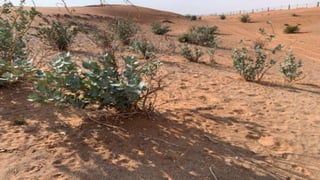
Arid zone
 is characterized by pastoralism and no farming
except with irrigation.
 Lake of Available water To extent Hindering and
preventing The growth and development of plant
life and animal life
 The native vegetation is low, being comprised of
annual and perennial grasses and other
herbaceous vegetation.
Hyper arid zone
 Comprises dryland areas without vegetation,
with the exception of a few scattered shrubs.
 Annual rainfall is low, rarely exceeding 100
millimeters.
 The rains are infrequent and irregular,
sometimes with no rain during long periods of
several years.
Semiarid zone
 The semi-arid zone
 can support rain-fed agriculture with more or less
sustained levels of production.
 Native vegetation is represented by a variety of
species, such as grasses and grass-like plants,
half-shrubs, shrubs and trees.
 Annual precipitation varies from 300-600 to 700-
800 millimeters, with summer rains, and from
200-250 to 450-500 millimeters with winter rains.
Drought
 Drought is a prolonged dry period in the natural
climate cycle that can occur anywhere in the
world. It is a slow-onset disaster characterized by
the lack of precipitation, resulting in a water
shortage. Drought can have a serious impact on
health, agriculture, economies, energy and the
environment.
Classification of drought
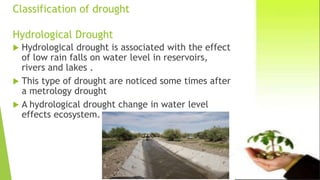
Hydrological Drought
 Hydrological drought is associated with the effect
of low rain falls on water level in reservoirs,
rivers and lakes .
 This type of drought are noticed some times after
a metrology drought
 A hydrological drought change in water level
effects ecosystem.
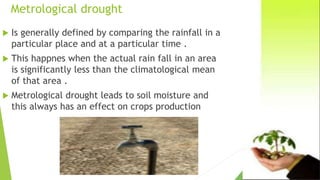
Metrological drought
 Is generally defined by comparing the rainfall in a
particular place and at a particular time .
 This happnes when the actual rain fall in an area
is significantly less than the climatological mean
of that area .
 Metrological drought leads to soil moisture and
this always has an effect on crops production
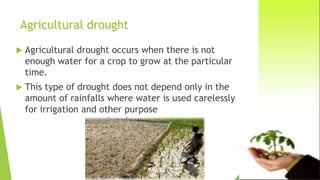
Agricultural drought
 Agricultural drought occurs when there is not
enough water for a crop to grow at the particular
time.
 This type of drought does not depend only in the
amount of rainfalls where water is used carelessly
for irrigation and other purpose
aridity and drought

aridity and drought

  • 2.
     Name :Muhammad Bilal  Presentation topic: aridity, Drought and classification of drought  Course Title : Agri tunnel farming  Submitted to : sir Muhammad Saleem Chang  Institute : Sindh Agriculture university Sub campus umerkot ( Department of Agronomy)
  • 3.
    Aridity • A longterm Lake of water , rainfall or moisture • Aridity is basically a comparison between water supply and water need. • Water supply in general is the amount of water received from precipitation, while water need is measured in terms of evapotranspiration.
  • 5.
    Causes of aridity Wind system  Rain  Temperature
  • 6.
    Three arid zonescan be delineated by this index: namely, Hyper-arid zone Arid zoneSemi-Arid zone  Of the total land area of the world, the hyper-arid zone covers 4.2 percent.  The arid zone 14.6 percent,  The semiarid zone 12.2 percent.
  • 7.
    Arid zone  ischaracterized by pastoralism and no farming except with irrigation.  Lake of Available water To extent Hindering and preventing The growth and development of plant life and animal life  The native vegetation is low, being comprised of annual and perennial grasses and other herbaceous vegetation.
  • 8.
    Hyper arid zone Comprises dryland areas without vegetation, with the exception of a few scattered shrubs.  Annual rainfall is low, rarely exceeding 100 millimeters.  The rains are infrequent and irregular, sometimes with no rain during long periods of several years.
  • 9.
    Semiarid zone  Thesemi-arid zone  can support rain-fed agriculture with more or less sustained levels of production.  Native vegetation is represented by a variety of species, such as grasses and grass-like plants, half-shrubs, shrubs and trees.  Annual precipitation varies from 300-600 to 700- 800 millimeters, with summer rains, and from 200-250 to 450-500 millimeters with winter rains.
  • 10.
    Drought  Drought isa prolonged dry period in the natural climate cycle that can occur anywhere in the world. It is a slow-onset disaster characterized by the lack of precipitation, resulting in a water shortage. Drought can have a serious impact on health, agriculture, economies, energy and the environment.
  • 11.
    Classification of drought HydrologicalDrought  Hydrological drought is associated with the effect of low rain falls on water level in reservoirs, rivers and lakes .  This type of drought are noticed some times after a metrology drought  A hydrological drought change in water level effects ecosystem.
  • 12.
    Metrological drought  Isgenerally defined by comparing the rainfall in a particular place and at a particular time .  This happnes when the actual rain fall in an area is significantly less than the climatological mean of that area .  Metrological drought leads to soil moisture and this always has an effect on crops production
  • 13.
    Agricultural drought  Agriculturaldrought occurs when there is not enough water for a crop to grow at the particular time.  This type of drought does not depend only in the amount of rainfalls where water is used carelessly for irrigation and other purpose