TangoArea of Study 3 (Dance Music):
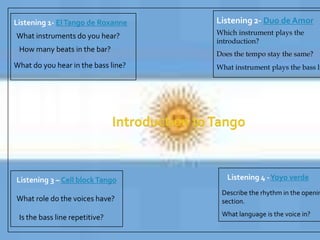
Listening 2- Duo de AmorListening 1- El Tango de RoxanneWhich instrument plays the introduction?What instruments do you hear?How many beats in the bar?Does the tempo stay the same?What do you hear in the bass line?What instrument plays the bass line?Introduction to TangoListening 4 - YoyoverdeListening 3 – Cell block TangoDescribe the rhythm in the opening section.What role do the voices have?What language is the voice in?Is the bass line repetitive?
OriginsBuenos Aires, Argentina, late 19th CenturyProduct of large, cosmopolitan city African slaves brought to Argentina to work since 1588 – their music and dance was a strong part in the development of the tangoCombined with dances from Europe and Cuba which originated in the poorer slums on the outskirts of Buenos Aires
Developments	Tango became popular throughout the cityEarly 1900s – was introduced to ParisBy 1913 it had overtaken London and New York as wellAcceptance of the dance by the upper classes Source of national pride for Argentina
Developments continued…Argentine tango became popular in Europe and the USA- the dancers standardised movements to dance competitively, thus creating the distinct style of ballroom tangoIn Argentina, tango continued to evolve: tango nuevo began to include aspects of jazz and classical music, incorporating new instruments such as electric guitar and saxophone.Later – electronic music entered tango – samples, loops etc
Composers of tango musicRoberto Firpowas one of the first composers of tango music. He brought the romantic feel to the style. His tango orchestra was the first to play G.M. Rodriguez’s La CumparsitaFrancisco Canarowas another early composer of tango music, but he was better known as a bandleader of a highly successful tango orchestra
Composers continuedAstor Piazzolla– one of the most famous tango composers. From the 1950s he greatly transformed the traditional style of tango- main contributor to the style of tango nuevoHis Libertango has been arranged by many musicians
Dance Moves – a sensual dancePartners in a close embrace (similar to waltz but the woman does not lean away from the man so much)Walking- “stalking” character to the stepsQuicker sharper movements than waltz – reflects the musicUpper body remains largely upright whilst most movements come from the dancers’ legsWomen – fast kicks, steps and moves than intertwine with her partner’s legs
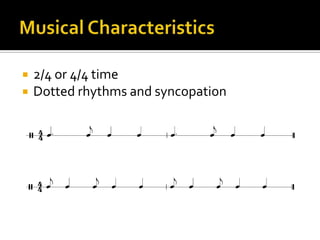
Musical Characteristics2/4 or 4/4 timeDotted rhythms and syncopation
Musical characteristicsRhythms are accented, short, sharp notes. Reflects the movements,Minor Key – often jazz harmoniesModerate tempo, c.120 beats per minuteRegular phrase lengthsBandoneón (similar to accordian), violin, piano and bass = orquestratipicaNow often different instruments but often strong string presence

Area of Study 3: Tango

  • 1.
    TangoArea of Study3 (Dance Music):
  • 2.
    Listening 2- Duode AmorListening 1- El Tango de RoxanneWhich instrument plays the introduction?What instruments do you hear?How many beats in the bar?Does the tempo stay the same?What do you hear in the bass line?What instrument plays the bass line?Introduction to TangoListening 4 - YoyoverdeListening 3 – Cell block TangoDescribe the rhythm in the opening section.What role do the voices have?What language is the voice in?Is the bass line repetitive?
  • 3.
    OriginsBuenos Aires, Argentina,late 19th CenturyProduct of large, cosmopolitan city African slaves brought to Argentina to work since 1588 – their music and dance was a strong part in the development of the tangoCombined with dances from Europe and Cuba which originated in the poorer slums on the outskirts of Buenos Aires
  • 4.
    Developments Tango became popularthroughout the cityEarly 1900s – was introduced to ParisBy 1913 it had overtaken London and New York as wellAcceptance of the dance by the upper classes Source of national pride for Argentina
  • 5.
    Developments continued…Argentine tangobecame popular in Europe and the USA- the dancers standardised movements to dance competitively, thus creating the distinct style of ballroom tangoIn Argentina, tango continued to evolve: tango nuevo began to include aspects of jazz and classical music, incorporating new instruments such as electric guitar and saxophone.Later – electronic music entered tango – samples, loops etc
  • 6.
    Composers of tangomusicRoberto Firpowas one of the first composers of tango music. He brought the romantic feel to the style. His tango orchestra was the first to play G.M. Rodriguez’s La CumparsitaFrancisco Canarowas another early composer of tango music, but he was better known as a bandleader of a highly successful tango orchestra
  • 7.
    Composers continuedAstor Piazzolla–one of the most famous tango composers. From the 1950s he greatly transformed the traditional style of tango- main contributor to the style of tango nuevoHis Libertango has been arranged by many musicians
  • 8.
    Dance Moves –a sensual dancePartners in a close embrace (similar to waltz but the woman does not lean away from the man so much)Walking- “stalking” character to the stepsQuicker sharper movements than waltz – reflects the musicUpper body remains largely upright whilst most movements come from the dancers’ legsWomen – fast kicks, steps and moves than intertwine with her partner’s legs
  • 9.
    Musical Characteristics2/4 or4/4 timeDotted rhythms and syncopation
  • 10.
    Musical characteristicsRhythms areaccented, short, sharp notes. Reflects the movements,Minor Key – often jazz harmoniesModerate tempo, c.120 beats per minuteRegular phrase lengthsBandoneón (similar to accordian), violin, piano and bass = orquestratipicaNow often different instruments but often strong string presence