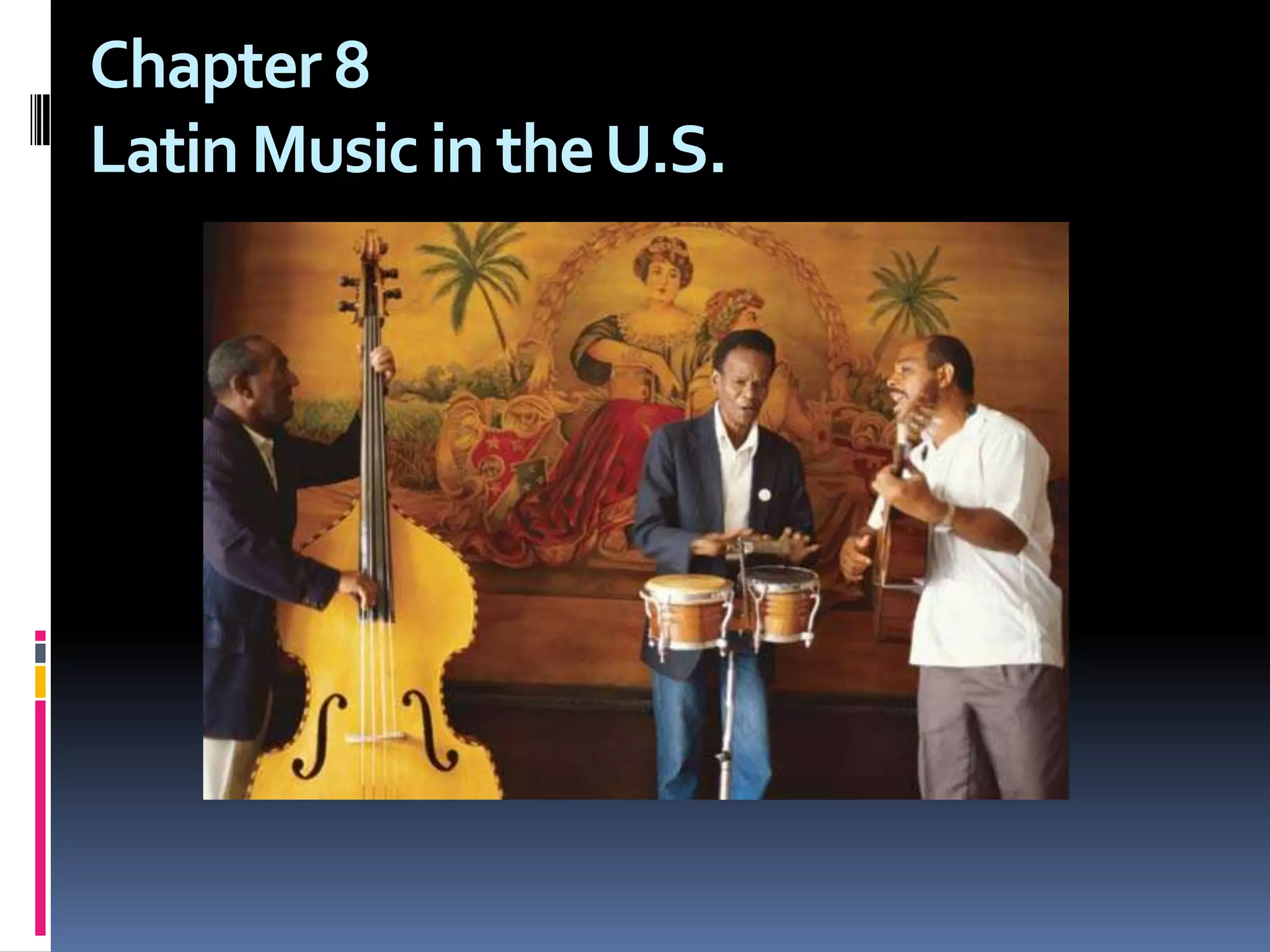
Chapter 8Latin Music in the U.S.
First Half of 20th Century Latin music = any Spanish sounding musicMusic for dancing   Originated in US (musicians within the Hispanic culture)  Outside Latin community (non-Hispanic musicians) Using Latin elements
Slave trade brought Africans to US, Caribbean and BrazilUnlike southern slaves, Latin/Caribbean kept their culture Slaves in southern US were not allowed to have drumsMixture of culture/religion/more rhythmic texture/percussion instr.
Latin elements in American pop music3 PhasesExotic novelties – up to 1940Hybrid/transformed styles – grew out of interpretations 1930-50Part of the fabric of pop music – 1950s onward
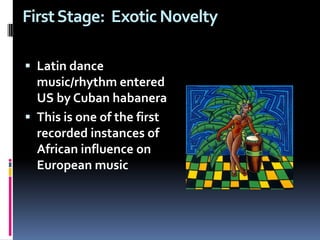
First Stage:  Exotic Novelty Latin dance music/rhythm entered US by Cuban habaneraThis is one of the first recorded instances of African influence on European music
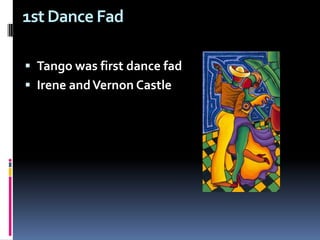
1st Dance Fad  Tango was first dance fad Irene and Vernon Castle
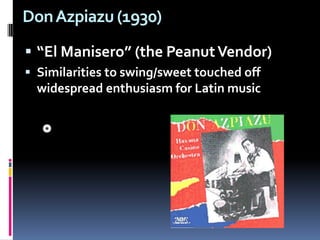
Don Azpiazu (1930) “El Manisero” (the Peanut Vendor) Similarities to swing/sweet touched off widespread enthusiasm for Latin music
2nd Latin Dance Fad  Rumba grew out of “son”“Son” – most characteristic style of Afro-Cuban musicRural song/dance form with African/Hispanic elementsRumba – simplified for social dancingCuban radio – live performers – allowed Afro-Cuban to perform
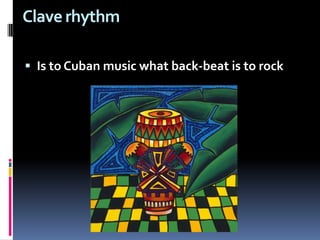
Clave rhythm Is to Cuban music what back-beat is to rock
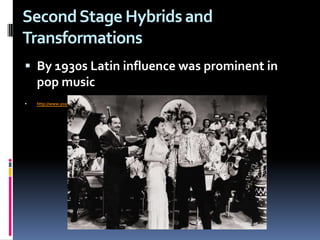
Second Stage Hybrids and TransformationsBy 1930s Latin influence was prominent in pop musichttp://www.youtube.com/watch?v=f-didTK_g-Y&feature=related
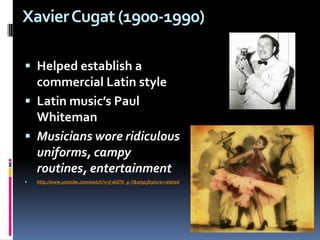
Xavier Cugat (1900-1990)  Helped establish a commercial Latin styleLatin music’s Paul WhitemanMusicians wore ridiculous uniforms, campy routines, entertainment http://www.youtube.com/watch?v=f-didTK_g-Y&feature=related
“Begin the Beguine” (1935) Written by Cole PorterLatin rhythm Very long song Sophisticated melodic construction Percussion give a Latin flavor
Latin generated transformationsDevelopment of a Latin districtConsequence of Spanish-American War Uptown Latin style for Latinos More African soundingHeavier percussionDense, complex rhythms
3rd Latin Dance Fad: MamboFirst to develop on US soil Merged authentic Afro-Cuban son with big-band horns and riffs.Mambo caught on with non-Latin audience 1940s As the mambo entered the mainstream, it watered down
Mambo thrived Rumba was not as popularReason: Presence of a stable, enthusiastic US audience for Afro-Cuban music 1930 was too small to support it
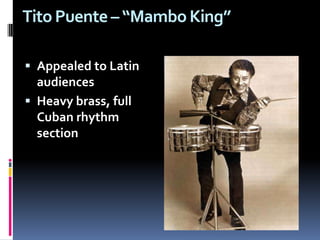
Tito Puente – “Mambo King” Appealed to Latin audiencesHeavy brass, full Cuban rhythm section
“Complicacion” (1958) Successful blend of American and Afro-Cuban elementsChachacha became more popular dance than mambo – simpler, slower
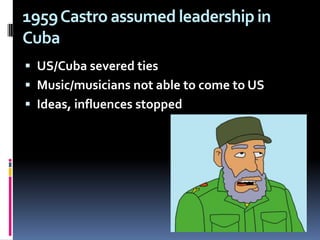
1959 Castro assumed leadership in CubaUS/Cuba severed tiesMusic/musicians not able to come to US Ideas, influences stopped
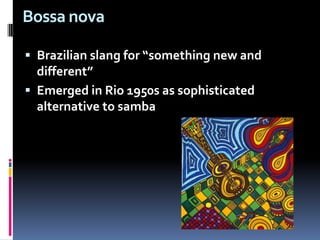
Bossa nova Brazilian slang for “something new and different”Emerged in Rio 1950s as sophisticated alternative to samba
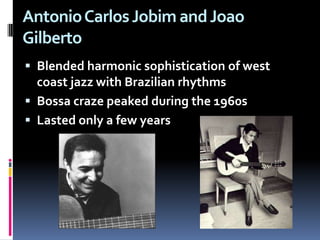
Antonio Carlos Jobim and Joao Gilberto Blended harmonic sophistication of west coast jazz with Brazilian rhythmsBossa craze peaked during the 1960s Lasted only a few years
“Girl From Ipanema” Landmark recording 1963 Gilberto and Stan GetzCool, flat, low-pitched voice Complex offbeat rhythms
TangoDance from Argentina Was first dance craze in USBuenos Aires is to tango what New Orleans is to jazz Music grew in low-life areasBandoneon – accordion from Germany – signature sound
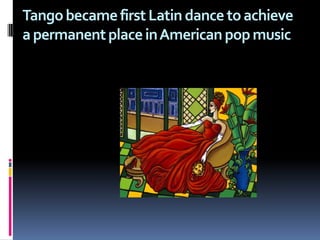
Tango became first Latin dance to achieve a permanent place in American pop music
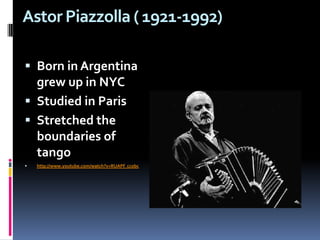
Astor Piazzolla ( 1921-1992) Born in Argentina grew up in NYCStudied in Paris Stretched the boundaries of tango http://www.youtube.com/watch?v=RUAPf_ccobc
 “Oblivion”Bass is heart-beat of tango – remains constantEmotional quality similar to the blues – vocal like expression
Tejano MusicParallels country music Unlike Cuban music Seldom has percussion complex rhythmsCharacteristic sounds Accordion bajosextoOversized 12- stringInfluenced by Germans – polkashttp://www.youtube.com/watch?v=OKZvSz4qs2w
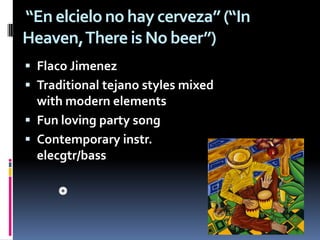
 “En elcielo no hay cerveza” (“In Heaven, There is No beer”) Flaco Jimenez Traditional tejano styles mixed with modern elementsFun loving party song Contemporary instr. elecgtr/bass

Ch 8 PP

  • 1.
  • 2.
    First Half of20th Century Latin music = any Spanish sounding musicMusic for dancing Originated in US (musicians within the Hispanic culture) Outside Latin community (non-Hispanic musicians) Using Latin elements
  • 3.
    Slave trade broughtAfricans to US, Caribbean and BrazilUnlike southern slaves, Latin/Caribbean kept their culture Slaves in southern US were not allowed to have drumsMixture of culture/religion/more rhythmic texture/percussion instr.
  • 4.
    Latin elements inAmerican pop music3 PhasesExotic novelties – up to 1940Hybrid/transformed styles – grew out of interpretations 1930-50Part of the fabric of pop music – 1950s onward
  • 5.
    First Stage: Exotic Novelty Latin dance music/rhythm entered US by Cuban habaneraThis is one of the first recorded instances of African influence on European music
  • 6.
    1st Dance Fad Tango was first dance fad Irene and Vernon Castle
  • 7.
    Don Azpiazu (1930)“El Manisero” (the Peanut Vendor) Similarities to swing/sweet touched off widespread enthusiasm for Latin music
  • 8.
    2nd Latin DanceFad Rumba grew out of “son”“Son” – most characteristic style of Afro-Cuban musicRural song/dance form with African/Hispanic elementsRumba – simplified for social dancingCuban radio – live performers – allowed Afro-Cuban to perform
  • 9.
    Clave rhythm Isto Cuban music what back-beat is to rock
  • 10.
    Second Stage Hybridsand TransformationsBy 1930s Latin influence was prominent in pop musichttp://www.youtube.com/watch?v=f-didTK_g-Y&feature=related
  • 11.
    Xavier Cugat (1900-1990) Helped establish a commercial Latin styleLatin music’s Paul WhitemanMusicians wore ridiculous uniforms, campy routines, entertainment http://www.youtube.com/watch?v=f-didTK_g-Y&feature=related
  • 12.
    “Begin the Beguine”(1935) Written by Cole PorterLatin rhythm Very long song Sophisticated melodic construction Percussion give a Latin flavor
  • 13.
    Latin generated transformationsDevelopmentof a Latin districtConsequence of Spanish-American War Uptown Latin style for Latinos More African soundingHeavier percussionDense, complex rhythms
  • 14.
    3rd Latin DanceFad: MamboFirst to develop on US soil Merged authentic Afro-Cuban son with big-band horns and riffs.Mambo caught on with non-Latin audience 1940s As the mambo entered the mainstream, it watered down
  • 15.
    Mambo thrived Rumbawas not as popularReason: Presence of a stable, enthusiastic US audience for Afro-Cuban music 1930 was too small to support it
  • 16.
    Tito Puente –“Mambo King” Appealed to Latin audiencesHeavy brass, full Cuban rhythm section
  • 17.
    “Complicacion” (1958) Successfulblend of American and Afro-Cuban elementsChachacha became more popular dance than mambo – simpler, slower
  • 18.
    1959 Castro assumedleadership in CubaUS/Cuba severed tiesMusic/musicians not able to come to US Ideas, influences stopped
  • 19.
    Bossa nova Brazilianslang for “something new and different”Emerged in Rio 1950s as sophisticated alternative to samba
  • 20.
    Antonio Carlos Jobimand Joao Gilberto Blended harmonic sophistication of west coast jazz with Brazilian rhythmsBossa craze peaked during the 1960s Lasted only a few years
  • 21.
    “Girl From Ipanema”Landmark recording 1963 Gilberto and Stan GetzCool, flat, low-pitched voice Complex offbeat rhythms
  • 22.
    TangoDance from ArgentinaWas first dance craze in USBuenos Aires is to tango what New Orleans is to jazz Music grew in low-life areasBandoneon – accordion from Germany – signature sound
  • 23.
    Tango became firstLatin dance to achieve a permanent place in American pop music
  • 24.
    Astor Piazzolla (1921-1992) Born in Argentina grew up in NYCStudied in Paris Stretched the boundaries of tango http://www.youtube.com/watch?v=RUAPf_ccobc
  • 25.
    “Oblivion”Bass isheart-beat of tango – remains constantEmotional quality similar to the blues – vocal like expression
  • 26.
    Tejano MusicParallels countrymusic Unlike Cuban music Seldom has percussion complex rhythmsCharacteristic sounds Accordion bajosextoOversized 12- stringInfluenced by Germans – polkashttp://www.youtube.com/watch?v=OKZvSz4qs2w
  • 27.
    “En elcielono hay cerveza” (“In Heaven, There is No beer”) Flaco Jimenez Traditional tejano styles mixed with modern elementsFun loving party song Contemporary instr. elecgtr/bass