Presented By :
Arnab Maitra
1st Year
M.Tech CSE (AIML)
NITTTR Kolkata
Architecture of
Distributed Database
Management Systems
Introduction to
Distributed DBMS
A distributed database management system
(DDBMS) stores
and manages data across multiple computers.
Importance
Enables scalability, reliability, and availability
in modern data management.
Transparency Levels
Ranges from complete data distribution
transparency to local data access.
Standardization in DBMS ensures
interoperability and data exchange.
Distributed Systems
Standardization applies to
distributed systems,
facilitating communication
and data management.
DNS and machine learning Standardization in
DDBMS
ANSI/SPARC
Reference architecture for
DBMS, defining three levels:
external, conceptual, and
internal.
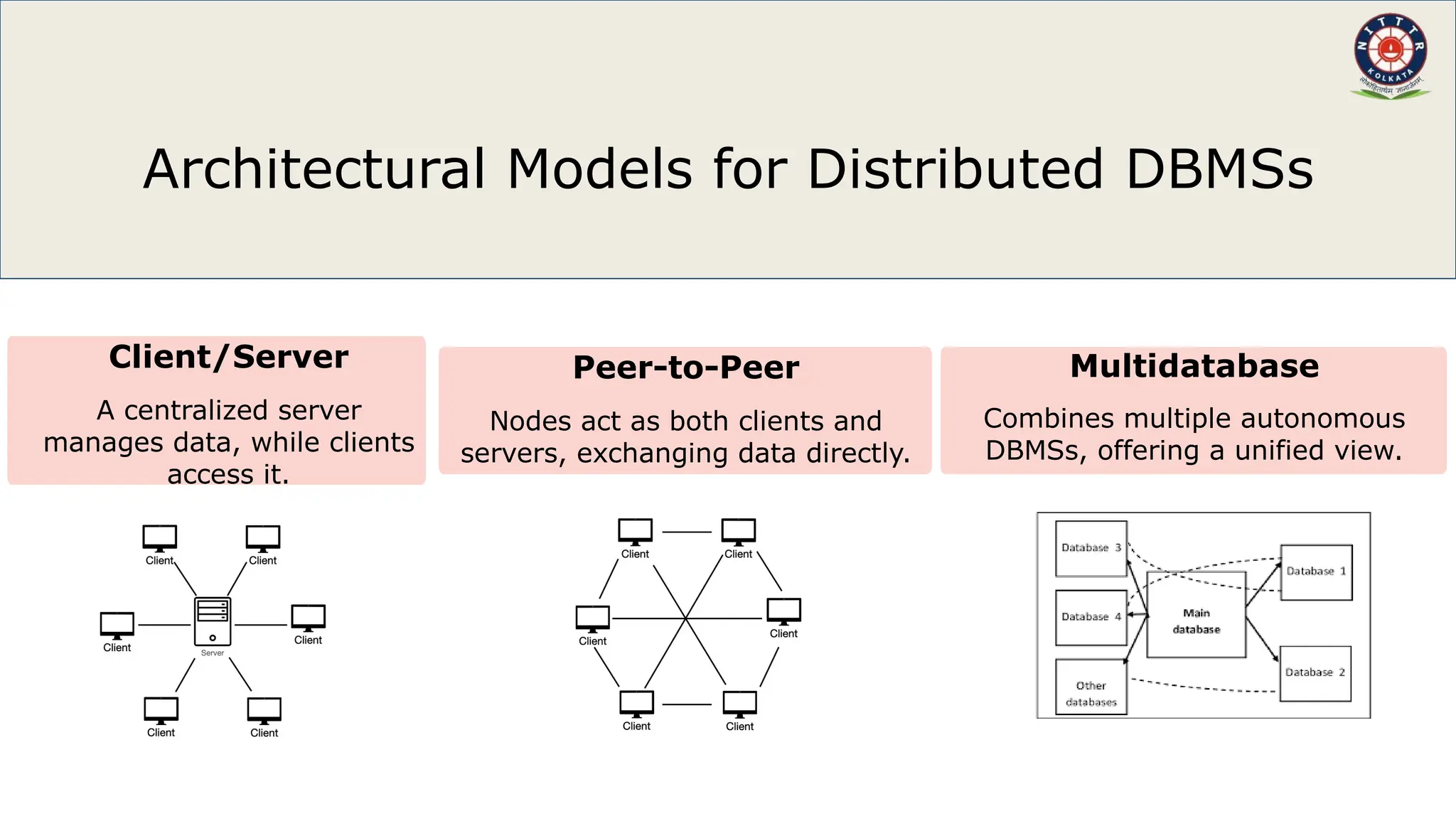
Architectural Models for Distributed DBMSs
Peer-to-Peer
Nodes act as both clients and
servers, exchanging data directly.
Client/Server
A centralized server
manages data, while clients
access it.
Multidatabase
Combines multiple autonomous
DBMSs, offering a unified view.
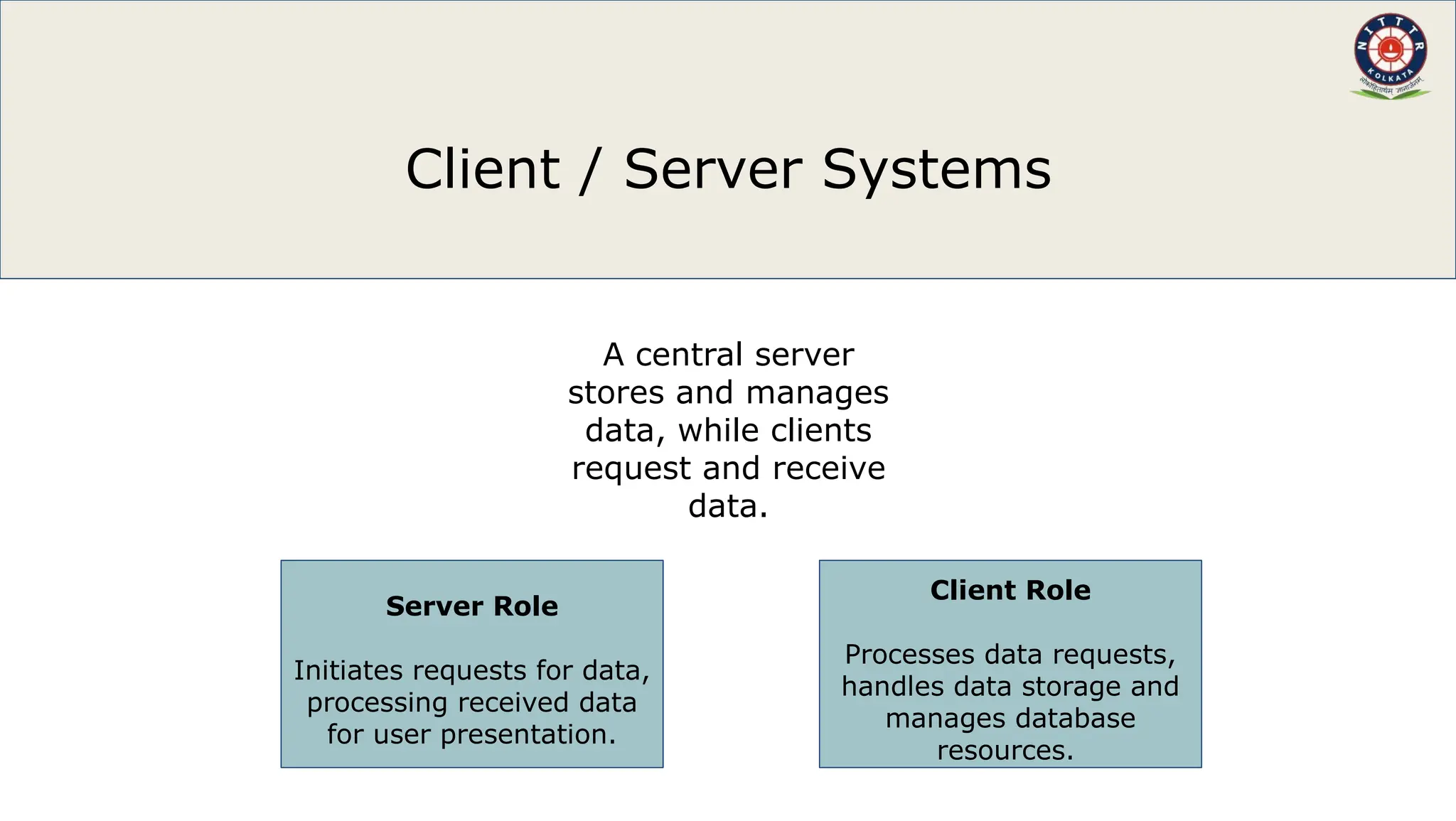
Client / Server Systems
A central server
stores and manages
data, while clients
request and receive
data.
Server Role
Initiates requests for data,
processing received data
for user presentation.
Client Role
Processes data requests,
handles data storage and
manages database
resources.
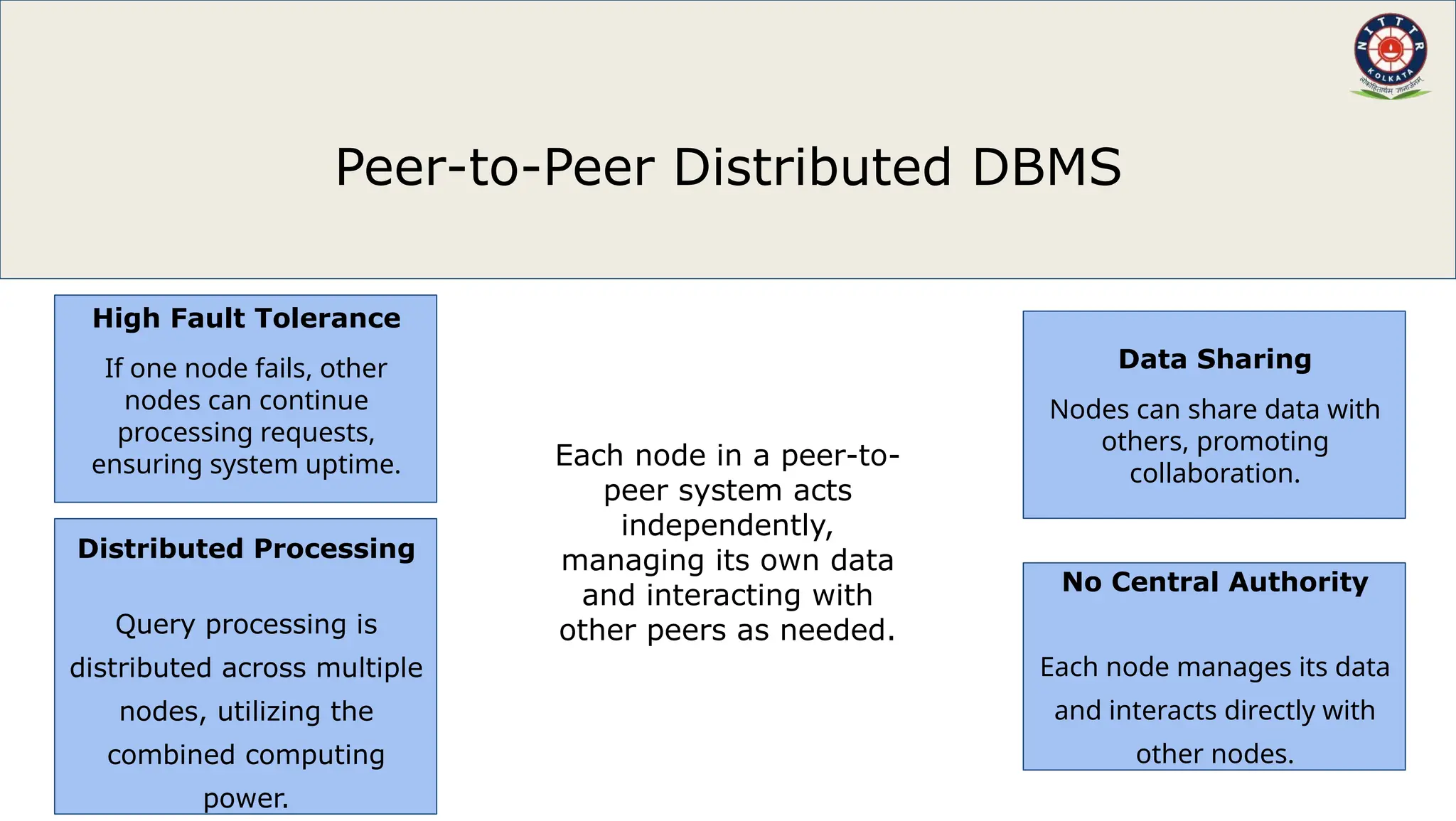
Nodes in a peer-to-peer system act as both clients and servers.
Peer-to-Peer Distributed DBMS
Data Sharing
Nodes can share data with
others, promoting
collaboration.
No Central Authority
Each node manages its data
and interacts directly with
other nodes.
Each node in a peer-to-
peer system acts
independently,
managing its own data
and interacting with
other peers as needed.
Distributed Processing
Query processing is
distributed across multiple
nodes, utilizing the
combined computing
power.
High Fault Tolerance
If one node fails, other
nodes can continue
processing requests,
ensuring system uptime.
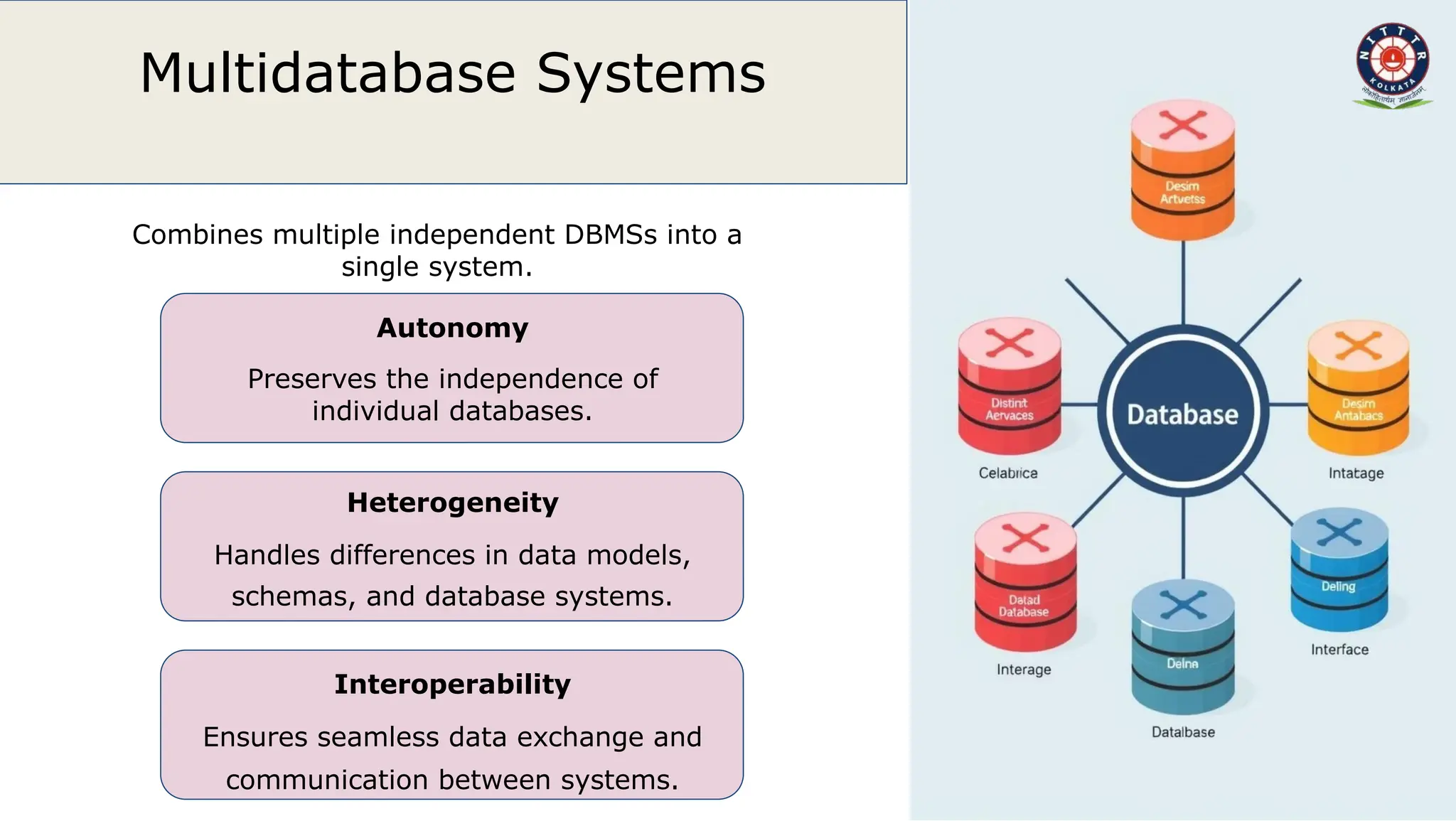
Combines multiple independent DBMSs into a
single system.
Interoperability
Ensures seamless data exchange and
communication between systems.
Multidatabase Systems
Autonomy
Preserves the independence of
individual databases.
Heterogeneity
Handles differences in data models,
schemas, and database systems.
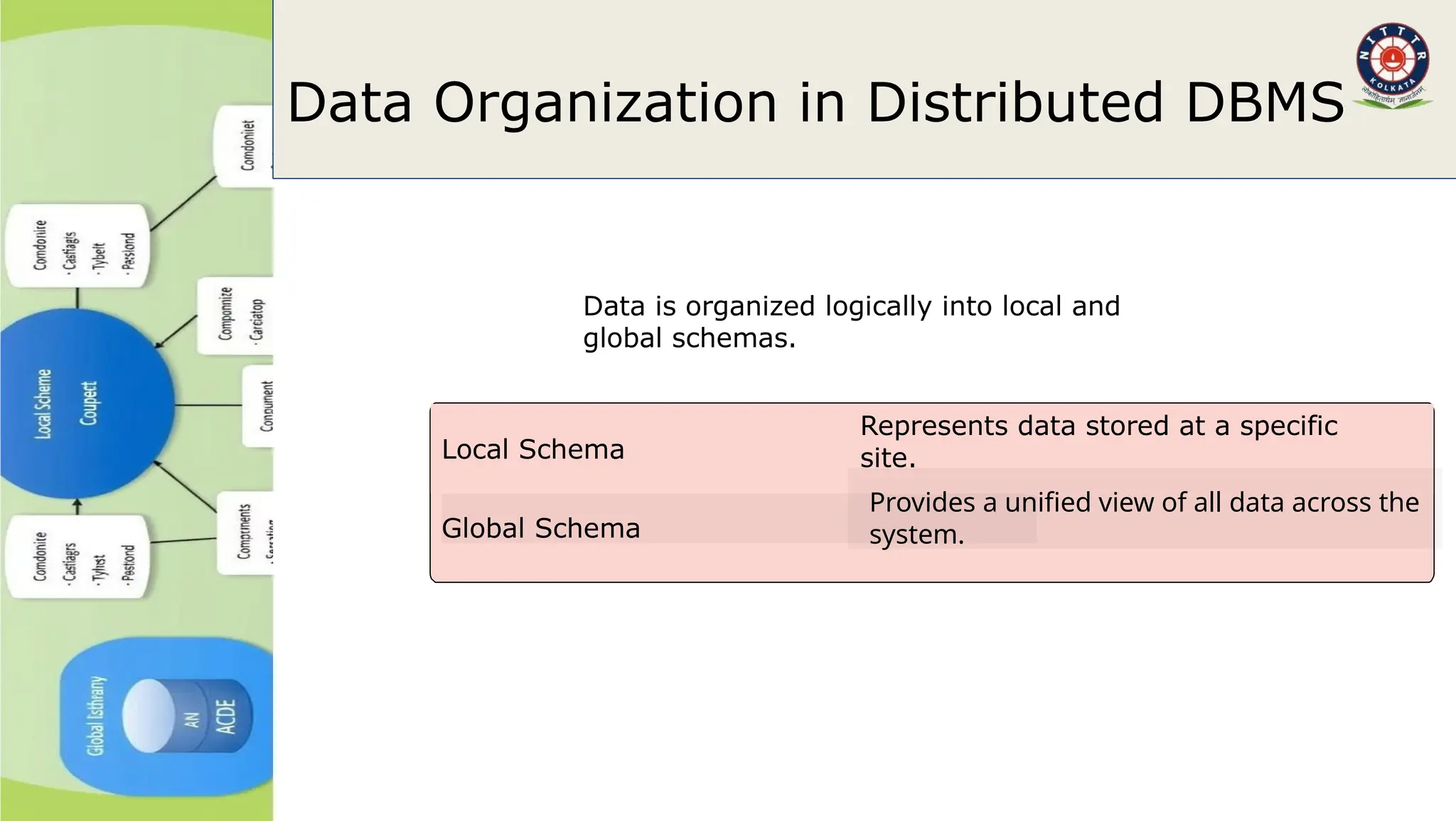
Data is organized logically into local and
global schemas.
Local Schema
Represents data stored at a specific
site.
Global Schema
Provides a unified view of all data across the
system.
Data Organization in Distributed DBMS
Components of a Distributed DBMS
Key components that facilitate distributed
database management.
User Processor
Provides user
interfaces, processing
transactions and
queries.
Storage Processor
Manages data storage,
access, and retrieval.
Global Directory
Maintains information
about data location and
distribution.
Conclusion
Distributed DBMS architecture enables efficient data
management in modern systems.
1) Key Points
DDBMSs enhance scalability,
reliability, and availability.
2) Future Trends
Cloud-based DDBMS, NoSQL, and
data analytics integration.
THANK
YOU

Architecture-of-Distributed-Database-Management-Systems (1) (1).pptx

  • 1.
    Presented By : ArnabMaitra 1st Year M.Tech CSE (AIML) NITTTR Kolkata Architecture of Distributed Database Management Systems
  • 2.
    Introduction to Distributed DBMS Adistributed database management system (DDBMS) stores and manages data across multiple computers. Importance Enables scalability, reliability, and availability in modern data management. Transparency Levels Ranges from complete data distribution transparency to local data access.
  • 3.
    Standardization in DBMSensures interoperability and data exchange. Distributed Systems Standardization applies to distributed systems, facilitating communication and data management. DNS and machine learning Standardization in DDBMS ANSI/SPARC Reference architecture for DBMS, defining three levels: external, conceptual, and internal.
  • 4.
    Architectural Models forDistributed DBMSs Peer-to-Peer Nodes act as both clients and servers, exchanging data directly. Client/Server A centralized server manages data, while clients access it. Multidatabase Combines multiple autonomous DBMSs, offering a unified view.
  • 5.
    Client / ServerSystems A central server stores and manages data, while clients request and receive data. Server Role Initiates requests for data, processing received data for user presentation. Client Role Processes data requests, handles data storage and manages database resources.
  • 6.
    Nodes in apeer-to-peer system act as both clients and servers. Peer-to-Peer Distributed DBMS Data Sharing Nodes can share data with others, promoting collaboration. No Central Authority Each node manages its data and interacts directly with other nodes. Each node in a peer-to- peer system acts independently, managing its own data and interacting with other peers as needed. Distributed Processing Query processing is distributed across multiple nodes, utilizing the combined computing power. High Fault Tolerance If one node fails, other nodes can continue processing requests, ensuring system uptime.
  • 7.
    Combines multiple independentDBMSs into a single system. Interoperability Ensures seamless data exchange and communication between systems. Multidatabase Systems Autonomy Preserves the independence of individual databases. Heterogeneity Handles differences in data models, schemas, and database systems.
  • 8.
    Data is organizedlogically into local and global schemas. Local Schema Represents data stored at a specific site. Global Schema Provides a unified view of all data across the system. Data Organization in Distributed DBMS
  • 9.
    Components of aDistributed DBMS Key components that facilitate distributed database management. User Processor Provides user interfaces, processing transactions and queries. Storage Processor Manages data storage, access, and retrieval. Global Directory Maintains information about data location and distribution.
  • 10.
    Conclusion Distributed DBMS architectureenables efficient data management in modern systems. 1) Key Points DDBMSs enhance scalability, reliability, and availability. 2) Future Trends Cloud-based DDBMS, NoSQL, and data analytics integration.
  • 11.