Architecture
S. Manikandan
Akbar’s Style
Characteristics of Architecture of Akbar
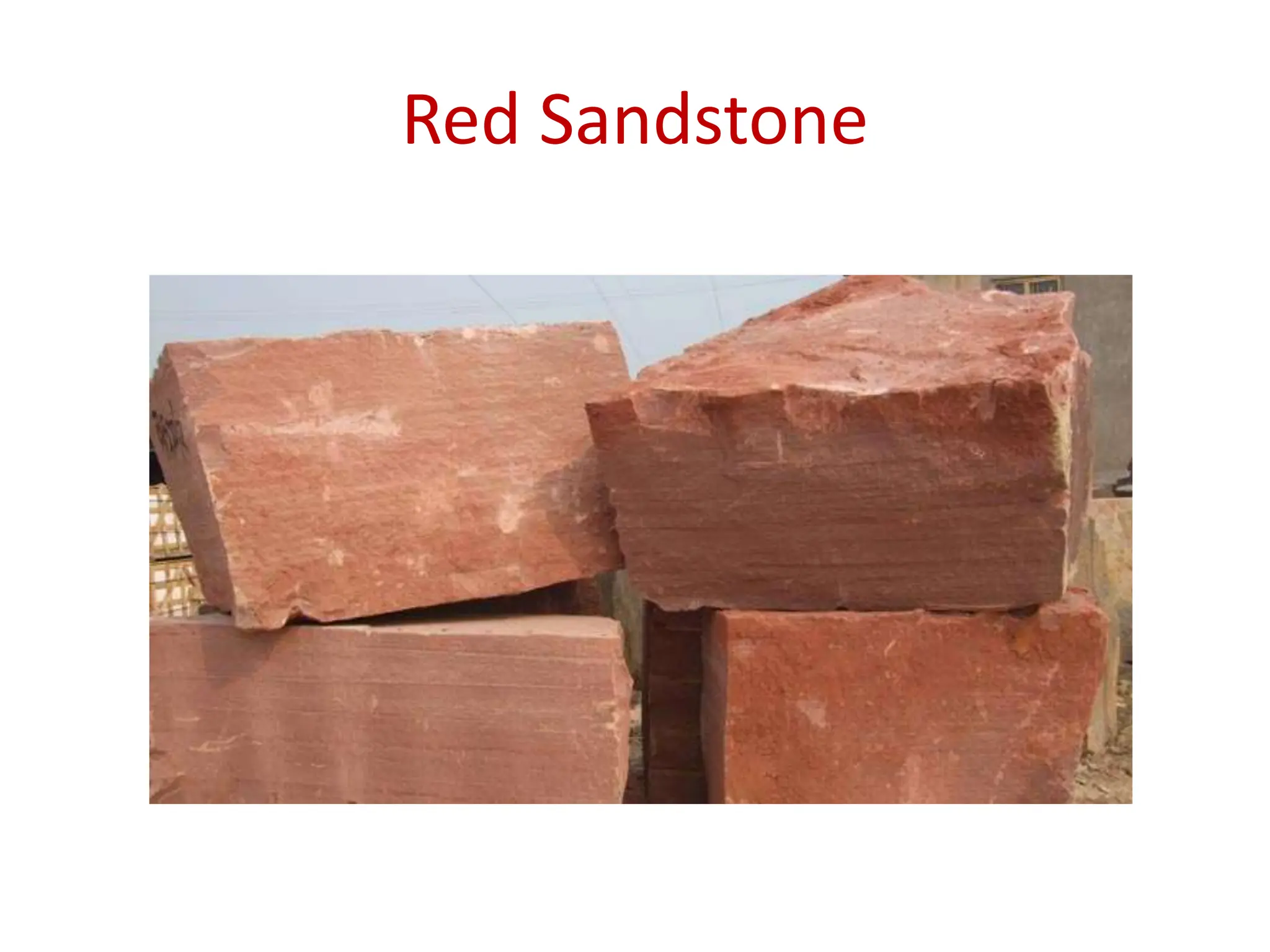
Red sandstone
Ideal synthesis of Hindu and Muslim
Traditions constructions of domes
Arches
Portals
Increased use of marble
Impregnable forts,
tombs
Imposing and artistic gateways
Hindu temples
Shah Jahan’s Style
The Mughall architecture reached
the zenith of its excellence
Built palaces
Mosques
Tomps
Pavilions of white marble at Agra, Lahore, Delhi,
Kabul, Kashmir, Ajmer, Kandahar and
Ahamadabad
He demolished many of Akbar’s red sand stone
structures in Agra and lahore forts and rebuilt
them of white marble which was available in
unlimited quantities in the quarries of Makrana
near Sambhal
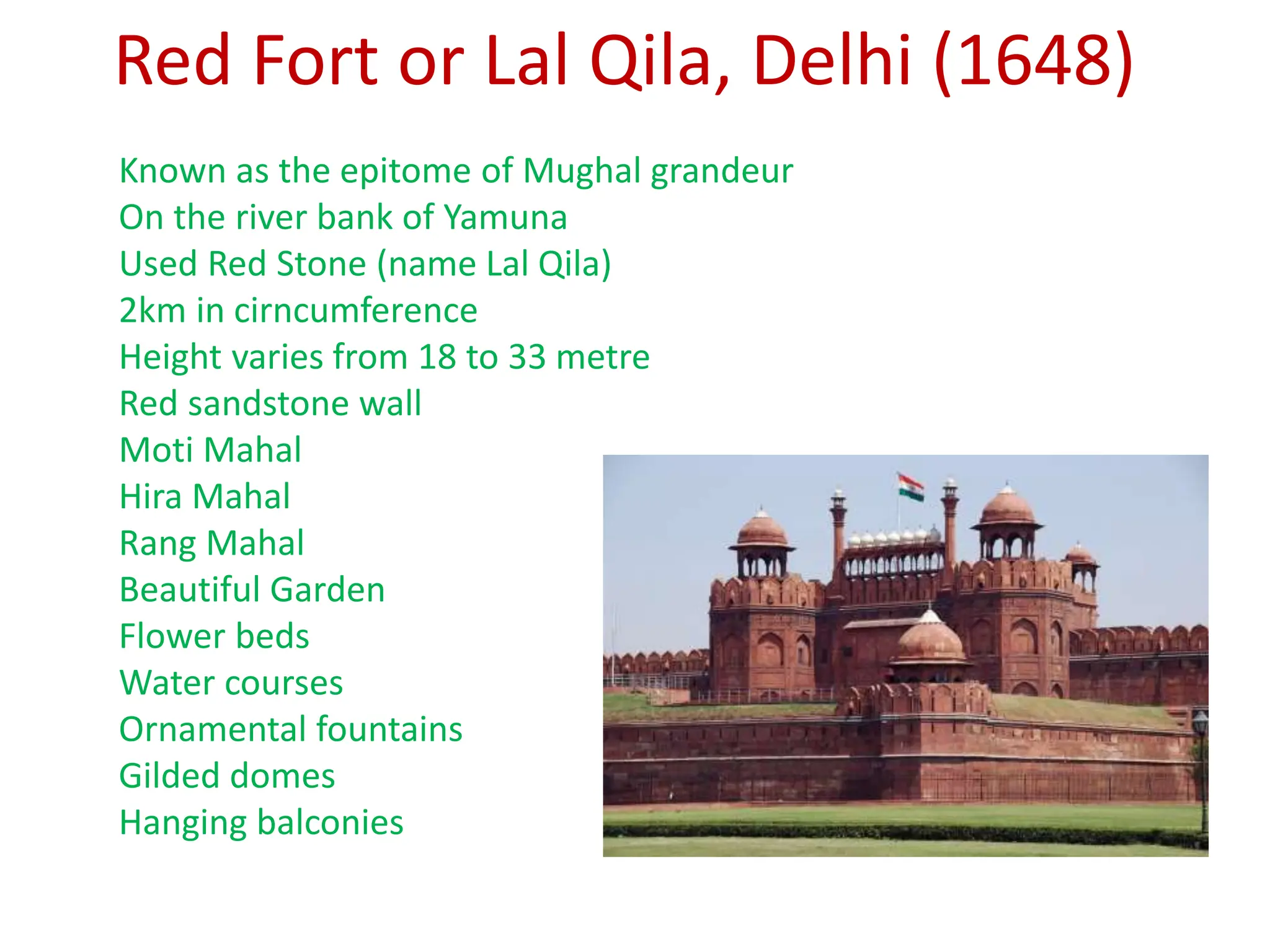
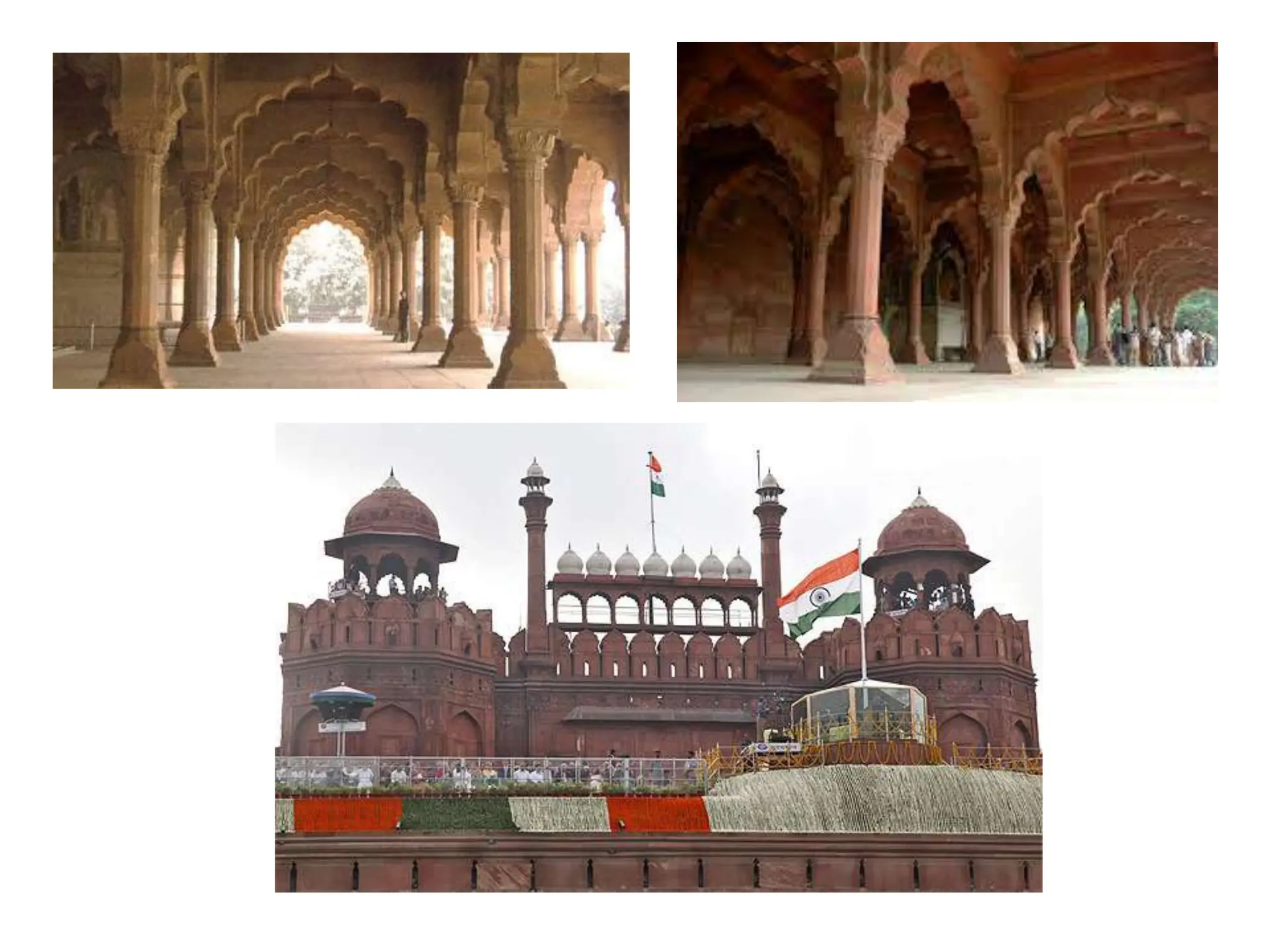
Red Fort or Lal Qila, Delhi (1648)
Known as the epitome of Mughal grandeur
On the river bank of Yamuna
Used Red Stone (name Lal Qila)
2km in cirncumference
Height varies from 18 to 33 metre
Red sandstone wall
Moti Mahal
Hira Mahal
Rang Mahal
Beautiful Garden
Flower beds
Water courses
Ornamental fountains
Gilded domes
Hanging balconies
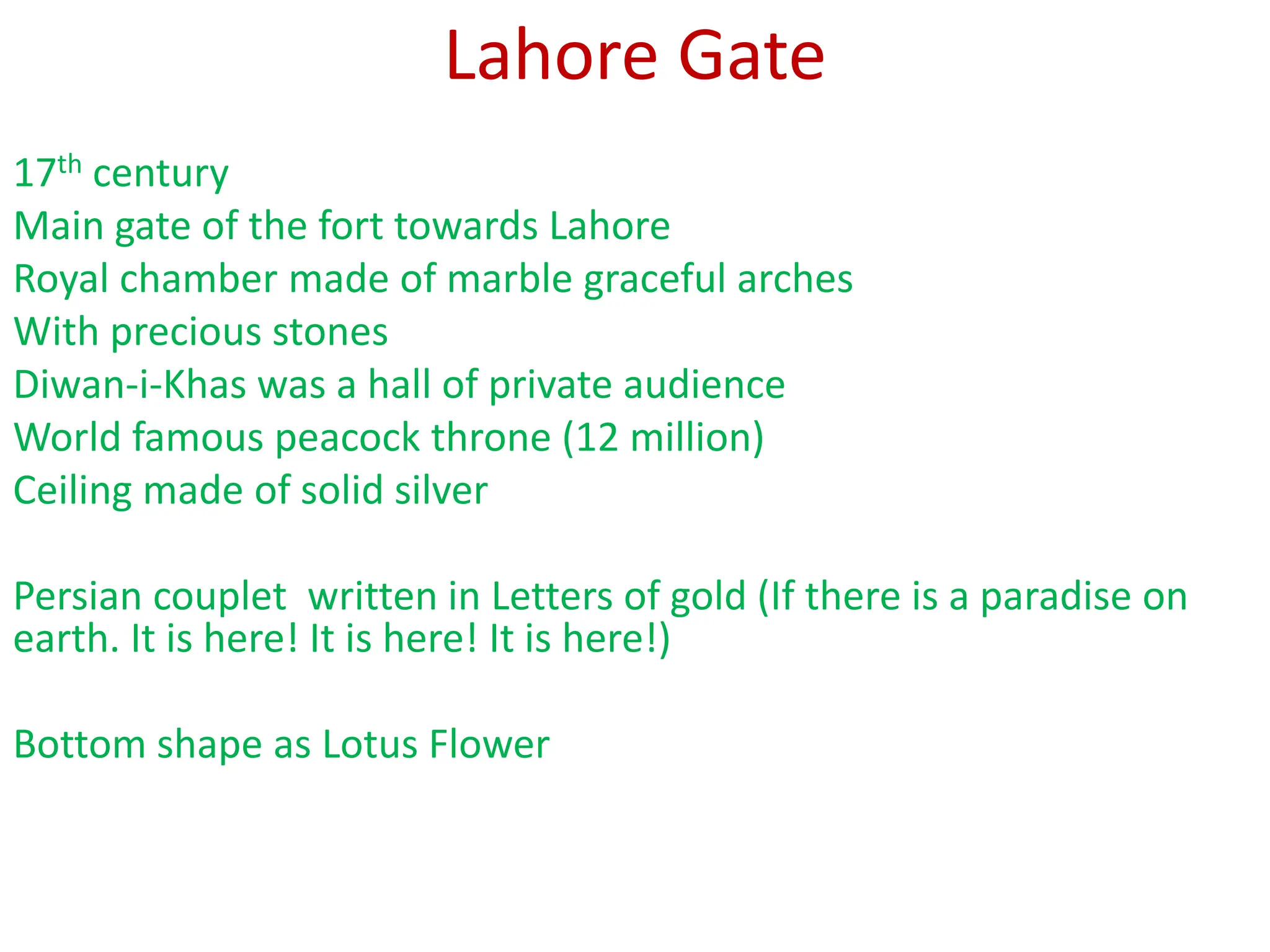
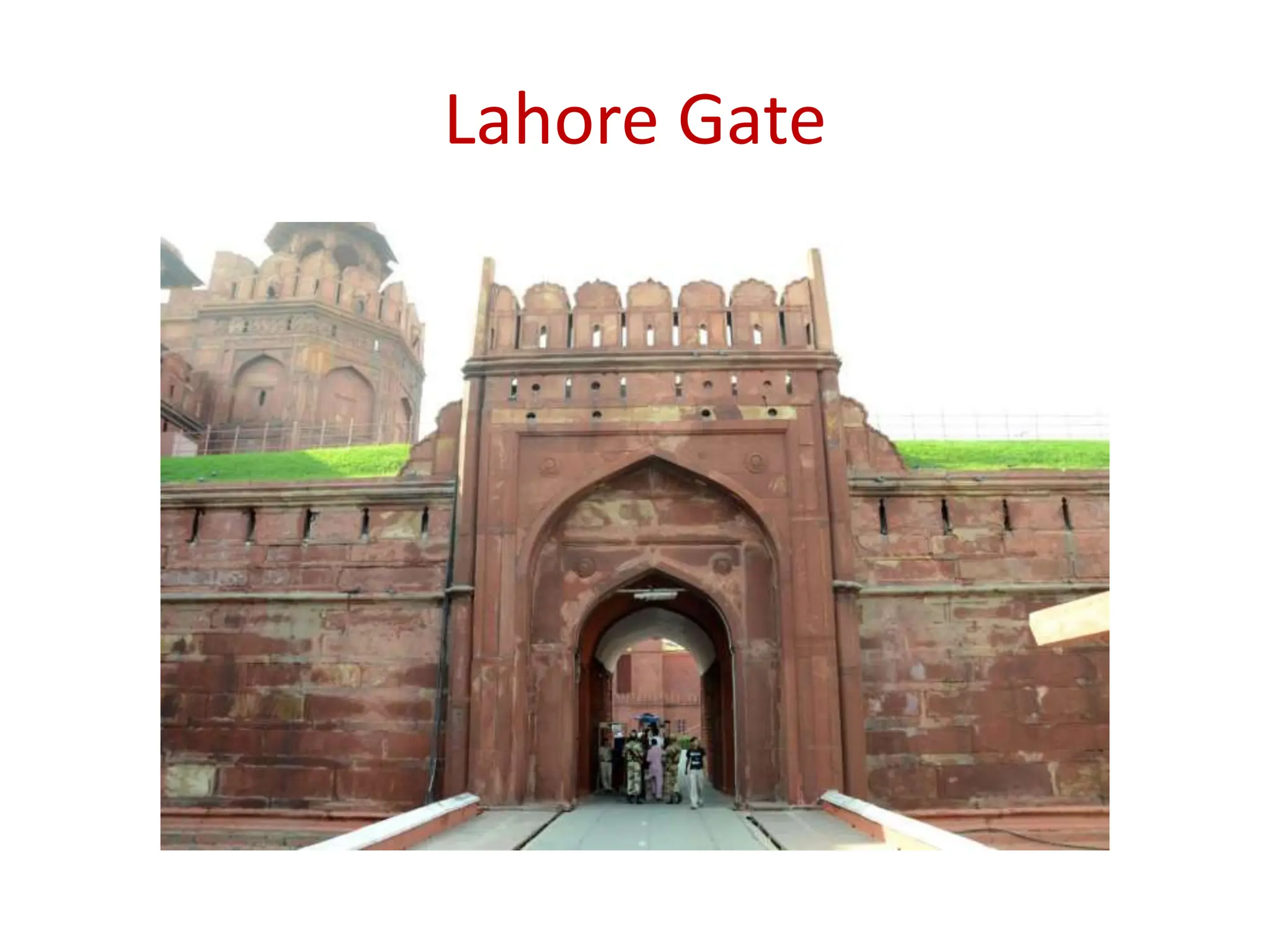
Lahore Gate
17th century
Main gate of the fort towards Lahore
Royal chamber made of marble graceful arches
With precious stones
Diwan-i-Khas was a hall of private audience
World famous peacock throne (12 million)
Ceiling made of solid silver
Persian couplet written in Letters of gold (If there is a paradise on
earth. It is here! It is here! It is here!)
Bottom shape as Lotus Flower
Lahore Gate
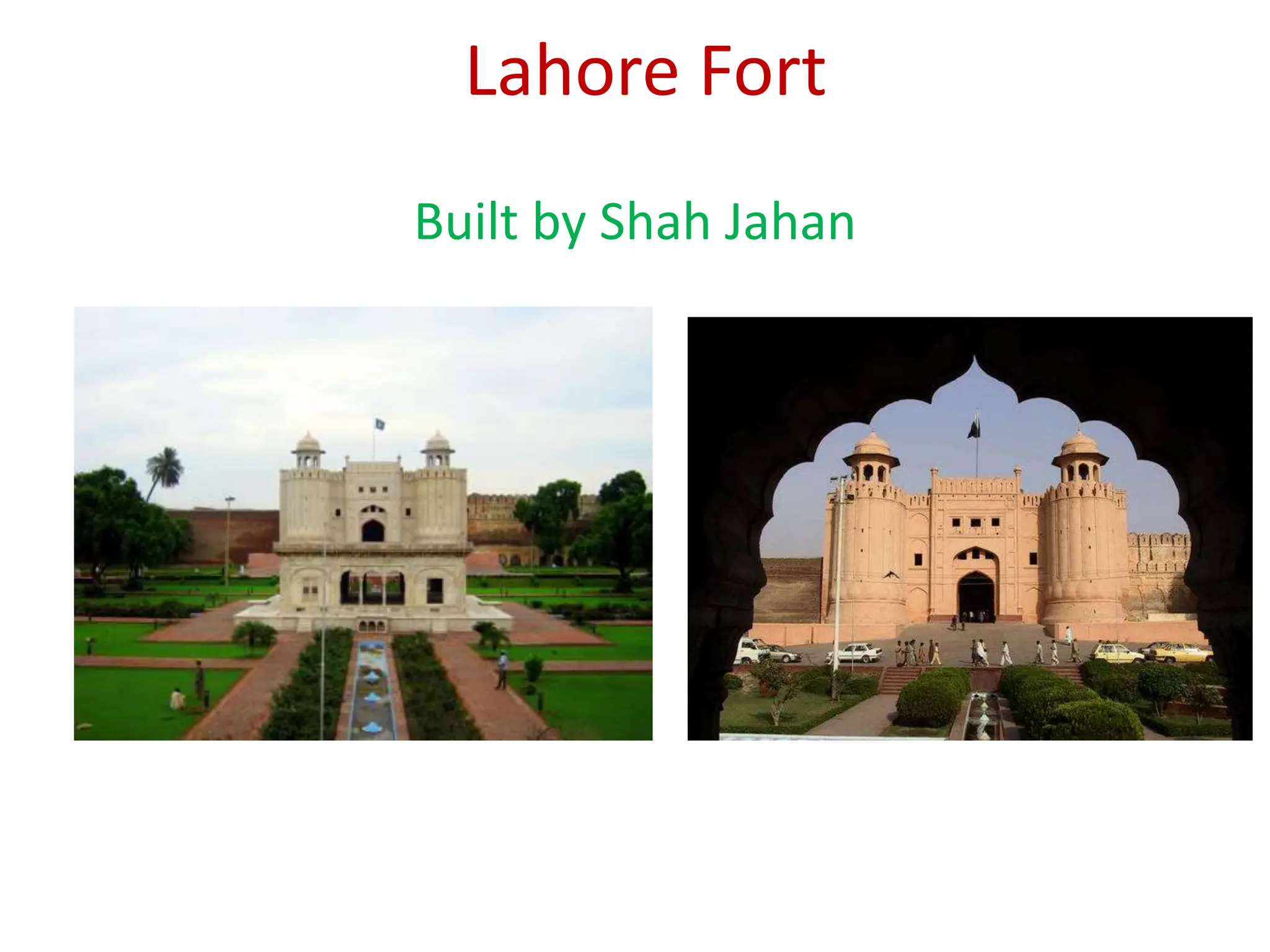
Lahore Fort
Built by Shah Jahan
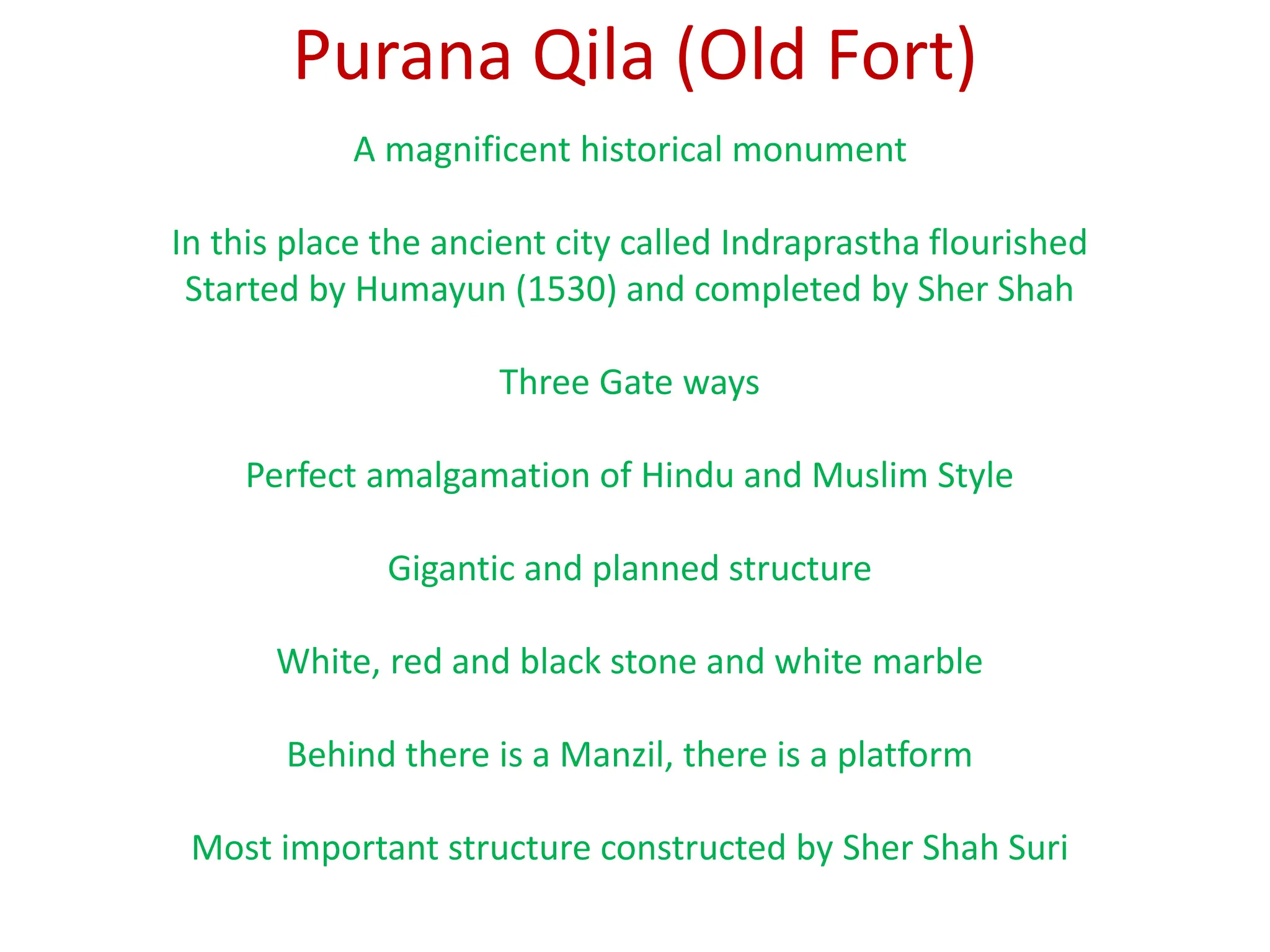
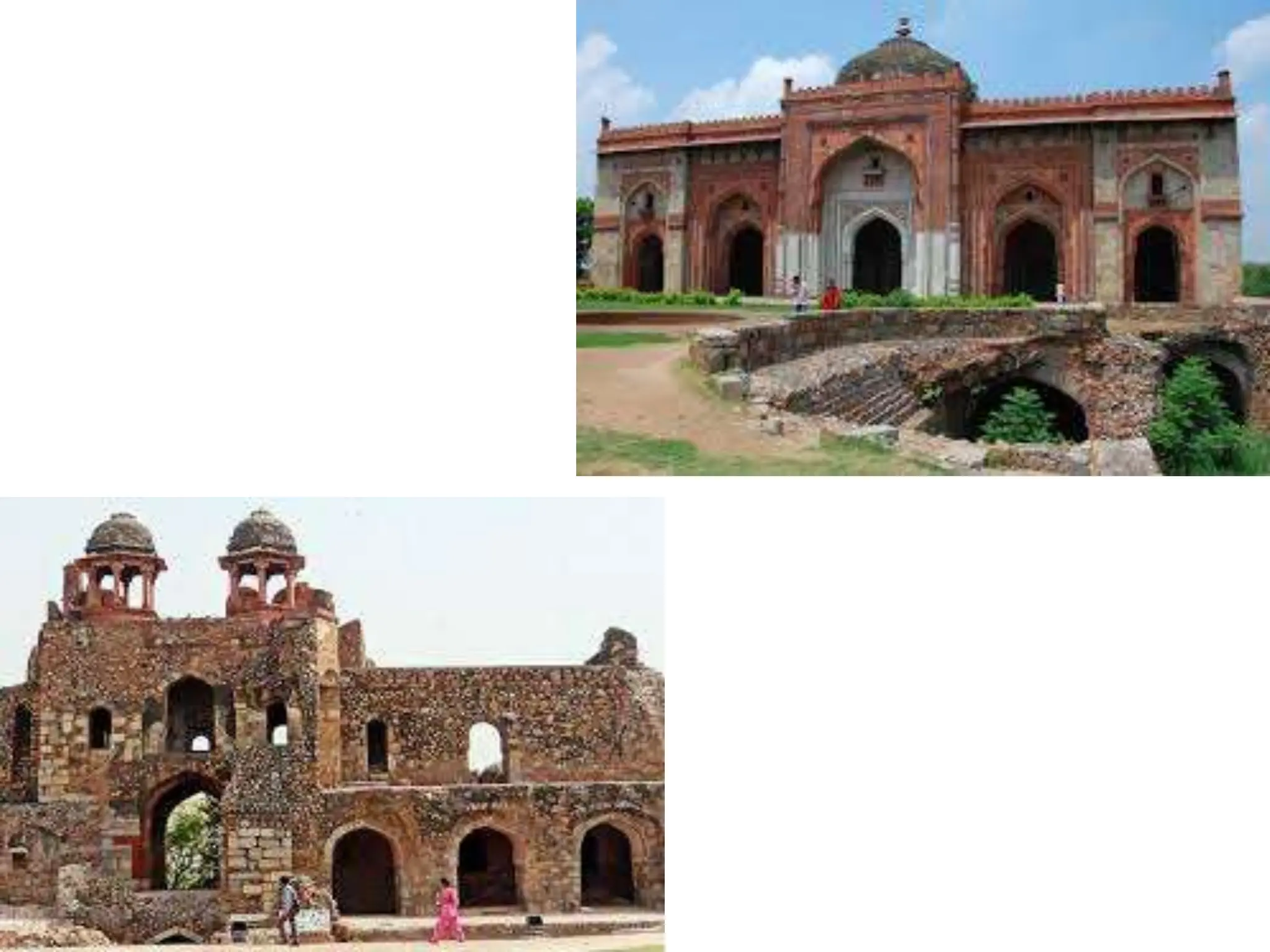
Purana Qila (Old Fort)
A magnificent historical monument
In this place the ancient city called Indraprastha flourished
Started by Humayun (1530) and completed by Sher Shah
Three Gate ways
Perfect amalgamation of Hindu and Muslim Style
Gigantic and planned structure
White, red and black stone and white marble
Behind there is a Manzil, there is a platform
Most important structure constructed by Sher Shah Suri
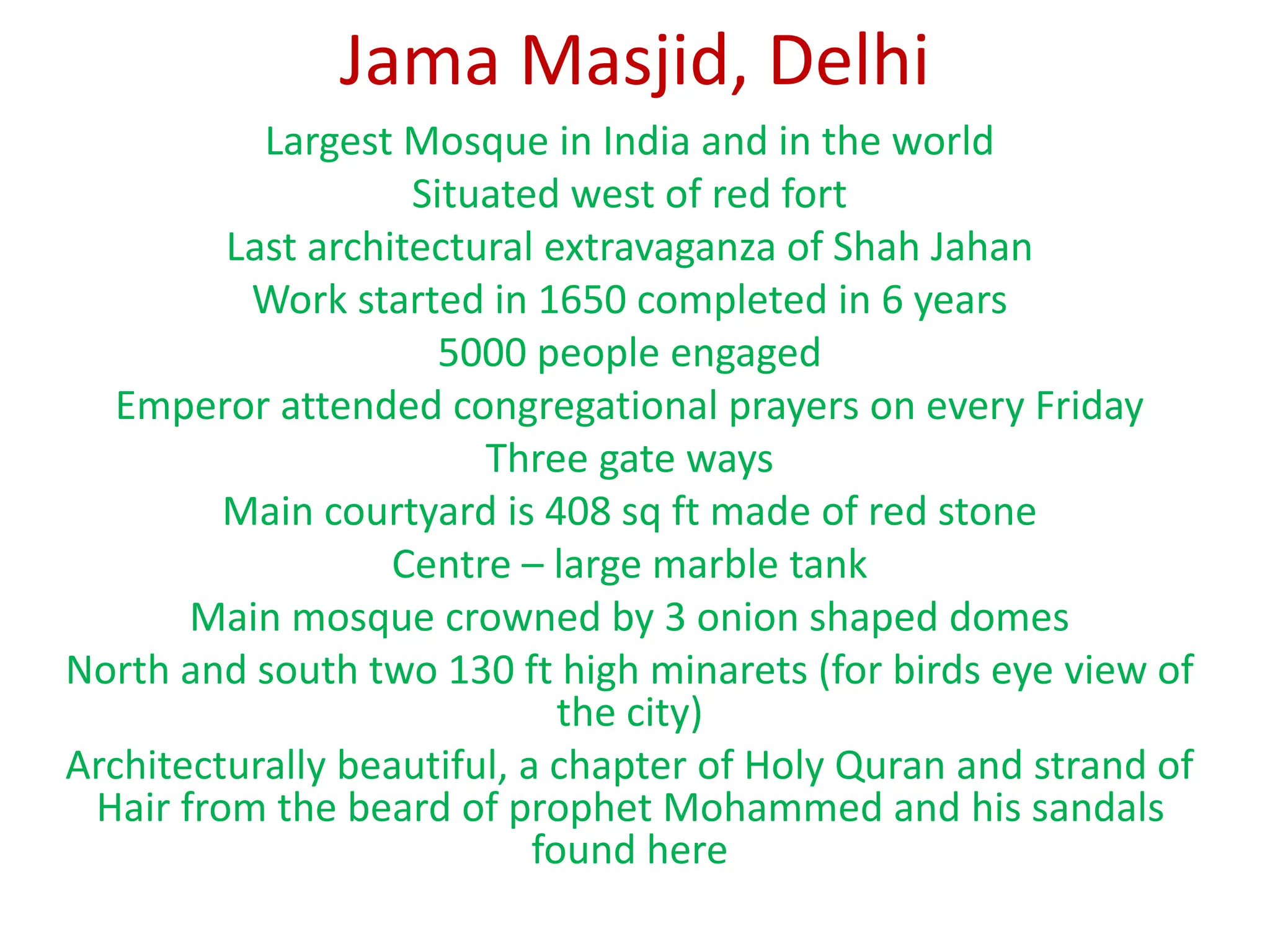
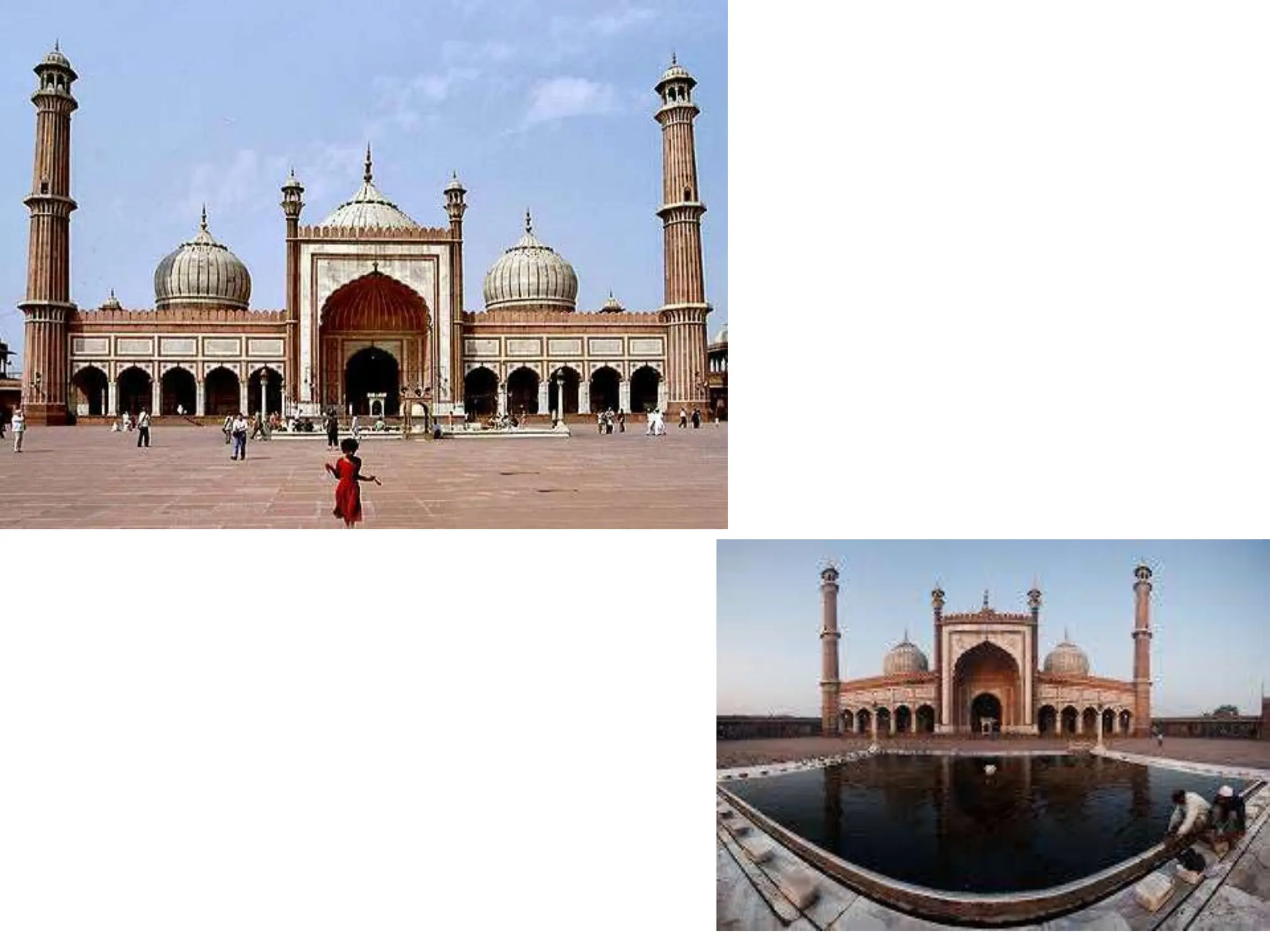
Jama Masjid, Delhi
Largest Mosque in India and in the world
Situated west of red fort
Last architectural extravaganza of Shah Jahan
Work started in 1650 completed in 6 years
5000 people engaged
Emperor attended congregational prayers on every Friday
Three gate ways
Main courtyard is 408 sq ft made of red stone
Centre – large marble tank
Main mosque crowned by 3 onion shaped domes
North and south two 130 ft high minarets (for birds eye view of
the city)
Architecturally beautiful, a chapter of Holy Quran and strand of
Hair from the beard of prophet Mohammed and his sandals
found here
Fatehpur Sikri (U.P.)
Buland Darwaza
Diwan-i-Khas (a private hall for audience)
Diwan-i-Am (the hall of Public Audience is 350 ft
long)
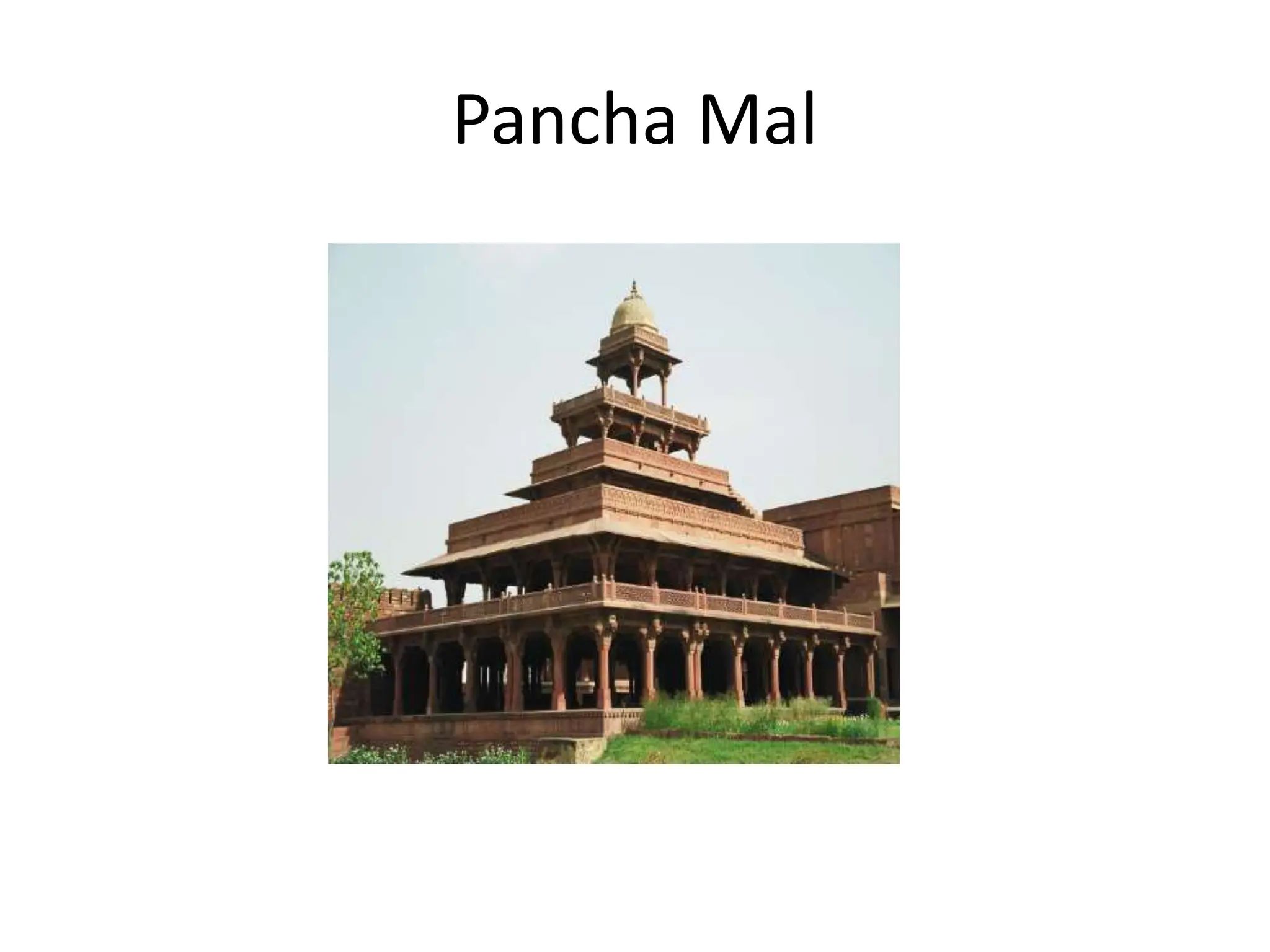
Panch Mahal (84 columns)
Mariam’s Palace (more paintings and miniature)
The Turkish Sultana’s Palace (wives)
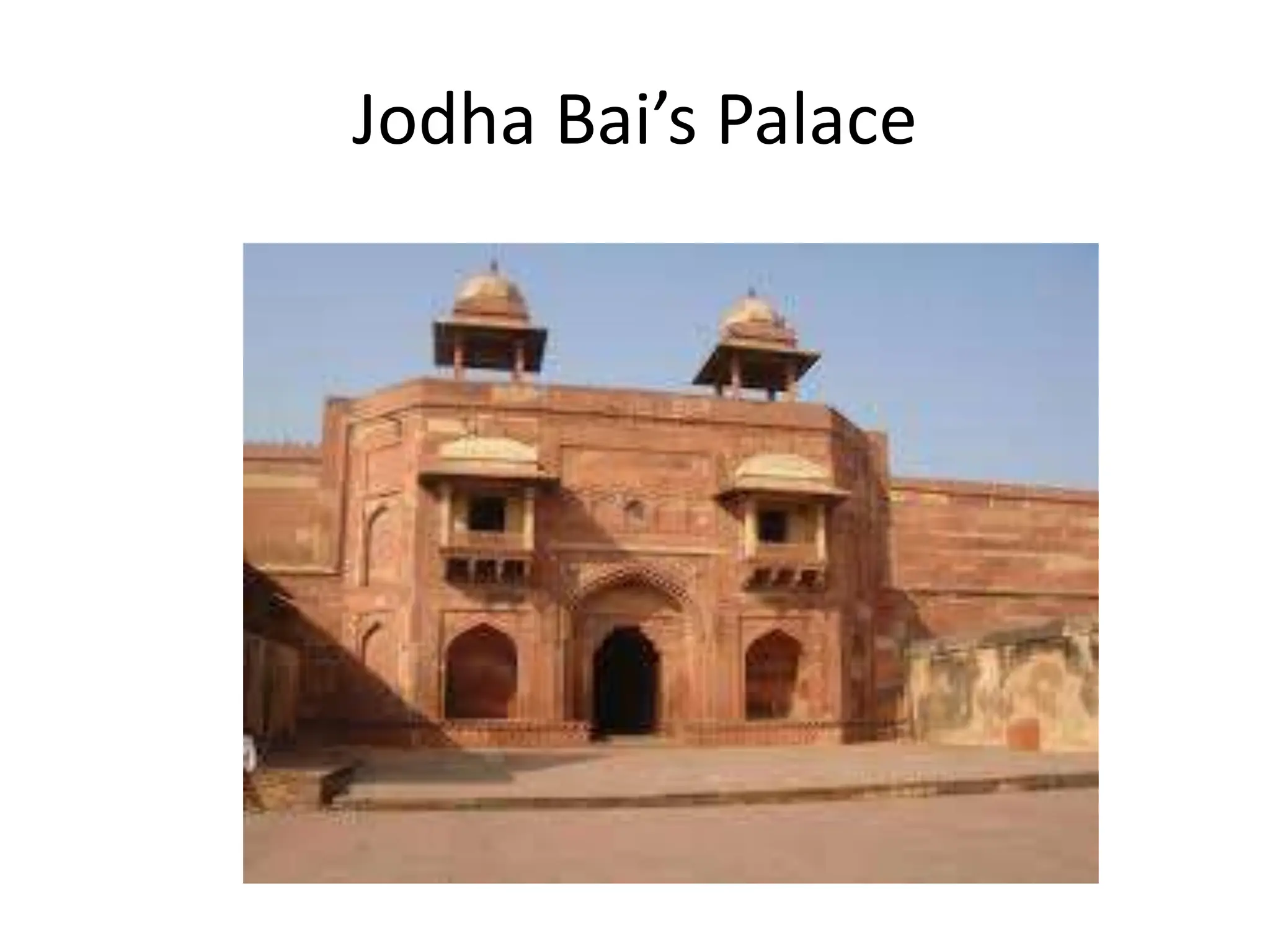
Jodha Bai’s Palace (Rajput wife)
Birbal’s Palace (minister)
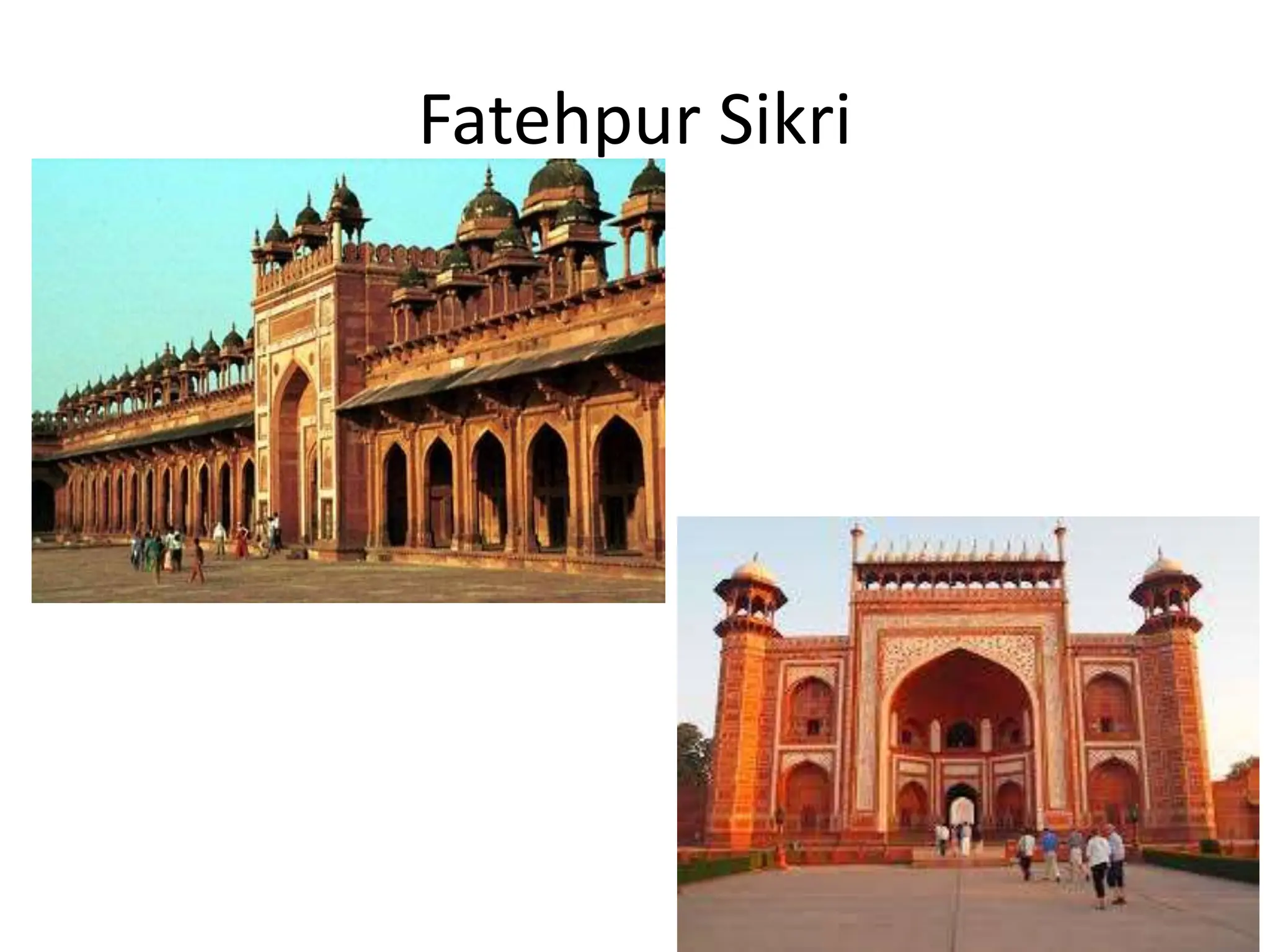
Fatehpur Sikri
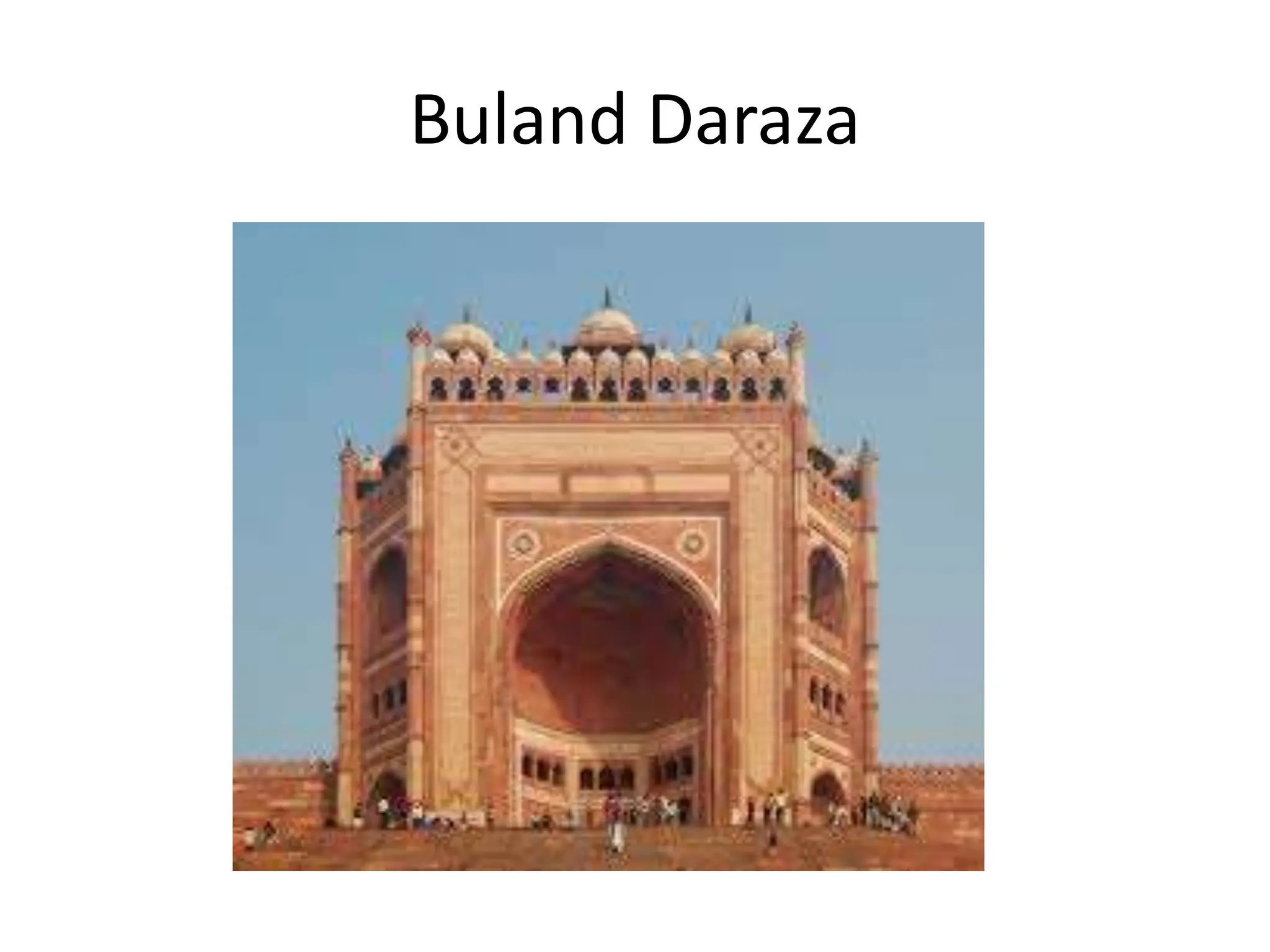
Buland Darwaza
The 175 ft hightest gateway in India by Akbar
50 km from Agra
Commemorate Akbar’s conquest of Khandesh
(Gujarat)
Akbar met a muslim holy man Shaikh Salim Chisti
Salim became Jahangir
In 1583 the English men met Akbar and amazed to
see the splendour of Darwaza
Today it looks deserted but fairy tale
Buland Daraza
Pancha Mal
Jodha Bai’s Palace
Agra Fort in Uttar Pradesh
Finest and strongest citadels in the world
The Jahangir Mahal with red sand stone and Rajput style
Rang Mahal adorned with exquisite floral decoration
The Khas Mahal (the marble palace) by Shah Jahan
The Sheesh Mahal, a superp monument ornamented by small
pieces of mirror
The Diwan-i-Khas or the hall of private audience (marble palace)
Comprised of finely shaped flower beds, fountains, water
channels and tanks
Shah jahan built three mosques
Moti Masjid build in white marble
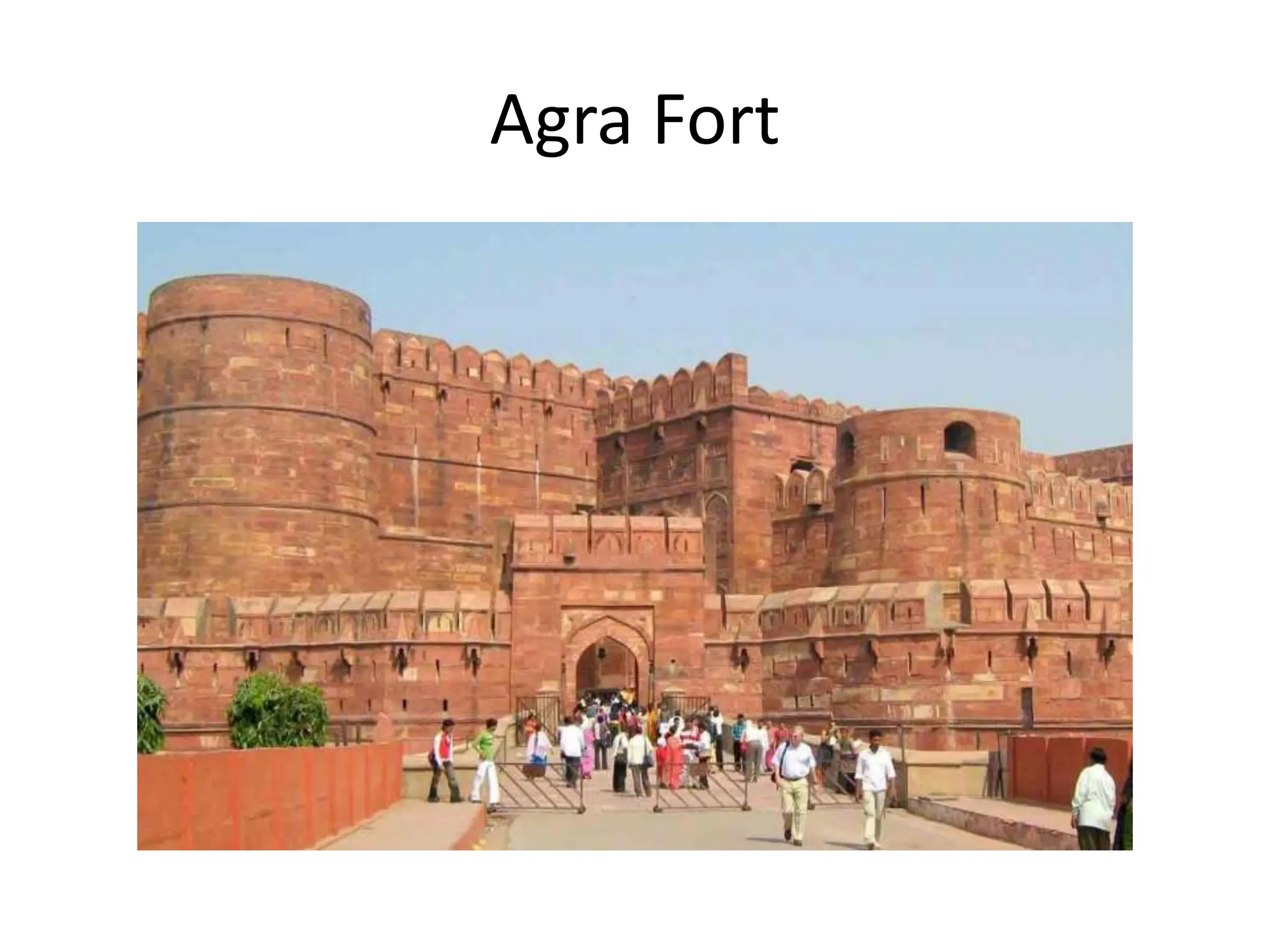
Agra Fort
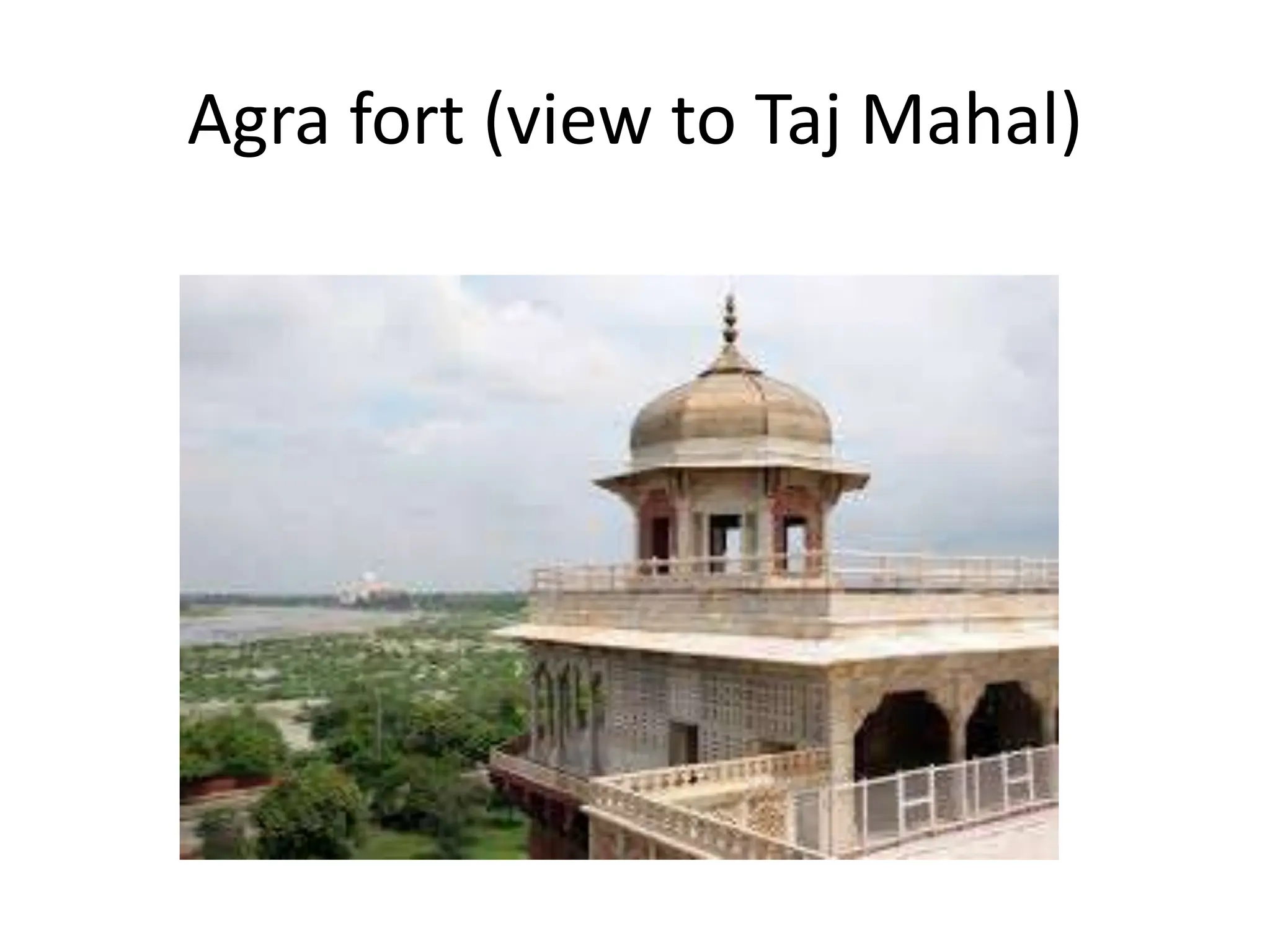
Agra fort (view to Taj Mahal)
Red Sandstone
White Marble
Western Influence
Advent of the Europeans
• Portuguese
• Dutch
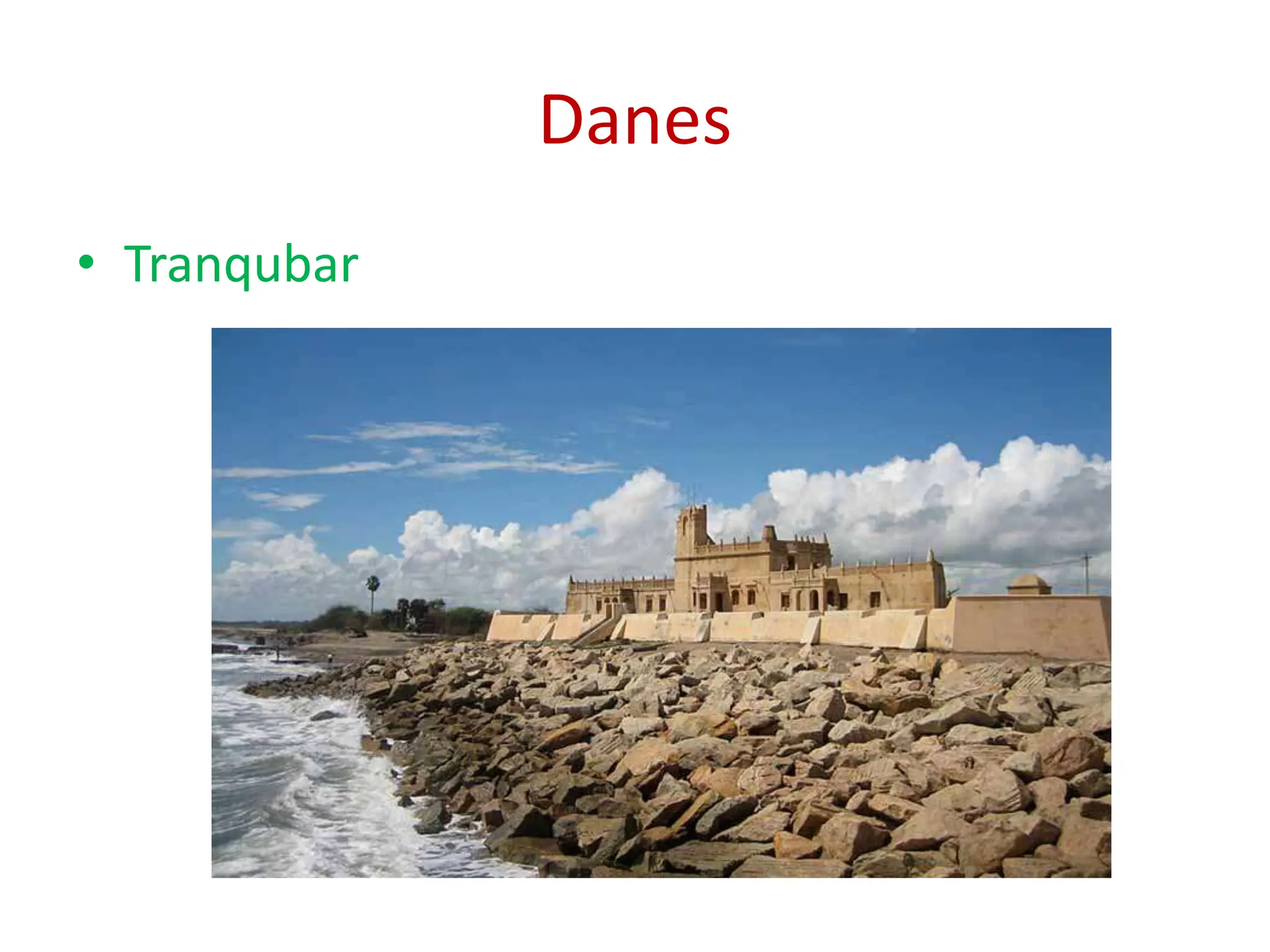
• Danes
• English
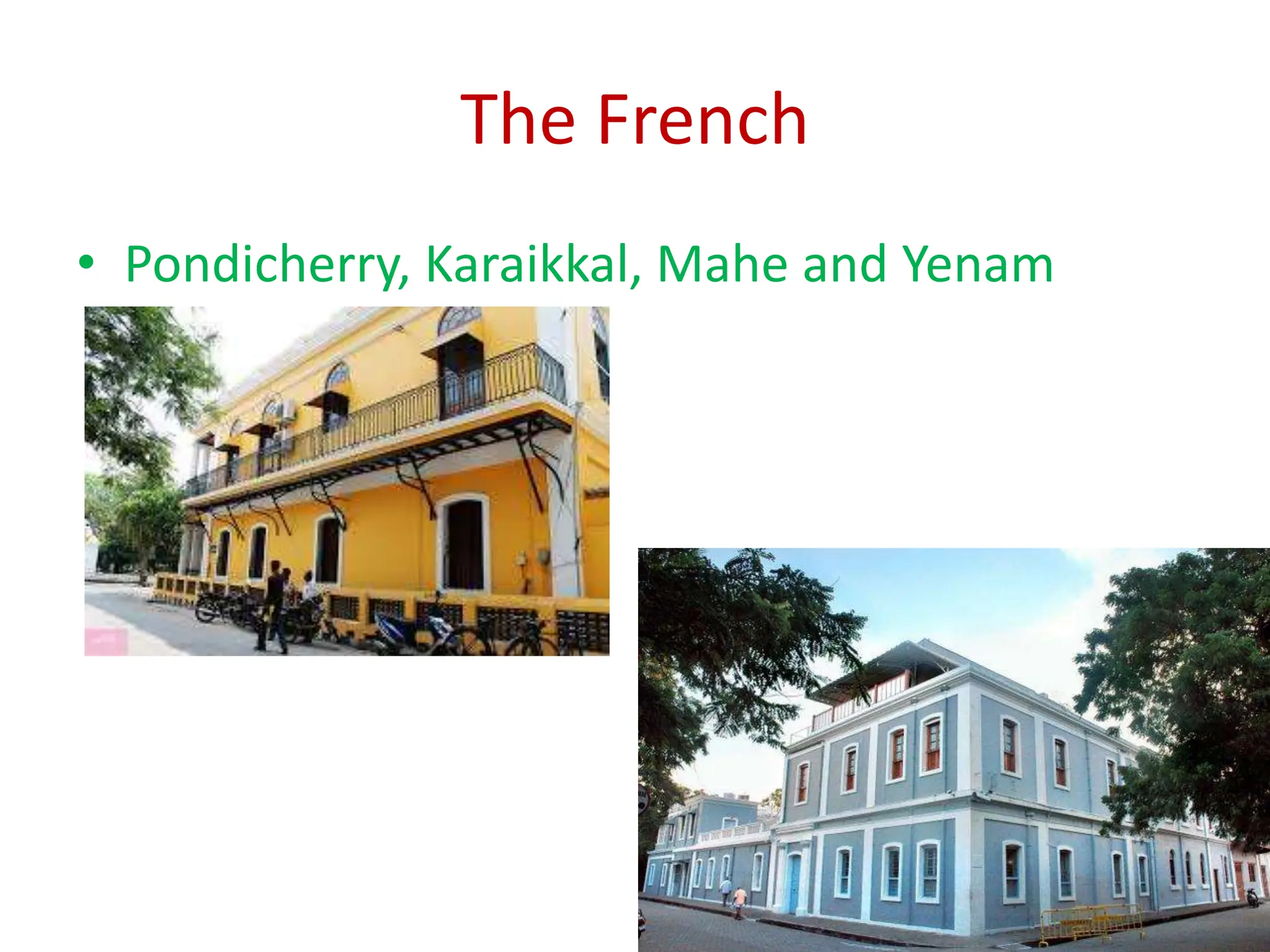
• French
Western Styles and Patterns in Indian style
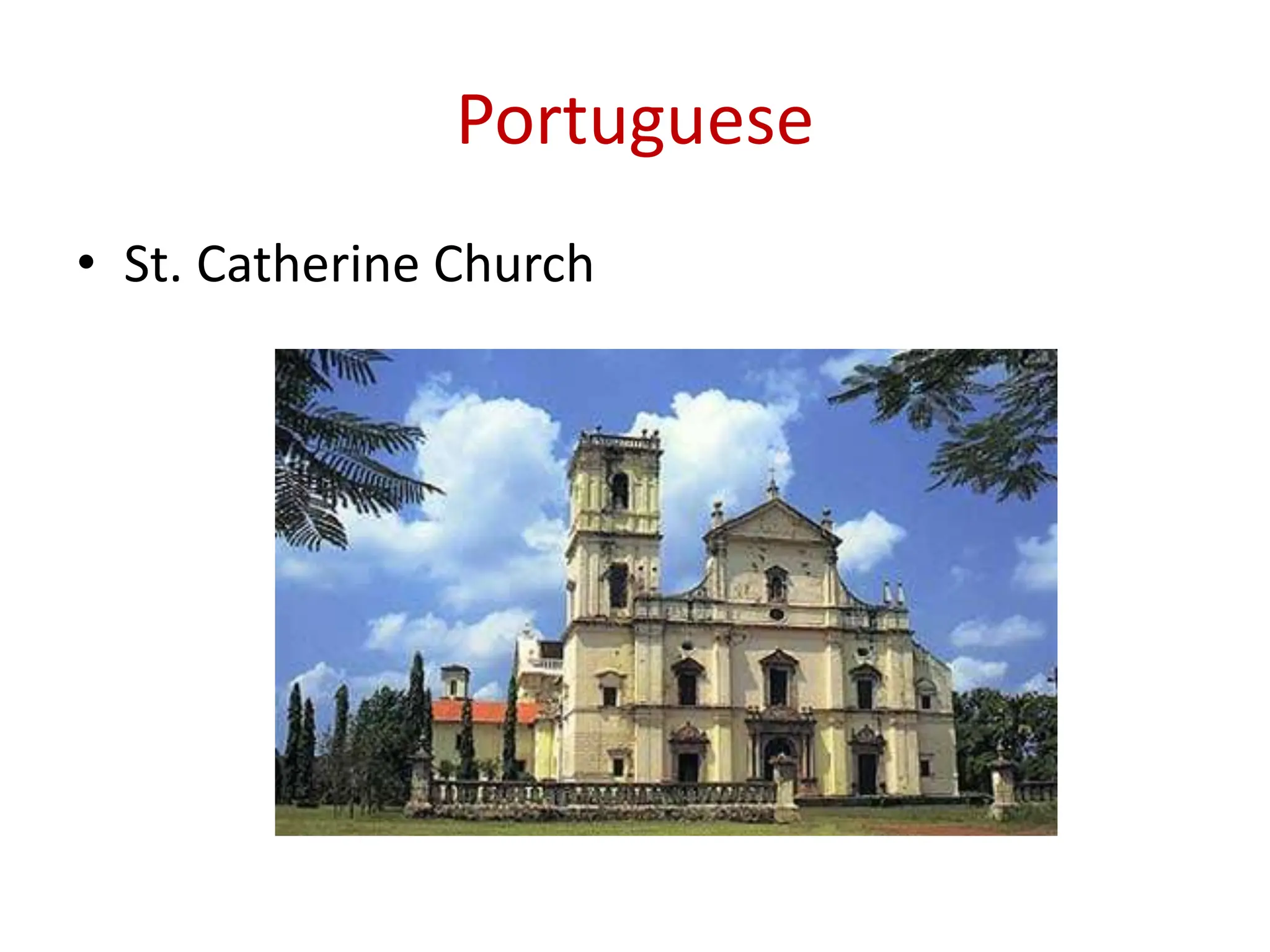
Portuguese
• St. Catherine Church
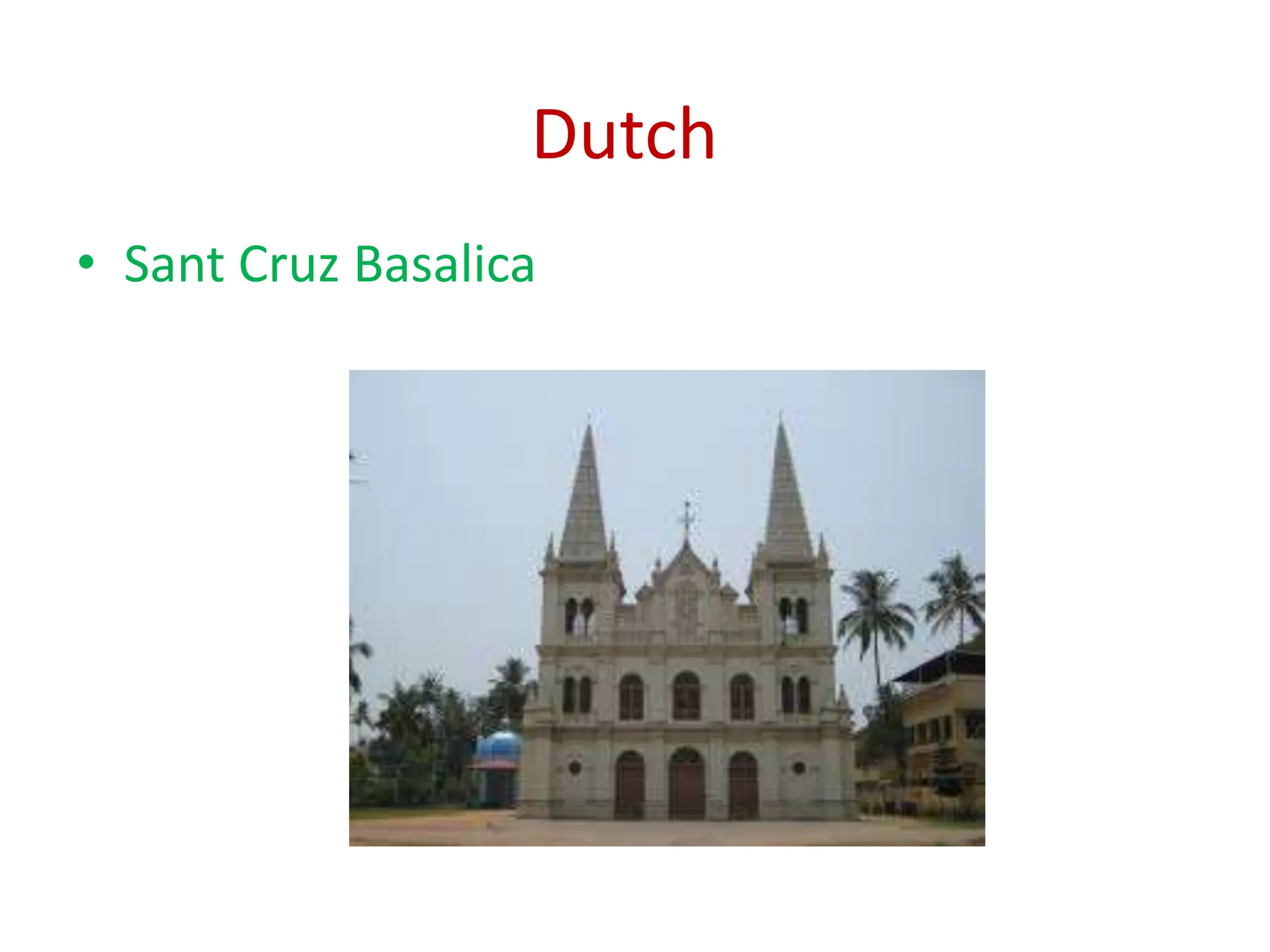
Dutch
• Sant Cruz Basalica
Danes
• Tranqubar
The French
• Pondicherry, Karaikkal, Mahe and Yenam
Neo Classical
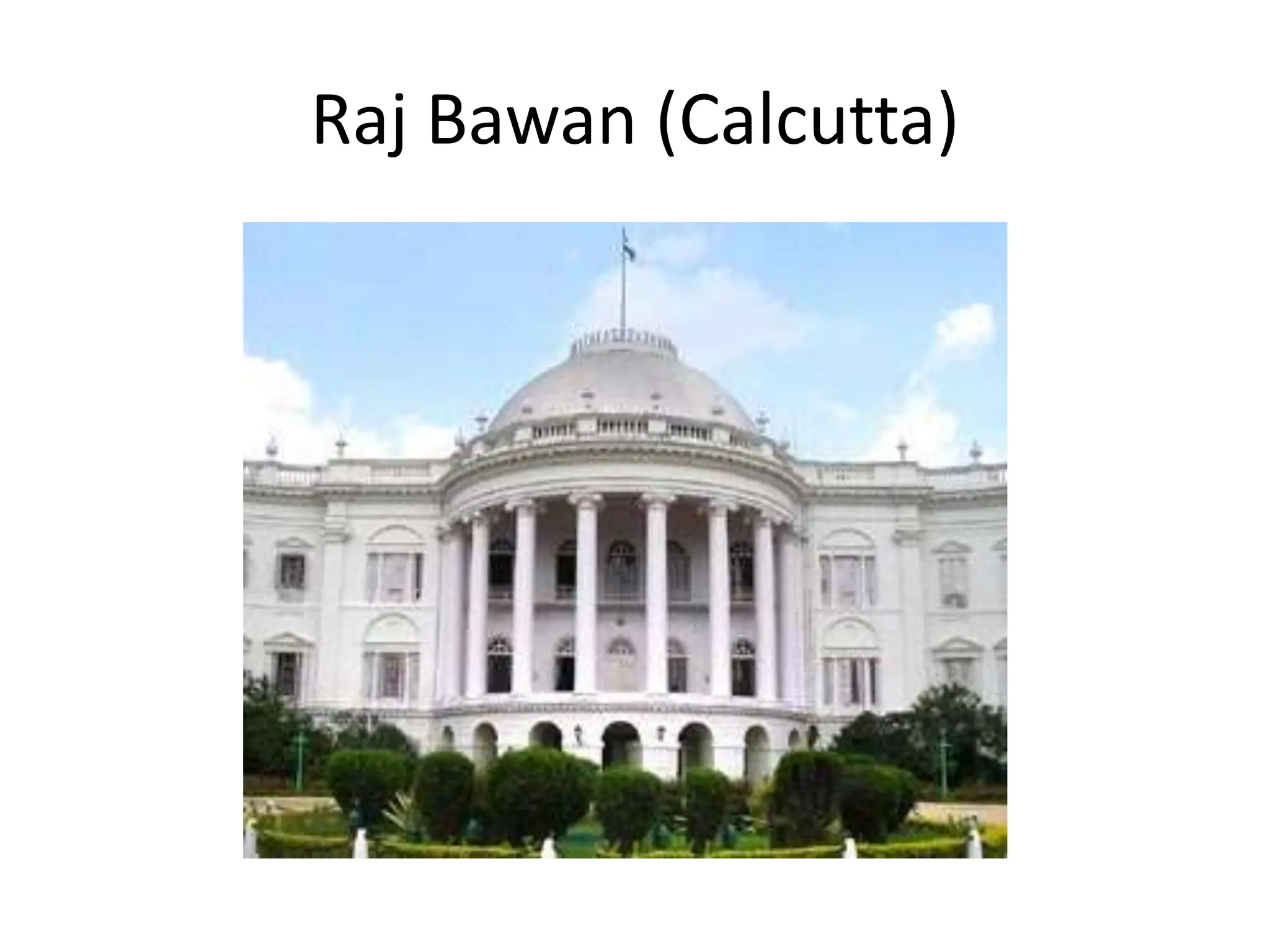
• Raj Bhavan in Calcutta 1799 – 1802 (till 1911)
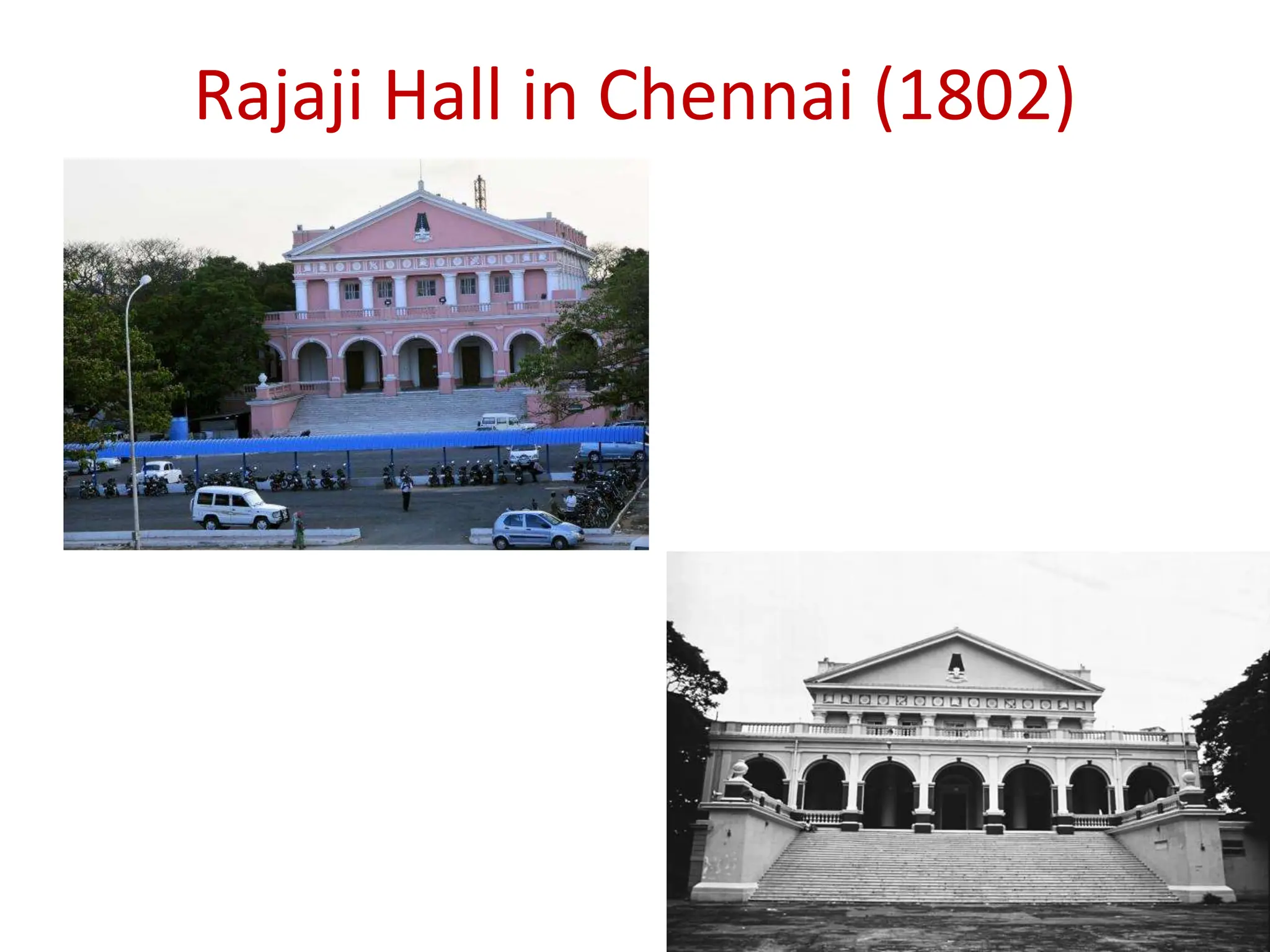
• Rajaji Hall in Chennai (1802)
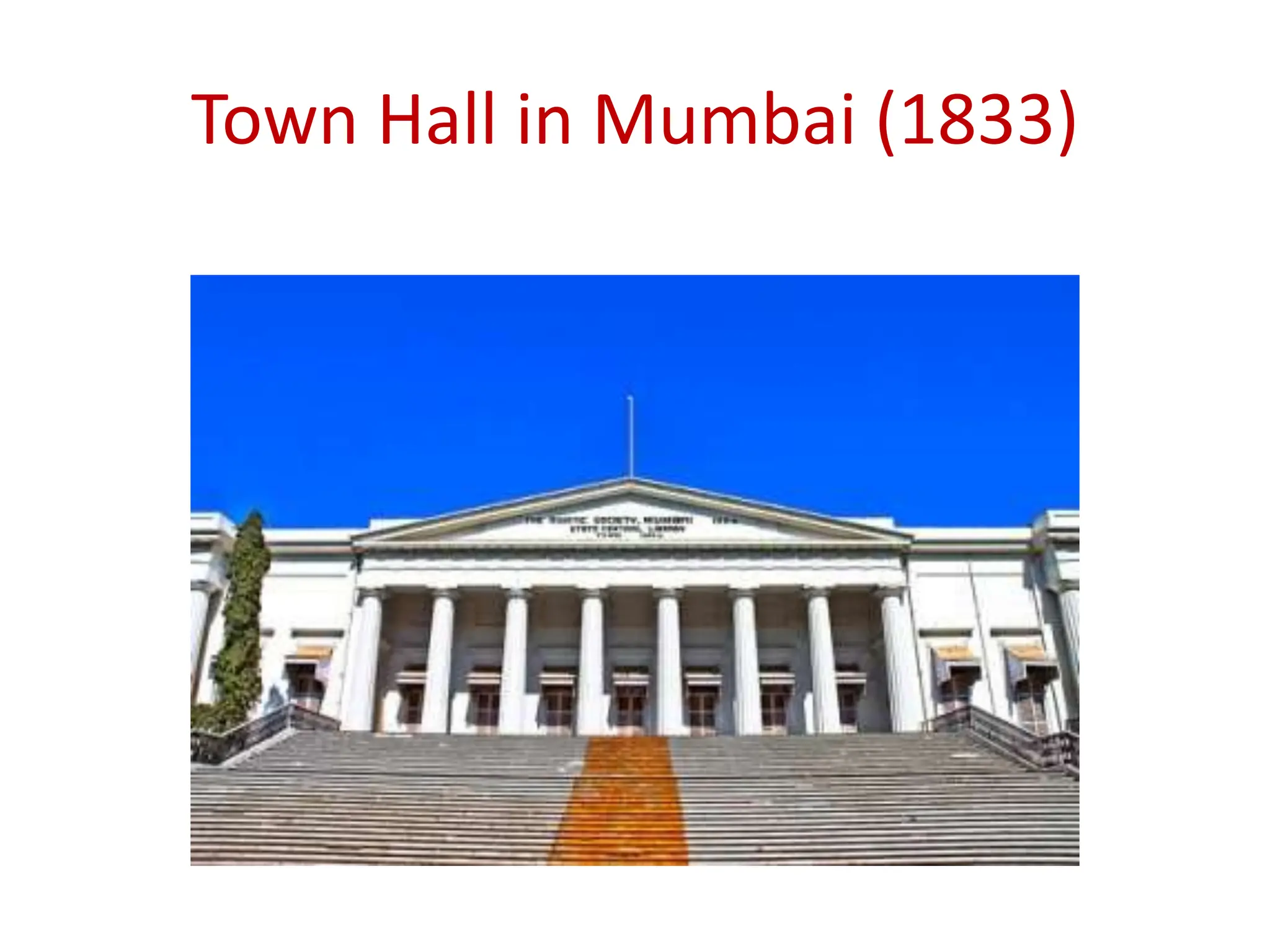
• Town Hall inMumbai (1833)
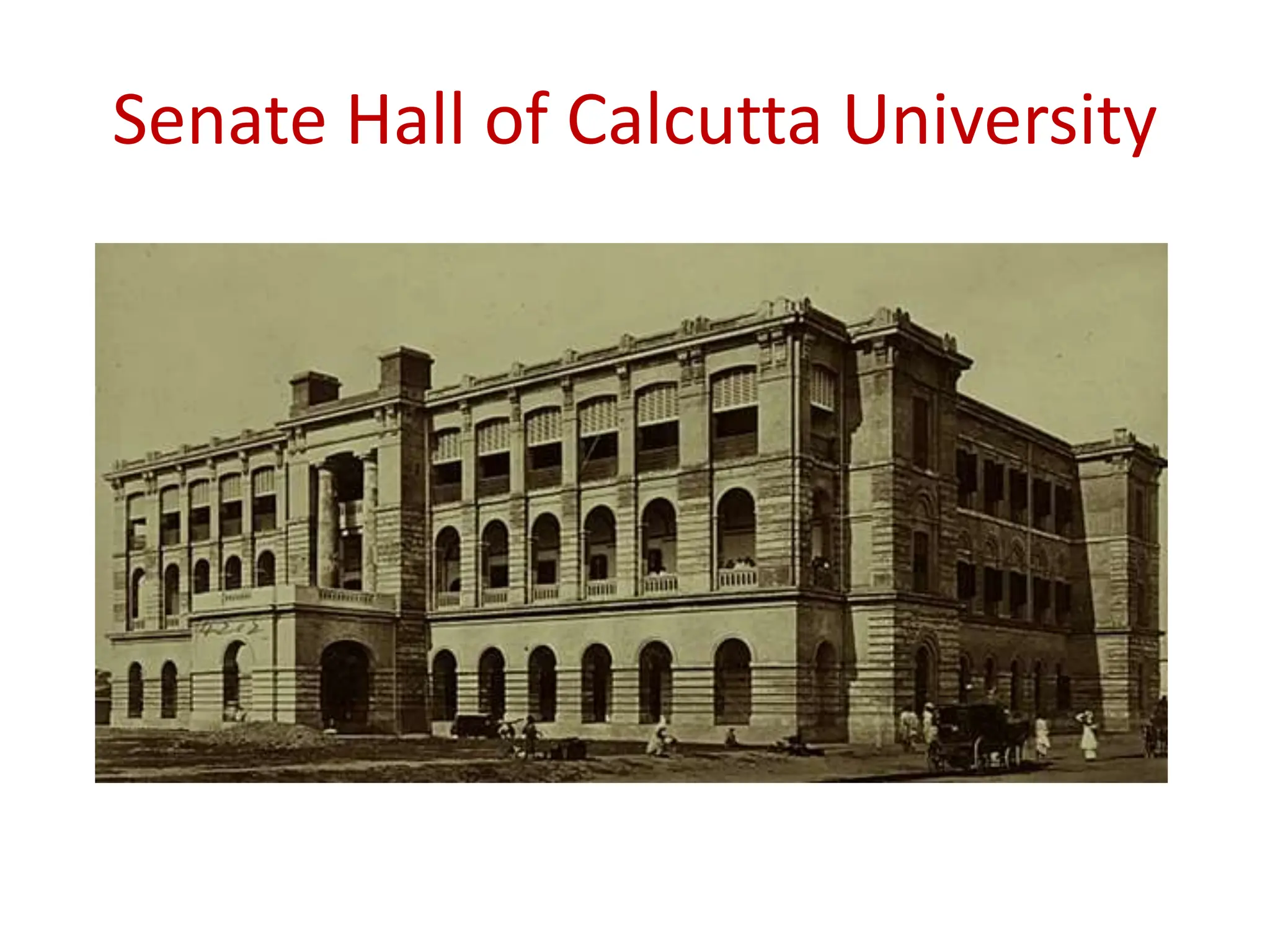
• Senate Hall of Calcutta University (1864)
Raj Bawan (Calcutta)
Rajaji Hall in Chennai (1802)
Town Hall in Mumbai (1833)
Senate Hall of Calcutta University
Neo – Gothic Style
British Settlements in India
Star shaped and polygonal layouts
English Church Architecture
Provided with arcaded galleries and steeply gabled roofs,
adorned with a profusion of carved and inlaid polychrome
stonework, coloured tiles, and wrought iron,
pointed arch, the ribbed vault and the flying buttress
castles, palaces, town halls, guild halls, universities and to a
less prominent extent, private dwellings
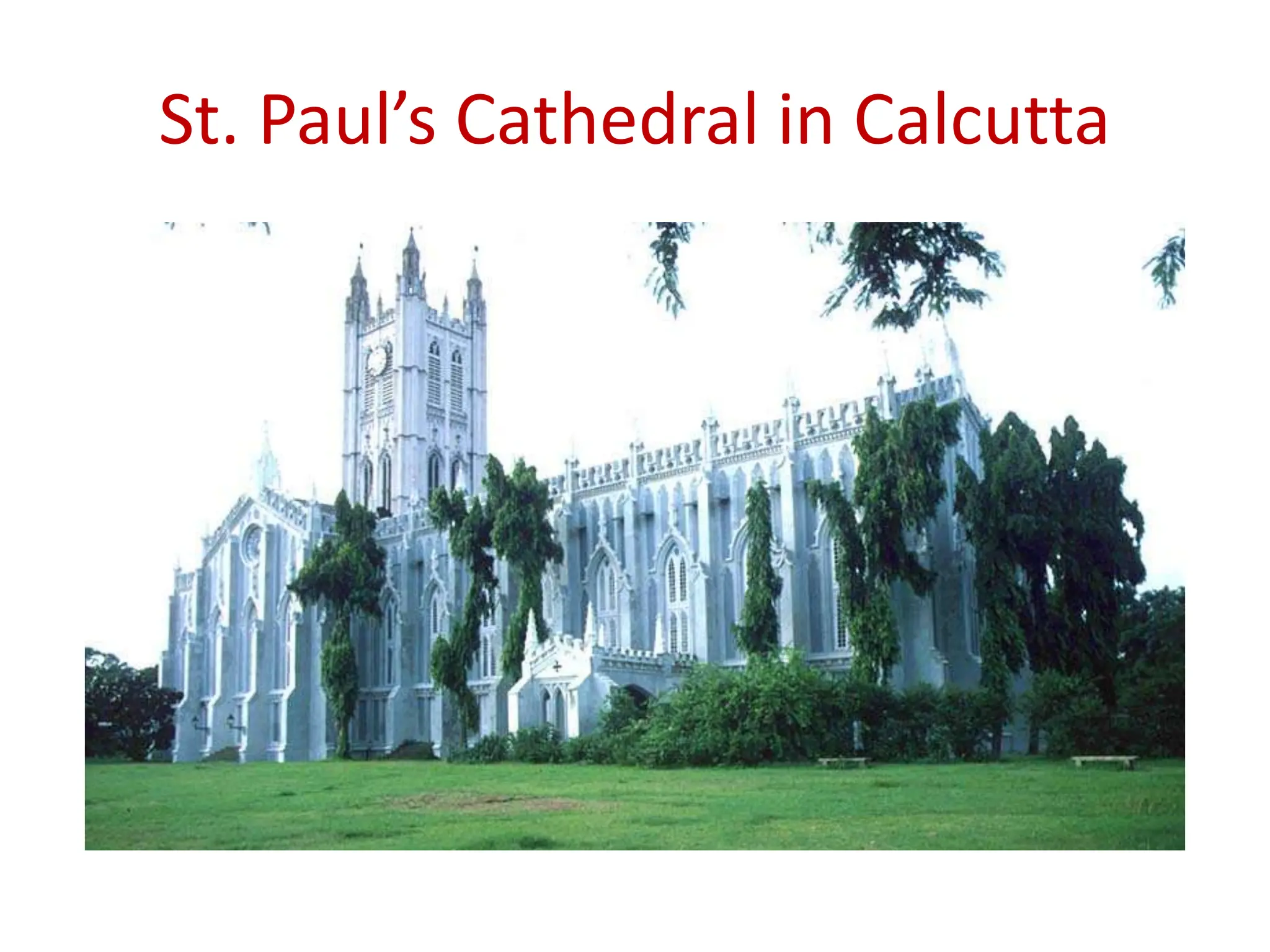
St. Paul’s Cathedral in Calcutta (1847 – 1880)
All Saints Cathedral in Allahabad in U.P.
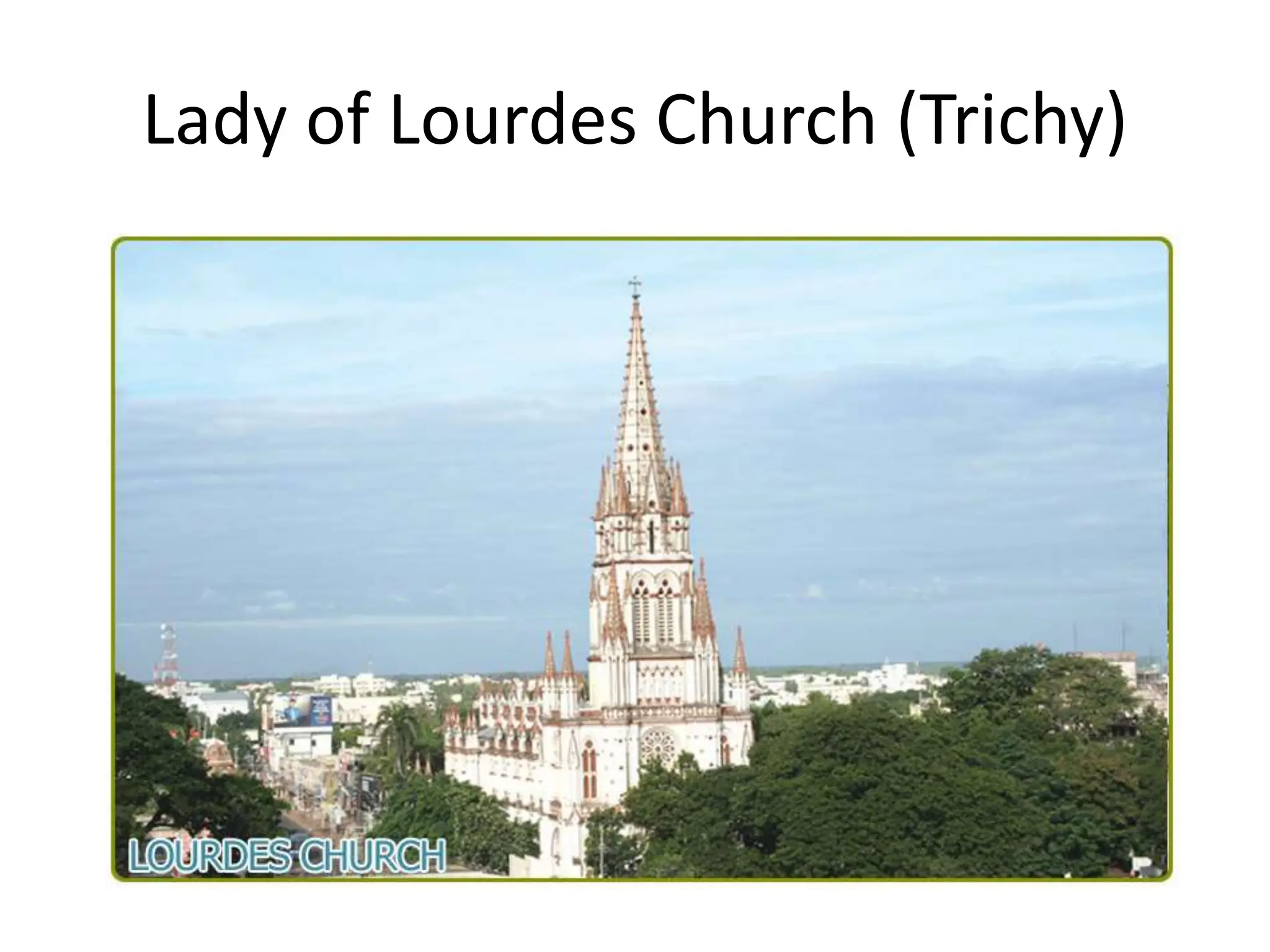
St. Lourdu’s Church in Trichy (T.N.)
St. Paul’s Cathedral in Calcutta
Lady of Lourdes Church (Trichy)
Indo Saracenic Architecture
With imaginative blend of Neo-Gothic elements with
cusped arches, rooftop chhatris, and bulbous domes
drawn from late Mughal architecture
Art Museum at Thiruvananthapuram in Kerala (1872)
Senate House of Madras University (1874-1879)
Lakshmi Vilas Palace in Baroda (1881)
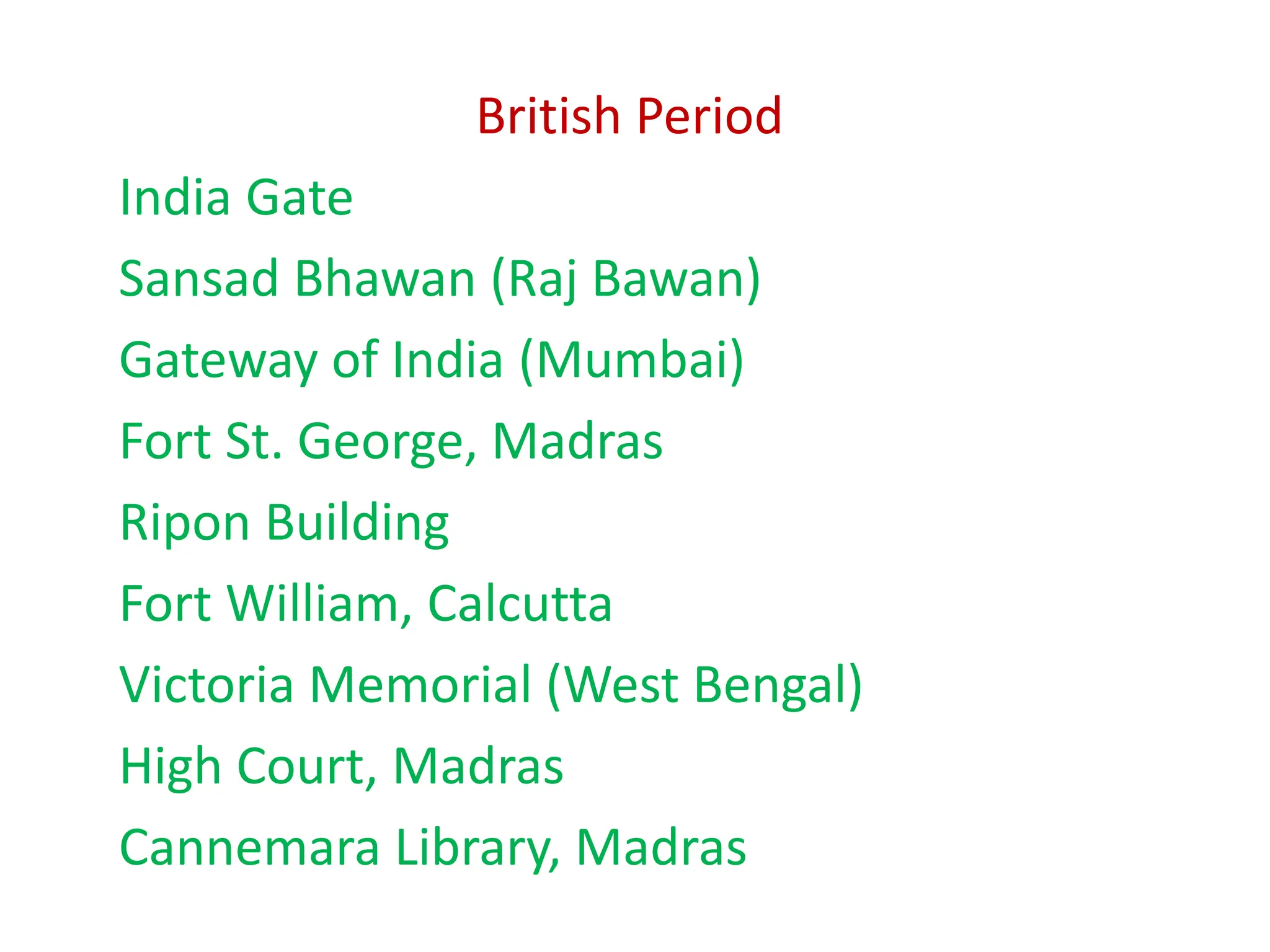
British Period
India Gate
Sansad Bhawan (Raj Bawan)
Gateway of India (Mumbai)
Fort St. George, Madras
Ripon Building
Fort William, Calcutta
Victoria Memorial (West Bengal)
High Court, Madras
Cannemara Library, Madras
India Gate
Sansad Bhawan
Gateway of Inda (Mumbai)
Fort St. George, Madras
Ripon Building
Fort William, Calcutta
Victoria Memorial (West Bengal)
High Court, Madras
Connemara Library, Madras

Architecture 2.ppt

  • 1.
  • 2.
    Akbar’s Style Characteristics ofArchitecture of Akbar Red sandstone Ideal synthesis of Hindu and Muslim Traditions constructions of domes Arches Portals Increased use of marble Impregnable forts, tombs Imposing and artistic gateways Hindu temples
  • 3.
    Shah Jahan’s Style TheMughall architecture reached the zenith of its excellence Built palaces Mosques Tomps Pavilions of white marble at Agra, Lahore, Delhi, Kabul, Kashmir, Ajmer, Kandahar and Ahamadabad He demolished many of Akbar’s red sand stone structures in Agra and lahore forts and rebuilt them of white marble which was available in unlimited quantities in the quarries of Makrana near Sambhal
  • 4.
    Red Fort orLal Qila, Delhi (1648) Known as the epitome of Mughal grandeur On the river bank of Yamuna Used Red Stone (name Lal Qila) 2km in cirncumference Height varies from 18 to 33 metre Red sandstone wall Moti Mahal Hira Mahal Rang Mahal Beautiful Garden Flower beds Water courses Ornamental fountains Gilded domes Hanging balconies
  • 6.
    Lahore Gate 17th century Maingate of the fort towards Lahore Royal chamber made of marble graceful arches With precious stones Diwan-i-Khas was a hall of private audience World famous peacock throne (12 million) Ceiling made of solid silver Persian couplet written in Letters of gold (If there is a paradise on earth. It is here! It is here! It is here!) Bottom shape as Lotus Flower
  • 7.
  • 8.
  • 9.
    Purana Qila (OldFort) A magnificent historical monument In this place the ancient city called Indraprastha flourished Started by Humayun (1530) and completed by Sher Shah Three Gate ways Perfect amalgamation of Hindu and Muslim Style Gigantic and planned structure White, red and black stone and white marble Behind there is a Manzil, there is a platform Most important structure constructed by Sher Shah Suri
  • 11.
    Jama Masjid, Delhi LargestMosque in India and in the world Situated west of red fort Last architectural extravaganza of Shah Jahan Work started in 1650 completed in 6 years 5000 people engaged Emperor attended congregational prayers on every Friday Three gate ways Main courtyard is 408 sq ft made of red stone Centre – large marble tank Main mosque crowned by 3 onion shaped domes North and south two 130 ft high minarets (for birds eye view of the city) Architecturally beautiful, a chapter of Holy Quran and strand of Hair from the beard of prophet Mohammed and his sandals found here
  • 13.
    Fatehpur Sikri (U.P.) BulandDarwaza Diwan-i-Khas (a private hall for audience) Diwan-i-Am (the hall of Public Audience is 350 ft long) Panch Mahal (84 columns) Mariam’s Palace (more paintings and miniature) The Turkish Sultana’s Palace (wives) Jodha Bai’s Palace (Rajput wife) Birbal’s Palace (minister)
  • 14.
  • 15.
    Buland Darwaza The 175ft hightest gateway in India by Akbar 50 km from Agra Commemorate Akbar’s conquest of Khandesh (Gujarat) Akbar met a muslim holy man Shaikh Salim Chisti Salim became Jahangir In 1583 the English men met Akbar and amazed to see the splendour of Darwaza Today it looks deserted but fairy tale
  • 16.
  • 17.
  • 18.
  • 19.
    Agra Fort inUttar Pradesh Finest and strongest citadels in the world The Jahangir Mahal with red sand stone and Rajput style Rang Mahal adorned with exquisite floral decoration The Khas Mahal (the marble palace) by Shah Jahan The Sheesh Mahal, a superp monument ornamented by small pieces of mirror The Diwan-i-Khas or the hall of private audience (marble palace) Comprised of finely shaped flower beds, fountains, water channels and tanks Shah jahan built three mosques Moti Masjid build in white marble
  • 20.
  • 21.
    Agra fort (viewto Taj Mahal)
  • 22.
  • 23.
  • 24.
    Western Influence Advent ofthe Europeans • Portuguese • Dutch • Danes • English • French Western Styles and Patterns in Indian style
  • 25.
  • 26.
  • 27.
  • 28.
    The French • Pondicherry,Karaikkal, Mahe and Yenam
  • 29.
    Neo Classical • RajBhavan in Calcutta 1799 – 1802 (till 1911) • Rajaji Hall in Chennai (1802) • Town Hall inMumbai (1833) • Senate Hall of Calcutta University (1864)
  • 30.
  • 31.
    Rajaji Hall inChennai (1802)
  • 32.
    Town Hall inMumbai (1833)
  • 33.
    Senate Hall ofCalcutta University
  • 34.
    Neo – GothicStyle British Settlements in India Star shaped and polygonal layouts English Church Architecture Provided with arcaded galleries and steeply gabled roofs, adorned with a profusion of carved and inlaid polychrome stonework, coloured tiles, and wrought iron, pointed arch, the ribbed vault and the flying buttress castles, palaces, town halls, guild halls, universities and to a less prominent extent, private dwellings St. Paul’s Cathedral in Calcutta (1847 – 1880) All Saints Cathedral in Allahabad in U.P. St. Lourdu’s Church in Trichy (T.N.)
  • 35.
  • 36.
    Lady of LourdesChurch (Trichy)
  • 37.
  • 38.
    Indo Saracenic Architecture Withimaginative blend of Neo-Gothic elements with cusped arches, rooftop chhatris, and bulbous domes drawn from late Mughal architecture Art Museum at Thiruvananthapuram in Kerala (1872) Senate House of Madras University (1874-1879) Lakshmi Vilas Palace in Baroda (1881)
  • 39.
    British Period India Gate SansadBhawan (Raj Bawan) Gateway of India (Mumbai) Fort St. George, Madras Ripon Building Fort William, Calcutta Victoria Memorial (West Bengal) High Court, Madras Cannemara Library, Madras
  • 40.
  • 41.
  • 42.
  • 43.
  • 44.
  • 45.
  • 46.
  • 47.
  • 48.